McGown’s Pass: the original tavern on the green

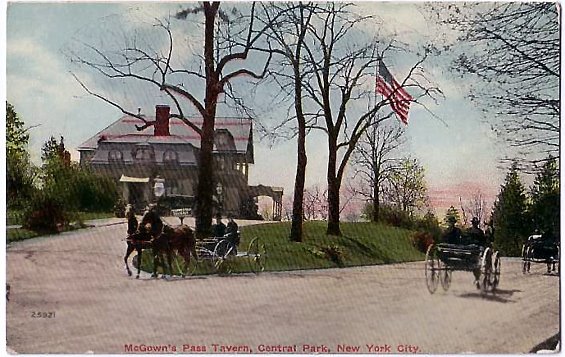
McGown’s Pass Tavern (date unknown, but possibly around 1913

We’re finally moving on from Central Park, but not before observing perhaps its most historically significant area — McGown’s Pass and the Block House.

Located on the northern portion of the park, next to the charming Harlem Meer, are a collection of hills and bluffs left over from its original topography. Not surprisingly, these higher altitudes played a pivotal role during the American Revolution.

A narrow passage between the hills was named McGown’s Pass after Andrew McGown, owner of a popular tavern that sat alongside here. Kept in the McGown family, the tavern was torn down early in the century but rebuilt in the 1880s. In 1895, McGown’s was strangely granted its own election district as, being inside the park, it lay outside normal district boundaries. “There were four voters in this territory last year,” declared the New York Times. “They are four men employed at McGown’s Pass Tavern.” The tavern was eventually torn down in 1917.

It was through McGown’s Pass that George Washington traveled on September 15, 1776. He and a portion of the Continental Army had escaped up to today’s Washington Heights area; when hearing that part of his army had been stopped by the British, Washington rode down the pass and led the remaining troops back up to their fortification in the Heights. He rode back through the pass again seven years later, this time as the victor.

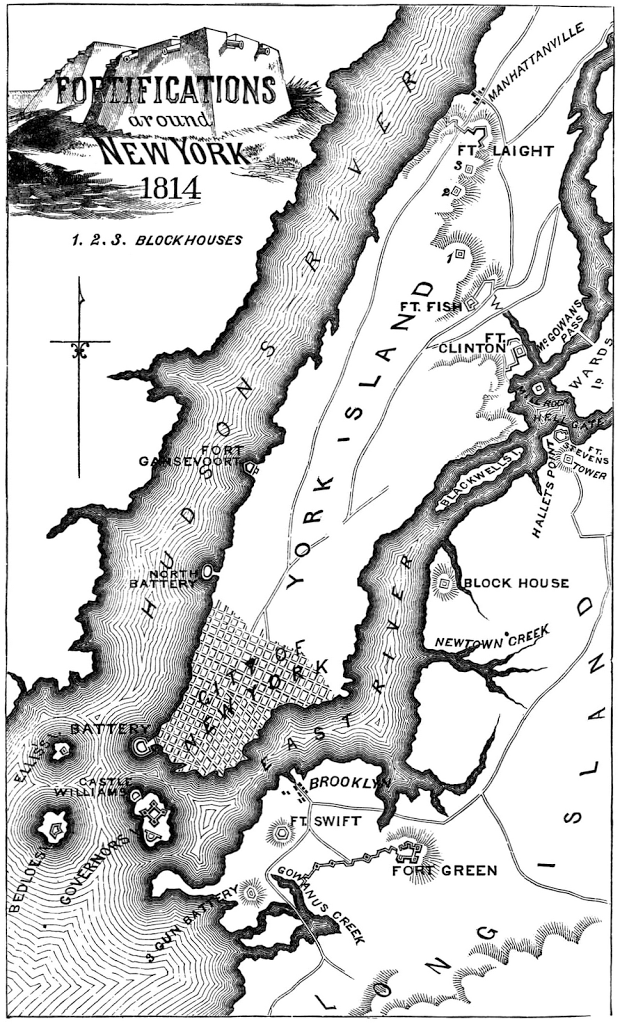
The British and their Hessian mercenaries built forts here to cut Manhattan off from the mainland. Later New Yorkers would seize upon this idea during the early days of the War of 1812. Not willing to become property of the British once again, Manhattan mobilized for any potential battles, building forts all over the island and throughout the harbor. It was here at McGown’s pass that the erected a few fortifications, including Fort Clinton (not to be confused with the fort in Battery Park, although both were named for DeWitt Clinton) and Fort Fish, named after Major Nicholas Fish, father of the New York senator Hamilton Fish.

Nothing much remains of these two old forts, which were never used as the War of 1812 never made its way to the city. There are, however, two remaining structures from the early days. A stone ledge overlooking the meer is all that remains of Nutter’s Battery, named after a farmer who owned the property. And nearby stands the Block House, its stone face still fairly solid, once armed with cannons and used to hold ammunition — that was, of course, never needed. The Block House was fairly intact when Olmstead and Vaux included it in their plans for the park, using the building as a ‘picturesque ruin’ covered in vines.

Here’s an illustration of how the Block House looked in 1860:
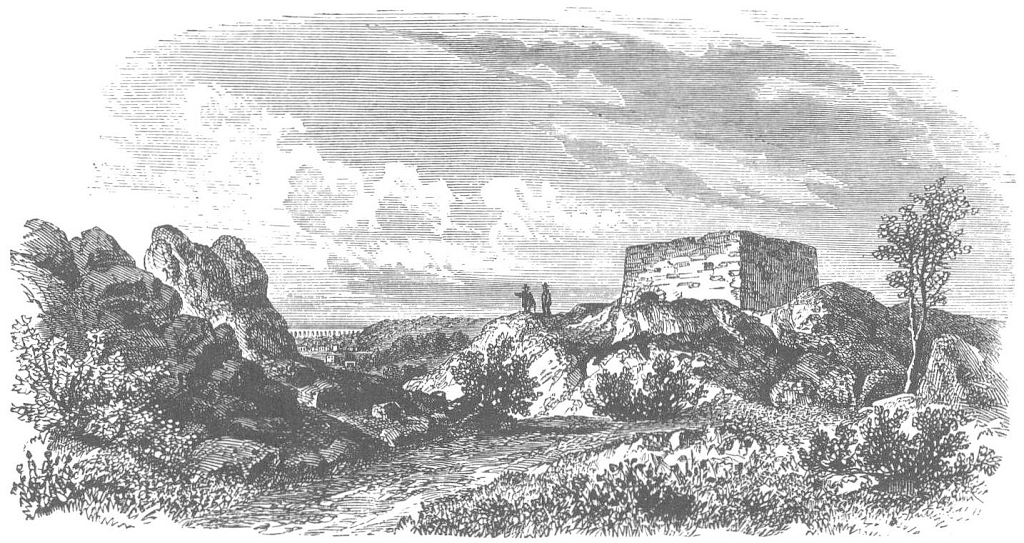
For a short while, this military site was even used as a convent and hospital. In 1847 the Sisters of Charity of St. Vincent de Paul opened a ‘motherhouse’ and school called the Academy of St. Vincent. The nuns left when the area was incorportated into the park, however the building stood until the 1870s, when it burned down and was replaced with the refurbished new McGown’s Pass Tavern mentioned above. (This site has some great pictures of where the convent once stood.)

This is a bit tangental, but I love this story. A plaque was erected at the old site of Fort Clinton in 1906 and unveiled in a publicized community event for children. It was apparently difficult for some people to find the location and “several chivalrous lads” guided people through the park to the unveiling.

However, the Times reports an incident that might be the only real battle that ever occured at this storied historical spot:

“Among the boys interested in the tablet unveiling were several whose spirit of mischief overcame their sense of the proprieties. These made misleading arrow signs …. and caused a number of persons to go far afield and arrive at the exercises late and angry. These mischievous youngsters were caught at their annoying trick by boys who were more sober and serious. Then there was a short scrimmage, and the mischievous lads scurried away through the Park.”

Finally, from a 19th century book on the War of 1812 comes this spectacular map of the various fortifications built in anticipation of battle. Its dimensions are greatly distorted of course, but it lists the forts and blockhouses that stood in this area as well as those such as Fort Gansevoort and Fort Greene (click on the image to look at it more closely):
Categories
Parks and Recreation Podcasts

PODCAST: The Evolution of Central Park
When last we left the Park, it was the embodiment of Olmstead and Vaux’s naturalistic Greensward Plan. Then the skyscrapers came. Also, how did all those playgrounds, a swanky nightclub, a theater troupe and all those hippies get here?

Listen to it for free on iTunes or other podcasting services. Or you can download or listen to it HERE

NOTE: Please forgive my butcher pronounciation of the word Jagiello in today’s podcast!

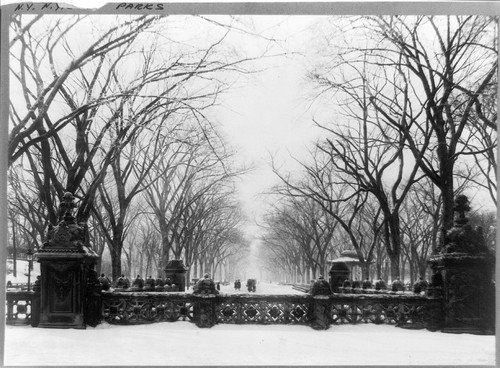
The Park in a wintry day in 1906:

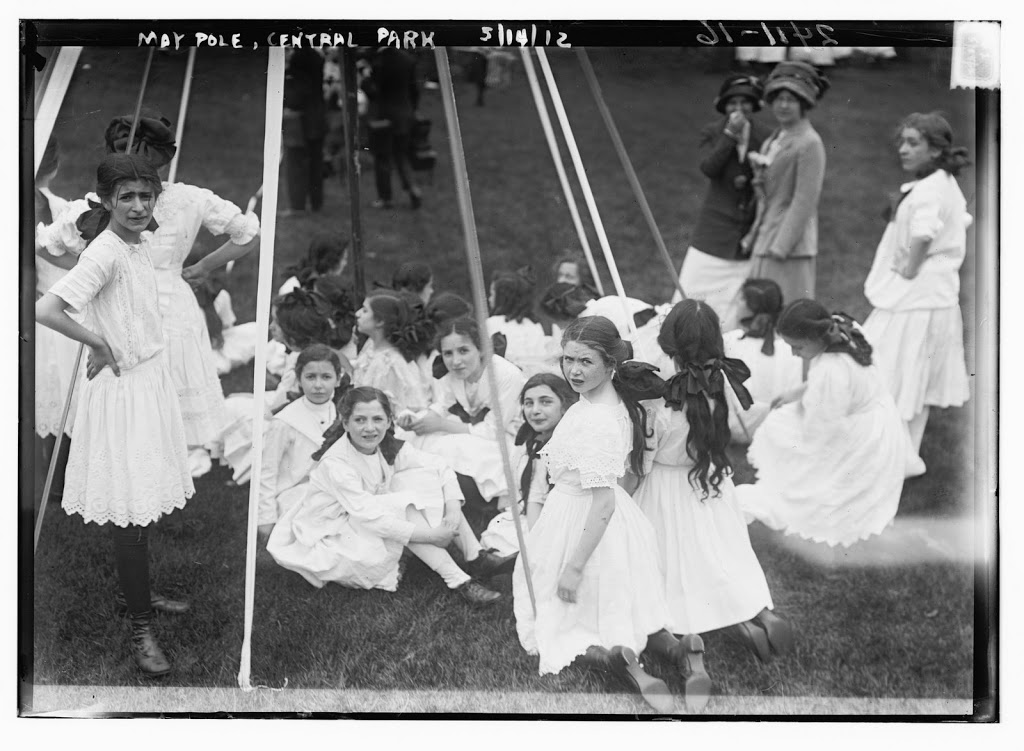
Children celebrate May Day in the park, circa 1912:

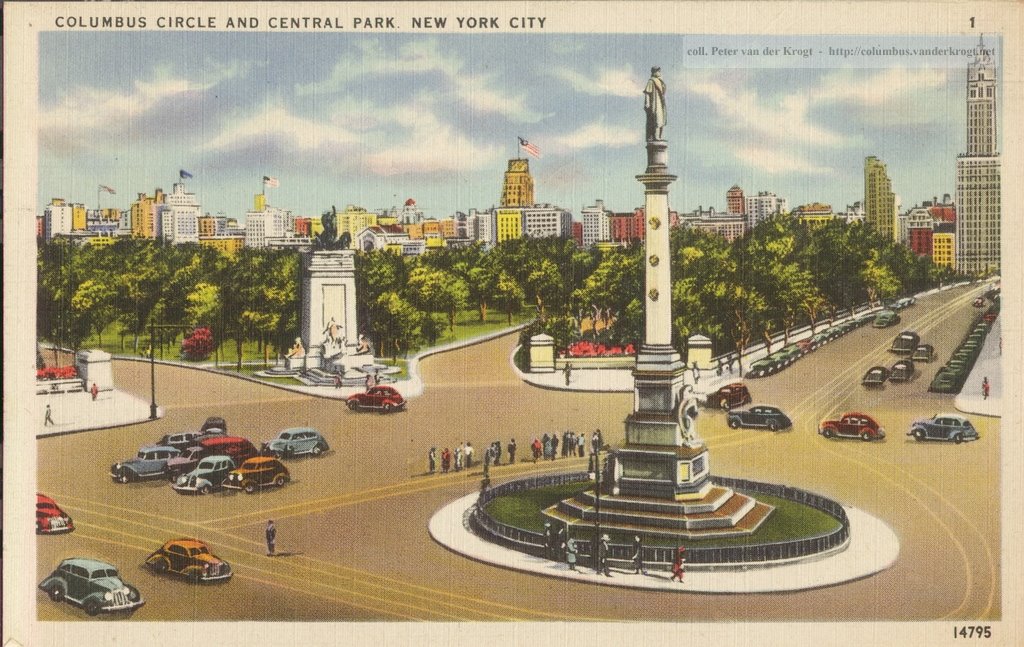
The southwestern entrance of Central Park, punctuated by Columbus Circle:

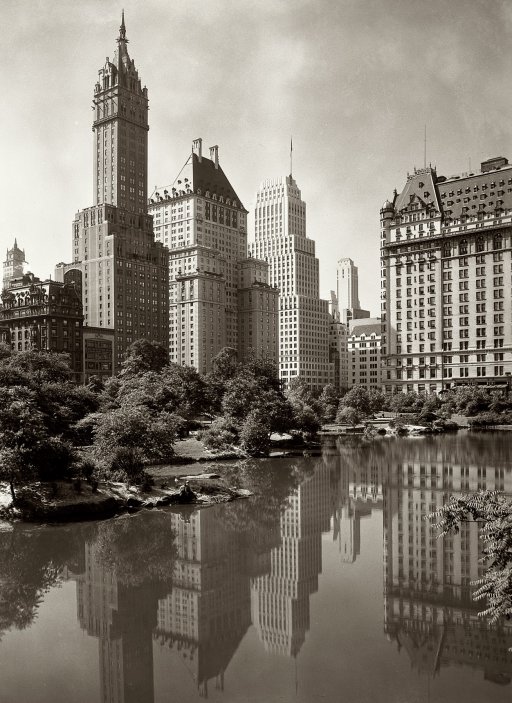
By the early 30s, the original dream of Central Park as ‘oasis’ was effectively destroyed by skyscrapers

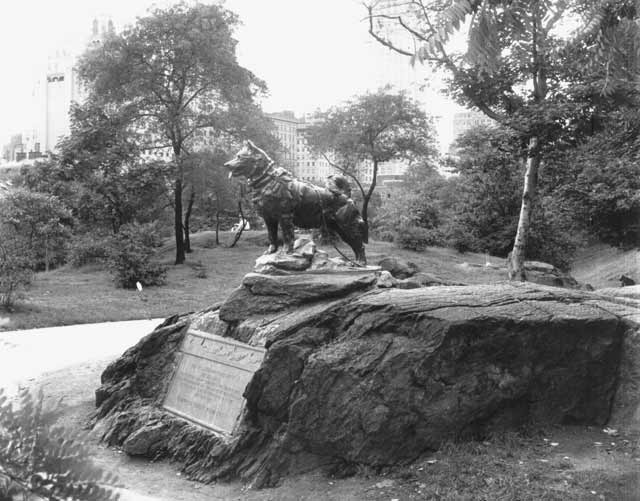
Balto to 1934, looking pretty much the same as he does today:

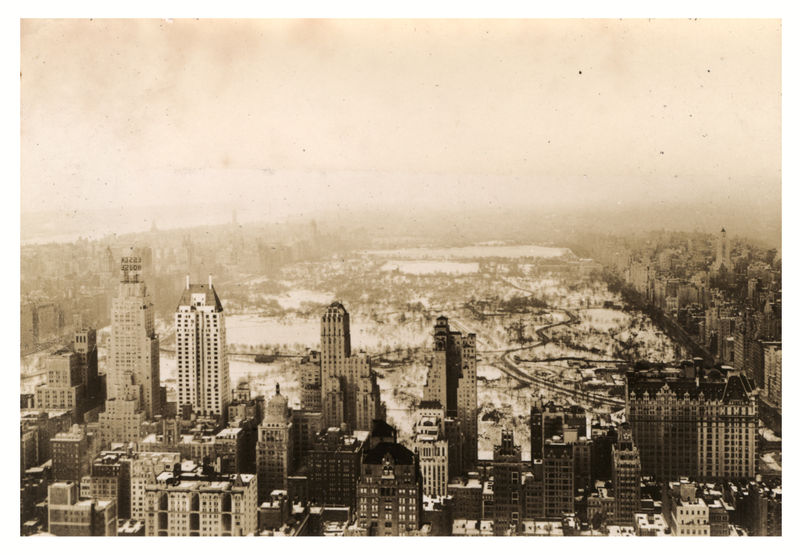
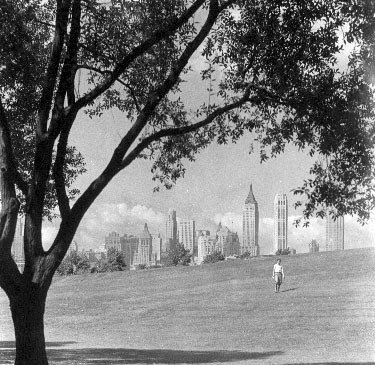
The skyline changes the horizon of Central Park. Here, in 1935:

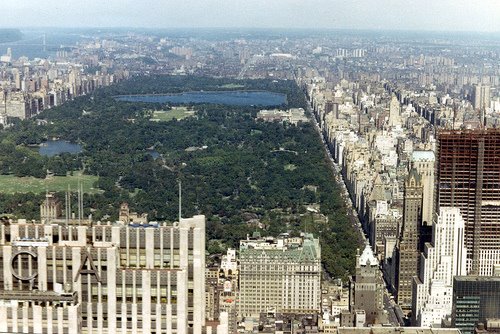
1967:

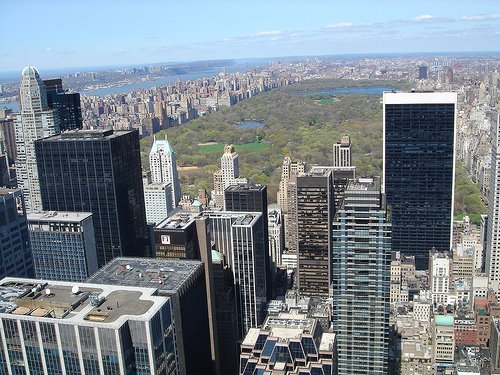
And today:

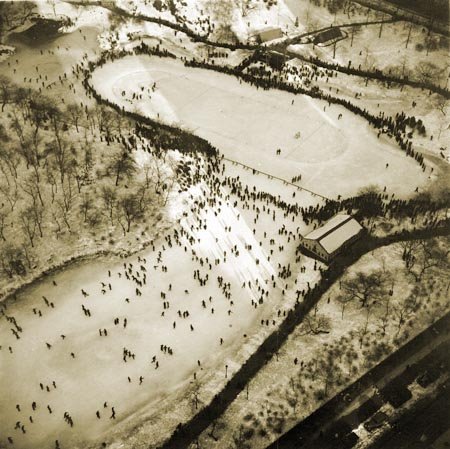
Ice skating, circa 1936

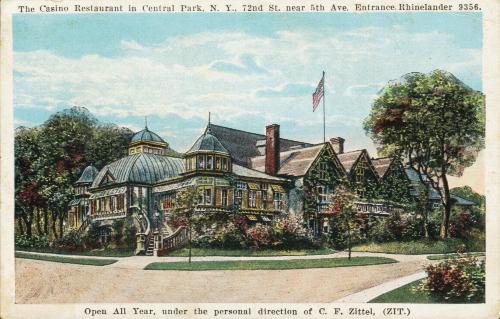
The Casino, which went from restaurant to nightclub during the 1920s. Demolished by Robert Moses, it became Rumsay Playfield and home of Summerstage

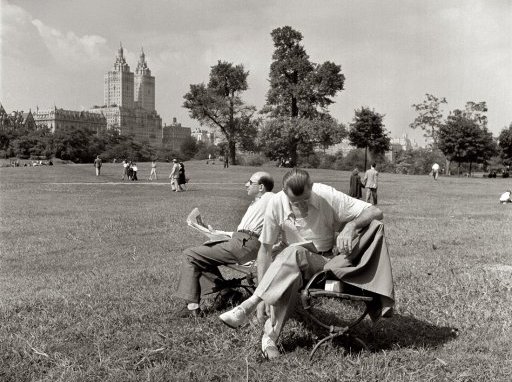
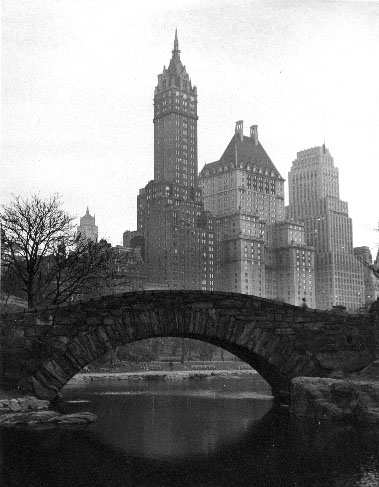
Ah, life was much simpler back in 1942 (well, in Central Park, anyway). The luxury San Remo apartments peeks from the background

By the 1950s, most of the Park’s modern features and lawns were built. It’s getting more difficult, of course, to find a corner of the park all your own.

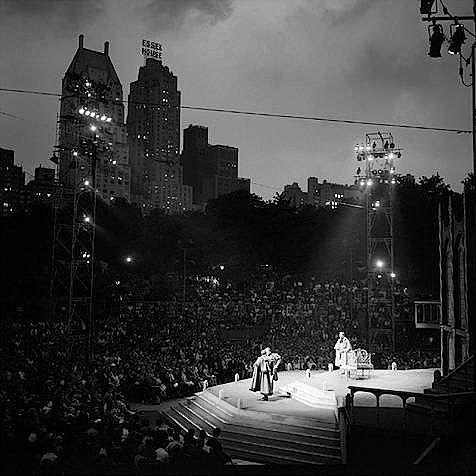
Joseph Papp brought Shakespeare to the park in the 1950s, but didn’t make a home of Delacorte Theatre until 1962

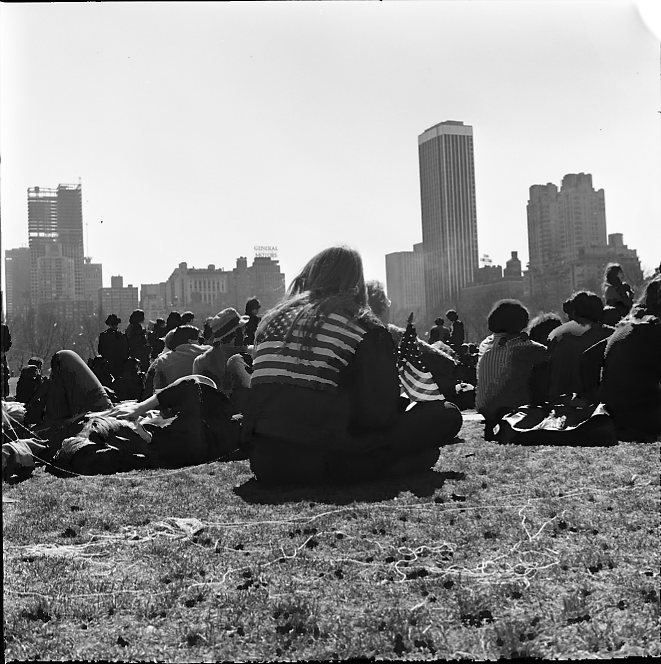
Park ‘happenings’ in the 1960s attracted thousands of people to partake in activities unheard of in the Olmstead days.

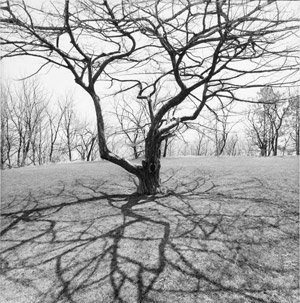
Central Park was a popular model for photographer Lee Friedlander, turning its natural beauty into striking patterns of abstraction

Jones Woods: ghosts, graves and an ‘amusement park’

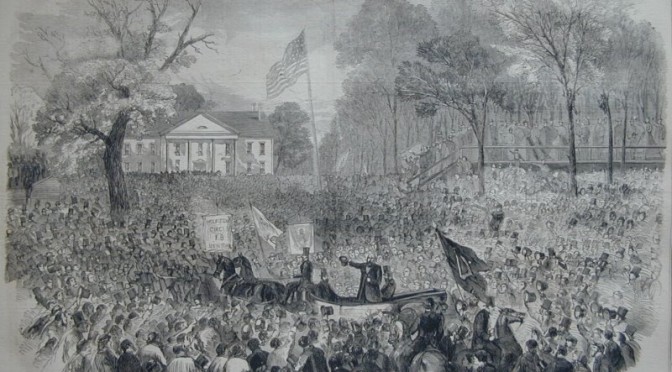
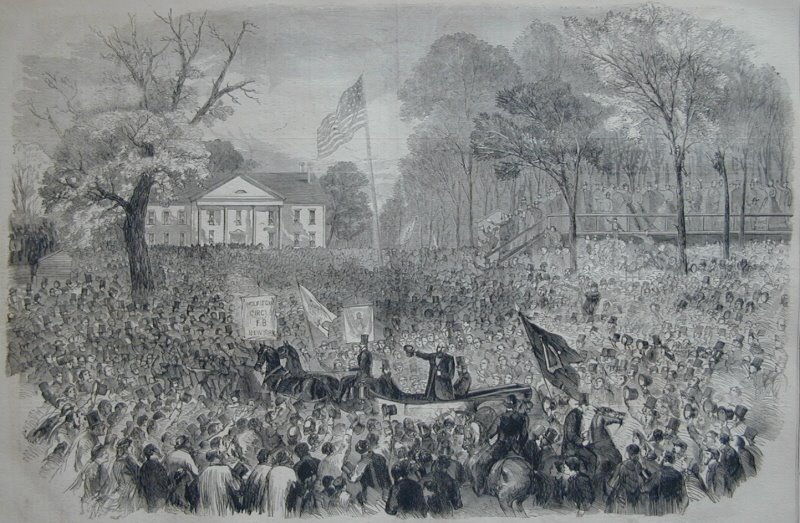
Over 15,000 Irish Americans gathered in Jones Wood in 1856, to greet countryman James Stephen

Once upon a time, back when Fifth Avenue was a dirt path and Bloomingdale was literally a blooming dale, there stood a haunted and most mysterious forest located on bluffs overlooking the East River, far east of the area today known as Lenox Hill in the Upper East Side. (Basically between 66th-88th streets to 75th-77th street.)

Back in the 1700s this was one of the most densely forested areas of the island, miles from the city of New York. Prominent families moved here, settling in secluded homes overlooking the crashing waters of Hells Gate below. And not surprising, ghost stories and legends took root here as well.

As an early account describes it: “It was the last fastness of the forest primeval that once covered the rocky shores of the East River, and its wildness was almost savage. In the infant days of the colony it was the scene of tradition and fable, having been said to be a favorite re-sort of the pirates who dared the terrors of Hell Gate, and came here to land their treasures and hold their revels.”

At the heart of this forest was a small, pioneering 90-acre farm called the Louvre, its owner unknown today, or why it shared its name with a famous French museum. Later, two famous New York families owned manors in this once out-of-town thicket. The Schermerhorns kept the family crypt here until it was nothing but broken tombstones, protruding underfoot when later the area would become better known for picnics and family outings.

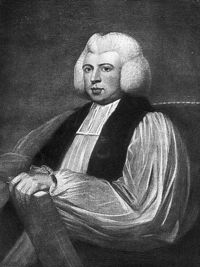
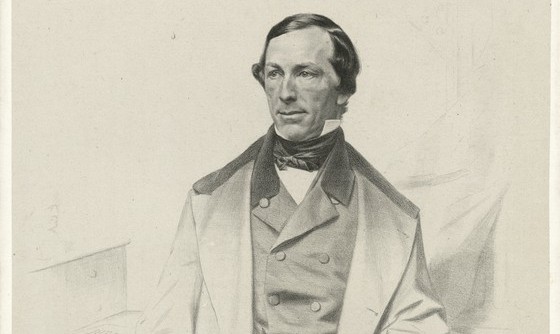
The second family was the Provoost clan, who bought the Louvre in 1742 and transformed it into an elegant home. Although prominent, the Provoosts were supporters of the American cause at the time of the Revolutionary War. Samuel Provoost (that dapper man to the right) later became president of King’s College, the pre-Revolutionary precursor to Columbia University. His cousin David, who fought with Washington’s army, took a more notorious path to fame, become a legendary smuggler nicknamed Ready-Money Provoost.

When Ready-Money died, he too was entombed in the family crypt here. Later, the site of Provoost’s grave attracted ghost seekers, who would “gather there and tell each other wonderful stories of the unearthly doings of the old man’s ghost. Not one of them could have been persuaded by all the ready money in the city to keep a night’s vigil under the trees that overhung the lonely, desolate grave.”

Later still the home was sold to a John Jones, who lent the forest his name. By the 19th century, the woods had become a popular destination for nearby city dwellers. The Provoost’s family chapel was soon turned into a clubhouse and adjoining manor grounds into places of recreation. Stories of its mysterious past and recent days as a retreat for prominent families drew recreationers of all sorts, until it became an what some have called the ‘first major U.S. amusement park’, with beer gardens, sporting events and great spaces for large gatherings.

It was still an untamed, wooded area, but now people arrived for “billiards, bowling, and donkey rides,” for general outdoor carousing and drinking.

Jones Wood was pegged to become the very first site for ‘a great park’, the land to be purchased by the state on 1851, to be transformed into an area worthy of the lavish public spaces of Europe. Proponents for an official park here claims the lush riverfront and rich “dense growth of forst trees” made it ideal for immediate conversion to a formal park.

But there was strong opposition by those who maintained that a ‘central’ park on the island would be preferred, both for its aesthetic symmetry and attractiveness to landowners surrounding it. And at only 150 acres, Jones was also deemed too small. Despite this, in June 1953, the state approved BOTH Jones’ Wood and the area that was to become Central Park.

Landowners around the Jones Wood area and merchants benefiting from sporting events and beer gardens had their day a year later, when city plans for Jones Wood were entirely abandoned.

It still remained popular for much of the late 19th century, particularly used by Irish and Germans from nearby Yorkville, although it was chipped away by new properties tenements. In 1894, a devastating fire swept through destroying properties over eleven acres. By this time, more sophisticated amusement parks began appearing out in a distant area of Brooklyn named Coney Island. Meanwhile, developers looked hungrily at the remaining area of Jones’ Wood. By the light of 20th century, all traces of this jovial and mysterious forest had vanished.

A ride around New York’s remaining merry-go-rounds

Carousels aren’t really for kids anymore. Sure, you won’t see many adults truly captivated by the process of mounting a wooden animal and twirling in a circle. But well-preserved models of the famous amusements are nostalgia goldmines; tinkling calliope music and a few flashing light bulbs can sometimes capture a by-gone era more than a multi-million dollar restoration can.

New York City used to have dozens of the swirling entertainments. Today, you can only find them in a few places:

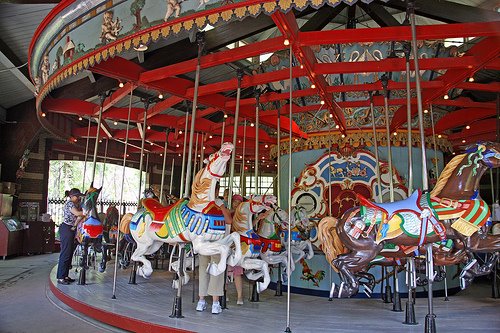
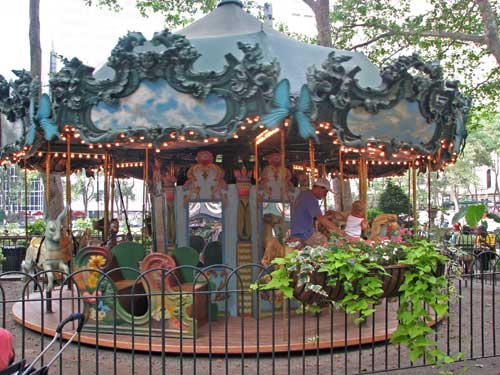
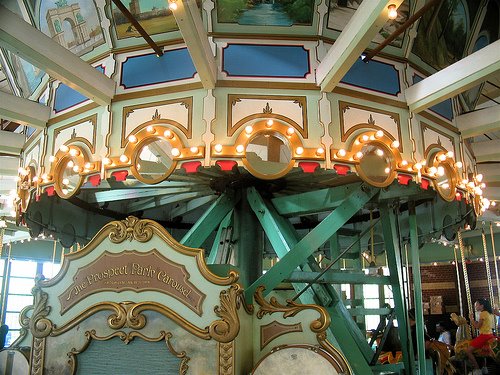
Central Park Carousel (above)
This is perhaps the world’s most famous carousel, but it’s not the original amusement which debuted in 1871. That carousel was controlled by a blind mule that walked around in circle in a dark, underground pit, as upper-class children paid the rather steep ten cent admission for a chance to ride it. It was replaced by an electric carousel in 1924 and was eventually destroyed in fire.

The carousel that whirrs about here today is actually much older, built in 1908 and entertained children during Coney Island’s heyday. Still one of the world’s largest carousels, it moved to this location in 1950.

La Carrousel
Given to the park’s symmetrical French landscape design, they call the one in Bryant Park Le Carrousel (ooo la la). Despite seeming very rustic, this miniature wedding-cake was only installed in 2001. I can only imagine what a carousel would have seemed like had it been here during Bryant Park’s days as a hangout for drug addicts.

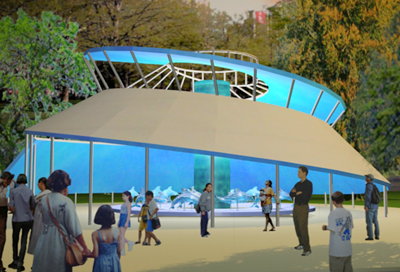
Battery Park SeaGlass
This glittery, futuristic looking thing recalls Battery Park’s past as the home of the New York Aquarium, with horses replaced by creatures of the sea. Oh wait. This carousel’s not built yet.

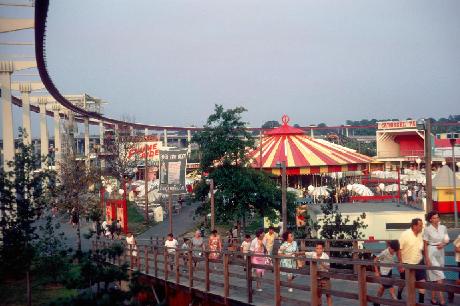
Flushing Meadows-Corona Park ‘Carousel In The Park’
Queens’ only merry-go-round came here from Coney Island, by way of the New York World’s Fair in 1964. Previously, it spent the early part of the century as the official carousel of Stubbman’s Beer Garden until the 1950s, where it moved up to the boardwalk next to the parachute jump and became the Steeplechase Carousel. It was transported to the World’s Fair Lake Amusement area (pictured above) and was left there, donated to the city, long after the Fair left town.

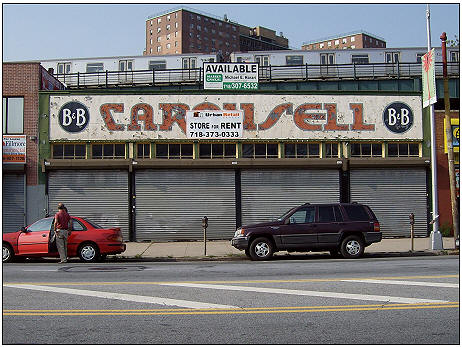
B & B Carousell
Coney Island was the home of dozens of spectacular carousels and could safely be considered the world’s largest assemblage of them. Today there’s only one left — the wonderfully misspelled B & B Carousell, which arrived in 1923. But don’t go looking for it. After being purchased by the city, the Carousell is currently being refurbished in Ohio for the fancy new Steeplechase Plaza, the city’s costly revamp of the Coney Island amusement sector. However its former home still sits, sad and vacant:

Prospect Park Carousel
Sitting close to the zoo and Leffert’s Homestead, this was also acquired from a Coney Island site in 1952, although the park has had merry-go-arounds since its inception. It stopped running altogether in the 1980s due to mechanical failures but was renovated in 1990. The park has a ‘horse adoption and grooming’ program to keep the carousel in working order.

The Carousel for All Children
This awkwardly named merry-go-round is located at Willowbrook Park in Staten Island’s Greenbelt. Nothing too retro about this ride; a modern model built in Ohio, it was installed here at Willowbrook in 1999. However, some of the horses are reproductions of those of Staten Island’s very first carousel — a version that entertained on Midland Beach Boardwalk from the mid 1910s that was dismantled in 1957.

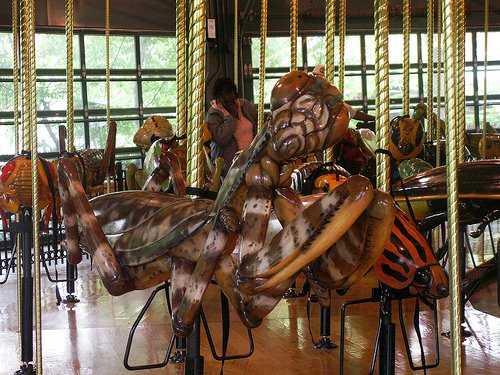
The Bronx Zoo Bug Carousel
The New York area’s newest carousel, debuting in 2005, the Bronx Zoo model is certainly the only one of its kind to be comprised entirely of insects.

Jane’s Carousel
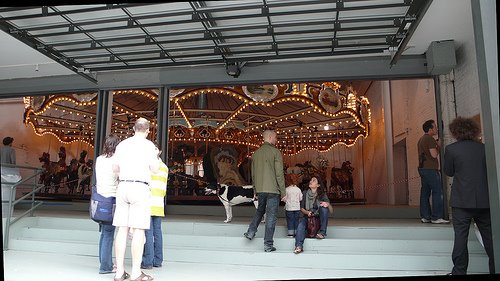
The strangest carousel in New York is one that unfortunately does not take riders. Jane Walentas, wife of Brooklyn real estate developer David Walentas, keeps a fully restored 1922 carousel (seen below) tucked away in a building on Water Street. Walentas, who purchased the crumbling amusement in 1984 and personally restored it, has been hoping the city would adopt her hobby horse for the expanding Brooklyn Bridge Park. Until then, pop by 56 Water Street to grab a view, if not a ride.

Know of any I might have missed?

Categories
Podcasts

PODCAST: The Creation of Central Park

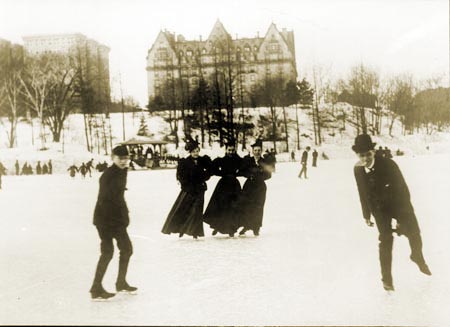
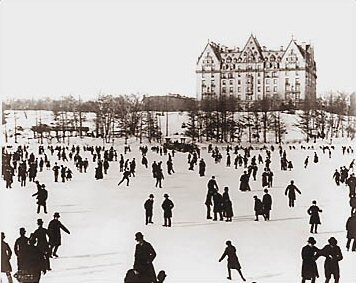
Above: Central Park’s first recreation was ice skating, almost as soon as the lake was completed in 1858. The Dakota Apartments look like a ski resort.

Come with us to the beginnings of New York’s most popular and most ambitious park — from the inkling of an idea to the arduous construction. Learn who got uprooted and find out who the park was REALLY intended for. On the 150th year anniversary of the design of Central Park!

Listen to it for free on iTunes or other podcasting services. Or you can download or listen to it HERE

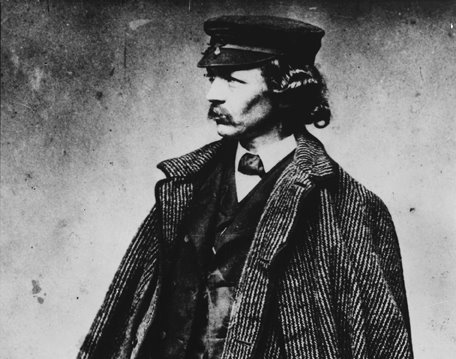
Frederick Law Olmsted, the brilliant and sometimes testy creator of the Greensward Plan, the basis for Central Park. As America’s go-to guy for park creation, Olmsted helped develop thousands of acres of public space in America, including the grounds of the U.S. Capitol, dozens of college campuses, and parks in Atlanta, Boston, Louisville and Detroit.

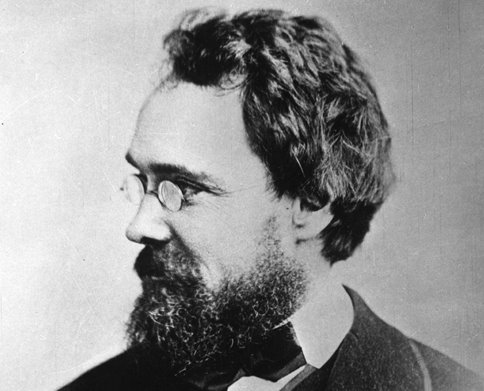
His British partner Calvert Vaux was a genius landscape architect in his own right. He and Olmstead would go on to also create Brooklyn’s Prospect Park. He’s particularly noted for personally designing Central Park’s more beautiful bridges, as well as the fanciful Belvedere Castle.

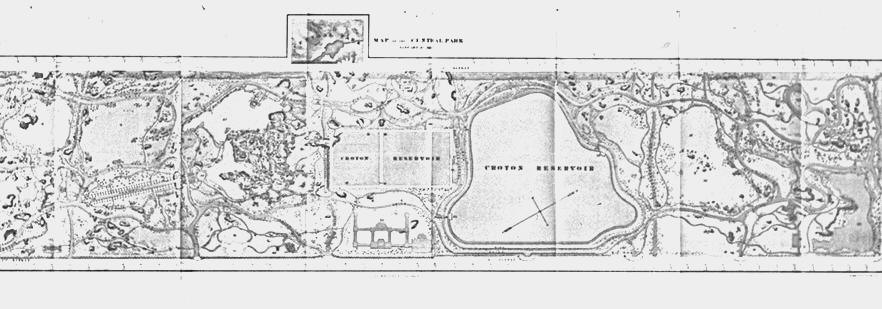
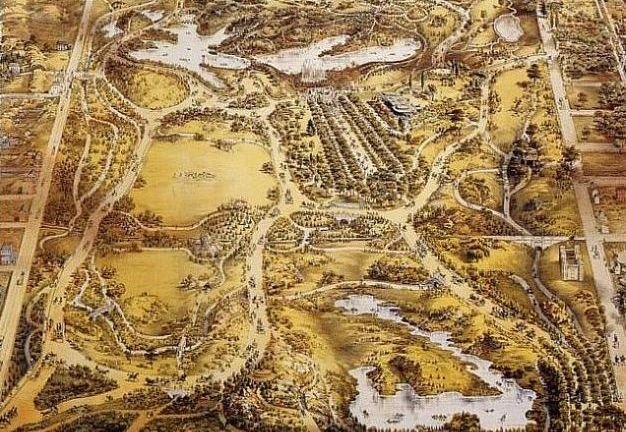
The original design of Central Park, circa 1857, informed by the upper and lower reservoirs and a noticable lack of structures. (Click on map for greater detail.)

From an original sketch of the Greensward plan, by Vaux

A brilliantly rendered lithograph of the Greensward plan (From an exhibit last month Celebrating Greensward.)

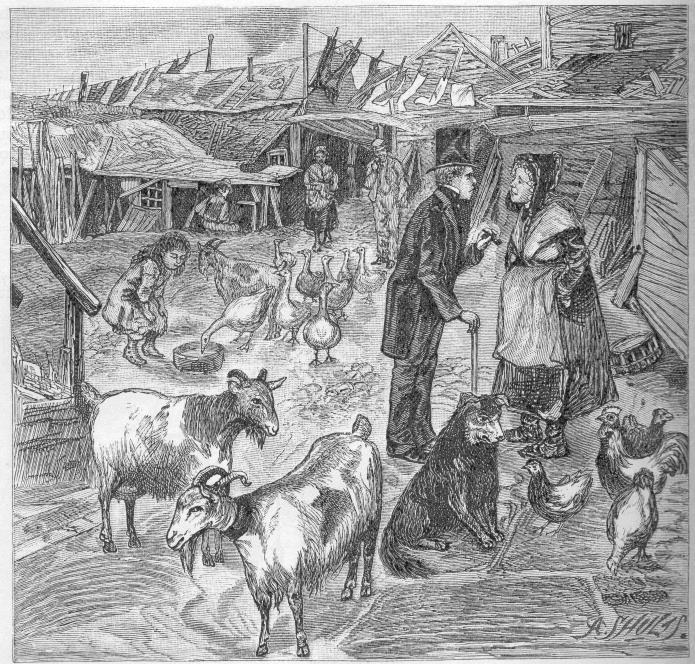
A sketching of some alledged ‘squatters’ in the lands that would eventually become the park. The reality of their situation was oftentimes far more complex.

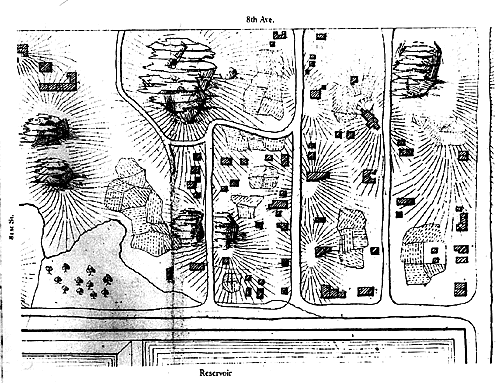
A map of Seneca Village (with Eighth Avenue at top), the small town of African-American property owners that was swept away with the building of the park

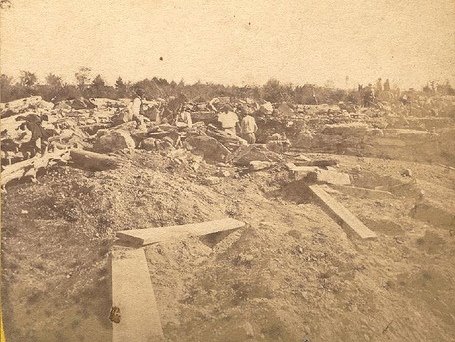
A rare photo of some rather unsightly construction in the park, circa July 1863

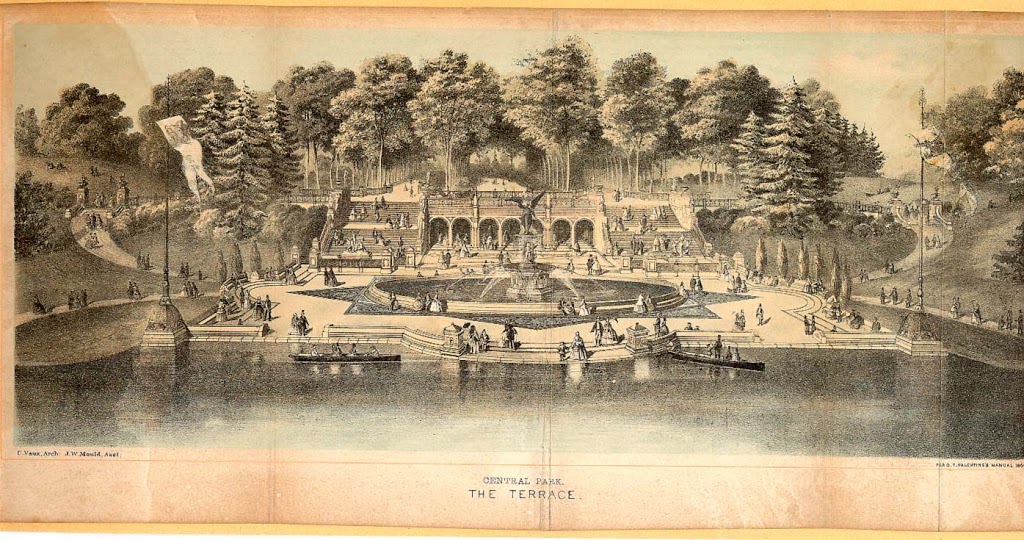
An illustration from 1864 of the Bethesda Terrace (click on the picture for greater detail)

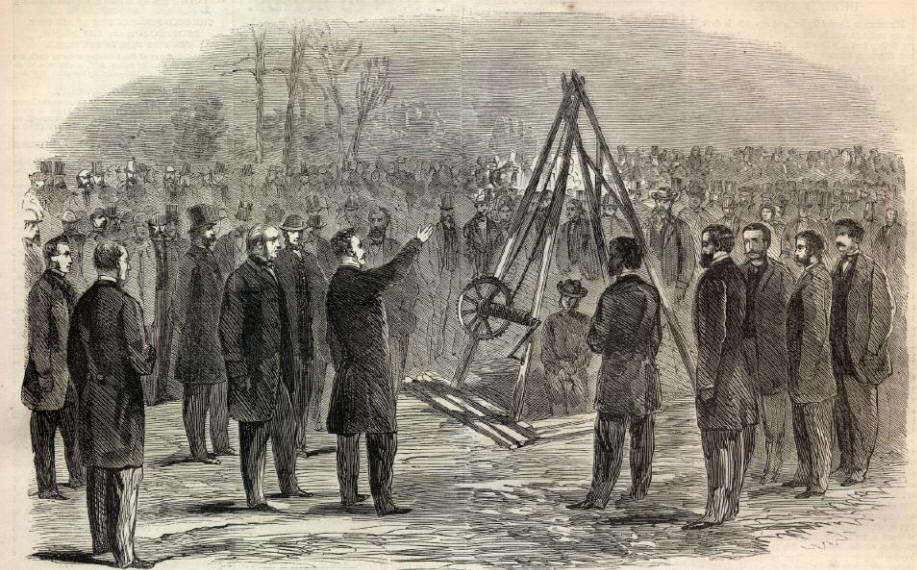
The original plan for Central Park included no monuments, and Olmstead wanted it that way. Still, by 1864, they were already hoisting up a tribute to William Shakespeare. In the picture below, the cornerstone is being laid on the 300th anniversary of Shakesspeare’s birthday, April 23

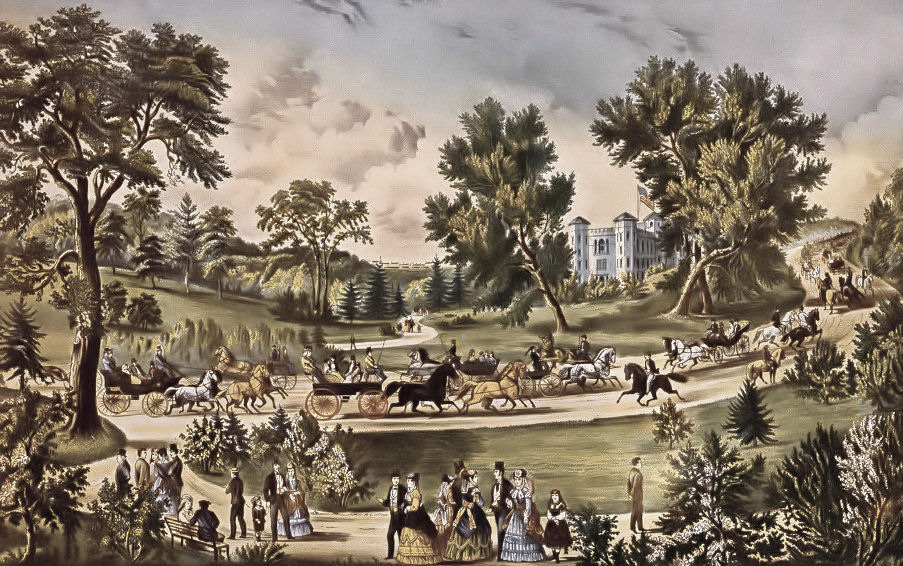
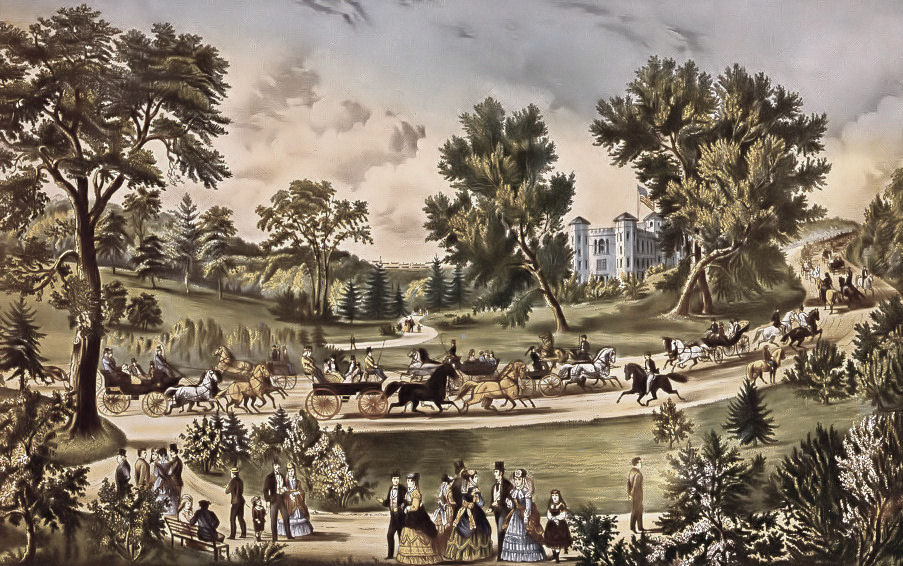
By 1869, the park had been taken over by elite New Yorkers, who could afford to ride through on their carriages. (Click for details of this rich picture.) In the background is the old Arsenal, which tranformed into the Central Park Zoo in later years.

Check out our older podcast on the Central Park Zoo and accompanying photographs.

Who is the Queen of Central Park?

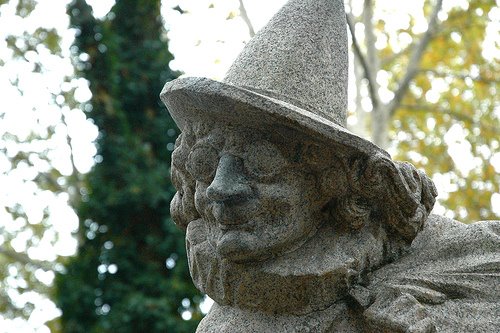
Above: the grotesque face of Mother Goose in Central Park. What did she ever do to deserve her own statue?

While mulling over the list of famous people great and small depicted in Central Park sculpture — Ludwig van Beethoven! Duke Ellington! Alexander Hamilton! — I was reminded of one curious and well-known fact: Not one statue depicts a non-fictional female.

Famous living dogs 1 (Balto), famous living women 0.

The most famous representatives of the XX chromosome are Mother Goose, Alice In Wonderland, and Juliet (of Romeo And). Dancing maidens, random ornamental goddesses and angels (if one can even consider them females, and not androgynes) are strewn throughout the park, but they’re essentially decor.

It’s not that they’re hesitant to honor women here. Jackie Kennedy Onassis had the reservoir named after her in 1984. The relatively obscure child welfare advocate Sophie Irene Loeb has a drinking fountain in her honor. Diana Ross even has a playground!

The age of honoring great souls in marble and bronze is well past, but hardly over. (Lebow, from the post below, was installed in 1994 and Ellington’s honor was erected in 1997) If they ever decided to honor a famous New York City woman here, who would it be?

Jane Jacobs definitely needs one (although maybe not in Central Park). Eleanor Roosevelt, the first American woman displayed in a public park, already stands contemplating Riverside Park. Onassis could use a statue as well, but let’s not get carried away. Nellie Bly, C.J. Walker, Billie Holiday, Abby Aldrich Rockefeller — all good choices, but not specific to this area.

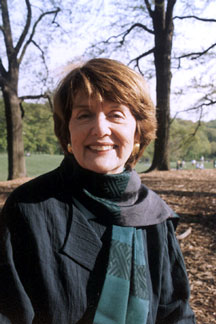
If you’re looking for one woman crucial to today’s Central Park, I would like to officially nominate Elizabeth Barlow Rogers, writer, landscape designer and the first president of the Central Park Conservancy.

In the first year of the Conservancy, 1980, Central Park was a shambles, hit by the neglect of the 70s financial crisis and years of massive events in the park which decimated lawns and public places. By the time the infamous attack on the Central Park Jogger took place in 1989, the park had become almost a national landmark to crime.


The Conservancy was (and still is) the publicly run lifeboat for the park. Working with mayor Ed Koch and parks commissioner Gordon Davis, Rogers (then Barlow) and the Conservancy began the herculean task of taking back the park, by the mid-80s assuming most of the responsibility. The Conservancy’s official site has a landmark-by-landmark rundown of restorations and underscores what a disaster area it was in the 80s. Millions of dollars of public funds were paired with city support to bring the park back to the original Olmstead and Vaux vision.

Rogers stepped down in 1996, having seen the park back to nearly full health, and founded the Cityscape Institute, a private fund-raising organization branching out to help other New York public spaces, including Battery Park and Malcolm X Plaza.

I would go as far as say that today Betsy Rogers is the Queen of Central Park, and of the domain of New York City parks in general. Rogers actually has a small plaque to her honor — in Diana Ross Playground — but why stop there?

Spawn of the Statue of Liberty

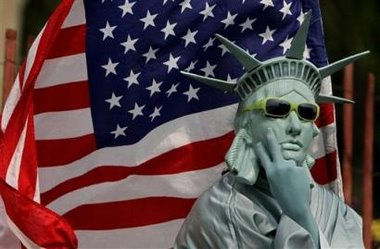
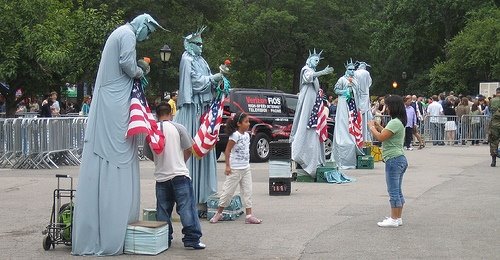
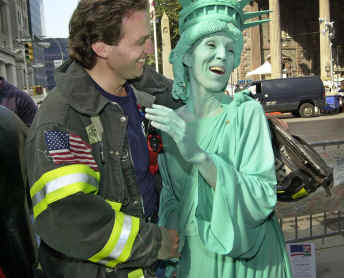
You know an area of New York has achieved tourist saturation when the first ten people you see are all identically dressed as the Statue of Liberty.

Performance artists regularly delight audiences near the city’s marquee tourist attractions — South Street Seaport, Central Park, Times Square. Most are truly worthy of the attention: the charismatic juggler, the dance troupe, even (though I hate to admit it) that person who acts like a robot making hydraulic noises.

But the army of Liberty impersonators are different. First of all, there’s usually a group of them, the largest number collecting themselves outside Castle Clinton, greeting visitors who are awaiting to see the real Liberty. Seeing four or five Lady Libertys is startling, surreal, even nauseating. It’s even exhausting looking at so many people draped in green wearing masks or face paint on a hot spring day.

Bonnie, a New York blogger, pinpoints exactly what it is that’s so ominous about them:

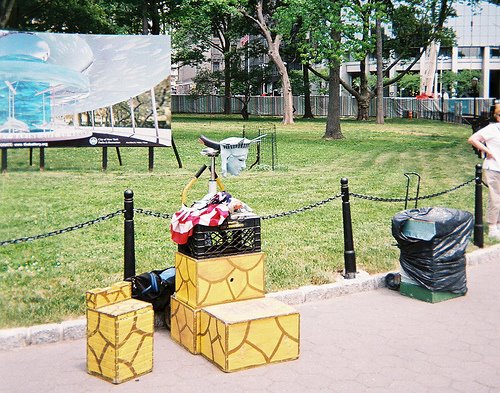
“The effect is actually rather eerily reminiscent of the killer from the “Scream” movies (actually I think somebody needs to make a horror movie set in NY and featuring one of these guys) …. on a dreary day like today you get the even weirder scenes of a busker who’ve gone on break leaving a small heap of folded green robe, and a Statue of Liberty heads (wearing shades) stuck on a pole”

Of course, Statue of Liberty replication is not a new phenomenon. In fact, you could say the replicates came before the real thing.


France’s gift to the United States — probably the best gift ever — was wholly funded by French citizens. Creator Frédéric Auguste Bartholdi devised a host of creative fund-raising ideas, including a concert series and a Liberty themed lottery. But he also created Lady Liberty souvenirs, miniatures of his design, as a way to boost enthusiasm and raise money. By 1889, Liberty was in New York harbor, but she had already started to spawn.

The French have their own Liberty which stands a little under 38 feet tall (or about the combined length of all the Statue of Liberty impersonators you can find in Battery Park at one time) within sight of the Eiffel Tower, planted near the Granille Bridge on the same date as New York’s. Later, her original formative model, a bronze Bartholdi had used to impress investors and demonstrate the statue’s scale, was donated to the Jardin du Luxembourg in 1900. Since then various other versions have been spotted through France, including Bartholdi’s hometown.

The Statue’s first and perhaps only legitimate American sister sat for decades atop the former Liberty Warehouse at 43 West 64th Street. Mini Liberty, close in design to one of Bartholdi’s actual fund-raising miniatures, sat overlooking the Upper West Side from 1891 to 2002, when she removed and given an honorific spot at the Brooklyn Museum.

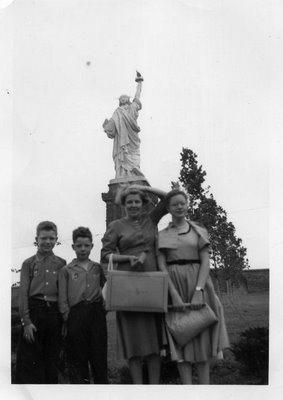
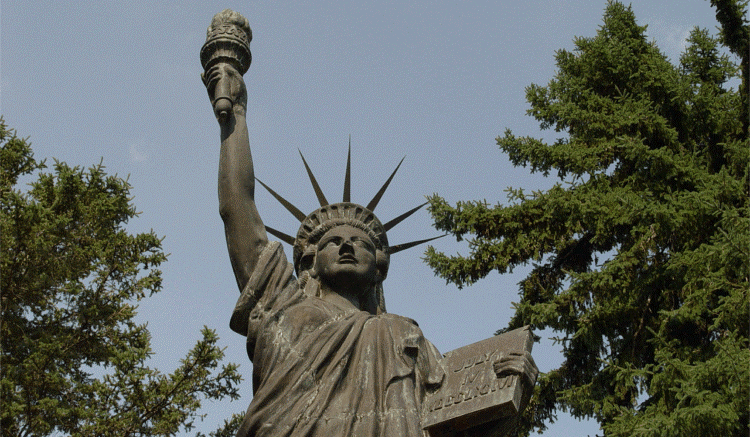
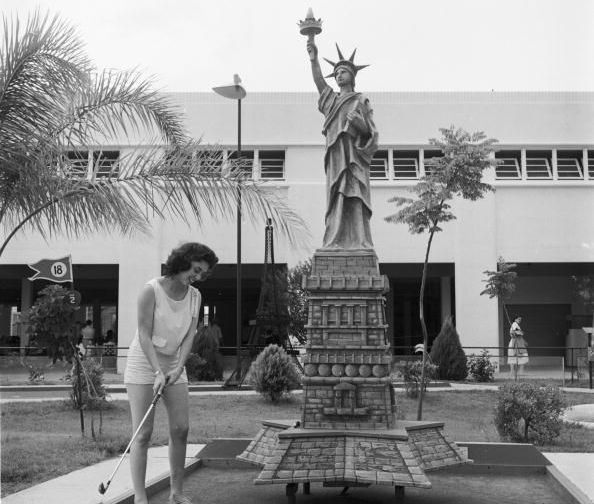
You can thank the American proliferation of Libertys on the Boy Scouts. During the 1950s, the Scouts donated over 200 ‘little sisters of Liberty’ to towns across 39 states and several territories. Kansas alone allegedly received 26 Liberty statues, possibly because the whole initiative was started by a Scout volunteer in Kansas City, Mo.

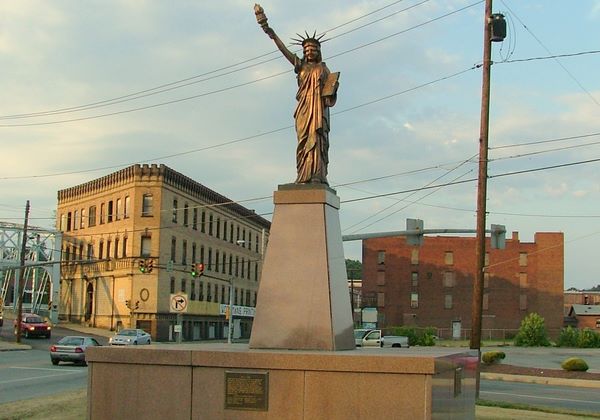
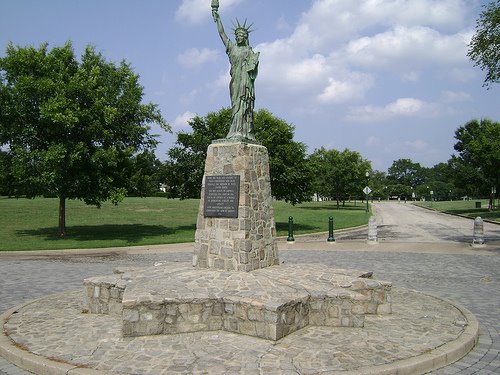
These replicas were usually not sculpted with the same care that Bartholdi brought to his replicas, with haphazard faces, odd scale and imprecise detailing on the 8’4″ copper statues. Of the dozens dispersed across the nation, at least a 100 have been identified today. After Sept. 11, many communities have taken great pride in restoring their li’l Libertys.

Here’s Liberty in Columbus, Nebraska:

In New Castle, Pennsylvania:

And Richmond, Virginia:

Liberty is a victim of her own symbolic nature. As small town America now had their copies, Liberty was spawning herself on Liberty Island in the form of souvenirs that allowed you to become the Statue of Liberty, using foam crowns and torches. Once, immigrants sailing into New York harbor could hope to take advantage of the values that Liberty embodied; now, people could simply embody Liberty herself as a way of taking advantage of some of those values.

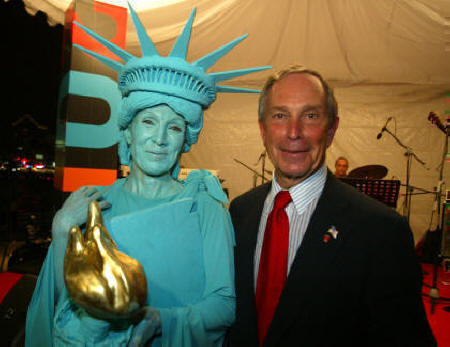
It may be impossible to truly identify the first Statue of Liberty impersonator, but I think there’s little argument about who is the best: Jennifer Stewart.

Stewart began donning Liberty drag in 1989. One clue that she might be one of the very first is her feelings to donning the green in public for the first time: ”I felt stupid. I thought, ‘The only consolation is that no one will recognize me.’

Stewart seems to be the ‘official’ Liberty impersonator, meeting with Rudy Guiliani, Michael Bloomberg and Hillary Clinton and appearing on national magazine covers. But it was that success that brought on the wave of imitators.

Photo credit: Kristen Artz / Office of the Mayor, 2005

Ms. Stewart may disagree, but one enticement to impersonating a statue is the ability to do so without any real displays of traditional talent. You don’t have to do backflips or breathe fire or pretend you’re Robbie the Robot. She’s stoic in her static. Although I would chime in here and ask, have you ever stood in one place for a really long time with your arm in the air?

And thus came the horde of Statue of Liberty impersonators, at first in performance make-up and stylized robes, later just in masks and sprayed-green sheets. Often she is given sunglasses or any number of patriotic embellishments.

Does repetition dilute meaning, or reinforce it? Interestingly, knowing who is behind the robes might give this borderline annoying trend a bit of resonance. According to an article in the Tribeca Tribune last year, the group of Libertys on a given day at Castle Clinton were all immigrants –“four Colombians, an Ecuadorian, a Honduran and a woman from China.” They were also mostly male performers. Who can’t appreciate a man who stands in a park dressed in drag all day to make a few bucks?

The Statue of Liberty has been duplicated in other, less disturbing ways. Check out our previous history of Lady Liberty on album covers. Or dive back into our older podcast on the Statue of Liberty from last September, with accompanying photo gallery.

And finally, this is just right on so many levels:

Pope-fest 2008: The Holy (Sight) See

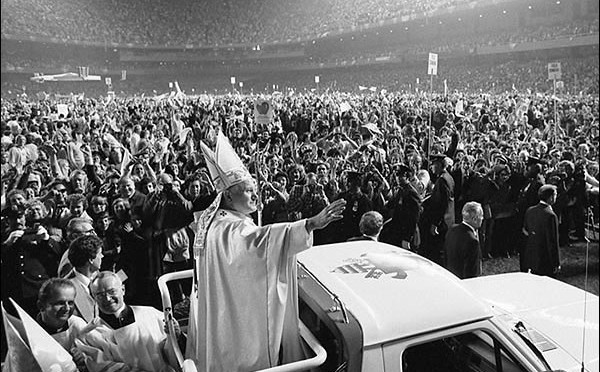
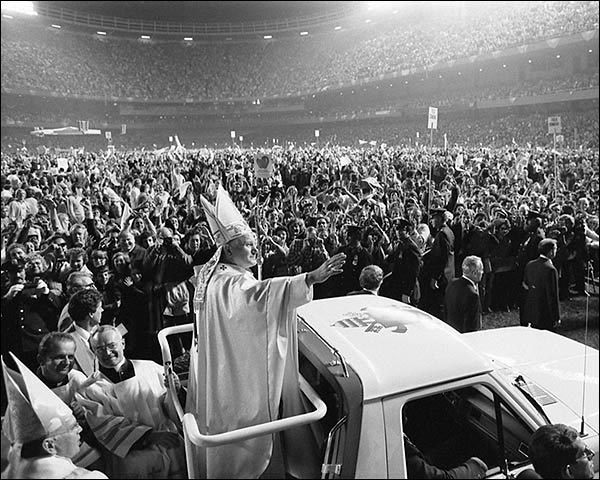
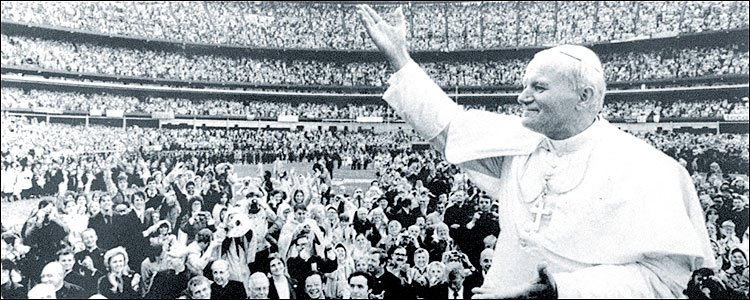
Pope John Paul greets the crowds at Yankee Stadium

Welcome Benedict! I’m not Catholic, but I do love a good papal visit to New York City. Nothing could be more absurd. The leader of the Catholic Church, a man who traces his spiritual lineage all the way back to the apostles — delivering mass at Yankee Stadium, traipsing Fifth Avenue in his sacred robes. I hope that person who dresses as Sesame Street’s Elmo in front of Rockefeller Center waves to Benedict as he enters St. Patrick’s Cathedral on Friday.

Only the Marquis de Lafayette and the Beatles have been treated to more rapturous displays of welcome by New York City residents. The city has been host to three previous papal visits, and in each case, St. Patrick’s has naturally been the manic center of activity. In fact each visit is immortalized on a plaque in front of the cathedral. Although with each trip, the pope in question managed to find a couple other unique corners of the city to visit as well.

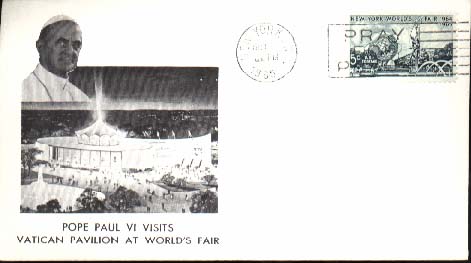
Perhaps the strangest was the very first — Pope Paul VI, the controversial leader who presided over the Second Vatican Council and made a name for himself traveling all over the world. Finally in an era were a man could be both pope and jetsetter, Pope Paul arrived in New York in October of 1965 and promptly went to visit his roommate, who was performing in a fair.

That roommate would be Michelangelo’s Pieta, on loan from St. Peter’s hallways to the Vatican pavilion at the 1964-65 World’s Fair. The Pope visited the Fair on Oct 4, 1965, on a busy day that also included mass at Yankee Stadium (the first papal mass ever in the United States), an address to the United Nations, and a meeting in the city with president Lyndon Johnson at the Waldorf=Astoria.

Today a rounded bench, or exedra, sits in Flushing Meadows park honoring the moment Pope Paul visited the Pavilion. (It seems that whenever a Pope hovers in a place for more than a few minutes, a plaque or monument springs up in its place.)

By the way, I found this extraordinary page full of great photos about the Pope-mobile, the superfine limousine used by the Pope during his visit.

But its Pope John Paul who’s the real New York favorite; he held the office for so long that he managed two trips to Gotham City — in 1979 and 1995.

His October 1979 trip was like a rock concert tour, also swinging through Philadelphia, Boston, D.C., Chicago and Des Moines. Part of the enthusiasm was because John Paul, at 58 years old, had just been appointed the year before.

As a cardinal, he had already held mass at Yankee Stadium, so by the time he did it again on October 2, 1979, he was as much a fixture as Reggie Jackson. Rain greeted over 9,000 cheering worshippers — or fans — and, according to legend, when the Pope mounted the ballfield to address the crowd, the rain showers stopped. And as a blessing for Mets fans, the next day the Pope also held rapt an audience of 52,000 at Shea Stadium (pictured below).

But like all rock stars, the Pope couldn’t complete his New York odyssey without a performance at Madison Square Garden. Although John Paul also addressed the U.N. and a St Patrick’s audience during that trip, he’s best remembered by many for his inspirational address on October 3rd to 19,000 city children.

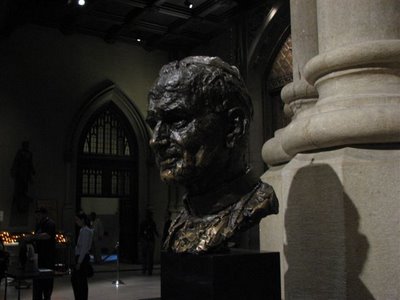
St Patrick’s honored his Holiness’s visit in 1979 by installing a bust (see below). But he would be back. On almost exactly the same day, sixteen years later.

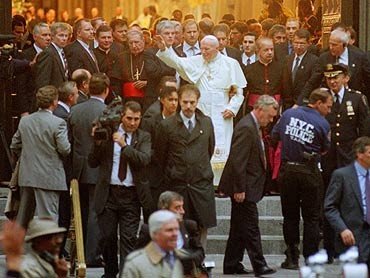
New York City in 1995 was a vastly different city and John Paul returned for a longer visit — four days in total in the entire New York area — on October 4th. This time, instead of just delivering messages to the clergy gathered at St. Patrick’s, he spontaneously decided he wanted to walk around the block. And why not? You’ve got shopping, Saks, street vendors selling Pope souvenirs!

Below: the Pope prepares for his light stroll

The Pope also finished off his collection of performing in gigantic venues for mass — holding court in Giants Stadium, the Aquaduct Racetrack in Ozone Park and eventually to 100,000 people on the great lawn in Central Park.

From there, the elderly leader of the Catholic Church gave the city the ultimate shout-out: “This is New York! The great New York! This is Central Park. The beautiful surroundings of Central Park invite us to reflect on a more sublime beauty: the beauty of every human being, made in the image and likeness of God. Then you can tell the whole world that you gave the pope his Christmas present in October, in New York, in Central Park.”

Pope Benedict, here for two days (April 19-20), has broken the apparently holy tradition of visiting New York in the first week in October. But Benedict, as the cardinal formerly known as Joseph Ratzinger, actually visited the city in that lesser role in 1988, where apparently he was met with protest from gay activists and shunned by some prominent Jewish leaders.

This year, he intends to hit all the “usual” Pope spots — St. Patricks, the United Nations, Yankee Stadium — but has added a couple surprising detours: Park East Synagogue and Ground Zero. At this rate, he might even stop in to see an off-Broadway show! Is Nunsense still playing?

Know Your Mayors: Fernando Wood

Our modest little series about some of the greatest, notorious, most important, even most useless, mayors of New York City. Other entrants in our mayoral survey can be found here.

And now we come to one of New York’s most notorious, absolutely in the top 10% of the most corrupt mayors ever in our fair city — Fernando Wood. He was the first mayor ever to be forcibly dragged from City Hall and arrested. Even then, he was elected more than once, was seen at one point as a savior, and even received the unanimous votes of New York City’s dead constituents. We also have him to thank for one of New York’s most treasured landmarks.

The Philadelphia-born Wood had distinguished himself as a former merchant and then as a member of Congress from 1841-43. His meteoric rise came through the assistance of Tammany Society, the frequently corrupt Democratic machine which all but dominated New York politics. By 1855, the year Tammany placed Wood in the mayoral seat, the Society was at the height of their control.

During his first term, 1855–1858, he was initially seen as a moral reformer, who “closed saloons on Sunday, suppressed brothels, gambling houses and rowdism, [and] had the streets cleaned” according to Tammany historian Gustavus Myers.

But these tokens of fortitude were a facade to extort support from those very vice industries. By 1856, he abolished the Sunday saloon restriction in exchange for their support. The Municipal Police Force under Wood became corroded with graft and bribery, at times more fearful than the crime they were purportedly there to eliminate.

So it should come as no surprise that even nativist gangs like the Dead Rabbits were soon under Wood’s control, ensuring ‘fair’ elections — fair for Wood, that is — by destroying ballot boxes, tossing others into the river and even tallying votes from lists of voters in cemeteries. It helped that rival gangs like the Bowery Boys (the gang, not us) were in the pockets of the Republicans.

Fed up with New York’s culture of corrupt law enforcement, in 1857 the state legislature formed a rival police force the Metropolitan Police Force. Wood’s Municipal force, fat from its complex institution of graft that essentially left crime to fester unabated, were not interested in stepping aside, nor did Wood relinquish his power to the Republican-controlled state. When Albany-appointed State Commissioner Daniel Conover arrived at City Hall, Wood promptly threw him out. (Wood had hired his own state commissioner, Charles Devlin, who bought the position for $50,000.)

Conover returned with the Metropolitan police force and a warrant for Wood’s arrest. Wood’s Municipal men were waiting, and when the captain grabbed Wood and began dragging him from City Hall, the Municipal men pounced.

Soon Metropolitan police were battling Municipal men, a surreal conflict now known as the Police Riots of 1857. With the assistance of the National Guard, Wood was briefly arrested. The Metropolitans eventually disbanded, but not before a chaotic summer of two rival police forces, cancelling each others arrests and raiding each other jails. Ah, it was a great time to be a knife-wielding gang member. *sigh*

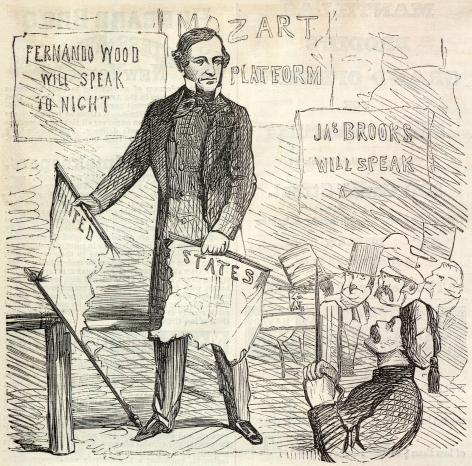
Disagreements with Tammany left Wood without his primary backers and out of office in 1858. (Industrialist Daniel Tiemann was mayor from then until 1860.) But under the aegis of a new political machine, called Mozart Hall, he swept back into office for another two year term.

This time, his allegiances took on a Confederate tenor. A sympathizer with the Southern cause, especially as New York’s profits as a port city were tied closely to Southern plantations, Wood suggested that New York City secede with the South. In his official recommendation, he proclaims, “Amid the gloom which the present and prospective condition of things must cast over the country, New York, as a Free City, may shed the only light and hope of a future reconstruction of our once blessed Confederacy.”

“With our aggrieved brethren of the Slave States, we have friendly relations and a common sympathy,” he remarked, in statements made January 6, 1961.

He also had a prescient idea for all the wrong reasons — to merge Manhattan, Staten Island and Long Island into a new independent commonwealth, known as the Free City of Tri-Insula. Had Wood gotten his way — and his plan was greeted warmly by the corrupt Common Council — the city might have joined the South. Less than forty years later, of course, similar consolidation plans (with less anarchic pretentions) prevailed.

Unfortunately for his grandiose schemes, the Civil War erupted in April of that year at Fort Sumter and a huge outpouring of support in New York soon swept Wood’s ideas into obscurity. In fact, being a crafty politician, he was soon organizing troops for the Union cause, the eventual result of which would soon lead to New York’s draft riots in 1863.

By then, however, Wood was out of the mayoral office and onto other pastures — namely the U.S. House of Representatives. How this man could have been elected with his track record is personally beyond me, but thus is the way of the New York political machine.

He did, however, leave us with one lasting mark on the city — the present-day location of Central Park.

Categories
Podcasts

PODCAST: Central Park Zoo

From an odd assortment of abandoned creatures, to one of the most notorious zoos in the world, take a tour with us through Central Park’s storybook zoo.

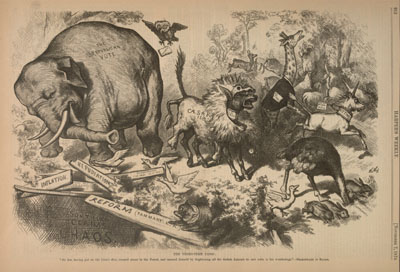
In the podcast I erroneously stated that a famous political cartoon using the Central Park Zoo as a political metaphor also featured Ulysses S Grant depicted as an ass. Perhaps that was some sort of Freudian partisan comment, because Grant himself is not in the cartoon, although it is about his alleged ‘Caesarism’, running for president for a third term back when it was constitutionally possible — but untraditional — to do so.

The ass in the cartoon below actually represents the New York Herald, the flagrant publication which ran the article on the Central Park Hoax as well as coining the phrase ‘Caesarism’.

The cast of the Zoo is featured (hmm, I didnt realize the Zoo had unicorns), as well as an elephant representing the republican vote, being scared off by the Herald’s bombastic opinions on Grant. This is the origin of the elephant as the symbol of the Republican Party:

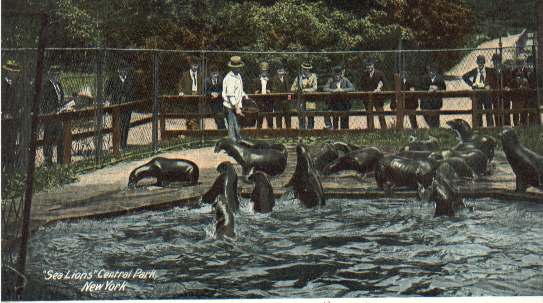
Now, onto the Menagerie! This postcard nicely displays the early collection’s unplanned evolution:

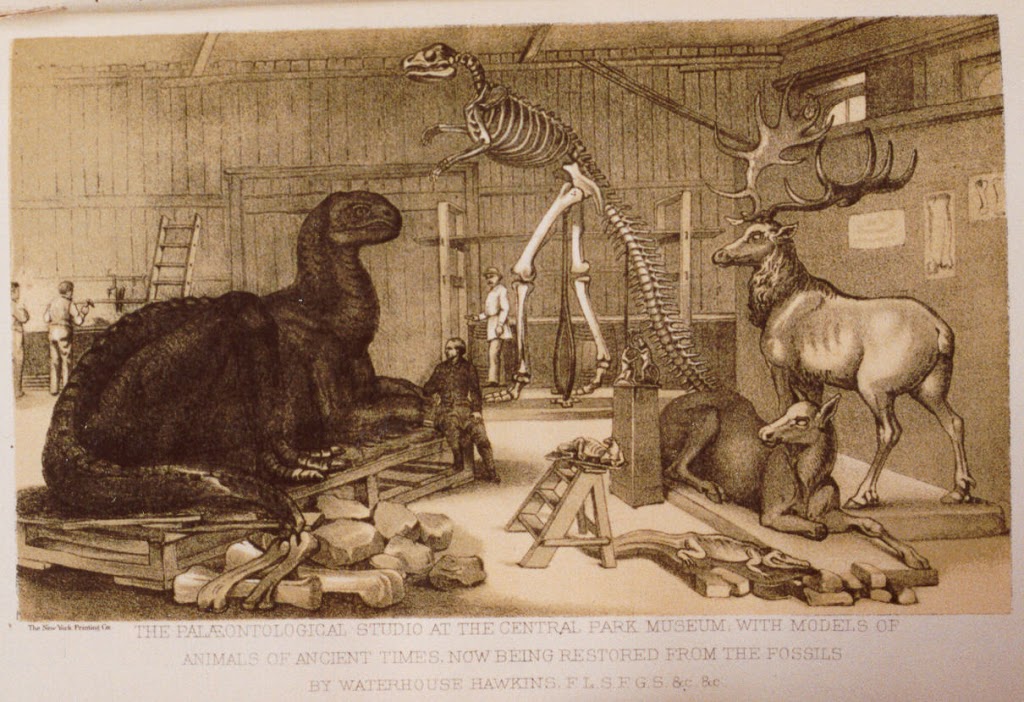
Before the Arsenal served as headquarters of the city park service and anchor to the Zoo, it was the temporary location of the Natural History Museum as well as workspace for paleontologists and their dinosaur skeletons.

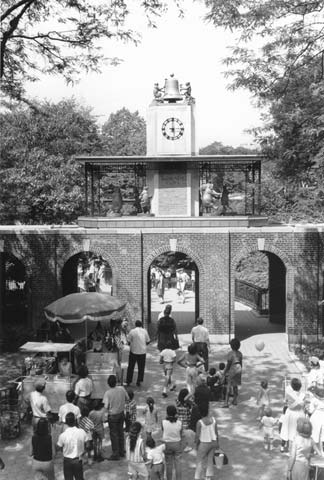
Part of the zoo’s rebirth in the 80s included the restoration of the Delacorte Clock, a throwback to grandiose European clock design that greets each hour with a parade of dancing animals and tinkling music. It was a gift of George Delacorte, founder of Dell Publishing Company, who also graced Central Park with a theatre and statuary depicting Alice In Wonderland. Over forty years old, the clock and its tinny nursery rhymes can be actually be heard from Fifth Avenue if you listen closely enough.

Although close in style, the nearby Dancing Goat fountain sculpture and its companion Honey Bear are actually from the 1930s, where they once flanked a lavish cafeteria inside the zoo that was demolished in the 80s to make way for the rain forest.

And a couple of our celebrity stars of the zoo:

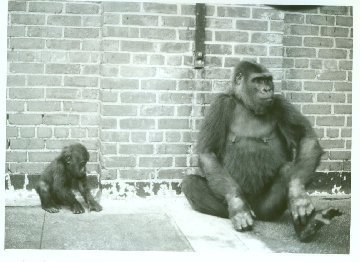
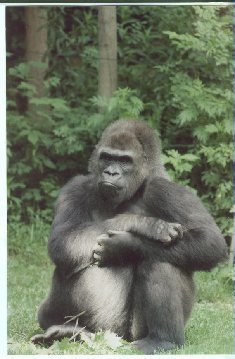
Patty Cake and her mother were quite the sensation in the early 70s. The first gorilla ever born at New York, she was named in a much publicized newspaper competition, and ever since, she has unquestionably been the city’s most famous gorilla.

Most baby gorillas are actually taken from their parents to be nursed, however Patty was cared for by both her parents, Lulu and daddy Kongo. Her father eventually fell on her, breaking her arm, and she was eventually transferred for a time to the Bronx Zoo. Her custody battle between the two zoos was even covered by Time Magazine.

Now as a permanent resident of the Bronx Zoo, queen of the Congo Gorilla Forest, at age 35, Patty is a proud mother of nine, including two rare twins, Nngoma and Tambo. And like any New York society diva, she’s also had four husbands.

In spirit, she’s also doing her share to stop gorilla poaching in Africa, through a charity called ‘The Pattycake Fund’.

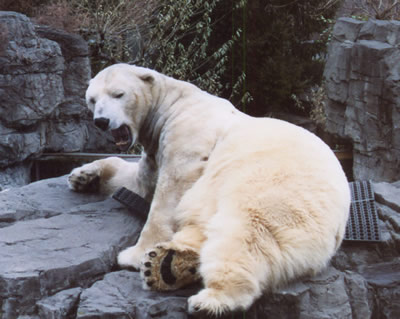
Gus, the no-longer-depressed polar bear, was really diagnosed by an animal behaviorist with psycotic tendencies, and the animals plight was so publicized that he made the cover of Newsday, significant coverage on CNN, and somebody actually wrote a play about him. Changes to Gus’ habitat were soon made, including better water circulation, and Gus’ mood has improved substantially. And anyway, why should he be depressed? He has two wives — Ida and Lily.

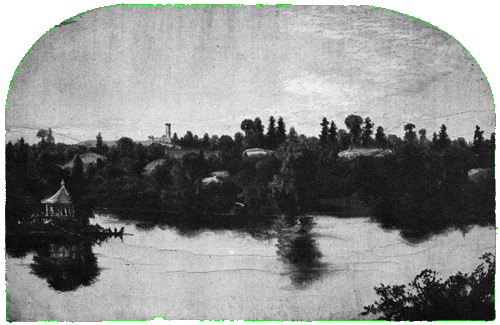
And finally take a gander at this painting from the mid 19th century of Central Park in its wilder days. The building in the back is the castle-like Arsenal, before a menagerie started appearing.

NYC NOIR: “He has his father’s eyes!”


The Film Forum is in the midst of their five week NYC Noir screening series, featuring some of the best thrillers, mysteries and action films set on the streets of the city. In this blog every Thursday of the series, we’ll feature a bit about one of the films, and encourage you to go check out some of these classic flicks. Past entries of this series can be found here. Showtimes and other movies in the series can be found at the Film Forum’s website.

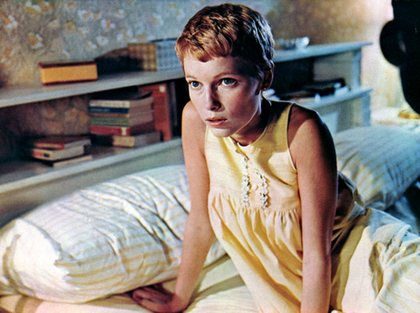
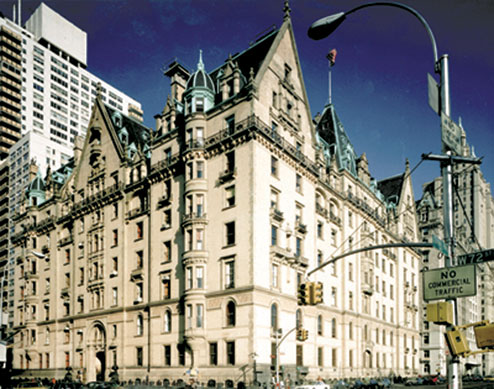
And killing two birds with one stone — as its also the topic of this week’s podcast — this week we feature a disturbing supernatural thriller Rosemary’s Baby and its primary setting, the Dakota Apartments, located at Central Park West and 72nd Street.

First of all, to correct a slip of the tongue from the podcast. No film has ever been shot in the interior of the Dakota. The exterior has been used in several films, most recently in Vanilla Sky, which may have given Tom Cruise and Katie Holmes the idea to buy a place there. The Dakota was first used in the 1949 Joseph Mankiewicz (All About Eve) directed film noir House of Strangers with Edward G Robinson. It’s safe to say that the Dakota is a perfect place for film noir.

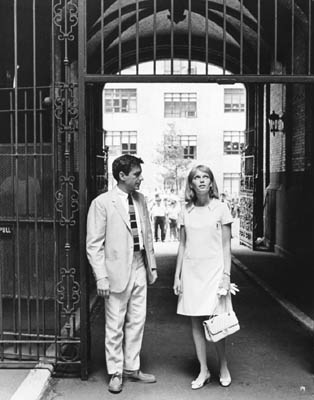
Here are stars Mia Farrow and John Cassavetes just inside the beautiful gated entry of the Dakota. When it was built in the 1880s, horse-drawn carriages rode through the gate to let out their passengers, then parked in the stables nearby. The center of the courtyard features a fountain, which greeted residents before they climbed up one of four seperate staircases to their homes.

By the way, it was while filming at the Dakota that Mia’s husband Frank Sinatra served her divorce papers. Tacky.

The Dakota is believed to have gotten its name from the preferences of developer Edward Clark’s towards the names of new American states (which represented ‘new money’). Others stories suggest that at the time of its construction, the new building was so far north that it would have been like visiting ‘the Dakota territories’. From this picture, that seems plausible:

The Dakota was host to Manhattan’s artistic elite, the home of famous actors, writers and composers. According to the book “Upper West Side Story, a History and Guide” “The early tenants included the piano manufacturer Theodor Steinway and his friend the music publisher Gustave Schirmer, who liked to fill his salon with such brilliant guests as Mark Twain, William Dean Howells, Herman Melville and Peter Ilyich Tchaikowsky, who came to town in 1891 to donduct the opening night concert at Carnegie Hall.” Latter day tenants included Paul Simon, Connie Chung and Maury Povich, and of course the Dakota’s most famous tenants, John Lennon and Yoko Ono.

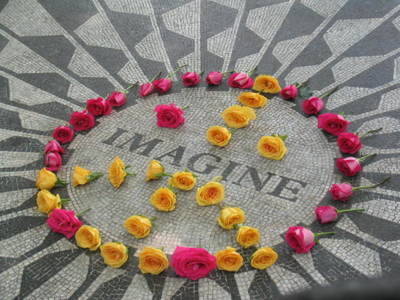
After Lennon’s murder in front of the Dakota — not far really from the grisly fake murder in ‘Rosemary’s Baby’ — the portion of Central Park nearest to the building was christened Strawberry Fields, and mural made of tiles from Pompeii was constructed in honor of the musician. The place has taken on a general purpose of celebrations and mournful gatherings: you’ll find people congregated there for the birthdays of living Beatles, the anniversary of Lennon’s death and even 9/11 memorials.

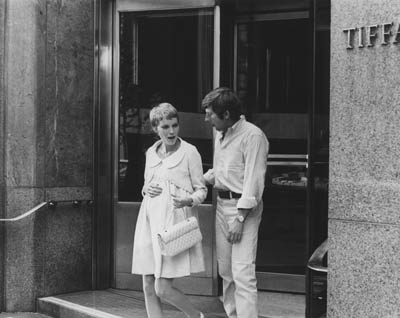
“Rosemary’s Baby” was filmed in other locations throughout the city, including stretches of Park Avenue above 42nd Street, the Time Life Building, and Tiffany’s. Here’s Polanski with Farrow rehearsing a scene:

Man(hattan’s) Best Friend: Famous Dogs of New York

Take a stroll with us as we chart New York’s most famous canine crusaders, from a Central Park icon to the biggest star on Broadway history ever found in a kennel. Oh and watch where you step.

Listen to it for free on iTunes or other podcasting services. Or you can download or listen to it HERE