Categories
Adventures In Old New York

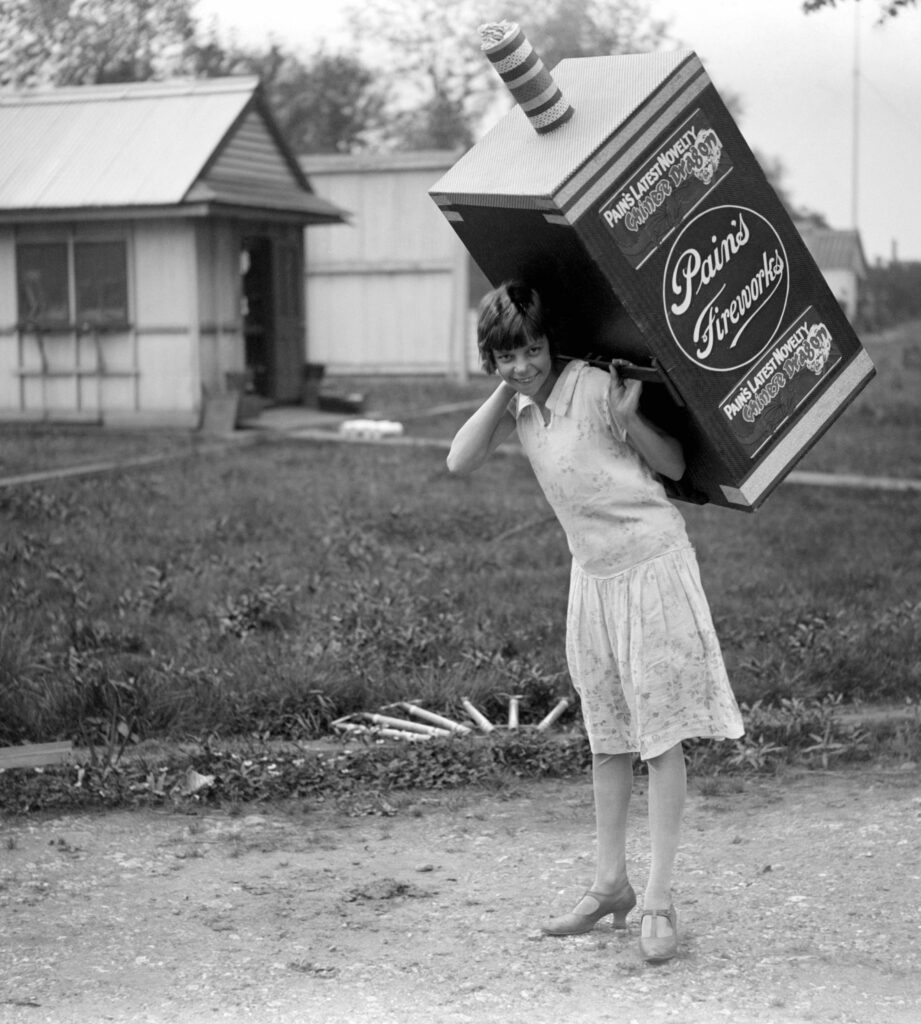
Firecracker Lane: New York’s explosive shopping district

Looking for a healthy assortment of fireworks to ignite for the Fourth of July holiday? In New York, from the late 19th century until the 1930s, one needed to look no further than one of the city’s most heavily trafficked areas near City Hall.

Firecracker Lane was a short row of fireworks dealerships that sat on Park Place between Broadway and Church Street, a couple blocks away from the old Astor House and the congregants of St. Paul’s Chapel.
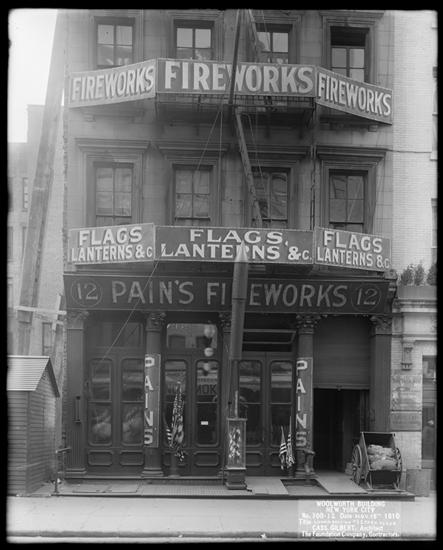
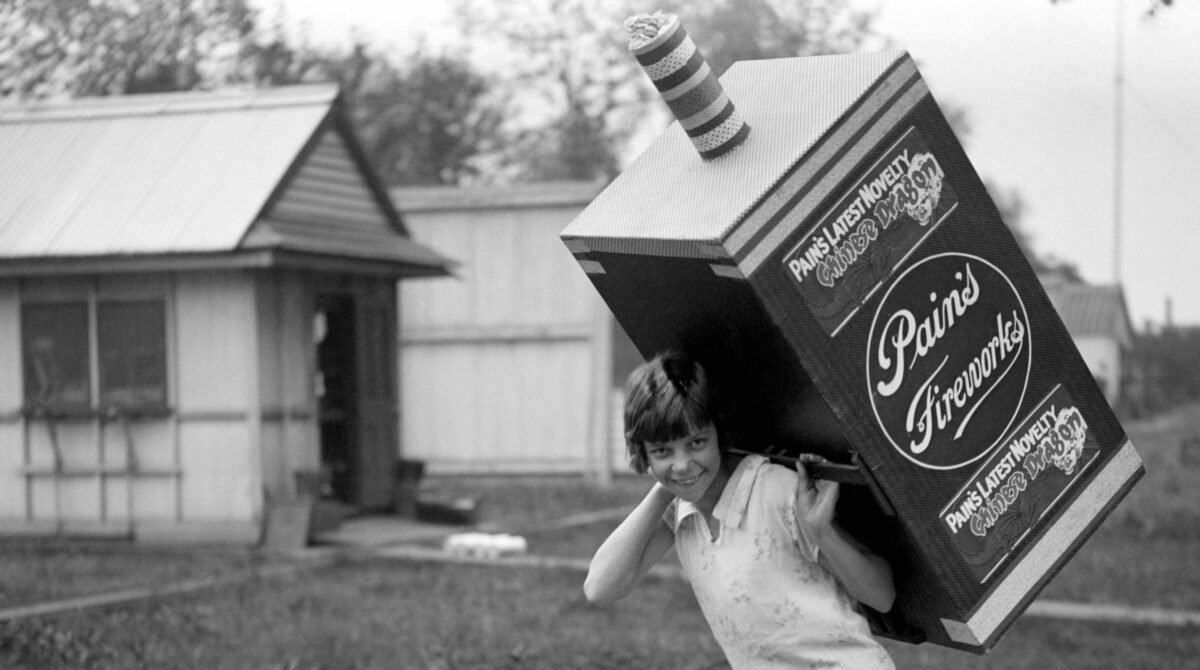
12 Park Place, one of the prominent retailers of explosives along ‘Firecracker Lane’.  James Pain was known as one of the world’s greatest pyrotechnists.  Today the Pain name lives on in a UK fireworks company. (Wurts Brothers, courtesy MCNY)

As questionable as that might sound,  fireworks were actually quite common on the streets of New York in the 19th century.  And Park Place was New York’s official ‘fireworks mart‘, specializing in “celebration goods,” even well into the years that its new neighbor, the Woolworth Building, towered over its shelves of fanciful explosives.
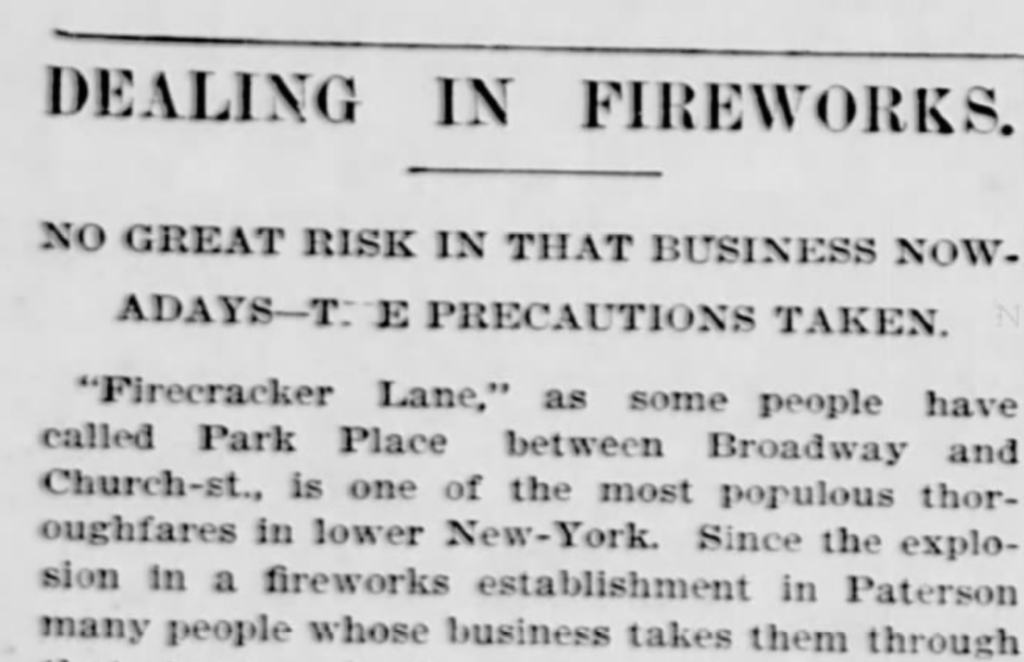
From the New York Tribune, June 30, 1901

The proprietors of Firecracker Lane could attest to their shops’ safety.

“Fireworks are not made now as they were years ago and for that reason there is little danger,” said one shop owner, adding, “A fire in a fireworks store when once started will make good headway in short order, but there will be no great explosion, no blowing down of walls, nor wiping out of buildings…” What a relief!

Coincidentally, both the Great Fire of 1835 and its modest cousin the Great Explosion of 1845 both ignited many decades before just south of this area.  So proprietors here made doubly sure to reassure people that such conflagrations could never happen because of their merchandise.
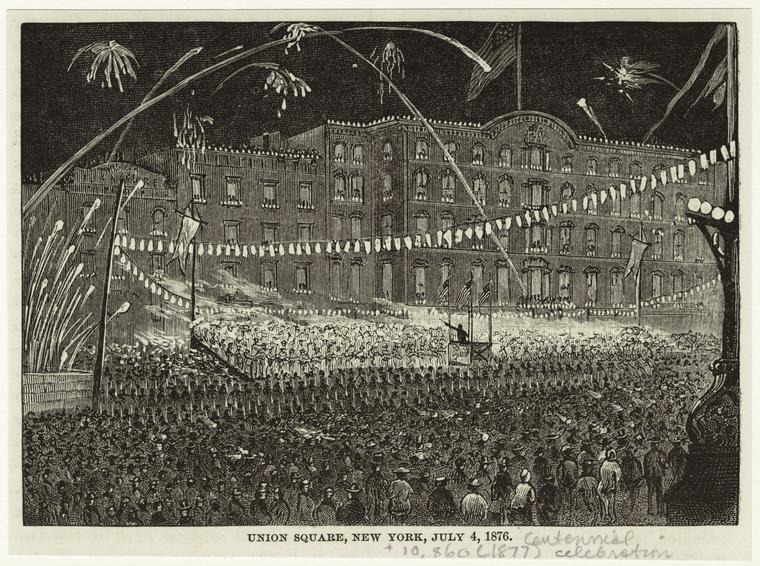
Below: Union Square under the sparkle of fireworks on July 4, 1876 (NYPL)

But it was another explosion that was on the minds of New Yorkers during the 4th of July 1901. Just a couple weeks before, across the water in Paterson, NJ, a fireworks factory exploded, killing 17 people who lived in the tenement above.

“So great was the force of the blast,” reported the New York Times, “that a boy playing in the street a half a block away was lifted from his feet and hurled against an iron fence, and had one of his legs broken.”
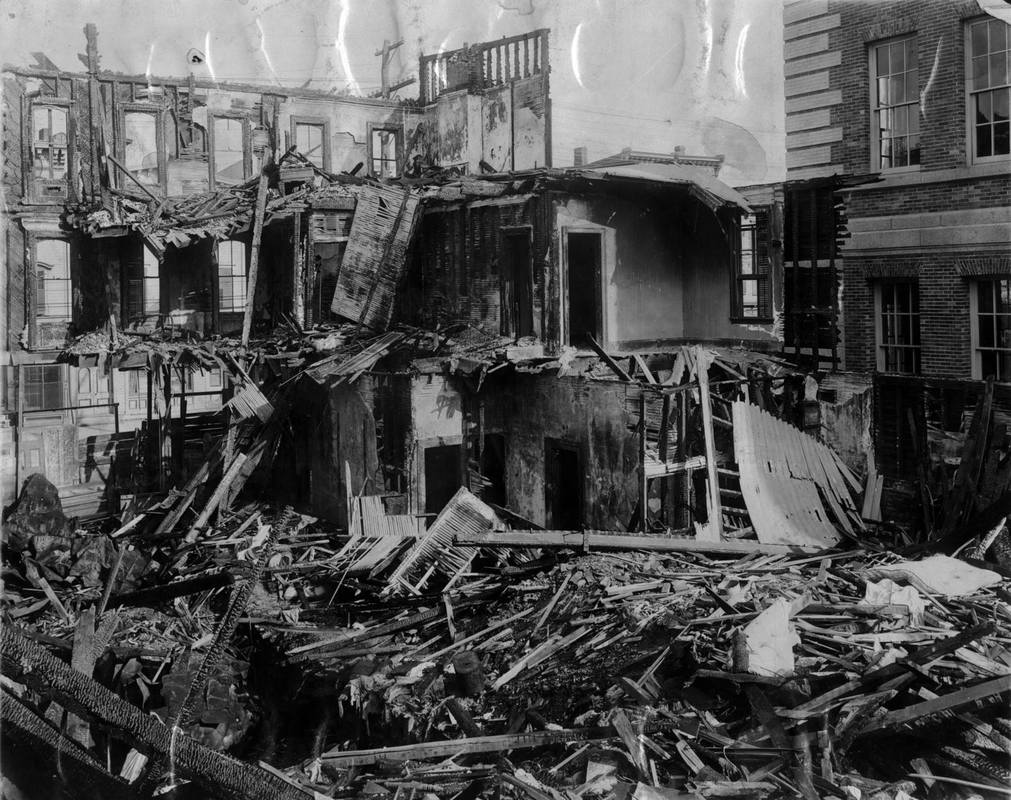
The Paterson tenement, destroyed by an explosion in the fireworks factory in the building. (Courtesy Paterson Fire History)

For this reason, people started avoiding Firecracker Lane, getting to the elevated train station by going the long way around, avoiding the boxes of potentially combustible merchandise stacked along the sidewalks.

Perhaps they were wise to do so. In July 1903, in front of one particular establishment, the Unexcelled Manufacturing Company, at 9 Park Place, a box ignited, showering the street with a terrifying display of rockets and smoke.  
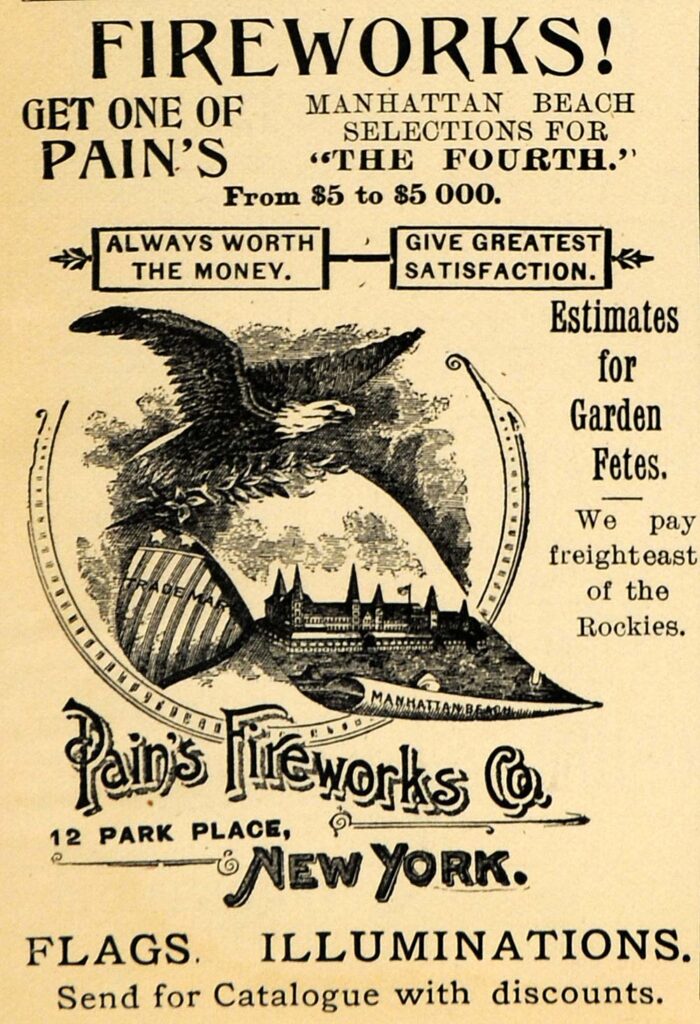
“[T]he contents, consisting of rockets, firecrackers and several small bombs, went off with a noise that almost equalled that made by Pain’s destroying of Pompeii [referencing a popular Manhattan Beach attraction].”

These Firecracker Lane establishment had larger plants in rural areas like Staten Island, but that did not minimize the danger. In 1907, the plant owned by one Park Place shop exploded in Graniteville, Staten Island, killing two children.
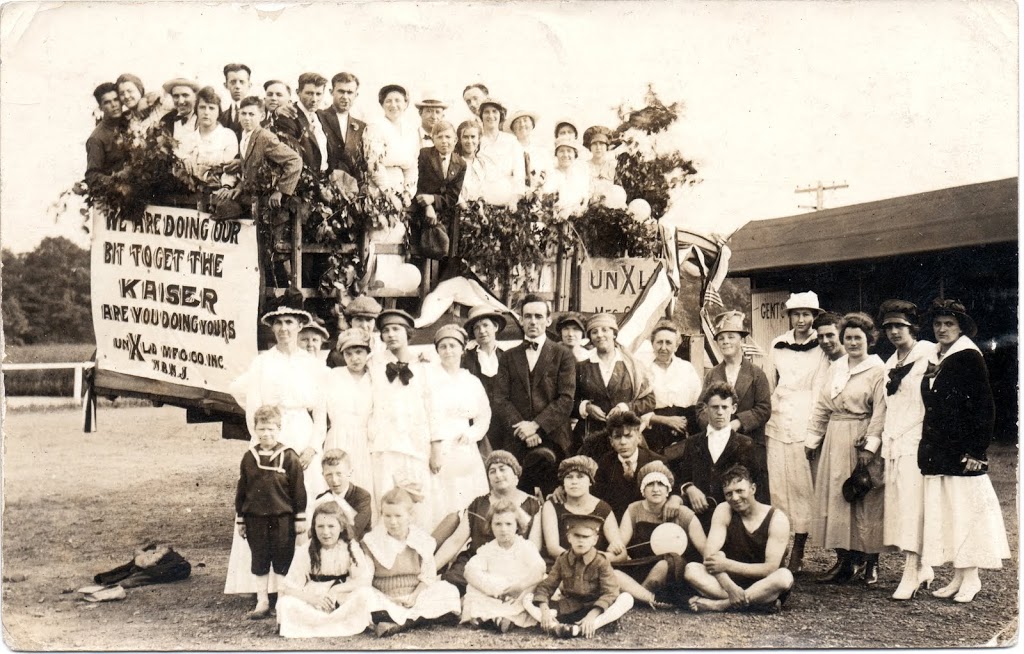
Workers (and their families) on a float in New Jersey, representing the Unexcelled Manufacturing Company. During World War I, the company also manufactured signal rockets, flares and other wartime equipment. (Courtesy Great War Postcards)

Believe it or not, you could still buy fireworks on Park Place as late as the 1930s.

However the once-bustling Firecracker Lane had been whittled down to just two shops — the Unexcelled Manufacturing Company and Pain’s Fireworks Display, owned by the very man who been responsible for the afore-mentioned Pompeii display, thirty years earlier!

By this time, the city began cracking down on the usage of fireworks, fueled by reports of hundreds of fireworks-related injuries filling city hospitals during Independence Day festivities.

 The old Park Place establishments, forced to sell to an ever decreasing number of small towns where fireworks remained legal, could not withstand the scrutiny and eventually closed.

The sale and possession of fireworks were officially prohibited in the state of New York in 1940. 

Who protested the loudest? The town of Graniteville, Staten Island!  

By 1940, it was a leader in American fireworks production;  it had even produced displays for the 1939-40 New York World’s Fair (pictured below).

But after another terrible explosion here in 1942 killed five people, the factory’s days were certainly numbered.  

By 1945, the last of New York’s fireworks factory shut for good.
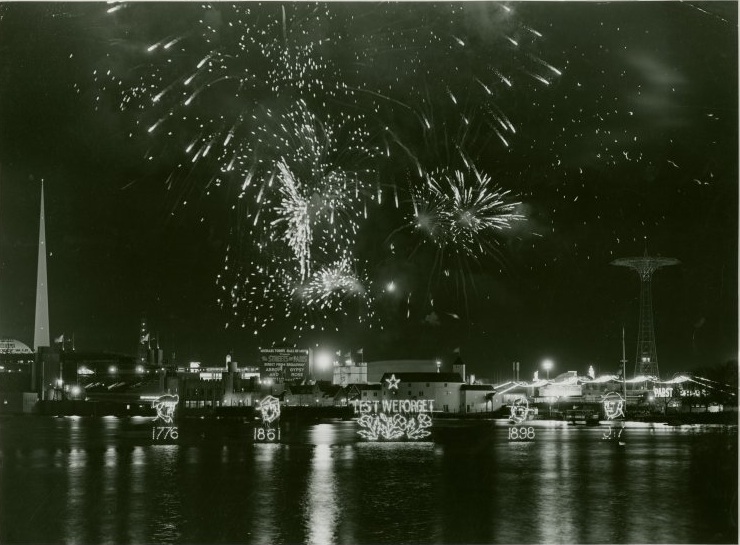
The World’s Fair of 1939-40 (NYPL)
Categories
Landmarks

What a resume! Cass Gilbert’s three stunning prequels to the Woolworth Building


From this angle, you can see two of Cass Gilbert’s creation, the West Street Building and the Woolworth under construction.  View of his Broadway-Chambers Building is obscured by the building to the left. (LOC)

It’s Woolworth Building week here in New York City!  The lights of Frank Woolworth‘s treasured office tower were turned on in an official ceremony on April 24, 1913, and the building opened for business on May 1.

The five-and-dime mogul reached for one of America’s leading architects in planning his namesake tower. Cass Gilbert had distinguished himself in Minnesota before arriving in New York City in 1899 where he immediately went to work transforming the skyline.

Why was he given such a prestigious assignment to create the world’s largest building?  Judging from his work in New York prior to the Woolworth job, there would have been few more qualified than Gilbert to create on a grand scale something so innovative, distinctive to Woolworth’s vision and in keeping with Beaux-Arts values of the day.  Unlike another great architect of the day like George Post — whose greatest works have almost all completely vanished — all three of Gilbert’s early New York buildings survive.

Here’s the three buildings that helped him snag the commission for the Woolworth headquarters:

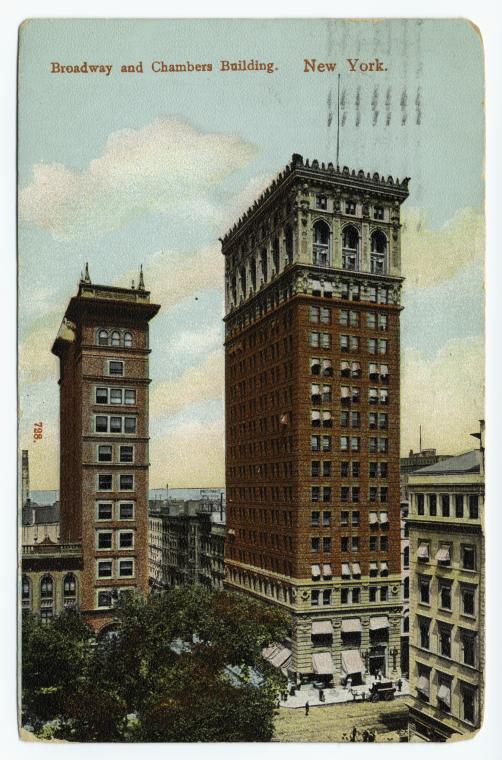
The Broadway-Chambers Building
277 Broadway
1899-1900

Gilbert’s designs for this sturdy tower with a lovely copper top (now, of course, oxidized to green, just like Lady Liberty) featured a mix of brick and terra-cotta, some polychrome, a rarity for its day.

The building’s new tenants required changes to Gilbert’s original plans. The Domestic National Bank on the second floor, who happened to employ a great number of women, required an increase of accessible women’s bathrooms.  And the United States Life Insurance Company demanded several large safes be transported to upper floors and installed.  Despite the changes, the structure was completed in a staggering four months.

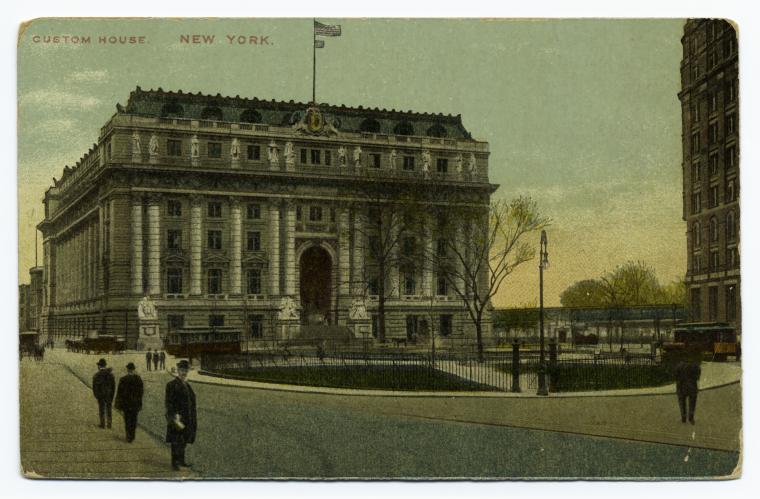
Alexander Hamilton Custom House
One Bowling Green
1902-07

The competition to replace the old Custom House at 55 Wall Street was the impetus that brought Gilbert to New York to create one of America’s finest examples of Beaux-Arts architecture.  He was a heavily contested choice, as his designs beat those of New York firms like Carrere and Hastings (later to create a similar building for the New York Public Library).

The seven-story office — more like a monument, really — sits atop the location of old Fort Amsterdam, giving the location a sense of import with its four representative sculptures (by Daniel Chester French) of Africa, America, Asia and Europe.  Today the structure houses the Smithsonian’s National Museum of the American Indian.

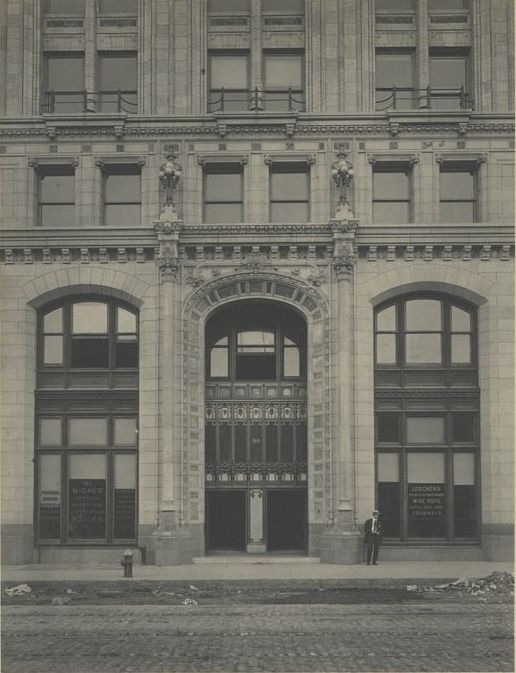
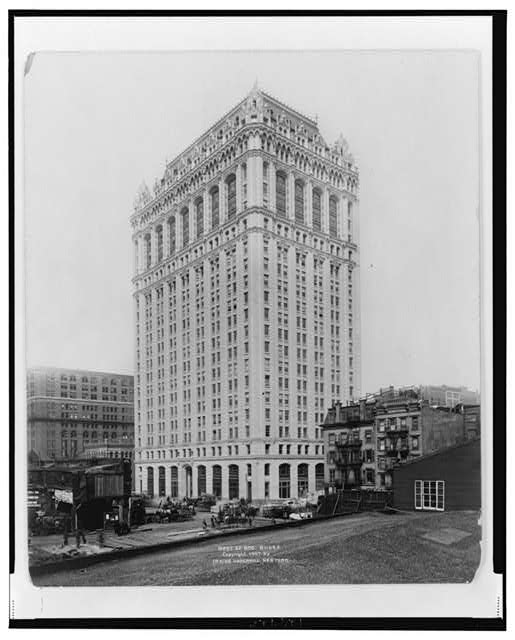
West Street Building 
90 West Street
1905-07

But it may have been his 1905 commission to design a waterfront office building on West Street for ferry operator and asphalt king Howard Carroll that secured his reputation as a virtuoso of the skyscraper age.  The building, to serve port and railroad industries of lower Manhattan, had Manhattan’s highest restaurant on its top floor.  At the time, this was shorefront property; today it stands across from Battery Park City.

Gilbert would dabble in themes and styles with the West Street Building that would be further explored with the Woolworth Building.  No other building shares as many features with the Woolworth Building as this one.   Former rival John Carrere admitted, “If my opinion counts for anything I think it is the most successful building of its class.”

Below: the West Street Building, the side facing into Manhattan. 

Pictures courtesy NYPL.