This is how they turn on the lights at the tallest building in the world in 1913:
At some time after 7 pm, on April 24th, according the New York Sun the following day, “President [Woodrow] Wilson pushed a button in Washington last night, a bell tinkled in the engineer’s quarters far below the street level in the Woolworth Building and thousands of lights [80,000, by contemporary accounts] flashed out … to signal that New York’s newest heaven kissing tower was opened formally for service.”
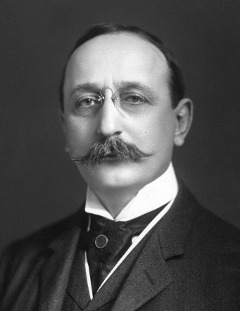
As normal New Yorkers stared up in wonder at this glowing candle near City Hall, an electric vision that lorded over the dark hulk of the unloved Post Office across the street, a collection of wealthy men were gathered up on the 27th floor for a lavish banquet in honor of the building’s architect, Cass Gilbert (at right).
The Tribune called it “the highest dinner ever held in New York.” (The building is 57 floors; dinner could have been much higher but for tenants who had already moved in.)
Holding court this evening was, of course, Frank W. Woolworth, the man whose retail empire inspired the building’s construction.
Also presiding over the gala was Francis Hopkinson Smith, a close friend of Gilbert’s who, several years earlier, just happened to built the foundation for the Statue of Liberty.
People toasted a true American entrepreneur. They toasted his visionary architect and his world-class achievement. Many toasted the fact that both men, after years of arduous work, were still talking to each other.
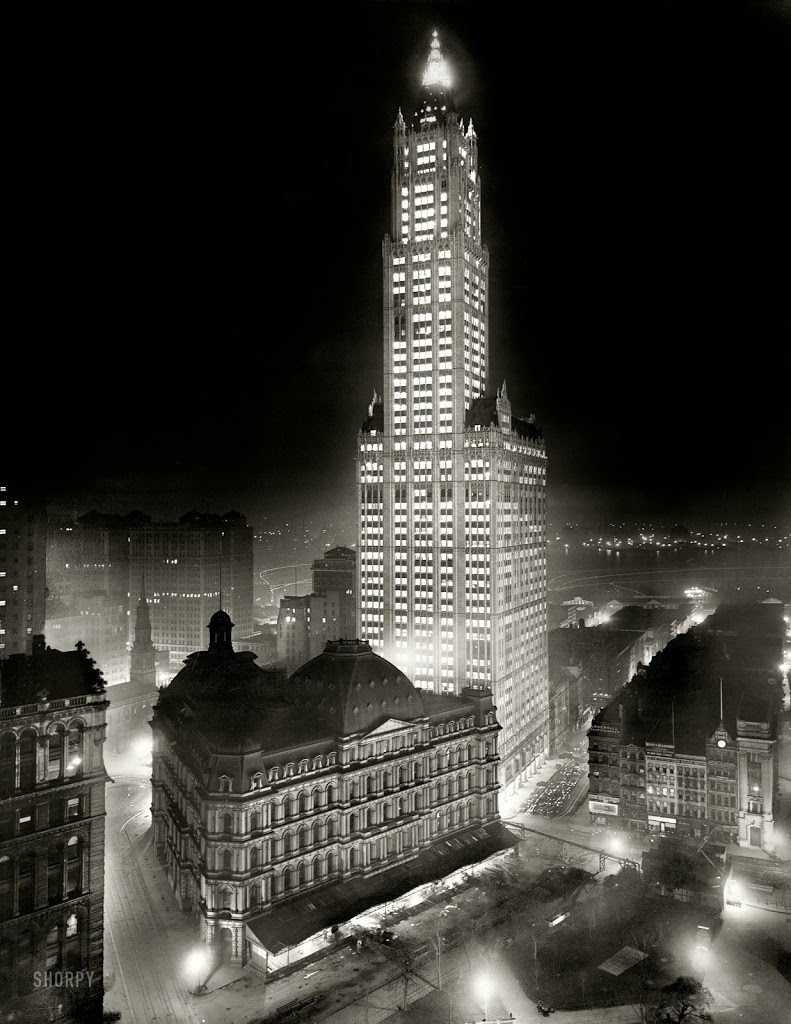
The Woolworth Building at night in 1913. This extraordinary photo is courtesy of Shorpy, my favorite website of all time. Click here to see the whole spectacular version and to search their their archive of cleaned-up vintage photos. (You can find the original picture at Library of Congress.)
It was a celebration of the filthy rich, possibly one of the most indulgent dinners of the Gilded Age.
In attendance were governors, dozens of congressmen and military men, judges, the police commissioner and at least seven of Woolworth’s early business partners. A letter from William Howard Taft, a month into his post-presidency, elicited enthusiastic applause.
But nothing like the reaction when Gilbert stood up to honor his benefactor, who paid for the entire building from his lucrative retail profits. “I asked his bankers about it and they told me that the Woolworth Building is a structure unique in New York, since it stands without mortgage and without a dollar of indebtedness.”
At this, the 37th floor erupted into “the big noise of the celebration.” Gilbert was then presented with a bronze foot-high cup — a literal trophy earned for building one for Frank Woolworth.
Following the dinner, Boy Scouts — patient ones, apparently — then raced downstairs ten floors to the Marconi wireless station, where an honored greeting was sent back to President Wilson.
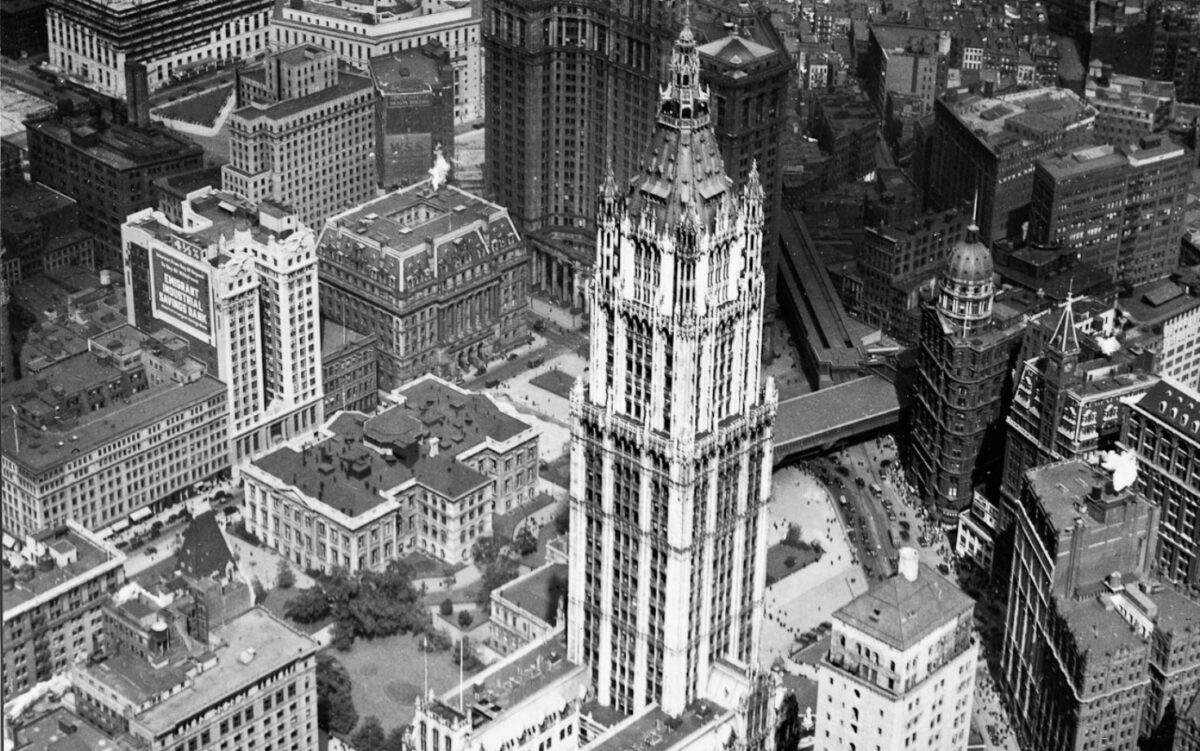
Below: The Woolworth and lower Manhattan in 1919, lit from a building in Brooklyn. Specifically this was the Sperry Spotlight. You can read my article on ‘the world’s most powerful searchlight’Â here. (Picture courtesy Library of Congress)
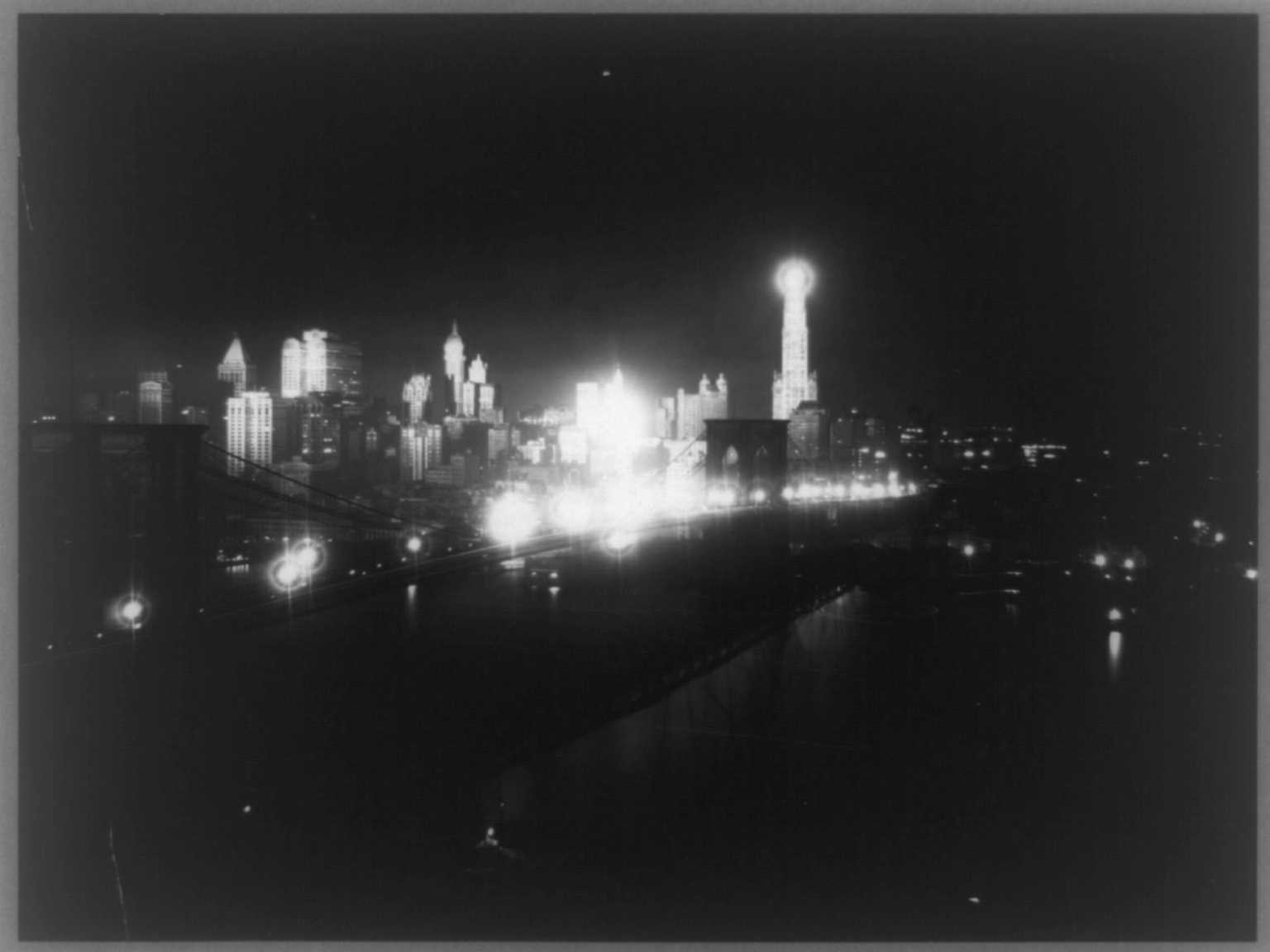
The Woolworth Building was an achievement of American capitalism and a fabulous symbol of limitless New York real estate. Its technical achievements, impossible to imagine a decade prior, only reinforced the themes of the day — money could defy gravity.
On the day of the official opening, the following ad ran in the Evening World (While April 24th was the ceremonial first day, May 1st was the beginning of the building’s leases.):
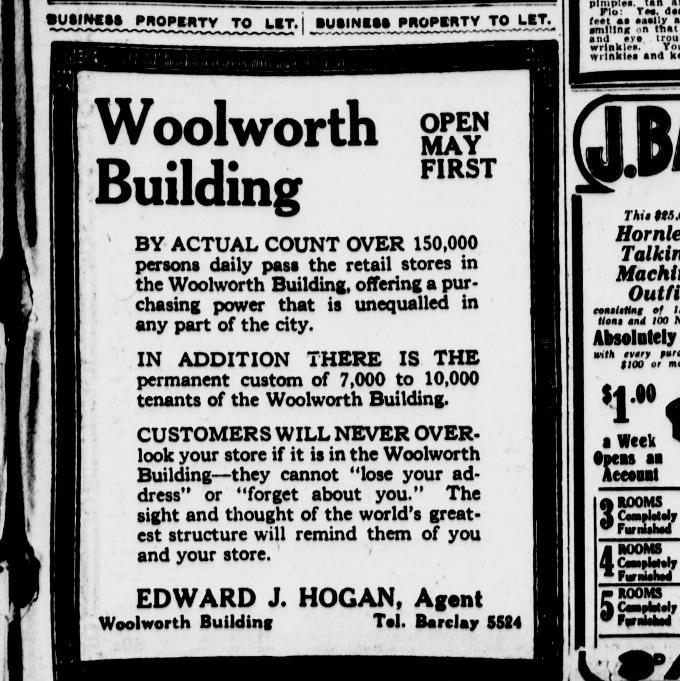
Nobody would “forget about you” — provided you took out a lease at the Woolworth — but most importantly they certainly wouldn’t forget the name affixed to this building. The Woolworth continued the trend of business owners who created skyscrapers as a show of business dominance.
Newspapermen popularized the trend — for instance, The World Building, offices for Joseph Pulitzer‘s New York World, was also a world’s-tallest at one point — and insurance companies and retailers would perfect it.
In fact, three decades later, the crown for world’s tallest building would be taken by a structure in midtown Manhattan named for a car company — The Chrysler Building.
The Woolworth was considered a vertical super-city, in an era before anybody ever dreamt of Rockefeller Center.
“You can deposit and draw money at the bank on the first floor; in the basement there are barber shops and a swimming pool, one of the largest in New York …. There is an arcade lined with attractive shops whose fronts are entirely of plate glass. Then there is a luncheon club, library and gymnasium on the 28th floor and an observatory station on the roof.”
Woolworth’s own businesses took up only two floors. The rest were filled with such premiere tenants as Fordham University (its law school and dean’s offices were here), Irving National Bank and even Columbia Records.
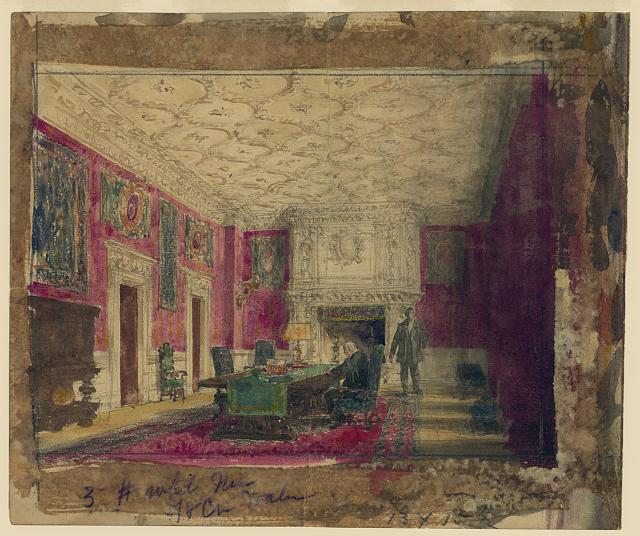
Below: A study for Woolworth’s private office in the Woolworth Building. Frank Woolworth was obsessed with the life of Napoleon Bonaparte, and his office was fashioned on a room from Napoleon’s castle in Compaigne, France. (Pic courtesy LOC)
Today, we might consider the Woolworth Building to be a rather elusive monument. You can’t regularly tour it, and its style, before New York’s zoning laws, makes it a unique stranger within New York’s skyscraper population. You can’t interact with it like Grand Central, and it doesn’t have the personality of the art-deco Chrysler or the Flatiron.
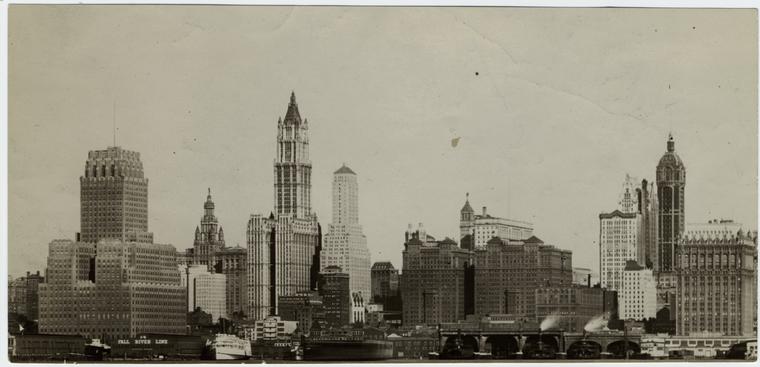
But even if its nightly mystical posture on the skyline somehow fails to ensnare you, the Woolworth Building stands alone as an influence to almost every skyscraper that has come afterwards, from the Empire State Building to the Woolworth’s old neighbor the World Trade Center.
Of the many grand visions born in New York before the 1910s — the Erie Canal, Central Park, the Croton Aqueduct, the Brooklyn Bridge — the Woolworth Building is easily the most effortless in execution. And arguably the most duplicated.
Or as the Sun prophesied a week after the building opened: “The Woolworth Building is unique, it was explained. Its style of architecture is original in office buildings and there were no precedents or rules upon which to go. The proportions have now been ascertained and will be available for the guidance of architects in the future.”
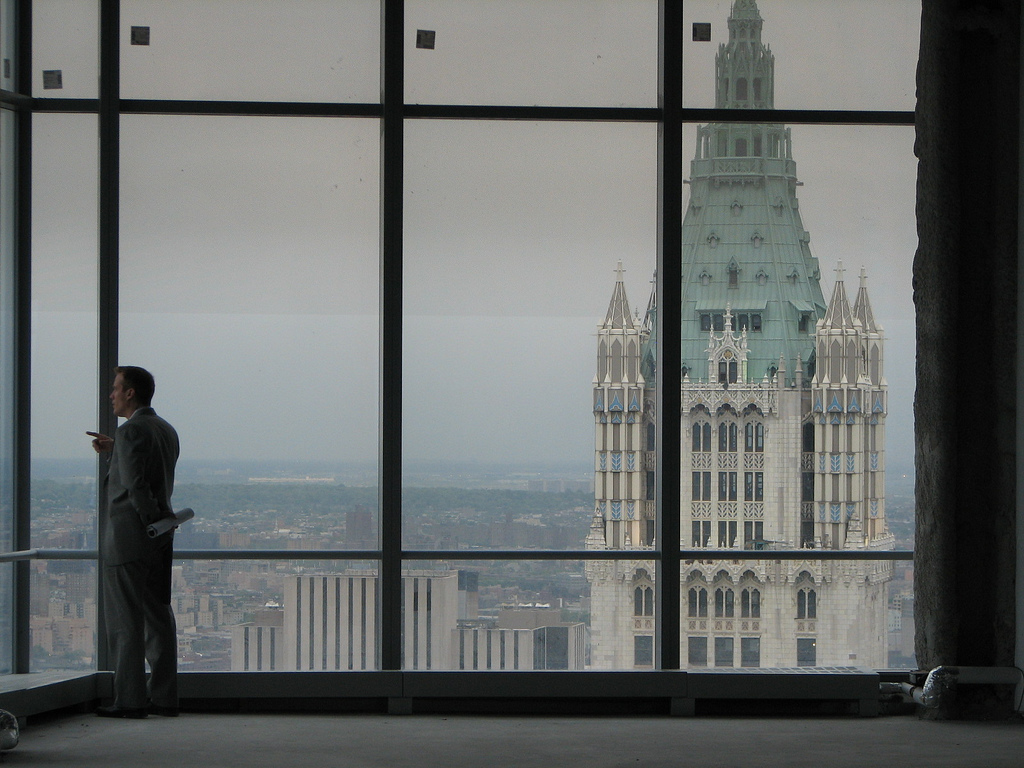
Photo by Alan Miles/Flickr
————-
A couple other Woolworth Building themed posts in the past week: Cass Gilbert’s three stunning prequels to the Woolworth Building and Before Woolworth: The early towers of lower Broadway at the birth of the skyscraper boom.
Interested in learning about the history of the Woolworth Building? It’s our Episode 76. You can download it from here, find it on iTunes, or just play it below!
__________________
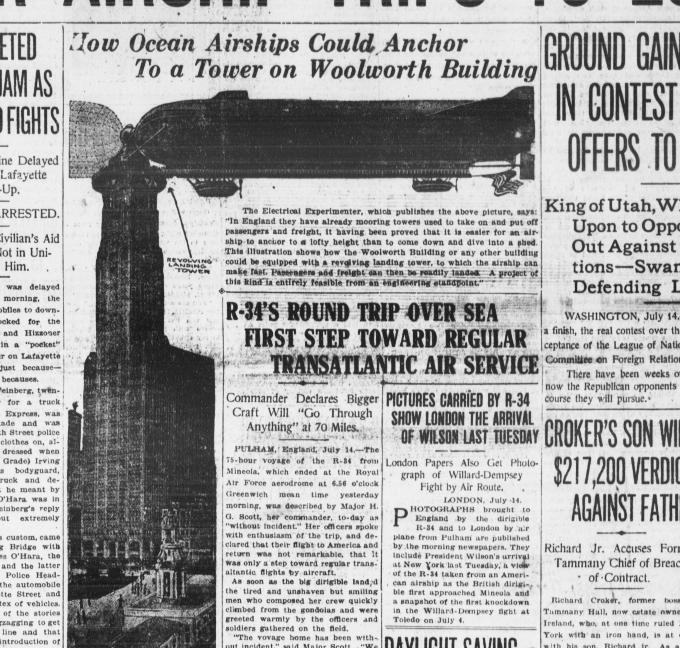
And finally, I found this in a July 1919 copy of the New York Evening World — the Woolworth Building as a possible air dock for dirigibles! (This never happened of course.)
This article originally ran on the Woolworth Building’s 100th anniversary.