Categories
Newspapers and Newsies Podcasts

The Trial of John Peter Zenger: New York and the Birth of the Freedom of the Press

A long, long time ago in New York — in the 1730s, back when the city was a holding of the British, with a little over 10,000 inhabitants — a German printer named John Peter Zenger decided to print a four-page newspaper called the New York Weekly Journal.

 This is pretty remarkable in itself, as there was only one other newspaper in town called the New York Gazette, an organ of the British crown and the governor of the colony. (Equally remarkable: Benjamin Franklin almost worked there!)

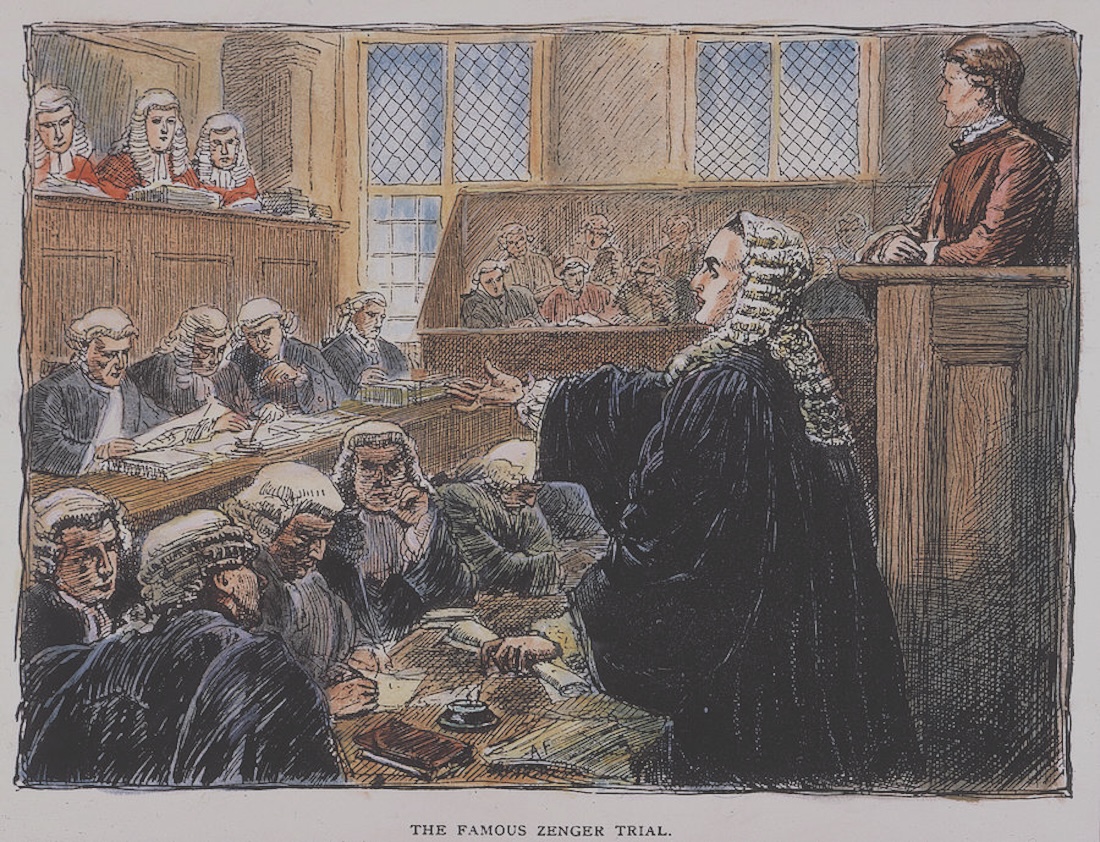
But Zenger’s paper would call to question the actions of that governor, a virtual despot named William Cosby (at right), and in so doing, set in motion an historic trial that marked a triumph for liberty and modern democratic rights, including freedom of the press and the power of jury nullification.

This entire story takes place in lower Manhattan, and most of it on a couple floors of old New York City Hall at Wall Street and Nassau Street. Many years later, this spot would see the first American government and the inauguration of George Washington.

But many could argue that the trial that occurs here on August 4, 1735, is equally important to the causes of democracy and a free press.

LISTEN NOW: THE TRIAL OF JOHN PETER ZENGER


CORRECTION: I can’t read my Olde English very well.  In reading from a page of the New-York Weekly Journal, I inadvertently say ‘Fulgom Panagenics’ instead of ‘Fulsom Panagenics’. Fulgom is not a word, fulsom(e) is, meaning very complimentary or flattering.
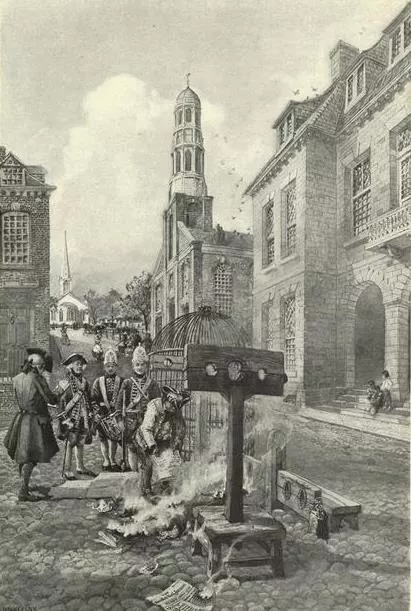

The burning of John Peter Zenger’s ‘New York Weekly Journal’ in Wall Street on November 6, 1734.

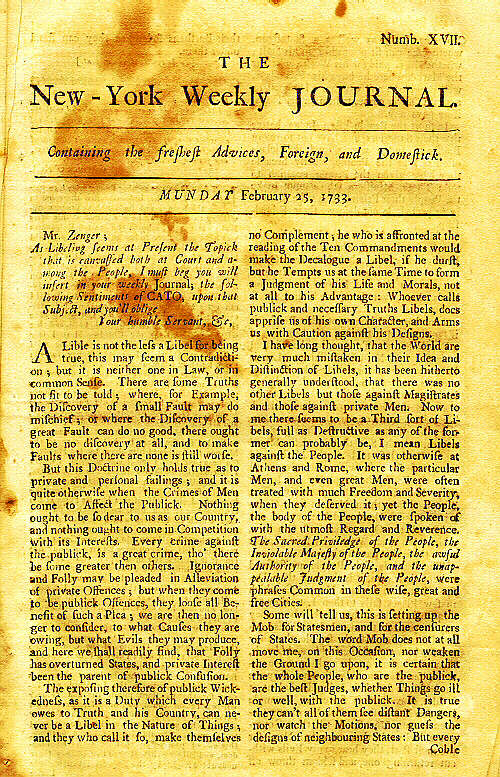
A stained copy of the New-York Weekly Journal from 1733
 Andrew Hamilton, the lawyer who saved the day in the John Peter Zenger trial. His eloquence and command of language helped win the day for lovers of free press.
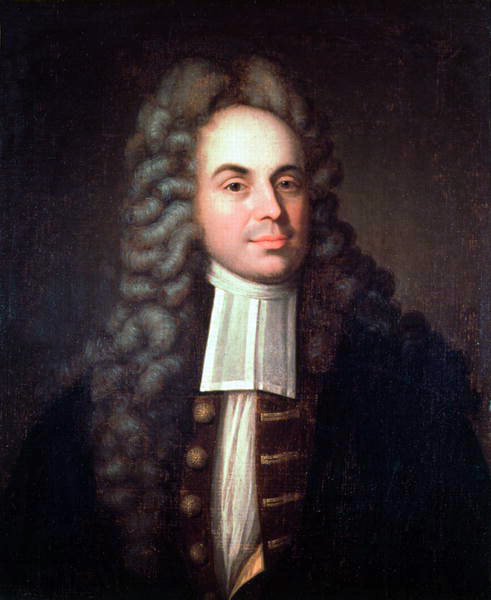
Adolf Ulrik Wertmüller – Portrait of Andrew Hamilton (1808).

Categories
American History Food History Podcasts

Who Wrote the First American Cookbook?

PODCAST One of America’s most important books was published 225 years ago this year. 

You won’t find it on a shelf of great American literature. It was not written by a great man of letters, but somebody who described herself simply as ‘an American orphan.’

EPISODE 354 In 1796 a mysterious woman named Amelia Simmons published American Cookery, the first compilation of recipes (or receipts) using such previously unknown items as corn, pumpkins and “pearl ash” (similar to baking powder).

This book changed the direction of fine eating in the newly established United States of America.

But Amelia herself remains an elusive creator. Who was this person who would have so much influence over the American diet?

Join Greg through a tour of 70 years of early American eating, identifying the true melting pot of delicious flavors — Dutch, Native American, Spanish, Caribbean and African — that transformed early English colonial cooking into something uniquely American.

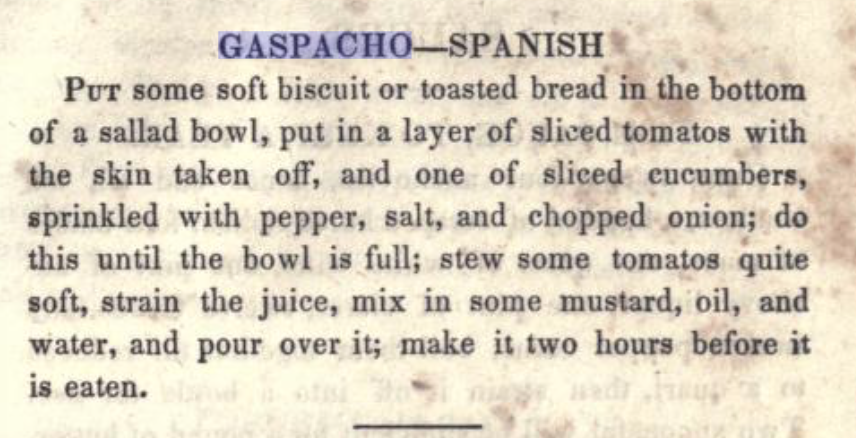
FEATURING early American recipes for johnnycakes, slapjacks and gazpacho!

Listen to WHO WROTE THE FIRST AMERICAN COOKBOOK? on your favorite podcast player or from the player below:

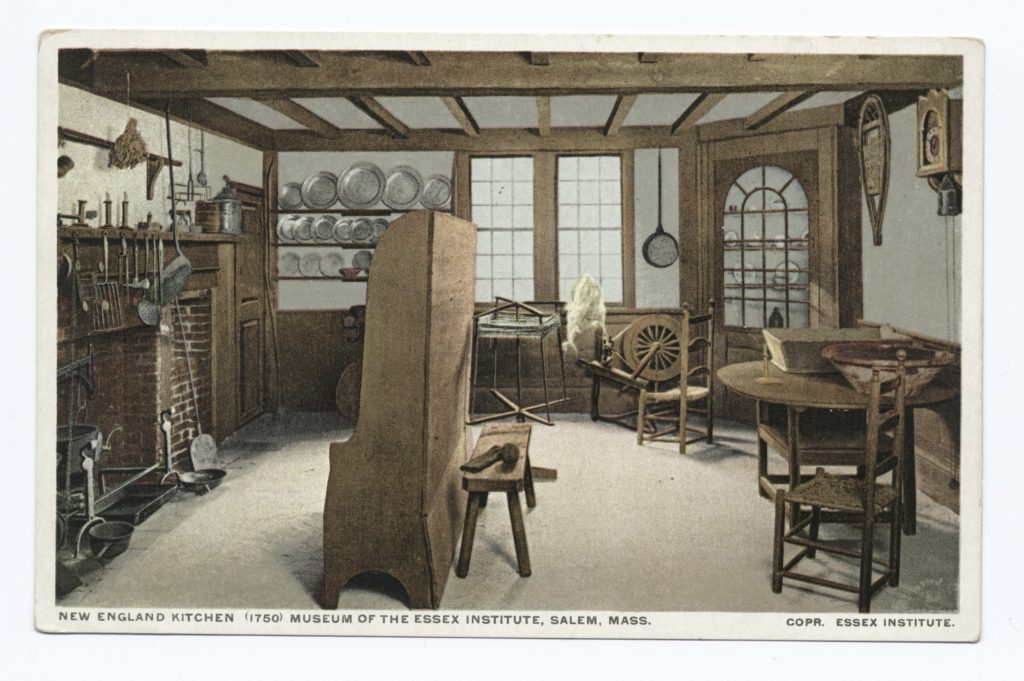
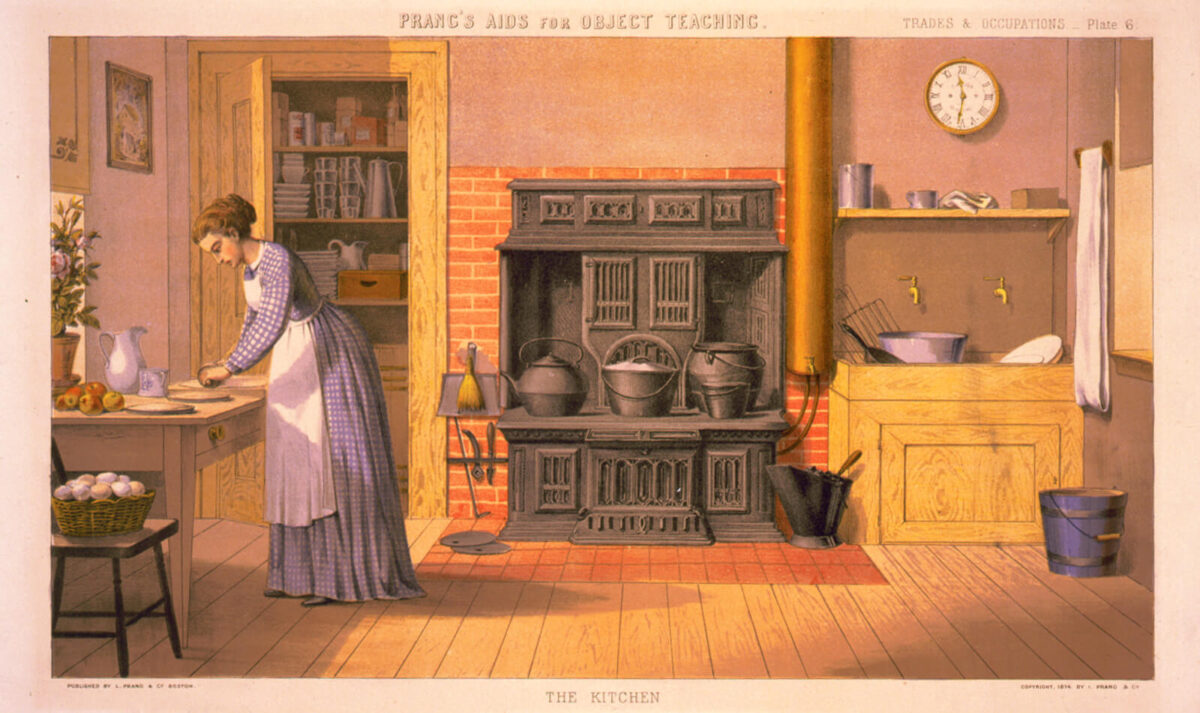
Pictured below: A postcard of a New England kitchen (1750), from the Museum of the Essex Institute, Salem, Massachusetts (and courtesy the New York Public Library)

To check out the recipes from all the cookbooks mentioned on this show, just click on the link below —

Amelia Simmons: American Cookery

Martha Washington: Booke of Cookery

Gervase Markham: Countrey Contentments, or the English Huswife

Eliza Smith: The Compleat Housewife: Or, Accomplish’d Gentlewoman’s Companion

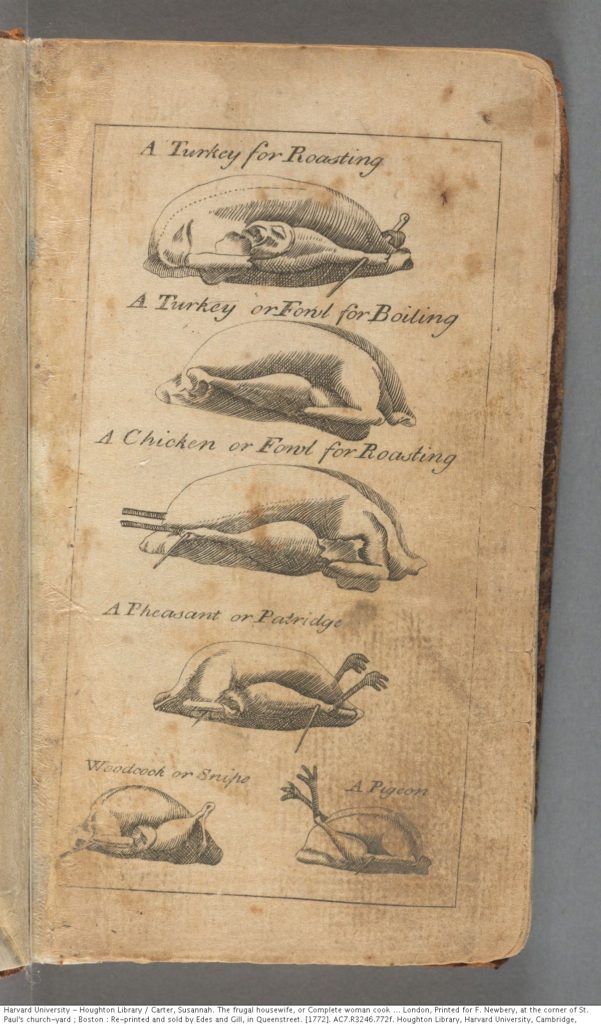
Susannah Carter: The Frugal Housewife Or Complete Woman Cook

Below: Some engravings by Paul Revere from Carter’s 1770s American edition —

Courtesy Harvard

Hannah Glasse: The Art of Cookery, Made Plain and Easy

Lucy Emerson: New England Cookery

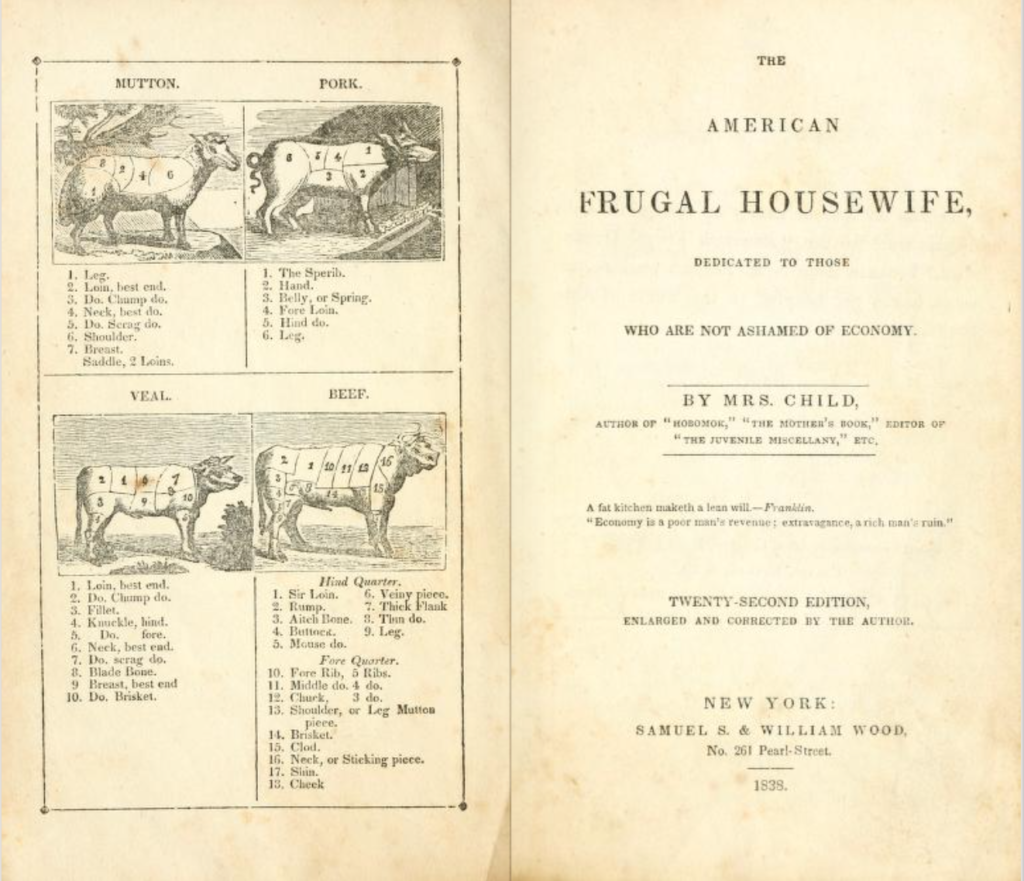
Lydia Maria Child: The American Frugal Housewife

Mary Randolph: The Virginia Housewife, or Methodical Cook

Malinda Russell: A Domestic Cook Book