Martling’s Long Room: power plays, power drinkers

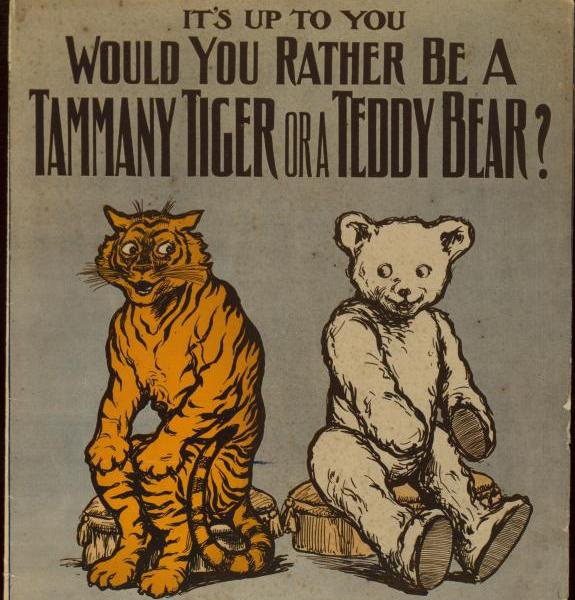
Well, would you?Illustration from sheet music 1908

FRIDAY NIGHT FEVER To get you in the mood for the weekend, every other Friday we’ll be featuring an old New York nightlife haunt, from the dance halls of 19th Century Bowery, to the massive warehouse clubs of the mid-1990s. Past entries can be found here.

LOCATION Martling’s Tavern
Corner of Nassau and Spruce streets, Manhattan

I promise to move away from the messy business of Tammany Hall for awhile after I profile the surprising location of their birth, a tavern that would collect the most powerful men in the city and form a political club that would influence New York history forever — Martling’s Tavern.

Power frequently held court in New York’s taverns in the early days. Few New York locations are more important to the American Revolution than Fraunces Tavern, where the seeds of rebellion were sewn and, once victorious, where George Washington resigned from the Continental Army. The Bull’s Head Tavern became a veritable marketplace for area cattlemen and a place to share a bit of gossip.

When it formed in 1789, the Tammany Society was a mere fraternal, patriotic organization with little interest in real-time political maneuvering. [You can find out more by listening to our last podcast on the early days of Tammany Hall and the rise of Boss Tweed.] Its ceremony and costumed rituals were even looked down upon by elite elements of society as “a vulgar parade.”

But by the late 1890s, this flamboyant men’s club was permanently repurposed as a deft political machine. Early mayors like James Duane were ‘sachems’ who slowly began using the society’s ostensibly innocent functions as cover for more political gains.

As a social club, Tammany would naturally require a tavern for a meeting place, especially one with a grand hall to accommodate all their members. The very first meeting place (or ‘wigwam’) for the Tammany Society was Barden’s Tavern on Broadway and Murray Street, just a stone’s throw from the center of local and, in 1789-90, even national government. Society members even feted actual native Americans here, a contingent of Creek Indians who must have smirked at seeing all these prominent white males in native drag.

In 1790, according to Gustavus Myer’s famous history of Tammany Hall, “the Tammany Society and the military escorted the Indians to Secretary [Henry] Knox’s house, introduced them to [President] Washington and then led them to the Wigwam at Barden’s Tavern, where seductive drink was served.”

Tammany remained at Barden’s until they outgrew it in 1798 and moved to a location on the edge of the city (Nassau and Spruce streets) that was owned by one of their members — Abraham ‘Brom’ Martling.

Martling’s place didn’t look like much, a ‘forlorn’ one-story building. According to author Peter L. Bernstein, “The building was so rundown many people referred to it as the Pig Pen.” Perhaps the transition to politics required a locale with a rougher edge. They would make Martling’s their home until 1812, and it is generally referred to as the first ‘real’ Tammany Hall.

Wicked politics was already at play by the time the Society settled into Martling’s spacious ‘Long Room’ where a majority of Tammany business would be conducted. When Aaron Burr, flanked on either side by Tammany men, shot his enemy and Tammany scourge Alexander Hamilton, it’s alleged that the Society threw a gala that evening in celebration, with toasts raised to Burr’s good aim.

Make no mistake; although the business of government was on their mind, these men could drink. According to Myers, “every night men gathered there to drink, smoke and “swap” stories,” a “den where the Wolves and Bears and Panthers assemble and drink down large potations of beer”:

There’s a barrel of porter at Tammany Hall,
And the Bucktails are swigging it all the night long

The society became so associated with the place that they were frequently called Martlingmen. Alternatively, Tammany would call their future meeting chambers a ‘long room’ in honor of this rundown but effective space.

Martling himself would even became a Tammany sachem, and a tempestuous one at that. Myers: “Taking offense, one day, at the remarks of one John Richard Huggins, a hair-dresser, [Martling] called at Huggins’s shop, 104 Broadway, and administered to him a sound thrashing with a rope.” Take that, hair-dresser!

As Tammany became more powerful and larger (with some 1,500 members), they would eventually have to move from the Long Room into a headquarters of their own. But they didn’t move far from Martling’s however. The very first Tammany Hall would be built at Frankfurt and Nassau, mere steps the tavern that had quenched their thirst and saw the adolescent society grow to become a viable political force.

Location of Martling’s Tavern:

View Larger Map
Categories
Podcasts Those Were The Days

William ‘Boss’ Tweed and the bitter days of Tammany Hall

Hail to the thief: an imposing man with money on his mind


___________________________________
You cannot understand New York without understanding its most corrupt politician — William ‘Boss’ Tweed, a larger than life personality with lofty ambitions to steal millions of dollars from the city.

With the help of his ‘Tweed Ring’, the former chair-maker had complete control over the city — what was being built, how much it would cost and who was being paid.

How do you bring down a corrupt government when it seems almost everyone’s in on it? We reveal the downfall of the Tweed Ring and the end to one of the biggest political scandals in New York history. It began with a sleigh ride.

ALSO: Find out how Tammany Hall, the dominant political machine of the 19th century, got its start — as a rather innocent social club that required men to dress up and pretend they’re Indians.

___________________________________

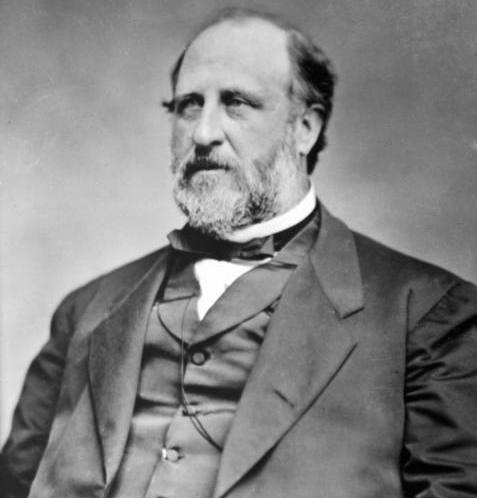
William M. Tweed, son of a chair maker, as photographed by Matthew Brady in 1865. The Lower East Side would not spawn a man as powerful as Tweed until the rise of Al Smith in the 20th Century. Tweed’s influence, however, came at great expense to the city.

The M. in his middle name is something of a controversy. Marcy or Magear? It’s commonly assumed to stand for Marcy; however, there’s no real documentary evidence for this (according to biographer Kenneth Ackerman) while Magear is his mother’s maiden name.

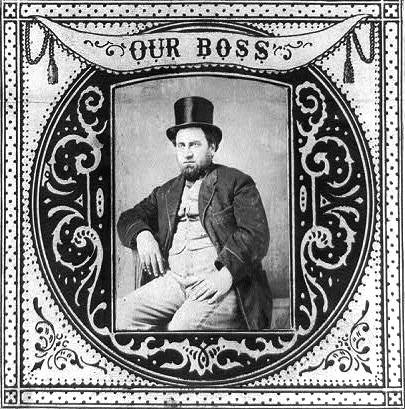
Below: a younger-looking Tweed appears on a tobacco box

___________________________________

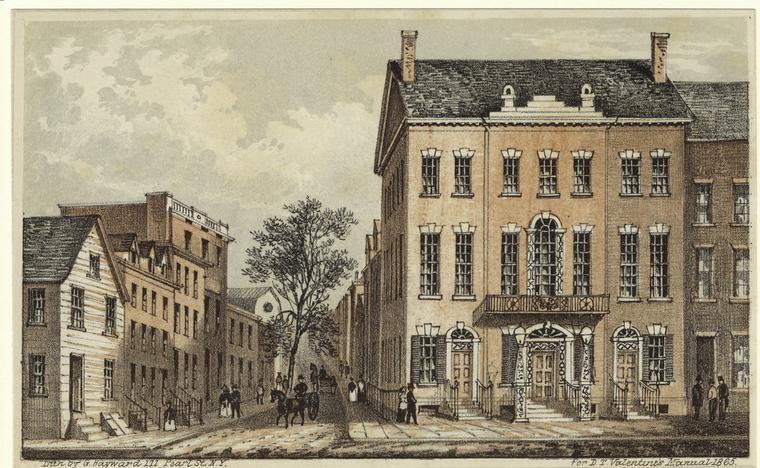
The powerful Democratic machine Tammany Hall (or, officially the Tammany Society) was actually in a hall, located at Frankfurt and Nassau streets, near City Hall. Built in 1811, the new headquarters saw the once benign social organization morph into an influential and often ruthless group with political objectives.

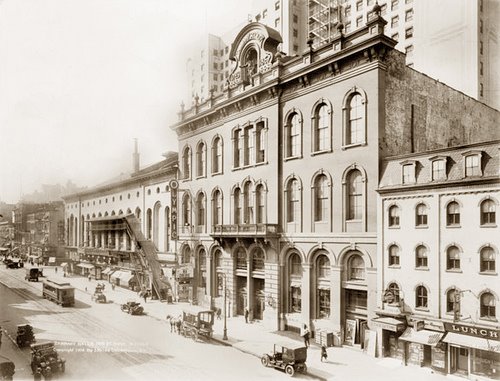
During Tweed’s reign, Tammany Hall was actually located at 14th Street between 3rd Avenue and Irving Place. Tammany moved here in 1867 and would remain until the late 20s, when they would move just around the corner to Union Square. This photo was taken in 1914. Today the Con Edison building, with its beautiful clock tower, stands in its place.

___________________________________

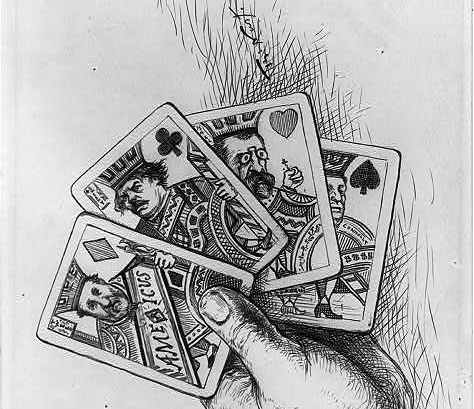
The Tweed Ring — on in this case ‘the Four Knaves’ — as interpreted by their harshest critic, illustrator Thomas Nast. The Ring was composed of Tweed, Mayor A. Oakey Hall, chamberlain Peter Sweeny and ‘Slippery Dick’ Connolly, the comptroller. Emanating from this core group would be other underlings and associates who would assist in the Ring’s graft and embezzlement

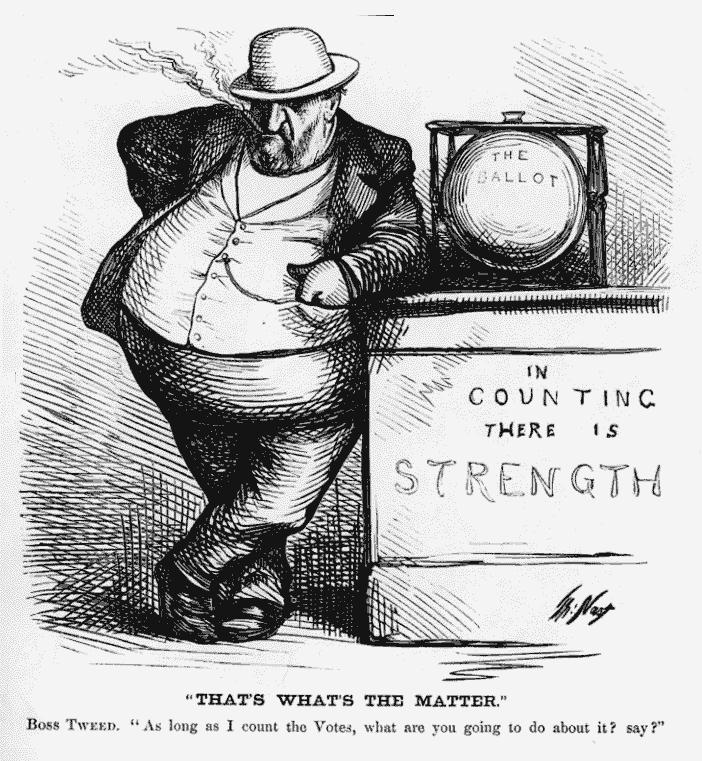
Nast’s charges of voting fraud below weren’t hyperbole. The elections of 1868, which installed Hall into the mayor’s seat and Tammany disciple John Hoffman into the governor’s chair, was one of the most manipulated in American history. Fraud was only too common in New York elections in the 19th century.

___________________________________

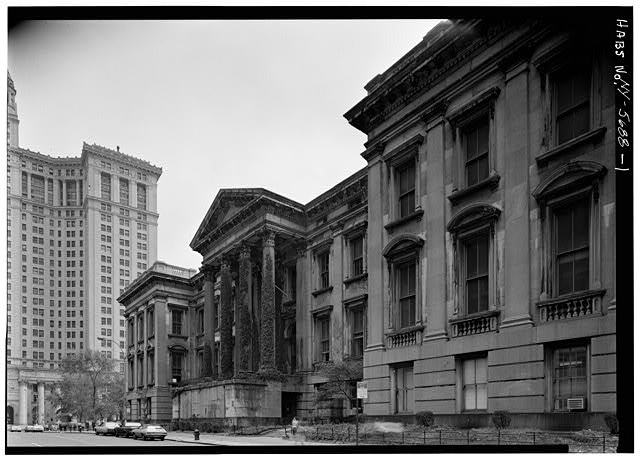
The New York County Courthouse, also known as the Tweed Courthouse for the vast amount money supposedly thrown at it during construction. Contractors would wildly overbill for their often shoddy work, with members of the Tweed Ring skimming from the totals. It would take over 20 years for the building to finally be completed — longer than it took to build the Brooklyn Bridge.

___________________________________

BOOK RECOMMENDATIONS: If you want to learn more about Boss Tweed, go immediately to Kenneth Ackerman’s excellent ‘Boss Tweed: The Rise and Fall of the Corrupt Pol Who Conceived the Soul of Modern New York’. For a broader overview on Tammany Hall, seek out a copy of Oliver E. Allen’s ‘The Tiger: The Rise And Fall of Tammany Hall’ which I believe it out of print but worth looking for.

RELATED PODCASTS: Listen to our prior show on Greenwood Cemetery, where Tweed is buried. Re-visit our Union Square show to get a taste of Tammany’s wily Fernando Wood. Last year I wrote about the Ludlow Street Jail, where Tweed saw his final days.

Mayor Franklin Edson: Bronx man and distillery king

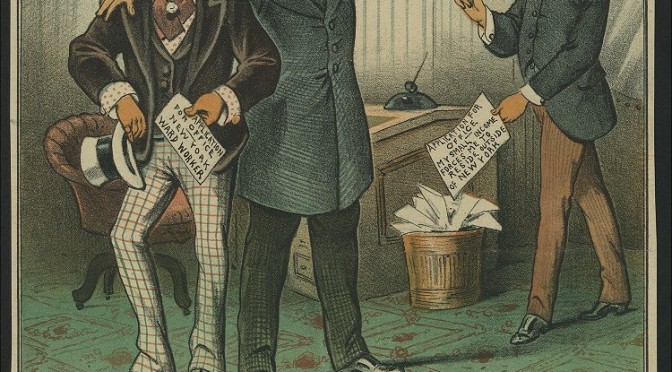
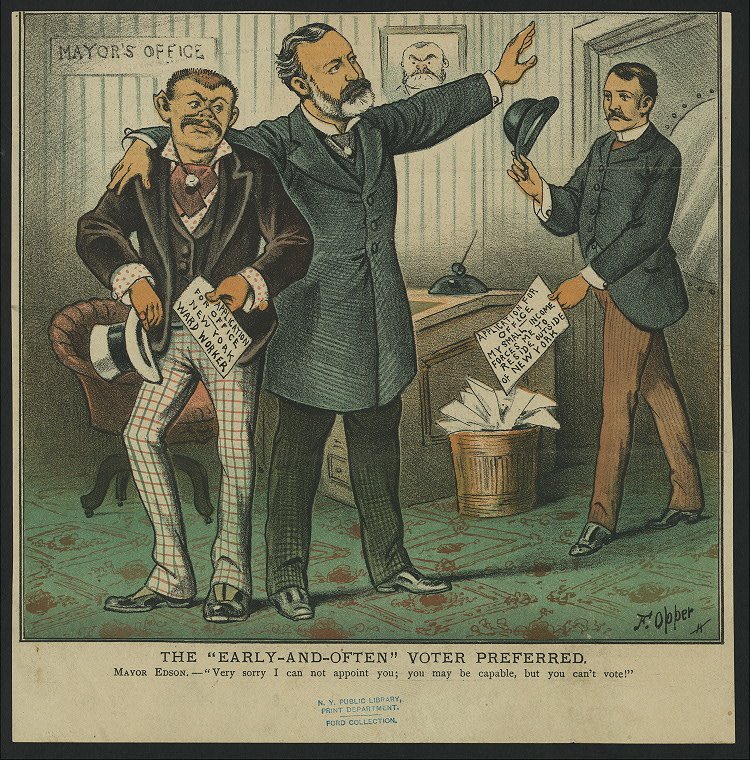
Above: a cartoon mocking Edson’s hiring practices (courtesy New York Public Library Digital Gallery)

KNOW YOUR MAYORS Our modest little series about some of the greatest, notorious, most important, even most useless, mayors of New York City. Other entrants in our mayoral survey can be found here.

Mayor Franklin Edson

In office: 1883-1884

Although the political career of one-term mayor Franklin Edson was indeed brief, he helped commission both the city’s largest acquisition of park land and one of its biggest improvements in drinking water. And he was present for the opening of one of New York’s greatest landmarks. So how did the city thank him for his service? By nearly throwing him into Ludlow Street Jail — where Boss Tweed had been left to rot just a few years before.

Edson, a transplanted New Yorker, was a farmboy from Chester, Vermont, born in 1832, who distinguished himself in the art of whiskey distillery — distinghished with “precocious tact and sagacity,” in fact.

He worked his way over to Albany, New York, as a successful distiller and grain merchant with his brother. Franklin took full advantage of drink demands during the Civil War; his company soon became so profitable that he moved the entire venture to New York in 1866.

Edson, a burgeoning booze mogul of sorts, immediately became a prominent merchant voice in Manhattan, becoming the president of New York’s Produce Exchange three times, serving his first term in 1866 before he had to time to even unpack his moving boxes.

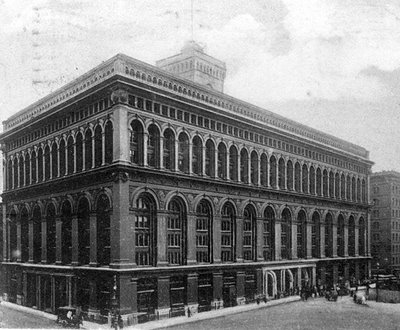
While this naturally afforded Franklin an incredible vantage for commercial power, it would soon place him in the crosshairs of political power as well. In later years he would be most proud of his Exchange days, priding himself in being one of the encouraging voices to tear down the inadequate castle-like Produce Exchange (designed by Leopold Eidlitz) and erecting the larger, more impressive George Post-designed Produce Exchange building near Bowling Green (which itself would be sadly torn down in 1957).

Below: the new Produce Exchange

What sets Edson apart from other future mayors of the time — and what might have potentially hindered his political ambitions — was that he loved the countryside, in this case Old Fordham Village, today a neighborhood in the Bronx.

He would live here for many years and would remain a member of the (now landmarked) Episcopal Saint James Church in Fordham for most of his days. Whether by design or coincidence, this love for what would become New York’s northern borough would soon prove fruitful for the city as a whole.

Franklin was also a practicing anti-Tammany Hall Democrat. And who wouldn’t be anti-Tammany during the 1870s? Edson became politically active in the years following the Boss Tweed scandals, when Tammany was still reeling for the highly publicized affair involving Tweed and then-mayor A. Oakley Hall.


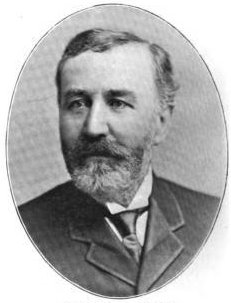
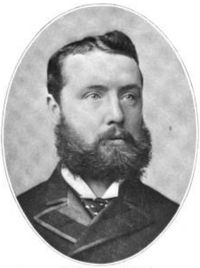
Despite a slow rebounding, Tammany would never fully rinse off the stench of corruption. Naturally, Edson’s prominence among the business class married nicely with mayoral ambitions by the mid 1880s and would eventually include a denunciation of Tammany practices and condemnation of Tammany boss John Kelly (at right). But not at first.

For the election in November 1882, the various Democratic factions, including the still-potent Irving Hall, soon decided on the relatively green Edson, because he was a uncontroversial, neutral choice. To Tammany’s Kelly, Edson must have seemed a fairly agreeable pick indeed compared the previous mayor William Russell Grace, a reform Democrat rebelliously outside the realm of Tammany’s power.

Edson easily swept past his opponent, railroad man Allan Campbell — a sweet victory for John Kelly, as it was Campbell that had replaced Kelly as the city comptroller several years previous under the administration of mayor Edward Cooper. (Check out Edward’s entry for some juicy details of the Kelly/Cooper rivalry.)

How did a political nobody — a “seven day wonder in the political world” — sweep so handily into office? It helps to ride coattails; during that same election, the popular Democrat Grover Cleveland was elected the governor of New York.

At first, Edson gave in readily to political favoritism, paying back some of his Democratic cohorts — including many of the Tammany variety — with lucrative city jobs, a decision which disgruntled many of his former supporters. In fact, he even appointed Richard Croker as fire commissioner; Croker would become the head of Tammany Hall in the 1890s. (Harper’s Weekly has a coy little cartoon chiding the Croker decision.)

Like many before him, however, Edson soon grew tired of Tammany’s corrupting influence and began adopting reform policies which were currently being installed on the state level. And also like many before him, his against-the-wind attempts at reform would essentially spell the end of his political career. Edson would serve but a single term and would almost entirely vanish from politics afterwards.

But not before throwing his weight behind a major expansion of the Croton Aqueduct, which within in a few years would triple the supply of water into the city. (In fact, most of the expansion he pushed for is still in use today.)

Edson is also partially responsible for the huge increase in New York park land, commissioning a citizens group in 1884 to lobby the state to purchase lands in the area of today’s Bronx; accordiing to an old Bronx history, “the ‘new’ parks, as they were called, comprised 3,757 acres, now included in Van Corlandt, Bronx, Pelham Bay, Crotona, St. Mary’s and Claremont parks.”

And most notably, he was the first New York mayor to walk the Brooklyn Bridge, astride president Chester A. Arthur and governor Cleveland on the bridge’s opening day, May 24, 1883. He would be met in the middle by the mayor of Brooklyn — future New York mayor — Seth Low.

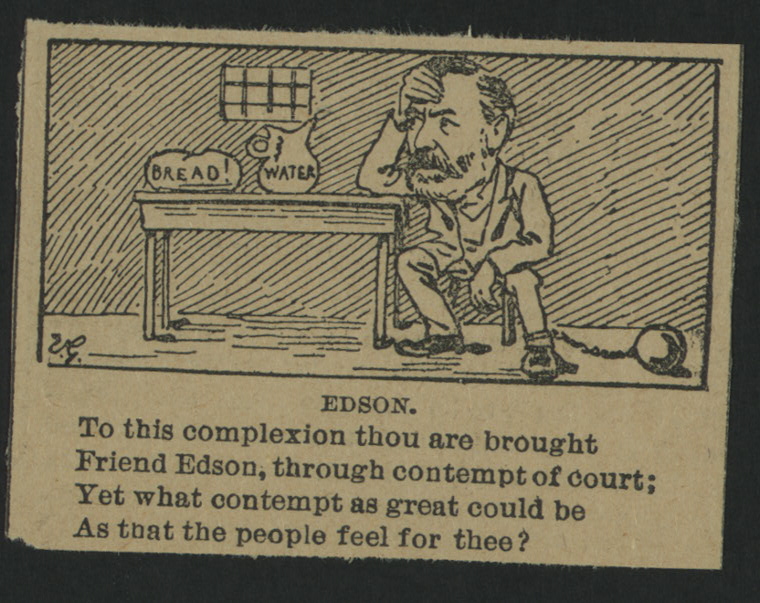
He might have crept quietly into obscurity had Edson not been accused of contempt of court shortly after he left office, threatening a man in his early 50s with jail time with a stint at the notorious Ludlow Street Jail. Apparently, despite a court injunction, Edson had quietly made promotions to two posts — the Commissioner of Public Works and the Corporation Council — on his last day in office. However, after a stressful two months in court, Edson was declared not guilty of the crime.

This did not stop people from imagining the ex-Mayor trapped behind bars, as the newspaper illustration below evidences:

Edson died in 1904, at his home on the Upper East Side. 42 West 71st Street, to be exact, a block from the Dakota Apartments, which were completed during his tenure as mayor.

Categories
Know Your Mayors

Know Your Mayors: George B. McClellan Jr.

Our modest little series about some of the greatest, notorious, most important, even most useless, mayors of New York City. Other entrants in our mayoral survey can be found here.

Perhaps no mayor of New York City this side of Fiorello Laguardia has ever overseen so drastic a change to the landscape of the city than George B. McClellan Jr.

For six extraordinary years (1904-09) McClellan presided over the openings of the New York Public Library, Chelsea Piers, Grand Central Station, christened the first subway service and licensed the first taxi cab.

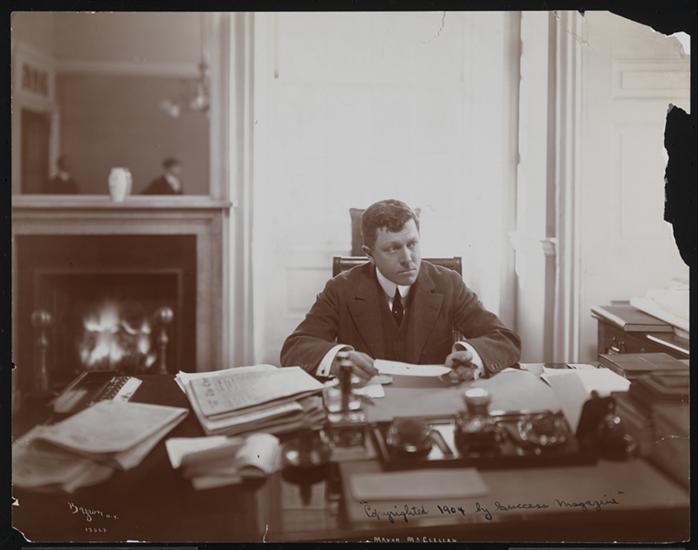
Below: Mayor McClellan in 1904, his first year in office

george

But oddly, George is perhaps best remembered today for his half-hearted but successful campaign against motion pictures.

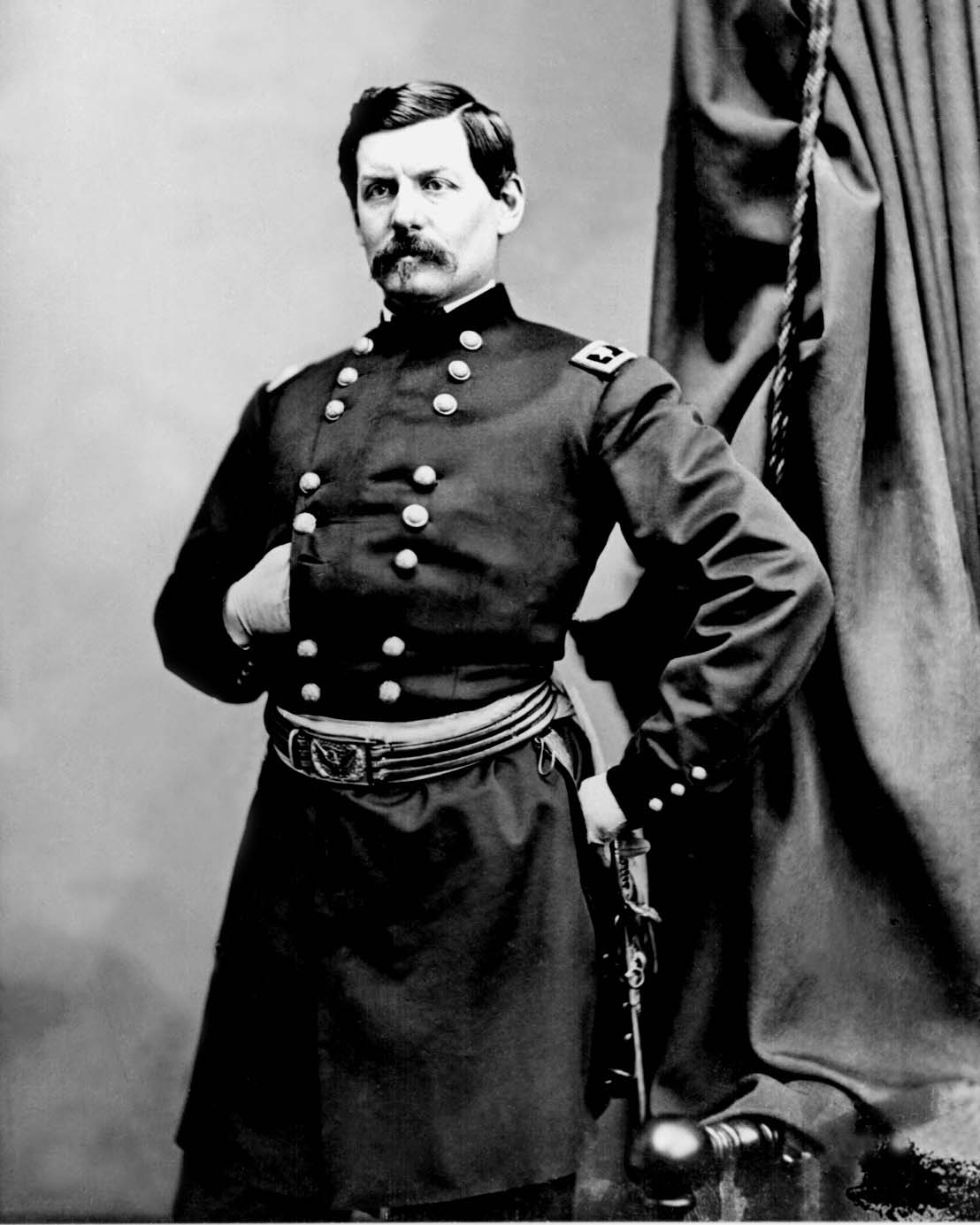
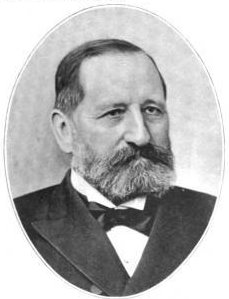
If his name sounds vaguely familiar, thank your high school history teacher. George Jr. was the son of the ultimately disastrous Civil War general of the same name, a Union general first fired by Lincoln, then defeated by him in the presidential election of 1864. Despite this, George McClellan Sr. did become the governor of New Jersey, providing his son with a model of leadership he would implant into his many civic duties.

Below: Papa McClellan
father

The dashing George Jr — or you can call him Max, his family did — is one of New York’s few foreign-born mayors, born in 1865 in Dresden, a few years before it was absorbed into Germany. Growing up in New Jersey while father governed, George graduated from Princeton in 1886 and a couple years later ended up as a writer for the revitalized New York World, Joseph Pulitzer‘s popular scandal sheet, in its brand new office on Newspaper Row — just across the street from George’s future office at City Hall.

Actually, George was mayor before he was really mayor. Name recognition and an inherited interest in public service placed him on the Board of Aldermen (precursor to the City Council) by the 1890s, and he was elected board president in 1893. The next year, due to an absence from the city by sitting mayor Thomas Gilroy, McClellan, age 29, became the acting leader for a month.

His biggest controversy? Raising on Irish flag over City Hall for St. Patricks Day, outraging local schoolboys. No, really. He even received threats of bodily harm, but held firm. Deal with it, he told the boys.

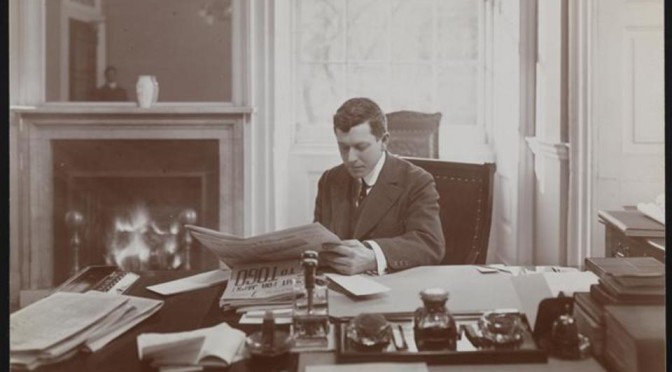
Mayor McClellan in his office, 1904 (Courtesy Museum of the City of New York)


Snugly in bed with Tammany Hall and a favorite of ole Boss Croker, McClellan spent the next several years representing New York in the U.S. House of Representatives. He returned to the New York scene in 1903 as a Tammany instrument to oust mayor Seth Low, a reform ‘clean-up’ mayor who may have irked more than a few tavern owners.

McClellan, with Tammany’s blind eye towards New York’s more lascivious industries, handily won. And would stay in office for six years, making him New York’s longest serving mayor since Richard Varick in 1789. (The man he beat for re-election in 1905? William Randolph Hearst.)

New York blossomed under McClellan’s reign, with many long boiling projects coming to fruition. One new bridge, the Williamsburg, opened under his watch with another (Manhattan Bridge) well on its way, he unveiled lofty plans to improved the city’s water system, and he gave Longacre Square a new name (Times Square). The Battery Maritime Terminal (built in 1906), that jade beauty next to the Staten Island ferry, is even dedicated to McClellan. New York Public Library was nearly completed — and Grand Central Terminal half-way done — by the end of his term.

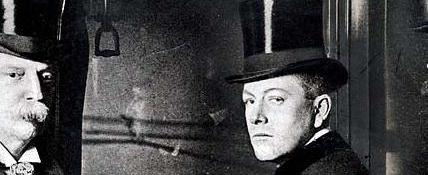
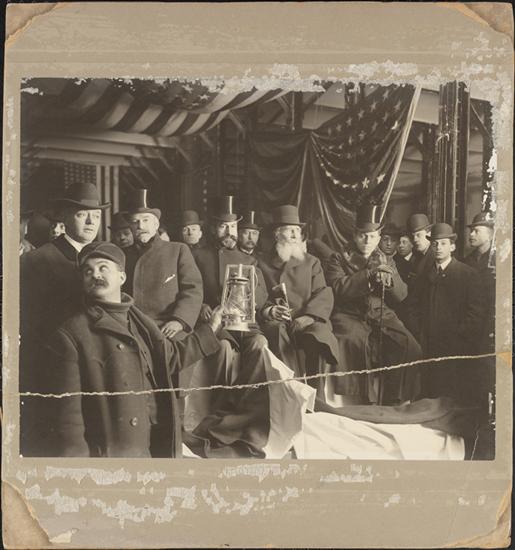
A picture in the new subway tunnels, Mr. McClellan looking very confident near the center right. (Museum of the City of New York)


An intrepid tale springs up about McClellan involving the grand opening of the IRT’s first subway tunnel in October 27, 1904. Meant only go ceremonially start up the engine of the first train, McClellen requested that he would like to actually go ahead and drive the train all the way up to Harlem! (And Bloomberg brags that he only rides the train.) He deftly steered the new engine up to 103rd Street before handing over the controls.

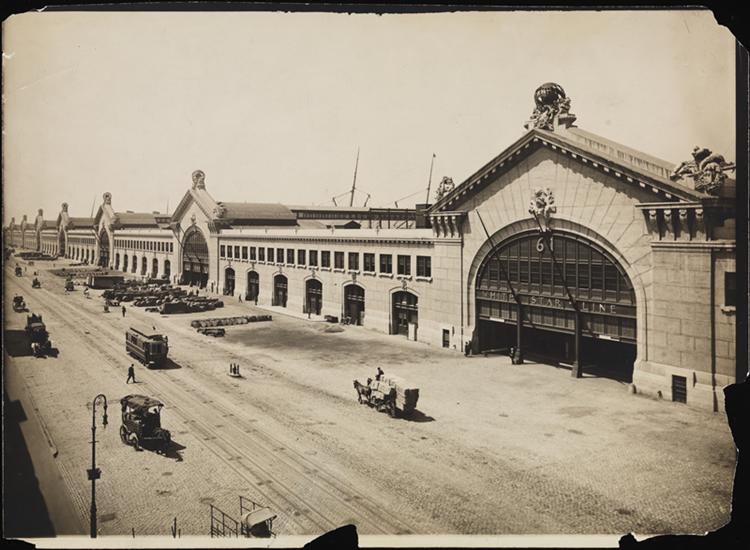
To me, McClellan’s biggest contribution is valuable indeed — overseeing the construction of the Chelsea Piers (below), which allowed massive steamships to dock in the city, turning New York into a truly international port. By 1907, in fact, the Lusitania was already at dock here, although the terminal wasn’t officially completed until 1910.

piers

Yet with all of these remarkable changes, the story which arises the most about McClellan involves his war against a technological threat — the rise of cinema.

By 1905, the city had dozens of ‘movie houses’, nickelodeons and amusement arcades where patrons could pay a penny to see the birth of the motion picture. A theater owned by Marcus Loews, quickly to become the biggest name in film exhibition, opened in New York in 1904; the city got its own production company, Biograph, in 1906.

This new moving pictures craze was sweeping the United States — two million patrons in 1907, according to the Saturday Evening Post — and like everything foreign and new, it was soon seen as a corrupting influence, ‘demoralizing’ children, a bastard offspring of vaudeville and burlesque.

Some accounts have McClellan ardently opposed to this new medium on those grounds. I prefer a more rational theory: by 1908, McClellan had his eye on a new job — president of Princeton University — and in order to get that, he had to be seen as sticking up for higher morals. (Something Tammany candidates aren’t exactly known for.)

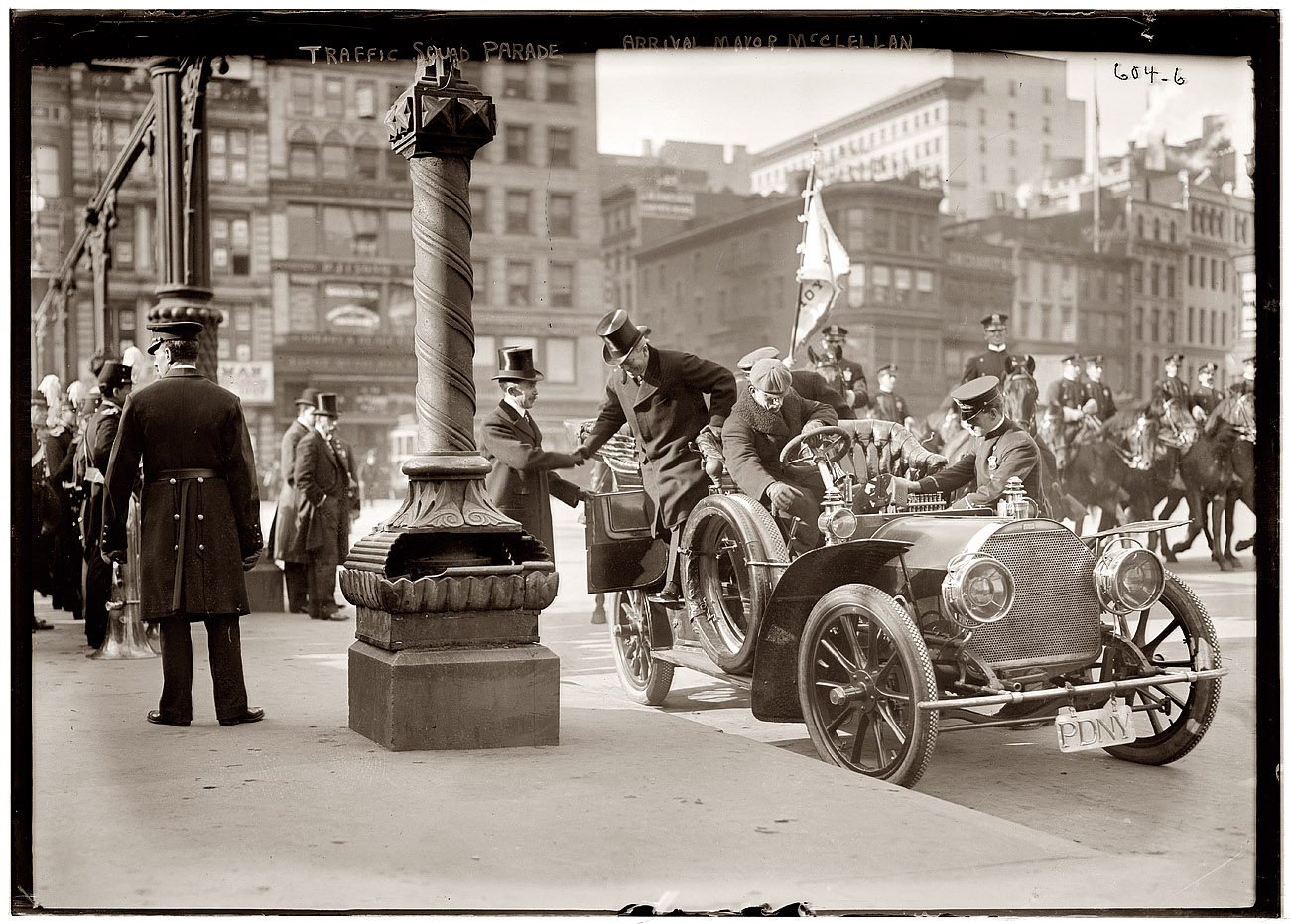
Below: McClellan steps from a newfangled automobile onto the streets of Union Square in 1908 (pic courtesy Shorpy)

02905u

And so, on the technicality of being dangerous fire hazards, McClellan tore up the licenses of over 550 motion picture exhibitors — yes, that’s right, 550. (Nickelodeons were in music halls, taverns, even a few restaurants.) Most were not reinstated until the debut of New York’s Board of Censorship in 1909, a reviewing board which ended up not censoring much of anything. By the 1910s, movie makers and theatre owners were becoming too powerful to overrule.

By why was McClellan looking for a new job in the first place? In 1908, he was not long for the mayor’s office. Like blessed as Tammany Hall golden boys, McClellan got a conscious in his second term, hiring many non-Tammany employees and rooting out a mountain of Tammany related corruption in civic offices.

This turncoat did not please new Tammany boss Charlie Murphy, no it didn’t. In 1909, Tammany put up their new contestant, the colorful William J. Gaynor. (Incidentally, he also beat William Randolph Hearst, in his second and final unsuccessful run at the office.)

McClellan never became the president of Princeton, but he spent his remaining years teaching there until 1931, when he retired to the good life, writing books about his real passion — the history of Venice. He died in 1940 in Washington DC and was buried in Arlington Cemetery.

But clearly, it’s to New York that he belong.

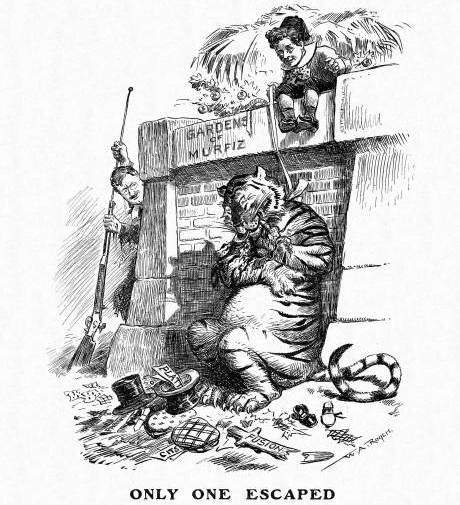
Below: in this 1905 Harpers Weekly cartoon, McClellan is seen as a little boy holding the Tammany tiger, devouring the ‘fusion candidate’ (Seth Low). President Theodore Roosevelt peeks from the side. (He always did like wildlife.) Within three years, McClellan would be the devoured.

Garden of Murfiz = Tammany Boss Charlie Murphy

Know Your Mayors: William Lafayette Strong

Our modest little series about some of the greatest, notorious, most important, even most useless, mayors of New York City. Other entrants in our mayoral survey can be found here.

Democrats and Republicans in this year’s election who think they can roll into office on the mantel of “change” may want to look at the example of William Lafayette Strong (mayor 1895-97), a reformer who swept in, cleaned up the city … then watched it all fall apart again.

One of the great narratives of New York City in the late 19th century is the dominance of the Democratic Tammany Hall machine in controlling city politics, often seeped in deep corruption.

At key periods, however, Tammany Hall would be usurped from its perch. In the 1870s came the great reckoning to Boss Tweed and mayor A. Oakley Hall. However by the early 1890s, Tammany had regained control of local government and had installed mayors who exhibited various degrees of independence. (For instance, the topic of our last Know Your Mayors column, Hugh J. Grant, mayor from 1889–1892, was firmly in their pocket.)

By 1894, in the throes of a nationwide fiscal depression, outrage at open corruption in the police department prompted the New York State Senate, Republican-led and frequently at odds with city management, to clamp down. The Lexow Commission, named for its chairman Senator Charles Lexow, exposed deep veins of criminal negligence within the New York police department and issued a now-legendary 10,000 page report outlining the most grievous charges.

Republicans and reform-minded Democrats saw their chance to effectively wipe Tammany from the map. Forming a Committee of Seventy (a Biblical reference, as well as one to the group that helped expose Tweed’s malfeasance), they rallied their support in late 1894 with a fusion ticket backing a political novice, one William Lafayette Strong.

Like another reformer mayor before him (William Russell Grace), Strong was a businessman made good, an Ohio-born dry goods merchant turned banker whose efficiency and clean record (not to mention prominent position on the influential Union League Club) endeared him to those looking for a clean break from Tammany.

Still reeling the Lexow smackdown, Tammany Hall could only watch their ambitions fold. Against Strong they put up Nathan Straus of Macy’s Department Store as their candidate; within two weeks, he resigned, fearing business reprisals. They replaced him with former mayor Grant, but he was no match against the fusion ticket and alliance of German and Jewish voters, which easily swept Strong into office.

Strong went immediately to work, scouring City Hall of bureaucratic buildup and rebooting municipal agencies mired in Tammany cronyism. First on the agenda was a literal cleanup, hiring Civil War vet George Edwin Waring Jr. as the head of street cleaning, an absolutely key element to restoring the city’s psychological health. Within a few months, New York’s streets — clogged with garbage, manure and other detritus — were as clean as they had ever been.

Strong’s most electrifying appointment, however, would put a future president on the road to the Oval Office.

Lexow had exposed the police department’s weaknesses, and Strong sprung on this moment for a radical shakedown, hiring a new police commissioner known for his tenaciousness, an also-ran for mayor with roots in New York City — Theodore Roosevelt.

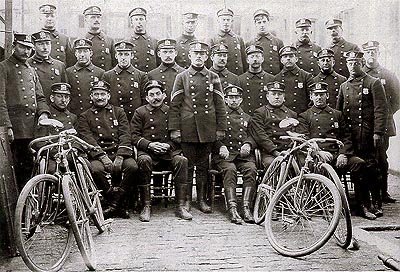
The new commissioner was a dominant force in transforming the city at this time, easily outshining Strong. Roosevelt eliminated anyone associated with prior corruption and installed new programs that would improve efficiency but also confidence among the ranks. Notably he mounted cops on bikes (see below), a quaint notion today, but one that at the time allowed a pervasive presence throughout the city.

Roosevelt’s key ally was not Strong but our old friend Jacob Riis. With Riis’ guidance, loathsome and unsafe police homeless shelters were shut down. It was the influence of Riis, through his close associate Roosevelt, that enabled Strong through recently passed state laws to finally tear down the tenements of Five Points.

The New York school system was also getting a thorough shake. In July 1896, Strong and an emboldened state legislature passed the School Reform Law, which for the first time created a centralized education system in the city. Previously, schools were governed by city wards, a practice allowing for uneven educational opportunities and fertile ground for all manner of dishonesty.

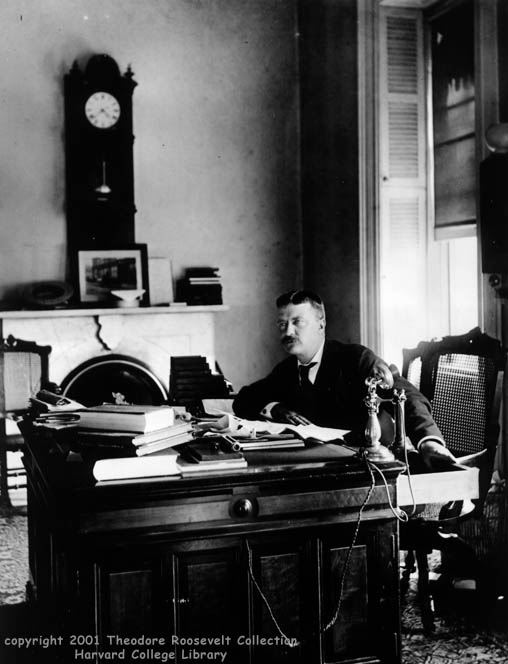
We benefit today from many of the vast reforms initiated under Strong’s administration. The effects on his own political fortunes, however, were far less beneficial. Roosevelt had become unwieldy, shutting down saloons popular with the German New Yorkers who had helped sweep Strong into office. The closures of these working class drinking holes were evidence that Strong spoke only for the rich, claimed activists, whose rallies and protests were harshly dealt with by Roosevelt’s newly determined police force. Above: Commissioner Roosevelt in his office

By the time the backlash began for Strong and Roosevelt, the commissioner had already resigned, on a naval appointment from William McKinley and a few years away from being president of the United States.

Part of the reason for so many pressing reforms through state government is because of the most important event in New York history — the consolidation of the boroughs, slated to take effect on January 1, 1898. William Strong is the last mayor of the unconsolidated borough of Manhattan, passing over the newly created city to new mayor Robert Van Wyck….handpicked and groomed by Tammany Hall.

Strong was vociferously opposed to the consolidation, thinking it a ridiculous burden to the city coffers, vetoing it even up to the very end. By that time, however, Strong was not seeking re-election, but for decidedly personal reasons. In cleaning up the city — getting it ready for the future — his own business had nearly gone bankrupt. He would die just two years later, in 1900.

Strong left a vastly changed city, newly expanded, and now in the hands of the very group whose prior machinations he had tried so very hard to reverse.

That’s politics for you.

Know Your Mayors: Hugh Grant, our youngest mayor

Our modest little series about some of the greatest, notorious, most important, even most useless, mayors of New York City. Other entrants in our mayoral survey can be found here.

The year Carnegie opened his illustrious Music Hall to the delight of New York’s cultured class, the city’s fate was in the hands of the youngest man ever elected to the office of mayor — Hugh J. Grant.

Although there would later be a man elected to job unofficially called ‘The Boy Mayor of New York’, Grant would be 31 years old when he finally stepped into the job. A stalwart of the Tammany Hall machine, the young Irish-Catholic worked his way through the ranks, from alderman in 1882 to sheriff in 1885 and graduated from there to mayor in 1889, where he stayed in office for two two-yera terms until 1892.

Grant was defeated in earlier attempts for mayor by businessman and reform Democrat William Grace. When Grant ran again in late ’88, he successfully defeated Abram Hewitt, thanks to the machinations of new Tammany ‘Boss’ Richard Crocker, who had personally grown weary of Hewitt’s independence. Grant would be a far less wily pawn.

At this point, I should quote at length the unreliable and heavily biased but enjoyable description of Grant, according to a 1922 chronicle: “Unfortunately in 1888 Hewitt was defeated by the old Tammany favorite, “Hughie” Grant, and corruptions returned to their former power and spoils. Worst of all, Grant’s election was accepted without alarm, and even with satisfaction, by the educated classes.

“The new Mayor, an ignorant and unprincipled son of a saloon-keeper, was given ‘social recognition,’ asked to dinner in the best circles, and opened a ball with Mrs. Astor. When he said, “If I don’t prove a good Mayor, it will be because I don’t know how,” this remark was repeated as if it were a gem of aphoristic wisdom.”

Grant was a Tammany loyalist, and enemies sniped that his administration hemmed in spirit to the corruption of the Tweed Ring, which had been taken apart twenty years earlier. It is true that the ‘tacit alliance of Tammany, business and underworld went unchallenged‘ under Grant’s hardly watchful eye; however, great city improvements developed rapidly under his administration.

Despite a state legislature probe into rampant city corruption, Grant was easily reelected in 1890.

Grant most notably attempted — and failed — to snag the 1892 World’s Fair for New York which he would have planted on the northern edge of Central Park. Instead, the fair was awarded to Chicago, to become the legendary 1893 World’s Columbian Exposition, or the fair of the White City.

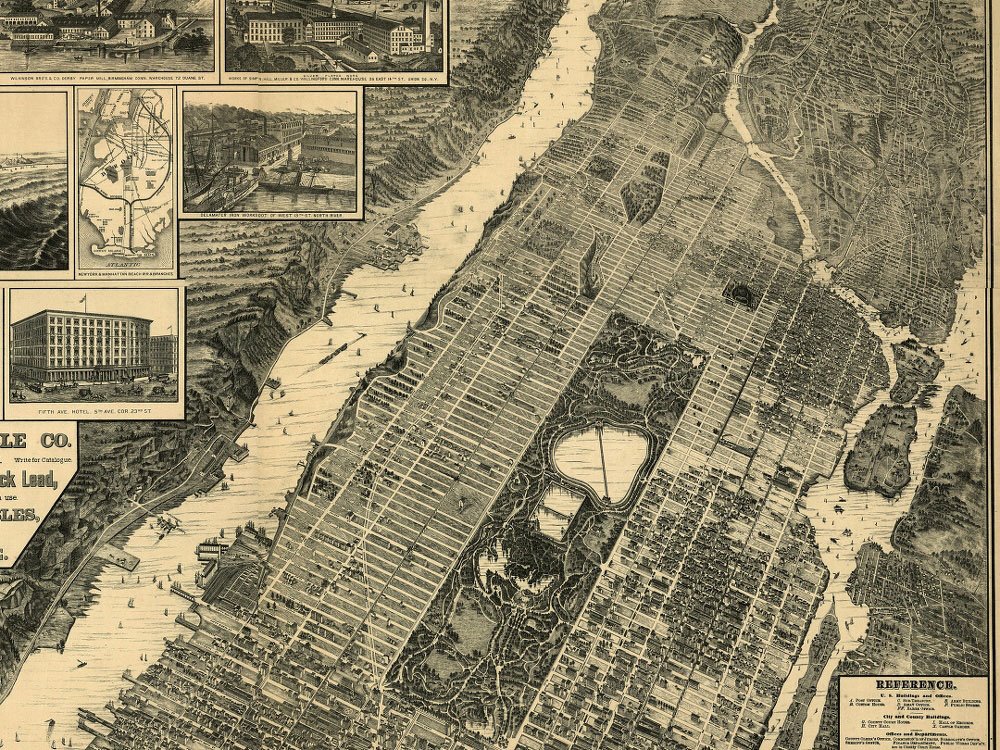
Below: an illustration of northern Manhattan, 1879 (Pic courtesy Times Up)

The city’s decisions regarding lands that would become the Bronx would also stir up a controversy. Despite technically being outside New York’s jurisdiction, development of the Bronx flourished in the 1870s. New York was powerful enough to exert its influence here, acquiring some areas as early as 1873. By 1895, most of the Bronx would belong to New York.

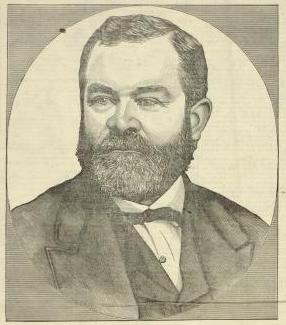
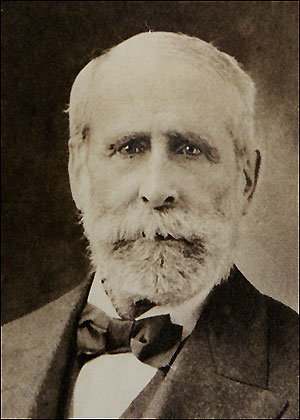
Andrew Haswell Green (pictured right), the influential parks commissioner and proto-Robert Moses who had once bunted Fredrick Law Olmstead from his own Central Park project, exerted great powers in developing outlying regions of Manhattan and had even proposed New York consolidation with the future boroughs long before 1898. Green would grow to become one of the most influential men in 19th century New York. In fact, Green had assisted close friend Samuel Tilden in taking down the Tweed Ring.

Grant was skeptical of these expansion plans, seeing developments of these outlying regions as pointless costly money pits. Like many under the thumb of Tammany Hall, he also disdained the state’s involvement in city affairs. Regardless, areas which became Van Cortlandt Park and Pelham Bay Park were bought during his tenure and today a small park in the Bronx is named in his honor. As New York Parks Department cheekily notes “Grant may be the only person who fought against parks who nonetheless has a park named after him.”

He didn’t resist another innovation that would soon change the fate of New York. Grant would be the first mayor to appoint a “rapid transit commission” in 1890 to develop a subway system.

Grant would pass off the mayor’s seat to another Tammany man, Thomas Gilroy, in 1892.

USELESS TRIVIA OF THE DAY: Hugh Grant isn’t the only New York mayor who shares his name with well-known 20th Century pop culture figures. Joining him in this lofty honor is Robert Wagner, James (Jimmy) Walker and David (Dave) Matthews.

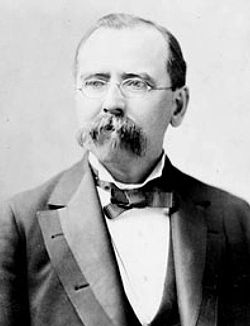
Know Your Mayors: William Russell Grace

Our modest little series about some of the greatest, notorious, most important, even most useless, mayors of New York City. Other entrants in our mayoral survey can be found here.

You can divide the mayors of New York into at least five different groups, with some obvious overlapping into one or more groupings:

1) Ladder climbers who use the mayor’s seat as a mere spoke to greater political power

2) Puppet mayors of Tammany Hall, driven by corruption, though occasionally by sudden late-day resistance against the powerful Democratic machine that put them into power

3) Idealistic one-shots, who rise to power during flashes of mass community unrest, then often disappear shortly afterwards

4) City workhorses, who spend their lives rising through the ranks to achieve the mayor’s seat almost as a finish line to their careers

Then there is the fifth kind, one that our current Michael Bloomberg embodies, as does this week’s Know Your Mayor topic, William R. Grace — the mogul mayor, a powerful businessman with astute vision who pursue civic leadership almost like a hobby.

Like Bloomberg, Grace entered New York politics only after establishing a business empire that spanned the globe. In fact, Grace’s resume hardly seems to foretell a future in local politics at all.

Born on May 10, 1832, in Cork, Ireland, young William and his family fled the potato famine in 1846 and eventually found themselves in Peru. Grace became a successful merchant to the shipping and delivery vessels mining South America’s natural resources, particularly bat guano, whose flexible chemical properties made it as desirable as precious metals.

By 1854, Grace and his brothers had their own operation — W.R. Grace and Company — which initiated steamship lines traveling between North and South America. By the time the young entrepreneur decided to relocate to his North American office in New York City in 1866, he had become independently wealthy and one of the most powerful men navagating the Atlantic Ocean.

Like many of the nouveau riche, Grace lived in Brooklyn Heights with his wife where he could observe his burgeoning shipping empire in New York harbor, his vessels traveling between Latin America and Europe. His office was at 47 Exchange Place and, later, the India House.

His new financial powers granted him avenues into New York’s political scene. At first entirely uninterested in civic matters, he ran for mayor in 1880, and won, incredibly as a Democrat who also happened to be foe to the Tammany Hall forces. (If you’re going to fight Tammany Hall, it helps to have money and influence already in the bank.)

If that wasn’t enough, Grace become the first Irish-American and Catholic mayor in an age where when many city residents still distrusted Catholics. In fact, Republican opponents had claimed that Grace would “make this City subordinate to the Holy Father in Rome.

Grace was mayor for two non-consecutive terms. From 1880-1882, his battles were with Tammany’s ‘Honest’ John Kelly and the city’s deteriorating infrastructure. Although Boss Tweed had been dead for two years, and Tammany’s corrosive readily exposed, Grace still devoted most of his first term battling his fellow Democrats over such things as street cleaning.

After returning to business for a couple years, he was brought back into the mayoral world in 1884 (until 1886) after the Republican and traditional Tammany candidates proved too divisive. Less dramatic years in terms of political battles, Grace would be involved with ensuring New York two of its most famous monuments.

He was mayor when the Statue of Liberty came to town, officially accepting the gift from the French in 1885. That same year he successfully secured the permission to have the body of Ulysses S. Grant buried in the city, in the ostentatious mausoleum that would be known as Grant’s Tomb.

According to the Catholic Encyclopedia, Grace went to Mass every morning before heading to City Hall. Grace’s latter days were devoted to philanthopical gestures, including the Grace Institute, which educated immigrant women, in 1897. He died in 1904.

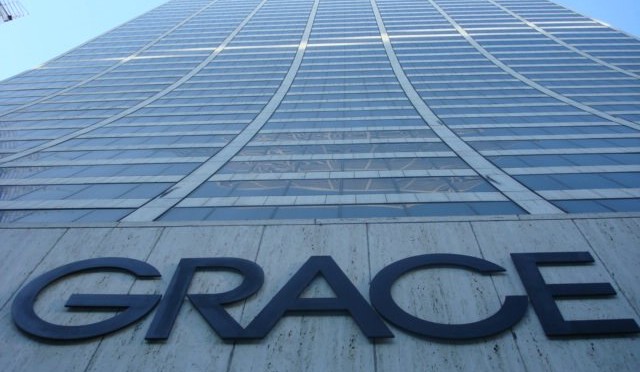
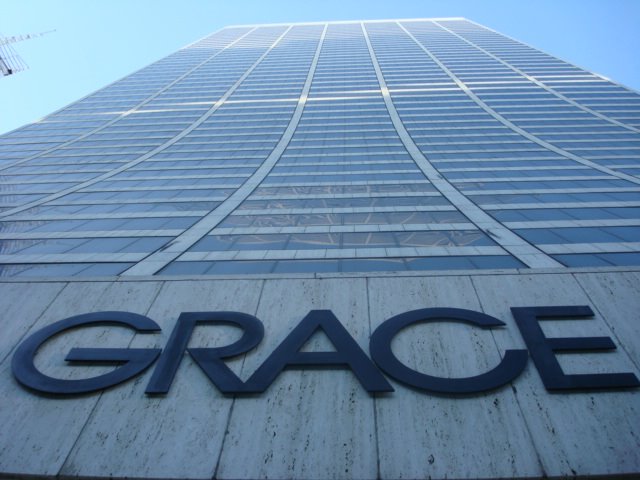
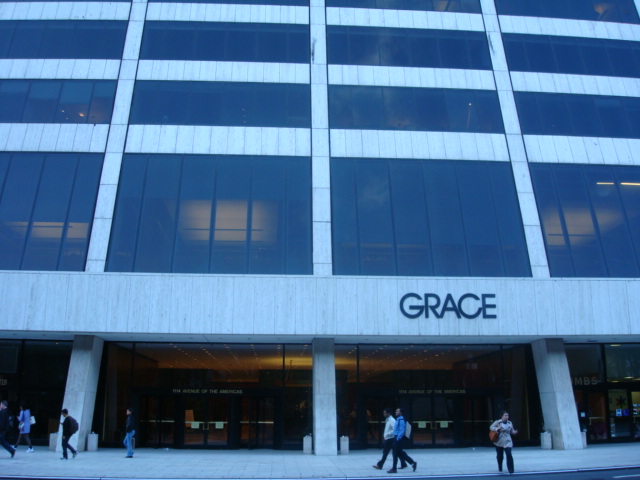
However, his company W.R. Grace and Company would grow, from its salad days in bat guano, to become one of the world’s biggest chemical conglomerates. Their New York corporate headquarters was built in 1971 on the north side of Bryant Park and is generally known for its white sloping facade. At present it is the 61st tallest building in New York City.

Know Your Mayors: “The Boy Mayor of New York”

Our modest little series about some of the greatest, notorious, most important, even most useless, mayors of New York City. Other entrants in our mayoral survey can be found here.

The 1910s were a rough time to be mayor of New York City. The decade’s first mayor, William Jay Gaynor, took an assassin’s bullet in the neck and an entire term to die from it. A second mayor — in fact, New York’s youngest mayor ever — would not live to see the end of the decade either.

We covered Gaynor’s unusual tenure in the job in a prior entry. Former army Col. Ardolph Loges Kline stepped in to fill the remainder of Gaynor’s term, a duration of less than four months. Kline, former president of the Board of Aldermen (an equivalent of today’s city council), was remarkably enough a replacement for that job too. He stepped in after first Board president, a man whom I will shortly introduce below, vacated the post.

Although fairly insignificant, Col. Kline holds a distinction that Rudolph Guiliani must loathe — Kline is the last mayor to hold an additional elected office after leaving City Hall. (He became a U.S. representative for a single term.) Keep in mind this significance; in the early days of New York, the mayor’s seat was a mere stepping stool to a host of elected jobs. Kline seemed to take that stepping stool with him when he departed on the first day of 1914.

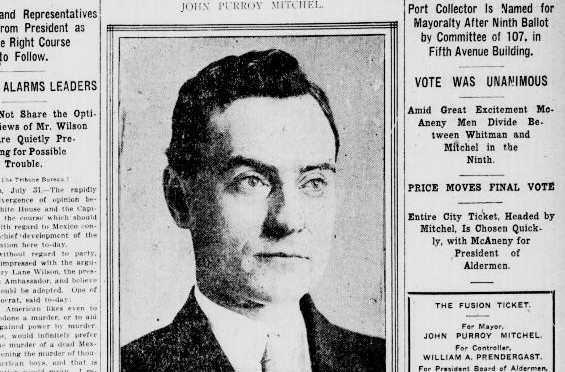
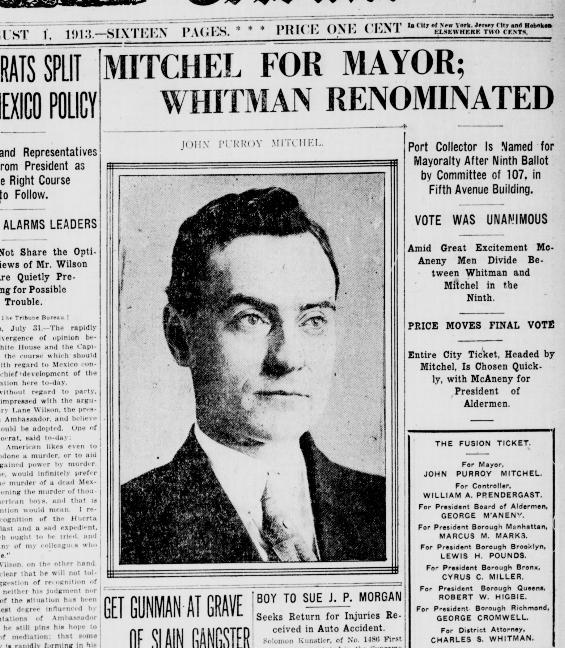
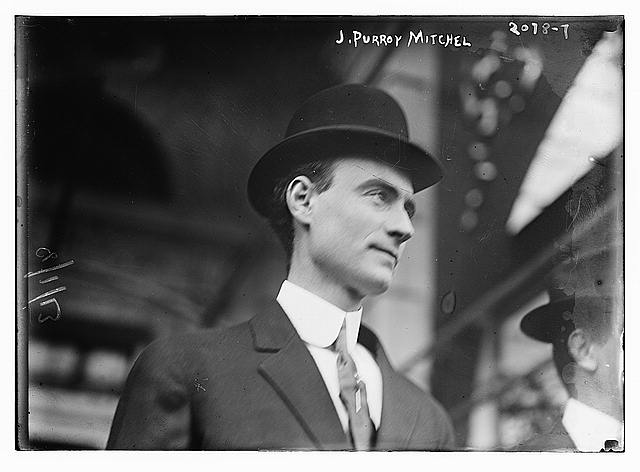
Kline stepped aside in 1914 for the newly elected John Purroy Mitchel, an ambitious young man who at 34 become the city’s second youngest mayor. (Hugh Grant — that’s Hugh J. Grant — was the youngest at 31.) He would forever be known as The Boy Mayor.

Mitchel had a meteoric rise not too dissimilar to our former governor Eliot Spitzer. A graduate of Columbia University and the New York Law School, Mitchel was thrust into the spotlight in cases that frequently pit him against the all-powerful leader of Tammany Hall, Charlie Murphy.

In 1907, all of 28 years old, Mitchel brought down the borough presidents of Manhattan and the Bronx in one fell swoop, the ringleaders of a corrupt contracting scandal. He quickly became known for his reform-heavy, almost naive take on civic responsibility, a refreshing breath in this era of Tammany Society. Mitchel was quickly elected to the president’s seat of the Board of Aldermen, in the same election that brought Gaynor to City Hall.

As Gaynor was losing the graces of Tammany, Mitchel swiftly proved himself a thorn in the side of the shifty New York police force. When it was discovered that a prominent police chief Charles Becker, on the Tammany payroll, had murdered a Jewish casino owner on July 1912 in efforts to ‘shut him up’, Mitchel used the public outcry to sweep the precinct halls of mass corruption.

Mitchel’s rising star was impervious to Tammany attacks and was elected the new mayor, the nominee of a fusion party.

In his inauguration speech, he makes the startling announcement: “It will not be necessary for us to go to the people of the city every day and tell them what we propose to do. It will be better for us to wait a little while and then to go to them and tell them what we are doing or have done.”

Some of the reforms he brought into play include a standardization for government works and a innovative city development zoning plan.

Unfortunately, history almost repeats itself with another crazy assassin. Four months into his term, a disgruntled 72 year old man by the name of Michael Mahoney fired a shot at Mitchel at City Hall.  But unlike his predecessor Gaynor, the mayor was not hit and he and his entourage wrestled the disturbed man to the sidewalk.

The real attack, however, was yet to come — and no surprise, from Charlie Murphy. Although Mitchel had continued with his vow to eradicate police corruption, an educational reform policy was viciously attacked from both ends, from Murphy’s Tammany pawns and from William Randolph Hearst‘s New York World. The attacks worked; Mitchel, a Catholic, lost the support of the poor Irish Catholics who believed the education reforms would only benefit the rich. By the end of his term, the Boy Mayor was soundly defeated by John Francis Hylan — bringing Tammany back to City Hall.

Undetoured, Mitchel changed career course. World War I had raged throughout his tenure as mayor, and he strongly believed in the importance of military service. Still a young man, he joined the Signal Corps Army Air service as a pilot in 1918. Unfortunately nobody would ever know whether he would bring his brilliance and ambition to the armed forces as on July 6, 1918, fell out of his plane during a training session in Louisiana, after apparently failing to fasten his seat belt. A curiously ridiculous and tragic end to a unique New York personality.

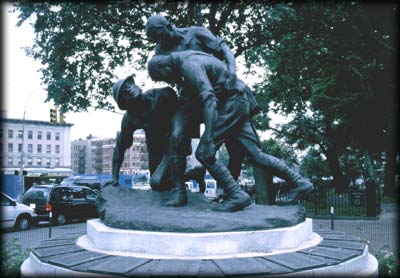
At the Engineers Gate in Central Park on Fifth Avenue sits a very, very gold bust of Mitchel. The bust was made by Adolph Weinman, the go-to sculpture guy of iconic New York architects McKim Mead and White. He’s also honored by Mitchel Square in Washington Heights (with a monument to World War I, see below) and Mitchel Air Force Base in Long Island.


Strange fact: allegedly, his aerial death was the partial inspiration for Gary Cooper‘s demise in the silent film ‘Wings’, best known as the first ever Best Picture Oscar winner.