Categories
Know Your Mayors

Know Your Mayors: George B. McClellan Jr.

Our modest little series about some of the greatest, notorious, most important, even most useless, mayors of New York City. Other entrants in our mayoral survey can be found here.

Perhaps no mayor of New York City this side of Fiorello Laguardia has ever overseen so drastic a change to the landscape of the city than George B. McClellan Jr.

For six extraordinary years (1904-09) McClellan presided over the openings of the New York Public Library, Chelsea Piers, Grand Central Station, christened the first subway service and licensed the first taxi cab.

Below: Mayor McClellan in 1904, his first year in office
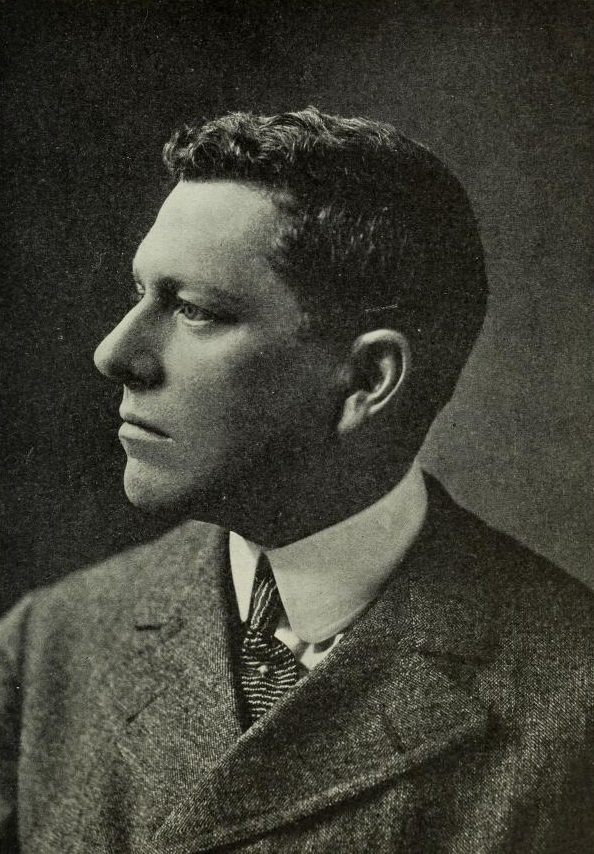
george

But oddly, George is perhaps best remembered today for his half-hearted but successful campaign against motion pictures.

If his name sounds vaguely familiar, thank your high school history teacher. George Jr. was the son of the ultimately disastrous Civil War general of the same name, a Union general first fired by Lincoln, then defeated by him in the presidential election of 1864. Despite this, George McClellan Sr. did become the governor of New Jersey, providing his son with a model of leadership he would implant into his many civic duties.

Below: Papa McClellan
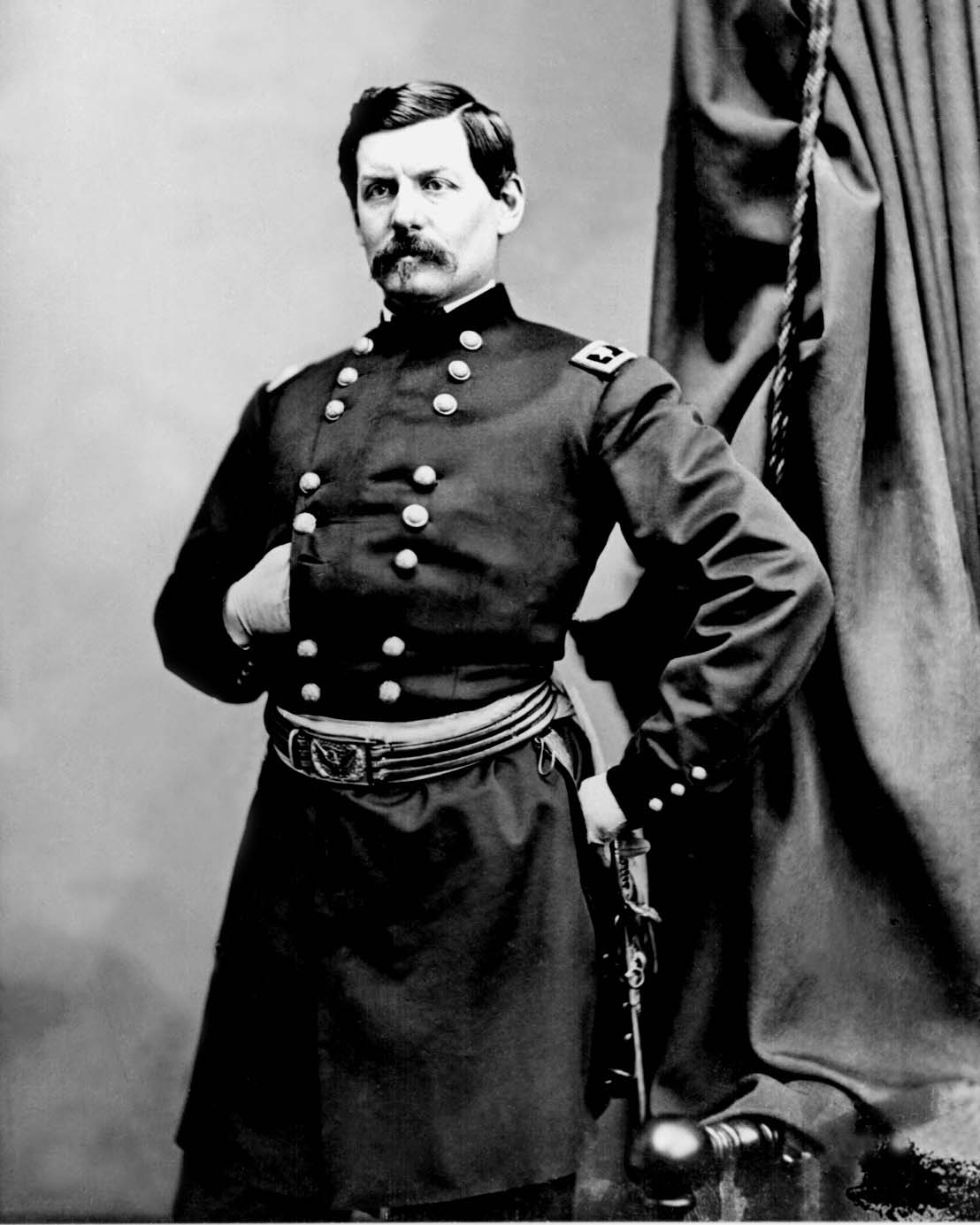
father

The dashing George Jr — or you can call him Max, his family did — is one of New York’s few foreign-born mayors, born in 1865 in Dresden, a few years before it was absorbed into Germany. Growing up in New Jersey while father governed, George graduated from Princeton in 1886 and a couple years later ended up as a writer for the revitalized New York World, Joseph Pulitzer‘s popular scandal sheet, in its brand new office on Newspaper Row — just across the street from George’s future office at City Hall.

Actually, George was mayor before he was really mayor. Name recognition and an inherited interest in public service placed him on the Board of Aldermen (precursor to the City Council) by the 1890s, and he was elected board president in 1893. The next year, due to an absence from the city by sitting mayor Thomas Gilroy, McClellan, age 29, became the acting leader for a month.

His biggest controversy? Raising on Irish flag over City Hall for St. Patricks Day, outraging local schoolboys. No, really. He even received threats of bodily harm, but held firm. Deal with it, he told the boys.
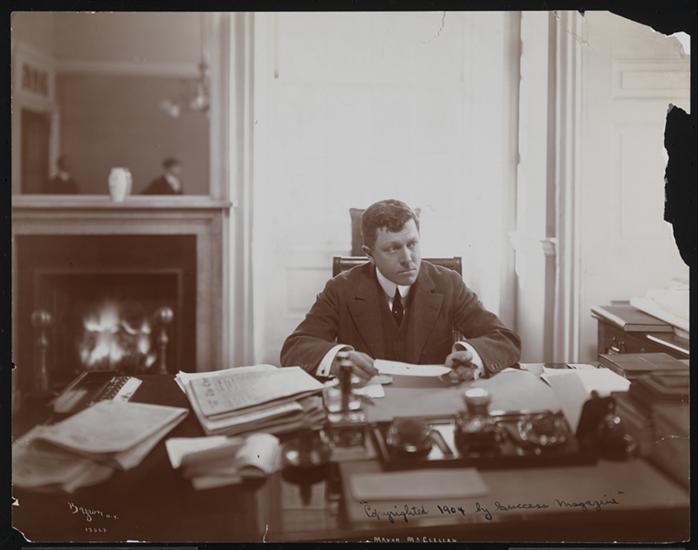
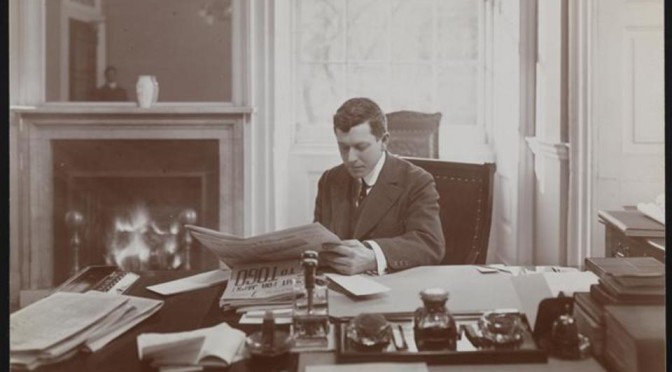
Mayor McClellan in his office, 1904 (Courtesy Museum of the City of New York)


Snugly in bed with Tammany Hall and a favorite of ole Boss Croker, McClellan spent the next several years representing New York in the U.S. House of Representatives. He returned to the New York scene in 1903 as a Tammany instrument to oust mayor Seth Low, a reform ‘clean-up’ mayor who may have irked more than a few tavern owners.

McClellan, with Tammany’s blind eye towards New York’s more lascivious industries, handily won. And would stay in office for six years, making him New York’s longest serving mayor since Richard Varick in 1789. (The man he beat for re-election in 1905? William Randolph Hearst.)

New York blossomed under McClellan’s reign, with many long boiling projects coming to fruition. One new bridge, the Williamsburg, opened under his watch with another (Manhattan Bridge) well on its way, he unveiled lofty plans to improved the city’s water system, and he gave Longacre Square a new name (Times Square). The Battery Maritime Terminal (built in 1906), that jade beauty next to the Staten Island ferry, is even dedicated to McClellan. New York Public Library was nearly completed — and Grand Central Terminal half-way done — by the end of his term.
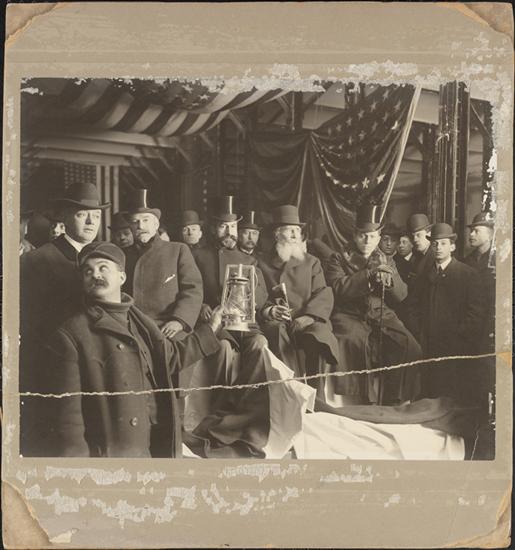
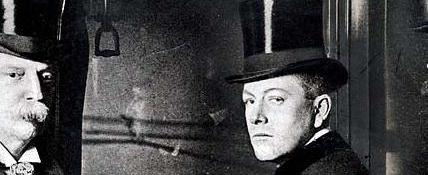
A picture in the new subway tunnels, Mr. McClellan looking very confident near the center right. (Museum of the City of New York)


An intrepid tale springs up about McClellan involving the grand opening of the IRT’s first subway tunnel in October 27, 1904. Meant only go ceremonially start up the engine of the first train, McClellen requested that he would like to actually go ahead and drive the train all the way up to Harlem! (And Bloomberg brags that he only rides the train.) He deftly steered the new engine up to 103rd Street before handing over the controls.

To me, McClellan’s biggest contribution is valuable indeed — overseeing the construction of the Chelsea Piers (below), which allowed massive steamships to dock in the city, turning New York into a truly international port. By 1907, in fact, the Lusitania was already at dock here, although the terminal wasn’t officially completed until 1910.
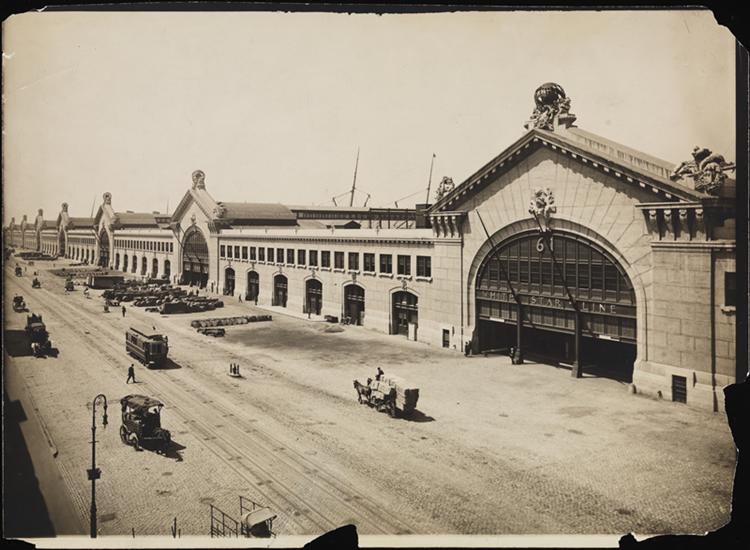
piers

Yet with all of these remarkable changes, the story which arises the most about McClellan involves his war against a technological threat — the rise of cinema.

By 1905, the city had dozens of ‘movie houses’, nickelodeons and amusement arcades where patrons could pay a penny to see the birth of the motion picture. A theater owned by Marcus Loews, quickly to become the biggest name in film exhibition, opened in New York in 1904; the city got its own production company, Biograph, in 1906.

This new moving pictures craze was sweeping the United States — two million patrons in 1907, according to the Saturday Evening Post — and like everything foreign and new, it was soon seen as a corrupting influence, ‘demoralizing’ children, a bastard offspring of vaudeville and burlesque.

Some accounts have McClellan ardently opposed to this new medium on those grounds. I prefer a more rational theory: by 1908, McClellan had his eye on a new job — president of Princeton University — and in order to get that, he had to be seen as sticking up for higher morals. (Something Tammany candidates aren’t exactly known for.)

Below: McClellan steps from a newfangled automobile onto the streets of Union Square in 1908 (pic courtesy Shorpy)
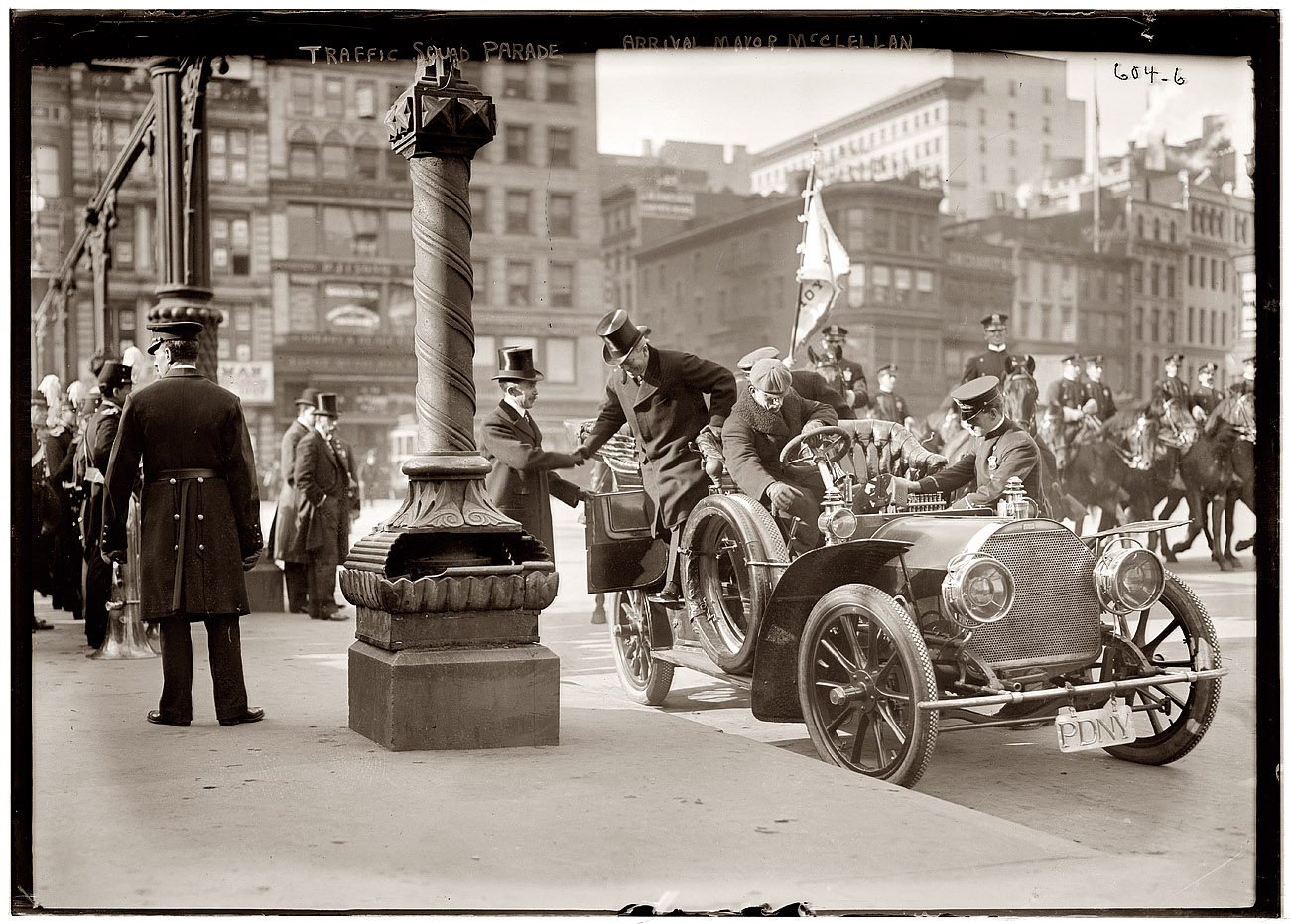
02905u

And so, on the technicality of being dangerous fire hazards, McClellan tore up the licenses of over 550 motion picture exhibitors — yes, that’s right, 550. (Nickelodeons were in music halls, taverns, even a few restaurants.) Most were not reinstated until the debut of New York’s Board of Censorship in 1909, a reviewing board which ended up not censoring much of anything. By the 1910s, movie makers and theatre owners were becoming too powerful to overrule.

By why was McClellan looking for a new job in the first place? In 1908, he was not long for the mayor’s office. Like blessed as Tammany Hall golden boys, McClellan got a conscious in his second term, hiring many non-Tammany employees and rooting out a mountain of Tammany related corruption in civic offices.

This turncoat did not please new Tammany boss Charlie Murphy, no it didn’t. In 1909, Tammany put up their new contestant, the colorful William J. Gaynor. (Incidentally, he also beat William Randolph Hearst, in his second and final unsuccessful run at the office.)

McClellan never became the president of Princeton, but he spent his remaining years teaching there until 1931, when he retired to the good life, writing books about his real passion — the history of Venice. He died in 1940 in Washington DC and was buried in Arlington Cemetery.

But clearly, it’s to New York that he belong.

Below: in this 1905 Harpers Weekly cartoon, McClellan is seen as a little boy holding the Tammany tiger, devouring the ‘fusion candidate’ (Seth Low). President Theodore Roosevelt peeks from the side. (He always did like wildlife.) Within three years, McClellan would be the devoured.
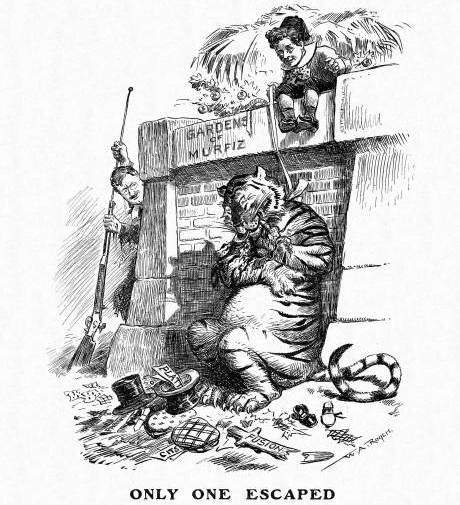
Garden of Murfiz = Tammany Boss Charlie Murphy
Two East Village cemeteries open their gates

From the New York City Marble Cemetery

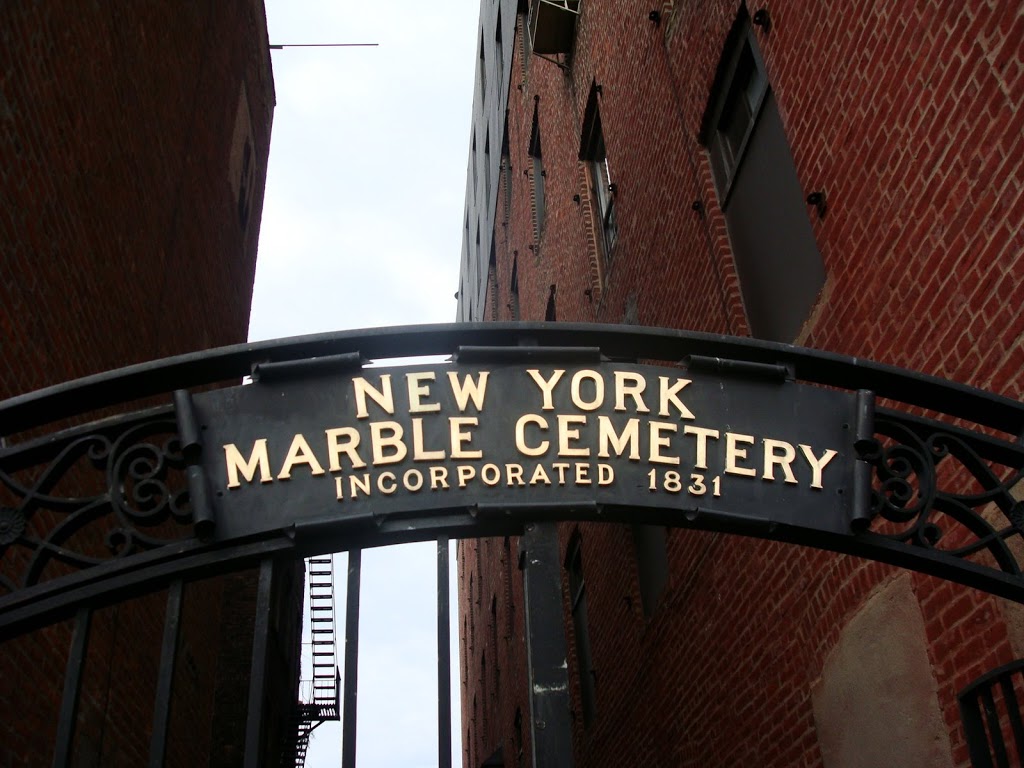
Two rarely seen artifacts of the East Village swung open their iron gates this weekend for Open House NY, New York’s two oldest cemeteries — the New York Marble Cemetery and the New York City Marble Cemetery. (Yes, you read that right.)

In a few respects they are the Paris and Nicole of ancient burial grounds — virtually identical and marked with occasional rivalries — however these unique New York landmarks are literally all depth, little surface. For below the serene, manicured lawns of both places lie the crypts of hundreds of 19th century New York’s leading families.

Before Green-Wood became the fashionable place to rest in peace, wealthy New Yorkers were lured to very first marble cemetery, opened in 1830. Unlike a traditional church cemetery, the New York Marble Cemetery (still listed at 41½ Second Avenue) was strictly a profit-generating venture of Perkins Nichols, who with a board of trustees purchased farmland funded by families already lined up to buy underground vaults.

Threats of disease during the early 1800s forced city officials to ban burials in lower Manhattan, below Canal Street. One of Nichols appeals was the Tuckahoe marble used to make the vaults; it was believed that disease was spread from traveling miasma which emanated from dead bodies, however the sturdy marble was believed to contain this effectively.

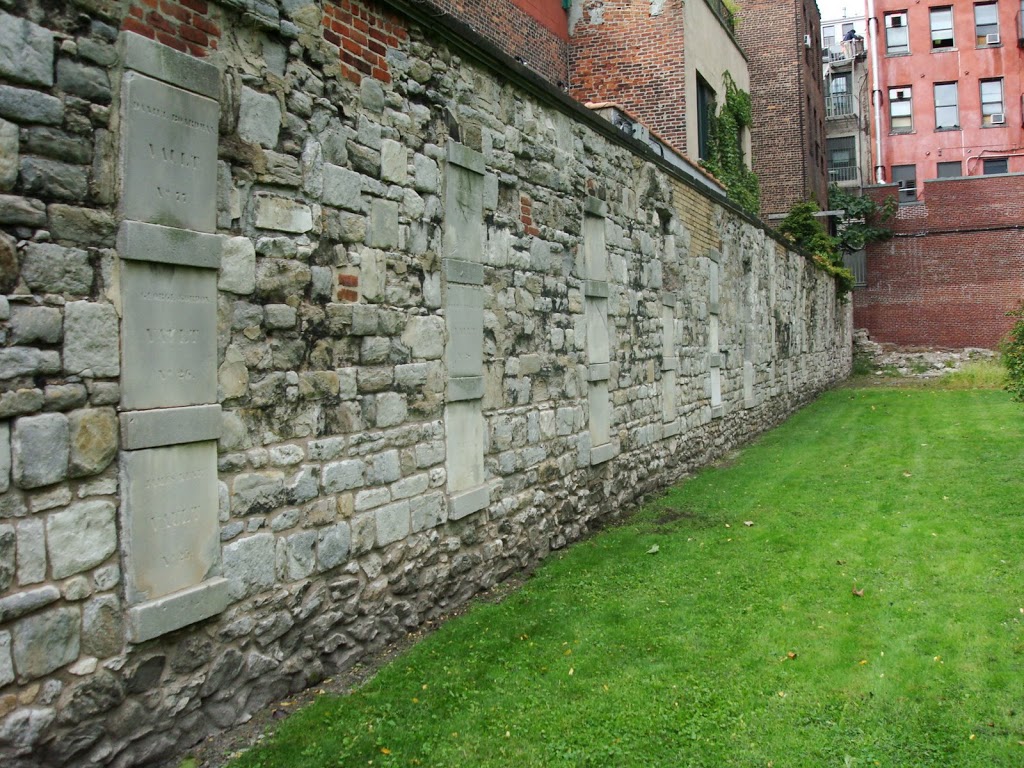
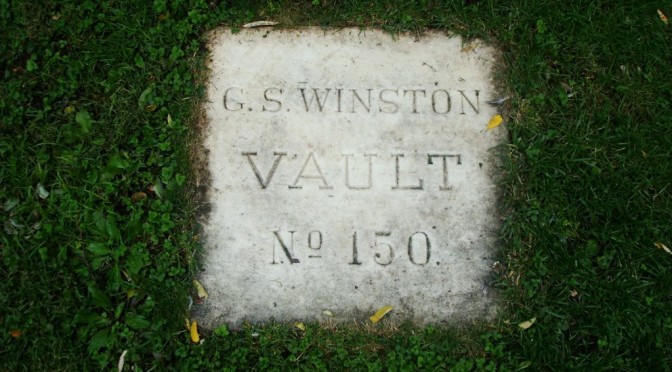
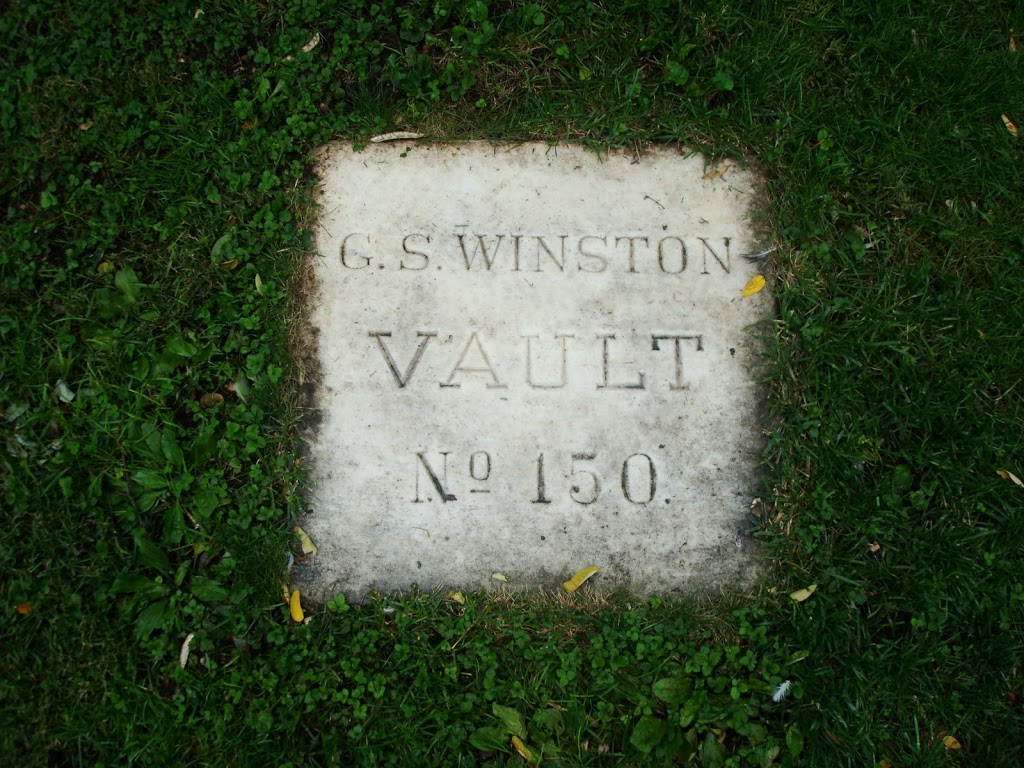
At $250 a pop, families could book themselves at this “Place of Interment for Gentlemen,” which eventually housed 156 vaults. The cemetery appealed more to rich merchants and businessmen, as old moneyed families usually had their own family plots at their country homes. Today it looks like an out of place backyard with fresh green grass and a few trees. Vault markers are placed on the walls surrounding the lawn.

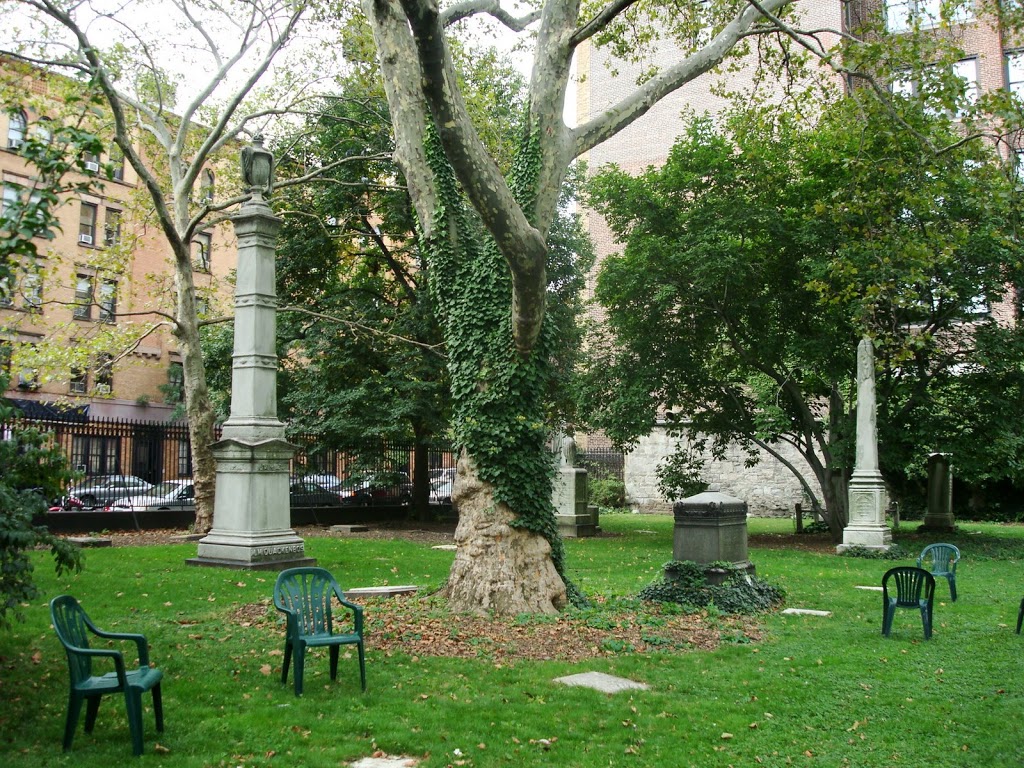
At the New York City Marble Cemetery a block away, the vault markers are affixed into the earth, sharing space with a few traditional grave markers. Trustees hired Nichols to open this plot a little less than a year later, in 1831, due to the success of the original. Not only is it a little larger — with 258 vaults underfoot — but it’s readily viewed from Second Street through the bars of some very rustic iron gates.

Although New York Marble Cemetery was first, New York City Marble Cemetery held a loftier roster of permanent residents, including New York Public Library benefactor James Lenox. Who you will no longer find here, however, is fifth president of the United States James Monroe, who was laid here at his death in 1831 and moved back to Virginia in 1858.

Below: the more dramatic New York City Marble Cemetery

Both cemeteries lost permanent inhabitants once Green-Wood opened, with families preferring to relocate their loved ones to the larger, more landscaped setting. In the 1890s, Jacob Riis almost successfully petitioned to have the original marble cemetery turned into a children’s playground, but the plan was later abandoned.

You can find more info at their official websites — Marble Cemetery and NYCMC.

I highly recommend swinging by either next time they’re open. In fact, New York Marble Cemetery, hidden away through an alleyway and thus far more quiet, is even open for parties and events. Who wouldn’t want to throw a wedding reception here?

Categories
Podcasts

PODCAST: New York Public Library

The New York Public Library may be one of the most revered libraries in America, but it took a farflung combination of bookworms, millionaires and do-gooders to make it into the institution it is today. Also: find out why the architectural style of the Beaux Arts sometimes reminds us of an old French prostitute.

Listen to it for free on iTunes or other podcasting services. Or you can download or listen to it HERE

Before the lions of the New York Public Library — now less imposingly called the Humanities and Social Sciences Library — parked themselves at 40th and 6th Ave, the Croton Reservoir stood imposingly there, holding the city’s water supply. As you can tell from this picture, it looked a bit like an Egyptian pyramid, or perhaps a alien spaceship.

This was a distribution reservoir, which received water from a larger ‘receiving reservoir’ in what is now Central Park, but what was then on the outskirts of town.

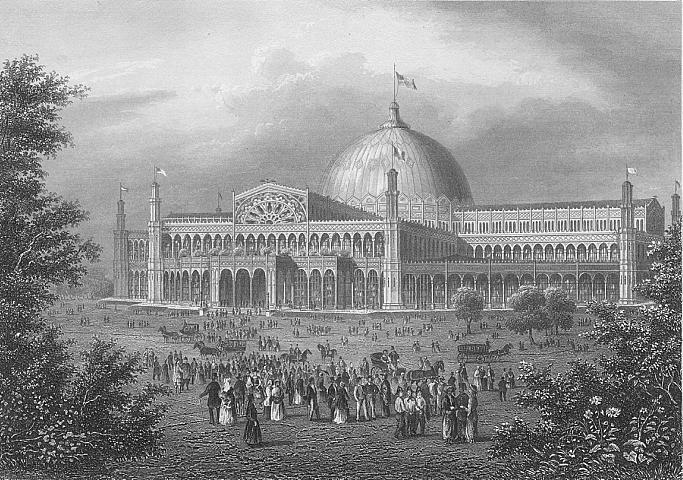
Meanwhile, the space now considered Bryant Park was, in the 1850s, the location of the New York Crystal Palace, home of America’s technological and engineering marvels. Here’s a look at the Crystal Palace in all its glory:

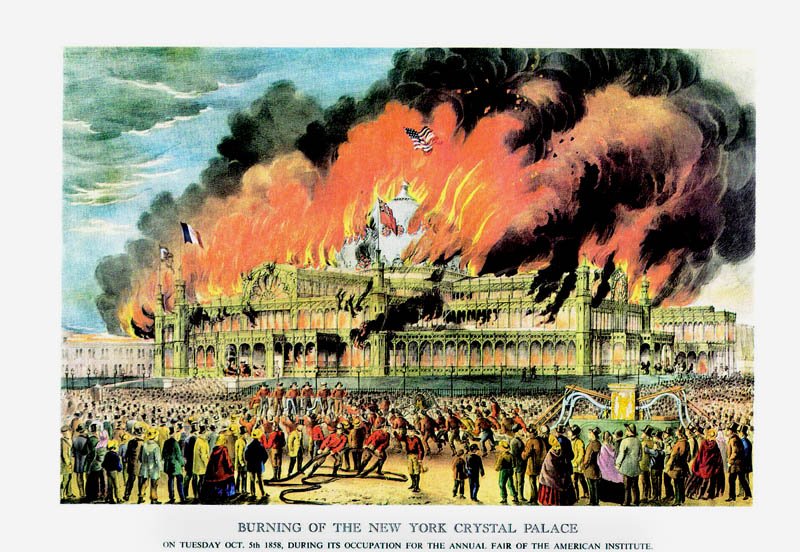
And a dramatic illustration of its final moments, felled in a quick burning fire.

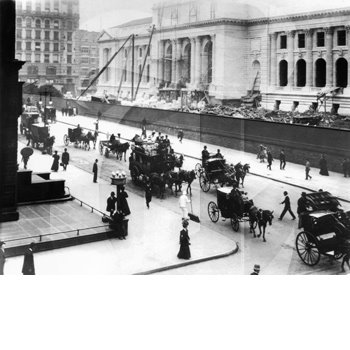
The construction of the library took nine years — sixteen if you consider the time from original design to dedication. The most ambitious marble building of its time, it was covered in Vermont marble so carefully chosen that two-thirds of the shipped stone was rejected for not being refined enough. The marble is at a thickness of almost a foot all around. The net effect even now gives the structure an immovability that makes the modern skyscrapers around it seem light and temporary.

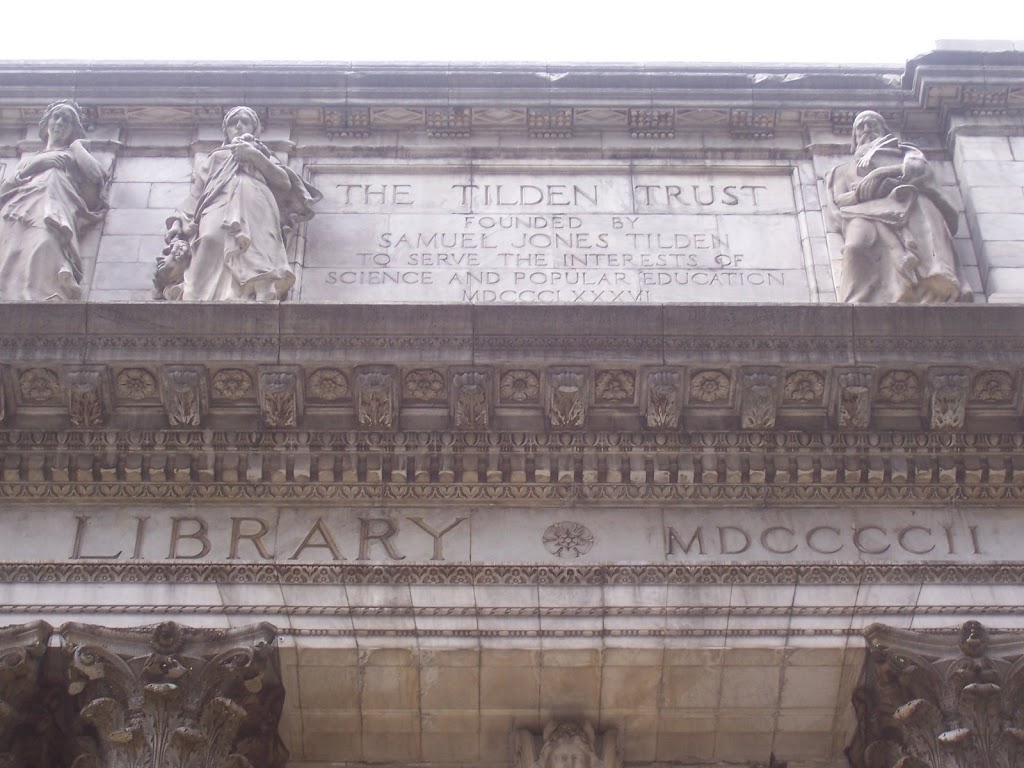
On the frontispiece above the entrance to the library is a tribute to its three creators — millionaire John Jacob Astor, collector James Lenox and former governor Samuel Tilden:

However, the area of 41st street that runs between 5th and 6th Avenue is now called ‘John Bigelow Plaza’, after the man who brought the Astor and Lenox collections together with the Tilden Trust.

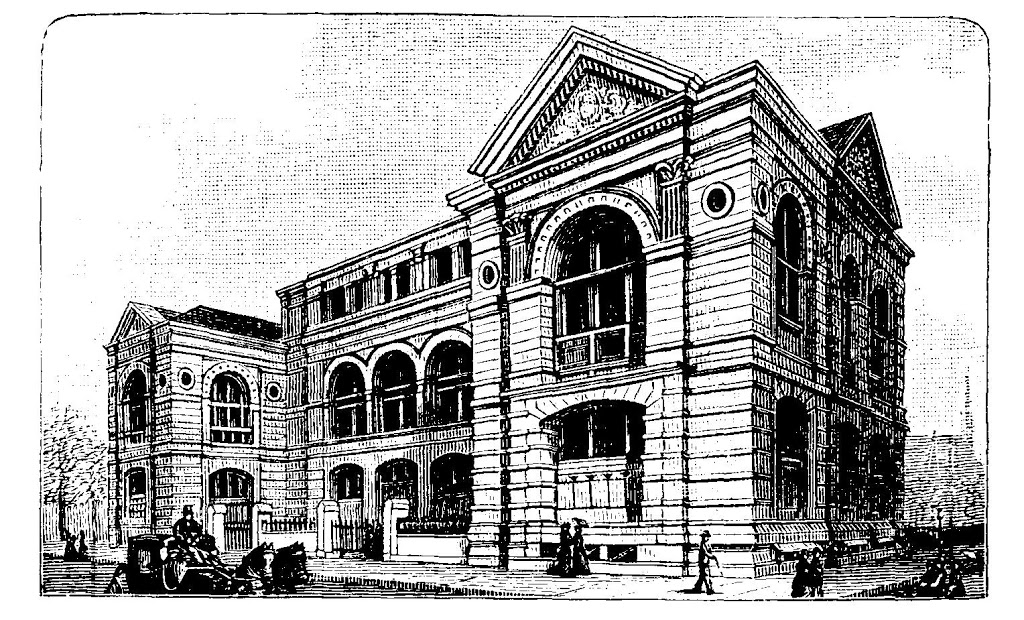
James Lenox has originally kept his collection in his own library on 5th and 70th street. This scratch illustration displays Lenox’s ‘indestructible’ limestone library, which housed most of the items held at the Public Library today, including Lenox’s personal copy of the Gutenberg Bible.

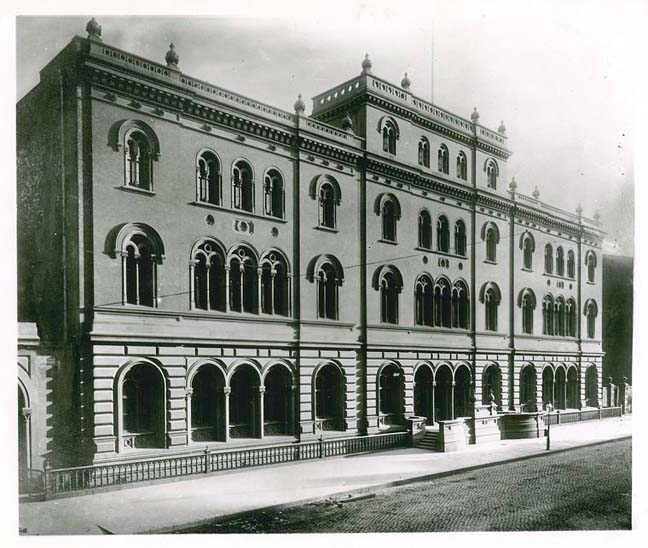
Meanwhile, the rest of the collection came from the Astor Library, constructed with money bequeathed by the millionaire. Thankfully the building remains pretty much intact, thanks to its present occupants, the Public Theatre, whose decades of success on Broadway, off-Broadway, dance, performance art and especially Shakespeare in the Park would have confused but satisfied the building’s original benefactor.

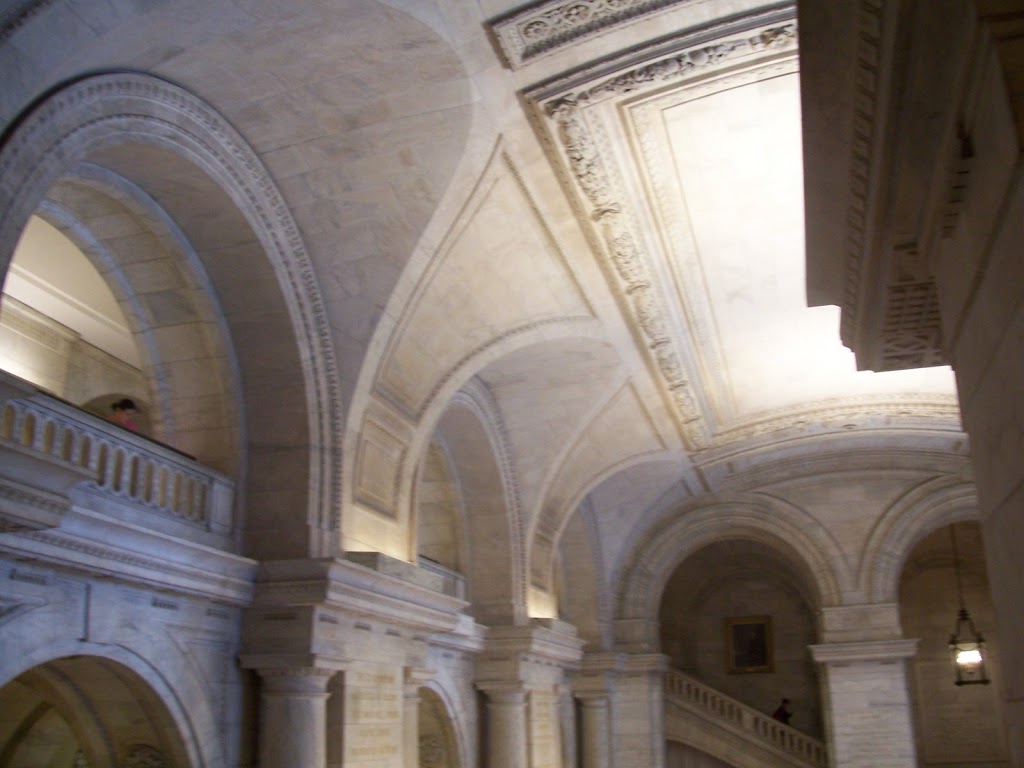
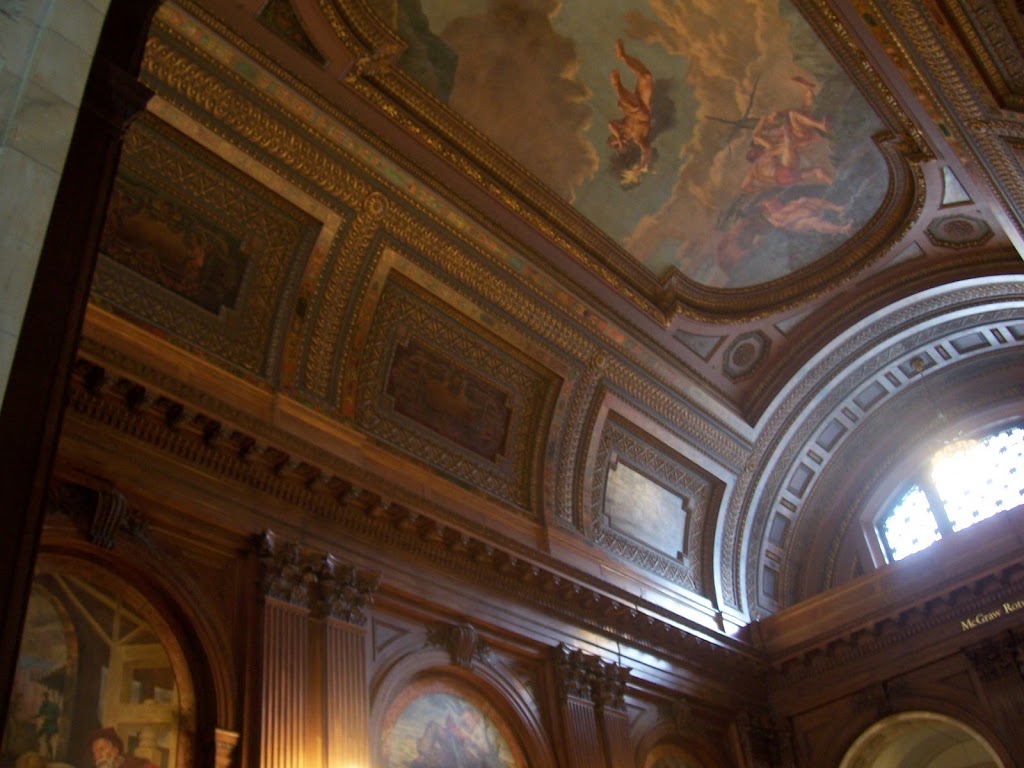
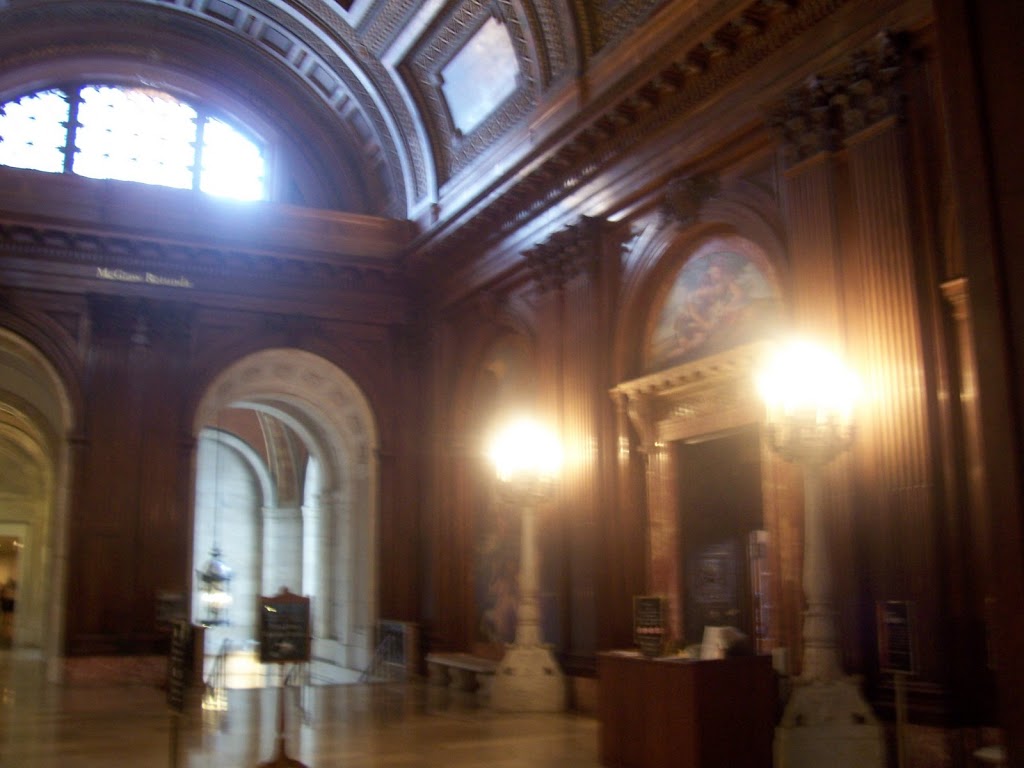
Some pictures from inside the New York Public Library building illustrate some of its more Beaux-Art-ish features. The broad vaulted arches:

And ornate muralled ceilings in the McGraw Rotunda. The effect is a bit like the Vatican apartments mixed with an old bank:

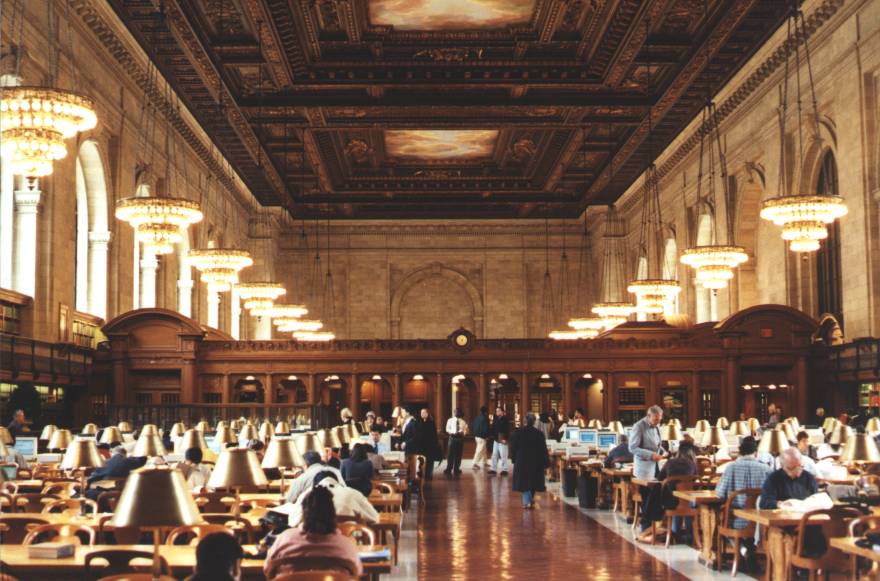
Its all dwarfed, however by the massive Rose Reading Room, whose basic organization came not from the architects but from the library’s first director, Dr. John Shaw Billings, from a sketch he made on a postcard!

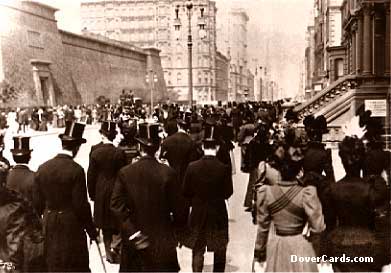
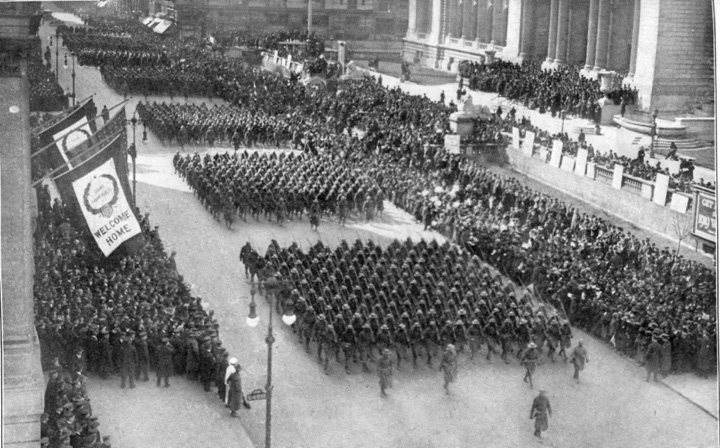
And finally, a beautiful picture I found on a World War I website, showing the fairly new library in all its glory, as New York’s 369th Regiment passes by.

Thanks to the New York Public Library official website for providing us with some of our trivia. And there’s lots more there to intrugue you. Click here for visiting hours and facts about some of the branch libraries.