Mayor LaGuardia’s former home and its sci-fi, erotic past

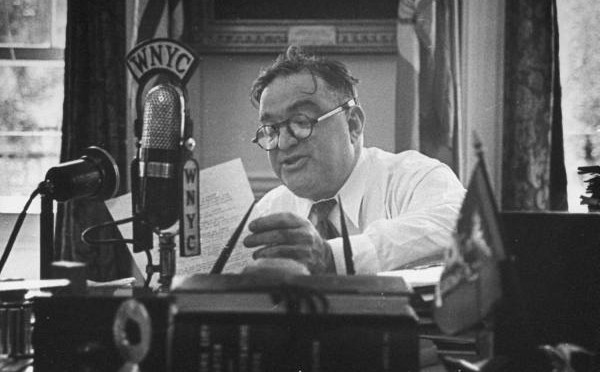
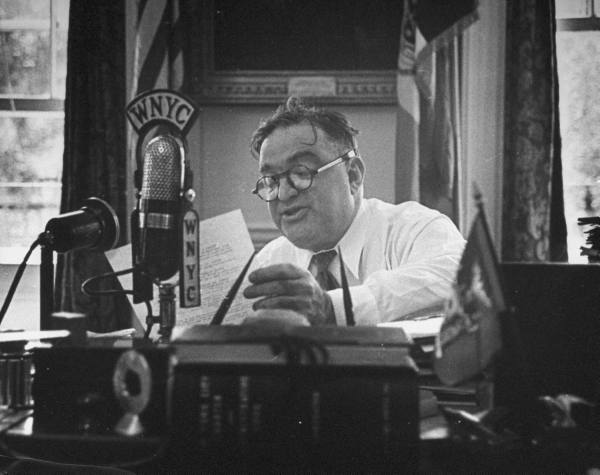
Above: Mayor LaGuardia presenting his weekly WNYC radio show from Gracie Mansion. He would carry on the tradition at his Riverdale home.

Fiorello LaGuardia, among the greatest mayors ever in New York history, died on this date, September 20, 1947, at his home in the Riverdale neighborhood of the Bronx. He arrived at the lovely four-story Tudor home directly from Gracie Mansion, where he served three consecutive mayoral terms. This mansion at 5020 Goodridge Avenue, constructed in 1914-15, was built for famed magazine illustrator Arthur I. Keller.

Retiring from politics, LaGuardia resided at the quiet mansion with his wife and two teenage children, broadcasting a weekly national radio program from his office and occasionally playing host to visitors like Robert Moses.

Less than 15 years later, the old LaGuardia home fell into some very curious ownership.

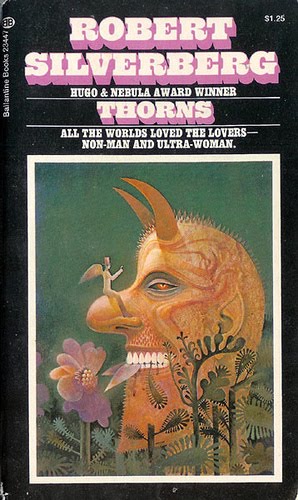
Prolific science fiction author Robert Silverberg crafted pulpy space fiction like Revolt on Alpha C and The Dawning Light right out of graduating from Columbia University in 1956. But he also spent those early years churning out stacks of cheap erotic novels for quick cash, so many and so successfully apparently that, at just age 26, he was able to purchase LaGuardia’s last home in 1961 and transform it into his own inspiration point. He penned several more sci-fi fantasies from this house, including the notable (and sexually charged) Thorns.

The author also wrote (under a pen name) the manual Sophisticated Sex Techniques in Marriage while living here.

Silverberg gave a little nod to the neighborhood in his 1972 novel The Book of Skulls: “How unreal the whole immortality thing seemed to me now, with the jeweled cables of the George Washington Bridge gleaming far to the southwest, and the soaring bourgeois towers of Riverdale hemming us on to the right, and the garlicky realities of Manhattan straight ahead.”

Super Local: Captain America and New York’s other heroes

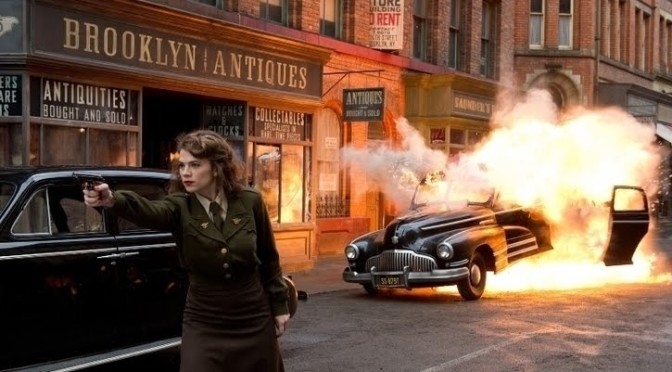
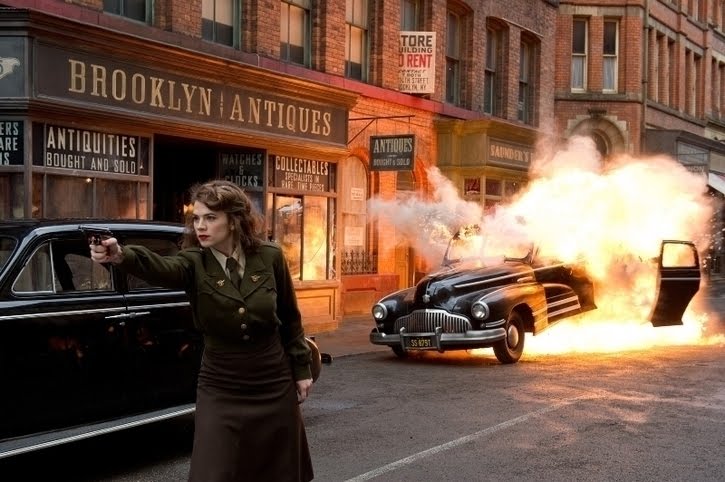
A 1940s antique store carries more than dusty lamps in the summer superhero film, ‘Captain America: The First Avenger,” which transplants its hero’s origins from the Lower East Side to downtown Brooklyn.

I know I can be a bit fanatic in my New York-centeredness, but this statement I can make with fact — the comic book industry was born in New York City. One of the earliest publishers, George Delacorte (familiar to visitors at the Central Park Zoo), founded Dell Publishing in 1921, producing pulp magazines and, eventually, comic strip collections. The publishing precursors to both DC and Marvel Comics got quiet starts in small offices in New York, and both slowly grew to dominate and define the superhero universe.

More importantly, several key comic artists and writers found inspiration in the city. Bob Kane and Bill Finger, the creators of Batman, and the hero’s first artist Jerry Robinson cooked up the character in the Bronx. Martin Nodell dreamt up the Green Lantern from inspiration found at a 34th Street subway station. A bespeckled boy from Brooklyn, Gardner Fox, ditched a law career for a typewriter where he created The Flash.

None are perhaps as famous as Stan Lee, born on the Upper West Side, and the father and co-creator of an entire stable of Marvel Comics’ classics, including Spider-Man, Iron Man and the Hulk. And one of comics’ most influential artists, Jack Kirby, was born and raised in the tenements of the Lower East Side.

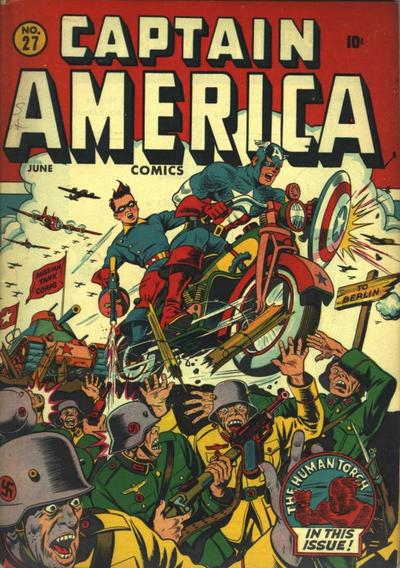
At the start of World War II, Kirby met writer Joe Simon, a photo retoucher living in Morningside Heights, and the two found success in creating a host of classic comic creations. Chief among them was the patriotic themed Captain America. Steve Rogers, a meek young illustrator, wants to fight for his country but suffers from classic comic-book weakling syndrome. A government experiment grants Rogers superhuman powers and a flamboyantly bright uniform, the better to fight Nazi and various supervillians.

Now, after all that set up about New York’s importance to comic-book creation, Rogers actually represents the top of a rarer class — superheroes who are actually born in New York City, according to their origin tales. Rogers, much like his creator Kirby, is from the Lower East Side.

In the new movie, “Captain America: The First Avenger,” the creators have transplanted the origin of the hero — as well as his sidekick Bucky — to Brooklyn*. Not only is Rogers from the mean streets of downtown Brooklyn, but the Army has a super-secret laboratory hidden within a dusty old antique store. (Talk about adding some pizazz to the Fulton Street Mall!)

In the film, 1940s Brooklyn is actually played by Manchester, England, and quite well in my opinion. But it does beg a question — in the various fictional comic book realms, how many superheroes are actual New Yorkers?

The first place to look is amongst the roster of Marvel Comics heroes. DC Comics originally set many of its tales in fictional cities — Metropolis, Gotham City, Keystone City, Star City — and many of its greatest characters are from otherworldly locations (Krypton, Mars, the island of Themyscira). Lee’s philosophy with the creation of Marvel Comics was to root heroes in realistic places and problems, a reaction to DC’s fantastical remove.

The Lower East Side’s Captain America was inherited by Marvel in the early ’60s, but the company created many of its own local heroes. A small sampling includes:

— Peter Parker, transformed by radioactive insect bite to become Spider-Man, is perhaps New York’s most famous native, a resident of Forest Hills, Queens

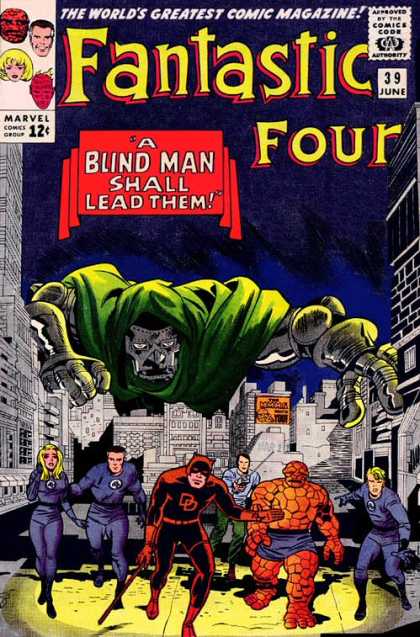
— Another Lower East Side native was scrappy young Benjamin Grimm. He befriended Columbia University college student Reed Richards, who had fallen in love with Long Island girl Sue Storm. Along with Sue’s brother Johnny, the quartet were bathed in cosmic rays to become the Fantastic Four, who donned fabulous blue costumes and set up headquarters in midtown Manhattan at the Baxter Building, overlooking Grand Central. (By the way, Tony Stark, aka Iron Man, is also a Long Island native.)

— Meanwhile, over in Hell’s Kitchen, more radiation — how is it safe to live here?! — blinds the son of a noted boxer who is later killed by gangsters. (I haven’t seen the original issue, but I’m guessing he fought at Madison Square Garden, located in Hell’s Kitchen in the 1960s.) That child, Matthew Murdock, grows up to develop extra-sensory powers and a taste for red spandex, as the Daredevil.

— I’m imagining that young Daniel Rand grew up on the Upper East Side somewhere when his wealthy father took him to the mystical disappearing city of K’un L’un, where Rand develops superhuman martial arts abilities and renames himself Iron Fist. Back in 1970s New York, quite naturally he pairs with Harlem gangster-turned-dogooder Luke Cage. Occasionally, the duo run into that Brooklyn-born hothead Ghost Rider.

— Then there’s that constant reminder of the dark, crime-infested side of 1970s New York with the vigilante called The Punisher, avenging the death of his family in Central Park at the hands of a bloodthirsty mob boss.

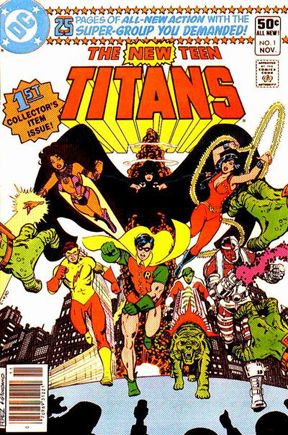
By the late 1970s, there were at least a good couple dozen superheroes flying over the heads of New Yorkers. And other heroes from other comic companies soon joined them. DC Comics saw the benefit in entering the world of actual cities by the early 80s. The popular Teen Titans housed their curious T-shaped headquarters on an unnamed island in the East River. In the alternate universe inhabited by the Watchmen, this team not only watched over the city, one of them eventually destroyed it!

By the mid-’80s, independent publishers began to creep into territory dominated by DC and Marvel, presenting starker, edgier tales. The most successful of these, the Teenage Mutant Ninja Turtles, were characters literally born in the New York sewer system. The comic itself, however, was created in Massachusetts.

With the development of companies like Dark Horse and Image, the modern comic book industry has developed far afield of New York.  But just in case all of New York’s caped crusaders are otherwise engaged, we always have Professor Xavier’s School for Gifted Youngsters — the headquarters for the X-Men — just up in Westchester County!

*Apparently, Steve Rogers actually does moves to Brooklyn at some point in his long career. Red Hook, in fact! Perhaps they sell one of those nifty shields at IKEA

150 years ago: ‘Malaeska’, the birth of the dime novel

Today marks a big literary milestone of sorts. Serialized Harlequin romances, comic books, cheap paperbacks and pulp magazines filled with tales of gangsters and spies all trace themselves to the ‘dime novel’, a cheaply produced, cheaply bought publication of the mid and late 19th century, introducing breezy, far-flung tales to readers of lower classes. Although at first these items were mere reprints from newspapers, the form soon took on a life of its own, expanding with original stories and helping create the conventions of virtually every major adventure and action tale in its wake.

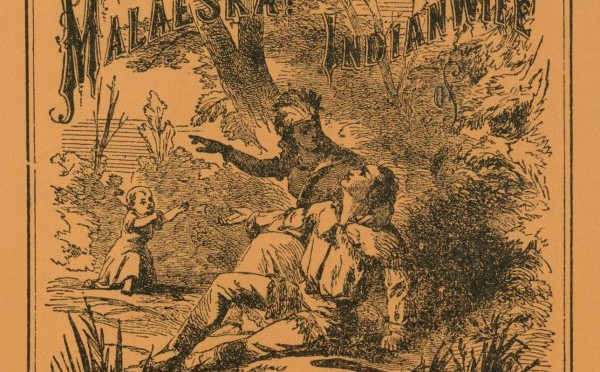
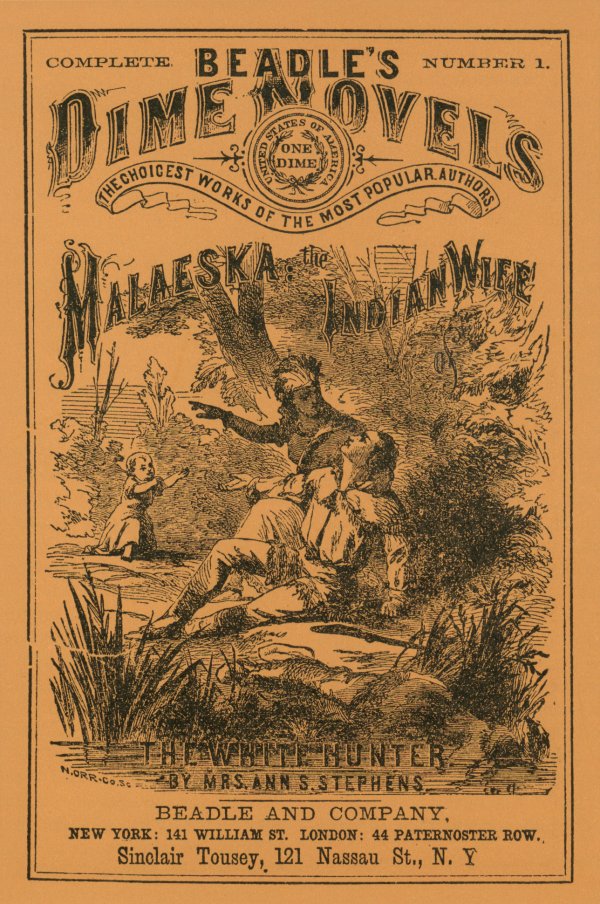
The very first of this mini-books was published today, June 9, 1860, 150 years ago, the amazing tale of Malaeska, the Indian Wife of the White Hunter, 128 pages of Hudson River Valley drama written by Ann S. Stephens, a 19th century serial writer whose breathless stories would define the genre and, by extention, the story trappings of the 20th century pulp genres.

Stephens’ sad tale recounts the illicit affair between a hunter living in Manhattan and a Mohawk woman. Their bi-racial child ends up living in white culture, while Malaeska is first made a servant and then banished. I’ll spoil the ending for you: when Malaeska confronts her son about his heritage, he responds by leaping off a cliff to his death.

You can read the novel’s entire content here hosted by Northern llinois University Libraries. The novel’s first run alledgedly sold over 300,000 copies. To put that into perspective, Uncle Tom’s Cabin, possibly the most influential American novel of the 19th century published just a few years before, sold that amount in its first year.


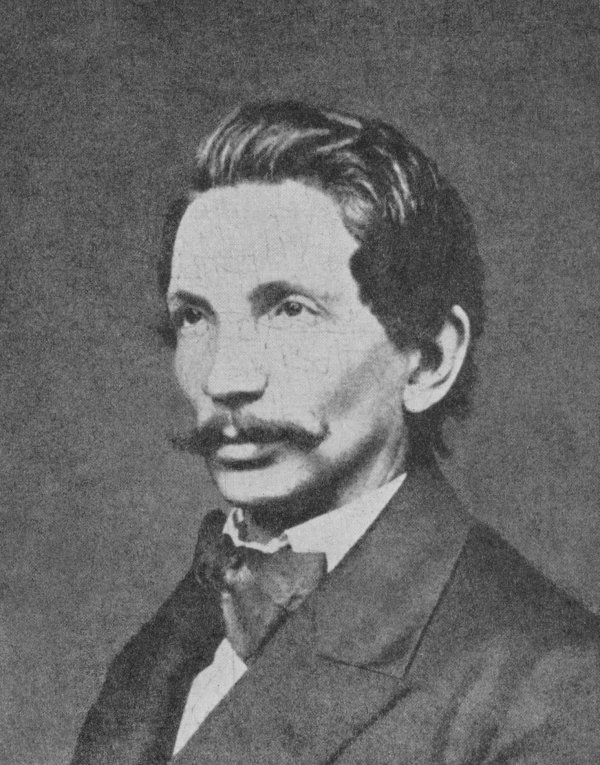
The experimental novel form was produced by Irwin P Beadle (at right), a publisher who collaborated with several partners (notably Robert Adams, George Munro, and Beadle’s own brother Erasmus) through the 1890s in producing hundreds of pop publications, including songbooks and weekly newspapers. But it would be the ‘dime novel’ which Beadle would both coin and prosper from, planned and produced from Beadle’s offices on William Street, first 141 William, then down the street at 118.

‘Malaeska’ would shortly be followed by such titles as ‘Myra, The Child of Adoption’, ‘The Slave Sculptor’, ‘Chip, The Cave-Child’, and many, many more titles sure to ruffle today’s modern levels of political correctness.

Bowery Boys Bookshelf: New York City writes about itself

No city has been more savaged and disparaged, more exalted and varnished, than New York City — and this from the very writers who lived here. The man who exclaimed “Manhattan crowds, with their turbulent musical chorus!” also wrote, “Silence? What can New York-noisy, roaring, rumbling, tumbling, bustling, story, turbulent New York-have to do with silence?” And Walt Whitman isn’t the only writer who loved to hate, and hated to love, growing New York.

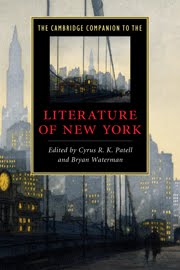
The Cambridge Companion, that staple of academic compendiums focusing on specific subjects, have finally and gratefully gotten around to the literature of New York City. (Although they did hit the Harlem Renaissance a couple years ago.) The editors of the volume, Cyrus R. K. Patell and Bryan Waterman, two associate professors at New York University, have been letting non-students in on their cultural inspirations via their regular site on New York City cultural history, Patell and Waterman’s A History of New York.

The “Cambridge Companion to the Literature of New York” (Cambridge University Press) takes a broad, thematic appreciation of New York’s written history, looking not merely at authors based in the city, but how those writers (and those looking in from elsewhere) viewed the city and its population.

Most of the essays are lovely, bite-sized ideas focusing on a handful of written works. For instance, Elizabeth Bradley distills her recent book ‘Knickerbocker: The Myth Behind New York” into a tale of New Yorkers perception of their Dutch New Amsterdam past and the devilish ways that Washington Irving distorted it. In other essays, you get sweet little snippets on the radical East Village beat scene and the ragged birth of gay and lesbian theater.

Whitman and Herman Melville get their very own takes, appropriately. Generally I preferred the narrowly defined essays to those of broader scope (like the totality of Brooklyn literary perceptions, in ten pages!), but they all work as a whole. Patell and Waterman tackle the introduction and closing essays and lead me to believe that a history of New York literature writtten by these two alone would be an even more satisfying read.

One form of literature curiously absent from the collection? The pulp and crime fiction of the 1930s and 40s. The grimy, simply written tales of gangsters, stewing the ingredients of film noir, were sold as cheaply produced paperbacks and are rarely considered true capital-L ‘literature’.

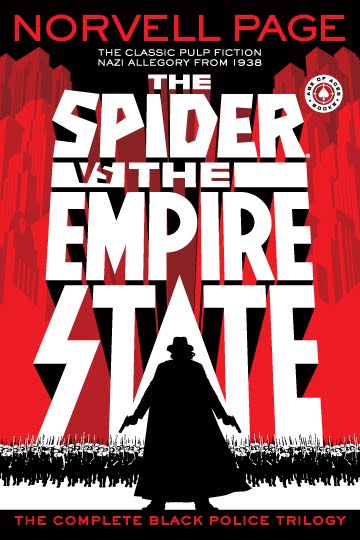
But you may rethink that after reading ‘The Spider vs. the Empire State’ (Age of Aces Books), a gorgeous reprint of three short novels by Norvell Page, exploring an alternate universe where New York is under siege by a vicious fascist regime.

Page wrote dozens of novels from 1933 to 1943 starring his cloaked protagonist The Spider, a crime fighter who straddled the edge of lawlessness, a character ideal that would go on to influence countless comic book writers. His novels were quick reads, set in a fictional New York state and soaked in cartoonish violence.

Most were insubstantial, breezy. But for three novels, the three collected in ‘The Spider vs. the Empire State’, Page created a more serious menace, a iron-handed regime called the Black Police who takes over the government of New York and wrings taxes (often by force) from the poorest citizens. Page’s creation would parallel the rise of Nazi Germany, employing dark political sentiment in a literature usually devoted to the glamour of the underworld.

The story is admittedly absurd — and deathly serious, with breathless scenes of narrow escapes, machine gun fire and midnight biplane getaways, a state run by monsters and a resistance movement centered in … the Catskills! Who wouldn’t want to read a book with scenes that take place at “Albany spy headquarters“? The new reprint by Age of Aces is beautifully designed and bound just in time for some beach reading.

My beach reading was a tad heavier this past Memorial Day — The First Tycoon: The Epic Life of Cornelius Vanderbilt by T.J. Stiles. I’m only about halfway through but it’s an amazing accomplishment, well worthy of its accolades (including this years Pulitzer Prize for biography. It’s now out on paperback, so read along with me!

And finally : I don’t exactly recommend this book — in fact, I thought the whole thing was borderline idiotic — but if you’re an admirer of one Abby Aldrich Rockefeller, you might get a kick out of reading Angelology by Danielle Trussoni, a fantasy-tinged attempt at giving New York City its very own Da Vinci Code. Without spoiling too much, Abby decided to embed Rockefeller properties all over the city with valuable, supernatural items — items which must be reassembled to prevent menacing hoards of evil, vain and fabulously wealthy angels from getting their otherworldly hands on it!

Categories
Uncategorized

Mark Twain and the long century without him


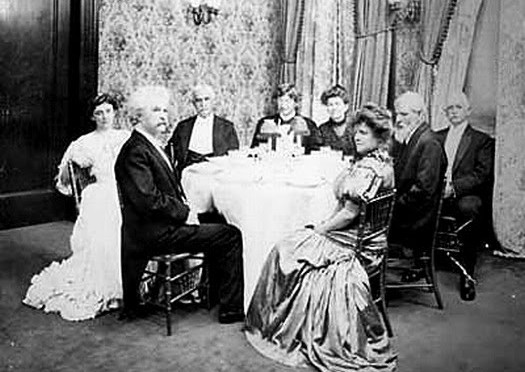
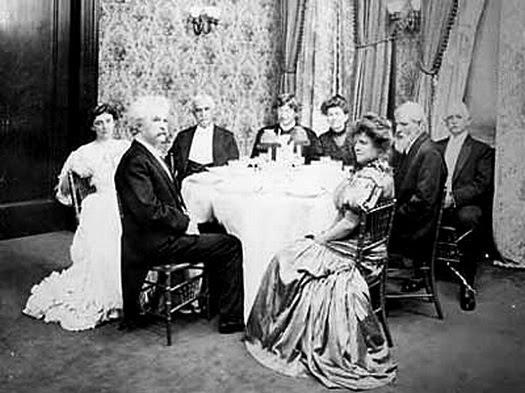
Above: Mark Twain at Delmonico’s Restaurant

One hundred years ago today, Mark Twain died of a heart attack in Connecticut, famously the day after Hailey’s Comet whisked by the earth.

Although obviously more known for his reminiscences of Missouri and his later life in Hartford, Conn., New York City figured significantly in his career. Twain first came to New York when he was just 18 years old and would live here at times throughout his life, contributing to various newspapers and journals. He certainly had a love-hate relationship with the city.

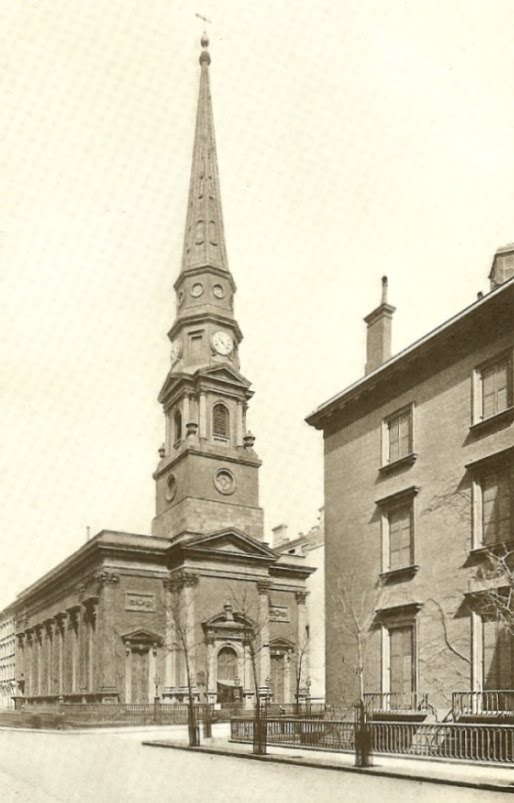
But did you know Twain’s funeral actually took place here, in Manhattan, at the Brick Presbyterian Church at 5th Avenue and 37th Street (at right, pic courtesy NYCAGO)? Both it and the townhouses which surrounded it are all gone. However, the congregation built a new church at Park Avenue and 91st which still stands; the church bell within the new building is from the old structure and bore witness to Twain’s funeral.

Twain’s body arrived in town before noon that April 23 at Grand Central Station and was somberly escorted uptown to the church, where a crowd had gathered. Upon Twain’s casket somebody had thrown a bouquet with the words: “”From one who has read ‘Pudd’nhead Wilson.'”

The funeral was clearly the big event of the day. The Associate Press article reports,” “Holders of tickets were admitted first. Millionaires and paupers rubbed elbows in the vast crowd that stood outside.”

After a series of dramatic eulogies, thousands of people streamed by the open coffin, the writer dressed in his recognizable white coat and pants. The doors were closed at 10 p.m., and Twain’s body was transported to its final resting place — Elmira, New York, a much-beloved summer respite for Twain in his youth and the place where he met his wife.

Finally, here’s one humorous recollection of New York City by Mark Twain, published in a letter for a San Francisco newspaper in 1867. Who hasn’t felt this way before?:

“There is something about this ceaseless buzz, and hurry, and bustle, that keeps a stranger in a state of unwholesome excitement all the time, and makes him restless and uneasy, and saps from him all capacity to enjoy anything or take a strong interest in any matter whatever–a something which impels him to try to do everything, and yet permits him to do nothing.

He is a boy in a candy-shop–could choose quickly if there were but one kind of candy, but is hopelessly undetermined in the midst of a hundred kinds. A stranger feels unsatisfied, here, a good part of the time. He starts to a library; changes, and moves toward a theatre; changes again and thinks he will visit a friend; goes within a biscuit-toss of a picture-gallery, a billiard-room, a beer cellar and a circus, in succession, and finally drifts home and to bed, without having really done anything or gone anywhere. He don’t go anywhere because he can’t go everywhere, I suppose.”

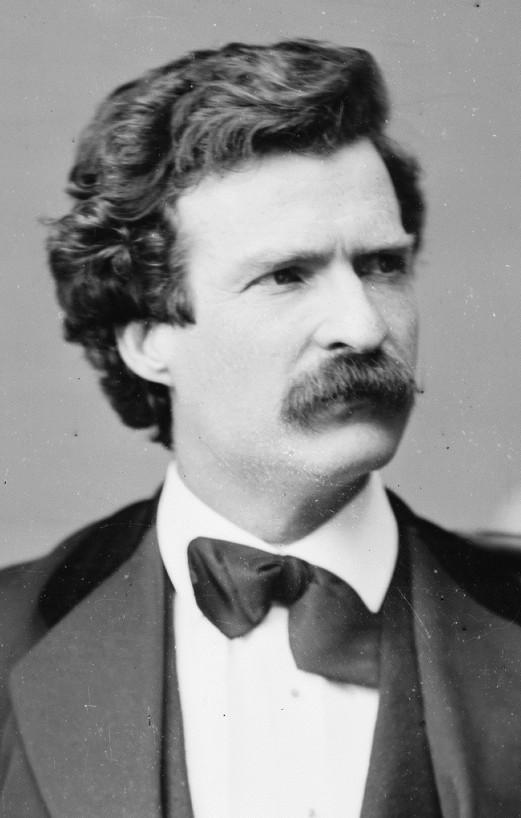
Below: Mark Twain in a portrait taken by Matthew Brady (although I believe the photograph was taken in Brady’s D.C. studio, not in New York)

By the way, here’s a pretty extraordinary tale from New York Press by Craig Fehrman about the fight to save Mark Twain’s Fifth Avenue home from demolition.

100 Years Ago: Celebrity writer drinks himself to death

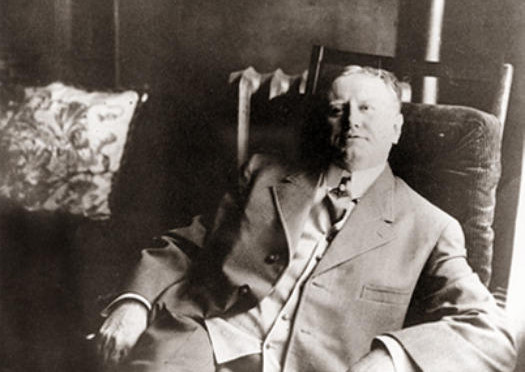
O. Henry in 1909. He may even be drunk here.

New York City has a fine, macabre tradition of harboring famous artists, writers, musicians and actors on the cusp of an alcohol or drug-fueled demise. The city naturally attracts the creative, oddballs and innovators looking for like minds amid the flourishing artistic communities of the city. Many of these also tragically detoured into the city’s equally impressive collection of taverns, saloons, opium dens, speakeasies, nightclubs, coke dens and crackhouses.

Countless have drank and drugged themselves to ruin in the city’s 400-year history, either unintentionally or with suicidal design. If you’re looking to pinpoint the first major instance of this trend among the major icons of American history, look back in New York City history exactly one hundred years ago to the death of one of this country’s most iconic writers, O. Henry.

Henry (real name William Sydney Porter) is not the first American writer to die of the effects of alcoholism. Probably the most infamous was one-time New Yorker Edgar Allen Poe, who died in a Baltimore gutter in 1849. I’m not even going to claim that O. Henry was even the first notable alcoholic death in New York City. For instance, Jewish poet Naphtali Herz Imber collapsed and died in the Lower East Side from an alcohol binge in 1909.

But O. Henry was an undisputed American star at the time of his death, one of the country’s most famous writers and the pioneer of the short story. Artists at the height of their success in 1910 do not die of alcohol abuse, at least officially. In fact, his death by cirrhosis on June 5, 1910, is heavily glossed over in contemporary sources.

Porter first became O. Henry in 1899, in an article for McClure’s Magazine. It should be noted he wrote that particular story while in an Ohio prison, serving a five year stint for embezzlement. He moved to New York City in 1902 where he flourished, writing hundreds of stories and becoming America’s most prolific and most popular writers.

Many of his stories are set in New York, although his popular ‘The Ransom of Red Chief’ (one of favorite stories as a kid) is a kidnapping yarn that takes place in Alabama. Probably his most famous tale, the 1906 ‘Gift of the Magi’, was written, according to legend, at Pete’s Tavern near Gramercy Park.

So yes, like many writers, Porter wrote and drank, both prolifically and magnificently. In fact, he kept drinking even though his body began deteriorating from the effects of cirrhosis and diabetes.

On June 3, 1910, Porter collapsed after writing a letter and was taken to the New York Polyclinic Hospital at 218 East 34th Street (today near the entrance of the Queens Midtown Tunnel), checking in under a false name to throw off the newspaper reporters. He died two days later, his last words reportedly, “Turn up the lights. I don’t want to go home in the dark.”

Biographies of the day barely mentioned Porter’s drinking problem and the cirrhosis which killed him. The writer was buried in Asheville, NC, the hometown of his wife Sara.

For the next hundred years, troubled celebrities would follow his morbid example — from Dylan Thomas to Billie Holiday, Heath Ledger, GG Allin, Lorenz Hart, Sid Vicious, Jean-Michel Basquiat, Montgomery Clift, Julia Bruns, and many more.

“It couldn’t have happened anywhere but in little old New York.” — O. Henry