Categories
Mysterious Stories

Ghost Bluster: Arthur Conan Doyle and his wacky ectoplasm

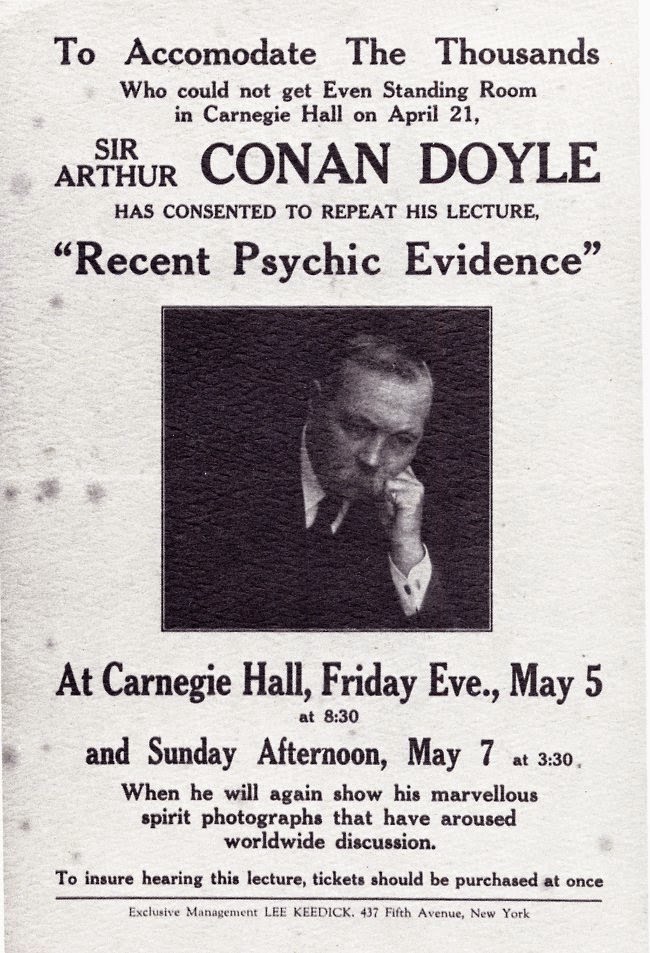
A flyer for one of the author’s many Carnegie Hall lectures. (Courtesy Carnegie Hall archives)

Sir Arthur Conan Doyle made a startling announcement in April 1922. Known for his beliefs in communicating with the afterlife, the famed creator of Sherlock Holmes announced an extraordinary discovery — the existence of ectoplasm, the ghostly goo that emits from mediums possessed with the spirits of the dead.

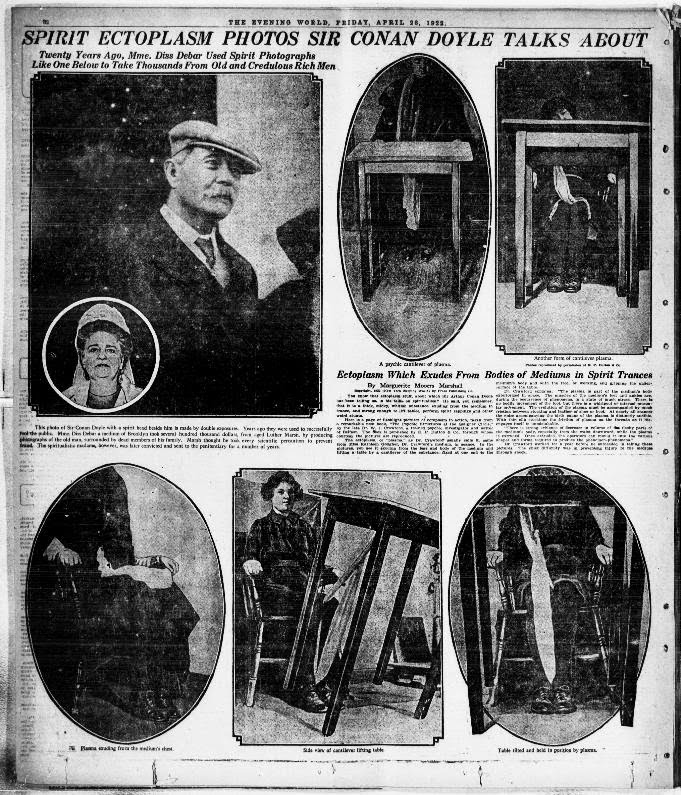
“Ectoplasm is a thick, vapory, slightly luminous substance which exudes from some materializing mediums,” Conan Doyle told the author Marguerite Mooers Marshall in an interview with the New York Evening World. “Immediately there comes from her body this vaperous substance which surrounds her like a fog. As the ectoplasm increases it becomes more dense. It coalesces, becomes sticky. It can be felt. It can be photographed.”

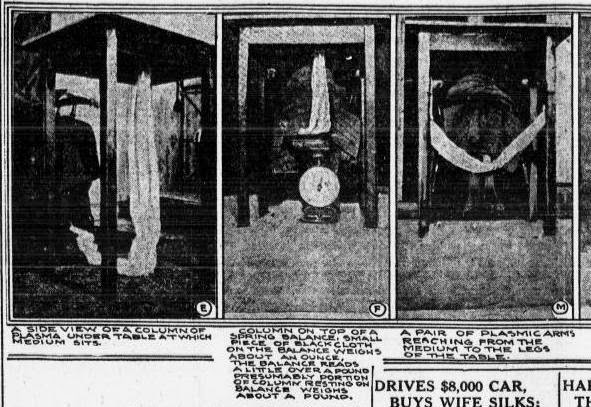
To prove the existence of this viscous residue, the Evening World published photographs of alleged ectoplasmic events on April 26, 1922.

The root of all this sudden interest in bizarre supernatural events during the spring of 1922 was a series of lectures Conan Doyle gave at Carnegie Hall and the Brooklyn Academy of Music, shaking proper society to the core with Spiritualist talk of mediums and psychic planes far outside those commonly prescribed by Western religion.
Among the spirit photography he displayed in the legendary Carnegie stage were several examples of ectoplasmic events, thick wisps of ghostly material issuing from the bodies of entranced mediums.
His lectures were received with great interest and much mockery. In reference to the author’s peculiar views of the afterlife and days before run the odd photography posted above, the Evening World intoned in a headline, “ALL WOMEN PRETTY AND 25, MEN 30, IN DOYLE’S HEAVEN.

Others blamed a series of mysterious murders and suicides in New York City during this time period on Conan Doyle’s disturbing lectures.

It was in May of that year that Conan Doyle met with Harry Houdini, magician and famous spiritualist skeptic.  (We speak of the results of this encounter in our podcast Mysteries and Magicians of New York.) Among their lengthy debates regarding the spiritual realm were discussions on the existence of ectoplasm.

Below are some of the more disturbing photographs of alleged ectoplasmic activity.  It was similar photos to that that Conan Doyle displayed at Carnegie Hall in 1922.

1913 — The medium Stanislawa emitting ghostly ectoplasm (Courtesy Univ of Sydney)


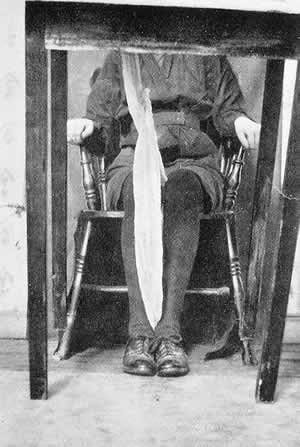
Katherine Goligher, subject of the Evening World photographs, issuing ectoplasm that looks suspiciously like regular fabric


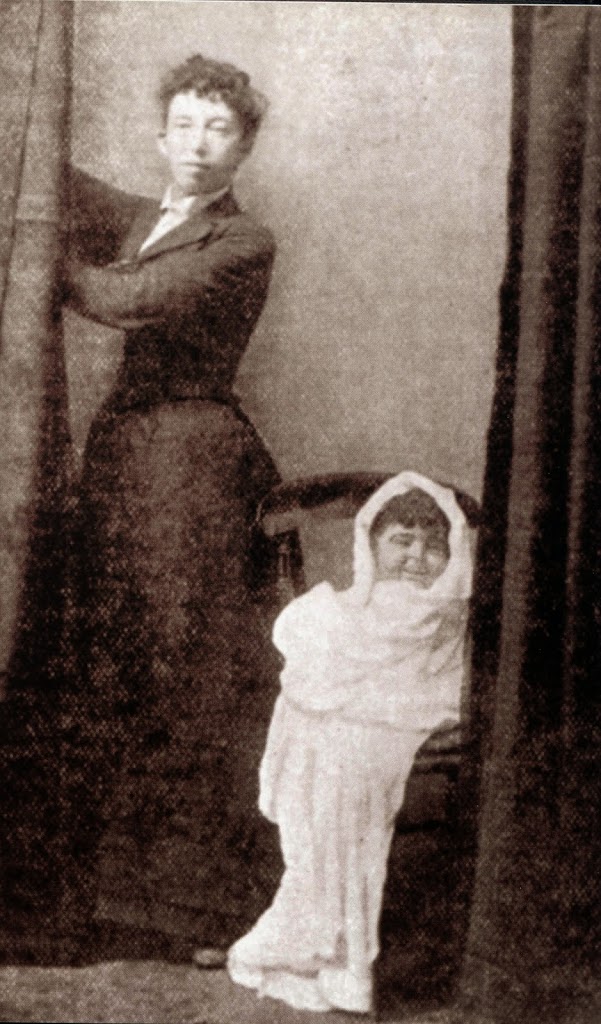
Sometimes the ectoplasm came out in the form of little people, as in this photo of Annie Mellon and an entity named ‘Cissy’, c. 1890 (Univ. of Sydney)


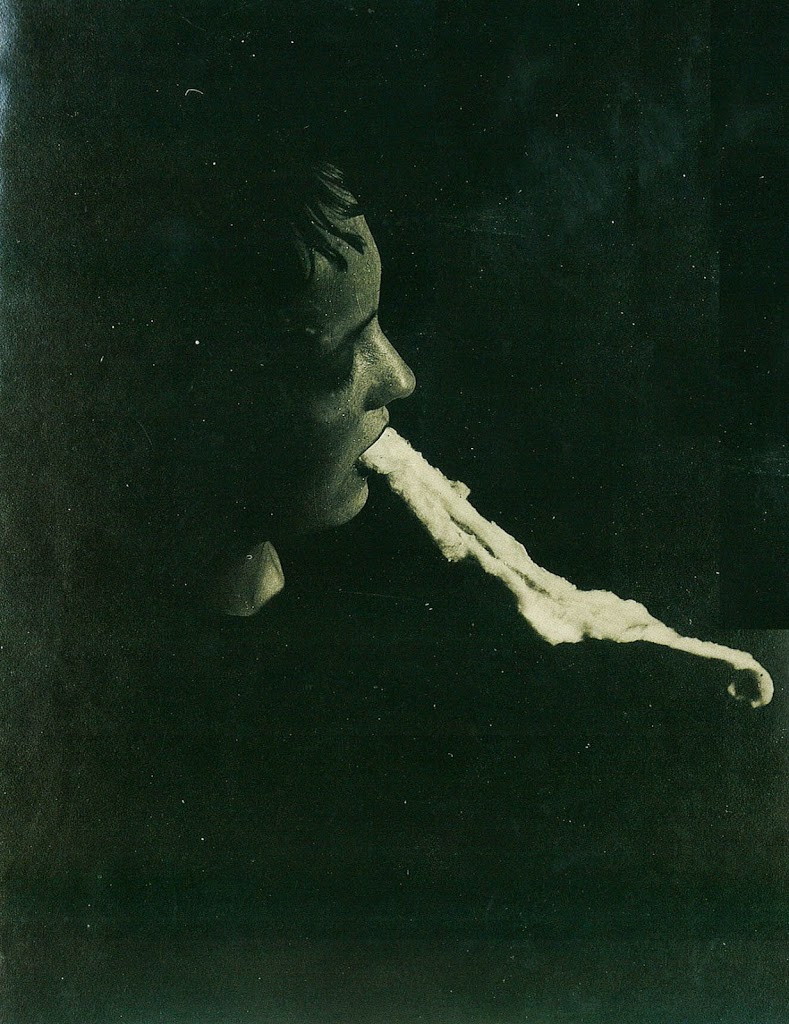
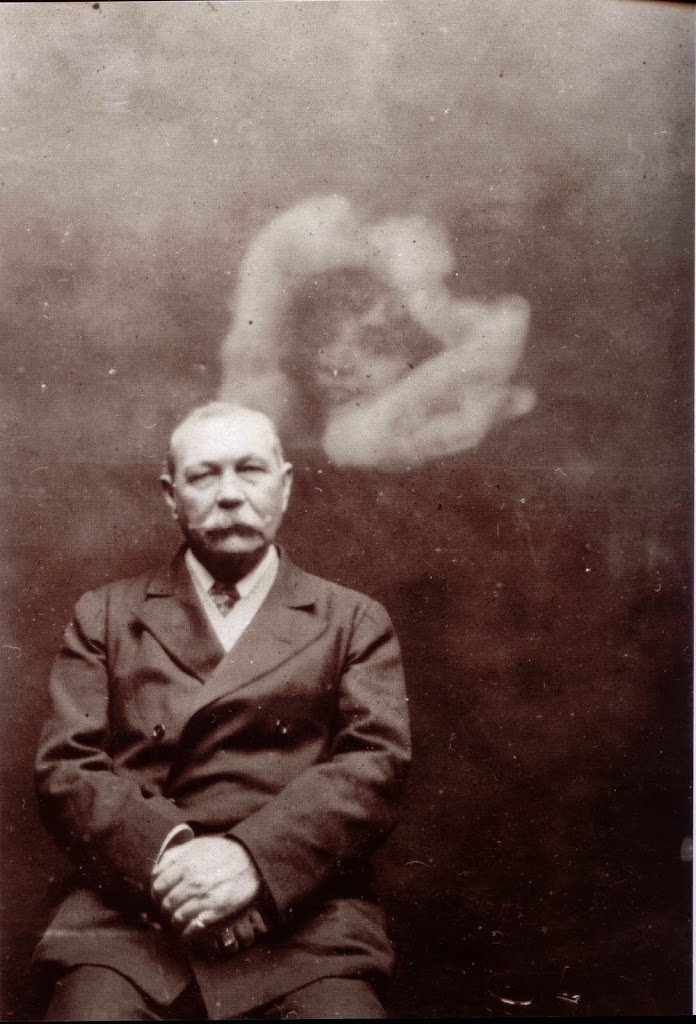
Conan Doyle himself could even expel ectoplasm, especially in front of a camera!  This was taken in 1922, possibly while he was in New York


Below: Video evidence of ectoplasm and creatures made from the substance 


(If you’re in a Ghostbusters mood, read my exhaustive breakdown from last year of all the fun New York trivia from the 1984 film classic.)

Categories
Amusements and Thrills Mysterious Stories

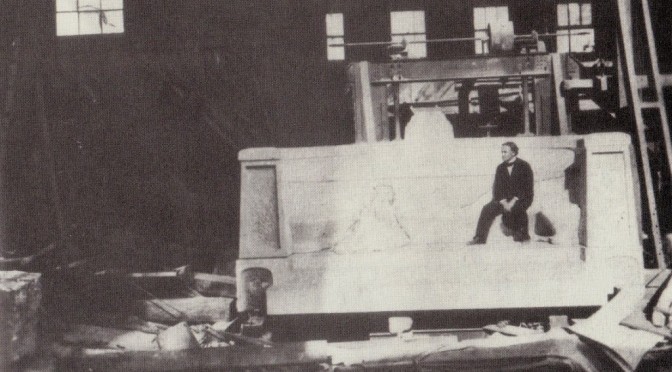
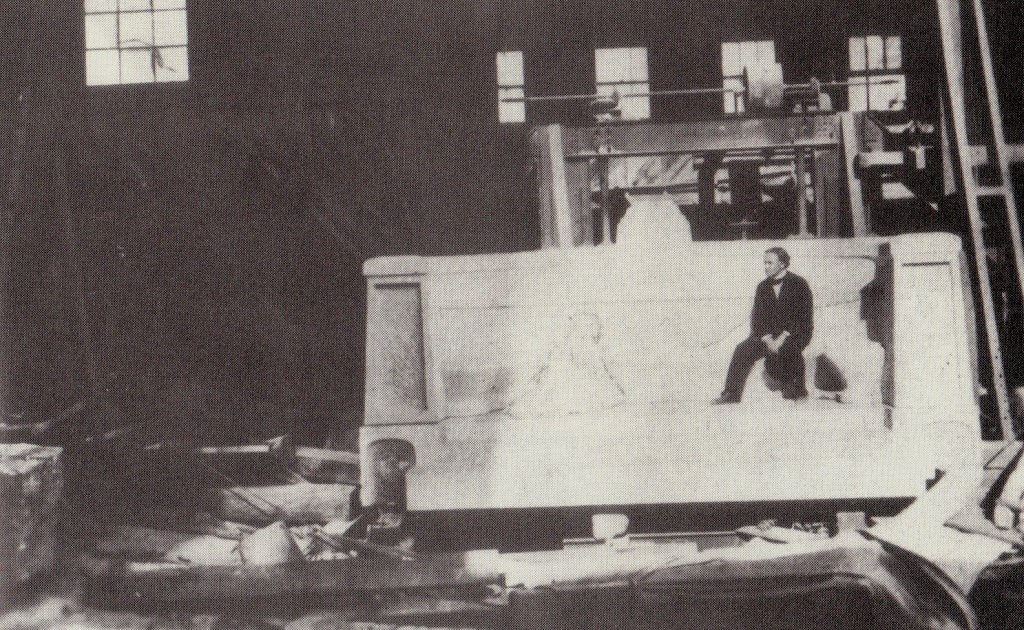
Harry Houdini sitting upon his own grave 1916

Anybody watching the Houdini mini-series on the History Channel? It’s, um, interesting, I guess.  It breezes over any actual character development — eschews all forms of subtlety — and lingers upon vast areas of speculation in his biography.  This would be totally unacceptable if it were anybody else but Harry Houdini, who routinely blended fact and fiction in his personal presentation.  The influences of Christopher Nolan’s The Prestige are evident.

Death hung over Houdini in his performances so it’s no surprise that he had a personal hand in the creation of his final artifice.  He’s pictured above in 1916 sitting on his own exedra.  The stonework would be moved to Machpelah Cemetery to a plot reserved for his whole family, including his brother and fellow magician Theodore Hardeen.

He was at last interred here at Machpelah on November 4, 1926.  Busts have appeared and re-appeared throughout the years — stolen or knocked off.  The first one debuted on Halloween in 1927, unveiled by members of the Society of American Magicians, an organization which started in a magic store in Greenwich Village.  The current one (see below) was placed there by curators at Pennsylvania’s Houdini Museum.

From the Bowery Boys Instagram account. While the cemetery was closed, I was able to snap a peek at his grave through the fence.  Unfortunately I did not see any wand-breaking ceremonies on this day: 
Top image courtesy the Houdini Museum and Ruth Brandon’s The Life and Many Deaths of Harry Houdini

Categories
Amusements and Thrills

Don the Talking Dog, German vaudeville sensation, saves a drowning man in Brighton Beach

There once was a talking dog named Don.

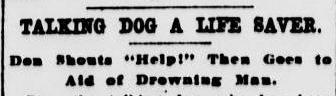
One hundred years ago today, he saved a man from drowning in Brighton Beach.  Don shouted or barked the word ‘Help!’ then ran to the waters to save him.

But perhaps I should explain.

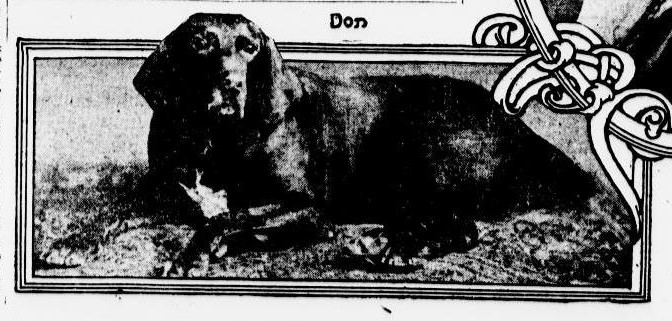
In December 1910, the New York Times ran a startling announcement that a dog in Germany had been discovered that could pronounce certain human words.  The setter from Theerhutte was owned by an eastern German gamekeeper and possessed several human qualities, not the least of which was the name Don.  The dog had beautiful eyes “sometimes almost human in their expression” and was an “uncommonly intelligent animal,” according to the Times.

Naturally, Don spoke only in German.  Being a dog, among the six words at his command were ‘haben’ (want), ‘kuchen’ (cakes) and ‘hunger’.  You had to use your imagination, of course, but one could detect a slight difference in Don’s barks that could be interpreted as separate words.

Despite some understandable cynics out there, Don was on his way to a career in the theater.

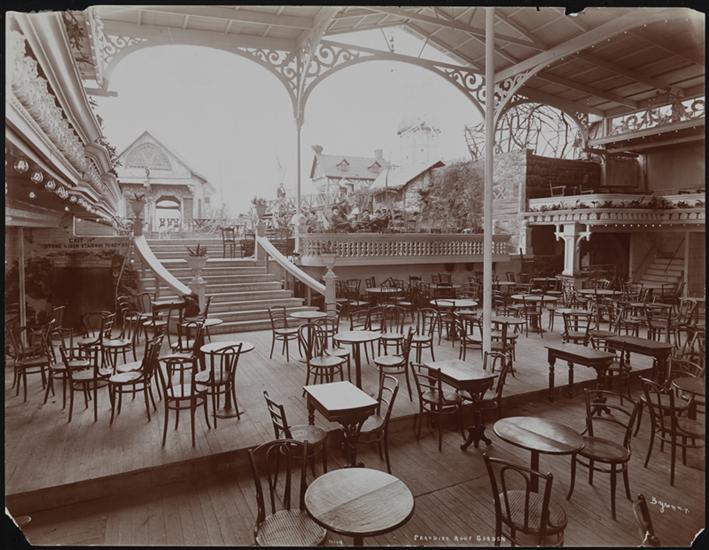
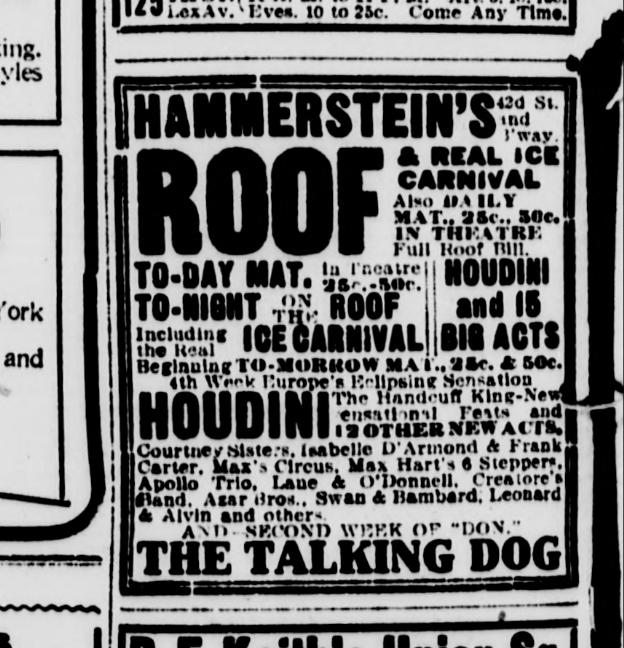
Above: Hammerstein’s rooftop garden at the Victoria Theatre in Times Square, the stage where Don the Talking Dog made his debut.

Generally speaking, dogs were a definite novelty among the stars of the vaudeville stage. A troupe of animals called Wormwood’s Dogs and Monkeys held court on the stages of Coney Island in the 1910s.  More renowned, perhaps, was the cross-dressing pooch Uno the Mind Reading Dog , who wowed theater crowds in 1910.

But the highest paid dog act up to that time was Dan the Drunken Dog, an animal who emulated the wobbling demeanor of an alcoholic, to the delight of audiences at the Oscar Hammerstein‘s Victoria Theater rooftop garden in Times Square.

None of these would reach the fame of Don the Talking Dog.  Hammerstein was so sure New Yorkers would love him that he posted a $50,000 bond to have Don brought to the United States.  The dog arrived in America on July 9, 1912 aboard the German steamship Prinz Friedrich Wilhelm, “absolutely refus[ing] to be interviewed at the pier, and indeed, had been too seasick on the way over to converse with anybody.” [source]

At right: On the bill with Harry Houdini, from the New York Sun, July 21, 1912

A few weeks later, the German canine would make his debut on Hammerstein’s rooftop garden, alongside master of ceremonies Loney Haskell.  “The trained growls which emanate from his throat can readily be mistaken for words,” claimed a Variety reviewer.  “On the roof the audience, skeptical in the first place, became more so at Loney’s [introduction], but after the dog had made its first try they became interested and later enthusiastic.”

His salary was allegedly $1,000 a week, paid, of course, to his owner Martha Haberland.  Like many temperamental divas, Don disliked the roof garden lifestyle due to the sounds of traffic, preferring to perform inside theaters, not atop them. But he was huge success that year, touring to other Hammerstein stages before returning to Germany that fall, a bonafide American star.

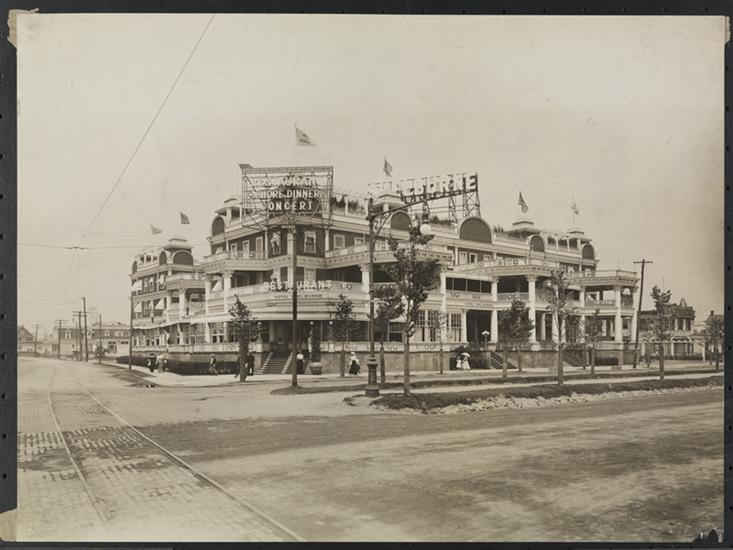
Above: The Hotel Shelburne in Brighton Beach, where Don the Talking Dog saved a man from drowning

Don returned to Hammerstein’s Times Square stage in 1913, this time performing alongside the likes of young comedian Sophie Tucker.  Later that summer he arrived in Brighton Beach to delight Brooklyn audiences.  It was here, on one of his afternoons off, that he rescued a drowning man with his famed ubiquitous voice.

The man was a waiter for the Hotel Shelburne who was actually out walking Don that afternoon.  The man jumped in the water for a swim and instantly lost his footing.  Don saw the man flailing in desperation in the ocean foam and, then, according to the New York Sun, allegedly unfurled one of his new words — “Help!” — startling everyone on the beach.*  The performer then swam over to the drowning man and began pulling on his bathing suit.

A passing policeman leaped into the water on his horse to rescue Don and the waiter.  This whole scene — dog, horse, waiter, policeman — was in turn rescued by three lifeguards in a boat. [source]

This was perhaps Don’s shining moment. He shortly retired from the stage and finally died in 1915 back in Germany.  His final words, according the Evening World:  “Say goodbye to my old pal Loney Haskell.”

*The Tribune reports the same event but does not mention this magical ‘Help!’

Top pic courtesy New York Evening World. Bottom two images courtesy Museum of the City of New York.

Categories
Mysterious Stories Podcasts

Mysteries and Magicians of New York: Whimsical spirits, scary legends, strange magic and the original ghost busters

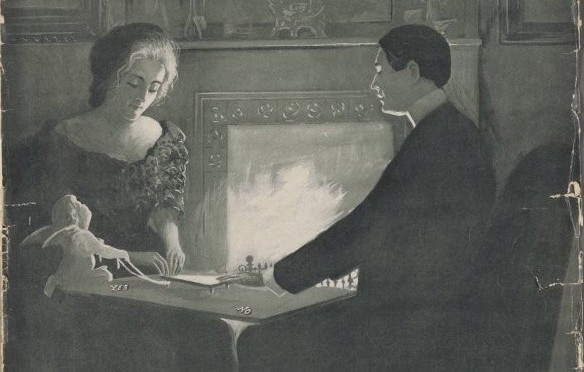
A session with a ouija board, a haunting illustration from a piece of 1901 sheet music ‘There’s A Charm About The Old Love Still’. (NYPL)

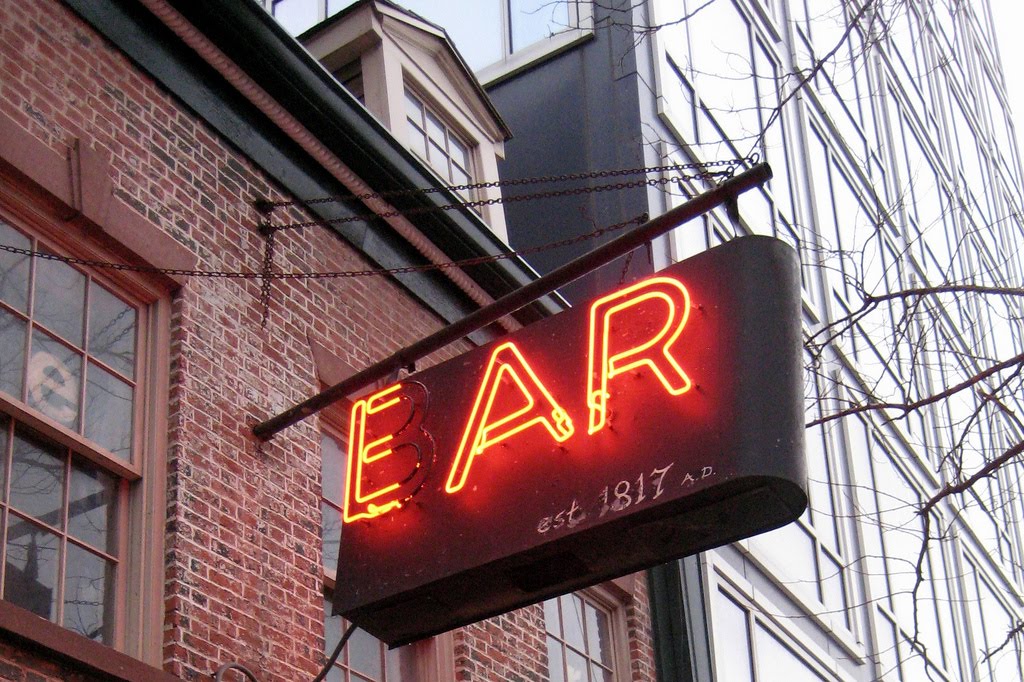
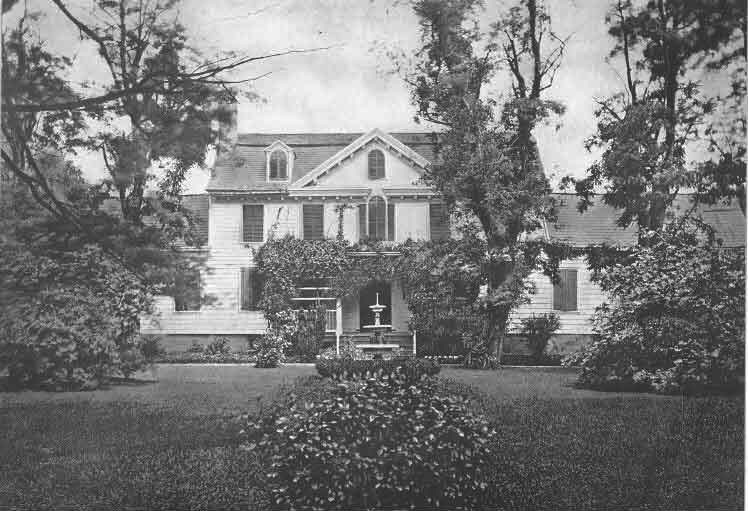
PODCAST Our sixth annual ghost story podcast takes a little twist this time around. Oh sure, we have two of New York’s most FAMOUS horror stories in our first part, beginning with a spirited sailor named Mickey who haunted a classic structure on the Lower West Side. Today it’s the Ear Inn, where you better watch your drink. Then we switch to a Colonial-era tale of obsession and entrapment in old Flatbush, the tale of Melrose Hall with its secret passages, stairwells and dungeons.

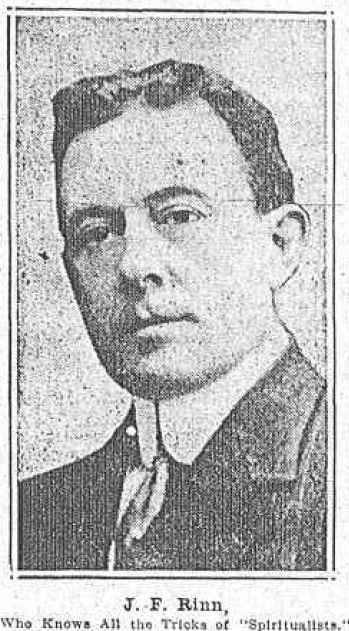
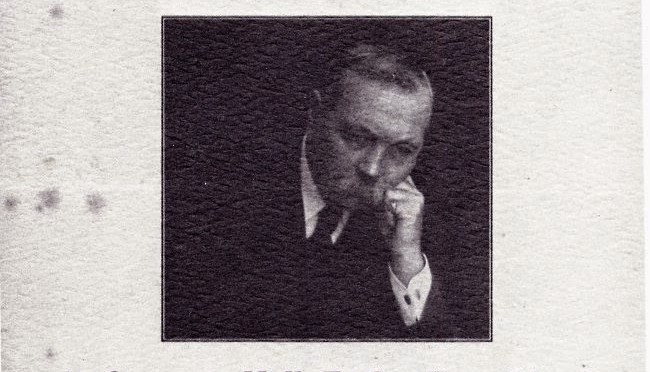
But in the second half, we observe New York’s spiritualism craze of the early 20th century through two frightening faceoffs. In the first, its the madame of the Ouija board, Pearl Curran, and her ghostly companion Patience Worth vs. one of New York’s original ghostbusters, the adventurer and conjurer Joseph Rinn (pictured at right). And in the final tale, Tom explores the secrets of Harry Houdini and what happens when a close confidante — in this case, the noted author Sir Arthur Conan Doyle — believes his powers are of a supernatural variety.

Featuring our annual ghost-story dramatics, a few sound effects, and the surprising haunted history of Carnegie Hall!


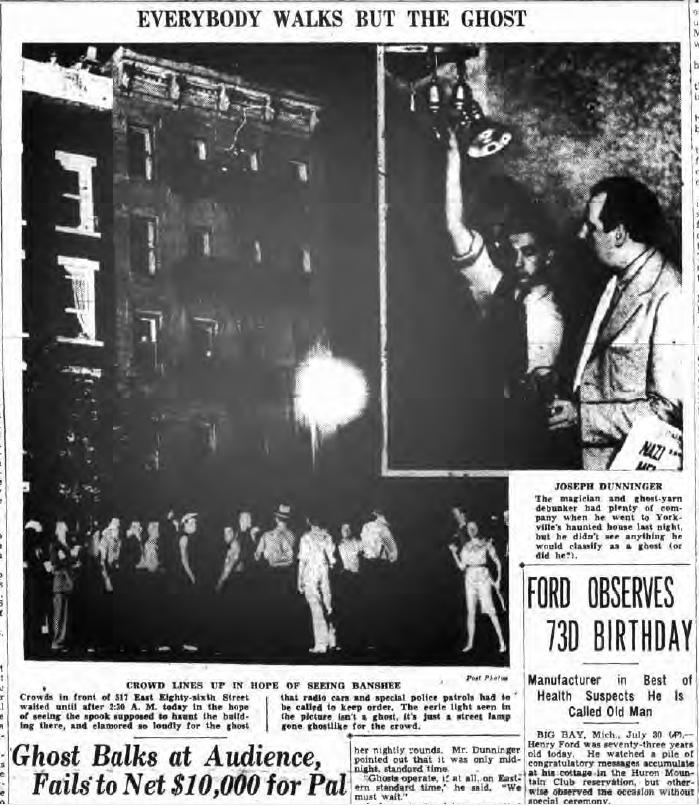
From the pages of the New York Post, July 1936. Crowds hunt for the spirit of Angelina, the Italian ‘banshee’. Crowds lined up to get a glimpse, so many that ‘special police patrols’ were called to control the search. [source]

The house of Revolutionary War veteran James Brown, today the worn and welcoming Ear Inn, is almost 200 years old, which means it has a great many ghosts, including a couple literal ones, including the randy spirit of a sailor named Mickey. (Picture courtesy Flickr/wallyg)

 
The haunted Melrose Hall in Flatbush, Brooklyn, the site of some improbable architecture and a terrible crime. Is that Alma peering from the third floor window? Do you dare enter?
 

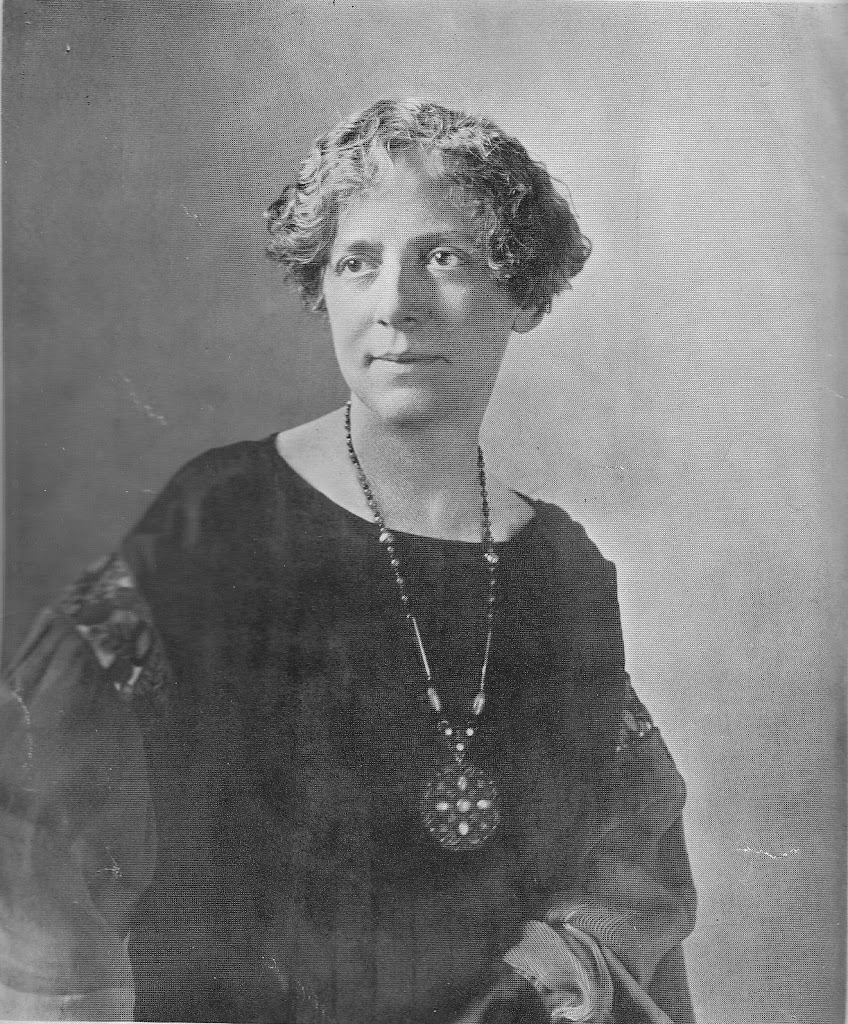
Pearl Curran, the St. Louis woman who began conjuring the spirit of an 17th century English woman named Patience Worth, via the Ouija board. She was frequently questioned by prominent medium debunkers, including Houdini’s friend Joseph Rinn.

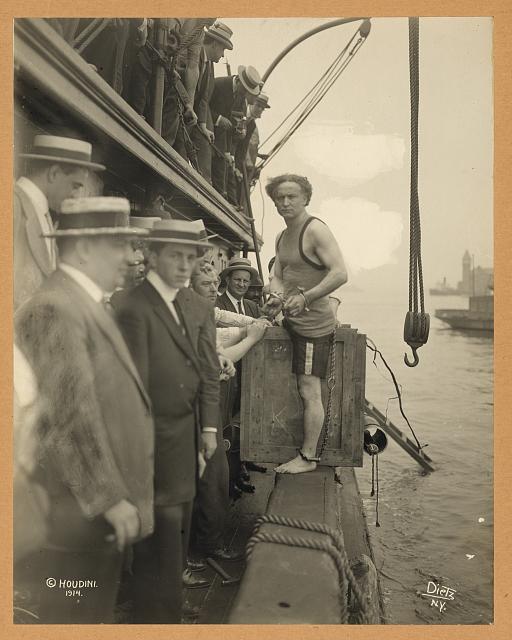
Harry Houdini in 1912, about to step in to a sealed sunken chest, which he will inevitably escape from. But what was his secret? Was Sir Arthur Conan Doyle — and his wife Lady Jean — onto something about Houdini’s secret powers? (Courtesy Library of Congress)

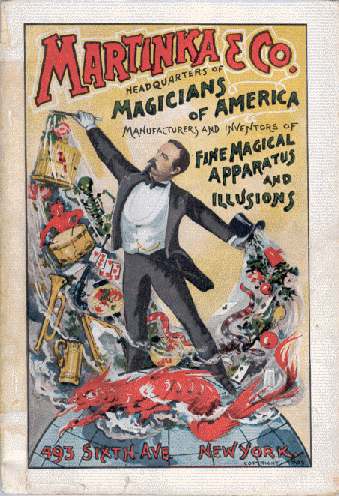
Magic New York: Martinka & Company casts a spell

Did you know it was National Magic Week? Please cast thoughts of David Blaine hanging upside-down from your mind and return to the mystical days of illusionists in thick capes, beautiful assistants that vanish in mid-air and, almost forgotten, the rustic old-time magic store, with shelves of mysterious accessories for the amateur conjurer.

New York City had many famous magic stores, but perhaps none more beloved than Flosso-Hornmann Magic or, as it was known when it opened in 1872 (although the official website gives a date of 1875), Martinka & Company. From then until the year 2000, when it was sold by proprietor Jackie Flosso to a company who turns it into an Internet business, it was the epicenter for Manhattan magic lovers.

German brothers Francis and Antonio Martinka brought over their successful “conjuring and toy shop” as immigrants to the New York melting pot in the 1870s, opening Martinka & Company just north of Chelsea on Sixth Avenue. The shop’s fabulous slogan?
“The world wants to be deceived, let it be deceived.”

The shop featured mechanical monkeys and “automatons” that played chess and the shelves were loaded with camp items as “The Mephisto or Satyr’s Head Trick,” “The Wonderful Cigarette Paper Trick,” and “The Mystic Barrel of Salt.”

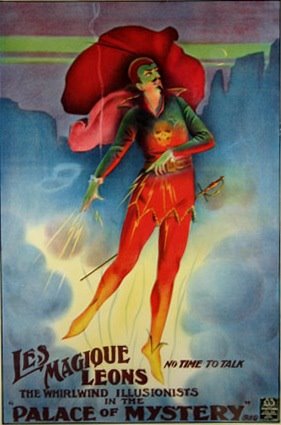
Behind the displays of magical wares however was a backroom “Palace of Mystery,” where budding young magicians would try their hand at more elaborate tricks. Soon, this performance hall would host the city’s best displays of magic. And it was here, in 1902, when the Society of American Magicians was formed, an organization which would feature the biggest names in illusion and trickery.

And if you were looking for a good fright here, for a short time, the shop also kept a live lion named Monty. Its owner, the magician known as Carter the Great, had purchased the shop from the Martinka family and kept his own king of the beast on hand for special tricks.

The shop was later owned by a far more acclaimed New York magician Harry Houdini, a friend of the Martinkas who decorated the entrance with a gigantic bust of himself.

In 1939 the store was purchased by Brooklynite Al Flosso (a theatrical stage name). He had bought magic tricks there as a child and brought his stagecraft to the aging store, keeping it in delightful state of clutter as not to “disturb Houdini’s dust.” According to an interesting bio page on Flosso, he was “constantly repairing, soldering, building and tinkering with equipment and illusions. Customers could bring in their favorite deck of cards, and, for a nominal fee, have it made into a stripper or Svengali deck. He custom-painted thumb tips to match his customers’ skin tone….”

When he died in 1976, his son Jackie took over the shop (and the last name), moving it up to 34th Street and keeping it stocked with magical tools and gags until finally selling it in 2000.

You can visit the website and shop for vintage magic memorabilia, posters and, yes, powerful tricks to amaze your friends!