Categories
Bowery Boys Bookshelf Sports

Opening Day at Shea Stadium: A nostalgic trip to the New York Mets’ beloved old home

Shea Stadium has been gone ten years now.

With mourning fans looking on, the final section of seats were torn out on the morning of February 18, 2009. Awaiting fans a short distance away was the sparkling new Citi Field which would open for business with a thrilling game between the San Diego Padres and the field’s home team the New York Mets.

Shea was not a perfect stadium. Neither was Ebbets Field, the former home of the Brooklyn Dodgers that has nonetheless entered into the realm of sports mythology. But nostalgia holds a special power in sports history, and the further we get from the classic moments which took place at Shea, the more remarkable it becomes in memory.

Quite frankly, Queens has not been quite the same.
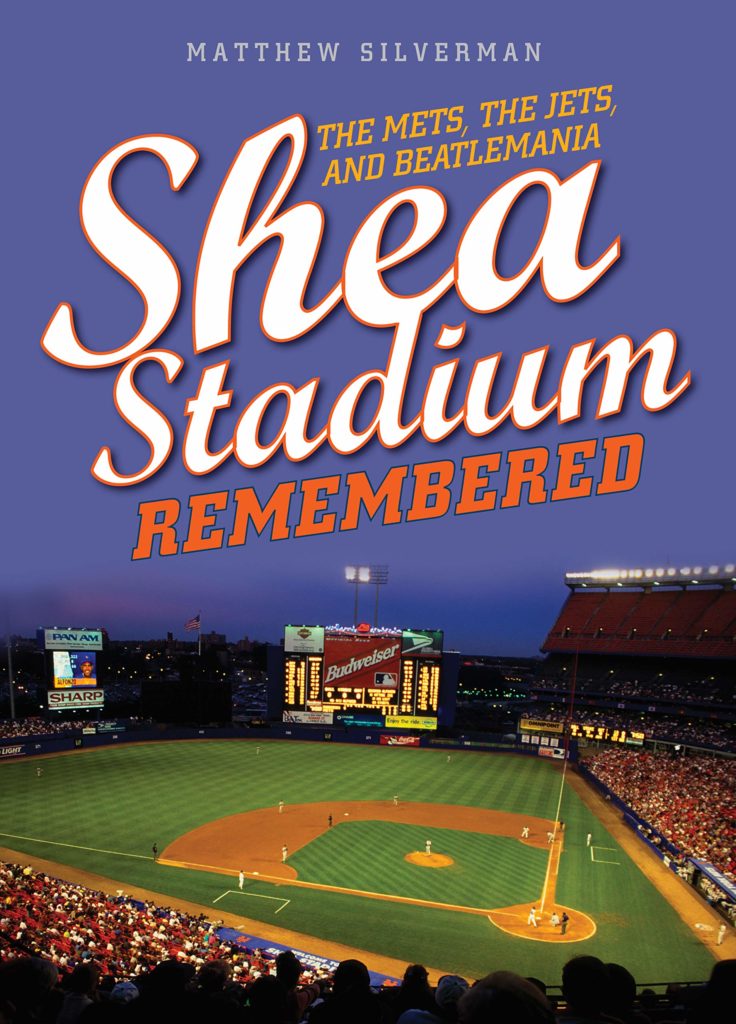
Shea Stadium Remembered:
the Mets, the Jets and Beatlemania
by Matthew Silverman
Lyons Press

Journalist Matthew Silverman is such an ardentMets aficionado — if you’ve read a book about the beloved Queens baseball team, he probably wrote it — that his official website is MetSilverman.com. And so of course Shea Stadium Remembered: the Mets, the Jets and Beatlemania, his tribute to the Met’s most famous home, has a breezy pitch-perfect charm to it.
Arranged in tiny chapters, little blips of history, Shea Stadium Remembered revels unashamedly in sweet nostalgia, recalling a place that matched the charisma of its underdog baseball team and a home for an accomplished football team back when it was actually situated within the city.

The birth of the Mets and their home for over 40 years begins in a moment of great turmoil in New York City sports history. In the 1950s, both the New York Giants and the Brooklyn Dodgers left New York City, the latter after a vicious public battle between Dodgers owner Walter O’Malley and New York power broker Robert Moses.

Moses wanted a team situated in Queens, in Flushing Meadows-Corona Park, an eventual companion to Moses’ pet project — the World’s Fair of 1964. With Ebbets growing inadequate for modern baseball crowds, O’Malley wanted a new stadium at Atlantic and Flatbush Avenues, keeping them in Brooklyn. (That’s near the spot of today’s Barclays Center.)

But nobody overpowered Robert Moses in the 1950s. The Dodgers split for Los Angeles.
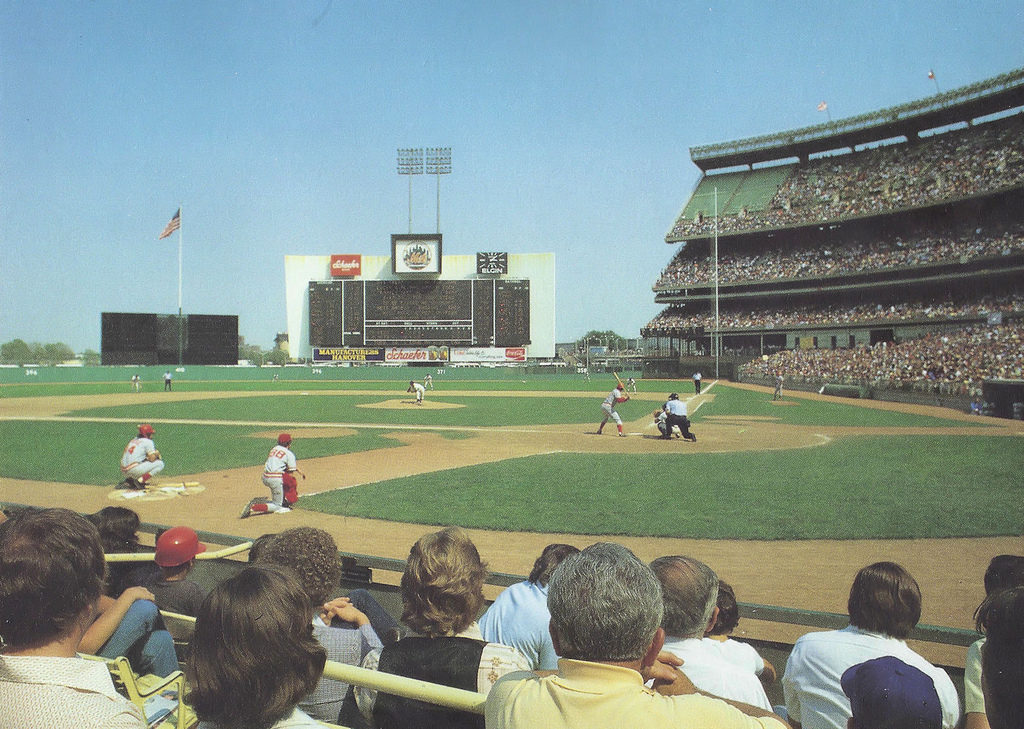
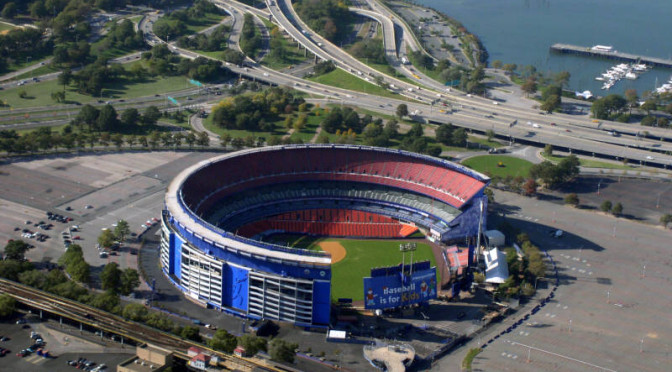
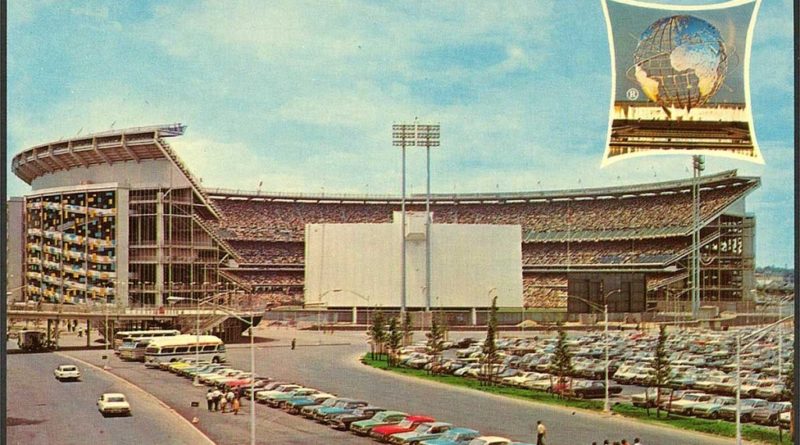
Shea Stadium, late 1970s — Sports Photo File/Mitchell Reibel

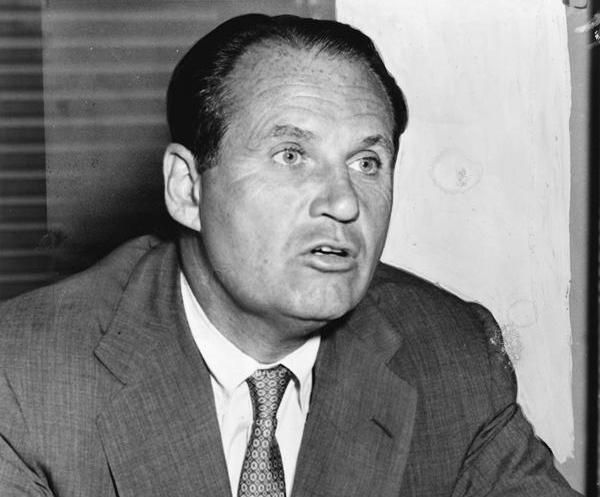
Fortunately, lawyer William Shea convinced the National League to expand their roster, leading to the creation of the New York Metropolitans, the name a nod to a 19th century baseball club and eventually shortened. After a short stint in the decrepit Polo Grounds, they moved to their new home — named in honor of a man who never played for them but was nonetheless instrumental to the history of New York City sports.

In Shea Stadium Remembered, Silverman gives us a compilation of the stadium’s greatest moments, weaving the Met’s history in with the other notable events at the stadium — from the Beatles to Pope John Paul II.

Not to say that the Jets aren’t prominently featured here as well — they played at Shea for almost twenty years — but the Mets were truly at home here, through thick and thin (often very thin). The Mets gave Shea some of its personality and Shea gave the Mets its hometown pride.
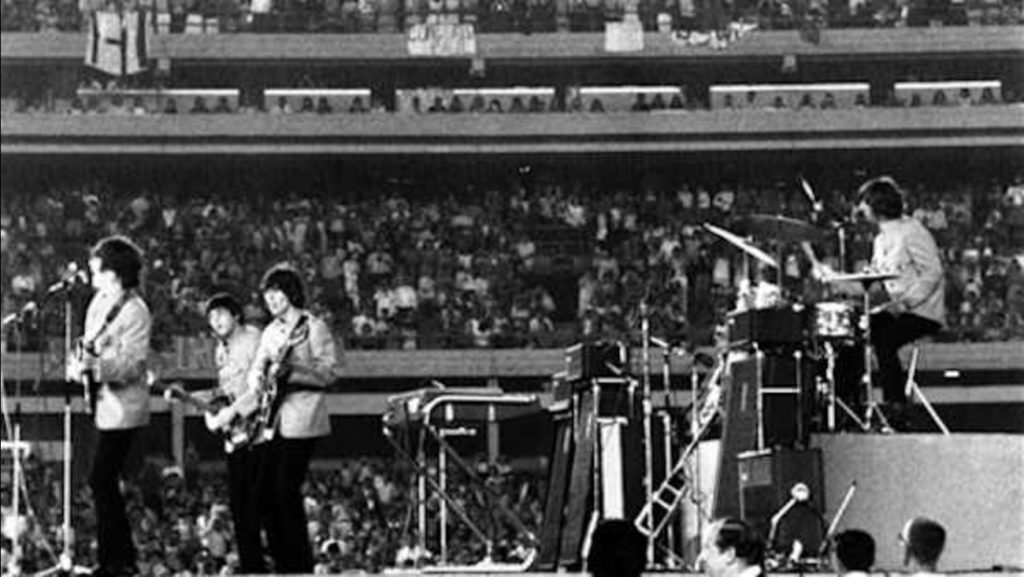
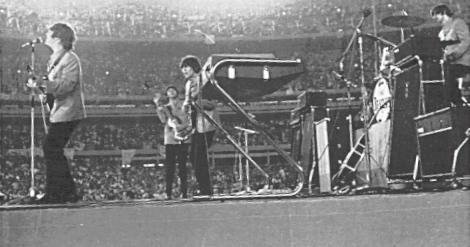
The Beatles at Shea Stadium, August 1965 (AP)

For more information, check out these catalog episodes of the Bowery Boys podcast:
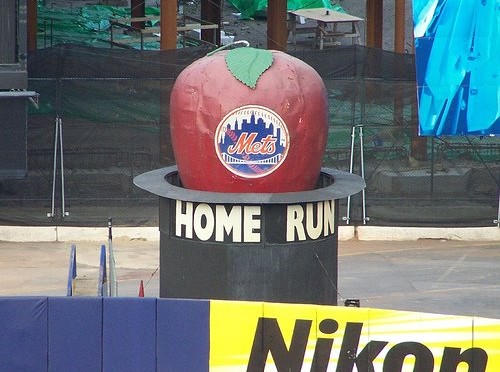
Mets Apple won’t fall far from the tree

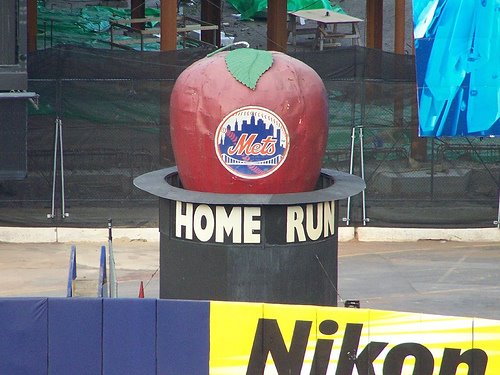
Back in March, we speculated on the fate of Thurman Munson’s locker, which had been preserved at Yankees Stadium since the untimely death of the popular Yankees catcher in 1979. Well, Shea Stadium has a far more irreverent but equally treasured fixture that many have been wondering about — the Mets Apple. Will the frail little thing make the move to Citi Field? The answer: no, and yes.

The Mets nine-feet-long, 582 lb apple, which would not look out of place in a Disney animatronic ride, made its debut during the 1980 season. Hoping a clever slogan could prove prophetic, the Mets advertised that “The Magic Is Back!” that year, literally demonstrating this with a mechanical apple that would emerge from a top hat behind center field every time a Met hit a home run.

Accompanied by a light show and the occasional firework display, it was without question one of the cheesiest things to ever grace an American sports stadium. Because of that, however, it was quickly beloved by Mets fans, derided by Yankees fans, and pretty much confused everybody else.

Silly, of course, but the apple was a colorful and original quirk of Shea Stadium. So when it was announced that the Mets would be moving to Citi Field, fans became concerned about the fate of the fruity apparatus. An impassioned website Save The Apple attempted to convince the team to move the apple, which they concede is “an ugly 80s relic.”

Their mission was only partially accomplished. According to the Daily News, a new replica of the apple will be popping up in center field at the new Citi Field.

It’s been confirmed that the original apple — fairly withered on the vine already — will be saved from the trash heap and will make the transition to the new field in some capacity. But how it will be displayed is undermined. Fans have suggested the apple stand alone on the walkway leading up to the new stadium.

Photo above from Flickr

Categories
Podcasts

PODCAST: Shea Stadium

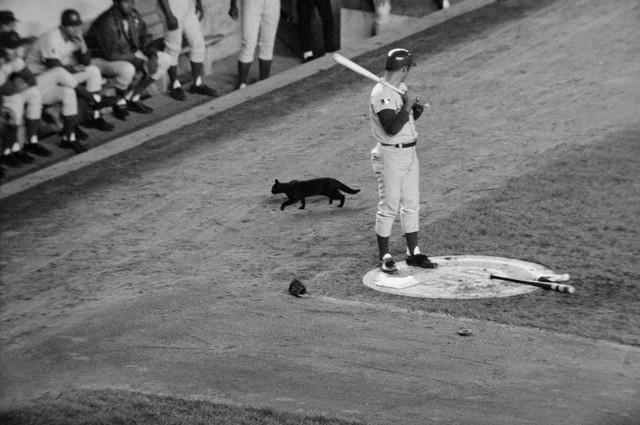
The Mets are movin’ out to Citi Field, but we can’t overlook the great stories contained in their old home, Shea Stadium, a Robert Moses project took years to get off the ground and has been populated with world class ball players, crazed Beatles fans, and one very mysterious black cat.

William Shea, who essentially bluffed the National League into creating a new team for the city — the New York Mets

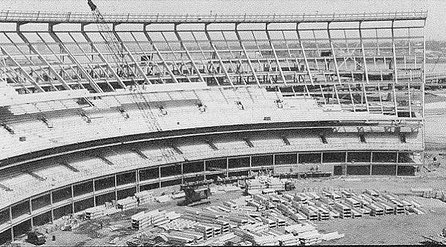
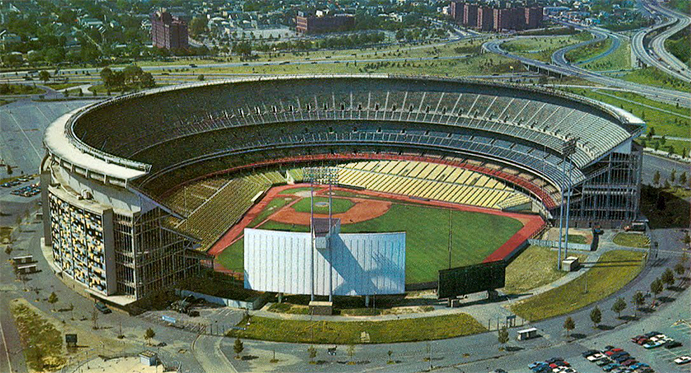
Shea under construction. Plans for a retractable done were abandoned, although many of the features that did make it were revolutionary at the time, including one of sports biggest scoreboards.

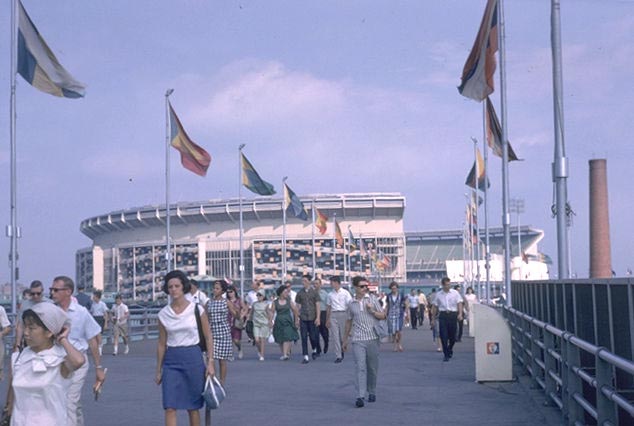
How the exterior of Shea Stadium looked back in 1964. (The photo above is from a great fan website from Carl Abraham, full of great old pictures. Check it out here.)

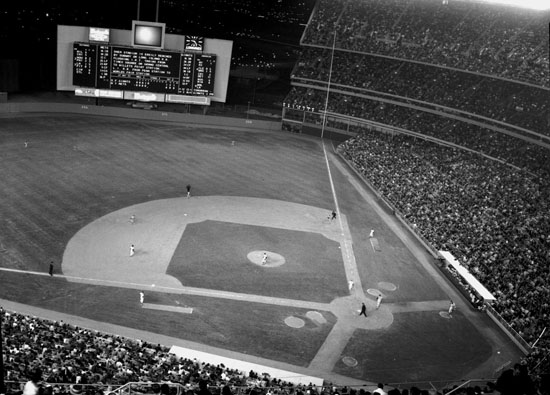
And inside, the same year.

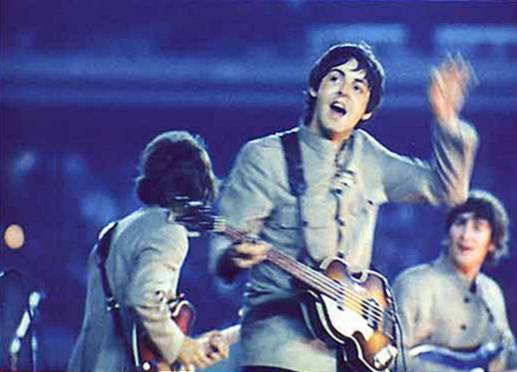
The biggest stars to play in Shea Stadium in the 1960s weren’t sports figures, but music heartthrobs — the Beatles.

The infamous black cat from that acursed game in September 1969, jettisoning the hopes of the Cubs that year.

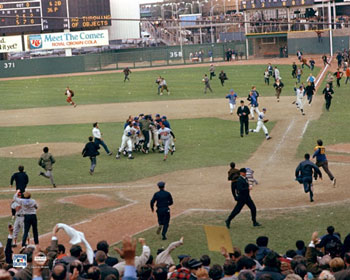
Fans literally stormed the field the moment the Mets clinched their very first Worlds Series title in 1969.

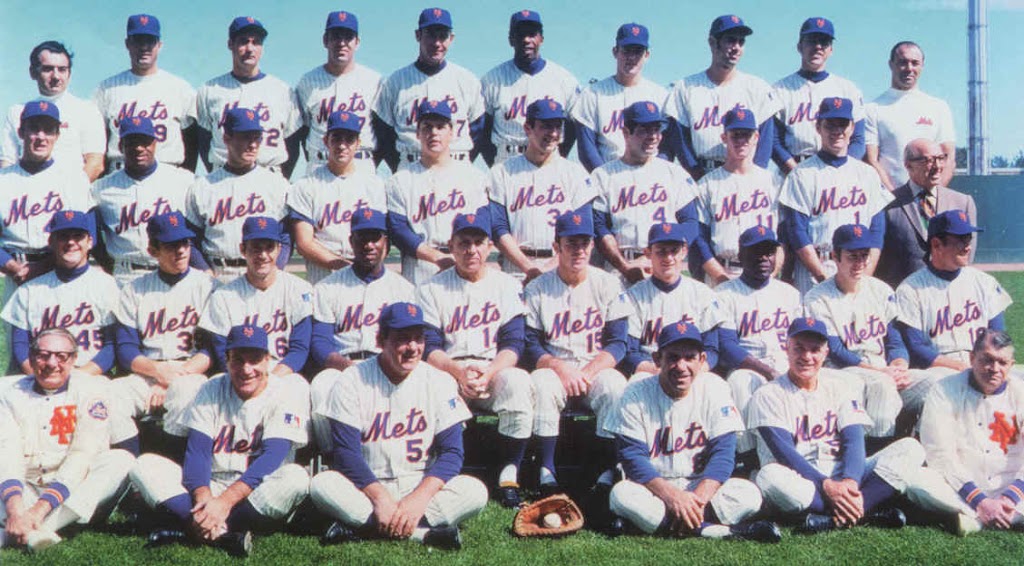
The proud lineup of the Miracle Mets of 1969.

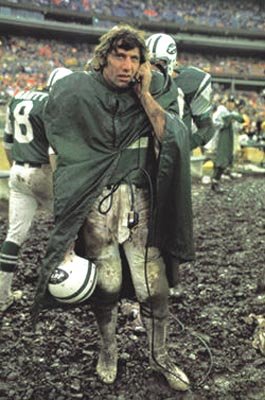
His notable performances and personal theatrics at Shea Stadium with the New York Jets turned quarterback Joe Namath (#12) into a Wheaties-box household name during the 1970s.

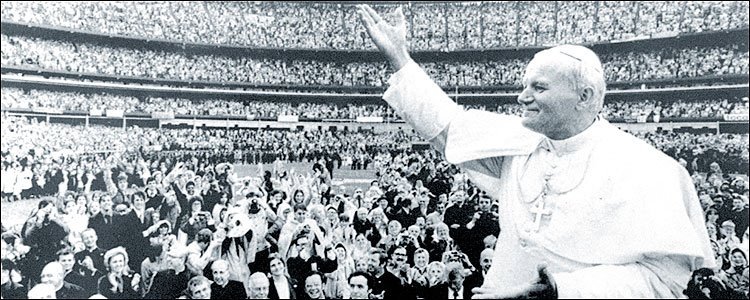
No less a star than Namath, Pope John Paul II finds a warm welcome for him at Shea in 1979.

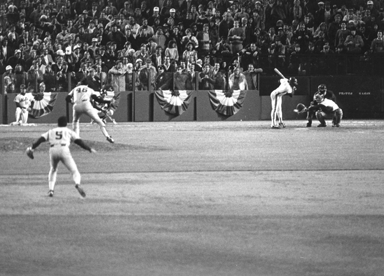
One of the Mets biggest stars of the ’80s, cheerful center fielder Mookie Wilson, was instrumental in the Mets World Series win of 1986 over the Boston Red Sox.

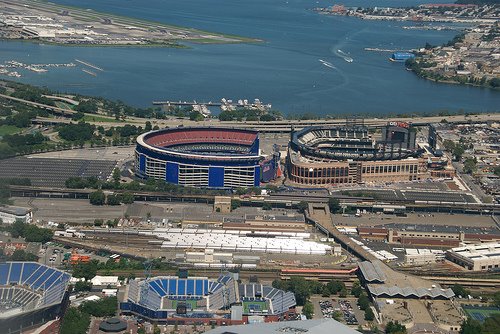
The new Citi Field sits within site of the stadium it will replace

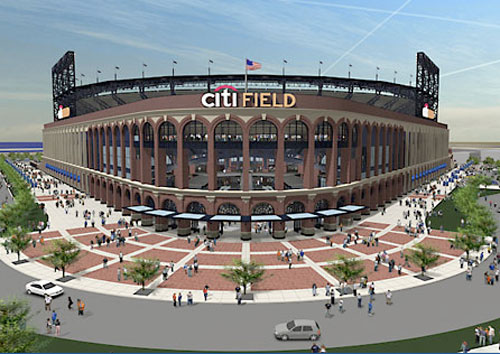
An illustration of what the new Citi Field will look like.

Ever wonder why the Mets team colors are blue and orange? Read one of our very early entries about it here.

However, a commenter below notes that the Mets website actually says: “The Mets’ colors are Dodger blue and Giant orange, symbolic of the return of National League baseball to New York after the Dodgers and Giants moved to California.” Which sounds very plausible — and amazingly coincidental, considering they’re also the official colors of New York. Perhaps the Giants and the Dodgers original sporting colors were based on the official colors, making both explanations correct?

Frankly there’s been no better tribute to Shea Stadium than the New York Post’s current countdown of the top 25 moments that occurred there over the years.