Categories
Podcasts

An Evening at Sardi’s: Dinner with a side of Broadway history

PODCAST REWIND The famous faces on the walls of Sardi’s Restaurant represent the entertainment elite of the 20th century, and all of them made this place on West 44th Street their unofficial home.

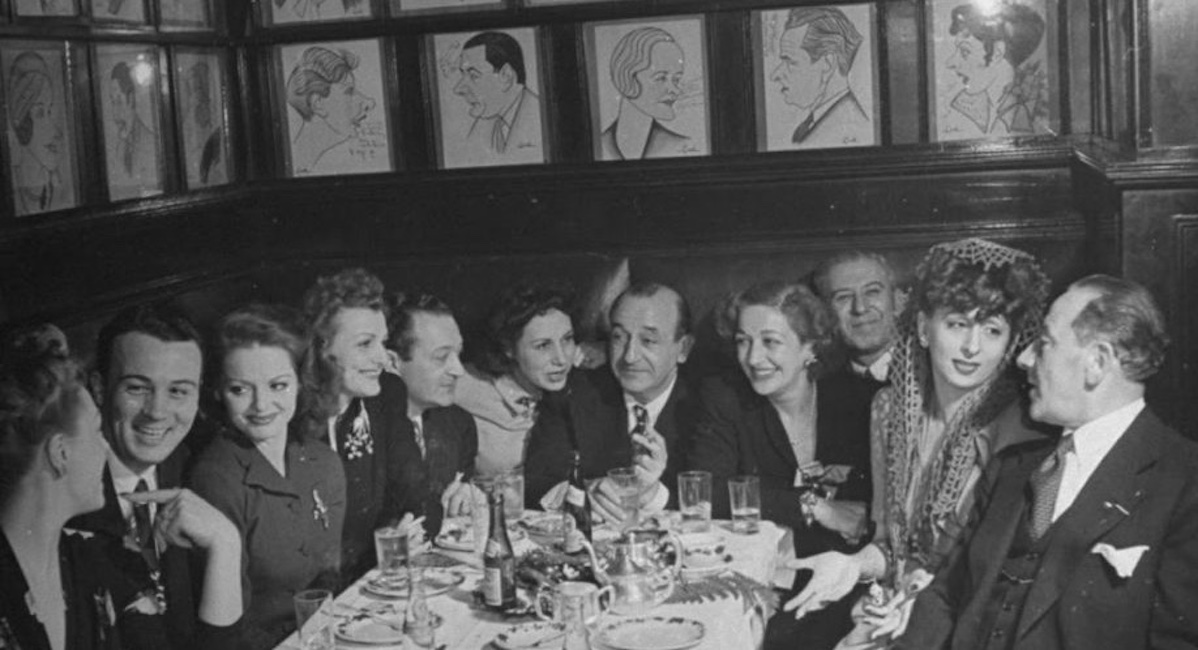
Known for its kooky caricatures and its Broadway opening-night traditions, Sardi’s fed the stars of the golden age and became a hotspot for producers, directors and writers — and, of course, those struggling to get their attention.

When Vincent Sardi opened his first restaurant in 1921, Prohibition had begun, and the midtown Broadway theater district was barely a couple decades old.

By the time the Italian-American restauranteur threw open its doors to its current locaton (thanks to the Shuberts) in 1927, Broadway’s stages were red hot, and Sardi found himself at the center of the New York City show business world.

We have some insider scoop from the old days — starring John Barrymore, Tallulah Bankhead, hatcheck girl Renee Carroll and a cast of thousands — and the scoop on those famous (and often unflattering) framed caricatures. So sidle up to the Little Bar, order yourself a stiff drink and eavesdrop in on this tale of Broadway’s longest dinner party.

PLUS: The birth of the Tony Awards!

FEATURING: Some 2022 updates including Sardi’s recent history.

LISTEN NOW: AN EVENING AT SARDI’S

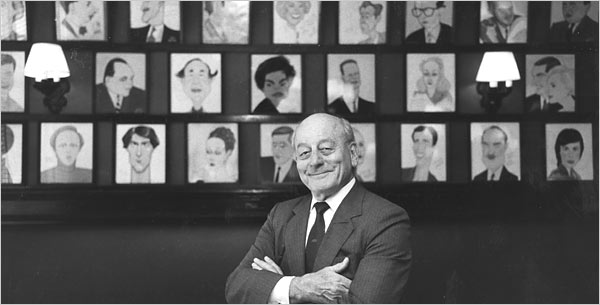
Vincent Sardi and his world-famous wall behind him. (Courtesy NYT)
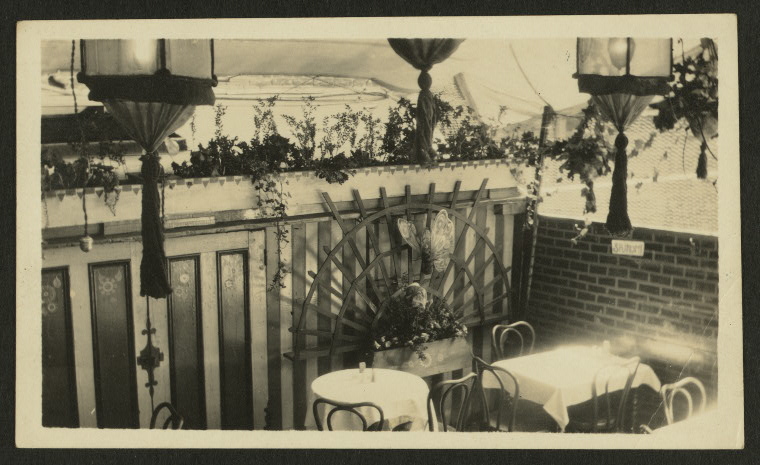
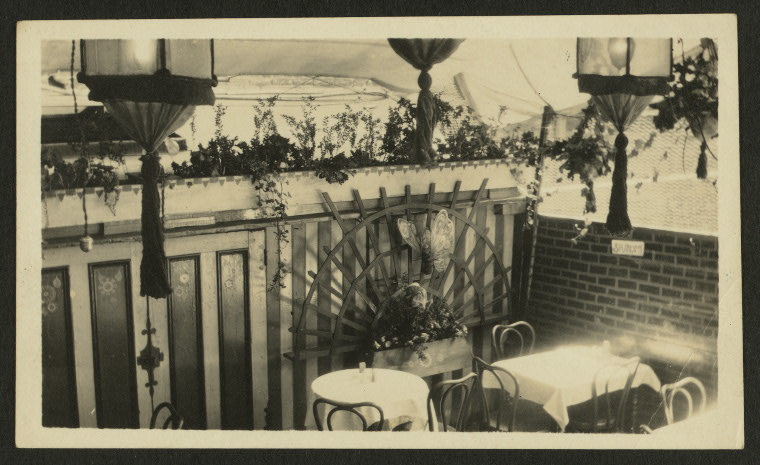
The outdoor garden cafe of the original Sardi’s, which opened in 1921 and was located two doors down from the current location. It was demolished to make way for the St. James Theatre.
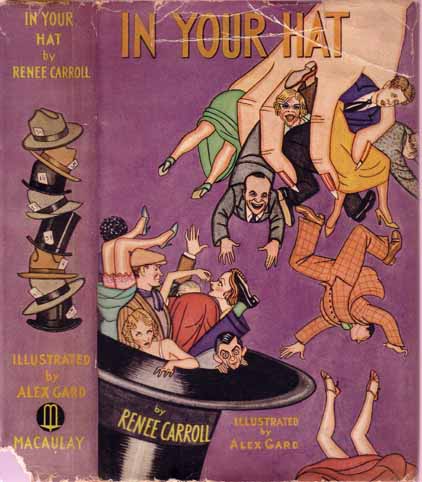
The cover of the tell-all 1933 memoir by famed Sardi’s hatcheck girl Renee Carroll and illustrated by Sardi’s original caricaturist Alex Gard.
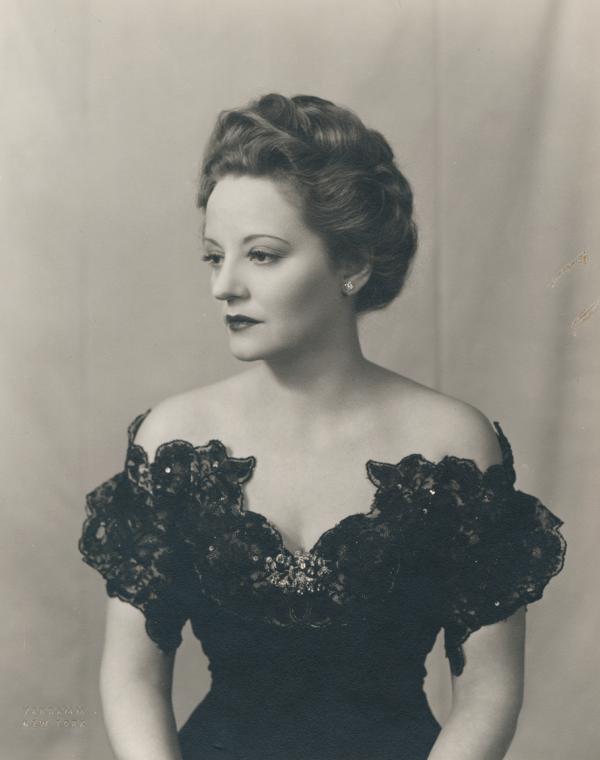
Tallulah Bankhead, Broadway diva and notorious Sardi’s customer. (Courtesy NYPL)
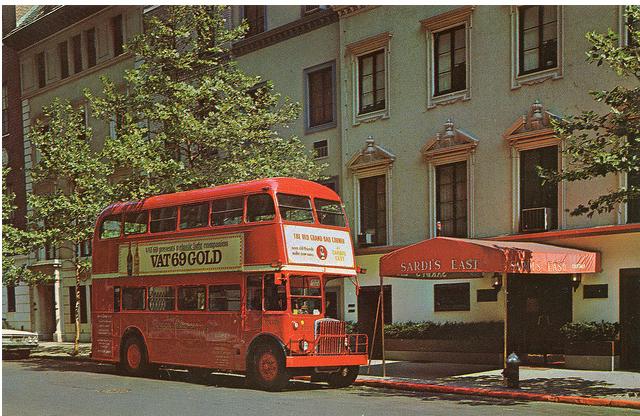
The failed experiment Sardi’s East, instantly problematic due to its distance from the theater district. Sardi Jr. attempted to solve the problem with a fun-filled double-decker bus — often accompanied by Broadway stars — that would zip diners to their shows after dinner. (source Flickr/edge and corner wear)
As we mentioned on the show, it’s difficult doing a history podcast on a private business without it sounding a bit like an advertisement, but hopefully we were able to execute past that. (We came across this odd feeling with other podcasts like Saks Fifth Avenue and The Plaza Hotel.)

We left a few details on the cutting-room floor, including Sardi’s lengthy involvement with the Dog Fanciers Club, which throws a congratulatory breakfast every year for the Best In Show winner of the Westminster Dog Show. Tom also did a rather nice job with reading an excerpt from Renee Caroll’s biography, but some sound problems forced us to cut it.

Tom mentioned the glory of Broadway in 1927. Show Boat is definitely the breakout show of that year, but theatergoers could also choose from one of these show that year — A Connecticut Yankee, Funny Face, Burlesque, Coquette, Hit The Deck, Rio Rita, Dracula and the hit play The Ivory Door, written by A.A. Milne of Winnie-the-Pooh fame. (Find a complete list here.)

Reading Recommendations: The best is Off The Wall by Vincent Sardi Jr. and Thomas Edward West, featuring full color representations of Sardi’s best known caricatures. Worth seeking out a copy at your used book stores. More difficult to find is Vincent Sardi Sr.’s own biography Sardi’s: A Story of a Restaurant, published in 1953 and well out of print. Carroll’s biography In Your Hat is also out-of-print, but you can find excerpts scattered online. You should seek out a physical copy if possible, as it features original artwork by original Sardi’s caricaturist Alex Gard.


Top picture courtesy Life Google images
Categories
It's Showtime

Stage Magic: Oh-What-A-Beautiful History of the St. James Theatre

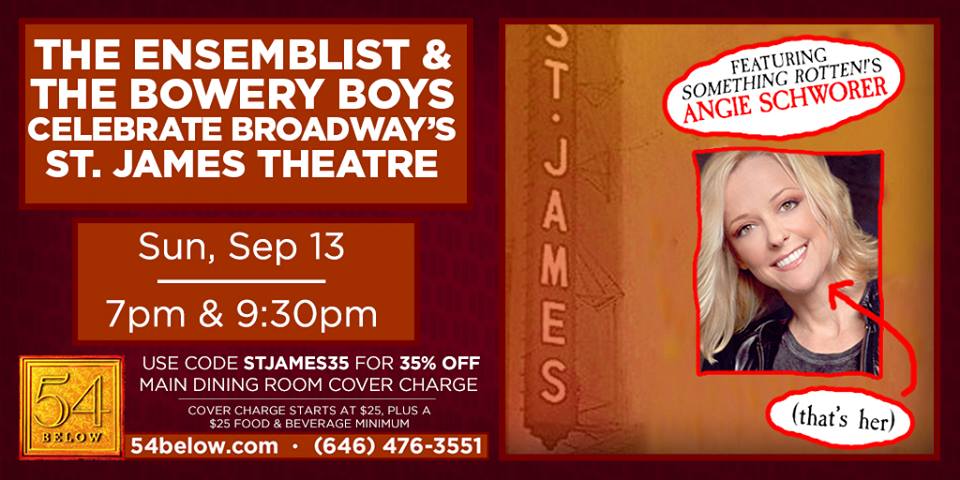
On Sunday The Bowery Boys join up with The Ensemblist to present a special cabaret event at 54 Below — a tribute to the great St. James Theatre!

Perhaps some of you may be asking — why do a live show about a individual theater?

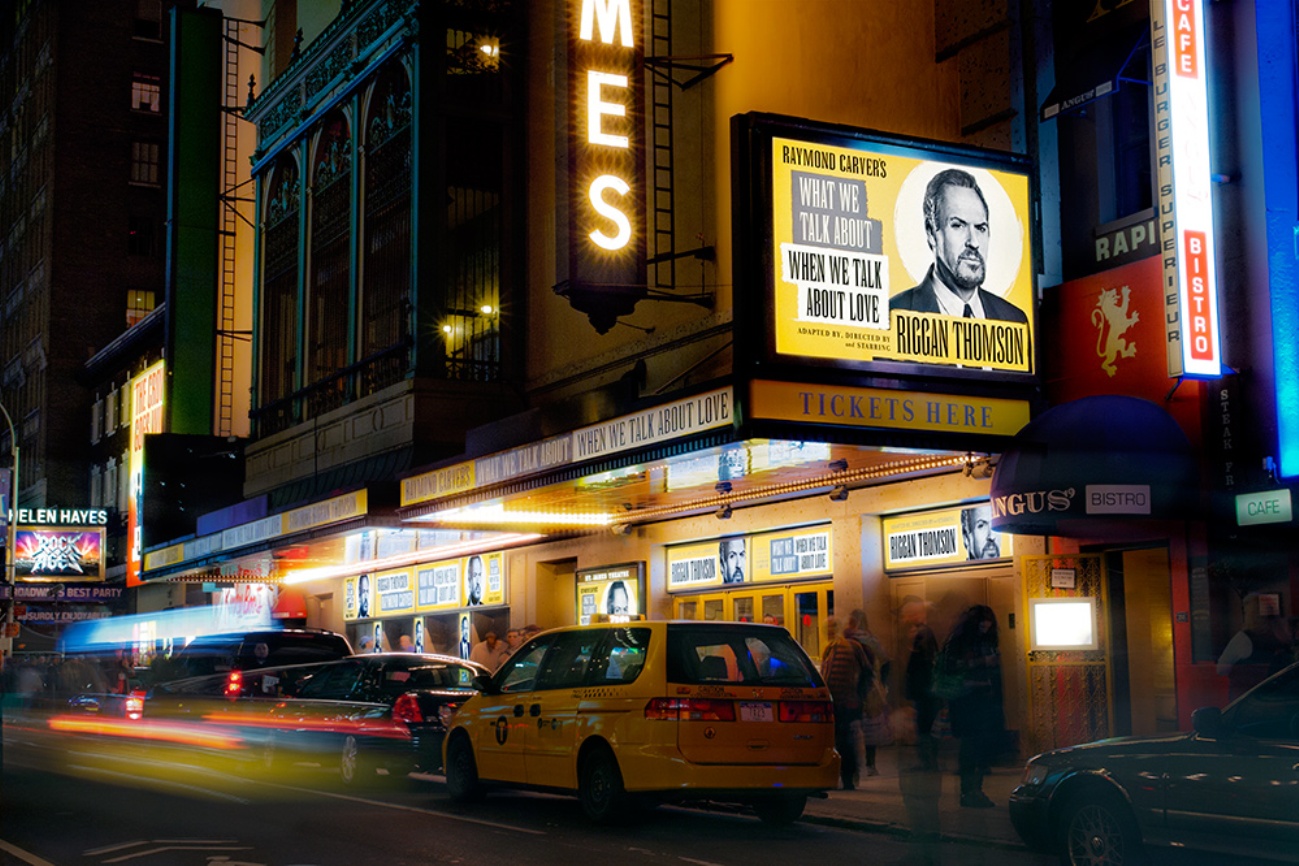
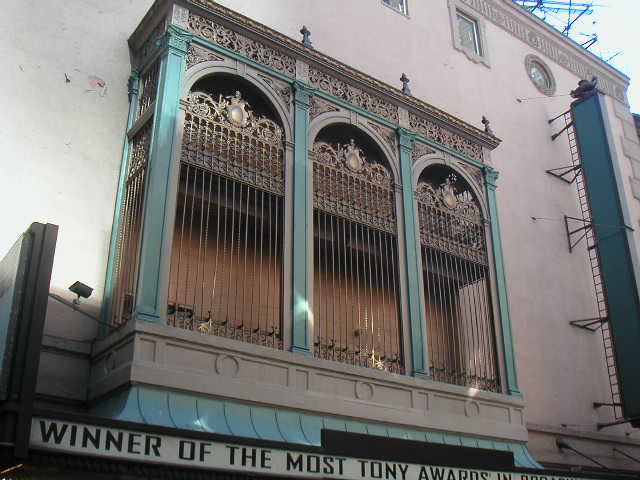
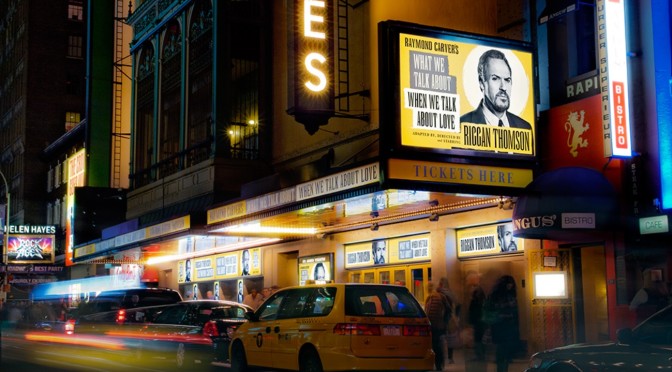
The St. James Theatre (246 West 44th Street) was prominently featured as the principal set in this year’s Academy Award winner for Best Picture Birdman or (The Unexpected Virtue of Ignorance) starring Michael Keaton, Edward Norton and Emma Stone.

The underlying theme of the film is that ‘serious’ theater was a reinvigorating, respectable medium that could renew the career of Riggan Thomson (Keaton) whose Hollywood successes have diminished his credibility.

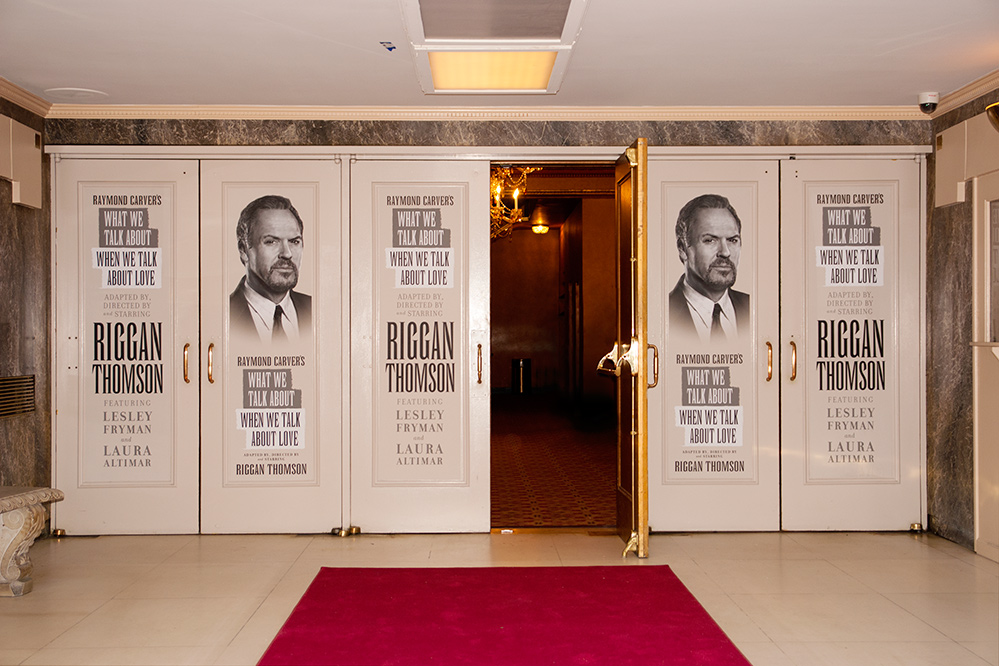
Below:  The exterior and entrance of the St. James in character for Birdman.  More images at Eric Helmin / Design + Media who worked on the film’s terrific graphic design can be found at his website. He’s also worked on The Knick and Inside Llewyn Davis so we’re clearly fans of his work.

Courtesy Eric Helmin / Design + Media

Courtesy Eric Helmin / Design + Media


The St. James was one of a handful of stages which estabished the supremacy of the American theater. To film Birdman here was to set the bar near-impossibly high for the lead character.  The history of the St. James runs parallel to Broadway’s own dramatic highs and lows. It was here that Hello Dolly!, Oklahoma, The King and I and The Producers all made their New York debuts.

Here’s a selection of other quirky facts about the St James Theatre, some big, some small, some weird:

1) The plot of land where the St. James Theater stands today — that’s 246 West 44th Street, between the Helen Hayes Theatre and John’s Pizzeria —  was home to the first incarnation of Sardi’s Restaurant. Called the Little Restaurant (or Sardi’s Sidewalk Cafe), this first incarnation of the famous theatrical eatery opened in 1921.  A frequent sight was that of proprietor Melchiore Pio Vincenzo Sardi Sr. standing in the doorway, flipping a twenty-dollar gold coin.  In 1927, the restaurant moved to its present location – just a couple doors down from the St. James.

Below: The outdoor garden at Sardi’s original spot

garden


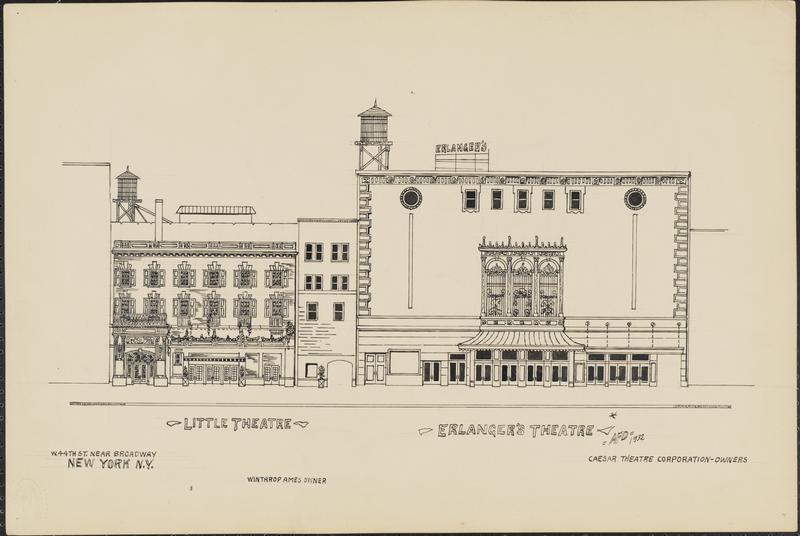
2) What does the St. James Theatre have in common with the Chelsea Piers and Grand Central Terminal? They were all designed by the same architectural firm Warren and Wetmore. But when it opened with its first show — a George M. Cohan romp called The Merry Malones — it was called Erlanger’s Theater, named for one half of the theatrical production juggernaut of the 1920s — Klaw & Erlanger. (By the way, there was also a Klaw Theatre just a block away.)

Below: Anthony Dumas sketches from 1932 of the Erlanger Theatre and the Little Theatre (later the Helen Hayes). Later that year the name would switch to the St. James in tribute to a famous London theater of that same name.

Courtesy the Museum of the City of New York


3) In 1943 the Rodgers and Hammerstein musical Oklahoma made its debut here, changing the face of musical theater forever. But, many years before, the St. James very nearly celebrated the debut of another major epoch-making musical– Showboat. It was even considered for the inaugural performance at the St. James! However its producer Florenz Ziegfeld wasn’t ready in time, and it eventually debuted at Ziegfeld’s own theater on December 27, 1927.

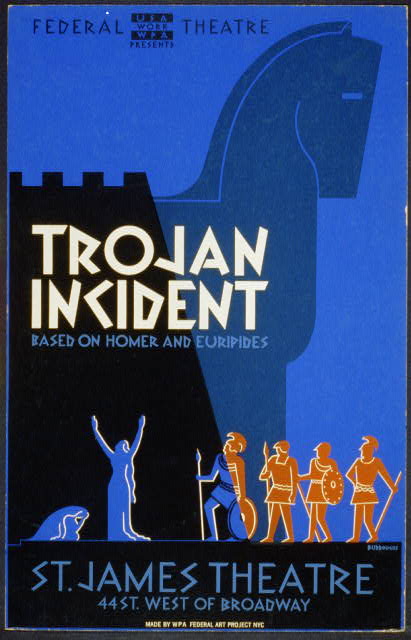
Below: A dance-filled play presented by the Federal Theatre Project called Trojan Incident played for a limited run in 1938

Courtesy Library of Congress

4) The St. James was a vital component of the so-called ‘Golden Age of Broadway’, delivering debut musicals such as Pal Joey, Where’s Charley?, The King and I and The Pajama Game. Countless successful Shakespeare and Gilbert & Sullivan productions graced the stage as did original ballets and even the first play production of Richard Wright’s Native Son in 1941.

So the place has gotta be loaded, right? During the run of Oklahoma, burglars broke into the St. James to steal the evening’s hefty receipts, only to be foiled when they were unable to open the main safe. “They escaped with a small amount of change,” said the Times.

5) In 1958, the theater went through a massive renovation, almost a rebuilding really.  Most of the interior was replaced with modern theatrical amenities like a state-of-the-art sound system and air conditioning unit.  The lighting equipment was now “completely enclosed in Plexiglass” and “the asbestos curtain has a mural-like design on it.” [source]

Courtesy NYC Architecture


6) A peculiar set of shows hit the St. James Theatre during the 1970s, most notably a Nashville-themed jamboree called Broadway Opry ’79 featuring a rotating roster of country music greats! Sadly it played only two shows after four previews — the first featuring Don Gibson, Floyd Cramer and Tanya Tucker, the second Waylon Jennings and the Crickets.

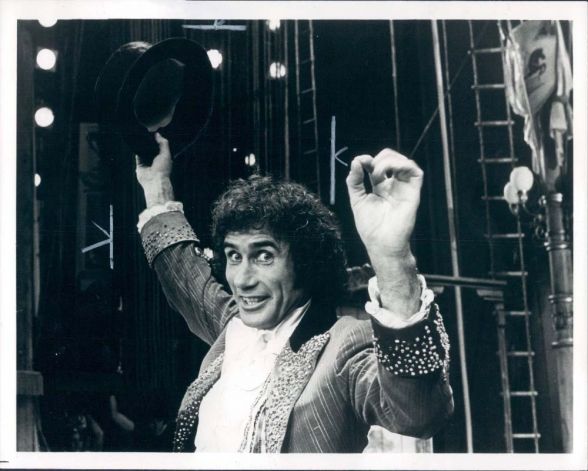
7) A lot of shows celebrating New York City history have played at the St. James, and in  1980  came a tribute to the city’s greatest showman — P. T. Barnum. The musical Barnum, with music by Cy Coleman, featured the subjects of real-life Barnum spectacles like Joice Heth, Jenny Lind and Tom Thumb.  Barnum died in 1891, many years before any theater would have made an appearance above 42nd Street.

Below: Jim Dale in Barnum

dale

8) In 2005 an extraordinary feedback loop occurred at the St James Theatre when the musical movie version of The Producers (itself based on a non-musical film) was filmed at the St. James on the very set of the Broadway theater version.  Said one of the extras from the film, standing on stage that day  “Basically, I’m supposed to applaud the play-within-the-play in a movie about a play that was based on a movie,” [source]

9) The past ten years at the St. James have been rewarding indeed — with musical versions of rock albums (American Idiot), children’s books (How The Grinch Stole Christmas), Woody Allen movies (Bullets Over Broadway), and even one Shakespearean comic farce (the current Something Rotten!)

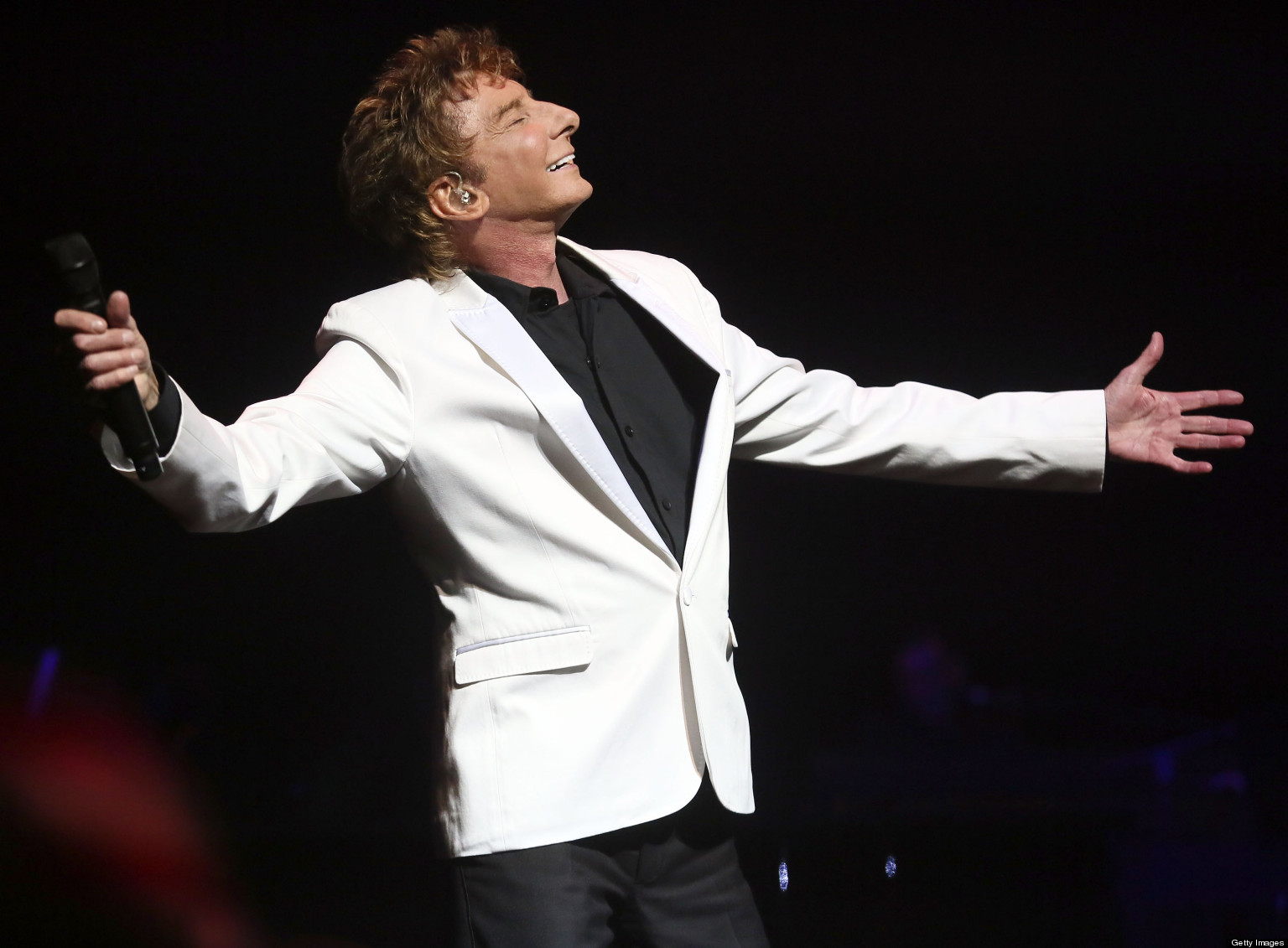
A few lucky individuals even got to see Barry Manilow here in a one-man concert show in 2013. From one review:  “The 1-hour-50-minute concert, performed without an intermission, revealed Mr. Manilow’s brand to be intact. That brand might be described as musical chicken soup for the soul.”

 (Photo by Astrid Stawiarz/Getty Images)
(Photo by Astrid Stawiarz/Getty Images)


10) With Birdman‘s big win at the 2015 Academy Awards, the St. James Theatre becomes the second Broadway theater prominently featured in a Best Picture winner.   All About Eve, Best Picture winner in 1951, features scenes from the John Golden Theatre on West 45th Street.  The Great Ziegfeld also won Best Picture (in 1937) but it was all filmed in Hollywood.


Wanna know more about the history of the St. James Theatre with an overview of Times Square and Broadway history — all while festively dining and drinking in a superb cabaret setting? Come to our show this Sunday!

Tickets are still available for our two shows at 7pm and 9:30pm. 

To get your tickets, please visit the 54 Below site here or click on the links below

Sun, Sep 13 7:00pm Doors: 5:15pm $30/35/40/70 Tickets
Sun, Sep 13 9:30pm Doors: 8:45pm $25/30/35/60 Tickets


The good folks over at the Broadway musical Something Rotten! are kindly offering a discount code for tickets.

11990397_10154322923099852_3378911279269639552_n


Categories
Mad Men

‘Mad Men’ returns: a guide to eating (and drinking) options

Drama for dinner: ‘Mad Men’ meals go down best with fifteen cocktails

AMC’s ‘Mad Men’ returns for its fifth season this March. Until somebody goes ahead and develops a TV show about Peter Stuyvesant and New Amsterdam, the award-winning Madison Avenue drama is the closest we’ll get to straight-up New York City history TV. The writers cleverly embed the action within very specific 60s locations throughout the city. During the season I try and delve into those locations in our regular ‘Mad Men’ feature


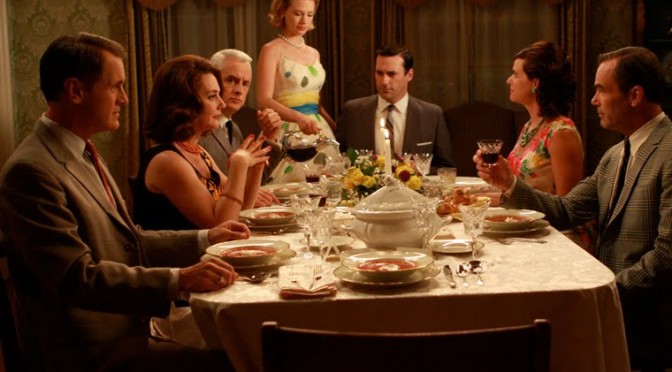
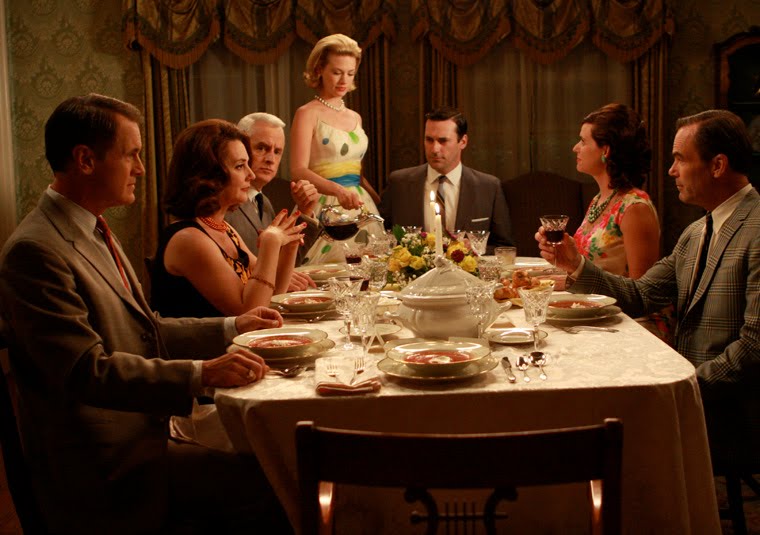
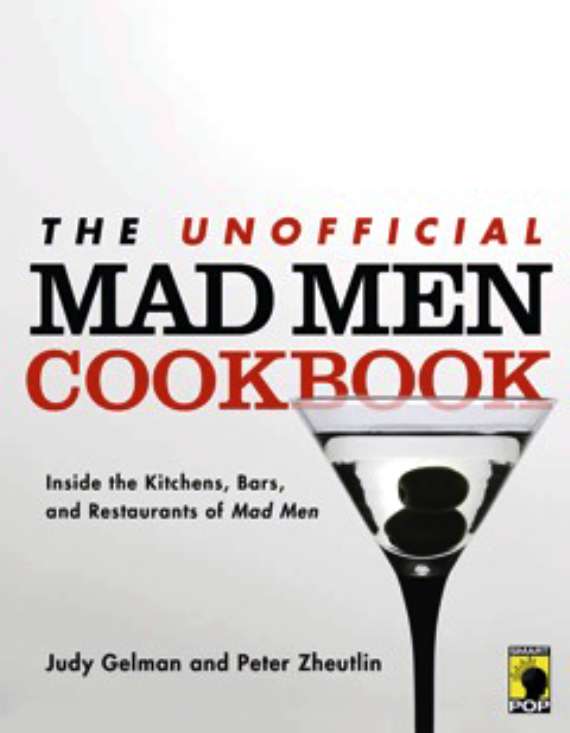
So what, then, to make ofThe Unofficial Mad Men Cookbook: Inside The Kitchens, Bars and Restaurants of Mad Men’, by Judy Gelman and Peter Zheutlin? My first thought, naturally, was, “They eat on ‘Mad Men’?” They certainly flirt over dinners at times. Carla, the Draper’s housekeeper, tortures over hot meals that often get uneaten as Betty sulks and Don swallows down bourbon.

But ‘Mad Men’ is a show of lounges and restaurants, of decorum and indulgence, adrift in a rising stream of booze. It’s also a show of dizzying, if cynical, nostalgia. And that’s the secret of this fun little volume. The particular dishes featured in the book may have been seen or mentioned on the show. But the recipes themselves are straight from the kitchens of New York’s most famous eateries and from original 1960s magazines and cookbooks.

The authors frame each dish within the context of a certain episode. For instance, a recipe on gazpacho and rumaki is prefaced with the description of Season 2, Episode 8, the episode where Betty presents dishes from around the world to her guests (including, you may remember, the at-the-time somewhat exotic Heineken beer.)

The recipes aren’t from Betty’s kitchen, but from actual 1960s magazine articles. Sources include ‘The Kennedy Style’, a 1962 Ebony Magazine cookbook, the 1960’s ‘How America Eats’, among a great many others. Original dishes from New York’s great restaurants make an appearance here too — steak tartar and hearts of palm salad from Sardi’s, fettuccine alfredo from Angelo’s, chicken Kiev from the Russian Tea Room, Caesar salad from Keens Steakhouse, and of course, the original Waldorf salad and sold Amandine from the Waldorf=Astoria.

Betty Crocker, Julia Child, Amy Vanderbilt — all the icons of 60s cuisine and ettiquete are represented. Naturally, this means that few dishes are heart healthy. Butter and red meat are a defining theme.

A more classic selection of original New York recipes has perhaps never been assembled. One might squabble over the fact that most of this has nothing much to do with ‘Mad Men’ itself. But let that slide, relax and have a drink from the guide’s cocktail menu, featuring the how-tos on such classic sips as the Stork Club Cocktail, the 21 Club Bloody Mary and the Classic Algonquin Cocktail (whiskey, vermouth and pineapple juice), all sourced from the original establishments.

I was a sucker for this kind of retro mixology back in the days of the ’90s retro ‘bachelor pad’ craze, and ‘The Unofficial Mad Men Cookbook’ could fit right in with your old Esquivel CDs. But this is an entertaining collection of New York recipes, well-researched, and ready for your weekend soirees and viewing parties..

Notes on the podcast (#125) Sardi’s Restaurant

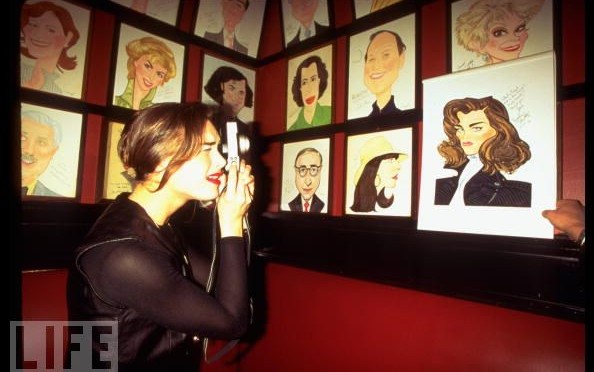
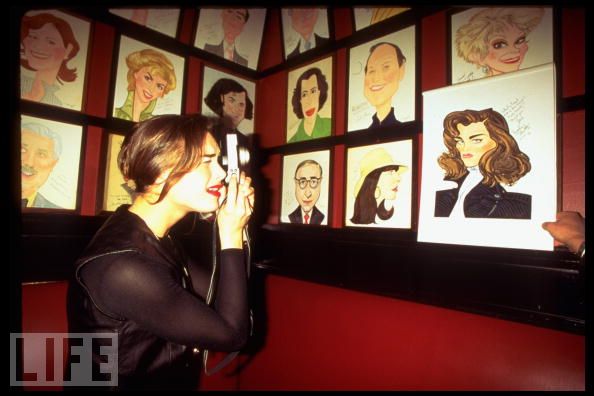
Above: Brooke Shields admires her caricature, 1995 (courtesy Google LIFE images)

Thanks for listening to our breezy, kind of giddy tale of Sardi’s Restaurant. We might sound a little strange at a couple points, as we were recording it in 95 degree weather, and our studio isn’t adequately air conditioned! A little delirium might be evident. We decided to do a showbiz-type episode as our next episode will be going to a very, very dark place in New York City history.

Obviously, when I said this was our ‘quasquicentennial’ episode, I didn’t actually mean it was our 125th year of podcasting. Although that’s a remarkable thought — our first episode would have been playable on a gramophone!

As we mentioned on the show, it’s difficult doing a history podcast on a private business without it sounding a bit like an advertisement, but hopefully we were able to execute past that. (We came across this odd feeling with other podcasts like Saks Fifth Avenue and The Plaza Hotel.)

We left a few details on the cutting-room floor, including Sardi’s lengthy involvement with the Dog Fanciers Club, which throws a congratulatory breakfast every year for the Best In Show winner of the Westminster Dog Show. Tom also did a rather nice job with reading an excerpt from Renee Caroll’s biography, but some sound problems forced us to cut it.

Tom mentioned the glory of Broadway in 1927. Show Boat is definitely the breakout show of that year, but theatergoers could also choose from one of these show that year — A Connecticut Yankee, Funny Face, Burlesque, Coquette, Hit The Deck, Rio Rita, Dracula and the hit play The Ivory Door, written by A.A. Milne of Winnie-the-Pooh fame. (Find a complete list here.)

Reading Recommendations: The best is Off The Wall by Vincent Sardi Jr. and Thomas Edward West, featuring full color representations of Sardi’s best known caricatures. Worth seeking out a copy at your used book stores. More difficult to find is Vincent Sardi Sr.’s own biography Sardi’s: A Story of a Restaurant, published in 1953 and well out of print. Carroll’s biography In Your Hat is also out-of-print, but you can find excerpts scattered online. You should seek out a physical copy if possible, as it features original artwork by original Sardi’s caricaturist Alex Gard.

Was Lauren Bacall the world’s most glamorous newsie?

The answer to the question in the headline is absolutely, without a doubt, yes.

This story begins with a Minnesotan named Leo Shull, who moved to New York in the 1930s to become a playwright. He never wrote anything of note for the stage, but he wrote plenty about the stage, various guides to playwriting, “how to break into showbiz” style books, and eventually, directories of entertainment contacts.

In 1941, Shull rented out some mimeograph machines in a basement below a Walgreens at 44th and Broadway to produce a newspaper called the Actors Cue, a daily guide to auditions, agents and producers. (Actor’s Cue was similar to today’s Back Stage. That currently operating publication was spun off by two former employees of Shull in 1960.)

But this was no ordinary Walgreens. According to author John U. Bacon, this was the very first Walgreens in New York, in the basement of the grand Paramount Building.

It opened in 1927, the same year that Sardi’s Restaurant opened its current location just around the corner. Both were associated with the theater business, with show folk. In fact, this Walgreens was often called the ‘poor man’s Sardi’s’. There was even a wall of caricatures, just like Sardi’s, lampooning the most famous faces of Broadway.

In his biography, Eli Wallach called that particular Walgreens a “hangout for actors,” a place for out-of-work actors to spend their last dime on a sandwich at the lunch counter, wiling away time before an audition.

So then, obviously, it made sense for Shull to create his daily directory here. And he not only sold the paper to actors; he often hired them to spread out around the theater district and sell the newspaper on the street.

So who should walk in but an attractive young actress named Betty Joan Perske. She was born in the Bronx and currently lived on a ground-floor apartment in the West Village, making ends meet by modeling and ushering in Broadway theaters. But she hoped to soon be on the stage, not in the aisles.

At some point, she met Shull and began selling his newspaper on her lunch breaks. In her own words:

I spent most of my lunch hours rushing to Walgreen’s to grab Actor’s Cue and look for a job in the theatre. …….  Leo had a table in the basement of Walgreen’s where copies of Actor’s Cue were piled up and sold for ten cents apiece. I prevailed on him to let me sell some. He finally said okay — to get me off his back, I think.

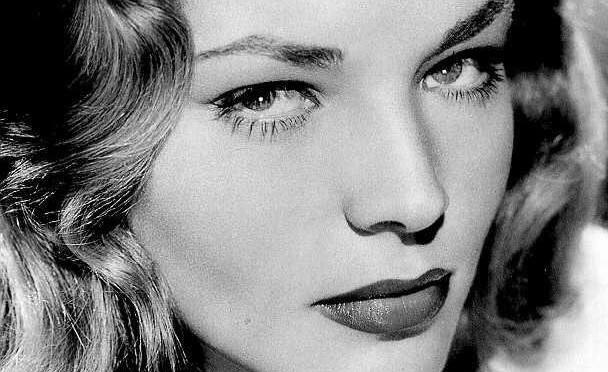
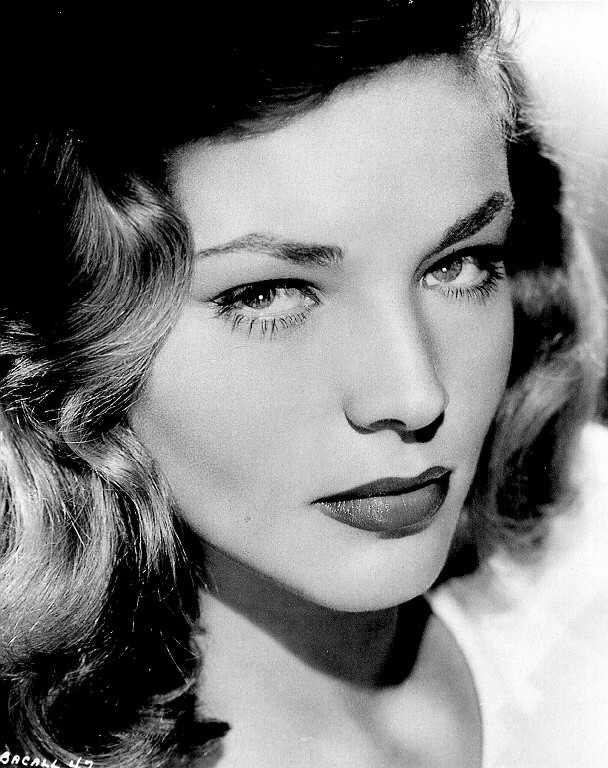
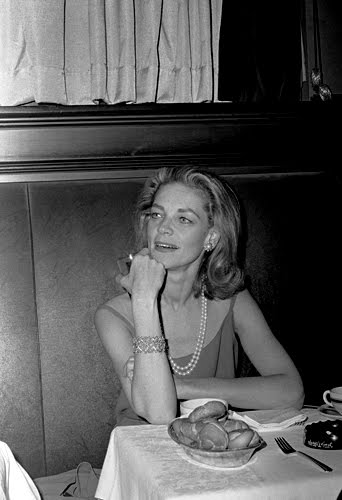
She took her papers to the sidewalk outside Sardi’s, where powerful producers and agents frequently dined. From there, she hocked the paper, not to make money, but to initiate conversations. “I kept my eyes peeled for a recognizable producer, actor, anyone who might help me get a job.” At right: Bacall, actually in Sardi’s Restaurant, courtesy Life Magazine

Her gumption eventually paid off. In 1942, with a slight name change (to Betty Bacall), she made her Broadway debut in the short-lived “novelty melodramaJohnny 2 X 4 at the Longacre Theatre.  However, her fame would be made on the movie screen, cast in 1943 (after yet another name change, to Lauren) opposite her future husband Humphrey Bogart in the Howard Hawks’ classic To Have And Have Not. She never needed an Actor’s Cue ever again.

I wonder if Winchell, a regular at Sardi’s, remembered that when he wrote an entire column that year called “The Bacall of the Wild,” raving about the young starlet.

Actor’s Cue is still being sold today — presumably not in front of Sardi’s — under its more descriptive new name of Show Business.