Categories
Mysterious Stories Podcasts

Ghost Stories of Old New York: Tales from the Revolution, restless Indians, haunted forts and a drunk, headless actor


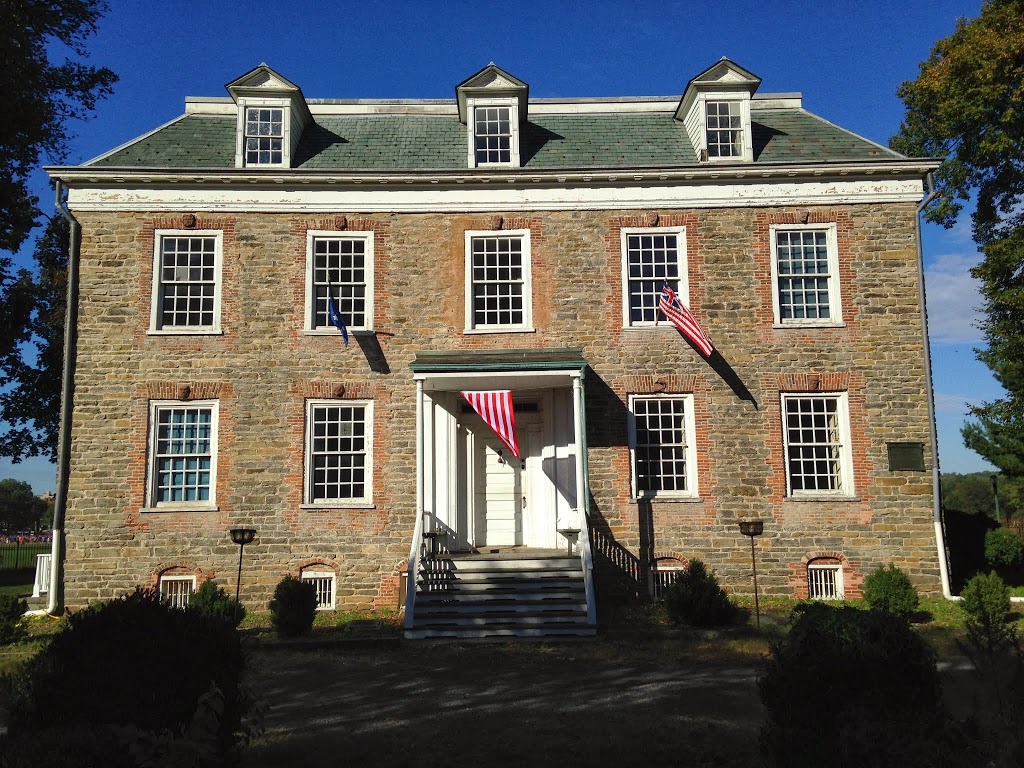
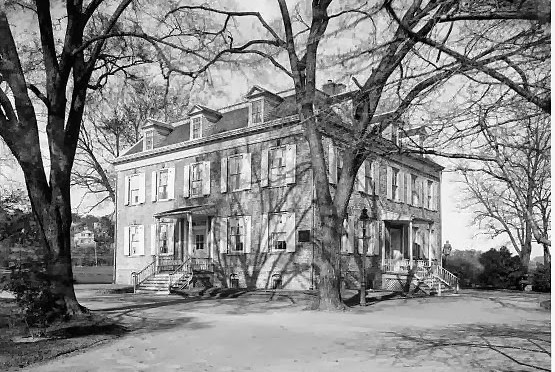
The Van Cortlandt House, 1906

PODCAST This is the Bowery Boys 7th annual Halloween podcast, with four new scary stories to chill your bones and keep you up at night, generously doused with strange and fascinating facts about New York City.

For this episode, we’ve decided to go truly old-school, reaching back to old legends and tales from the years of the Revolutionary War and early 19th century.   These ghosts have two things in common — George Washington (directly or indirectly) and ghosts! Although no ghosts of George Washington.

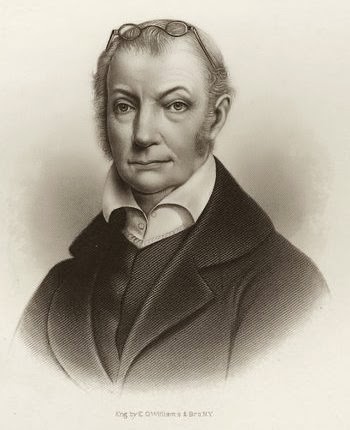
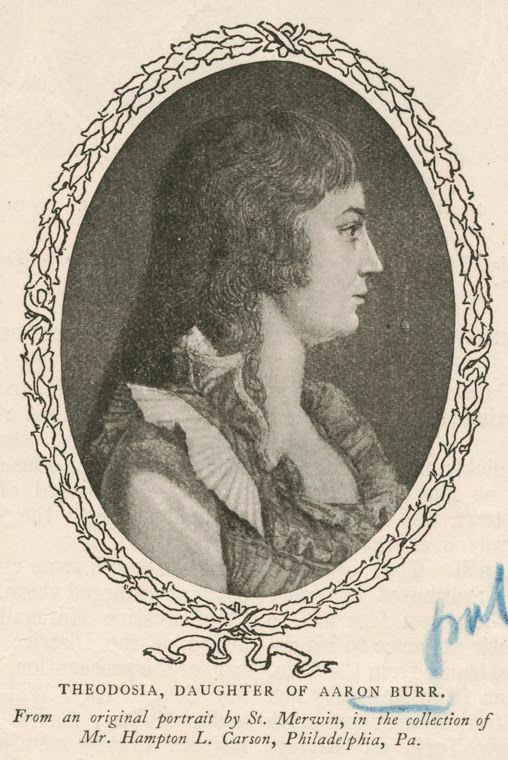
We venture to the haunted woods of Van Cortlandt Park for the tale of an Indian massacre and a forlorn servant girl, looking for her master’s silver.  From there, we head to the early days of Greenwich Village and tormented vice president Aaron Burr (at right), waiting for his daughter’s return.

Meanwhile, over in Brooklyn, the ruins of an old Revolutionary War fort in the future neighborhood of Cobble Hill provide the setting for a horrific tale of a late-night booze run gone wrong.  And, finally, no Bowery Boys Halloween podcast would be complete without an historic cemetery (in this case, the burial ground at St. Paul’s Chapel) and the ghost of a dramatic actor — in this case, one without his head!

PLUS: How did Westchester County become so rocky? The Devil did it!


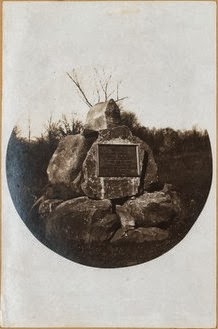
A cairn of stones memorializing Danial Nimham at Indian Field in Van Cortlandt Park, in 1906, the year it was placed here by the Daughters of the American Revolution.  The original plaque states that 17 members of the Stockbridge Militia lost their lives, though it’s now believed that up to 40 men may have died during the massacre of August 1778. (NYPL)

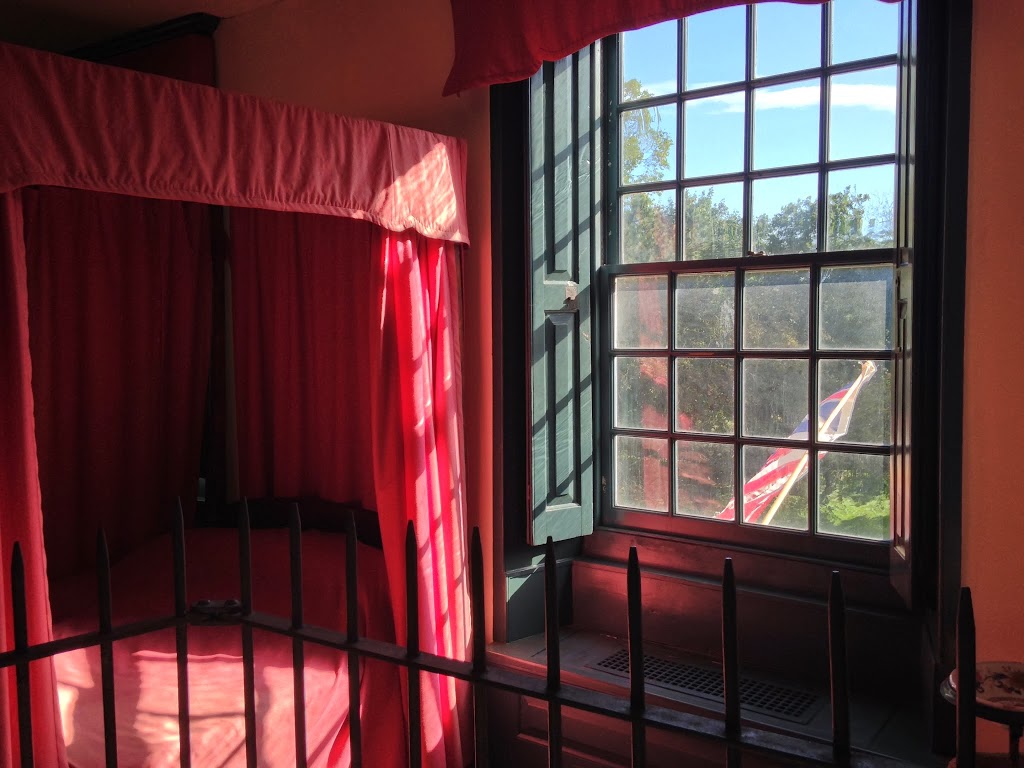
Looking out the upstairs window of the Van Cortlandt House, looking out in the park. The house has seen its share of strife and, if legends can be believed, more than a few spirits.

Van Cortlandt House as it looked last weekend. What’s that in the window?

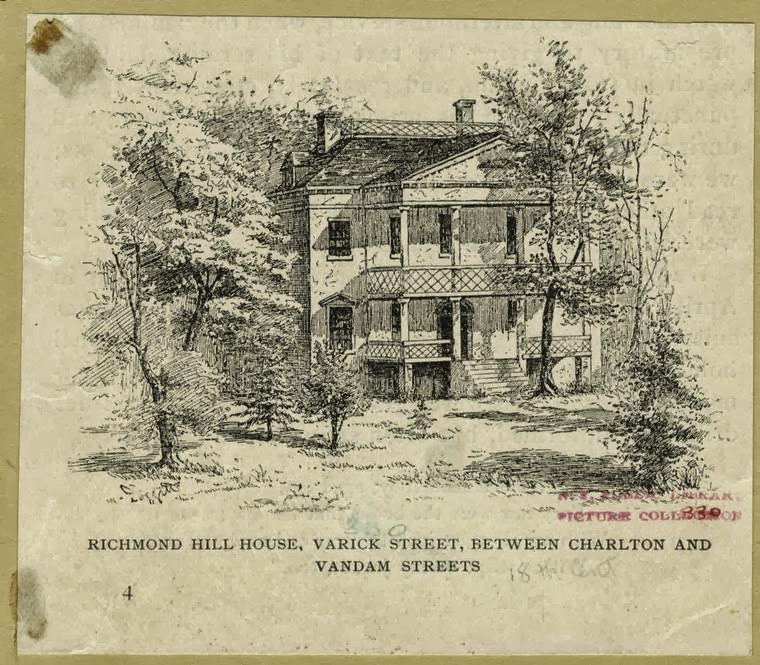
Richmond Hill, the beautiful mansion home of both John Adams and Aaron Burr.  The carriage house from this old manor was moved to Barrow Street and is today the restaurant One If By Land, Two If By Sea. (NYPL)

Theodosia Burr, the daughter of Vice President Aaron Burr, who was mysteriously lost at sea. Was she shipwrecked, rescued by an Indian prince, or forced to walk the plank? (Courtesy NYPL)

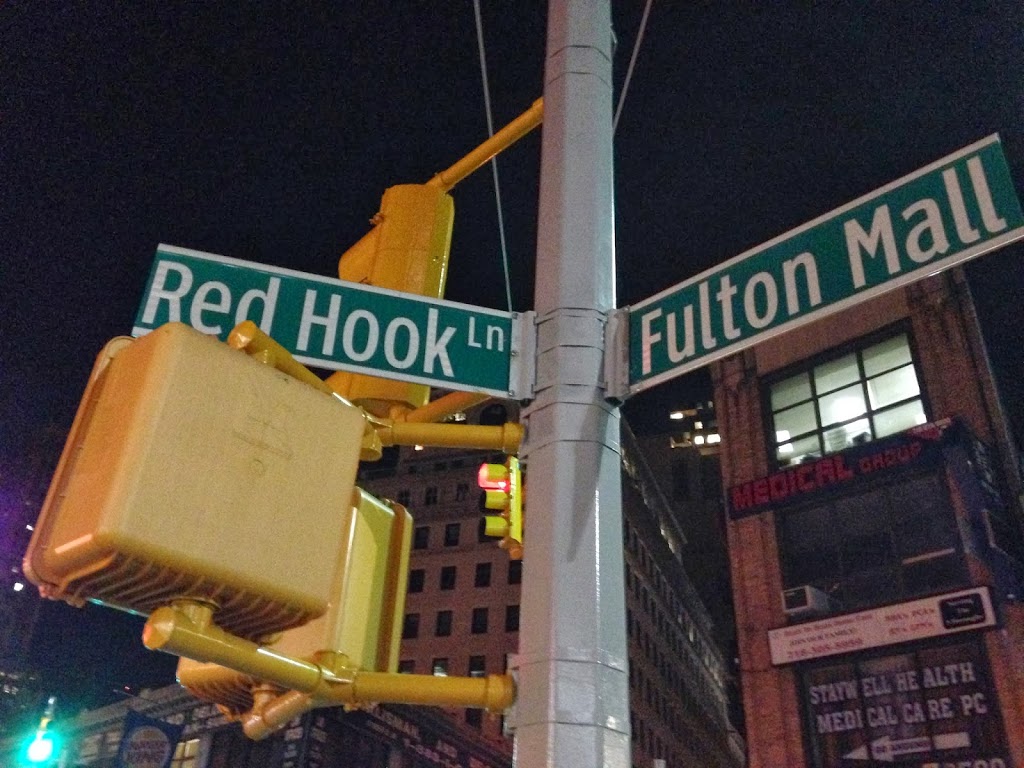
A short remnant of Red Hook Lane still exists in downtown Brooklyn.  You are unlikely to find anything too scary at this street corner however.

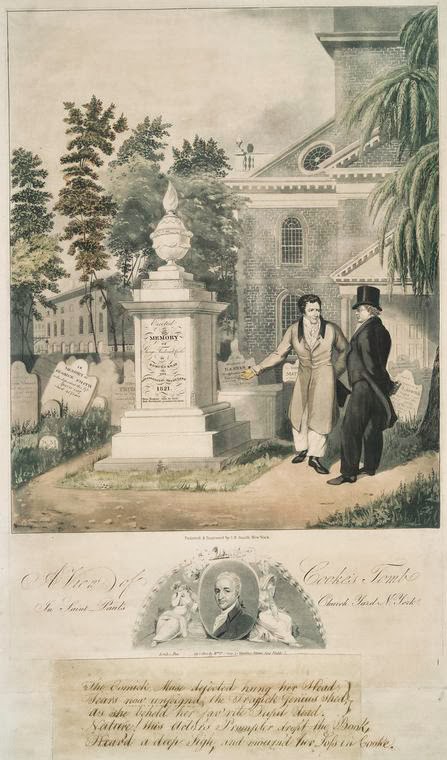
A 1822 illustration of the George Frederick Cooke monument and the man who paid for it, actor Edmund Kean.  Kean so admired the late actor that he actually took a very odd portion of his body back with him to England.

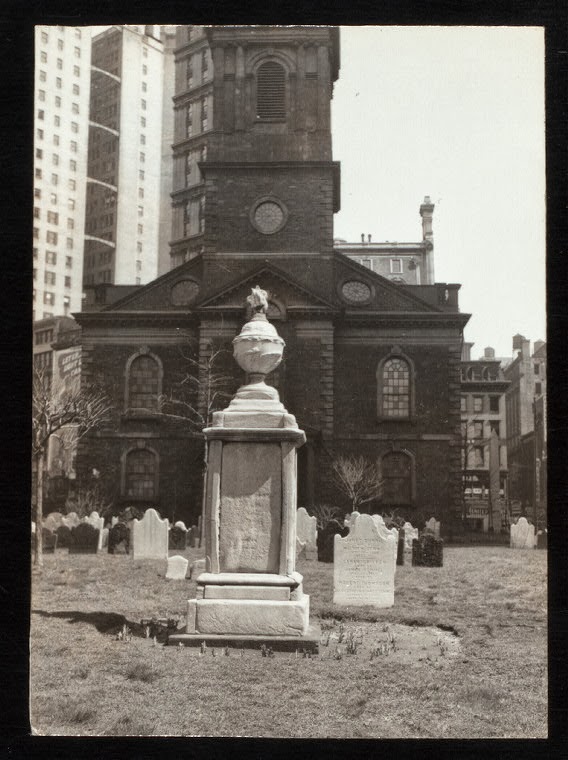
The monument to George Frederick Cooke in the graveyard at St. Paul’s Chapel, pictured here sometime in the 1940s.  Does his ghost still linger here? [NYPL]

We had a very chilling event occur as we were recording last weekend.   Just as I began to launch into the ghosts of the Stockbridge Militia, our recording equipment went all insane, spewing out a distorted and very disturbing version of our voices.  It went on for about 20 minutes.  Below is a sampling of the audio.  What do you think — otherworldly interference or a faulty mixing board?


Times Squared: Lovingly nitpicking ‘The Great Gatsby’ trailer

The recent trailer to Baz Luhrmann’s The Great Gatsby, aka ‘Moulin Rouge in Manhattan’, seems to have left everyone in a state of awe (and horror) in its vivid, hyper-electro-glossy depiction of Prohibition-era New York. And it left many feeling slight panic, even apoplexy, especially considering the entire spectacle will be rendered in 3D when it’s released in December. Oh God. Will flappers kick whimsily towards the camera?

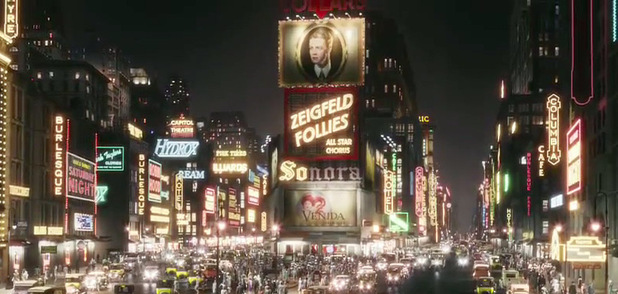
So how accurate was Lurhmann in his glamorous take on Times Square of 1922? How accurate was it supposed to be? Many have already taken note of one glaring and unforgivable error — misspelling the name of Florenz Ziegfeld on the sign for the ‘Ziegfeld Follies’. That ridiculous mistake overshadows a possibly smaller error, that the Follies were actually performed down at the New Amsterdam Theatre on 42nd Street in 1922. However, the Follies from the year before were hosted at the Globe Theater on West 46th Street (today’s Lunt-Fontanne Theatre), quite close to this sign. So perhaps they just kept it up.

Here’s the entire trailer:

Clearly, Luhrmann is interpreting New York, not emulating it. ‘Moulin Rouge’, after all, was Paris through a hazy scrim. He’s filtering the glitz of F. Scott Fitzgerald‘s work through his own dreamlike aesthetic and doesn’t need to fact-check every sign and street corner. Still, the trailer does feature some interesting obscure details, and I can’t help myself.  If you saw a different detail, please post about it in the comments section:

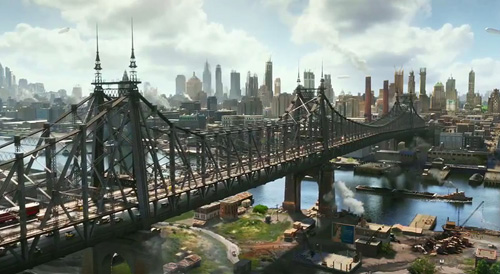
Queensboro Bridge The trailer opens with a spectacular look at the Queensboro Bridge, a potent symbol in the Fitzgerald novel. “Over the great bridge, with the sunlight through the girders making a constant flicker upon the moving cars, with the city rising up across the river in white heaps and sugar lumps all built with a wish out of non-olfactory money.”

The bridge opened in 1909, and it’s a defining image of the Jazz Age, not least of which because the population of Queens almost tripled during the 1920s. There were certainly trains on the Queensboro — it was built to accommodate them — but I’m not sure about that particular train.  Below it sits grimy old Blackwell’s Island, renamed Welfare Island in 1921 and certainly looking the part.

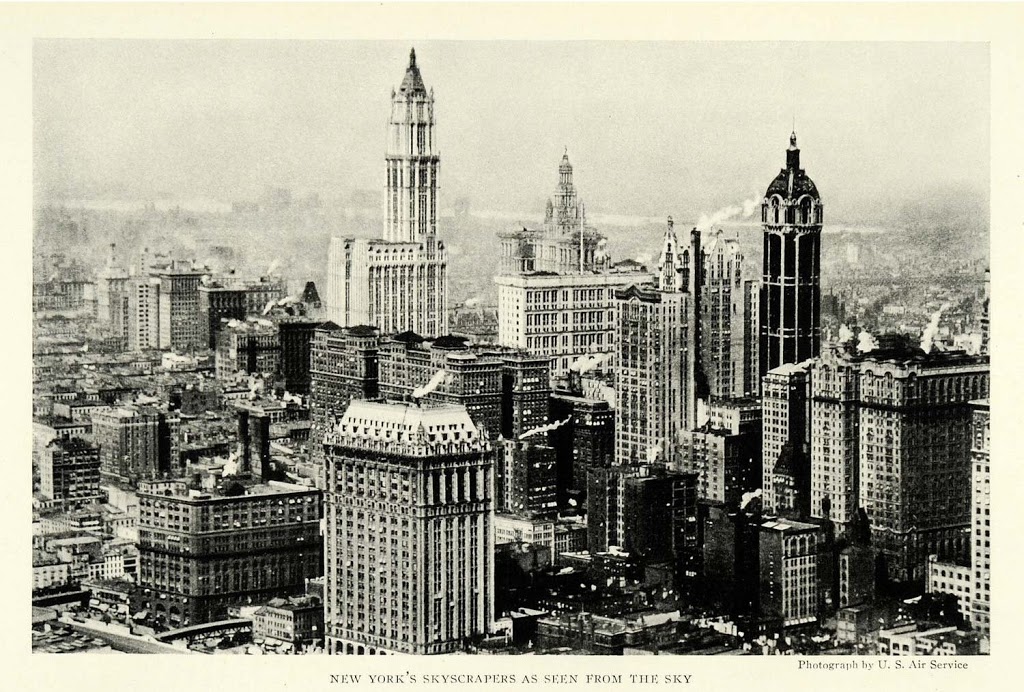
 — Skyscrapers Oh Lord. I don’t think this depicts New York at all but is a composite view of various buildings of the age. Far to the left in the trailer I see structures that look like the Singer Building and the Woolworth Building, but they would not be seen from this angle. Besides, the Woolworth would be taller than the Singer. See below for a size comparison, in a picture from 1922, looking northeast.

There are some vaguely Flatiron Building/Met Life Tower type structures, but they look like they’re on 42nd Street.  And why do I think I can see something that clearly looks like the New York Central Building (later the Helmsley Building) which wasn’t finished until 1929?

Times Square Signs An array of illuminated products logos — in various colorful hues foreign to Times Square in 1922 — gives the Crossroads of the World a mystical glow. The tony Hotel Astor adorned in lights dominates the plaza to the left. Nearby is an ad for Douglas Fairbank‘s ‘Robin Hood’, released in October 1922. It played at the Lyric Theatre. Fairbank’s rival Rudolph Valentino and actress Norma Talmadge created a buzz when they attended the film’s premiere together here.

It’s next to the advertisement for Hydrox (the sandwich cookie which debuted in 1908) and the Capitol Theater, a movie palace which opened in 1919. The tire ad is a nice touch, recalling Times Square’s status as the center of automobile sales and repair during the early 20th century.


Below the Zeigfeld [sic] Follies sign is an advertisement for Sonora, a phonograph company that began producing radios in 1924. Their slogan ‘Clear As A Bell’ harkens back to the company’s original product line — clock chimes.

To the right of those is a sign for the Columbia Theatre, “the royal palace of burlesque” in the 1920s. The theater opened in 1910 with decor of “Roman gold and and French gray, and the hangings and carpets are of rose du Barry.” It became the Embassy movie theaters in the 1970s.

Later on in the trailer, an ad can be seen for Arrow Collars, the detatchable shirt collar company that went on to spawn America’s first male model type, the ‘Arrow Collar Man’, the sort of debonair type who populates the world of Gatsby. Of course, the demand for collared shirts pretty much killed of this industry by the end of the decade.

Grand Central Oyster Bar There appears to be a brief scene at this lush location with its vaulted ceilings. The Oyster Bar would have indeed been a thriving spot in 1922 and an ideal place to mix business with pleasure. A few years later, so goes the legend, David Sarnoff formed RKO Pictures over a few oysters here with Joseph Kennedy. In 1922, Tin Pan Alley lyricist Al Lubin met his music partner Harry Warren here. They went on to create the film musical 42nd Street in 1933.

Yellow Cab Co.? There are many brief glimpses of taxicabs, including those of the Yellow Cab fleet, which would later be purchased by the Checkered Cab company in 1929. In 1922, the Yellow Cab successfully won a ruling barring other paid-ride automobiles from being painted yellow. ‘1,000 Cabs Face Change of Paint.

Blood And Sand A prominent movie marquee is shown near the trailer’s end for Rudolph Valentino‘s ‘Blood And Sand’, a summer box office smash in 1922. This film debuted at the Rivoli, at 1620 Broadway, at 49th Street. From the New York Times film review on its debut: “Mr. Valentino has not been doing much acting of late. He’s been slicking his hair and posing for the most part. But here he becomes an actor again.” Let’s hope the same can be said of Leonardo DiCaprio, who plays Mr. Gatsby.

By the way, the 1974 version of ‘The Great Gatsby’, starring Robert Redford and Mia Farrow, premiered — with attendees in full ’20s regalia — at the Loews State Theater at 1540 Broadway at 45th Street. “The guests, many of them in Teflon or Daisy white, whatever you want to call it, were greeted by hundreds of celebrity gawkers, reporters and photographers.” [source]

Below: A clip from the Valentino film:


As I rewatch the trailer over the next few days, I may amend this article with further information. If there’s something obvious that I’ve missed, please let me know in the comments below!

Thanks to Michael Raisch, whose Tweet to me last night inspired this article.  Screenshots courtesy of Curbed and Entertainment Weekly.

Who are Barnes and Price? And other notes from the podcast

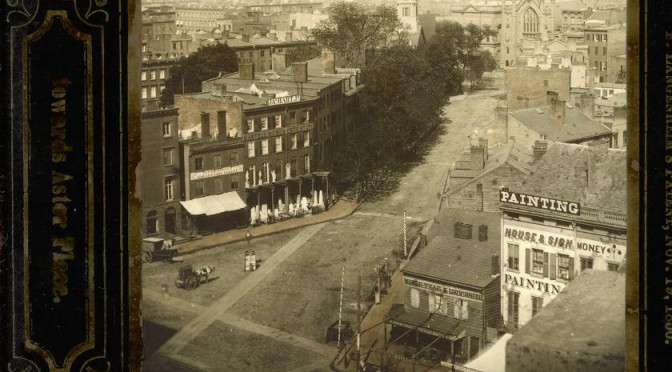
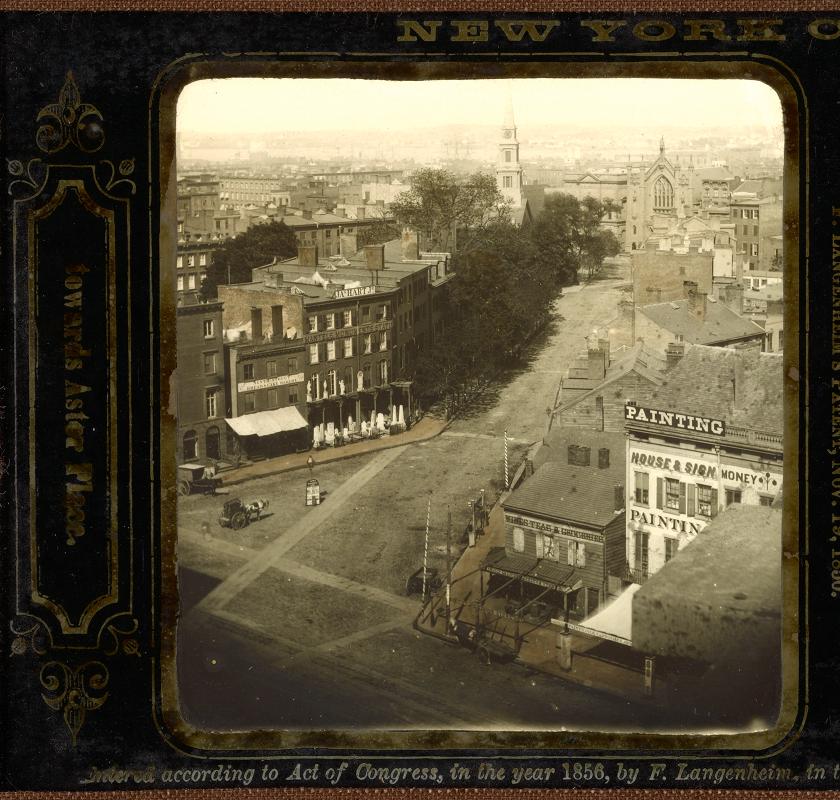
Stuyvesant Street in 1856, an aberration to the city grid plan thanks in part to the presence of St. Mark’s Church and its well-established churchyard. The small building in the foreground is where the St. Mark’s Bookshop stands today. You can see the steeple of St. Mark’s. Hmm, what what’s the other 
church in the background? (Pic courtesy East Village Transitions)

Some notes on our podcast, Episode #139: St. Mark’s-in-the-Bowery

THANK YOUS: For of all, we’d like to thank Rev. Winnie Varghese and Roger Jack Walters from St. Mark’s Church for telling us some wonderful stories on a sunny Sunday afternoon as volunteers worked busily to repaint that 1838 iron fence. This is one landmark is really good hands!


THE MYSTERY OF BARNES AND PRICE: There was once a second cemetery one block north of St. Mark’s that contained the bodies of less wealthy individuals in the community. In September 1864, their bodies were exhumed and moved to Evergreen Cemetery at the border of Brooklyn and Queens. The New York Times report on the exhumation mentions two individuals in particular: “The remains of two dramatic notables, BARNES and PRICE, of the Old Park Theatre, have been removed from this cemetery.”

The Park Theatre (pictured at right) is considered New York’s first great theater, sitting on Park Row in the days before there was a City Hall, a Printer’s Row or anything else recognizable or familiar about that area today. The stage entertained British officers during the Revolutionary War, and in the early 19th century presented entertainment of the highest class.

The PRICE buried in the old St. Mark’s Cemetery is most likely its former manager Stephen Price, who specialized in importing British stage stars for their American debuts. One of those was Julius Brutus Booth, who debuted Shakespeare’s Richard III here in 1822. Booth’s children Edwin Booth and John Wilkes Booth would enter the acting profession in the mid-19th century.

But who’s the BARNES? Most likely it was English actor John Barnes who frequented the Park and died in 1841. However, his wife Mary, billed as Mrs. John Barnes, was in many ways a bigger star, the resident ‘heavy-tragedy lady‘ who made here debut here in 1816. The two often appeared on stage together — husband for the comedy, wife for the drama.

Mary Barnes outlived her husband by a quarter century, remarrying and becoming a successful theater manager in her own right. She died in the same year that her first husband’s body was moved to Evergreen. An assessment of her career:  “In melodrama and pantomime her action was always graceful, spirited and correct.” [source]


JAMES BOGARDUS: The portico of St. Marks is one of the last remaining examples of original cast-iron construction designed by Bogardus, but there are four other buildings in New York attributed to Bogardus that still exist: 254 Canal Street, 85 Leonard Street, 75 Murray Street and 63 Nassau Street. In TriBeCa today, you’ll find Bogardus Garden, a lush, green-fitted traffic triangle. Bogardus is buried at Green-Wood Cemetery.


FURTHER LISTENING: Although Augustus Stuyvesant was the last living direct descendant, there are others named Stuyvesant that trace their lineage to Rutherford Stuyvesant. To find out why this doesn’t quite count, listen in to my podcast on Rutherford’s pet project The Stuyvesant apartment, New York’s first of its kind. (Episode #131: The First Apartment Building).

We tell a ghost story about Peter Stuyvesant and St. Mark’s Church In-The-Bowery in our most popular of our ghost story podcasts. (#91 Haunted Tales of New York)

And of course, for more information on Peter Stuyvesant himself, we devoted an entire podcast to the director-general back in 2007. (Episode 14# Peter Stuyvesant)

SLIP UPS: This weeks verbal slip-ups include me saying ‘St. Mark’s ON-the-Bowery’ twice (it’s referred to in many ways, but never that).

Categories
Mad Men

‘Mad Men’ notes: The delirious world of Off-Off-Broadway

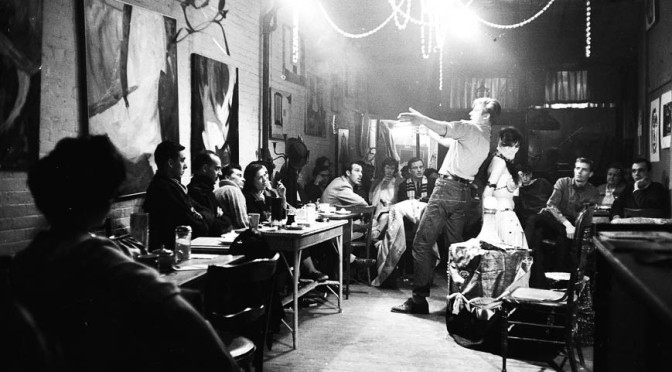
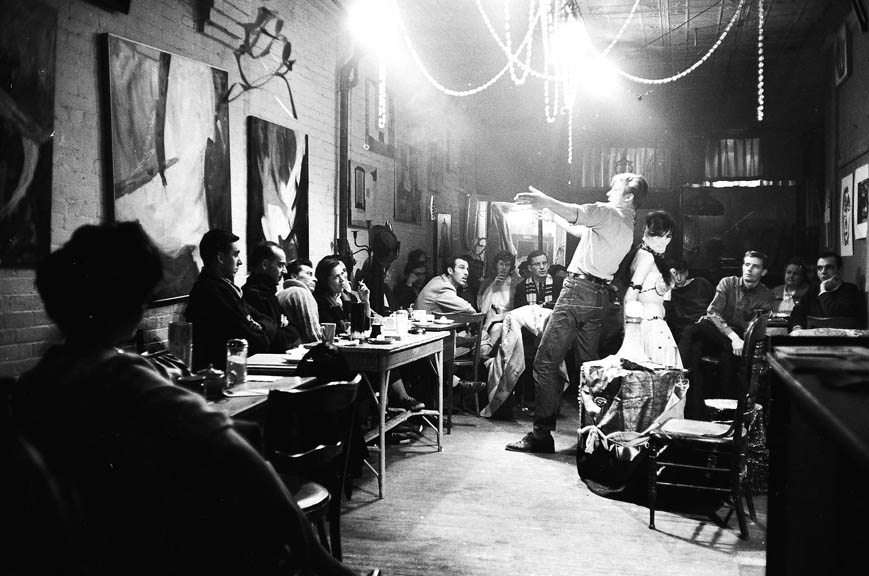
Radical thoughts, limited spaces: a performance at the Caffe Cino. Photo by Ben Martin (from an excellent website by Robert Patrick about this important off-off-Broadway site)

 WARNING The article contains a couple spoilers about last night’s ‘Mad Men’ on AMC. If you’re a fan of the show, come back once you’re watched the episode. But these posts are about a specific element of New York history from the 1960s and can be read even by those who don’t watch the show at all. You can find other articles in this series here.

 Megan might be Sterling Cooper Draper Pryce’s hottest new pitchwoman, but deep in her heart of delicate French extraction, she wants to be an actress. And in last night’s show, she steals away to an audition of an unnamed off-off-Broadway production. She didn’t get the part, but the experience leads her to make a jarring decision.

This wasn’t merely a plot contrivance, but rather another use of New York geography to delineate character. Don Draper was busy at Danny’s Hideaway, a Midtown East restaurant along famed ‘Steak Row‘ shimmering with late 50s — and, by 1966, ever fading — glamour. Megan’s off-off-Broadway audition could only be one place, and that was downtown below 14th Street, in the thriving epicenter of New York counter culture.

Aspiring performers have made New York their destination for fame since the late 19th century with the birth of the Broadway theater circuit. By the 1950s, playwrights and producers who challenged the preconceptions of standard, mainstream theater found homes for their work off Broadway both literally and metaphysically. The art of theater could now be explored for smaller crowds and with smaller budgets.

But even off-Broadway was not immune to financial realities. By the end of the decade, the popularity of off-Broadway created a parallel industry, “a smaller-scale version of Broadway itself.” [source] If you were to look back at the greatest off-Broadway hits of this era (plays by Tennessee Williams and Edward Albee, musicals like Threepenny Opera) you’d notice that most of them have had subsequent Broadway debuts. Indeed, off-Broadway continues to be a sort of a minor league tryout for future Broadway shows.

By the 1960s, unconventional creative voices were emerging that seemed positively alien even in that world. What do you call the alternative to something that was itself the alternative? Although Village Voice critic Jerry Tallmer is credited with coining the phrase ‘off-off-Broadway’, the phrase might have sprung up naturally the first time audiences came in contact with the early works of this field — modest, broken-down, difficult and experimental shows eager to discard every theatrical trapping that had built up for the past four hundred years.

The first ‘true’ off-off-Broadway performance, according to Tallmer’s fellow Voice critic Michael Smith, was a surreal revival of Ubu Roi, performed at a Bleecker Street coffeehouse in 1960. Theatrical experimentation complimented the Village music scene nicely, as even the smallest venues could now host a production. Only in this new creative world could a cramped, smoke-filled coffeehouse like Caffe Cino, at 31 Cornelia Street, become center stage for a new theatrical revolution.

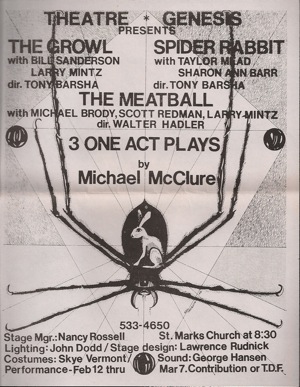
If the art was nontraditional, so too were the venues. Two churches became important homes for alternative theater in the early 1960s and they remain so to this day. Judson Memorial Church, off Washington Square, may seem austere with its elegant Italianate bell tower, turned its meeting room into an off-off-Broadway stage in 1961. And, of course, St. Marks-in-the-Bowery, took a page from its own 1920s radical bohemian past to become home to the Poetry Project and Theater Genesis (performing sometimes sexually explicit plays in the churches parish hall). Above: A poster for Theater Genesis

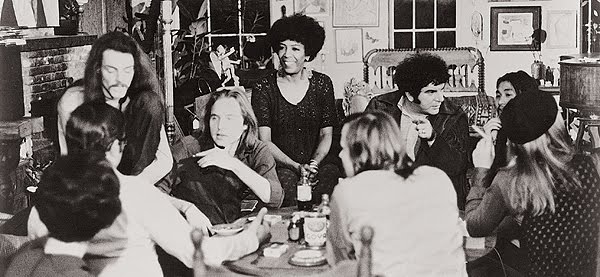
But just as many pivotal and provocative voices of off-off-Broadway were developing further east, in an area of the Lower East Side heavily influenced by Greenwich Village counterculture idealism and referred to by the mid-60s as the East Village. The chief among these, Ellen Stewart’s mold-breaking La Mama Experimental Theatre, opened in 1961 and rejected most theatrical instincts, featuring only new plays in a stripped-down, almost barren theatrical space. Pictured above: Ellen Stewart in 1970. Picture courtesy TCG

By 1966, off-off-Broadway became a banquet of experimental ideas, spaces for gay, feminist and African-American playwrights and performers. In effect, the opposite of a certain ad agency, where creative flowering is hindered by the whims of client preference and the banality of subject.

Categories
It's Showtime

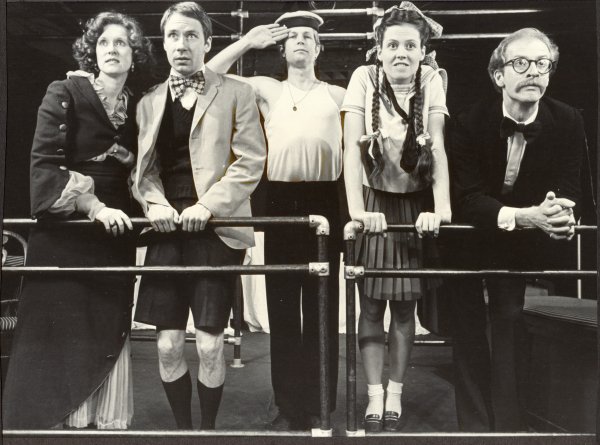
Sigourney Weaver boards an off-Broadway ‘Titanic’ in 1976

Queen of the world: Weaver sets an uncharted course on a small SoHo stage.

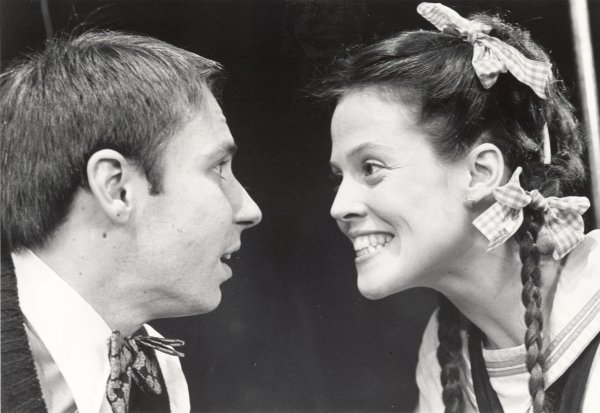
Perhaps you are as confused as I am by the picture above, one that appears to put the lovely young Sigourney Weaver‘s face upon the body of a child. Ah, the magic of the theater! The future film star was in her late 20s when she joined this peculiar production of the ‘Titanic‘ tragedy, written by her friend and frequent collaborator Christopher Durang.

The bizarre one-act made its debut at the tiny Midtown theater before making a proper off-Broadway launch at the Van Dam Theatre (today’s SoHo Playhouse) in May 1976. Far from concerning itself with the eventual tragedy, Durang’s comic-farce is a sex romp which eventually pairs up provocative combinations of the show’s cast, a ribald smorgasbord of sexual fluidity.

Weaver, playing the role of Lidia, transforms into a variety of different women, including the daughter of the captain of the Titanic. Critics proclaimed her the “principal attraction” of the unusual play. “She begins in pigtails and tiny skirt as a sexy Shirley Temple and ends as a predatory black widow in deep decolletage,” said Times critic Mel Gussow.


This was not the only doomed ocean liner lampoon by Weaver and Durang! Inserted astride ‘Titanic’ was a Brechtian cabaret co-written by the pair, called ‘Das Lusitania Songspeil. In 1980, an expanded version of this randy show made its debut on the boards of the Westside Theater in Hell’s Kitchen, a late-night wintertime smash that earned the pair Drama Desk nominations.

Keep in mind this is a few months after the release of her breakthrough film ‘Alien’, whose sequel (which she also starred in) was directed by James Cameron, who would also find later inspiration on sunken ships. Although I think most of us prefer her as a Hollywood star, Weaver’s off-Broadway credits were so impressive by this time that New York Magazine referred to her in 1981 as “just about the best all-purpose actress in town.”

Durang’s ‘Titanic’ — which he himself considers a “really difficult play” — is sometimes revived on college campuses. Broadway would eventually embark on its own ‘Titanic‘ in 1997, an expensive musical production by Maury Yeston and Peter Stone that would debut at the Lunt-Fontanne at 205 W. 46th Street*. Although dogged with early technical difficulties and critical skepticism that would parallel the issues faced by “Spider-Man: Turn Of The Dark,” it became a modest hit, thanks in part to the film version directed by James Cameron.

*Currently home to ‘Ghost’ a musical based on a film.

Pictures above are courtesy Christoper Durang, a website that has lots more information about this curious play.

A ragtime tribute to the New York Hippodrome

I hope you’ve had a chance to play around in the Library of Congress’s National Jukebox was recently launched on their website. It’s an incredible catalog of old music, from a variety of genres, and could easily play as a soundtrack to many of the posts on this page.

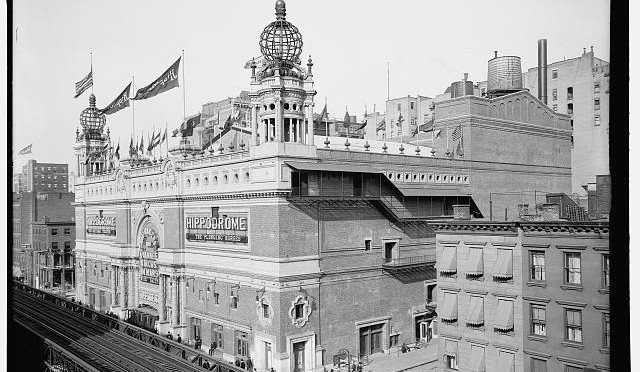
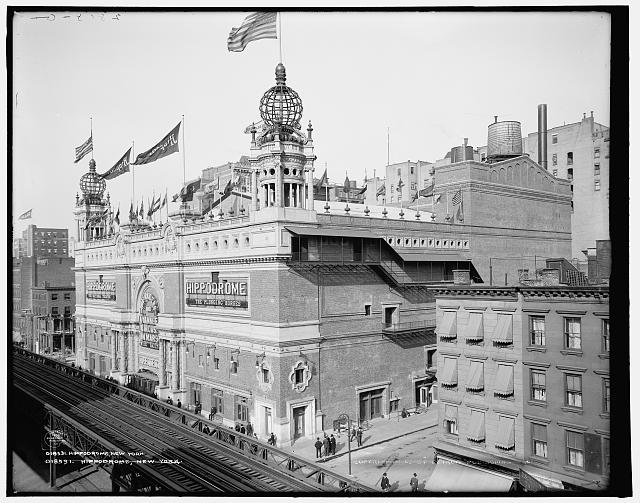
One old tune I happened to find is a medley of songs popularly performed at the New York Hippodrome, and performed here by the Victor Military Band. The Hippodrome, once located on Sixth Avenue and 44th Street, was one of New York’s largest and most popular live venues. It was among the most successful theaters owned by the Shuberts.

The Victor Military Band was a collection of musicians hired by the Victor Talking Machine Company, one of the earlier makers of phonograph records and later incorporated into RCA Records. The band was specifically formed to record dance records, a rarity in the early recorded music era, which was dominated by classical and opera.

The songs in the medley include these forgotten gems: The Girl In The Gingham Gown, Ragtime In The Air, Dark Eyes Are Now A-Shinin’ For You.

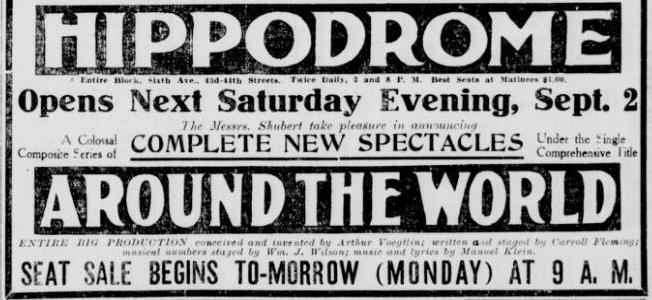
The Hippodrome opened its fall season in 1911 with the hugely successful musical extravaganza ‘Around the World’, which ran until 1913. The ambitious program featured numbers set in exotic destinations, including Egypt, Constantinople, Venice, India, Ireland and the islands of Hawaii (well before they joined the United States).

Both the song and the photo courtesy the Library of Congress

The Academy Awards in New York: NBC experiments, as Audrey Hepburn wins an Oscar after a long day of work

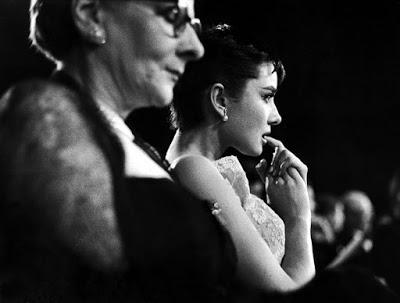
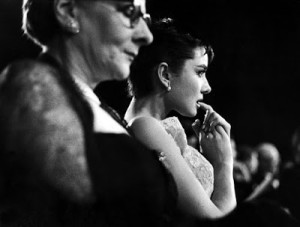
Audrey, off Columbus Circle: Hepburn sits in nervous anticipation at the New Century Theatre, moments before she wins for Best Actress.

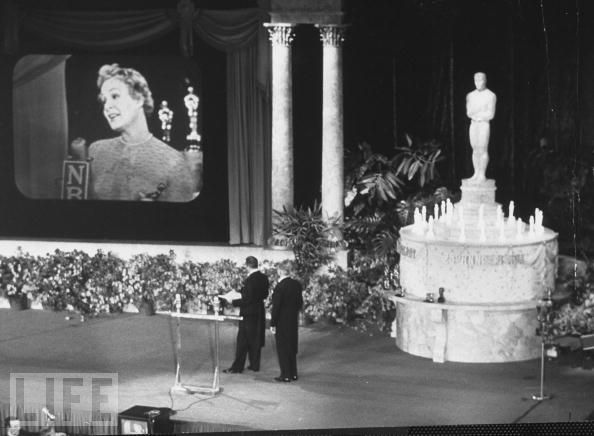
Despite the Academy Awards being a celebration of all things Hollywood, New York has actually hosted the Oscar ceremony on more than one occasion. Or rather, they co-hosted the event — from 1953 to 1957 — in a rare and quickly abandoned bi-coastal ceremony that taxed the mechanics of television’s earliest production crews.

There were two reasons for this complicated arrangement. NBC, who was broadcasting the event, had most of their principal stages in New York. After all, the first NBC studios were at Rockefeller Center, where they still remain. Even The Tonight Show, perhaps NBC’s first and most famous Burbank production, filmed in Manhattan until the early 1970s.

More importantly, many film stars were in New York, unable to get out of theatrical commitments on Broadway. And frankly, in the years before international television viewership, the Oscars simply did not have the same urgency as they do today. Thus, the award show came to them.
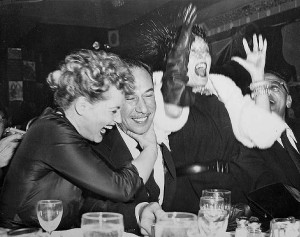

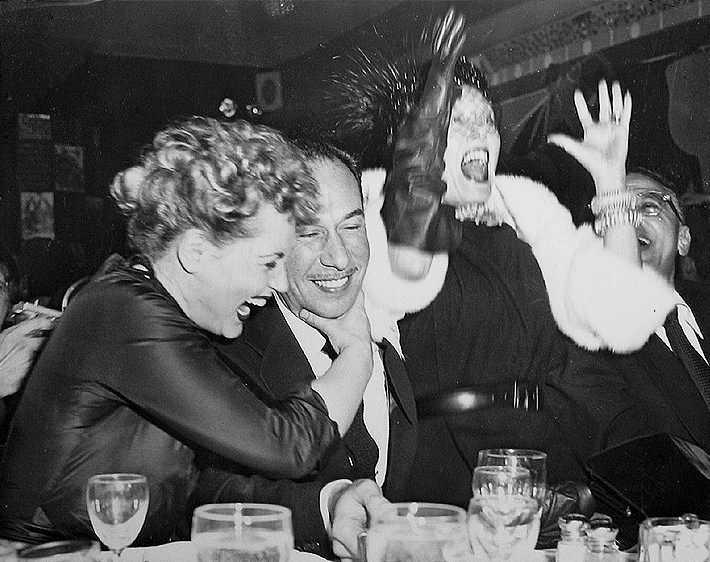
Judy Holliday gives Jose Ferrer a friendly squeeze — and Gloria Swanson bursts with joy — as Ferrer’s name is announced as the winner of Best Actor, at the La Zambra in midtown. (Getty Images)

23rd Annual Academy Awards
Best Picture winner: All About Eve
March 29, 1951

Before splitting the broadcast, the Oscars once tried a very strange live radio remote from a New York nightclub.

For the 23rd Annual Academy Awards, held on March 29, 1951, many nominees like Judy Holliday and Gloria Swanson remained in New York. Both Swanson and Jose Ferrer, starring in the Broadway comedy Twentieth Century, were nominated that year.

Instead of disappointing a sell-out theater audience, Ferrer invited all the nominees to an after-theater party at the La Zambra Cafe (127 W. 52nd Street), a nightclub owned by Spanish guitarist Vincente Gomez. A live radio link was set up among the tables, and nominees wined and dined waiting for their categories to be announced out in Los Angeles.

Believe it or not, Ferrer won Best Actor (for Cyrano), and Holliday won Best Actress (for Born Yesterday), giving their speeches into a radio microphone as champagne corks popped in the background. (Swanson, who thought she might win for Sunset Blvd., was less enthusiastic for Judy’s win.) It’s appropriate they were in New York, as Ferrer and Holliday both won for film adaptations of Broadway shows in which they had starred. And clearly underscoring the power that the New York stage still had on the film business, Best Picture went to the stage drama All About Eve.
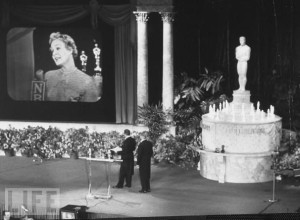

Above: Shirley Booth accepts her Oscar in New York, as the audience in Los Angeles watches on. (LIFE images)

25th Annual Academy Awards
Best Picture winner: The Greatest Show On Earth
March 19, 1953

While the Los Angeles crowd were entertained by host Bob Hope, the attendees to the first official bi-coastal New York ceremony were met by co-host Fredrick March, a two-time Academy Award winner. The event was broadcast from 5 Columbus Circle, at the International Theatre.

In 1953, the International was a worn out, tired New York stage, having gone through a host of different owners and renovations since it first opened — as the Majestic Theatre — in 1953. At different periods of time, it was owned by Florenz Ziegfeld and William Randolph Hearst, and its stage played hosts to virtually every form of entertainment, from burlesque to ballet.

So definitely an odd setting for an awards program given that this was also the first Oscar show to be broadcast on television. But the International was owned by NBC, who had agreed to fund the inaugural broadcast. And NBC’s fees to broadcast the program were especially valuable to Academy of Motion Picture Arts and Sciences, as the film studios refused to fund an elaborate bi-coastal show.

The broadcast began 7pm PST and 10 p.m. here, to accommodate the Broadway stars just stepping off the stage. Due to staggered entrances, many of the seats at the International were empty for much of the ceremony.

Among the nominees sitting in the Columbus Circle theater was Best Actress nominee Shirley Booth, who was starring in the Broadway play The Time Of The Cuckoo on 40th and Broadway at the now-demolished Empire Theatre. She won the Oscar for the film version of Come Back, Little Sheba; she had won a Tony Award for the stage version in 1950.

Given the limitations of early television technology, it’s amazing they were able to broadcast simultaneously between two coasts at all. Glitches did cause for a few amusing gaffes for television audiences. When the universally reviled film The Greatest Show On Earth somehow won Best Picture over the favorite High Noon, the camera switched to the New York audience, who sat there not clapping and in mild confusion.

There would not be another Oscar telecast at the International, or anything else for that matter. The very next year, NBC moved out, and the theater was finally torn down, replaced with one of Robert Moses’ pet projects, the Coliseum convention center.
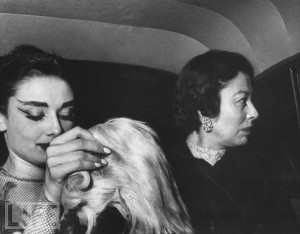

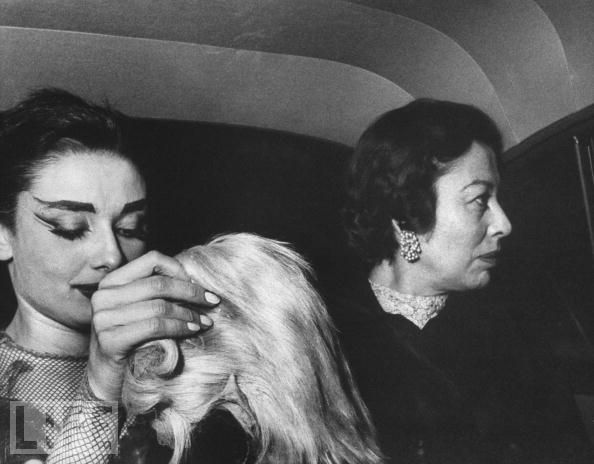
Above: Audrey snatches off her blonde Ondine wig as her limousine races her to the Oscar ceremony uptown.

26th Annual Academy Awards
Best Picture Winner: From Here To Eternity
March 25, 1954

For the remainder of the Oscars’ short stay in New York, they were broadcast from the New Century Theater*, at Seventh Ave. and 58th Street, right off Columbus Circle and best known before then as the theater that Orson Welles and his spirited cast stormed in 1937 to perform his musical The Cradle Will Rock.

Film fans were set up in bleachers outside, just as they’re popularly done out in Los Angeles. But one New York nominee didn’t get there in time to meet her fans. Audrey Hepburn was down at the 46th Street Theatre performing the play Ondine, costumed in a blonde wig. After the show, she raced to the Century in a limousine (with police escort, no less), ripped off her wig, rushed to bathroom to wipe off her stage makeup, then settled to her seat for less than ten minutes before standing again to accept the trophy for Best Actress for Roman Holiday.

Here’s video of Audrey’s win. You can see the ‘switch off’ between the Los Angeles and New York feeds.

The show, hosted in New York again by Fredric March, had another New York icon receiving an Oscar that year — Frank Sinatra, Best Supporting Actor for his role in the Best Picture that year. However, he was in Los Angeles to accept it.

(You can find tons of pictures of Audrey in her post-Oscar glow at the NBC Photo Bank.)

27th and 28th Academy Awards
Best Picture Winners: On The Waterfront, Marty
March 30, 1955; March 21, 1956

It became obvious to most viewers that the bi-coastal productions were becoming lopsided. After all, it was early evening in Los Angeles, and most of the young, fresh talent was there. In New York, it was post-theater time, and attracted the older stars — some exhausted from stage productions. Nothing exemplifies this more than the 28th ceremony, hosted in New York by proper Claudette Colbert and Joseph Mankiewicz and in Hollywood by the hot new comedian Jerry Lewis, whose ribald antics made the New York cutaways seem drab.

But the awards were all about the East Coast. The Best Pictures these two years were for films set in Hoboken, NJ and the Bronx, respective. Much of the cast of On The Waterfront were actually at the New York ceremony, including Best Supporting Actress winner Eva Marie Saint, her pregnancy concealed by a jacket as she mounted the stage to accept her award. (Here’s the video of her win, again highlighting the difference between the New York and the L.A. ceremonies.) Best Director Elia Kazan was also here to accept his trophy. Marlon Brando, however, was out in Los Angeles, apparently where the fun was.

The following year, Best Picture went to Marty, another show originating in New York. But not from a Broadway stage. As a symbolic move towards the importance of the small screen, the Ernest Borgnine vehicle was based on a teleplay from the Goodyear Television Playhouse.

29th Academy Awards
Best Picture Winner: Around The World In 80 Days
March 27, 1957

It was clear by this time that the two coast production was more trouble than it was worth. While Hollywood had Jerry Lewis again, the sparsely interested New York audience had the lovely but comparatively unexciting Oscar winner Celeste Holm as hostess.

This would be the last year New York hosted the Oscars. And this would be the last hurrah for the New Century Theatre as well. It would be torn down in 1962 and replaced with the rather sleek, curvy 200 Central Park South co-op.

*NOTE: The official Academy Awards website actually has the Academy Awards ceremony in 1954 held at the Center Theatre, the former RKO Roxy Theatre that was originally built as a smaller companion to Radio City Music Hall. However most sources have the New Century (often just called the Century or the NBC Century) as the location. Additionally, the Center Theatre was torn down in 1954. The announcement of its demolition was in October 1953, before the ’54 Oscars ceremony. If I find further validation that the Center was the location, I’ll make the correction….

To make it even more confusing, New York also had a Century Theatre on the other side of Columbus Circle that was demolished in the 1930s. Hopefully I’ve gotten these theaters all straightened out!

ALSO: You might like to see the Life Magazine photographs of Audrey pictured above in the context of the original Life Magazine article.

A trip to Times Square 1969: A world of colorful decline


(Postcard picture courtesy the marvelous Vintage Chromes blog)

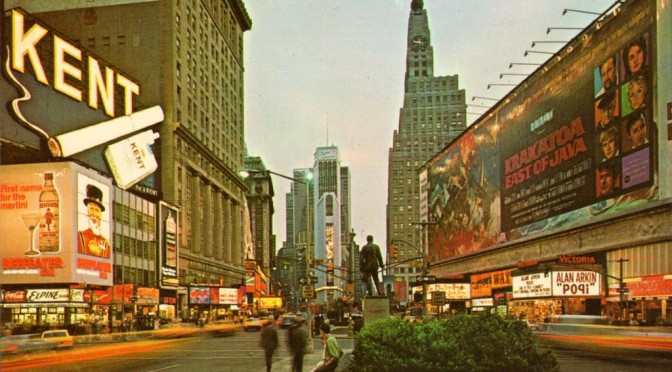
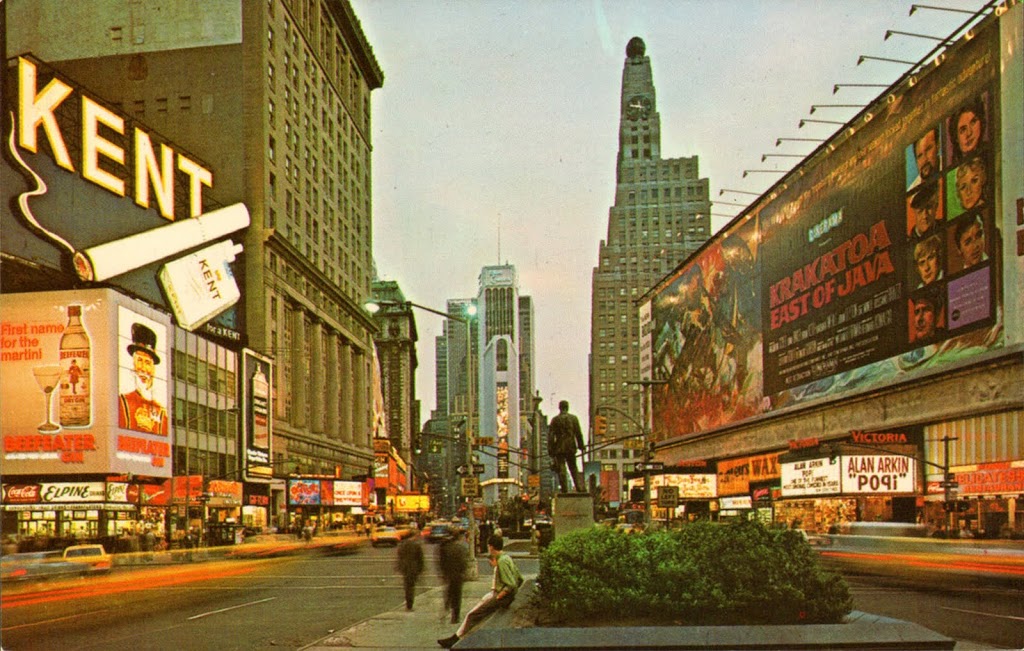
Sixty-five years after the birth of Times Square, it was apparent that things were taking a rather bizarre left turn. The old Times Building, a building so critical to the neighborhood that its address was now One Times Square, had been stripped of its architectural finery and encased in a banal concrete uniform, the property of Allied Chemical.

The outdated Hotel Astor was completely gone. In its place within a year or so would rise One Astor Plaza. From the angle of this postcard, there is simply nothing there.

The building that once housed the Packard Motor Cars showroom had also disappeared. In 1969, that address 1540 Broadway belonged to the Loew’s State Theatre. For a time, it was one of Times Square’s great destination theaters, a 3,327-seat behemoth that opened in 1921 and hosted the premieres of ‘Ben-Hur’, ‘Some Like It Hot’, ‘The Godfather’ and many others. It was essentially demolished (along with those structures below the Kent Cigarette sign) with the construction of the Bertelsmann Building in 1989; but for many years afterwards, the business on the ground floor, Virgin Megastore, hosted smaller movie theaters in its basement.

The flamboyant movie theater to the right has a more glamorous background. It was once the Gaiety Theater, a grand original from the early days of old Broadway, opened in 1906 by theater impresarios Klaw and Erlinger. The Gaiety was truly a variety house, presenting legit theater, burlesque and vaudeville (Gypsy Rose Lee and Abbott and Costello performed here), and then straight into legitimate films under its new name, the Victoria. Today the Marriott Marquis rises here, after the controversial demolition of it and several other theaters on the block in 1982.

Just out of frame to the right, movie patrons could leave their film and discuss it at the Howard Johnson’s across the street.

Back under that Kent Cigarette ad is one for Beefeater gin — booze and smokes, good times. And underneath that is the refreshment stand Elpine Drinks, best known for its fruit juices. (Lost City has a nice write up about this forgotten establishment.)

The Paramount Building, its clock tower rising in the background, is one of the few structures virtually intact and looking close to how it did when it was built in 1926. In recent years, this building has been invaded by the Hard Rock Cafe.

Another survivor from this era — that tried, dependable statue of George M Cohan, standing in silhouette in the foreground. The statue was placed here at the tip of Duffy Square ten years before this postcard was made. Even then, in 1959, very little of Cohan’s Broadway remained to greet him.

New York Hocus Pocus: Kellar and the Spirit Cabinet

Many late 19th century New Yorkers were hypnotized by the the glamor of the spiritualist circuit, mediums, magicians and mind readers purporting communications with the ghostly world and conveniently in performance form with hefty ticket prices.

One of the most popular was Harry Kellar, Kellar the Magician, whose technical slight of hands in such tricks as ‘The Vanishing Lamp’ and ‘The Levitation of Princess Karnac‘ made him a popular draw on legitimate stages like Daly’s (30th and Broadway) and the minstrel house Dickstader’s Theater.

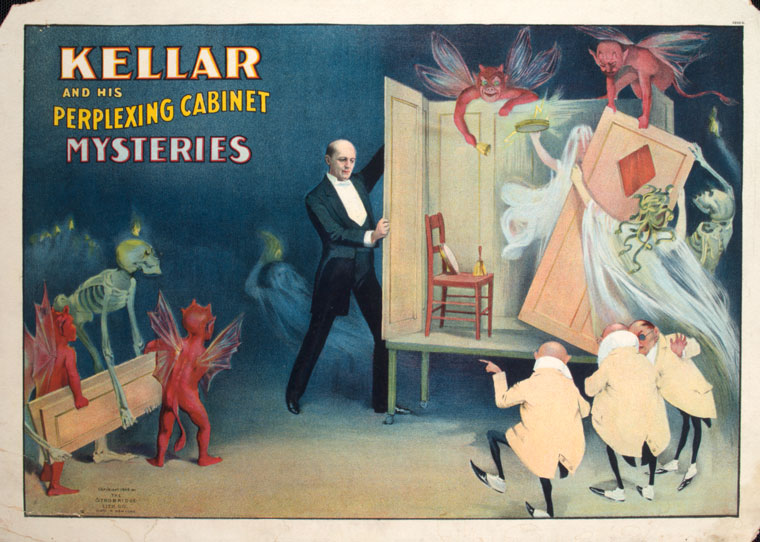
The poster above highlights one of Kellar’s greatest illusions via the ‘spirit cabinet’, a hokey convention of magical spirit diving that was actually invented by Kellar’s mentors the Davenport Brothers. By confining himself to the cabinet while feats of unexplained trickery manifested around him, Kellar could ‘prove’ the tricks were products of an unseen spiritual hand.

In April 1905, Kellar played the old Majestic Theater in Columbus Circle. One of the highlights included “two persons in the audience playing a game of euchre, the progress of which was suggested by large playing cards that appeared above the spirit cabinet on the stage.”

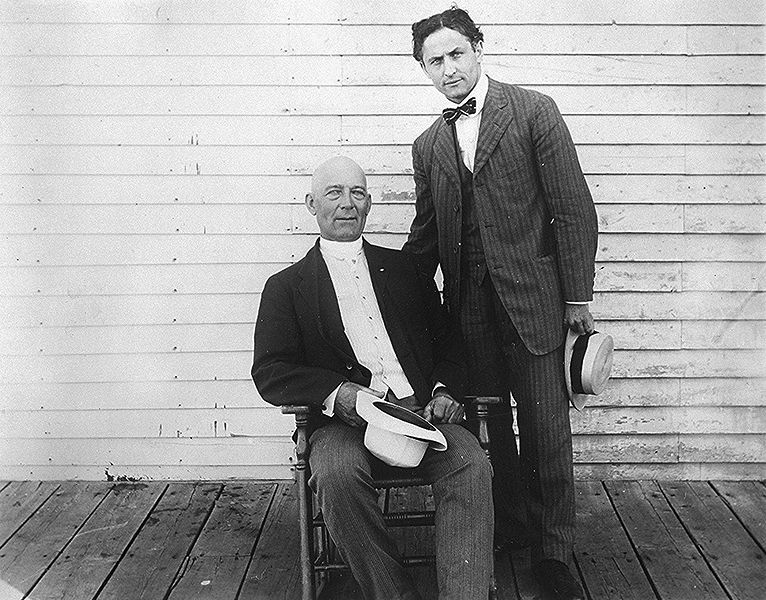
The tricks of Kellar enthralled New Yorkers and set the stage for one of his biggest fans, Harry Houdini, to become king of the magic circuit.

Below: Kellar sitting next to young Houdini, 1912

Pic above courtesy NYPL Digital Gallery

A new ‘Metropolis’ — for our metropolis — at the Ziegfeld


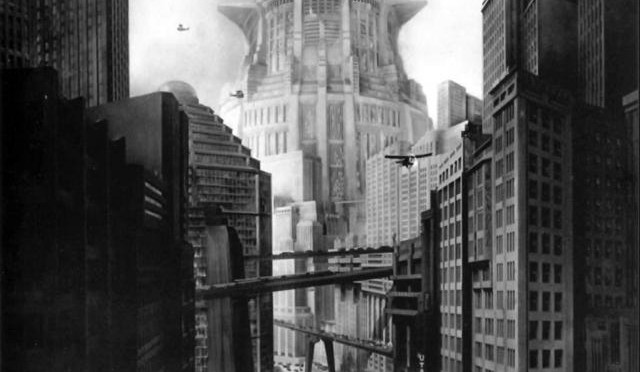
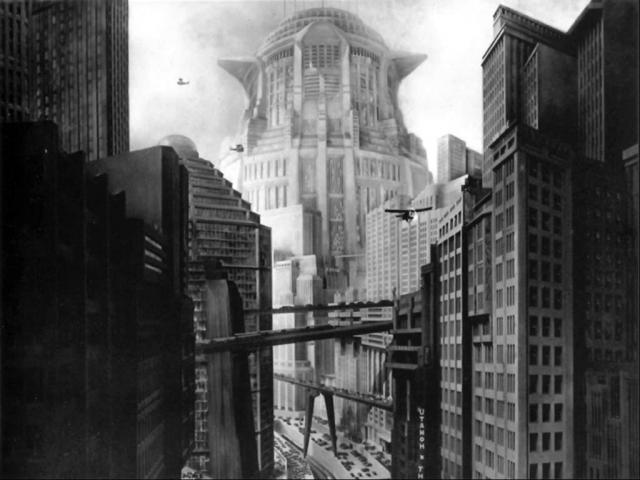
Fritz Lang claims the Manhattan skyline influenced the look of his film ‘Metropolis’ . In fact, the film’s fantasy city resembles futuristic sketches rendered by American magazine illustrators of the late 19th century.

The giant screen at the Ziegfeld Theatre goes silent this Friday as a two-week run of Fritz Lang’s fantasy masterpiece ‘Metropolis’ opens, featuring the famously restored print — with 30 minutes of newly integrated footage — that presents the most complete version of the movie ever screened in the city. This version originally debuted at the Film Forum back in May, but the Ziegfeld’s massive screen — the largest in the city — and classic cinema setting should make this an unforgettable event.

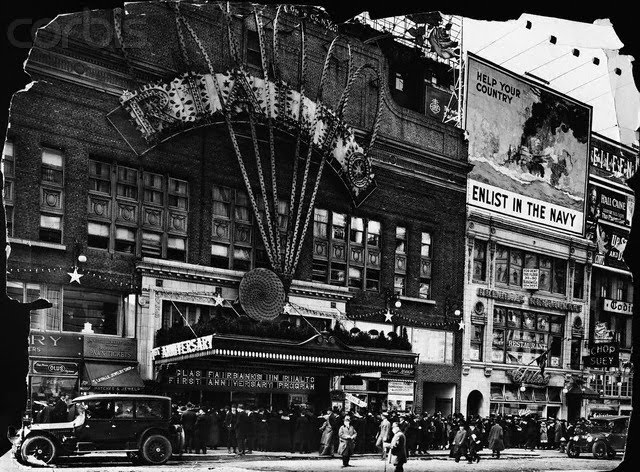
The Ziegfeld seats a little over 1,100 people. The film made its New York debut on March 3, 1927 on a much bigger screen, the Rialto, on the northwest corner of 42nd Street and Broadway, which could accommodate over 1,900 filmgoers at one time. (And that was considered a medium-sized theater for its day.) In the days when single films toured to various cities in succession, ‘Metropolis’ was a bonafide box office favorite for New Yorkers, raking in just over $150,000 during a six week run, back when the price of movie tickets ranged from 30 to 90 cents. Below: the Rialto Theatre in 1917


What was shown to audiences in 1927 would have made cineastes wither with shame, a “butchered, disjointed ” version released by Paramount Pictures, with whole reels of the film discarded, “16 reels to 7, resulting in a plot with ‘more holes than a pound of rigatoni.'” (Cesar J. Rotondi).” [source] In place of those reels were a couple shorts, including a scenic documentary called ‘Steamer Day’.

The version of ‘Metropolis’ being shown at the Ziegfeld is the truest to the filmmaker’s original vision. And a perfect home for it, too, as Lang had always claimed that the film was inspired by a journey to New York. On October 12 1924, while being kept in the harbor aboard the vessel SS Deutschland awaiting entry, Lang caught sight of the city skyline for the first time, “completely new and fairy-tale like for a European. I knew then that I had to make a film about all of these sensations.”
As production on ‘Metropolis’ began just five months later, however, there were undoubtedly other inspirations before Manhattan, and many film historians believe Lang told of his New York inspiration as a way to promote the movie.
New York critics were all over the map in their appreciation. “There is altogether too much of Metropolis…too much scenery, too many people, too much plot and too many platitudinous ideas,” proclaimed the critic from Life Magazine. Mordaunt Hall of the New York Times was kinder: “Nothing like “Metropolis” has been seen on the screen. It, therefore, stands alone, in some respects, as a remarkable achievement.” Before adding, “It is a technical marvel with feet of clay, a picture as soulless as the manufactured woman of its story.” (They were watching the heavily edited version, so we’ll give them a pass.)

The film had left New York by May 1927 — the era of sound movies would come that summer with ‘The Jazz Singer’ — but it left one spiritual mark on the city: three years later, architect William Van Alen pays the film a subconscious nod when the spire of the Chrysler Building is raised May 20, 1930.

Categories
Podcasts

Niblo’s Garden: New York’s entertainment complex and home to the first (bizarre) Broadway musical

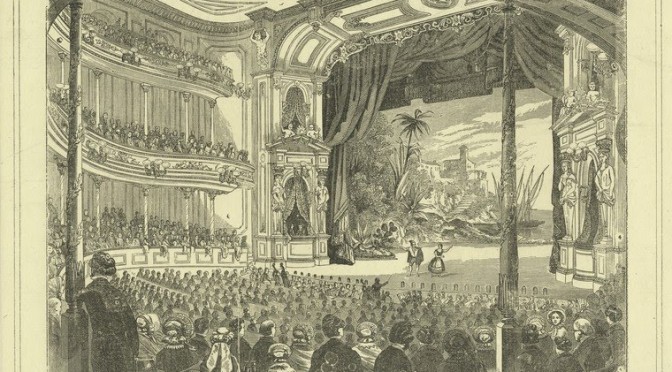
Show-stopping: The interior of Niblo’s Garden Theatre. Illustration by Thomas Addis Emmet, courtesy NYPL

PODCAST It’s the 1820s and welcome to the era of the pleasure garden, an outdoor entertainment complex delighting wealthy New Yorkers in the years before public parks. Wandering gravel paths wind past candle-lit sculptures, songbirds in gilded cages, and string quartets in gazebos, while high above, nightly fireworks spray the sky.

Niblo’s Garden, at the corner of Broadway and Prince Street, was the greatest of them all, with an exhibit room for panoramas and refreshment hall consider by some to be one of New York’s very first restuarants. But it was Niblo’s grand theater, seating 3,000 people, that would make Niblo’s reputation as the venue for both high- and low-brow events. And in 1866, a production debuted there that would change everything — the gaudy, much-too-long spectacle The Black Crook, considered by most as the very first Broadway musical.

Music in the episode is Enigma Variation VI. Ysobel by Elgar. It’s actually from after the time period of Niblo’s, but it’s so very strolling-the-garden, isn’t it? And I had a cold this week, so please forgive my scratchy voice!

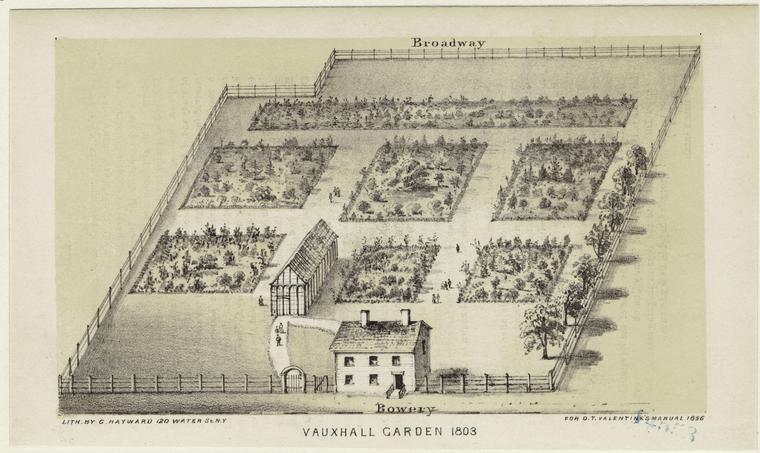
Before Niblo’s, the premier pleasure garden was Vauxhall Garden, derived from a British garden of the same name. The one picture below is from the incarnation before it moved in 1807 to the area just below Astor Place, in what would become Lafayette Street. (NYPL)

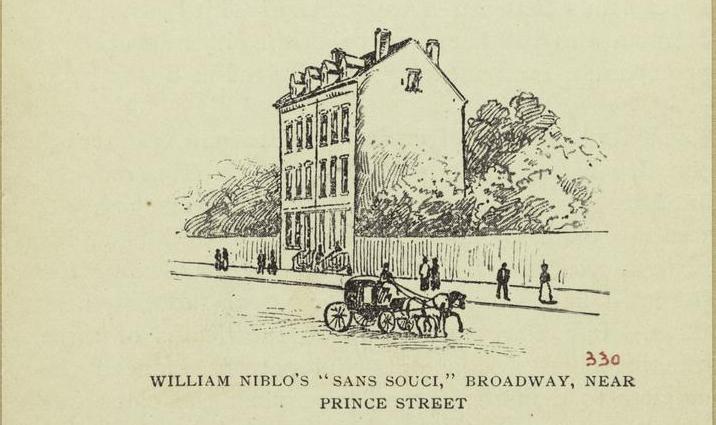
The first theater on the Niblo property was a small stage he called ‘Sans Souci’. Demand soon dictated that a larger venue be built. [NYPL]

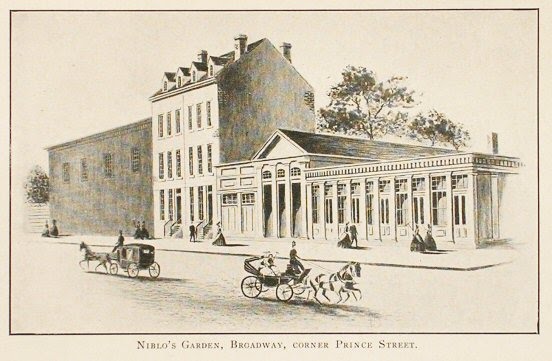
From another illustration detailing the block just a few years later. The theater looks the same, but other buildings (possibly the saloon or a greenhouse?) have been built up around it. (from Merrycoz)

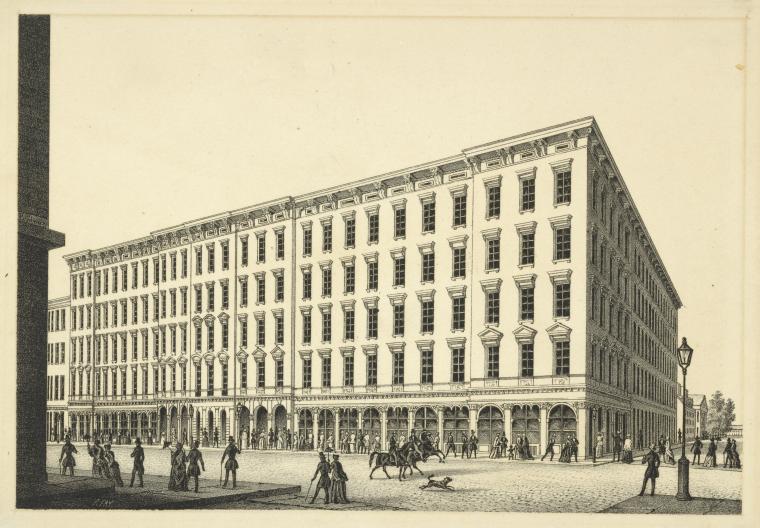
The garden was soon overtaken by a great hotel, the Metropolitan, which opened in 1852. This image is looking east, down Prince Street, with Broadway stretching to the left. NOTE: The original caption on this illustration says 1850, but the hotel would not be open for a couple years later. (NYPL)

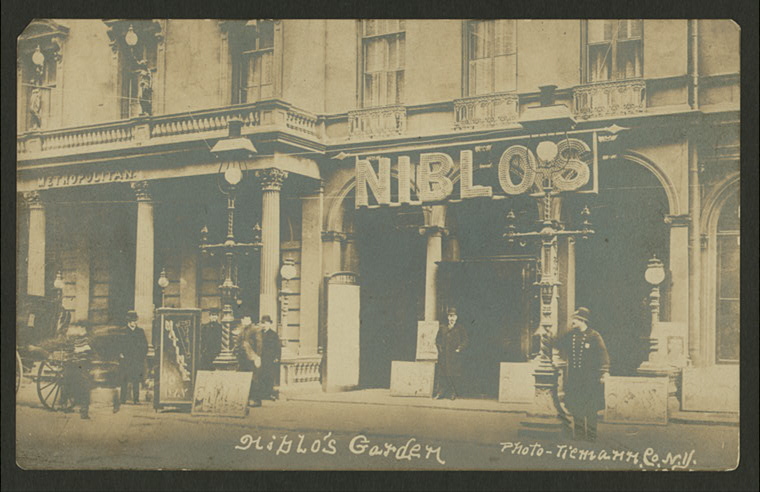
This is one of the only photographs of Niblo’s Theater, certainly from its last years, judging from the fashion of the day. The theater and the hotel were demolished in 1895. [Pic from here]

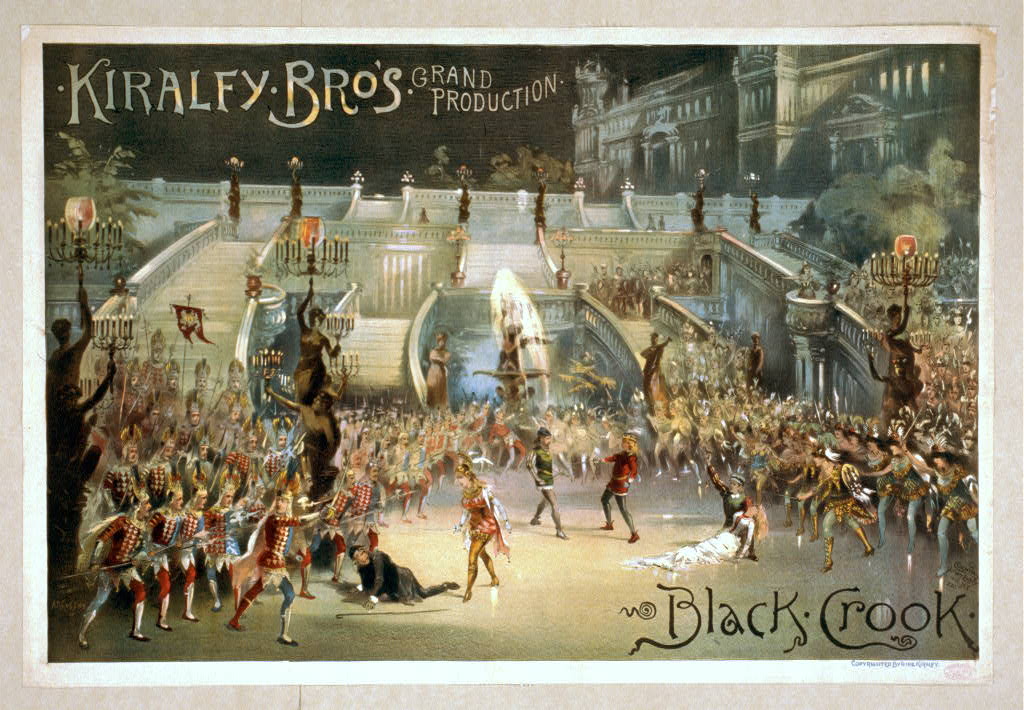
This poster is from a Boston production of ‘The Black Crook’, but it illustrates nicely the scope and theatricality of the production. The show was cobbled together using a poorly written German fantasia, a troupe of out-of-work Parisian dancers, and some original music. The show ran five and a half hours nightly and was a runaway hit. [Image from Kirafly Bros]

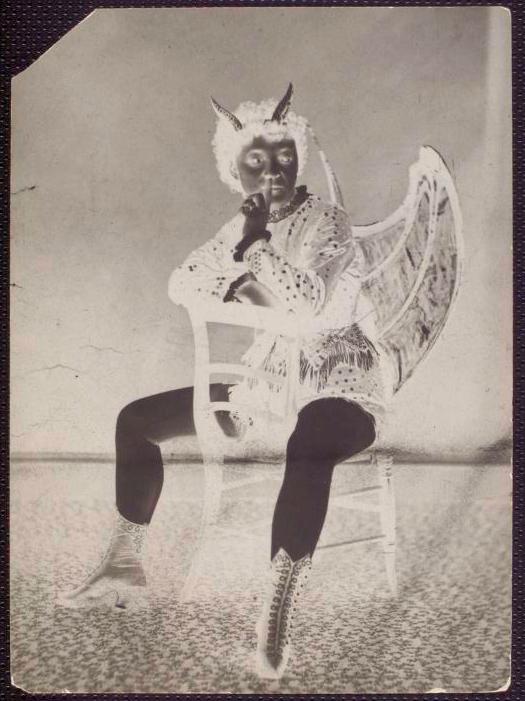
A costumed damsel (in photographic negative) from an early production of The Black Crook. [source]

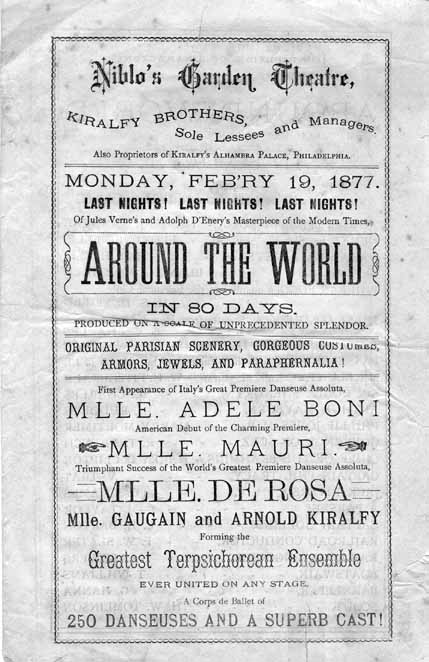
An early program from Niblo’s, from 1877, featuring stage rendition of Jules Verne’s Around The World In 80 Days. I can only imagine the sets for this one! Also featuring the ‘Greatest Terpsichordean Ensemble’ and ‘250 Danseuses and a Superb Cast’.[Courtesy Jules Verne]