It’s a scene more commonly imagined today in a Wild West saloon — a shootout at Stanwyx Hall, across from the most elegant hotel in New York City.
The year was 1855, and the combatants were bitter rivals who had fought many times, including once in the notorious neighborhood of Five Points.
By the end, one man lie bleeding on the floor — William Poole, a member of the Bowery Boys street gang, better known as Bill the Butcher.
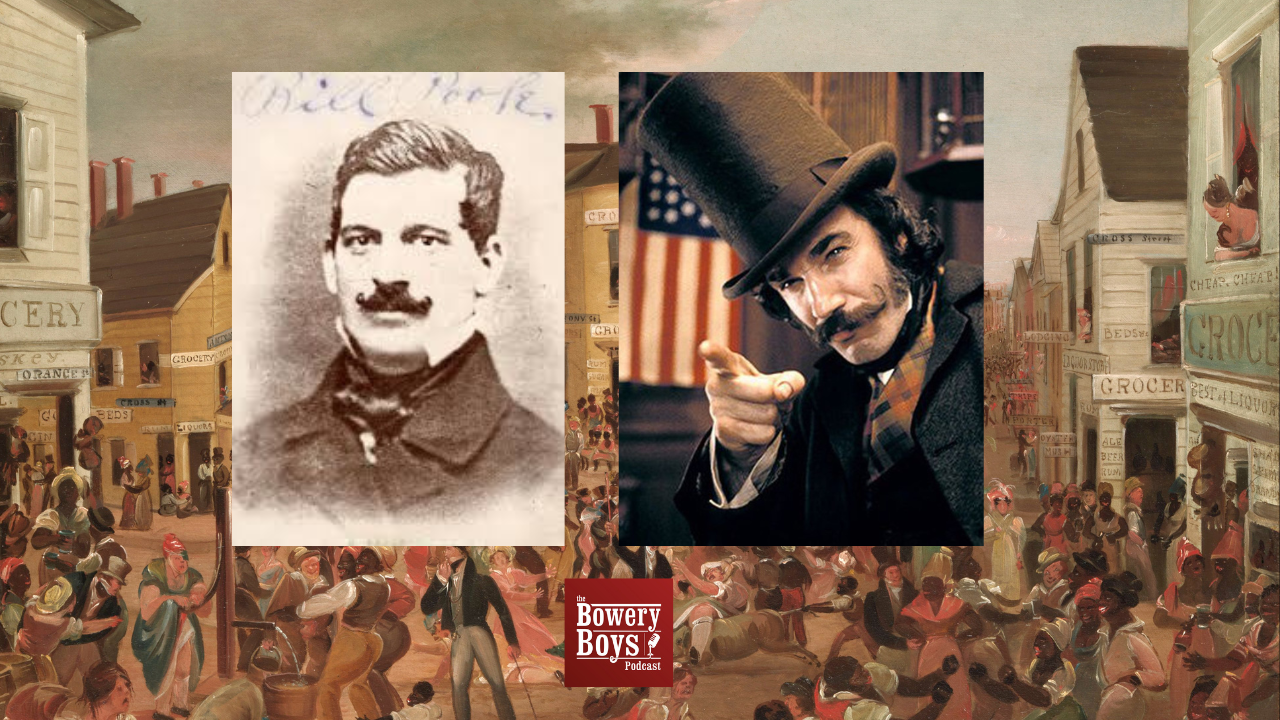
The Martin Scorsese film Gangs of New York, loosely based upon the Herbert Asbury book, features a version of this character (named Wiiliam Cutting) played by Daniel Day-Lewis. But the story of the real William Poole is far more fascinating, stretching from the west side’s Washington Market to the streets of today’s SoHo neighborhood.
In this episode, Greg takes you into the world of Bill Poole and the domain of the mid-19th century street gang, mostly seen as scourges of the public good — that is, until ruthless politicians began to see them as useful.
What was the Bowery like in the 1840s? And just who were the Bowery Boys?
This episode was produced and edited by Kieran Gannon.
LISTEN HERE: THE MURDER OF BILL THE BUTCHER
FURTHER LISTENING
Other shows that relate to this week’s episode:
The original article which inspired this episode, originally published on July 24, 2021, on the occasion of his 200th birthday:
William Poole was one of the most infamous villains in New York City history.
As a young man, he operated as a butcher at Washington Market (in the area of today’s Tribeca neighborhood) and that legitimate occupation lent him his nickname earned by his more disreputable activities — Bill the Butcher.
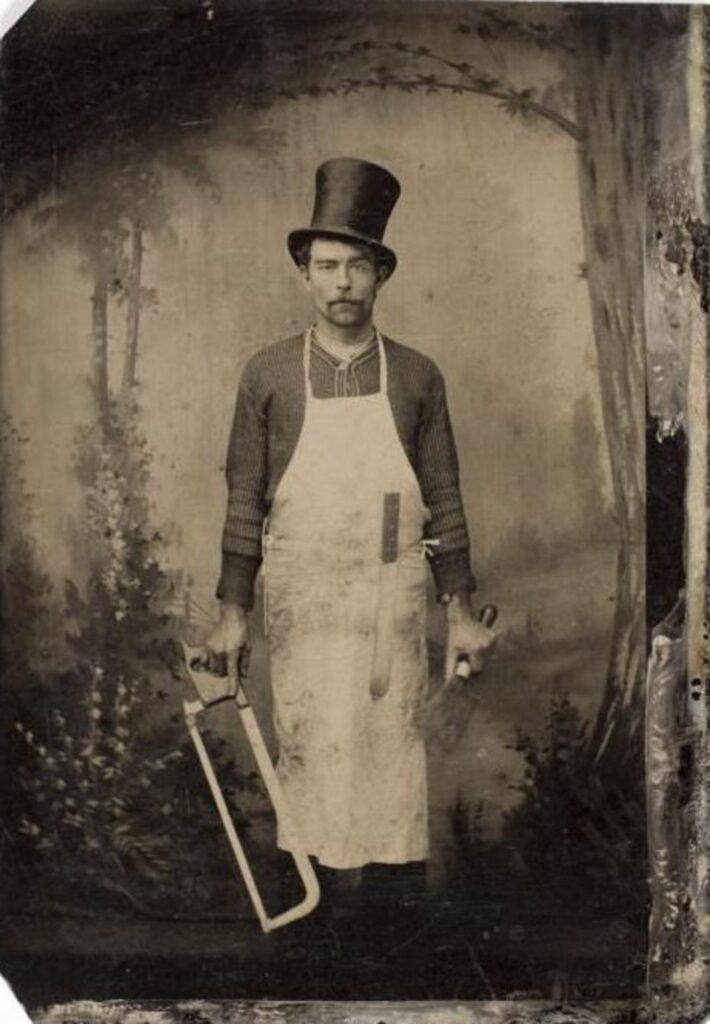
Poole was a thug, a thief and a celebrity, leader of a Christopher Street gang which morphed and coalesced with others to become one of the most terrifying group of criminals in New York — the Bowery Boys.
We kn0w details of his life not only from classics like Gangs of New York but because of the unique nature between gangs and city politics in the mid 19th century. Street gangs were often aligned with political and social beliefs about the changing city — particularly the ships of newly arriving immigrants from Ireland.
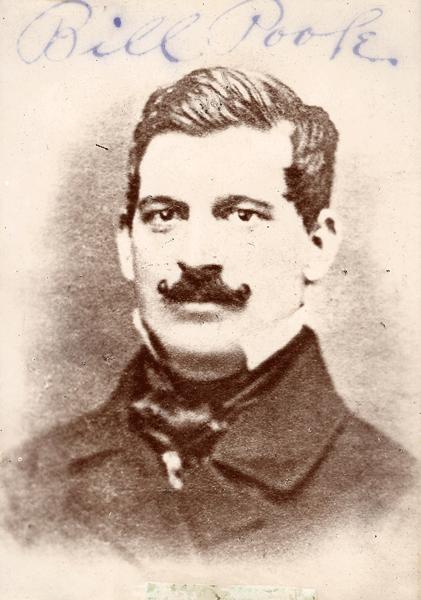
The Bowery Boys, at least his variant (for they changed over time), were an instrument of the Know Nothings, a nativist movement which violently rejected the Irish newcomers. Their attacks on immigrants on the streets of Five Points were so severe that Irish gangs soon formed in retaliation, collectively referred to in the press as the Dead Rabbits.
This street level violence echoed the loftier nativist debates happening at City Hall and in the penny press. But Poole was no dignified man. His habits of proving himself a real ‘native American’ were distinctly chaotic and bloodthirsty.
Just one example from the New York Daily Herald, January 16, 1846: “William Poole and Smith Ackerman were amusing themselves by putting two dogs to fight in Christopher Street, creating a most disgraceful riot.” When a man stepped in to stop the dog fight, Poole and Ackerman gauged out his eye.
The journalist Herbert Asbury was so fascinated by Poole that in his classic Gangs of New York, he devotes an entire chapter to the man’s brutal murder in 1855.
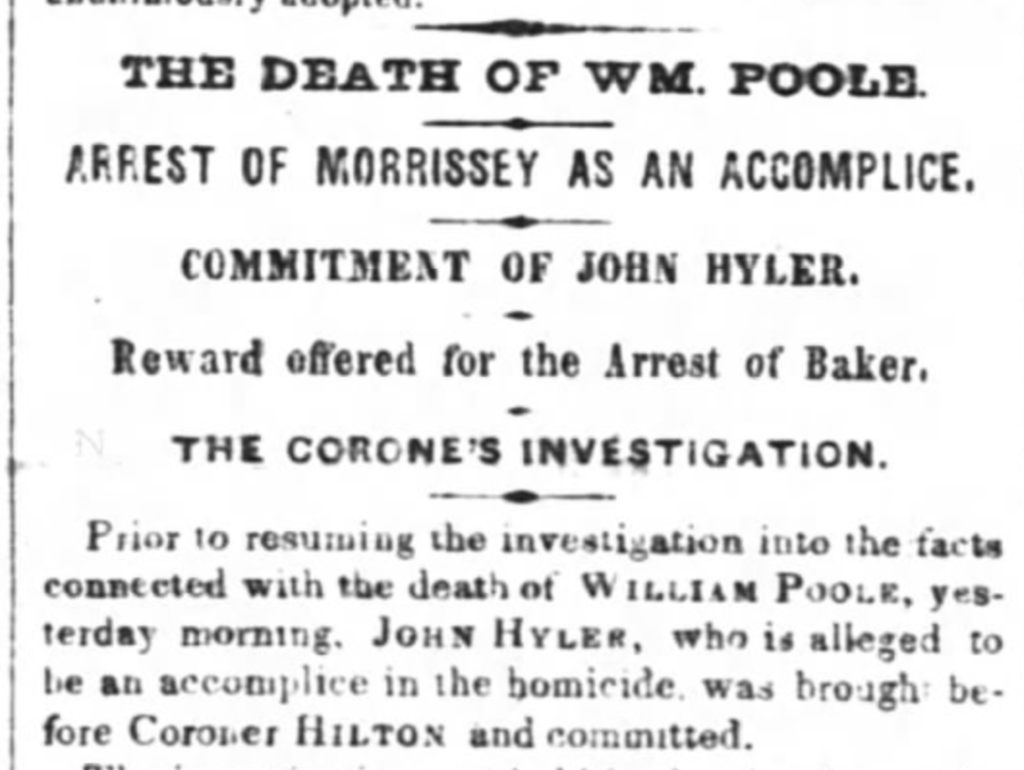
Poole was shot through the heart at Stanwix Hall (579 Broadway) by Tammany Hall sluggers Lewis Baker on behalf of Poole’s rival John Morrissey.
“Despite his wounds,” writes Asbury:
“Poole lived for fourteen days after the shooting, to the vast amazement of his doctors, who declared vehemently that it was unnatural for a man to linger so long with a bullet in his heart.
But at last, while other Native American gladiators watched anxiously by his bedside and relayed bulletins to a sorrowful crowd in the street, Bill the Butcher died, gasping with his last breath: ‘Good-bye, boys, I die a true American!‘”
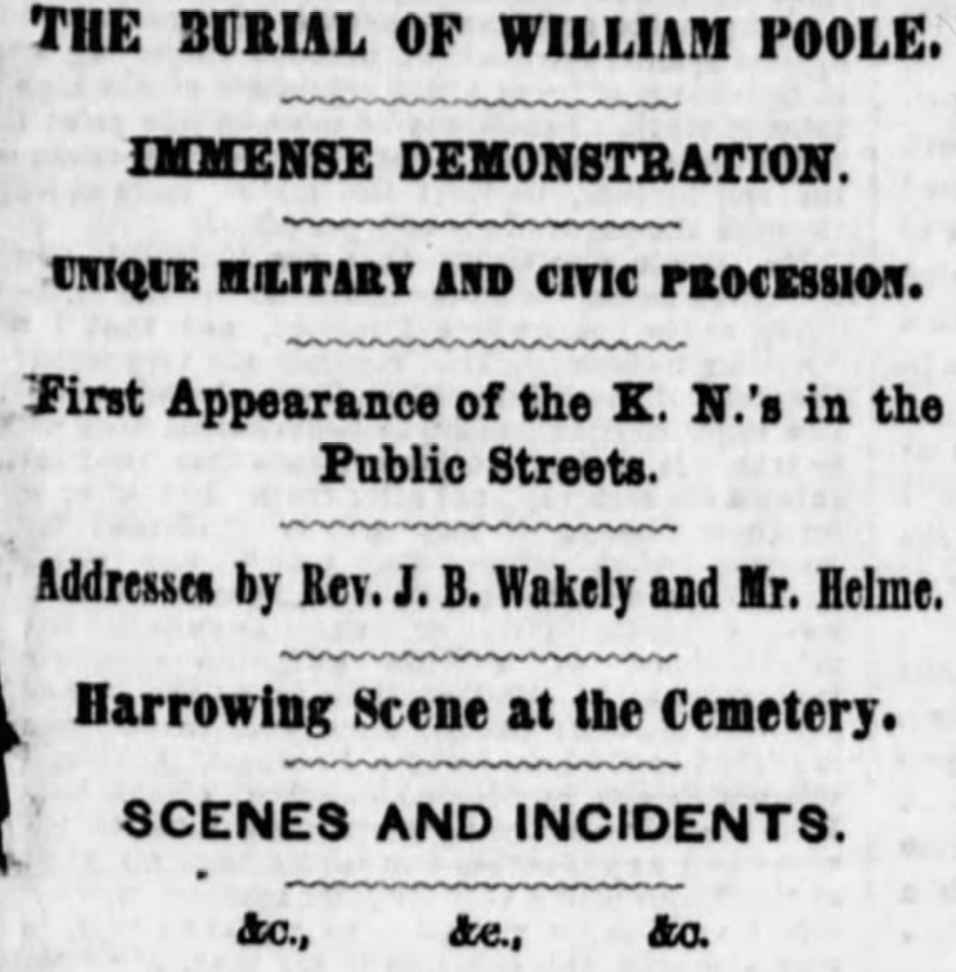
He was buried at Green-Wood Cemetery in a funeral befitting a decorated war hero with thousands of mourners and over 150 carriages in a long, mournful procession.
The words ‘I die a true American!’ were actually emblazoned upon the side of the hearse carrying his flag-draped coffin.
In the 2002 film Gangs of New York, directed by Martin Scorsese, a version of William Poole (named William Cutting) is depicted with genuine grit and horror by Daniel Day Lewis.
While the film is entirely fictional — liberally taking from various tales from Asbury’s book — Lewis’ Bill the Butcher has a grotesque and villainous quality that the real William Poole would have loved.
For more information, check out our podcast on the movie Gangs of New York: