Categories
American History Bowery Boys Bookshelf

WILD BILL: The real man behind a Western legend — and a reluctant Broadway stage star

“Hickok was a celebrity. He was famous. He was feared. He was already a legend. It is estimated that over fifteen hundred dime novels were written just about Buffalo Bill Cody, beginning in 1869, when he was only twenty-three, into the 1930s, and during the early years. Wild Bill was in that category of iconic western hero. He had risen to the heights of both reputation and fabrication … and now the slow, inexorable descent began.” — Tom Clavin

How do you write a book about a historical figure who seems more fiction than real? The Western folk hero Wild Bill Hickok lived a life that was thrilling, dangerous and brash, amplified by the fascinations of the American press into a virtual Western superhero.
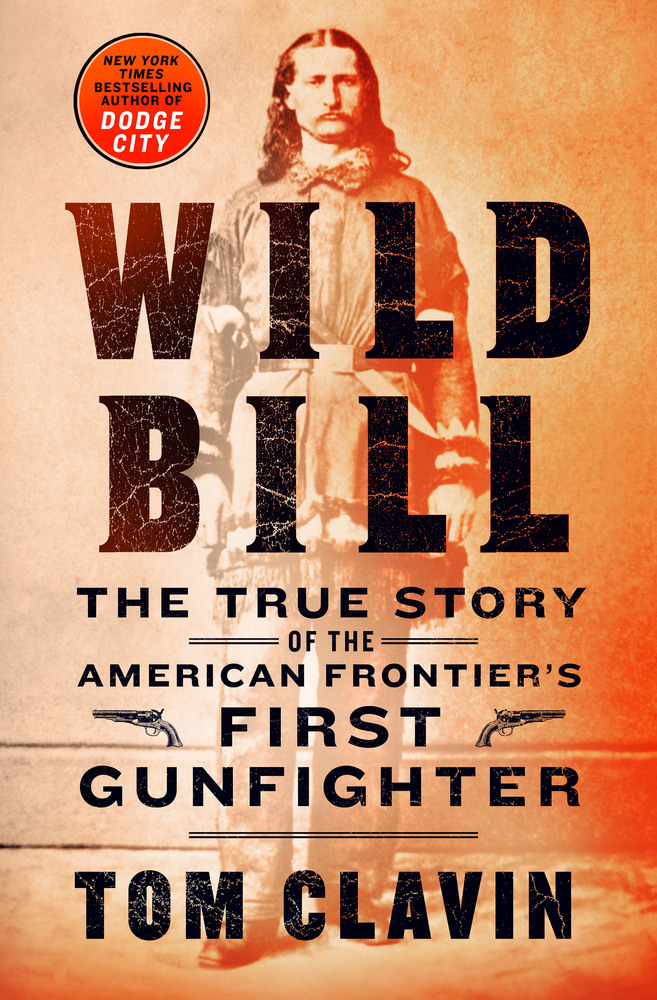
Wild Bill: The True Story of the American Frontier’s First Gunfighter
by Tom Clavin

St. Martins Press/2019

Tom Clavin’s Wild Bill: The True Story of the American Frontier’s First Gunfighter, a biography as frisky and unpretentious as its subject, attempts the noble task of walking back 150 years of mythology surrounding the Illinois man named James Butler Hickok, a drifter who wandered from job to job through Missouri, Arkansas and Kansas. During the Civil War, he worked as a wagon master and later a scout for the Union Army.

In 1865, he shot and killed the gambler Davis Tutt in the town square of Springfield, Missouri. This quick-draw duel — essentially over a pocket watch — took place in the early evening, not high noon. But whispers of this outrageously bloody event inspired a journalist named George Ward Nichols, working for New York’s Harper’s New Monthly Magazine, to profile Hickok.
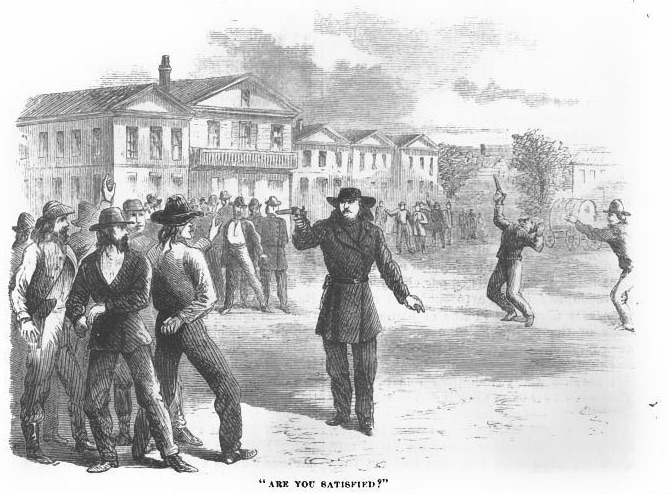
Hickok shoots Tutt in Springfield town square, as depicted in Harper’s New Monthly Magazine in 1867.

It was in Nichols’ piece that Wild Bill Hickok — the fastest gun in the West — and indeed the genre of Wild West pulp fiction was born.

“[N]o single published piece catapulted a man on the American frontier more than Nichol’s article did for Hickok,” writes Clavin. With “the fertile imagination of a writer who could cash in on a sensational story and an outlet that offered that story to thousands of eager and mostly gullible readers, America had its first postwar frontier star.”

The attention only made Hickok more of a target with foolhardy men seeking him out in efforts to best the now-famous gunslinger. (It never ended very well for them.)
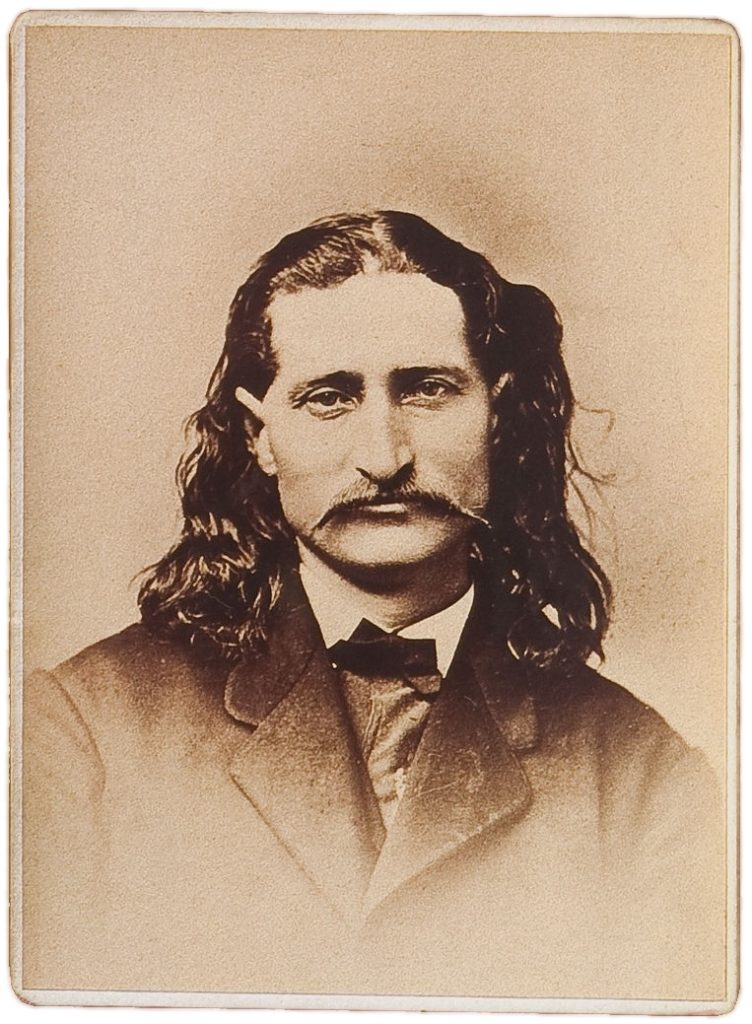
Wikimedia Commons

Clavin depicts an unruly but realistic western (or, more accurately, midwestern) landscape of chance encounters, brief romances and wide, arduous journeys. Yet even a hardened adventurer like Hickok would occasionally take a moment to bask in his fame.

In 1873 he joined his longtime friend ‘Buffalo Bill’ Cody in the cast of a ham-fisted play Scouts of the Plains at New York’s Niblo’s Garden, becoming a major box office draw.

Today we might call him, um, difficult. “Hickok felt like he was risking his integrity and dying a bit with every performance because he became further convinced that acting was a foolish occupation. One night … he took one of his real pistols and shot out the spotlight that had been fixed on him. The audience applauded the dramatic reality of the production as well as Hickok’s famous marksmanship.”

On August 1, 1876, Hickok was murdered during a poker game in Deadwood, a frontier town in the Dakota Territory, cutting short any future stage performances but securing his position in the pantheon of Wild West mythology.
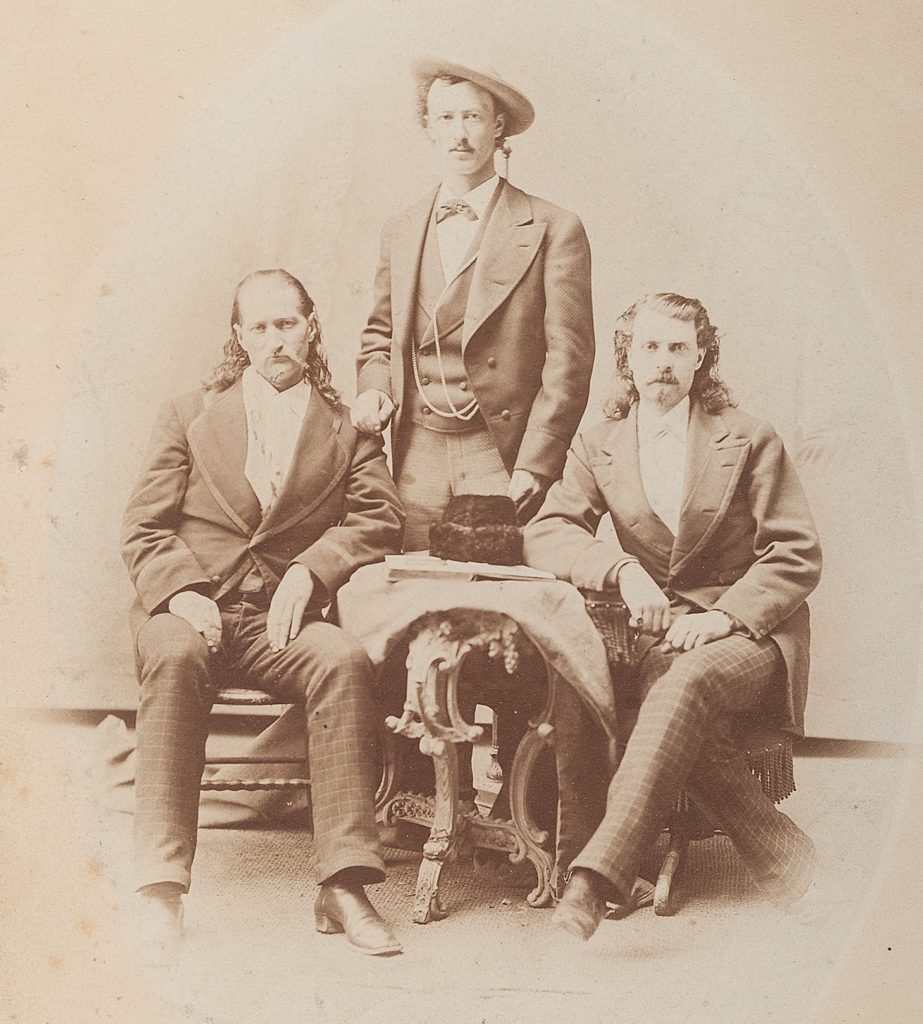
Wild Bill Hickok, “Texas Jack” Omohundro, and Wild Bill’s longtime front “Buffalo Bill” Cody, in a cabinet photograph for Scouts of the Plains, 1873

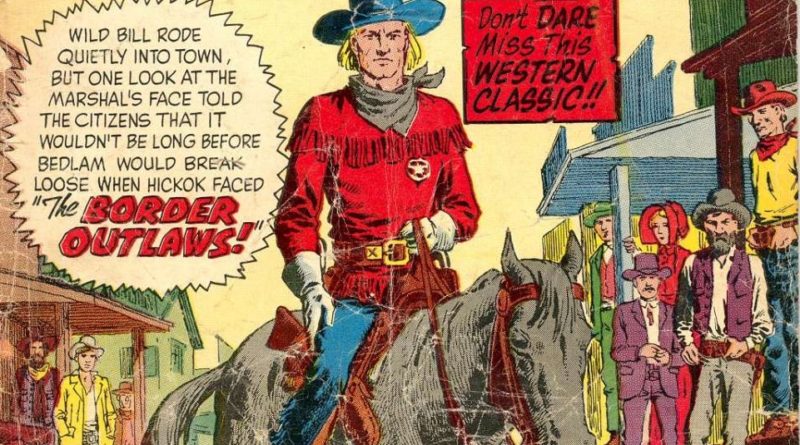
At top: An issue of the 1964 comic book Wild Bill Hickok #12, published by Super Comics
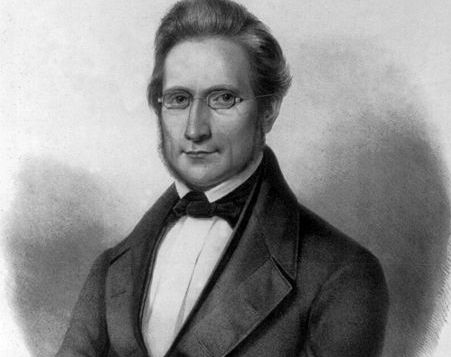
Know Your Mayors: James Harper

Our modest little series about some of the greatest, notorious, most important, even most useless, mayors of New York City. Other entrants in our mayoral survey can be found here.

Former New York mayors are all around you. No, Ed Koch is not hiding in your closet — maybe not today — but you can find their names almost anywhere, including your local bookstore. Meet James Harper, the Harper of Harper-Collins, and mayor of New York in 1844.

I think I say this about every decade of New York history, but the 1840s was an especially tumultuous era, thanks to the aftermath of the Panic of 1837, and to the massive influx of Irish immigrants spilling into the city.

Nativism, the form of political xenophobia aimed during this period at the Irish, was rearing its head in state politics in 1841 when Governor William Seward proposed funds be set aside for a parochial private school system for Irish Catholics, who were alienated from regular schools due to the use of the King James Bible. (Separation of church and state? What’s that?)

Opponents formed the anti-immigrant American Republican party and within just a couple years had received substantial clout at the voting booth in New York. In 1844, the time was right for them to propose a mayoral candidate to serve their needs.

James Harper and his three brothers formed Harper and Brothers in 1833, from the print shop of James and his brother John. It wouldn’t be until mid-century that the small but prolific house started producing Harper’s Magazine and Harper’s Bazaar. By then Harper was a well-established and powerful publisher, printing some of New York’s best known authors, including Edgar Allen Poe, Herman Melville and Washington Irving and delivering the first American printings to such books as Charlotte Bronte’s ‘Wuthering Heights’ and Charles Dickens’ ‘Bleak House’.

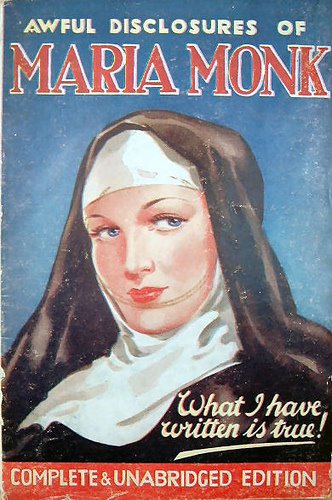
Harper was an ardent nativist, having made his publishing house’s reputation with a salacious (and apparently deranged) anti-Catholic tome by Maria Monk entitled Awful Disclosures. (At right: a 20th century reprinting of Monk’s famous ramble.)

Nominated as a school commissioner in 1842, Harper lurched for the mayoralty two years alter, promising to reform local government of its Irish influence. He had the good fortune of running after an extremely ineffective mayor (Robert Morris) and against two conflicted and split parties (the Democrats and the Whigs). And so, in April 1844, the American Republicans had their first — and only — mayor.

An overly florid 1855 nativist creed — The Arch Bishop: or, Romanism in the United States — describes his victory:

“Mr. James Harper, the American Republican, had triumphed over his opponent who, with the whole foreign vote combined in his favor, stood rebuked and abashed before Liberty’s searching eye.”

The dream was a brief one for Harper. Irishmen on the city payroll were indeed removed, and Harper curtailed liquor sales in the city, including one very dry July 4, 1844. Under his regime, trash-eating pigs were prohibited from wandering the streets. Most notably, he went against the state legislature and formed his own municipal police force, which was abruptly abandoned the following year with the state’s reform — setting up a system of city police wards that would later to be corrupted by Tammany Hall and almost everybody else.

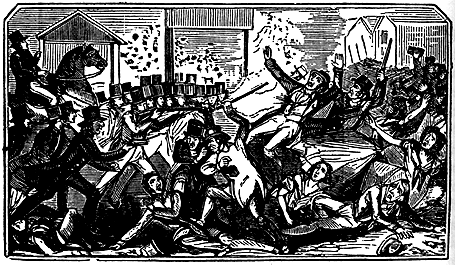
Harper’s whole reform ideology was undermined by an event completely out of his control. Anti-Irish sentiment had swelled in nearby Philadelphia and spilled over into violence, a three day riot resulting in several deaths, the torching of two Catholic churches and the transformation of some Protestant churches into armed fortresses. (Below: an illustration of the violence in Philadelphia.)

It appears the coalition of forces that got Harper elected crumbled under the fear of similar ramifications coming to New York. “I shan’t be caught voting a ‘Native’ ticket again in a hurry,” said George Templeton Strong in 1845, when Harper was swept aside for the newly elected William Havemeyer.

And with Harper’s power went the glue holding together the American Republican Party. Changing their name the next year to the Native American party, the anti-immigrant torch would be relit a few years later with the more successful Know-Nothing Party.

As for Harper, he returned to his publishing business, constructing an impressive empire that lives on today. (Harper merged with Collins in 1990.) Both Harper’s Magazine and Harper’s Bazaar have been in publication ever since.

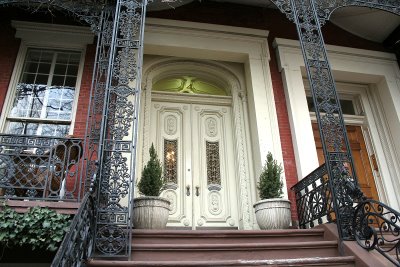
Unlike many former mayors, who fade into a decidedly non-corporeal legacy, Harper still has an admirable home on Gramercy Park — 4 Gramercy Park West, to be exact — one of the most beautifully preserved buildings on the block. (See below.) He lived here a few years after stepping down as mayor until his death. And he’s buried at Greenwood Cemetery along with many other more influential mayoral luminaries.