Categories
Bowery Boys Bookshelf Bronx History

‘Freedomland’: A New Book Explores the Story of Co-Op City

Most New Yorkers have probably never been to Co-Op City, the massive residential development in the Bronx. And that’s partially by design.

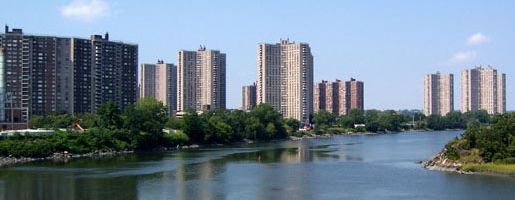
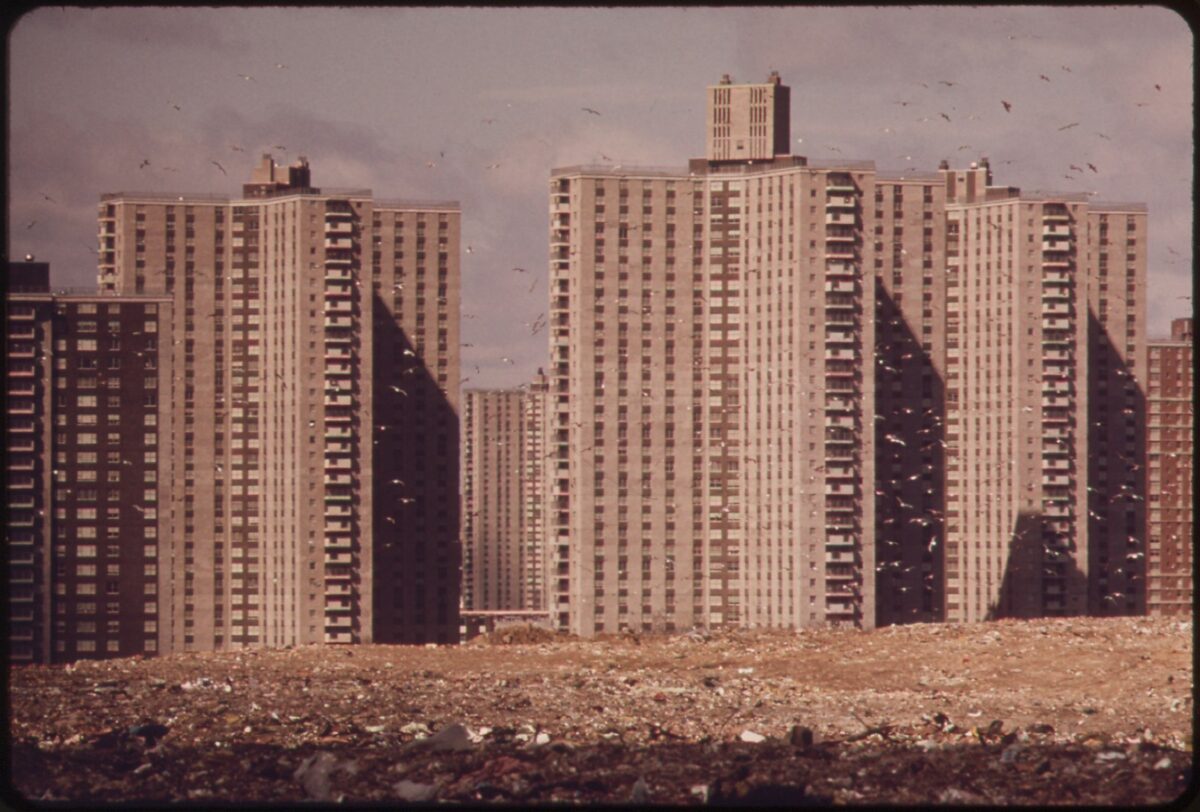
This historic development, built upon the site of the old Freedomland amusement park, is the largest single residential development in the world. It is a true city-within-a-city — and also a place seemingly outside the patterns of regular New York City life.

But a new book dispels the myth of Co-Op City’s perceived independence and refocuses it front and center as a landmark to renter’s rights and the changing nature of housing in modern New York.
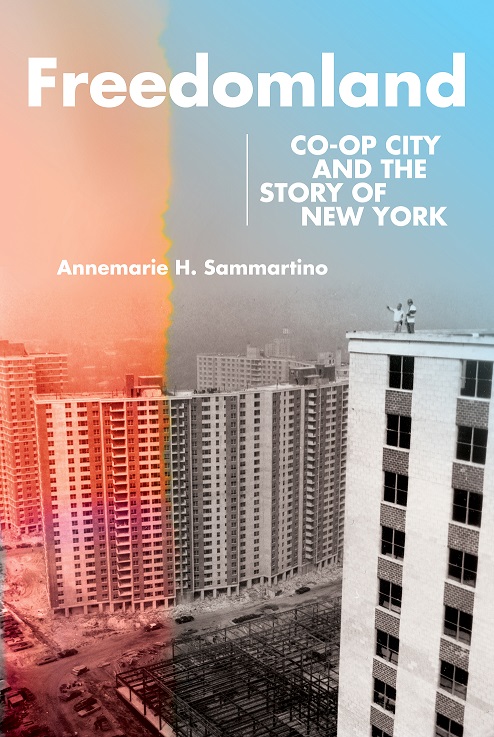
Freedomland
Co-Op City and the Story of New York
Annemarie H. Sammartino
Three Hills/Cornell University Press

In Freedomland, Annemarie H. Sammartino, an Oberlin College history professor and a former resident of Co-Op City, reveals the rich and often contentious history of one of New York’s most famous development projects.

The massive Co-op City development, first announced in 1965, was born from the optimism of the Mitchell-Lama housing program, New York State’s push to provide its residents with affordable housing.

It is quintessential ’60s architecture. One reason it is often maligned is its stark modernist arrangement, the very anti-Jane Jacobs tower-in-the-park style more frequently seen in public housing.

Sammartino reveals those criticisms were lobbed at the development from the very start. She quotes a Columbia architecture professor, who believed “Co-Op City’s architectural banality rendered it an illegitimate ‘negation of the ideals of the great society.’ “
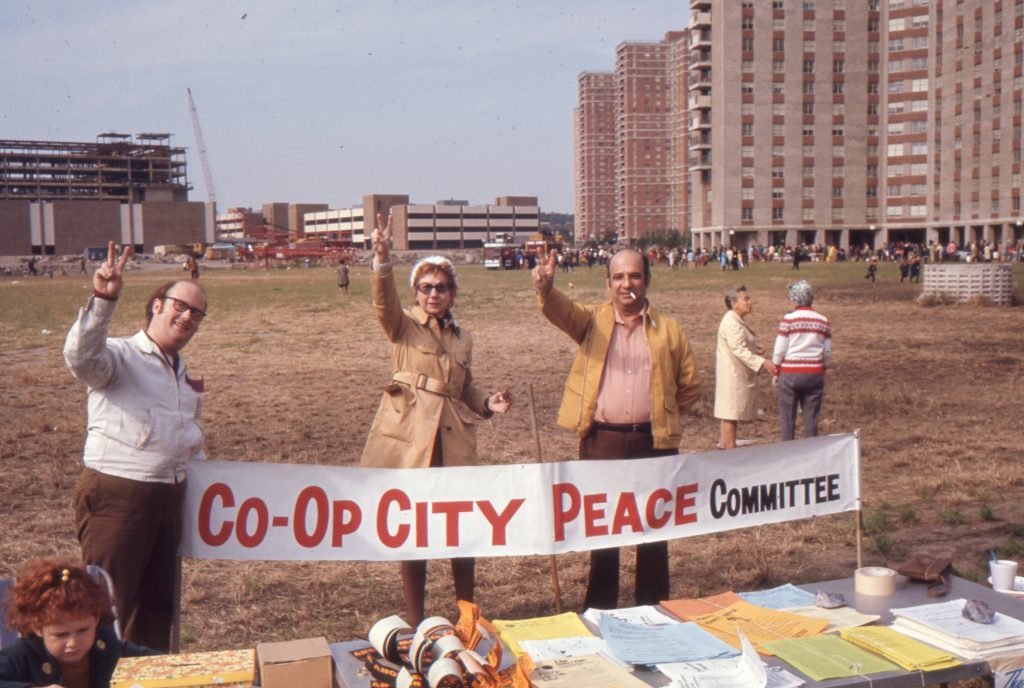
Life at the development, early 1970s. courtesy of Co-op City via 6Sqft

But its affordability and its modern amenities — its newness in a city of such much deteriorating housing — greatly appealed to middle class buyers, particular Jewish residents of the Western Bronx.

During the late 1920s and into the 30s, thousands of Jewish New Yorkers left the Lower East Side and moved to Bronx cooperatives associated with labor unions. Now, in the 1960s, their children were moving again, contributing to a devastating mass exodus from Bronx residential regions like the Grand Concourse.

“Co-op City’s location on the urban fringe made it attractive to those seeking to escape the city,” Sammartino writes, “but without the means to purchase a suburban home.”

Initially 70 percent of the residents were Jewish. In the first years, as more Black and Hispanic residents would move in, Co-Op City was seen as a success of social integration. The author quotes from one of Co-Op City’s most famous residents — Justice Sonia Sotomayor — recalling her childhood days and her interactions with Jewish residents.

But in a city in economic freefall during the 1970s, Co-Op City was not immune to financial woes, especially as tensions between the residents and the Co-Op City’s developer the United Housing Foundation. Saddled with mounting debt, the UHF began raising carrying charges (like maintenance fees).

“In private, UHF leaders were themselves increasingly distraught about rising costs in their developments,” Sammartino writes. “They worried that inflation meant not only their own fate, but that of the ‘entire democratic system’ was increasingly precarious.”

Things came to a head in 1975 with the “largest rent strike in American history,” a protest which eventually lead to the residents themselves being awarded control of Co-op City.

Sammartino then charts further struggles as cycles of city crime and decay belatedly arrive to Co-Op City. But today the place can be seen as exceeding all its initial expectations. Still without a direct subway line (something Robert Moses hinted at during the building’s groundbreaking), Co-Op City has developed into something those initial naysayers would not have imagined — a proper community.
Categories
Amusements and Thrills

The legend of Freedomland USA: Theme park memories from the kids who played there

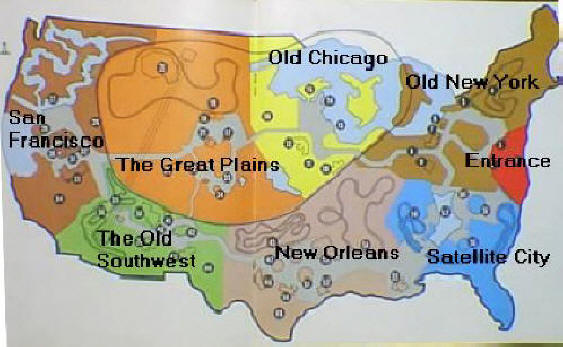
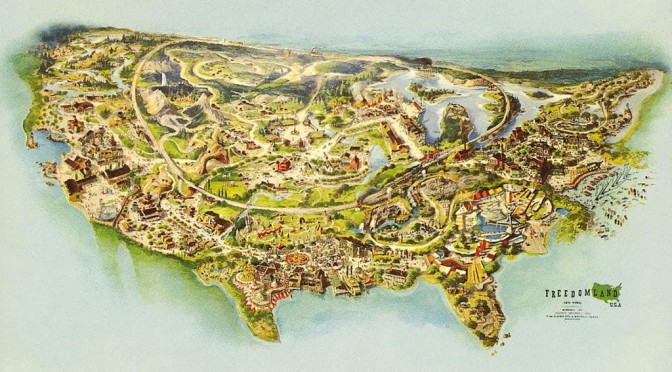
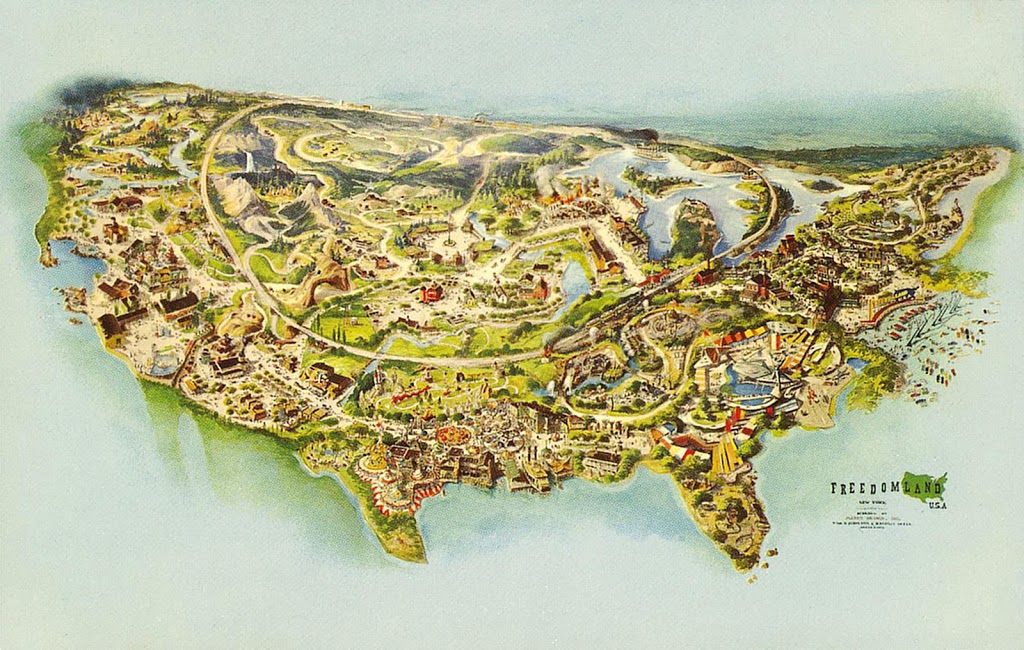
America, as depicted by Freedomland USA pre-opening map — courtesy Viewliner Ltd.

WOW. The response to our profile on NPR Morning Edition has been truly overwhelming. It’s been a very wild and exciting couple days. Thanks to everybody who has written us via email, Facebook and Twitter and welcome to our new listeners!

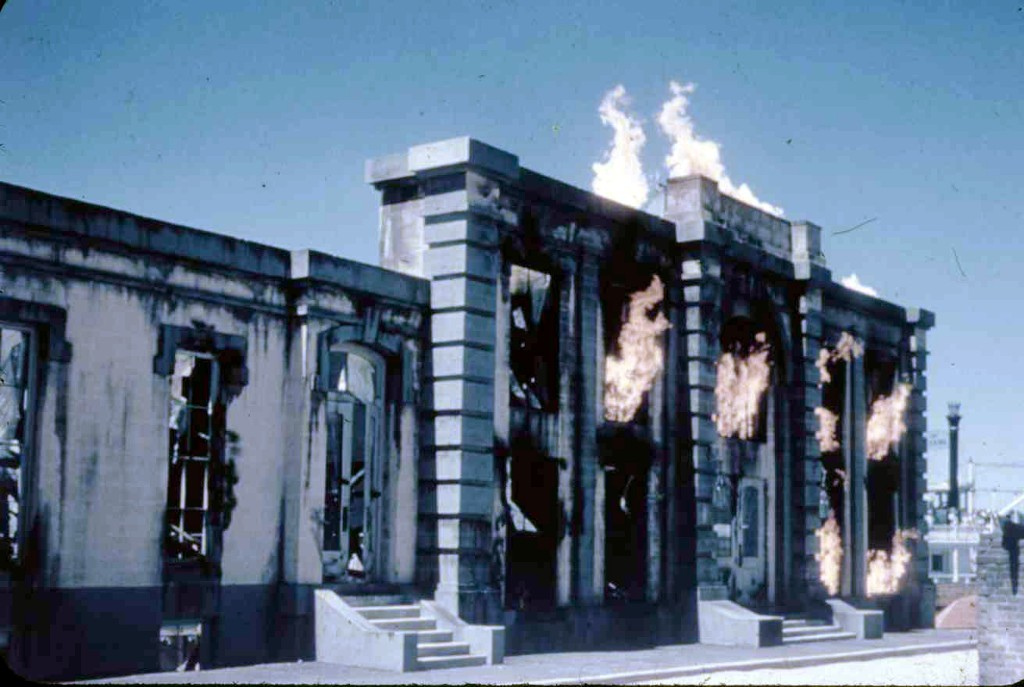
One amusing result of the airing of the piece is a resurgence of interest in Freedomland USA, the 1960s amusement park in the Bronx. I did a short podcast on the long-forgotten America-themed park back in 2009, and an original advertisement for one of the park’s more unusual attractions — reenactment of the Chicago fire! — was used in the NPR story.

The comments section on the blog page relating to our podcast is filled with recollections of people who visited Freedomland USA as a kid.  Here are a few selected comments about particular aspects of the park, giving a little more insight into this strange and mystifying place, written by those who were actually there:

Elsie the Cow
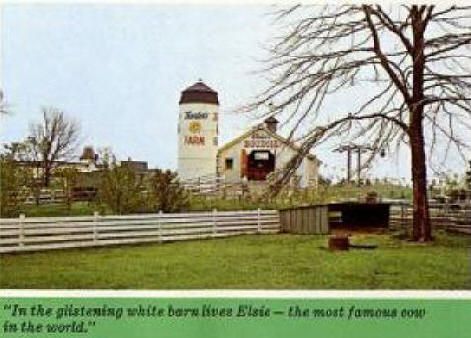
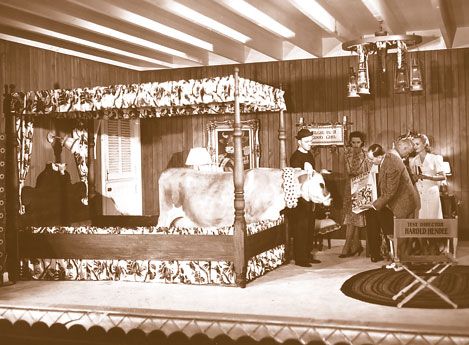
featured in the Borden’s Barn Boudoir, a barn that promoted Borden products. Yes, not only was Elsie a part of Freedomland, she had a very seductive image back in the 1960s

“I hadn’t even thought of Freedomland since the 60’s. It stopped me in my tracks when I heard the name. I remember my family and our friends who lived across the street all piling in the station wagon for our drive from Levittown to the park. Nothing else came to mind, but when you mentioned Elsie the cow- BINGO! I was mesmerized by that cow…I remember just standing there and being thrilled. Who knows what will captivate a little girl’s imagination.” — Jablow

The Chicago Fire
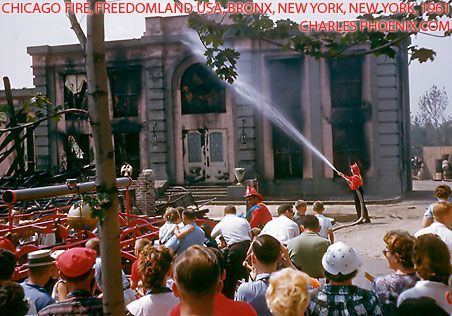
 “Yeah! The Chicago Fire. I was selected to help pump one night & so we started pumping and all of a sudden, the pump started moving by itself – it was motorized! As a 12 year-old, I was crushed by the fakery. The good part was the photographer for LIFE Magazine snapped the scene so I became a smudge on a piece of newsprint.” — Big Al

“I still have my certificate recognizing my efforts to help put out the Chicago fire! Don’t remember Murray the K being there, but the WMCA good guys used to broadcast from a “space ship” in Futureland. Saw Little Peggy March there once, singing “I Will Follow Him.” Fond memories of seeing Elsie the Cow, too.”

Courtesy Flickr/slideshopper

Defying Gravity:
“As a kid growing up in Somerville, N.J. I got to go to Freedomland 3-4 times. My most vivid memory is of an attraction where stuff rolled uphill. You could set a soda can on a table and even though it looked like it was angled down hill, the can rolled up the hill. It still amazes me. Freedomland was the closest we kids from N.J would come to Disneyland for a really long time. California was on the other side of the country and Disney World was not even started yet. I have many great memories of a visit with my cub scout troop.” 

“Went to Freedomland several times over two summers loved the fried chicken with honey in “New Orleans”, “Casa Loco” with weird distortions of gravity, and I’ll never forget seeing my father’s face of amazement as we stood a couple of feet away from Benny Goodman and His Orchestra. The place was so cool.”


Special Events:
“Hey, does anyone remember seeing Chuck McCann do his Halloween kids show from the park? Absolutely! I remember bits and pieces of it like it was yesterday and I have been looking for references online about it for a number of years. As I recall it had two actual children and a number of puppets including a witch. It was one of my favorite Halloween specials. I have been trying to find a New York TV guide from October 1963 as I understand it’s listed there.”

“I was in a Yo-Yo championship contest hosted and judged by Chuck McCann. At Freedomland, I think it was 1962.”

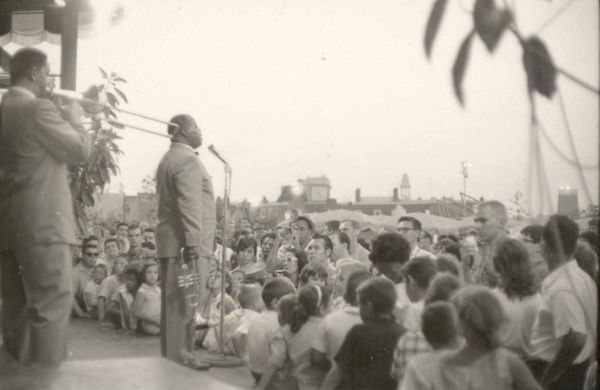
Above: Louis Armstrong at Freedomland, picture courtesy the Louis Armstrong House Museum

“I was 10 years old with Ed Sullivan on the original broadcast about Freedomland. It took all day to tape the show segment. He was very patient and very kind.” “Only thing I remember is seeing The Four Seasons perform on a chilly, damp, windy day. First concert I ever attended.”

“One of the most memorable events of my childhood was seeing Louis Armstrong at Freedomland.”

Photo courtesy Gorillas Don’t Blog

Stagecoach drama:
“I was stunned to hear about Freedomland on NPR today. I was there with my sister when they had the stagecoach accident that eventually caused the financial ruin of Freedomland

Apparently, the horse handlers warned the owners that the train that ran through the park would spook the horses. That is exactly what happened the day we visited. Coming down the last hill, the horse spooked and bolted. The stagecoach flipped over and severely injured most riders. 

My sister and I were on top and were thrown clear of the coach. I had a small cut on my elbow and my sister had a damaged tooth. Others broke legs and spines when they were trapped under the coach. My uncle and cousins helped lift the stagecoach off the injured. Many lawsuits later, Freedomland closed. I never heard anyone mention that place until today.” 

Categories
Podcasts

PODCAST: Freedomland U.S.A.

What is Freedomland U.S.A.? An unusual theme park in the Bronx, only in existence for less than five years, Freedomland has become the object of fascination for New York nostalgia lovers everywhere.

Created by an outcast of Walt Disney’s inner circle, Freedomland practically defines 60s kitsch, with dozens of rides and amusements related to saccharine views of American history. Along the way, we’ll take a visit to the Blast-Off Bunker, Casa Loca, and, yes, Borden’s Barn Boudoir!

Listen to it for FREE on iTunes or other podcasting services. Or click this link to listen to the show or download it directly from our satellite site.

NOTE: There’s nothing wrong with your speakers! I include a short clip in this podcast of an original Freedomland radio advertisement from 1960. The sound quality of the clip is extremely bad, however I thought it was important to include as it sets the tone for what Freedomland was all about (or, rather, wanted to be about).

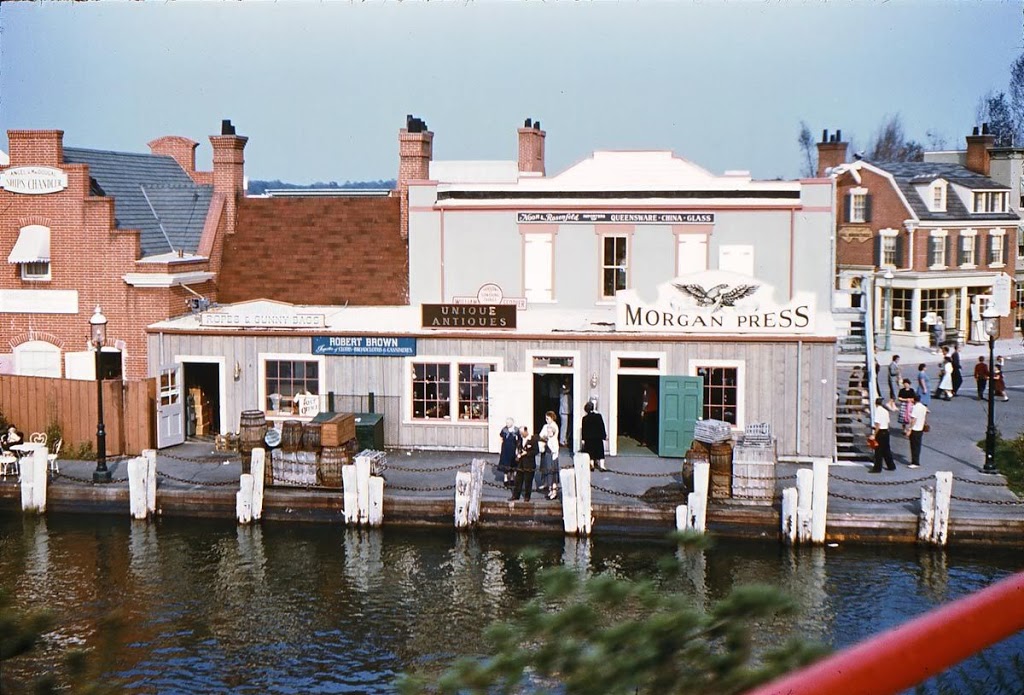
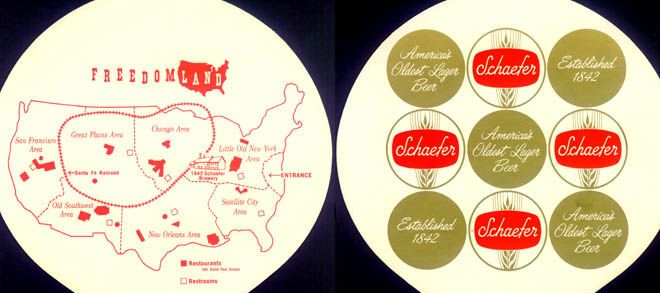
The map through Freedomland mimicked the outline of the United States. (Well, sorta.) Visitors entered through Washington D.C. and meandered through candy-coated interpretations of various national regions, ending up in the future (located in the American South).

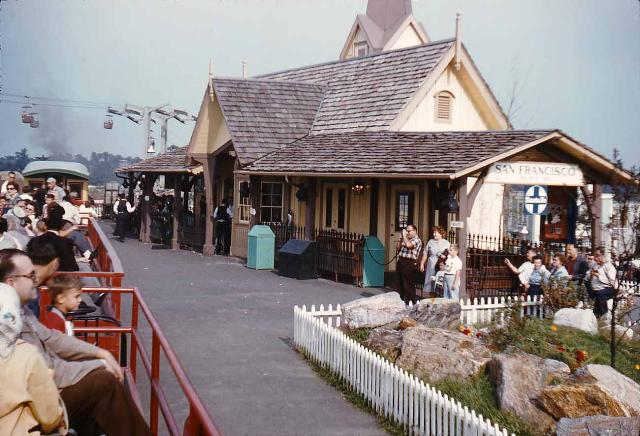
San Francisco in the Bronx, a Disney-like village served by the Santa Fe Railroad (pic courtesy Stuff From The Park)

Another view of the Santa Fe (courtesty Gorillas Dont Blog)

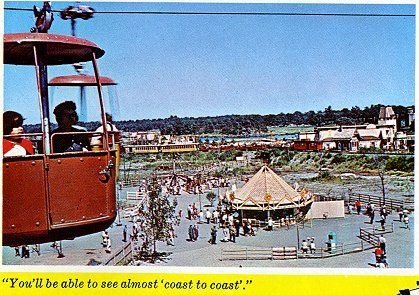
Looking out over the ‘United States’

A rather blurry image — perhaps that’s best — of Borden’s Barn Boudoir, featuring the private rooms of one Elsie the Cow (Pic courtesty Benros, who has a great page on Freedomland.)

The picture below is NOT from Freedomland, but it gives you an idea of what Elsie’s bedroom might have looked like. Apparently, Bordens loved nothing more than putting their bovine mascot in this type of setting; she also had a bedroom at the World’s Fair of 1964-65 in Flushing Meadows, most likely transported from the failing Freedomland attraction.

Why people are so entertained by this, I’ll never understand. But if fire was your game, Freedomland let you enjoy the re-burning of Chicago every day. And sometimes, the firemen actors would grab volunteers to help put out the blaze! (Pic courtesy God Bless Americana)

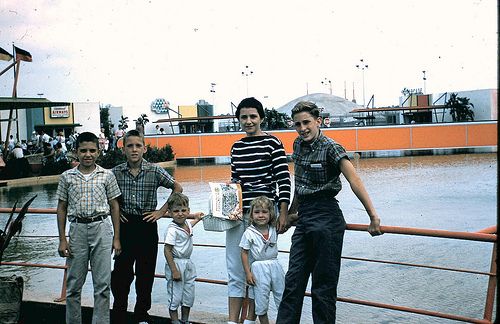
Freedomland was perpetually in debt and often a great inconvenience with long lines and unfinished rides. This family, visiting in July 1960, doesn’t seem to mind. (Flickr)

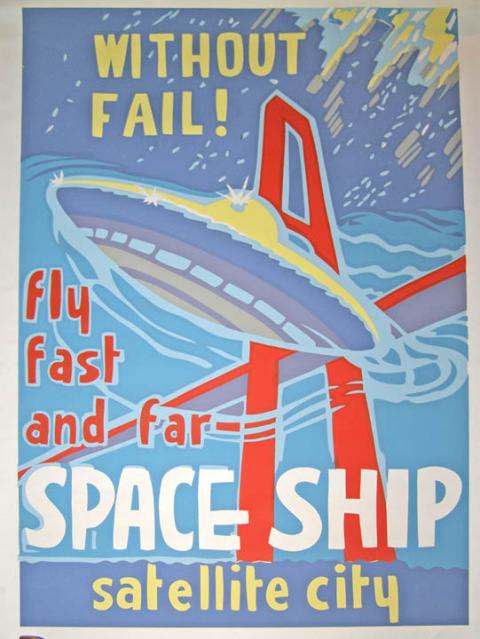
A promotional poster for Freedomland’s futuristic Satellite City, which wasn’t opened for a few days after the park’s opening, by which time crowds had died off considerably. (Pic courtesy Perky Pickle, who has other great poster images from the park’s heyday.)

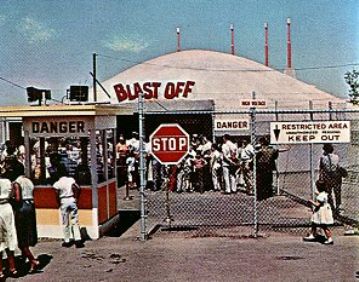
This frightening little attraction was the Blast-Off Bunker, because there’s nothing more fun than hanging out in a dark bunker on a nice summer’s day. In fact, inside you could enjoy the ‘tense excitement’ of a Cape Canaveral control room.

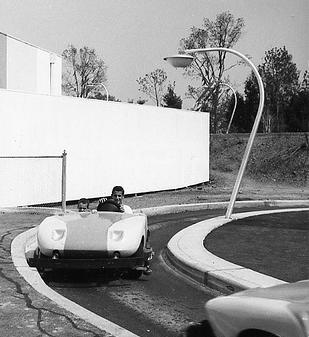
You could experience the joys of riding a ‘modern automobile’ in Freedomland’s knockoff future land. A sad way of marketing a go-cart, but at least this picture is pretty great. (Courtesy Flickr)

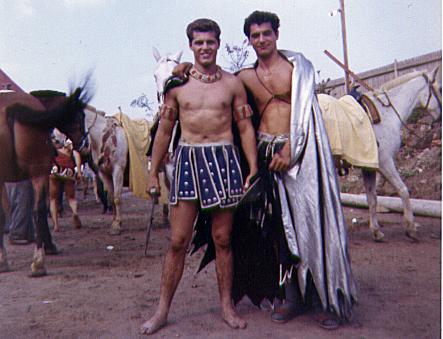
Freedomland was more than happy to abandon its themes if it meant more paying customers. Here are two stunt men from a ‘Colossus’ spectacular in 1961. (Benros)

Some detailing from a Freedomland souvenir fan, featuring a map of the park on one side, and beer advertisement on the other. This was, after all, a ‘family entertainment center.’ (Click it for a closer look.)

Freedomland was replaced by another oddity — the massive Co-op City, housing over 50,000 residents, and often referred to as a ‘city within a city’. Theoretically, one never need leave Co-op City.

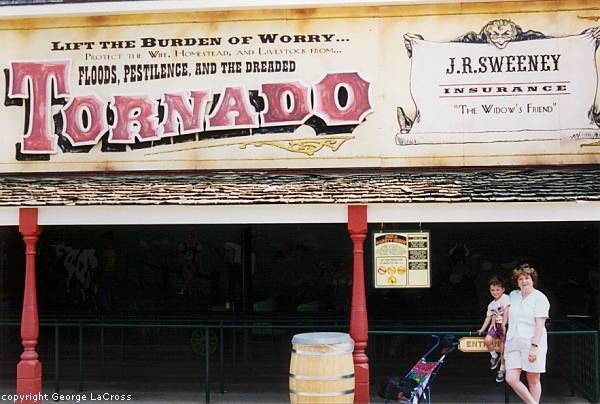
After the closing of Freedomland, some rides were rescued by other amusement parks, including the Tornado Adventure, seen here at Lake George, NY. It was eventually closed for good in 2003. If you really want to experience the delights of a tornado, you’ll have to go to the midwest! (Courtesy Laff In The Dark)

I tried to include a lot of link above to other great websites with more information on Freedomland. The most comprehensive tribute can be found on Rob Friedman’s old site on the park, with dozens of pictures, sounds and personal stories.

Any of you remember visiting this place? Leave a comment!