Categories
It's Showtime

Joseph Papp vs. Robert Moses: The saga of Shakespeare in the Park

PODCAST The fascinating story of the Public Theater and Joseph Papp’s efforts to bring Shakespeare to the people. (Episode #88)

What started in a tiny East Village basement grew to become one of New York’s most enduring summer traditions, Shakespeare in the Park, featuring world class actors performing the greatest dramas of the age. But another drama was brewing just as things were getting started. It’s Robert Moses vs. Shakespeare! Joseph Papp vs. the city!

ALSO: Learn how the Public Theater got off the ground and helped save an Astor landmark in the process.

THIS SHOW WAS ORIGINALLY RELEASED ON JUNE 18, 2009 — MANY, MANY YEARS BEFORE LIN-MANUEL MIRANDA AND ‘HAMILTON’ HIT THE PUBLIC STAGE

__________________________________________________________

The Bowery Boys: New York City History podcast is brought to you …. by you!

We are now producing a new Bowery Boys podcast every week. We’re also looking to improve and expand the show in other ways — publishing, social media, live events and other forms of media. But we can only do this with your help!

We are now a creator on Patreon, a patronage platform where you can support your favorite content creators.

Please visit our page on Patreon and watch a short video of us recording the show and talking about our expansion plans.

If you’d like to help out, there are six different pledge levels.Check them out and consider being a sponsor.

__________________________________________________________

And now I present some of the fantastic photographs from the Billy Rose Division of the New York Public Library.

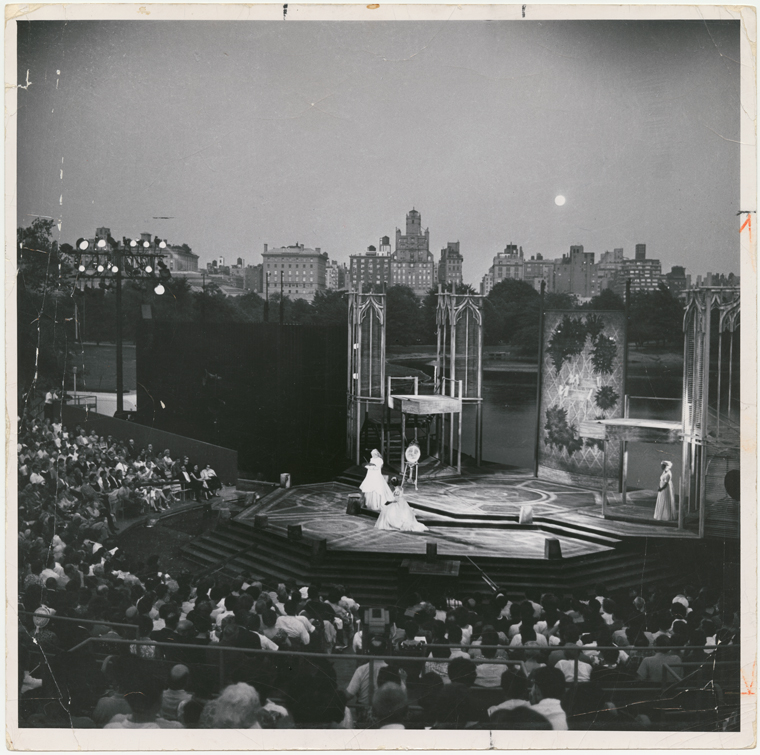
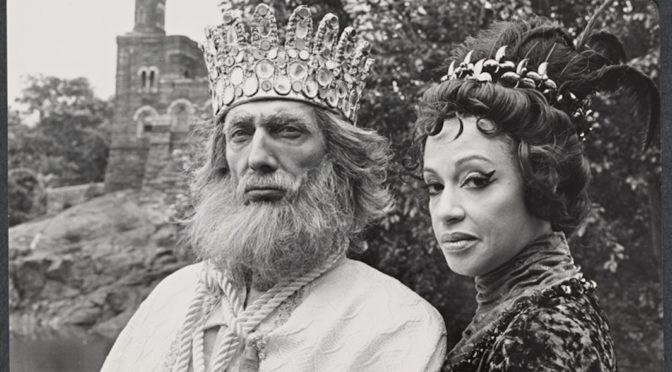
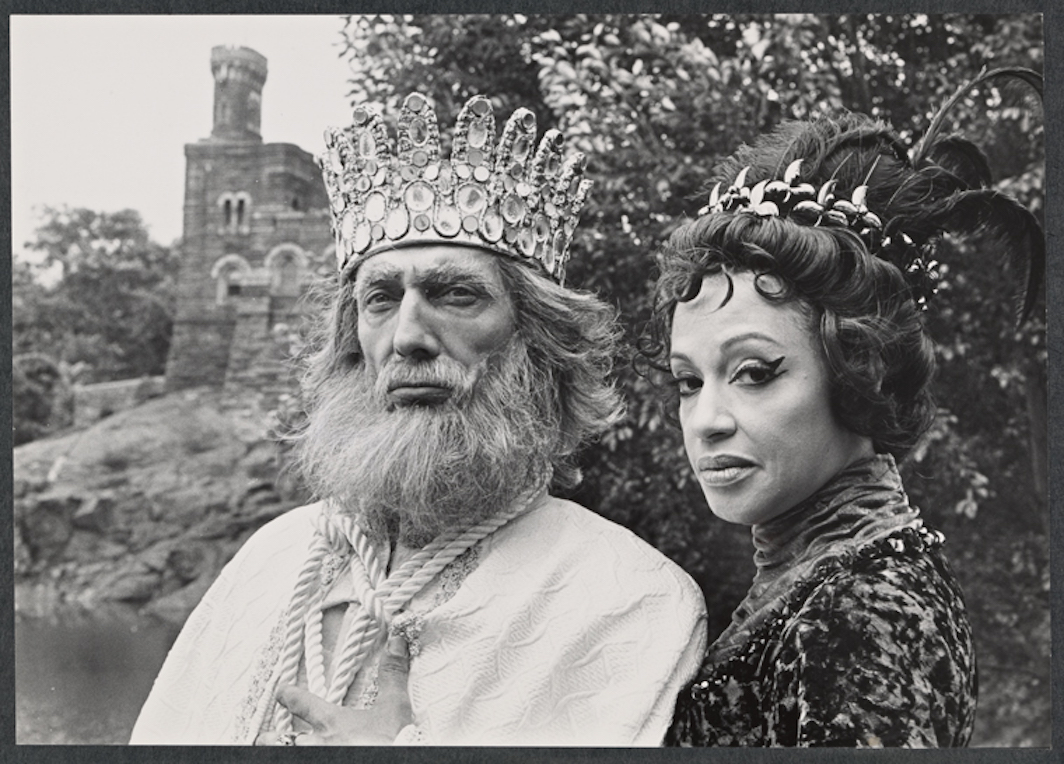
From the 1971 Shakespeare In The Park production of Cymbeline, with Belvedere Castle standing out in the background.
Courtesy New York Public Library

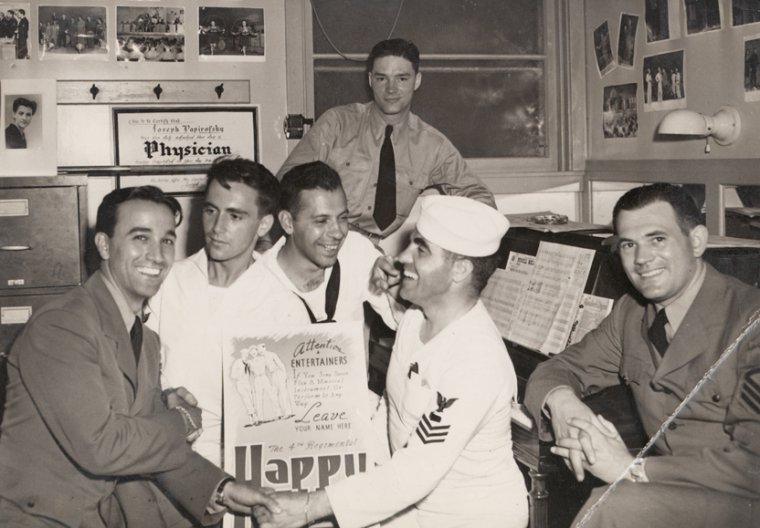
A photo of Joseph Papp in the Navy (he’s the second one from the left), 1942.
Courtesy New York Public Library

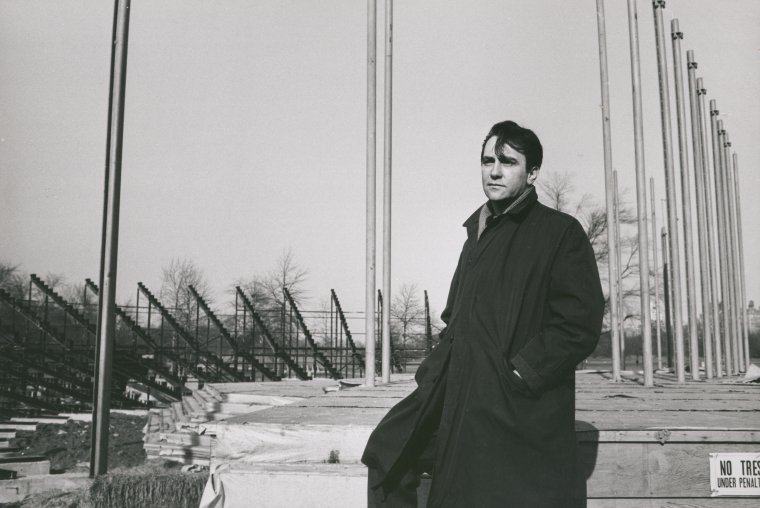
Papp in from of the Decorate Theater, under construction in 1960.
Courtesy New York Public Library

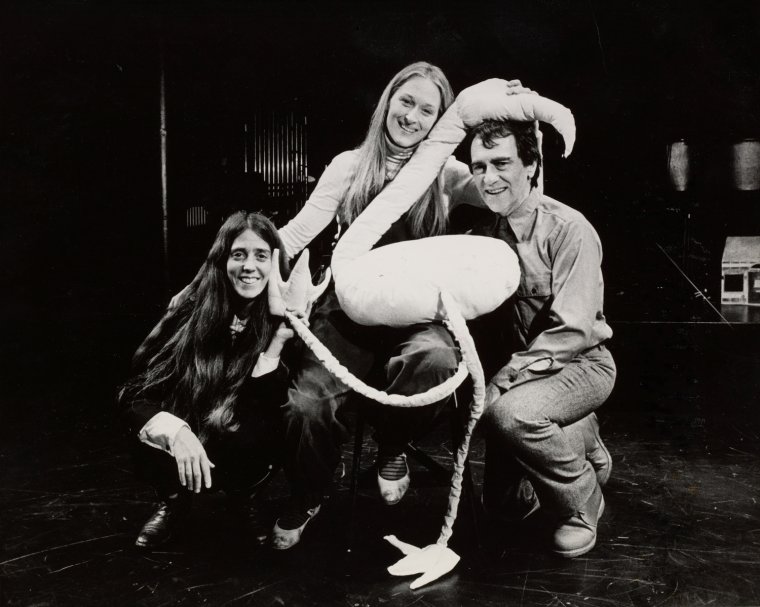
Joseph Papp with Elizabeth Swados and Meryl Streep in a Public Theater production of Alice In Concert.
Courtesy NYPL
Courtesy NYPL

The ‘mobile theater’ of the New York Shakespeare Festival, pictured here in 1972.
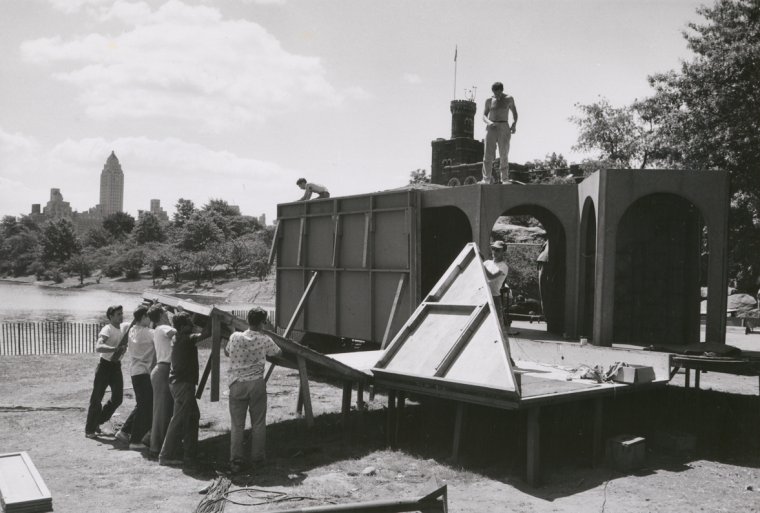
Courtesy New York Public Library

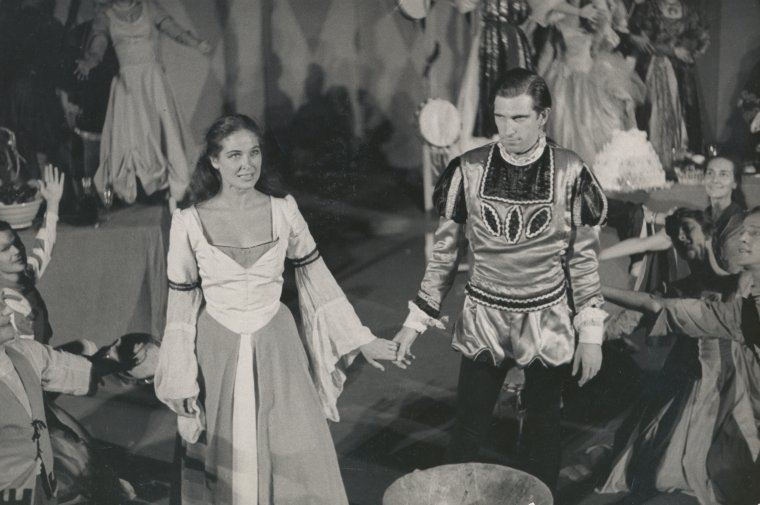
Theater at the East River Amphitheater: The Taming Of The Shrew with Colleen Dewhurst, 1956
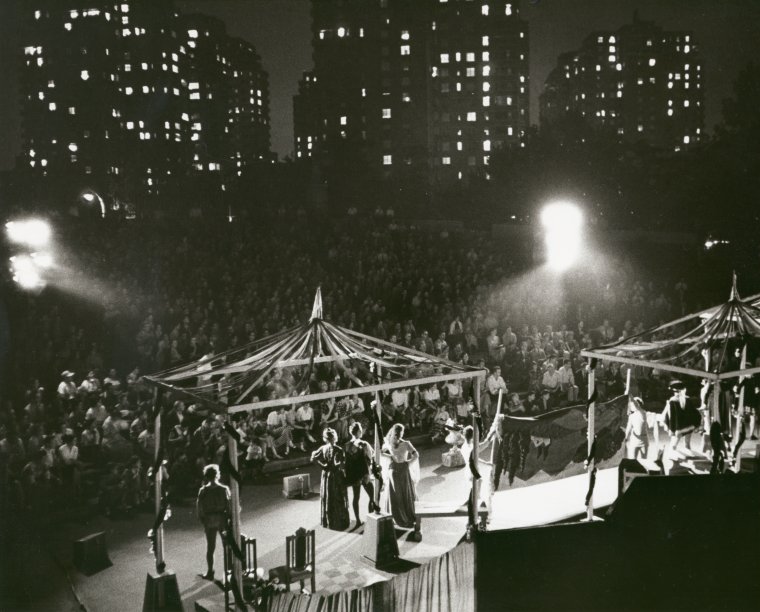
nypl.digitalcollections.69d12b21-479a-3095-e040-e00a18061836.001.w
nypl.digitalcollections.69d12b21-4799-3095-e040-e00a18061836.001.w

The Merchant of Venice, 1962

nypl.digitalcollections.d070fc30-1271-0131-6d3a-58d385a7bbd0.001.w

The set from Love’s Labours Lost, performed at the Delacorte in 1965:
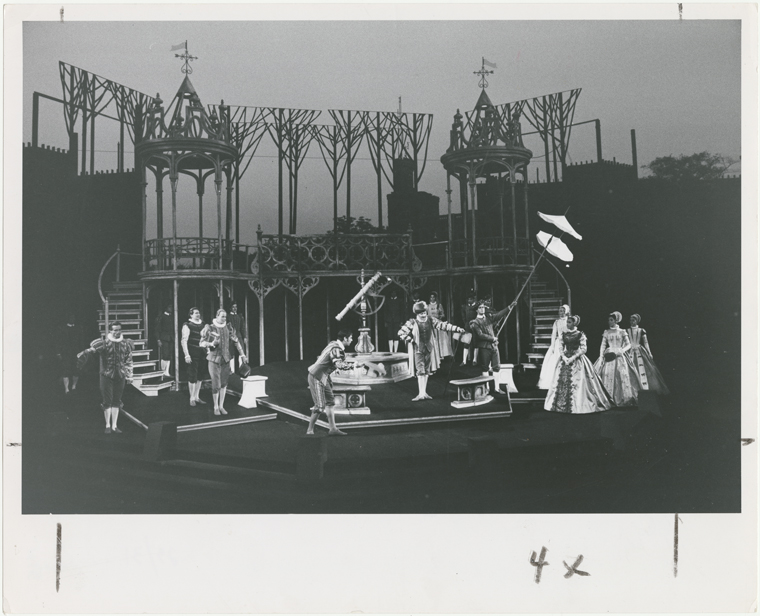
nypl.digitalcollections.41a42a30-126b-0131-61d9-58d385a7bbd0.001.w

The city peeks over top of the sets of 1985’s Henry V.
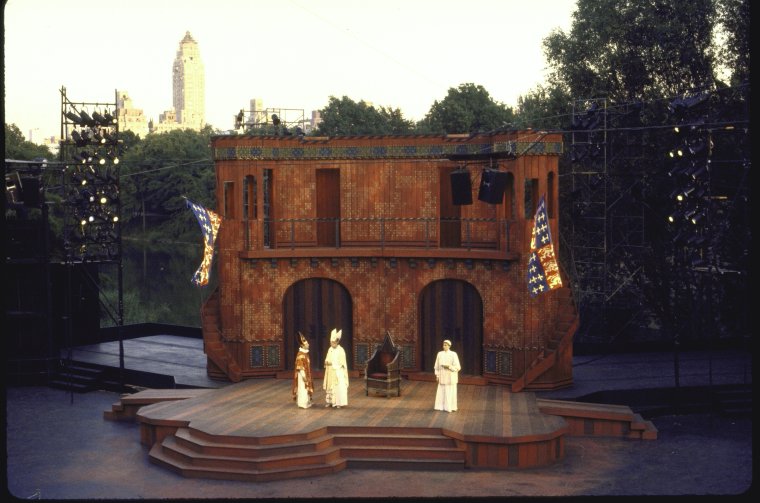
Courtesy New York Public Library

A vivid battle scene from 1991’s Henry IV Part 1.
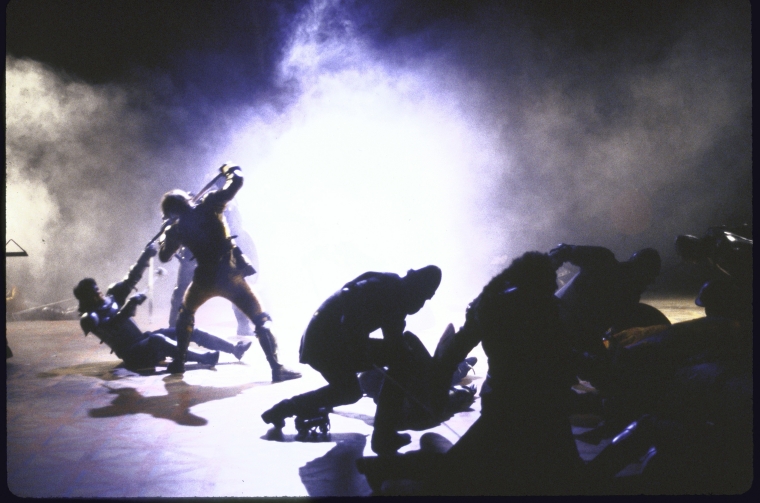
Courtesy New York Public Library
Categories
Bowery Boys Bookshelf It's Showtime

‘Lady Romeo’: The unconventional life of actress Charlotte Cushman

Without moving images or sound recordings to guide us, it can be hard to imagine the lives and careers of famous theater actors from the 19th century.

And yet the American theater produced a list of wildly famous performers whose names were repeated in households that often had no possibility of ever seeing a major play. The press could build upon an actor’s natural charisma and talent, turning leading ladies into modern goddesses.

One such star was Charlotte Cushman, a theatrical chameleon who achieved international fame playing men’s roles and breaking just about every other convention in the book.

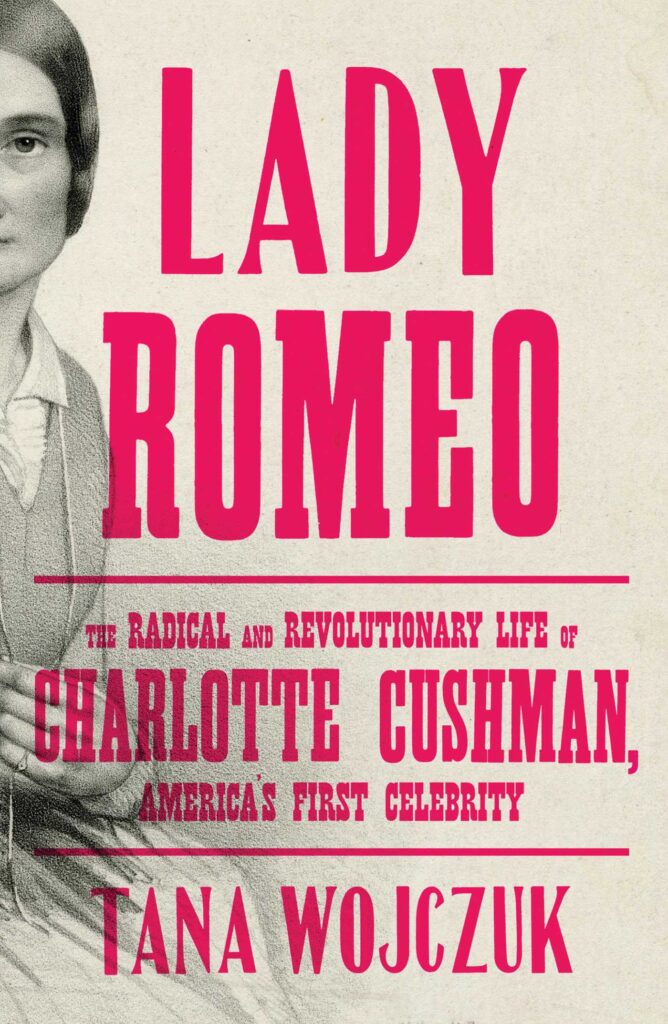
LADY ROMEO
The Radical and Revolutionary Life of Charlotte Cushman, America’s First Celebrity
by Tana Wojczuk
Simon & Schuster

The charming biography Lady Romeo has by circumstance become a truly fantastical read, more so than author Tana Wojczuk probably intended.

Not only is Cushman’s life fascinating and almost unbelievable, but nostalgia for the theater itself in 2020 has become romanticized. Imagining anybody on stage performing Shakespeare gave me a thrill!

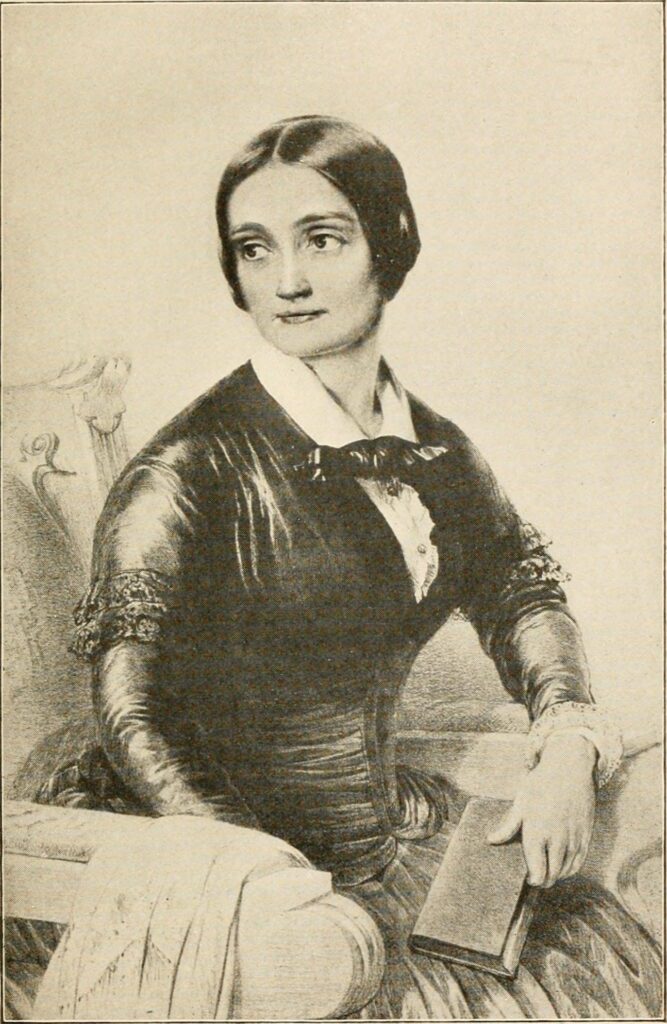
Cushman reigned during the mid 19th century as America’s most famous actress, specializing in playing roles written for both women and men.

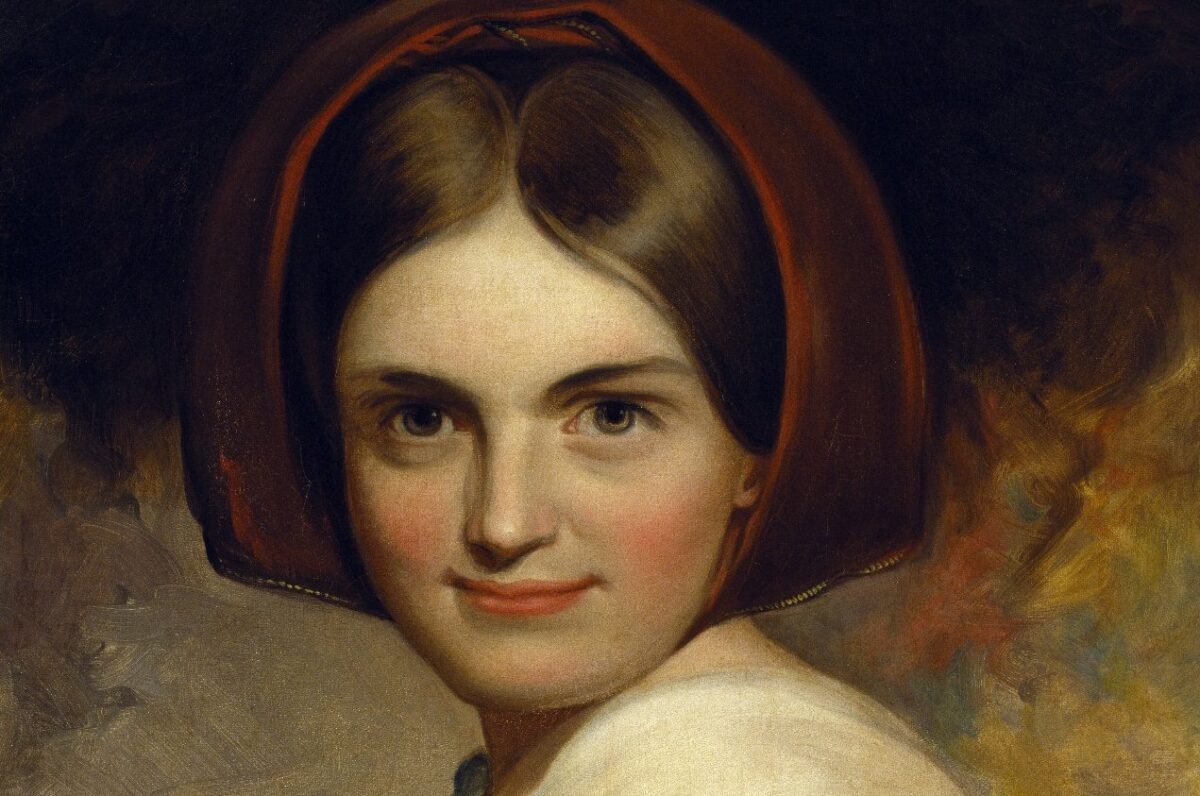
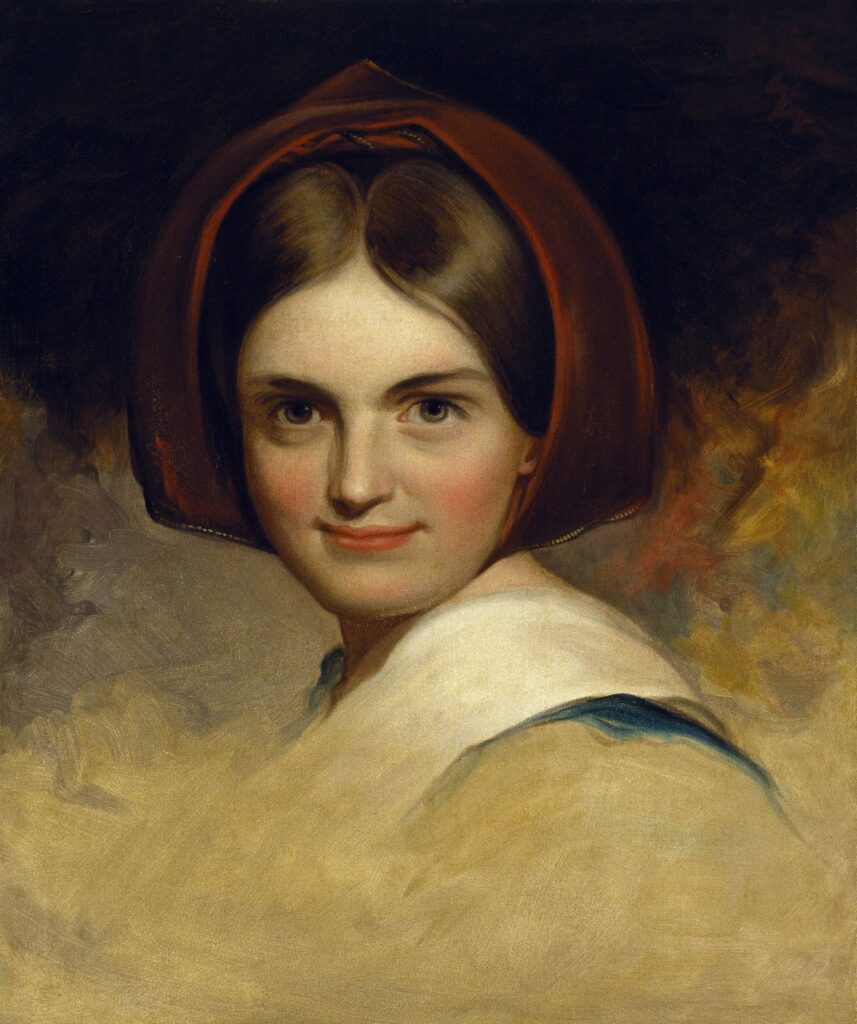
Cushman in an unfinished 1843 painting by Thomas Sully, courtesy the Folger Shakespeare Library

Her versatility and transformative ability — it was truly 19th century ‘method acting’ — were displayed on the New York stage by the mid 1830s, and even early on she was not afraid to challenge the status quo.

She soon commanded the attentions of the New York theater world — even on stages such as the Bowery Theatre with its ample prurient distractions — and in Lady Romeo, her bold ingenuity leaps off the page.

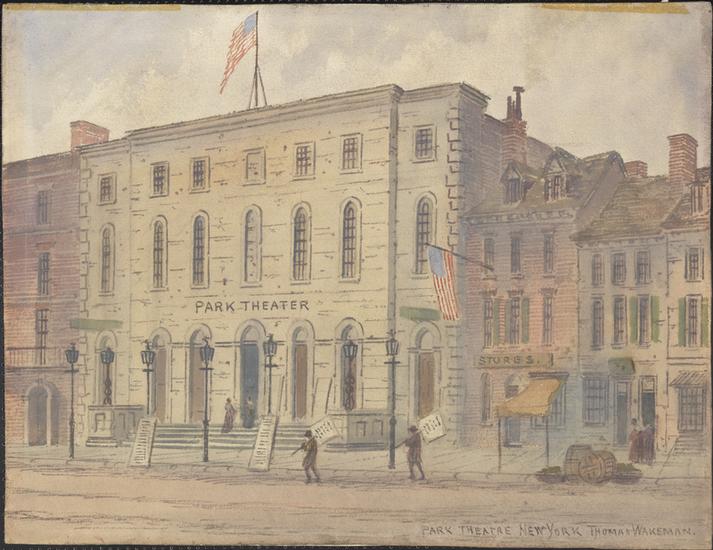
The Park Theater, depicted here in 1840 in a watercolor by Thomas Wakeman. (Courtesy the Museum of the City of New York)

At a performance of Guy Mannering at the lofty Park Theatre on Park Row, Cushman stepped into a starring role interpreted as a young woman.

Charlotte thought differently; she surprised both cast and audience when she emerged as an old crone; her “face was deeply carved with dry creek beds of wrinkles, her dark hair, parted in the middle, escaping in uncombed tangles down her back.”

Cushman was not a traditional beauty, nor was she uniquely connected or wealthy enough to take such early risks in her career. But she let nothing stop her bold ambition for reinventing theater.

For instance, in 1839, Cushman was given the role of Nancy in Oliver Twist. Playing a prostitute was a risky part. Wojczuk writes, “[A]ctresses already had to fight against the stereotype that they were essentially prostitutes themselves.”

Cushman leaned into the controversy. She visited the neighborhood of Five Points to research the part and even exchanged her clothes with those of a dying prostitute. “She gave up her simple but well-made silk dress and put on the women’s rags. These would be Nancy’s clothes.”

She soon became the American queen of Shakespeare; President Abraham Lincoln was a huge fan, enrapt with her portrayal of Lady McBeth.

Her fame and command of the stage allowed her to live a surprisingly more open life with many female companions over her life. Cushman steps vividly from the pages of Lady Romeo like a superstar who would fit perfectly into the 21st century.

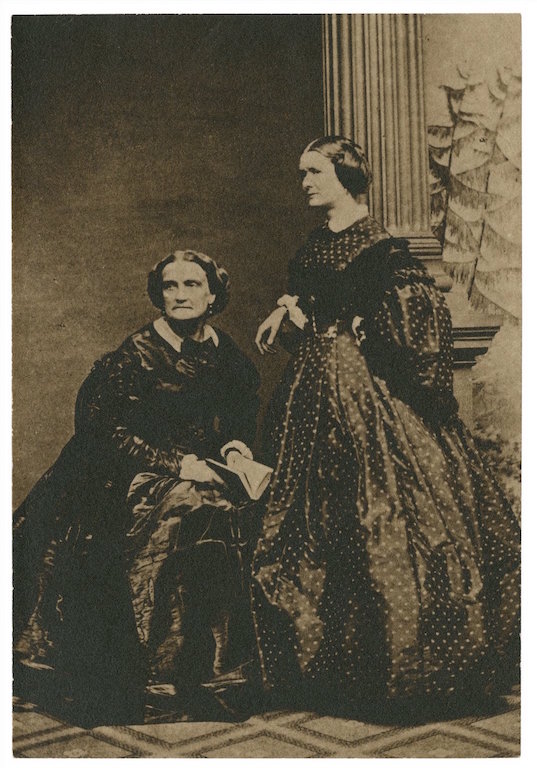
Charlotte Cushman and the New York sculptor Emma Stebbins. The pair were partners at the end of Cushman’s life. Stebbins would eventually write a biography of Cushman. (Shakespeare Folger Library)
Categories
Landmarks

A Witness to Violence: Colonnade Row and the Astor Place Riots of 1849

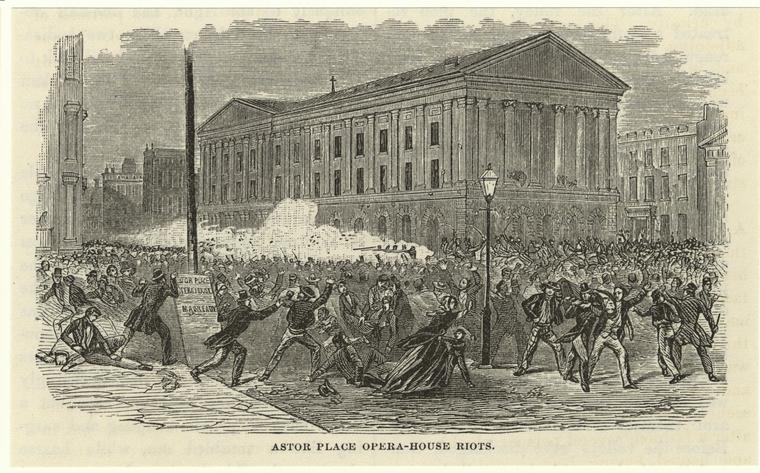
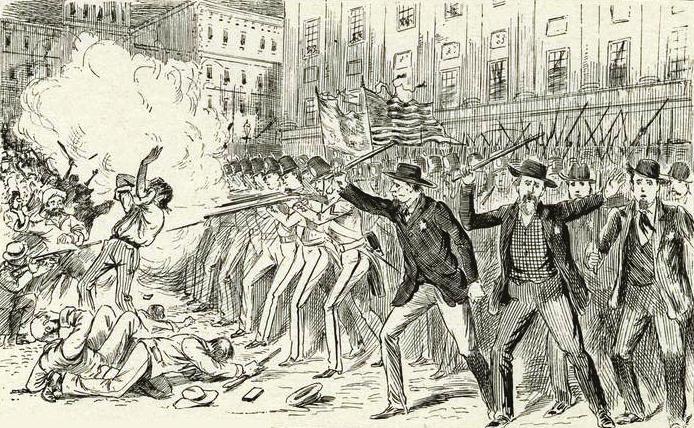
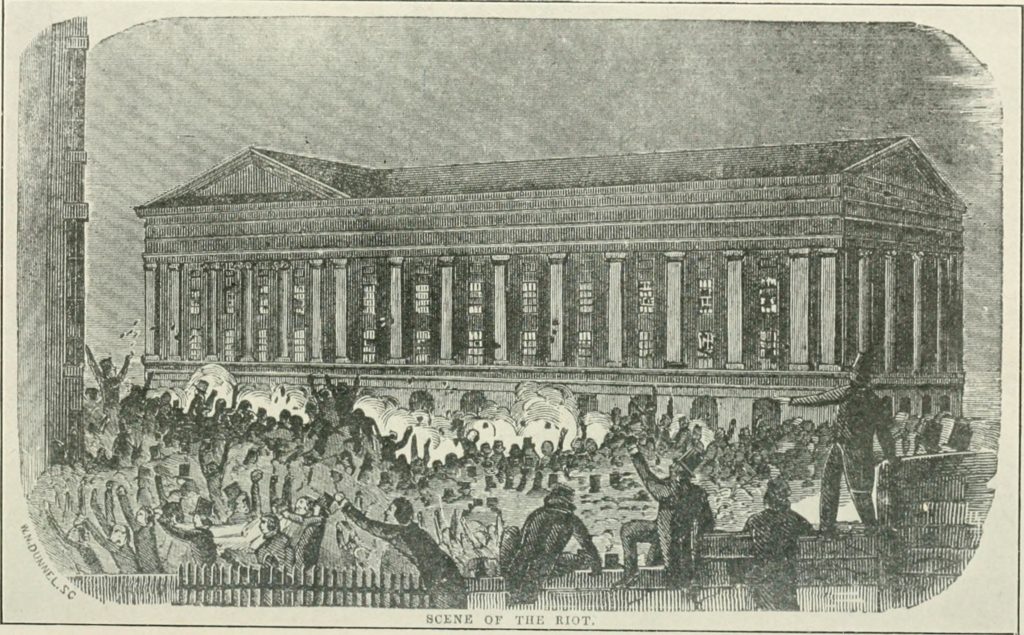
On May 10, 1849, Astor Place erupted into bloody violence as crowds took to the streets and battled it out — over a Shakespearean actor. It was the first time in American history that a state militia trained its muskets upon the very population it had been sworn to protect.

Courtesy NYPL

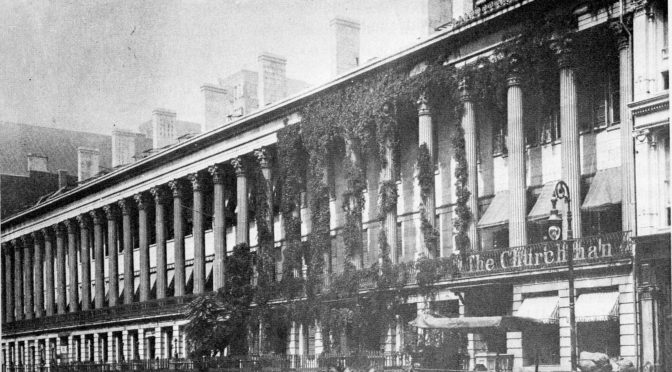
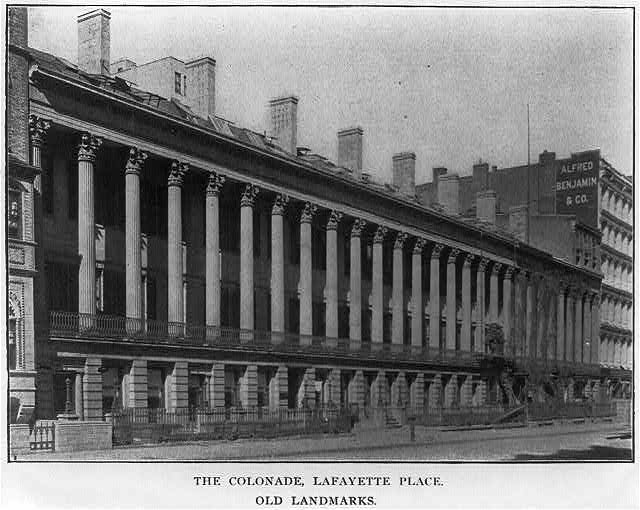
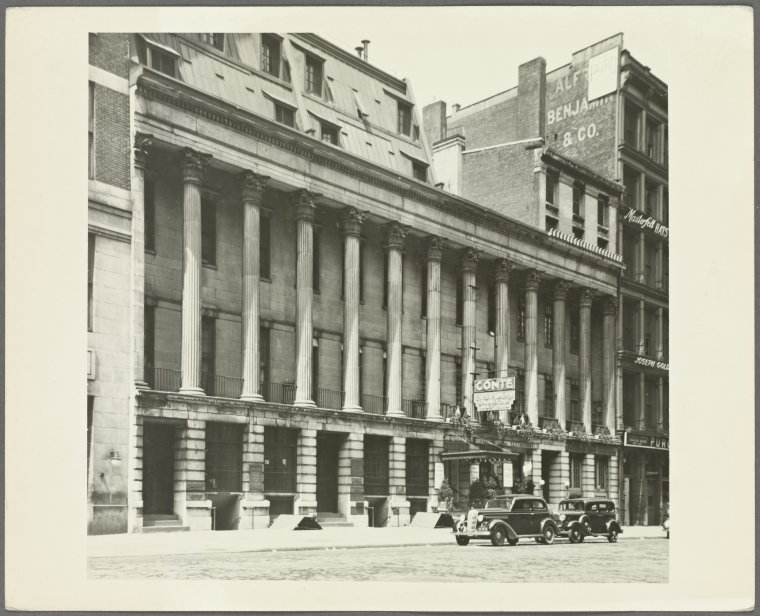
Yet of the many structures today surrounding Astor Place, only Colonnade Row (at 428–434 Lafayette Place) still remains from that dreadful day. From between its columns that May night, residents observed the horrifying violence firsthand. These old buildings, distinctive for their Corinthian columns, seem especially weathered when compared with the dazzling Astor Library across the street, home to the Public Theater since 1967.

(Colonnade Row, it should be noted, is also something of an off-Broadway landmark. The Astor Place Theatre, located in the basement, has been home to the flamboyant Blue Man Group spectacle for so long that the original performers have since turned gray.)

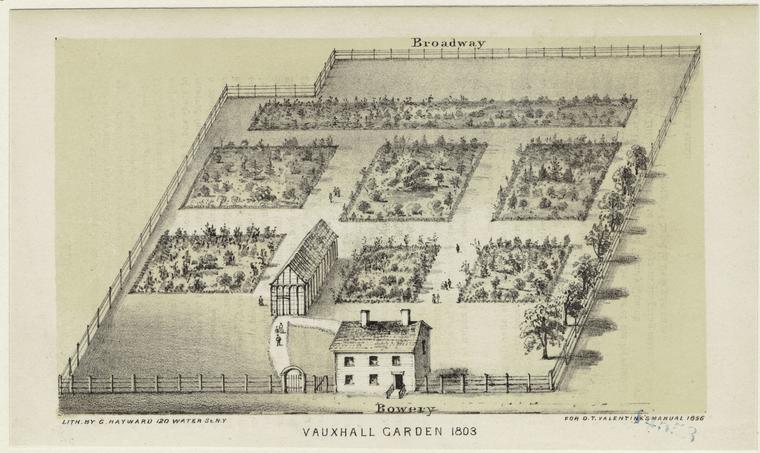
Vauxhall Gardens (Courtesy NYPL, lithography by George Haywood)

In 1805 this area was home to Vauxhall Gardens, an outdoor recreational venue that functioned something like a privately run park. But the city was expanding north, and wealthy fur trader–turned–real estate tycoon John Jacob Astor understood high society’s desire for more refined residential quarters.

In 1826 Astor sliced a street right through Vauxhall Gardens and named it after the Marquis de Lafayette.

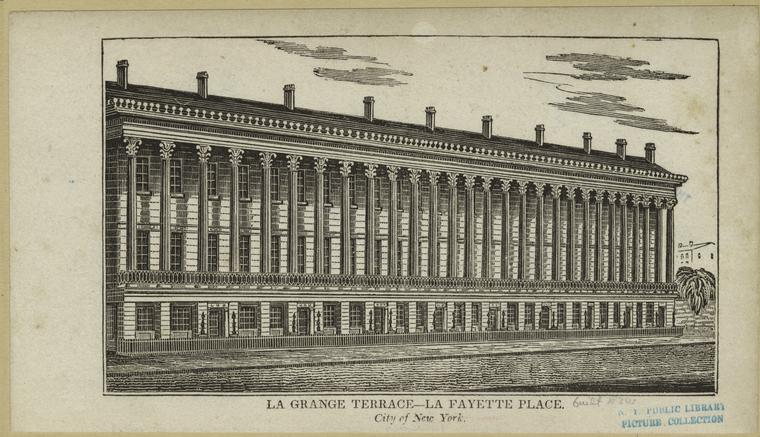
Upon the western side of Lafayette Place (now Lafayette Street) he commissioned an upscale housing complex originally called La Grange Terrace, named for the marquis’s estate back in France.

An image of Colonnade Row from 1899 (Courtesy Library of Congress)

As historian Alvin F. Harlow later observed, Astor “was ridiculed for his folly in building such mansions on the very outskirts of town, but he was right.”

Completed in 1833, La Grange Terrace was quite a large and lavish address, boasting nine residences (today’s Colonnade Row contains only four of these original houses) that attracted notable members of high society—a relation of Washington Irving, the father-in-law of President John Tyler, even Astor’s own grandson. They were among the toasts of the town, hosting dinner parties in their twenty-six-room(!) mansions, and enjoying such state-of-the-art luxuries as central heating and indoor plumbing.

Some residents of La Grange Terrace were home on the evening of May 10, 1849, the night that all hell broke loose.

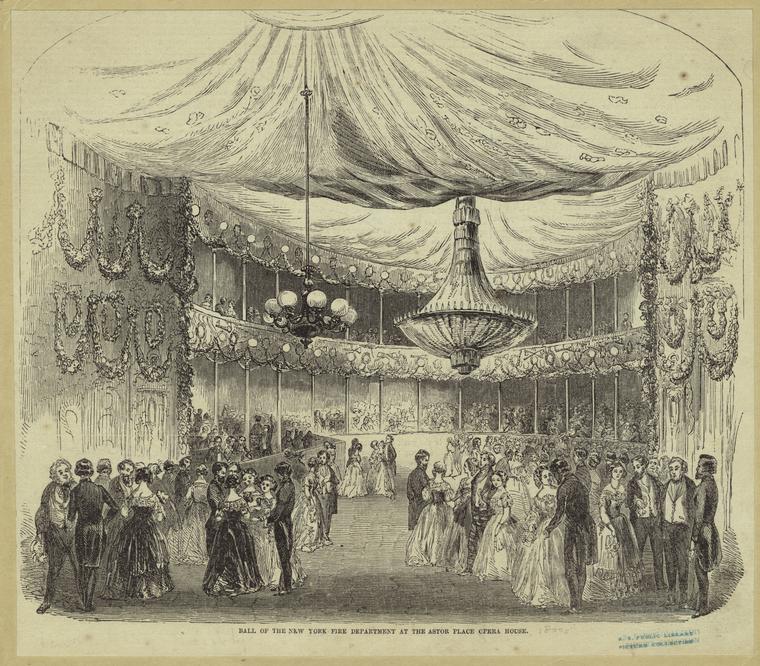
Inside the Astor Place Opera House for the Ball of the New York Fire Department (Courtesy NYPL)

Located just up the block between Astor Place and 8th Street, the Astor Place Opera House had opened two years before as a place for the city’s elite to gather, flaunt their good fortune, and take in an evening of (often imported) culture. Indeed, this was the case on the night of May 10, when they gathered to witness a highly antici- pated performance of Macbeth, starring William Charles Macready, England’s most famous tragedian.

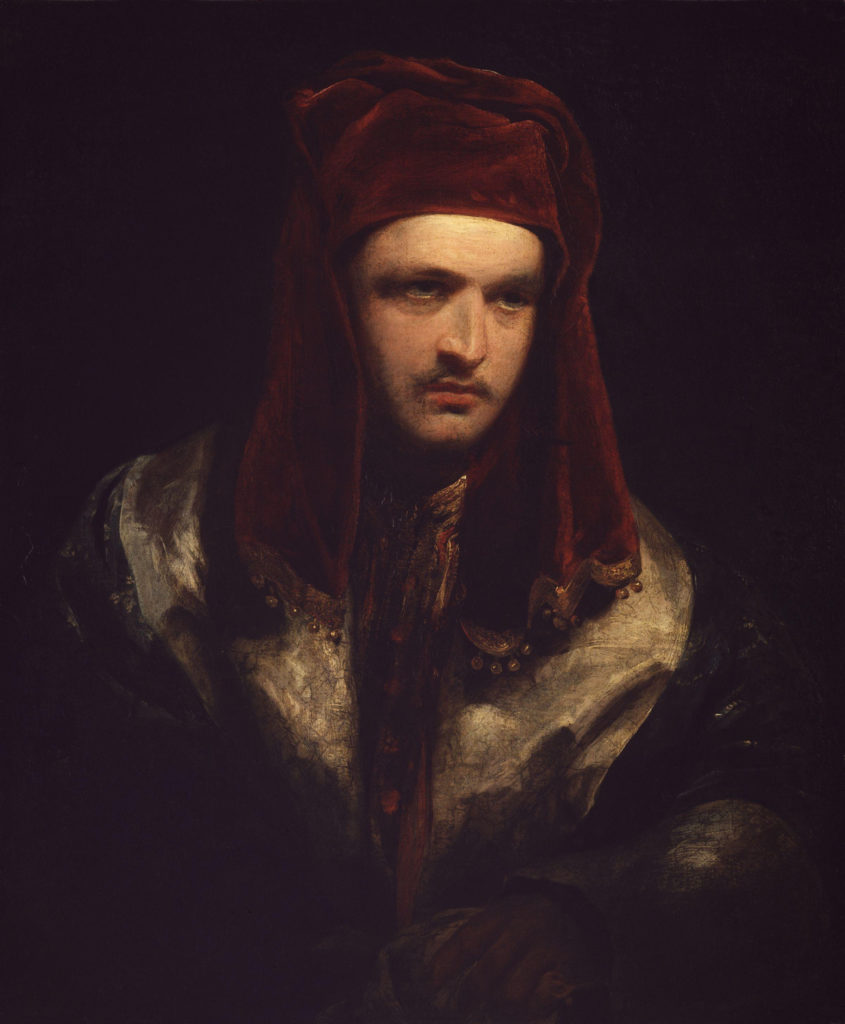
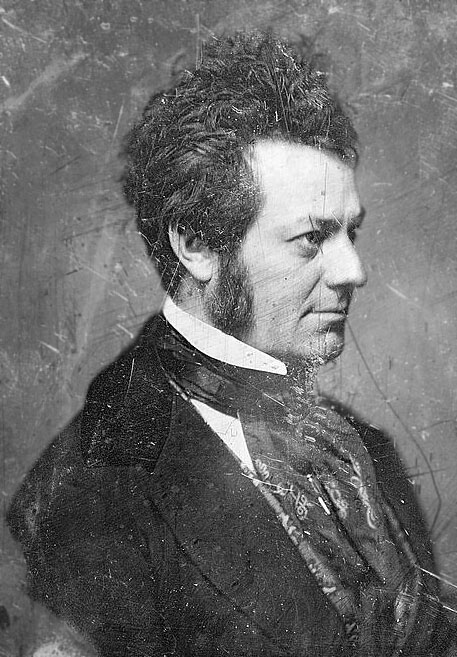
For years Macready had been engaged in high-profile thespian warfare with New York’s most celebrated hometown actor, Edwin Forrest, a charismatic star whose rugged, brawny performances endeared him to working-class audiences.

Below: William Macready in costume, painted by John Jackson

At first, the publicity surrounding their rivalry was a boon to both actors and to ticket sales wherever they performed. Both Macready and Forrest toured the United States in separate productions, many times visiting cities just days apart from each other. Audiences would attend both shows and argue for days about the superiority of one performance over the other.

Soon, however, it seemed these boisterous theatrical arguments were about something larger than the delivery of a Shakespearean soliloquy. Tensions were simmering about something deeper than any actor or performance, but rather that which they represented.

Forrest’s popularity among the Bowery crowd, especially the new Irish immigrants seeking to survive on the lowest rung of New York life, emboldened them against Macready. Macready’s fans, meanwhile, were eager to associate themselves with the fineries of English society. To Macready’s rarified audiences, Forrest represented the growing dangers of the impoverished immigrant class in the rapidly expanding city.

Below: Edwin Forrest, in a later photographic portrait by Mathew Brady

As the actors’ public feud grew more heated, so too did the ire of their respective audiences. And here, in May of 1849, both actors were performing in the same city at the same time. Tensions were high.

On May 7, Forrest supporters had disrupted a performance of Macbeth at the Opera House, pelting the stage with wilted vegetables and rotten eggs. Scorned and embarrassed, the English actor vowed never again to perform in New York and packed his bags to head back to London.

Prominent city leaders (including Washington Irving, a frequent guest at La Grange Terrace) convinced him to stick around for his final, highly anticipated performance three days later. Macready begrudgingly acquiesced.

That night, May 10, thousands of anti-Macready rioters packed into Astor Place, pushing up against the police forces gathered around the theater.

Tensions mounted as the crowds swelled, raising their voices—and then the stones started flying. Protestors pulled cobblestones from the street, pelting the police officers while screaming to burn the theater to the ground.

Inside, the audience tried to keep its focus on Macready, who gave a fine performance, given the circumstances, the drama of the evening enhanced by the growing sense of danger in the air. Once the show was over, Macready wisely disguised himself and made a quick exit through the back of the theater, never to perform in America again.

As darkness fell, the police struggled to contain the crowd and needed backup. The state militia marched from Washington Square and gathered inside the stables of La Grange Terrace, ready to disperse the agitated crowd that filled the square.

The soldiers fired shots into the crowd, seemingly without a distinct target. Anger turned to panic as thousands pushed and shoved, pulling in and trampling innocent bystanders in their path. By the time the crowd finally dispersed, at least twenty-five people had been shot and killed, some from stray bullets that hit them inside their homes.

This violent episode signaled the beginning of the end for Astor Place as an elite destination. Soon, ritzy developments opened farther north near Union Square, Gramercy Park, and later, Madison Square, and the old Opera House was torn down.

In the 1850s Astor Place saw the opening of two institutions that would give it a new educational purpose: the private lending library owned by the Astor family (opened in 1853) and the Cooper Union institution of higher learning (in 1859).

The remaining structures from the 1930s (Courtesy NYPL/Wurts Bros)

Unsurprisingly, La Grange Terrace experienced a spectacular fall from grace. It played various roles over the next several decades, functioning as various hotels and boardinghouses, before five of the nine houses were demolished in 1902.

The other four continued into the twentieth century as curious relics of a bygone era. In 1965 they were among the inaugural structures to be saved by the newly formed Landmarks Preservation Commission.

Even with battered old columns, this landmark tells a marvelous story of New York—from blue bloods to Blue Men.

The above is an excerpt from our book The Bowery Boys Adventures In Old New York, now available at bookstores everywhere.