Categories
Podcasts

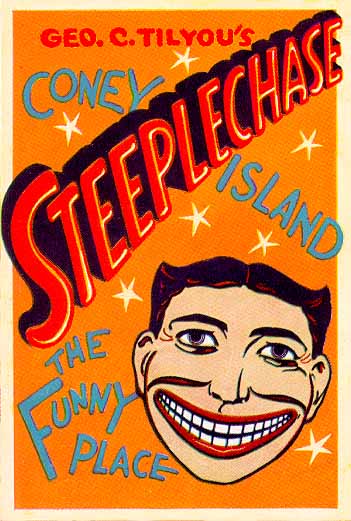
PODCAST: Coney Island – The Golden Age

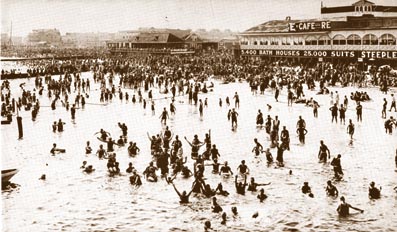
The Coney Island that greeted vacationers and city folk in the years 1904 to 1911 was one of infinite imagination manifested in fantastic but cheaply built extravaganza.

A world of amusement starts here in New York — Coney Island, the world’s oldest and strangest collection of amusement parks, a mishmash of sideshows, concession stands, gambling halls, new-fangled rides and luxury hotels. Take a daytrip with us back to the early days of Coney Island. Hold on to your hat!
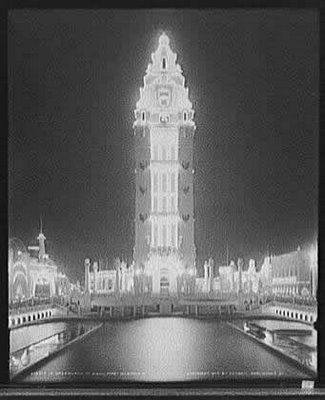
Part of what made the experience of Coney Island’s cheap, often disposable thrills was its meshing of new technology, human invention, and reactions to a strict moral society. It was socially acceptable debauchery, literally plugged in to the experience of a new century. The advent of electricity brought visitors out into the salty air until late at night. Benches were often sent slight electrical charges to make sure people didn’t sit around all day, not spending money! With electricity used more aestheticly as it was in Luna Park (right), they could light up the sky like Oz. The name Luna Park paid homage to A Trip To The Moon, a ride created by its parks owners Frederick Thompson and Elmer “Skip” Dundy, which in turn was certainly a close approximation of the French 1902 silent film classic by Georges Méliès.

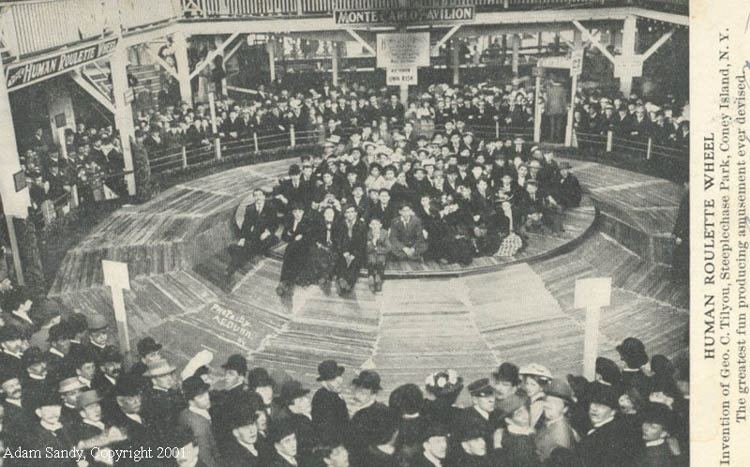
Over at Steeplechase Park, meanwhile, it was more centrifugal and gravitational forces that brought out the crowds, such as the Human Roulette wheel below. I dont know, there’s just something about this that looks profoundly unfun to me:
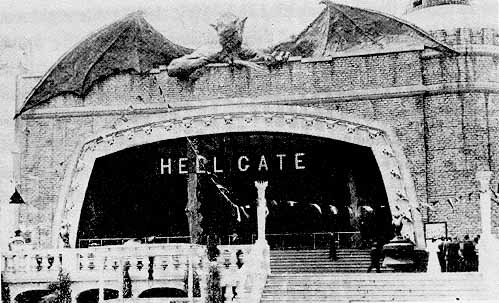
One of the more unusual amusements at Dreamland was Hell’s Gate, which emulated via the guise of starched Victorian morality the possible geography of Biblical Hell. Perhaps unsurpring, it was the combination of a burst lightbulb and a tar bucket inside Hell’s Gate that started the fire that eventually burned all of Dreamland to the ground in 1911, burning for 18 hours.
The proper entrepreneur who could maneuver through the early days of Coney Island corruption and make a financial killing. Take the inventer of the hot dog, Charles Feltman, who launched restaurants and hotels from the success of his sausage in a roll carts. This fancy restaurant, a favorite of vacationers of all social classes, sat where modern Astroland sits today:
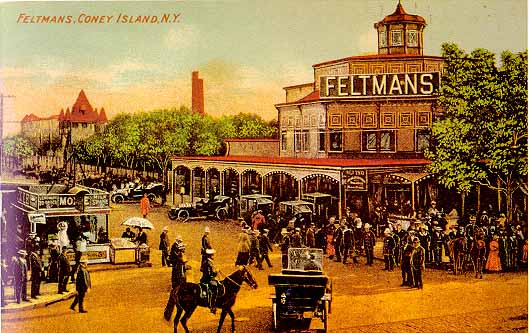
(Not to spoil anything from our next episode, but in 1915, an employee of Feltman’s Restaurant Nathan Handwerker ate free hot dogs all summer, then devised an idea….)
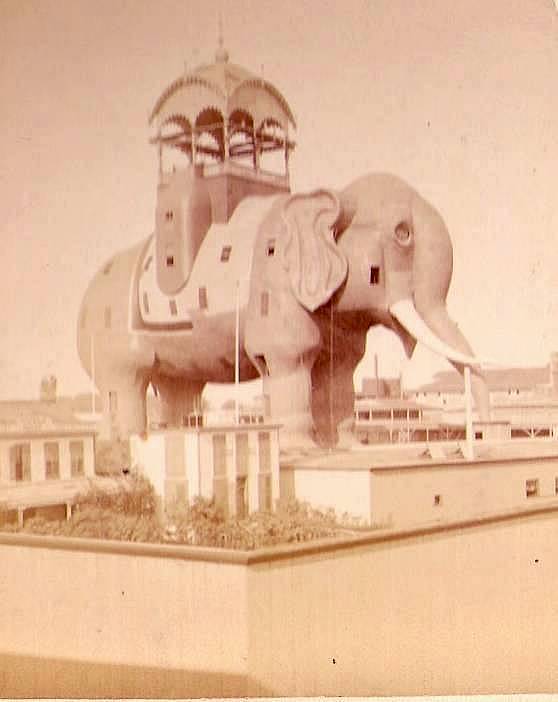
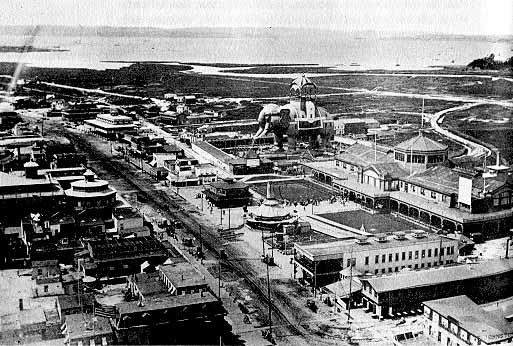
Why stay in a luxury hotel when you can just sleep in a giant elephant? This unusual lodging was built in 1882, just a few steps from the world’s first roller coaster, the Switchback Railway, and you could view the beach revelers via windows that served as the elephant’s eyes. One leg featured a small cigar store, while the back legs had a staircase that led to your room. Perhaps because this doesnt exactly look like the most comfortable revolution in hospitality, the hotel soon became a favorite for prostitues, so that ‘seeing the elephant’ soon became a rather naughty euphemism. Our shabby pachyderm was mercifully put out of its misery in 1896 by fire. I love this aerial view of the area, with the Elephant lording clumsily over the landscape, well before the Island’s peak days a few years later.
Elephants in general didnt fare so well in Coney Island. Then there’s the case of Topsy, the once friendly elephant at Luna Park who went wild and killed three men. Her owners decided to put her down, attempting to poison her with cyanide-laced carrots, to no avail.

Enter Thomas Edison, who was trying to prove the dangers of his rival George Westinghouse’s alternating electrical current to his own ‘safe’ direct current. He did this by going around the country and electricuting dogs and cats as a demonstration. So when he heard that the owners of Luna were trying to off their elephant, he couldnt refuse.

They even made the ‘demonstration’ the topic of a silent film, which you can see here.

By the way, there are so many resources online about early Coney Island history, that I invite you to check a few of these wonderful places out yourself:

Coney Island History Project
Amusement Parks history
Coney Island History Site

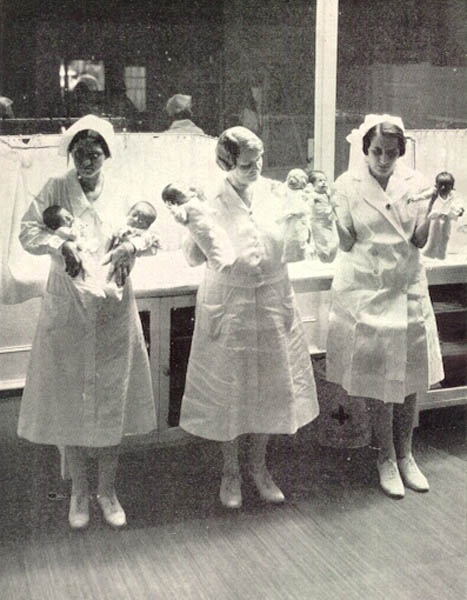
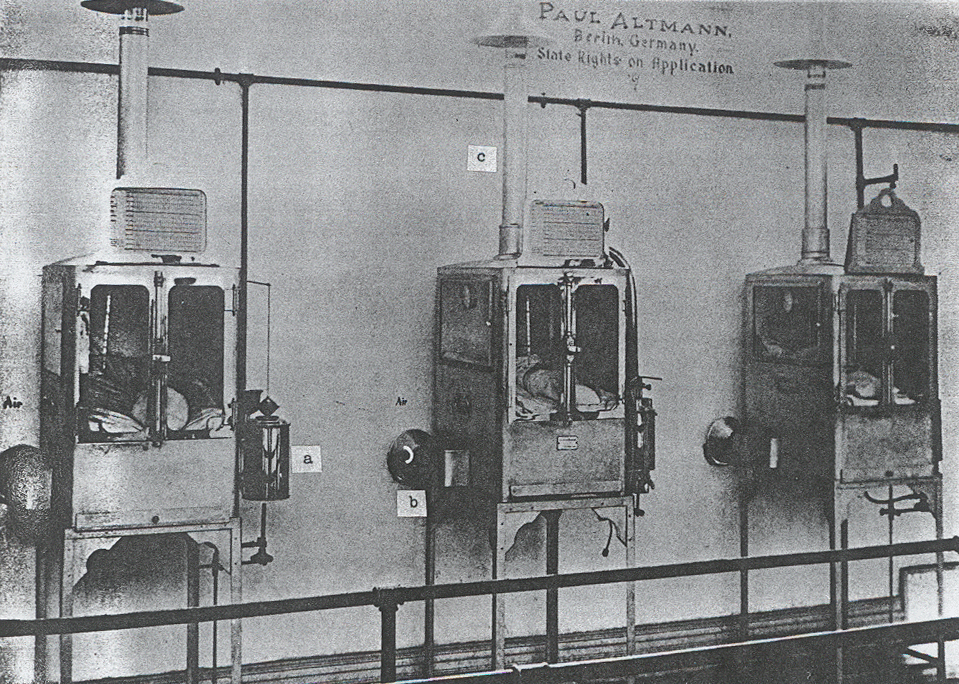
And in case you don’t believe me about that sideshow exhibit involving premie babies in incubators, here’s a shot of some of the nurses displaying the stars of the show, followed by a look at the actual incubators. The exhibit actually ran for decades in Coney Island, until 1945. You know, because there’s nothing more entertaining than watching a newborn infant struggling to survive:
Categories
Podcasts

PODCAST: The Chrysler Building

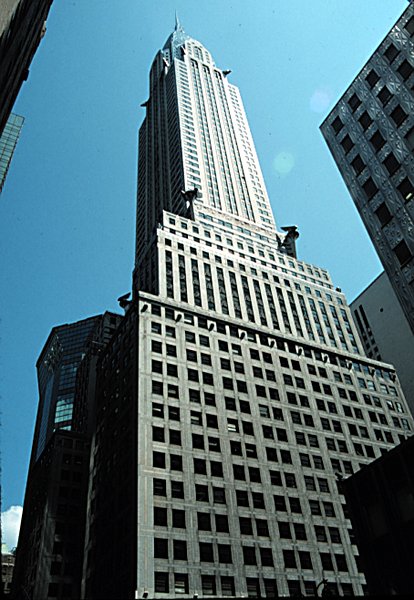
Ah, the classic Chrysler Building! She’s got style, glamour and all that jazz. But what magical surprise did she spring on New York in October of 1929? Join us as we tell the story of New York’s most beautiful art deco treasure.

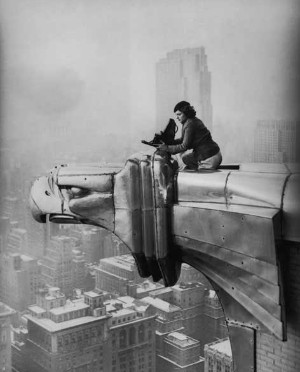
The picture above is of famed photographer Margaret Bourke-White, who had an studio on the 61st floor of the Chrysler. Her iconic photographs of the building helped create the building’s mystique as a sleek, magical tower. Of course later, as a correspondent for Life Magazine, she became one of the most intregal documenters of World War II, particularly the bombing of Moscow.

One unusual aspect of the Chrysler building is that it’s ‘something you look up at’. At street level and for several floors up, its a rather drab structure. In fact there are many buildings nearby that exhibit a far more striking art-deco style at street level, including the Chanin Building just across the street, and the Daily News Building a block away.

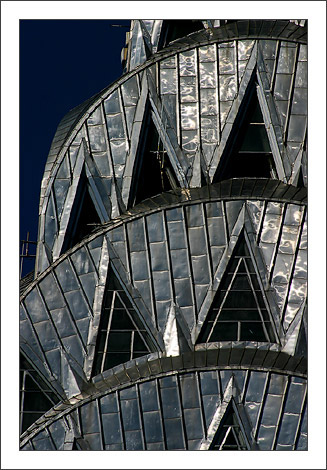
But the top of the Chrysler more than makes up for it, with its silver spire and repetitions of triangular sunbursts draped in silver nickel steel (a specialty metal called Nirosta designed by the German company Krupp). The real punch of the Chrysler at night comes with these triangular windows, with their almost crown-like appearance, which pierce the night and create truly dramatic scenes on foggy evenings.

Photo at right: Courtesy Frank Jermann, Voelzberg, Germany

The Cloud Room, a swanky nightclub and speakeasy in the 30s, occupied the top floors until the 1970s. As with many things in New York at that time, the building fell into disrepair in the 70s and 80s; thankfully much of its luster has been returned thanks to the current owners Tishman Speyer. Given the recent trend of restoring New York landmarks to their former glory, might we see a return of the Cloud Room in the near future?

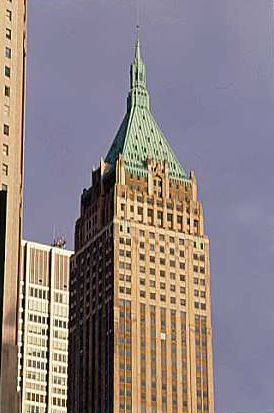
Van Alen was racing to build the Chrysler Building before his former estranged business partner H. Craig Severance finished with the building down at 40 Wall Street. Severance finished first, but Van Alen stole his thunder by erecting the Chrysler spire which pushed its height above 1,000 feet.

The 40 Wall Street building, still impressive but far less ornate, has had a rather rocky history. Referred to as the “Crown Jewel of Wall Street,” it held the title of world’s tallest building for all of four days. At one time known as the Bank of Manhattan Trust Building, it was hit by a Coast Guard plane in 1946, killing four people. In the 90s it was bought by Donald Trump, who funded extensive renovations and turned it all to commercial space. It’s actually called The Trump Building now. The American Express headquarters is housed here. According to Real Estate Weekly, 40 Wall Street is the tallest mid-block building in the world, which I guess has some sort of cache.

Incidentally, a former 40 Wall Street building which stood in its spot was office to the first president of the New York Stock and Exchange Board when it was first organized in 1817.

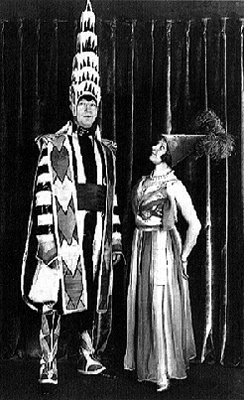
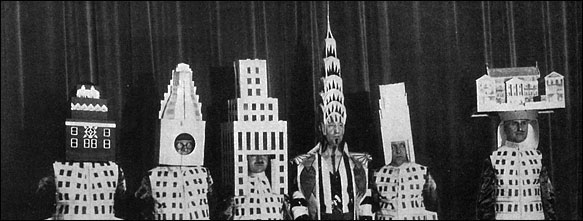
As for the Severance’s former partner, Van Alen did bask in a brief fame as architect of the Chrysler, despite Walter Chrysler’s refusal to pay him the remainer of his commission for the project due to bribery. Perhaps strangely, his most circulated photograph actually has him dressed up as the Chrysler Building. The event was the 1931 Beaux-Arts Ball for the Society of Beaux-Arts Architects. Van Alen was a student in Paris’ École des Beaux-Arts and was a regular attendent at these high-class and often rowdy functions. This New York Times article gives a thorough recap of the event. But just to put it in perspective, many architects came that year dressed as the buildings they created, including William F. Lamb as his newly constructed Empire State Building. The jovial bunch is featured below:

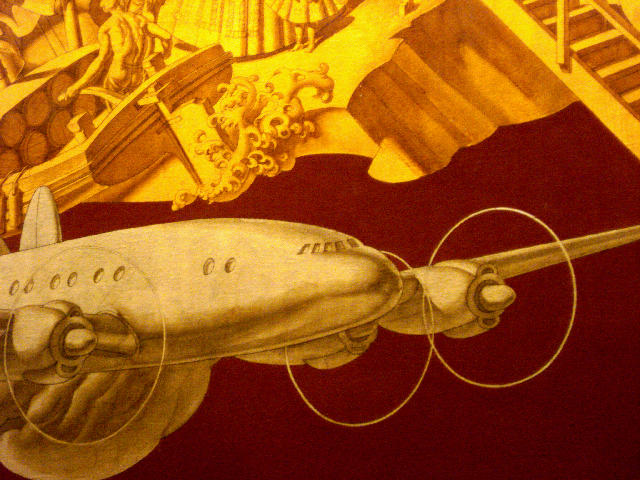
And finally, I apologize for giving short shrift on the podcast to the work of Edward Turnbull, who painted the brilliantly colored ceiling mural in the lobby of the Chrysler Building.

A mixture of Sistine Chapel magnificence and perhaps a bit of prescient Communist-esque propaganda, “Transport and Human Endeavor” is actually one of the largest indoor murals in the world, displaying an enthusiasm for American progress and mechanical ingenuity. Lit in the warm glow bouncing off the marbled wall and oak floor, the mural hides many fascinating details full of blimps, airplanes and automobiles. Just make sure you dont stumble over one of the building security guards as you look upwards.

You can find another lovely picture of it here

All-Blogs.net directory

Categories
Podcasts

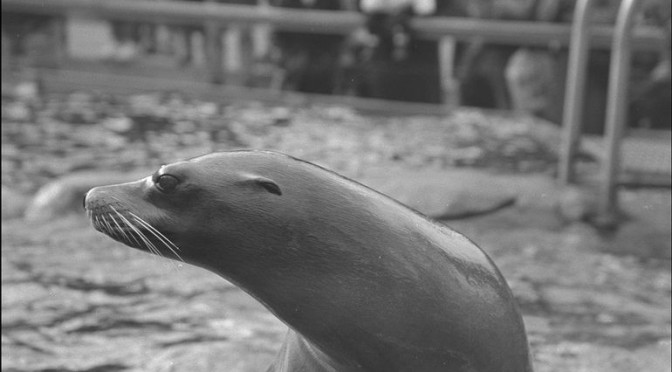
PODCAST: Central Park Zoo

From an odd assortment of abandoned creatures, to one of the most notorious zoos in the world, take a tour with us through Central Park’s storybook zoo.

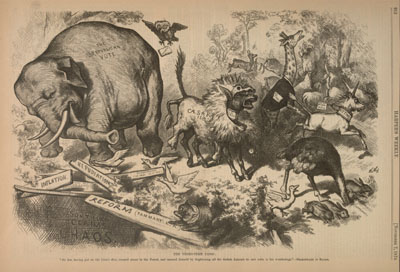
In the podcast I erroneously stated that a famous political cartoon using the Central Park Zoo as a political metaphor also featured Ulysses S Grant depicted as an ass. Perhaps that was some sort of Freudian partisan comment, because Grant himself is not in the cartoon, although it is about his alleged ‘Caesarism’, running for president for a third term back when it was constitutionally possible — but untraditional — to do so.

The ass in the cartoon below actually represents the New York Herald, the flagrant publication which ran the article on the Central Park Hoax as well as coining the phrase ‘Caesarism’.

The cast of the Zoo is featured (hmm, I didnt realize the Zoo had unicorns), as well as an elephant representing the republican vote, being scared off by the Herald’s bombastic opinions on Grant. This is the origin of the elephant as the symbol of the Republican Party:

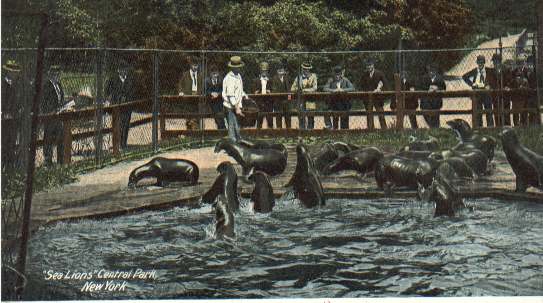
Now, onto the Menagerie! This postcard nicely displays the early collection’s unplanned evolution:

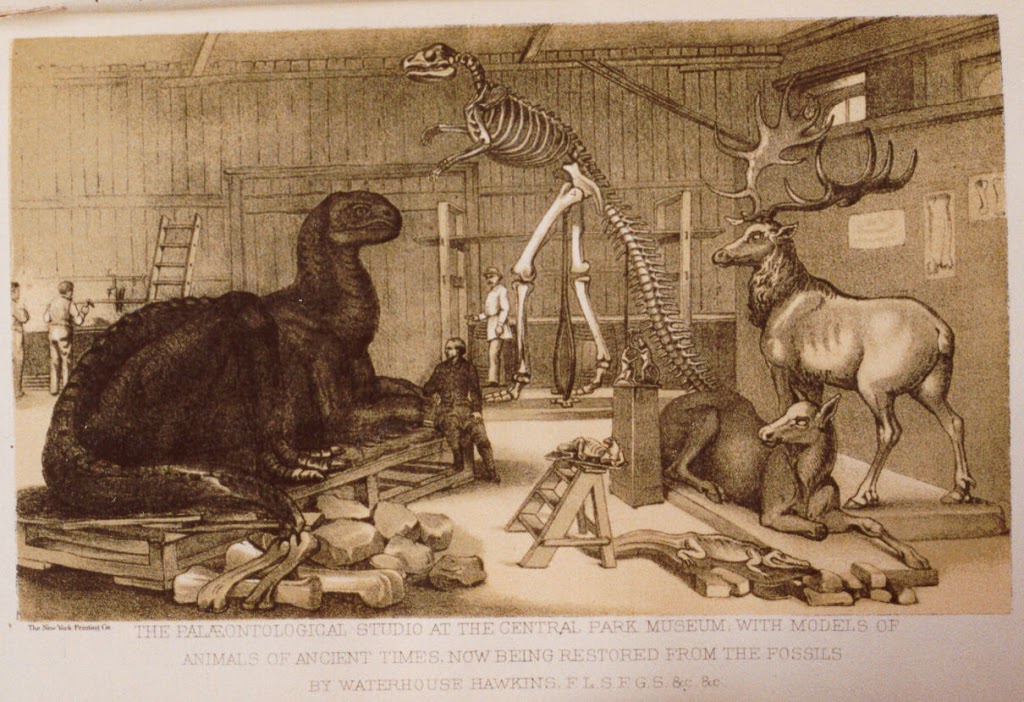
Before the Arsenal served as headquarters of the city park service and anchor to the Zoo, it was the temporary location of the Natural History Museum as well as workspace for paleontologists and their dinosaur skeletons.

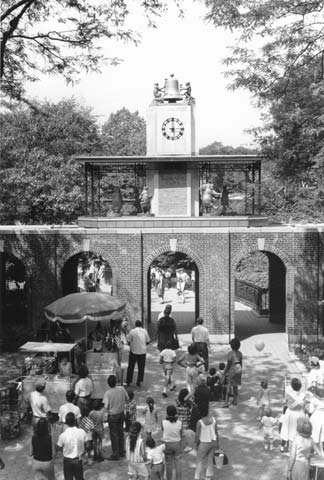
Part of the zoo’s rebirth in the 80s included the restoration of the Delacorte Clock, a throwback to grandiose European clock design that greets each hour with a parade of dancing animals and tinkling music. It was a gift of George Delacorte, founder of Dell Publishing Company, who also graced Central Park with a theatre and statuary depicting Alice In Wonderland. Over forty years old, the clock and its tinny nursery rhymes can be actually be heard from Fifth Avenue if you listen closely enough.

Although close in style, the nearby Dancing Goat fountain sculpture and its companion Honey Bear are actually from the 1930s, where they once flanked a lavish cafeteria inside the zoo that was demolished in the 80s to make way for the rain forest.

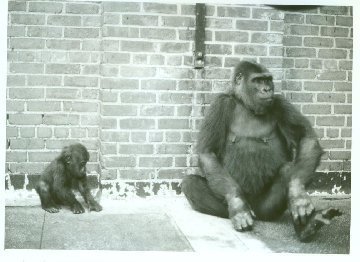
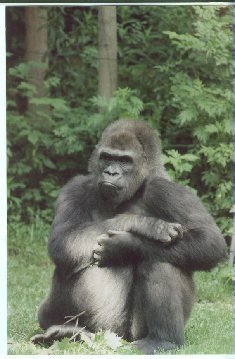
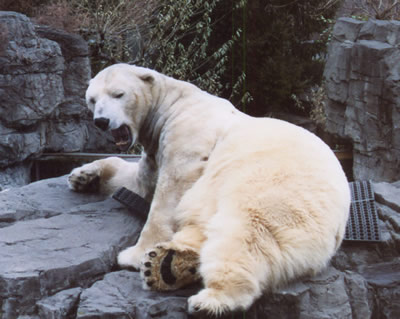
And a couple of our celebrity stars of the zoo:

Patty Cake and her mother were quite the sensation in the early 70s. The first gorilla ever born at New York, she was named in a much publicized newspaper competition, and ever since, she has unquestionably been the city’s most famous gorilla.

Most baby gorillas are actually taken from their parents to be nursed, however Patty was cared for by both her parents, Lulu and daddy Kongo. Her father eventually fell on her, breaking her arm, and she was eventually transferred for a time to the Bronx Zoo. Her custody battle between the two zoos was even covered by Time Magazine.

Now as a permanent resident of the Bronx Zoo, queen of the Congo Gorilla Forest, at age 35, Patty is a proud mother of nine, including two rare twins, Nngoma and Tambo. And like any New York society diva, she’s also had four husbands.

In spirit, she’s also doing her share to stop gorilla poaching in Africa, through a charity called ‘The Pattycake Fund’.

Gus, the no-longer-depressed polar bear, was really diagnosed by an animal behaviorist with psycotic tendencies, and the animals plight was so publicized that he made the cover of Newsday, significant coverage on CNN, and somebody actually wrote a play about him. Changes to Gus’ habitat were soon made, including better water circulation, and Gus’ mood has improved substantially. And anyway, why should he be depressed? He has two wives — Ida and Lily.

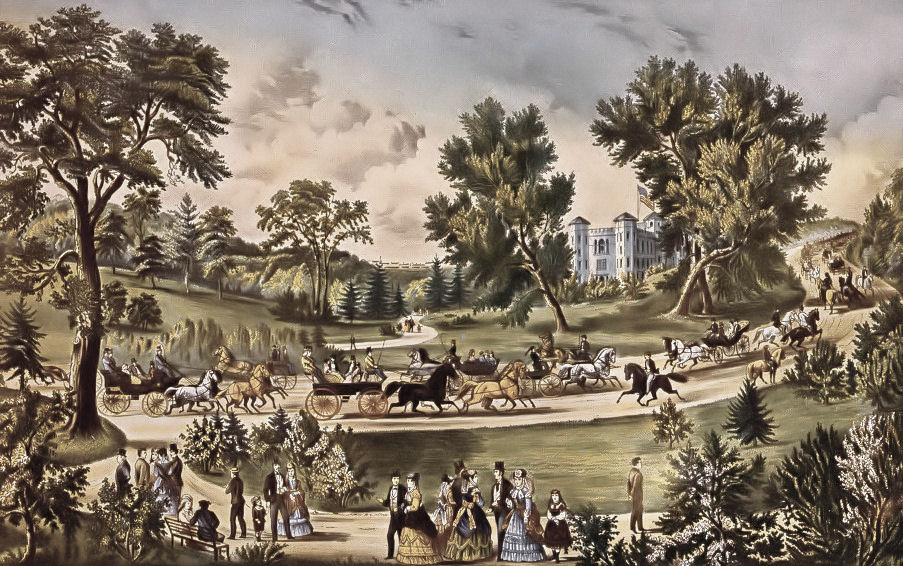
And finally take a gander at this painting from the mid 19th century of Central Park in its wilder days. The building in the back is the castle-like Arsenal, before a menagerie started appearing.

Categories
Podcasts

PODCAST: St. Patrick’s Old Cathedral

The fashionable district of NoLIta happens to be home to a few ghosts as well, tucked behind the walls of St Patrick’s Old Cathedral. Come with us as we unearth some info about a mysterious New York fraternal order, the occupants of a few cemetery crypts, and the origins of a legendary film director.

Listen to it for free on iTunes or other podcasting services. Or you can download or listen to it HERE

Categories
Podcasts

PODCAST: The Dakota Apartments

Angels and Demons Part 1: New York’s most famous horror movie and the fascinating story behind its insidious setting. Plus: Lauren Bacall, Connie Chung and some dumb waiters!

Listen to it for free on iTunes or other podcasting services. Or you can download or listen to it HERE

Categories
Podcasts

PODCAST: Washington Square Park

Something’s afoot in Washington Square Park. Join the Bowery Boys this week on an expedition through one of New York’s quirkiest (and most beloved) parks — from Hangman’s Elm to Bob Dylan. You’ll be moved… fifteen feet!

Listen to it for free on iTunes or other podcasting services. Or you can download or listen to it HERE

Categories
Podcasts

PODCAST: Governors Island

New York’s most underappreciated treasure gets the Bowery Boys treatment. Its Governors Island: a fort, a small town, a prison and a Burger King … all bought for one dollar.

Listen to it for free on iTunes or other podcasting services. Or you can download or listen to it HERE

Categories
Podcasts

PODCAST: The Blackout of 1977

Flash back to the summer of 1977, when Star Wars and the Yankees ruled, gas prices were high, a serial killer roamed the streets, and the city experienced a little inconvenience called the New York Blackout.