Categories
Podcasts

PODCAST: The Flatiron Building

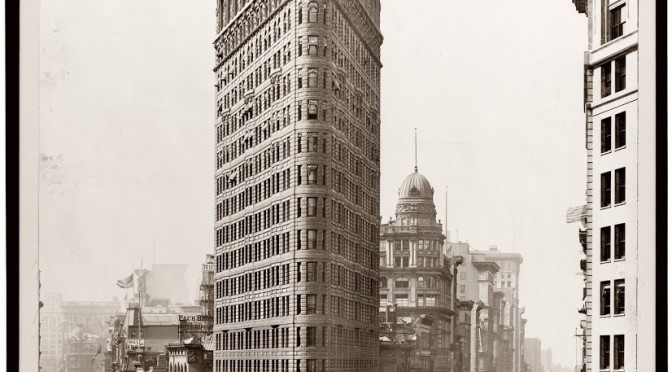
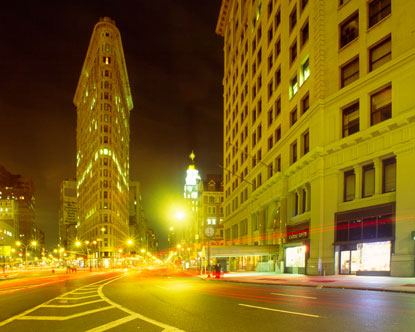
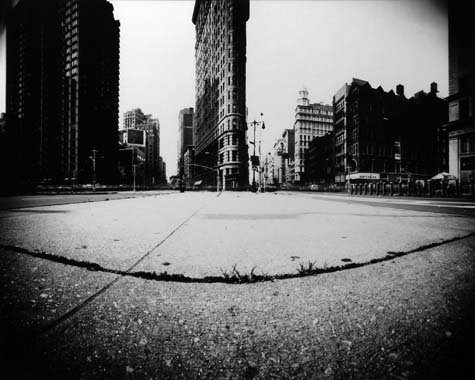
What are the Bowery Boys doing in Chicago? Just a little detour in our search for the origins of the Flatiron Building, the wedge shaped, wind producing oddity — built as an office space in a department store neighborhood which grew to become one of the most romantic, elegant buildings in New York City.

Listen to it for free on iTunes or other podcasting services. Or you can download or listen to it HERE

This is the place where I usually put up a lot of pictures related to the podcast. However, I don’t think I could do as good a job as NYC Architecture’s great coverage of the Flatiron. Check out their site for a lot of great pictures, including some of the construction.

For more information on the Worth Monument — the odd obelisk sitting in the traffic island in front of the Flatiron — read this.

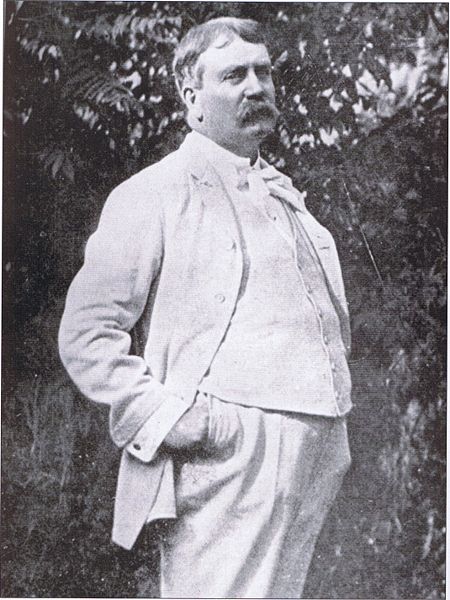
Daniel Burnham, the Flatiron’s architect and planner of Chicago’s White City, among a great many other things.

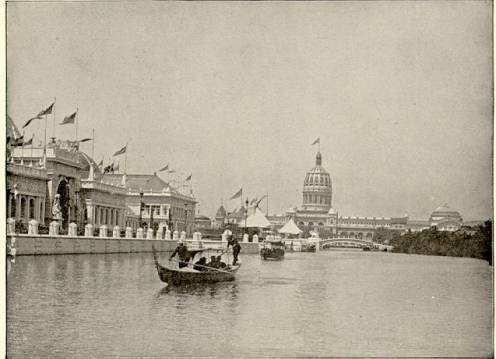
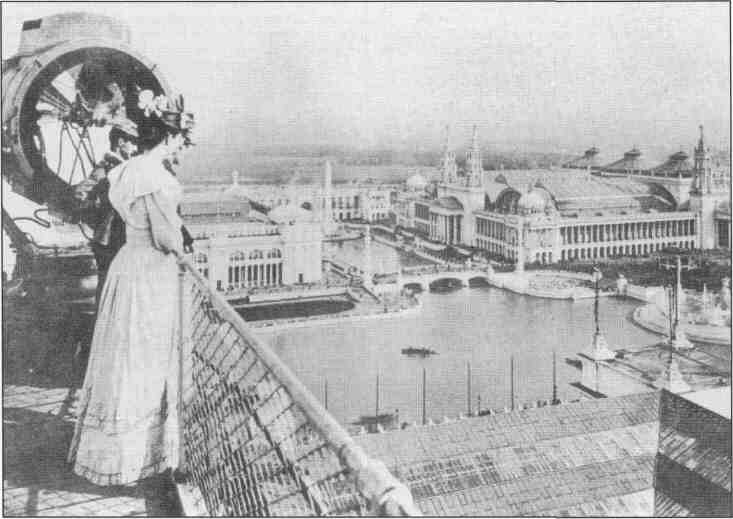
Burnham’s greatest challenge — the World’s Columbian Exposition

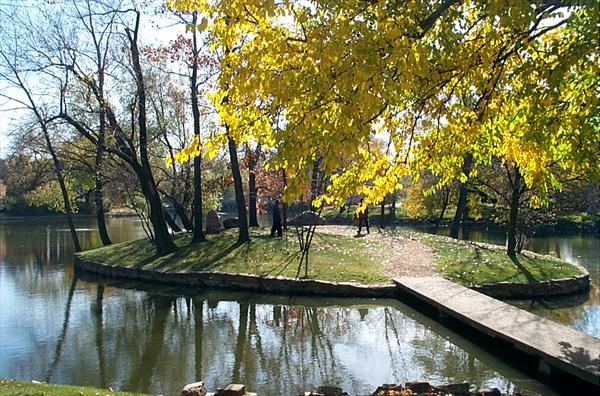
Burnham’s final resting place, at Graceland Cemetery in Chicago:

Categories
Podcasts

PODCAST: The Original Bowery Boys / B’hoys

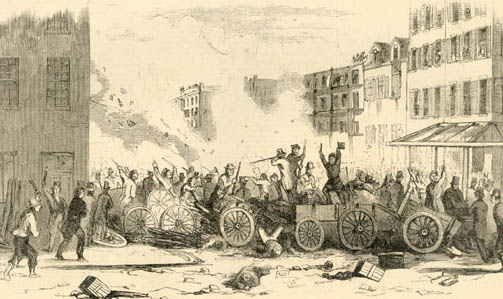
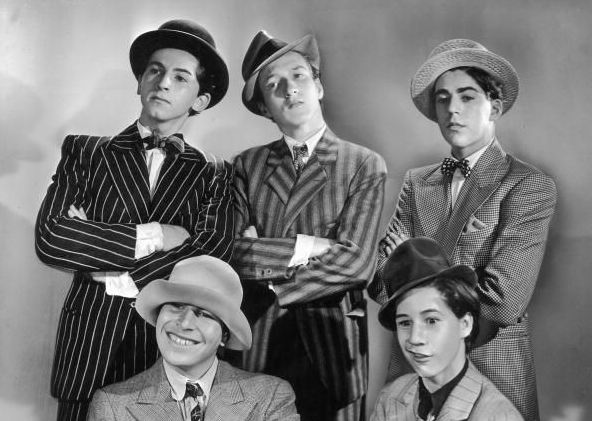
For our very special 25th episode, we give you all sorts of Bowery boys — the cultural and fashion trend of the 1840s, the notorious enemy of the Five Points gangs, and that slapstick bunch of New York actors from the 1930s and 1940s. And of course, a little bit about us!

LISTEN HERE:

The Bowery Boys, on their way to battle the Dead Rabbits (or is that the Roach Guards?)

The ‘Dead End Kids’, circa 1938, fresh from their fame in ‘Dead End’ and ‘Angels With Dirty Faces’

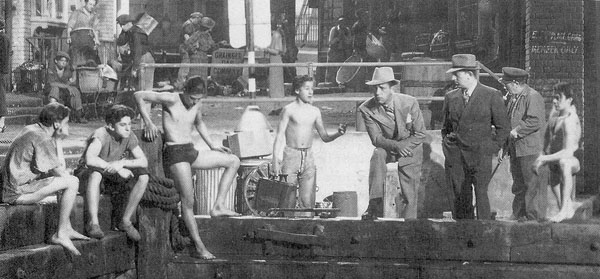
From the film ‘Dead End’

Categories
Podcasts

PODCAST: The Copacabana

To get you in the mood for the weekend, every Friday we’ll be celebrating ‘FRIDAY NIGHT FEVER’, featuring an old New York nightlife haunt, from the dance halls of 19th Century Bowery, to the massive warehouse spaces of the mid-90s. Past entries can be found HERE.

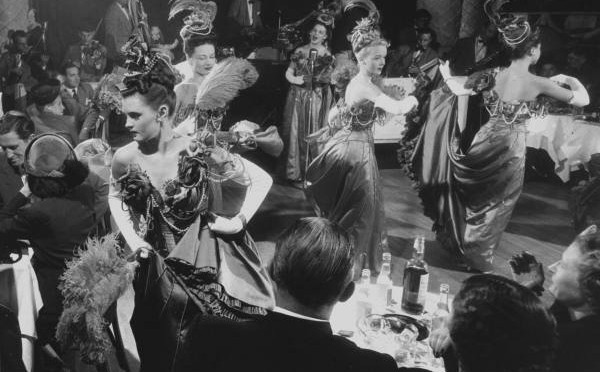
During the 40s and 50s, any celebrity worth their weight in fame either frequented or performed at the Copacabana, a swanky nightclub known for its showgirls, its Chinese food and its mafia ties. On this mini-podcast, we take you on a night on the town with Frank Sinatra, Sammy Davis Jr and a rowdy table of New York Yankees.

Listen to it for free on iTunes or other podcasting services. Or you can download or listen to it HERE

Two corrections to the podcast this week:

— FREUDIAN SLIP — I refer to Frank Costello as New York’s leading ‘media don’. Clearly, he’s a ‘mafia don’.
— JUST PLAIN MISSPEAK — The current Copacabana has closed to make way for the extension of the 7 train, not the 4 train.

—-

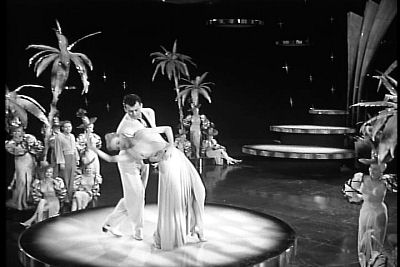
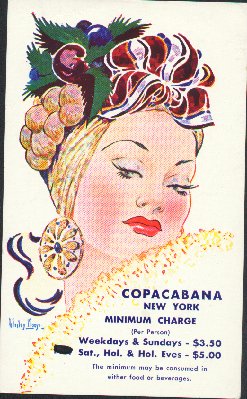
To boost popularity of the club, first Copa owner Marty Proser helped produce a film called ‘Copacabana’ in 1947, starring Groucho Marx and Carmen Miranda. The film was not a hit, however it gave some of the Copa Girls a chance at appearing on the big screen:

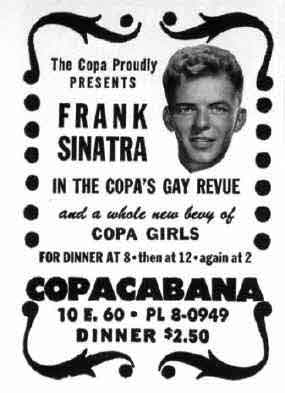
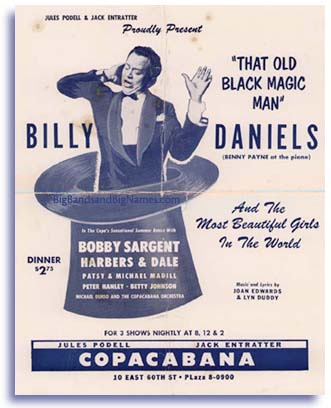
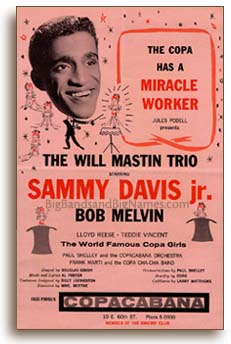
Some peppy flyers for the Copa:

I found some of these nostalgic flyers at a cool website calledBig Bands And Big Names.)

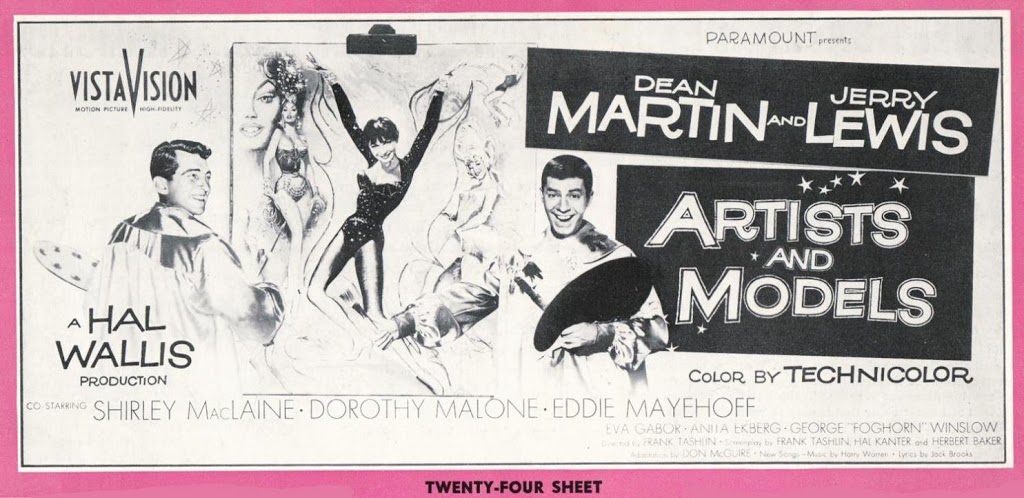
Dean Martin and Jerry Lewis spun off their fame from the Copa to make corny movies like this one:

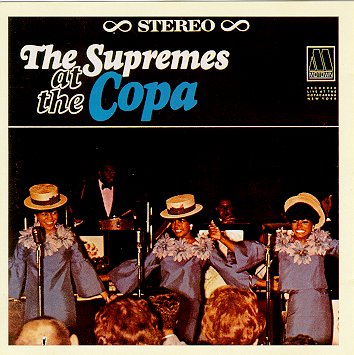
Although the Copa began to wane in popularity in the 1960s, artists like Marvin Gaye, the Temptations, and the Supremes recorded live albums there.

Categories
Holidays Podcasts

PODCAST: Macy’s – the Man, the Store, the Parade

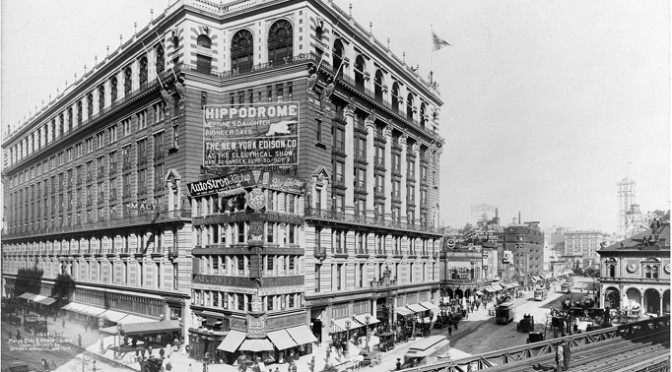
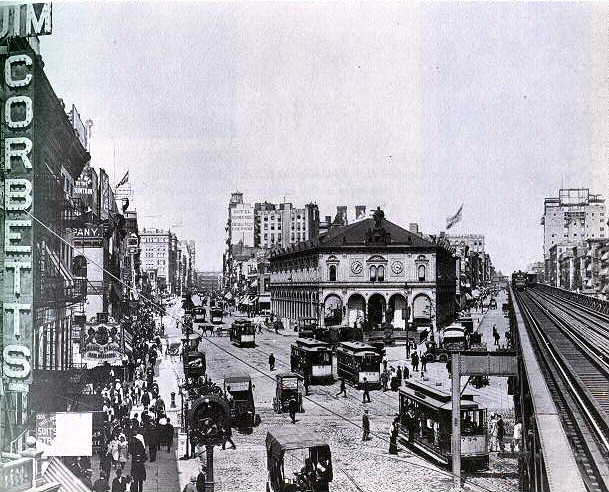
What year is this picture taken? (Click on it to view details.) Note the elevated rail line, no automobiles, and the New York Herald building still standing. You can also tell that the building’s later additions have not yet extended it down towards 7th Avenue. A little research on the Hippodrome and when the shows ‘Neptune’s Daughter’ and ‘Pioneer Days’ performed there reveals this picture was taken in Feb-March 1907 — a little over one hundred years ago.

PODCAST Did you know that the man whose name adorns one of the most successful department stores in the world was a sailor turned failed businessman? Or why Macy’s Department Store ALMOST takes up an entire city block? Or how many clowns have been in the Macy’s Thanksgiving Day parade? The Bowery Boys let you in on those answers and lots of other fun facts about one of New York City’s premier retailers.

Listen to it for free on iTunes or other podcasting services. Or you can download or listen to it HERE

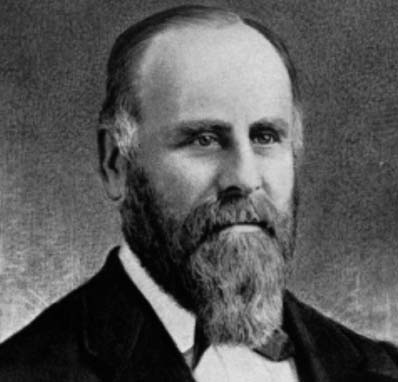
The man who started it all — Rowland Hussey Macy

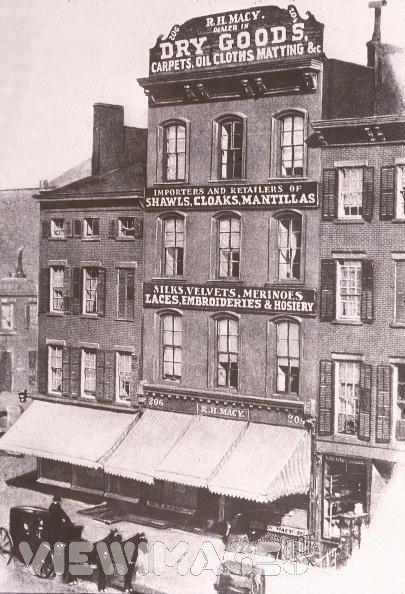
The first Macy’s store in Manhattan — 204-206 14th street, near 6th Avenue

Herald Square….before Macy’s, circa 1893. The Sixth Avenue elevated train dominates the right and a cable car cuts down Broadway. What we know as the park in Herald Square is nothing but a traffic triangle; however the Bell Ringer’s monument sits anew on top of the New York Herald building. Macy’s would soon sit wheter that sign with the coat of arms hangs.

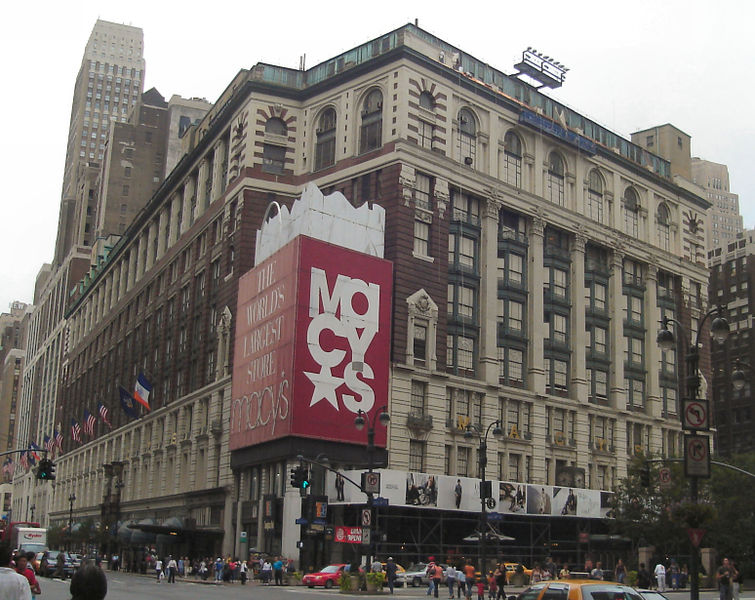
A gigantic Macy’s bag conceals the building which prevented the Straus brothers from expanding the store over the entire city block. It is probably the most advantageously placed Sunglass Hut in the entire world.

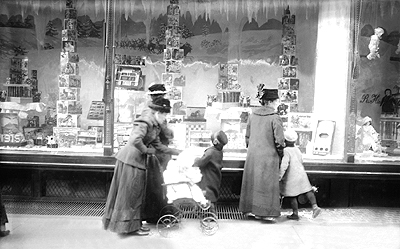
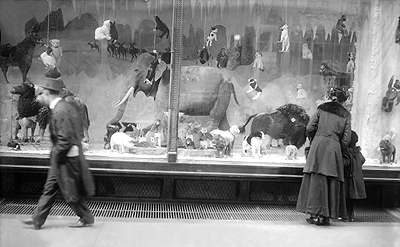
Macy’s holiday windows, circa 1915

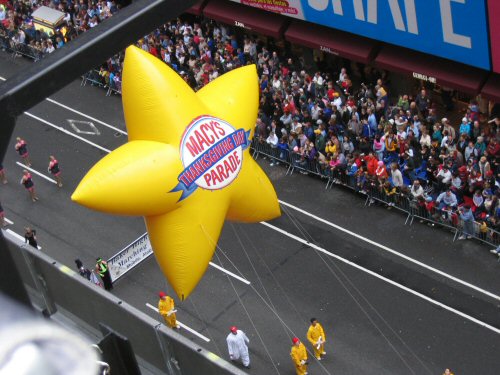
The Macy’s famous star logo — derived from the tattoo that founder Rowland Macy received during his stint as a sailor

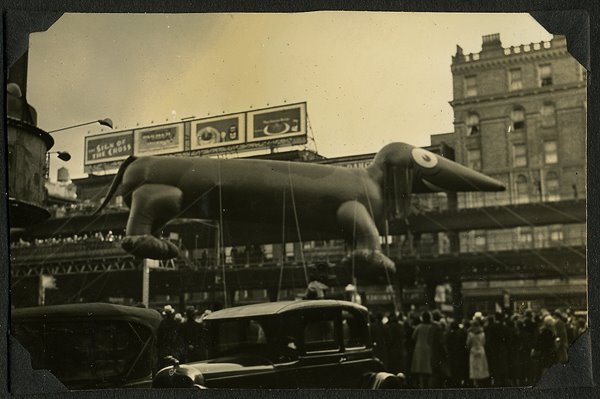
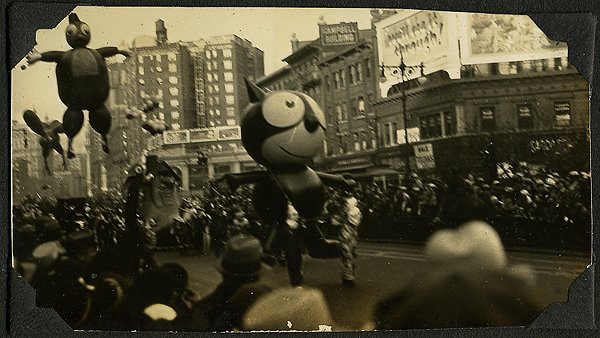
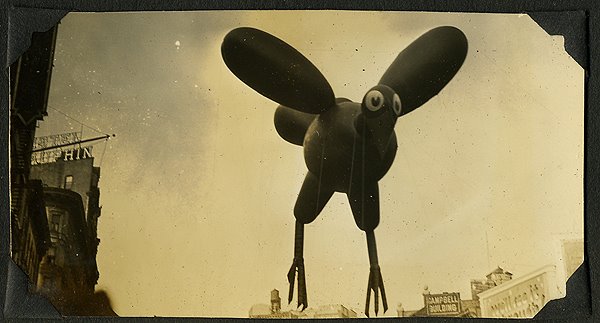
Below, some funky looking balloons from the 1932 parade. Swapatorium has many, many more from this period that are simply breathtaking.

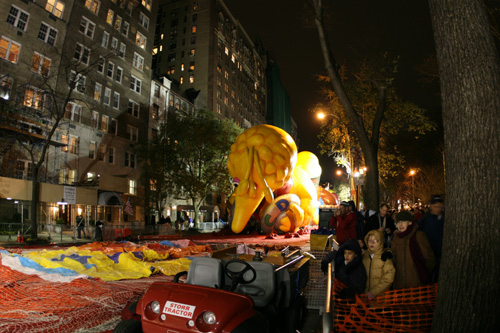
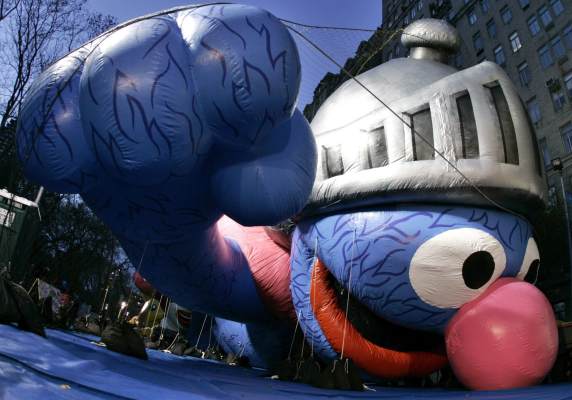
A wonderful tradition that we forgot to mention happens the night before the parade, in the grounds of the Natural History museum, as hundreds gather to watch the balloons being inflated. (Here’s Grover and Big Bird being blown up.)

Forgotten NY explores the remnants of Macy’s first store, as well as the gives you a birds eye view on Macy’s wooden escalators. We talk more about some of the more dog-shaped parade balloons in this podcast. The Macy’s Parade website has the details on times and route.

The City Room reports that this year’s balloons got a trial run in Queens this week. Meanwhile, some people aren’t happy with Macy’s swallowing up the Marshall Field’s department store brand.

Fun fact: Wartime demand in the 1940s halted the production of women’s nylon pantyhose. When retailers were allowed to resell them, Macy’s restocked their shelves with almost 50,000 pairs, all of which were sold in six hours.

Categories
Podcasts

PODCAST: Staten Island: A Brief History

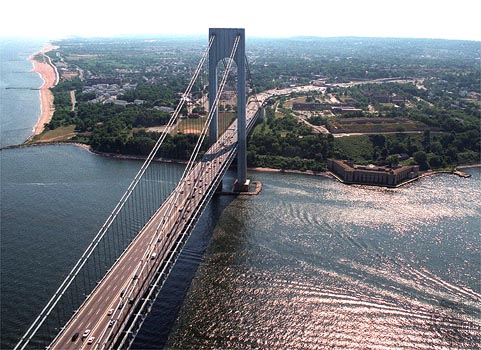
(flying over the Verrazano-Narrows Bridge)

The Bowery Boys take on the history of New York City’s most ‘forgotten’ borough, from its beginnings as a British outpost during the Revolutionary War to the controversy over that big stinky landfill. And we do it all in exactly the time it takes the Staten Island ferry to take you across the New York harbor! (No really, try it!)

Listen to it for free on iTunes or other podcasting services. Or you can download or listen to it HERE

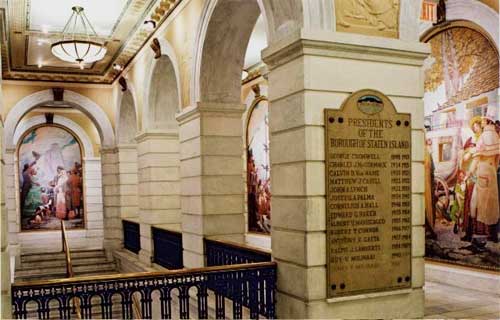
Take a look at the list of top 100 historical moments in Staten Island history that we mention in our podcast. By the way, here’s a peek inside Staten Island Borough Hall, which we mentioned was designed by Carrere & Hastings, best known for the New York Public Library.

And on to the final part in our Staten Island Snug Harbor series (other parts can be found here):

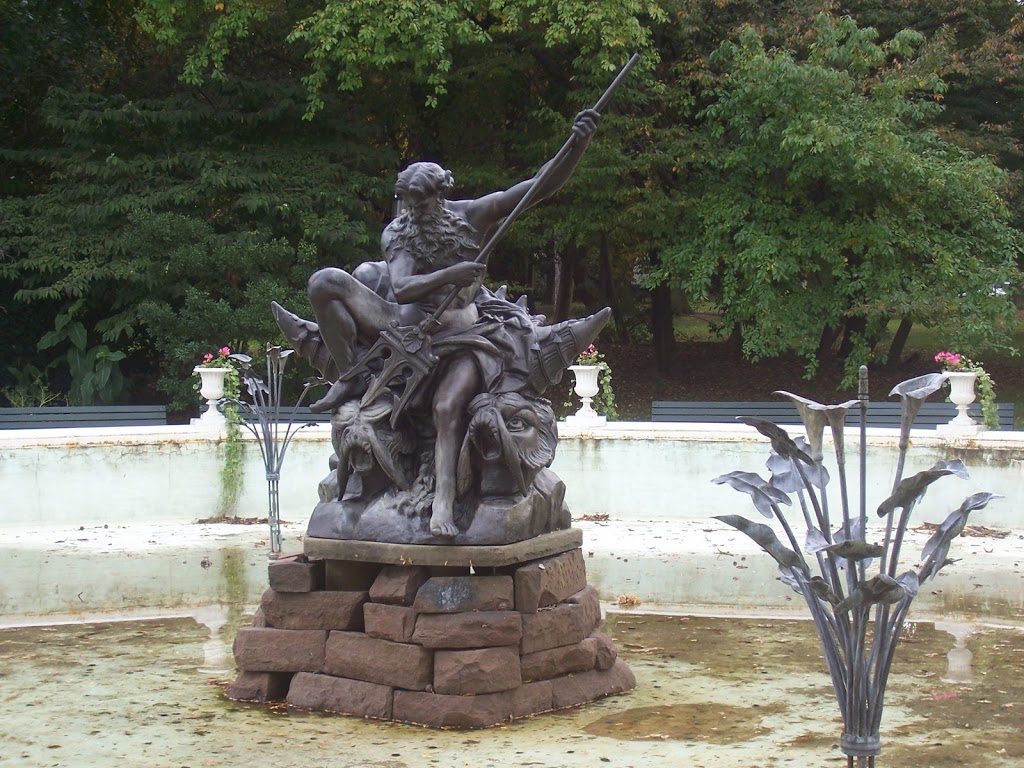
(A Neptune fountain on the front lawn, which would not look out of place in Rome)

Modern Snug Harbor offers the community a wide variety of cultural functions. In fact, the afternoon I was there, Snug Harbor was host to a regional American Girl Fashion Show. I would have taken some photographs of this unusual event — you can get the general idea of what an American Girl Fashion Show is like here — however it might have been a bit odd for a single man with a camera to be walking around taking pictures of young girls with their dolls.

The most dynamic of Snug’s new additions is the Staten Island Botanical Garden, sprouting up on the vast Snug Harbor campus in 1977, first as a traditional English garden, but quickly diversifying. I took a stroll last weekend, which was an odd time for a garden. Most of the budding flowers had disappeared, and the leaves were only beginning to change. I would recommend hitting Snug Harbor over the next couple weekends to experience the fall colors.

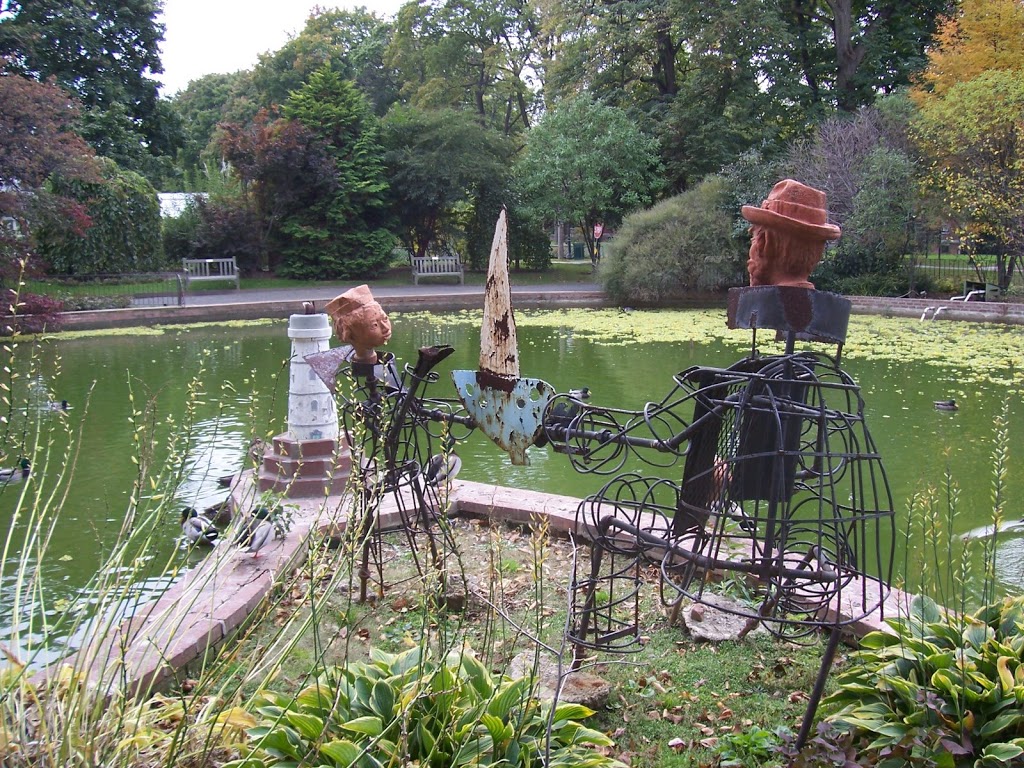
The Pond Garden was actually overrun with ducks, more than I could count actually, all encircling this curious sculpture:

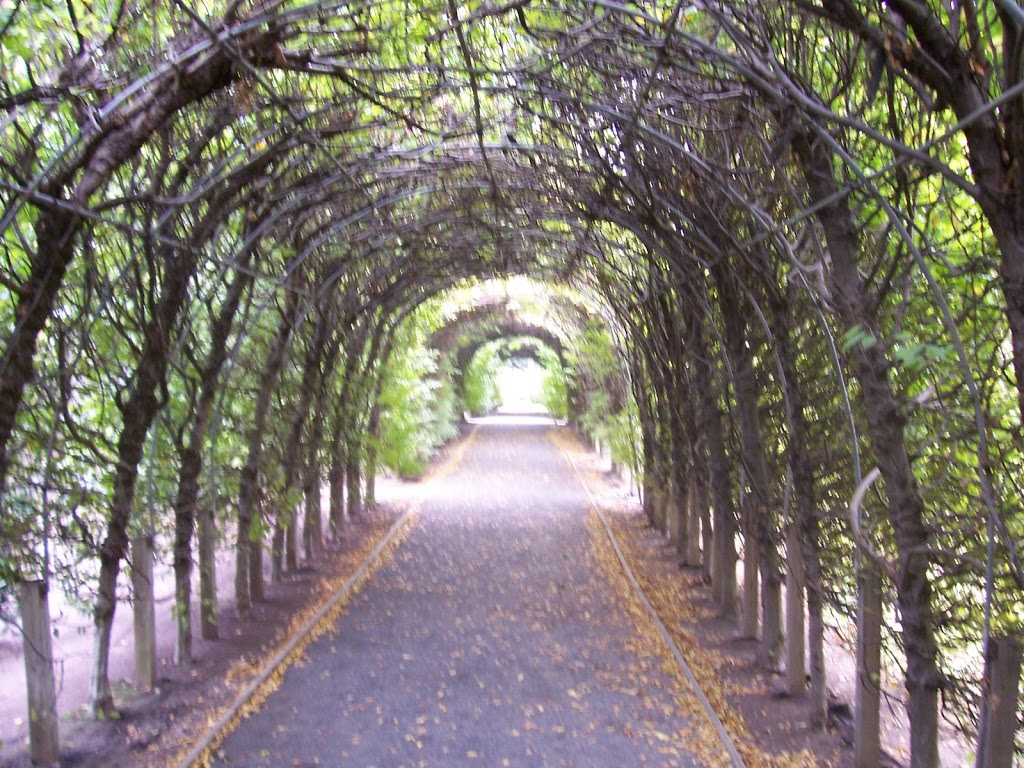
The canopied allie, planted in 1997, is created by the conjoining 120 European hornbeams, creating a disorienting path.

The path leads to the most sobering part of the entire center, the World Trade Center Educational Tribute. Created in 2003 to honor the residents of Staten Island killed in the 9/11 attacks, this small museum features a wall of victims and biographies, some eyeopening photos and artifacts from the tragedy. A very kind member of the fire department awaits inside to answer your questions. Its very intense inside, as you can imagine.

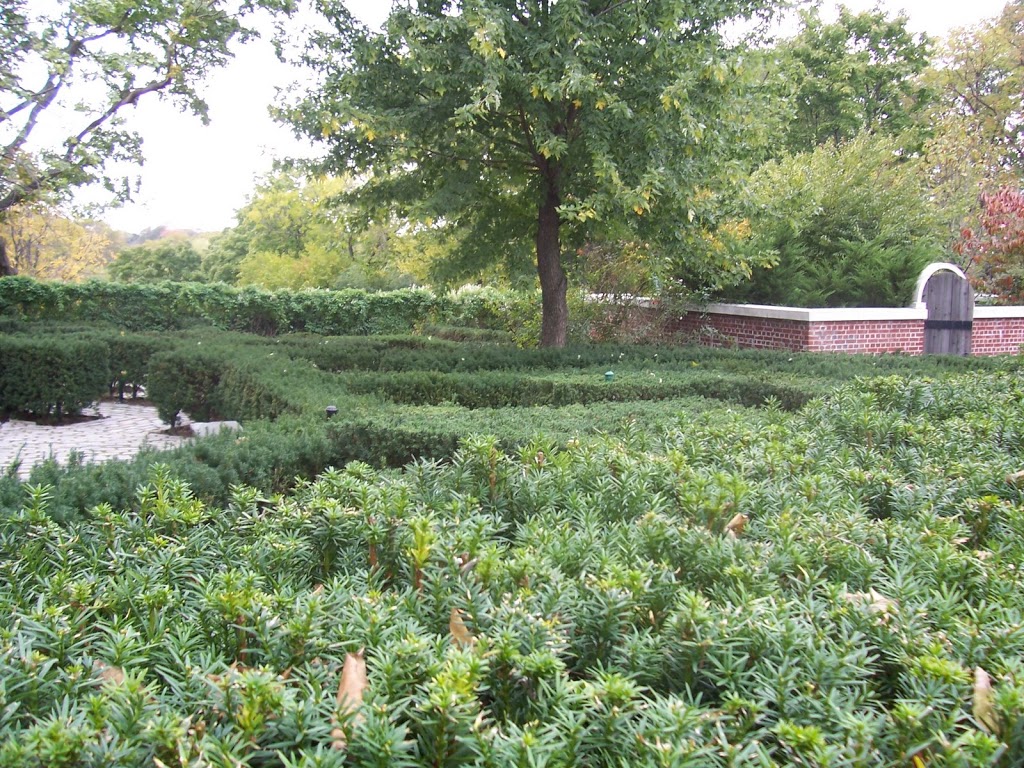
You might need to weave yourself through this hedge maze to take your mind off of some of the disrupting images. Although clearly designed for children — i.e. I didnt exactly get lost through it — it’s apparently the only maze of its type in New England. Who knew?

As it was slightly chilly when I strolled around, I obviously welcomed the Carl Grillo Glass House, with its three heated zones for arid, tropical and temperate vegetation, as well as a healthy selection of orchids.

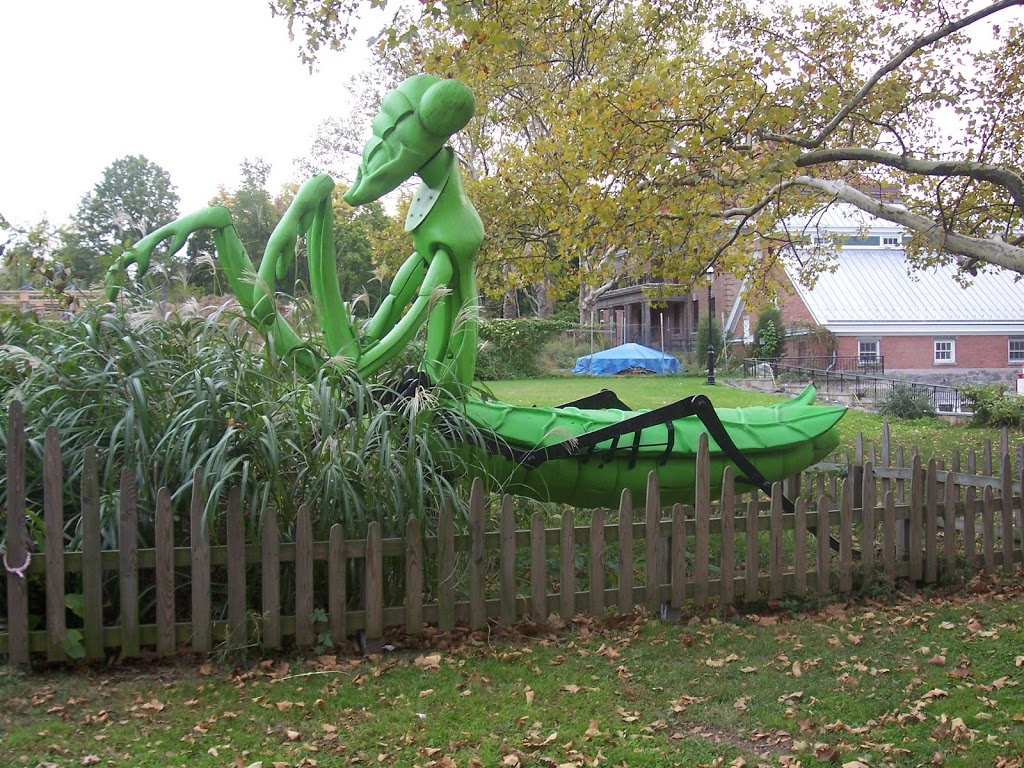
Some of the more modern additions include a childrens museum, guarded by this startling creature:

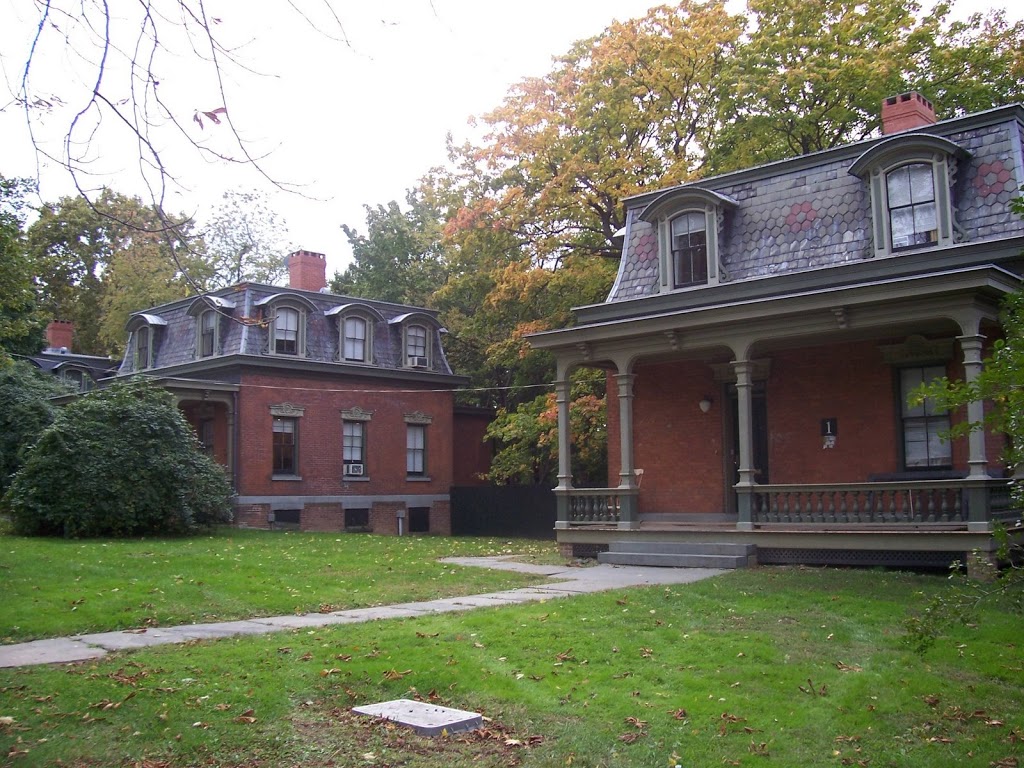
Along the eastern end are a row of identical former homes, one of which serves as the entrance to the newly built Chinese Scholar Garden. (Unfortunately I was not able to enter this on my visit; however you can view a map of its particular grounds.)

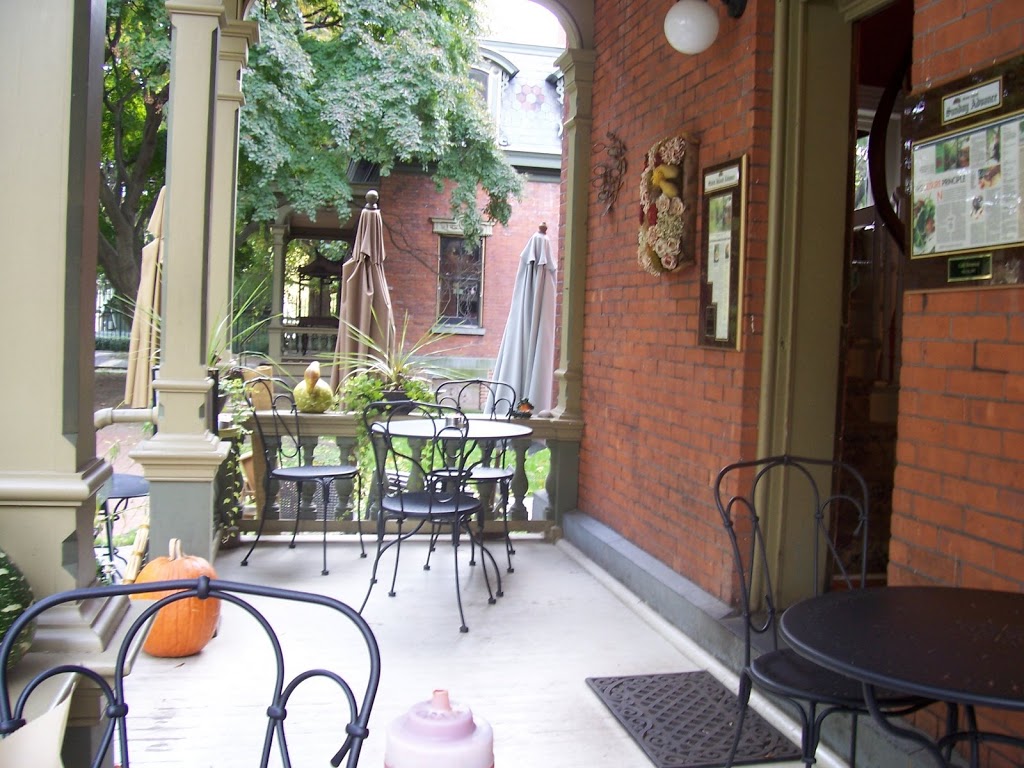
Another of the houses has been converted into a restaurant, Cafe Botanica. Its surreal to eat brunch on a big friendly porch. Inside there’s dining by a cozy fireplace:

Some parts of Snug Harbor are not currently open, including the healing garden, which is going through an extensive renovation, as is the Italian garden and vineyard. That’s right, a virtual vineyard is on the way!

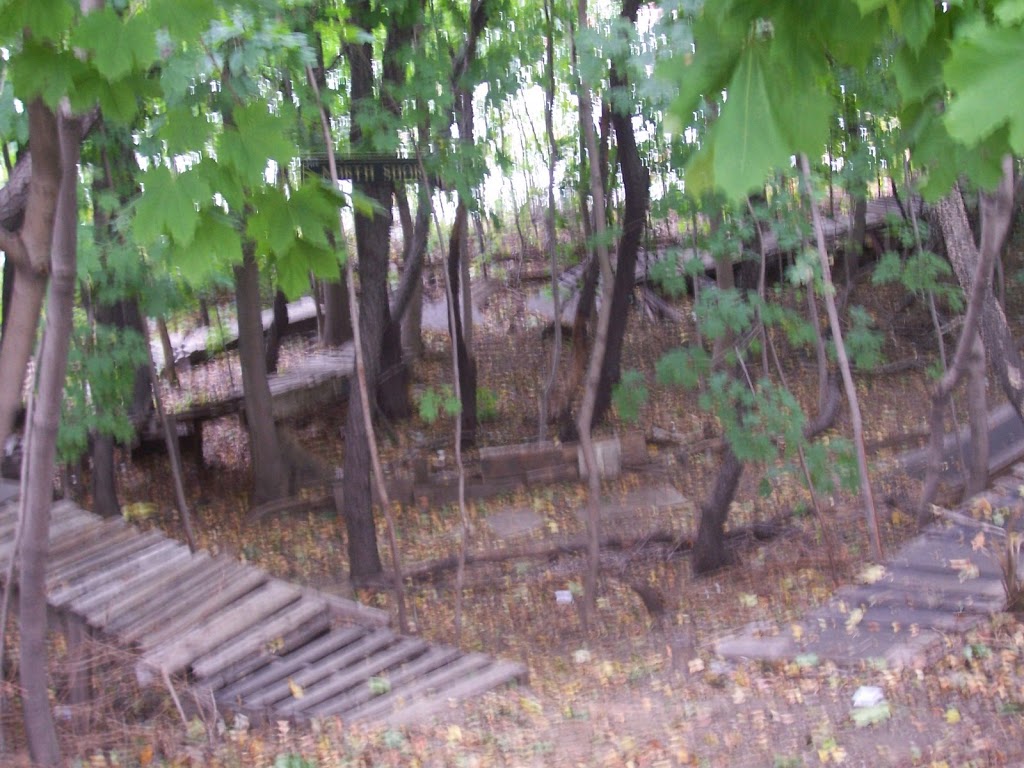
Extra: when leaving Snug Harbor, just take a look in the trees across the street, right in front of the Kill Van Kull. What’s this mysterious thatch of boardwalks that runs along the side of the waterfront?

Categories
Podcasts

PODCAST: The Astors and the Waldorf-Astoria

We’re going to the ‘original’ Waldorf-Astoria Hotel in this podcast to hang with the filthy rich.

Our guides are the styling and eccentric Astor family, the centerpiece of 19th Century New York wealth and society. Come along as we weave through a family tree of Williams and John Jacobs, not to mention THE Mrs. Astor, the one and only (even if there was more than one).

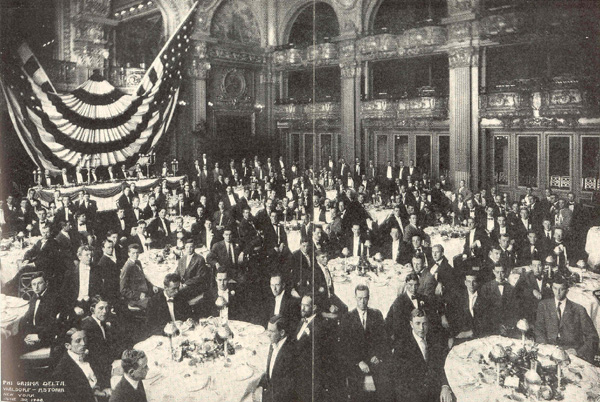
A glimpse inside the Waldorf-Astoria ballroom : a Phi Gamma Delta fraternal function in 1908

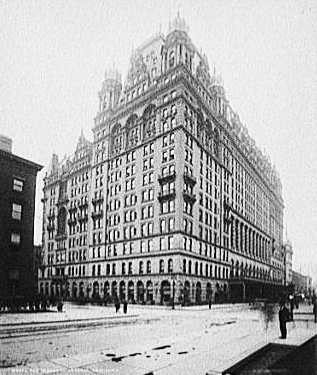
Outside the combined hotels, you can see where the shorter Waldorf ends and the taller Astoria floors begin. The streets look pretty calm too.

John Jacob Astor IV — inventor, writer, gad-about — at 48 years old, the year he meets his fate on the Titanic

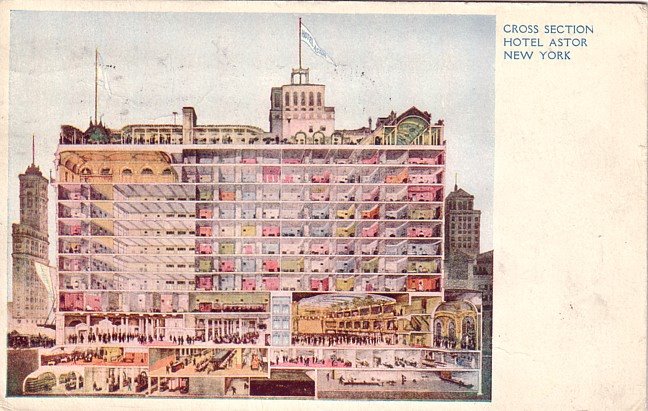
Another Astor holding, the Astor Hotel, was built by William Waldorf Astor in Times Square. This postcard curiously gives us an inside look.

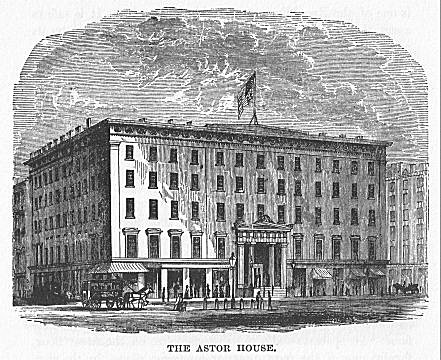
This is not to be confused with the Astor House, the downtown Manattan lodging built in 1836 by William and JJ Astor IV’s great-grandfather, the original John Jacob Astor. Right next door to the long-standing St Paul’s Church, the location of the Astor House is now occupied by a Staples and a New York Sports Club.

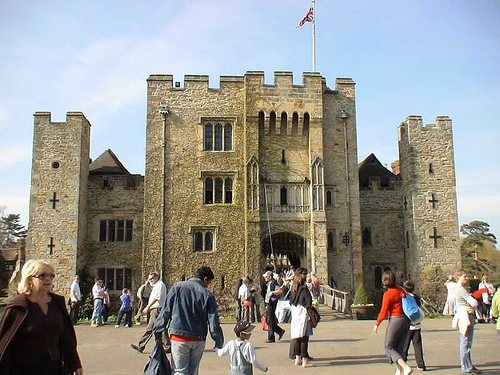
And over in England you can now visit the Hever Castle, once home to Anne Boleyn, but refurbished and lorded over by William Waldorf Astor, shedding his American skin to become an eccentric British viscount.

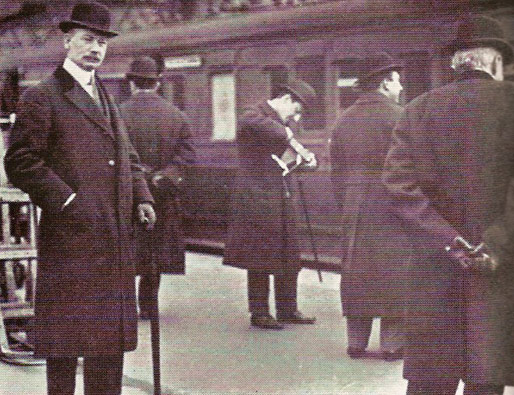
And we failed to mention that the Waldorf salad gets its name from the hotel where it was purportedly invented by Waldorf-Astoria’s much-admired maître d’hôtel Oscar Tschirky, who incidentally also claimed the invention of eggs benedict and veal oscar. As we mentioned on our podcast, thousand island dressing also made its debut at the Waldorf.

If you’re interested in more, you should read Justin Kaplan’s When The Astors Ruled New York . We’ve previously written about the profundity of Astor-named places here.

Categories
Podcasts

PODCAST: The United Nations Headquarters

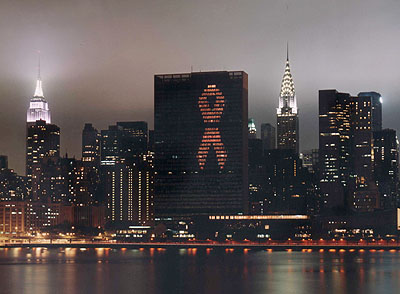
(Secretariat Tower, in a dazzling light show during a special session on the international HIV/AIDS crisis.)

It’s the only area of Manhattan that actually belongs to the world (literally). Come along with the Bowery Boys as we cut the security line to uncover the true story about the unusual headquarters of the United Nations, and why they ended up in New York City in the first place.

Listen to it for free on iTunes or other podcasting services. Or you can download or listen to it HERE

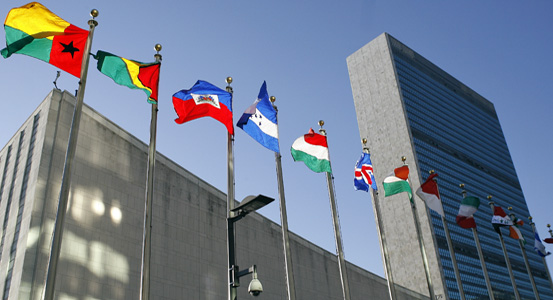
Yesterday was United Nations Day, marking the anniversary of the creation of the UN Charter by its five originating members (Soviet Union, China, Britain, the United States and France) and 46 other signatary nations. Currently there are 192 member nations.

The grounds of the United Nations are alive with an assortment of unusual sculptures from around the world. Although not open to the public, you can easily see most of these through the fence:

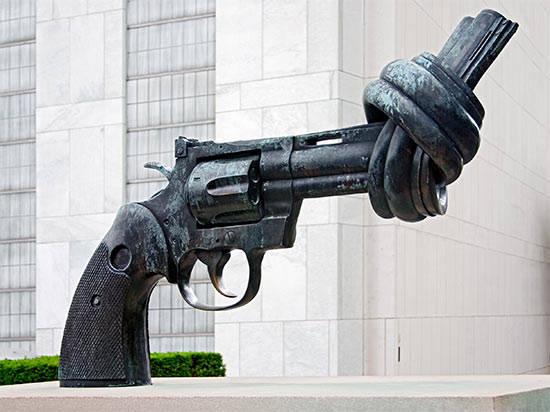
From Luxembourg, the very popular Knotted Gun, by Fredrik Reuterswärd, titled ‘Non Violence’ no explanation neccessary:

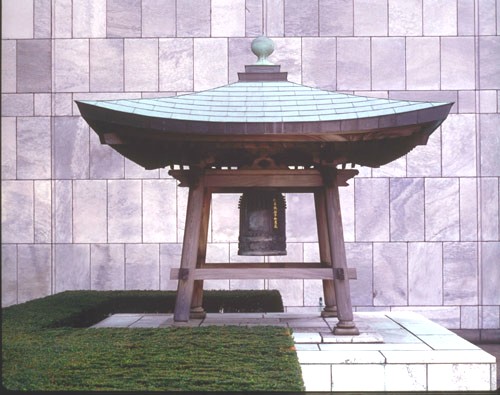
The Japanese Peace Bell, a gift from Japan before they were even members of the United Nations, holds a special significance on the UN grounds. It tolls twice a year, for the vernal equinox and on the first day of General Assembly.

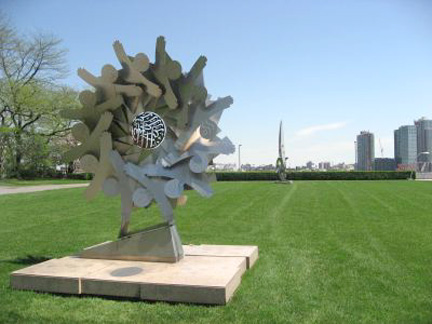
The circular Solidarity Among Sisters was a gift from ‘Arab women’ crated by Silvio Russo, “shaped … in the form of an abstract image of a number of women, each of whom is holding out her hand to the next.”

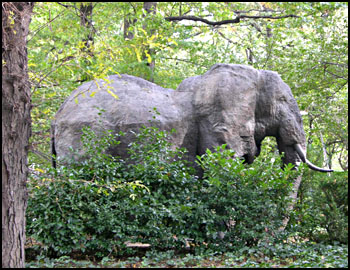
Tucked in the trees at the end of the garden is ‘Sleeping Elephant’, a bronze sculpture from three nations (Kenya, Namibia and Thailand) and cast from an actual living elephant by sculptor Mihail. Believe it or not, the size of its, um, ‘member’ was a point of contention when it was first installed in the park.

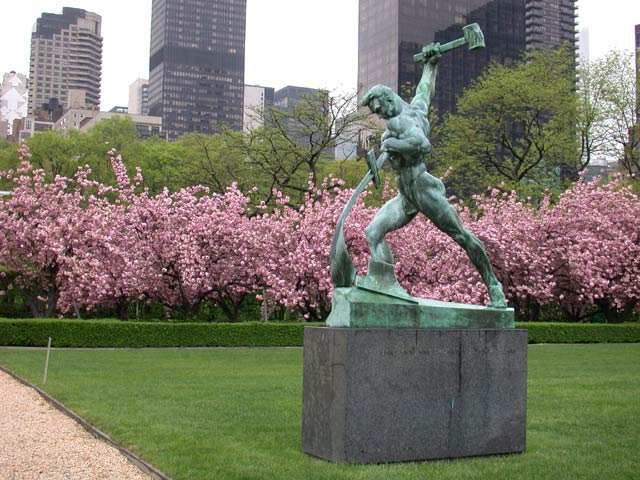
The most renown of all the sculptures is probably Let Us Beat Swords Into Plowshares an Evgeniy Vuchetich creation donated by the Soviet Union

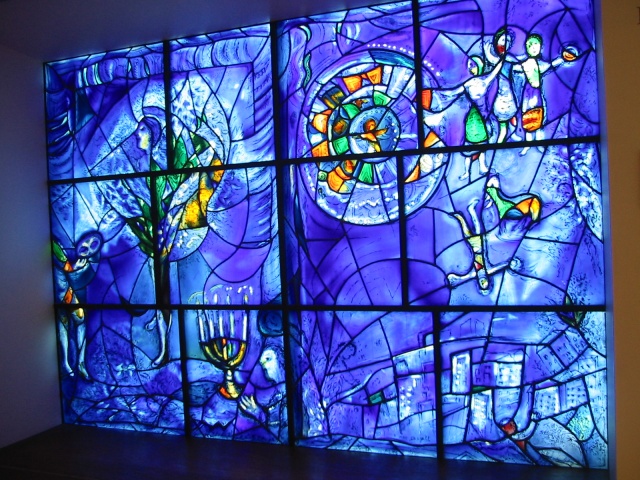
Additionally, the lobby of the UN has one object of significant note — a striking stained glass window commemorating the life of Dag Hammarskjold by French painter Mark Chagall:

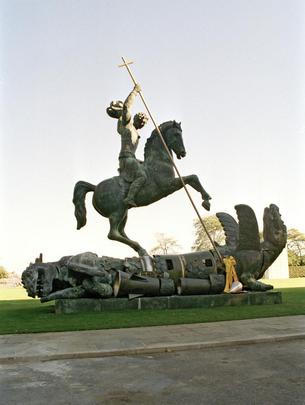
Then of course there’s the most striking piece of all — ‘Good Defeats Evil’, by Georgian artist Zurab Tsereteli, a rather controversial gift from the Soviet Union in 1990. It conjures the legend of St. George slaying the dragon, with nuclear arms filling the role of the slayed beast.

Categories
Podcasts

PODCAST: Washington Irving

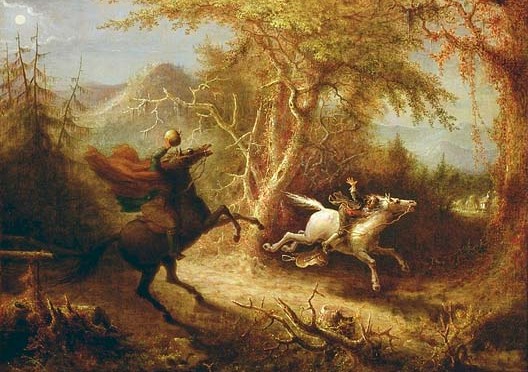
In this mini-podcast, we bring you New York’s first famous writer Washington Irving and his creepy tale of the Headless Horseman. We’ll tell you where you can go to celebrate his life and work, and what famous Irving landmark has nothing really to do with him at all.

Listen to it for free on iTunes or other podcasting services. Or you can download or listen to it HERE

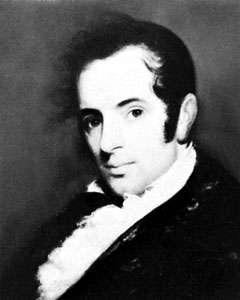
Washington Irving was one of the first New Yorkers to make a name for himself in the international literary world. But it was a very narrow set of circumstances that allowed him to make it out of New York at all. The runt of eleven children, was ill for most of his youth; in fact, sickness would later prevent him going to Columbia University like his brothers. Under different situations a sick child growing up in downtown Manhattan might not have survived; he was, after all, born in the most volatile city in the nation, in the year the British finally relinquished New York to the new American army.

However, Washington’s father William had grown quite wealthy under the British as a mercantilist. His family could more than afford the proper care; as the baby, and one needing so much care, they spoiled him. Frequently bedridden, Washington was able to read more than the other kids, sparking his imagination with such favorites of his as Robinson Crusoe and Sinbad, devouring adventure tales, fictional and true. He half-heartedly studied law, but as his older brothers took over the family business, they actually encouraged him to indulge in story-telling. Keep in mind that fiction writing was not a popular endeavor at the time; writers documented and observed, but they very rarely imagined.

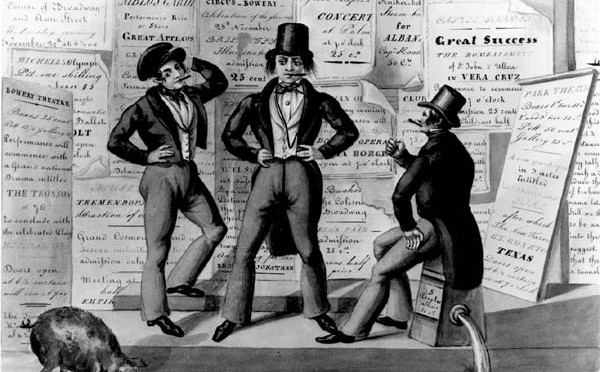
Writing as elderly Jonathan Oldstyle, his penname at 19, he frequently wrote to the newspapers reviewing theatricals and sometimes the people in the audience as well: “The noise in this part of the house is similar to that which prevailed in Noah’s ark; for we have an imitation of the whistles and yells of every kind of animal… Somehow or another, the anger of the gods seemed to be aroused all of a sudden, and they commenced a discharge of apples, nuts, and gingerbread, on the heads of the honest folks in the pit… I can’t say but I was a little irritated at being saluted aside of my head with a rotten pippin.

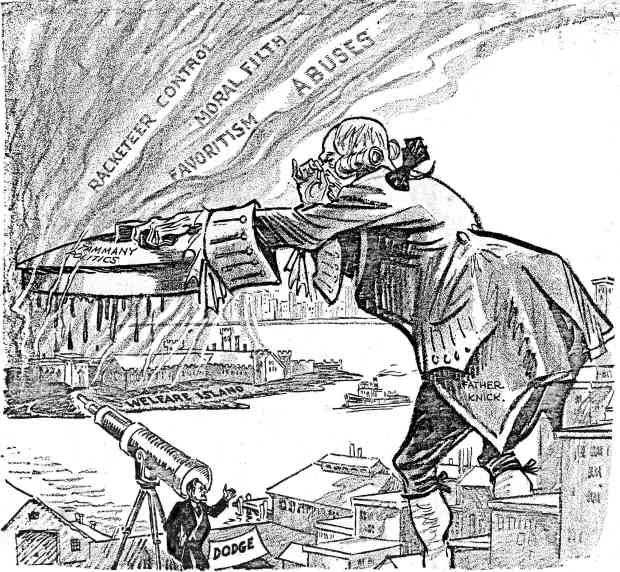
Later in life he would disavow these early writings as sloppy and lazy. He was much prouder of his later works the Salmagundi (a blistering criticism of New York’s upper class) and Deitrich Knickerbocker’s History of New York. As mentioned in the podcast, the name ‘Knickerbocker’ evolved to represent the first (if fictional) clan of the city. A character called ‘Father Knickerbocker’ would come to represent New Yorkers in political cartoons throughout the 19th century and early 20th.

To tie today’s topic with yesterday, here’s a political cartoon from the 1930s featuring Father Knickerbocker (his name embroidered on his coat) lifting the lid on the festering problem of Welfare/Roosevelt Island

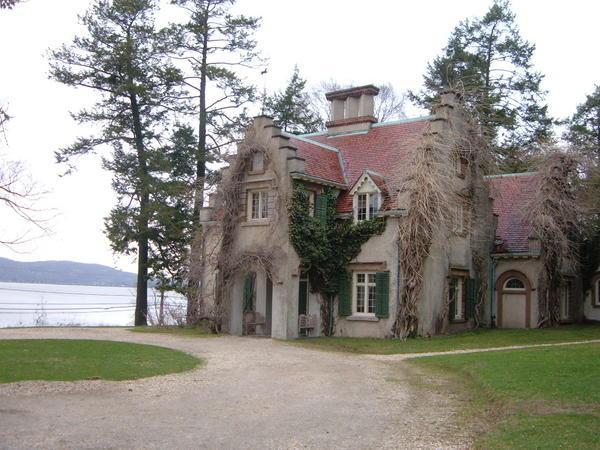
In the later part of his life, Irving made a home on the Hudson river which he called Sunnyside, living there with many members of his extended family.

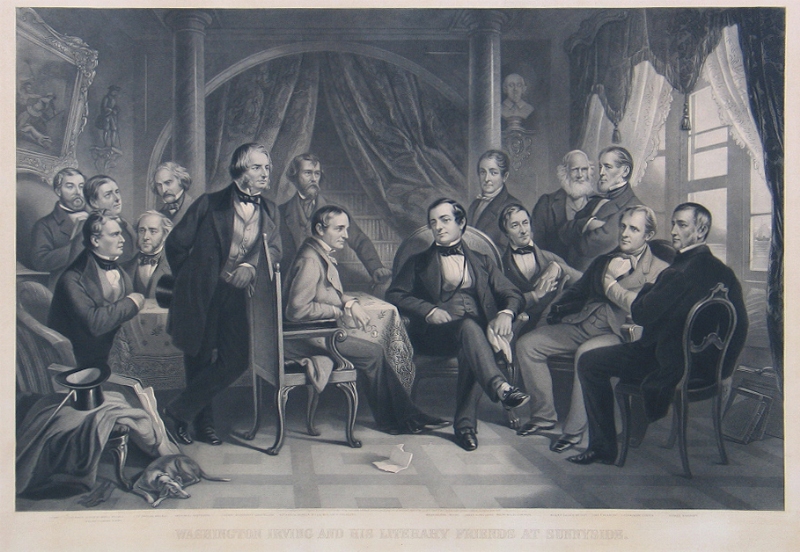
It also became quite the literary parlor, and was frequented by the likes of John Jacob Astor, whose exploits in the western United States Irving would immortalize in his work Astoria. Here’s a rare engraving from 1866 of Washington Irving entertaining a group of extremely similar looking men in his parlor.

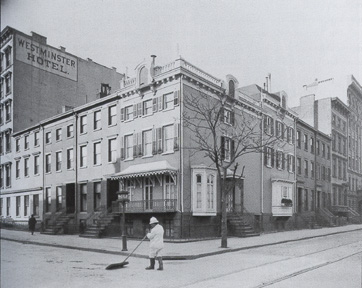
We can say with fair certainty, however, that Irving did NOT live here, 49 Irving Place (seen here in an old photograph):

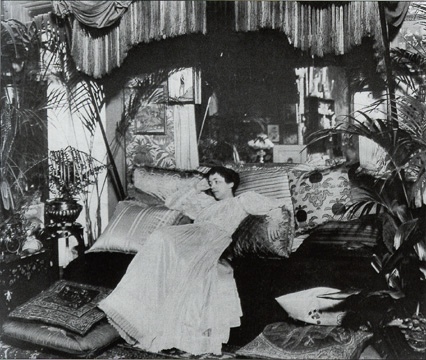
Who did live here, however might be more interesting. Elsie de Wolfe, a well known actress and soon to become New York’s first professional interior decorate, resided here from 1892 to 1912 with Elizabeth Murray, a literary agent to George Bernard Shaw and Oscar Wilde. (Curiously a few years earlier Oscar ended up next door at 47 Irving Place, as he saw his latest play Vera being savaged by the critics in a nearby theater.) They were quite open romantically and their house became a high-class salon for the artistic rich and famous. Its amazing to consider these two powerful lesbians stirring up social circles at the time.

Here’s Elsie reclining in her Irving-less home at 47 Irving Place. (This and the exterior shot above are courtesy the City Review from the Christopher Gray book New York Cityscapes.)

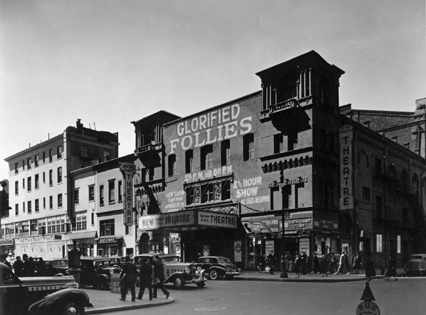
Just down a block away once stood the Irving Place Theatre, a former burlesque house and art film theater:

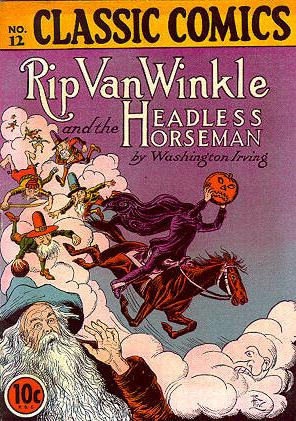
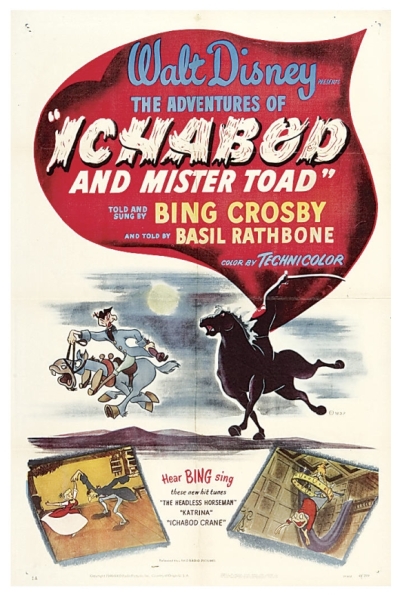
(I love how the illustrators of the comic on the left manage to combine Irving’s two most famous tales, and somehow stage the whole thing in intestine-shaped clouds.)
As for the story of ‘Sleepy Hollow’, it was one of many short tales gathered in ‘The Sketch Book of Geoffrey Crayon’ that cemented Irving’s status as the pre-eminent American writer. The story has been adapted in dozens of curious ways in the 20th century. A few silent film versions are known to exist, including one from 1922 starring Will Rogers as the terrified Ichabod Crane! For some reason, in 1949 the story was combined as a double feature with ‘The Wind In The Willows’ in a Disney animated adventure known as “The Adventures of Ichabod and Mr. Toad.” Bing Crosby provides the spooky narration and the best part of the story — the chase between Crane and the Horseman — is greatly extended. The Sleepy Hollow portion proved so much more popular that Disney split it off into its own film in the 50s.

Then of course then there’s the Tim Burton version with Johnny Depp as Crane, Christina Ricci as Katrina van Tassel, and as rival suitor Brom Van Brunt, an actor whose name could have very well placed him in the tale when it was first written, Casper van Dein. Burton, God bless him, completely re-writes the tale to flesh out a grim mythology. However he pays homage to the original story — as well as the Disney animated version — in a sequence where Crane is pursued by the Horseman and hid with a flaming pumpkin hurled by a costumed Van Brunt.

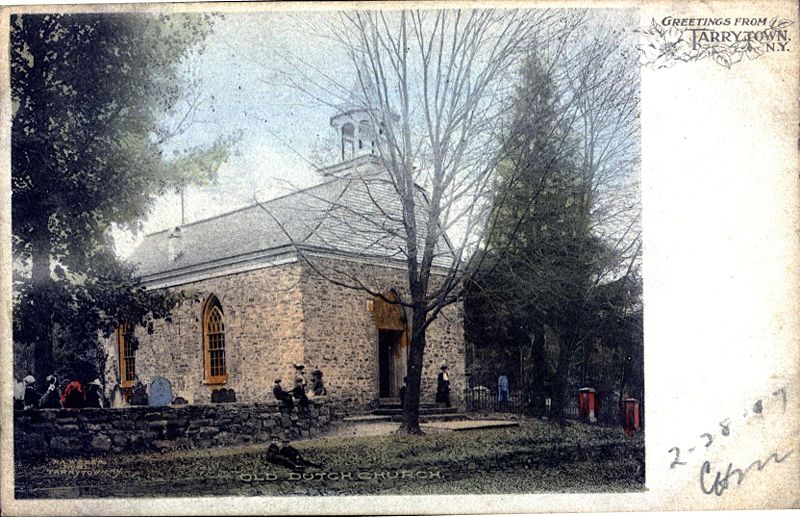
And finally, we end our look at Irving with an old crusty postcard image of Sleepy Hollow’s greatest landmark and the central location of Irving’s tale: the Old Dutch Church and its adjoining burial ground. Irving — as well as a great many other luminaries — are buried in the adjacent Sleepy Hollow cemetery. Look here to see what we wrote about the cemetery back when Leona Helmsley died.

Categories
Mysterious Stories Podcasts

PODCAST: Ghost Stories of New York

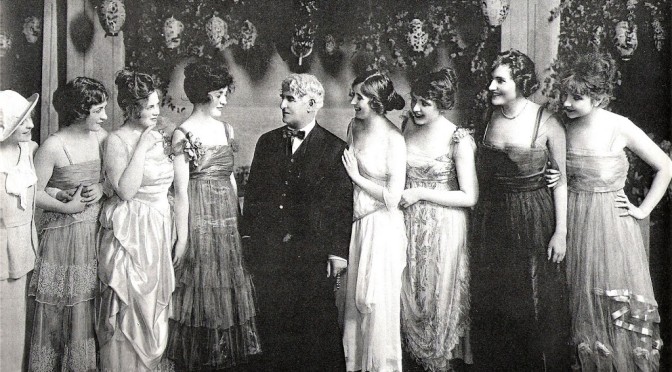
From the podcast: David Belasco and some his feminine daliances. Belasco is still believed to haunt his theater on 44th St.

A city this size certainly has its share of ghosts, and the Bowery Boys spend the spooky season with some of the most famous — a suicide showgirl, a grumpy landowner, a womanizing theater owner and a rich spinster.

Listen to it for free on iTunes or other podcasting services. Or you can download or listen to it HERE

In today’s podcast, we highlight some of New York City’s most popular ghost stories. There was one more story that we left out that I wanted to put here. It isn’t a ghost story; it’s an actual historical event that just happens to be really creepy. I dont have many pictures of this event — being from the 1840s — so interspersed are some shots of ‘haunted’ places from this week’s podcast.

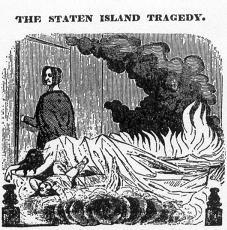
Christmas 1843 — On the western side of Staten Island lay a small town called Graniteville, some townspeople awoke to see a fire in the house of sailor George Housman. Although he was frequently at sea, his wife and his daughter still lived there, and George’s sister Polly was staying with her.

The people stormed into the burning house to find a scene of grisly horror — George’s wife Emeline had been attacked with an axe, her arms broken, her throat cut. The daughter lay next to her dead with her skull crushed. Polly had disappered. She did not live there but was staying because Emeline was frightened while her husband was away. For they had $1,000 in the house.

Nobody had actually remembered seeing Emeline come out of her house for the past couple days. But they did remember Polly. She was seen in town pawning silverware with the initials EH on it. And later that day, in Manhattan, she was seen spending the money, buying a green hooded cape and veils. So naturally suspicion naturally pointed to Polly. Townspeople began search parties, while women and children were locked in their homes.

Polly was considered a ‘wanton woman’ with a spurious reputation. Her son worked as an apprentice at a drug store on Canal Street in Manhattan, and his employer was also Polly’s lover.

Polly would make her way to the landing of the Tompkinsville ferry, a precursor to the Staten Island Ferry. She was camped in a corner, getting drunk on gin, and witnesses recognized her “by her long, hooked nose.” By strange providence, George Housman returned to New York that very day, and found Polly on the street with George’s cousin Freeman Smith. They must have had quite a lot to talk about.

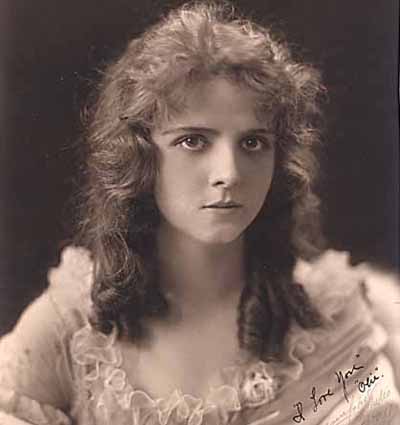
Above: from the podcast, Olive Thomas, the young starlet who haunts the New Amsterdam Theatre

She was eventually arrested and sent to county jail. The day after she was arrested, Polly gave birth to a stillborn child.

Polly eventually went on trial in June of 1844 but by then, news of the alledged lascivious murderess — one baby dead from an axe, another from her womb! — spread to Manhattan and beyond.

Special ferries were installed to bring people over to the courthouse. Reporters were sent from neighboring states, including one from Pennsylvania, by the name of Edgar Allen Poe who is heavily critical of how the trial was being handled:

“The trial of Polly Bodine will take place in Richmond and will no doubt excite much interest. This woman may possibly escape, for they manage these matters wretchedly in New York…..I have good reason to believe that it will do public mischief in the coming trial of Polly Bodine.”

Curiously enough, Poe would write up his article the same year his story of the publication of The Tell Tale Heart.

Not everybody was as sure as Poe however. Edward Van Emery in his 1945 ‘Sins of New York‘ states that “there has never been much doubt as to her having been the guilty party.”

There was so much public flurry and gossip that a fair trial was virtually impossible. According to Henry Lauren Clinton’s 1896 ‘Extraordinary Cases’ Polly’s life was spared by a single ‘incorrigable’ juror, and it was declared a hung jury.

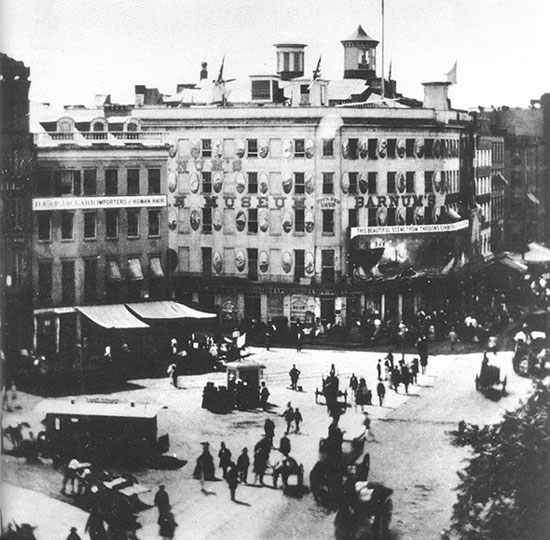
So a second trial was held in Manhattan to even greater fanfare. She was so notorious that PT Barnum, in his downtown museum on Broadway and Fulton Street (blocks from where the trial was taking place), erected a wax homage of her. In the tableaux, he called her “the witch of Staten Island”, representing the woman by hacking Emiline and her daughter with an axe.

Here’s a picture of how the Barnum museum looked in the 1850s:

Like the great ‘trials of the century’ today, Polly has superstar representation (Clinton DeWitt) and the attentions of every tabloid on the Eastern seaboard. During this trial, witnesses changed their stories and truth readily bled into rumors. Due to this was soon declared a mistrial.

The final trial had to be moved out of Manhattan to Orange Country because of a lack of unbiased jurists. Finally Polly was found … innocent.

Her reputation ruined, Polly returned to her home, rarely to leave her home, for almost 50 years. She would die on 1892.

Yet like OJ, the “real” murderer was never found. And much conjecture from modern investigators suggest that Polly really was the murder, who hacked her sister-in-law and niece to death. Just down the street from the Housman home (near Forest Avenue and US 440, according to the NY Public Library) you can find the grave of Emiline and her daughter, and at night they say that a ghost of she and her daughter roam the cemetary looking vainly for justice.


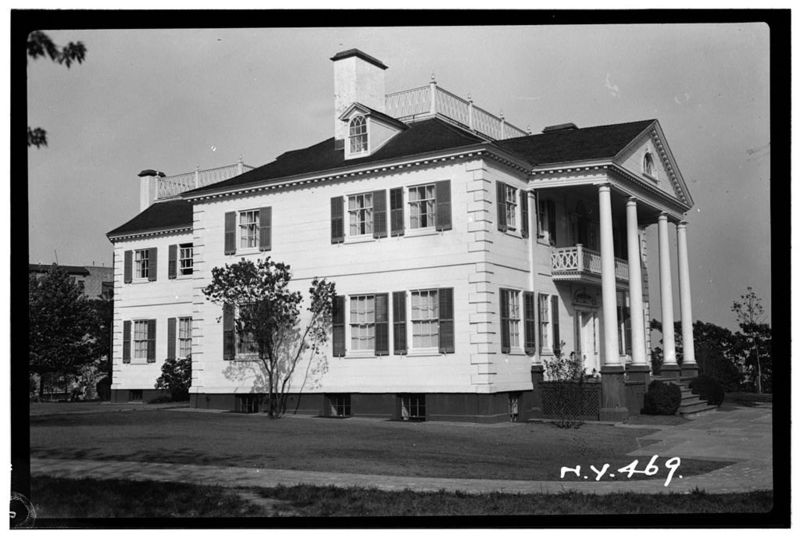
Above: the Morris-Jumel Mansion in Washington Heights, and home of the possible ghost of Eliza Jumel. Information on visiting the mansion can be found on the Morris-Jumel website..

Categories
Podcasts

PODCAST: New York Public Library

The New York Public Library may be one of the most revered libraries in America, but it took a farflung combination of bookworms, millionaires and do-gooders to make it into the institution it is today. Also: find out why the architectural style of the Beaux Arts sometimes reminds us of an old French prostitute.

Listen to it for free on iTunes or other podcasting services. Or you can download or listen to it HERE

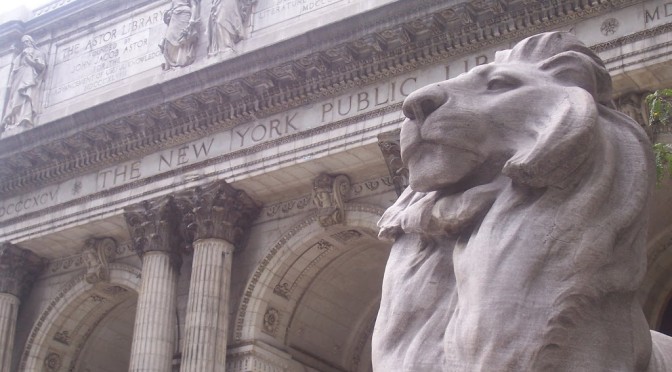
Before the lions of the New York Public Library — now less imposingly called the Humanities and Social Sciences Library — parked themselves at 40th and 6th Ave, the Croton Reservoir stood imposingly there, holding the city’s water supply. As you can tell from this picture, it looked a bit like an Egyptian pyramid, or perhaps a alien spaceship.

This was a distribution reservoir, which received water from a larger ‘receiving reservoir’ in what is now Central Park, but what was then on the outskirts of town.

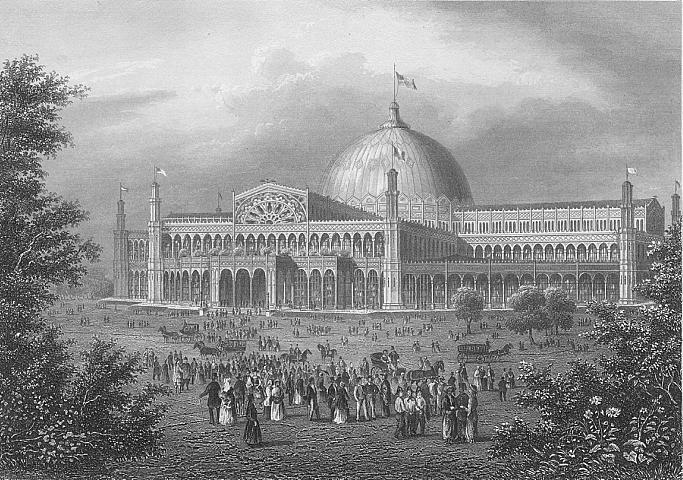
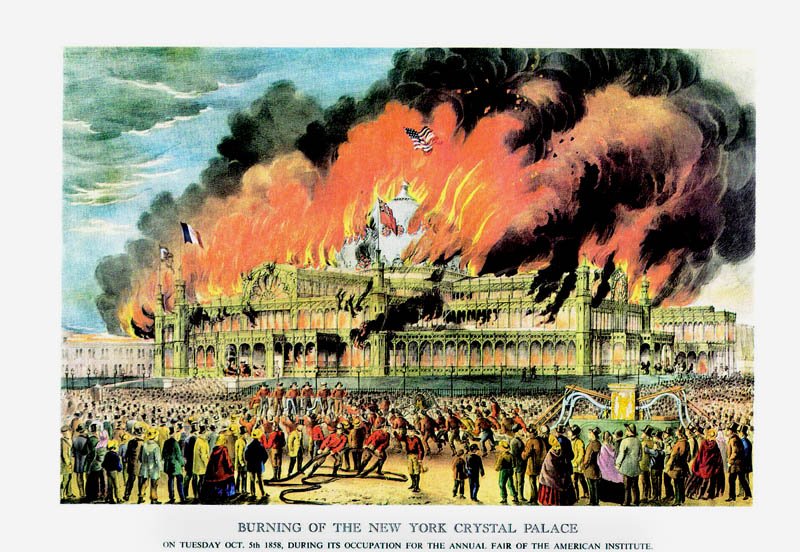
Meanwhile, the space now considered Bryant Park was, in the 1850s, the location of the New York Crystal Palace, home of America’s technological and engineering marvels. Here’s a look at the Crystal Palace in all its glory:

And a dramatic illustration of its final moments, felled in a quick burning fire.

The construction of the library took nine years — sixteen if you consider the time from original design to dedication. The most ambitious marble building of its time, it was covered in Vermont marble so carefully chosen that two-thirds of the shipped stone was rejected for not being refined enough. The marble is at a thickness of almost a foot all around. The net effect even now gives the structure an immovability that makes the modern skyscrapers around it seem light and temporary.

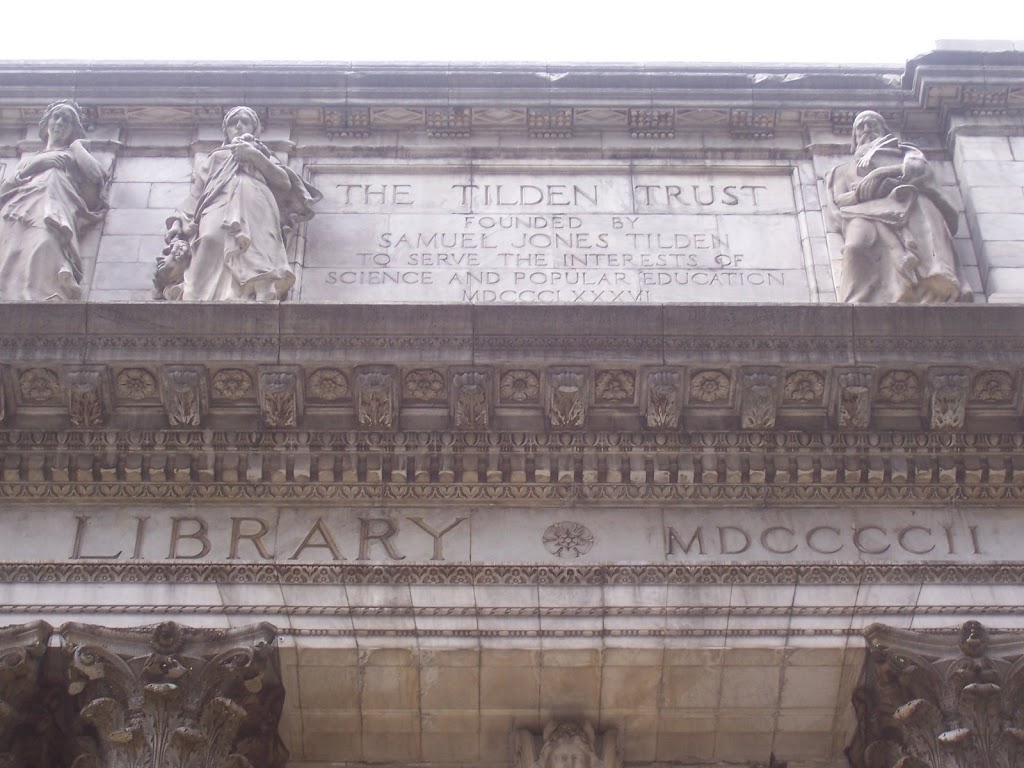
On the frontispiece above the entrance to the library is a tribute to its three creators — millionaire John Jacob Astor, collector James Lenox and former governor Samuel Tilden:

However, the area of 41st street that runs between 5th and 6th Avenue is now called ‘John Bigelow Plaza’, after the man who brought the Astor and Lenox collections together with the Tilden Trust.

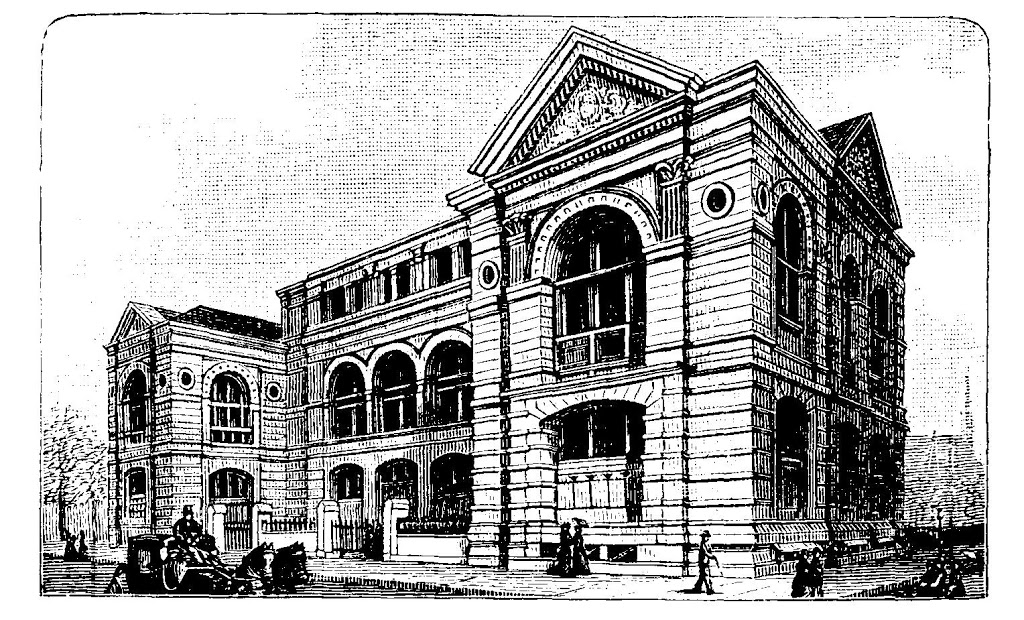
James Lenox has originally kept his collection in his own library on 5th and 70th street. This scratch illustration displays Lenox’s ‘indestructible’ limestone library, which housed most of the items held at the Public Library today, including Lenox’s personal copy of the Gutenberg Bible.

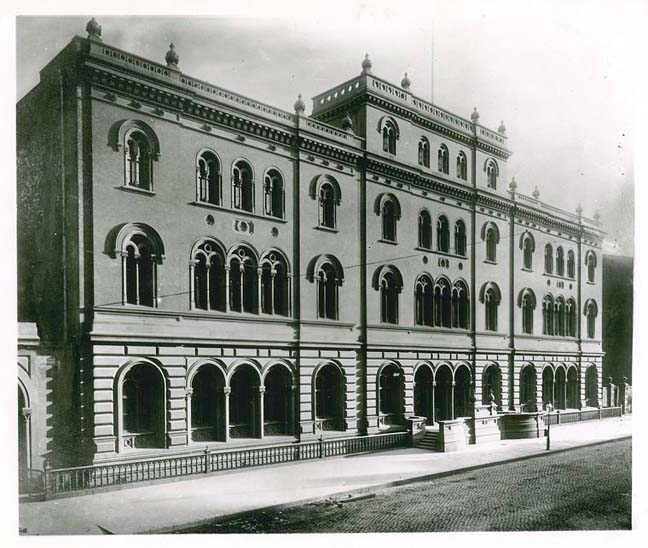
Meanwhile, the rest of the collection came from the Astor Library, constructed with money bequeathed by the millionaire. Thankfully the building remains pretty much intact, thanks to its present occupants, the Public Theatre, whose decades of success on Broadway, off-Broadway, dance, performance art and especially Shakespeare in the Park would have confused but satisfied the building’s original benefactor.

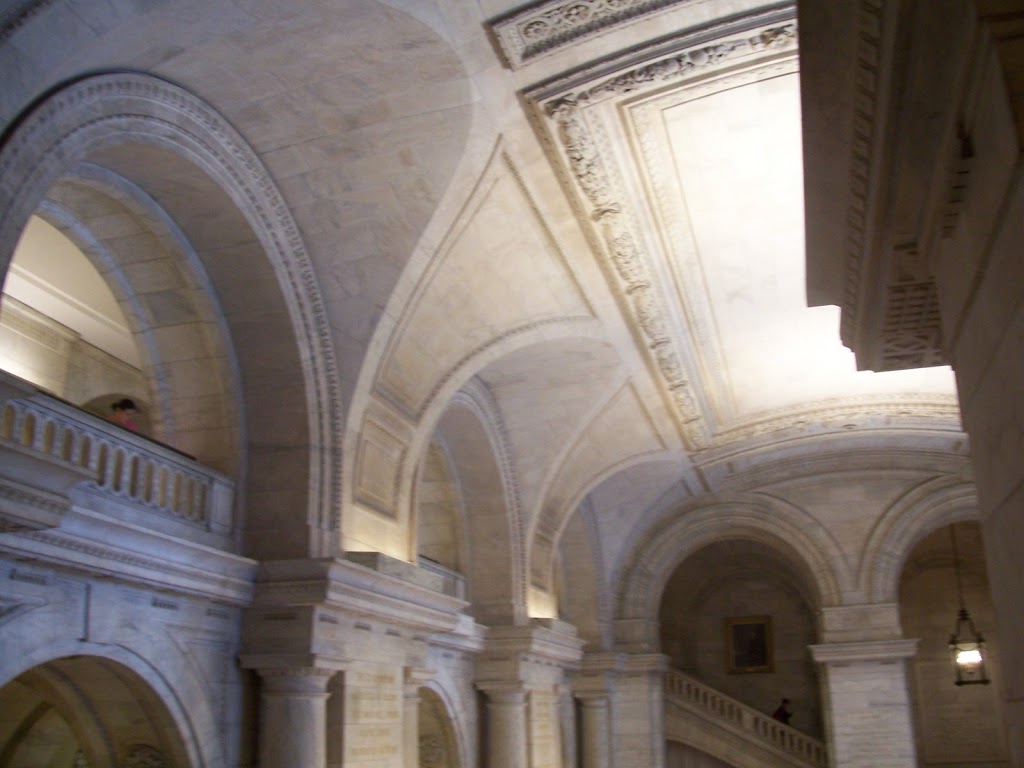
Some pictures from inside the New York Public Library building illustrate some of its more Beaux-Art-ish features. The broad vaulted arches:

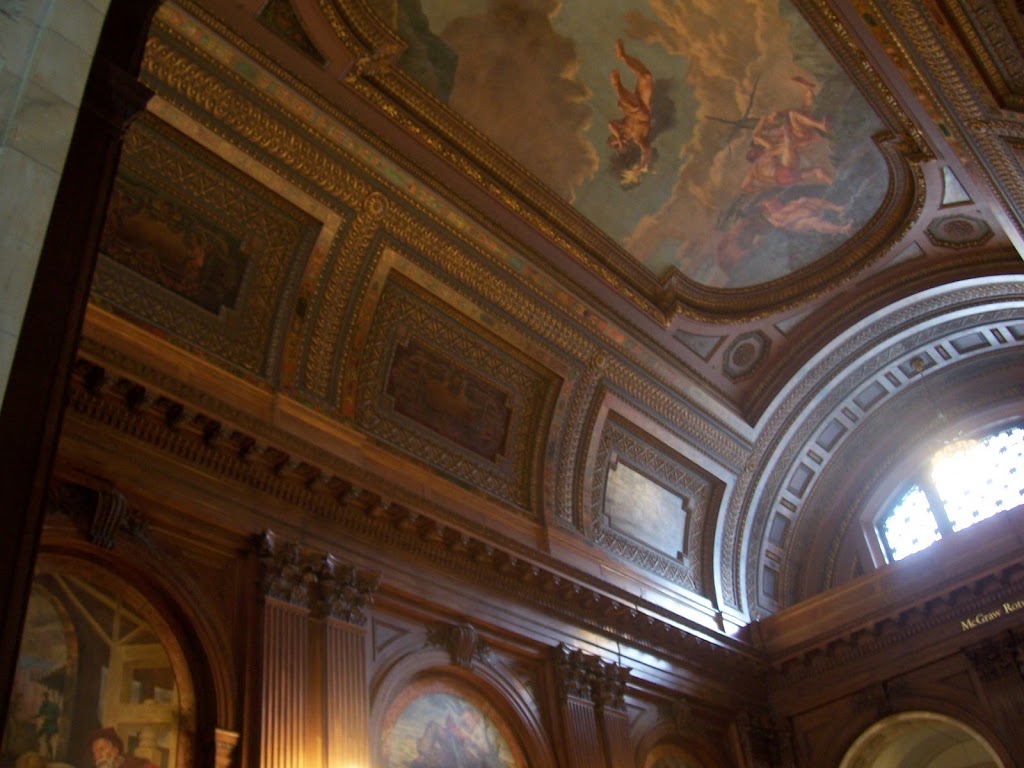
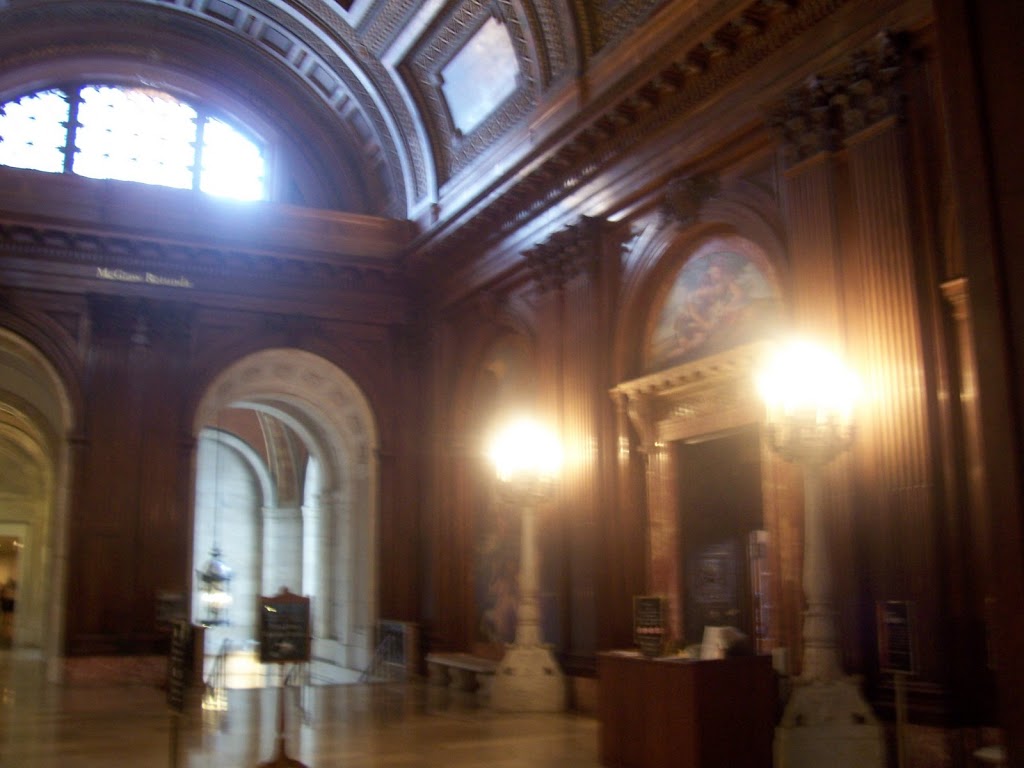
And ornate muralled ceilings in the McGraw Rotunda. The effect is a bit like the Vatican apartments mixed with an old bank:

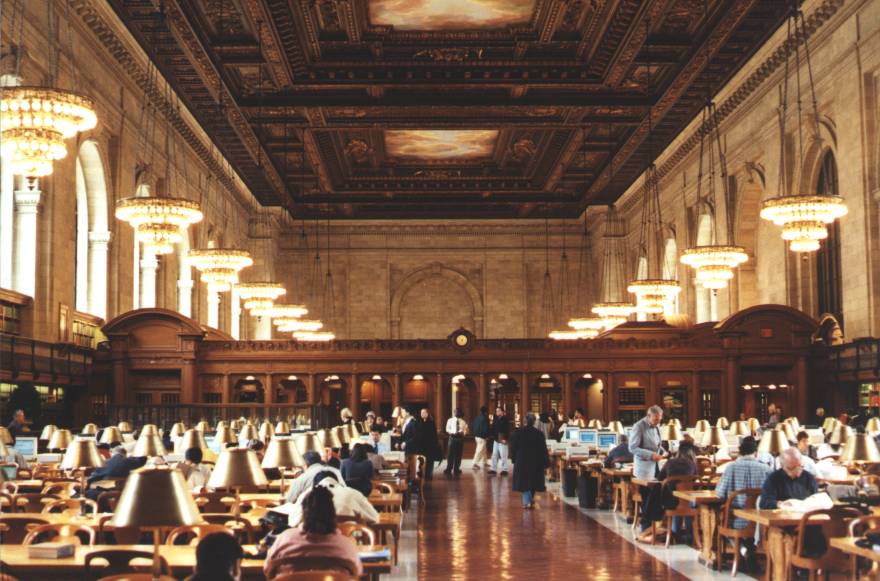
Its all dwarfed, however by the massive Rose Reading Room, whose basic organization came not from the architects but from the library’s first director, Dr. John Shaw Billings, from a sketch he made on a postcard!

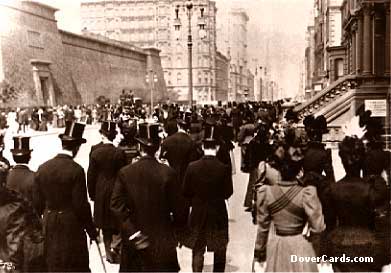
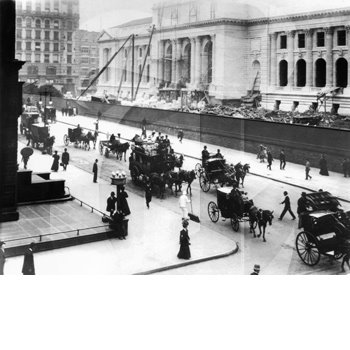
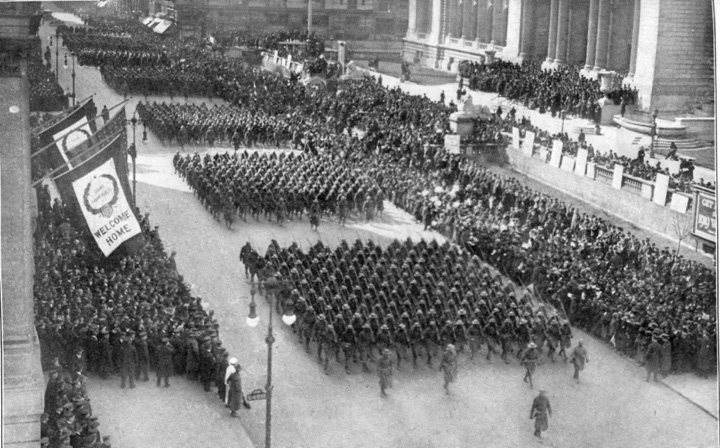
And finally, a beautiful picture I found on a World War I website, showing the fairly new library in all its glory, as New York’s 369th Regiment passes by.

Thanks to the New York Public Library official website for providing us with some of our trivia. And there’s lots more there to intrugue you. Click here for visiting hours and facts about some of the branch libraries.

Categories
Podcasts

PODCAST: The Statue of Liberty

Her torch may shine bright, but what story is she hiding under that copper-toned skin? The Bowery Boys bring you the story of the dinner party that created an American icon.


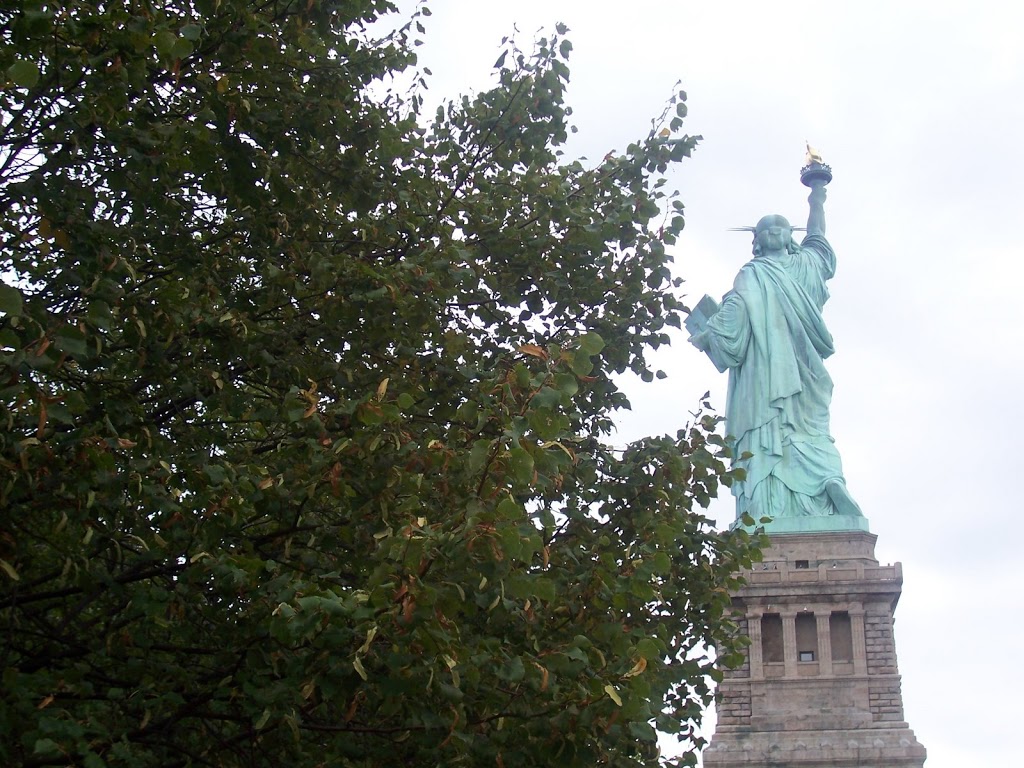
Her official name is the Statue of Liberty Enlightening The World. You can find a full survey of her measures here. Two facts of interest to me: her copper plating is only the width of a couple pennies. Incredible that something so relatively thin has been able to weather 121 years.
Especially considering fact no. 2: during 50 mph winds, the Statue of Liberty moves approximately three inches. Bartholdi and Eiffel managed to create a structure that could conform to sea winds and temperature changes without causing serious damage to the overall structure.

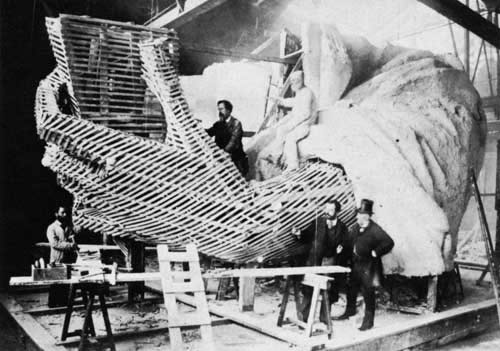
Seen here, one hand, clutching a book with the date July 4, 1776 written upon it, awaits its copper skin at the foundry of Gaget, Gauthier et Companie.

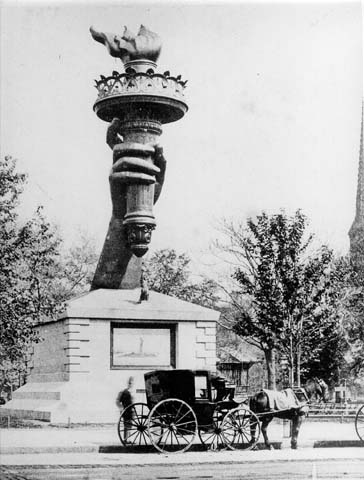
Her other hand meanwhile was busy taking a tour of America. The completed right arm and torch stopped first at the Philadelphia Centennial Exposition in 1876, the 100th year of America’s birth (and technically the date the gift of Liberty was celebrating). It then travelled back to New York, where it became a comfortable fixture of Madison Square Park in 1884.

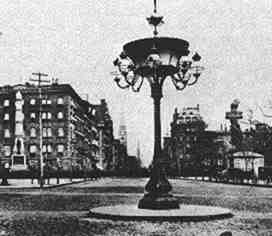
My blog entry from Monday was about the gravesite of Gen. William Worth, which seems peculiarly placed in middle of a traffic island. To get a better sense of how it was situated, here’s a picture (which I got from Forgotten NY) with Worth on the left, Fifth Avenue cutting through, and the arm of Ms. Liberty to the right.

And to think today, just a few feet to the right, out of frame, now stands the Shake Shack.

Eventually the arm and torch was returned to France, where the entire structure was put back together in the foundry, to the delight of 300,000 visitors, including one Victor Hugo, who said, “To the sculptor form is everything and is nothing. It is nothing without the spirit – with the idea it is everything.”

The designer of the pedestal was Richard Morris Hunt, best known for designing the Metropolitan Museum of Art as well as the sumptuous mansions for the Vanderbilt family. (CNN’s Anderson Cooper probably ran around in one when he was little.) Hunt trained at the Paris’ École des Beaux-Arts which would later see William Van Alen, the architect of the Chrysler Building.

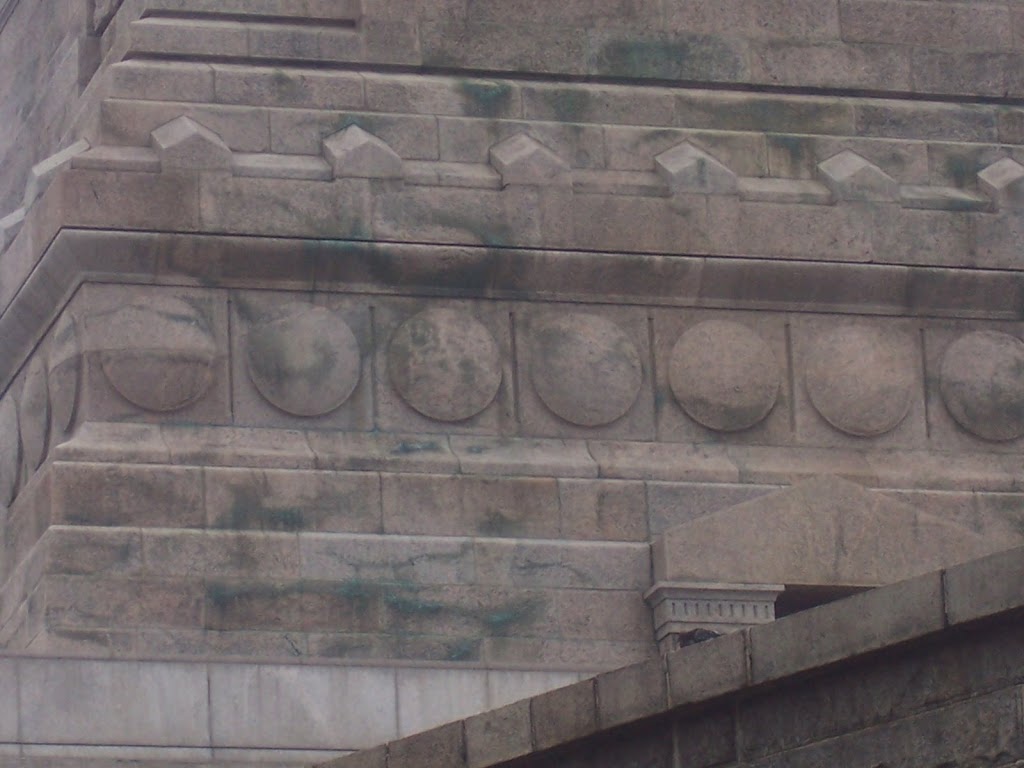
My harangue against my fellow Americans in their rather feeble attempts at fund-raising to build the pedestal obscured my general admiration for the design of the pedestal itself, which had to be understated but reflect some of the statues general themes. For instance, the shield pattern that runs along the side — click to see the detailing more closely — creates a dialogue with Liberty’s classical features and underscoring of strength and protection.

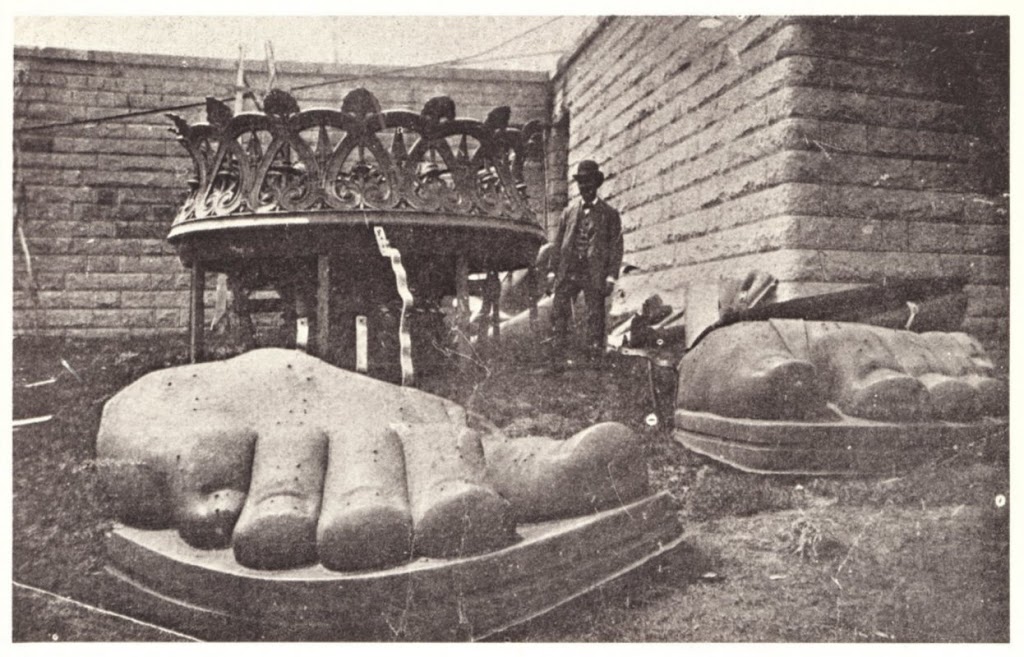
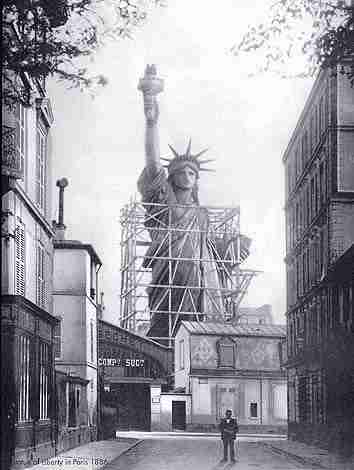
Even as the pedestal was still being constructed, the Statue arrived in New York harbor. Here, some workers unpack her feet at the base of the foundation, what was once a star-like fort:

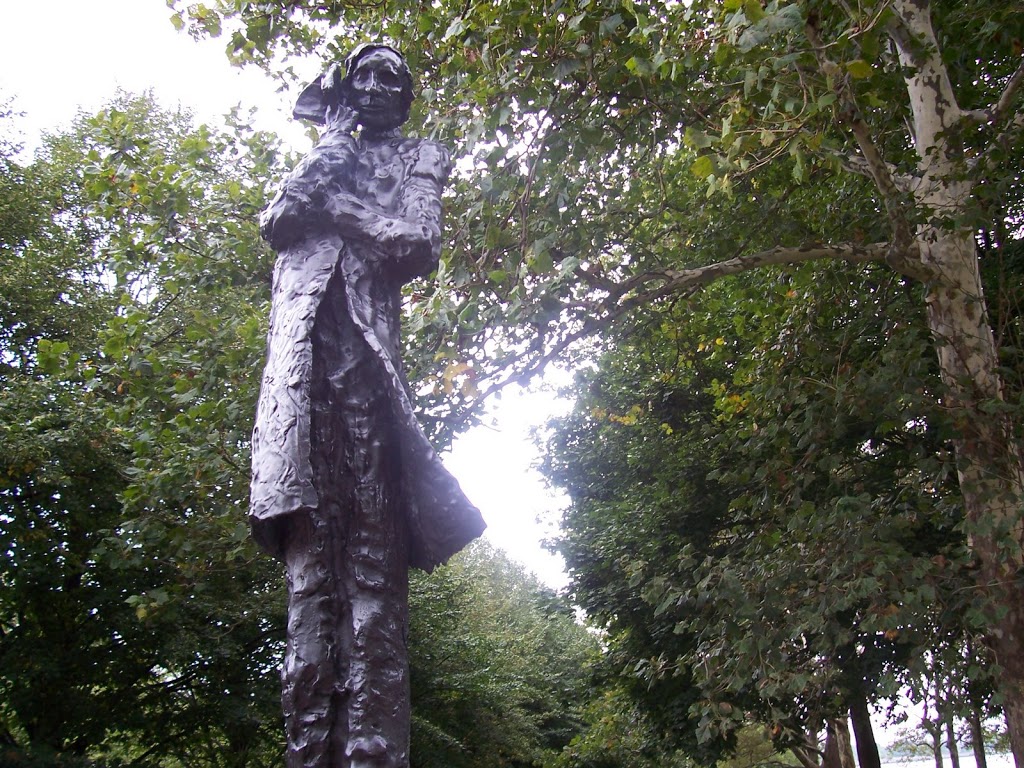
A stroll around the base of Lady Liberty grants you a terrific view of Manhattan, Brooklyn and parts of New Jersey. Along the path are some contemporary sculptures of five pivotal figures of Liberty’s legacy (all detailed in our podcast) — Bartholdi, Gustave Eiffel, Édouard René Lefèvre de Laboulaye (pictured below), Joseph Pulitzer and Emma Lazarus.

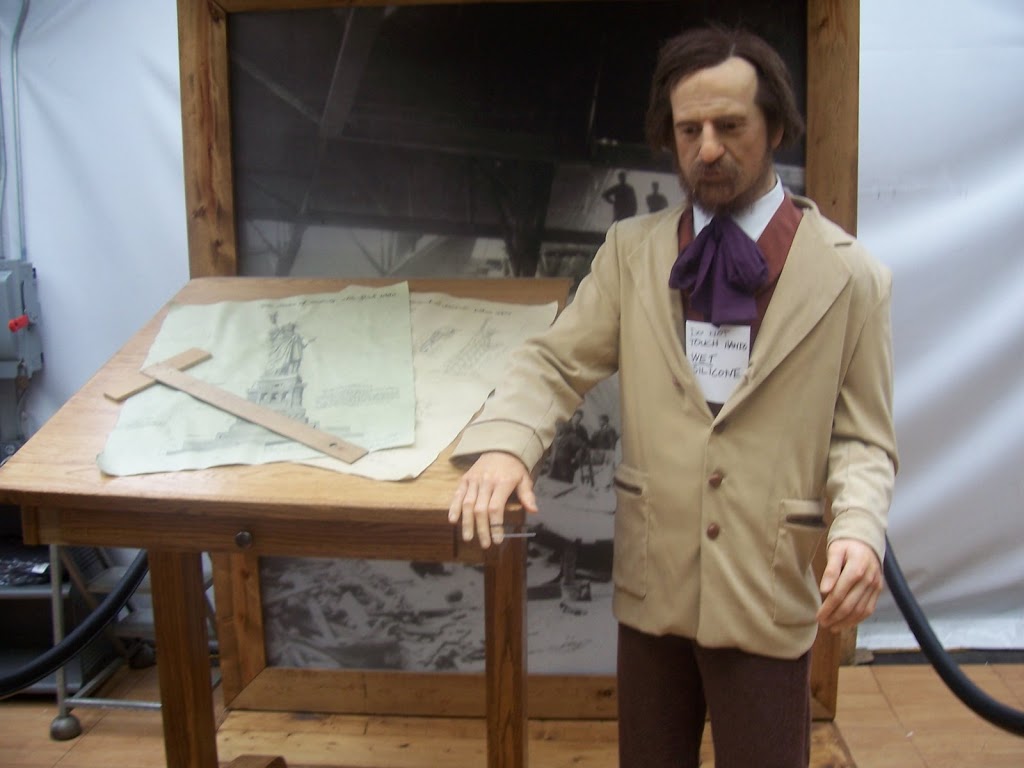
This strangely creepy depiction of Bertholdi also greets visitors. (Click the pic to see what the curious sign says tucked in his jacket.)

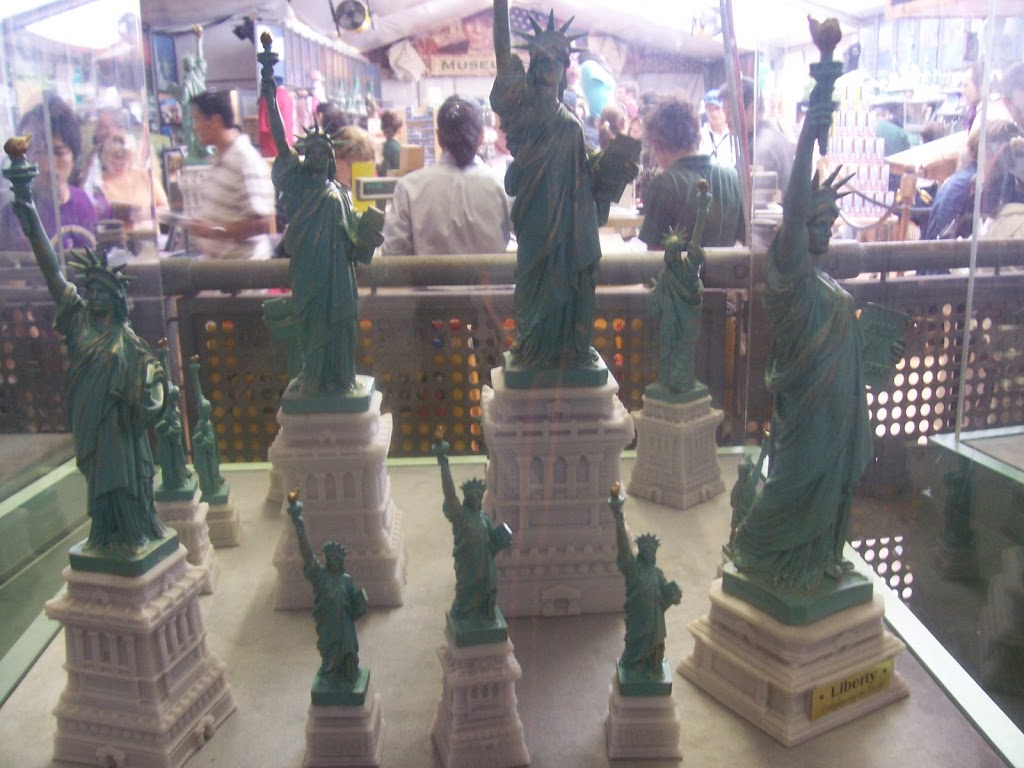
In a prescient bit of fund-raising, Bartholdi sold miniature versions of Lady Liberty before it was even constructed. That honored tradition of capitalism still holds strong throughout every tourist zone in New York City, Liberty Island itself certainly no exception.

By the way, the Statue of Liberty, for many years was actually a deep brown color. When copper oxidizes, however, it turns that rich green color, which prevents it from eroding through rust. The copper used in the construction was so durable that during the extensive 1986 renovation and clean-up of the statue, none of it needed to be replaced. Although Eiffel’s contributions overshadowed those of the original architect Eugène Viollet-le-Duc (who died before the statue was completed), Eugene chose the copper, mined from copper ore obtained in Karmøy, Norway.

Click here to see our history of the Statue of Liberty … as she appears on album covers.

Categories
Podcasts

PODCAST: The Apollo Theater

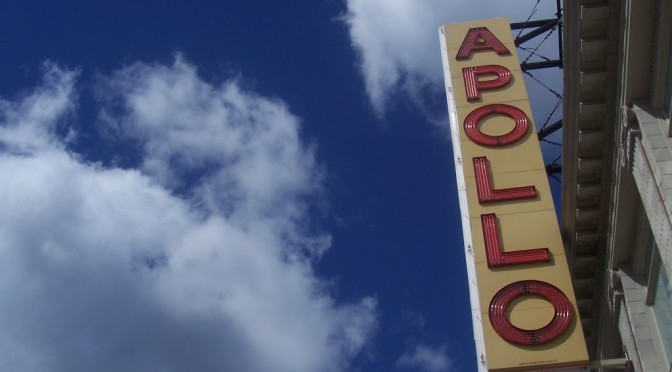
Harlem’s jewel, the Apollo Theater, has more than lived up to its promise as a place “where stars are born and legends are made.” It’s been the cultural centerpiece of New York for more than seven decades, not bad for a former burlesque theater. And find out which icon made his name — and held his funeral — on the same stage.

Listen to it for free on iTunes or other podcasting services. Or you can download or listen to it HERE

First, a clarification from our podcast: the building of the Lenox Avenue line did greatly increase development in the Harlem area, and a great many of Harlem’s most beautiful blocks were developed at or near this time. But this boom did not benefit the increasing African-American members of the neighborhood. In a twist of absurd racism that just seems not only ridiculous but economically short-sighted, owners would let buildings sit vacant, waiting for white tenants, rather than rent them out to black ones.

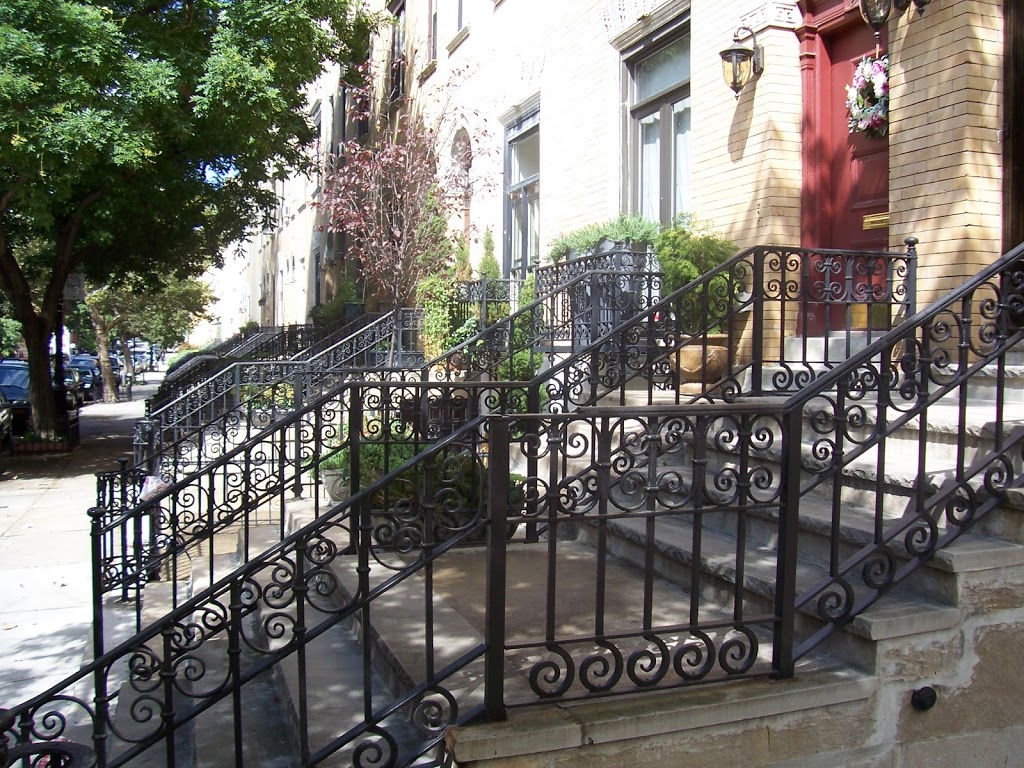
Luckily, areas like Strivers Row (pictured below, located about ten blocks north of the Apollo) soon dissolved that color barrier, and it was in neighborhoods like these that the community flourished.

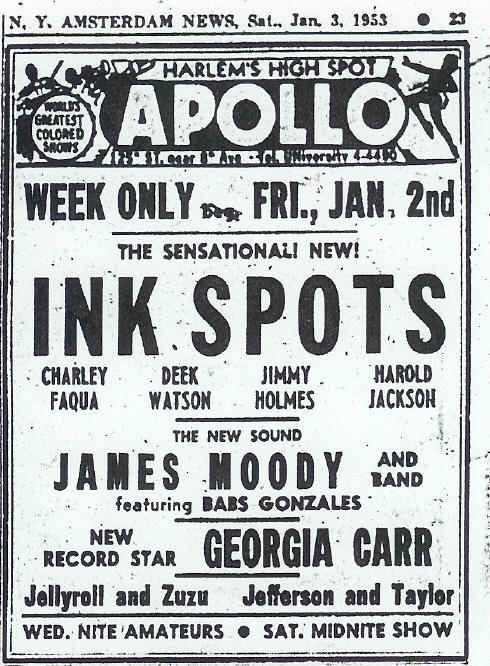
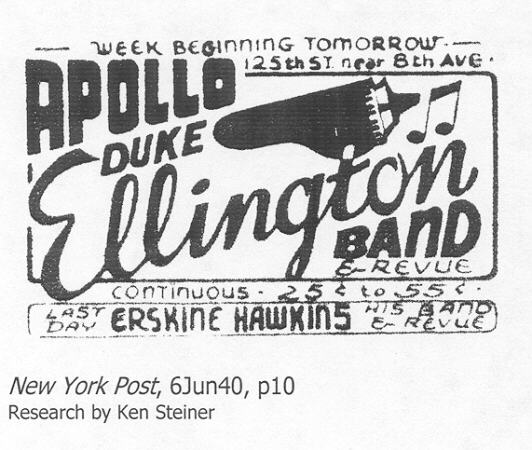
The Apollo would see dozens of major names in R&B, jazz and pop hit its stage in just a few months, as acts would be stacked on top of each other, giving audiences an opportunity to sample lists of artists topping the charts, all at once.

However, what would often set the Apollo apart from other venues was not its talent, but its audiences. I love this quote from Ozzie Davis, about a play that he and his wife Ruby Dee performed on the stage of the Apollo: “The play lasted 15 to 20 minutes longer at the Apollo because the people laughed at everything and their laughter would stop the show. It was like having a show and a prayer meeting at the same time. It was wonderful.”

Near the height of her fame, Aretha Franklin returned to Apollo, a place that had seen many of her early performances. She performed a string of performances in 1971, all of them sold out, to a marquee outside that pronounced ‘She’s Home’. In the 60s, comedians like Bill Cosby, Redd Foxx and Richard Pryor built their stand-up followings at the Apollo. Before them, however it was Moms Mabley, one of the first female comedians to grace the Apollo stage, taking up a virtual residence there that lasted from the late 30s to the 60s. She would perform at the Apollo more than any other performer in its history, making up to $10,000 a week in her heyday. (That’s an awful lot of dough in 1950s money.)

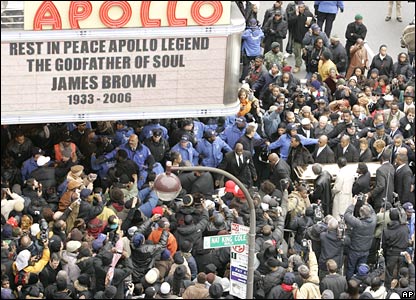
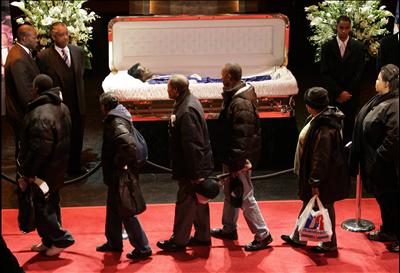
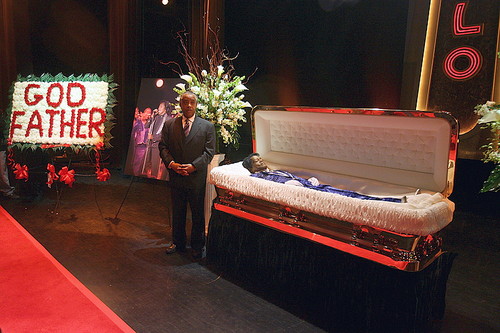
When James Brown died, the Apollo lost its leading light, the man that typified the world-class entertainment it had come to be known for. His funeral was attended by thousands of fans, who traipsed up to the stage to see the King of Soul a final time.


I can’t help but find this picture of Al Sharpton and the body of James Brown on the stage of the Apollo a little strange, however.

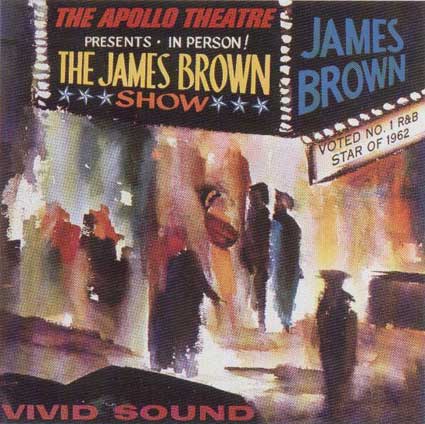
Al Sharpton, a close friend of Brown’s, was quoted as saying, “I don’t think any of us could think James Brown could die. It didn’t seem possible.” James is very much living and breathing on his pivotal recording ‘Live At The Apollo’, which Rolling Stone called the most important live album ever recorded. Listening to this, he does seem to have an air of immortality and boundless talent and energy.

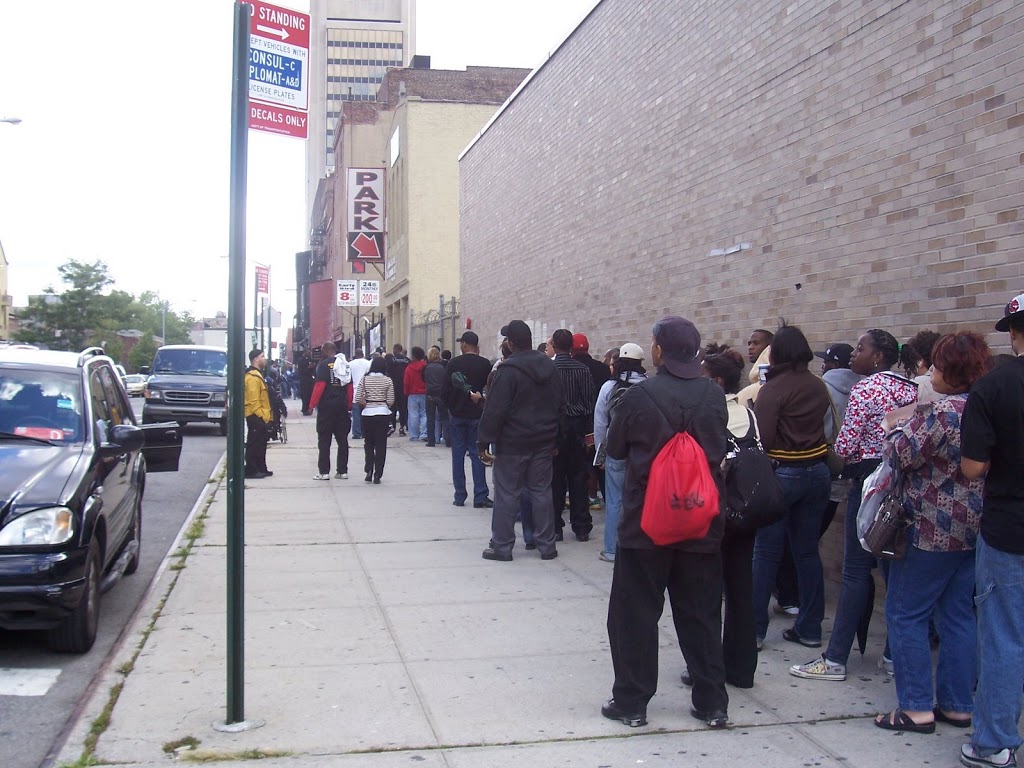
This past Saturday, I happened to be sauntering by the Apollo and caught this line of auditioners for Amateur Night filing into the back of the building to try out. Behold, for the chances are very good that what you are looking at is surely the backside of a major future star!

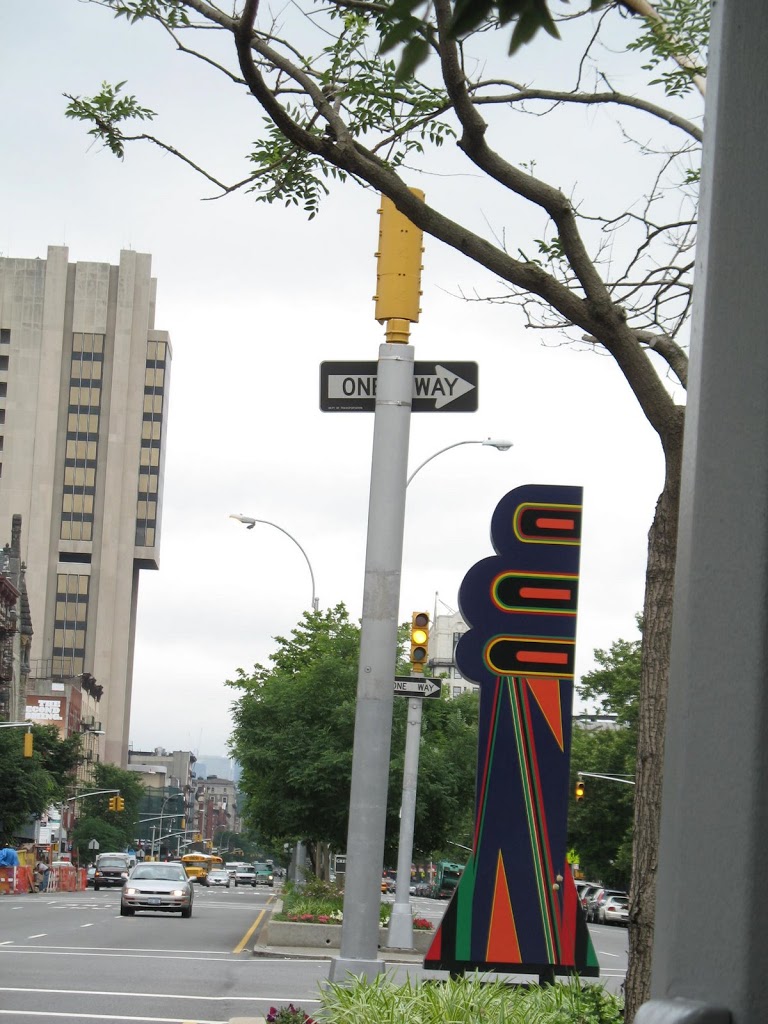
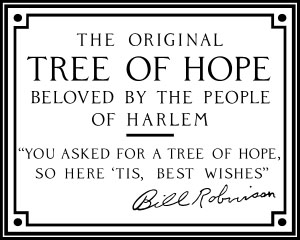
Those who gave a little rub to the sliver of the Tree of Hope have given better performances, at least according to legend. And given the Apollo’s track record, who can balk? Down the street at 131st and Adam Clayton Blvd,, near the original location of the Tree of Hope, you can find a sculpture by Al Miller commemorating the original tree, as well plaque laid in 1941 in a ceremony by mayor Fiorello LaGuardia and entertainer Bill ‘Bojangles’ Robinson. Robinson, naturally, was a frequenter of the stage of the Apollo. Like many performers of his era, he would sometimes perform up to 3 to 5 times a day to soldout shows.

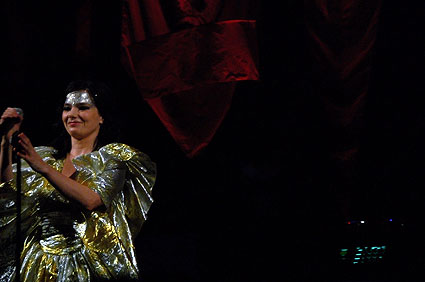
The Apollo is considered one of the most prestigious venues in the city and is host to musicians covering a wide swath of genres — gospel, hip hop, alternative. Below, it’s Bjork that takes the stage:

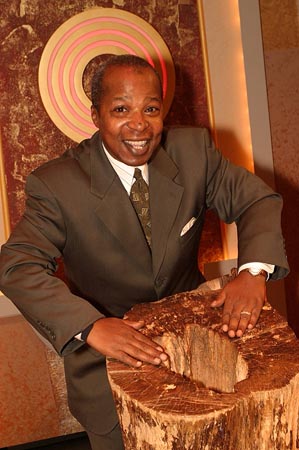
The Apollo Theater currently has tours for groups, led by longtime Apollo employee and ultimate historian Billy Mitchell. You can go to their official website for information, and you can go here for info on getting tickets to Showtime At The Apollo. (Billy and the Apollo’s slice of the Tree of Hope is at right.)

Please go here for some information on another Harlem music icon The Cotton Club, and here for all entries in our Friday Night Fever series.

Categories
Podcasts

PODCAST: Peter Stuyvesant

Back when New York was New Amsterdam, it was the domain of the bullheaded, pear-growing, peglegged Peter Stuyvesant, who cleaned up the city and gave us our most important street. Find out why he still matters and why he’s the king of the East Village.

Listen to it for free on iTunes or other podcasting services. Or you can download or listen to it HERE

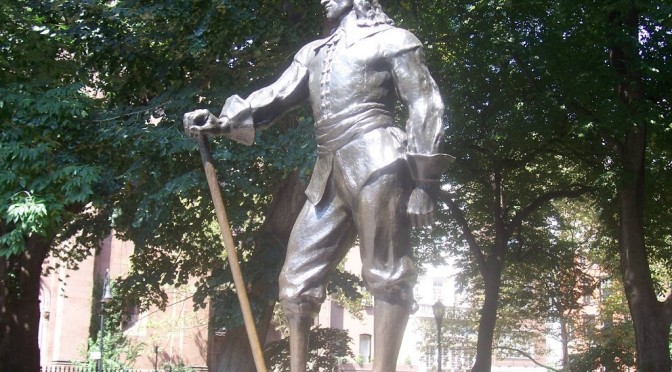
The picture above is of the statue of Peter Stuyvesant, created in 1941 by Gertrude Vanderbilt Whitney (as in the Vanderbilts and the Whitney Museum). Note how its posture and stance cleverly convey Stuyvestant’s stubborn character. (Click the pic to get a closer look at that peg leg.)

The park itself is a beautiful block of greenery lined with old churches and brownstones — and interrupted by 2nd Ave, part of the original design — in the approximate location of the original Stuyvesant family mansion.

Another of the neighborhood’s famous residents is also honored here with a statue nearby and a street named after him — composer Antonin Dvorak, who lived at 327 East 17th Street.

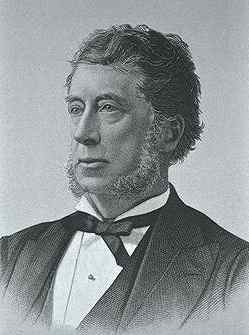
The legacy of Stuyvesant leadership would pass on through the generations. Peter’s great-great-granddaughter Elizabeth took the family in another historically significant direction when she married Revolutionary War hero Nicolas Fish. Their son Hamilton Fish (seen right, named after family friend Alexander Hamilton) would become an influential mayor of New York and later secretary of state under Ulysses S. Grant. Hamilton Fish II, Hamilton Fish III, and Hamilton Fish IV (who died in 1996) would all be New York congressmen. The current Hamilton Fish, we’re up to V I believe, once owned The Nation magazine.

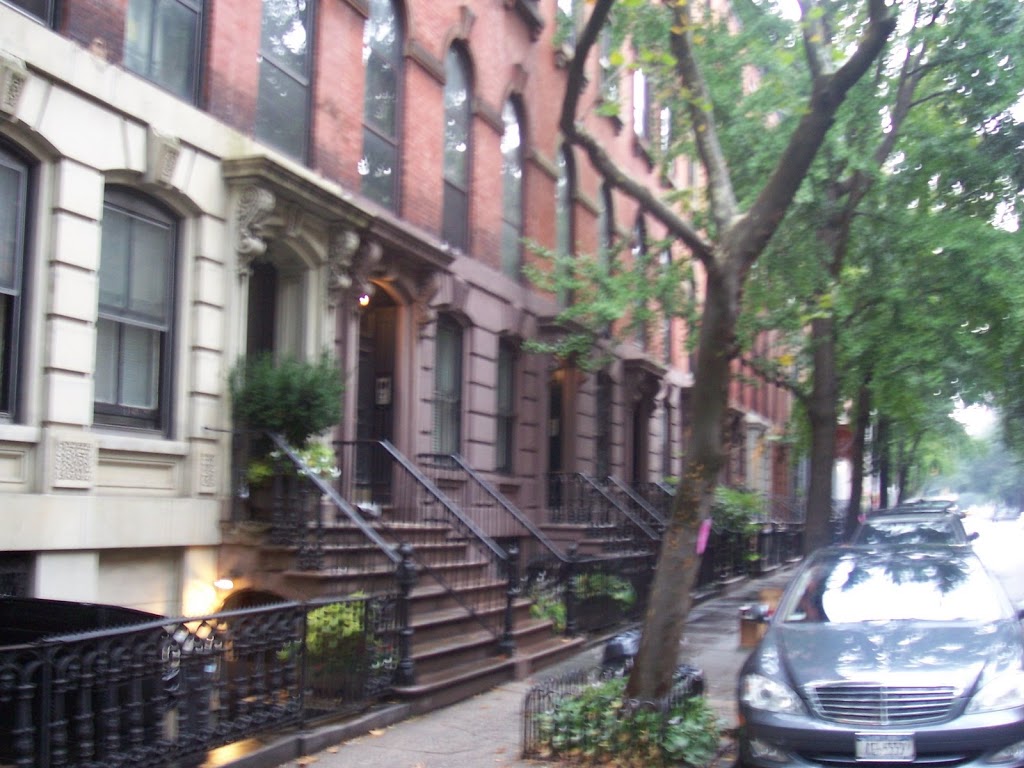
Hamilton I was born in the lovely Stuyvesant-Fish house at 21 Stuyvesant Street. Today its one of the loveliest streets in the East Village.

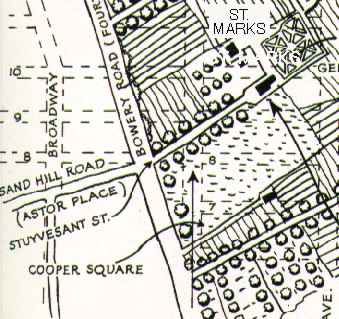
Its odd diagonal through the grid pattern of the Village is a vestige of its original path through Stuyvesant’s old farm.

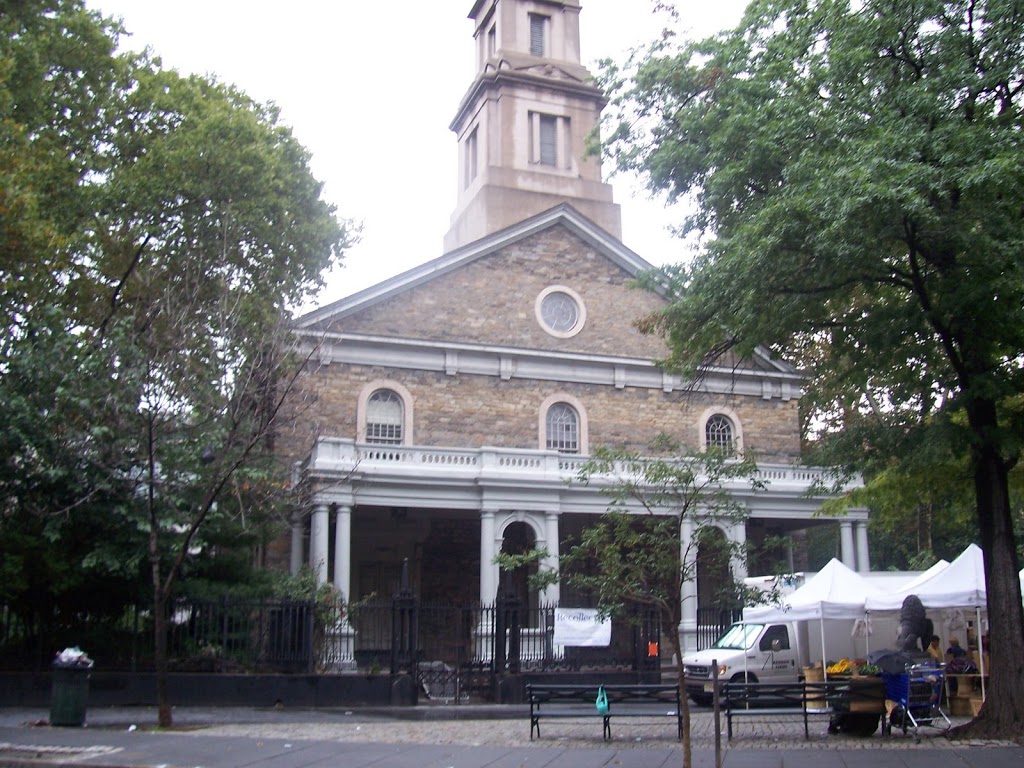
At the end of path, at Second Avenue, is St. Marks-on-the-Bowery, which is aswirl during the weekend with community activities and sometimes a farmer’s market outfront. St Marks contains the crypt of Peter Stuyvesant (marked Petrus Stuyvesant on the stone, to indicate the formalized version of his first name).

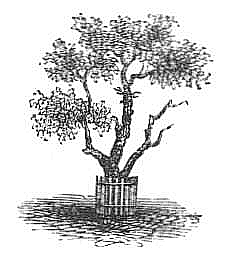
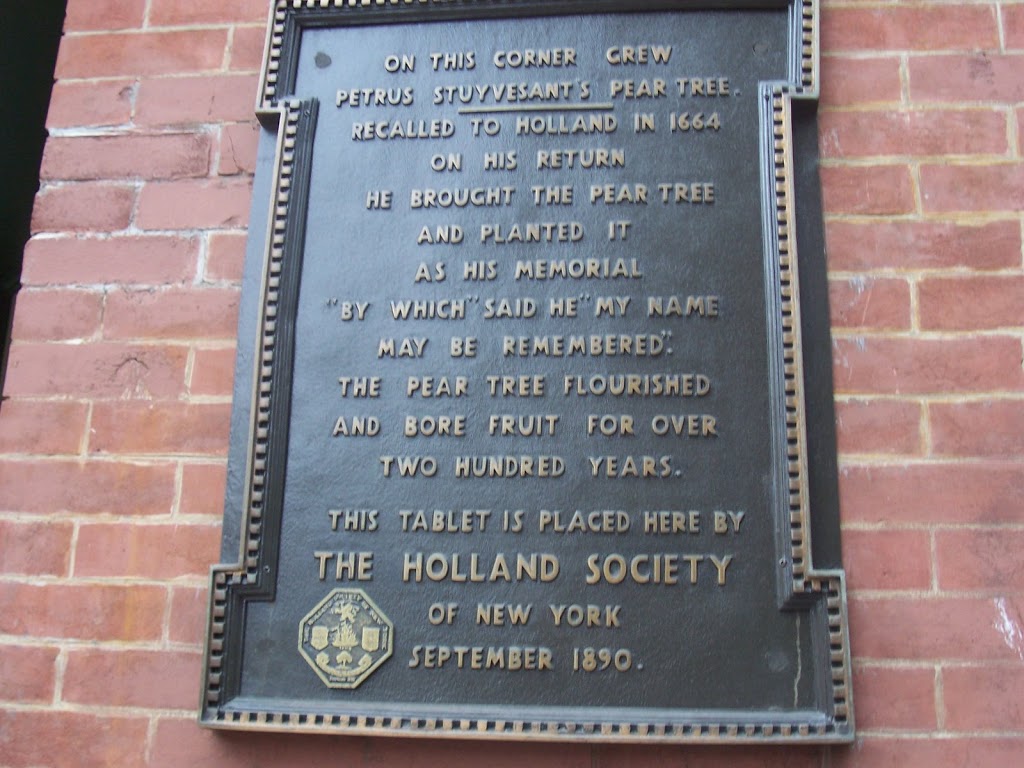
You’ll need to walk a short way to Third Avenue and 13th Street to the plaque honoring the site of Peter’s old pear tree, planted in 1647 from a Dutch seedling, which outlived him by almost two hundred years and drew curiosity seekers from miles around in the mid-19th Century. At the time it was considered the most famous tree in America until it was uprooted by an errant wagon in 1867. (It should be noted that the tree survived the New York Draft Riots, when the neighborhood nearby was in flames.)

Here’s the plaque that hangs in front of Keihl’s. Believe it or not, Keihl’s opened in 1851, the tree standing not far from its doorstep, and John Keihl may have even witnessed the arboreal tragedy. (Click into the picture for a closer look.)

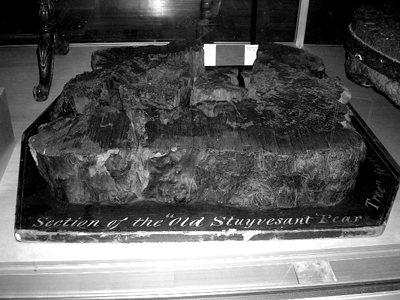
Believe it or not, a slab of the old pear tree can be viewed in the regular collection of the New York Historical Society.

The Stuyvesant family name also pops up in Bedford-Stuyvesant (comprising the Stuyvesant Heights neighborhood), once a cultural mecca for African-Americans, then a former notorious neighborhood — at one time called ‘the world’s biggest ghetto’ — BedStuy has transformed into a ‘hot’ real estate haven, thanks to its many beautiful brownstones. Stuyvesant High School in Battery Park is one of the most revered in the nation (it’s the alumni of several Nobel laureates).

Categories
Podcasts

PODCAST: Coney Island – 20th Century Freakshow

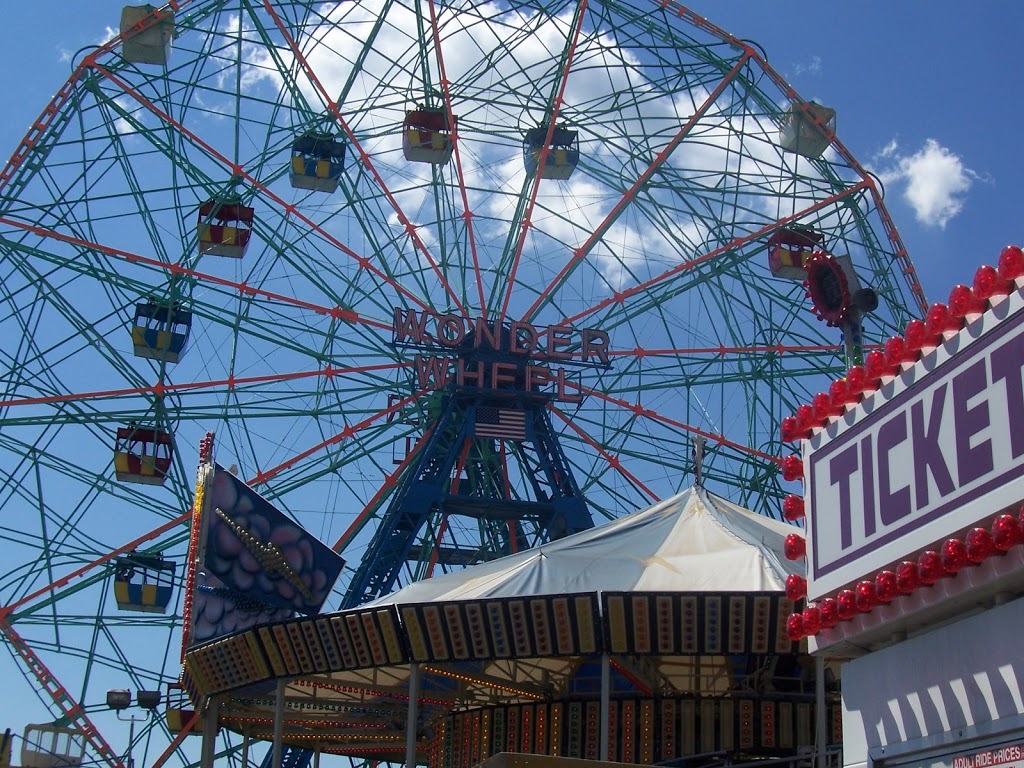
Come see the Wonder Wheel, the king of hot dogs, the “Freaks” in the Dreamland Sideshow, a beached whale and Donald Trump’s dad — all in one place! Its Coney Island of the 20th Century. But will it be around much longer in the 21st?

Listen to it for free on iTunes or other podcasting services. Or you can download or listen to it HERE

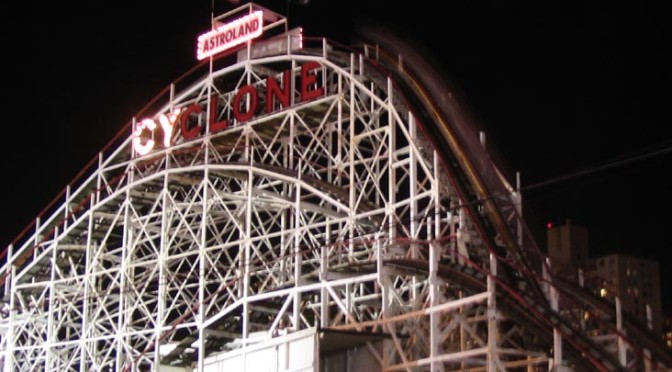
Before we begin, I should stress that these next few weekends may be the last for Astroland. (Apparently they’ll still be open on the weekends throughout the month of October.) The rumor is that there are some last minute negotiations going on to allow Astroland one more season next year, so cross your fingers. Dino’s Wonder Wheel Park , with plenty of rides and arcades to tide you over, is also still open through October. Two independent rides, the Spider and the Zipper, are already in the process of being dismantled as I type, and will be shipped to fairs in Honduras, Central America.

Some images to go with today’s podcast on the modern history of Coney Island:

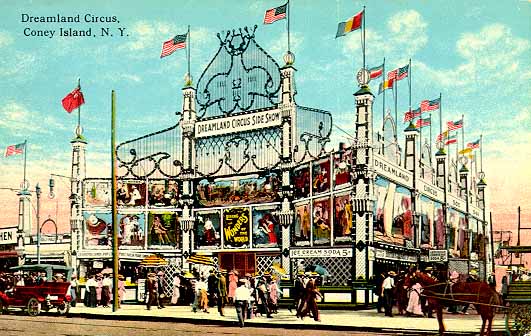
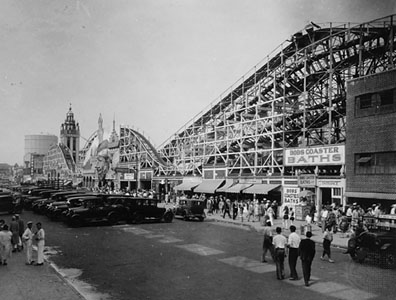
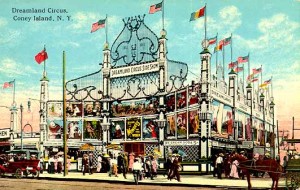
Coney’s most famous early sideshow, the Dreamland Sideshow was built by Samuel Gumpertz from the ashes of the still smoldering Dreamland amusement park. Its cast of characters would later star in the early film classic ‘Freaks’.
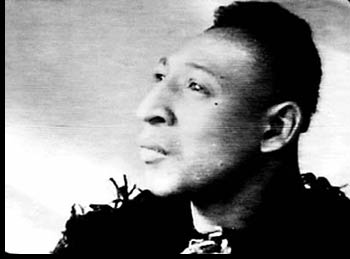
By the time William Henry Johnson joined the Dreamland Sideshow, he was an old man and had already been touring in circuses and freak shows for over 40 years. The son of former slaves, the New Jersey-born Johnson was born with an abnormally shaped head, but was not actually microcephalic(a medical condition that deforms the human skull at birth). His stage name, coined by PT Barnum, was Zip What Is It, the missing link between human and apes. (Ah, the age before political correctness.) When Zip died at age 84, his sideshow friends served as his pallbearers.

According to one account in 1925, he rescued a young girl from drowning. Considering he must have been in his 70s, his bravery and stamina should have been heralded. However, perhaps due to years of conditioned shyness, he fled after rescuing her for fear being spotted.
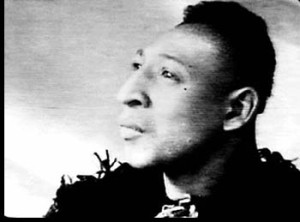
Lots more pics of William and other ‘official’ microcephalics or ‘pinheads’ can be found here. He was not in the movie ‘Freaks’ but Schlitzie was. (Click the link above to discover who that is.)

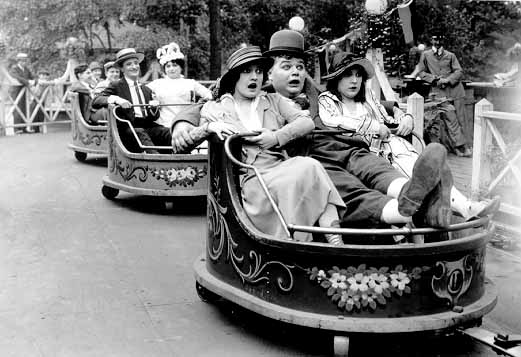
Silent film stars Fatty Arbuckle, Buster Keaton (looking buff), and Al St. John teamed up for an amusing lark “Fatty at Coney Island,” released in 1917, featuring the still-flickering lights of Luna Park, old time bathing suits and fancy bath houses.
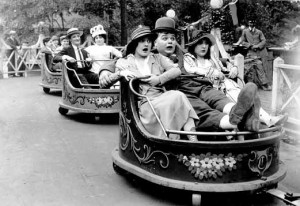
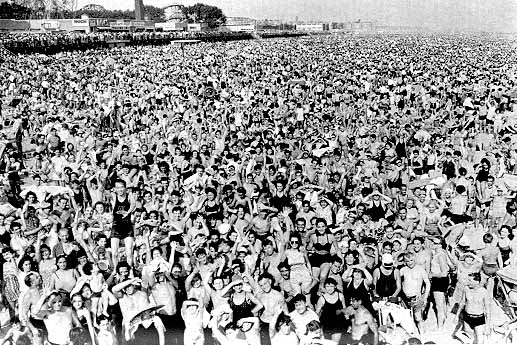
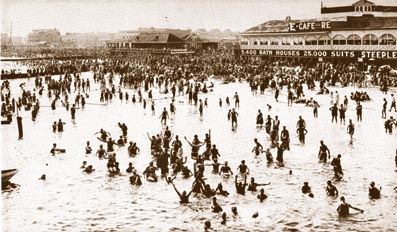
With the advent of the new subway, public beaches and a strong new boardwalk, people from all walks of life were able to enjoy themselves on Coney Island. Oy!
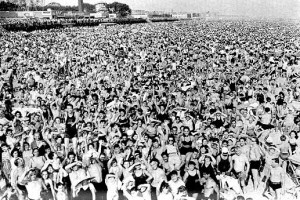
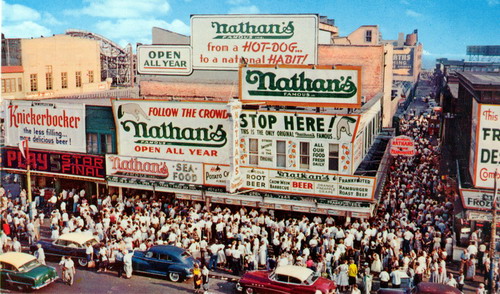
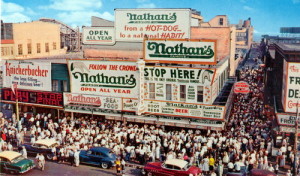
Nathan’s Hot Dogs, as crowded then as it is today on a hot summer’s day.
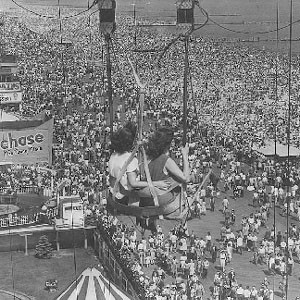
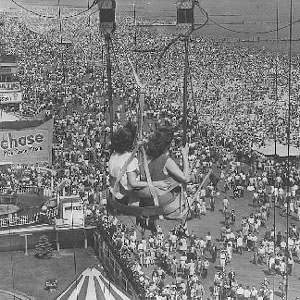
A lofty view from the Parachute Jump, overlooking thousands of visitors below. Its easy application as an amusement belied its original purpose as a military training machine. The Jump was sponsored by Lifesavers candy during its run at the 1939 New York Worlds Fair in Flushing Meadows, Queens, where it was one of the most popular attractions there and was even the scene of a wedding. Its no longer operating now, but has been given fresh colors reminiscent of its Lifesavers days, and it even lights up during the season.

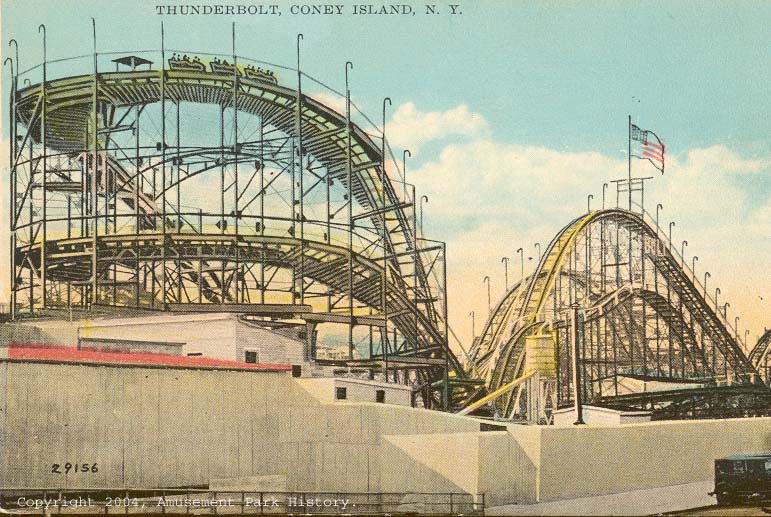
One of Coney Island’s other rollercoasters that didnt make it into the 21st century, The Thunderbolt was dismantled during the building of the minor league ballfield KeySpan Park.
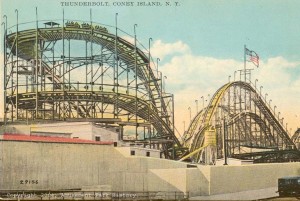
Another Coney Island rollercoaster was the Tornado, which was built in 1926 and burned down, a common fate of amusements here, in 1977. Note that the Tornado was built before the Cyclone. Hmm, who’s ripping off who here?
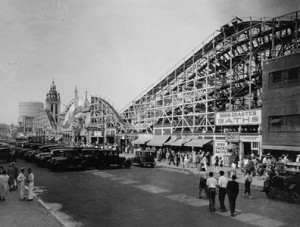
The remaining rollercoaster, of course, gave its name to the minor league team that now plays closeby:

Here are a few mockups of potential renovations by Thor. They have gone back to the drawing board many a time. Gothamist even reports the city may be attempting to scuttle Thor’s plans altogether with talks with Copenhagen’s Tivoli Gardens, the 164 year old park that was certainly an influence on the old Coney Island parks:
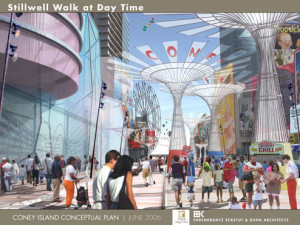

Here are some other plans by Thor.

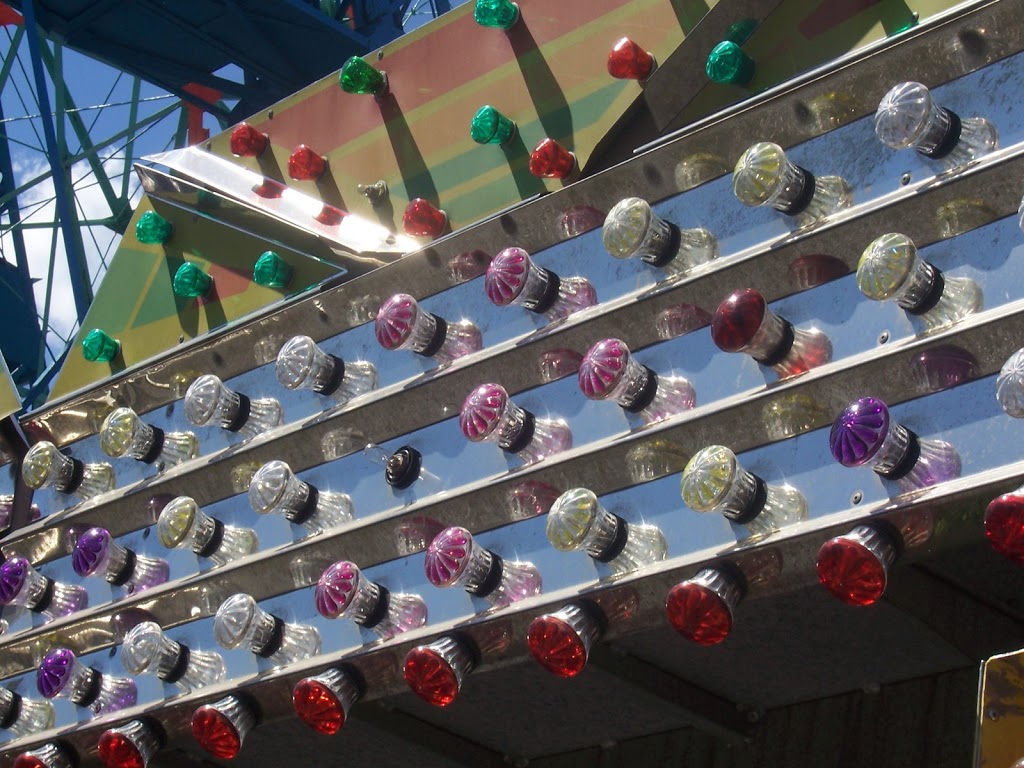
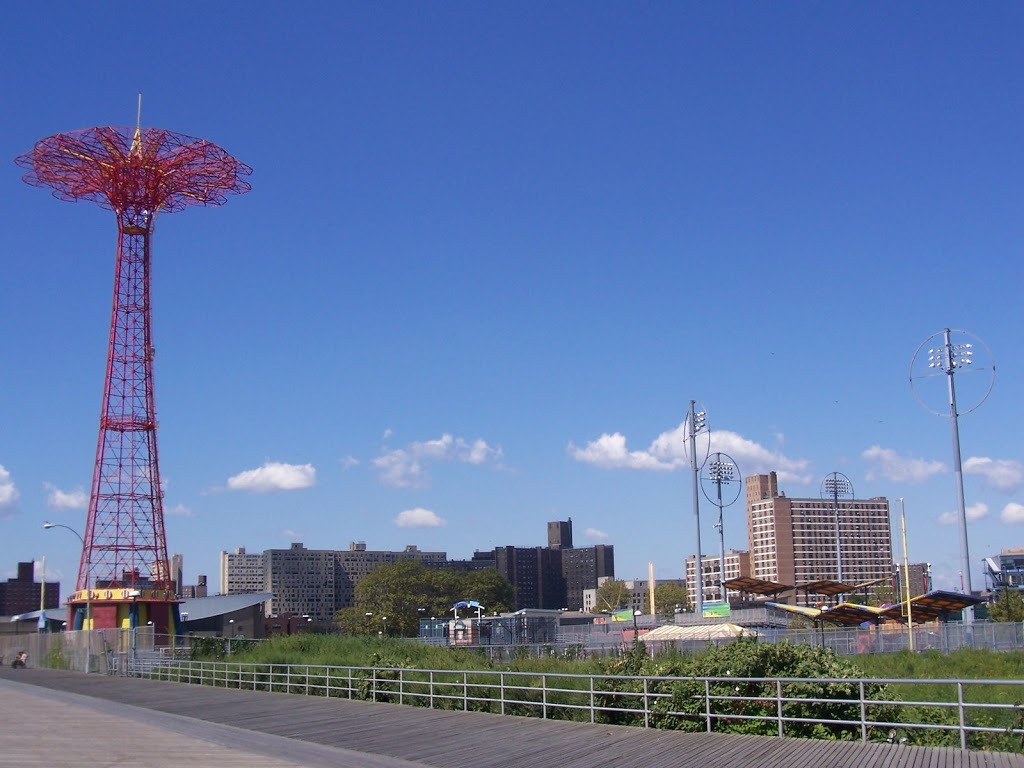
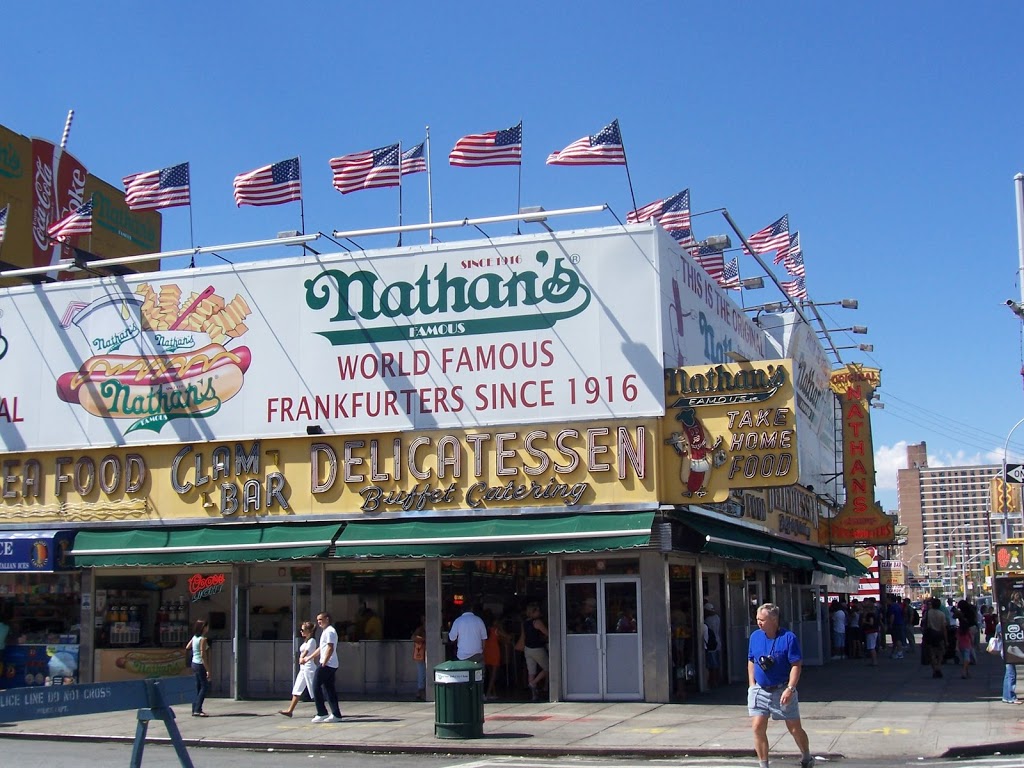
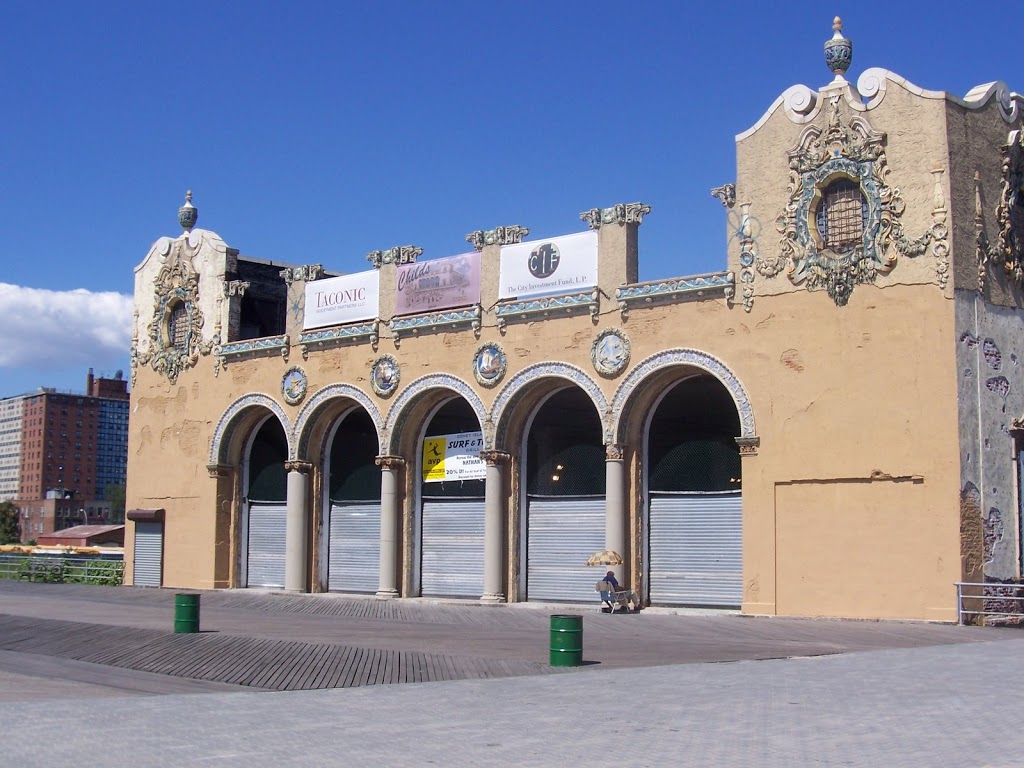
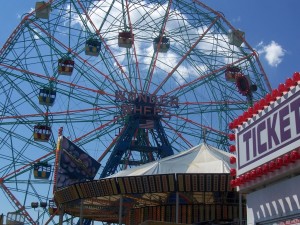
And I thought I’d end our presentation with a few that I took myself this past weekend…..
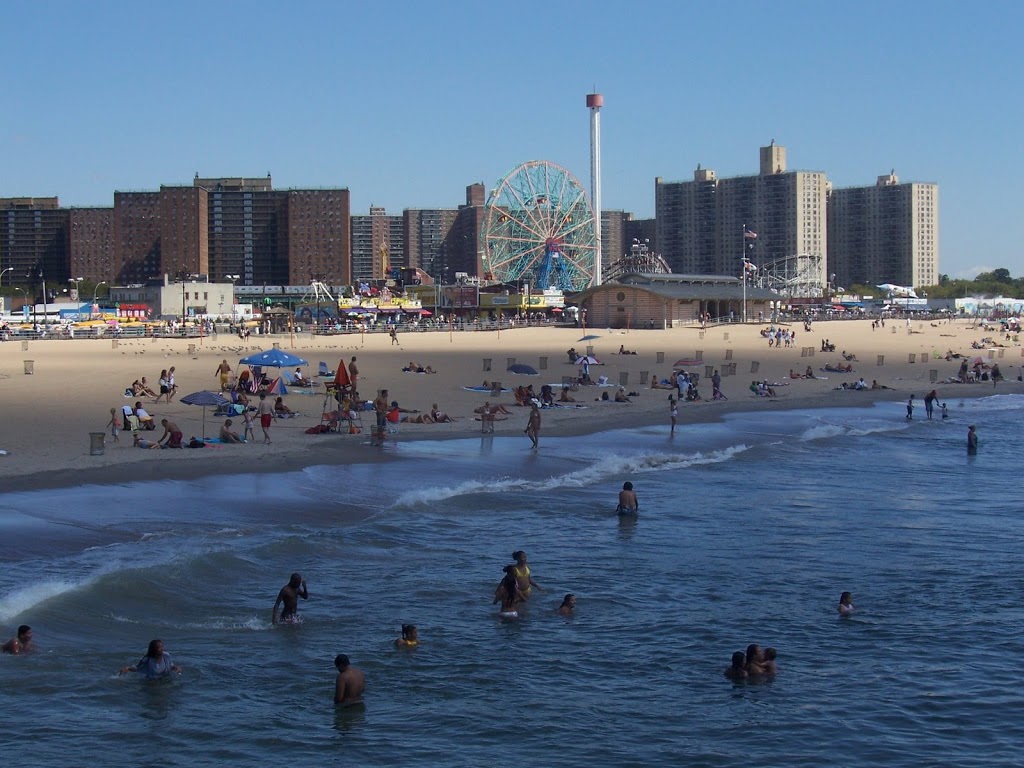
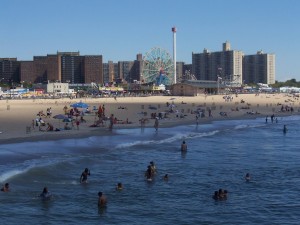
The beach on a beautiful day. From this angle, the Robert Moses influence can be readily seen:
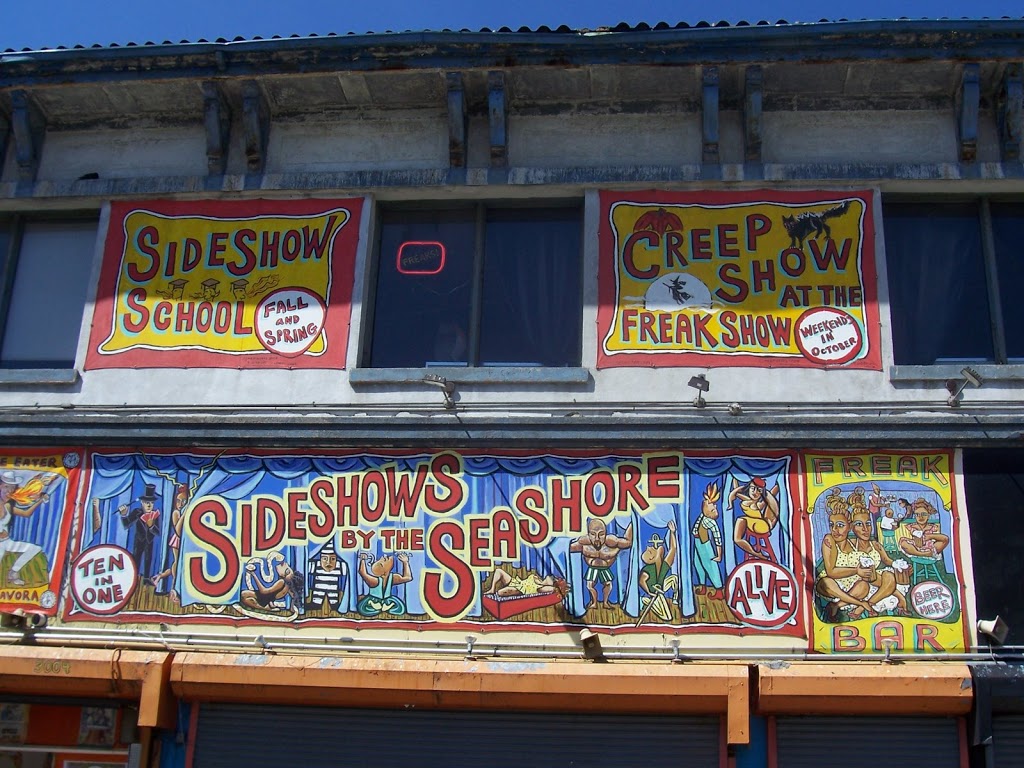
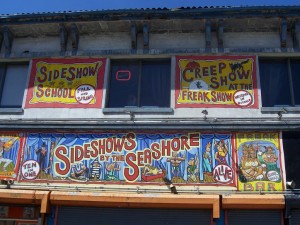
You can still go see the sideshow, perhaps a bit more politically correct than it was in the past.
A bit of Coney’s faded glamour…
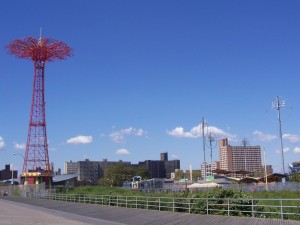
Its “makeup may be flaking” but the Parachute Jump lingers on, in less jovial environs than its used to.
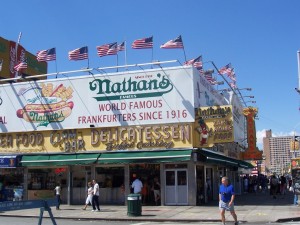
This cost $3.35, still a bargain for something so decadent, but nowhere near Nathan Handwerker’s original selling price of five cents

Here’s where Nathan’s has stood since he opened it, in 1916. Since then, he’s also opened another location closer to the boardwalk. One of Nathan’s first employees was a young redheaded girl named Clara Bowtinelli, who would later shorten her last name to Bow and become one of the silent film era’s biggest stars as Hollywood’s ‘It’ Girl.
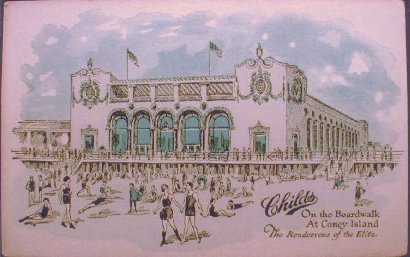
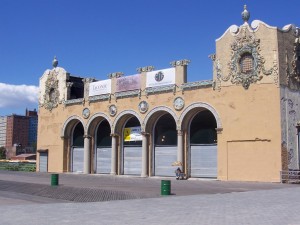
This is Childs Restaurant, along the boardwalk, one of the oldest structures still standing on Coney Island. Built in 1924, it was able to withstand the many fires that swept through Coney and in fact shielded buildings close by from the flames. A developer intends to re-open Childs as a restaurant once again in the near future. It was opened for the first time in many, many years during this year’s Mermaid Parade.
Childs in its glory days:
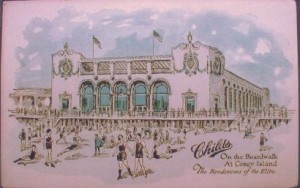
Some detailed information about Childs can be found here.

If you’d like more information about some current activities in preserving Coney Island, try the Save Coney Island page or the lovely official Coney Island webpage.

Many of the blogs in our blogroll have far more in-depth information about Coney Island that we do. I suggest you start with Kinetic Carnival or Gowanus Lounge first. A very exhausting site on its history (with lots of photos and interactive maps) can be found here.

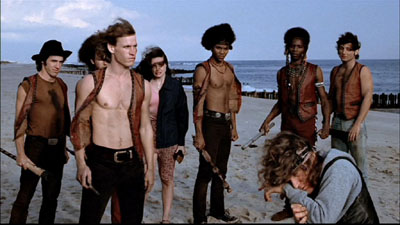
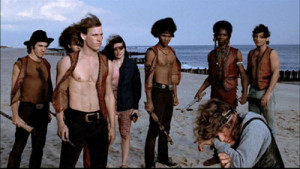
Finally, how could I forget The Warriors, the seminal cult 1979 film, set through much of Manhattan but featuring an explosive finale at Coney Island? Visit its tribute site or rent it today.

Last year I was fortunate enough to go to a special screening of the film at Coney Island that was sponsored by Netflix and featured many members of the cast.

Categories
Podcasts

PODCAST: Coney Island – The Golden Age

The Coney Island that greeted vacationers and city folk in the years 1904 to 1911 was one of infinite imagination manifested in fantastic but cheaply built extravaganza.

A world of amusement starts here in New York — Coney Island, the world’s oldest and strangest collection of amusement parks, a mishmash of sideshows, concession stands, gambling halls, new-fangled rides and luxury hotels. Take a daytrip with us back to the early days of Coney Island. Hold on to your hat!

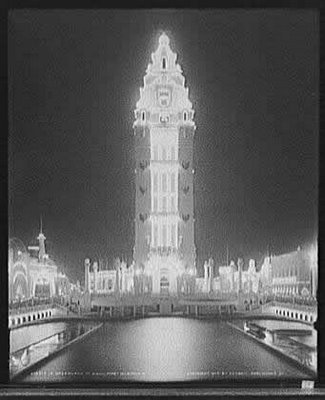
Part of what made the experience of Coney Island’s cheap, often disposable thrills was its meshing of new technology, human invention, and reactions to a strict moral society. It was socially acceptable debauchery, literally plugged in to the experience of a new century. The advent of electricity brought visitors out into the salty air until late at night. Benches were often sent slight electrical charges to make sure people didn’t sit around all day, not spending money! With electricity used more aestheticly as it was in Luna Park (right), they could light up the sky like Oz. The name Luna Park paid homage to A Trip To The Moon, a ride created by its parks owners Frederick Thompson and Elmer “Skip” Dundy, which in turn was certainly a close approximation of the French 1902 silent film classic by Georges Méliès.
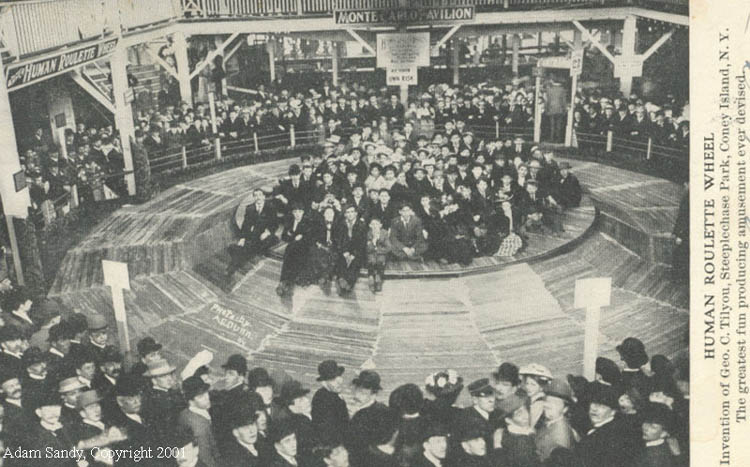
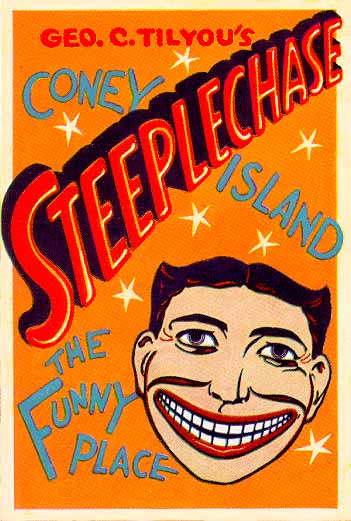
Over at Steeplechase Park, meanwhile, it was more centrifugal and gravitational forces that brought out the crowds, such as the Human Roulette wheel below. I dont know, there’s just something about this that looks profoundly unfun to me:

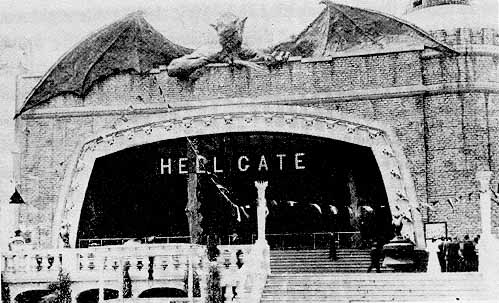
One of the more unusual amusements at Dreamland was Hell’s Gate, which emulated via the guise of starched Victorian morality the possible geography of Biblical Hell. Perhaps unsurpring, it was the combination of a burst lightbulb and a tar bucket inside Hell’s Gate that started the fire that eventually burned all of Dreamland to the ground in 1911, burning for 18 hours.

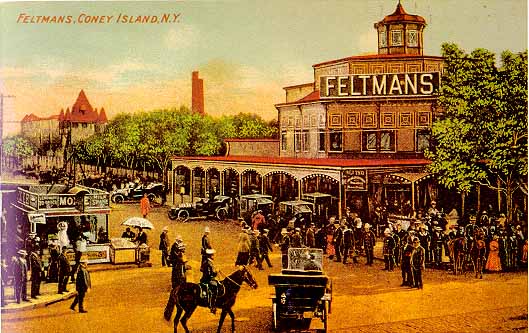
The proper entrepreneur who could maneuver through the early days of Coney Island corruption and make a financial killing. Take the inventer of the hot dog, Charles Feltman, who launched restaurants and hotels from the success of his sausage in a roll carts. This fancy restaurant, a favorite of vacationers of all social classes, sat where modern Astroland sits today:

(Not to spoil anything from our next episode, but in 1915, an employee of Feltman’s Restaurant Nathan Handwerker ate free hot dogs all summer, then devised an idea….)

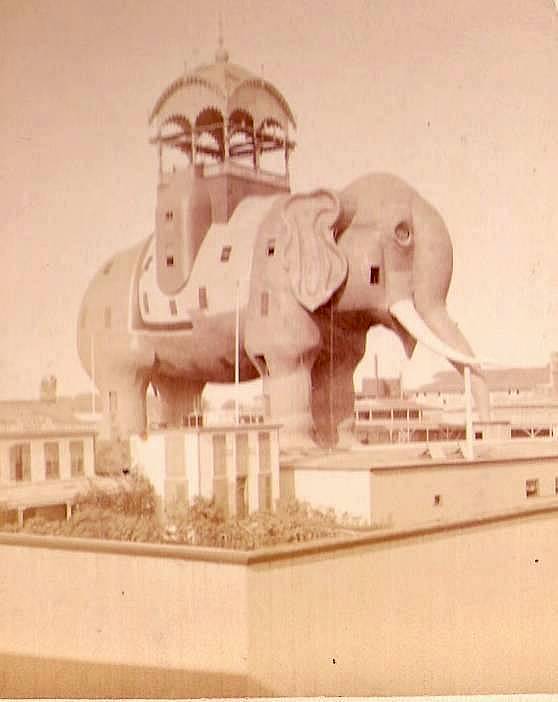
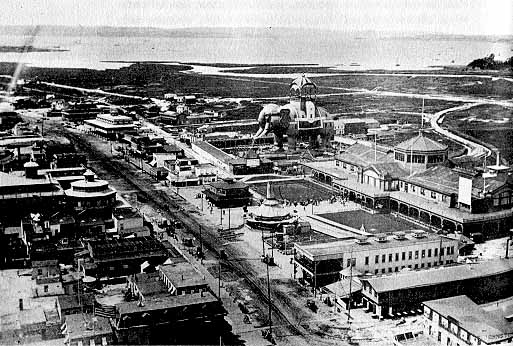
Why stay in a luxury hotel when you can just sleep in a giant elephant? This unusual lodging was built in 1882, just a few steps from the world’s first roller coaster, the Switchback Railway, and you could view the beach revelers via windows that served as the elephant’s eyes. One leg featured a small cigar store, while the back legs had a staircase that led to your room. Perhaps because this doesnt exactly look like the most comfortable revolution in hospitality, the hotel soon became a favorite for prostitues, so that ‘seeing the elephant’ soon became a rather naughty euphemism. Our shabby pachyderm was mercifully put out of its misery in 1896 by fire. I love this aerial view of the area, with the Elephant lording clumsily over the landscape, well before the Island’s peak days a few years later.

Elephants in general didnt fare so well in Coney Island. Then there’s the case of Topsy, the once friendly elephant at Luna Park who went wild and killed three men. Her owners decided to put her down, attempting to poison her with cyanide-laced carrots, to no avail.

Enter Thomas Edison, who was trying to prove the dangers of his rival George Westinghouse’s alternating electrical current to his own ‘safe’ direct current. He did this by going around the country and electricuting dogs and cats as a demonstration. So when he heard that the owners of Luna were trying to off their elephant, he couldnt refuse.
They even made the ‘demonstration’ the topic of a silent film, which you can see here.

By the way, there are so many resources online about early Coney Island history, that I invite you to check a few of these wonderful places out yourself:

Coney Island History Project
Amusement Parks history
Coney Island History Site

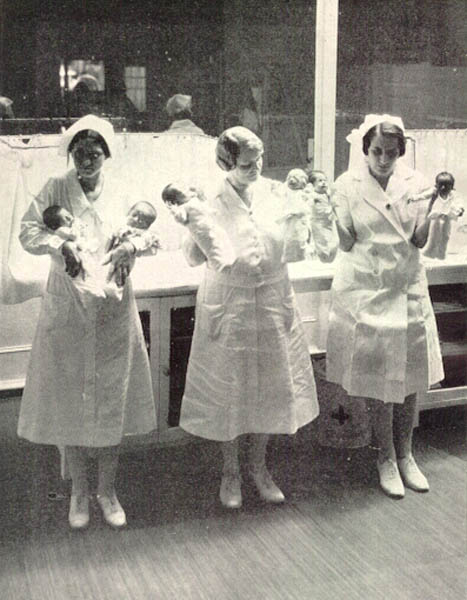
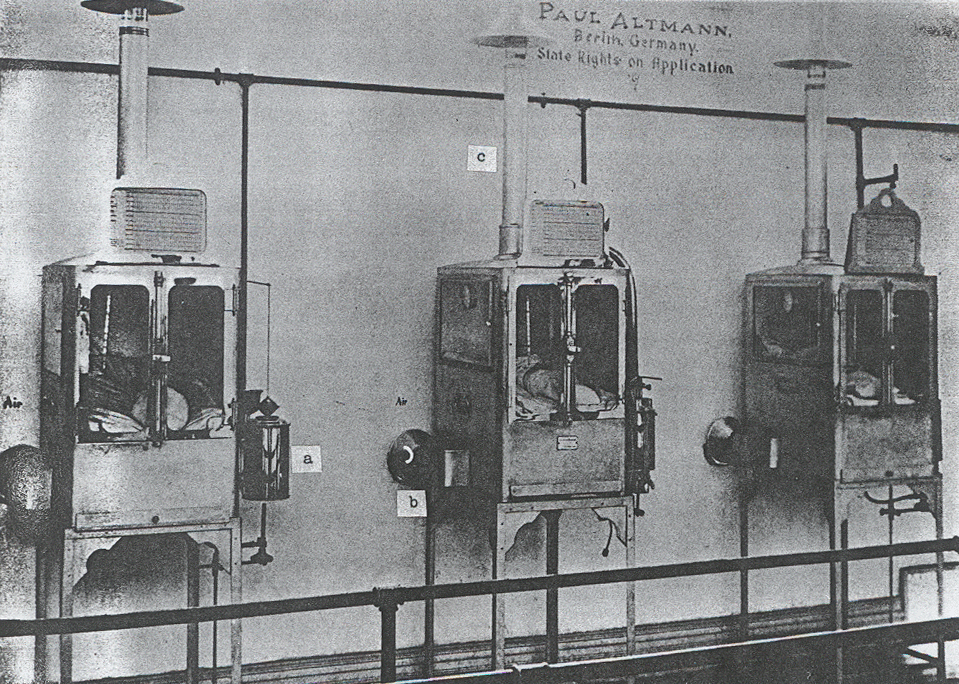
And in case you don’t believe me about that sideshow exhibit involving premie babies in incubators, here’s a shot of some of the nurses displaying the stars of the show, followed by a look at the actual incubators. The exhibit actually ran for decades in Coney Island, until 1945. You know, because there’s nothing more entertaining than watching a newborn infant struggling to survive: