Categories
Brooklyn History Podcasts

The History of DUMBO, the Brooklyn neighborhood built upon a legacy of coffee and cardboard boxes

PODCAST The history of Brooklyn’s DUMBO neighborhood — from its industrial past to its hi-tech future.

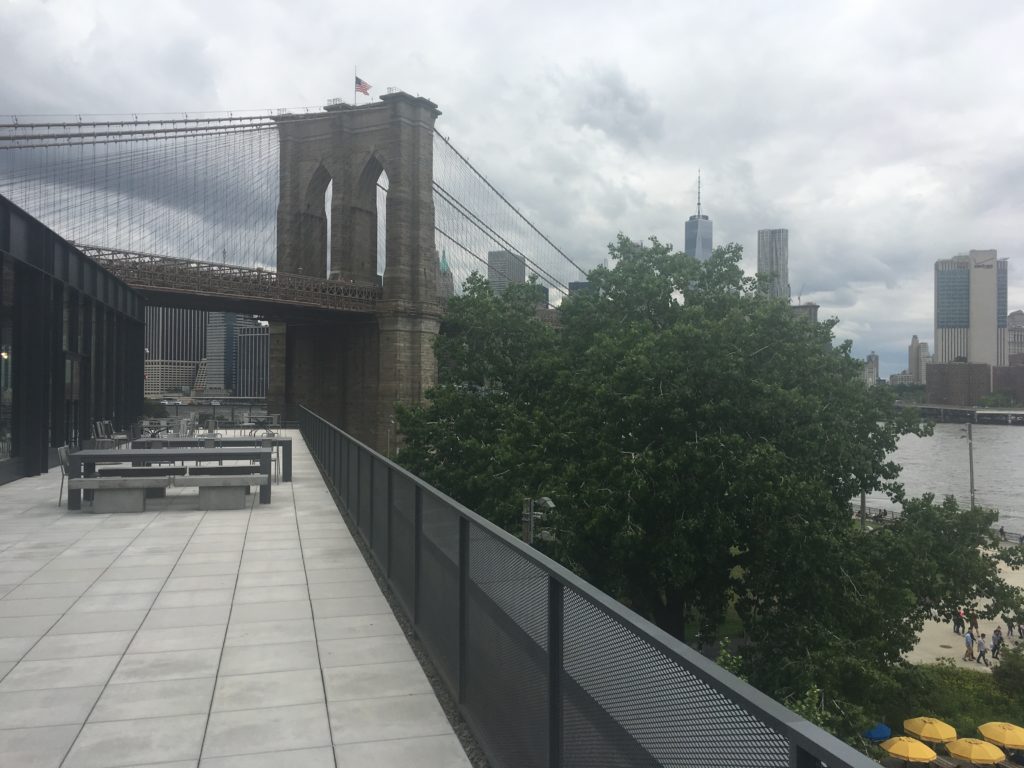
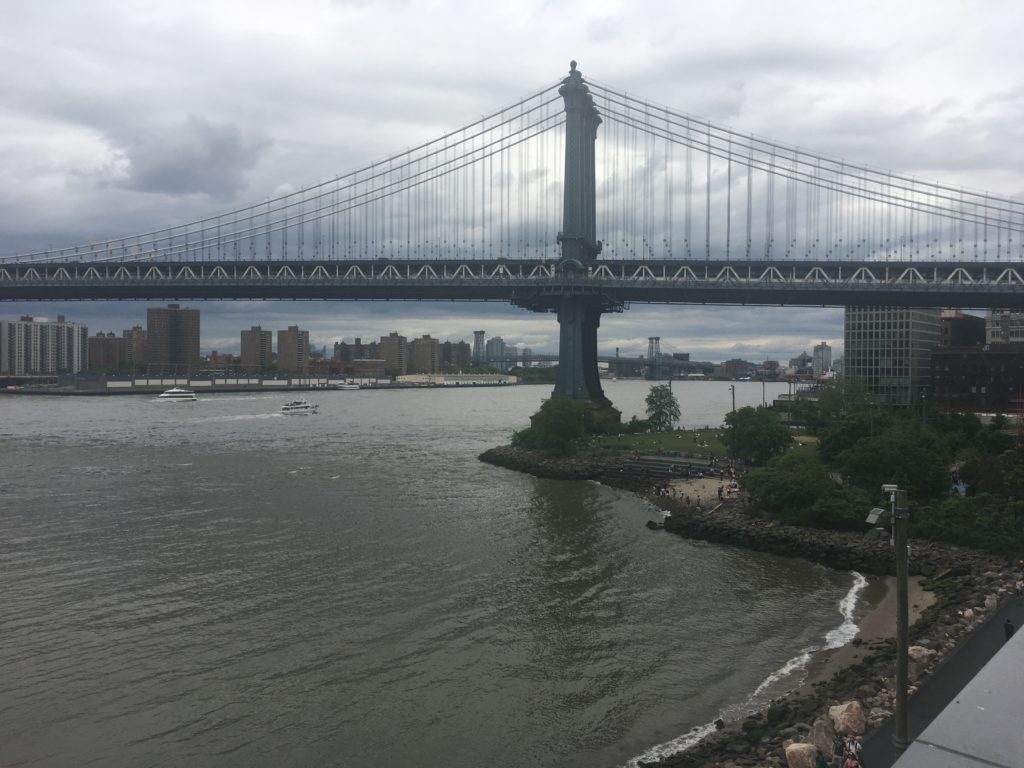
Down Under Manhattan Bridge Overpass (DUMBO) is, we think, a rather drab name for a historically significant place in Brooklyn where some of the daily habits of everyday Americans were invented.

This industrial area between the Brooklyn and Manhattan bridges traces its story to the birth of Brooklyn itself, to the vital ferry service that linked the first residents to the marketplaces of New York. Two early (lesser) Founding Fathers even attempted to build a utopian society here called Olympia.

Instead the coastline’s fate would turn to industrial and shipping concerns. Its waterfront was lined with brick warehouses, so impressive and uniform that Brooklyn received the nickname ‘the Walled City‘.

The industries based directly behind the warehouses were equally as important to the American economy. Most of their factories comprise the architecture of today’s DUMBO, grand industrial fortresses of brick and concrete, towering above cobbled streets etched with railroad tracks.

The cardboard-box titan Robert Gair was so dominant in this region that his many buildings were collectively referred to as Gairville. But coffee and tea traditions also came here — not just the manufacture, but the revolutionary ways in which people with buy and drink those beverages.

How did this early New York manufacturing district become a modern American tech hub, with luxury loft apartments and splendid coffee shops? This story of repurpose and gentrification is very different from those told in other neighborhoods.

PLUS: And, no, really, what is up with that name?

Listen Now: DUMBO History

Or listen to it straight from here:

________________________________________________________

The Bowery Boys: New York City History podcast is brought to you …. by you!

We are now producing a new Bowery Boys podcast every week.  We’re also looking to improve the show in other ways and expand in other ways as well — through publishing, social media, live events and other forms of media.  But we can only do this with your help!

We are now a member of Patreon, a patronage platform where you can support your favorite content creators for as little as a $1 a month.

Please visit our page on Patreon and watch a short video of us recording the show and talking about our expansion plans.  If you’d like to help out, there are five different pledge levels (and with clever names too — Mannahatta, New Amsterdam, Five Points, Gilded Age, Jazz Age and Empire State). Check them out and consider being a sponsor.

We greatly appreciate our listeners and readers and thank you for joining us on this journey so far. 

_______________________________________________________

The DUMBO neighborhood, Brooklyn Heights and downtown Brooklyn on this 1908 survey map.
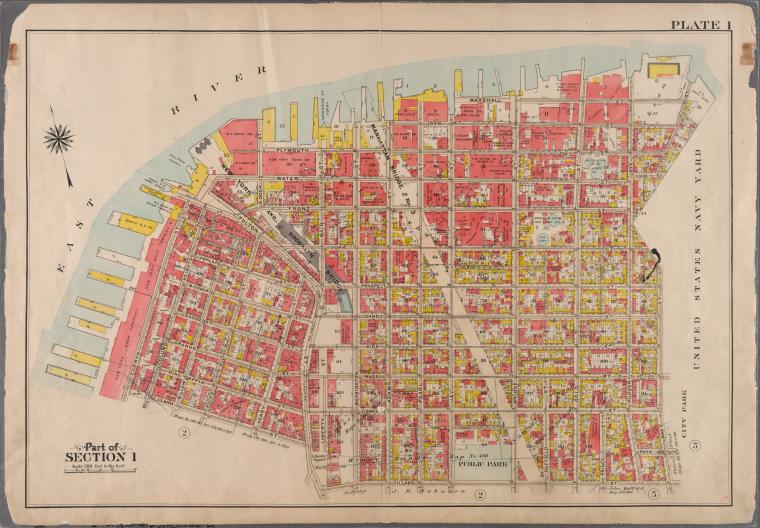
New York Public Library

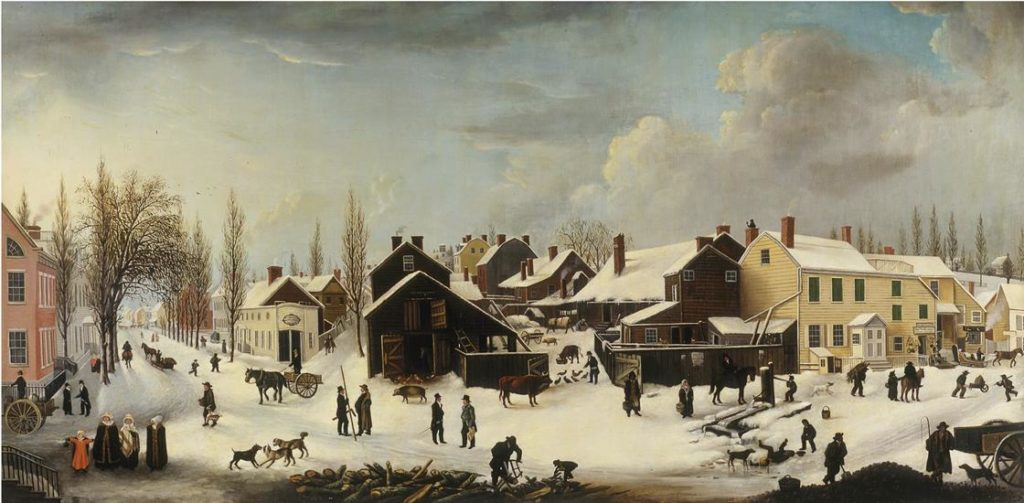
This painting by Francis Guy) actually depicts the area of downtown Brooklyn as it looked during the area’s ‘Olympia period’.
MCNY

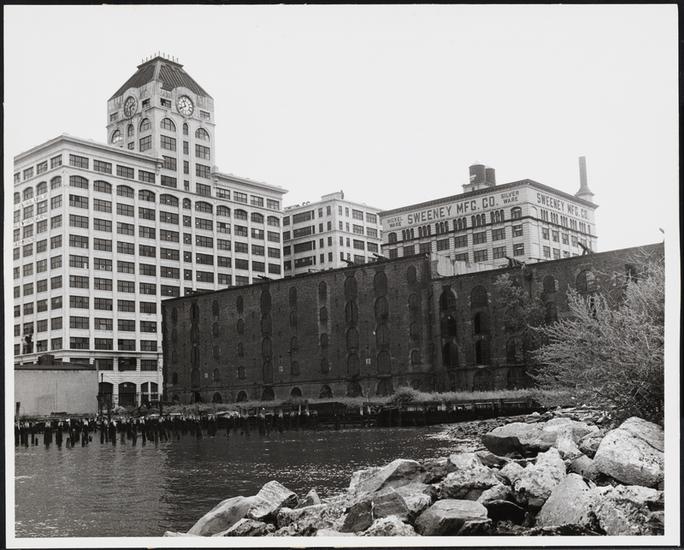
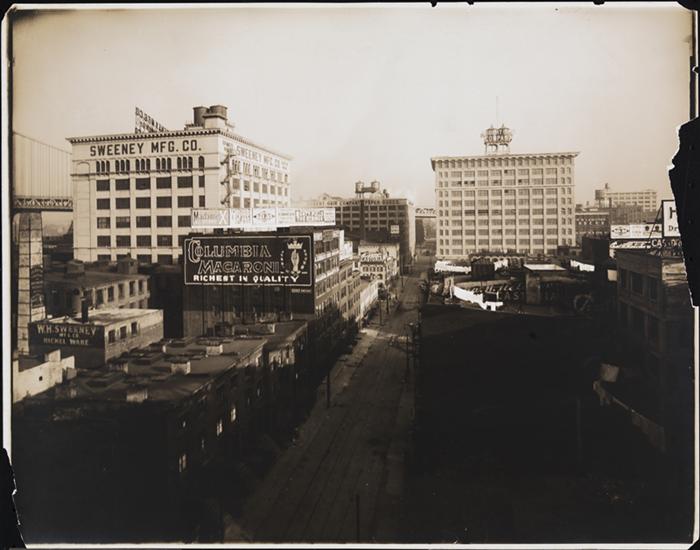
The waterfront in 1974 — the Empire Stores, the former Gair building (1 Main Street) and Sweeney Manufacturing (the kitchenware company)
MCNY
MCNY

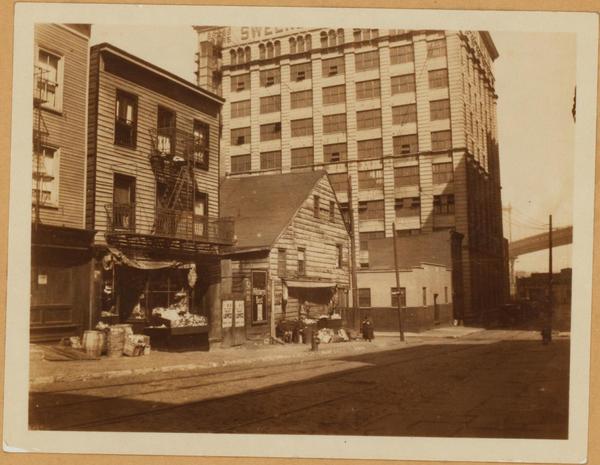
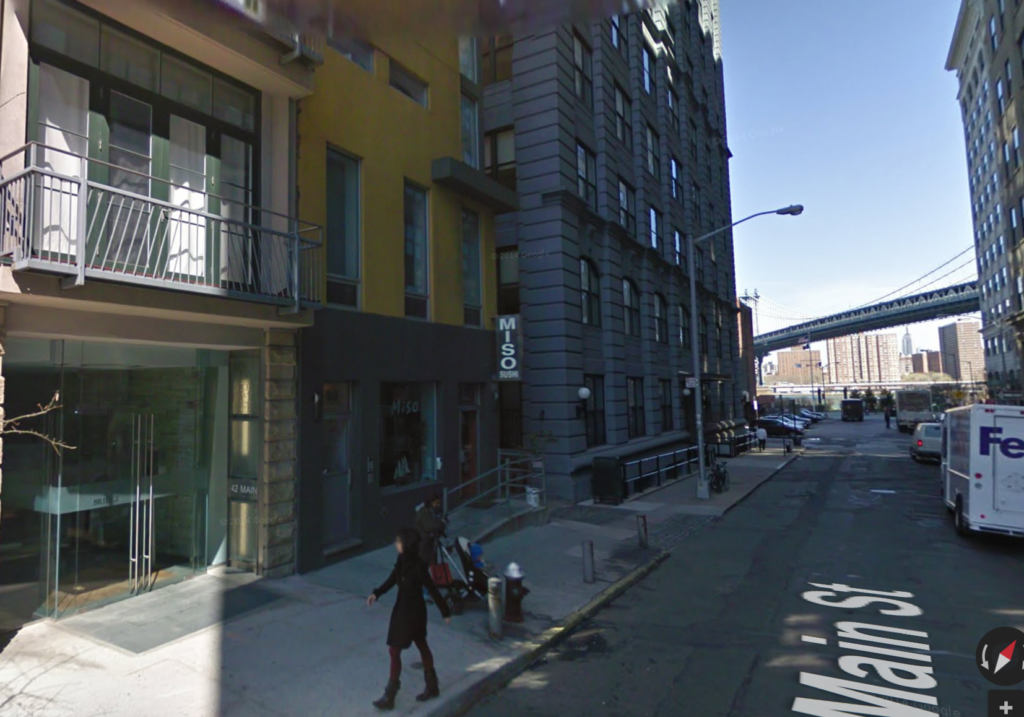
While the neighborhood is dominated by industrial architecture today, it wasn’t always so. This picture from 1924 (looking down Main Street with the wooden building sitting at Howard Alley) and the same view today
NYPL

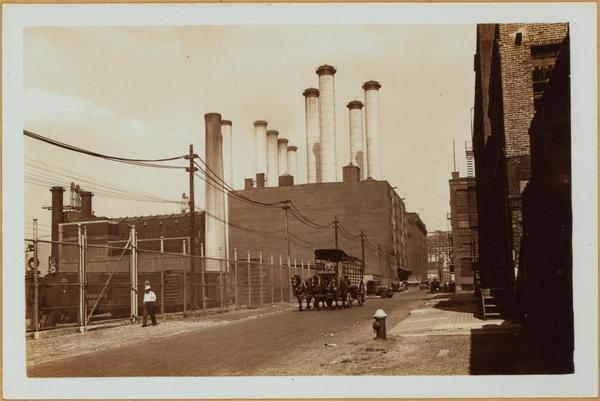
Plymouth Street, west from Pearl Street, showing at the right one of the Arbuckle Bros. Coffee Co. building. April 4, 1938.
NYPL

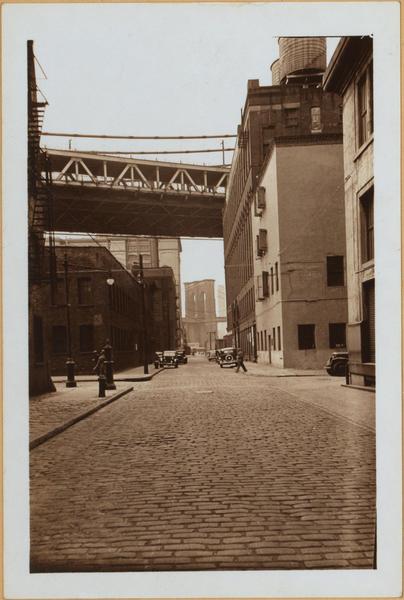
John Street, east from Jay Street, 1938
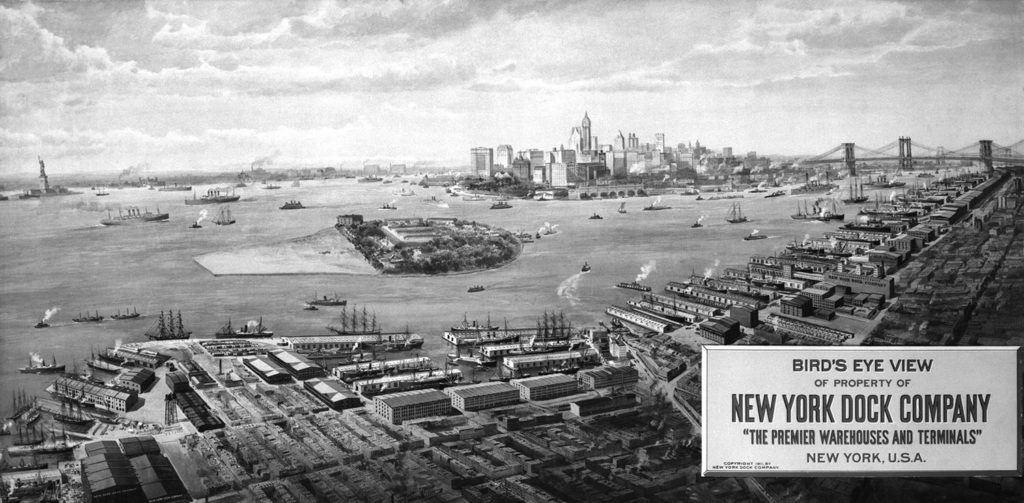
Brooklyn waterfront was lined with warehouses during the 20th century. Here’s a view of the coastline from the Fulton Ferry area down to Red Hook.
Brooklyn Historical Society

A 1908 view of waterfront properties from Jay Street to Washington Street (pre Manhattan Bridge of course)
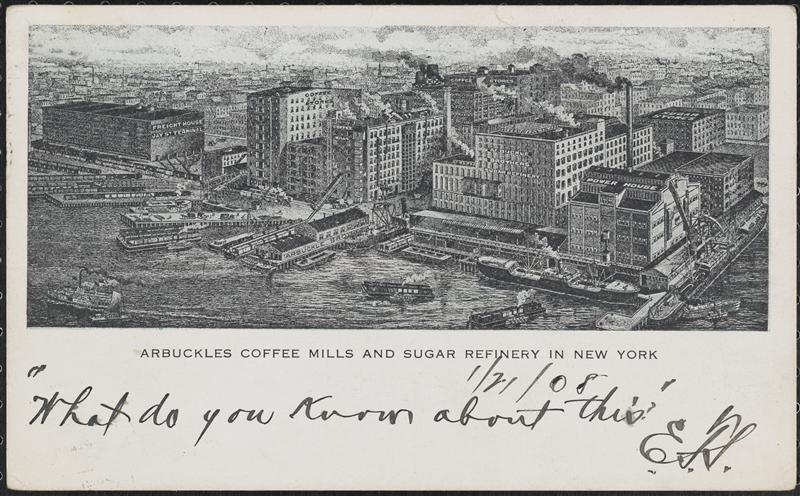
MCNY

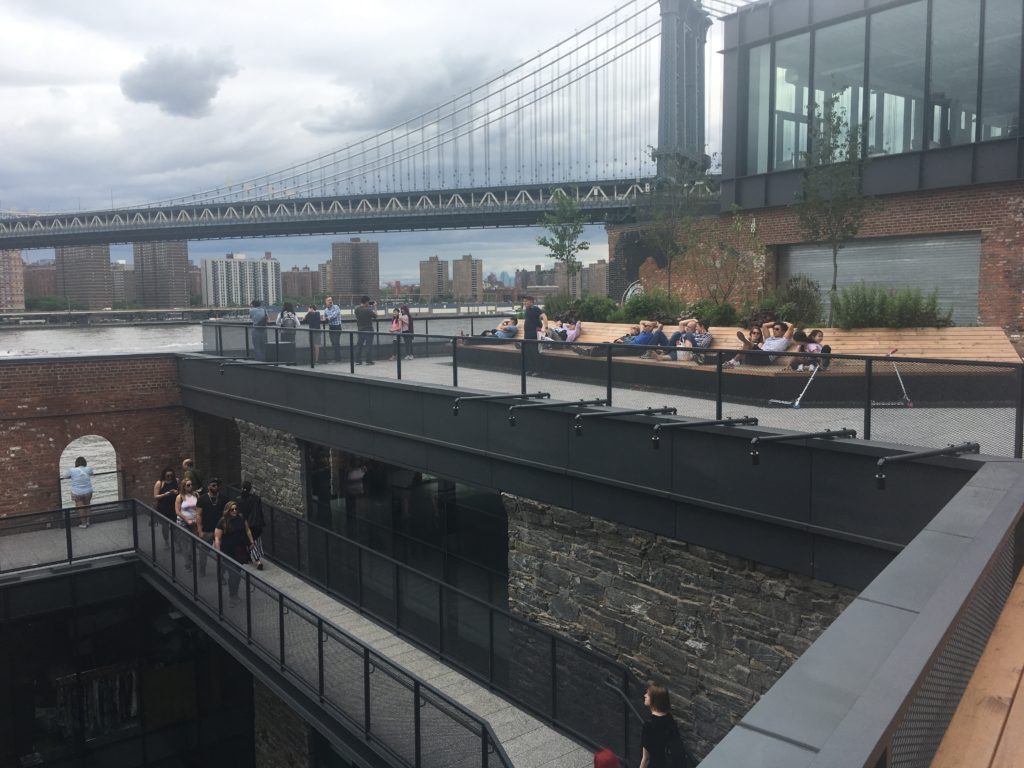
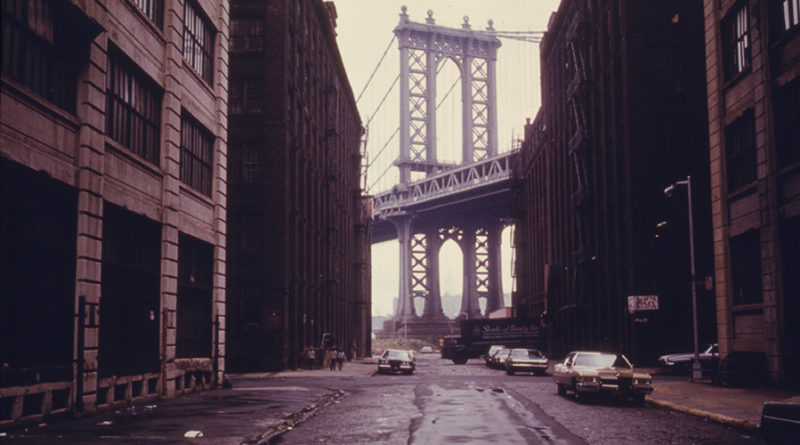
Today you’ll find dozens of people every day on the street, taking selfies in front of this view. But back in 1978, the district was virtually abandoned.
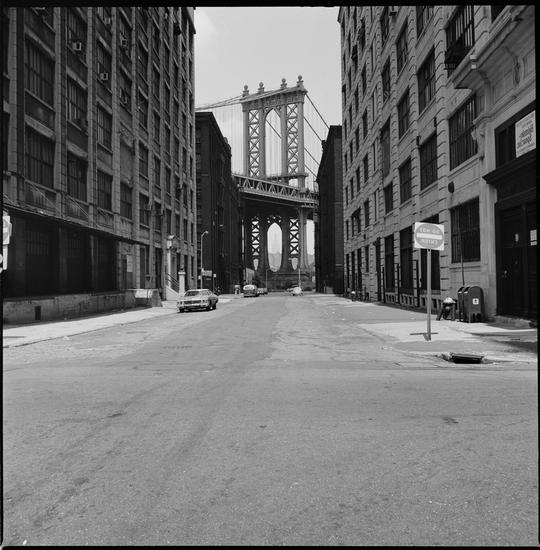
MCNY

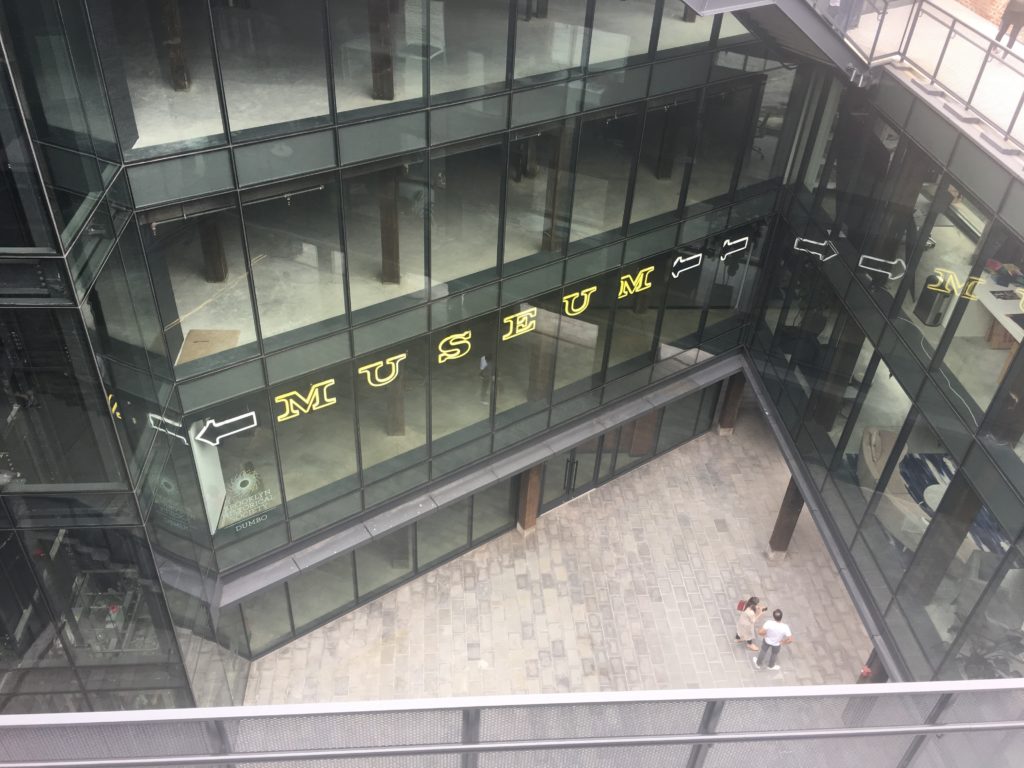
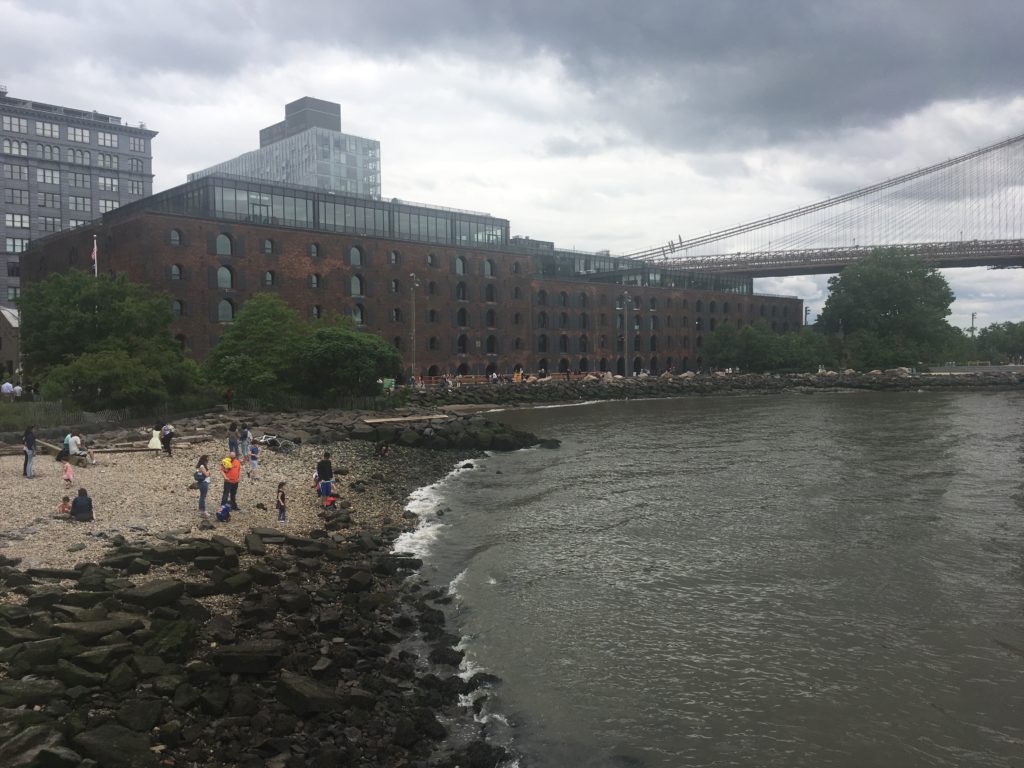
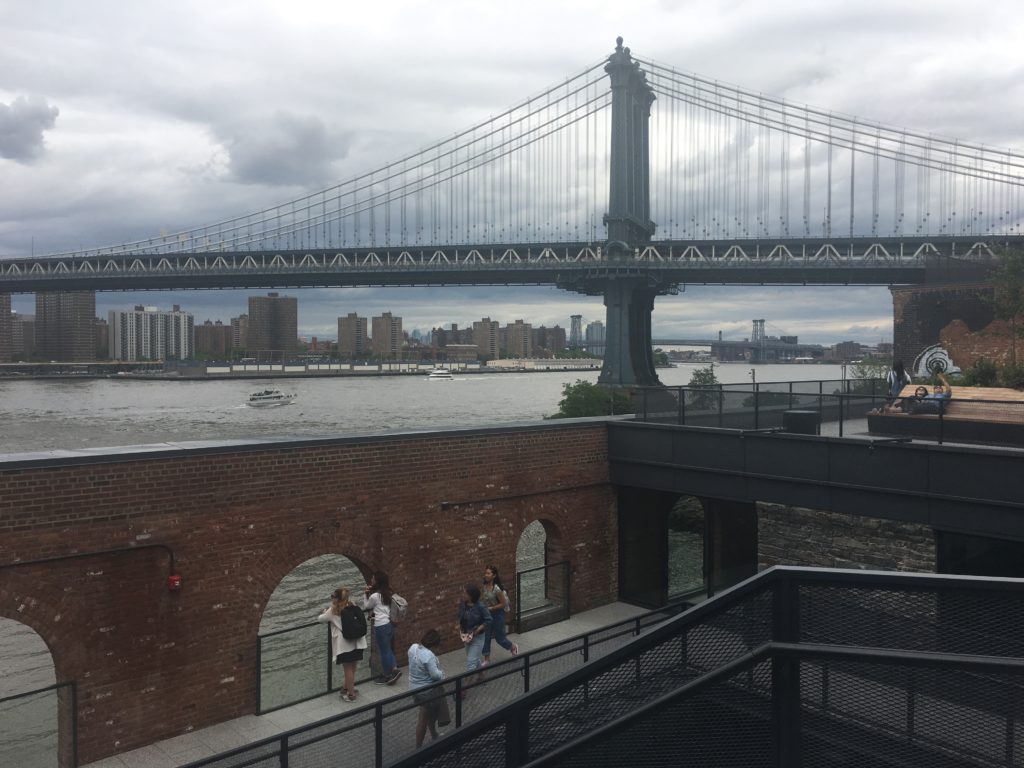
Inside the repurposed Empire Stores, now the headquarters of West Elm and home of the Brooklyn Historical Society annex.
EXHIBITS
Waterfront at the Brooklyn Historical Society’s DUMBO gallery
Featuring many aspects of life along the Brooklyn waterfront. Plus an excellent short film At Water’s Edge surveying 20,000 years of Brooklyn history.

FURTHER LISTENING
We mentioned these past Bowery Boys podcast on the show. After you’ve finished listening to our DUMBO: Life on the Brooklyn Waterfront show, give these a try!
Categories
Those Were The Days

Housewives demand open markets! One century ago, New York radically changed how people bought groceries

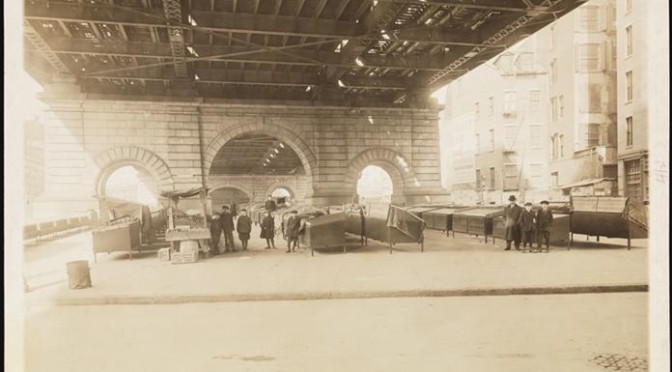
[Manhattan open market.]

Setting up a market under the Manhattan Bridge. (Courtesy MCNY. Note: This photo may be of an earlier market here, but this gives you an idea of where the 1914-15 markets would have been located.)

Groceries are becoming more expensive as retailers mark up prices due to food shortages (or simple price gouging at perceived shortages). So people are turning to rather unconventional methods of getting fresh meat and produce.  Is this 2014 or 1914?

At the start of World War I, there was an immediate shortage of certain food items at New York grocers. Local distributors greatly took advantage of this special circumstance, marking up a variety of essential items.  “Sugar and flour, which have been increasing in price so rapidly, gave indications of continuing their upward march,” an article from August 19, 1914 proclaimed.

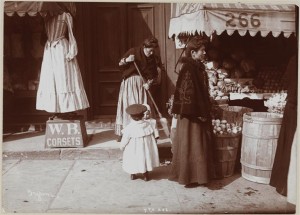
Shopping at a typical New York grocer, 1903 (MCNY): 

266 Seventh Avenue c. 1903.

Fifty years before, New Yorkers could interact with farmers and butchers directly at open-air markets.  But by the 1910s, most transactions were governed by local distributors. Old Washington Market was by this time a thriving indoor wholesale market. Local grocers had limited space with limited selection. The era of the modern supermarket — with greater selections and better values — was still a decade or two in the future. (The first supermarket is often considered to be Piggly Wiggly, which opened in Tennessee in 1916.)

To fend off rising food rates, the city of New York did something rather extraordinary:  it opened its own direct markets (or “open markets”) which cut out the middle-man entirely.

Manhattan Borough President Marcus M. Marks authorized the opening of four such markets in the following open areas — under the Manhattan sides of the Manhattan and Queensboro Bridges, the intersection of 3rd Avenue and 129th Street (today’s Harlem River Park), and the Fort Lee Ferry Terminal (West 139th Street and the Hudson River, near today’s Riverbank State Park).  A similar program was also set up in Tompkinsville, Staten Island.

Below: Interior of the Queensboro Bridge Market, 1915 (MCNY)

[Interior of market under the Queensboro Bridge.]

The markets opened in September 1914 with dozens of Long Island and New Jersey farmers bringing their wares to New York. Pushcart vendors, already spread throughout the city, also set up shop here.  What makes this such a controversial move is that it was a clear attempt to undercut all established grocers, to force distributors to quit gouging price.

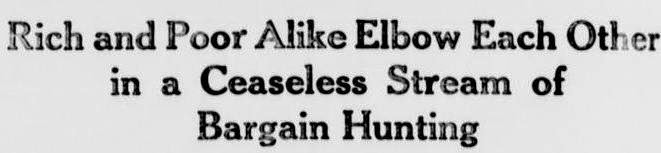
They were an immediate hit despite being located in areas quite distant from certain populated areas. The markets appealed to women of many classes, because who doesn’t love a bargain? “At this market were many housewives who came in automobiles to buy from the farmers,” said a report from September 20, 1914. “Baskets filled with fresh vegetables and fruits were on seats, and the legs of more than one chicken projected from paper parcels under the chauffeur’s elbows.”  By 1915, the markets were considered by some “a social affair.”

Below: from an April 1915 profile from the Sun:

 The open markets were so successful that stock was usually emptied out by mid-morning.  Late-arriving women “actually wept when the market was bought out.” [source]

Naturally, retail grocers were angered by the city’s bold move and soon went on the offensive. “There is nothing but politics in this open market game, gentleman, from start to finish,” declared one speaker at a grocers union rally that October.

The city counteracted the grocer’s propaganda by providing ‘bargain days’ for extra values, reeling in the participation of farmers, butchers, poultry brokers and even honey producers.  “A butcher, who will open a new stand, says that he will give a head of cabbage in lieu of trading stamps to every purchaser of a piece of corned beef.” [October 15, source]

The markets lasted only a few months and, strangely enough, it was the city itself that killed them. Obviously bending to pressure from local businessmen, the city began charging high rents for a spot at the markets, and smaller farmers soon fled.  The Evening World noticed rents that would equal up to “$900 a year”. That’s $20,000 in 2014 currency.

In essence, this was one end of New York government attempting to dampen the authority of the other (namely, the borough president’s office).  Vendors had to raise prices to keep their place, and so the usefulness of the markets swiftly faded.

Categories
Podcasts

Manhattan Bridge: New York City’s dysfunctional classic

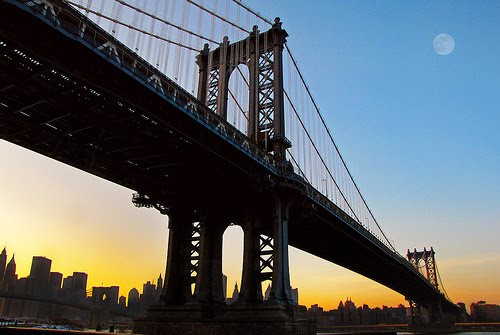
[from Flickr, taken by ajagendorf25]

We love the Manhattan Bridge, but there’s no doubt it’s had a rocky history. For one hundred years, it’s withstood more than just comparisons to its far more iconic neighbor, the Brooklyn Bridge.

Built to relieve pressure on the East River’s best known bridge, the Manhattan Bridge went through two different engineers — and a couple different ambitious designs — before finally being completed by another architect, who then went on in 1940 to design one of the WORST bridges in America. And serious design flaw afflicts the bridge to this day?

Listen in and find something to appreciate in this seriously under appreciated marvel of the East River:


I mention many bridge engineers in this podcast — Leffert Lefferts Buck, Gustav Lindenthal and Leon Moisseiff — but due to time constraints on the show this week, the contributions of Henry Hornbostel were left out. Hornbostel was instrumental in the work with Buck on the Williamsburg Bridge and with Lindenthal on the Queensboro. When we do podcasts on those bridges, he will get his fair due.

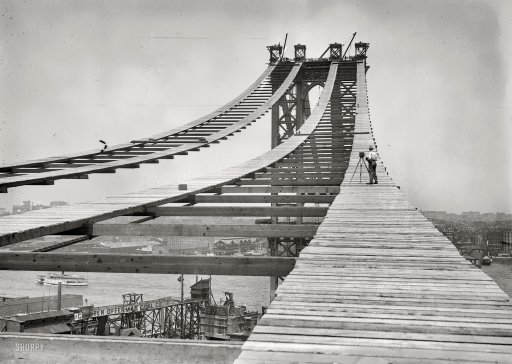
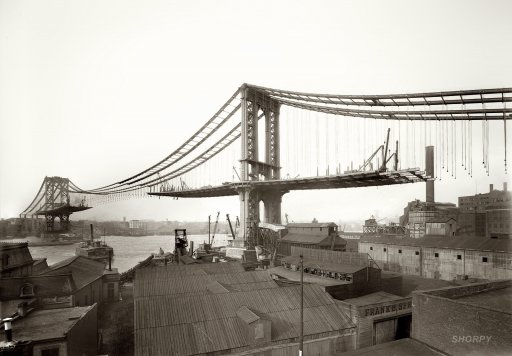
Preliminary work on the Manhattan Bridge began in 1901 under Buck, with Lindenthal taking reign of the project a year later. When Moisseiff was brought in to rework the bridge in 1904, construction kicked into high gear. Lindenthal’s innovative suggestion to use eyebars was discarded for a more conventional wire structure. [Pics courtesy Life Google images]

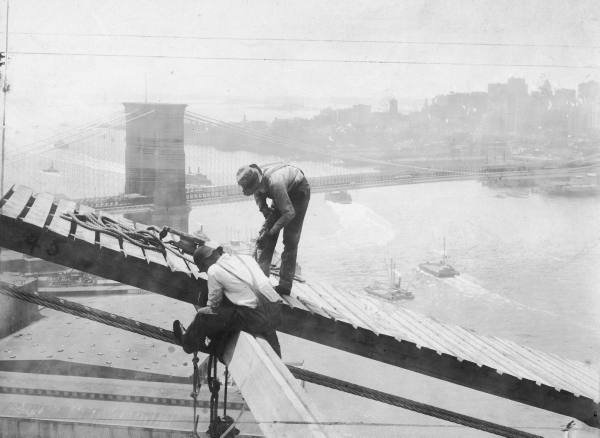
Stringing the cable across the East River took only four months in 1908. Indeed, the traffic snarls on the Brooklyn Bridge demanded them to work quickly. It was also mayor George McClellan’s intention to finish the bridge before he left office. [Photo by GG Bain and cleaned up by Shorpy, see a nifty close-up image here]

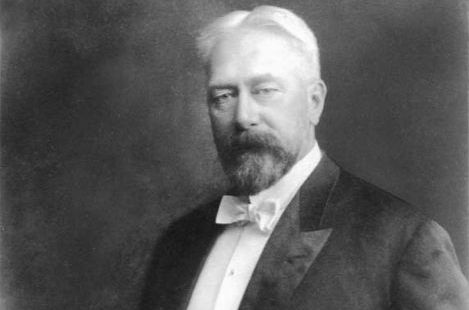
Gustav Lindenthal, born in Brno (now in the Czech Republic), came to the United States, built many bridges, and dreamt up many more that were never completed, like the North River Bridge, which would have spanned the Hudson River, and a monumental Manhattan Bridge designed with 14 lanes of traffic.

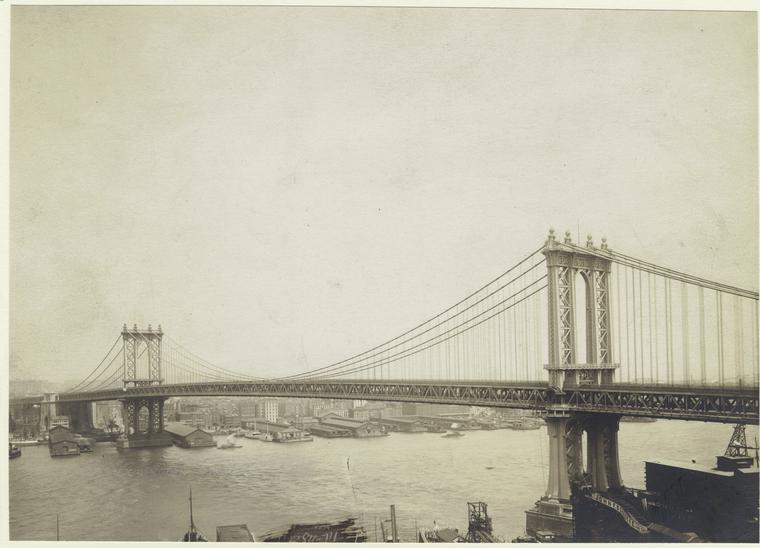
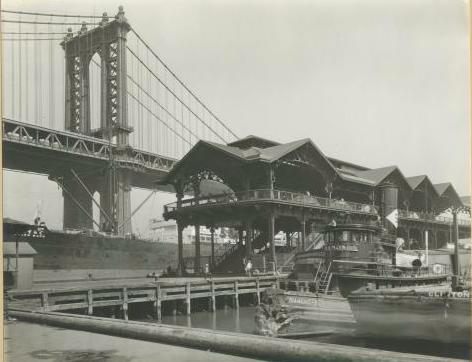
The bridge opened on December 31, 1909, although the pedestrian walkways were not completed and no trains were ready to go over it at that time. Setting it apart from its sister bridges was the flat, blue two-dimensional towers. As you can infer from this photo, facing both sides of the bridge were rows of docks and industrial ports. [Pic courtesy NYPL]

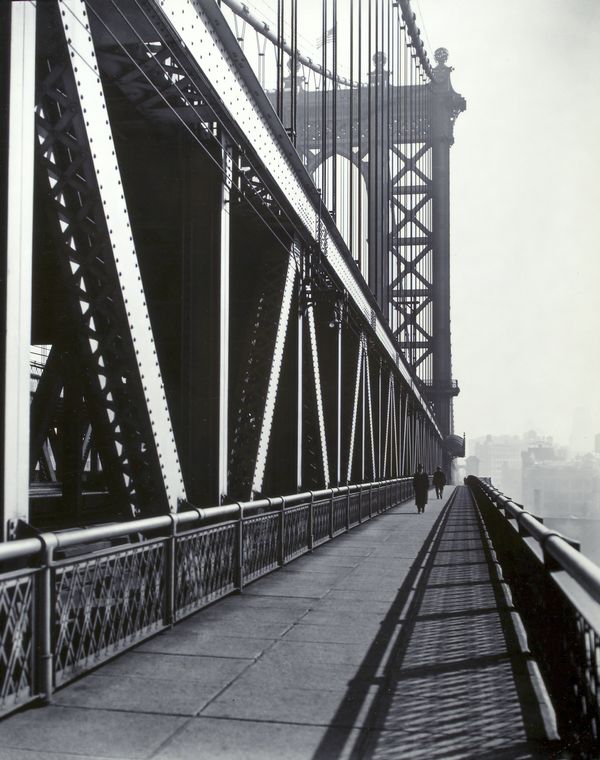
Berenice Abbott has some spectacular views of the Manhattan Bridge, taken in the 1930s. For crisp, dreamlike pictures of Manhattan, you can’t do better than Abbott. [courtesy NYPL]

Speaking of Berniece Abbott, Gothamist has some great shots taken by her of the area below the Manhattan Bridge on the Brooklyn side — today it’s DUMBO, known then as the strangely desolate Irishtown. [Flashback: Brooklyn 1936]