Categories
Podcasts

PODCAST: Shea Stadium

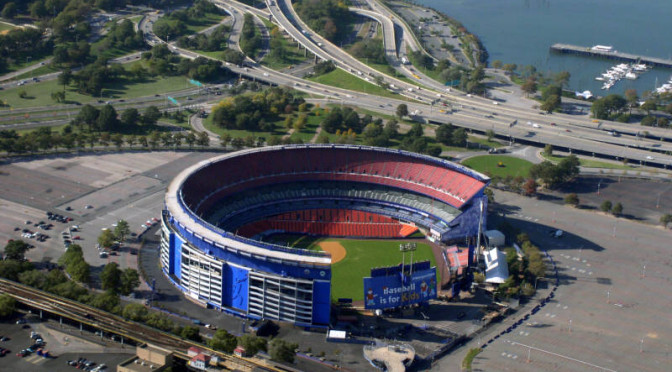
The Mets are movin’ out to Citi Field, but we can’t overlook the great stories contained in their old home, Shea Stadium, a Robert Moses project took years to get off the ground and has been populated with world class ball players, crazed Beatles fans, and one very mysterious black cat.

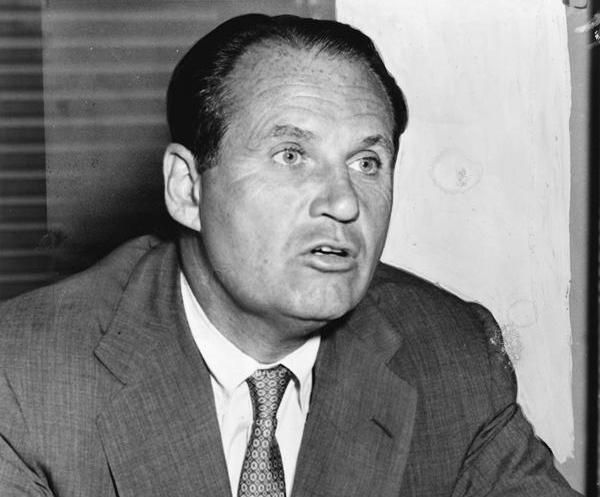
William Shea, who essentially bluffed the National League into creating a new team for the city — the New York Mets

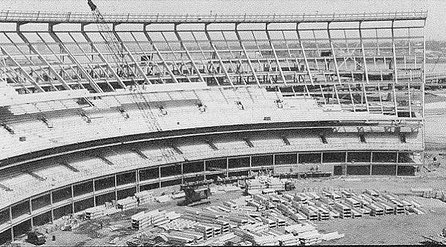
Shea under construction. Plans for a retractable done were abandoned, although many of the features that did make it were revolutionary at the time, including one of sports biggest scoreboards.

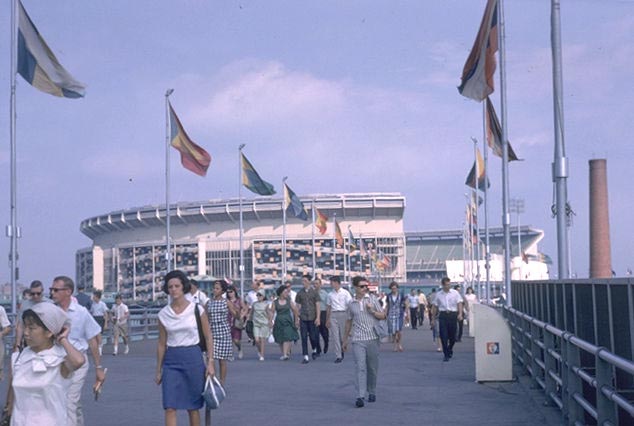
How the exterior of Shea Stadium looked back in 1964. (The photo above is from a great fan website from Carl Abraham, full of great old pictures. Check it out here.)

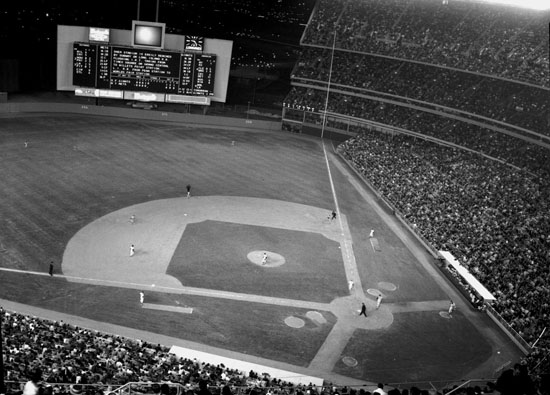
And inside, the same year.

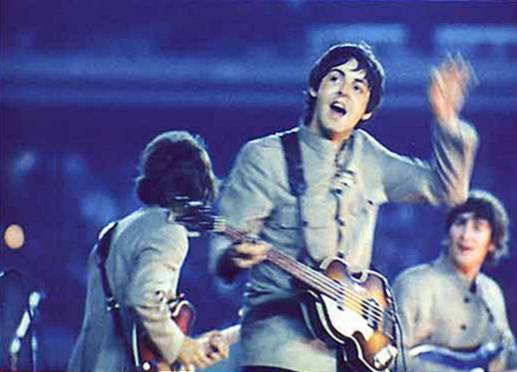
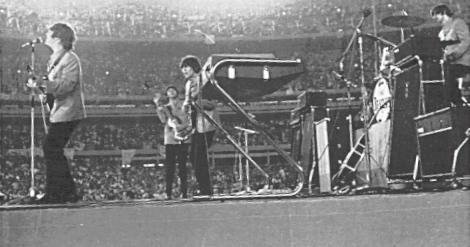
The biggest stars to play in Shea Stadium in the 1960s weren’t sports figures, but music heartthrobs — the Beatles.

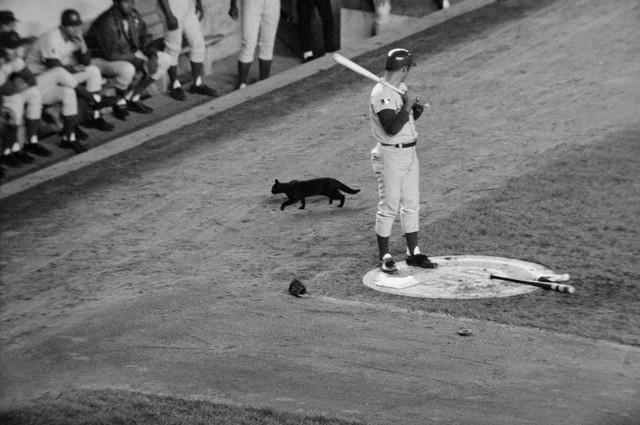
The infamous black cat from that acursed game in September 1969, jettisoning the hopes of the Cubs that year.

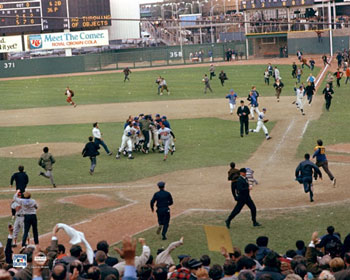
Fans literally stormed the field the moment the Mets clinched their very first Worlds Series title in 1969.

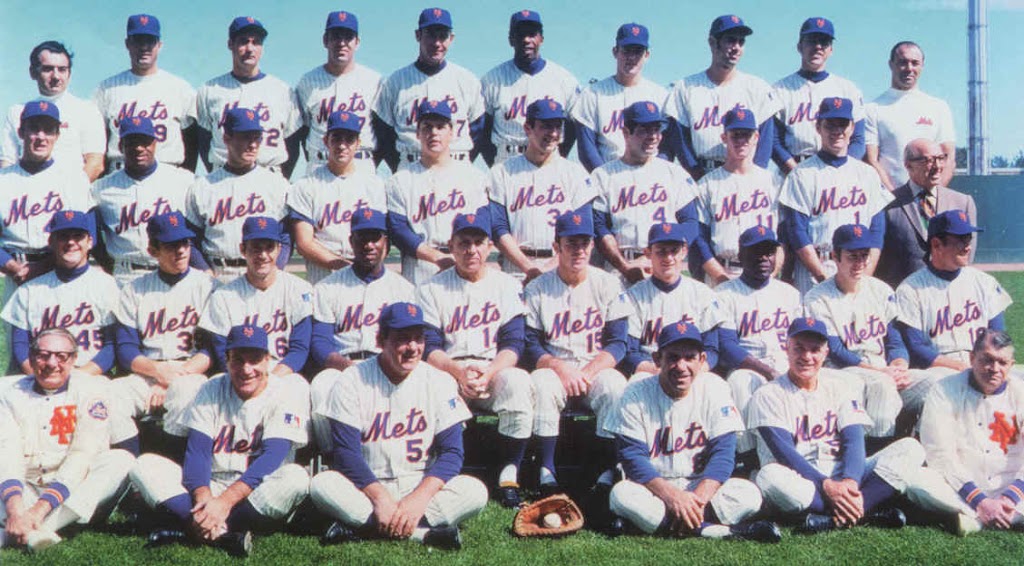
The proud lineup of the Miracle Mets of 1969.

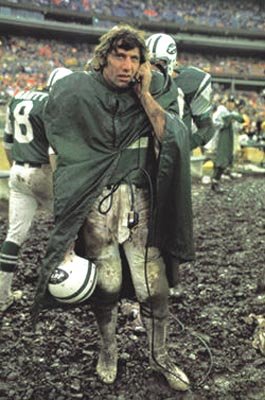
His notable performances and personal theatrics at Shea Stadium with the New York Jets turned quarterback Joe Namath (#12) into a Wheaties-box household name during the 1970s.

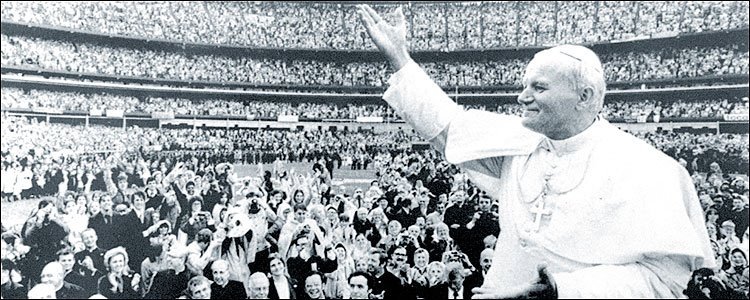
No less a star than Namath, Pope John Paul II finds a warm welcome for him at Shea in 1979.

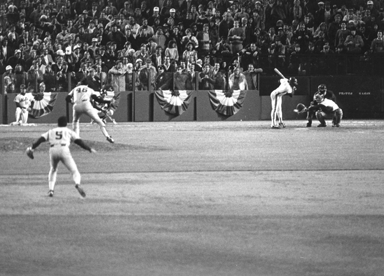
One of the Mets biggest stars of the ’80s, cheerful center fielder Mookie Wilson, was instrumental in the Mets World Series win of 1986 over the Boston Red Sox.

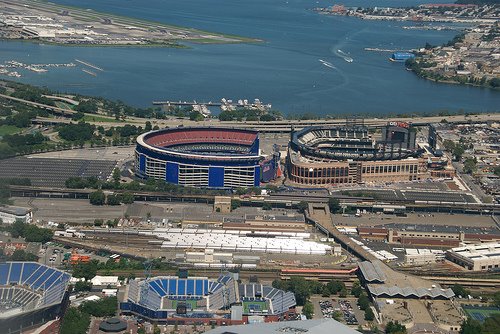
The new Citi Field sits within site of the stadium it will replace

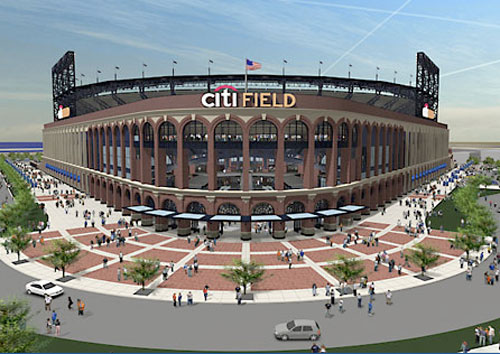
An illustration of what the new Citi Field will look like.

Ever wonder why the Mets team colors are blue and orange? Read one of our very early entries about it here.

However, a commenter below notes that the Mets website actually says: “The Mets’ colors are Dodger blue and Giant orange, symbolic of the return of National League baseball to New York after the Dodgers and Giants moved to California.” Which sounds very plausible — and amazingly coincidental, considering they’re also the official colors of New York. Perhaps the Giants and the Dodgers original sporting colors were based on the official colors, making both explanations correct?

Frankly there’s been no better tribute to Shea Stadium than the New York Post’s current countdown of the top 25 moments that occurred there over the years.

All hail the Coney Island Mardi Gras parade!

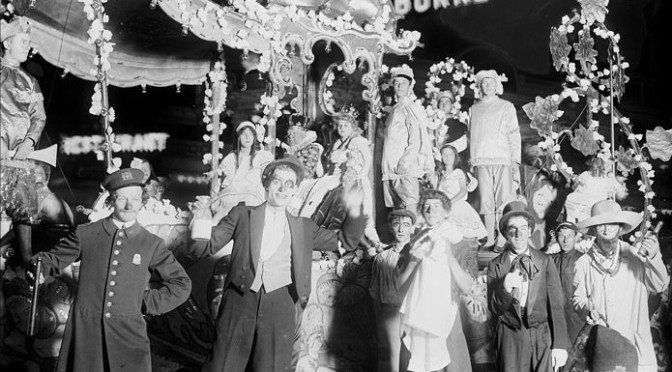
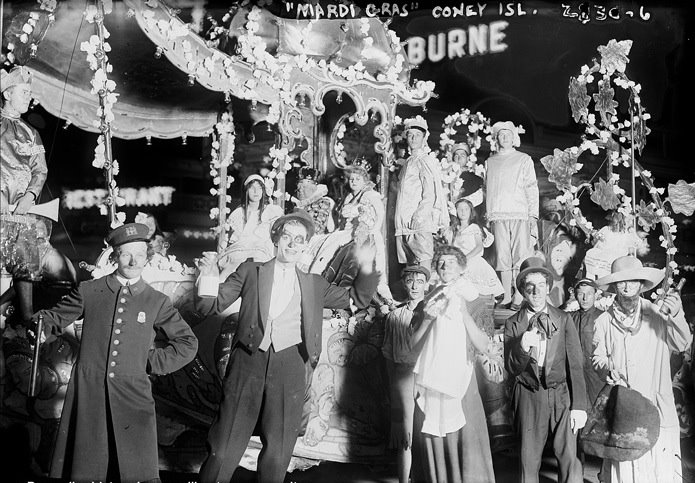
Before there were Mermaids, there was Mardi Gras. Above: ghoulish revelers from the 1911 parade

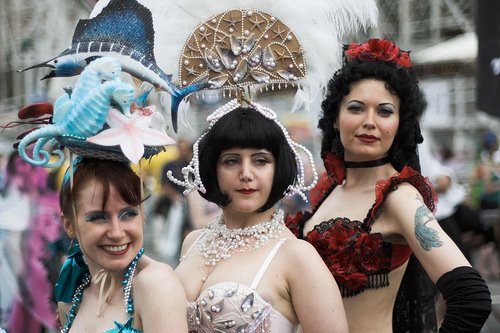
An even larger collection of freaks and aquatic oddities than Coney Island’s everyday normal assortment will come slithering down Surf Avenue this Saturday with the 26th annual Mermaid Parade.

The parade is the heart of Coney’s modern freak-show aesthetic, Christmastime for the tattooed and glittery. Most people think that, unlike most New York City parades, the Mermaid parade celebrates nothing specific, only a joy of costume, summertime and silliness. In fact, Coney Island ‘mayor’ Bill Zigun and Coney Island USA created the parade in 1983 as an homage to an even more legendary seaside tradition: the Coney Island Mardi Gras parade.

Let that stew in your mind a bit. Coney Island meets New Orleans.

The annual Mardi Gras celebration lasted from 1903, the heart of Coney’s heyday, until 1954 — the heart of the Robert Moses years. Curiously, it always took place in mid-September, which I suppose is a nicer time for a parade than a seaside New York February. The parade coincided with the end of the season and the annual shuttering of the amusement parks.

In 1906, the great parks of Coney Island like Dreamland were still standing. Nathan’s famous hot dog stand wouldn’t be open for another ten years. And the Mardi Gras parade that year managed to attract 500,000 people. “Police Commissioner [Thomas] Bingham visited the Island and had [his] full share of attention from confetti throwers and wielders of the ‘tickler’.”

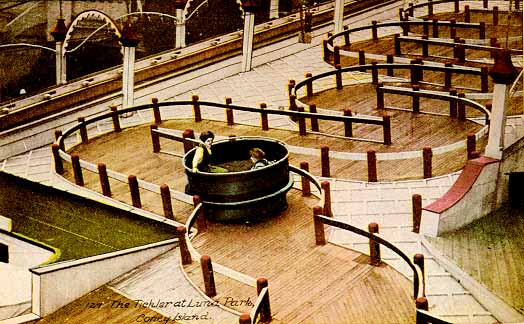
I don’t know what a tickler was back then, but the idea of what I think it is being thrust at a police commissioner is absurd. Probably a souvenir from a Luna Park ride called the Tickler (which doesn’t look that fun, see image from 1906):

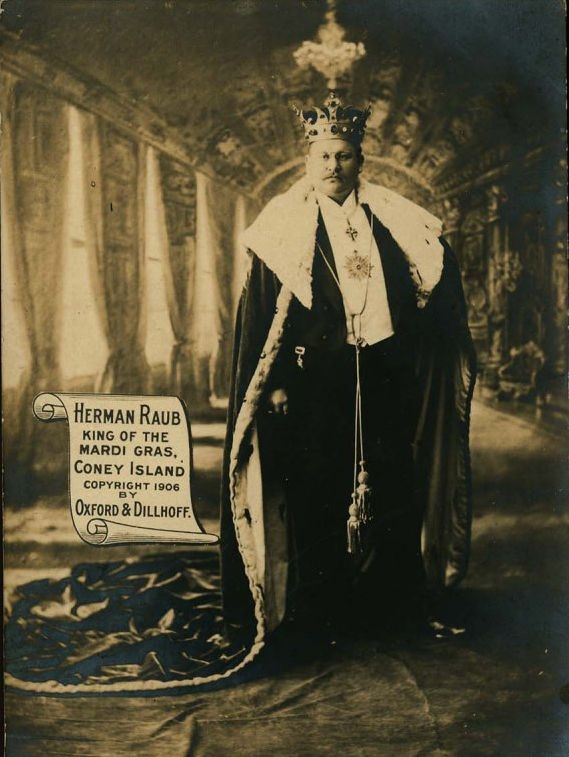
That same year brewery mogul Herman Raub (pictured below), founder of the Coney Island railway, was anointed king of the parade.

The Mardi Gras parade sounds like it was a horrifying, chaotic, fabulous mess. In 1911, the celebration also gathered about a half million people to view the tenuously religious celebration. “Gangs March Through Street Insulting Women and Wrecking Stores And Restaurants” shouts the Times. “Several Hundred Arrested.”

It seems part of the fun of the original Mardi Gras involved drunken displays of violence.

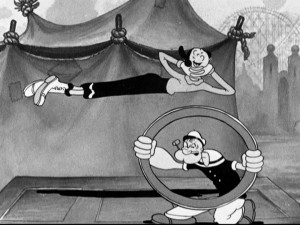
Despite rampant (probably exaggerated) violence, the parade became the star of a wacky Fatty Arbuckle-Buster Keaton film, the 1915 ‘Coney Island’. It hit celluloid later in 1935 in the Popeye the Sailor Man short ‘King of the Mardi Gras’.

By 1921, the parade had to deal with a new menace — Prohibition. “It was agreed that Prohibition had struck Coney Island a staggering blow.” Many revelers dressed in costumes that “referred satirically to blue law advocates.”

One popular event at the parade was the annual ‘prettiest baby’ competition. In 1921, the winner was “Rita Murphy, 6 years old, of 2,005 Sixty-Third Street, Brooklyn, dressed as a jockey.” The tot was awarded “a ninety-two-piece silver set which she can use to start housekeeping when she gets married.” What a future young Rita had in store for her!

The parade sadly petered out thanks to Robert Moses’s ridiculous plan to turn the area into “an area of predominantly residential character.” Brooklyn Pix has a good shot of the final spectacle, that looks alarmingly similar to today’s Mermaid Parade.

I can only imagine what horror Moses would experience by glimpsing the Mermaid Parade today. He may get the last laugh. With an overhaul of Coney Island beginning next year — or already beginning, depending on how you look at it — the parade’s role may be greatly affected. So go down to Coney Island this Saturday and make sure you appreciate it in all its goofy and charming glory. (Check here for all the details.)

Robert Moses’ ridiculously large parking lot

Photo:Claudio Papapietro for http://ontheinside.info

Starting Monday, May 12, New Yorkers will have another way to transport themselves between boroughs with a new ferry service shuttling between Queens, Brooklyn and Manhattan.

You’re probably familiar with at least one of its three stops: Pier 11’s sleek Wall Street Ferry Terminal, just a few steps away from Staten Island Ferry Terminal and the Battery Maritime Building. Between Queens and Manhattan it will pick up Brooklyn passengers at the Brooklyn Army Terminal in Sunset Park, already one port of the New York Water Taxi.

The new ferry will begin by loading up Queens commuters at Riis Landing in Far Rockaway, Queens.

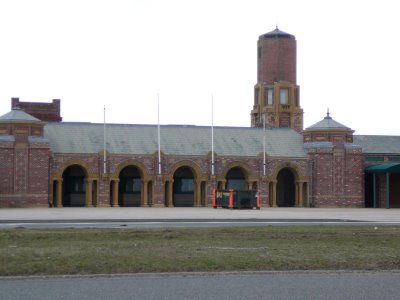
As a part of the Gateway National Recreation Area in the most remote area of Queens (if not arguably the whole city), Riis Landing is best known for its Colonial style Coast Guard station, built in 1937. It sits in the middle of Breezy Point peninsula, a residential area once dotted with shipwreck rescue stations. Now owned by the National Park Service, the ferry terminal was recently upgraded in anticipation of the mayor’s announcement; however it’s still surrounded by many unused buildings.

More important to many New Yorkers, it’s also close to Jacob Riis beach, a hidden treasure of the Breezy Point peninsula and often referred to as ‘the people’s beach’. Riis Beach is a relic of the Robert Moses era, who created the beachfront in the 1930s by destroying a historic World War I Naval Air station (liftoff point of the very first transatlantic flight in 1919) and intending the artificial getaway specifically for locals with cars, an alternative to Jones Beach.

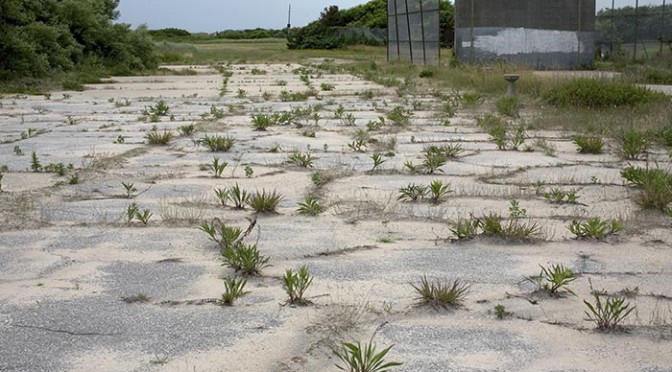
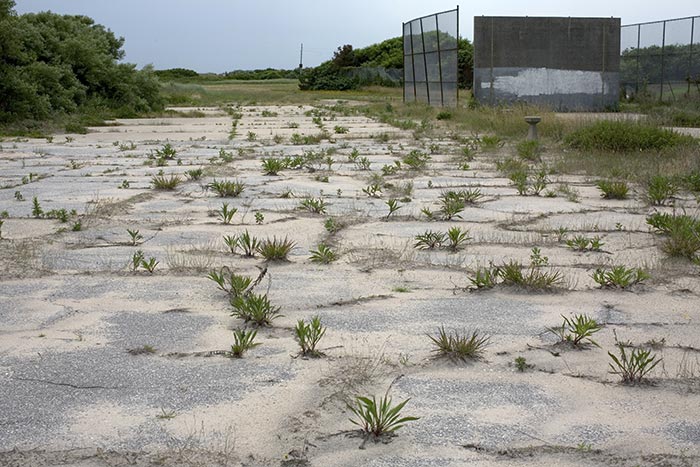
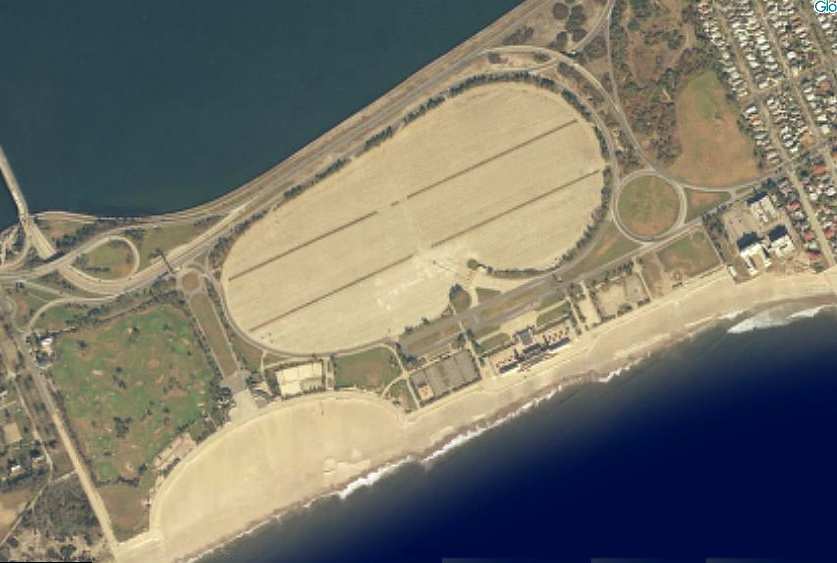
To that end, in addition to constructing public beach and park space, he also commissioned a gigantic parking lot, at the time the largest parking lot in the world. Many sources call it a 5,000-car lot; Riis Landing’s own site claims room for 9,000 cars!

Here’s an aerial view. Beautiful, is it not?

While the, er, rustic Jacob Riis beach is popular in the summer months mostly with locals, that parking lot is never, ever full. The new ferry service which begins here will presumably put that abandoned slab of pavement to better use.

With new attention now being brought to the area, now maybe they can fix up the beach, which features a gem of an art-deco bathhouse.

Riis Landing’s official website is an outstanding layout of proposed improvements of the area, many interesting, a couple downright left-field. (Their recommended proposal is to develop a dorm-style budget hostel!)

‘Most Wanted’: Robert Moses vs. Andy Warhol

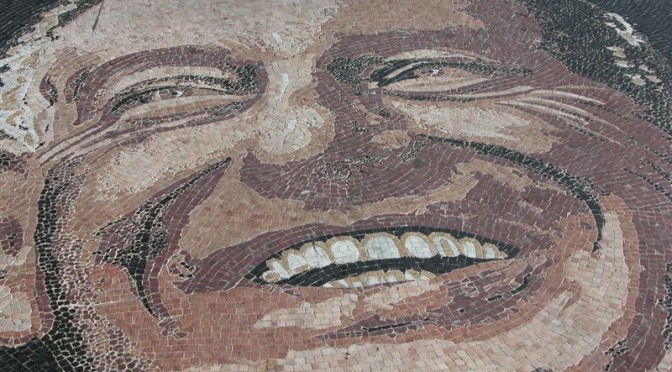
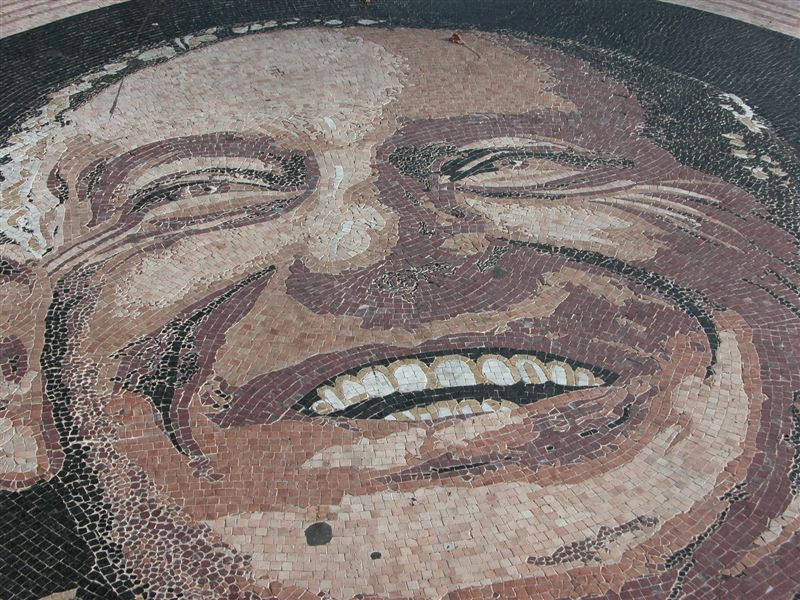
Above: a hilariously hideous Robert Moses mosaic, on the sidewalk at Flushing Meadows

Robert Moses wanted the World’s Fair of 1964 in Flushing Meadows to be a family affair with little controversial material. Not surprisingly this meant few displays for American art.

So how did an Andy Warhol mural get plastered on the New York State Pavilion, one of the most conspicuous buildings at the fair?

The Pavilion was designed by Philip Johnson, also the designer of Museum of Modern Art’s midtown galleries and also the head of architecture and design there. Johnson was an admirer of Warhol’s ever since the Museum of Modern Art’s pivotal December 1962 show on pop art, where its very merits were dissected by critics.

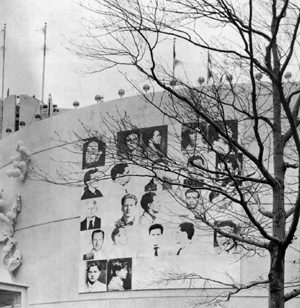
Johnson commissioned Warhol and other pop artists to create work for the exterior of the pavilion, and the result was ‘Thirteen Most Wanted Men’, blown-up mugshots of the FBI’s most wanted list.

One week before opening to the public, Johnson informed Warhol that the governor objected to the piece, because it just happened to feature mostly Italians and officials feared it would offend Italian visitors.

Warhol, however, knew very well that Moses was behind the objection. And it may not have been anything to do with the content. Andy was becoming a polarizing figure by this time. This was the year Warhol would make his move from artist to icon, the year he opened the Factory, the year he filmed such provocative movies as ‘Blow Job’ and ‘Taylor Mead’s Ass’, and the year his studios were raided by police and his work confiscated for its offensive content. Andy Warhol was anything but family friendly in 1964.

So his mural was literally whitewashed. Warhol intended to replace it with a new design: 25 silkscreen panels of Robert Moses’ face in a Joker-like grin. Unsurprisingly, Johnson did not think this appropriate for the main pavilion of Moses’ fair.

A vestige of Warhol’s Moses can be found in a mosaic in Flushing Meadows.

By the way, Warhol later claimed in his biography that he was happy that his art was painted over at the pavilion: “Now I wouldn’t have to feel responsible if one of the criminals ever got turned in to t he FBI because someone had recognized him from my pictures.”

Categories
Amusements and Thrills Podcasts

PODCAST: The New York World’s Fair of 1964-65

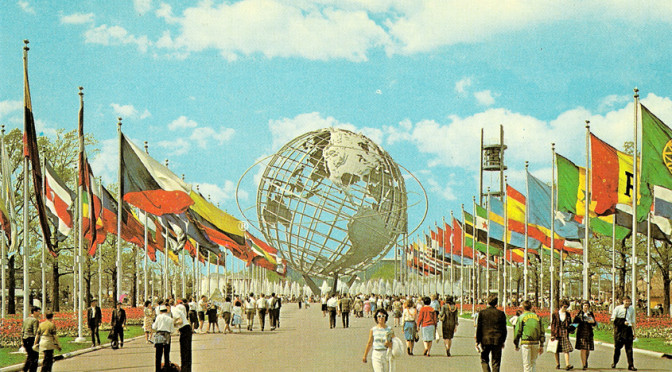
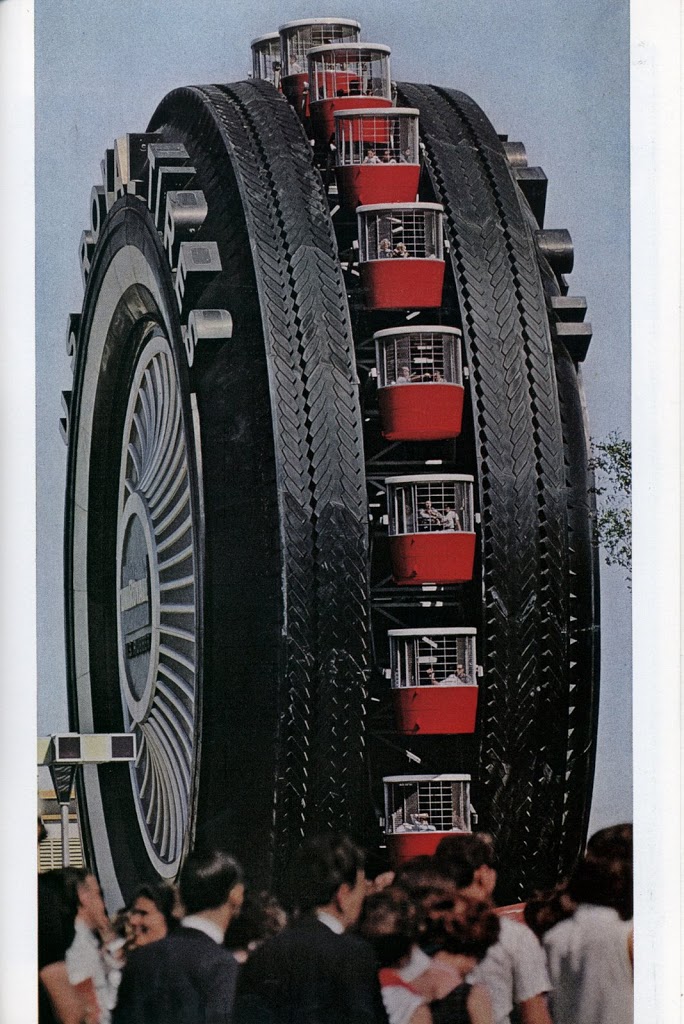
Come with us as we jettison ourselves into the future as it was seen in the past — namely the 1964-65 World’s Fair in Flushing Meadows, Queens. Fans of Robert Moses, 1960s space-age optimism and really, really large tires should take special note to listen.

Listen to it HERE:

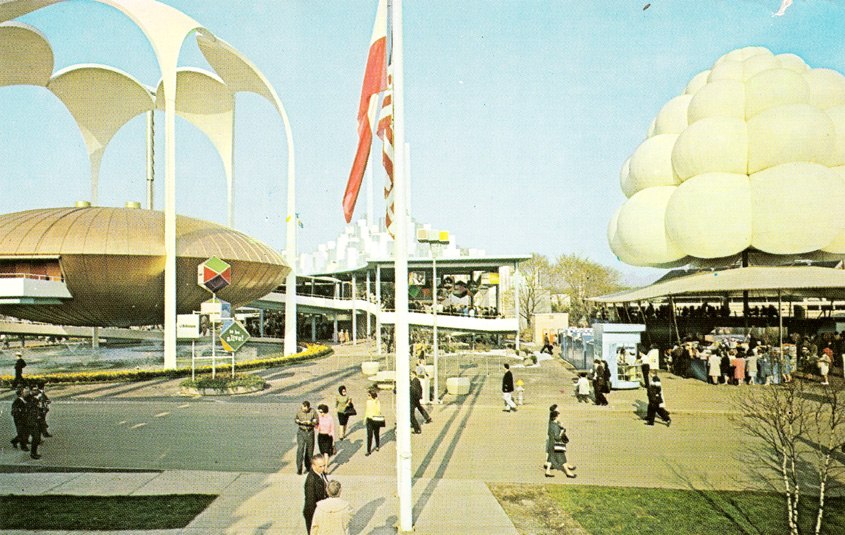
The Johnson Wax Pavilion, surrounded in examples of ’64 loopy, futuristic architecture.

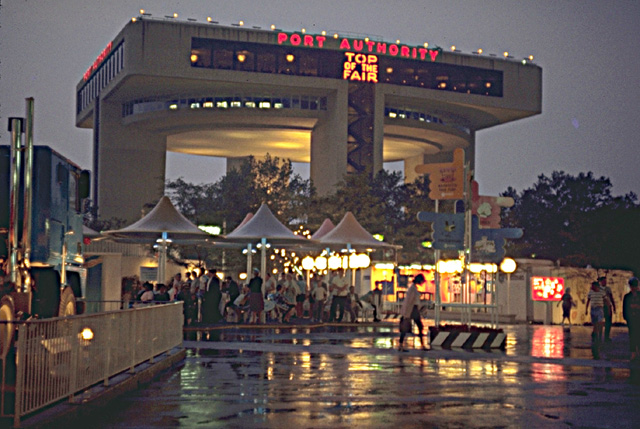
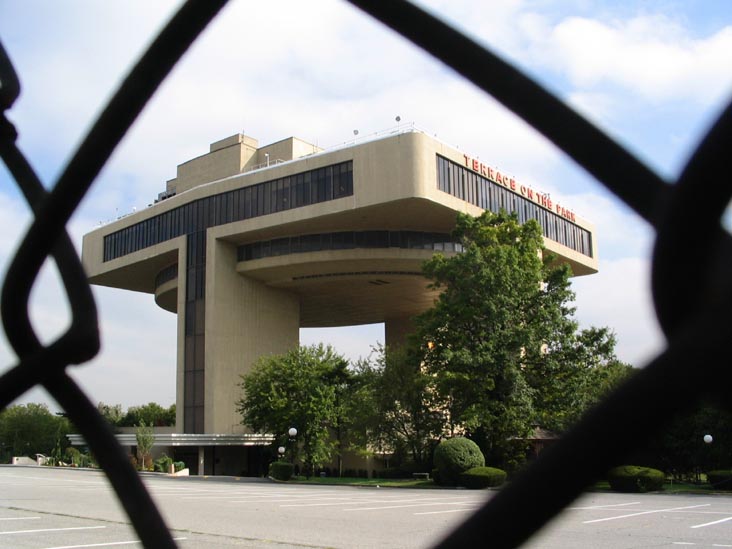
The Port Authority Heliport, where guest could fly in via helicopter from Manhattan, is one of the few buildings still standing today. It is now Terrace On The Park. (Courtesy here).

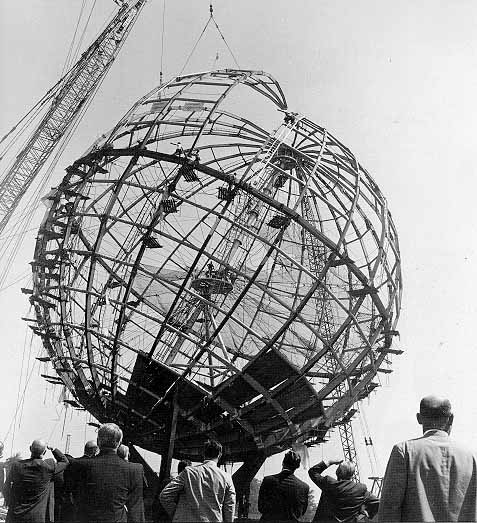
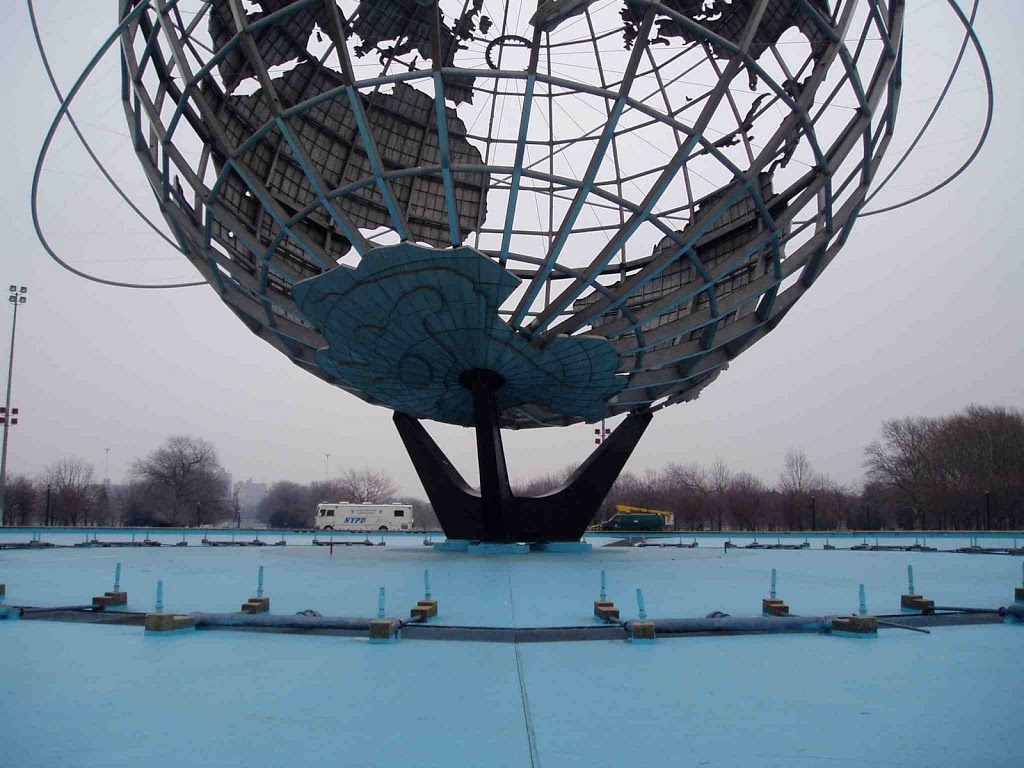
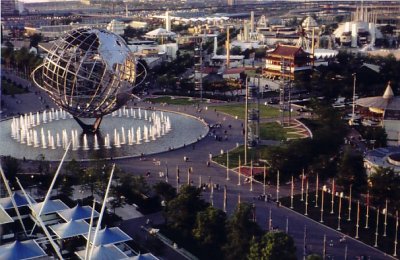
Piecing together the heavy US Steel-created Unisphere.

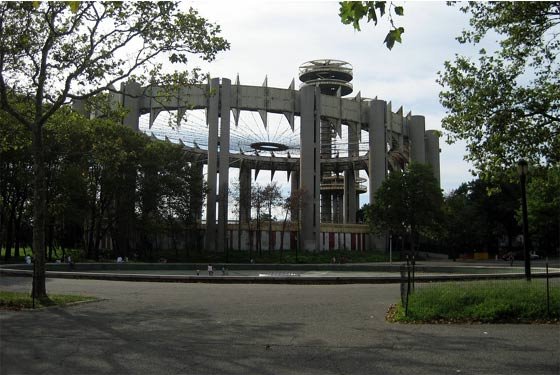
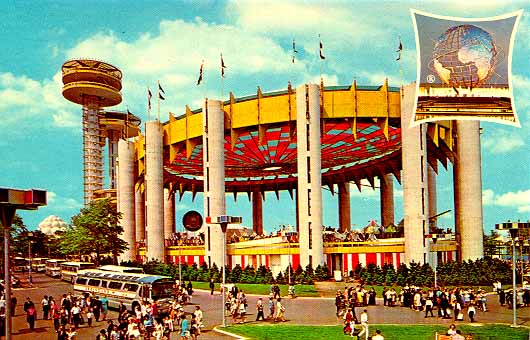
The New York State pavilion — Tent of Tomorrow! — as it looked then:

And today.

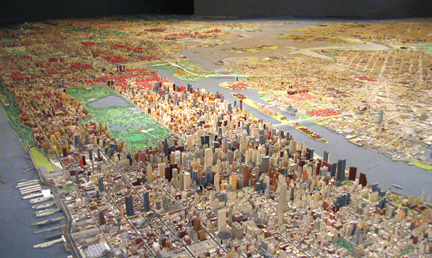
The New York City Pavilion featured the city of New York in miniature. Called the Panorama, it’s still thriving at the Queens Museum and is regularly updated to reflect the changing city. One significant difference: as a memorial, the World Trade Center remains standing in downtown Manhattan.

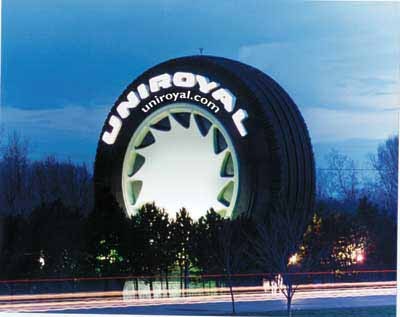
Many attractions from the World’s Fair now make their home in other parts of the world. The Uniroyal tire ferris wheel, for instance, now sits in Allen Park, Michigan, without its seats.

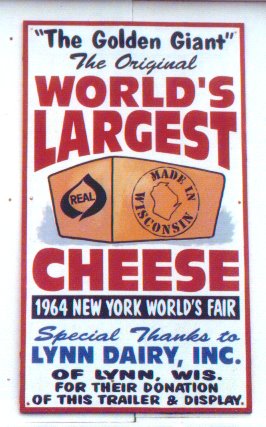
Another favorite, the world’s largest cheese, naturally still makes its home in its home state of Wisconsin.

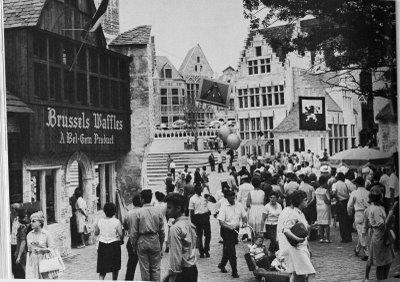
The famous Belgian Village, with the park’s defining snack being sold just the left of the picture (i.e. the Bel Gem Waffle).

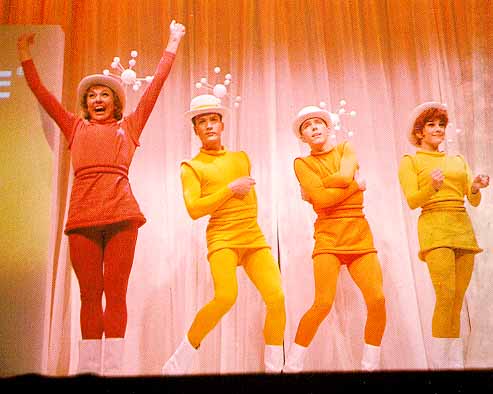
Dupont’s zippy musical ‘The World of Chemistry’ didn’t quite make it to Broadway.

I highly, highly recommend a few website for some further information about the World’s Fair. NYWF64 has a exhaustive description of almost every pavilion, including a great many we didnt mention, like The Underground Home, Sinclair’s Dinoland, and the Lunar Fountain.

Jeffrey Stanton has an excellent site about it as well.

The World’s Fair tire pic is from a great page by Modern Mechanix featuring magazine photos from the beginnings of the fair.

A few months ago we wrote about the Singer Bowl, a World’s Fair auditorium that later become the Billie Jean King Tennis Center, home of the U.S. Open.

Find all of our Robert Moses coverage here.

Categories
Podcasts

PODCAST: Coney Island – 20th Century Freakshow

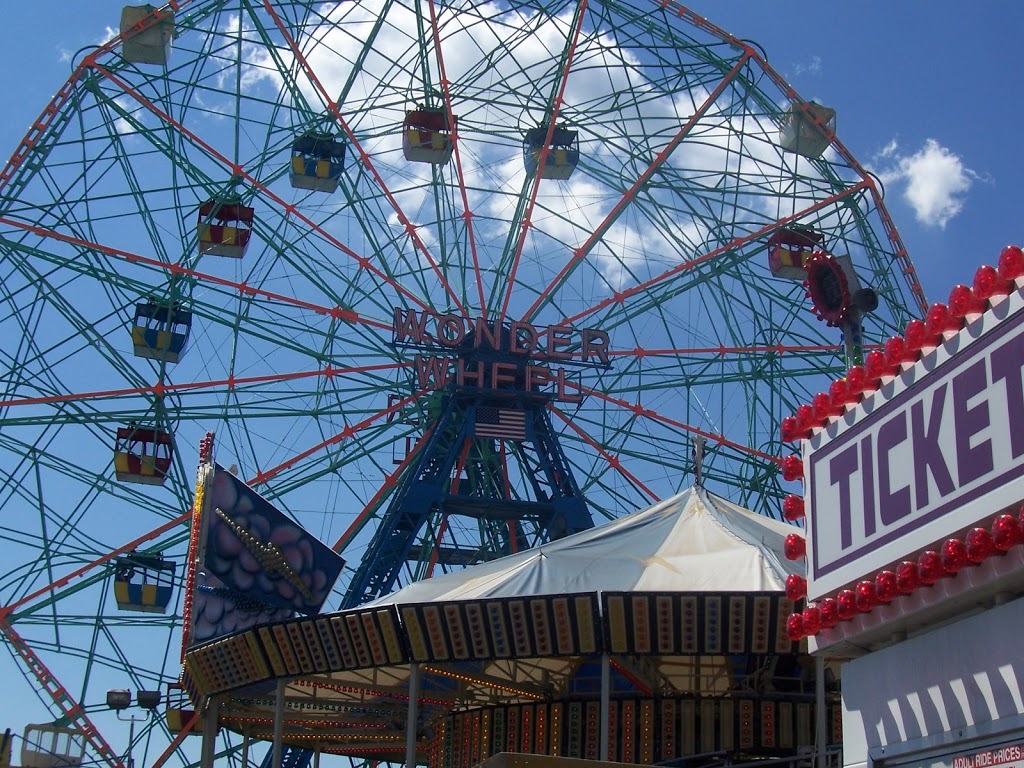
Come see the Wonder Wheel, the king of hot dogs, the “Freaks” in the Dreamland Sideshow, a beached whale and Donald Trump’s dad — all in one place! Its Coney Island of the 20th Century. But will it be around much longer in the 21st?

Listen to it for free on iTunes or other podcasting services. Or you can download or listen to it HERE

Before we begin, I should stress that these next few weekends may be the last for Astroland. (Apparently they’ll still be open on the weekends throughout the month of October.) The rumor is that there are some last minute negotiations going on to allow Astroland one more season next year, so cross your fingers. Dino’s Wonder Wheel Park , with plenty of rides and arcades to tide you over, is also still open through October. Two independent rides, the Spider and the Zipper, are already in the process of being dismantled as I type, and will be shipped to fairs in Honduras, Central America.

Some images to go with today’s podcast on the modern history of Coney Island:

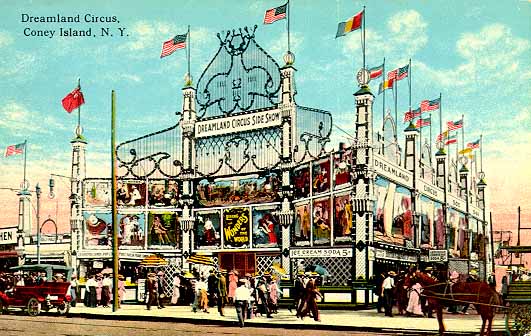
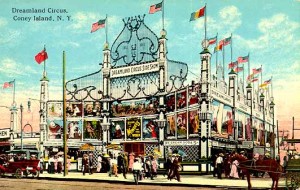
Coney’s most famous early sideshow, the Dreamland Sideshow was built by Samuel Gumpertz from the ashes of the still smoldering Dreamland amusement park. Its cast of characters would later star in the early film classic ‘Freaks’.
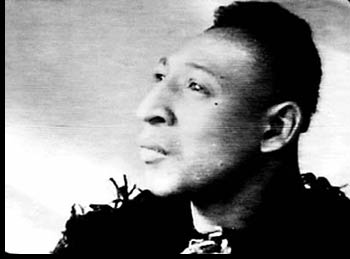
By the time William Henry Johnson joined the Dreamland Sideshow, he was an old man and had already been touring in circuses and freak shows for over 40 years. The son of former slaves, the New Jersey-born Johnson was born with an abnormally shaped head, but was not actually microcephalic(a medical condition that deforms the human skull at birth). His stage name, coined by PT Barnum, was Zip What Is It, the missing link between human and apes. (Ah, the age before political correctness.) When Zip died at age 84, his sideshow friends served as his pallbearers.

According to one account in 1925, he rescued a young girl from drowning. Considering he must have been in his 70s, his bravery and stamina should have been heralded. However, perhaps due to years of conditioned shyness, he fled after rescuing her for fear being spotted.
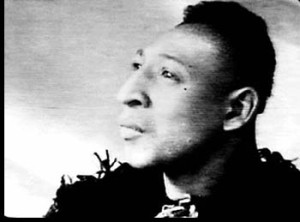
Lots more pics of William and other ‘official’ microcephalics or ‘pinheads’ can be found here. He was not in the movie ‘Freaks’ but Schlitzie was. (Click the link above to discover who that is.)

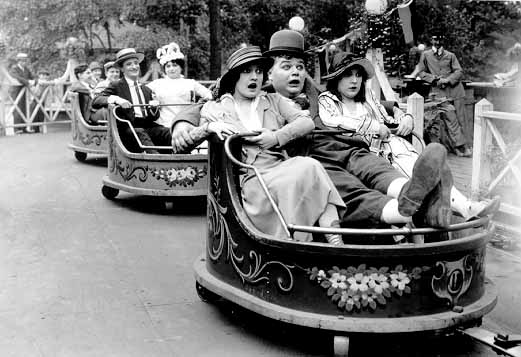
Silent film stars Fatty Arbuckle, Buster Keaton (looking buff), and Al St. John teamed up for an amusing lark “Fatty at Coney Island,” released in 1917, featuring the still-flickering lights of Luna Park, old time bathing suits and fancy bath houses.
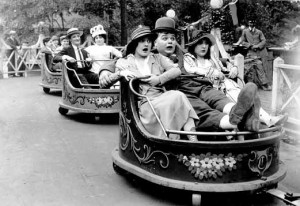
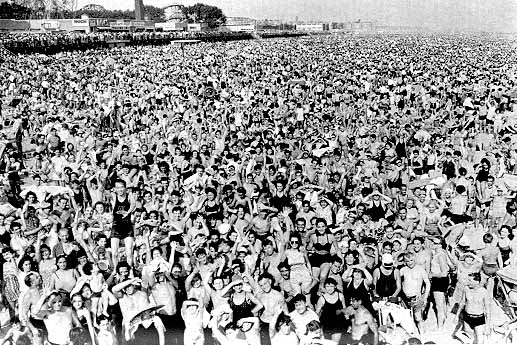
With the advent of the new subway, public beaches and a strong new boardwalk, people from all walks of life were able to enjoy themselves on Coney Island. Oy!
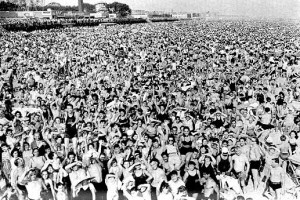
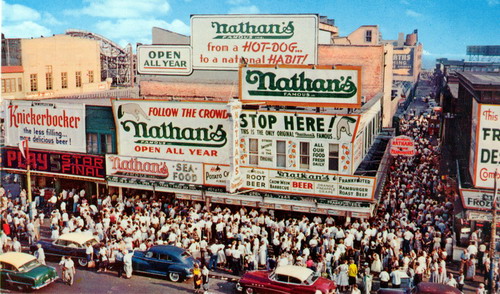
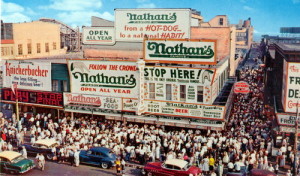
Nathan’s Hot Dogs, as crowded then as it is today on a hot summer’s day.
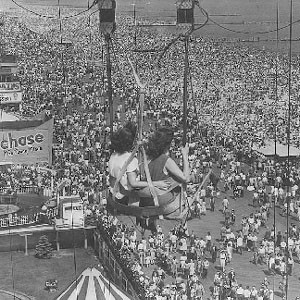
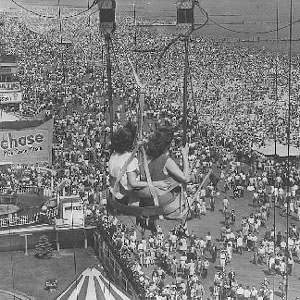
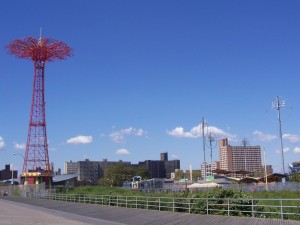
A lofty view from the Parachute Jump, overlooking thousands of visitors below. Its easy application as an amusement belied its original purpose as a military training machine. The Jump was sponsored by Lifesavers candy during its run at the 1939 New York Worlds Fair in Flushing Meadows, Queens, where it was one of the most popular attractions there and was even the scene of a wedding. Its no longer operating now, but has been given fresh colors reminiscent of its Lifesavers days, and it even lights up during the season.

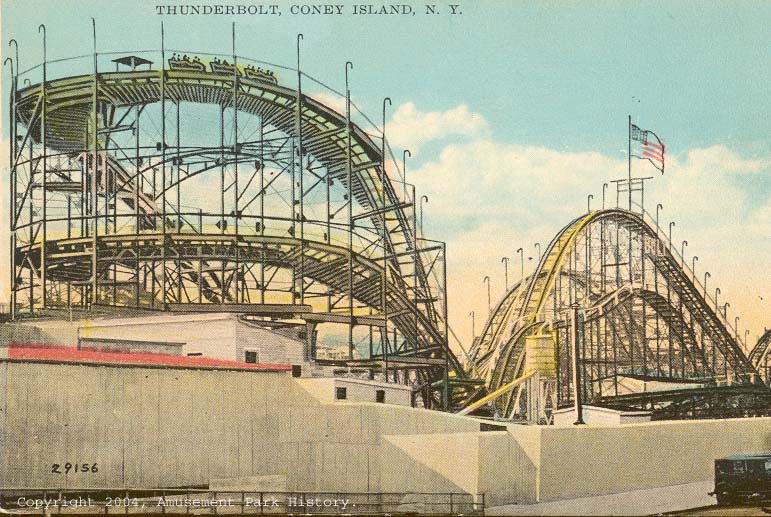
One of Coney Island’s other rollercoasters that didnt make it into the 21st century, The Thunderbolt was dismantled during the building of the minor league ballfield KeySpan Park.
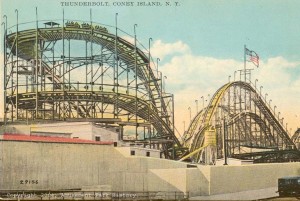
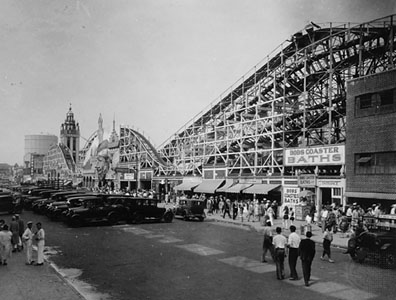
Another Coney Island rollercoaster was the Tornado, which was built in 1926 and burned down, a common fate of amusements here, in 1977. Note that the Tornado was built before the Cyclone. Hmm, who’s ripping off who here?
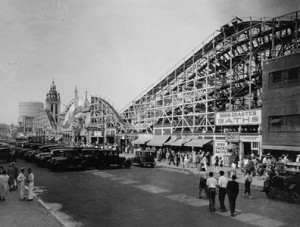
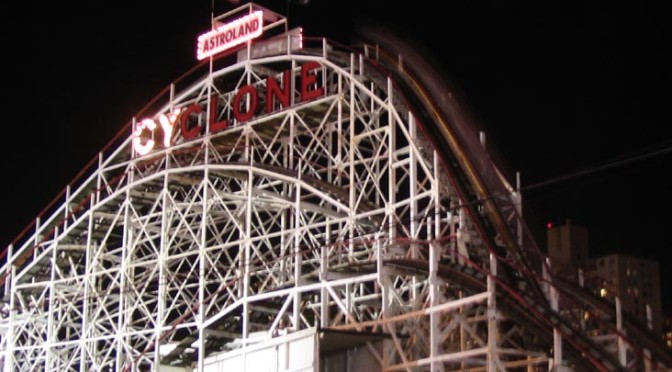
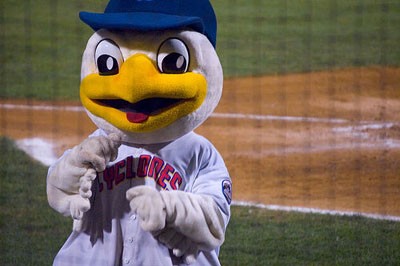
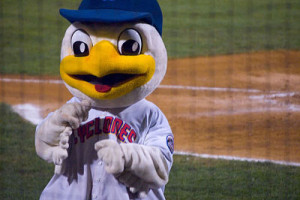
The remaining rollercoaster, of course, gave its name to the minor league team that now plays closeby:
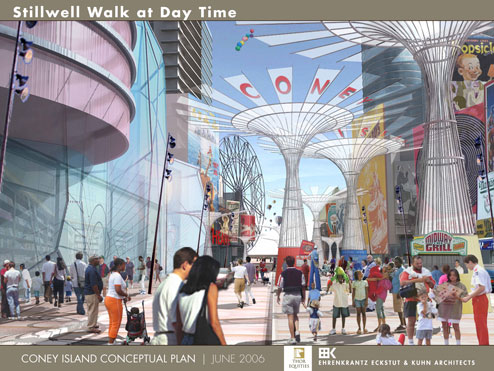
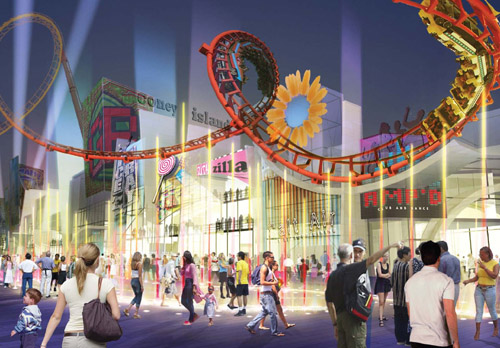
Here are a few mockups of potential renovations by Thor. They have gone back to the drawing board many a time. Gothamist even reports the city may be attempting to scuttle Thor’s plans altogether with talks with Copenhagen’s Tivoli Gardens, the 164 year old park that was certainly an influence on the old Coney Island parks:
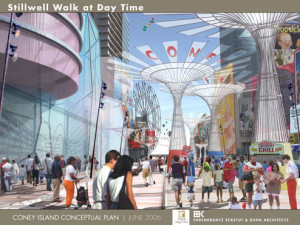
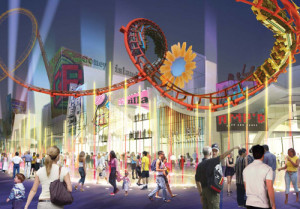
Here are some other plans by Thor.

And I thought I’d end our presentation with a few that I took myself this past weekend…..
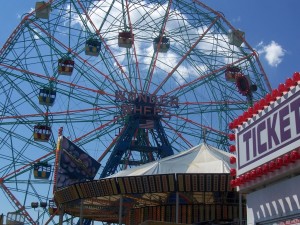
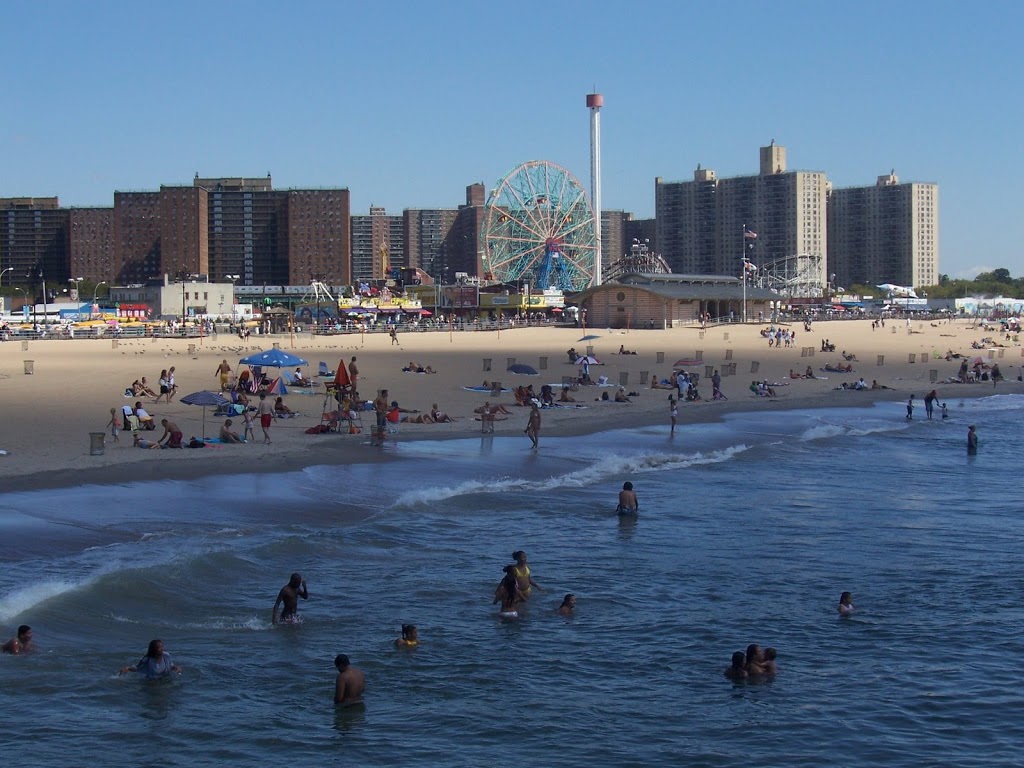
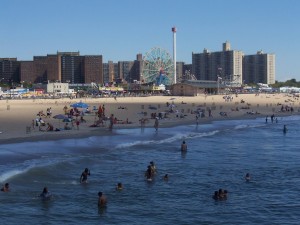
The beach on a beautiful day. From this angle, the Robert Moses influence can be readily seen:
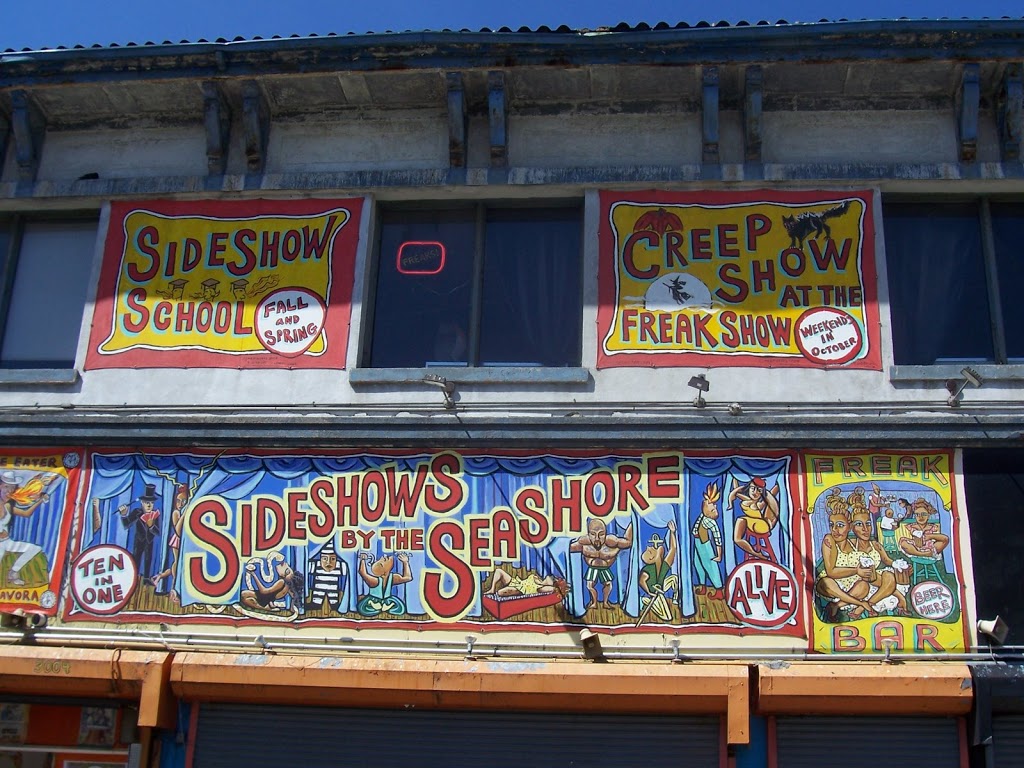
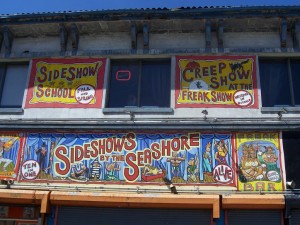
You can still go see the sideshow, perhaps a bit more politically correct than it was in the past.
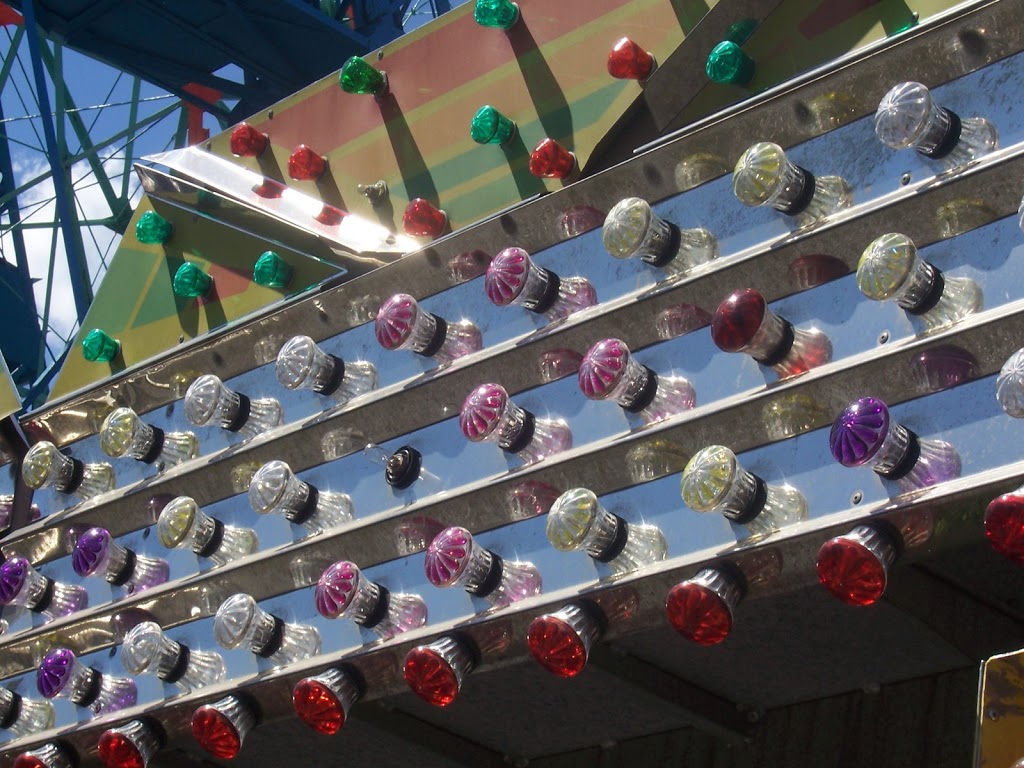
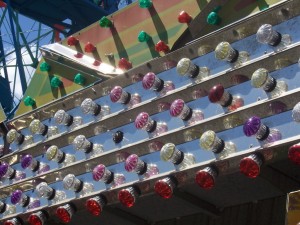
A bit of Coney’s faded glamour…
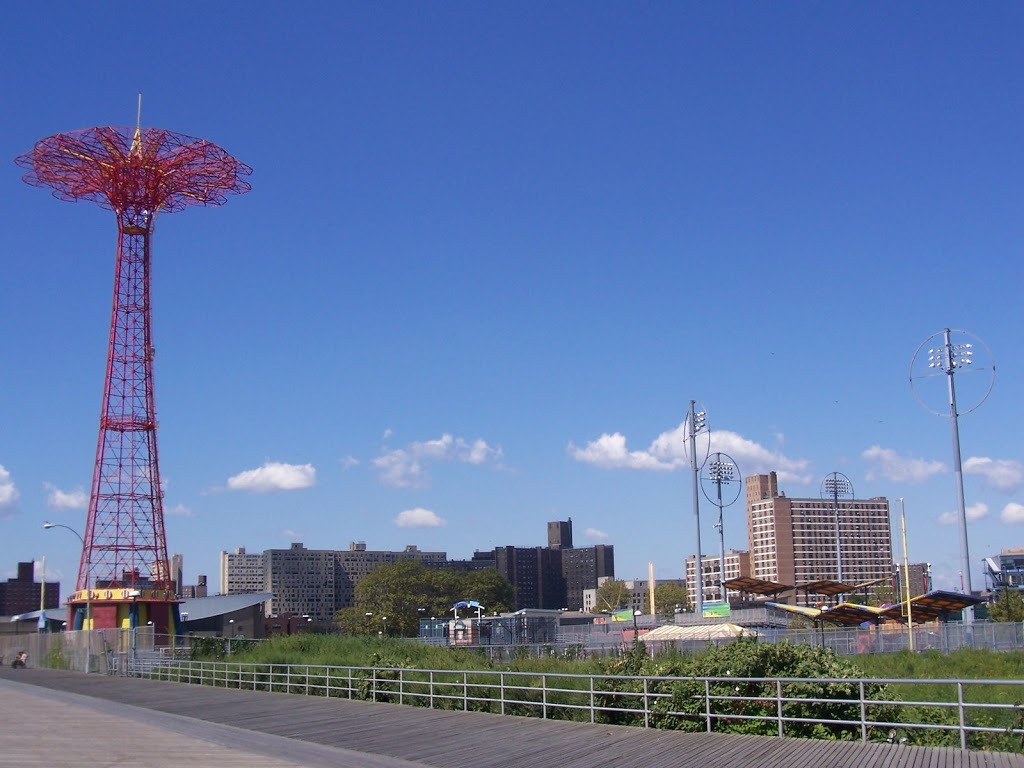
Its “makeup may be flaking” but the Parachute Jump lingers on, in less jovial environs than its used to.
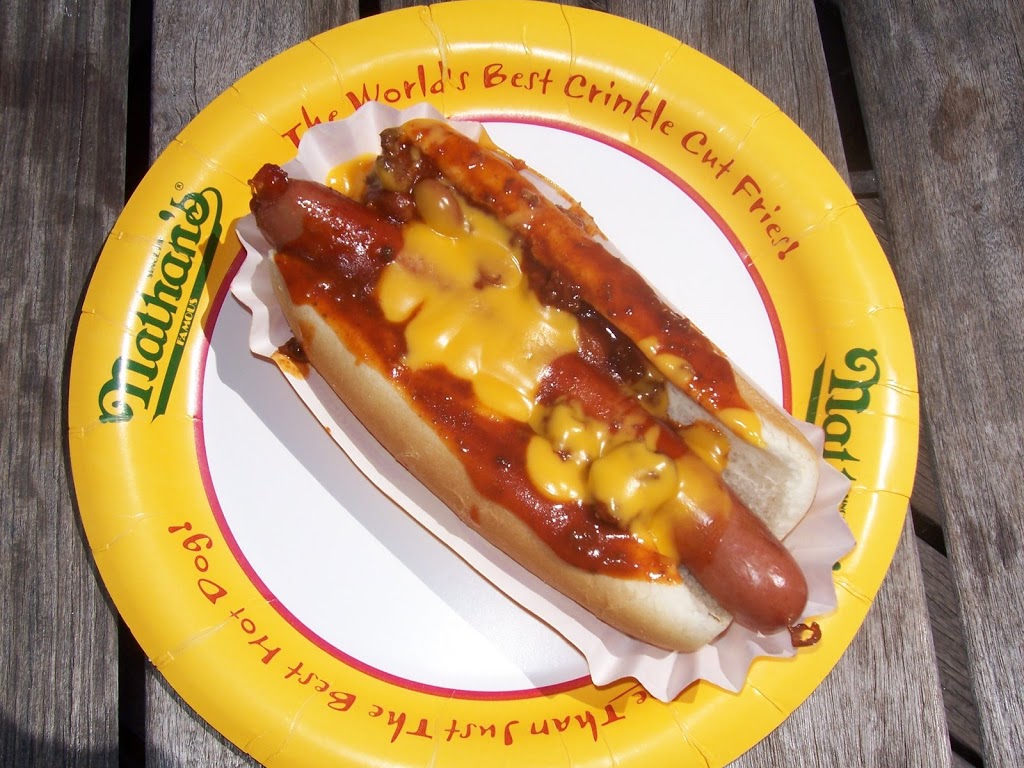
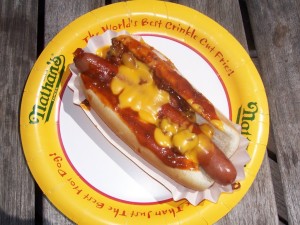
This cost $3.35, still a bargain for something so decadent, but nowhere near Nathan Handwerker’s original selling price of five cents
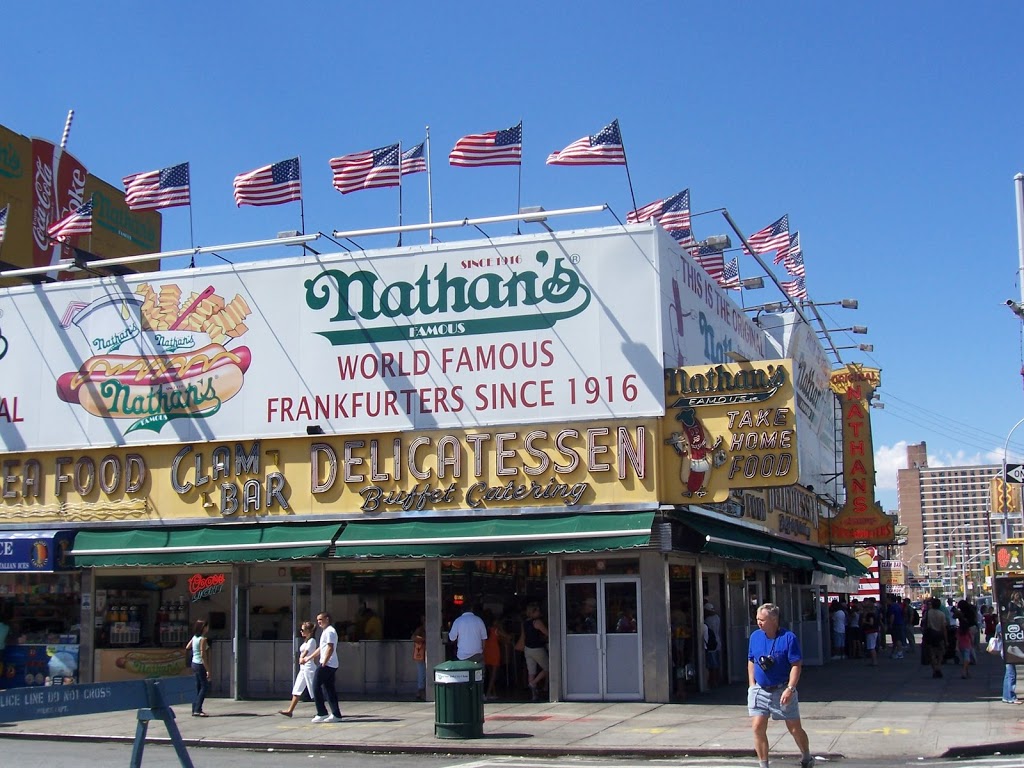
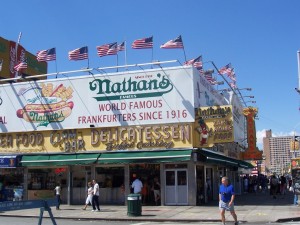
Here’s where Nathan’s has stood since he opened it, in 1916. Since then, he’s also opened another location closer to the boardwalk. One of Nathan’s first employees was a young redheaded girl named Clara Bowtinelli, who would later shorten her last name to Bow and become one of the silent film era’s biggest stars as Hollywood’s ‘It’ Girl.
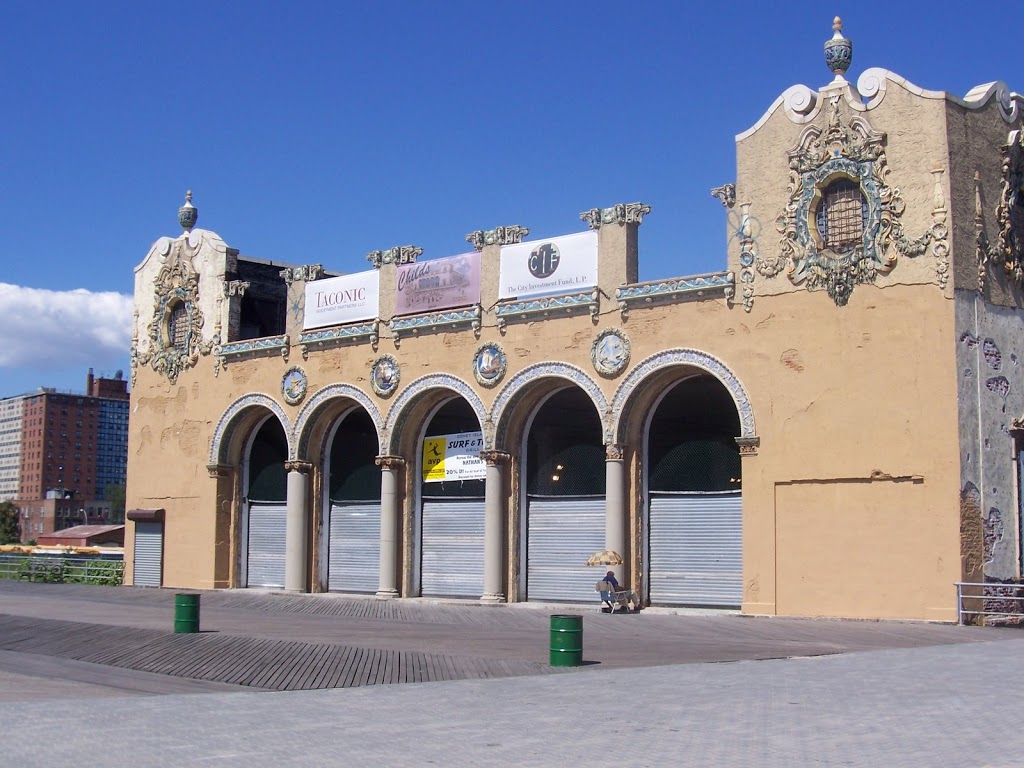
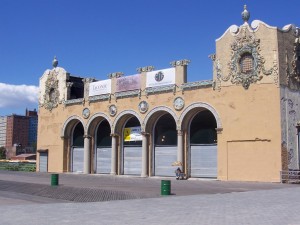
This is Childs Restaurant, along the boardwalk, one of the oldest structures still standing on Coney Island. Built in 1924, it was able to withstand the many fires that swept through Coney and in fact shielded buildings close by from the flames. A developer intends to re-open Childs as a restaurant once again in the near future. It was opened for the first time in many, many years during this year’s Mermaid Parade.
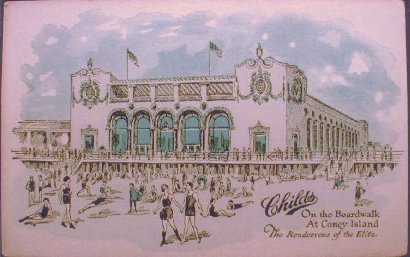
Childs in its glory days:
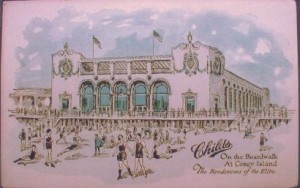
Some detailed information about Childs can be found here.

If you’d like more information about some current activities in preserving Coney Island, try the Save Coney Island page or the lovely official Coney Island webpage.

Many of the blogs in our blogroll have far more in-depth information about Coney Island that we do. I suggest you start with Kinetic Carnival or Gowanus Lounge first. A very exhausting site on its history (with lots of photos and interactive maps) can be found here.
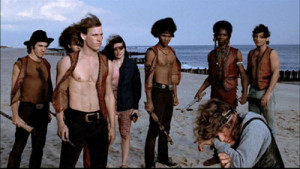
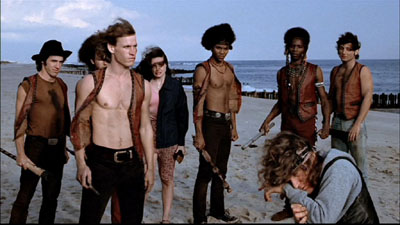
Finally, how could I forget The Warriors, the seminal cult 1979 film, set through much of Manhattan but featuring an explosive finale at Coney Island? Visit its tribute site or rent it today.

Last year I was fortunate enough to go to a special screening of the film at Coney Island that was sponsored by Netflix and featured many members of the cast.