Categories
Mad Men

‘Mad Men’ notes: The numbing horror of the New Haven line

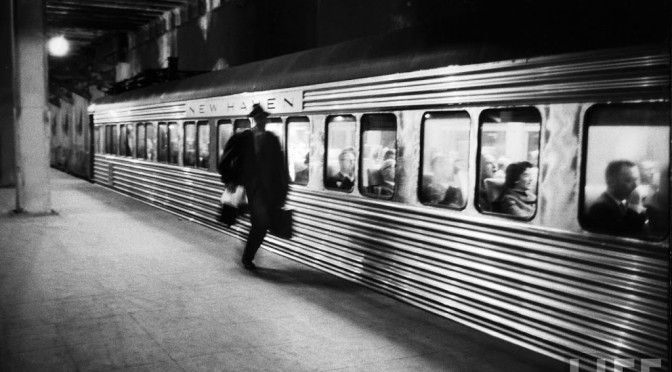
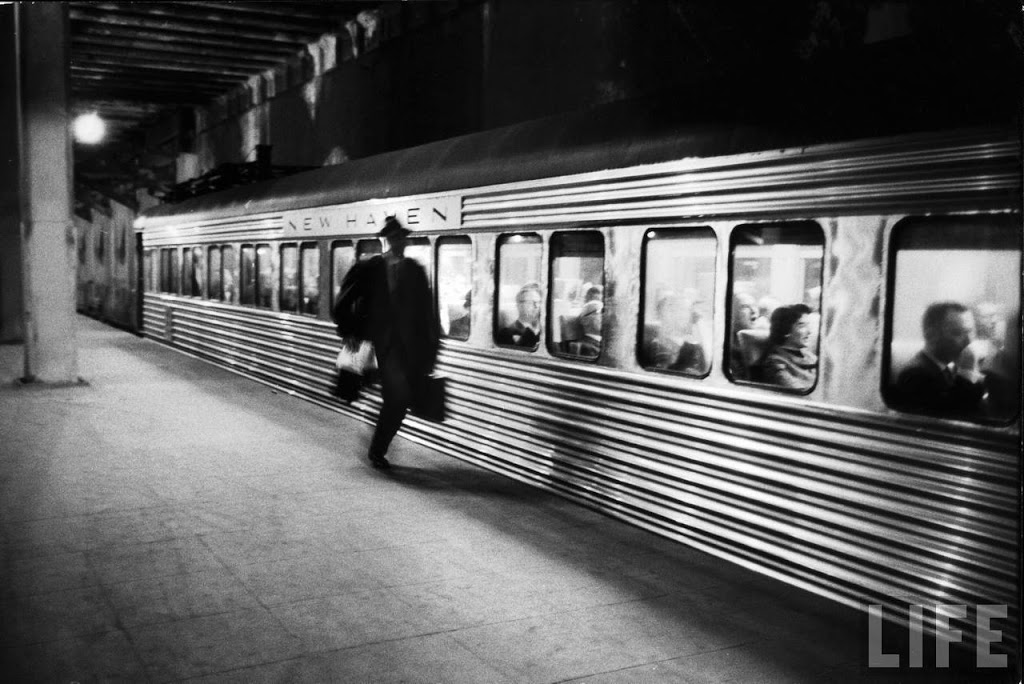
The train gang: Grand Central Terminal, 1961, photo by Alfred Eisenstaedt (LIFE images)

WARNING The article contains a couple spoilers about last night’s ‘Mad Men’ on AMC. If you’re a fan of the show, come back once you’re watched the episode. But these posts are about a specific element of New York history from the 1960s and can be read even by those who don’t watch the show at all. You can find other articles in this series here.
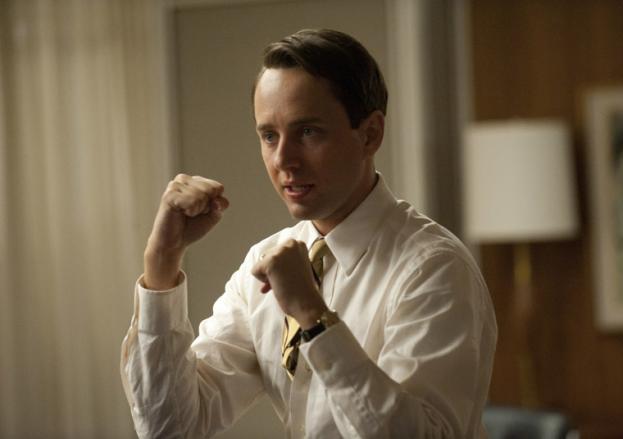
Oh, the mundane ritual of the daily commute! Of all the conformities of modern living, what is it in particular about the commute along the New Haven line — from Grand Central to points of suburbia along the south shore of Connecticut — that must drive the perpetually frustrated Pete Campbell to the edge of insanity?
In past ‘Mad Men’ episodes, we’ve seen the eager and ambitious adman strive for the trappings of ’60s urban success. He’s achieved a certain degree of material status, from a beaming, pregnant wife to a small but lovely home in Connecticut, equipped with a monstrous (some might say coffin-shaped) hi-fi stereo console. But the banality of a regular commute, robbed of privacy and forced into polite chatter — with the same insufferable people, day in, day out — has forced Campbell into taking driver’s education courses with teenagers.

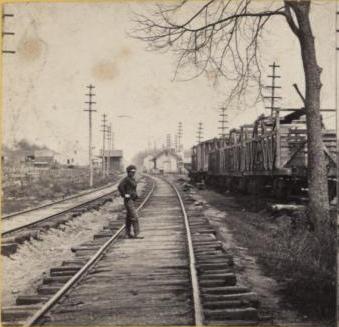
The New Haven line has been a popular transportation route almost since the advent of the railroad itself. First laid and operated in 1848, Appleton’s was proclaiming a decade later that the shoreline railroad was “the most expeditious way between New York and Boston,” linking the Connecticut city with Williams Bridge in the Bronx (pictured at left, from 1865, courtesy NYPL). From there, a connecting track, shared with the Harlem Railroad, took trains directly down to the train depot at 27th Street and Fourth Avenue. When city laws forced the depot up to 42nd Street, that old depot became a storage shed and, later, the first Madison Square Garden.

Few urban professionals attempted daily commutes to and from New York until the early 20th century, when post-war lifestyles, affordable automobiles and an expensive and overcrowded city facilitated an exodus to the surrounding areas. By 1950, the suburbs were such an entrenched place — a lifestyle unto themselves, with unique social requirements — that people even began speaking of the exurbs, communities even further outside the chain of traditional suburbia. “[T]he suburbs are the first 25 miles out; the ‘exurbs’ are the next 25 miles out,” according to author Irving Lewis Allen, and initially appealed to the most wealthy professionals from “advertising, broadcasting and publishing.”

We can thank city planners like Robert Moses for much of this change, obsessed as he was with highway building. But new roads alone couldn’t facilitate the move to suburbia. Mass transit was required to provide a convenient and cost-effective alternative for the ‘second wave’ suburbanites — those aspiring professionals wishing the emulate the lifestyle behaviors of their bosses without the paychecks to secure it. People, say, like Pete Campbell.
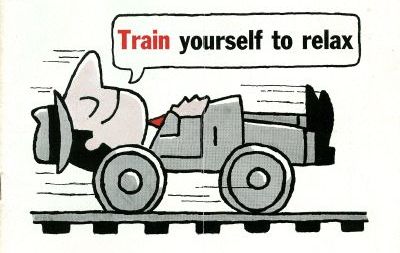
Above: A whimsical graphic from a 1966 New Haven Railroad timetable attempts to distract its passengers.

Unfortunately, the massively unprofitable New York, New Haven and Hartford Railroad, no longer just a long-distance passenger train service, was never fully capable of handling the thousands of commuters traveling to and from the city. Once considered ‘profitable, clean and punctual’ according to Robert Caro, the line was bankrupt by the mid-1960s, operating overcrowded, less-than-comfortable trains solely on federal money by 1965. Some considered it worse than even the crippled, dysfunctional Long Island Railroad.

The New Haven was such an undesirable property that the newly merged New York Central Railroad and Pennsylvania Railroad (aka Penn Central) was literally forced to take possession of the line in 1968 by the Interstate Commerce Commission. New York Governor Nelson Rockefeller was especially concerned that a deterioration of the New Haven line would create an traffic burden which would reverberate through the entire northern New York City-Westchester County corridor.

Oh, things would only get worse for the New York area railroads in the 1970s! So I hope Pete’s taking copious notes in his driver’s education classes and that those gruesome Signal 30 films are hitting home.
Categories
Brooklyn History On The Waterfront Podcasts

Red Hook, Brooklyn: A rich seafaring history, organized crime and the isolation of a beleaguered neighborhood

PODCAST Red Hook, Brooklyn, the neighborhood called by the Dutch ‘Roode Hoek’ for its red soil, became a key port during the 19th century, a stopping point for vessels carry a vast array of raw goods from the interior of the United States along the Erie Canal.

In particular, two manmade harbors were among the greatest developments in Brooklyn history, stepping in when Manhattan’s own decaying wharves became too overcrowded.

With these basins came a mix of ethnicities to Brooklyn, and along with new styles of row houses came the usual assortment of vices — saloons and brothels along Hamilton Avenue. This fostered the development of crime along the docks, and Red Hook soon witnessed firsthand the opening salvos of 20th Century organized crime.

How did the history-rich, nautical neighborhood go from a booming center of employment to one of the worst neighborhoods in the United States by the 1990s? And can some surprising twists of fate from the last twenty years help Red Hook return to its glory days?

Featuring: Revolutionary War forts, shantytowns, Vaseline factories, famous gangsters, the gateway to Hell, and cheap Swedish furniture!

Photo above: Taken on Van Brunt street, 1/11/2012

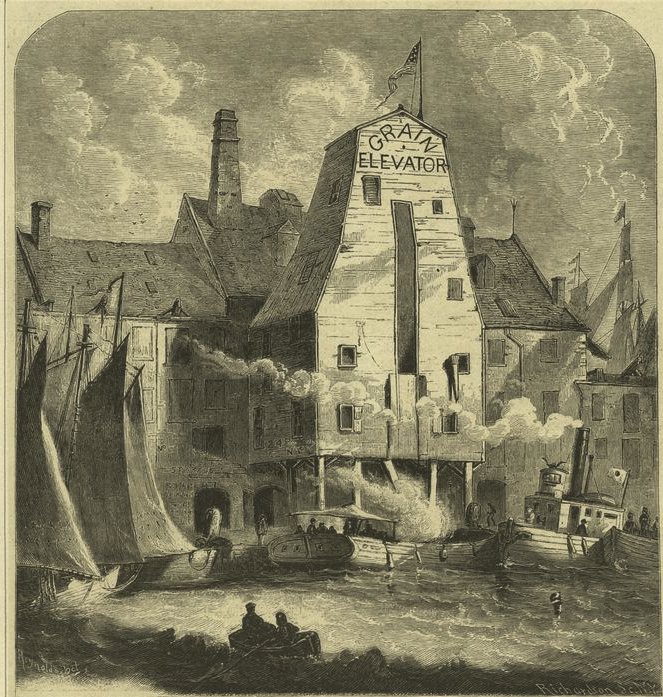
The Atlantic Docks, illustration taken from Booth’s History of New York. (care of NYPL)

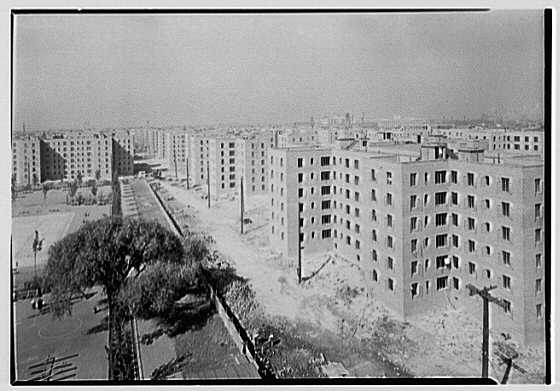
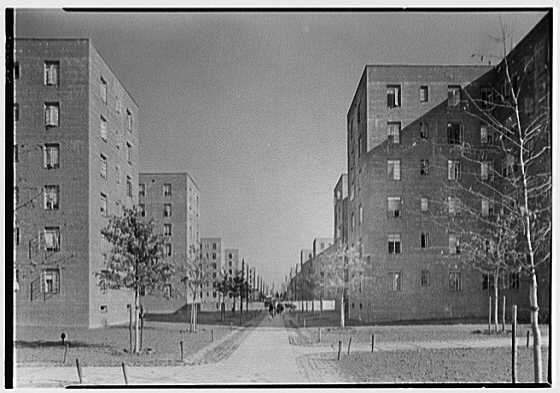
Modern living, circa 1939. The Red Hook Houses at their debut. Although the housing development cleared away a great many dilapidated homes — following a common model of urban redevelopment — the uninspired uniformity would put a dent in the neighborhood’s original character. (Courtesy LOC)

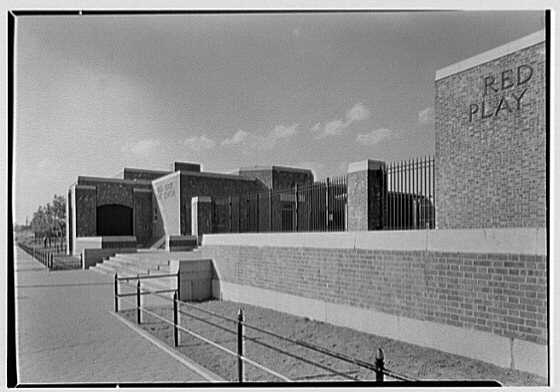
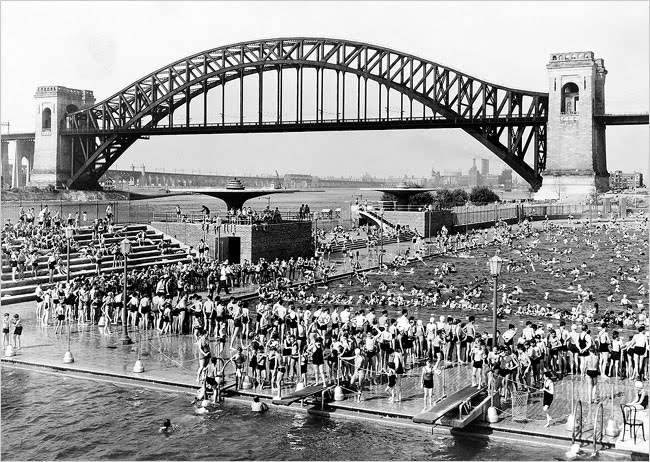
The Red Hook Play Center opened in 1936, the final of 11 swimming pools Robert Moses built during his early years as parks commissioner. Its Art Moderne style made it a beautiful if curious addition to the neighborhood.

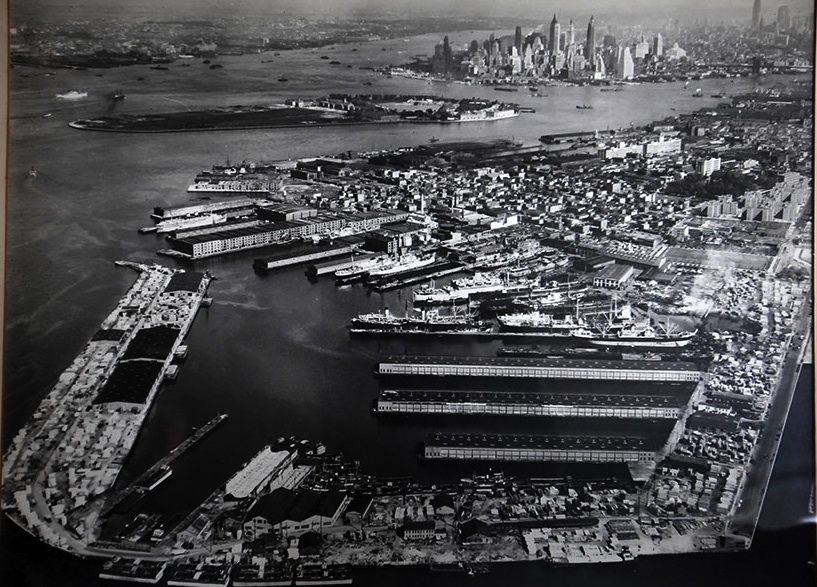
The Erie Basin, a clutter of vessels and piers, is strangely beautiful from overhead in relation to the Manhattan skyline. (Pic courtesy Wired NY)

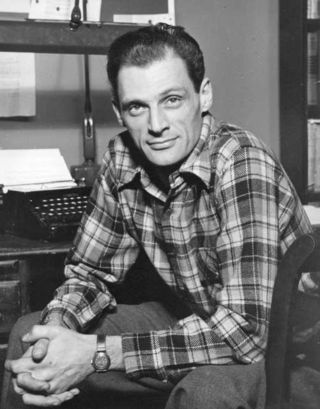
The crisis of organized crime and corruption within the longshoreman’s union along the Brooklyn waterfront was an inspiration for many writers, including Arthur Miller (below) in his unproduced screenplay ‘The Hook‘ — referring both to the neighborhood and the longshoreman’s “ever-present baling hook“. Later, Elia Kazan and screenwriter Budd Schulberg found similar inspiration for the Oscar winning film ‘On The Waterfront’, loosely basing events on situations that took place along the entire New York and Brooklyn waterfront. (The film was made in Hoboken, but there are of course famous shots of the Manhattan skyline.)

Categories
Parks and Recreation

That time Christopher Columbus annoyed Robert Moses

Christopher Columbus is among the most honored figures in New York statuary, appearing abundantly throughout the five boroughs — standing prominently, nestled in parks and squares, peering from building features.

I’ve located a seemingly complete list of New York Columbus monuments, strangely enough, on a German website, inclusive even of Chris’s appearance of 8th Avenue subway tiles.

Photo by Kevin Kalish/The Living New Deal

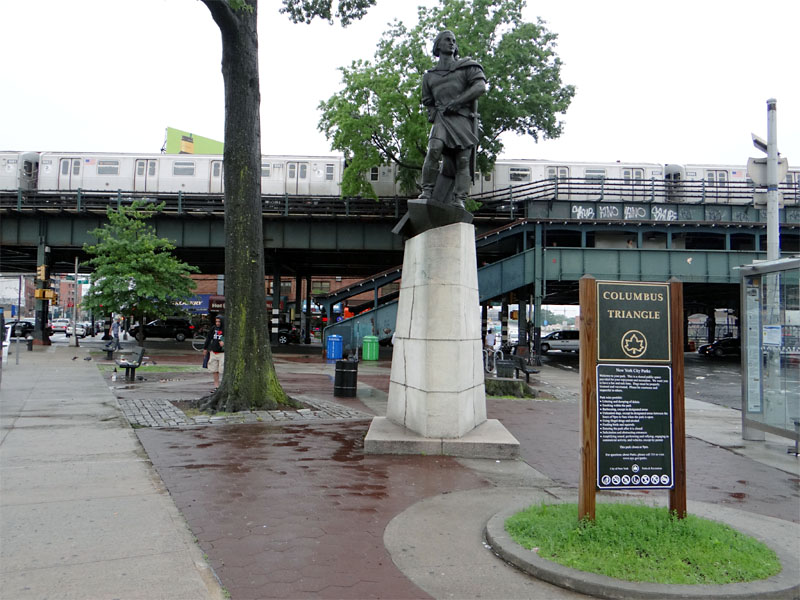
While the one perched atop the column at Columbus Circle is the most famous, perhaps the most interesting one sits in Columbus Park, in Astoria, Queens.

Depicting a young, robust explorer, the statue was erected here in 1941 in recognition of the area’s growing Italian population. But youthful Chris was almost immediately removed to the basement of Queens Borough Hall, for fears it would get melted down in wartime scrap-metal programs.

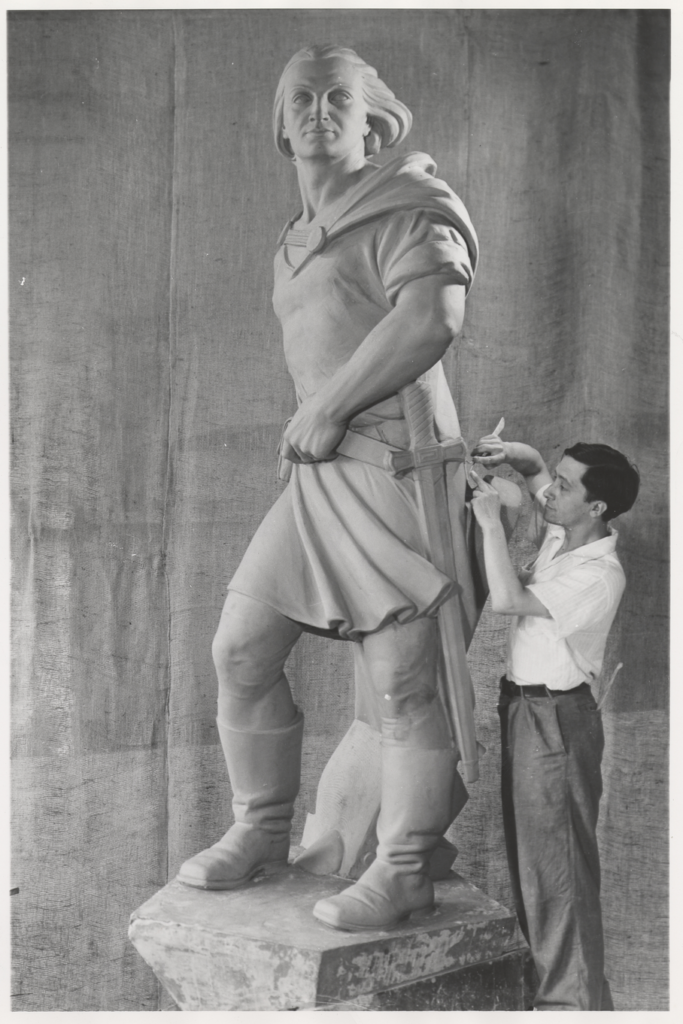
Racioppi works on Astoria’s Columbus as part of the WPA program.

It was returned to dignity by the end of the war and has commanded the crossroads here ever since.

Had Parks Commissioner Robert Moses had his way, however, the striking, romantic monument would never have seen light of day. “We don’t think the statue looks like anything we have read about Columbus, or that as a piece of symbolism it represents anything associated with Columbus,” Moses complained.

“Anything Moses doesn’t design himself, he thinks is no good,” replied Queens Borough President George U. Harvey.

Nearby you’ll find a dedication plaque from the Italian Chamber of Commerce. Your eyes aren’t deceiving you; it lists a dedication date of 1937.

Although sculptor Angelo Racioppi had completed the work by then, the community couldn’t afford the base until a few years later.

Categories
Podcasts

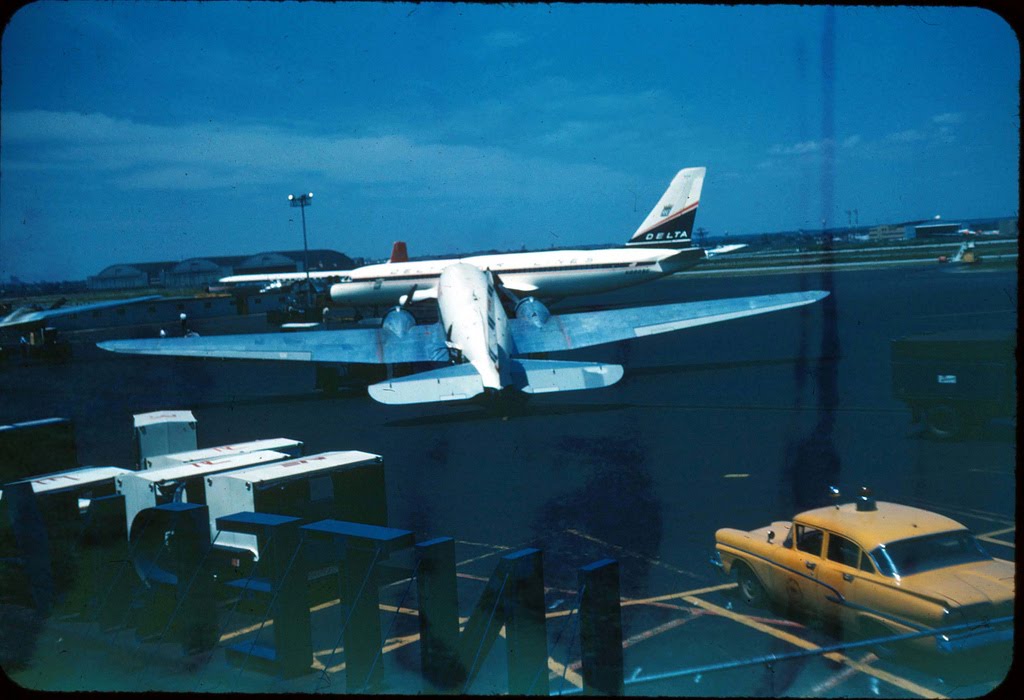
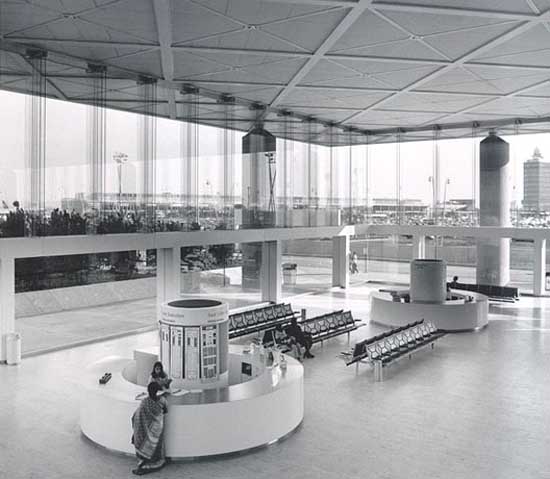
Idlewild Airport/John F Kennedy International Airport: from a golf course to a motley crew of classic architecture

PODCAST Come fly with us through a history of New York City’s largest airport, once known as Idlewild (for a former golf course) and called John F. Kennedy International Airport since 1964. Mayor Fiorello LaGuardia wanted a new and improved facility to relieve the pressure from that other Queens airport (you know, the one with his name on it), but a greater challenge faced developers of the Jamaica Bay project — the coming of the jet age and the growth of commercial travel.

The solution for Idlewild was truly unique — a series of vastly different and striking-looking terminals assigned to individual airlines. This arrangement certainly had its critics, but it has provided New York with some of the most inventive architecture found within its borders.

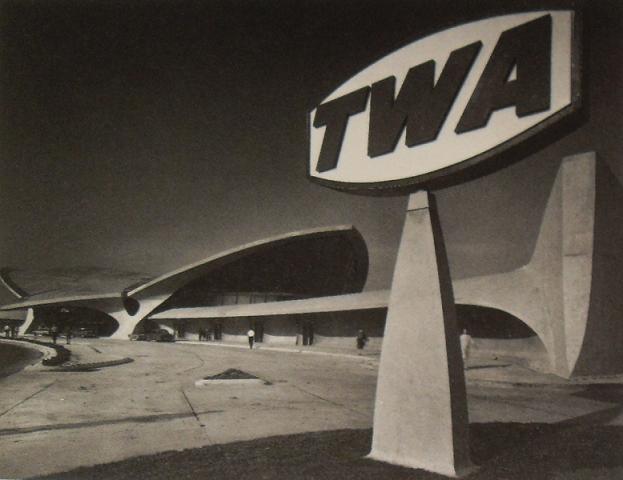
From stained glass to zodiac sculptures, from the out-of-this-world dramatics of the Pan Am WorldPort to the strangely lifting concrete masterpiece by Eero Saarinen, we take you on a tour of the original ’60s terminals and the airport’s peculiar history.

With guest appearances by Robert Moses, Martin Scorsese, the Beatles and a pretty awesome dog named Brandy.

Click on the pictures below to enlarge. And these demand to be enlarged!

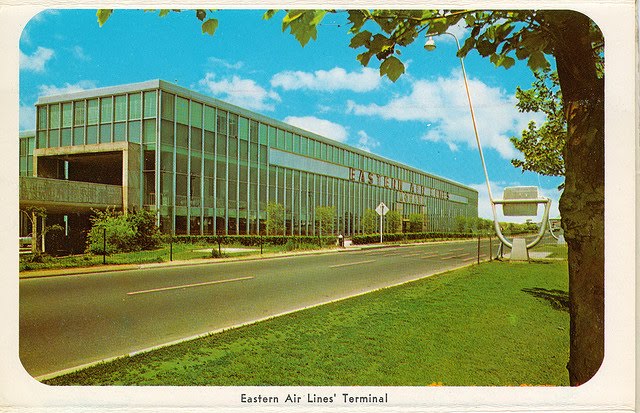
The Eastern Airlines building (“Terminal 1”) for the once-powerful airline that brought Robert Moses an early public defeat in the contentious battle for funding Idlewild Airport.

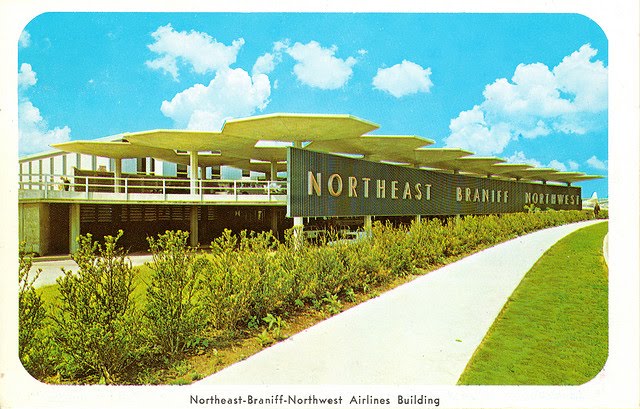
A large sequence of toadstool like concrete awnings adorn the entrance of Terminal 2, which serviced Northwest, Northeast and Braniff airlines.

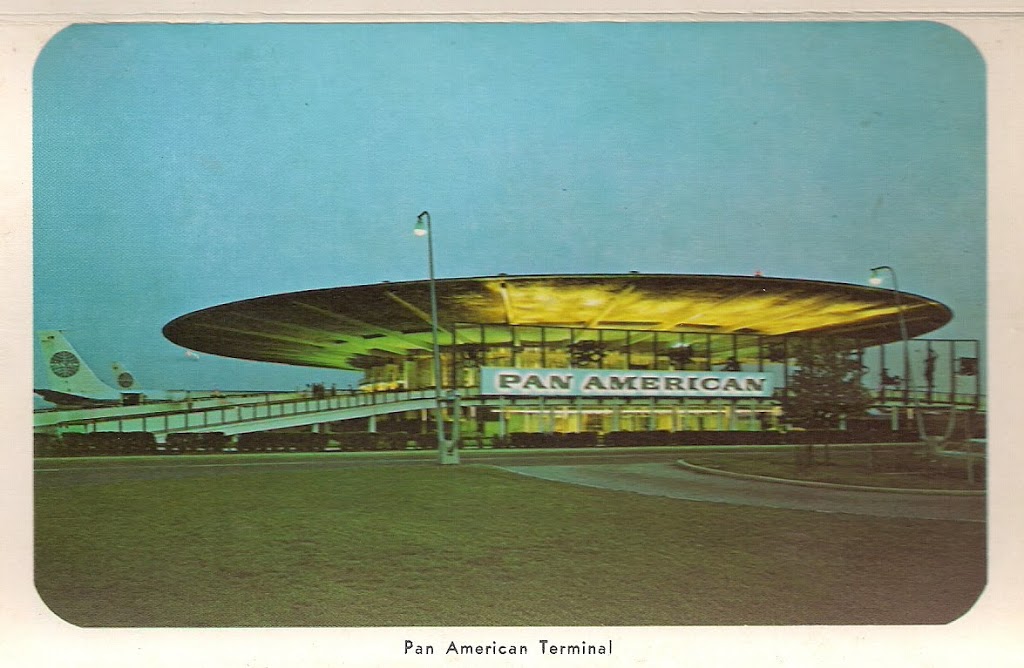
The spaceage Pan American terminal, later called WorldPort. These postcards are courtesy DavideLevine/Flickr. He’s got a great many more JFK postcards to check out as well.

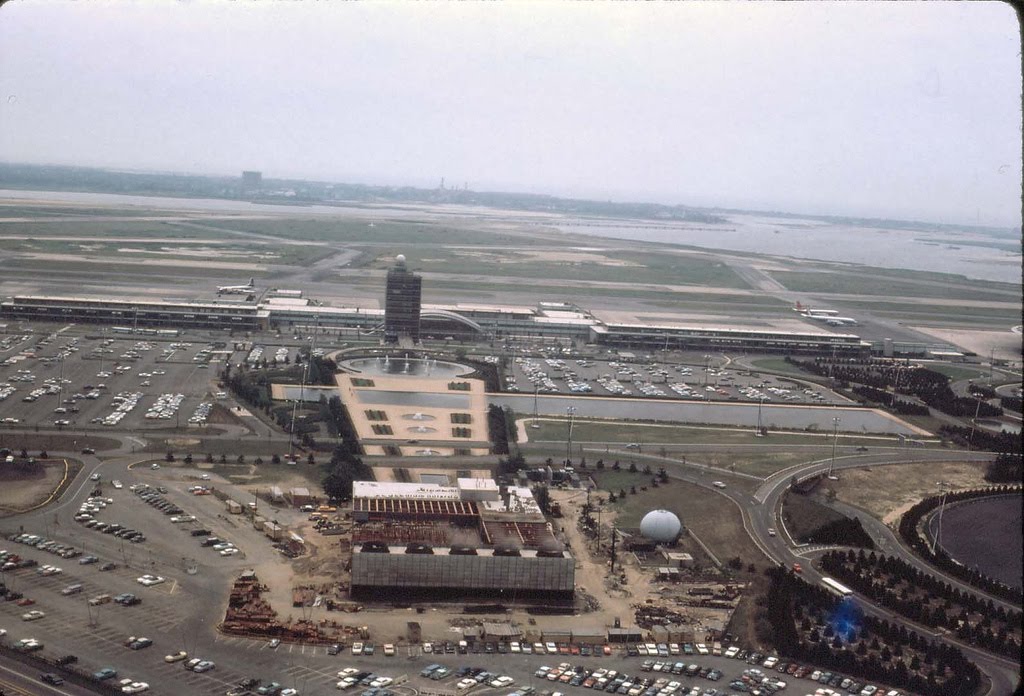
Overlooking the International Arrivals Building. From this vantage, you can see the ‘Versailles’ like gardens and fountain that briefly ruled the airport grounds until the demand for parking became too great. (avaloncm/Flickr)

Outside the International Arrivals Building, 1960 (rjl6955/Flickr)

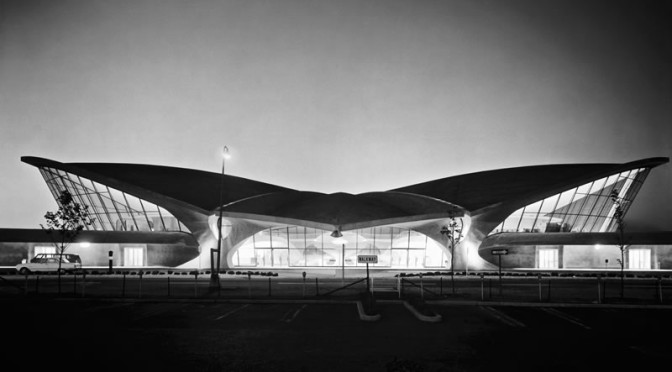
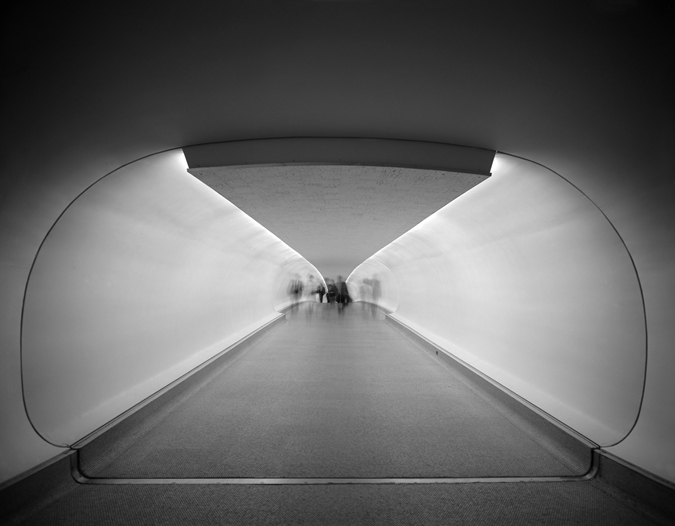
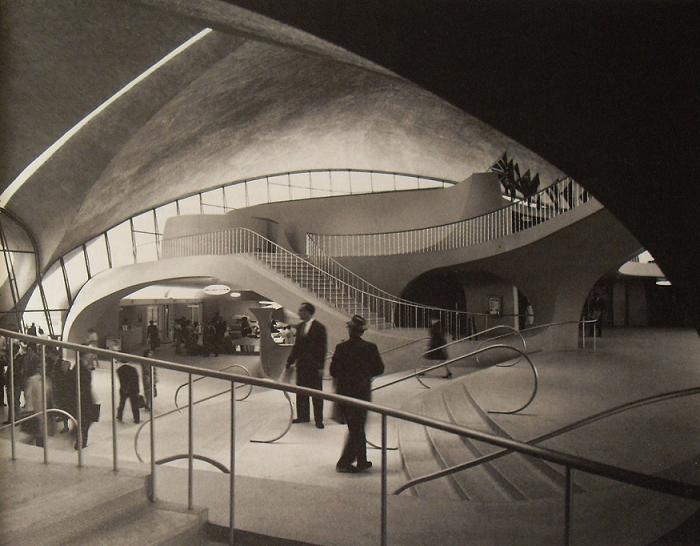
Inside and outside the TWA Flight Center, designed by Eero Saarinen. Pictures by Ezra Stoller

The interior of I.M. Pei’s Sundrome for National Airlines, with walls that seem to melt away with the sunlight. Currently unused, the building is slated to be demolished.

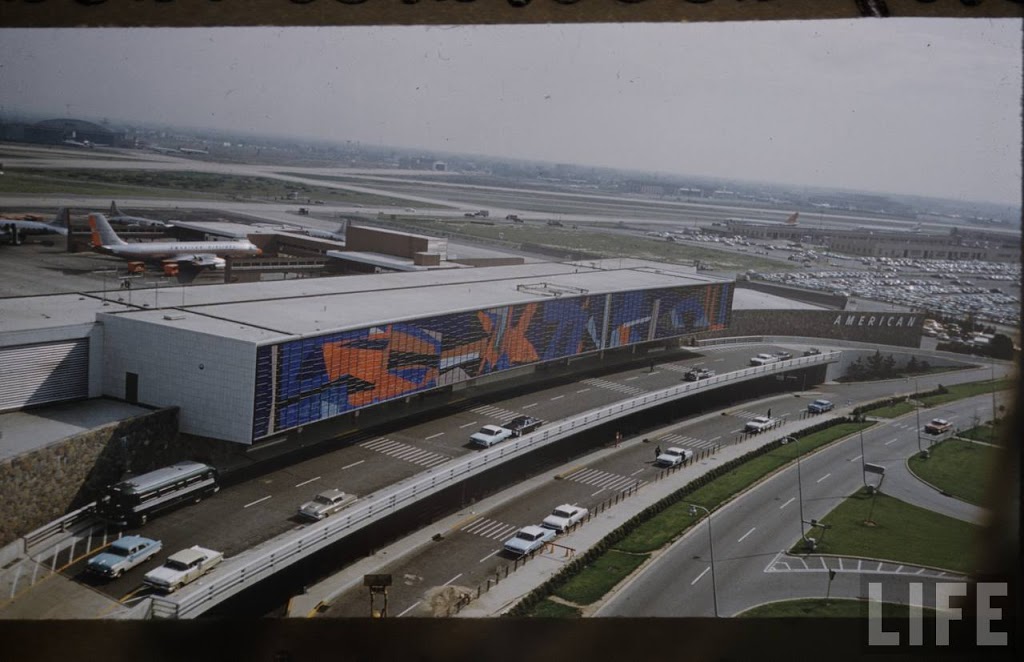
American Airlines terminal, distinguished by its extraordinary face of stained glass. (Photo Dmitri Kessel/Google Life)

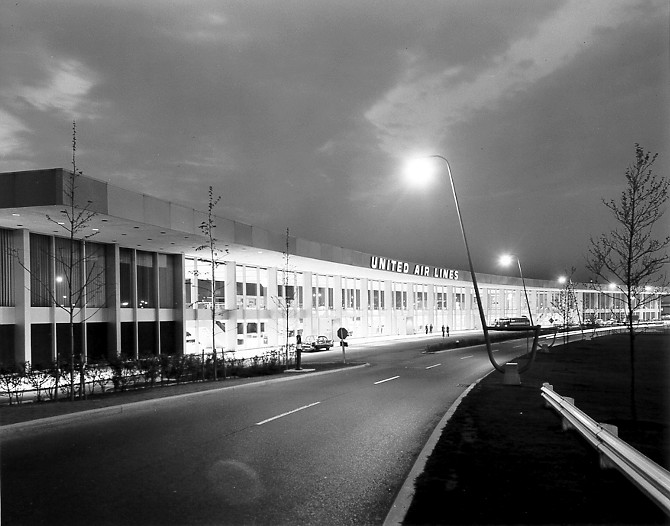
The simple but sleek United Airlines terminal.

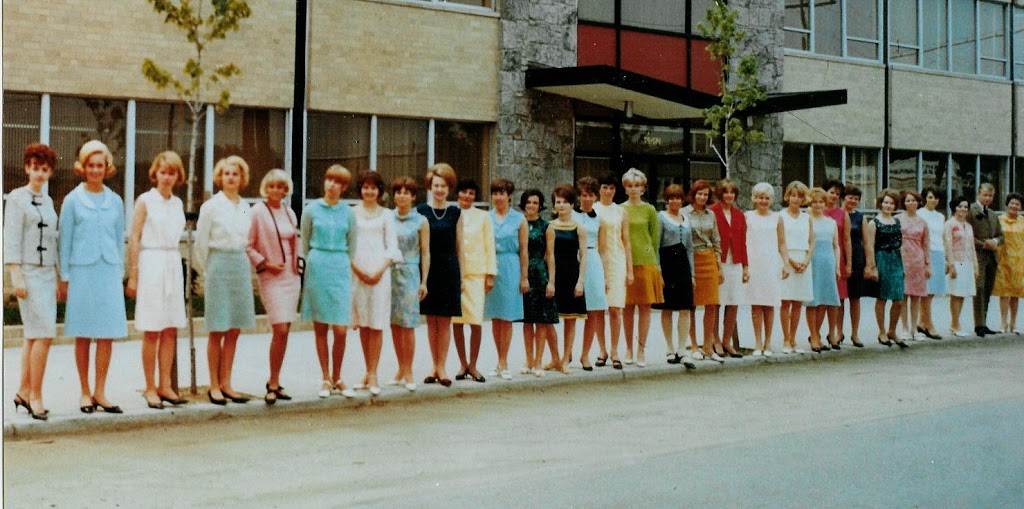
The style of the jet age was partially defined by airline flight attendants. Airlines used sex appeal in their marketing and garbed their female employees in trendy (and often revealing) uniforms. These women were graduates from Overseas National Airways training school in Queens, June 1966. (More information here.)

Idlewild/JFK would see as many movie and music stars than any other location in New York. Here’s Marilyn Monroe and Arthur Miller in 1954…

… and the Beatles arrive at JFK to screaming fanfare, 1964

Children could pretend to be air traffic controllers with this 1968 toy. Many years later, an actual air traffic controller would bring his children in to direct real planes.

Categories
Bridges Podcasts

The Verrazano-Narrows Bridge: Robert Moses, Bay Ridge, and the birth of America’s longest suspension bridge

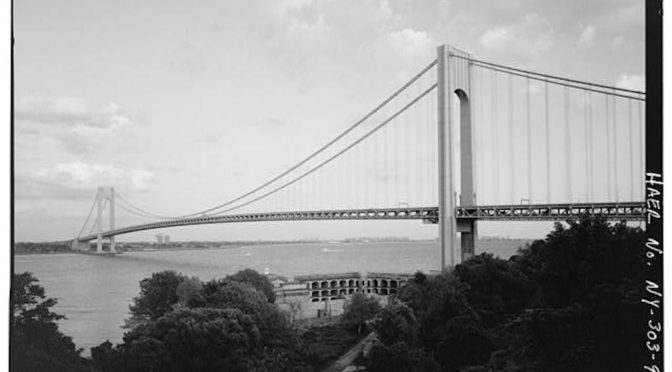
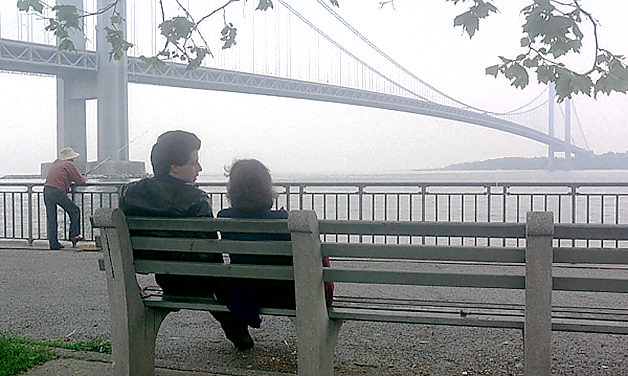
With Fort Wadsworth to its side, the last of Othmar Ammann’s New York bridges jets out over the Narrows.

PODCAST The longest suspension bridge in the United States, the Verrazano-Narrows Bridge was one of Robert Moses’ most ambitious projects, a commanding structure that would finally link Staten Island with Brooklyn. Today it soars above New York Harbor as one of the finest examples of architecture from the 1960s. But it didn’t get built without some serious community outcry, from a neighborhood that would be partially destroyed in its wake — Bay Ridge, Brooklyn.

This is the tale of a 16th century explorer, a 20th century builder and a timeless marvel of the harbor, with a design that takes the curvature of the earth — and one very, very large boat — into consideration.

ALSO: The bridge’s finest film performance, with co-star John Travolta.

You can tune into it below, download it for FREE from iTunes or other podcasting services, or get it straight from our satellite site.

Or listen to it here:
The Bowery Boys: The Verrazano-Narrows Bridge

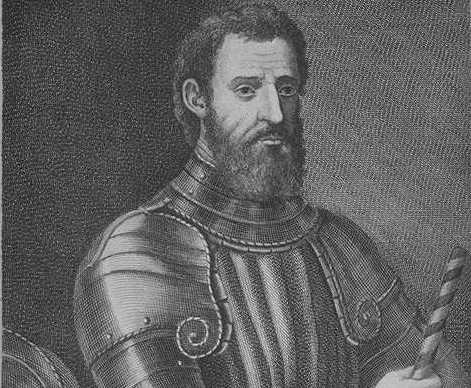
This is Italian explorer Giovanni da Verrazzano, who sailed into the Narrows in 1524, decades before Henry Hudson. Unfortunately, he miscalculated and thought the harbor was a big lake, so he left.

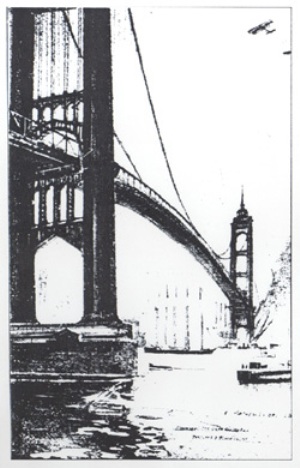
An existing sketch of David Steinman’s proposal for the Narrows span. Called the Liberty Bridge, it was a hybrid of the Golden Gate and the Brooklyn Bridge and features bells that would ring out periodically through the harbor. This came very close to being implemented, but the project died in Congress thanks to a New York representative: young Fiorello LaGuardia.

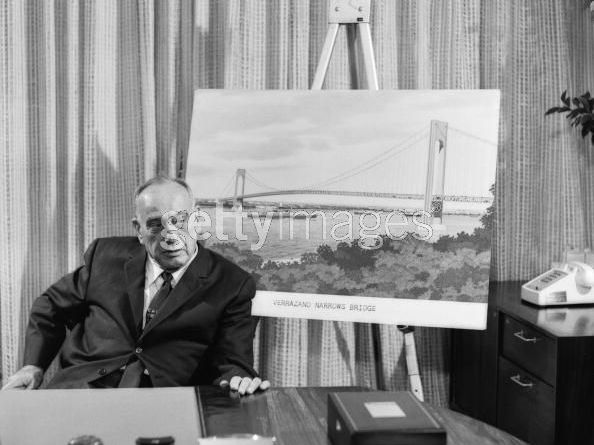
From a Getty Image we find the all-powerful Robert Moses discussing his project on the eve of its opening, November 1964. Many dreamed of spanning the Narrows, but only Moses had accumulated enough influence the see the project to fruition. (CBS Photo Archive/Getty Images)

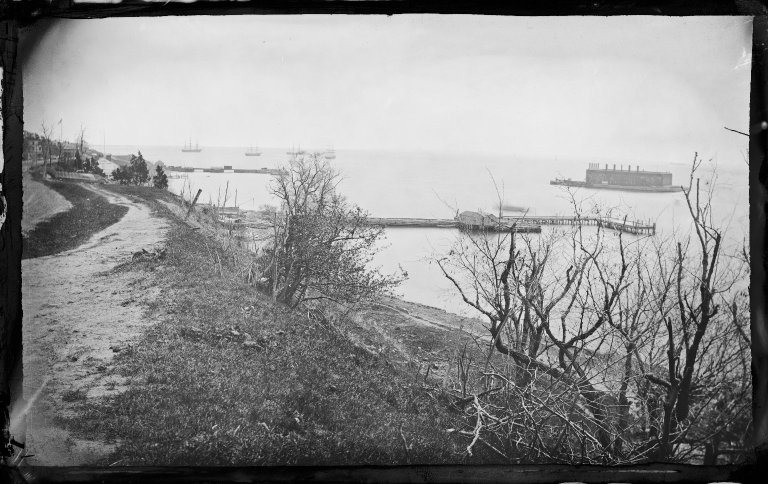
Along the Brooklyn shore in 1914 with old Fort Lafayette out on an old reef. The fort was demolished to make way for the base of the bridge. (Courtesy the Brooklyn Museum)

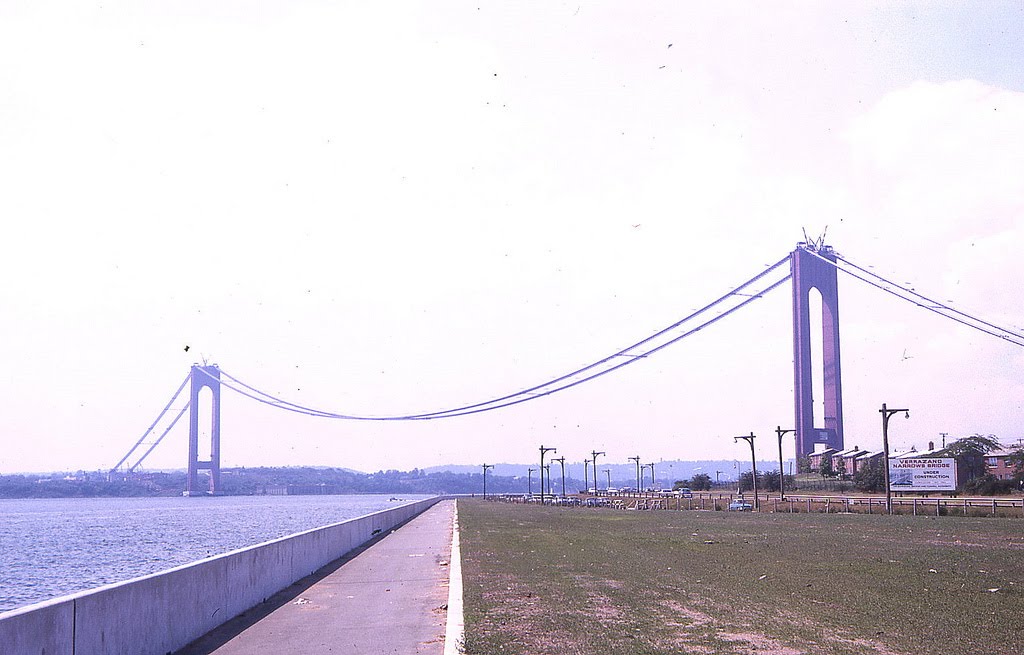
The view in 1963 and the bridge without its roadway, which would be delivered by barges in specifically crafted pieces and hoisted in place. (Courtesy petepix75/Flickr, and has some other great old New York pics in his photostream)

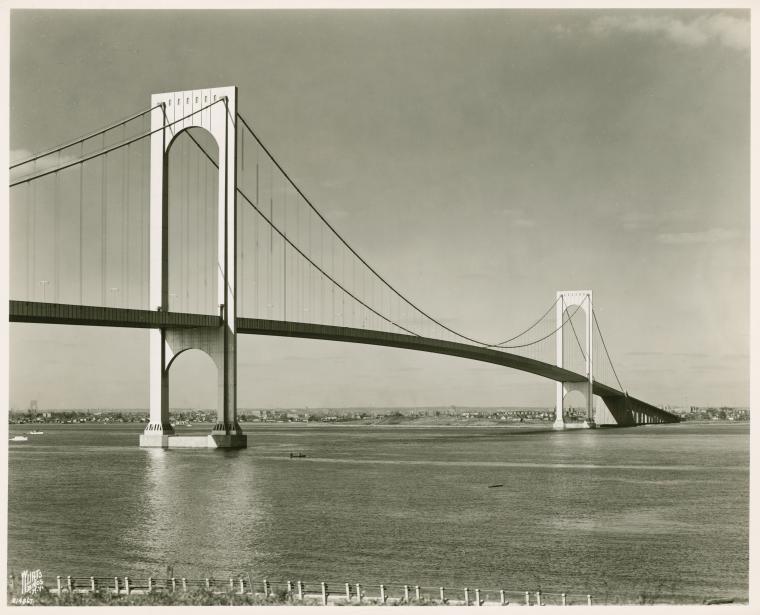
When the bridge opened in November 1964, it was the longest suspension bridge in the world, overtaking the Golden Gate Bridge in San Francisco. The Verrazano-Narrows held that title until 1981 when the Humber Bridge in the UK overtook it. (Pic courtesy NYPL)

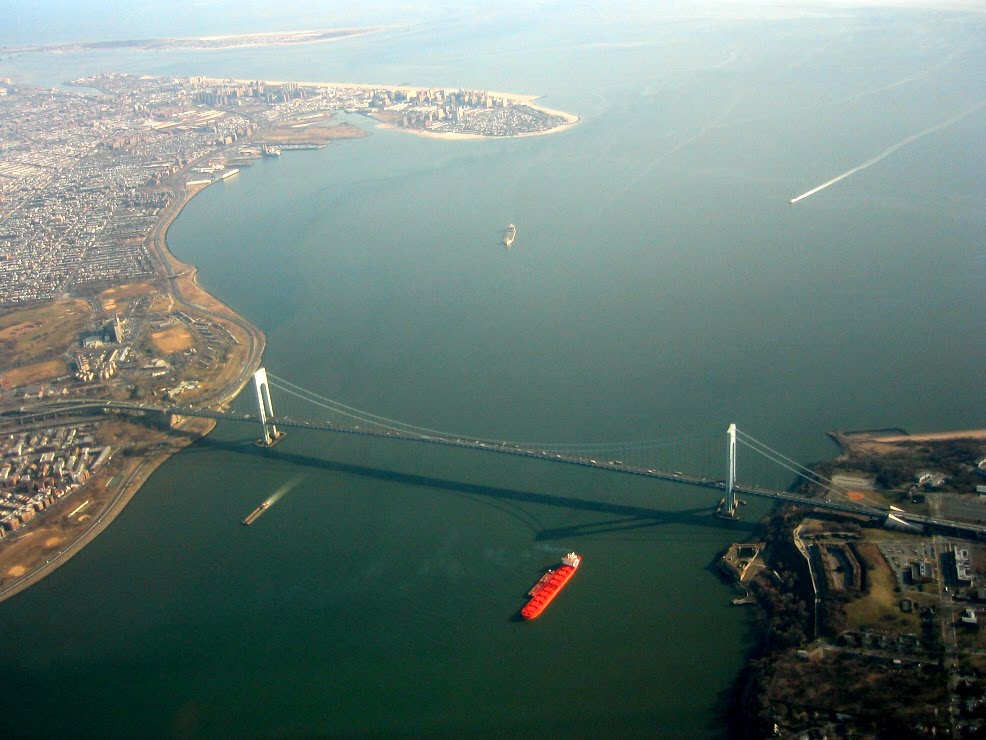
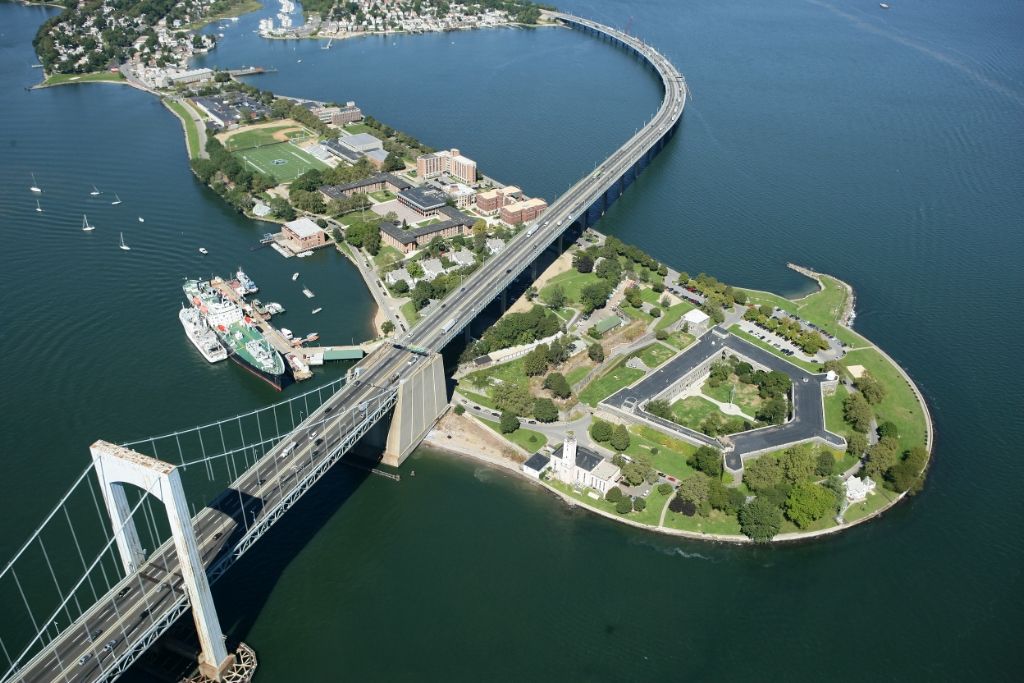
From overhead, it’s easy to see the challenges faced by Ammann and engineers in designing and constructing the bridge.

A newsreel from 1963, outlining the construction of the bridge and illustrating the dangers workers faced in building it.

The bridge plays a prominent role — and a tragic one — in the 1977 film Saturday Night Fever.

A deleted scene from the film prominently highlights the main character’s obsession with the bridge:

There are some terrific photos and additional history at Forgotten New York on the opening of the bridge. There’s even some aftermath photos of Bay Ridge, Brooklyn, after the city ripped away several homes.

You can take a preview peek of Gay Talese’s The Bridge here.

And if you ever wondered what it looks like to ride the Queen Mary 2 underneath the bridge, here you go:

NOTE: We mention the Outerbridge in the podcast, the official name of which is ‘the Outerbridge Crossing’ to sidestep that Outerbridge Bridge issue. Many refer to it as just ‘the Outerbridge’ to save the syllables.

The abstract beauty of Robert Moses’ most horrifying idea

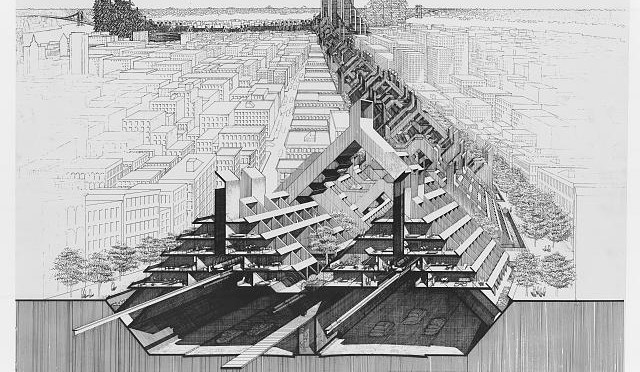
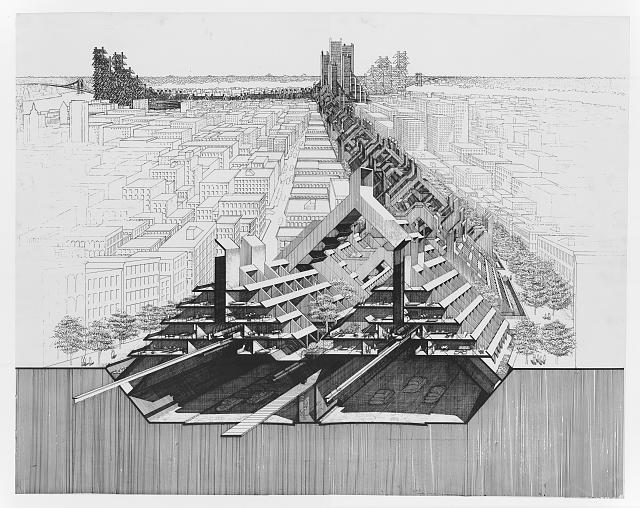
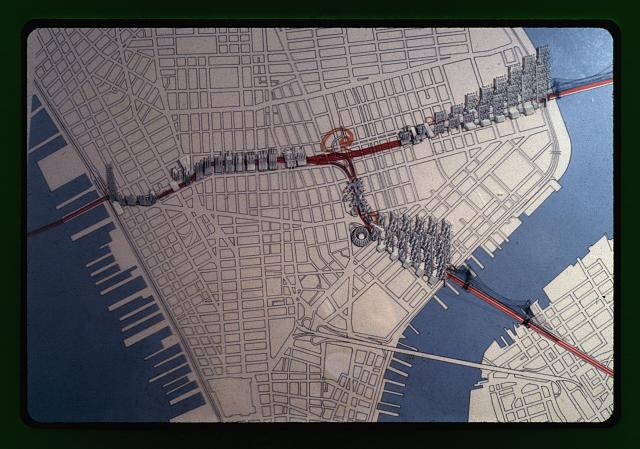
This is beautiful because it’s not real: a cross-section of Paul Rudolph’s cross-Manhattan proposal, looking east towards the two approaches consuming the Williamsburg and Manhattan bridges.

This is your last week to catch the fascinating and strange drawings of Paul Rudolph at the Arthur A. Houghton Jr. Gallery in Cooper Union. Rudolph drafted proposals for Robert Moses’ devastating Lower Manhattan Expressway which would have cleaved the island with an elevated highway, linking the East River bridges to the Holland Tunnel.

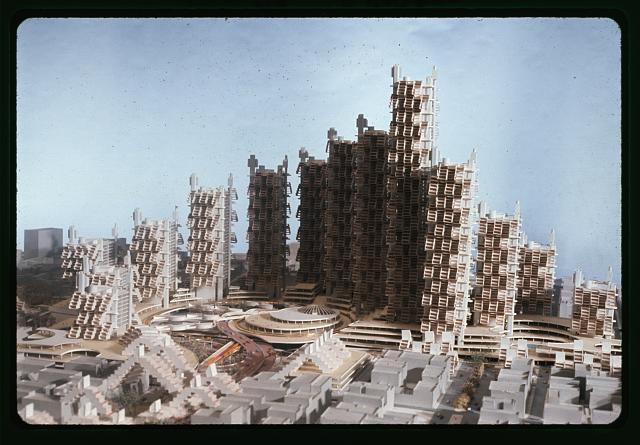
Community opposition and New York’s woeful financial crisis killed the Lower Manhattan Expressway project. Rudolph, a Bauhaus-influenced architect, was the rare master of the Brutalist style, as clearly evidenced in these drawings and mock-ups. Magnificent as stand-alone works of science fiction, Rudolph’s ideas unveil nothing less than a complete reconstruction of downtown Manhattan, with crystaline multi-level towers of concrete that evoke ancient architecture and a heavy, dreary aesthetic firmly planted in the late 1960s.

Here are a couple more images from the exhibit, courtesy the Library of Congress. The show runs through this Saturday and also feature an actual model reconstruction of what LOMEX would have looked like. More information about the exhibit can be found here.

The Arthur A. Houghton Jr. Gallery
The Cooper Union (7 East 7th Street, 2nd floor)
Wednesday-Friday 12:00-7:00pm, Saturday 12:00-5:00pm

An overhead map laying out the course through downtown, eating up the Bowery, Chrystie, Delancey and Broome streets.

Rudolph’s proposal didn’t just include highways, but a massive network of transportation hubs, skyscrapers and apartment towers. LOMEX wouldn’t just assist traffic flow; it would have defined downtown.

Categories
Podcasts

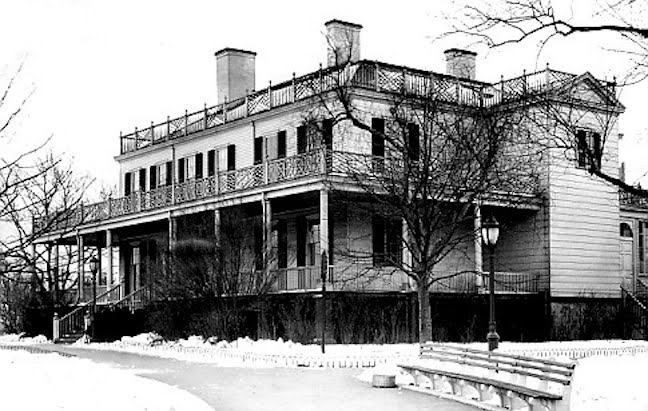
Gracie Mansion: How a bucolic summer home survived a couple wars, a society feud and a few live-in mayors

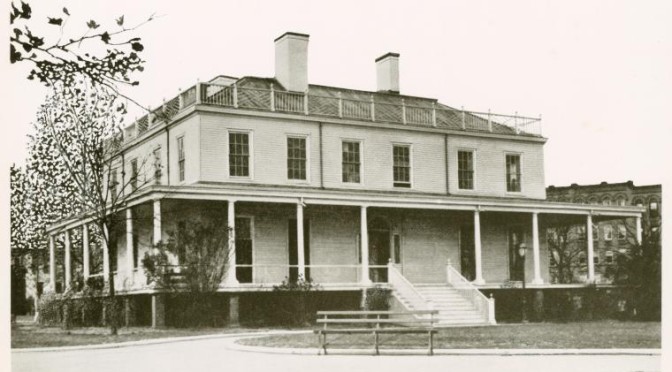
Photo by the Wurts Brothers, date unknown. Courtesy NYPL

Archibald Gracie admired the extraordinary vistas at Horn’s Hook — overlooking the East River and the churning waters of Hell’s Gate — and decided to build a house here. Little did he know what an extraordinary journey this comfy little Federal home would take over the next two hundred years.

After seeing a lamentable period as a refreshment stand and a place for sewing classes, Gracie Mansion became the first home for the Museum of the City of New York. Then, one day, Robert Moses came along and fell in love with it. Find out how the waterfront mansion became New York City’s defacto White House for over 70 years. And why our current mayor chose NOT to live here.

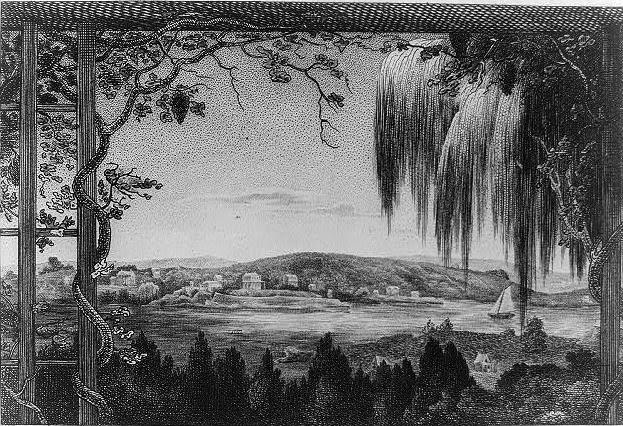
An illustration from May 1808, looking across the waters at Gracie’s mansion, newly built, and other country homes along the shorefront. In between them sits Hell’s Gate, the treacherous confluence of waters that often sank vessels and made travel quite difficult. (Courtesy LOC)


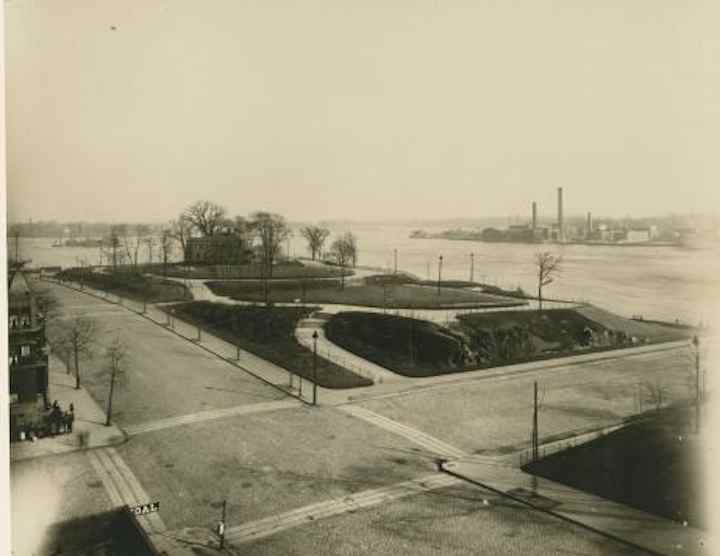
The land around the Gracie property was whittled away during the 19th century, and what remained was turned into Carl Schurz Park. The mansion, however, sat in disrepair and hardly of much use outside of storage and a basement refreshment stand. (Courtesy NYPL)

How it looked in 1942, before the mayors moved in…

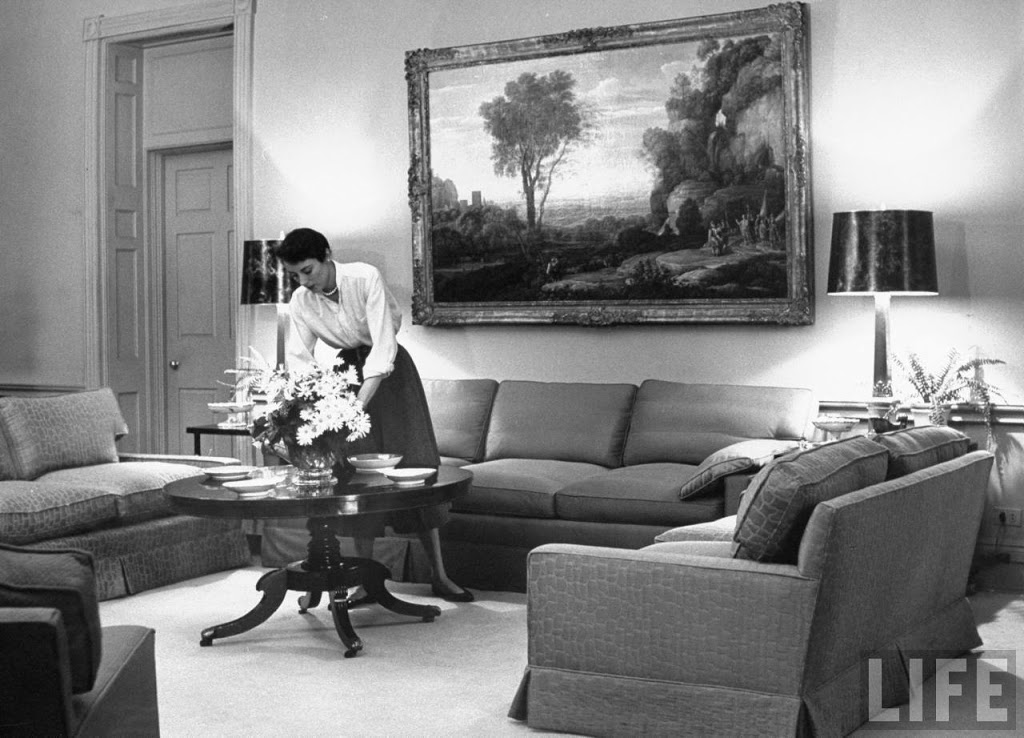
William O’Dwyer‘s new wife Sloan Simpson readies the Gracie Mansion living room for an event, or at least poses for a photo op. O’Dwyer was the second of nine mayors to live at Gracie.
Photo by Alfred Eisenstaedt, May 1950 (courtesy Life images)

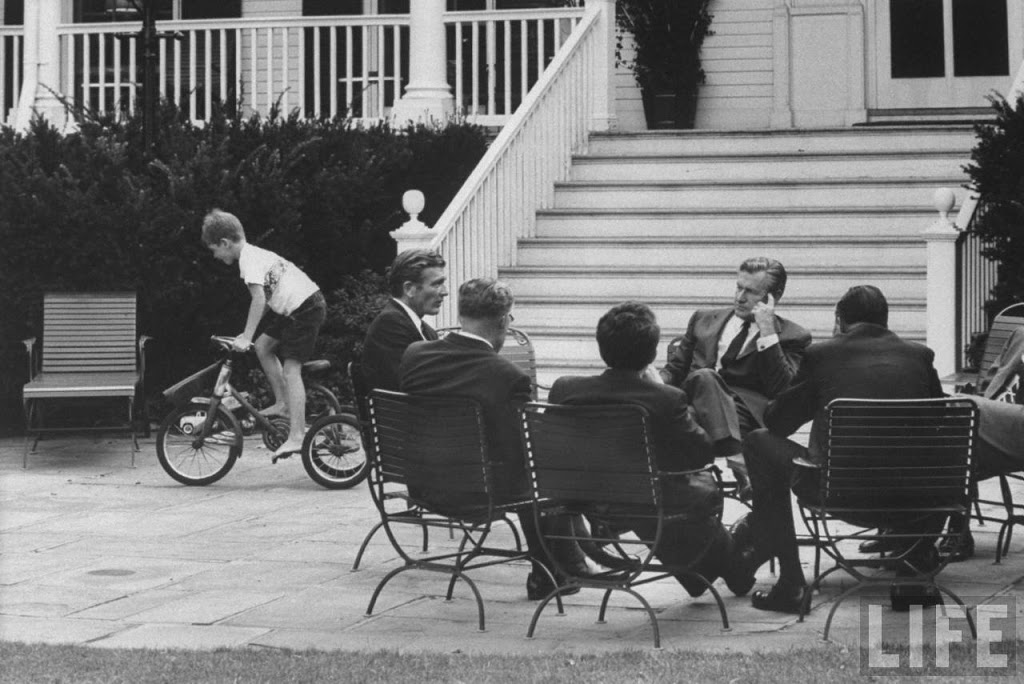
Certainly looks homey from here! A Federalist home is not complete without John Lindsay, G E chairman Gerald Phillippe, and Gov. Nelson Rockefeller sitting on the lawn. John’s son ride by without notice. Photo by John Dominis, May 1968 (courtesy Life images)

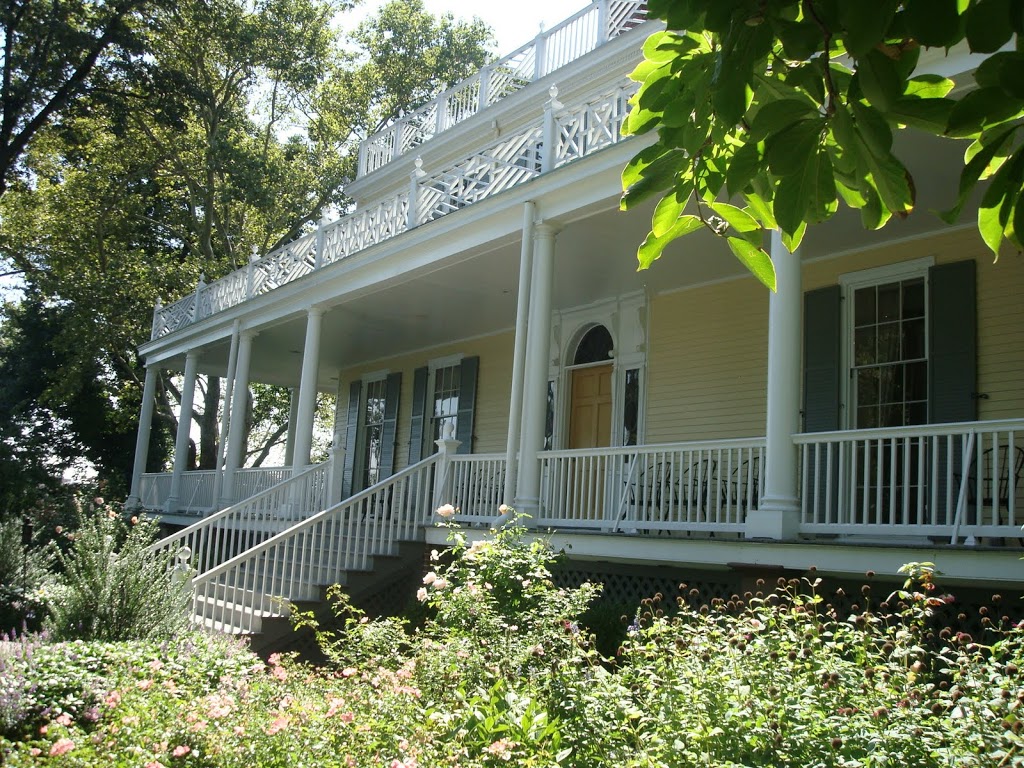
The front of Gracie Mansion today, although most guests use the side entrance. Gracie’s still faces into lovely vista overlooking the East River, but it mostly obscured today by trees.

Visit NYC.GOV’s website about Gracie Mansion to inquire about tours for individuals or small groups. If you have more than 25 people, you can actually have tea at Gracie Mansion. May King Van Rensselaer would have been proud. Our current mayor, by the way, lives here.

Categories
Podcasts Preservation

Robert Moses: Did he save New York — or destroy it?

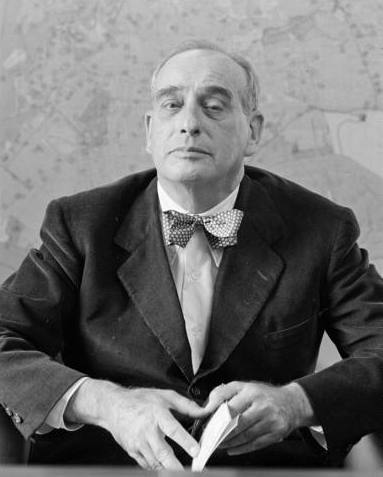
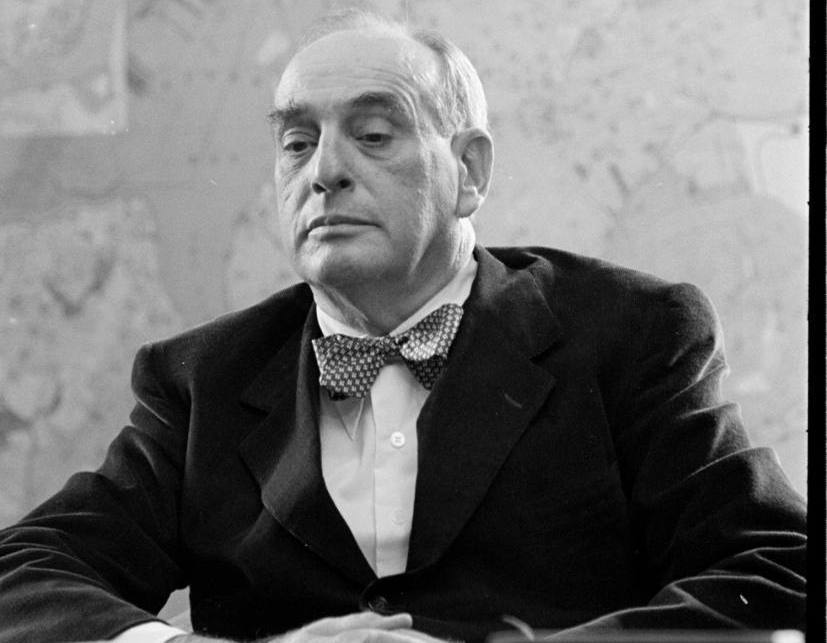
Photo above: Robert Moses, October 1952 by Alfred Eisensteadt (Courtesy Google Life)

PODCAST: EPISODE 100 We obviously had to spend our anniversary show with the Power Broker himself, everybody’s favorite Parks Commissioner — Robert Moses.

A healthy debate about Moses will divide your friends, and we provide the resources to make your case for both sides. Robert Moses was one of the most powerful men in New York from the late 1920s until the late 1960s, using multiple appointed positions in state and local government to make his vast dream of a modern New York comes to fruition.

That dream included glorious parkways and gravity-defying bridges. It also included parking lots and the wholesale destruction of thousands of homes. World’s fairs and innovative housing complexes. Elevated highways plowed through residential neighborhoods — straight through Harlem, midtown Manhattan, and SoHo.

We get into the trenches of some of Moses’s most renown and controversial projects — the splendor of Jones Beach; the revolutionary parks and pools; the tragedy of the Cross Bronx Expressway, and his signature project, the Triborough Bridge.

What side will you come down on — did Robert Moses give New York City the resources it needs to excel in the 20th century, or did he hasten its demise with short-sighted, malignant vision?

You can tune into it below, download it for FREE from iTunes or other podcasting services, get it straight from our satellite site.

CORRECTION TO THIS WEEK’S PODCAST: Once again, a misinterpretation of my own handwritten notes creates a somewhat hilarious mistake this time around. Although Jones Beach was indeed truly popular in its first year, it did not see an attendance of 150 million people in its first year. (That would have been more people than lived in the entire United States.) The correct number is 1.5 million.
___________________________________________________

KING OF PARKS: As the first five-borough Parks Commissioner, Moses was responsible for the creation and renovation of hundreds of city parks. If you see a park in New York, Robert Moses either commissioned it or radically altered it. Shunning the ‘waste’ of natural beauty, Moses replaced groves and meadows with tennis courts, playgrounds, drinking fountains and other things made with concrete and asphalt.

ALL WET: Being a swimmer himself, Moses placed an emphasis on public pools throughout the city, including this one in Astoria, Queens. For pools in East Harlem where he wanted to encourage white attendence, Moses reportedly authorized that the temperature of the water made colder — because black people disliked cold water. (Um, Bob, nobody likes cold water.)

CAN’T LIVE WITH ‘EM….: Mayors and governors alike latched onto Moses’s remarkable progress; newspaper editors and community leaders fell over each other to praise him. Voices of dissension were few and ignored. By the 1940s, he was immensely powerful, leading at one point a dozen local and state commissions and authorities. Picture from August 18, 1937. (Courtesy of the Long Island State Park Region Photo Archive)

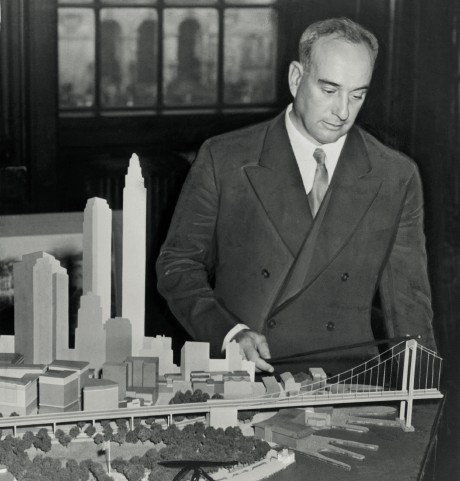
BRIDGE TO NOWHERE: Moses with a model of his Brooklyn Battery Bridge, which would have cut straight over New York Harbor, linking Battery Park with Red Hook, Brooklyn. To build this monstrosity would require turning Governor’s Island into a gigantic anchorage and eradicating the New York Aquarium, housed in historic Castle Clinton.

The project was defeated by some backroom machinations from President Roosevelt, but Moses got his revenge — on the New York Aquarium. He ripped it out of Castle Clinton and threw it out on Coney Island.

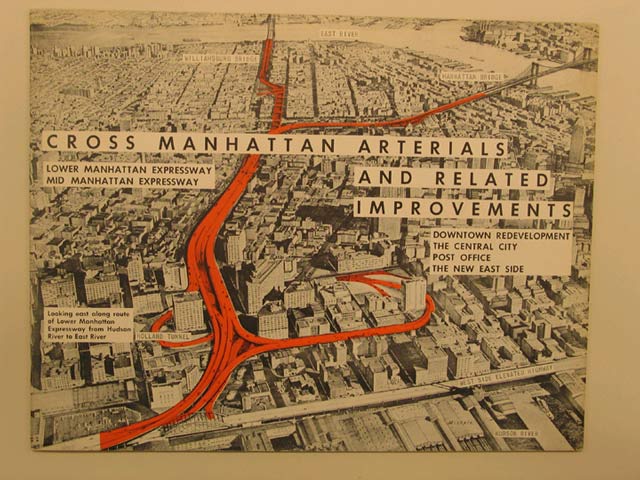
HIGHWAY CITY: Had Moses’s ideas come to full fruition, an elevated highway would have cut through lower Manhattan at Broome Street, a mid-Manhattan version would have landed onto 30th Street, and the culture of Harlem’s 125th Street would have been eliminated by a Cross Harlem Expressway. The two uptown extensions died quickly, but Moses was so close to making LoMaX (the Lower Manhattan Expressway) that one segment, at Chrystie Street, was actually built and abandoned.

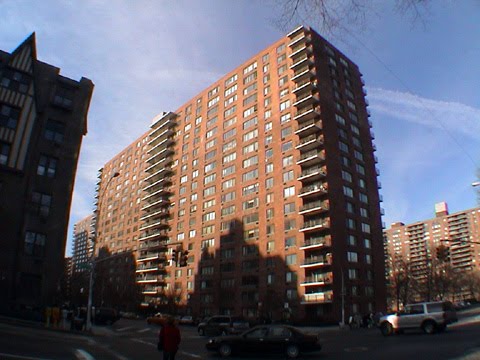
SCANDAL: The drab structures at Park West Village belie the scandal of Manhattantown, a proposed development exposed as an elaborate development scam spawned from the federal government Slum Clearance Program — a program overseen by Moses in New York.

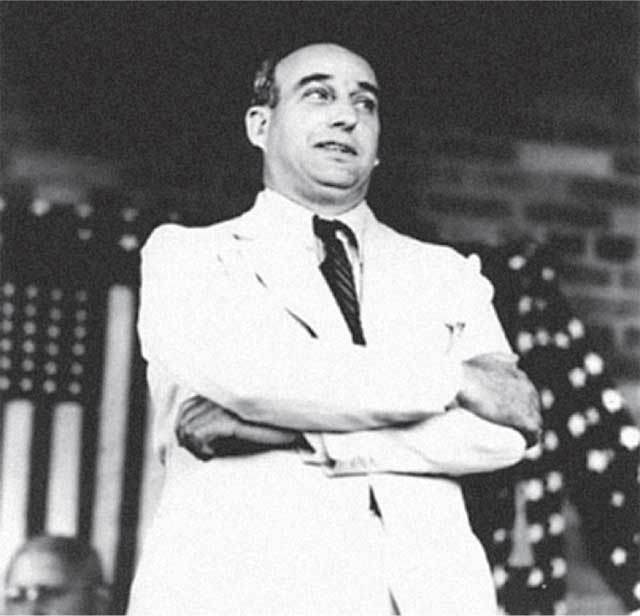
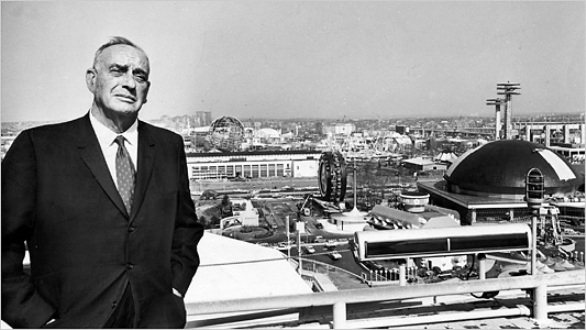
NO FAIR: A visibly bitter Moses stands aloft his World’s Fair of 1964-65, a chaotic, financial flop that gave the press, once so adoring of their former Parks Commissioner, ample fodder for mockery.

Robert Moses has divided urban planners, politicians and regular New Yorkers for decades. The 1970s saw the devastating bio The Power Broker by Robert Caro, elaborating in great, grim detail the evils of Moses’s decisions. His legacy was re-evaluated in a critical 2007 exhibition at the Queens Museum.

Photo by Alfred Eisensteadt (Courtesy Google Life)


Mayor John O’Brien: his heart is as black as yours!

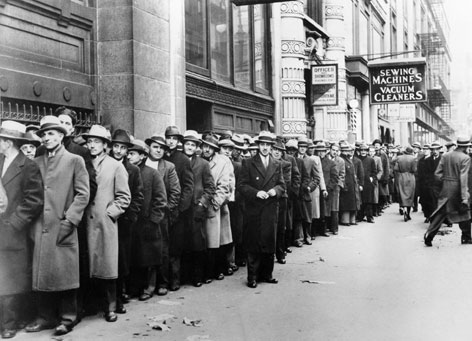
Above: An unemployment line in November 1933. The O’Brien administration offers no relief to the city.

KNOW YOUR MAYORS Our modest little series about some of the greatest, notorious, most important, even most useless, mayors of New York City. Other entrants in our mayoral survey can be found here.

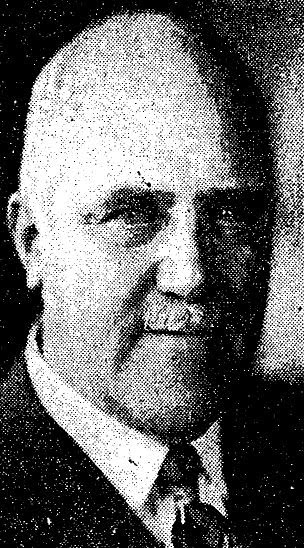
Mayor John Patrick O’Brien
In office: 1933

There’s not much to say about New York mayor John P. O’Brien that’s very positive. He’s one of the most forgettable mayors of the 20th century. But I haven’t forgotten!

His obscurity is partially due to his length of term; he was mayor for only a year. But thank goodness. He was the last pure mayoral puppet of Tammany Hall. His blandness is further accentuated by the fact that his duration of mayor is sandwiched between that of the debonair Jimmy Walker (1926-1932) and the reformer Fiorello LaGuardia (1934-1945) — two men of great charm and strong personal narrative.

What makes his mediocrity less than humorous is the fact that O’Brien governed the city during the pitiful year of 1933, the last truly disastrous year of the country’s greatest depression, a year when the nation’s unemployment rate actually hit 25%.

His predecessor Walker was a political illusionist, known more for his style than his substance. He hypnotized the city while keeping its corrupt, ineffective infrastructure churning. When no-nonsense, progressive judge Samuel Seabury exposed widespread malfeasance in the New York legal system, all roads eventually led to ‘Beau James’, who resigned in September 1, 1932. [More in the Know Your Mayors entry on Jimmy Walker.]

In the wake, Walker’s deputy mayor Joseph V. McKee was declared temporary office holder until a special election could be hastily prepared to find someone to complete Walker’s term. Normally, such wholesale exposure of corrupt Democratic leadership would have assured their immediate ouster at the polls; however, the anti-Tammany forces had yet to properly gel when the special election took place two months later in November 1932 — and the political machine was able to squeeze in one more elected representative.

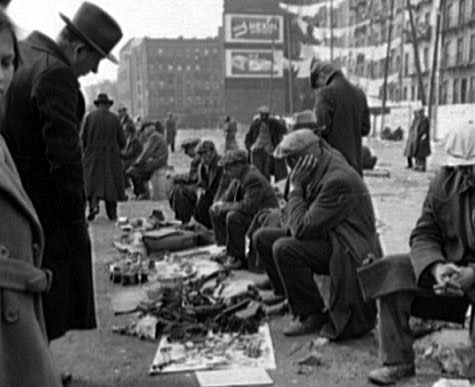
Below: New York in 1933, and it’s not pretty. Men selling their possessions on the street.

John O’Brien, a lawyer of some renown, was known as a quiet but obedient public servant. (“Loyal and industrious” according to Allan Raymond.) The man was stiffer than stiff, a devout Catholic who wore his holy medals everywhere, even on gym clothes. Born to Irish immigrants in Massachusetts in 1873, O’Brien graduated from Georgetown, moved to the city, and moved into and up through the ranks of the Democratic machine to become Corporation Counsel in the early 1920s. (A nice description of what the Counsel is can be found here.) He was later appointed a New York Surrogate Court judge.

As deputy mayor, McKee was merely a fill in. Even at veiled gestures that McKee would cut wasteful city jobs was too much for the liking of Tammany leaders, who often filled those very jobs. Also McKee was also from the Bronx. That will never do!, cried party leadership.

So they went hunting for a more malleable choice, and found O’Brien. With opposition scrambling for a real candidate for the full election a year later, O’Brien handily won the special election on December 1932, double the votes of his inept republican competitor, former Brooklyn borough president Lewis H. Pounds.

Square jawed” O’Brien went right to work — doing virtually nothing. Despite being in the midst of the Great Depression, little was truly accomplished. Even if he had wanted to do something — and there is no evidence he did — he was so beholden to his Tammany Hall masters that he had little latitude for change. Those jobs he did eliminate were those least interesting to his Democratic overlords, namely school teachers.

He did secure a agreement with private banking firms to continue loaning to the city until 1937, so long as the city stopped raising real estate taxes. This balm merely disguised a rueful out-of-balance city budget that would weigh heavily upon his successor. Even worse, emergency relief funds from the federal government (what we would call ‘stimulus money’ today) was re-routed to the pockets of Tammany rank-and-file, dispersed almost at random instead of places in the city of greatest need.

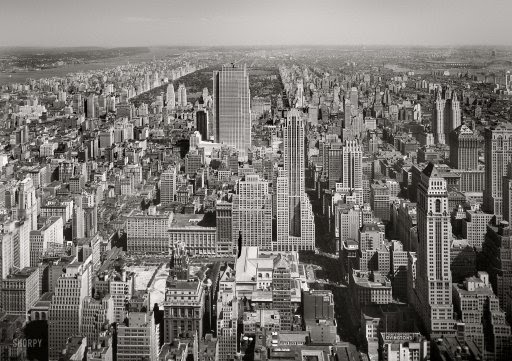
Below, midtown Manhattan in 1933 (Pic courtesy Shorpy)

By design, O’Brien was selected in contrast to slick party hound Jimmy Walker. Unfortunately this also meant that the party was over, that “a pious, laborious dullard” occupied City Hall, “a hack given to malapropisms,” according to George J. Lankevich.

To African-American crowds in Harlem, O’Brien proclaimed proudly, “I may be white but my heart is as black as yours.” To Jewish constituents, he herald the talents of ‘that scientist of scientists, Albert Weinstein.”

Even worse, he was apparently not bright enough to disguise the Tammany strings affixed to his back. Famously (in fact, it’s the soundbite he’s most known for), O’Brien, when asked by the press who New York’s new police commissioner would be, replied, “I don’t know. They haven’t told me yet.” D’oh!

By the end of his term, O’Brien had wasted any shred of credibility he might have had. Yet Tammany stuck with him going into full election in November 1933. A fusion coalition of Republicans and anti-Tammany Democrats had the upper hand going into the election. Their first pick for mayor was young parks commissioner Robert Moses (who called O’Brien “a winded bull in a china shop.”) Moses was considered too divisive, even back then, so Samuel Seabury, revered voice of the fusion ticket, convinced party leadership to switch to a mayoral also-ran, former city alderman and house representative Fiorello La Guardia.

La Guardia had run for mayor before and lost — in 1929, to Jimmy Walker! The stock market crash had occurred two weeks before election day, and Walker was still charming. This time, however, La Guardia had the winds of reform carrying him.

O’Brien, naturally, stood no chance. In the final outcome, even former temp-mayor McKee, as a candidate for the hastily assembled Recovery Party, beat him. It was the most crushing defeat of a Democratic hopeful in decades.

The start of La Guardia’s term in 1934 would usher in the beginning of the end for Tammany Hall. O’Brien, for his part, remained faithful to his party to the end, even serving as a delegate to the Democratic National Convention a few times. Having rescued his reputation by returning to law in his later year, O’Brien lived in the Upper East Side until his death there in September 27, 1951.

Categories
Podcasts

Shakespeare in the Park: the drama behind the drama

What started in a tiny East Village basement grew to become one of New York’s most enduring summer traditions, Shakespeare in the Park, featuring world class actors performing the greatest dramas of the age. But another drama was brewing just as things were getting started. It’s Robert Moses vs. Shakespeare! Joseph Papp vs. the city! ALSO: Learn how the Public Theater got off the ground and helped save an Astor landmark in the process

PODCAST Listen to it for FREE on iTunes or other podcasting services. Or click this link to listen to the show or download it directly from our satellite site

___________________________________

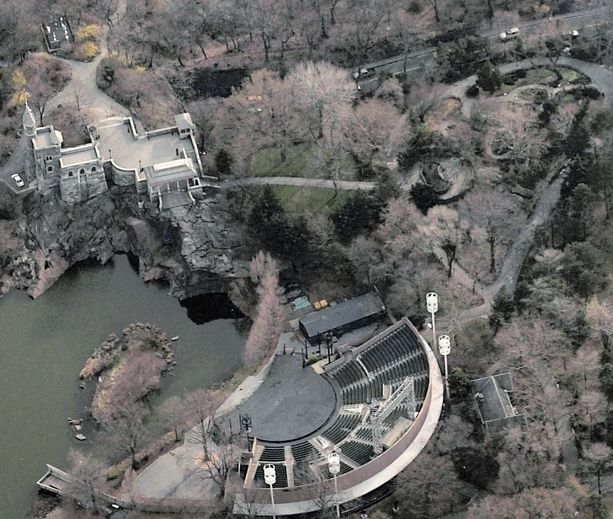
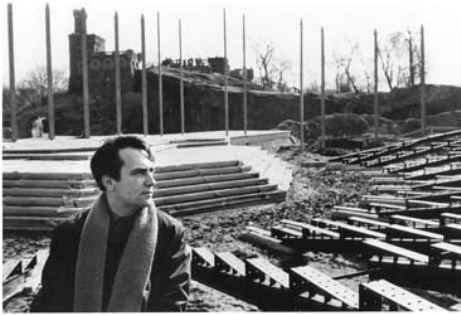
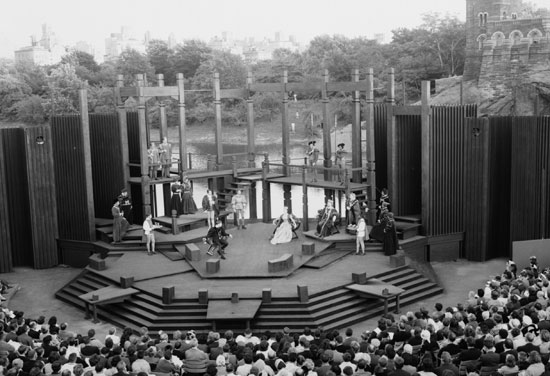
Looking down over both Delacorte Theater and Belvedere Castle. Joseph Papp didn’t have much say in the construction of the theater, but he probably couldn’t have asked for a more picturesque, more perfectly situation location.

Papp at the Delacorte: within a handful of years, he was able to tranport his vision from a basement in an East Village church to the world’s most famous park. Not without a few speedbumps, however…. (pic courtesy New York Public Library)

Robert Moses had been one of New York’s most powerful men for almost 30 years by the time he confronted the Shakespeare Festival. At first a supporter of the outdoor program, he soon turned on Papp and refused his permit to perform in Central Park.

One of several performances of Hamlet, this one from 1964, starring Julie Harris and Stacy Keach.

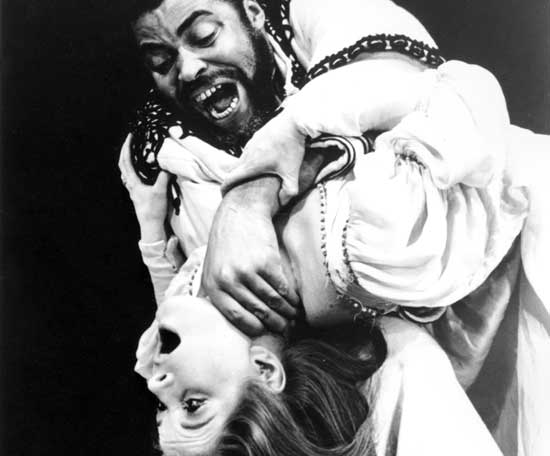
If I could take a time machine back to see one show, it would probably be the 1964 version of Othello with a spry James Earl Jones in the title role.

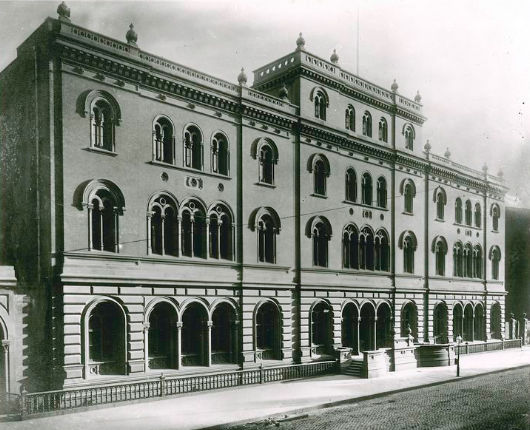
The old Astor Library, built over a hundred years before the Public Theater made it home. Our New York Public Library podcast details how the volumes once stored at this Astor institution were used to build the collection for the new public system.
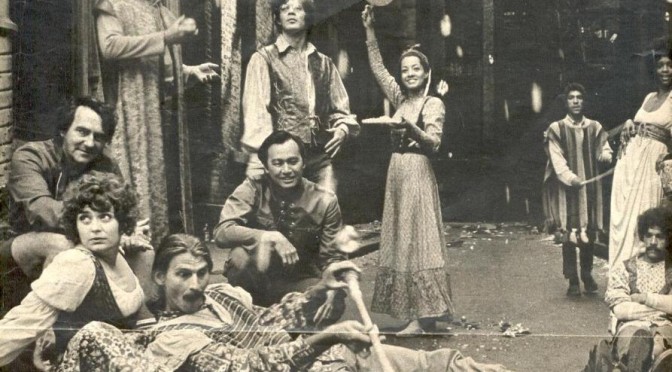
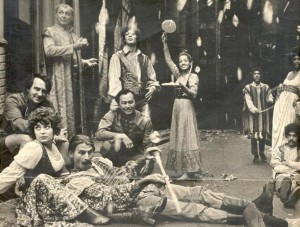
From the 1972 production of the musical version of Two Gentlemen Of Verona, starring Public Theater regular Raul Julia. Like many Delacorte productions, Verona went on to play Broadway and win Tony Awards. Papp is kneeling far left. (Pic courtesy

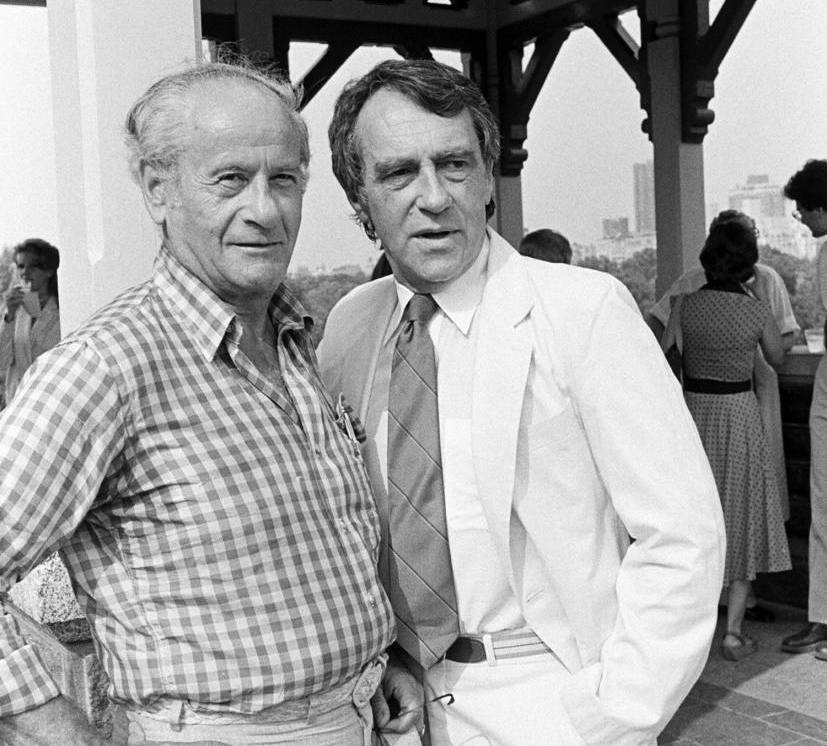
Papp with actor Eli Wallach in 1983. With the Shakespeare festival and later with regular programming at the Public Theater, Papp was able to draw New York’s finest actors and cultivate new stars in the process.

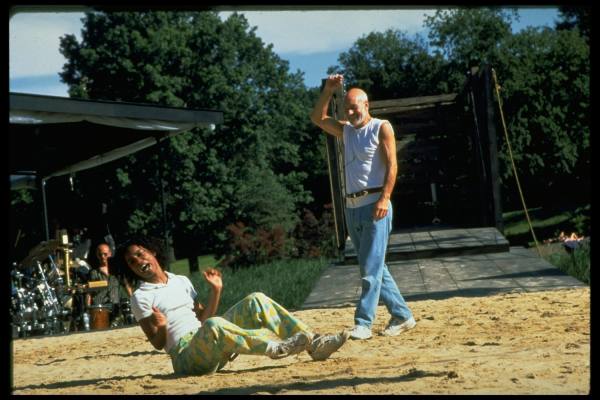
Patrick Stewart rehearses for the 1995 version of The Tempest.

The winding ticket line, quite a treat on a lovely day (and less so when it’s not). These days, for those who can’t or don’t wish to wait, there’s a limited virtual line as well. (Pic courtesy Flickr)

Visit the Public Theater website for more information about upcoming shows and how to get tickets. They also have a nicely detailed section on all their past productions.

How Erin Brockovich saved the East River ampitheater

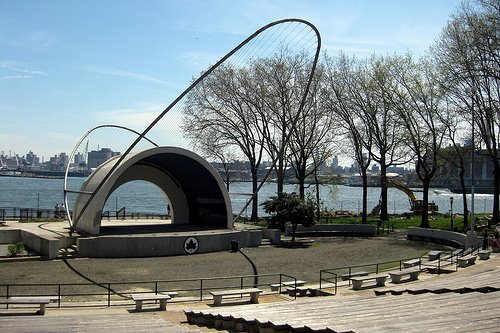
I’ve always been a little fascinated by that small ampitheatre that’s located in Manhattan’s East River Park (near Corlear’s Hook). For years it just seemed so hopelessly abandoned. In the past few years though it’s been making a comeback, featuring the occasional live concert and offering a unique, leafy respite for joggers.

The East River Park is a rather unusual thing, a Robert Moses original from 1939 that features 20 blocks of artificial concrete extension to connect the original land purchase (too narrow to be a useful park) with the East River shore. It’s the largest park in downtown Manhattan, larger in acreage than Battery, Thompkins Square or Washington Square parks.

Among its many Moses staples — ball fields, paved playgrounds and paved picnic areas — is the amphitheater constructed in 1941 as a nod to the neighborhood’s most famous former resident, New York governor Al Smith, who had pursued acting in his youth.

However, nothing much exciting blossomed from its curiously designed proscenium until the late 1950s, which Joseph Papp first launched his series of free Shakespeare performances. That’s right, the Public Theatre’s annual outdoor tradition of Shakespeare In the Park began here — at East River Park, not Central Park.

Once they left uptown for their permanent home, however, things became quite grim for the ampitheatre. By 1973, the city couldn’t even afford to keep it open. It was fenced up, closed down and heavily vandalized. For those living in the city at the time who came upon it, it did in fact seem like a modern ruin, Robert Moses’ very own Acropolis.

The park itself was slowly renovated throughout the 1990s, but relief finally came to the beleaguered stage in December 2001 thanks to, curiously enough, to reality television and Erin Brockovich — the real Brockovich, not the Julia Roberts version.

In the months following 9/11, many restorative projects began popping up throughout downtown. Brockovich, rising to national prominence thanks to the Roberts film, was filming an urban makeover program Challenge America for ABC. Brockovich and her producers chose the amphitheater for renovation, done over the course of a week, using the donated services of Tishman Construction and HLW Architects. Why this place exactly? I’m not sure, but Rudy Guiliani assigned the project to the program during a telecast of Good Morning America.

I didn’t catch the one-shot show, but I’m picturing Ms. Brockovich in one of her signature ensembles directing workman while standing on the stage. Truly one of the stranger stories of renovation that I’ve ever heard.

Bloomberg’s Time Square plan: a blast from the past?

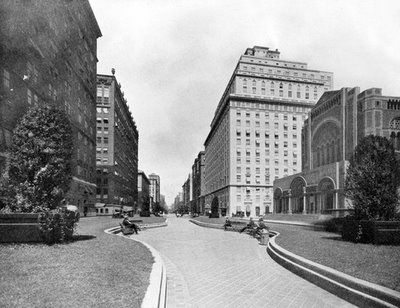
ABOVE: Park Avenue — before the cars came

I’ve posted the extraordinary picture above of pre-1920s Park Avenue a couple times in the past, but I wanted to do so again in light of Michael Bloomberg’s recent proposal to turn Times Square and Herald Square into partial traffic-free plazas. His plan calls for “traffic lanes along Broadway from 42nd to 47th streets and from 32nd to 35th streets” to be “transformed into pedestrian lanes”, with the residual traffic flowing down a Seventh Avenue refitted for four lanes.

The notion of creating public space out of vehicular traffic areas in Manhattan flies in the face of what used to be called ‘progress’ — at least in the Fiorello Laguardia/Robert Moses definition of the word.

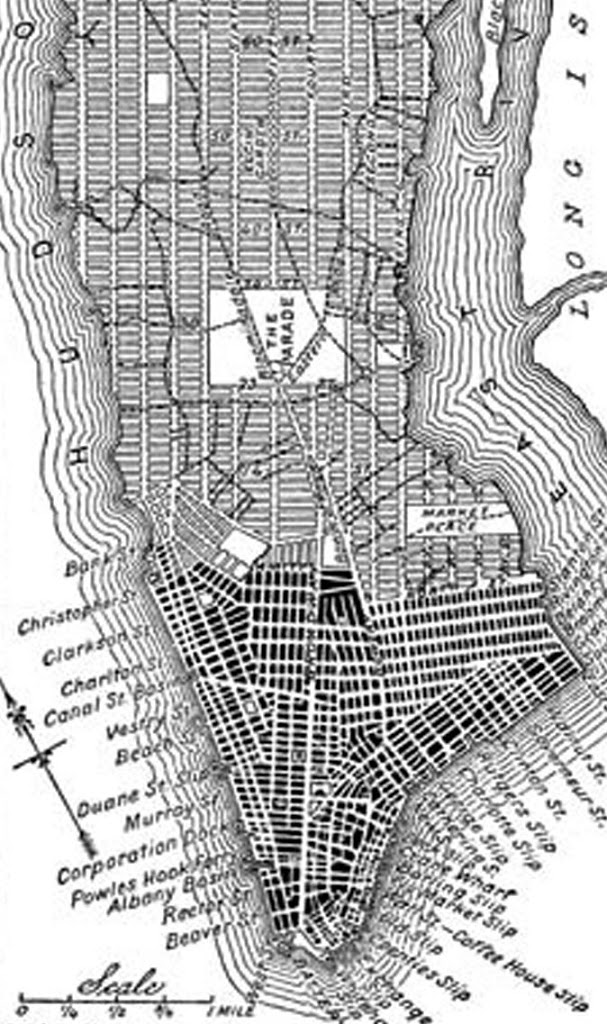
In a way, you can say this type of reversal for the benefit of pedestrians actually began in the 19th century, before the roads were paved. When the original commissioners plan of 1811 was initiated, the intention was to direct the city’s growth and organize a rational method of parcelling out the city to developers. In doing so, it sliced up Manhattan as though it were an ice tray, rows of uniform blocks in a cross-section of streets and avenues. However, there were few parks in that original plan (at right).

In practice, however, some virtual streets were transformed into public spaces once it seemed obvious that uninterrupted rows of development would cause for an unlivable city. Notably, Central Park was envisioned in the 1850s as a way to break up the grid. (The Parks Department actually has a nice short history on this 19th century struggle.)

Another major shift towards a pedestrian driven city occurred with the disappearance of the elevated trains and creation of the subway system, opening up darkened city streets and creating new public spaces. Additionally, as in the picture above, once Grand Central began hiding its train tracks underground, the newly created real estate above it became, you know, a park avenue.

Social activism at the turn of the century, led by Jacob Riis and others, made a play at eliminating decrepit slums in exchange for pedestrian areas. For instance, Most of Five Points was wiped from the map to become Columbus Park and various governmental buildings. Swaths of land in the Lower East Side were cleared of tenements to become open space, like the Sara Delano Roosevelt Park.

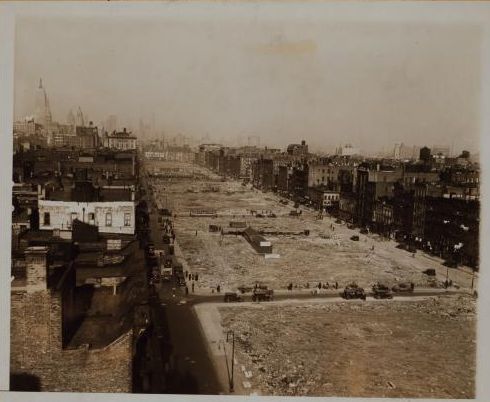
Below: In this picture from 1932, tenements between Chrystie and Forsyth have been eliminated to make way for the future Sara Delano Roosevelt Park.

Robert Moses liked his parks, but he also loved his expressways, and he created both at the expense of the neighborhoods they were supposedly to have served. But Manhattan was becoming a latticework of traffic congestion well before that; everywhere you looked, streets were widened to accomodate vehicles — first carriages and trolleys, later cars and buses.

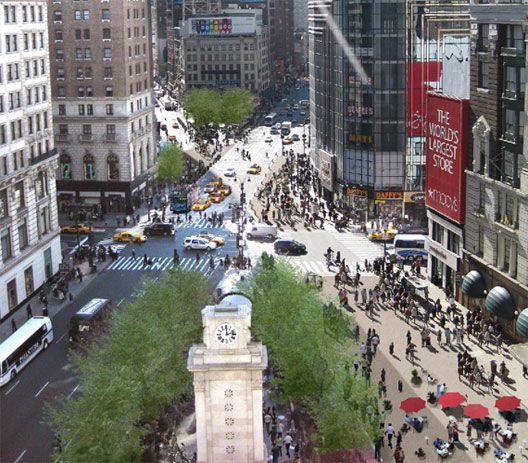
Bloomberg’s ambitions stem from a more environmental motivation, with newly installed bike lanes, pedestrian spaces in the Meatpacking District and Madison Square, and last year’s temporary no-traffic days on Park Avenue. His midtown plans, to be installed this summer, may become permanent. Below: A rendering of his virtual Herald Square:

Categories
Podcasts

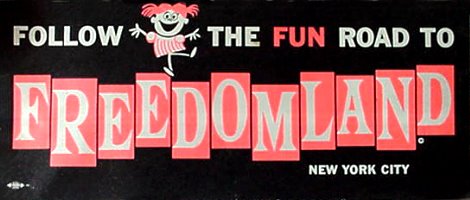
PODCAST: Freedomland U.S.A.

What is Freedomland U.S.A.? An unusual theme park in the Bronx, only in existence for less than five years, Freedomland has become the object of fascination for New York nostalgia lovers everywhere.

Created by an outcast of Walt Disney’s inner circle, Freedomland practically defines 60s kitsch, with dozens of rides and amusements related to saccharine views of American history. Along the way, we’ll take a visit to the Blast-Off Bunker, Casa Loca, and, yes, Borden’s Barn Boudoir!

Listen to it for FREE on iTunes or other podcasting services. Or click this link to listen to the show or download it directly from our satellite site.

NOTE: There’s nothing wrong with your speakers! I include a short clip in this podcast of an original Freedomland radio advertisement from 1960. The sound quality of the clip is extremely bad, however I thought it was important to include as it sets the tone for what Freedomland was all about (or, rather, wanted to be about).

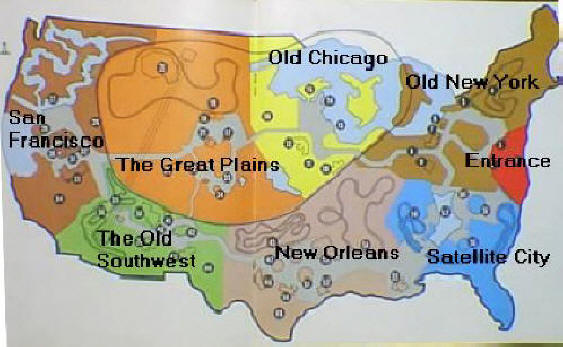
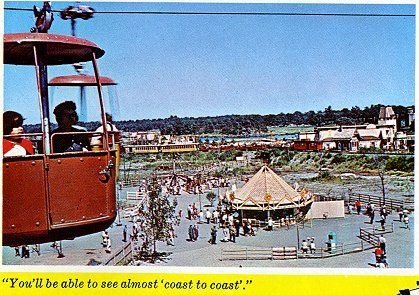
The map through Freedomland mimicked the outline of the United States. (Well, sorta.) Visitors entered through Washington D.C. and meandered through candy-coated interpretations of various national regions, ending up in the future (located in the American South).

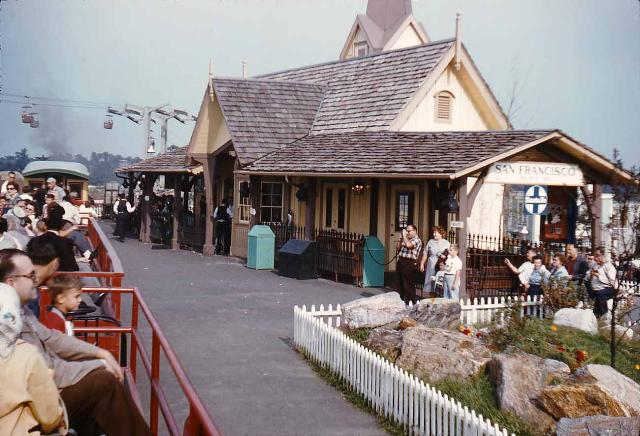
San Francisco in the Bronx, a Disney-like village served by the Santa Fe Railroad (pic courtesy Stuff From The Park)

Another view of the Santa Fe (courtesty Gorillas Dont Blog)

Looking out over the ‘United States’

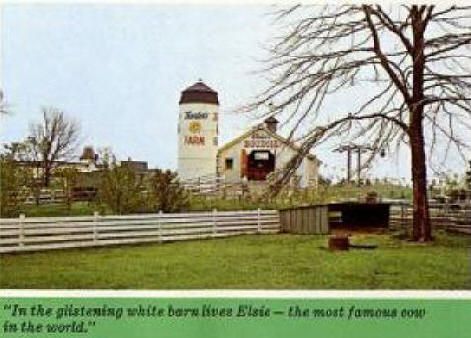
A rather blurry image — perhaps that’s best — of Borden’s Barn Boudoir, featuring the private rooms of one Elsie the Cow (Pic courtesty Benros, who has a great page on Freedomland.)

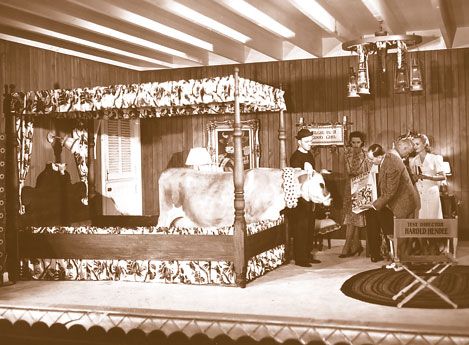
The picture below is NOT from Freedomland, but it gives you an idea of what Elsie’s bedroom might have looked like. Apparently, Bordens loved nothing more than putting their bovine mascot in this type of setting; she also had a bedroom at the World’s Fair of 1964-65 in Flushing Meadows, most likely transported from the failing Freedomland attraction.

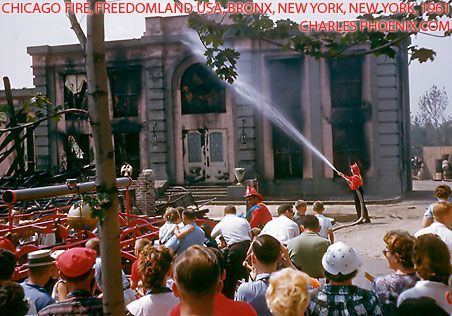
Why people are so entertained by this, I’ll never understand. But if fire was your game, Freedomland let you enjoy the re-burning of Chicago every day. And sometimes, the firemen actors would grab volunteers to help put out the blaze! (Pic courtesy God Bless Americana)

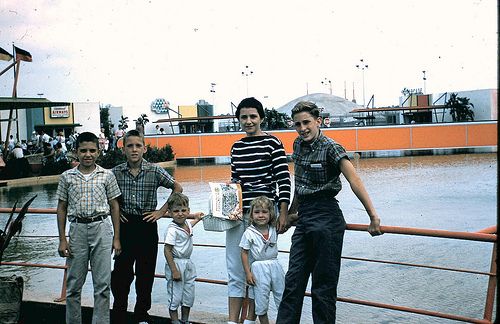
Freedomland was perpetually in debt and often a great inconvenience with long lines and unfinished rides. This family, visiting in July 1960, doesn’t seem to mind. (Flickr)

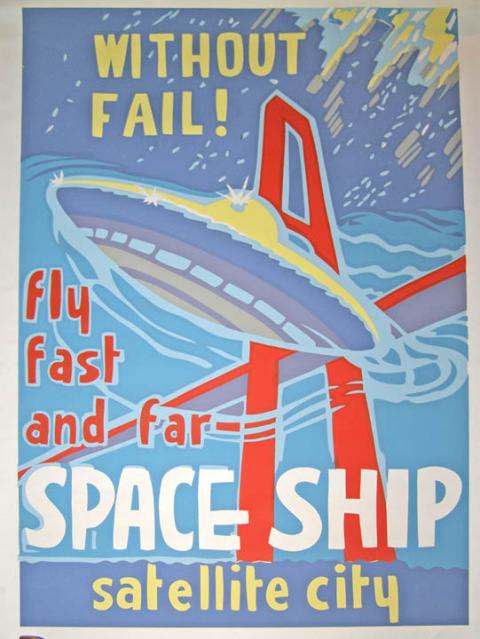
A promotional poster for Freedomland’s futuristic Satellite City, which wasn’t opened for a few days after the park’s opening, by which time crowds had died off considerably. (Pic courtesy Perky Pickle, who has other great poster images from the park’s heyday.)

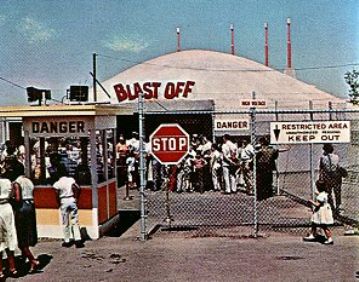
This frightening little attraction was the Blast-Off Bunker, because there’s nothing more fun than hanging out in a dark bunker on a nice summer’s day. In fact, inside you could enjoy the ‘tense excitement’ of a Cape Canaveral control room.

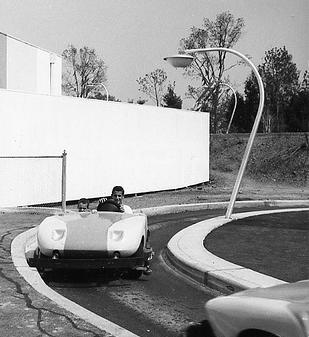
You could experience the joys of riding a ‘modern automobile’ in Freedomland’s knockoff future land. A sad way of marketing a go-cart, but at least this picture is pretty great. (Courtesy Flickr)

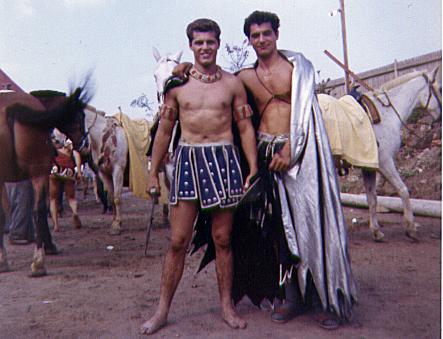
Freedomland was more than happy to abandon its themes if it meant more paying customers. Here are two stunt men from a ‘Colossus’ spectacular in 1961. (Benros)

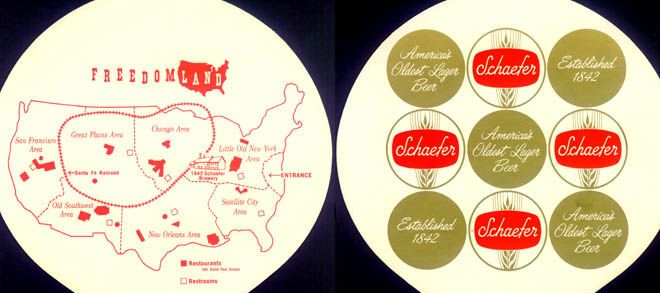
Some detailing from a Freedomland souvenir fan, featuring a map of the park on one side, and beer advertisement on the other. This was, after all, a ‘family entertainment center.’ (Click it for a closer look.)

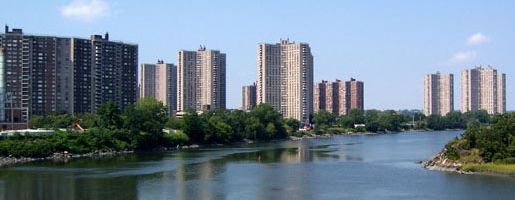
Freedomland was replaced by another oddity — the massive Co-op City, housing over 50,000 residents, and often referred to as a ‘city within a city’. Theoretically, one never need leave Co-op City.

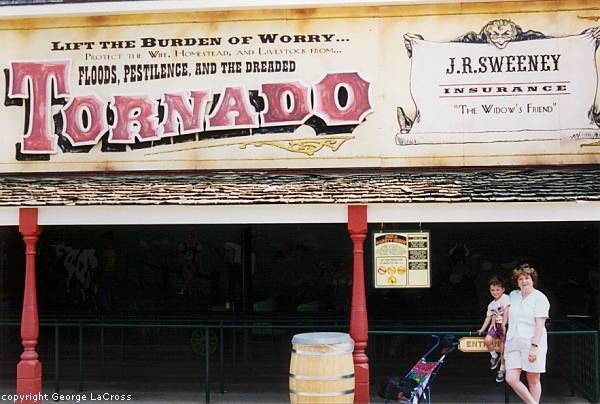
After the closing of Freedomland, some rides were rescued by other amusement parks, including the Tornado Adventure, seen here at Lake George, NY. It was eventually closed for good in 2003. If you really want to experience the delights of a tornado, you’ll have to go to the midwest! (Courtesy Laff In The Dark)

I tried to include a lot of link above to other great websites with more information on Freedomland. The most comprehensive tribute can be found on Rob Friedman’s old site on the park, with dozens of pictures, sounds and personal stories.

Any of you remember visiting this place? Leave a comment!

Categories
Uncategorized

Name that Neighborhood: what exactly is a Throgs Neck?


Some New York neighborhoods are simply named for their location on a map (East Village, Midtown). Others are given prefabricated designations (SoHo, DUMBO). But a few retain names that link them intimately with their pasts. Other entries in this series can be found here.

What is a Throgs Neck? And why isn’t it a Throggs Neck?

Of course that’s the name of a pleasant peninsular neighborhood in the Bronx. Many people with cars are probably as familiar with the Throgs Neck Bridge, a 1,800-foot Robert Moses/Othmar Ammann production which connects the Bronx to Queens. But where did that unusual name come from? Is a throg some kind of creature native to New England?

The “Neck” part is easy. The slender Throg’s Neck peninsula dangles where the East Rivers finally empties into the Long Island Sound. The neighborhood expands up the peninsula and out through the mainland.

For the throg, you’ll have to go back to the Dutch occupation of the region to find the answer. There was of course a contentious relationship between the Dutch and the British regarding territorial boundaries in the New World, a dispute that resulted in the eventual takeover of all Dutch lands in 1664. However, over 20 years earlier, the leader of the New Amsterdam colony, William Keift, seemed to take a more charitable view towards individual English families, especially those fleeing British rule due to religious intolerance.

The most famous of these satellite English settlements on alleged Dutch soil was that of Anne Hutchinson, a charismatic and determined leader who fled Massachusetts and Rhode Island out of religious persecution by the Puritans. Perhaps simmering with delight at Englishmen fleeing their own kind, Keift allowed Hutchinson and her flock to settle in the areas that are now called Pelham and Eastchester today. The Hutchinson River, which runs through these areas, reminds us of the impact of this ballsy lady.

Just a year earlier (1642) however, Keift allowed another persecuted religious leader to settle just downstream. The Rev. John Throggmorton (or Throgmorton or Throckmorton, take your pick, depending on which ancient document you prefer) and 35 others families were allowed to settle on this peninsula, valuable real estate if your living required contact with water, but dangerous because of the potential of being bottled in by an enemy.

The land had previously been known as Vredeland by the Dutch (or ‘land of peace’) owing to the lush natural beauty of the region. They dropped the old peaceful name and changed it to Throggmorton’s Neck.

Keift, who frequently provoked Indian anger, may have thought that additional European settlements could be used as a buffer against Lenape attacks to New Amsterdam, just 24 miles south. Eventually the Indians did attack; in one horrifying massacre on September 20, 1643, tribes exterminated the Hutchinson settlement, then traveled down to do the same to the Throggmortons. (Few in the future Bronx neighborhood escape the slaughter, including the borough’s namesake Jonas Bronck.)

Many families on Throggmorton’s Neck were brutally massacred, although a passing boat managed to rescue a few distraught family members. Strangely enough, Throggmorton himself was away that day. He never returned the area which would forever keep his name.
Within 150 years, the name would be shortened to Throgg’s Neck. Or, better yet, according to George Washington himself, “Frog’s Neck.”

You may have noticed that John’s last name has two g’s in it, while most common spellings have only one. Legend has it that this is another thing you can blame on Robert Moses. Not exactly known for reaching out to communities for their thoughts and opinions, Moses decided to drop a ‘g’ in 1955 when the bridge started construction, believing it would fit on more traffic signs without an additional and needless letter. Who cares if it was in use that way for over 300 years!
Purists prefer Throggs Neck. It is Throggs Neck. Either way, it’s an unforgettable name, with an unforgettable story.

Patrick Henry McCarren: how a politican became a pool

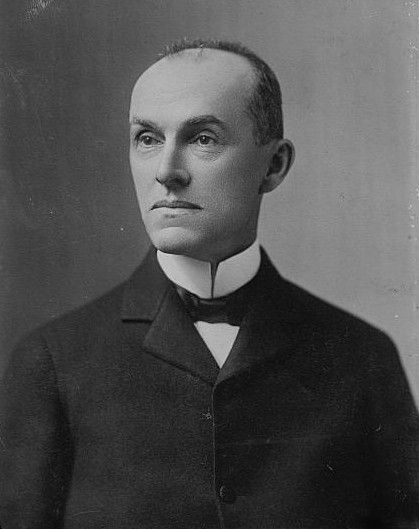
Patrick Henry McCarren — best known today for leaving his last name to a park and a swimming pool — was a complicated figure, so it makes sense he should be considered a sort of godfather to a rather complicated neighborhood like Williamsburg.

McCarren became the voice of Greenpoint and Williamsburg at a pivotal time of growth for Brooklyn, during the years of consolidation with New York. He worked his way up and, once there, bought himself favor like a good old-fashioned machine Democrat would — one hand outstretched to the working class, the other in the pocket of big industry.

Born in East Cambridge, Massachusetts of Irish parents in 1847, McCarren headed to Brooklyn and worked first in Williamsburg’s thriving sugar refineries, then as a cooper, and finally as a lawyer, the springboard for his real ambitions in local politics. Civic service was his singular objective, entering Kings County’s democratic machine at age 21. In 1881, he was elected a state senator, a vantage he would use in accumulating great influence.

“Far from being offended at being called a politician,” according to a glowing eulogy. “[McCarrin] took pains to emphasize his right to the name and became a power….because of his singleness of aim.”

During 18 years as a state senator, McCarrin rallied for the fortunes of Brooklyn and, in particular, for the East River Bridge to link New York with the factories of Greenpoint and Williamsburg. (And, oh yes, blossoming Brooklyn’s population with the fleeing residents of the Lower East Side.)

There is much truth in the statement, “The bridges, the parks, the improved means of transit, the better paved and lighted streets…by which the Brooklyn of to-day is distinguished….are due more to the legislative efficiency of Senator McCarren than to the influence of any other individual.”

Of course, he did so frequently on behalf of the Eastern District’s big industries, becoming a political marionette for both oil and sugar. He was publicly charged with actually being on the payroll of Rockefeller’s Standard Oil Company. According to one account, “No denial of the charge was ever made by the Senator.” One paper even referred to him as “the Standard Oil serpent of Brooklyn politics.”

Remarkably, with such unabashed connections to corruption, you’d think he’d be a welcome ally to New York’s Tammany Hall. Far from it; as a powerful Brooklyn Democrat, he remained unbought by Tammany, on the outskirts of their most important political objectives. By 1908, the year he thwarted Tammany’s plans to put William Randolph Hearst in the governor’s seat, he was possibly the most powerful man in Brooklyn.

He died the next year, 1909, hated and mocked across the water but beloved by most in Brooklyn, even some of his most fractious enemies. His funeral was purported the biggest in the borough since Henry Ward Beecher’s.

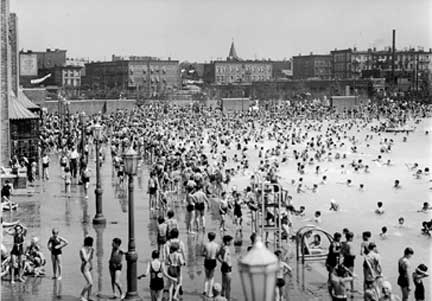
Greenpoint Park, which had opened in 1906, was quickly renamed in his honor. Had he been around, Patrick might have blanched thirty years later when another steadfast politician, Robert Moses, decided to plunk down the biggest of eleven WPA-funded municipal swimming pools here in 1936. Today, the pool is a popular but surprising venue for concerts and is currently being renovated.

Below: McCarren Pool in its heyday, date unknown (Courtesy McCarren Park)