Categories
Food History The Gilded Gentleman

The Delmonico Way: A Conversation with Max Tucci

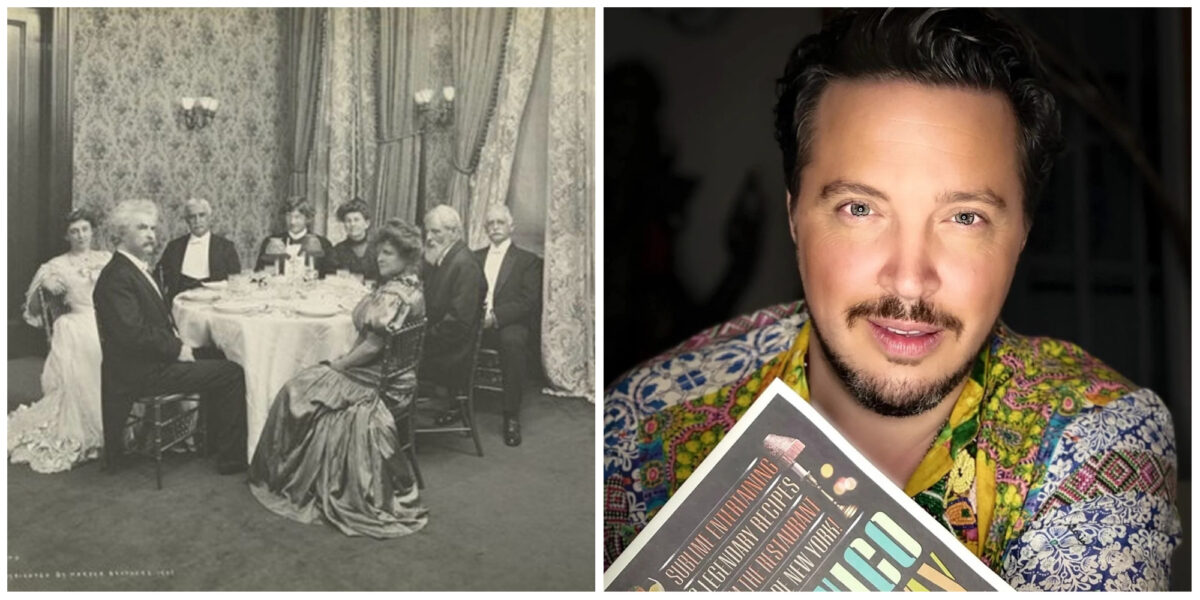
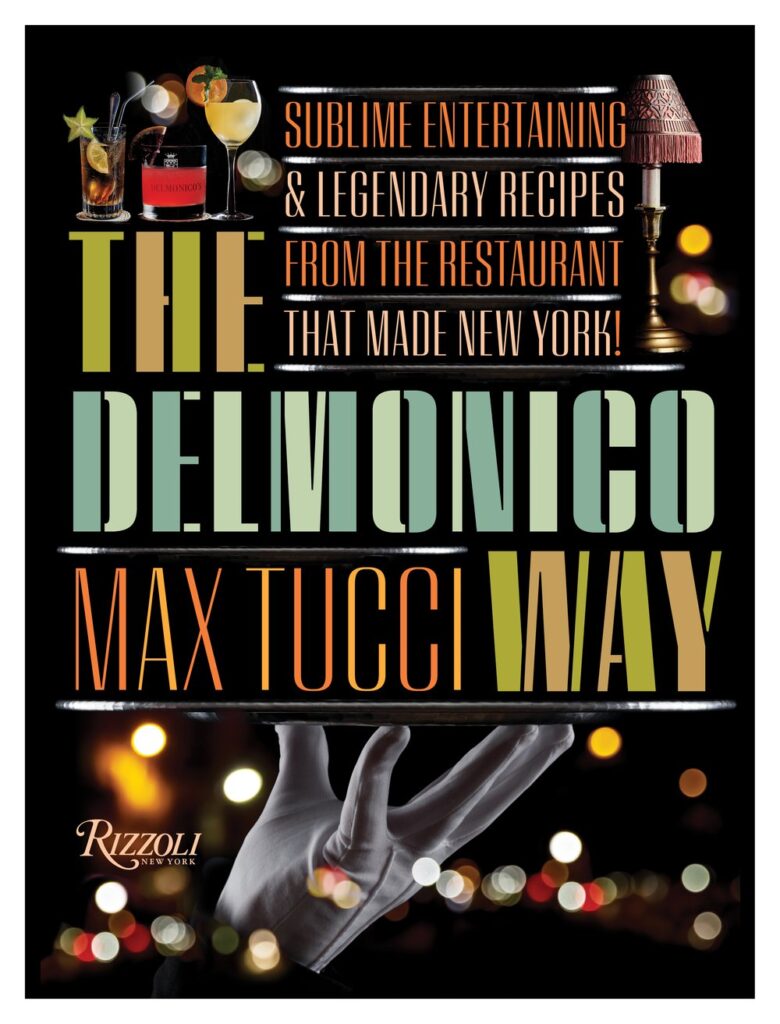
In celebration of his new book “The Delmonico Way: Sublime Entertaining and Legendary Recipes From The Restaurant That Made New York,” author Max Tucci joins The Gilded Gentleman for a talk about food, family history and the real meaning of hospitality. 

Delmonico’s! Just the name was legendary. Edith Wharton mentioned it in her fiction set in the Gilded Age. The dining room hosted royalty and heads of state along with, in later years, Hollywood’s most famous stars. And then there was the equally legendary food. 

Max Tucci is the grandson of Oscar Tucci who reopened the legendary restaurant in the 1920s after the original – in business since 1827 – had been closed due to Prohibition. 

Oscar and his family built an empire that established Delmonico’s as the gold standard of American fine dining and hospitality from the 1920s through the 1980’s. 

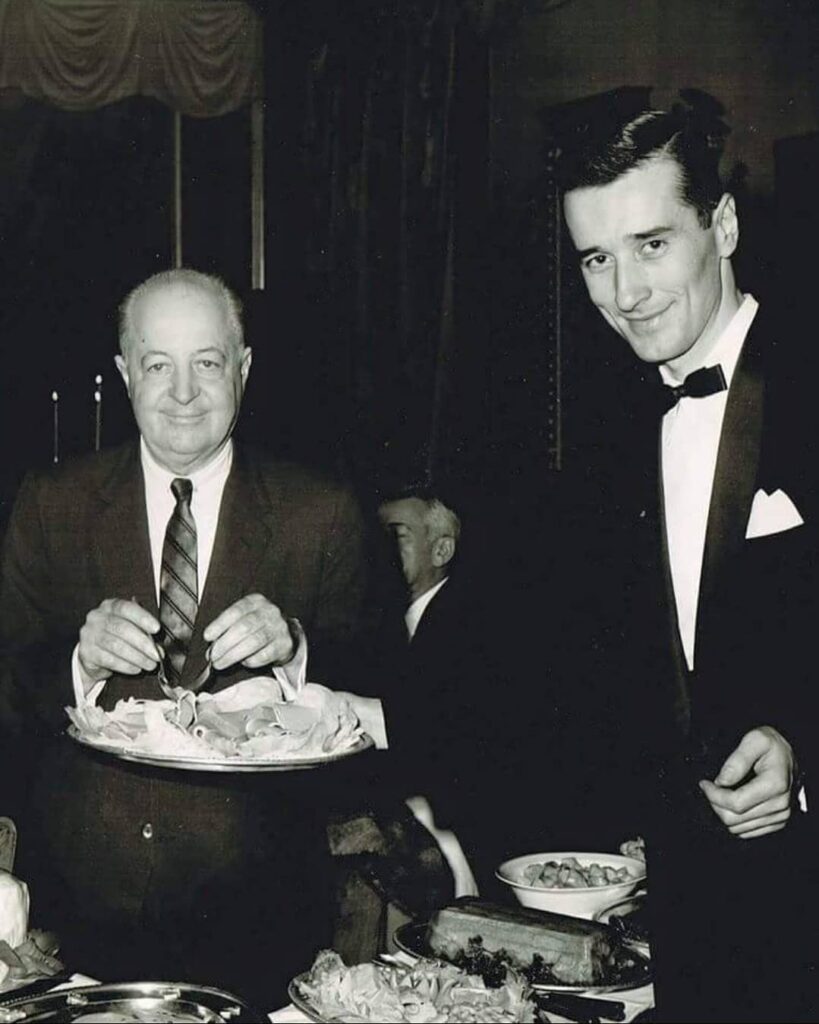
Oscar Tucci with another famed restaurateur, Sirio Maccioni of Le Cirque. Courtesy of Oscar’s Delmonico Facebook page

Max, who holds the largest collection of Delmonico’s memorabilia of his family’s famous establishment, shares his memories, family history and anecdotes about the incomparable hospitality, fine dishes and famous clientele of America’s first truly grand restaurant. 

LISTEN NOW: THE DELMONICO WAY

Follow Max Tucci on Instagram

FURTHER LISTENING

Mentioned on the show — the culinary genius behind these dramatic dishes was Delmonico’s celebrity chef — the Frenchman Charles Ranhofer — who guided their kitchens from 1862 to 1896. 

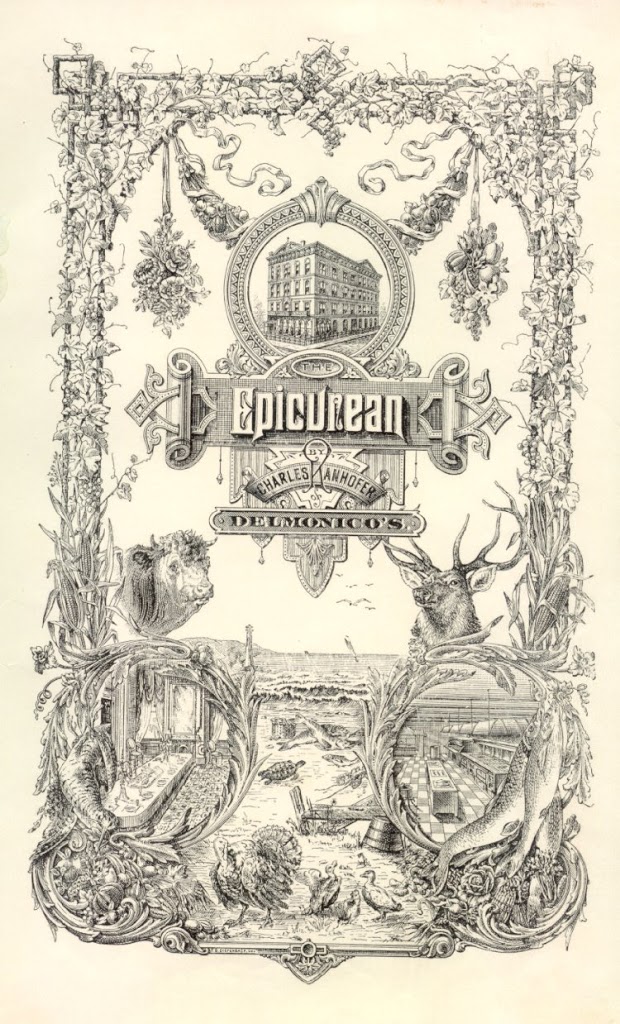
Ranhofer left us with his extraordinary cookbook published at the height of the Gilded Age in the 1890’s, called The Epicurean, detailing the ingredients and preparations of Delmonico’s classic dishes.   

Back in 2008 (!) the Bowery Boys did a podcast about the history of Delmonico’s. A little rudimentary but good background information for when you’ve finished with this show:

100 Years Ago: Somebody actually shot the mayor

New York City started 2010 with an important bit of ceremony: the swearing-in of Michael Bloomberg. One hundred years ago, New Yorkers did the same thing, but with a new face — former state Supreme Court judge William Jay Gaynor, replacing George B. McClellan.

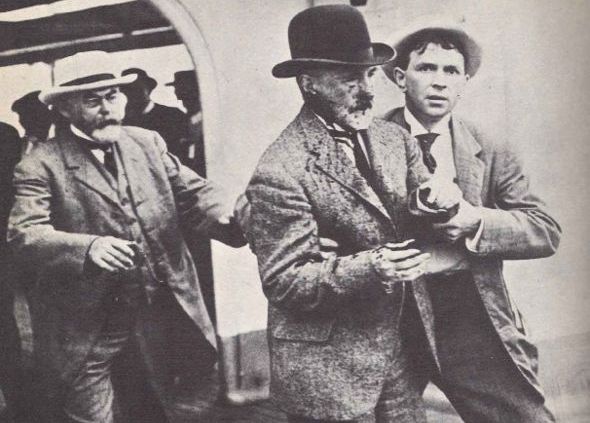
I did a whole Know Your Mayors posting about Mr. Gaynor awhile back, so I won’t elaborate too much about his biography here. However, just eight months after taking the job, on August 9, Gaynor was almost killed by an assassin’s bullet. As I originally wrote:

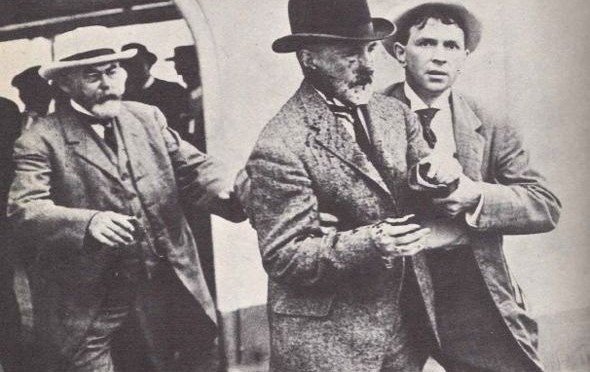
“While vacationing on the ocean liner SS Kaiser Wilhelm der Grosse, a disgruntled city employee James J. Gallagher, fired from his job on the docks, took out his frustration on Gaynor, shooting him through the back of the neck. Gallagher claimed, “He took away my bread and meat. I had to do it.” Really, James?

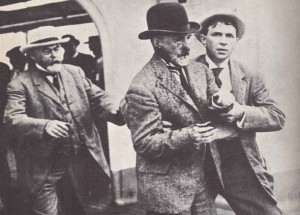
Unbelievably, a photographer for the New York world William Warnecke happened to catch the incident, which quickly became one of the most startling photographs in the short history of photo-journalism. [The photo above!]

Gaynor recovered somewhat, although the bullet would remain lodged in his throat, and for his entire term of mayor, he would remain weakened and haggard. He would even use the injury as a reason to get out of discussing delicate subjects, saying, “Sorry, can’t talk today. This fish hook in my throat is bothering me.”

Somebody should have advised Gaynor, however, to avoid ocean liners altogether. On Sept. 4 1913 he boarded the Baltic for yet another oceanic vacation and six days later was found dead on a deck chair, his body finally giving in to lingering internal injuries. Curiously, Gaynor’s would-be assassin Gallagher had died just a few months prior — at an insane asylum in Trenton, New Jersey.”

Read the rest of the piece here

Other political stories of 1910:
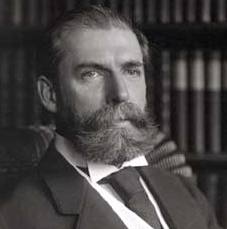
This was the final year in the term of New York governor Charles Evans Hughes (pictured), but it was hardly the last anybody would hear of the distinguished New Yorker. After an unsuccessful bid for president of the United States in 1916, President Warren G. Harding made him Secretary of State in 1921. Then he became the Chief Justice of the Supreme Court in 1930, where he resided over the greatest court in the land for an entire decade, helping bring Franklin D. Roosevelt’s New Deal policies to life.

What a surprise: corruption in the New York state senate! Senate Majority Leader Jotham P. Allds resigns on March 29, 1910, after it’s revealed that he took bribes from bridge construction companies to kill some undesirable legislation. In April, other senators, including notorious Lower East Side power broker “Big Tim” Sullivan, are implicated in several other bribery schemes, involving streetcar and fire insurance companies.

Capping it off is testimony in September 1910 that several lawmakers, with Williamsburg senator Patrick Henry McCarren smack in the middle, were given “a legislative corruption fund of $500,000” in early 1909 — during a dinner at Delmonico’s Restaurant, no less — to squash some critical anti-race track gambling legislation.

Nobody was censured — and McCarren had died in late 1909 — but the largely Republican scandal was probably key in getting a Democrat, John A. Dix, into the governor’s seat the next year.

[You can find all the juicy details in Gustavus Myers’ wonderful History of Tammany Hall.]

—-
AND SPEAKING OF RATS…
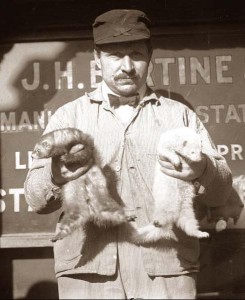
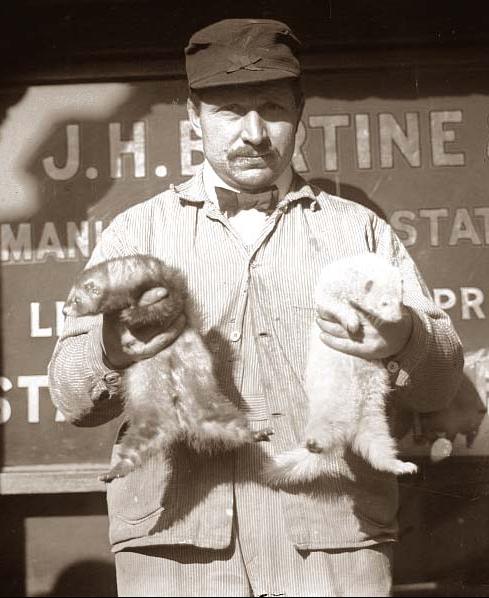
ABOVE: A New York City ratcatcher, photo taken during the 1910s, but those don’t look like rats to me. In fact, I think the ferrets are used to sniff out vermin. (Picture courtesy the great Old Photos blog)

And finally, for no reason other than humor, I present to you a letter that Mayor Gaynor wrote in March 20, 1910, to one Charles M. Frey, noted and ‘learned’ city ratcatcher. Imagine Mayor Bloomberg penning such a missive to one of his constituents:

“Dear Mr. Frey, Your letter of March 15 is at hand, describing how your calling of ratcatcher is being constantly interrupted by your being summoned to serve as a juror.

Sooner than have the city overrun with rats and everything eaten up by them I would have you relieved of jury duty. Do you not think we had better have a bill introduced in the Legislature to exempt ratcatchers from jury service?

The difficulty is, however, that so many exemptions have already been passed by the Legislature that there seems to be only ratcatchers and a few other people left to serve on juries. That might possibly impede the progress of your bill if sent to Albany.

I will have to carefully consider the matter, and some day when you are down this way, come in and we will talk it over, and also about rats. I see that you are a classical scholar, judging by the motto at the head of your letter. My experience is that learned men are to be found everywhere. As we read in Don Quixote: “The mountains breed learned men and philosophers are found in the huts of shepherds.”

[More of Gaynor’s fascinating correspondence here.]

Categories
Podcasts

PODCAST: Delmonico’s Restaurant Francais

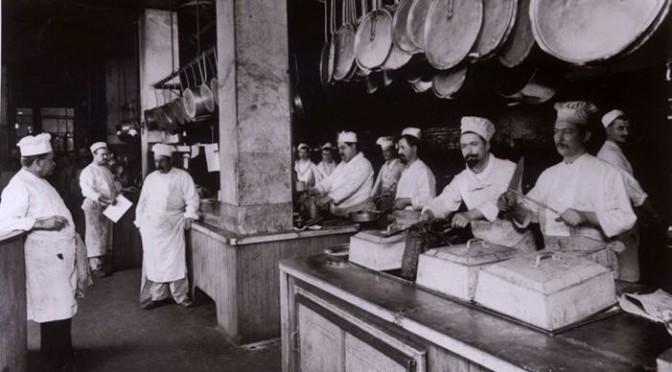
The kitchen staff, 1902

Before Delmonico’s, New Yorkers ate in taverns or oyster houses. But the city caught the fine dining bug at this family-owned business, which standardized everything you know about restaurants today. Find out about “menus”, “fresh ingredients”, “dining rooms for ladies” and other unusual and exotic Delmonico innovations.

Listen here:

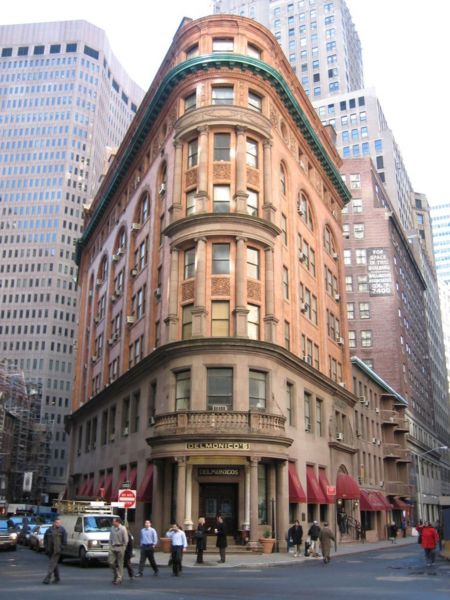
The Delmonico building today, with alleged Pompeiian column intact. Although the current incarnation has nothing to do with the original, but you can still get a few of the famous Delmonico dishes there.

Lorenzo Delmonico, the inspired and flamboyant owner during the restaurant’s heyday

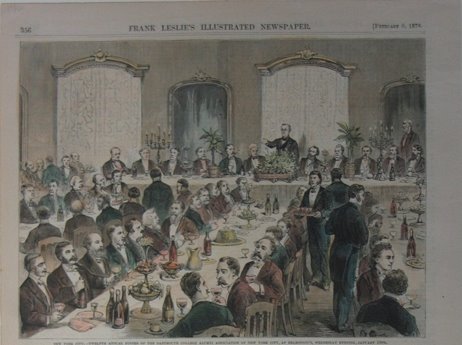
A dinner at Delmonico’s from 1876, in this case the “Twelfth Annual Dinner of the Dartmouth College Alumni Association of New York City” Fancy!

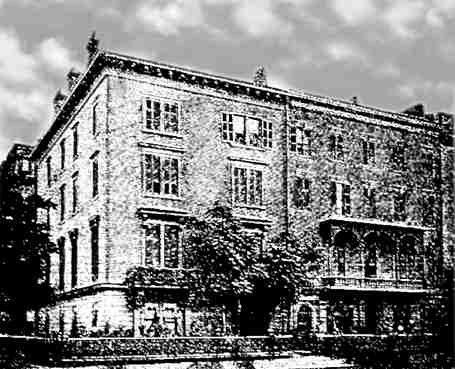
The location at 1 E. 14th Street

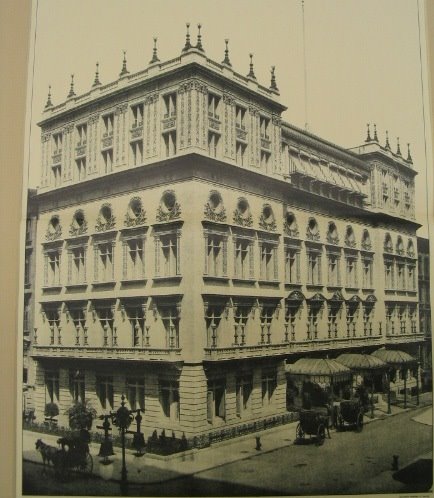
The ‘uptown’ location at Fifth Avenue and 44th Street

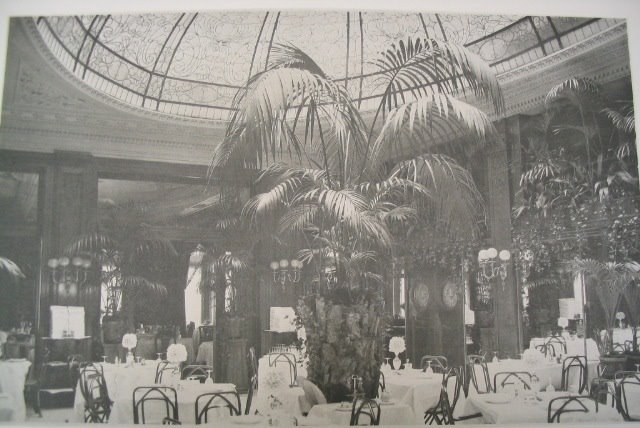
Inside the ‘Palm Garden’ dining room, at the Fifth Avenue location, upstairs…

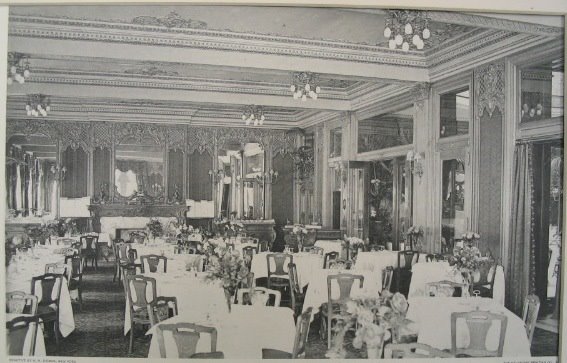
…and downstairs

Alessandro Filippini, head chef of Delmonico’s during the 1850s

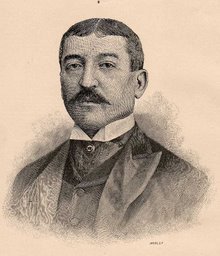
Chef Charles Ranhofer, in the kitchen of Delmonico’s from 1862 to 1896, threw 3,500 of his favorite recipes into his seminal 19th Century cookbook The Epicurean

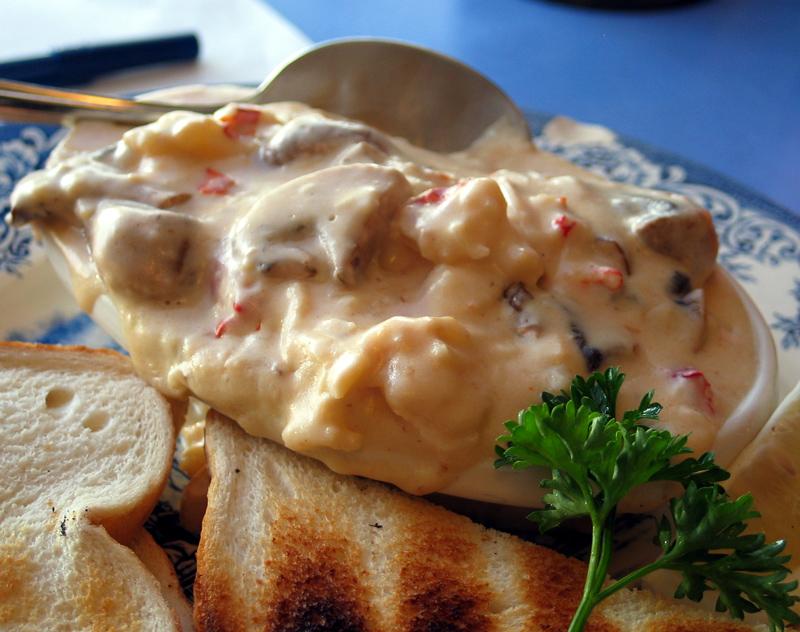
A heaping plate of Lobster Newberg

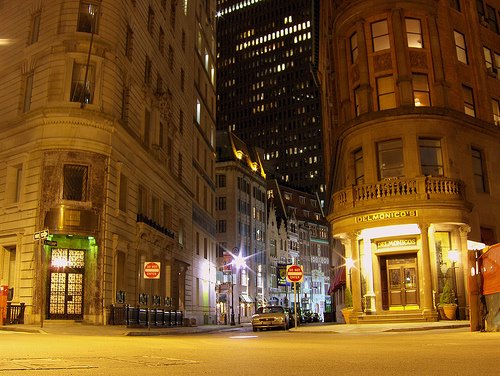
The current Delmonico at night

Categories
Uncategorized

Jimian? The strange affair of Lillian and Diamond Jim


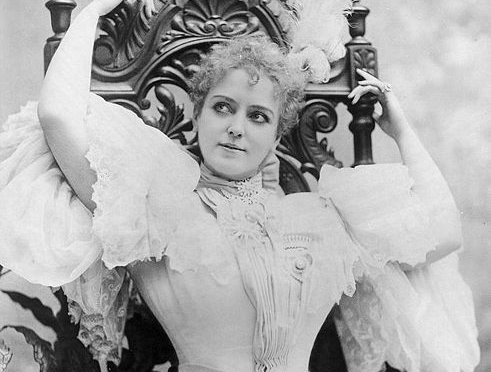
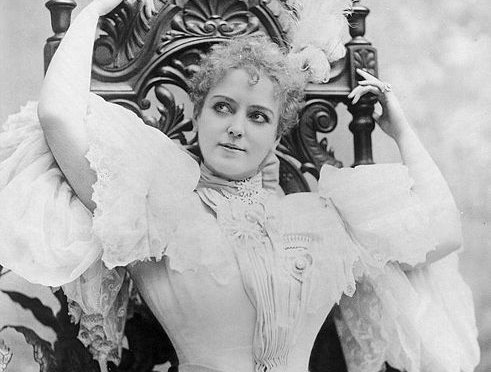
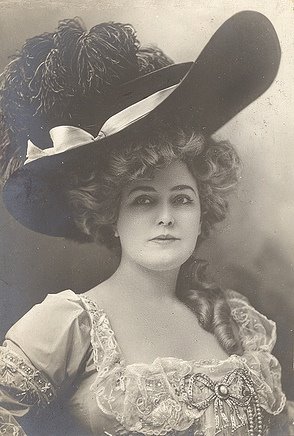
Had there been a paparazzi in the 1880s, the woman they would have hounded the most would be New York stage singer and actress Lillian Russell. Like a Scarlett, she was always hanging on the arm of a famous, powerful man. Like an Angelina, she did dramatic things in her personal life that often upstaged her work. And like a Britney, she was occasionally caught doing things most unbecoming for a lady.

Celebrity fame in those days derived primary from legend and word of mouth; most of the people who idolized Russell had never seen her, in anything. As P.T. Barnum aptly demonstrated with Jenny Lind in the early 1850s, nobody actually needed to hear you sing to become a famous singer; you just had to be desired as one.

Russell (as Helen Louise Leonard) came to New York from Iowa in 1878 to become a opera star, managing to train under no less than Leopold Damrosch, whose son Walter was intimately involved in the creation of Carnegie Hall. The next year, she changed her name to Lillian Russell.

She made her name thanks to Tony Pastor, a vaudeville showman who presented a wide range of acts at his Union Square music hall. Her sweet singing voice and good looks made her perfect for the comic opera circuit, and she quickly became the toast of New York theatre. She eventually toured Europe, hopped from opera company to opera company, and became the first voice in travel over long-distance phone wire in 1890, thanks to admirer Alexander Graham Bell. (She sang the ‘Sabre Song’ to listeners on the other line in Boston and in D.C.)

But it was her penchant for glitz, and roster of suitors that made her a legend among celebrity seekers. She would breeze through four different tempestuous marriages with an actor, a politician, a composer and a newspapermen, but she would be most famous for the one man she didn’t marry — ‘Diamond’ Jim Brady.

Brady was a legend of the Gilded Age, a wealthy businessman who embodied indulgence. Enamored of wearing jewels (thus the nickname), Brady painted the town with his money, a frequent and well-known guest at all the hottest restaurants in town, especially Delmonico’s and later Luchow’s.

He was known for his sizable appetite, a usual evening meal at Charles Rector’s restaurant involving “two whole ducks, six or seven lobsters, a sirloin steak, two servings of terrapin and a variety of vegetables.” And, in the process, growing terribly, unbelievably fat.

He began a public flirtation with Russell that lasted throughout the 1880s and 1890s(throughout her various marriages!) by wooing her with jewels and fancy meals. They made quite a pair. Two celebrities in their thirties, their rubies and diamonds twinkling under gas light in the most exclusive dining room in the world. Oscar Tschirky, later to become the leading chef at the Waldorf-Astoria, got a job at Delmonico’s in his early years just to get a closer glimpse of Russell.

He would see quite a lot of Russell’s eating habits, keeping up with Brady as the pair shucked down oysters and drank champagne, her gluttonous abandon leaving little of her glamorous image intact. Like any actress today, her weight was closely observed, as during her years with her extravagant paramour, she blossomed to 160 pounds.

It seems clear that Brady was in love with Russell, and that Russell was in love with Brady’s attentions. Their public affair crept into the new century as Russell became the defining voice of American operetta. She went on to marry newspaper publisher and later U.S. ambassador Alexander Pollock Moore, and even toured Europe in her later years on behalf of president Warren G Harding. She died in 1922.

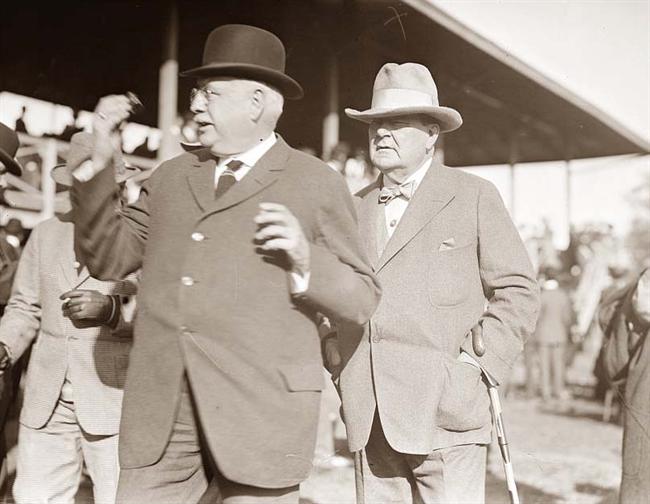
Diamond Jim (below) had died five years previous, having never married, with Russell still presumably in his heart, and god knows how many pounds of oysters in his gut.