The Brooklyn Navy Yard, no longer a bustling shipyard, lives on as a vibrant commercial compound of movie studios, bourbon distilleries and organic rooftop farms. Its waterfront, facing into Wallabout Bay, is relatively peaceful today. There are no remnants of its genuinely disturbing past.
During the Revolutionary War, New York was a British stronghold, and prisoners associated with George Washington and the Continental Army were often sent here for detainment. Soon the city’s make-shift prisons — sugar houses turned into decrepit jails — became too crowded, and the British needed to look for alternatives.
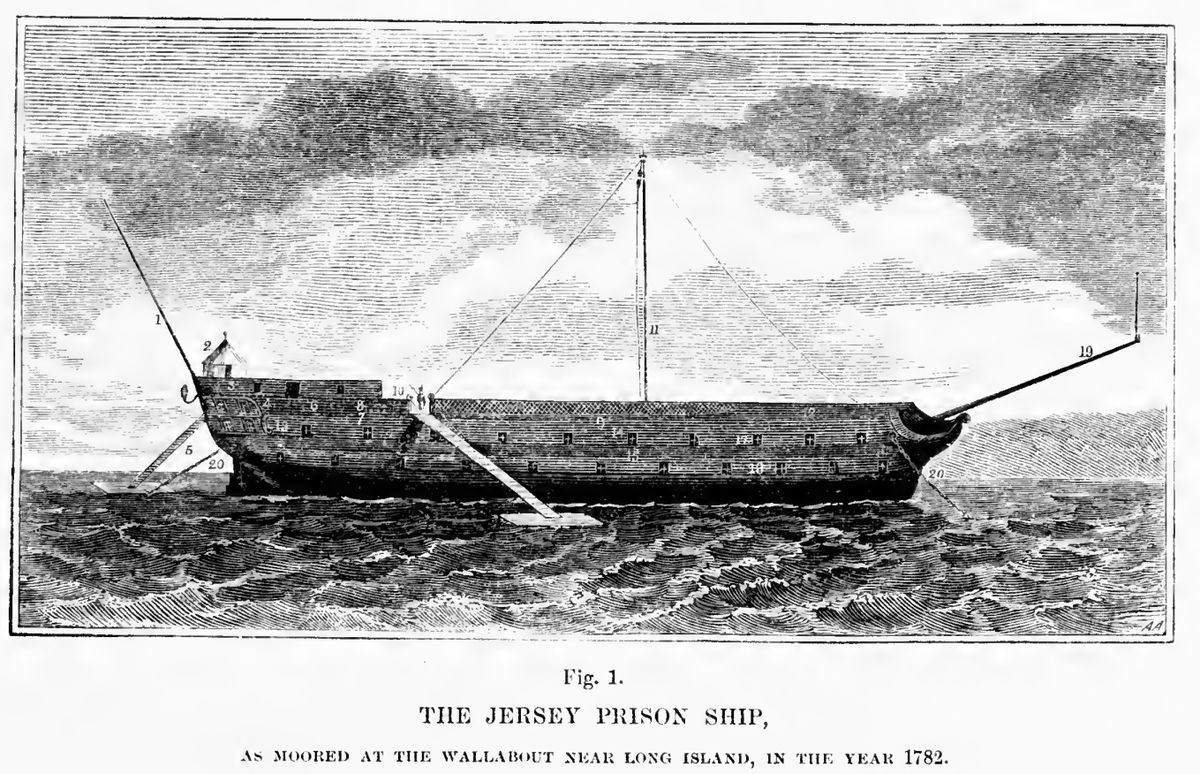
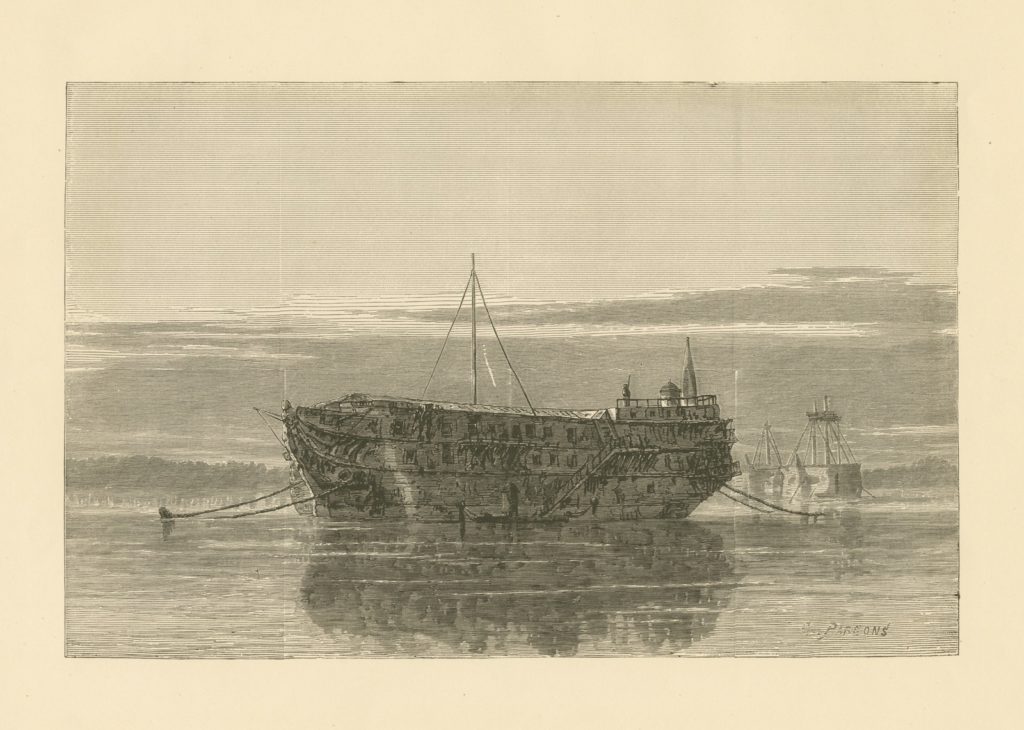
The answer arrived in the form of old naval vessels, previously used to transport supplies, that were moored off the coast of Brooklyn and turned into prison ships. For the duration of the war, hundreds of men and boys were thrown onto these wretched ships, forced to endure a litany of conditions so brutal and dire that they seem like tortures designed for a modern horror film.
And the worst of all of these was the HMS Jersey.
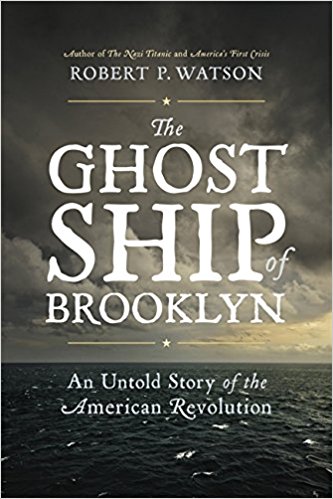
THE GHOST SHIP OF BROOKLYN An Untold Story of the American Revolution
by Robert P. Watson
Da Capo Press
In Robert P. Watson‘s sharp and incisive new book, the author isolates the grim tale of the prison ships, often deemed a footnote in most Revolutionary War histories, from the actions of the conflict at large. It’s vividly narrow in scope, allowing the reader to experience the ship’s macabre trials in a sort of narrative entrapment. The prisoners themselves experienced the Jersey in such a way, trapped below deck with only the fleeting glimpse of New York across the water. For the damned, Wallabout Bay became an inescapable hell.
Watson weaves several first-hand accounts into the narrative, the tales of the lucky few who managed to escape. There’s a dash of Robert Louis Stevenson in the stories, plights regularly associated with swashbuckling tales of pirates. Except these horrid events took place just meters from the Brooklyn shoreline.
In fact, most prisoners who perished aboard the ship were buried on that shoreline, placed into the shallow ground by fellow prisoners, volunteering for burial duty as a way to say a final goodbye. Many days later, those bodies would be caught in the tide to eventually float out into the river.
But perhaps like a good swashbuckler, Ghost Ship of Brooklyn showcases several stories of impossible survival, daring prison breaks and even a couple surprising rescues. For every grim statistic, there’s a moment of desperate bravery. One of the most inspiring feats comes from the recollections of prisoner Thomas Dring who, seeing men around him dying of smallpox, decides to self-inoculate himself and others.
Several men managed to flee the death holds of the Jersey to later recount these thrilling escapes in memoirs. They were the lucky ones; according to reports of the day, 11,500 people died aboard the Jersey. As Watson notes, “over twice as many Americans were lost on that single, cursed than died in combat during the entirety of the long war!”
The vestiges of America’s oldest wars surround us to this day.
New York City has had more military fortifications contained within it than perhaps any other major American city. Part of this has to do with its roots in the American Revolution and the subsequent fears of a return invasion in the early 19th century.
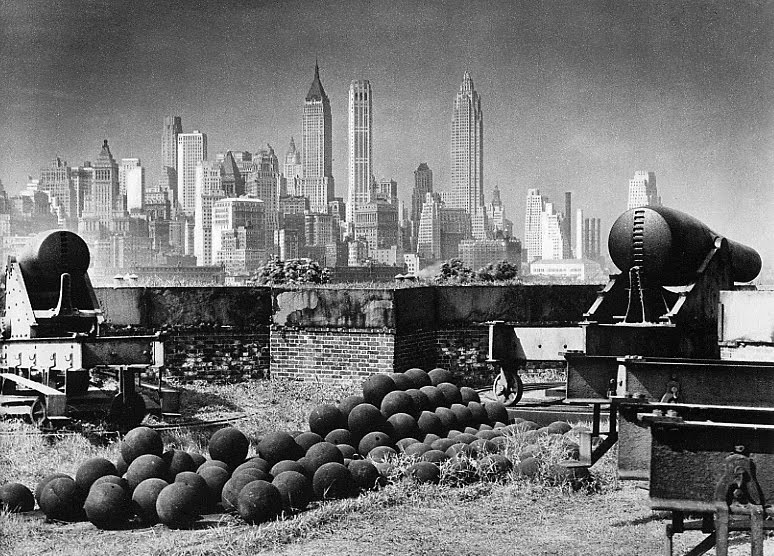
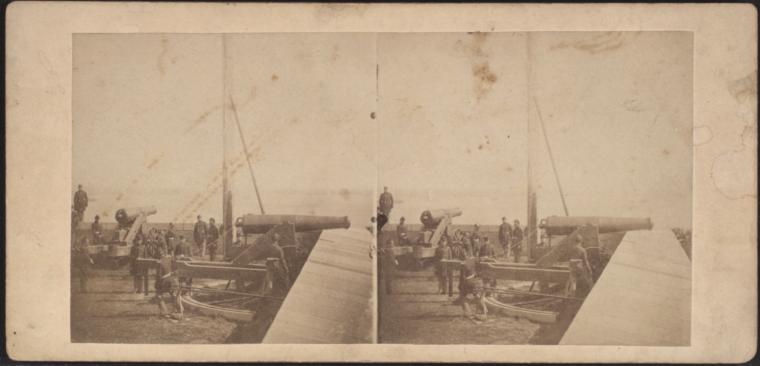
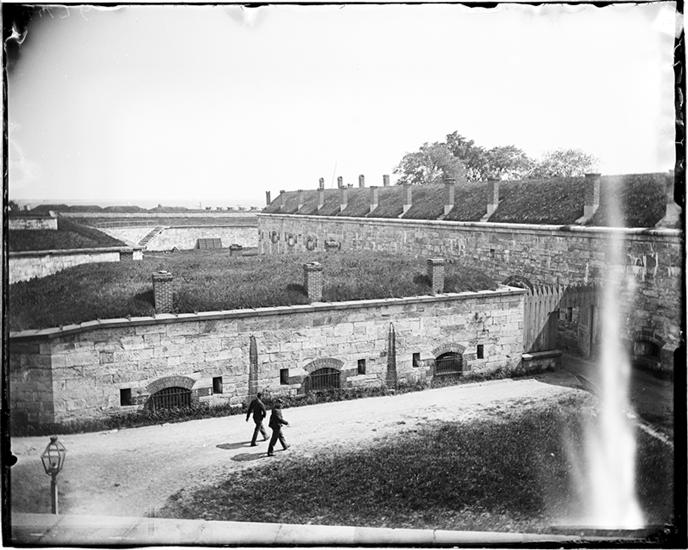
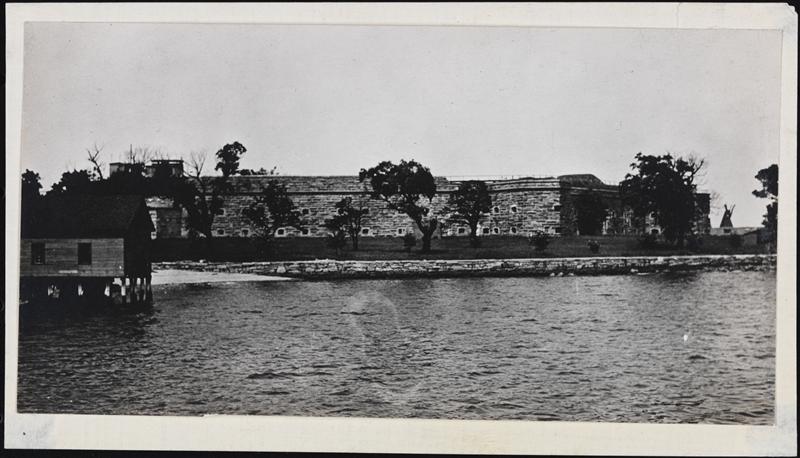
Today’s existing forts — and those that remain in part or in ruin — make for a stark architectural contrast to the modern city. Their walls of stone and brick may conjure up a history far older than New York’s or images of a made-up fantasy world. You could pretend, for a few moments, to be a character on Game of Thrones while exploring places like Fort Wadsworth or Castle Williams on Governors Island
Here’s a list of some of the best known forts in the New York City area. Most are still around in some form. Some exist only in commemorative markers.  Others are completely gone but they leave their names as a reminder of their existence.  How many of these have you seen in person?
1 Fort Wadsworth
Location: Staten Island
Placed at a strategic site on the Narrows, Wadsworth and its associated defense buildings are perhaps the most dramatic military remains in New York City. It traces to an old Revolutionary War-era fort called Flagstaff Fort.  While it serves minor military functions to this day, Wadsworth has become a popular Staten Island attraction.
1979, photographed by Edmund V. Gillon, Museum of the City of New York
2 Fort Jay (formerly Fort Columbus)Â Location: Governor Island
A star fort constructed from an original 1776 earthen defense. In 1806 its name was changed to Fort Columbus and changed back in the 20th century.
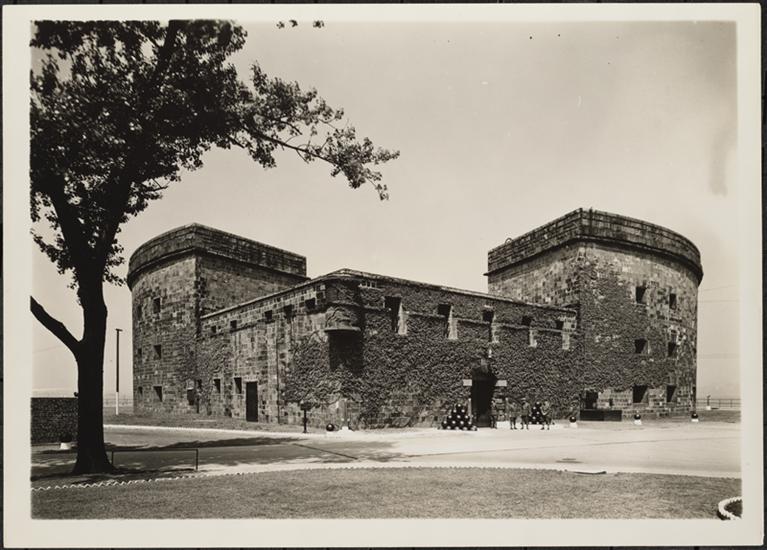
3 Castle Williams Location: Governors Island
Specifically designed in 1807-1811 to defend the harbor from probable British invasion. While the British did invade America during the battles of the War of 1812, New York was spared. Today, its maintained by the National Park Service, as is Fort Jay.
1936, by Samuel Gottscho, courtesy Museum of the City of New York
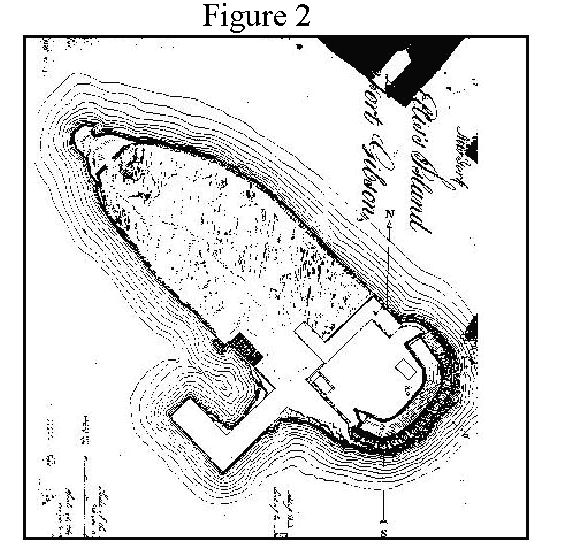
4 Fort Gibson (or Crown Fort) Location: Ellis Island
Built by the Army in 1795 and greatly upgraded in 1809 as part of the beefing up of harbor defenses. It was dismantled by the 1860s although the island was used to hold naval munitions for decades before its transformation into Ellis Island Immigration Station.  Today you can find exposed ruins outside the main building.
Courtesy NPS
5 Fort Wood
Location: Liberty Island
This too was completed during the 1810s and was later named for Eleazer Derby Wood, an officer killed at a battle at the Battle of Lake Erie in 1814. Today the Statue of Liberty and her pedestal are affixed atop of the old fort. You can see a trace of the original brickwork on an exposed wall near the exit.
New York Public Library
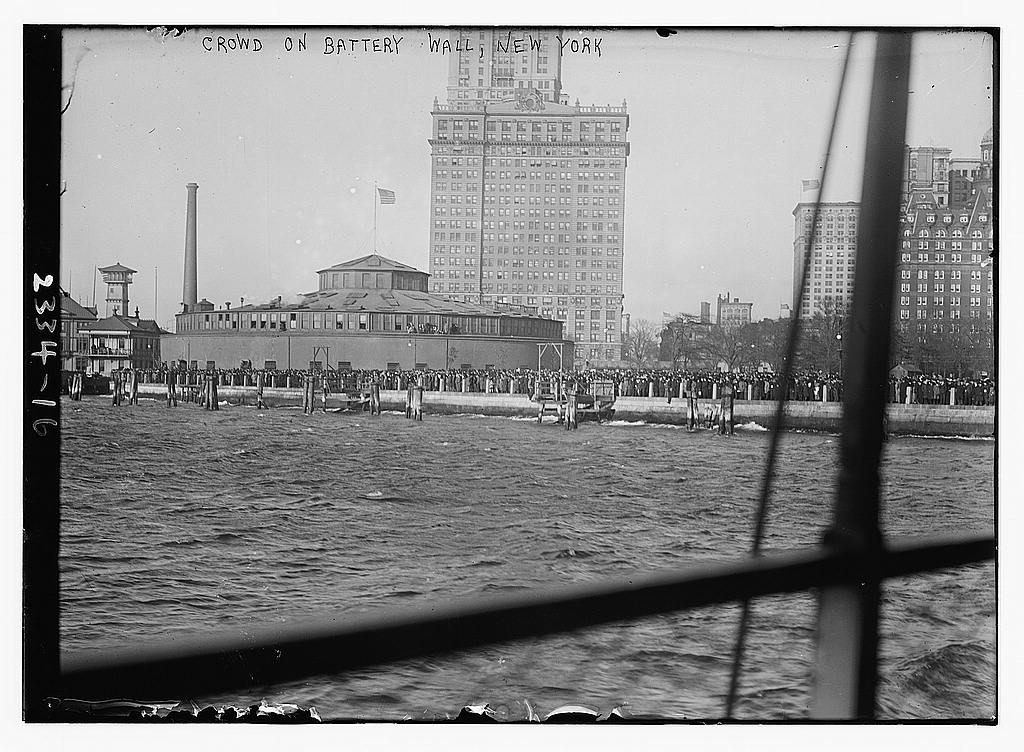
6 Castle Clinton Location: Manhattan (Battery Park)
Lower Manhattan was formerly guarded by Fort Amsterdam/Fort George, but that had been dismantled in 1790. (It stood where the Alexander Hamilton U.S. Custom House is today.) Castle Clinton — named for Governor DeWitt Clinton — was built in 1808-1811 to protect lower Manhattan.  It was originally set into the water and connected with a footbridge.  After stints as the performance hall Castle Garden, New York’s pre-Ellis Island immigration station and New  York Aquarium, it sits today as a national monument in its own right.
Library of Congress
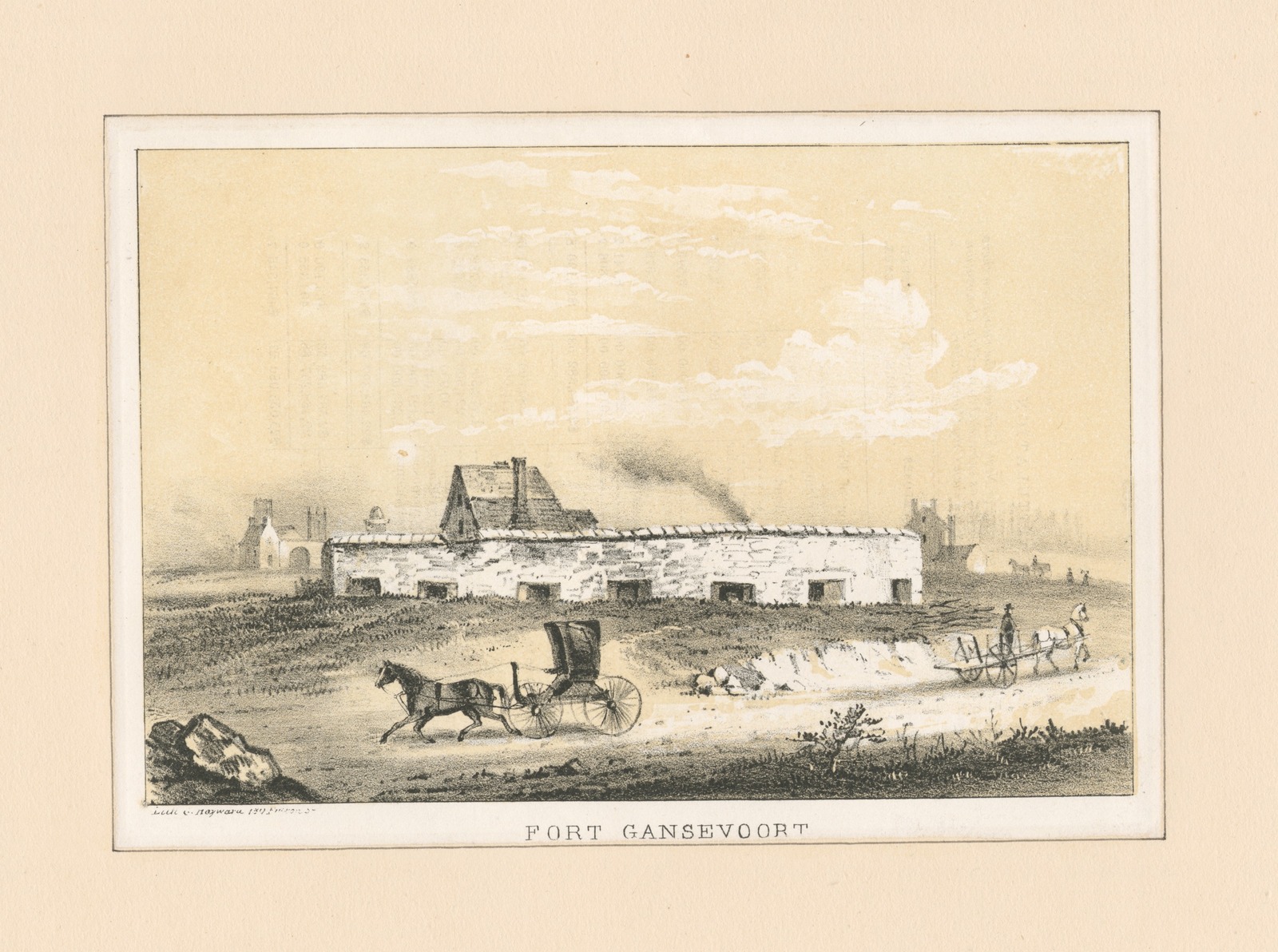
7 Fort Gansevoort Location: Manhattan (Meat-Packing District)
Also called the White Fort, this forgotten redoubt once flanked the western waterfront, built at the same time as the harbor forts. It was named for General Peter Gansevoort (the grandfather of Herman Melville) and stood here until the 1850s. Nothing remains of this fort today but its name, found on the street which cuts through that area — Gansevoort Street.
New York Public Library
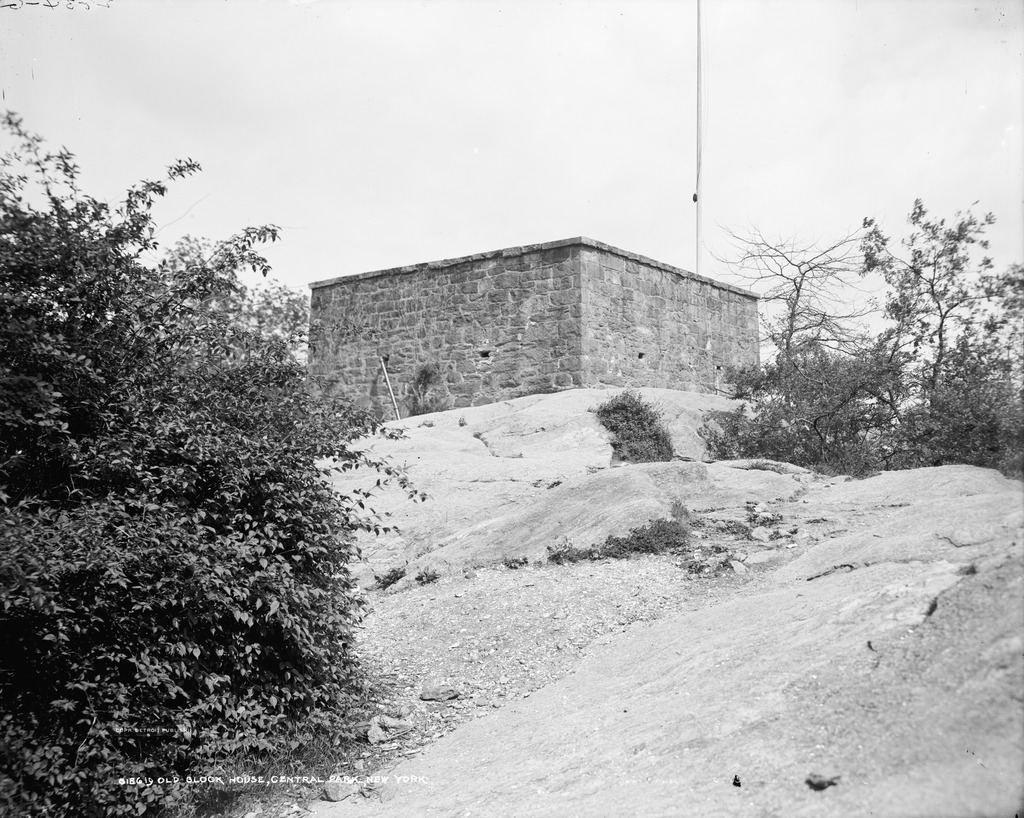
8 Blockhouse No. 1 Location: Manhattan (Central Park)
This curious little structure stands on the northern end of Central Park, a fortification almost two hundred years old.  Its the oldest structure contained within Central Park (although obviously Cleopatra’s Needle, which was moved here, is much, much older.)
Library of Congress
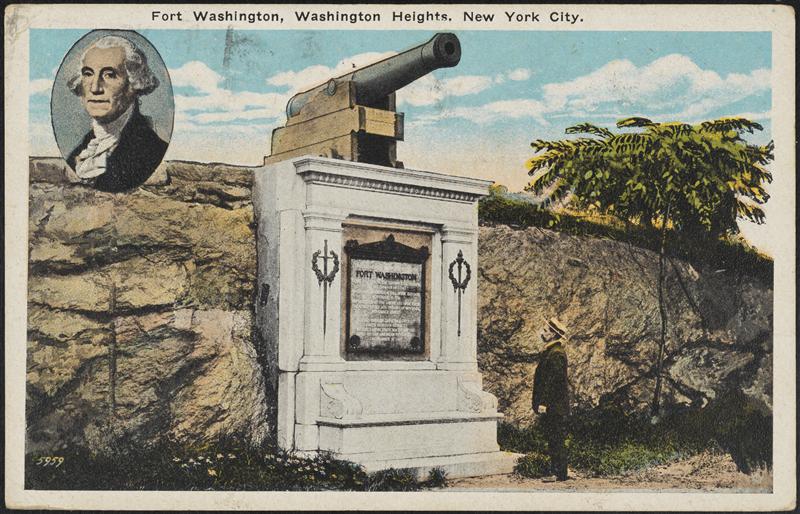
9 Fort Washington
Location: Manhattan (Washington Heights)
This fort predates most of the rest, built as a companion for Fort Lee on the New Jersey side. It was here that the Battle of Washington Heights was fought on November 16, 1776, and the fort was captured by the British. While this particular fort is no longer there, some stone walls and a plaque mark its former location. Fort Washington Avenue also pays tribute.
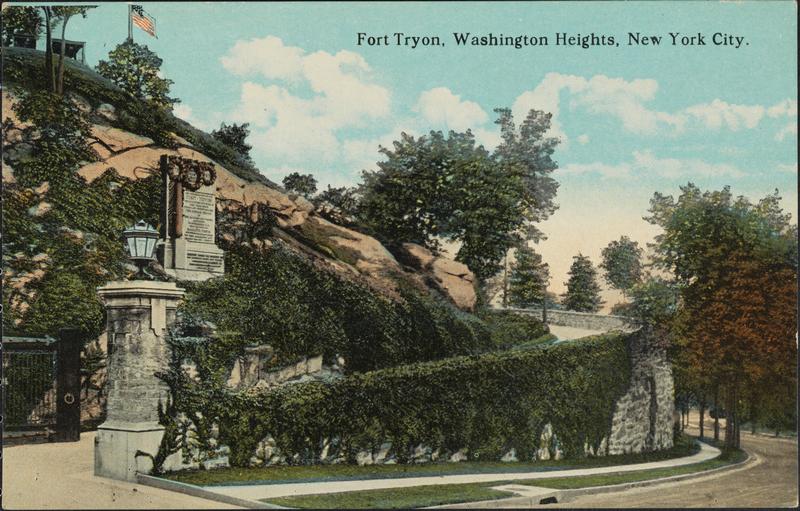
10 Fort Tryon
Location: Washington Heights
This was actually a northern redoubt that was an extension of Fort Washington. When the British took it over, they renamed it for William Tryon, New York’s last British governor. For some reason, the name just stuck! Its location in preserved in the breathtaking Fort Tryon Park, completed in 1935 and designed by the son of Frederick Law Olmsted.
11 Fort Sterling
Location: Brooklyn (Brooklyn Heights)
This fort, tracing to the Revolutionary Era, is unique it that it was almost immediately dismantled once the British left.  There was another fort nearby called Fort Brooklyn that lasted a bit longer,demolished by the 1820s to allow for the growth of Brooklyn’s first wealthy neighborhood. Today, near the Brooklyn Heights Promenade, stands small Fort Sterling Park, with a plaque and a flagpole commemorating the location of this critical defense.
12Â Cobble Hill Fort
Location: Brooklyn (Cobble Hill neighborhood)
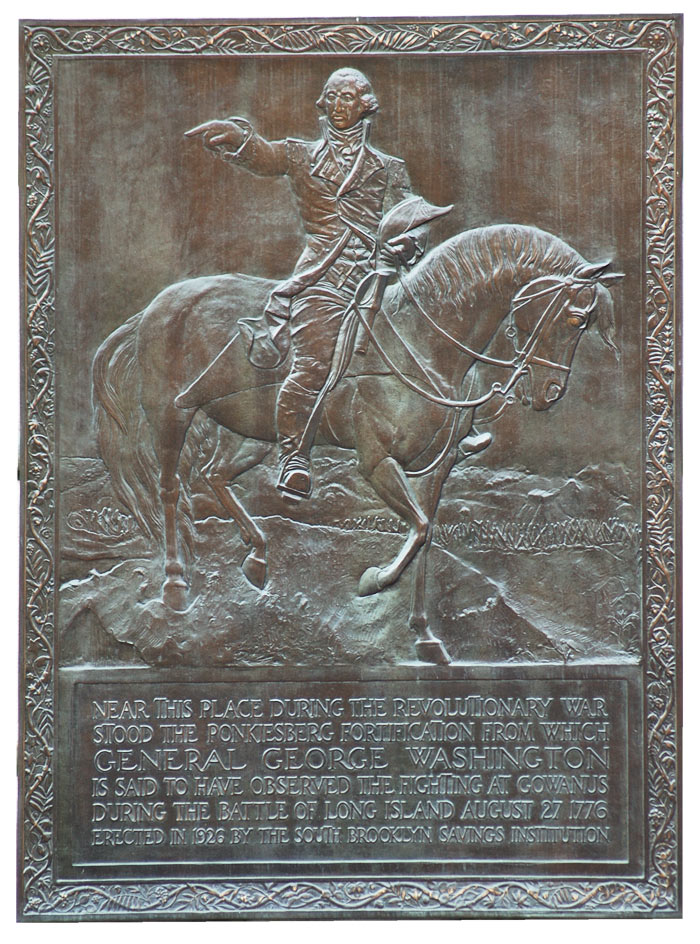
This unusual corkscrew shaped fort — which we talked about in one of our previous ghost story podcasts — is notable for receiving George Washington as he observed his troops during the Battle of Long Island in 1776. Â A handsome plaque on the old bank-turned-Trader-Joe’s at Atlantic Avenue and Court Street marks the location of this forgotten fortification.
Courtesy the blog South Brooklyn
13 Fort Greene
Location: Brooklyn (Fort Greene neighborhood)
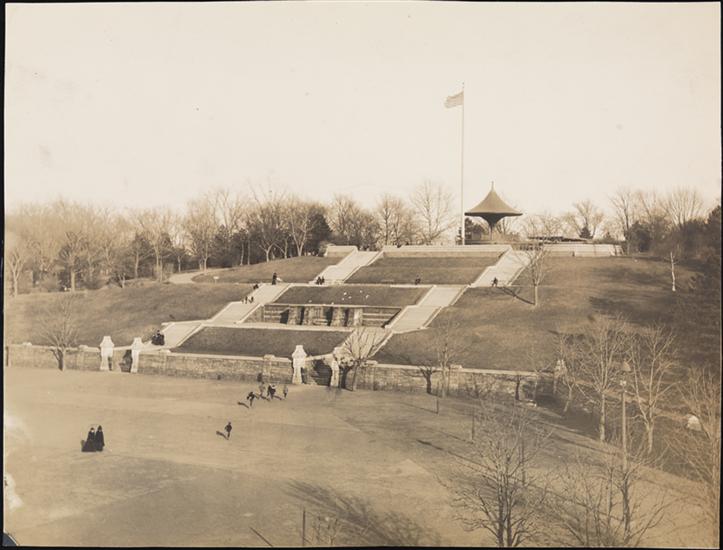
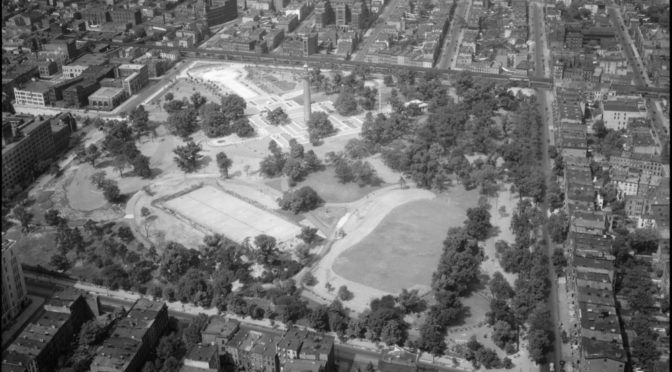
There really was a fort here in the area of Fort Greene Park today, on the highest point of the hill, a traditional five-point fortification similar to that on Governors Island. In the 1840s it was torn down to construct one of Brooklyn’s oldest parks — called Washington Park. Oddly enough, the original fort here was called Fort Putnam. There was a Fort Greene (named for Nathaniel Greene) but it was in another area of Brooklyn, closer to today’s area of Boerum Hill.
Museum of the City of New York
14 Fort Hamilton Location: Brooklyn (Bay Ridge)
This is the last active military headquarters in the New York City area. Built in the late 1820s-30s, it was named for Alexander Hamilton who was an officer in the Revolutionary War. Although an active site, you can visit the Harbor Defense Museum which is housed here.
Robert Bracklow, Museum of the City of New York
15 Fort Lafayette
Location: Off the coast of Brooklyn (Bay Ridge)
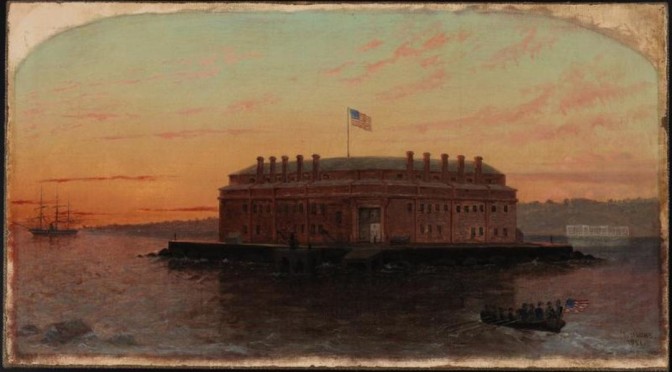
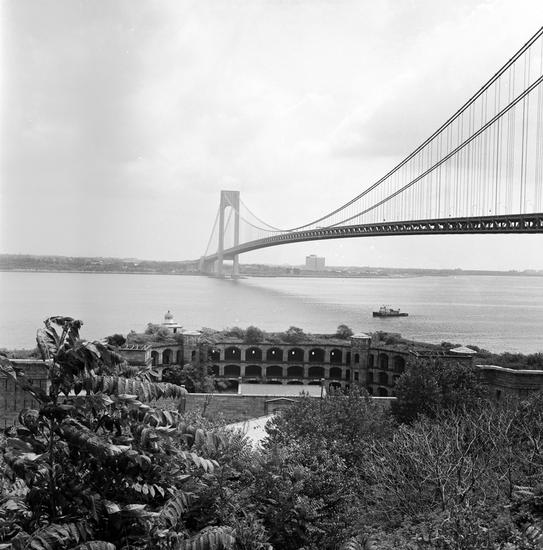
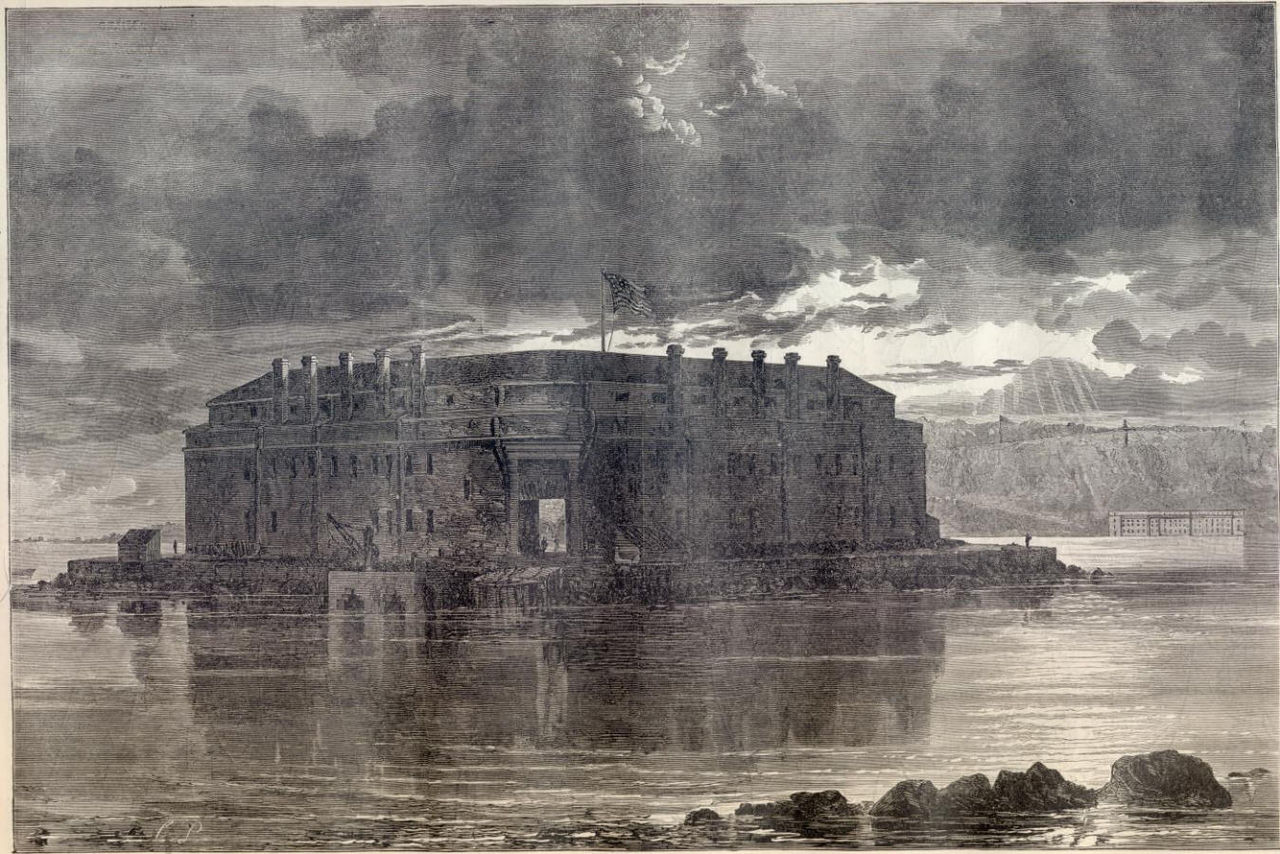
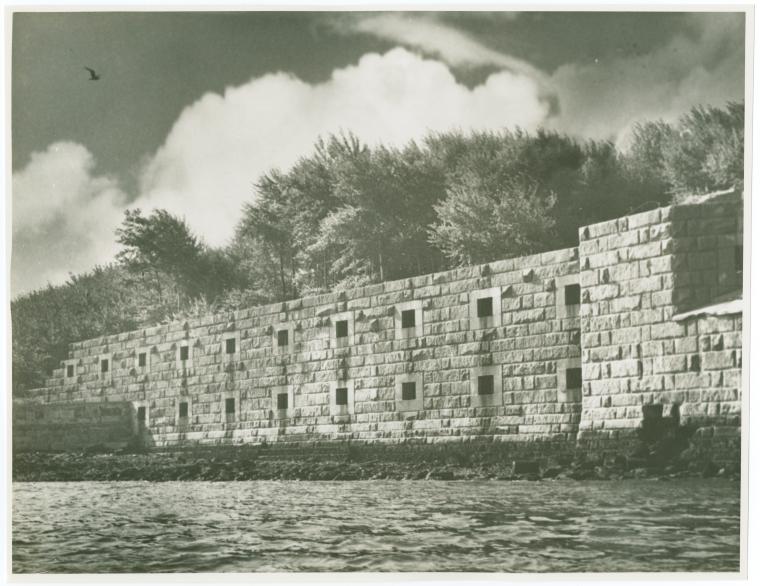
This imposing island fort was built in the 1810s and named for the Marquis De Lafayette. Like many of New York’s forts, it held Confederate and enemy prisoners during the Civil War. The fort was later dismantled for the construction of the Verrazano-Narrows Bridge. You can see where it would have stood as the bridge’s Brooklyn-side tower stands on the location today.
16 Fort Tilden Location: Brooklyn (Rockaway Beach)
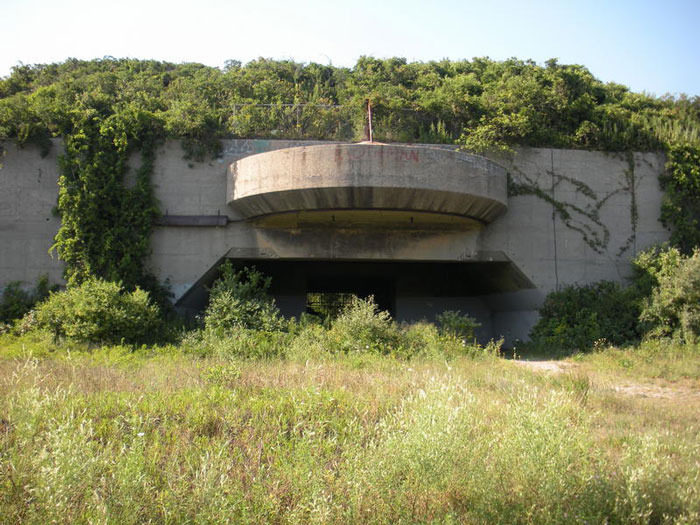
While defenses of various kinds have sat out on Rockaway Beach since the early 19th century, Fort Tilden was fully built up during World War I, named for Samuel J. Tilden. Today its ruins peering through overgrowth can be found near the beach as part of the Gateway National Recreation Area.
17 Fort Schuyler
Location: Bronx
Completed in the 1850s, this unique fortification protected New York for any possible attack from enemies approaching along the Long Island Sound. Abandoned for strictly military use in the 1920s, today it houses the State University of New York Maritime College and a maritime museum.
Museum of the City of New York
18 Fort Totten
Location: Queens
This fortification traces to worries relating to the Civil War. It was constructed in 1862 to protect the East River with its companion across the water Fort Schuyler.  You can still visit Fort Totten today as the area has been opened up as a public park with regular tours of the old buildings.
New York Public Library
At top: Fort Lafayette in a painting by Thomas Hicks (1861)
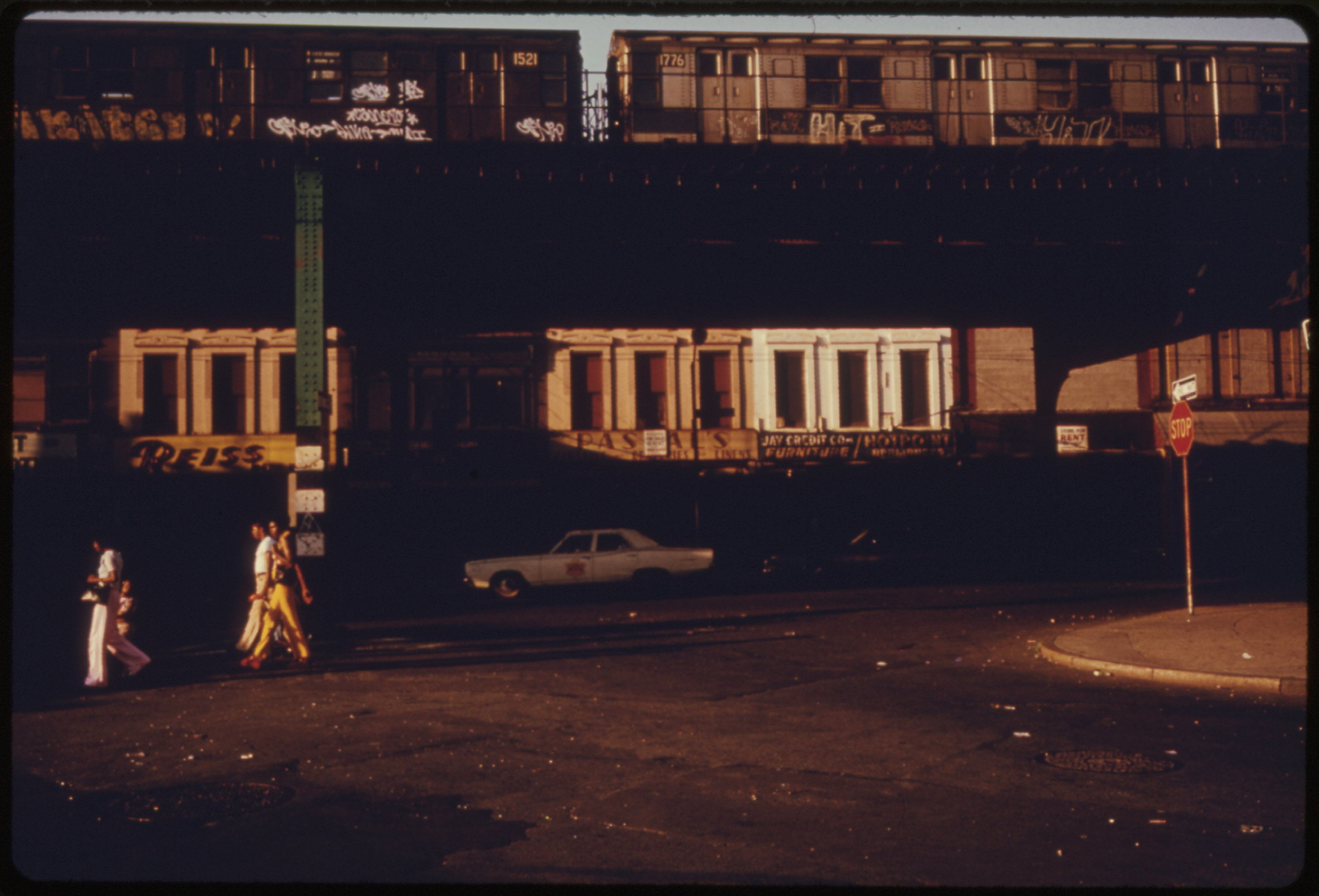
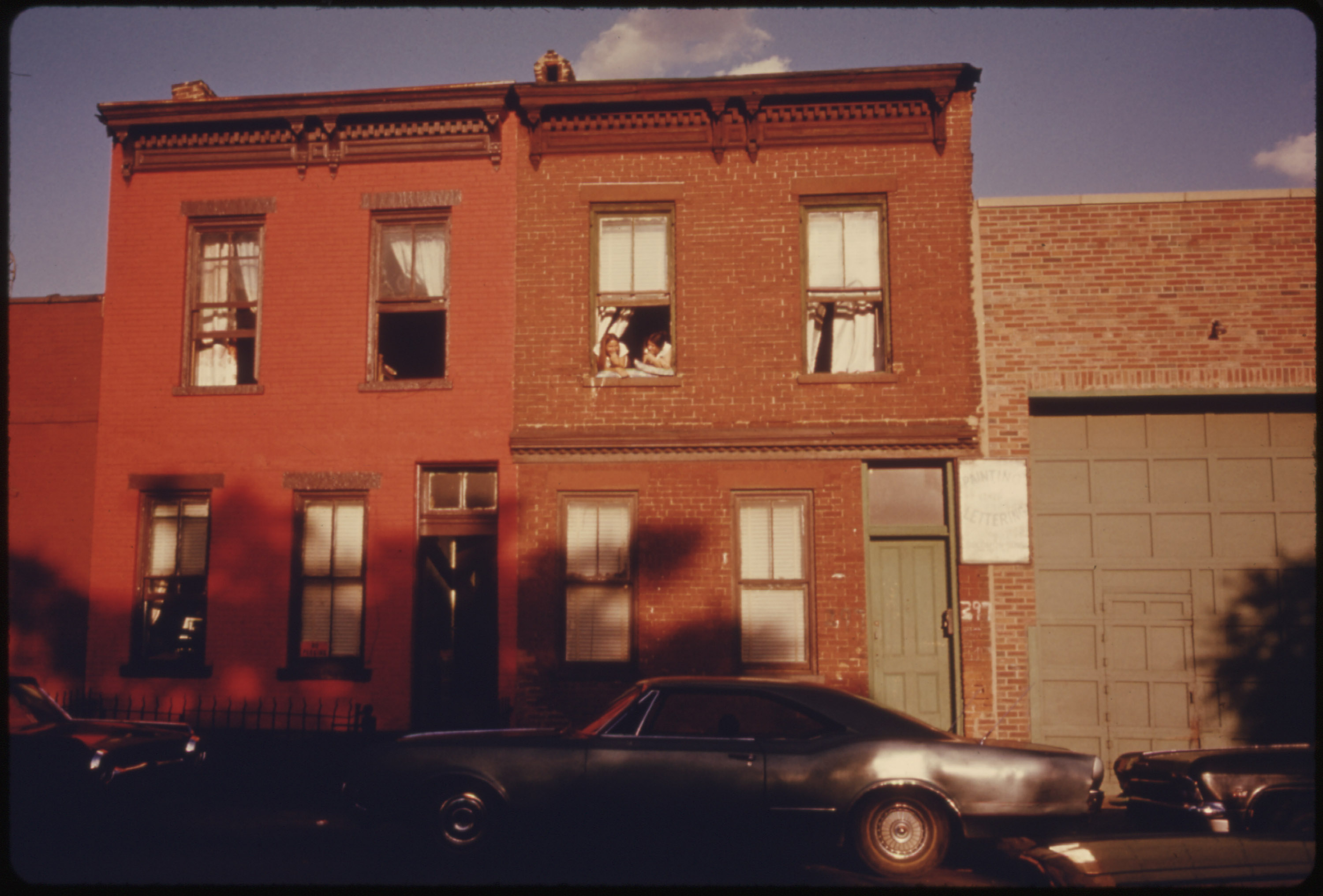
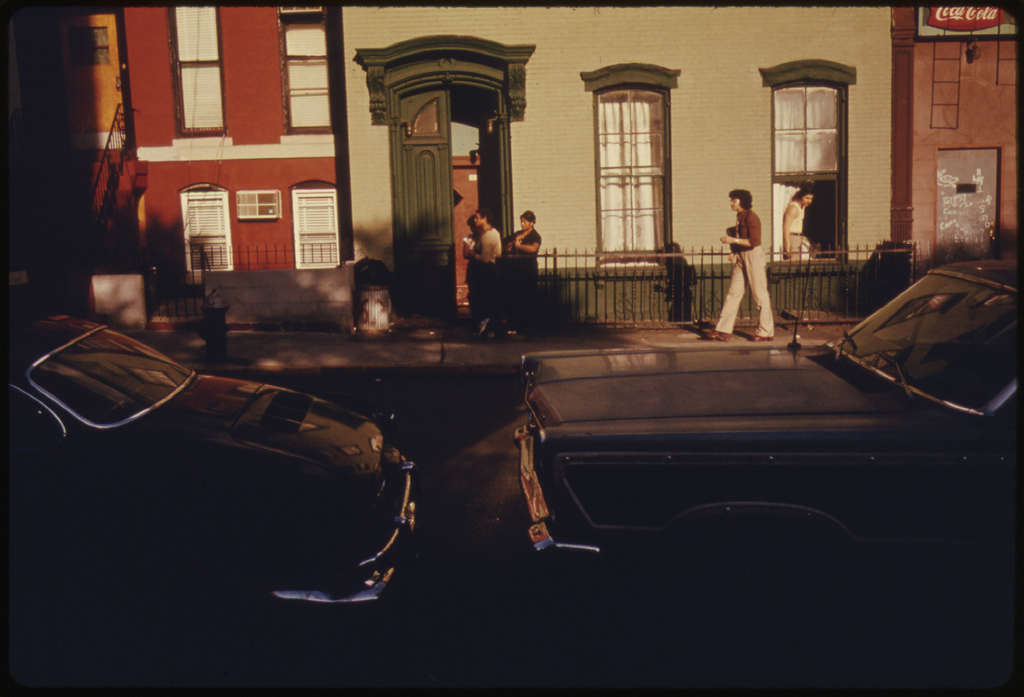
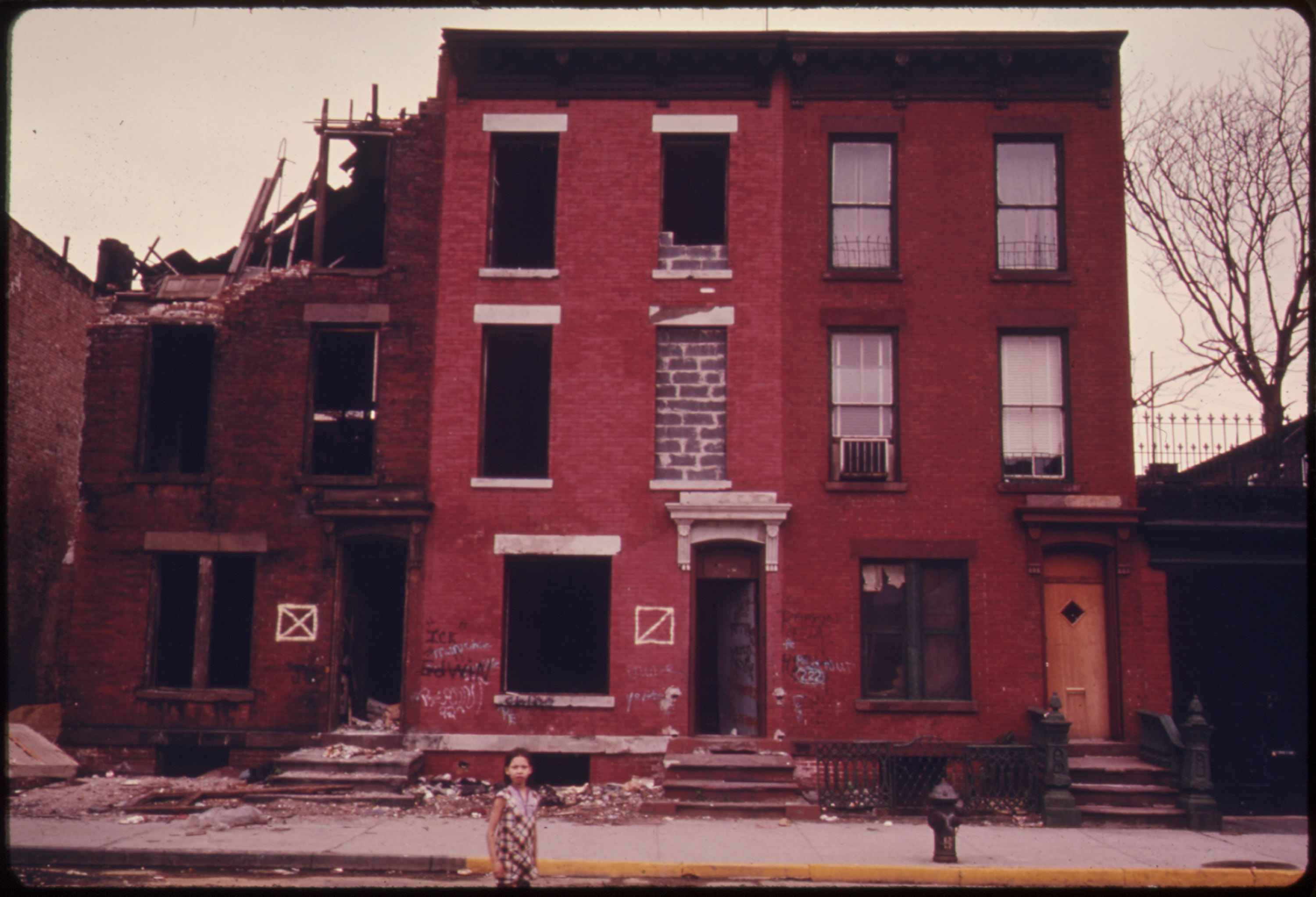
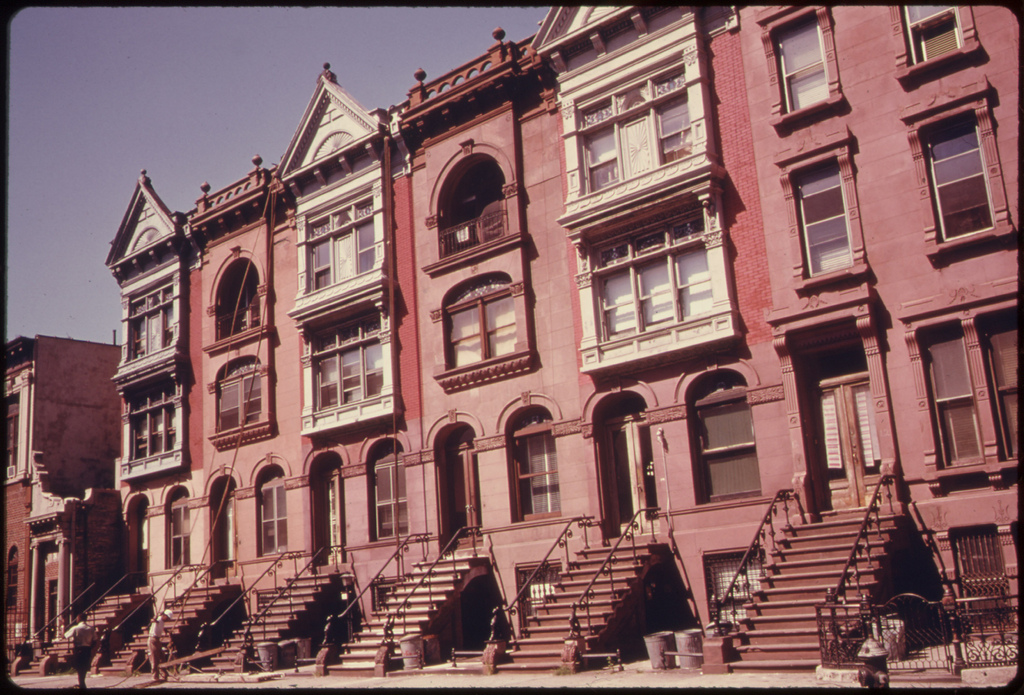
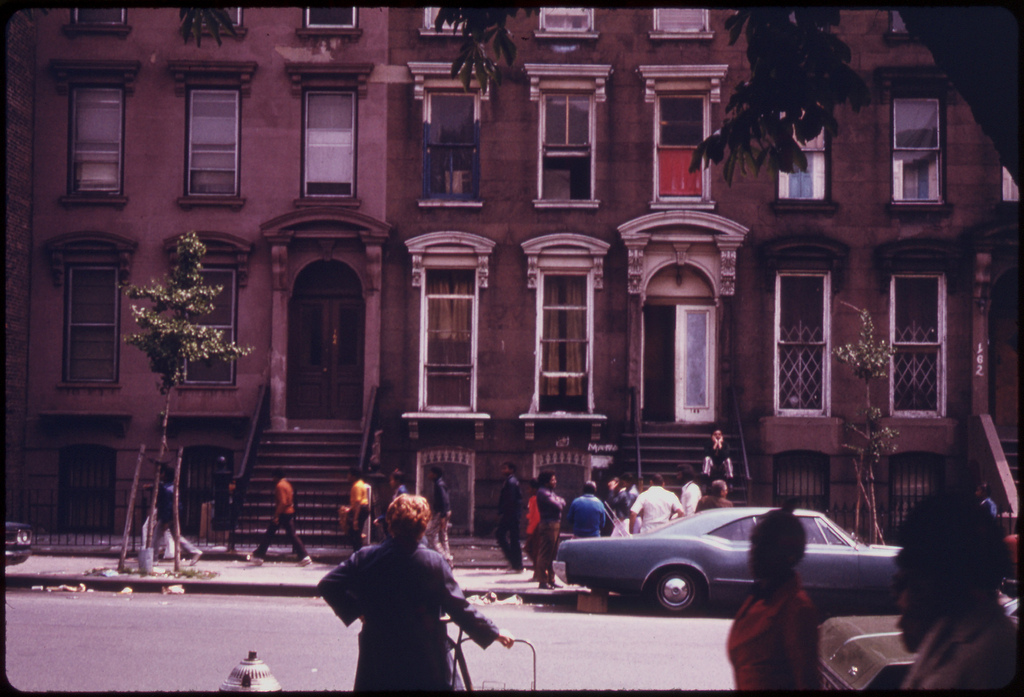
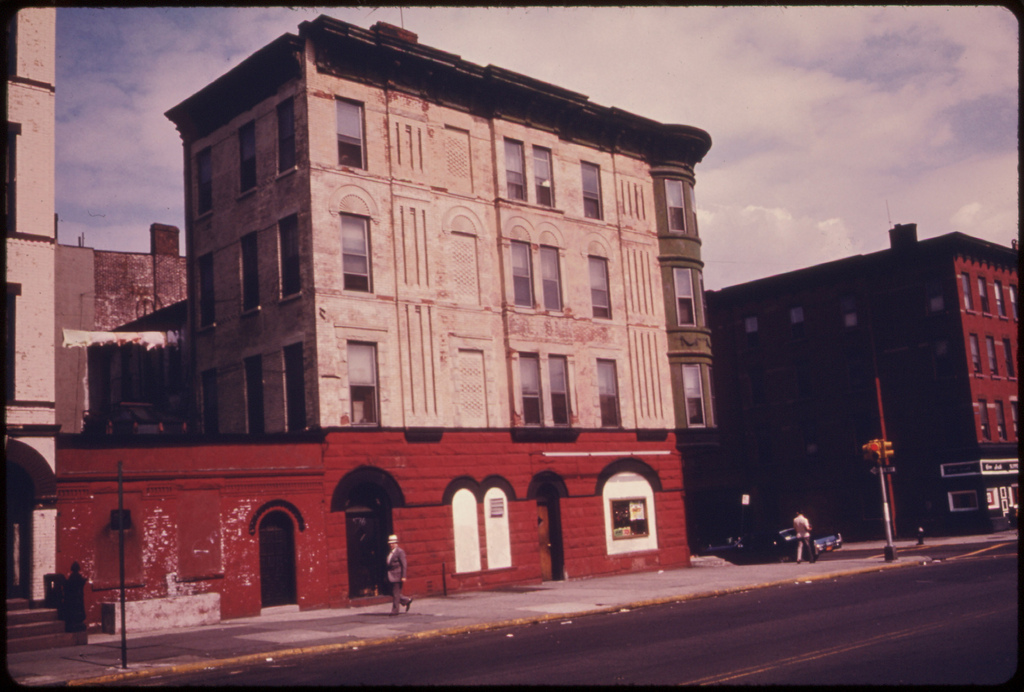
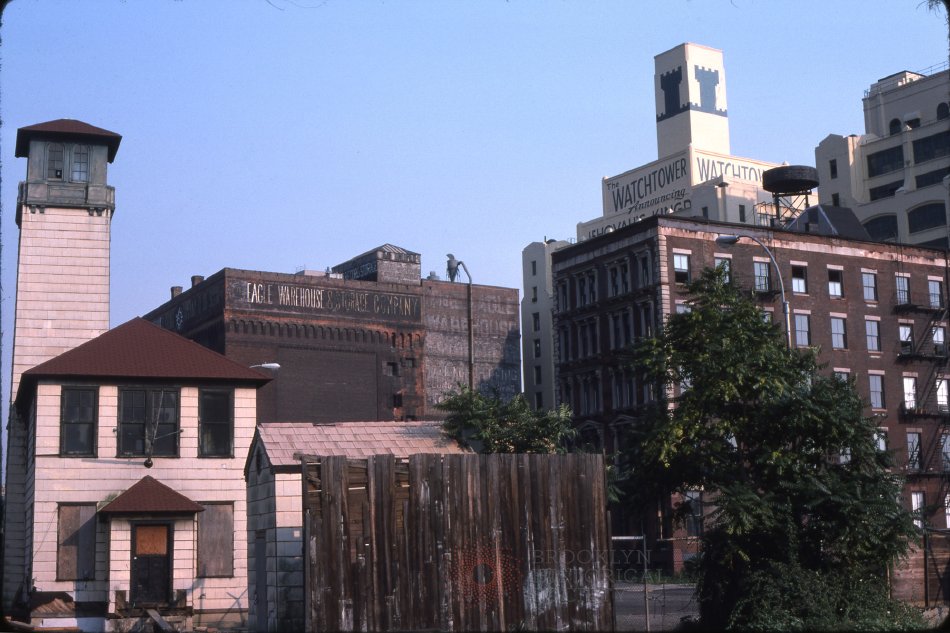
The new Bowery Boys podcast that comes out this Friday will be about Brooklyn. So let’s get in the mood with some pre-Instagram tinted photography from the U.S. National Archives, most of them taken in 1974 by Danny Lyon. followed by some black and white images by Edmund V Gillon.
You might have seen many of these photographs before (perhaps even here on this blog), but it’s striking to revisit them in context of Brooklyn current gentrification patterns.
The homes of Brooklyn Heights began seeing the arrival of ‘bohemians’ as early as the 1910s, and brownstone revivalists (the so-called ‘pioneers’) discovered the neighborhood after World War II.
But a noticeable trend of Brooklyn gentrification happened in earnest in the late 1950s, with wealthy escapees from Manhattan (fending off the urge to suburbanize) moving into South Brooklyn brownstones and row houses and giving enclaves attractive new names like Boerum Hill, Cobble Hill and Carroll Gardens.
The most successful example occurred up on the park slope as a movement of urban activists and historical preservations refurbished and brought to life one of Brooklyn’s original Gold Coasts. Its official name became, of course, Park Slope.
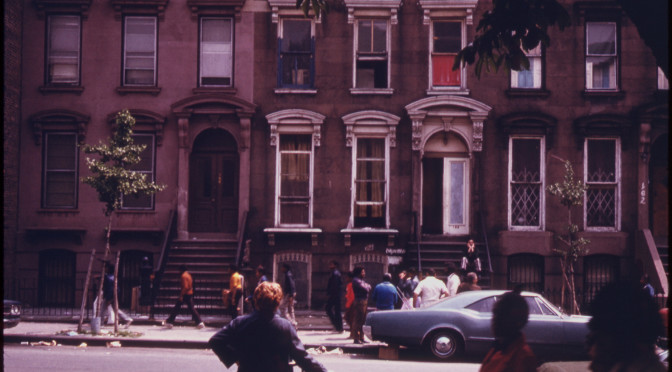
While the ‘brownstone Brooklyn’ movement was well at hand in 1974-5 — the date of most of these photographs — much of the borough was still facing blight and deterioration then. Most of the neighborhoods pictured below are today considered ‘hot’, trendy places with incredibly high rents.
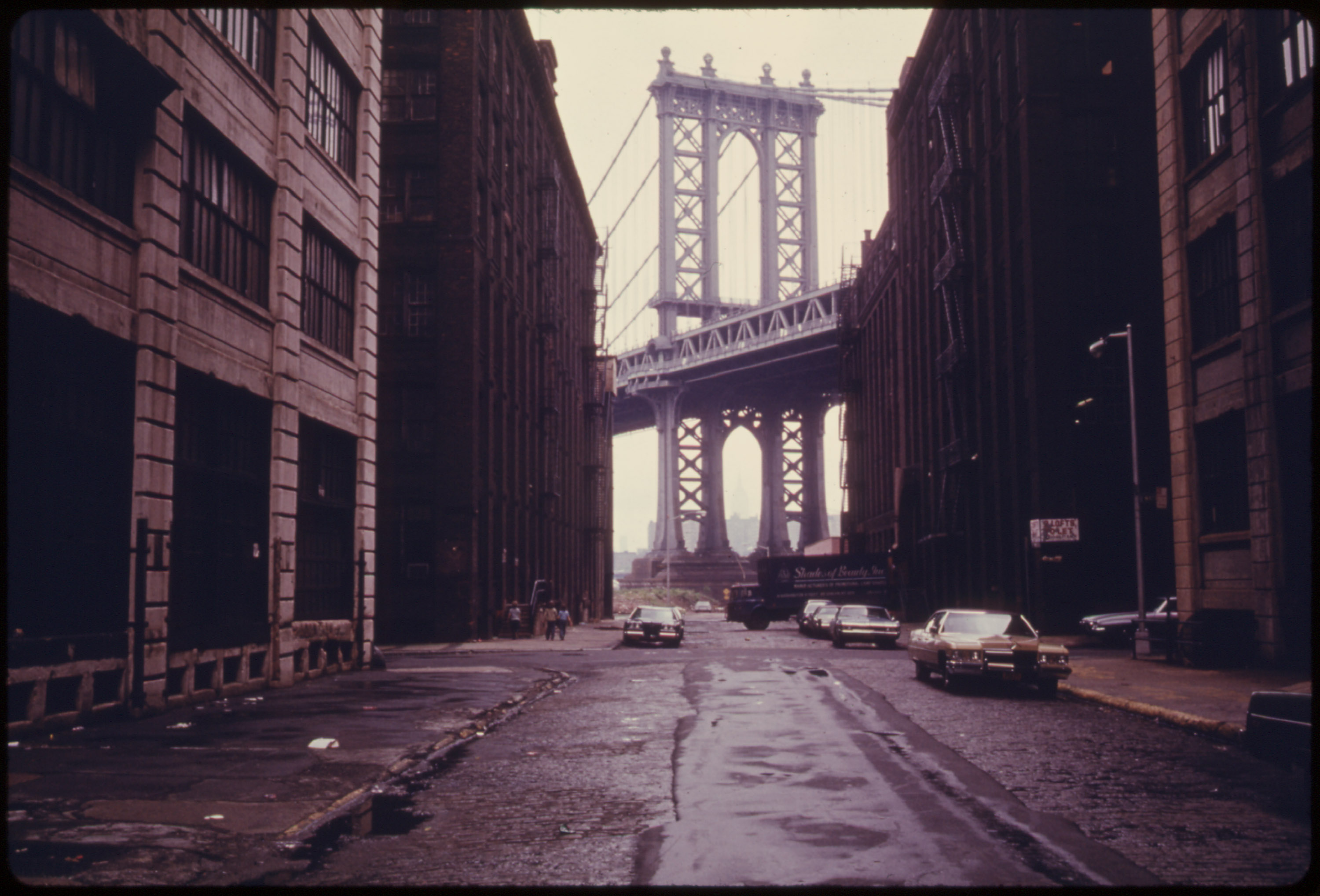
DUMBO, a name invented in the late 1970s, Down Under the Manhattan Bridge Overpass.
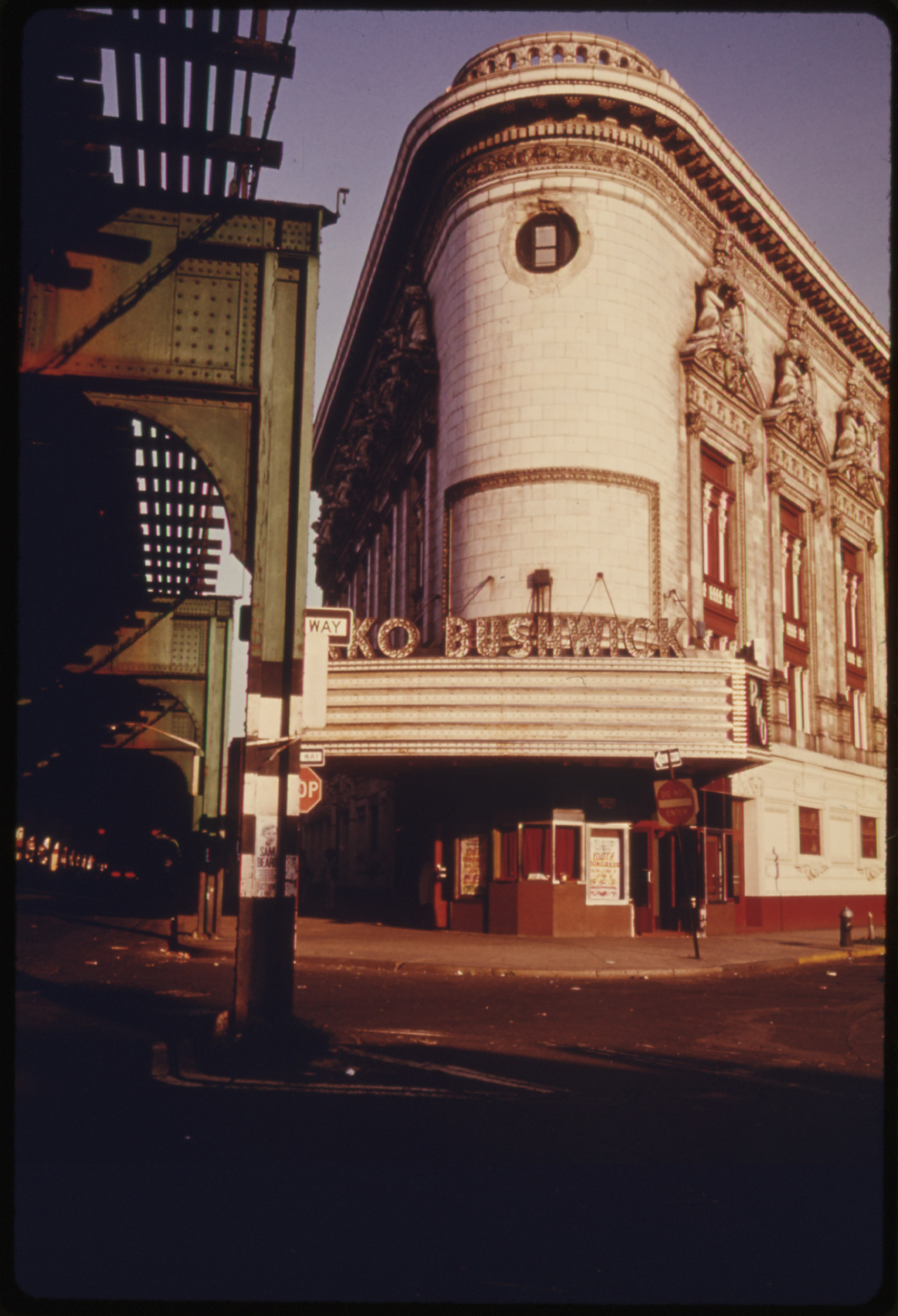
The RKO Bushwick Theater, at the Bushwick/Bed-Stuy border.
Bushwick Avenue
Two pictures of Bond Street
Across from Lynch Park, near the Brooklyn Navy Yard
There’s no location listed in the caption but probably Park Slope?
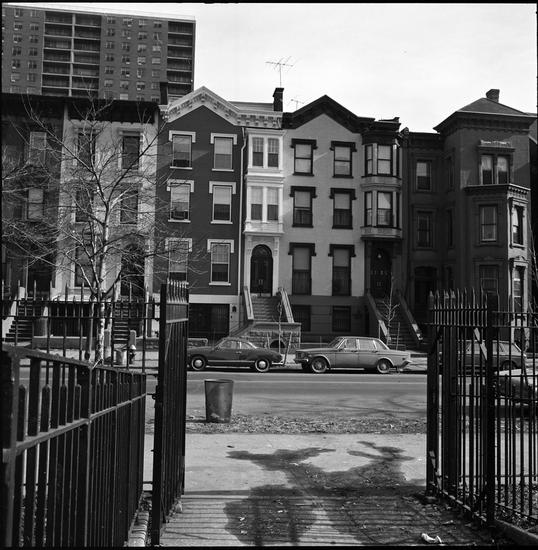
Fort Greene, across from the park.
This is taken on Vanderbilt Avenue but I can’t ascertain exactly here. Perhaps today’s Prospect Heights area.
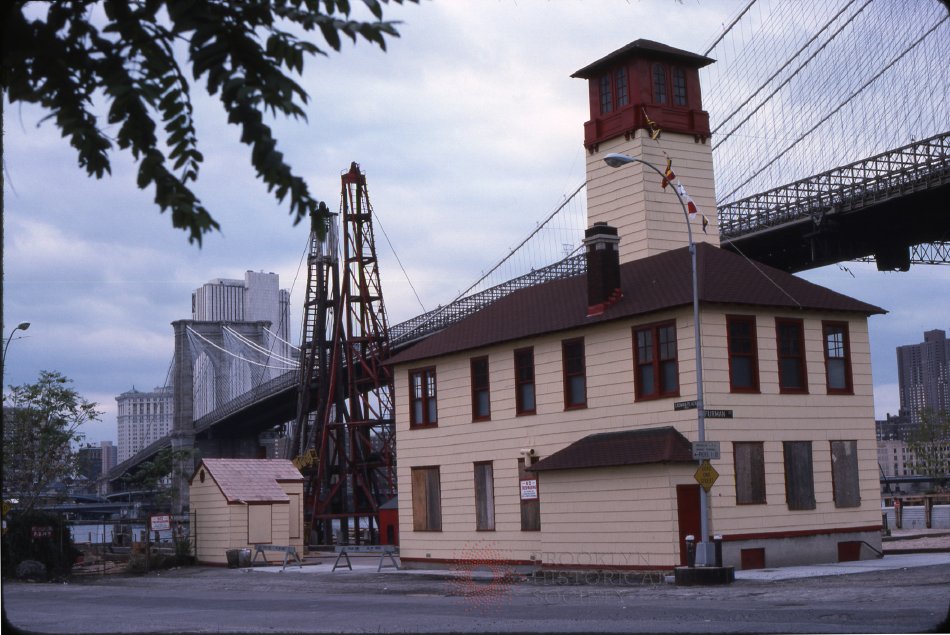
Images of the Fulton Ferry area in 1975 (courtesy the Brooklyn Historical Society)
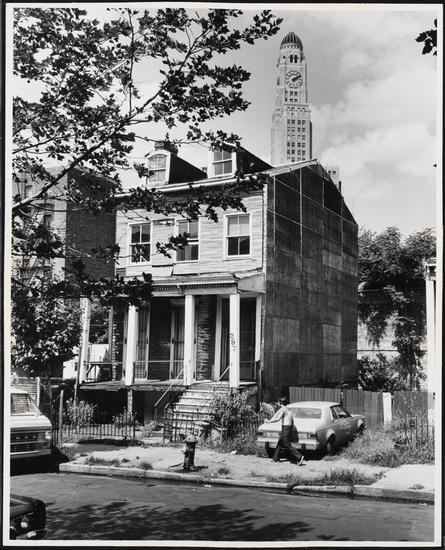
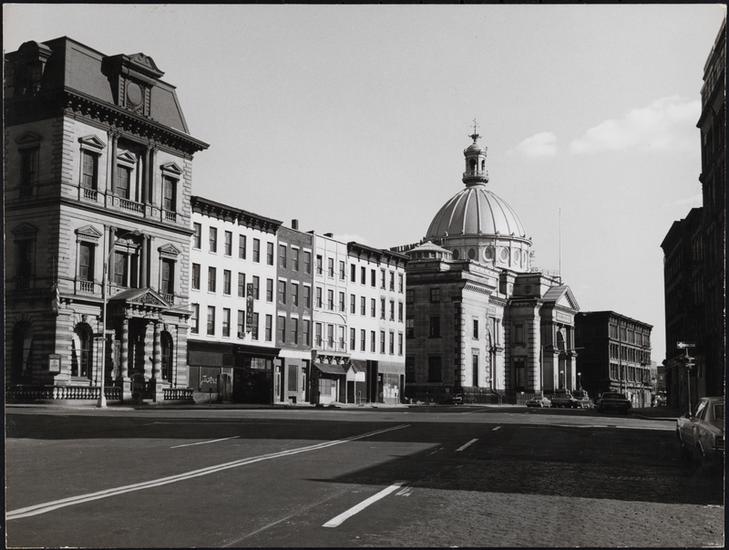
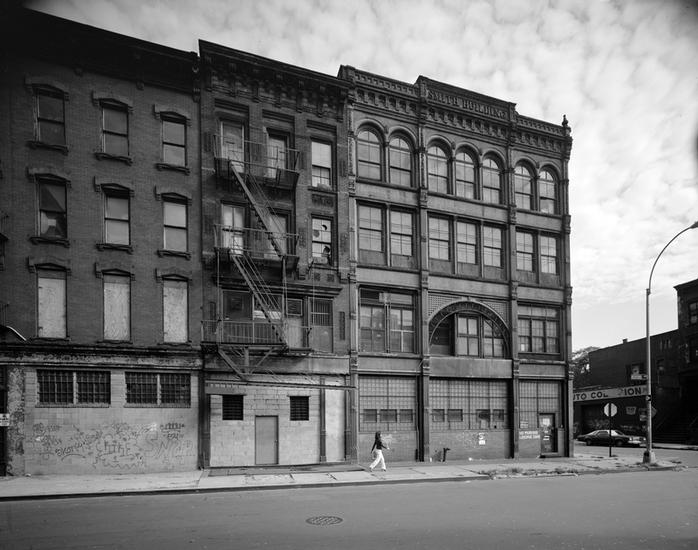
And a couple images from the Museum of the City of New York archives, all from 1975, taken by Edmund V Gillon. You can find many more of astounding photographs here:
397 Dean Street, considered part of Park Slope today
Williamsburg, looking east on Broadway from Bedford Avenue and South 6th Street.
Boarded-up buildings and the Bedford Avenue façade of the Smith Building, 123 South 8th Street
Clinton Hill:Â Row houses on the eastern side of Washington Avenue between Dekalb and Lafayette Avenues
Some New York neighborhoods are simply named for their location on a map (East Village, Midtown). Others are given prefabricated designations (Soho, Dumbo). But a few retain names that link them intimately with their pasts. Other entries in this series can be found here.
The Brooklyn neighborhood of Fort Greene gathers some of the borough’s best known riches within its boundaries, including Brooklyn’s tallest building the Williamsburgh Savings Bank, the Brooklyn Academy of Music, and the park in which the neighborhood gets its name — Fort Greene Park.
However, if I’m being critical, the neighborhood should probably be called Fort Putnam, not Fort Greene.
As you’d expect, this area was the location of a vital Revolutionary-era fort used by the Americans to defend themselves from encroaching British forces. Shaped like a traditional five-pronged star, the fort was named after Rufus Putnam, a general whose claim to fame would actually come post-war, as the head of the Ohio Company, which purchased and settled the territory of Ohio.
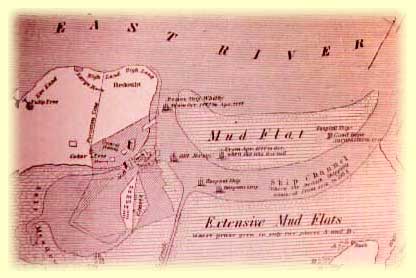
Below: An old map of Fort Putnam and Wallabout Bay
Fort Putnam was one of three forts in close proximity to create a (what would be unsuccessful) defensive barrier. One diamond-shaped fort called Fort Box (named after major Daniel Box) sat smack near the border of today’s Cobble Hill. The third fortification — get ready to be confused — was Fort Greene. The first Fort Greene, also a star shaped fortification, sat between Box and Putnam.
This fort was named after major general Nathaniel Greene, who would become one of the war’s most successful officers and essentially Washington’s most trusted adviser. Greene did oversee the construction of Fort Putnam, so figure in his post-war fame into the equation, and it will not be a surprise to discover that the fort was renamed Fort Greene for its potential use during the War of 1812.
Many old fortifications were refitted in 1812 in case of another British invasion, including the first Fort Greene (now called Fort Masonic). The British did attack Washington D.C. and Baltimore during the War of 1812, but never bothered to make it up to New York harbor this time around.
And just in case you’re interested, during the War of 1812, Fort Box was renamed Fort Fireman.
A neighborhood soon developed around Fort Greene, and by 1847 the fortification was replaced by a park — Washington Park — to be later replaced by the rolling, monument bedecked, Olmstead-and-Vaux designed Fort Greene Park in 1864.
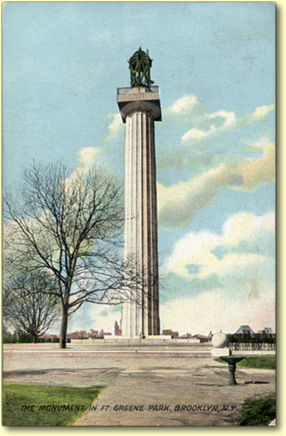
Tying the park back to its Revolutionary War past is its crowning monument, the Prison Ship Martyr’s Monument(at right), honoring those who died in British prison ships kept not that far from here in Wallabout Bay (that’s basically the small bay between the Williamsburg and Manhattan bridges on the Brooklyn side).