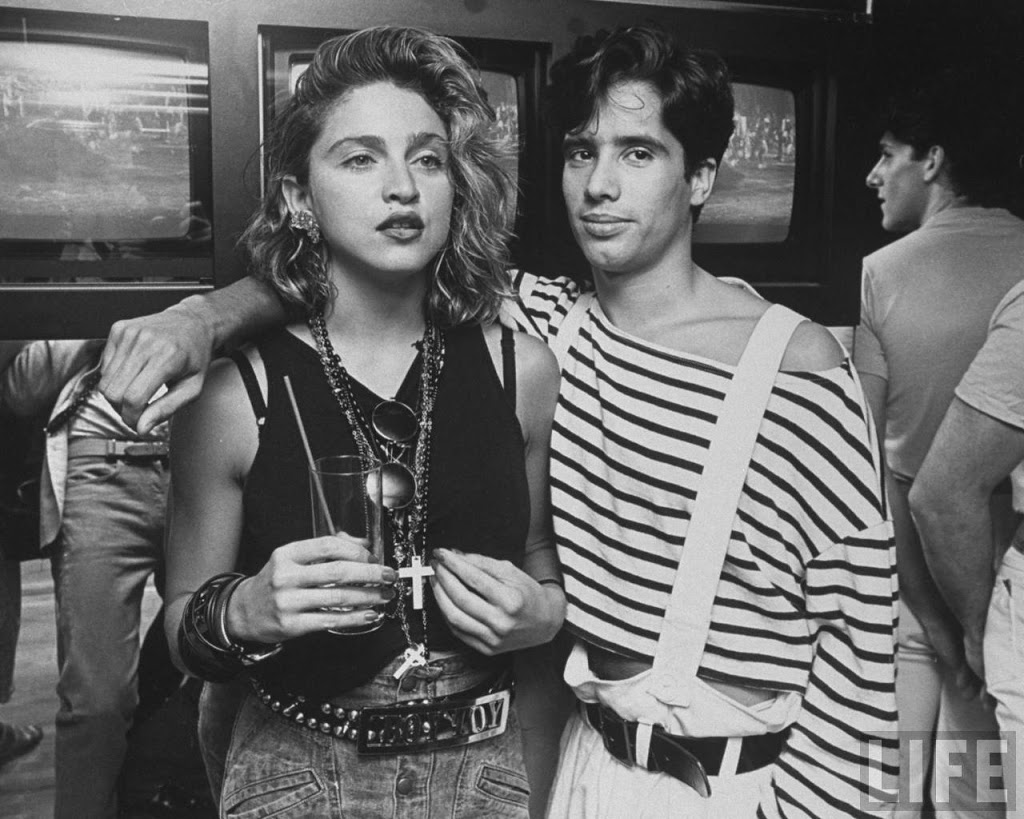
Girl gone wild: Madonna enjoys the video opulence of Private Eyes with former boyfriend and producer Jellybean Benitez, July 17, 1984
It’s 1984, and the hottest trend in American pop culture is the music video . MTV had debuted a channel of non-stop music videos in 1981, and just three years later, most new pop superstars were being defined by them– Michael Jackson, Prince, Duran Duran, Cyndi Lauper, Wham, Culture Club.
One of the more notable New York club opening in the summer of 1984 was Private Eyes, a trendy gay lounge at 12 W. 21st Street, poised to meet the video future with full-on glittery radness. With MTV revolutionizing pop music by the early 80s, nightclubs rushed to incorporate the new trend into their aesthetic. At Private Eyes, clubgoers needn’t have worried about a frenetic disco floor; they were literally invited to be mesmerized. “There is no defined dance area — it’s like a living room with the coffee table pushed aside.” the owner told Billboard magazine in November 1984.
The club was state-of-the-art for its day, with almost three dozen television sets, an immense library of 3/4th inch VHS cassettes and the technology to make “beat-for-beat transitions between videos, as well as wipes, fades and full mix effects for the club’s six tape decks.” New York Magazine listed it among their ‘environment clubs‘ of 1984, “like a department-store television section, except at Private Eyes you can have a beer and you can’t change the channel.”
In its opening months, Private Eyes scored a few appearances by music video’s biggest female star of the day — Madonna.
As a friend of owner Robert Shalom, Madge allegedly swore by the club, sometimes popping in after a day of recording her album Like A Virgin over at the Power Station studios on W. 53th Street*. “I don’t have MTV,” she remarked. “I do see videos, I go to Private Eyes.” Her record label hosted a party in celebration of her new album, released in November that year. Several months later, Madonna was photographed at the club with her rowdy companion Sean Penn on their first date.
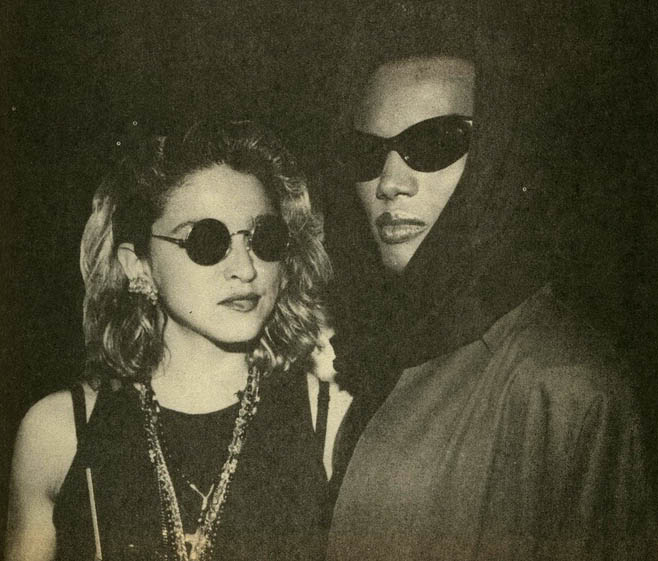
Below: Madonna, inside Private Eyes with Grace Jones, sometime in 1984, perhaps both having difficulty watching music videos with sunglasses on
The strict notion of a ‘video club’ in New York faded when it became cheaper for smaller clubs to install multiple screens and access video material. And, of course, as more common clubs joined the video revolution, the swankier ones eschewed it. Dance clubs that did opt for visual entertainment embraced ambient sets of computer animation by the early 90s, often leaving standard music videos for MTV and other cable networks. (Eventually even MTV left music videos.)
Private Eyes morphed with the times, eventually becoming the Sound Factory Bar in the 1990s, a spin off of sorts to the renown but troubled all-hours club on W. 27th Street, in the shadow of the West Chelsea’s elevated tracks. It refreshed its image a few years later under the name Cheetah.
Madonna, who had starred in five music videos by the time she first stepped foot in Private Eyes in the summer of ’84, has gone on to make a total of sixty-nine of them, including one that was just released this week.
*The year before, Bruce Springsteen recorded portions of ‘Born In The U.S.A.’ in the same studios.
Top picture courtesy Life Google images. Second image courtesy Madonna Scrapbook
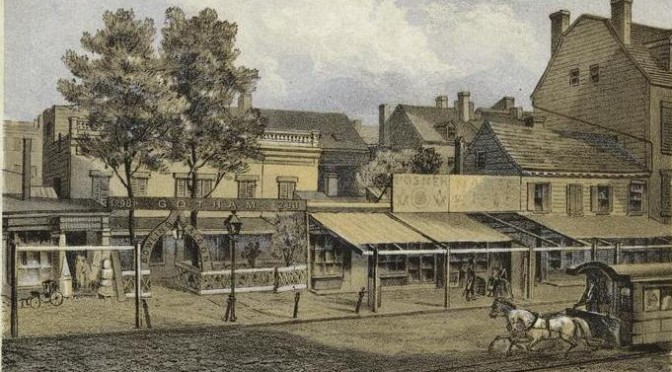
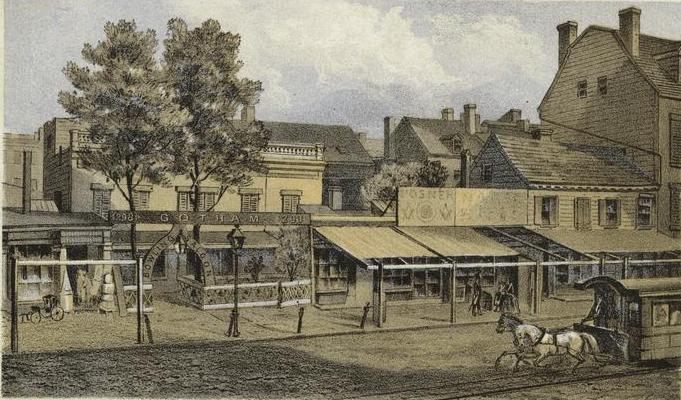
Above: The first of hundreds of Bowery hotels — the old Gotham Inn in 1862. The inn, which dated from the 1790s, sat quite close to where 315 Bowery is today, just north of Houston Street. (Pic courtesy NYPL)
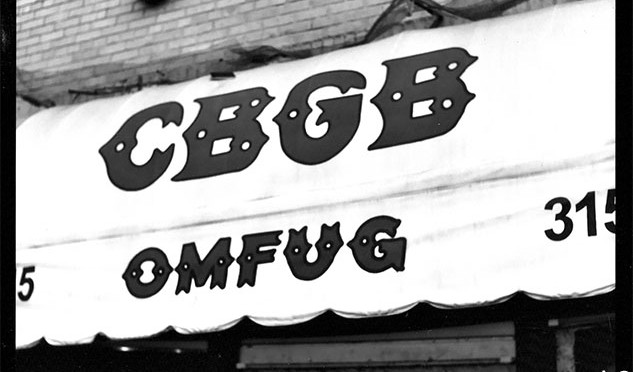
The early history of buildings at 315 Bowery — the address that would later become the club CBGB’s — is spotty indeed, but some early references to the address reveal some rather odd events that took place here.
In the 1860s, the Bowery neighborhood would still have been a de facto theatrical district for the lower classes, “New York’s primary locale for down-market entertainment – saloons, beer gardens, amusement halls, dime museums, street vendors and oyster houses,” according to David Levinson. Not quite given over to the truly seedier elements which would define the street for over 100 years.
In the early 1860s, it appears a pet shop or bird supplier resided at the address 315 Bowery. One William F. Messenger, with profession listed only as ‘birds’, lived at this address in May 1861.
On January 31, 1862, the New York Times reported on a strange gathering at 315 Bowery and presumably at Messenger’s shop — the Bird Fanciers’ Third Annual Exhibition of prized fowl. Little is known of the group, which had reportedly been in existence over a decade by this time.
Prizes were awarded to bird lovers who kept roosters and hens, with a gentleman by the name of William Manson really cleaning up:
“First prize, yellow cock, WM. MANSON; second prize, yellow cock, JOHN WILLIAMSON; third prize, yellow cock, JOHN HIGGINBOTHAM. First prize, mealy cock and best bird exhibited, WM. MANSON; second prize, mealy cock, —- BAKER; third prize, mealy cock, —– BAKER. First prize, yellow hen, WM. MANSON; second prize, yellow hen, WM. MANSON; third prize, yellow hen, —-MURRAY. First prize, mealy hen, JOHN HIGGINBOTHAM; second prize, mealy hen, JOHN HIGGINBOTHAM; third prize, mealy hen, WM. MANSON.”
However, despite its avian beginnings, I was able to find mention of the address’s musical heritage during this period: a John Bogan is listed as living or working at the address in 1867-68 as a “banjoist”, a teaching instructor (and possible manufacturer) of banjos.
PODCAST Modern American rock music would have been a whole lot different without the rundown dive mecca CBGB’s, a beat-up former flophouse bar that made stars out of young musicians and helped shape the musical edge of downtown Manhattan. Owner Hilly Kristal may have initially envisioned a place for ‘Country Blue Grass and Blues’, but the music spawned by this little hole in the wall would define the contours of American punk and new wave.
The Ramones, Blondie, the Talking Heads and hundreds of others bands would never have been the same without this dank little club with the most notorious bathroom stalls in New York. Tune in to hear a tale of the club’s rather inauspicious start and find out why, even as a venerated music icon, it was forced to close its doors.
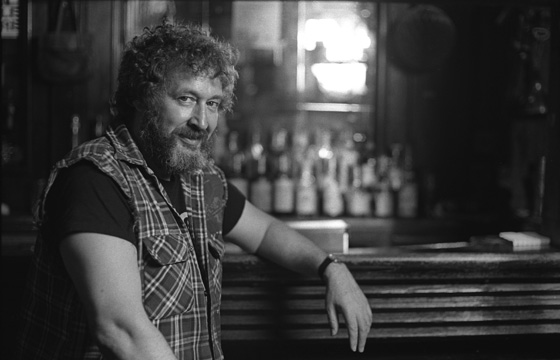
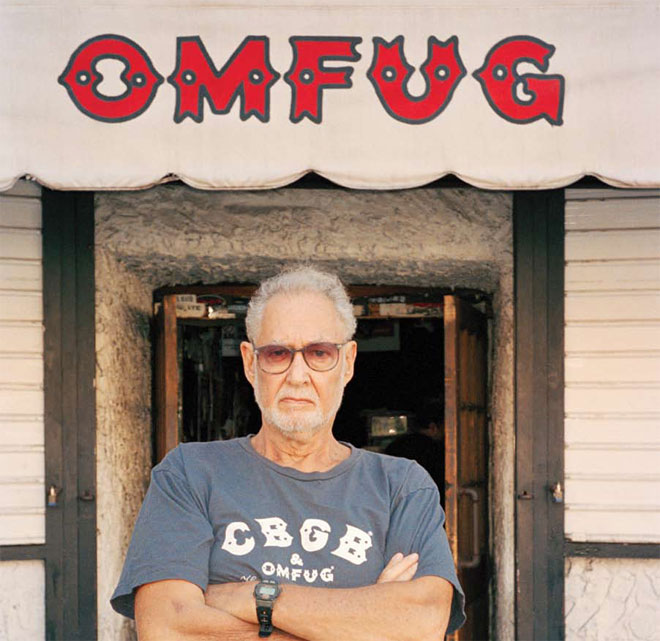
Hilly Kristal, back in the day. CBGB’s was originally Hilly’s On The Bowery, a spin-off of a far more successful West Village venue that frequently hosted performers like Bette Midler and Jerry Stiller. Hoping to draw a more music oriented crowd, Kristal changed the name to reflect broad tastes: Country Bluegrass Blues and Other Music For Uplifting Gormandizers.
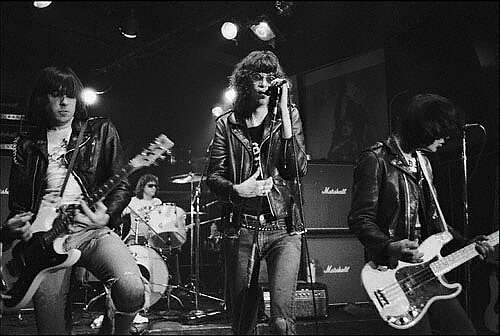
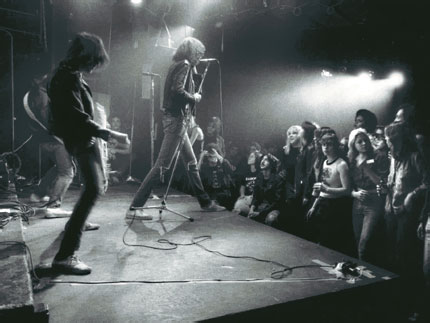
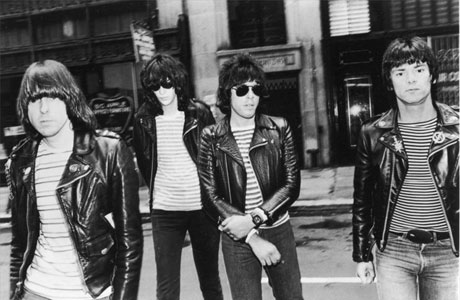
Initially unimpressive by any metric of musical quality, the scraggly group of guys from Forest Hills, Queens who formed The Ramones soon become a staple of the CBGB stage and the one of the most influential acts of the American punk style. If there’s a voice to 315 Bowery, most likely it’s that of Joey Ramone. (Photo by Allan Tannenbaum, from here)
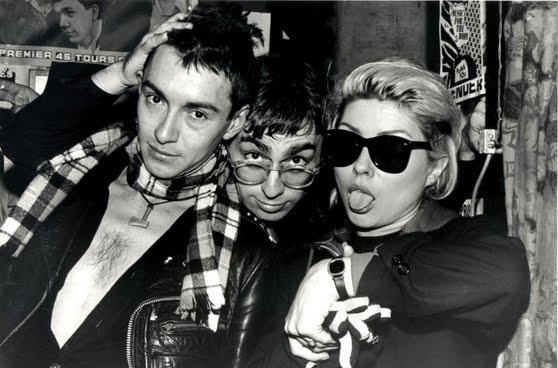
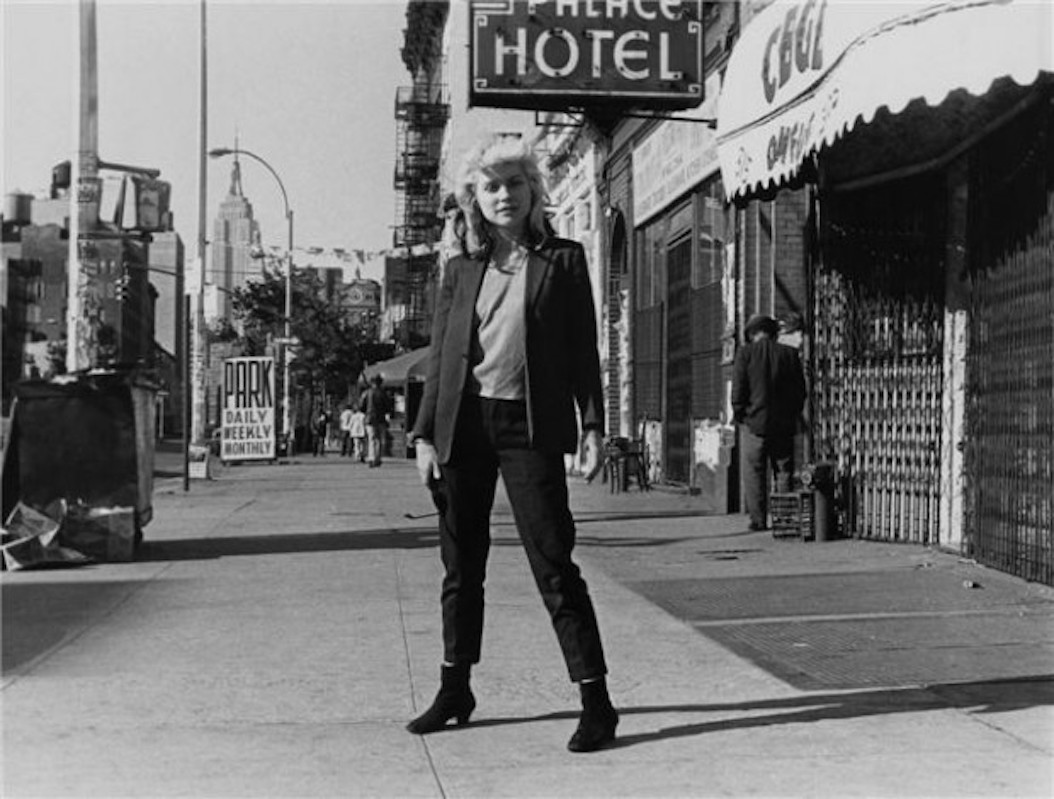
Deborah Harry and Chris Stein debuted on the CBGB stage as members of the Stilettos used the club to make their transformation into Blondie, the most successful group borne of Hilly’s Bowery club. Chris and Debbie are seen below with Arturo Vega, 1978. (Photo by Lisa J Kristal, photo from here)
Hilly in later years. The club become a high-profile victim of Bowery gentrification and had to shut its doors in 2006. It lived on briefly as a St. Mark’s clothing shop, even as its old location become home to a John Varvatos menswear boutique. Photo by Peter Sutherland (here)
Check out the official CBGB blog for lots of great stuff associated with the club, including lots of old photos and that full color ‘walk-through of the club. You might want to take a shower after viewing it.
Here’s a sampling of female entertainers from the last one hundred years, focusing on one particular venue that figures into shaping that person’s professional career. Obviously, most of these women performed in dozens of places throughout the city. I’m just focusing on location pivotal to their beginnings.
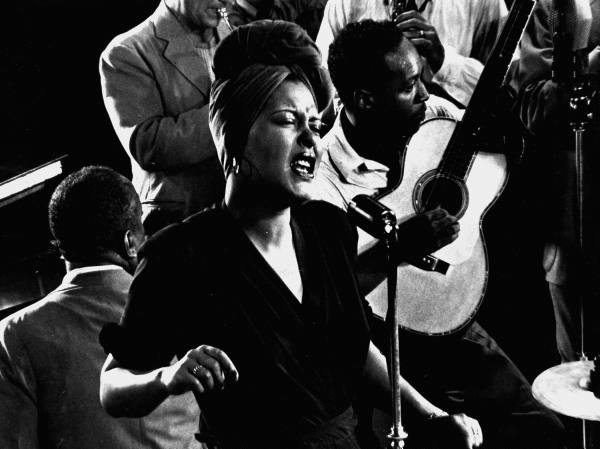
Billie Holiday in a jam session, 1943 (Gjon Mili, courtesy Google Life)
Most of these places are long gone, but you can still visit a couple of them (namely the Bottom Line, The Apollo, and St. Mark’s.)
Sophie Tucker1918 Reisenweber’s Cafe
58th Street and 8th Avenue
One of New York’s true “red hot” ladies of nightlife, Tucker got her start in the Ziegfeld Follies and developed her sassy schtick in vaudeville. The bawdier contours of her act she picked up on the nightclub circuit, cemented in her appearances at Reisenweber’s Cafe. [Read more in my prior article on Reisenweber’s.]
Ethel Waters 1919 Edmonds Cellar
130th Street
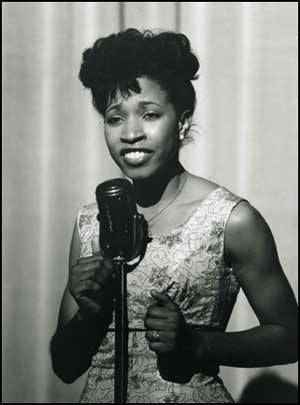
Although she would later be associated with gospel music, Waters’ debut at this dank piano bar brought out the bawdy in this future star, learning to incorporate her natural bluesy with popular standards. The combination, mixed with a sass honed in front of drunken, rowdy clientele, would make Waters (at right) one of the biggest black stars of the Harlem Renaissance.
Josephine Baker 1923Â Plantation Club
126th St and Lenox Ave
That ambitious little showgirl from St. Louis came to New York as a chorus girl in a traveling show and stayed to wow the crowds of Broadway and Harlem, in particular at the Plantation Club, a sleek competitor of the mafia-run Cotton Club. French producers, catching Baker stealing one of her shows at the Plantation, invited her to Paris. And the rest is burlesque history.
Bessie Smith 1923
The Nest
169 West 133rd Street
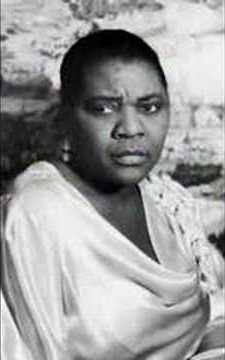
Bessie (at left) was not the glamorous kind; her dark bluesy performances tended burrow into your soul. Her 1923 performances at the new Harlem club The Nest marked a turning point for her career; she got her Columbia recording contract that year and began a successful run of Broadway and vaudeville performances, until alcoholism and a tragic car accident cut short her career in the 1930s.
Billie Holiday 1933
Covan’s
West 132nd St
You would need a really large map to chart out all the places Billie sang. The moment Elinore Harris left the workhouse (thrown there after a prostitution conviction) and changed her name to Billie Holiday, she worked stages both in Harlem and in Greenwich Village. It was at Covan’s nightclub that a Columbia Records producer heard her. “The way she sang around a melody, her uncanny harmonic sense and her sense of lyric content were almost unbelievable in a girl of 17.†Within a year, Lady Day would make her first recording with Columbia.
Lena Horne 1933
The Cotton Club
142nd St and Lenox Ave
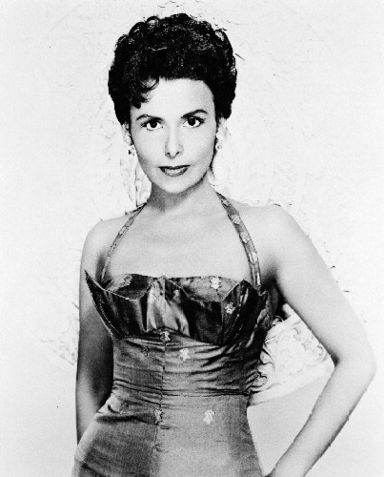
It was the most famous club in Harlem; she was a lovely young 16 year old girl with barely any experience. As the Cotton Club’s youngest chorus girl, Horne (at right) grew up fast, absorbing the presence of the marquee stars, befriending band leaders, and learning the hard knocks of a color segregated entertainment industry — experience she would take with her to Hollywood years later.
Ella Fitzgerald 1935
Savoy Ballroom
140th St. and Lenox Ave
In New York in the 1930s, the best place to hear swing was the Savoy Ballroom, and the best person to hear sing the swing was a young singer who had just been discovered at the Apollo Theater a few months before. The amateur singer was invited to join Chick Webb’s orchestra for a residency at the hoppin’ ballroom, and as dancers jived, a legend was born on stage.
The Andrews Sisters 1937
The Terrace Room @ Hotel New Yorker
481 Eighth Avenue
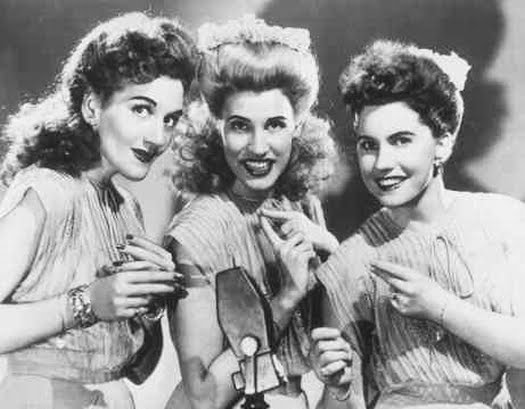
Years before a war would turn them harmonies into anthemic radio hits, the cornbread sister trio hoped their March 1937 breakout performance at the Terrace Room in the Hotel New Yorker would make them stars. Although the hotel management would find them bland, record executives didn’t. Within the month, they were making music for RCA Victor.
Betty Hutton 1938
Casa Manana 753 Seventh Avenue (at 50th Street)
A scrappy, gangly Midwestern girl who cut her teeth singing in speakeasies and at lake resorts, Hutton was discovered by bandleader Vincent Lopez and taken to New York, where she was given a rare opportunity — to perform in a nightclub owned by impresario Billy Rose. And did she run with it. New Yorkers loved her wacky, electric style, and within a year, she was a scene-stealing co-star in an Ethyl Merman musical.
Pearl Bailey 1944
The Blue Angel 152 East 52nd Street
The choir-trained Virginian songstress had made her rounds on the big band scene — and even toured with the USO during the war — when she took a two-week gig at the swank east-side nightclub the Blue Angel. Her warm, belting voice and stage presence electrified New Yorkers; her two-month stint turned into eight-months, and awaiting her on the other side were a recording contract with Columbia Records and roles on Broadway and in motion pictures.
Nina Simone 1960
The Village Gate 158 Bleecker Street
Simone was already an accomplished musician by the early 1960s, Julliard trained, performing in cabarets of Atlantic City and even scoring a recording contract. But her distinctive sound, the gravity and intensity of her beliefs, would only manifest themselves musically in New York lounges like the Village Gate, one of the few clubs she would enjoy returning to. One live recording from her appearances there became one of her greatest albums, released in 1962. Fun fact — her opening act that night was a new comedian Richard Pryor.
BELOW: “If He Changed My Name” from Nina’s Village Gate release
Barbra Streisand 1960
The Lion 62 West Ninth Street
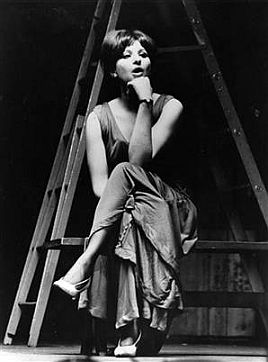
She had barely left her parents home in Brooklyn when young Barbra Joan Streisand turned to singing as a way to become a star. Her New York debut was at a quiet, mafia-run gay club called The Lion, who had a weekly talent show. Barbra, needing the money, entered with the song ‘A Singing Bee’, and won the prize money. She stayed at the Lion for weeks afterwards, fostering her very first gay fanbase.
Ronnie Spector 1961
Peppermint Lounge 128 West 45th Street
Phil Spector might have transformed (and later married) Spanish Harlem resident Ronnie Bennett, but he did not make her a star. Two years before meeting him, Ronnie, her sister Estelle and cousin Nedra were hired as dancers at the crowded new rock club the Peppermint Lounge. One day they were mistaken for the main act, and so the trio just went with it, performing a Ray Charles cover and winning over the audience. [Read more about the Peppermint Lounge here.]Joni Mitchell 1967
Cafe Au Go Go 152 Bleecker Street
The coffeehouses of Greenwich Village launched their share of careers in the 1960s. Mitchell was a seasoned performer from the folk scenes in Toronto and Detroit when she arrived in New York and played regular performances at the Cafe Au Go Go, a cramped basement space best known as the place comedian Lenny Bruce was arrested on obscenity charges. Opening for Richie Havens one October, Mitchell met her future manager Eliot Roberts here. Within six months, she would release her first album, Songs To A Seagull.
Bette Midler 1970
Continental Baths, Ansonia Hotel 2109 Broadway
It seems impossible to imagine — a gay bathhouse as performance venue. But this was the late ’60s/early ’70s, and everything’s possible! Bette had arrived in New York five years previous and was just starring in her first Broadway show when she debuted an odd little cabaret act here at the Continental. With waterfall trickling in the background, Midler created her Divine Miss M persona here, wrapped in a towel. On occasion she even had a shy, betoweled Barry Manilow with her. (Bette wasn’t the only stars to stake out the Continental; Melba Moore, Patti Labelle, Nell Carter and the Pointer Sisters also tried out their acts here.
Patti Smith 1971
St. Marks-On-The-Bowery 131 East 10th Street
While Bette was in a bathhouse, Patti was at church. The career of New York’s pre-eminent 1970s rocker ignited at the rock venue CBGB’s. She and Robert Mapplethorpe would learn the ways of celebrity at Max’s Kansas City. But her first musical appearance was at a more unusual venue — the basement of St. Mark’s On The Bowery, counter-culture community center since the late 1960s. She was there as a poet, but with Lenny Kaye on guitar, she sheepishly sang a few numbers (even a cover of “Mack the Knife”) which kicked off her ascent into rock icon status.
Deborah Harry 1974
CBGBs 315 Bowery
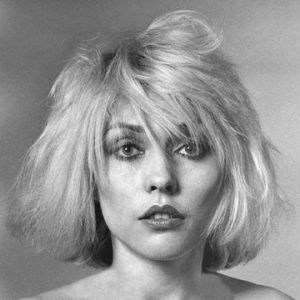
She knew she was star material, but it just took her a couple tries to get it right. The former Max’s Kansas City waitress has already worked through one band, the Wind In The Willows, and tried out another one — the Stilletos, debuting at CBGB’s in May 1974. They folded, but a year later, she took lover and bandmate Chris Stein and formed Blondie. The band would build its reputation on the sturdy little CBGBs stage, easing it into the era of New Wave.
Madonna 1983
Danceteria 30 West 21st Street
She was going to be famous, no matter what. Her time to strike was one evening in 1982, when Danceteria’s flirty hat-check girl slipped her demo cassette “Everybody” to deejay Mark Kamins. A year later, now signed to Warner Bros., she would come back as a performer, and the Madonna identity — more than a mere vocalist — would strike its first pose. [Read more about Danceteria here]
BELOW: Madonna at Danceteria
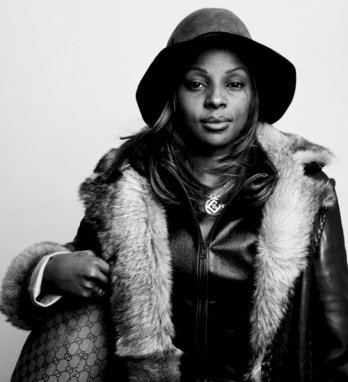
Mary J Blige 1991
The Apollo Theater 253 W. 125th Street
No surprise that people get discovered at the Apollo; what impresses me is that people still use it as a springboard for fame, decades after it opened. Bronx resident Blige actually got signed to a label deal after being discovered at a White Plains shopping mall. But that deal went nowhere until she started showing up at the Apollo, singing backup to other performers. During those Apollo years, she survived bouts of alcoholism and depression which later fueled her confidence as R&B’s reigning diva. (Photo at left by Annie Leibowitz.)
Lady Gaga 2006
The Bitter End 147 Bleecker Street
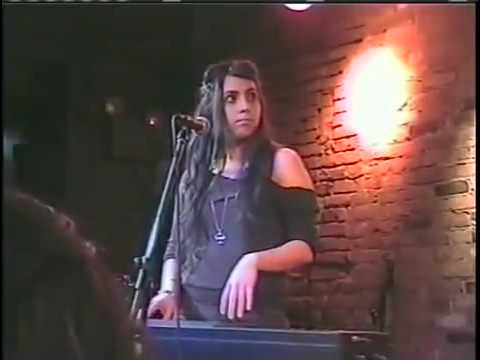
Of all the performers to grace the legendary Bitter End stage during its almost 50-year history (Bob Dylan, Woody Allen, Bruce Springsteen), odd that a woman who once went by the name of Stefani Germanotta would be among the lucky few to become superstars. The January 2006 performance might have been the pinnicle of the young singer-songwriter’s career “She was learning how to put on a show,†says Bitter End owner Kenny Gorka. “She learned to get people to listen.†[Daily News] But something about the downrock rock scene set her on a different path, one of complete re-invention. She went to Los Angeles, and came back Lady Gaga.
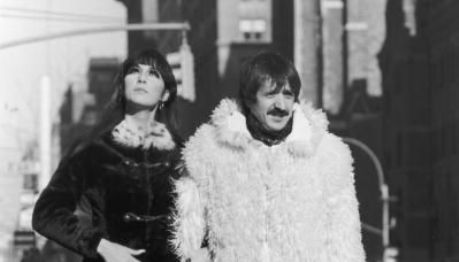
Sonny and Cher in New York City (picture courtesy Getty Images)
June 1, 1970: Sonny and Cher begin a two-week stint at the Empire Room at the Waldorf-Astoria.
The Empire was one of the swankiest hotel lounges in Manhattan, usually the site of stars slightly past their prime, pop and jazz musicians of the prior generation. Dinah Shore, Ray Bolger, Eddie Fisher — they all played the Empire . In fact, in July 1971, Louis Armstrong would give his final performance here at the Empire. And just a couple months before the debuts of Salvadore ‘Sonny’ Bono and Cherilyn ‘Cher’ Sarkisian , Peggy Leedelighted audiences here with remakes of ‘Bridge Over Troubled Water’ and ‘Is That All There Is?’
It had actually been a few years since their biggest hit, ‘I’ve Got You Babe’, and the duo since then had seen their share of flops, both in music and film. Cher took the first part of 1969 off to give birth to her daughter Chastity.
It was Sonny’s idea to turn the pair into a Las Vegas showstopper, and their first stop before hitting the gambling capital was New York’s Empire Room, to try out a loungier version of their act.
The pair played off their catty, flirty banter and made particular fodder of Cher’s outrageous costumes. The cheesy repartee obviously did the trick, but it was TV, not Vegas, that came calling. Within a year, they had their very own prime-time program, The Sonny And Cher Comedy Hour, a ratings bonanza that might have lasted forever if not for their divorce in 1974.
Meanwhile, at the Empire Room, Sonny & Cher were followed up in late June with a more appropriately loungish headliner — Latin troubadour Trini Lopez.
March 30, 1974: The Ramones, the pride of Forest Hills, Queens, play their first public concert together at Performance Studio, a small space on East 20th Street* managed by future member Tommy Erdelyi (later Tommy Ramone). For their debut set, there were just three of them, and Dee Dee Ramone sang lead
How did it go? Johnny Ramone: “We were awful. We didn’t have the image down yet. Our friends didn’t even want to talk to us anymore after that.”
The jumbled mess of a set did not please an audience comprised of mostly friends, who paid $2 for the privilege of seeing a visibly nervous Dee Dee Ramone accidentally crush his bass underfoot.
It would take a few months for the band to get their musical footing, in time for their debut at CBGB’s on August 16th.
You can read more about this long-forgotten performance space (which also hosted shows by the New York Dolls and Blondie) here.
*Many sources list the studio at 23rd Street, not 20th Street. Anybody have an idea as to its exact address?
STARS OF MADISON SQUARE GARDEN: Elton John and John Lennon
LOCATION: MSG IV
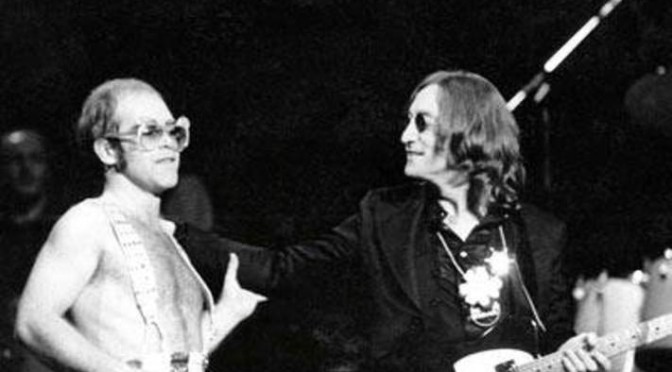
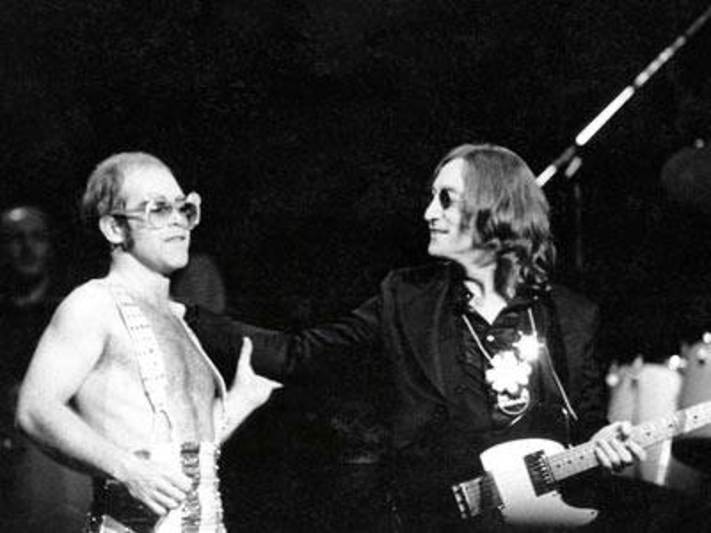
John Lennon’s last stage performance ever took place on 1974 at Madison Square Garden, and he only did it because he lost a bet.
Elton John, an up and coming young star fresh from the successes of his album Goodbye Yellow Brick Road, collaborated with the Beatles icon on the Lennon single “Whatever Gets You Thru the Night,” providing piano and background vocals. As legend has it, Lennon was incredulous that the song would have mass appeal and agreed to perform with Elton in concert if the song hit number one.
Appearing on Lennon’s album Walls and Bridges, “Whatever Gets You Thru the Night” did indeed hit #1 on the charts — the only Lennon solo track to ever reach that spot.
And so, at the Elton’s Thanksgiving performance at MSG, November 28, 1974, Lennon took to the stage, and the two Johns plays a small set together which included renditions of “I Saw Her Standing There” and “Lucy In The Sky With Diamonds.”
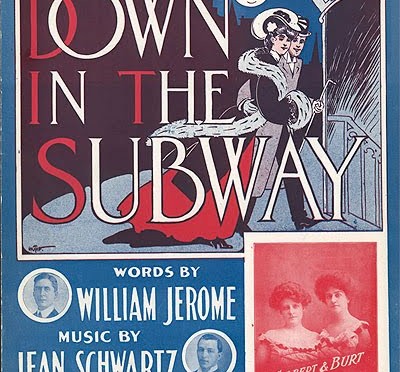
“Down In The Subway,” published in 1904 by one of Tin Pan Alley’s most successful music men Jerome Remick
___________________________________
PODCAST The modern music industry begins…. on 28th Street? A seemingly nondescript street in midtown Manhattan contains some of the most important buildings where early American pop music was created.
Tin Pan Alley was a bustling and frenzied area, the most creative area of the city, with songwriters — and song pluggers — churning out iconic music. Sing along as we talk about the greatest songwriters and the process they went through to create the most influential tunes of the century.
Download this show it for FREE on iTunes or other podcasting services. Click this linkto download it directly from our satellite site. Or click below to listen here:
This week’s show features actual music snippets, featuring “A Pretty Girl Is Like A Melody” by John Steel, “Toot-Toot-Tootsie” by Al Jolson, and “Grand Ole Flag” by Billy Murray.
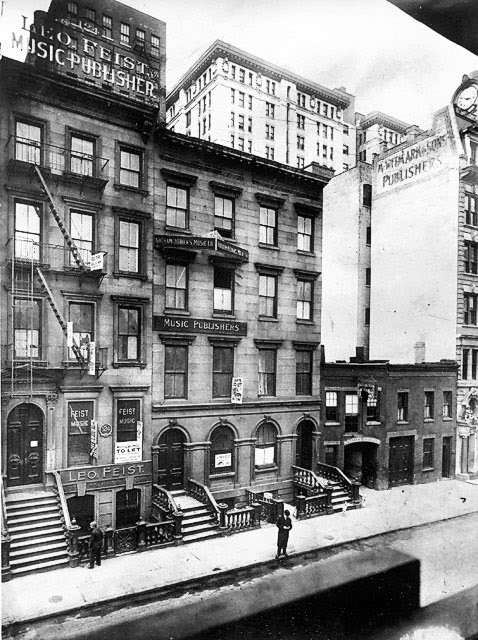
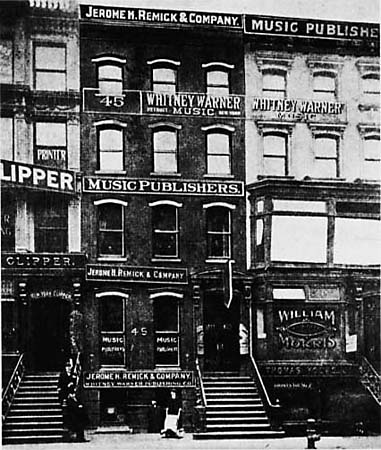
Music Row: Music publishers, once centered around Union Square, began collecting on 28th Street in the late 1880s and most of them stayed there until 1909. Leo Feist, seen in the first picture on the left, was probably the first to move onto the block.
___________________________________
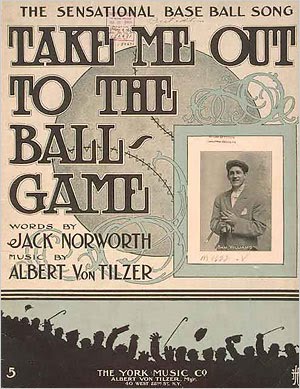
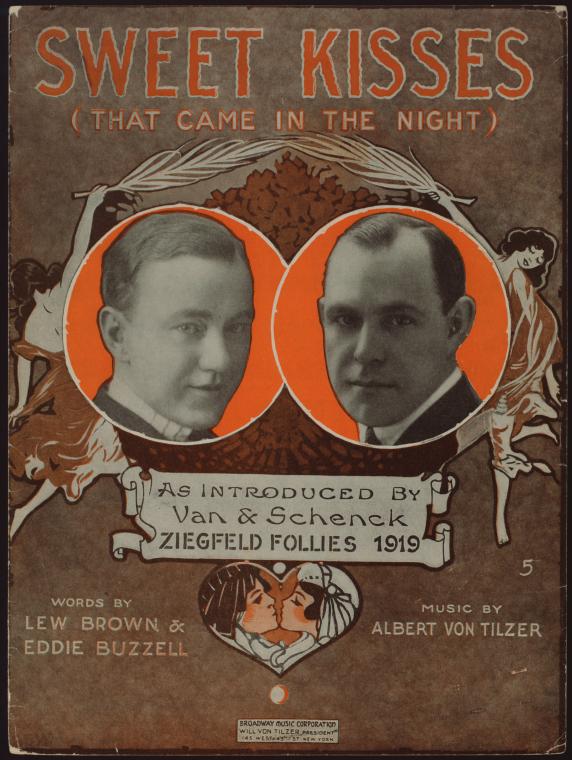
Grand Slam: One of the greatest hits to come out of 28th Street was Albert Von Tilzer’s Take Me Out To the Ballgame. The lyrics were written by vaudeville star Jack Norworth who popularized the song in his routines. Curiously, neither Von Tilzer nor Norworth had ever seen a baseball game at the time the song was written.
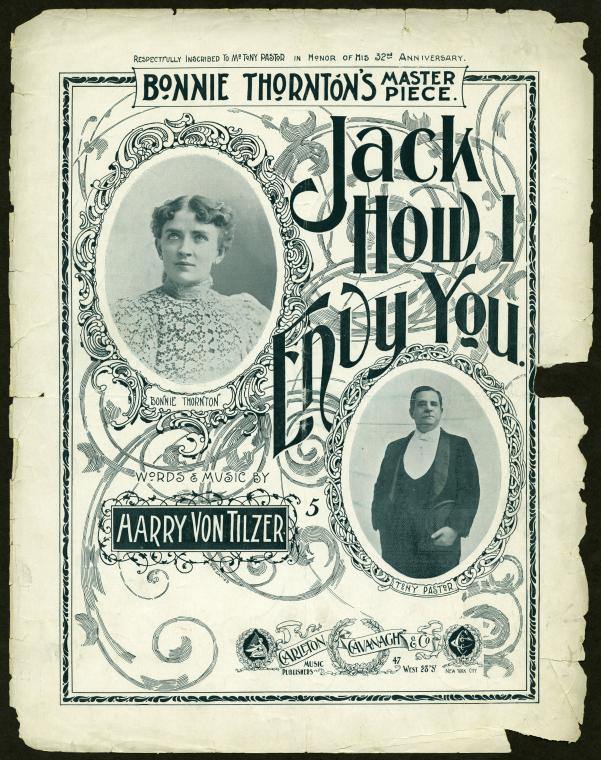
A song by Albert’s brother that is, needless to say, less famous. (Pic courtesy here)
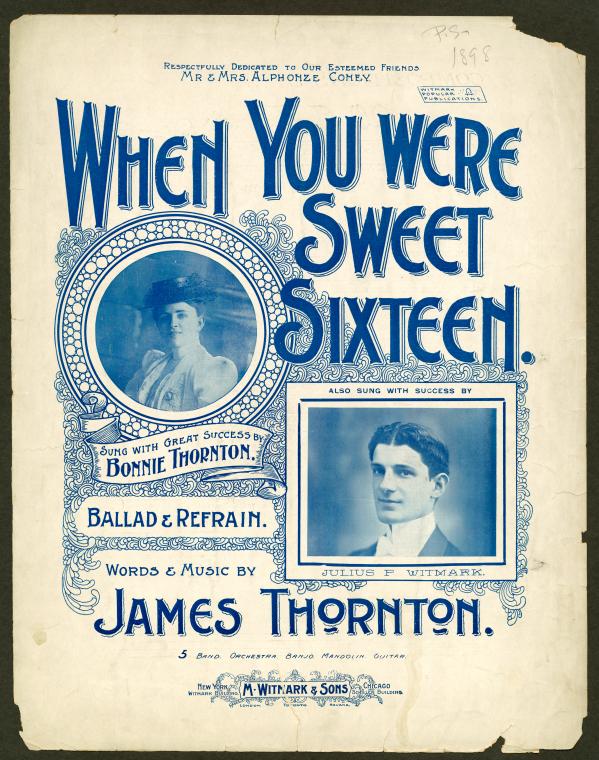
M. Witmark and Sons got their start selling their tunes straight from the vaudeville stage, later to become one of the most successful of the 28th Street firms.
By 1909, most of the music houses had moved off the street into various locations throughout midtown, catering to the budding Broadway market. One of the most lucrative platforms of popularizing songs was the Ziegfeld Follies. (Pic)
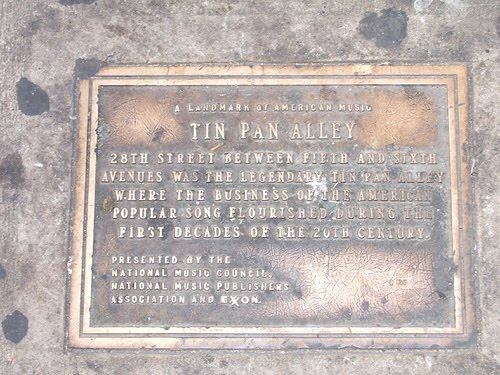
The only sign on 28th Street of its importance to the world of music is a small plaque on the sidewalk
The buildings of Tin Pan Alley are not landmarked, but there are some grassroots efforts underway to make sure the area is protected. In particular, the Historic Districts Council has a lovely writeup and features the addresses of many of Tin Pan Alley’s most successful music houses. No surprise that a website on collectable sheet music should also have a great writeup on the area.