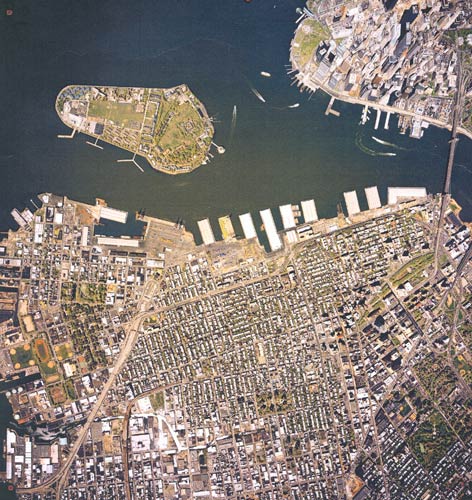
Governors Island: bits and pieces


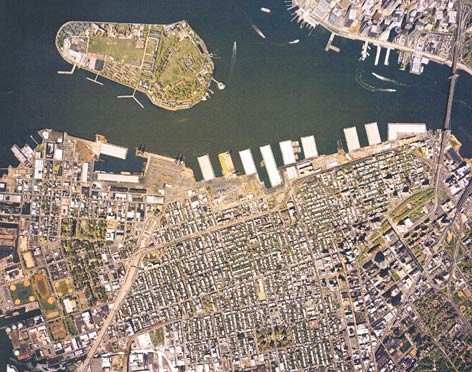
Some tidbits we forgot to throw into our podcast on Governors Island….

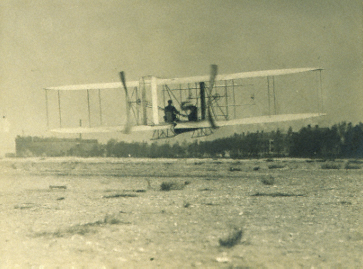
Governors Island holds a special place in aviation history. When Wilbur Wright, he of the famous duo, lifted his small aircraft from the airfield at Governor’s Island to circle the Statue of Liberty and return, in Sept 1909 it was the first time a plane had flown over American waters.

Within a few years, a flying school was encamped on the island and was the busiest airfield in the US during the early days of aviation. You can find a memorial to this fantastic history in the form of a bronzed plane propeller, situated in the lawn of Liggett Hall, facing south.

Here’s a shot of Wilbur’s ride:
The Dutch, namely Wouter Van Twiller, purchased Governor’s Island in June 1637 from “the Native Americans of Manahatas for two ax heads, a string of beads, and a handful of nails.” New York State, namely governor George Pataki, symbolically purchased the island back from the US government in January 2003 for one dollar.

The Army built a railboard on the island, with the grand length of 1 3/4th milies of track, and was considered at the time to be ‘the world’s shortest railroad line’.

Fort Jay was named after John Jay, one of the authors of the Federalist and the first Chief Justice of the Supreme Court. However, do to a very unpopular treaty at the time that Jay had negotiated with the British — called the Jay Treaty — the name was changed to Fort Columbus, until it was changed back to Jay’s name in the 20th Century.

Technically, Governors Island belongs to no borough. Neither do Ellis Island, Riker’s Island, Randall’s Island, and Roosevelt Island. Although administration of the island’s business is naturally run through Manhattan. Its zip code, incidentally, is 10004, which it shares with other Battery Park business.

During the 1863 draft riot, Governors Island was actually stormed by rioters who wanted to get into the Army’s stockpile of weapons. They were held back by civilians on the island, because the Army soldiers were over guarding buildings in Manhattan!

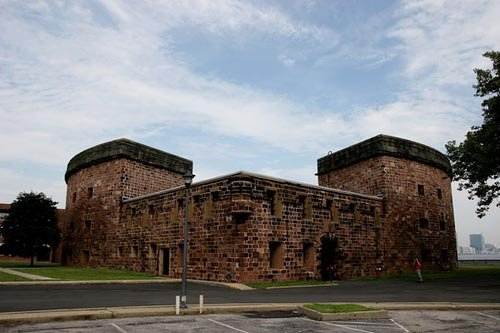
Some would like to see Castle William turned into the New Globe Theatre, a 21st Century homage to Shakepeare’s old stage. We see a structural resemblance, but frankly we’re not for this idea.

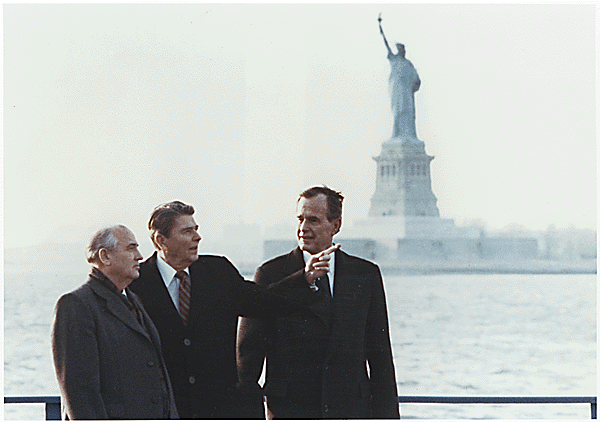
Reagan, Bush and Gorbechov came to the island in 1988 for a summit, a year before the fall of the Berlin Wall. Here’s the juicy details.
Categories
Podcasts

PODCAST: Governors Island

New York’s most underappreciated treasure gets the Bowery Boys treatment. Its Governors Island: a fort, a small town, a prison and a Burger King … all bought for one dollar.

Listen to it for free on iTunes or other podcasting services. Or you can download or listen to it HERE

UNUSUAL NYC MUSEUMS #2: History and waffles

In one of my entries below regarding the Mudd Club, a reader asked why I referred to Cortlandt Alley as ‘mysterious’. The tiny little alley — one of New York’s last — is between Canal and Franklin and, while partially my own projection upon it as a rough reminder of old New York, the dark and creepy path retains much of its bruised, dented appearance.

Perhaps in deference to the Mudd Club days, however, the alley has also become a haven for artistic talent, inspiring the likes of filmmaker Laura Kraning, installationist Matthew Gellar and photographer Spencer Tunick, who took one of his community of nudes there.

What does this have to do with an UNUSUAL MUSEUM?

Cortlandt Alley was named after Olaff Stevenson Van Cortlandt, who came to ole New Amsterdam 1637 and whose progeny would go on to become powerful forces in the new city.

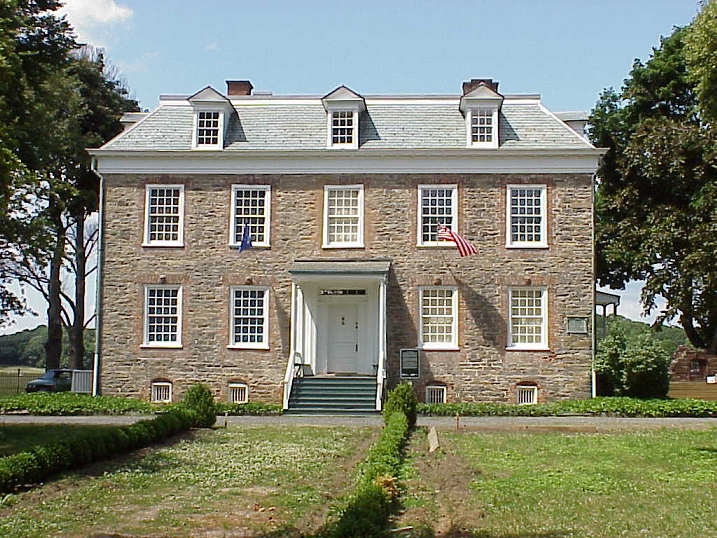
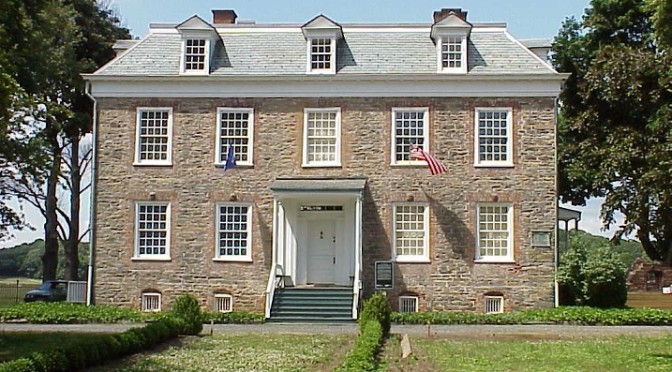
The Van Cortlandt’s base was in what is today the Bronx, and since 1897, their sprawling estate has been a museum and preservation to the lifestyle of early New York culture. It is officially the oldest standing structure in the Bronx, perched in massive Van Cortlandt Park.

The stately home was built by Olaff’s grandson Frederick, and the museum preserves rooms from the period from it was built in 1748, through the era (1823) that the house was maintained by his sons. If you’re doing your math, that would put the decor solidly in the American Colonial period. That’s right: George Washington slept here . During the Continental Army’s eventual retreat from New York, George set up officer’s quarters here. It must have sucked to leave the cozy charm of this house to cross into New Jersey and eventually the frozen shores of the Delaware River.

On top of its almost doll-house preservation of furniture and archectecture, there’s also a quaint herb garden outback. And, for some reason, my favorite part — Colonial waffle irons! You can even get the old-time recipe from the website, which also has visitors info and other historical details.

While you’re out there, why not check out the Van Cortlandt golf course nearby? Its the oldest golf course in the United States, built in 1895, but is still 150 years younger than the house that sits nearby. If that’s not enough for you, its also a movie star in its own right, starring in several film, including pivotal scenes in Wall Street.

As for Van Cortlandt House, don’t confuse it with the Van Cortlandt Manor, farther into New York state. Olaff’s son Stephanus , the first native-born mayor of New York City, moved farther up the Hudson River valley to what is now Croton and his house, which can also be visited, is almost more exquisite for its bucolic surroundings.

FRIDAY NIGHT FEVER: Mudd Club


To get you in the mood for the weekend, every Friday we’ll be celebrating ‘FRIDAY NIGHT FEVER’, featuring an old New York nightlife haunt, from the dance halls of 19th Century Bowery, to the massive warehouse spaces of the mid-90s.

First on the list is the Mudd Club, often viewed as the mirror image of its more known uptown competitor Studio 54. Located between the borderlands of TriBeCa and Chinatown (77 White Street, near mysterious Cortlandt Alley), Mudd was a multi-level playground for the avant garde and strictly fabulous (i.e. one of the most notoriously elite clubs in the 70s), playing more to the burgeoning new wave and punk scene than to the disco beats echoing through other halls.

Unlike nightclubs today, which seem to cater A-list celebrities and their worshipers, the Mudd Club with its gold stairs and dark halls attracted a serious cult set of icons from the deep trenches of New York culture, particularly latter era Warhol proteges and art rock stars like Lydia Lunch.

Mudd owner Steve Moss was able to attract such rough-and-tumble innovators by combining its chicly trashy main floors with an art gallery on the fourth floor. The place became known as much for its Jean Michel Basquiat exhibititions as it did for its groundbreaking performances by the Talking Heads, Klaus Nomi and Bow Wow Wow.

In fact, David Byrne and the Talking Heads immortalized the club in their song ‘Life During Wartime’: “This ain’t the Mudd Club or CBGB’s, I ain’t got time for that now…”

On any given night you could stumble into the club (if you were ‘downtown’ enough) and, for instance, hear Debbie Harry rapping with Fab Five Freddy.

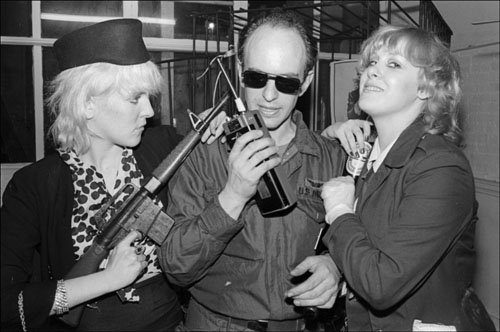
The club thrived on the degenerate but respectable synergy between art and music, a concept that would become mainstreamed in the late 80s. Although its no longer open in NY, its owner Steve Moss opened another version in Berlin in 2001, and purportedly he sits at the bar, still overseeing his nightly menagerie, even as most of the artists and performers he helped create in the 70s and 80s have passed on. (In fact, that’s Steve in the photo above, with members of the punk band Combat Rock.)

In addition to a European club, the former haunt also lives on as a shade of makeup.

There are tons of fun pictures from the Mudd Club’s heydey here.

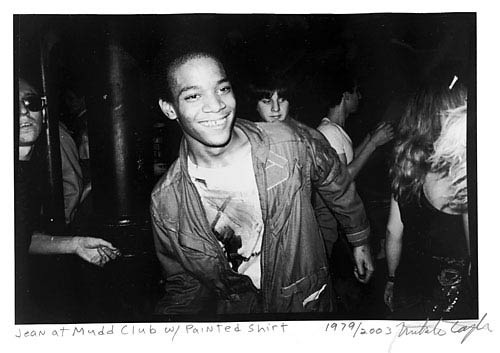
And here’s Jean-Michel, basking in his brief fame:

With his short term girlfriend Madonna looking on, Basquiat’s band GRAY almost exclusively performed at Mudd Club, featuring bassist and future filmmaker Vincent Gallo.

And why the Mudd Club? The urban legend claims that it was alledgedly named after the doctor and alledged Confederate conspirator (or maligned innocent, depending on who you talk to) Samuel Mudd, who helped John Wilkes Booth escape after he murdered Abraham Lincoln. Mudd mended Booth’s broken leg which he received when he fled D.C., and the long stick he used to set the bone was known as ‘Mudd’s club’.

HAPPY FRIDAY!

Grand Central’s Other Explosion

Wednesday’s steam explosion disaster at 41st Street and Lexington Avenue, which at ‘press time’ had killed one person and injured 44, gave many people that sinister feeling of déjà vu they felt on Sept. 11. It reminded us almost as much of the New York blackout of 2003, with hundreds of people filling the streets with busy cellphones and sweaty backs, some annoyed, some good humored.

Believe it or not, however, over a hundred years ago, the Grand Central Station environs bore witness to an even more horrifying explosion … just one block away.

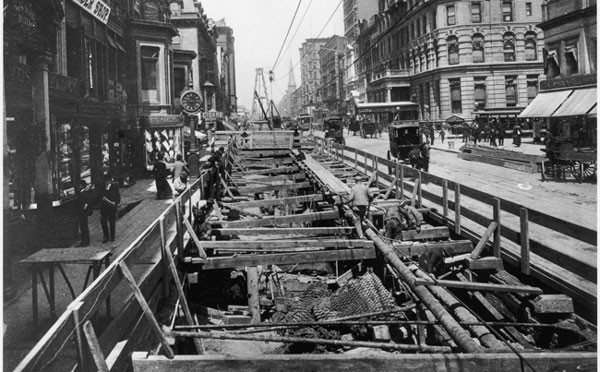
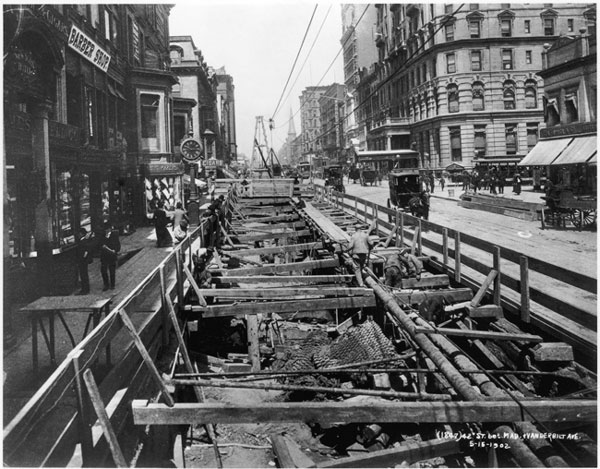
William Barkley Parsons was given the arduous task of installing the first New York City subway system in 1894. After visiting the London Underground, he determined that the best way to drill holes through the varied and sometimes delicate surface of the island was with a method called ‘cut and cover’ –- essentially digging a gigantic, deep trench and sealing it up at street level. This was chosen over the trickier ‘deep tunneling’ which required greater blasting and elaborate subterranean passageways.

One of the subcontractors in Parson’s employ was the unfortunate Ira Shaler, who was in charge of the tunneling of 34th through 42nd Street. This being before the days of union and worker’s protection, Shaler was soon stamped with the mortibund nickname ‘the voodoo contractor’ for a nasty string of deadly accidents along the line.

And so, 105 years after Wednesday’s steam explosion, the greatest of Shaler’s accidents happened a block away at 41st and Park Avenue, on Jan 27, 1902. A wooden shed filled with 200 pounds of dynamite ignited and blew, sending billowing flames high into the sky and glass shards flying for blocks. The nearby Murray Hill Hotel was severely damaged as was the great façade of the Grand Central terminal. Five people were killed and many others seriously injured. The tunnels below, strangely, were barely disturbed.

Shaler continued on, and with him, smaller calamities occured up and down the newly constructed tunnel shaft.

In the end, Shaler’s final unlucky victim was Shaler himself. He died five months later, four blocks down, on 37th and Park, crushed by tumbling rocks while he was demonstating the tunnel’s safety to his boss.

Or to quote professor Clifton Hood, a professor of history at Hobart and William Smith Colleges: “Parsons pointed to a rock and said it looked rotten. Shaler disagreed, stepped out from under a protective cover and tapped the rock with his cane. It all came down on top of him. He died a few days later. It was not a good way of losing an argument.”

Categories
Podcasts

PODCAST: The Blackout of 1977

Flash back to the summer of 1977, when Star Wars and the Yankees ruled, gas prices were high, a serial killer roamed the streets, and the city experienced a little inconvenience called the New York Blackout.

UNUSUAL NYC MUSEUMS #1: Satchmo’s Place

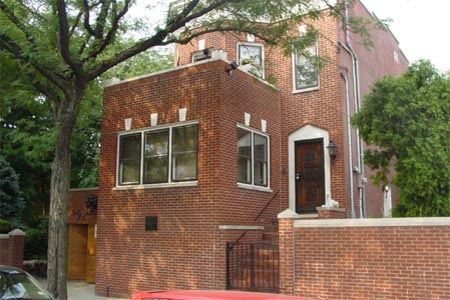
In the first part of our nth part series on unusual New York City museums, we turn your attention to Corona, Queens (several stations out on the 7 train) where lies a non-descript and not seemingly attractive red-brick house.

It was the home of Louis Armstrong and his wife Vivian and as of 2003 has opened to the public. But dont expect some extravagent tacky Graceland-like abode.

Armstrong actually preferred the calm and quiet of the neighborhood and the decor reflects his cool. His wife actually picked out the home and Armstrong, upon first seeing it in the at-the-time mostly white neighborhood, thought the cab driver had taken him to the wrong address.

You should definitely do as Satchmo did and sit on the stoop, where he would hang with the neighborhood kids and sign autographs, and then to the den, the scene of many jam sessions. The house also has an inordinate amount of wallpapers on the wall. Other cool things to check out: the Japanese style garden outback, the Louis portrait painted by no less than Tony Bennett, and a crucifix designed by Salvador Dali.

Two pieces of amusing trivia:
At the excellent museum gift shop, you can buy Armstrong’s favorite laxative Swiss Kriss!

The Armstrong house was purchased by the couple for $3,500, but benefited years later with the the museum opened after a $1.3 million renovation. How’s that for an price uptick?

Check out the official website for times and directions.

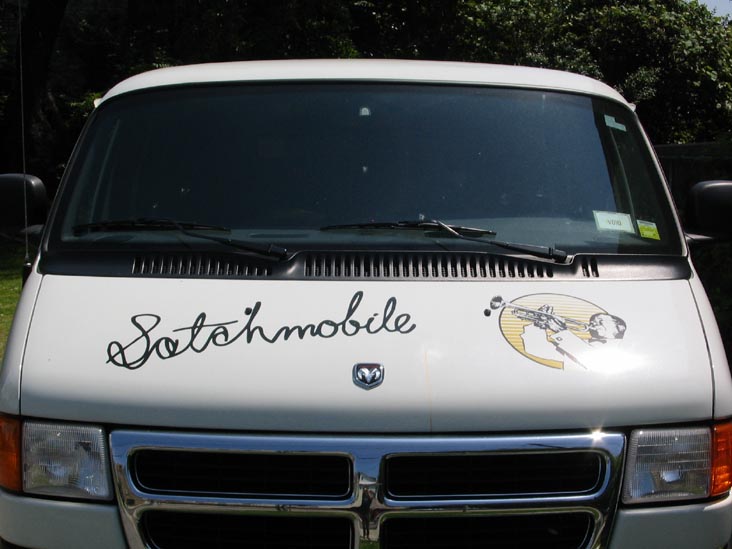
And if you’re lucky, maybe you’ll see the Satchmobile:

Categories
Uncategorized

Dominos falling down?

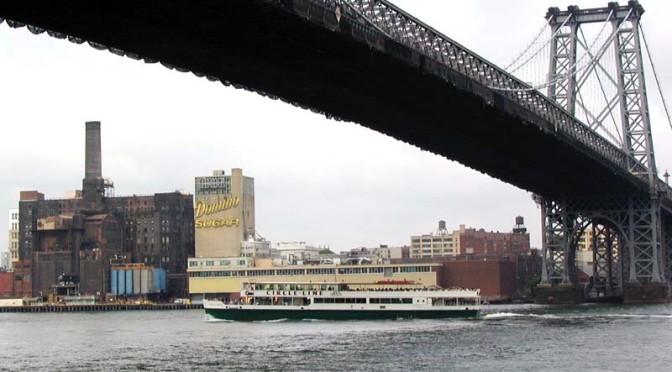
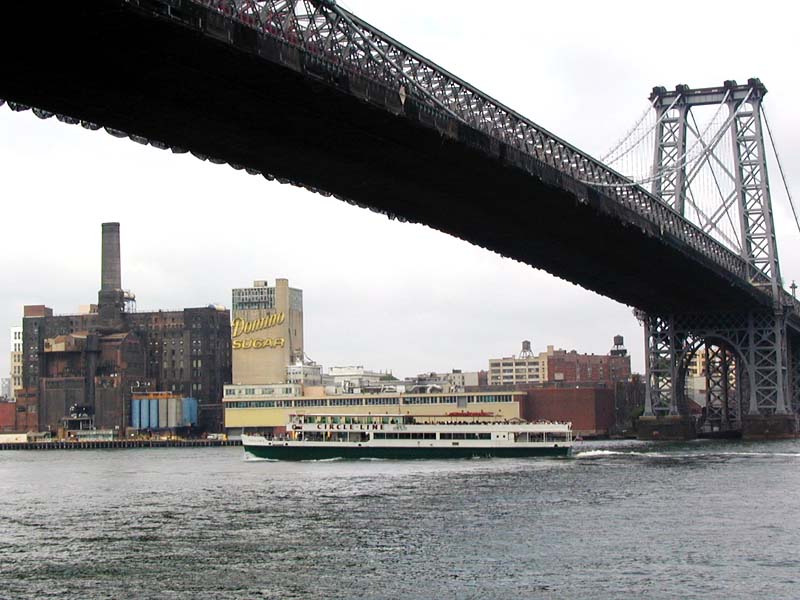
New York’s robust and often scary gentrification drive into Condo Land, already ripping through neighborhoods like the Lower East Side, threatens another unusual city landmark – the Dominos Sugar factory, a cluster of important buildings just near the Williamsburg bridge on the Brooklyn side. While it might seem weird to get all angsty about a bunch of old factories, a view into its history reveals its prominence in the story of Brooklyn.

William Havemeyer, a German apprentice at a London refinery, and his brother Frederick moved to America in 1799 to take the reigns of a failing sugar factory at 29 Pine Street – essentially on the back door of Federal Hall, once the center of America’s fledgling government and just around the corner from the stock exchange. In 1805 the brothers moved their refinery to 14-16 Vandam Street in Soho. (There’s a great old diner in the same spot that still smells like sugar!)

Business spread to its current location in Brooklyn after William’s grandson C. Havemayer moved it there in 1859. At one point the sugar kings were so successful they ran a virtual monopoly of business along this area of the waterfront and kept most of North Brooklyn employed through the early part of the 20th Century. At one time, this site produced 60 percent of the entire nation’s sugar. Domino, of course, still makes sugar but this particular site was shut down in 2004.

The current cosmopolitan ghost factory consists of several factories and warehouses at 5th and Kent Ave., the oldest one, the power house, from 1884. (The buildings range in age, because it seems the Havemeyers had a nasty problem of their buildings occasionally burning down.) But it’s the flashy and dramatic Domino’s sign that had actually captured New York’s imagination and transformed the building into an indelible mark on the skyline. It was hoisted up in 1967 with the time and temperature added underneath it the following year.

The current plans, still being debated, has the site almost entirely razed to construct residential buildings. The only building really safe from harm is the main processing house, the most likely candidate for landmark status. But that’s NOT the building with the rustic and much beloved sign. Its fate may not be as sweet.

For a far more indepth history, you should check out Waterfront Alliance website directly.

However some breathtaking photos at its ruined insides can be found here , which also links to several other photo caches throughout the internet of this decrepit and apparently photogenic location.

And we do have to admit the ‘virtual museum’ at the Dominos Food corporate site is pretty amusing too.

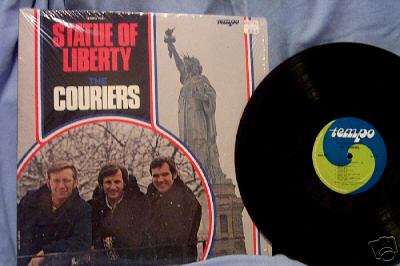
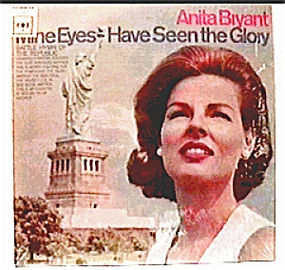
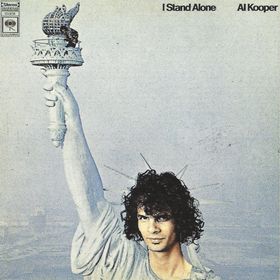
Ms. Liberty: Album model?

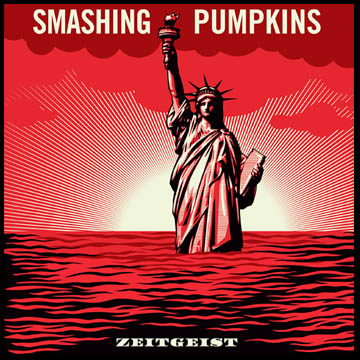
We cant help but be impressed by the striking new album cover for the Smashing Pumpkins’ new release Zeitgeist. In fact, it’s the best thing about the whole album.

So we decided to investigate whether the Statue of Liberty has graced the cover of other albums.

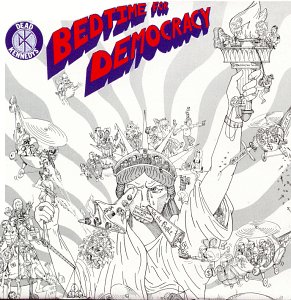
Like Billy Corgan and crew, the Dead Kennedys use the Lady in a rather ribald, political manner.

There’s this, um, amateurish model, so rockin’, so daring:

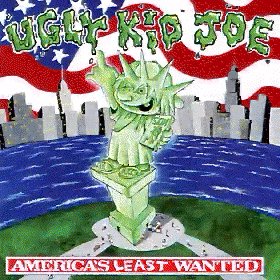
On the opposite scale of things, taste-wise, here’s a rather straightforward usage by some rather jaunty fellows:

Anita Bryant looks like she drank about ten gallons of Florida orange juice in this image:

The great 80s band XTC had a single named ‘Statue of Liberty’, well worth searching out if you havent heard it:

Meanwhile, we don’t know what to say about this one:

Sanjaya Malakar, is that you?

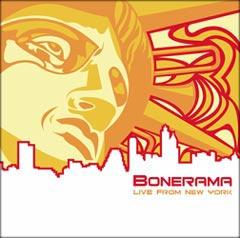
We would actually love to plaster our wall with this groovy cover from the New Orleans rock band Bonerama:

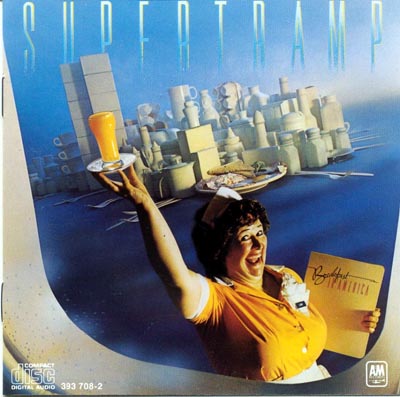
But our favorite Lady Liberty depiction, although abstract, obviously belongs to Supertramp. And not just because we’re a sucker for ‘Dreamer, you know you are a dreamer…”

Are we missing any other Lady Liberty album covers? Let us know in the comments section!

Man(hattan’s) Best Friend: Famous Dogs of New York

Take a stroll with us as we chart New York’s most famous canine crusaders, from a Central Park icon to the biggest star on Broadway history ever found in a kennel. Oh and watch where you step.

Listen to it for free on iTunes or other podcasting services. Or you can download or listen to it HERE

The Summer Blockbuster of 1928

On this day, 79 years ago in 1928…

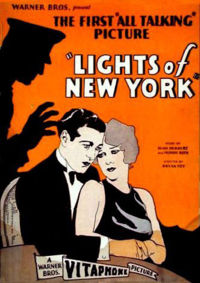
The first ever all-talking movie, “The Lights of New York” debuted in New York’s Strand Theatre at midnight, to an enrapt audience. (It would release nationally on July 28)

“Lights of New York” was a precursor to the great crime films of the 30s that would make Edward G Robinson and James Cagney into huge stars. The plot involves Broadway speakeasies, chorus girls and ‘toughies’, featuring a cast of vaudevillian entertainers.

The film was a box office smash (grossing $2 million dollars, or what Tom Cruise makes for a single day of work today) and presaged the death of the silent era.

Of course, they hadnt quite got the art of editing down, and the film still included ‘transition’ placards.

The Brooklyn Eagle has a few charming anecdotes about the filming:

“In one scene in a barbershop, a character began a speech at one end of the room, walked across the room, and started talking again only when he had come to a complete rest at the other end. He could not speak until he had parked himself under the mike.”

The Eagle also notes the film’s other contribution to the world of cinema: it’s the first of many, many, many gangster films to feature the line “Take him for a ride.” Martin Scorcese and The Sopranos thank you kindly.

Oh, and you might be asking — where’s the Strand Theatre? A premier auditorium for film and Big Band shows for over 70 years, The Strand was demolished in 1978. But you can go see where it used to be; the former address is 1579 Broadway. There’s a Hershey’s Chocolate Super Store there now.

Cinema Treasures, one of our favorite websites, has an elaborate write up on the fate of the Strand.
Categories
Uncategorized

PODCAST: Alexander Hamilton

It’s Independence Day and we’re spending it with our favorite New York Founding Father, Alexander Hamilton. The Bowery Boys visit his life, his hangouts, and his New York.

Listen to it for free on iTunes or other podcasting services. Or you can download or listen to it HERE

Categories
Uncategorized

Bowery Boys #2: What’s in a name

In our first REAL episode, Greg and Tom explain their name and talk about the first Bowery Boys (not to mention the “Bowery Boys” of stage and screen). Also, a quick discussion of the origins of the names of all five boroughs. And a couple bad jokes.