Categories
Uncategorized

The street of the Ancient Hibernians

In this week’s podcast, we briefly touched on a pivotal moment in the history of the Ancient Order of the Hibernians. They assisted in the defense of St Patrick’s Old Cathedral during a raid by anti-Catholic, anti-Irish rioters.

The Ancient Order of the Hibernians are essentially the Irish-Catholic version of the Freemasons. The Pope had declared the Freemasons off-limits to the practicing Catholics, so the Order might have been formed in reaction.

The Order have their own street in Manhattan, James Street, about a mile away from St Patrick’s Old Cathedral, in what is known today as the Two Bridges area in Manhattan — that not-quite-Lower East Side, not-quite South Street Seaport slice of land between the Brooklyn and Manhattan bridges.
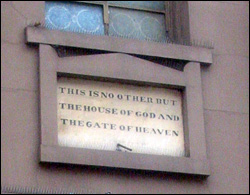
James Street is primarily dominated by St. James Catholic Church, the second oldest Catholic church in Manhattan. Despite its beige, straight-forward Greek architecture, the church has been instrumental to Irish history in the city.

The Hibernians officially formed near here in 1836, not so ‘ancient’ although its members do trace their philosophies of Irish pride and honor to the Defenders, a patriotic 16th century Ireland rebellious unit led by Rory O’Moore. Hibernia is an old, poetic name for the land of Ireland.

The Hibernians were the central line of defense to an America growing ever hostile towards its Irish immigrants. By the 1850s, a political party — the Know-Nothings — would be formed from the very idea of fighting control of the Catholic Church and its most closely associated ethnic group.

The Ancient Order is still very much in existence and serving as a national charity organization and remaining a voice for the Irish community in their native land and around the world. Their public persona in Manhattan is still associated with the annual St Patrick’s Day Parade which they have sponsored since their inception.

The picture below is courtesy of Forgotten NY, who has lots more information on this unique street.
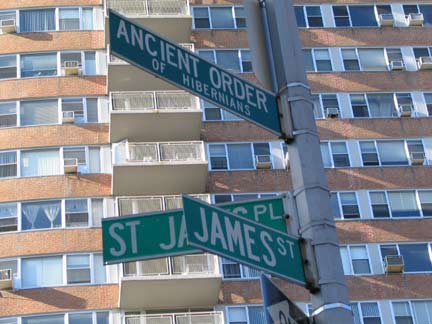
NOTE: The original Bowery Boys from the Five Point slums were virulently anti-Irish and anti-Catholic. We, on the other hand, quite love the Irish!
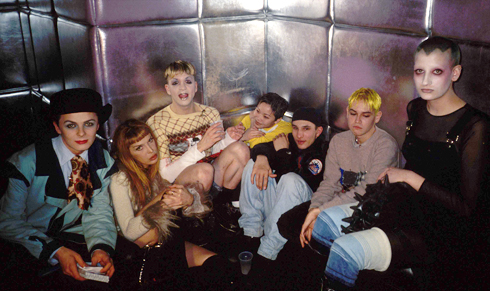
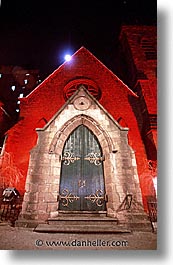
FRIDAY NIGHT FEVER: The Limelight


To get you in the mood for the weekend, every Friday we’ll be celebrating ‘FRIDAY NIGHT FEVER’, featuring an old New York nightlife haunt, from the dance halls of 19th Century Bowery, to the massive warehouse spaces of the mid-90s. Past entries can be found here

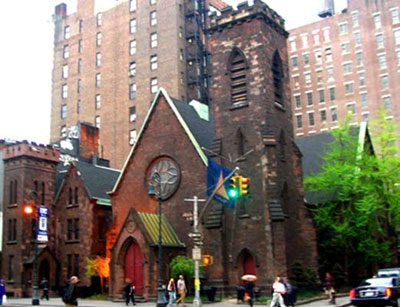
Holy Communion Episcopal Church was never meant to be the gateway to Hell. This lush Gothic style was designed in 1846 by Richard Upjohn, one of early America’s great architects and creator of downtown’s Trinity Church.

Perhaps Upjohn could foresee the church’s future tilting towards the bizarre, as it’s the first asymmetrical Gothic church in America. Think of all the uniform symmetry in most churches over 150 years old, and you’ll appreciate its uniqueness.

In its prime, the toast of New York filled its pews, including Cornelius Vanderbilt, John Jacob Astor and Jay Gould. A shadow of its altruistic days can still be seen hovering over St Luke’s Hospital (now St. Luke’s-Roosevelt Hospital Center), which the congregation helped found. To tie this into our podcast at the beginning of the week, it was in this hospital that John Lennon died of his wounds sustained at the Dakota Apartments.

The church fell upon hard times in the new century and was eventually sold to a drug rehabilitation center. According to a bishop at the time, there was an implicit understanding that the house of worship was always meant to help the needy. Then Peter Gatien came along, and larger ironies have never existed in New York City.

Gatien was a club owner who gobbled up nightclub spaces and transformed them into branded clubs called the Limelight — first in Hollywood, Florida, then Atlanta, and London. (He would eventually own many clubs in Manhattan, including the Tunnel, the Palladium downtown, and Club USA.) The Gothic church on 6th Ave proved too enticing — the one in London was also in a former house of worship — and soon Gatien turned the once reverent spot into a house of decadence.

Its labyrinthine hallways and stairwells spilled into ornately designed lounges and dancefloors. Old marble crypts sat next to rows of liquor bottles. The chapel became a VIP lounge. Upstairs, surrealist illustrator HR Giger, famous for his designs of the creatures from the Alien films, specially designed a dance floor.

However it was its occupants that made the headlines. In the late 80s and 90s, Peter Gatien and the Limelight helped foster its own buffet of self-made celebrities, the club kid, brightly colored freakshows whose only purpose was to shock and make everybody feel smaller.

King (or queen) among them was Michael Alig, an extravagent promoter of both his club, his lifestyle and himself. A protege of another nightlife maven James St James, Alig’s wild parties at the Limelight were the stuff of urban legend.

Actual celebrities who frequented the club, like Eddie Murphy and Michael Douglas, were no match for Alig and his menagerie, which often included a few New York celebrities around today — Amanda LaPore, Richie Rich, and, most famously, Rupaul and the duo Heatherette, now legitimate fashion designers in their own right.

The avarice of the early ’90s would lead to the downfalls of the Limelight’s main characters. Alig would be charged with murdering fellow club kid Angel Melendez. Gatien was arrested on drug charges in 1996 — by then, the Limelight was a veritable candy store for ecstacy and ‘special k’ — and in 1999 for tax evasion. Alig is in prison, serving a 20-year sentence; Gatien is in Canada, presumably forever.

The Limelight itself? After a dramatic shuttering in 2001, the club was reopened under the name Avalon, and still entertains throngs craving a thumping beat and a really expensive cocktail. The club kids are gone, but ghosts remain, as do the crypts.

You can of course catch a glimpse of the decadence in the film Party Monster, about the kooky days of Alig and the Club Kids, both in documentary and Macauley Culkin-vehicle formats. Harvey Keitel also takes a visit to the club in Bad Lieutenant.

My Podcast Alley feed! {pca-a014ba383be6de5ea1047633ef48420a}

Categories
Podcasts

PODCAST: St. Patrick’s Old Cathedral

The fashionable district of NoLIta happens to be home to a few ghosts as well, tucked behind the walls of St Patrick’s Old Cathedral. Come with us as we unearth some info about a mysterious New York fraternal order, the occupants of a few cemetery crypts, and the origins of a legendary film director.

Listen to it for free on iTunes or other podcasting services. Or you can download or listen to it HERE

NYC NOIR: “He has his father’s eyes!”


The Film Forum is in the midst of their five week NYC Noir screening series, featuring some of the best thrillers, mysteries and action films set on the streets of the city. In this blog every Thursday of the series, we’ll feature a bit about one of the films, and encourage you to go check out some of these classic flicks. Past entries of this series can be found here. Showtimes and other movies in the series can be found at the Film Forum’s website.

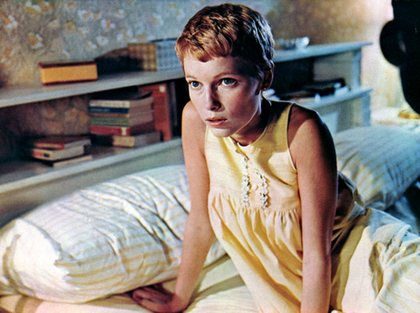
And killing two birds with one stone — as its also the topic of this week’s podcast — this week we feature a disturbing supernatural thriller Rosemary’s Baby and its primary setting, the Dakota Apartments, located at Central Park West and 72nd Street.

First of all, to correct a slip of the tongue from the podcast. No film has ever been shot in the interior of the Dakota. The exterior has been used in several films, most recently in Vanilla Sky, which may have given Tom Cruise and Katie Holmes the idea to buy a place there. The Dakota was first used in the 1949 Joseph Mankiewicz (All About Eve) directed film noir House of Strangers with Edward G Robinson. It’s safe to say that the Dakota is a perfect place for film noir.

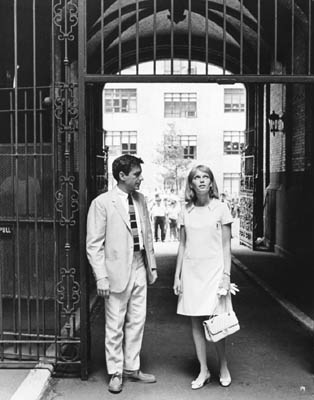
Here are stars Mia Farrow and John Cassavetes just inside the beautiful gated entry of the Dakota. When it was built in the 1880s, horse-drawn carriages rode through the gate to let out their passengers, then parked in the stables nearby. The center of the courtyard features a fountain, which greeted residents before they climbed up one of four seperate staircases to their homes.

By the way, it was while filming at the Dakota that Mia’s husband Frank Sinatra served her divorce papers. Tacky.

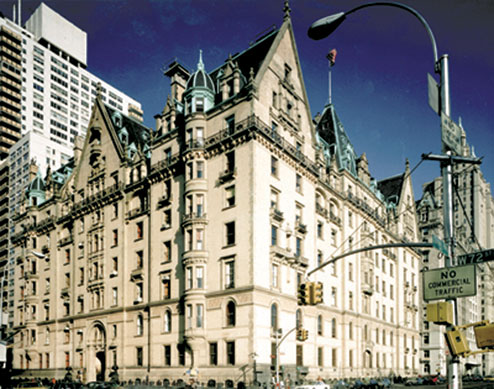
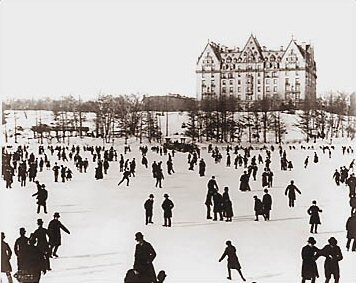
The Dakota is believed to have gotten its name from the preferences of developer Edward Clark’s towards the names of new American states (which represented ‘new money’). Others stories suggest that at the time of its construction, the new building was so far north that it would have been like visiting ‘the Dakota territories’. From this picture, that seems plausible:

The Dakota was host to Manhattan’s artistic elite, the home of famous actors, writers and composers. According to the book “Upper West Side Story, a History and Guide” “The early tenants included the piano manufacturer Theodor Steinway and his friend the music publisher Gustave Schirmer, who liked to fill his salon with such brilliant guests as Mark Twain, William Dean Howells, Herman Melville and Peter Ilyich Tchaikowsky, who came to town in 1891 to donduct the opening night concert at Carnegie Hall.” Latter day tenants included Paul Simon, Connie Chung and Maury Povich, and of course the Dakota’s most famous tenants, John Lennon and Yoko Ono.

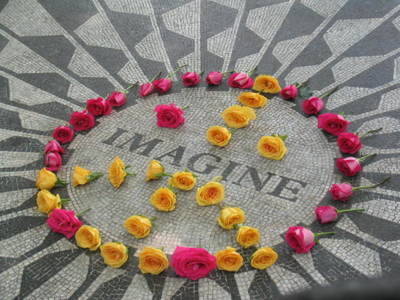
After Lennon’s murder in front of the Dakota — not far really from the grisly fake murder in ‘Rosemary’s Baby’ — the portion of Central Park nearest to the building was christened Strawberry Fields, and mural made of tiles from Pompeii was constructed in honor of the musician. The place has taken on a general purpose of celebrations and mournful gatherings: you’ll find people congregated there for the birthdays of living Beatles, the anniversary of Lennon’s death and even 9/11 memorials.

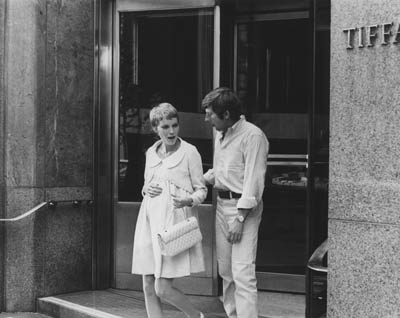
“Rosemary’s Baby” was filmed in other locations throughout the city, including stretches of Park Avenue above 42nd Street, the Time Life Building, and Tiffany’s. Here’s Polanski with Farrow rehearsing a scene:

Categories
Podcasts

PODCAST: The Dakota Apartments

Angels and Demons Part 1: New York’s most famous horror movie and the fascinating story behind its insidious setting. Plus: Lauren Bacall, Connie Chung and some dumb waiters!

Listen to it for free on iTunes or other podcasting services. Or you can download or listen to it HERE

Remember the Alamo

It’s very revealing to me how bizarre, completely unnatural shapes just sprout up out of the ground in New York City, and we walk by them as if they were natural fixtures, as common as a mailbox or a newsstand.

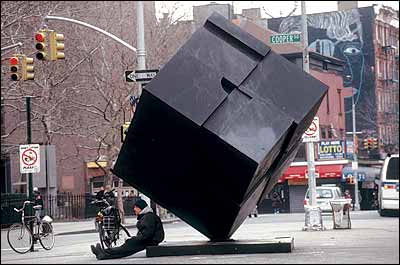
The spinnable cube in Astor Place is the best example of this. Could you imagine this East Village plaza space without it? Even as it’s now shaded by a new condo, sharing the square with a gaudy blue Chase Manhattan vestibule, it still sits immutable like a hunched homeless person that won’t leave.

The broken-looking but still operating sculpture is technically named Alamo, created by Tony Rosenthal and positioned in the middle of Astor Place in 1967. Rosenthal specializes in geometric oddities, usually broken up by their surface textures or interfaces with other shapes.

The Alamo — or Cooper Cube, or simply, The Cube — isnt a solid cube, but an uneven bonding of eight smaller ones, balanced on one of its tips. And it rotates clockwise, if you expend a little bit of elbow grease.

Why the Alamo? Like all of Rosenthal’s work, it might be difficult to ascribe the connection of title with object. Apparently Rosenthal’s wife coined the title, as the balanced cube displayed an “impenetrable strength” similar to the last holdouts at the infamous Texas fort. Hmmm.

The Cube (which everybody calls it) is particularly popular with students at neighboring Cooper Union, who are actually responsible for the Cube being there at all. It was originally placed there on a temporary basis by the NY Park Service, but Cooper Union students petitioned for the sculpture to be installed permanently.

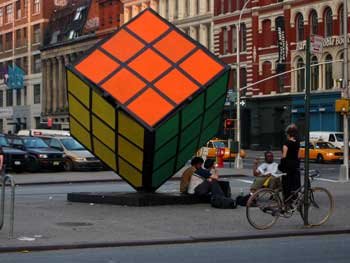
The interlocking cubes making up the entire sculpture were inspiration for a notable prank in 2005, when the Cube was surrepticiously transformed into a Rubiks Cube. Read here to see how they did it.

The Cube was removed for repairs and replaced with a ghostly version, called the Jello Cube, before returning in November 2005, shiny and new. The temporary, transparent pipe version was named the Jello Cube because Peter Cooper, who Cooper Union is named after, is the inventor of Jello.

The Cube has seen a lot of skateboarders, vagrants, tourists, and punks, and thousands of drunk people have been seen attempting a hearty spin at 2 in the morning. It now holds court to two Starbucks (three if you count the one upstairs at the Barnes and Noble), a K-Mart, a new drugstore, and the aforementioned bank and condo. When all those places move on or close, I fully expect the Cube to still be there.

Who knows how far into the future it may survive?

‘Moon’ Struck


There are very few ‘real’ diners left in Manhattan. My personal favorites still in existance are the Pearl Street Diner in the financial district, the Square Diner in tribeca (order the onion rings, trust me on this), and the far less endangered Empire Diner up in Chelsea

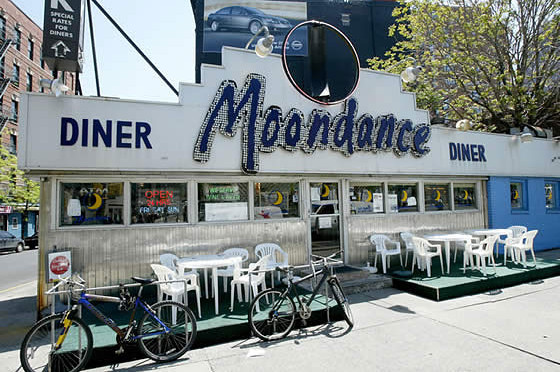
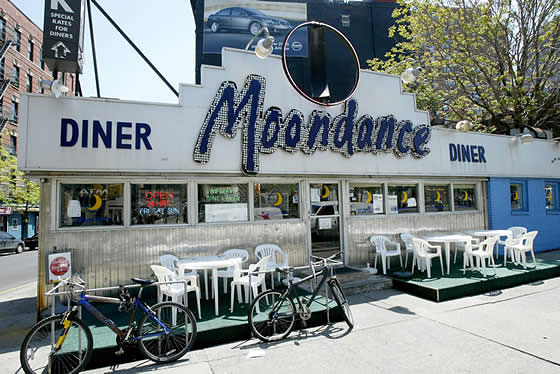
But mention of the words ‘Manhattan’ and ‘diner’ in a sentence always used to conjure up one image to me: the Moondance diner, deep in Soho off 6th Ave, with its beat-up interior and spectacular, spectacular glittery, swivelling moon sign.

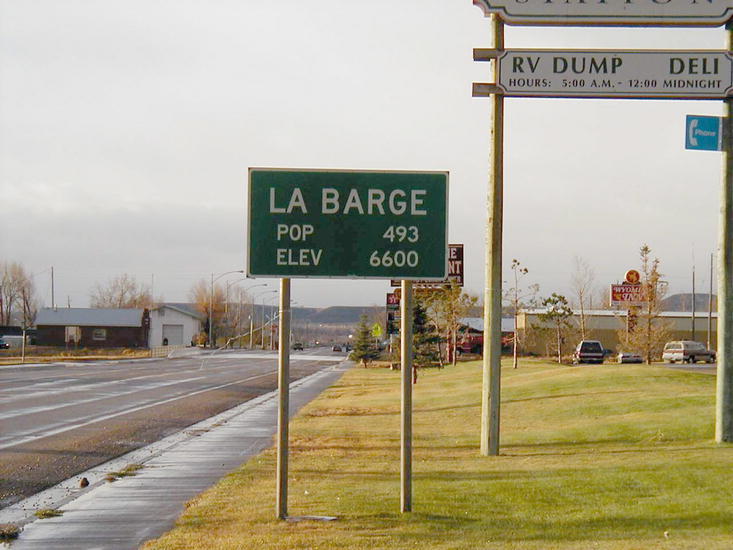
However, the sun now sets on the Moondance, at least for the New York eater. The restaurant, a scrappy fixture of the 30s, finally closed up this year and, in an unusual move, will be transported 2,100 miles to La Barge, Wyoming. Yes, that’s right. Placed on a semi tractor-trailer, and driven across country, to the middle of the least populated state in the nation.

Like an abused hand-me-down at a thrift shop, the restaurant was sold for $7,500 to a La Barge couple who plan to reopen to feed the town’s hungry 493 residents, who at the moment have NO restaurant at all in town.

They should be lucky the restaurant was around at all. *Surprise* the restaurant was closed to make way for luxury condos. But the Extell Development corporation, who bought the land, made a cursory gesture to history by donating the restaurant shell and ubiqitous signage to the American Diner Museum, based in Rhode Island.

It was the Diner Museum that found a new home for the Moondance. The Museum also has other classic East Coast diners for sale if you’d care to purchase one for your backyard.

The removal of the Moondance is a blow for theatre fans, as the restaurant once employed the late Jonathan Larsen, creator of ‘Rent’. It was also the location for several films and TV sows, most recently “Sex and the City” and the first ‘Spider-man’. The Moondance also played a jokey 50s diner in an episode of ‘Friends’ where Monica was employed wearing a blonde wig and fake breasts.

We’ll leave it to the sardonic response of Brooks of Sheffield at Lost City to explain how we really feel about this.

So long, little doggie!

UPDATE: Eater reports that the city is inquiring a little further into just how exactly they plan to uproot the building from its foundation and transport it. Why do I get a weird feeling this thing’s going to end up in the middle of the highway somewhere in Ohio?

Categories
Uncategorized

FRIDAY NIGHT FEVER: 2001 Odyssey

To get you in the mood for the weekend, every Friday we’ll be celebrating ‘FRIDAY NIGHT FEVER’, featuring an old New York nightlife haunt, from the dance halls of 19th Century Bowery, to the massive warehouse spaces of the mid-90s. Past entries can be found here

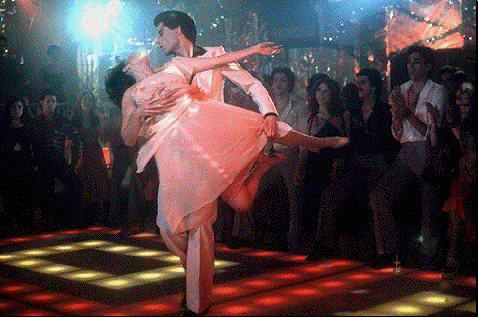
How can I continue to do this series without featuring the most iconic dance floor of all-time, the primary-colored, flashing plastic spectacle from 2001 Odyssey, best known as the dance club from “Saturday Night Fever”?

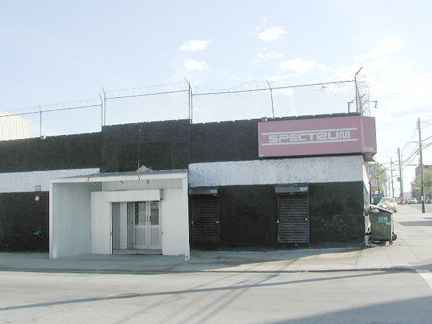
Recently minted drag queen John Travolta once took his iconic swagger to this club, formerly at 802 64th Street, Bay Ridge, Brooklyn.

That sparkly floor was actually built for the movie. Director John Badham was inspired by a similar floor at a private supper club in Birmingham, Alabama, seen by some Southern residents as a landmark.

However the club itself was a mainstay for disco dancers in the Brooklyn neighborhood, many of whom were brought on as extras in the film.

You can literally say disco saved this club. It was formerly the lounge act stage called the 802 Club that in its heyday spotlighted the likes of Jerry Vale and even Christine Jorgensen in her own cabaret act. Falling on hard times, the owner’s son took over the place, wrapped it in mylar and hung up a disco ball. 2001 Odyssey was ready to disco.

And in the process, it changed disco. On top of starring in the Citizen Kane of dance music films, 2001 Odyssey brought in all sorts of up-and-coming talents to perform, like Gloria Gaynor and the Trammps. The clientele itself defined what we might call one of the ‘disco archetypes’. Or as defined by the owner Chuck Rusinak:

[We used to call them cuigines.] A cuigine is somebody that would wear a huckapoo shirt, a pair of dance shoes. Very secure of himself, a womanizer, a little bit of a tough guy too. “Don’t mess my hair up, otherwise you got a problem. I get a baseball bat.”

If Manhattan disco was drug fueled, glitzy and celebrity driven, the Brooklyn disco scene — led by 2001 Odyssey, L’Amour, and other clubs — was the world of the ‘regular joe’, with the focus more on sex and appearance, less on glamour and notoriety. Or, according to 2001 Odyssey bouncer Vito Bruno:

The guys back in those days, even though they were broke, they were dripping with their gold chains. …. Back in those days, the girls got dressed up. They got decked. The girls liked the tough boys. The toughest, meanest guy always got the girl. It’s kind of like the animal kingdom.”

2001 Odyssey wained in the wake of the death of disco, and in the late 80s it became a gay club, Spectrum, which still kept the disco floor but catered to an entirely different audience. It eventually closed in 1995.

And the famous disco floor? The Spectrum tried to auction it off in 2005. (Could you just imagine trying to install it in your living room?) However, the aforementioned bouncer Vito Bruno claims that he won rights to the floor a few months previous, for the whopping sum of $6,000. A judge promptly stopped the auction, and as far as I can tell, Bruno is now the proud owner of a piece of cinema history.

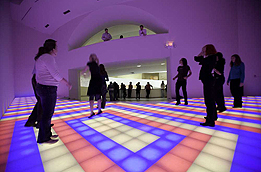
Don’t frown however; you can do your own moves on a very similar floor at the Guggenheim Museum! Their present exhibit The Shape of Space (through Sept 5) features an installation by Piotr UklaÅ„ski — Untitled (Dance Floor)– which emulates, in a far greater color palatte, the legendary dance floor. Needless to say, this is one of the museum’s most popular pieces. (See picture below.)

Nerve does an excellent job in digging up some of the old 2001 Odyssey crew for their recollections of the place. And if youre interested in checking out some other Brooklyn ‘Saturday Night Fever’ locations, check this out.

NYC NOIR: “ONE MILLION DOLLARS!”

The Film Forum is in the midst of their five week NYC Noir screening series, featuring some of the best thrillers, mysteries and action films set on the streets of the city. In this blog every Thursday of the series, we’ll feature a bit about one of the films, and encourage you to go check out some of these classic flicks. Past entries of this series can be found here. Showtimes and other movies in the series can be found at the Film Forum’s website.

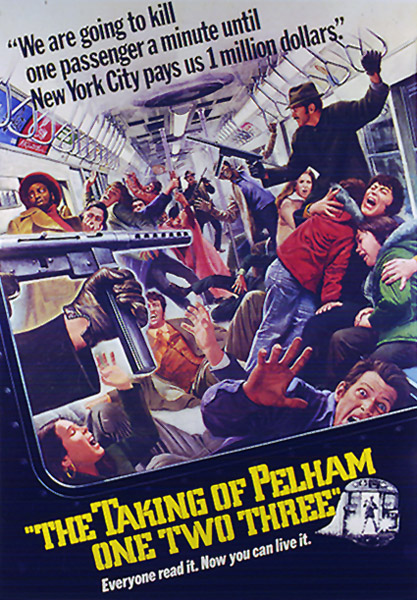
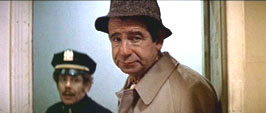
This weekend we feature a tense and perfectly 70-ish action flick The Taking of Pelham One Two Three.

The film is best known now for its very dated but (if you’re budding historians like us) absolutely prototypical settings in a gritty, sweaty New York City. A group of hijackers demanding a ransom of one million dollars (Ha!) hold the 123 train and its unfortunate occupants hostage. On the case is Jerry Stiller and Walter Matthau, both playing the first of many grumpy old men in their futures, as police officers trying to negotiate with the crafty terrorists.

“Pelham” a fantastic example of the zippy, thriling action films that came in the wake of the French Connection (also in the Film Forum series). With a classic soundtrack by David Shire (Talia’s husbund), the best scenes are in the subway cars, with hijackers Martin Balsam and Robert Shaw wrestling with a most diverse group of Manhattanites and their attitude. Those scenes were partially shot in the tunnels below the old Court Street line in Brooklyn — which has now been transformed into the New York Transit Museum.

But as a personal story, my favorite location shots are those involving the police racing to get the hijackers their ransom money. When I first moved to New York, I lived on the corner of Park Ave and 23st Street (back when it was possible to be poor and live there!) and I happened to rent this film. What a surprise to see Park Ave, the stretch between 34th and 23rd, as location shots, with familiar buildings mixing in with now-forgotten shop awnings and people with crazy feathered hair and afros!

Of course, it’s actually the 6 line (that still goes to Pelham Bay Park) that gets hijacked. The 1-2-3 line, meanwhile, runs along the west of the island for much of Manhattan. Its the 1:23 6-train that is hijacked. Yeah, weird, New York subway trains have timetables!

The film runs all this weekend at the Film Forum.

Categories
Podcasts

PODCAST: Washington Square Park

Something’s afoot in Washington Square Park. Join the Bowery Boys this week on an expedition through one of New York’s quirkiest (and most beloved) parks — from Hangman’s Elm to Bob Dylan. You’ll be moved… fifteen feet!

Listen to it for free on iTunes or other podcasting services. Or you can download or listen to it HERE

UNUSUAL NYC MUSEUMS #3: Teddy on 20th


Our weekly tribute to a severely off-the-beaten-path museum or landmark that you may not know about. Instead of Moma, why not try out one of these places? Past entries in this series can be found here.

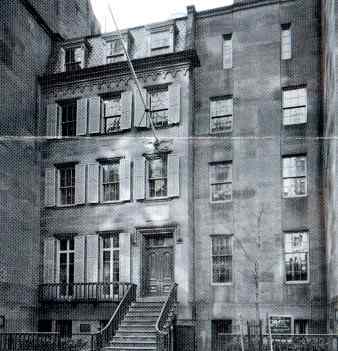
President residences arent what you call ‘unusual’ by any stretch of the imagination. But the Theodore Roosevelt Birthplace Historic Site, on 28 E 20th Street, is unique in that Theodore Roosevelt was never born here — never even lived here — and most of the possessions displayed werent even owned by him.

Once you get by those two teeny little facts, the Site is actually a treat, a wealth of calm and antiquity just steps from busy Broadway and Park Avenue.

The actual brownstone Teddy did live in — being born here in 1858 and residing until 1872 — was in the same location as the present building, but was demolished in 1916 for an office building. However, when he died in 1919, ten years after leaving office, a craze of honorific activities lead to plans to rebuild the original brownstone. It was eventually reconstructed later that year.

And I can see why it was important for not just Roosevelt admirers, but the city of New York. Roosevelt was the only president born in Manhattan, and as a man better known for his adventurous, rugged qualities, its important to remember what an impact the big city had on him as well during his 14 years here.

The lush but suprisingly quiet home features artifacts from Roosevelt’s childhood salvaged by his widow, although most of the furniture is from other family descendents, and the overall effect doesnt speak so much to understanding Roosevelt as it does understanding New York in the mid-1800s.

There are moments where you feel as though youre traipsing through a Henry James novel, imagined ladies sipping tea on those ice blue couches in the parlor. Roosevelt was a rather sickly child, and in the recreation of his room upstairs, you can find a small stairway to the roof — where Teddy’s father set up a gymnasium.

The extra touches continue downstairs to his favorite chair in the library, reupholstered in red fabric to protect Teddy’s knees from scratching. Its quite enlightening actually to see such adoring care for a small child who would later be known as an iconic figure of early 20th Century masculinty and ruggedness.

There’s a pleasant little display on the first floor of mementos and photographs giving a brief portrait into the man’s later career.

As lovely and quaint as the home is, the city’s most dramatic tribute to Teddy Roosevelt is his statue on horseback, outside a building he helped found — the Museum of Natural History.

Details about the Birthplace Historic Site, operated by the National Park Service, can be found here.

By the way, the actual home where he died can also be visited upstate in Sagamore, NY, and as a visitor is a bit ‘sexier’ than the Birthplace, as it was considered the ‘summer White House’ during Teddy’s presidency. Even the site of his inauguration still stands in Buffalo, NY.

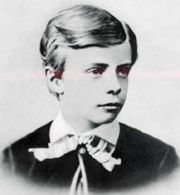
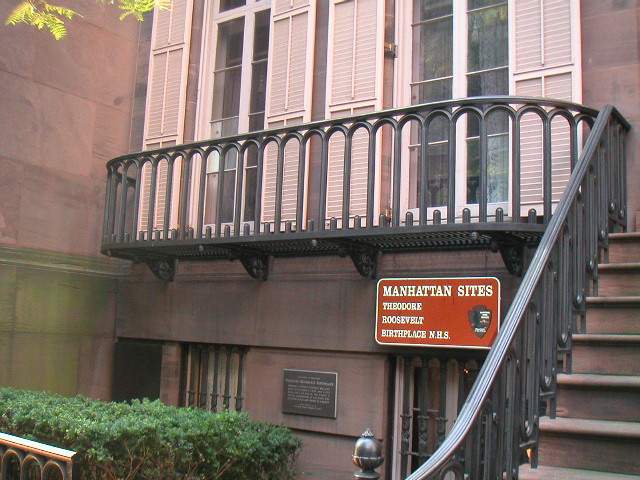
Above is a pic of young Roosevelt, and here’s the current entrance to the museum:

Categories
Uncategorized

New York’s most maligned public servants?

New York City is a terrible place for horses, or for that matter, any animal bigger than a rat.

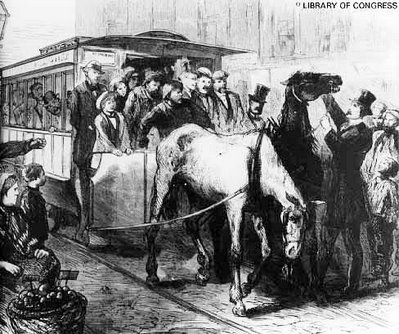
However, the animal has been instrumental to New York’s history. Today you can see them trotting through Central Park, looking lobotomized, carting around tourists in frilly carts. Already a rather demeaning usage, the horses are also subjected to a wide variety of accidents and this site documents some of them in an effort to ban them from recreational usages.

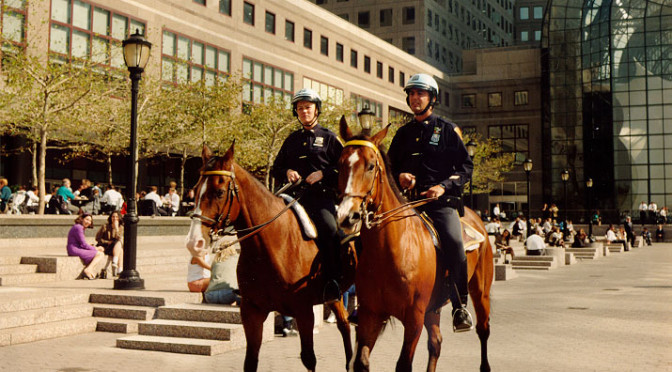
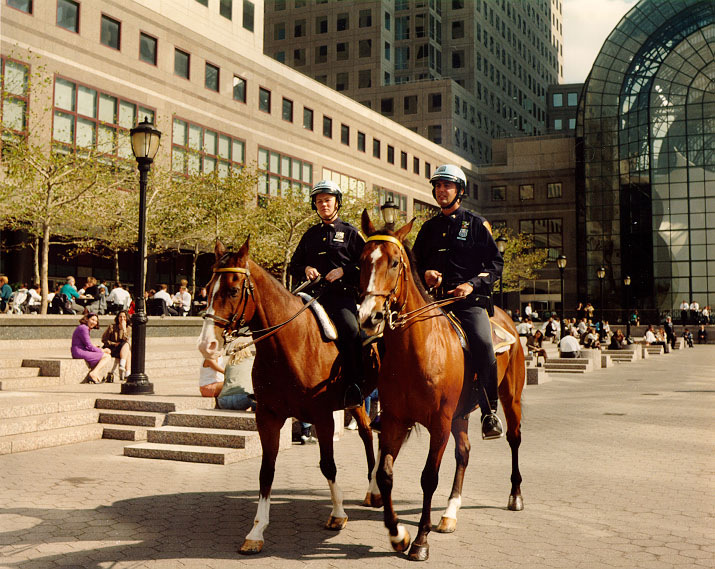
The luckier creatures are those used by the New York City police Mounted Unit. At its peak in 1910, the Mounted Unit was 800 horses strong, mostly in service of traffic, which at the time would have been mostly horse-drawn carriages anyway.

However 100 horses are still in the line of duty today, mostly patrolling city parks and neighborhoods. If you ask your officer about the name of his or her horse, you’ll mostly get the name of an officer killed on the job, or a revered officer retired from duty. However, roaming the streets are a few horses with the curious name of Daily News. The city newspaper donates horses to the force every year.

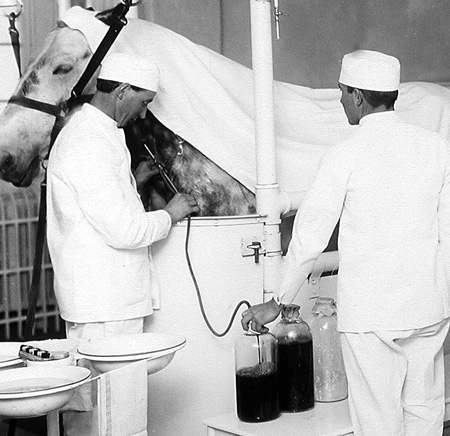
New York City horses played an even greater role in history back in 1894 when some equine members of the Claremont Riding Academy, the city’s oldest stable that just closed several months ago, were used as successful test subjects for a diptheria toxin. The animal’s metabolism was better able to create the antitoxin in their bloodstream, and most survived with little more than a fever.

As a direct result of the tests, a usable antitoxin for humans was available within six months. (More details here.)

By the way, if you’re interested in see the ‘carraige horses’ business banned from t he city, you can start by signing this petition to the mayor.

FRIDAY NIGHT FEVER: The Cotton Club

To get you in the mood for the weekend, every Friday we’ll be celebrating ‘FRIDAY NIGHT FEVER’, featuring an old New York nightlife haunt, from the dance halls of 19th Century Bowery, to the massive warehouse spaces of the mid-90s. Past entries can be found here

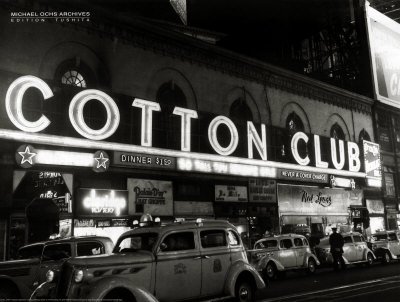
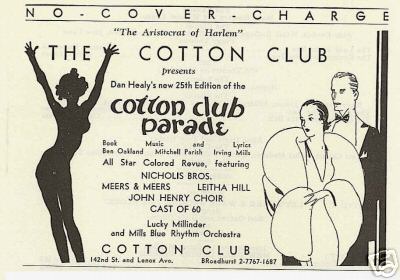
For our second entry, we’d be amiss if we didnt feature the grand-daddy of New York nightclubs, one of the longest (non-contually) operating names in the United States and a place that literally changed music history — The Cotton Club. Formerly at Lenox and 142st, the club was the ‘aristocrat of Harlem’, typifying the very best and very worst parts of African-American life at the beginning of the 20th Century.

Ten years after legendary boxer Jack Johnson stirred up America’s racial tensions by becoming the first black heavyweight champion and victor of the ‘fight of the century’ in 1910, he bought a ramshackle Harlem casino and opened up Club De Lux. It may have had a few successful years and closed quietly had Jack not sold the club then to notorious gangster Owney ‘The Killer’ Madden, who was looking for a venue to sell his beer.

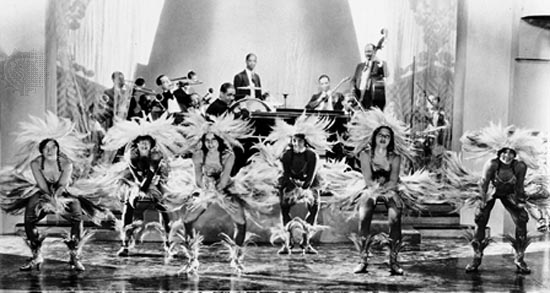
Nobody came to the Cotton Club for the beer though. Madden employed the best young black talent that New York had to offer. His first hire was a young Fletcher Henderson, and the house band was directed by a then-struggling Duke Ellington, who wrote exotic stage shows with wildly dressed chorus girls. One such chorine, Lena Horne, gave her first solo performance there. Other luninaries who shared the stage there included Cab Calloway, Ethyl Waters, and Dorothy Dandrige.

The horrible irony, as with many clubs of the ’30s, is that the performers were mostly black, while the audiences were white-only. The audiences preferred exaggerated “black” shows, and even Ellington was forced to pen spectacles set in jungles or plantations, with performers acting in absurd stereotypes.

As Madden seemed to be directing most of the Cotton’s affairs from his cell in Sing Sing prison, Broadway producer Walter Brooks was brought in to front the place, and managed to bring in a few white songwriters like Harold Arlen and Cole Porter to collaborate with the black entertainment. On Sunday night ‘Celebrity Night’, various New York luminaries like Jimmy Durante and Bing Crosby would leap from their martini-topped tables to the stage to perform impromptu numbers.

The club entered national prominence when the Columbia Broadcasting System (CBS) began broadcasting the club’s entertainment to listeners around the nation.

The club moved downtown to Broadway and 48th Street in 1926, but eventually closed in 1940. A new incarnation opened back up in Harlem in 1978 and still operates today, recapturing as best as possible the excitement and real talent of the original Cotton.

Most people outside New York probably know the club best by the Francis Ford Coppola movie of the same name, however several revues were filmed here during its heyday, and the Cotton Club Orchestra as directed by Cab Calloway or Duke Ellington would clearly make a deeper impression onto vinyl. The recordings would help define the face of jazz music.

Color me Dutch

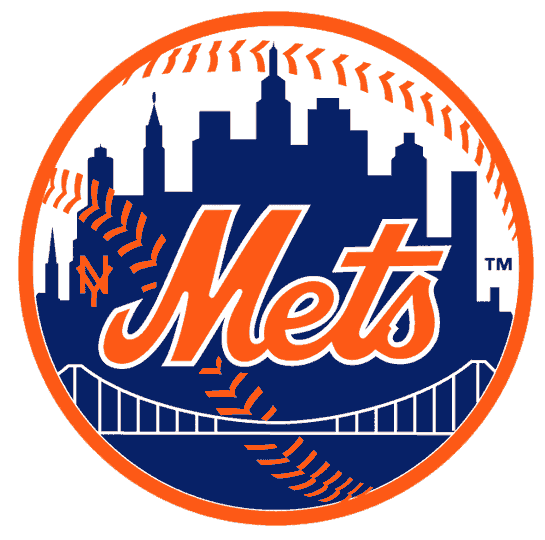
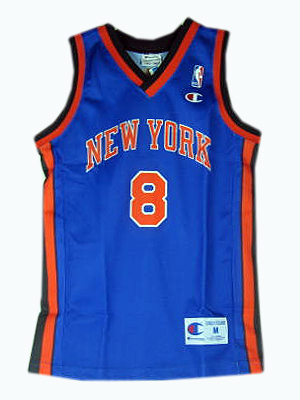
Ever wonder why the official colors of New York are orange and blue? They show up in the uniforms of our two favorite teams, the Knicks and the Mets:

And the colors clearly show up on the official New York state flag:

Our flag is so hued as an homage to the flag of the European founders of the state, the Dutch of the 17th Century.

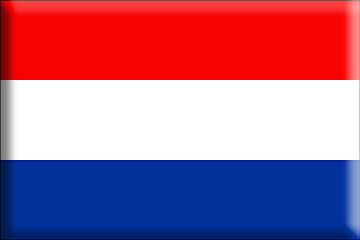
The Dutch flag actually looks like this now:

The Netherlands incidentally were the first country to feature the tri-color, the now familiar red, white and blue colors in their flag. The red was added in the mid 17th Century to replace an orange stripe. Seems that due to the types of dye used on the national flags, the orange stripe turned red over time anyway:

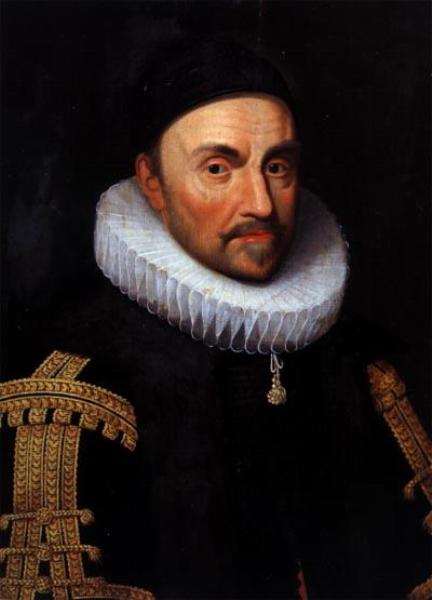
Orange is the color of the Dutch royal family and was added to the Dutch flag in specific honor to the Prince of Orange’s coat of arm. William, the Prince, was the leader of a rebellion during Dutch’s occupation by Spain in the 16th Century. Why, here’s the prince now:

So next time you’re watching a Knicks game, may his face linger forever in your mind.

UPDATE: the Mets website actually says: “The Mets’ colors are Dodger blue and Giant orange, symbolic of the return of National League baseball to New York after the Dodgers and Giants moved to California.” A much likelier theory that just happens to make its connection to New York’s state colors extremely coincidental!

NYC NOIR: ‘Sweet’ and sour


Almost as if they had asked us to help them program their schedule, the Film Forum begins their five week NYC Noir screening series, featuring some of the best thrillers, mysteries and action films set on the streets of the city. In this blog every Thursday of the series, we’ll feature a bit about one of the films, and encourage you to go check out some of these classic flicks.

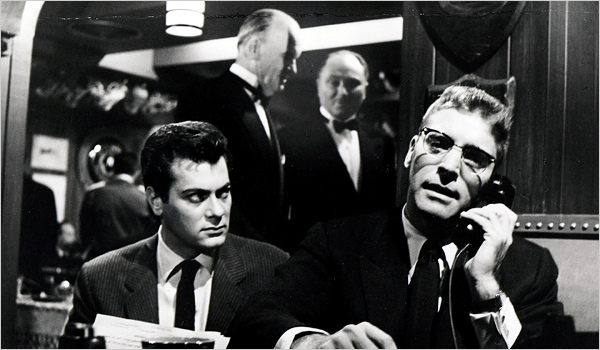
They kick off the festival with one of the most likeably cynical films ever made, Sweet Smell of Success, starring Burt Lancaster as the city’s most powerful gossip columnist JJ Hunsecker, back in the day when gossip mongers wielded their Page Sixes almost menacingly. Unfortunate for Martin Milner, playing jazz musician Steve Dallas that he should happen to get engaged to Hunsecker’s naive sister. Hunsecker soon makes it his business to see the coupling destroyed. His secret weapon? A curt and cool Tony Curtis, as Sidney Falco, the most dispicable and pathetic press agent in town.

Easily one of the best films to portray the glitzy 1950s New York nightclub scene, the characters weave themselves through half the bars in midtown, most notably the 21 Club formerly on 52nd Street. The night scenes have both a stink and a sheen to them, thanks to rigorous location shooting. Director Alexander Mackendrick’s complained of the bustling street noise — not to mention Curtis groupies, waiting for a glimpse — but it lends the movie pulp authenticity. Midtown never looked so stark and busted.

Hunsecker’s apartment, which plays a pivotal role in the final scenes involving his nervewracked sister, is actually in the Brill Building, 1619 Broadway near 49th St. According to Roger Ebert, a shot inside its lobby is mirrored by another film playing later in the NYC Noir series, Taxi Driver.

The film plays this Friday and Saturday. The showtimes and dates for this and the rest of the films in the series can be found here. My favorite part about the Film Forum’s repertory series is that you pay for double feature during the weekend, so find one you like and go hunker down….