New Yorkers have gotten around their cities by subways, buses, elevated trains, streetcars and ferries. And the ways in which they have paid for them have changed as well. And keeps changing!
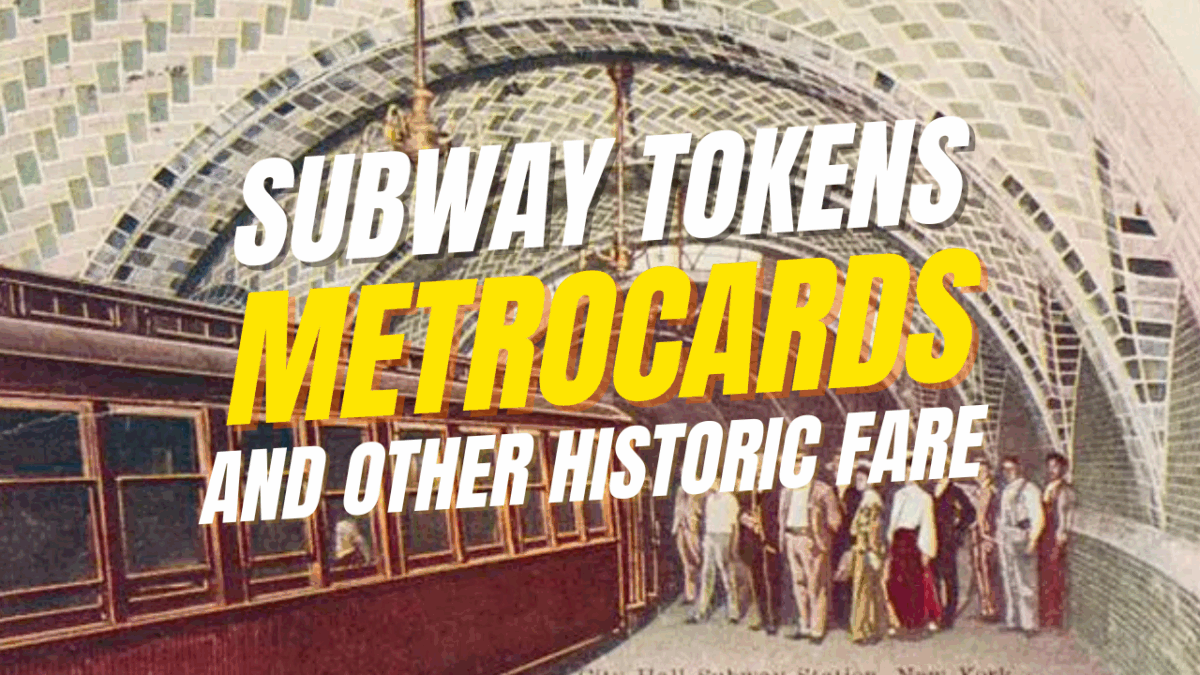
This month, the city is saying farewell to the MetroCard, the magnetic-stripe card that has gotten the town moving since the early 1990s. When the orange cards debuted, they replaced the strange physical tokens commuters had been using since 1953.
Mass transit fares were also a key issue in the past New York mayoral race — and they’ve always been a key issue for voters since the late 19th century. That’s part of the reason that fares famously remained five cents for decades. But as the subway system expanded, stretching through Brooklyn, Queens, and the Bronx, it soon became evident that it was becoming too expensive to operate.
But changing the price is one thing; going from currency to token to MetroCard to OMNI (our latest method) requires technical modifications of every station in the system. In 1953, that entire system changed — literally overnight — to accommodate the first tokens.
Jodi Shapiro of the New York Transit Museum joins the podcast to discuss the museum’s latest exhibition, FAREwell MetroCard, which celebrates the newly retired fare system.
LISTEN TODAY: SUBWAY TOKENS, METROCARDS AND OTHER HISTORIC FARE
FURTHER LISTENING
The Bowery Boys Podcast is proud to be sponsored by Founded By NYC, celebrating New York City’s 400th anniversary in 2025 and the 250th anniversary of the United States in 2026.
Read about all the exciting events and world-class institutions commemorating the five boroughs’’ legacy of groundbreaking achievements, and find ways to celebrate the city that’s always making history at Founded By NYC.
The new year will some big events arriving in 2026 including FIFA World Cup and America 250 celebrations
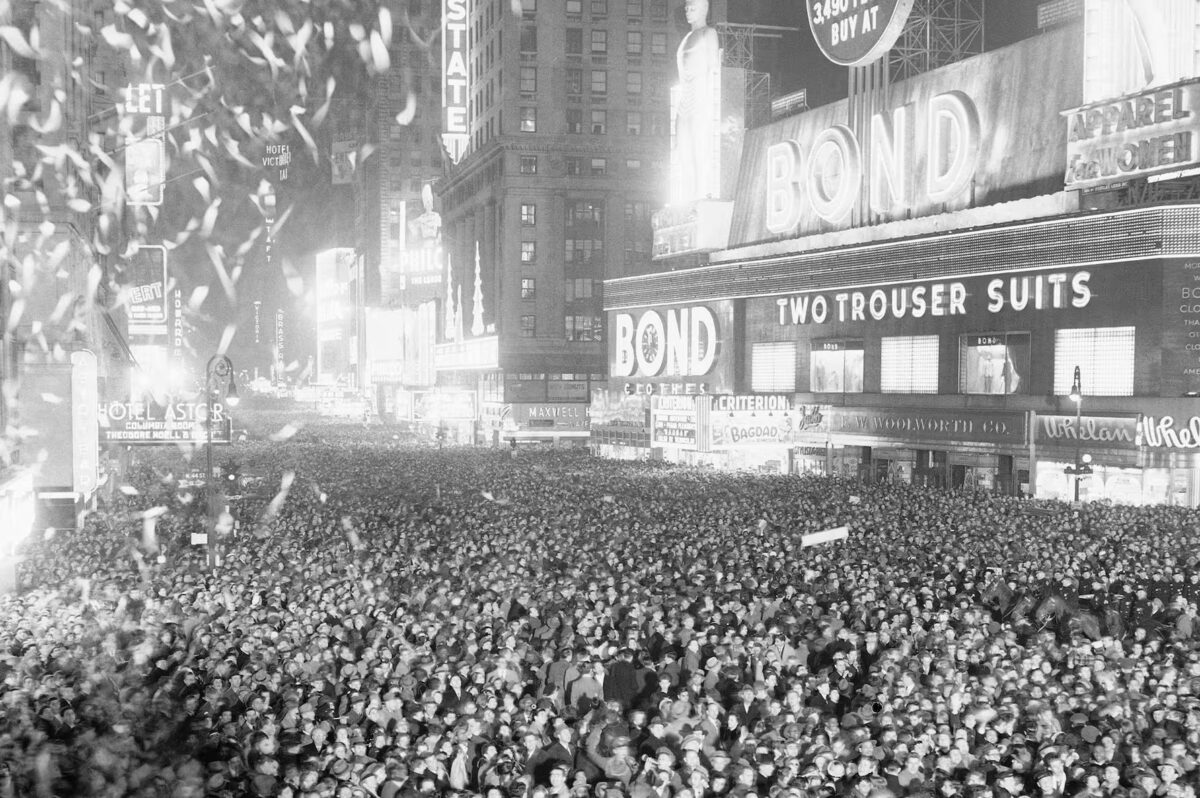
What are we looking forward to here in New York City? Well, we’re not quite done with 2025, and a year of celebrating the city’s 400th anniversary will come to a fitting end with the Times Square Ball Drop in Manhattan on New Year’s Eve.
In a tradition that goes back nearly 120 years, the event brings together all kinds of revelers, who pack together in shared communion—while stars perform, a giant Waterford crystal ball and 3,000 pounds of confetti fall—to feel like they are witnessing a little bit of NYC history.
And there is a new ball this year, featuring twice the number of lights of its predecessor and over 5,000 circular crystals.
It’s a feat of endurance to wait in those crowds; equally hardy people who want a more active way of ringing in the new year might open for the traditional midnight run in Central Park or the longtime Coney Island pastime on New Year’s Day itself: the Polar Bear Club plunge into frigid Atlantic Ocean waters.
Note: the club is the oldest winter bathing club in the country and has been performing this feat since 1903.
Official FIFA World Cup NYNJ Poster
But there will be a lot to welcome in 2026 — one of the biggest for sports fans — soccer! (In other words, football.) FIFA World Cup 2026 is coming to the area, with eight games, including the final, being played right here between June 13 and July 19.
Whenever and wherever this global sporting event takes place, fans and communities come together to watch, so expect the City, with its fan zones, international restaurants, sports bars and melting-pot neighborhoods, to reach a fever pitch.
While all thats going on, events will also be taking place to coincide with America 250. Sail 4th 250 will bring tall ships from all over into the harbor; Macy’s 4th of July Fireworks will decorate the sky like never before; and Fleet Week is moving from its regular May day to early July to take part in the festivities.
And for a few days, an original handwritten draft of the Declaration of Independence will be on display at the main branch—Midtown’s Stephen A. Schwarzman Building—of the New York Public Library, part of their summer programming looking back at 250 years of the United States.
Visit the Founded by NYC website to get updates on all the biggest events happening in New York City in 2026.
She stands in New York Harbor as America’s most recognizable symbol—but the story of the Statue of Liberty begins thousands of miles away, in the charming Alsatian city of Colmar, France.
In this on-location episode, Tom ventures to the picturesque town where sculptor Frédéric Auguste Bartholdi was born in 1834. Walking through Colmar’s cobblestone streets and half-timbered facades, Tom sits down with Juliette Chevée, curator of the Musée Bartholdi, to uncover the French side of this iconic American monument.
Photo by Tom Meyers
Who was Bartholdi? What did the statue originally mean to the French republicans who conceived it at an 1865 dinner party? How did a rejected Egyptian lighthouse design become the template for Liberty’s form?
And how did two Frenchmen—Bartholdi and the historian Édouard de Laboulaye—manage to convince a foreign country to accept a colossal structure without any government assistance from either France or the United States?
This is the forgotten story of how the Statue of Liberty was born in France as a symbol of enlightenment and republican values—and how it transformed into something neither Bartholdi nor the French ever anticipated: the ultimate symbol of American immigration, the promise of a new beginning, and later, a purely American icon.
From Bartholdi’s childhood home (now the museum) to the workshops in Paris where Liberty towered over the rooftops before ever reaching America, this is the epic adventure of Liberté Enlightening the World.
LISTEN TODAY: Made in France: Lady Liberty’s Alsatian Origins
Photo by Tom MeyersPhoto by Tom MeyersPhoto by Tom Meyers
FURTHER LISTENING
Dive back into these past Bowery Boys podcast for more details related to this week’s show
The Bowery Boys Podcast is proud to be sponsored by Founded By NYC, celebrating New York City’s 400th anniversary in 2025 and the 250th anniversary of the United States in 2026.
Read about all the exciting events and world-class institutions commemorating the five boroughs’’ legacy of groundbreaking achievements, and find ways to celebrate the city that’s always making history at Founded By NYC.
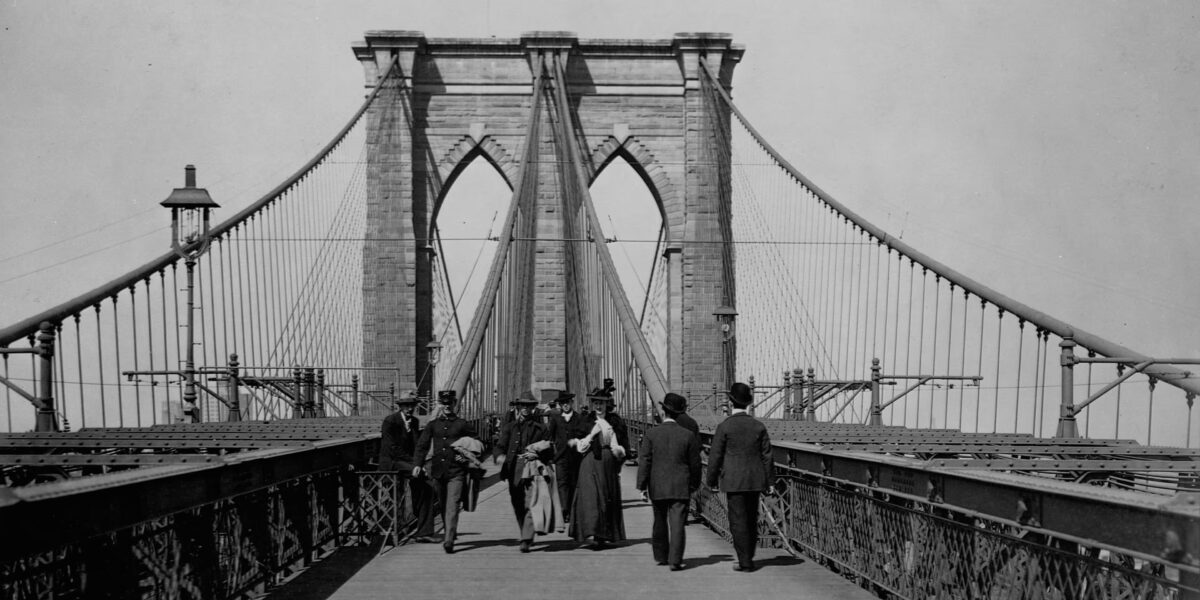
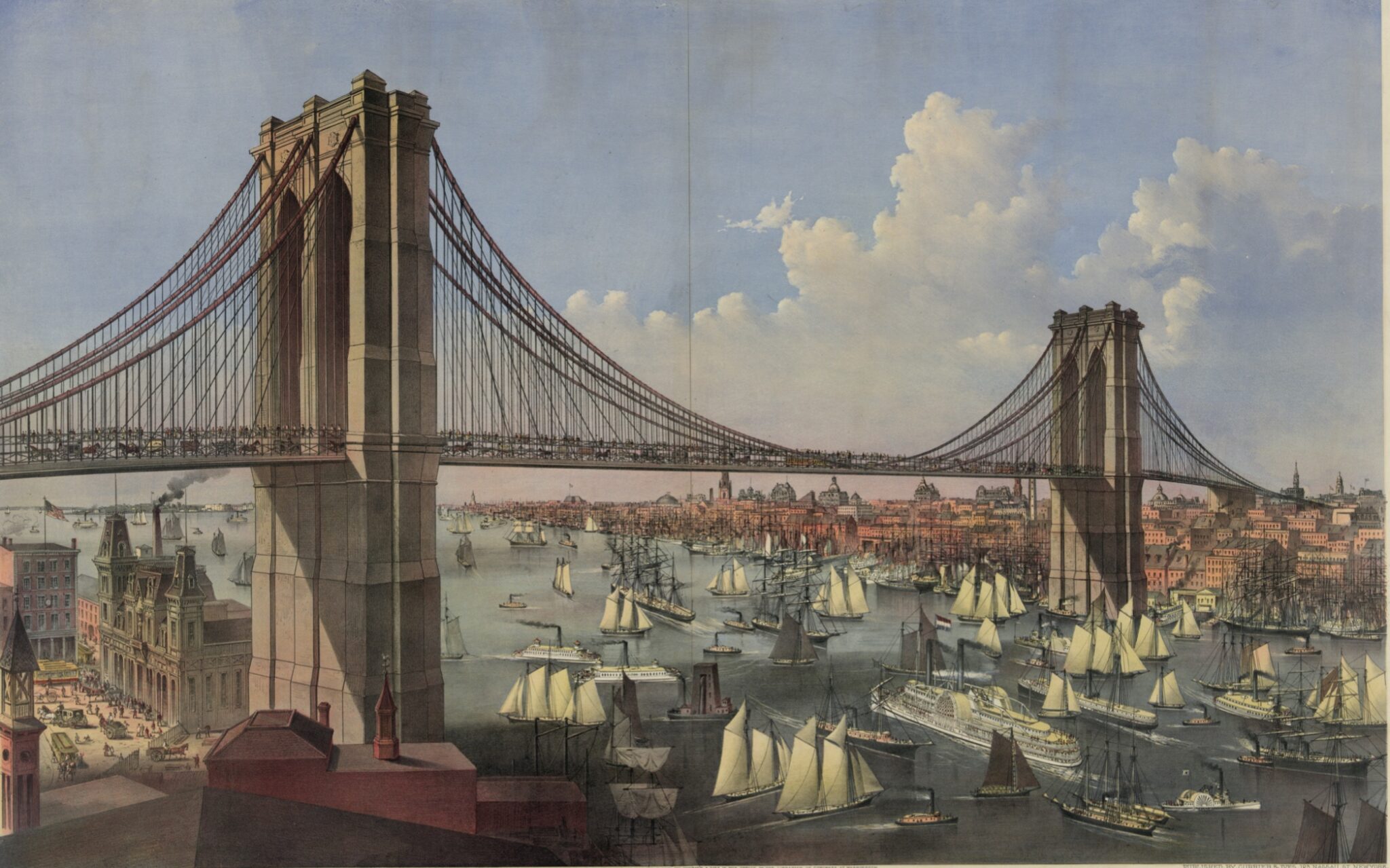
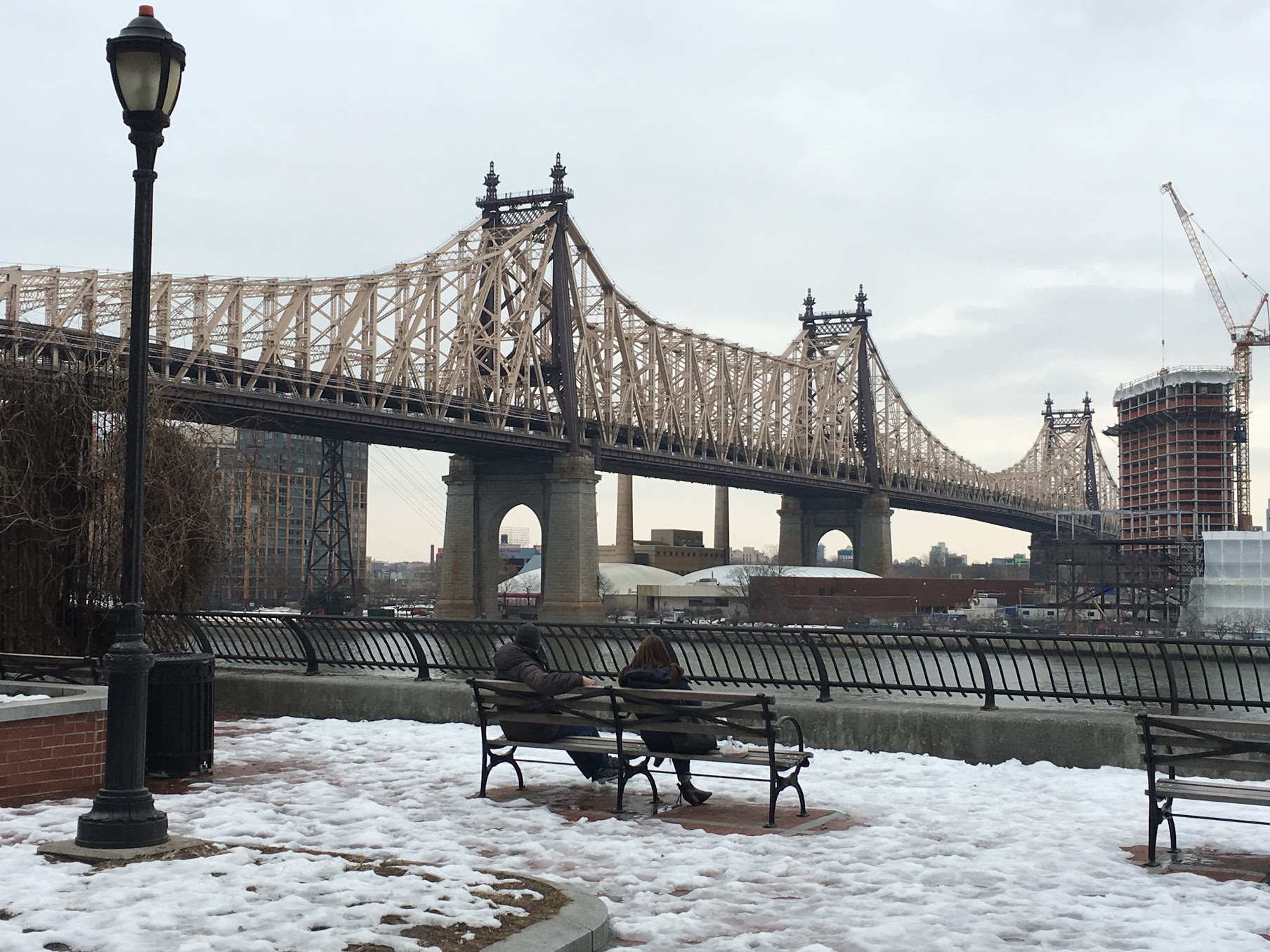
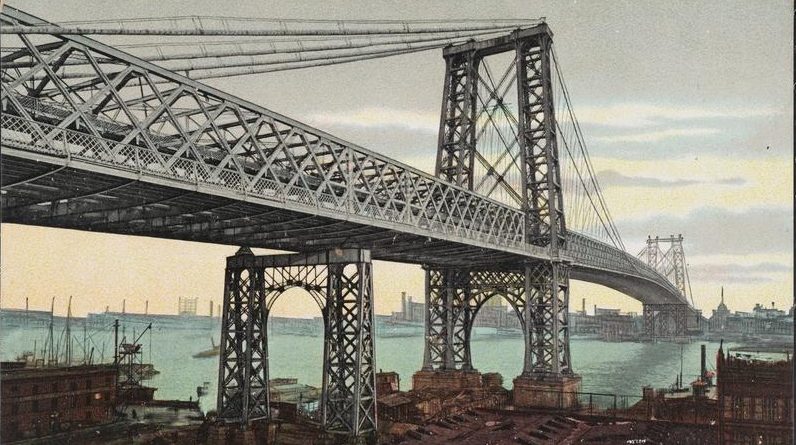
Did you hear Greg today on WNYC’s All of It with Alison Stewart? They talked about New York City’s greatest and most underappreciated bridges. And lots of history! We’ve covered many, many bridges on the podcast over the years. Take a dive into one of these:
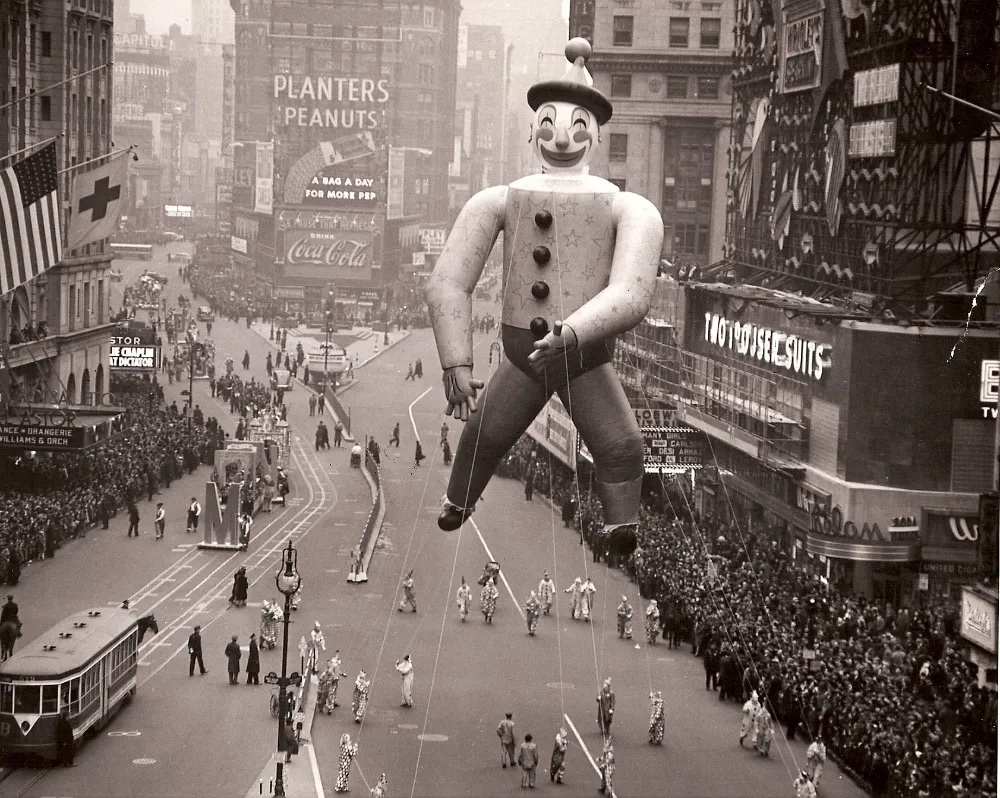
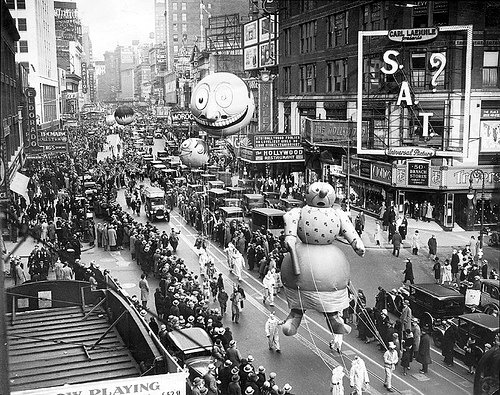
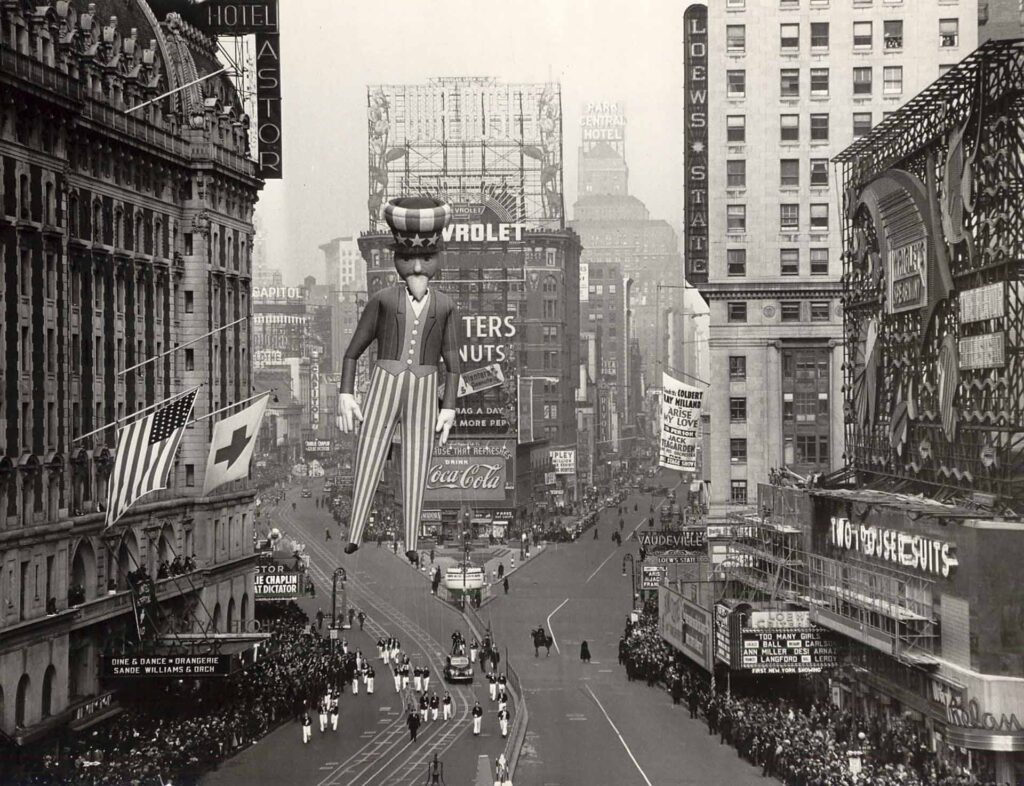
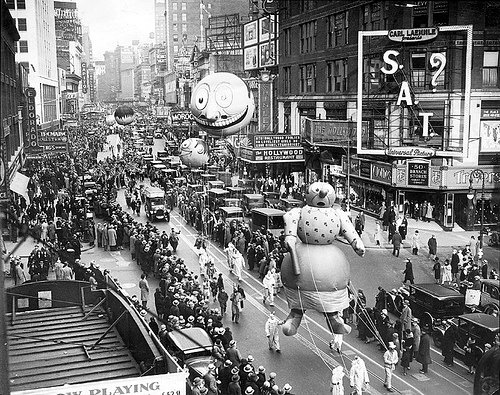
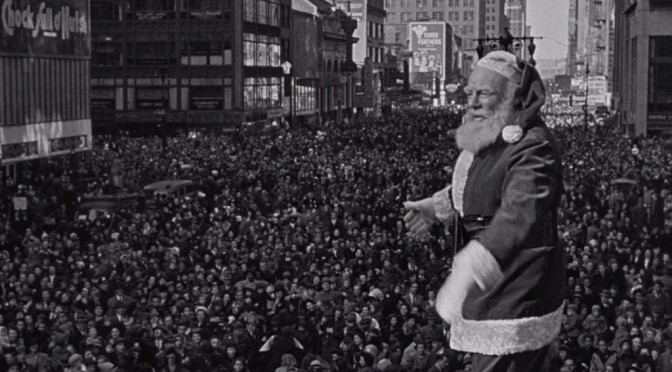
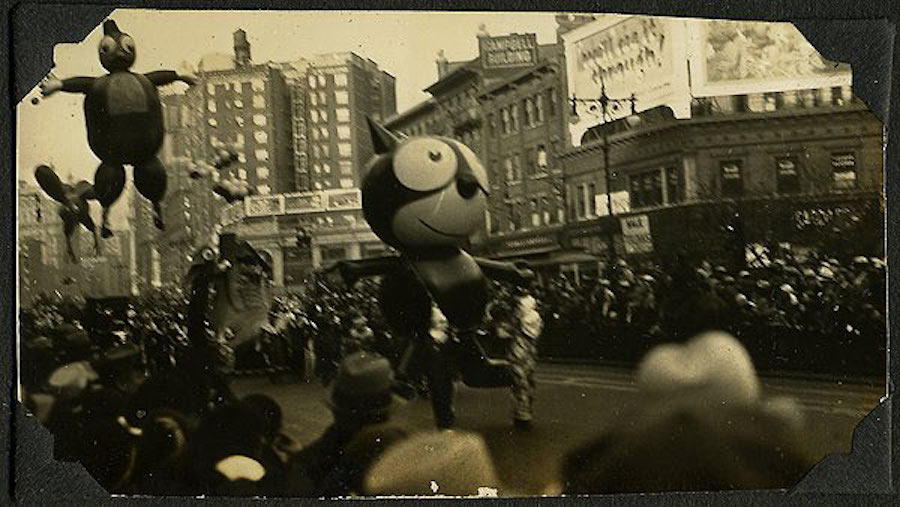
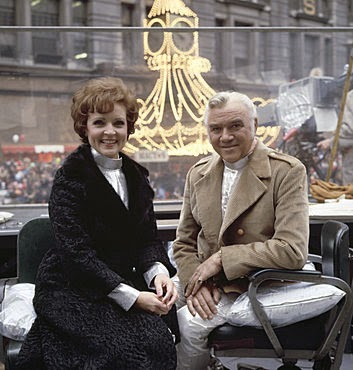
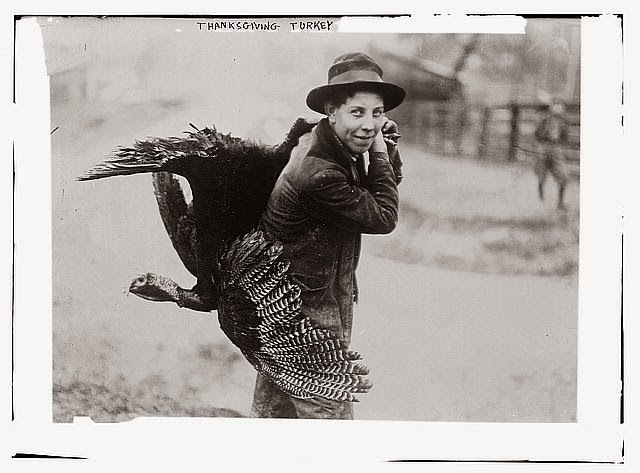
What is Thanksgiving without the Macy’s Thanksgiving Day Parade? The annual march through Manhattan — terminating at Macy’s Department Store — has delighted New Yorkers for a century and been a part of the American tradition of Thanksgiving since it was first broadcast nationally on television in the 1950s.
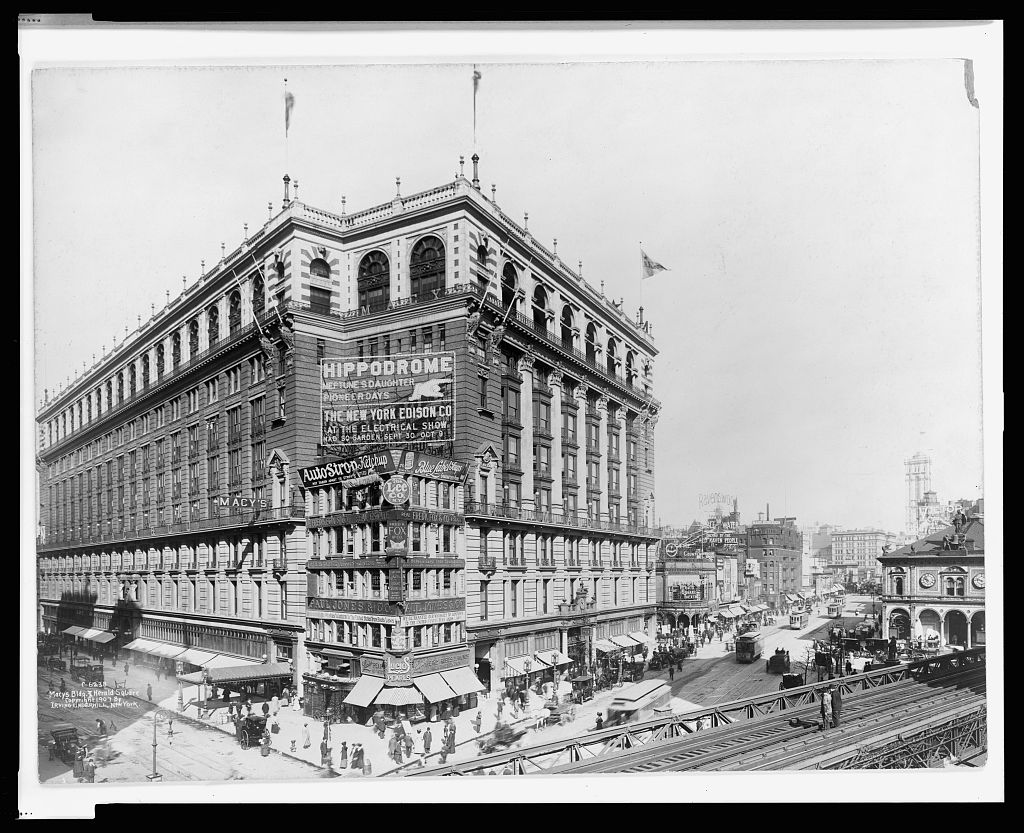
Macy’s began the parade in 1924 as a way to promote the new Seventh Avenue extension of their Herald Square location — and to overshadow its department store rival Gimbel’s.
That first parade had many of the hallmarks of our modern parade — from floats to Santa Claus – however it was much longer. Six miles!
One major tradition is thankfully gone — releasing the parade balloons into the air and encouraging New Yorkers to chase after them. After one near disaster in 1932 (airplane, meet balloon zebra) this curious contest was discontinued.
By the late 1930s, the real world began seeping into the fairy-tale parade route, and during World War II, the parade was cancelled entirely — a prohibition kicked off in a rather violent balloon deflation ceremony led by Mayor Fiorello La Guardia.
Television would change the parade — and the holiday — forever. With NBC broadcasting starting in the 1950s, people could tune in from across the country, creating more opportunities to promote …. everything!
By the 1970s, the parade was a festival of commercialism, a beloved kitsch-fest featuring lip-syncing vocalists, ever larger balloons, morning show hosts and product placements embedded within other product placements.
But harsh winds and cold could be detrimental to the balloons and, sometimes, to the bystanders. Why will you never see a Cat In The Hall balloon in the parade again?
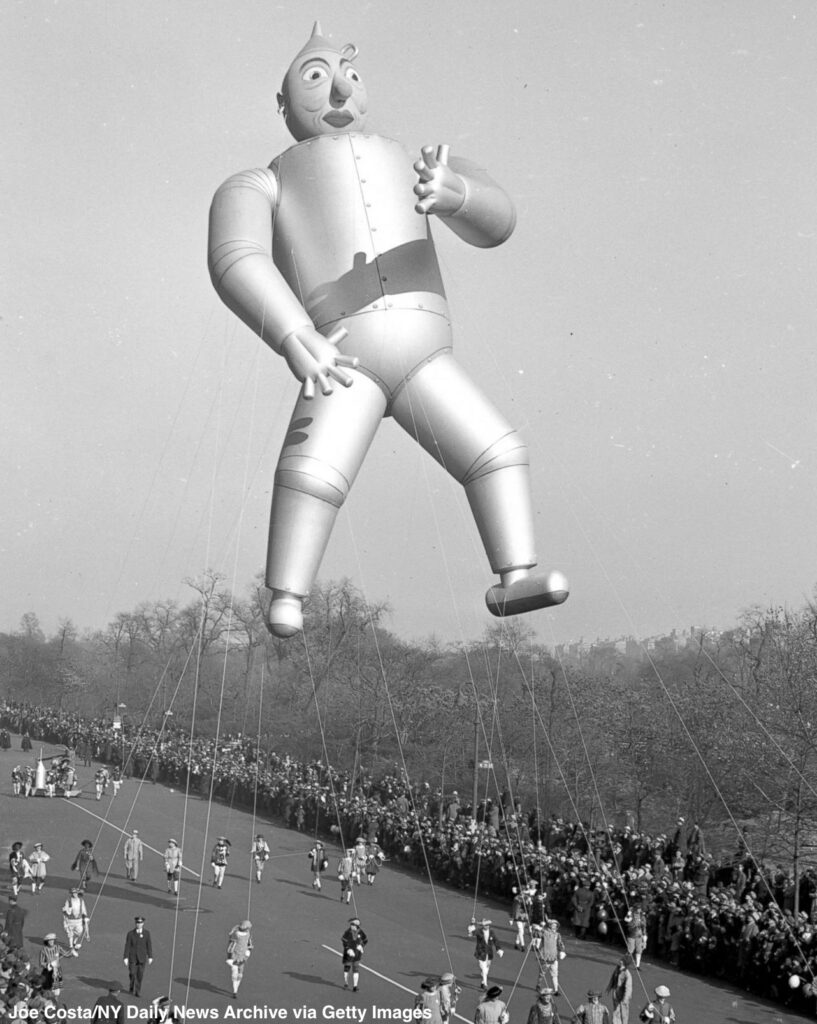
FEATURING: A cast of B and C list celebrities, thousands of out-of-town marching bands and a few favorite balloons (Snoopy, Underdog, the Tin Man and more)
LISTEN NOW: THE MACY’S THANKSGIVING DAY PARADE
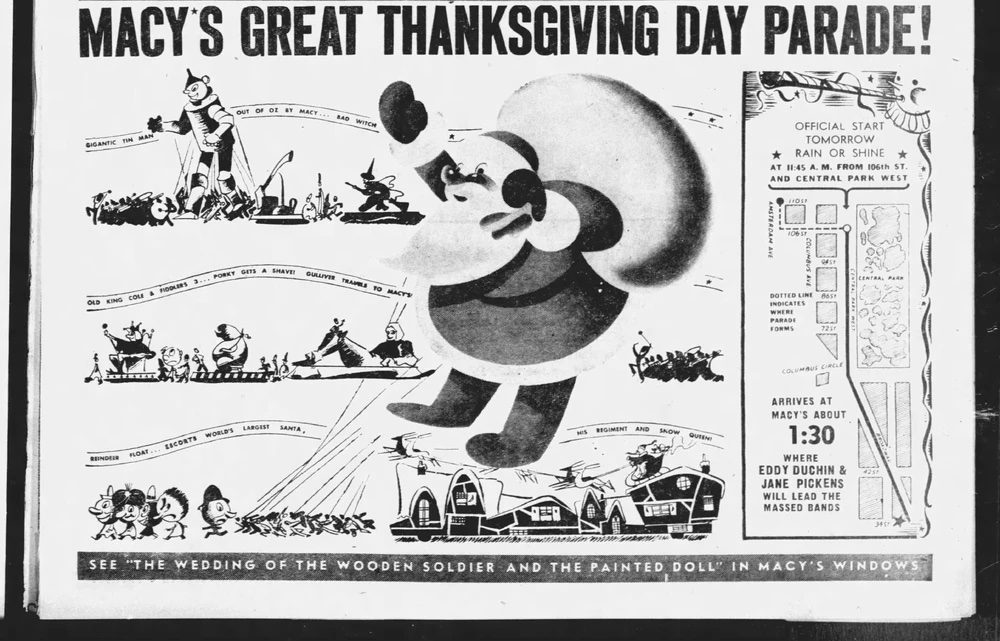
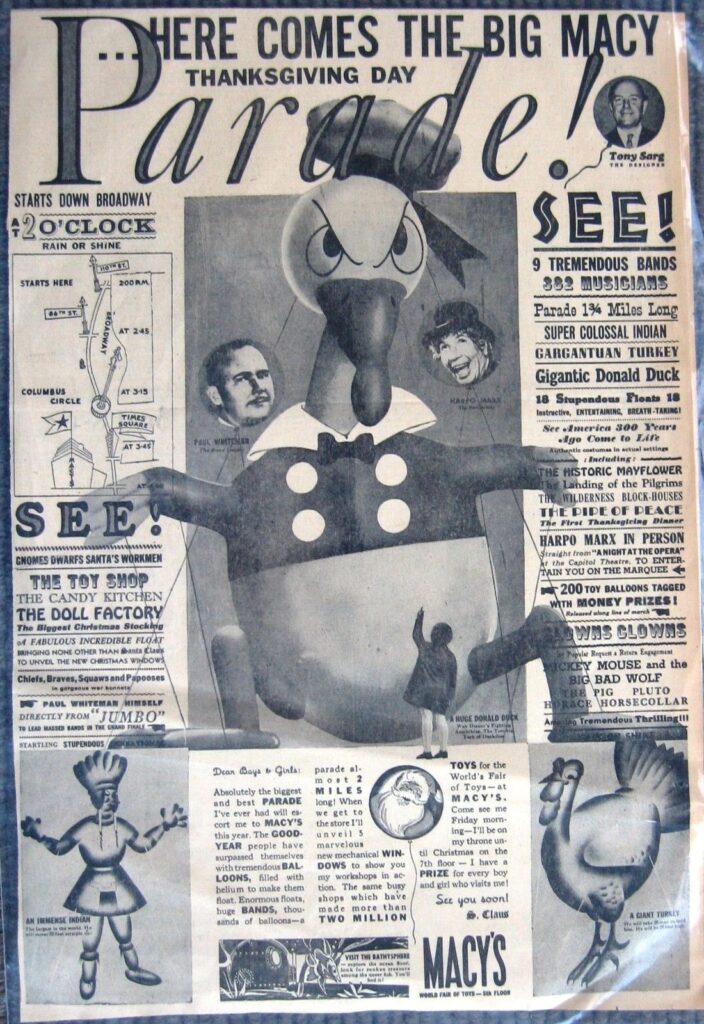
Macy’s Department Store, photo taken from the elevated train platform. 1907. Photo by Irving Underhill. Courtesy Library of CongressThe Tin Man balloon from 1939The parade in 1939, mapping out the long parade routeThe parade in 1938
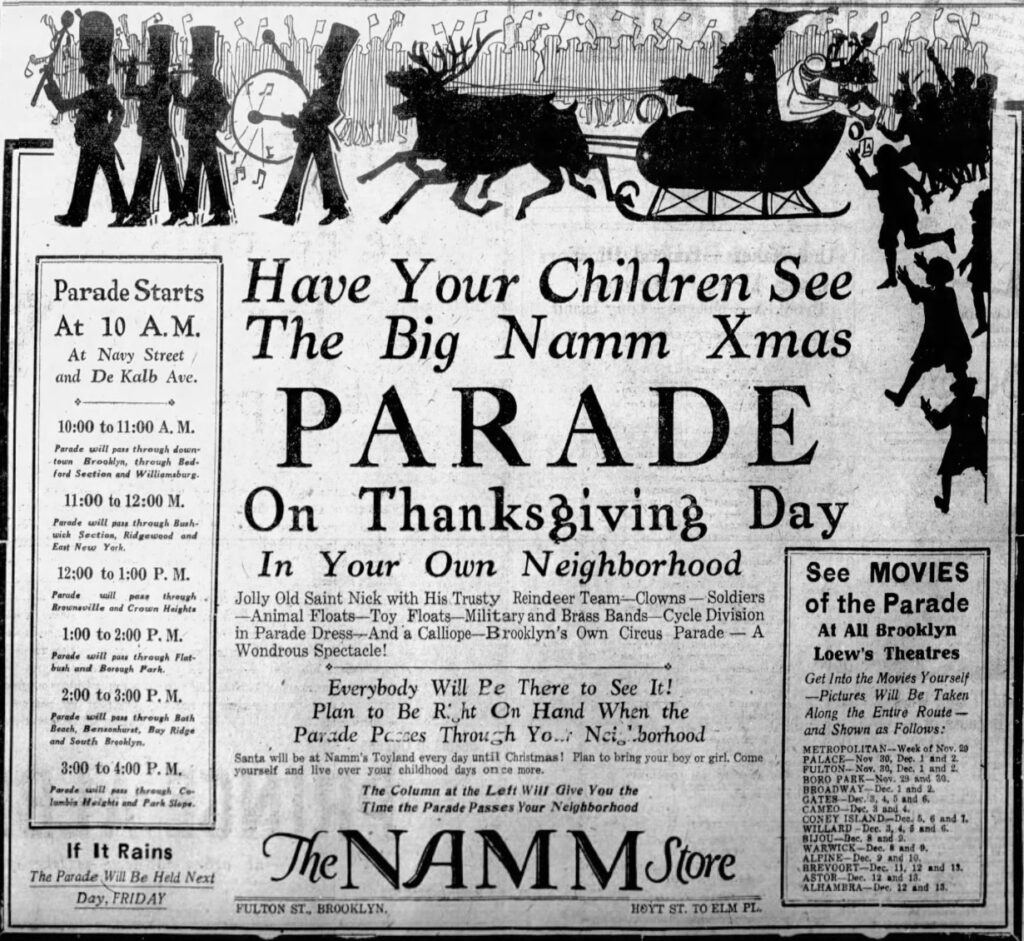
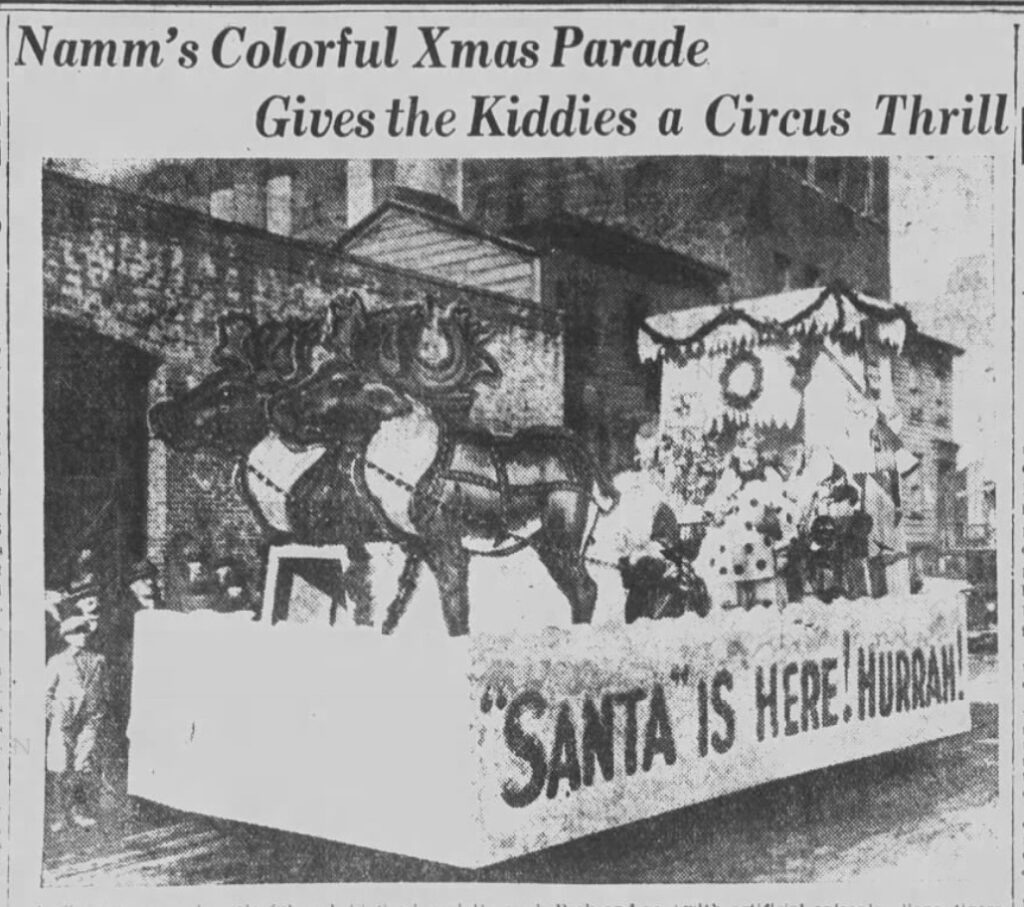
A 1925 for the extra-long, short-lived rival Christmas Parade, organzied the Namm Store, a department store on Fulton Street in Brooklyn
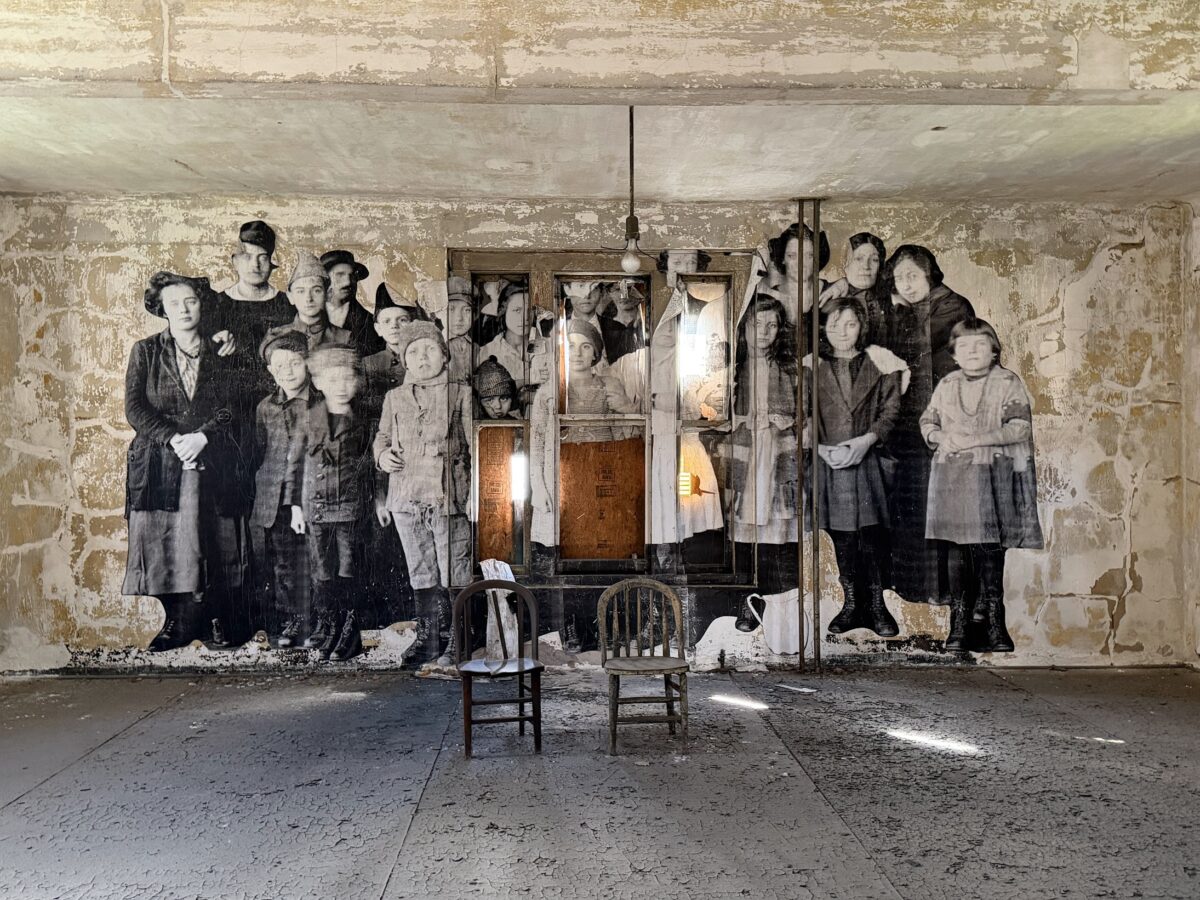
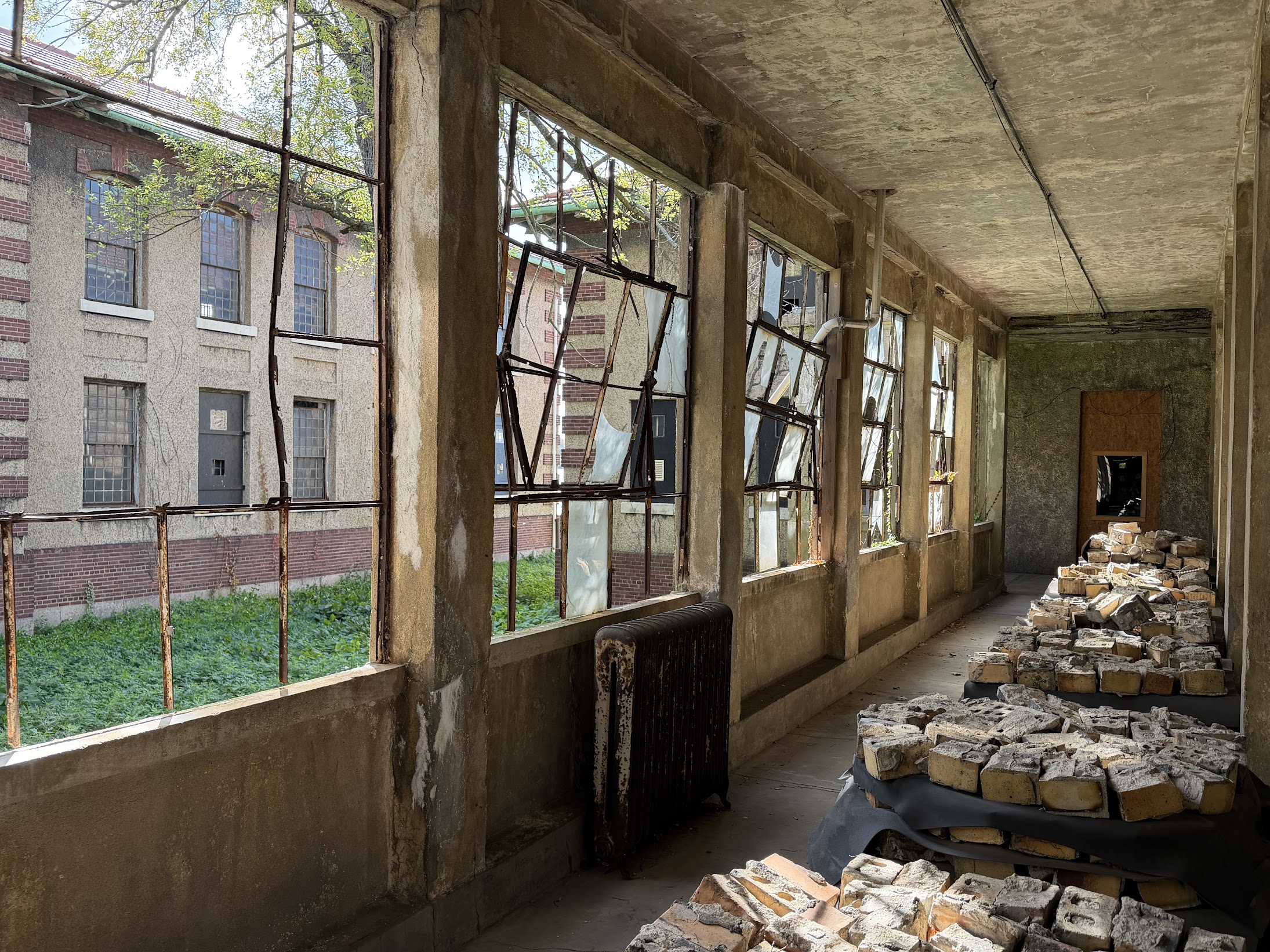
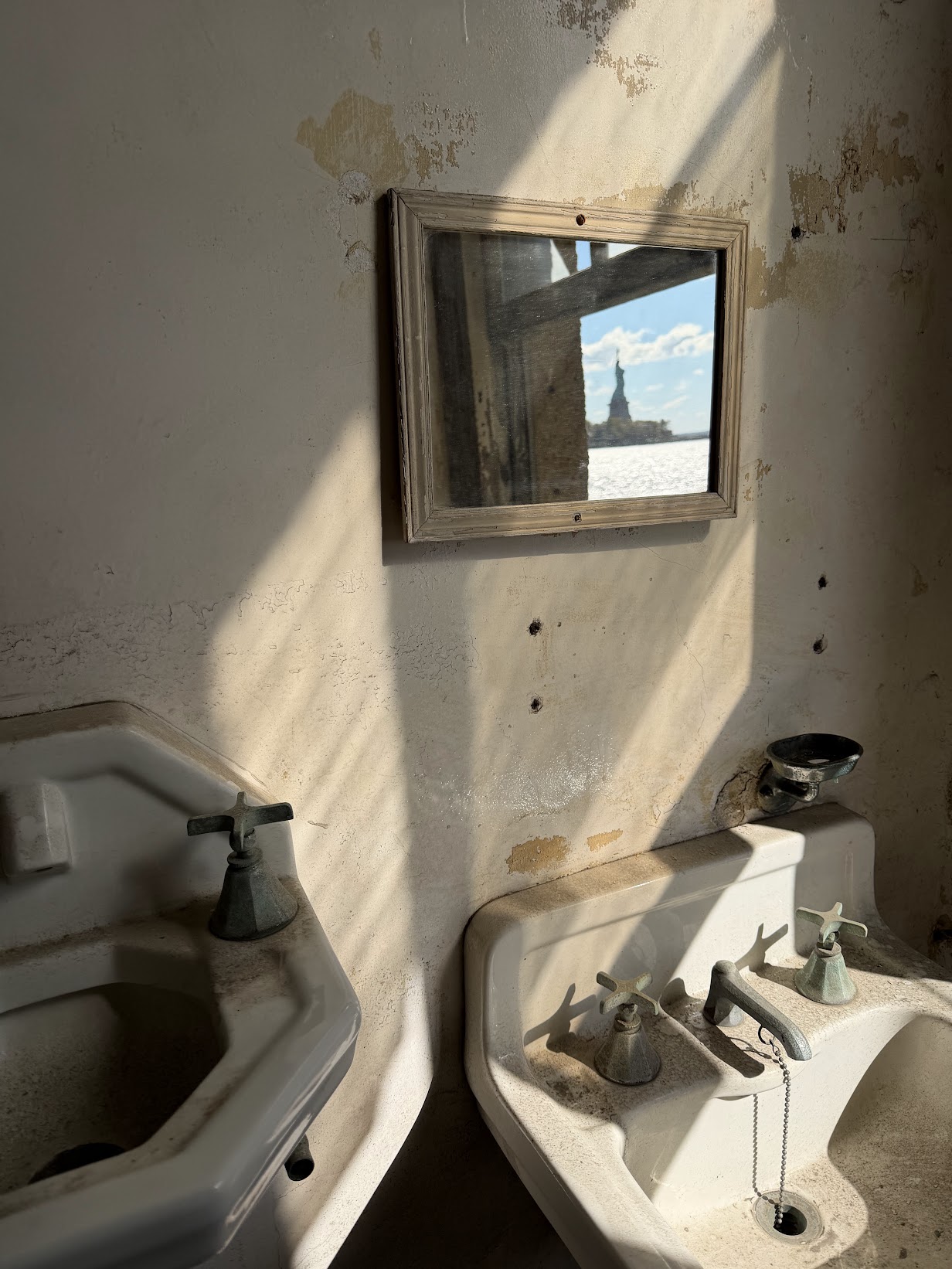
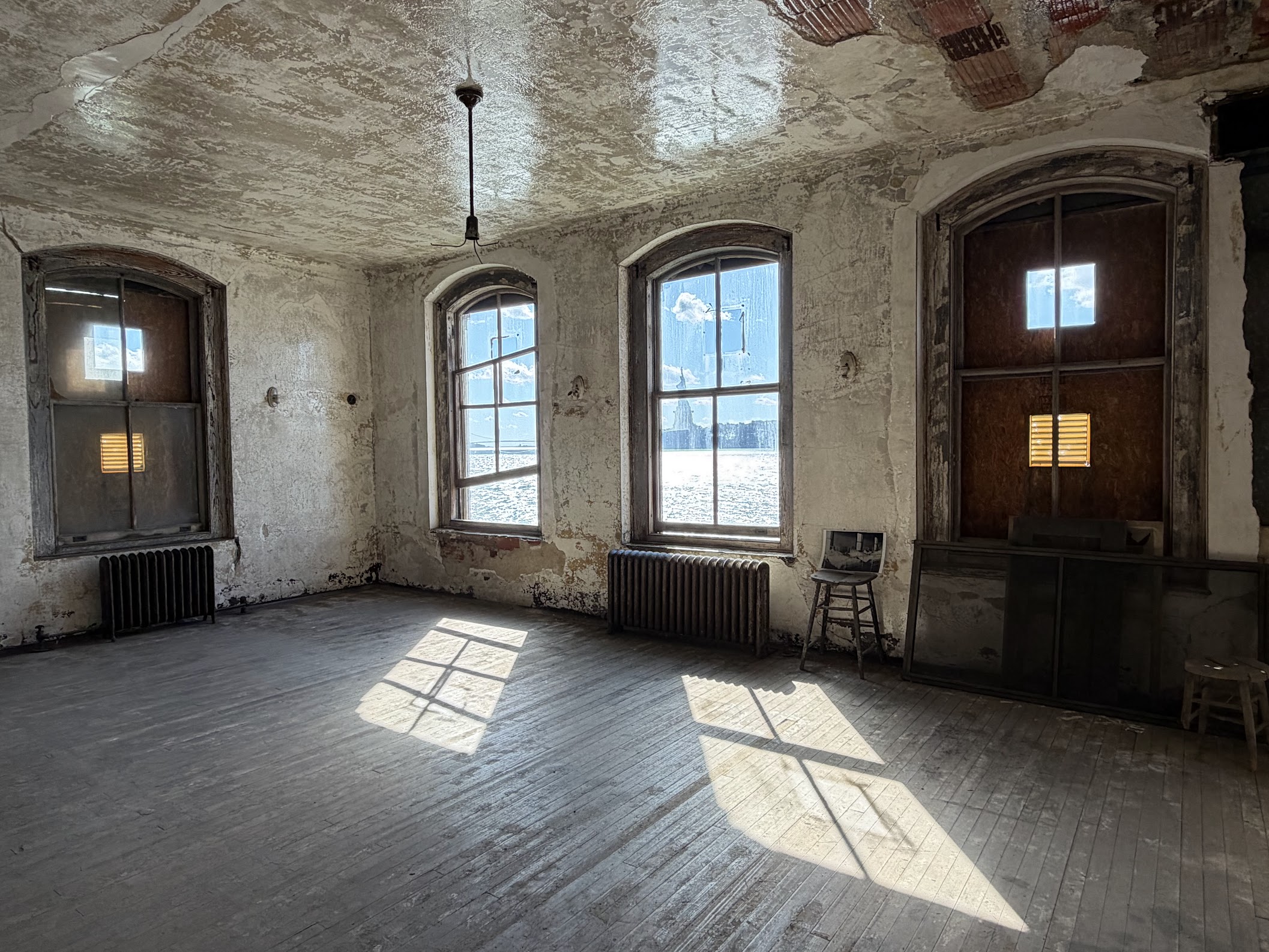
Inside the Measles Ward at the Ellis Island Immigrant Hospital, with a haunted wheat-paste mural by JR
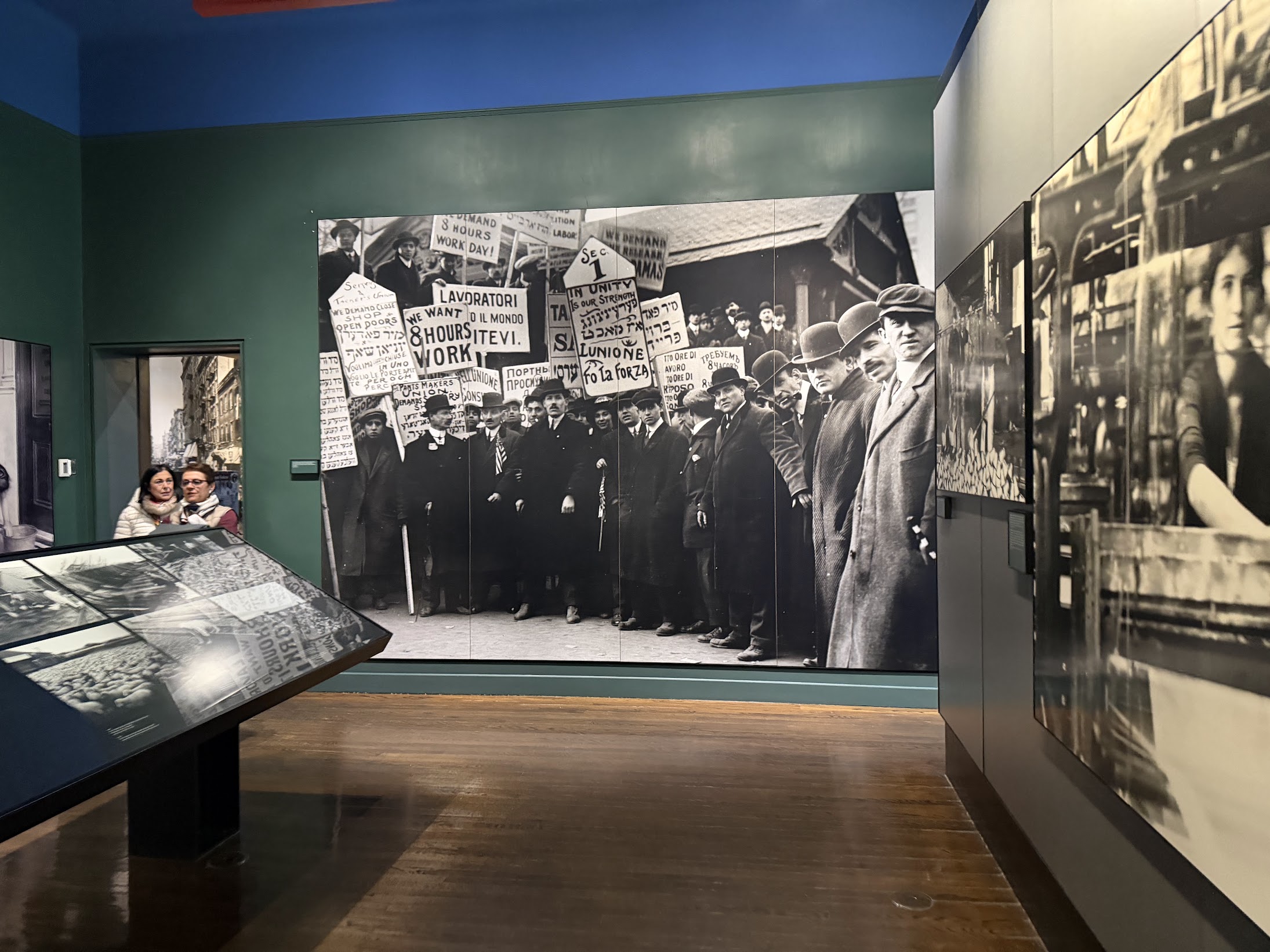
Thanks to its immigration history, Ellis Island is one of America’s great landmarks, a place in New York harbor that represents the millions of people who arrived in this country during the late 19th and early 20th centuries.
Once processed here, a new arrival could head out to their new home — one of New York’s five boroughs or some other destination in the United States.
Part of the “‘processing”’ involved medical and mental health tests. Most people passed successfully, then boarded a ferry to the mainland — and a new life.
But some were kept behind, those who did not pass those tests. They were then sent to the other side of Ellis Island.
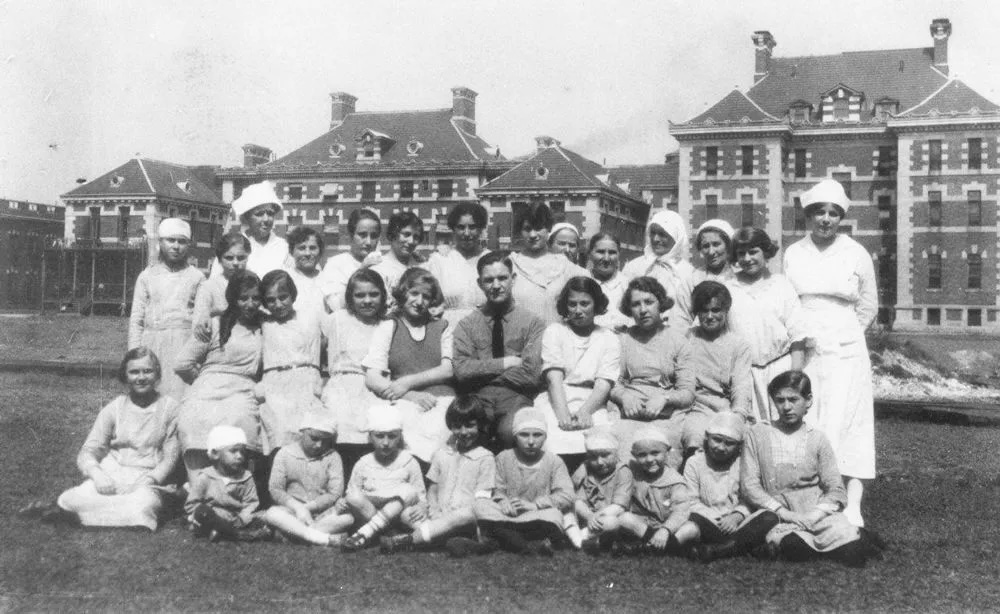
A set of patients at the Ellis Island Immigrant Hospital. It appears these may be children with favus, a fungal scalp infection.
In this special episode, sponsored by Founded By NYC, Greg and Tom recount the history of immigration into New York during the 19th century and the founding of Ellis Island in the 1890s.
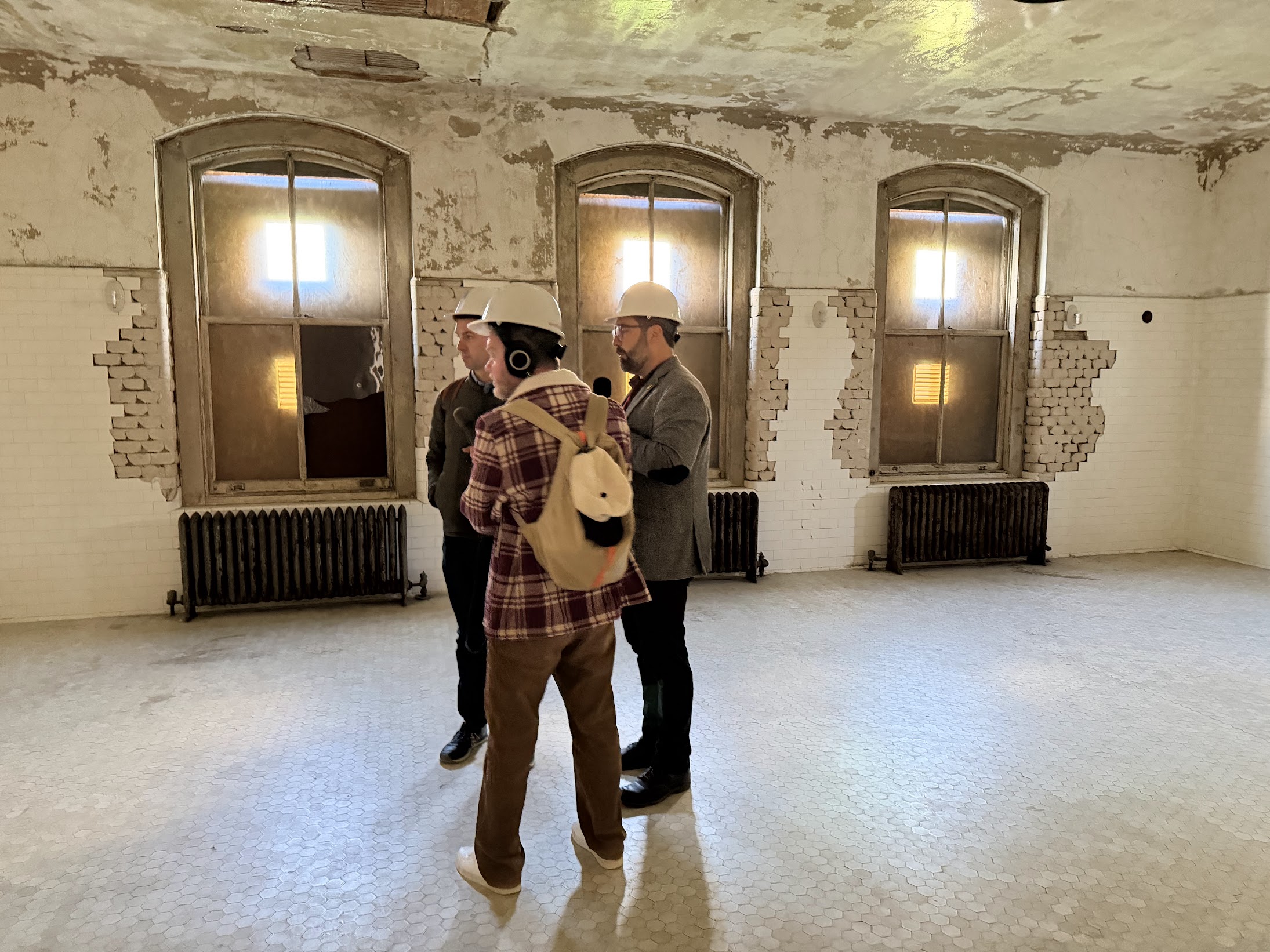
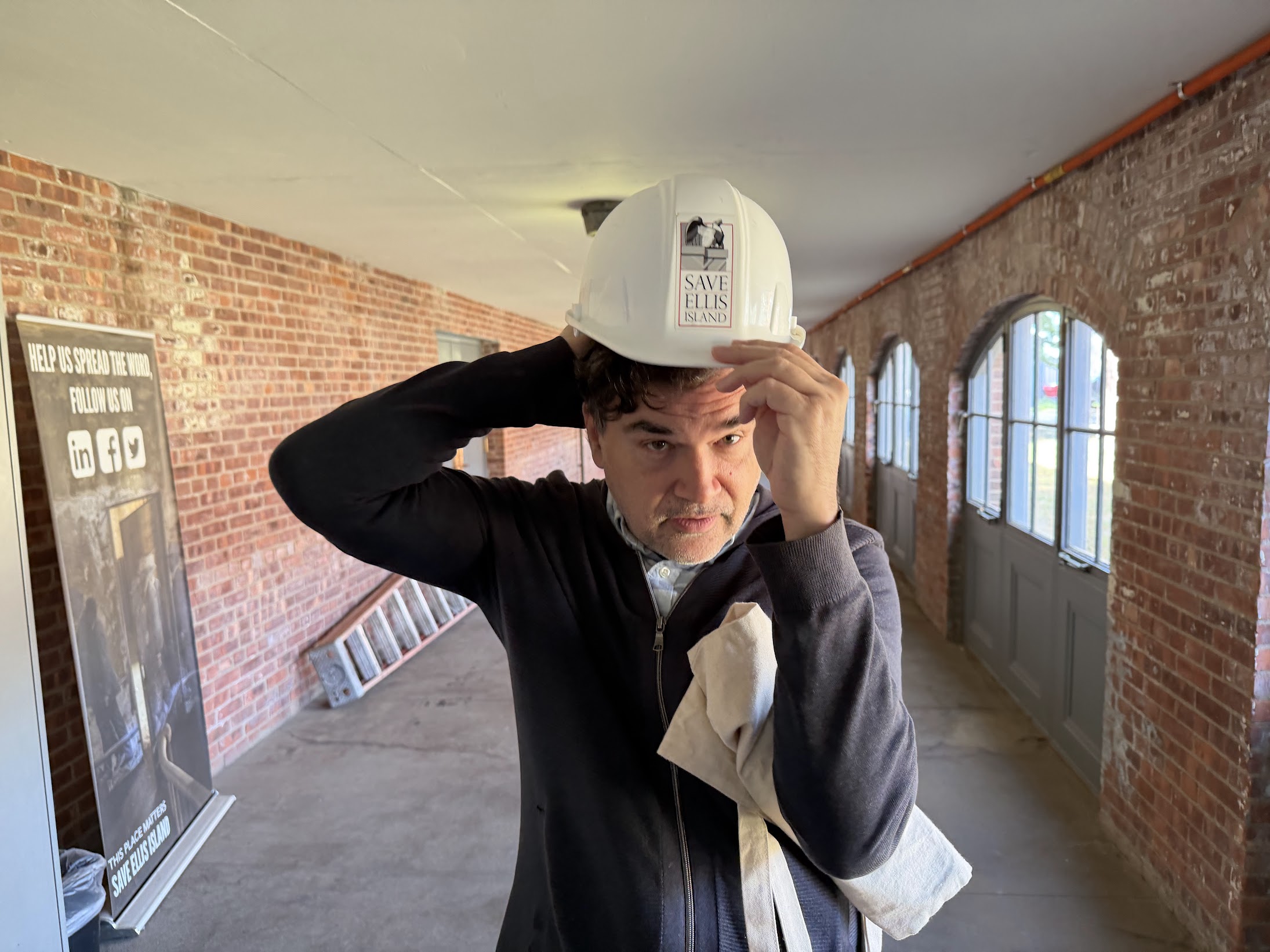
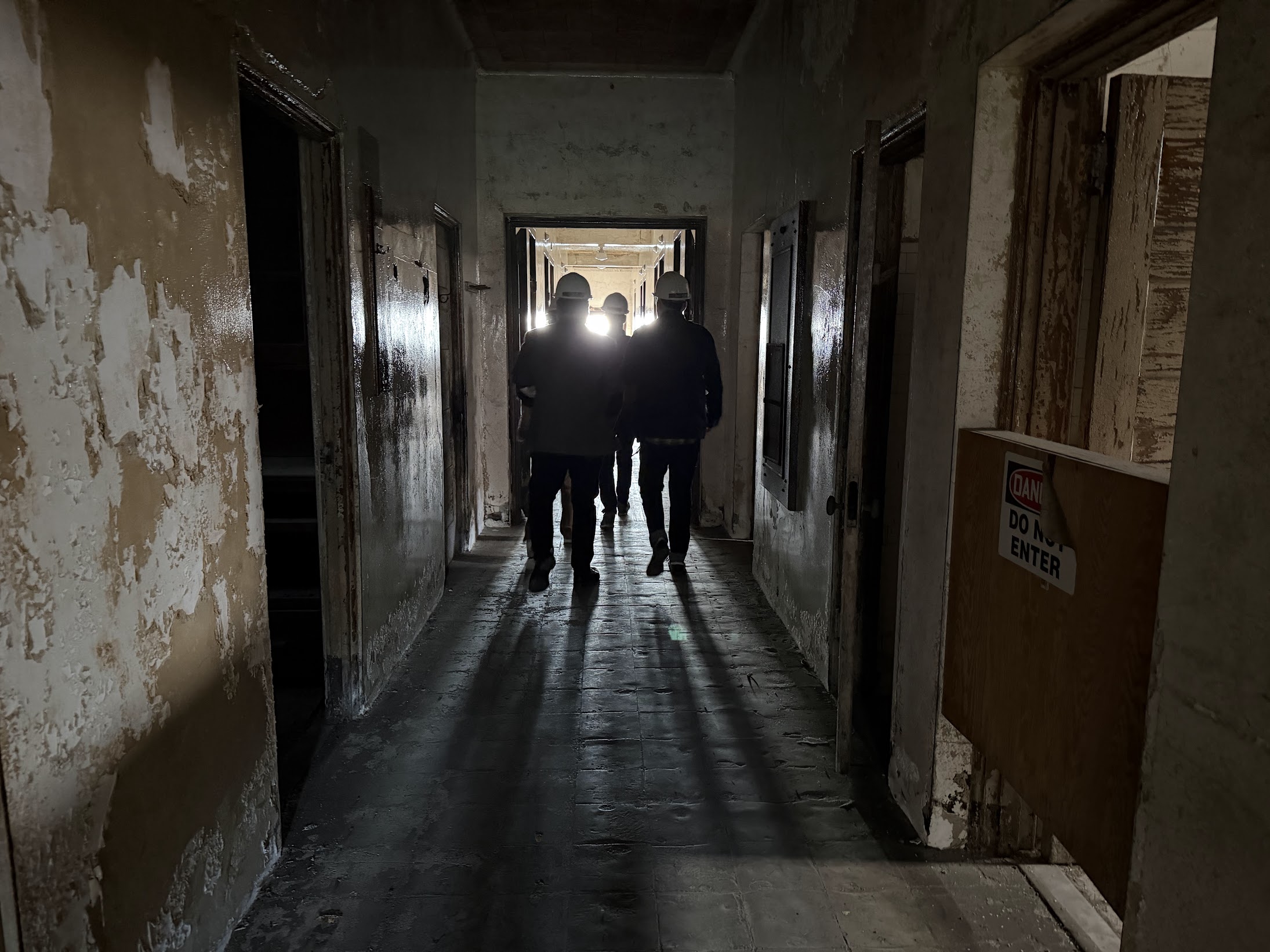
Then they pay a visit to “‘the other side”’ — the Ellis Island Immigrant Hospital — with Justin Southern and Jim Dessicino of Save Ellis Island.
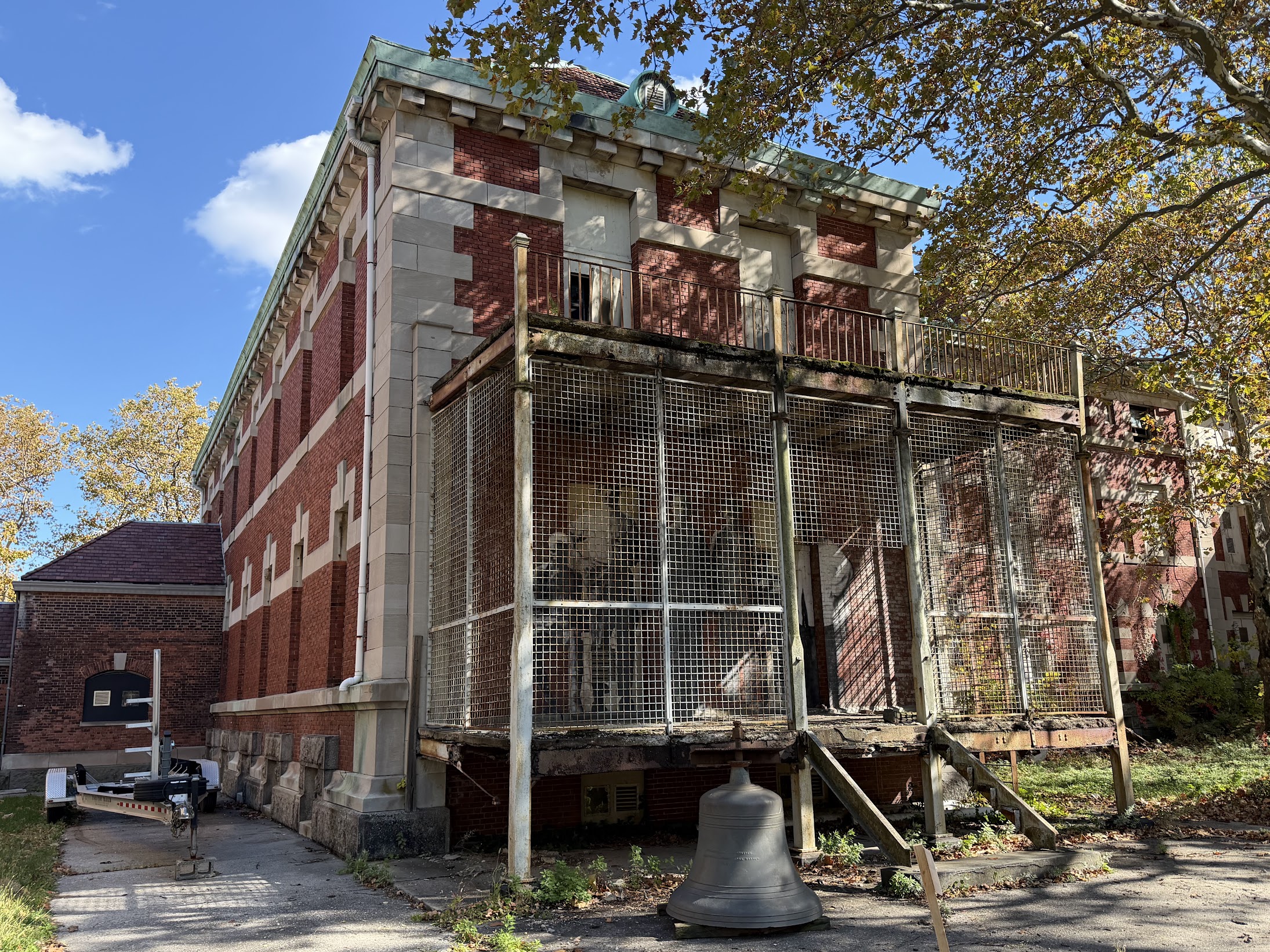
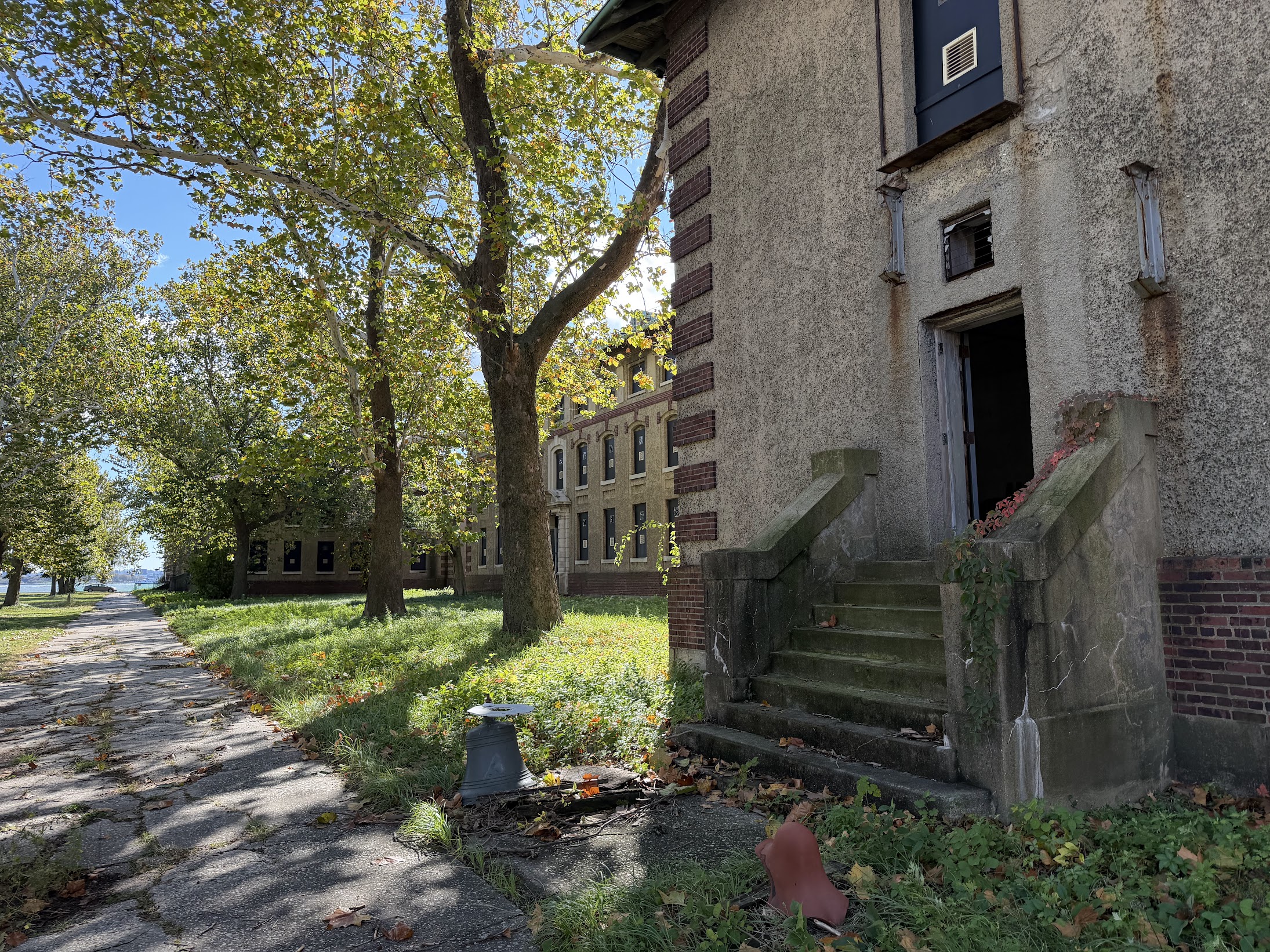
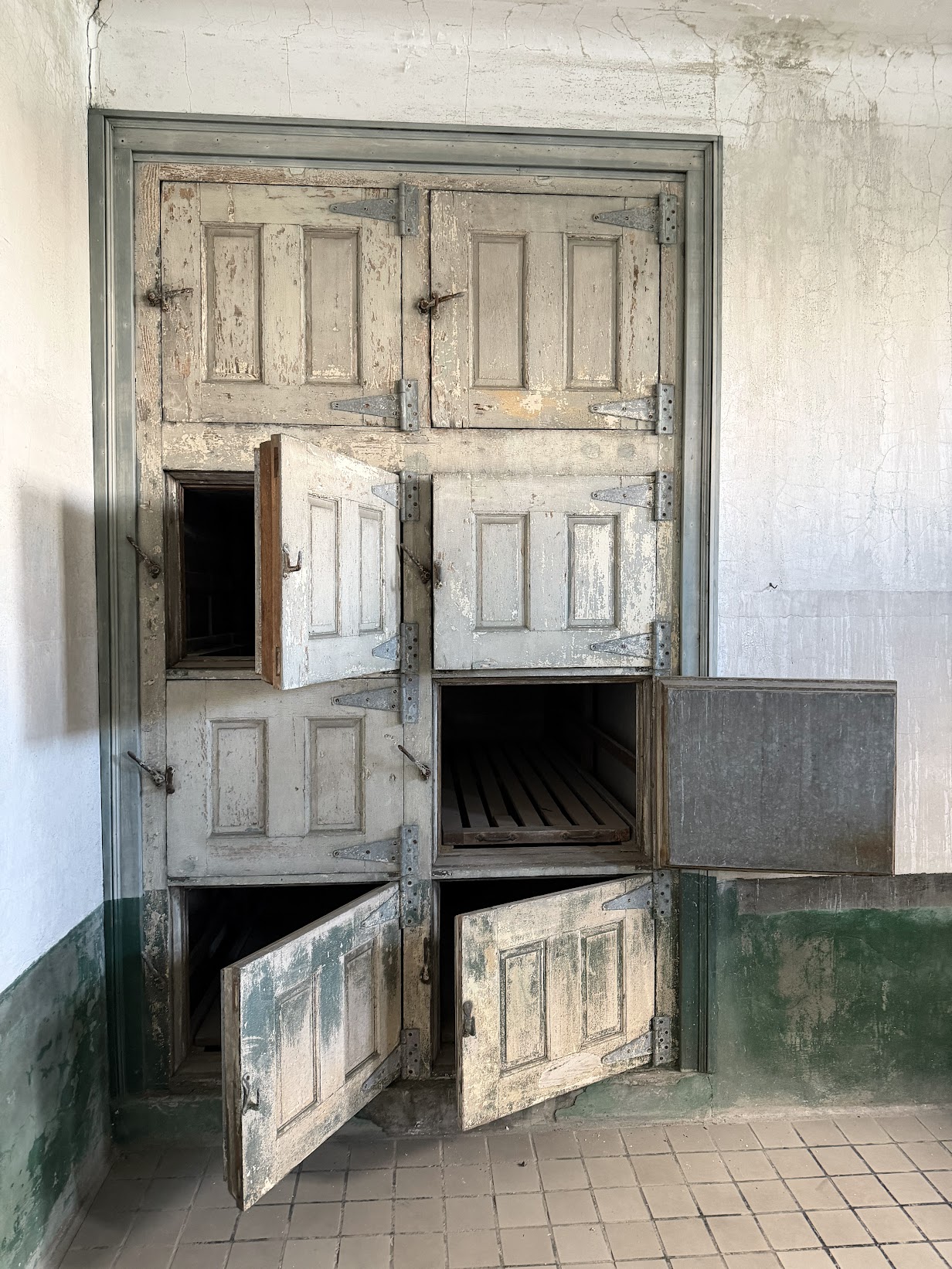
This non-profit leads hard-hat tours through these spectacular and unique ruins. And they are, in fact, ruins. Once a state-of-the-art health care unit, the hospital (and the rest of the island) was abruptly abandoned in 1954 and left to the elements.
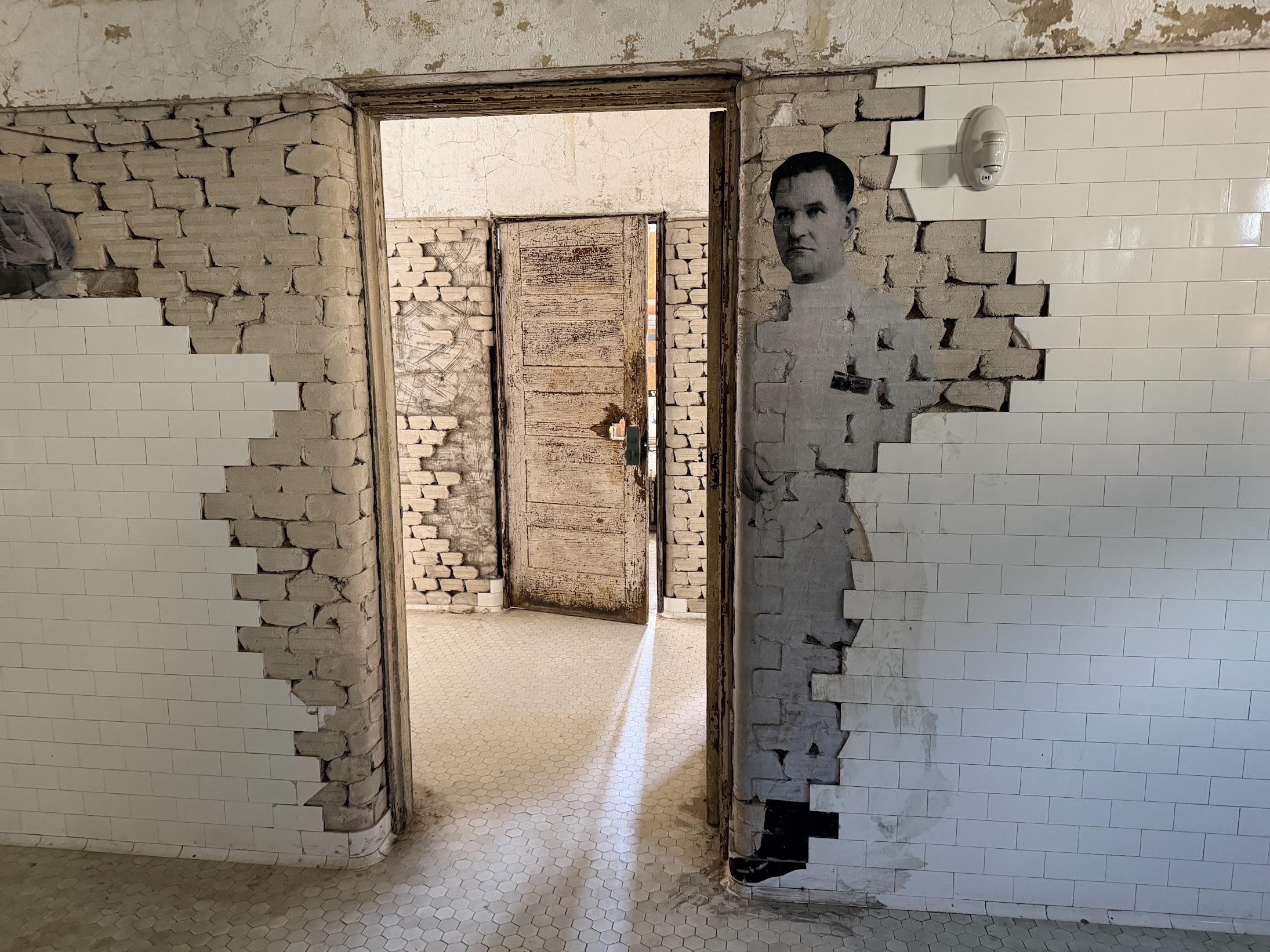
Today, these buildings resemble something from an apocalyptic film with only haunted pieces of artwork — derived from images of the people who came through here — as the only evidence of the modern world.
What do these ruins mean to the story of immigration today? And can these memorable landmarks be saved?
LISTEN NOW: THE OTHER SIDE OF ELLIS ISLAND
The Bowery Boys Podcast is proud to be sponsored by Founded By NYC, celebrating New York City’s 400th anniversary in 2025 and the 250th anniversary of the United States in 2026.
Read about all the exciting events and world-class institutions commemorating the five boroughs’’ legacy of groundbreaking achievements, and find ways to celebrate the city that’s always making history at Founded By NYC.
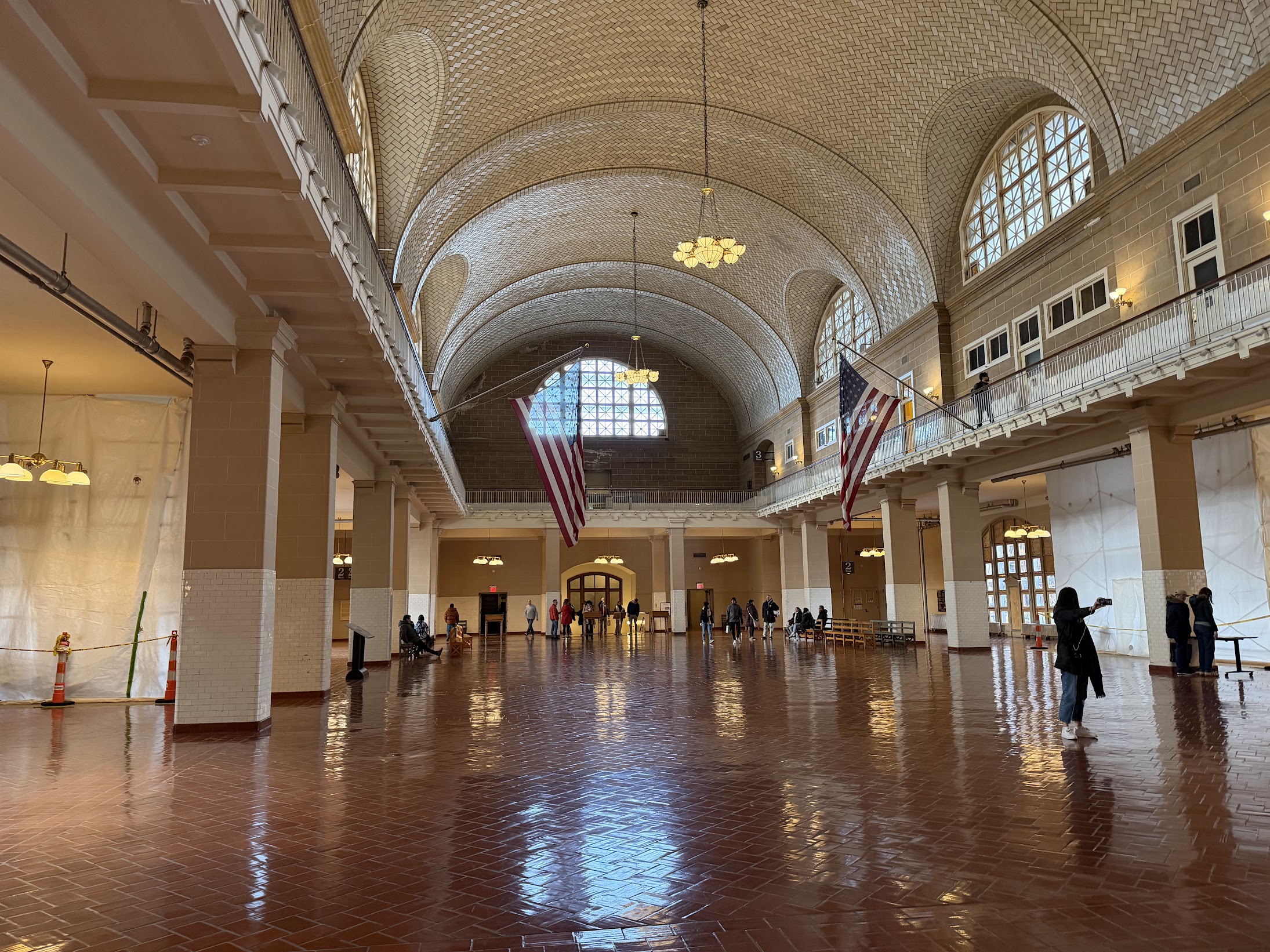
Inside the Ellis Island Immigrant MuseumThe Ellis Island Registry Room
FURTHER LISTENING
After listening to this episode, dive back into our catalog to learn more about some of the subjects from this week’s show.
From the New York Botanical Garden Holday Train Show. A wonder to behold if you haven't seen it yet. (Photo by Greg Young)
We’re making a list and checking it twice. Because there is SO much to do in New York City during the holiday season, that we wanted to be sure not to forgot anything.
Below you’ll find some of the most iconic and beloved holiday events in New York, including festive performances, open-air markets and ice rinks. And every borough celebrates the season, reflecting the City’s incredible mix of traditions and communities.
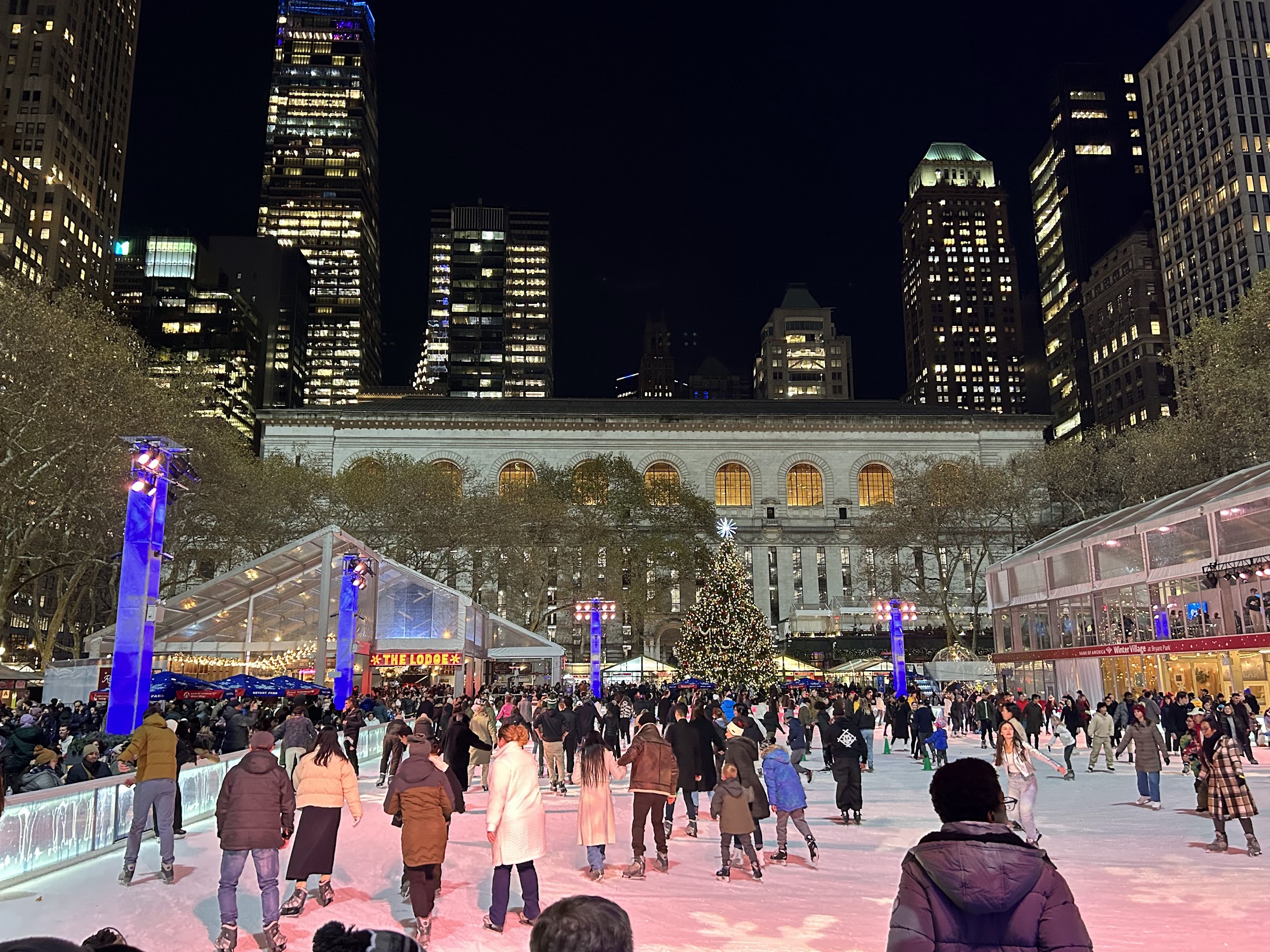
In Manhattan, the season begins with the Bank of America Winter Village at Bryant Park, where you can skate beneath the skyline and browse artisanal vendors.
Meanwhile over in Queens, the Astoria Market at Bohemian Hall & Beer Garden hosts its Holiday Market on December 7 and 14, featuring handmade and vintage goods from Queens artisans.
Those who like to skate, meanwhile, can head to World Ice Arena in Flushing Meadows Corona Park or City Ice Pavillion in Long Island City to strap on their blades.
Bryant Park Holiday Market and Skating Rink (Photo by Greg Young)
Happy holidays! And if you have some other ideas, please put them in the comments below.
Read all about New York City during the holiday season and all the other exciting events and world-class institutions commemorating the five boroughs’ legacy of groundbreaking achievements, and find ways to celebrate the city that’s always making history at Founded by NYC.
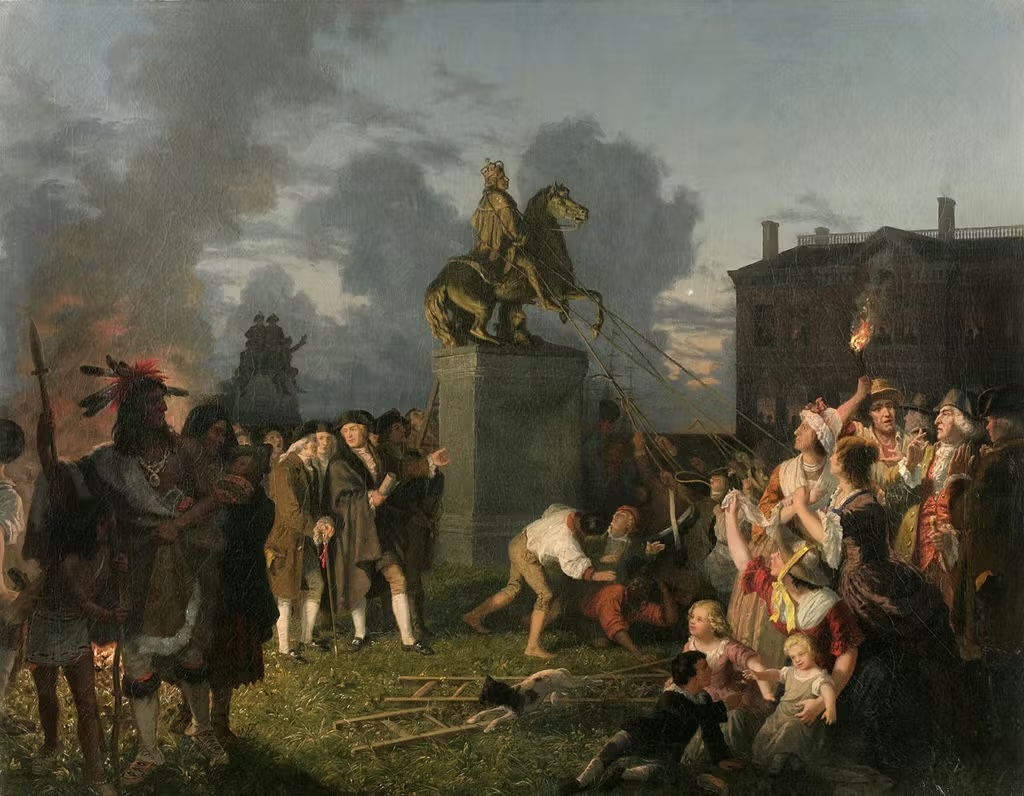
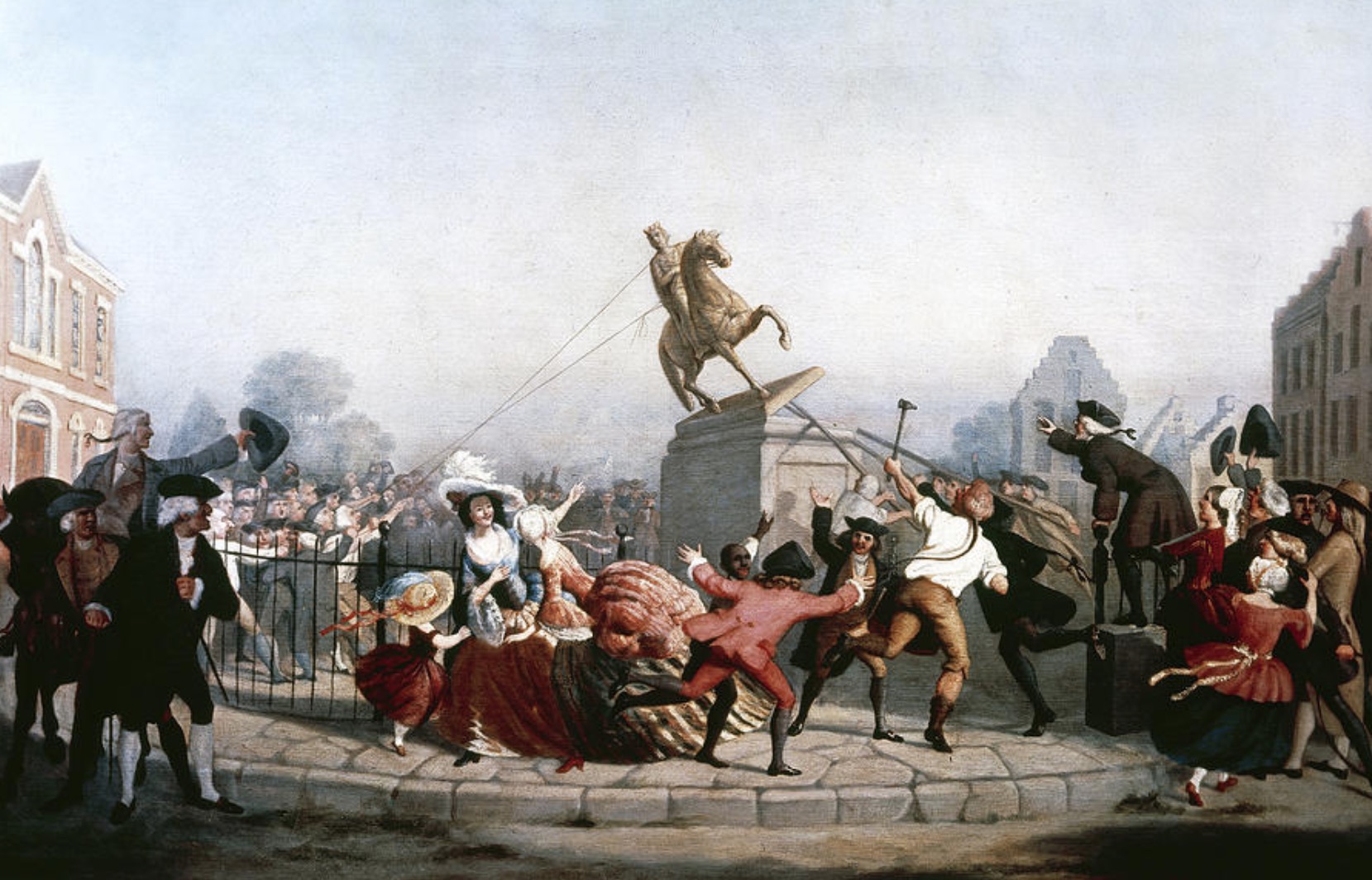
Pulling Down the Statue of King George III by Johannes Adam Simon Oertel (currently at New York Historical)
A new Ken Burns mini-series is equivalent to the Super Bowl for history lovers. And the latest The American Revolution serves up all six parts this week on your local PBS Affiliate.
Or, if you want to binge them all now, they’re all streaming now if you have a PBS app. But isn’t it more fun to watch along with everybody else?
New York plays a larger role in the story starting tonight (Monday) in Part Two. For more information on particular aspects of the American Revolution as they relate to New York City, listen to the Bowery Boys podcasts below:
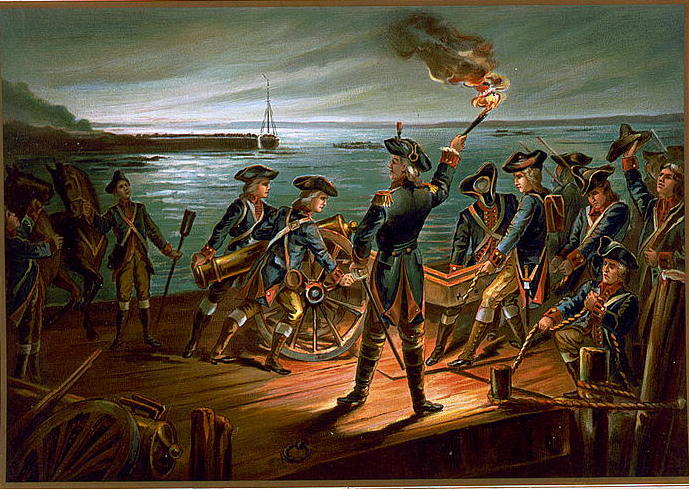
In 1776, George Washington and the Continental Army would have certainly been vanquished by British forces if not for a daring escape from this Brooklyn village which later became New York’s first “commuter’s town.”
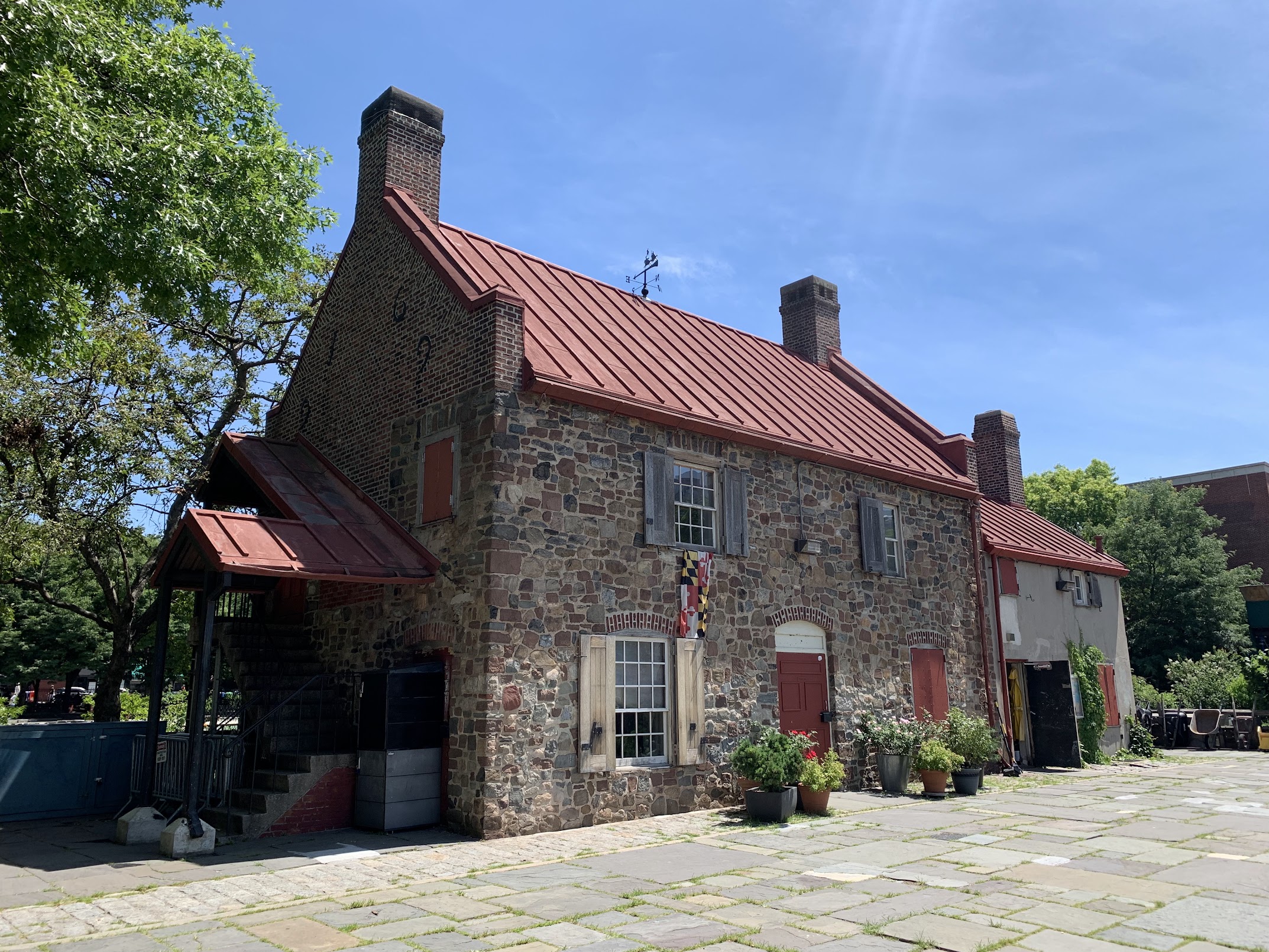
Brooklyn’s Gowanus — both the creek and the canal — is one of the most mysterious and historically important waterways in New York City. But this was once the land of delicious oysters — and it was also the site of an early Revolutionary War battle, centered near an old stone house.
Two hundred and fifty years ago, Colonial New York received a monumental statue of King George III on horseback, an ostentatious and rather awkward display which once sat in Bowling Green park at the tip of Manhattan.
On July 9, 1776, angry New Yorkers violently tore down that statue of King George and, as the story goes, rendered his body into bullets used in the battles of the Revolutionary War.
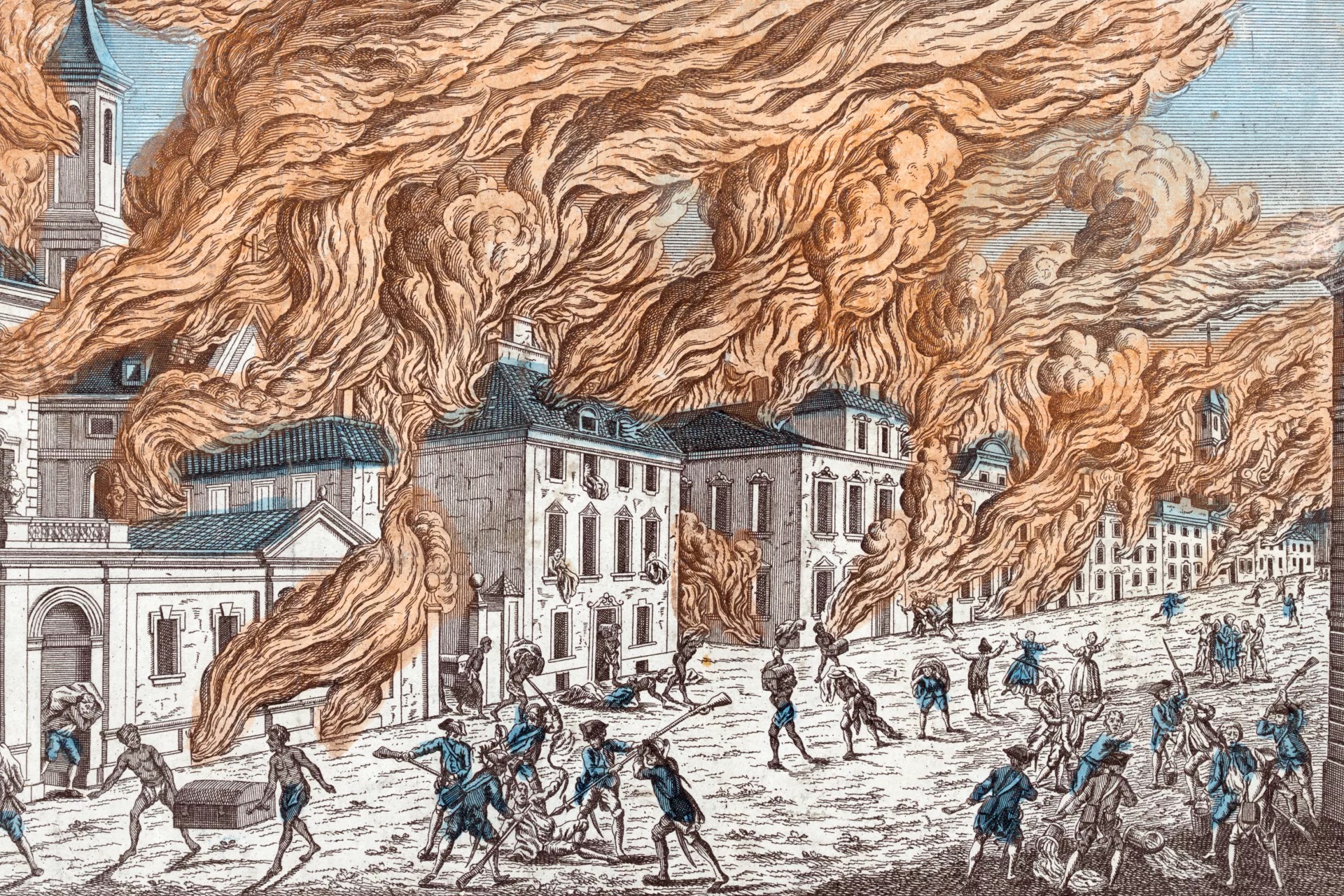
A little after midnight on September 21, 1776, the Fighting Cocks Tavern on Whitehall Street caught on fire. The drunken revelers inside the tavern were unable to stop the blaze, and it soon raged into a dangerous inferno, spreading up the west side of Manhattan.
Some reports state that the fire started accidentally in the tavern fireplace. But was it actually set on purpose — on the orders of George Washington?
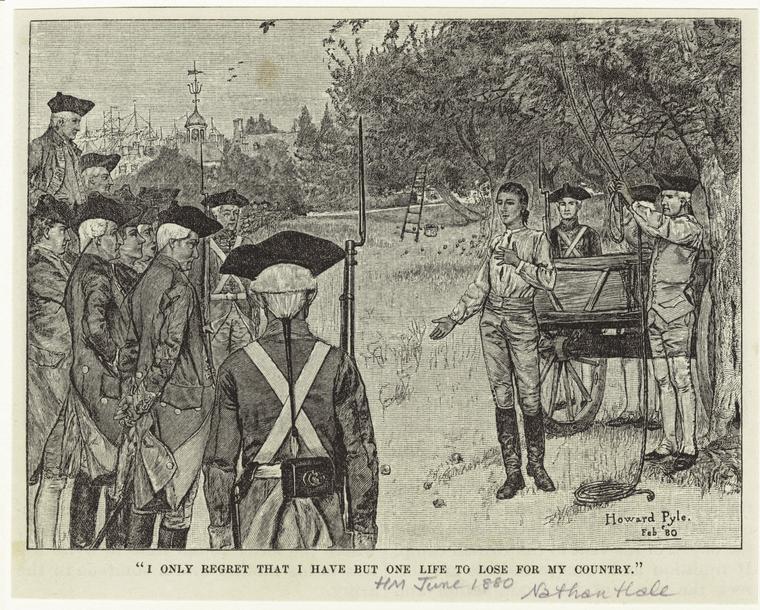
Underneath this expansive story is another, smaller story — that of a young man on a spy mission, sent by Washington into enemy territory. His name was Nathan Hale, and his fate would intersect with the disastrous events of September 21, 1776.
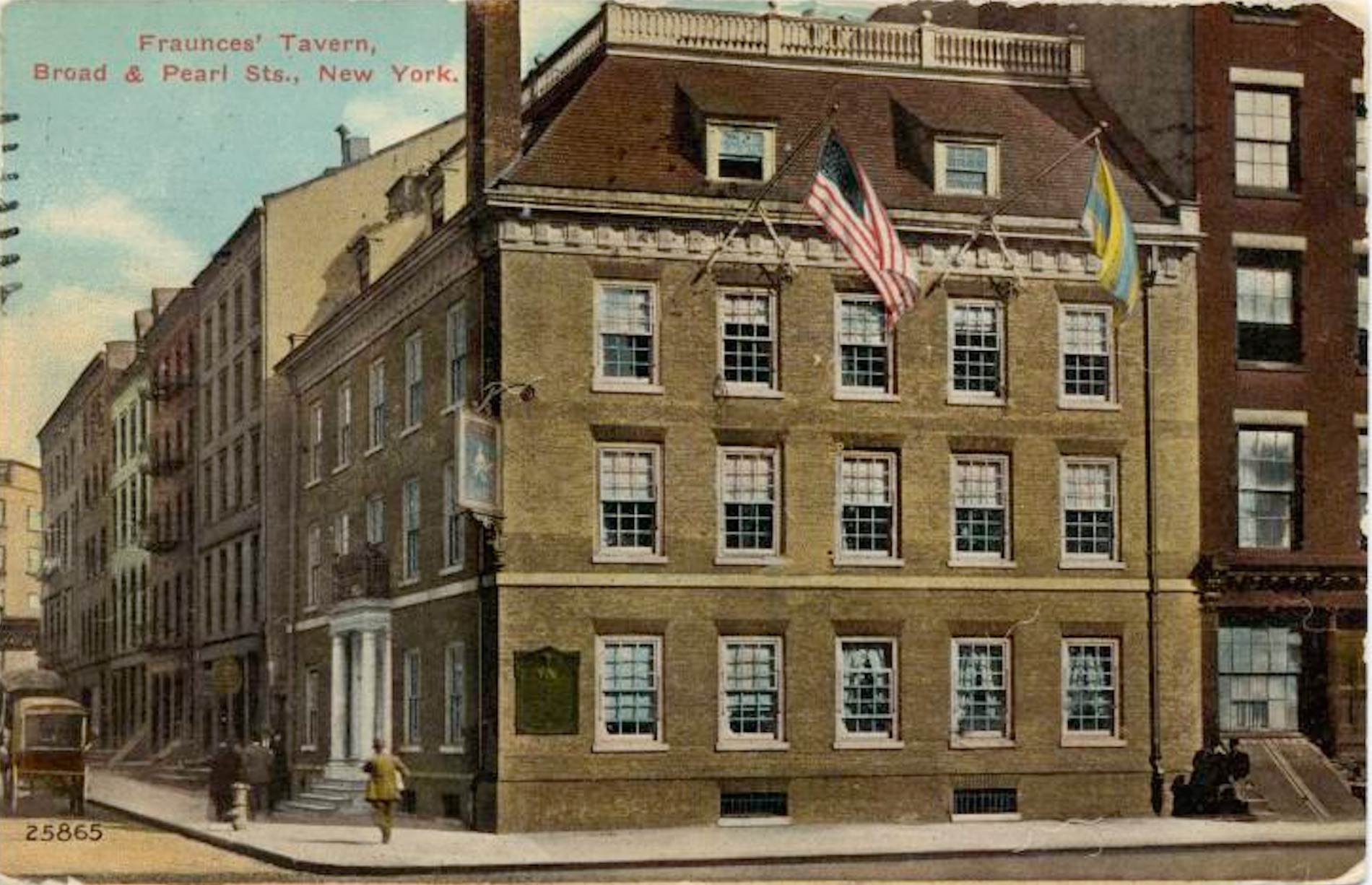
Fraunces Tavern is one of America’s most important historical sites of the Revolutionary War and a reminder of the great importance of taverns on the New York way of life during the Colonial era.
This revered building at the corner of Pearl and Broad Street was the location of George Washington‘s farewell address to his Continental Army officers and one of the first government buildings of the young United States of America.
The Lenape were among the first in northeast North America to be displaced by white colonists — the Dutch and the English. By the late 18th century, their way of life had practically vanished upon the island which would be known by some distorted vestige of a name they themselves may have given it – Manahatta, Manahahtáanung or Manhattan.
In this show, we also discuss the Six Nations/Haudenosaunee Confederacy and the Native American presence in the New York region.
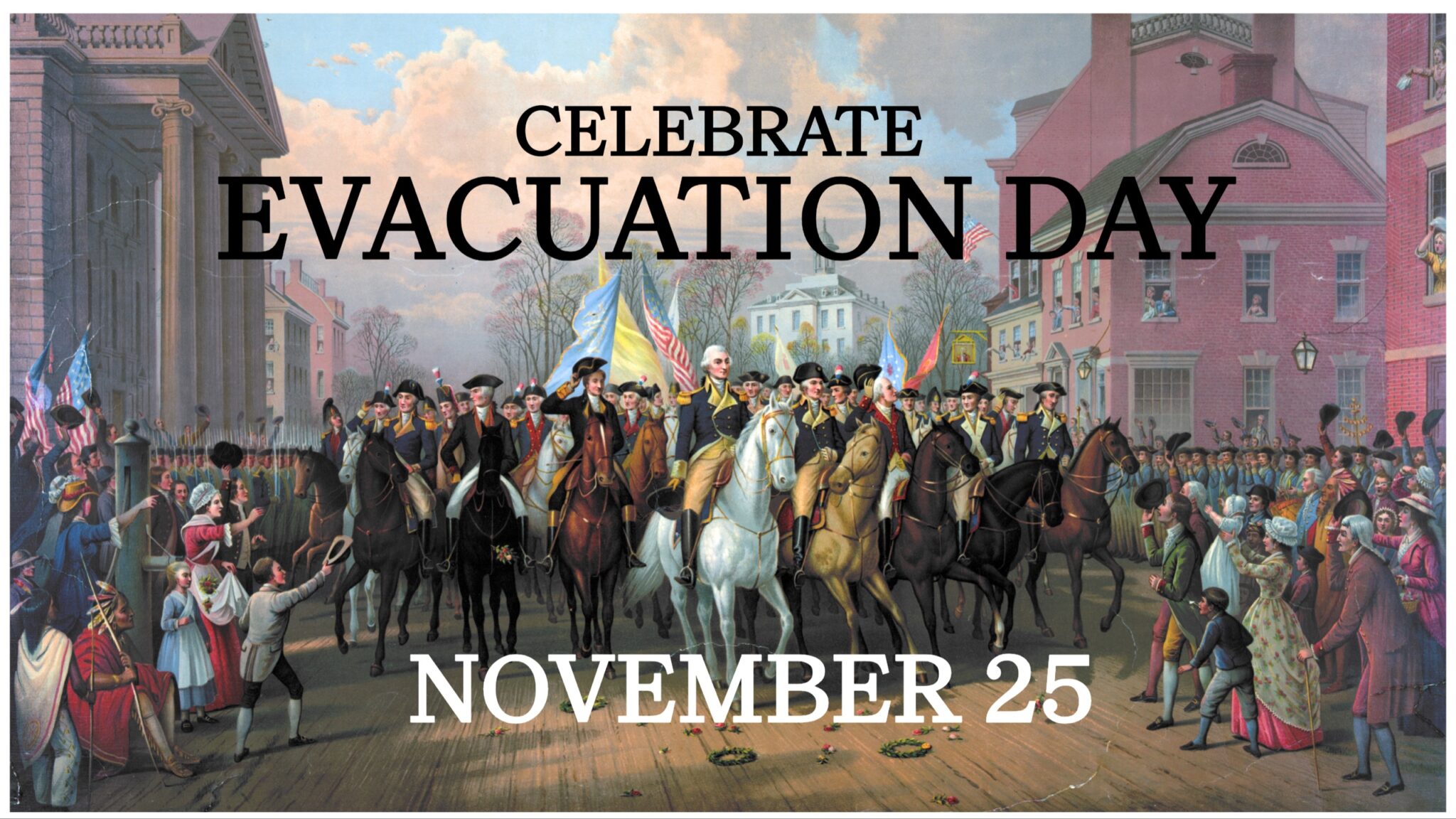
For decades New Yorkers celebrated Evacuation Day every November 25, a holiday marking the 1783 departure of British forces from a city they had occupied for several years.
The events of that departure — that evacuation — inspired annual celebrations of patriotism, unity and a bit of rowdiness. Evacuation Day was celebrated well until the late 19th century. But then, gradually, the party sort of petered out…..
We also have a general overview podcast from several years ago on New York During the Revolutionary War that covers the years 1776-1783. If you’ve ever wondered what New York was like under British occupation, this is a good one to check out!
Other shows which touch upon New York’s role during War for Independence:
The Bronx Trilogy Part One: The Bronx Is Born — During the Revolutionary War, prominent families were faced with a dire choice — stay with the English or side with George Washington’s Continental Army? One prominent family would help shape the fate of the young nation and leave their name forever attached to one of the Bronx’s oldest neighborhoods.
The fascinating art of Jeffrey Veregge, on display at the National Museum of the American Museum in Manhattan
This month we’re celebrating New York City’s rich connections to the indigenous populations of North America, in particular the Lenape.
Overall I think New York City could use more places which mark its indigenous roots. By which I mean, places for New Yorkers to actually visit, landmarks and public art which illustrate the connection between New York’s present and its past (beyond our 400 year celebration of the Dutch arrival in New York.)
Fortunately there are organizations like theLenape Center who are working to improve that visibility. And this month, lots of places are tying programming into National Native American Heritage Month, a nationwide look at the country’s indigeonous roots.
So it’s a great time to tap into these unique stories. Here’s a few places throughout the city that we recommend you visit this month. And tell them the Bowery Boys and NYC Tourism sent you!
Relative Arts, an East Village studio and shop dedicated to the subject,
And of course, there’s always theNational Museum of the American Indian (temporarily closed due to the federal government shutdown) and the American Indian Community House each hold events throughout the year and make sure stories of Indigenous communities are preserved and amplified.
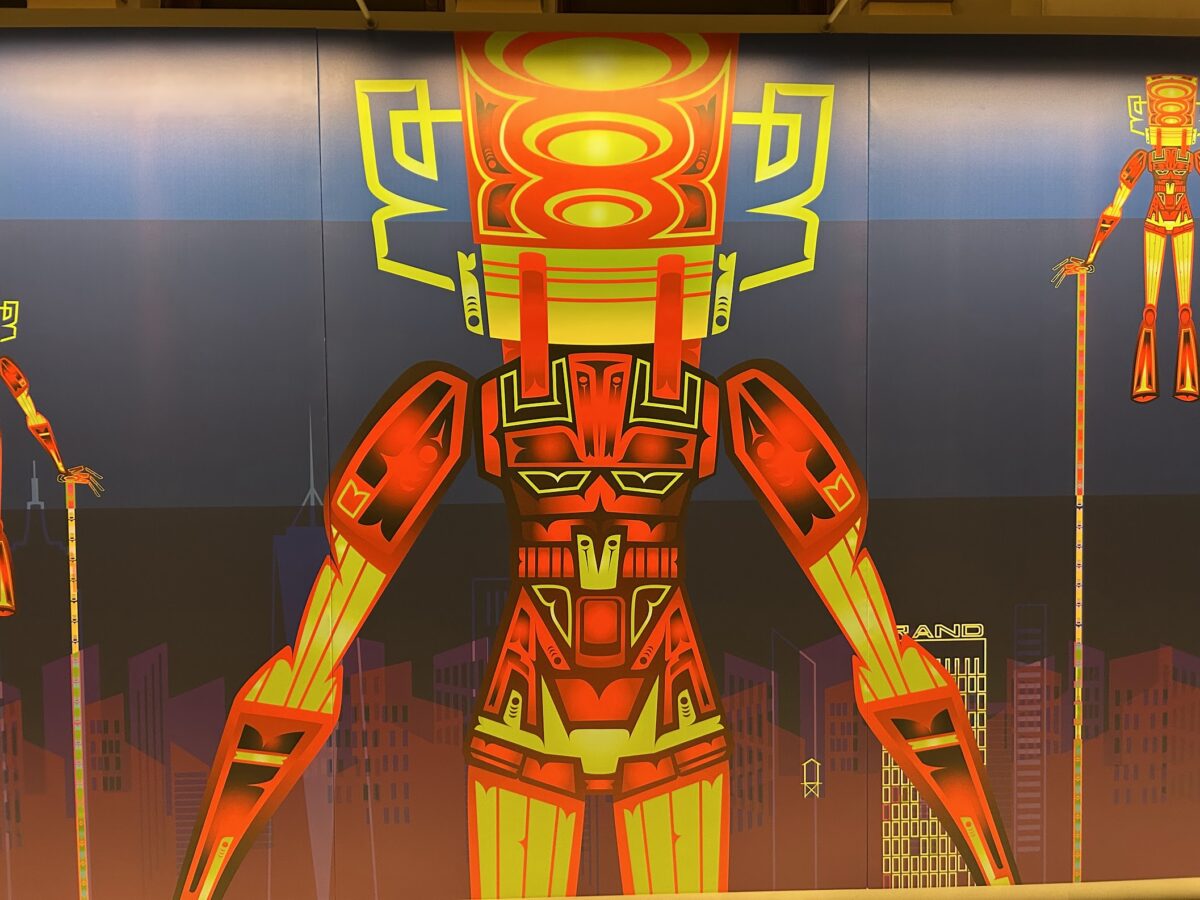
We are huge fans of the lower Manhattan museum, which holds exhibits exploring subjects such as ancestral traditions and New York’s native heritage—there’s even a contemporary art display incorporating Marvel figures and NYC’s streetscape
In addition, there is also special programming being presented at the New York Public Library. Check it out!
National Native American Heritage month runs throughout the month of November. Read about this program and all the other exciting events and world-class institutions commemorating the five boroughs’ legacy of groundbreaking achievements, and find ways to celebrate the city that’s always making history at Founded by NYC.
And for more information on New York City’s Native American history, check out these Bowery Boys podcasts:
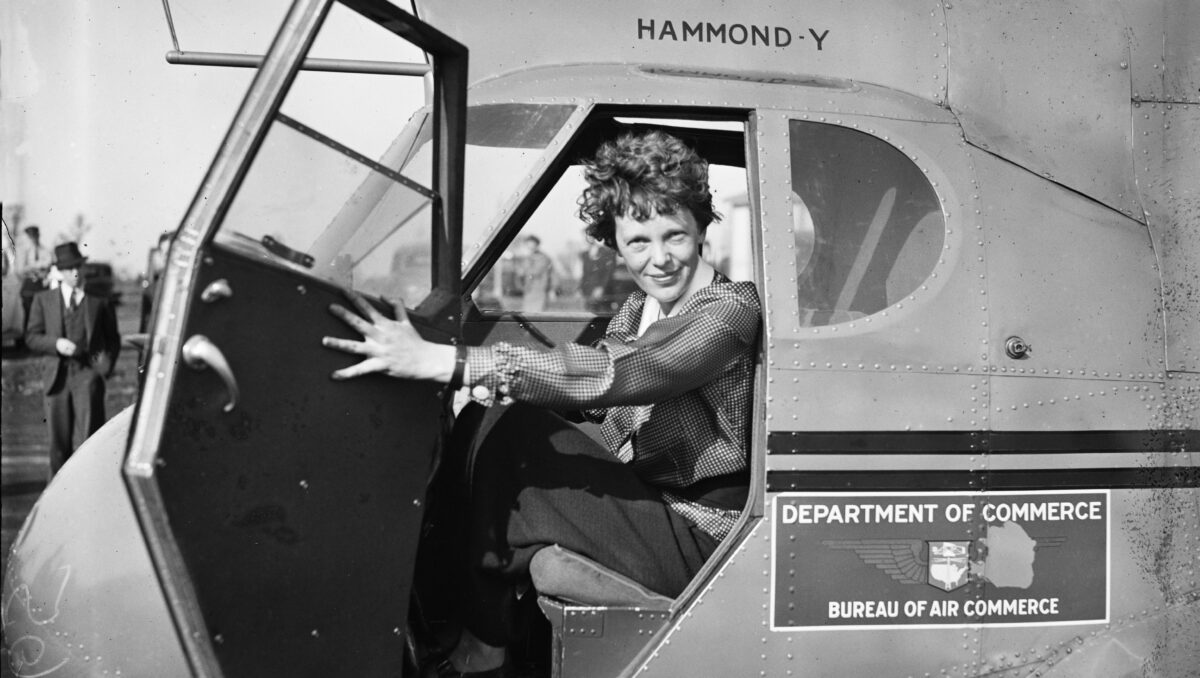
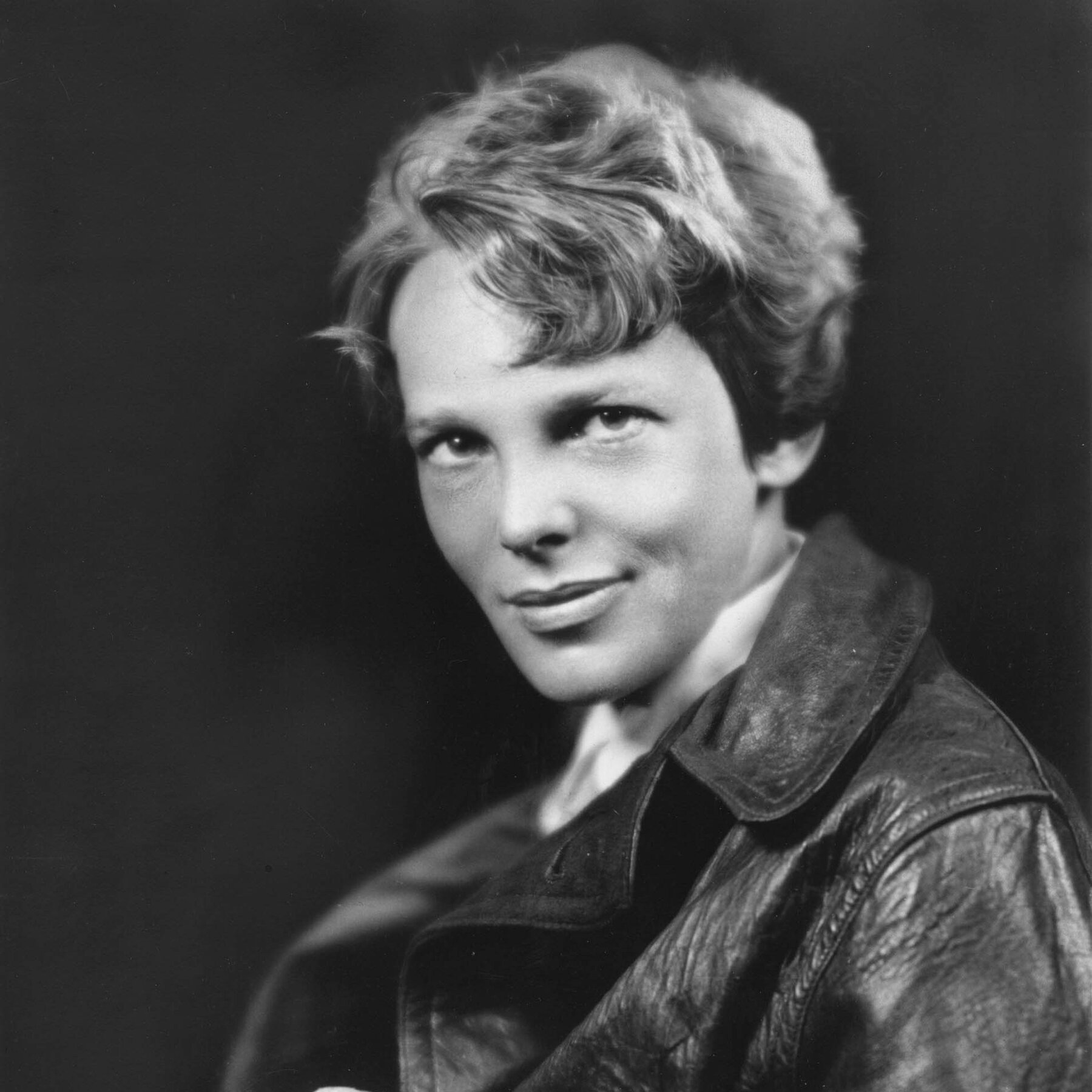
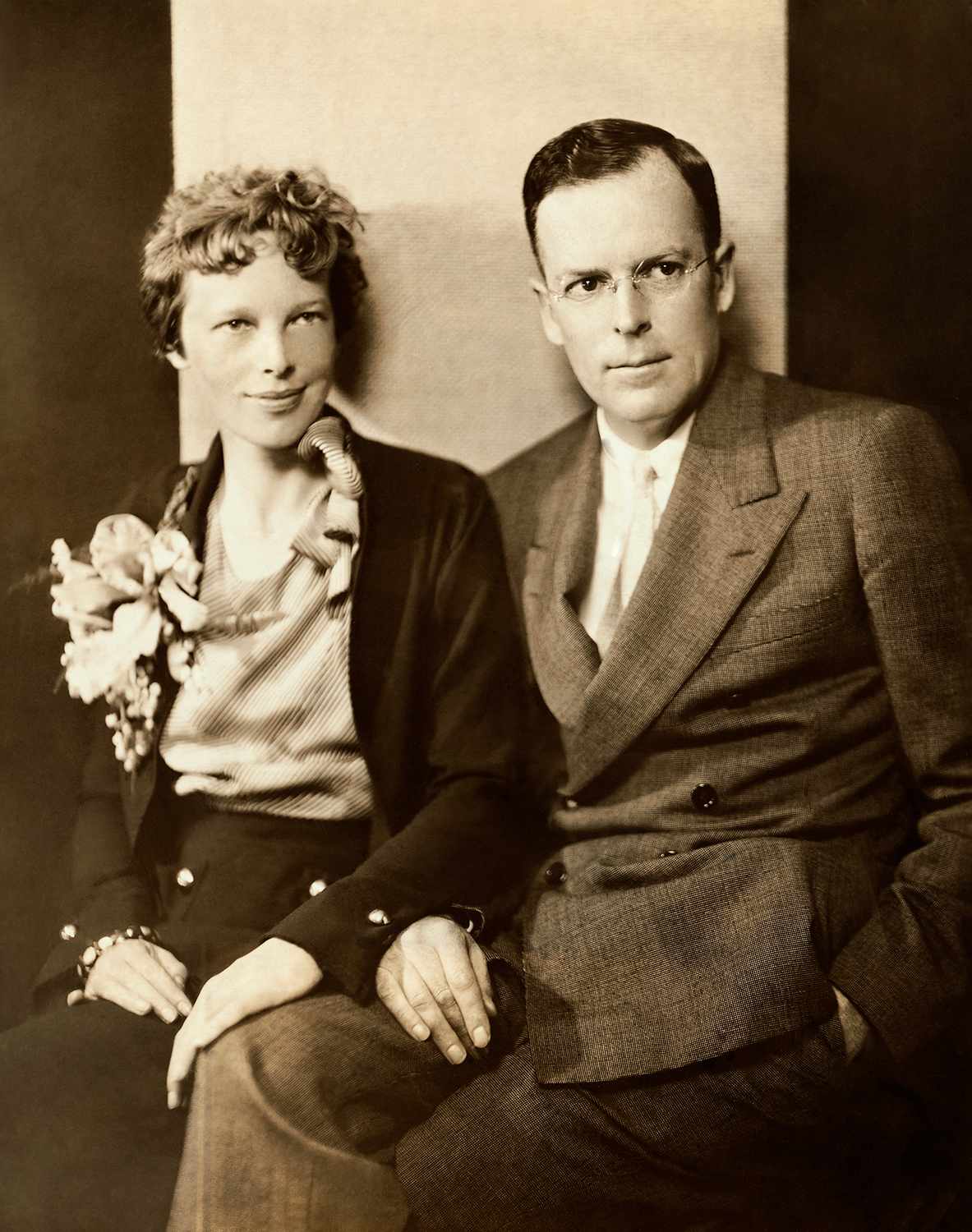
Earhart in 1936, Harris & Ewing, photographer, Library of Congress
The aviation hero Amelia Earhart, who became one of the world’s most famous women during the Great Depression, is one of those historic figures that people think they know quite well.
But during her lifetime, much of her public image was the product of a New York book publisher. And even today, Earhart’s legacy is reduced down to seemingly strange disappearance over the Pacific Ocean in 1937.
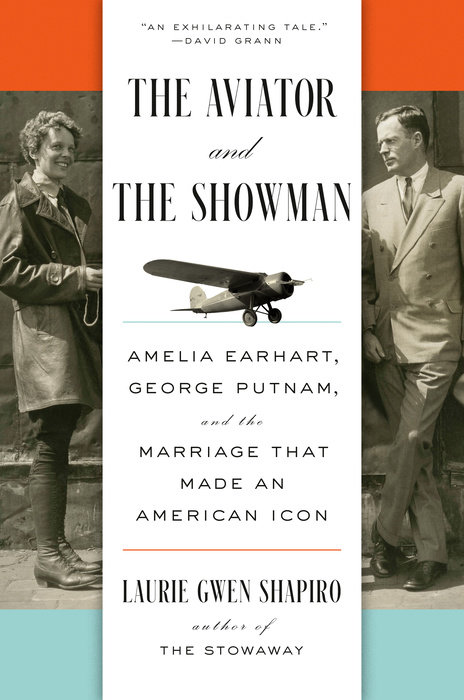
Laurie Gwen Shapiro, author of The Aviator and the Showman: Amelia Earhart, George Putnam, and the Marriage that Made an American Icon, joins Greg on this week’s show to untangle her surprising and even provocative true story — as a young midwestern woman who embodied the possibilties of flight through the persona of ‘Lady Lindy’ even though the lofty ambitions of her publisher (and lover) George Putnam often placed her in dangerous situations.
And New York City figures into both her story — and that of early American flight. From the airfields of Governors Island to the Greenwich Village settlement house which became her home.
ALSO: What really did happen to Amelia Earhart? Her biographer has the answer.
LISTEN NOW: THE MANY MYSTERIES OF AMELIA EARHART
The Bowery Boys Podcast is proud to be sponsored by Founded By NYC, celebrating New York City’s 400th anniversary in 2025 and the 250th anniversary of the United States in 2026.
Read about all the exciting events and world-class institutions commemorating the five boroughs’ legacy of groundbreaking achievements, and find ways to celebrate the city that’s always making history at Founded by NYC.
Thank you for Laurie Gwen Shapiro for appearing on the Bowery Boys Podcast. The Aviator and The Showman is available in book stores now.
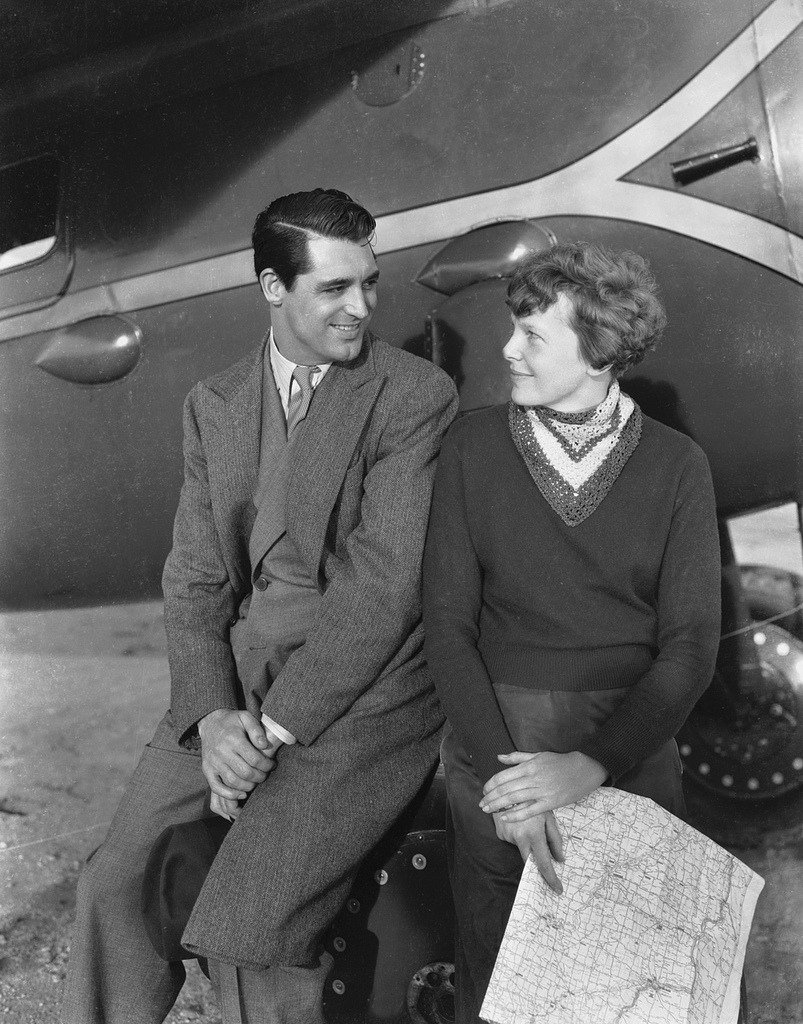
Amelia and George. George Rinhart/Corbis via GettyYoung Amelia — in 1928, standing beside a Merrill CIT-9 Safety Plane. Courtesy Los Angeles Daily News
FURTHER LISTENING
After hearing this show, dive back into the Bowery Boys archives for other shows with similar themes:
The New York Comedy Festival is the largest comedy festival in the United States, bringing out the best of the comedy world since 2004.
This year’s festival runs from November 7th to the 16th, 2025, and takes place at venues all around the city, from local comedy clubs like Q.E.D. in Astoria to historic venues like the Kings Theatre and Town Hall.
The New York Comedy Festival was started in 2004 by Caroline Hirsch, owner of the now-closed Caroline’s on Broadway, and has not only spotlighted well-known comedians but also provided a forum for up-and-comers.
For instance, winners of the festival’s annual Funniest Stand-Up Competition have included Michael Che, who won the year before beginning his run on Saturday Night Live.
Among those performing this year are stars like:
— Alex Edelman
— Hannibal Burris
— Margaret Cho
— Pete Holmes
And around 200 others, including many local talent from regularly scheduled comedy shows in New York City. And yes! There will be a reunion of the cult TV show Strangers with Candy featuring Stephen Colbert and Amy Sedaris.
As well as a musical about famous New York comedian Jackie Mason, starring his New York comedian daughter Sheba Mason.
Read all about the festival and all the other exciting events and world-class institutions commemorating the five boroughs’ legacy of groundbreaking achievements, and find ways to celebrate the city that’s always making history at Founded by NYC.
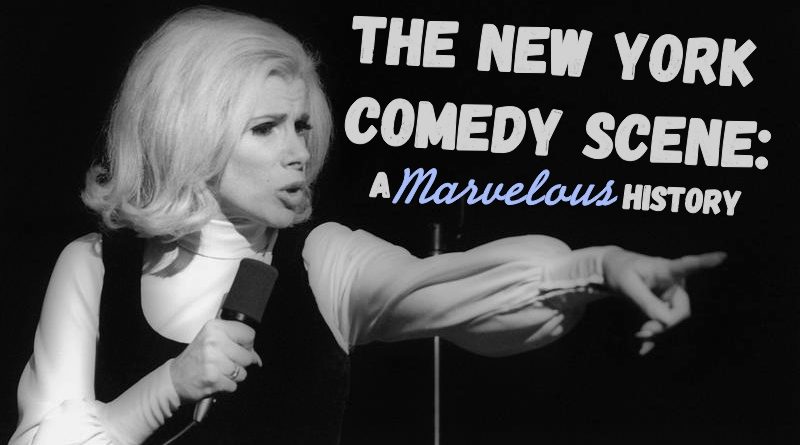
And for more information about New York City and the history of stand-up comedy, check out our show from a few years ago The New York Comedy Scene.
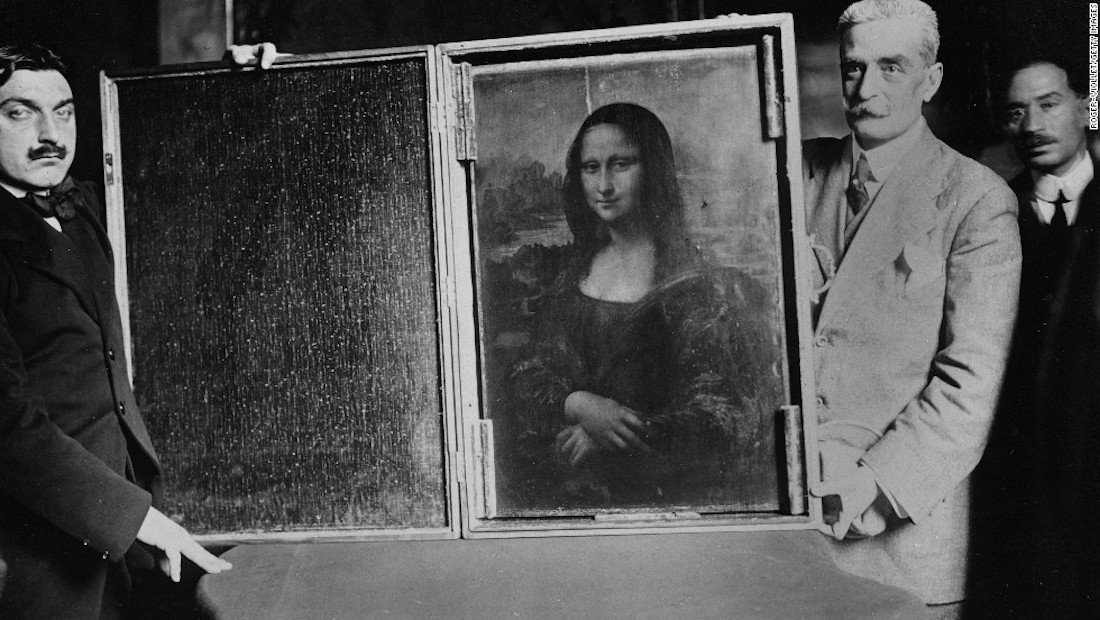
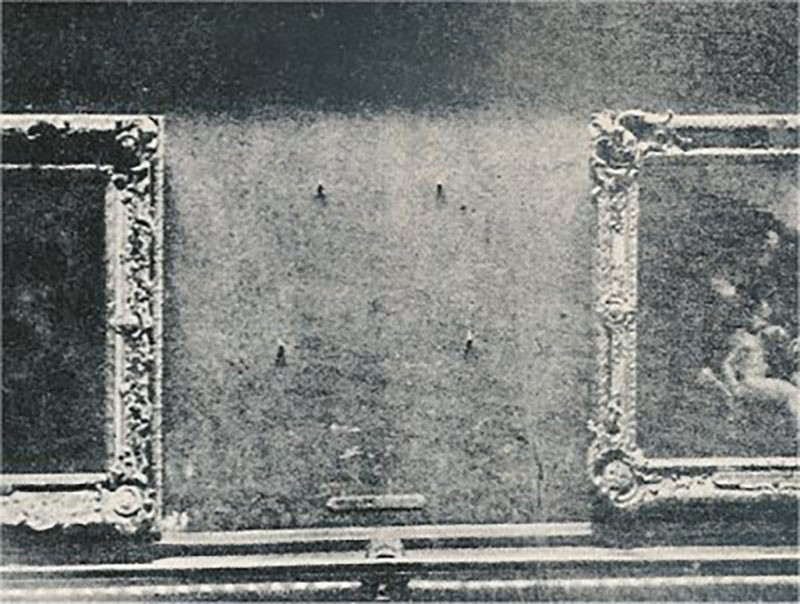
The enigmatic smile of the Leonardo da Vinci’s Mona Lisa, at its longtime home of the Louvre in Paris,has captured the attention of the public for centuries.
Few people realize however that on a warm summer morning in Paris in the year 1911, the painting was stolen — and remained missing for over two years.
Press hysteria surrounding this unusual robbery made the masterwork of Da Vinci’s quite simply the most famous painting in the world.
But much is still murky about the circumstances of its theft and recovery.
Join The Gilded Gentleman as he takes a look at this case and and attempts to piece it together.
The Gilded Gentleman Podcast is available wherever you listen to podcasts including Apple Podcasts, Spotify and Overcast.
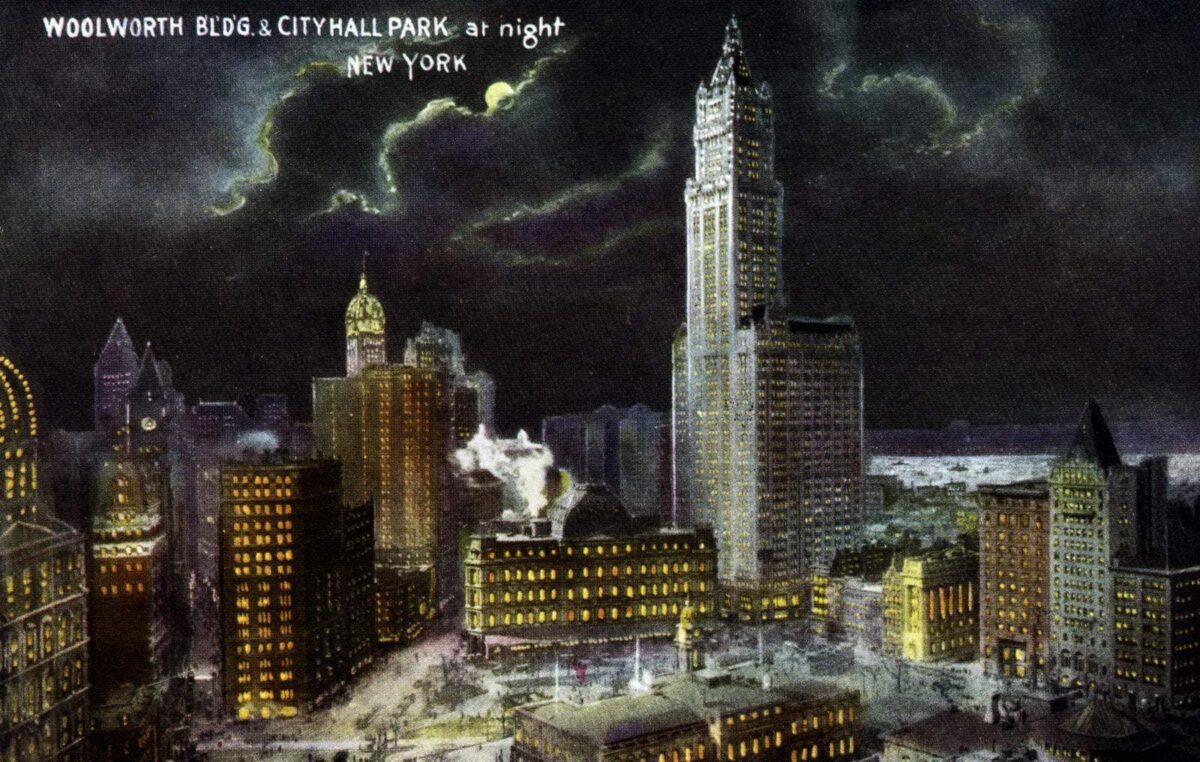
Woolworth Building postcard, 1911, and an extra spooky looking scene of old New York
Bowery Boys Walks is proud to be supported by Founded by NYC, celebrating New York City’s 400th anniversary in 2025 and the 250th anniversary of the United States in 2026.
This month, we’re celebrating the Village Halloween Parade, the largest Halloween parade in the world.
The parade started as a small-time puppet parade for kids in the 1970s by Ralph Lee, a puppeteer who mostly worked on Off-Broadway. It’s been under the artistic direction of Jeanne Fleming since the mid-1980s.
The parade theme this year is “potluck”, centered around the idea of coming together and sharing. Don your best costume and watch the more than 50,000 parade participants as they march down Sixth Avenue, and make sure to catch the Thriller Dance, the highlight of the parade.
In addition to the Village Halloween Parade, be sure to catch other fun Halloween events in NYC, including
— The Bronx Halloween Parade on October 25th
— Live performances and candlelit tours at the Merchant House
— The Bowery Boys live show at Joe’s Pub
— The Bowery Boys x Founded By NYC Historic Haunts of Lower Manhattan walking tours.
Read about the Village Halloween Parade and all the other exciting events and world-class institutions commemorating the five boroughs’ legacy of groundbreaking achievements, and find ways to celebrate the city that’s always making history at Founded by NYC.
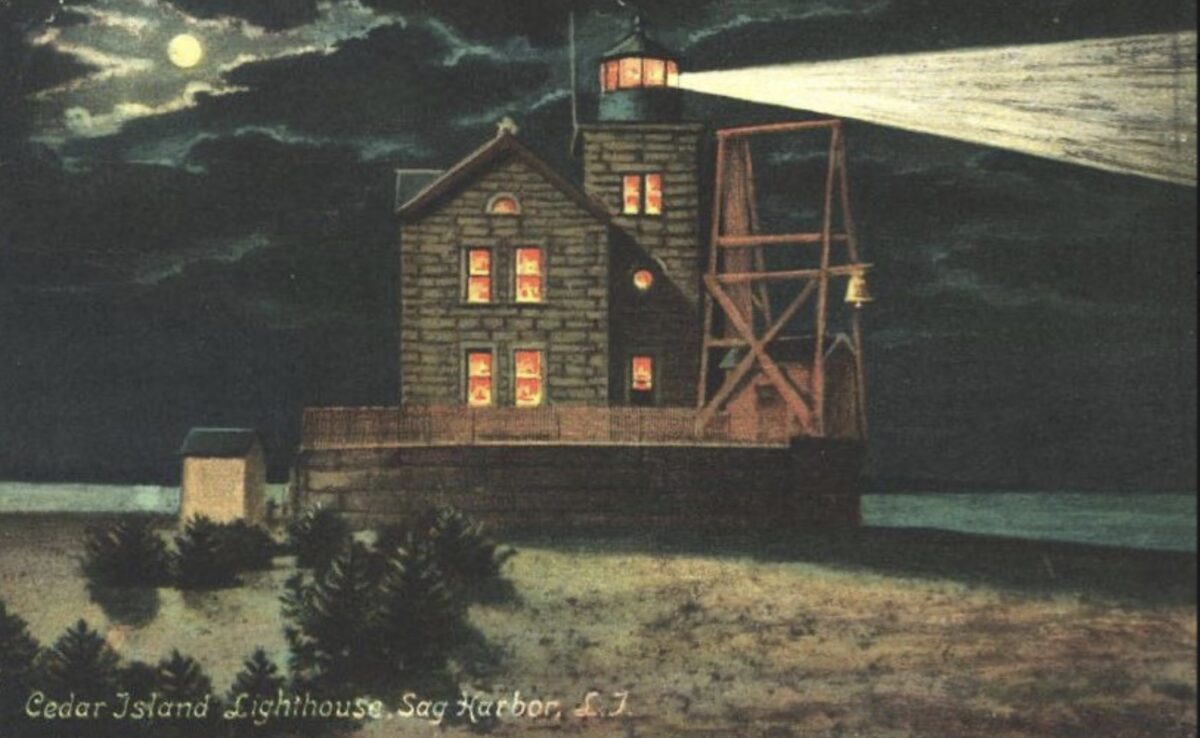
The streets of Old Sag Harbor hold many supernatural mysteries.
For this year’s annual Bowery Boys Ghost Stories podcast, Greg and Tom take a road trip to Long Island to explore the region’s most famous haunted tales from legend and folklore, ‘real’ reported stories of otherworldly encounters that have shaped this historic area of New York state.
When you think of Long Island and scary stories, your mind might immediately go to the Amityville Horror house or perhaps even the Montauk Monster. But let us introduce you to a series of far older stories which incorporate Long Island’s extraordinary history:
— The Sag Harbor Goblin: A restless soldier from the Revolutionary War period harasses the residents of this charming Hamptons retreat.
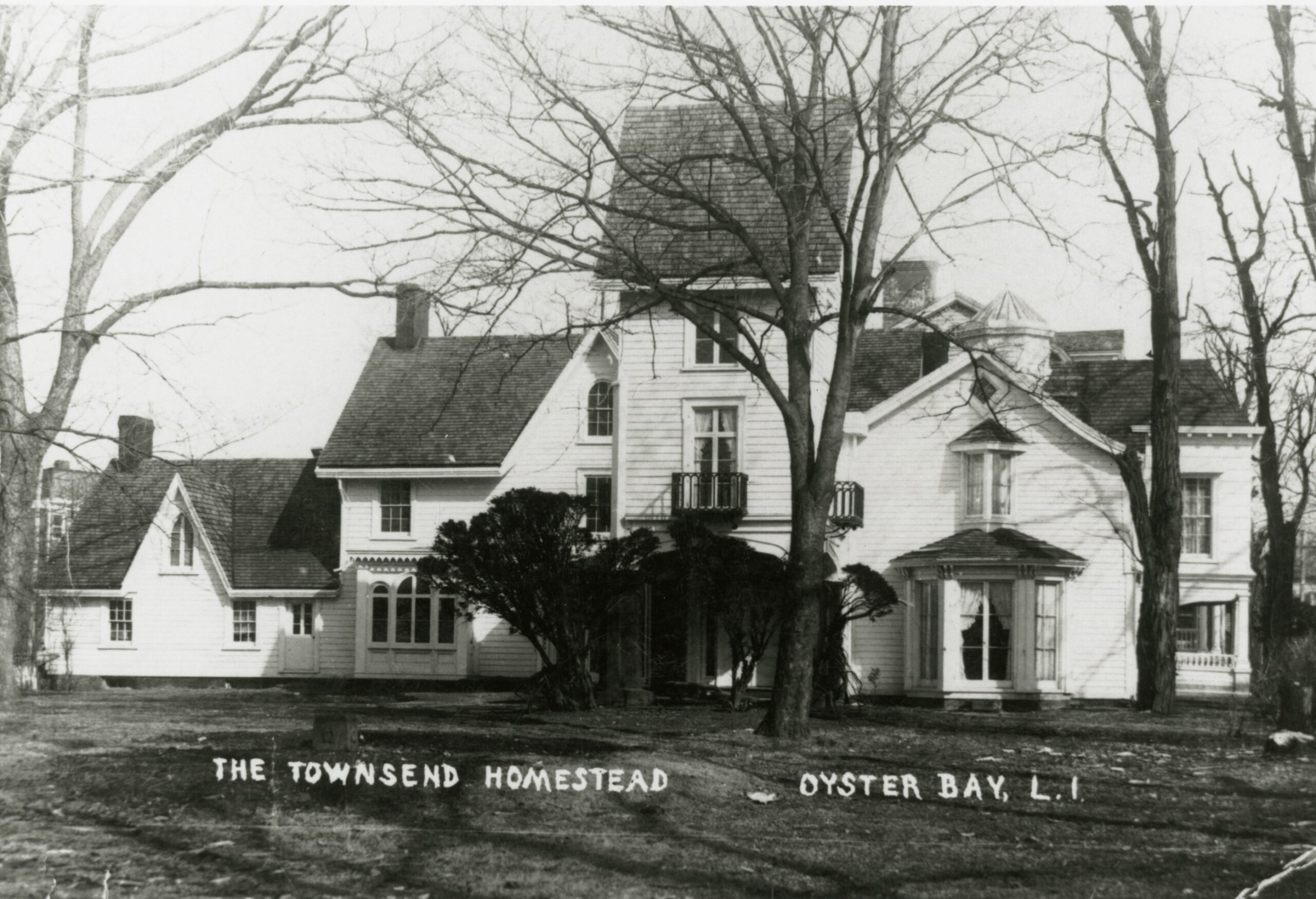
The newer additions to this Revolutionary War-era home accomodate space for more ghosts. Image courtesy Raynham Hall Museum.
— The Wraiths of Raynham Hall: In Oyster Bay, a beloved landmark is sometimes called ‘the Grand Central Station for ghosts’ thanks to its population of historic spirits — including that of a famed Revolutionary War traitor!
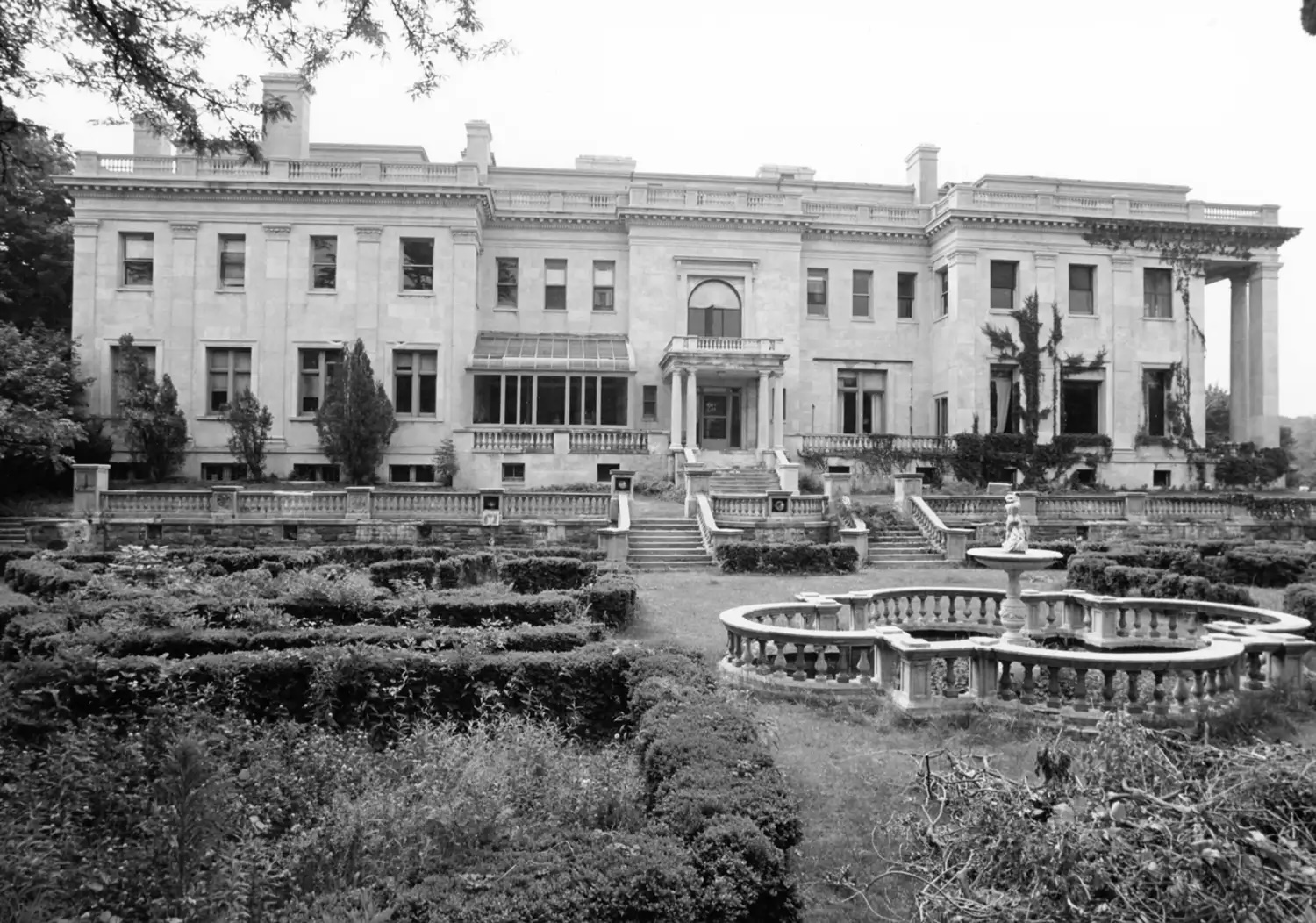
— The Bolt From Beyond: Winfield Hall is better known as the Woolworth Estate, best known for its eccentric owner Frank Winfield Woolworth. But the house is also known for a series of unfortunate events — and the secrets which its marble hallways may still hold.
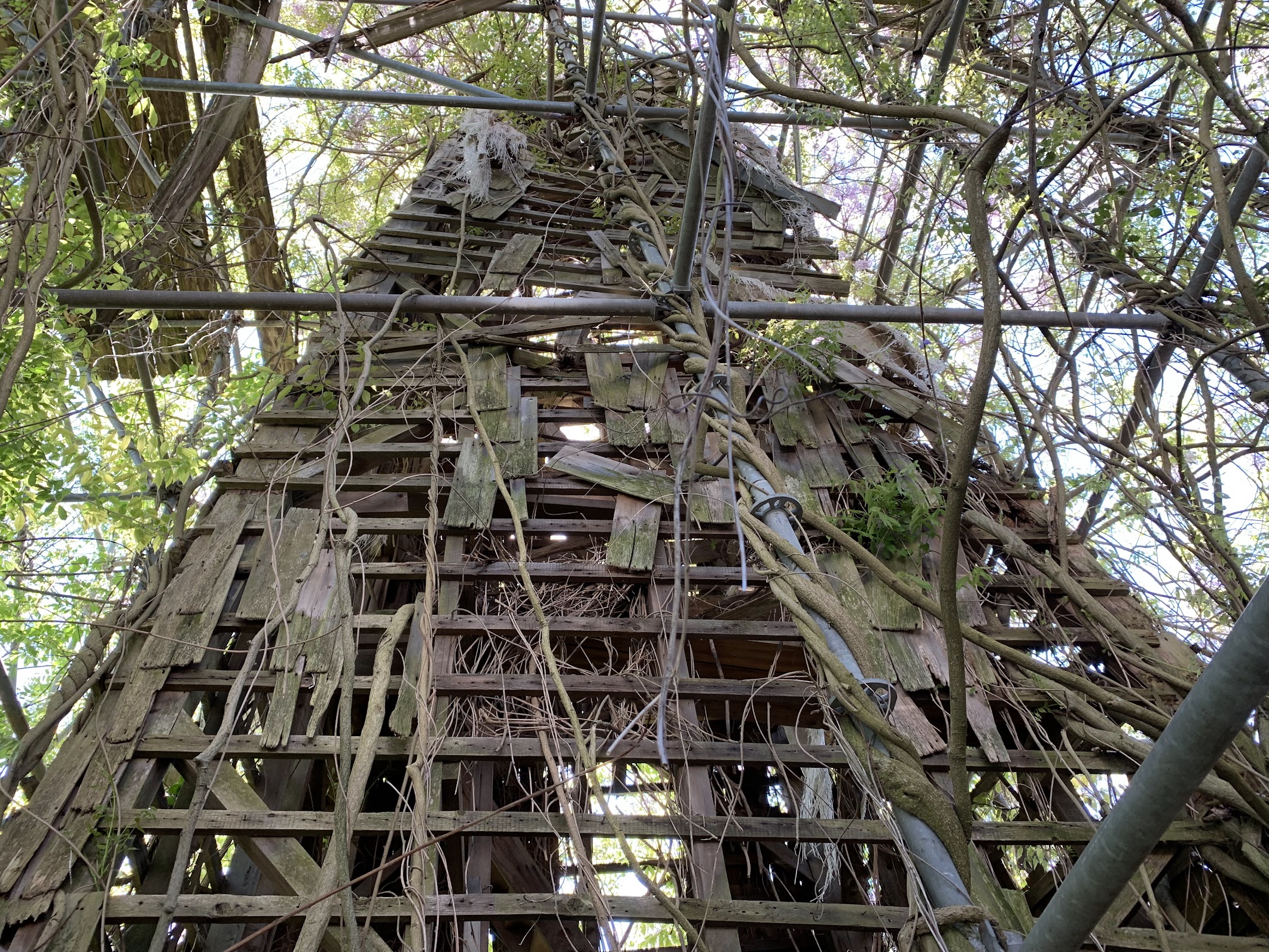
Ruins of the old Gateway windmill
— Dancing In The Ghost Light: The Gateway Playhouse in Bellport celebrates 75 years of regional theater this year — and a few ghosts have returned to join the party.
— The Hermitage of the Red Owl: A spooky tale of folklore in Brentwood, featuring a utopian community, a talking bird and the ancient, unburied bones of a warrior.
LISTEN NOW: GHOST STORIES OF LONG ISLAND
The Bowery Boys Podcast is proud to be sponsored by Founded By NYC, celebrating New York City’s 400th anniversary in 2025 and the 250th anniversary of the United States in 2026.
Read about all the exciting events and world-class institutions commemorating the five boroughs’ legacy of groundbreaking achievements, and find ways to celebrate the city that’s always making history at Founded by NYC.
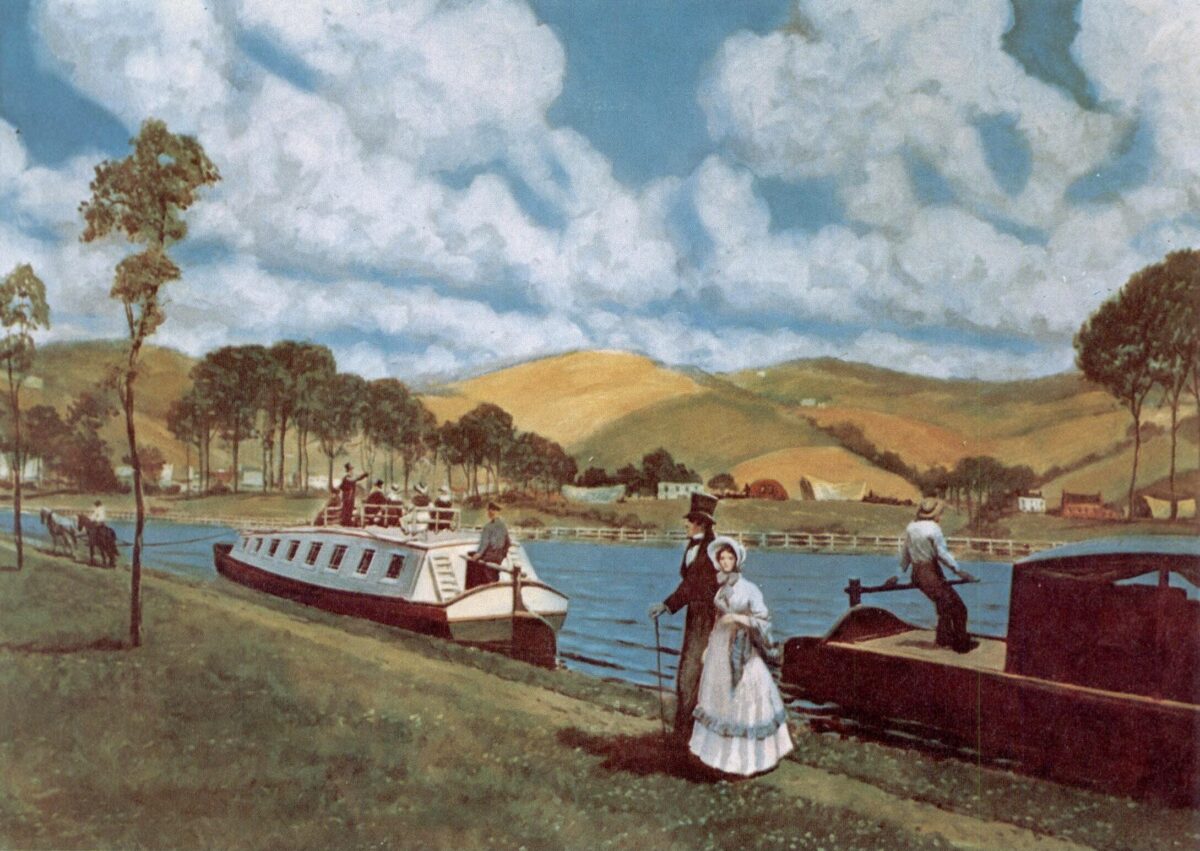
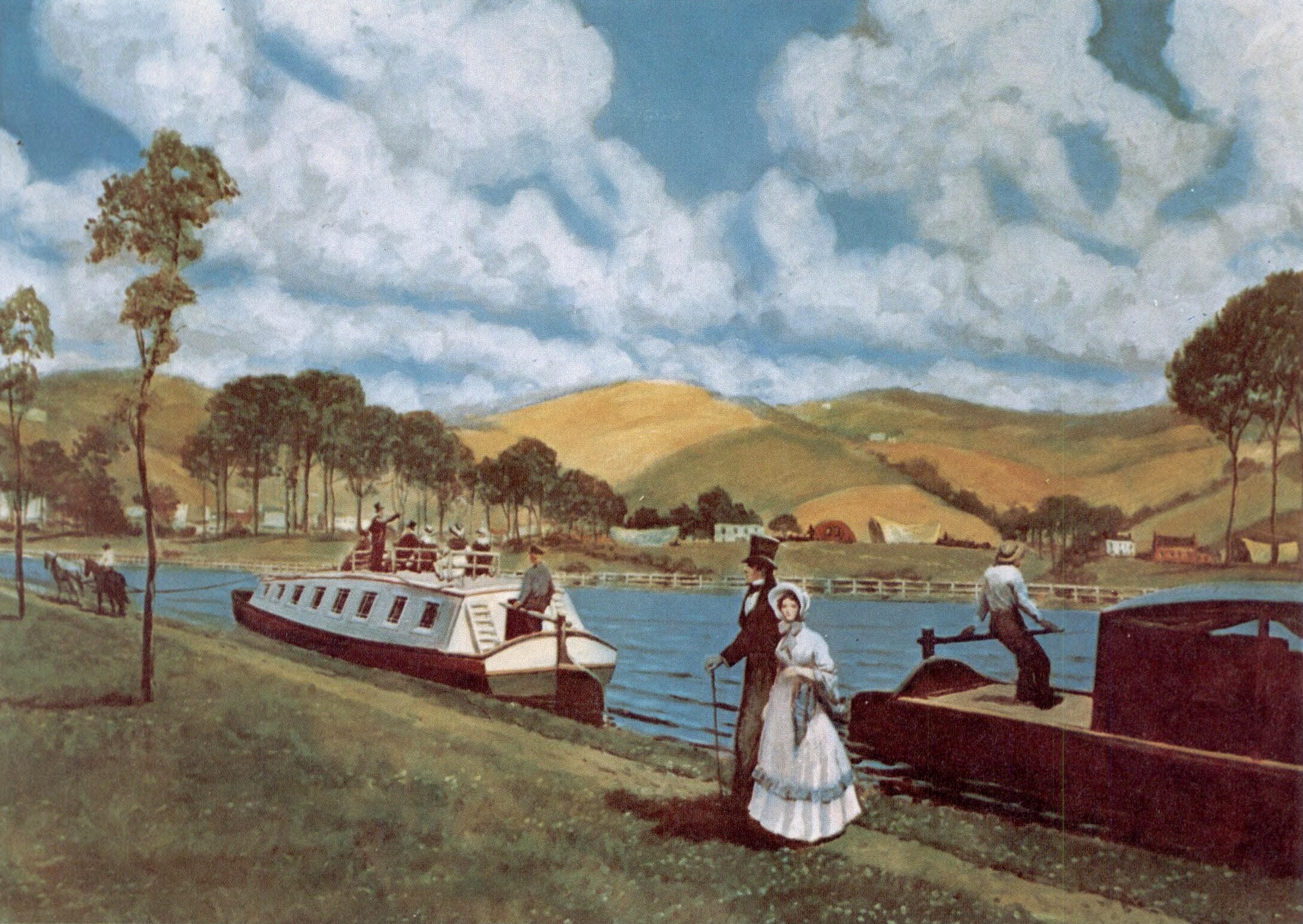
On October 26, 1825, the fate of New York City – and the entire United States – changed with the opening of the Erie Canal, a manmade waterway that connected the Hudson River to Lake Erie.
It was the most significant engineering project of its time, linking the ocean to the nation’s interior — a 363-mile route from Albany to Lake Erie.
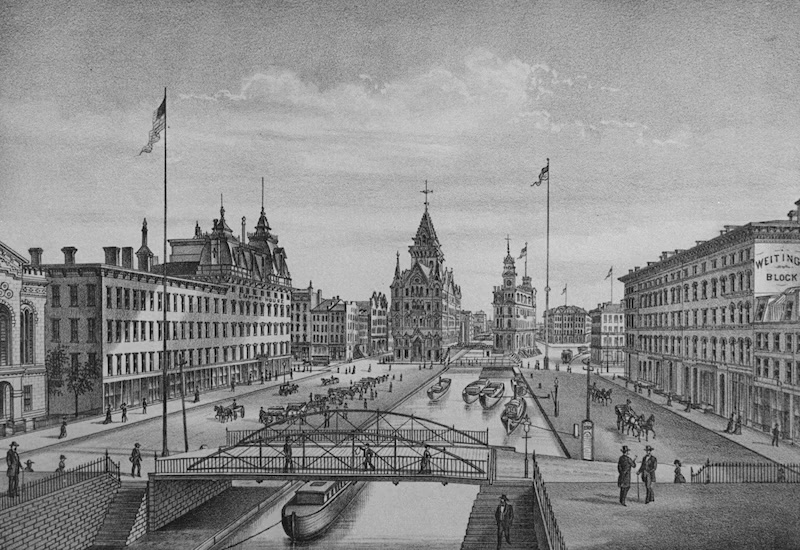
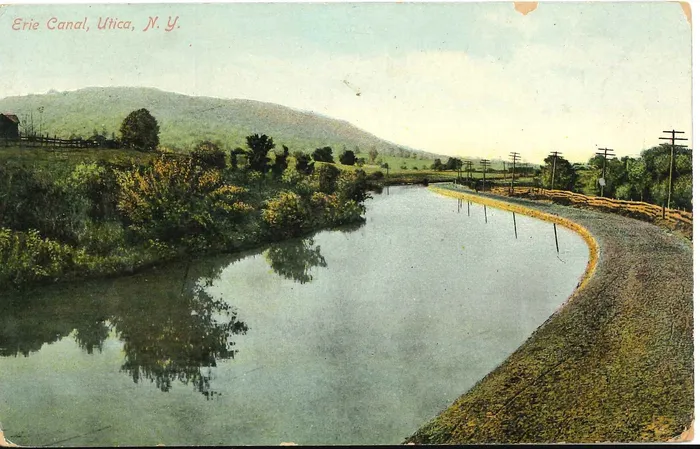
Without even knowing where the Erie Canal is on a map of New York state, you could probably guess its course because of a row of cities which developed and prospered, almost in a westward line – including Utica, Syracuse, Rochester, and Buffalo.
In some cases, these were modest-sized places like Schenectady or Rome that benefited financially from canal construction; in others, such as Syracuse (which was founded in the year 1820), the canal was chiefly responsible for its existence.
However, it was also one of the most critical events in New York City’s history, even though the entrance to the canal is approximately 150 miles north of New York Harbor.
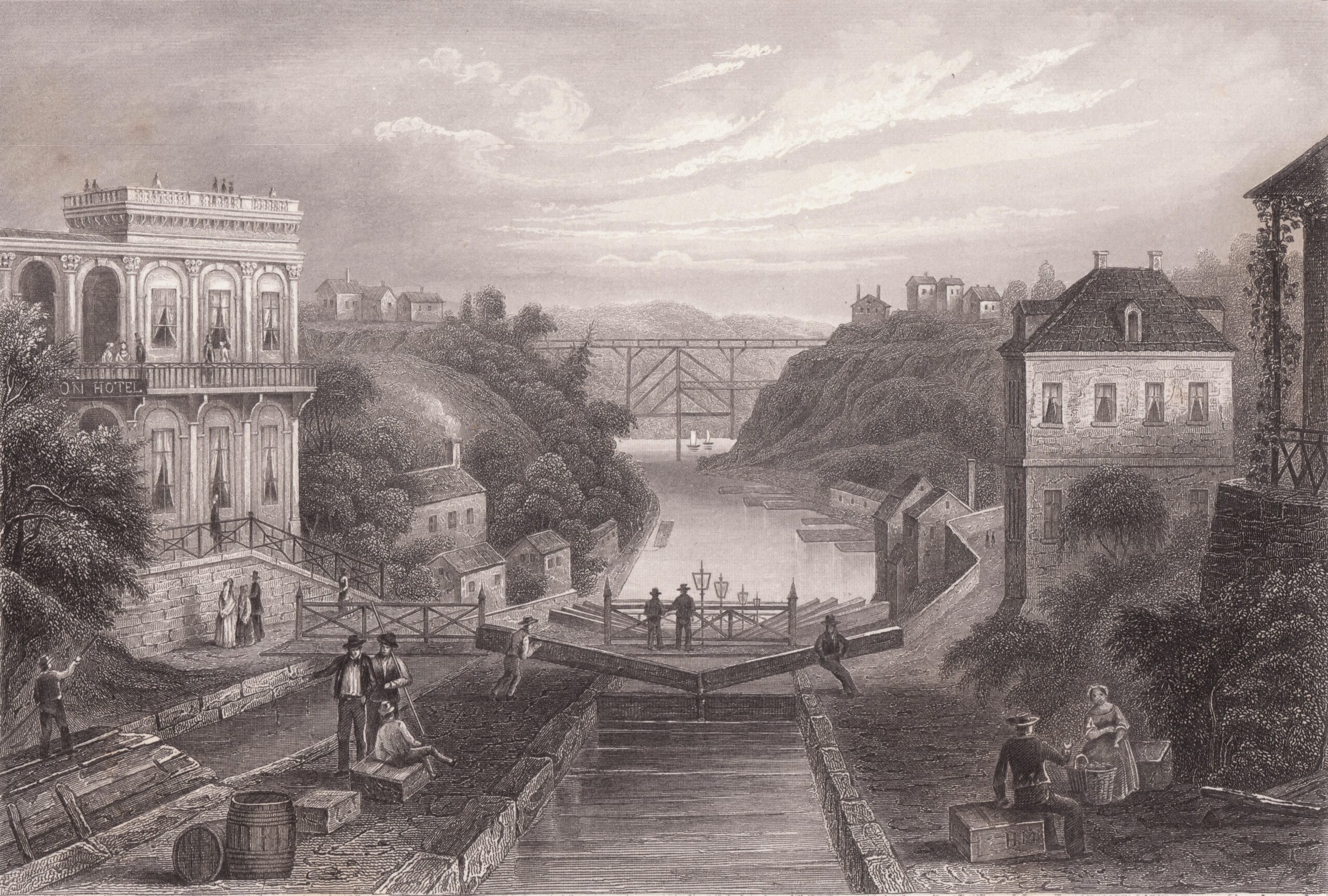
Original lithograph showing the Erie Canal at Lockport, New York c. 1855. Published for Herrman J. Meyer, 164 William Street, New York City.
It essentially became the canal’s gateway for freight traveling to any place inside the country or out to the world. As a result, New Yorkers quickly took advantage of the opportunities the canal offered.
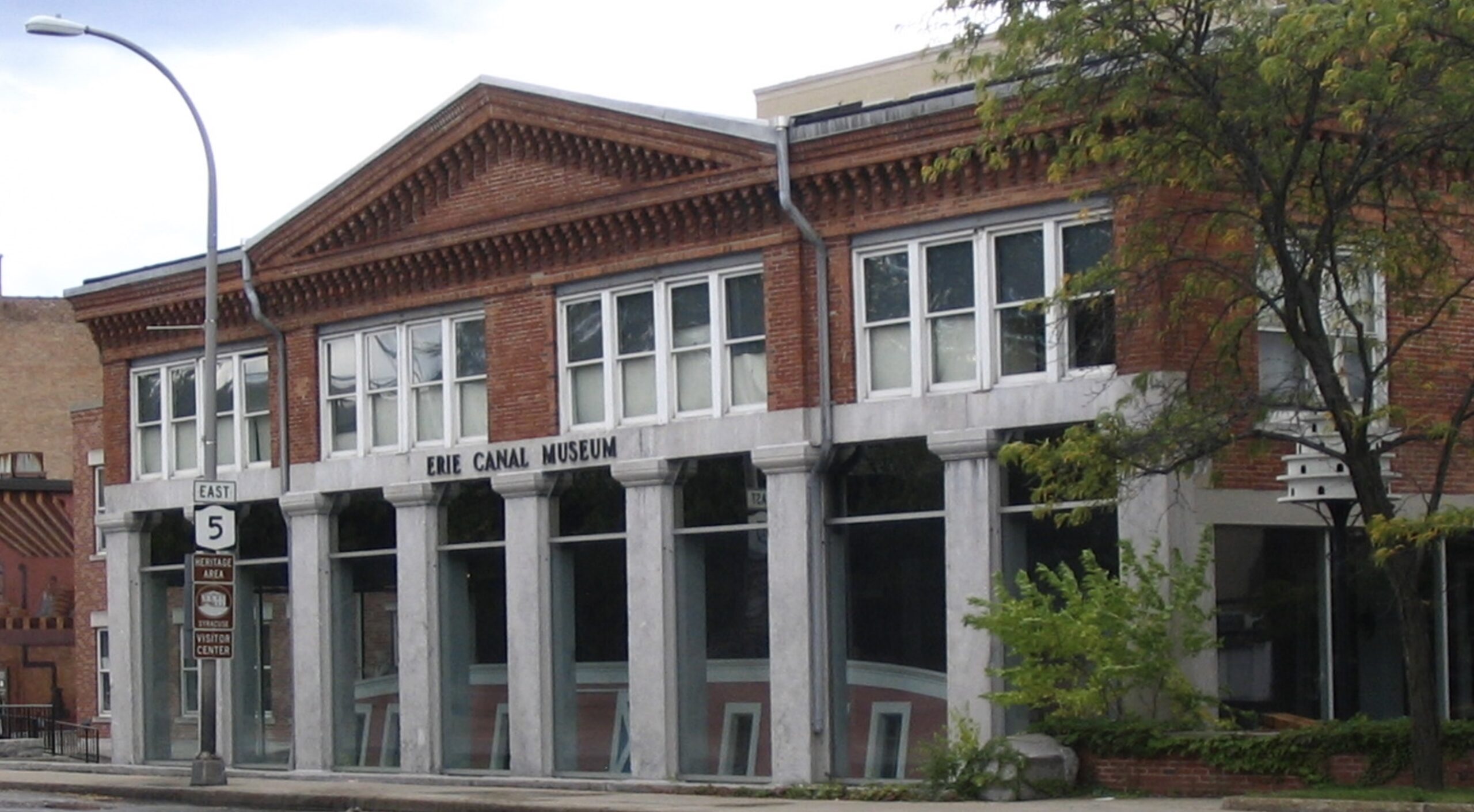
Today, we’re celebrating the 200th anniversary of the opening of the Erie Canal by going straight to the source – in a conversation with Derrick Pratt, the director of Education and Public Programs at the Erie Canal Museum in Syracuse, New York.
LISTEN NOW: THE ERIE CANAL
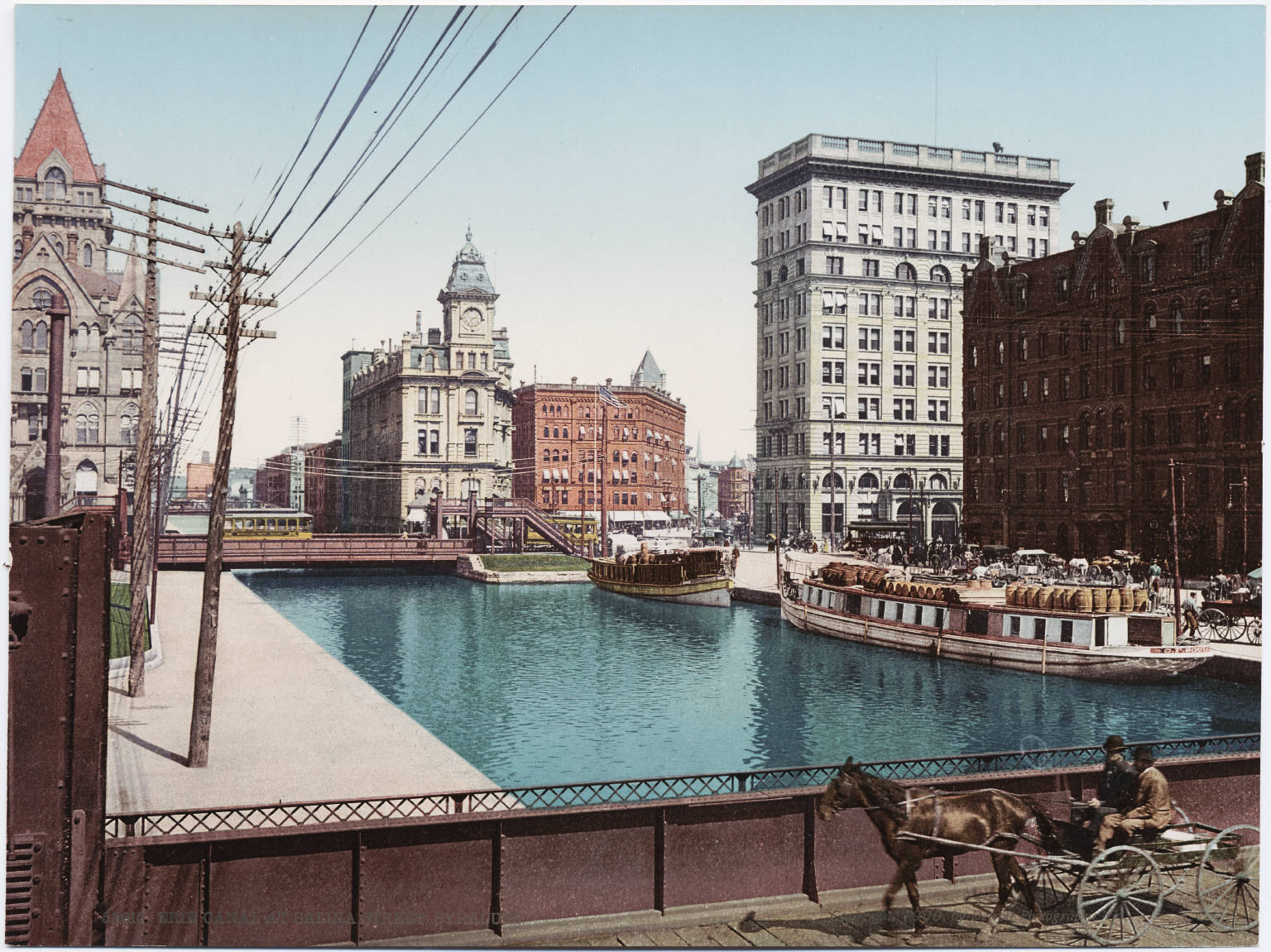
Syracuse, New York. A photochrom postcard published by the Detroit Photographic Company. First published in the United States before 1923 – public domainThe Canal essentially gave birth to Syracuse, aka the Salt City
The Bowery Boys Podcast is proud to be sponsored by Founded By NYC, celebrating New York City’s 400th anniversary in 2025 and the 250th anniversary of the United States in 2026.
Read about all the exciting events and world-class institutions commemorating the five boroughs’ legacy of groundbreaking achievements, and find ways to celebrate the city that’s always making history at Founded by NYC.
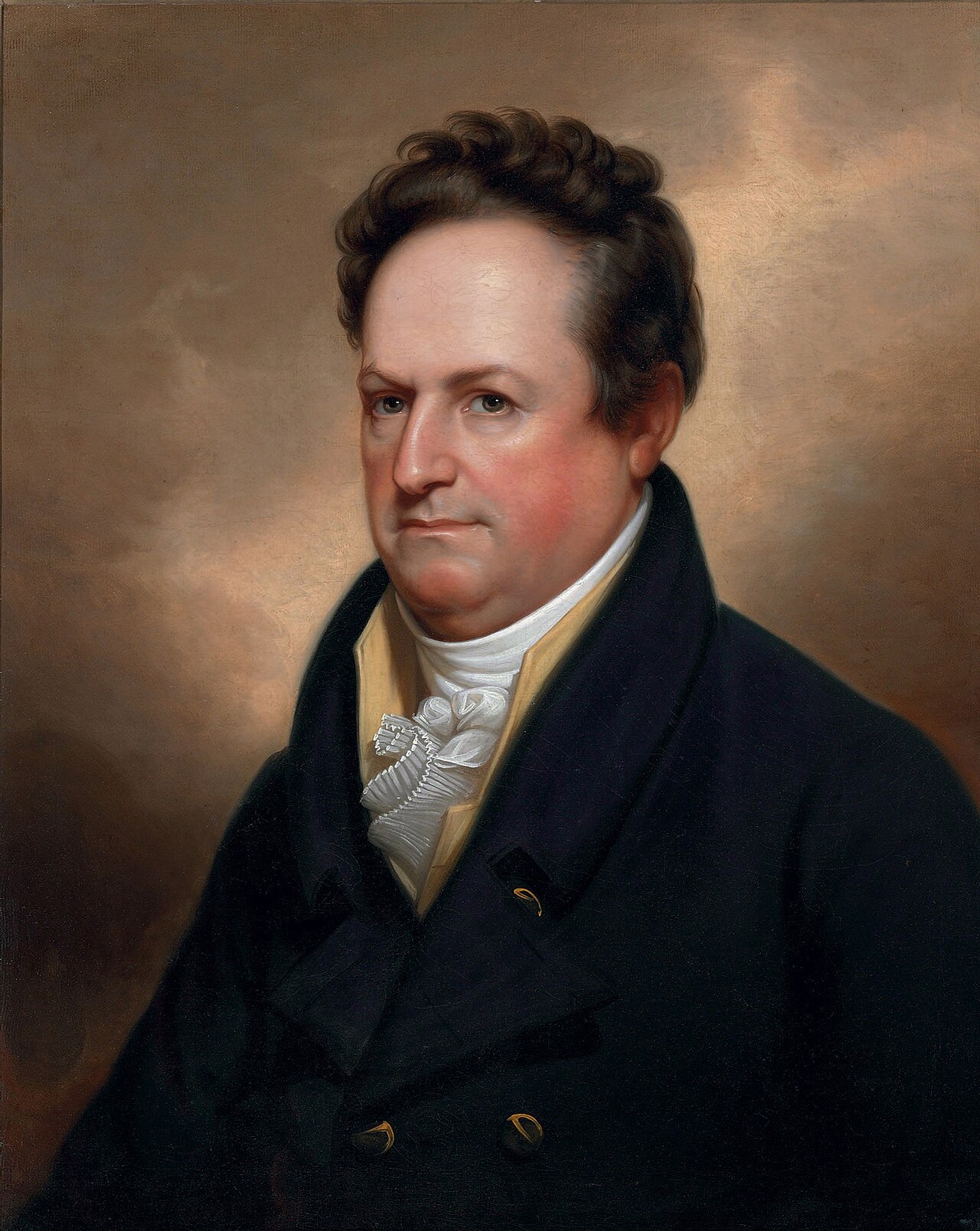
DeWitt Clinton painted by Rembrandt Peale
Visit the Erie Canal Museum in Syracuse, New York, to celebrate the history of the Erie Canal year-round, located in a 1850 Weighlock Building. The Museum’s weigh chamber contains the Frank Buchanan Thomson, which is a full-size replica canal boat.
Screenshot
FURTHER LISTENING
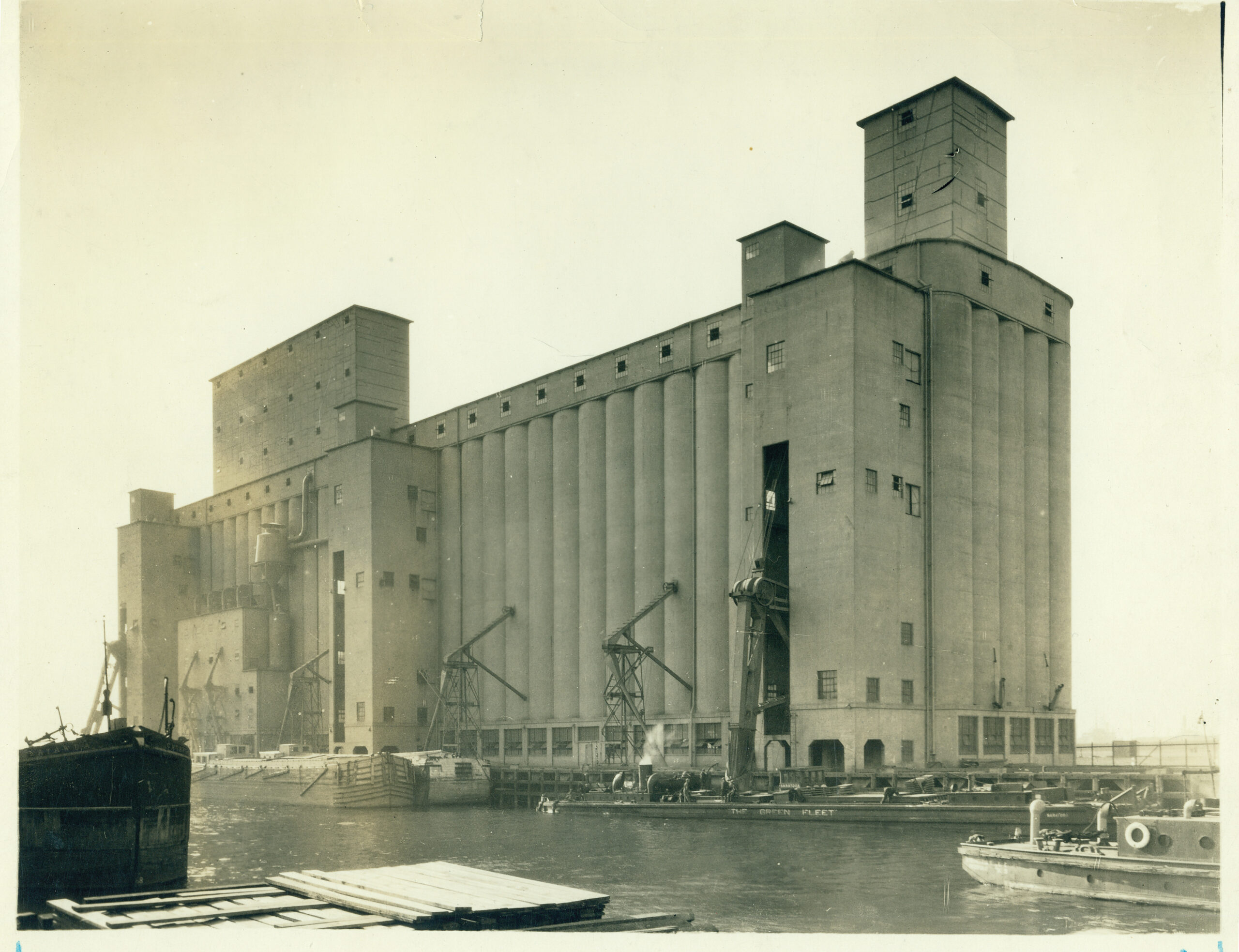
Red Hook Grain Terminal, constructed to store grain for the New York State Canal System, but most mostly obsolete by the time of its completion in the 1920s.