Categories
Planes Trains and Automobiles

History in the making 2/18: Pennsylvania Station edition

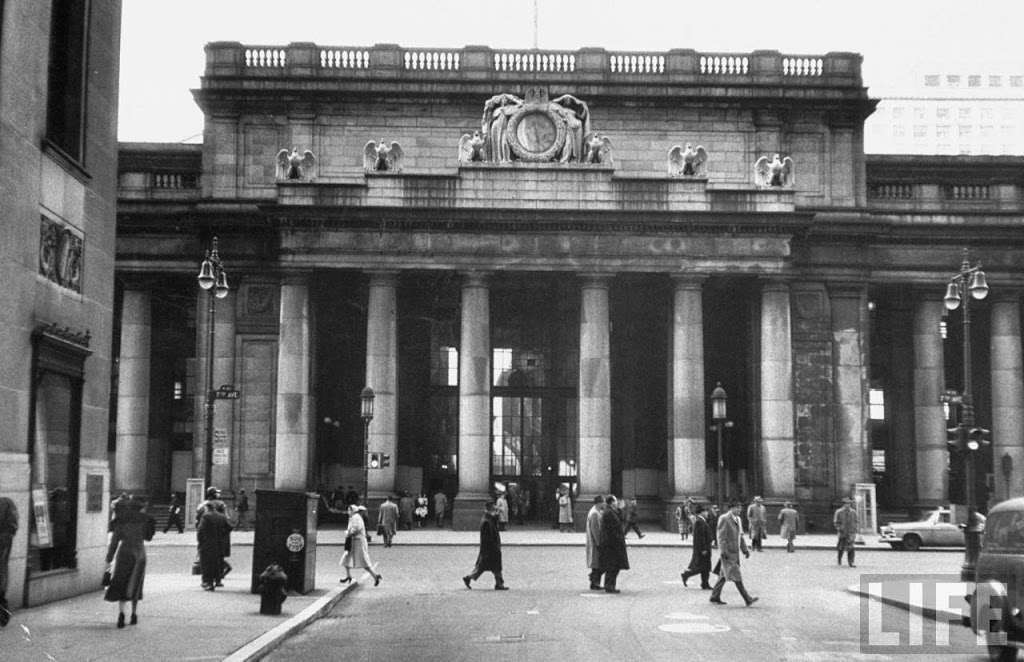
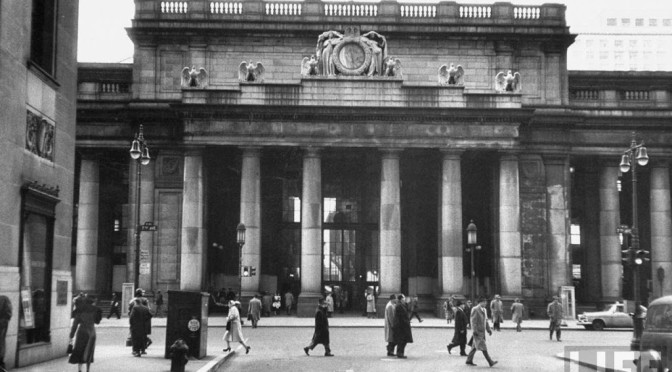
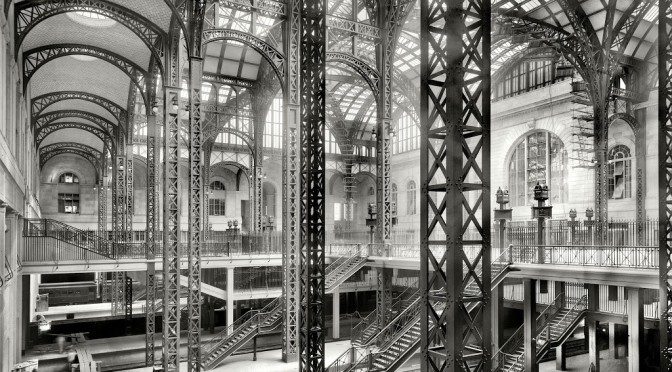
Aging beauty: The entrance of Penn Station, photographed by James Burke in 1957 for Life Magazine.

— Tonight on PBS’s American Experience: The Rise and Fall of Penn Station, the story of McKim, Mead and White’s Midtown masterpiece and how its tragic demolition in the 1960s forced New Yorkers to consider the importance of historic preservation.  [American Experience]

Barry Popik brings up an interesting anniversary — John J Fitz Gerald’s newspaper column “Around the Big Apple” began 90 years ago this week.  Fitz Gerald helped popularize New York’s nickname ‘the Big Apple’.  Read more at Popik’s excellent and exhaustive site of urban etymology: [Barry Popik]

— The secret at 58 Joralemon Street:  The Brooklyn Heights tunnel disaster that forever changed how the city handled destructive construction work.  [Brownstoner]

Ghost signage: The remnants of former businesses are all around us, their old signs living long past the establishments themselves.  Photographer Gary Fonville has found some beautiful examples all through the five boroughs, some of which you’ve probably walked by a thousands times without noticing! [Forgotten New York]

East Village monsters: What are those things guarding this home on St. Marks Place? [Ephemeral New York]

The Velvet Caps, the Scalpeens and the Jackson Hollow Gang: A fascinating rundown of the oddly named ruffians that ruled the streets of Brooklyn, most in the years before Consolidation. [artofneed]

Categories
Podcasts

At The Ready: The History of the New York City Fire Department


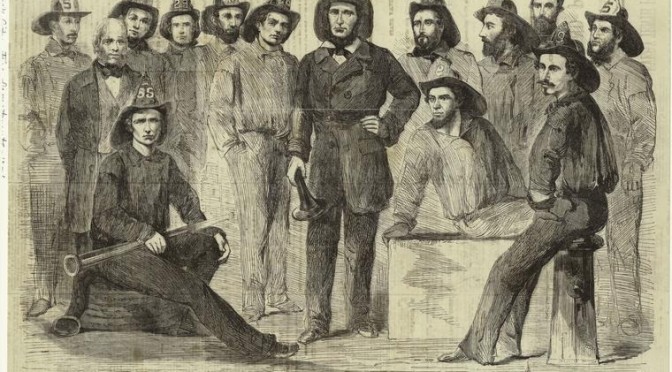
The distinguished members of New York’s various volunteer fire brigades, posing for the photographer Matthew Brady in 1858

PODCAST  The New York City Fire Department (or FDNY) protects the five boroughs from a host of disasters and mishaps — five-alarm blazes, a kitchen fire run amok, rescue operations and even those dastardly midtown elevators, always getting stuck!  But today’s tightly organized team is a far cry from the chaos and machismo that defined New York’s fire apparatus many decades ago.

New York’s early firefighters — Peter Stuyvesant‘s original ratel-watch — were all-purpose guardians, from police work to town timepieces.  Volunteer forces assembled in the 18th century just as innovative new engines arrived from London.

By the 19th century, the fire department was the ultimate boys club, with gangs of rival firefighters, with their own volunteer ‘runners’, raced to fires as though in a sports competition.  Fisticuffs regularly erupted.  From this tradition came Boss Tweed, whose corrupt political ways would forever change New York’s fire services — for better and for worse.

Volunteers were replaced by an official paid division by 1865.  Now using horse power and new technologies, the department fought against the extraordinary challenges of skyscraper and factory fires.  There were internal battles as well as the department struggled to become more inclusive within its ranks.

But the greatest test lay in the modern era — from a deteriorating infrastructure in the 1970s that left many areas of New York unguarded, and then, the new menace of modern terrorism that continues to test the skill of the FDNY.  From burning chimneys in New Amsterdam to the tragedy of 9/11, this is the story of how they earned the nickname New York’s Bravest.

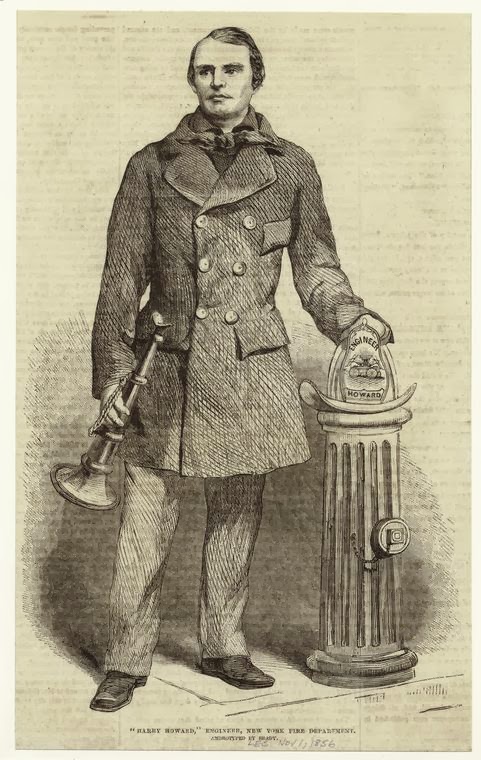
Above:  That’s Harry Howard, one of the FDNY’s greatest firemen and a former member of the Bowery Boys volunteer fire unit!


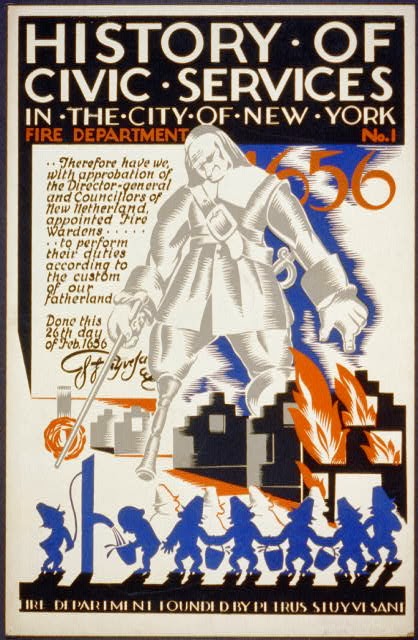
A poster by Vera Bock from 1936, created for a series by the Federal Art Project, touts the contributions of Peter Stuyvesant to the history of New York firefighting. (LOC)

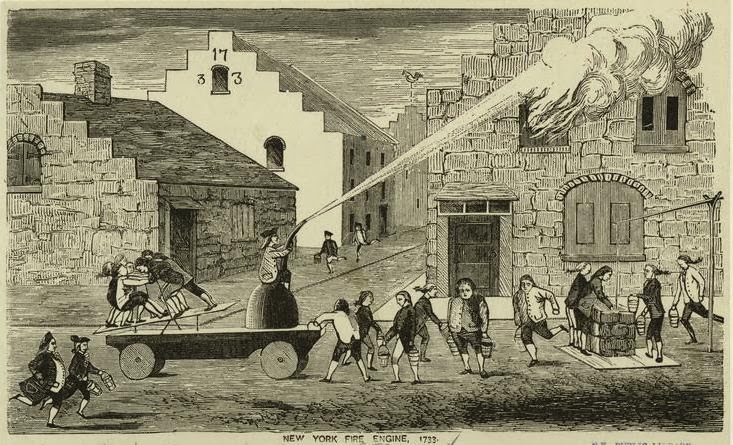
One of two fire engines first received by New York in 1733 (from an 1872 illustration) Courtesy NYPL

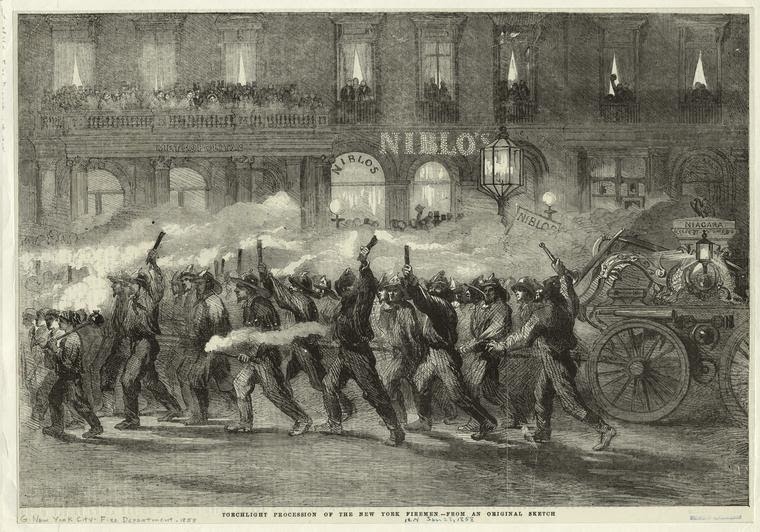
A firefighters’ procession at night, marching past Niblo’s Garden. 1858   Courtesy NYPL

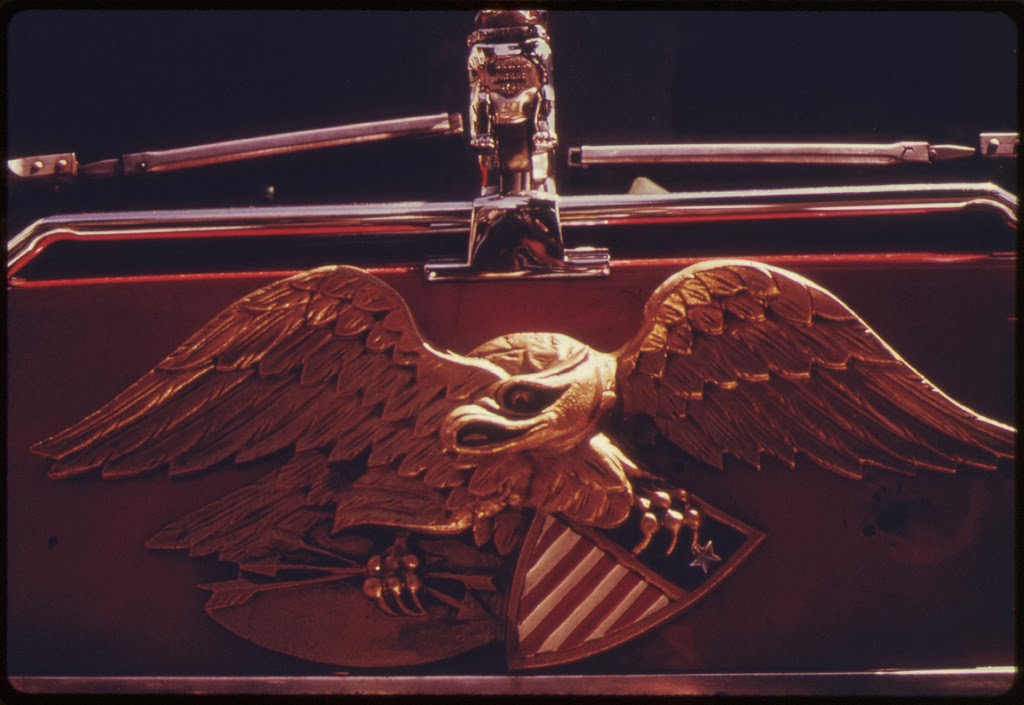
Eagle insignia from a New York fire truck, 19th century, courtesy the US National Archives

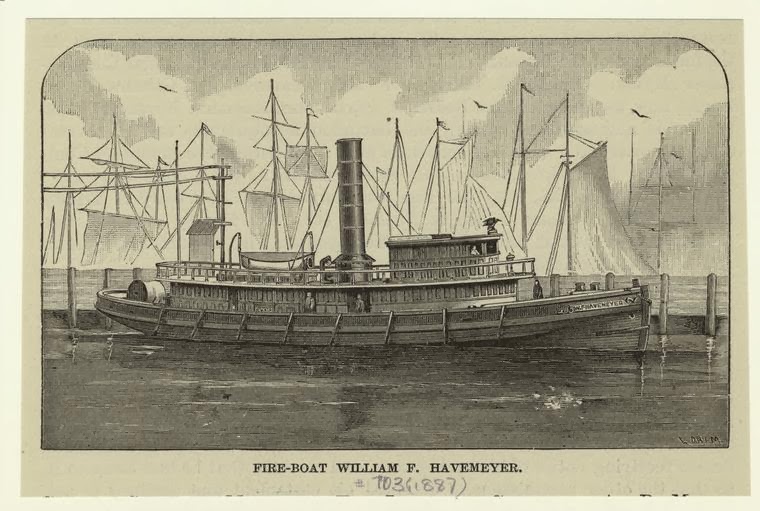
The first official fire boat of the FDNY (although others had been rented before this), named for former mayor William F. Havemeyer.


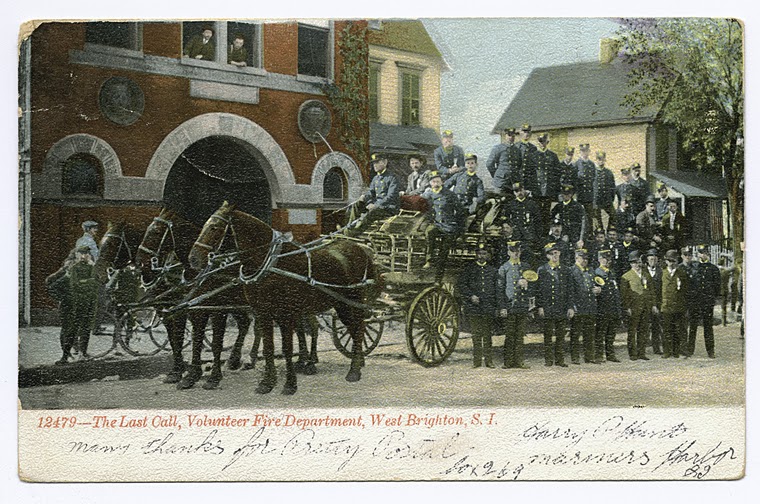
Volunteer fire divisions were slowly fazed out after the introduction of an official paid company.  This was expanded when the five boroughs were created in 1898.  This postcard commemorates the final run of a volunteer fire department in West Brighton, Staten Island. (NYPL)

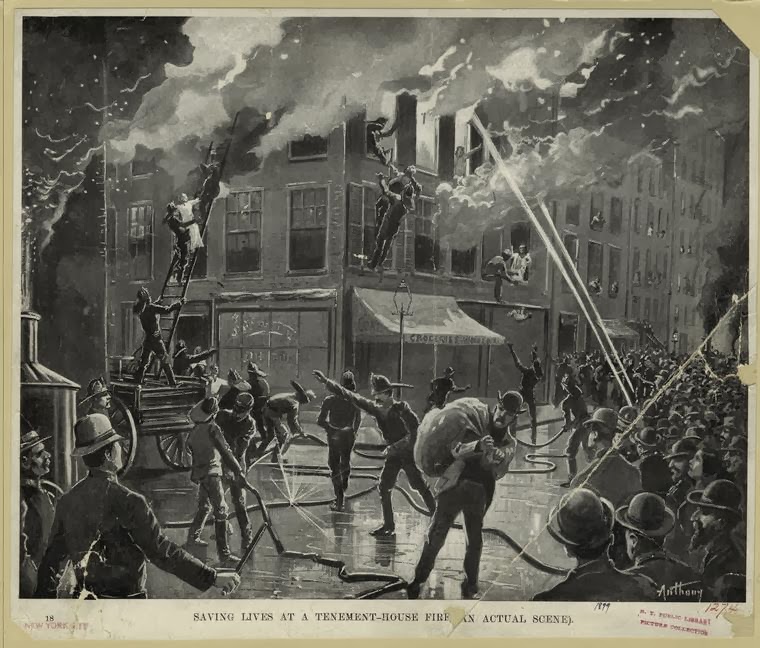
Firefighters battled a tenement blaze in this illustration from 1899, one of thousands that occurred in the poorer districts of town.  Improved fire regulations would ensure newer buildings were more fire proof. (Courtesy NYPL)

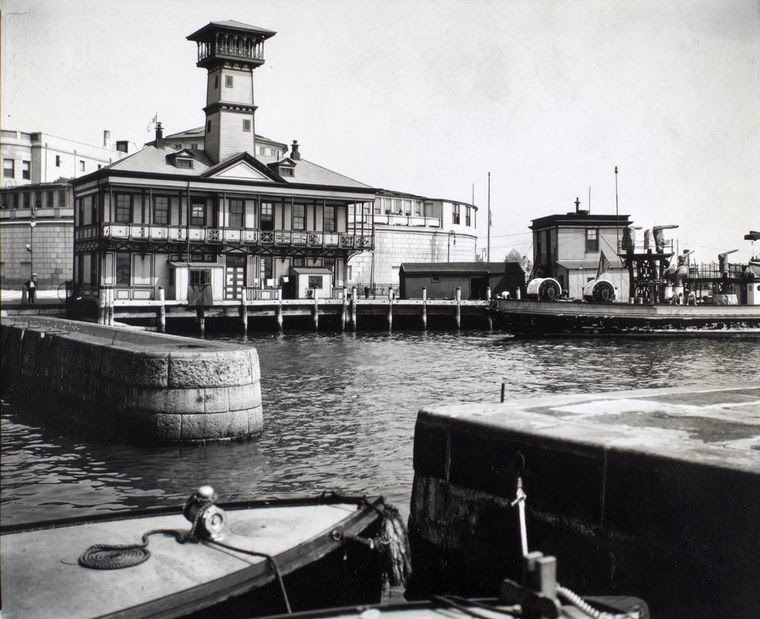
One of New York’s more interesting firehouses — the one for fireboats at the Battery. Photo by Berenice Abbott (courtesy NYPL)

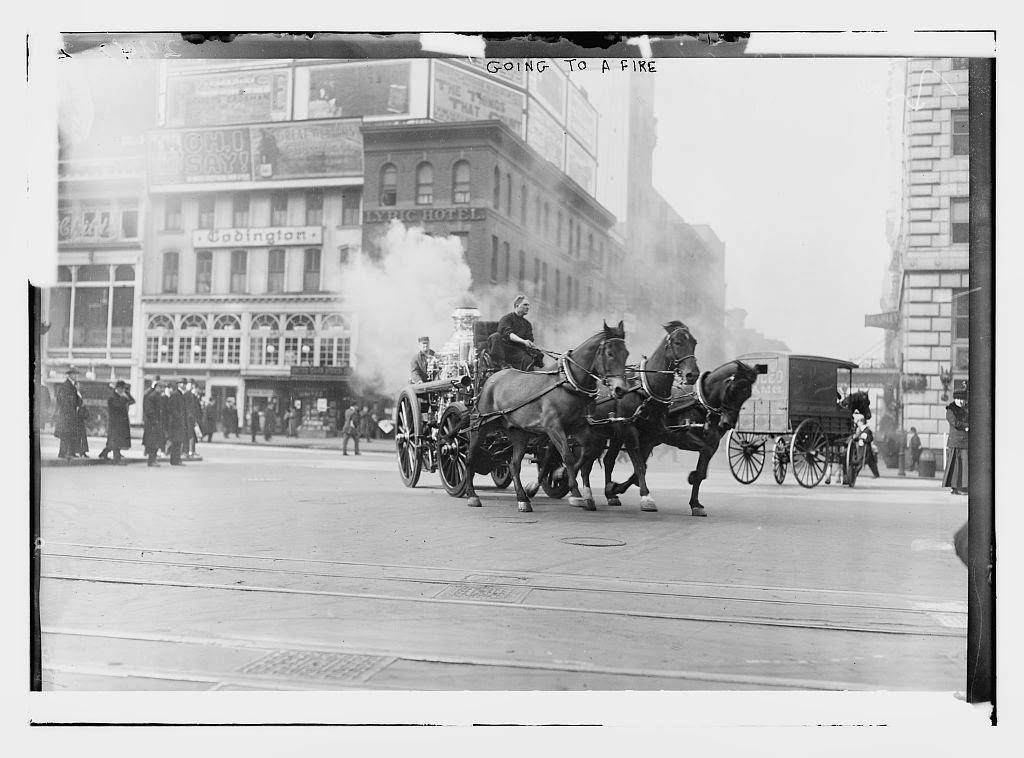
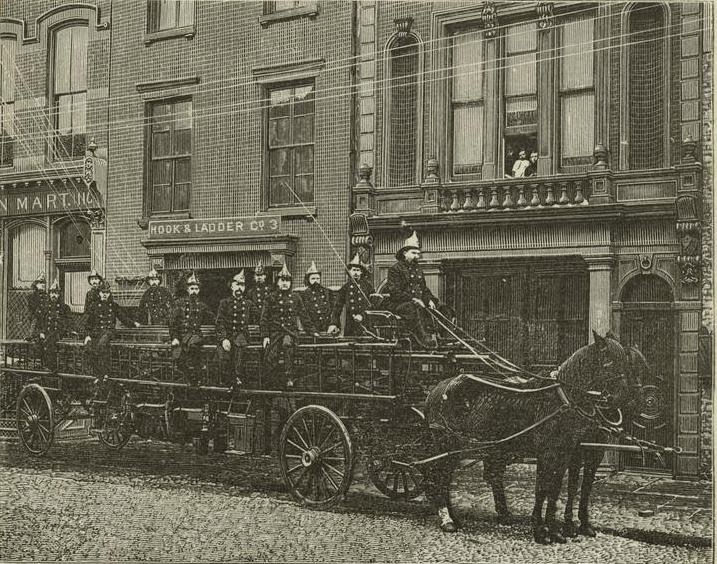
Horses were a hotly contested inclusion to the fire departments during the 19th century.  They were eventually banished during the volunteer years, but re-introduced after 1870 and soon became essential for getting quickly to fires.

Hook and Ladder Co. No. 8, from 1887


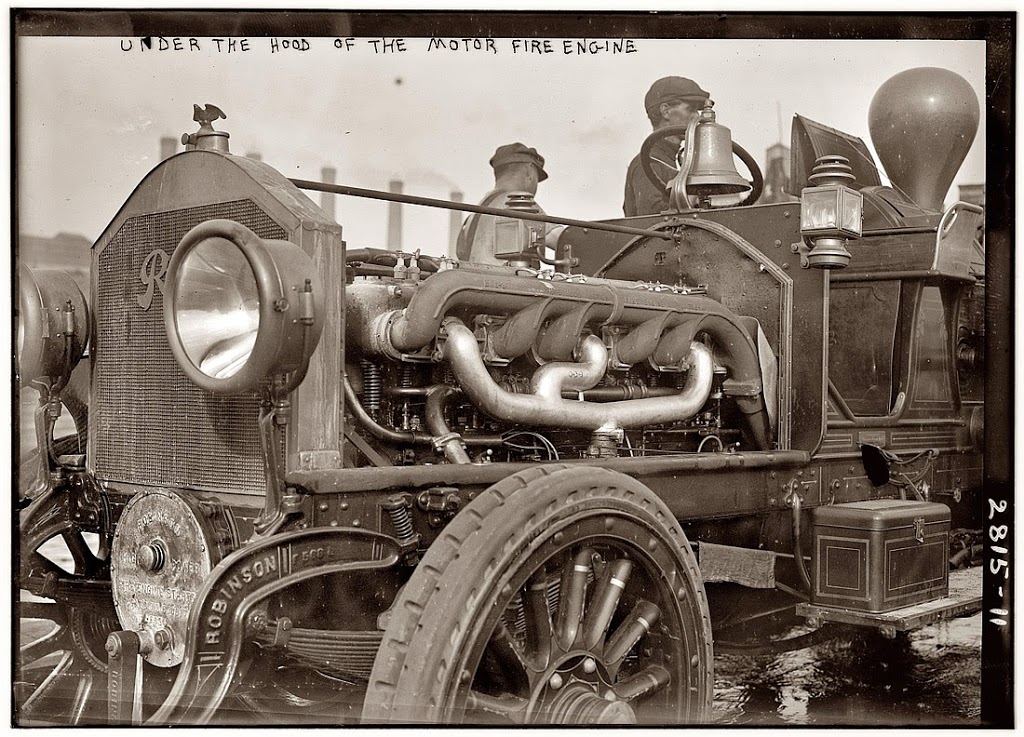
Motorized fire engines and trucks replaced the horse-drawn varieties in the 1910s.  Here’s one model that was used by the FDNY in 1913 (Courtesy Shorpy)

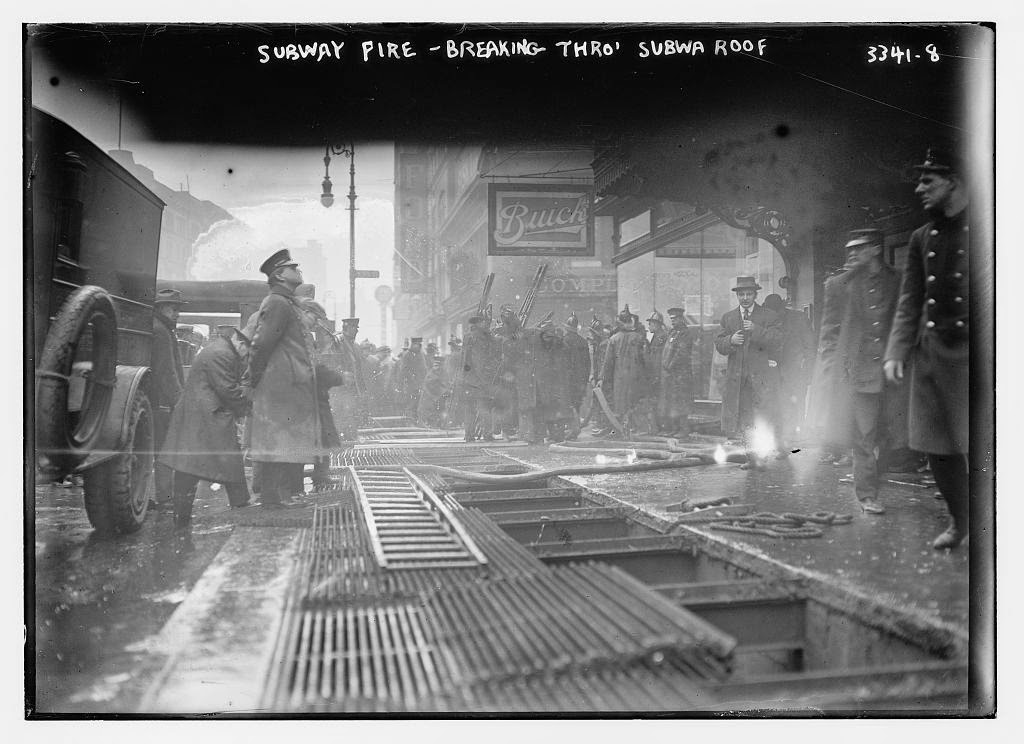
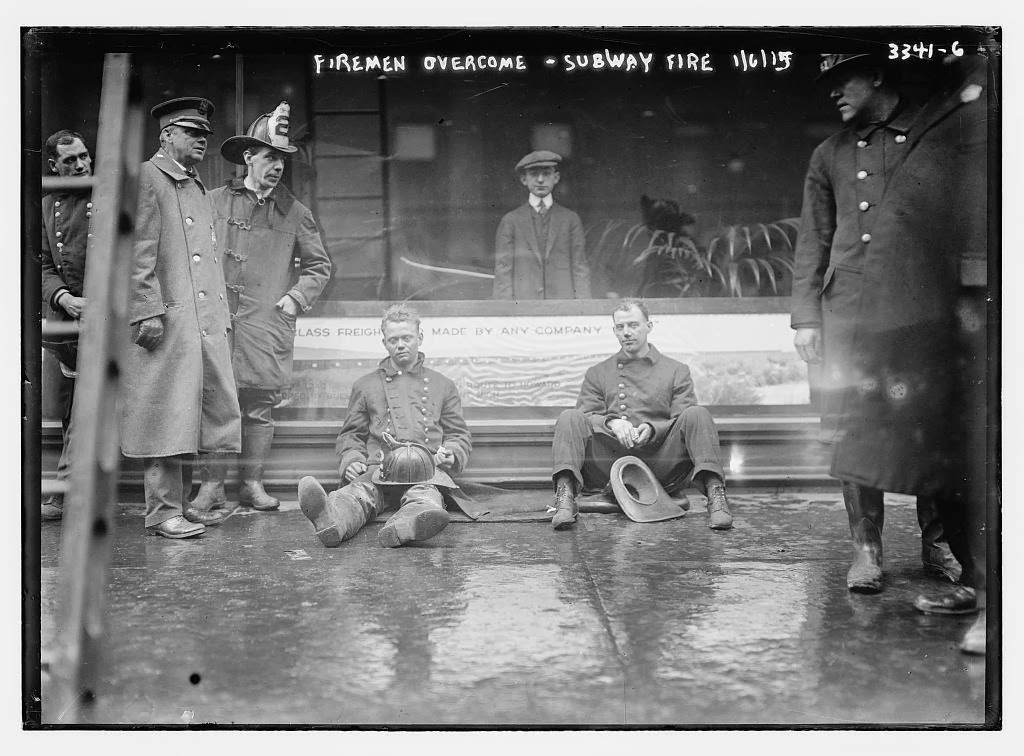
The city’s growth created new challenges for the FDNY.  With the new subway, there was the potential for dangerous fires underground.  Here a team of firefighters battle a subway fire in midtown in 1915, and a couple firemen who braved the inferno underfoot. (LOC)


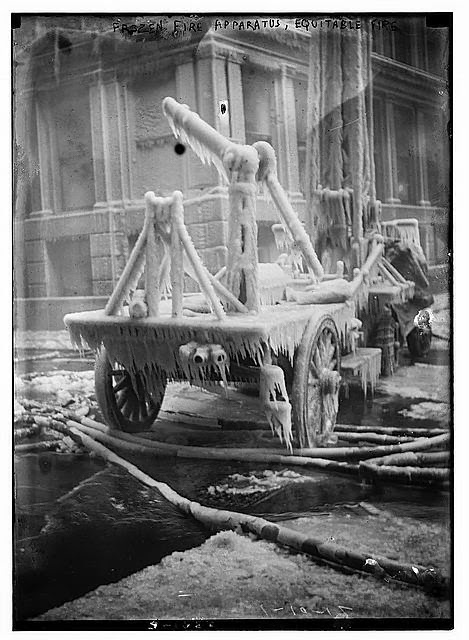
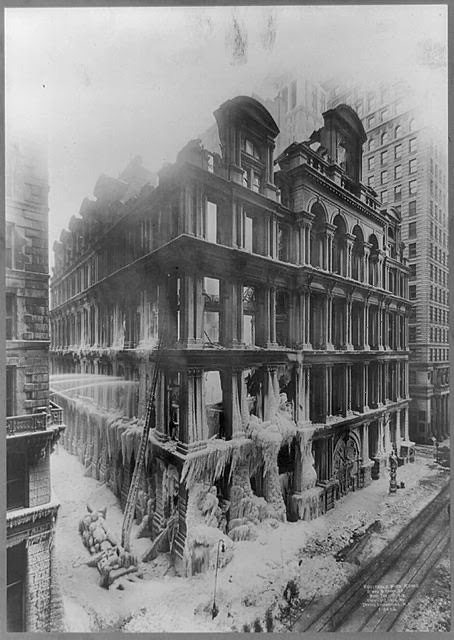
The difficult blaze at the Equitable Building in 1912 produced a bizarre aftermath of icy ruins.


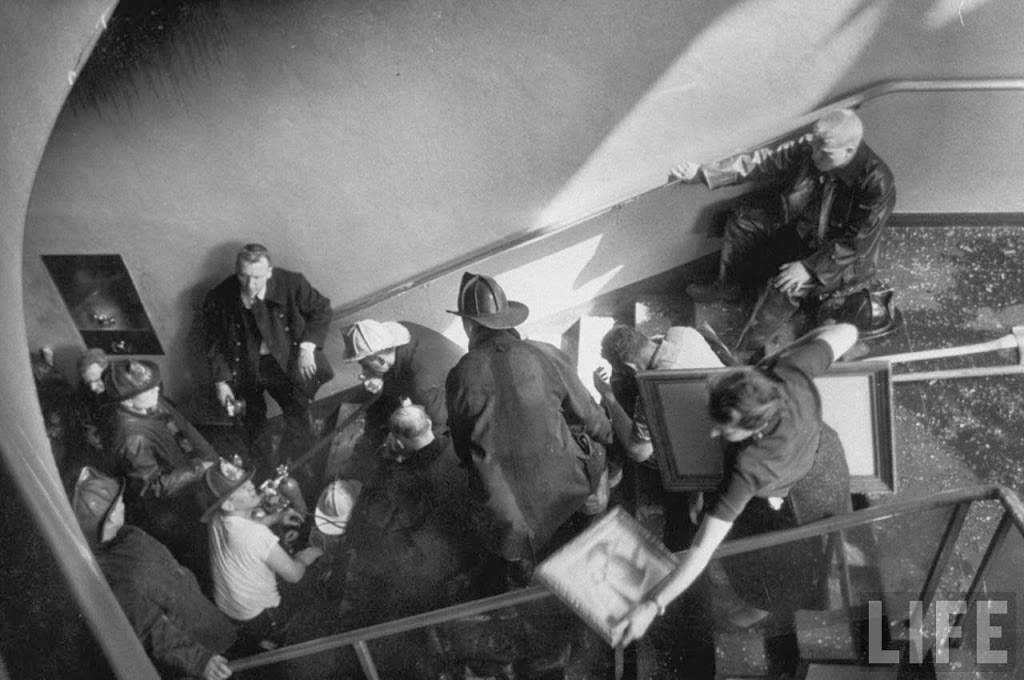
Firefighters rescuing people (and paintings!) from a fire at the Museum of Modern Art, 1958. (Courtesy Life)

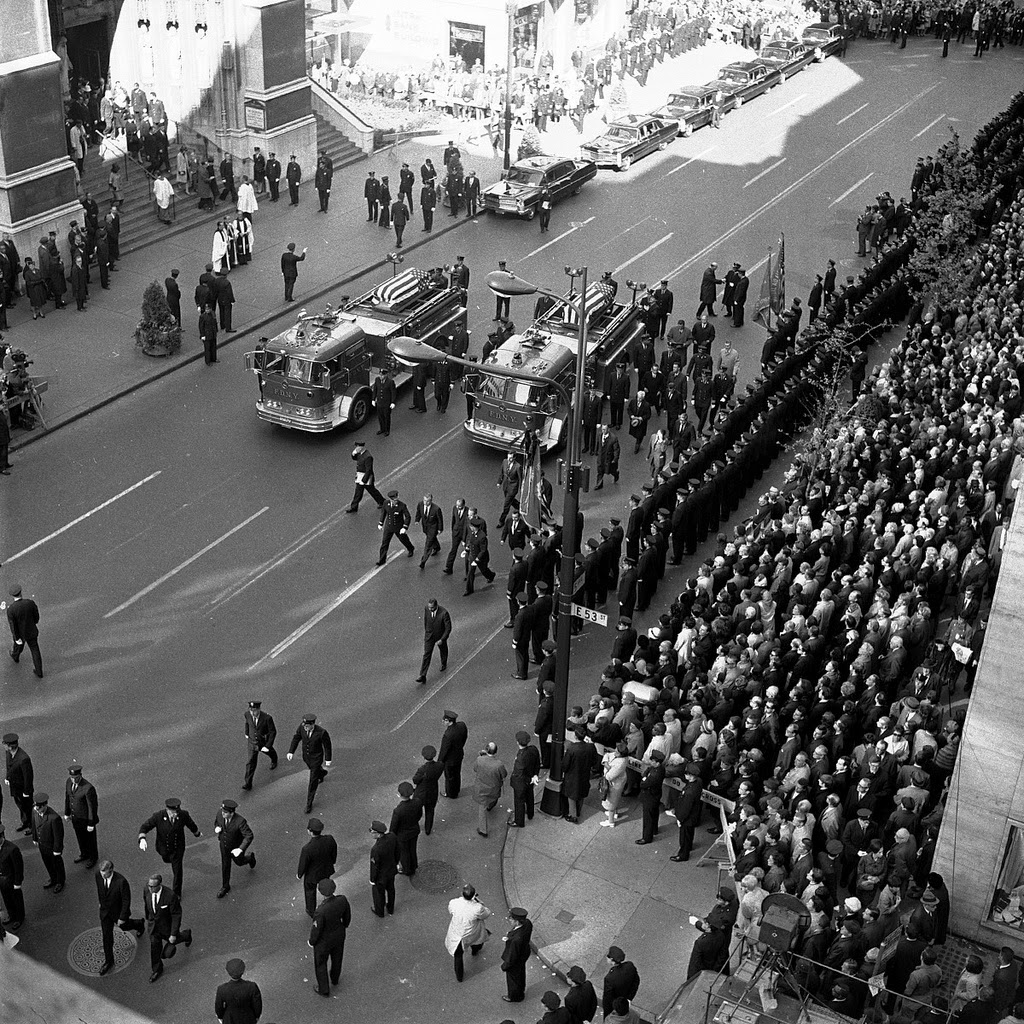
A sorrowful day:  Thousands come out to mourn the 12 firefighters who died fighting a terrible blaze that erupted across from the Flatiron Building on October 21, 1966. (Picture courtesy FDNY)

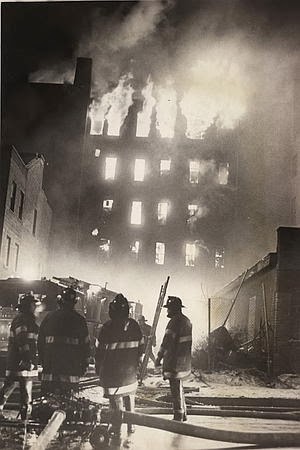
Total mayhem erupted in New York City in the 1970s, as whole districts like the South Bronx, Bushwick, Harlem and the Lower East Side saw a massive increase of fire-related disasters due to the city’s financial woes. (Photo courtesy New York Post/Vernon Shibla photographer)

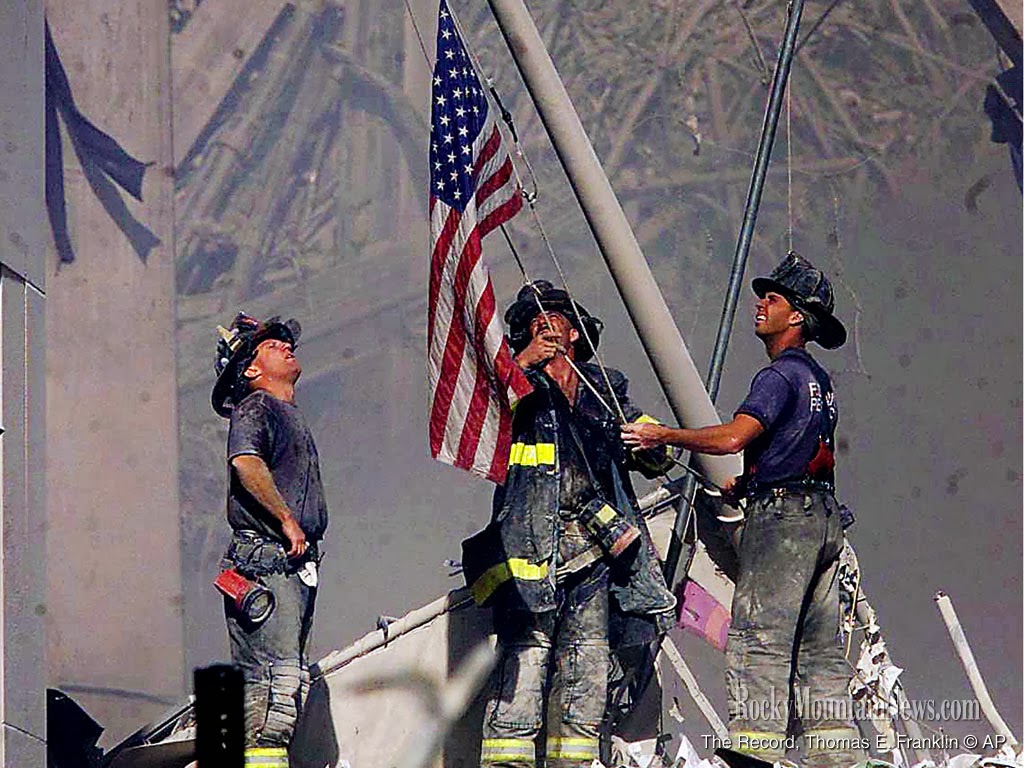
Three hundred and forty-three firefighters and FDNY paramedics died in the September 11, 2001, terrorist attack on the World Trade Center.  But the force, along with the police and other emergency workers, managed to save tens of thousands of people on that day, making one of the largest rescue operations in American history.  In total, 2,977 people were killed that day, 2,606 of them in New York, on the ground and in the towers.

And finally, a rather amazing film documenting the fire department’s emergency response process in 1926, with a breathless dash-cam vantage point!

Categories
Bridges

The patriotic story of how the Kosciuszko Bridge got its name


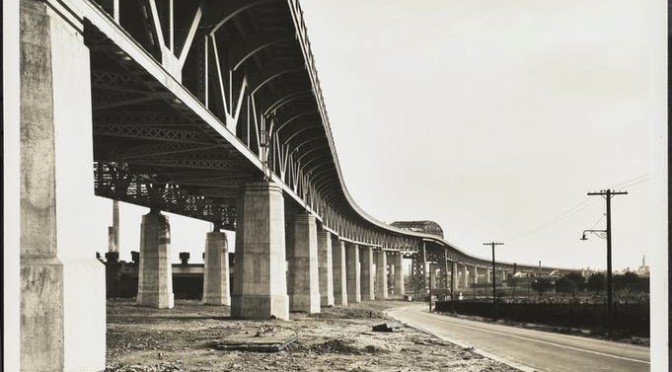
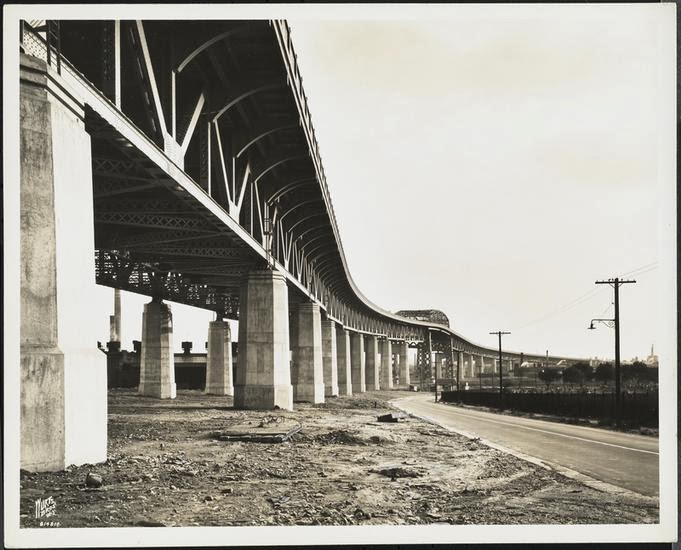
The approach to the Kosciuszko Bridge, photographed in 1939 by the Wurts Brothers.  Photo courtesy the Museum of the City of New York


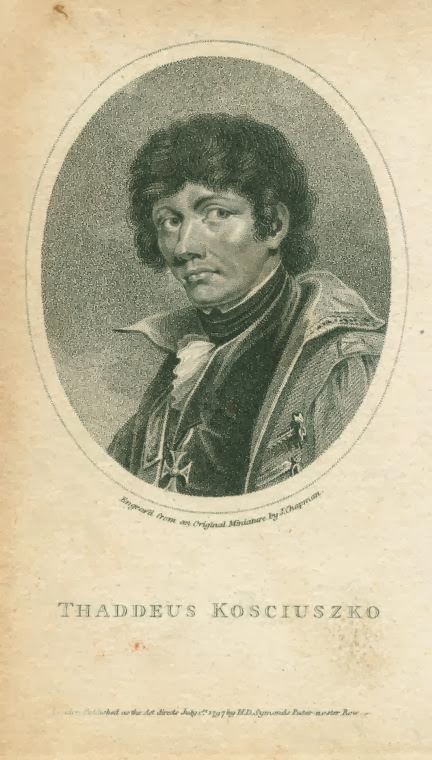
“That sound that crashes in the tyrant’s ear – Kosciuszko!” — Lord Byron

Byron was talking about Polish hero Tadeusz KoÅ›ciuszko, who was (most likely) born on this date in 1746.  Hopefully, within a couple months, the bridge that bears his name — and bears the grievances of those stuck upon it during rush hour — will begin a much-needed makeover.

But how did the span over the Newtown Creek, connecting Brooklyn to Queens, get named the Kosciuszko Bridge in the first place?

Kosciuszko wasn’t just Poland’s most famous revolutionary.  In 1776, he sailed for America to fight alongside George Washington and the Continental Army.  He was a brilliant strategist and engineer, helping bolster many American forts, and was greatly admired by Washington’s generals.  In one of his more clever displays, the man who would one day have a bridge named after him actually blew up several bridges to hamper British advances in upstate New York.**
After the war, he returned to Europe and led the fight for Poland’s independence (although his storied uprising against Russia was ultimately a failure).

Kosciuszko died in 1817 and has been celebrated the world over as the greatest of revolutionaries and perhaps the best known historical figure in Polish history.  But that alone doesn’t get one a bridge in Long Island.

The new automobile bridge, eventually part of the Brooklyn-Queens Expressway, was completed in 1939, replacing a smaller one called the Meeker Avenue Bridge.  The new crossing opened in August. Germany invaded Poland nine days later.

New York City’s affinity with Poland was strong by this time. The city had thousands of Polish-Jewish residents.  The Polish pavilion at the World’s Fair in Flushing-Meadow was among the most striking, featuring a bold statue of the Polish monarch Wladyslaw Jagiello.  (That statue was eventually moved to Central Park, where it sits today near the Turtle Pond.)  Some New Yorkers feared a similar invasion upon its own shores.

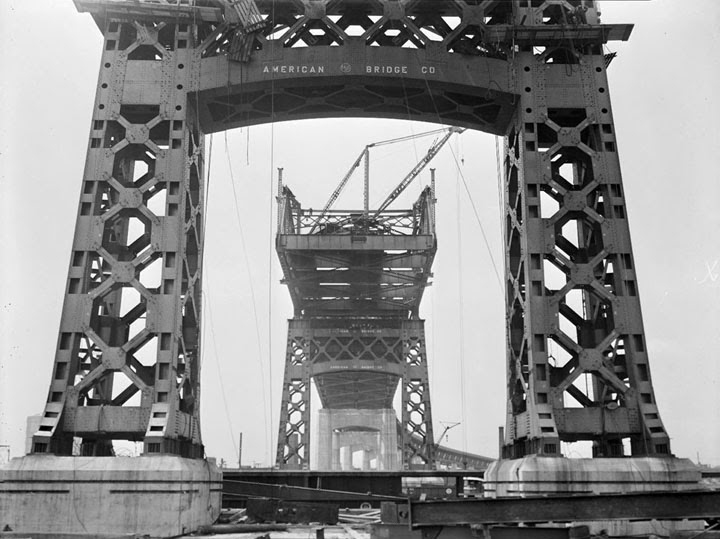
Below: Construction of the new Meeker Avenue Bridge in June 1939, later to be named Kosciuszko. (Courtesy NYC Municipal Archives) 

In July 1940, the Meeker Avenue Bridge was renamed the Kosciuszko Bridge, as a sign of the revolutionary spirit that bonded America and Poland.  It certainly made sense given that the Brooklyn anchorage rises from Greenpoint, a vibrant Polish neighborhood.

At an official ceremony on September 23 — a year after the German invasion — thousands of Polish-Americans cheered along to a rousing patriotic speech by Mayor Fiorello La Guardia.  On either side of the bridge were parades featuring revelers in traditional Polish costumes.

“[I]n so far as the American people and the American government are concerned,” said La Guardia, “the free government of Poland still lives and will continue to live.”

The crowd roared with applause at the mention of President Franklin D. Roosevelt.  America would not be officially engaged in World War II until the following year with the attack on Pearl Harbor.

Ah, but that name!  It remains one of the more perplexing bridge names to say.  It’s correctly pronounced kohsh-CHOOSH-koh, although several slight variations are accepted.  At first, many people simply refused to say it.  In 1945, the New York Times mentioned that “Kosciusko Bridge the people will not have and they call it the Meeker Avenue Bridge to this day.”
Of course, many people preface the name today with an expletive, as the bridge is better known for its traffic entanglements and its lack of any kind of shoulder for stalled cars.  There have been plans for years to replace the bridge, plans which finally look to be rolled out this year.

The Kosciuszko’s younger brother bridge — the Pulaski Bridge, named for another Polish hero, Kazimierz Pulaski — spans the same body of water just a couple miles to the west.

**Tadeusz Kościuszko actually blew up and booby-trapped many bridges during the Revolutionary War on the command of Colonel Philip Schuyler, the father-in-law of Alexander Hamilton.

Categories
Pop Culture

The first Sherlock Holmes film ever was made in Union Square. And the second? In Flatbush, Brooklyn

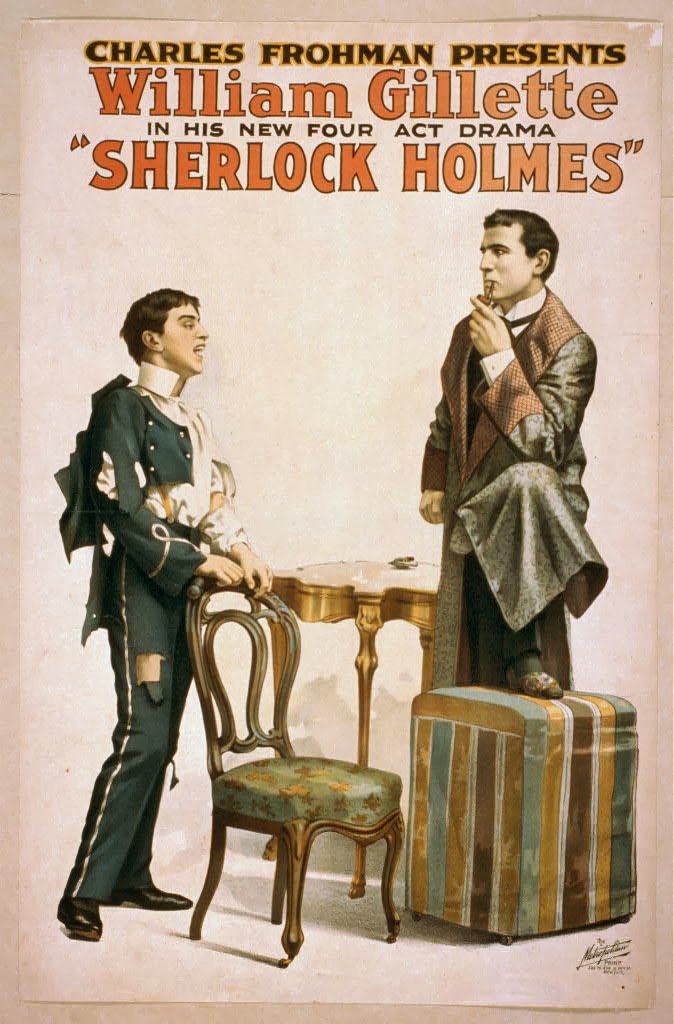
Above: While Sherlock Holmes made his film debut in 1900, he hit the stage a bit earlier.  William Gillette was the most acclaimed Sherlock of the day, touring the United States in a play he co-wrote with the detective’s creator Sir Arthur Conan Doyle.  After a tryout in Buffalo, the play made its debut at the Garrick Theatre (67 West 35th Street) in New York on November 6, 1899.

There are two varieties of Sherlock Holmes these days — the British alternative kind (Sherlock, with Benedict Cumberbatch) and the New York variant (Elementary, with Jonny Lee Miller).  You might naturally assume that Cumberbatch’s Sherlock Holmes is closer in spirit to the original stories by Sir Arthur Conan Doyle.  But the modern-day CBS variation, which is filmed in New York City, actually brings the classic detective stories back to its original roots in the cinema.

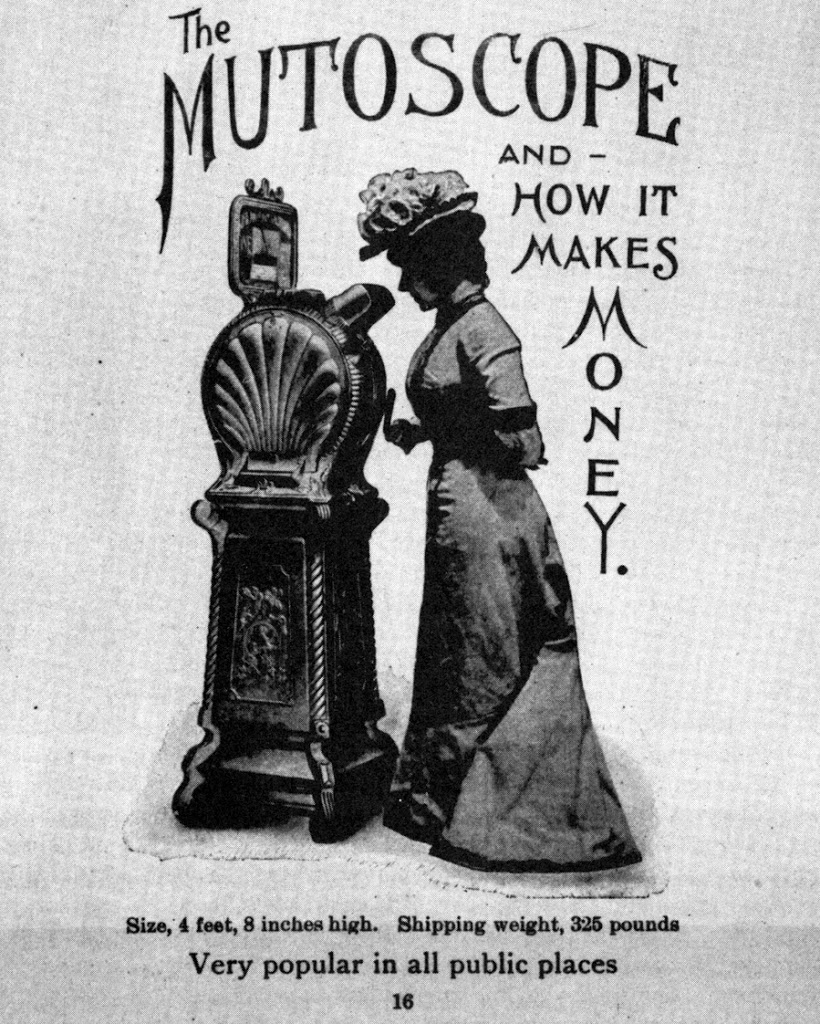
The first attempt to bring Sherlock Holmes to the film medium was in the year 1900 with Biograph-Mutoscope’s Sherlock Holmes Baffled.  Mutoscope films were not projected, but rather, displayed in a stand-alone box for a single person to view, the images moving with the help of a hand crank.  (At right: An 1899 trade advertisement for the Mutoscope).

Most early Mutoscope films were documentary in nature (often boxers or acrobats), similar to those for Thomas Edison‘s Kinetoscope.  The very first movie made in the city of New York was a boxing match featuring Young Griffo, made for another competing film device, the Eidoscope, and filmed atop old Madison Square Garden.

Due to the short running time of films made for these private viewing consoles, the first narrative films were crude, silly and often confusing, throwing viewers into an action scene that abruptly stops.   That is the case with Sherlock Holmes Baffled, seen here in its entirety:

Outside of the title card, the move bares no traits of Sherlock Holmes whatsoever.  It seems to merely borrow the name to present a wacky narrative involving the detective discovering a thief who then disappears and re-appears at a whim.

The movie was made at Biograph’s revolving rooftop studio at 841 Broadway in Union Square.  That original building was demolished at some point to make way for the Roosevelt Building.  In an accidental tie to its movie heritage, across from the Roosevelt is the Regal Union Square Stadium multiplex, which has undoubtedly seen more sophisticated Sherlock Holmes movies (such as the Robert Downey Jr. version) since it was constructed in 1998.

The identity of the actor who played the first Sherlock Holmes is apparently unknown.

Biograph would continue using Union Square as a site for film production.  They moved to another studio in 1906 — just up the street, at 11 14th Street — where they produced ever more extravagent movies, including a reinactment of the San Francisco earthquake, rushed into theater just months after the disaster struck the West Coast city on April 18, 1906.

From my original article:  “What seems especially brazen about this fabrication is that it was being created in New York’s Union Square, even as San Francisco’s public square of the same name sat in ruins.”

Five years later, a slightly more recognizable Sherlock Holmes can be seen in The Adventures of Sherlock Holmes, or Held For A Ransom.  In this version, Sherlock is played by vaudeville star Gilbert Anderson, best known for his appearance in The Great Train Robbery. (He was later renamed ‘Bronco’ Billy Anderson due to his later fame as an early cowboy film star.)  

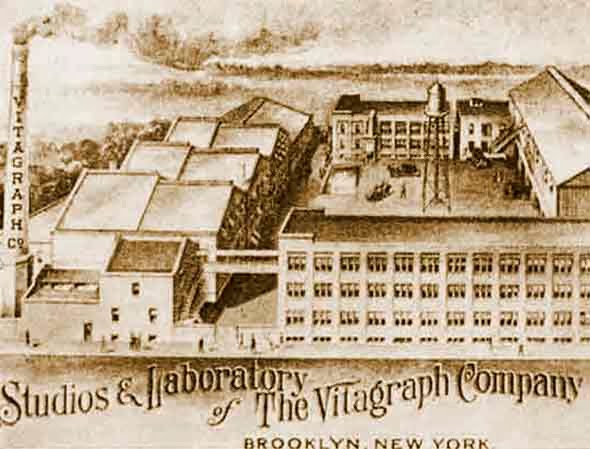
This, too, was filmed in New York — at Vitagraph Studios in Flatbush, Brooklyn!  Pictured below:

Top picture courtesy the Library of Congress

Categories
Pop Culture Uncategorized

Pete Seeger 1919-2014

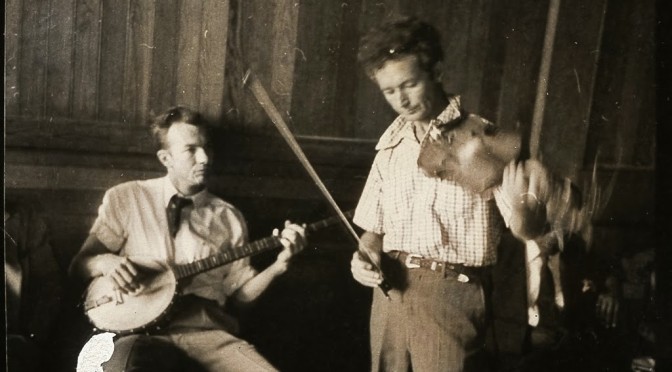
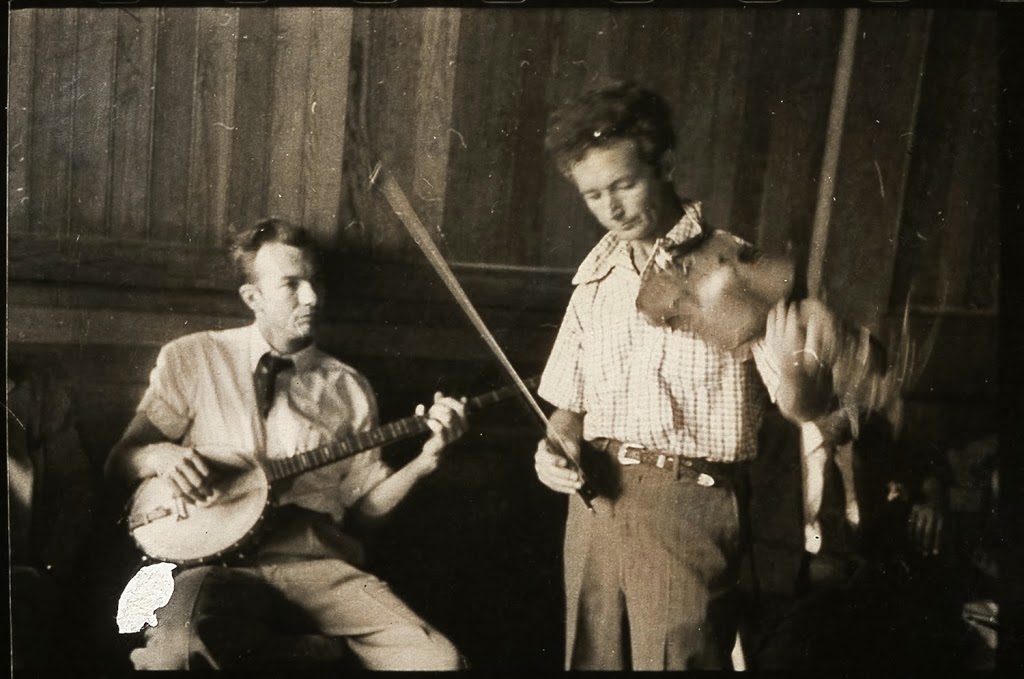
 Pete Seeger with Woody Guthrie, performing at the Music Inn in Lenox, Massachusetts, 1950 (Photo courtesy NPR)

 “I have sung in hobo jungles, and I have sung for the Rockefellers, and I am proud that I have never refused to sing for anybody.” — Pete Seeger

Pete Seeger with the Weavers — Washington Square Blues


Pete Seeger had a television variety show in the 1960s called Rainbow Quest, filmed from studios in Newark, New Jersey.  Interestingly, the shows were broadcast on WNJU, better known as a Spanish-language station and today the flagship for Telemundo!

Luckily, many of these programs are available to watch on YouTube. Here’s a clip of Seeger with BJ Reagon (from Sweet Honey In the Rock) and Jean Ritchie (aka ‘the mother of folk):

In 1974, he recorded the first album for Sesame Street to feature new material not featured on the show. Here, he duets with Oscar the Grouch about, of course, ‘Garbage’:

Categories
Those Were The Days

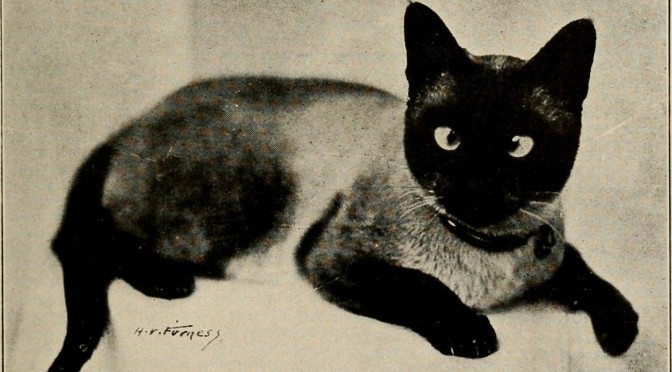
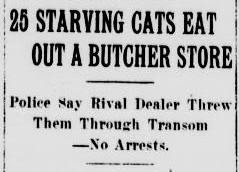
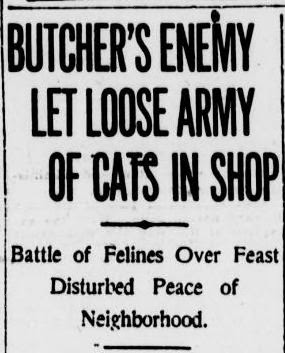
Cat-astrophe! Hungry felines attack a Lower East Side butcher

Presented without commentary, from the front page of  the New York Sun, January 24, 1914:

“Policeman James Kenny, trudging along James Street at 10 o’clock last night, heard horrendous sounds coming from the market of Brighton Beef Company at No. 72.  A hundred drunken burglars couldn’t have made more noise.

Kenny, remembering that a bomb went off in front of this same market six months ago and blew the store front to pieces, blew his whistle and thumped his night stick for assistance.   Seven other patrolmen came running.

They stole up to the door with pistols pointed.  They lunged together and burst in.  Twenty-five cats fled at their approach.  The cats were of all sizes and colors.  They had been hungry, but were no longer.  They had eaten every scrap of meat in the market — chicken and beef and everything else, and were fighting over the bones.

The eight policemen pocketed their pistols but swung their clubs.  They also said ‘Scat!’ and the cats ran into the street and scurried through the East Side with great news for their tribe.  There were no arrests.

The police suspected that some rival butcher had collected the cats,  starved them and thrown them through the transom of the Brighton Beef Company’s store.”


And excerpts from a similar story in the Evening World from the same day:

“[T]he owner has two cats of his own, trained to eat no meat, which he always leaves in the shop overnight.

The first peripatetic pussy that was pushed through the fanlight was pounced upon by the faithful feline guards of the pork chops.  They grabbed him and sought to shove him into the sausage chopper.  But other felines came through the fanlight. It began to rain cats.  The guardians of the garbage cans made short shrift of the tame tabbies of the butcher shop.”

What the Sun story fails to report is that a young man was pushed through the fanlight before the cops stormed the shop.

The policemen couldn’t open the door.  They shoved Tommy Laura, a young man of James Street, through the fanlight. A dozen cats scrambled over Tommy when he fell to the floor.  He turned up the lights and got a pair of pliers with which he opened the door…..”

One man had to be taken to the hospital when he grabbed the tail of a cat perched upon a meat hook.

Cats and butcher shops, clearly, do not mix!

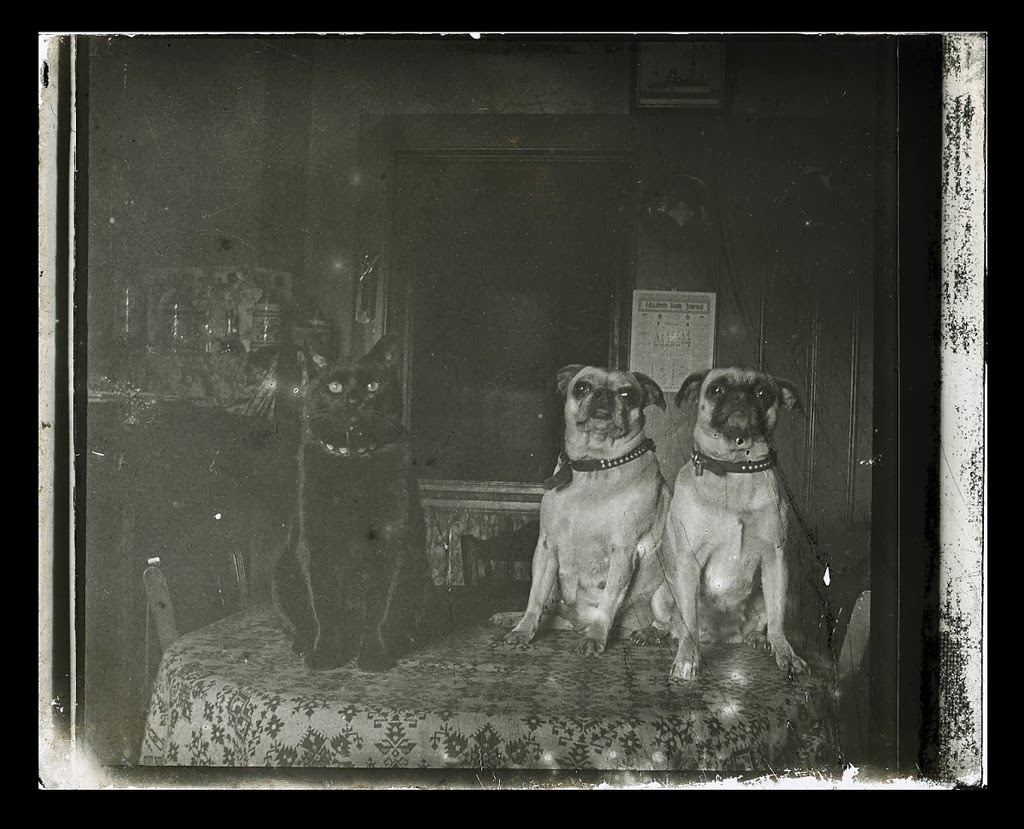
Below: Do you trust this cat with your perishables? It’s a cat and two dog companions in Flatbush, circa 1900s, photographed by Daniel Berry Austin, courtesy the Brooklyn Museum


Categories
Mysterious Stories Planes Trains and Automobiles

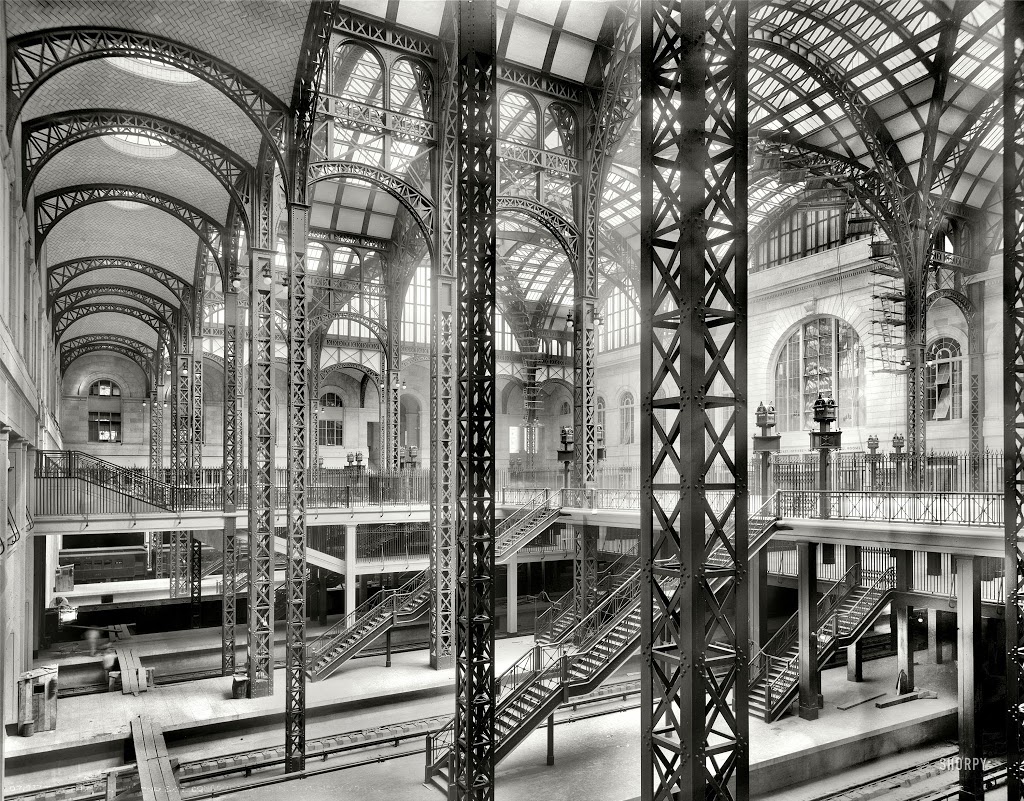
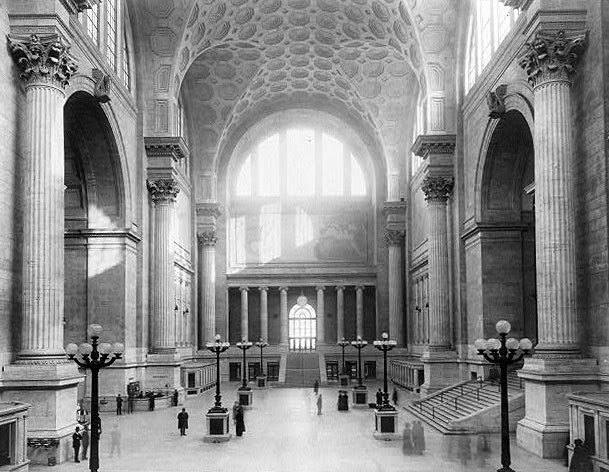
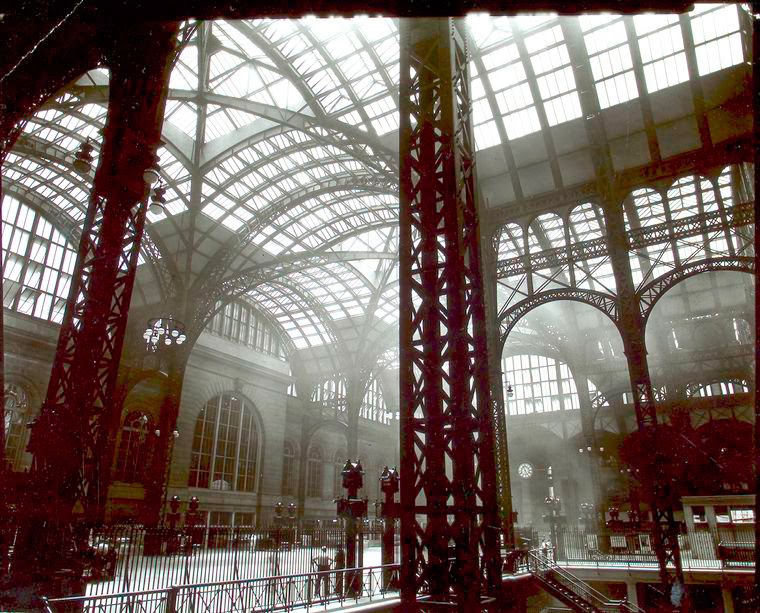
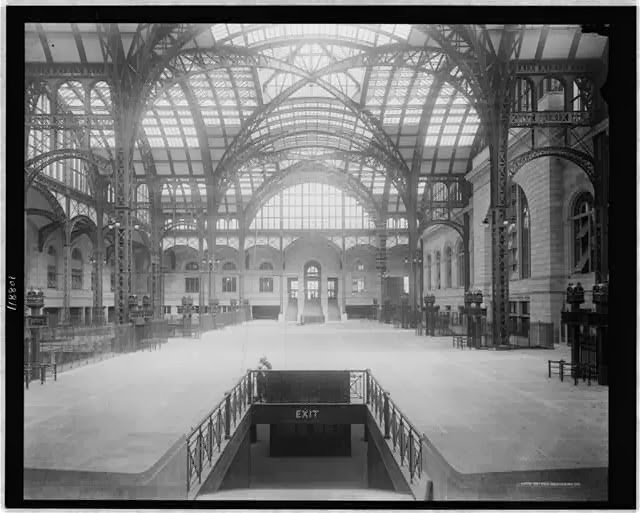
“This hypocritical, swindling world” — One hundred years ago, a mysterious suicide in the halls of Pennsylvania Station

The halls of Pennsylvania Station, conjuring the grandeur of a Roman temple, would have created an otherworldly echo at rush hour on January 22, 1914.  Thousands of commuters hurrying across the marble floors of McKim, Mead and White’s steel-latticed terminal, rushing to arriving trains pulling into the sunken boarding area from deep tunnels beneath Manhattan and the Hudson River.

It was in the cavernous waiting room of Penn Station at rush hour that a gentleman was seen nervously pacing the floor — “a well-dressed man of 40 years, with a high forehead and black curly hair.” [source]  He wore a dark grey overcoat, his pockets full.  He was taller than most around him, and his brow was furrowed in anxiety beneath a gray plaid hat.  The man had just come in from Philadelphia, judging from the newspaper clippings on his person.

The Penn Station waiting room:

Precisely at 6 pm, the curly-haired gentlemen left the waiting area and entered the men’s washroom.  It was here that he reached inside his coat, pulled out a revolver and shot himself twice in the head.

Almost any sound made in old Penn Station dramatically amplifies under its high vaulted ceilings.  Two gunshots during rush hour certainly must have stopped foot traffic, if only for a moment.   The gentleman was discovered by Penn Station’s chief detective and taken to the West 37th Street Police Station where officers inspected the body for signs of identification.  None were found outside of the address for a gas company in Newark, NJ. Did he work there?  Did he owe them money?

More disturbing was a hand-written suicide note, which read:

“It is time that I end this useless existence.  I’ve taken all the facts into consideration and have concluded that death is the only way to get out of this hypocritical and swindling world.  I hope to make a good job of it.”  On the other side of this note was written a more direct meaning for this gentleman’s grief — “Out of work and funds.”

Investigators also found a whisky flask, a few quotations from Shakespeare and a grand total of 47 cents.  But perhaps the oddest possession in his pocket was a magazine clipping featuring the writings of Maurice Maeterlinck, the Belgian intellectual who had won the Nobel Prize for Literature just two years previous.  It’s not surprising that a person in the depths of depression would turn to Maeterlinck, a playwright known for exploring the enterprise of death.  (Later in life, Maeterlinck would also be accused of being a towering plagiarist.)

The New York Sun made note of the fact that the Maeterlinck clipping featured several underlined passages in an article headlined ‘Death’, including this one:  “In any case, it seems fairly certain that we spend in this world the only narrow, grudging, obscure and sorrowful moments of our destiny.”

While this man’s sad demise made the front sections of all the local newspapers — after all, you can’t shoot a revolver in Penn Station without some notice — I was unable to find any further follow-up to this man’s identity.  And so, on the one hundredth anniversary of this stranger’s passing, he joins the many other ghosts of this legendary old building, itself nothing more than a memory.

Pictures courtesy Library of Congress

Categories
Parks and Recreation

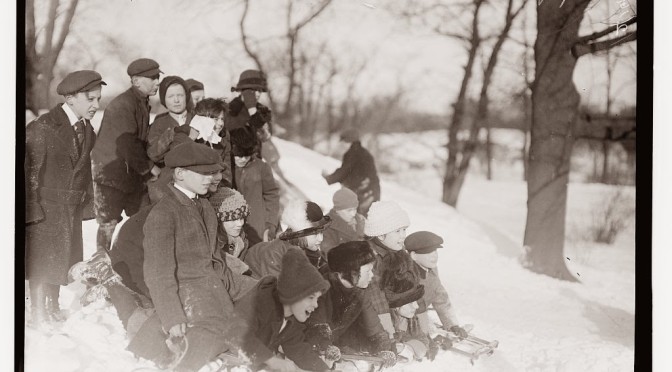
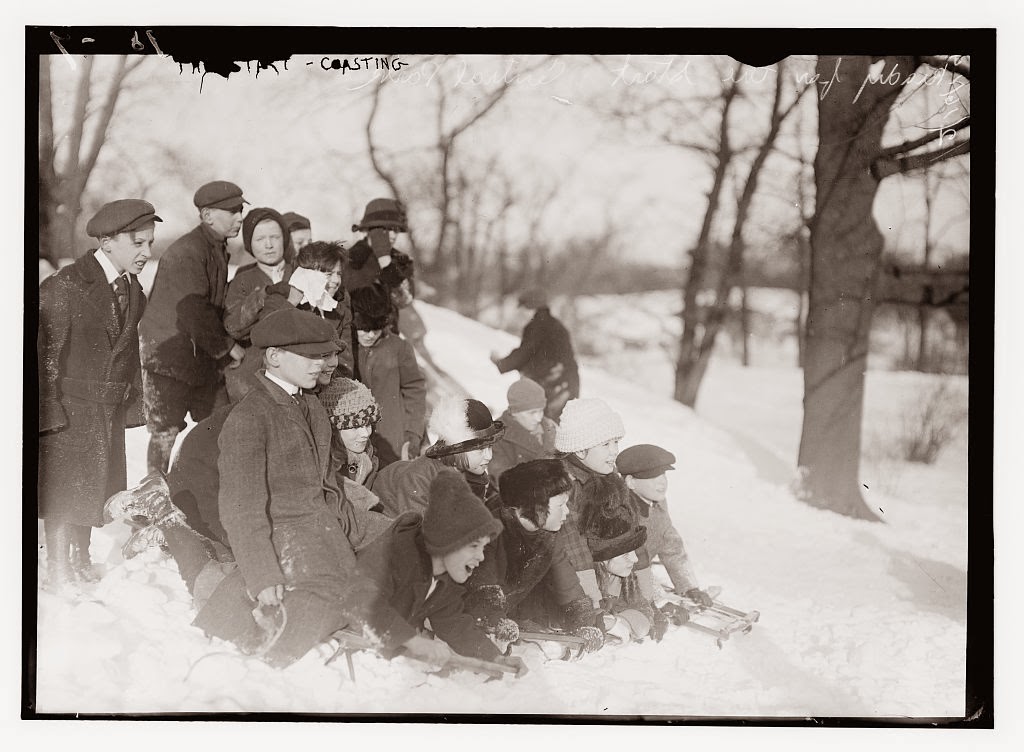
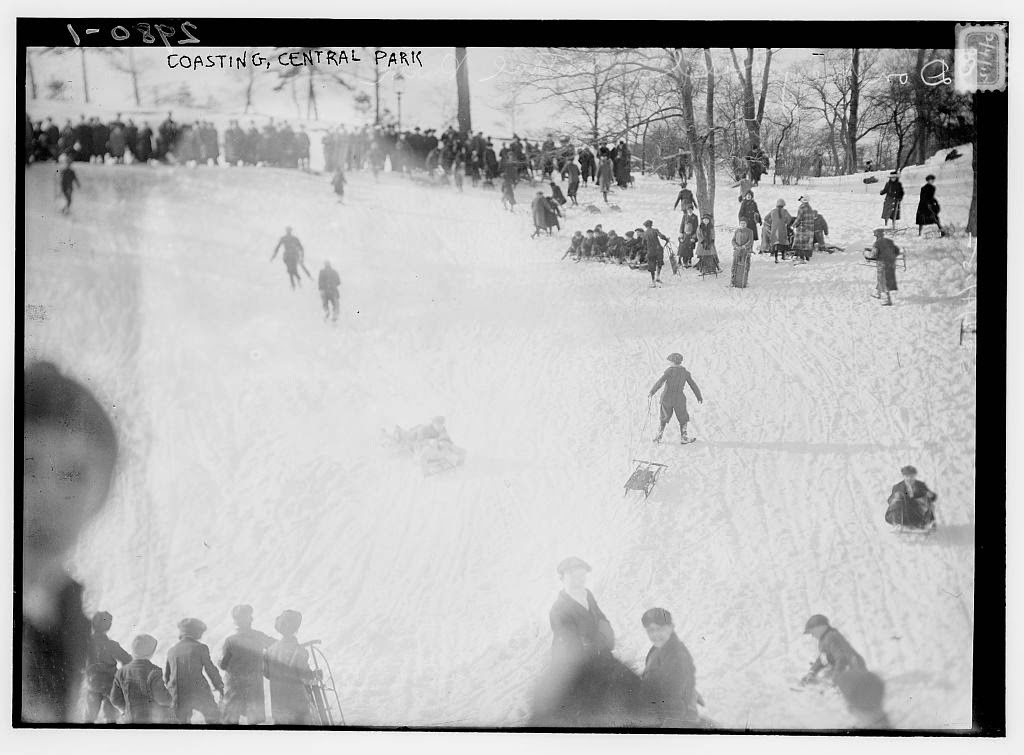
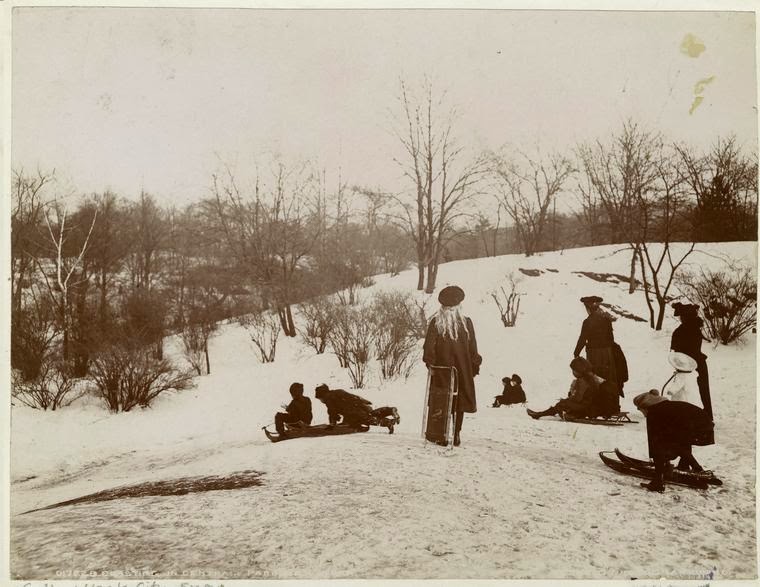
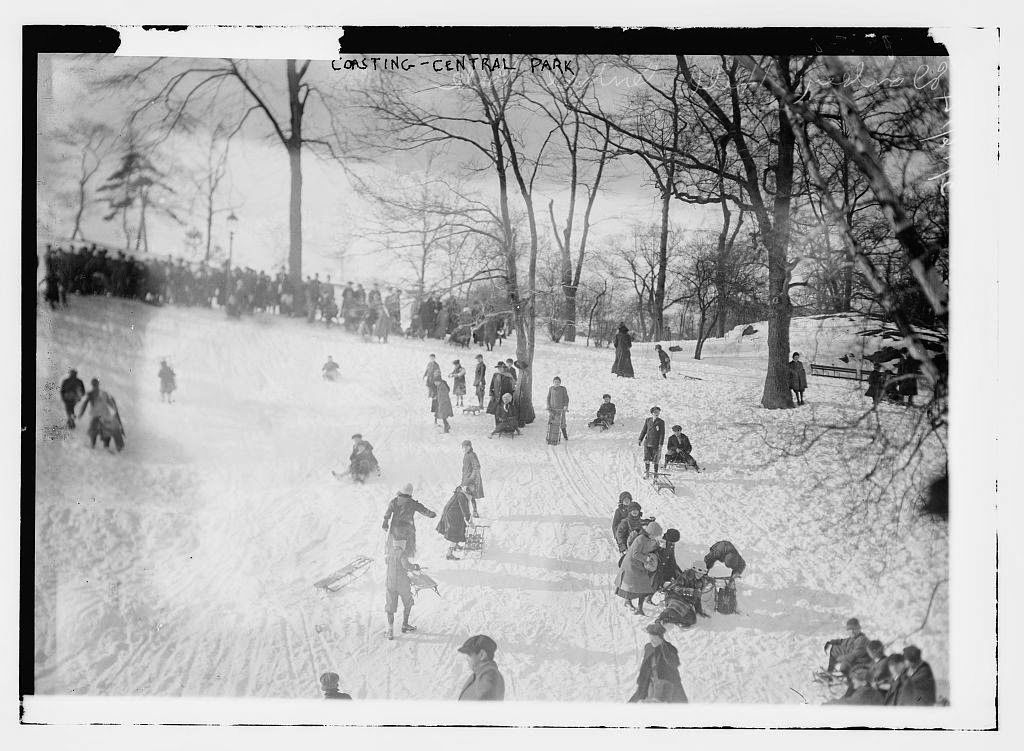
Never Too Cold: Crazy kids conquer Central Park on sleds

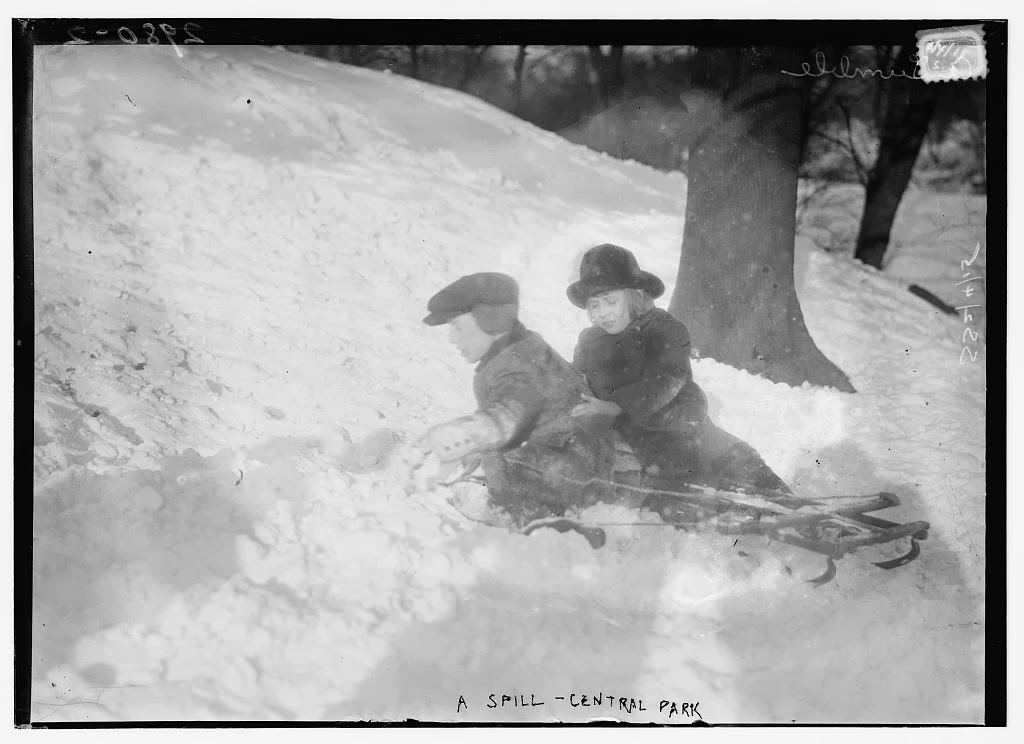
During one particular winter in the early 1910s, Central Park was invaded by an army of young sledders, tearing over the snow-covered terrain without thought to temperatures or bodily injury.

Believe it or not, the city encouraged children to use the city parks for sledding, especially given that the alternatives were slicked-up city streets.  In fact, New York did everything possible to make parks an ideal sledding destination.

“Snow from the sidewalks around Hamilton Fish, DeWitt Clinton and East River parks has been thrown over the fences to form an embankment from which the youngsters can coast.” reported the New York Tribune in 1910.  In Central Park, “never before were so many coasters in evidence.”

Indeed, automobiles posed a grim and dangerous threat to children sledders. The newspapers between 1909-1919 are filled with sad stories of children killed in sledding accidents, with autos frequently involved.  Vehicles from the early days (not to mention, their novice drivers) were simply ill-equipped for icy conditions.

While some in the community lamented the mess made in public parks, most preferred keeping children safe.  These pictures kind of make you want to make a go of it, don’t you think?

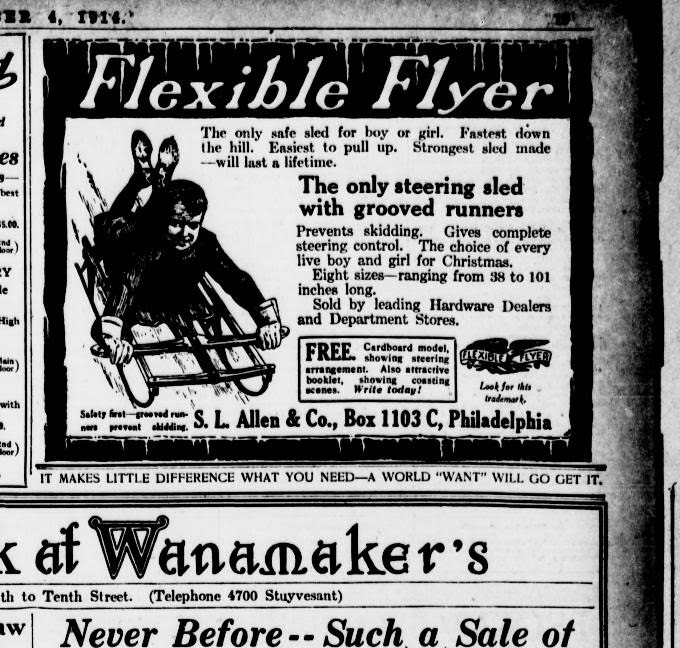
Of course, wealthy people could always go on a sleigh ride in the park, but the mass production of individual flyers (like the one advertised below) and homemade facsimiles soon brought middle and working class into the park for fun.  I would like to think this sled model (advertised in a Dec. 4, 1914 edition of the Evening World) was used by some of those intrepid spirits pictured above:
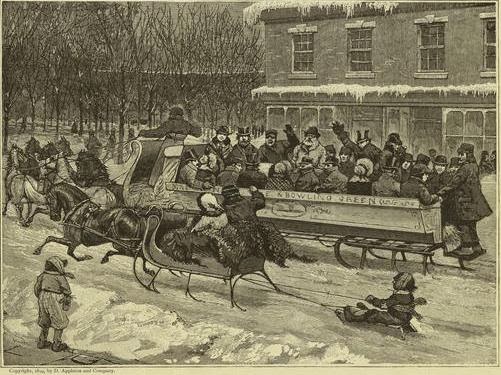
And you think that all looks a little dangerous, here’s some adventurers from 1860, using Broadway as their personal ice sheet, with a child tied to the back!
Images courtesy Library of Congress and New York Public Library
Categories
Bowery Boys Bookshelf

Solomon Northup’s ominous journey to New York City, 1841

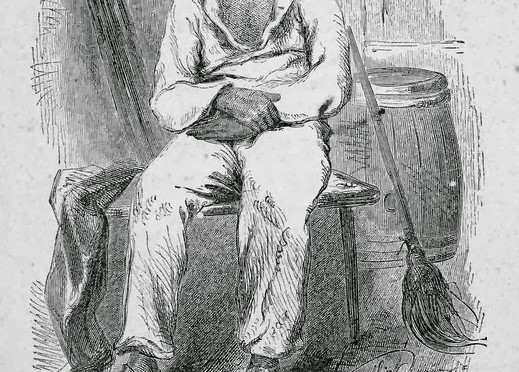
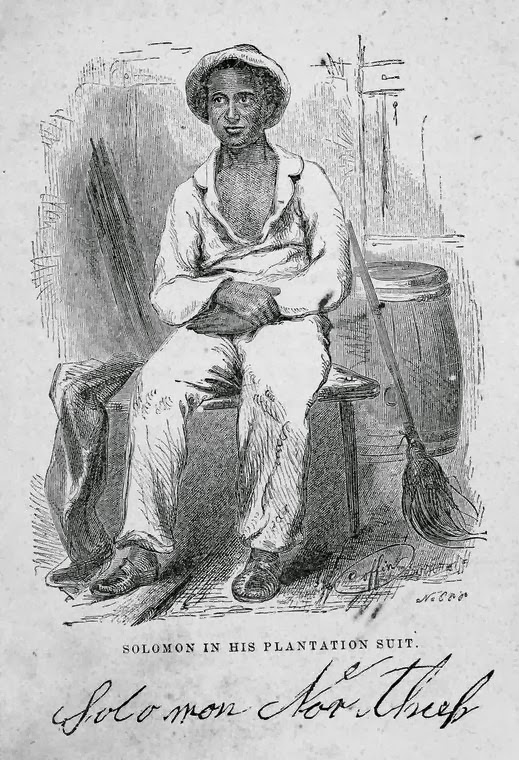
An engraving featured in Solomon Northup’s narrative Twelve Years A Slave, published in 1853.

The New York farmer and musician Solomon Northup was sold into slavery in 1841, tricked by two supposed members of a circus troupe, promising Northrup work in their traveling show.  Instead, Northrup awoke in bondage, eventually smuggled to New Orleans where he faced years of cruel servitude under a variety of plantation owners.   After regaining his freedom in 1853, he wrote the narrative Twelve Years A Slave, his harrowing account of his years in the South.

The book became a best-seller within Republican abolitionist circles, released a year after Harriet Beecher Stowe‘s Uncle Tom’s Cabin.  It was certainly in the possession of Henry Ward Beecher, Harriet’s younger brother, who turned his Brooklyn pulpit at Plymouth Church into a sounding board for abolitionist ideas.  (One hundred and sixty years later, the Oscar-nominated film version of Twelve Years A Slave, starring Chiwetel Ejiofor as Northup, played at Brooklyn Heights Cinema, located one block away from Beecher’s church.)

Northup and his family lived in upstate New York, but New York City proper plays a small but ominous role in his narrative.  Lured by the promise of employment by two men named Brown and Hamilton, Northup travels from home in Saratoga, first to Albany, then to New York itself:

“They hurried forward, without again stopping to exhibit, and in due course of time, we reached New-York, taking lodgings at a house on the west side of the city, in a street running from Broadway to the river.”

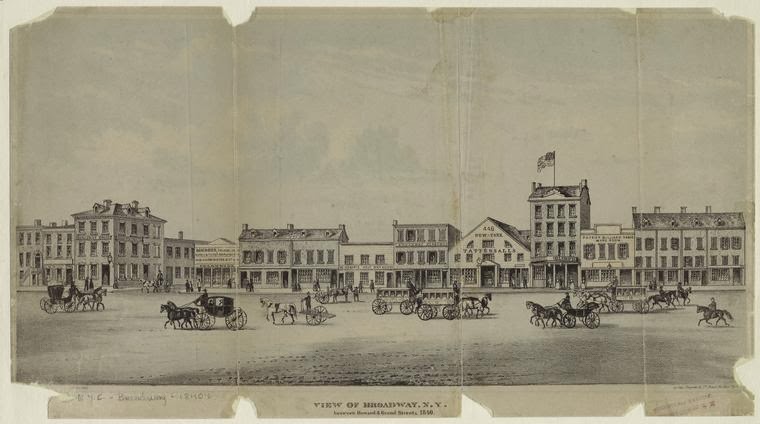
Below: A view of Broadway (between Howard and Grand Streets) in 1840.  To the south of this view was Canal Street and Five Points.


“I supposed my journey was at an end, and expected in a day or two at least, to return to my friends and family at Saratoga.   Brown and Hamilton, however, began to importune me to continue with them to Washington.  They alleged that immediately on their arrival, now that the summer season was approaching, the circus would set out for the north.   They promised me a situation and high wages if I would accompany them.  

Largely did they expatiate on the advantages that would result to me, and such were the flattering representations they made, that I finally concluded the offer.”

Northup agrees to accompany them further north to Washington DC.  It would be there that Northup would be drugged and sold into bondage by his two nefarious companions.  But before they leave New York, they suggest that Solomon perform a certain task, curious given the subsequent events which occurred:

“The next morning they suggested that, inasmuch as we were about entering a slave State, it would be well, before leaving New-York, to procure free papers.  The idea struck me as a prudent one, though I think it would scarcely have occurred to me, had they not proposed it. 

We proceeded at once to what I understood to be the Custom House. They made oath to certain facts showing I was a free man.” 

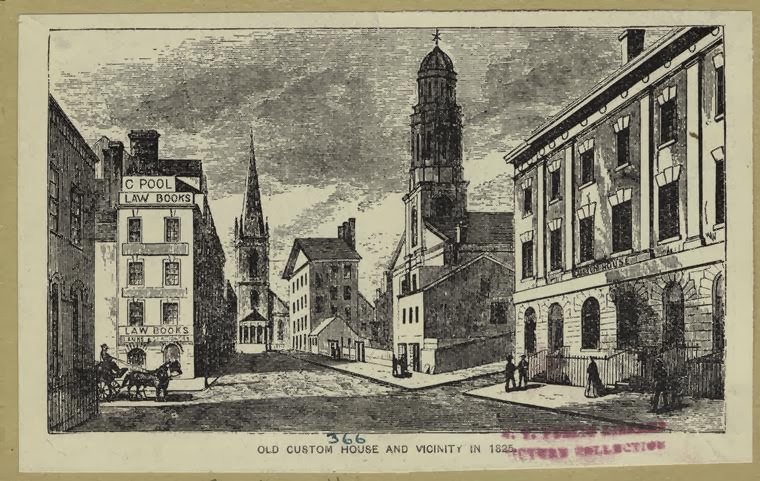
Why is there a little confusion in Northrup’s statement regarding the Custom House?  Perhaps because the building he would have visited — at 22-24 Wall Street — was in its final days as New York’s Custom House, an office which had grown far too small for the task.  The following year, New York’s new Custom House would have at last been opened at the other end of the block — the building that is today’s Federal Hall.

Below: Northrup and his associates would have entered the building at the far right of this illustration (which depicts Wall Street in 1825)

“Some further formalities were gone through with before it was completed, when, paying the officer two dollars, I placed the papers in my pocket, and started with my two friends to our hotel.  I thought at the time, I must confess, that the papers were scarcely worth the cost of obtaining them – the apprehension of danger to my personal safety never having suggested itself to me in the remotest manner.”

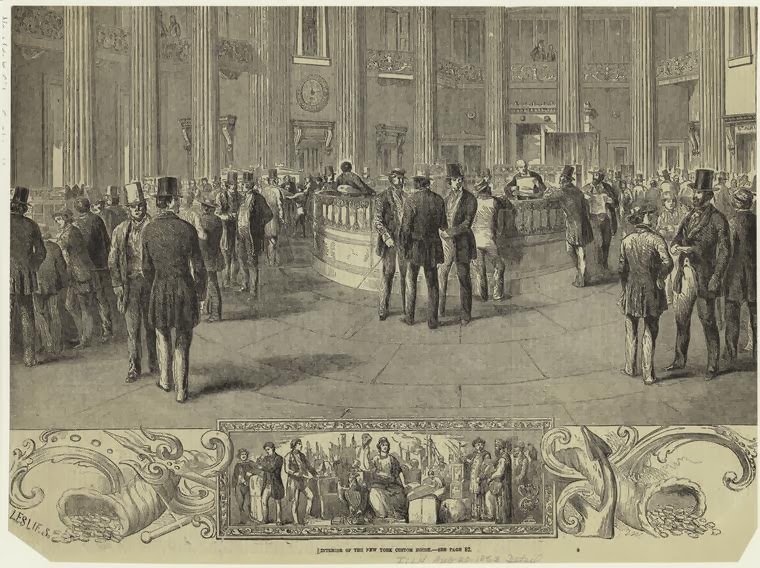
Below: The interior of the New York Custom House, 1853

All images courtesy New York Public Library

After its publication in 1853, Northup’s account would be available for sale in certain New York bookstores for several years.  But keep in mind New York’s divided loyalties to the South; it would not have been a universally popular read here in the city.

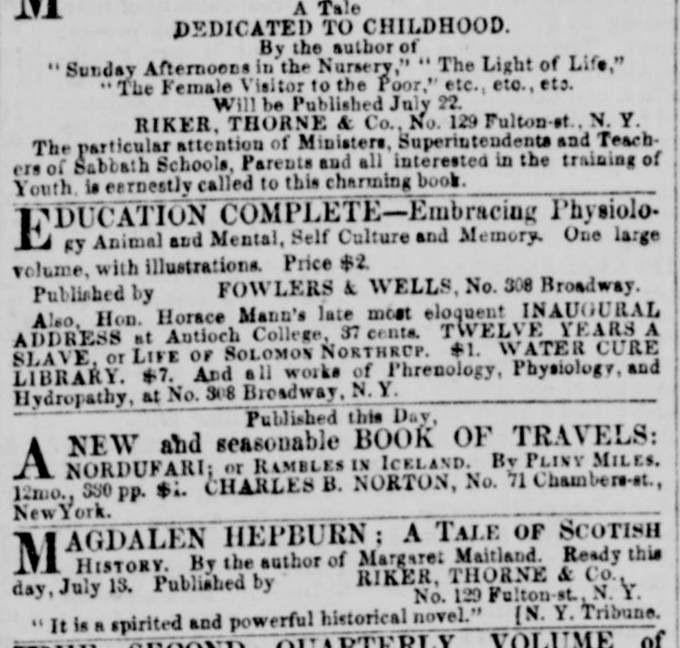
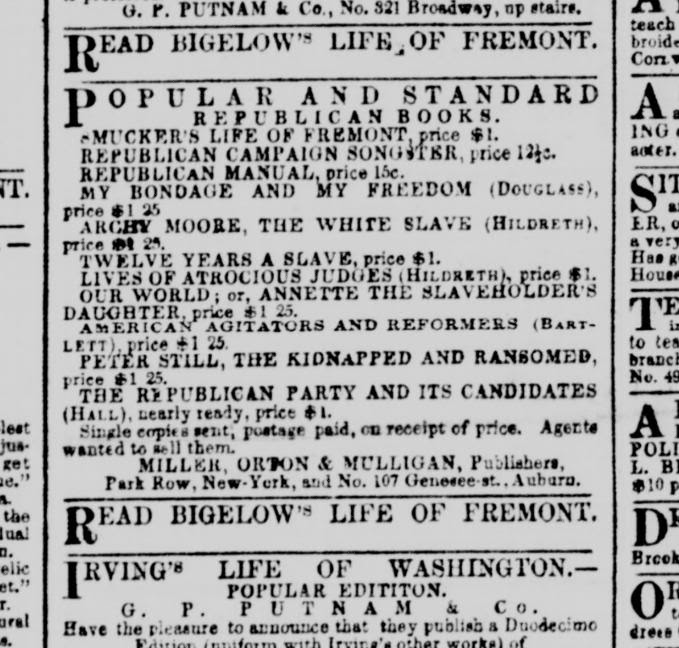
Below: the book for sale in 1854 at a bookstore at 308 Broadway, and in 1856, at a Park Row bookseller, both ads from the New York Daily Tribune