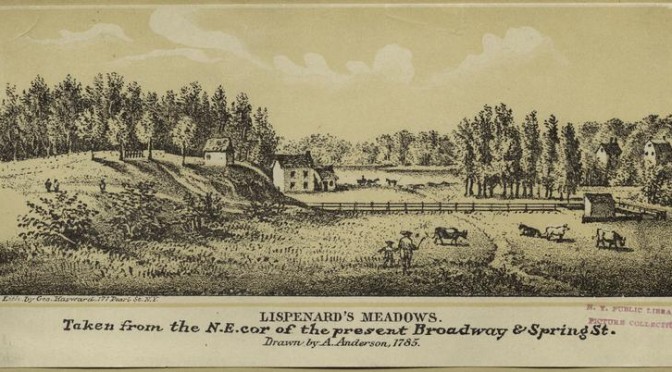
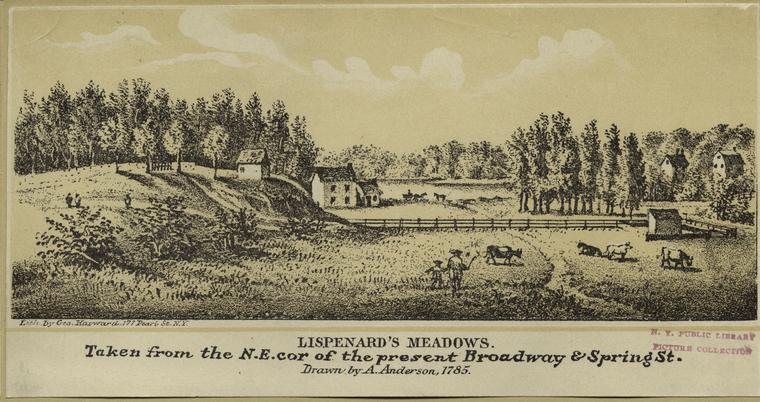
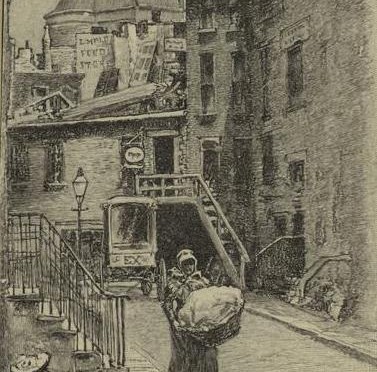
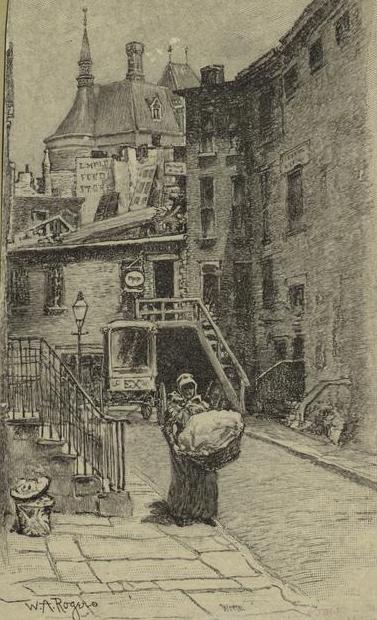
Spring Street and Broadway in 1785, 30 years before the events of the article below. Illustration courtesy NYPL digital images
While researchingthe Gracie Mansion podcast, I found mention of a street gang by the name of the Spring Street Fencibles, or simply, the Spring Streeters. Obviously, the streets of New York have been crawling with gang activity since the 19th century. But what makes this shadowy gang particularly interesting to me is the date of their only documented crime — 1825, making them one of the earliest mentioned organized gangs in the press. Their foul indiscretion? The murder of a well-known city merchant, an event that may have greatly affected the namesake of Gracie Mansion, Archibald Gracie — depending on which source you believe.
It is not known whether the Spring Streeters were truly organized in same way as later gangs like the Roach Guards and the Dead Rabbits; nor is it clear that their members were strictly Irish-born, as they commonly were in those days. In prior histories, they are loosely clumped with another group called the Grand Streeters. Spring Street runs parallel a couple blocks north of Grand Street, and it’s possible the two gangs were rivals or even one and the same gang.
The only crime by the the Spring Street Fencibles that I could find on record is the horrible slaying that occurred the early morning of June 3, 1825. The young drunken rowdies accosted a private carriage at Broadway and Art Street (or today’s Astor Place). A group of gentlemen accompanying the carriage uptown confronted the gang, and a ‘scuffle’ ensued. One of the gentlemen, one Mr. Lambert, was punched in the stomach and later died of his injuries. The gang members were rounded up and carted off to prison.
The confusion as to the victim’s name underscores one of the problems I often find in researching the early days of New York, when newspapers were not as concerned with exacting and factual detail. One key source, on the history of Gracie Mansion, clearly lists the victim as David Lambert, an associate of Gracie’s who put up the family in one of his townhouses when they fell on hard times. Other sources, however, list the victim’s name as Henry Lambert, of which nothing is known.
An old merchants guide of New York clearly links David as the victim of the crime, “up by Sailors Snug Harbor (near where Tenth Street is now).” The original land for Sailors Snug Harbor sat where today’s Washington Square Park is, which would have been just west of the reported violence. (Snug Harbor would move to its present location in Staten Island in 1833.)
Whatever the identity of the unfortunate man who died 185 years ago in the area of Astor Place, his demise also marked the end for this sorry group of thugs, locked up in prison for either seven or ten years — again, depending on which source you trust*.
Had this group of ruffians come along before 1807, they might have been known as the Brannon Street Fencibles, for that was the original name of Spring Street. The road was named for a Mr. Brannon the keeper of a “noted public house and a beautifully-laid-out garden,” situated nearby an actual spring of water. After 1807, the name switched to Spring Street.
*For the podcast, I clearly went with it being David.
FRIDAY NIGHT FEVERTo get you in the mood for the weekend, every other Friday we’ll be featuring an old New York nightlife haunt, from the dance halls of 19th Century Bowery, to the massive warehouse clubs of the mid-1990s. Past entries can be found here.
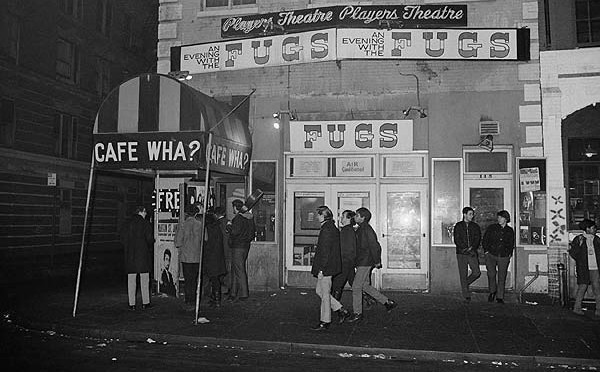
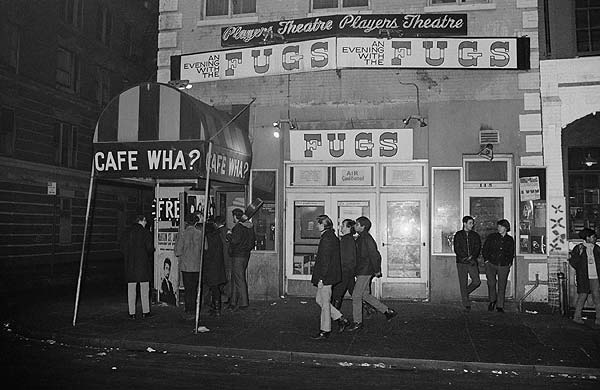
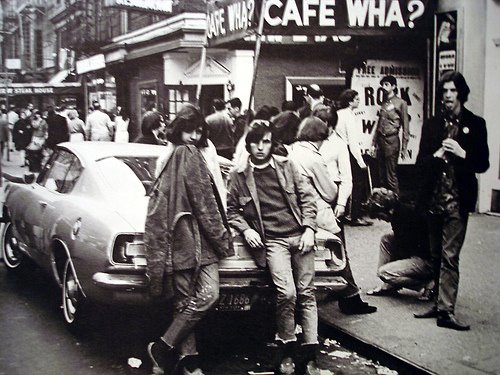
LOCATIONCafe Wha? 115 Macdougal St, at Minetta Lane
Occasionally, the usual types actually did pack into Cafe Wha? — the intellectuals, the progressive, heavy-lidded types. Some of them actually were true beatniks — Sartre, cigarettes and turtlenecks — although most were just regular college students, some hippie precursors mixed among them, or uptowners who were looking to see these so-called beatniks in their natural habitat. They all filtered into this plain, dark room on Macdougal Street, where revolutions were hatched nightly from a guitar or a harmonica.
Cafe Wha?, at 115 MacDougal Street, helped create and then outlived New York’s pre-Vietnam War folk era, providing a stage for performers who would literally make music history.
Wha? was one in a string of Village ‘baskethouses’ as they were sometimes called, small music venues where a small wicker basket would be passed around for tips during performances. The music acts didn’t get paid much; there were dozons of aspiring Woody Guthries in the Village, much of the talent interchangable. Performers would traipse up and down the street, playing several times in different places, sometimes on the street.
Many would stumble into Cafe Wha?’s unassuming, sometimes dingy doorway. The club was owned by Manny Roth, who would open here in the late 1950s. He would own a few nightclubs and lounges over time, including another folk venue Cock ‘N Bull (later to become The Bitter End).
Roth’s lineage would create a different source of musical inspiration in the form of his nephew David Lee Roth, to become the flamboyant frontman of Van Halen. Young David would frequently accompany Manny into the club and would often be left with whatever singer happened to be performing at the time (including, a few times, with Richie Havens.) Little David, destined for tight pants, never stood a chance.
Many of folk’s most talented stars played the small Wha? stage, entertaining both bohemian and uptown audiences eager for new talent. Hilly Kristal, later the owner of New York’s most influential rock club CBGBs, was a burgeoning folk singer who frequently performed here. “Those were fun years, the beatnik era,” he said.
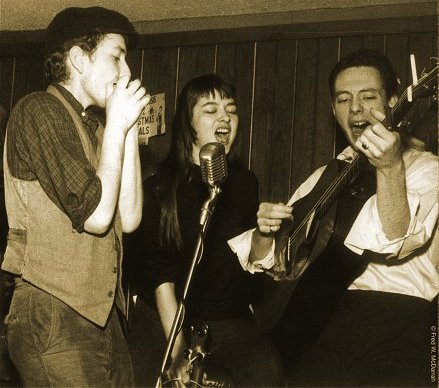
But the kernal of Wha?’s reputation lay with a wan, undistinguished looking boy named Bob Dylan. As the story goes, Cafe Wha? was the very first venue Dylan ever played in New York City, arriving there on his very first day in town on January 24, 1961. He auditioned for Roth, who hired Dylan to play behind one of Roth’s stars Fred Neil, a folkster who would later write songs for Harry Nilsson.
Dylan would only perform as a solo artist at Cafe Wha? only in the afternoons and would perform for free. He would play for bigger audiences at night, but only as backup for Neil.
“I worked for Manny all afternoons, from twelve to eight,” Dylan recalls. “There was constantly something happening on stage. You never really did get popular there, ’cause people never knew who you were….It was just a nonstop flow of people, usually they were tourists who were looking for beatniks in the Village.”
Below: Dylan with Neil and singer Karen Dalton
According to a biography by Bob Spitz, the odd, gangly Dylan instantly set himself apart. “That voice! Nobody had ever heard anything like it before….Bob had perfected the tonsilly scranch, a dry, throaty tenor ‘with all the husk and bark left on the notes’, which, if you weren’t actually looking at him, sounded like a middle-age hillbilly with emphysema.”
Certainly he was perceived by some as a parody of a folk singer: raggy clothing, offbeat and sincere. He would eventually distinguish himself as a solo star at other venues — most notably over at Gerde’s Folk City, a venue which would launch him to fame.
But in February 1961, he was just second-fiddle to Neil, who wasn’t the only notable headliner on the Wha? stage. Noel Stookey had a successful stand-up routine at the club long before he took the stage name Paul which fit nicely between the names Peter and Mary. However the performer that interests me most was another folk singer who would more lucratively abandon music altogether — Lou Gossett Jr. As in Officer and a Gentleman Lou Gossett Jr., quite a talented and well-known folk musician in the early 1960s.
Like a handful of other Village music spots, Cafe Wha? helped create the soundtrack for New York counterculture, enriched the Village’s rich reputation for the different. By the mid-60s, Wha? would diversify its musical acts. For instance, a New York Times article from 1965 a ‘Beatles backlash’ emanating from the Cafe What basement in the form of ‘modern blues’.
At the suggestion of Richie Havens (who also got his start at Wha?), a young guitar player Jimi Hendrix auditioned for Roth and got a three-month gig here in the summer of 1966, performing with a group called the Blue Flames. Hendrix and the Flames performed funkified covers of popular songs, certainly the most dynamic house band one can possibly imagine. Curiously, Hendrix and Dylan, the two great stars of Wha?, met only once, and it was at another Village bar, Kettle of Fish.
Around this time another rock band The Castiles would frequently perform here. The group would dissolve after a couple years, and its lead singer, Bruce Springsteen, would continue his slow climb to fame.
Roth would continue to operate the club for two more decades, presenting a host of entertainers from comedians like Lenny Bruce and Richard Pryor to definitely-not-folk-acts like Kool and the Gang.
Roth sold Cafe Wha? in 1988 but would go on to own other performance venues like the West End Gate. Cafe Wha? is open today under different management, hosting a roster of rock and soul artists. I’m not sure however if they still pass about a basket.
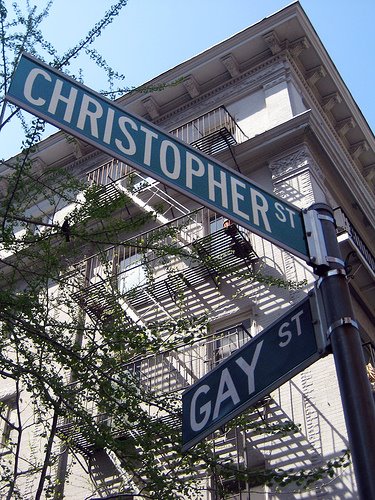
There are few streets in Manhattan as beautiful as Gay Street, that preciously bent path in the West Village that’s been the home to speakeasies and scandals, linking Waverly Place to Christopher Street. Due to its proximity to Christopher, the original heart of New York’s gay and lesbian culture, it also happens to have one of the most photographed street signs in the city.
A huge misnomer hangs over the origin of the name of Gay Street. To expose it, we need to go all the way back to Wouter Van Twiller’s ownership of the land back in the Dutch days. Van Twiller reportedly had his very own brewery which stood on this very spot. Much later on, as part of the estate of Sir Peter Warren, a morgue allegedly stood here as well. Beer and death — the roots of Gay Street! (See yesterday’s story on the early origins of Greenwich Village and our prior article on the history of Christopher Street).
Before 1800, nearby Christopher Street was called Skinner Road and the area still retained a bit of its rural quality. But things were getting fancy over on Waverly Place.
(W.A. Rogers illustration above from 1894, courtesy NYPL)
The eastern stretch of Waverly is actually the northern border of Washington Square. Because of that, it became the hottest street in town when the city built Washington Square in 1826, and the street became lined with attractive Greek Revival Style homes. The birth of Fifth Avenue culture really starts here, home to the city’s wealthiest well-to-do families of the 1820s.
Their horses had to go somewhere! And so Gay Street was built, not as a place for homes, but as a row of horse stables for people living on Waverly Place and other elegant homes nearby. Soon however, with the natural growth of the city, some of the stables made way for lower-income housing, mostly for servants employed in some of these same elegant homes. And in most cases these were African-American servants.
That’s where the misnomer about the name comes in. The city officially named it Gay Street in 1833, although it may have been called by that name unofficially many years previous. It’s popularly supposed that it was named after Sidney Howard Gay, a vanguard Boston abolitionist and editor of the National Anti-Slavery Standard newspaper. However, Gay was born in 1818 and came to prominence in the 1840s and 50s. Although I’m sure he was an outstanding teenager, no way did the city of New York name a street after a 15-year-old boy.
Theories abound as to the real identity of Gay. The closest anybody’s come to the truth is a classified ad found in a newspaper from 1775, an advertisement placed by one R. Gay who was selling off his gelding (i.e castrated male horse). The evidence is circumstantial, but does link to Gay Street’s early history as a stable alley.
The first homes were built in as early as 1827 and the street was officially widened for residential use in the 1830s. Many black residents stayed on the street and it became a home for black musicians. Given the general artistic bent of Greenwich Village as a whole, it’s no surprise then that Gay Street developed into a mini-haven for artists and writers by the turn of the 20th century.
With its secretive, arched appearance and deceivingly quiet demeanor, Gay Street also became a natural location for speakeasies during the 20s, including one at 12 Gay Street called the Pirate’s Den, and possibly another on the corner called the Flower Pot.
That address 12 Gay Street has a hoppin’ history. The building was owned by mayor Jimmy Walker, who kept his girlfriend Betty Compton here. A bit later on, the creator of Howdy Doody, Frank Parris, built his famous puppet in the basement here. It’s even, reportedly haunted by an entity called the Gay Street Phantom.
Author Ruth McKenney lived in nearly 14 Gay Street best known for the book My Sister Eileen. Eileen, who was living with Ruth, died in 1940 in a car accident with her husband, writer Nathaniel West, a few days before a stage production of My Sister Eileen was to open.
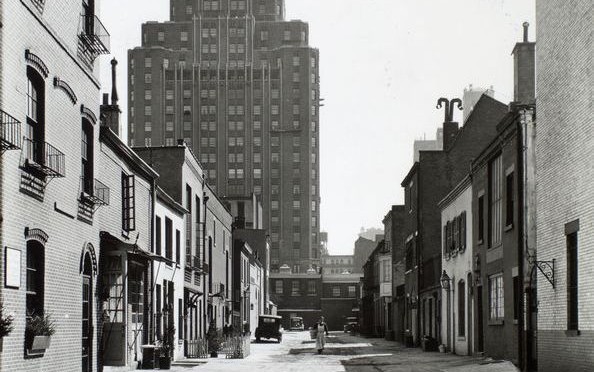
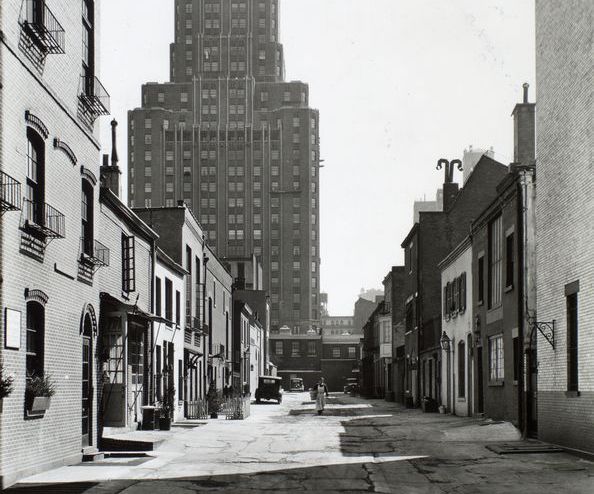
Above: Macdougal Alley in 1936. The plantation home of New Amsterdam director-general Wouter van Twiller would have been situated very close to where this picture was taken. (Find the alley here.)
NAME THAT NEIGHBORHOOD Some New York neighborhoods are simply named for their location on a map (East Village, Midtown). Others are given prefabricated designations (SoHo, DUMBO). But a few retain names that link them intimately with their pasts. Other entries in this series can be found here.
Greenwich Village has been the heart of New York’s cultural identity for over 150 years, the birthplace of city bohemia, where the upper and lower classes collide, the iconic outsider neighborhood between midtown and the financial district. It’s been New York’s home for counter-culture, gay liberation, artistic inspiration, musical innovation and groundbreaking urban renewal. No surprise that it was named New York’s very first historic district in 1969, even as some of its greatest moments were yet to come.
But why do we even call it Greenwich in the first place? And was it ever really a village at all?
I should preface this early history of the Village by saying that the information below deals with Greenwich Village and its sub-neighborhoods the West Village and part of the Meatpacking District (which actually extends farther north). Despite its name, the East Village is actually considered separate from Greenwich, being part of the Lower East Side.
In the wild days of early Dutch occupation of Manhattan, the area of today’s Village district lay 2-3 miles outside the border of the primary Dutch settlement New Amsterdam. That border is approximately Wall Street today.
Imagine the distance between it and 14th street (the generally accepted northern border of Greenwich Village today) as a gradually populated area of hills, swamps and streams, with only a few dirt pathways cutting through the meadows and dense foliage to lands beyond. There was enough farm land to go around if you were brave enough to settle outside city walls, with fears of attacks from both Indians and other Europeans.
To get an idea of how green Greenwich Village used to be, head on over to the Mannahatta Project and type in any Village street name (start with Washington Square North or any listed below).
Back in the day the shore of Manhattan’s west side approximately lay along today’s Greenwich Street; the rest is landfill from later in Manhattan’s development. Near the location of Gansevoort Street today (yes, the Meatpacking District) lay the first village within the Greenwich Village area — the Lenape Indian settlement Sapokanikan or ‘land where the tobacoo grows’. Sapokanikan was essentially a trading settlement and docking point for many traveling native American tribes.
The Dutch took the tobacco reference to heart. The second director-general of New Amsterdam, the colorful Wouter Van Twiller, built a large tobacco plantation ostensibly for the Dutch West India Company but, Wouter being Wouter, mostly for his own personal profit. Wouter’s plantation occupied most of the West Village; his own home sat on plantation ground, at around the area of 8th Street and MacDougal Street. The plantation would be named for the old indian village and also referred to as Bossen Bouwerie (‘farm in the woods’).
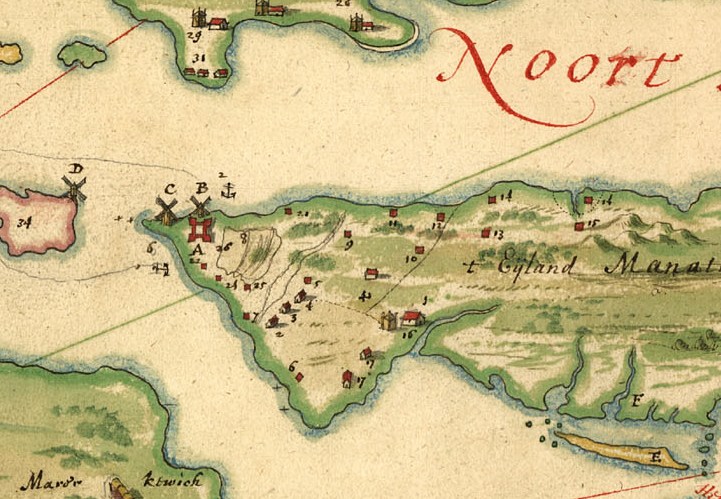
Below: Wouter Van Twiller’s farm is marked #10 on this map by Johannes Vingboons from 1639, one of the earlier attempts at mapping the territory of New Netherland
Van Twiller was later dispatched from his duties as the colony’s leader, but he did grant some of his slaves certain freedoms to build their own smaller farms, defenseless along the Minetta Brook (a vital stream that coursed through the region) and on the southern part of today’s Washington Square Park.
Meanwhile, other Dutch companymen came to the region, including two brothers, Jacob and Paulus Van Der Grift, who moved from old Amsterdam to New Amsterdam in 1644 and into this lush area, “co-patroons” of an area that would become known as Nortwyck or Noortwyck (simply ‘north of the city’).
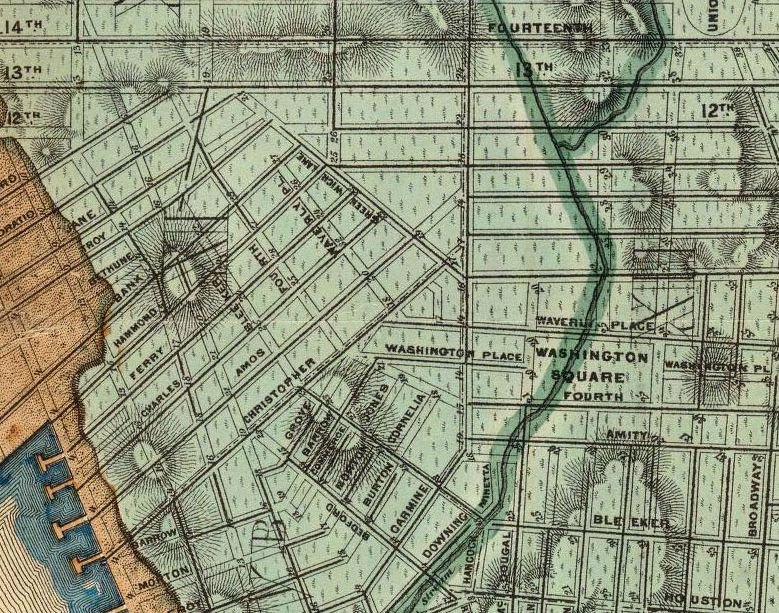
Below: from an 1874 water map designed by Egbert L. Viele, you can see the old Minetta Brook, which formerly cut through the Village district
By 1664, the year of the British takeover of the island, the area was essentially dominated by a handful of landowners who had carefully cultivated their property, but had not changed the general properties of the land.
With the British came further development, as well-to-do English citizens began scooping up property for their own lavish mansions. In fact, it became quite fashionable for the wealthier of British citizens, too refined to deal with the growing and quite crowded New York, to situate just outside the city. This is where Nortwyck, a loose assemblage of farms, becomes Greenwich, the domain of idyllic estates.
I’ve seen reference to the name change as reflecting that of the London district of Greenwich, a very tony British resort in the 17th century. But the name may have first come to the area long before the British elites did. According to the New Netherland Institute, a settler in the 1670s, Yellis Mandeville, bought a farm here and named it for an old Long Island Dutch town — Greenwijck, or Pine District.
Once the wealthy British came, it must have seemed natural to simply alter the name to Greenwich, with all the upper-class and luxurious implications that came with it.
There were several principal British landowners of the Village area at this time. One of note, Thomas Randall, would own the area around Washington Square; later, his son Robert Richard Randall would bequeath the area to the city as a respite for retired sea captains and sailors. The city, seeing far greater value to this land for residential townhouses, instead moved the sailors rest home to the northern shore of Staten Island and called it Snug Harbor.
Another, Captain Thomas Clarke, would retire on property further north and call his mansion Chelsea, also named for a London neighborhood (or specifically for a hospital there).
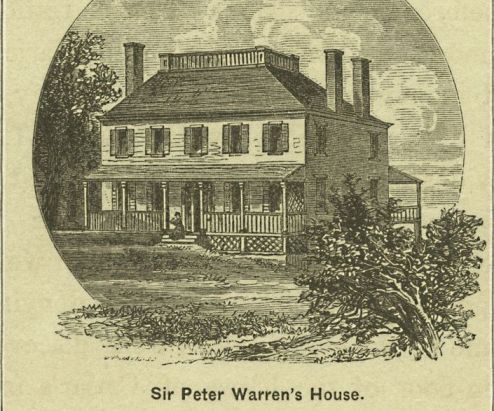
Below: an engraving of the Greenwich Village home of Peter Warren (courtesy NYPL)
But the real forebear of the Village was an Irishman. Sir Peter Warren, vice-admiral of the British Navy and commander of its New York fleet, who amassed a vast land tract here in the 1740s, almost the entire ‘Green Village’. Warren was without a doubt one of New York’s more renown British citizens. Like the great old New York families that would influence society in the 19th century, Warren’s presence assured that other British clans would race to buy up countryside to create Manhattan’s first suburbia.
By the 18th century, these massive lots would be divvied up and sold off, as demand grew from New Yorkers fleeing the city to escape disease and overcrowding. In these years before far-thinking city planning, the Greenwich lots were haphazardly divided with unorganized streets. This urban chaos was preserved by the 1811 Commissioners Plan, which chopped most of the entire island into uniform blocks but left the Village in its uniquely confounding geography.
Still today, after so many years of living in the city, I routinely get lost there.
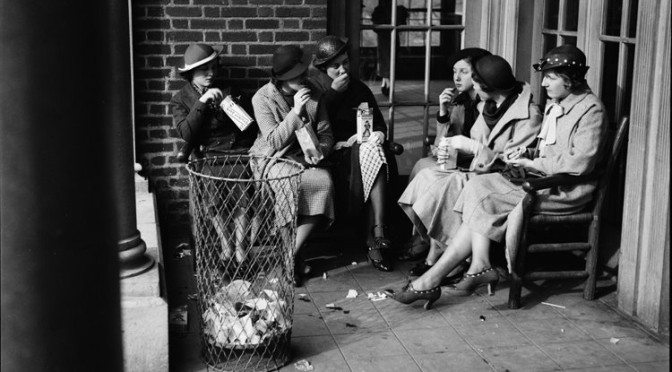
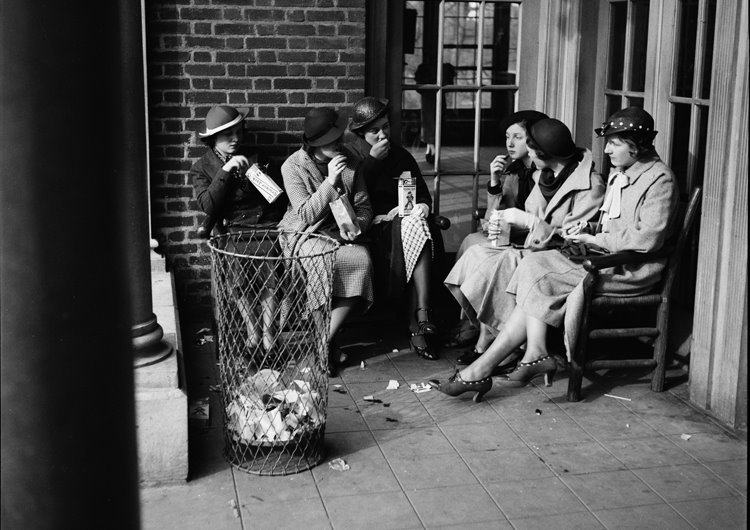
ABOVE: These are the ladies who lunch in Prospect Park 1935
We talk about a lot of white men on the Bowery Boys podcast. When
discussing the mainstream history of the city, it’s pretty unavoidable.
Men had the money, the power, the influence. Not to mention most of the
corruption, the crime, the scandal.
So as Women’s History Month draws to a close (okay, I’m one day
late), I thought I’d make a very opinionated list of the 25 women who
made the biggest impact to the city of New York, at least as seen by
this humble blogger and podcaster.
There have obviously been many, many New York-based women whose
contributions changed the country and the world. There are your
feminists (Elizabeth Cady Stanton), your activists (Ella Baker), your
entrepreneurs (Estee Lauder), your tastemakers (Diana Vreeland) and your
entertainers (Madonna).
But these 25 helped shape
the actual city itself. The neighborhoods, populations and culture, to
be sure. But most importantly, they each effected perceptions of the
city, both to its residents and outward to the world. (Thus, for
instance, you’ll note my heavy emphasis on preservationists.)
This is not an ultimate list. I obviously do not know the impact of
every woman who ever lived in New York City. Many women communicated
power through wealth and property; I don’t have the social register from
every season and cannot gauge the influence of every bold-faced name.
These are just 25 that have crossed my path since we started the Bowery
Boys that I just wanted to celebrate today.
I’ve obviously missed out on a few, so if you have a
particular favorite that’s missing, please put them in the comment
section. At the bottom I have a list of ladies that made my personal
honorable mention. So here we go!
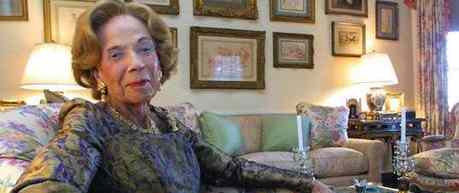
Brooke Astor (1902-2007)
Philanthropist
She was the last of the socialites, as they say. The queen of old
American money, for 105 years Astor ruled as the last official vestige
of one of Manhattan’s wealthiest families, setting a standard for
philanthropy and sadly leaving an uncertain legacy amid scandals
involving her heirs.
Power is the ability to do good things for others. — Brooke Astor
Alice Austen (1866-1952)
Photographer
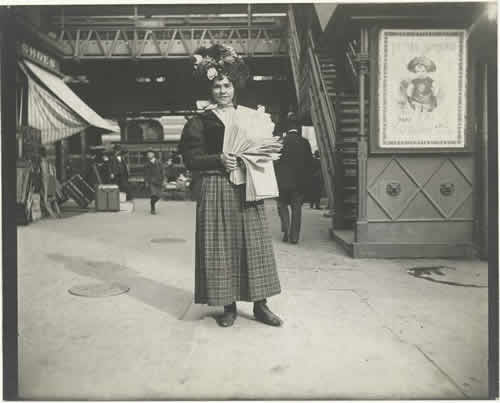
Few saw the Gilded Age city quite as Austen did, a Staten Island
native who captured the beauties of New York, the horrors of Ellis
Island’s quarantine station, and the wonders of the world, but probably
took her best shots from her own backyard at Clear Comfort, in Rosebank,
SI.
Below: a girl newsie in 1896, as captured by Austen
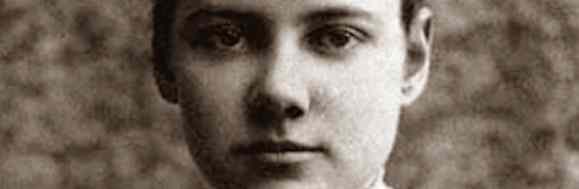
Nellie Bly (1864-1922)
Journalist
Her bravery, curiosity and outright nerve made her a writer of
international fame, one of the first investigative journalists in the
age of sensational journalism. But the story that put her on the map was
her undercover expose at Blackwell’s Island, ripping open the abuses of
New York’s island of untouchables, changing how the city thought about
both the infirm and the incarcerated.
Could I pass a week in the insane ward at Blackwell’s Island? I said I could and I would. And I did. — Nellie Bly
Margaret Corbin (1751-1800)
Revolutionary
Things were so precarious in the fall of 1776, the dawn of the
Revolution, that anyone who lived in New York might have turned the tide
of war. Many women did their part to battle the British, from Mary Lindlay Murray the to the mysterious Agent 355,
a shrouded spy among the British. But Corbin is notable not just for
particular bravery but for sacrifice; she continued to lob cannon fire
at the British from Fort Washington in today’s Washington Heights well
after her husband was killed. Corbin herself was later imprisoned by the
British. Today the street along Fort Tryon is named for her.
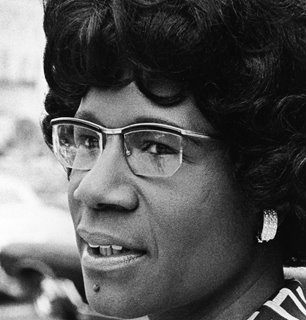
Shirley Chisholm (1924-2005)
Trailblazer
The pride of Bedford-Stuyvesant maneuvering through the precarious world
of New York politics, Chisholm won a seat in the state legislature in
1964 but always dreamed to represent Brooklyn on a national level, in
the U.S House of Representatives. She finally got her wish to represent
her neighborhood when redistricting lines were finally redrawn — finally
allowing a black candidate to run (and win) in a largely black
community — and won her seat in Congress in 1968. Shirley never
disguised her ties to her beloved Brooklyn neighborhood, even as a
candidate for president of the United States.
That I am a national figure because I
was the first person in 192 years to be at once a congressman, black
and a woman proves, I think, that our society is not yet either just or
free. — Shirley Chisholm
Margot Gayle (1908-2008)
Community leader
Gayle, who died last year at age 100, loved her Victorian
architecture and in particular cast-iron, the antiquated style of
downtown New York warehouses. Seeing destruction imminent, she decided
to save what she considered one of the city’s most neglected treasures.
Forming her first community group in the 1950s to save castle-like
Jefferson Market Courthouse, Gayle galvanized a grassroots architecture
movement.
There might be no SoHo without Gayle; as a campaigner, her work in
saving and preserving this heretofore disregarded part of downtown led
to one of Manhattan’s great neighborhood success stories. The SoHo Cast
Iron Historic District exists due to her efforts. And, more importantly,
her work became a template for how future neighborhoods could be
revitalized. (Read her Times obituary here).
Emma Goldman (1869-1940)
Agitator
Probably the most influential anarchist in American history, Goldman
promoted the rights of workers and upended the role of women in New York
politics. The Russian-born activist made her name on the streets of
Manhattan, stirring Bohemia and workers alike, butting heads with most
of New York’s leading industrialists in the process.
Her views are controversial, often horrifying by today’s standards.
(She once ordered the assassination of Henry Clay Frick, for instance.)
But her powers as an orator and rabble-rouser are unquestioned; her
stirring words in Union Square (pictured above) during the panic of 1893
gave voice to the outrage of the city.
If voting changed anything, they’d make it illegal. — Emma Goldman
Leona Helmsley (1920-2007)
Magnate
Leona and her husband Harry reigned over a vast Manhattan empire of
highrises and hotels, permanently changing Park and Madison avenues,
helping transform New York into a city of condominiums. Her status as
the Queen of Mean also formed the modern caricature of overbearing and
out of touch wealthy elite. Later convicted of tax evasion, Leona died
in 2007 a laughing-stock. (That Suzanne Pleshette film
didn’t help either.) But her reach extends through many of the city’s
great iconic buildings, including the Empire State Building, which she
and her husband once managed.
Billie Holiday (1915-1959)
Chanteuse
Of all the thousands of entertainers that have left their imprint on the
city, Holiday’s is the one that makes the deepest impact. Her entire
story — her birth, her rise to fame, her indiscretions and her tragic
death — takes place in New York. Her greatest performances electrified
and reshaped race assumptions in 1930s and 40s nightlife; legendary
nights at places like Cafe Society ensured entertainment would no longer
be strictly a black and white affair. Her performance style is emulated
nightly in cabarets and clubs throughout the city.
Ada Louise Huxtable (1921-2013)
Critic
She is the best known woman in twentieth century architecture, and she
isn’t even an architect. It’s hard to analyze the history of any
building without first checking in with Ada to see what she has to say
on the matter. Her writing is elegant, persnickety, direct and
affectionate to architectural aesthetic as a whole, and New York City in
specific. As a writer for the New York Times and Wall Street Journal,
Huxtable directed New York’s architecture scene from behind her desk,
excoriating designers for excess or dullness, praising beauty when it
improved the city’s legendary skyline.
I like old buildings that are
intriguing and quite wonderful but don’t make the history books. What
you discover is there’s a little group of people that have been admiring
them quietly by themselves all along. — Ada Louise Huxtable
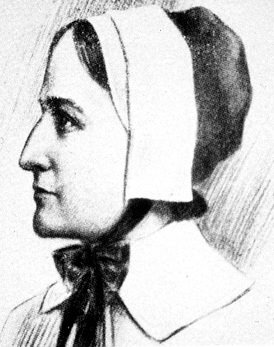
Anne Hutchinson (1591-1643)
Dissident
Escaping persecution in both Puritan Massachusetts and Rhode Island,
religious revolutionary Hutchinson and her followers settled in today’s
area of the North Bronx in the 1640s, one of two significant female
leaders in the early New York area. Although she was later murdered —
Lenapes wiped out the settlement in 1643, a victim of New Amsterdam’s
persistent conflicts with native tribes — she still leaves her mark
today. The Hutchinson River and Parkway both carry her name.
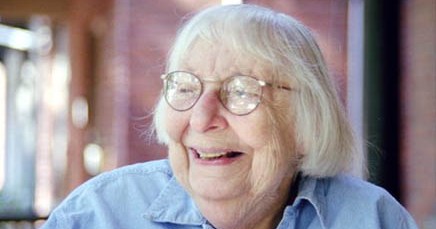
Jane Jacobs (1916-2006)
Community defender
Her theories on urban life have benefited many North American cities,
but it was her struggles to save neighborhoods from Robert Moses and
the rise of car culture in the 1950s and 60s that make her most
influential today. The entirely of downtown Manhattan has her to thank
for fighting back — and ultimately defeating — Moses’ destructive Lower
Manhattan Expressway proposal. The theories described in her classic
“Death and Life of Great American Cities” were shaped from observing
life from her window at 555 Hudson Street in the West Village.
Cities have the capability of providing something for
everybody, only because, and only when, they are created by everybody. —
Jane Jacobs
Lady Deborah Moody (1586 – 1659)
Founder
The British-born Moody, like Hutchinson, took to the unknown when
persecuted for her religious beliefs. With the permission of William
Kieft, the “dangerous” Moody set up the colony of Gravesend in 1645,
becoming the first female founder of an American colony. Gravesend was
one of the original towns of Brooklyn and is still the name of a south
Brooklyn neighborhood today.
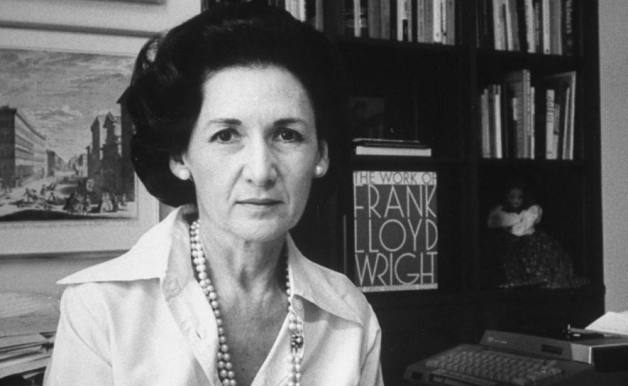
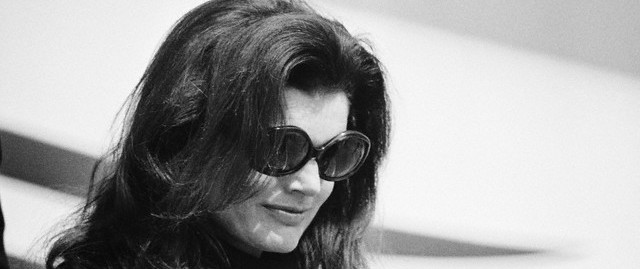
Jackie Kennedy Onassis (1929-1994)
Icon
Settling in New York after the deaths of two husbands, Onassis was
the biggest bold-faced name in the city, famously suffering the
intrusive effects of paparazzi. However she used her headline grabbing
name wisely as a member of the Municipal Art Society, helping defend
Grand Central Station, Columbus Circle and Staten Island’s Snug Harbor
from modification or outright destruction. The Central Parks reservoir
is named in her honor, and MAS gives out a yearly Jackie Kennedy Onassis
Medal to noteworthy New Yorkers. (Margot Gayle received it in 1997.)
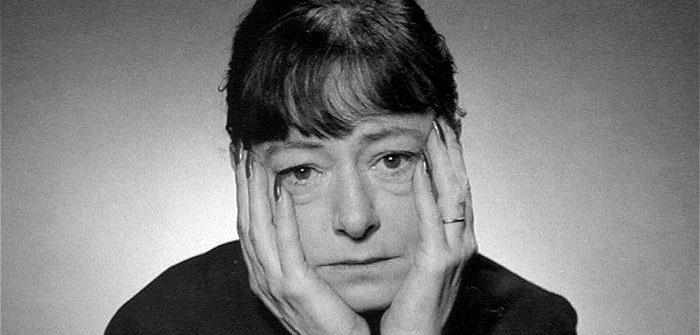
Dorothy Parker (1893-1967)
Wit
As doyenne of the Algonquin Round Table, Parker had the sharpest
friends in town in the 1920s. Her droll charm helped create the
archetype of New York caustic intellectualism, something Woody Allen,
Fran Lebowitz and an entire culture of New Yorker readers can well
recognize.
I’d rather have a bottle in front of me, than a frontal lobotomy. — Dorothy Parker
Abby Aldrich Rockefeller (1874-1948)
Collector
She could very well have stayed in the sidelines with the other
spouses of multi-millionares. But Abby’s tastes and passions for modern
art led her to an astonishing collection she kept on an upper floor of
her townhouse, away from her husband J.D. Rockefeller Jr., who didn’t
much care for those odd little pictures. Years later, that townhouse
would give way to Abby’s pet project, the Museum of Modern Art, one of
the most influential galleries for 20th Century art. Her memory is kept
alive at the museum with the Abby Aldrich Rockefeller Sculpture Garden.
Emily Warren Roebling (1843-1903)
Bridge Builder
Construction on the Brooklyn Bridge had barely begun when her husband
and master engineer Washington Roebling came down with crippling
symptoms of the Bends. Emily at first operated only as his eyes and
ears, but soon grew into the role of leading the completion of New
York’s first great bridge. Ceremonially, she was the first person to
cross it.
Eleanor Roosevelt (1884-1962)
World Leader
One of the most powerful American women to have ever lived was a New
Yorker through and through. Her aristocratic name may have opened doors
for her early on, but her compassion and ingenuity would soon set her
apart, first as a social worker in Manhattan slums, then as the spouse
of a governor and president. She returned to New York after FDR’s death
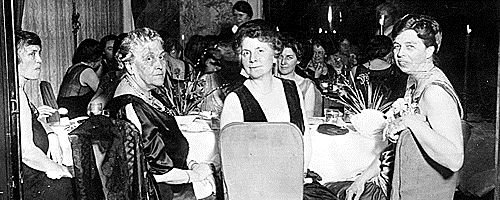
to become a U.S. delegate to the United Nations. (Above: Eleanor with
New York City society women.)
Beautiful young people are accidents of nature, but beautiful old people are works of art. — Eleanor Roosevelt
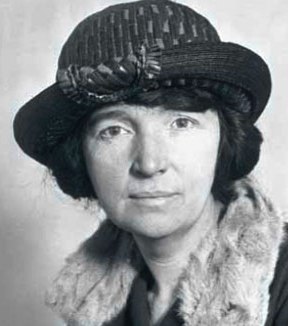
Margaret Sanger (1879-1966)
Rebel
Her influence in the fields of reproduction and birth control would
eventually go global, but all nurse Sanger really wanted to do at first
was help out women in the Lower East Side. From her work in the slums,
Sanger believed radical action was neccessary to control the rising tide
of pregnancies, leading to larger families and greater poverty. In 1917
she opened New York’s first birth control clinic in Brooklyn and was
promptly thrown in jail. Ten years later, her innovations as an educator
in birth control — she’s the mother of Planned Parenthood! — would
catch on worldwide.
During these years in New York more and more my calls began
to come from the Lower East Side, as though I were being magnetically
drawn there by some force outside my control. — Margaret Sanger
Verna Small (1916-2008)
Preservationist
Small is the queen of Greenwich Village, a fiesty, often poetic
community leader who provoked residents into lobbying for historic
preservation. She organized or led one group after another, all in an
effort to preserve the remainder of the Village before developers could
sweep it away. She succeeded. Today it seem impossible that the Village
was ever in that much danger at all. Her many years with the Landmarks
Committee in the 1980s assured the rest of the city would benefit from
her tender loving care.
The attitude of the Village was ‘We’ve got to catch up with Brooklyn Heights!’ —Verna Small
Dorothy Schiff (1903-1989)
Publisher
Native New Yorker Schiff owned the New York Post from 1939 to the 1970s
and eventually shaped its editorial policy as publisher, the first New
York woman to do so. Her stinging, left-leaning views and saavy tastes
for great writers turned the once tame newspaper into the city’s most
successful tabloid. Her sudden decision to sell it to Rupert Murdoch in
1976 led to the decidedly different, far more sensational Post we’re
familiar with today.
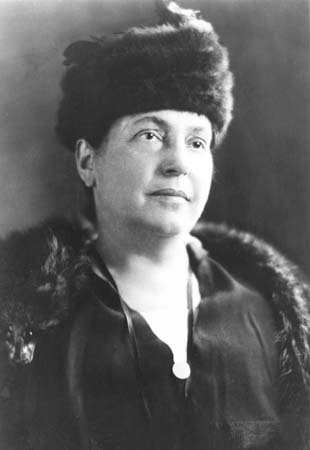
Lillian Wald (1867–1940)
Social Worker
The patron saint of the Lower East Side, devoted nurse Wald helped
found both the Henry Street Settlement and the National Association for
the Advancement of Colored People. Her desire to help New York’s poorest
consumed her life. Her altruism helped save thousands of lives and set
the standard modern social work and nursing. If that isn’t enough, her
innovations from everything to playgrounds and school lunch programs
redefined New York education and reverberated throughout America. Um,
what have you done today to help your fellow man?
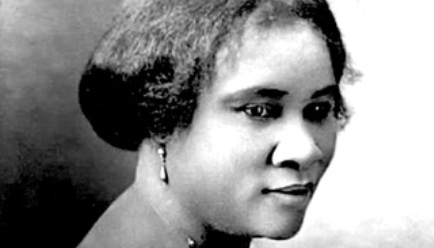
Madam C.J. Walker (1867-1919)
Tycoon
Walker, a self-made entrepreneur and hair product queen, was the
richest and most powerful woman in Harlem, during the neighborhood’s
pivotal years of growth in the dawn of the Harlem Renaissance. (Some
sources say she was America’s first female millionaire.) She shattered
color and gender barriers, employing hundreds of other black women and
eventually leaving most of her wealth to notable African-American
organizations. Walker’s daughter A’Lelia was a patron of many great
writers of the Renaissance era.
And her name? She was once married to a man named Charles Joseph Walker; he left in 1910, but the C.J. — and the Madam — stayed.
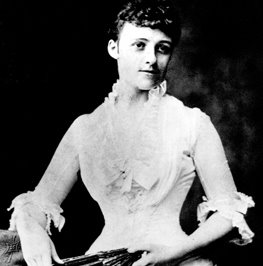
Edith Wharton (1862-1937)
Observer
Wharton was a woman of ultimate privledge in Gilded Age New York but
had an uncanny ability to describe it. Our notions of what upper-crust
New York was at this time are shaped in part by her novels and short
stories. Her creations Lily Bart and the Countess Ellen Olenska are
still the best evidence we have of the absurdities and restraints
upper-class New York.
A New York divorce is in itself a diploma of virtue. — Edith Wharton
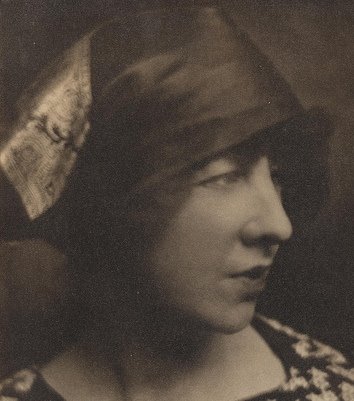
Gertrude Vanderbilt Whitney (1875-1942)
Patron
Gertrude, the daughter of Cornelius Vanderbilt, turned her powerful
name, untold wealth and fascinations with art into an endeavor that
would benefit the general public, eventually founding the Whitney Museum
in 1931. But unlike Abby Rockefeller, Whitney actually was an artist
herself, a sculptrress and a habitue of turn-of-the-century Greenwich
Village bohemia. Gertrude’s daughter Flora Payne Whitney would go on to
head her mother’s museum for decades.
And 25 more that I didn’t get to write about this time around:
ABOVE: These are the ladies who lunch in Prospect Park 1935
We talk about a lot of white men on the Bowery Boys podcast. When discussing the mainstream history of the city, it’s pretty unavoidable. Men had the money, the power, the influence. Not to mention most of the corruption, the crime, the scandal.
So as Women’s History Month draws to a close (okay, I’m one day late), I thought I’d make a very opinionated list of the 25 women who made the biggest impact to the city of New York, at least as seen by this humble blogger and podcaster.
There have obviously been many, many New York-based women whose contributions changed the country and the world. There are your feminists (Elizabeth Cady Stanton), your activists (Ella Baker), your entrepreneurs (Estee Lauder), your tastemakers (Diana Vreeland) and your entertainers (Madonna).
But these 25 helped shape the actual city itself. The neighborhoods, populations and culture, to be sure. But most importantly, they each effected perceptions of the city, both to its residents and outward to the world. (Thus, for instance, you’ll note my heavy emphasis on preservationists.)
This is not an ultimate list. I obviously do not know the impact of every woman who ever lived in New York City. Many women communicated power through wealth and property; I don’t have the social register from every season and cannot gauge the influence of every bold-faced name. These are just 25 that have crossed my path since we started the Bowery Boys that I just wanted to celebrate today.
I’ve obviously missed out on a few, so if you have a particular favorite that’s missing, please put them in the comment section. At the bottom I have a list of ladies that made my personal honorable mention. So here we go!
Brooke Astor (1902-2007)
Philanthropist
She was the last of the socialites, as they say. The queen of old American money, for 105 years Astor ruled as the last official vestige of one of Manhattan’s wealthiest families, setting a standard for philanthropy and sadly leaving an uncertain legacy amid scandals involving her heirs.
Power is the ability to do good things for others. — Brooke Astor
Alice Austen (1866-1952)
Photographer
Few saw the Gilded Age city quite as Austen did, a Staten Island native who captured the beauties of New York, the horrors of Ellis Island’s quarantine station, and the wonders of the world, but probably took her best shots from her own backyard at Clear Comfort, in Rosebank, SI.
Below: a girl newsie in 1896, as captured by Austen
Nellie Bly (1864-1922)
Journalist
Her bravery, curiosity and outright nerve made her a writer of international fame, one of the first investigative journalists in the age of sensational journalism. But the story that put her on the map was her undercover expose at Blackwell’s Island, ripping open the abuses of New York’s island of untouchables, changing how the city thought about both the infirm and the incarcerated.
Could I pass a week in the insane ward at Blackwell’s Island? I said I could and I would. And I did. — Nellie Bly
Margaret Corbin (1751-1800)
Revolutionary
Things were so precarious in the fall of 1776, the dawn of the Revolution, that anyone who lived in New York might have turned the tide of war. Many women did their part to battle the British, from Mary Lindlay Murray the to the mysterious Agent 355, a shrouded spy among the British. But Corbin is notable not just for particular bravery but for sacrifice; she continued to lob cannon fire at the British from Fort Washington in today’s Washington Heights well after her husband was killed. Corbin herself was later imprisoned by the British. Today the street along Fort Tryon is named for her.
Shirley Chisholm (1924-2005)
Trailblazer
The pride of Bedford-Stuyvesant maneuvering through the precarious world of New York politics, Chisholm won a seat in the state legislature in 1964 but always dreamed to represent Brooklyn on a national level, in the U.S House of Representatives. She finally got her wish to represent her neighborhood when redistricting lines were finally redrawn — finally allowing a black candidate to run (and win) in a largely black community — and won her seat in Congress in 1968. Shirley never disguised her ties to her beloved Brooklyn neighborhood, even as a candidate for president of the United States.
That I am a national figure because I was the first person in 192 years to be at once a congressman, black and a woman proves, I think, that our society is not yet either just or free. — Shirley Chisholm
Margot Gayle (1908-2008)
Community leader
Gayle, who died last year at age 100, loved her Victorian architecture and in particular cast-iron, the antiquated style of downtown New York warehouses. Seeing destruction imminent, she decided to save what she considered one of the city’s most neglected treasures. Forming her first community group in the 1950s to save castle-like Jefferson Market Courthouse, Gayle galvanized a grassroots architecture movement.
There might be no SoHo without Gayle; as a campaigner, her work in saving and preserving this heretofore disregarded part of downtown led to one of Manhattan’s great neighborhood success stories. The SoHo Cast Iron Historic District exists due to her efforts. And, more importantly, her work became a template for how future neighborhoods could be revitalized. (Read her Times obituary here).
Emma Goldman (1869-1940)
Agitator
Probably the most influential anarchist in American history, Goldman promoted the rights of workers and upended the role of women in New York politics. The Russian-born activist made her name on the streets of Manhattan, stirring Bohemia and workers alike, butting heads with most of New York’s leading industrialists in the process.
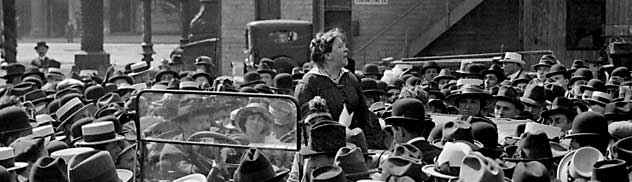
Her views are controversial, often horrifying by today’s standards. (She once ordered the assassination of Henry Clay Frick, for instance.) But her powers as an orator and rabble-rouser are unquestioned; her stirring words in Union Square (pictured above) during the panic of 1893 gave voice to the outrage of the city.
If voting changed anything, they’d make it illegal. — Emma Goldman
Leona Helmsley (1920-2007)
Magnate
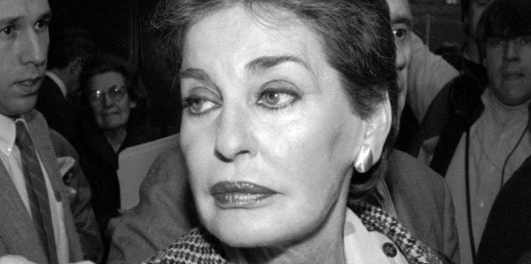
Leona and her husband Harry reigned over a vast Manhattan empire of highrises and hotels, permanently changing Park and Madison avenues, helping transform New York into a city of condominiums. Her status as the Queen of Mean also formed the modern caricature of overbearing and out of touch wealthy elite. Later convicted of tax evasion, Leona died in 2007 a laughing-stock. (That Suzanne Pleshette film didn’t help either.) But her reach extends through many of the city’s great iconic buildings, including the Empire State Building, which she and her husband once managed.
Billie Holiday (1915-1959)
Chanteuse
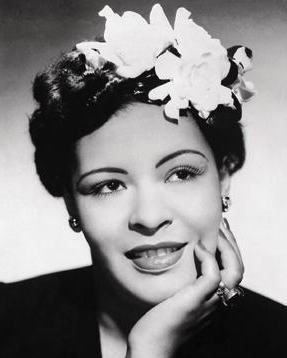
Of all the thousands of entertainers that have left their imprint on the city, Holiday’s is the one that makes the deepest impact. Her entire story — her birth, her rise to fame, her indiscretions and her tragic death — takes place in New York. Her greatest performances electrified and reshaped race assumptions in 1930s and 40s nightlife; legendary nights at places like Cafe Society ensured entertainment would no longer be strictly a black and white affair. Her performance style is emulated nightly in cabarets and clubs throughout the city.
Ada Louise Huxtable (1921-2013)
Critic
She is the best known woman in twentieth century architecture, and she isn’t even an architect. It’s hard to analyze the history of any building without first checking in with Ada to see what she has to say on the matter. Her writing is elegant, persnickety, direct and affectionate to architectural aesthetic as a whole, and New York City in specific. As a writer for the New York Times and Wall Street Journal, Huxtable directed New York’s architecture scene from behind her desk, excoriating designers for excess or dullness, praising beauty when it improved the city’s legendary skyline.
I like old buildings that are intriguing and quite wonderful but don’t make the history books. What you discover is there’s a little group of people that have been admiring them quietly by themselves all along. — Ada Louise Huxtable
Anne Hutchinson (1591-1643)
Dissident
Escaping persecution in both Puritan Massachusetts and Rhode Island, religious revolutionary Hutchinson and her followers settled in today’s area of the North Bronx in the 1640s, one of two significant female leaders in the early New York area. Although she was later murdered — Lenapes wiped out the settlement in 1643, a victim of New Amsterdam’s persistent conflicts with native tribes — she still leaves her mark today. The Hutchinson River and Parkway both carry her name.
Jane Jacobs (1916-2006)
Community defender
Her theories on urban life have benefited many North American cities, but it was her struggles to save neighborhoods from Robert Moses and the rise of car culture in the 1950s and 60s that make her most influential today. The entirely of downtown Manhattan has her to thank for fighting back — and ultimately defeating — Moses’ destructive Lower Manhattan Expressway proposal. The theories described in her classic “Death and Life of Great American Cities” were shaped from observing life from her window at 555 Hudson Street in the West Village.
Cities have the capability of providing something for everybody, only because, and only when, they are created by everybody. — Jane Jacobs
Lady Deborah Moody (1586 – 1659)
Founder
The British-born Moody, like Hutchinson, took to the unknown when persecuted for her religious beliefs. With the permission of William Kieft, the “dangerous” Moody set up the colony of Gravesend in 1645, becoming the first female founder of an American colony. Gravesend was one of the original towns of Brooklyn and is still the name of a south Brooklyn neighborhood today.
Jackie Kennedy Onassis (1929-1994)
Icon
Settling in New York after the deaths of two husbands, Onassis was the biggest bold-faced name in the city, famously suffering the intrusive effects of paparazzi. However she used her headline grabbing name wisely as a member of the Municipal Art Society, helping defend Grand Central Station, Columbus Circle and Staten Island’s Snug Harbor from modification or outright destruction. The Central Parks reservoir is named in her honor, and MAS gives out a yearly Jackie Kennedy Onassis Medal to noteworthy New Yorkers. (Margot Gayle received it in 1997.)
Dorothy Parker (1893-1967)
Wit
As doyenne of the Algonquin Round Table, Parker had the sharpest friends in town in the 1920s. Her droll charm helped create the archetype of New York caustic intellectualism, something Woody Allen, Fran Lebowitz and an entire culture of New Yorker readers can well recognize.
I’d rather have a bottle in front of me, than a frontal lobotomy. — Dorothy Parker
Abby Aldrich Rockefeller (1874-1948)
Collector
She could very well have stayed in the sidelines with the other spouses of multi-millionares. But Abby’s tastes and passions for modern art led her to an astonishing collection she kept on an upper floor of her townhouse, away from her husband J.D. Rockefeller Jr., who didn’t much care for those odd little pictures. Years later, that townhouse would give way to Abby’s pet project, the Museum of Modern Art, one of the most influential galleries for 20th Century art. Her memory is kept alive at the museum with the Abby Aldrich Rockefeller Sculpture Garden.
Emily Warren Roebling (1843-1903)
Bridge Builder
Construction on the Brooklyn Bridge had barely begun when her husband and master engineer Washington Roebling came down with crippling symptoms of the Bends. Emily at first operated only as his eyes and ears, but soon grew into the role of leading the completion of New York’s first great bridge. Ceremonially, she was the first person to cross it.
Eleanor Roosevelt (1884-1962)
World Leader
One of the most powerful American women to have ever lived was a New Yorker through and through. Her aristocratic name may have opened doors for her early on, but her compassion and ingenuity would soon set her apart, first as a social worker in Manhattan slums, then as the spouse of a governor and president. She returned to New York after FDR’s death to become a U.S. delegate to the United Nations. (Above: Eleanor with New York City society women.)
Beautiful young people are accidents of nature, but beautiful old people are works of art. — Eleanor Roosevelt
Margaret Sanger (1879-1966)
Rebel
Her influence in the fields of reproduction and birth control would eventually go global, but all nurse Sanger really wanted to do at first was help out women in the Lower East Side. From her work in the slums, Sanger believed radical action was neccessary to control the rising tide of pregnancies, leading to larger families and greater poverty. In 1917 she opened New York’s first birth control clinic in Brooklyn and was promptly thrown in jail. Ten years later, her innovations as an educator in birth control — she’s the mother of Planned Parenthood! — would catch on worldwide.
During these years in New York more and more my calls began to come from the Lower East Side, as though I were being magnetically drawn there by some force outside my control. — Margaret Sanger
Verna Small (1916-2008)
Preservationist
Small is the queen of Greenwich Village, a fiesty, often poetic community leader who provoked residents into lobbying for historic preservation. She organized or led one group after another, all in an effort to preserve the remainder of the Village before developers could sweep it away. She succeeded. Today it seem impossible that the Village was ever in that much danger at all. Her many years with the Landmarks Committee in the 1980s assured the rest of the city would benefit from her tender loving care.
The attitude of the Village was ‘We’ve got to catch up with Brooklyn Heights!’ —Verna Small
Dorothy Schiff (1903-1989)
Publisher
Native New Yorker Schiff owned the New York Post from 1939 to the 1970s and eventually shaped its editorial policy as publisher, the first New York woman to do so. Her stinging, left-leaning views and saavy tastes for great writers turned the once tame newspaper into the city’s most successful tabloid. Her sudden decision to sell it to Rupert Murdoch in 1976 led to the decidedly different, far more sensational Post we’re familiar with today.
Lillian Wald (1867–1940)
Social Worker
The patron saint of the Lower East Side, devoted nurse Wald helped found both the Henry Street Settlement and the National Association for the Advancement of Colored People. Her desire to help New York’s poorest consumed her life. Her altruism helped save thousands of lives and set the standard modern social work and nursing. If that isn’t enough, her innovations from everything to playgrounds and school lunch programs redefined New York education and reverberated throughout America. Um, what have you done today to help your fellow man?
Madam C.J. Walker (1867-1919)
Tycoon
Walker, a self-made entrepreneur and hair product queen, was the richest and most powerful woman in Harlem, during the neighborhood’s pivotal years of growth in the dawn of the Harlem Renaissance. (Some sources say she was America’s first female millionaire.) She shattered color and gender barriers, employing hundreds of other black women and eventually leaving most of her wealth to notable African-American organizations. Walker’s daughter A’Lelia was a patron of many great writers of the Renaissance era.
And her name? She was once married to a man named Charles Joseph Walker; he left in 1910, but the C.J. — and the Madam — stayed.
Edith Wharton (1862-1937)
Observer
Wharton was a woman of ultimate privledge in Gilded Age New York but had an uncanny ability to describe it. Our notions of what upper-crust New York was at this time are shaped in part by her novels and short stories. Her creations Lily Bart and the Countess Ellen Olenska are still the best evidence we have of the absurdities and restraints upper-class New York.
A New York divorce is in itself a diploma of virtue. — Edith Wharton
Gertrude Vanderbilt Whitney (1875-1942)
Patron
Gertrude, the daughter of Cornelius Vanderbilt, turned her powerful name, untold wealth and fascinations with art into an endeavor that would benefit the general public, eventually founding the Whitney Museum in 1931. But unlike Abby Rockefeller, Whitney actually was an artist herself, a sculptrress and a habitue of turn-of-the-century Greenwich Village bohemia. Gertrude’s daughter Flora Payne Whitney would go on to head her mother’s museum for decades.
And 25 more that I didn’t get to write about this time around:
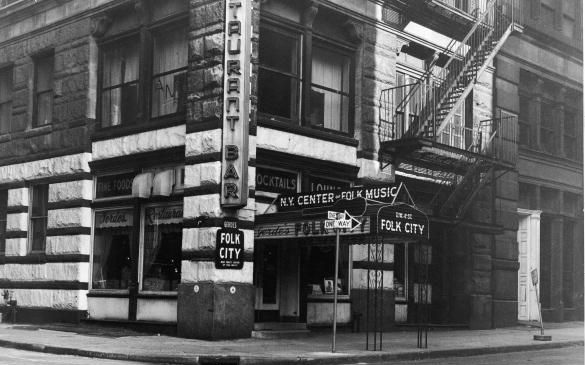
ABOVE: Gerde’s in its original location, circa 1960
To get you in the mood for the weekend, every Friday we’ll be celebrating ‘FRIDAY NIGHT FEVER’, featuring an old New York nightlife haunt, from the dance halls of 19th Century Bowery, to the massive warehouse spaces of the mid-90s. Past entries can be found HERE.
Few streets in Greenwich Village have more history than West 4th Street, which runs along the south side of Washington Square and became a lifeline to New York’s art and bohemian culture. The teahouse Mad Hatter at 150 W. 4th was an influential artist destination, later becoming the lesbian bar Pony Stable Inn, where Allan Ginsberg first met close friend and fellow beat poet Gregory Corso. (It’s now the ever reliable Washington Square Diner. I heartily endorse their grilled cheese.)
The Whitney Studio Club sprang up at 147 W. 4th in 1910, presenting Edward Hopper’s first exhibit of his works, and later became the bohemian hangout Ristorante Volare. The Washington Square Methodist Church, a lovely Romanesque church built in 1860, on 135 W. 4th gave refuge to draft dodgers in the 60s and was appropriately called ‘Peace Church’.
But for music lovers, no place on this tiny street is more revered than the former location (now gone) of Gerde’s Folk City.
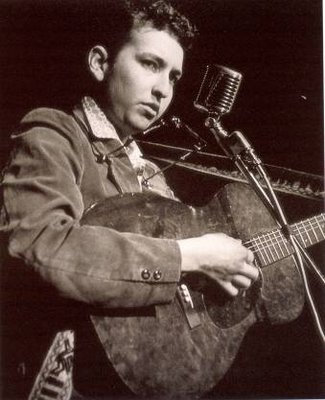
You won’t find the strange but fabulous Todd Haynes film ‘I’m Not There’ anywhere near West Fourth Street — it was filmed in Canada! — but this is the street where Bob Dylan, the artist, was born. The mousey Minnesota born musician arrived in 1961 and quickly caught the attentions of Village habitues. Although he performed in various places up and down the street — including the NYU Loeb Student Center (once at 61 W. 4th) — Gerde’s was his best known haunt.
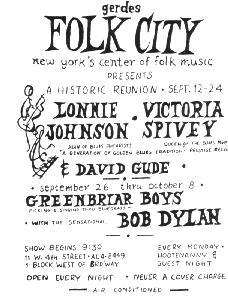
Owner Mike Porco took over Gerde’s restaurant in 1952 and refashioned it as a coffeehouse with Monday night ‘hootenannys’, amateur nights for local musicians. However, when you’re in Greenwich Village, the talent pool at Gerde’s would be filled with future stars — Judy Collins, Arlo Guthrie, Tom Paxton. And of course, Dylan, who approached Porco and began performing in April of 1961, on a ticket that night with John Lee Hooker.
He threw the clientele for a loop. Dylan Roots quotes Happy Traum as saying, “I remember watching him, thinking ‘This boy’s unbelievable, he’s going to become another Woody Guthrie.’ I also thought that he would not become known outside of Greenwich Village.”
He would become quite known, however, thanks to a performance at Gerde’s in September that was reviewed by the New York Times critic Robert Sheldon. Dylan wasn’t even headlining that night; he opened that night for a bluegrass outfit the Greenbriar Boys. By October, Dylan had a record deal with Columbia Records. Sheldon, by the way, would go on to write ‘No Direction Home’, a biography on Dylan that would be made into Martin Scorcese film.
Gerde’s would move in 1970 to 130 West 3rd Street. Its now the home of the Village Underground, another great Village music venue.
I would suggest going on an ultimate Dylan excursion through the Village, even if you’re not really into Dylan. Go check out ‘I’m Not There’ at the Film Forum, then walk up to Fourth Street to the other addresses associated with Dylan. On top of the previously mentioned Gerde’s and Loeb Student Center, his former apartment is in 161 W. 4th and he snarfed down bagels at 168 w. 4th. New Pony has an entire map of Dylan-themed locations in downtown Manhattan!
I think we can conclude what Bob’s ‘Positively Fourth Street’ was about.
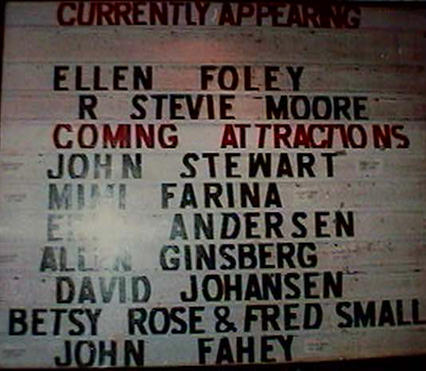
Below: from R. Stevie Moore, a billboard from latterday Gerde’s (1984) listing some of the headliners that month: