Categories
Friday Night Fever

In good company: The local significance of Obama’s inaugural quote: “Seneca Falls, and Selma, and Stonewall”

As many others today are ruminating on the symbolic and historic implications of yesterday’s presidential inaugural ceremony, allow me to dwell a little on a curious milestone of far lesser importance.

Until yesterday, no place in New York City has ever been mentioned in a presidential inaugural speech.  Not Ellis Island, not the Statue of Liberty, not Wall Street, not the World Trade Center, none of our fortresses or other towering landmarks.

In fact, New York as a city has actually been name-checked only once. (See below.)  But no individual place has ever been mentioned in what are considered to be the most memorable set of presidential speeches.

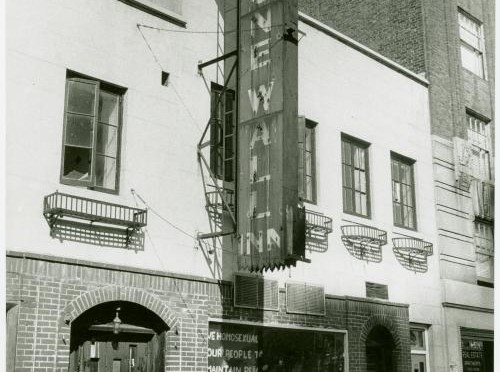
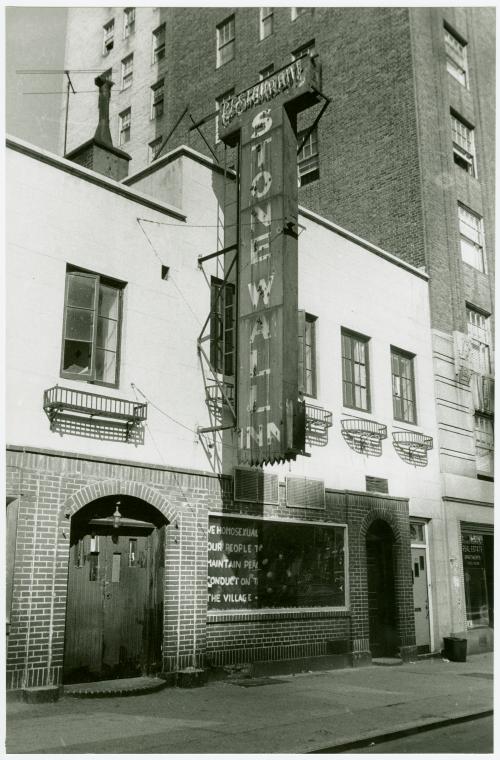
That is, until yesterday, when President Barack Obama referenced the name of a West Village gay bar — Stonewall Inn.
index

“We, the people, declare today that the most evident of truths – that all of us are created equal – is the star that guides us still; just as it guided our forebears through Seneca Falls, and Selma, and Stonewall; just as it guided all those men and women, sung and unsung, who left footprints along this great Mall, to hear a preacher say that we cannot walk alone; to hear a King proclaim that our individual freedom is inextricably bound to the freedom of every soul on Earth.”

“Seneca Falls, and Selma, and Stonewall” represent flashpoints of various American social movements.  With his mention of Stonewall — representing the Stonewall riots and subsequent street gatherings of June-July 1969, considered the birthplace of the gay-rights movement — the president has elevated the struggles of gay Americans to those of the women’s movement (the Seneca Falls Convention of 1848) and the African-American civil rights movement of the 1960s (the Selma to Montgomery marches in 1965).

The rhetorical flourish of alliteration unites these movements by the places in which they occurred.  Stonewall thus becomes shorthand for the gay rights movement.  But as it is the actual name of a bar — still very much in operation, right off Christopher Park — Stonewall Inn now holds another very special place in history.

The United Nations, of course, has been mentioned a few times, mostly in the 1940s and 50s. (Without surprise, mentions of the international body literally drop off to nothing after that.)  But all references relate only to the legislative body, not the actual place.  In fact, when it was first mentioned in 1949, by President Harry S. Truman — “We have constantly and vigorously supported the United Nations and related agencies as a means of applying democratic principles to international relations” — its headquarters in Manhattan had not even been completed.

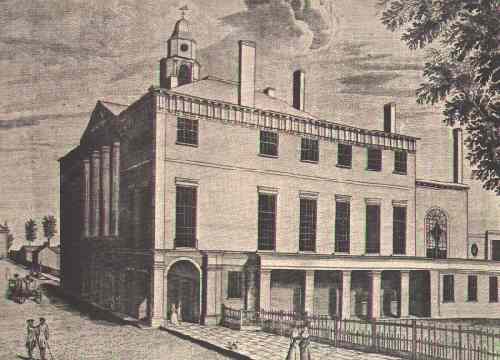
Below: Federal Hall on Wall Street, site of the first American government and the inauguration of George Washington in 1789
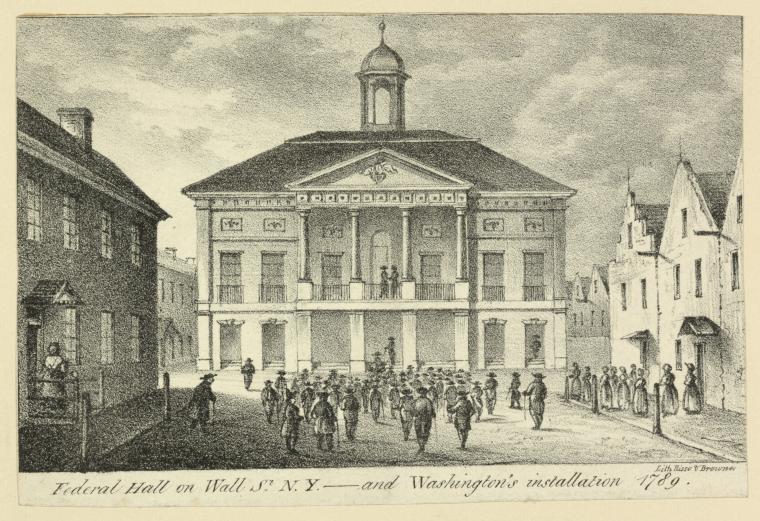
When New York has been mentioned in inaugural addresses, it’s because it was the location of the first inaugural address in April 1789, when the seat of American government was in New York.

“This occasion derives peculiar interest from the fact that the Presidential term which begins this day is the twenty-sixth under our Constitution,” Benjamin Harrison remarked in his 1889 speech.  “The first inauguration of President Washington took place in New York, where Congress was then sitting, on the 30th day of April, 1789, having been deferred by reason of delays attending the organization of the Congress and the canvass of the electoral vote.”

George H.W. Bush makes specific mention of Washington’s inauguration in 1989, which happened to be the 200th anniversary of that event. “I have just repeated word for word the oath taken by George Washington 200 years ago, and the Bible on which I placed my hand is the Bible on which he placed his.  It is right that the memory of Washington be with us today, not only because this is our Bicentennial Inauguration, but because Washington remains the Father of our Country.”

While this means very little in terms of the city’s historical stature, it means a great deal to the gay rights movement, and certainly to the bar itself. Or as Stonewall Inn owner Stacey Lentz recently said: “We’re not just a bar. We’re the Stonewall. It’s like owning Rosa Parks’s bus. We don’t own the movement, but we own the bus.”

For more information on Stonewall Inn, check out our podcast #48 The Stonewall Riots (download here or on iTunes.)  

Pics courtesy NYPL
The mysterious Central Park convent: Mount Saint Vincent

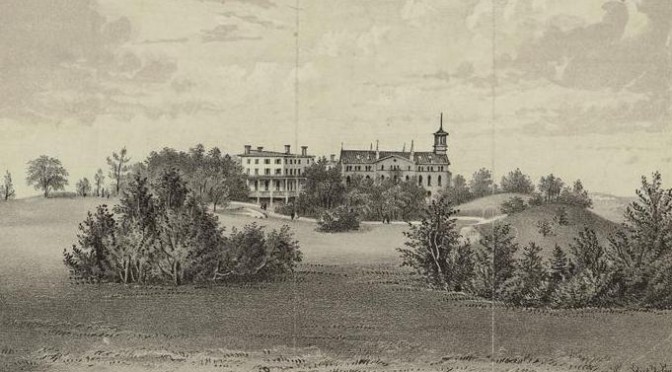
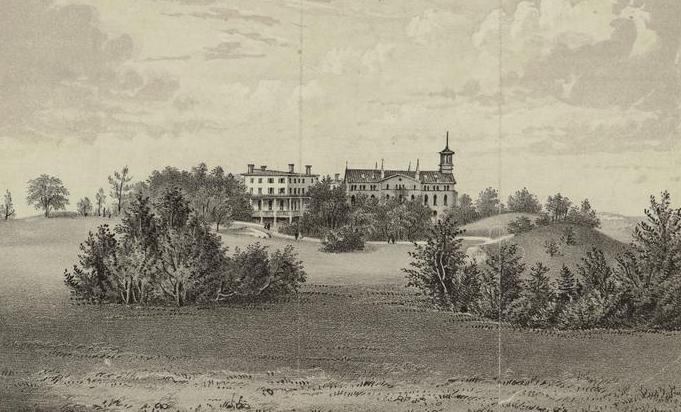
House on the hill: the stark and mysterious convent of Central Park, 1861

In tomorrow’s podcast, I’ll be spending a bit of time in 1861 and will be briefly mentioning Central Park. So I thought I’d give you a look at what it looked like then. Pictured above is a structure that once dominated the scenery — the Academy of Saint Vincent — on a hill that bore its name.

Located on the northern portion of the park, next to the charming Harlem Meer (and nearest 103rd Street), the Academy sat nestled amid a collection of hills and bluffs left over from its original topography.

A narrow passage between the hills was named McGown’s Pass after Andrew McGown, owner of a popular tavern that sat alongside here called the Black Horse Tavern**.

It was through McGown’s Pass that George Washington traveled on September 15, 1776. He and a portion of the Continental Army had escaped up to today’s Washington Heights area; when hearing that part of his army had been stopped by the British, Washington rode down the pass and led the remaining troops back up to their fortification in the Heights. He rode back through the pass again seven years later, this time as the victor.

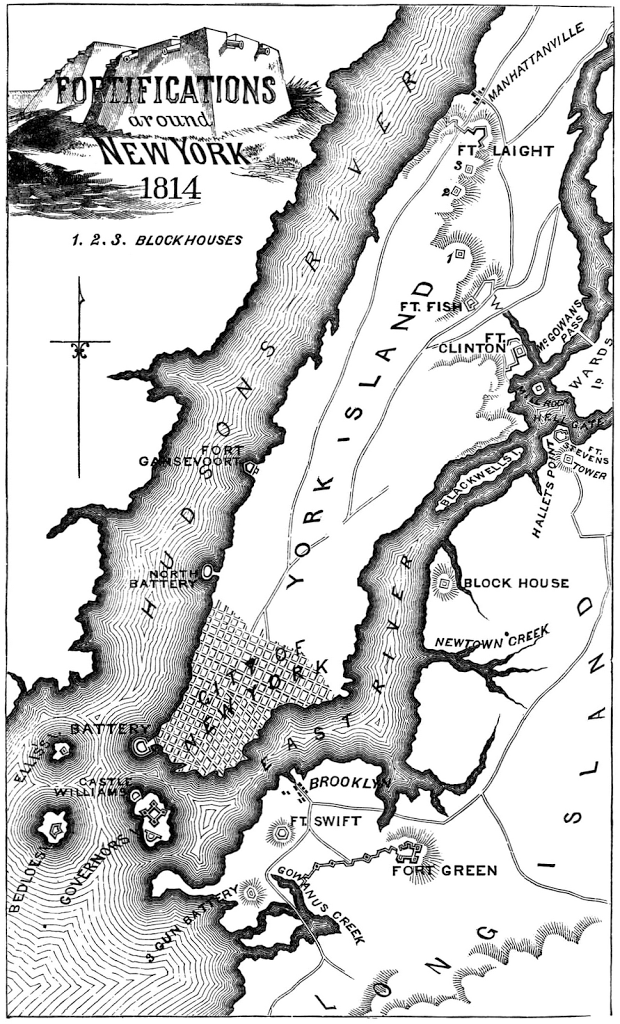
The British and their Hessian mercenaries built forts here to cut Manhattan off from the mainland. Later New Yorkers would seize upon this idea during the early days of the War of 1812. Not willing to become property of the British once again, Manhattan mobilized for any potential battles, building forts all over the island and throughout the harbor. It was here at McGown’s Pass a couple fortifications were built, including Fort Clinton (not to be confused with the fort in Battery Park, although both were named for DeWitt Clinton) and Fort Fish, named after Major Nicholas Fish, father of the New York senator Hamilton Fish.

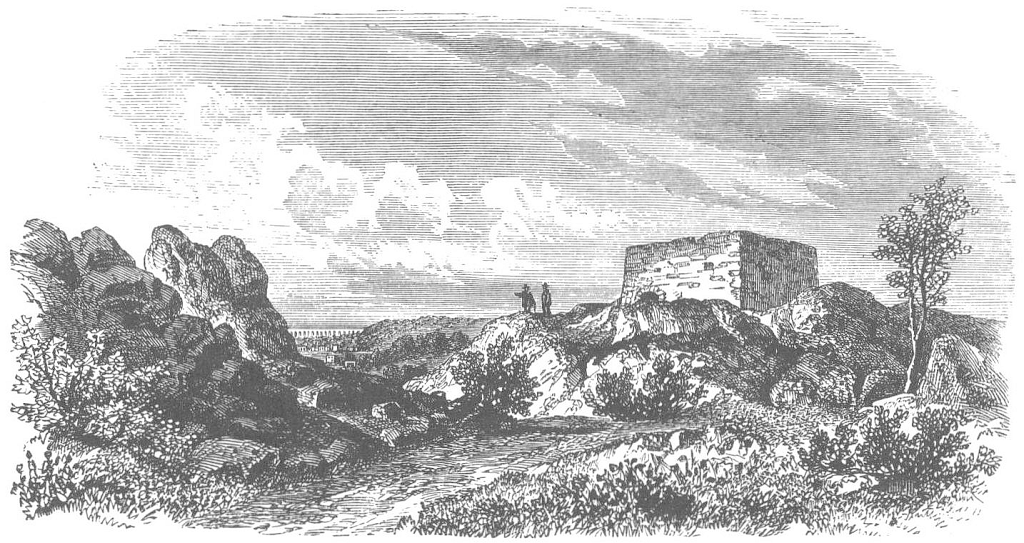
Nothing much remains of these two old forts, which were never used as the war thankfully never made its way to the city. There are, however, two remaining structures from the early days. A stone ledge overlooking the meer is all that remains of Nutter’s Battery, named after a farmer who owned the property. And nearby stands the Block House, its stone face still fairly solid, once armed with cannons and used to hold ammunition — that were, of course, never needed. The Block House was fairly intact when Frederick Law Olmstead and Calvert Vaux included it in their plans for the new park, incorporating the existing building as a ‘picturesque ruin’ covered in vines.

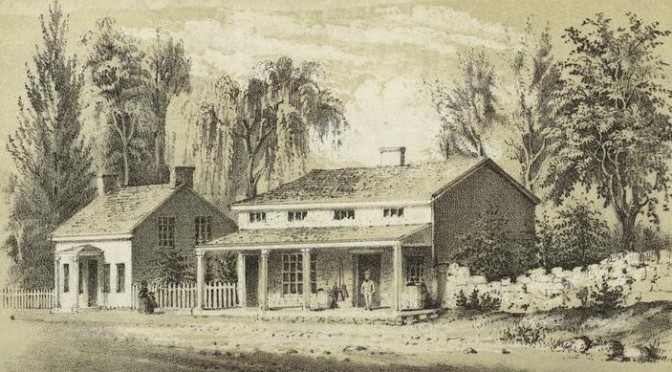
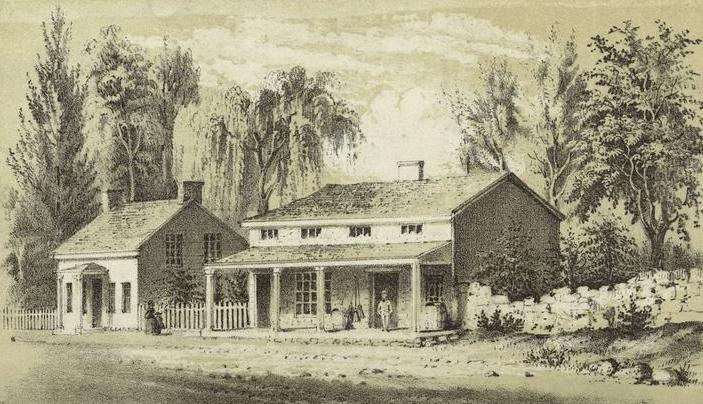
Here’s an illustration of how the Block House looked in 1860:

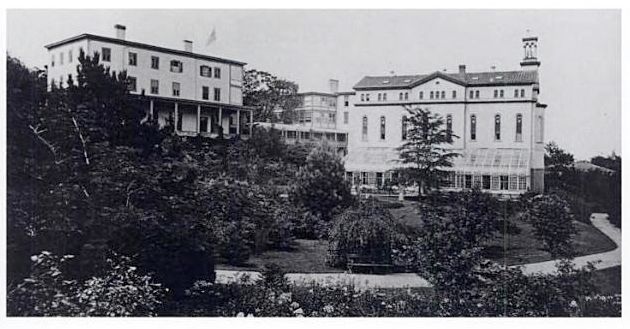
Before there was a park, however, there were nuns. In 1847 the Sisters of Charity of St. Vincent de Paul arrived at the still-bucolic region of Manhattan and opened the Academy of St. Vincent, a school and convent. The nuns left when the area was incorportated into the park, however the building remained standing and utilized for several purposes. During the Civil War, it was briefly used as a hospital; later, it was a “restaurant and hostelry,” with some certainly spectacular views for guests. The stone chapel was even refashioned as an gallery for artwork and “stuffed specimens of animals of considerable value.” Unfortunately, the structures were destroyed in a fire in 1881. (This site has some great pictures of where the convent once stood.)

Below: The buildings on the hill, circa 1863. By this time, the Catholic sisters had moved onto a new location in the Bronx (from Wikimedia)

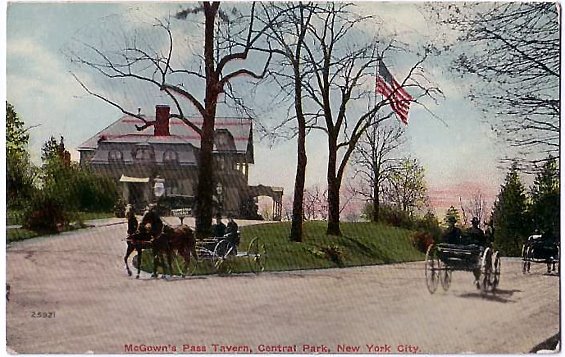
It seems, however, that the area was not through with McGown or his old tavern. Although the Black Horse Tavern had been torn down decades earlier, a two-story refreshment pavilion was constructed at this site — “heated throughout by steam and lighted with Edison’s incandescent lights” — and later renamed McGown’s Pass Tavern.

In 1895, McGown’s was strangely granted its own election district as, being inside the park, it lay outside normal district boundaries. “There were four voters in this territory last year,” declared the New York Times. “They are four men employed at McGown’s Pass Tavern.” The tavern was eventually torn down in the late 1910s.

Below: McGown’s Pass Tavern (date unknown, but possibly around the early 1910s)

This is a bit tangental, but I love this story. A plaque was erected at the old site of Fort Clinton in 1906 and unveiled in a publicized community event for children. It was apparently difficult for some people to find the location and “several chivalrous lads” guided people through the park to the unveiling.

However, the Times reports an incident that might be the only real battle that ever occured at this storied historical spot:

“Among the boys interested in the tablet unveiling were several whose spirit of mischief overcame their sense of the proprieties. These made misleading arrow signs …. and caused a number of persons to go far afield and arrive at the exercises late and angry. These mischievous youngsters were caught at their annoying trick by boys who were more sober and serious. Then there was a short scrimmage, and the mischievous lads scurried away through the Park.”

Finally, from a 19th century book on the War of 1812 comes this spectacular map of the various fortifications built in anticipation of battle. Its dimensions are greatly distorted of course, but it lists the forts and blockhouses that stood in this area as well as those such as Fort Gansevoort and Fort Greene (click on the image to look at it more closely):

**This story is a revision of one I wrote back in July of 2008. (Here’s the original article.) Thanks to commenter sallieparker from original posting in 2008 for this tidbit! All pictures courtesy the New York Public Library except where otherwise noted

Blue Bell Tavern: War and romance in Washington Heights


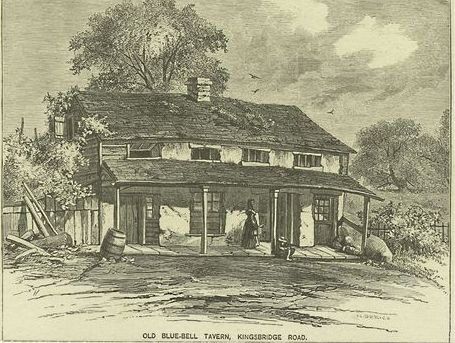
The Blue Bell Tavern, a rustic pit stop along Bloomingdale Road, witness to the changing fortunes of war. (Courtesy NYPL)

FRIDAY NIGHT FEVER To get you in the mood for the weekend, on occasional Fridays we’ll be featuring an old New York nightlife haunt, from the dance halls of 19th Century Bowery, to the massive warehouse clubs of the mid-1990s. Past entries can be found here.

LOCATION: Blue Bell Tavern
181th Street and Broadway, Manhattan
In operation Early 1720s-1915(?)

An old stone tavern once stood high upon the bluffs of Upper Manhattan, in an area many years later referred to as Washington Heights. The Blue Bell Tavern sat off Bloomingdale Road (where Broadway stretches today) nestled in a grove of trees, a modest two-story dwelling alit at all hours with wanderers.

One cold, stormy night some evening in November 1783, a damp and exhausted figure strode up to the door, a young woman who had escaped from her home many miles away. She was there to meet her lover who had already arrived at the Blue Bell, a man soaked, in disarray and wearing what certainly would have been a common sight for the day — a British uniform.

This man was a sergeant in the British military stationed in the Hudson River Valley. But the army was now retreating. Indeed, they were leaving New York that very month.

But he had fallen in love with this woman, who (as these sort of stories go) we know little about. We do know her parents disapproved of the British sergeant and would only relent to their marriage if he agreed to desert the army and remain in the United States.

On that rainy evening, the sergeant and his beleaguered love were married, here at the Blue Bell Tavern. As the story goes, it was a Quaker ceremony, for there were no other officiators that night at the tavern.

The Blue Bell, situated at today’s intersection of 181st Street and Broadway, was built in mid 1720s as a home and renovated into the type of pleasant inn that, by 1753, the venerable Cadwallader Colden (not the former mayor, but his grandfather and later governor of New York) could find “very comfortable” food and lodging with his friend James Delancey, the state’s lieutenant governor.

The tavern might have faded peacefully into oblivion if not for the Revolutionary War. When angry New Yorkers attacked the King George statue in Bowling Green at the foot of the island, his stone head ended up on a pole in front of the Blue Bell.

While the Continental Army fled from Manhattan during the month of September 1776, officers stationed here at the Blue Bell assessed their grim situation and coordinated the army’s next steps. With the tavern located so close to a key pathway out of town, it also became a headquarters and lodging for British officers after Washington’s army left. At one point, even Colonel William Howe, head of the British forces, himself stayed here.

It was during early battles in New Jersey that one British officer, one Colonel Ralle, found true love at the Blue Bell in the form of the innkeeper’s sister, and he married her there within the day. It would not be the last torrid romance to blossom here.

In November of 1783, George Washington and his victorious army re-entered New York, this time to push the British out of town and experience a new, free American nation from the vantage of the ravaged port city. “I remember well our march up the hill, and the noble appearance of George Washington as he sat on his big bay horse,” said a ‘veteran’ of the war in Appleton’s Journal.

George would even stay for an evening at the Blue Bell, awakening early to prepare his army’s grand entry down Bloomingdale Road and into the city. (Another important tavern of the day, the Bull’s Head, would also play a prominent role in Washington’s arrival into the city.) But on that day, they would add two more people to their procession.

The colonel and his new bride — the ones whose rendezvous at the Blue Bell led to their Quaker marriage — emerged from behind the building and called out Washington’s name. Given his rumpled British uniform, I imagine this created quite an uproar. The pair were taken into custody, and the British officer recounted his romantic tale. He wished to desert the army and join the Americans if only they would provide protection for him and his young bride. Indeed, with so many Loyalists still in the city, the soldier’s betrayal would certainly have been met with retaliation.

The tale apparently amused the troops, flush with the excitement of victory. Somebody even wrote a poem in the couple’s honor. You can read the whole thing here, though it begins: “A soldier and a maiden fair, Helped by shy little Cupid, Fled from the camp and momma’s chair, (Such guardians, how stupid!), And to the Blue Bell did repair, To have themselves a-looped.” We can assume with the lighthearted tone of the poem that things turned out well for the happy couple.

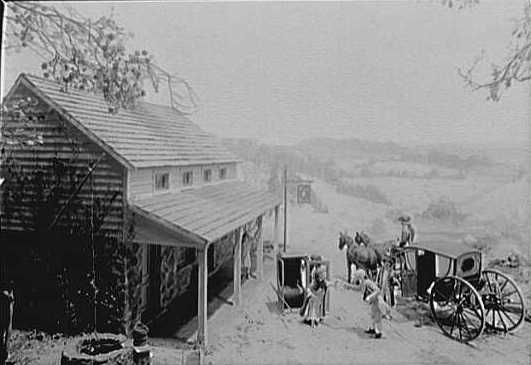
Below: A miniature of the Blue Bell, displayed at the Museum of the City of New York when it opened the doors to its new Fifth Avenue home in 1930. (Courtesy LOC)

The old tavern passed through many owners (and many names) through the 19th century and eventually returned to its original purpose as a residence. One old source suggests that the building burned to the ground in 1876, though it may have survived this blaze into the new century. Whatever structure stood here then was torn down by 1915. But tales of the Blue Bell entered nostalgic accounts of the Revolutionary War almost immediately, as 19th century historians struggled to piece together the American narrative from those who still remembered it.

The Blue Bell lived on long after its demolition in a most curious way — as a well-known miniature housed at the Museum of the City of New York. An issue of Popular Science Magazine from 1930 observes the construction and installation of the Blue Bell exhibit, which made its debut that year in the museum’s new home on Fifth Avenue and 103rd Street.

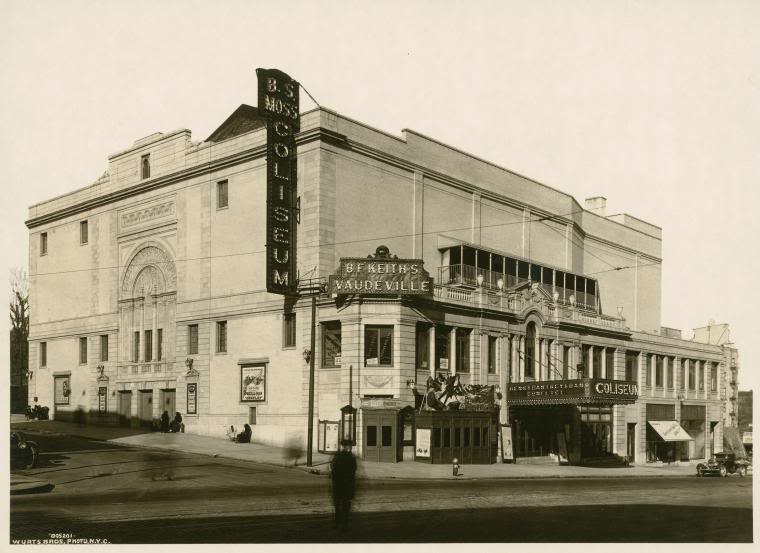
On some days, you can go to the former spot of the Blue Bell Tavern and experience a Gothic romance of your own. Standing there today is the RKO Coliseum, once one of Manhattan’s largest movie theaters, still operating as Coliseum Cinemas. (Here’s a street view of that corner.)

Below: The Coliseum in Washington Heights, date unknown (but there’s a vaudeville bill on one of the marquees!)

Bull’s Head Tavern: treating you like cattle since 1755


To get you in the mood for the weekend, every other Friday we’ll be celebrating ‘FRIDAY NIGHT FEVER’, featuring an old New York nightlife haunt, from the dance halls of 19th Century Bowery, to the massive warehouse clubs of the mid-1990s. Past entries can be found HERE.

Last time around, I wrote about Max’s Kansas City, a steakhouse that served up a side of punk and pop celebrity like a glamorous cattle call. It has a few things in common with another centerpiece of social life that attracted a few of New York’s boldfaced (in this case, Washingtons and Astors), combining truly Revolutionary business with pleasure. And it had plenty of red meat, of the pre-prepared variety.

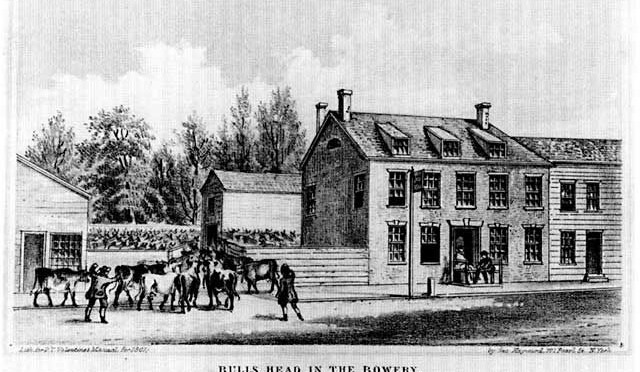
The Bull’s Head Tavern was the gathering-place for farmers, drovers, and merchants in the 18th century, located well outside city boundaries just east of Collect Pond. (At the Bowery, right at the entrance to the Manhattan Bridge.)

It soon became the center of Manhattan’s entire meat selling and rendering industry, with the area surrounding the nearby Collect overrun with tanneries and slaughterhouses. As the Bull’s Head was also located right on the Boston Post Road (later the Bowery), situated at a crossroads of livestock yards and stables, it became an ideal place for both commerce and carousing.

The Bull’s Head was in operation as early as 1755, enjoying business as “the last halting-place for the stages before entering the city.”

Within the next few decades, industry enveloped the area, transforming the Bull’s Head into a cattle market, with pens adjoining the main building where farmers from the surrounding area herded their best specimens for sale. Inside the tavern became a literal stock market, with transactions, news and gossip being shared over brew and a hot meal. Those who lingered well into the night sometimes played a strange game called crack loo — often gambling away any profits they might have made earlier in the day. Out in the pen, dog fights and “bear baiting” sometimes occured as entertainment.

As Washington Irving describes, at the Bull’s Head he would “hear tales of travelers, watch the coaches and envy the more pretentious country gentlemen in Castor hat, cherry-derry jackets and doeskin breeches.”

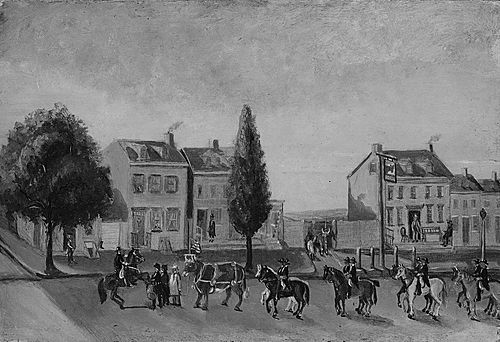
On November 25, 1783, Evacuation Day, the Bull’s Head entered history. As the British fled New York that day, George Washington and his entourage met at the Bull’s Head, preparing themselves for their triumphant entry into town. Governor George Clinton and over 800 uniformed troops and townfolk gathered right outside, preparing for the procession.

Henry Astor, the older brother of John Jacob, stepped in as owner of the Bull’s Head in 1785. Already an accomplished butcher, Henry served his “celebrated cuts of meats” and often outpriced his own clientele when a particularly choice herd of cattle came travelling by.

Of course, New York was outgrowing its old boundaries by then. By 1813, Collect Pond had been drained and high society eyed the Bowery, sweeping away the filthy stockyards and factories to construct homes, shops and theatres. Moving with the changing times, some civic minded businessmen bought out Astor and moved the Bull’s Head somewhere safely outside the city — this time at 3rd Avenue and 24th Street!

In 1830, this new location fell into the hands of young rancher and entrepreneur Daniel Drew, who turned the tavern into a sort of bank, marketplace and social club for local cattlemen, upgrading the establishment and building his own reputation as a saavy financier.

As this time, according to an old history, “various types of men mingled in the bar-rroom of the Bull’s Head, from the rough country man to the speculative citizen, butcher and horse-fancier. Plain apple-jack and brandy and water… were the principal liquors passed over the bar. Guests were so numerous that at the first peal of the dinner-bell. it was neccessary to rush for the table or fail miserably.” And of course, after hearty meal and vigorous drink, came the gambling, “throwing dice for small stakes.”

Drew eventually went on to become a steamboat mogul. The site of the old Bull’s Head eventually hosted the notorious Bowery Theatre (built upon its old cattleyards), then the sumptuous Atlantic Gardens by the mid-19th century.  Drew’s uptown location on 24th, of course, caved in to a growing residential neighborhood. However, today there is a new Bull’s Head Tavern, at that exact location, that probably smells a lot better than the original.

And not to forget, there was also a Bull’s Head Tavern in Staten Island, at Victory Boulevard and Richmond Avenue. Built in 1741, this Bull’s Head was a popular destination for British-loving Tories before the days of the Revolutionary War. Before it was destroyed in a fire, “people from all over the country made special trips to the old house, just to see the famous Tory headquarters,” according to one old history.

The neighborhood that sprouts around that intersection at Victory and Richmond is named Bulls Head in the old tavern’s honor.

The First Inauguration: New York’s big party for George


Obama’s inauguration next Tuesday will closely adhere to the traditions of many presidents past, but with some serious leanings towards that other Illinois president Abraham Lincoln. But as ostentasious as some his plans seem — even eating foods that Abe might have noshed on — it can’t possibly top the ‘hope and change’ of the original celebration for George Washington, America’s first president and the only inauguration ceremony to take place in New York City, on April 30, 1789.

It took George seven entire days to get to New York from his home in Mount Vernon as his procession was met every step of the way with throngs of patriotic crowds and flamboyant celebratory displays. Meanwhile, on Tuesday April 21, Washington’s vice president John Adams arrived in the city, two days ahead of the president-elect.

The building which greeted him, the former City Hall building on Wall Street, had been the center of city’s government since 1699, when the British used materials from the city’s demolished north defense wall to construct it. The heavily remodeled building which now stood in its place, later to be called Federal Hall, was designed by successful city contractor and former Continental Army engineer Pierre Charles L’Enfant. According to David McCullough, “it was the first building in America designed to exalt the national spirit, in what would come to be known as the Federal style.” (Sadly, this building was ripped down in 1812; the ‘Federal Hall’ which stands in the same spot today was built as a customs house in 1842) L’Enfant would later work on the creation of Washington DC from Maryland swampland and be fired from that project — by George Washington.

Below: a look at ‘old City Hall’ well before the thorough developments up and down Wall Street

George finally arrived in New York two days later, April 23, via a barge from Elizabeth, New Jersey, and was met at the Wall Street pier by the current mayor of New York James Duane and the state’s governor and DeWitt Clinton’s uncle George Clinton. From there, he was taken to his new home on Cherry Street (long demolished, around near the Brooklyn Bridge anchorage today) and spent the day greeting dozens of well-wishers. That night, Clinton hosted an elaborate dinner in his honor; the pomp and extravagance by this time were probably getting tiresome to the stately Virginian farmer.

Meanwhile Adams spent the week at Federal Hall in Senate chambers, hashing out such things we take for granted, such as how to even address the new president, until at last they were ready for the ceremony to begin, on April 30. According to Ron Chernow, “Washington rose early, sprinkled powder in his hair, and prepared for his great day.” Like some fairy tale detail, Washington left his Cherry Street home at noon in a yellow carriage driven by white horses, legions of soldiers marching proudly behind him. The streets of Manhattan were clogged with people, over ten thousand cramming Broad and Wall streets, as far as the eye could see both ways. Sitting on the balcony of his own home on Wall Street was Washington’s closest confidante Alexander Hamilton, certainly reveling in the moment.

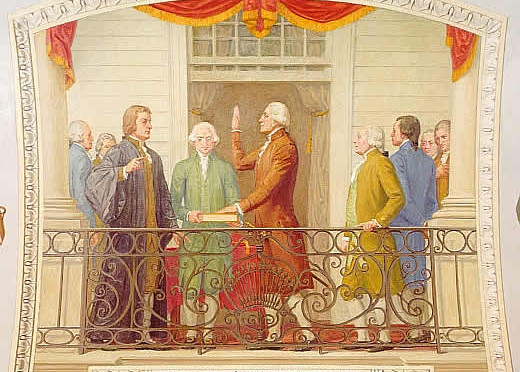
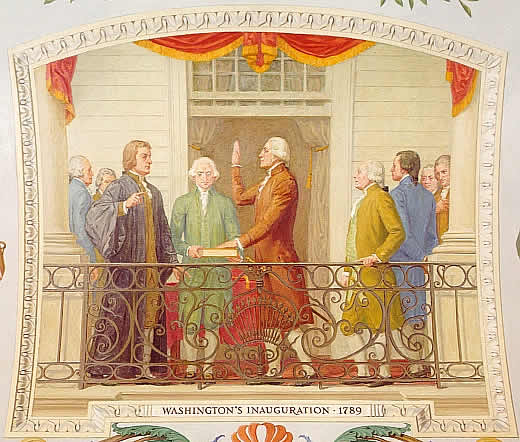
After greeting the Congress inside, Adams led Washington to the second floor balcony along with Robert Livingston, the Chancellor of New York (the highest judicial office in the state) who held out the a bible owned by St. John’s Lodge freemasons and delivered the oath of office, probably not loud enough for anybody in the street to actually hear.

Washington, possibly even less audible than Livingston, swore to “faithfully execute the office of President of the United States, and will to the best of my ability, preserve, protect and defend the Constitution of the United States” and then possibly threw in a ‘so help me God’ for good measure (although there are some doubts).

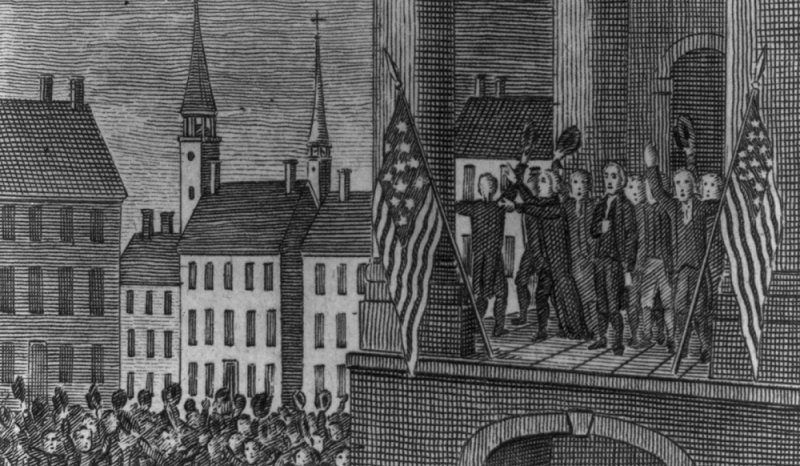
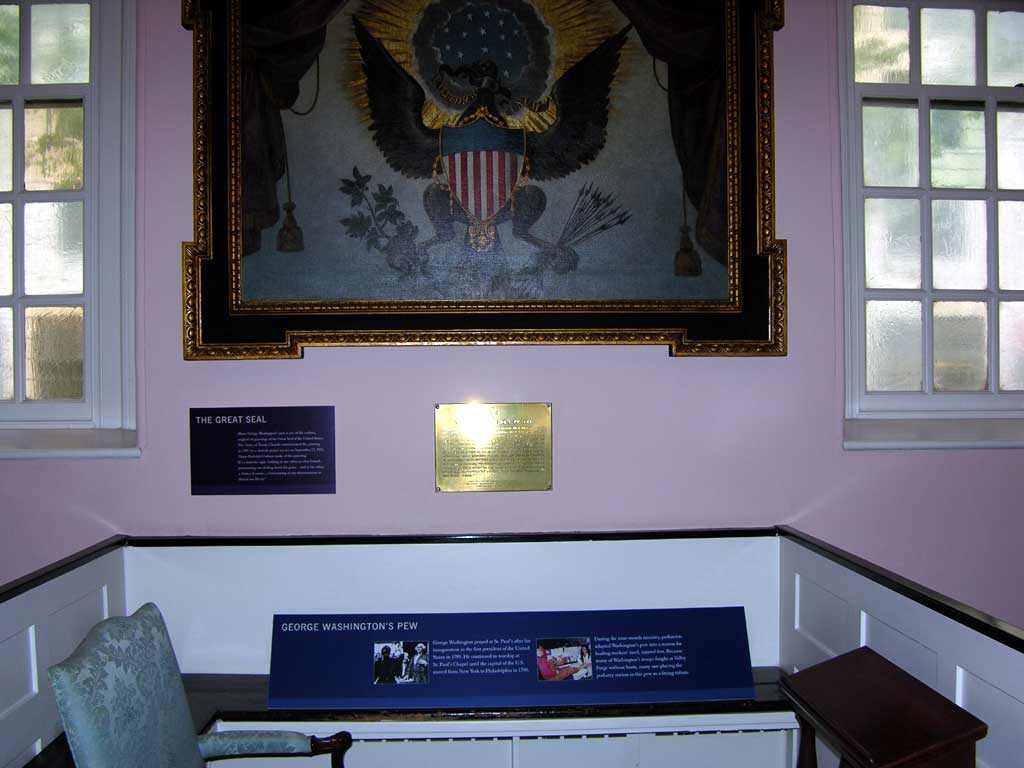
New Yorkers went crazy then, firing cannons, screaming and waving flags, playing music and dancing in the streets. After returning inside to address the new Congress — by this time with tears in his eyes — Washington and his entourage went up Broadway to receive on invocation at St. Paul’s Church, the scrappy survivor of the great fire the destroyed much of the city in 1776. Washington would be a regular here for his entire stay in New York; the pew where he planted himself for two years is still on display there (below).

Martha Washington would not arrive in town for another month, but that didn’t stop the parties. The official inauguration ball took place a week later, on May 7th, at the Assembly Rooms at 115 Broadway. Although a bit stiff and silent, George was still popular with the ladies and danced “two cotillions and a minuet,” often seen with Alexander Hamilton’s young bride Eliza. When Martha arrived on May 17, landing at Peck Slip, she was greeted with similarly grand fanfare, and yet another ball was held in her honor.

Believe it or not, there are some remnants of this unique event still in the city. Starting January 20th, the New York Historical Society will exhibit artifacts from that day, including a balustrade saved from old Federal Hall before it was demolished and George’s ‘inauguration chair’. And down at Federal Hall you can find other artifacts, including Washington’s bible, on permanent loan from St. John’s Lodge.

Categories
Podcasts

PODCAST: Union Square

This former English-garden style park became the heart of protest and the labor movement. Join the Bowery Boys as we dig into the history of Union Square, from Book Row to Klein’s.

Listen to it for free on iTunes or other podcasting services. Or you can download or listen to it HERE

An old view of Union Place, looking south. The oval shape of the park is readily apparent from this drawing. The park is still oval, but sidewalk extensions and the inclusion of the south ‘traffic islands’ configure the park into a more rectangular shape.

Two views of the 1861 Civil War rally (or Sumter rally), one from the ground…

…and from overhead.

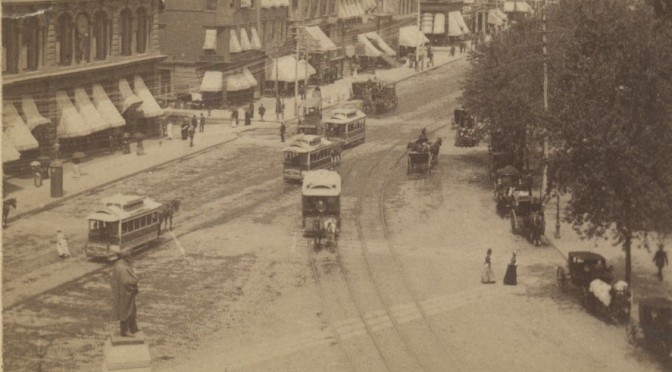
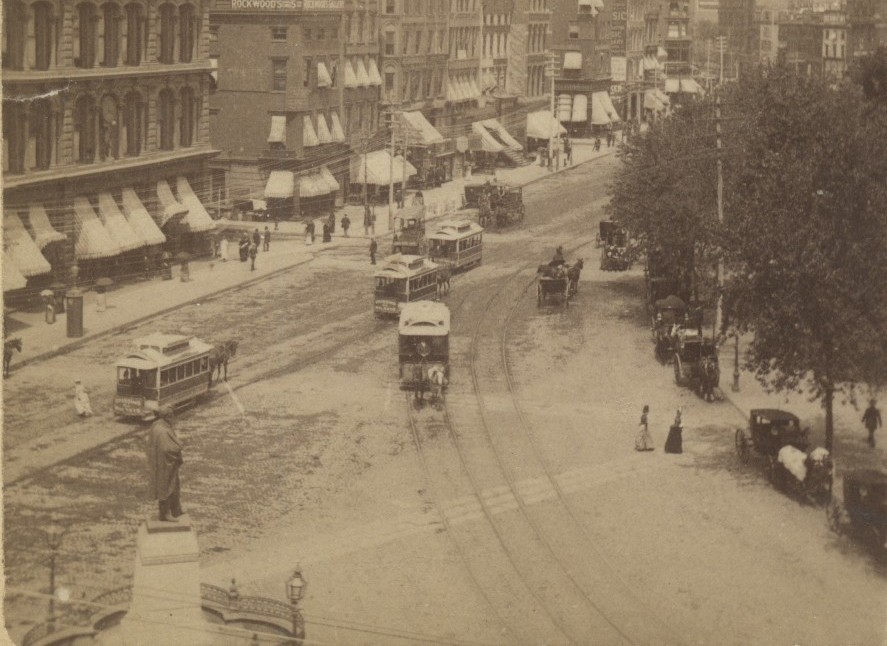
This is Deadman’s Curve, the scene of several accidents due to cable-car operators zipping through

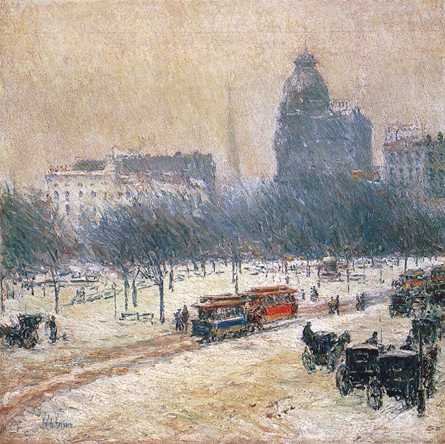
Union Square in 1892, by the American impressionist painter Frederick Childe Hassam

A depiction of the first Labor Day march by the Knights of Labor

Labor leader Emma Goldman was arrested here at Union Square. In this picture, she lectures to an enrapt audience (of men!)

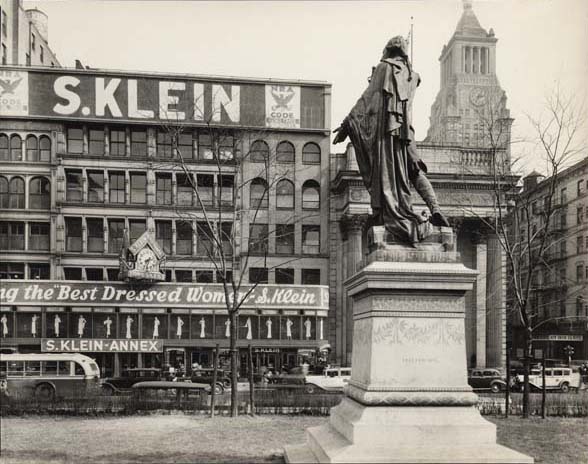
Klein’s on the Square — affordable women’s clothes dominate the park for decades, until they closed in 1975. It was strangely juxtaposed across the street with the Marquis de Lafayette statue, designed by Statue of Liberty creator Frederic Bartholdi.

New York also celebrated the first Earth Day here in Union Square in 1970

Union Square is still a popular and often chaotic place for gathering in protest. Last Saturday (March 22nd), over the course of about an hour, saw a large anti-war gathering, with speakers and singers.

People used the rally to air all sorts of grievances. And wear gory costumes.

Not thirty feet away, this flower seller was offering his springtime wares.

The Greenmarket stretched from the north side and down along the east side of the Square.

At 3 pm, almost as though in opposition to the war protest, people battled in a gigantic pillow fight

Now compare those pictures to this one of a Union Square crowd in 1910:

And finally, an extraordinary panoramic view of Broadway from Union Square … via 1890! Click to get a closer view

New York City’s curious, modern-day Olympus

Most small community colleges feature a statue or two honoring somebody specifically related to the campus. Even massive schools could invite their monuments over for a small dinner and have room for you and your friend from out of town.

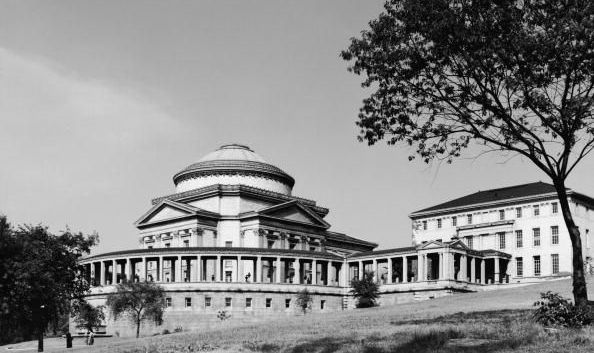
Bronx Community College would need a fairly large banquet hall. This school in University Heights, the Bronx, is a kooky mix of classical Stanford White-designed buildings (from the days when New York University camped here) to some rather awkward concrete classrooms typical of schools that flourished in the 1970s.

One of the stranger acquisitions BCC received when it took over the NYU campus in 1973 was a prestigious hall of fame featuring the biggest names in American history. Let me clarify. They don’t own a hall of fame. They have THE Hall of Fame.

Tucked on a scenic cliff overlooking the Harlem River (and with the Cloisters well in sight), the Hall of Fame for Great Americans was an ambitious project constructed in 1900 with the idea of immortalizing the Americans with significant contributions to science, the arts, politics and the military. Spearheaded by then-chancellor Henry Mitchell MacCracken, the project is the first real memorial ‘hall of fame’ concept to be executed in the United States.

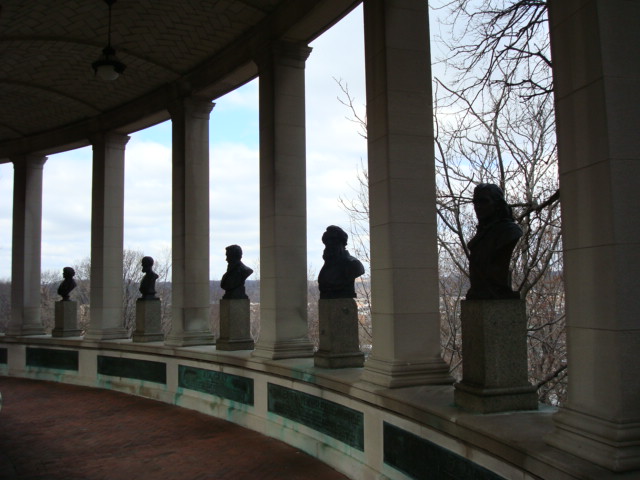
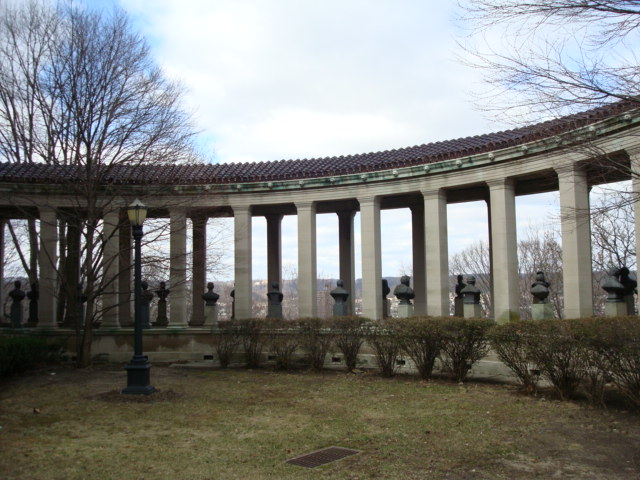
The spacious colonnade tucked behind the White-designed Hall of Philosophy, you are thrown back into a mix of turn-of-the century scholarly aesthetic and the belief of equating the American movement with ancient Roman and Greek forefathers.

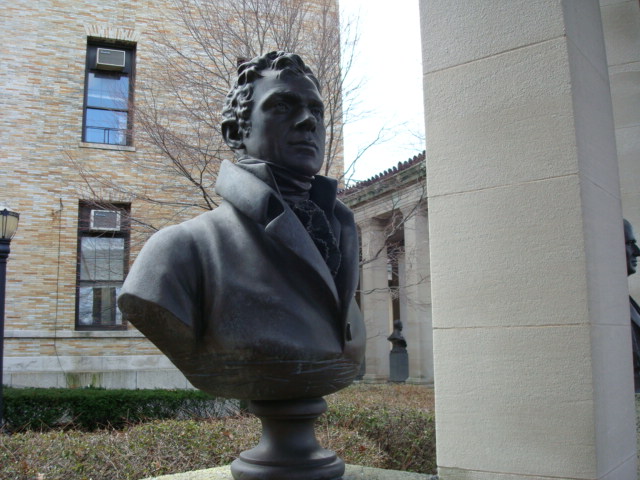
With room for 102 sizable busts (although there are only 98), the colonnade winds around the contours of the hill, spotlighting American icons. John Marshall sits astride Henry Clay. Harriet Beecher Stowe is a few busts down from brother Henry. George Washington AND George Washington Carver are close enough, they could play catch (if they had arms).

The Hall of Fame is a true curiosity in the ‘roadside attraction’ sense. Once a fabled hall with prestige enough that newspapers would lobby for nominees, there haven’t been any new inclusions since the 1960s. (Three more ‘American icons’ — Clara Barton, Andrew Carnegie and Luther Burbank — were elected in 1976, but nobody ever made busts for them!) Once NYU sold the campus, the colonnade was neglected, the hall of fame virtually forgotten.

It has been recently renovated, and the BCC keeps this well-preserved secret maintained. I went this weekend, stayed for about an hour, and didn’t see a soul. It’s worth a visit for the view, although you might want to wait until spring to appreciate the foliage.

Fun Hall of Fame trivia:

— One bust sits apart from the others, partially because he’s the only non-American — the Marquis de Lafayette

— The bust of Stephen Foster in inscribed with the music and lyrics to ‘Swanee River’

— Actor Edwin Booth sits serenely looking out at the river, while the man his younger brother assassinated, Abraham Lincoln, has a less interesting view

— Hey! We’ve actually done whole podcasts on four members of the Hall of Fame — Beecher, Washington Irving, Peter Cooper and Alexander Hamilton

— The bust of female astronomer Maria Mitchell creeps me out to my very soul

How to get there: #4 train to Burnside Avenue. Walk west to University Avenue and one block north to the college.

Who is Agent 355?

We can’t leave the world of Revolutionary War New York behind without finally exploring one of its captivating mysteries — the identity of agent 355.

The Culper Ring was George Washington‘s clandestine spy network that operated in the streets of British occupied New York. As we mentioned in last week’s podcast, operatives would communicate with Washington using an elaborate set of codes, a seemingly nonsense collection of letters and numbers that could be decoded once the message was successfully delivered.

Many of Washington’s operatives have been identified. However, one remains a mystery, a nameless woman known only by the codename 355. Her only appearance in coded documentation is in the missive: “I intend to visit 727 (code name for New York) before long and think by the assistance of a 355 (code for ‘woman’) of my acquaintance, shall be able to out wit them all.”

She was believed to be within an important Tory family in New York, who could maneuver through offices and courtyards of New York’s British society gleaning information which she would pass along via a bevy of secretive methods. It is speculated that 355 passed along critical information that eventually exposed the treason of Benedict Arnold and later assisted in the arrest of British intelligent officer John Andre.

But wait, it gets far more romantic. She was rumored to be the lover of fellow spy Robert Townsend and pregnant with his child when she was captured — I’ve even read that Arnold himself ratted her out — and thrown aboard the notorious prison ship HMS Jersey in New York harbor. She delivered the child — a boy, Robert Townsend Jr — but died aboard the fetid conditions on the ship.

Sadly, it all may be a little too good to be true. There was a Robert Townsend Jr., son of the famous spy, who eventually entered New York politics and was even involved in the very first incarnation of the Prison Ship Martyrs Memorial in Fort Greene. But genealogists have not been successful in tracing his lineage to a woman of any mysterious import.

The story of 355 was fleshed out in the 1940s by Long Island historian Morton Pennypacker, an early enthusiast of New York’s revolutionary spy ring. However it is unclear where Pennypacker got most of his information.

Personally, I choose to believe there was some beautiful spy, a Colonial era Jennifer Garner, slinking around the corridors of British officers. I mean, somebody rooted Arnold out, right? And John Andre really was captured.

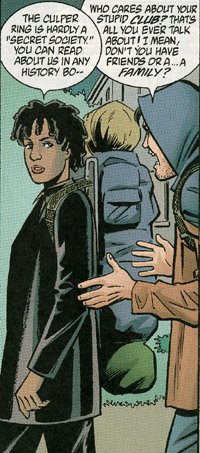
The Culper Ring and Agent 355 have more recently inspired a comic book series from DC Comics. (A panel of which is on the left.)

Categories
Podcasts

PODCAST: Life in British New York: 1776-1783

Join us as we stroll through the streets of revolutionary New York, examining what it would have been like to be a New Yorker under British rule.

Listen to it HERE:

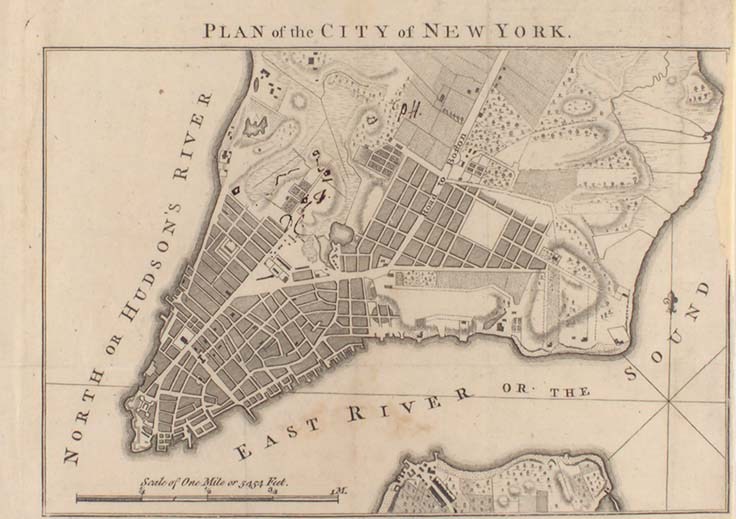
New York as it looked during British occupation (i.e. before various lower Manhattan landfills!)

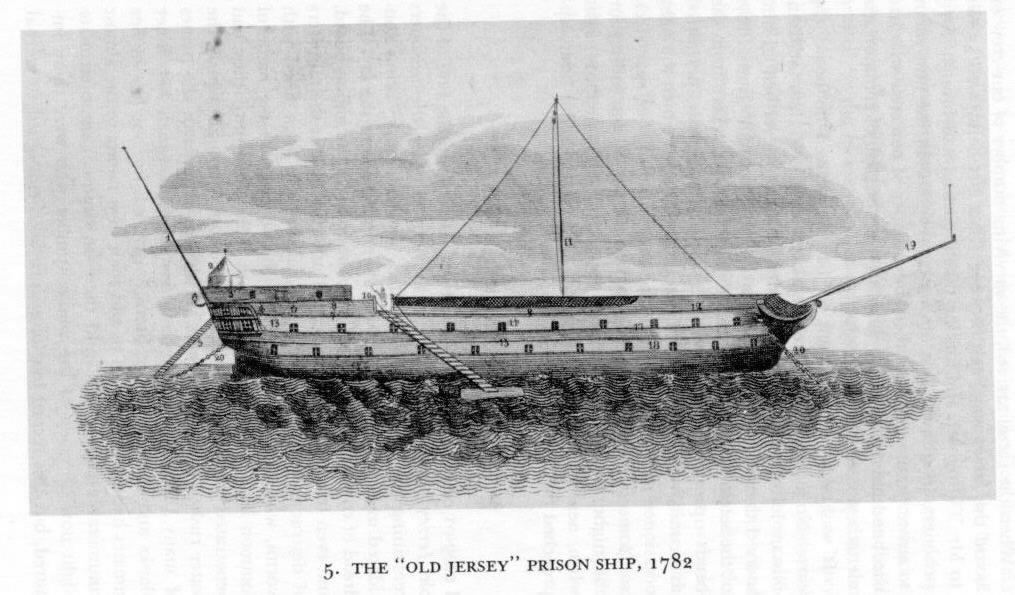
The HMS Jersey, docked right off the show of Brooklyn, and home to the deaths of hundreds of American soldiers and prisoners

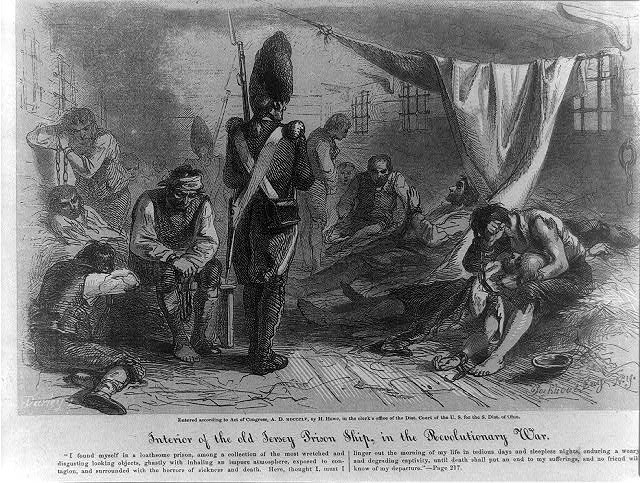
The horrible conditions of the prison ships, as hinted at in this illustration

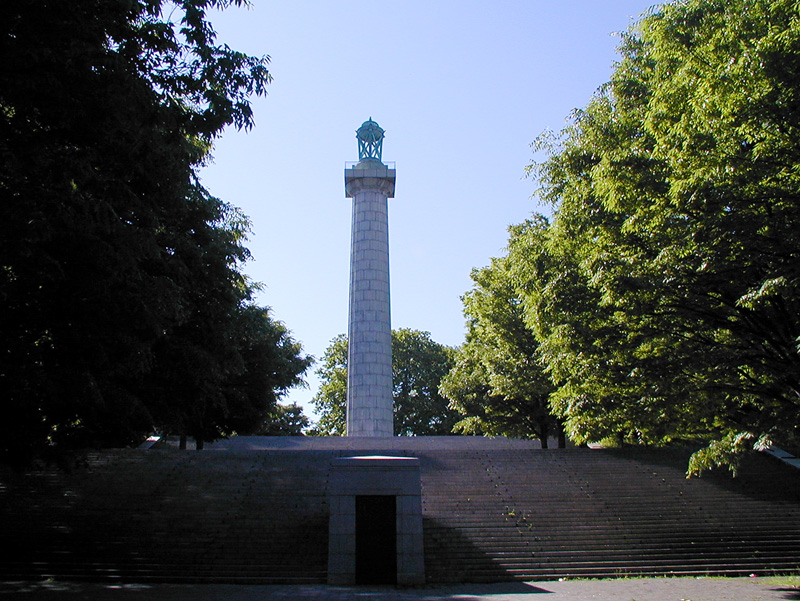
The Prison Ships Martyrs Monument in Fort Greene, honoring the thousands who died nearby off the shore of Brooklyn

The mystery of George Washington’s Culper Ring spy gang has inspired more than a few romantic tales:

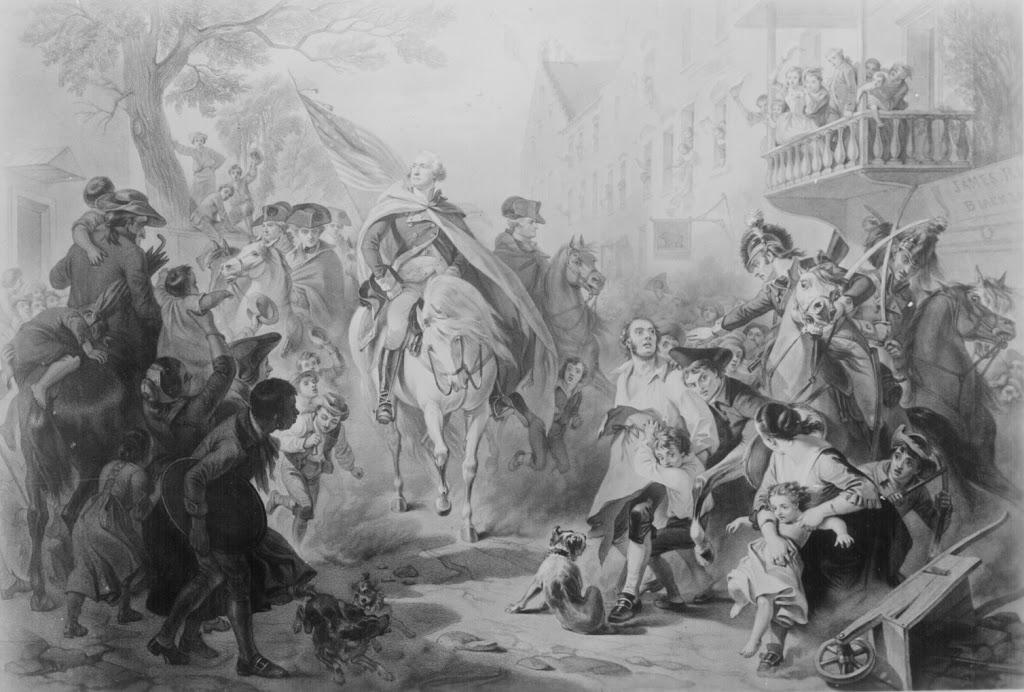
George Washington jubilantly returns to the city

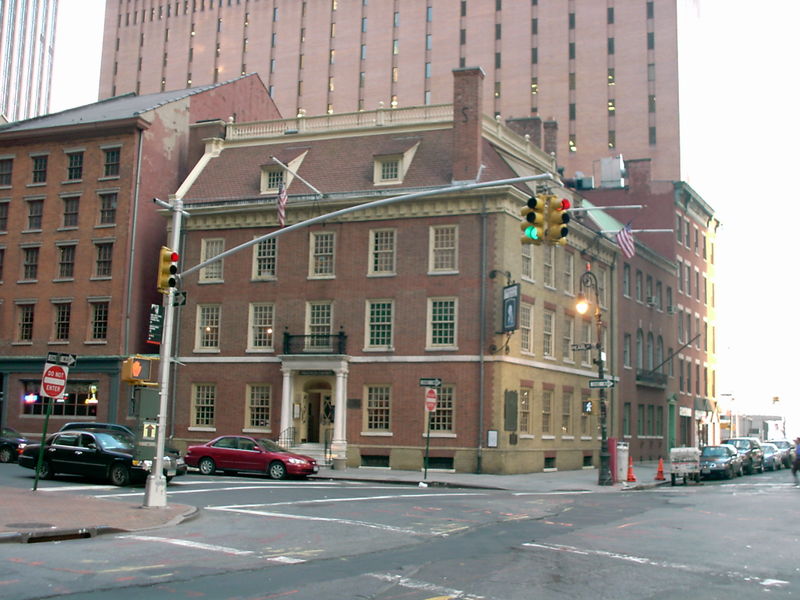
Fraunces Tavern, site of George Washington’s farewell speech to the Continental Army

Fraunces Tavern today:

Want to peek inside the tomb buried underneath Fort Greene’s Prison Ships Martyrs Monument? How about a map of the communication lines between the various spy factions of the Culper Ring?

Categories
Podcasts Revolutionary History

PODCAST: The British Invasion: New York 1776

It’s 1776 and revolution is in the air. Join the Bowery Boys as we tackle the British invasion and takeover of New York City.

Listen to it for free on iTunes or other podcasting services. Or you can download or listen to it HERE

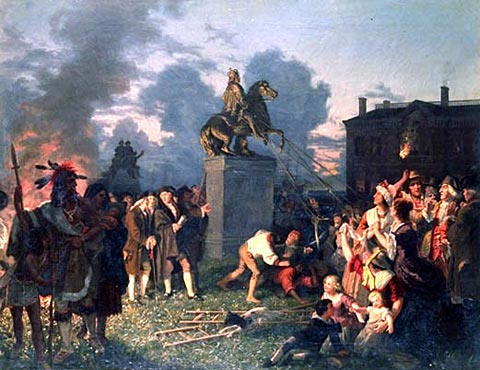
Worked-up New Yorkers, rushing down to Bowling Green to rip down the statue of King George

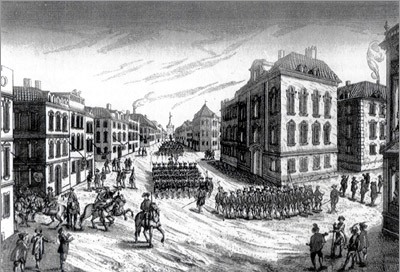
British troops march on New York, Sept. 15, 1776

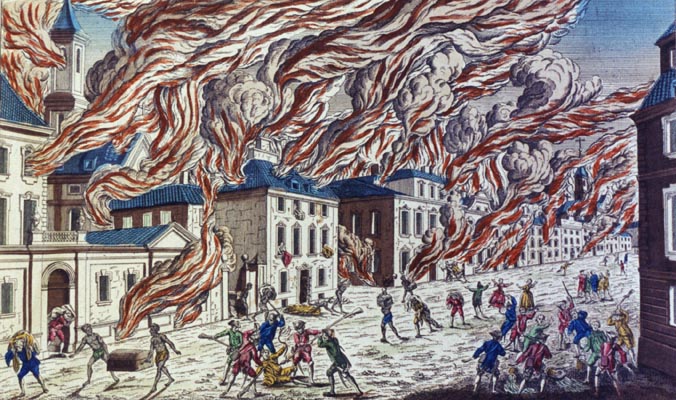
A ghastly woodcut displaying the Great Fire of 1776

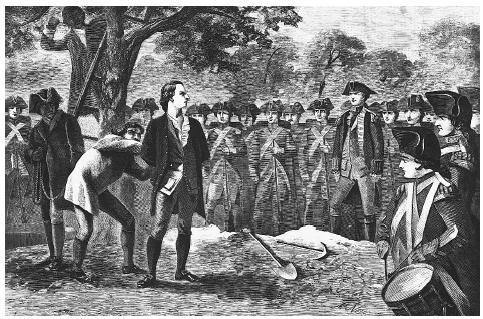
A depiction of the hanging of Nathan Hale:

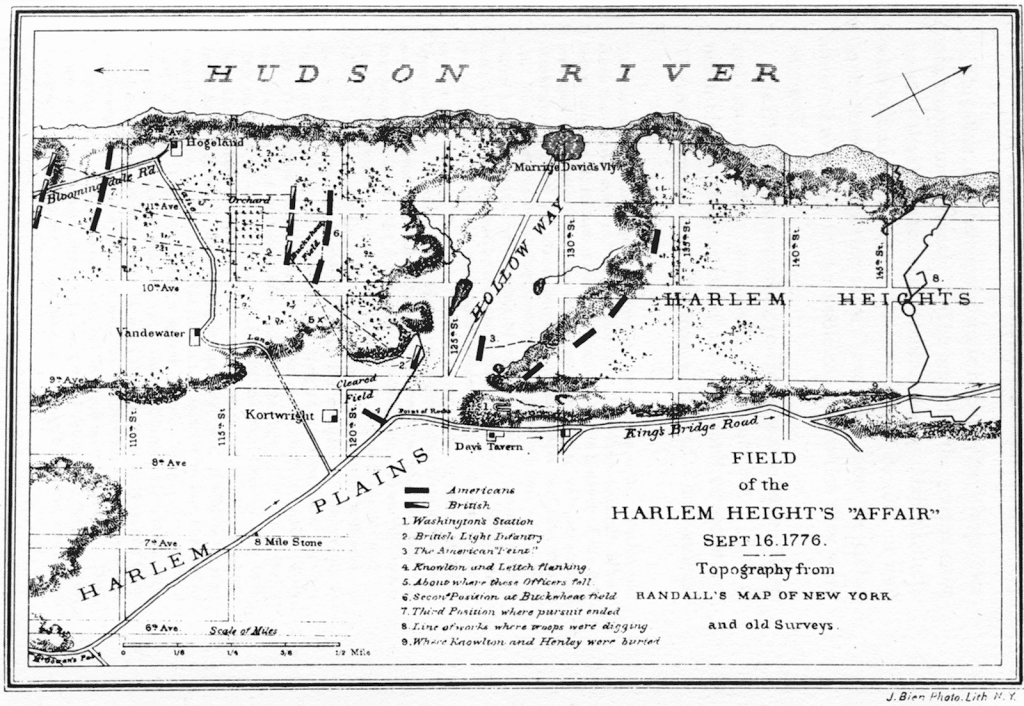
Map of the Battle of Harlem Heights (click on map to see detail):

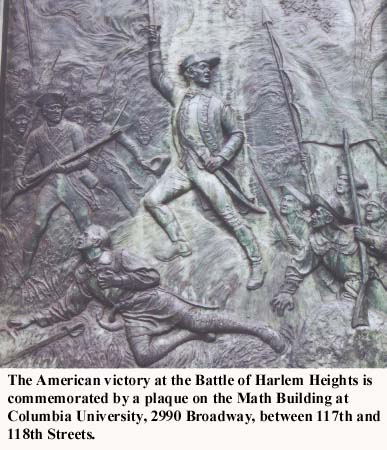
And finally, courtesy of the website of Columbia University:

From past blog entries:
Find out what really happened to that statue of King George.
And last fall we found some modern patriots wrecking havoc downtown.

Categories
Neighborhoods

Name That Neighborhood: Murray Hill

Some New York neighborhoods are simply named for their location on a map (East Village, Midtown). Others are given prefabricated designations (SoHo, DUMBO). But a few retain names that link them intimately with their pasts.

Murray Hill is one of Manhattan’s quieter neighborhoods, extending on the east side from 42nd street to 34th street — or even down to 28th street, depending on who you speak to. Its eastern border bleeds into Kips Bay. Its one of downtown Manhattan’s most obvious hillsides, with its most dynamic centerpiece being the buildings along Madison Avenue, including the gorgeous Morgan Library & Museum.

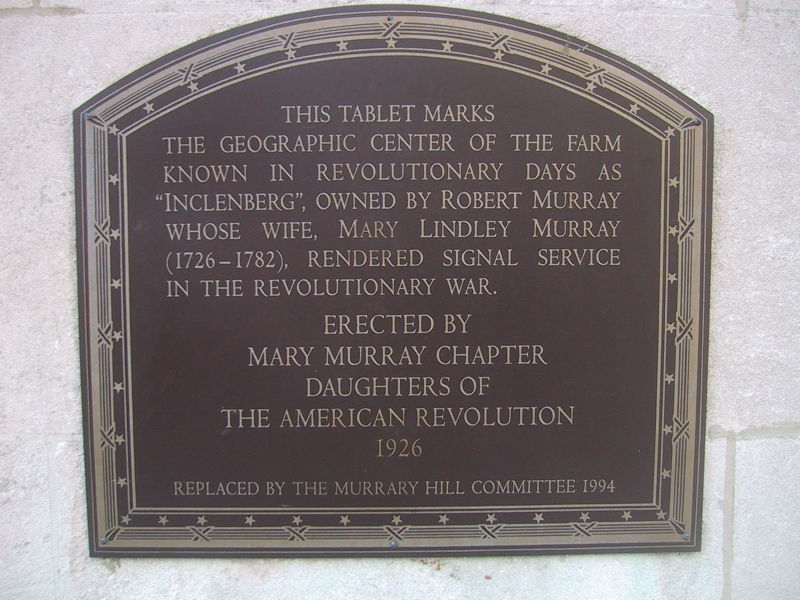
The Murray of Murray Hill was the successful Quaker merchant Robert Murray who bought this quiet hillside in 1762 and built a spacious home here, which he named Inclenberg, installing a large porch that looked out over the East River. Walk up the hilly part of any street between 33rd and 39th (the land where the farm approximately stretched out) and look east, trying to imagine the buildings melting away and an unobstructed view of the river emerging.

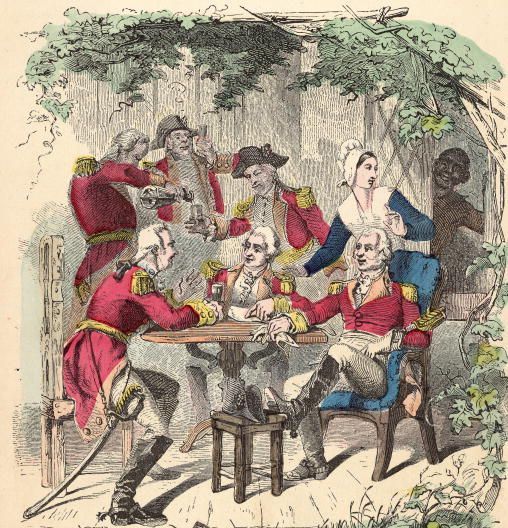
The pride of Murray Hill, however, is not Robert, but his wife Mary Lindley Murray. She was probably looking from her porch on September 15, 1776, when the British landed at Kip’s Bay in their eventual takeover of New York. Just a few days prior, Mrs. Murray had entertained the young commander George Washington, whose bedraggled Continental Army, under the command of general Israel Putnam, was heading out of town on the west side (along a path which is today the West Side Highway). With a superior British force in hot pursuit, they would have been easily captured and the American revolution effectively dissolved.

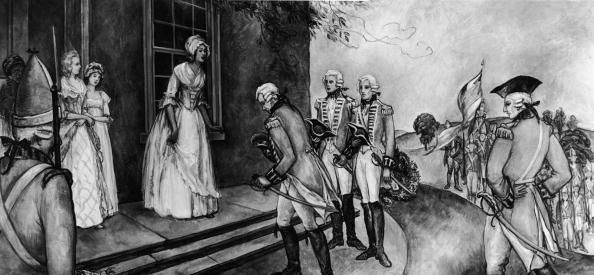
However, as the legend goes, many lives were saved that day and the fate of the Army spared because of a little gracious hosting. As the British force assembled, Mrs. Murray invited the officers, including General William Howe, up to her house for a spot of “cake and wine.” Her charms — and those of her daughters Savannah and Beulah — must have been irresistable, for the officers stayed for over two hours, while the rebel American forces escaped up to Harlem Heights.

While eventually some of Washington’s army would be captured nearby, the bulk of the forces were spared, simply because of the delay brought on by courteous party hosting.

What makes this story all the more compelling is that Mary probably differed politically from her own husband (away in London on business at the time of the invasion) who was a Loyalist to the crown. However members of her own clan, the Lindleys, fought with the Continental Army and Mrs. Murray was clearly sympathetic to the American cause. Of course, her real motives might have been altogether indifferent to the war entirely; regardless, she is undoubtedly one of New York’s great hostesses.

Today, the neighborhood has the unique distinction of having a drag king entertainer named after it.

George Washington slept here?!

You’ll be forgiven if the corner of Pearl and Dover streets does not happen to ring any bells for you. Although nearby a few South Street Seaport restaurants and bars — including the Bridge Cafe — its mostly unused given its proximity to the entrance of the Brooklyn Bridge and FDR Drive.

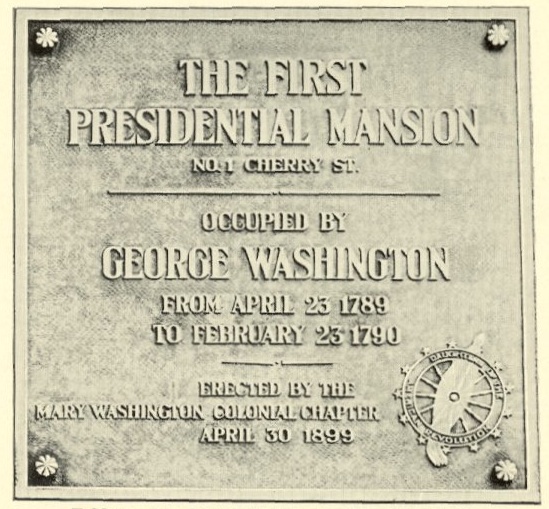
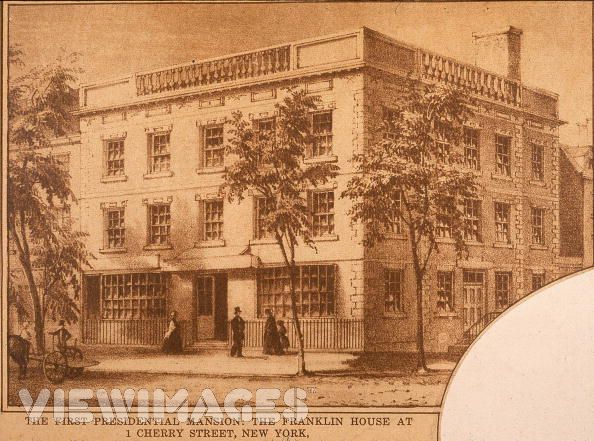
But a sad, tiny plaque here uncovers a surprising fact — here once stood the first presidential mansion of George Washington. The nation’s first president lived here from April 1789 to February 23, 1790, just a short carriage ride to Federal Hall on Wall Street. His inauguration procession on April 30th even began here with a reception for the new nation’s creators.

This was considered uptown to Revolutionary era New Yorkers, and the white Colonial home, built in 1770, was surrounded by other sumptuous houses overlooking the East River. In fact, Washington’s neighbor, at 5 Cherry Street, was John Hancock. DeWitt Clinton would later reside in the former Washington home.

Cherry Street still remains in lower Manhattan, but the section which once included the presidential mansion and the other austere residences was demolished in the 1880s to make way for the Brooklyn Bridge anchorage. That might seem scandalous to modern-day history preservationists, but by then, Cherry Street was far from a tony address.

One Cherry Street was unceremoniously torn down to widen the street in the 1850s, but by then, it was a mercy killing. The neighborhood had become New York’s notorious Fourth Ward, lined with saloons and brothels, the once-glorious mansions turned into boarding houses. It was Manhattan’s most decrepit neighborhood, so few took offense when it was proposed that the neighborhood be partially demolished to make way for the Brooklyn Bridge entrance. Cherry Street still exists but only on the north side of the bridge.

Georgie moved from One Cherry Street to 39 Broadway — shorter commute — in 1790. The tiny plaque is all that remains of a far more genteel day in lower Manhattan.

Here’s more information on community efforts to raise the profile of the site.

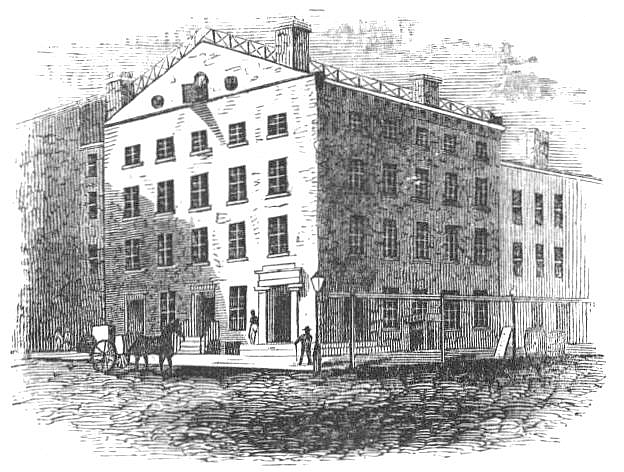
Picture of the presidential mansion that once sat there: