Old Swamp Church and the first U.S. Speaker of the House


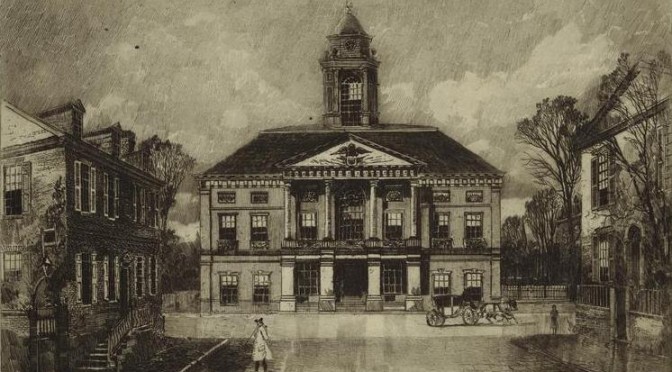
Federal Hall, home to the first House of Representatives 1789 [NYPL]

This week the United States got a new Speaker of the House of Representatives, John Boehner, and its first female ex-Speaker, Nancy Pelosi. This changing of the guard got me to wondering how many politicians representing New York had ever held this powerful job.

Surprise! No House representatives from the City of New York have ever been Speaker. The closest we’ve gotten is the otherwise unremarkable John W. Taylor, an upstate New Yorker from the Saratoga region, who briefly held the job in 1820-21. A central New York representative, Theodore Medad Pomeroy, held the post for exactly one day in 1869.

But never fear! America’s very first Speaker of the House, Frederick Muhlenberg, has a New York connection wholely unique and never to be repeated — he is the only Speaker to have served within that role in New York proper, in the months of 1789-1790 when the city was also the nation’s capital, and the center of government sat in Federal Hall on Wall Street.

And that was not Muhlenberg’s only tie to the city. Although he served in the House as a representative from Pennsylvania, he had previously lived in New York for two years during a truly volatile moment — the years before the Revolutionary War.

His name will probably sound familiar if you’re a Lutheran. His father Henry Melchior Muhlenberg is considered “the patriarch of the Lutheran Church in North America,” coming to the British colonies from Germany in 1742 by request of several American ministers in need of spiritual direction. Henry spread Lutheranism throughout the colonies, principally to German and Dutch settlers, and for a time in 1751 even lived in New York, uniting the Lutheran congregations here.

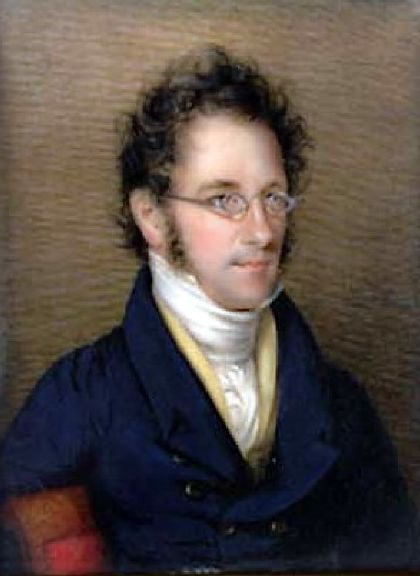
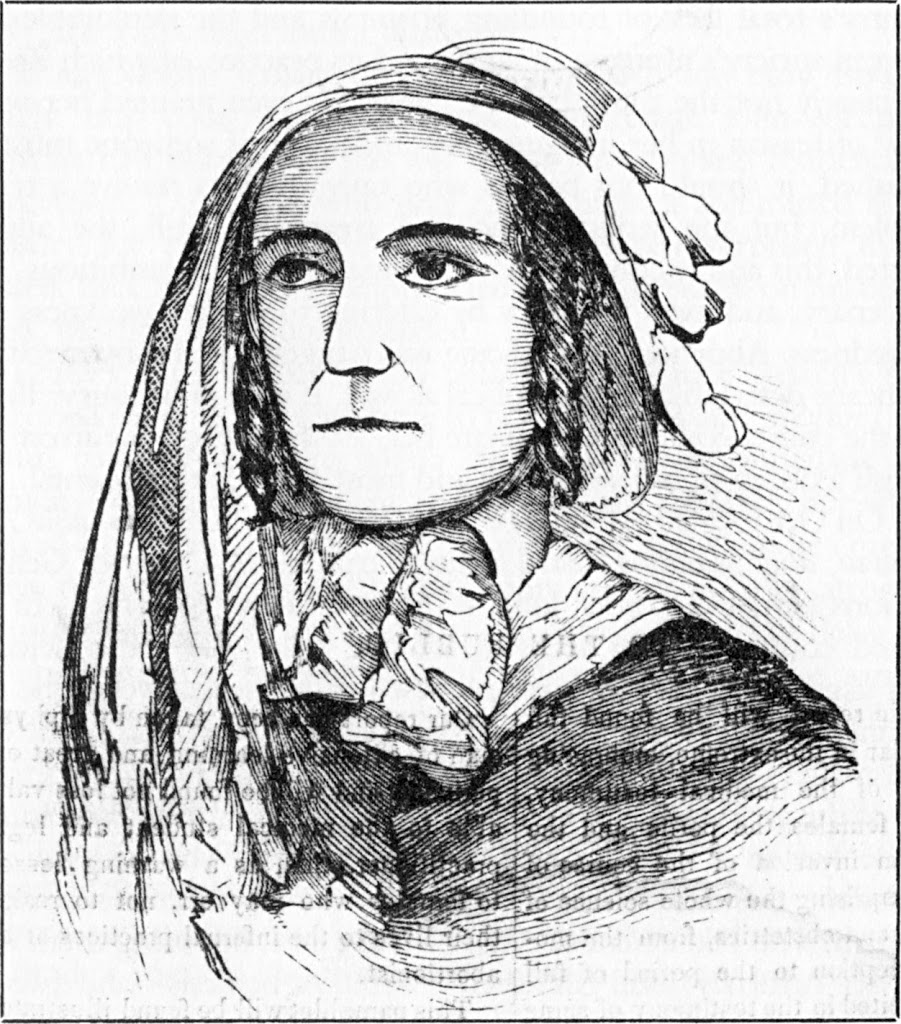
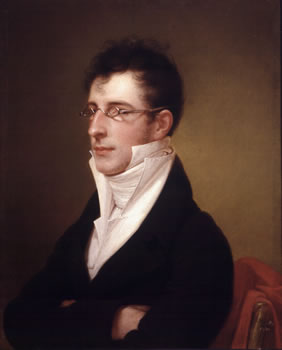
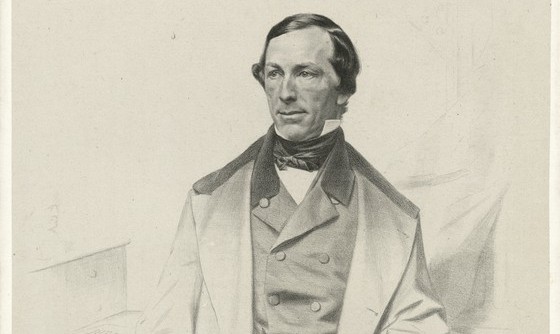
He spawned a true religious dynasty as three of his sons entered the ministry. Frederick (pictured below), born in 1750 in Trappe, Pennsylvania, trained at several small churches in the state before moving with his family to New York in 1774. Lutherans were by no means plentiful in New York during this period, but they worshipped in various small congregations throughout the city, including some services at Trinity Church.
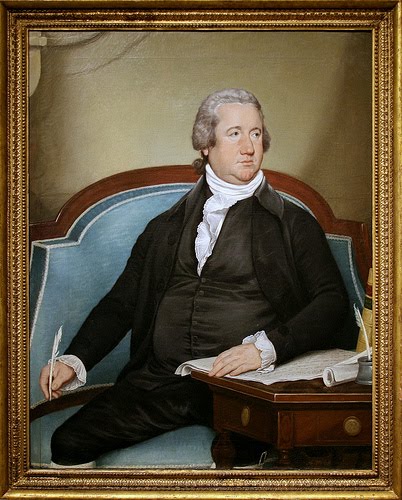
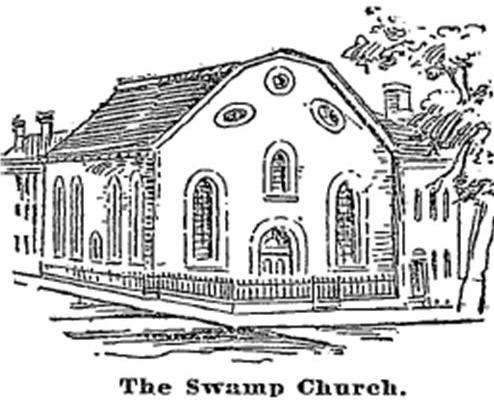
Young Muhlenberg, however, took up with a new church situated just east of the city commons, the newish stone Christs Church at the southeast corner of Frankfort and William streets, affectionately referred to as the Old Swamp Church.

When that house of worship was built in 1767, this area of the city, sparsely populated, was called the ‘swamp’, not so much for the topography perhaps as for the grim-smelling leather shops and tanneries that sat here. Collect Pond, which attracted these sorts of businesses, was but a stone’s throw away, and the area retained its air of industry even as the tanneries moved out and the presses (that would soon comprise Park Row’s newspaper district) moved in.

The congregation didn’t seem to mind however, especially now that they had a venerable Muhlenberg as their leader. And they certainly needed him by this time. In fact, he might had come to New York during this period specifically to reassure a tense congregation amid the tensions that were stewing within the city.
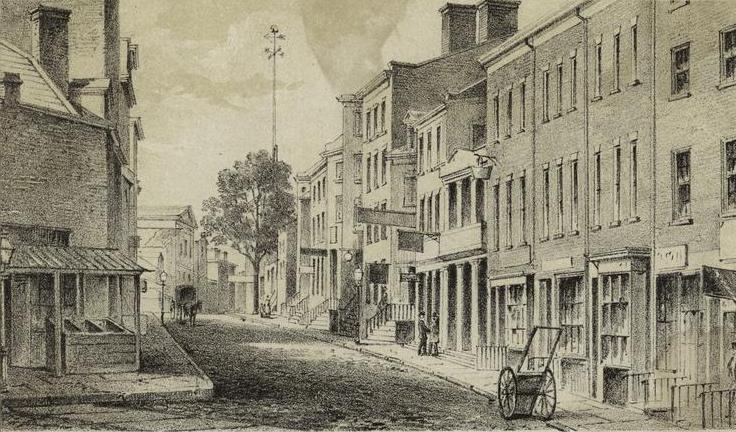
The city of over 22,000 inhabitants was being ripped apart with rebellion, as New Yorkers, caught in an increasing spirit of independence, fought back against British tyranny. From the steps of Old Swamp Church, members would have seen the ‘liberty poles’, hanging in the commons and festooned with banners, and heard (or participated in) regular rallies there. The clandestine Sons of Liberty would conduct secret meetings in nearby taverns, and services would have been interrupted with sounds of the Sons’ many retaliations against British officials.

Congregants felt the inevitability of war; it would surely dominate their prayers by 1774. Having the guidance of Muhlenberg, son of the colonies’ most prominent Lutheran, would certainly be of great relief.

It seems, though, that Muhlenberg himself was at odds with his role. He was not bold or rebellious himself and he initially believed the conflicts were none of his business. Even as his brother Peter Muhlenberg, a Virginian who embraced the rebel conflict, would join the fledgling Continental Army in 1775, Frederick himself was not yet convinced. He wrote his brother: “You have become too involved in matters with which, as a preacher, you have nothing whatsoever to do and which do not belong to your office.” [source]

Revolution was invitable. But Frederick was a theologian, cautious and steady, and he worried not only for his congregation but for his own family. This passivity would soon fall away. When actual bombs began reigning down on the city, he sent his pregnant wife and children away to Philadelphia. He remained for a few months to officiate over a dwindling flock but soon fled himself in the first months of 1776, looking over his shoulder at a city soon to be paralyzed by war.

Below: An illustration from ‘D.T. Valentine’s Manual, 1859’, looking up from William Street from Frankfort. The building immediately to the left was the old Swamp Church, no longer in service and heavily redone by the mid-19th century.
He returned to New York in 1789 as one of the most powerful men in the new government of the United States. Muhlenberg spent the war in Pennsylvania and soon found his footing there as a political leader, becoming a member of the Continental Congress and later elected as speaker to Pennsylvania’s own state House of Representatives in 1780.

According to author Paul Wallace (in his excellent book ‘Muhlenbergs of Pennsylvania’), Frederick wasn’t merely heeding a patriotic call. He had grown a little exhausted of the pulpit and wanted to develop his new course, one of his very own.

Muhlenberg’s austere character and unblemished reputation served him well in politics. He led Pennsylvania’s ratification of the Constitution in 1787. When the first national Congress was formed, Muhlenberg represented his state at their first meeting in the new temporary capital and his old home — New York. His election as Speaker made perfect sense; he had a well-known last name that had helped define American spirituality, and he came from a state neatly between that of President George Washington (from Virginia) and Vice President John Adams (from Massachusetts).

The first House of Representatives met on April 1, 1789, at Federal Hall at the junction of Wall and Broad streets, just south of Old Swamp Church (which now thrived under new leadership). Muhlenberg would help shape the first traditions of the House and define the rules as dictated by the Constitution, its ink still dry and untested. Most notably, his was the first signature to grace the Bill of Rights.

He grew into a tolerant and jovial leader, best known for inviting fellow Congressmen over to his home for fairly elaborate ‘oyster suppers’. Muhlenberg would remain Speaker of the House for the entirety of the first Congress, even as they moved out of New York at the end of 1790. He stayed in the House through 1797, become Speaker again for the Third Congress in 1793.

Muhlenberg’s name has been attached to some rather scandalous events. He was one of three men brought into the confidence of Alexander Hamilton during a blackmail scandal involving his mistress Maria Reynolds. Muhlenberg was sympathetic to Hamilton’s predicament; one of the other three men, political enemy and future president James Monroe, was less so.

In 1796, during congressional battles over funding for the Jay Treaty, Muhlenberg broke a tie vote authorizing the highly controversial treaty to go forward. As a thank-you, his anti-treaty brother-in-law stabbed him in retaliation. He recovered, but family dinners must have been very awkward after that.

Muhlenberg retired shortly thereafter and died in his home in Lancaster, Pennsylvania, in 1801.

As for the Swamp Church, its members slowly drifted away, and the property was purchased by tobacco mogul George Lorillard. The Lorillards also have very deep scars due to the Revolutionary War, but that is another story.

Below: the location of Old Swamp Church

View Larger Map

Illustration of the Swamp Church from an 1894 New York Times article.
Categories
Uncategorized

Mesmerizing: The forgotten museum of Rubens Peale

Believe it or not, this long-gone, unsuccessful attempt at a museum actually figures into the larger tale of a major New York institution, which we cover on this week’s podcast and which will be available for download by Wednesday. This is a reprinted article from May 15, 2008 with some modifications. Original is here.

What if your best known accomplishment in this world was the fact that you posed for a well-regarded American masterpiece by your more talented older brother? Welcome to the world of Rubens Peale!

Philadelphians and American art lovers in general should be quite familiar with Rubens’ father Charles Wilson Peale, one of early America’s pre-eminent painters, portraitist to Washington and Jefferson, and patron of what would become the Philadelphia Museum. Peale’s museum for Philly, which opened in 1786, is not only one of this country’s most important natural history institutions, it set the stage for pioneering museums across the country.

Peale graced his children with some truly loaded first names — Raphaelle, Rembrandt, Titian and of course Rubens. And they all attempted to follow in their father’s footsteps, both as painters and as curators of their own museums.

Raphaelle tried to open one in Charleston. Rembrandt set one up in Baltimore (unfortunately timed for the War of 1812). Baby brother Titian took the reins in Philadelphia and became the family’s most prolific naturalist.

Rubens would have more ambitious designs. At first more interested in the sciences than the arts, the youngest and frailest Peale operated the Philadelphia Museum after his father’s retirement before coming to New York City in 1825 to set up his own version of his father’s dream. The address for the Peale Museum of New York City was 252 Broadway, a building better known as the more austere-sounding Parthenon.

Peale’s museum opened on October 26, 1825, to monopolize on a huge city celebration occurring that day: the opening of the Erie Canal. By 1840, Peale would change the name to the New York Museum of Natural History and Science.

In the early days, Peale’s chief competition was the small museum housed in the former almshouse across the street, next to City Hall. The collection of John Scudder, advertised as the American Museum, had thrilled New Yorkers here since 1817. But Scudder was dead by 1825, and his collection was worn and barely upgraded. It was definitely not of the calibre of a Peale museum, or so Rubens believed. Unbeknownst to Peale at the time, his real competition would sprout up just south of the park.

Rubens’ new museum would have had much the same makeup as the one in Philadelphia : great displays of stuffed animals in natural settings, display cases of butterflies and insects, postulations of pre-Darwinian scientific theories laid out over several rooms and supported with lectures and even theatrical productions. One book refers to Rubens as a “popularizer of scientific discoveries and a manager of theatrical attractions.”

In 1826, Rubens imported two mummies from Cairo for display; after 16 days of presenting the draped bodies, he presented for the interest of the “scientific and the curious” the unwrapping the age-old corpses in the museum lecture room.

His museum also featured fine arts and historical portraits, some by his own family members, others by respected painters as Bass Otis.

Rubens was sensitive to some of the cheap ploys of the Philadelphia Museum (live animals, displays of human deformities) and tried to keep his New York museum a dignified affair, although today we would find its use of waxworks and flashy lectures rather silly.

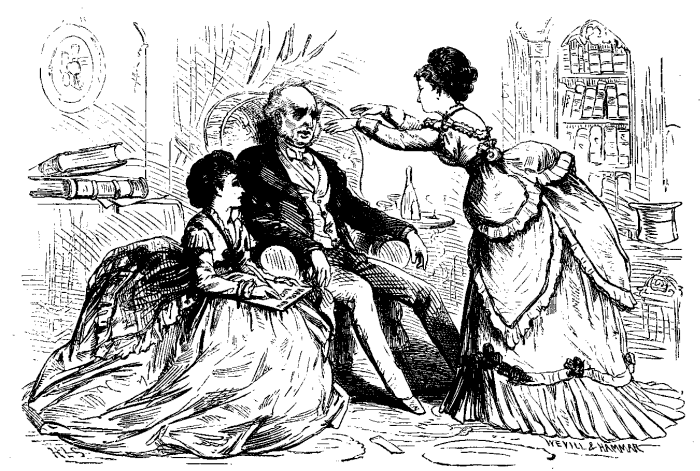
Above: an illustration entitled ‘Mesmerism on Wall Street’

Rubens adherence to the scientific led him into some unusual directions. He became mesmerized, if you will, by the theories of Fredrich Anton Mesmer, who believed a magnetic fluid in the body controlled the personality. A precursor to hypnotism and later the intellectual embrace of clairvoyance, mesmerism was such a popular distraction that Rubens placed a New York newspaper advertisement on February 8, 1841, claiming “a demonstration on the principle of animal magnetism” would be presented at his museum.

“The time is not far off when it will be said where is the person that doubts its existence,” he later said in a letter to his brother Rembrandt.

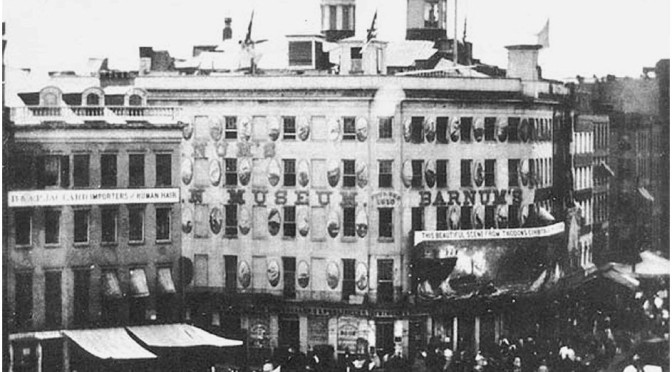
Unfortunately he could not quite predict the financial disaster that was the Panic of 1837 which sent his museum deeply into debt for years, later unable to keep up with the flamboyant American Museum just opened down on Broadway and Ann Street (south of City Hall Park) by showman P.T. Barnum.

Rubens had to eventually sell his entire collection, and it ungraciously ended up in the hands of Barnum himself in 1843. (The old John Scudder exhibits now belonged to the flamboyant showman as well.) Included in the sale: one of the surviving mummies that had been brought from Cairo.

Almost as a slap in the face, Barnum actually kept Peales’ museum open under the original name as a faux rival to the much more popular American Museum on the other side of City Hall. Eventually its contents were absorbed in the bigger museum

Rubens drifted to his brother’s museum in Baltimore, and, swallowing his pride, even tried to interest Barnum in a collaboration there, involving P.T’s newest star Tom Thumb. Eventually, Rubens retired from museum operations entirely, turning first to his love of taxidermy then to a dalliance in painting. He did achieve a certain amount of renown for his excellent still lifes, up until his death in 1865.

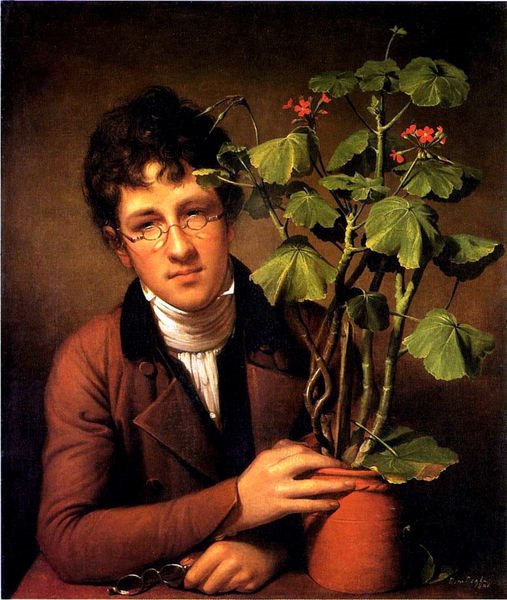
Rubens’ earnest collection set the stage for the world-class museums that we have in our city today. However, art historians probably know him best as the subject of his brother Rembrandt’s portrait Rubens Peale With Geranium (below).

Categories
Podcasts

The New York City Subway and the creation of the IRT

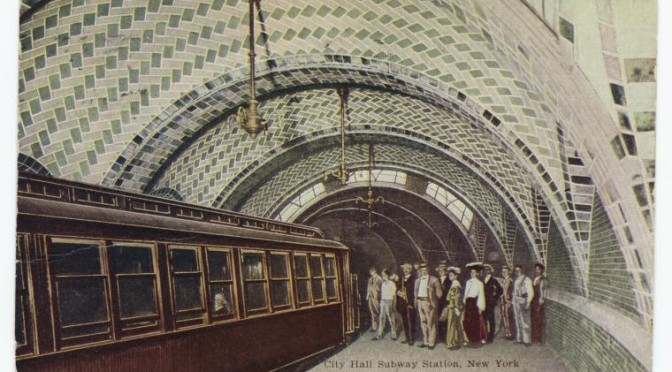
PODCAST In the fourth part of our transportation series BOWERY BOYS ON THE GO, we finally take a look at the birth of the New York City subway. After decades of outright avoiding underground transit as a legitimate option, the city got on track with the help of August Belmont and the newly formed Interborough Rapid Transit.

We’ll tell you about the construction of the first line, traveling miles underground through Manhattan and into the Bronx. How did the city cope with this massive project? And what unfortunate accident nearly ripped apart a city block mere feet from Grand Central Station?

ALSO: What New York City mayor had a little too much fun on opening day?

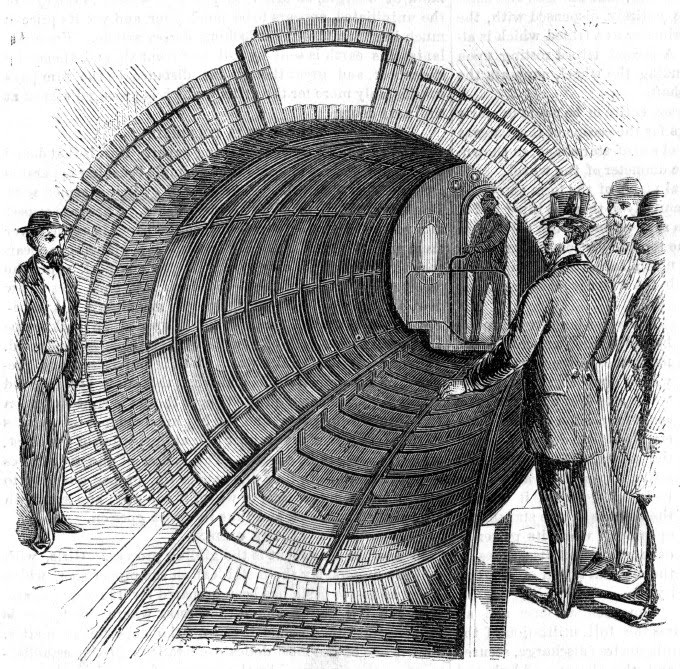
Below: An illustration of Alfred Beach’s pneumatic tube, built in 1870 a short distance from City Hall ran under Broadway from Warren Street to Murray Street. Although it’s little more than a footnote to the history of the New York City subway, it underscores that the technology was always available, even if public and political enthusiasm for such a project was not.

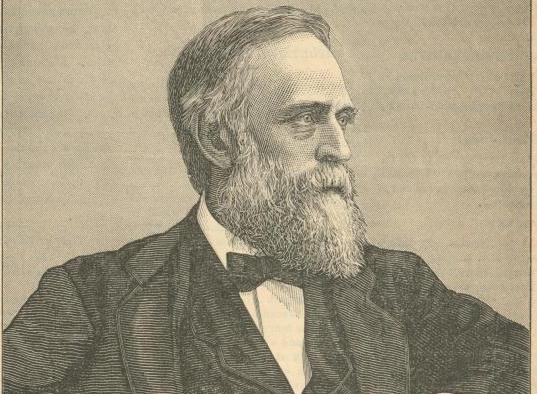
Abram Hewitt, mayor of New York in 1886, and an early proponent for an underground subway. (Pic NYPL)

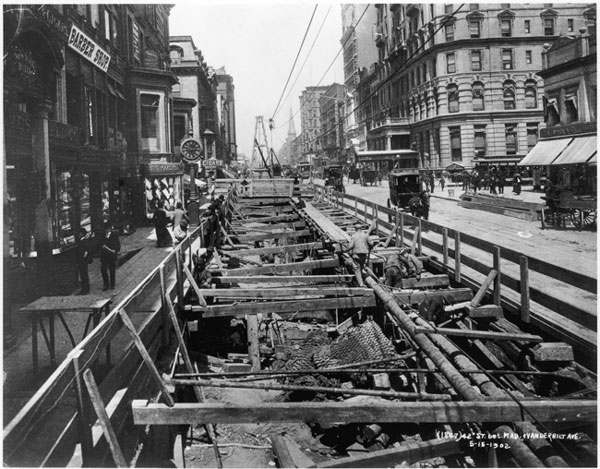
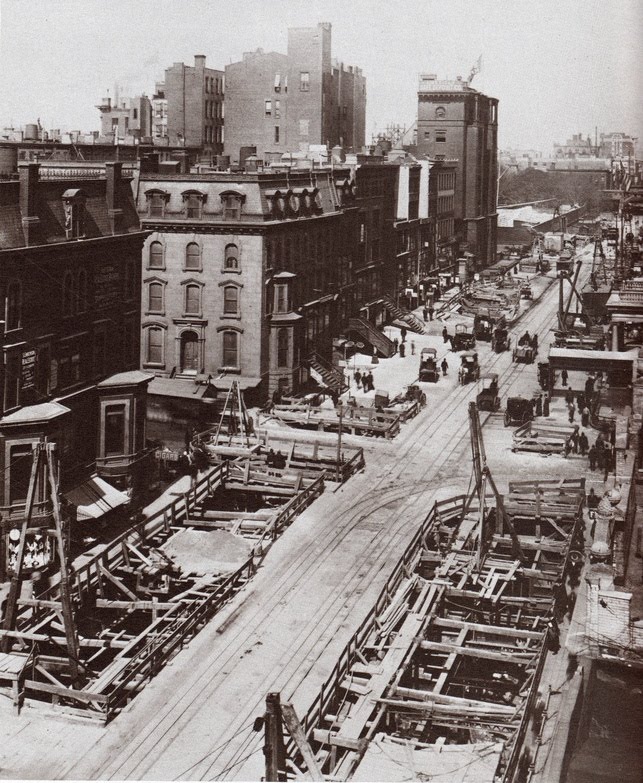
The cut and cover method chosen by subway engineers ensured that New Yorkers would be faced front-and-center with the daily slog of excavation and construction.

Forty-second Street during construction of the subway system, 1901.

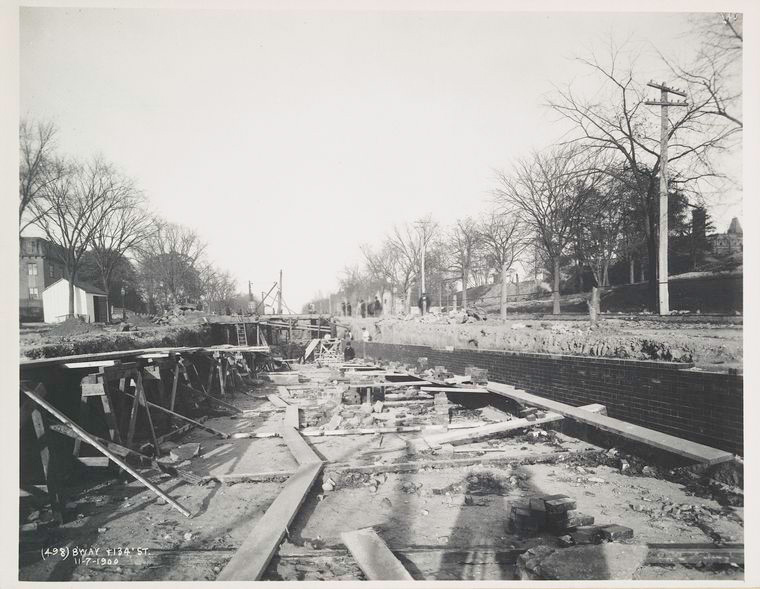
Mayhem during subway construction at Broadway and 134th Street! (NYPL)

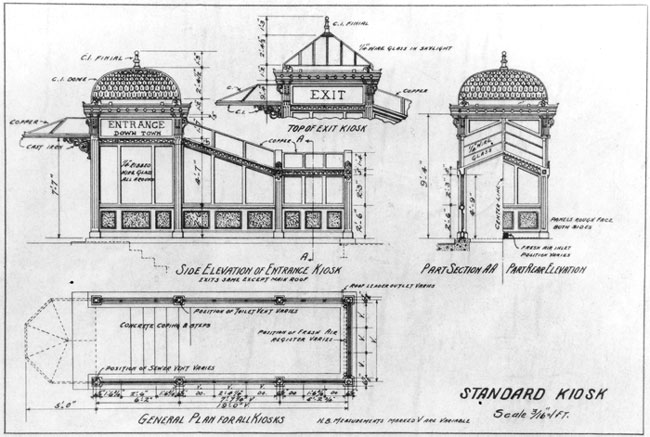
The plan for subway entrances, taking liberally from the design of kiosks in Budapest.

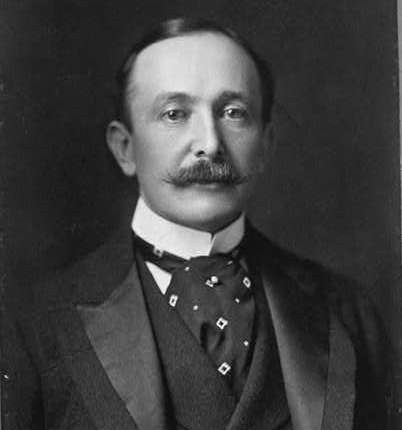
Thank this rich guy for your first subway, New York. August Belmont Jr., later known for his contributions to horse racing, founded the Interborough Rapid Transit Company to help operate the fledgling new subway system. (Pic LOC)

FOR MORE INFO:
We cannot begin to due justice to the birth of the subway in the way the good folks at the website NYSUBWAY.ORG have done. Hundreds of photos, original documents, and a wonderfully exhaustive list of stations, including many no longer in operation. Forgotten New York, of course, has several rich pages devoted to the subject.

And you definitely swing by the New York Transit Museum in Brooklyn, where you can actually sit in one of the original subway cars, among many, many more treasures of the original IRT.

Older Bowery Boys posts on today’s subjects:
Alfred Beach: The Short Lived Thrill of the Windy Subway
Grand Central’s Other Explosion
Know Your Mayors: George B McClellan
Know Your Mayors: Abram Hewitt

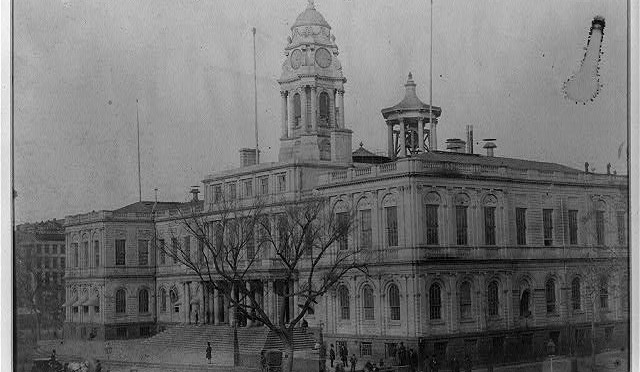
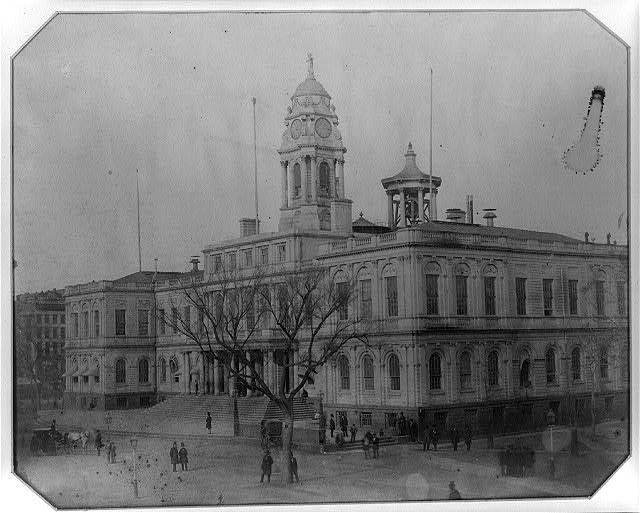
1855 New York City Hall: the Earliest View

The picture above, taken in 1855, may be the oldest existent photograph of New York’s City Hall building. This is three years before the famous fire, caused by celebratory fireworks, destroyed the cupola and crown. The year this picture was taken, Fernando Wood became mayor of New York’s, beginning a dominance of Tammany Hall that would last for generations.

Other major events in 1855: the city of Brooklyn absorbs Williamburgh and Bushwick, Castle Clinton opens as a immigrant processing center, and Walt Whitman would publish his first version of “Leaves of Grass.”

The photo was shot by Silas A. Holmes, using a process involving salted paper, invented in 1833. Holmes had a photography studio in what would became New York’s ‘photography district’, on Broadway in today’s SoHo area. Like so many in this budding new field, Holmes made his living as a maker of daguerreotypes, a trendy fashion for New Yorkers and quite the novelty of the day.

Not too much is known of Silas, whose claim to fame is apparently patenting a now-forgotten photography process involving a two-lensed camera box.

Although his studio was among the “most popular of the New York photographers,” he made some rather unwise investments “in property that finally swallowed up his earnings”. He abandoned his profession entirely, ending up running a boardinghouse until his death in 1886.

I found the picture above while perusing the Library of Congress archives, but some of Holmes other works can be found in other places, including, oddly enough, in Los Angeles’s Getty Museum. The Metropolitan Museum of Art has another 1855 photograph taken by Holmes, depicting Niagara Falls.

Voted down: Six New York City mayoral wannabes

By the end of the day today, one person will be named the mayor of New York City and many other people will be named the losers.

But take heart! Many fine people have lost the race for mayor. Today I focus on six rather interesting ones. Reverend Billy, take stock! If you lose today, you join the good company of the following people:


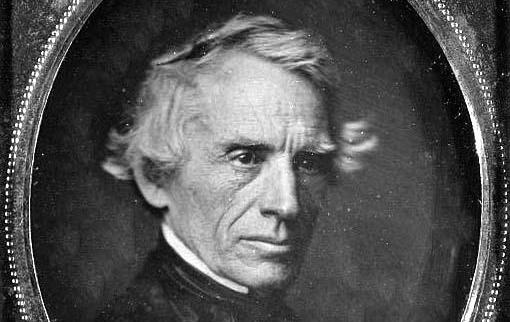
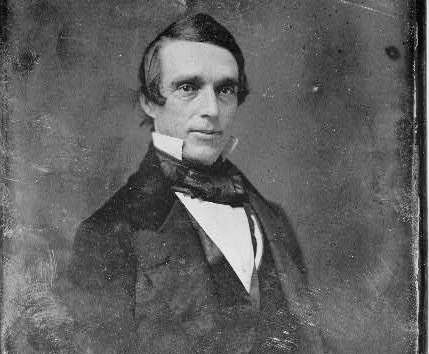
Samuel F.B. Morse
Sure, we know him as one of the 19th century’s most important inventors, creator of the telegraph and the dots and dashes that bear his name. But did you also know Morse was a virulent anti-Catholic and was once a mayoral candidate in 1836 for the Native American Party — in this case, ‘native’ American meaning anybody not newly immigrated? He saw Catholic conspiracies everywhere. People were not convinced; he received less than 1,500 votes. (He would run again in 1844 and not even muster 100 votes.)

Why he lost? As he had not achieved name recogniztion yet, his campaign against Tammany-backed Cornelius Lawrence was doomed from the start.

If he won… Morse was also a prolific portraitist and could have done his own to hang in City Hall


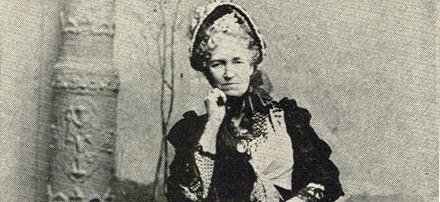
Cynthia Leonard
A political thinker, sufferagette and stage mom, Leonard played by her own rules. Nobody was going to tell her that a recently seperated woman couldn’t move to New York with her two lovely daughters and run for mayor of New York City in 1888! Why hasn’t Meryl Streep made this woman’s movie yet?
Why she lost? Being a rich New York woman in 1888 might have granted you social powers, but few political ones
If she won… The newspapers would have ignored her and written all about her daughter — the glorious Lillian Russell, who the press was already obsessed with. Most likely, her daughter’s ambiguous affair with Diamond Jim Brady would have scandalized New York more than it already did.


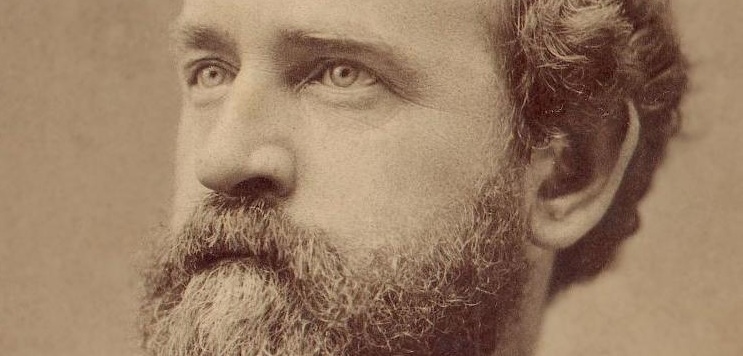
Henry George
The political economist and founder of philosophical land theories appropriately named Georgism desperately wanted to share his vision with New Yorkers, running for mayor in 1886 under the United Labor Party, and actually beat out a young politico named Theodore Roosevelt. Both lost to Abram Hewitt. He ran again in 1897 under the far more ambitious party title The Democracy of Thomas Jefferson.
Why he lost? The first time, he didn’t have Tammany’s backing or Hewitt’s appeal. In 1897, there was another minor snafu; George died four days before the election, of a stroke brought on by campaigning.
If he won… The city would have been ran by his son, Richard F George, who stood in for his dead father.


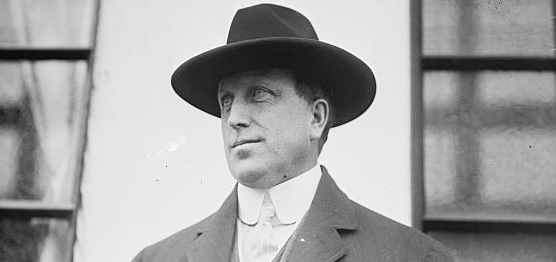
William Randolph Hearst
Perhaps more ingraciously known as the inspiration for Citizen Kane, newspaperman and millionaire Hearst couldn’t buy himself the mayor’s seat, believe it or not, running in 1905 and 1909 under the fleeting Municipal Ownership League and Civic Alliance parties, respectively
Why he lost? Tammany Hall was re-ascendant at the turn of the century, and Hearst their biggest enemy.
If he won…One of the richest men in America and owner of a media empire as mayor? Never happen. ALSO: Citizen Kane might have been even more interesting.


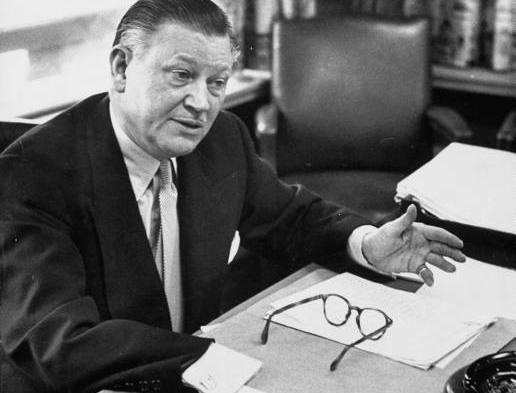
Robert K. Christenberry
Thrown to the wolves as a token Republican candidate against a popular incumbent Robert Wagner, Hotel Astor manager Christenberry was crushed by his opponent, receiving slightly more than 25% of the vote.
Why he lost? He wasn’t the most politically saavy man who ever lived.
If he won…He would have been the first mayor with no right hand (he lost it in the war)


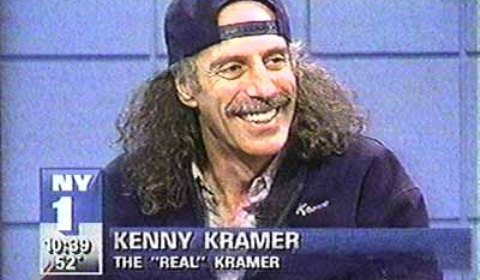
Kenny Kramer
The man who inspired a character on Seinfeld threw his ballcap into the ring as the Libertarian Party candidate in 2001.
Why he lost? For one, the man who won, Bloomberg, is a billionaire. Also, Kenny may have had a credibility problem. When he tried running in 1997 — with Seinfeld still on the air — the Daily News ran an article ‘No Joke! Real Life Kramer’s Running
If he won…then who would run the Seinfeld Reality bus tours?

Charming mayor A. Oakey Hall: coy, clueless or corrupt?

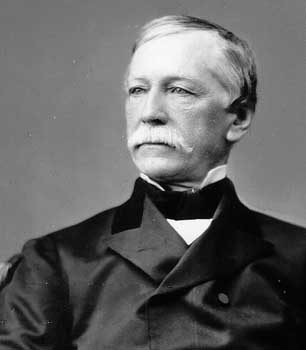
An early portrait of A. Oakey Hall as photographed by Matthew Brady

KNOW YOUR MAYORS Our modest little series about some of the greatest, notorious, most important, even most useless, mayors of New York City. Other entrants in our mayoral survey can be found here.

Mayor A. Oakey Hall

In office: 1869-1872

Few leaders of New York could match Abraham Oakey Hall in personal flair. For every nine colorless businessmen who ascend to the mayoralty, there is one truly debonair statesman, an enigma of charm who seems to govern with ease. In 1869 that was Hall, a jack of all trades, a raconteur and paragon of style. Unfortunately, as the most glamorous member of the notorious Tweed Ring, corruption may have been another trend that suited him.
Before the events, Hall was destined for great things. Most (even Tweed himself) assumed Hall would become New York’s governor, with the White House in sights. He was after all born in Albany, in 1826, back when New York’s capital was one of the most populous cities in the entire country. For those who believed in such things, Hall’s birth there might have been providence, because his parents were merchants in New York and were merely visiting Hall’s grandfather. “I was born transitu,” he proclaimed later. But he never made it back to Albany, at least not officially.

A slight, nimble figure, Hall expressed a variety of talents at an early age, latching on first to journalism, writing for many city newspapers while working his way through New York University, graduating in 1844. Next came a love for the law, attending both Harvard and Cambridge before heading to New Orleans to start a small practice. He then returned to Manhattan and swiftly maneuvered through the courts to become the assistant district attorney in 1850 and a short time later to even argue a case before the state Supreme Court — all before he was 25 years old.
He would win true acclaim and popularity, however, as the city’s district attorney proper, serving first from 1853-1859 and again from 1861-1869, one of New York’s most important legal voices during the Civil War. He allegedly prosecuted over 12,000 cases. He was also on hand during the Draft Riots, funneling many rioters through the court system and straight to jail. His accomplice was often judge John Hoffman, soon to be the mayor of New York who preceded Hall. Their crusades against rioters would boost both their popularity.

Hall would also be known for a rather alarming law briefly on the books in 1855. The state had outlawed the sale of alcohol in the entire state. Under advisement of mayor Fernando Wood (who wanted to please hard-drinking Irish voters), Hall constructed a law allowing for unencumbered liquor sales, seven days a week, in the two months before the prohibition was to take effect. May and June of 1855 were the booziest months in New York City history.


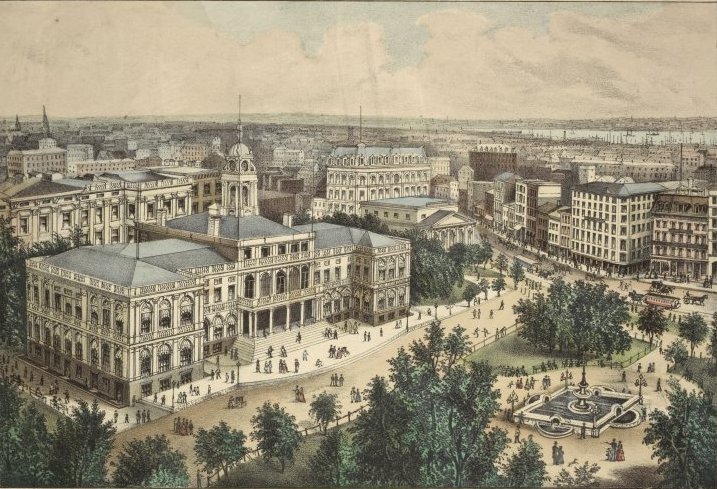
Above: City Hall in 1874 in an illustration by Currier and Ives

With his professorial good looks and humorous demeanor, A. Oakey was a natural for politics of course. Bespeckled and bearded, he spoke elegantly — Elegant Oakey was his nickname after all — and wrote passionately. He penned social polemics, theatrical plays, political tirades and at least one holiday novel — Old Whitey’s Christmas Trot.

More importantly though, he was an attractive politician to Tammany Hall and in particular its boss, William M. Tweed**.

We know the Tweed Ring as that most notorious of crooked entities that came from the Democratic machine. In fact, through, Hall was for many years a Republican — even claiming to have helped form the Republican Party! — and was even elected District Attorney as a member of that party. But he was lured into Tammany Hall shortly before the war ended and would facilitate their dominance over the affairs of City Hall.

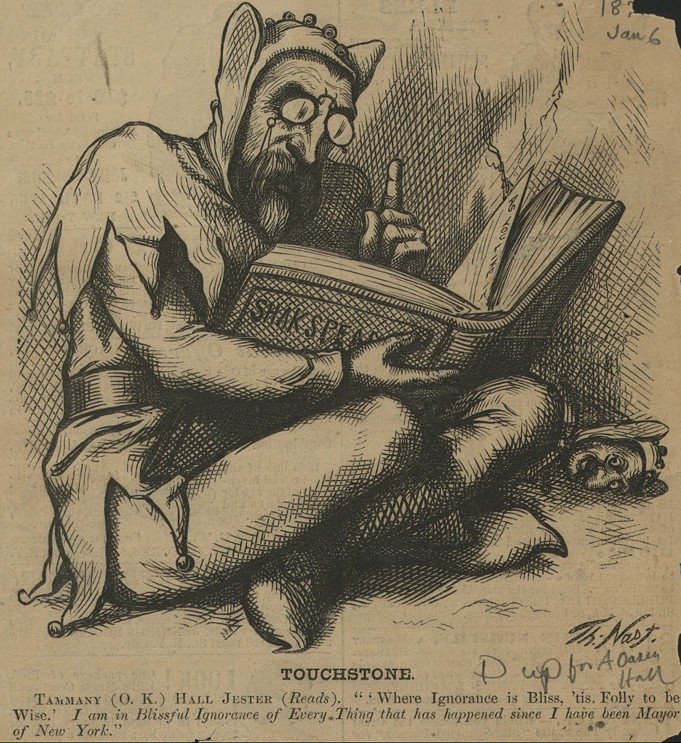
‘Boss’ Tweed liked him because he was confident, likable, distracting. He often quoted Shakespeare and cracked jokes. The complicated layers of graft, bribery and outright theft that were installed in city government needed an attractive front. In one of the most manipulated elections in New York history, Tweed and Tammany Hall succeeded that fall of 1868 in getting their man Hoffman into the governors seat, with Elegant Hall becoming his elegant replacement at City Hall. (Hall would be re-elected three times in heavily tampered elections.)

The year 1869 was a watershed year in New York City corruption, with the Tweed’s hand-selected cohorts fully in place at City Hall, all oversight committees abolished the previous year, and civic projects sprouting up throughout the city, ripe for graft and embezzlement.

Tweed and the others directly associated with the ring (chamberlain Peter Sweeny, comptroller Richard Connelly) needed Hall’s charm to bedazzle the press and public, deflecting any charges of malfeasance.

The level of Hall’s involvement in the city corruption at the time is unclear. He was brought before a grand jury twice, once during the final days of his tenure as mayor. Two trials followed, the first ending in mistrial, the second in acquittal. Despite clear signatures on dozens of suspicious invoices, Hall claim was that he was much too busy running the city to have carefully inspected each and other claim.

Below: Thomas Nast parodies Hall’s statements at being ‘blissfully ignorant’ of corruption

Perhaps so. During his first year in office came a devastating stock market crash, the Black Friday of September 24, 1869, facilitated by Tweed’s chums Jay Gould and Jim Fisk.

As immigrant numbers increased — as tenements like Five Points were swelling to overcrowded — racial and religious disunion threatened the city. Like Tammany, Hall was a friend of the Irish; on St. Patricks Day, he would wear an emerald flytail coat. When Hall suddenly banned the particularly violent protestant Orange parade that year, its participants feared his actions were controlled by Irish Catholics. Governor Hoffman ordered the parade to resume, but the result was an even more violent riot, with 62 people dead and over a hundred injured. Confidence in Hall’s leadership quickly evaporated.

Despite the aura of corruption and mediocrity that hung over his tenure as mayor, Hall actually had a quite colorful life afterwords, working as both a newspaper editor (for the New York World), a London correspondent for the New York Herald and the manager of a theater. He even produced and starred in his own play. For some reason, few went to see it.

He returned to practicing law in his later years in London, famously returning to New York in a court case in 1893 representing Emma Goldman. Despite the convergence and press coverage of these two great New York figures, Goldman and Hall lost the case.

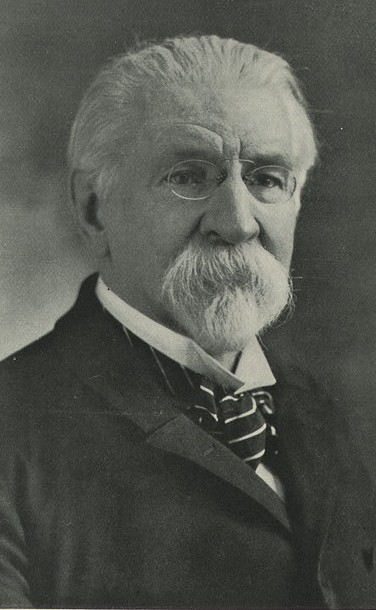
Hall died on October 7, 1898, at his home at 68 Washington Square South, just blocks from where he first went to college. The picture above was taken the year of his death (pic courtesy NYPL)

**Wanna know more about Boss Tweed and the Tweed Ring? Tune in on Friday!

Categories
Podcasts

PODCAST: The Woolworth Building

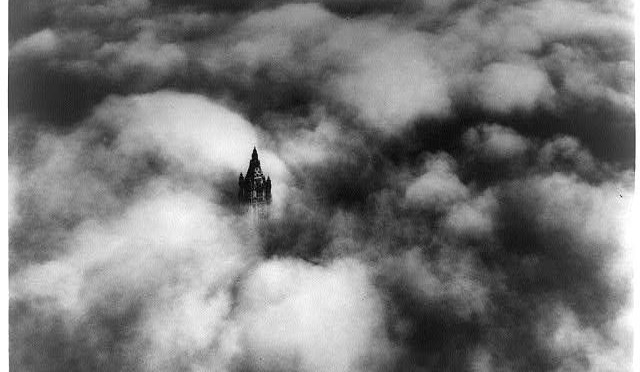
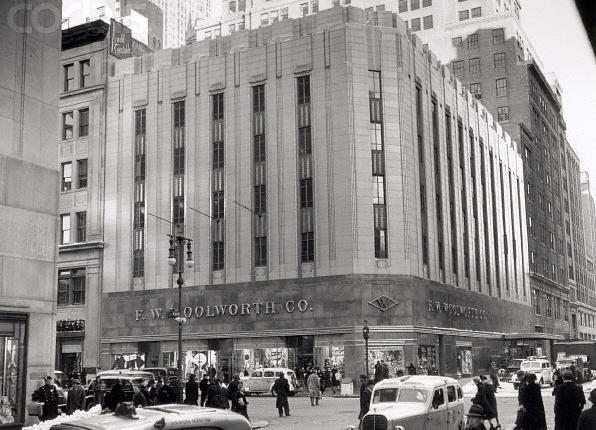
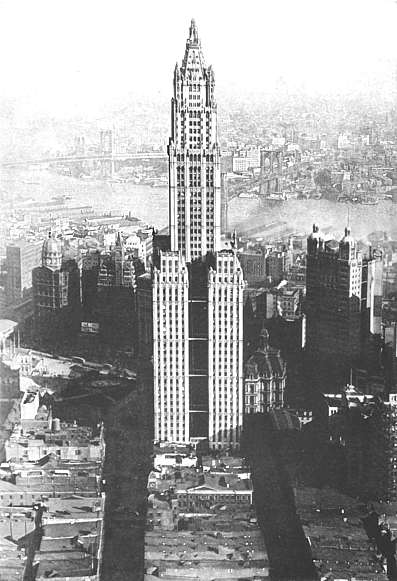
When this classic photo was taken in 1928, the Woolworth Building was still the tallest in New York

F.W. Woolworth was the self-made king of retail’s newfangled ‘five and dime’ store and his pockets were overflowing with cash. Meanwhile, in New York, the contest to build the tallest building was well underway. The two combine to create one of Manhattan’s most handsome buildings, cutting a Gothic profile designed by America’s hottest architect of the early century. So what exactly does it all have to do with sneakers and gym clothes?

Listen to it for FREE on iTunes or other podcasting services. Or click this link to listen to the show or download it directly from our satellite site.

Frank Winfield Woolworth was an upstate New York who worked in general stores in his youth before branching out into his own unique ‘five and dime’ retailers — places where customers could interact with the merchandise directly, without a store clerk.

Frank’s stores changed the way people shopped for everyday items. This fancy Woolworth location even had a lofty address — 5th Avenue and 39th Street (courtesy Corbis)

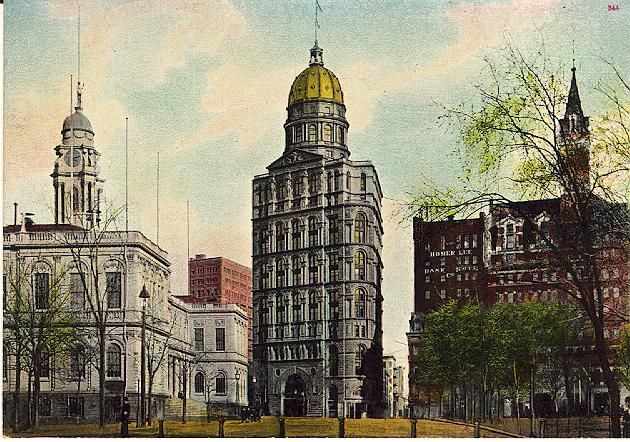
The tallest structure in New York for many years was the spire of the Trinity Church, on Broadway, at the foot of Wall Street. In 1890, its height was finally topped with the completion of the World Building by the influential publisher of the New York World newspaper, Joseph Pulitzer.

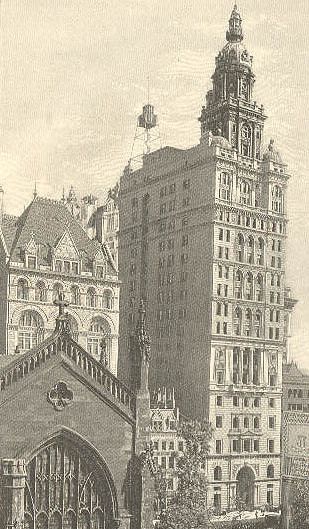
In 1894, Pulitzer lost the tallest building title with the completion of the Manhattan Life Building, a clever structure with two sides that top out with an iron bridge and a towering lantern at 348 ft. It was across the street from Trinity Church (today occupied by the domineering Bank of New York Building).

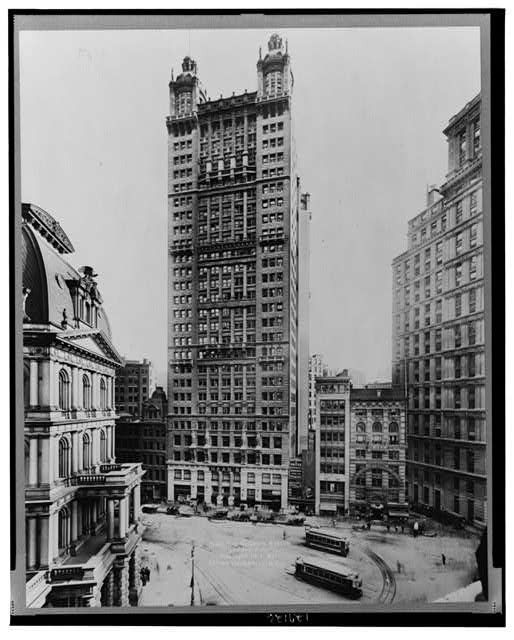
The Park Row Building came next, completed in 1899. It still stands today, with the Woolworth looking down on it. J&R Music World still occupies many of its floors today.

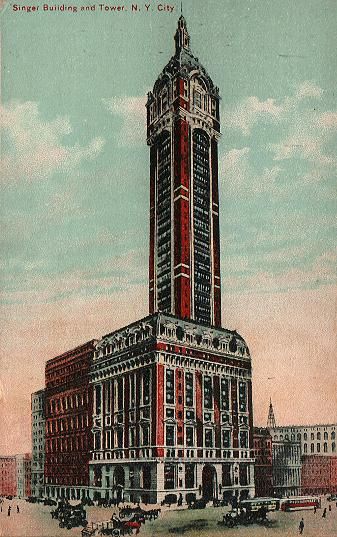
Perhaps the strangest building to become New York’s tallest was the Singer Building, built in 1908 at a then-staggering 612 feet. It has the very dubious distinction of being the tallest building in history ever to be purposefully demolished (in 1968, making way for the frustratingly bleak One Liberty Plaza).

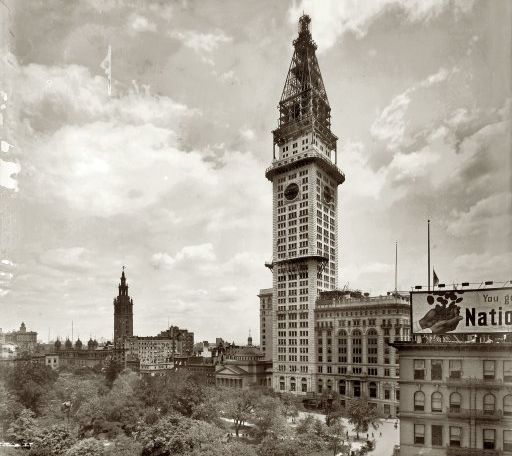
In order for Frank to build New York’s tallest structure, he need to beat the Metropolitan Life Tower, completed in 1909, still a beauty next to Madison Square Park.

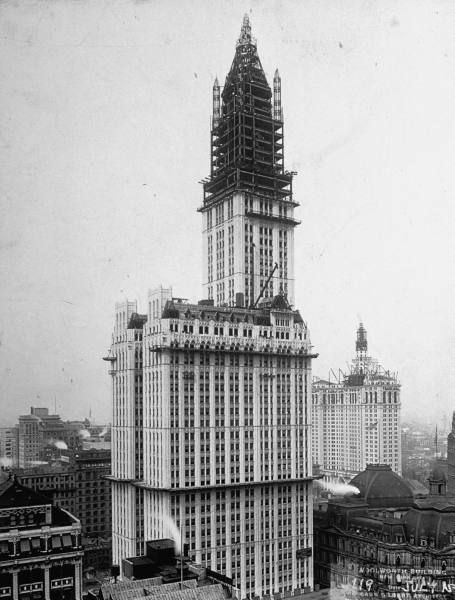
The Woolworth, nearly complete in this picture from 1913 (courtesy the Life archives)

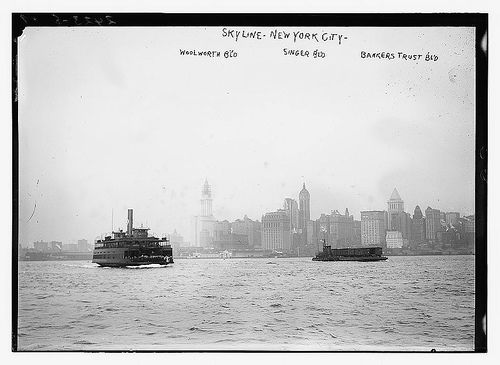
View from the Hudson, mid 1910s: three tallest buildings are the Woolworth Building, the Singer Building and the Bankers Trust Building (built in 1912) Pic courtesy Library of Congress

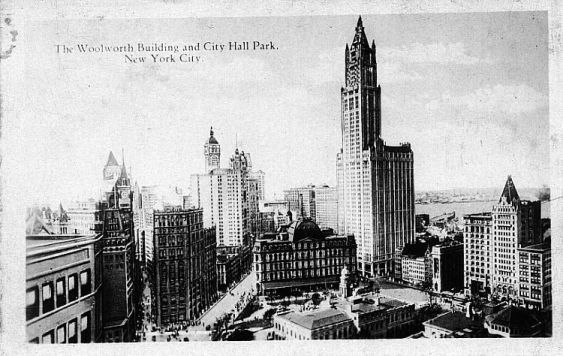
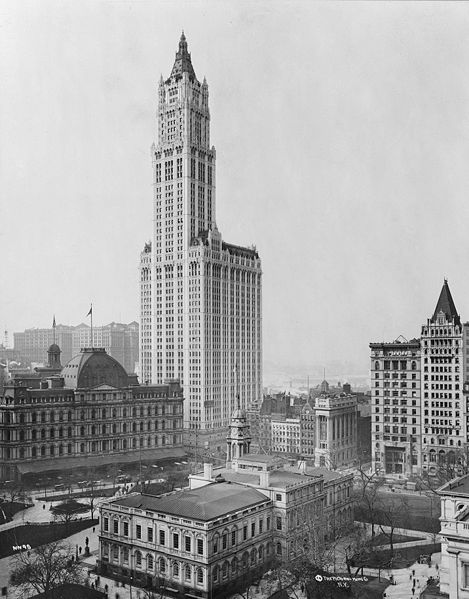
From this old postcard and photograph below, you can see the Woolworth’s proximity to City Hall and the old Post Office (later demolished to expand City Hall Park)

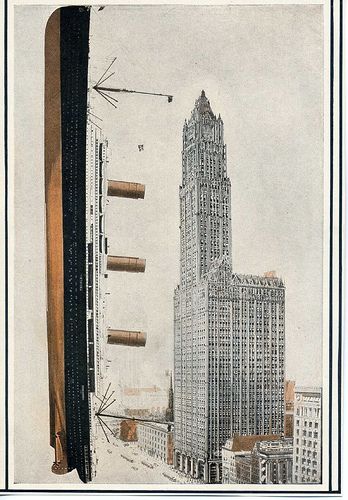
It’s height was enough of a marvel that this rather odd comparison was made in the book Our Wonder World Vol. IV, Geo. L. Shuman & Co., 1914 (Courtesy Flickr)

A view from the other side of the Woolworth, taken in 1920, reveals two other buildings that were once considered ‘the tallest building in New York’: the domed World Building to the left, the Park Row Building to the right.

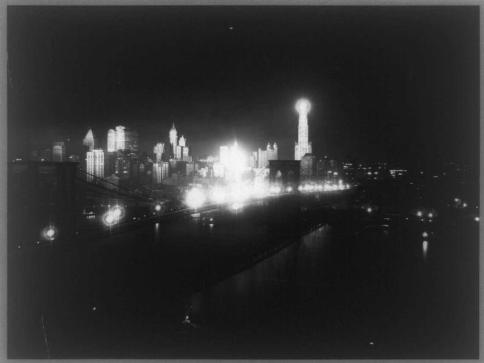
A remarkable and rather dreamlike nighttime shot of Manhattan in 1919, with the Woolworth building gleaming like a candle

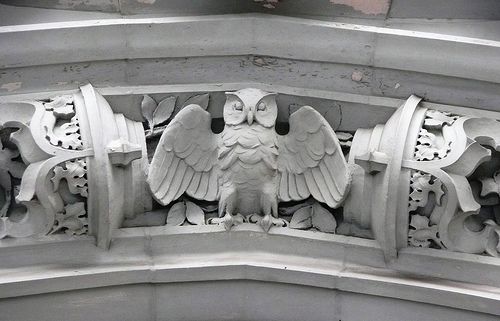
An owl ‘gargoyle’, one of many playful details Cass Gilbert incorporated into the building’s massive terra cotta face.

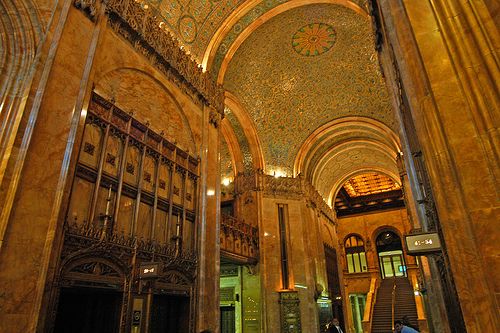
Inside the vaulted, gold-drenched lobby (courtesy Flickr)

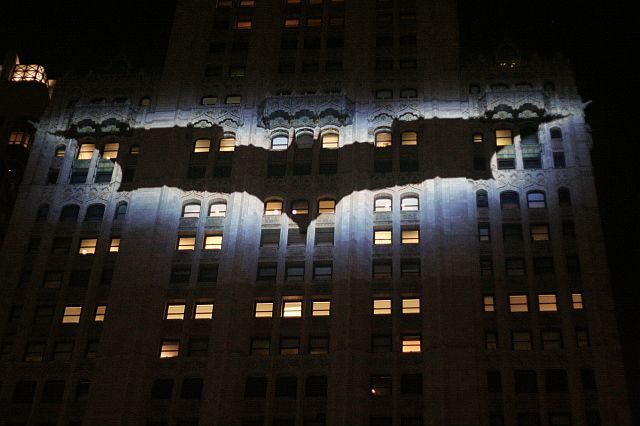
To promote the most recent Batman film The Dark Knight, the Bat Signal was projected onto the Woolworth Building.

Categories
Podcasts

PODCAST: Who Murdered Mary Rogers?

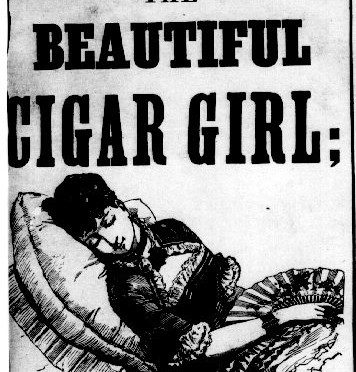
It’s a mystery! It’s 1841 and the most desirable woman in downtown Manhattan — the ‘beautiful cigar girl’ Mary Rogers — is found horribly murdered along the Hoboken shore. Hear some of the stories of this case’s prime suspects and marvel at the excessive attentions of the penny press.

Also: Edgar Allen Poe takes a crack at solving the case, and who is the mysterious Madame Restell?

Listen to it for free on iTunes or other podcasting services. Or you can download or listen to it HERE

NOTE: The sound quality is a little wobbly at first but it goes back to normal after the first few minutes. Sorry!

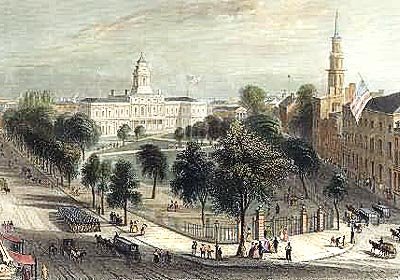
Many of the events of the story take place around the City Hall area — Anderson’s tobacco shop would have been just to the left of the picture, Mary’s boarding house to the right. (This illustration is actually from 1854, but you get the idea.)

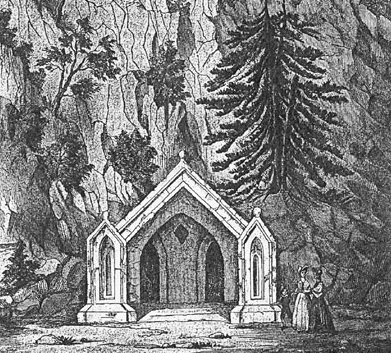
Sybil’s Cave, in an area along the Hoboken shore once called Elysian Fields — it’s here that the body was found … and another gruesome death related to Mary Rogers would occur just a couple month later

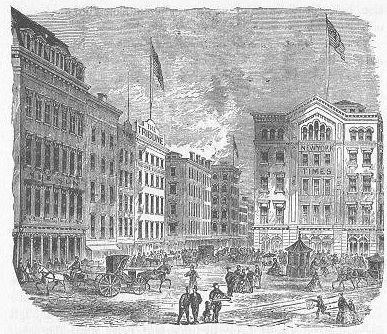
Printing House Square, across from City Hall and mere steps from Mary Rogers’ boarding house, got into the act by printing ever scandalous detail of the murder investigation

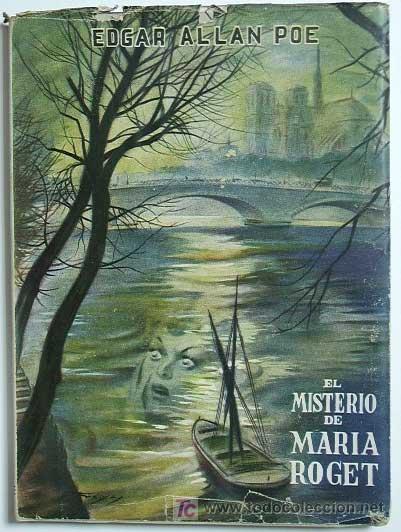
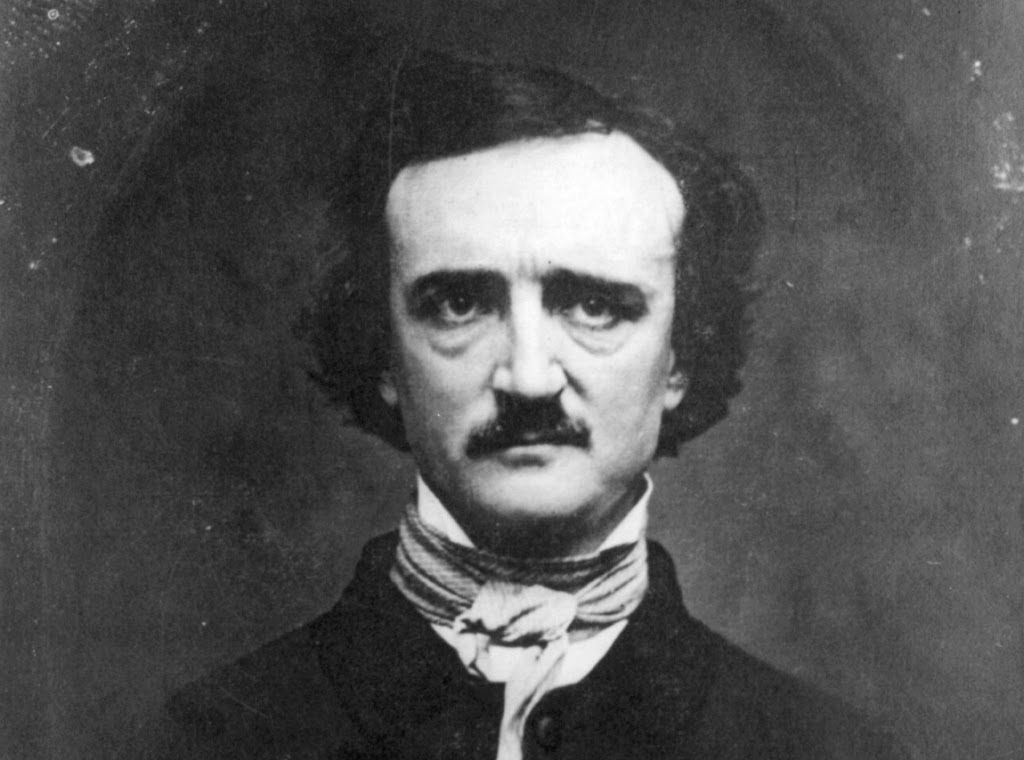
The murder inspired Edgar Allen Poe to write ‘The Mystery of Marie Roget’, changing the names and location but leaving the essential facts intact. But had Poe been paid to write the story by one of the case’s suspects, Mary’s former employer?

Madame Restell — what role did she play in the disappearance and death of Mary Rogers?

Mary Rogers lived at a boarding house run by her mother that once stood here, just a block from CIty Hall. It was here that Mary met most of the men who later became suspects in the case.

Categories
Podcasts

PODCAST: Barnum’s American Museum

You know PT Barnum from his circus, but he was bringing the freakshow to New York long before then. Come take a tour with us of the craziest museum to ever hit New York City.

Listen to it for free on iTunes or other podcasting services. Or you can download or listen to it HERE

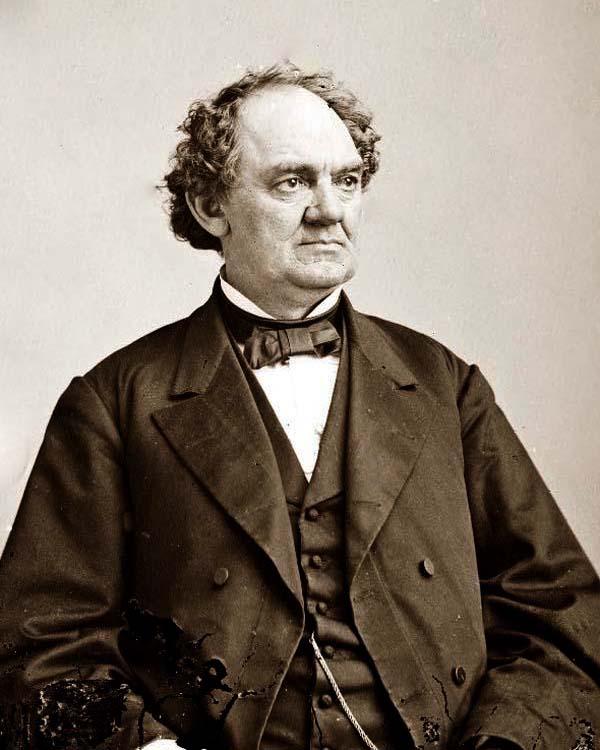
P.T. Barnum, godfather of the spectacle

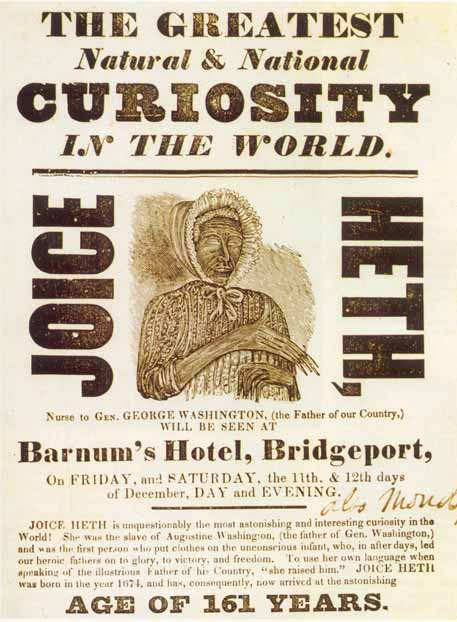
Barnum’s first hit, his ‘the 161 year old’ find

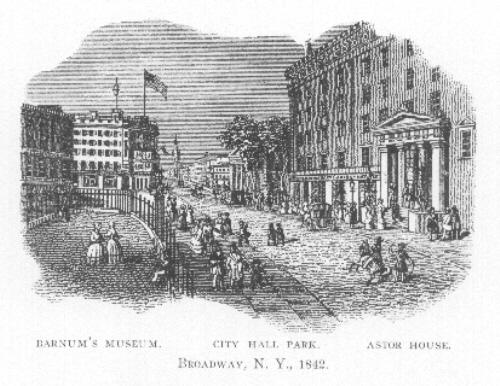
The scene around City Hall Park in 1842. The Barnum Museum is the building with the flag:

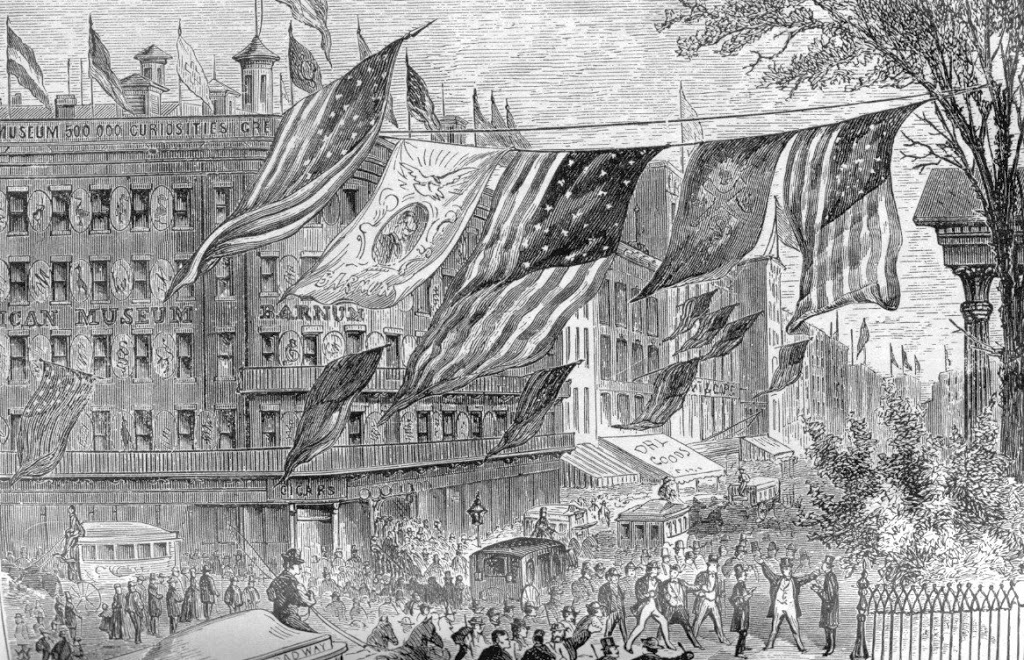
Another illustration of the wild scene in front of the museum

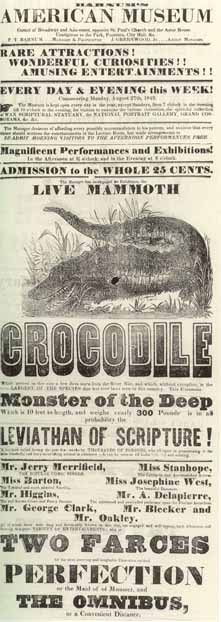
A typical Barnum advertisement:

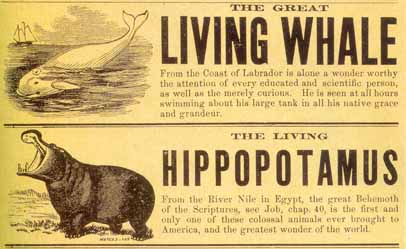
Unbelievably, Barnum’s hosted a wide variety of aquatic creatures, including whales:

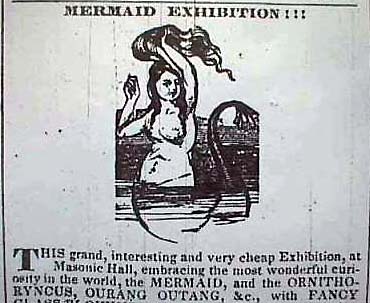
An advertisement for the Fejee Mermaid:

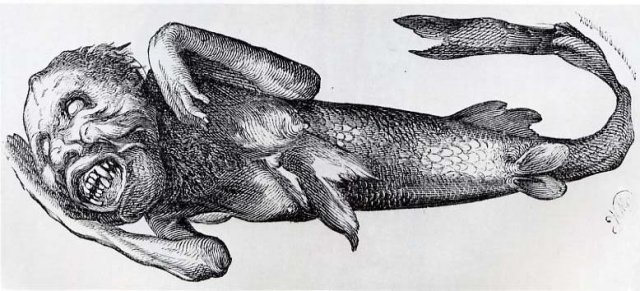
And the real thing:

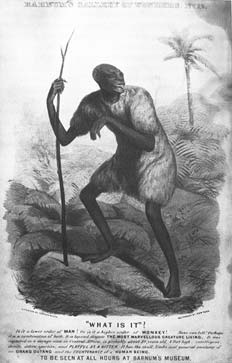
An illustration — by Currier and Ives, no less — of the ‘What Is It’

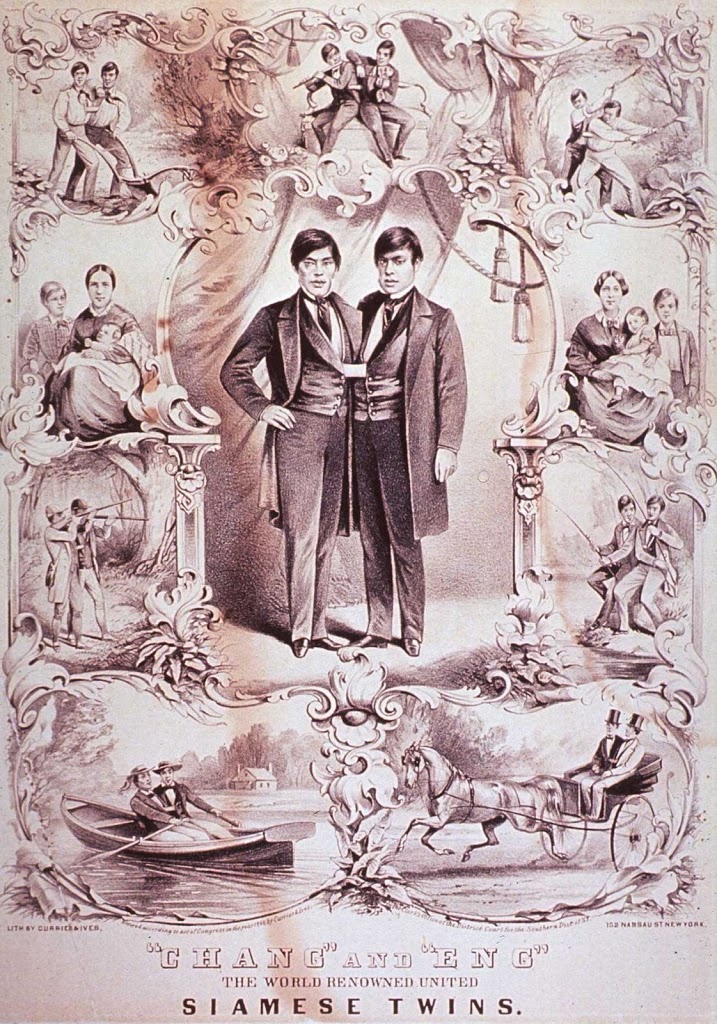
The Siamese Twins, Cheng and Eng

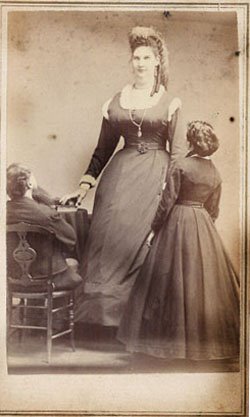
Another attraction: Anna Swan, the Nova Scotia giantess, who had to be rescued from the fire that burned the museum down in 1865

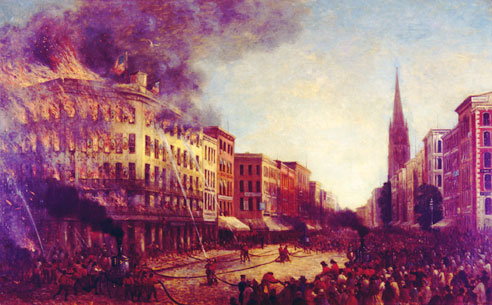
The museum burns, 1865

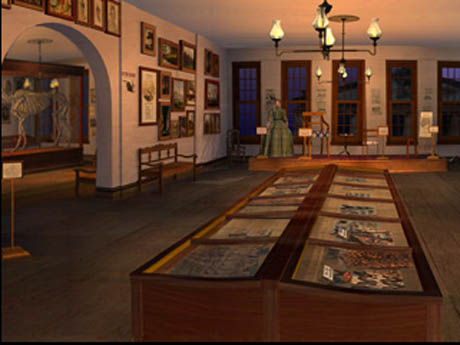
The City University of New York has an extraordinary website devoted to Barnums, which includes a very Myst-like simulated walkthrough of the American Museum and a thorough archive of information. I highly recommend you check it out.

Categories
Uncategorized

The forgotten New York museum of Rubens Peale

What if your best known accomplishment in this world was the fact that you posed for a well-regarded American masterpiece by your more talented older brother? Welcome to the world of Rubens Peale!

Philadelphians and American art lovers in general should be quite familiar with Rubens’ father Charles Wilson Peale, one of early America’s pre-eminent painters, portraitist to Washington and Jefferson, and patron of what would become the Philadelphia Museum. Peales museum for Philly, opened in 1786, is not only one of this country’s most important natural history institutions, it set the stage for pioneering museums across the country.

Peale graced his children with some truly loaded first names — Raphaelle, Rembrandt, Titian and of course Rubens. And they all attempted to follow in their father’s footsteps, both as painters and as curators of their own museums.

Raphaelle tried to open one in Charleston. Rembrandt set one up in Baltimore (unfortunately timed for the War of 1812). Baby brother Titian took the reins in Philadelphia and became the family’s most prolific naturalist.

Rubens, at first more interested in the sciences than the arts, operated the Philadelphia museum before coming to New York City in 1825 to set up his version of his father’s dream. The address for the Peale Museum of New York City was 252 Broadway (across from City Hall on the west side) in a building then known as the Parthenon.

The museum opened on October 26, 1825, to monopolize on a huge city celebration occurring that day: the opening of the Erie Canal. By 1840, Peale would change the name to the New York Museum of Natural History and Science.

Rubens’ museum would have had much the same makeup as the one in Philadelphia : great displays of stuffed animals in natural settings, display cases of butterflies and insects, postulations of pre-Darwinian scientific theories laid out over several rooms and supported with lectures and even theatrical productions. One book refers to Rubens as a “popularizer of scientific discoveries and a manager of theatrical attractions.”

In 1826, Rubens imported two mummies from Cairo for display; after 16 days of presenting the draped bodies, he presented for the interest of the “scientific and the curious” the unwrapping the age-old corpses in the museum lecture room.

His museum also featured fine arts and historical portraits, some by his own family members, others by respected painters as Bass Otis.

Rubens was sensitive to some of the cheap ploys of the Philadelphia Museum (live animals, displays of human deformities) and tried to keep his New York museum a dignified affair, although today we would find its use of waxworks and flashy lectures rather silly.

Above: an illustration entitled ‘Mesmerism on Wall Street’

Rubens adherence to the scientific led him into some unusual directions. He became mesmerized, if you will, by the theories of Fredrich Anton Mesmer, who believed a magnetic fluid in the body controlled the personality. A precursor to hypnotism and later the intellectual embrace of clairvoyance, mesmerism was such a popular distraction that Rubens placed a New York newspaper advertisement on February 8, 1841, claiming “a demonstration on the principle of animal magnetism” would be presented at his museum.

“The time is not far off when it will be said where is the person that doubts its existence” he later said in a letter to his brother Remington.

Unfortunately he could not quite predict the financial disaster that was the Panic of 1837 which sent his museum into debt, later unable to keep up with the flamboyant American Museum just opened down on Broadway and Ann Street by showman P.T. Barnum. Rubens had to eventually sell his entire collection — to Barnum — in 1843. Included in the sale: one of the surviving mummies that had been brought from Cairo.

Almost as a slap in the face, Barnum actually kept Peales’ museum open under the original name as a faux rival to the much more popular American Museum on the other side of City Hall. Eventually its contents were absorbed in the bigger museum

Rubens retired after the failure of the museum, turning first to his love of taxidermy then to a dalliance in painting. He did achieve a certain amount of renown for his excellent still lifes, and when he died in 1865, he had literally just finished the aptly named work The Artist’s Last Birthday.

Rubens’ earnest collection set the stage for the world-class museums that we have in our city today. However, art historians probably know him best as the subject of his brother Rembrandt’s portrait Rubens Peale With Geranium (below).

Know Your Mayors: “The Boy Mayor of New York”

Our modest little series about some of the greatest, notorious, most important, even most useless, mayors of New York City. Other entrants in our mayoral survey can be found here.

The 1910s were a rough time to be mayor of New York City. The decade’s first mayor, William Jay Gaynor, took an assassin’s bullet in the neck and an entire term to die from it. A second mayor — in fact, New York’s youngest mayor ever — would not live to see the end of the decade either.

We covered Gaynor’s unusual tenure in the job in a prior entry. Former army Col. Ardolph Loges Kline stepped in to fill the remainder of Gaynor’s term, a duration of less than four months. Kline, former president of the Board of Aldermen (an equivalent of today’s city council), was remarkably enough a replacement for that job too. He stepped in after first Board president, a man whom I will shortly introduce below, vacated the post.

Although fairly insignificant, Col. Kline holds a distinction that Rudolph Guiliani must loathe — Kline is the last mayor to hold an additional elected office after leaving City Hall. (He became a U.S. representative for a single term.) Keep in mind this significance; in the early days of New York, the mayor’s seat was a mere stepping stool to a host of elected jobs. Kline seemed to take that stepping stool with him when he departed on the first day of 1914.

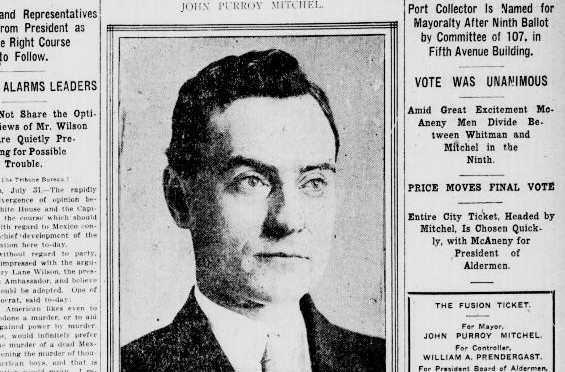
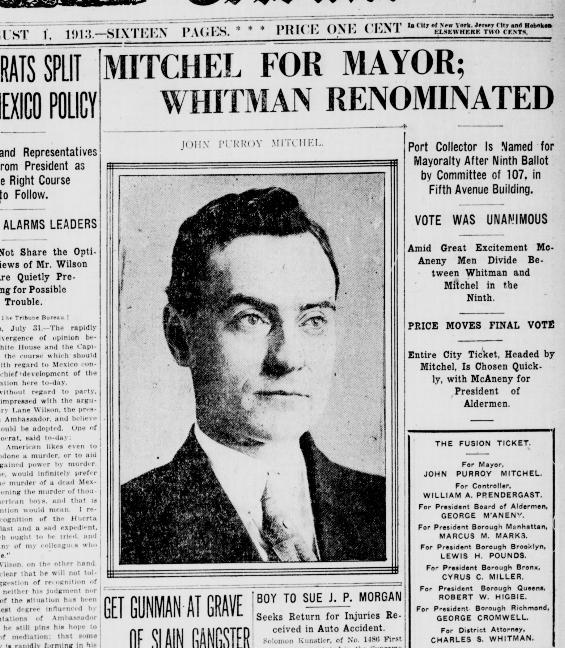
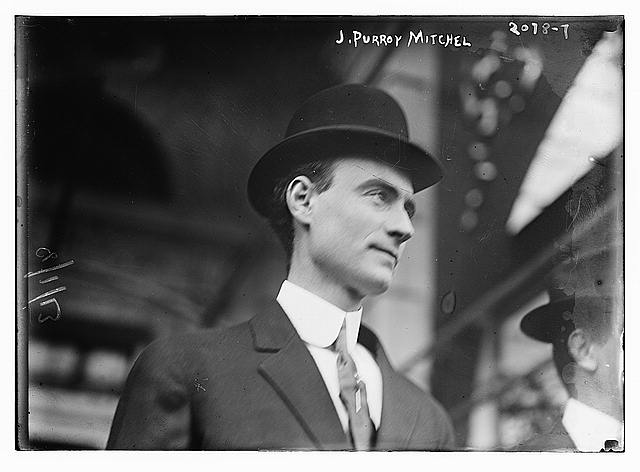
Kline stepped aside in 1914 for the newly elected John Purroy Mitchel, an ambitious young man who at 34 become the city’s second youngest mayor. (Hugh Grant — that’s Hugh J. Grant — was the youngest at 31.) He would forever be known as The Boy Mayor.

Mitchel had a meteoric rise not too dissimilar to our former governor Eliot Spitzer. A graduate of Columbia University and the New York Law School, Mitchel was thrust into the spotlight in cases that frequently pit him against the all-powerful leader of Tammany Hall, Charlie Murphy.

In 1907, all of 28 years old, Mitchel brought down the borough presidents of Manhattan and the Bronx in one fell swoop, the ringleaders of a corrupt contracting scandal. He quickly became known for his reform-heavy, almost naive take on civic responsibility, a refreshing breath in this era of Tammany Society. Mitchel was quickly elected to the president’s seat of the Board of Aldermen, in the same election that brought Gaynor to City Hall.

As Gaynor was losing the graces of Tammany, Mitchel swiftly proved himself a thorn in the side of the shifty New York police force. When it was discovered that a prominent police chief Charles Becker, on the Tammany payroll, had murdered a Jewish casino owner on July 1912 in efforts to ‘shut him up’, Mitchel used the public outcry to sweep the precinct halls of mass corruption.

Mitchel’s rising star was impervious to Tammany attacks and was elected the new mayor, the nominee of a fusion party.

In his inauguration speech, he makes the startling announcement: “It will not be necessary for us to go to the people of the city every day and tell them what we propose to do. It will be better for us to wait a little while and then to go to them and tell them what we are doing or have done.”

Some of the reforms he brought into play include a standardization for government works and a innovative city development zoning plan.

Unfortunately, history almost repeats itself with another crazy assassin. Four months into his term, a disgruntled 72 year old man by the name of Michael Mahoney fired a shot at Mitchel at City Hall.  But unlike his predecessor Gaynor, the mayor was not hit and he and his entourage wrestled the disturbed man to the sidewalk.

The real attack, however, was yet to come — and no surprise, from Charlie Murphy. Although Mitchel had continued with his vow to eradicate police corruption, an educational reform policy was viciously attacked from both ends, from Murphy’s Tammany pawns and from William Randolph Hearst‘s New York World. The attacks worked; Mitchel, a Catholic, lost the support of the poor Irish Catholics who believed the education reforms would only benefit the rich. By the end of his term, the Boy Mayor was soundly defeated by John Francis Hylan — bringing Tammany back to City Hall.

Undetoured, Mitchel changed career course. World War I had raged throughout his tenure as mayor, and he strongly believed in the importance of military service. Still a young man, he joined the Signal Corps Army Air service as a pilot in 1918. Unfortunately nobody would ever know whether he would bring his brilliance and ambition to the armed forces as on July 6, 1918, fell out of his plane during a training session in Louisiana, after apparently failing to fasten his seat belt. A curiously ridiculous and tragic end to a unique New York personality.

At the Engineers Gate in Central Park on Fifth Avenue sits a very, very gold bust of Mitchel. The bust was made by Adolph Weinman, the go-to sculpture guy of iconic New York architects McKim Mead and White. He’s also honored by Mitchel Square in Washington Heights (with a monument to World War I, see below) and Mitchel Air Force Base in Long Island.


Strange fact: allegedly, his aerial death was the partial inspiration for Gary Cooper‘s demise in the silent film ‘Wings’, best known as the first ever Best Picture Oscar winner.

Know Your Mayors: Fernando Wood

Our modest little series about some of the greatest, notorious, most important, even most useless, mayors of New York City. Other entrants in our mayoral survey can be found here.

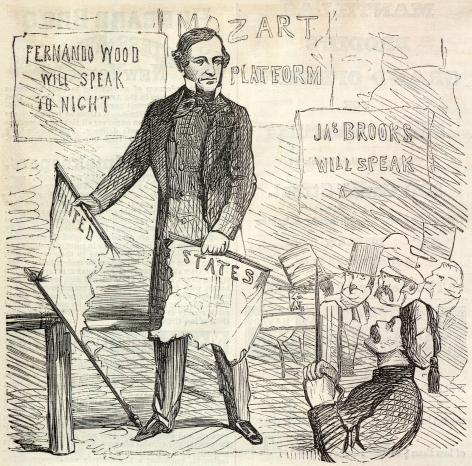
And now we come to one of New York’s most notorious, absolutely in the top 10% of the most corrupt mayors ever in our fair city — Fernando Wood. He was the first mayor ever to be forcibly dragged from City Hall and arrested. Even then, he was elected more than once, was seen at one point as a savior, and even received the unanimous votes of New York City’s dead constituents. We also have him to thank for one of New York’s most treasured landmarks.

The Philadelphia-born Wood had distinguished himself as a former merchant and then as a member of Congress from 1841-43. His meteoric rise came through the assistance of Tammany Society, the frequently corrupt Democratic machine which all but dominated New York politics. By 1855, the year Tammany placed Wood in the mayoral seat, the Society was at the height of their control.

During his first term, 1855–1858, he was initially seen as a moral reformer, who “closed saloons on Sunday, suppressed brothels, gambling houses and rowdism, [and] had the streets cleaned” according to Tammany historian Gustavus Myers.

But these tokens of fortitude were a facade to extort support from those very vice industries. By 1856, he abolished the Sunday saloon restriction in exchange for their support. The Municipal Police Force under Wood became corroded with graft and bribery, at times more fearful than the crime they were purportedly there to eliminate.

So it should come as no surprise that even nativist gangs like the Dead Rabbits were soon under Wood’s control, ensuring ‘fair’ elections — fair for Wood, that is — by destroying ballot boxes, tossing others into the river and even tallying votes from lists of voters in cemeteries. It helped that rival gangs like the Bowery Boys (the gang, not us) were in the pockets of the Republicans.

Fed up with New York’s culture of corrupt law enforcement, in 1857 the state legislature formed a rival police force the Metropolitan Police Force. Wood’s Municipal force, fat from its complex institution of graft that essentially left crime to fester unabated, were not interested in stepping aside, nor did Wood relinquish his power to the Republican-controlled state. When Albany-appointed State Commissioner Daniel Conover arrived at City Hall, Wood promptly threw him out. (Wood had hired his own state commissioner, Charles Devlin, who bought the position for $50,000.)

Conover returned with the Metropolitan police force and a warrant for Wood’s arrest. Wood’s Municipal men were waiting, and when the captain grabbed Wood and began dragging him from City Hall, the Municipal men pounced.

Soon Metropolitan police were battling Municipal men, a surreal conflict now known as the Police Riots of 1857. With the assistance of the National Guard, Wood was briefly arrested. The Metropolitans eventually disbanded, but not before a chaotic summer of two rival police forces, cancelling each others arrests and raiding each other jails. Ah, it was a great time to be a knife-wielding gang member. *sigh*

Disagreements with Tammany left Wood without his primary backers and out of office in 1858. (Industrialist Daniel Tiemann was mayor from then until 1860.) But under the aegis of a new political machine, called Mozart Hall, he swept back into office for another two year term.

This time, his allegiances took on a Confederate tenor. A sympathizer with the Southern cause, especially as New York’s profits as a port city were tied closely to Southern plantations, Wood suggested that New York City secede with the South. In his official recommendation, he proclaims, “Amid the gloom which the present and prospective condition of things must cast over the country, New York, as a Free City, may shed the only light and hope of a future reconstruction of our once blessed Confederacy.”

“With our aggrieved brethren of the Slave States, we have friendly relations and a common sympathy,” he remarked, in statements made January 6, 1961.

He also had a prescient idea for all the wrong reasons — to merge Manhattan, Staten Island and Long Island into a new independent commonwealth, known as the Free City of Tri-Insula. Had Wood gotten his way — and his plan was greeted warmly by the corrupt Common Council — the city might have joined the South. Less than forty years later, of course, similar consolidation plans (with less anarchic pretentions) prevailed.

Unfortunately for his grandiose schemes, the Civil War erupted in April of that year at Fort Sumter and a huge outpouring of support in New York soon swept Wood’s ideas into obscurity. In fact, being a crafty politician, he was soon organizing troops for the Union cause, the eventual result of which would soon lead to New York’s draft riots in 1863.

By then, however, Wood was out of the mayoral office and onto other pastures — namely the U.S. House of Representatives. How this man could have been elected with his track record is personally beyond me, but thus is the way of the New York political machine.

He did, however, leave us with one lasting mark on the city — the present-day location of Central Park.

Categories
Revolutionary History

What’s your favorite Nathan Hale death spot?


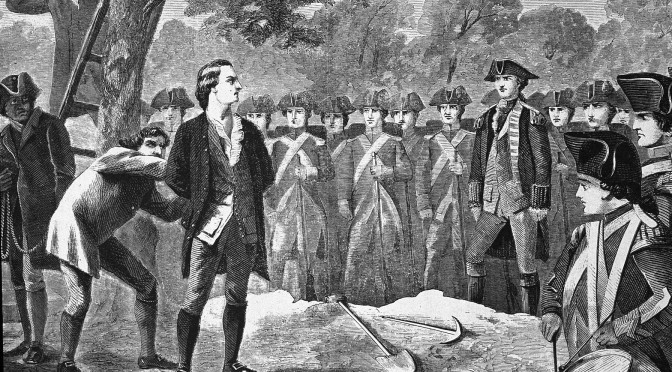
Nathan Hale was a 21 year old Connecticut native who volunteered for George Washington’s Continental Army and stayed behind in New York after the Army’s retreat in September 1776 in order to gain intelligence from the British. Hale was unfortunately caught — in Flushing Bay, Queens — brought to Manhattan and hanged, though not before delivering his elegant last words, “I only regret that I have but one life to give for my country.”

He may have had only one life, but he appears to have three separate locales in Manhattan which claim to be the spot he died.

— A plaque at 65th and 3rd Avenue placed by the New York Historical Society seems to be pretty definitive, being the most recent and shining with that NYHS seal of approval. (The plaque indicates Hale was hung at a place actually on 66th Street.)

— The Daughters of the American Revolution, however have a plaque at the Yale Club on 44th and Vanderbilt Avenue, proclaiming the same thing

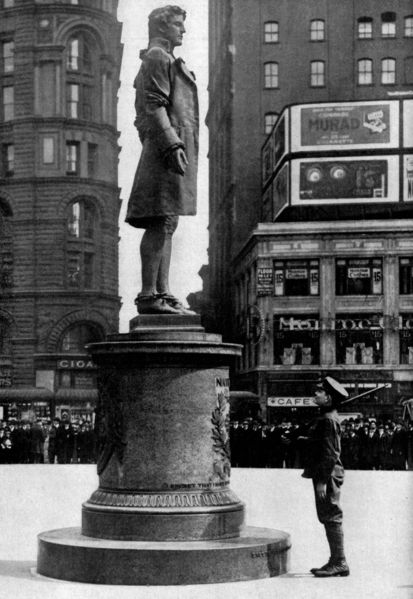
— Meanwhile, a statue of Nathan Hale standing right in front of City Hall was once proclaimed to be the spot. Back in Revolutionary War days, this was a grassy commons where many public displays were held, so on the surface it seems a possibility

And those are just the theories that haven’t been dismissed. Previous speculation to Nathan’s hanging spot have include East Broadway on the Lower East Side, the intersection of Madison and Market streets, and somewhere along “the Brooklyn shore.”

Pictured: In 1917, a soldier in World War I regalia salutes Hale’s statue in City Hall