Categories
Those Were The Days

Turkey raffles were 19th century versions of bar trivia nights


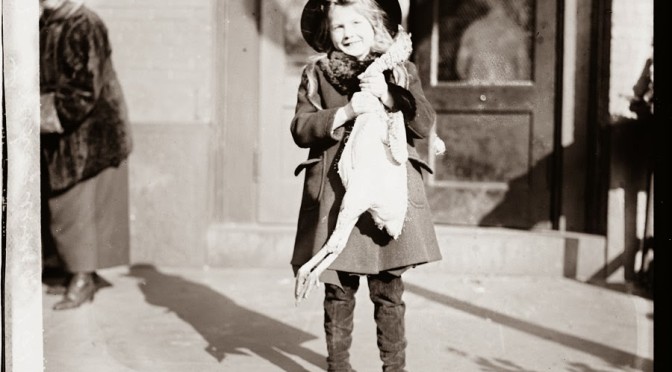
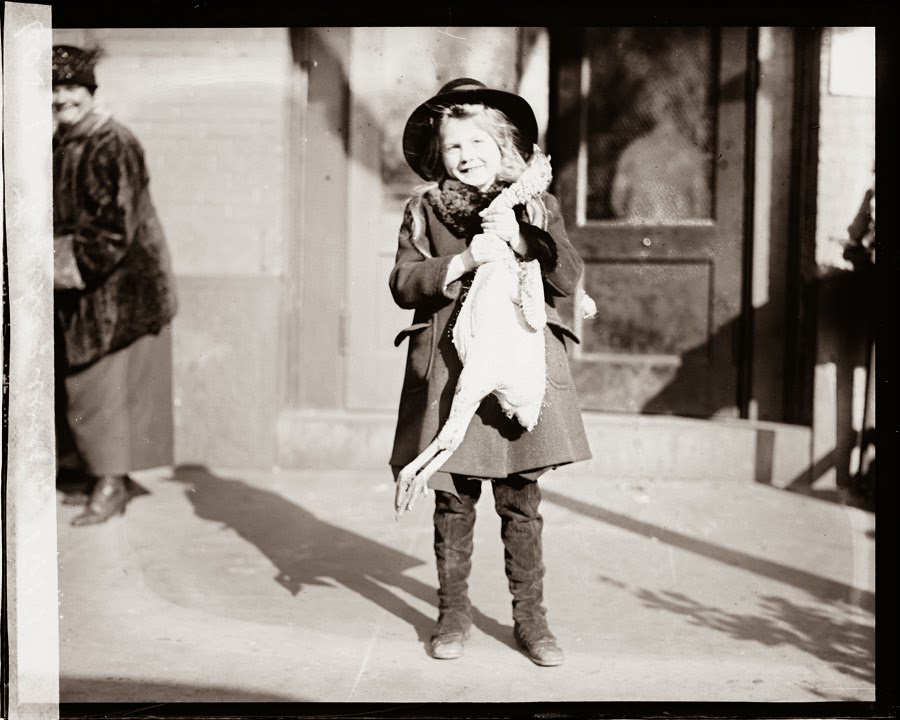
Hopefully this young lady acquired this turkey by legitimate means.

In this week’s podcast, I feign shock at the wild party held at the old home of famed actress Charlotte Melmoth, a former school for etiquette-turned-booze hall.  To quote historian Henry Reed Stiles directly:

After [Charlotte’s] disease, the house was converted into a tavern, which became the favorite resort for the dissipated young men of the town, who there indulged in drinking, eating oysters, raffling for turkeys, geese, etc. their orgies being carried on with a freedom to which the retired character of the spot was particular conducive.”

What’s so indulgent about a raffle?  Today they’re used mostly in expos and high school fund-raisers, a relatively benign form of gambling (although governed by specific state-wide rules).  But in the 19th century, raffles were widely seen in saloons, a jovial excuse for men to get liquored up and throw their money in for a chance at a moderate prize.  In essence, it was gambling most fowl.

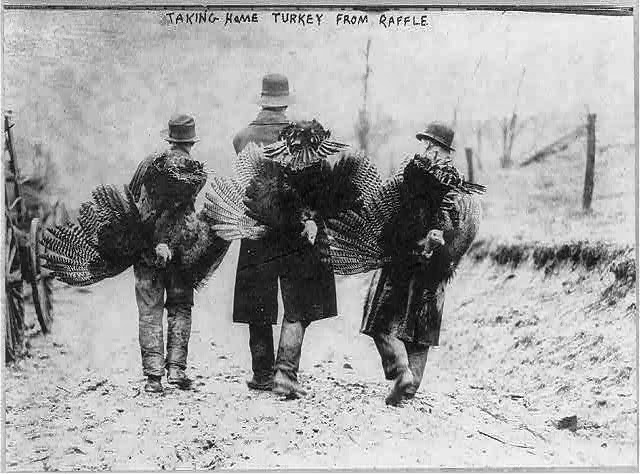
Below: Three victors at a local turkey raffle, 1912, location unknown (LOC)
“[T]here are many men on this fast old planet who are unable to resist the seductiveness of a turkey raffle,” the New York Sun reported in 1891.  “[P]erhaps there are enthusiasts who regard the practice of turkey raffling as not gambling, but a spirited method for the distribution of food products.”

The most common form of turkey raffle involved a game of dice.  Men paid for the privilege of rolling a pair of dice three times, and the man with the highest total score took home the turkey.

Another popular raffle method involved tossing several pennies into a hat, then dumping them out on a table.  The man who had the most pennies to come up heads would get his choice of the turkey or its cash equivalent. (Author Andrew Smith reports of one such raffle with a turkey value of 4 shillings, an approximate value of $10-$20 today.  Most took the money.)

Raffles were a quick and easy way for bartenders to get patrons to drink more. In this way, they’re very much like a weekly karaoke party or a pub trivia night.

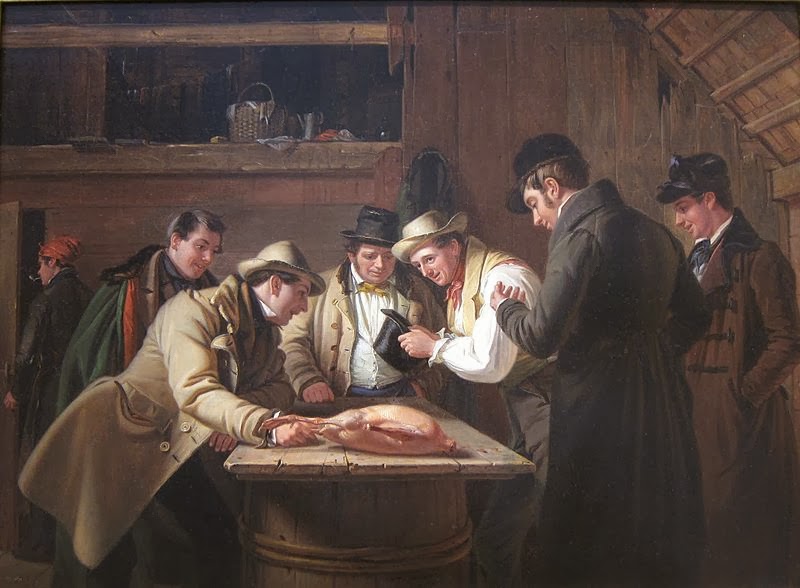
Below: Geese also got into the game. This great 1837 painting is by Long Island artist William Sidney Mount, called “The Raffle (Raffling For The Goose).”  The scene takes place in the backroom of a tavern, the hat containing raffle tickets.  Today this painting hangs at the Metropolitan Museum of Art.
A November 1887 account in the New York Evening World (reprinting an article from Buffalo) recounts the tale of a bank teller who won a six-pound turkey in a bar raffle:

“[H]is friends, many of whom he had never met before, crowded around him and congratulated him.  Then they swarmed him over to the bar and, of course, it was necessary to order some slight liquid refreshment for the gentlemen who felt some amicably disposed to him.  One hundred and fifty lagers were quickly disposed of, and the bank teller waxed hilarious.  Taking the turkey by the legs he swung it around his head in triumph……. Before he had left the place he had paid for $20* worth of liquor.”

*According to the Inflation Calculator, that’s about $500 today. 

The reputation of the turkey raffle as an instrument of vice and debauchery was such that a 1914 article in the New York Sun heralded their demise. “It has long been suspected that this form of gambling was ruining men and wrecking homes.”

Turkey raffles were finally outlawed in New York bars in 1914.  “That kind of chance taking is now classed as gambling, and every holder of a liquor license is forbidden to allow it in his place.” [source]
Categories
Neighborhoods

A short history of a short street named Raisin Street

[34-36 Barrow Street]

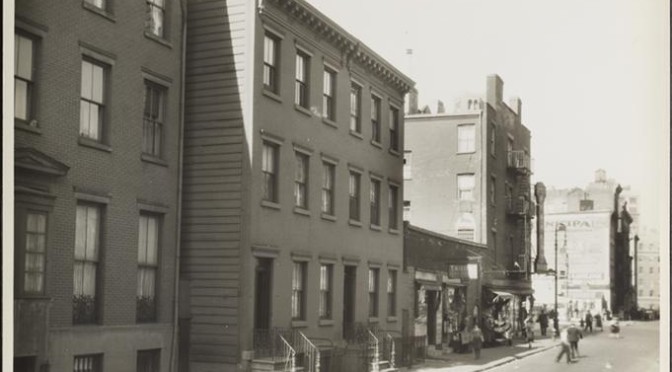
A 1932 photo of 34-36 Barrow Street by Charles Von Urban, courtesy the Museum of the City of New York. Click here to see what this section of the street looks like today

In this week’s Ghost Stories of Old New York podcast, Tom speaks of the ghosts at romantic restaurant One If By Land, Two If By Sea, located in an old carriage house that was moved from its original location to its present home on Barrow Street in today’s West Village.

Barrow Street is a quiet hook of a path, emanating from the southeast side of Sheridan Square, bending west when it meets odd, little Commerce Street, then wanders westward to the water’s edge.  If you’ve ever been lost amid the crooked streets of the West Village — and who hasn’t, at some point — then you’ve certainly stumbled onto Barrow.

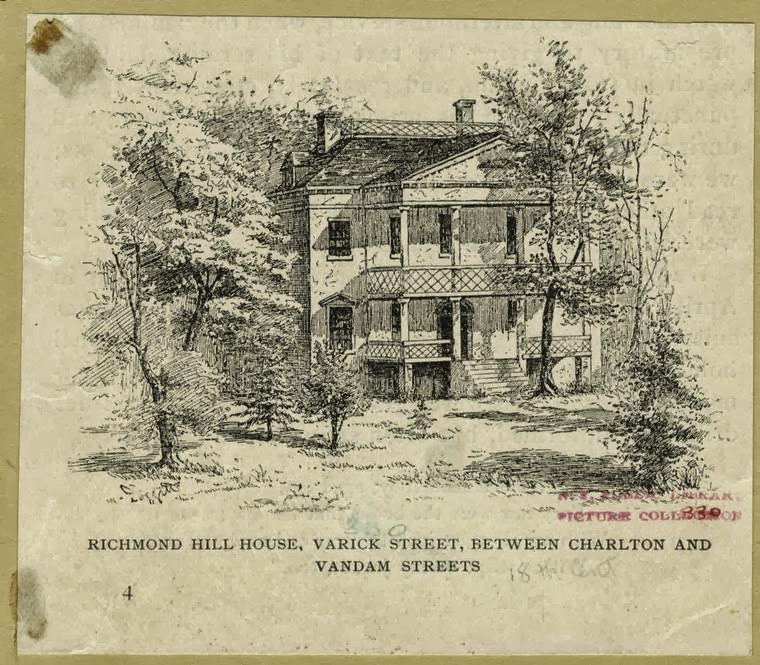
The road that became Barrow was close to the estate of Richmond Hill, the esteemed manor that was once home to America’s first two vice presidents, John Adams and Aaron Burr.  In the heady post-Revolution period, this path was originally named Reason Street, for Thomas Paine‘s ‘The Age of Reason’.  Indeed, Paine once lived at a couple nearly locations, at 309 Bleecker Street and 59 Grove Street (where he died).

As legend has it, however, residents soon took to calling it Raisin Street, both as an accented corruption of the original name and a possible insult to Paine (who was not beloved at the time of his death in 1809).

Raisin Street, most notably, became the home of New York’s first ‘Orphan Asylum’ in 1805.  Six orphaned children were placed here under the care “of a pious and respectable man and wife.” [source]

While many streets in New York City are named for healthy fruits — Brooklyn produces Pineapple, Orange and Cranberry Streets, for instance — few are named for shriveled ones.  In 1807, Trinity Church, the principal landowner of Reason/Raisin Street, directed that the street be renamed for Thomas Barrow, a vestryman and agent for the church.

I’m sure it is a happy accident that a principal character in Downton Abbey is also named Thomas Barrow.

Categories
Mysterious Stories Podcasts

Ghost Stories of Old New York: Tales from the Revolution, restless Indians, haunted forts and a drunk, headless actor


The Van Cortlandt House, 1906

PODCAST This is the Bowery Boys 7th annual Halloween podcast, with four new scary stories to chill your bones and keep you up at night, generously doused with strange and fascinating facts about New York City.

For this episode, we’ve decided to go truly old-school, reaching back to old legends and tales from the years of the Revolutionary War and early 19th century.   These ghosts have two things in common — George Washington (directly or indirectly) and ghosts! Although no ghosts of George Washington.

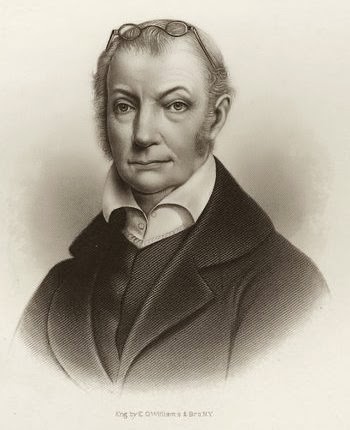
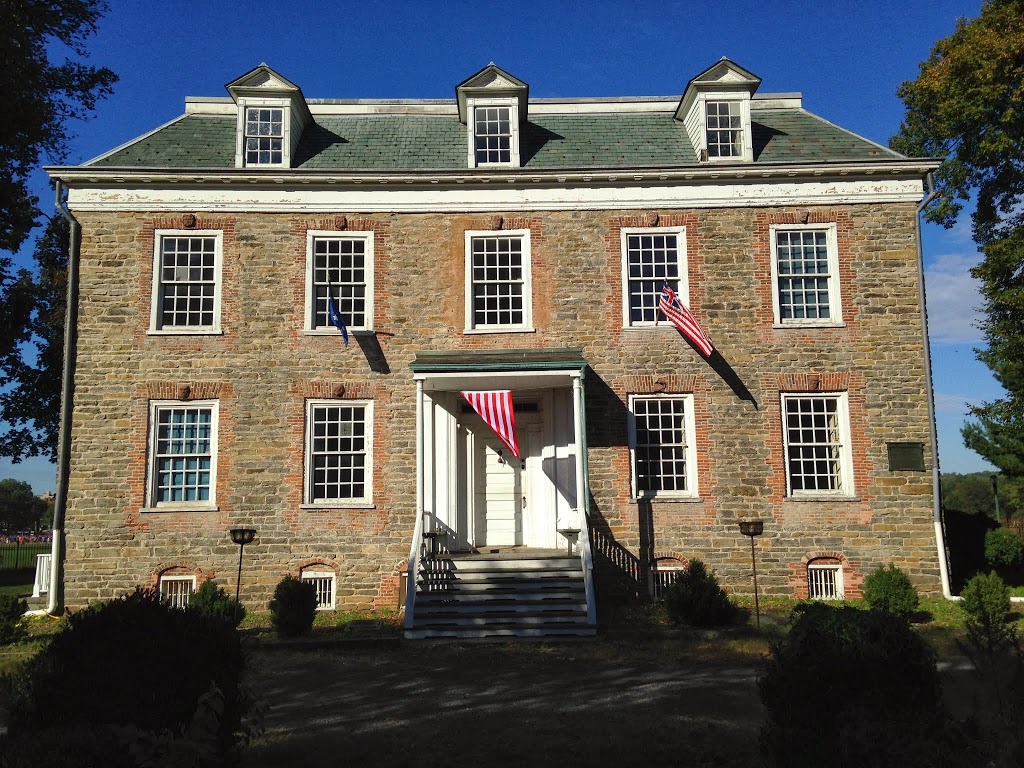
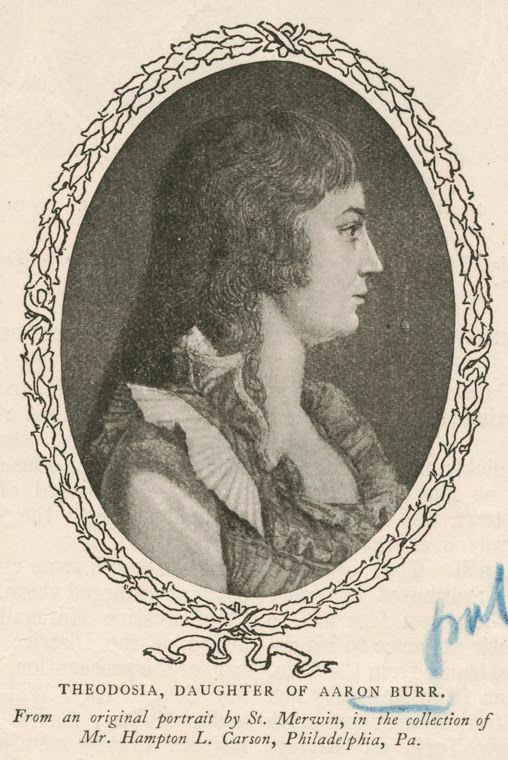
We venture to the haunted woods of Van Cortlandt Park for the tale of an Indian massacre and a forlorn servant girl, looking for her master’s silver.  From there, we head to the early days of Greenwich Village and tormented vice president Aaron Burr (at right), waiting for his daughter’s return.

Meanwhile, over in Brooklyn, the ruins of an old Revolutionary War fort in the future neighborhood of Cobble Hill provide the setting for a horrific tale of a late-night booze run gone wrong.  And, finally, no Bowery Boys Halloween podcast would be complete without an historic cemetery (in this case, the burial ground at St. Paul’s Chapel) and the ghost of a dramatic actor — in this case, one without his head!

PLUS: How did Westchester County become so rocky? The Devil did it!


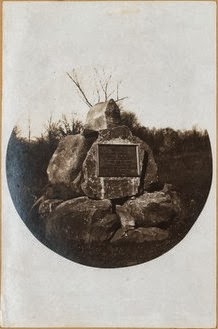
A cairn of stones memorializing Danial Nimham at Indian Field in Van Cortlandt Park, in 1906, the year it was placed here by the Daughters of the American Revolution.  The original plaque states that 17 members of the Stockbridge Militia lost their lives, though it’s now believed that up to 40 men may have died during the massacre of August 1778. (NYPL)

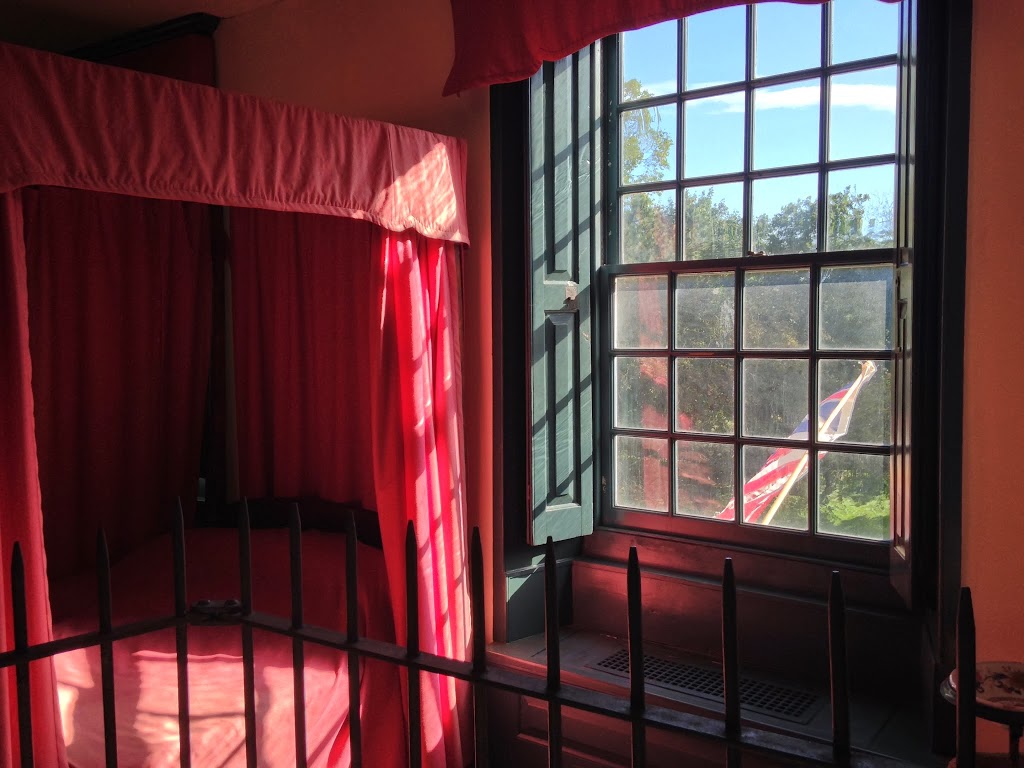
Looking out the upstairs window of the Van Cortlandt House, looking out in the park. The house has seen its share of strife and, if legends can be believed, more than a few spirits.

Van Cortlandt House as it looked last weekend. What’s that in the window?

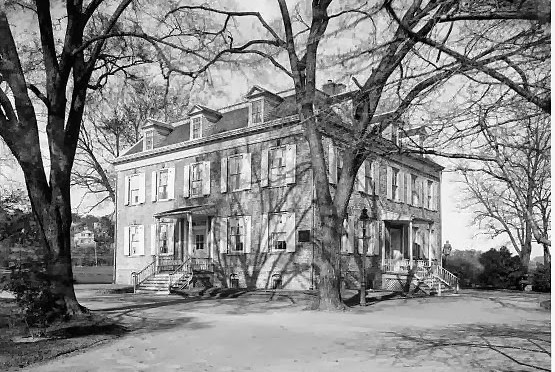
Richmond Hill, the beautiful mansion home of both John Adams and Aaron Burr.  The carriage house from this old manor was moved to Barrow Street and is today the restaurant One If By Land, Two If By Sea. (NYPL)

Theodosia Burr, the daughter of Vice President Aaron Burr, who was mysteriously lost at sea. Was she shipwrecked, rescued by an Indian prince, or forced to walk the plank? (Courtesy NYPL)

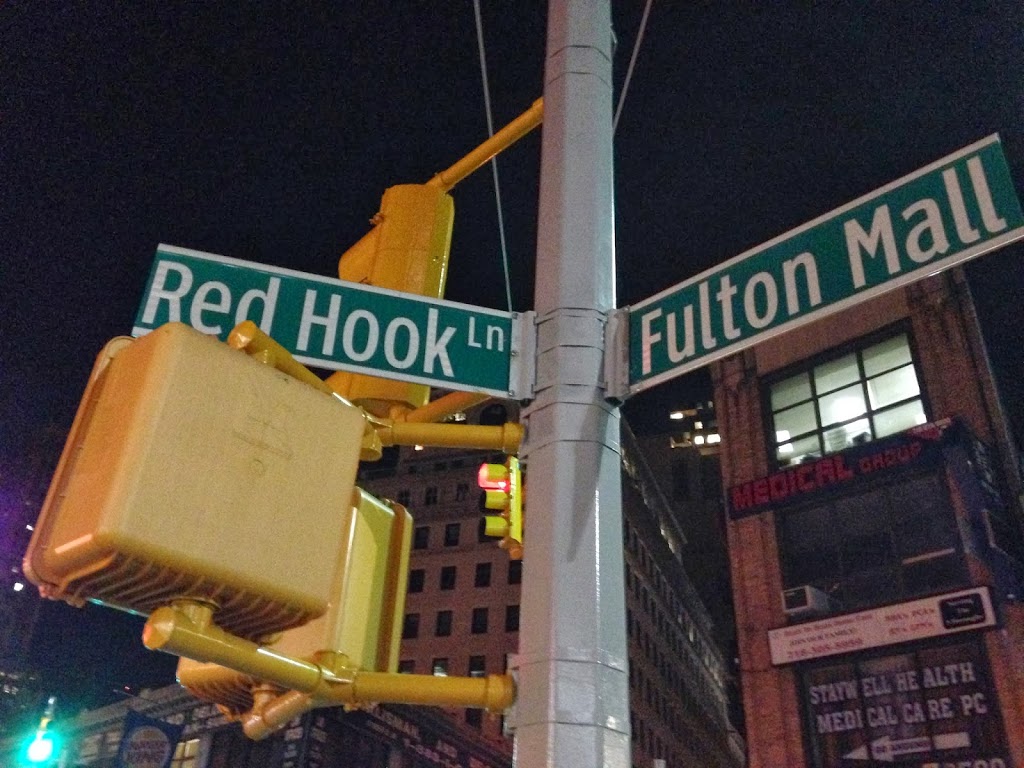
A short remnant of Red Hook Lane still exists in downtown Brooklyn.  You are unlikely to find anything too scary at this street corner however.

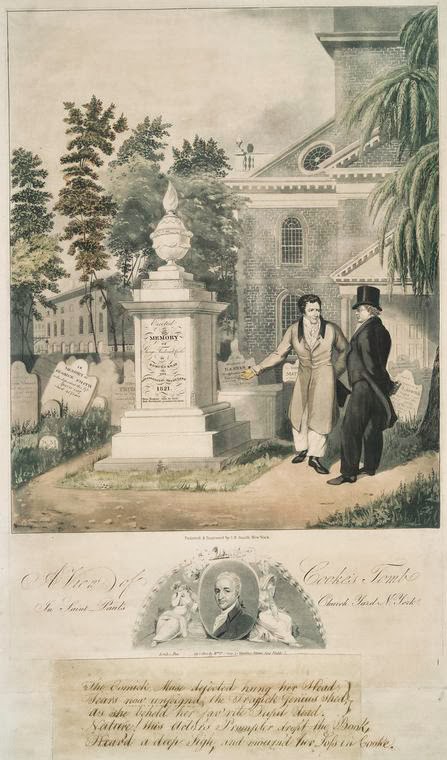
A 1822 illustration of the George Frederick Cooke monument and the man who paid for it, actor Edmund Kean.  Kean so admired the late actor that he actually took a very odd portion of his body back with him to England.

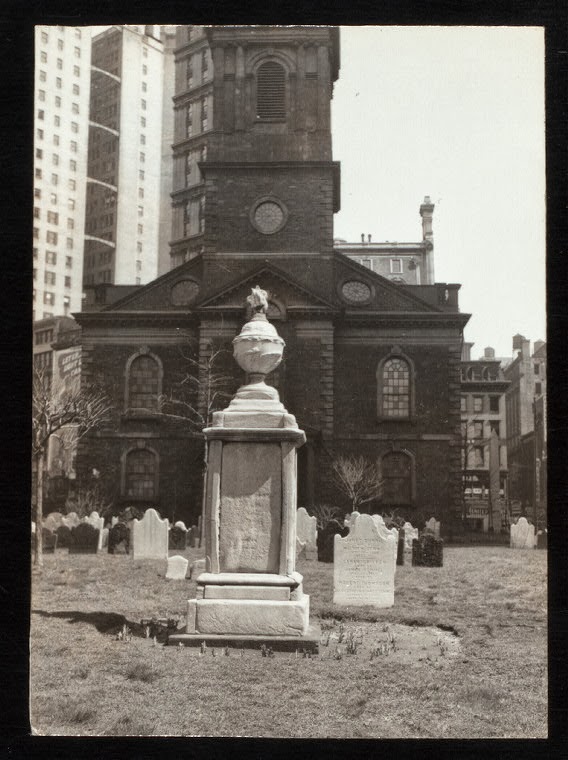
The monument to George Frederick Cooke in the graveyard at St. Paul’s Chapel, pictured here sometime in the 1940s.  Does his ghost still linger here? [NYPL]

We had a very chilling event occur as we were recording last weekend.   Just as I began to launch into the ghosts of the Stockbridge Militia, our recording equipment went all insane, spewing out a distorted and very disturbing version of our voices.  It went on for about 20 minutes.  Below is a sampling of the audio.  What do you think — otherworldly interference or a faulty mixing board?


Categories
Brooklyn History Mysterious Stories

A Brooklyn ghost story: A famous actress, a rowdy tavern, Cobble Hill’s ‘ghost-haunted spot’ and a fool named Boerum

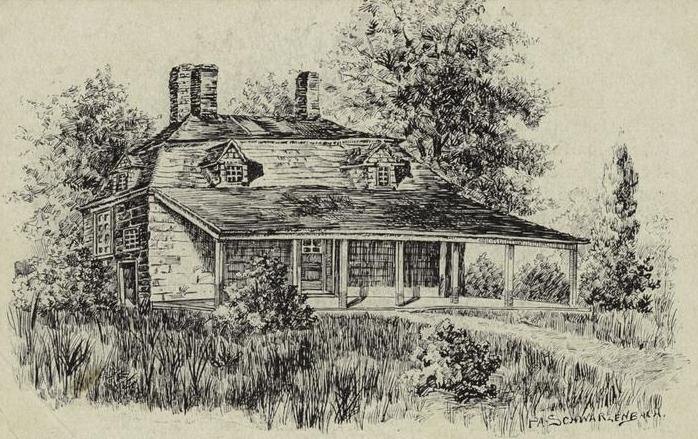
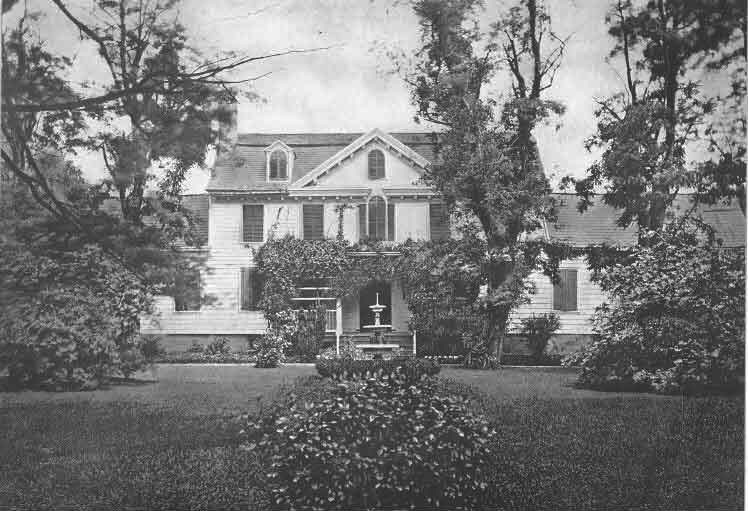
Above: While this is the old Brooklyn Schermerhorn house, it’s of a similar type to one that Ms. Melmoth may have owned, quickly becoming a tavern after her death.

Less than two hundred years ago, in the area approximate to the neighborhood of Carroll Gardens today, there was a very, very rowdy tavern.

It was located east of Red Hook Lane, “in a retired and beautiful spot, near the line of the present Carroll, between Clinton and Henry street,” a place of intense merriment and gluttony, partaking of beer and hunted game, devouring buckets of oysters taken from the shore. (Many years later, perhaps in penance, St. Paul’s Episcopal Church would be built near this spot.)

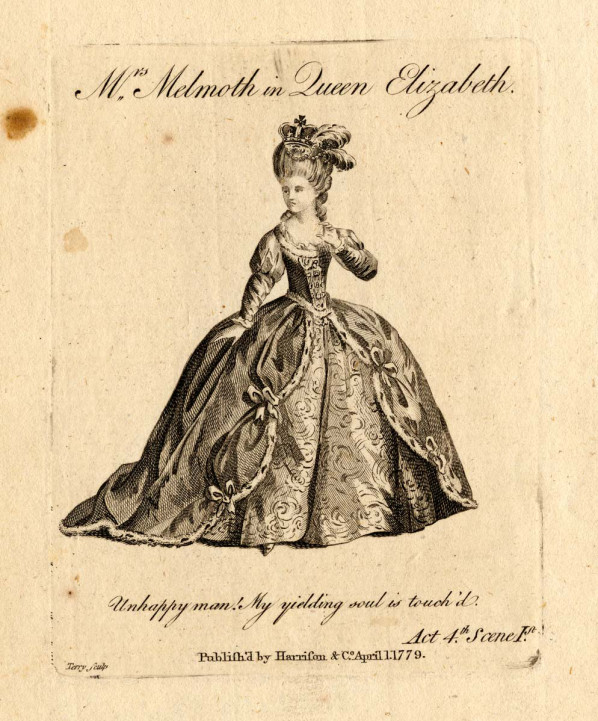
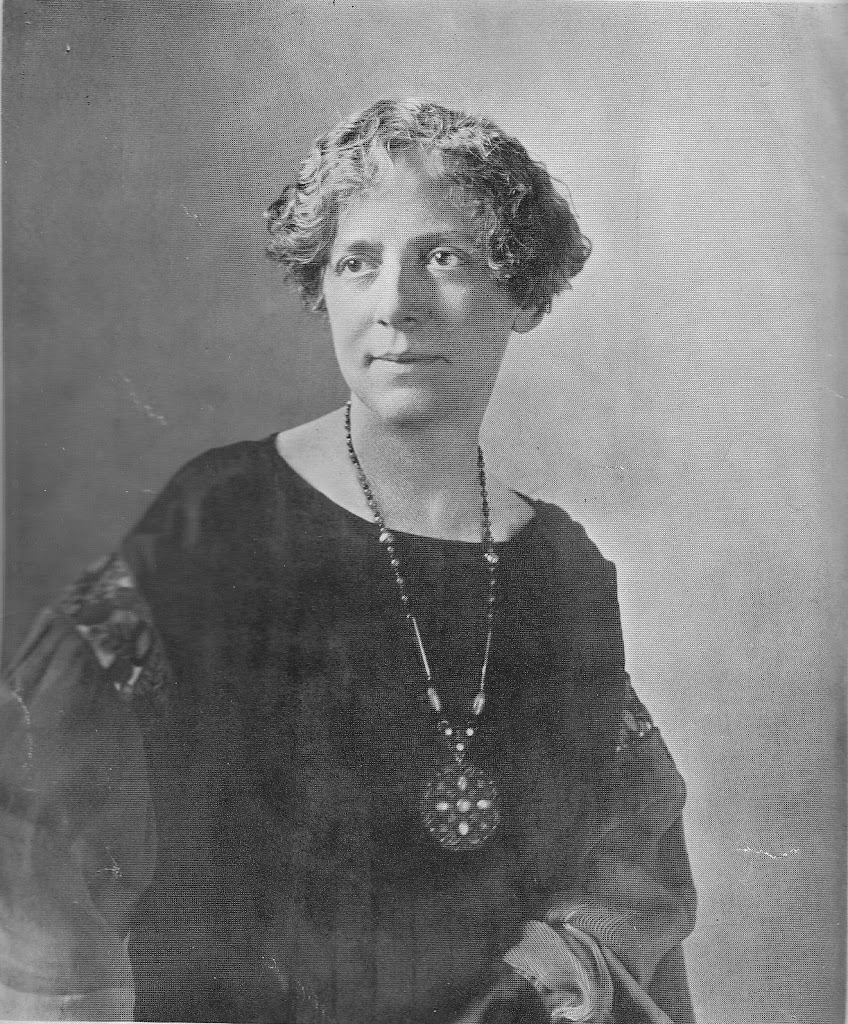
The tavern had once been the home of the famous British stage actress Charlotte Melmoth (depicted at right, in one of her finest roles as Queen Elizabeth).  She retired in 1812 to this grand home off Red Hook lane and spent her last days instructing the children of wealthy Brooklyn families.  Although an actress (hardly the most respected field of work in the early 19th century), her skills of etiquette and elocution brought up the next generation of Pierreponts and Cornells and Luquers.

However, when she died in 1826, her once-proper home took a detour into the debauched, becoming a popular location for young revelers.  Melmoth, buried at St. Patrick’s Old Cathedral on Mott Street, certainly rolled in her grave.

The secluded, wooded tavern attracted young men, farmers and sailors, “their orgies being carried on with a freedom to which the retired character of the spot was particular conducive.” [source]

The gridded streets had not yet been cut through the wooded areas.  Slightly north, in the distance, sat the ruins of old Cobbleshill Fort, the hill itself leveled decades ago by the British.  The fort was briefly refurbished for possible conflict due to the War of 1812 — old Fort Swift, they called it — by the late 1820s, much of the stone would have been covered with dense overgrowth.

According to legend, one evening at around 11 p.m., the men at the converted tavern discovered they had run out of brandy.  Unacceptable, of course, to a bunch of rowdy drunks!  To replenish their supply, somebody needed only to run down Red Hook Lane to the Brooklyn ferry and retrieve more.

Less than a half-mile walk, of course, but one that passed by the old ruined fort, approximately near the intersection of today’s Court and Pacific streets.  Sitting near to the fort was “a ghost-haunted spot,” a frightening, decrepit place well-known to locals, “about which dreadful stories are whispered, which lent wings to the feet of such unwary village urchins as chanced to pass it after dark.”

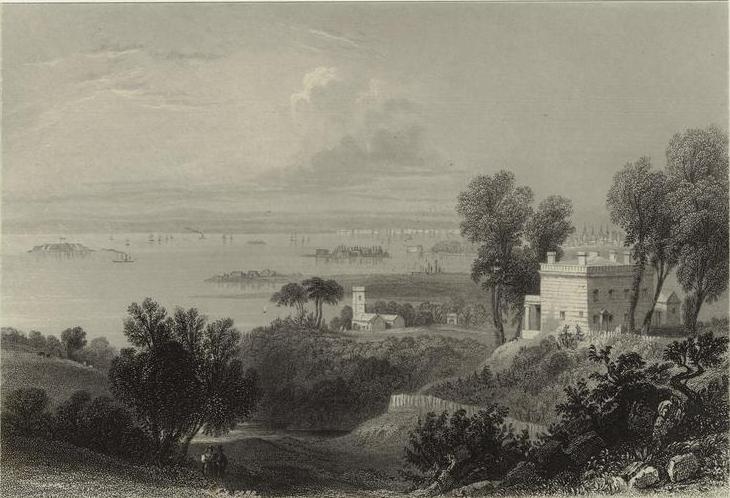
Below: Brooklyn and the East River in the early 1800s, from Gowanus Heights (today’s Green-Wood Cemetery), from an original painting by W. Bartlett. This is a bit south of the events described but gives you a good (if romanticized) idea of the still-verdant countryside that defined the area.

Nobody wanted to admit they were frightened to venture out alone, and yet despite their incredible thirst, nobody volunteered for the task.  Finally, a man named Boerum, thirsty and bold, declared he would head to the ferry and retrieve the brandy.  And if he happened to run into a ghost, all the better, he proclaimed!

It’s safe to assume this Boerum (whose first name is not given) is of the same Dutch Boerum clan which gives the neighborhood Boerum Hill its name.  Sadly for this fellow, he would not live long to carry on his family’s good name.

According to Henry Reed Stile‘s 1869 history of Brooklyn, Boerum jumped on his horse and headed down the lane , toward the ferry and that sweet, sweet brandy.  Two hours later, when Boerum had not yet returned, his anxious (and sobered-up) friends became concerned and decided to venture out looking for him. Safety in numbers, after all.

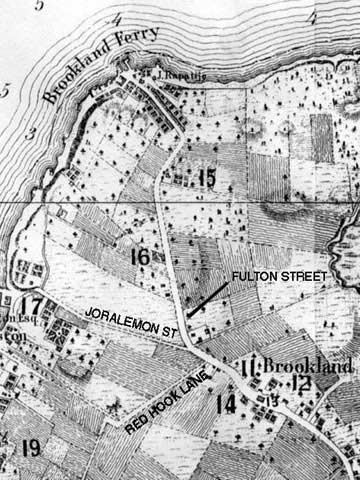
At right: where Red Hook lane would have been located, cutting through the modern neighborhood of Cobble Hill.

“Mounting, not in hot haste, they turned their horses’ heads towards the village and on approaching the haunted ground, they found Boerum’s horse standing against the fence not far from the house, and when they reach the spot itself, their companion was discovered lying senseless on the road, with features horribly distorted.”

We can only guess what “horribly distorted” might mean.  The friends quickly took Boerum back to the tavern, but the man was too far gone.  “[H]e lingered for two or three more days, in a speechless condition, then died.”

What had happened to young Boerum?  He had never made it to the ferry to fetch the brandy, and no evidence was ever found among the ruins.

Within a few years, the ruins themselves were leveled, and even most of Red Hook Lane was eliminated, as a street plan turned the region into orderly neighborhoods.  Still, as you pass through Cobble Hill at night, on your way perhaps for a little brandy of your own, remember the cautionary tale of young Boerum.

The ghost story is featured alongside more standard history in Stile’s 1869 two-volume history of Brooklyn.

Pictures courtesy New York Public Library, except for labeled map, showing Red Hook Lane, which is from Forgotten New York

Categories
Mysterious Stories Podcasts

Mysteries and Magicians of New York: Whimsical spirits, scary legends, strange magic and the original ghost busters

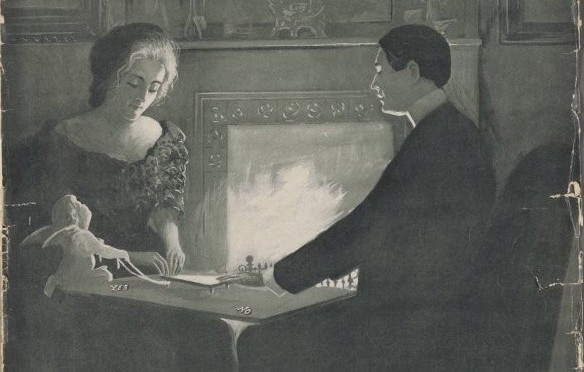
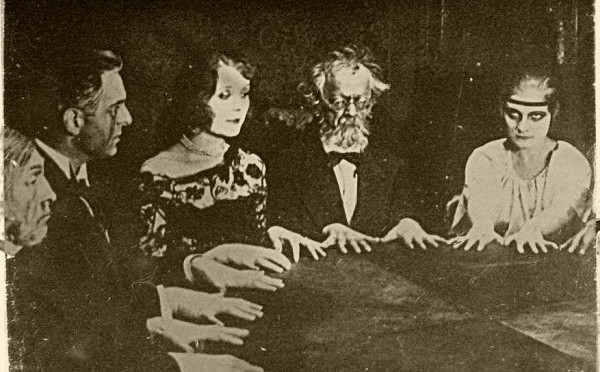
A session with a ouija board, a haunting illustration from a piece of 1901 sheet music ‘There’s A Charm About The Old Love Still’. (NYPL)

PODCAST Our sixth annual ghost story podcast takes a little twist this time around. Oh sure, we have two of New York’s most FAMOUS horror stories in our first part, beginning with a spirited sailor named Mickey who haunted a classic structure on the Lower West Side. Today it’s the Ear Inn, where you better watch your drink. Then we switch to a Colonial-era tale of obsession and entrapment in old Flatbush, the tale of Melrose Hall with its secret passages, stairwells and dungeons.

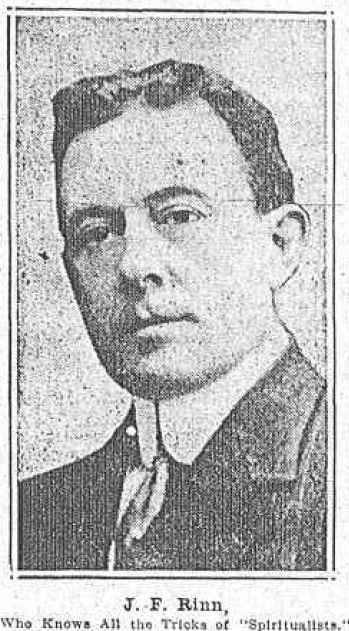
But in the second half, we observe New York’s spiritualism craze of the early 20th century through two frightening faceoffs. In the first, its the madame of the Ouija board, Pearl Curran, and her ghostly companion Patience Worth vs. one of New York’s original ghostbusters, the adventurer and conjurer Joseph Rinn (pictured at right). And in the final tale, Tom explores the secrets of Harry Houdini and what happens when a close confidante — in this case, the noted author Sir Arthur Conan Doyle — believes his powers are of a supernatural variety.

Featuring our annual ghost-story dramatics, a few sound effects, and the surprising haunted history of Carnegie Hall!


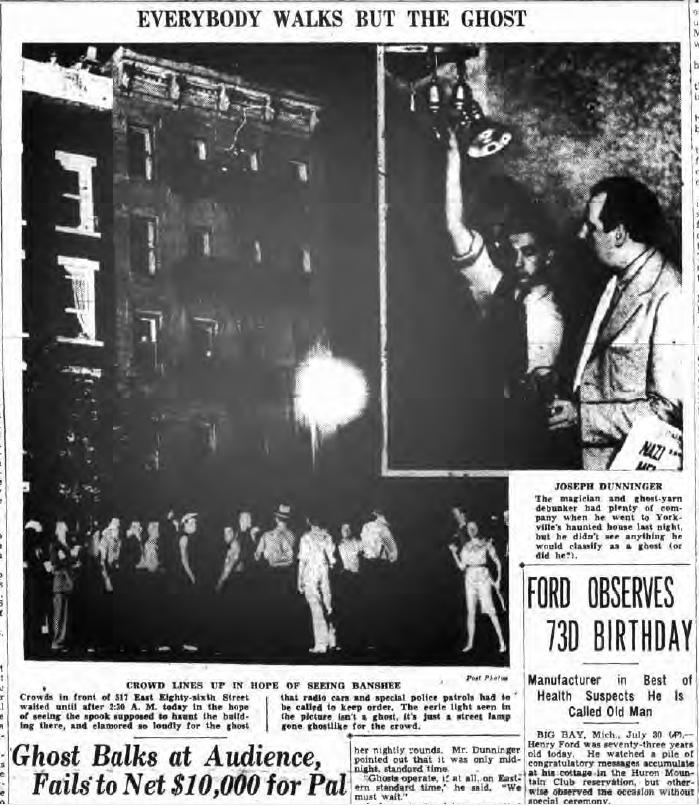
From the pages of the New York Post, July 1936. Crowds hunt for the spirit of Angelina, the Italian ‘banshee’. Crowds lined up to get a glimpse, so many that ‘special police patrols’ were called to control the search. [source]

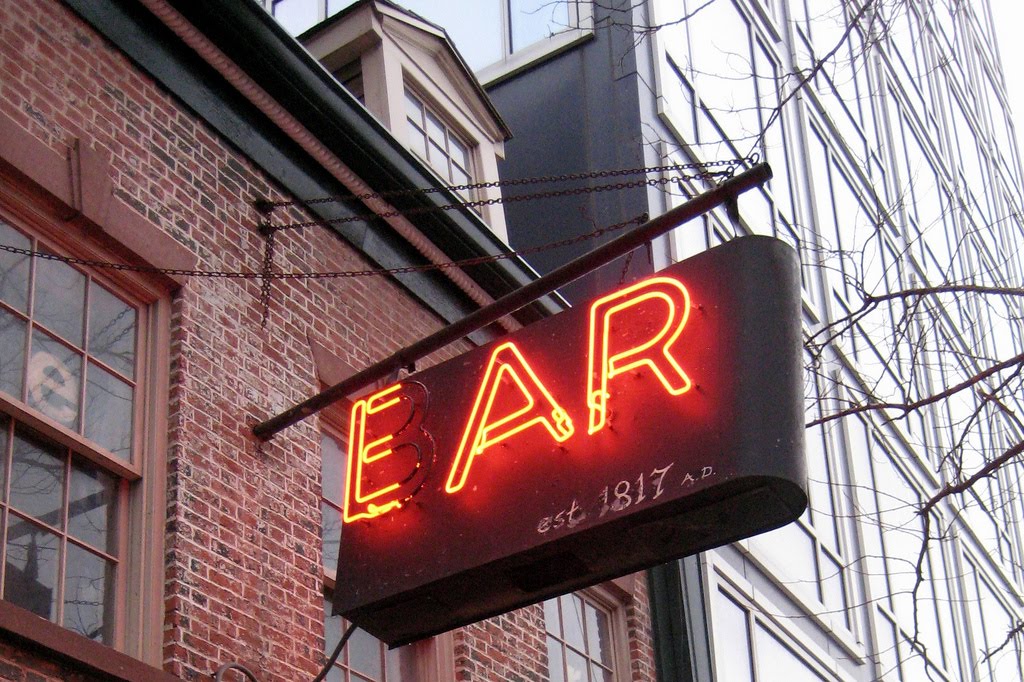
The house of Revolutionary War veteran James Brown, today the worn and welcoming Ear Inn, is almost 200 years old, which means it has a great many ghosts, including a couple literal ones, including the randy spirit of a sailor named Mickey. (Picture courtesy Flickr/wallyg)
 
The haunted Melrose Hall in Flatbush, Brooklyn, the site of some improbable architecture and a terrible crime. Is that Alma peering from the third floor window? Do you dare enter?
 

Pearl Curran, the St. Louis woman who began conjuring the spirit of an 17th century English woman named Patience Worth, via the Ouija board. She was frequently questioned by prominent medium debunkers, including Houdini’s friend Joseph Rinn.

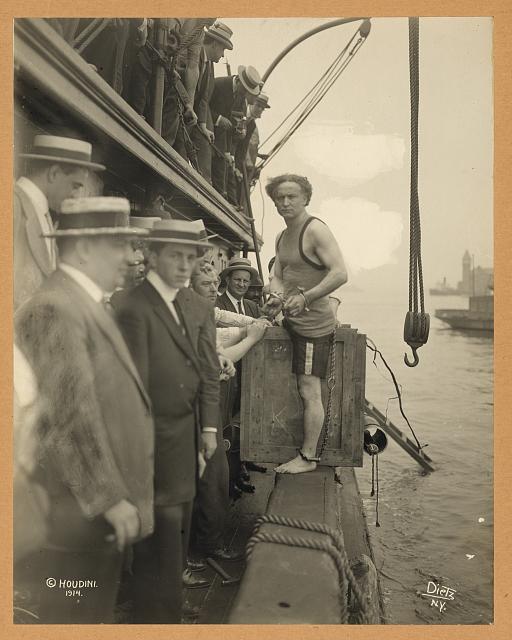
Harry Houdini in 1912, about to step in to a sealed sunken chest, which he will inevitably escape from. But what was his secret? Was Sir Arthur Conan Doyle — and his wife Lady Jean — onto something about Houdini’s secret powers? (Courtesy Library of Congress)
Watch out for those naked Brooklyn lady ghosts!

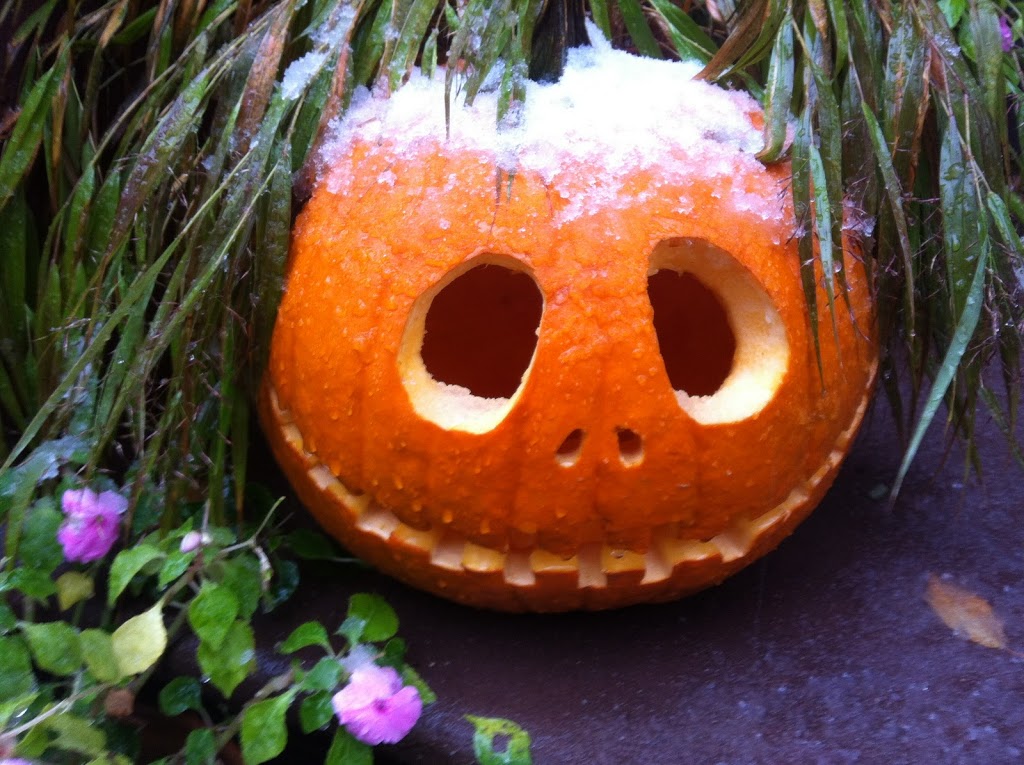
Above: The unusual weather this weekend left my pumpkin with an unfortunate new hairstyle.

We hope you all have a fun and safe Halloween this year!  In this year’s ghost-story podcast, I talked about a haunted church in Bushwick, Brooklyn. Apparently, other spirits find the neighborhood desirable. I’m reprinting an article from three years ago about one such reported sighting. The original article is here
—-

While doing my ghost research this week, I came across an amusing article from an 1894 edition of the New York Times, back when ghost sightings might have merited a serious investigation. (Or, in this case, not so serious.)

The location of the haunting was Brooklyn’s 27th Ward in today’s Bushwick area.

After charting out the notion that Bushwick is an ideal place for ghost hauntings — a “rocky, bleak, lonesome district” loaded with cemeteries and empty houses — the article describes the ghost in strangely sensuous terms:

“The ghost which is at present disturbing the midnight rambles … is that of a woman, who goes about in the scantiest attire, with disheveled hair and bare feet, and falls into a fit of hysterics as soon as anyone approaches.”

The ghostly vixen spooked a set of women who ran home to tell their brothers, who then brandished revolvers and set out to, uh, do what? I’m not sure guns work too well with ghosts. The cocky search party came upon the apparition which “arose from the ground in front of them and waved its long, lean arms an uttered a weird cry that chilled their blood.” The brothers dropped their guns and ran home.

The next night a bolder party of 200 men reportedly went out to the ghost location, around the cemeteries on the Brooklyn/Queens border (between Knickerbocker and Irving avenues). Having no luck in locating the spirit with the posse, one man braved it alone the next night. He returned home “with a face white with terror.” He had not only glimpsed the spectre, but was privy to a “serpentine dance” and “moaning wail”.

They time, the locals did what anyone would do when faced with supernatural entities — they called the police. Apparently with nothing better to do, the precinct caption dispatched 300 officers, armed with everything from guns to rusty army swords, all in an effort to confront the spirit and, apparently challenge it to a duel. One officer even donned an ill-fitting suit of armor.

Given the dramatic response, it is no surprise that some officers remained skeptical. The theory of one officer Holliday: “I’ll tell you what I think it is. I think it’s whisky….it will make a man see anything — ghosts, snakes or anything else.”

The entire area was covered by dozens of armed ghost hunters. However, as the New York Times drolly states, “three or four times there were cries that [the ghost] was coming, but it didn’t come.”

It is then decided that police might has not only scared away this ghost, but has rid all of Brooklyn of any spectral activity.

“There used to be ghosts in Brooklyn but since Superintendent Campbell took charge of the police department they have all been driven away.” He fears Brooklyn’s impending consolidation with New York, for “anti-ghost orders would be rescinded and our streets would be haunted day and night.”

But it appears that didn’t happen when the consolidation with New York came in 1898. Really, when’s the last time you’ve seen a ghost in Brookyn? Hmmm?

You can read the entire article in all its glorious tongue-in-cheekness here.

The location of this scantily dressed spirit was right around here:


View Larger Map

Categories
Mysterious Stories Podcasts

Supernatural Stories of New York: spooky seances, violent Jazz Age ghosts and an island of despair

PODCAST It’s our fourth annual Halloween history special, and we’ve got four bloodcurdling stories for the season. The first three are spooky ghost tales — a haunted boardinghouse on 14th street with violent, vain spirits; a short history of New York’s seance craze and a man tormented by the spirit of a dead painter; and a glamorous pair of Jazz Age lovers whose angry spats in their midtown Manhattan penthouse kept up the neighbors, even beyond the grave.

ALSO: A tale with no ghosts at all, but a story with truly spine-tingling facts, featuring the eeriest island in New York and the final resting place for over 850,000 souls. If you ever make it to Hart Island, it means that things have gone very badly for you.

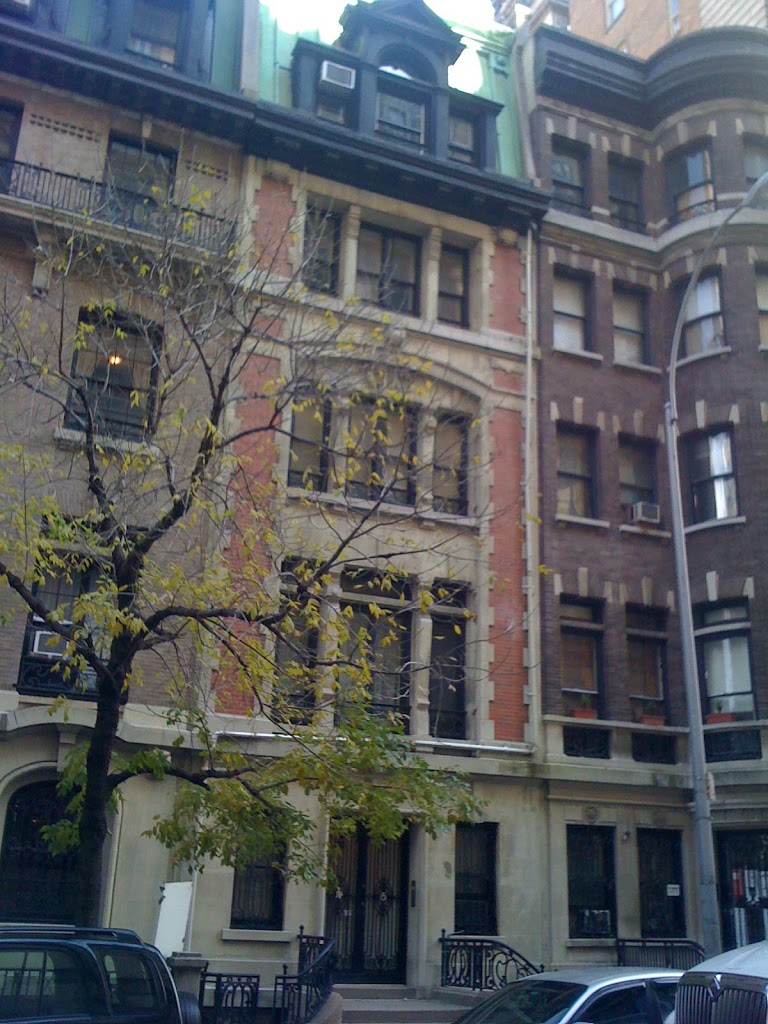
Home to the American Society of Psychical Research on W. 73rd Street, the organization headed by James Hyslop in the early 1900s. Hyslop led the investigation of dozens of reported cases of paranormal and supernatural activity.

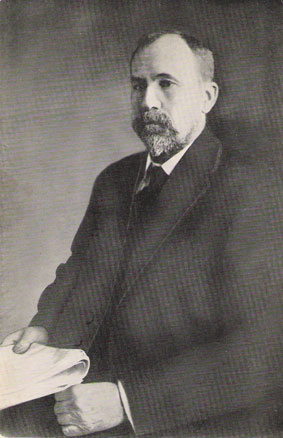
Hyslop, pictured below, believed that he spoke with famous philosopher William James through a medium, and he himself spoke to his secretary via this technique many months after he died.

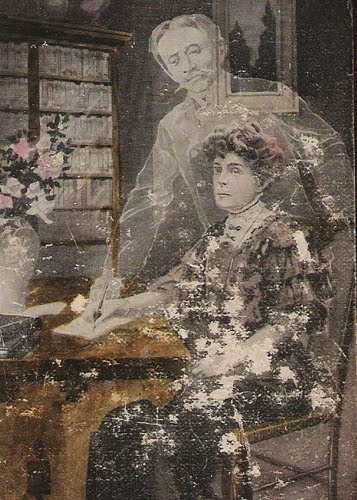
A bizarre image depicting medium Etta De Camp being visited by author Frank Stockton. Ms. De Camp believed her hand was being controlled by Stockton and even wrote a entire book under the control of Stockton.

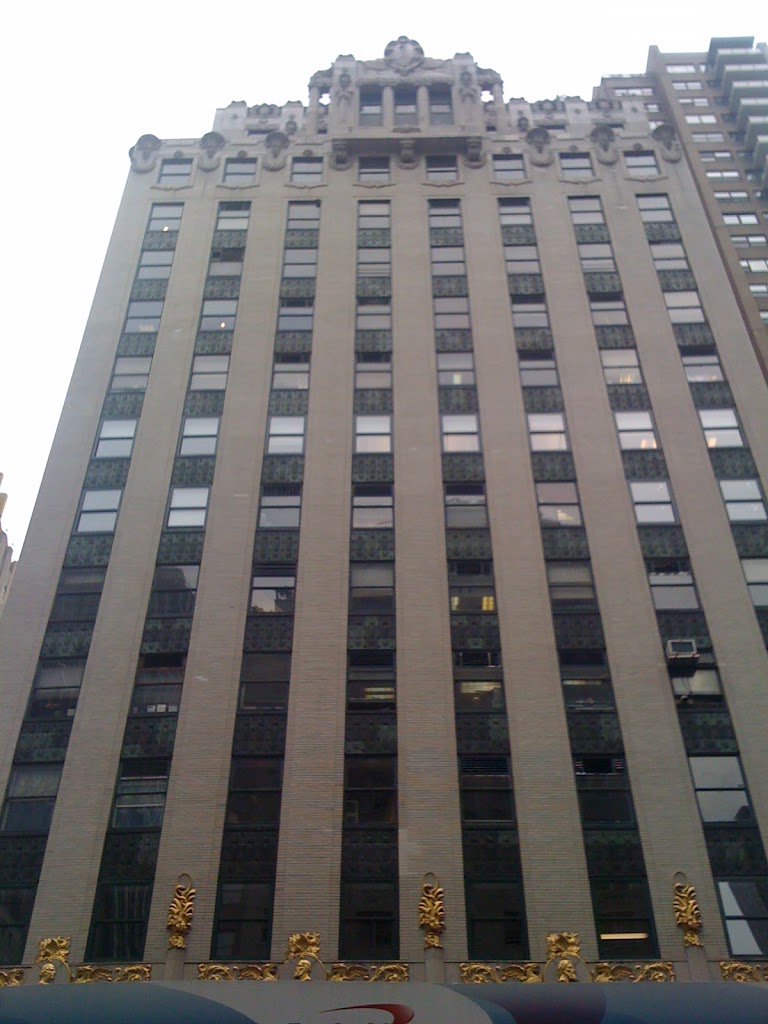
Looking up at the former penthouses of 57 W. 57th Street, where Edna Champion and her lover Charlie argued their way into the grave, then tormented the unfortunate tenants for many years later. Today, these formerly haunted floors are slated to be occupied by Ford Models.

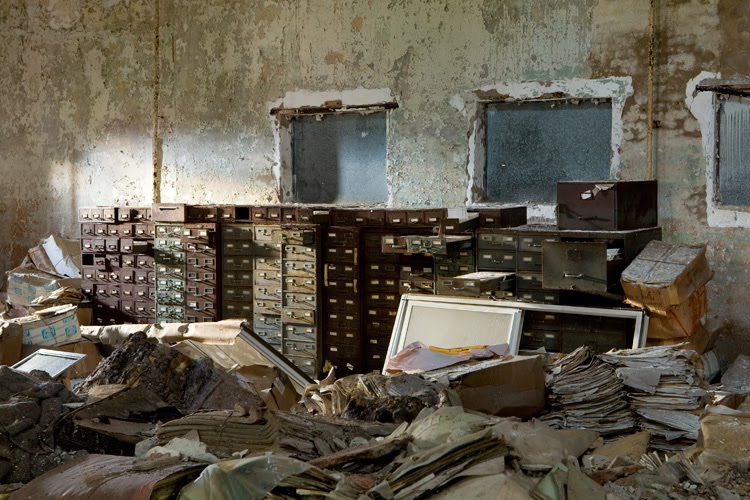
An abandoned records room on Hart Island. This and many other wonderful photographs of Hart Island can be found at Kingston Lounge, bravely venturing to the island in 2008 to witness the strange and forlorn island in person.

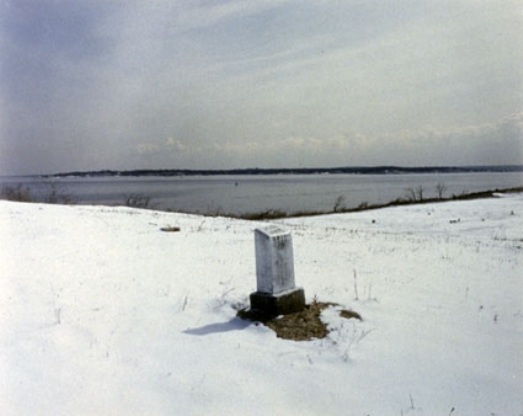
The Hart Island Project has been drawing needed attention the island for years, obtaining lists of people buried there and assisting in families looking for loved ones there. It’s also features a fantastic collection of photographs, such as the one below (of a lonely grave marker) by Joel Sternfeld.

And finally, a fascinating and priceless local news report from 1978 on Hart Island, looking a bit more populated than it is today. Unbelievably, there was talk of actually developing Hart Island for more than just the city’s potter’s field.

If you’re looking to craft your own personal ‘haunted’ walking tour, this map lists all the places we’ve talked about in prior ghost stories podcasts. Simply look up a location and download that particular episode:

View Bowery Boys Ghost Stories in a larger map

1 Ghost Stories of New York
2 Spooky Stories of New York
3 Haunted Tales of New York
4 Supernatural Stories of New York

Categories
Mysterious Stories Podcasts

PODCAST: Spooky Stories of New York

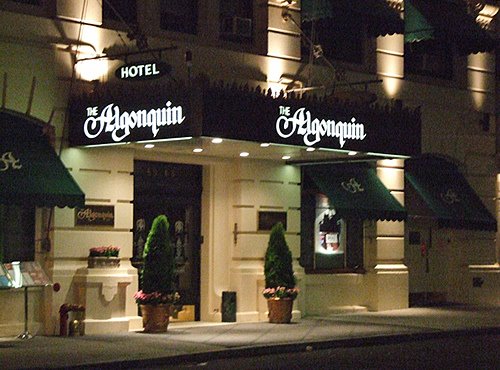
The Algonquin Hotel: the hippest haunt for the dead writer set

By popular demand, we return to the creepier tales of New York City history, ghost tales and stories of murder and mayhem, all of them at some point involving great American icons — Alexander Hamilton, P.T. Barnum, Dorothy Parker and Mark Twain.

Listen to it for free on iTunes or other podcasting services. Or you can download or listen to it HERE

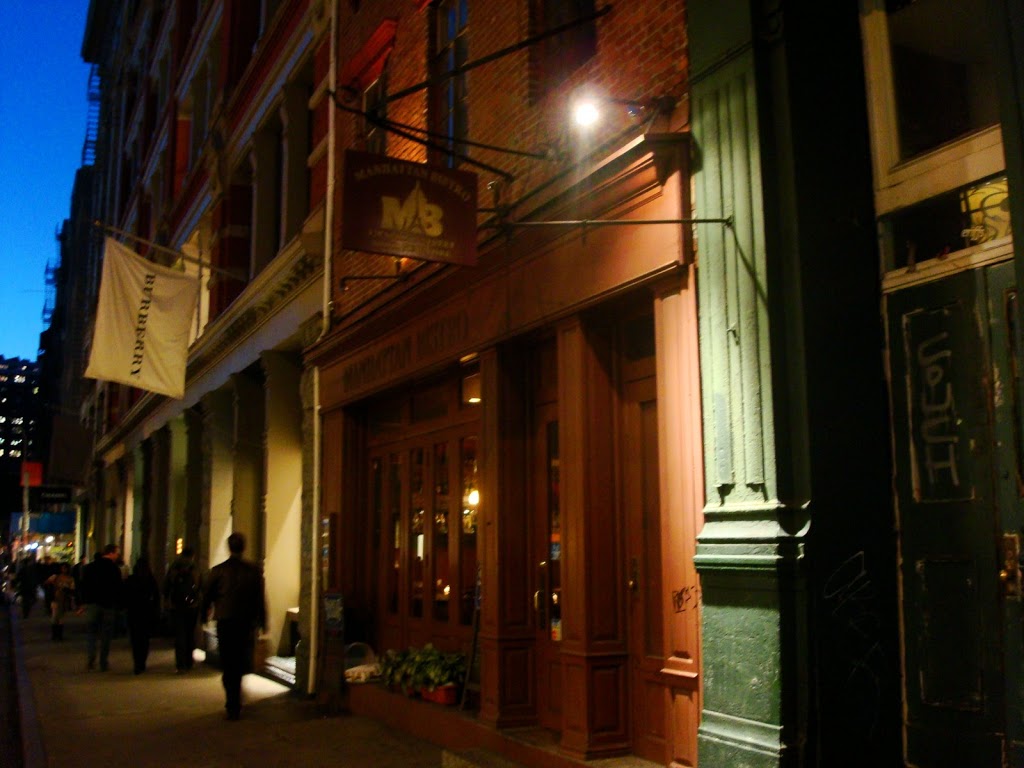
The Manhattan Bistro in SoHo hides a ghastly secret behind it — site of the Manhattan well, and the murder of Elma Sands

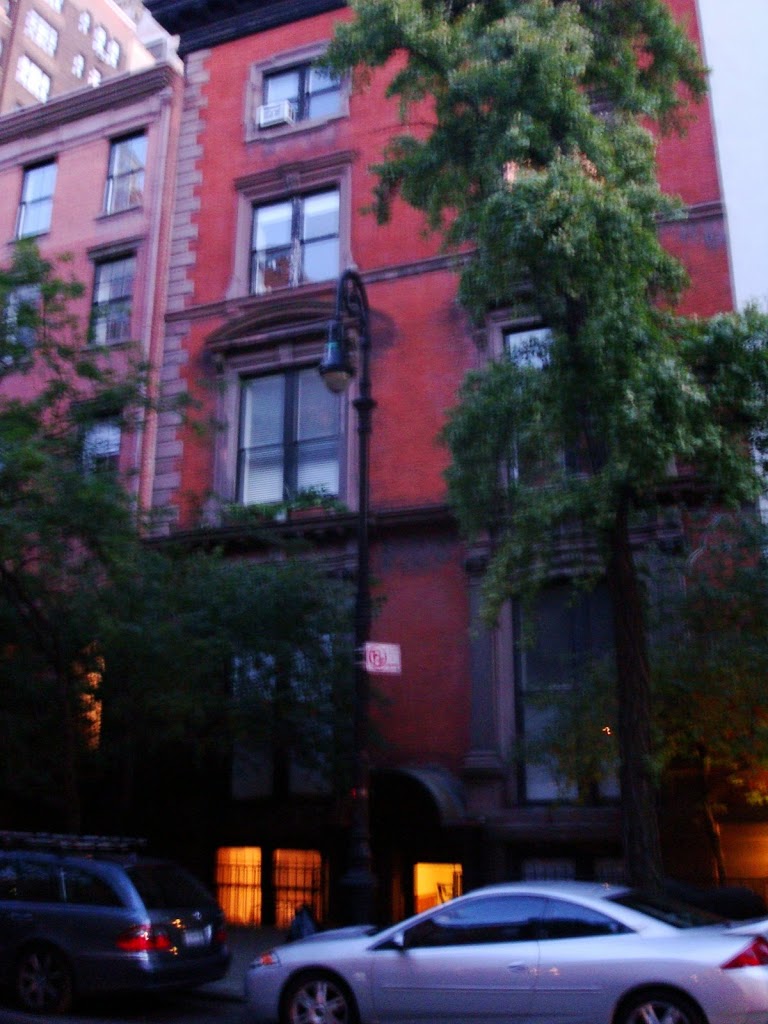
14 West 10th Street, the most haunted brownstone in the Village

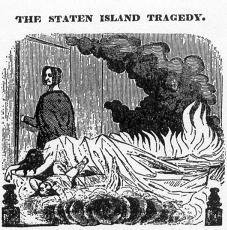
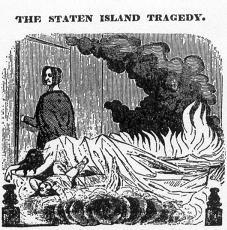
A macabre newspaper depiction of Polly Bodine, the ‘Witch of Staten Island’, fleeing from the burning bodies of her victims Emeline and Ana Eliza Housman

Our Ghost Stories of New York podcast from last year:

Starting next week on iTunes, our old episodes will be available for download, re-edited and with far great audio quality. Look for the feed titled ‘Bowery Boys Archive’ on Tuesday.

Categories
Mysterious Stories Podcasts

PODCAST: Ghost Stories of New York

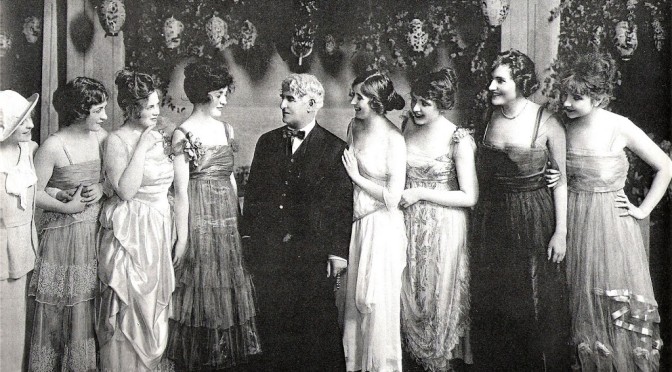
From the podcast: David Belasco and some his feminine daliances. Belasco is still believed to haunt his theater on 44th St.

A city this size certainly has its share of ghosts, and the Bowery Boys spend the spooky season with some of the most famous — a suicide showgirl, a grumpy landowner, a womanizing theater owner and a rich spinster.

Listen to it for free on iTunes or other podcasting services. Or you can download or listen to it HERE

In today’s podcast, we highlight some of New York City’s most popular ghost stories. There was one more story that we left out that I wanted to put here. It isn’t a ghost story; it’s an actual historical event that just happens to be really creepy. I dont have many pictures of this event — being from the 1840s — so interspersed are some shots of ‘haunted’ places from this week’s podcast.

Christmas 1843 — On the western side of Staten Island lay a small town called Graniteville, some townspeople awoke to see a fire in the house of sailor George Housman. Although he was frequently at sea, his wife and his daughter still lived there, and George’s sister Polly was staying with her.

The people stormed into the burning house to find a scene of grisly horror — George’s wife Emeline had been attacked with an axe, her arms broken, her throat cut. The daughter lay next to her dead with her skull crushed. Polly had disappered. She did not live there but was staying because Emeline was frightened while her husband was away. For they had $1,000 in the house.

Nobody had actually remembered seeing Emeline come out of her house for the past couple days. But they did remember Polly. She was seen in town pawning silverware with the initials EH on it. And later that day, in Manhattan, she was seen spending the money, buying a green hooded cape and veils. So naturally suspicion naturally pointed to Polly. Townspeople began search parties, while women and children were locked in their homes.

Polly was considered a ‘wanton woman’ with a spurious reputation. Her son worked as an apprentice at a drug store on Canal Street in Manhattan, and his employer was also Polly’s lover.

Polly would make her way to the landing of the Tompkinsville ferry, a precursor to the Staten Island Ferry. She was camped in a corner, getting drunk on gin, and witnesses recognized her “by her long, hooked nose.” By strange providence, George Housman returned to New York that very day, and found Polly on the street with George’s cousin Freeman Smith. They must have had quite a lot to talk about.

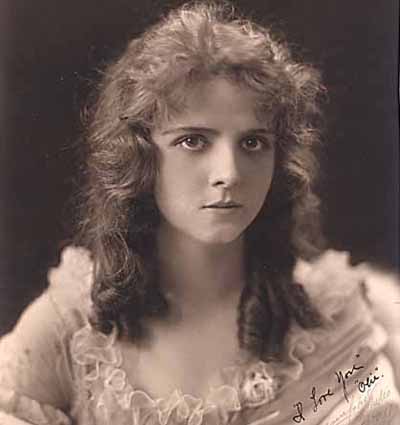
Above: from the podcast, Olive Thomas, the young starlet who haunts the New Amsterdam Theatre

She was eventually arrested and sent to county jail. The day after she was arrested, Polly gave birth to a stillborn child.

Polly eventually went on trial in June of 1844 but by then, news of the alledged lascivious murderess — one baby dead from an axe, another from her womb! — spread to Manhattan and beyond.

Special ferries were installed to bring people over to the courthouse. Reporters were sent from neighboring states, including one from Pennsylvania, by the name of Edgar Allen Poe who is heavily critical of how the trial was being handled:

“The trial of Polly Bodine will take place in Richmond and will no doubt excite much interest. This woman may possibly escape, for they manage these matters wretchedly in New York…..I have good reason to believe that it will do public mischief in the coming trial of Polly Bodine.”

Curiously enough, Poe would write up his article the same year his story of the publication of The Tell Tale Heart.

Not everybody was as sure as Poe however. Edward Van Emery in his 1945 ‘Sins of New York‘ states that “there has never been much doubt as to her having been the guilty party.”

There was so much public flurry and gossip that a fair trial was virtually impossible. According to Henry Lauren Clinton’s 1896 ‘Extraordinary Cases’ Polly’s life was spared by a single ‘incorrigable’ juror, and it was declared a hung jury.

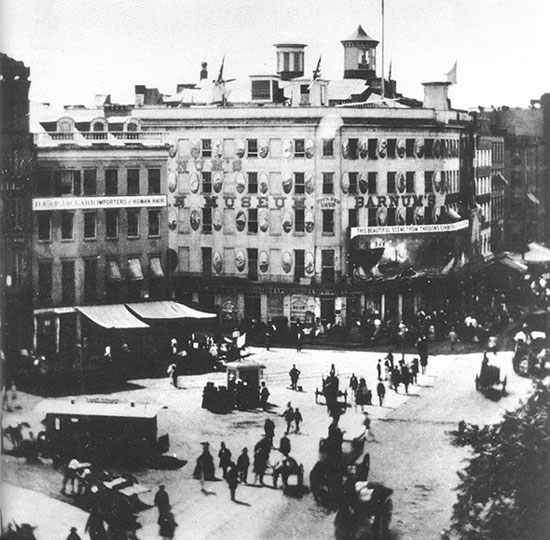
So a second trial was held in Manhattan to even greater fanfare. She was so notorious that PT Barnum, in his downtown museum on Broadway and Fulton Street (blocks from where the trial was taking place), erected a wax homage of her. In the tableaux, he called her “the witch of Staten Island”, representing the woman by hacking Emiline and her daughter with an axe.

Here’s a picture of how the Barnum museum looked in the 1850s:

Like the great ‘trials of the century’ today, Polly has superstar representation (Clinton DeWitt) and the attentions of every tabloid on the Eastern seaboard. During this trial, witnesses changed their stories and truth readily bled into rumors. Due to this was soon declared a mistrial.

The final trial had to be moved out of Manhattan to Orange Country because of a lack of unbiased jurists. Finally Polly was found … innocent.

Her reputation ruined, Polly returned to her home, rarely to leave her home, for almost 50 years. She would die on 1892.

Yet like OJ, the “real” murderer was never found. And much conjecture from modern investigators suggest that Polly really was the murder, who hacked her sister-in-law and niece to death. Just down the street from the Housman home (near Forest Avenue and US 440, according to the NY Public Library) you can find the grave of Emiline and her daughter, and at night they say that a ghost of she and her daughter roam the cemetary looking vainly for justice.


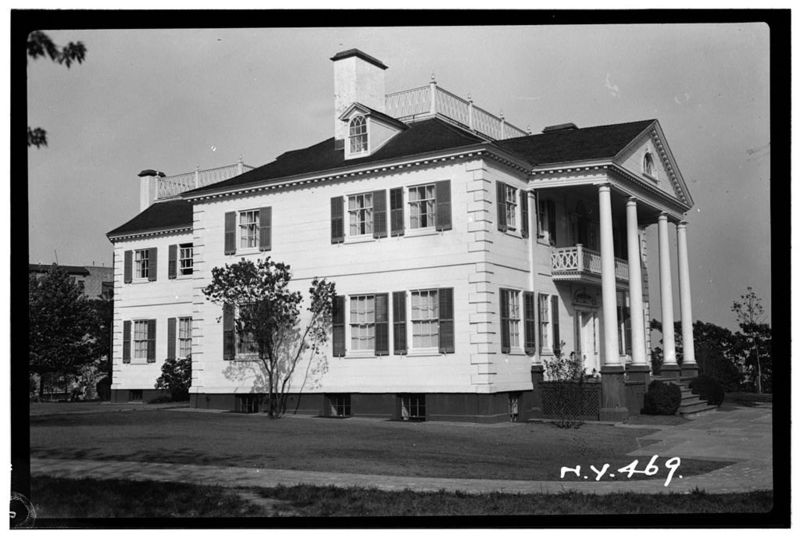
Above: the Morris-Jumel Mansion in Washington Heights, and home of the possible ghost of Eliza Jumel. Information on visiting the mansion can be found on the Morris-Jumel website..