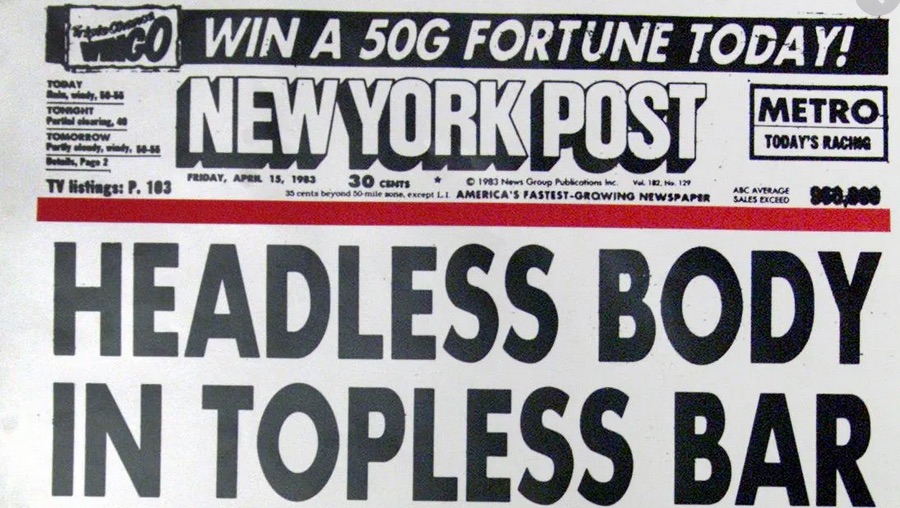
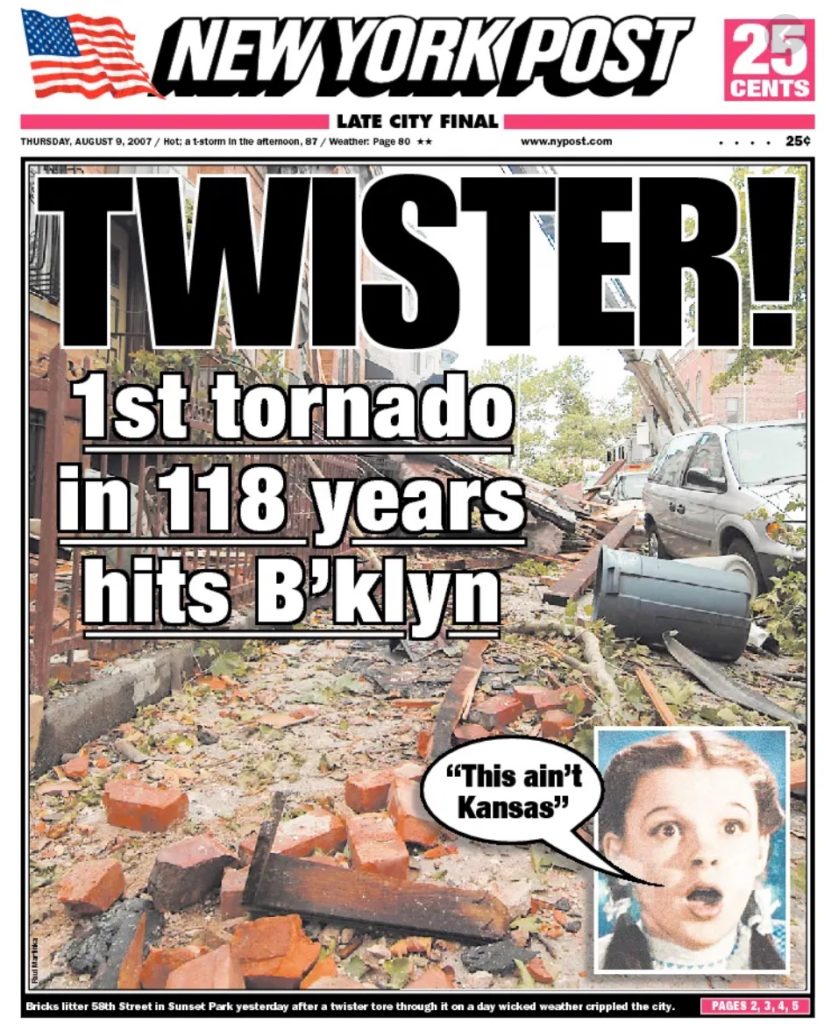
Over ten years ago, the New York Postand the New York Daily News were locked in a battle for tabloid dominance, wrestling and rolling around just as an apocalypse – the digital revolution — was descending upon American newsrooms.
Newspapers across the country have either folded or become absorbed into national conglomerates. America’s best-selling newspapers USA Today seems to speak to no particular region, a brand of quality, generalized journalism, aimed at frequent flyers and hotel guests.
That is what makes the Post and the Daily News such important, even comforting, artifacts of the newsstands today. They are unmistakably New York City in character – the good, the bad and the ugly.
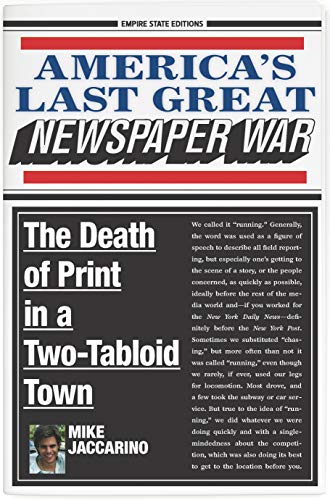
America’s Last Great Newspaper War The Death of Print in a Two-Tabloid Town by Mike Jaccarino
In America’s Last Great Newspaper War, a memoir written by Mike Jaccarino, a journalist who worked at the Daily News, the grit and grind of bare-knuckle journalism plays out during a competitive period between two newspapers that today feels produced for a 1940s Hollywood film noir (only with tons of foul language).
Once upon a time, the Post and Daily News appealed to different audiences – not only in politics, but in their varying morning and afternoon editions.
And then Rupert Murdoch came along, purchasing the Post in 1976, transforming the once-liberal tabloid into a splashy daily filled irresistible stories of scandal and sleaze.
As journalism began to constrict in the early 2000s – as people began getting news from their computers and phones – the distinctions in their audiences disappeared.
So the Post and Daily News, already at competitive odds, went to war with one another.
Jaccarino, a writer with a vibrant, zingy style, presents the nitty gritty of tabloid journalism from the front lines, speeding down expressways, racing to the scenes of murder, fire and general mayhem. A typical chapter in Newspaper War is like a strong cup of coffee.
As a ‘runner’, Jaccarino was tasked with getting to breaking news first, almost always with a Post reporter nipping at his heels:
“Upon arriving at a scene, a runner’s first job is to attain a rudimentary understanding of the who, what, when and where of what’s happened, which will then be transmitted to the Desk for the composition of sked lines and online briefs.”
It’s a cringe worthy business most times, crashing into hospital rooms or comforting a mother whose child has been killed in order to get a good quote. The ‘stunt journalism’ popular at the tabloids often bordered on reality-television schtick.
But these journalists are keenly aware of the cynicism. And they often serve a public good; their subjects are rarely given a direct voice, and their plights are quickly forgotten. There remains a place in this city for both squabbling cousins.
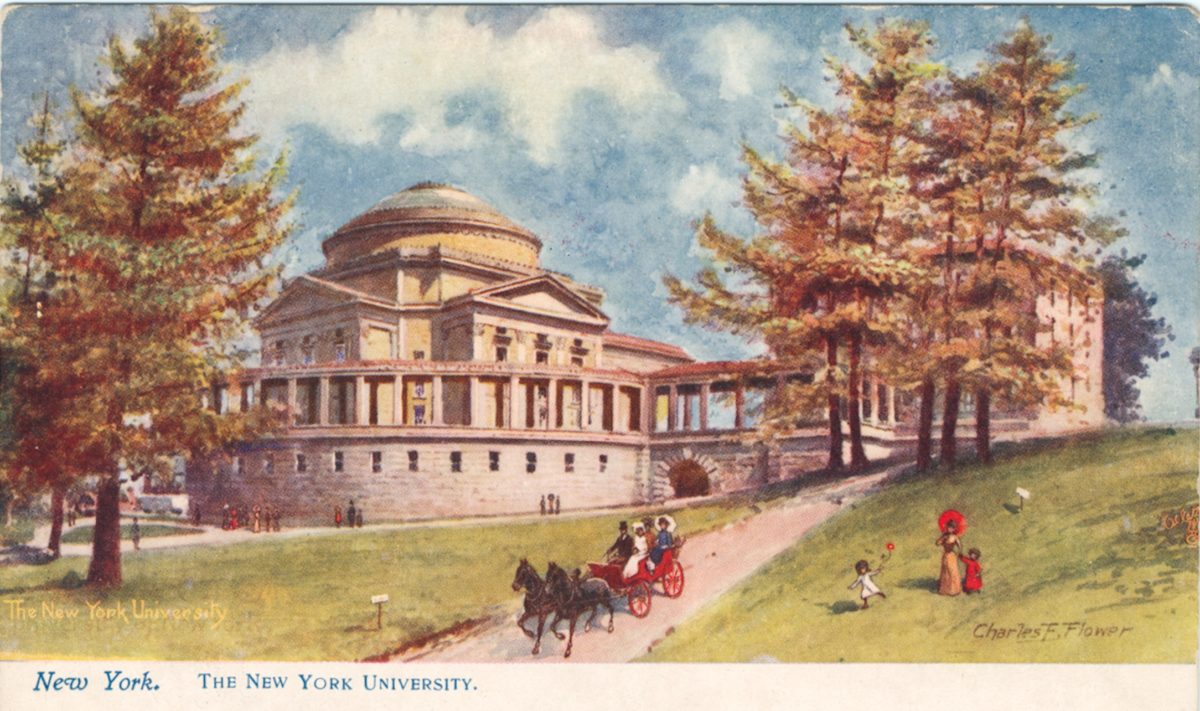
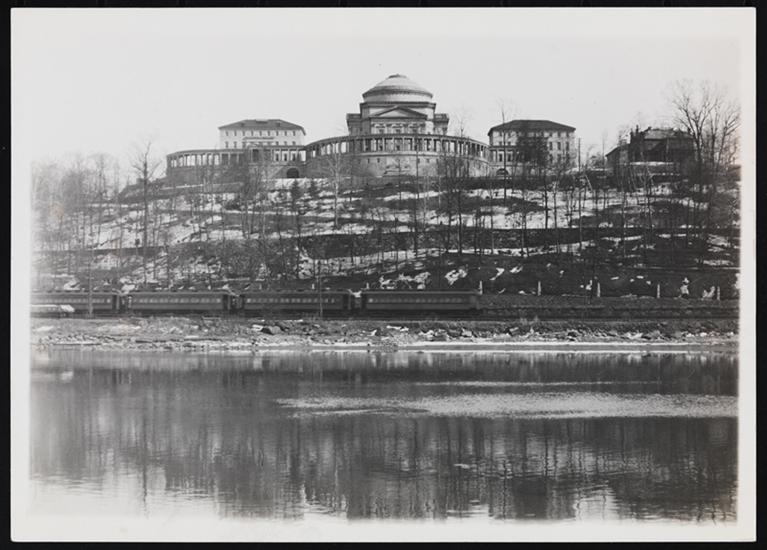
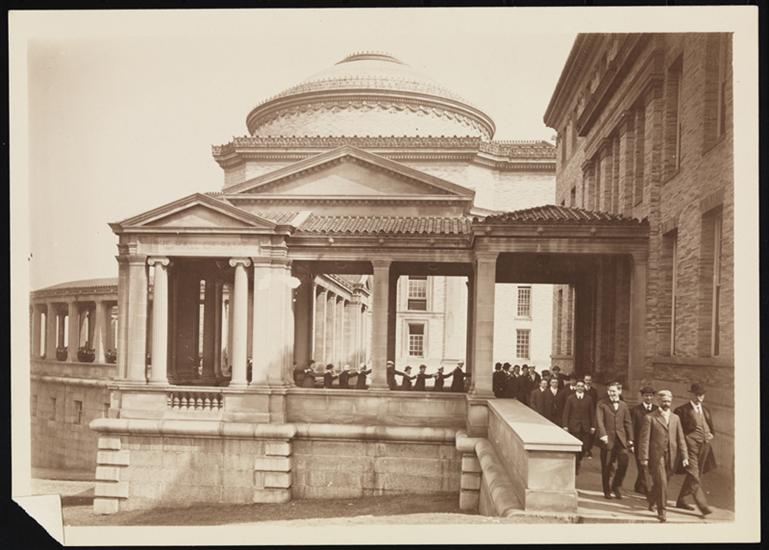
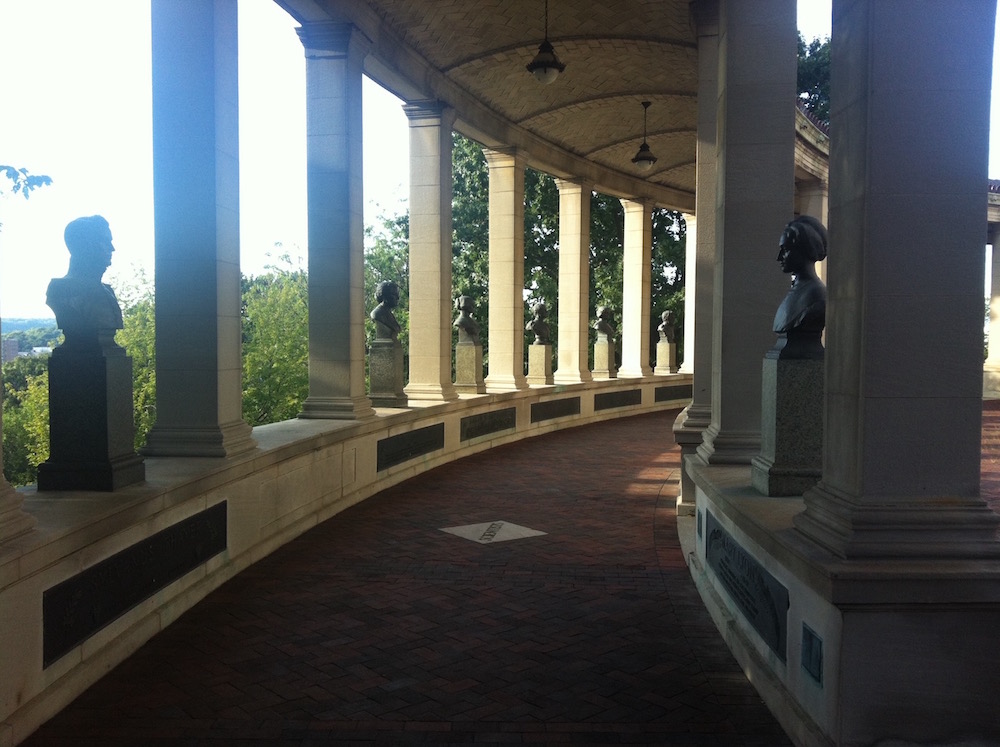
The Hall of Fame for Great Americans, founded in 1900, was a precursor to the Nobel Prize and the Presidential Medal of Freedom, a vaunted tribute to those who have contributed greatly to the development the United States of America.
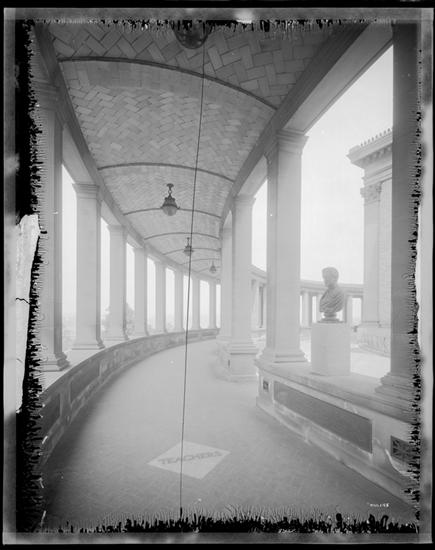
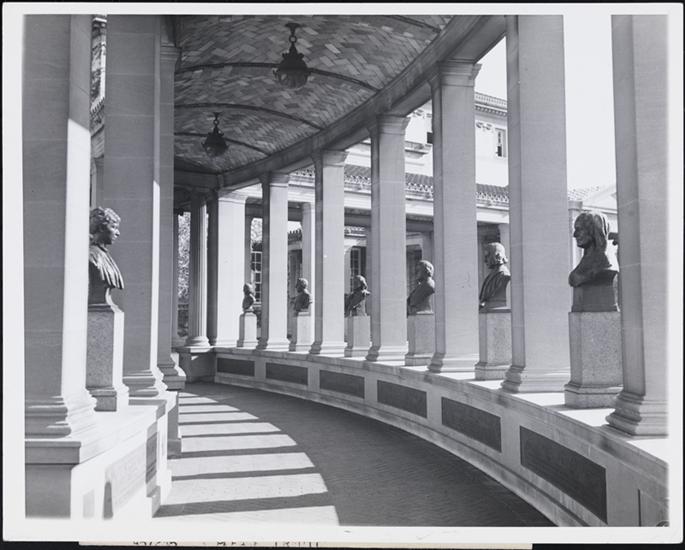
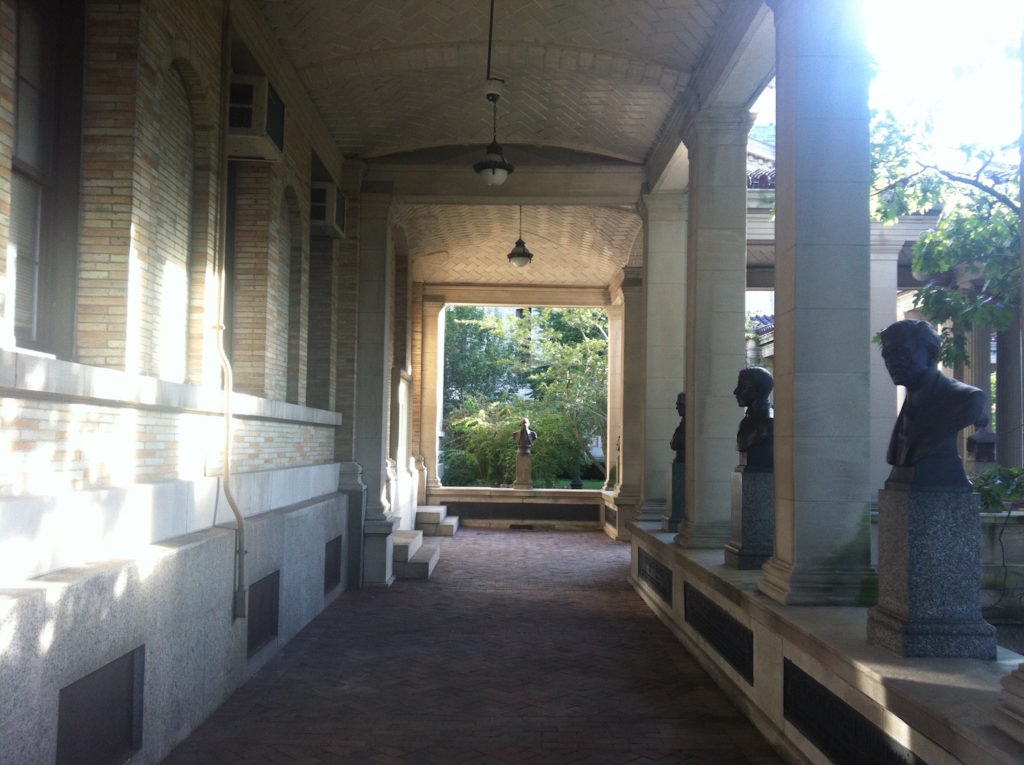
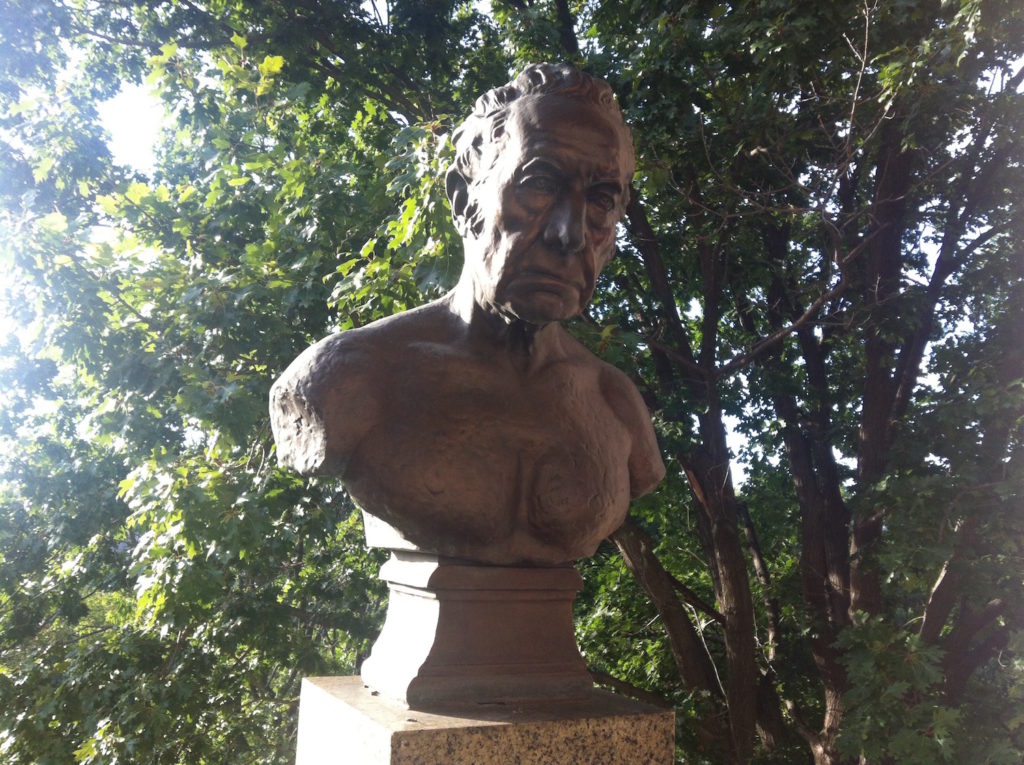
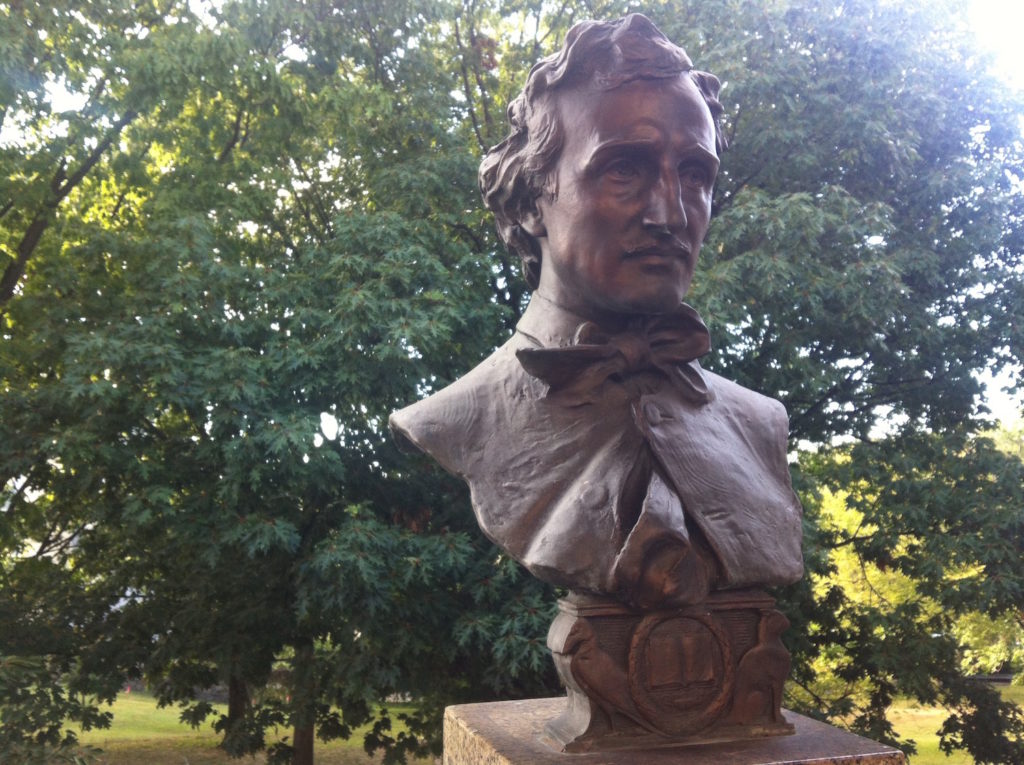
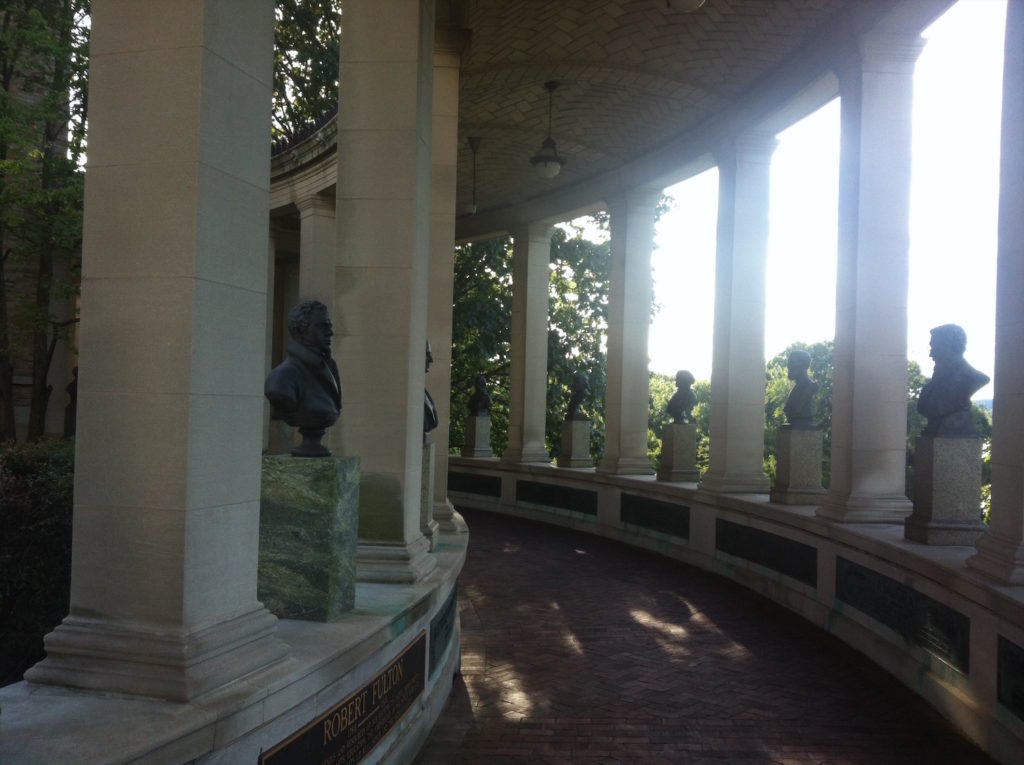
Located on the campus of Bronx Community College in the University Heights neighborhood of the Bronx, the Hall of Fame features the sculpted bronze busts of 96 individuals* considered worthy of renown in their day, arranged along a columned arcade designed by Stanford White.
It was so important in the early 20th century that the Baseball Hall of Fame and the Hollywood Walk of Fame derive from its example. The Hall of Fame for Great Americans even pops up in The Wizard of Oz!
But today it is virtually forgotten. And no person has been elected to the Hall of Fame since the 1970s.
This is the story of a university with lofty intentions, a snapshot of early 20th century optimism, and a look at a few questionable considerations of ‘greatness’.
*There were once 98 busts but two were removed in 2017.
LISTEN NOW — TILLIE HART, THE HOLDOUT OF LONDON TERRACE
Museum of the City of New YorkMuseum of the City of New York
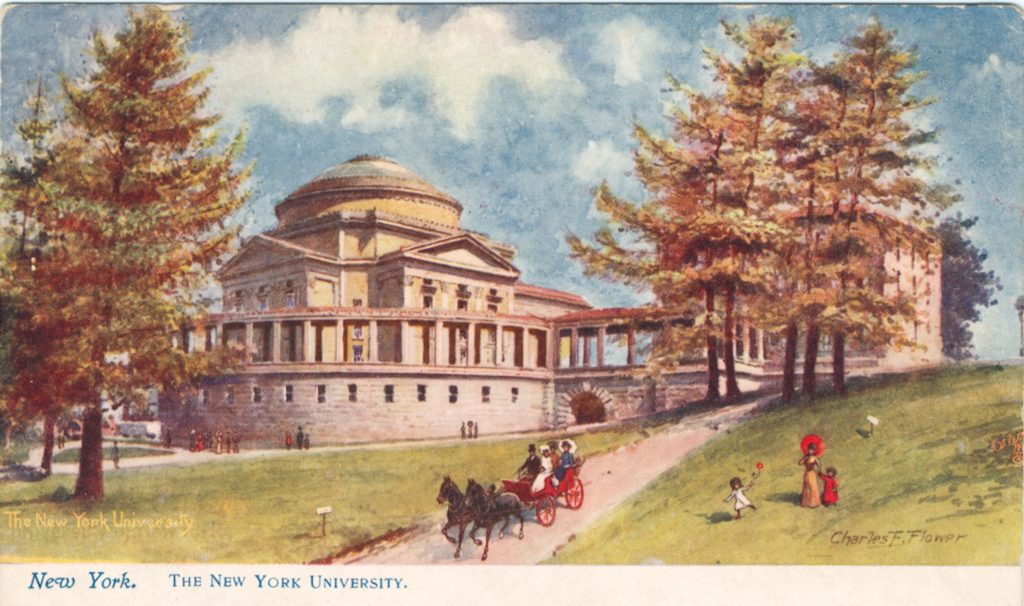
The Hall of Fame in 1908, its niches empty and awaiting busts. Museum of the City of New York
The Hall of Fame in 1945, courtesy World Wide Photos/MCNYNew York Public Library
FURTHER LISTENING
We spoke about these subjects in this week’s episode. For more information, dive back into these older episodes:
The Bowery Boys: New York City History podcast is brought to you …. by you!
We are now producing a new Bowery Boys podcast every other week.
We’re also looking to improve and expand the show in other ways —
publishing, social media, live events and other forms of media. But we
can only do this with your help!
We are now a creator on Patreon, a patronage platform where you can support your favorite content creators.
Please visit our page on Patreon
and watch a short video of us recording the show and talking about our
expansion plans. If you’d like to help out, there are six different
pledge levels. Check them out and consider being a sponsor.
For the next several weeks, in addition to our new two-episodes-a-week schedules, all those who support us on Patreon will receive a BONUS EPISODE every other Sunday.
We greatly appreciate our listeners and readers and thank you for joining us on this journey so far.
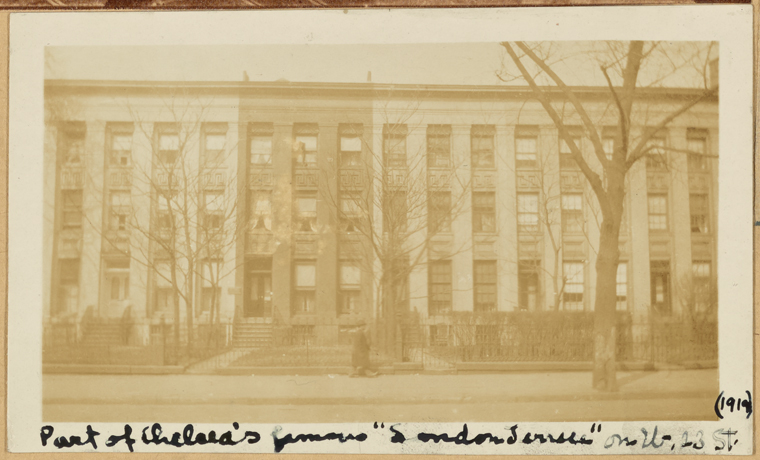
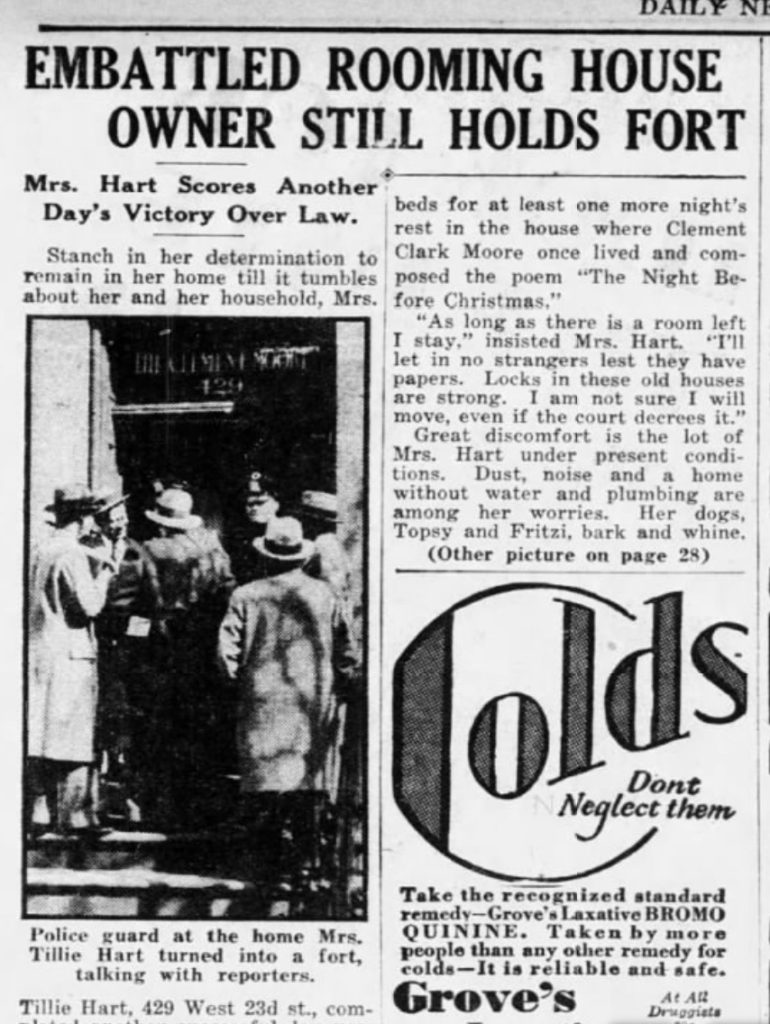
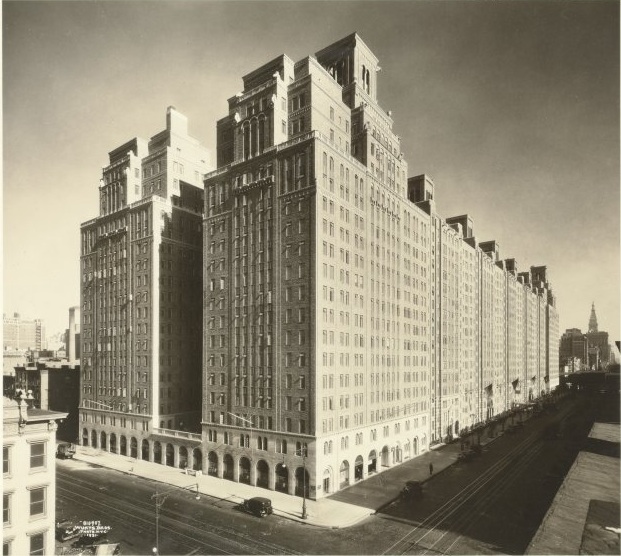
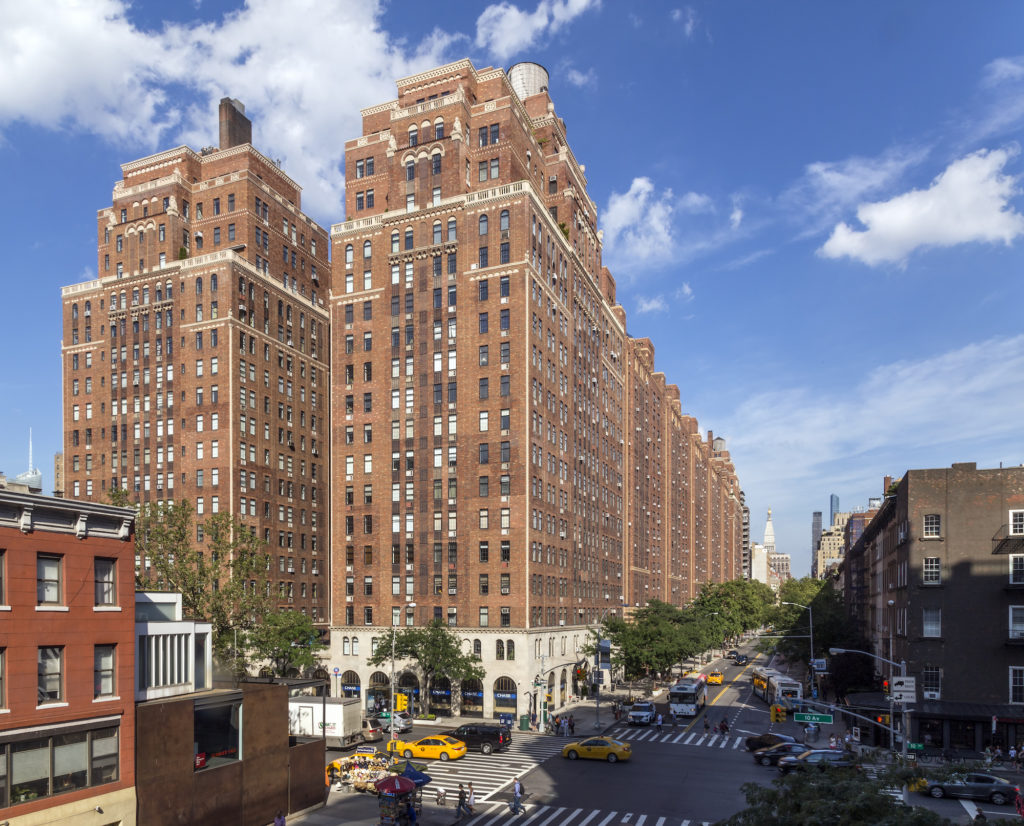
EPISODE 314 — London Terrace, an English-inspired apartment complex, is a jewel of apartment living in the neighborhood of Chelsea. In 1929, a set of unusual townhouses — also named London Terrace — were demolished to construct this spectacular set of buildings.
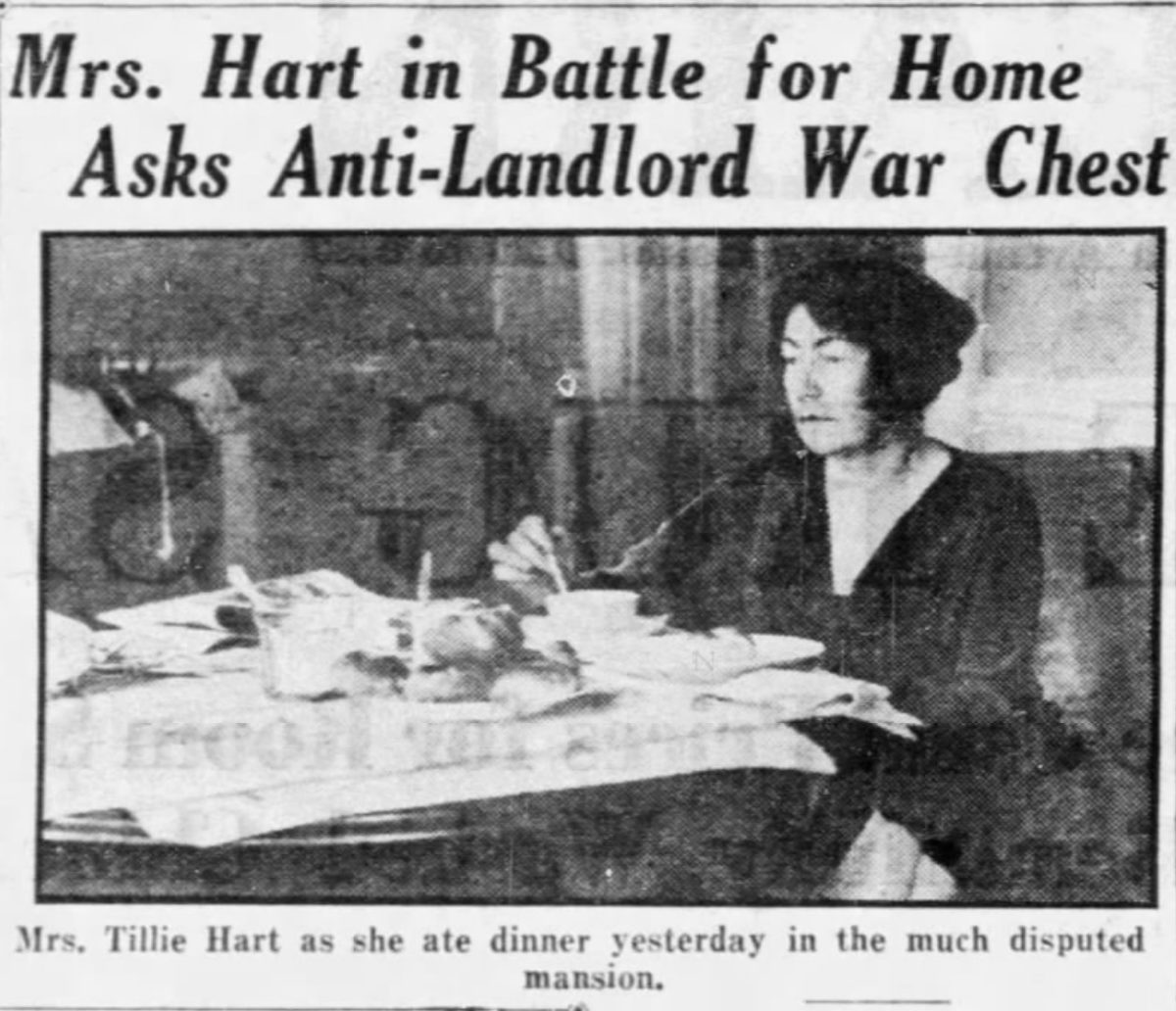
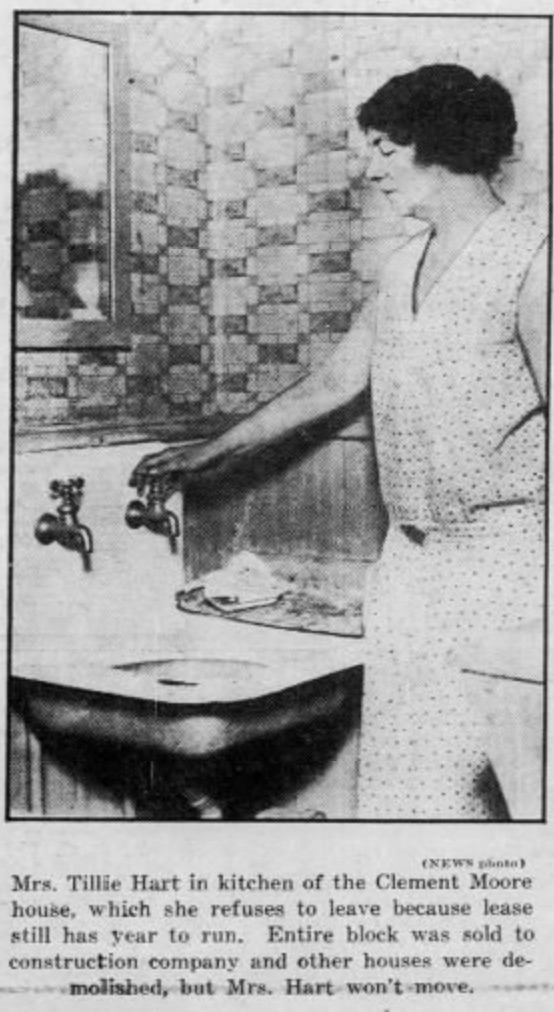
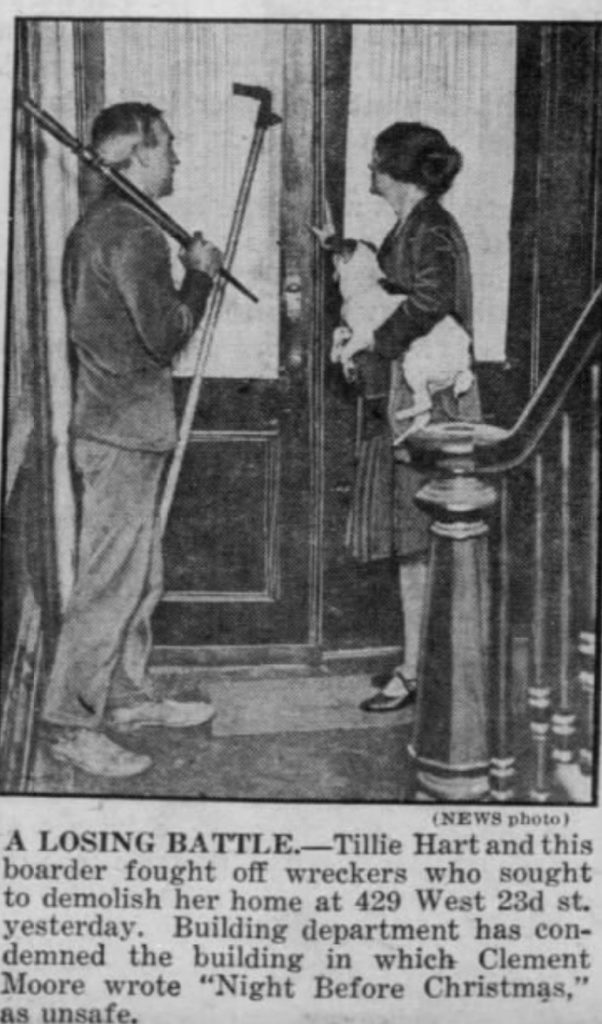
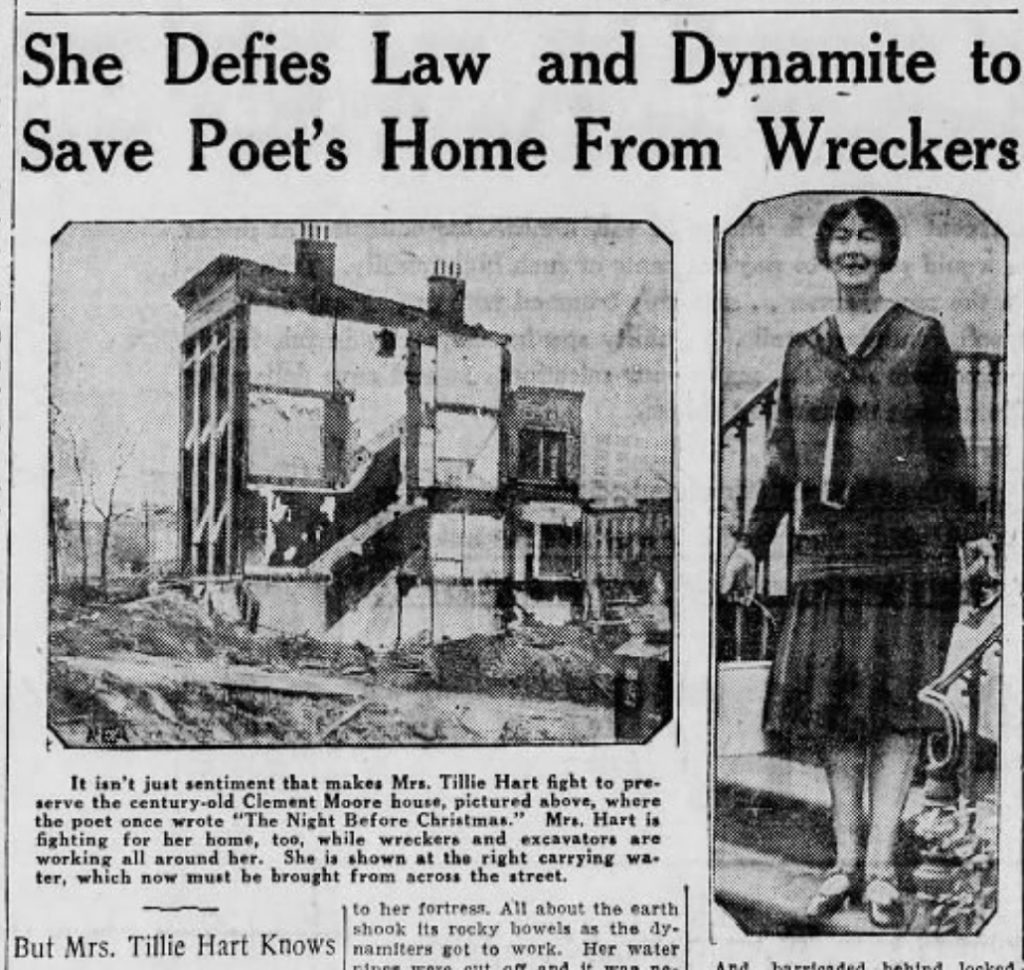
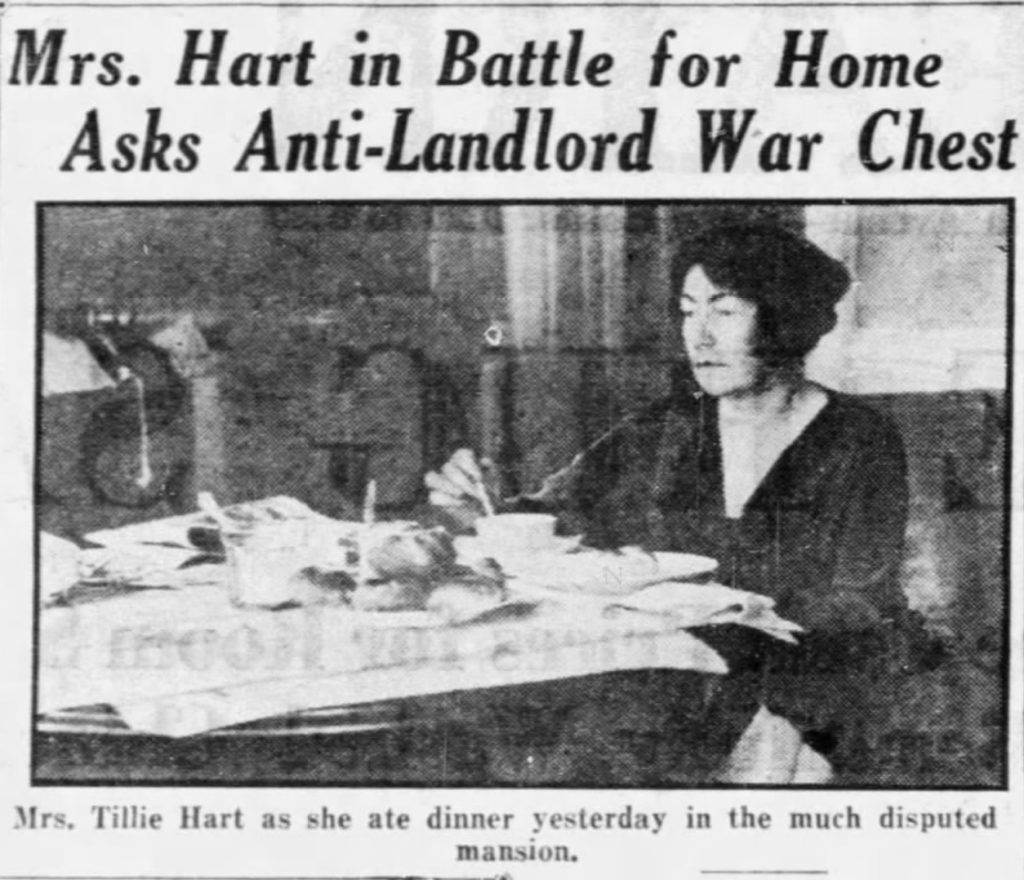
That is, all townhouses but one — the home of Mrs. Tillie Hart, a tenacious tenant who refused to leave.
In a real-life example of the movie Up, Hart’s tale is a battle between urban development and an individual’s right to their longtime home — a genuine David vs. Goliath tale on the landscape of New York City real estate.
In her favor — the support of the public and the regular attention of the New York Daily News. Will Hart prevail?
PLUS: A history of the Chelsea neighborhood and its ‘godfather’ Clement Clarke Moore.
LISTEN NOW — TILLIE HART, THE HOLDOUT OF LONDON TERRACE
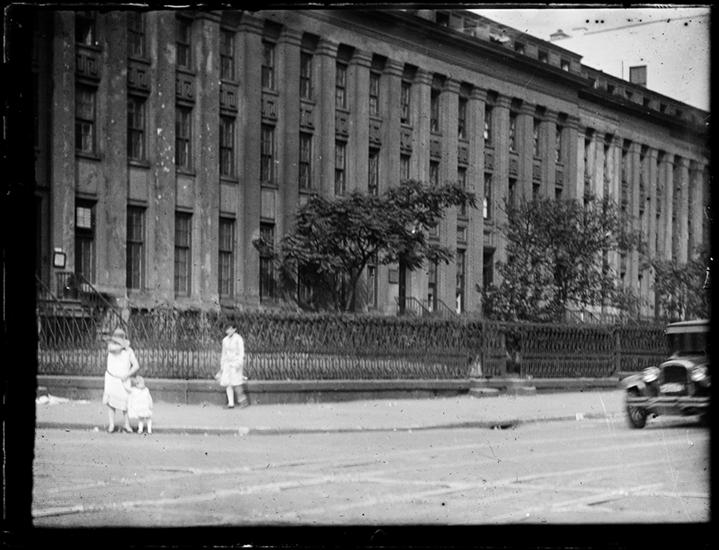
15 London Terrace, 1916-21, Museum of the City of New YorkLondon Terrace 1919 / New York Public Library
Most newspapers — including the Daily News — erroneously reported that Clement Clarke Moore (reduced to “the poet”) lived in the home. It may have been Mrs. Hart herself who kept the fiction going in an effort to save her home.
New York Daily News, September 27, 1929New York Daily News, October 9, 1929An Owensboro, Kentucky, newspaper, Oct 14, 1929 — Most people erroneously reported that Clement Clarke Moore lived in the home.New York Daily News, October 17, 1929New York Daily News, October 20, 1929London Terrace in 1931.London Terrace 2017 / Acroterion/ Wikimedia Commons
The Bowery Boys: New York City History podcast is brought to you …. by you!
We are now producing a new Bowery Boys podcast every other week.
We’re also looking to improve and expand the show in other ways —
publishing, social media, live events and other forms of media. But we
can only do this with your help!
We are now a creator on Patreon, a patronage platform where you can support your favorite content creators.
Please visit our page on Patreon
and watch a short video of us recording the show and talking about our
expansion plans. If you’d like to help out, there are six different
pledge levels. Check them out and consider being a sponsor.
For the next several weeks, in addition to our new two-episodes-a-week schedules, all those who support us on Patreon will receive a BONUS EPISODE every other Sunday.
We greatly appreciate our listeners and readers and thank you for joining us on this journey so far.
When it comes to artistic creation, we take many fundamentals of law for granted. Most people might not understand the particulars of ‘intellectual property’ but they sure benefit from it.
The very review you are reading — and the website that publishes it — are protected by laws that were hammered out and fought for one century ago.
Yet building the essential protections for free creativity is but one notable achievement in the life of a very busy man — the fabulous New York attorney Nathan Burkan.
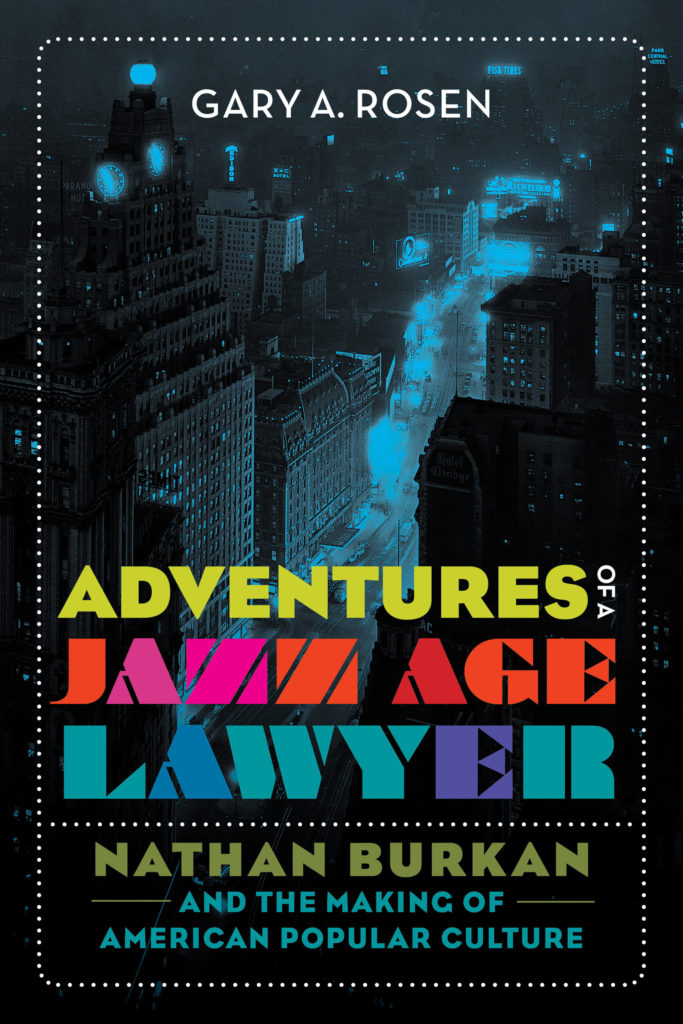
ADVENTURES OF A JAZZ AGE LAWYER Nathan Burkan and the Making of American Popular Culture by Gary A. Rosen University of California Press
In Gary A. Rosen’s absorbing biography of Burkan, we find a somewhat enigmatic presence standing beside some of the most iconic figures of American culture — from songwriters to movie stars, from bootleggers to socialites.
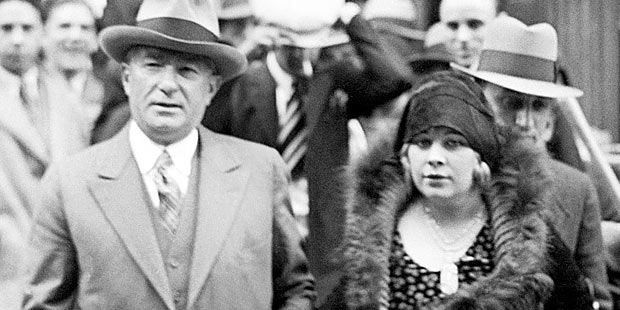
Burkan was one of the most respected lawyers of the early 20th century. He even represented Gloria Morgan Vanderbilt in one of the most sensational (and tragic) trials of the 20th century.
And yet Adventures is not a shallow celebrity tell-all, but a thoughtful and in-depth look at the substance of many foundational cases in the history of entertainment history.
It’s hard to imagine what the music industry would even look like (or sound like) without Burkan’s involvement in the early years of Tin Pan Alley.
With his client Victor Herbert, he helped found ASCAP (American Society of Composers, Authors and Publishers), the organization that protects musical copyrights.
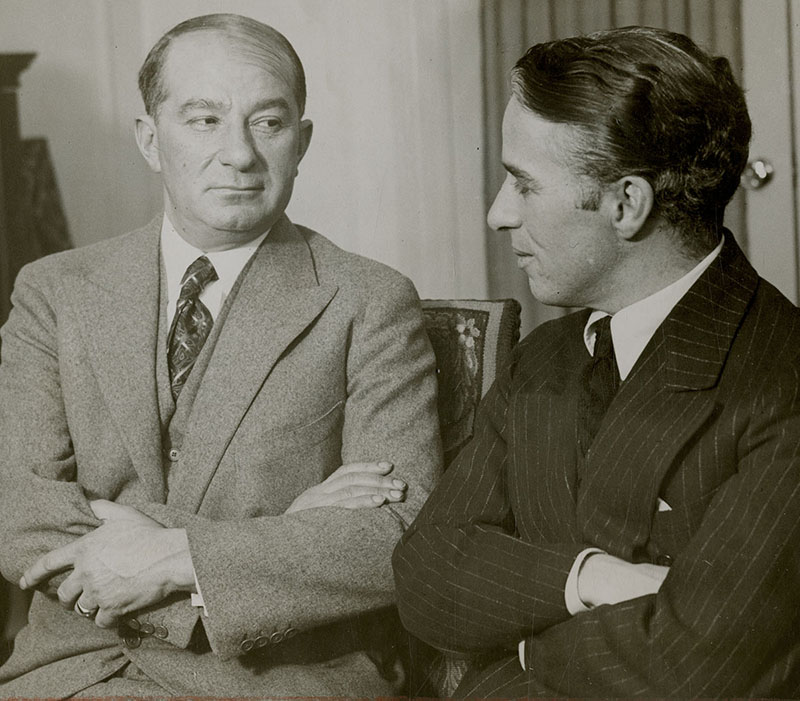
Burkan with Charlie Chaplin
But his most intriguing legal collaboration was with Charlie Chaplin and at a moment (during the mid 1910s) when his star was on the rise.
Charlie’s half-brother and manager Syd Chaplin chose Burkan due to his work with “legitimate theater’s leading comedienne and ingenue of the day Billie Burke,” just one detail that illustrates the attorney’s depth of involvement in the entertainment world.
Burkan with Mae West
And then there was his work in defending Mae West, whose provocative plays were being shut down by the police. His battle against “nightstick censorship” inspired some incendiary moments on the stand:
“Burkan put seven cast members [of the play The Pleasure Man] on the stand in the defense case-in-chief. They testified that the police had misunderstood dialogue and omitted important context….One cast member sang the offending songs with clasped hands and such exaggerated choirboy earnestness that ‘Mae West, at counsel table, covered her mouth with her black handkerchief to hide her laughter’.”
For the next several weeks, the Bowery Boys Podcast will be going live two times a week — every Tuesday and Friday. Read our announcement here.
EPISODE 313 “No man likes to have his hat snatched from his head by somebody he has not yet been introduced to.”
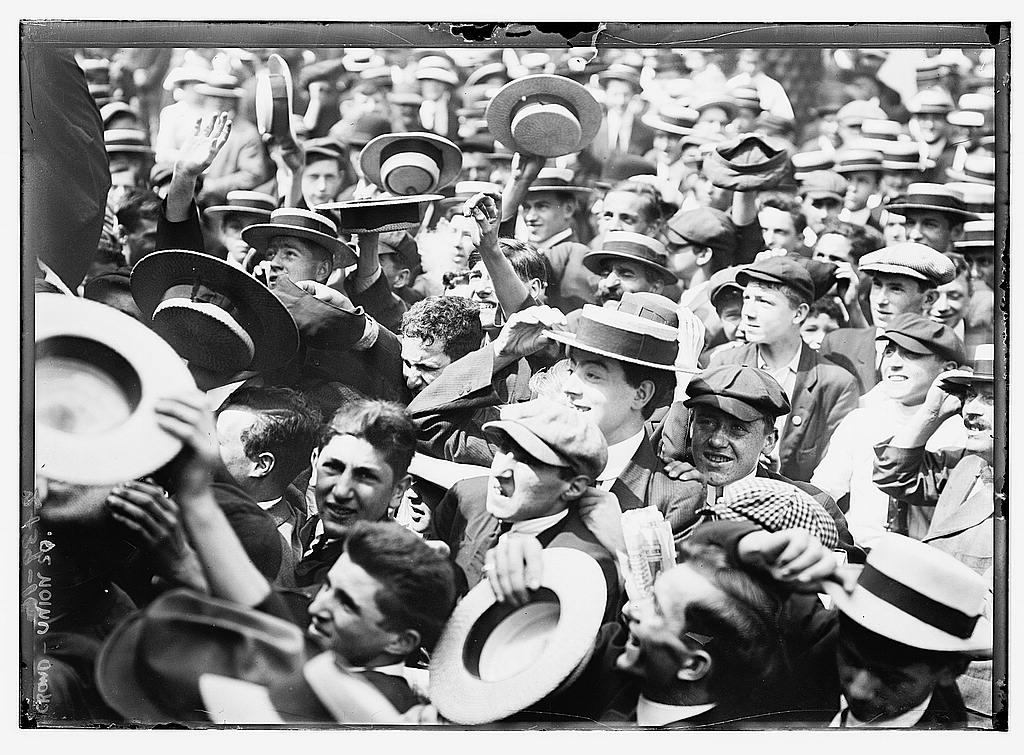
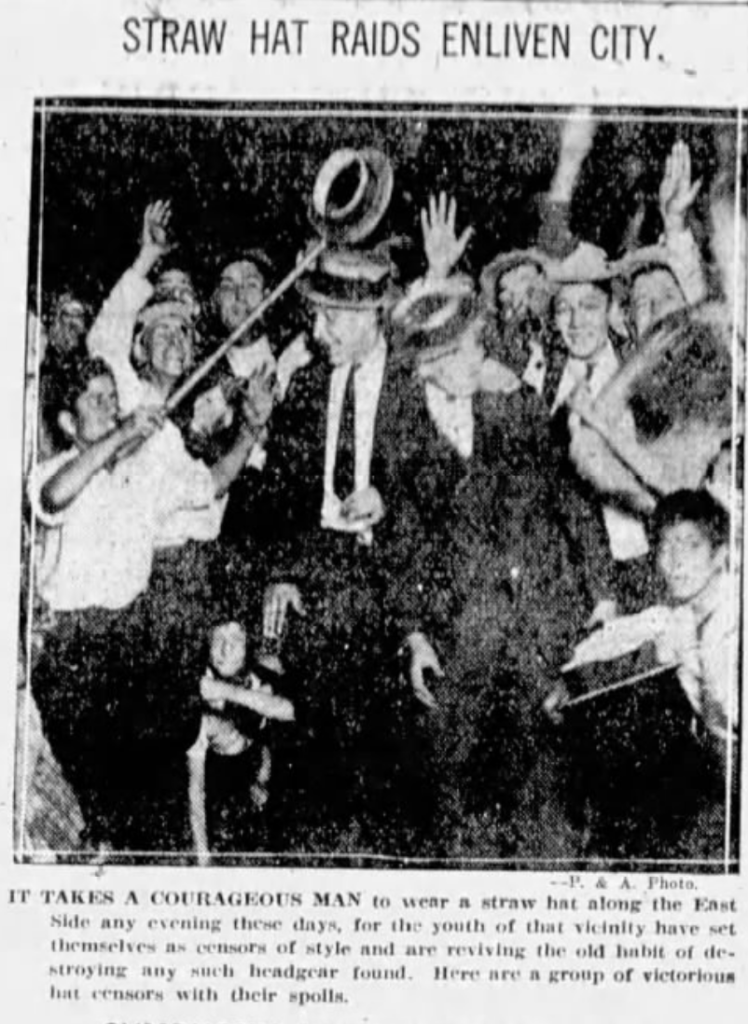
During the month of September 1922, as summer passed into autumn, large groups of rowdy ‘hoodlums’ swarmed the streets of New York City, grabbing straw hats off the heads of men, leaving the gutters filled with thousands of smashed lids.
Why in the world would so many people become outraged at the sight of a straw hat?
This is the story of the ultimate fashion faux pas, Jazz Age style, snd a look at the dangers of men’s wear uniformity.
NOTE: As this is our first remotely recorded episode, it’s a bit more goofy than others. Expect an extra dosage of puns.
LISTEN NOW — THE STRAW HAT RIOTS OF 1922
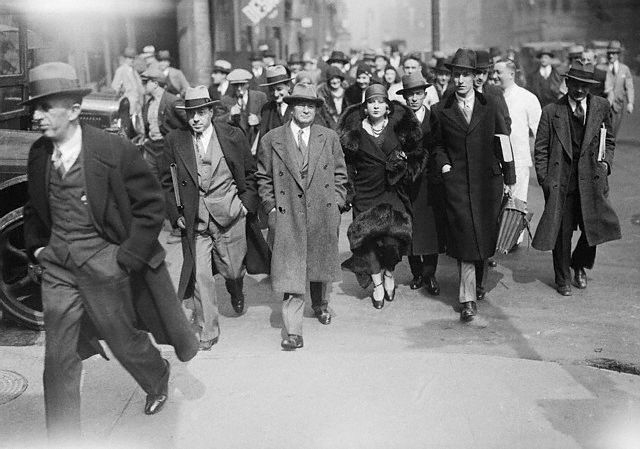
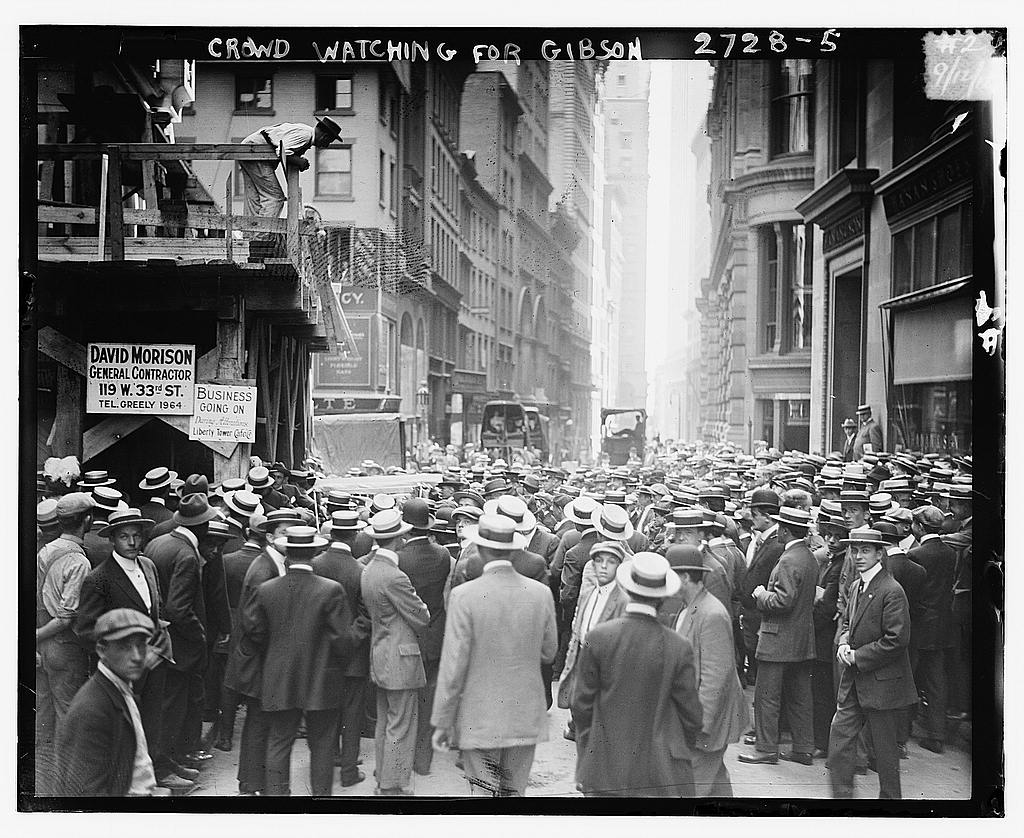
Straw hats is full display in this photo which shows crowd waiting in New York City for the arrest of lawyer Burton W. Gibson, in 1912. Library of Congress
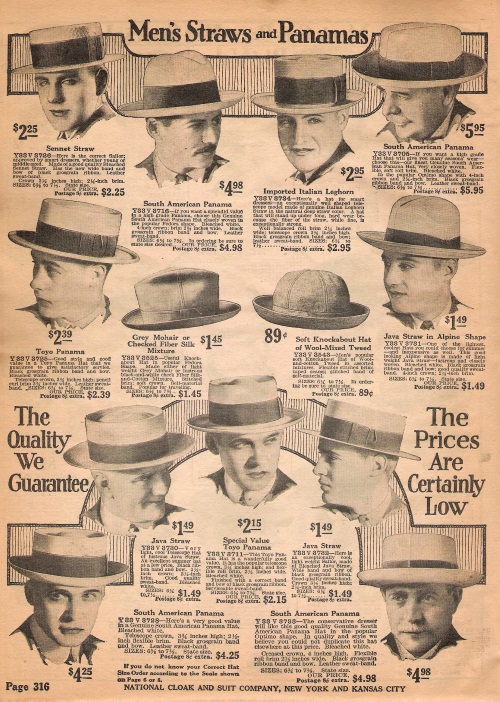
Courtesy Vintage Dancer
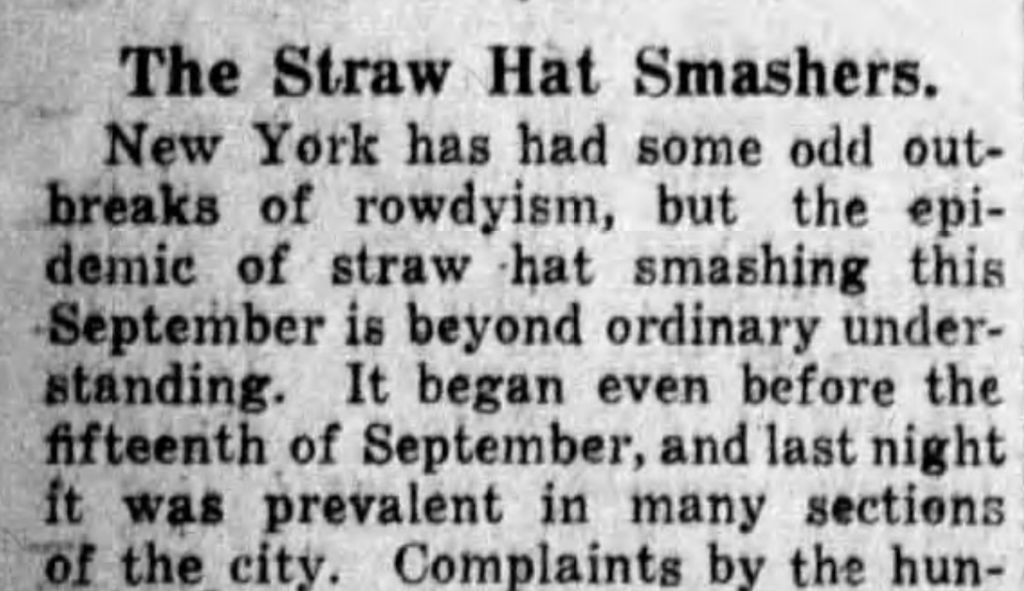
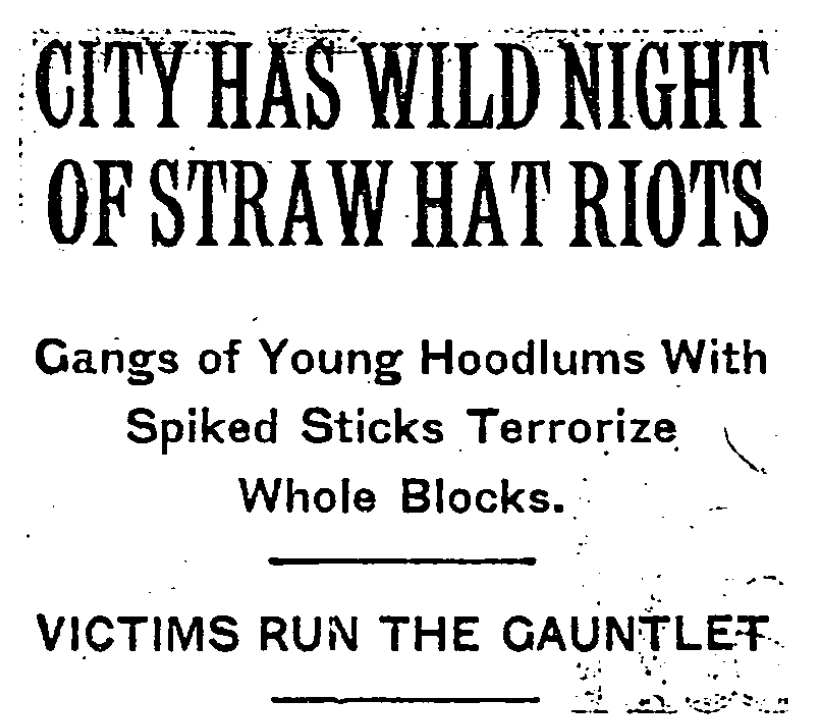
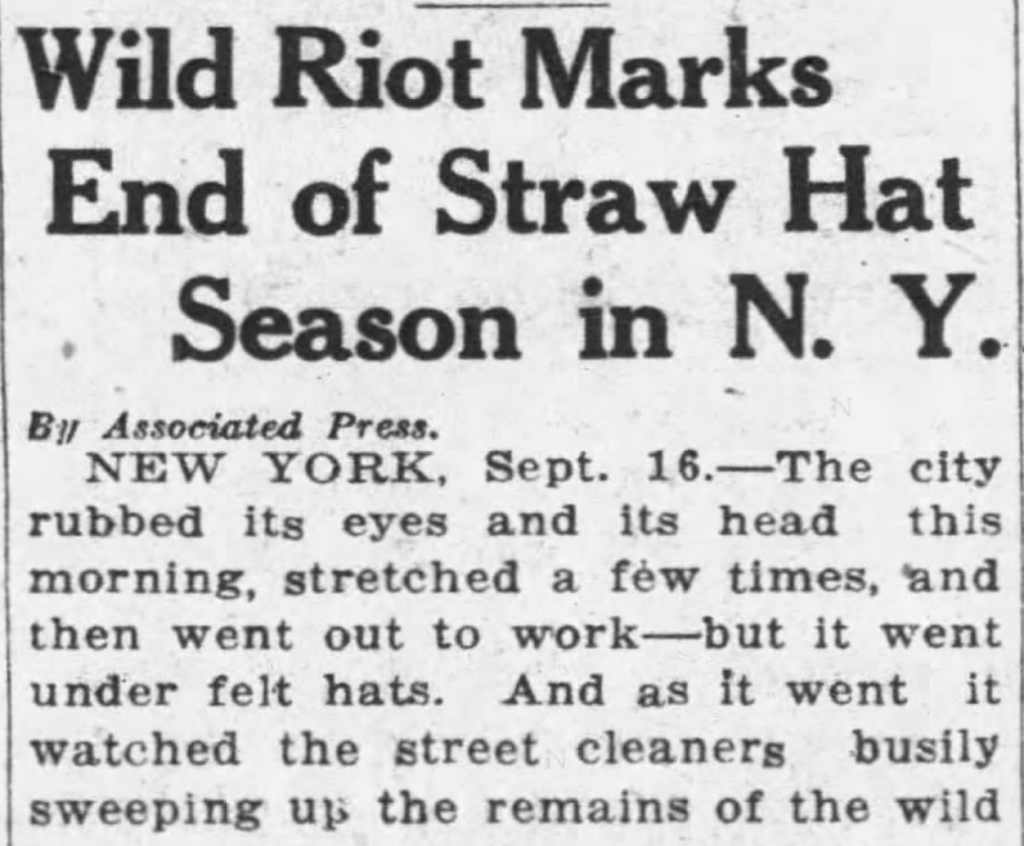
Brooklyn Times Union, September 16, 1922Brooklyn Times Union, Sept 16, 1922The Buffalo Times, September 17, 1922
The Bowery Boys: New York City History podcast is brought to you …. by you!
We are now producing a new Bowery Boys podcast every other week.
We’re also looking to improve and expand the show in other ways —
publishing, social media, live events and other forms of media. But we
can only do this with your help!
We are now a creator on Patreon, a patronage platform where you can support your favorite content creators.
Please visit our page on Patreon
and watch a short video of us recording the show and talking about our
expansion plans. If you’d like to help out, there are six different
pledge levels. Check them out and consider being a sponsor.
For the next several weeks, in addition to our new two-episodes-a-week schedules, all those who support us on Patreon will receive a BONUS EPISODE every other Sunday.
We greatly appreciate our listeners and readers and thank you for joining us on this journey so far.
During this period of social isolation and the perpetual concerns of health and economic well-being that you might be feeling now, we here at the Bowery Boys: New York City History podcast want to make sure that we are doing our part in providing you with the distraction and camaraderie you might be looking for.
Quite honestly, there’s nothing more comforting than a good piece of history!
Because of this, starting this Tuesday, March 24, we’ll be bringing you the Bowery Boys podcast two times a week — every Tuesday and Friday.
These will be shorter shows, covering topics that were perhaps a bit too small-scale for a regular, full-length podcast. We might even take this chance to tell stories of the other places in the New York City area — New Jersey, Westchester, Long Island, we’re looking at you. The sky’s the limit!
We’re only able to increase our production because of generous support via Patreon. So if you like what we do, please consider becoming a member at one of the tiers listed on our page.
Make us a regular part of your Tuesday and Friday routine — starting next week! We’ll see you then .. and have a great New York week.
You can listen to the Bowery Boys podcast wherever you get your podcasts — all the players!
PODCAST It’s time for a Gilded Age murder mystery, true-crime podcast style!
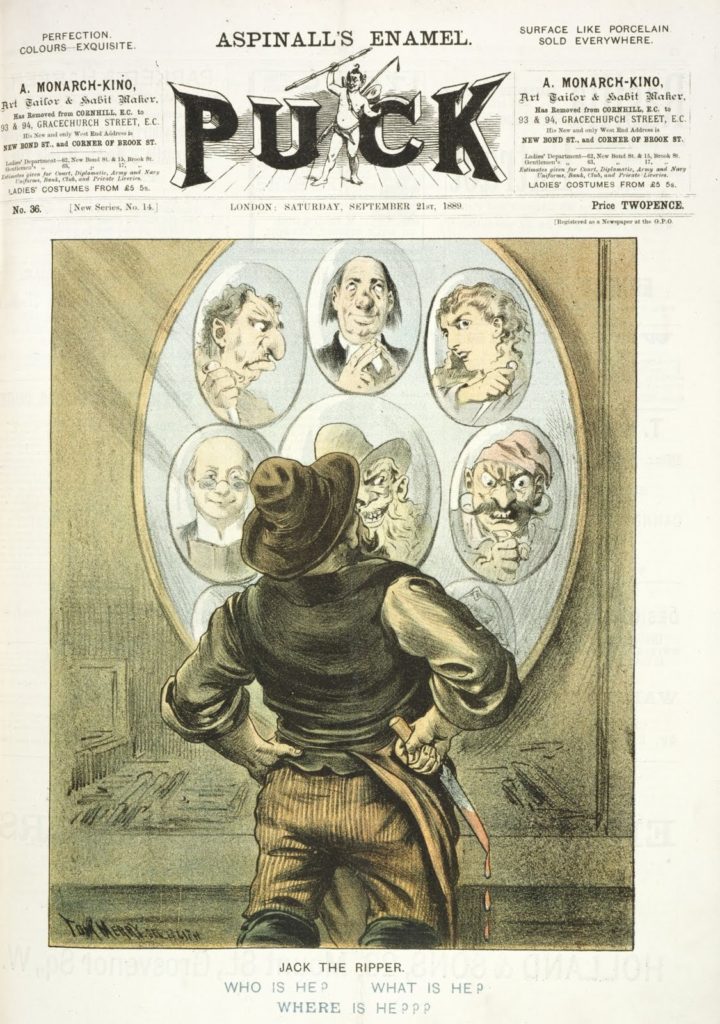
The Whitechapel Murders of 1888 — perpetrated by the killer known as Jack the Ripper — inspired one of the greatest cultural hysterias of the Victorian era. The crimes were so publicized in newspapers around the world that many believed that the Ripper could appear anywhere — even in New York City.
The usual vicious crimes of gang members and roughs on the Bowery were not only compared to those of the Ripper, they were often framed as though they were the Ripper himself, an omnipresent specter of evil.
The sordid misdeeds of other criminals were elevated by the press in comparisons to Jack the Ripper.
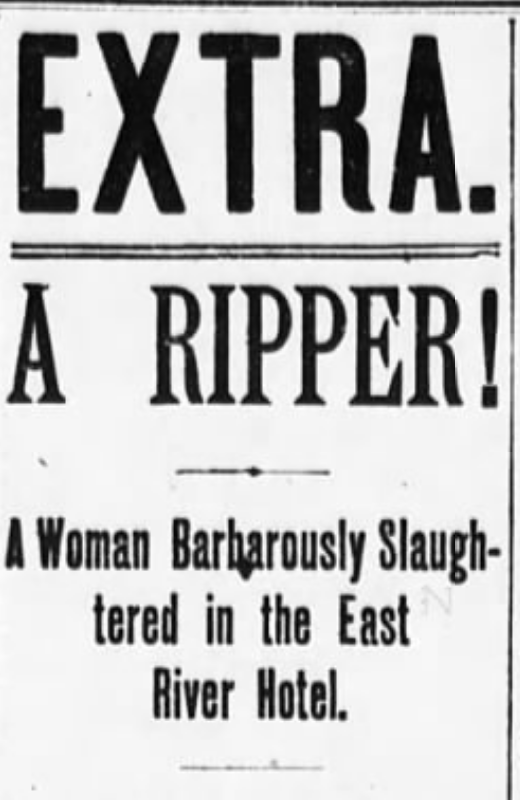
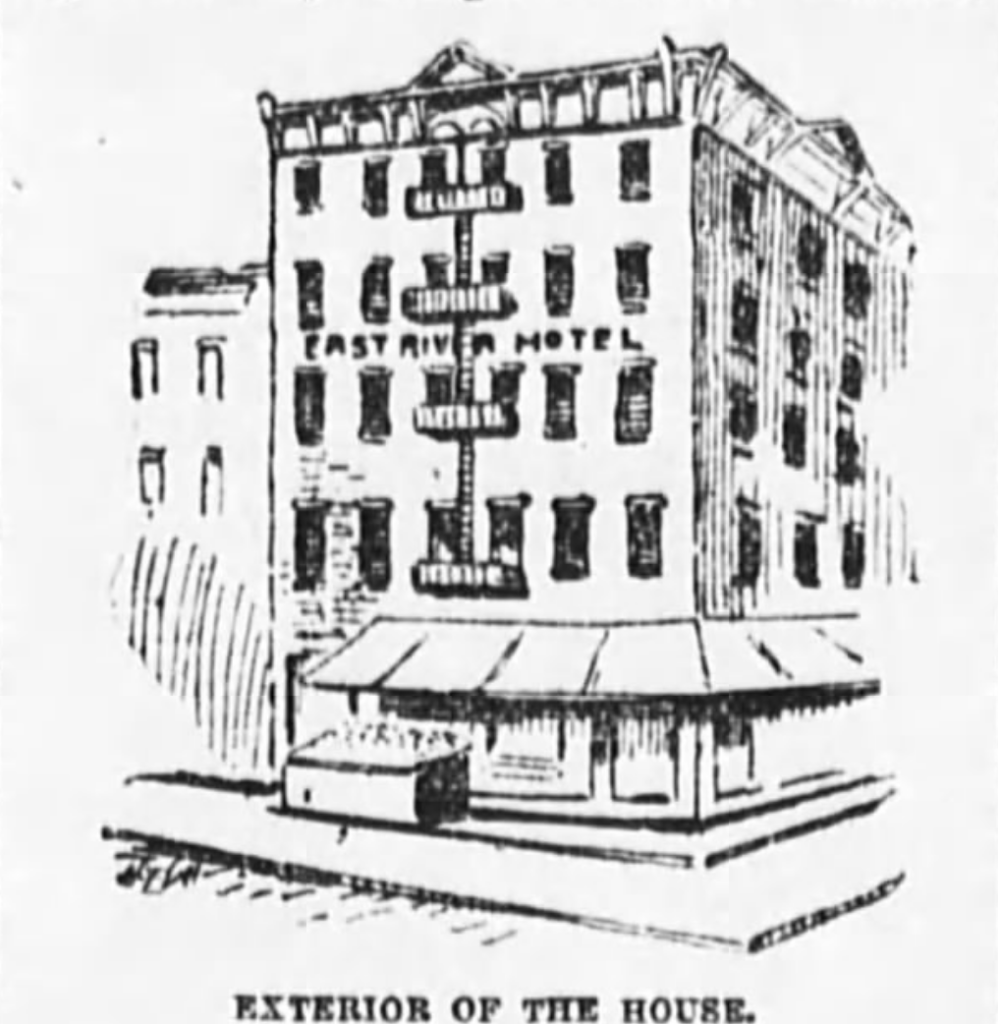
But then, in April of 1891, a crime was committed on the East River waterfront that was so brutal, so garish, that comparisons to the London killer were inevitable.
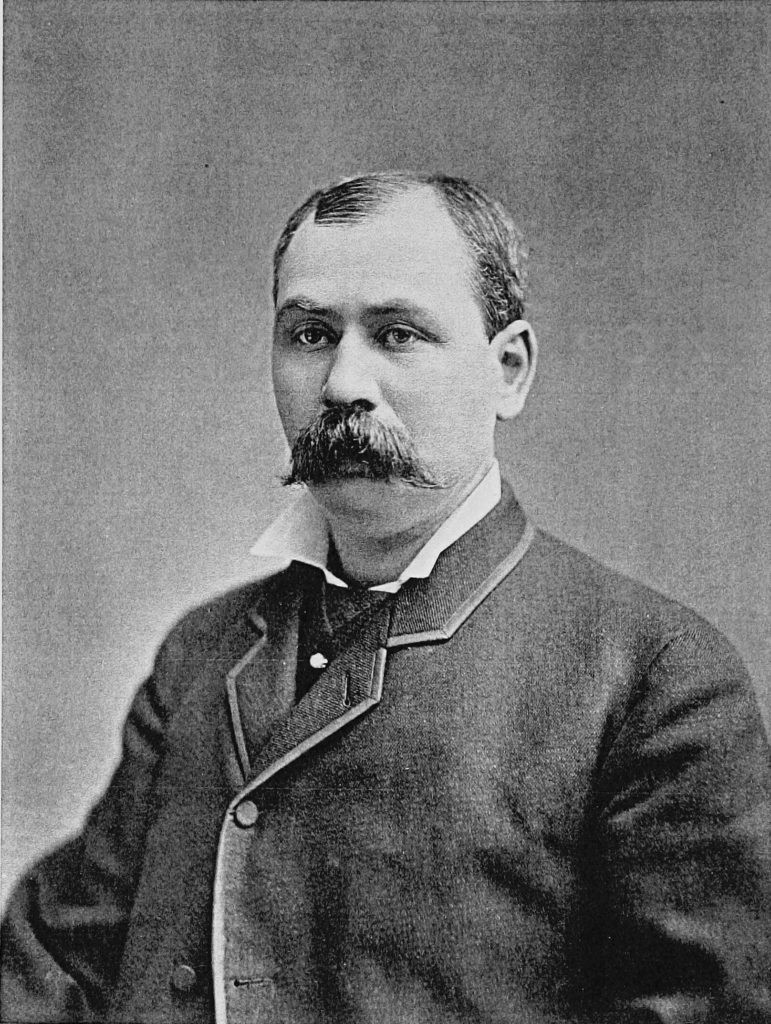
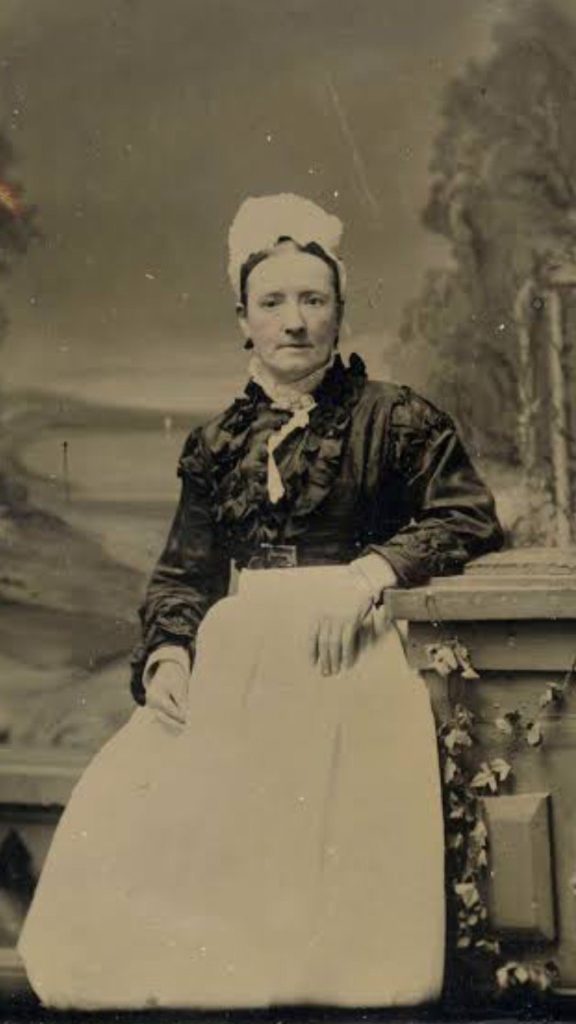
The victim was named Carrie Brown. But people along the waterfront knew her by her nickname Shakespeare (or Old Shakespeare).
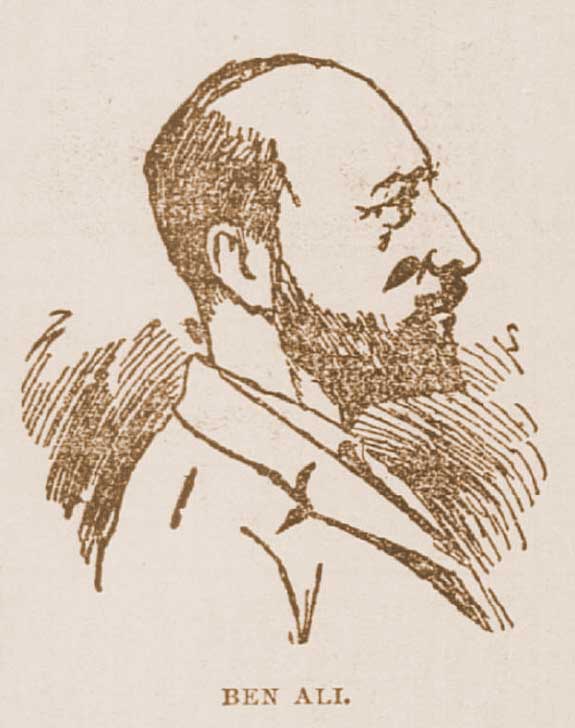
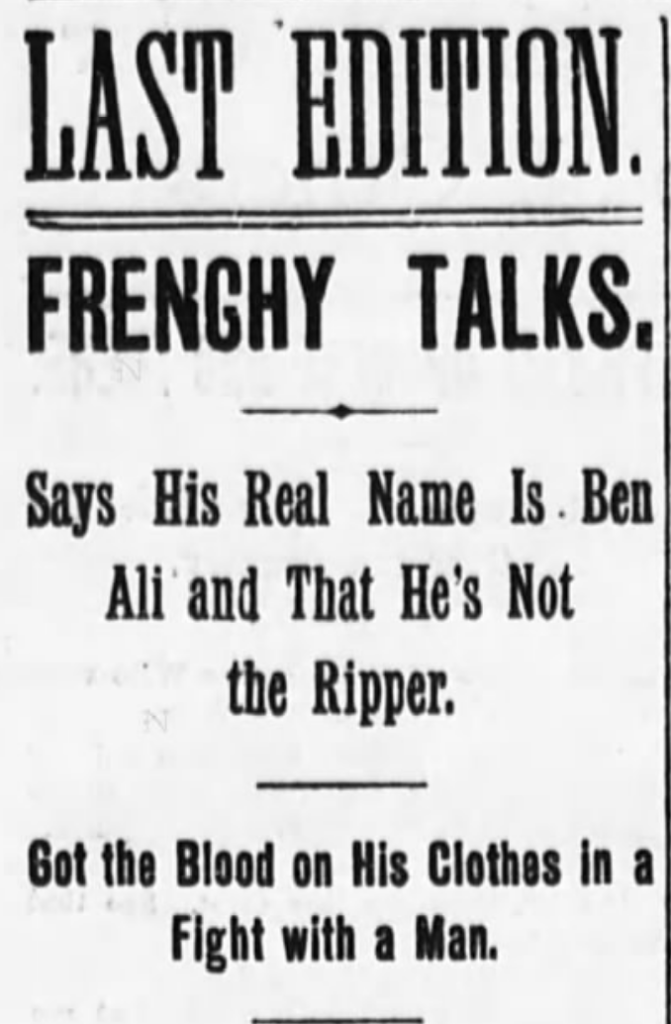
This is a tale of an infamous crime, a controversial detective and an unjust conviction of an Algerian immigrant named Ameer Ben Ali.
Who killed Old Shakespeare?
PLUS: A very special announcement at the start of the show!
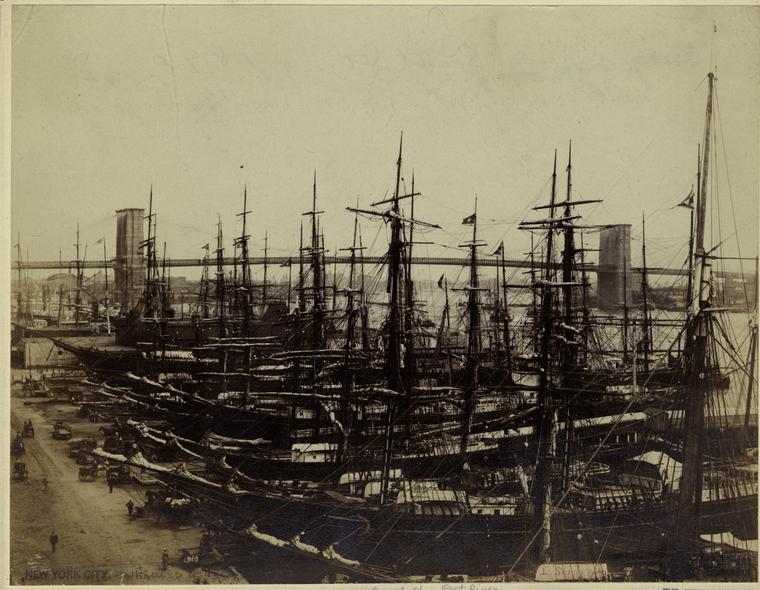
The East River waterfront, South Street, 1890Frontispiece of Professional Criminals of America (1886), Thomas Byrnes; New YorkCarrie Brown, NYC Municipal Archives
New York Evening World, April 24, 1891
The East River Hotel, New York Evening World illustration
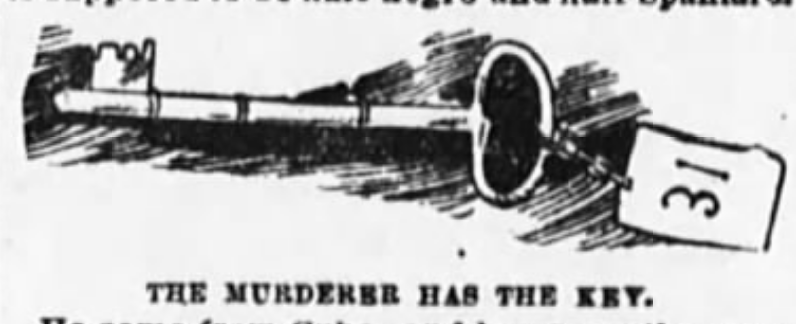
The key to Room 31, New York Evening World illustrationAmeer Ben Ali
New York Evening World, May 2, 1891
Further Listening
After taking in the story of the murder of Carrie Brown and the American Jack the Ripper hysteria, revisit these past Bowery Boys episodes for a fuller context of the events recounted on this program.
Who Killed Helen Jewett? A Mystery By Gaslight
Corlear’s Hook and the Pirates of the East River
Case Files of the NYPD
Further Reading
The American Murders of Jack the Ripper by R. Michael Gordon Big Policeman: The Rise and Fall of America’s First, Most Ruthless and Greatest Detective by J. North Conway The Five: The Untold Lives of the Women Killed by Jack the Ripper by Hallie Rubenhold Gotham by Edwin G Burrows and Mike Wallace Low Life by Luc Sante New York Exposed: The Gilded Age Police Scandal that Launched the Progressive Age by Daniel Czitrom Ripper Notes: America Looks at Jack the Ripper/”The New York Affair” by Wolf Vanderlinden
The Bowery Boys: New York City History podcast is brought to you …. by you!
We are now producing a new Bowery Boys podcast every other week.
We’re also looking to improve and expand the show in other ways —
publishing, social media, live events and other forms of media. But we
can only do this with your help!
We are now a creator on Patreon, a patronage platform where you can support your favorite content creators.
Please visit our page on Patreon
and watch a short video of us recording the show and talking about our
expansion plans. If you’d like to help out, there are six different
pledge levels. Check them out and consider being a sponsor.
ALL patrons at all levels will receive many benefits include the next episode of the Bowery Boys Movie Club, an exclusive podcast (released every 6-8 weeks) celebrating New York City in the movies.
And patrons at the Five Points ($5) level and up will get our other exclusive podcast — The Bowery Boys: The Takeout — released every two weeks.
We greatly appreciate our listeners and readers and thank you for joining us on this journey so far.
Looking for a good book? Here are a few recent releases I’ve enjoyed reading over the past few weeks. All are currently available at your local book retailer:
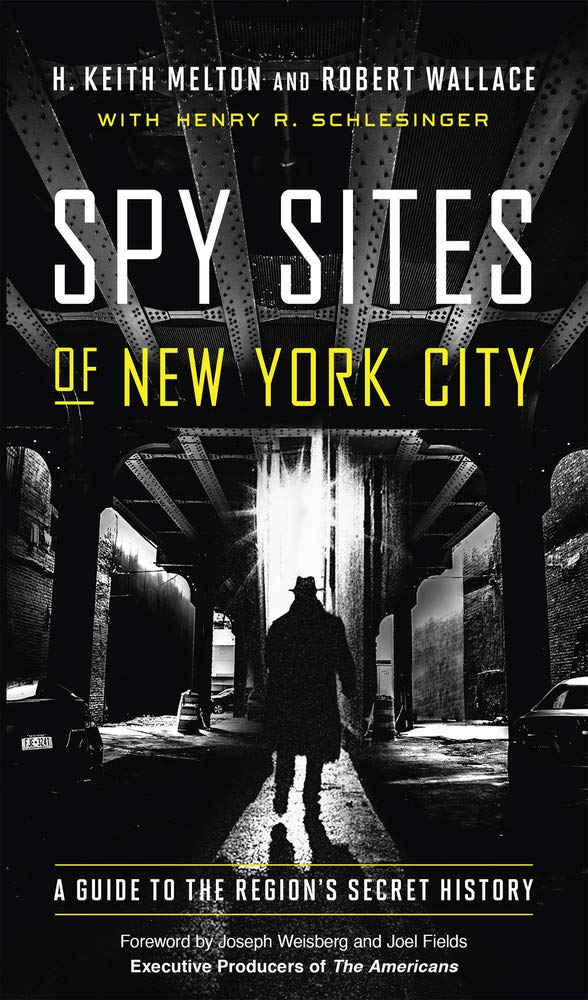
In what is easily the coolest New York City guide book of recent memory, Spy Sites of New York City tracks down and maps out the city’s marvelous and mysterious connections with espionage — from the Revolutionary War to very, very recent events.
The richly researched entries are arranged chronologically with a list of maps in the back to chart your own afternoon adventure. Fans of the AMC series of Turn and even The Americans might find themselves reliving their favorite episodes. (Americans producers Joseph Weisberg an Joel Fields wrote the book’s forward.)
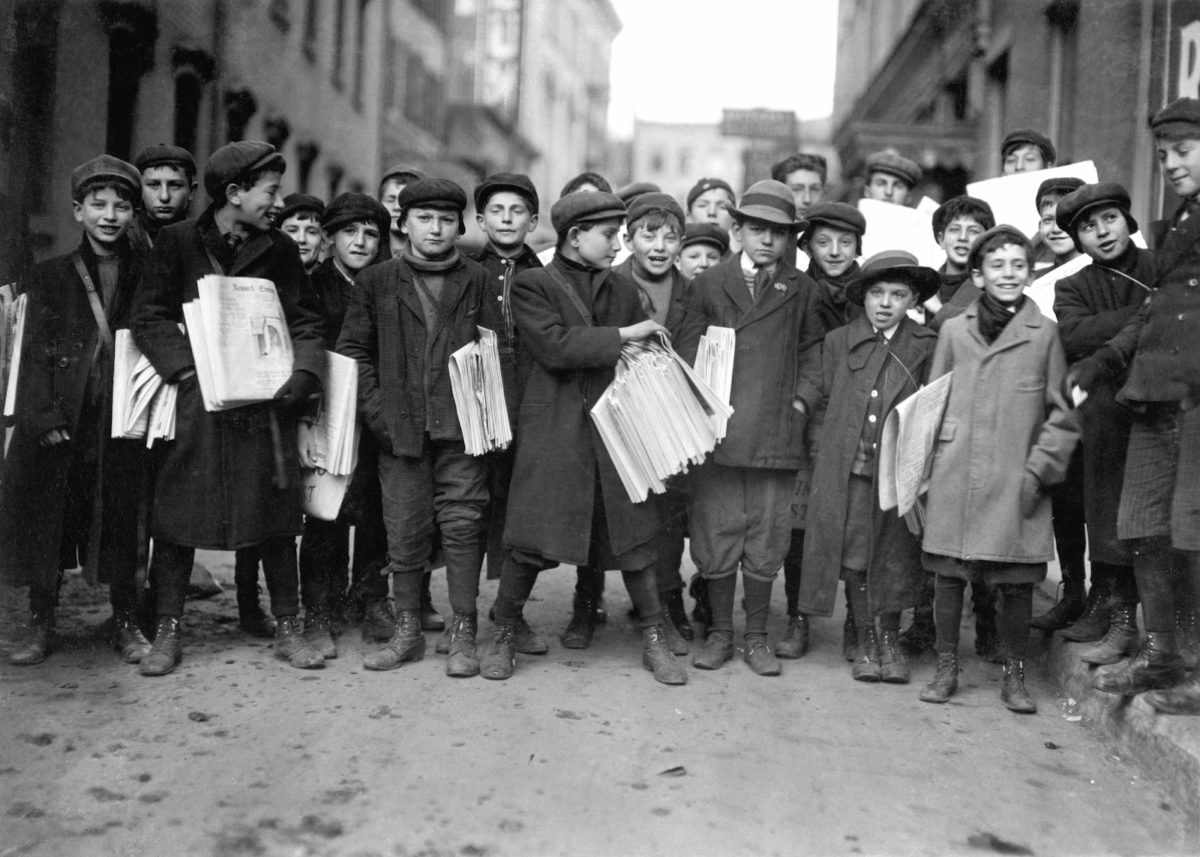
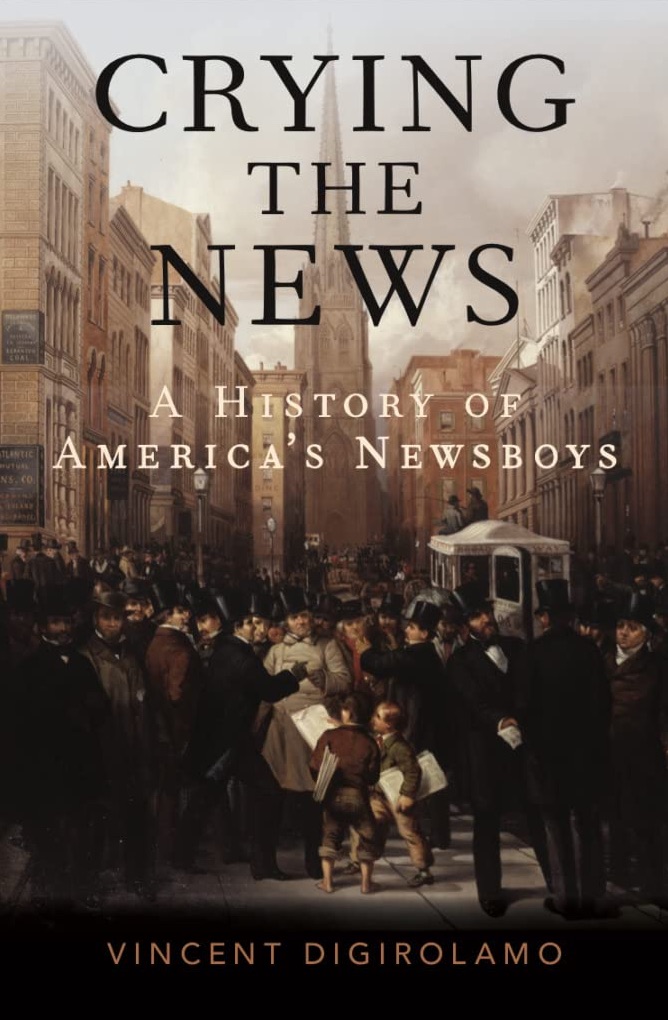
Since the first penny presses in the 1830s, newsboys (and girls) have been a ubiquitous presence upon the urban landscape. It can be said that the American news media was developed on the backs of children, and in Crying the News, they are collectively exalted as the embodiment of American spirit.
DiGirolamo’s extensive examination of the junior trade reveals the real faces behind the gritty stereotypes. Most newsboys came from disadvantaged backgrounds, working their way into this frequently abusive occupation to carve out a scrappy street-born freedom.
And Crying the News is also a side view of American history itself, seen from the perspective of those who touted breaking news from every street corner with a loud, unmistakable cry. Extra! Extra!
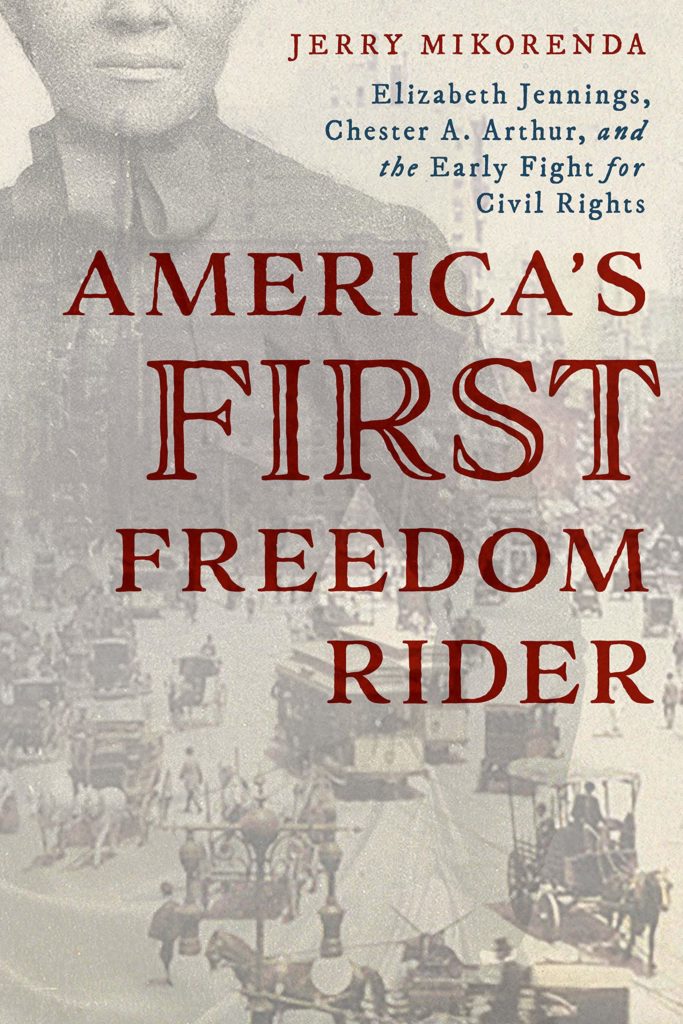
AMERICA’S FIRST FREEDOM RIDER Elizabeth Jennings, Chester A. Arthur and the Early Fight for Civil Rights By Jerry Mikorenda
In 1854 an African-American woman named Elizabeth Jennings (later Elizabeth Jennings Graham) was denied a seat on a lower Manhattan streetcar, forcibly removed due to the color of her skin.
Her tale is often compared to that of Rosa Parks, but in America’s First Freedom Rider, author Jerry Mikorenda makes the case that Jennings story should be seen on its own terms, as an electrifying show of bravery at the beginning of a long journey towards equality.
Part of what makes Jennings’ saga so curious is a surprising supporting character — Chester A. Arthur, the young lawyer (and future president) who takes her case to court. Mikorenda presents their stories side by side, but it’s the determination of Jennings that will stay with you.
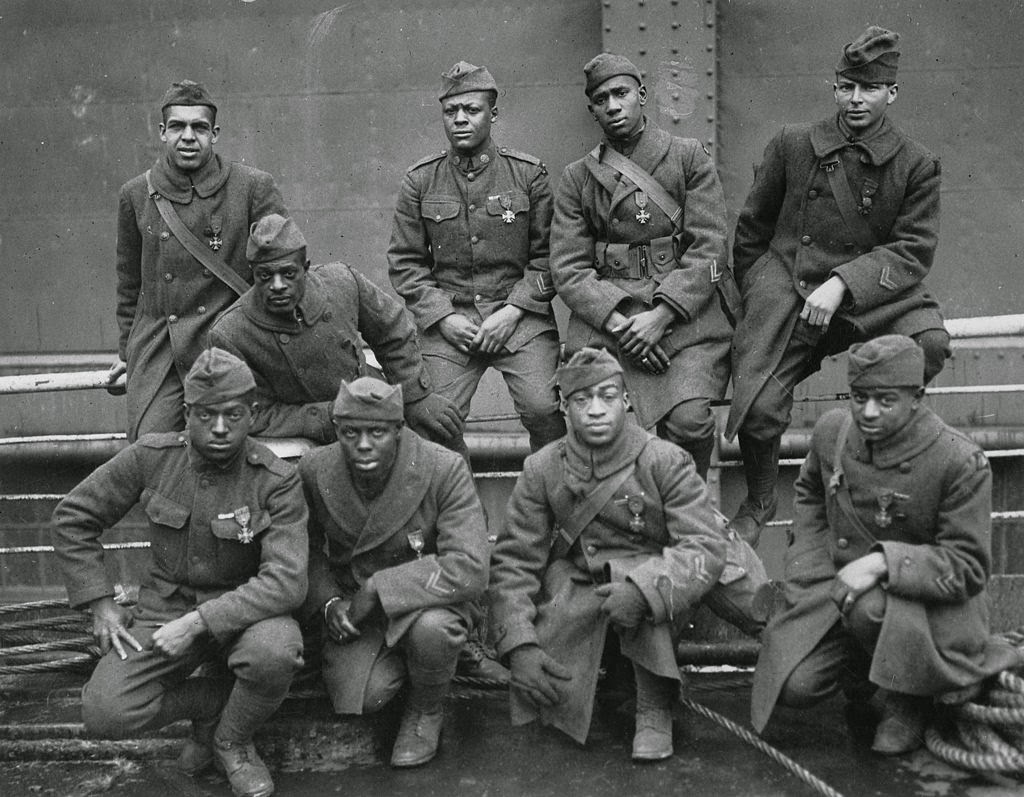
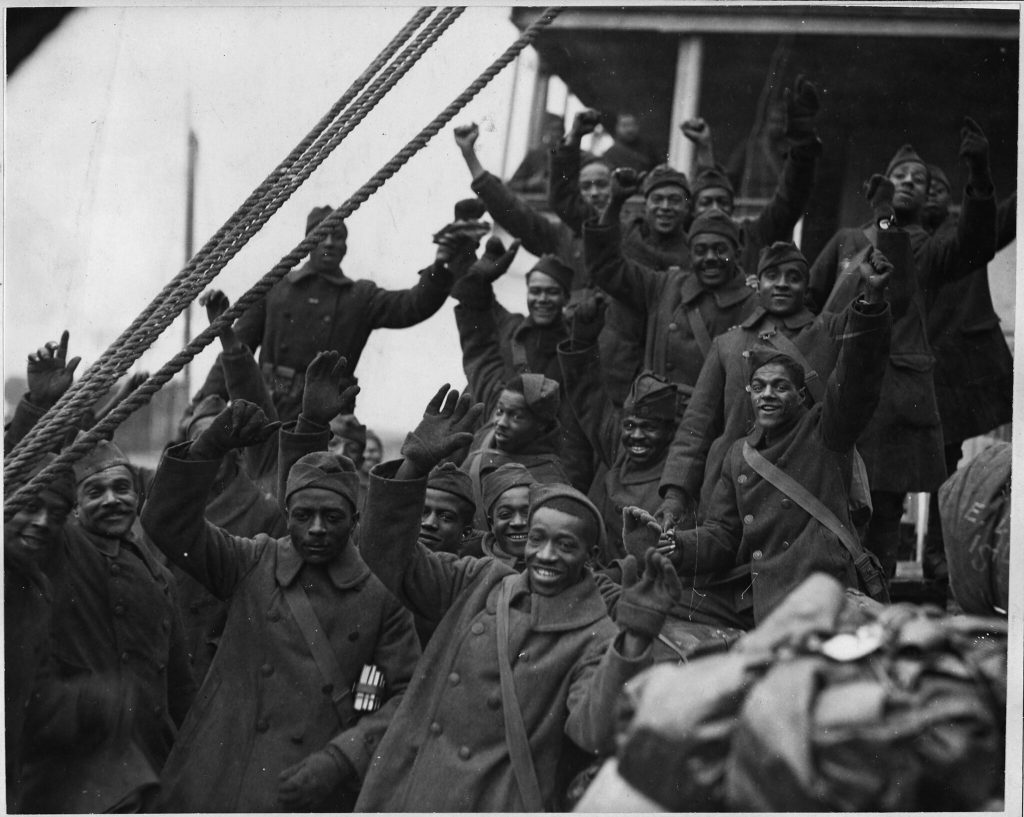
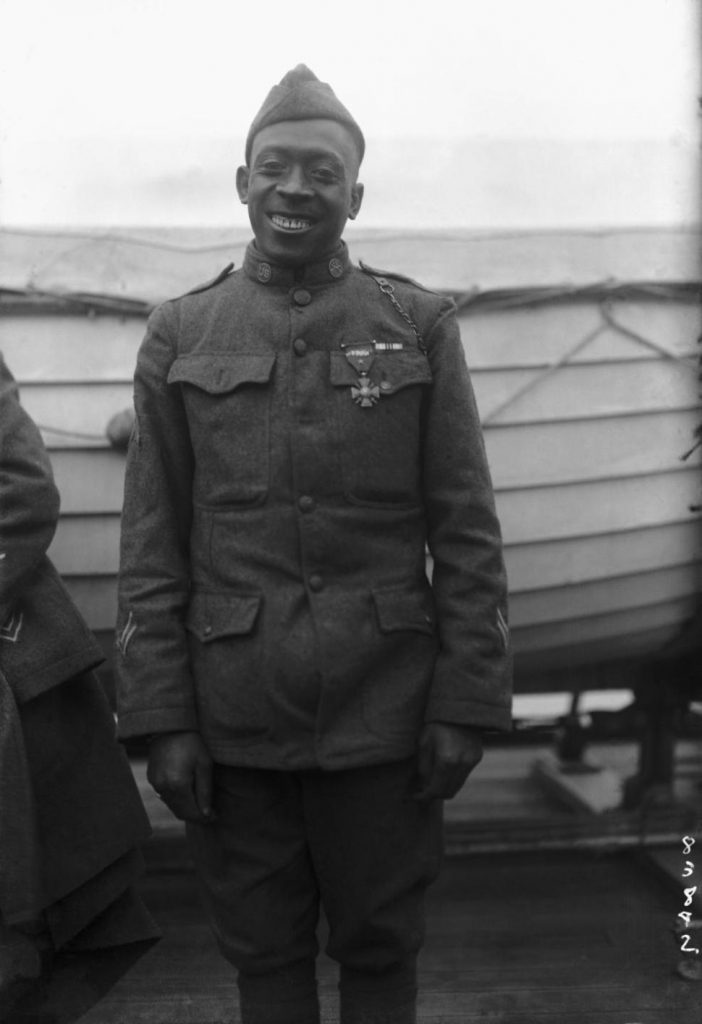
PODCAST (EPISODE 310):New York’s 369th Infantry Regiment was America’s first black regiment engaged in World War I. The world knew them as the Harlem Hellfighters.
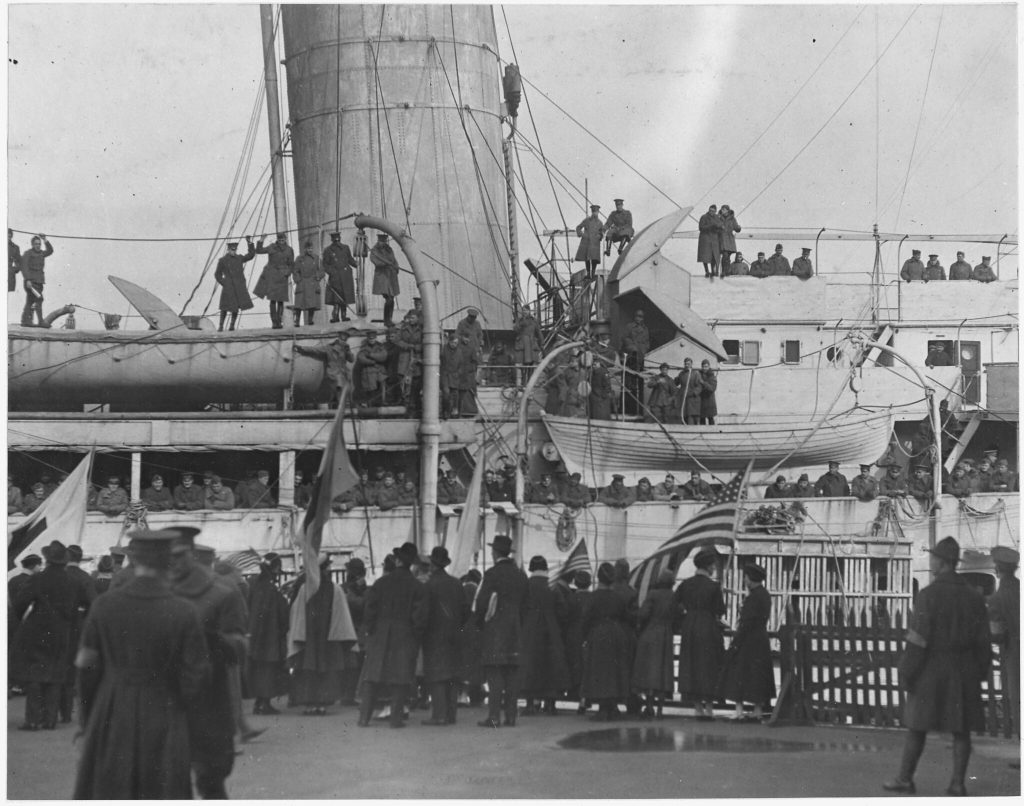
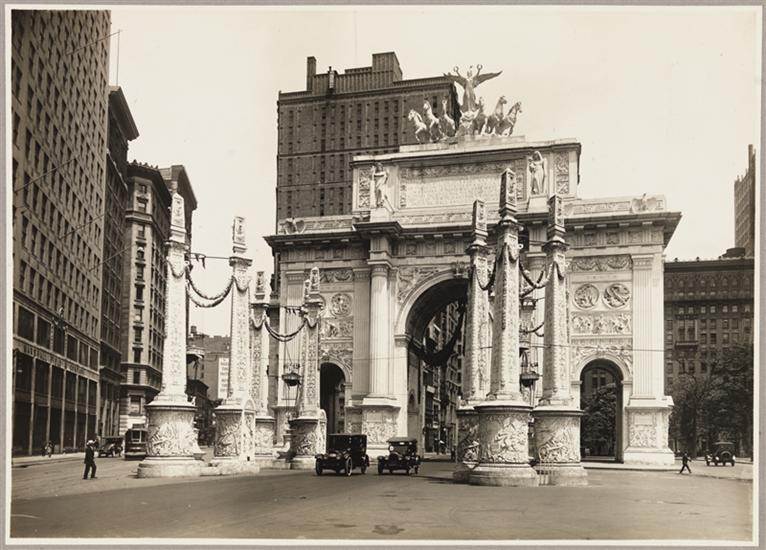
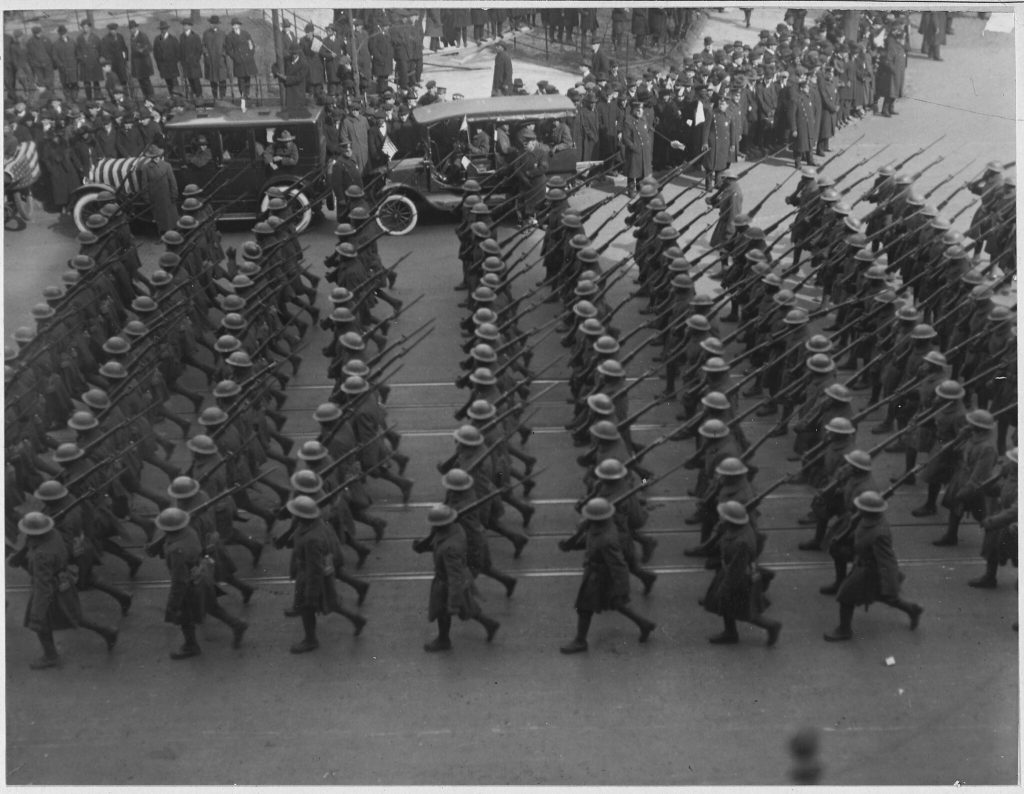
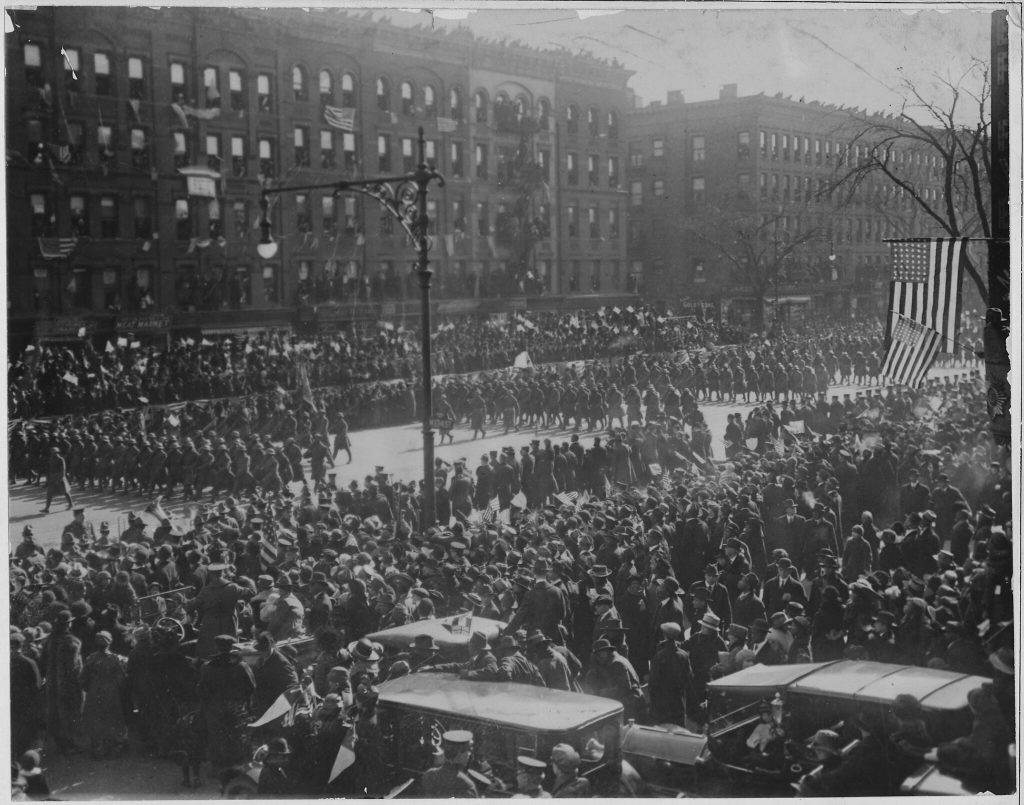
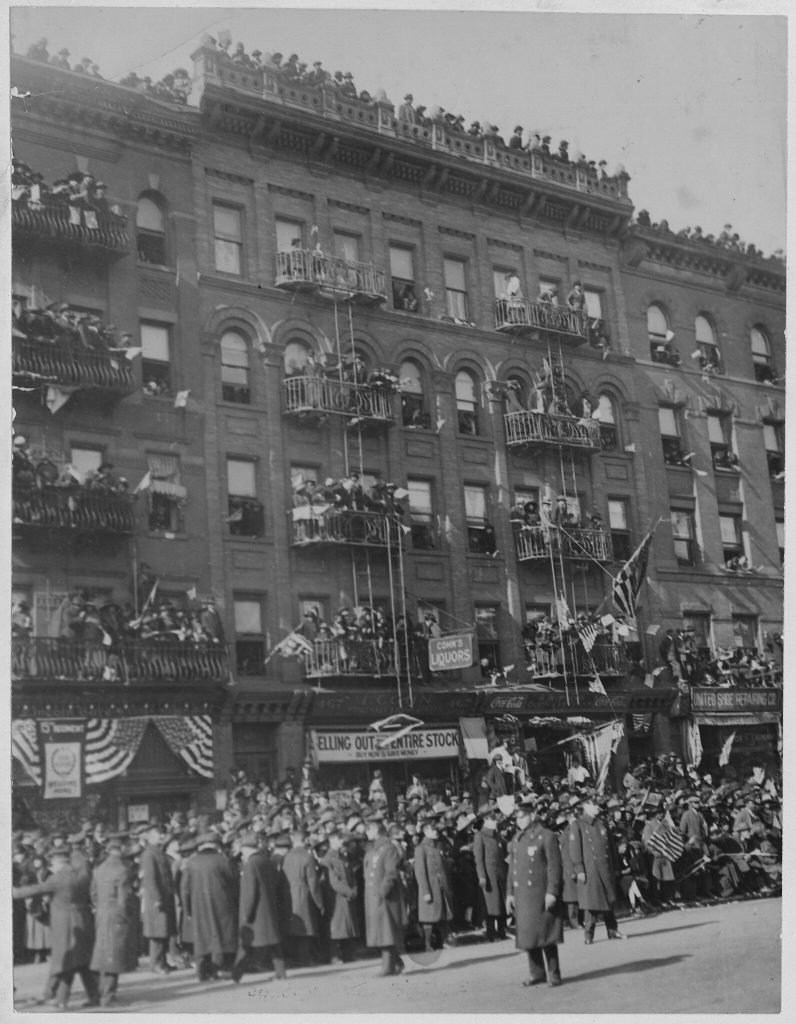
On February 17, 1919, the Hellfighters – who had spent much of the year 1918 on the frontline – marched up Fifth Avenue to an unbelievable show of support and love.
The Harlem Hellfighters were made up of young African-American men from New York City and the surrounding area, its enthusiastic recruits made up of those who had arrived in the city during a profound period of migration from the Reconstruction South to (only slightly) more tolerant Northern cities.
They were not able to serve in regular American military
units because of segregation, but because of an unusual series of events, the
regiment instead fought alongside the French in the trenches, for 191 days,
more than any other American unit.
They were known around the world for
their valor, ferocity and bravery. This is the story of New York musicians, red
caps, budding painters, chauffeurs and teenagers just out of school, serving
their country in a way that would become legendary.
FEATURING the voices of World War I veterans telling their own stories. PLUS some brilliant music and a story from Barack Obama (okay it’s just a clip of the former president but still.)
LISTEN NOW — THE HARLEM HELLFIGHTERS
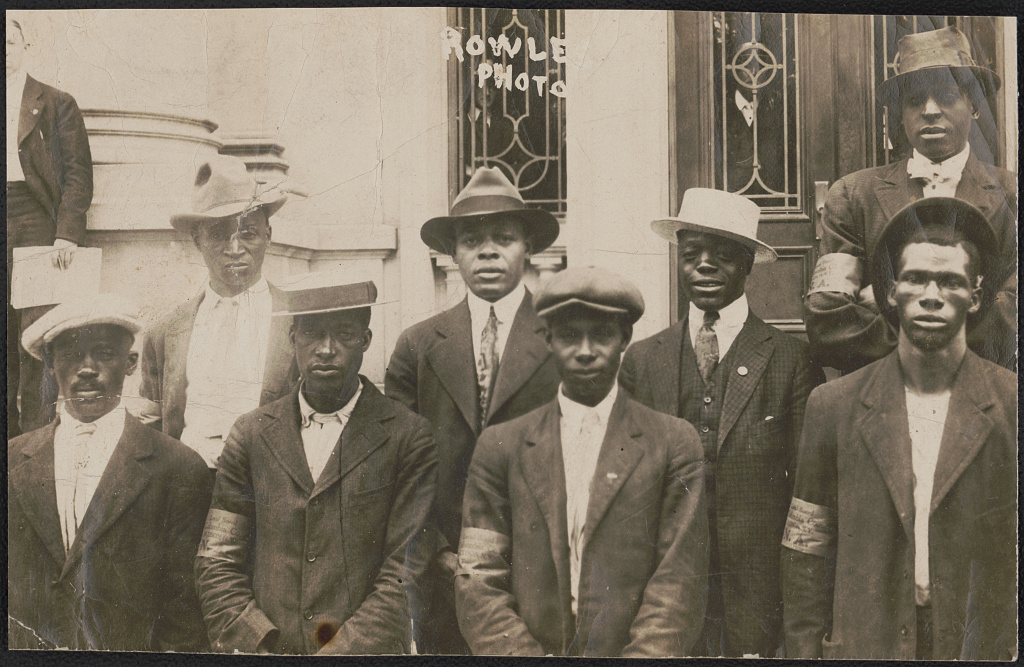
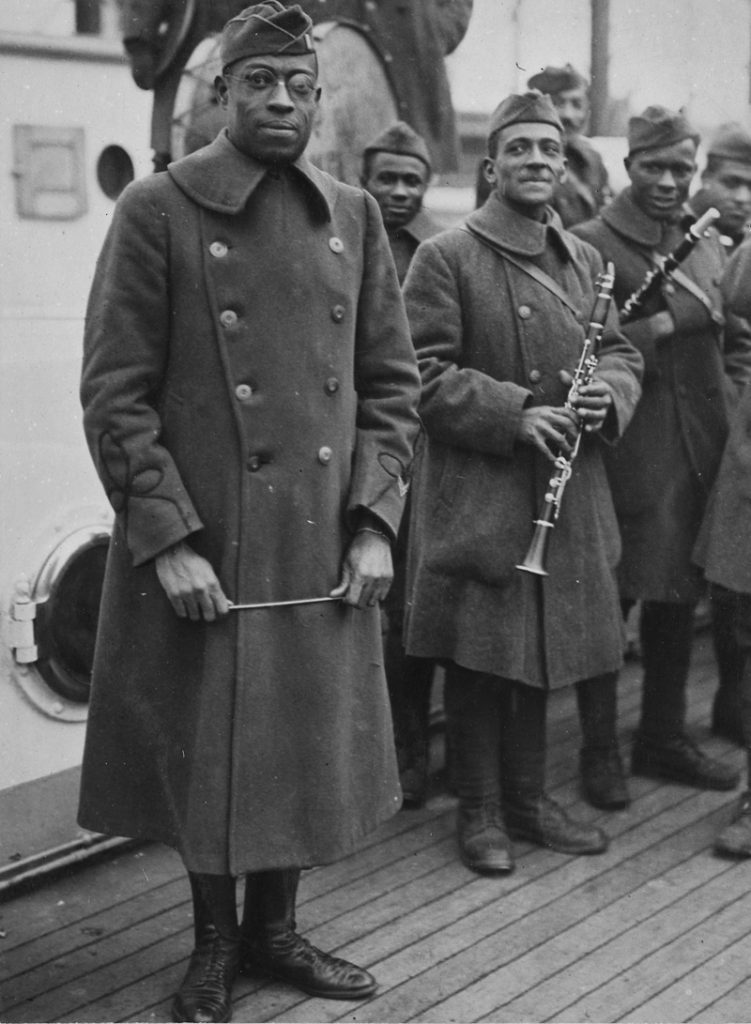
Photograph shows group portrait of men recruited for the 15th New York National Guard Regiment, later known as the 369th Infantry Regiment (the Harlem Hellfighters), wearing armbands. Library of Congress.James Reese Europe, who both fought on the front lines AND brought jazz to France.Henry Johnson, whose skills on the battlefield earned him the French Croix de guerre in his lifetime — and a U.S. Medal of Honor many decades later.
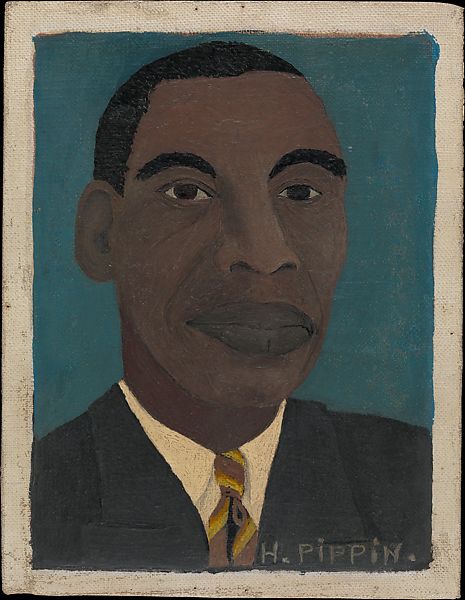
Horace Pippin (American, West Chester, Pennsylvania 1888–1946 West Chester, Pennsylvania) Self-Portrait, 1944. Courtesy the Metropolitan Museum of Art, New York, Bequest of Jane Kendall Gingrich, 1982 (1982.55.7) http://www.metmuseum.org/Collections/search-the-collections/482605
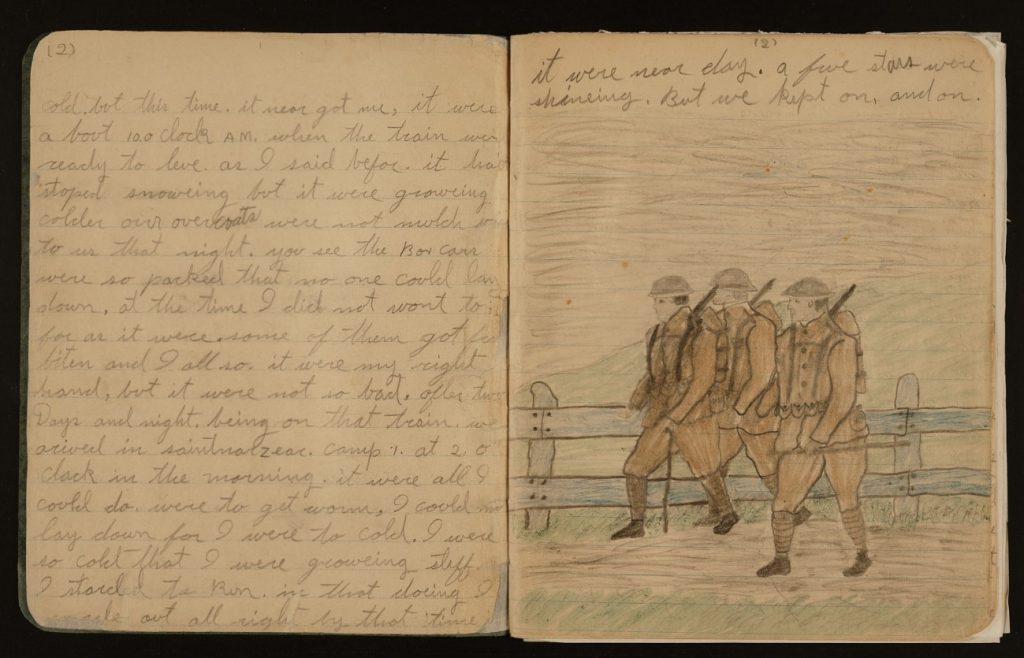
From the journal of Horace Pippin, featuring illustrations among his observations.US National ArchivesThe 369th were the first regiment to march beneath the Victory Arch, installed near Madison Square Park. Courtesy Museum of the City of New YorkUS National ArchivesUS National Archives
From the New York Times the following day after the parade:
“New York’s negro soldiers, bringing with them from France one of the bravest records achieved by any organization in the war, marched amidst waving flags and cheering crowds yesterday from Twenty-third Street and Fifth Avenue to 145th Street and Lenox Avenue.”
“At Thirty-Fourth Street the men marched under a shower of cigarettes and candy, and such tokens were pitched at them at other points in the line, but the files did not waver for an instant.”
US National Archives
The complete version of the 1977 film Men of Bronze, detailing the story of the Harlem Hellfighters, directed by Bill Miles, is available to watch on YouTube.
President Obama awards the Medal of Honor posthumously to two World War I veterans, Private Henry Johnson (featured in this show) and Sergeant William Shemin.
READING LIST From Harlem to the Rhine by Arthur West Little Harlem Rattlers and the Great War by Jeffrey Sammons and John Howard Morrow A Life In Ragtime: A Biography of James Reese Europe by Reid Badger Lost Battalions by Richard Slotkin A More Unbending Battle by Peter Nelson We Return Fighting from the National Museum of African American History and Culture When Pride Met Courage by Walter Dean Myers
FURTHER LISTENING
The Bowery Boys: New York City History podcast is brought to you …. by you!
We are now producing a new Bowery Boys podcast every other week.
We’re also looking to improve and expand the show in other ways —
publishing, social media, live events and other forms of media. But we
can only do this with your help!
We are now a creator on Patreon, a patronage platform where you can support your favorite content creators.
Please visit our page on Patreon
and watch a short video of us recording the show and talking about our
expansion plans. If you’d like to help out, there are six different
pledge levels. Check them out and consider being a sponsor.
ALL patrons at all levels will receive many benefits include the next episode of the Bowery Boys Movie Club,
an exclusive podcast (released every 6-8 weeks) celebrating New York
City in the movies. And patrons at the Five Points ($5) level and up
will get our other exclusive podcast — The Bowery Boys: The Takeout — released every two weeks.
We greatly appreciate our listeners and readers and thank you for joining us on this journey so far.
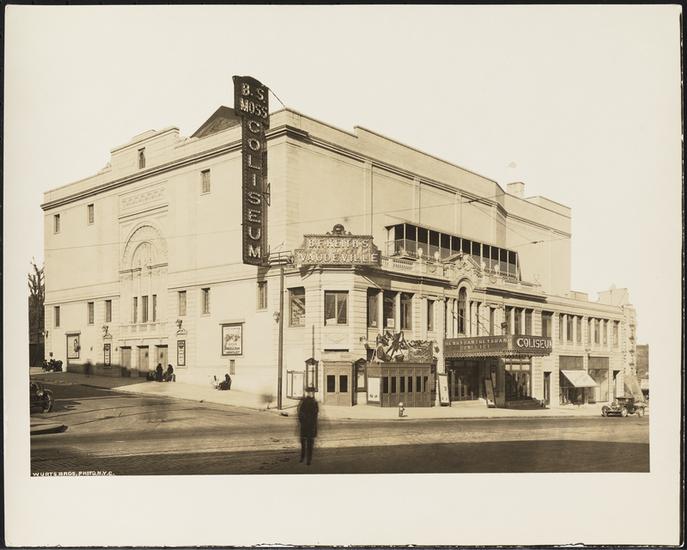
Before it closed in 2011, the Coliseum Cinema in Washington Heights proclaimed itself to be the ‘New York City’s oldest operating movie theater’. When it was first constructed in 1920, its stage would have hosted vaudeville acts as well as silent motion pictures.
But few films that ever premiered at the Coliseum would depict events as torrent or as dramatic as those that took place in the structure that stood on this spot many, many decades before.
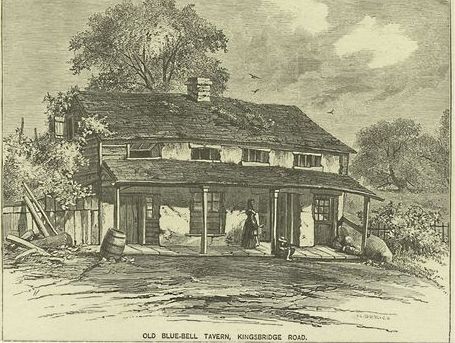
An old stone tavern once stood high upon the bluffs of Upper Manhattan, in an area many years later referred to as Washington Heights.
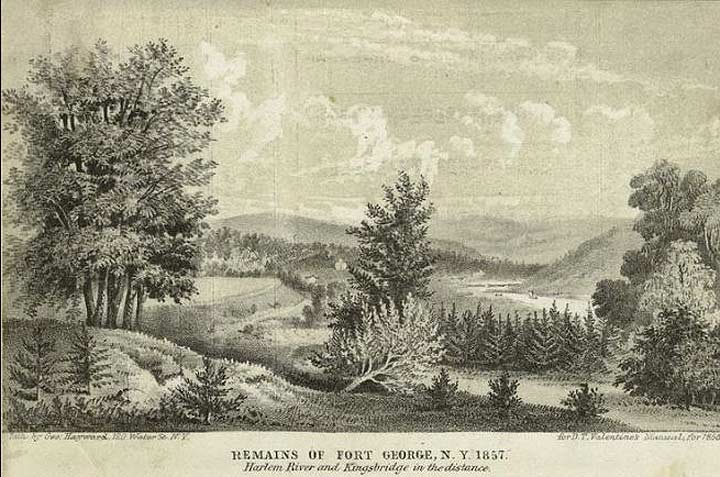
The Blue Bell Tavern sat off Bloomingdale Road nestled in a grove of trees, a modest two-story dwelling alight at all hours with wanderers. New York travelers often passed it as they headed towards the King’s Bridge, a toll bridge over Spuyten Duyvil Creek.
To truly envision this gothic place in its natural environment, you have to picture Washington Heights before there was ever a Washington there — a lush, high ridge thick with trees, a natural vantage offering unobstructed views of the entire region.
Like the skyscraper observation decks today, a visitor could seemingly see the entire world from here.
One cold, stormy night some evening in November 1783, a damp and exhausted figure strode up to the door, a young woman who had escaped from her home many miles away.
She was there to meet her lover who had already arrived at the Blue Bell, a man soaked, in disarray and wearing what certainly would have been a common sight for the day — a British uniform.
This man was a sergeant in the British military stationed in the Hudson River Valley. But the army was now retreating. Indeed, they were leaving New York that very month.
The sergeant had fallen in love with this woman, a resident of colonial New York, who (as these sort of stories go) we know little about. We do know her parents disapproved of the British sergeant and would only relent to their marriage if he agreed to desert the army and remain in the United States.
On that rainy evening, the sergeant and his beleaguered love took each other in their arms and were finally married — here at the Blue Bell Tavern. As the story goes, it was a Quaker ceremony, for there were no other officiators that night at the tavern.
The Blue Bell, once situated at today’s intersection of 181st Street and Broadway, was built in mid 1720s as a home and renovated into the type of pleasant inn that, by 1753, the venerable Cadwallader Colden (not the former mayor, but his grandfather and later governor of New York) could find “very comfortable” food and lodging here with his friend James Delancey, the state’s lieutenant governor.
The tavern might have faded peacefully into oblivion if not for the Revolutionary War. When angry New Yorkers attacked the King George statue in Bowling Greenat the foot of the island, his stone head ended up on a pole in front of the Blue Bell.
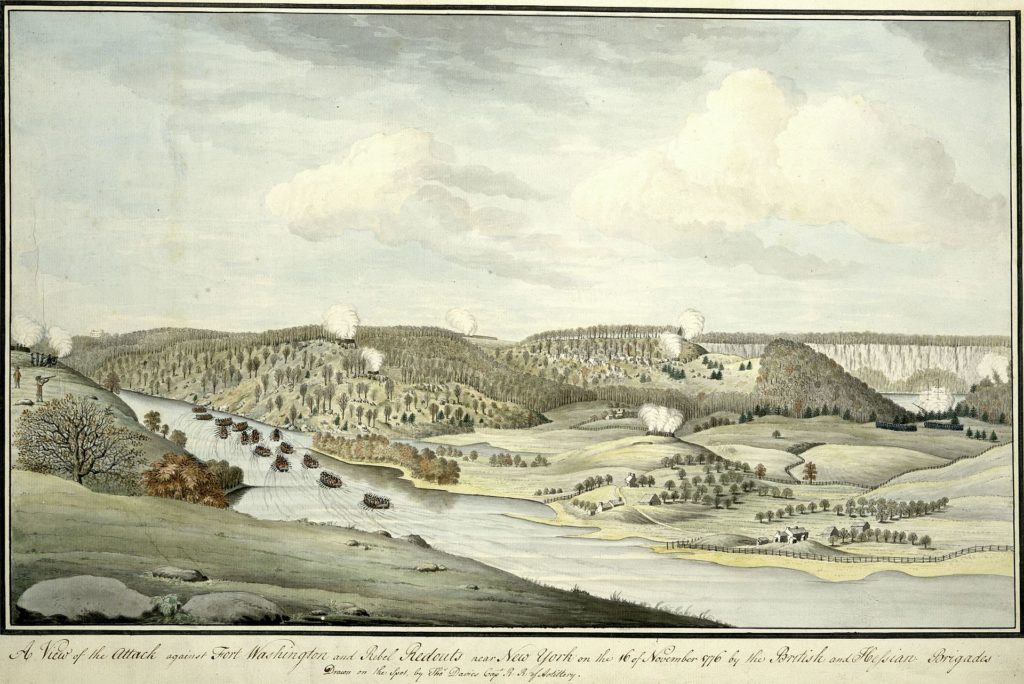
A View of the Attack against Fort Washington and Rebel Redouts near New York on November 16, 1776
While the Continental Army fled from Manhattan during the month of September 1776, officers stationed here at the Blue Bell assessed their grim situation and coordinated the army’s next steps.
With the tavern located so close to a key pathway out of town, it also became a headquarters and lodging for British officers long after Washington’s army abandoned the city. At one point, even Colonel William Howe, head of the British forces, himself stayed here.
Flash forward to November of 1783 — Washington and his now victorious army were now preparing to re-enter New York, this time to push the British out of town and experience a new, free American nation from the vantage of the ravaged port city. “I remember well our march up the hill, and the noble appearance of George Washington as he sat on his big bay horse,” said a veteran of the war in Appleton’s Journal.
George would even stay for an evening at the Blue Bell, awakening early to prepare his army’s grand entry down Bloomingdale Road and into the city. (Another important tavern of the day, the Bull’s Head, would also play a prominent role in Washington’s arrival into the city.) But on that day, they would add two more people to their procession.
That British deserter and his new bride — the ones whose rendezvous at the Blue Bell led to their Quaker marriage — now emerged from behind the building and called out Washington’s name.
Given his rumpled British uniform, this certainly created quite an uproar among Washington’s attaché. The pair were taken into custody, and the British officer recounted his romantic tale to his captors. Washington and his men learned that:
“…the young man was a sergeant (which the chevron on his sleeve indicated) who had for some time loved and was betrothed to the young woman who was with him; that her parents, who lived in the city would not consent to her marriage unless he would stay in this country; that they had arranged a plan a few days before for a desertion on his part and an elopement on here; that they were to meet at the Blue Bell and be married, and there wait for the protection of approaching American troops. Their plan had worked well.
— Appleton’s Journal, 1873
The sergeant wished to desert the army and join the Americans if only they would provide protection for him and his young bride. Indeed, with so many Loyalists still in the city, the soldier’s betrayal would certainly have been met with retaliation.
In desperation, the sergeant and his new bride showed Washington’s men their newly inked marriage certificate and begged for mercy
In fact, the tale apparently amused Washington and his men, flush with the excitement of victory. “A bard” among Washington’s men even wrote a poem in the couple’s honor. You can read the whole thing here, though it begins:
“A soldier and a maiden fair,
Helped by shy little Cupid,
Fled from the camp and momma’s chair,
(Such guardians, how stupid!),
And to the Blue Bell did repair,
To have themselves a-looped.”
We can assume with the lighthearted tone of the poem that things turned out well for the happy couple. They were allowed to accompany Washington on his entry into the city the following day.
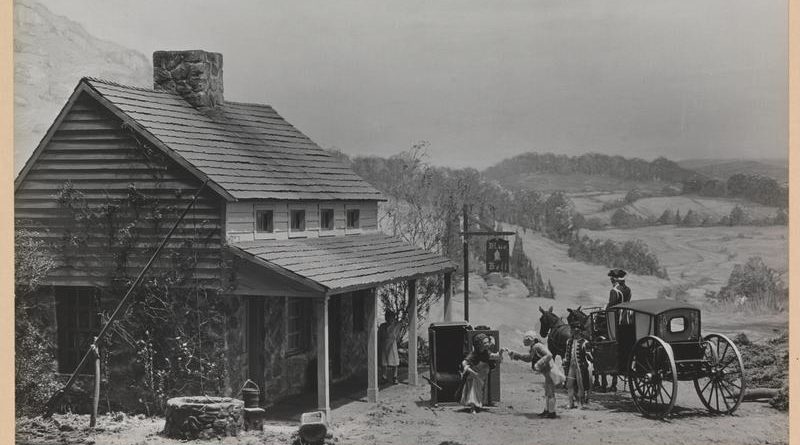
The Blue Bell miniature, displayed at the Museum of the City of New York when it opened the doors to its new Fifth Avenue home in 1930.
BThe old tavern passed through many owners (and many names) through the 19th century and eventually returned to its original purpose as a residence. One old source suggests that the building burned to the ground in 1876, though it may have survived this blaze into the new century.
Whatever structure stood here then was finally torn down by 1915. But tales of the Blue Bell entered nostalgic accounts of the Revolutionary War almost immediately, as 19th century historians struggled to piece together the American narrative from those who still remembered it.
The Blue Bell lived on long after its demolition in a most curious way — as a well-known miniature housed at the Museum of the City of New York.
An issue of Popular Science Magazine from 1930 observes the construction and installation of the Blue Bell exhibit, which made its debut that year in the museum’s new home on Fifth Avenue and 103rd Street.
The Coliseum in 1922, Museum of the City of New York
For many decades, you could go to the former spot of the Blue Bell Tavern and experience a Gothic romance of your own. Standing on that spot today is the abandoned RKO Coliseum, once one of Manhattan’s largest movie theaters.
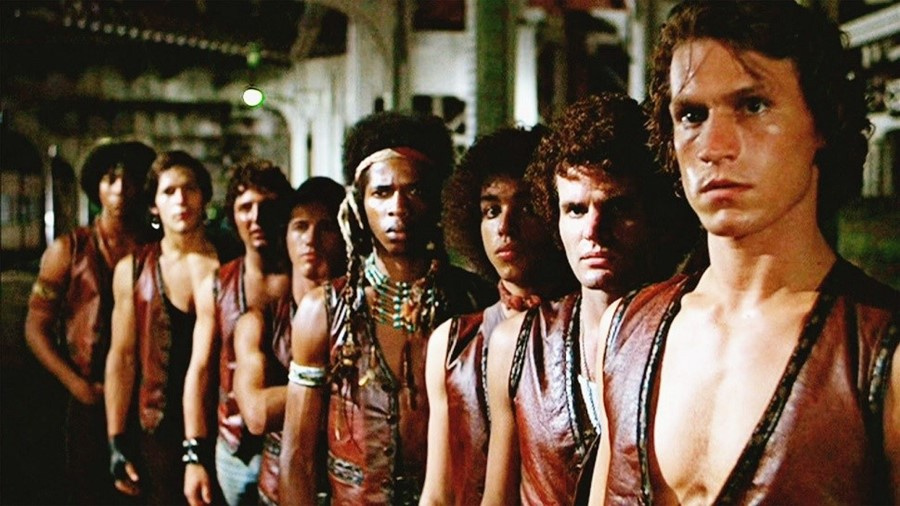
The new episode of theBoweryBoysMovieClub explores the film The Warriors and its rich historical details. An exclusive podcast for those who support us on Patreon.
The new episode of theBoweryBoysMovieClub explores the film The Warriors and its rich historical details. An exclusive podcast for those who support us on Patreon.
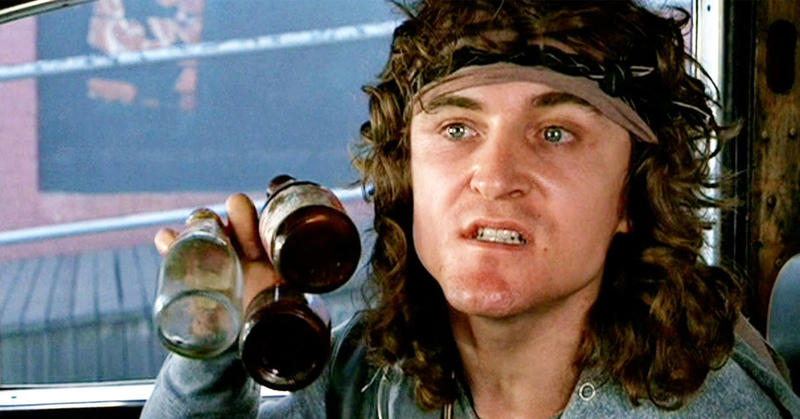
WARRIORS COME OUT TO PLAY-AY! In 1979, the intense action drama The Warriors, depicting a rather flamboyant view of New York City gang life, hit American movie theaters with great fanfare and controversy. But the film has aged very curiously over the past four decades, becoming a cult classic that feels like a surreal fantasia (in tight leather pants).
Listen in as Greg and Tom recap the story and explore the many real New York City settings of the film — from the long-dismantled rides of Steeplechase Park in Coney Island to the dark foreboding corners of Riverside Park.
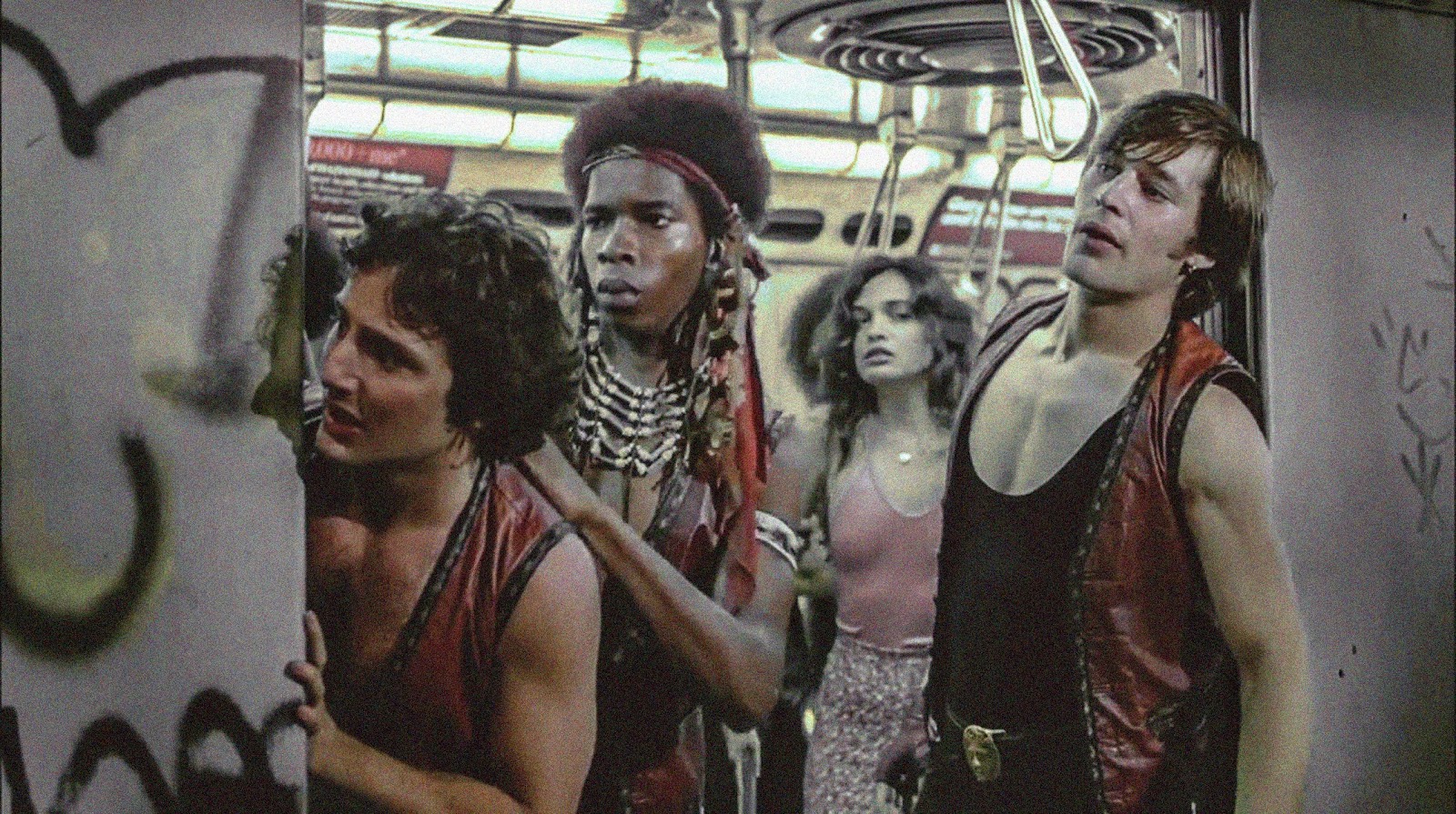
Of course The Warriors is really a tale of the New York City subway in all its grime and glory. If you’ve ever had a long and unlucky subway ride, then you’ll feel a certain sympathy for Snow and the gang.
HowdoIlistentheBoweryBoysMovieClub? Once you’re signed in on Patreon, you’ll see a private RSS link that can be put directly into your favorite podcast player. Even easier, it can also be played directly from the Patreonapp if you’re signed in.
Your support on Patreon assists us in producing our podcast and website and it helps as we endeavor to share our love of New York City history with the world.
Shouldyouwatchthemoviebeforeyoulistentothisepisode? This podcast can be enjoyed both by those who have seen the film and those who’ve never even heard of it.
We think our take on The Warriors might inspire you to look for the film’s many fascinating (but easy to overlook) historical details, so if you don’t mind being spoiled on the plot, give it a listen first, then watch the movie! Otherwise, come back to the show after you’ve watched it.
And if you support us at the New Amsterdam level and would like to get more bonus audio, please consider bumping up to the Five Points level (and above) to receive The Takeout, the aftershow podcast from Tom and Greg further discussing that week’s new Bowery Boys: New York City History podcast.
The new episode of theBoweryBoysMovieClub explores the film The Warriors and its rich historical details. An exclusive podcast for those who support us on Patreon.
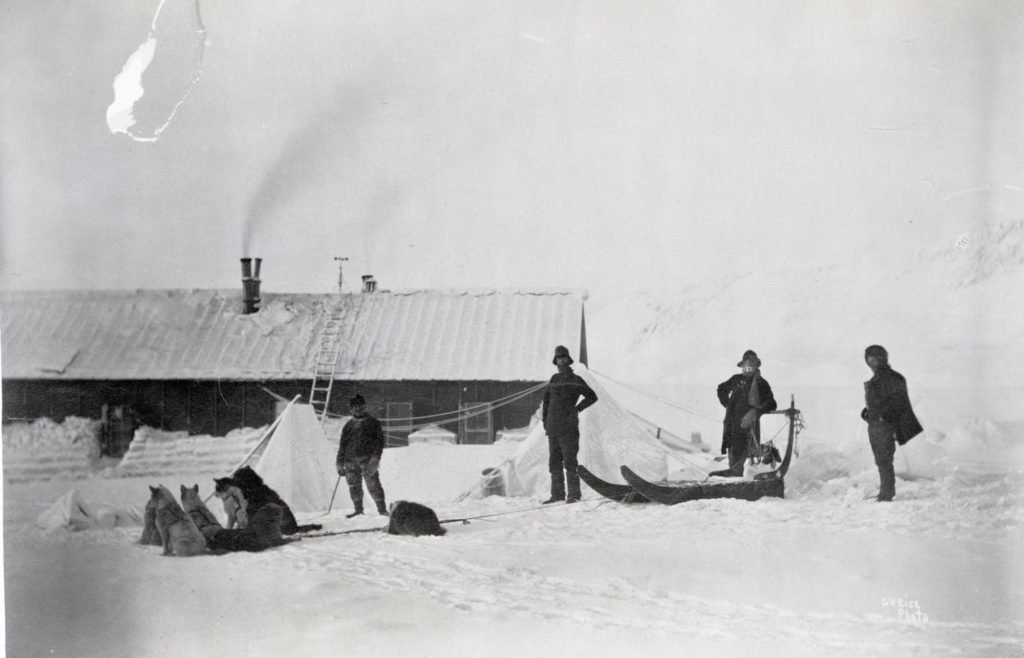
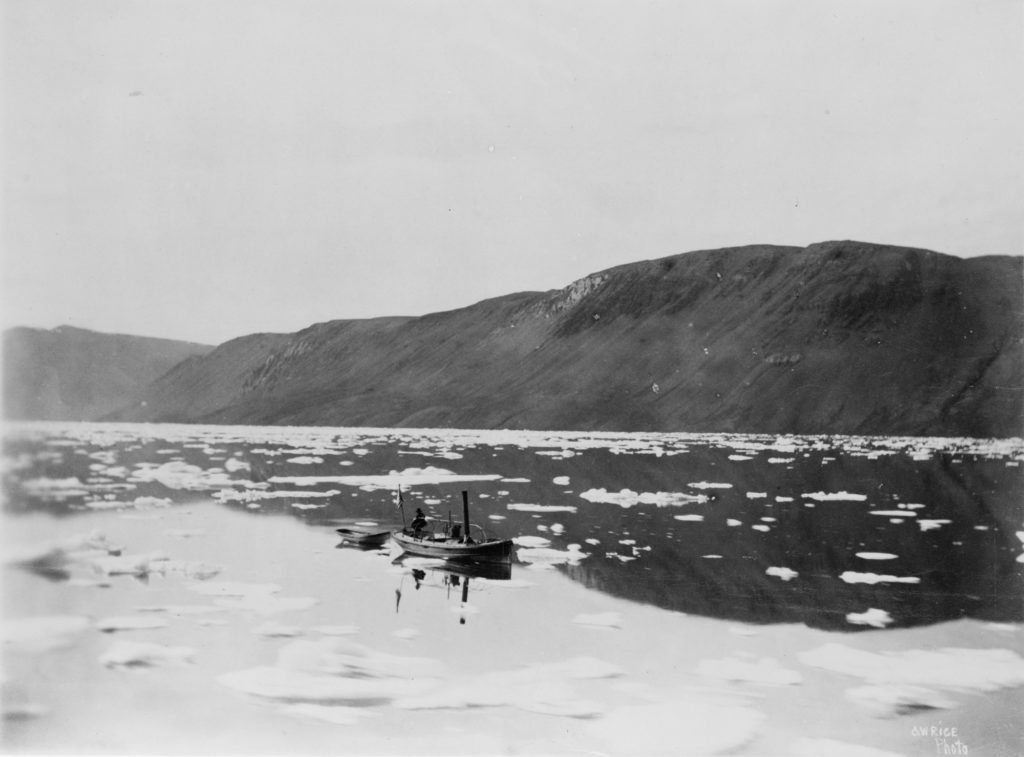
Consider this one of the America’s strangest national landmarks — Fort Conger, a scientific research post originally built in 1881 by an American expedition in a remote and frozen area of Nunavit, Canada.
Some might call it the world’s most northern haunted house.
Over two dozen men — fronted by Civil War vet Adolphus Greely — lived and worked here for two years, battling a hostile environment to conquer the so-called Farthest North, an almost mystical destination that, if reached, would hold both international glory and economic possibility.
Labyrinth of Ice
The Triumphant and Tragic Greely Polar Expedition
Buddy Levy
St. Martin’s Press
But Labyrinth of Ice, Buddy Levy’s immersive new history of the Greely Expedition, doesn’t bask in scientific particulars. This is a study of historical horror, a tale of dire circumstances, survival and determination in one of the most remote areas on the planet.
After two years of work and exploration — through months of icy darkness — Greely and his men slowly realize that no rescue expedition was coming to retrieve them. In fact, a frozen wall of ice (and even some frustrating bureaucratic delays in Washington D.C.) had sealed their fate.
Library of Congress
The men were on their own. Their only chance for survival meant a retreat south through desperate conditions — over ice floes, along frozen waters.
Levy displays a unique gift of evoking genuine immediacy with historical material. The reader is steeped in the adventurers’ stark, remote circumstances, a benefit of having journals and even photographs from the doomed expedition.
Labyrinth evokes the mystery and dread of fictional adventures like AMC’s The Terror (based on a 2007 Dan Simmons novel, inspired by an earlier far-north exploration), presenting maps of the various watery corridors that you will be required to use if you want to follow in Greely’s frozen footsteps.
EPISODE 309 They’re tearing down your favorite old building and putting up a condo in its place. How is this even possible? New York City is so over.
Before you plunge into fits of despair, you should know more about the tools of preservation that New Yorkers possess in their efforts to preserve the spirit and personality of the city.
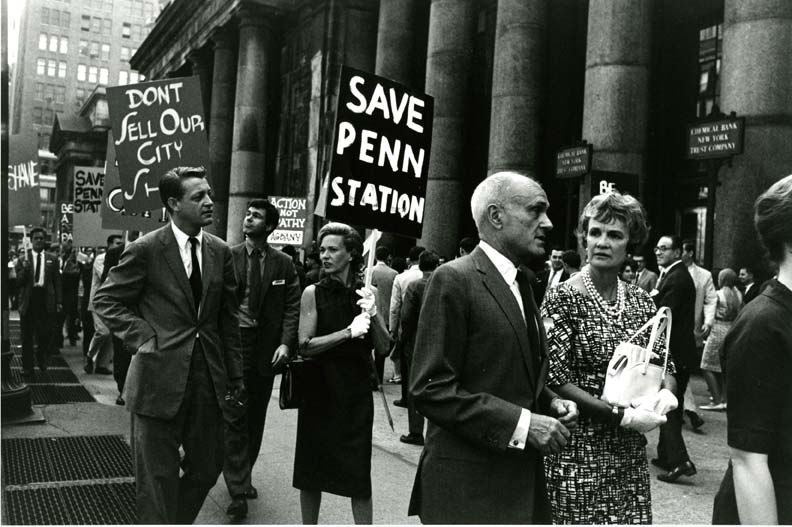
In the 1960s, in the wake of the demolition of Pennsylvania Station and other beloved historic structures, the New York City Landmarks Law was enacted, granting the city powers to protect its most precious endangered places. Today the Landmarks Preservation Commission is the agency empowered with administering the law.
Walter Daran/Hulton Archive/Getty Images
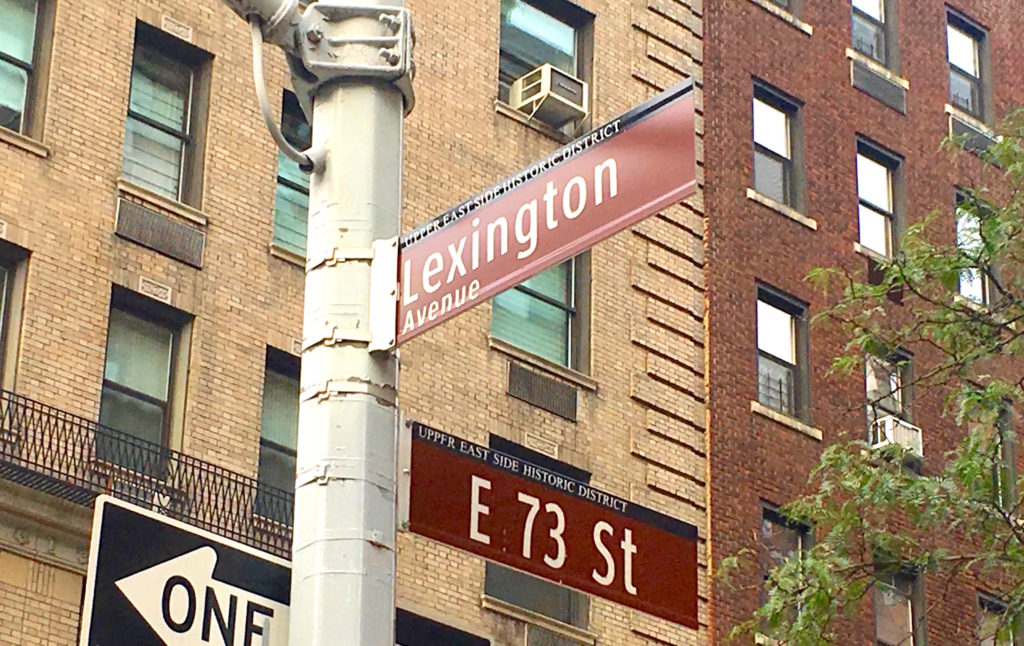
Walking down the beautiful street and see a brown street sign instead of the usual green? You’re in a historic district.
But preservation can be a tricky business; after all, the city is basically imposing rules about how someone else’s private property, in most cases, should look and be maintained. How do you preserve the past amid a rapidly changing metropolis.
Image of Upper East Side Historic District signage, courtesy Ephemeral New York
In this episode, we present a sort of ‘landmarking 101’, mapping the history of the New York City preservation movement and looking at the surprising and sometimes mysterious process of landmarking. It’s everything you’ve wanted to know about landmarks (but were afraid to ask)!
For more information on historic districts, please visit our friends over at the Historic Districts Council, celebrating their 50th anniversary this year. Check out their website for ways to get involved with present (and future) historic districts.
Visit the searchable New York City Landmarks map to locate landmarks and historic districts near your home or work. Here’s a screenshot of midtown Manhattan, as mentioned by Tom on the show:
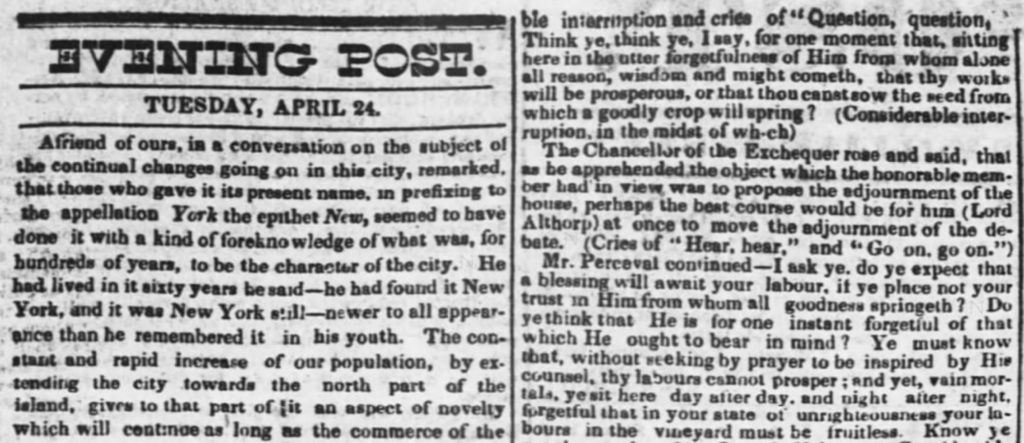
From the New York Evening Post, April 24, 1832:
Some of the places mentioned on our show:
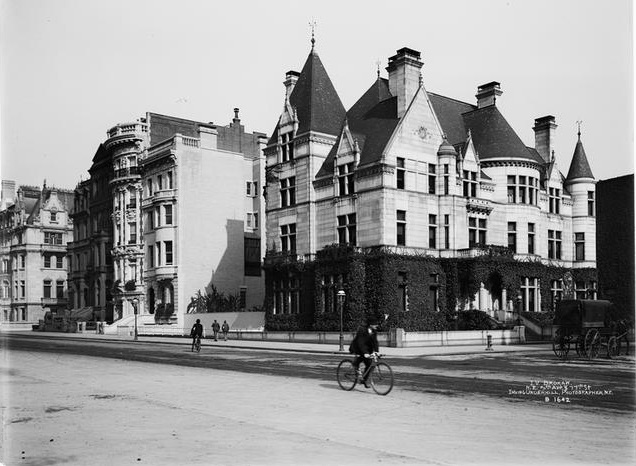
The Brokaw Mansion c. 1900, photo by Irving Underhill / Museum of the City of New York
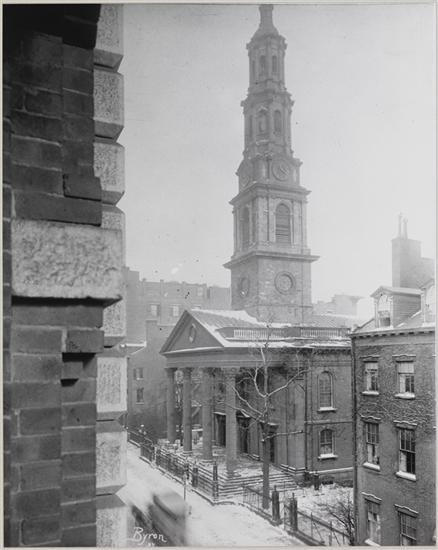
St. John’s Chapel, 1895. Photo by Byron Company. Courtesy the Museum of the City of New York
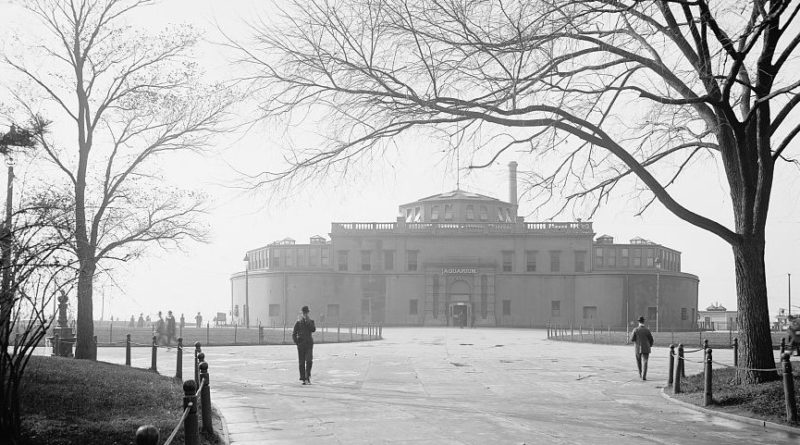
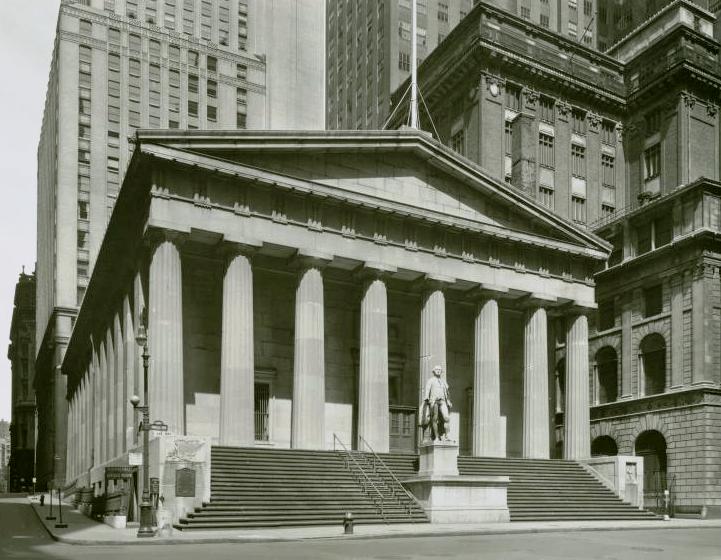
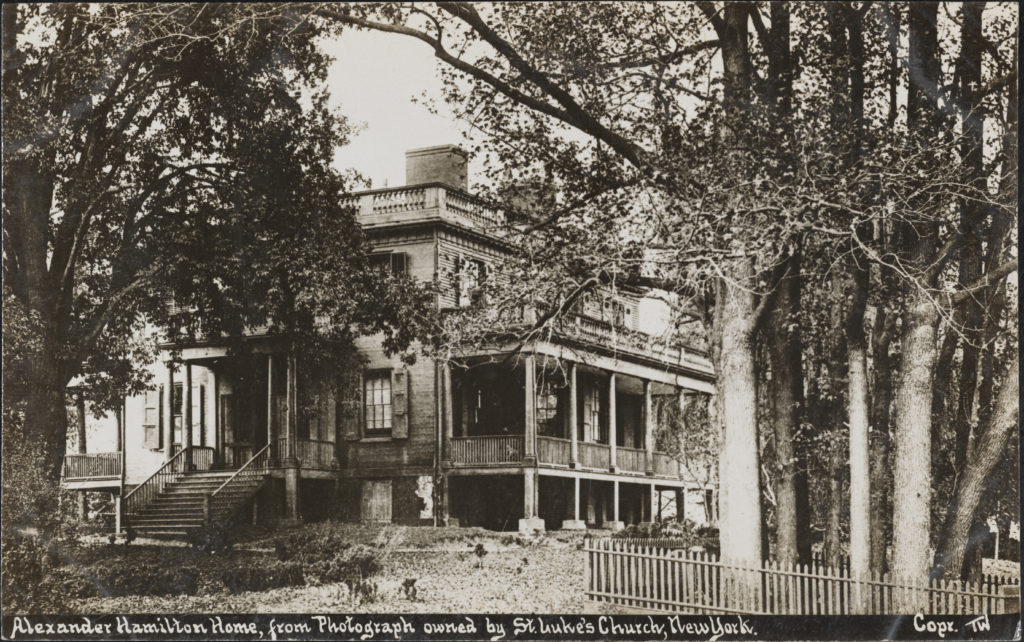
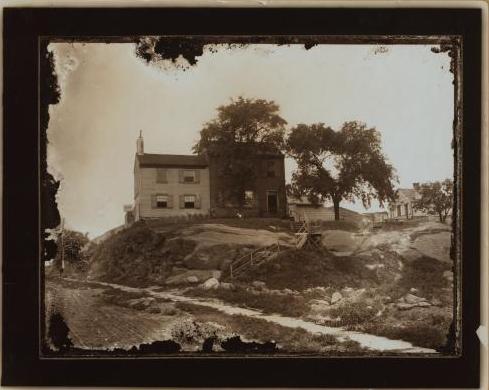
New York Aquarium in Castle Clinton in the Battery Federal Hall, courtesy New York Public Library Hamilton Grange, photo by Thaddeus Wilkerson, 1889. Museum of the City of New York.
FURTHER LISTENING
After listening to our show on the New York City preservation, check out these episodes with similar themes —
The Rescue of Grand Central: The most important moment in New York City preservation history. Featuring an interview with preservation icon Kent Barwick.
Tales from Tribeca: The Manhattan neighborhood of Tribeca has several landmarks and historic districts, but one notable classic — St. John’s Chapel — was wiped away over 100 years ago.
The Bowery Boys: New York City History podcast is brought to you …. by you!
We are now producing a new Bowery Boys podcast every other week. We’re also looking to improve and expand the show in other ways — publishing, social media, live events and other forms of media. But we can only do this with your help!
We are now a creator on Patreon, a patronage platform where you can support your favorite content creators.
Please visit our page on Patreon and watch a short video of us recording the show and talking about our expansion plans. If you’d like to help out, there are six different pledge levels. Check them out and consider being a sponsor.
ALL patrons at all levels will receive many benefits include the next episode of the Bowery Boys Movie Club, an exclusive podcast (released every 6-8 weeks) celebrating New York City in the movies. And patrons at the Five Points ($5) level and up will get our other exclusive podcast — The Bowery Boys: The Takeout — released every two weeks.
We greatly appreciate our listeners and readers and thank you for joining us on this journey so far.
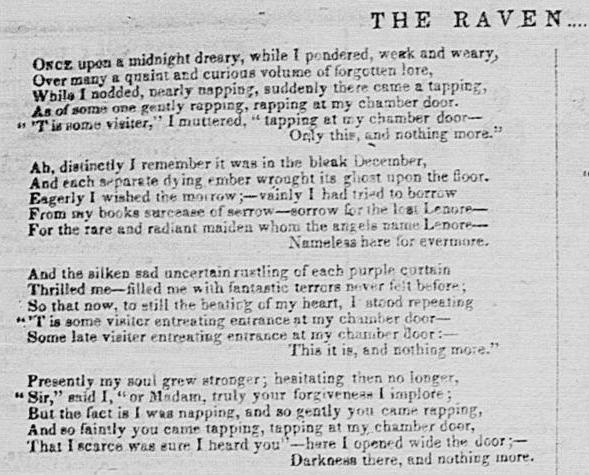
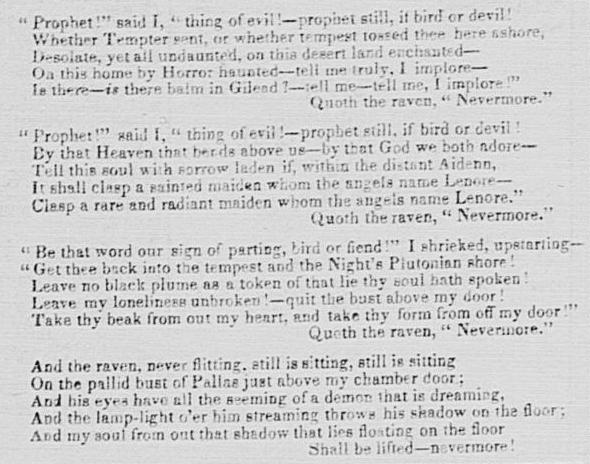
“The Raven” was first published in the New York Evening Mirror on January 29, 1845, and would come to define the morbid brilliance of its author Edgar Allan Poe.
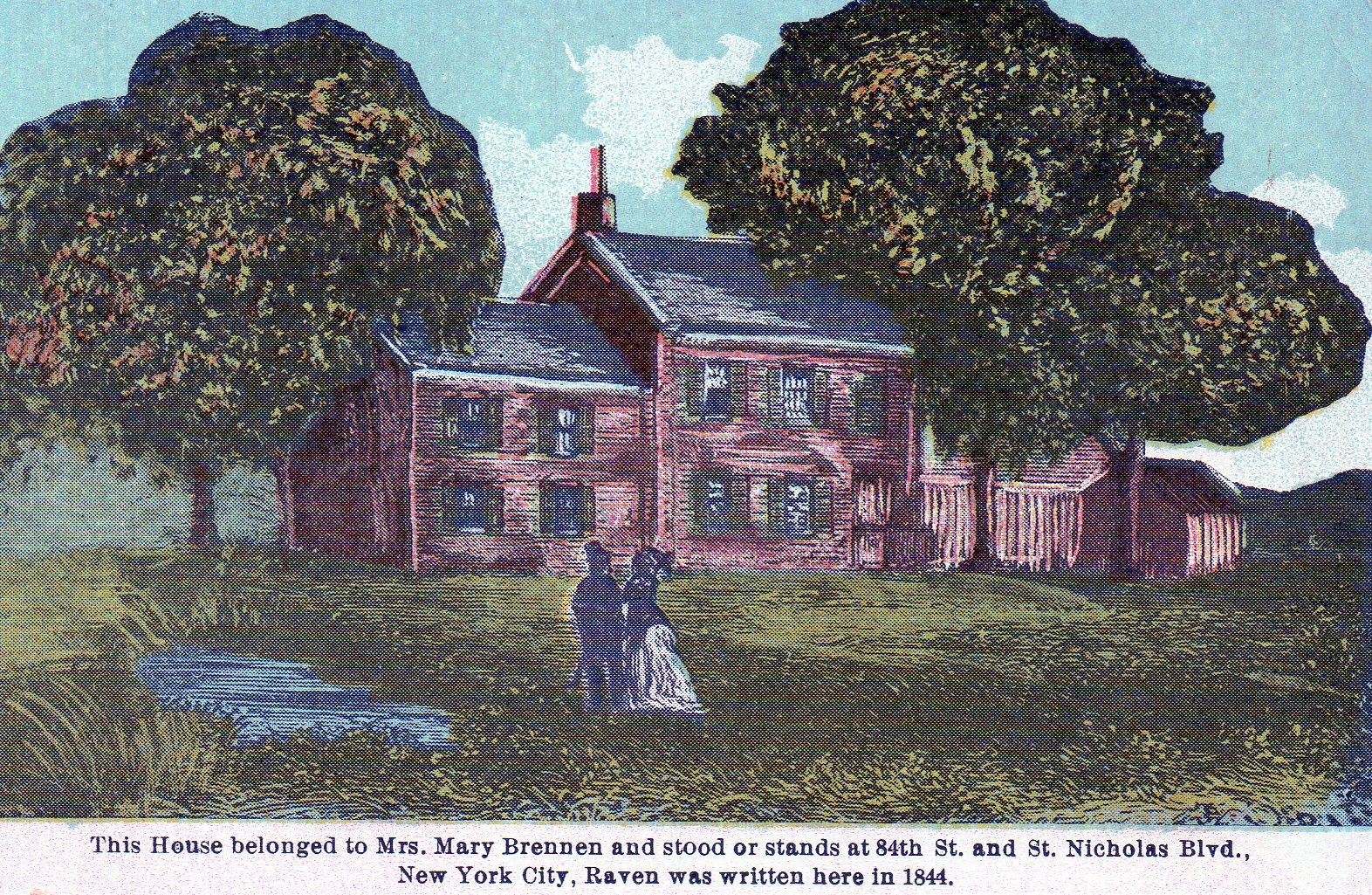
Poe and his sickly young wife Virginia arrived in New York in 1844, lodging at a dairy farm at today’s West 84th Street, between Broadway and St. Nicolas Blvd. (While blocks would have been marked by the Commissioners Plan in the 1810s, there would have been little development here.) It’s widely believed that Poe “composed, or at very least, perfected” the poem in New York.
Believed to be the Brennan farm. Photo courtesy New York Public Library
Here’s another angle of the house in a fanciful illustration highlighting the very bucolic nature of the area then.
The blog Manhattan Past has an excellent post on the supposed whereabouts of the Brennan farm. Although he lived here for a short time, the street today is ceremonially referred to as Edgar Allan Poe Street. The street was officially given that distinction in 1980 and for many years presented misspelled street signs — “Edgar Allen Poe Street.”
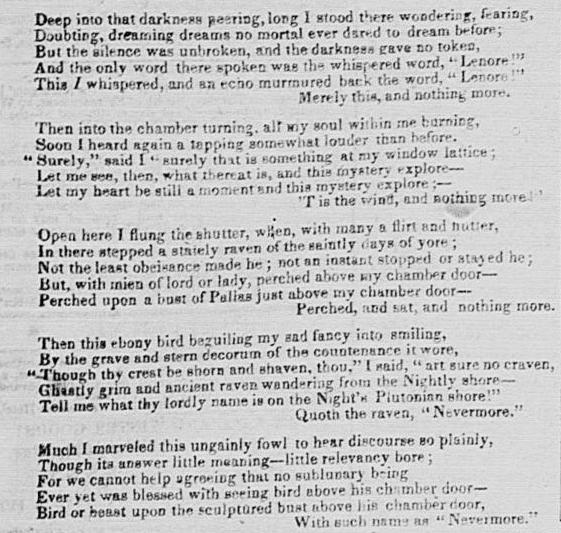
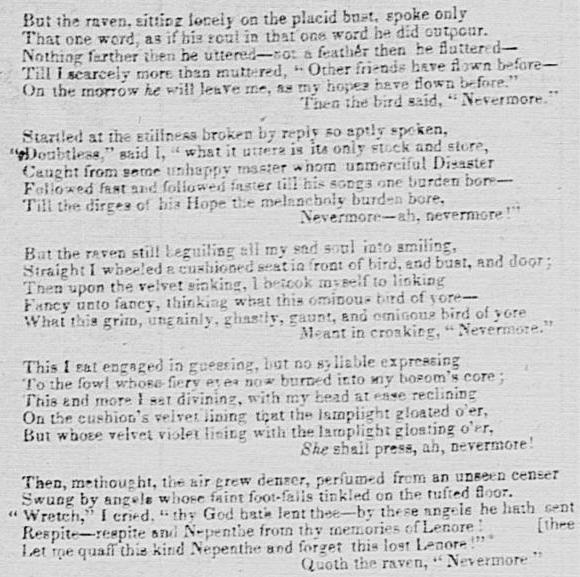
A few days later after the poem’s debut in the Evening Mirror, on February 4, the New York Daily Tribunealso published “The Raven”. Here’s how it first appeared in the Tribune:
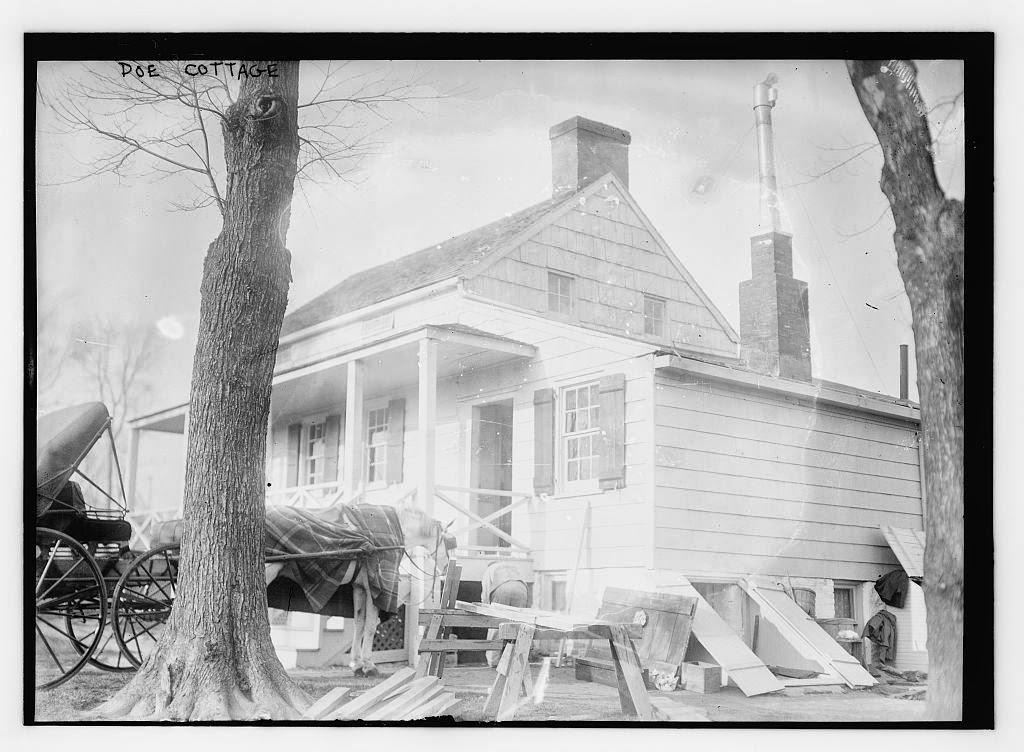
It was then published in the Broadway Journal, a couple of weeks before Poe became editor of that publication. The venture however was a financial failure. In 1846, he and Virginia moved to a farm-house in the area of Fordham (in the Bronx) which is still preserved today.
Poe hoped living far from the bustle of New York would help his wife; but she died here in on January 30, 1847 — almost two years to the day after the publication of “The Raven.”
Poe’s home in the Bronx, as it appeared in the 1910s. Courtesy Library of Congress
EPISODE 308 In the final decades of his life, steel tycoon Andrew Carnegie — one of the richest Americans to ever live — began giving his money away.
The Scots American had worked his way up from a railroad telegraph office to amass an unimaginable fortune, acquired in a variety of industries — railroads, bridge building, iron and steel.
Andrew Carnegie, 1913. (Library of Congress)
In the age of the monopoly, Gilded Age moguls often made their money in ways we might consider unethical and illegal today. But Carnegie’s view of his wealth was quite different than that of his rarefied clubhouse peers.
Carnegie devoted his latter years to philanthropy, primarily devoting his energies to the creation of libraries across the country.
Researchers at the Carnegie 135th Street library in 1938. (Courtesy The New York Public Library, Schomburg Center for Research in Black Culture)
By the late 19th century, the New York City area already had dozens of libraries and reading rooms throughout the future five boroughs. But they were certainly not welcoming to every person. And those circulating libraries that were available were limited and woefully overburdened.
Carnegie’s unprecedented financial gift to the city would jump start the city’s nascent library systems (the New York Public Library, the Brooklyn Public Library and the Queens Borough Public Library) and broaden their reach into communities with the development of dozens of new branch libraries.
The Red Hook Carnegie library, 1915. Unfortunately this branch library was damaged in a 1946 fire and demolished. (Courtesy Brooklyn Public Library)
In this episode, we are joined by Adwoa Adusei and Krissa Corbett Cavouras, hosts of the Brooklyn Public Library podcast Borrowed, who give the Bowery Boys a tour of one of Carnegie’s most popular New York City libraries.
In the winter of 1908, thousands stood in line to visit the new Brownsville branch library. How do treasured structures like Brownsville continue to serve the needs of the neighborhood in the 21st century? Are Carnegie libraries, most of which still stand, prepared for the future?
LISTEN NOW — CARNEGIE AND NEW YORK’S PUBLIC LIBRARIES
After listening to our show, head on over to the Borrowed podcast to hear the other half of the story. Greg and Tom make an appearance on their show, speaking further with Krissa and Adwoa about Carnegie’s legacy in New York City, in the United States and around the world.
The Ottendorfer branch of the New York Public Library, pictured here in 1917. It actually predates the Carnegie library, the most lavish example of a building from the New York Free Circulating Library days.
New York Public LIbrary
FURTHER LISTENING
After listening to our show on the Holland Tunnel, check out these episodes with similar themes:
Carnegie Hall would probably be Carnegie’s best known gift to New York City, aimed not to the working class but to the city’s elite. By the early 20th century, however, it would be a stage for all New Yorkers … and for a variety of presentations
The Rise of the Fifth Avenue Mansions: Even as Carnegie was giving away his money, he comforted himself within a glorious Fifth Avenue mansion on 51st Street, literally across the street from Vanderbilts and Astors.
From the Borrowed podcast: The story of the Brownsville Stone Avenue branch of the Brooklyn Public Library, one of the first dedicated children’s libraries in the United States.