BOOK REVIEW The architects and builders of the post-Civil War period provided New York City with masterpieces of great beauty — cast-iron facades, modern emblems of trade rendered in marvelous stone, fanciful medieval gargoyles upon impressive towers. Gilded Age architecture and the ornate shapes of pre-modern design have nonetheless defined the timeless identity of the city.
In the 1970s lovers of this fading architectural landscape decided to protect its most treasured features. By liberating its details from the landscape entirely.
They were called ‘gargoyle hunters’, so passionate for the city’s magnificent beauty that they would rather steal aspects of it than see it destroyed.
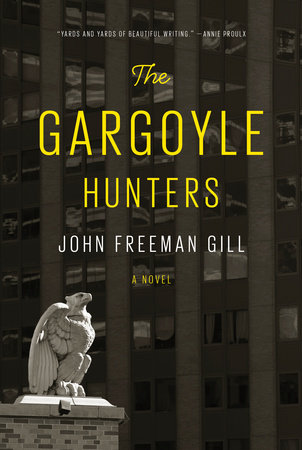
The Gargoyle Hunters
by John Freeman Gill
Alfred A. Knopf
John Freeman Gill‘s new book The Gargoyle Hunters is obviously about one of these guerrilla collectors, working with a crew of thieves, chipping away at doomed architectural wonders falling into disrepair, scouring heaps of rubble for a bit of beauty in a city tumbling into financial ruin.
One of the thieves is the gargoyle hunter’s son. His name is Griffin.
Shortly into Gill’s captivating and exuberant novel, one realizes that architectural crimes are merely the backdrop. This is a story about all varieties of nostalgia. Formalized urban nostalgia, of course, of the kind that drives landmark preservation and podcasts about New York City history. But also the constant pining for recognizable moments in a person’s life, both for the pleasures of our childhood and for the relationships that once held us in safety.
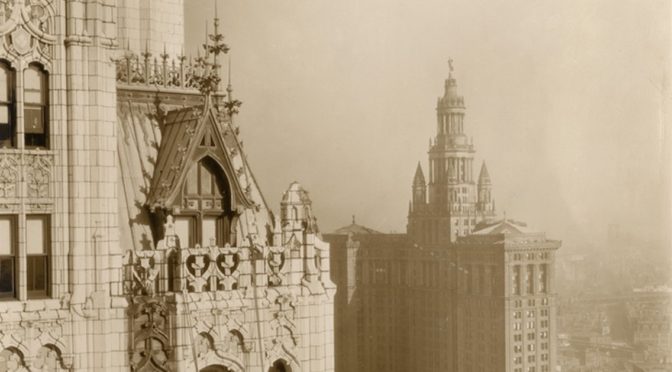
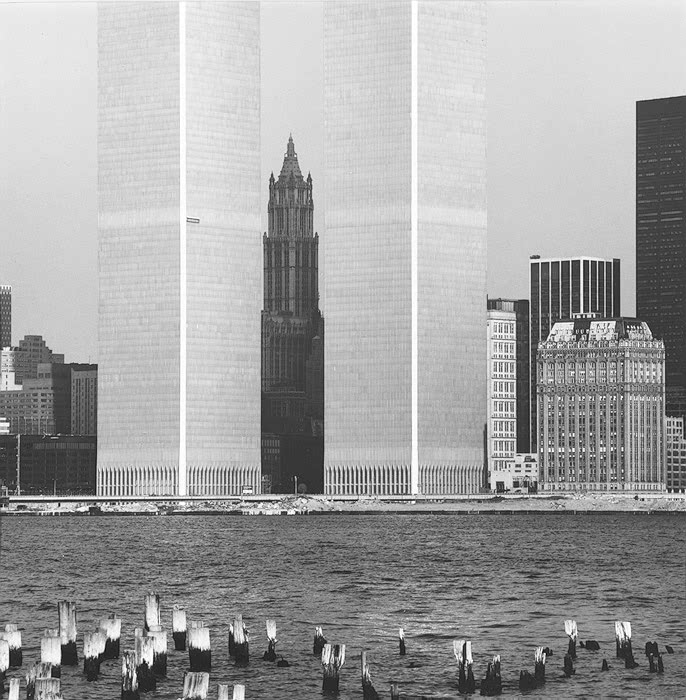
Below: The World Trade Center, with the Woolworth Building peering through — two architectural contrasts in Gill’s novel (photo date 1973)
Gill, a New York-based journalist and New York Times contributor, is the son of a ‘gargoyle hunter’ who traipsed 1970s in search of aged, deteriorating treasures, and his adventure, while certainly fictionalized, has the immediacy of a memoir, laced with specific references to corner shops, restaurants and cheap snack foods.
Griffin’s parents are separated so he spends time between his home – a rustic, unrenovated brownstone on the Upper East Side — and his father’s workshop in a warehouse in Tribeca, many years before chic hotels and film festivals would arrive here. Griffin has accepted the separation, if mournfully, just as he assumes New York as a faded, withering place, the rubble upon which the foibles of his adolescence play out.
Below: Heaps of rubble abound in early 1970s New York. In The Gargoyle Hunter, they sometimes possess abandoned treasures.Â
But those around him are not so complacent. His sister spends her time trying to piece her family back together in crafty ways. At one point, she smashes a window with a rock, knowing her father will have to come back and repair it.
Her father also vandalizes to repair the past, soon employing his son in wild and increasingly dangerous capers to remove carved detailing from old Gilded Age buildings, finding great spiritual urgency in his tasks.
“The bridge of time is very poignant,” he told me. “I think about the immigrant carvers who came over here and did this work on people’s home — itinerant nobodies, many of them, with no stable homes of their own — and I meet them across time.”
Their adventures soon lead to a startling heist — the theft of an entire building.
“No, not part of a building, son. What we’re going to steal is a building — the whole damn thing, cornice to curb. Just stop asking so many questions and you’ll see. Okay?
(NOTE: This sounds far-fetched, but Gill bases this on an actual event of a cast-iron structure win 1974.)
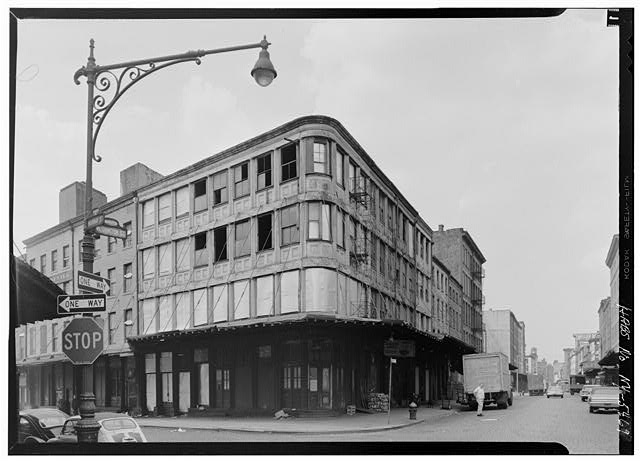
Below: The ramshackle streets of Tribeca, another vivid location from the book
I feel as though Gill is doing a bit of gargoyle hunting from his own life, the novel filled with charming and very specific anecdotes of teenage exuberance and wistful remembrance, dotted along the corridors of 1970s New York that you can almost follow along with on a dusty map.
There’s even a marvelously awkward experience atop the Statue of Liberty, one that feels gleefully unrestricted, with a major nod to modern cinema’s greatest ode to nostalgia — A Christmas Story.
The central crimes (or are they rescues?) of The Gargoyle Hunters feel realistic because they’re paired with the common trials and errors of teenage life, moments we all wish we could chip away and save forever.
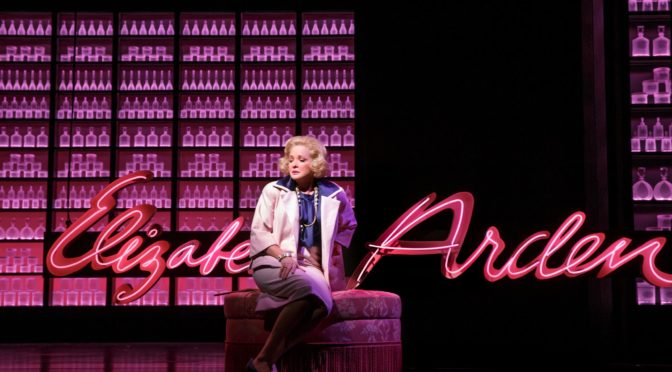
PODCAST Fifth Avenue’s role in the ‘revolution’ of beauty, as led by Elizabeth Arden and Helena Rubinstein, New York’s boldest businesswomen of the Jazz Age.
The Midtown Manhattan stretch of Fifth Avenue, once known for its ensemble of extravagant mansions owned by the Gilded Age’s wealthiest families, went through an astonishing makeover one hundred years ago. Many lavish abodes of the rich were turned into exclusive retail boutiques, catering to the very sorts of people who once lived here.
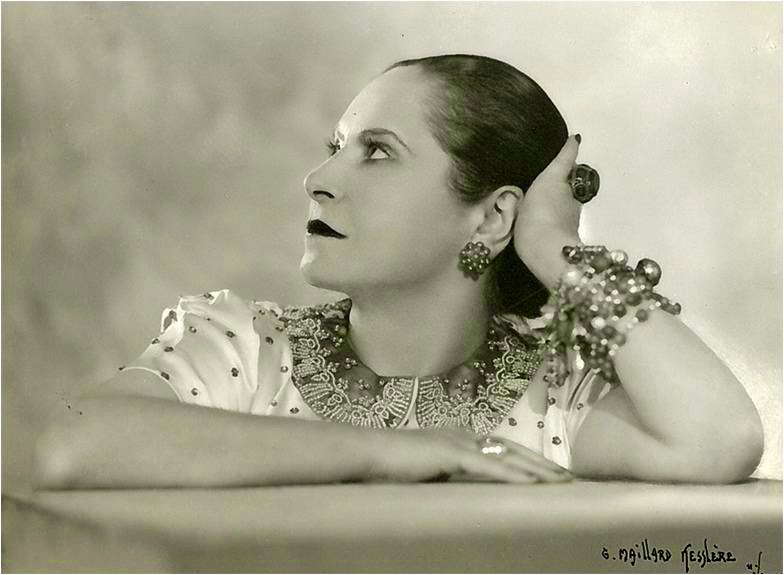
Their products — beauty! Creams, lotions, ointments and cleansers. Then later: eye-liners, rouges, lipsticks, mascaras. On the forefront of this transformation were two women from very different backgrounds. Elizabeth Arden was a Canadian entrepreneur, looking to establish her business in the growing city of New York. Helena Rubinstein, from Poland by way of Australia, already owned an established company and looked to Manhattan as a way to anchor her business in America.
In this episode we observe the growing independence of American woman and the changing beauty standards which arose in the 1910s and 20s, bringing ‘the painted face’ into the mainstream.
And it’s in large part thanks to these two extraordinary businesswomen, crafting two parallel empires in a corporate framework usually reserved for men.
ALSO: Theda Bara, Estee Lauder, Max Factor and a whole lot of sheep and horses!
The Bowery Boys: New York City History podcast is brought to you …. by you!
We are now producing a new Bowery Boys podcast every two weeks. We’re also looking to improve the show in other ways and expand in other ways as well — through publishing, social media, live events and other forms of media. But we can only do this with your help!
We are now a member of Patreon, a patronage platform where you can support your favorite content creators for as little as a $1 a month.
Please visitour page on Patreon and watch a short video of us recording the show and talking about our expansion plans. If you’d like to help out, there are five different pledge levels (and with clever names too — Mannahatta, New Amsterdam, Five Points, Gilded Age, Jazz Age and Empire State). Check them out and consider being a sponsor.
We greatly appreciate our listeners and readers and thank you for joining us on this journey so far. And the best is yet to come!
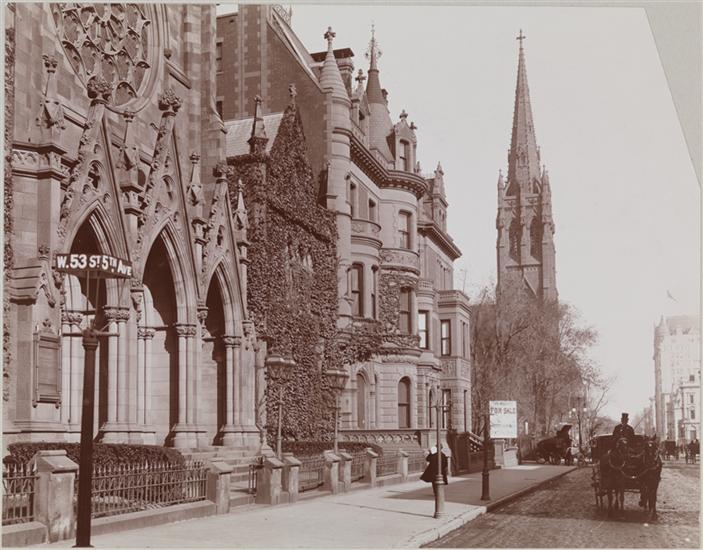
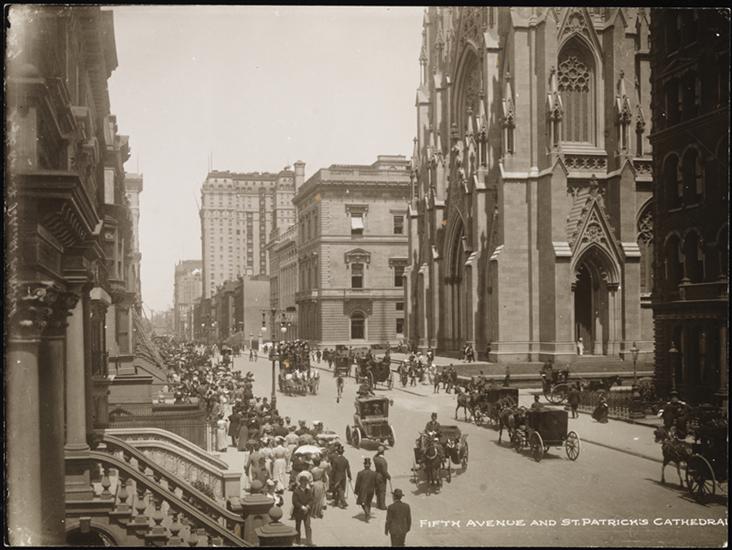
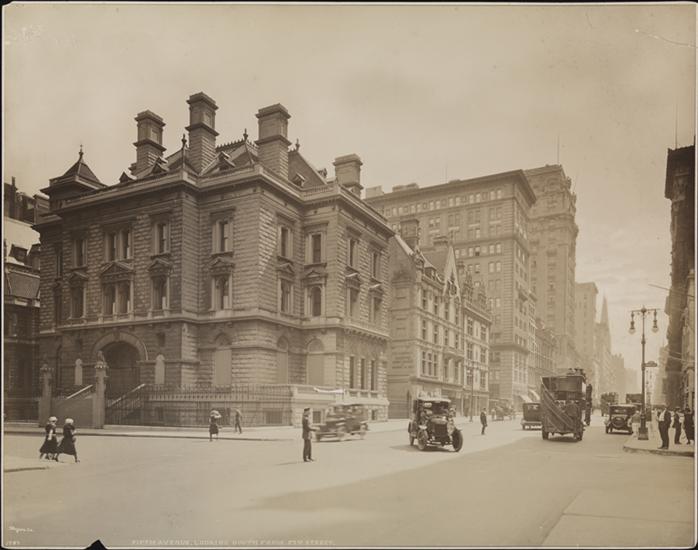
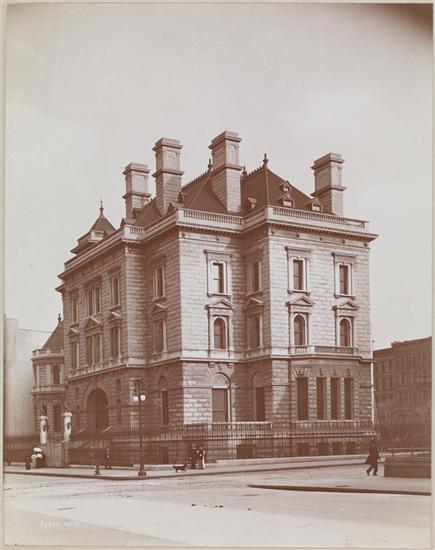
A few images of Fifth Avenue between 50th and 57th, in the years of transition — from residential to retail.
1898
MCNY
1904
Museum of the City of New York
1922 — Fifth Avenue and 57th Street
The Collis Huntington mansion on 57th and Fifth Avenue. Helena Rubinstein moved her salon in here in the mid 1920s.
Helena Rubenstein, photo date 1924
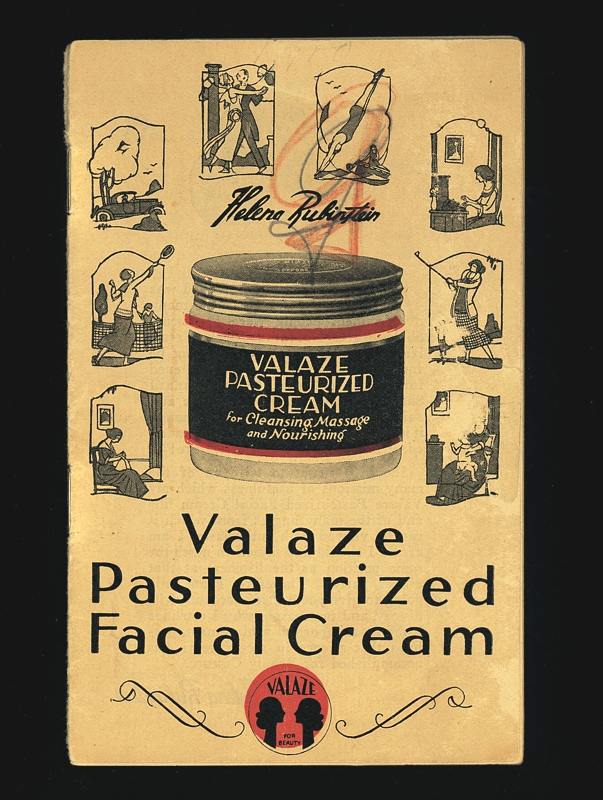
An example of Helena’s Valaze cream, made from lanolin
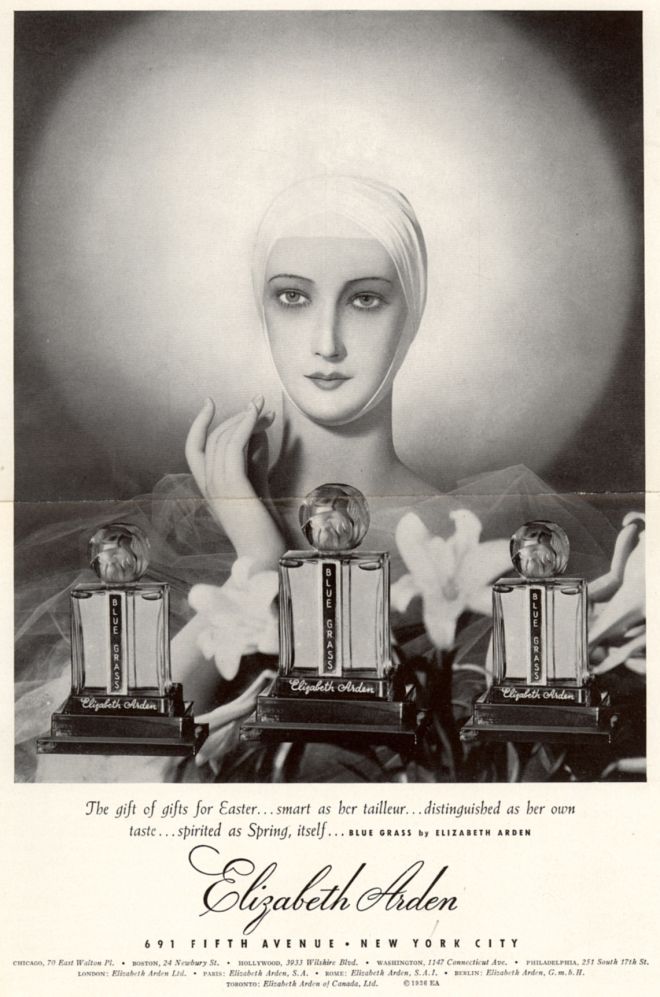
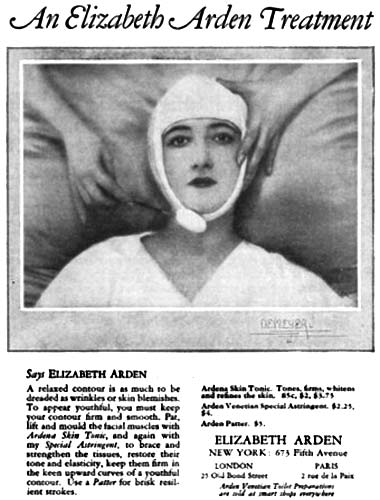
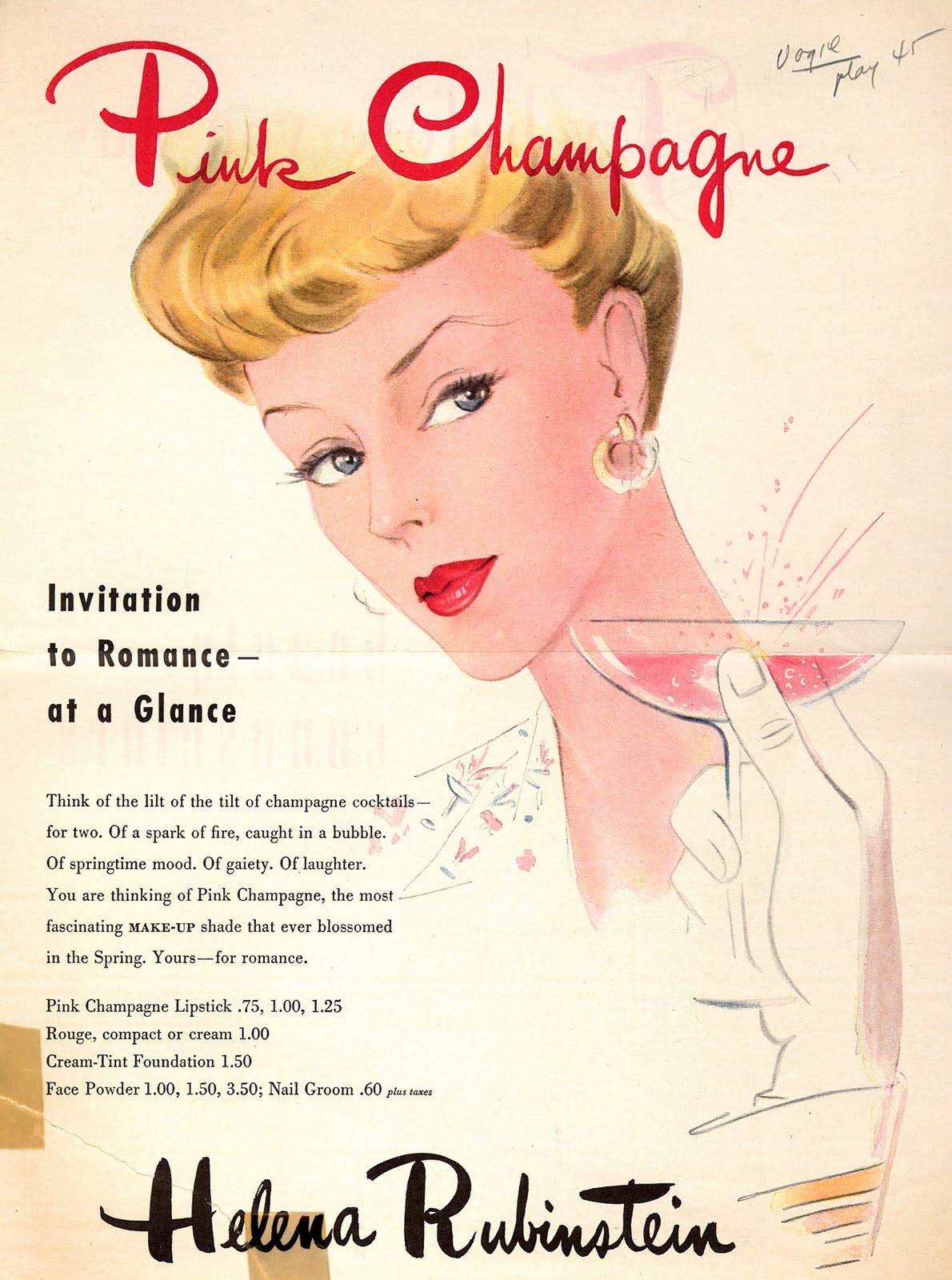
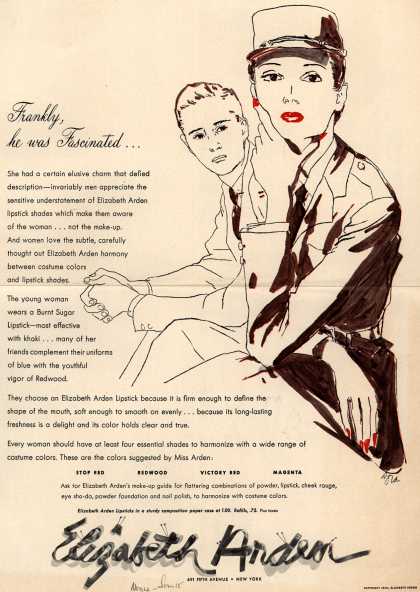
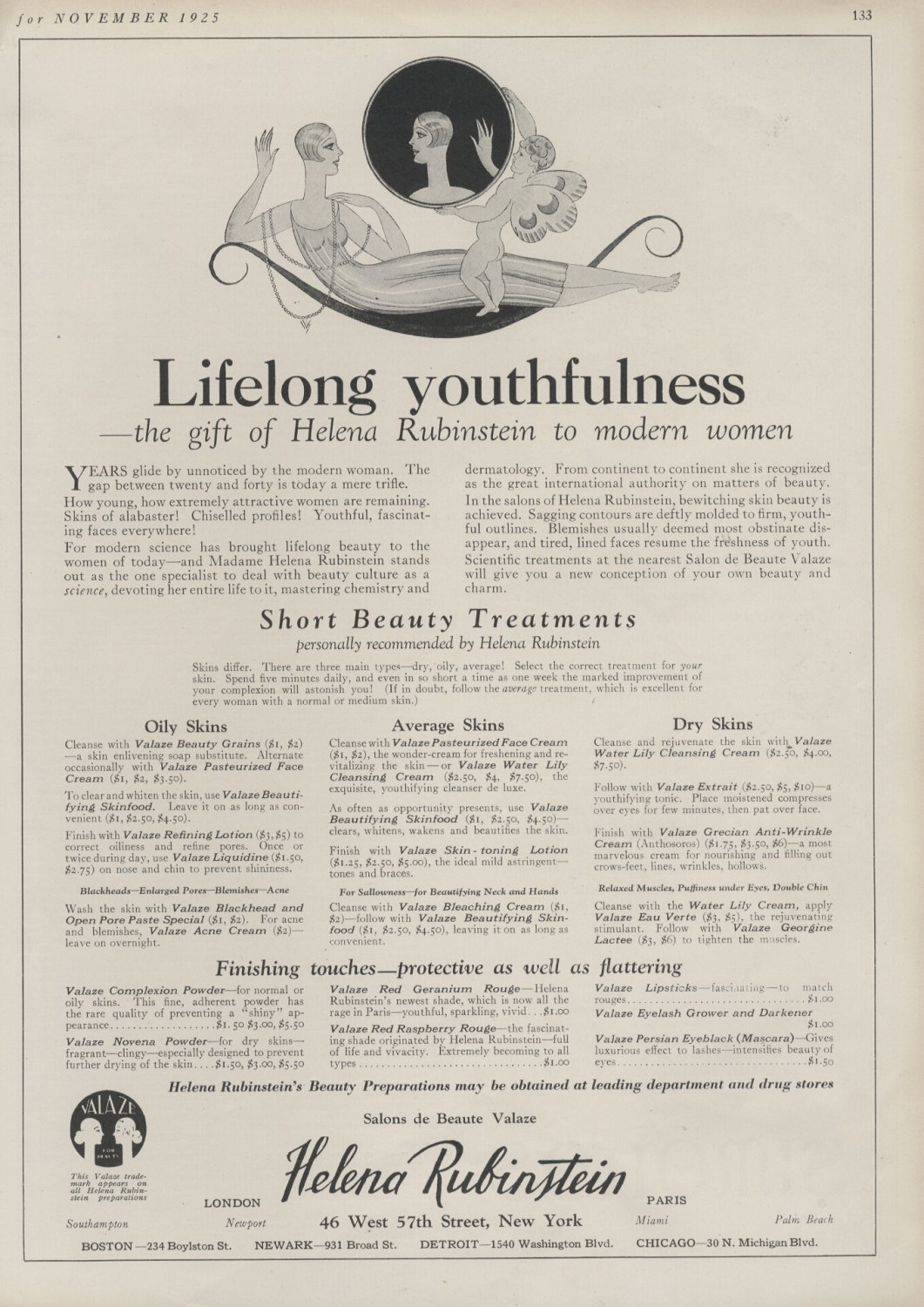
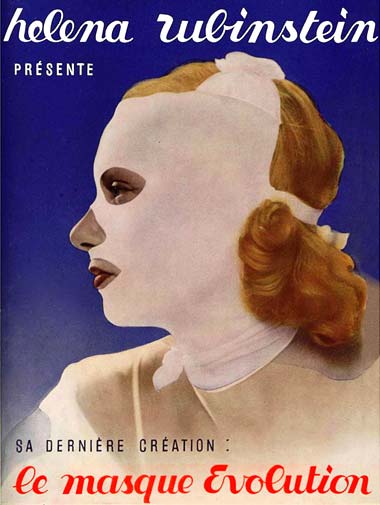
A selection of Elizabeth Arden and Helena Rubinstein vintage ads, courtesy Vintage Ad Browser
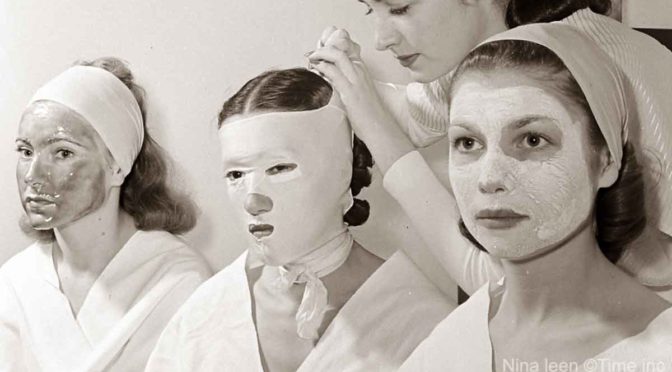
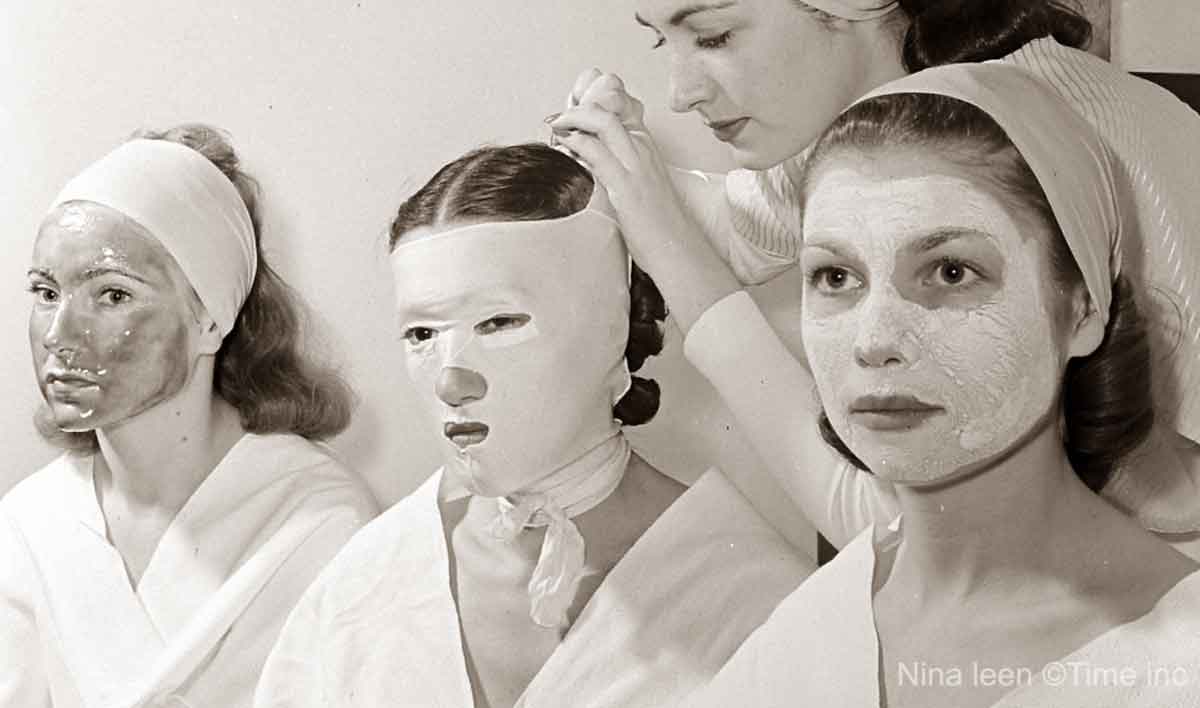
A variety of facial treatments from a Helena Rubinstein salon, circa 1941
Nina Leen/Photography
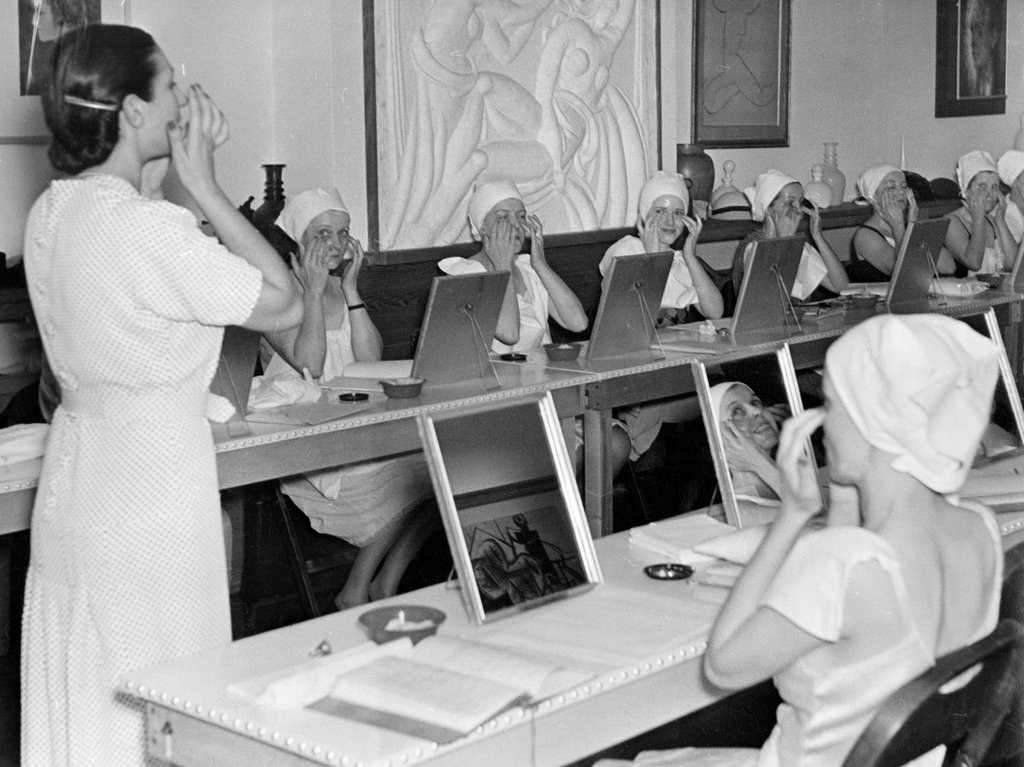
Helena employed many of her family members. Mala Rubinstein, Helena Rubinstein’s niece, shows the ladies how beauty is done at the 715 Fifth Avenue salon
Courtesy NYT Photograph by Bradford Robotham
The commercial featured on this week’s show!
A very affected presentation, but this video does show Rubinstein in action!
The “beauty process” was in vogue by the 1930s as evidenced by this short film starring Hollywood film actress Constance Bennett.
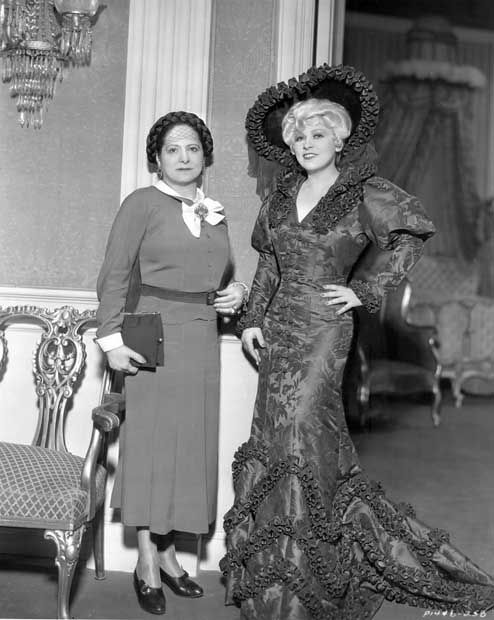
Helena Rubinstein latched onto Hollywood celebrities both as a way to inspire beauty regiment — and, of course, to sell more products.
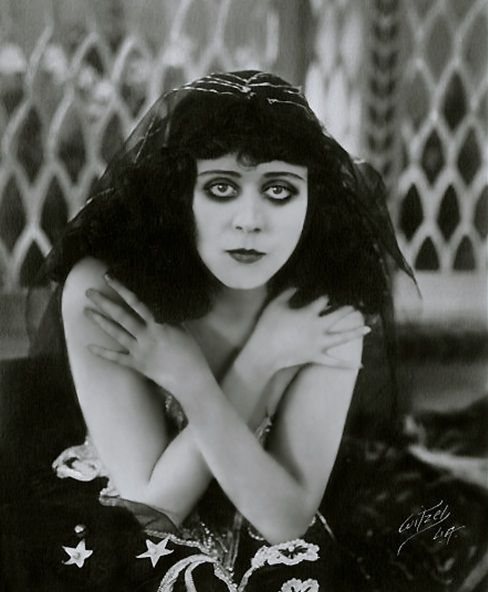
For Theda Bara, Helena even sold a line of ‘vamp’ make-up, tying into her scandalous reputation. (Read more about Theda Bara here.)
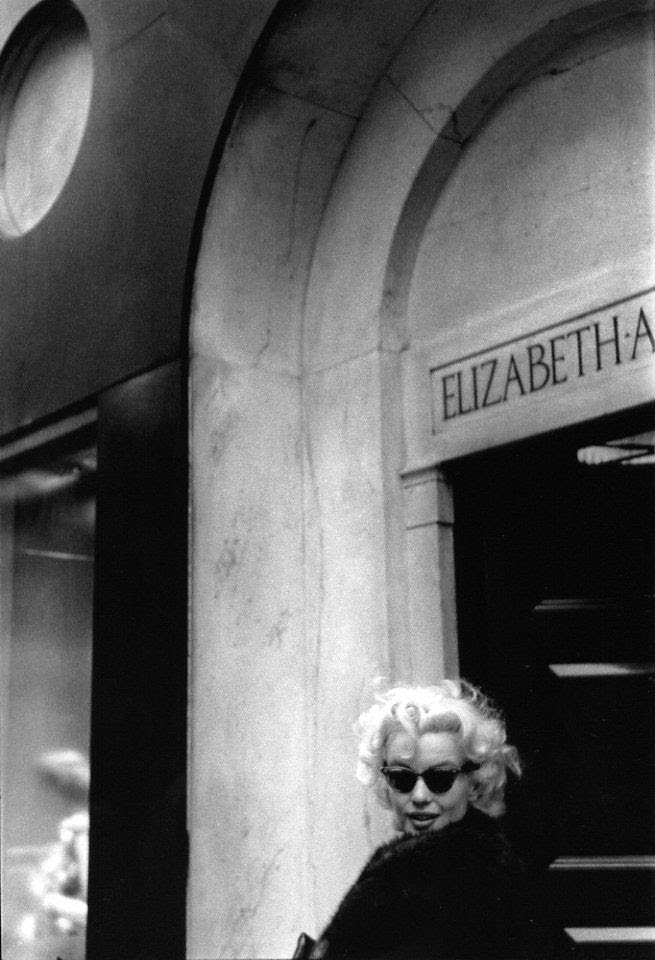
Even Marilyn Monroe was an Elizabeth Arden fan, frequently popping into the New York salon.
DeWitt Clinton Park, far west in Hell’s Kitchen between West 52nd and West 54th Streets, has two unusual features that harken to a time one hundred years ago — and millions of years ago!
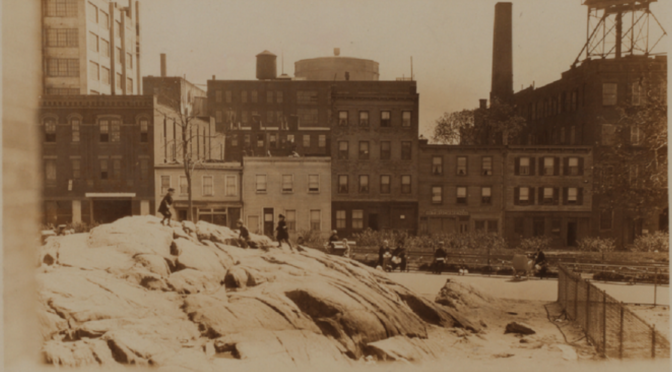
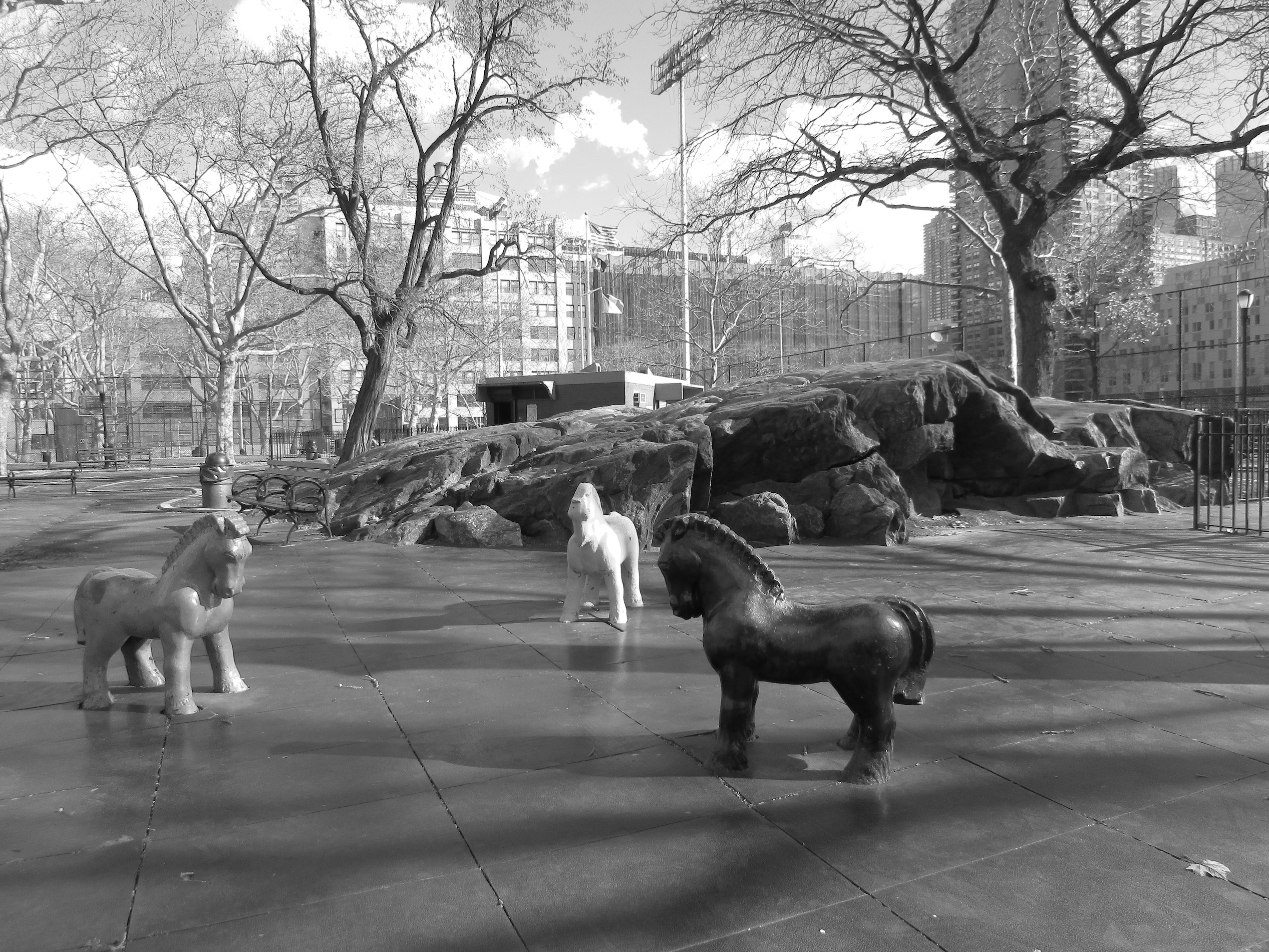
The park’s most striking feature is an unusual rock formation that juts out just west of the sports field. This unique outcrop, dating back 450 million years (that’s right: read that again!), is called exotic terrane, meaning that a portion of the earth’s crust formed by two tectonic plates grafted together to create a rock composition unlike anything that surrounds it.
Horsing Around: Children daily play around one of the oldest exposed areas of Manhattan’s natural topography. At top, in the 1934 image, the same rocks (more exposed and treacherous) greeted other children.
Courtesy Greg Young
Over the past couple of centuries, most of Manhattan’s unique geological features have been smoothed over by the city, which hired workers to push plows and drive dump trucks filled with dirt. Thankfully, this extraordinary feature was left in place during construction
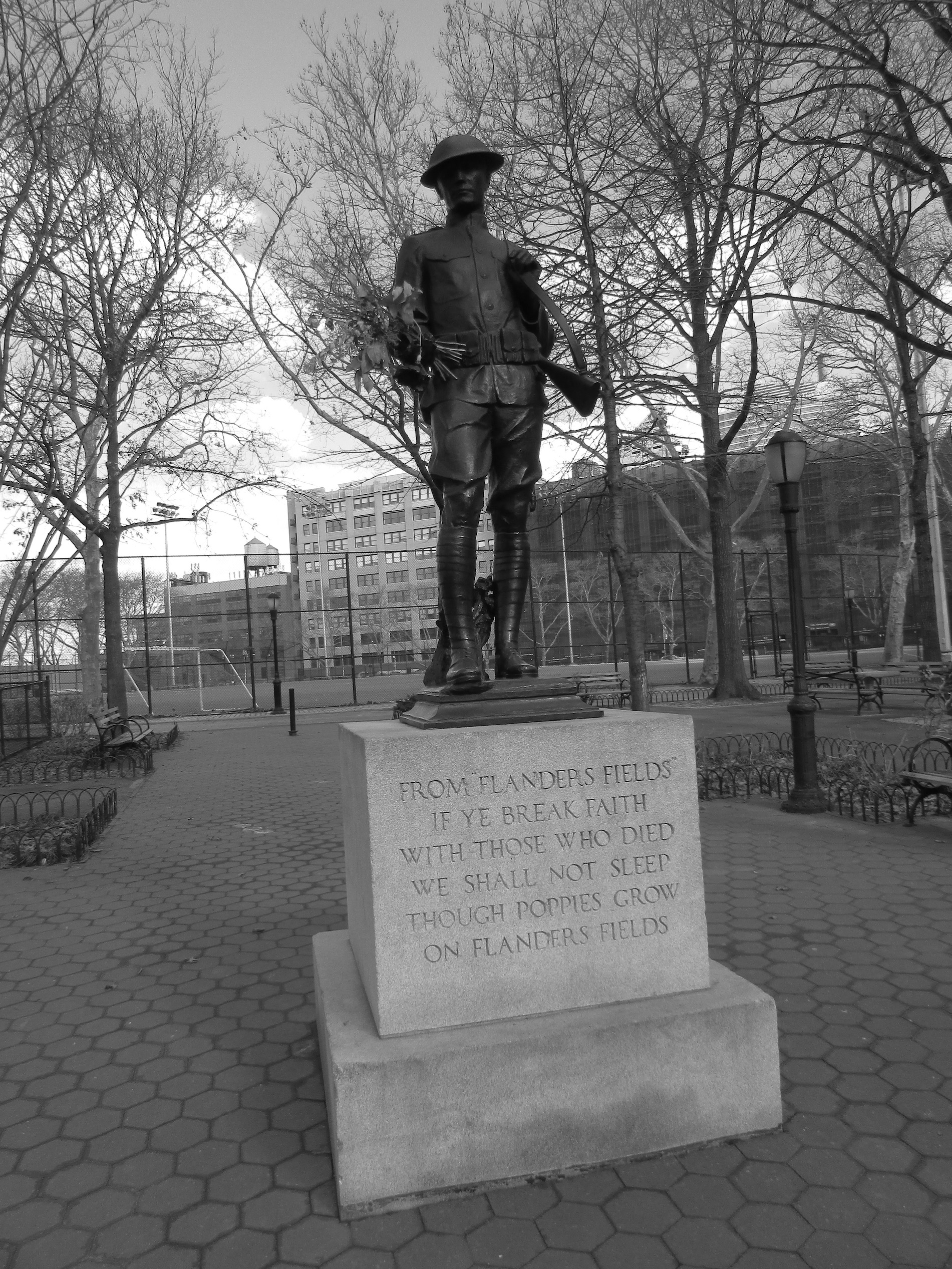
But on the eastern end of the park sits a more somber reminder of the past –New York’s most touching World War I memorial, a lonely doughboy with a rifle slung over his shoulder holding, wait, what is that?
He’s offering up a handful of poppies, flowers that held a decidedly different meaning during the statue’s dedication in 1930 than they have today.
Poppies grew in abundance in the Flemish town of Ypres, site of multiple battles during the war, and the bright-red variety came to symbolize the fallen.
A quote from the famed World War I poem “In Flanders Fields” by poet- surgeon-Lieutenant Colonel John McCrae hugs the base, explaining the mysterious imagery:
In Flanders fields the poppies blow Between the crosses, row on row, That mark our place; and in the sky The larks, still bravely singing, fly Scarce heard amid the guns below.
We are the Dead. Short days ago We lived, felt dawn, saw sunset glow, Loved and were loved, and now we lie In Flanders fields.
Take up our quarrel with the foe: To you from failing hands we throw The torch; be yours to hold it high. If ye break faith with us who die We shall not sleep, though poppies grow In Flanders fields.
(The bolded part above appears as an inscription on the memorial.)
But this sorrowful monument of Hell’s Kitchen has another tragic element. It was crafted by sculptor Burt Johnson, known for creating many statues of World War I doughboys (a nickname for American soldiers) across the country. You can find another example of his work in Doughboy Plaza in Woodside, Queens.
But Johnson died in 1927 while still modeling the memorial intended for the park. His widow made arrangements for the statue to be completed and eventually, in the fall of 1929, it was installed at De Witt Clinton Park.
One hundred years ago this week, the United States of America rose to assist its European allies and officially declared war on Germany.
This was an unprecedented moment in this country’s history, a signal of its rising importance on the world stage and a declaration of the United States as the standard bearer of democracy.
But this declaration was also a delayed reaction. In most ways, America was already at war.
PBS marks this important moment in history with an intense three-part mini-series The Great War, looking at this country’s involvement in the European conflict from vivid and surprisingly fresh angles.
Below: An exclusive clip from The Great War, of the initial influence of Tin Pan Alley on the early opinions of Americans:
My confession: I love great historical stories of war, but I do not always like war documentaries. There’s a certain uniformity to many of them that’s rather numbing — black-and-white stock footage of smoky battlefields, static maps of troop movement, battles without context. Wars are sometimes presented as impressive events, devoid of humanity.
The Great War is rather unique (and potentially frustrating for some true war-history fanatics), easing deliberately into discussion of the conflict in the same way that Americans would have learned of it themselves during the summer of 1914.
The assassination of Franz Ferdinand, heir to the Austro-Hungarian throne, by members of the revolutionary movement Young Bosnia, did not seem like the sort of event that would concern the dinner conversations of regular Americans. Many believed themselves isolated from those sorts of conflicts by an ocean; if anything, the Gilded Age proved that the United States was equal, if not greater, to those foreign cultures.
At yet, as the situation escalated, bringing in Germany, Russia, France and eventually Great Britain into the conflict, it would seem the United States would be dragged in as well — whether its leaders admitted it or not.
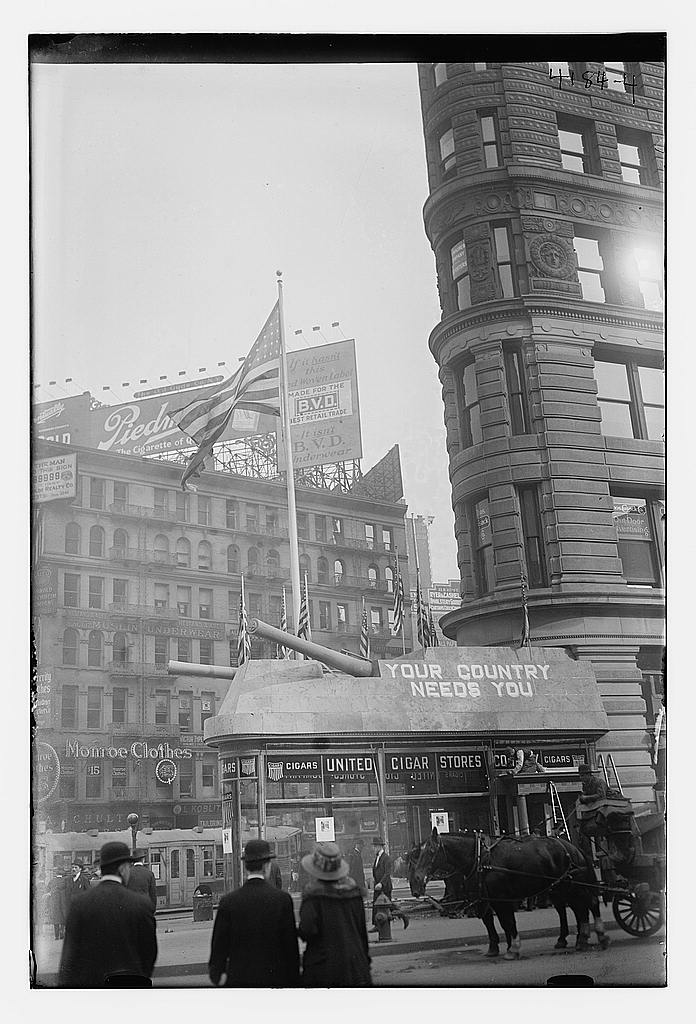
The Flatiron Building, for a time, became a war recruitment office.
The first part of The Great War (airing Monday night) takes the temperature of America from 1914 to 1917, a country torn into sympathizers and pacifists.
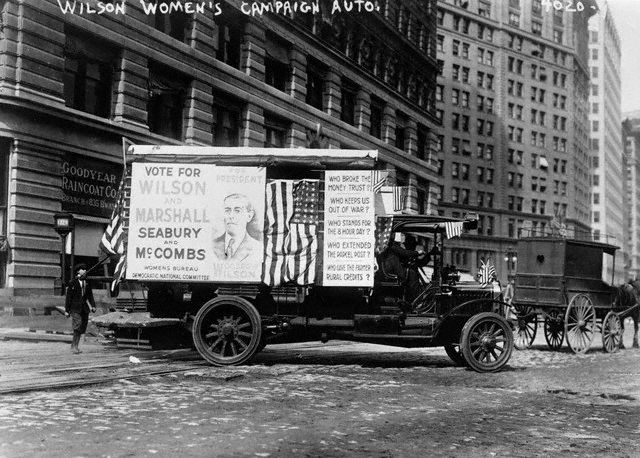
Because of this country’s unique make-up of immigrants, the European struggle ignites a thousand smaller conflicts here. Many race to their old homelands. Suffragists, in a struggle for their basic rights, ignite an anti-war movement. President Wilson, in a fierce re-election bid in 1916, brandishes the slogan ‘He Kept Us Out of War’.
A campaign vehicle for Thomas Woodrow Wilson candidacy in the 1916 American elections. 1916 USA
But in fact, America was already engaged in the conflict — on both sides of the battle, depending on who you were and where you lived in America. German immigrants felt embattled and rallied for peace. But events such as the sinking of the Lusitania and the explosion at Black Tom Island soon turned the opinions of most American to the cause of war. How then could a powerful nation enter such a conflict from thousands of miles away?
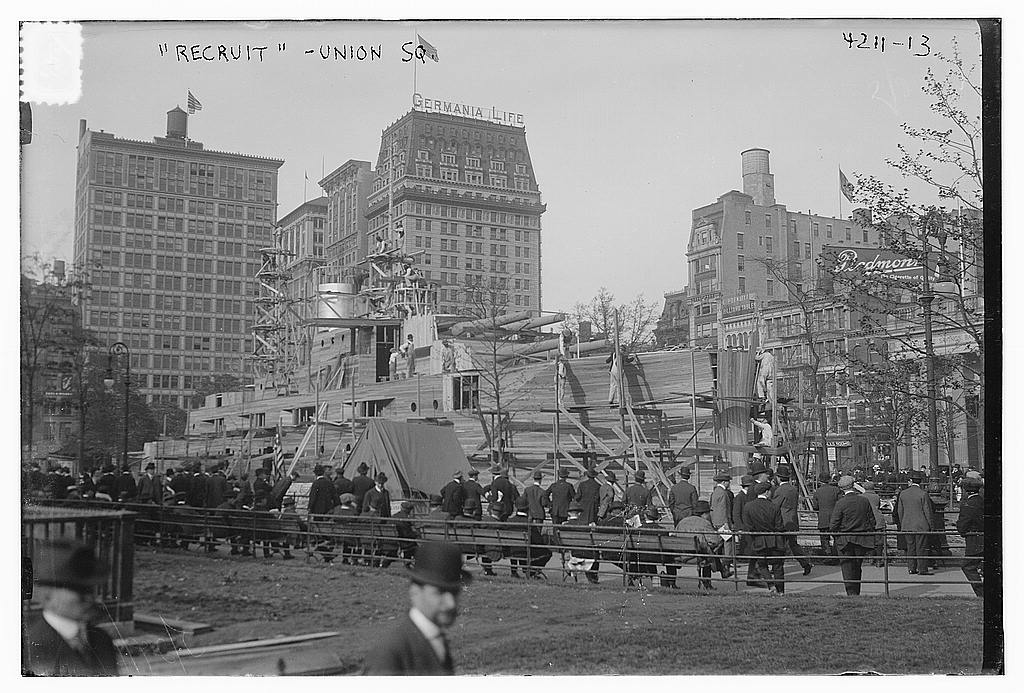
A faux battleship was constructed in Union Square in 1917 to encourage participation in the war effort:
Library of Congress
Part Two (airing Tuesday, April 11) explores the mobilization and training of American forces. But while the documentary does follow a set of individual stories of men going to war (such as that of Alan Seeger, a Greenwich Village poet ), it spends a significant time on American shores, observing the efforts of many (led by Wilson’s propaganda chief George Creel) to drum up excitement and patriotism — and others whose opposition to war remains steadfast.
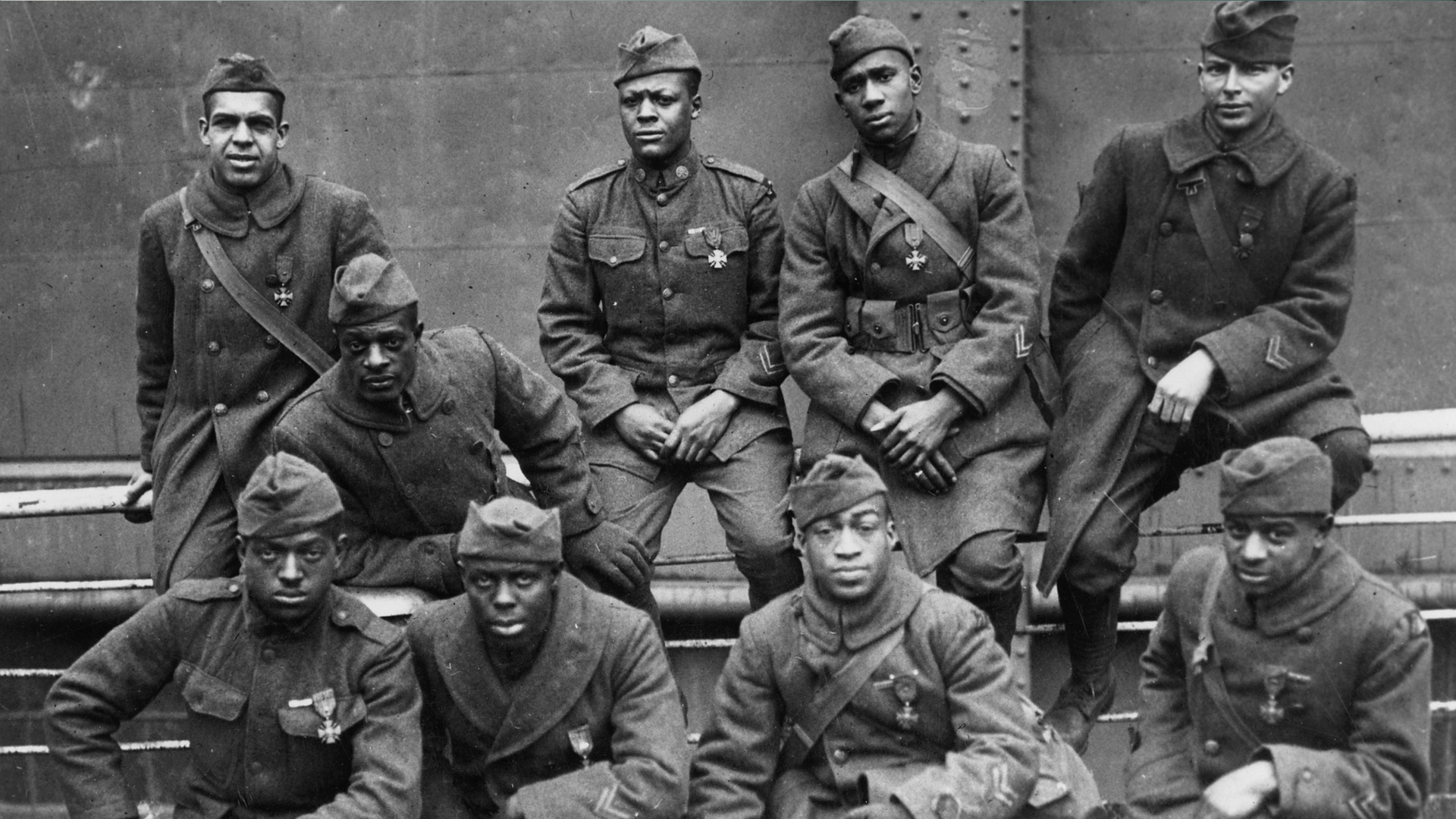
We do follow the journey of one entire squad of soldiers, and it’s a truly amazing tale — the Harlem Hellfighters, the first African-American regiment to engage in the conflict. They were assigned to the French Army as many American troops refused to fight alongside them. What the French got was a well-trained, precise and sometimes vicious squadron. (Thanks to the under appreciated James Reese Europe, they also had a renown military band.)
Below: An exclusive clip from The Great War, of national outrage in 1918 of ‘slackers’ and an extraordinary raid in New York City.
It’s not until Part Three (airing Wednesday) that American forces, led by General John J. Pershing, are fully engaged along the Western Front.
By this time, tens of thousands of Allied soldiers had been killed, The film’s unique point of view can be unsettling at times; there are so many perspectives to tell — and the filmmakers should be credited with this uniquely 21st century approach — that the larger canvas of war and its cruel atrocities often leaves center stage for a time, only to come crashing into the narrative with jarring force.
There’s no escape in Part Three. The battles of the Hundred Day Offensive are depicted in ominous, almost otherworldly detail. Meanwhile, back in the United States, campaigns to drive ‘slackers’ and anti-war agitators into the open tramples upon basic constitutional rights and escalates the fears of regular Americans.
Over six hours, The Great War leaves you sorrowful, exhilarated and hungry to learn more.  I’d recommend pairing this with another Europe-focused film series — the BBC’s The First World War or, for something older, the epic 1964 series produced by England, Canada and Australia — also called The Great War.
During the live broadcast, please following along with me on Twitter @BoweryBoys where I’ll be sharing trivia about American and its involvement in World War I throughout the show.
THE GREAT WAR
PBS, American Experience
Debuting April 10, 9/8C
Check your local listings
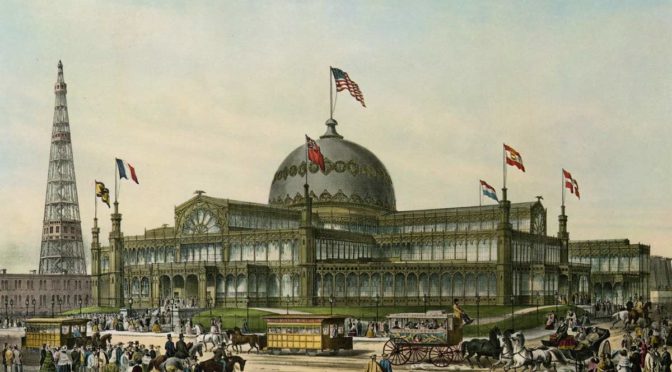
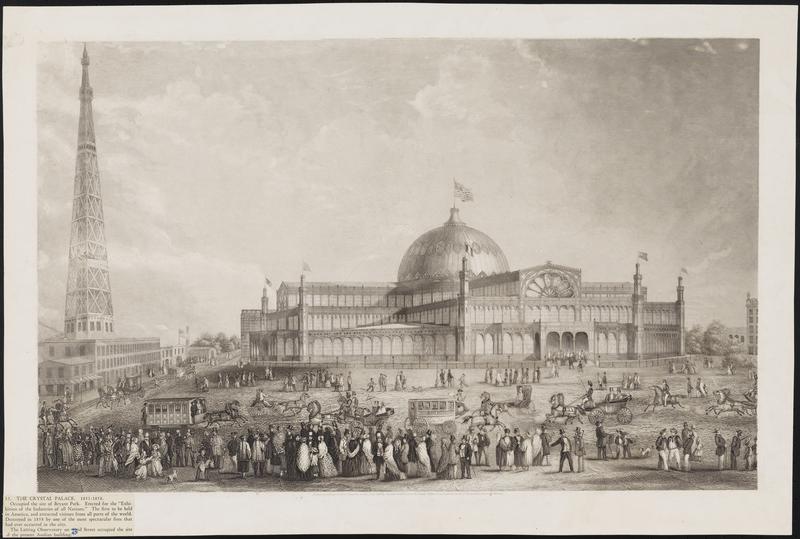
Bryant Park is a rather remarkable physical space. During the winter it becomes a skating rink and outdoor market, while in the summer, its lawn host hundreds of movie buffs every Monday for the park’s popular outdoor film festival. Its neighbor — the main branch of the New York Public Library — keeps millions of volumes within rooms below the park. And once, long ago, Americans came to this spot to witness the technological marvels of the age.
Courtesy Museum of the City of New York
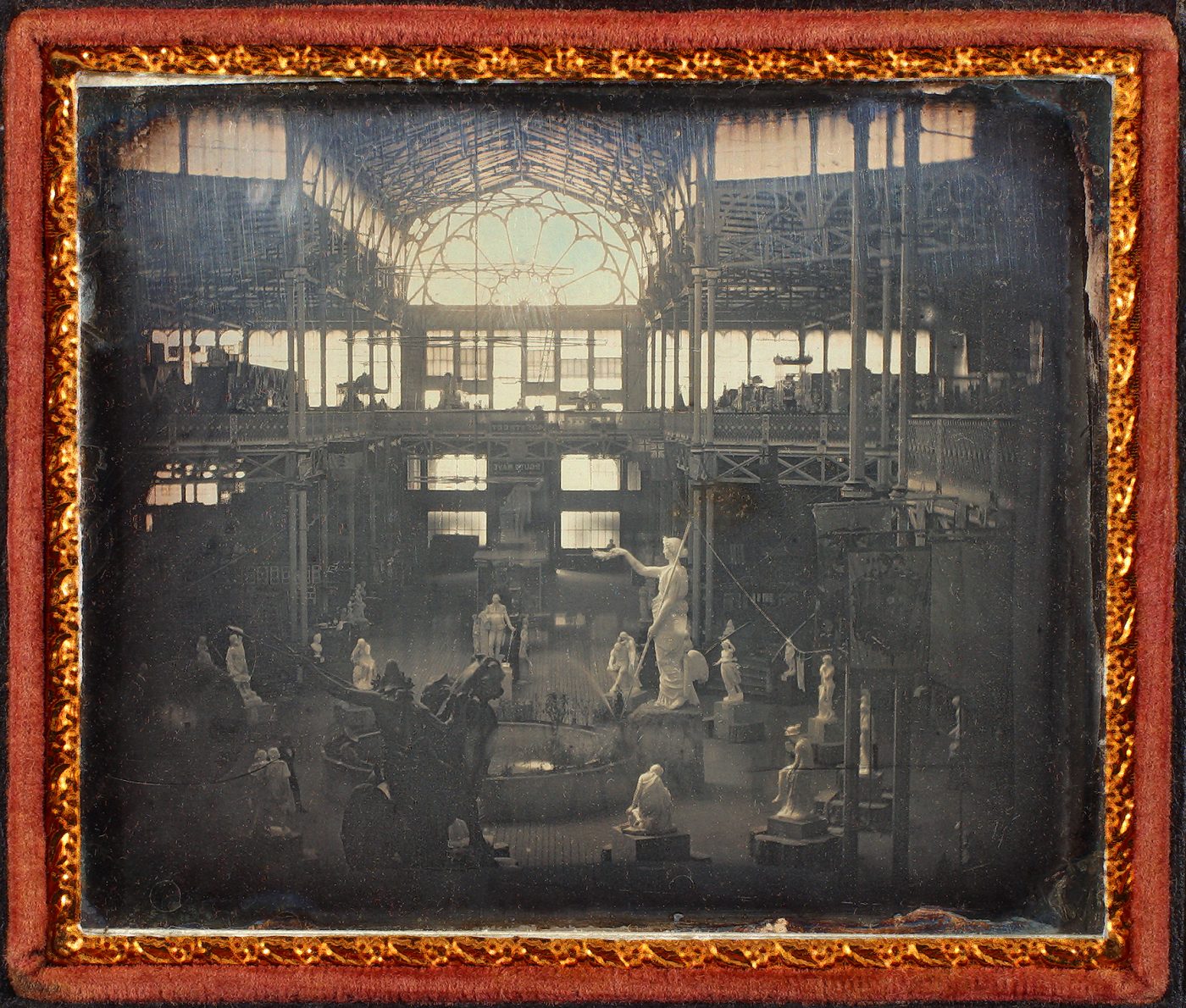
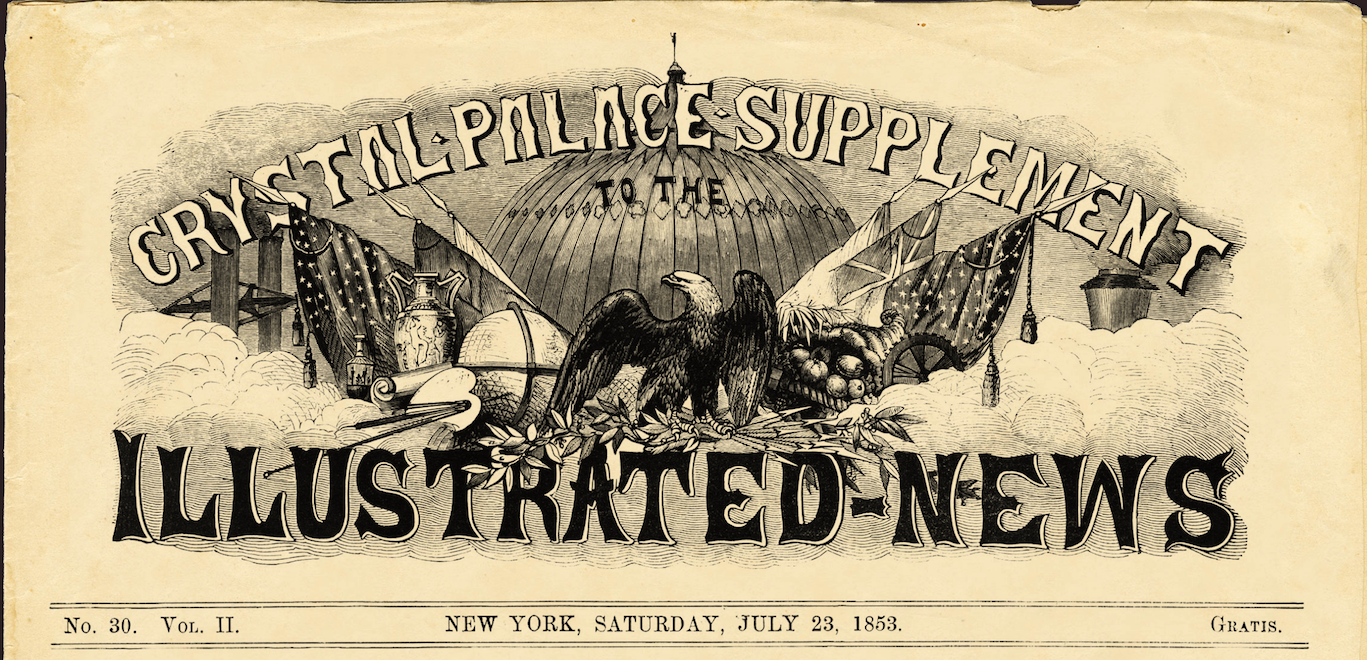
The Exhibition of the Industry of All Nations was the first major industrial fair in the United States, showcasing the rising manufacturing prowess of the young country. It was housed in a jewel box of an exhibition center, the extraordinary Crystal Palace, a wonder of glass and steel, modeled after a similar structure in London. When fire eventually took the building in 1858, New York City lost its most valued tourist attraction.
A new show at the Bard Graduate Center Gallery(18 West 86th Street,  just steps from Central Park) reanimates a bit of the Crystal Palace Exhibition, bringing the wonder of visiting this wondrous place to life with displays of original artifacts and an absolutely sensational interactive component.
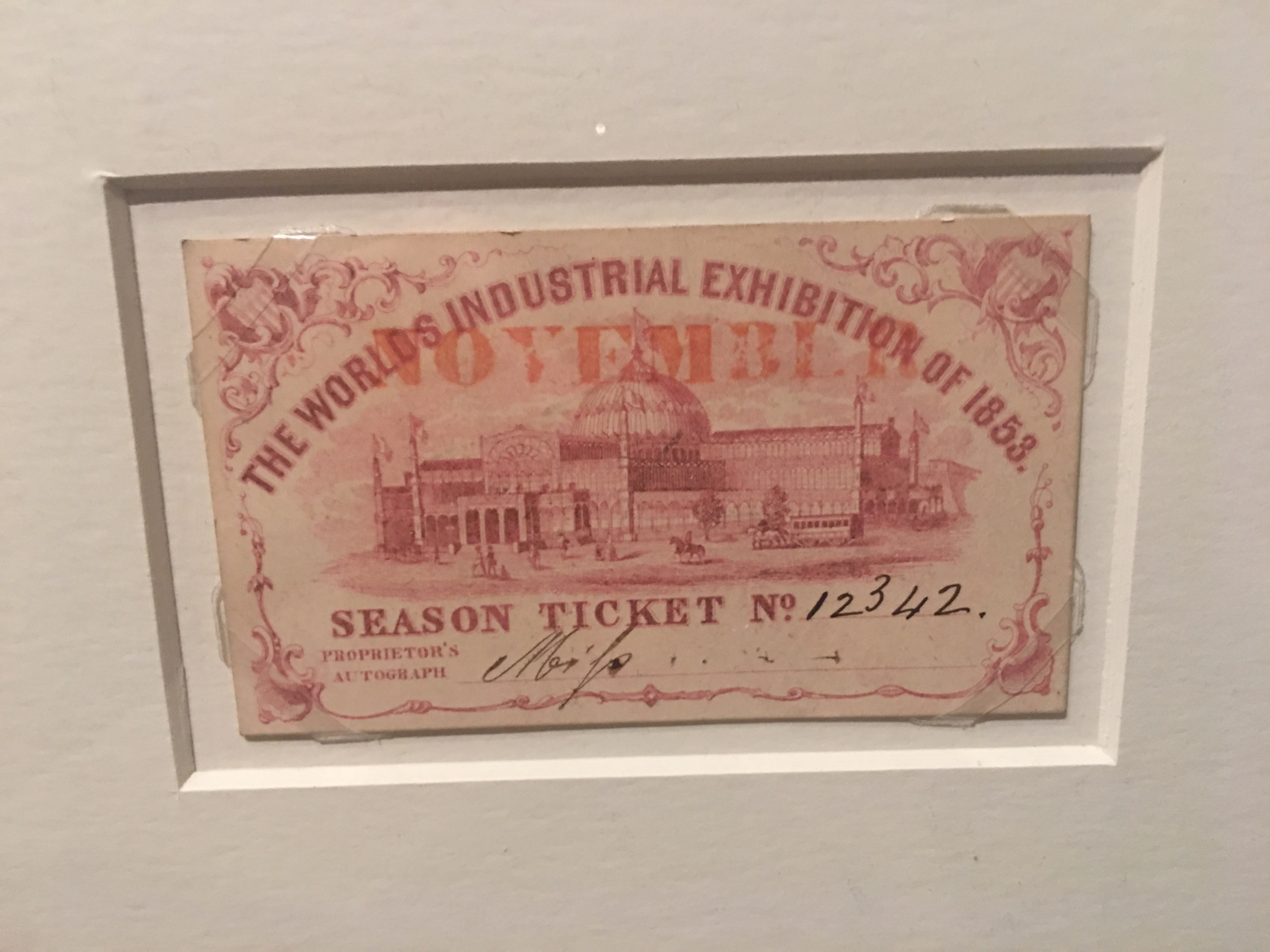
Your season ticket to the Crystal Palace! Appropriately displayed at the entrance to the gallery.
The gallery features a selection of items both displayed at the fair and used to promote it. Americans were so enthralled by the exhibition that they decorated their homes with promotional items include one example featured in the gallery of an ornate parlor clock affixed with an image of the Crystal Palace. High end tchotchkes, indeed!
The fair displayed fine art and experimental technologies alongside examples of American craftsmanship.  Featured in the gallery are samples of American-made items from the 1850s proudly shown at the fair — porcelain, glassware, furniture, pottery and sculpture.
You’re perhaps used to seeing such items in a museum; the things you’re seeing here, however, weren’t originally displayed for their historical worth. At the opening of the Crystal Palace in 1853, they were literally the embodiment of a growing country.
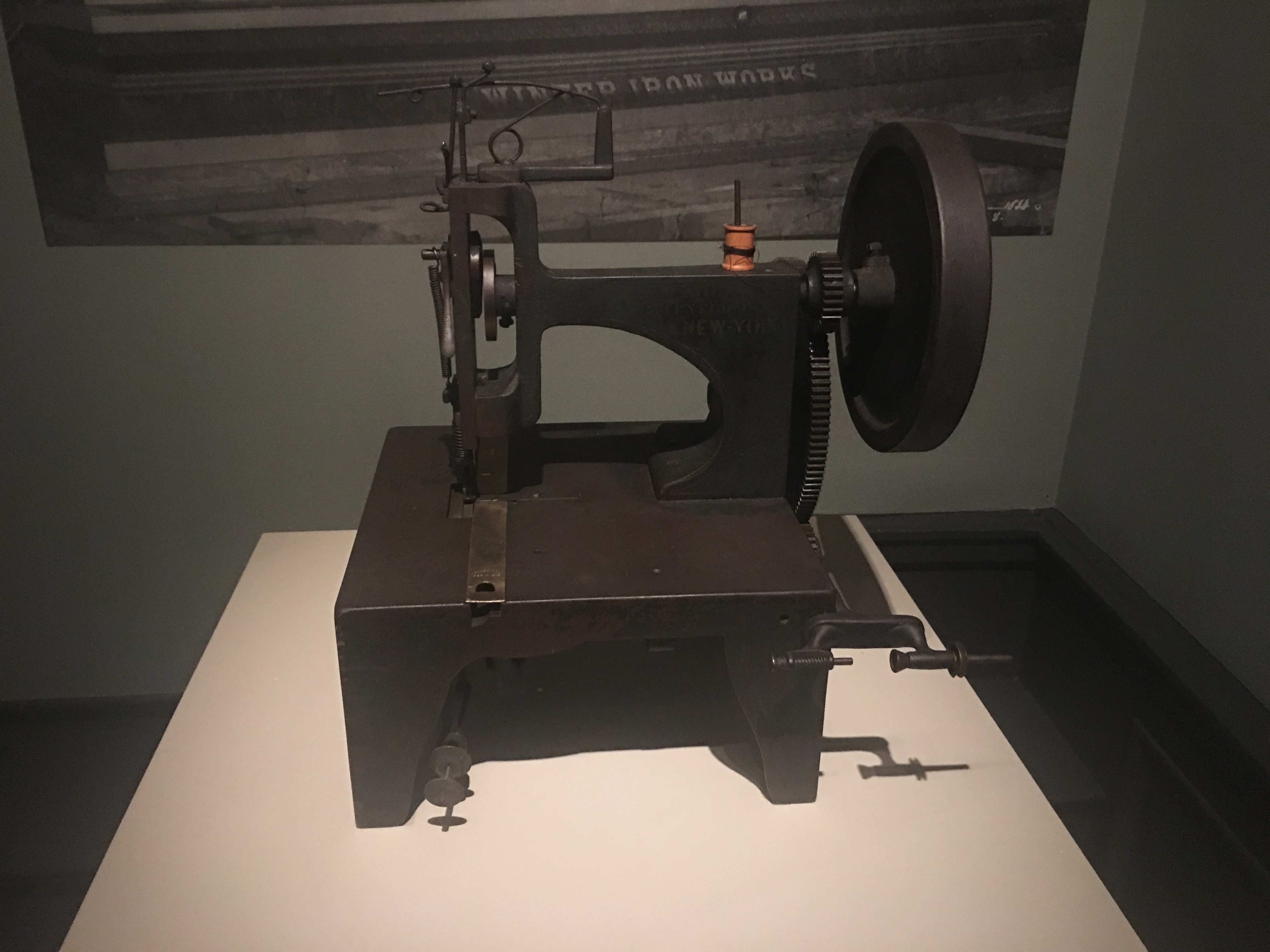
An early sewing machine from I.M. Singer, 1856. While perhaps it seems almost medieval today, this would have been considered a modern marvel in the 1850s.
And here, in this intimate space, there are little delights behind tiny thick curtains — daguerreotypes and photographic salt prints from the fair itself, so delicate that they must be protected from even the gallery’s gentle light.
In fact, I would highly suggest getting lost in their digital resourcesbefore heading over to see the physical objects. (You’ll be able to play around with them at interactive displays at the exhibit as well.) There are also some engaging audio ‘walking tours’ from three different perspectives of people visiting the fair.
(Personally, I would also recommend listening to our podcast on the Crystal Palace which we recorded exactly two years ago. Putting it all together with the gallery show will the closest thing to boarding a time machine!)
This April we will be recording a show in front of a live audience that will be released as an upcoming podcast — in honor of the 10th anniversary of recording the first episode of the Bowery Boys: New York City History. And we would really, really love for you to be a part of it.
Yes, believe it or not, the first episode of our podcast came out in the middle of June 2007!
On April 9th we will be making our debut appearance in the fifth annual NYC Podfest, a weekend of live podcast extravaganzas, hosted by the Bell House, the Gowanus, Brooklyn, venue best known to New York podcast lovers for hosting events for shows like Stuff You Should Know and Slate Political Gabfest.
The Bowery Boys 10th Anniversary Celebration will be our biggest live show to date. We’ll be on stage talking about how we managed to make it an entire decade, giving you some hilarious back stories on some of your favorite episodes, with some fun and games thrown in. We’ll be talking about Peter Stuyvesant, Billie Holiday, Boss Tweed, P.T. Barnum, Jane Jacobs, Stanford White and of course Robert Moses!
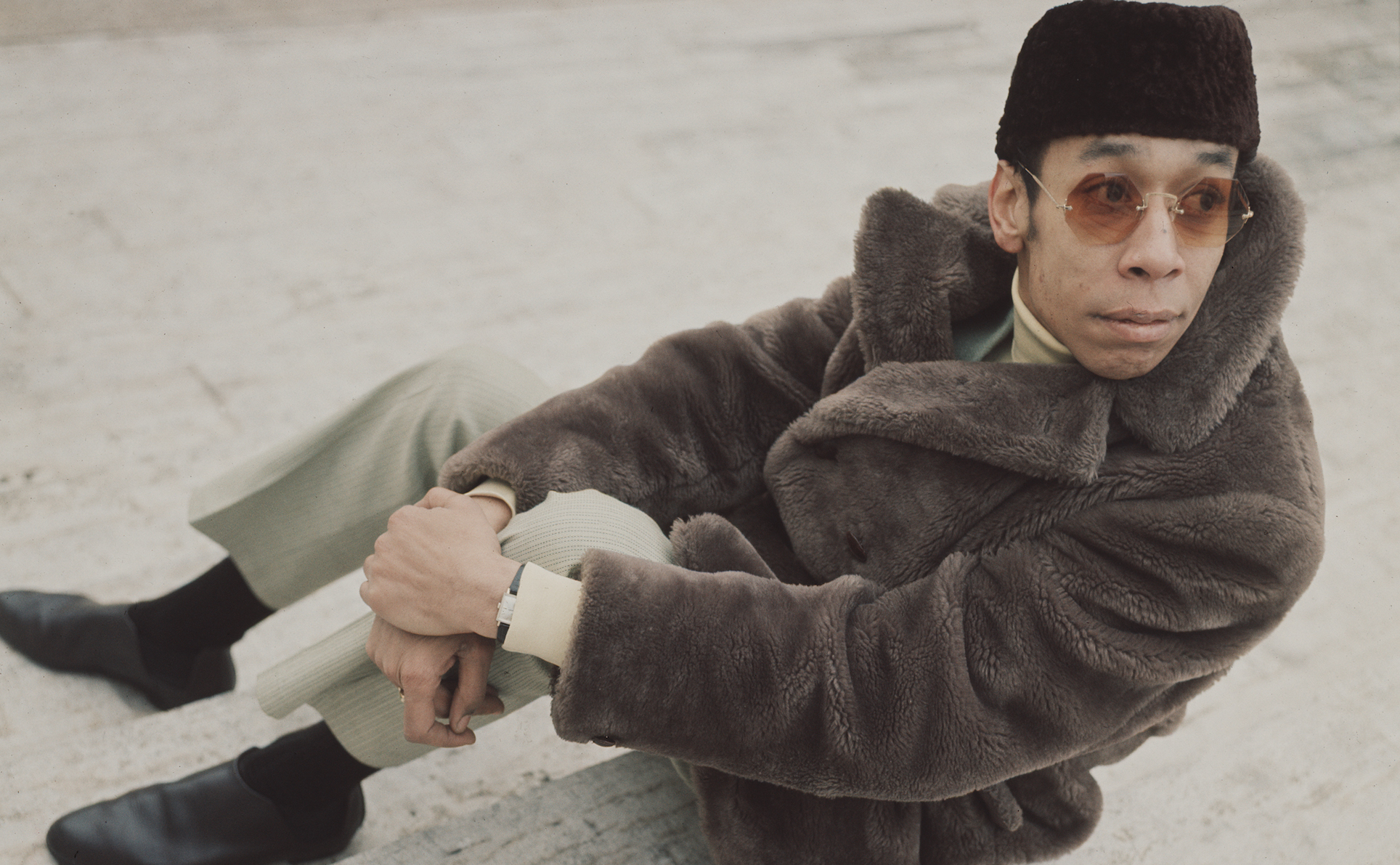
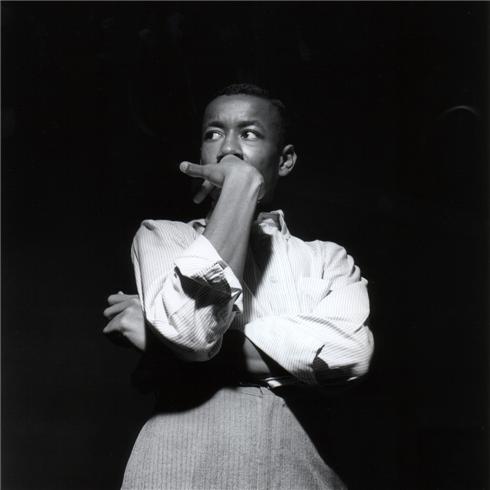
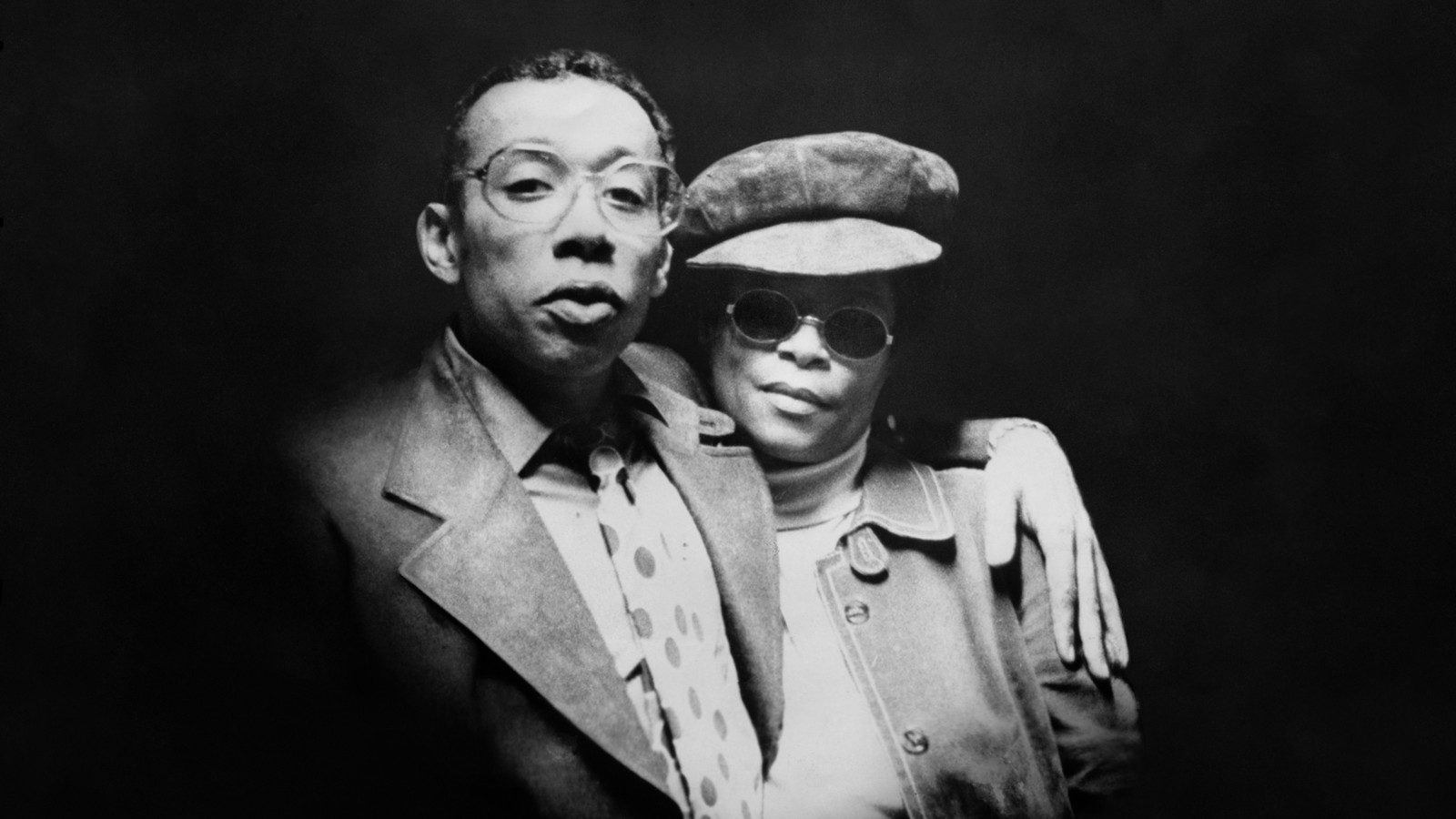
It was during one of those terrible February nights — blizzard winds with the streets packed tight with snow — at a jazz club in the East Village named Slug’s Saloon, packed with people haloed in cigarette smoke, that a woman named Helen Morgan walked up to one of the performers, her common-law husband, a rising jazz trumpeter named Lee Morgan, and shot him dead.
This tragedy had entered into jazz music mythology. Lee Morgan was a prodigy Blue Note Records recording star of the late 1950s and ’60s who was very nearly waylaid by heroin addiction. But by the early 1970s he was clean. And that was because of Helen.
So why did she kill him?
The new documentary I Called Him Morgan, directed by Kasper Collin, is a tranquil and lyrical retelling of Morgan’s bright, brief career and the influences that led to his redemption and death. It also shows off a cool, raw backdrop of 1960s New York grit and shadow, rendered not from acres of stock footage (although there is some) but from abstract re-creation and creative editing. The film itself is very much like a tune Lee Morgan himself would have played.
The film’s driving force is a cassette tape. In the 1990s, Helen Morgan, long released from prison, enrolled in an adult education class in Wilmington, NC, where she met jazz aficionado and former radio host Larry Reni Thomas. Familiar with Morgan’s story, he asked if he could interview her and record the session on cassette tape. She died the following month.
A music documentarian could not dream of a better plot device. Helen talks about her life and her first meeting with the young, impressionable jazz star at her apartment on West 53rd Street, near the legendary Birdland jazz club.
They were an unusual pair — she was older and streetwise, he was an adorable ball of energy and creativity — but they clicked, for a time. She even managed to get him back on his feet after a stint with heroin addiction.
Kasper Collin Produktion AB / Courtesy of the Afro-American Newspaper Archives and Research Center
Helen exists in the film only in a few fleeting photographs. She hated getting her picture taken, and in those that exist, she never looks thrilled. Lee Morgan, however, comes alive in archival footage and black-and-white photographs. Yet we hear her voice and never his — only through his forceful and vibrant music, sounding as crisp and present in the film as though it were being heard live.
The film’s dreamlike, filtered quality pairs exquisitely with the music, creating a tight-focused look at New York and the Lower East Side in particular. Slug’s Saloon was at 242 East 3rd Street, between Avenue B and C, and the entire street, clogged with snow, is shot with grainy foreboding.
Morgan’s musician friends avoided walking the street after his death; the club closed many months later. This may be a street you’ve lithely walked down many times in the past. After watching I Called Him Morgan, you may feel a sense of gloom the next time you walk past.
I CALLED HIM MORGAN
Directed by Kaspar Collin
In theaters now — Playing at the Metrograph and Lincoln Center in New York City this week
Check your local listings for showtimes and visit the website for screening dates
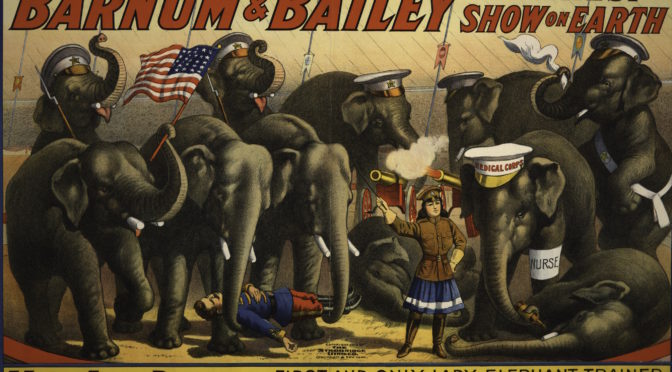
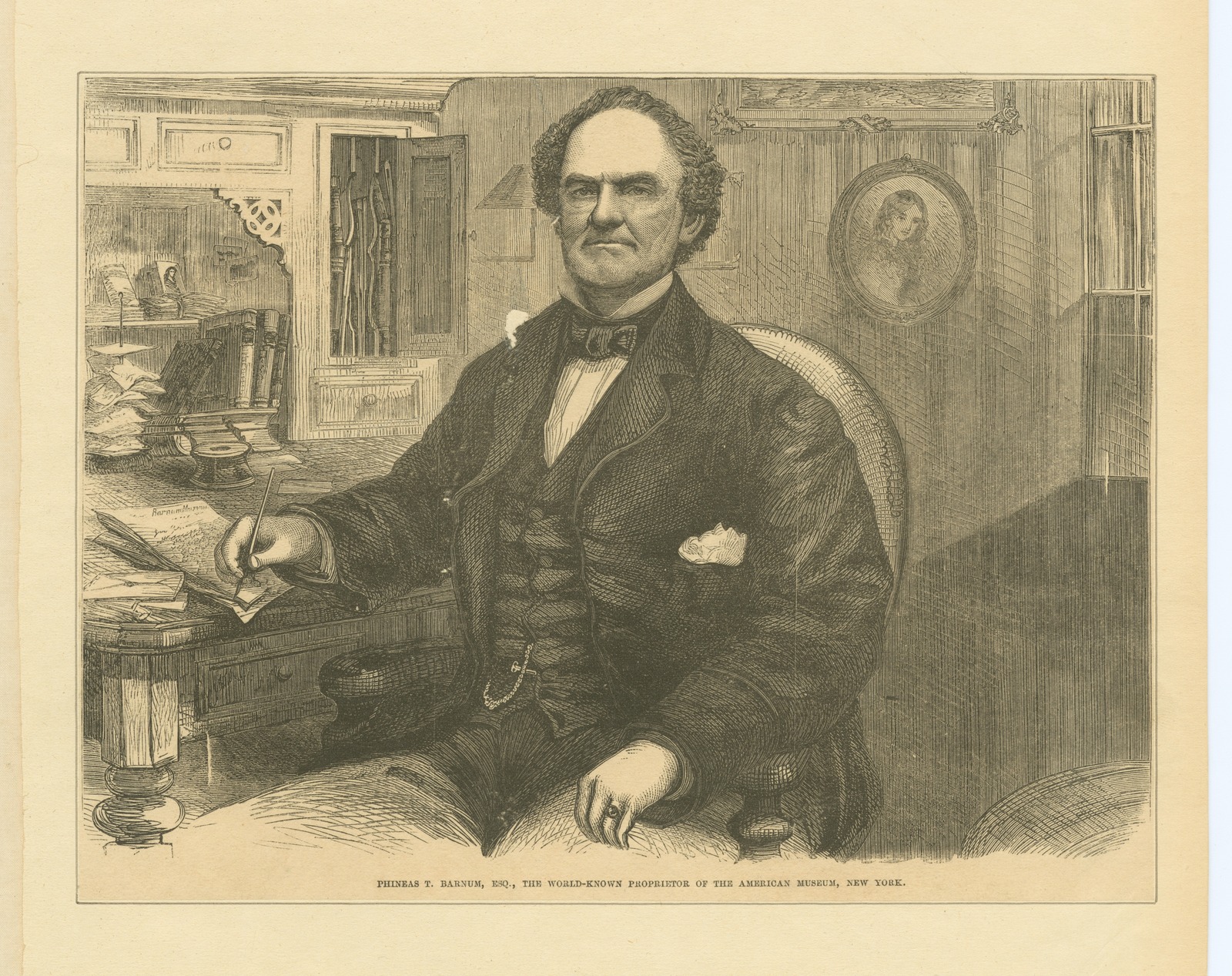
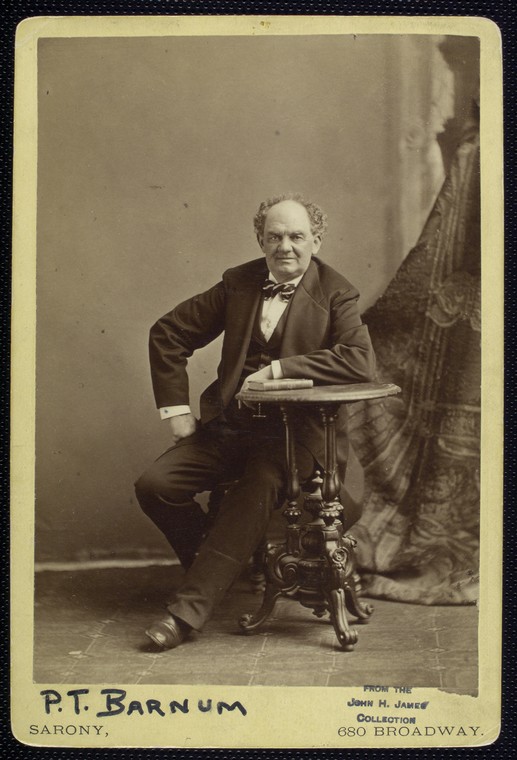
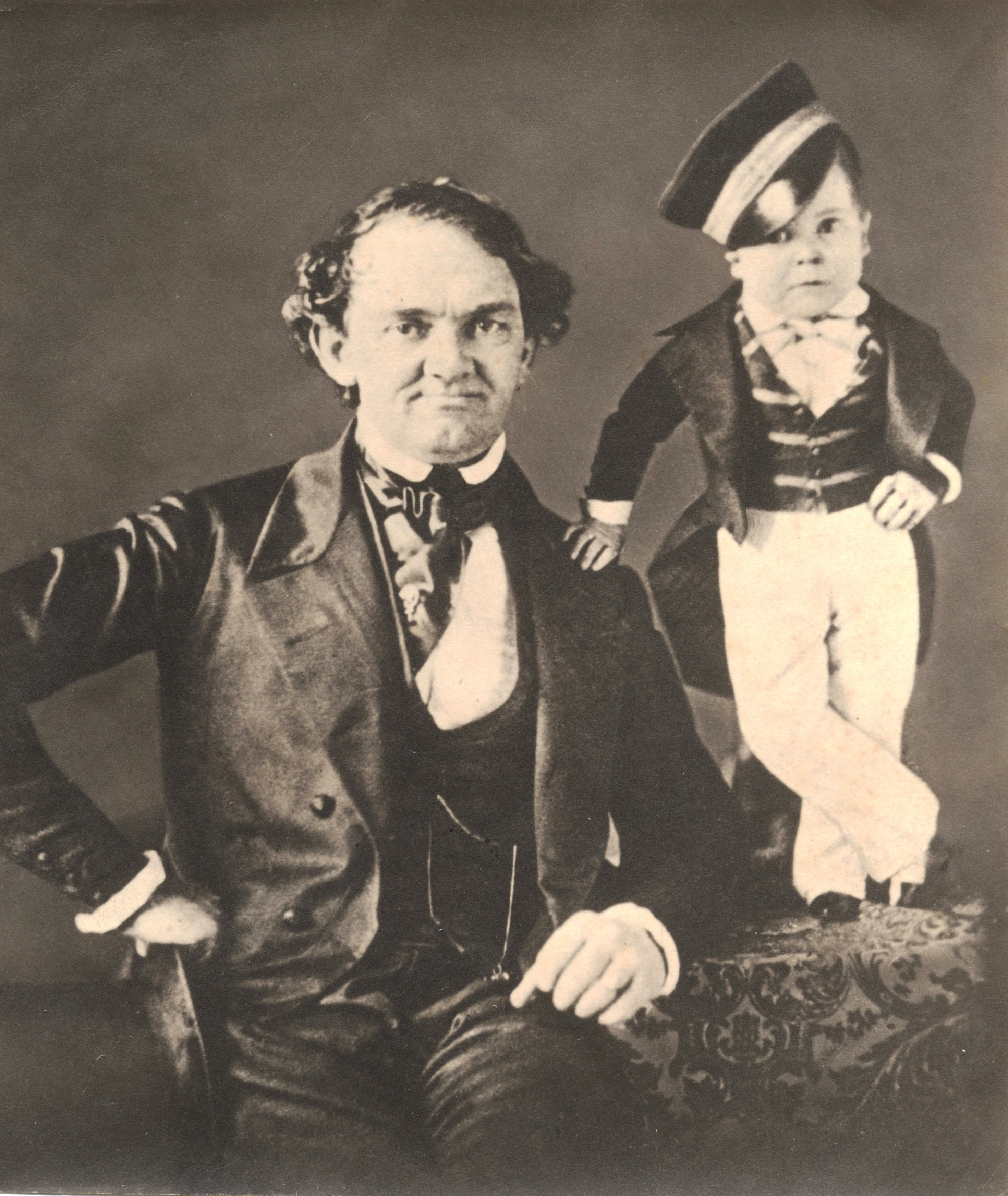
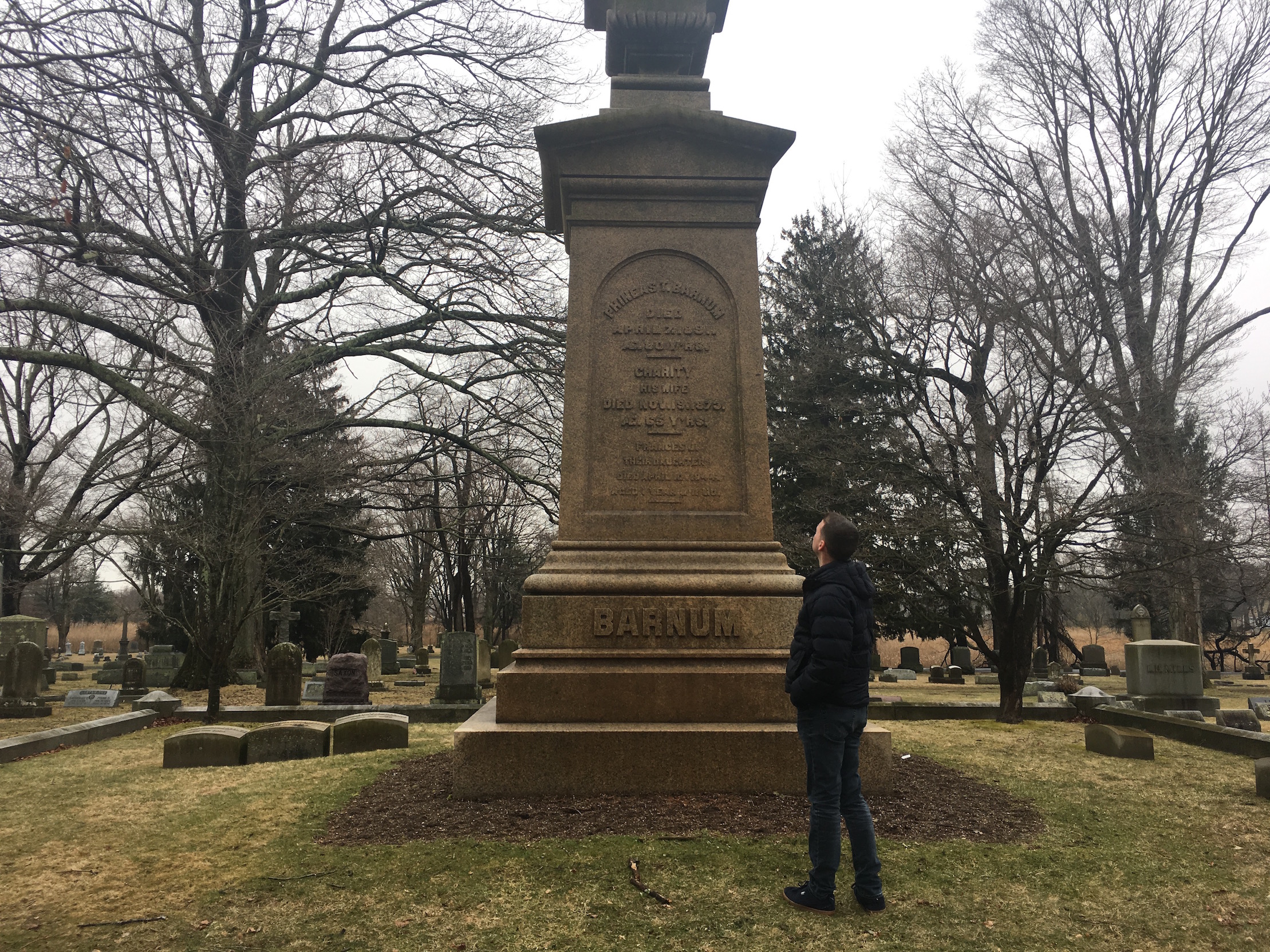
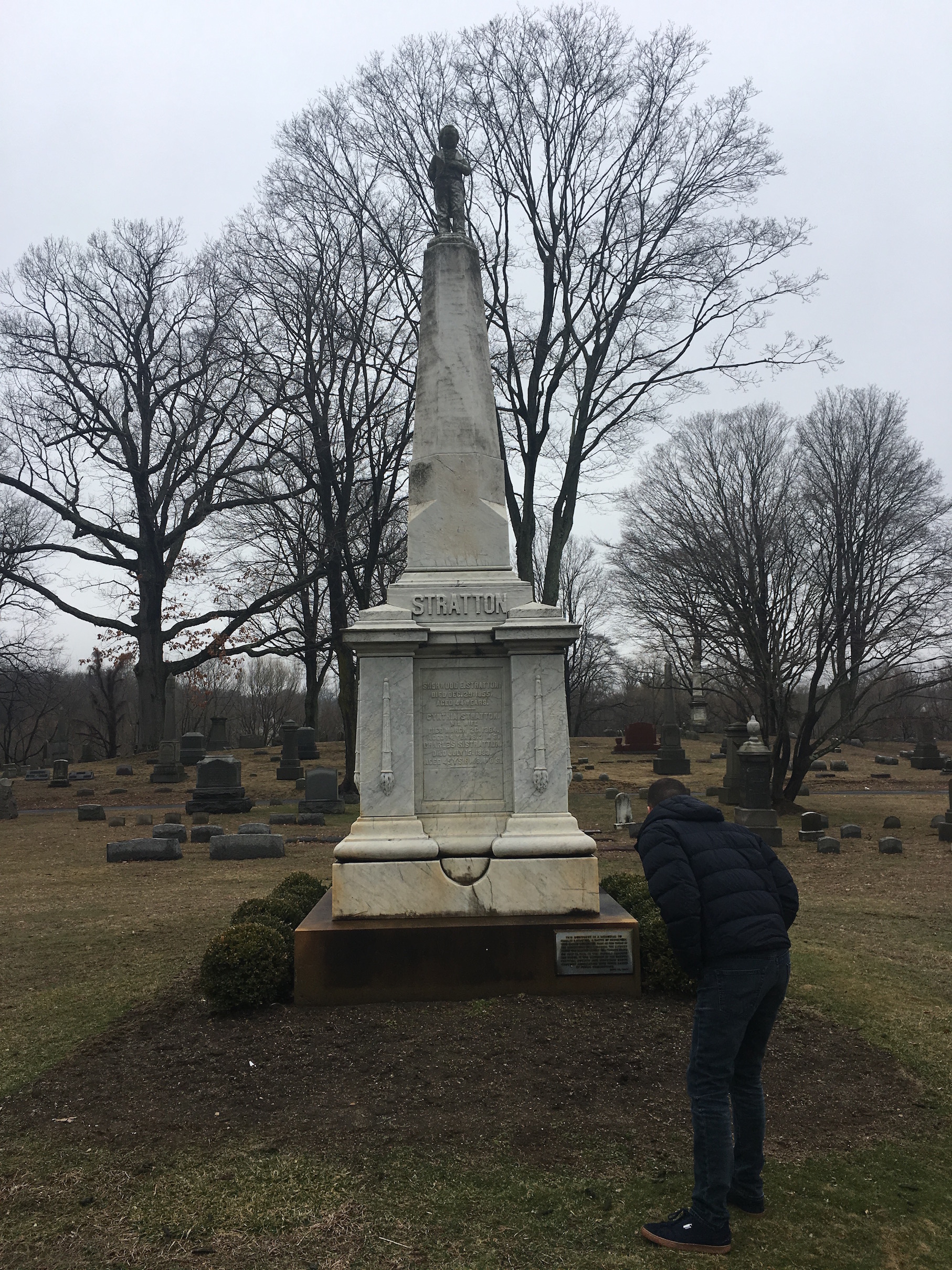
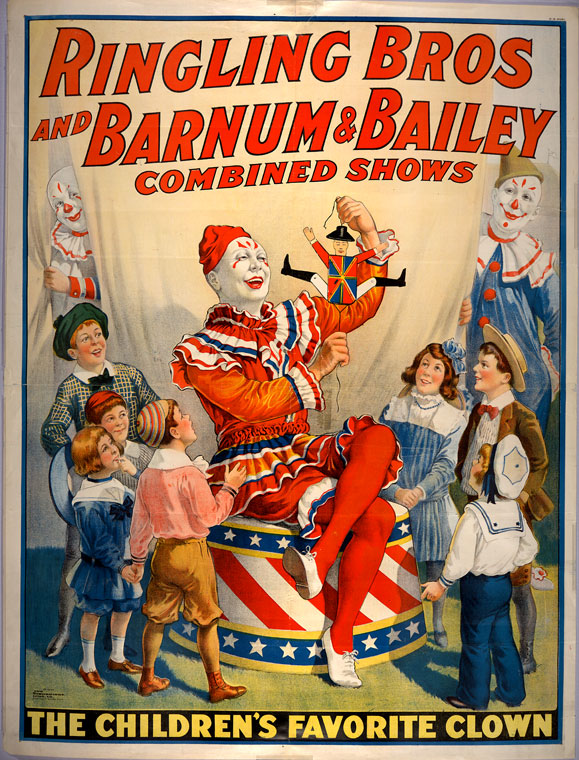
PODCAST The story of Phineas Taylor “P. T.” Barnum and his world-famous circus extravaganza.
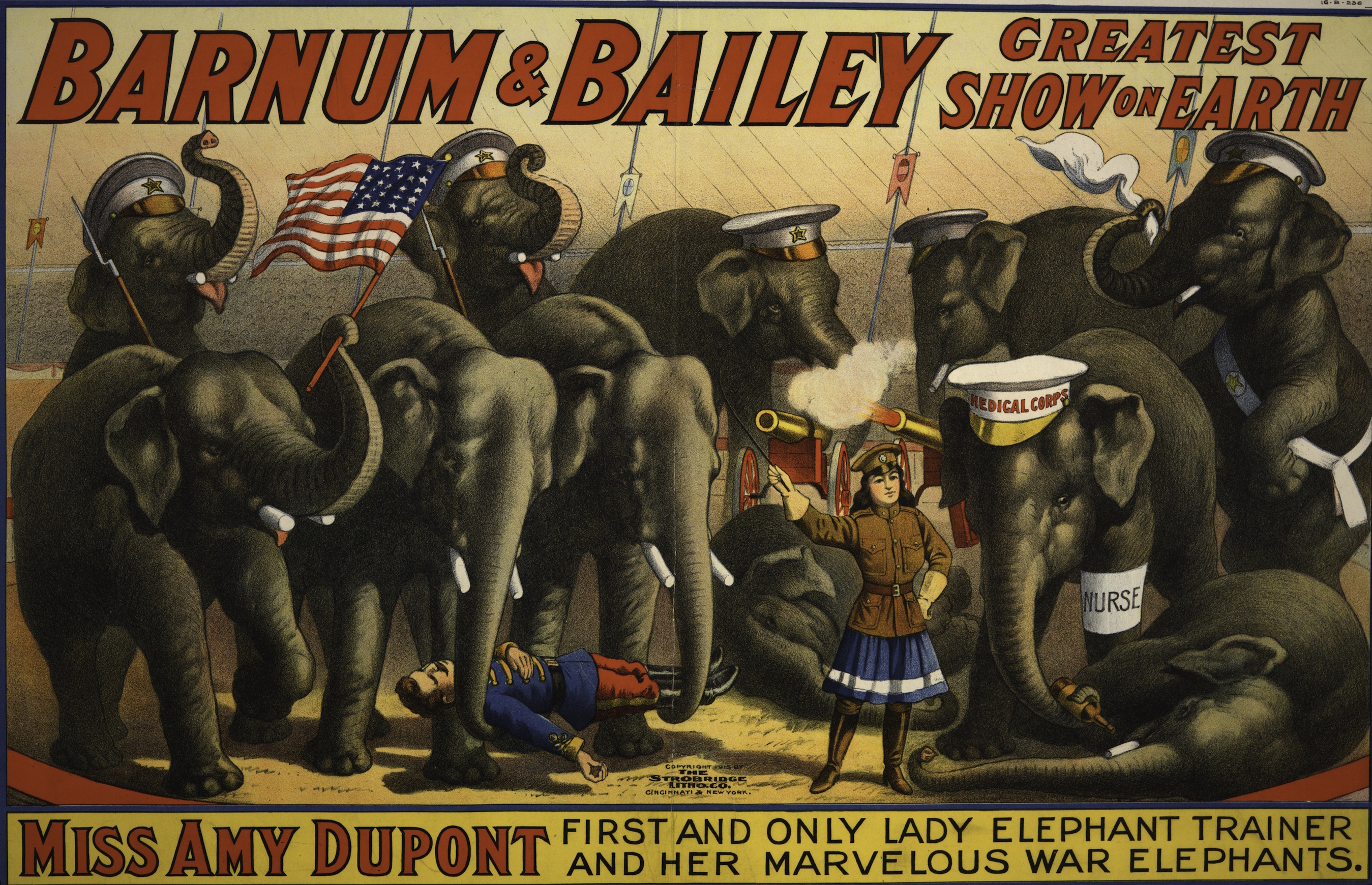
Ladies and gentlemen, boys and girls of all ages — the Bowery Boys present to you the tale of P. T. Barnum and his “Greatest Show on Earth,” the world’s most famous circus!
[geo_mashup_map]
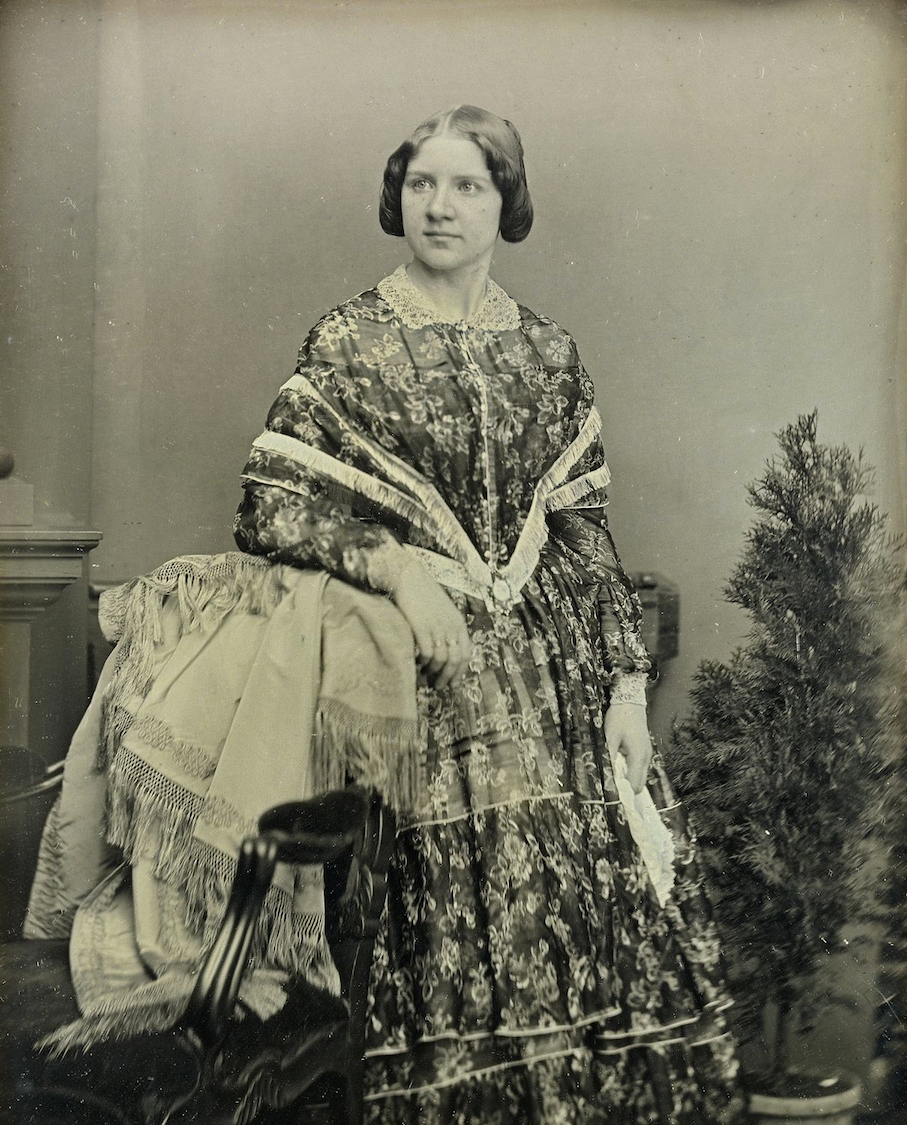
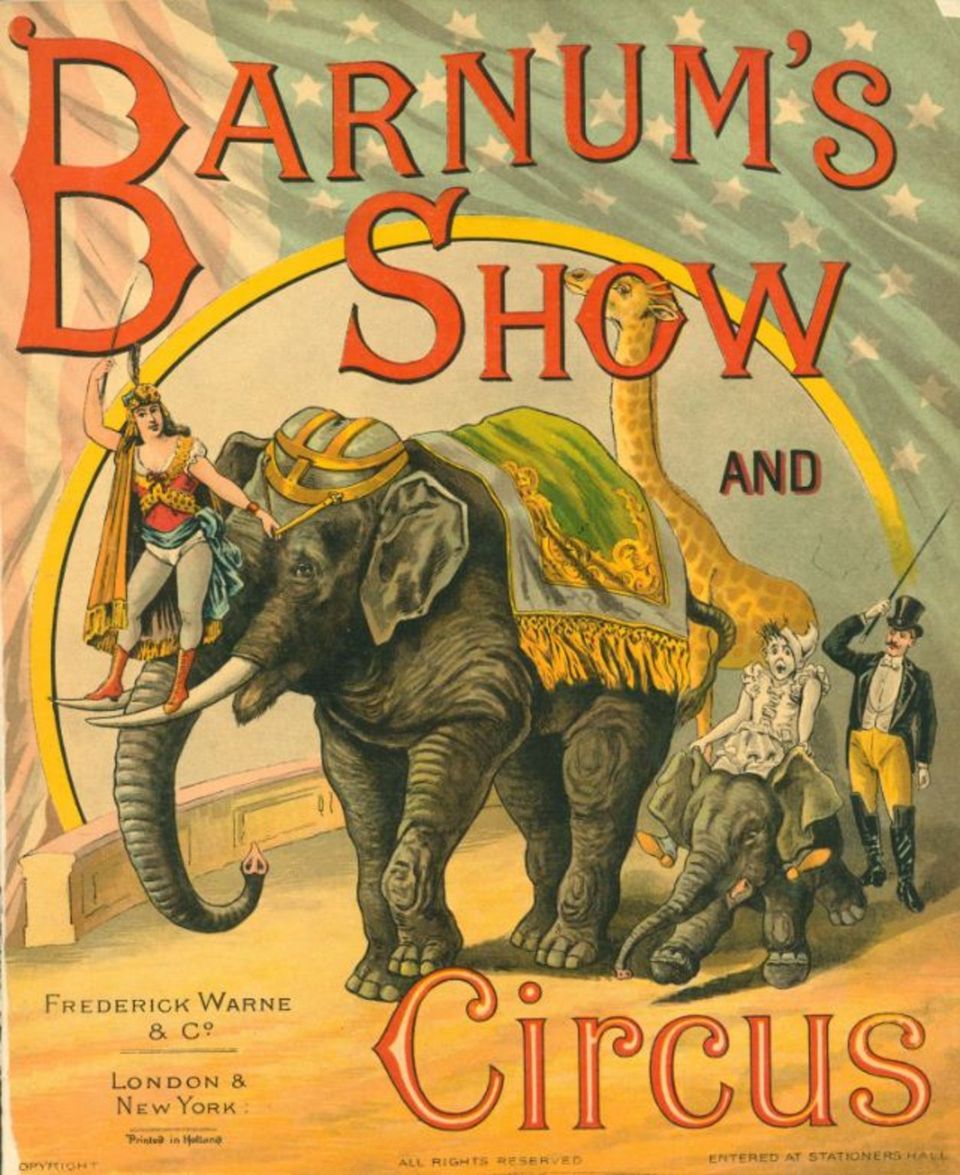
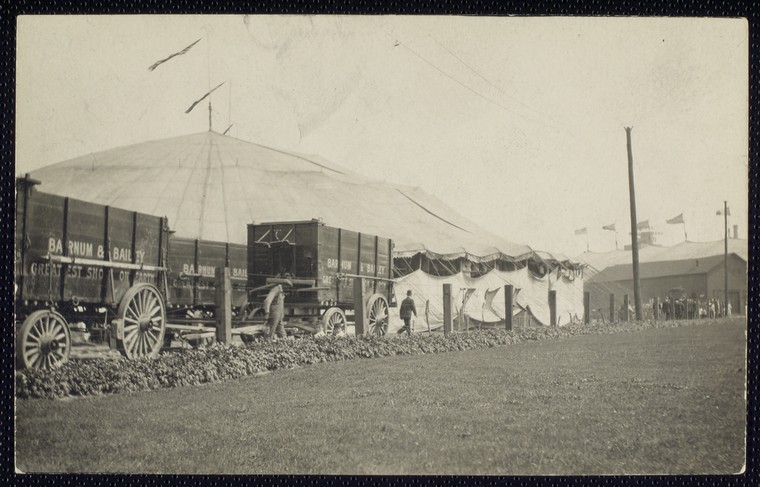
You can’t even bring up the discussion of circuses without mentioning the name of Barnum. But in fact, he only entered the circus business in his later years, after decades of success with bizarre museums, traveling curiosities, touring opera divas and all manner of fabricated ‘humbugs’.
In the late 19th century, in order for circuses to survive, innovators like Barnum needed to come up with startling new ways to get the attentions of audiences.
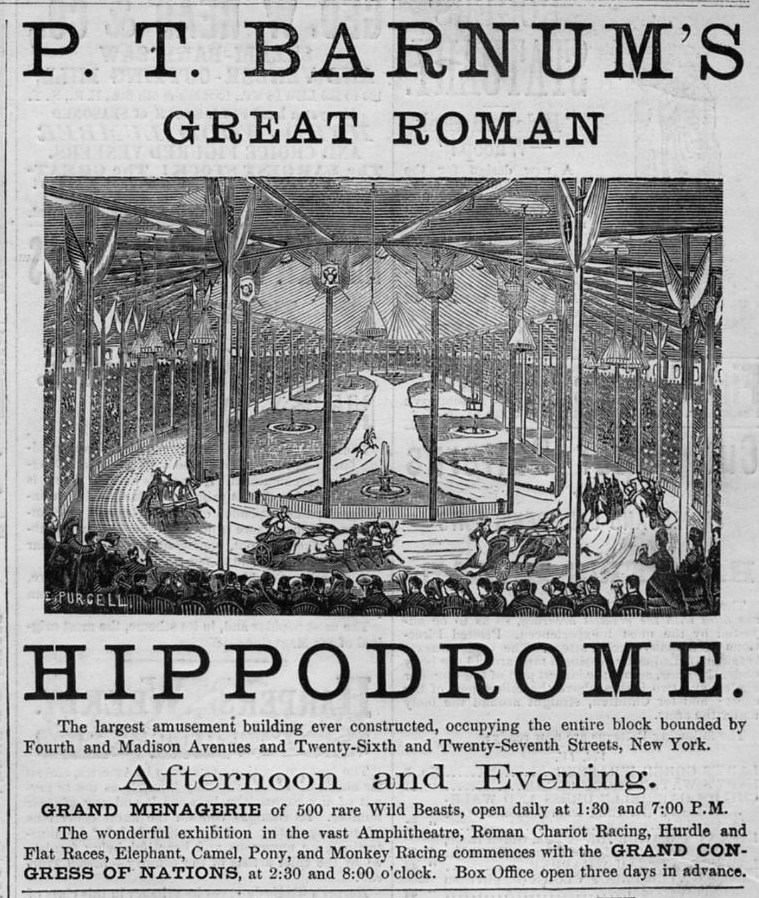
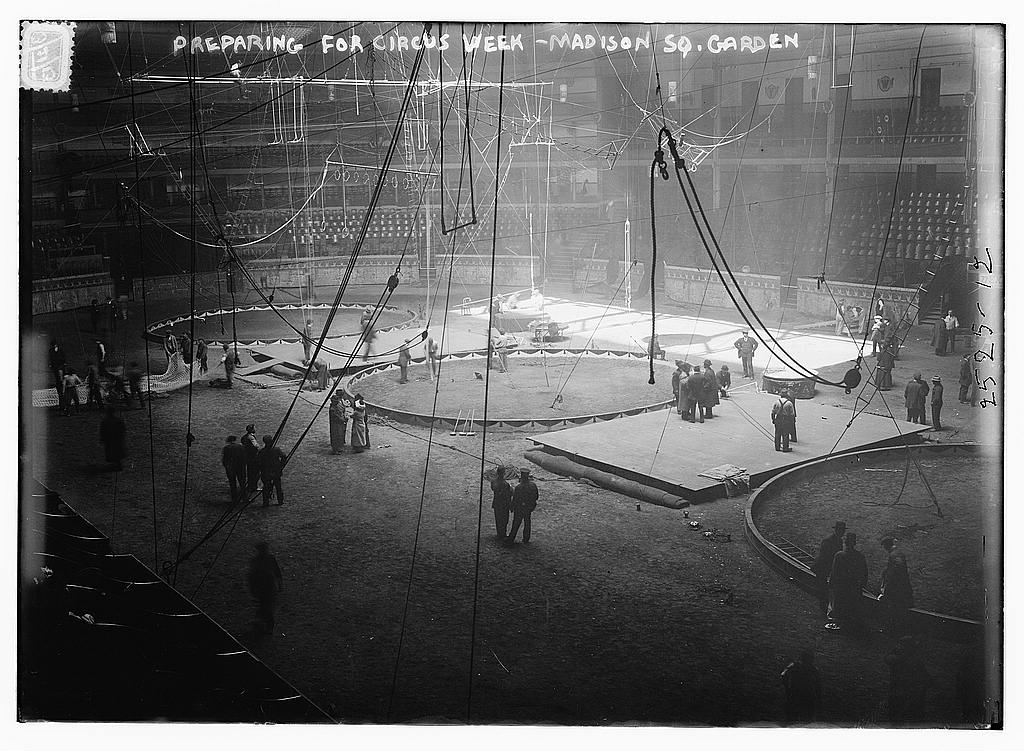
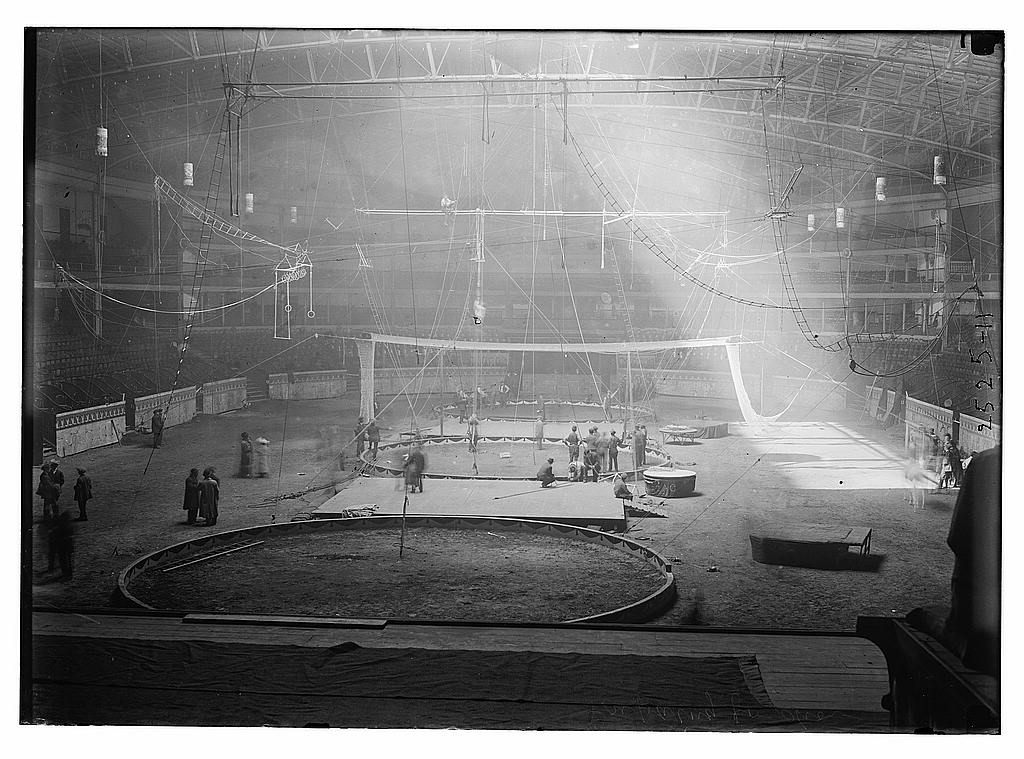
Although his circus — which would eventually merge with that of James Bailey and, later, the Ringling Brothers — was a sensation which toured across the United States, it always began each season in New York, specifically situated on the northeast corner of Madison Square.
Tune in to find out how New York institutions owned by Barnum became imprinted on the basic structure of the classic American circus.
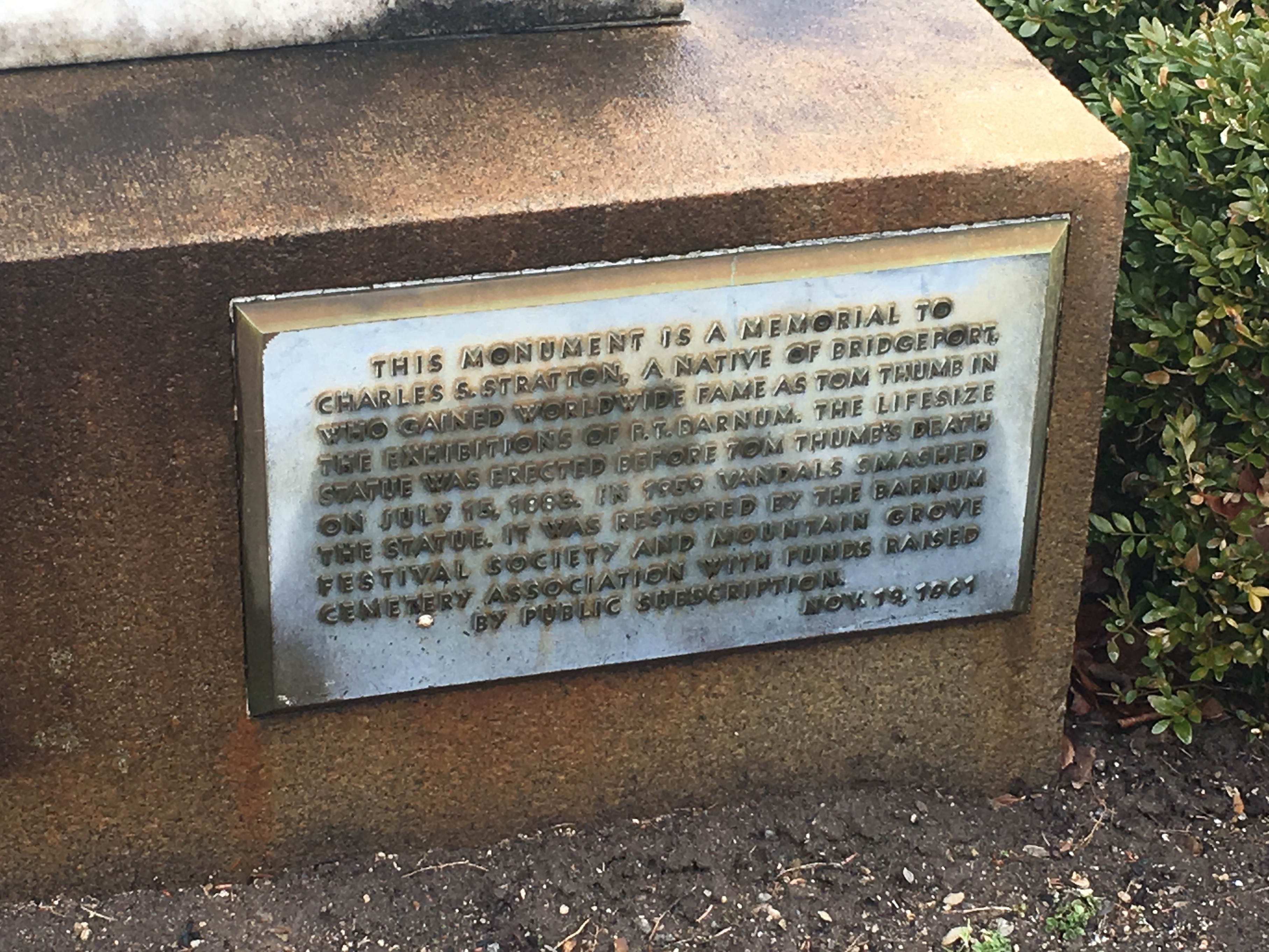
And join us as we visit the Barnum Museum in Bridgeport, CT, to gather some insight on Barnum’s unique genius.
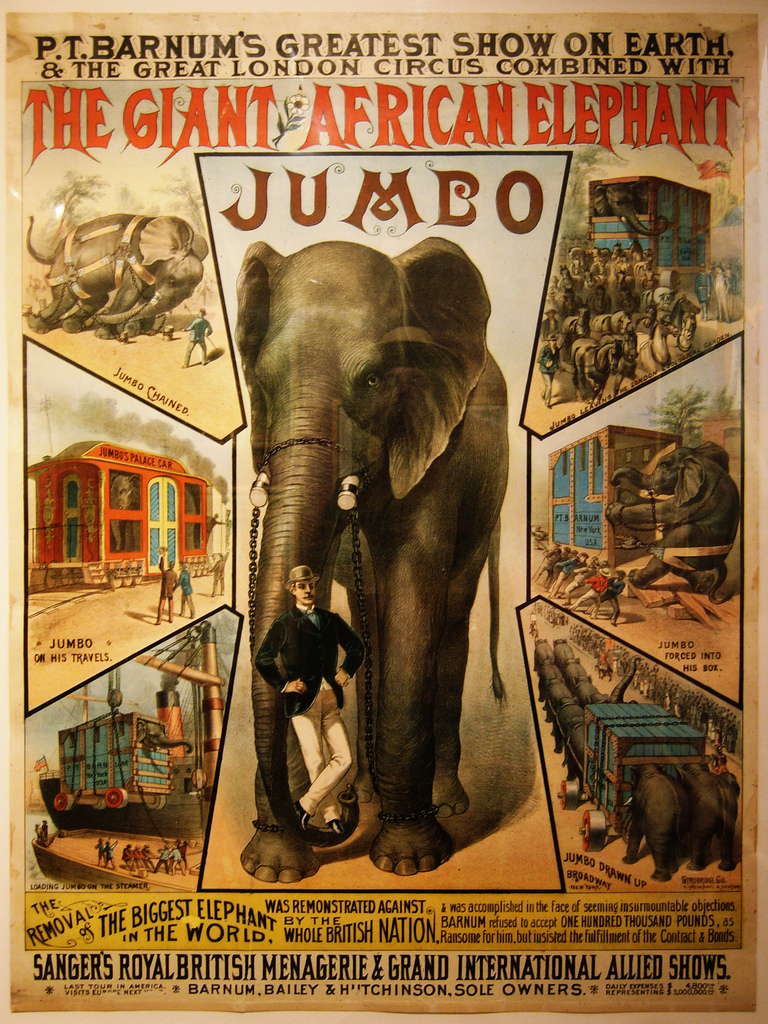
CO-STARRING: Jumbo the Elephant, the Cardiff Man, Annie Oakley and Buffalo Bill, the Cardiff Giant and Tom Thumb!
The Bowery Boys: New York City History podcast is brought to you …. by you!
We are now producing a new Bowery Boys podcast every week. We’re also looking to improve and expand the show in other ways — publishing, social media, live events and other forms of media. But we can only do this with your help!
We are now a creator on Patreon, a patronage platform where you can support your favorite content creators.
Please visit our page on Patreon and watch a short video of us recording the show and talking about our expansion plans.
If you’d like to help out, there are six different pledge levels.Check them out and consider being a sponsor.
We greatly appreciate our listeners and readers and thank you for joining us on this journey so far.
THE FIRST: STORIES OF INVENTIONS AND THEIR CONSEQUENCESThe Serbian inventor Nikola Tesla is known as one of the fathers of electricity, the curious genius behind alternating current (AC), the victor in the so-called War of the Currents. But in this episode of The First, starting in the year 1893, Tesla begins conceiving an even grander scheme — the usage of electromagnetic waves to distribute power.
Today we benefit from the electromagnetic spectrum in a variety of ways — Wi-Fi, X-rays, radio, satellites. One of the roads to these inventions begins with Tesla and his experiments with remote control, using radio waves to operate a mechanical object.
But you may be surprised to discover Tesla’s initial application of remote control. Far from inventing an children’s toy, Tesla’s remote controlled device would be used as a weapon of war.
Below — A sampling of newspaper headlines involving Nikola Tesla, specifically from the mid and late 1890s (when he first began thinking and experimenting with wireless) and one from 1901.
HE LIVES ON ELECTRICITY
Nikola Tesla Acts Like a Broken-Hearted Man, and Hasn’t a Definite Opinion Upon Anything
Electricity is Nikola Tesla’s life. Without it he is as miserable as Paul Verlaine and his absinthe stomach would be in a Maine temperance town.
“We have recently been informed by the public press in flamboyant rhetoric that Nikola Tesla has devised a boat which is destined to revolutionize the art of warfare.”
Cast-iron construction, pioneered in America by architect James Bogardus in the 1850s, became the preferred method of building large dry goods shops and department stores in the mid- and late nineteenth century, thanks to the speed with which these enormous buildings could go up and the savings they presented over heavier, more cumbersome construction methods.
Today SoHo contains the largest surviving collection of cast-iron buildings in the world. Wandering through these streets in the late afternoon, sun ignites their white- and cream-colored exteriors. It’s magical—and the stuff of a million postcards, album covers, and selfies.
But SoHo contains another secret. It’s the location of New York City’s very first commercial elevator.
There had been so-called ‘hoisting elevators’ — crude platforms elevated by man power — but they were dangerous and their cords easily snapped. Elisha Otis, an inventor from Yonkers, New York, perfected the safety break which allowed a large containment to be moved up and down without fear of plummeting. He debuted this device to enthusiastic acclaim at the 1854 Crystal Palace Exposition. And soon, after some savvy newspaper advertisements, Otis finally found his first major client.
Library of Congress
That would be the magical emporium of E. V. Haughwout, at Broadway and Broome Street, a luxury store which sold fine china and glassware. The corner building’s two-sided cast-iron construction and facade was the first of its kind when it was completed in 1857, and soon inspired blocks lined with similar construction throughout SoHo.
Below: The department store — and the elevator — were first opened ‘for public inspection’ on March 23, 1857.
New York Times
But its most important contribution was placed inside—a passenger elevator, installed the same year, which lifted and lowered its wealthy clients to its various exotic departments.
According to the website of OTIS elevators themselves: “On March 23, 1857, Otis’ first commercial passenger elevator was installed in the E.V. Haughwout and Company…….The price of the elevator was US $300. The unit rose at a speed of 40 feet per minute (0.2 meters per second).”
From the New York Tribune: “Among the novelties we noticed is an elevator to be worked by steam, which is to be furnished with a sofa and carriage to carry ladies from one floor to the other. The steam engine and boiler are located on the rear lot disconnected from the main edifice.”
Haughwout’s Emporium was also famed for its French champagne and for the fine flutes that it was drunk from. Surprised? While the neighborhood today still pops more than its share of bubbly, SoHo was never more glamorous than during the Haughwout years. And part of the reason for its acclaim was its marvelous, state-of-the-art elevator.
More pictures of the Haughwout Building, courtesy the Library of Congress, via the Historic American Buildings Survey, Cervin Robinson, Photographer March 1967.
One hot summer’s morning, in the neighborhood of Yorkville on the Upper East Side, high school student James Powell was shot and killed by police officer James Gilligan.
Powell either attempted to stab the officer or else the unarmed boy was brutally set upon by a man with violent tendencies. Gilligan, a war veteran, was either defending himself from a troubled delinquent or else he gunned down the teenager with little remorse.
There were few actual witnesses but dozens of bystanders. The incident took place across the street from a high school, and the students, incensed by rumors and the fear of blood running in the streets, began panicking.
The year was 1964.
It’s hard not to read the opening pages to Michael W. Flamm’s gripping In The Heat Of The Summer: The New York Riots of 1964 and the War on Crime (University of Pennsylvania Press) and not see the parallels to modern police brutality cases.  So many different testimonies obscure the truth that it’s hard to know what really did happen in front of 215 East 76th Street that day. (Video footage might not have even cleared it up.)
Yet Flamm’s book isn’t specifically about the crime, but the chaos which ensued — the New York Riots of 1964 (with the most violent night often referred to as the Harlem Riot of 1964). For several evenings following the shooting, a host of speculations and false rumors — mixing with grief and despair on a series of hot summer evenings — led to roaming violence and looting in Harlem (with some also reported in the Brooklyn neighborhood of Bedford-Stuyvesant).
The incidents which occurred that summer stem from hostilities which had built up within the black community for decades. A great distrust between the police and African-Americans played a part in the rising crime rate in poor neighborhoods like Harlem in the 1960s.
Courtesy the New York Daily News
Fearful residents felt powerless against increasing criminal behavior and drug abuse in their streets but didn’t risk involving law enforcement, who most considered corrupt and racist.
White residents avoided black neighborhoods — and vice versa — due to wildly dramatic reports in the press. Black power movements like the Nation of Islam escalated talk of violence while, in some neighborhoods, white vigilantes stopped and interrogated every black person found in the streets.
Writes Flamm: “New York sounded to the rest of the country like some frontier town helpless before the uncontrollable violence stalking its streets.”
Dick DeMarsico, New York World Telegraph & Sun
Flamm follows two parallel threads, both coming together in raw, unexpected ways. The first is a terrifying minute-by-minute account of the late-night street riots, the chaotic protests and the rallies organized by those who wished to funnel that rage into a mechanism of change. The second is the reactions of politicians and civil rights leaders to New York’s race and law enforcement problems.
The author’s meticulous research finds microcosms of hate and fear at nearly ever corner — of the kind which will make nobody particularly nostalgic for the period. “Central Harlem seemed like a war zone, with screams from people and cracks from bullets as they ricocheted off brick walls and cement sidewalks.”
New York World-Telegram and the Sun staff photographer: Wolfson, Stanley, photographer.
At the center of the story is civil rights leader Bayard Rustin (pictured above) and the Congress for Racial Equality (CORE), often caught between keeping and promoting the peace and quelling the concerns of angry residents.
At one point, Rustin was literally disarming people. “The toll might have gone much higher if not for Rustin, who personally disposed of three cases of dynamite — enough to destroy a city block — after two young black men agreed to give it to him instead of using it.”
Few history books I’ve read in the past twelve months have felt as immediate as In the Heat of the Summer, with anecdotes that seem to speak pointedly to the events of today’s headlines.
For example, some police authorities applauded television coverage of the riots. Said one commissioner: “It’s the best answer we have to the cries of police brutality. The camera, after all, cannot distort or lie; the worst that can happen is that the film is edited. But what you see on the home screen is the actual occurrence.”
PODCAST Before the American circus existed, animal menageries travelled the land, sometimes populated with exotic creatures. This is the story of the perhaps the most extraordinary wandering menagerie of all.
This year marks the end to the Ringling Bros. Barnum & Bailey Circus and, with it, the end of the traditional American circus. Once at the core of the American circus was the performing elephant. Today we understand that such captivity is no place for an endangered beast but, for much of this country’s history, circus elephants were one of the centerpieces of live entertainment.
This is the tale of the first two elephants to ever arrive in the United States. The first came by ship in 1796, an Indian elephant whose unusual appearance in the cattle pens at a popular local tavern would inspire one farmer to seek another one out for himself.
Her name was Old Bet, a young African elephant at the heart of all American circus mythology. She appeared in traveling menageries, equestrian circuses and even theatrical productions, long before humans really understood the nature of these sophisticated animals.
Find out how her strange, eventful and tragic life helped inspire the invention of American spectacle and how her memory lives on today in one town in Upstate New York.
The circus comes to town: The banner on the elephant says Old Bet was “the first elephant to tread American soil.” In fact she was most likely the second.
The Bull’s Head Tavern on the Bowery. Recently a building excavation discovered the foundations of the Bull’s Head. Read all about it here.
Some images from the Somers Historical Society and their marvelous museum to the early American circus.
Chains which purportedly bound Old Bet.
Old Bet’s collar, which she wore from town to town.
Without perhaps intending it, social services pioneer Lillian Wald, in her desire to help thousands of poor immigrant women and children in the Lower East Side, also saved a rare and forgotten part of New York City history.
The modern Henry Street Settlement is spread throughout several buildings in the neighborhood, providing health care, shelter, job training and a host of services to the community. Â But it started out in just three adjacent Federalist-style townhouses on Henry Street, recruited into duty by Wald and her benefactor Jacob Schiff to stem the tide of disease and harm that threatened families in the world’s most densely populated neighborhood in the late 19th century.
Children gallivant and pose for pictures outside 265 Henry Street, date unknown (Courtesy Henry Street Settlement)
A Different Lower East Side As New York grew northward in the 19th century, wealthy landowners carved up their land with hopes of profit and a desire to foster New York’s next great elegant neighborhood. Revolutionary War colonel Henry Rutgers, who lends his first name to the street where the Settlement makes its home, sold off his property near Corlear’s Hook to businessmen with financial concerns along the Manhattan waterfront.
Below: An illustration from Forgotten NY, outlining the dividing line (literally, Division Street) between surrounding properties and Rutger’s own (in yellow). The buildings discussed are at Henry and Montgomery.
Many of the great shipbuilders lived in today’s Lower East Side (in the 1810s, it might have been called the Upper East Side) in fabulous residences within walking distance of the shore. Even by the 1850s, when the character of the neighborhood began to change, the mayor of New York Jacob Westervelt still resided at 308 East Broadwayclose to his shipyards. His neighbor at 281 East Broadway was city surveyor Isaac Ludlam.
Typical of the buildings that defined the neighborhood were 263 and 265 Henry Street, Federalist townhouses built in 1827. Its neighbor 267 Henry Street is a touch more ornate, with a different shade of brick in a Georgian Eclectic style.
Picturing these streets today lined with such buildings is requires a vivid imagination.
That’s because of the sudden mass of immigrants who arrived in New York by the 1850s, moving into poorer neighborhoods along the waterfront and in places like Five Points. Most of the homes along once-elegant Henry Street were torn down and replaced with tenements. Later, many of those tenements were themselves replaced with blocks of apartment complexes in the early 20th century.
These three Henry Street buildings have survived (as well as a few others, including Ludlam’s old home) because they were repurposed by a woman of uncommon compassion, one of New York’s most important figures in health and social services.
Settling Down
Lillian Wald first came to the city in 1891 as a student of New York Hospital’s nursing program. An intelligent and ambitious woman from Rochester, Wald quickly found purpose in one of the few respectable professions in the late 19th century where women could rapidly excel.
She’s marveled at today as a person of extraordinary compassion. But in many ways Lillian was a modern entrepreneur, able to latch onto the progressive instincts of the day to solve the immediate social ills facing New York with great imagination and a bold lack of prejudice.
When Wald founded the Nurses Settlement in 1893, she was building upon the practices of altruistic Christian programs (like the Methodist missions into Five Points) that brought social services into the very heart of slum-filled, overcrowded neighborhoods. However Wald was Jewish, and her perspectives involving health care were profoundly nonreligious and ‘universalist’ for the day.
Below: Nurses heading out to the tenements
In that year she also met wealthy banker Jacob Schiff (who himself had immigrated to New York in 1865) who purchased the three Henry Street buildings for Wald to properly set up her nursing agency. From that moment, it became the Henry Street Settlement, housing a squad of nurses sent out into the neighborhood to tackle an ungainly number of health issues.
In an era where poor patients were often turned away from standard hospitals, Wald and her team of extraordinary women provided care for free, often risking their own lives to enter squalid tenements and exposing themselves to many illness that today have been completely eradicated. (One of her nurses, Margaret Sanger, would later become America’s leading birth control advocate.)
A nurse scales a rooftopto access a patient’s home. Judging from the gas tanks in the distance, she’s in the area of today’s upper East Village.
The Settlement had no problem making the former Henry Street residences into working clinics. The rooms still felt like a home in its decor, a respite for many visiting patients. The nurses lived upstairs in rows of small bedrooms, most of which today have been turned into cozy offices.
The most lively (and historically important) room at the Settlement was the dining room, with large mahogany tables where Wald entertained a wide variety of guests, from poor patients to the great thinkers and Progressive voices of the day.
Below: A knitting class in the famous Henry Street dining room, May 1910. The fireplace at left is still very much intact. [LOC]
Beyond Borders The Henry Street Settlement soon expanded its mission statement to generally improve the quality of life in the Lower East Side. Concerned that neighborhood children had no place to play, Wald set aside her courtyard to become one of New York’s first playgrounds in 1902.
Below: The location of the playground, just behind the Henry Street structures, pictured in an 1895 image by Jacob Riis and a most recent image.
Wald frequently held meetings here for strikers rallying against the women’s garment industry. In 1909, she invited both white and black guests for a dinner, organizing a group that would soon grow to become the National Association for the Advancement of Colored People (the NAACP).
An excerpt from her 1915 book ‘A House On Henry Street‘ illustrates the racial politics of such a seemingly simple dinner party:
“At the time of the first convention of the organization, [the NAACP] formed to further better race relations in this country, the occasion promised to be almost too serious unless some social provision were made.
I suggested a party at the House, but even the organizing committee was fearful. ‘Oh, no!’ they protested. ‘It won’t do! As soon as white and colored people sit down and eat together there begin to be newspaper stories about social equality.’
‘But two hundred members of the conference couldn’t sit down,’ I submitted. ‘Our house is too small. Everybody would have to stand up for supper.’ ‘Then it would be all right,’ they said with relief, and the party was successful.”
Below: One of the two original dining tables. Wald hosted hosted dozens of intellectual luminaries in this room, including Jane Addams, Eleanor Roosevelt, Jacob Riis and Theodore Roosevelt.
Wald would become a leading figure for New York social programs, often enlisted by the city to bring improvement to the city’s other public services. (In 1902, Henry Street’s Lina Rogers become the very first school nurse.)
The Settlement even become an important venue for the arts with the debut of the Neighborhood Playhouse theater in 1915.
The tradition lives on at the Abrons Arts Center, another part of the Settlement that continues to be a critical part of the Lower East Side cultural community. (Below: A flyer for a WPA meeting, between 1936-41, LOC)
Wald died in 1940, but her Henry Street Settlement has only expanded in the years since her passing. Today they have facilities in over a dozen buildings throughout the neighborhood, expanding their focus to include job training, mental health services, adult education, a shelter for victims of domestic violence and even a computer lab.
Those original three buildings, housing mostly administrative offices today, are still a wonderful expression of an early era of New York history. Traces of that history sits next to the practicalities of office life; in one room, an original kitchen hearth and brick oven from the original tenants sit next to a couple photocopiers. Employees sit at laptops in Lillian Wald’s original bedroom with its spectacular sleeping porch overlooking the former playground.
The Henry Street Settlement hopes to use the Partners In Preservation grant money to combat the challenges of keeping their nearly two-centuries old offices in working order, to upgrade and prepare these old rooms for many more decades of providing a little more life to the Lower East Side.
Below: A portrait of Lillian Wald by William Valentine Schevill, hanging in the U.S. Portrait Gallery in Washington D.C.
(Portions of this article originally ran on this site back in 2012)
The 2017 GANYC Apple Awards, recognizing achievements in New York City tourism, culture and preservation, were held last night at the SVA Theater in Chelsea. Â It was quite a bawdy, rambunctious evening thanks to the host, cabaret star Mark Nadler, and a friendly, diverse line-up of presenters.
PODCAST The enduring legacy of the Algonquin Round Table and the brilliant (and sometimes forgotten) people who made it famous.
One June afternoon in the spring of 1919, a group of writers and theatrical folk got together at the Algonquin Hotel to roast the inimitable Alexander Woollcott, the trenchant theater critic for the New York Times who had just returned from World War I, brimming with dramatically overbaked stories.
The affair was so rollicking, so engaging, that somebody suggested — “Why don’t we do this every day?”
And so they did. The Algonquin Round Table is the stuff of legends, a regular lunch date for the cream of New York’s cultural elite. In this show, we present you with some notable members of the guest list — including the wonderful droll Dorothy Parker, the glibly observant Franklin Pierce Adams and the charming Robert Benchley, to name but a few.
But you can’t celebrate the Round Table from a recording studio so we head to the Algonquin to soak in the ambience and interview author Kevin C. Fitzpatrick about the Jazz Age’s most famous networking circle.
Are you ready for a good time? The first thing I do in the morning is brush my teeth and sharpen my tongue. — Dorothy Parker
The Bowery Boys: New York City History podcast is brought to you …. by you!
We are now producing a new Bowery Boys podcast every two weeks. We’re also looking to improve the show in other ways and expand in other ways as well — through publishing, social media, live events and other forms of media. But we can only do this with your help!
We are now a member of Patreon, a patronage platform where you can support your favorite content creators for as little as a $1 a month.
Please visitour page on Patreon and watch a short video of us recording the show and talking about our expansion plans. If you’d like to help out, there are five different pledge levels (and with clever names too — Mannahatta, New Amsterdam, Five Points, Gilded Age, Jazz Age and Empire State). Check them out and consider being a sponsor.
We greatly appreciate our listeners and readers and thank you for joining us on this journey so far. And the best is yet to come!
At top: The gorgeous modern painting by artist Natalie Ascencioswhich hangs over the spot where the original Round Table once sat.
A few members of the Round Table including Art Samuels, Charles MacArthur, Harpo Marx, Dorothy Parker, and Alexander Woollcott
The Algonquin, as seen in the year 1907….
MCNY
…..and 30 years later, in 1937.
A 1906 advertisement in Brooklyn Life extolling the virtues of the Pergola Room (where the first group of Round Tablers first met) at the Algonquin Hotel.
Brooklyn Life, April 7, 1906
An ad featuring hotel manager Frank Case:
April 28, 1906
A couple stories of drama from the Algonquin’s early days:
Democrat and Chronicle, Rochester, NY, Feb 14, 1909 Evening World, August 5, 1911
Stars and Stripes, the military newspaper which fostered the talents of several who would end up sitting around the Round Table.
A few members of the Round Table, as featured on the show….