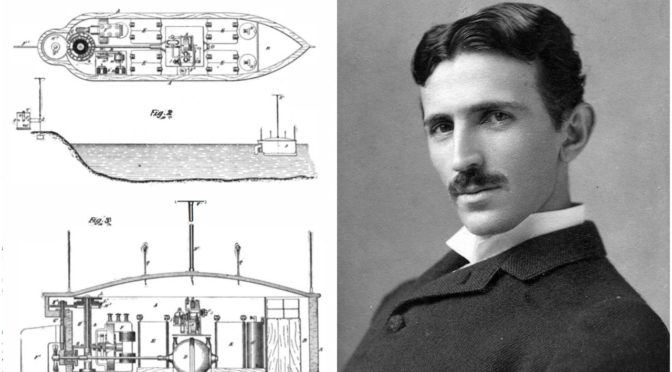
THE FIRST: STORIES OF INVENTIONS AND THEIR CONSEQUENCESThe Serbian inventor Nikola Tesla is known as one of the fathers of electricity, the curious genius behind alternating current (AC), the victor in the so-called War of the Currents. But in this episode of The First, starting in the year 1893, Tesla begins conceiving an even grander scheme — the usage of electromagnetic waves to distribute power.
Today we benefit from the electromagnetic spectrum in a variety of ways — Wi-Fi, X-rays, radio, satellites. One of the roads to these inventions begins with Tesla and his experiments with remote control, using radio waves to operate a mechanical object.
But you may be surprised to discover Tesla’s initial application of remote control. Far from inventing an children’s toy, Tesla’s remote controlled device would be used as a weapon of war.
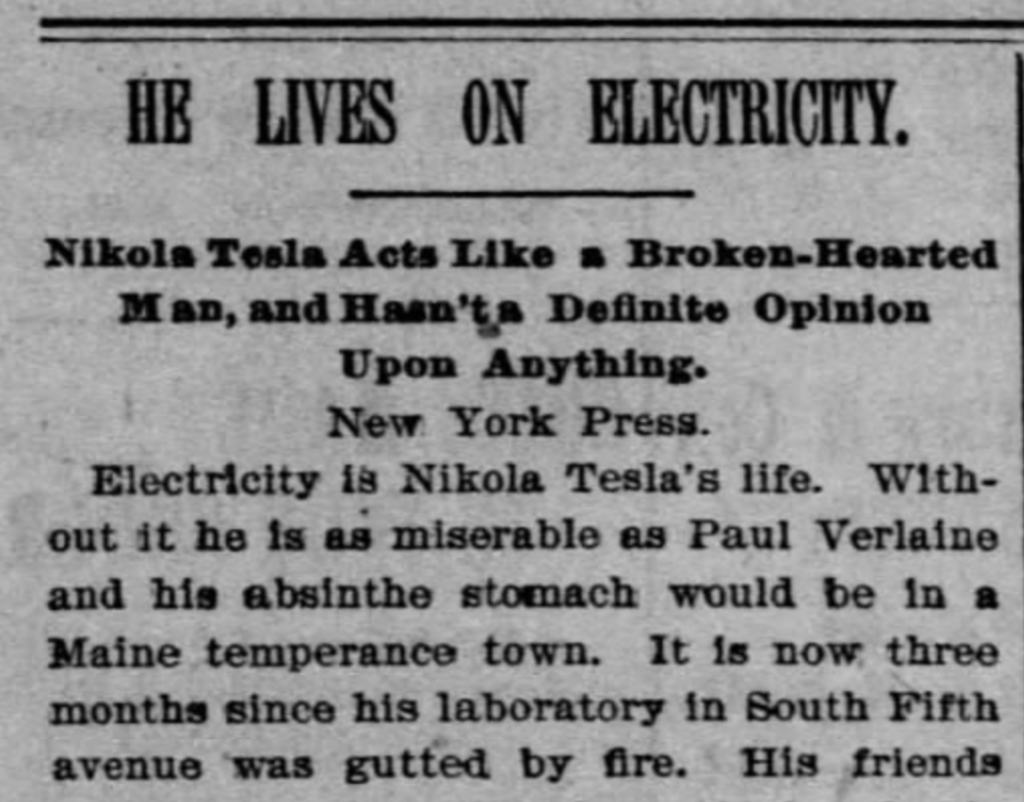
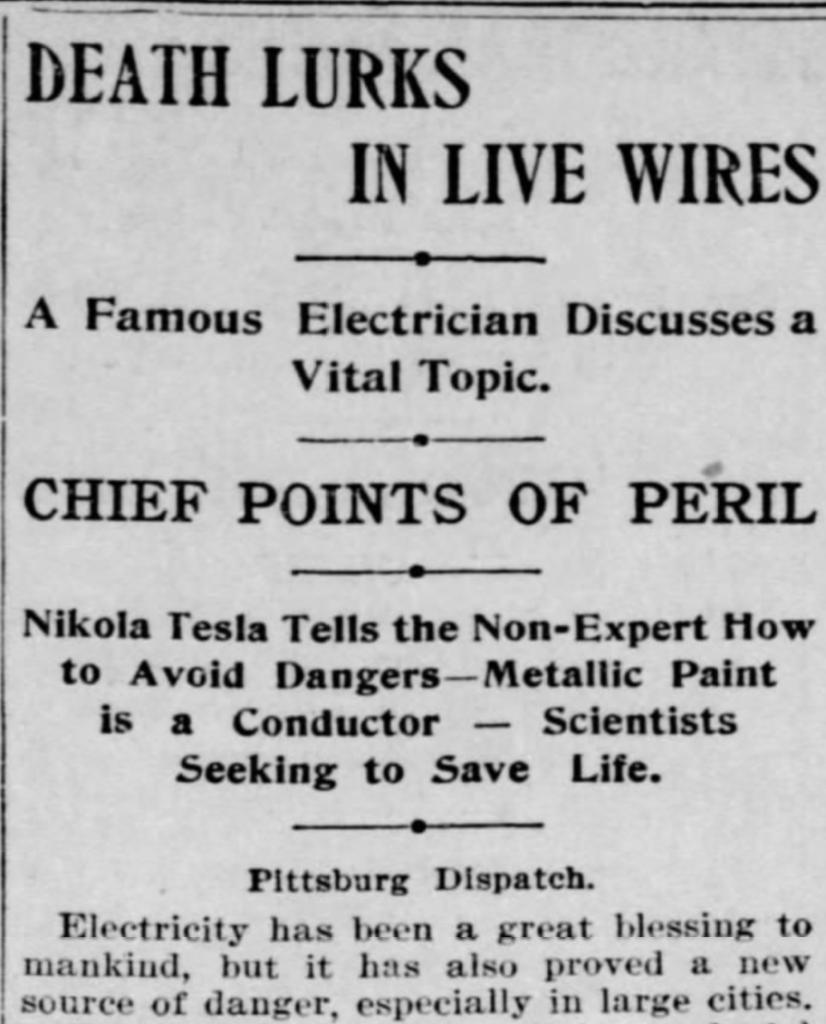
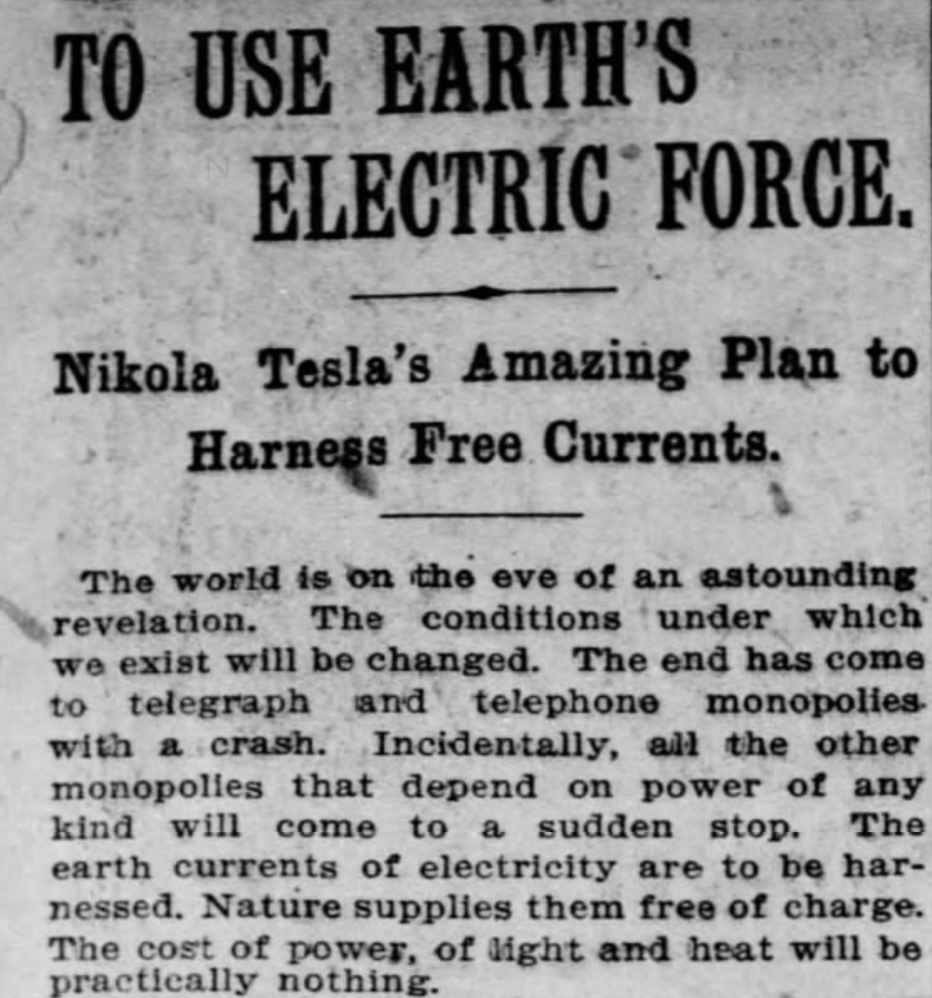
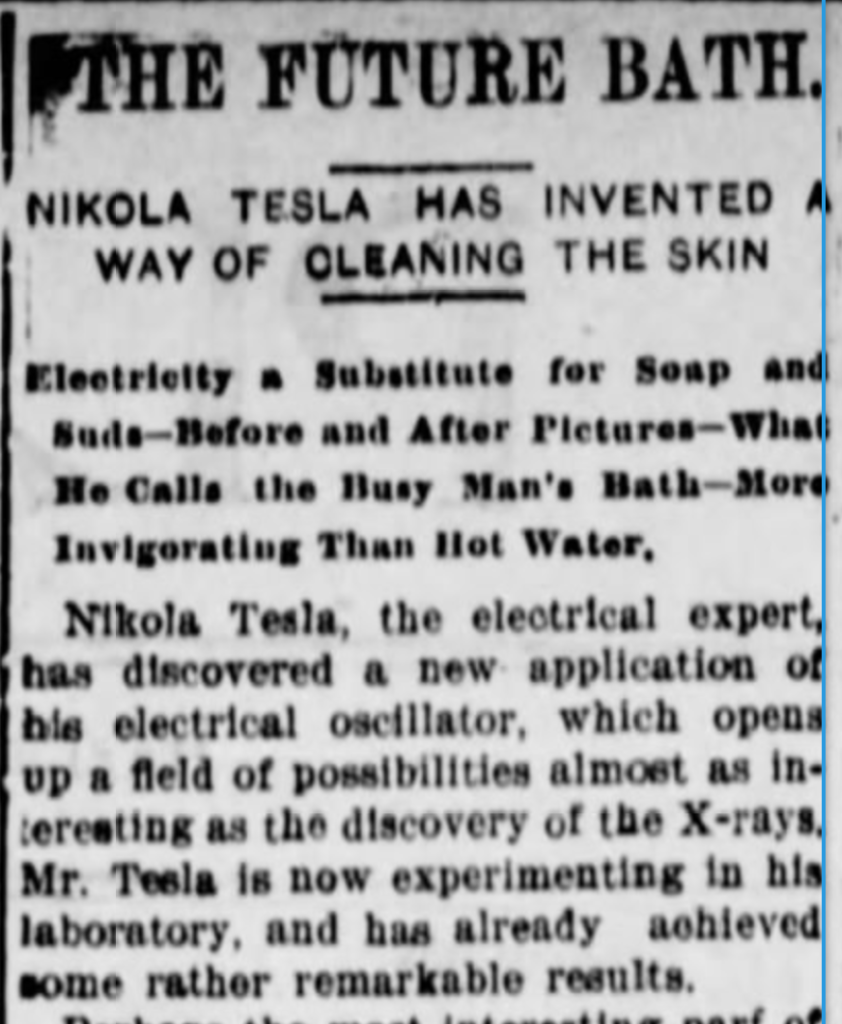
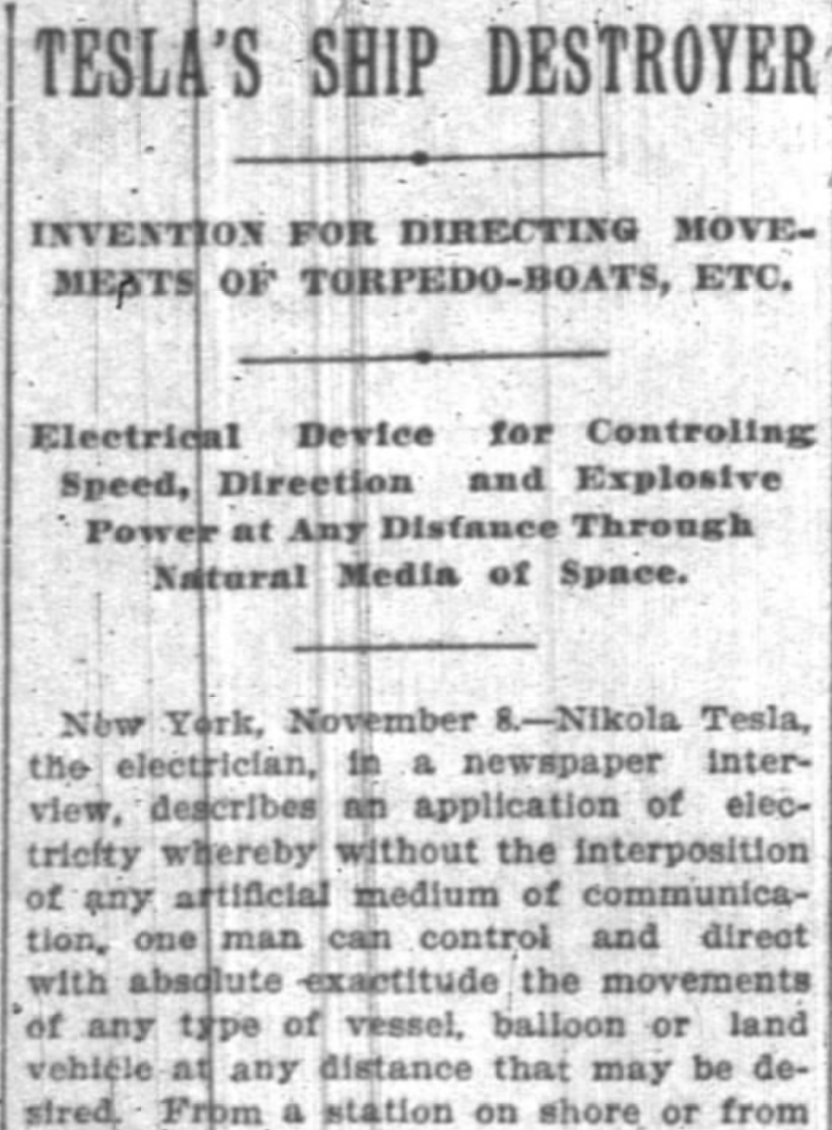
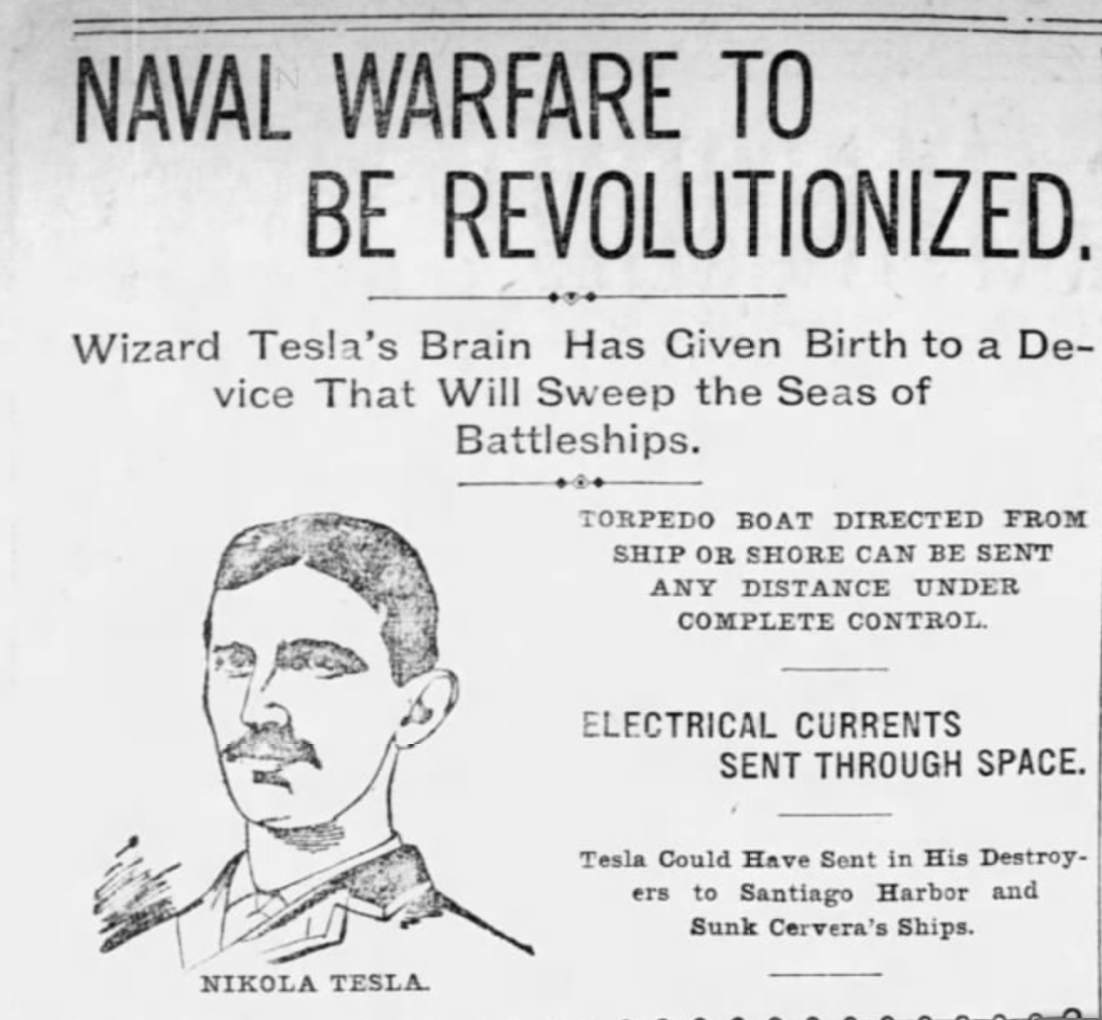
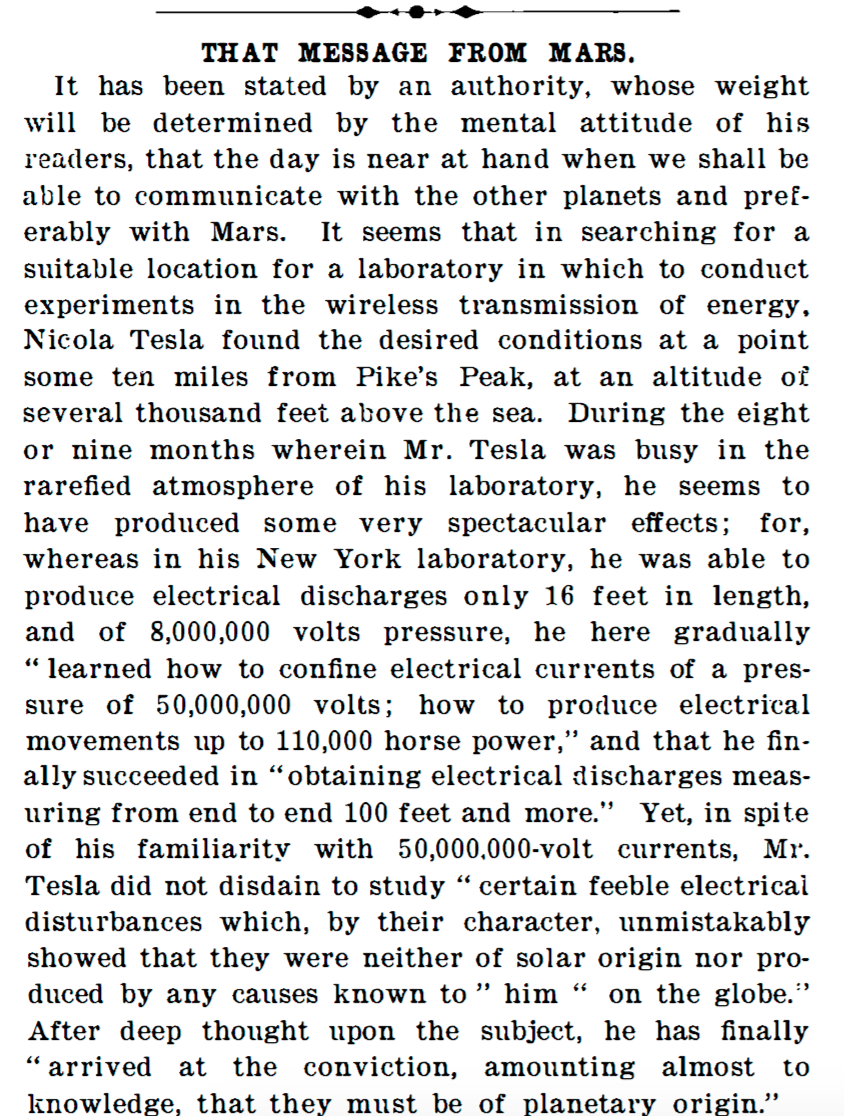
Below — A sampling of newspaper headlines involving Nikola Tesla, specifically from the mid and late 1890s (when he first began thinking and experimenting with wireless) and one from 1901.
HE LIVES ON ELECTRICITY
Nikola Tesla Acts Like a Broken-Hearted Man, and Hasn’t a Definite Opinion Upon Anything
Electricity is Nikola Tesla’s life. Without it he is as miserable as Paul Verlaine and his absinthe stomach would be in a Maine temperance town.
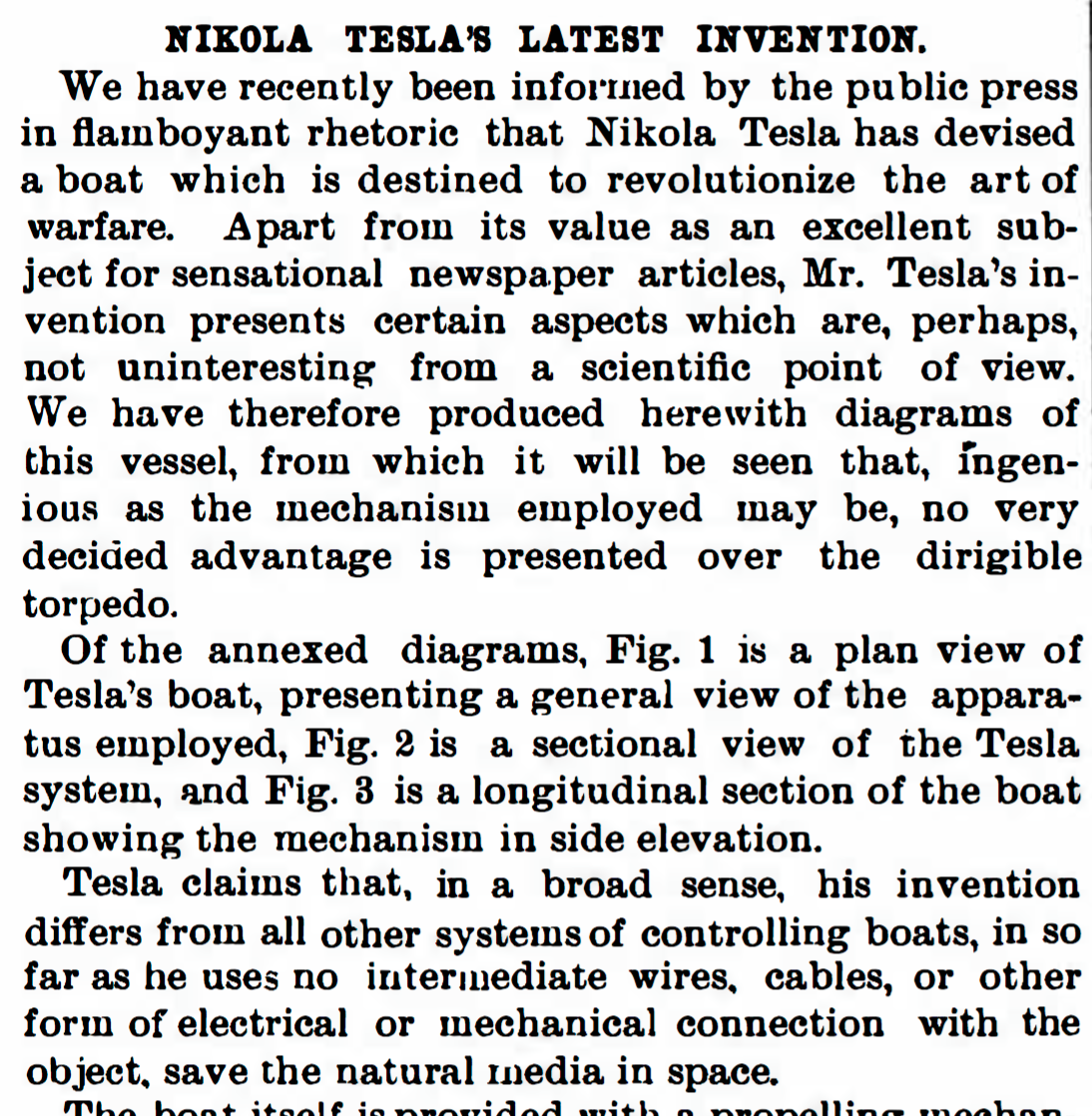
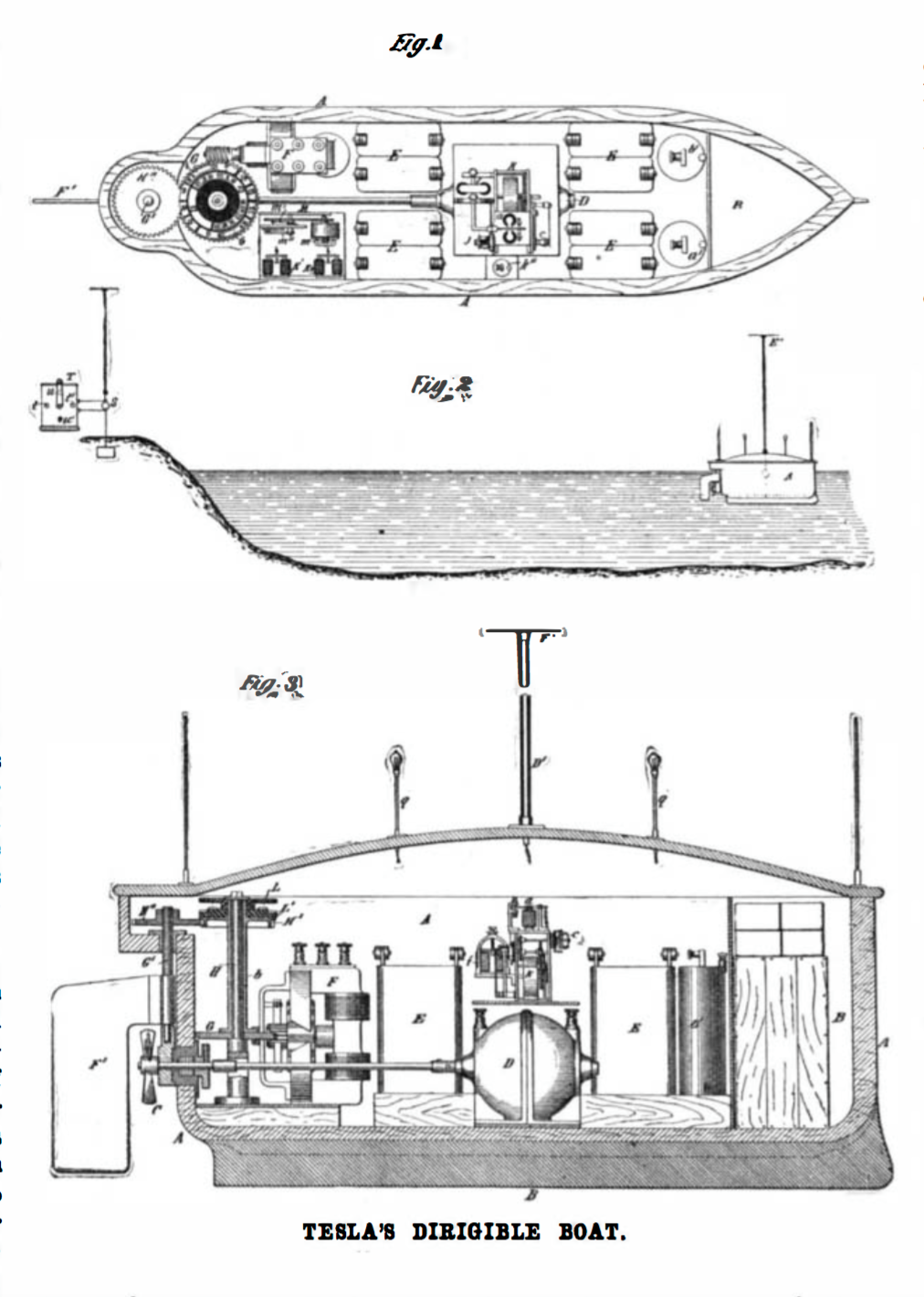
“We have recently been informed by the public press in flamboyant rhetoric that Nikola Tesla has devised a boat which is destined to revolutionize the art of warfare.”
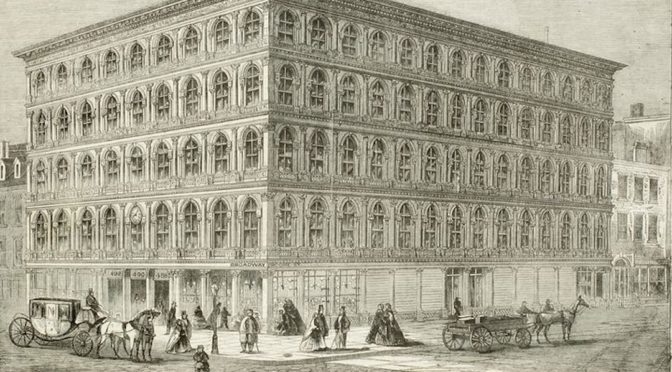
Cast-iron construction, pioneered in America by architect James Bogardus in the 1850s, became the preferred method of building large dry goods shops and department stores in the mid- and late nineteenth century, thanks to the speed with which these enormous buildings could go up and the savings they presented over heavier, more cumbersome construction methods.
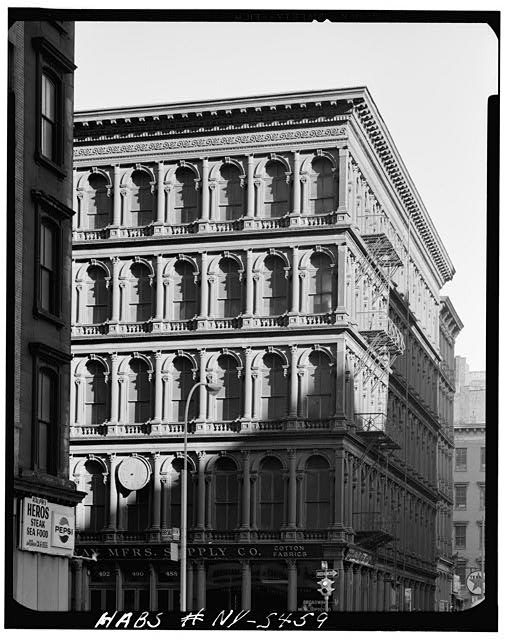
Today SoHo contains the largest surviving collection of cast-iron buildings in the world. Wandering through these streets in the late afternoon, sun ignites their white- and cream-colored exteriors. It’s magical—and the stuff of a million postcards, album covers, and selfies.
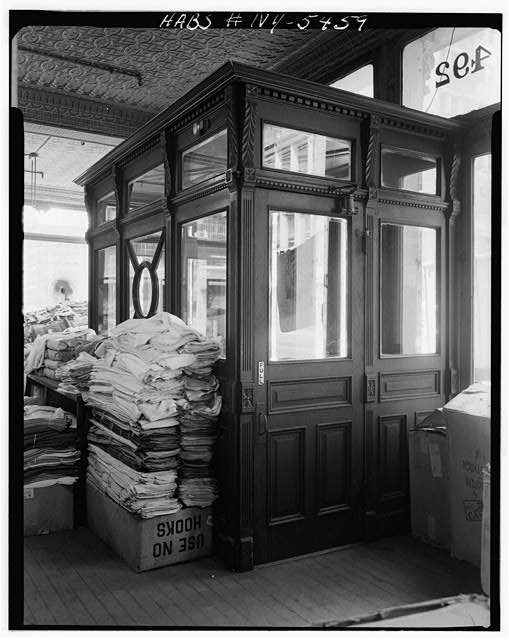
But SoHo contains another secret. It’s the location of New York City’s very first commercial elevator.
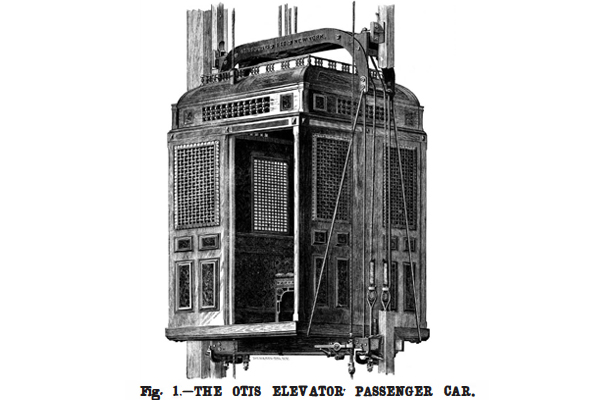
There had been so-called ‘hoisting elevators’ — crude platforms elevated by man power — but they were dangerous and their cords easily snapped. Elisha Otis, an inventor from Yonkers, New York, perfected the safety break which allowed a large containment to be moved up and down without fear of plummeting. He debuted this device to enthusiastic acclaim at the 1854 Crystal Palace Exposition. And soon, after some savvy newspaper advertisements, Otis finally found his first major client.
Library of Congress
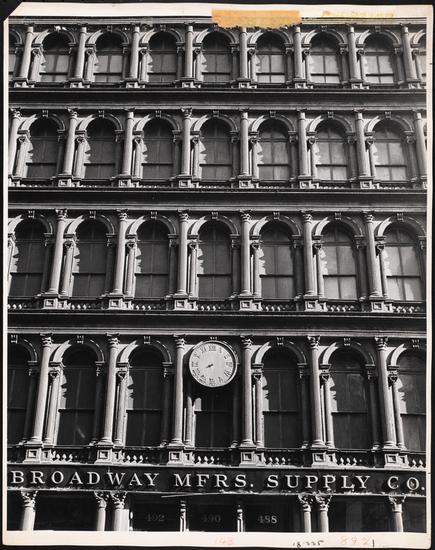
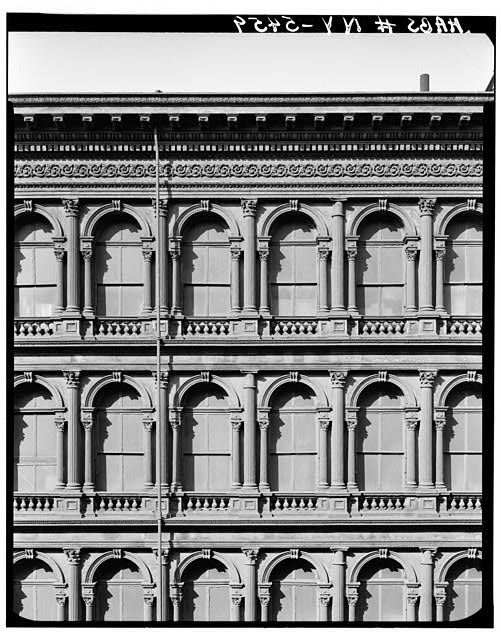
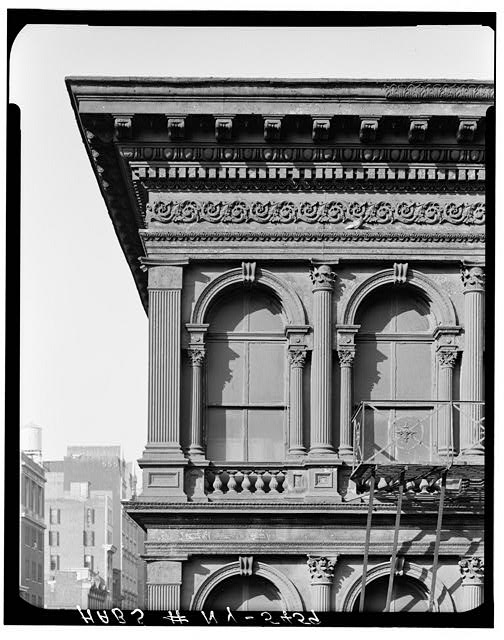
That would be the magical emporium of E. V. Haughwout, at Broadway and Broome Street, a luxury store which sold fine china and glassware. The corner building’s two-sided cast-iron construction and facade was the first of its kind when it was completed in 1857, and soon inspired blocks lined with similar construction throughout SoHo.
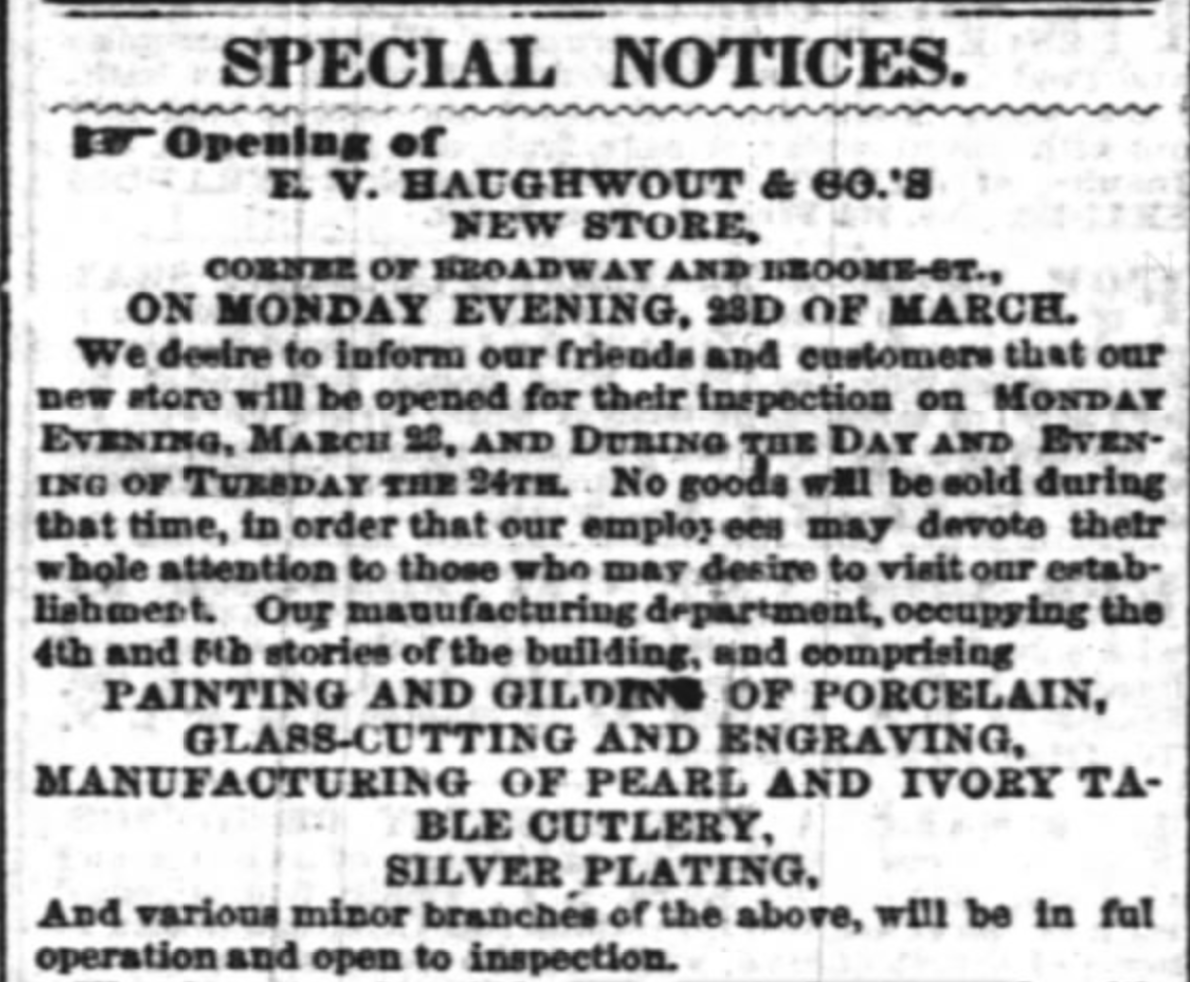
Below: The department store — and the elevator — were first opened ‘for public inspection’ on March 23, 1857.
New York Times
But its most important contribution was placed inside—a passenger elevator, installed the same year, which lifted and lowered its wealthy clients to its various exotic departments.
According to the website of OTIS elevators themselves: “On March 23, 1857, Otis’ first commercial passenger elevator was installed in the E.V. Haughwout and Company…….The price of the elevator was US $300. The unit rose at a speed of 40 feet per minute (0.2 meters per second).”
From the New York Tribune: “Among the novelties we noticed is an elevator to be worked by steam, which is to be furnished with a sofa and carriage to carry ladies from one floor to the other. The steam engine and boiler are located on the rear lot disconnected from the main edifice.”
Haughwout’s Emporium was also famed for its French champagne and for the fine flutes that it was drunk from. Surprised? While the neighborhood today still pops more than its share of bubbly, SoHo was never more glamorous than during the Haughwout years. And part of the reason for its acclaim was its marvelous, state-of-the-art elevator.
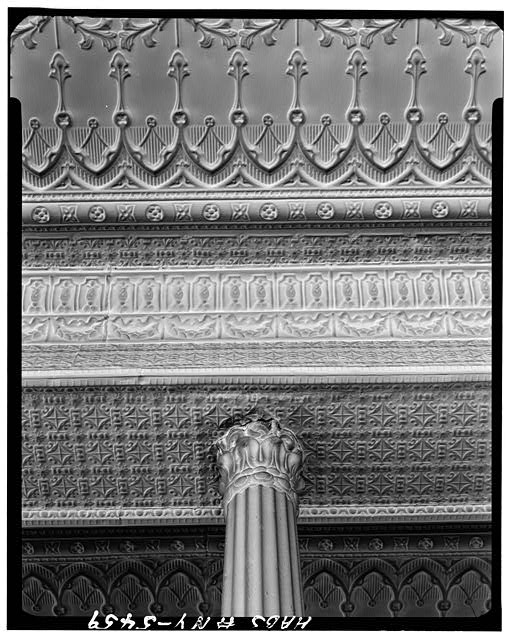
More pictures of the Haughwout Building, courtesy the Library of Congress, via the Historic American Buildings Survey, Cervin Robinson, Photographer March 1967.
One hot summer’s morning, in the neighborhood of Yorkville on the Upper East Side, high school student James Powell was shot and killed by police officer James Gilligan.
Powell either attempted to stab the officer or else the unarmed boy was brutally set upon by a man with violent tendencies. Gilligan, a war veteran, was either defending himself from a troubled delinquent or else he gunned down the teenager with little remorse.
There were few actual witnesses but dozens of bystanders. The incident took place across the street from a high school, and the students, incensed by rumors and the fear of blood running in the streets, began panicking.
The year was 1964.
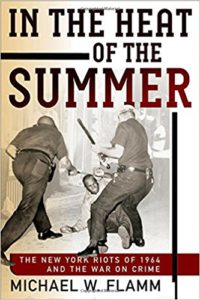
It’s hard not to read the opening pages to Michael W. Flamm’s gripping In The Heat Of The Summer: The New York Riots of 1964 and the War on Crime (University of Pennsylvania Press) and not see the parallels to modern police brutality cases.  So many different testimonies obscure the truth that it’s hard to know what really did happen in front of 215 East 76th Street that day. (Video footage might not have even cleared it up.)
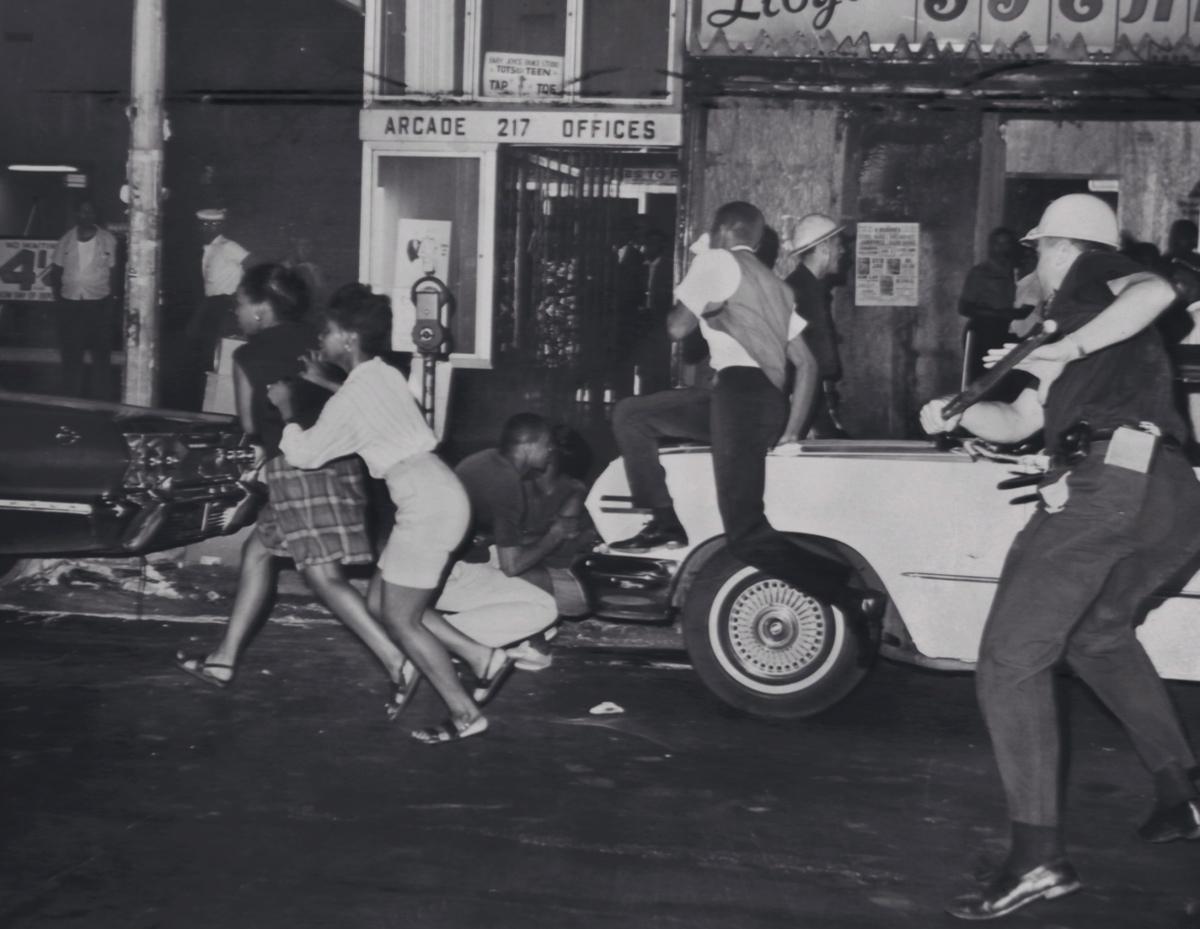
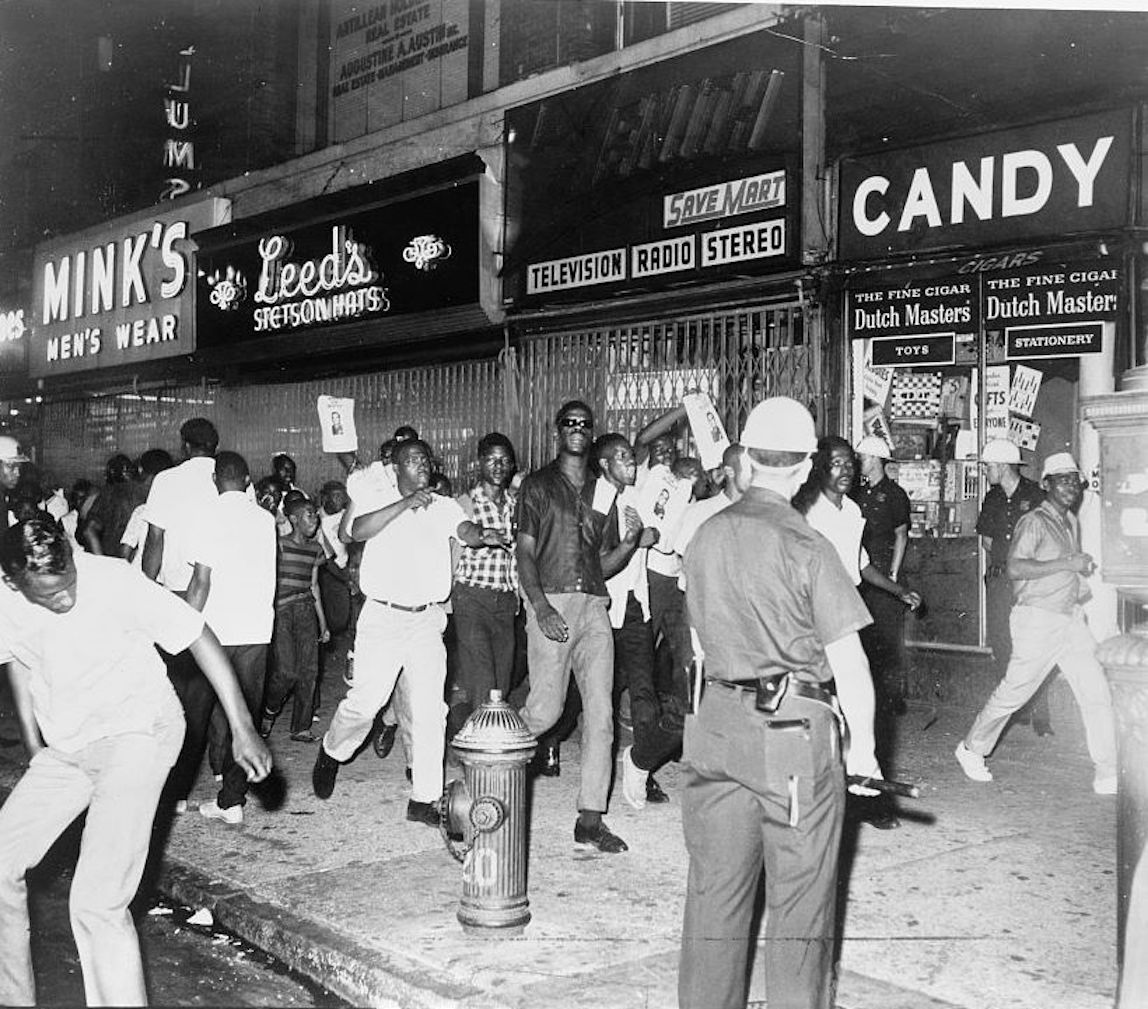
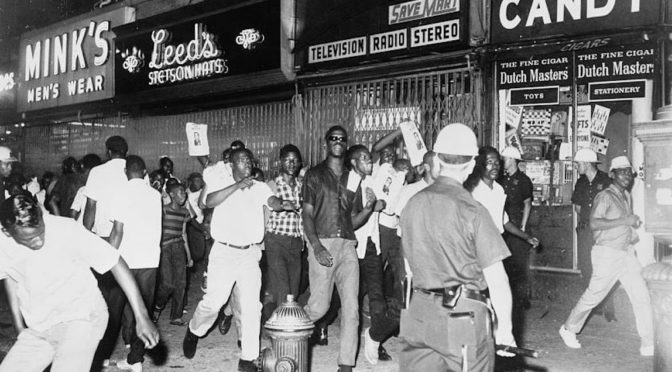
Yet Flamm’s book isn’t specifically about the crime, but the chaos which ensued — the New York Riots of 1964 (with the most violent night often referred to as the Harlem Riot of 1964). For several evenings following the shooting, a host of speculations and false rumors — mixing with grief and despair on a series of hot summer evenings — led to roaming violence and looting in Harlem (with some also reported in the Brooklyn neighborhood of Bedford-Stuyvesant).
The incidents which occurred that summer stem from hostilities which had built up within the black community for decades. A great distrust between the police and African-Americans played a part in the rising crime rate in poor neighborhoods like Harlem in the 1960s.
Courtesy the New York Daily News
Fearful residents felt powerless against increasing criminal behavior and drug abuse in their streets but didn’t risk involving law enforcement, who most considered corrupt and racist.
White residents avoided black neighborhoods — and vice versa — due to wildly dramatic reports in the press. Black power movements like the Nation of Islam escalated talk of violence while, in some neighborhoods, white vigilantes stopped and interrogated every black person found in the streets.
Writes Flamm: “New York sounded to the rest of the country like some frontier town helpless before the uncontrollable violence stalking its streets.”
Dick DeMarsico, New York World Telegraph & Sun
Flamm follows two parallel threads, both coming together in raw, unexpected ways. The first is a terrifying minute-by-minute account of the late-night street riots, the chaotic protests and the rallies organized by those who wished to funnel that rage into a mechanism of change. The second is the reactions of politicians and civil rights leaders to New York’s race and law enforcement problems.
The author’s meticulous research finds microcosms of hate and fear at nearly ever corner — of the kind which will make nobody particularly nostalgic for the period. “Central Harlem seemed like a war zone, with screams from people and cracks from bullets as they ricocheted off brick walls and cement sidewalks.”
New York World-Telegram and the Sun staff photographer: Wolfson, Stanley, photographer.
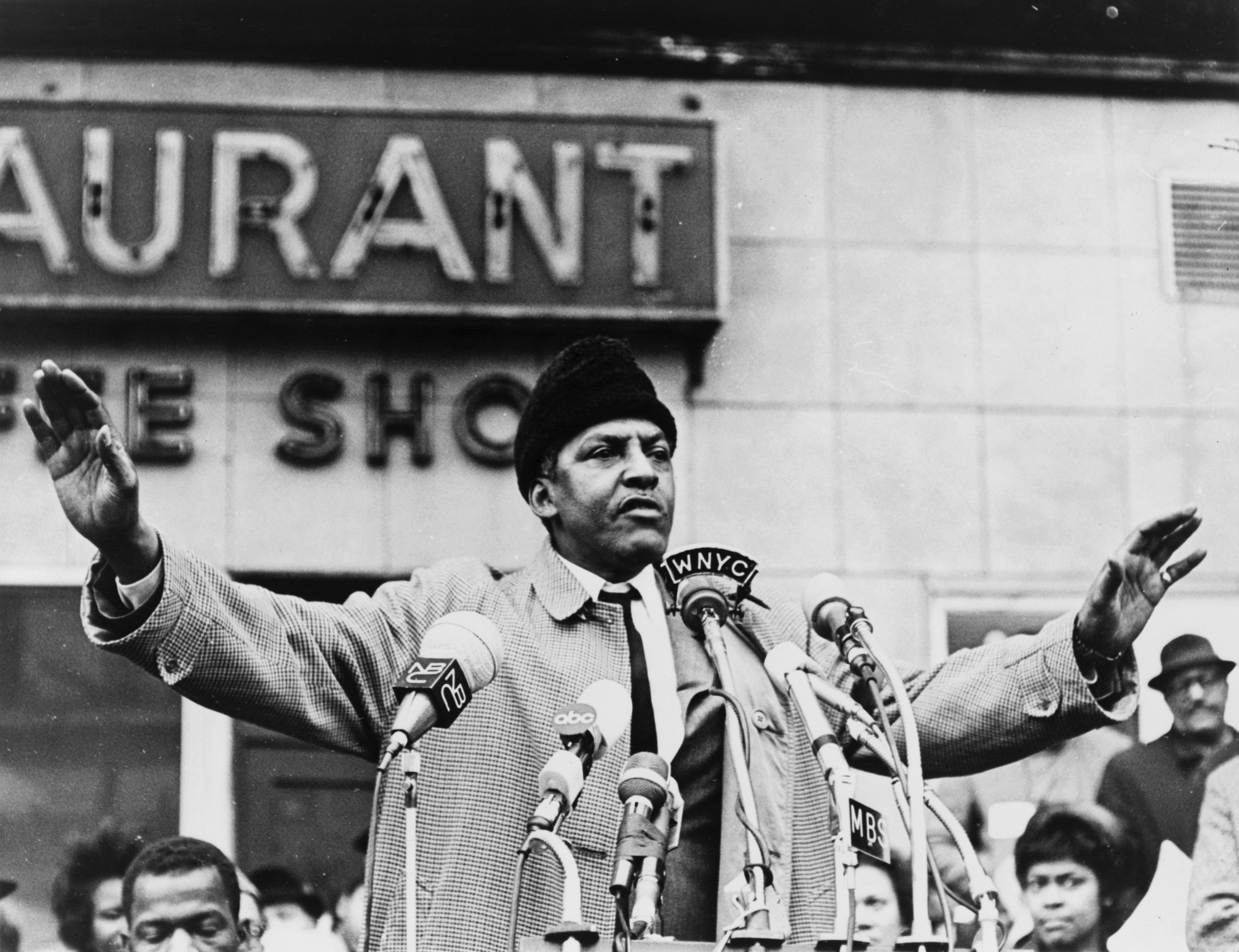
At the center of the story is civil rights leader Bayard Rustin (pictured above) and the Congress for Racial Equality (CORE), often caught between keeping and promoting the peace and quelling the concerns of angry residents.
At one point, Rustin was literally disarming people. “The toll might have gone much higher if not for Rustin, who personally disposed of three cases of dynamite — enough to destroy a city block — after two young black men agreed to give it to him instead of using it.”
Few history books I’ve read in the past twelve months have felt as immediate as In the Heat of the Summer, with anecdotes that seem to speak pointedly to the events of today’s headlines.
For example, some police authorities applauded television coverage of the riots. Said one commissioner: “It’s the best answer we have to the cries of police brutality. The camera, after all, cannot distort or lie; the worst that can happen is that the film is edited. But what you see on the home screen is the actual occurrence.”
PODCAST Before the American circus existed, animal menageries travelled the land, sometimes populated with exotic creatures. This is the story of the perhaps the most extraordinary wandering menagerie of all.
This year marks the end to the Ringling Bros. Barnum & Bailey Circus and, with it, the end of the traditional American circus. Once at the core of the American circus was the performing elephant. Today we understand that such captivity is no place for an endangered beast but, for much of this country’s history, circus elephants were one of the centerpieces of live entertainment.
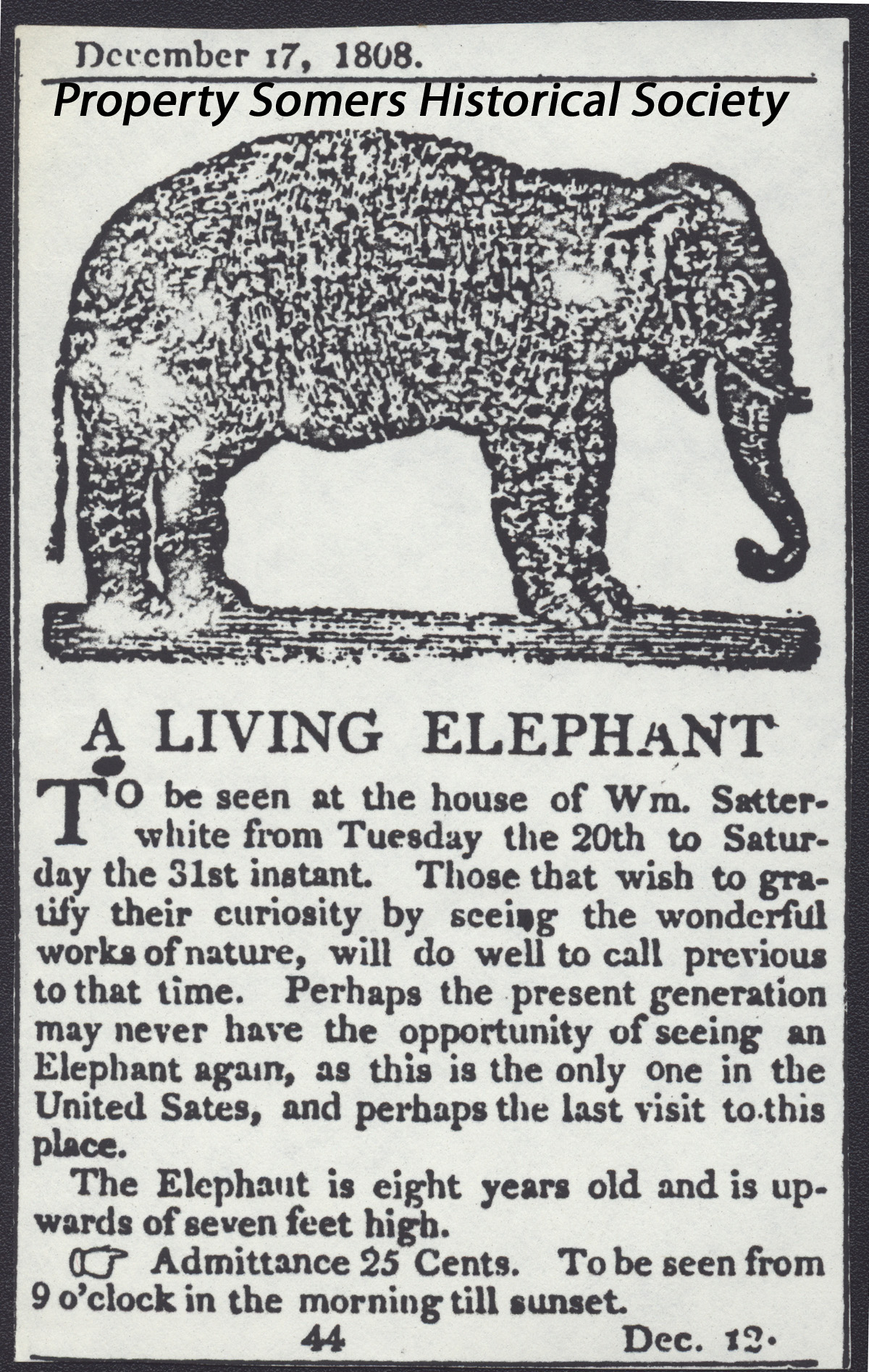
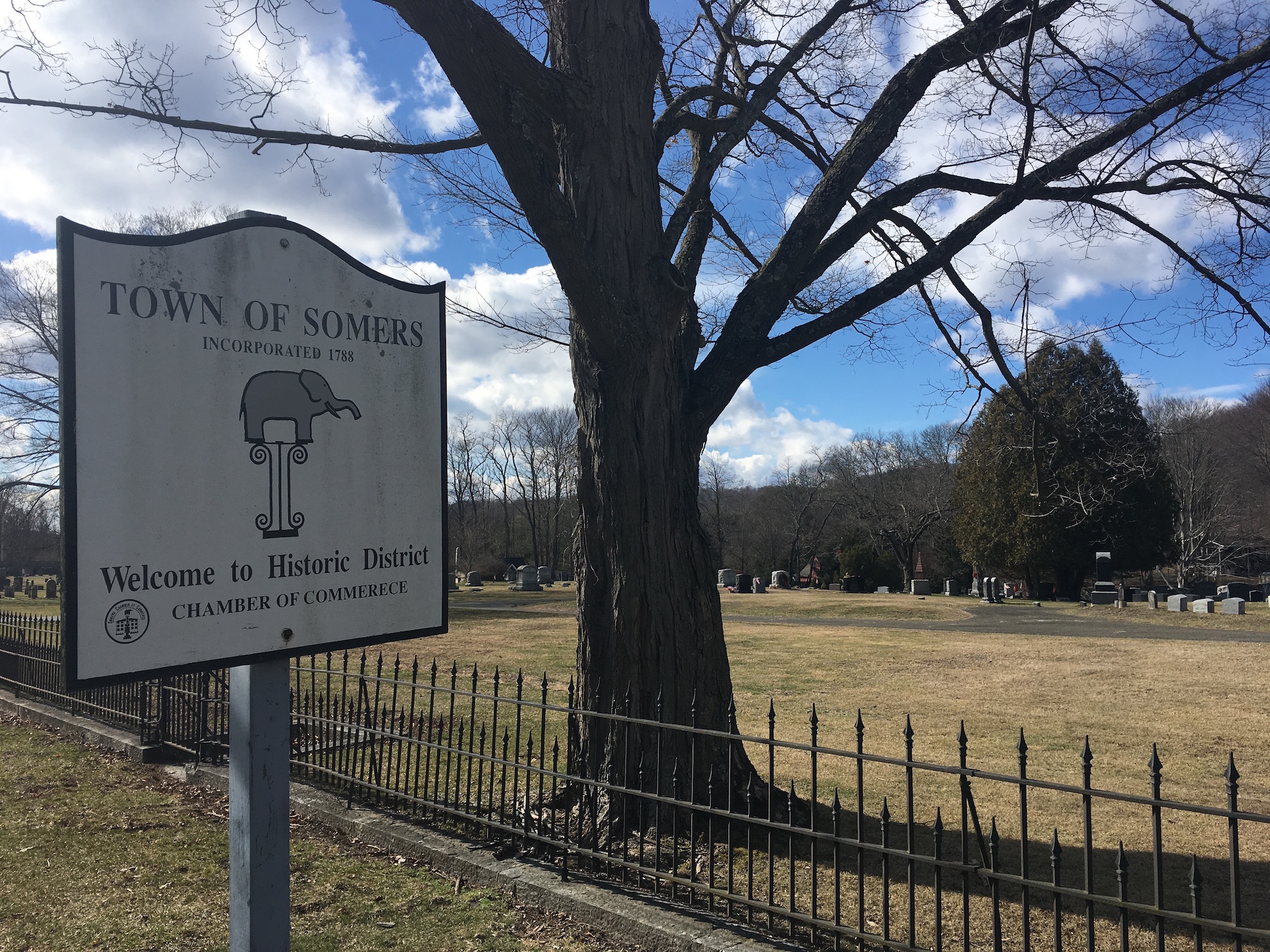
This is the tale of the first two elephants to ever arrive in the United States. The first came by ship in 1796, an Indian elephant whose unusual appearance in the cattle pens at a popular local tavern would inspire one farmer to seek another one out for himself.
Her name was Old Bet, a young African elephant at the heart of all American circus mythology. She appeared in traveling menageries, equestrian circuses and even theatrical productions, long before humans really understood the nature of these sophisticated animals.
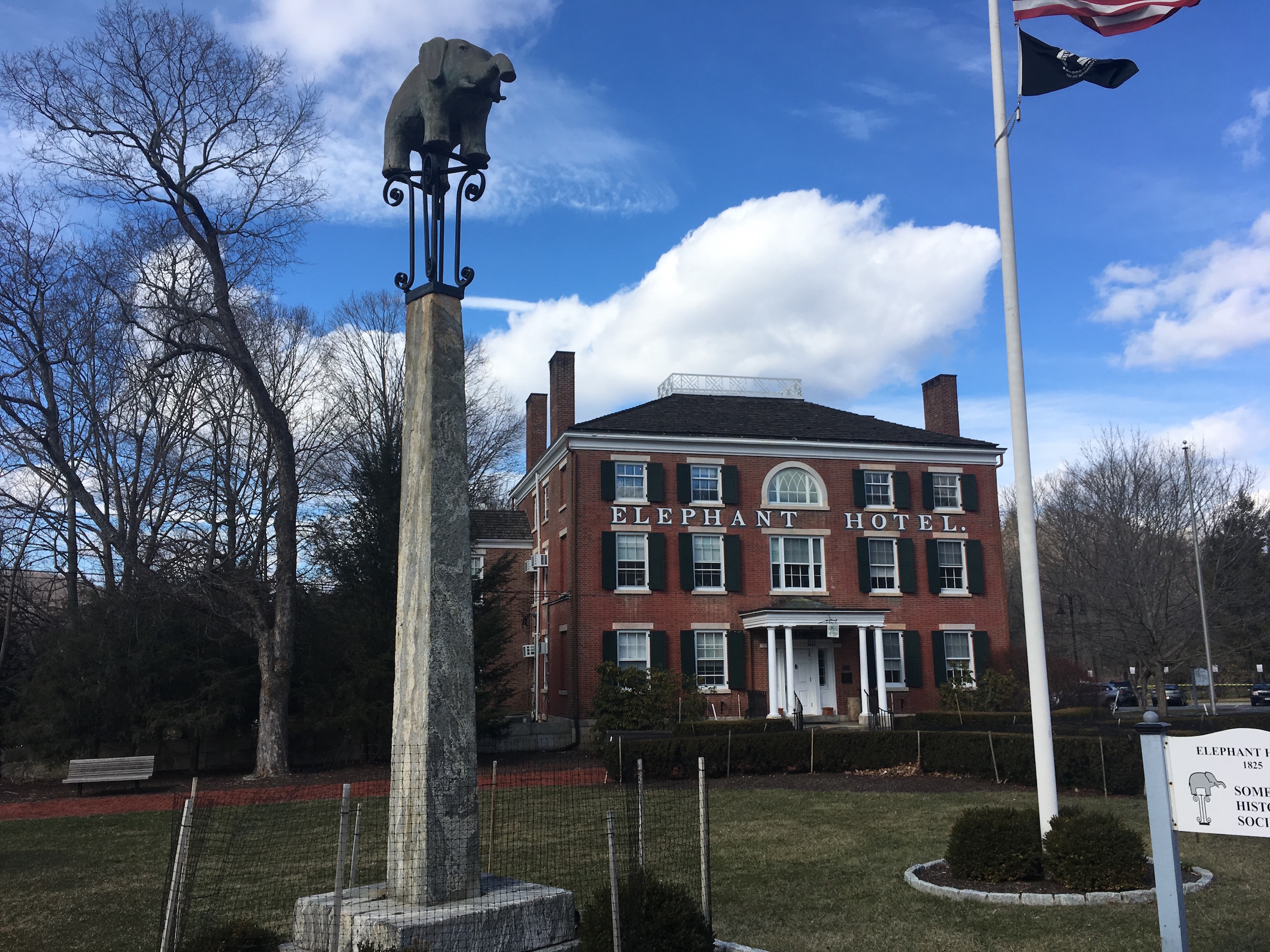
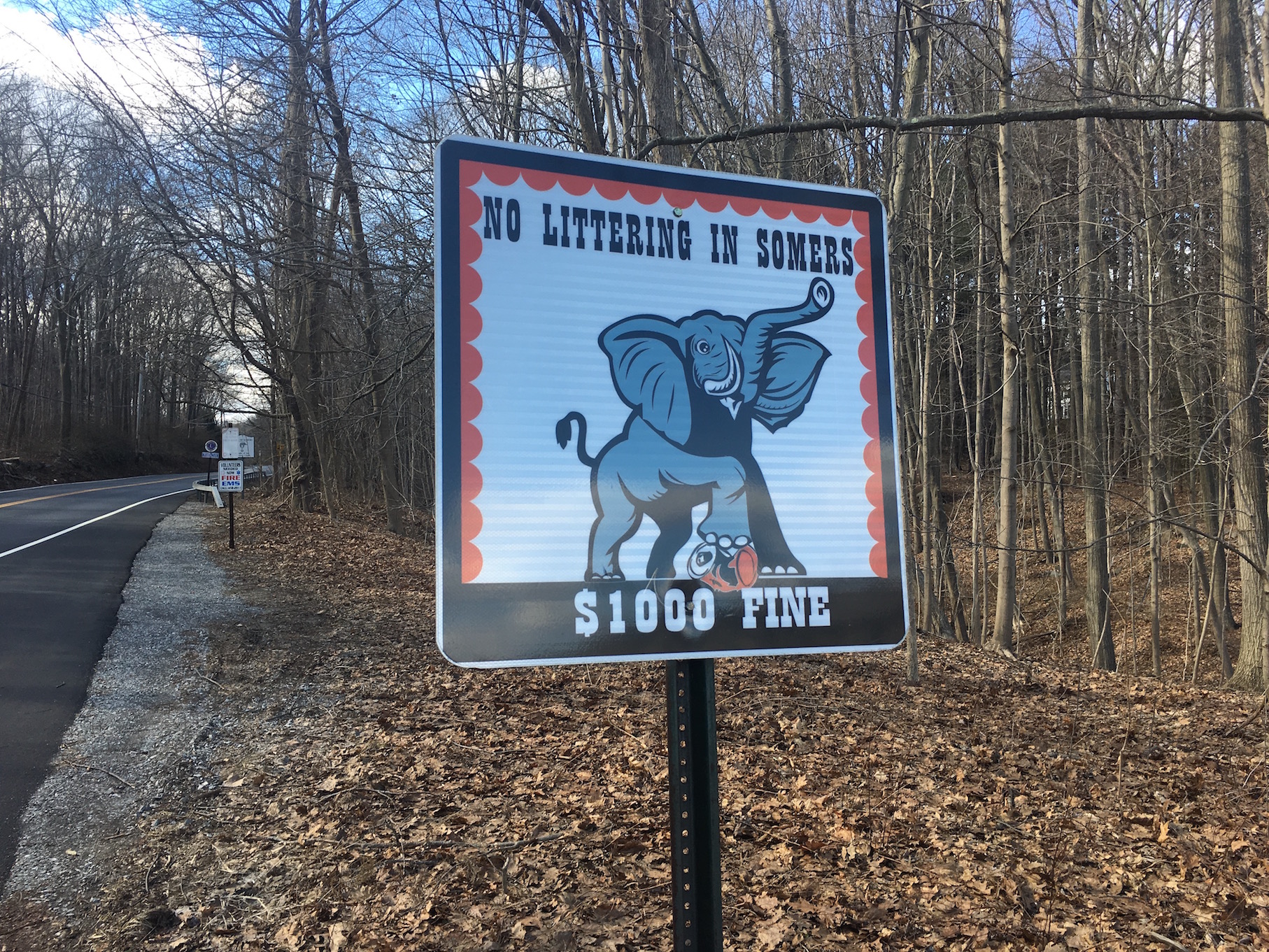
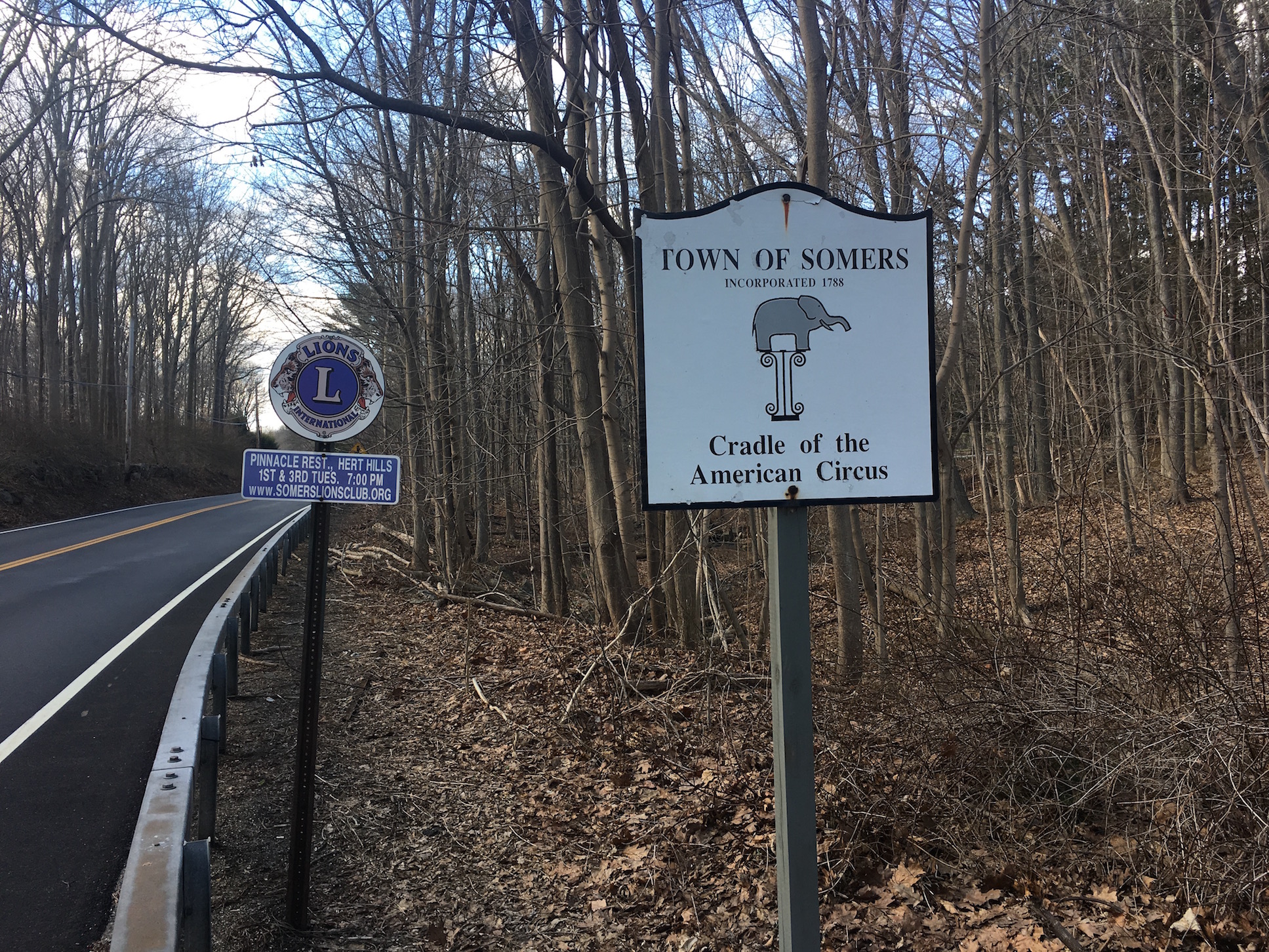
Find out how her strange, eventful and tragic life helped inspire the invention of American spectacle and how her memory lives on today in one town in Upstate New York.
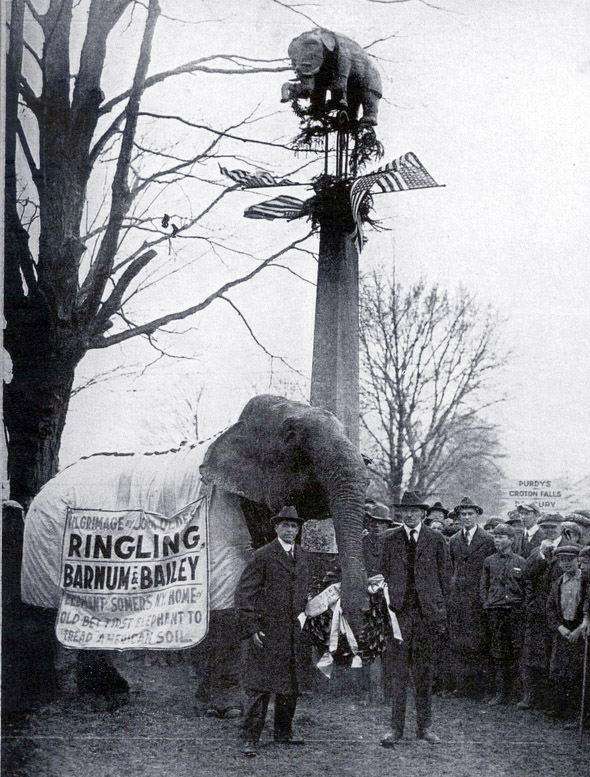
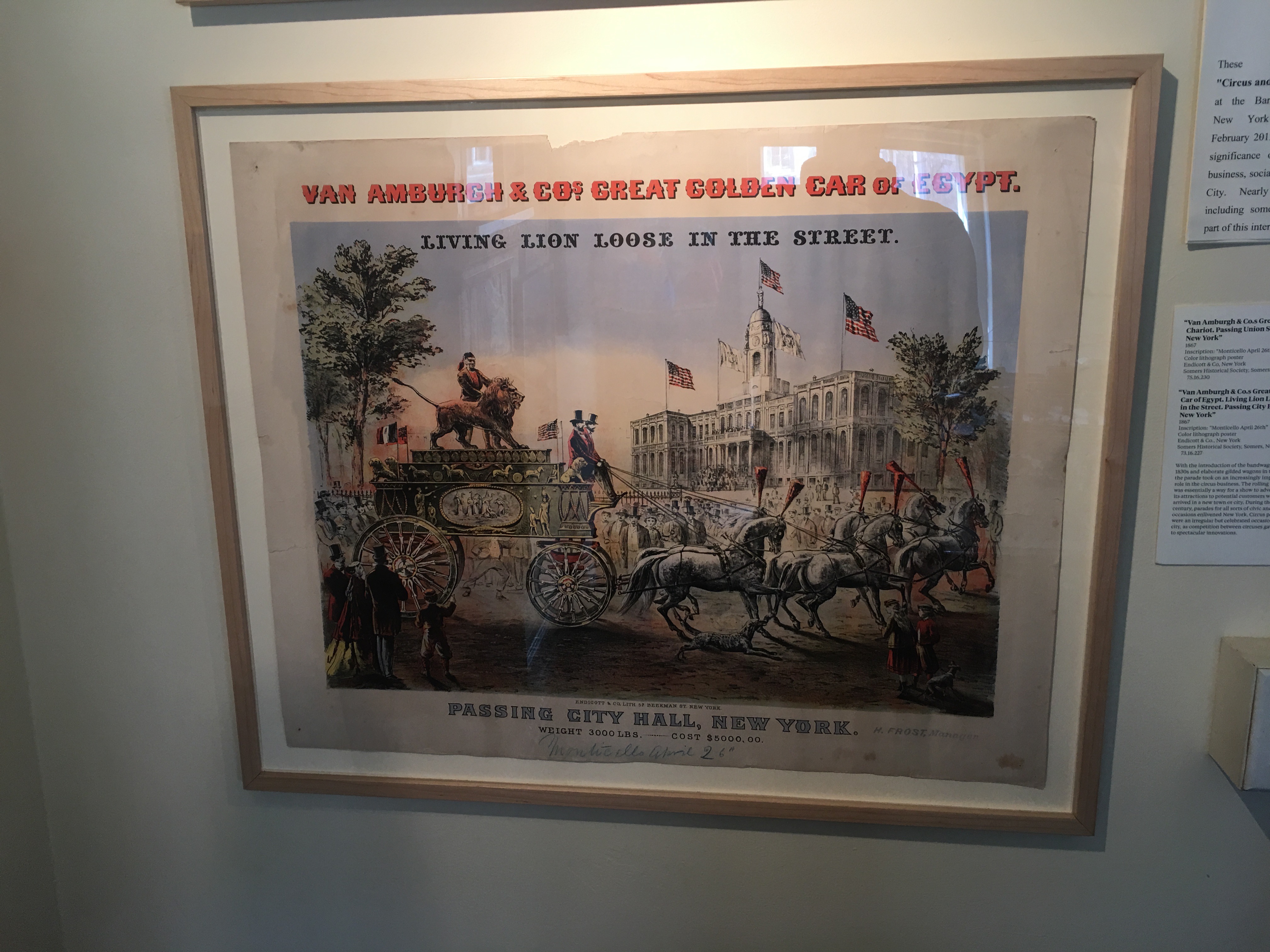
The circus comes to town: The banner on the elephant says Old Bet was “the first elephant to tread American soil.” In fact she was most likely the second.
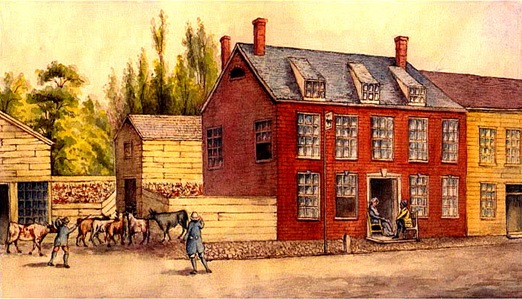
The Bull’s Head Tavern on the Bowery. Recently a building excavation discovered the foundations of the Bull’s Head. Read all about it here.
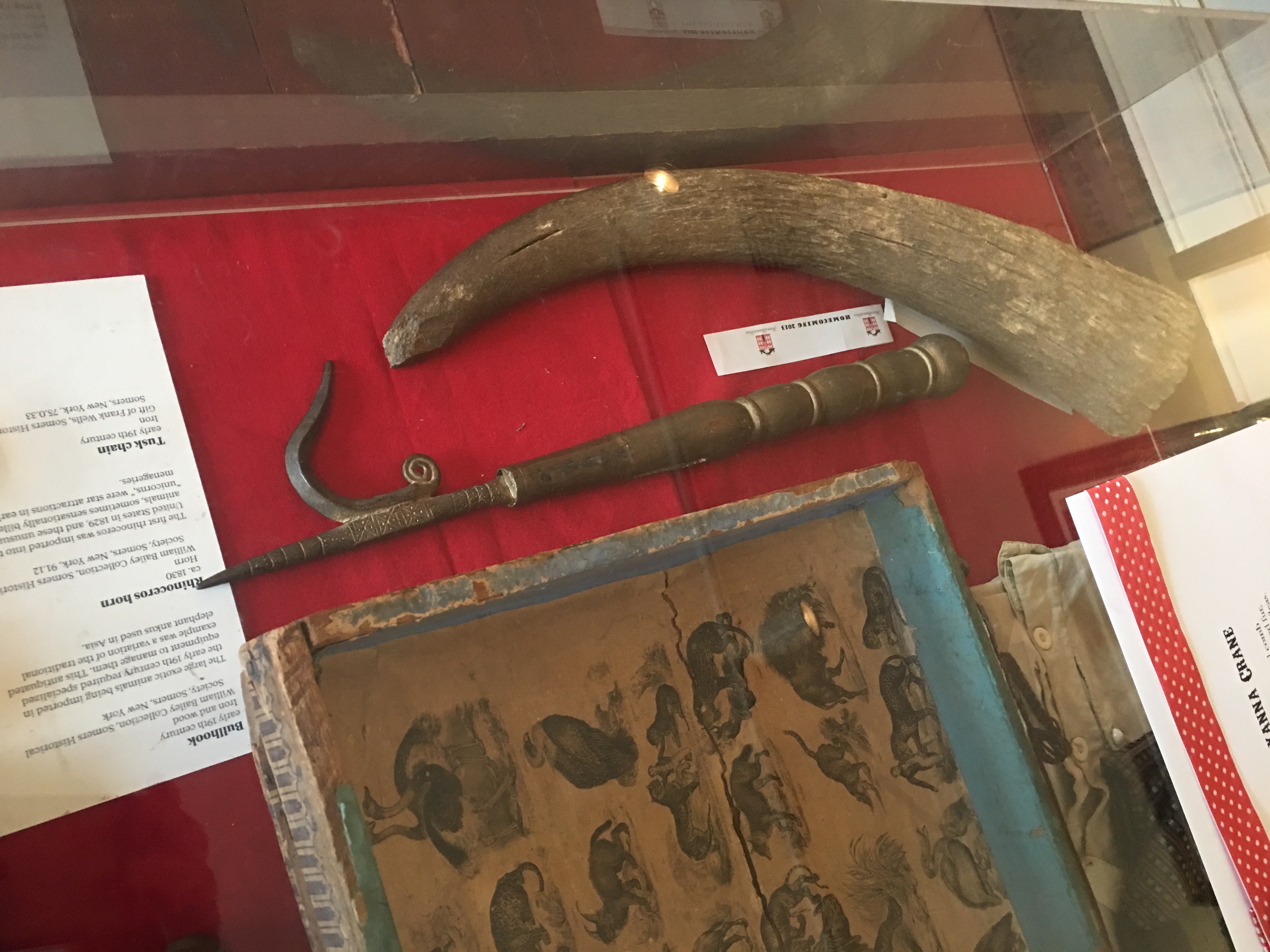
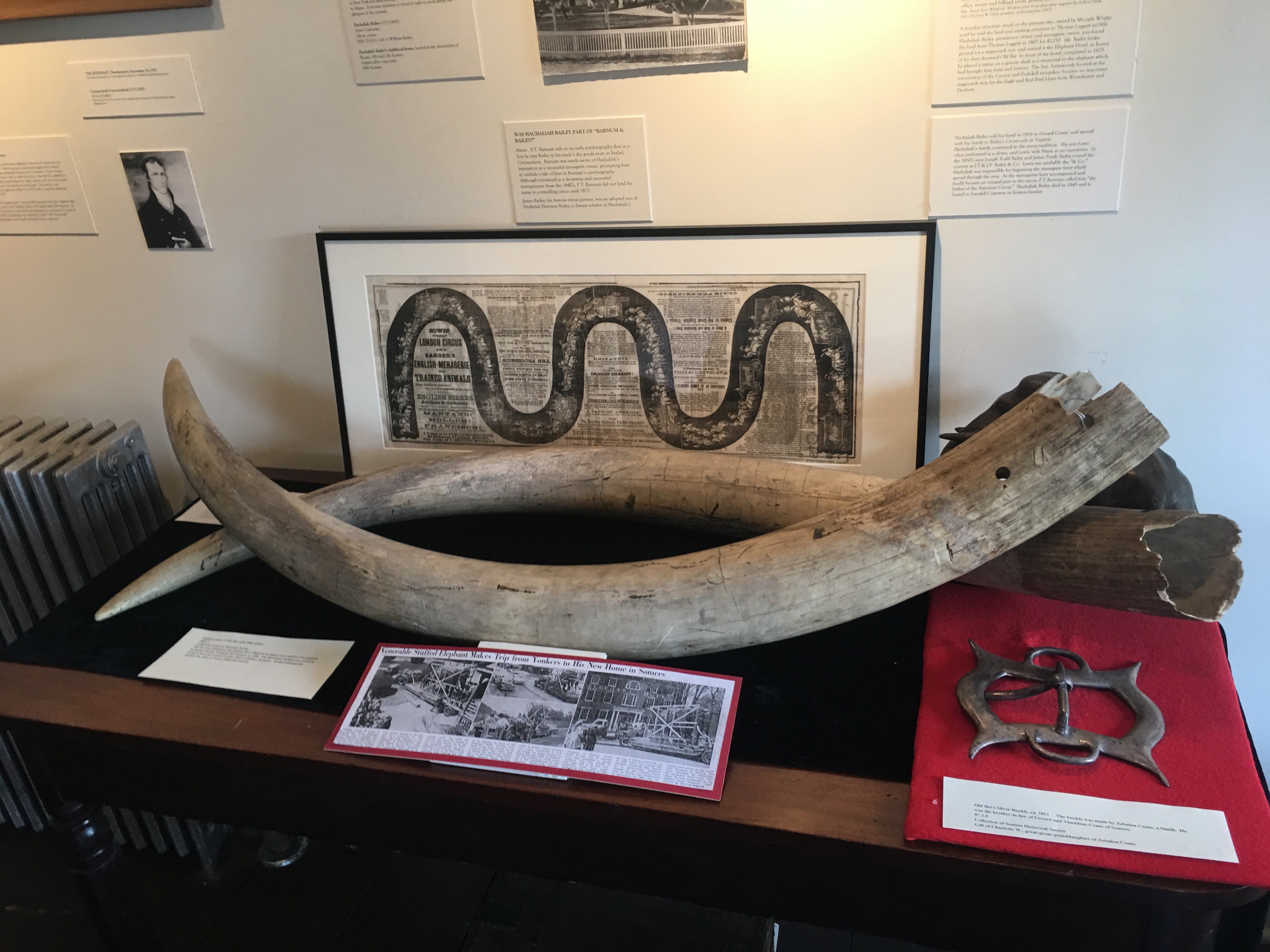
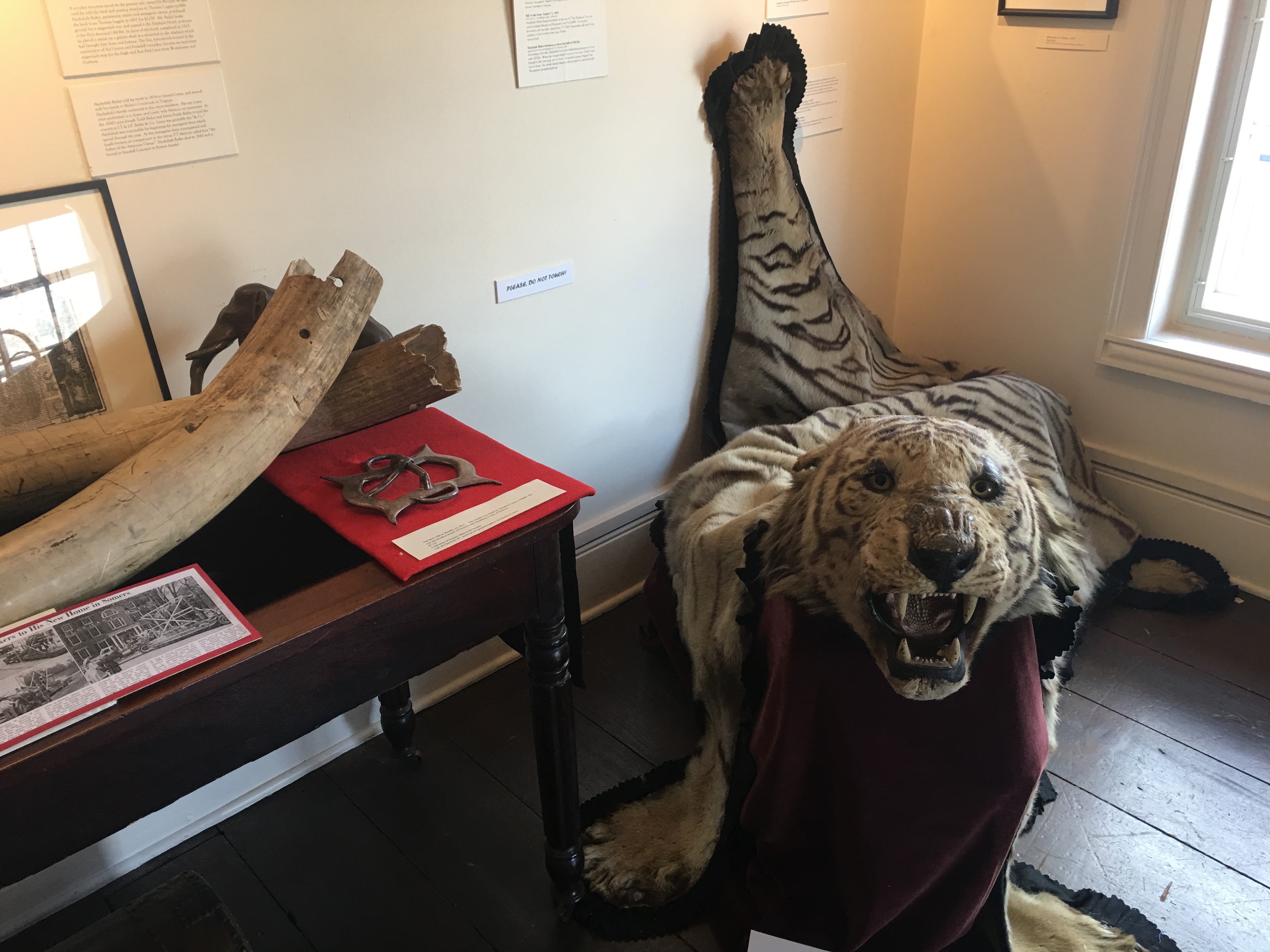
Some images from the Somers Historical Society and their marvelous museum to the early American circus.
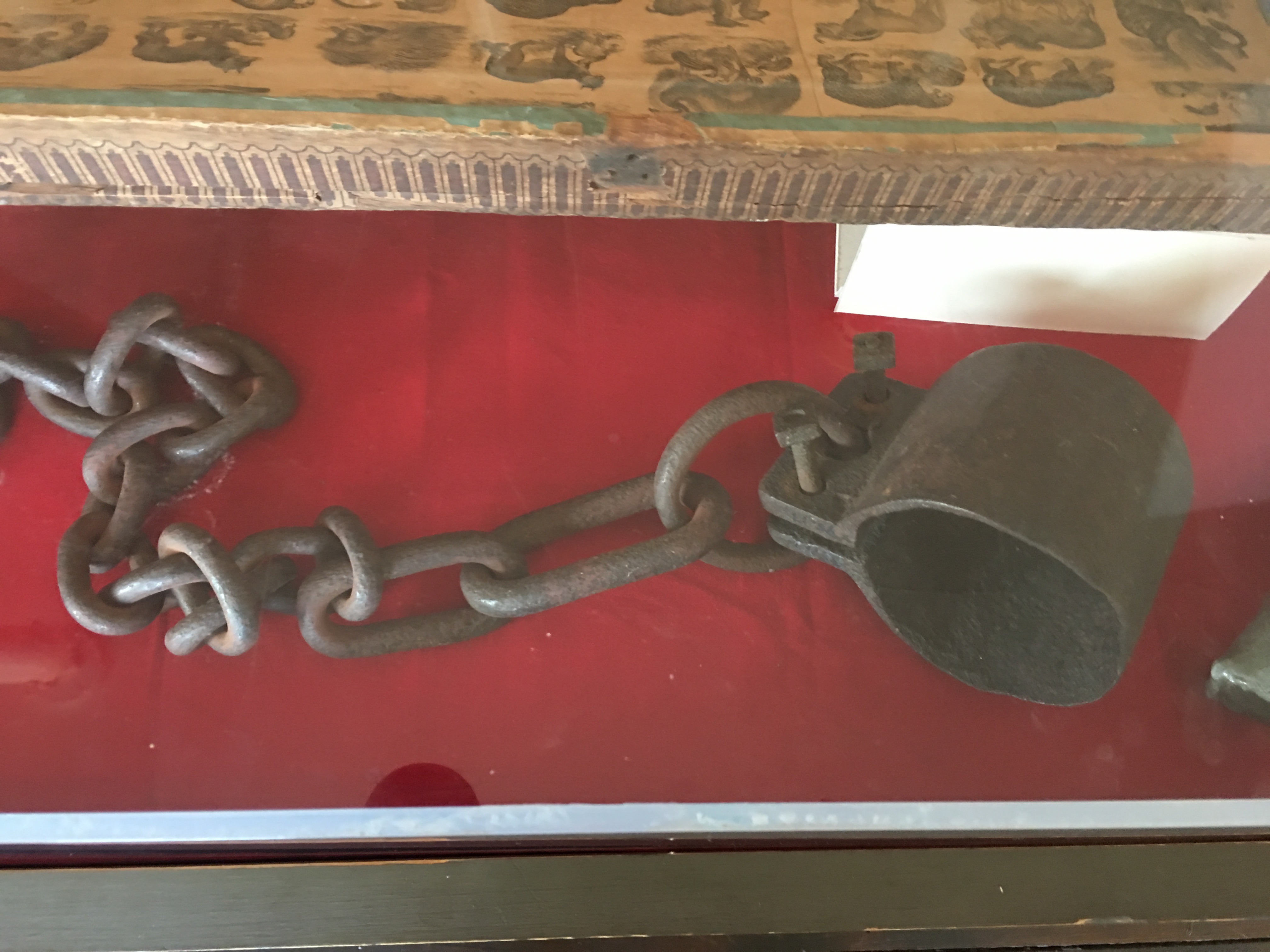
Chains which purportedly bound Old Bet.
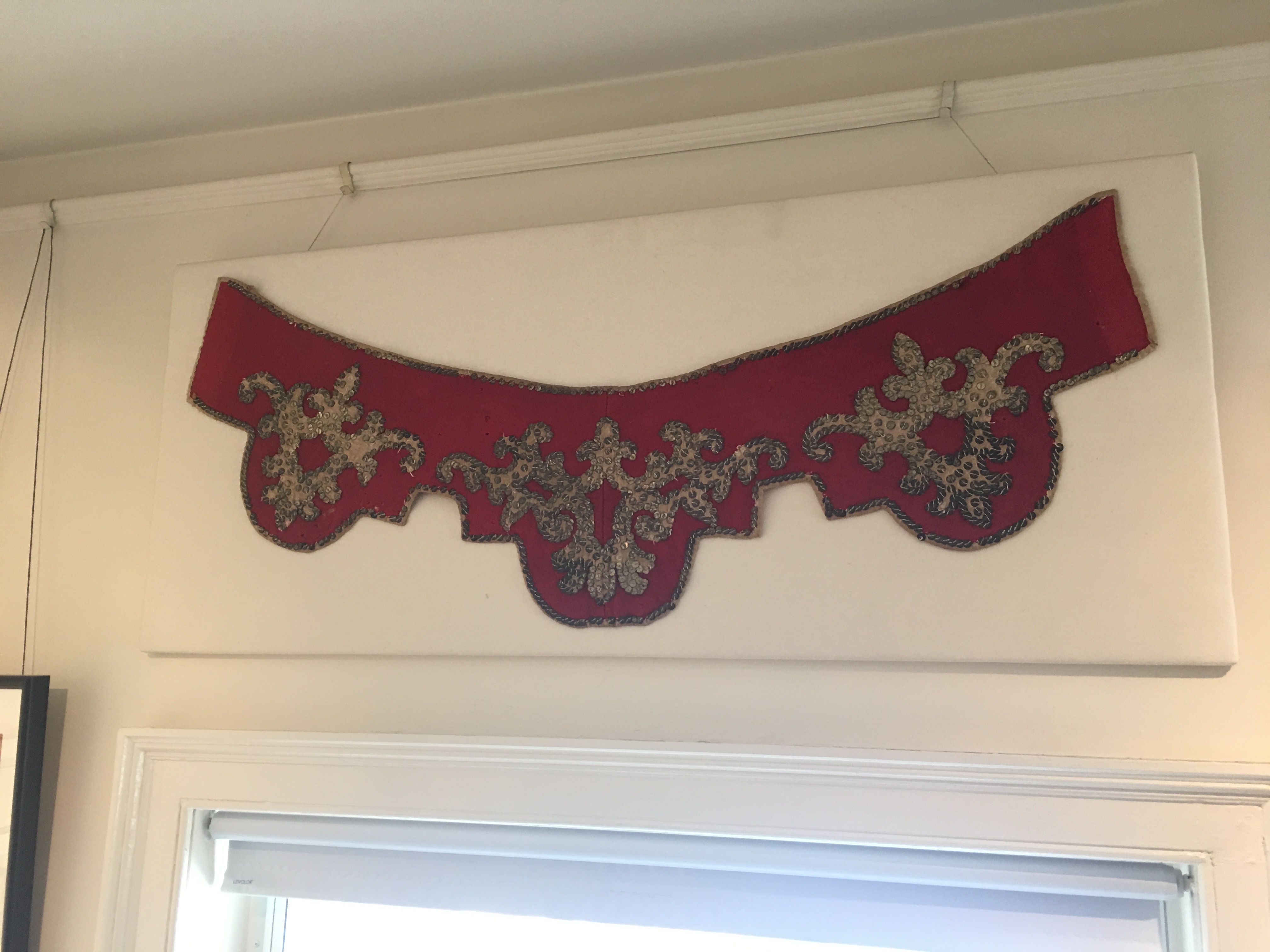
Old Bet’s collar, which she wore from town to town.
Without perhaps intending it, social services pioneer Lillian Wald, in her desire to help thousands of poor immigrant women and children in the Lower East Side, also saved a rare and forgotten part of New York City history.
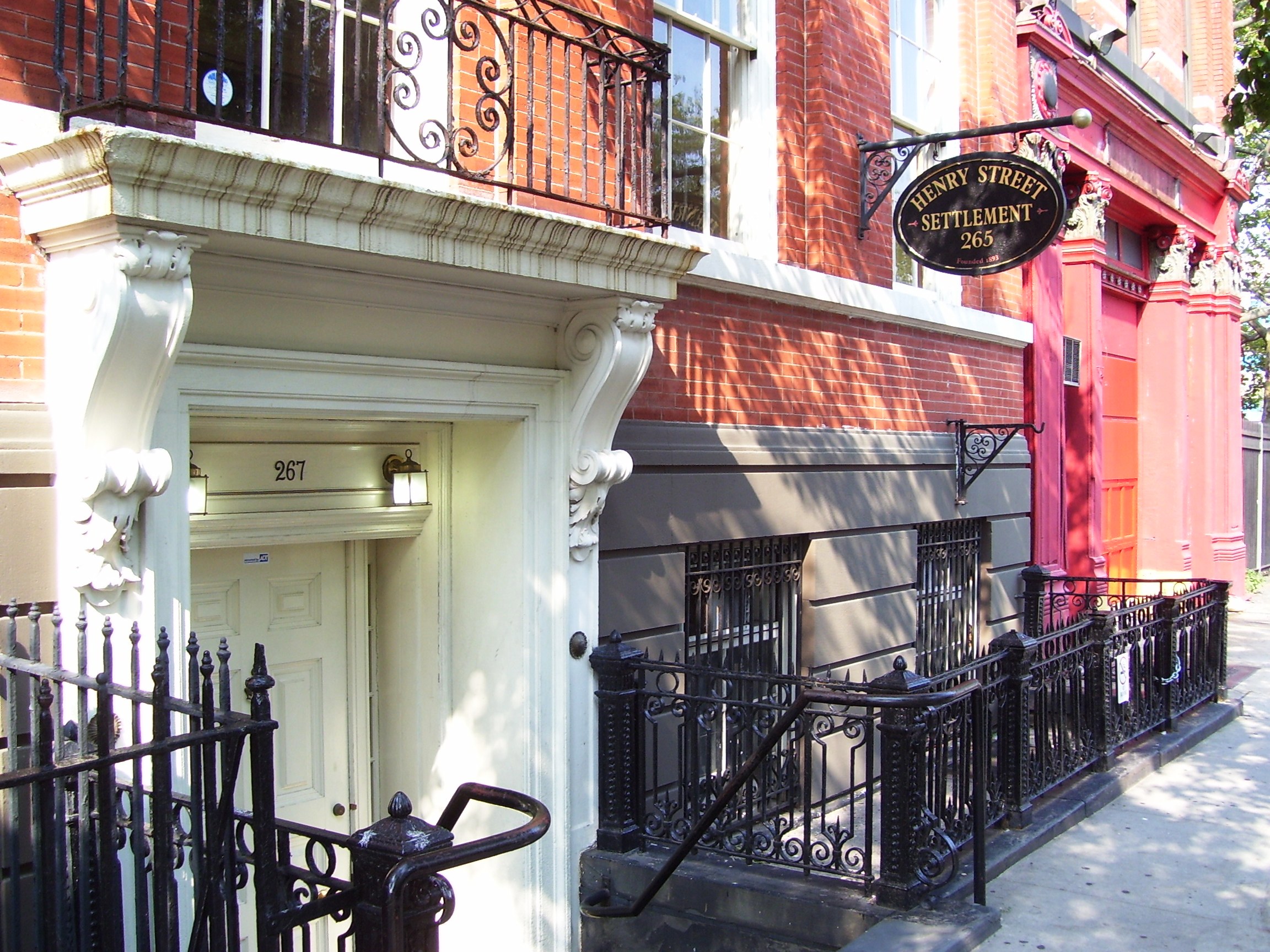
The modern Henry Street Settlement is spread throughout several buildings in the neighborhood, providing health care, shelter, job training and a host of services to the community. Â But it started out in just three adjacent Federalist-style townhouses on Henry Street, recruited into duty by Wald and her benefactor Jacob Schiff to stem the tide of disease and harm that threatened families in the world’s most densely populated neighborhood in the late 19th century.
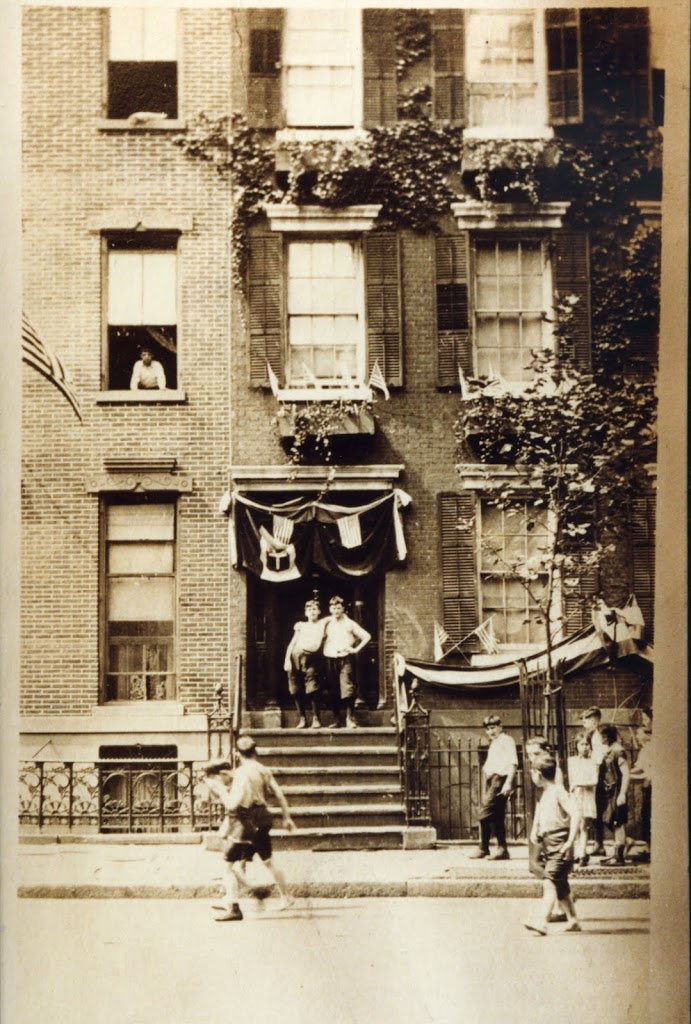
Children gallivant and pose for pictures outside 265 Henry Street, date unknown (Courtesy Henry Street Settlement)
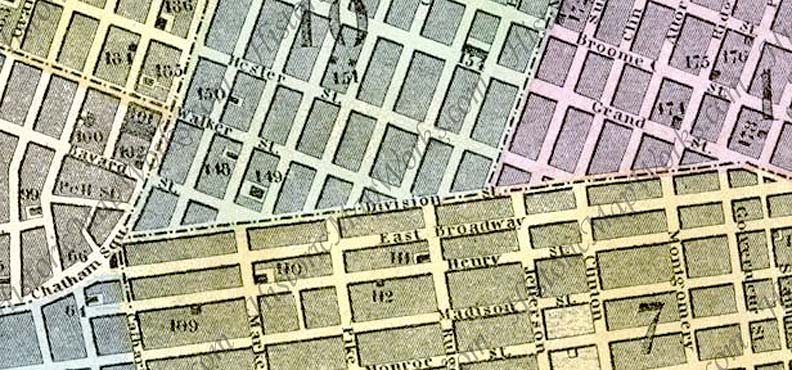
A Different Lower East Side As New York grew northward in the 19th century, wealthy landowners carved up their land with hopes of profit and a desire to foster New York’s next great elegant neighborhood. Revolutionary War colonel Henry Rutgers, who lends his first name to the street where the Settlement makes its home, sold off his property near Corlear’s Hook to businessmen with financial concerns along the Manhattan waterfront.
Below: An illustration from Forgotten NY, outlining the dividing line (literally, Division Street) between surrounding properties and Rutger’s own (in yellow). The buildings discussed are at Henry and Montgomery.
Many of the great shipbuilders lived in today’s Lower East Side (in the 1810s, it might have been called the Upper East Side) in fabulous residences within walking distance of the shore. Even by the 1850s, when the character of the neighborhood began to change, the mayor of New York Jacob Westervelt still resided at 308 East Broadwayclose to his shipyards. His neighbor at 281 East Broadway was city surveyor Isaac Ludlam.
Typical of the buildings that defined the neighborhood were 263 and 265 Henry Street, Federalist townhouses built in 1827. Its neighbor 267 Henry Street is a touch more ornate, with a different shade of brick in a Georgian Eclectic style.
Picturing these streets today lined with such buildings is requires a vivid imagination.
That’s because of the sudden mass of immigrants who arrived in New York by the 1850s, moving into poorer neighborhoods along the waterfront and in places like Five Points. Most of the homes along once-elegant Henry Street were torn down and replaced with tenements. Later, many of those tenements were themselves replaced with blocks of apartment complexes in the early 20th century.
These three Henry Street buildings have survived (as well as a few others, including Ludlam’s old home) because they were repurposed by a woman of uncommon compassion, one of New York’s most important figures in health and social services.
Settling Down
Lillian Wald first came to the city in 1891 as a student of New York Hospital’s nursing program. An intelligent and ambitious woman from Rochester, Wald quickly found purpose in one of the few respectable professions in the late 19th century where women could rapidly excel.
She’s marveled at today as a person of extraordinary compassion. But in many ways Lillian was a modern entrepreneur, able to latch onto the progressive instincts of the day to solve the immediate social ills facing New York with great imagination and a bold lack of prejudice.
When Wald founded the Nurses Settlement in 1893, she was building upon the practices of altruistic Christian programs (like the Methodist missions into Five Points) that brought social services into the very heart of slum-filled, overcrowded neighborhoods. However Wald was Jewish, and her perspectives involving health care were profoundly nonreligious and ‘universalist’ for the day.
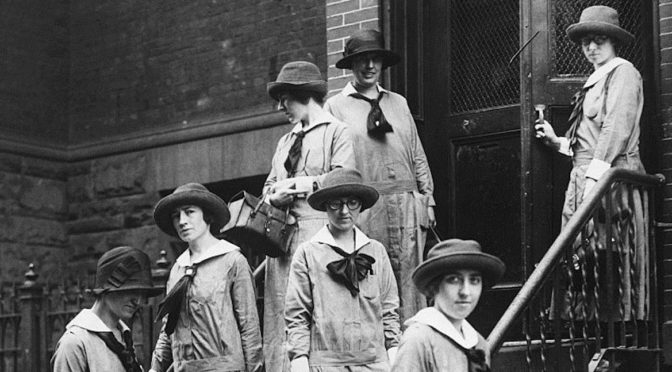
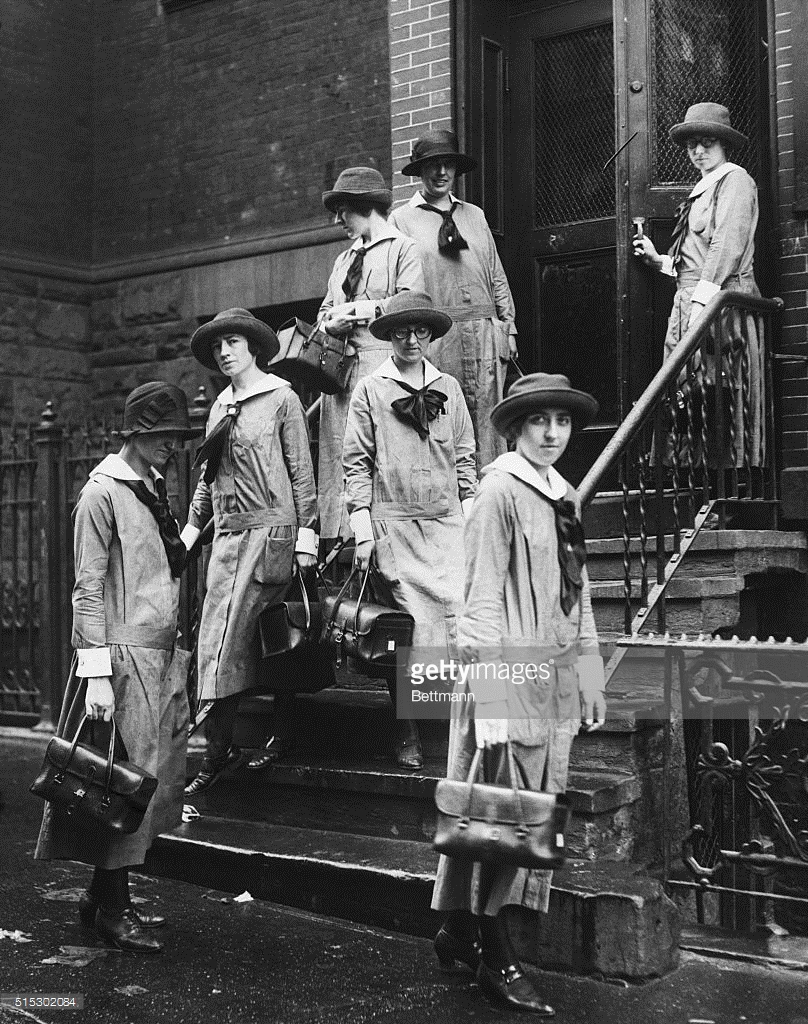
Below: Nurses heading out to the tenements
In that year she also met wealthy banker Jacob Schiff (who himself had immigrated to New York in 1865) who purchased the three Henry Street buildings for Wald to properly set up her nursing agency. From that moment, it became the Henry Street Settlement, housing a squad of nurses sent out into the neighborhood to tackle an ungainly number of health issues.
In an era where poor patients were often turned away from standard hospitals, Wald and her team of extraordinary women provided care for free, often risking their own lives to enter squalid tenements and exposing themselves to many illness that today have been completely eradicated. (One of her nurses, Margaret Sanger, would later become America’s leading birth control advocate.)
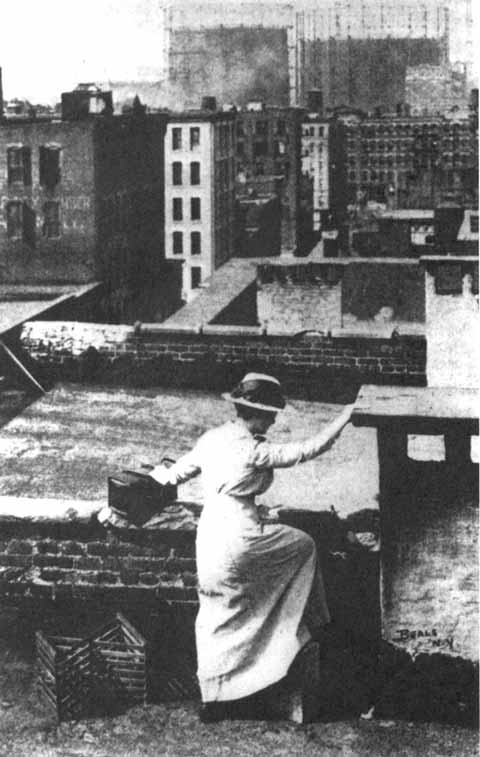
A nurse scales a rooftopto access a patient’s home. Judging from the gas tanks in the distance, she’s in the area of today’s upper East Village.
The Settlement had no problem making the former Henry Street residences into working clinics. The rooms still felt like a home in its decor, a respite for many visiting patients. The nurses lived upstairs in rows of small bedrooms, most of which today have been turned into cozy offices.
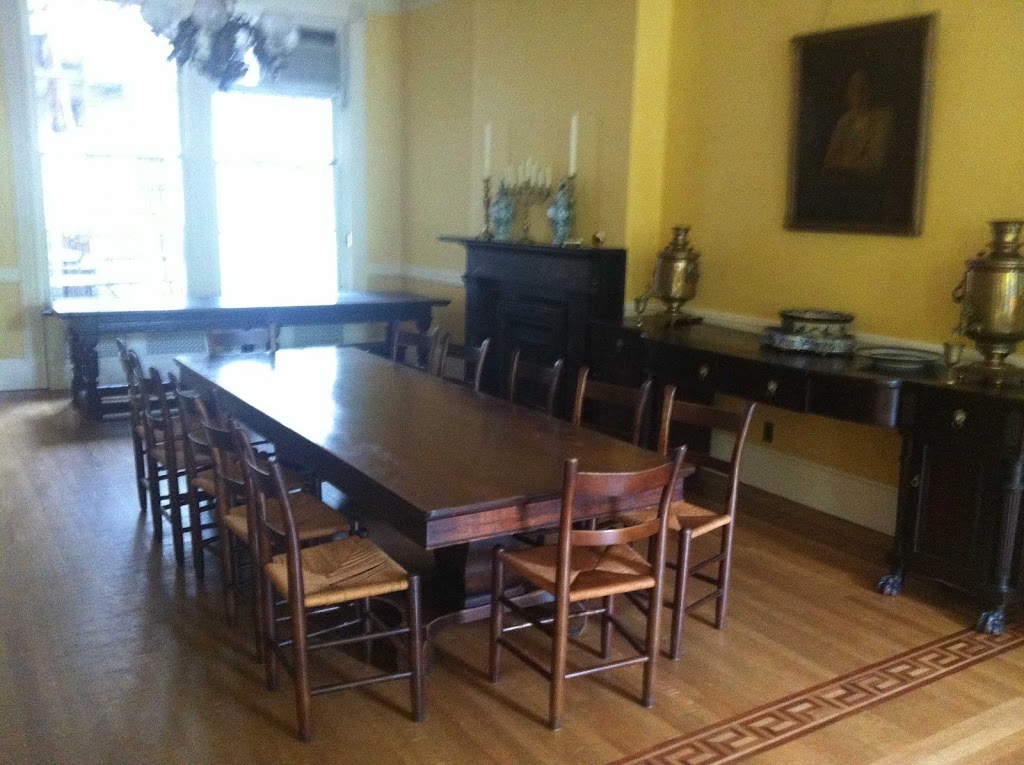
The most lively (and historically important) room at the Settlement was the dining room, with large mahogany tables where Wald entertained a wide variety of guests, from poor patients to the great thinkers and Progressive voices of the day.
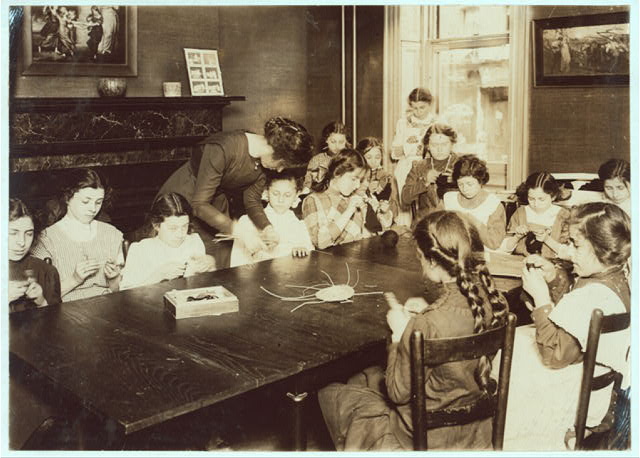
Below: A knitting class in the famous Henry Street dining room, May 1910. The fireplace at left is still very much intact. [LOC]
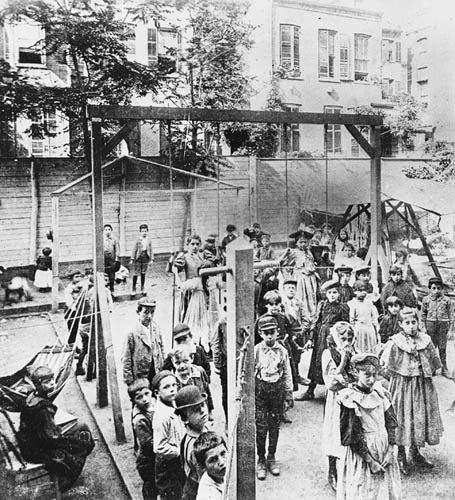
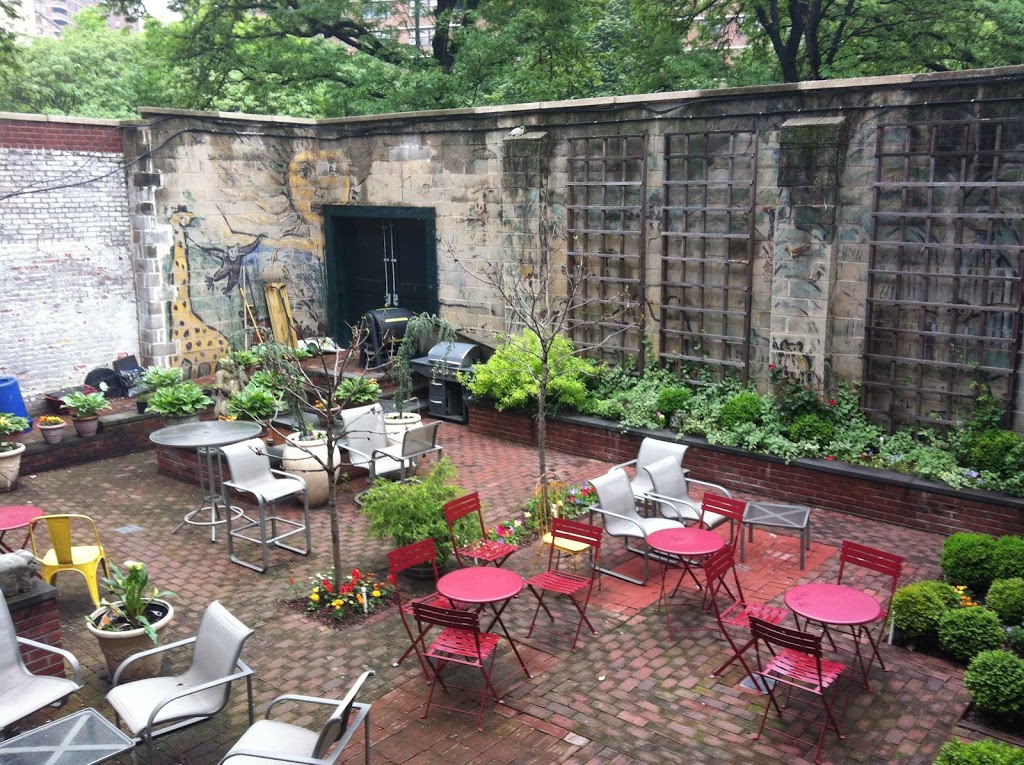
Beyond Borders The Henry Street Settlement soon expanded its mission statement to generally improve the quality of life in the Lower East Side. Concerned that neighborhood children had no place to play, Wald set aside her courtyard to become one of New York’s first playgrounds in 1902.
Below: The location of the playground, just behind the Henry Street structures, pictured in an 1895 image by Jacob Riis and a most recent image.
Wald frequently held meetings here for strikers rallying against the women’s garment industry. In 1909, she invited both white and black guests for a dinner, organizing a group that would soon grow to become the National Association for the Advancement of Colored People (the NAACP).
An excerpt from her 1915 book ‘A House On Henry Street‘ illustrates the racial politics of such a seemingly simple dinner party:
“At the time of the first convention of the organization, [the NAACP] formed to further better race relations in this country, the occasion promised to be almost too serious unless some social provision were made.
I suggested a party at the House, but even the organizing committee was fearful. ‘Oh, no!’ they protested. ‘It won’t do! As soon as white and colored people sit down and eat together there begin to be newspaper stories about social equality.’
‘But two hundred members of the conference couldn’t sit down,’ I submitted. ‘Our house is too small. Everybody would have to stand up for supper.’ ‘Then it would be all right,’ they said with relief, and the party was successful.”
Below: One of the two original dining tables. Wald hosted hosted dozens of intellectual luminaries in this room, including Jane Addams, Eleanor Roosevelt, Jacob Riis and Theodore Roosevelt.
Wald would become a leading figure for New York social programs, often enlisted by the city to bring improvement to the city’s other public services. (In 1902, Henry Street’s Lina Rogers become the very first school nurse.)
The Settlement even become an important venue for the arts with the debut of the Neighborhood Playhouse theater in 1915.
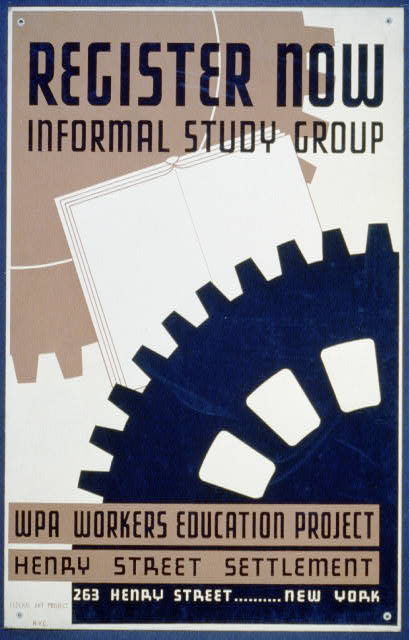
The tradition lives on at the Abrons Arts Center, another part of the Settlement that continues to be a critical part of the Lower East Side cultural community. (Below: A flyer for a WPA meeting, between 1936-41, LOC)
Wald died in 1940, but her Henry Street Settlement has only expanded in the years since her passing. Today they have facilities in over a dozen buildings throughout the neighborhood, expanding their focus to include job training, mental health services, adult education, a shelter for victims of domestic violence and even a computer lab.
Those original three buildings, housing mostly administrative offices today, are still a wonderful expression of an early era of New York history. Traces of that history sits next to the practicalities of office life; in one room, an original kitchen hearth and brick oven from the original tenants sit next to a couple photocopiers. Employees sit at laptops in Lillian Wald’s original bedroom with its spectacular sleeping porch overlooking the former playground.
The Henry Street Settlement hopes to use the Partners In Preservation grant money to combat the challenges of keeping their nearly two-centuries old offices in working order, to upgrade and prepare these old rooms for many more decades of providing a little more life to the Lower East Side.
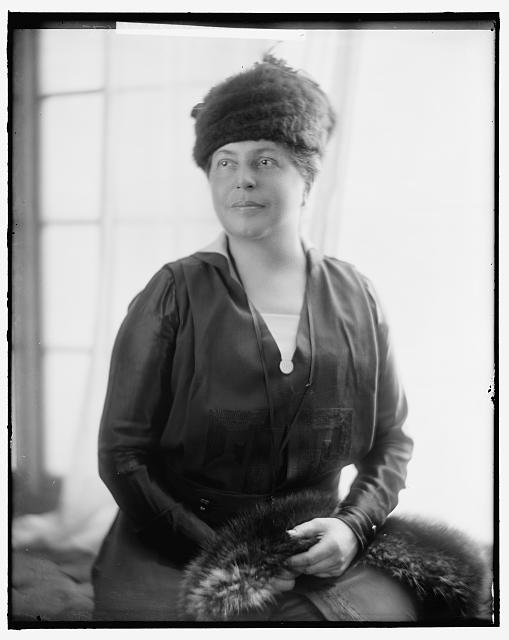
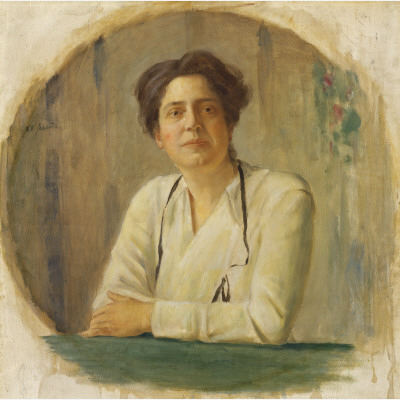
Below: A portrait of Lillian Wald by William Valentine Schevill, hanging in the U.S. Portrait Gallery in Washington D.C.
(Portions of this article originally ran on this site back in 2012)
The 2017 GANYC Apple Awards, recognizing achievements in New York City tourism, culture and preservation, were held last night at the SVA Theater in Chelsea. Â It was quite a bawdy, rambunctious evening thanks to the host, cabaret star Mark Nadler, and a friendly, diverse line-up of presenters.
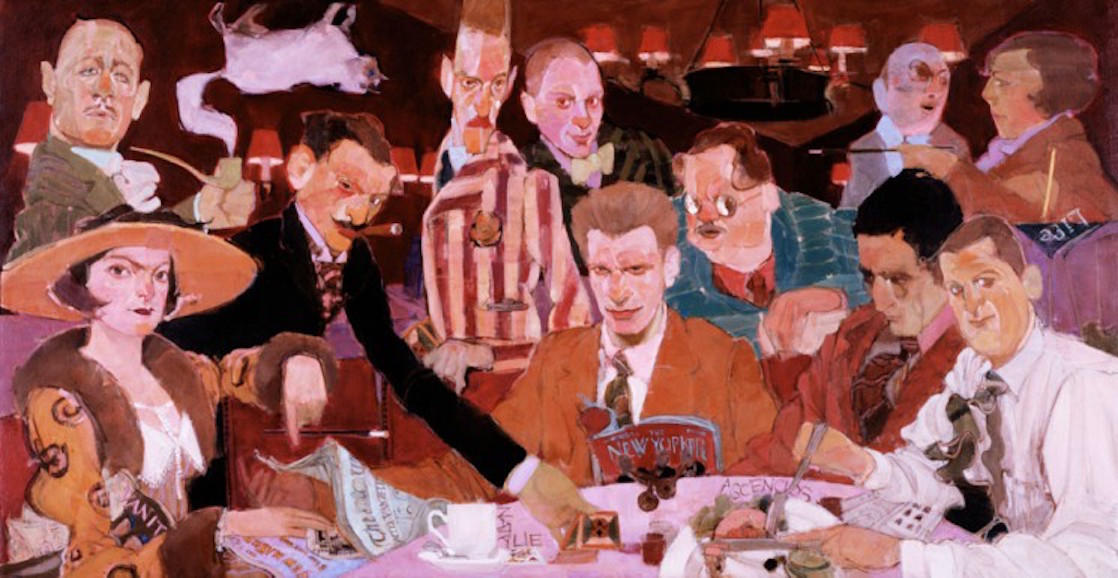
PODCAST The enduring legacy of the Algonquin Round Table and the brilliant (and sometimes forgotten) people who made it famous.
One June afternoon in the spring of 1919, a group of writers and theatrical folk got together at the Algonquin Hotel to roast the inimitable Alexander Woollcott, the trenchant theater critic for the New York Times who had just returned from World War I, brimming with dramatically overbaked stories.
The affair was so rollicking, so engaging, that somebody suggested — “Why don’t we do this every day?”
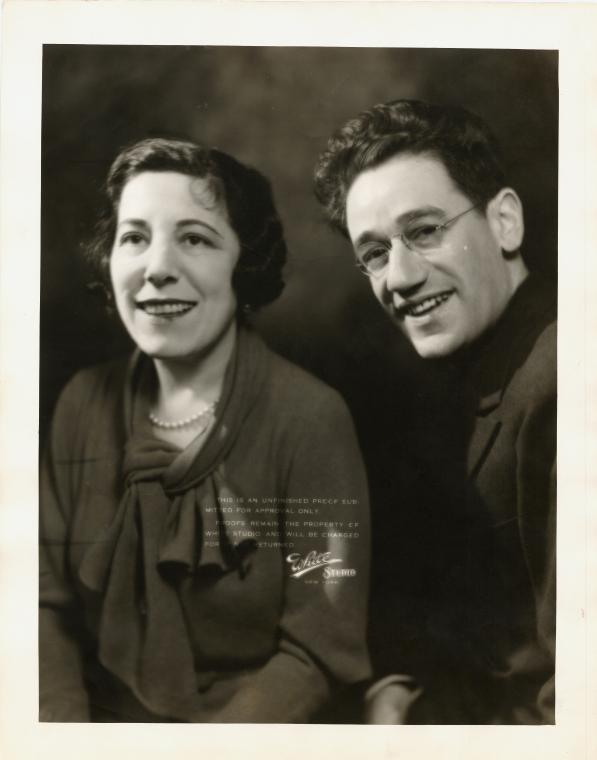
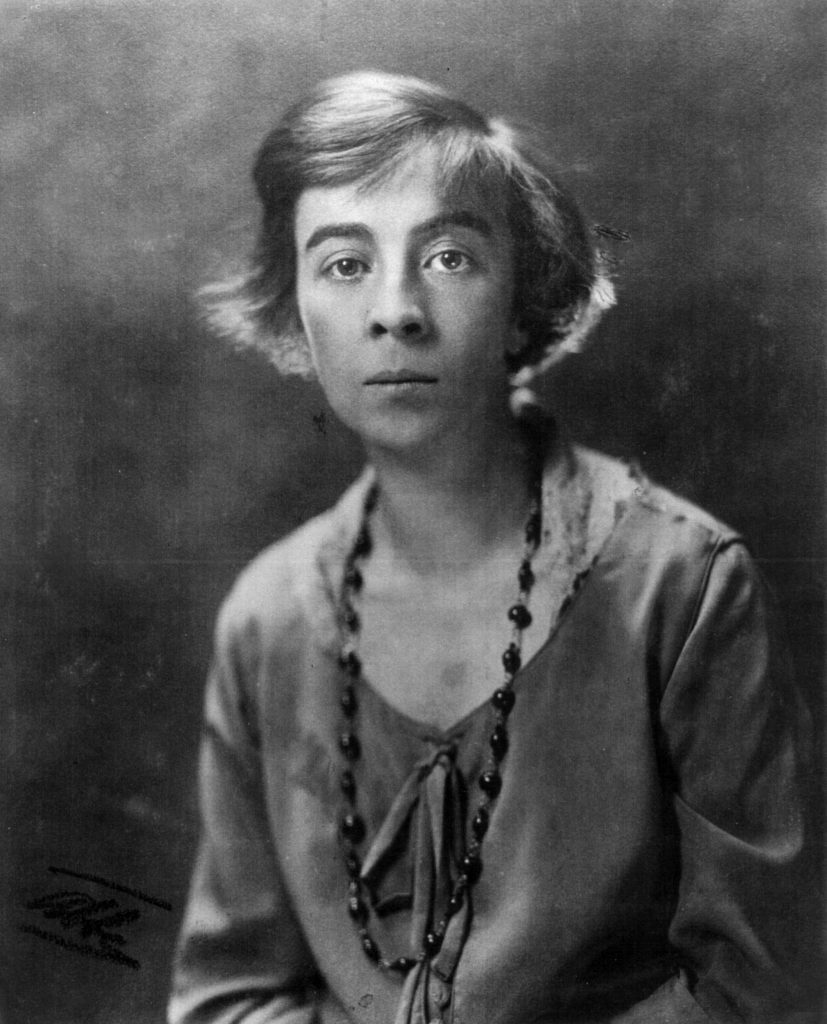
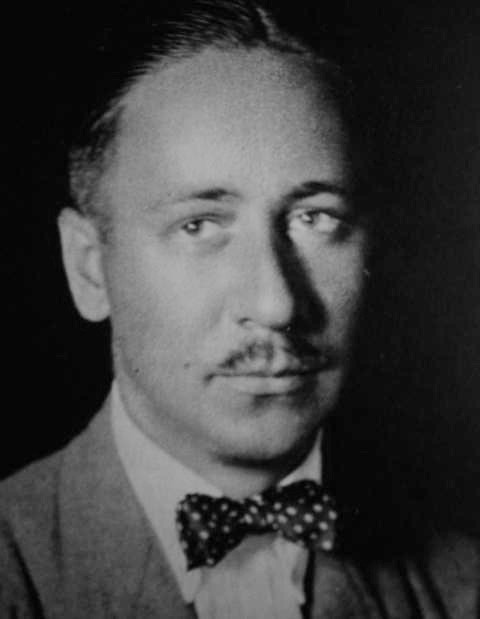
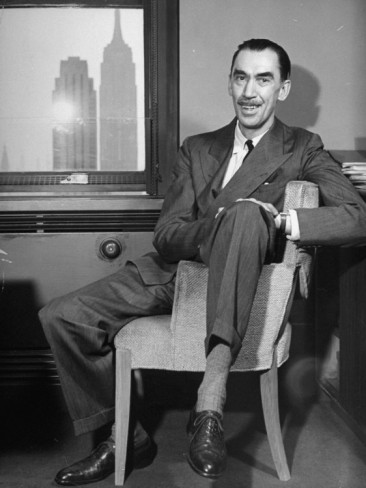
And so they did. The Algonquin Round Table is the stuff of legends, a regular lunch date for the cream of New York’s cultural elite. In this show, we present you with some notable members of the guest list — including the wonderful droll Dorothy Parker, the glibly observant Franklin Pierce Adams and the charming Robert Benchley, to name but a few.
But you can’t celebrate the Round Table from a recording studio so we head to the Algonquin to soak in the ambience and interview author Kevin C. Fitzpatrick about the Jazz Age’s most famous networking circle.
Are you ready for a good time? The first thing I do in the morning is brush my teeth and sharpen my tongue. — Dorothy Parker
The Bowery Boys: New York City History podcast is brought to you …. by you!
We are now producing a new Bowery Boys podcast every two weeks. We’re also looking to improve the show in other ways and expand in other ways as well — through publishing, social media, live events and other forms of media. But we can only do this with your help!
We are now a member of Patreon, a patronage platform where you can support your favorite content creators for as little as a $1 a month.
Please visitour page on Patreon and watch a short video of us recording the show and talking about our expansion plans. If you’d like to help out, there are five different pledge levels (and with clever names too — Mannahatta, New Amsterdam, Five Points, Gilded Age, Jazz Age and Empire State). Check them out and consider being a sponsor.
We greatly appreciate our listeners and readers and thank you for joining us on this journey so far. And the best is yet to come!
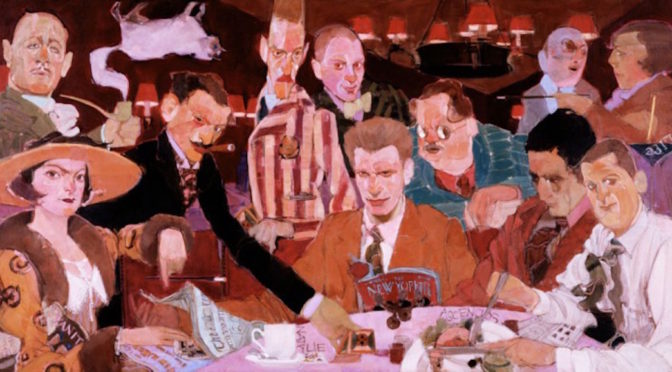
At top: The gorgeous modern painting by artist Natalie Ascencioswhich hangs over the spot where the original Round Table once sat.
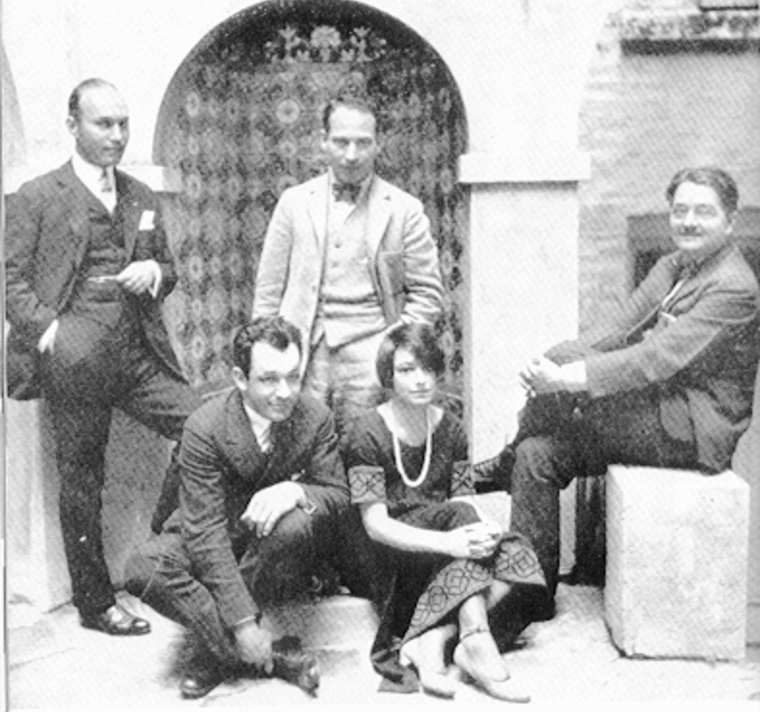
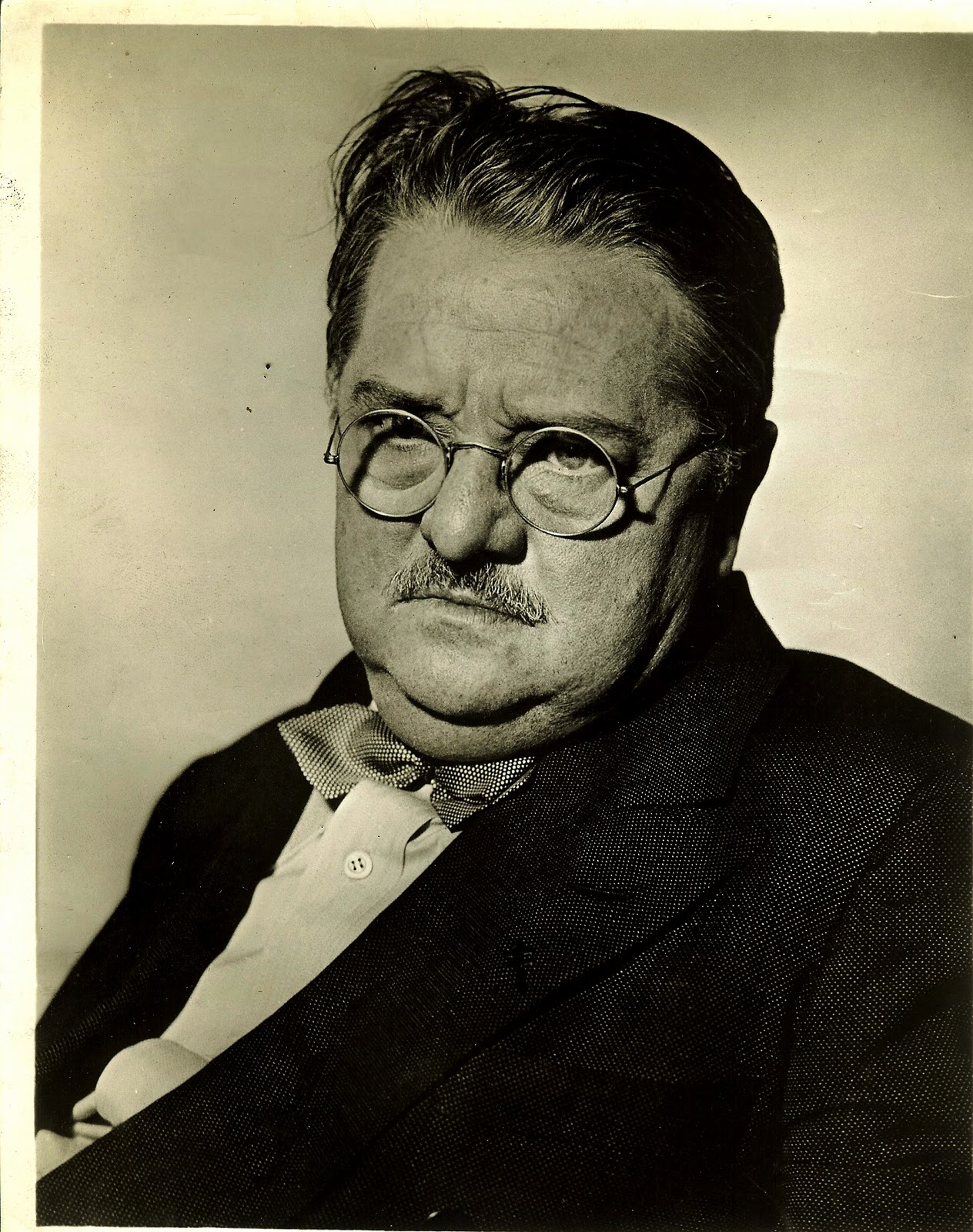
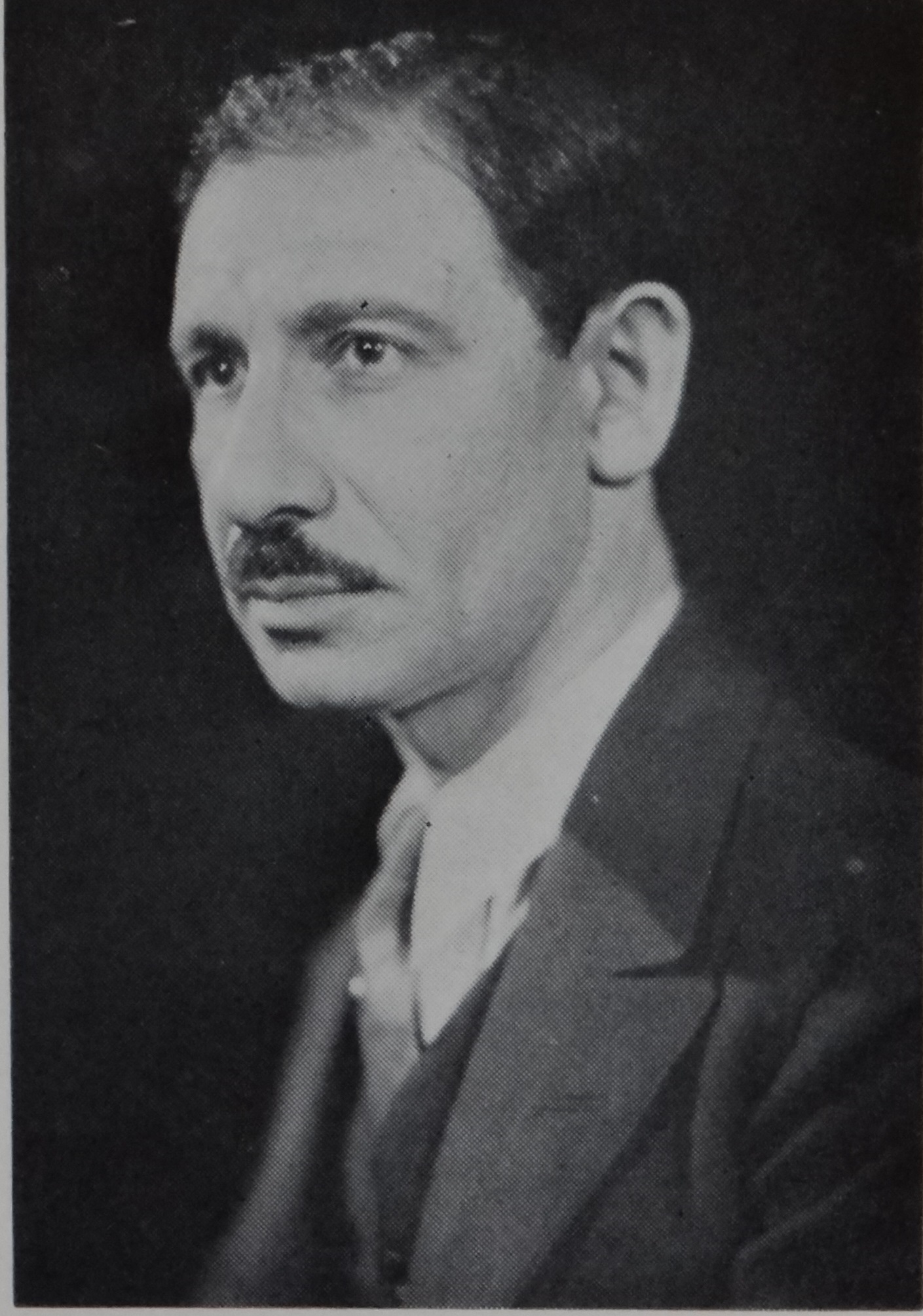
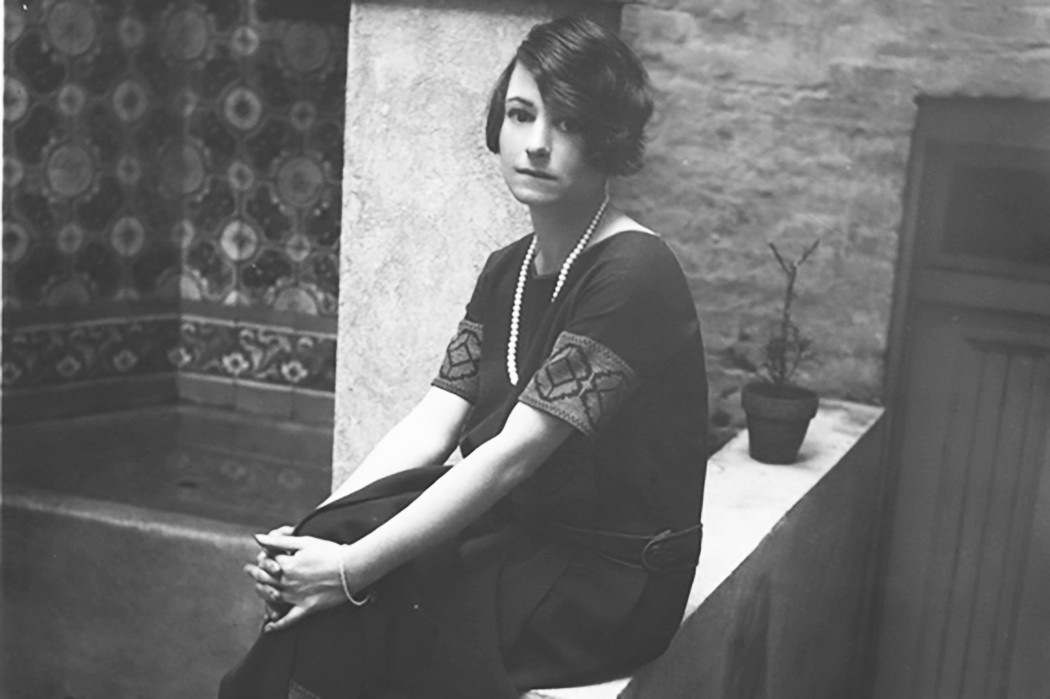
A few members of the Round Table including Art Samuels, Charles MacArthur, Harpo Marx, Dorothy Parker, and Alexander Woollcott
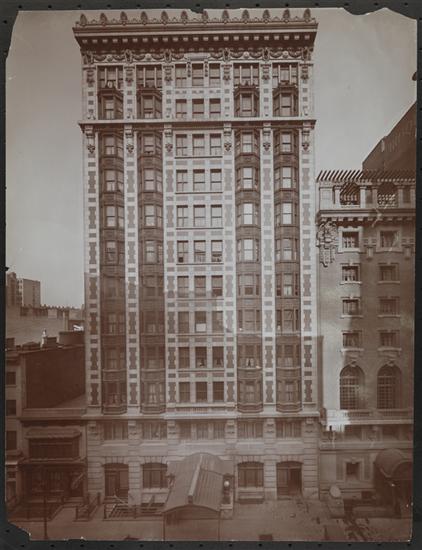
The Algonquin, as seen in the year 1907….
MCNY
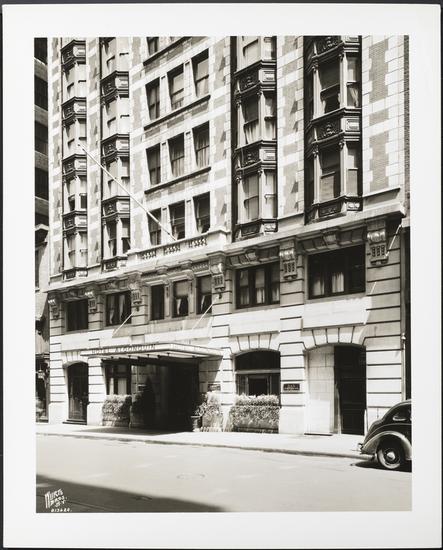
…..and 30 years later, in 1937.
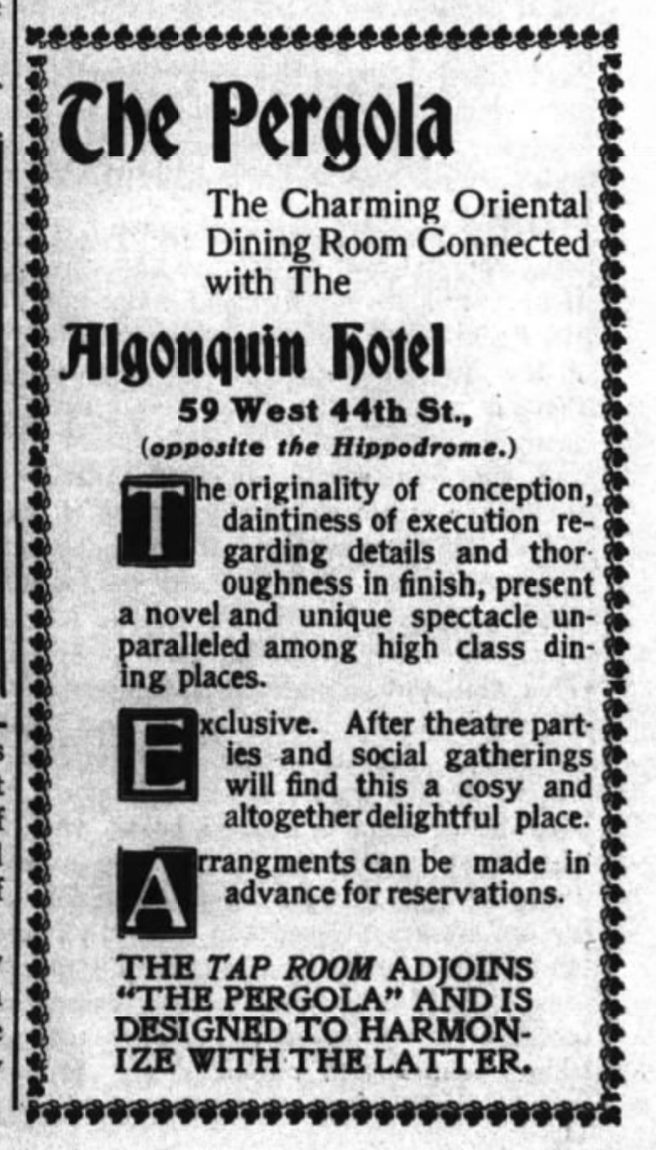
A 1906 advertisement in Brooklyn Life extolling the virtues of the Pergola Room (where the first group of Round Tablers first met) at the Algonquin Hotel.
Brooklyn Life, April 7, 1906
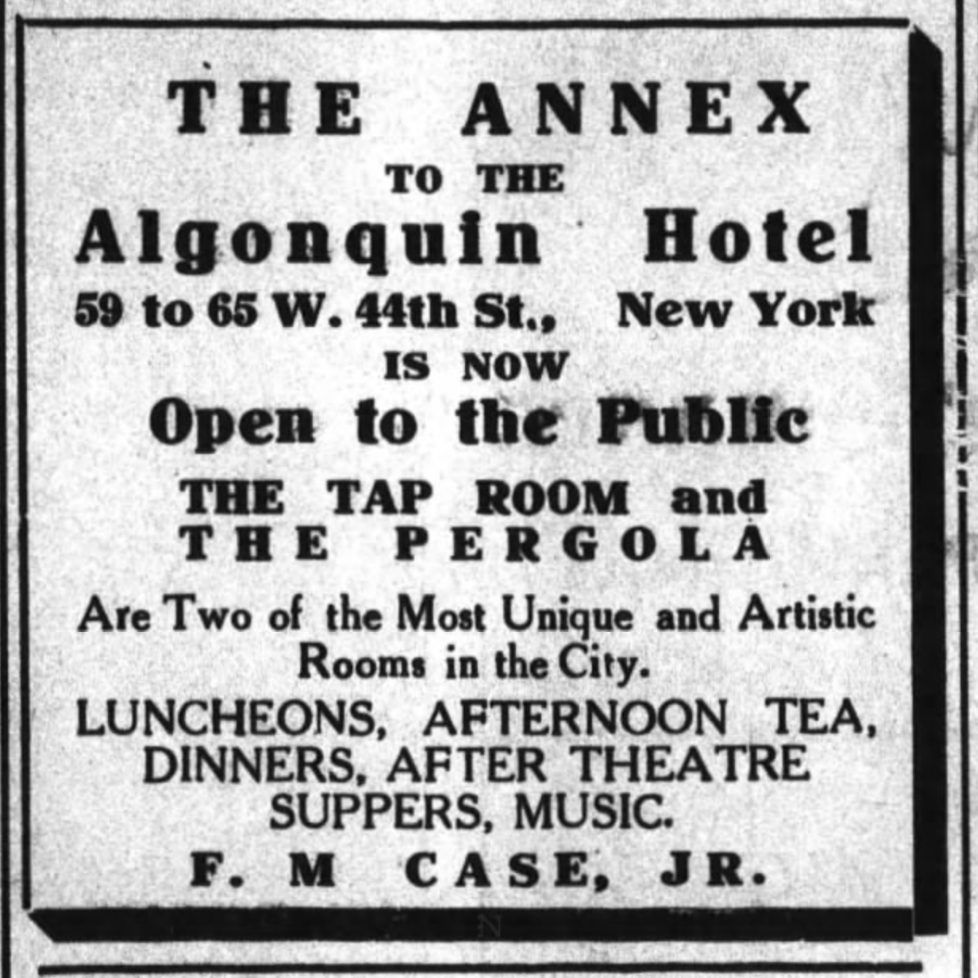
An ad featuring hotel manager Frank Case:
April 28, 1906
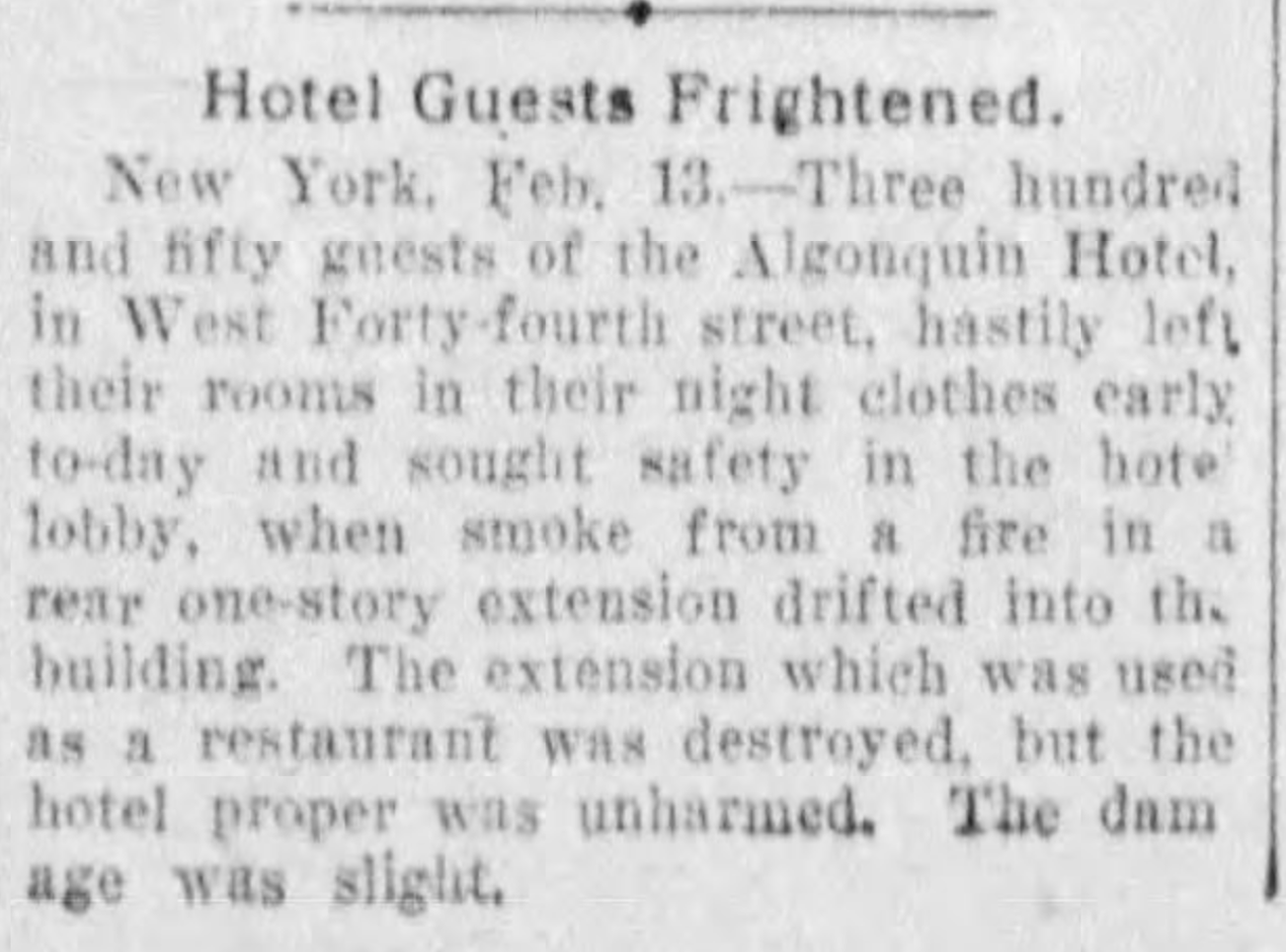
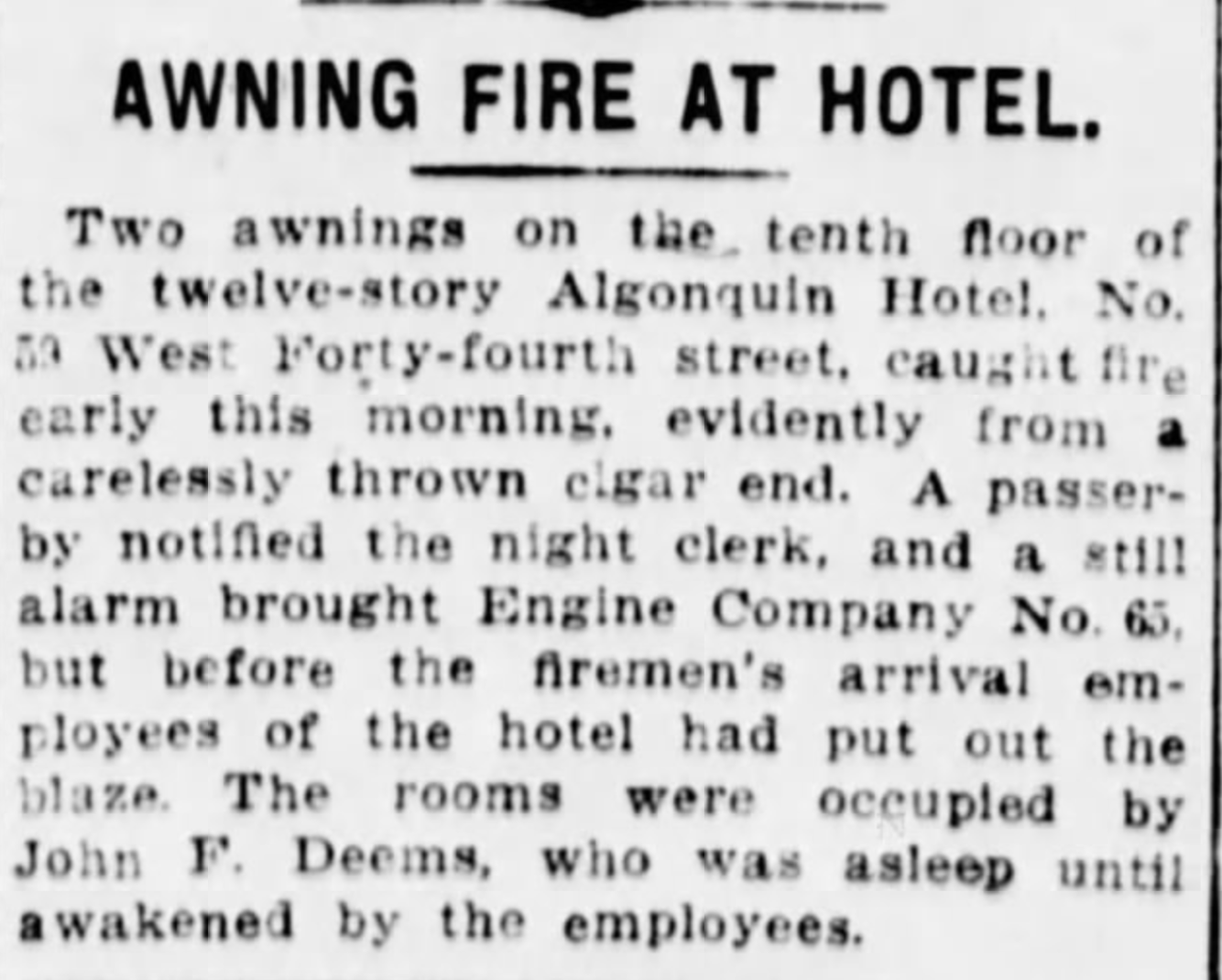
A couple stories of drama from the Algonquin’s early days:
Democrat and Chronicle, Rochester, NY, Feb 14, 1909 Evening World, August 5, 1911
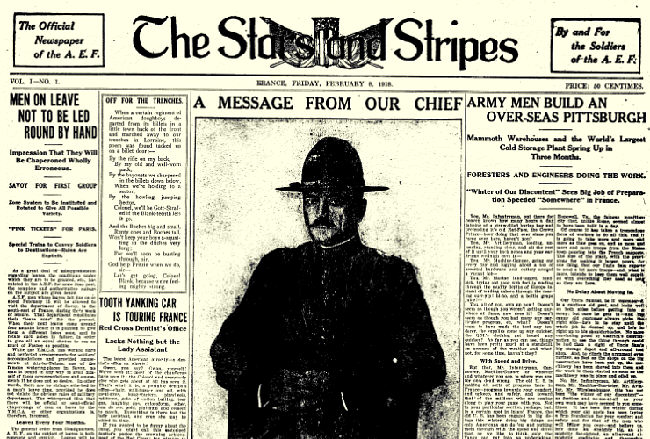
Stars and Stripes, the military newspaper which fostered the talents of several who would end up sitting around the Round Table.
A few members of the Round Table, as featured on the show….
THE FIRST PODCAST This is the history of the future.
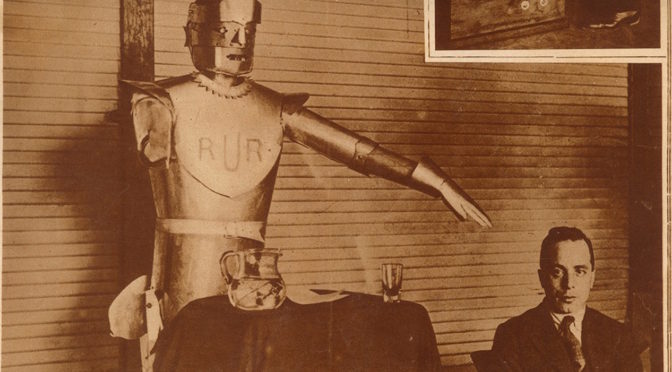
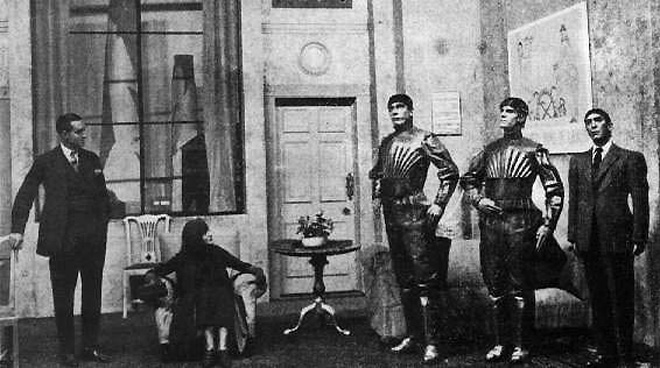
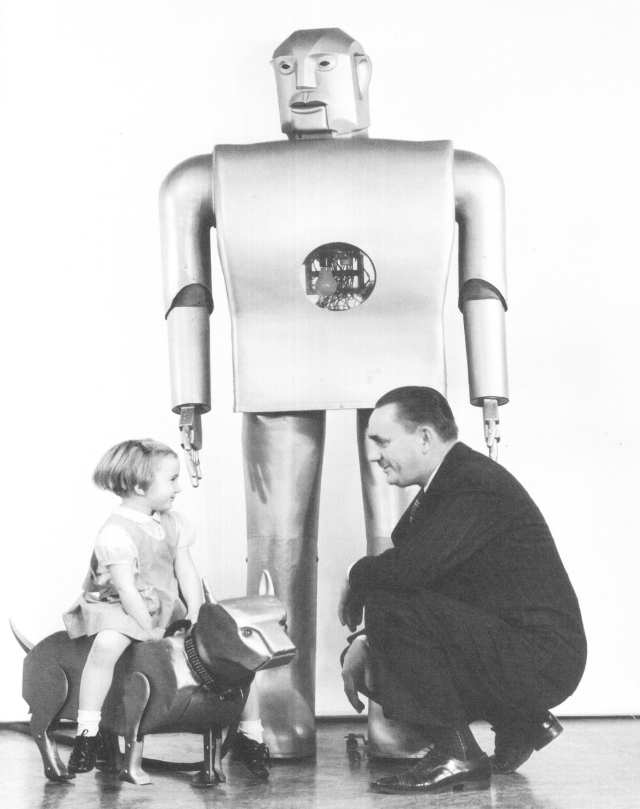
Robots conjure up thoughts of distant technological landscapes and even apocalyptic scenarios, but the truth is, robots are a very old creation, tracing back to the ancient world.
We can thank science fiction writers for inventing new serious ideas about robots, automatons previously relegated as mere amusement. But they remained an unimaginable concept — rendered in a corny, campy fashion in the 1940s and 50s — until the development of computing and cybernetics.
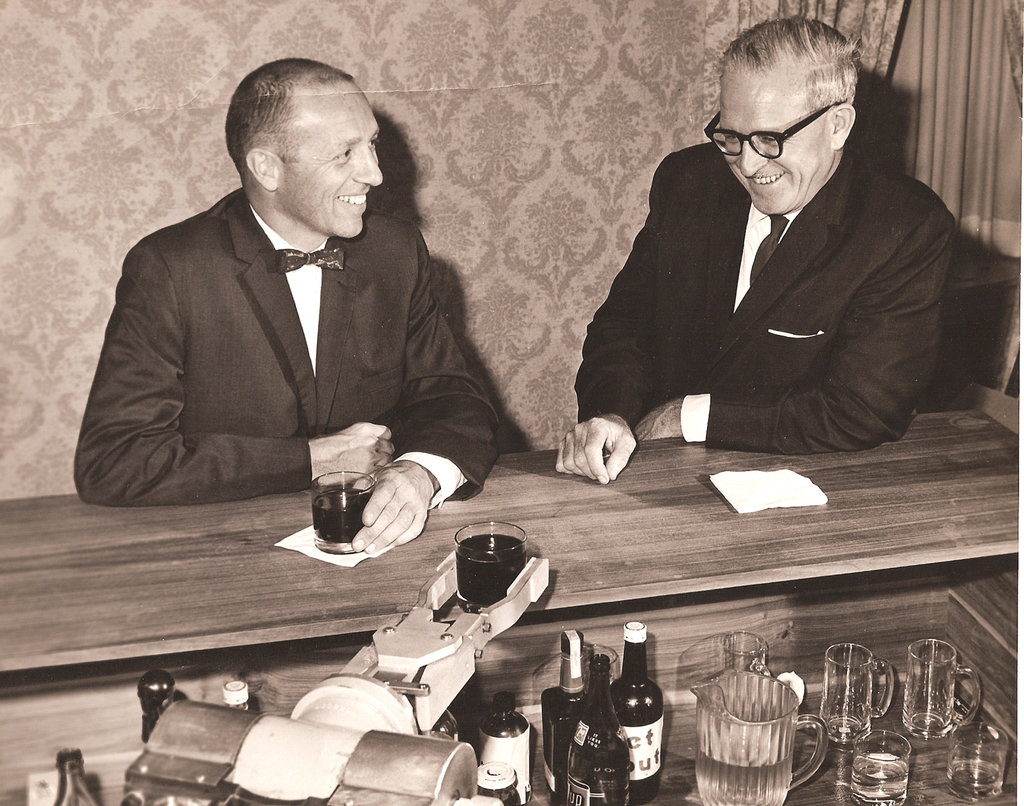
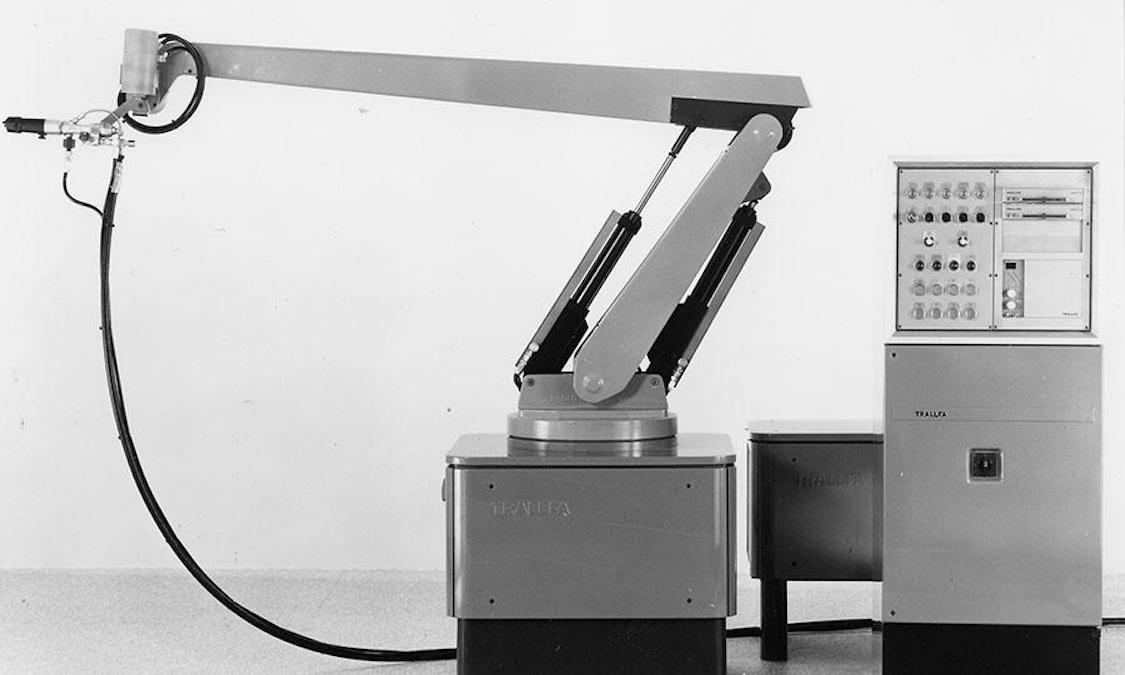
In 1961 the first industrial robot named Unimate not only changed the automobile industry, but it opened the door for the vast, realistic possibilities of robotics in our everyday lives.
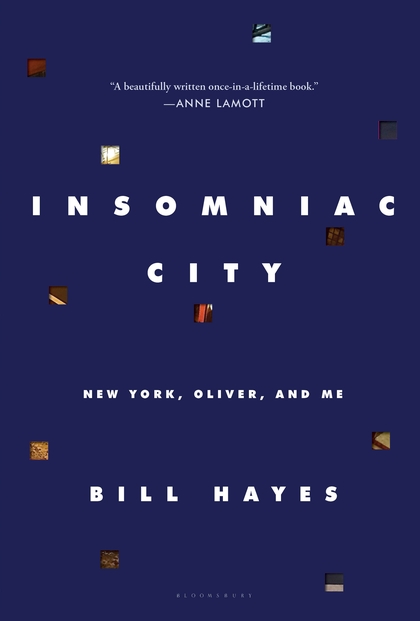
Writer and photographer Bill Hayes moved to New York in 2009 and experienced what many of us have already learned: Â the nights are magic and the subway is a wilderness.
He began jotting down his observations of peculiar experiences, the strange behaviors of others existing in their own little New Yorks. “Every car on every train on every line holds a surprise,” writes Hayes, “a random sampling of humanity brought together in a confined space for a minute or two — a living Rubik’s Cube.”
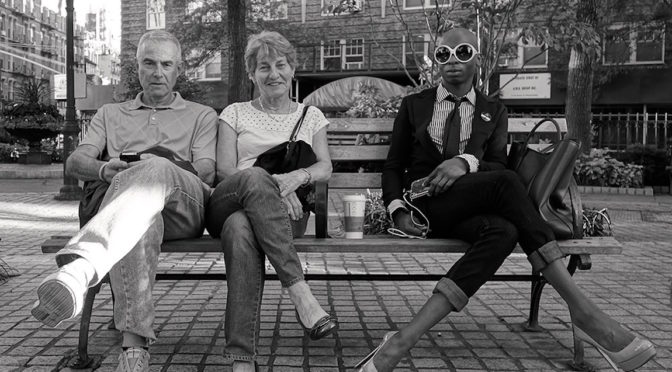
Above and below: A couple of the many strange and captivating photographs by Bill Hayes featured in the book.
During the day he would aim a friendly camera towards New Yorkers of all shapes and affinities. Hayes left San Francisco after the tragic death of his partner and fortunately seems to have fallen into New York like one of its many prodigal souls. His experiences aren’t unique; they mirror yours and mine.
Except for the fact that, oh yes, he falls in love with a noted British neurologist and author — the late and dearly missed Oliver Sacks.
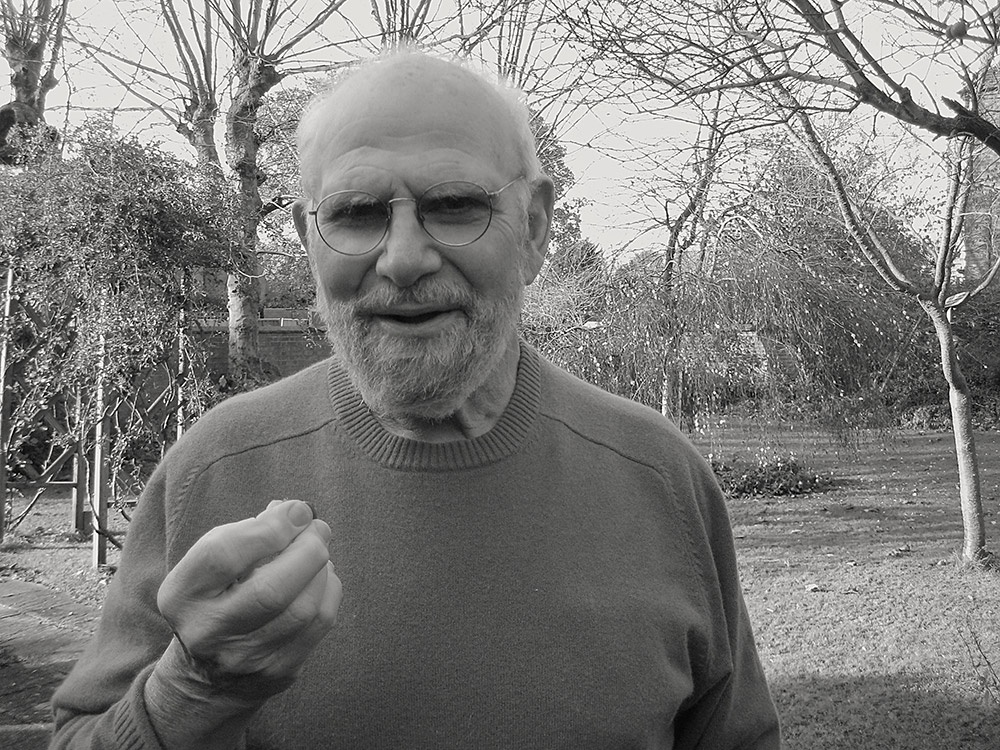
Oliver Sacks, photographed by Bill Hayes
In Insomniac City: New York, Oliver and Me, Hayes’ new memoir and urban rumination, we’re presented with a bird’s eye view of New York’s universal appeal to outsiders, paired with a microscopic look at two of those outsiders.
Sacks, a celebrated author of The Man Who Mistook His Wife For A Hatand Awakenings (the basis of the Robert De Niro/Robin Williams film), was a guarded individual, coming out to himself late in life and socially removed from non-professional affairs.
Hayes introduces us to Sacks’ extraordinary worldview, an intellectual who brought critical thinking into the slightest of gestures and loved going to the roof to drink wine out of the bottle. The love and reverence Hayes has for Sacks is clear, referring to him throughout the text as just ‘O’, giving us their intimate moments only when they illuminate something of his genius.
Insomniac City is a fragmentary, often poetic look at love of a city and of an individual, told in notes and journal entries. It’s a book one could easily devour in a single sitting but I suggest prolonging the experience, reading a little at a time, allowing the individual anecdotes to inform your own adventures out in the big city.
It take on a set of colossal tasks; it can be poem, a documentary and a tribute on just a single page. Hayes is giving us permission to stare into his life — and into the lives of others — in the same durations of time that we experience each other in our daily lives. Â In those flash moments of bonding on mass transit or on the street, where we may imagine what another person is thinking and feeling before they vanish.
And knowing, in his vignettes, that he’s exposed an intimacy with strangers, he then bares his own to us, his unabashed mix of love, friendship and bewilderment to a wonderful, complicated man, who also came and went.
INSOMNIAC CITY New York, Oliver and Me Bloomsbury Publishing
PODCAST The story of a brutal murder in a New York brothel and the prime suspect’s controversial trial which captivated Americans in the 1830s.
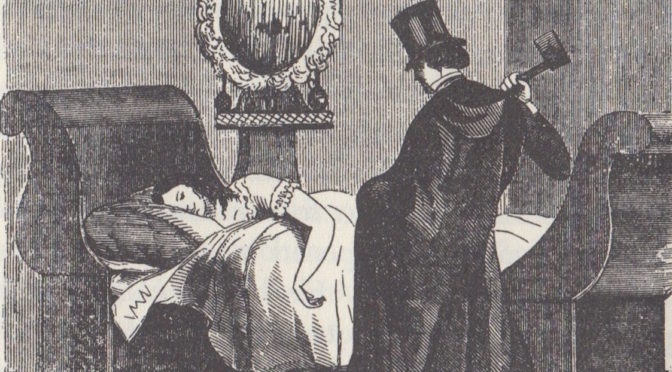
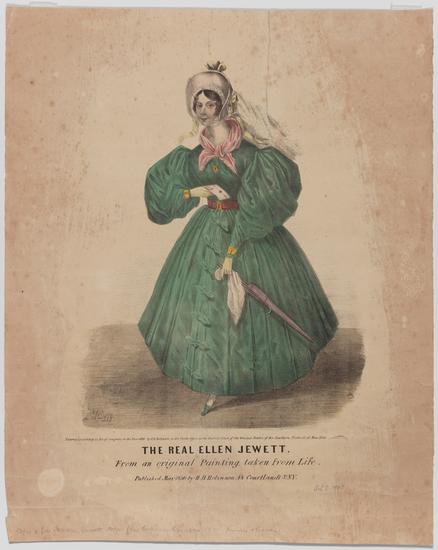
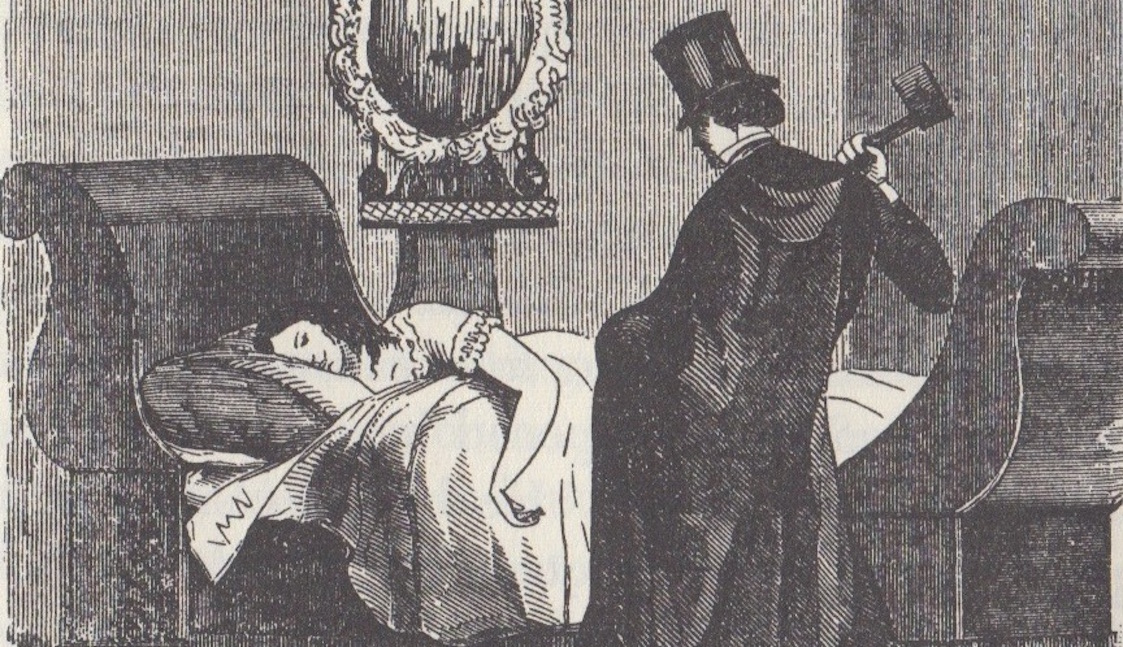
In the spring of 1836, a young woman named Helen Jewett was brutally murdered with a hatchet in a townhouse brothel on Thomas Street, just a few blocks northwest from New York City Hall.
[geo_mashup_map]
This was not a normal crime. Helen was a prostitute of great beauty and considerable intelligence, making her living in a rapidly transforming city. Among her client list were presentable gentlemen and rowdy young men alike — their kind fueling the rise of illicit pleasures throughout New York City in the 1830s.
This was the era of the sporting man. Young single men with a little change in their pocket hit the streets of New York after dark, looking for a good time. For some single young women struggling to survive, the sex industry — from the ‘high end’ brothels to the grimy upper tiers of the theater — allowed them to live comfortable, if secretive, lives. But it placed many in great danger.
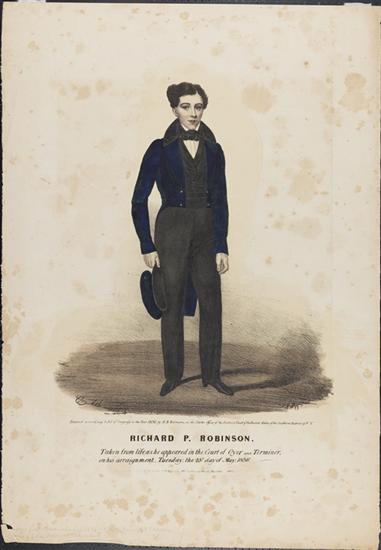
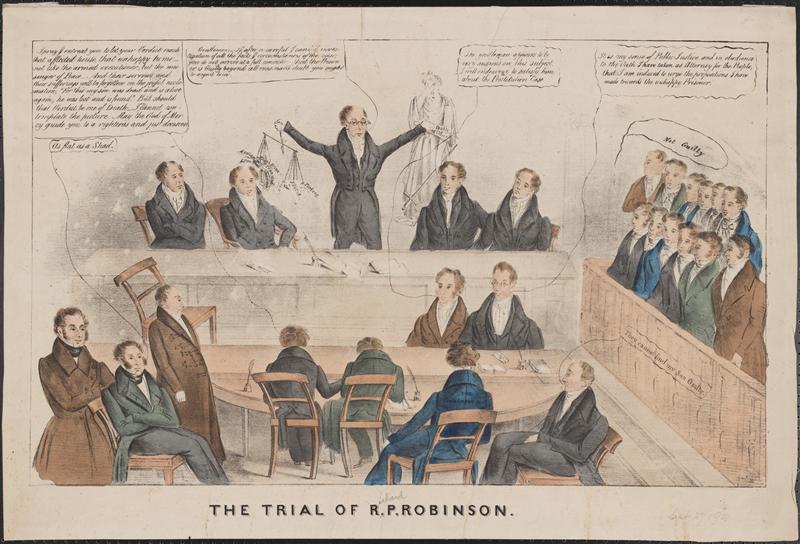
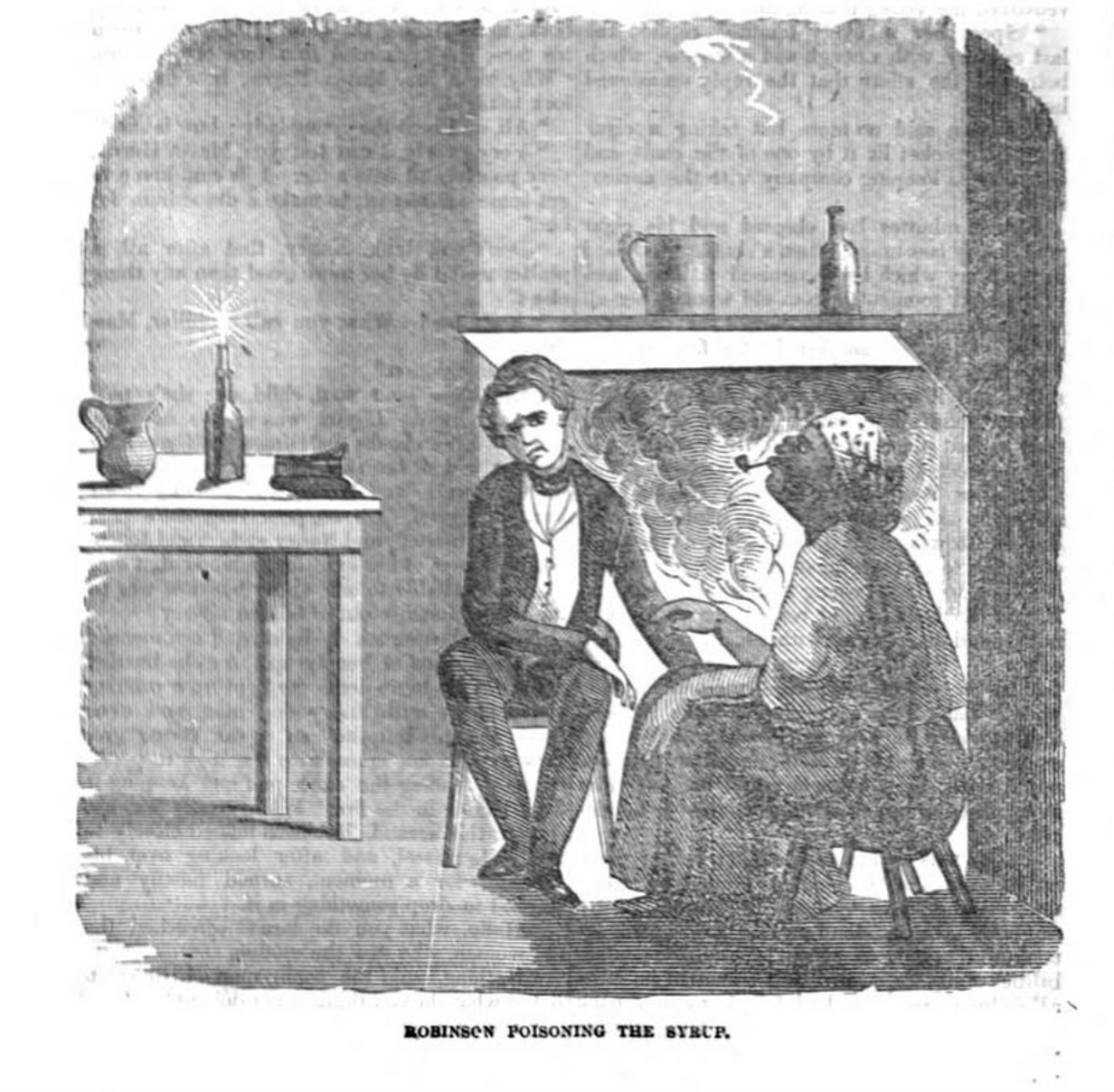
The prime suspect for Helen’s murder was a young Connecticut man named Richard P. Robinson who worked at a respectable New York firm. His trial would captivate New Yorkers and even interest newspaper readers around the country. But would justice be served?
ALSO: Find out how this incident helped shape the nature of American journalism itself.
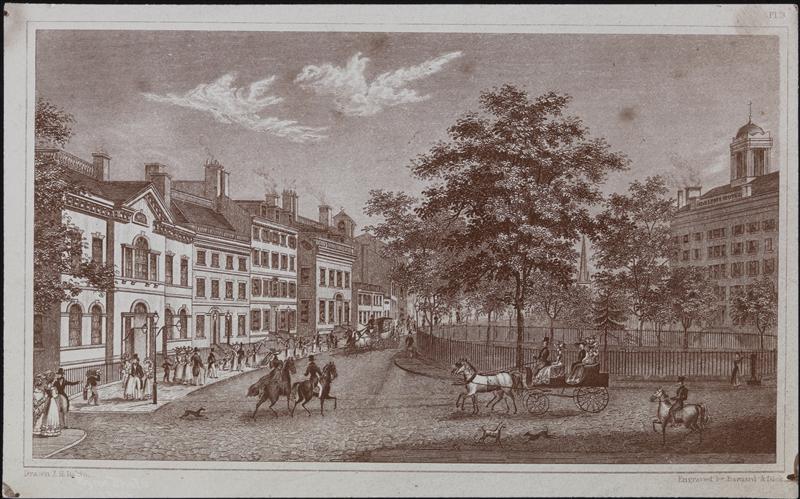
New York City in 1830 — at Broadway and Bowling Green. The area just northeast of here would be ravaged by the Great Fire of 1835.
MCNY
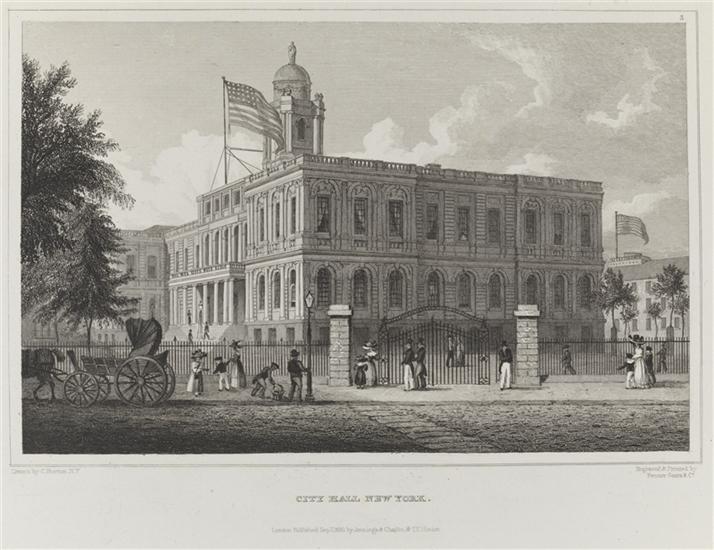
New York City Hall has it looked in 1830. The events of this story take place just a couple blocks to the north west of here!
MCNY
The beautiful Helen Jewett (or Ellen Jewett), “from an original painting taken from life.”
From an original Painting taken from Life. Published May 1836, by H. R. Robinson, 48 Courtlandt St. N.
The prime suspect Richard Robinson, in his wig:
Taken from life as he appeared in the Court of Oyer and Terminer, on his arraignment, Tuesday, the 25th day of May, 1836. Entered according to Act of Congress in the Year 1836, by H.R. Robinson, in the Clerk’s Office of the District Court of the United States of the Southern District of N.Y
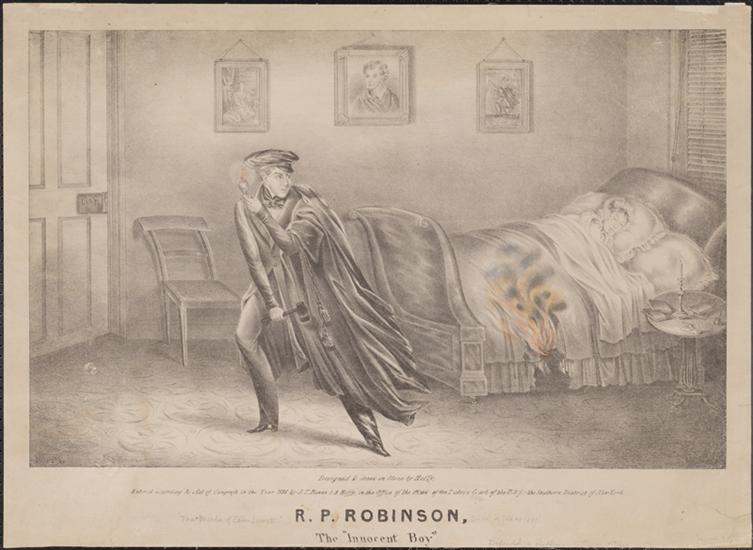
Much of the extant imagery produced following the trial was obviously highly critical of Robinson, mocking him as ‘an innocent boy’, a phrase which was used during the trial.
Courtesy MCNY; Alfred M. Hoffy (1790-1860) John T. Bowen (ca. 1801-1856? ) DATE:1836 Designed & drawn on Stone by Hoffy. Entered according to Act of Congress in the year 1836 by J. T. Bowen & A. Hoffy, in the Office of the Clerk of the District Court of the U.S. for the Southern District of New – York
MCNY
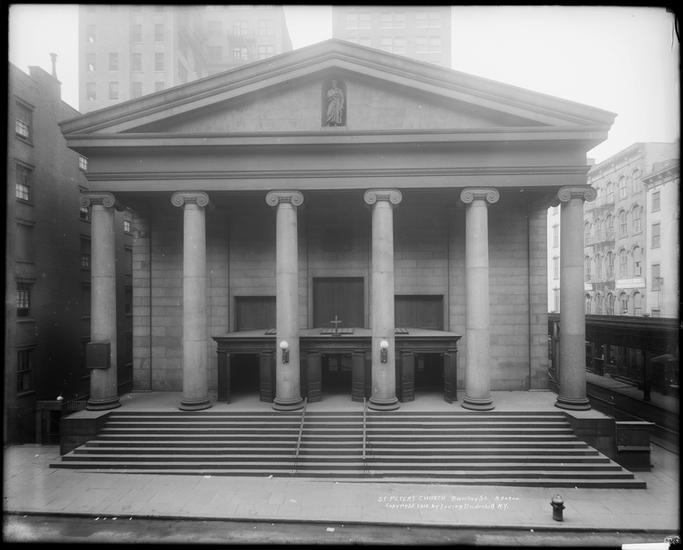
One of the oldest existing buildings in the Tribeca/upper WTC district is St. Peter’s Church — seen here in a 1916 photograph — which began construction (to replace an older building) in 1836, the year of Helen Jewett’s murder. It sits in the region of the old prostitution district known as ‘the Holy Ground’.
MCNY
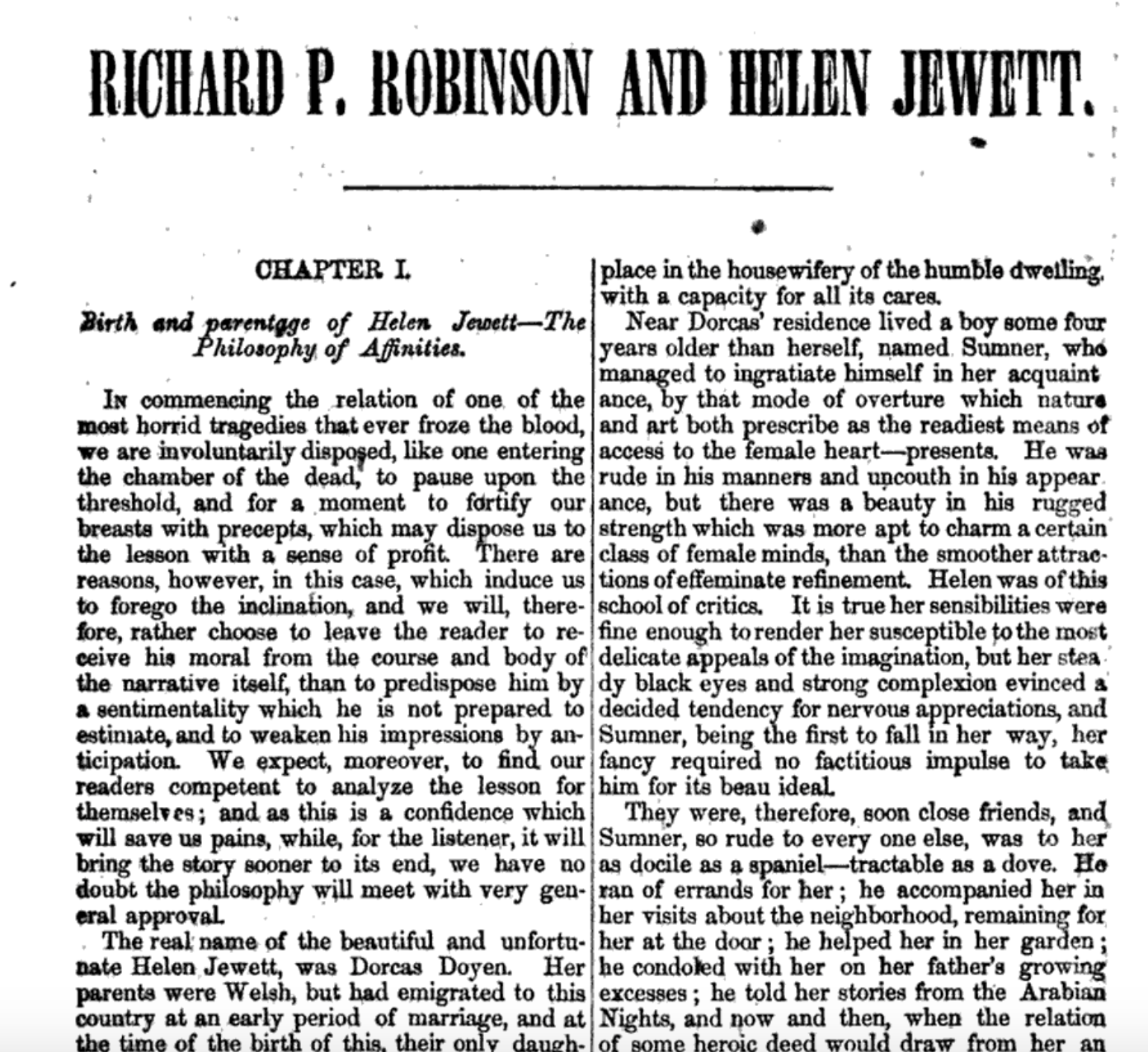
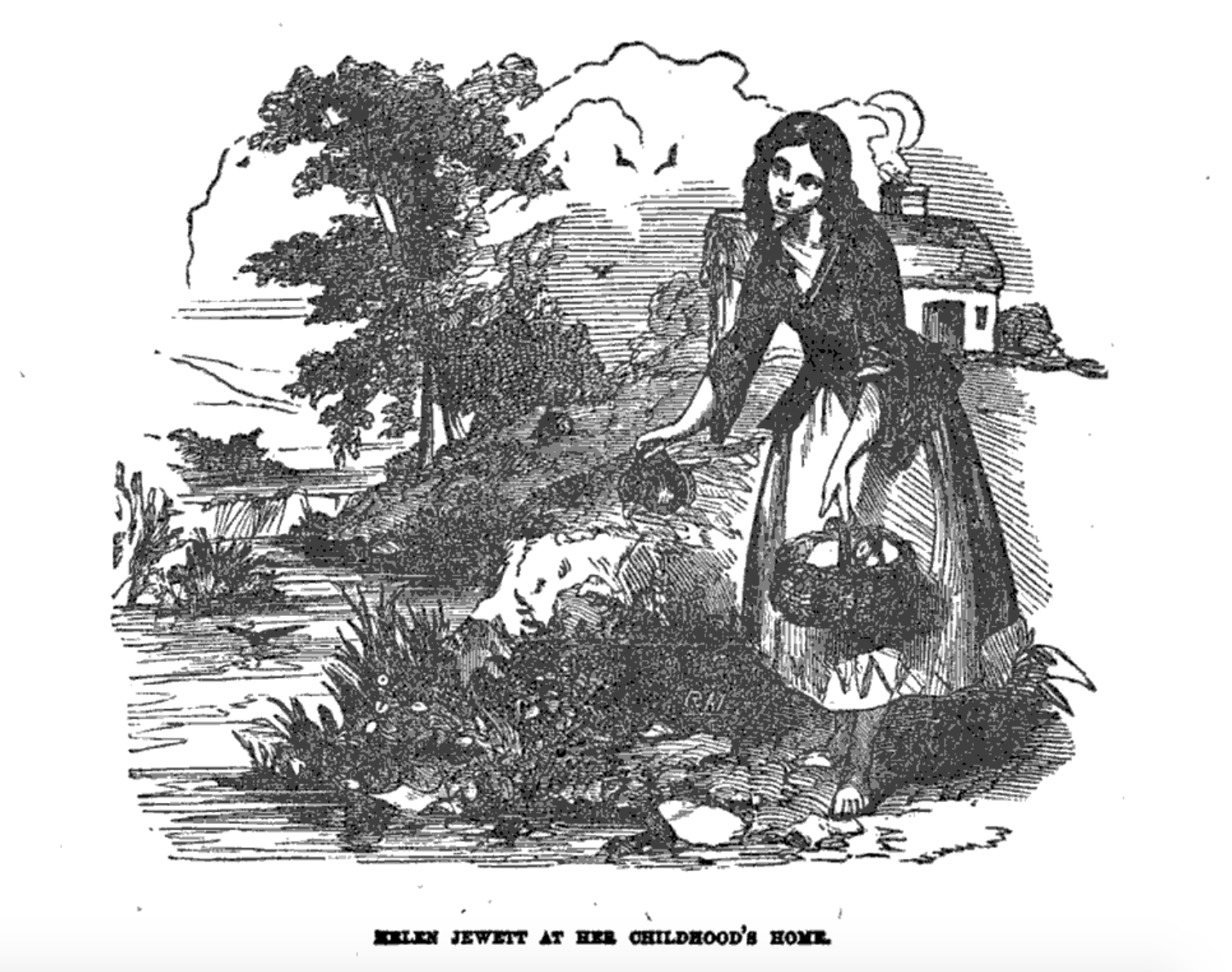
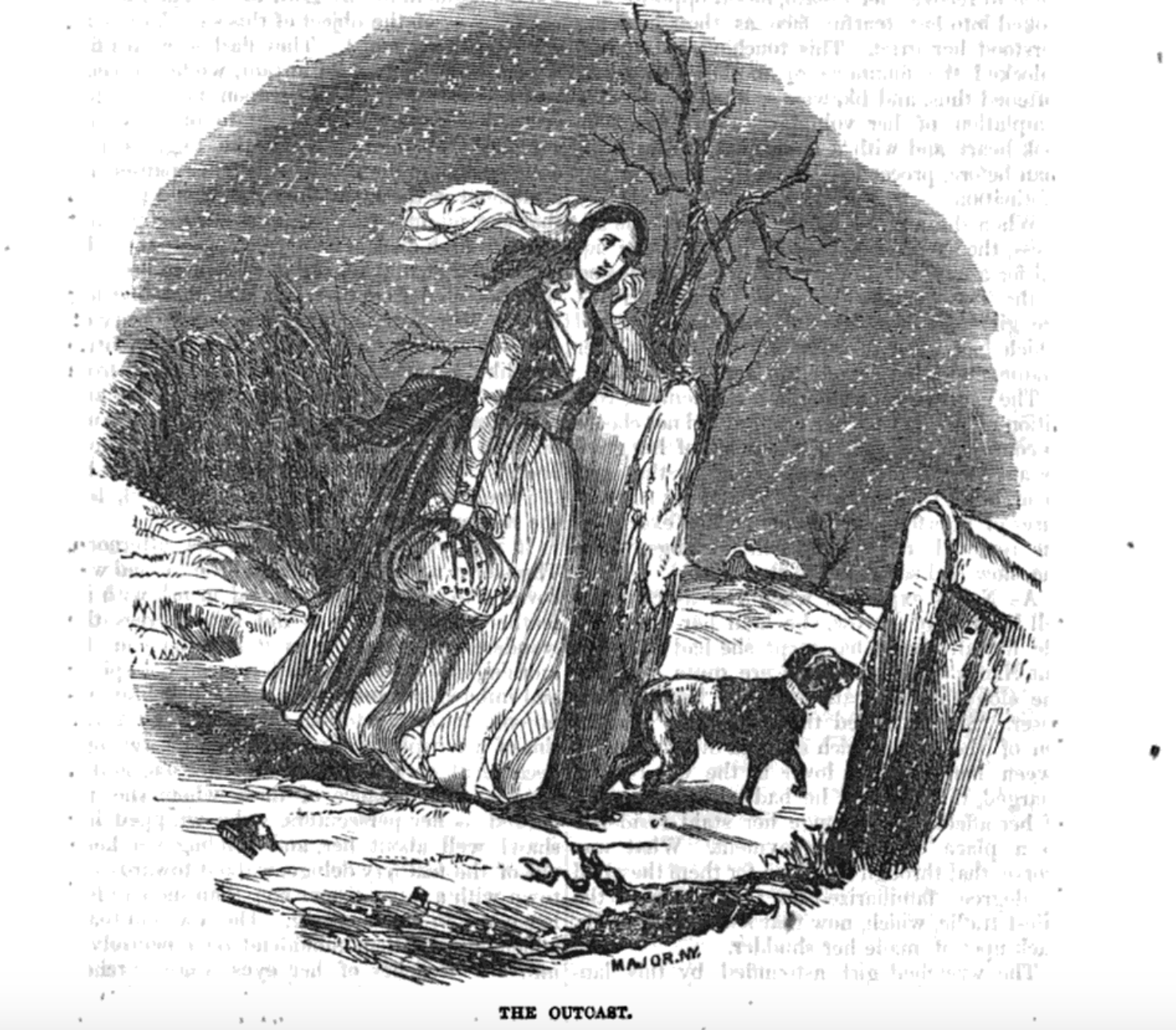
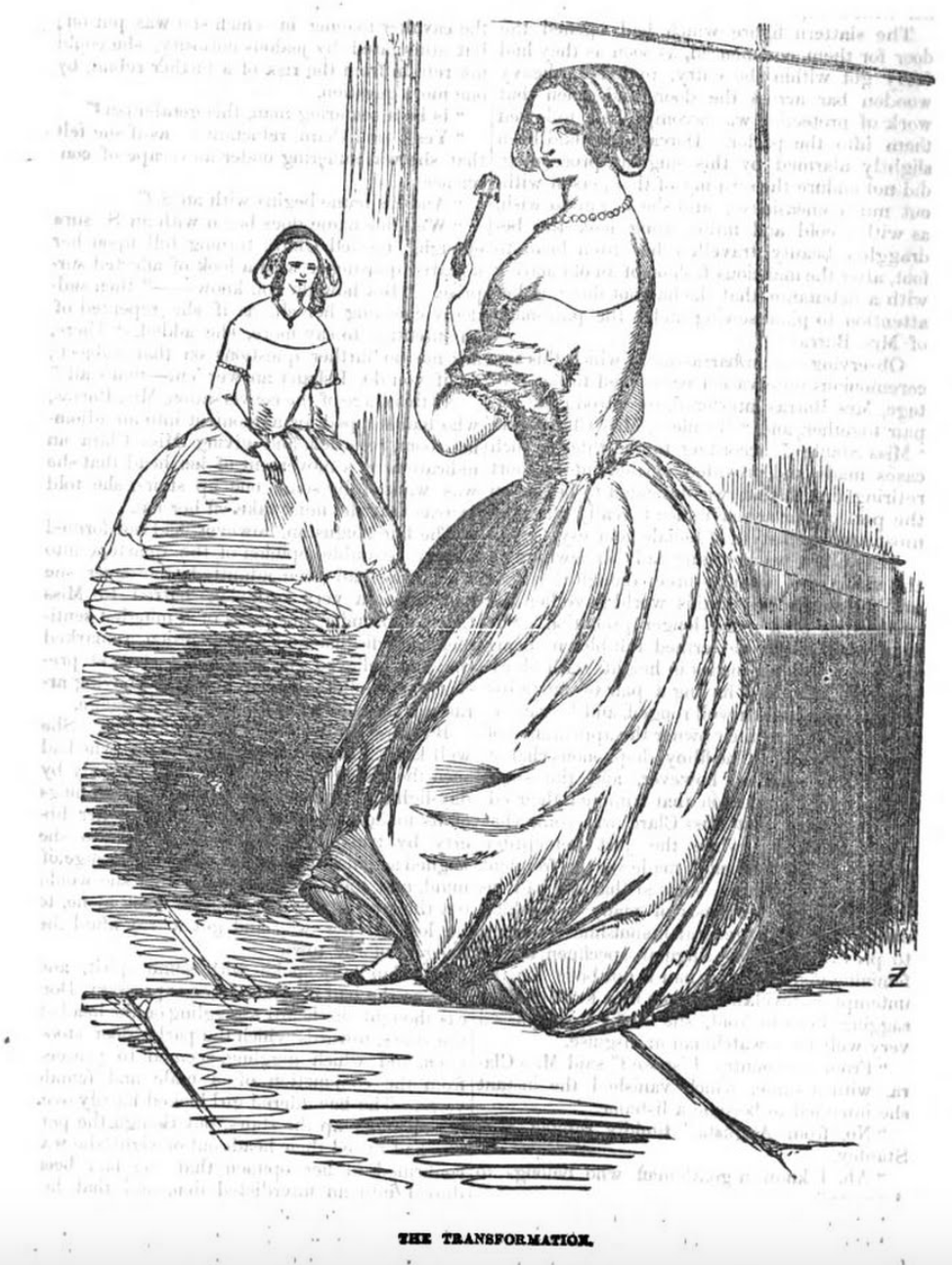
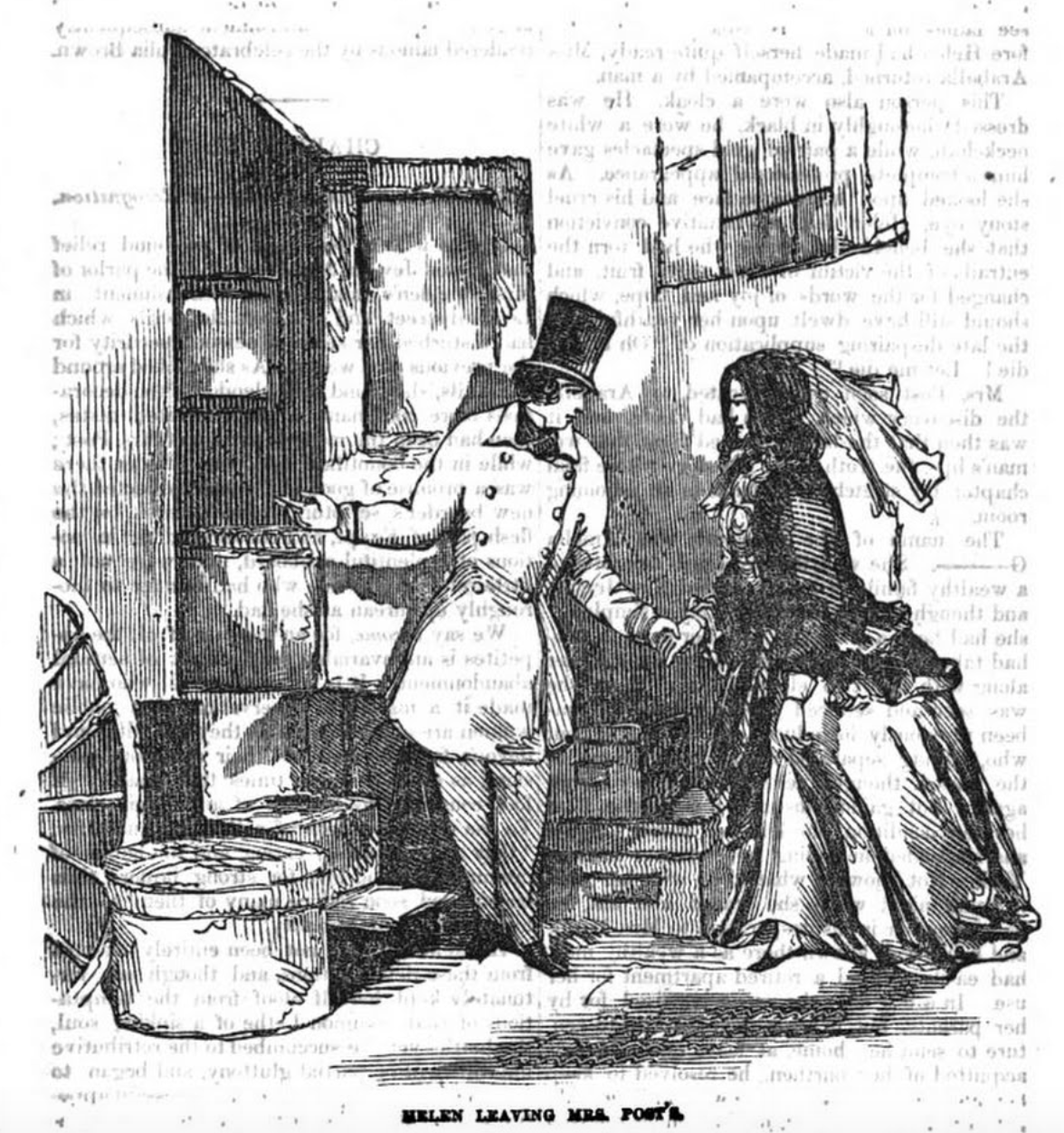
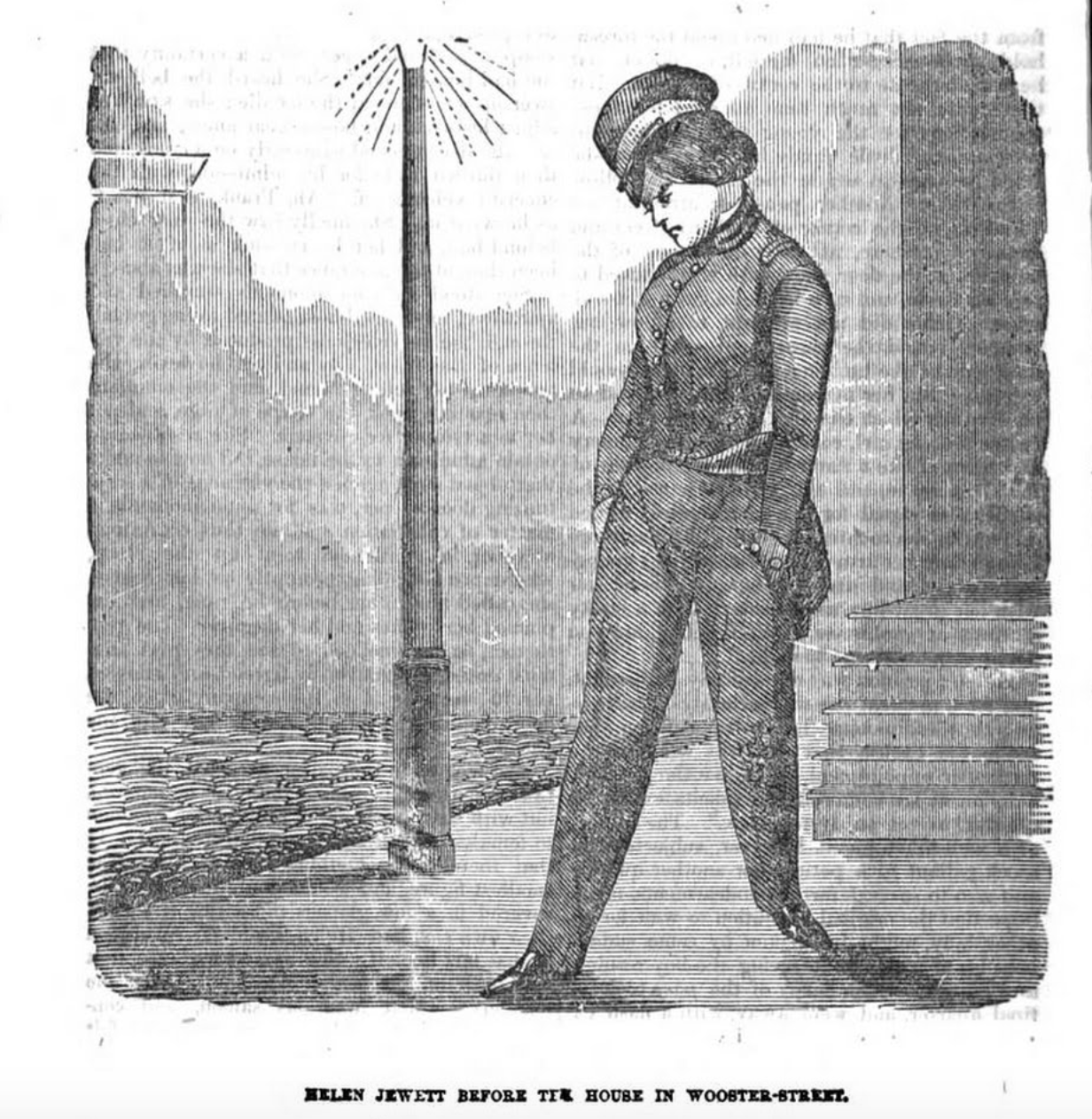
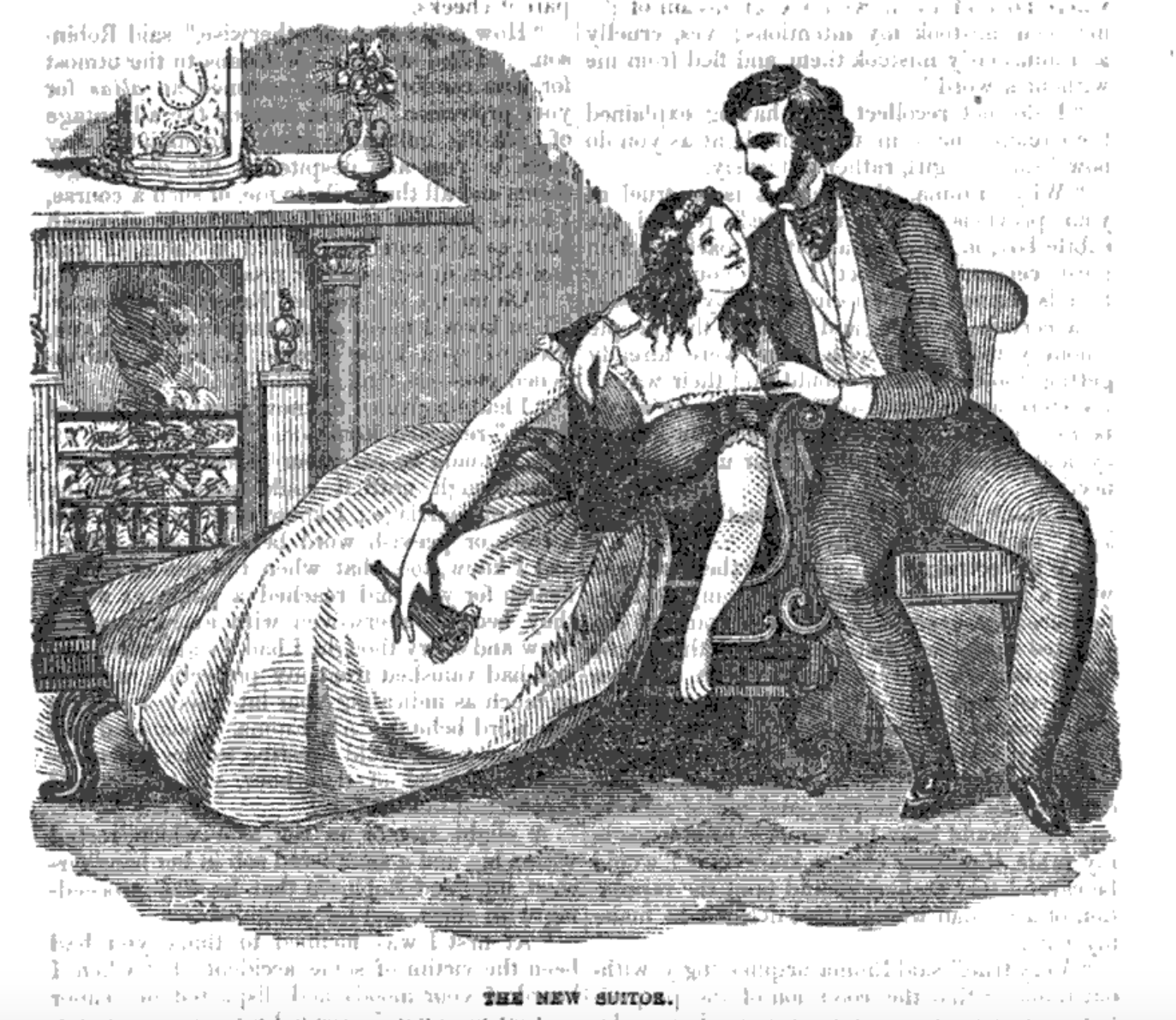
Some images from the Life of Helen Jewett, one of several pamphlets which came out after the trial, dramatizing the lives of Jewett and Robinson. Most of the tale was fabricated for dramatic purposes.
Many of the bars and taverns found on the Bowery today are unfortunately clean, friendly and even trendy establishments, wonderful safe places to meet with friends and family. Not a ruffian or scoundrel in sight. Where’s the fun in that?!
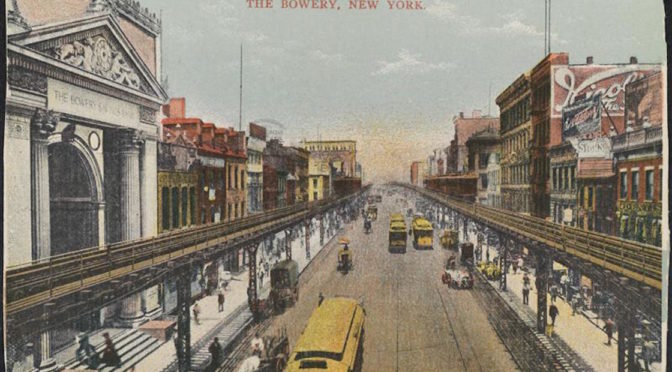
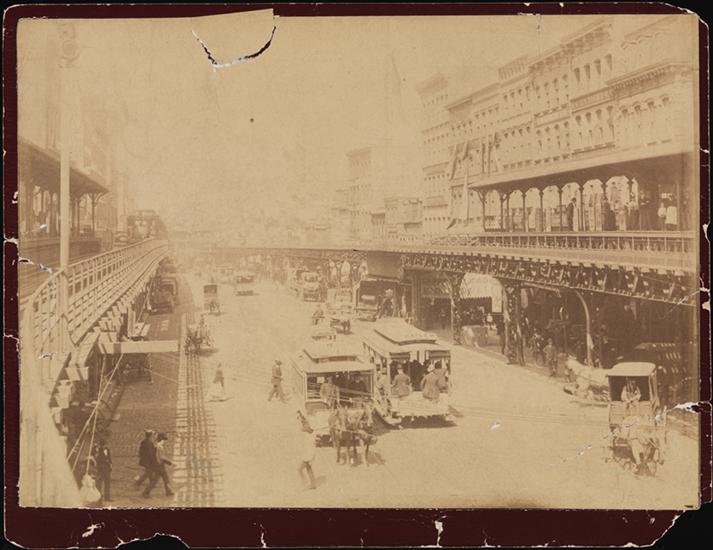
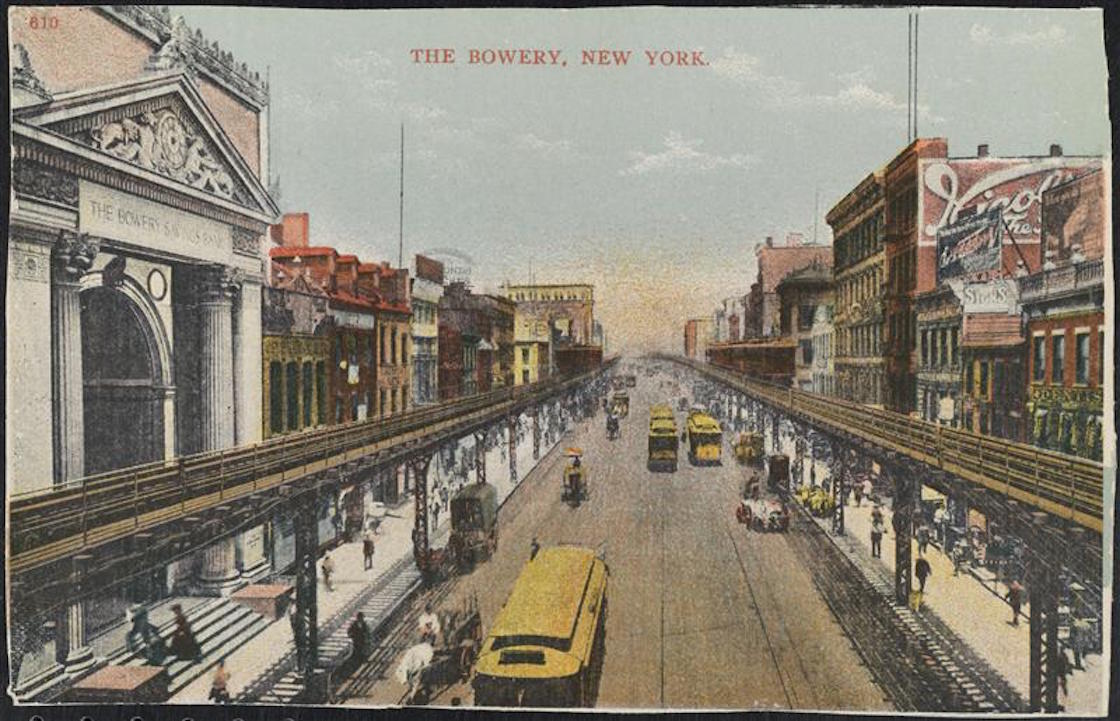
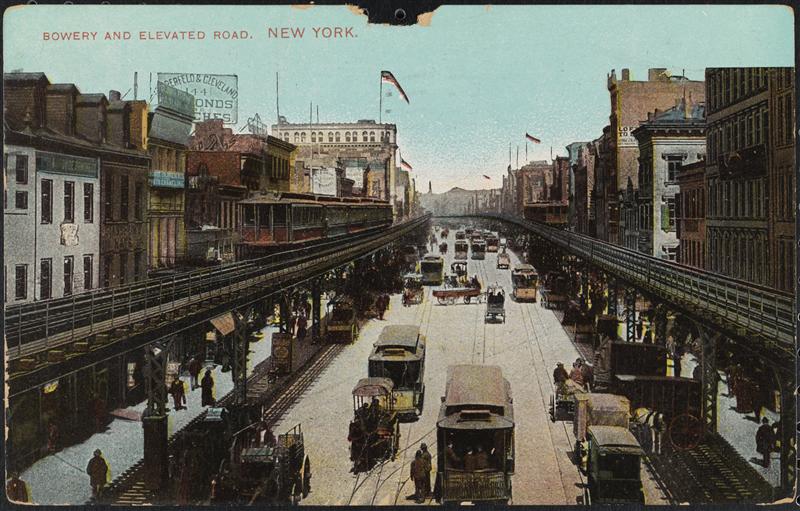
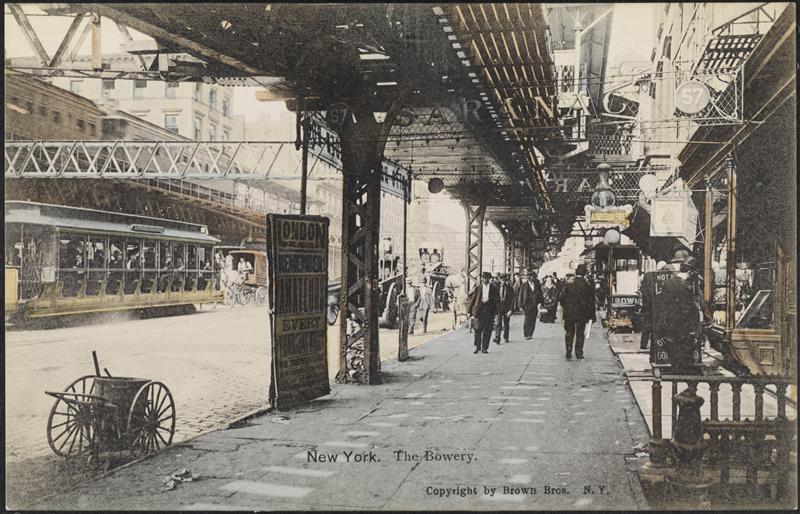
Of course, for most of its history, the Bowery was one of the most notorious places in America, the location of great vice and debauchery — gambling dens, brothels, dance halls, dime museums, saloons full of soused drinkers hovering around a boxing ring. For many decades, an elevated train line turned the Bowery into a shadowy haven for illicit shenanigans of all sorts.
And so may I turn your attention to an article which ran in the New York Tribune, on April 12, 1903, that touted New York’s reform efforts along the Bowery. This report proudly lists the Bowery’s most “evil resorts” which were successfully wiped away thanks to efforts by Mayor Seth Low.
While these would surely be dangerous places to visit, you can’t deny that these lurid newspaper descriptions make even the most lowly of dives seem rather interesting.
With each address, I’ve put a link to Google Maps, revealing what stands on that spot today. In many cases, the building itself is still standing:
15 Bowery “Known to the criminal ‘under world’ as Spanish Mamie’s. Took its name from the presence of a Spanish girl, the associate of many crooks. This was a dive of the lowest sort.â€
19 Bowery “A back room ‘ginmill,’ the headquarters of ‘Boston Charlie,’ a well known character, and his even more notorious woman pal ‘Boston Clara.’ Boston Charlie was known as a ‘first rate cane man’, that is, a beggar who pretended to be a cripple. He served many terms in the workhouse and gave this place a reputation in his now line. It was the resort of ‘panhandlers’.”
Below: An 1880 photograph of the Bowery at Canal Street
MCNY
25 Bowery“The New-York Tavern.  Here was  planned a brutal robbery and assault on a Brooklyn jeweler. A low order of ‘crooks’ made this their ‘hang out.’â€
101 Bowery “A common backroom resort, a place of assignation and the gathering place of ‘crooks’ of an inferior order.”
Below: The Bowery in 1915. The establishments listed below would have been on this block
Courtesy MCNY
114 Bowery “A resort of cheap pugilists, where obscene pictures were exhibited on a screen, best known as Steve Brodie’s” [Read more about Brodie’s dive bar here]
115 Bowery “Little Jumbo. This was a notorious resort and the scene of a brutal murder. Criminals and ‘panhandlers’ made it their headquarters, and sailors were the victims of all sorts of crime, from robbery to murder. It was run for the proprietor by an Italian who was discharged and replaced by an Irishman; soon after the Irishman and the Italian had a fight and the former was killed.â€
MCNY
119 Bowery “Flynn’s ‘Black Hole.’ This notorious resort is mentioned by Josiah Flynt as a resort of all sorts of crooks. It had a wide reputation, and went out of business soon after its proprietor, Flynn, was arrested for illegal registration in the last campaign.”
Also* — “‘Eat ’Em Up Jack’ McManus’s Rapid Transit House. This was a well known dive kept by McManus, who was formerly head bouncer for McGurk [most known for the morbid McGurk’s Suicide Hall, see below]. The assertion that no ‘touch’, that is, robbery, was ever made in McGurk’s and that such business was barred there, is somewhat justified by the fact that this place was started by a former employee of McGurk, and was famous for the ‘touches’ made there. McManus was known to his ‘pals’ as a ‘strong arm’ man, one who garrotes victims he is about to rob with his crooked arm.â€
287 Bowery “The Tivoli — A concert hall where women in indecent costumes sang indecent songs on the stage; where assignation was carried on openly, and solders and sailors were dragged in and later taken to disorderly houses.â€
The Bowery in 1905
MCNY
291 Bowery “The Volks Garden — The most notorious concert hall in the Bowery, and, like the Tivoli, a resort for prostitutes, a place of indecent stage exhibitions and the largest of its sort on the Bowery. As many as fifty women were attached to this place, and the business was carried on brazenly, numbers of ‘barkers’ and ‘pullers in’ being stationed at the door to drag people in by main force.â€
295 Bowery “McGurk’s ‘Suicide Hall’ The most notorious resort in the Bowery, the ‘hangout’ of a large number of young girls. Solders and sailors frequented the place in large numbers. Carbolic acid suicies were the special of the place and gave it its name.” [Read more about it in my piece on Suicide Hall.]
*Address not specifically listed. May have shared the building with Flynn’s Black Hole
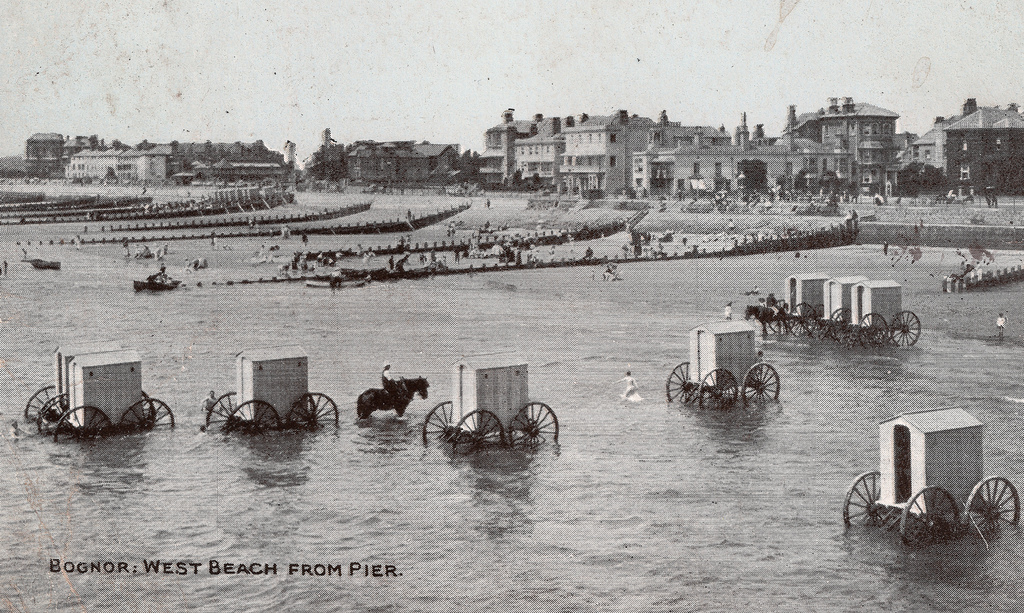
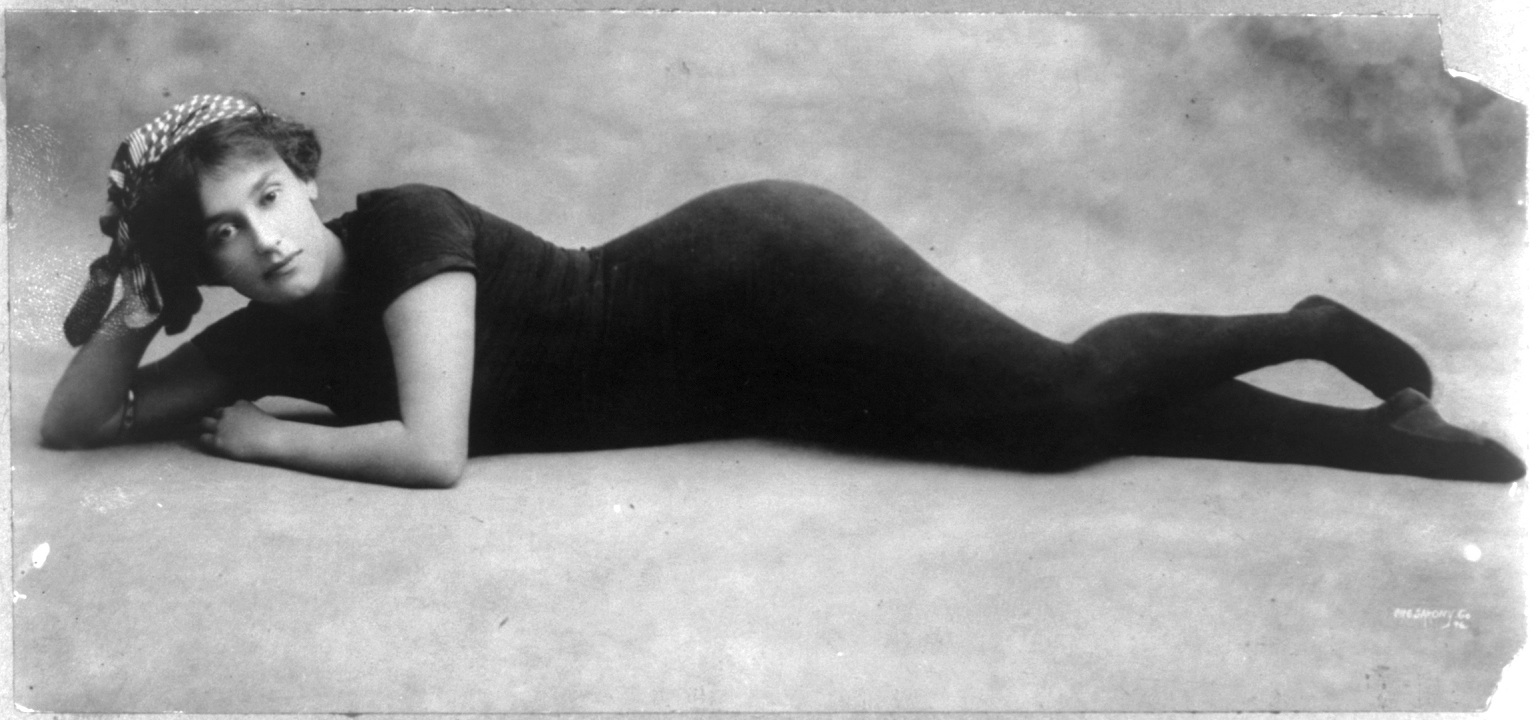
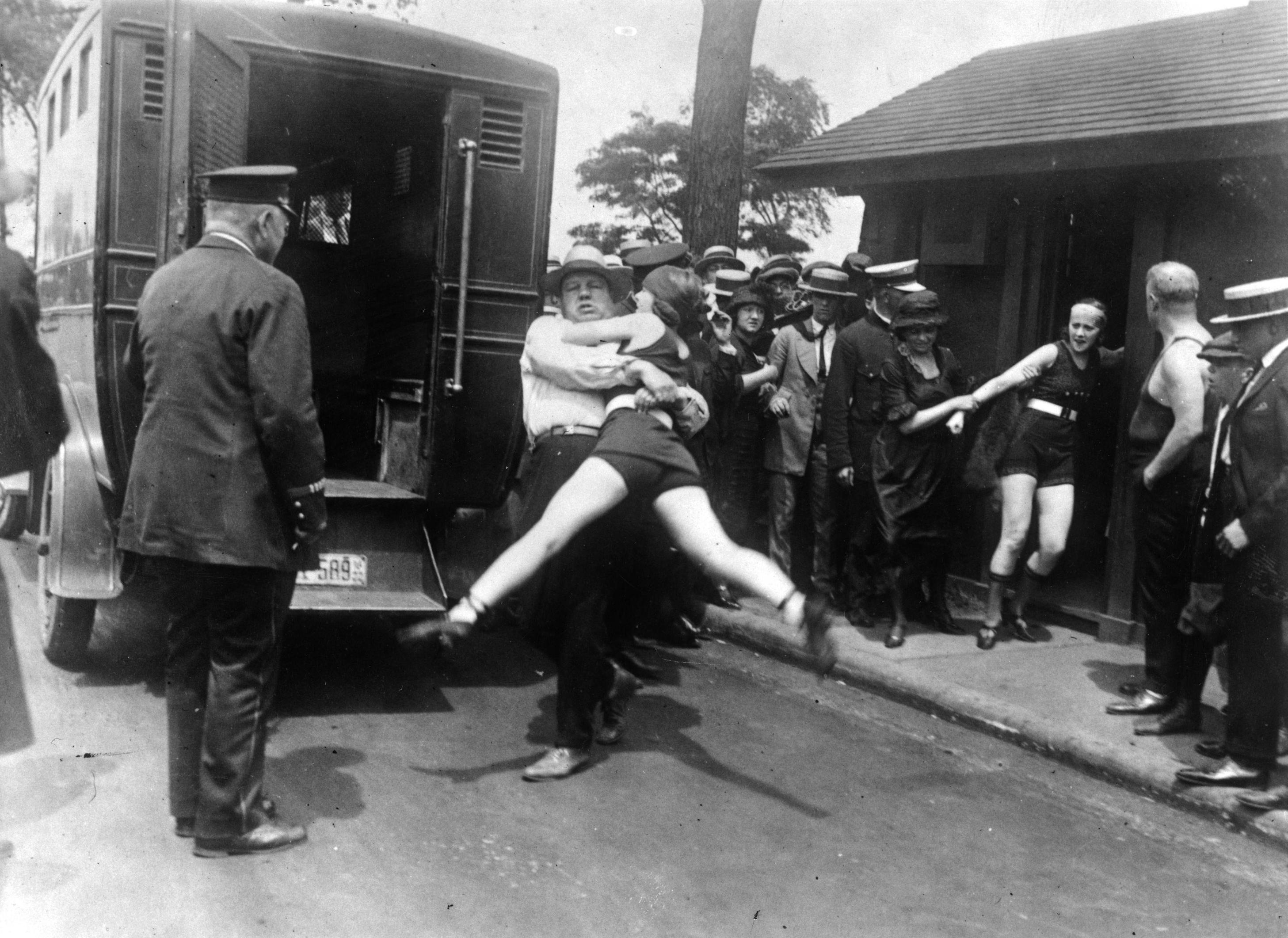
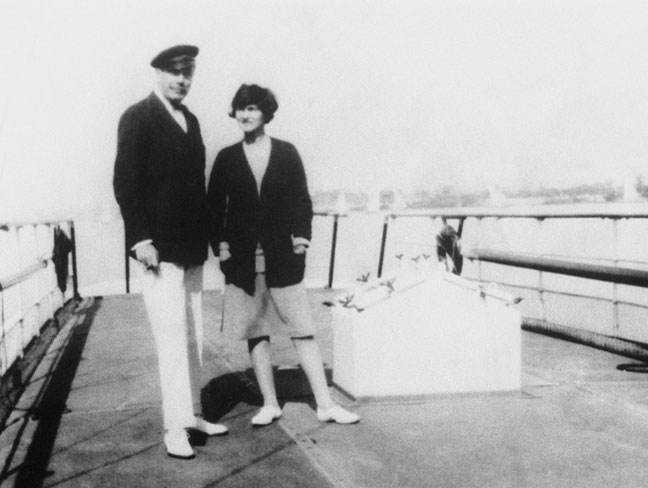
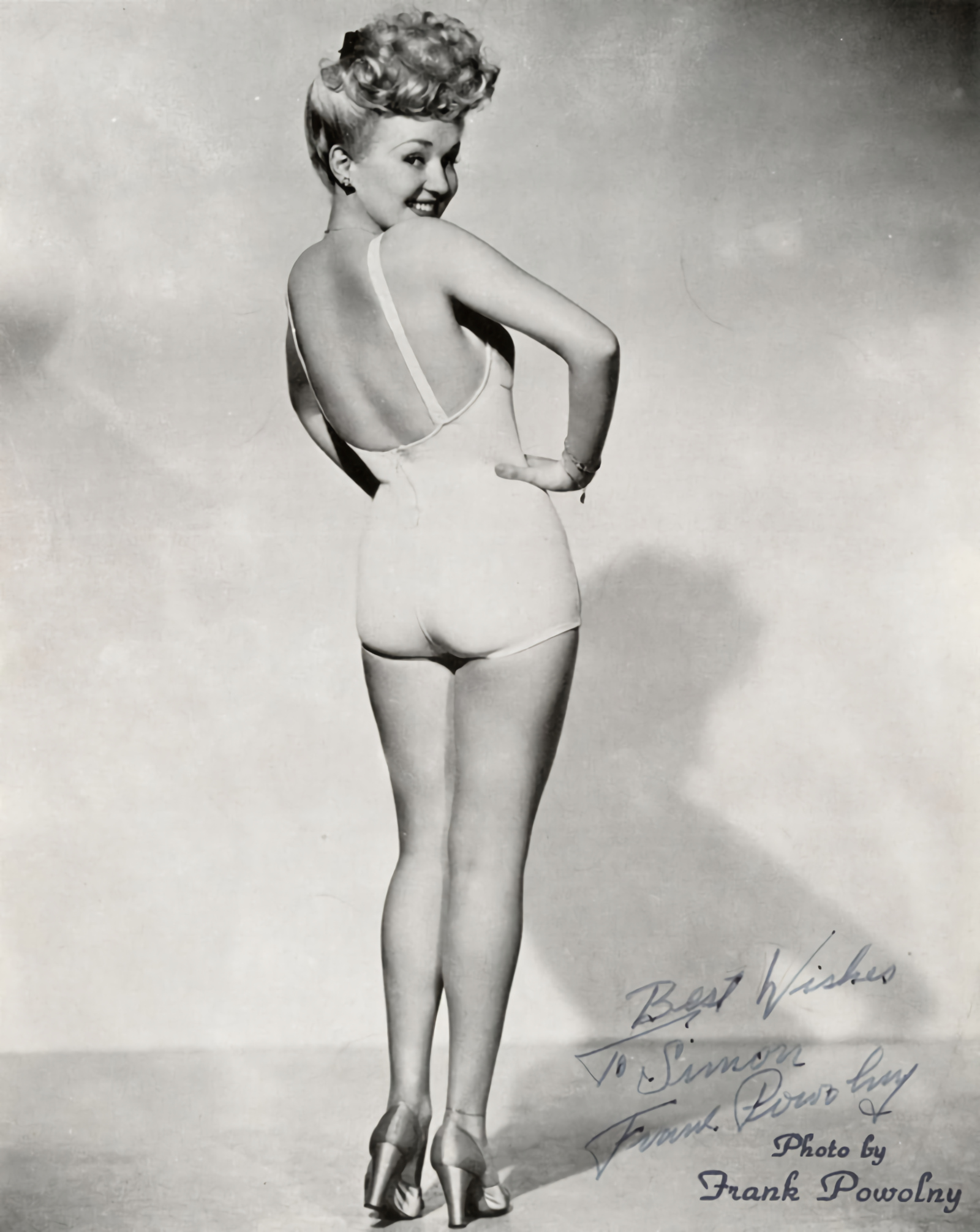
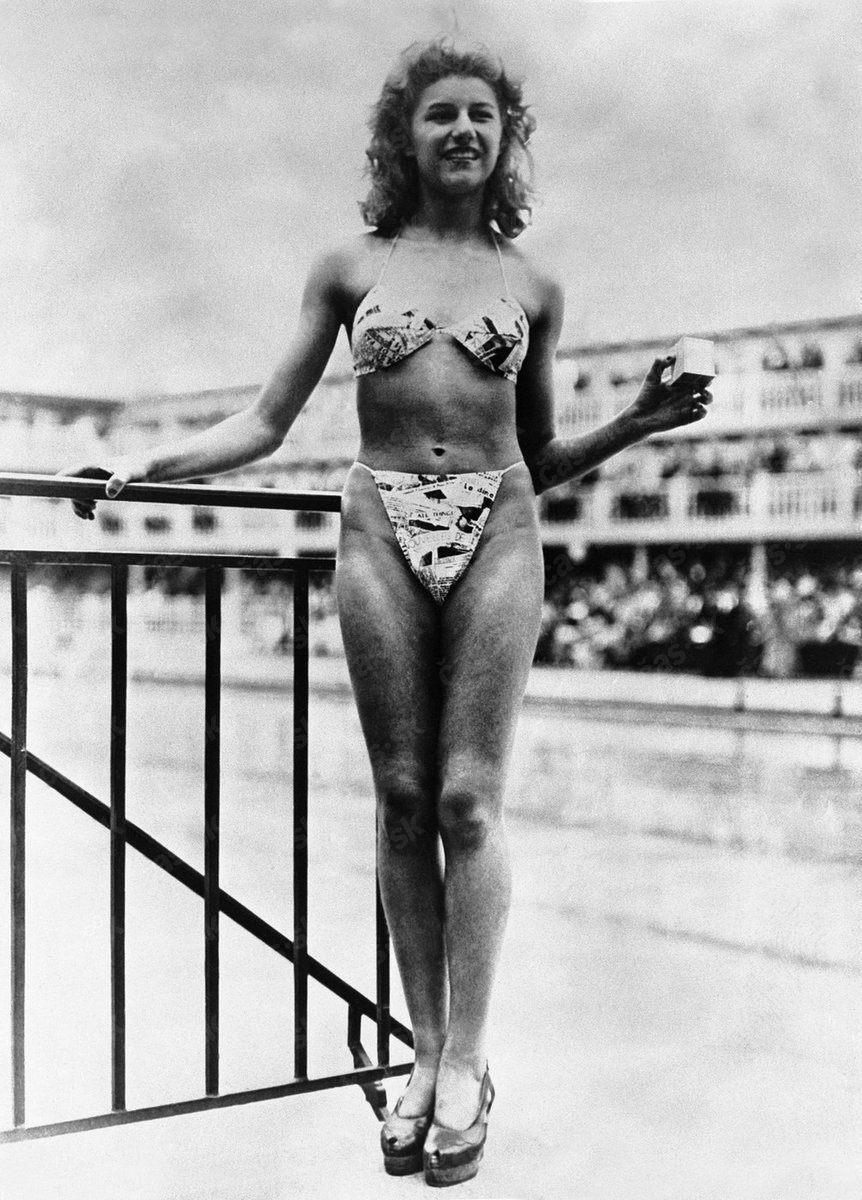
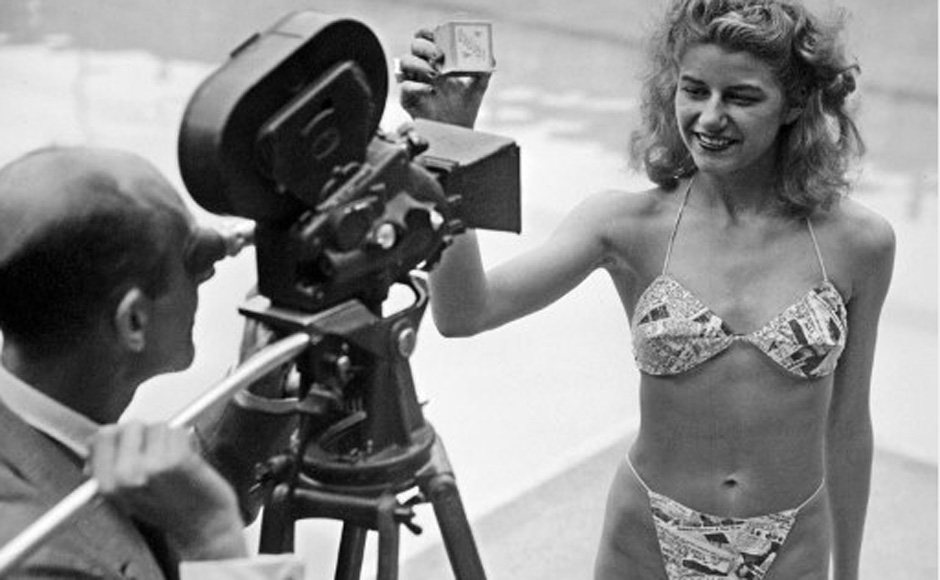
THE FIRST PODCAST In 1907, the professional swimmer Annette Kellerman was arrested on a Massachusetts beach for wearing a revealing bathing suit — a skin-tight black ensemble which covered most of her body.
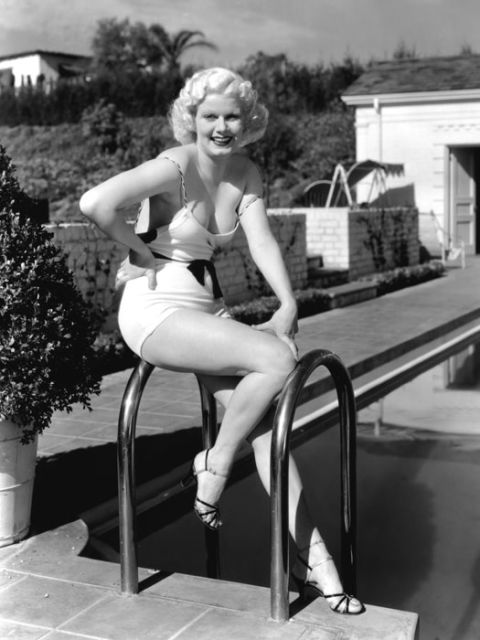
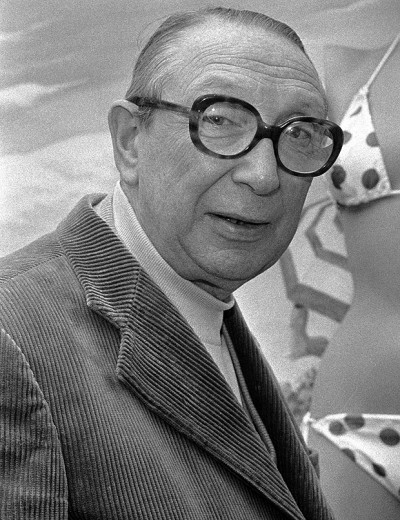
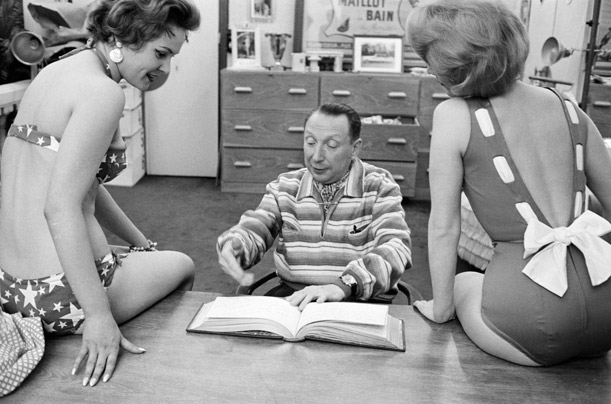
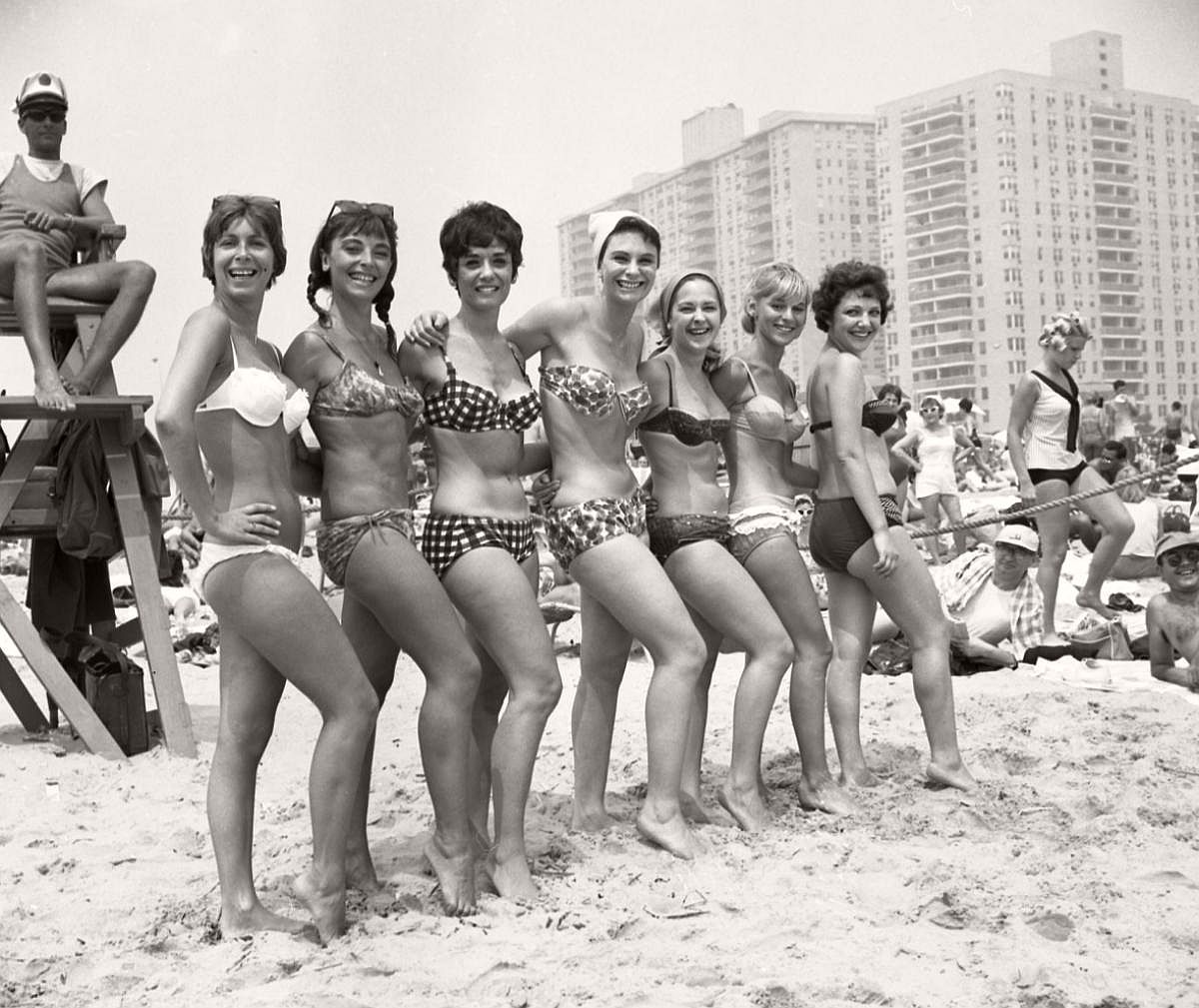
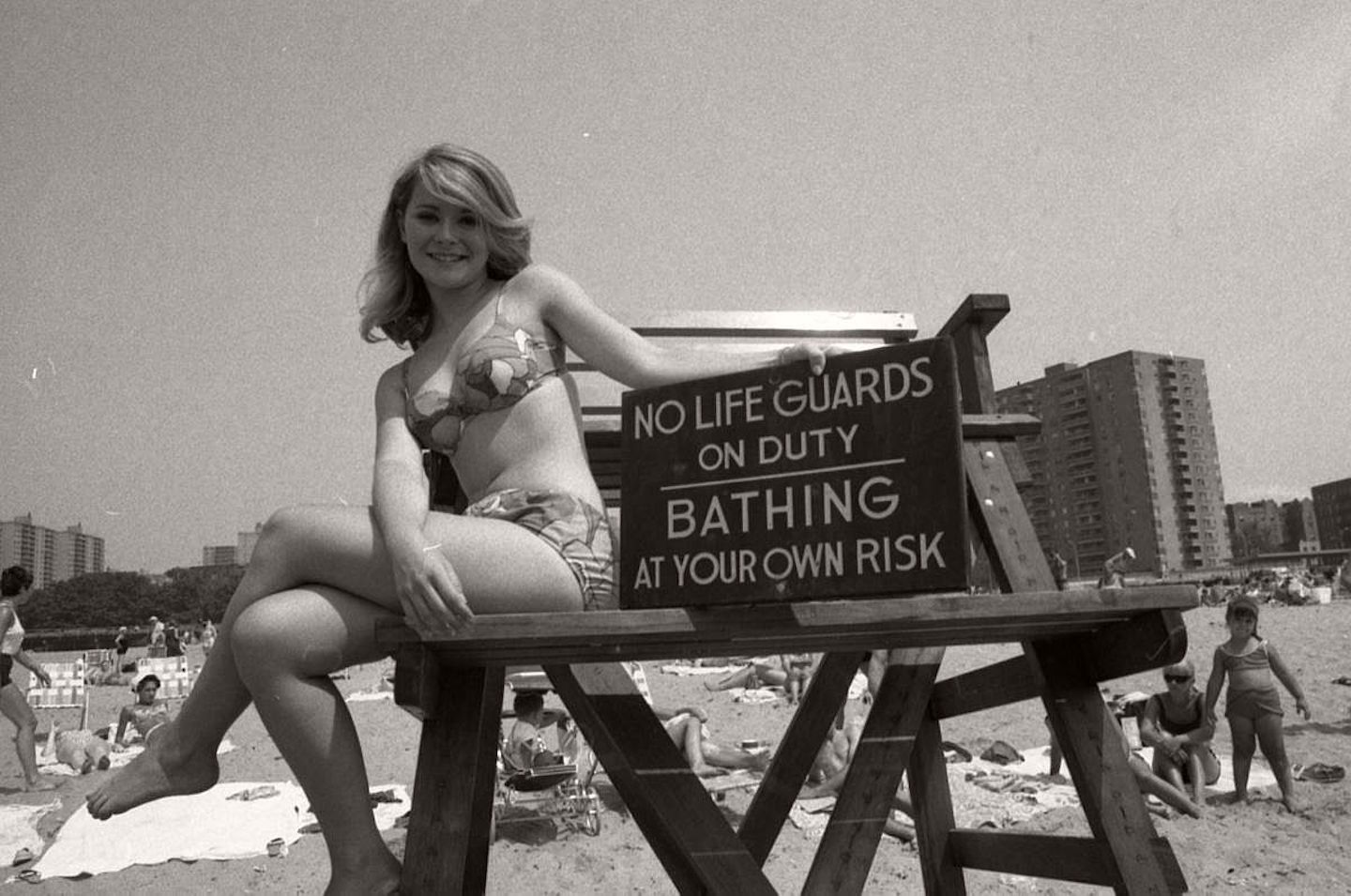
In this podcast, I’ll tell you what happened to change people’s perception of public decency in those forty years and explain how the bikini represents the best — and the worst — instincts of modern American culture.
One of the first facts you learn as a student of New York City history is that Wall Street, that canyon of tall buildings and center of the American financial world, is named for an actual wall that once stretched along this very spot during the days of the Dutch when New York was known as New Amsterdam.
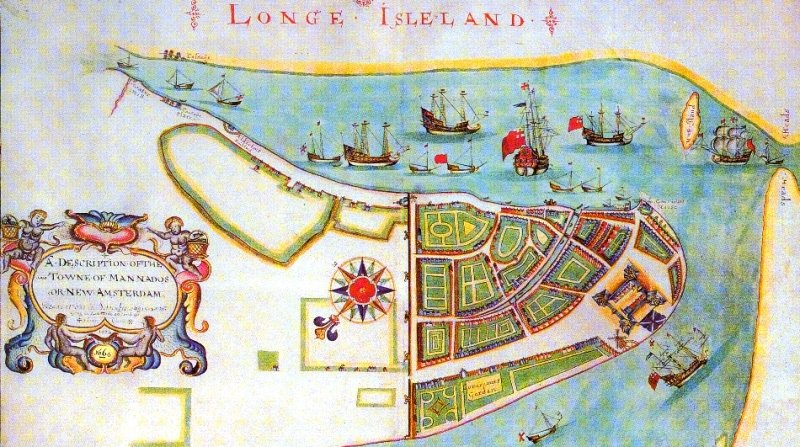
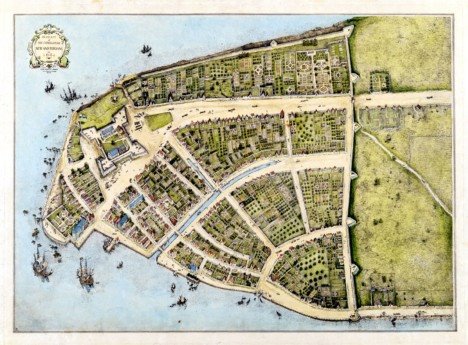
A simplistic but colorful view of “Man Mados” or “New Amsterdam” in 1664 (click in to inspect the detail)
There was most definitely a walled fortification nearby on New Amsterdam’s northern boundary, and it certainly did stretch along about the same area as Wall Street does today.
But the present name seems to be a formation of mixed meanings that only a tangle of languages and hundreds of years of history can create. The Dutch themselves referred to an actual street alongside the waterfront that ran up to and alongside the wall as the ‘Cingel’ — according to an old history, meaning “exterior, or encircling, street.”
But ‘De Waal Straat’, as it was also known, was also the center of a small Walloon community in New Amsterdam, and some believe the name comes from them. The Walloons were French-speaking Belgians who were among the first European settlers, arriving in the New World as part of a contingent hired by the Dutch West India Company.
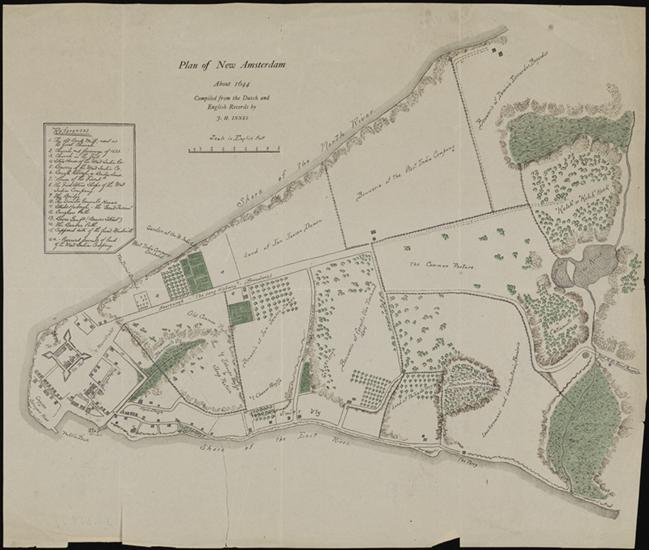
A map of New Amsterdam, indicating the layout from about 1644, well before a wall was constructed.
MCNY
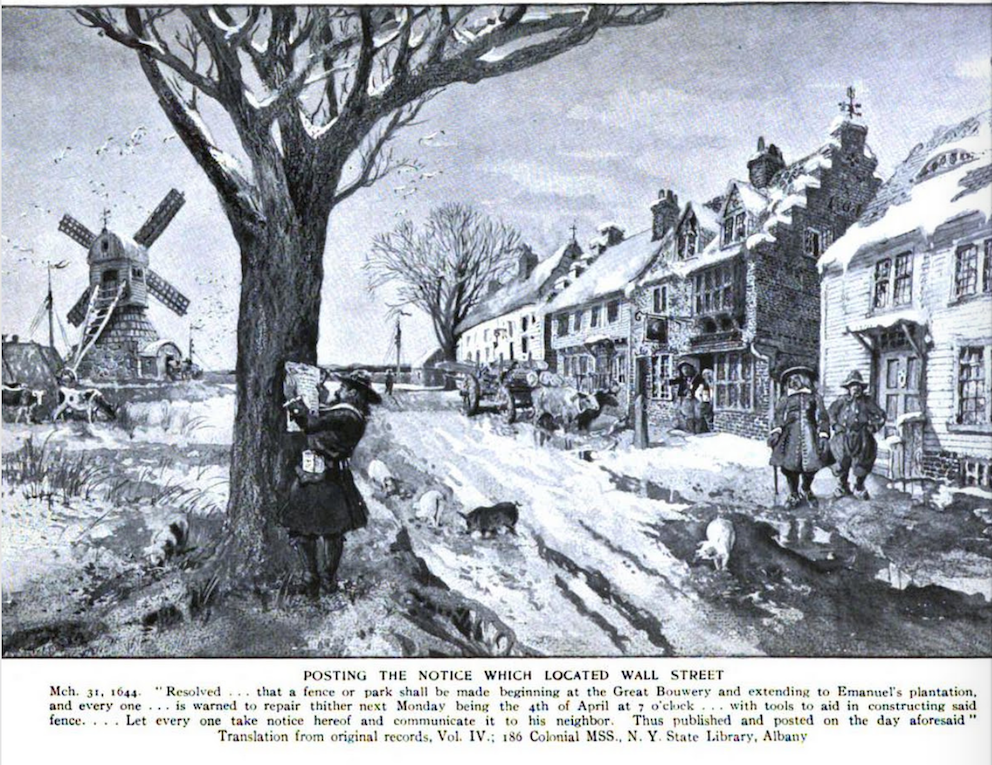
The real reasons for New Amsterdam building its famous wall are also up for grabs. It’s commonly held that an original wooden palisade was erected in 1644 in defense of Indian attacks, and certainly the residents of New Amsterdam did their part to rile the anger of the native landowners.
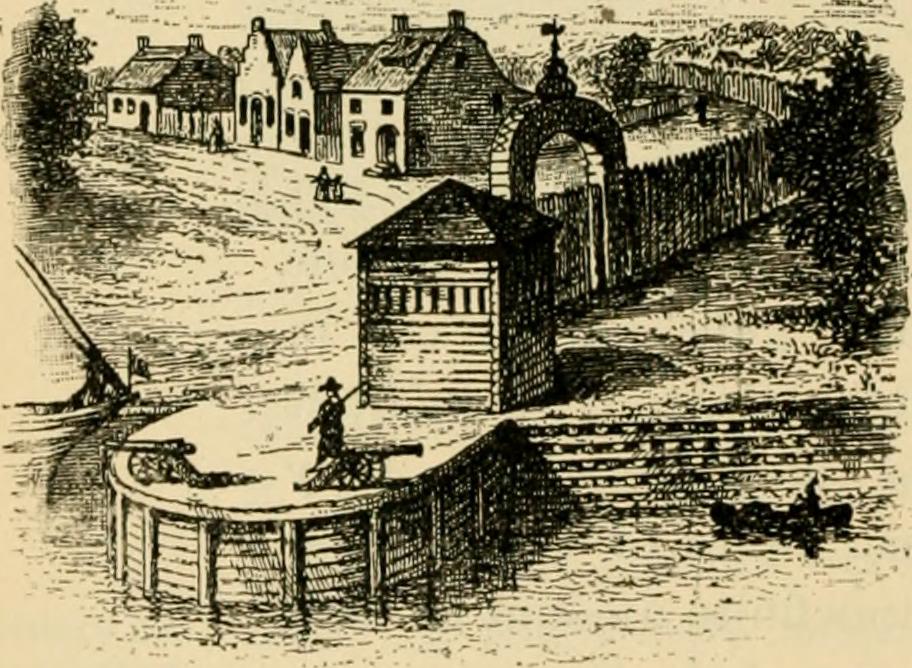
Below: A fanciful illustration from Harper’s Magazine, 1908, imagining New Amsterdam and the construction of the original ‘wall’.
But the Dutch had been living at the tip of Manhattan for over 25 years by the time the sturdier wall was built in 1653. In truth, it was commissioned to keep out a different sort of enemy.
You’ll be pleased to know that one-legged director-general Peter Stuyvesant was the man who ordered the construction of the wall — in his words, “to surround the greater part of the city with a high stockade and small breastwork” — to replace the inadequate wooden barrier that had previously marked the city’s northern border .
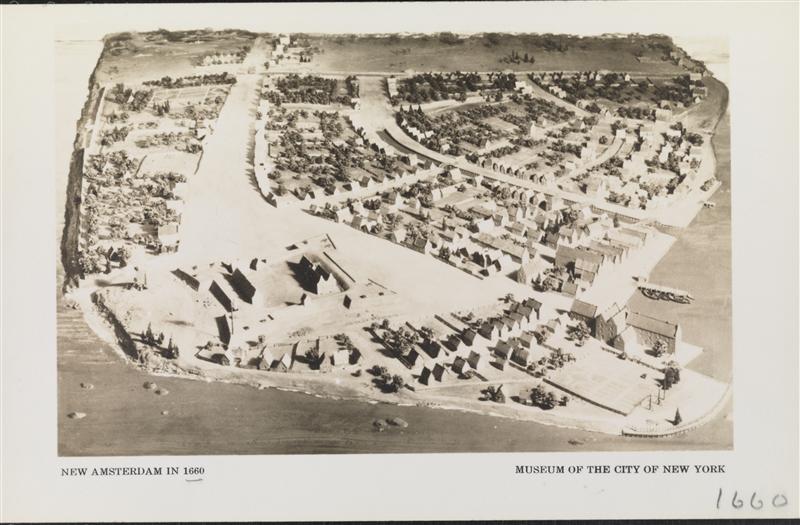
A model of New Amsterdam made in 1933, clearly showing how sudden the city borders stopped thanks to the wall.
MCNY
This was an incredibly important year for New Amsterdam in two respects. In February 1653, New Amsterdam was chartered as a official Dutch city. Although Stuyvesant was quite against the outpost receiving such official recognition, he eventually took advantage of it, appointing the first town council himself rather than putting it up to such trivial inconveniences as elections.
But in 1653 the tides of the motherland spilled onto their shores, as the war between England and the Netherlands threatened the remote and undefended new city. The Dutch intended to launch ships from New Amsterdam harbor in battle against the English.
As a result, the English colonies up north were sure to retaliate, either by sea or, feared Stuyvesant, over land, possibly teaming with hostile Indian forces, down through undefended Manhattan island.
Essentially, the wall that helped give us Wall Street was built because Stuyvesant feared attacks not just from Indian tribes, but from the European colonies of Connecticut, Massachusetts and New Haven!
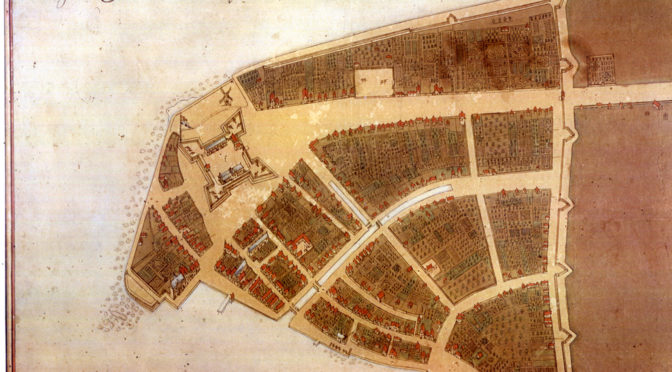
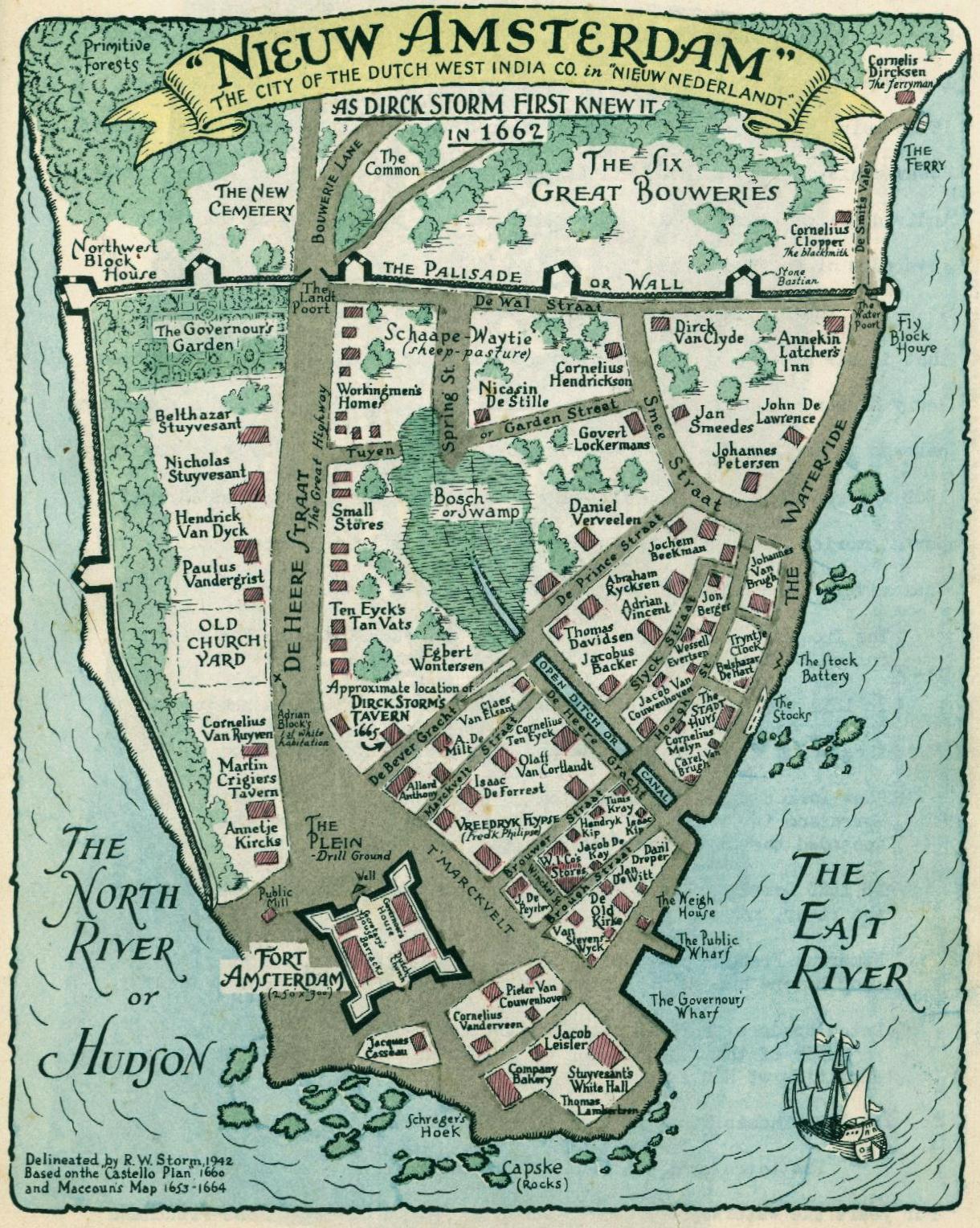
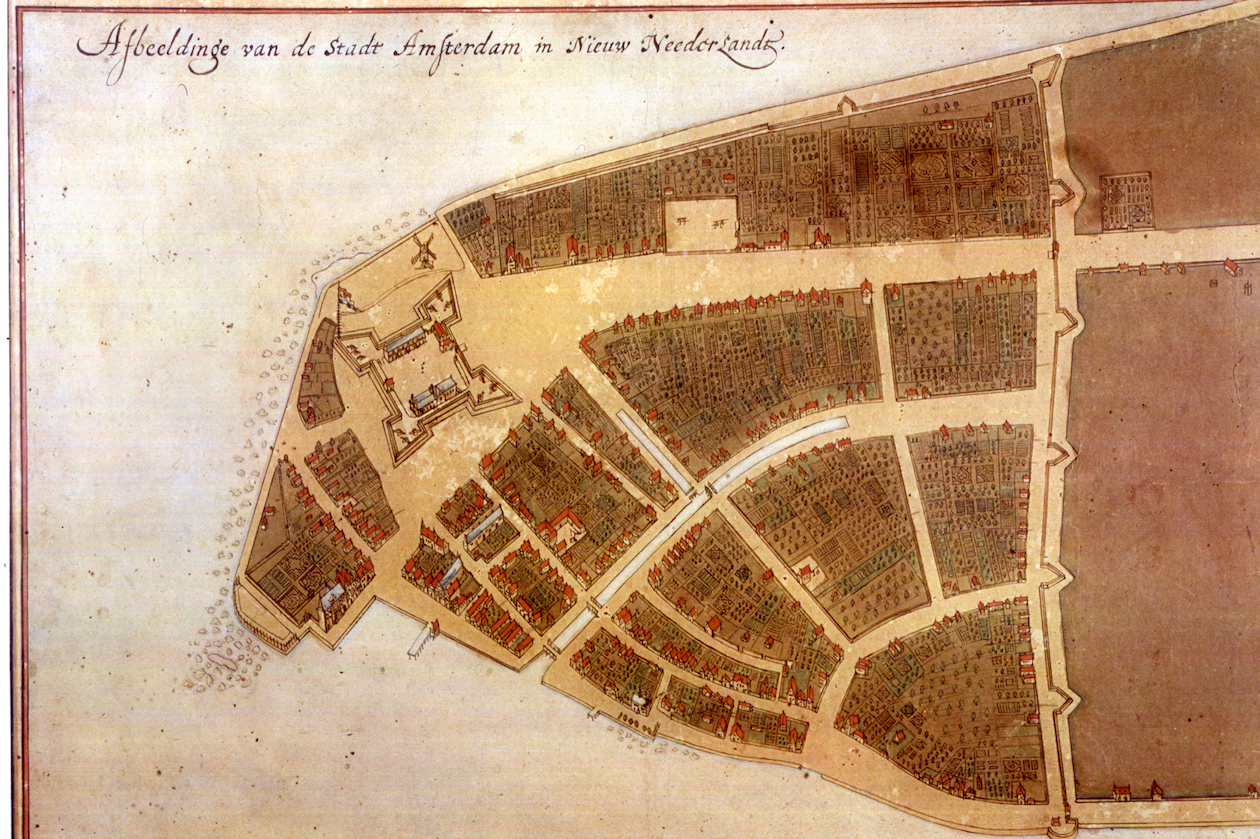
Looking at this more well known map of New Amsterdam – the Costello Plan of 1660 — one can see the two gates very clearly.
Stuyvesant called upon the 43 richest residents of New Amsterdam to provide funding to fix up the ailing Fort Amsterdam and to construct a stockade across the island to prevent attacks from the north, while it took New Amsterdam’s most oppressed inhabitants — slave labor from the Dutch West India Company — to actually build the wall.
The barrier was constructed out of earth, rock, and 15 feet timber planks sold to the Dutch, ironically enough, by the “notorious“ Englishman Thomas Baxter. In a turnabout that one would expect from hiring your enemy, Baxter later led a group of “Rhode Island marauders“ and pirated Dutch fishing ships.
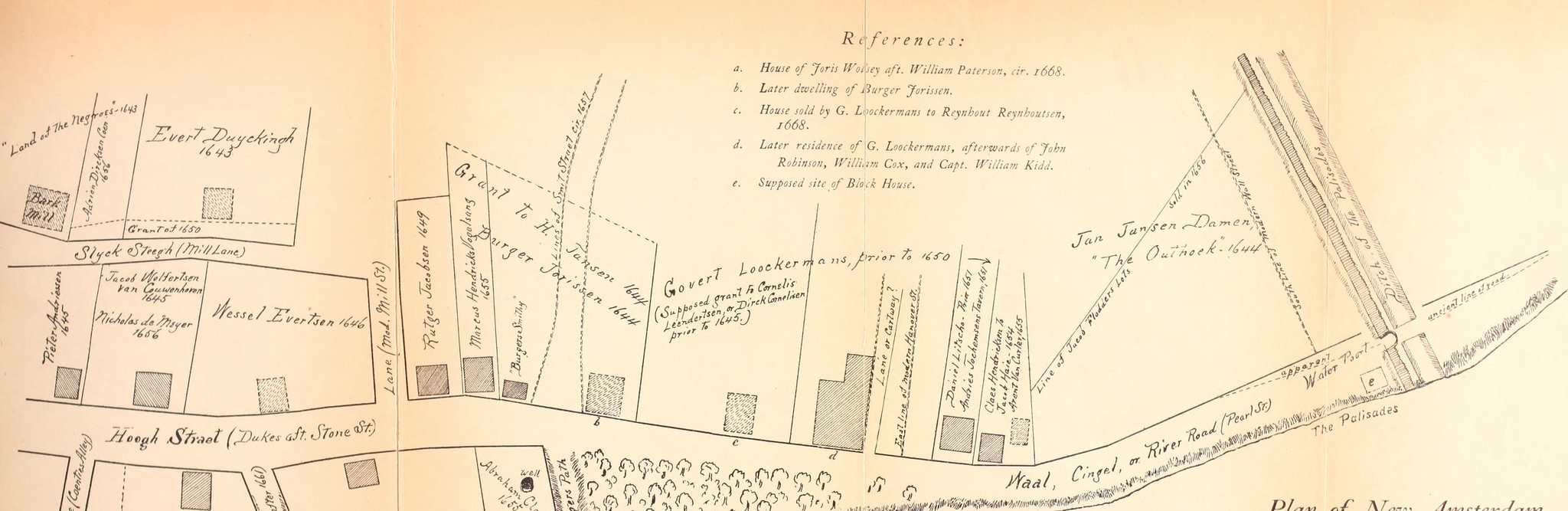
Early in the 1660s, the Dutch upgraded its wall to include brass cannons and two sturdy gates — one at today’s intersection of Wall and Broadway (for land), the other at Wall and Pearl Street (according to an early account, a water gate and access to a ‘river road’).
Below: A detail from a map of New Amsterdam’s eastern side, clearly showing the water gate, and a illustration from 1908 of that eastern gate:
Internet Archives Book Images
The British took over New Amsterdam in 1664 and renamed it New York, but the wall still remained, becoming more a relic than a serious defense.
By the turn of the century, the fear of land attacks had almost completely subsided and the city was beginning to feel crowded. So in 1699 the wall was torn down with some of the material salvaged to help construct a new City Hall at the corner of Nassau Street and the newly cristened Wall Street. In 1711 a slave market was built on Wall Street along the eastern shore, remaining there until 1762.
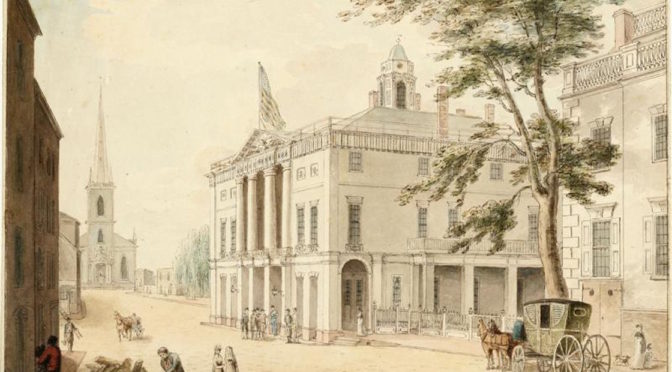
When the British were forced out in 1783 by the Americans, the City Hall building was finally renamed Federal Hall — the first official center of American government.
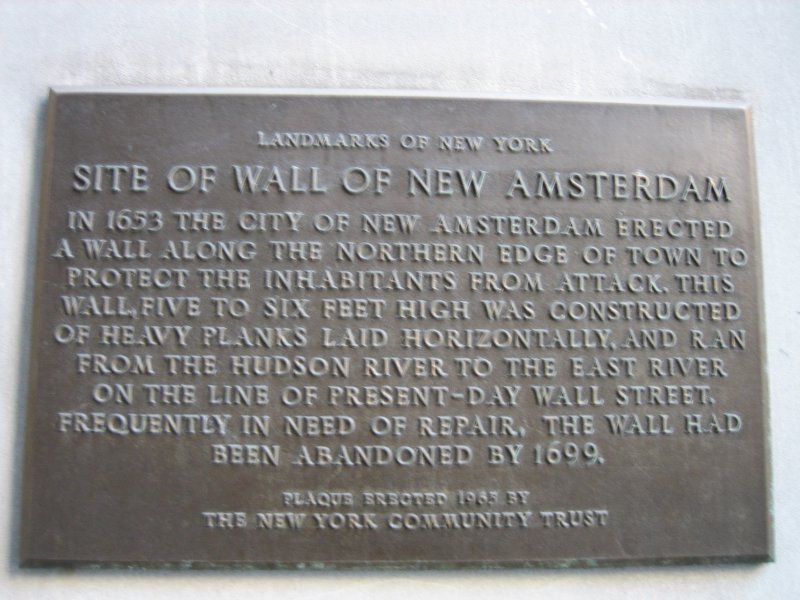
A plaque honoring the old wall sits today at the corner of Wall and Broadway, where the gate to the city once opened:
PODCAST Part Two of our two-part series on New York City in the years following the Revolutionary War.
During a handful of months in 1789 and 1790, representatives of the new nation of the United States came together in New York City to make decisions which would forever affect the lives of Americans.
In this second part of our two-part show on New York as the first federal capital of the United States, we roll up our sleeves and get down to business. (In the first part, he moved the capital to lower Manhattan and inaugurated ourselves a new president George Washington!)
The men of the first Continental Congress — which first met in the Spring of 1789 — had a lofty job in front of them that year. They needed to not only construct the tools and offices of a brand new government, they were also tasked with defining the basic rights of American citizens via a set of amendments to the U.S. Constitution — the Bill of Rights.
Now imagine doing this in your post-Colonial era garments during a hot summer, all crammed into a few rooms at Federal Hall, the former City Hall building on Wall Street.
It was here that the Bill of Rights was introduced, debated and voted upon. But those weren’t the only monumental decisions being made in the city.
When nobody could come to an agreement on two major issues — the assumption of state debt and the location of the permanent federal capital — it was up to Thomas Jefferson, Alexander Hamilton and James Madison to craft a deal, made during a legendary dinner party on Maiden Lane. We live today with the critical decisions made by these three men on that night over food and wine.
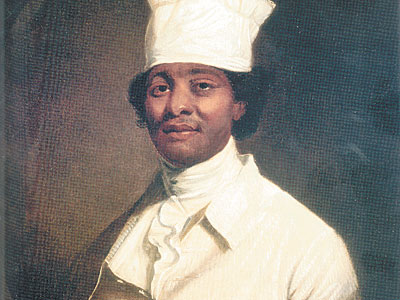
ALSO: The tale of James Hemings, an enslaved man who became an accomplished French chef and most likely the cook for that very dinner, witness to the events in “the room where it happened.”
The Bowery Boys: New York City History podcast is brought to you …. by you!
We are now producing a new Bowery Boys podcast every two weeks. We’re also looking to improve the show in other ways and expand in other ways as well — through publishing, social media, live events and other forms of media. But we can only do this with your help!
We are now a member of Patreon, a patronage platform where you can support your favorite content creators for as little as a $1 a month.
Please visitour page on Patreon and watch a short video of us recording the show and talking about our expansion plans. If you’d like to help out, there are five different pledge levels (and with clever names too — Mannahatta, New Amsterdam, Five Points, Gilded Age, Jazz Age and Empire State). Check them out and consider being a sponsor.
We greatly appreciate our listeners and readers and thank you for joining us on this journey so far. And the best is yet to come!
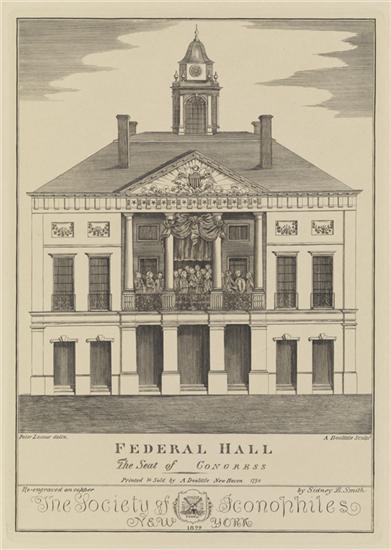
The setting for much of our show today is Federal Hall, the former City Hall turned headquarters of burgeoning American government.
Peter Lacour delin. A Doolittle sculp. Printed & Sold by A Doolittle New Haven 1790. Re-engraved on copper by Sidney L. Smith. The Society of Iconophiles. New York. 1899.
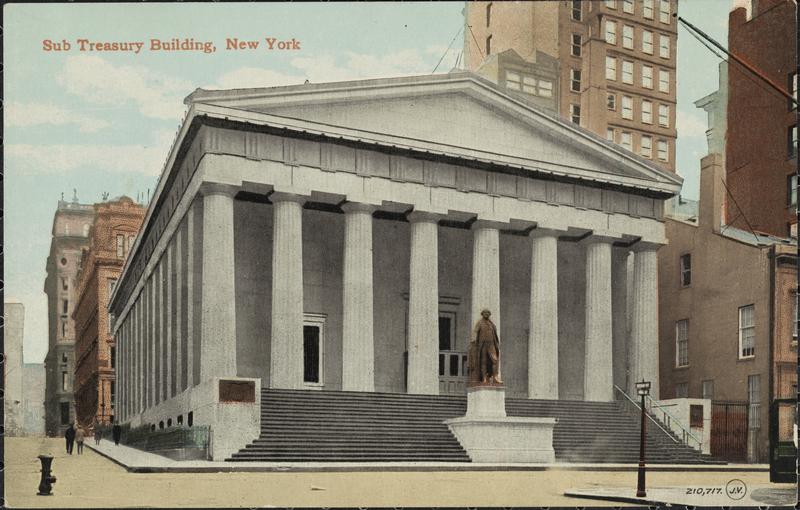
It was demolished in the 1810s and replaced many years later with the U.S. Customs House (later the Sub Treasury Building).
Courtesy MCNY
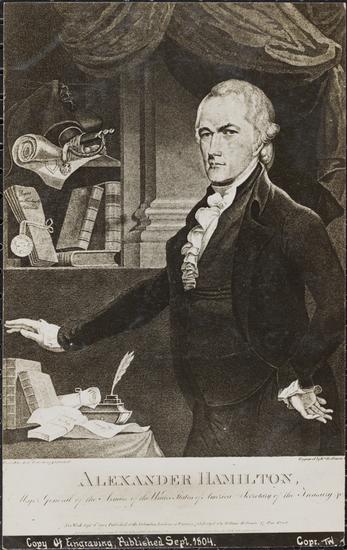
Alexander Hamilton, the first head of the Department of Treasury and one of the architects of the Great Compromise of 1790.
Alexander Hamilton. Copy of Engraving, Published Sept. 1804.MCNY
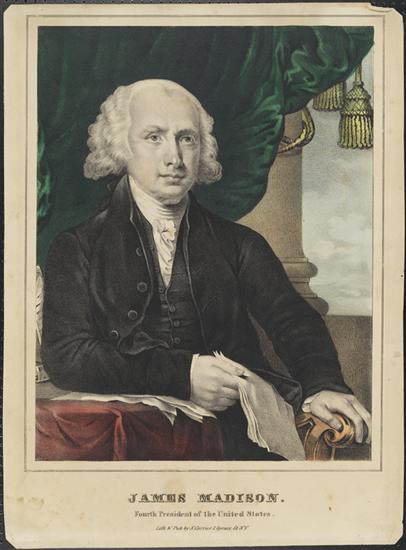
James Madison (depicted here in a pose as the fourth President of the United States) was instrumental in crafting the Bill of Rights and was also involved in the compromise involving the assumption of state debts
MCNY
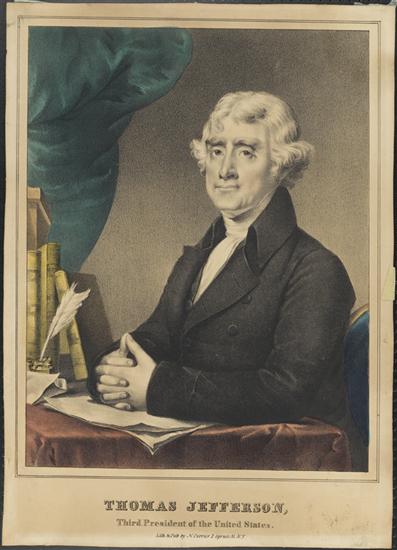
Thomas Jefferson (depicted here in a pose as the third President of the United States) was America’s first Secretary of State and was instrumental in pulling together the ingredients of the Great Compromise.
MCNY
It’s likely that James Hemings, the brother of Sally Hemings and an enslaved man owned by Jefferson, served the meal that evening in ‘the room that it happened’, aka the Great Compromise.
MCNY
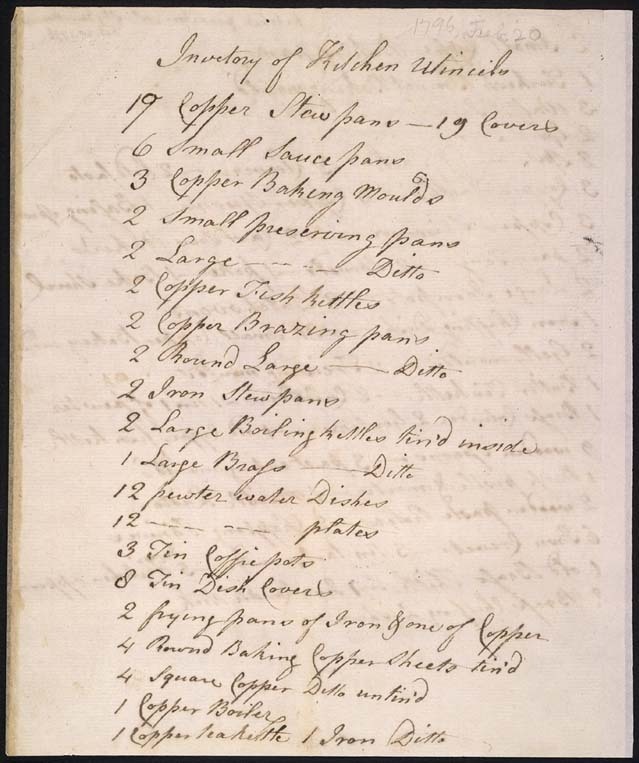
An inventory of kitchen tools written out by Hemings that he used at Monticello. More details on Hemings here.
Library of Congress
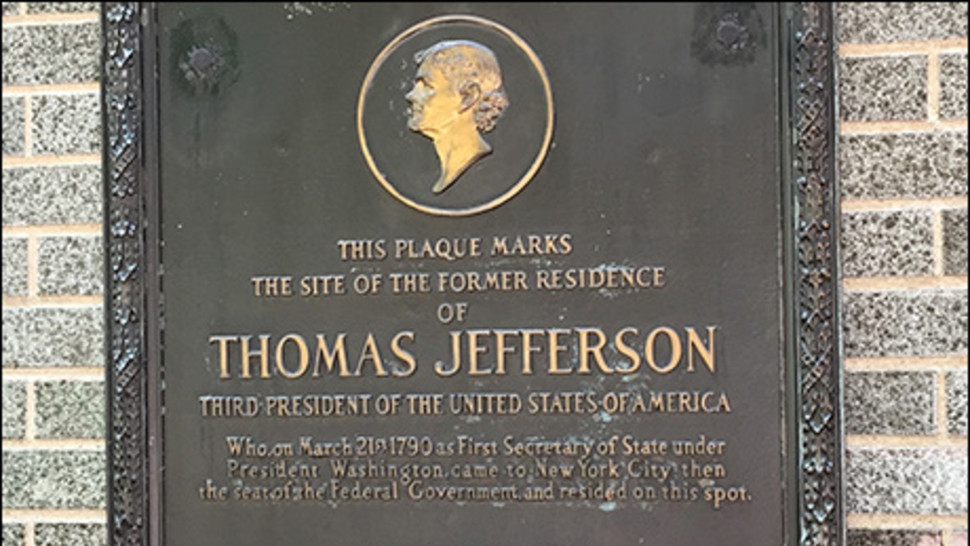
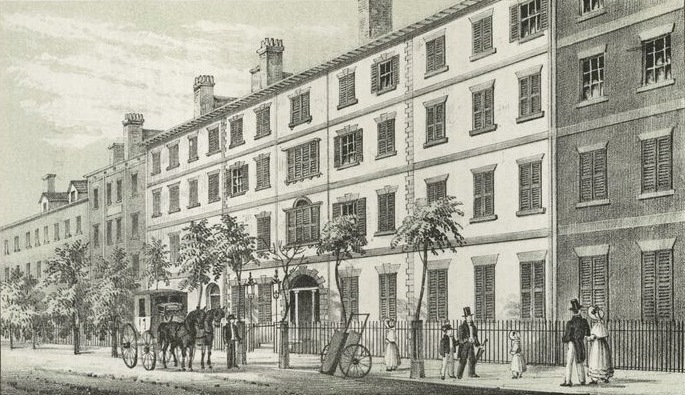
A plaque marking the spot on Maiden Lane where Thomas Jefferson’s house once stood.
Courtesy Playbill
The sizable home of Alexander Macomb who rented half his house to George Washington in 1790. In addition to his offices and household, many of his enslaved people worked here as well.
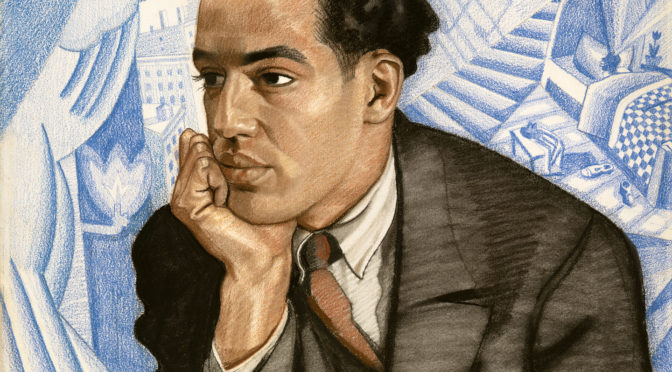
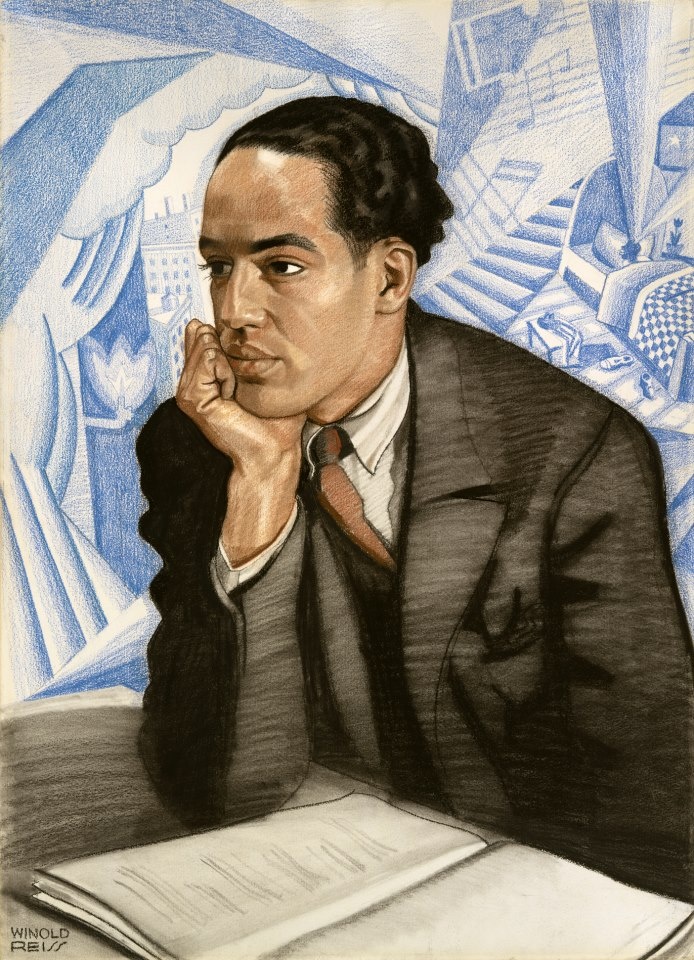
Portrait of Hughes by Winold Reiss (AP Photo/National Portrait Gallery)
Since I was a teenager, I’ve had an affinity for writer Langston Hughes, the revolutionary jazz poet who was born 115 years ago today in 1902. I grew up in Springfield, Mo., about an hour away from Langston’s birthplace in Joplin. One of the brightest lights of the Harlem Renaissance grew up here?, I frequently pondered in English class.  In fact, Hughes is considered Joplin’s most famous son.*
But you don’t need to follow Langston’s footprints back to the Ozarks. Celebrate his birthday with a mini-walking tour, four Manhattan addresses that were pivotal to Hughes’ development as an iconic African-American voice and a star of the Harlem literary scene–
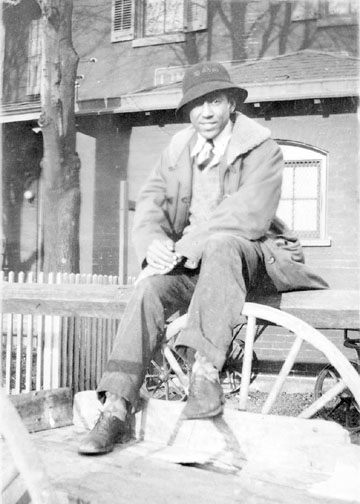
 Young Langston in college, 1928
Yale Collection of American Literature, Beinecke Rare Book and Manuscript Library
181 W. 135th Street  — Langston’s first exposure to Harlem’s creative energy was as a Columbia University student in 1921, wandering the street, hoping to see “Duke Ellington on the corner of 135th Street, or Bessie Smith passing by, or Bojangles Bill Robinson in front of the Lincoln Theatre, or maybe Paul Robeson or Bert Williams walking down the avenue.” [source]
Before moving into Columbia’s Hartley Hall (1124 Amsterdam Avenue), however, Langston took a room here at the YMCA, known for its live drama productions and art shows. He didn’t need to stroll around to find Robeson; he got his start acting in productions at the YMCA.
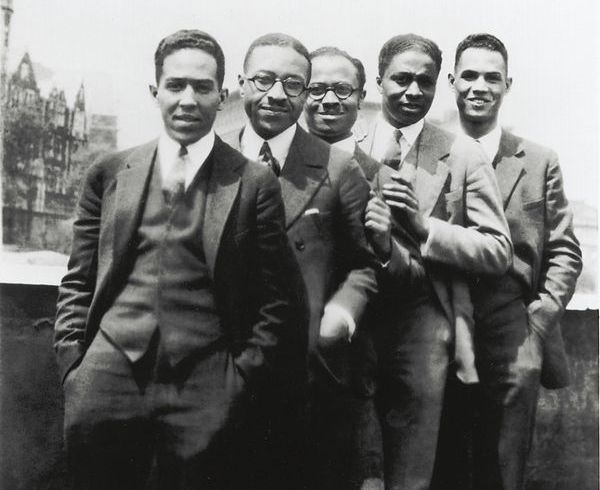
Dapper gentlemen: At a 1924 celebration in Langston’s honor, at the home of Regina Andrews on 580 St. Nicholas Avenue. The author is to the far left, followed by future sociologists Charles S. Johnson and E. Franklin Frazier; novelist and future doctor Rudolph Fisher; and Hubert T. Delany, who would become a New York justice in 1942, appointed by Fiorello La Guardia.
634 St. Nicholas Avenue — Although Langston would rent out a studio in 1938 down the street at 66 St. Nicholas Avenue, he frequently stayed at this address in the Sugar Hill area of Harlem, the home of his friends Toy and Emerson Harper. (He referred to them as ‘aunt’ and ‘uncle’.) Hughes later moved with the couple to another address…
 515 Malcolm X Boulevard (at W. 135th Street) – The Schomburg Center for Research in Black Culture, a branch of the New York Public Library, is Hughes’ final resting place. His ashes are contained underneath the foyer floor, beneath an inscription: “My soul has grown deep like the rivers.” But the library always had a long association with Hughes. His ‘poetry-play’ ‘Don’t You Want To Be Free‘ played to sold-out crowds in the basement of the library in 1938. The play co-starred Robert Earl Jones, the father of James Earl Jones.
You can find a far more in-depth walking tour of 1920s Harlem here.
*Another African-American cultural icon, George Washington Carver, was born in the town of Diamond, Mo., fifteen minutes southeast of Joplin. If you’re ever swinging through that area of the world, the George Washington Carver National Monument, where his home was located, is worth a stop.

 It’s hard not to read the opening pages to Michael W. Flamm’s gripping In The Heat Of The Summer: The New York Riots of 1964 and the War on Crime (University of Pennsylvania Press) and not see the parallels to modern police brutality cases.  So many different testimonies obscure the truth that it’s hard to know what really did happen in front ofÂ
It’s hard not to read the opening pages to Michael W. Flamm’s gripping In The Heat Of The Summer: The New York Riots of 1964 and the War on Crime (University of Pennsylvania Press) and not see the parallels to modern police brutality cases.  So many different testimonies obscure the truth that it’s hard to know what really did happen in front of