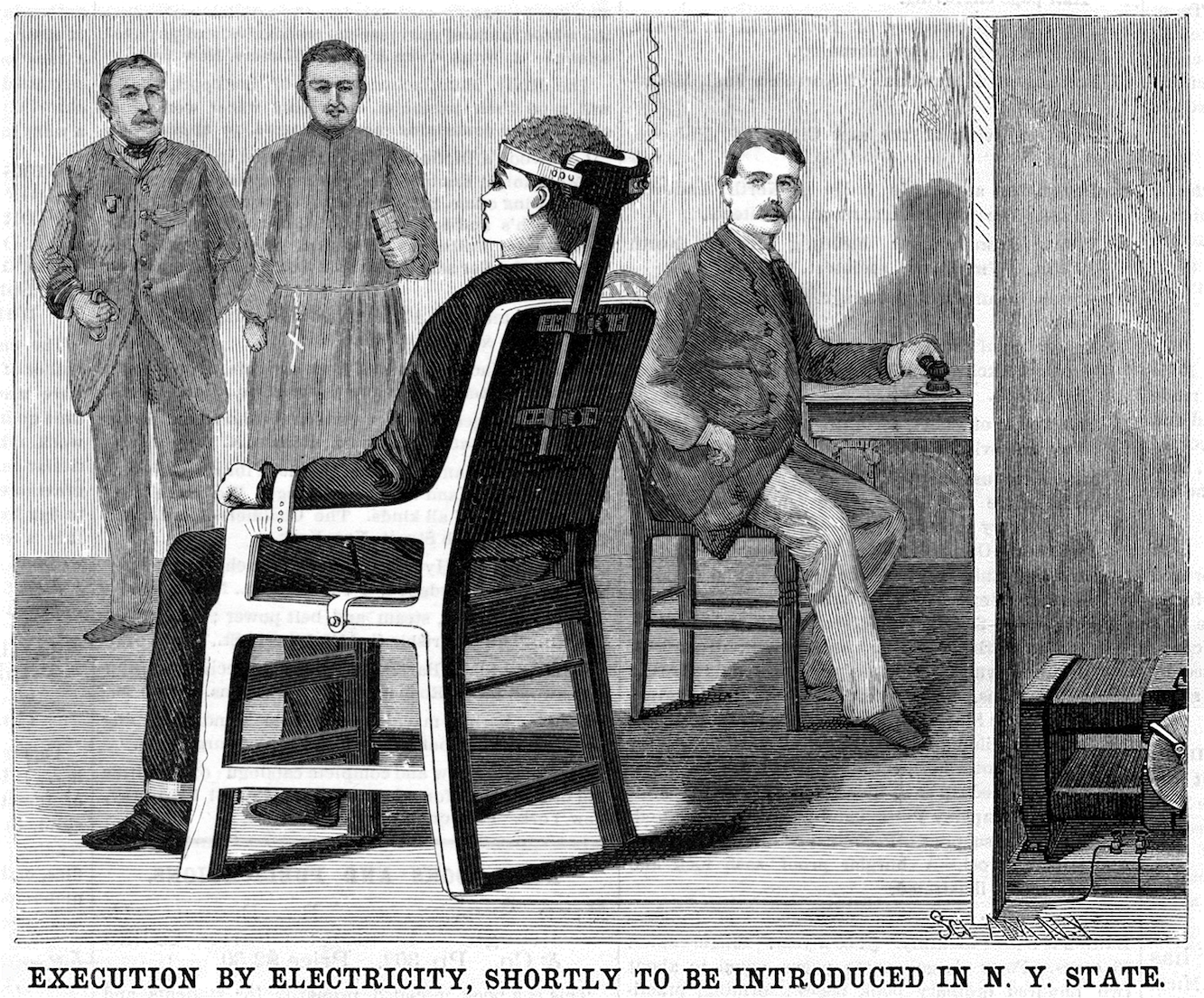
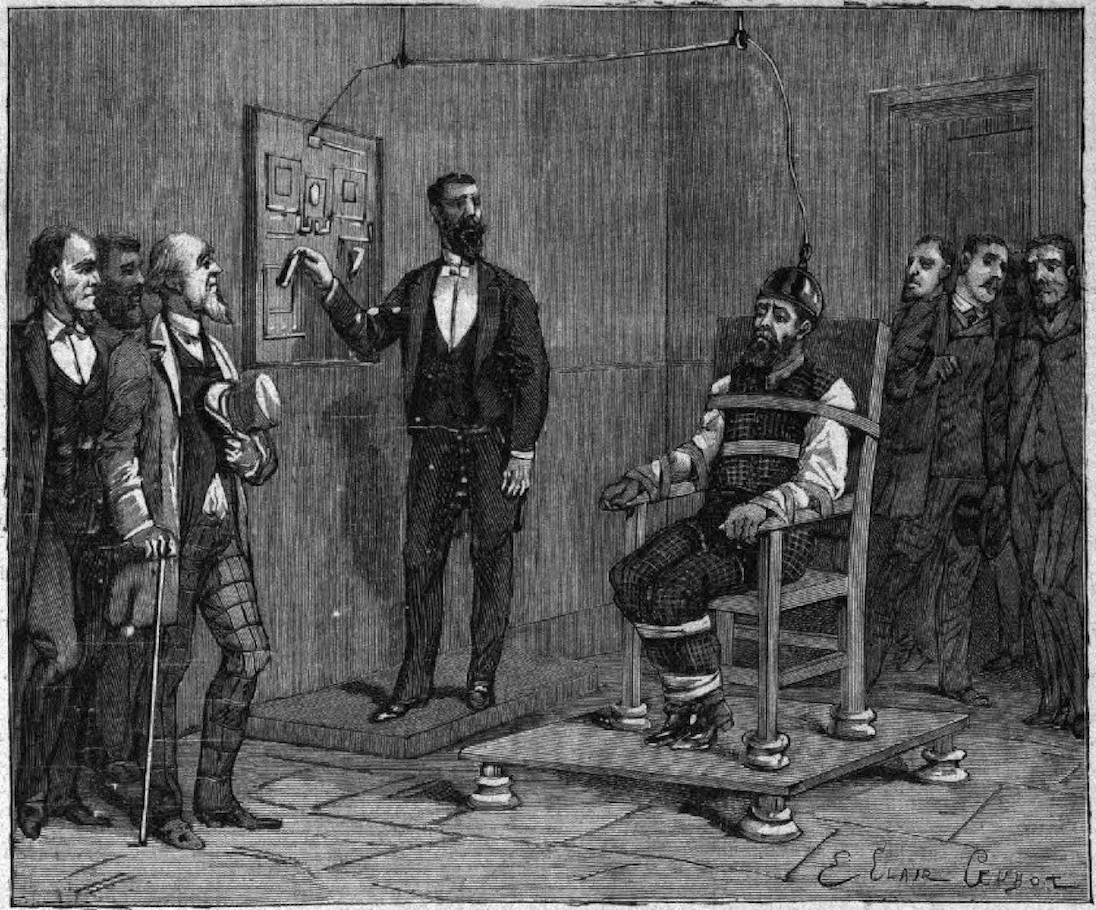
THE FIRST PODCAST The story of how electricity became a tool of death for the state of New York and the strange circumstances behind the invention of the electric chair.
The harnessing of electricity by the great inventors of the Gilded Age introduced the world to the miracle of light at all hours of the day. But exposure to electricity’s raw power was dangerous to man.  Awful deaths of men on electrical wires terrified New Yorkers. A few thought this might be useful in the employment of the state’s darkest responsibilities — capital punishment.
This is the story of the first electric chair, the peculiar rivalry which helped create it — an epic feud between Thomas Edison and George Westinghouse, between DC and AC — and its fateful effects upon the life and punishment upon a man named William Kemmler, the first to be killed in this morbid seat.
ALSO:Â Hear the words of Harold Pitney Brown, an electrician who worked to help sully the reputation of Westinghouse and his collaborator Nikola Tesla by pairing their alternating-current devices with electrical execution.
Or listen to it straight from here: 07Â THE MORBID INVENTION: THE STORY OF THE FIRST ELECTRIC CHAIR
The horrors of the modern world — New York electrician John Feeks is killed on the electrical wires as hundreds watched.
1891 book Physique Populaire by Emile Desbeaux, drawn by D. Dumon.
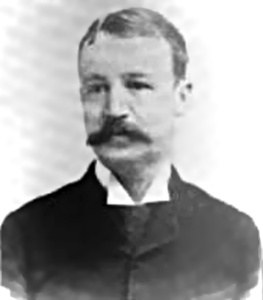
Harold Pitney Brown, who secretly assisted in diminishing the reputation of alternating current (AC) power on behalf of Edison, who was promoting direct current (DC).
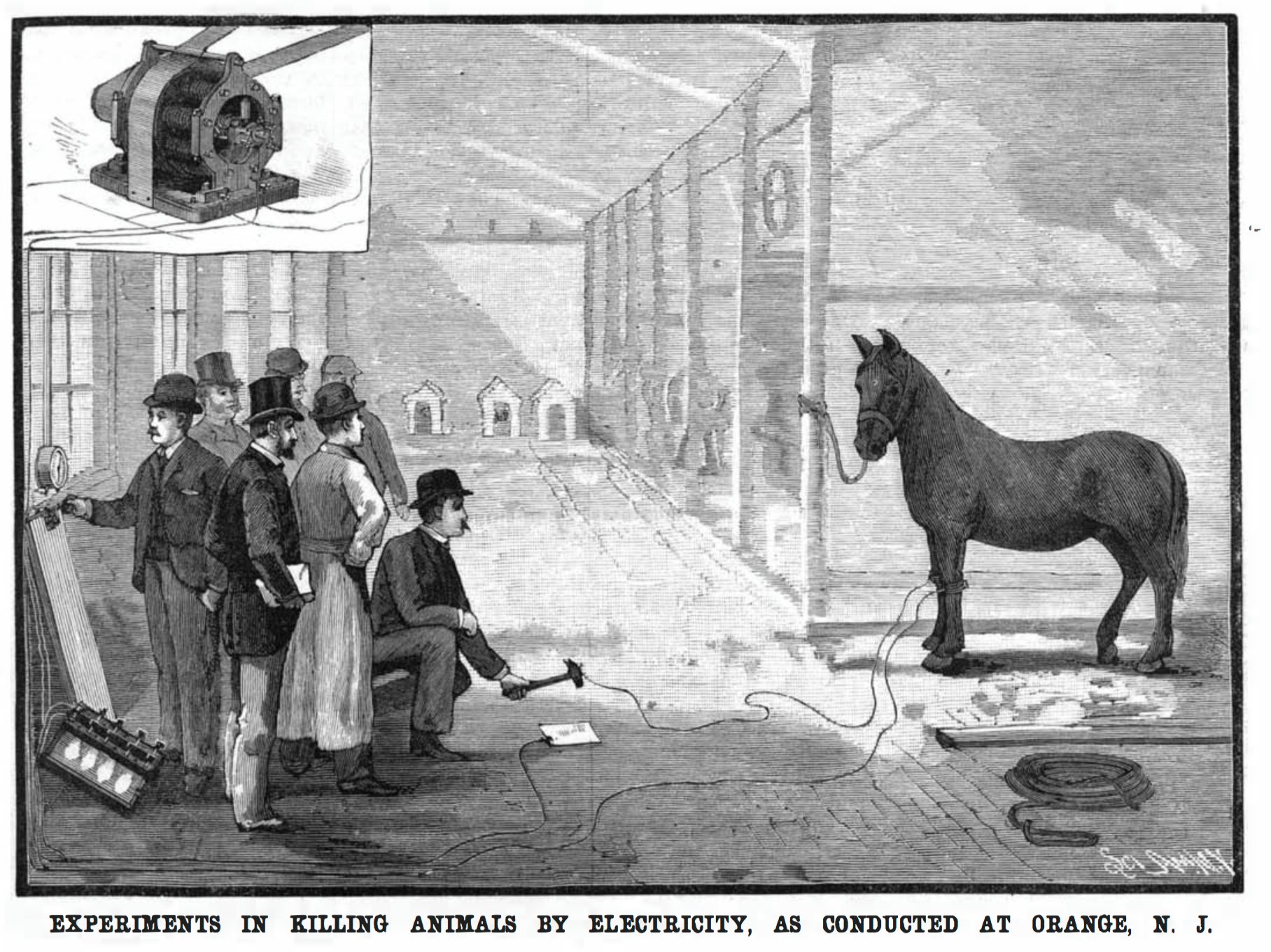
Brown’s bizarre and cruel experiments — proving the dangers of AC — involved killing animals by electrocution. One such experiment at Edison’s lab in New Jersey slaughtered calves and horses to demonstrate his theories.Â
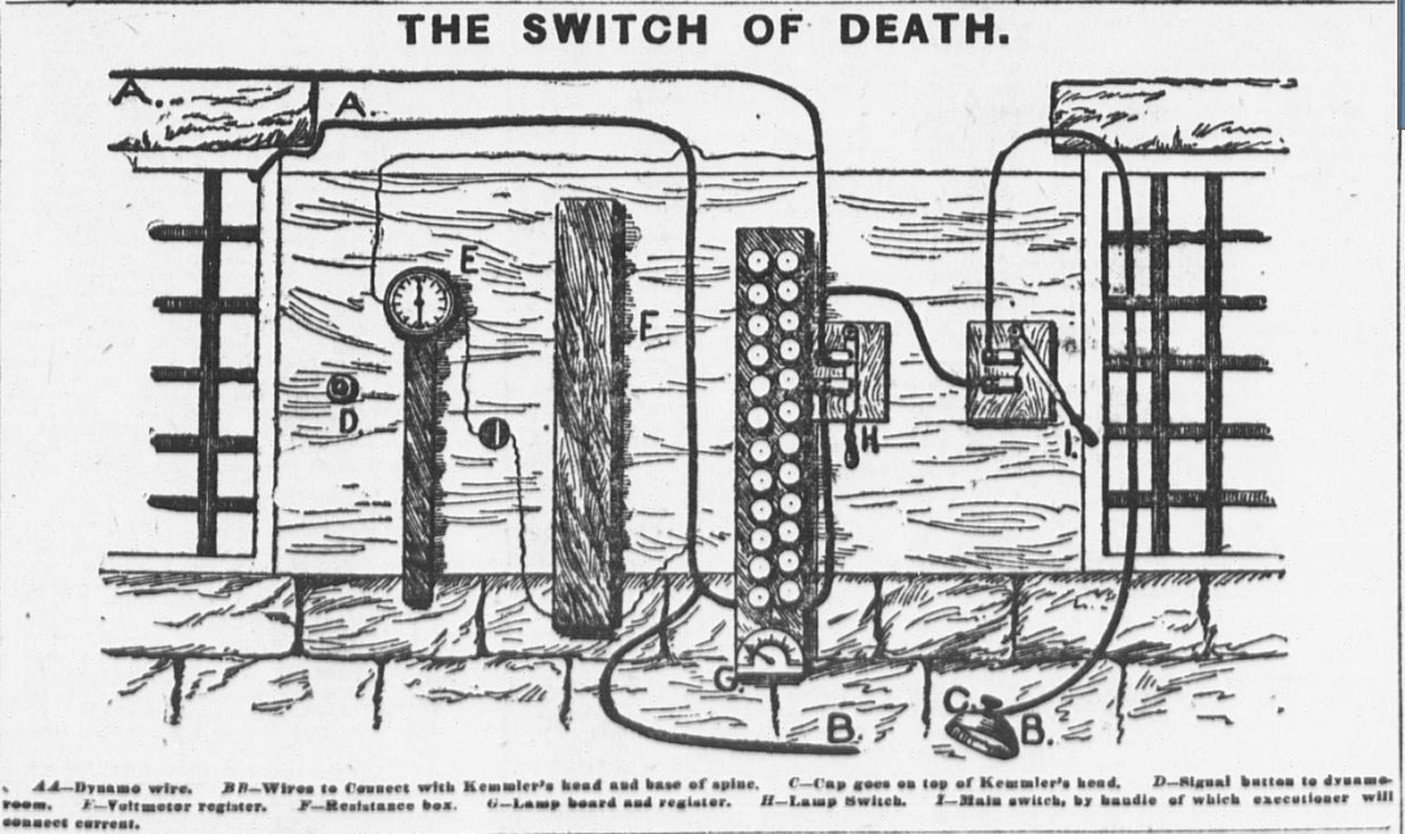
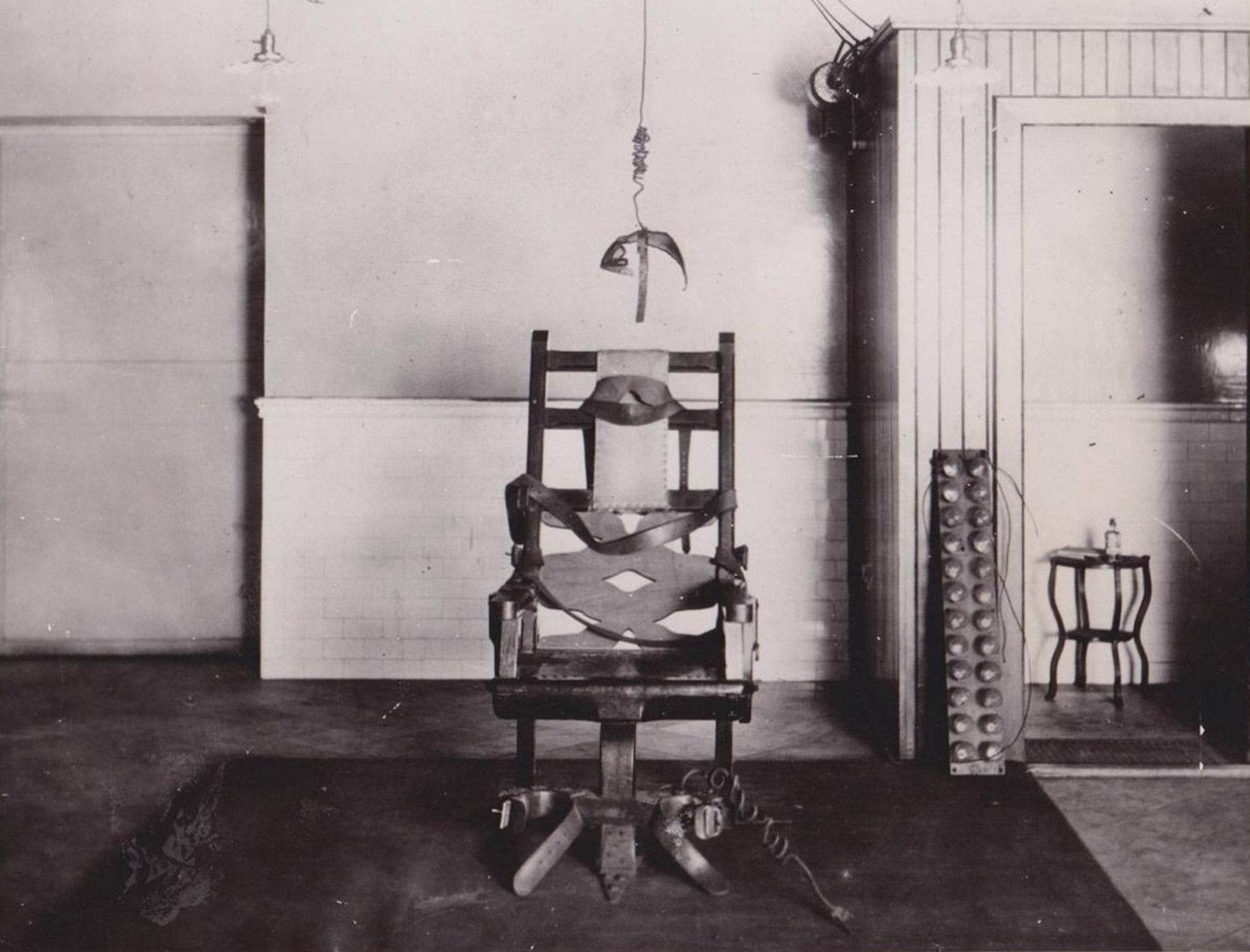
The mechanism of the first electric chair at Auburn Prison. You can see some of these components in the photo below.
A picture of the notorious first electric chair, used in the execution of William Kemmler
An illustration from Scientific American, June 30 1888, showing an ‘ideal’ depiction of electric-chair functioning.
An illustration (not very accurate) of the execution of William Kemmler.
The first episode of the Bowery Boys: New York City History podcast came out in the middle of June 2007. Â Yes, we’ve been doing this for almost ten years. 220 episodes and going strong!
We will be doing some very special things starting this spring in recognition of our tenth year of recording the show. And we’d love for you to help kick off the celebration.
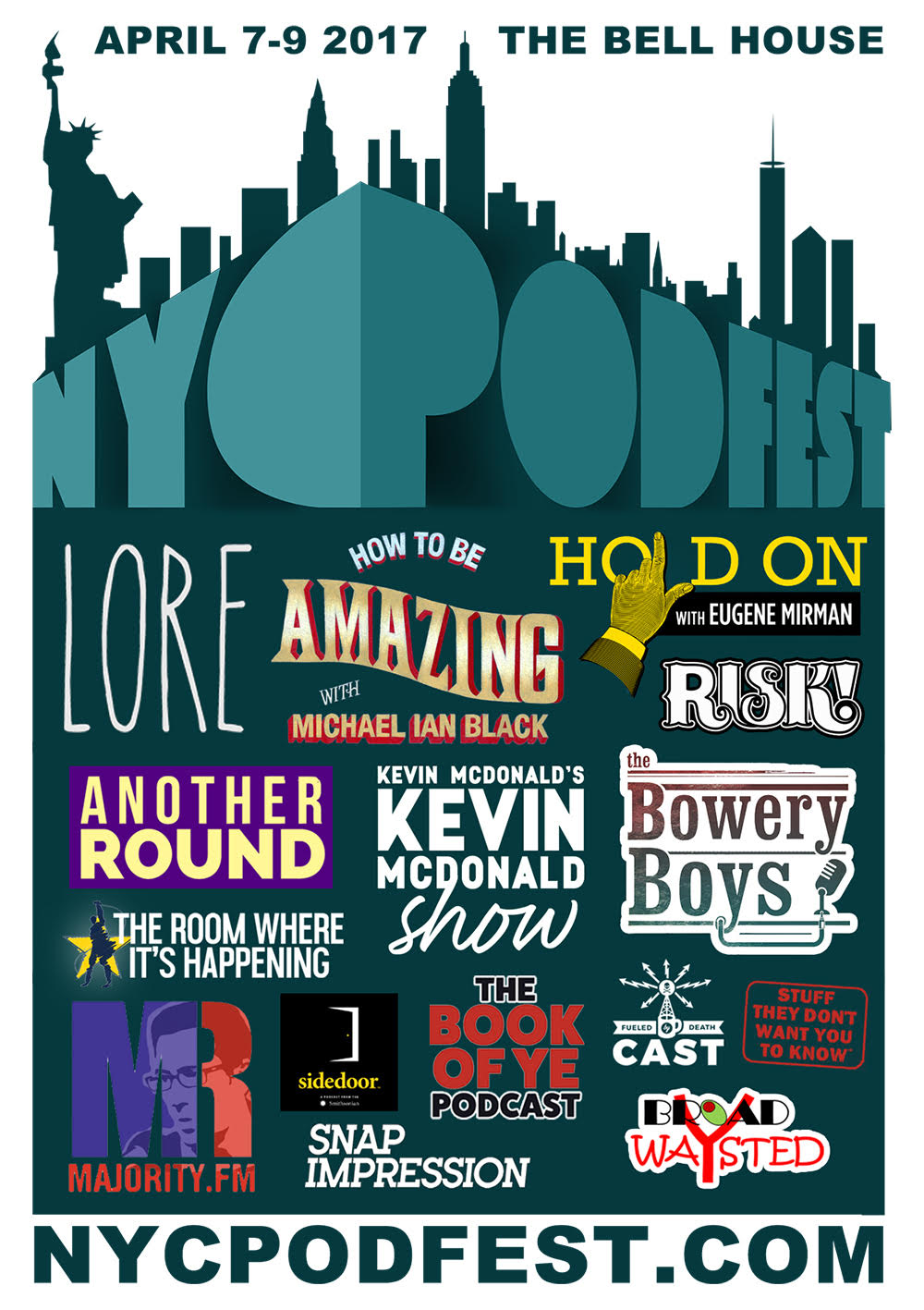
On April 9th we will be making our debut appearance in the fifth annual NYC Podfest, a weekend of live podcast extravaganzas, hosted by the Bell House, the Gowanus venue best known to New York podcast lovers for hosting events for shows like Stuff You Should Know and Slate Political Gabfest. For this year’s festival, we’ll be joining other shows such as Another Round, Lore, Sidedoor, Risk!, How To Be Amazing with Michael Ian Black and many others.
But this will not be an ordinary event. This will be the kickoff event for The Bowery Boys 10th Anniversary celebration. We’ll be on stage talking about how we managed to make it an entire decade, giving you some hilarious back stories on some of your favorite episodes, with some fun and games thrown in.
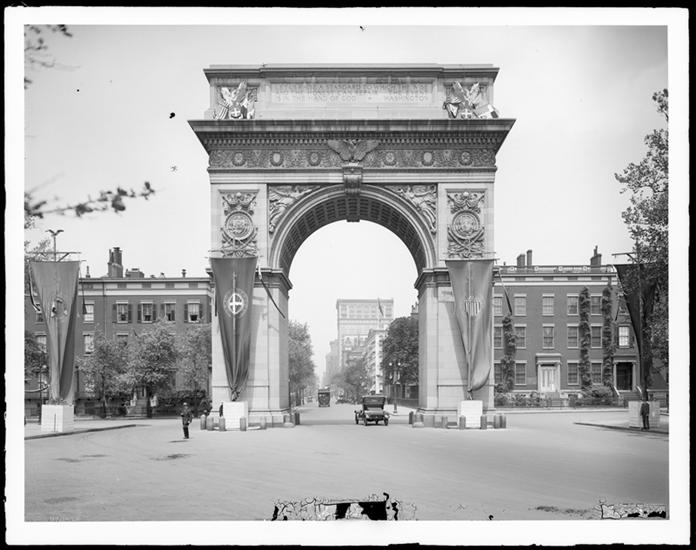
There’s a spiral staircase inside the western half of the Washington Square Arch, which grants access to the rooftop and fabulous views straight up Fifth Avenue.
Public entrance is prohibited, of course, although that didn’t stop six fearless malcontents (including the artists Marcel Duchamp and John Sloan) from breaking in to declare a bohemian revolution late in the evening of January 23, 1917.
Below: A few months after our art revolutionaries take to the arch, it was decorated in support of America’s involvement in World War I.
MCNY
The escapade was organized by Gertrude Drick, a poet mostly forgotten today but known at the time by the name Woe (as in Woe is me).
“One night [Drick] discovered the blind, unlocked door of the passage and stairway which leads to the top of the arch. A few nights later she had made all the arrangements, invitations, Chinese lanterns, balloons and refreshments for her privately conducted picnics.”
Once atop the Arch, the group decorated the outdoor space with lanterns and balloons, and spent the entire night around a fire, drinking wine and tea (the beverage of revolution). They shot off cap pistols into the wintry night air.
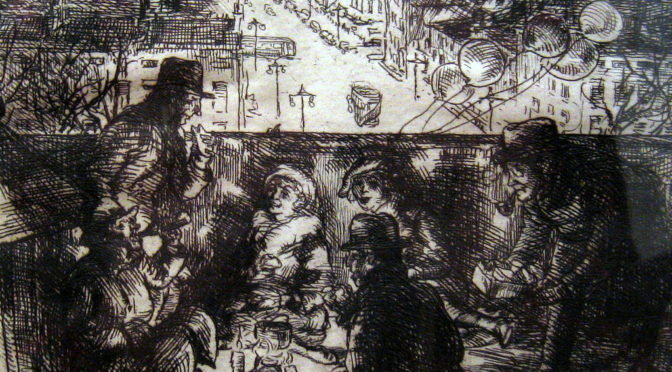
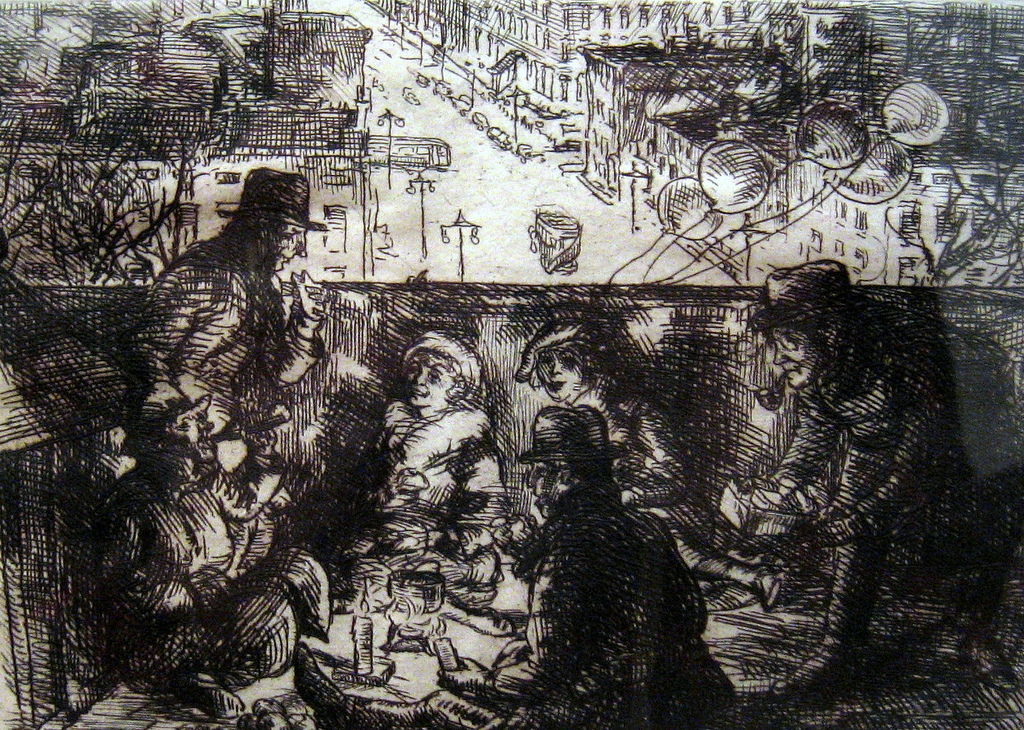
Below: John Sloan’s classic etching depicting the event. The original is at the Met.
A radical shift in the art scene had already begun in New York, emanating from the streets around Washington Square.
Gertrude Vanderbilt Whitney‘s Studio Club was nearby, as were the apartments of many artists associated with the Ashcan School, including Sloan himself.
Greenwich Village, long a magnet for the unconventional, energized this new wave of painters and playwrights as they bonded in nearby cafes and studios.
It was in this spirit that the so-called Arch Conspirators, shielding their candles from the wind, unfurled an unusual parchment late that night that declared a Free and Independent Republic of Greenwich Village.
The only evidence of this grand proclamation the following morning was the balloons that still clung to the Arch’s violated rooftop. But the Village did become free and independent to an extent, a pocket universe of creativity for the rebellious musicians, artists, and writers of the twentieth century.
The above is an excerpt from the book The Bowery Boys: Adventures In Old New York, now available in bookstores everywhere
PODCAST Part One of our two-part series on New York City in the years following the Revolutionary War.
The story of New York City’s role in the birth of American government is sometimes forgotten. Most of the buildings important to the first U.S. Congress, which met here from the spring of 1789 to the late summer of 1790, have long been demolished. There’s little to remind us that our modern form of government was, in part, invented here on these city streets.
Riding high on the victories of the Revolutionary War, the Founding Fathers organized a makeshift Congress under the Articles of Confederation. After an unfortunate crisis in Philadelphia, that early group of politicians from the 13 states eventually drifted up to New York (specifically to New York’s City Hall, to be called Federal Hall) to meet. But they were an organization without much power or respect.
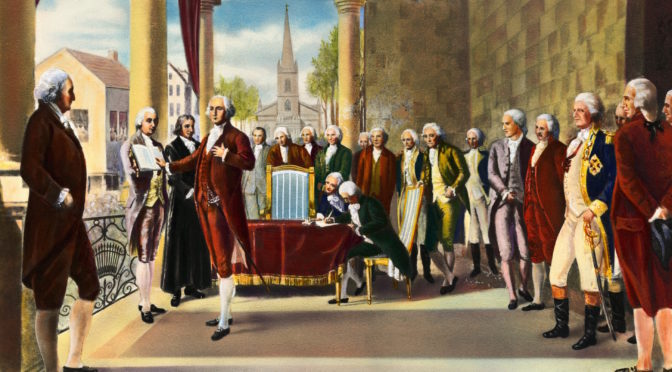
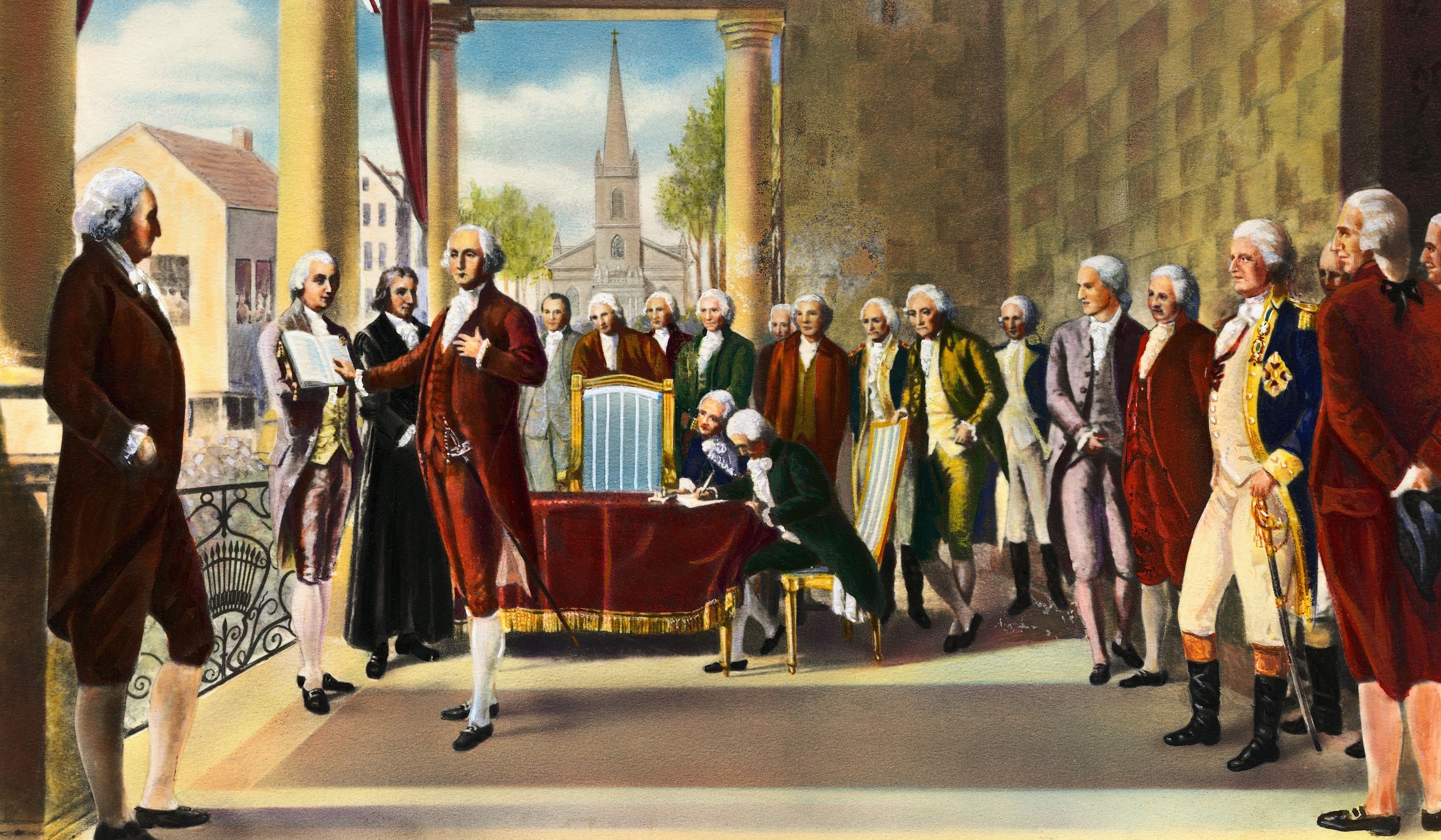
The fate of the young nation lay on the shoulders of George Washington who arrived in New York in the spring of 1789 to be inaugurated as the first president of the United States. His swearing-in would finally unite Americans around their government and would imbue the port city of New York with a new urgency.
This is Part One of a two part celebration of these years, featuring cantankerous vice presidents, festive cannonades, and burning plumage! (Part Two arrives in two weeks.)
FEATURING Washington, Adams, Madison, Livingston and, of course, HAMILTON!
The Bowery Boys: New York City History podcast is brought to you …. by you!
We are now producing a new Bowery Boys podcast every two weeks. We’re also looking to improve the show in other ways and expand in other ways as well — through publishing, social media, live events and other forms of media. But we can only do this with your help!
We are now a member of Patreon, a patronage platform where you can support your favorite content creators for as little as a $1 a month.
Please visitour page on Patreon and watch a short video of us recording the show and talking about our expansion plans. If you’d like to help out, there are five different pledge levels (and with clever names too — Mannahatta, New Amsterdam, Five Points, Gilded Age, Jazz Age and Empire State). Check them out and consider being a sponsor.
We greatly appreciate our listeners and readers and thank you for joining us on this journey so far. And the best is yet to come!
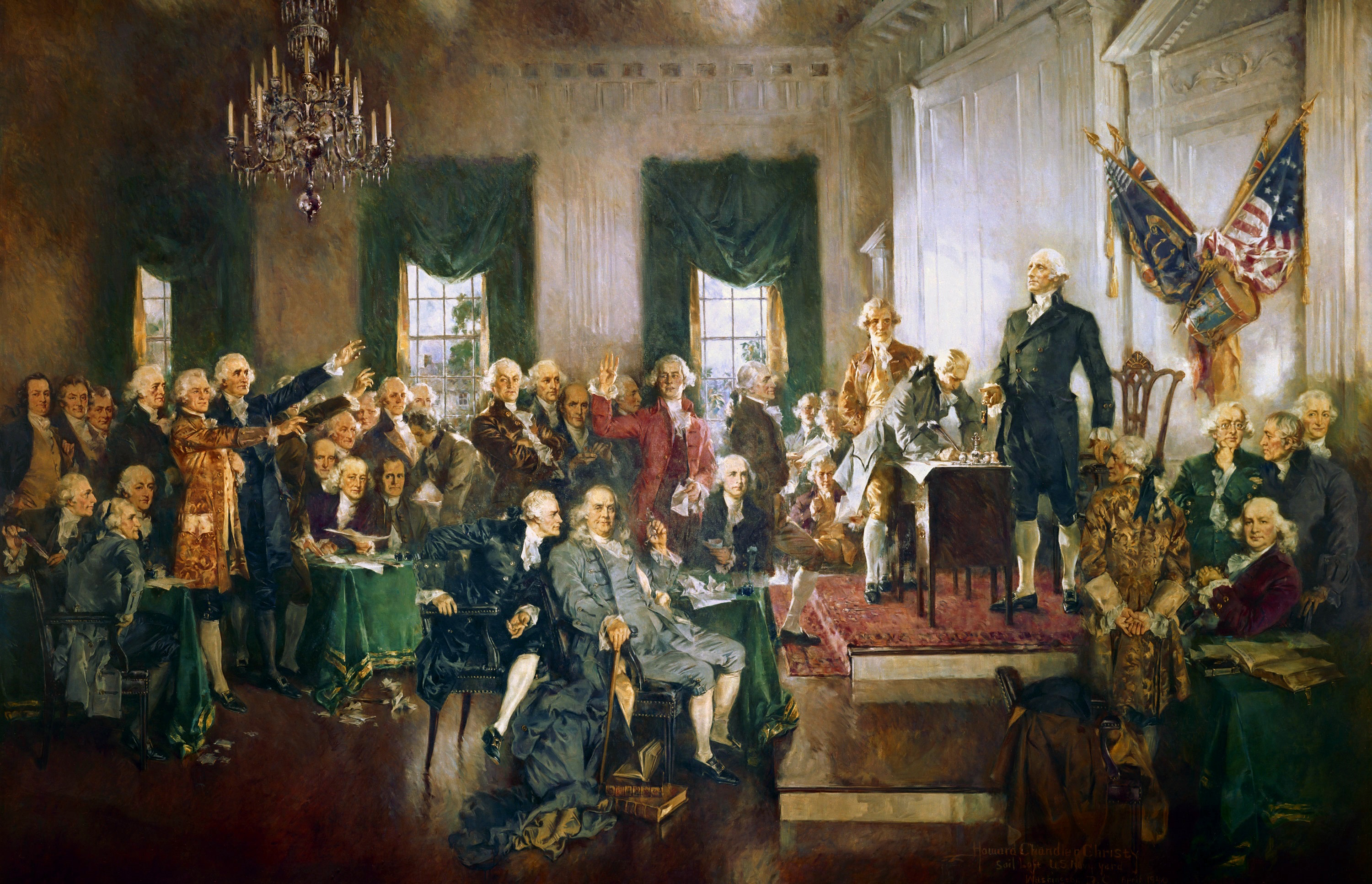
The signing of the Constitution, September 17, 1787.
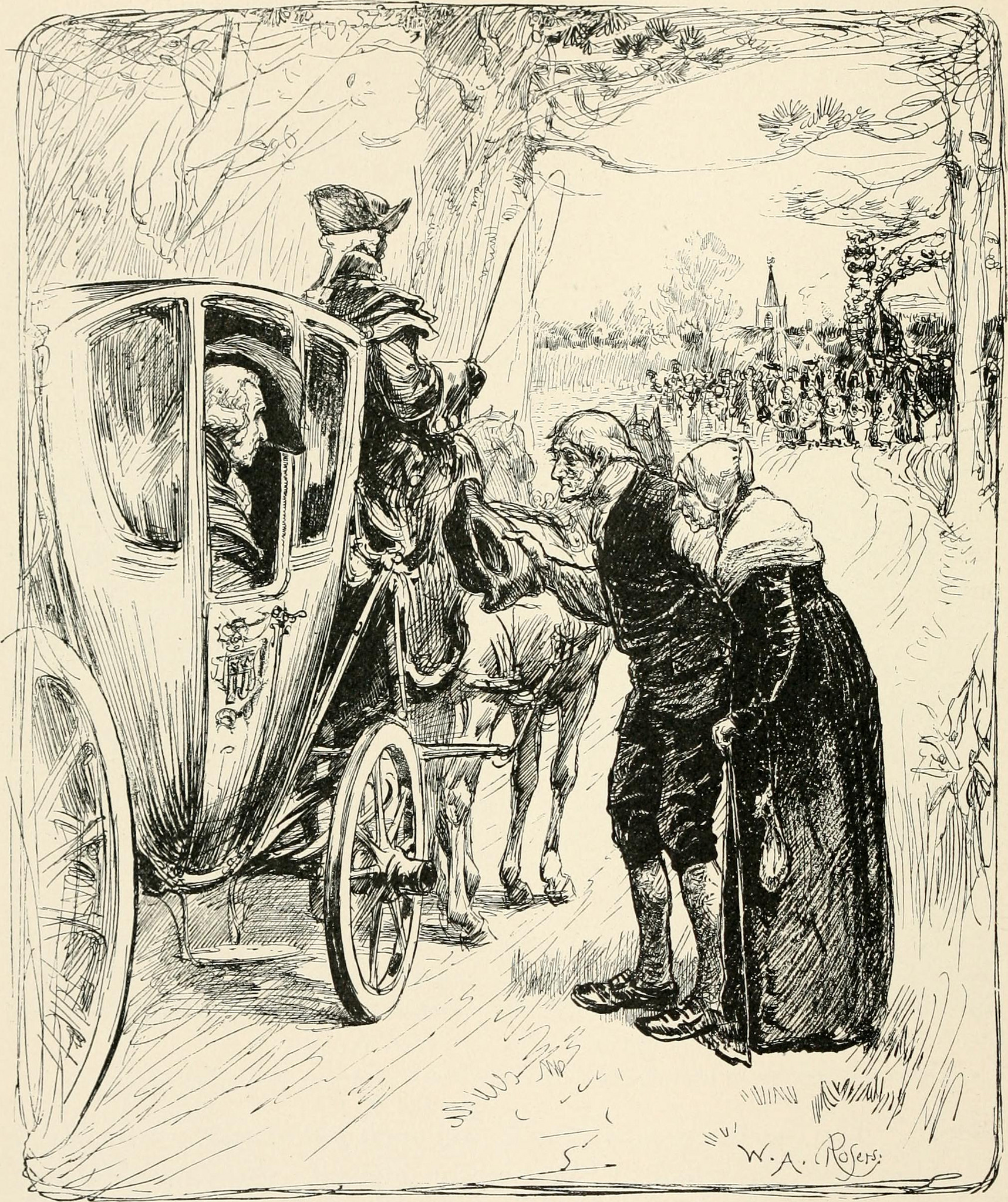
George traveling to his inauguration, as depicted in the 1896 book “The Century book of famous Americans : the story of a young people’s pilgrimage to historic homes”
Internet Archive Book Images
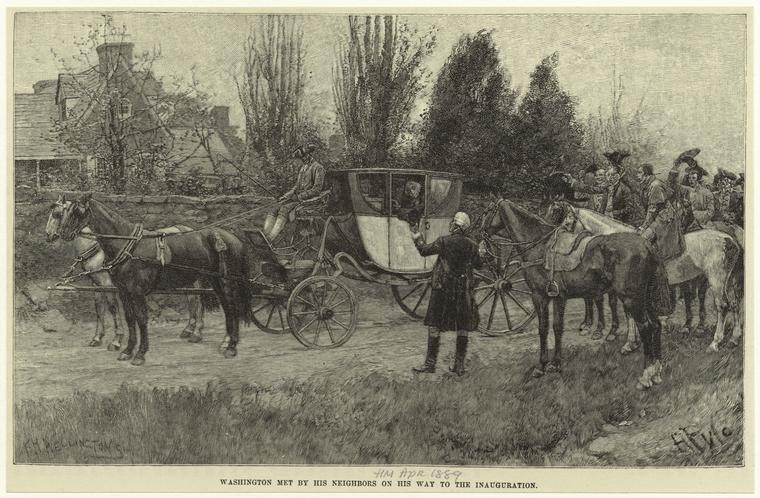
And from an 1889 illustration:
Courtesy NYPL
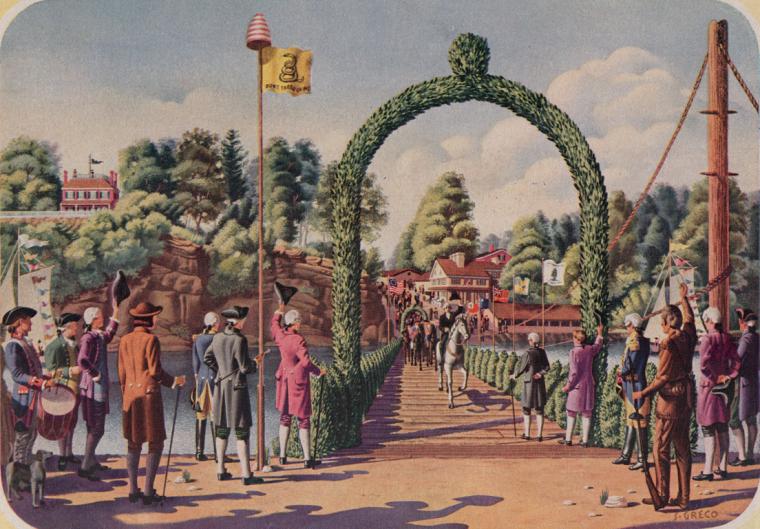
President-Elect Washington crosses floating bridge (Gray’s Ferry) — and through one of many triumphal arches — on his inaugural journey, Philadelphia, April 20, 1789
NYPL
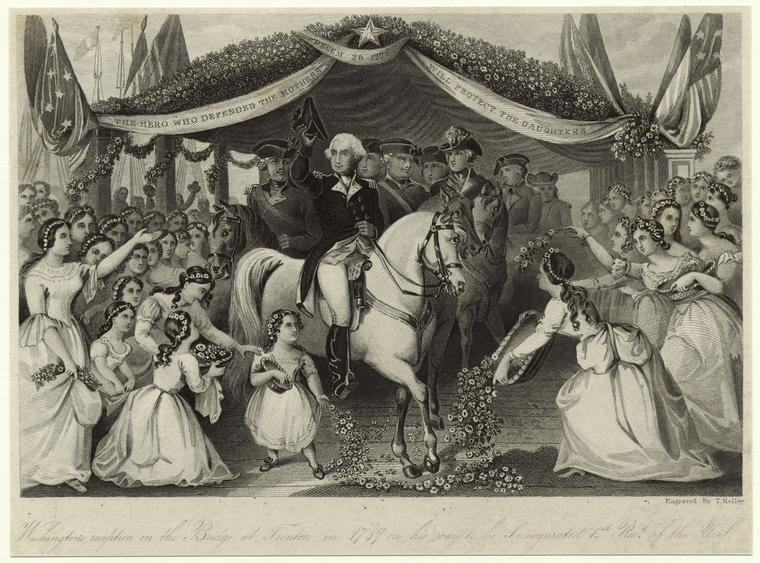
Washington’s reception on the bridge of Trenton in 1789 on his way to be inaugurated 1st president of the U. S.
NYPL
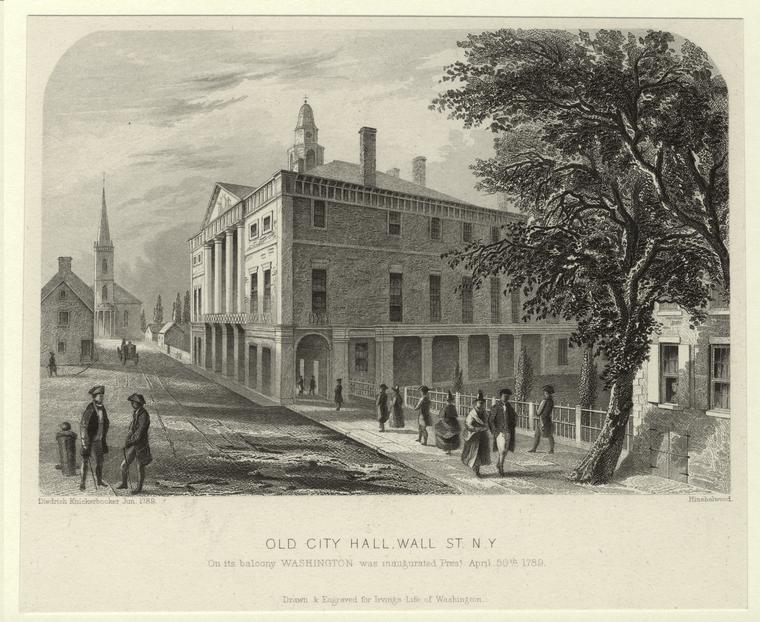
An illustration from 1855 depicts Old City Hall before it was renovated to house the new federal government.
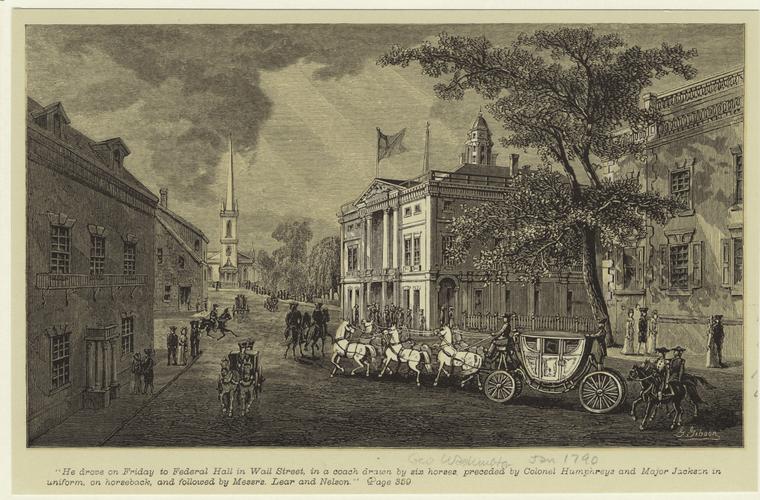
Another view, with Washington’s six-horse coach in the foreground.
NYPL
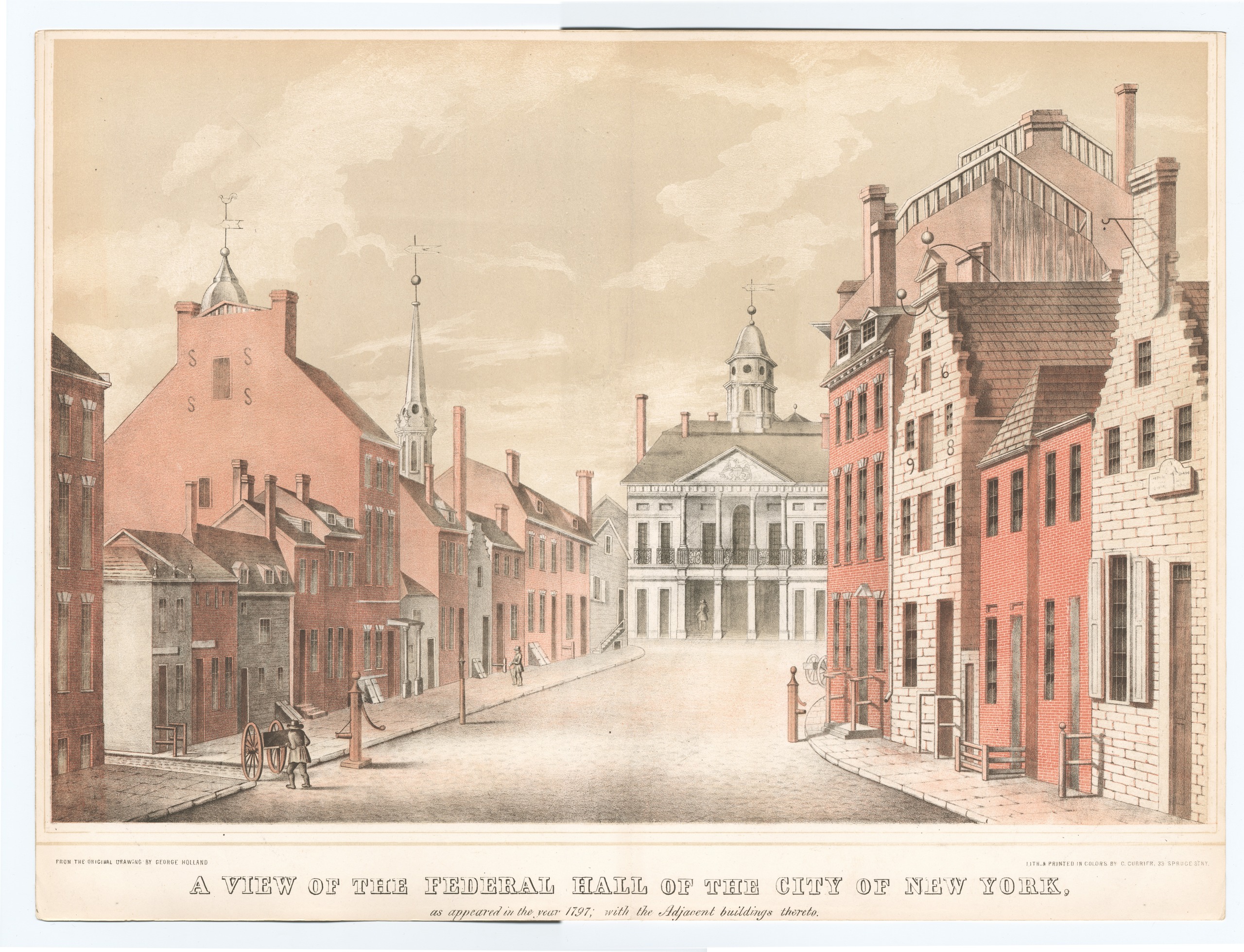
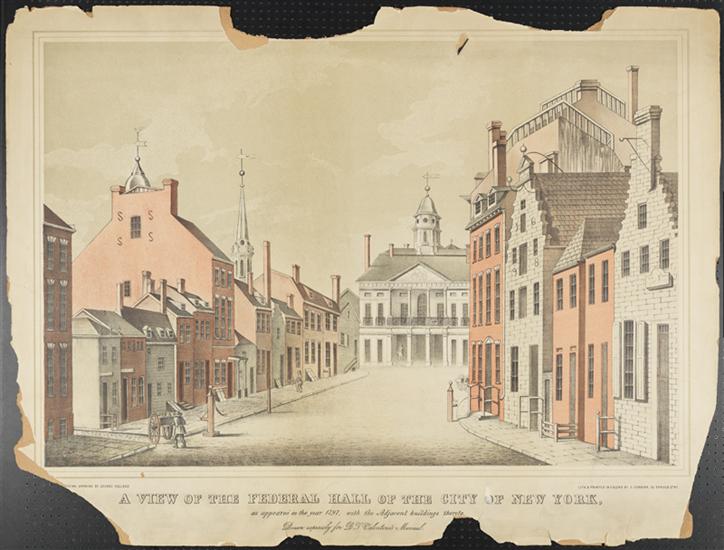
A depiction of Broad Street and Federal Hall as it looked in 1797, but you can easily picture how filled the streets would have been on Washington’s inauguration just eight years earlier.
NYPL
Here’s how it looked on the 2008 HBO mini-series John Adams:
From an 1899 oil painting (artist unknown)
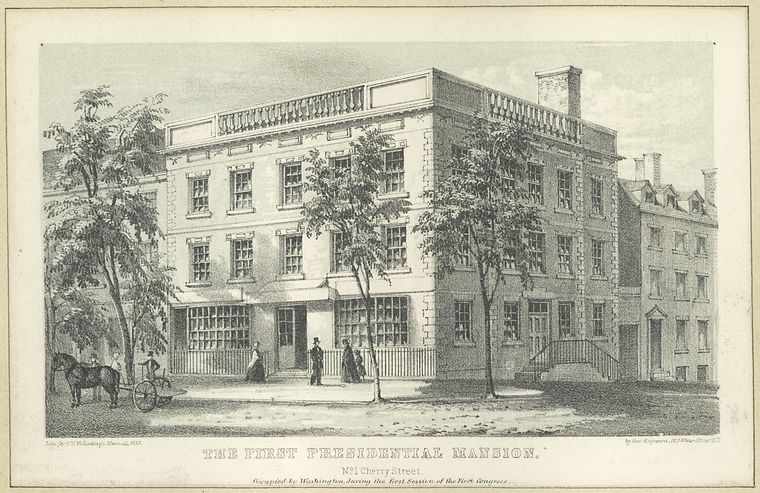
The presidential mansion on Cherry Street:
NYPL
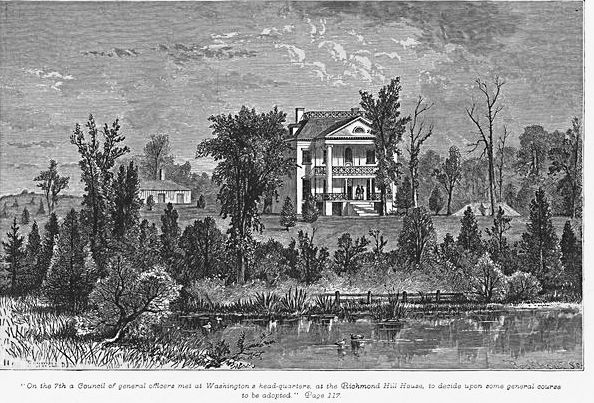
The lovely Richmond Hill, the vice presidential mansion home of John and Abigail Adams
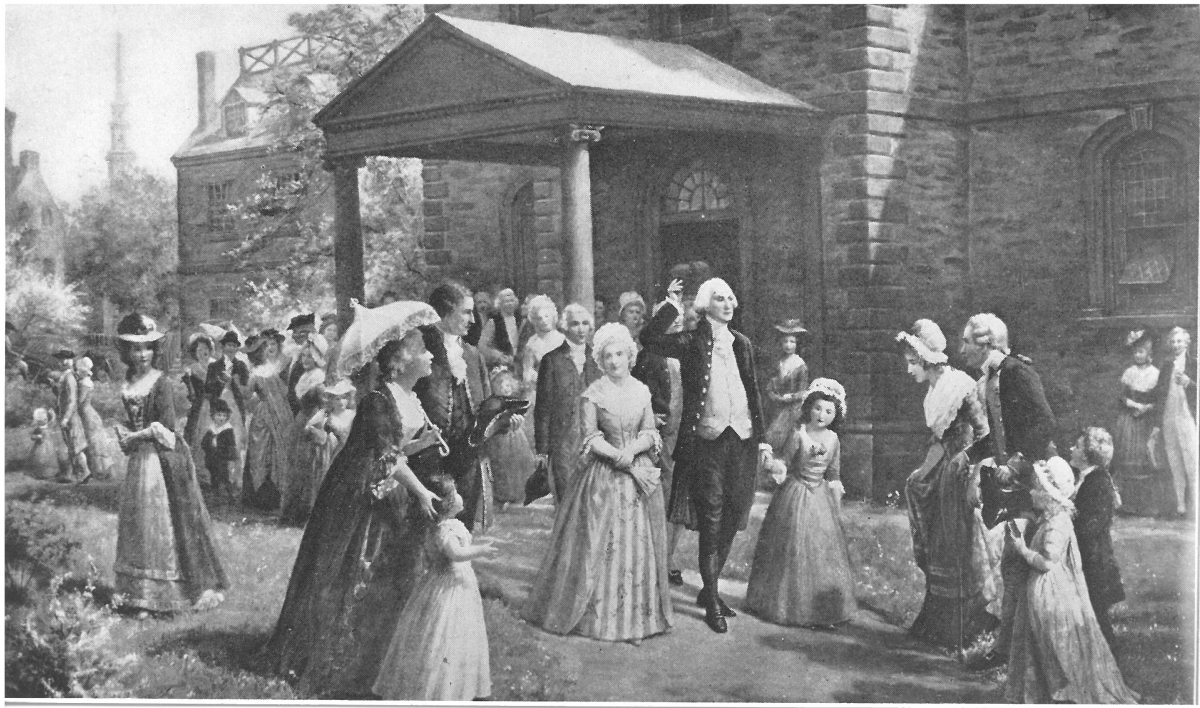
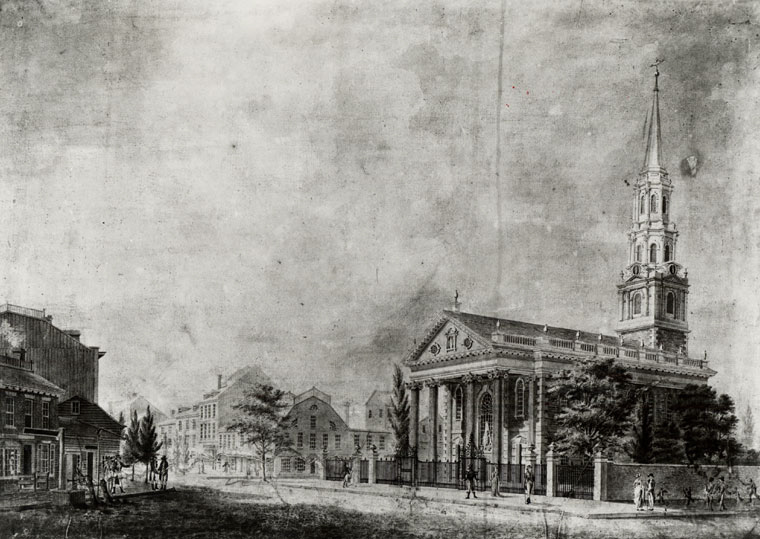
St. Paul’s Chapel, where Washington worshipped in New York. Â More information at Trinity’s website.
Civic buildings are often beautiful architecture in plain sight. Their uniformity — many rendered in classical styles — often finds them less appreciated than other forms of urban architecture.
In a city like New York, skyscrapers, hotels and brownstones are more likely to get the attention of camera-wielding tourists over courthouses. After all, doesn’t every town have a courthouse?
But in Robert Pigott‘s engrossing New York’s Legal Landmarks, an extraordinary world of New York’s civic architecture, past and present, comes alive. He focuses specifically on structures pertaining to legal work — courthouses, law schools, law firms, even jails — in a surprising array of architectural forms.
Not every courthouse has Roman columns or cavernous atriums. In New York City, you can find legal buildings in art deco, brutalist and post-modernist styles. In many cases, they fit so well into a city block that you’re hardly aware of their existence.
Here are five of my favorite details from the book which is currently available in bookstores.
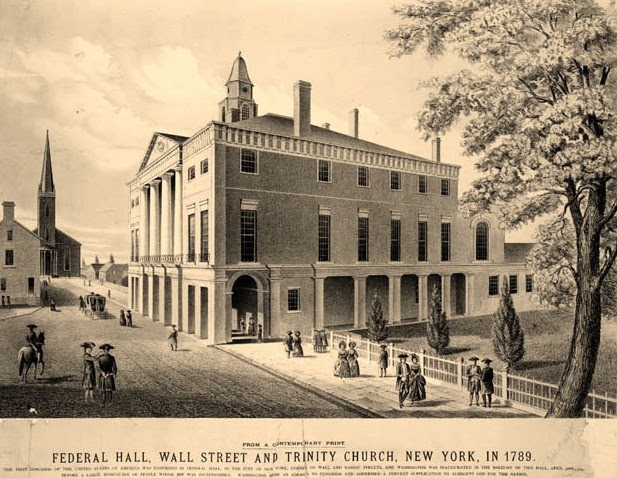
Old City Hall
We know the building better today as Federal Hall, the place where the first Constitutional Congress first met in 1789. (The original building was demolished in the early 19th century replaced with this one in 1842.) But the structure was actually New York’s City Hall as well, serving a variety of purposes— it was a very crowded building — until the current City Hall was finally opened in 1812.
From Pigott’s book: “In 1800, four years before their fatal encounter, Alexander Hamilton and Aaron Burr actually served as part of the same defense team in a sensational murder trial held in Old City Hall. When his fiancé was found dead at the bottom of a well, Levi Weeks, a young carpenter, was charge with the murder. After a three-day trial in which 55 witnesses were called, Hamilton, burr and a third lawyer, Brockholst Livingston, secured Week’s acquittal, having succeeded in casting suspicion on another resident of the boardinghouse where Weeks lived.”
Courtesy MCNY
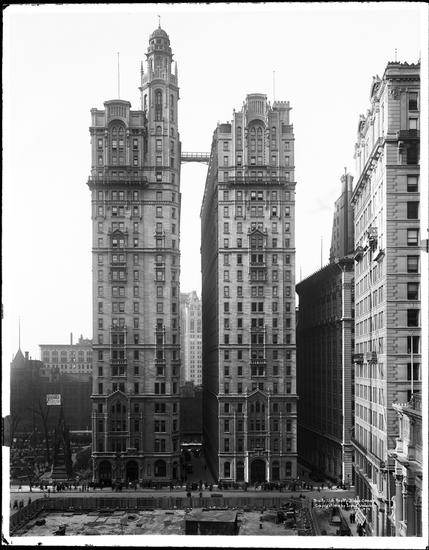
U.S. Realty Building
Linked to the Trinity Building with a tiny sky bridge, the U.S. Realty Building is a pre-zoning law skyscraper that casts a dark shadow over little Thames Street. For most of the 20th century it was the home of the Lawyer’s Club, a social club for the city’s most successful attorneys.
“In 1918, Thomas Masaryk was speaking at the Lawyer’s Club when he received a cable informing him that he had been elected president of the newly-created sate of Czechoslovakia.”
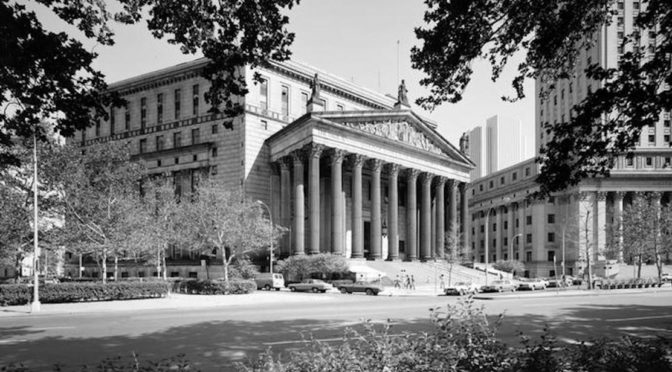
New York County Courthouse
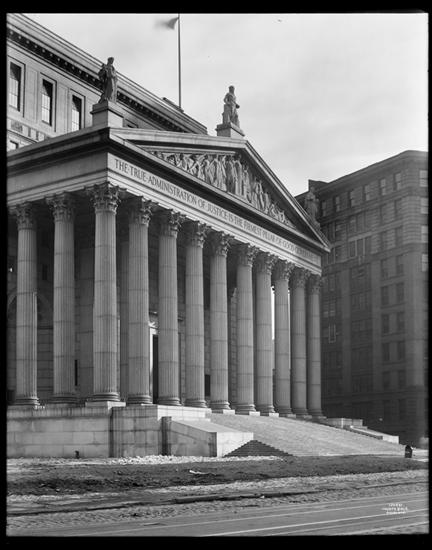
Probably the most recognizable of New York’s civic architecture, the courthouse was built to replace the extravagant Tweed Courthouse. It used to be known not only for its legal decisions, but for its cuisine!
“In its early years, the Justices lunched in a dining room on the seventh floor on meals prepared in a large on-site kitchen by chefs on the courthouse staff.”
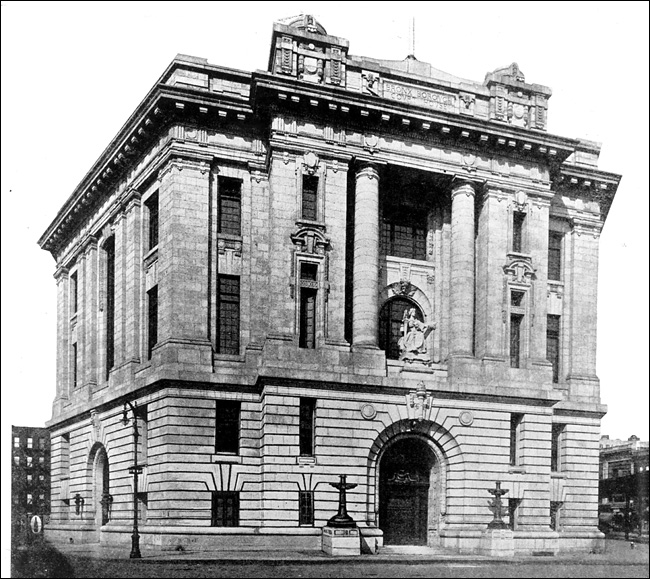
The original Bronx Borough Courthouse
The Bronx has some truly dazzling civic architecture, but not all of it is employed in the services of the city today. This 1915 courthouse, now a New York City landmark, was abandoned in 1977.
“[B]y 1988 it had lain vacant for several years and was described by architectural historian Christopher Gray as a ‘large pigeon coop’. In 1998, the City of New York rejected a bit by comment group Nos Quedamos to acquire the building. Instead it was sold at public auction to a private developer, who continues to seek a suitable use for the structure.”
The book also features a few notable addresses including….
Courtesy Brooklyn Public Library
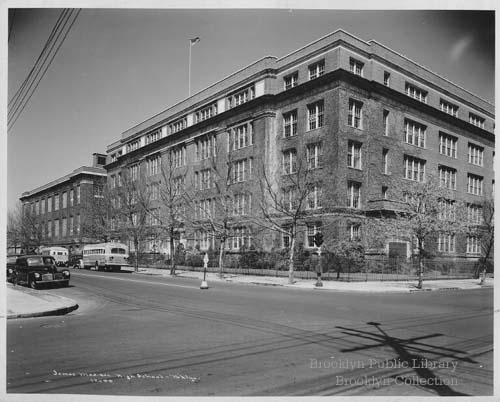
James Madison High School, Brooklyn
According to Pigott, “[f]rom the high school still located at this address, a future Supreme Court Justice graduated in 1950. Born Ruth Joan Bader in 1933, Justice Ruth Bader Ginsburg was raised in the Flatbush section of Brooklyn.”
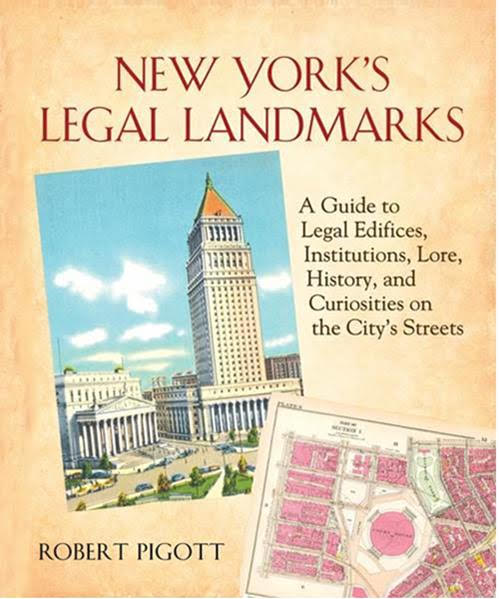
New York’s Legal Landmarks A Guide to Legal Edifices, Institutions, Lore, History and Curiosities on the City’s Streets By Robert Pigott Attorney Street Editions
Here’s some old fashioned New York City trivia for you — There’s never been a Speaker of the House from the city of New York, although there have been a couple from New York state –  the otherwise unremarkable John W. Taylor, an upstate New Yorker from the Saratoga region, in 1820-21; and a central New York representative, Theodore Medad Pomeroy, who held the post for exactly one day in 1869.
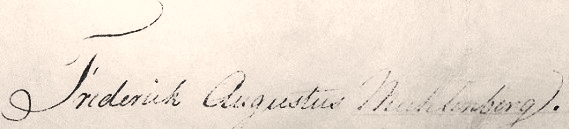
But never fear! America’s very first Speaker of the House, Frederick Muhlenberg, has a New York connection wholely unique and never to be repeated — he is the only Speaker to have served within that role in New York proper, in the months of 1789-1790 when the city was also the nation’s capital, and the center of government sat in Federal Hall on Wall Street.
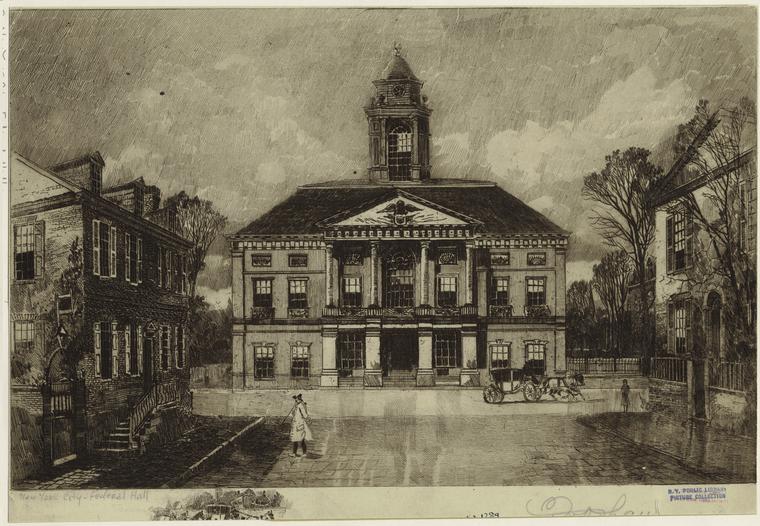
Below: Federal Hall, home to the first House of Representatives 1789Â [NYPL]
And that was not Muhlenberg’s only tie to the city. Although he served in the House as a representative from Pennsylvania, he had previously lived in New York for two years during a truly volatile moment –Â the years before the Revolutionary War.
His name will probably sound familiar if you’re a Lutheran. His father Henry Melchior Muhlenberg is considered “the patriarch of the Lutheran Church in North America,” coming to the British colonies from Germany in 1742 by request of several American ministers in need of spiritual direction. Henry spread Lutheranism throughout the colonies, principally to German and Dutch settlers, and for a time in 1751 even lived in New York, uniting the Lutheran congregations here.
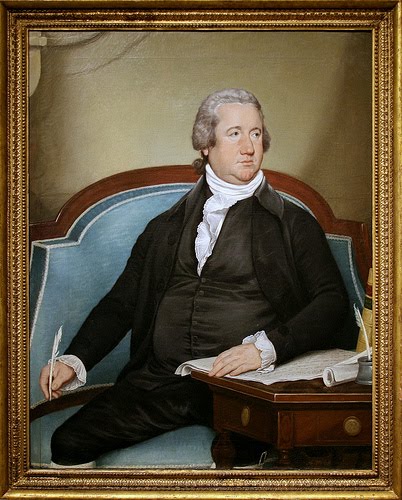
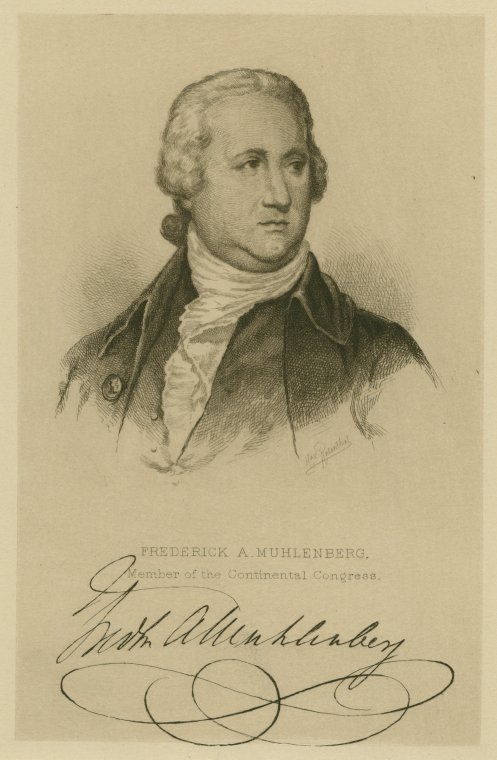
He spawned a true religious dynasty as three of his sons entered the ministry. Frederick (pictured below), born in 1750 in Trappe, Pennsylvania, trained at several small churches in the state before moving with his family to New York in 1774. Â Lutherans were by no means plentiful in New York during this period, but they worshipped in various small congregations throughout the city, including some services at Trinity Church.
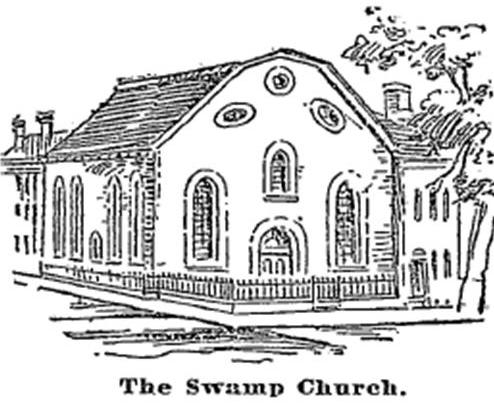
Young Muhlenberg, however, took up with a new church situated just east of the city commons, the newish stone Old Christ Church at the southeast corner of Frankfort and William streets, affectionately referred to as the Old Swamp Church.
When that house of worship was built in 1767, this area of the city, sparsely populated, was called the ‘swamp’, not so much for the topography perhaps as for the grim-smelling leather shops and tanneries that sat here.
Collect Pond, which attracted these sorts of businesses, was but a stone’s throw away, and the area retained its air of industry even as the tanneries moved out and the presses (that would soon comprise Park Row’s newspaper district) moved in.
The congregation didn’t seem to mind however, especially now that they had a venerable Muhlenberg as their leader. And they certainly needed him by this time. In fact, he might had come to New York during this period specifically to reassure a tense congregation amid the tensions that were stewing within the city.
The city of over 22,000 inhabitants was being ripped apart with rebellion, as New Yorkers, caught in an increasing spirit of independence, fought back against British tyranny. From the steps of Old Swamp Church, members would have seen the ‘liberty poles’, hanging in the commons and festooned with banners, and heard (or participated in) regular rallies there.
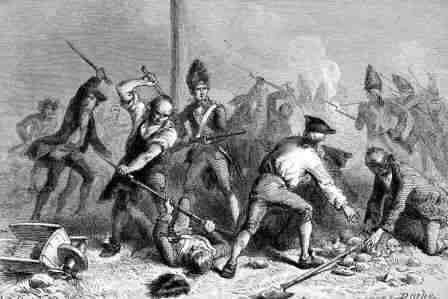
Below: Civilians defending the liberty pole in 1776
The clandestine Sons of Liberty would conduct secret meetings in nearby taverns, and services would have been interrupted with sounds of the Sons’ many retaliations against British officials.
Congregants felt the inevitability of war; it would surely dominate their prayers by 1774. Having the guidance of Muhlenberg, son of the colonies’ most prominent Lutheran, would certainly be of great relief.
It seems, though, that Muhlenberg himself was at odds with his role. He was not bold or rebellious himself and he initially believed the conflicts were none of his business. Even as his brother Peter Muhlenberg, a Virginian who embraced the rebel conflict, would join the fledgling Continental Army in 1775, Frederick himself was not yet convinced. He wrote his brother: “You have become too involved in matters with which, as a preacher, you have nothing whatsoever to do and which do not belong to your office.” [source]
Revolution was invitable. But Frederick was a theologian, cautious and steady, and he worried not only for his congregation but for his own family. This passivity would soon fall away. When actual bombs began reigning down on the city, he sent his pregnant wife and children away to Philadelphia. He remained for a few months to officiate over a dwindling flock but soon fled himself in the first months of 1776, looking over his shoulder at a city soon to be paralyzed by war.
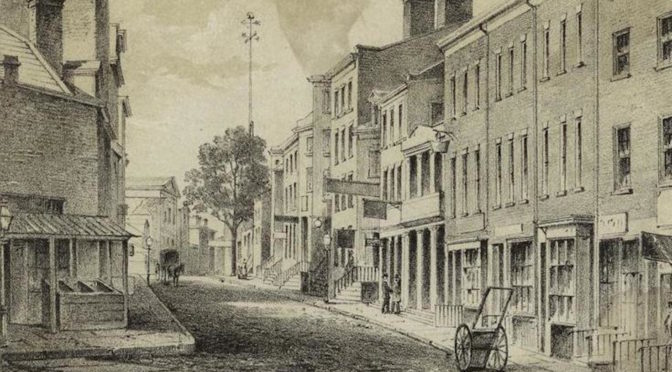
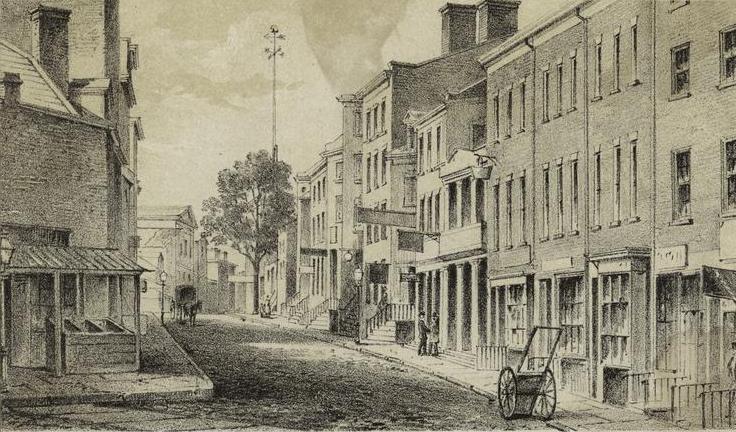
Below: An illustration from ‘D.T. Valentine’s Manual, 1859’, looking up from William Street from Frankfort. The building immediately to the left was the old Swamp Church, no longer in service and heavily redone by the mid-19th century.
He returned to New York in 1789Â as one of the most powerful men in the new government of the United States. Muhlenberg spent the war in Pennsylvania and soon found his footing there as a political leader, becoming a member of the Continental Congress and later elected as speaker to Pennsylvania’s own state House of Representatives in 1780.
Frederick wasn’t merely heeding a patriotic call. He had grown a little exhausted of the pulpit and wanted to develop his new course, one of his very own.
Muhlenberg’s austere character and unblemished reputation served him well in politics. He led Pennsylvania’s ratification of the Constitution in 1787. When the first national Congress was formed, Muhlenberg represented his state at their first meeting in the new temporary capital and his old home — New York.
Courtesy Museum of the City of New York
His election as Speaker made perfect sense; he had a well-known last name that had helped define American spirituality, and he came from a state neatly between that of President George Washington (from Virginia) and Vice President John Adams (from Massachusetts).
The first House of Representatives met on April 1, 1789, at Federal Hall at the junction of Wall and Broad streets, just south of Old Swamp Church (which now thrived under new leadership). Muhlenberg would help shape the first traditions of the House and define the rules as dictated by the Constitution, its ink still dry and untested. Most notably, his was the first signature to grace the Bill of Rights:
He grew into a tolerant and jovial leader, best known for inviting fellow Congressmen over to his home for fairly elaborate ‘oyster suppers’. Muhlenberg would remain Speaker of the House for the entirety of the first Congress, even as they moved out of New York at the end of 1790. He stayed in the House through 1797, become Speaker again for the Third Congress in 1793.
Muhlenberg’s name has been attached to some rather scandalous events. He was one of three men brought into the confidence of Alexander Hamilton during a blackmail scandal involving his mistress Maria Reynolds. Muhlenberg was sympathetic to Hamilton’s predicament; one of the other three men, political enemy and future president James Monroe, was less so.
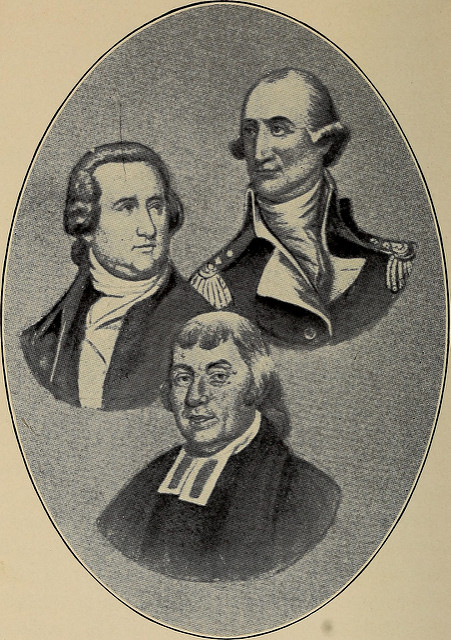
Three brothers Major General Peter Muhlenberg, The Hon. Frederick Muhlenberg and Dr. Henry Muhlenberg from the 1913 book Lutheran landmarks and pioneers in America
In 1796, during congressional battles over funding for the Jay Treaty, Muhlenberg broke a tie vote authorizing the highly controversial treaty to go forward. As a thank-you, his anti-treaty brother-in-law stabbed him in retaliation. He recovered, but family dinners must have been very awkward after that.
Muhlenberg retired shortly thereafter and died in his home in Lancaster, Pennsylvania, in 1801.
As for the Swamp Church, its members slowly drifted away, and the property was purchased by tobacco mogul George Lorillard. The Lorillards also have very deep scars due to the Revolutionary War, but that is another story.
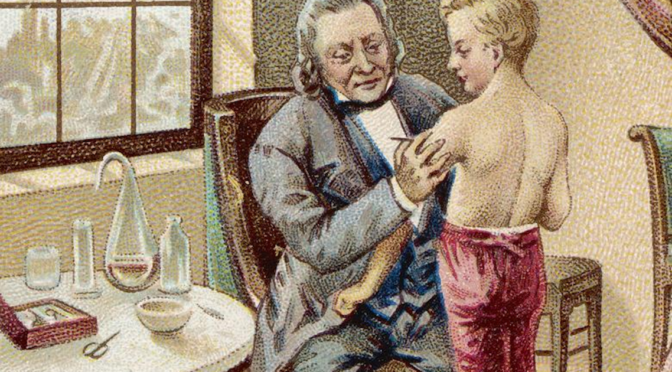
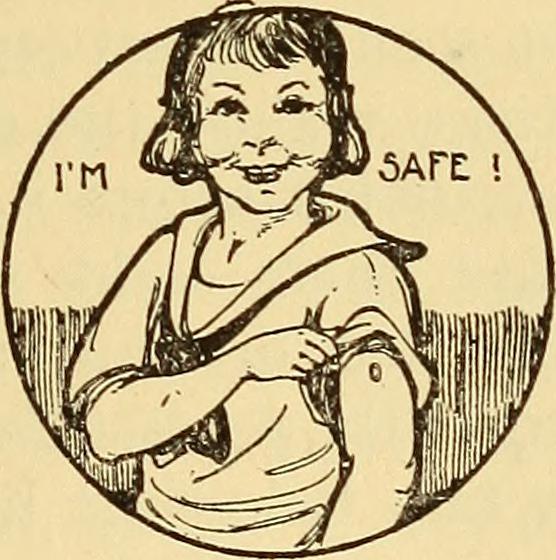
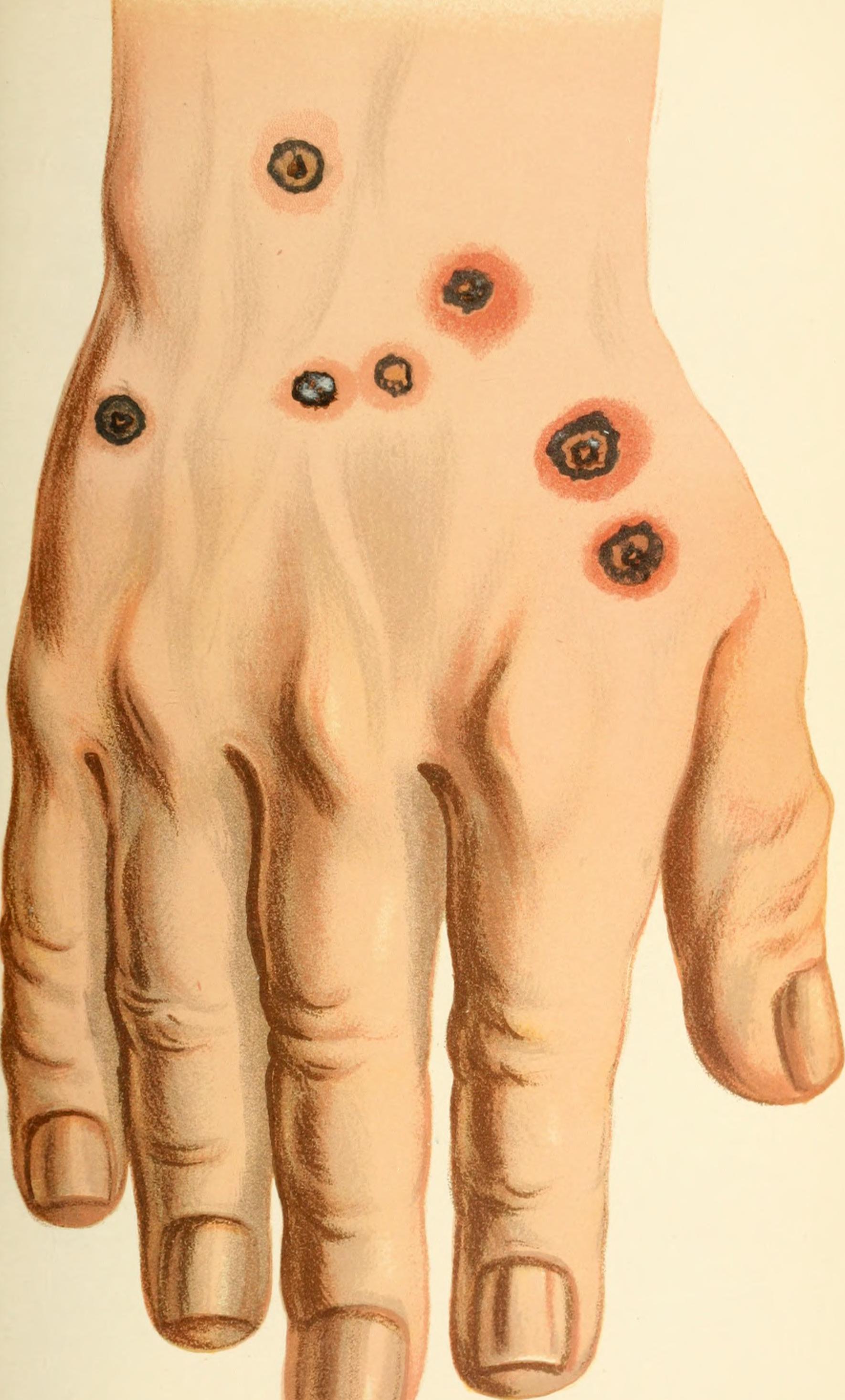
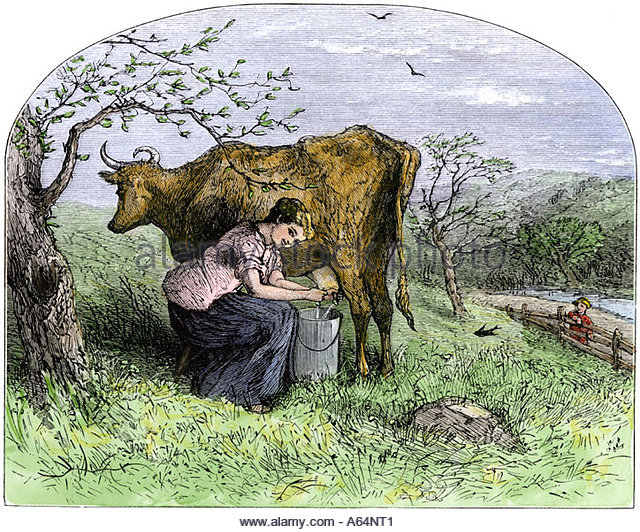
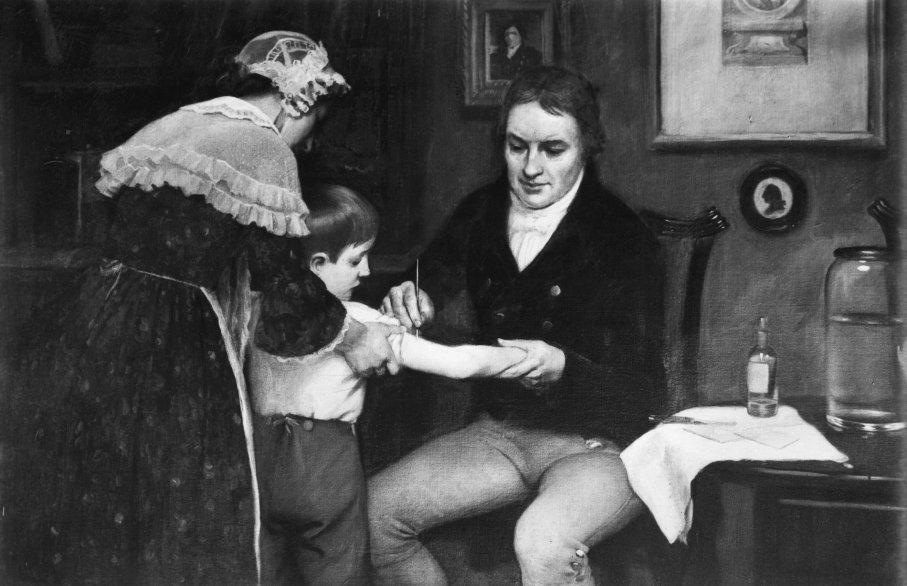
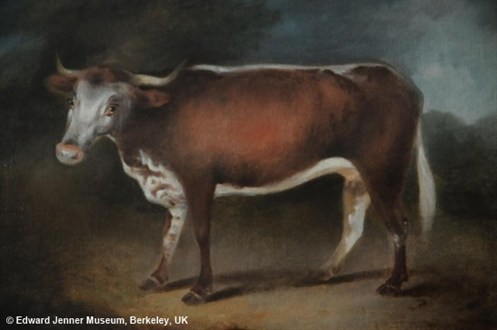
THE FIRST PODCAST  Once upon a time there was a country doctor with a love of birds, a milkmaid with translucent skin, an eight-year-old boy with no idea what he’s in for and a wonderful cow that holds the secret to human immunity.
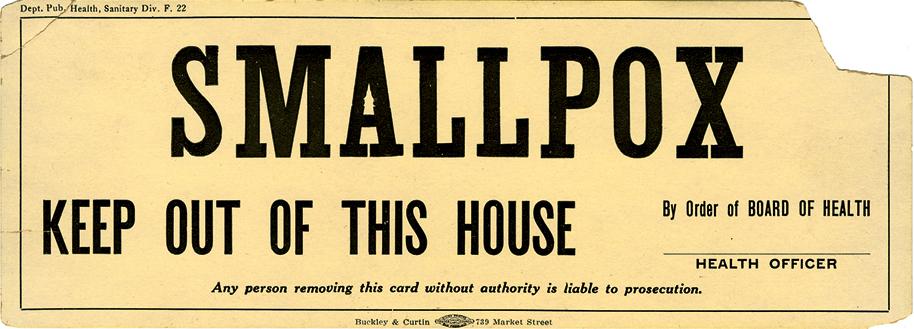
This is the story of the first vaccine, perhaps one of the greatest inventions in modern human history. Come listen to this remarkable story of risk and bravery which led to the eradication of one of the deadliest diseases in human history.
And hear the words of Dr. Edward Jenner himself, written in the first weeks of his experiments!
Decades in the making, the Second Avenue Subway finally opened to the public this week, its glimmering new stations at 72nd, 86th, and 96th Streets heralded with the pomp and circumstance of a movie premiere.
Of course, the subway doesn’t immediately come to mind as a photogenic movie star, but in fact, the various tunnels and stations of the New York City Subway have appeared as the backdrop for hundreds of movies.
Its route diversity — from deep under midtown to elevations above the outer boroughs — and its longevity have allowed filmmakers to turn the subway into a rolling sound stage.
So, in a tribute to the Second Avenue Subway, I recently revisited a post I wrote back in 2010, binging on a variety of subway films from several eras and noticing a definite pattern in their development. I suspect the gleaming new stations will find themselves irresistible as filming locations for future filmmakers in the years to come…..
The First Subway Movie: I posted this just a couple weeks ago, but the subway makes its first appearance at the inception of the very first IRT line, with a 1905 short (they were all short back then) called ‘Interior New York Subway‘. filmed by the Edison company, which was simply a camera following behind the first subway from Union Square to Grand Central. The film’s cinematographer, Billy Bitzer, went on to innovate standard filming techniques, like the soft focus and the fade out, and made his reputation working with D.W. Griffith on The Birth Of A Nation and Intolerance.
A bit  later, in City Hall to Harlem In 15 Seconds, a slight plot would be added to the subway atmosphere.
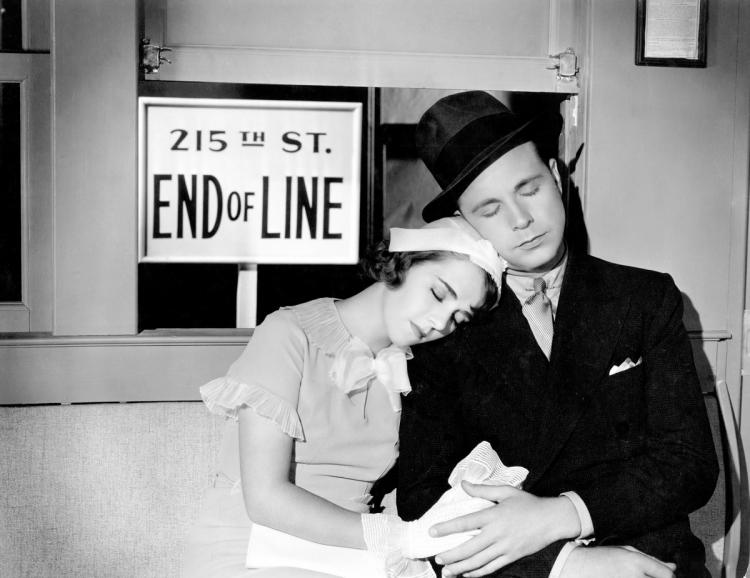
The Musical Subway: Fiction films wouldn’t be shot on-locaton in the subway until the 1940s, but that didn’t stop Hollywood from transforming it (via a backlot) into a romantic set piece.
The most unusual of these is certainly the 1934 hokey gangbuster Dames, featuring an exotic dance number by Busby Berkeley as psychedelic as any 60s counter-culture movie. Dick Powell and Ruby Keeler put on a wacky show — they’re always puttin’ on a show back then — featuring a crowded ride on an uptown train. Powell falls asleep and his dreams burst into hundreds of chorus girls.
BONUS: Earlier in the film, the pair woo each other on the Staten Island ferry with the song “I Only Have Eyes For You” (making its debut).
ALSO: Although it’s an elevated train — not a subway — I’d be remiss if I didn’t mention thatKing Kong (1933) didn’t much enjoy them rumbling down Sixth Avenue on an elevated train either.
Below: ‘Dames’ on a Train: Keeler and Powell dream of the innocent days
The Romantic Subway: On The Town (1949) is a candy-colored, on-location race through New York nostalgia, with our three dancing sailors skimming through the city’s greatest landmarks. A subway ride provides the impetus for the central romance, as Gene Kelly falls for a poster of Miss Turnstiles (a play on the mid-century’s quaint beauty pageant contest Miss Subways). Daydreaming similar to Dames produces an equally dance-filled response:
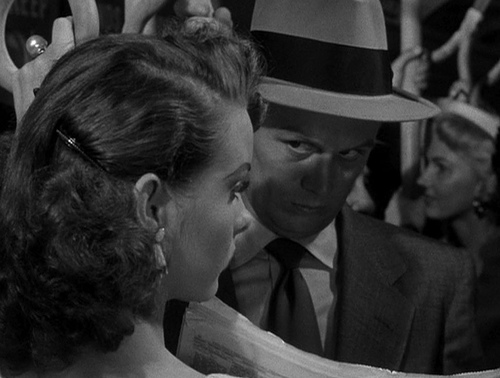
The Dark Subway: I’m not sure why more film noirs weren’t set on the subway — that would be remedied in the 1970s — especially when they’re as juicy as the 1953 Pickup on South Street.
The opening scene is one of its most famous, as an eerie Richard Widmark hovers over ditzy Jean Peters in a crowded subway car, gingerly relieving her purse of what proves to be a very troublesome item. From there, the action shifts to the piers of South Street — nearly unrecognizable, not an elevated highway in sight — before submerging back into the subway tunnels for a spectacular finish. Here’s a clip of the opening scene:
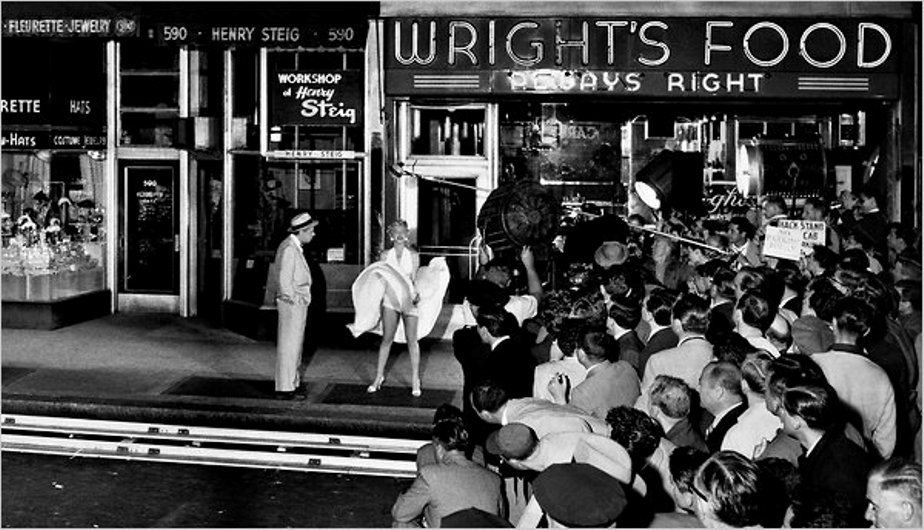
ALSO: With intrigue rumbling below, even the breeze from a passing subway train could elicit a sexual response as a defenseless young woman in a white dress stands above a grating in the 1955 comedy The Seven Year Itch. Unfortunately, the actual footage of Marilyn Monroe standing above the subway grate was replaced with a studio-filmed version. Â Here’s a clip of the film, and a still from the original Manhattan photoshoot.
The Hostage Train: That glowing sheen of the Berkeley musicals — even the somewhat clean shadows of ’50s crime dramas — would slowly fade by the 1960s, along with the conditions of the subway itself.
Presaging a rich future as a moving hellcar of violence and death, the 1967 film The Incident presents a group of unwitting passengers terrorized by two young, stereotypical ’60s sadists. Surreptitiously filmed and very low budget, The Incident would introduce the subway car-as-trap motif that would fuel the 1974 thriller The Taking Of Pelham 1-2-3 and open its possibilities for urban horror.
A clip from The Incident:
Vengeance Underground: The movies hardly sugar-coated New York City’s hard times in the 1970s and rendered the subway into a place where anybody, at any time, could be shot, stabbed and assaulted. In Death Wish (1974), the subway is one of several locales of seething, bald-faced criminal activity, but it’s so dangerous that Charles Bronson goes down there twice to pick off bad guys. In the universe of this unsubtle action flick, you could be mugged and raped five, six, seven times a day, so best to be proactive and pick them off before they get you. Ten years later, Bernhard Goetz would reinvent this hyper, fictional fantasy by actually doing it.
ALSO: The greatest movie ever made using the subway,The French Connection (1971), actually has its most notorious moment that runs underneath an elevated line in Bensonhurst, Brooklyn, a breathless chase scene filmed famously without the city’s permission.
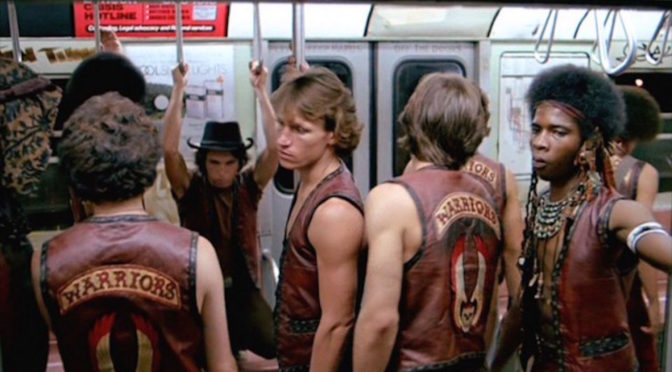
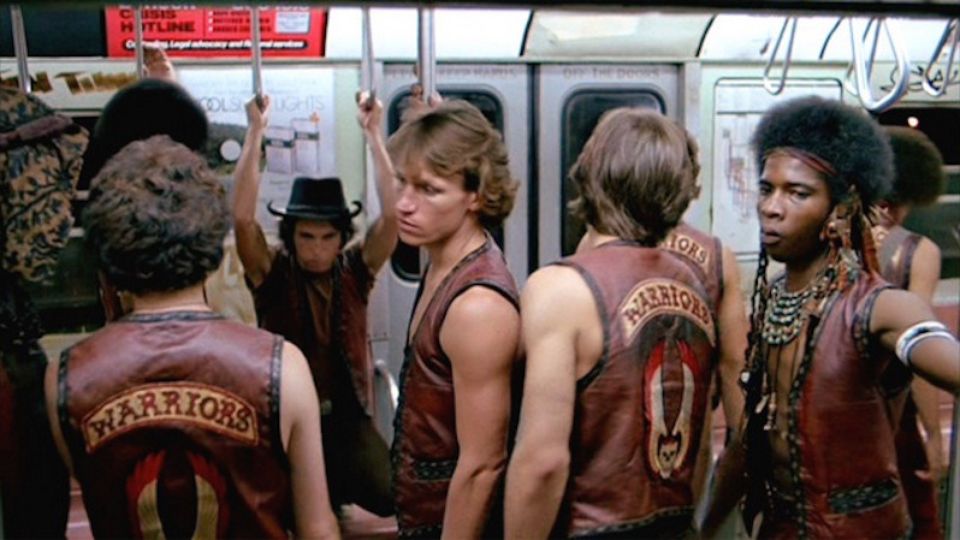
The Fantasy Detour: The reputation of the New York subway system was so poor in the 1970s that depictions went from the ultra-realistic to the absurd without missing a stop. In The Warriors(1979), the train becomes a virtual yellow-brick-row for a costumed Coney Island gang escaping a host of absurd villains. The Union Square subway station holds one of their deadliest challenges: suspendered, roller-skating pretty boy toughs with feathered hair.
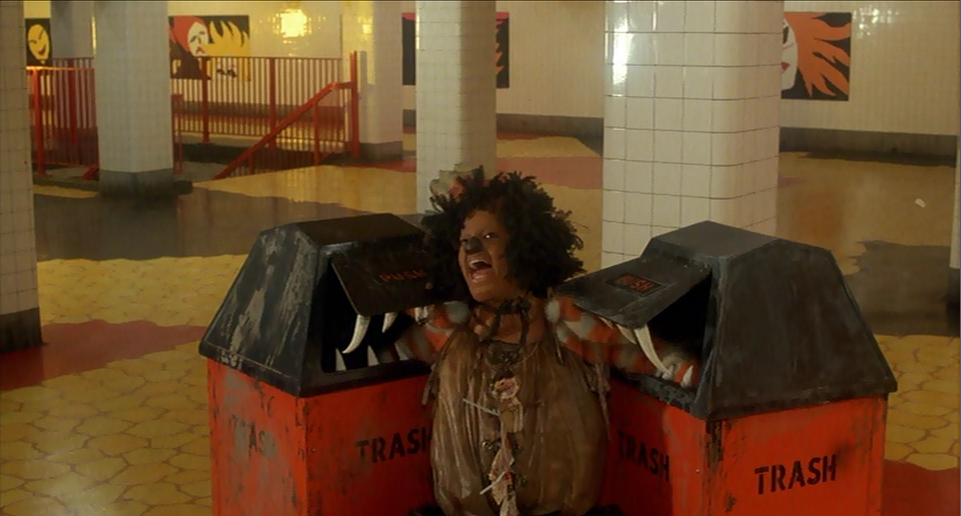
It’s only a tiny step into pure fantasy and an actual yellow brick road in The Wiz (1978) with a creepy collection of gangly puppets, a pair of Scarecrow-eating trash cans, and living subway posts most certainly not designed by Heins & Lafarge.
Local Lines: While the mainstream movie depictions would get even more outrageous, the growth of independent filmmaking and thoughtful, locally filmed productions in the 1980s depicted the subway in more realistic tones — as a confusing place to lose a child in Gloria (1980), as an underground wild west for graffiti artists and hip hop dancers in Wild Style(1983) and Beat Street (1984, in the clip below), and as a restless throwback to film noir in King of New York(1990).
The Sequel Subway: With the advent of the Hollywood blockbuster came a restoration of the subway’s reputation — sorta. The subway in the cinematic 1980s and 1990s was still dangerous, but in wild, sensational and very unrealistic ways. The tunnels underneath Manhattan harbored rivers of ectoplasmic ooze (Ghostbusters 2, 1989), a train booby-trapped with explosives (Die Hard With A Vengeance, 1995), a supernatural danger zone of runaway trains and alien warriors (Superman 2AND Superman 4), and even the Teenage Mutant Ninja Turtles (who hole up in that abandoned City Hall subway station).
Midnight Horrors: As the subways became safer to ride, the usual tropes of knife-wielding thugs and rapists no longer made sense as objects of menace. Soon the subways were filled with supernatural beings, starting with the relatively sedate Jason from Friday The 13th Part 8: Jason Takes Manhattan and slowly elevating into humanoid insects (Mimic, 1997), monsters from the sea laying large lizard eggs (the Godzilla remake, 1998), and humanoid insect monsters from the sea (Cloverfield, 2008)
ALSO: For a more intriguing take on subway horror, I recommend Jacob’s Ladder (1990) which uses the Brooklyn Bergen Street Station to surreal effect.
The Worst Subway Depiction Ever: Of course, films are allowed to manipulate train lines, distort direction, even put trains next to landmarks that are, in reality, miles away. It’s fantasy.
But somewhere out there in the vast universe of fiction there is a vague, undefined point where a film steps over the line, and the movie which does this most shamelessly is the otherwise great Spider-Man 2, which inserts a vast, fantasy elevated R line through the heart of Manhattan, rebuilding what the city so painstakingly tore down in the 1940s and 50s. If they wanted a picturesque elevated through a dense downtown landscape, why not just put Spider-Man in Chicago?
21st Century Redux: In the last forty years, Hollywood has had a nasty habit of replicating itself, and that goes for subway movies, with rehashed old themes like vigilantism (in 2007’s The Brave One) and even remakes the older films, like the sorry remake to The Taking of Pelham 1-2-3. (Incidentally, that remake’s two stars have two important subway films on their resumes — John Travolta in one of the greatest New York films of all time, Saturday Night Fever, and Denzel Washington, in an uncredited, unceremonious moment in Death Wish.)
But the most enchanting recent use of the subway in a motion picture happens in Inside Llewyn Davis, where a misbegotten cat experiences the rush of mass transit for the first time:
A version of this article first ran on this blog in 2010.
Over one hundred years ago, the New York City area (its five boroughs, along with areas in New Jersey and Westchester County) was the undisputed center of the American film industry.
The invention of the movie camera and celluloid film processing — revolutionized by Thomas Edison and many others — seamlessly collided with the city’s thriving vaudeville and burlesque circuits. By 1910 audiences were enjoying short films at nickelodeons, vaudeville theaters and film parlors, most of them filmed in studios scattered throughout the area.
There are a few vestiges of this old industry that still remain in New York City, most notably Kaufman Astoria Studios in Astoria, Queens.
But many of these old spaces have vanished for more terrifying reasons — fire. Film companies were always burning down a century ago due to the flammability of film stock and chemicals then.
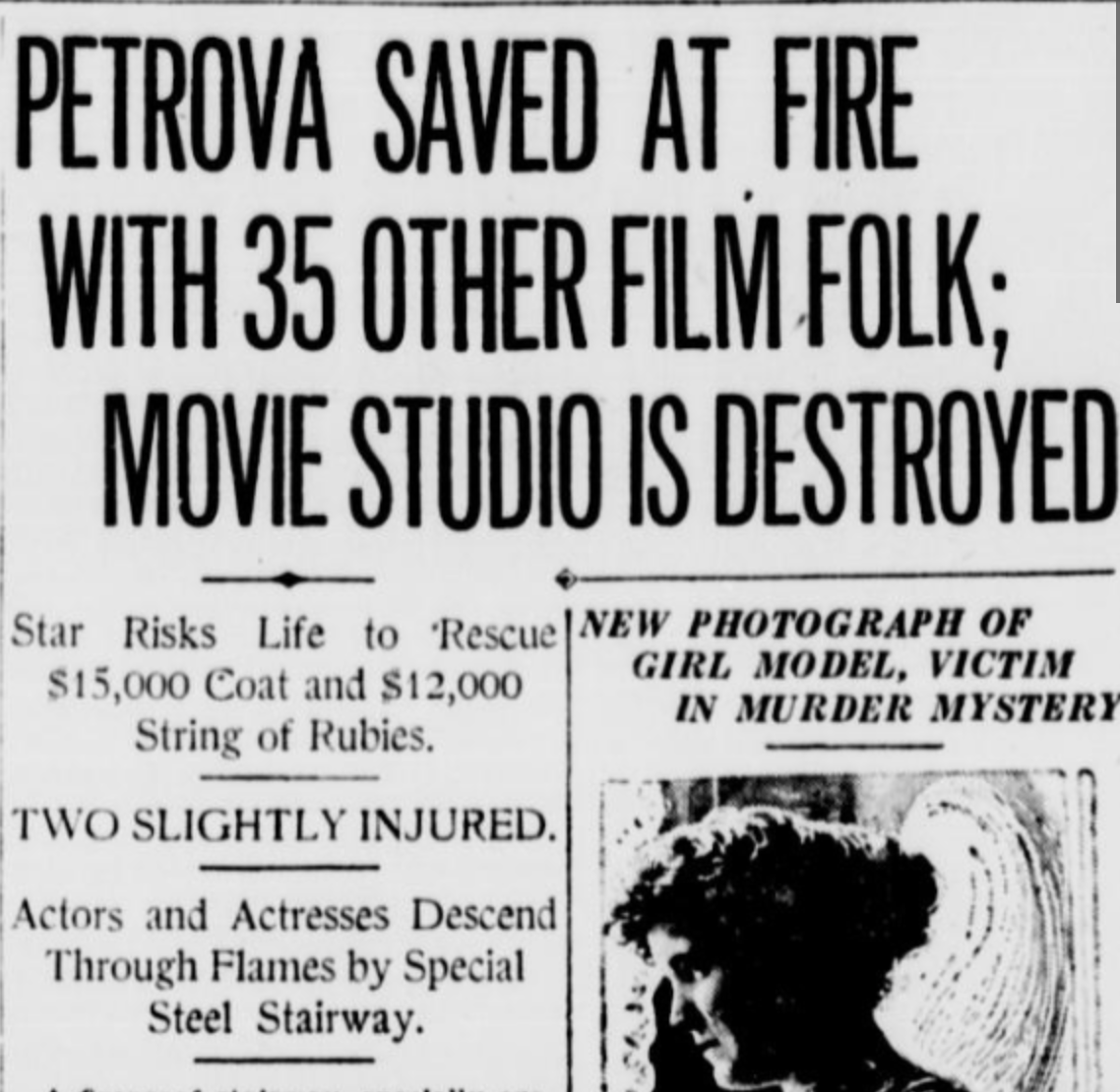
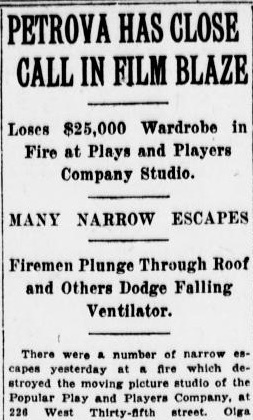
One such fire occurred one hundred years ago today, endangering dozens of people including one of the leading film actresses of the era.
Popular Plays and Players Film Company was a production arm of Metro Pictures, formed in February 1915, filming both in New York and Hollywood. Among its employees was Louis B. Meyer, a film icon to be who would later head a revamped version of the company under the name Metro-Goldwyn-Meyer (or MGM).
Popular Plays had a film production studio in New York at 226-230 West 35th Street set up in a former brick church, just a block north of Pennsylvania Station. “It is one of the most complete laboratories in a New York studio,” claimed a movie magazine the prior year.
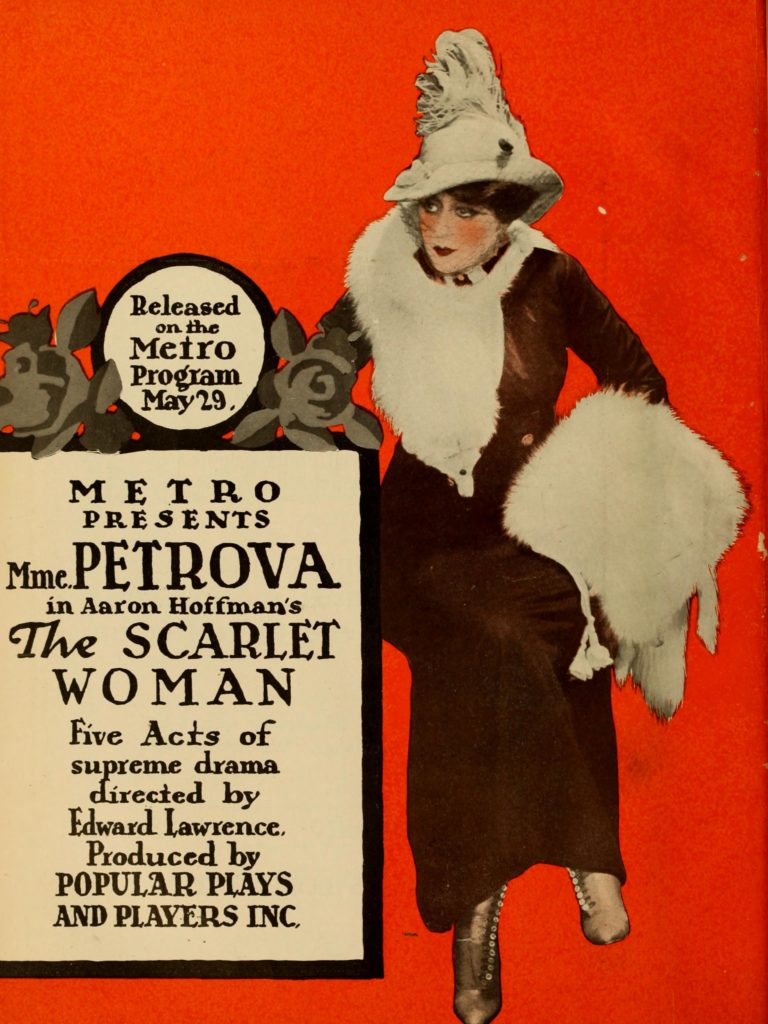
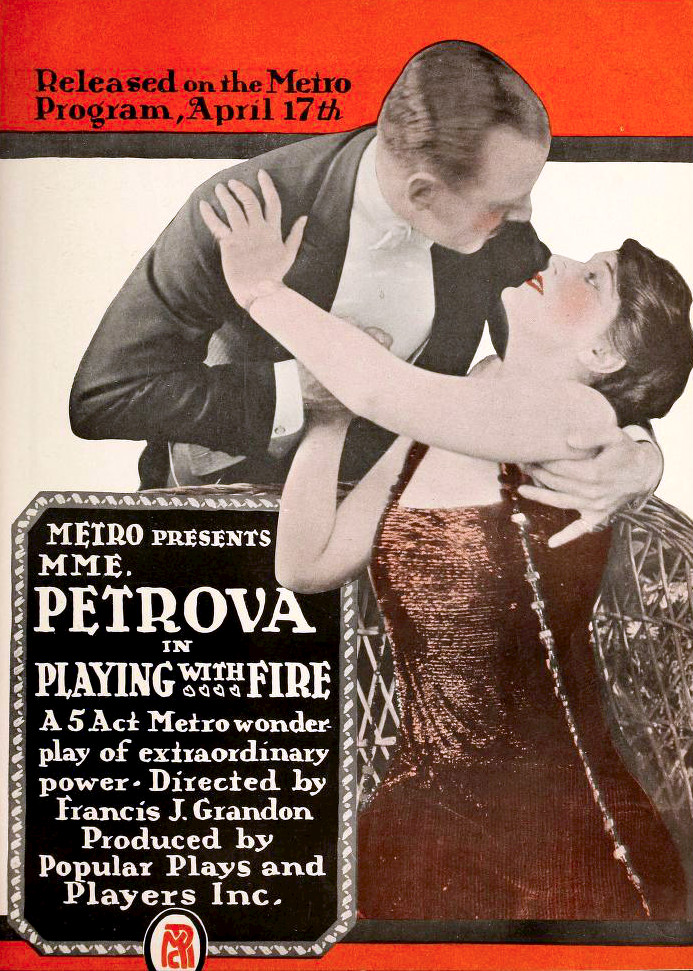
 On the third floor, actors were busily at work making a movie called A Waiting Soul, including its star Olga Petrova, an English actress who had made a handful of films positioning her a true cinematic femme fatale, including The Vampire and, prophetically, Playing With Fire.
On the floor below was a film cutting and storage room. According to the Evening World, a fire suddenly erupted “supposedly from spontaneous combustion.” (That’s probably the case as unwashed nitrocellulose “may spontaneously ignite and explode at room temperature.”  Yikes.)
Immediately at risk were two young women who were working in the room as film editors. The newspapers later praised the two women, who were slightly burned in the blaze, for their quick thinking in closing the fireproof doors on their way out of the burning room.
The actors on the third floor heard the explosions and screams of the young film editors, now in the stairway. The film’s director ordered the cast and crew to follow them down the stairs.
Petrova, instead, raced to her dressing room to rescue “a leopard skin coat valued at $15,000 and a string of pigeon blood rubies worth $12,000.”
As absurd as this quick detour sounds, Petrova later claimed that she lost $25,000 in costumes and jewelry to the fire including a variety of fur coats. Fortunately her maid rescued Petrova’s canary Richard.
“[Petrova] reached the street hatless,” remarked the New York Tribune under the headline ‘ACTRESS STARS IN STUDIO BLAZE‘, “in a Palm Beach suit and a leopard skin coat.”
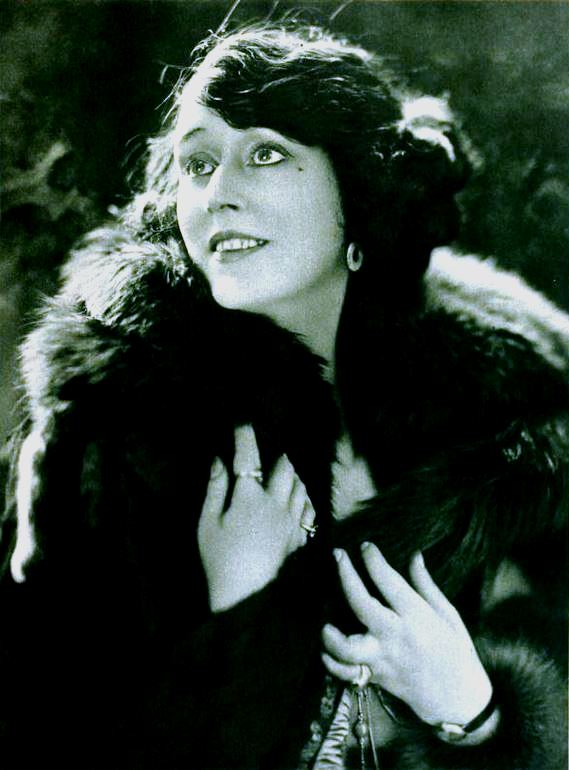
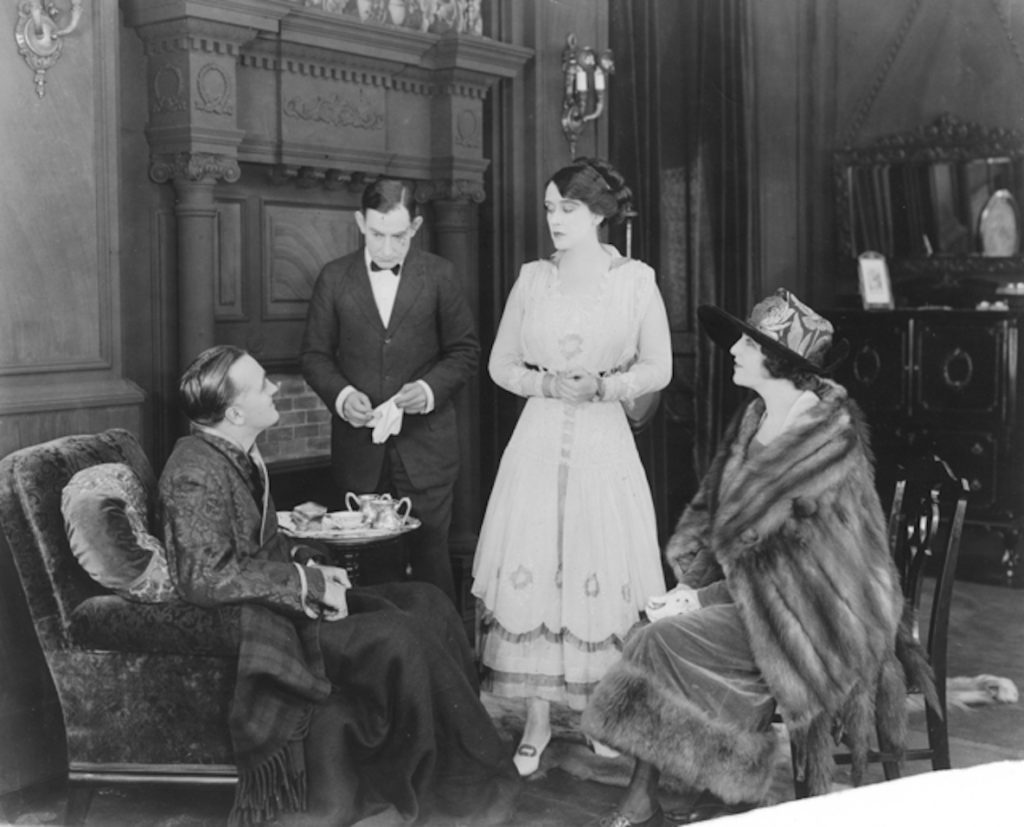
Below: Petrova from January 1922 Photoplay magazine wearing her signature outer wear.Â
The firemen had a dramatic battle in store for them.  According to the World, “A big galvanized iron ventilator on the peak of the roof was dislodged from its fastenings by a stream of water and rolled down among the firemen.  But [they] saw the ventilator coming. Those in the way grabbed hold of the hose line and hung on like acrobats, dangling over the fiery pit.”
Producers later claimed that over a quarter of a million dollars worth of equipment and work went up in the blaze, including several completed film.
Sadly all of Petrova’s film work would be lost to these sorts of tragedies. None of her movies are known to survive. But perhaps those pigeon blood rubies are sitting around somewhere…..
Picture at top:  Olga Petrova in The Light Within,  made a couple years later after the fire.
Well, nobody can say that 2016 was an uneventful year.
After a rowdy and wild election season, we enter 2017 with New York City poised to take a new — and highly unusual — prominence in American politics. (This episode from 2011 is now officially the weirdest episode in the Bowery Boys back catalog).
We arrive at the new year with  glass condominiums transforming the skyline at a faster rate than ever, and the first new subway station in a quarter century poised to shape the Upper East Side. But we lost other New York institutions like Carnegie Deli and Ziegfeld Cinema.  (Jeremiah’s Vanishing New York has the complete list.) And we greet the new year with few cultural icons — Gene Wilder, Florence Henderson, Harper Lee, David Bowie, Prince, Carrie Fisher.
We were genuinely honored this year to finally meet and hang out with so many of you thanks to the release of our first ever book. Â It’s been an extraordinary year for us — and all because of our listeners and readers. We are grateful for your support and listenership.
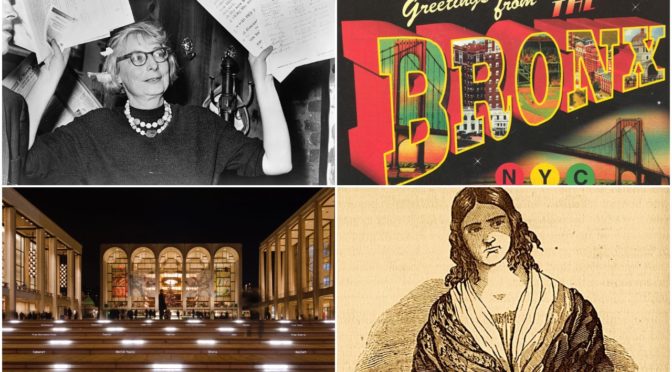
Here’s the list of every episode we released in 2016. From the triumphs of Jane Jacobs to the revival of the Bronx. Go back and listen to them all! We plan to release just as many shows in 2017 with a few more extra surprises in store.
Have a safe and wonderful New Year’s Eve celebration and a prosperous and rewarding 2017!
On the eve of our 200th episode, we look back at our last 100 shows, at some of the highlights of the past six or so years.
And we officially introduce to you “The Adventures In Old New York”, our new book!  We give you a little insight into its development and what history you can expect to find in it.
Our tribute to Jane Jacobs, the urban activist and writer who changed the way we live in cities and her fights to preserve Greenwich Village in the 1950s and ’60s.
The story of the Lenape, the native people of New York Harbor region, and their experiences with the first European arrivals — the explorers, the fur traders, the residents of New Amsterdam.
The scandalous tale of New York’s most prominent abortionist of the 19th century and the unique environment of morality and secrecy which accommodated her rise on the fringes of society.
Continuing our three part series, the Bronx becomes a part of New York City, and we present the origin of some of the borough’s most famous landmarks.
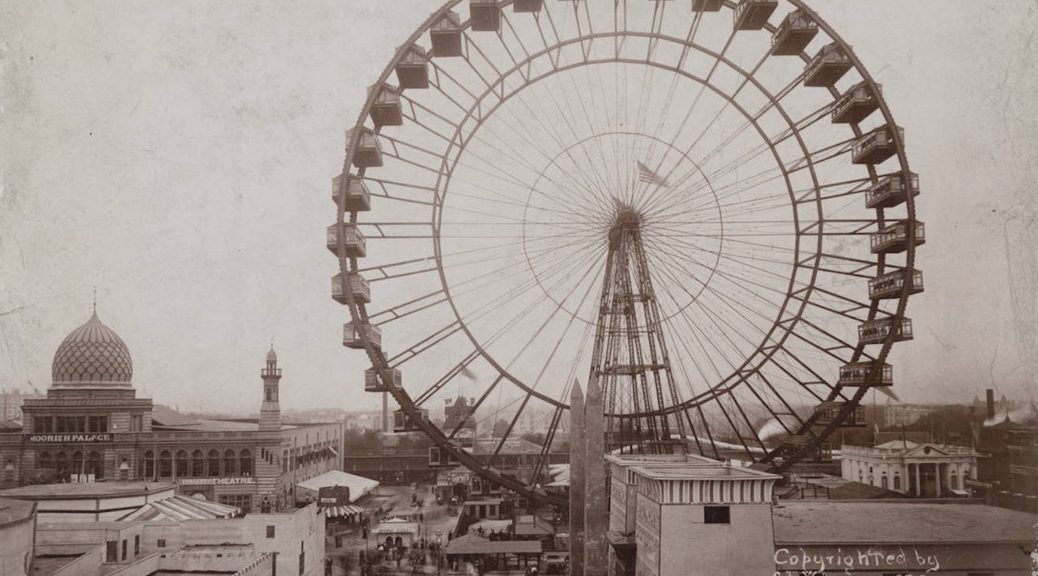
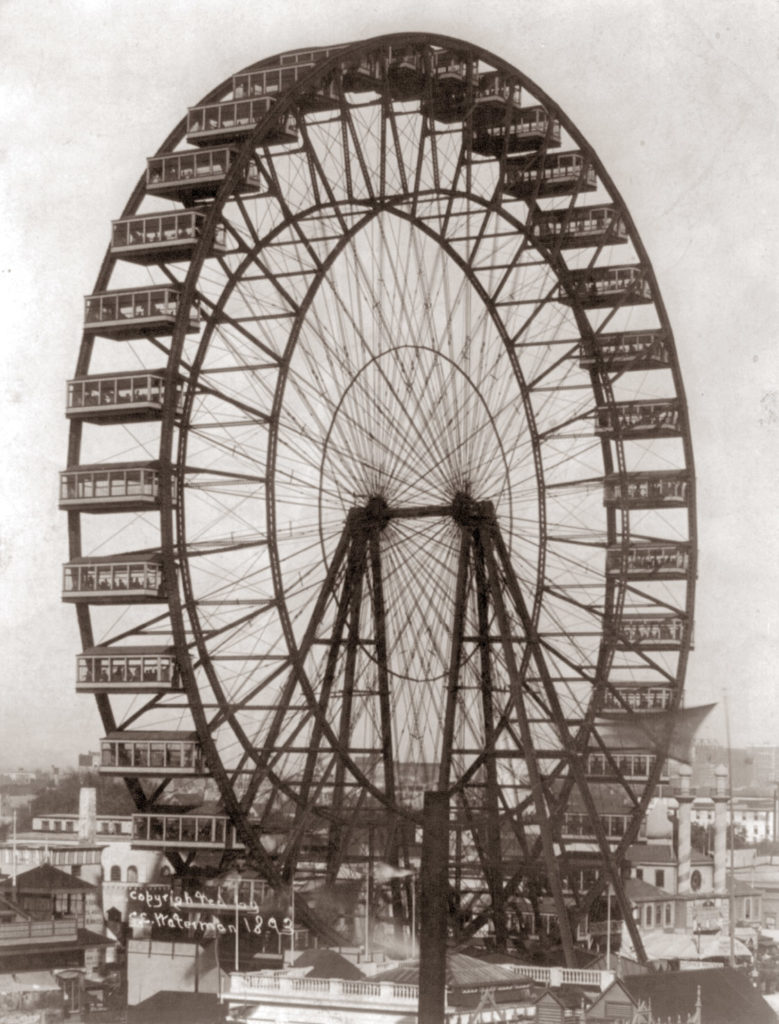
The first Ferris Wheel was invented to become America’s Eiffel Tower, making its grand debut at the Chicago World’s Fair of 1893. The wheel’s inventor George Washington Gale Ferris was a clever and optimistic soul; he did everything in his power to ensure that his glorious mechanical ride would forever change the world.  That it did, but unfortunately, its inventor paid a horrible price.
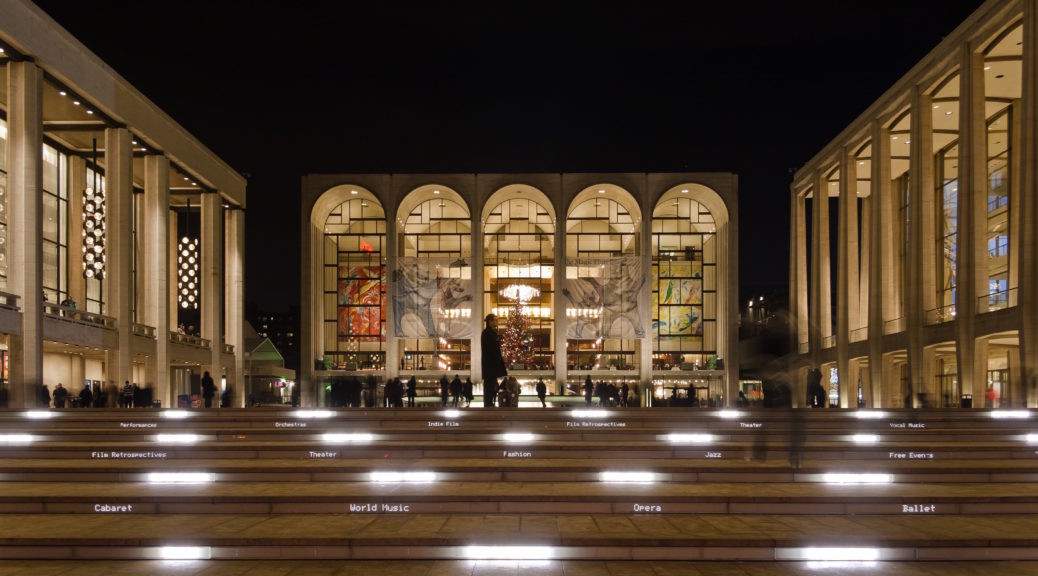
The origin story of Lincoln Center, an elegy to the neighborhood its campus replaced, and a celebration of West Side Story, the film that brings together several aspects of this story in one glorious musical number.
We’re in the mood for a good old-fashioned Gilded Age story so we’re bringing back one of our favorite Bowery Boys episodes ever — Joseph Pulitzer and William Randolph Hearst vs. the newsies!
PLUSÂ the first five episodes of The First: Stories of Inventions and Their Consequences
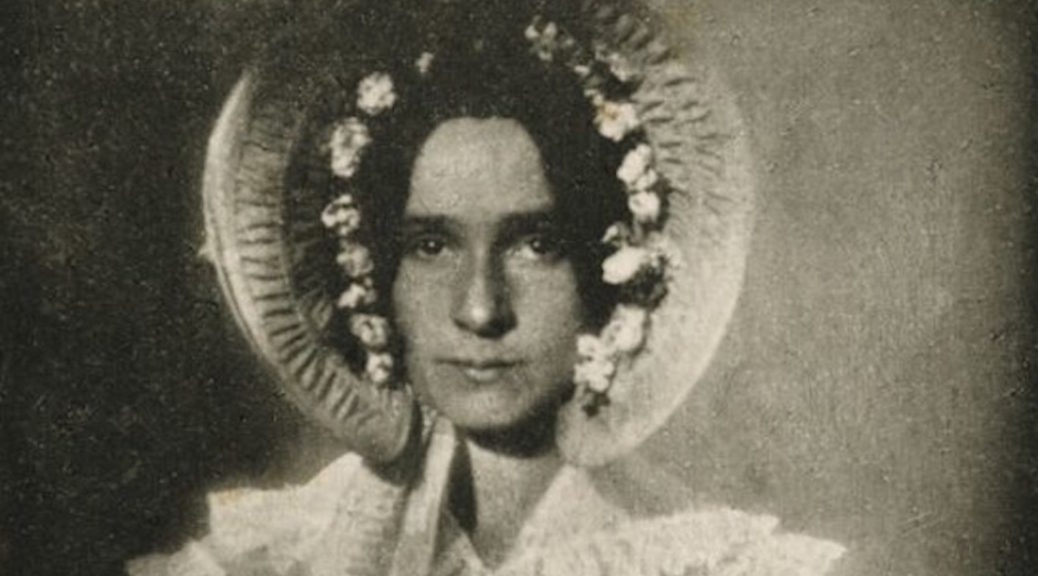
Dorothy Catherine Draper is a truly forgotten figure in American history. She was the first woman to ever sit for a photograph — a daguerrotype, actually, in the year 1840, upon the rooftop of the school which would become New York University..
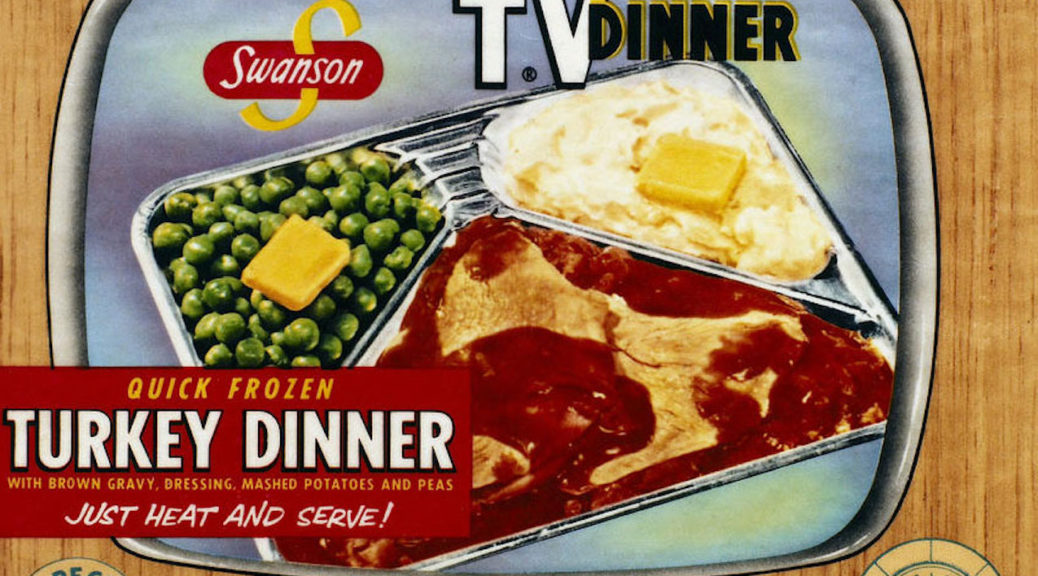
American eating habits were transformed in the early 20th century with innovations in freezing and refrigeration, allowing all kinds of foods to be shipped across the country and stored for long periods of time.
But it would actually be the television set that would inspire one of the strangest creations in culinary history — the TV dinner.
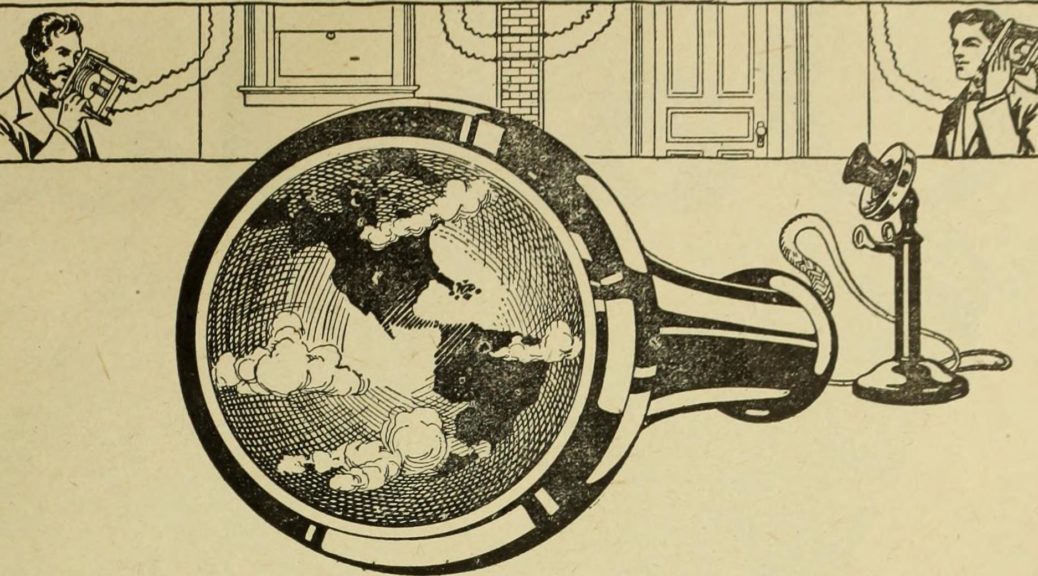
You may know the story of Alexander Graham Bell and his world famous invention. You may know that Bell made the very first phone call. But do you know the story of the man who ANSWERED that call?
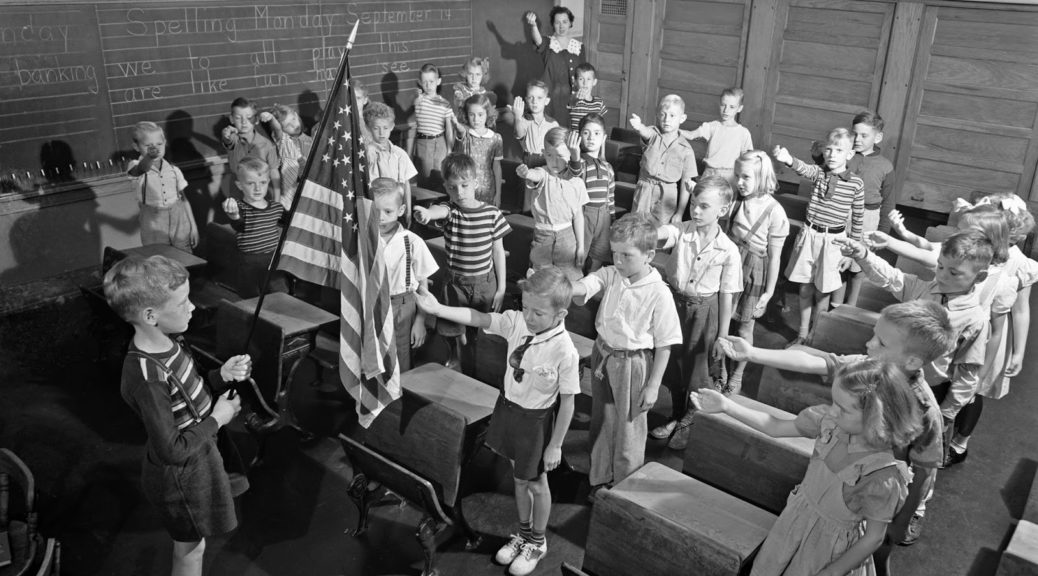
The Pledge of Allegiance feels like an American tradition that traces itself back to the Founding Fathers, but, in fact, it’s turning 125 years old in 2017. This is the story of the invention of the Pledge, a set of words that have come to embody the core values of American citizenship. And yet it began as part of a for-profit magazine promotion, written by a Christian socialist minister!
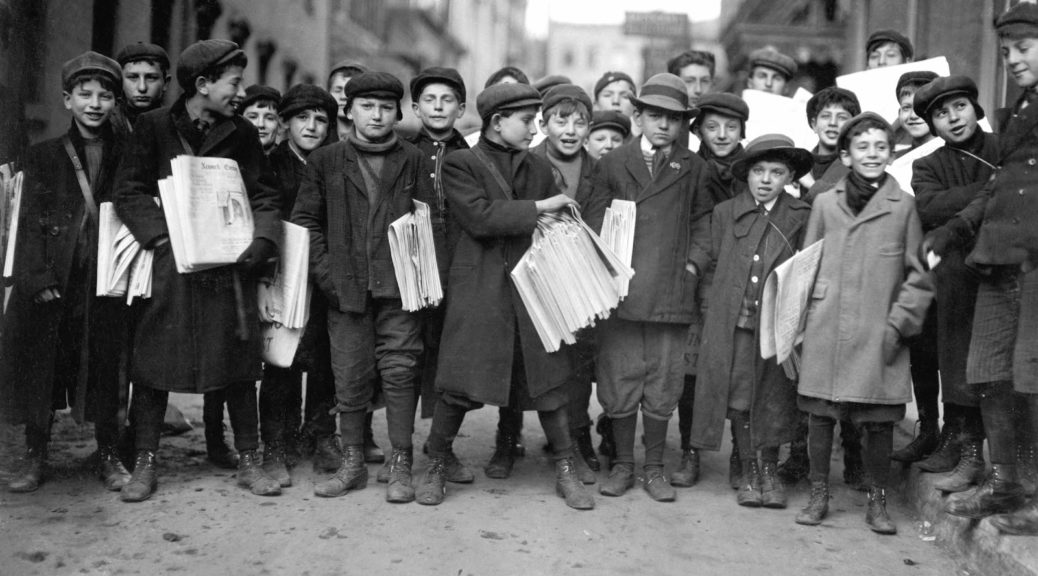
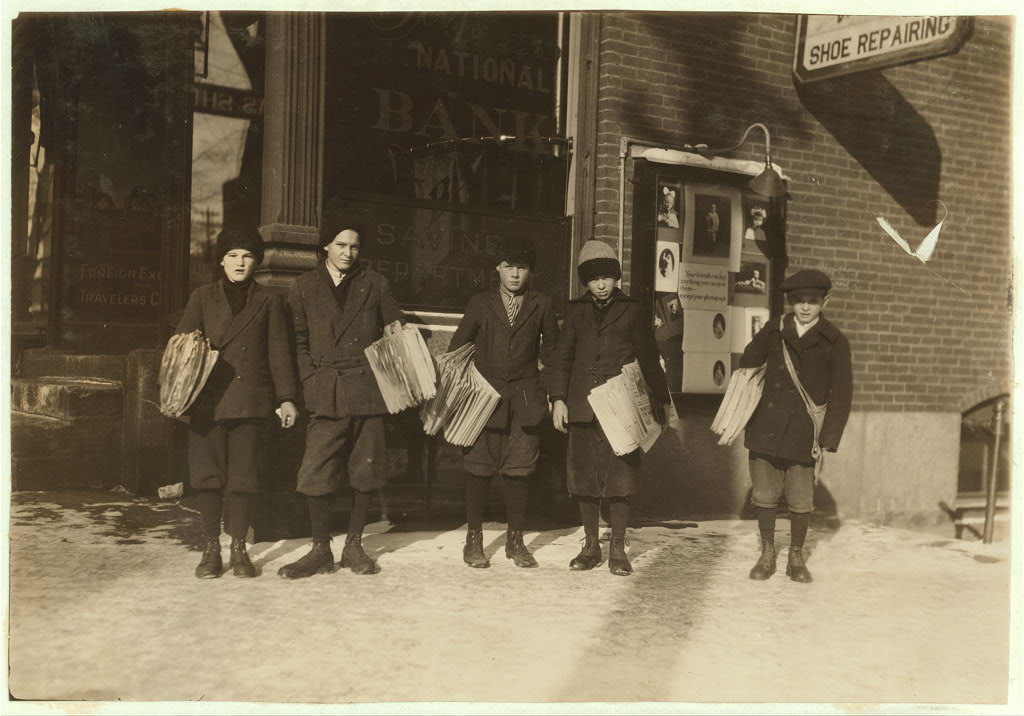
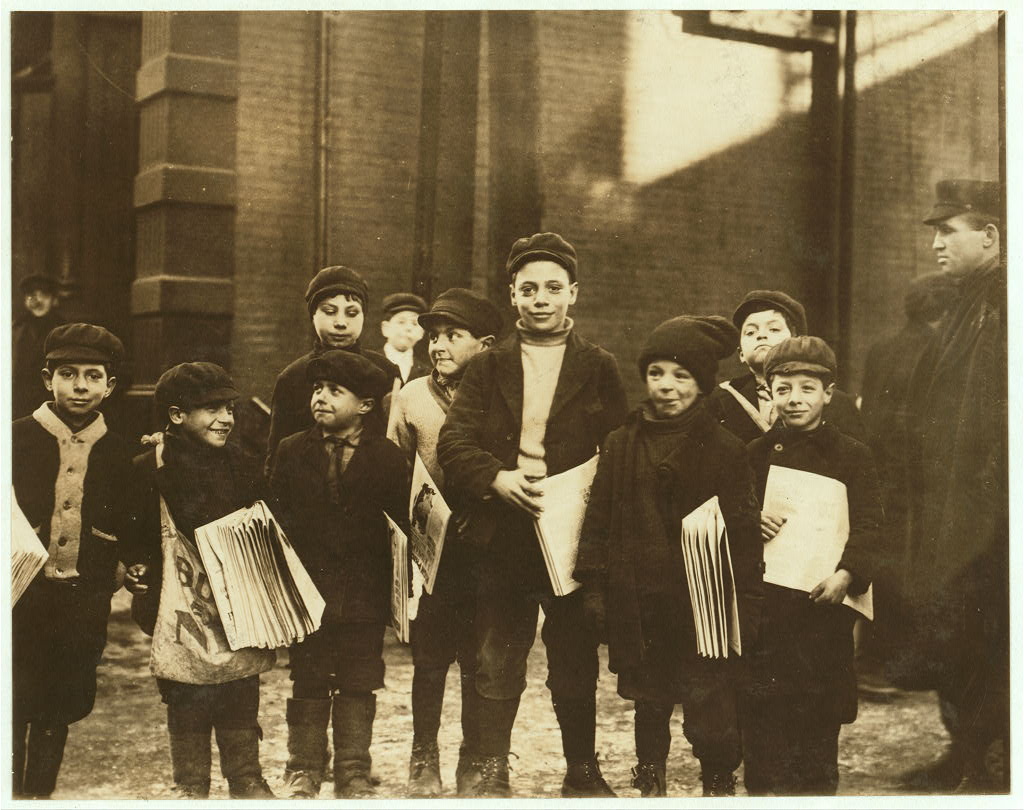
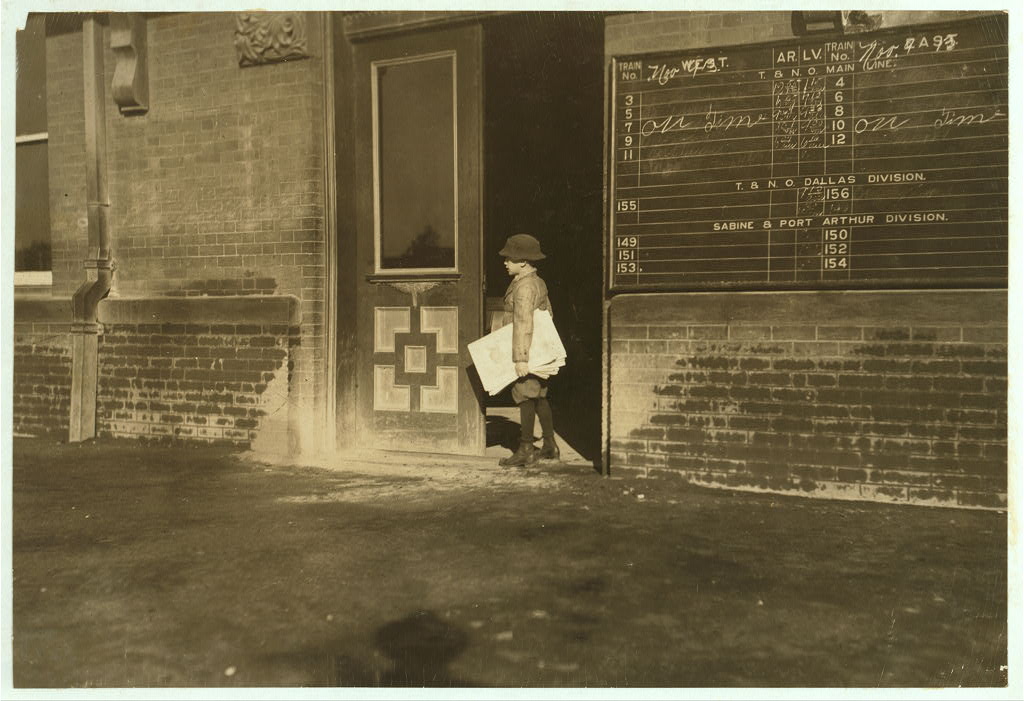
Newsboys of Newark, New Jersey, 1909, photographed by Lewis Hine
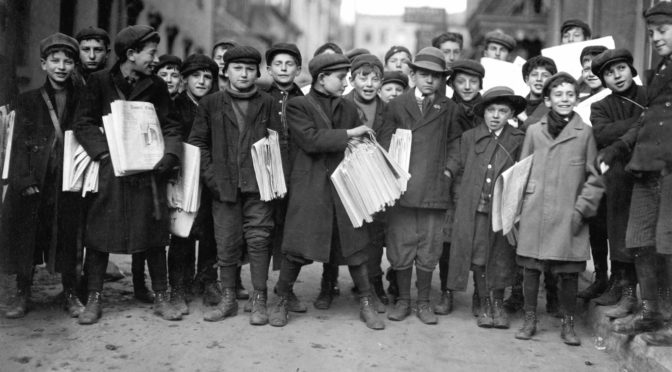
PODCAST We’re in the mood for a good old-fashioned Gilded Age story so we’re bringing back one of our favorite Bowery Boys episodes ever — Joseph Pulitzer and William Randolph Hearst vs. the newsies!
LISTEN TO THIS SHOW HERE:
It was pandemonium in the streets. One hot summer in July 1899, thousands of corner newsboys (and girls) went on strike against the New York Journal and the New York World. Throngs filled the streets of downtown Manhattan for two weeks and prevented the two largest papers in the country from getting distributed.
In this episode, we look at the development of the sensationalist New York press — the birth of yellow journalism — from its very earliest days, and how sensationalism’s two famous purveyors were held at ransom by the poorest, scrappiest residents of the city.
The conflict put a light to the child labor crisis and became a dramatic example of the need for reform.
Crazy Arborn, Kid Blink, Racetrack Higgins and Barney Peanuts invite you to the listen in to this tale of their finest moment, straight from the street corners of Gilded Age New York.
PLUS: Bonus material featuring a closer look at the Brooklyn Newsboys Strike and a moment with the newsies during the holidays.
To get this week’s episode, simply download or stream it for FREE from iTunes, Stitcher, Spotify or other podcasting services.You can also get it straight from our satellite site.
The Bowery Boys: New York City History podcast is brought to you …. by you!
We are now producing a new Bowery Boys podcast every other week.
We’re also looking to improve and expand the show in other ways —
publishing, social media, live events and other forms of media. But we
can only do this with your help!
We are now a creator on Patreon, a patronage platform where you can support your favorite content creators.
Please visit our page on Patreon
and watch a short video of us recording the show and talking about our
expansion plans. If you’d like to help out, there are six different
pledge levels. Check them out and consider being a sponsor.
ALL patrons at all levels will receive many benefits include the next episode of the Bowery Boys Movie Club,
an exclusive podcast (released every 6-8 weeks) celebrating New York
City in the movies. And patrons at the Five Points ($5) level and up
will get our other exclusive podcast — The Bowery Boys: The Takeout — released every two weeks.
We greatly appreciate our listeners and readers and thank you for joining us on this journey so far. And the best is yet to come!
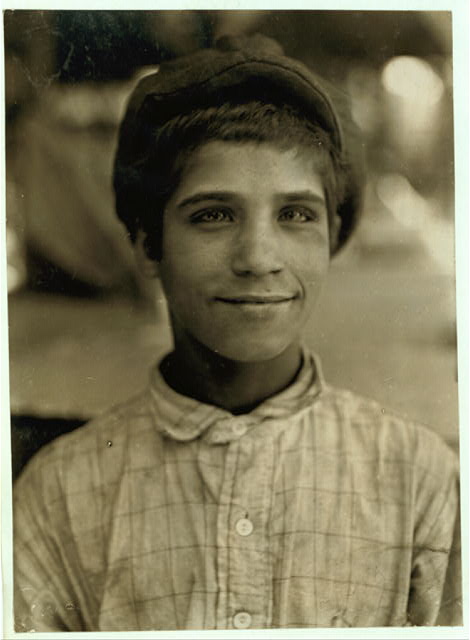
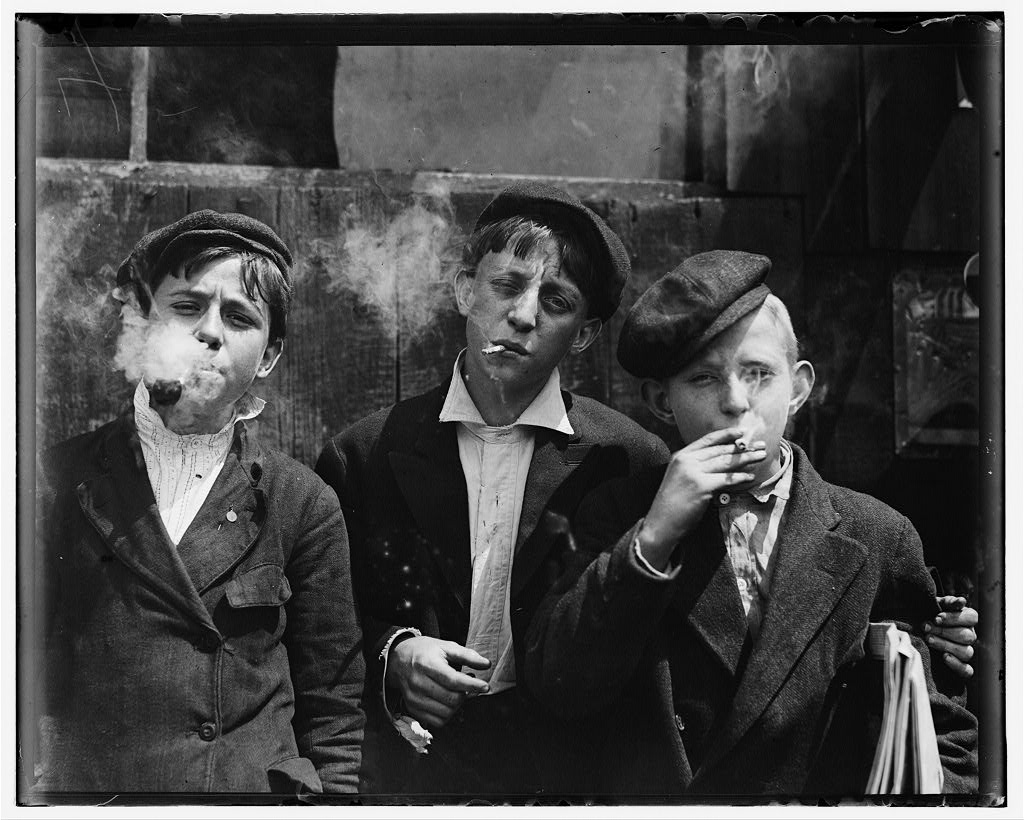
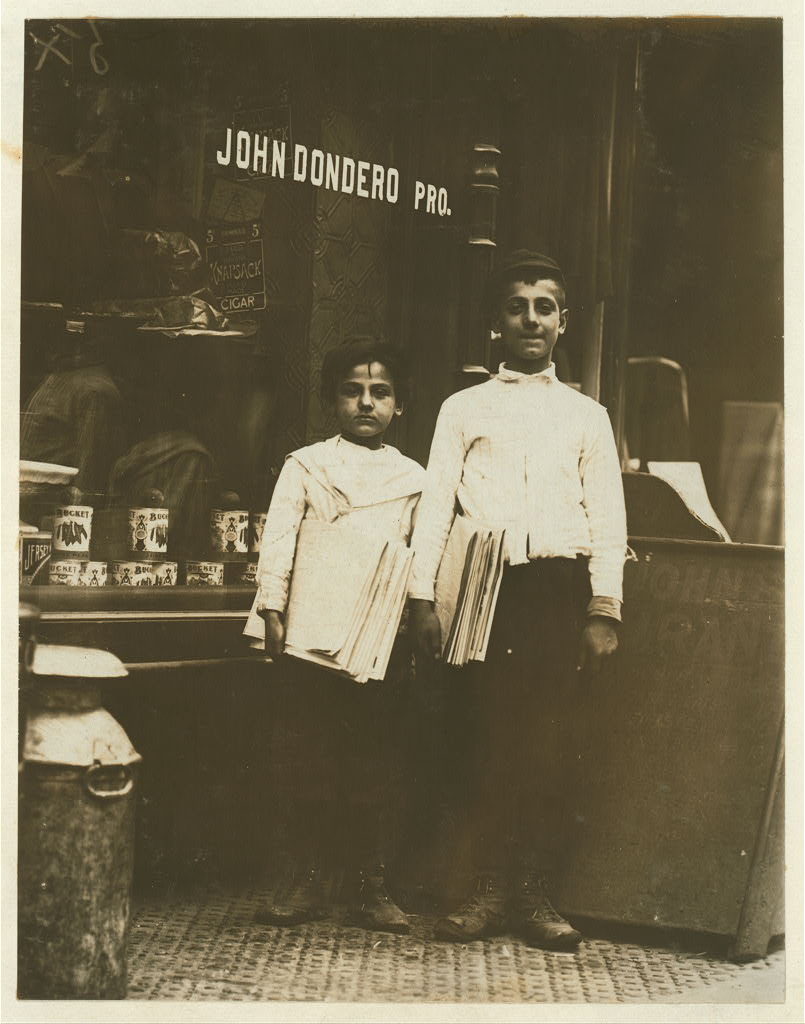
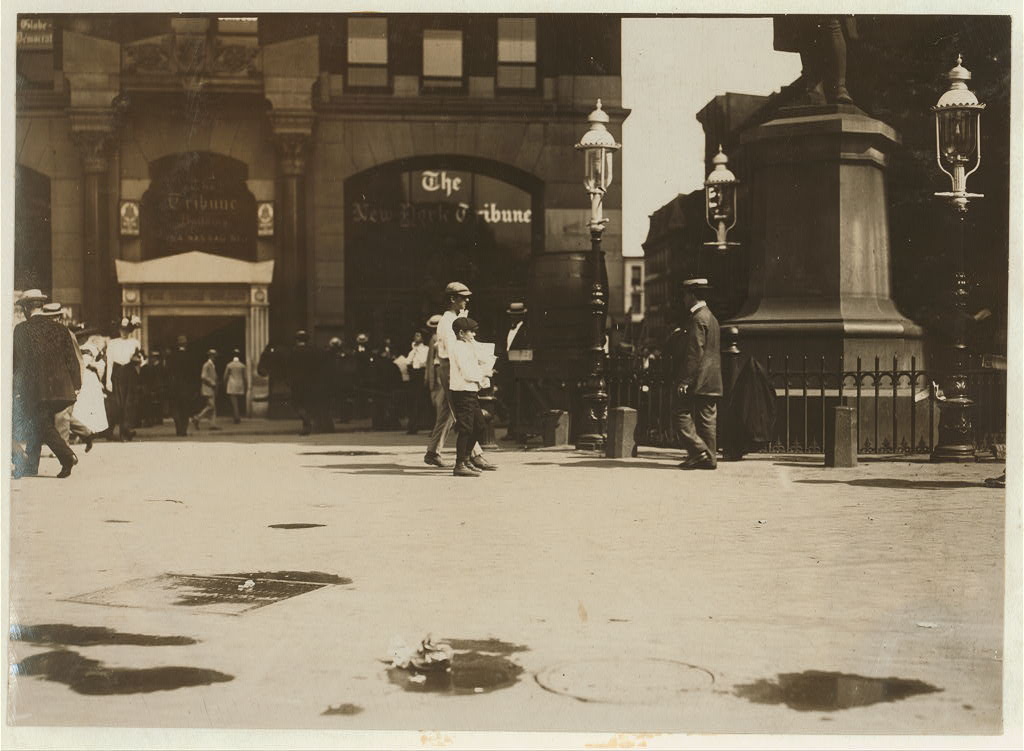
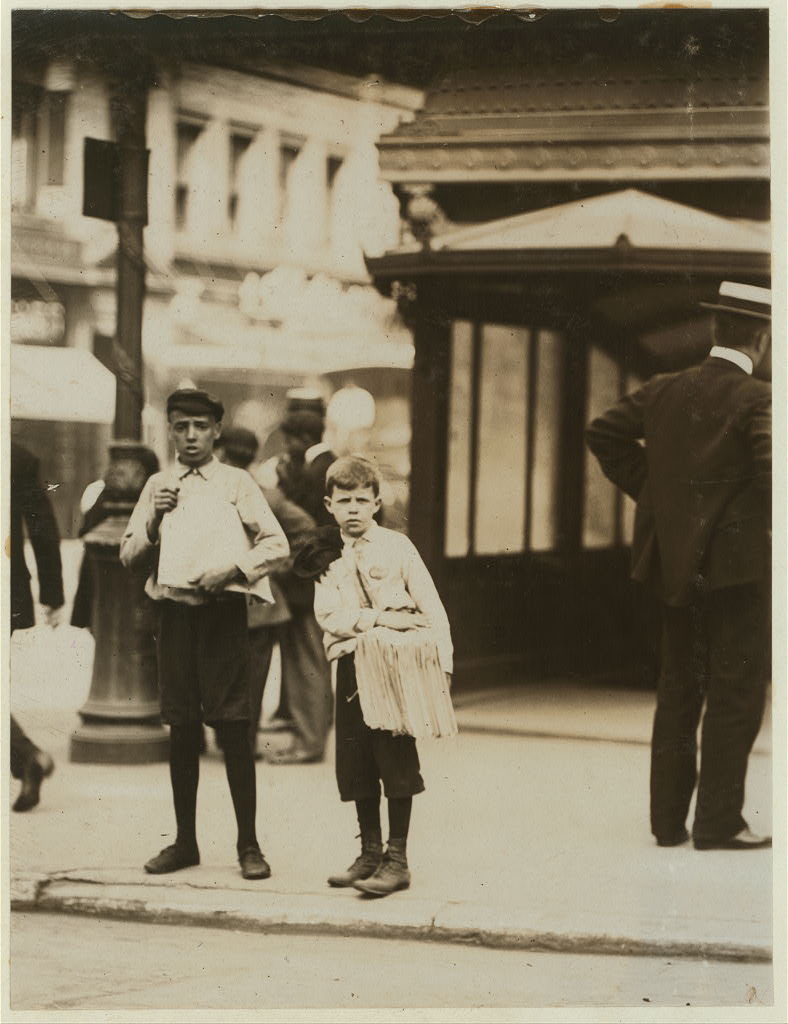
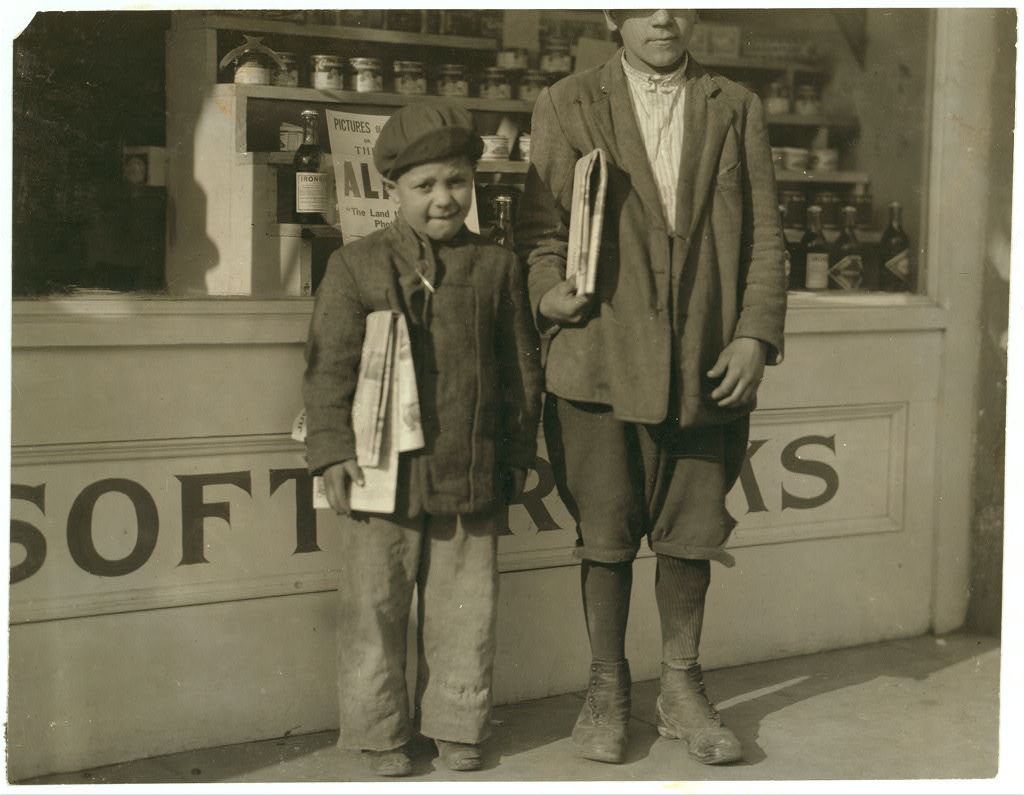
For related images for this week’s show, I’m turning to the extraordinary Lewis Wickes Hine, one of the first photographers to ever turn his lens towards the poor and disadvantaged with the express purpose of public activism.
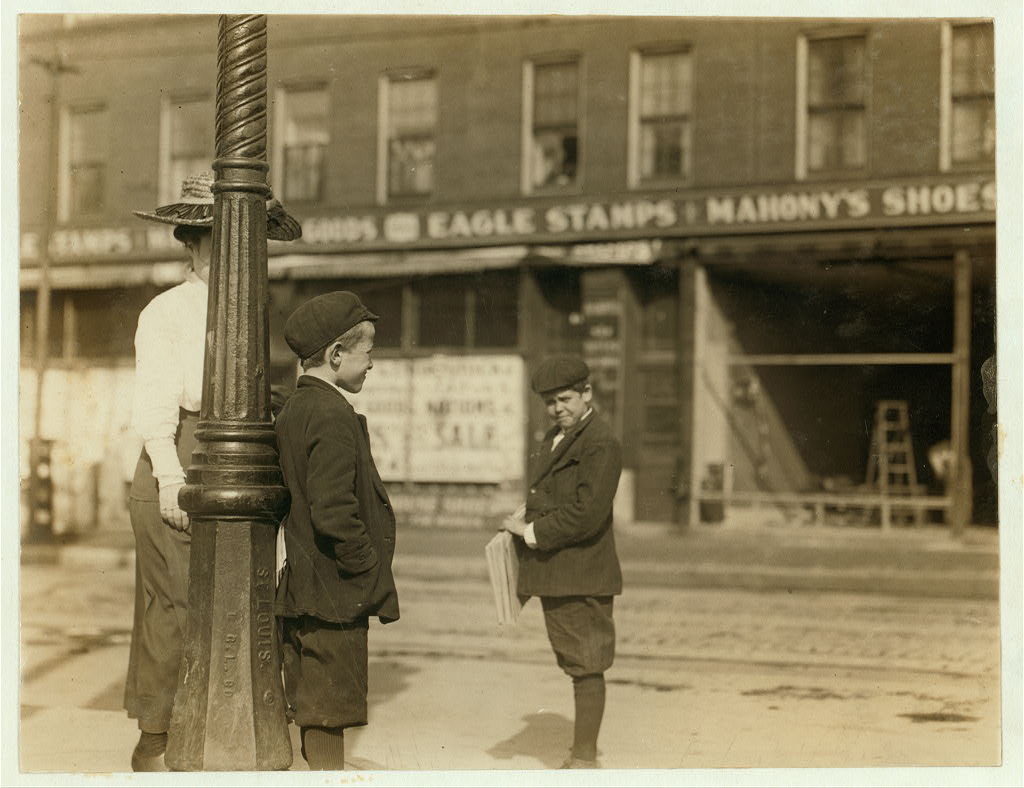
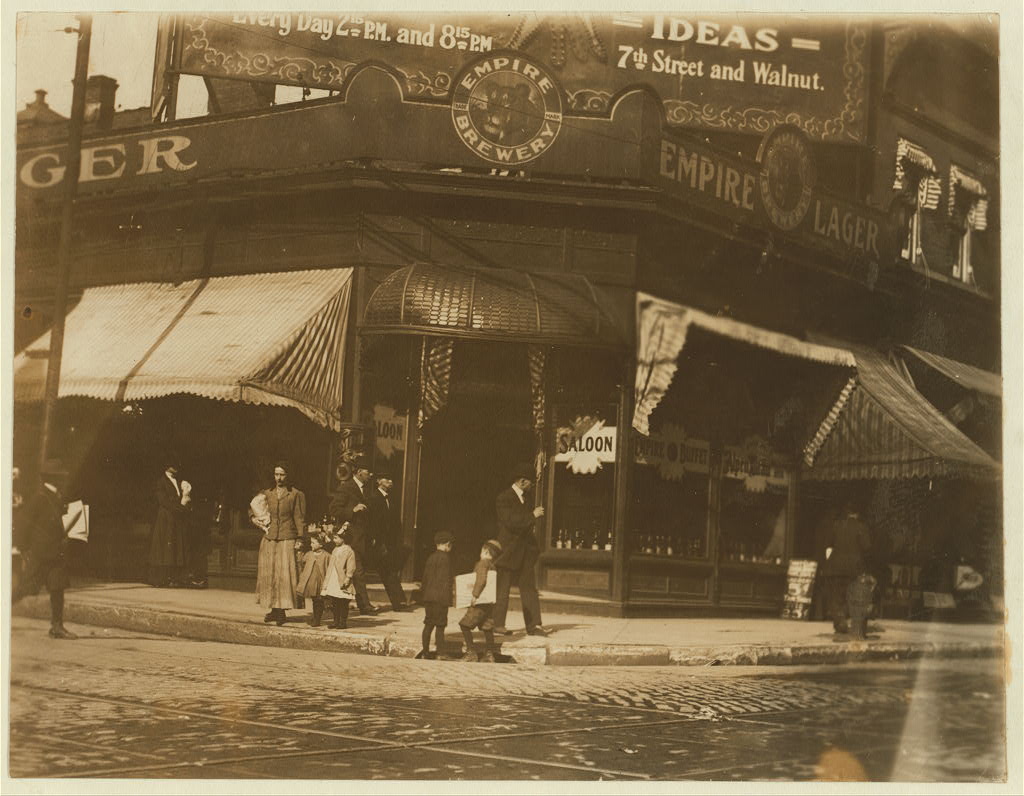
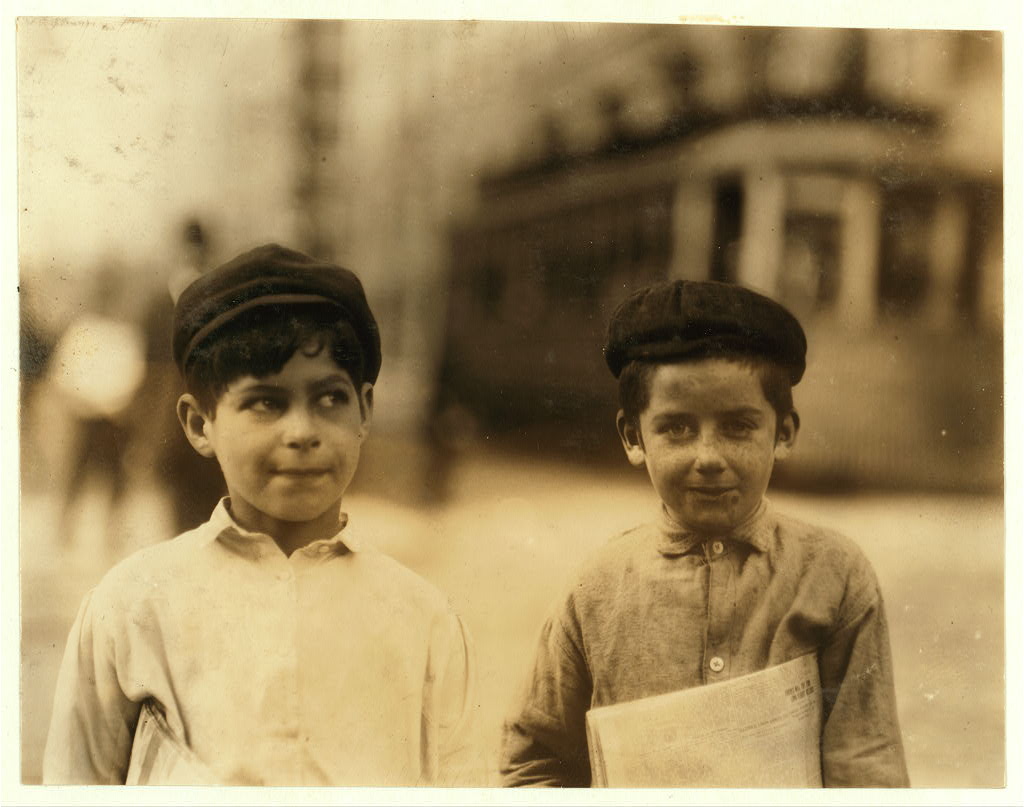
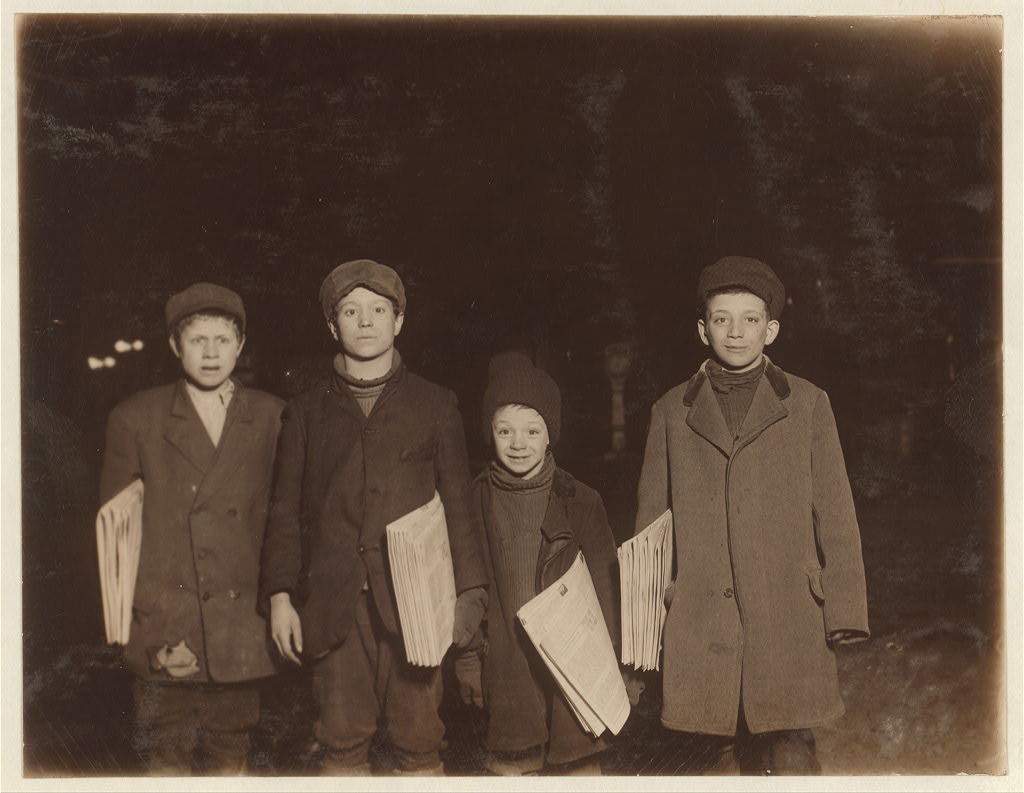
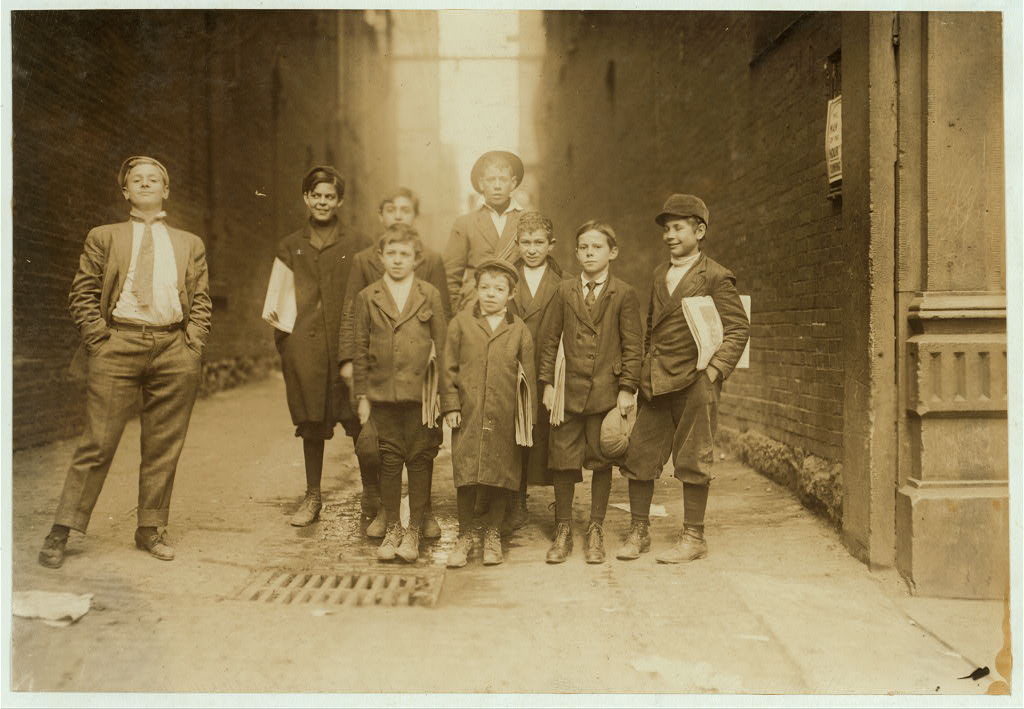
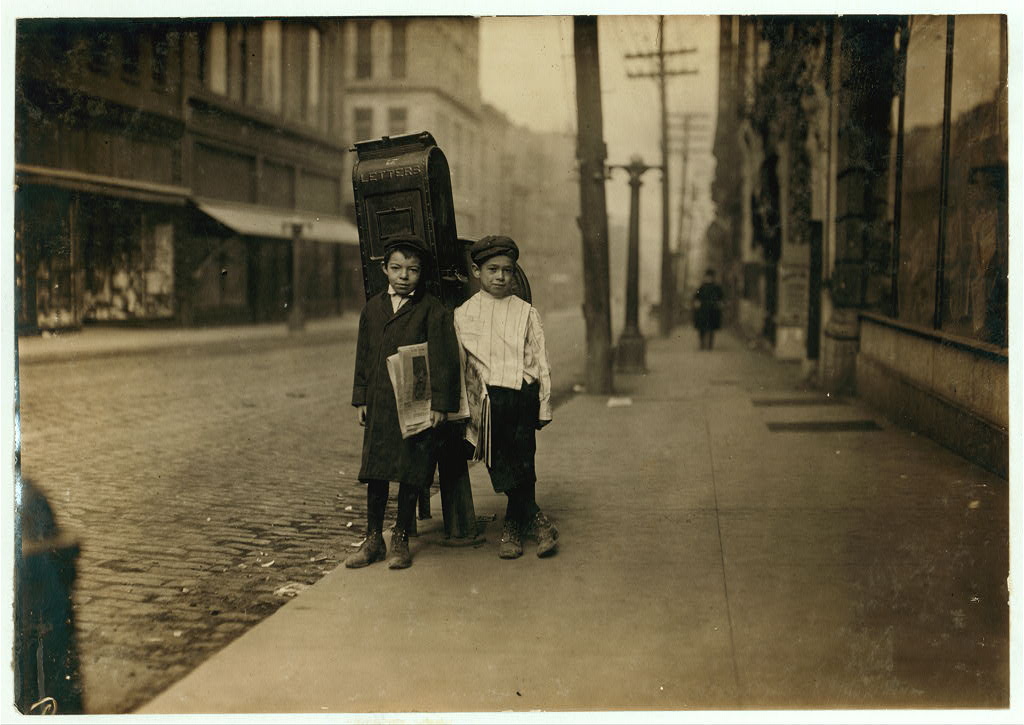
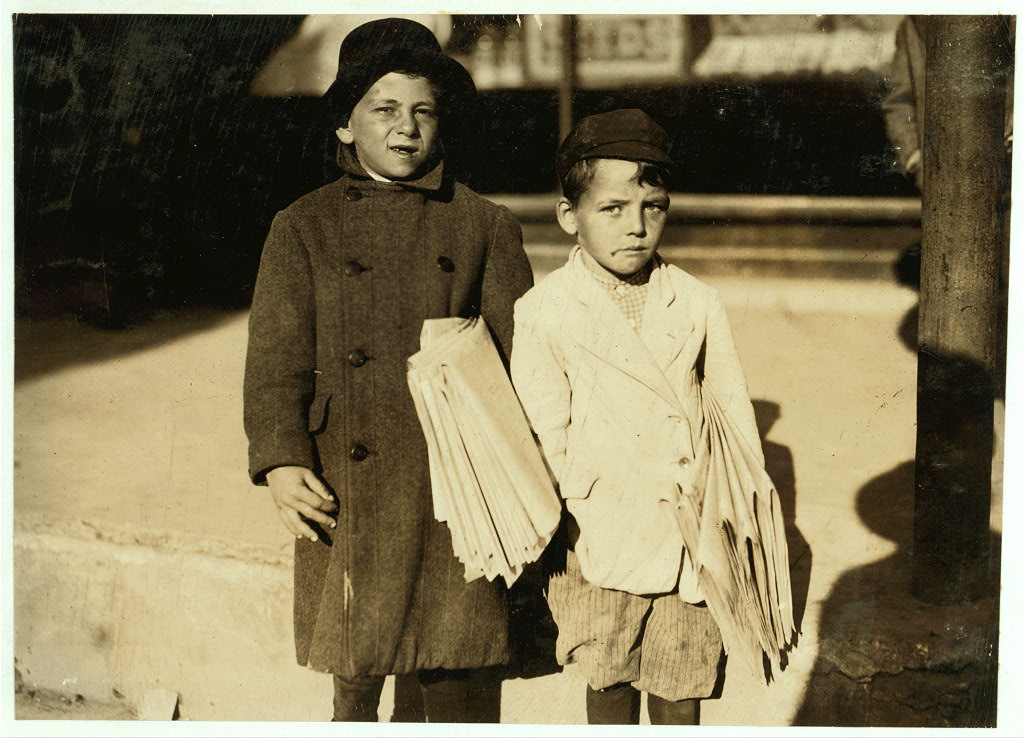
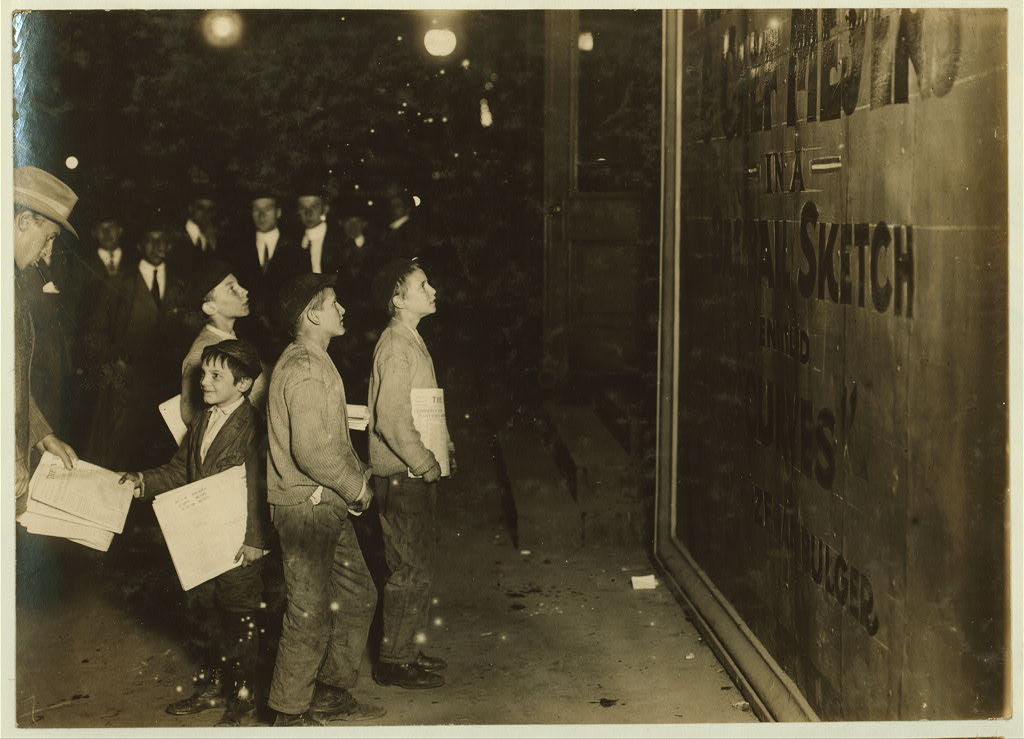
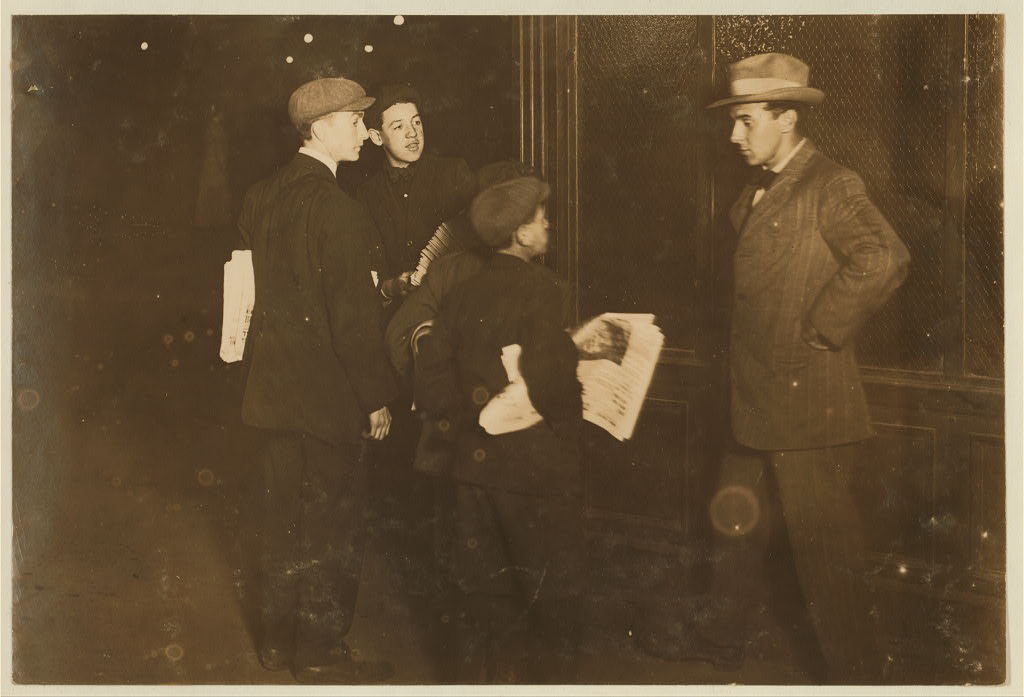
Here is a collection of Hine photographs of newsboys (and some girls), taken from the late 1890s into the early 1920s. Â Where possible, I will try and include Hine’s original caption and will feature a selection of images from cities across the country.
Perhaps you will see the face of your grandfather or great-grandfather here? These pictures are equally charming, concerning, life-affirming, tragic,
Pictures courtesy the Library of Congress. Our thanks to them for continually providing great access to their marvelous trove of images.
“Group of newsies (youngest 10 years) selling Boston papers at noon. In Barre and Montpelier newsies are excused from school a little early at noon and at night in order to get to their papers earlier. Location: Barre, Vermont” December 18, 1916 — one century old
LOC
One of the newsies at The Newsboys’ Picnic, Cincinnati. Location: Cincinnati, Ohio, August 1908
“11:00 A. M . Monday, May 9th, 1910. Newsies at Skeeter’s Branch, Jefferson near Franklin. They were all smoking. Location: St. Louis, Missouri.” May 9, 1910″
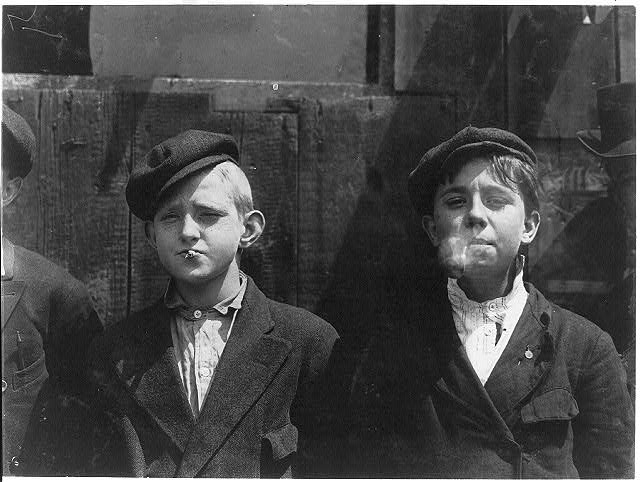
“Two newsies selling in P.M. Grand Avenue. May 9th, 1910. Location: St. Louis, Missouri.”
LOC
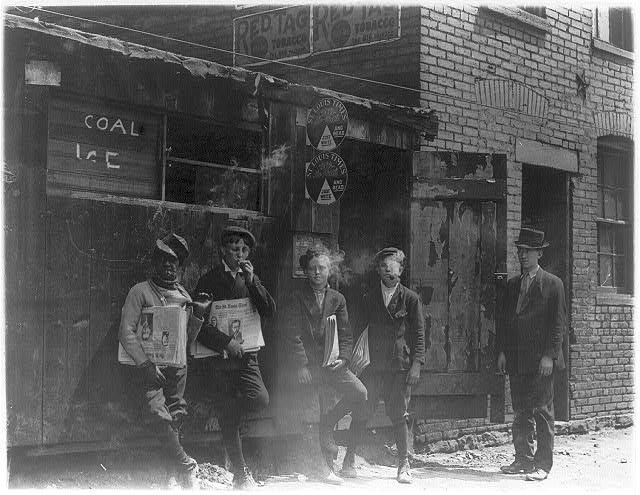
“Newsies selling near saloon. Location: St. Louis, Missouri.”
LOC
“Just newsies.” Location: St. Louis, Missouri. May 1910
LOC
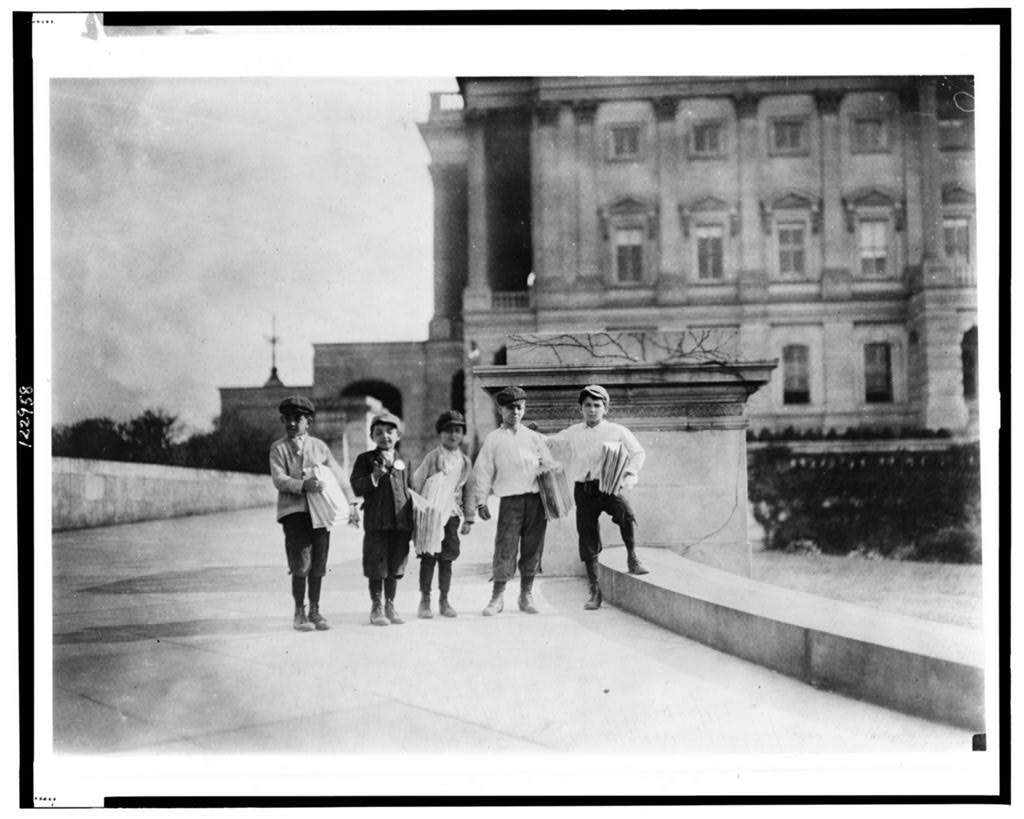
“In comparison with governmental affairs newsies are small matters. This photo taken in the shadow of the National Capitol where the laws are made. This group of young newsboys sells on the Capitol grounds every day, ages 8 years, 9 years, 10 years, 11 years, 12 years. The only boy with a badge, was the 8 year old, and it didn’t belong to him. Names are Tony Passaro, 8 yrs. old, 124 Schottes Alley N.E.; Joseph Passaro, 11 yrs. old, (has made application for badge) Joseph Mase (9 yrs. old), 122 Schottes Alley. Joseph Tucci, (10 yrs. old), 411 1/2 5th St., N.E. Jack Giovinazzi, 228 Schottes Alley, 12 yrs. old. Is in ungraded school for incorrigibility in school. Location: [Washington (D.C.), District of Columbia].” April 1912
“Some of the youngest newsies hanging around the paper office after school. Location: Buffalo, New York (State)” February 1910″
“Newsies selling on Court St., 8 P.M. Left to right: Frank Spegeale, 13 years old, 72 Terrace St.; Dominick Gagliani, 10 years old, 230 Court St.; Charlie Decarlo, 8 years old; Anthony Decarlo (brother) 13 years old, 32 Front Ave.,. Location: Buffalo, New York (State)” February 10, 1910
“Group of Nashville newsies. In middle of group is 7-year-old Sam. Smart and profane. He sells nights also. Location: Nashville, Tennessee.” November 1910
LOC
Lewis met a lot of profane kids apparently! “Two 7 year old Nashville newsies, profane and smart, selling Sunday. Location: Nashville, Tennessee.”
Beaumont is overrun with little newsies. This boy, Vincent Serio, eight years old, is up at 5:00 A.M. daily. “Have sold papers since I was four years old.” Location: Beaumont, Texas. November 1913
LOC
“Tony and Charlie a pair of six year old newsies. Location: Beaumont, Texas. November 1913”
LOC
And now for a few of their New York brothers:
“Group of newsies hanging around Long Acre Square waiting for the theatre to close. Photo taken at the Victoria Theatra [i.e., Theatre], B'[road]way and 42nd St. James Thorpe (boy selling paper) 8 yrs. 640 10th Ave. Richard Farrell, 13 yrs., same address. Harry Farrell, 10 yrs., same address. August Habich, 10 yrs., same address. 10:30 P.M. Oct.’, 1910. Location: New York, New York (State)”
LOC
“In foreground–14 yrs. old Nathan Weis. He comes all the way from East New York in Brooklyn (435 W. Jersey St.) to sell pages at the 14th St. Subway entra[n]ce. St. 11 P.M. with one exception, I saw no other small newsies on 14th St. between 5th and Third Ave. Location: New York, New York (State)” October 1910
LOC
“Newsies. Bowery. Frank & Johnnie Yatemark. 12 Delancey St. Location: New York, New York (State), July 1910”
“Park Row Newsies. July 1910”
LOC
“N.Y. Newsies. Location: New York, New York (State)”
LOC
And just to demonstrate Hine’s thoroughness, he even went out to the West Coast, searching for newsboys in action.
“Newsies. Location: Los Angeles, California. May 1916”
LOC
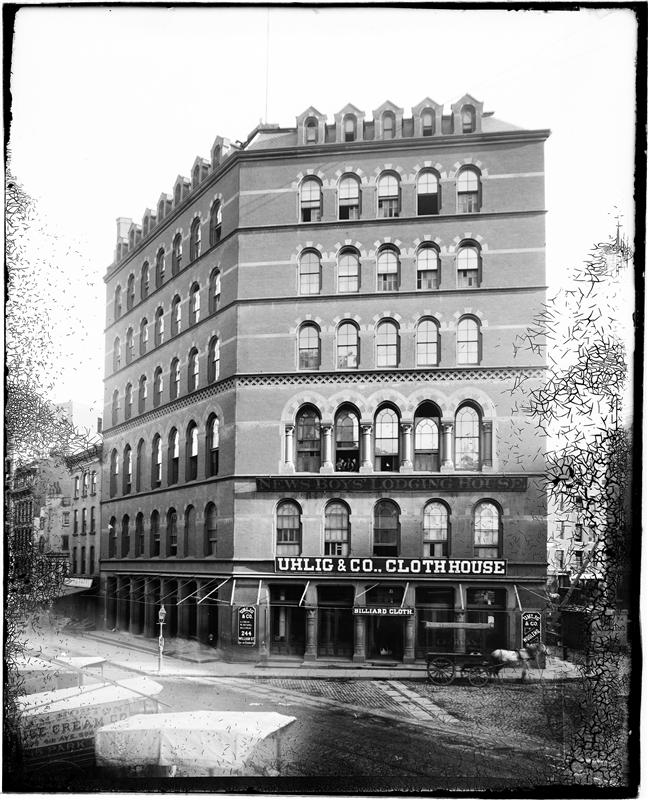
The famous Newsboys Lodging House at 9 Duane Street. Date of photograph unknown, taken by Robert L. Bracklow (1849-1919). Courtesy Museum of the City of New York
Holiday traditions in Manhattan are of course known the world over, from the glowing light displays of Park Avenue to the Rockefeller Center Christmas tree. But they lack a certain human touch, spun from wealthy corporations and honored tradition.
Which is what makes Dyker Height’s annual lighting spectacular (festival? competition? freak show?) so fascinating. It’s Brooklyn’s biggest holiday event, run entirely by the community.
In the past two decades, the extravaganza has energized a normally quiet neighborhood few in New York know much about. For most of its history, Dyker Heights was virtually uninhabited, either by humans or two-story illuminated snowmen.
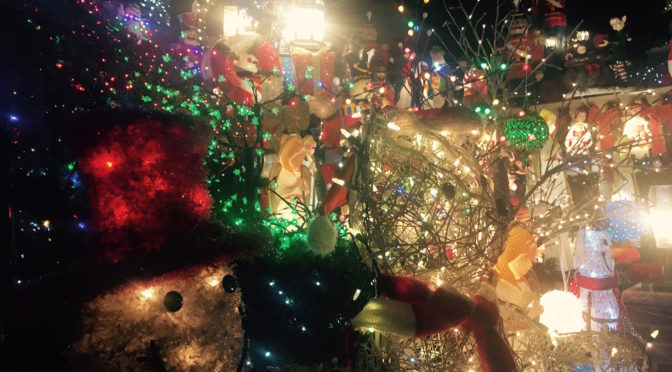
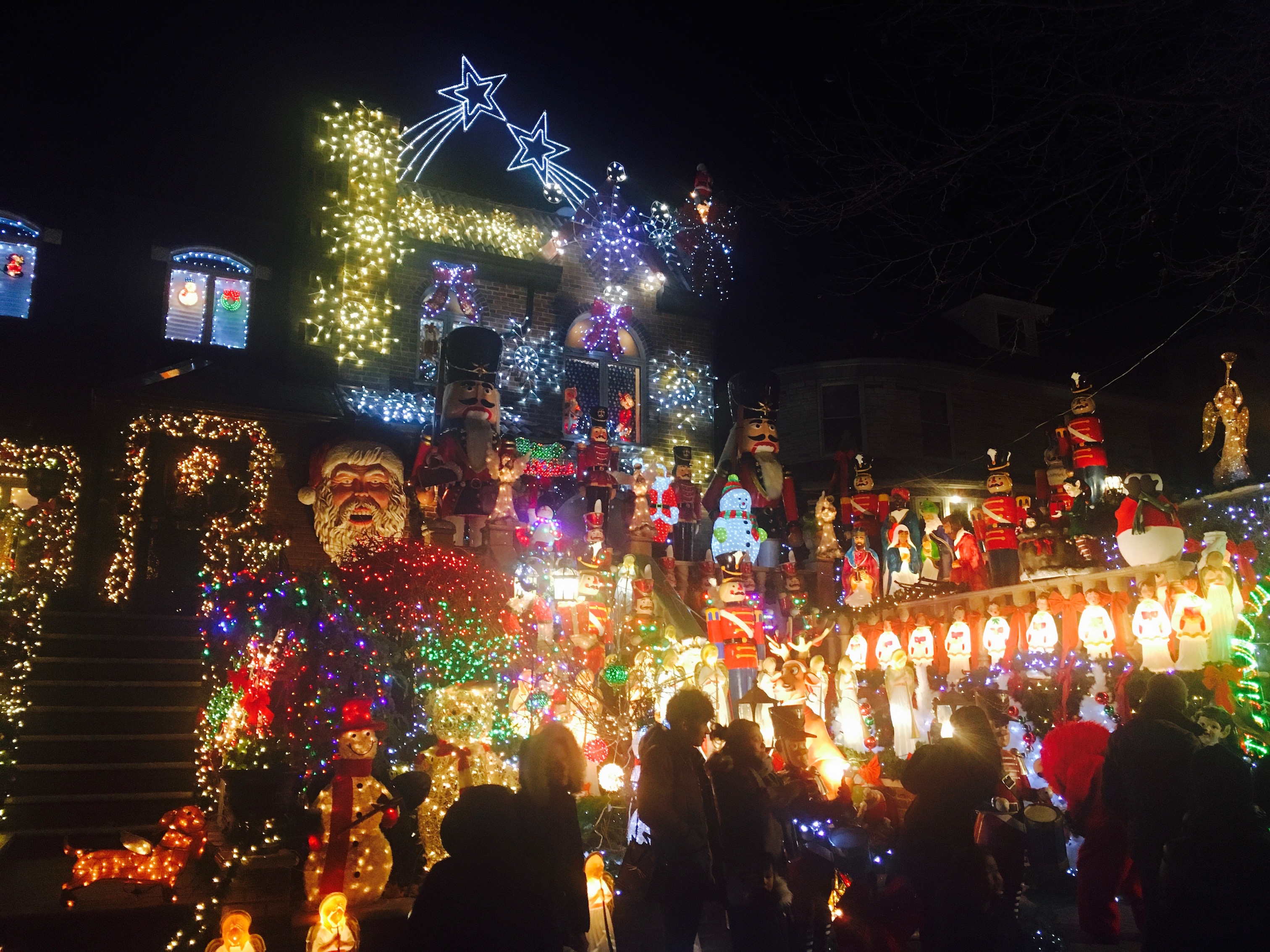
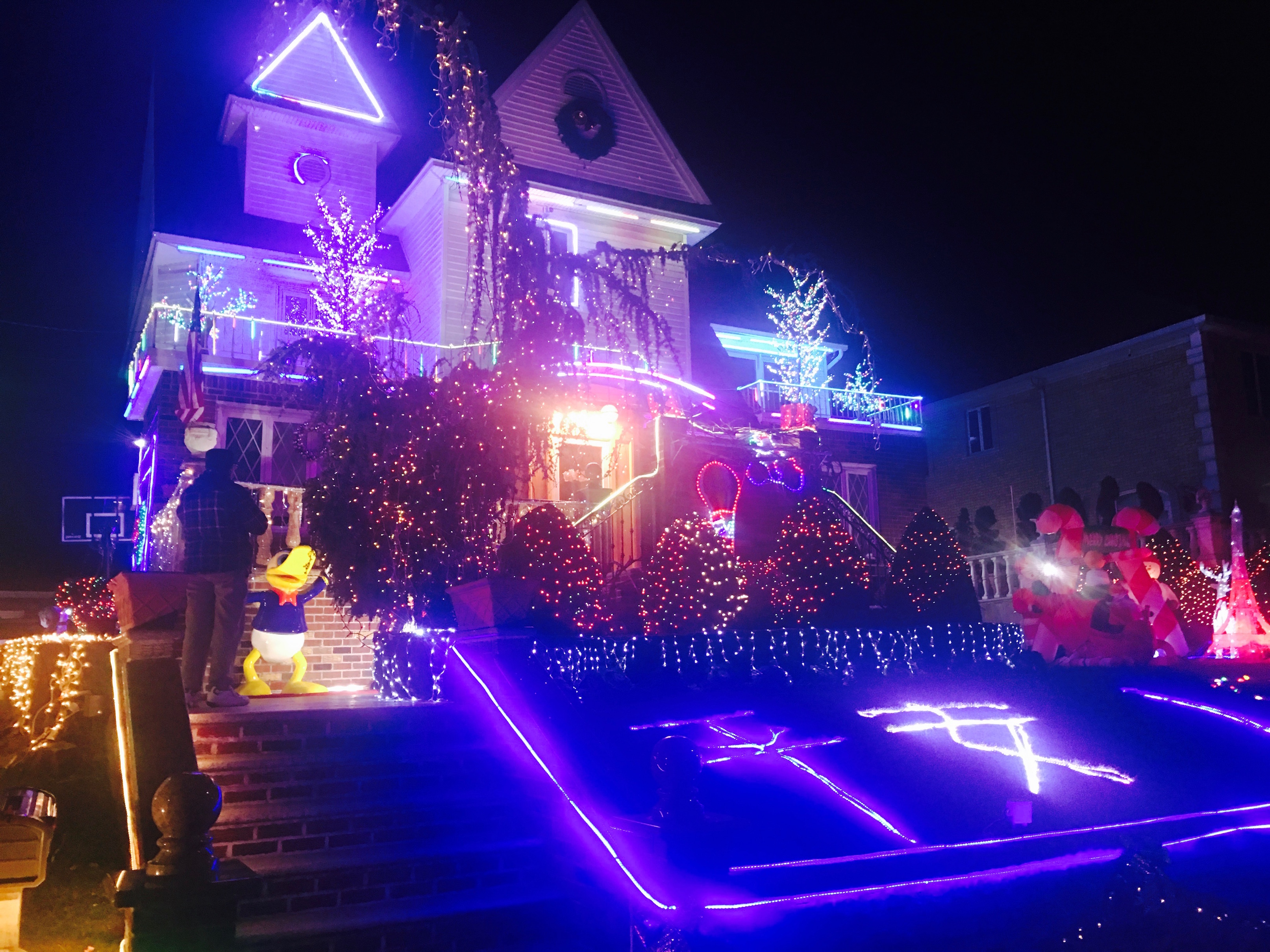
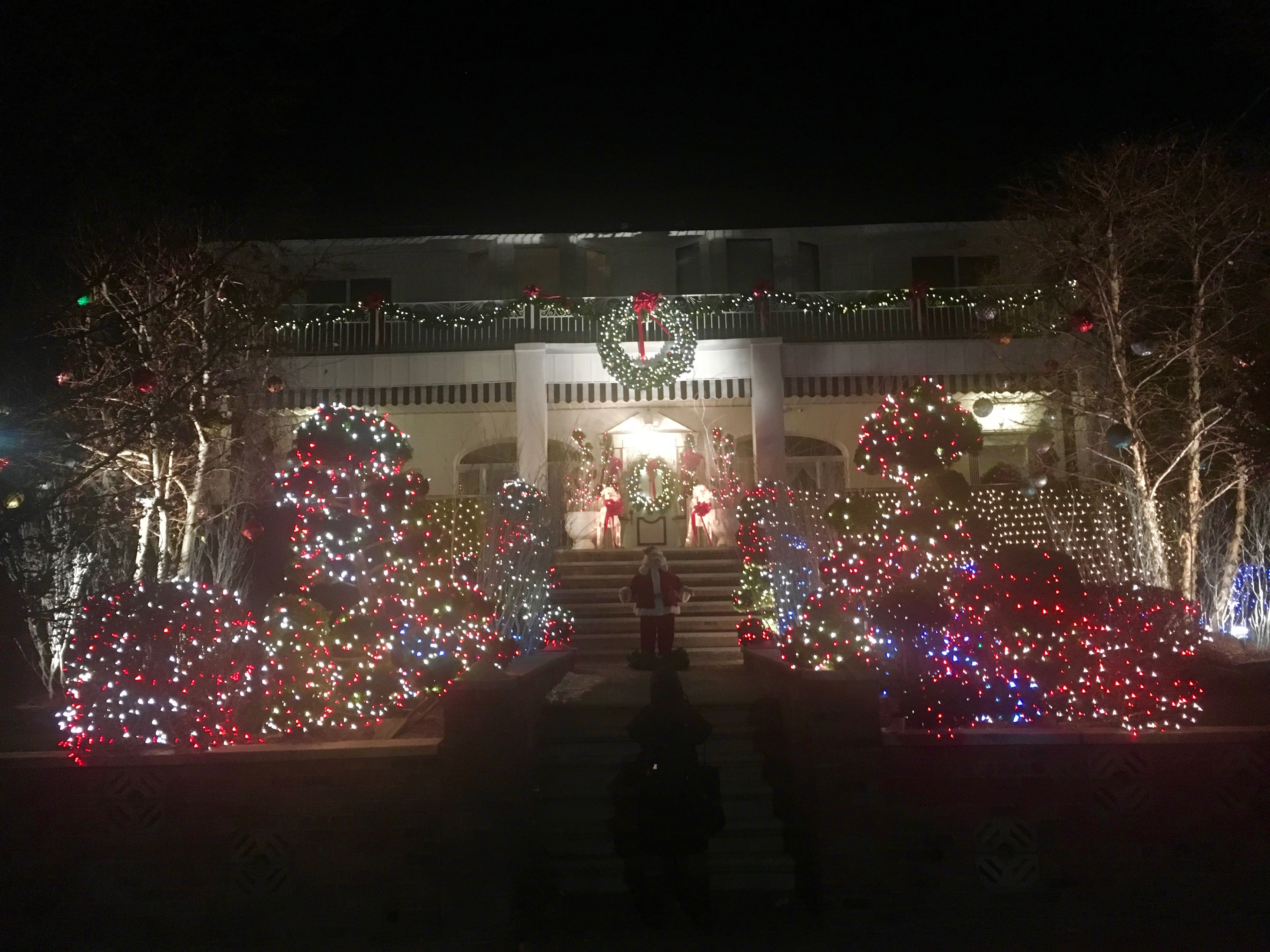
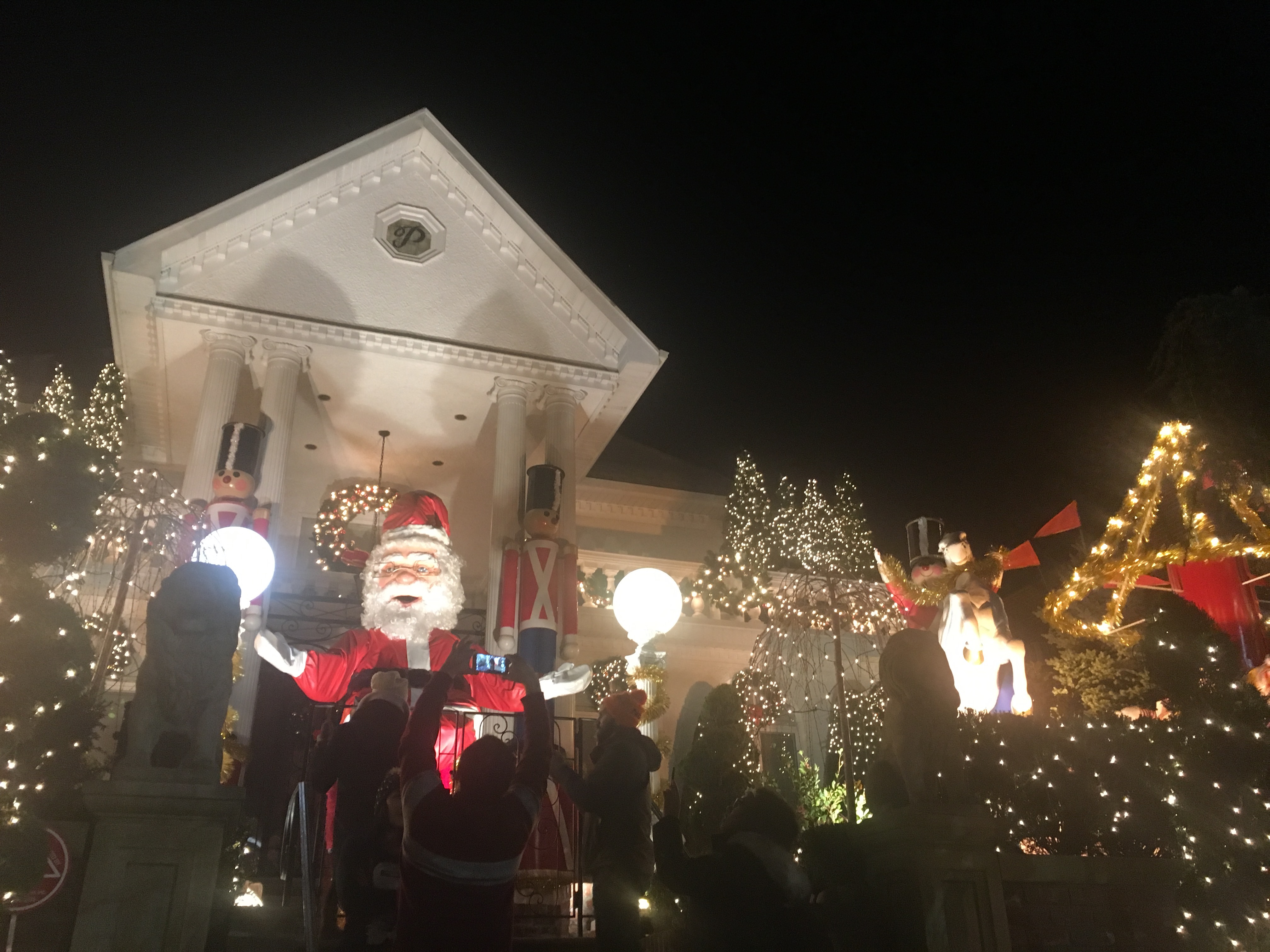
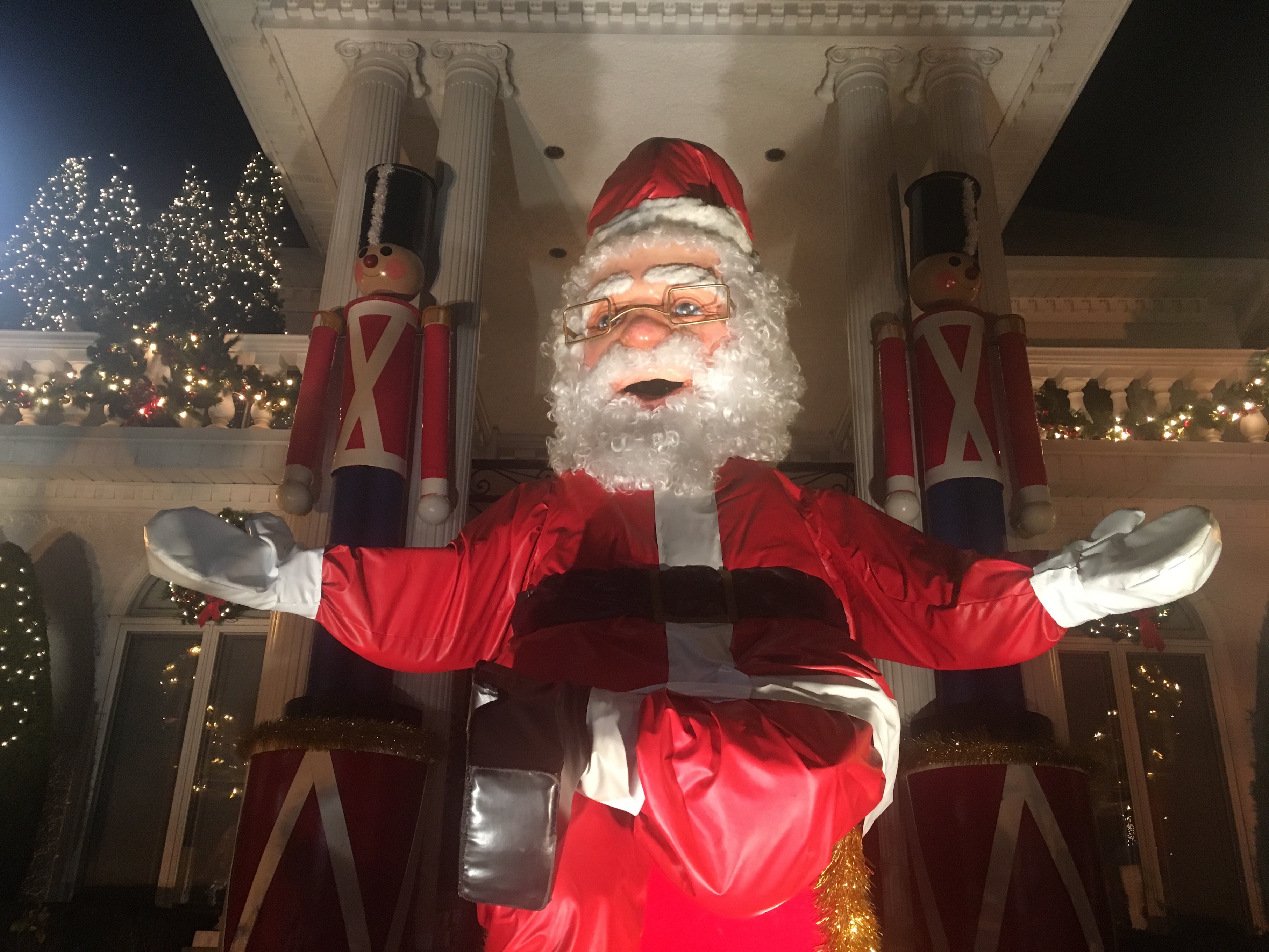
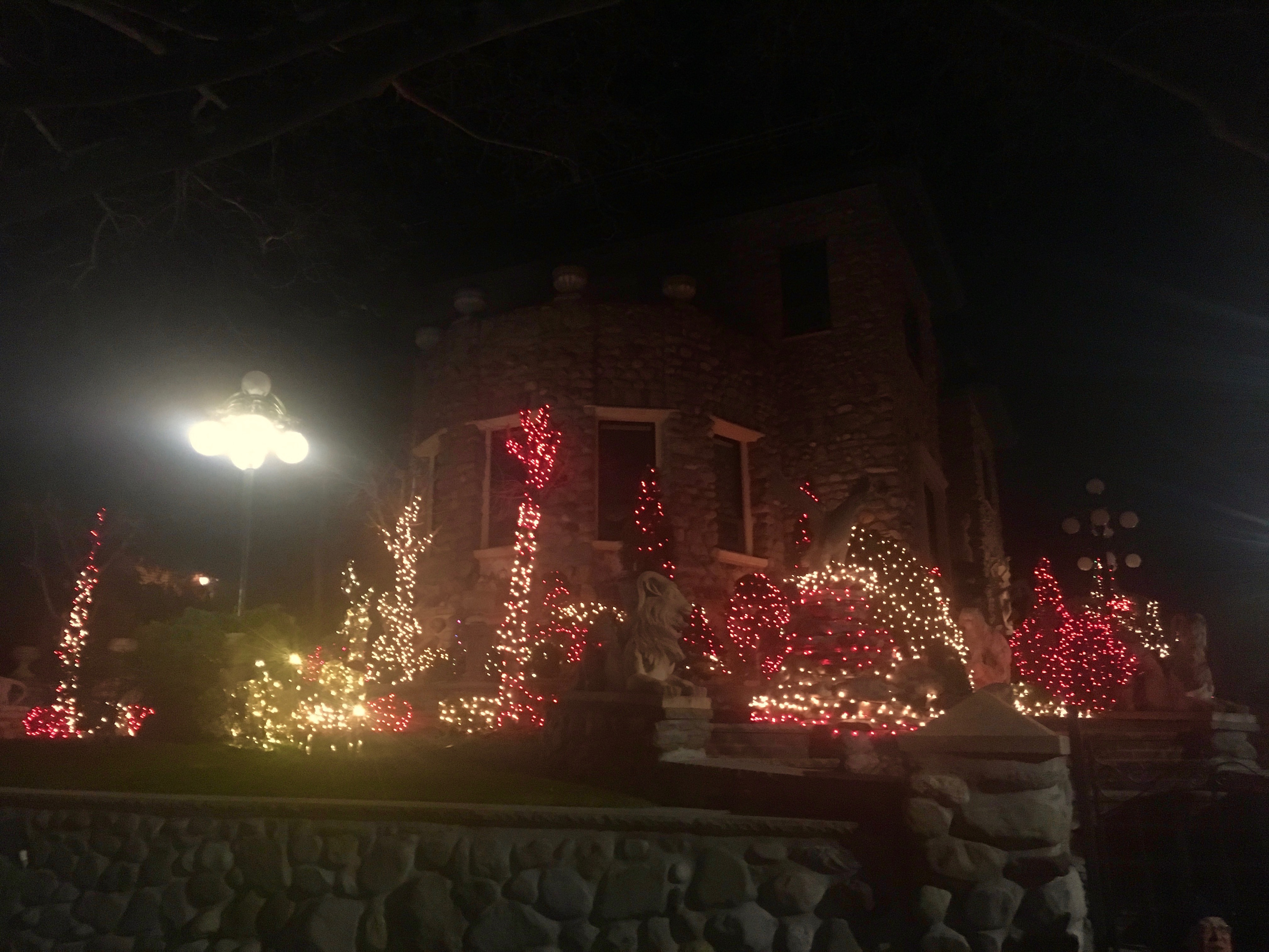
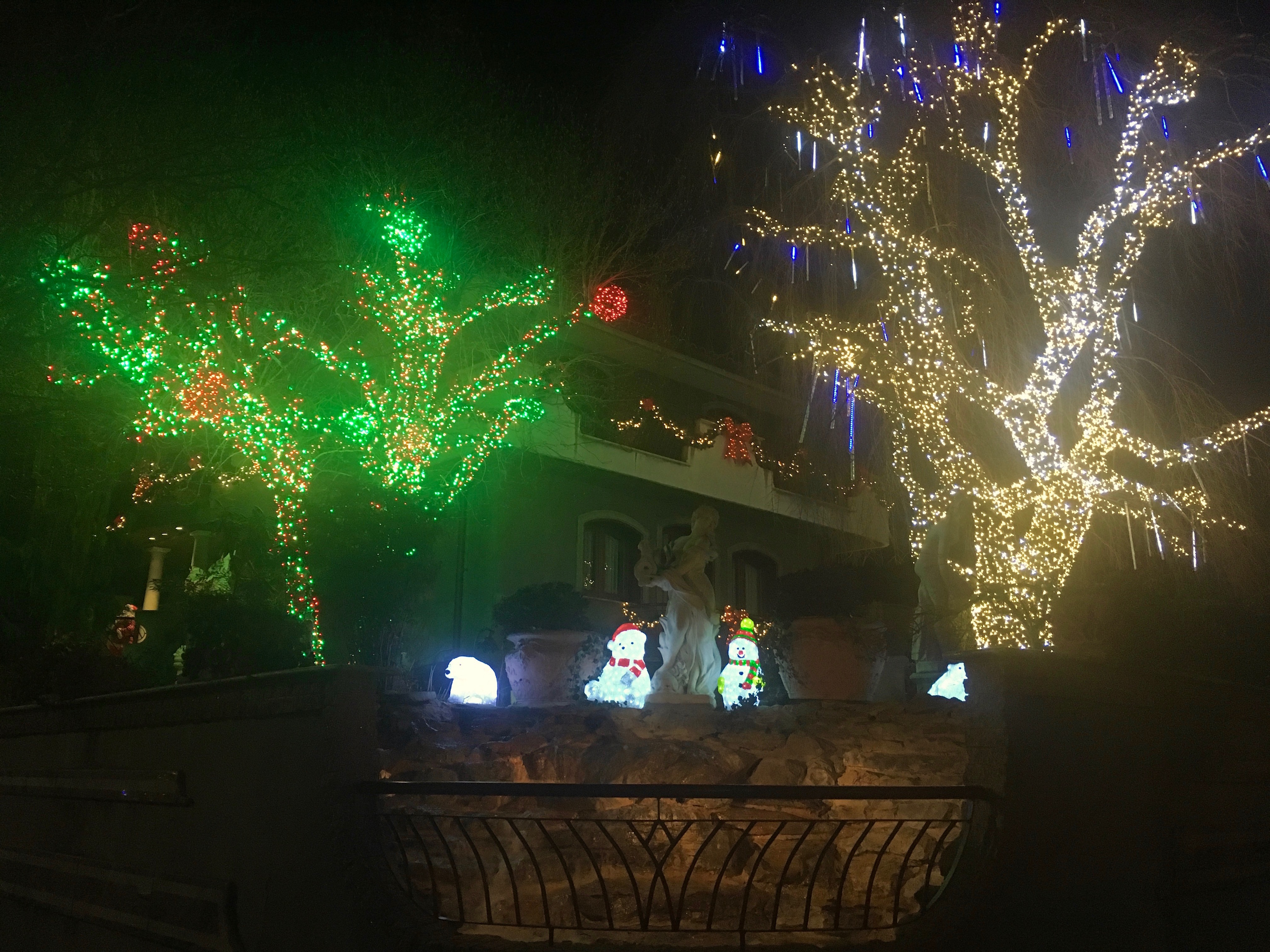
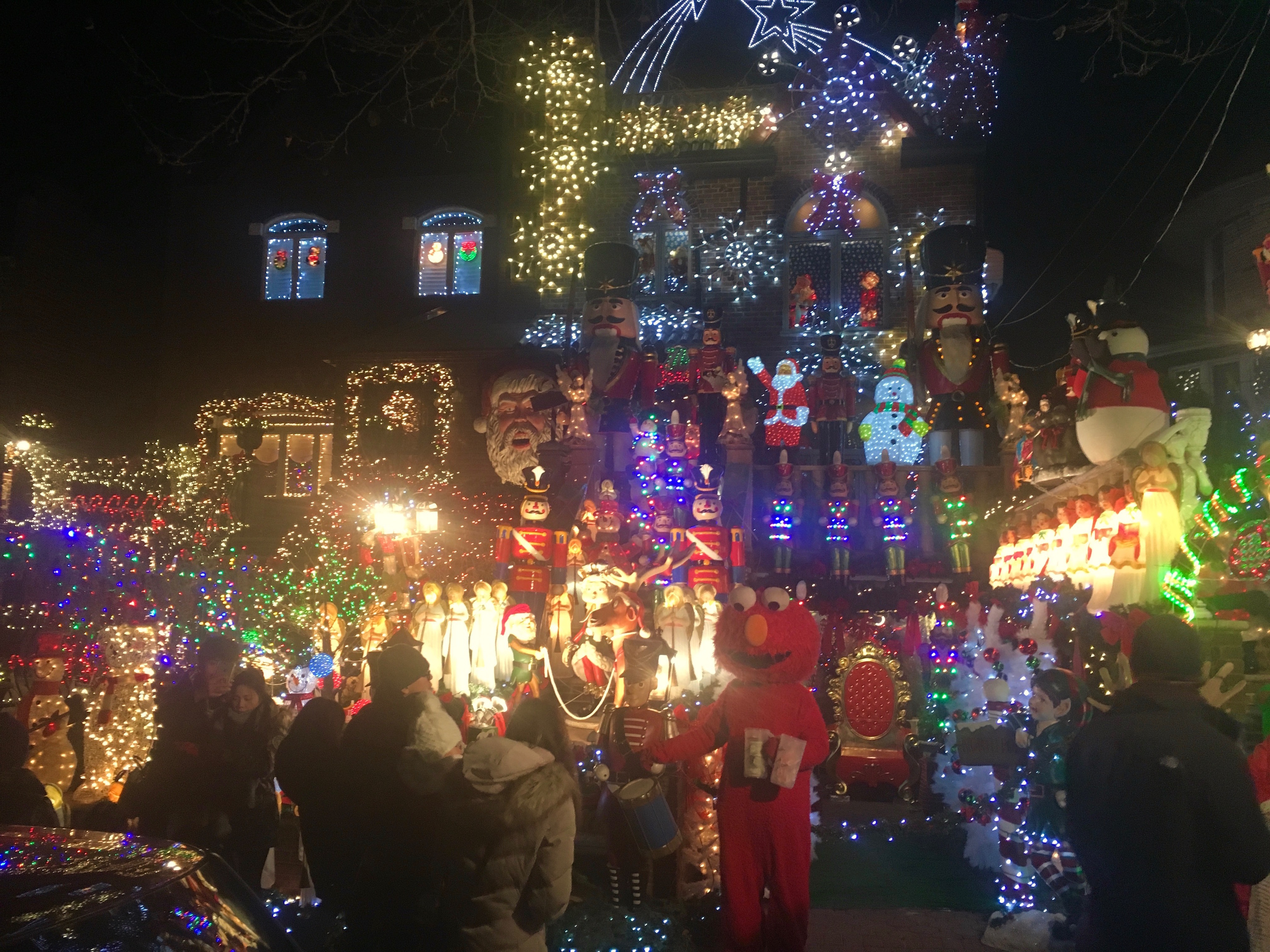
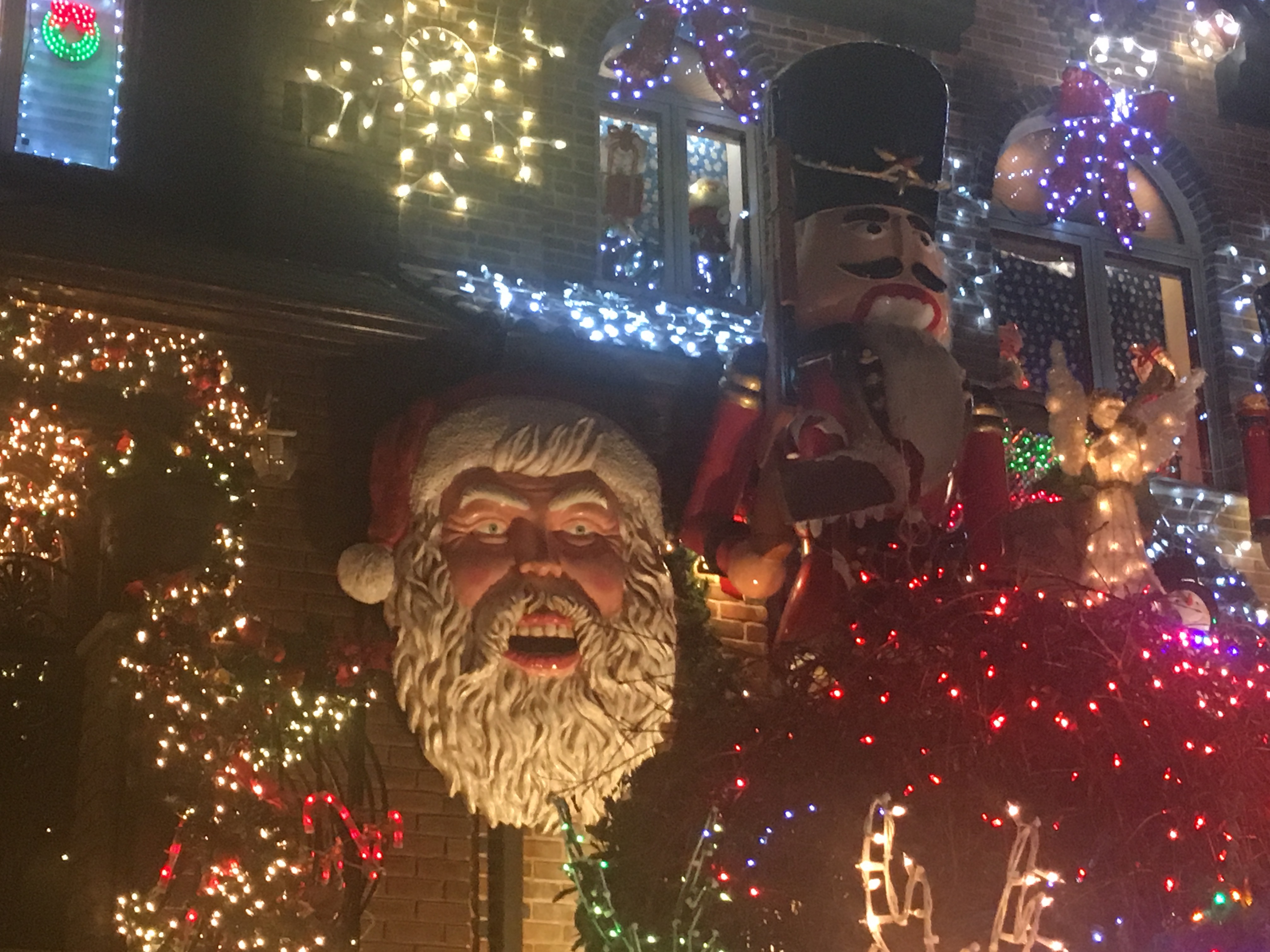
Below is a history of the  Dyker Heights neighborhood, interspersed with pictures I took of this year’s Christmas lights celebration:
Dyker Heights is named for an uninteruppted, sloping meadow which rolled down to the waters edge (today interuppted by the rushing traffic of Shore Parkway). Nobody’s certain where Dyker Meadow got its name, only that it originated from the days of Dutch occupation, either from a Van Dyke family which settled here, or, more generally, from actual dykes the family built to drain the meadow.
Tumuluous history springs up on either side of Dyker meadow and its small forests, as the British who land at nearby Denyce Wharf begin their invasion of Brooklyn in 1776, taking up battle with the Continental Army to the north and east. As part of the township of New Utrecht, the meadow was unsuitable for farming, but its forests were plenty suitable for firewood and materials for building homes.
Development finally came to the area shortly before Brooklyn consolidated with New York. During the 1890s, the nearby area of Bath Beach was quickly becoming a resort getaway similar to Coney Island. Called Bensonhurst-by-the-Sea, the resort adhered to strict moral entertainments (i.e. no booze) and thus was destined to fail.
Luckily, by then, an elevated West End train line (the Brooklyn, Bath and Coney Island line) was attracting speculators eager to draw New Yorkers with residences built on old farmlands. By the late 19th century, the New York Times excitedly noted the saavy practices of land developers in this region of South Brooklyn.
The father of Dyker Heights is developer Walter L. Johnson, who in the 1890s scooped up the land, brought roads and utilities to this fairly remote part of Brooklyn, and quickly created a small community. He even named the area, the ‘Heights’ assumably tacked on to embue it was a cache similar to Brooklyn Heights. Johnson’s gamble paid off; in 1899, the Wall Street Journal proclaimed, “nowhere else in the consolidated city is there anything to compare it with. From here can be seen a marine panorama hard to beat.â€
From the beginning, Dyker Heights was designed for home ownership — no tenements and few apartment complexes — and it’s a tradition which mostly lives on today. From an 1899 article: “Dyker Heights is carefully restricted, the restrictions running till 1915 and no building can be erected here on a plot of less than 60 by 100. Each building must cost at least $4.000 and stand well back from the street line.”
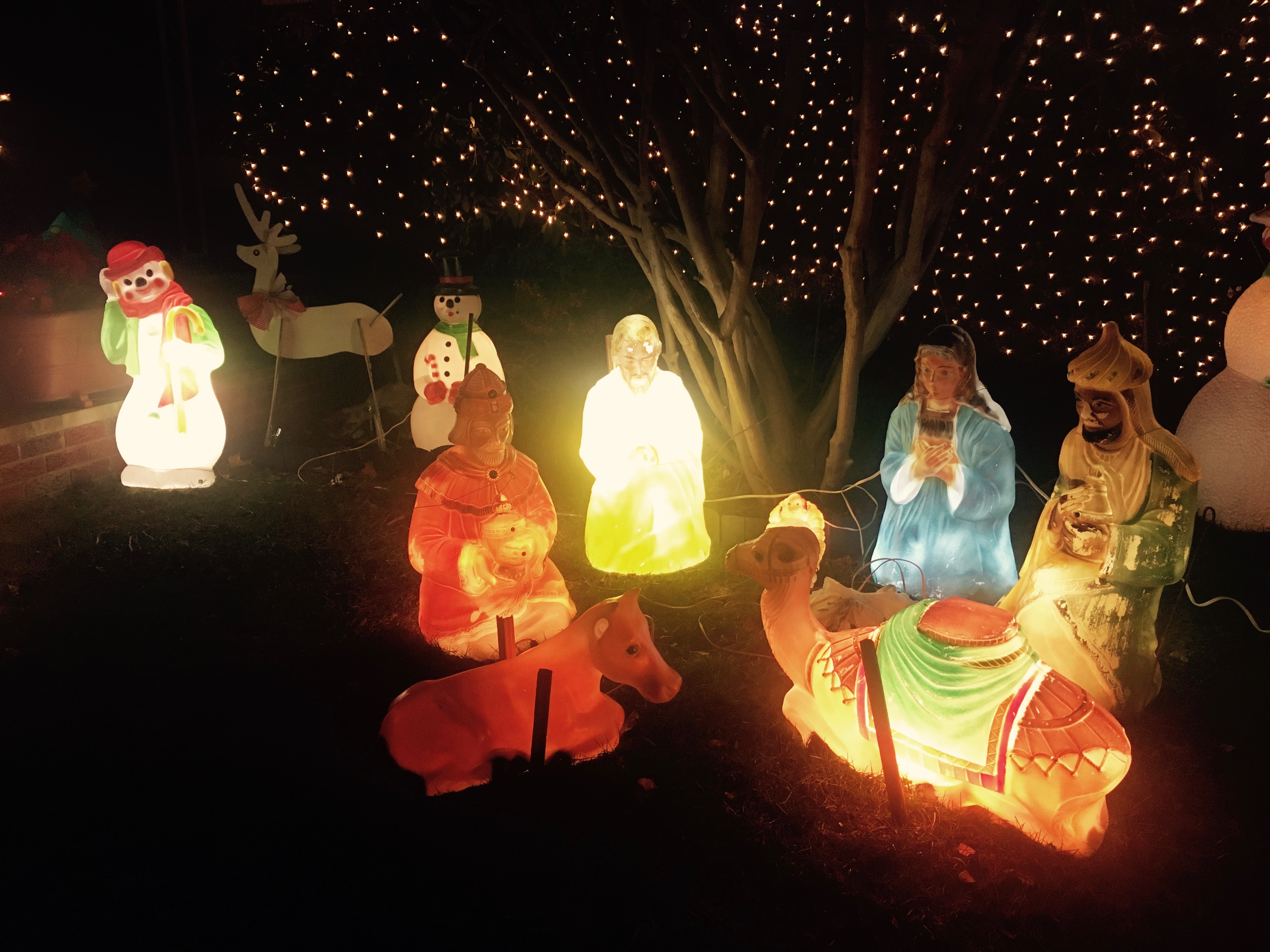
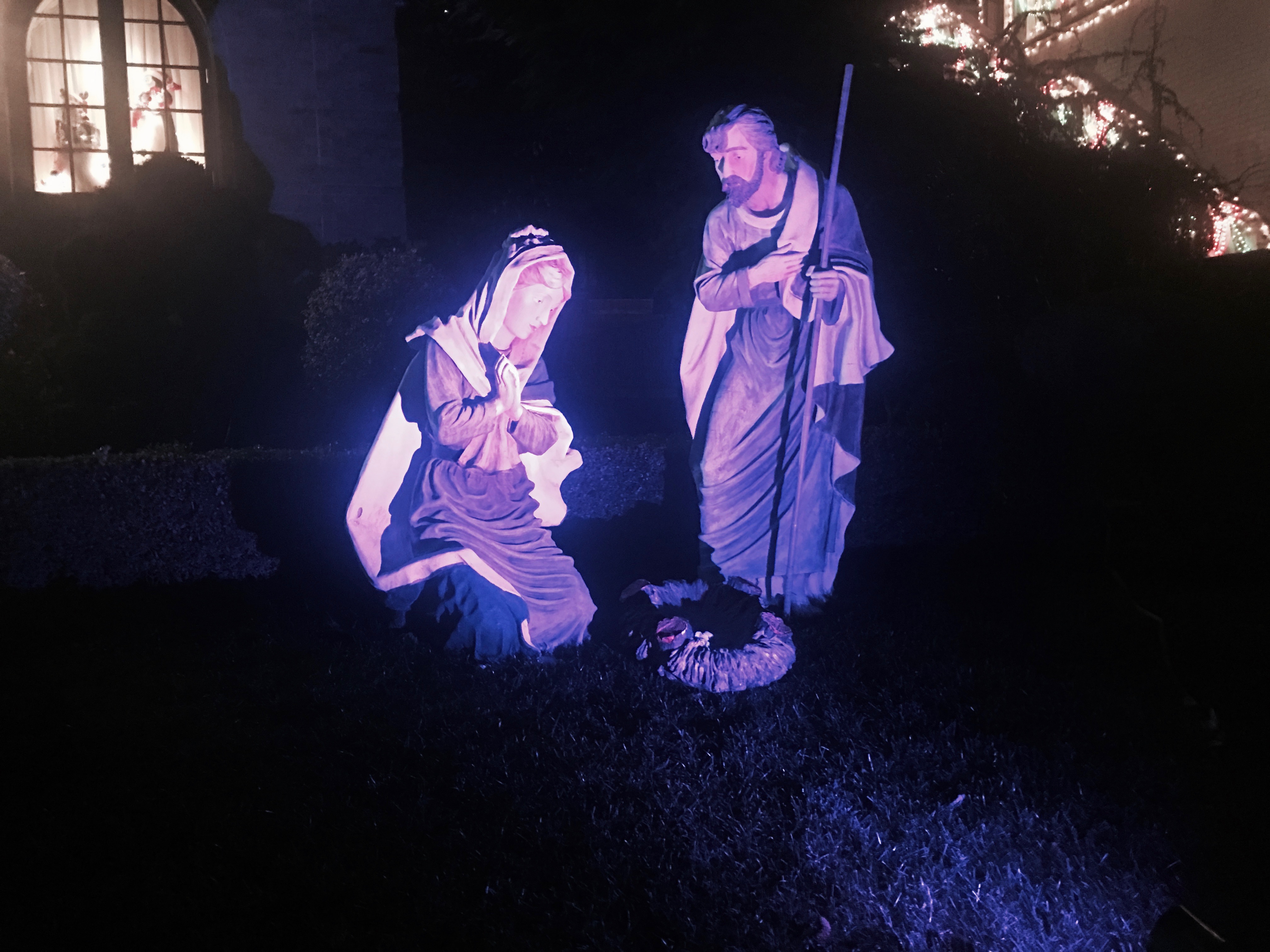
Below: A sampling of the dozens of electric manger scenes awaiting you in Dyker Heights.
Today Dyker Heights is a predominantly middle- to upper-middle class Italian neighborhood, anchored by the Dyker Heights golf course and sandwiched between Bay Ridge and Bensonhurst, with old Fort Hamilton to the southwest and what remains of the old Bath Beach resort area just southeast of here.
What Mr. Johnson could not have predicted — heck, what Thomas Edison, inventor of electric light bulb, could not have foreseen — is the annual holiday expression that occurs on the lawns of many Dyker Heights residences through December.
The neighborhood is already known for its unique, ornamented homes, front lawns festooned with fountains, animal statuary, ornate shrubbery, perfectly manicured grass and home waterfalls.
For the holidays, the busy lawns are then burdened with an abundance of lighted sculptures, animatronic dioramas, and every manner of festive lawn display imaginable. Dozens of trees of all varieties — from willows to even palm trees — are garbed in multi-colored lights.
Befitting an organic neighborhood celebration, the origins of this annual tradition are a bit hazy. Families began hosting displays as far back as the post-war years of the 1940s. An article from the New York Times  suggests that the neighborhood’s Italian leanings may have something to do with it.
The show is concentrated between 81st and 84th Street and between 10th and 13th Avenues, but in recent years, it easily spills over to other blocks and even into the borders of adjoining neighborhoods.
This is a curious tradition, as the best way to enjoy the show — on foot — is obviously the most uncomfortable, especially on brisk December evenings.  There are fine tour companies which present bus tours of the Christmas light show, and if you’re averse to chilly temperatures, they’re the best way to go. (Free Tours By Foot and A Slice of Brooklynare two reliable tour operators which offer holiday bus tours well into the new year.)
But I prefer seeing the electric light madness on foot, soaking in the Christmas music that seems to emanate from every home. Just grab a giant coffee or cocoa and go! Most of the homes will be festively lit until at least New Year’s Eve.
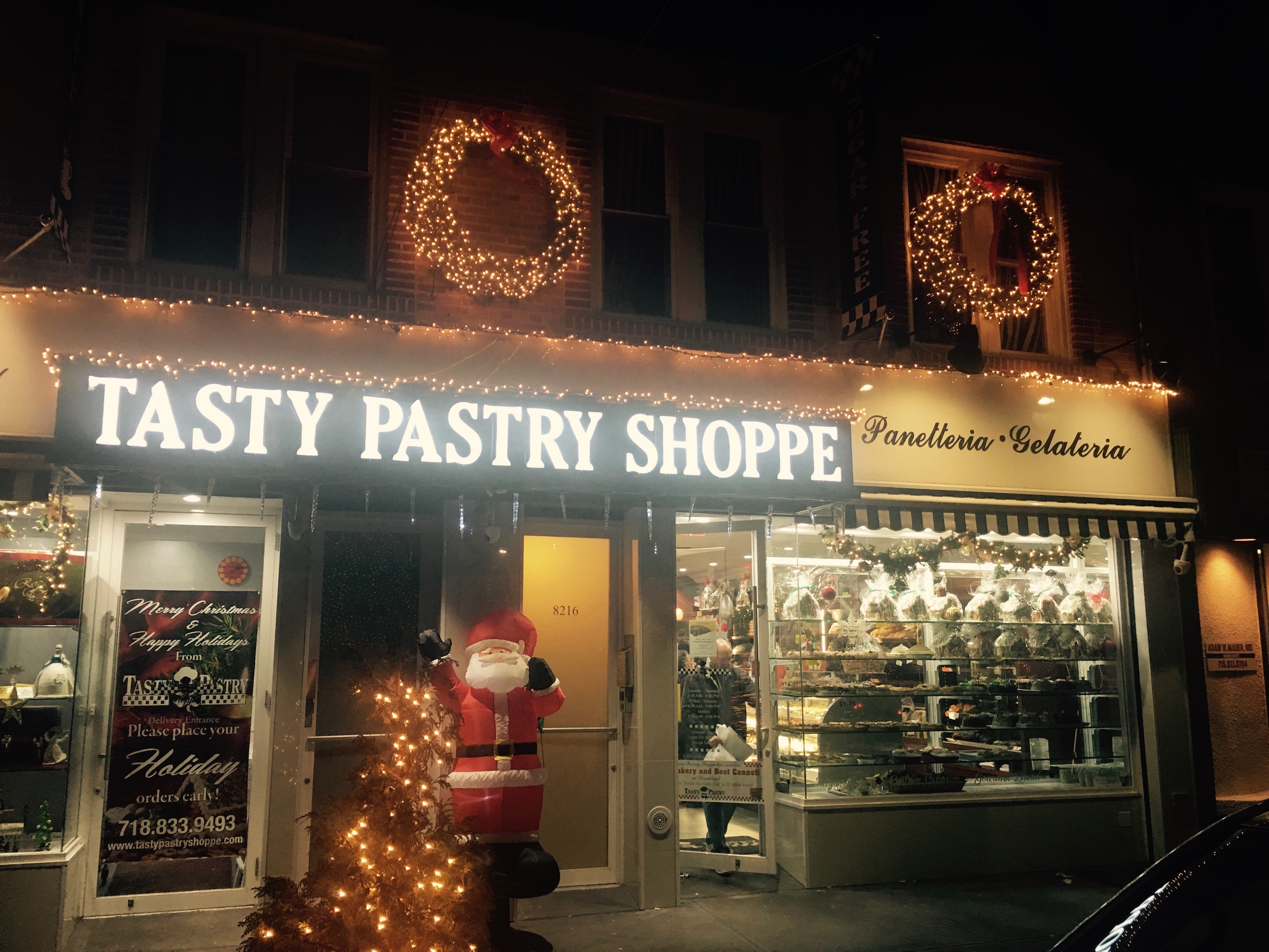
Better yet, before or after your stroll, head up to this amazing place on 13th Avenue and 83rd Street and fill your pockets with cannoli.
By the way, much of the history of Dyker Heights was unearthed several years ago in a thesis paper by then student Christian Zaino.
A model example of a budding New York historian, his research was so exhaustive that one of Dyker Heights’ more glamorous homes — the Saitta House — entered the National Register of Historic Places on the strength of his research. In fact, this is probably one of the few instances that you can use Wikipedia for a resource, as Zaino wrote the page. (In 2014, he also made an hour long documentary film about the history of Dyker Heights. You can watch it here.)
According to the Officer Down Memorial Page, there have been 816 New York law enforcement officers who have died in the course of duty. Most of those who have died in the page six years succumbed to 9/11-related illnesses. The last firearm-related death, Paul Tuizzolo, sadly came just a last month, killed in a gunfight in the Bronx.
The official count considers all NY officers from as far back as 1802 and the days of the New York City watch under the supervision of its renown High Constable Jacob Hays, pictured below. (See our podcast Case Files of the NYPDÂ for more information.) Hays would be the sole administrator of this early form of law enforcement and would lead the group until the formation of the New York Municipal Police in 1845.
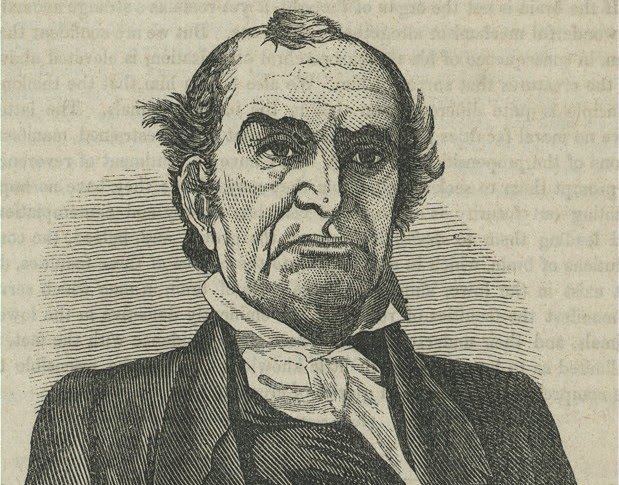
The gruff looking Jacob Hays.
The watch’s first casualty came in 1806. The man’s name was Christian Luswanger, murdered in the line of duty during a very unthinkable altercation.
In 1806, New York was still a city shaking off its colonial trappings and still finding its identity. The mayor of New York that year was 37-year-old DeWitt Clinton, the well connected nephew to the former governor of New York and a man with great things in his future. The British had been gone for over two decades, and the city and its port were rapidly growing. But the real jump starts to the city’s economy and expansion — the Erie Canal, the debut of the steamboat, the Commissioners Plan — would come in the next decade.
New York was small but restless. When mayor Edward Livingstonformed the night watch in 1801, it required only a handful of men, overseen by a Watch Committee on the city council (or Common Council). By 1806, all watchmen reported to Hays, and the constable reported to the council, who often directly advised on priorities. “The Captains of Watch in the first district [should] be particularly attentive to the neighborhood of Burling Slip,” according to the minutes ofone council meeting.
Broadway and City Hall, in 1809. The mobs of the so-called ‘Augustus Street Riot’ would have scuffled just to the west of this illustration. (Courtesy NYPL)
Hays supervised a couple captains for each of New York’s wards — captains with such sturdy names as Magnus Beekman, Nicholas Lawrence, Gad Dumbolton and William Van Wart. Those captains had other men reporting to them, including Christian Luswanger, of which almost nothing is known — regular watchmen didn’t appear in the council payrolls, only the captains — nothing at all, except for the event which took his life. An event sometimes referred to as the Christmas Riot, the Highbinders Riot or the Augustus Street Riot, so named for the forgotten street where many of the rioters lived*.
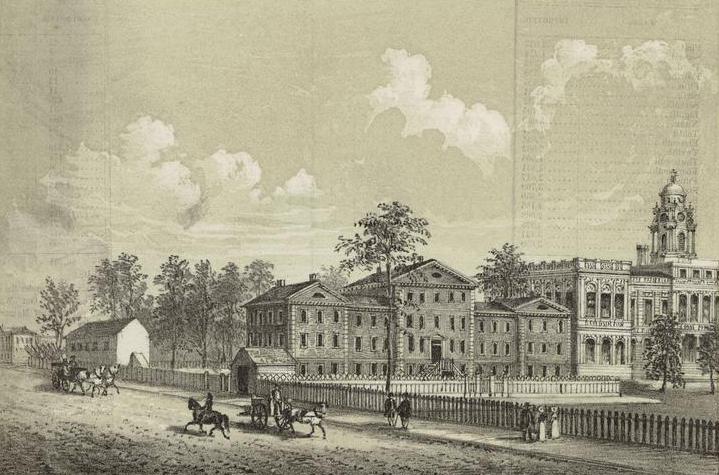
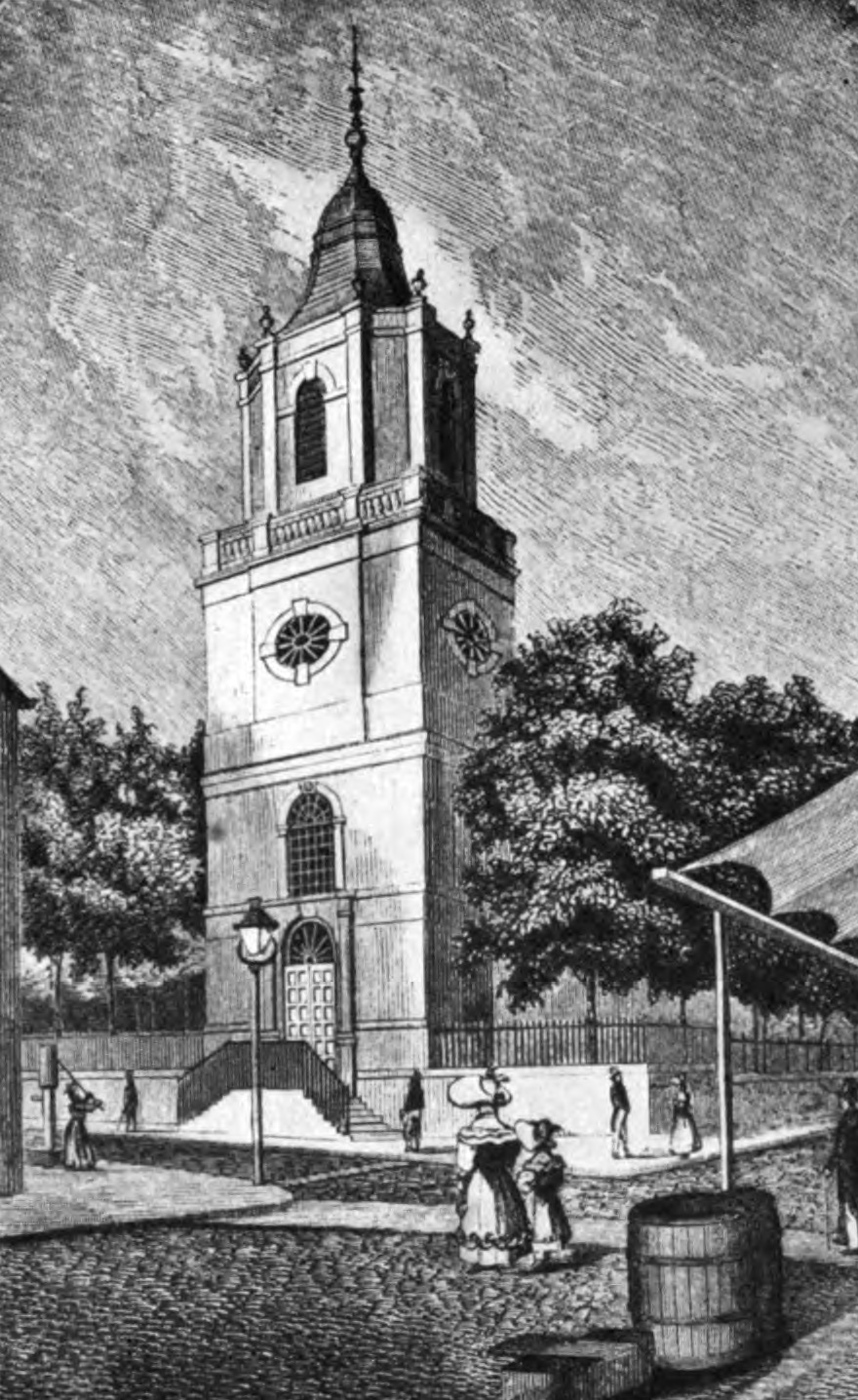
The original St. Peter’s Church at the corner of Barclay and Church Streets.
In 1806, St. Peter’s Church — at Barclay and Church Street — was the only parish in town if you were a practicing Catholic. (The current St. Peter’s, sometimes called Old St. Peter’s, a simple, neo-classical gem near the WTC site, was built over the location of the old structure in 1840.) Its most famous congregants would be Elizabeth Ann Seton, the first American to be declared a saint, and the venerable Pierre Toussaint, who’s currently interred at St. Patrick’s Cathedral.
Built in 1785, St. Peter’s was a perpetual target of anti-Catholic sentiment, and indeed, horrific violence would erupt here on Christmas morning 1806. As worshippers gathered for midnight mass, a group of nativist rowdies gathered outside, prepared to disrupt services.
Simply consider them a massive of drunken, anti-Catholic thugs — sailors, according to one source, “a nativist gang of apprentices and propertyless journeyman butchers” according to Edwin Burrows and Mike Wallace — all looking to cause trouble. Still another newspaper referred to them as “a desperate association of lawless and unprincipled vagabonds.” [source]
Parishioners ran to get their alderman who successfully convinced the group to disperse for the evening.
However the mob which returned the next night — Christmas night — far more incensed, only this time the churchgoers were ready, armed with weapons. The defenders at St. Peter’s were not merely parishioners but other Irish immigrants who had heard about the prior evening’s altercation and came looking for a fight.
Many other Irish New Yorkers stood watch over their homes on Augustus Street, waiting for the anti-Irish mob to arrive there. That night, the two groups clashed in the streets, a few dozen men on each side, attacking each other on the streets around City Hall.
In this melee, the watch were called to quell the violence and arrest the rioters. Jacob Hays may have been there; several of his captains certainly were. Watchman Luswanger was called to join them. Somewhere along the way, a rioter stabbed Luswanger, and the watchman “expired without a struggle.”
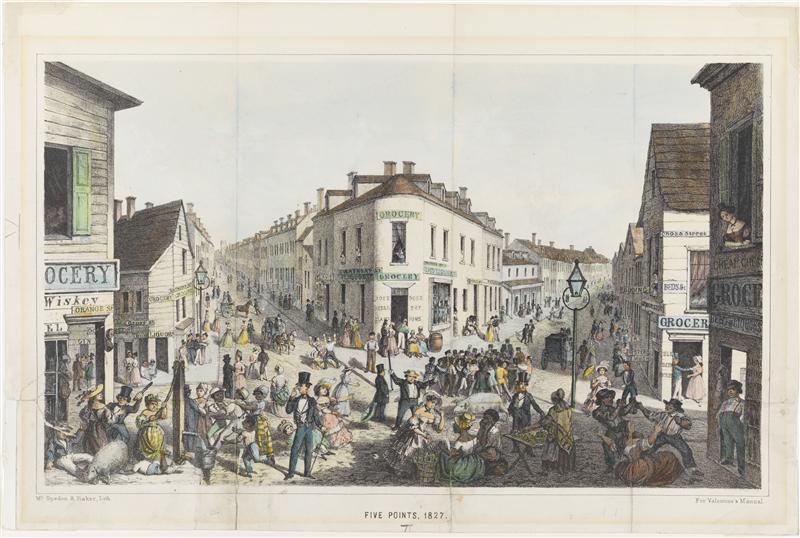
The streets of Five Points in 1827, a short distance away from the riotous events of 1806.
Apparently, this did nothing but bring more rioters into the chaos.
“The church was surrounded with a motley crew of Irish and sailors … engaged in deadly conflict … The mob fought from the door of the church to Irish town, being the distance of about a fourth of a mile ….Â
“[W]e fell to and drank as much as we pleased, and while we were refreshing ourselves the mob came in and began to break bottles, glasses, pitchers, barrels and all and every thing they could find in the shop; and fought on till day light through Irishtown; laying all Irishtown waste; a great deal of property was d was destroyed by the mob, and a great deal of human blood shed.”
It took most of the night watch and the light of day to dissolve the rioters. Ten men, all Irishmen, were arrested. The mayor offered a reward for any information on Luswanger’s demise, but danced around firm condemnation of either group. I’m gathering from the lack of evidence that the case of who stabbed the watchman remains unsolved.
NOTE: One of my prime sources on this article states that the watchman’s name was Christopher Newfanger, not Christian Luswanger. I believe the latter is correct, and it is the name officially recognized by the police department.
*According to Forgotten New York, Augustus Street “was later called City Hall Place and in 1941 it was again renamed for Patrick Cardinal Hayes who had died in 1938.” Today the street is gone, contained in the pedestrian plaza of Civic Center, near St. Andrew’s Church.Â
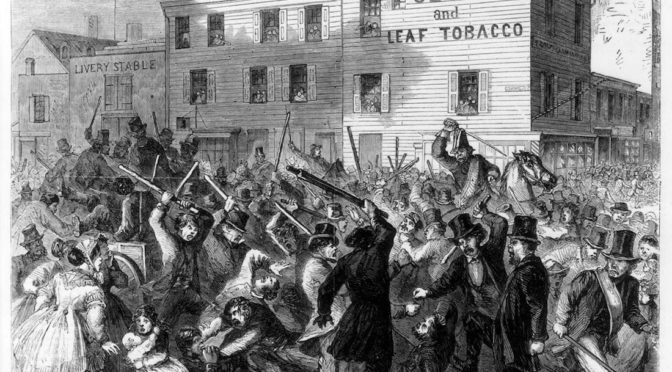
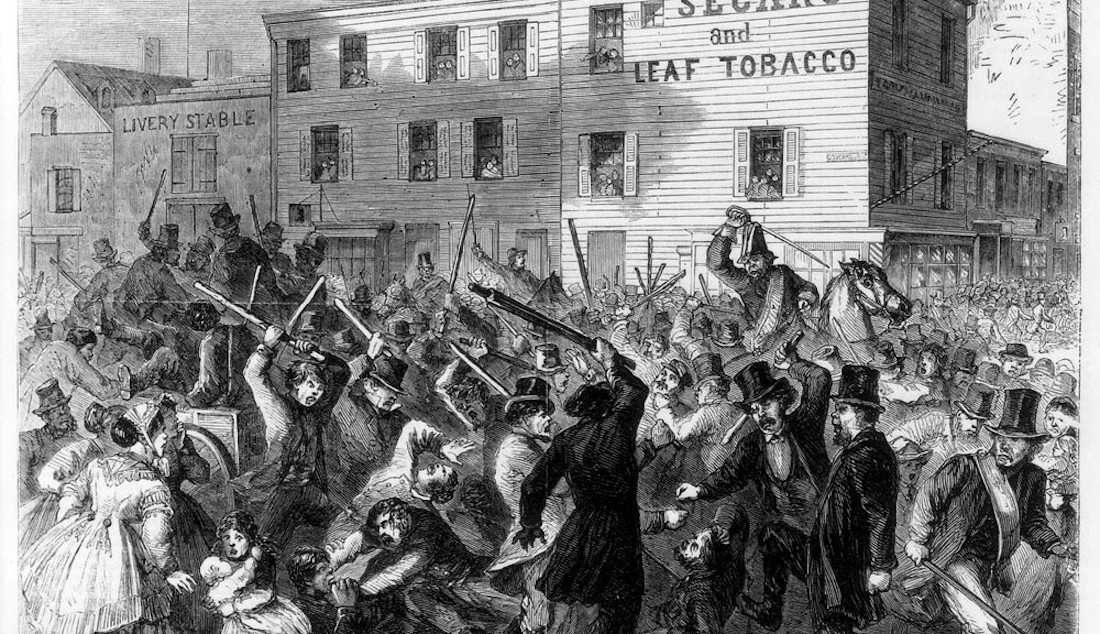
NOTE: There are no images or illustrations of the Highbinders Riot. The riot depicted at top is actually of a Lower East Side riot in the 1860s.
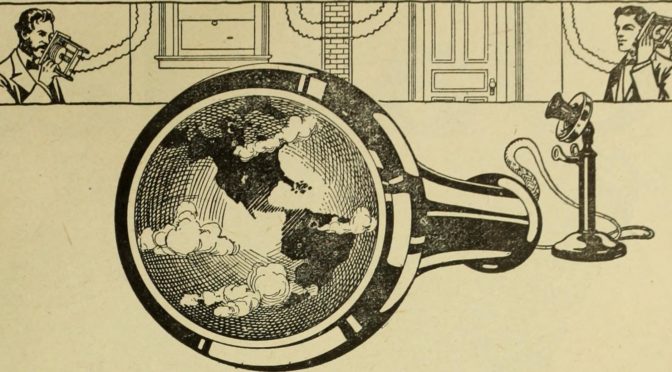
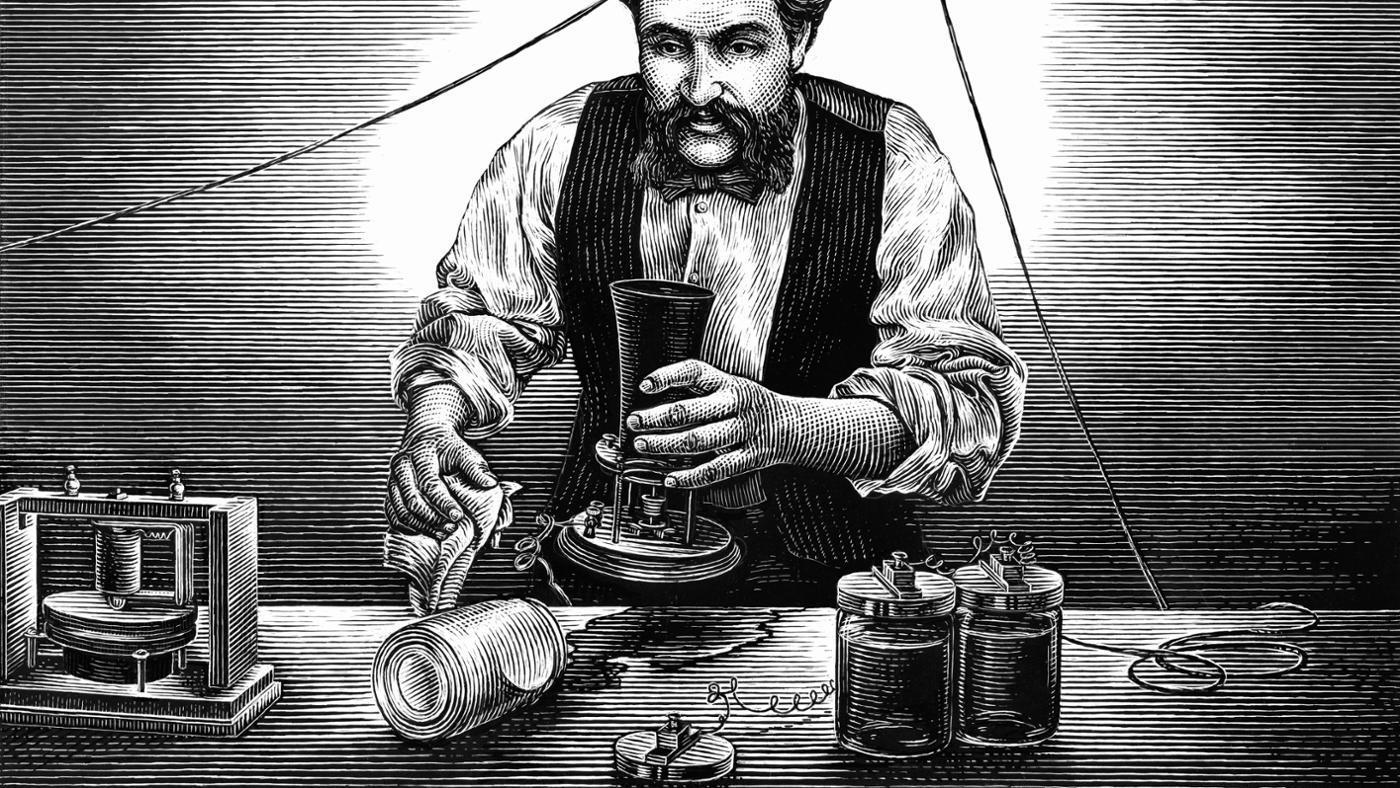
PODCAST You may know the story of Alexander Graham Bell and his world famous invention. You may know that Bell made the very first phone call. But do you know the story of the man who ANSWERED that call?
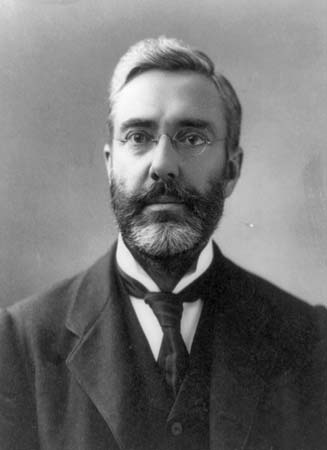
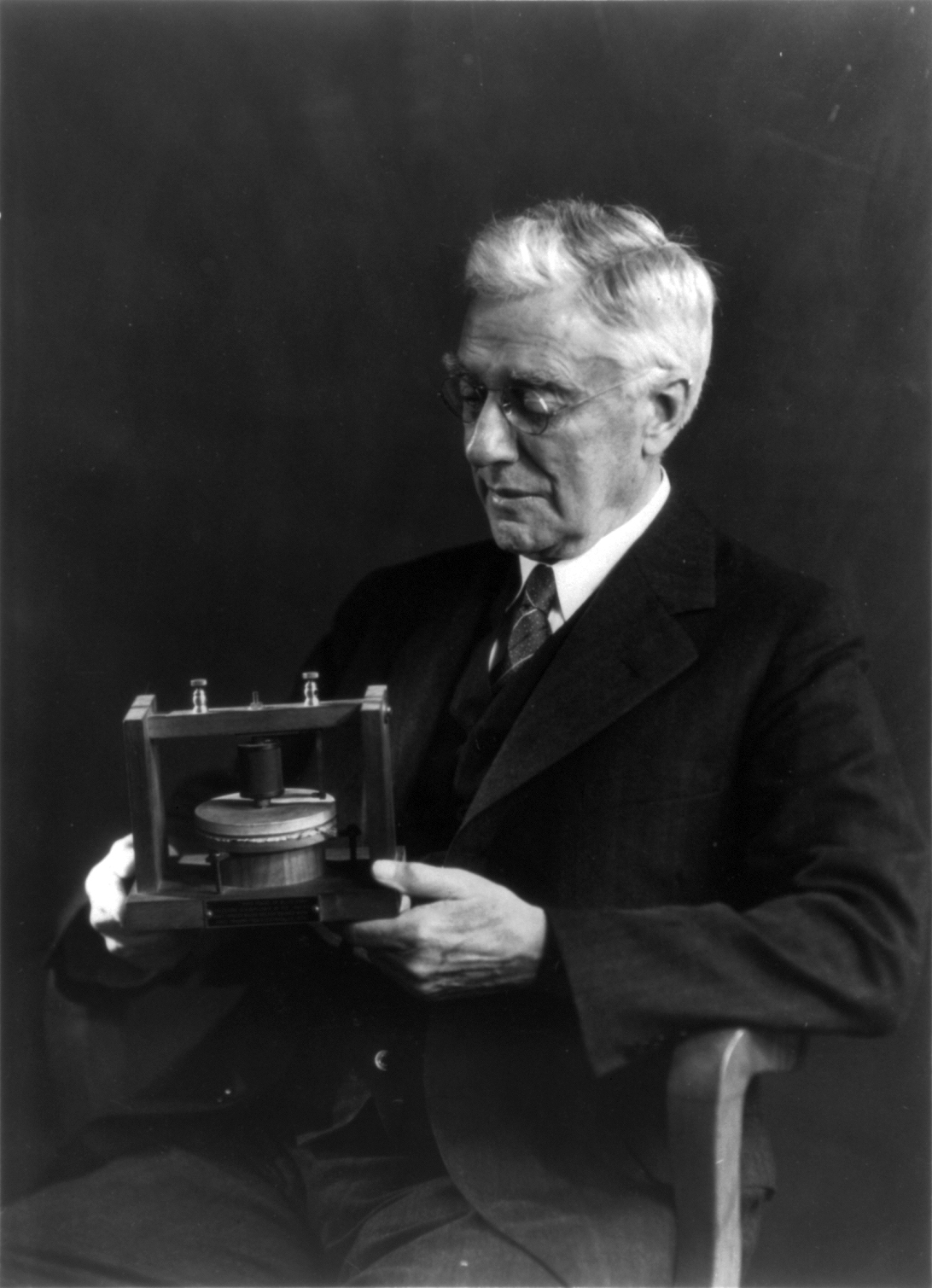
His name was Thomas Augustus Watson. He met Bell when he was just 20 years old, inventing the telephone just a couple years later.
Watson left the employment of Bell at age 27 a very rich man. What would you do with all that money? This is the story of the joyous and sometimes unusual consequences of being associated with an invention that changed the world.
Featuring: Seances, shipyards, Shakespeare, socialism and science!
The end of the year usually means a higher quality selection at the movie theater– and more films based on historical events, a popular theme for those seeking glory on awards shows.
It always seems each year’s batch accidentally gathers around a certain place or era. Â Last year it was New York City history of the 1950s with films like Brooklyn, Caroland Bridge of Spies. Â For 2016, three historical films releases hover around the 1960s but move geographically further south — specifically to Virginia and Washington D.C.
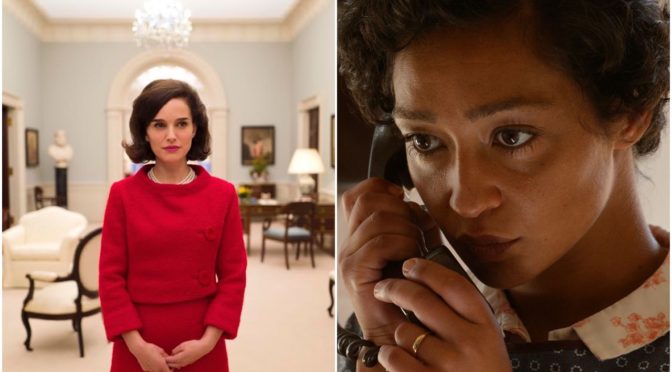
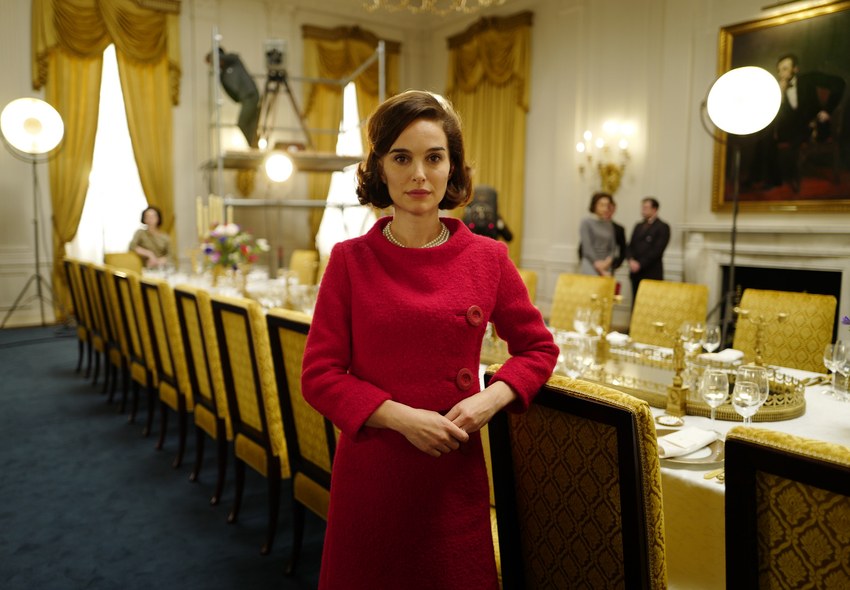
Last night, I saw the riveting film Jackie, directed by the Chilean director Pablo LarraÃn, an abstract biographical film on the life ofJackie Kennedy, specifically focusing on the days in 1963 following her husband President John F. Kennedy’s tragic assassination in Dallas.
While almost uncomfortably accurate in places, Jackie is by no means a straightforward Lifetime melodrama, but rather a horror film of shifting faces, a speculation on the inner world of Jackie (Natalie Portman), a woman disintegrating, then reassembling before our eyes.
The film spends most of its time in two destinations. A reporter (Billy Crudup) attempts to pluck a magazine profile from a cold and even sinister Jackie out in Hyannis Port. The rest of the film plays out from the various tales spun to the reporter, a few entirely fabricated.
The main set piece of Jackie is, of course, the White House, seen more intimately here than any other film in recent memory. And yet, thanks to the off-kilter score, the hallways feel like those of The Shining, possessed of the weight of history and redecorated with objects that feel absurd and out-of-place.
History is one of the central themes of the film as Jackie attempts to assure her husband’s place in it (not, of course, forgetting her own place there as well). Portman’s Jackie is never played at a single note. Her grief has touches of insanity, her poise entirely self-aware.
This is not a presentation of the actual Jackie Kennedy — she will forever remain an enigma —  but rather an accumulation of the pop culture Jackies — the deified saint, the playful mannequin, the calculated intellectual. It’s a stylistic choice that Portman’s Jackie, at least, would have certainly encouraged
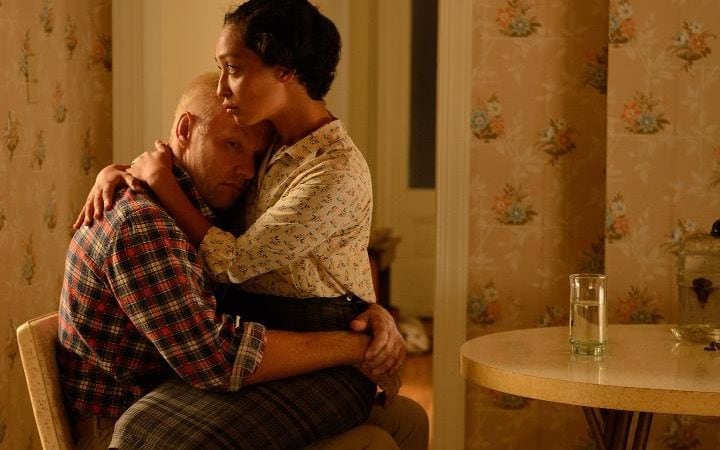
On the other end of the historical panorama is the moving and unpretentious film Loving, directed by Jeff Nichols, a straight-forward and unflashy telling of the events surrounding the landmark Supreme Court case Loving v. Virginia, abolishing laws that prohibit interracial marriages.
Richard and Mildred Loving (Joel Edgerton and Ruth Negga, both pitch-perfect in their performances) are a kind, soft-spoken pair, compatibly rugged and sweet. When Mildred gets pregnant, the couple decide to get hitched in D.C., where interracial marriages are allowed. But in their Virginia small-town home, such a coupling is illegal, and the pair are quickly thrown in jail by a menacing sheriff (Marton Csokas). Eventually the couple and their child have to move out of the state entirely.
Loving is an especially interesting product for being a successful film about an entirely unfilmable subject. The central pair were not flashy individuals. The case took years to get to the Supreme Court and the Lovings didn’t even go to witness it. The heroes are two young, awkward attorneys — Bernie Cohen (played by Nick Kroll) and Phil Hirschknop (played by Jon Bass). There are no fiery speeches. Few words are ever uttered above a polite tone.
Yet, after a somewhat slow start, I found it a quietly engaging and fantastically uplifting experience. Â In particular, the smile that stretches across Mildred’s face in Cohen’s office as she realizes her love is about to be validated by law is positively life-affirming.
And by the way, it is IMPOSSIBLE to watch either Jackie or Loving without having the modern world seeping in to influence your viewing experience of both.
The third historical film featuring the Virginia/D.C. area in the 1960s is Hidden Figures, about the life of Katherine Johnson (played by Taraji P. Henson), an African-American physicist who assisted in the planning of NASA’s first manned space flights. The film opens in limited release on December 25.
Another American innovator is celebrated in The Founder, about the life of Ray Kroc (played by Michael Keaton), the man behind McDonald’s golden arches.
And finally, for some Prohibition-era escapism — and for those who miss their Boardwalk Empire — there’s Live By Night, based on the Dennis Lehane novel of the same name. Â Ben Affleck directs himself in this saucy, boozy thriller.