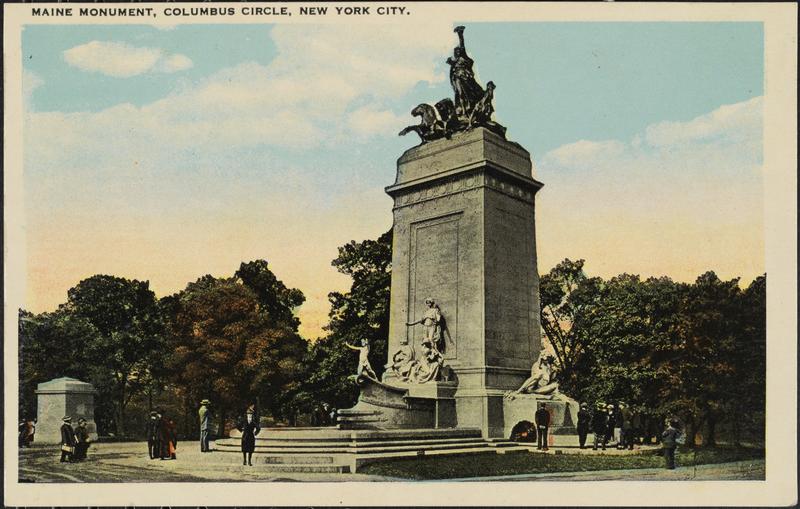
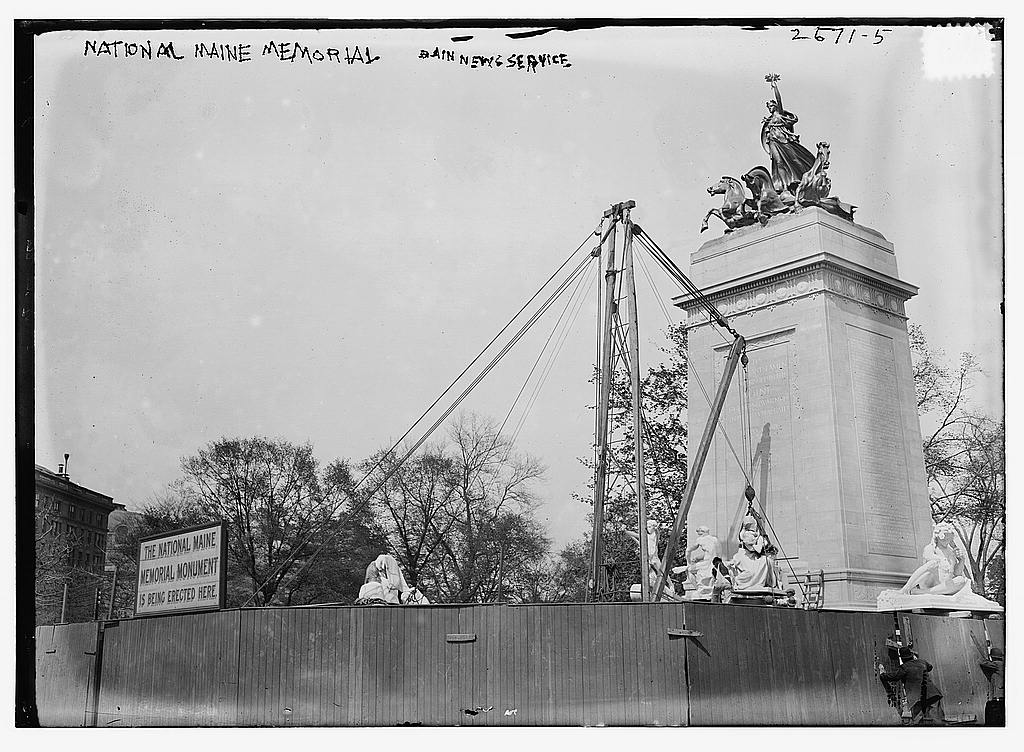
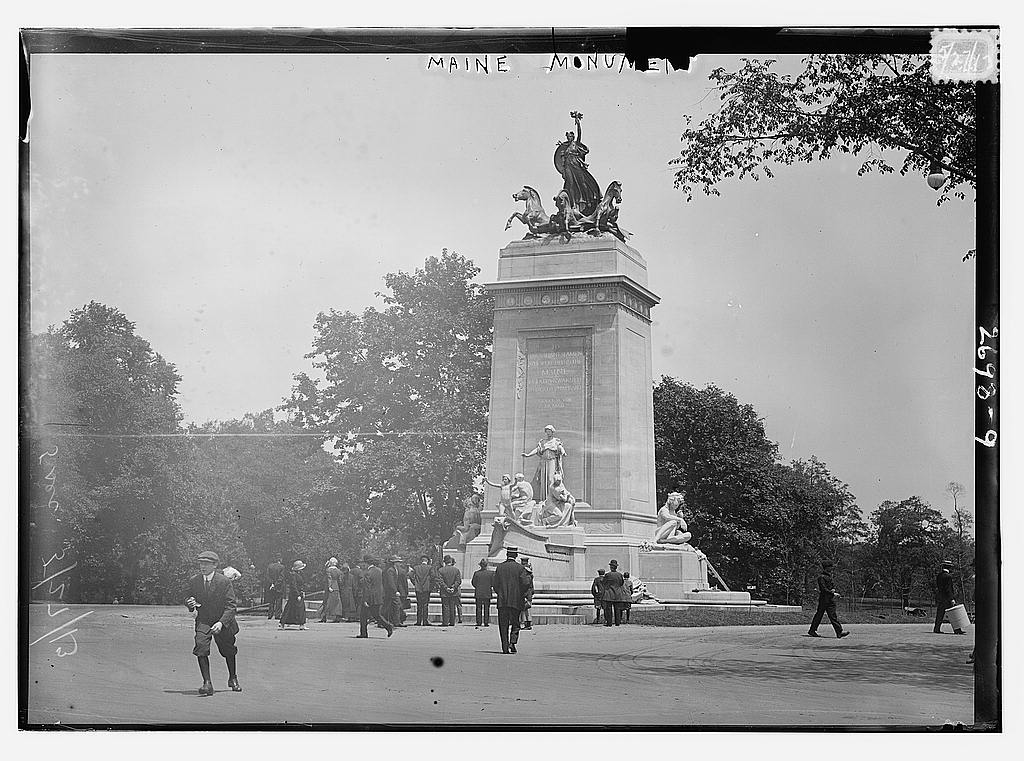
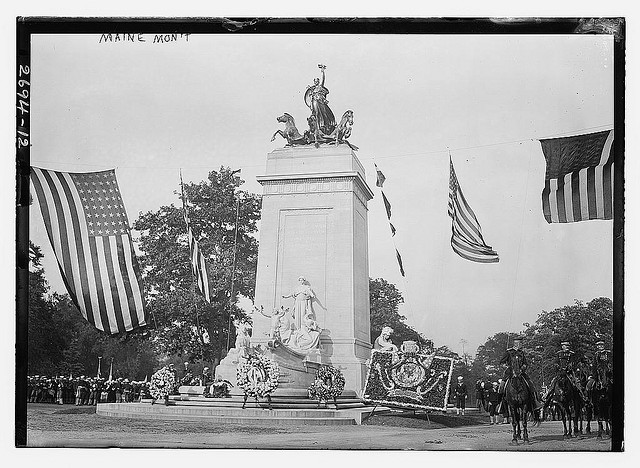
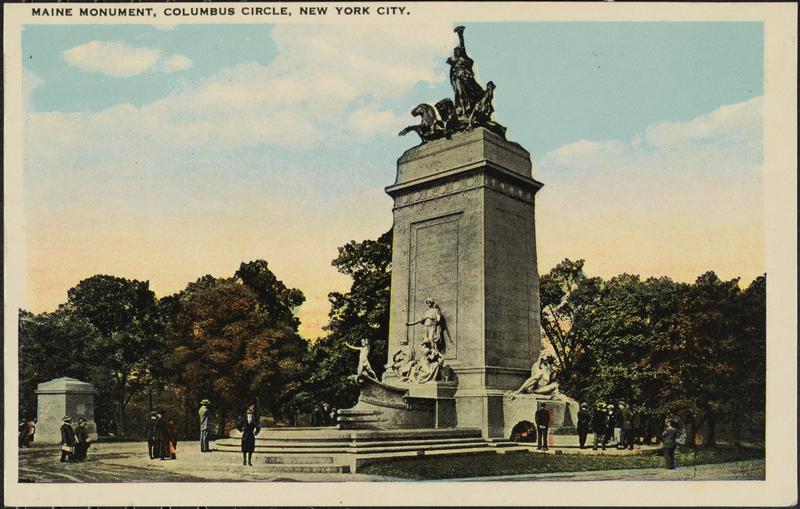
On Memorial Day in the year 1913, one of New York City’s great war memorials was finally unveiled — the Maine Monument, at the southwest corner entrance of Central Park.
The monument pays tribute to the 266 American soldiers who perished on the USS Maine, which exploded in Havana, Cuba, on February 15, 1898.
Given the various wars which have involved the United States since then, this event is sometimes overshadowed, but it so horrified and angered Americans that emotions helped fuel the conflict known as the Spanish-American War later that year.
This is often considered a war manufactured by New York publishers as anti-Spanish rhetoric in the papers — the seeds of so-called ‘yellow journalism’, featuring outlandish exaggeration or out-right fabrication to sell their product to New Yorkers — led directly into military engagement.
Newspapers were not only behind the causes of war; they were behind its monuments too. Within days of the explosion, William Randolph Hearst called for donations for a memorial to the Maine’s fallen crew.
Just as Joseph Pulitzer had done a decade earlier for the Statue of Liberty, Hearst went directly to its readers, young and old, to help fund a tribute to the Maine.
Given the wall-to-wall coverage of the war that year and the ample profits from newspaper sales, it’s strange that Hearst couldn’t just fund the whole thing himself.
Less than a month after the disaster, people around the country were fund-raising for the Maine Memorial.
In March 1898, a traveling comic opera crew was raising money in Oklahoma when its lead actress killed herself.
The following month, a vaudeville benefit at New York’s Koster & Bial in Herald Square was overtaken by sailors who took to singing patriotic songs from the balconies.
Hundreds of special benefits were hosted in theaters and stages across the country over the next decade.
It’s unclear how much of the proceeds ended up funding the monument, as it took well over a decade for money to be raised and its design — by New Jersey architect Harold Van Buren Magonigle, America’s go-to memorial designer of the Gilded Age — to be approved.
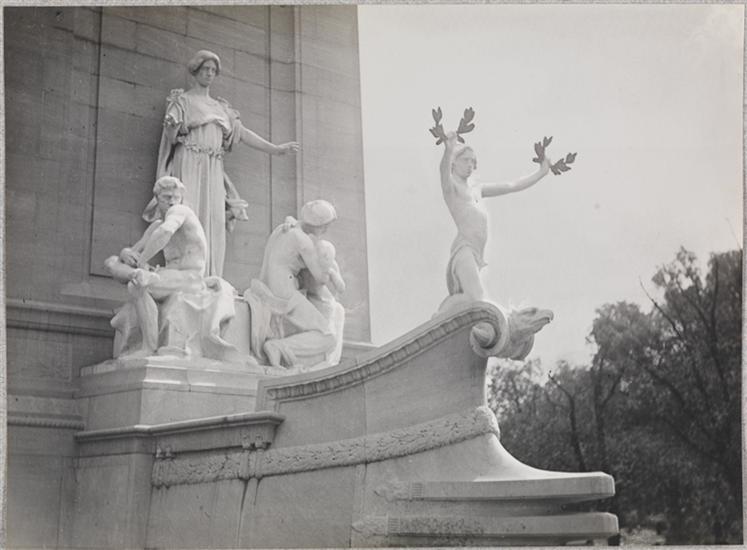
Magonigle enlisted his frequent collaborator Attilio Piccirilli to create the bronze and marble sculptures.
Some of that earnest enthusiasm seems to have disappeared when the memorial was finally dedicated on Memorial Day 1913.
According the New York Sun, leading New York artist erupted in “a storm of criticism” at the shiny, ostentatious design, with aesthetes calling the work a “misfit” and “a disgrace to the city.”
Many thought its relationship to the actual Maine was lost in vague theatrical symbolism.
“Architecturally and constructively the whole thing is cheap and bad.”[source]
Picture courtesy Museum of the City of New York
The memorial was unveiled with a grand military parade and the attendance of ten warships in the harbor, including one from Havana.
There was, of course, one great conflict on everybody’s mind that day when, in the official ceremony, sworn enemies Hearst and Mayor William Jay Gaynor met at the unveiling. (Among many grievances, Hearst had unsuccessfully run against Gaynor for mayor in 1909.)
With utmost restraint, Gaynor managed to shake Hearst’s hand without punching him in the face.
Two years later, a second memorial to the Maine was placed in Arlington National Cemetery in Washington, D.C. And in 1926, a lavish monument was placed in Havana, Cuba.
Taken 1920, courtesy Museum of the City of New York
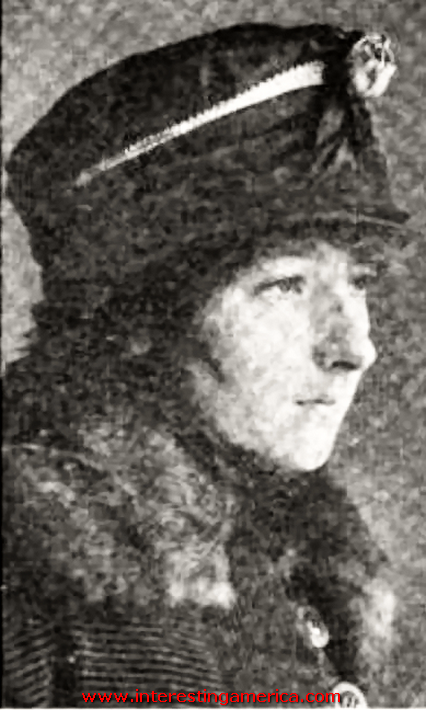
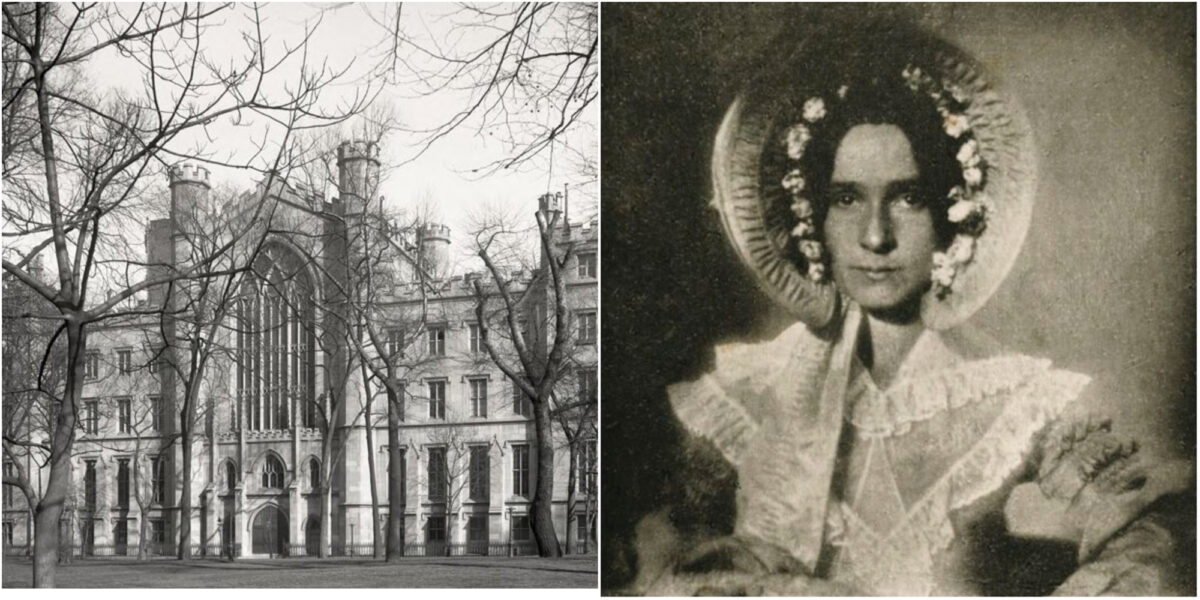
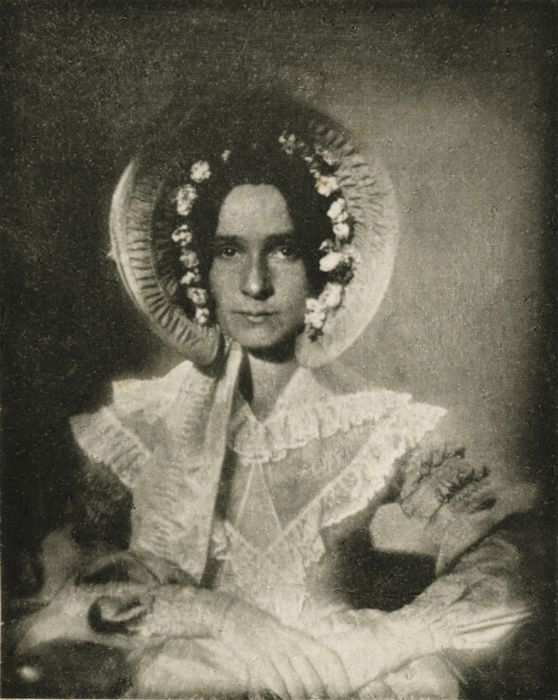
Dorothy Catherine Draper is a truly forgotten figure in American history. She was the first woman to ever sit for a photograph — a daguerrotype, actually, in the year 1840, upon the rooftop of the school which would become New York University.
The circumstances that got her to this position were rather unique. She was the older sister of a professor named John William Draper, and she assisted him in his success and fame even when it seemed a detriment to her. The Drapers worked alongside Samuel Morse in the period following his invention of the telegraph.
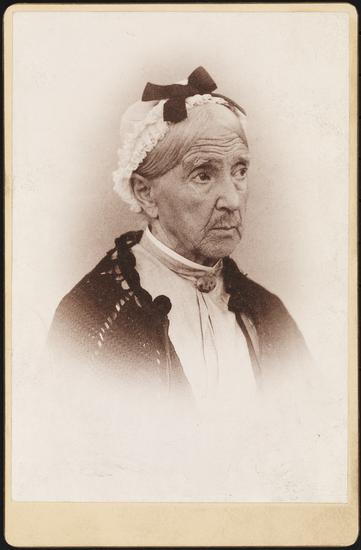
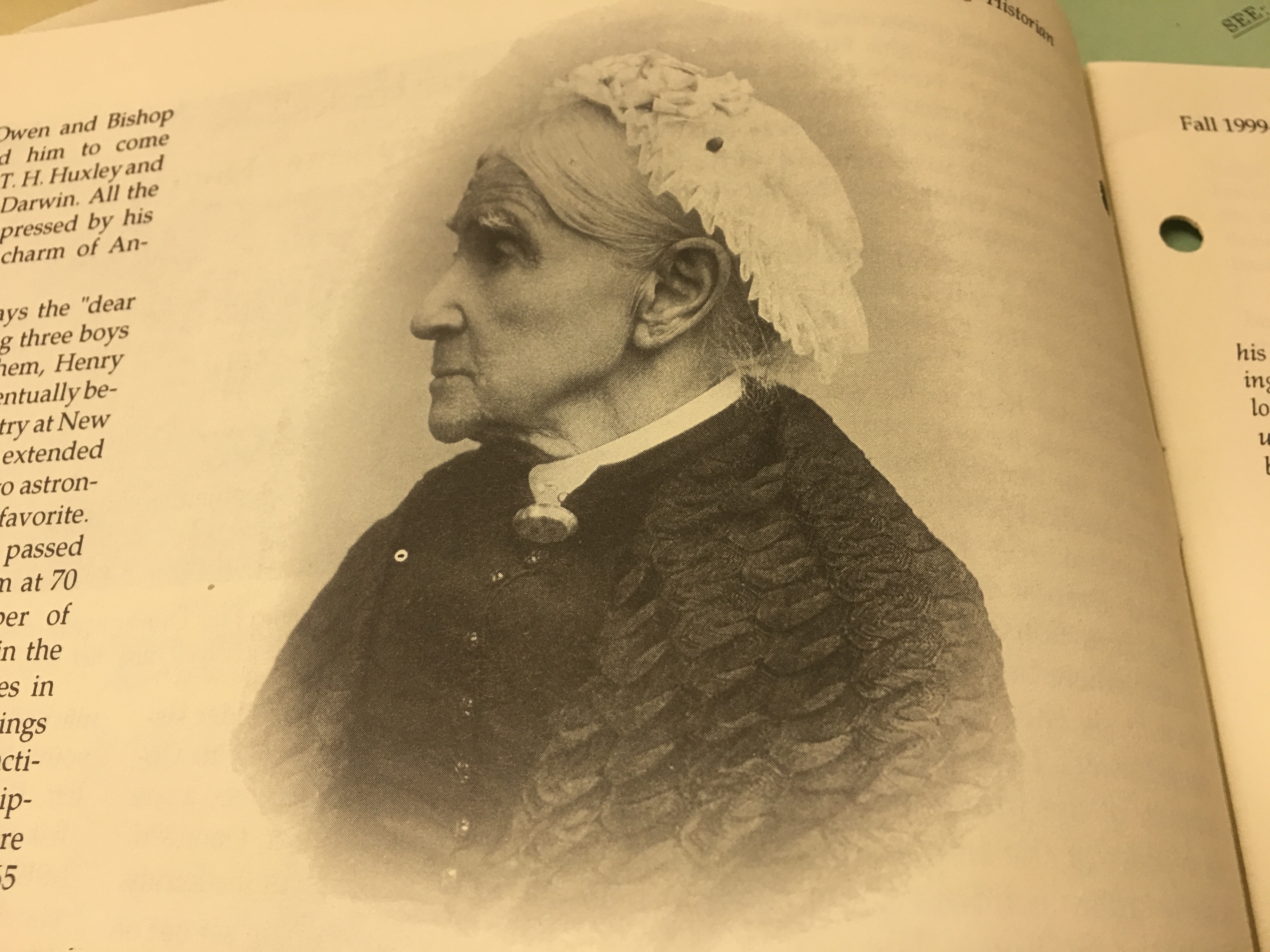
The legendary portrait was taken when Miss Draper was a young woman but a renewed interest in the image in the 1890s brought the now elderly matron a bit of late-in-life recognition.
LISTEN NOW: THE FIRST WOMAN EVER PHOTOGRAPHED
This episode originally appeared on Greg’s podcast called The First which had a respectable run a few years ago. The feed for that show will be going away soon so we wanted to present some of that show’s greatest hits over the next few months, in between regular episodes of the Bowery Boys as bonus stories about American history.
For information on how to visit the Draper homestead, head over to the website for the Hastings Historical Society. And the site is right off the Old Croton Aqueduct Trail which we visited in a show last year. So why not make a day of it?
Dorothy Catherine Draper in the first portrait photograph ever taken (no previous test examples survive) and the first photograph of a female face.
Draper in the 1890s, in a photograph taken by her nephew.
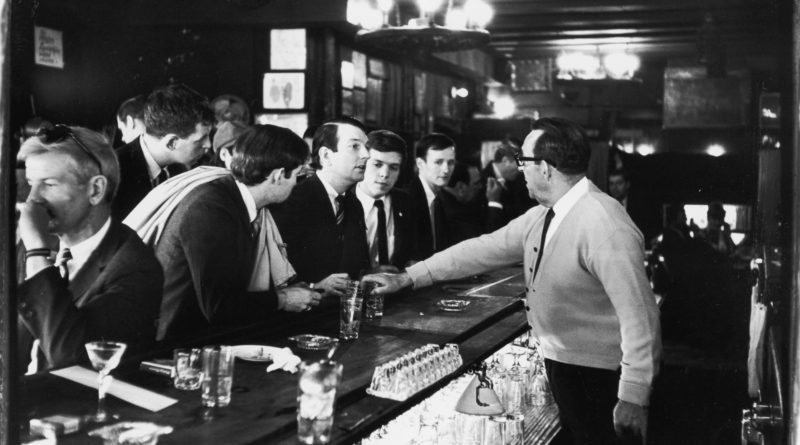
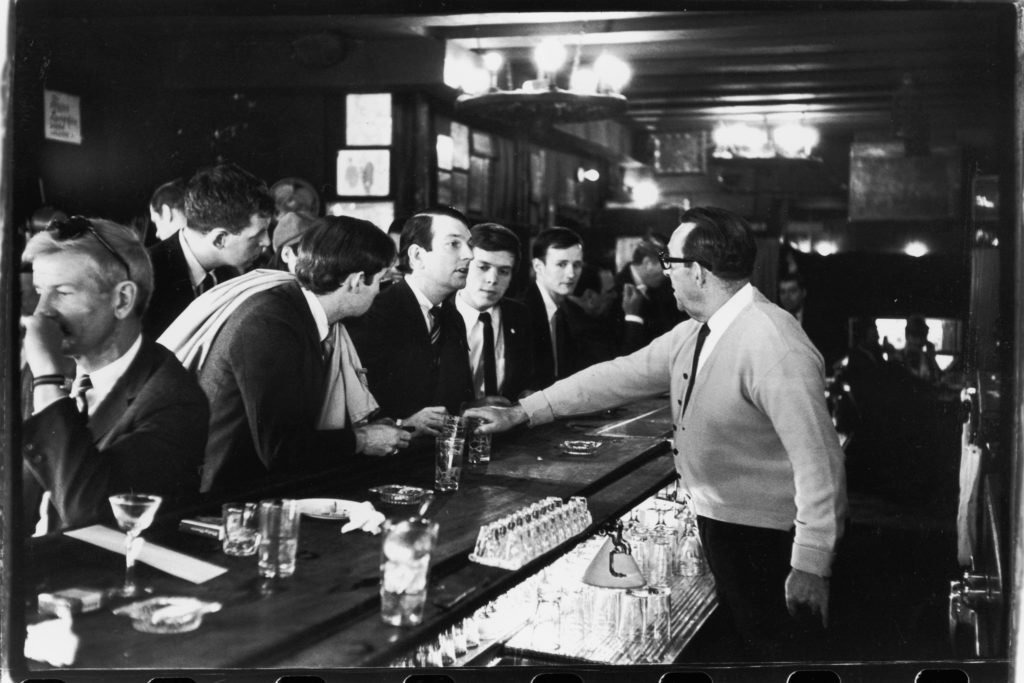
After pouring their drinks, a bartender in Julius's Bar refuses to serve John Timmins, Dick Leitsch, Craig Rodwell (1940 - 1993), and Randy Wicker, members of the Mattachine Society, an early American gay rights group, who were protesting New York liquor laws that prevented serving gay customers, New York, New York, April 21, 1966. (Photo by Fred W. McDarrah/Getty Images)
It’s here that one moment of protest (the Sip-In of 1966) set the stage for a political revolution, “a signature event in the battle for LGBTQ+ people to gather, socialize, and celebrate openly in bars, restaurants, and other public places.”
So we thought it would be a great time to revisit our 2019 show on the history of Julius’ and a look at the life of gays and lesbians in the mid 20th century.
The now-iconic photograph by Fred W. McDarrah (Courtesy Getty Images)
PODCAST Many Americans may now be familiar with Stonewall Uprising, a combative altercation in 1969 between police and bar patrons at the Stonewall Inn in the West Village. It was this event that gave rise to the modern LGBT movement.
But in a way, the Stonewall Riots were simply the start of a new chapter for the gay rights movement. The road leading to Stonewall is often glossed over or forgotten.
By the 1960s, a lively gay scene that traced back to the 19th century — drag balls! lesbian teahouses! — had been effectively buried by decades of cultural and legal oppression.
A few brave individuals, however, were tired of living in the shadows.
In this episode, we’ll be zeroing in on the efforts of a handful of
young New Yorkers who, in 1966, took a page from the civil rights
movement to stage an unusual demonstration in a small bar in the West Village. This event, called the Sip-In at Julius‘, was a tiny but significant step towards the fair treatment of gay and lesbians in the United States.
IN ADDITION: We’ll be joined by Hugh Ryan, author of When Brooklyn Was Queer, at the bar at Julius’ to talk about the forgotten lives of queer people in the ever-changing borough of Brooklyn.
Listen Now — Sip-In at Julius’ Bar: Celebrating New York’s Newest Landmark
This episode features an audio interview clip from the podcast Making Gay History, an excellent source for gay history. Be sure you check out their coverage of Stonewall 50.
We also feature a musical clip of ‘I Hear A Symphony’ by The Supremes
(Motown). The song hit Number #1 on the Billboard charts in November of
1965. The most popular song in the nation at the moment of the Julius’
Sip-In? The Righteous Brothers’ “(You’re My) Soul and Inspiration.”
Julius’ Bar: A Short History
This month is the 50th anniversary of the Stonewall Riots, a
chaotic, rowdy altercation that bloomed over the course of the weekend
to energize the New York’s LGBT movement. (If you haven’t already, give our podcast on the history of the Stonewall riots a listen.) But despite its reputation, Stonewall is not the oldest gay bar in New York. Not even close.
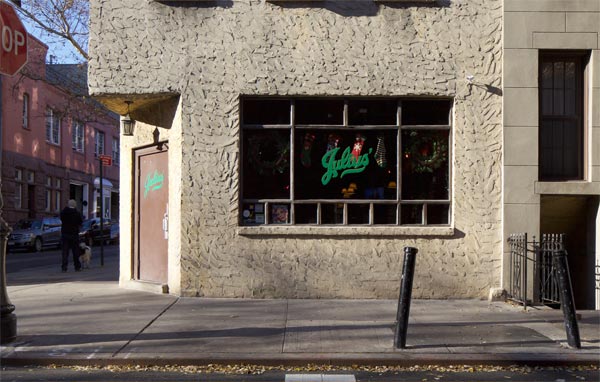
For that honor, you need only march a few steps to Waverly Place and 10th Street to that beloved old institution Julius (159
W. 10th St). It also happens to be the location of a pre-Stonewall
protest of angered gay activists, an event both revolutionary and even
occasionally amusing.
Julius is truly an old bar although nobody seems to know exactly how old. The bar itself settles on the year 1864, easily making it one of the oldest bars in New York, just a tad younger than McSorley’s Old Ale House.
The building itself is even older, dating from 1826, becoming a grocer
in 1840 before transforming to its current, more jovial purposes.
It has many things in common with McSorley’s. The walls are plastered with memorabilia from days gone by. The bar is a well-worn relic, the tables and benches made of old beer barrels.
Like McSorley’s, they even serve burgers, and really, really good
ones at that. Its history is a tad more shrouded than McSorley’s but
equally studded with famous clientele.
Courtesy the National Park Service
Surviving the 20th century
It was a popular speakeasy throughout the 1920s, evidenced today by Julius’ still existing sidedoor with a peephole. Both Fats Waller and Billie Holiday are rumored to have performed in the backroom, quite likely as Holiday worked at the nearby nightclub Cafe Societyduring the 1930s.
In subsequent years the clientele was decidedly a mixed lot and Julius would ply writers like Edward Albee, Tennessee Williams and Truman Capote with drink and companionship.
By the 1960s Julius had become a low-key staple of the West Village
gay scene. However, it appears that it was ‘straight enough’ that it
survived Mayor Robert Wagner’s cleanup of the city in preparation of the1964 World’s Fair, a wholesale shutdown of West Village gay bars and other ‘undesirable’ places.
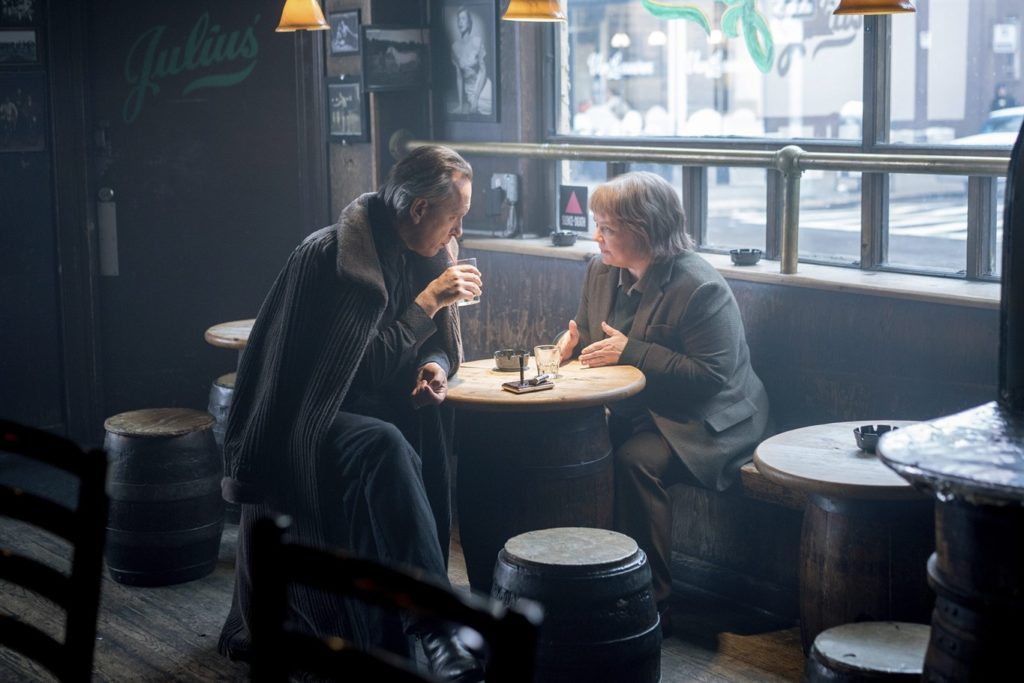
The
film Can You Ever Forgive Me?, set in the early 1990s, has several
scenes set and filmed at Julius’. (Courtesy Fox Searchlight)
Julius’ Bar in the 1960s
Even through this Julius lived on, although patrons and management
alike had to maneuver through rather arcane and sometimes humiliating
rituals.
According to writer Edmund White,
“There was even a period when we weren’t allowed to face the bar but
had to stand absurdly with our back to it to prove, I suppose, that we
had nothing to hide.”
It gets even more absurd. The New York State Liquor Authority banned
bars from serving drinks to gays and lesbians. This rule was sometimes
ignored by brazen Village bartenders, but the constant fear of such a
twisted regulation being suddenly enforced by an undercover cop
eventually drew action from a burgeoning group of young gay activists.
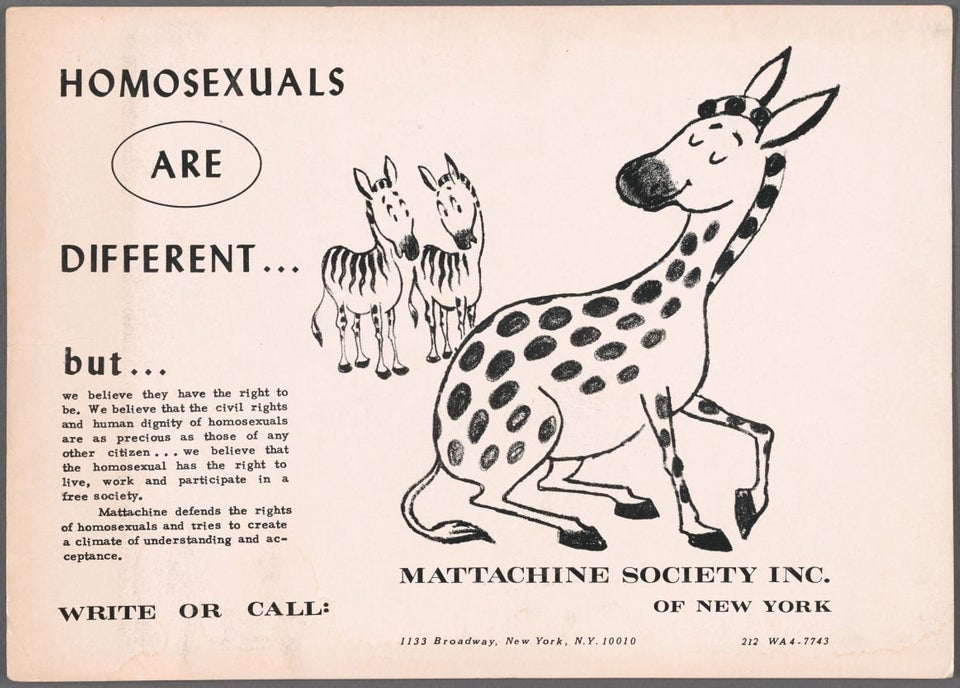
A curious ad for tolerance distributed by the Mattachine Society in 1960.
Members of the Mattachine Society, one of New York’s earliest
gay organizations, planned on challenging the rule by going into bars,
loudly announcing their homosexuality and ordering a drink.
Their statement at the bar would be calm and simple: “We are
homosexuals. We are orderly, we intend to remain orderly, and we are
asking for service.”
The key would be that they were followed around by a phalanx of press
representatives. So, when the bar refused to serve them, the Mattachine
Society would have their moment, captured and ready for print.
More Than Just A Drink
The challenge came on April 21, 1966, more than three years before
the Stonewall riots. They told members of the press to meet them at the Ukrainian-American Village Restaurant but management closed shop before they arrived. They tried two other bars, a Howard Johnson’s and a place called Waikiki, and each time they were served without incident.
But of course, the organizers were looking for an incident. They arrived at Julius for their big moment.
The now-legendary Julius Sip-In, as the event as come to be called,
was a carefully engineered event with a few unexpected detours, yet it
served its purpose. The New York Times even ran the story, under the
rather backhanded headline, “3 Deviates Invite Exclusion by Bars.” The law was successfully challenged in court.
Since then, Julius has quietly sat on the sidelines, ceding the
historical spotlight to Stonewall around the corner, observing both the
curious changes to the neighborhood and the development of a viable and
open gay community in the Village and elsewhere.
You don’t have to be gay to appreciate its unique place in New York
City history. Just grab a stool and spend awhile admiring the bar’s
warm, lived-in details.
Oh, and you really must try the burgers. Did I say that already?
By the way, who the heck is Julius? According to one speculation, Julius was the name of the original owner’s basset hound.
FURTHER READING Stonewall: The Riots That Sparked The Gay Revolution by David Carter Gay New York by George Chauncey Stonewall: The Definitive Story of the LGBTQ Rights Uprising that Changed America by Martin Duberman Odd Girls and Twilight Lovers by Lillian Faderman Greater Gotham by Mike Wallace
and of course Hugh Ryan‘s When Brooklyn Was Queer. Thanks to Hugh for coming on the show and joining us at Julius Bar!
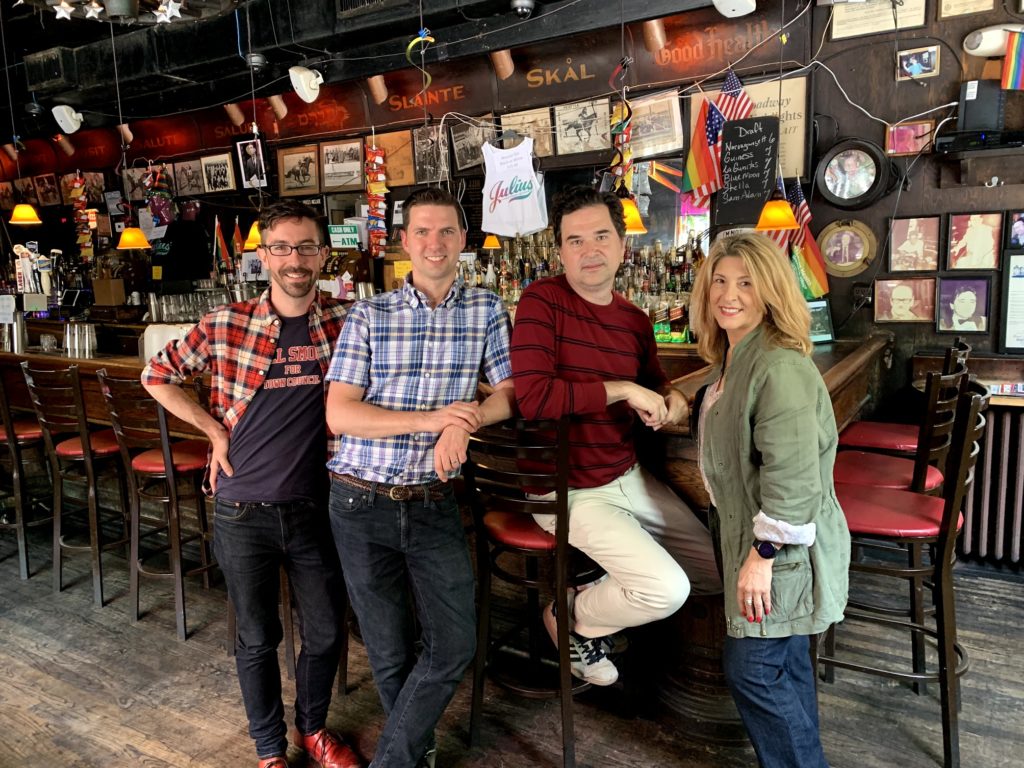
Hugh Ryan, Tom Meyers, Greg Young and Julius’ owner Helen Buford
FURTHER LISTENING
Three companion shows to this episode that you’ll definitely want to listen (or re-listen to) after Sip-In At Julius: Gay New York in the 1960s:
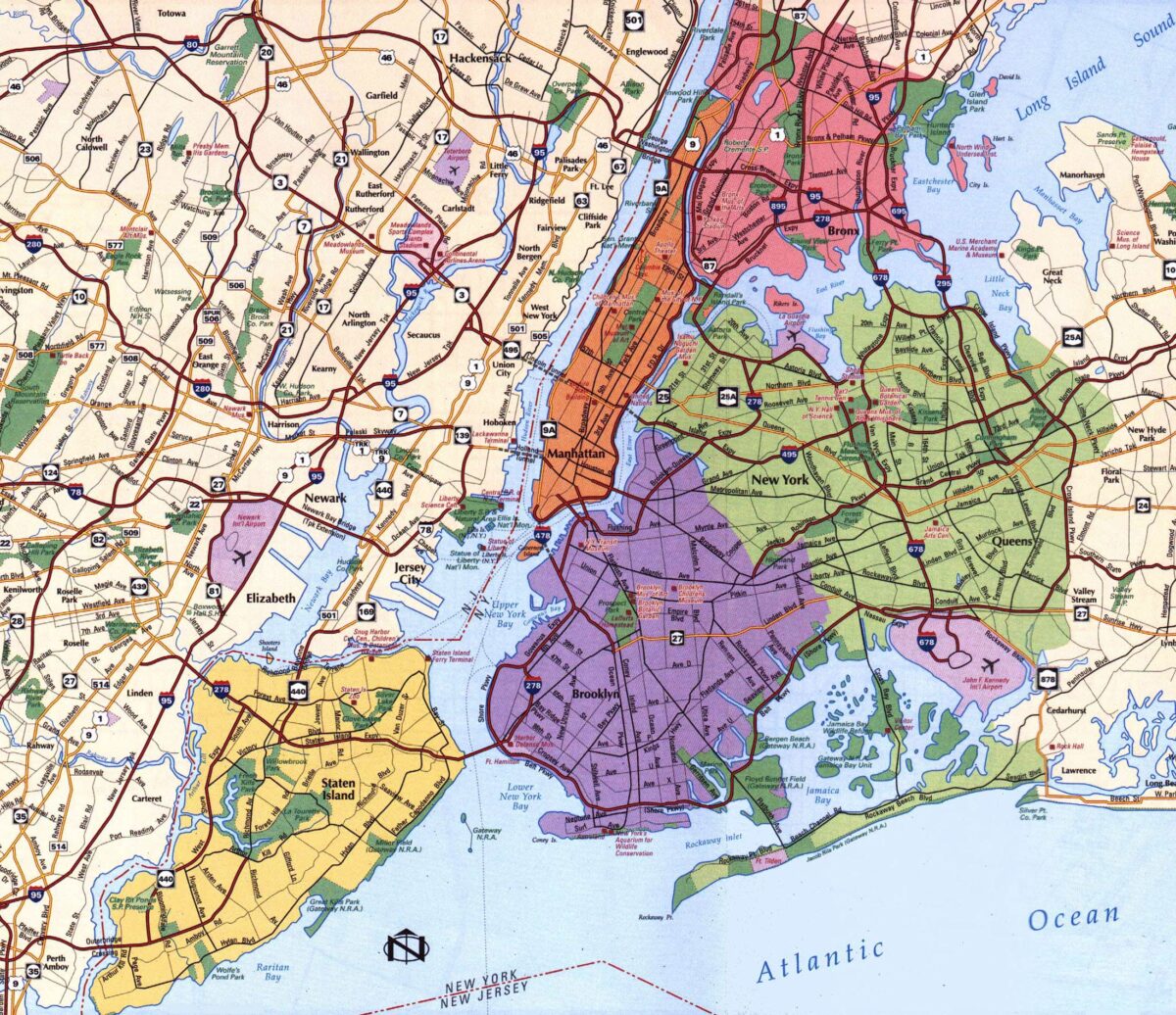
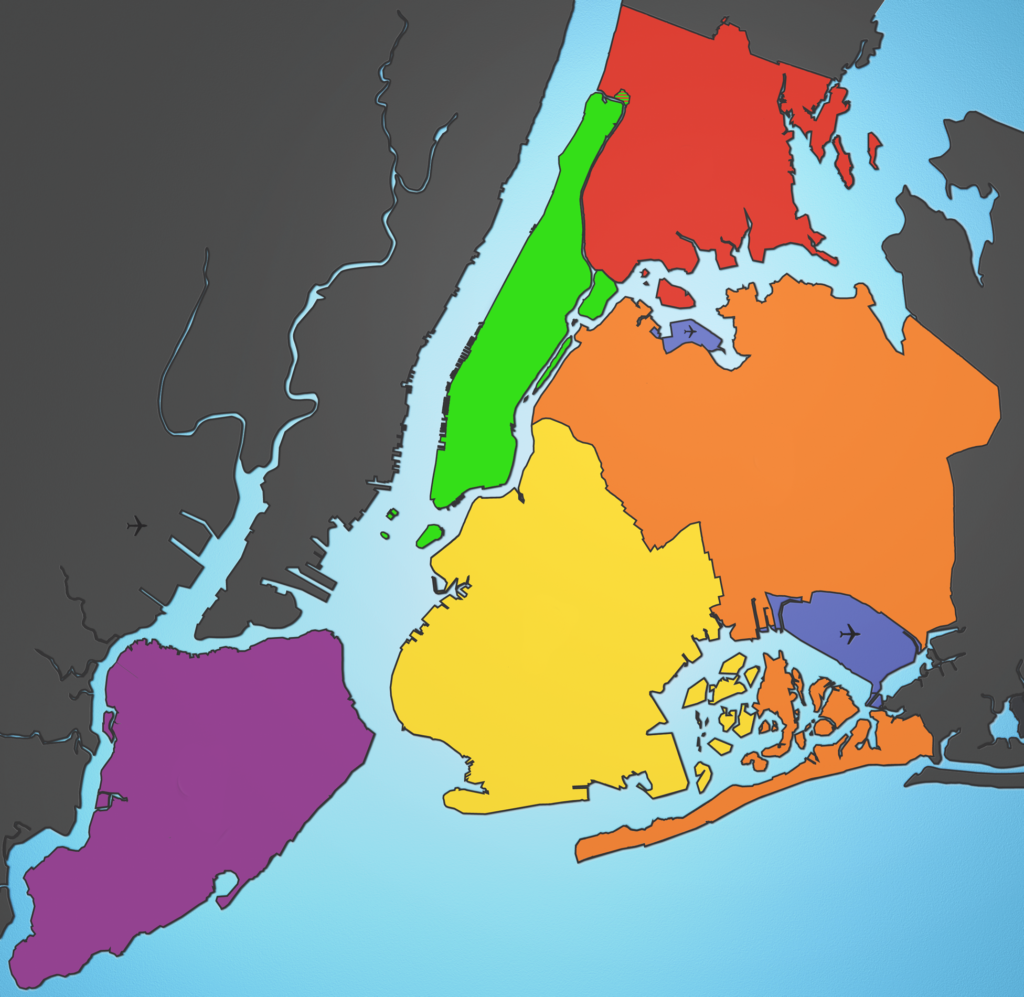
On January 1, 2023, New York City will celebrate a special moment, the 125th anniversary of the formation of Greater New York and the creation of the five boroughs — The Bronx, Brooklyn, Manhattan, Queens and Staten Island.
In honor of this special moment in New York City history, we are celebrating a bit early, reissuing our episode (originally #150) on the Consolidation and the formation of the boroughs, with a new introduction.
And stay tuned for new episodes of the Bowery Boys Podcast for the rest of the year!
Artwork Julius Schorzman; modified by Astuishin, courtesy Wikimedia Commons
Here’s the story of how two very big cities and a whole bunch of small towns and villages — completely different in nature, from farmland to skyscraper — became the greatest city in the world.
This is the tale of Greater New York, the forming of the five boroughs into one metropolis, a consolidation of massive civic interests which became official on January 1, 1898. But this is not a story of interested parties, united in a common goal.
In fact, Manhattan (comprising, with some areas north of the Harlem River, the city of New York) was in a bit of a battle with anti-consolidation forces, mostly in Brooklyn, who saw the merging of two biggest cities in America as the end of the noble autonomy for that former Dutch city on the western shore of Long Island. You’ll be stunned to hear how easily it could have all fallen apart!
In this podcast is the story of Manhattan, Brooklyn, the Bronx, Queens and Staten Island (or Richmond, if you will) and their journey to become one. And how, rather recently in fact, one of those boroughs would grow uncomfortable with the arrangement.
LISTEN NOW: BIRTH OF THE FIVE BOROUGHS
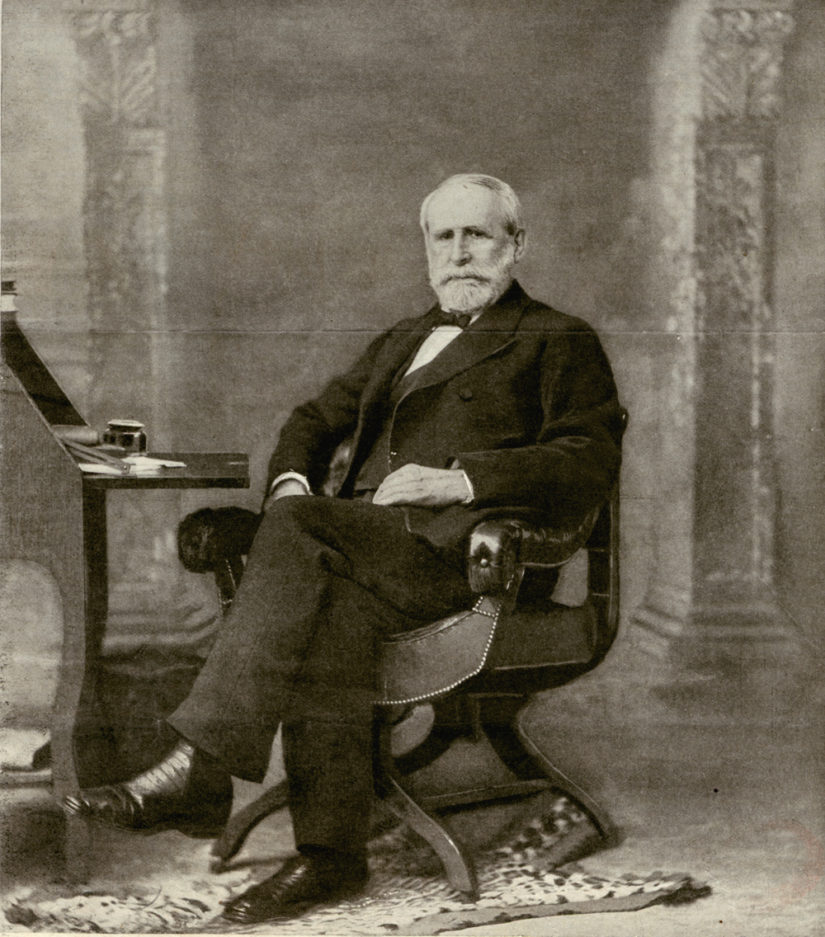
The hero of our story — Andrew Haswell Green
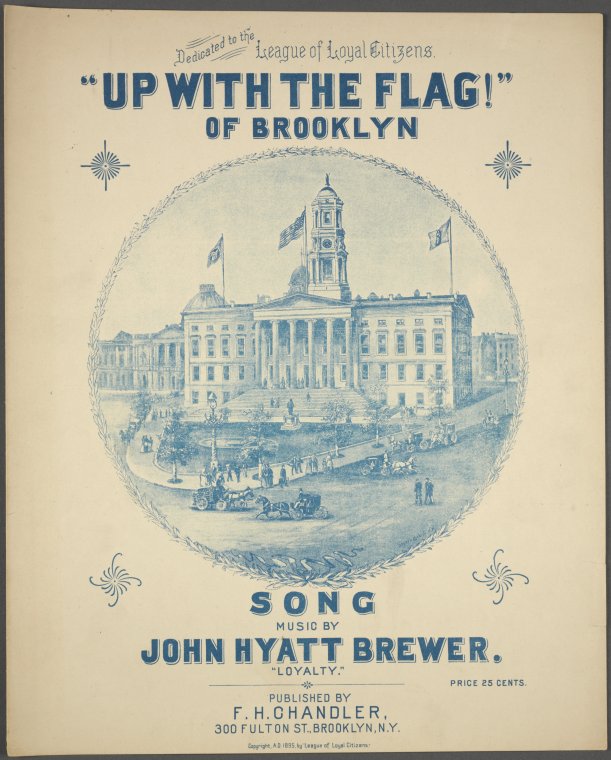
Below the prize-winning anti-Consolidation song mentioned in the podcast (courtesy NYPL):
Style: “Music_Sep4E”
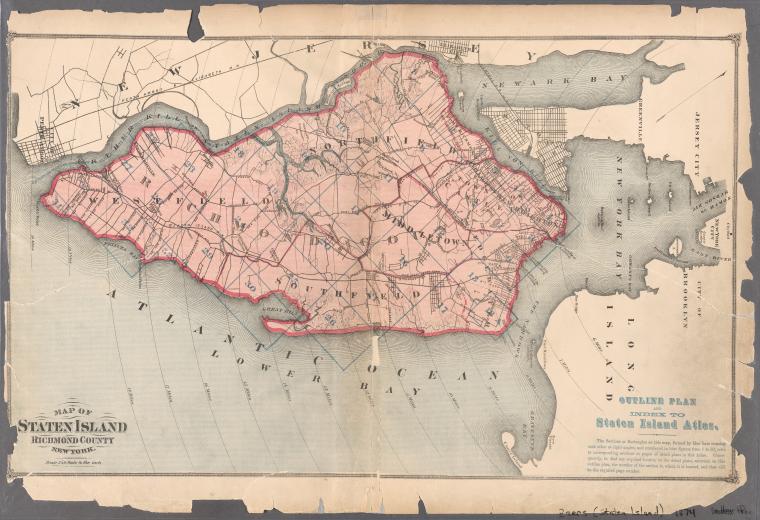
A map of Richmond from 1874
FURTHER LISTENING
This show was recorded in 2013 and since then, many aspects of this story have been turned into their own podcasts. After listening to this show, dive back into these episodes:
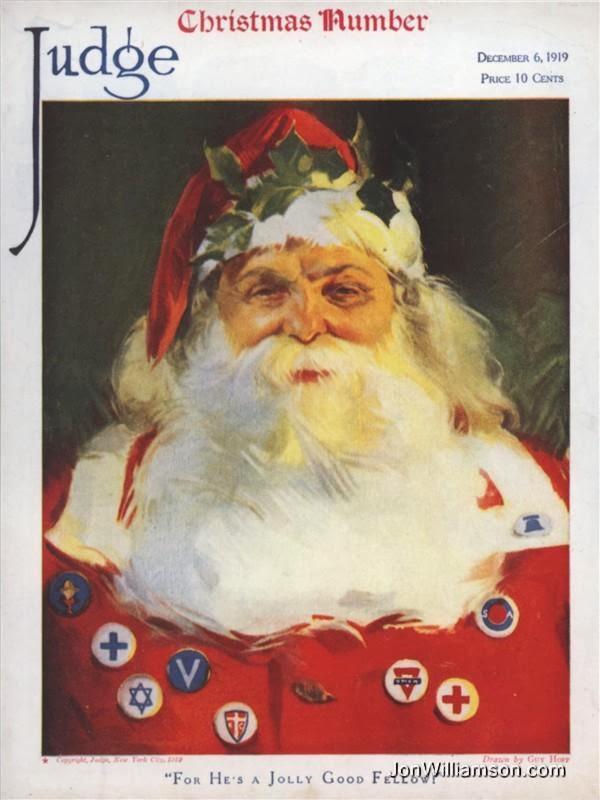
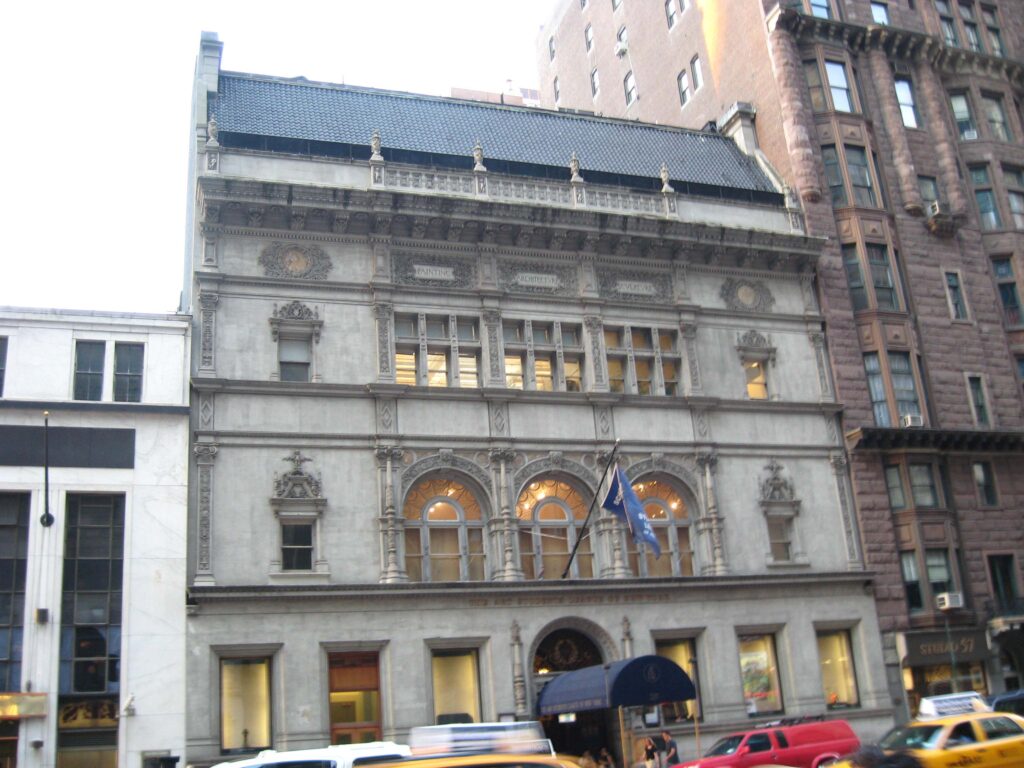
Early one spring day in 1922, while dutifully posing at the Art Students League on West 57th Street, Santa Claus had a fatal heart attack in front of a classroom of students.
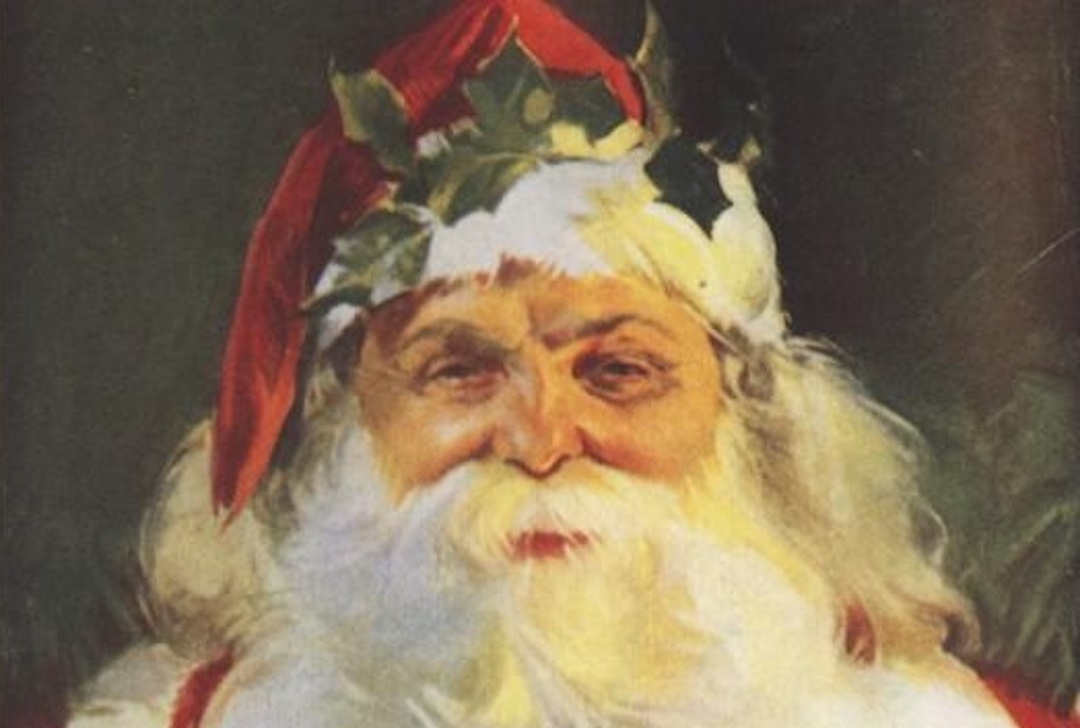
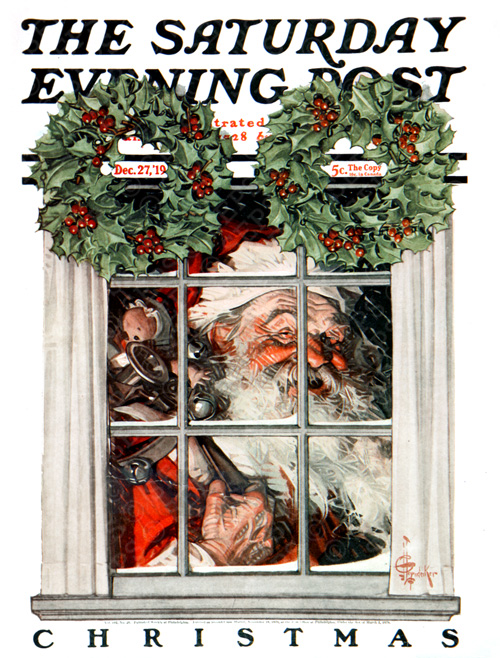
Above — He knows when you’ve been bad or good: A Christmas issue of Judge Magazine from 1919 by Guy Lowy, who studied at the Art Students League and very likely used Mnason for his model. (Courtesy Jon Williamson)
“The man who was Santa Claus is dead,” said the New York Tribune. “He was a man of many names, but at the Art Students League, where he posed for beginners, and in the studios of the best known artists, where he was sent for when a ‘Santa Claus type’ was needed, he was known as Mnason, the first ‘n’ being silent.”
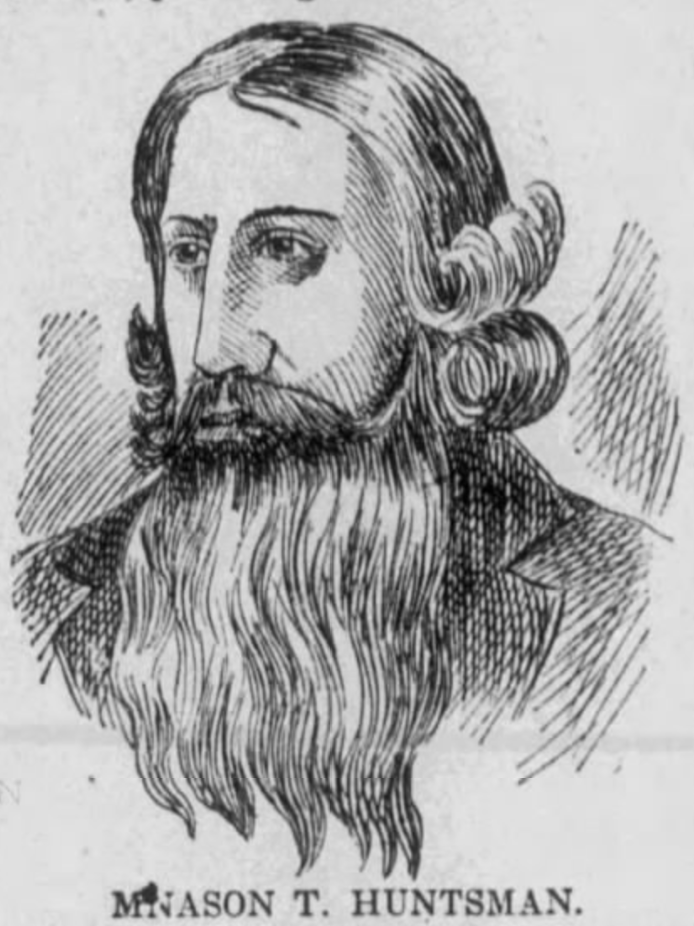
They called him Mnason, although his full name was even more spectacular — Mnason T. Huntsman. (Or Huntsman T. Mnason or even Paul Mnason. His aliases were legion.)
Man of Mystery
The burly artists model lent his body to the ages; thanks to the scores of influential artists who hired him for Christmas projects, today’s modern Santa Claus probably looks more like Mnason than perhaps any other actual human being in history.*
The poet Arthur Chapman declared: “It’s no exaggeration to say that Mnason posed for most of the Santa Claus pictures that have been made in recent years. And he figured in a good many for which he did not actually pose — as such pictures have been copied from originals for which Mnason was the model.
“Probably there isn’t a man today whose picture has been cut out more times and is treasured in more scrapbooks.”
Mnason, the definitive Santa Claus of the 1910s and early 1920s, was a true “man of mystery” for many who painted and drew him. A few knew the details of his past; perhaps it held the secret to his magnetic allure, to the deep, ancient gleam in his eye.
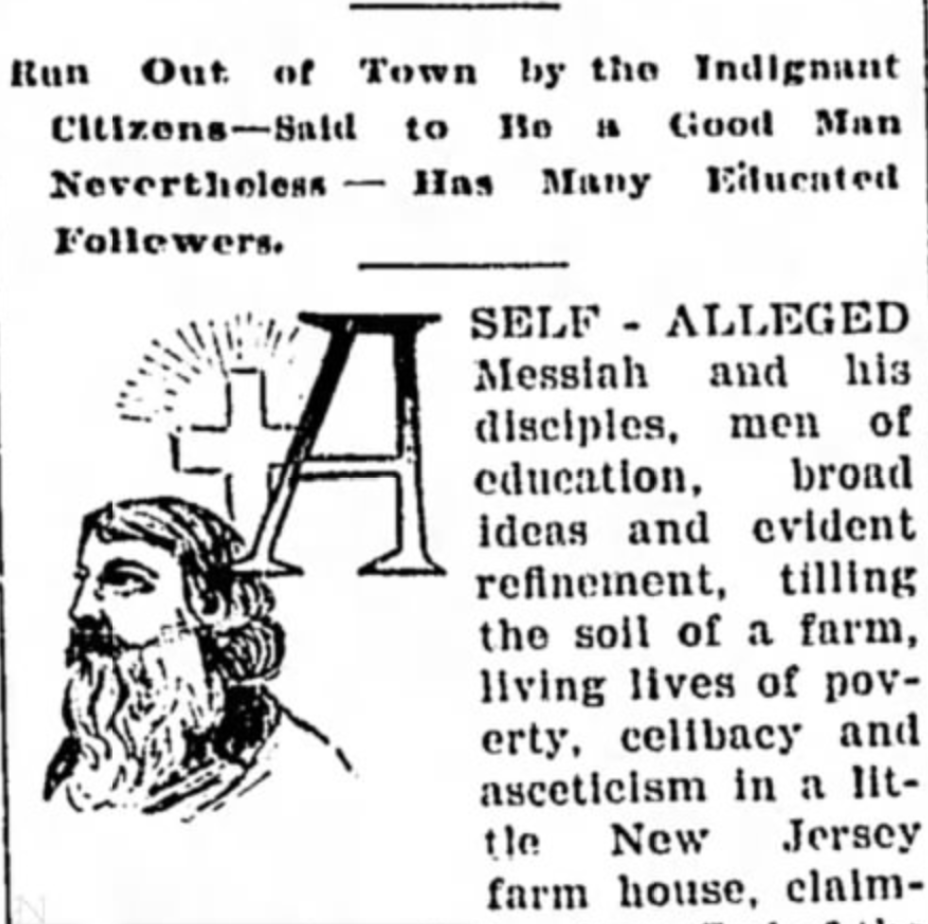
For Mnason was a former religious cult leader and proselytizer who had served time in jail for child abduction and religious blasphemy, and once he was actually tarred and feathered by an angry mob. He was a charismatic to some, a psychotic to many others.
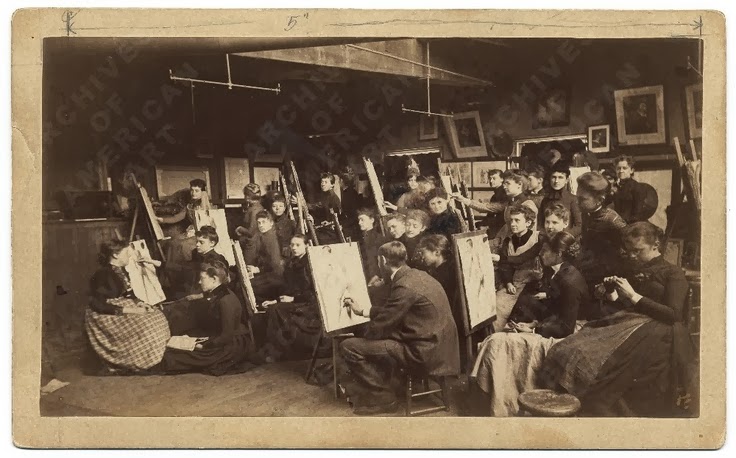
Below: Painter Kenyon Cox and his students at the Art Students League in 1887, a couple decades before the arrival of Mnason (Courtesy aaa.si.edu)
Making A Cult Leader
Mnason was born in Pennsylvania sometime in the 1850s, orphaned at eight years old. His early religious teachings were strict but conventional for the period.
In the 1880s, he worked for New York’s Sunday Closing League, visiting New York shops and saloons to ensure they were not selling anything too amoral on church day. In 1883, he testified that one shop owner illegally sold cigarettes to young boys, but not before the judge excoriated Mnason for lying on the stand.
At some point between that moment and 1888, Mnason was “inspired and bidden by God” to become a preacher. His message was not well received; at one point, the “wild and absurd behavior” of this “obstreperous” man of God got him thrown into jail for disorderly conduct.
By then, he had started a religious commune called the Lord’s Farm in Pascack Valley in New Jersey, where he began to attract (or lure) a young, impressionable flock.
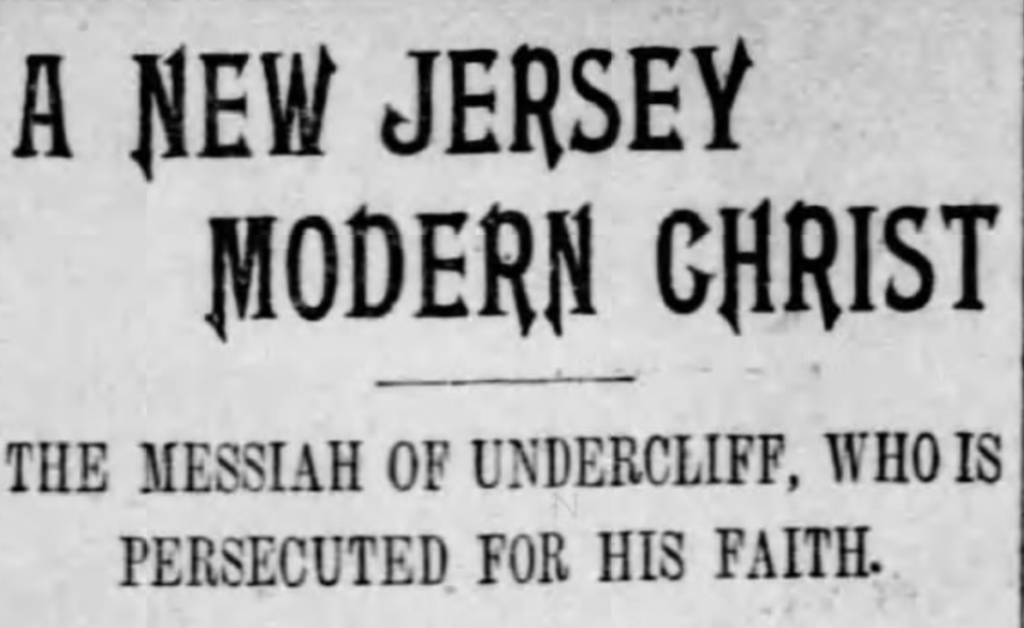
He called himself “The Holy One” or “The Modern Christ” and granted bizarre nicknames to his most loyal followers. Collectively, they were called the Angel Dancers, or the Church of the Living God.
In 1888, Mnason was arrested “on the charge of blasphemy,” and of enticing two young women who claimed they “were obliged to do anything he required.” He was reportedly tarred and feathered by irate residents. (It is at this point that you might notice the odd coincidence of the name Mnason and ‘Manson’, as in Charles.)
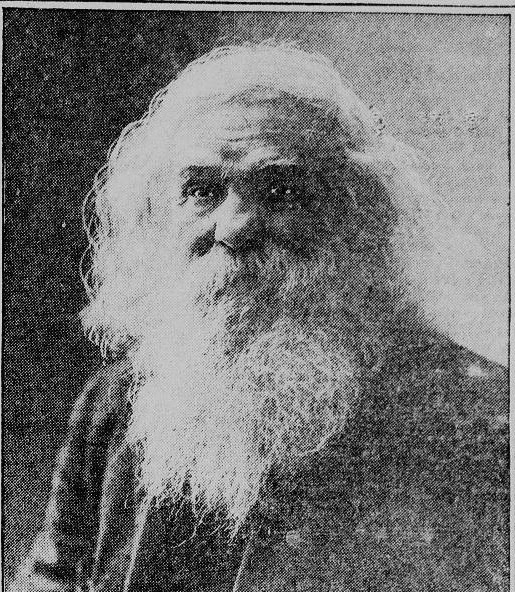
Mnason T. Huntsman, from an image used in the New York Tribune
The Angel Dancers
Even still, the Angel Dancers managed to attract on oddball list of adherents, including a local farmer’s wife and her two children. Eventually, according to a 1893 New York Times article, “the band was increased by two long-haired men, who called themselves ‘Silas’ and ‘John the Baptist’.
This fanatical cult would reportedly practice ‘angel dancing’, “scantily robed and waving a huge blanket with which to drive away the devil.”
Also notable to the press of the day: Mnason and his flock were all vegetarians. “Nothing save what grows in or on the ground may be eaten.” [source]
From The Times in Philadelphia, November 25, 1895
The entire lot were arrested in April 1893 for attempting to swindle the aforementioned farmer, although it’s obvious that some religious intolerance was embedded within the charge as well.
The affidavit read: “The conspirators deny, ridicule and curse all regular religion and religious customs, recognize no Sabbath, and set up a false god of their own, declaring the said Mnason to be the only and living God.”
From a syndicated article which ran in the Ironwood News-Record in Michigan, January 11, 1896, courtesy Newspapers.com
The Compound
A few years later, the Angel Dancers had taken over the farmhouse and had grown to a membership of nine males and nineteen females, with two children.
After the reported death of a child in 1897, the Times intoned, “No physician was called to be of any service. Mnason is ‘the Christ’. The dancers are vegetarians.”
Another ugly abduction case reared its head in 1900, when two “little girls” were taken from the compound and then kept in jail for months in order to testify against Mnason. The cult leader seemed to survive these charges, too
From the same article as above.
The Lord’s Farm became so notorious that by 1909, the state found a good excuse to evict Mnason and his followers. The charismatic moved to New York City and briefly opened a church for black parishioners.
It is then that former ‘Modern Christ’ then disappears, for a time, from public view. But the Times in 1909 noted the following: “Mnason is a man of many aliases.”
The Art Students Leave, photo by Jim Henderson, Wikimedia Commons
Finally, he popped up again, in 1916, at the Art Students League, and not unnoticed.
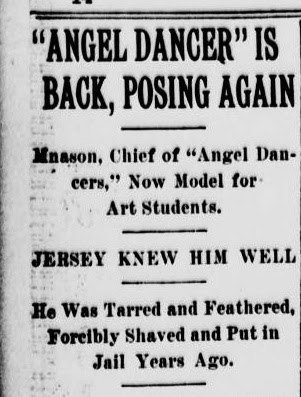
The New York Sun mocked his new profession (headline pictured below): “[R]ecently he had turned himself into Santa Claus or King Lear or any other whiskered person that the embryo John Sargents of the Art Students League wish him to be¦.”
It’s no surprise he would find his way into an art collective — he was a vegetarian, after all — and his timing was rather perfect, given his particular look and body size.
Making Santa Claus
The character of Santa Claus had gone through a major style makeover in the late 19th century.
His annual routine already immortalized in the popular verse A Visit From St. Nicholas — penned by the godfather of the Chelsea neighborhood Clement Clarke Moore — magazine and postcard illustrators began morphing the popular Christmas figure from a thickly robed saint to a child-friendly, candy-colored superhero.
This change came about through the hands of American artists and illustrators, led by Harper’s Weekly artist Thomas Nast in New York. Some of the modern look and mythos is credited to Nast, his influential pen elaborating on Santa’s girth (eventually to rest on near-corpulency) and placing his residence in the North Pole.
By the early 20th century, Santa’s physical characteristics were locked in place, but his spirit and personality were still very much uncertain. Should Santa be energetic or world weary? Wise or playful? Approachable like a parent, or unfathomable like a god?
Perfect Pose
Many of New York’s great illustrators of the period were associated with the prestigious Art Students League, and it was here that Mnason contributed his own sparkle to the characters, as artists recommended the man for his poise, mystery and sparkle.
“They found in him the ideal type, on account of his snowy beard, his bearing, the jolly twinkle in his eye, his fine color and his intelligence.”
Blow: J.C Leyendecker‘s 1919 cover for the Saturday Evening Post. You can easily tell Leyendecker’s influence on later Evening Post artist Norman Rockwell. Given the artist’s connection to the ASL, Mnason very likely posed for this painting.
It’s clear that many of these legendary artists were aware of some version of their Santa’s past. “Mnason would hint to his artists friends regarding certain experiences in his life in which his pronounced and individualistic religious views played a part.” [source]
One year, he was even hired as a department store Santa where he notably espoused his religious views to the children who had come to present their Christmas wishes.
And To All A Good Night
His days of Lord’s Farm were behind him, but Mnason kept writing religious verse while living suitably on his artist-model wages. For years, he was passed among New York’s most renown illustrators, who claimed him the iconic visage of the holiday’s most jolly proponent.
“Nothing could dampen his cheerfulness, but behind his smile there was an element of mystery which the embodiment of Santa Claus maintained to the last.”
When he died in 1922, Mnason had been drawn and painted as Santa Claus dozens of times.
Eventually, Santa Claus would go through his final evolution in the 1930s, thanks to artist Haddon Sondblum, hired by Coca-Cola for their colorful advertising campaigns.
Sondblum’s iconic depiction is directly influenced by Moore’s famous poem, and but equally so by the dozens of artists and magazine illustrators before him, most of which who had used Mnason as their inspiration.
*A retired salesman named Lou Prentice was used by Haddon to create early versions of his Coca-Cola Santa and so might lay claim to being the most important physical inspiration. But Mnason was used by more artists and within several pivotal publications of the day.
Clement Clarke Moore, the lord of Chelsea (the manor for which the neighborhood is named), lived a long and distinguished life as an educator and land developer, dying in 1863 at his home in Newport, Rhode Island.
He was originally buried in the churchyard of St. Luke-in-the-Field (pictured below) in the area of today’s West Village.
What does all this have to do with Christmas you ask?
Moore was a revered scholar, former president of Columbia College (later Columbia University) and the developer of the General Theological Seminary on his old Chelsea property.
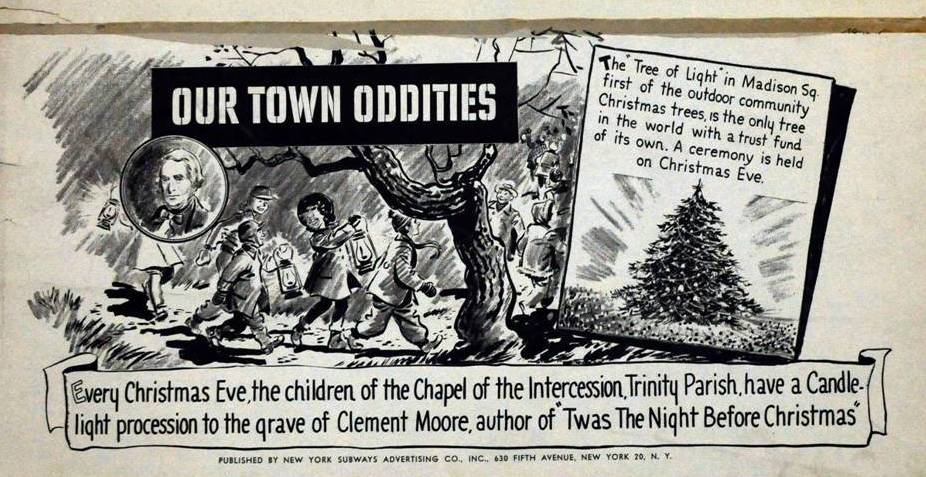
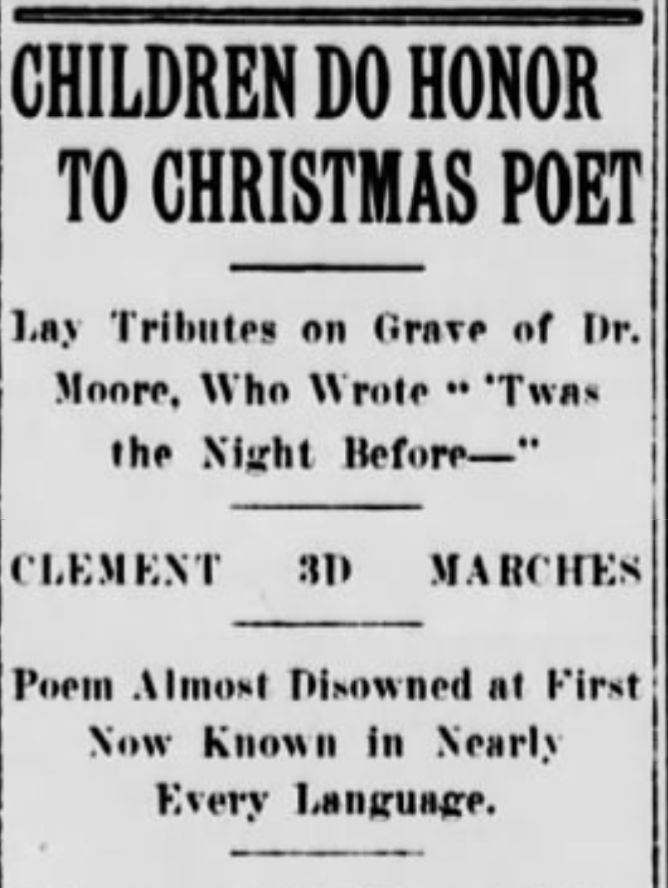
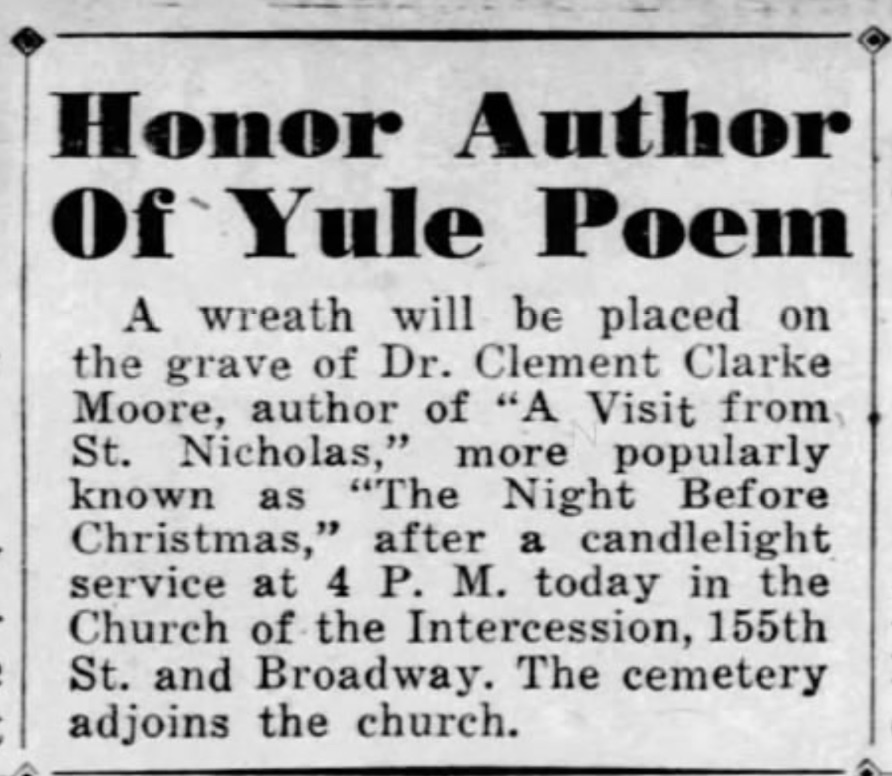
For well over one hundred years an unusual and special ceremony has taken place at Church of the Intercession, the house of worship which sits upon the grounds of Trinity Church Cemetery.
Church of the Intercession
The tradition was apparently initiated by a vicar at the chapel named Milo Hudson Gates.
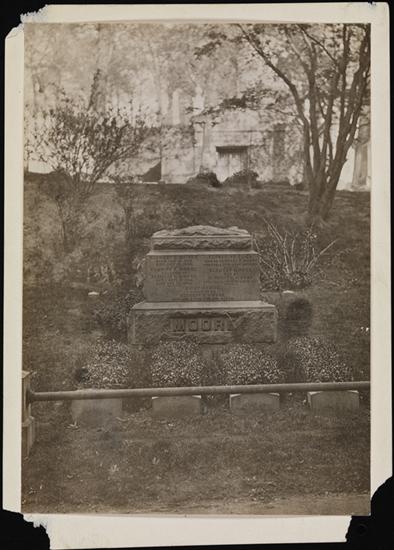
First initiated in 1911, Gates, according to a 1933 New York Daily News report, “and his child parishioners trouped across to Trinity Cemetery to pray and sing at the grave where Dr. Moore’s bones have rested since they were removed from the vault in St. Luke’s Church on Hudson Street.”
From the 1914 New York Sun
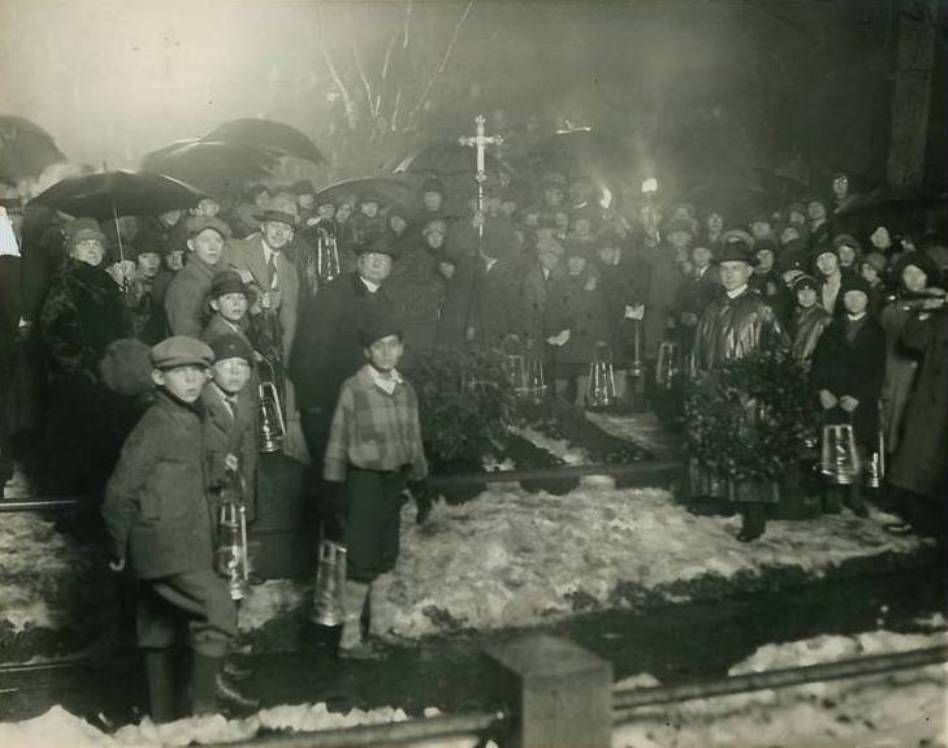
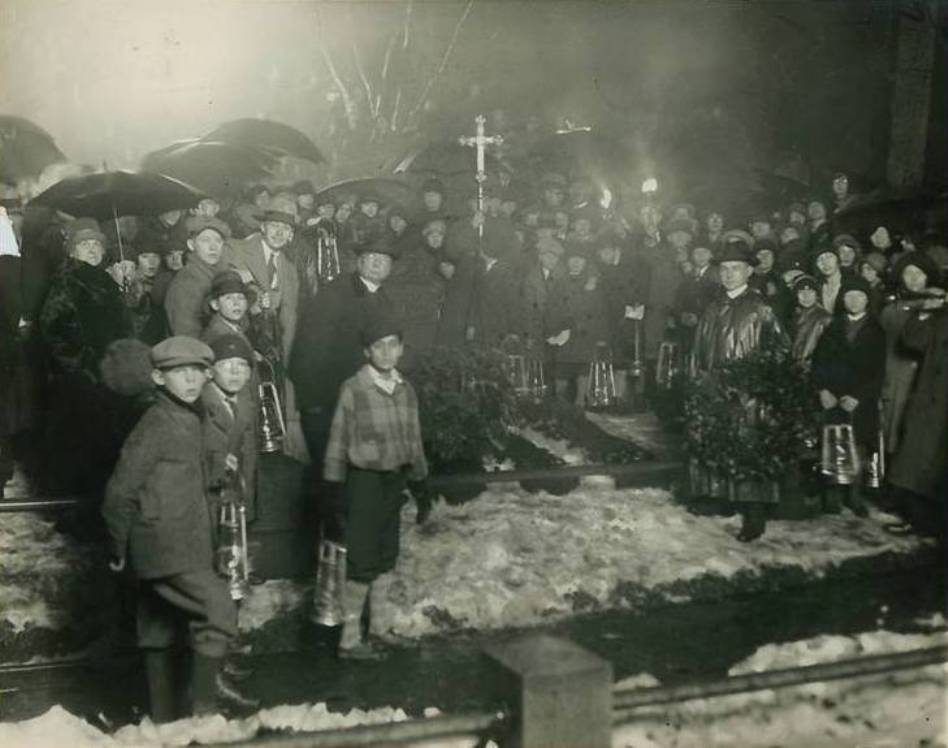
Hundreds of children, carrying lanterns and torches in the old days, have gathered around Moore’s gravestone and sang Christmas songs over the years.
“Carols were sung and wreaths placed on the grave,” according to a 1919 report. The famous poem by Moore was then recited.
“His name was Clement C. Moore. His body sleeps beneath the Christmas trees that grow in Trinity Cemetery.” [December 23, 1918]
Below: Children surrounding the grave of Moore’s, sometime in the 1920s or 1930s (according the church website).
This tradition has survived into modern day with some interesting variations.
New York Daily News 1944
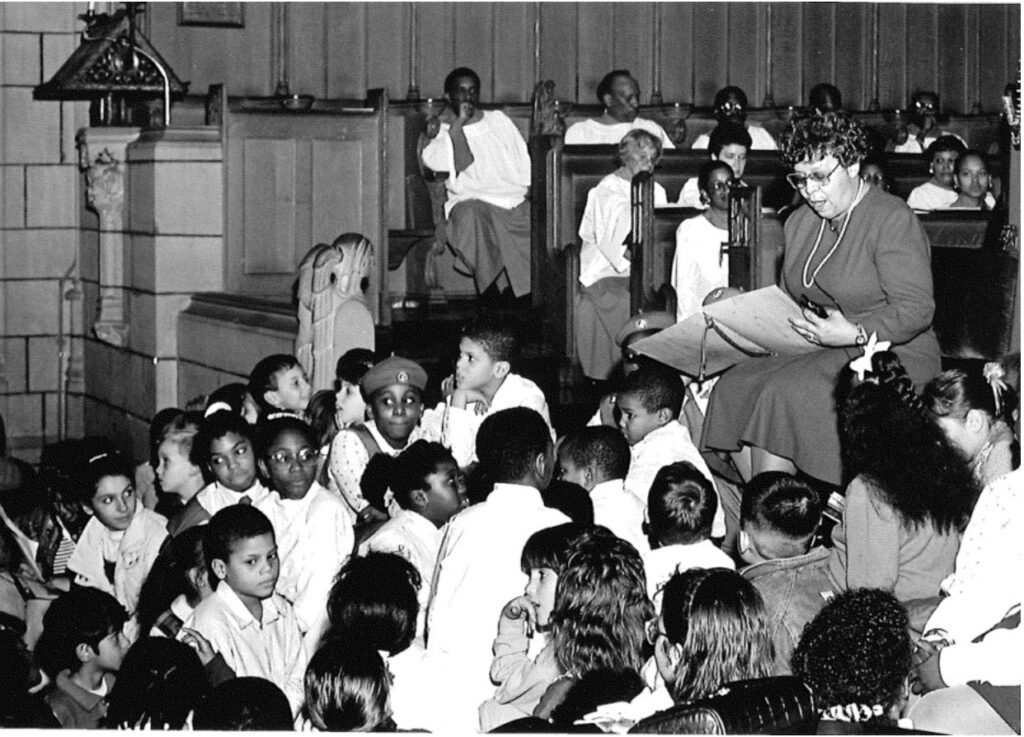
Frequently a person dressed as Saint Nicholas (the saint, not the Santa) leads the procession. In recent decades, a person of some renown reads the poem such as in 2003 when basketball great Isiah Thomas brought Moore’s words to life.
Below: In 1990, Joyce Dinkins, wife of the mayor David Dinkins, was invited to read the poem.
THE 112TH CLEMENT CLARKE MOORE MEMORIAL CANDLELIGHT SERVICE WILL BE HELD ON DECEMBER 18, 2022 AT 3:00PM
This year, the poem will be read by The Rt. Rev. Catherine S. Roskam, former Suffragan Bishop of New York.
Following the service, we will process out to Trinity Cemetery to lay the wreath on Clement Clarke Moore’s grave and sing “Silent Night” at the Trinity Cemetery and Mausoleum.
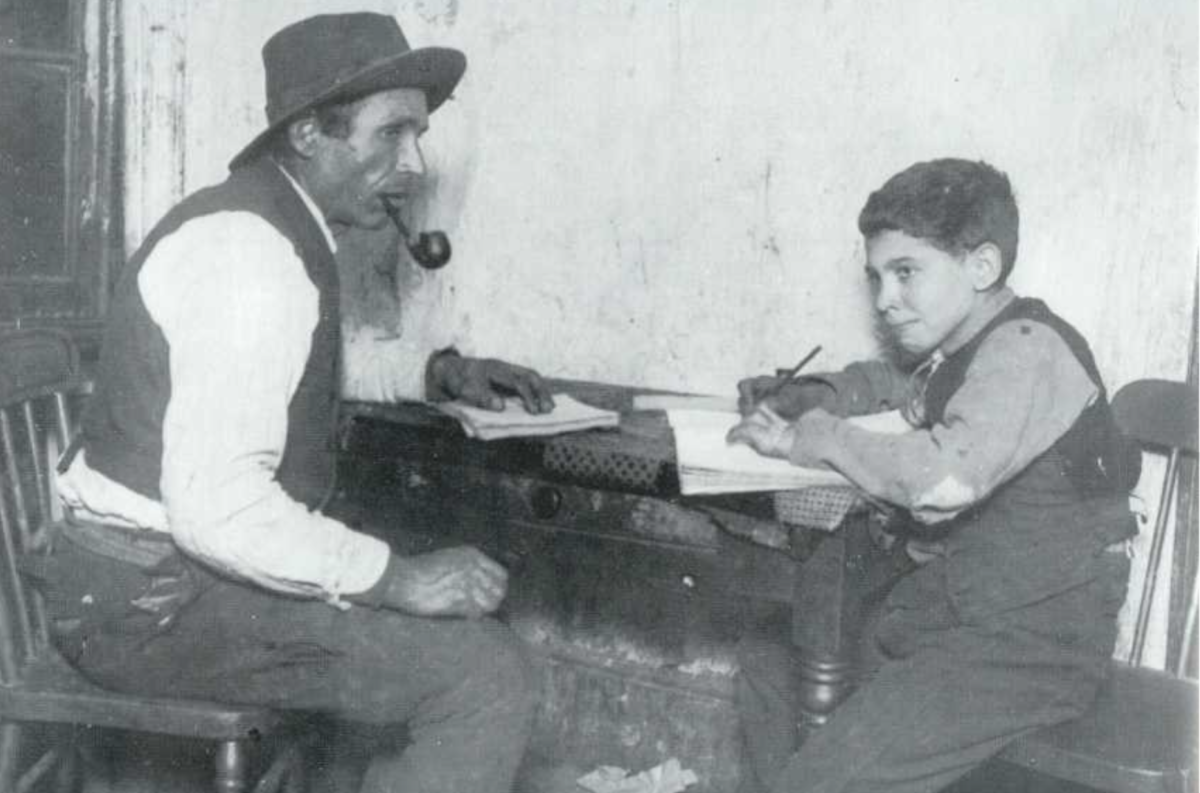
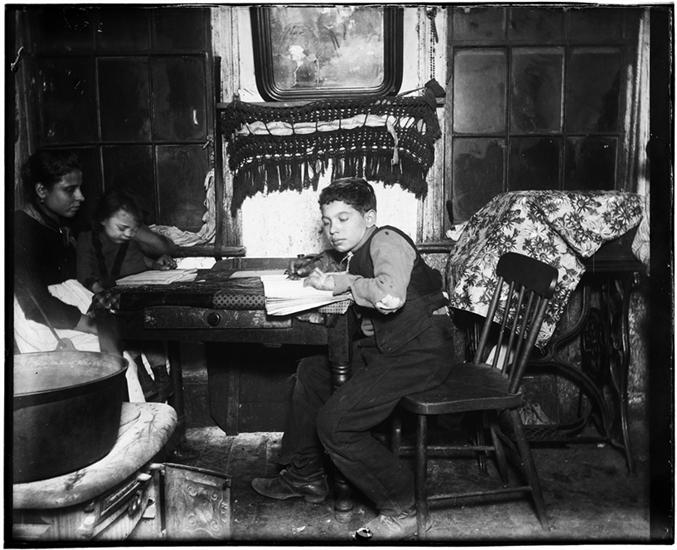
One of you may be related to Pietro, the boy in the picture. He was one of thousands of Italian immigrants who arrived in New York in the 1870s-80s. He seems to have been intelligent and even exceptional, weathering a set of truly dreary circumstances that would have defeated most men.
Pietro was not yet 13 years old when he was almost killed in a streetcar accident. He was permanently scarred and unable to support his family. If not for witnessing a shooting outside of his home, we might never know his name.
But in 1892, Pietro became a profoundly moving subject in a new book by one of the greatest social reformers of the Gilded Age.
Jacob Riis was a pioneer social activist who used journalism and photography to change the living conditions of thousands of poor New Yorkers. He took his bulky camera to the most decrepit nooks of lower Manhattan, documenting a world entirely unseen by most people.
In 1890 he published How The Other Half Lives, exposing the squalid living conditions of downtown Manhattan’s mostly immigrant population.
Riis did help to change the face of New York. In Five Points, the worst tenements were demolished and replaced with government buildings and one very manicured park. But his depictions of ethnic groups, in retrospect, could be very simplistic, even condescending. In his goals to highlight an overwhelmingly malignant condition, he often glossed over some telling details of some of his subjects.
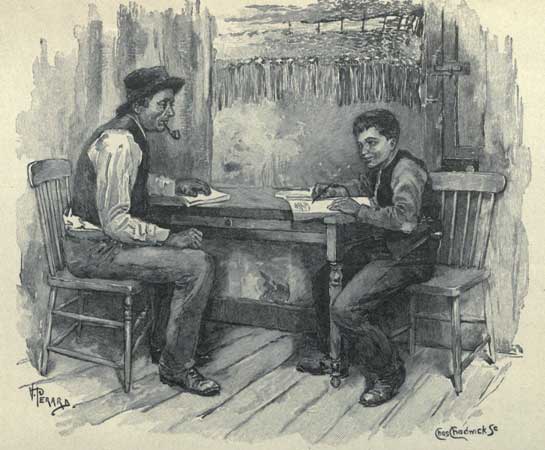
Pietro (I haven’t been able to find his last name) is one of Riis’ favorite subjects. He makes his debut in The Children of the Poor, Riis’ 1892 follow-up to How The Other Half Lives, as a model ofthe striving young student. Pietro is an ambassador of sorts, an avatar of social improvement, bringing “[e]very lesson of cleanliness, of order, of English” taught to him in school back to his tenement life.
He was born sometime in the early 1878 or 1879, just as the sudden increase of southern Italians began to permanently change the nature of the old tenement neighborhoods.
He lived in a single room with his parents and four younger siblings. As a small boy, he attended classes at the school run by Old St. Patrick’s until “his education was considered to have sufficiently advanced to warrant his graduating into the ranks of the family wage- earners.”
Being the eldest son, he would have gone to work immediately. In this case, as a bootblack, the most common occupation for poor Italian immigrants in the 1880s.
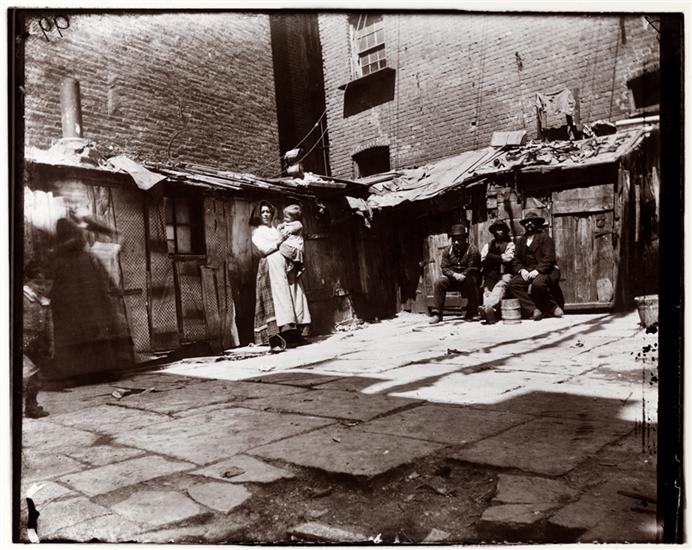
1897 Yard in Jersey Street (now gone). A woman holding a child, and men sitting in a rear yard of a Jersey Street tenement. Pietro lived on Jersey Street and one of these buildings may have been his home.
Probably around age 11 or 12, Pietro began shining shoes in a saloon somewhere in the neighborhood. One day, while crossing Broadway, he was struck by a streetcar and mangled so badly that it was assumed he would not survive. “They thought he was killed but he was only crippled for life.”
He met Riis one dayat the police station at 300 Mulberry Street. He was there as a witness to a shooting which had occurred in front of his home. As Riis describes:
“With his rags, his dirty bare feet, and his shock of tousled hair, he seemed to fit in so entirely there of all places, and took so naturally to the ways of the police-station, that he might have escaped my notice altogether but for his maimed hand and his oddly grave but eager face, which no smile ever crossed despite his thirteen years.”
Riis gained the boy’s confidence and was invited into his home to document his life. Pietro was devoting his energies to education, improving both his Italian and English skills. It appears the accident left one or both of his hands impaired.
As Riis observes:
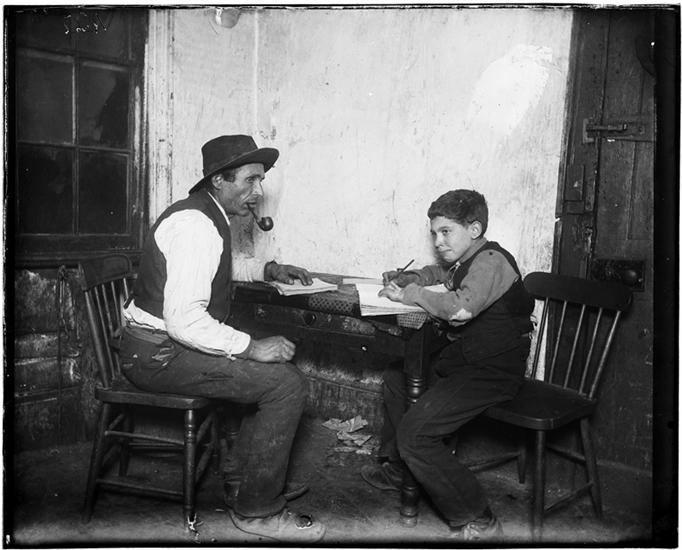
‘By ‘m by,’ said poor crippled Pietro to me, with a sober look, as he labored away on his writing lesson, holding down the paper with his maimed hand, ‘I learn t’ make an Englis’ letter; maybe my fadder he learn too.’
I had my doubts about the father. He sat watching Pietro with the pride in the achievement that was clearly proportionate to the struggle it cost, and mirrored in his own face every grimace and contortion the progress of education caused by the boy.
‘Si! si!’ he nodded eagerly. ‘Pietro he good a boy; make Englis’, Englis’!’ and he made a flourish with his clay-pipe, as if he too were making the English letter that was the subject of their common veneration.
Riis clearly views Pietro as a charity case burdened with the extraordinary responsibility of assimilating his family into American life.
At the maimed 13 year old eldest child of immigrants, his days of innocence were long gone. His situation had utterly defeated him. At least, that’s the image Riis very poignantly meant to convey in his final anecdote, turning to Pietro as he watched over his baby brother:
‘Pietro’,” I said with a sudden yearning to know, ‘did you ever laugh?’
The boy glanced from the baby to me with a wistful look.
‘I did wonst’, he said quietly and went on his way. And I would gladly have forgotten that I ever asked the question; even as Pietro had forgotten his laugh.’
We never see Pietro again. He’s used as a pitiful example of life in the Italian slums and then fades into the background, lost among the thousands of individuals who lived in the Mulberry Street slums.
Riis, however, does use the generic name ‘Pietro’ — now a stand-in for all disadvantaged Italian immigrants — in his 1902 book The Battle With the Slum.“
One of Riis’ photographs, illustrated for the book Children of the Poor.
Did Pietro ever make it out of the tenements? Did he get married, have children, begin a career? Did his physical condition ever improve? It’s rather likely that either he or one of his siblings had children, and one of those children might be your grandmother or grandfather.
You can read Jacob Riis’ Children of the Poor here.
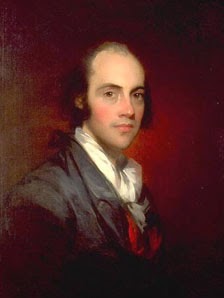
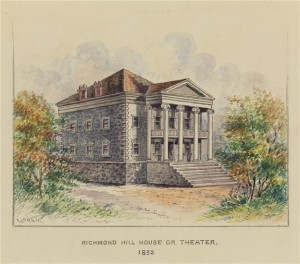
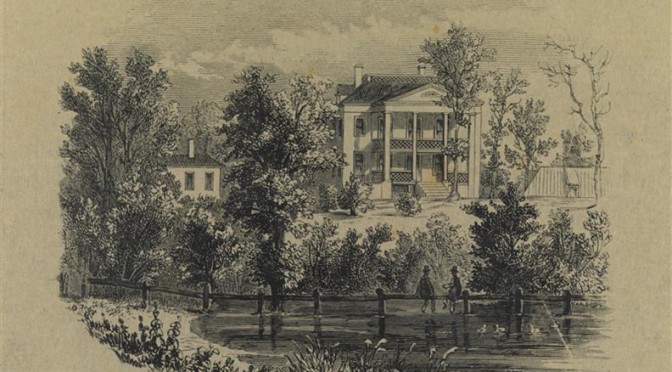
Richmond Hill, the spacious mansion and 26-acre estate on the outskirts of town that had once been George Washington‘s headquarters and later the home of John Adams, was also home to another vice president — Aaron Burr. This was the place he lived on that fateful day, July 11, 1804, when he entered into a duel with Alexander Hamilton. Here’s a lovely description of the home from an 1861 biography of Burr by author James Parton:
“[Burr’s] style of living kept pace with his increasing income. In a few years we find him master of Richmond Hill, the mansion where Washington had lived in 1776, with grounds reaching to the Hudson, with ample gardens, and a considerable extent of grove and farm. Here he maintained a liberal establishment and exercised the hospitality which was then in vogue.
The one particular in which Richmond Hill surpassed the other houses of equal pretensions, was its library. From his college days, Colonel Burr had been a zealous buyer of books, and his stock had gone on increasing till, on attaining to the dignity of householder, he was able to give to his miscellaneous collection something of the completeness of a library.
It is evident enough, from his correspondence, that his favorite ethos were still those whom the ‘well-constituted minds’ of that day regarded with admiring horror. The volumes of Gibbon’s History [The Decline And Fall of the Roman Empire] were appearing in those years, striking the orthodox world with wonder and dismay. They had a very hearty welcome in the circle at Richmond Hill.”
After the duel, Burr liquidated his assets, selling Richmond Hill to John Jacob Astor. With the grounds heavily cut up and sold, he had the mansion rolled on logs to the newly carved street corner and turned into a theater and opera house. At this time, he also moved the carriage house further north, where it was later re-purposed and today houses the romantic restaurant One If By Land, Two If By Sea.
It made for a very sumptuous opera house, it appears. According to author Eric Homberger, “Boxes at the Richmond Hill were furnished as though they were an extension of the elegant parlors of St. John’s Park, with ‘light blue hangings, gilded panels and cornice, arm-chairs, and a sofa.'”
It was parallel in style, perhaps, to the Astor Place Opera House across town. Eventually it deteriorated into a lowly roadhouse and saloon — but certainly, the most gorgeous one in town — called the Tivoli Saloon before being torn down in 1849.
Today the site of Richmond Hill and its former ground are occupied by this building, currently the home of WNYC, and the surrounding blocks of this area of the far West Village.
Top image courtesy the Museum of the City of New York
When I hear of so-called “riots” on the Lower East Side during the late 19th century, my mind goes to disgruntled newsies or agitated garment workers, rising up for fair wages and employment.
Or maybe a vicious street gang like the Whyosprimed to wreck havoc.
I don’t immediately think of the orthodox Jewish community.
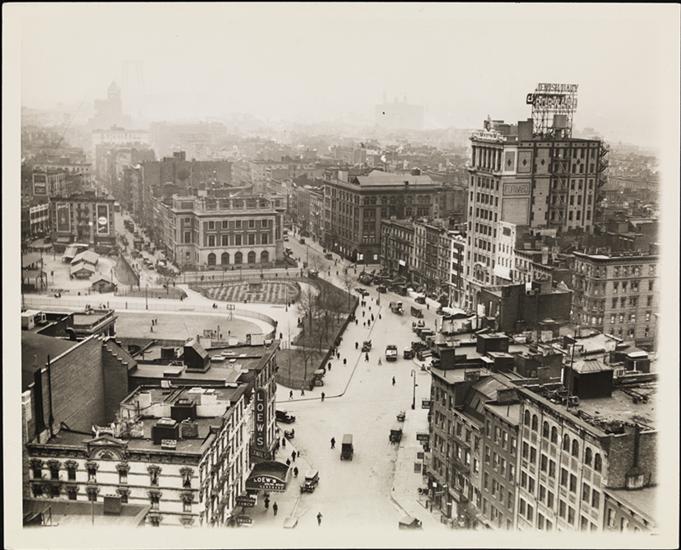
But it was indeed dissatisfied members of this group that staged a bit of chaos on the corner of Canal and Division streets during Yom Kippur (the tenth day of Tishrei, or, in 1898, late September).
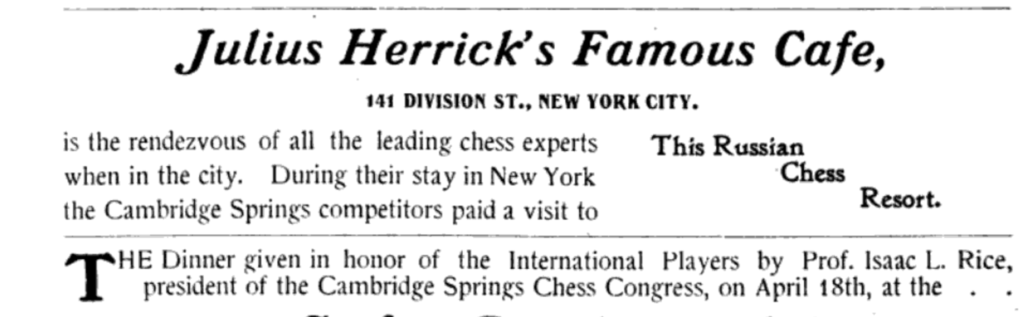
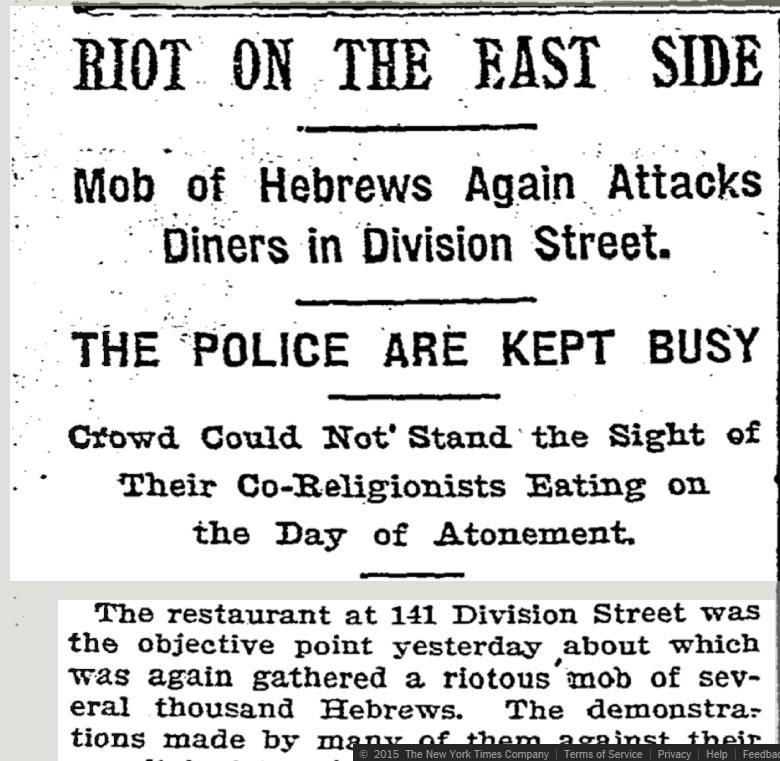
According to the New York Sun, the violence centered around a Russian Jewish coffee house owned by the Herrick brothers at141 Division Street, a popular gathering place for ‘political spell-binders and labor agitators’ with likely a more casual atmosphere than the many Jewish restaurants surrounding it and certainly popular with young men.
Here’s an advertisement for Herrick’s in a chess journal from 1904. By then the cafe was clearly a notable spot for chess players:
Herrick’s was in the heart of Jewish social life in New York City. The Yiddish theater hangout Schreiber’s Saloon was around the corner at 33 Canal Street and other Jewish-operated cafes were steps away.
Even as sundown approached and traditional Jewish places closed their doors for the holiday, Herrick’s cafe stayed open, with tables occupied with young men in apparent disregard for the custom of fasting.
The Sun article makes a point to label most offenders as ‘American-born’ and ’16 to 18 years old’ — as in rebellious, with an implied lack of respect towards tradition.
The Herricks had actually planned this display of defiance, going so far as to advertise in an ‘anarchistic‘ newspaper that they would remain open for the holiday. They were prepared for some opposition, certainly, but certainly not for what came next.
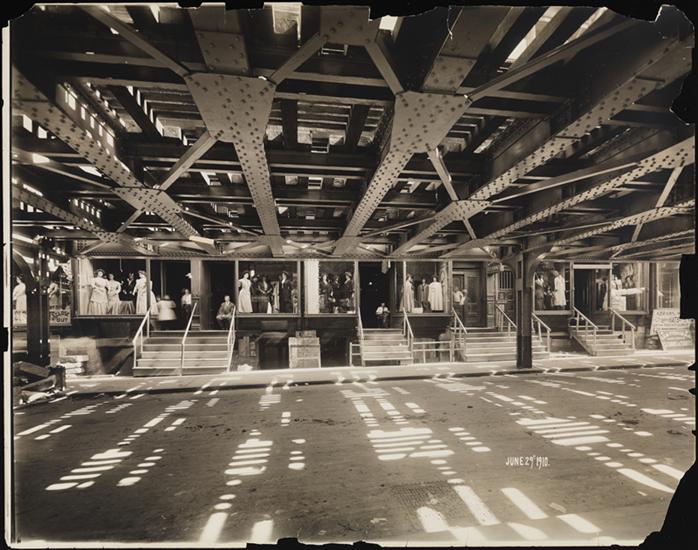
Below: Under the Division Street elevated, 1910
Courtesy Museum of the City of New York
According to the Sun, at sight of the violation, angry orthodox men mobbed the place, throwing stones and smashing the cafe windows.
The New York Times reportsthat ‘several thousand Hebrews’ soon arrived to protest in the surrounding streets. The police from the local Madison Street station were called to quell the violence and asked the proprietors to close their cafe for the evening.
But violence further escalated the following day, when one of the brothers reopened the cafe the next morning ‘for customers, Jewish and Gentile, all day, at the usual prices’.
Hat stores on Division Street, below the elevated train and a bit west of the action in this article. Picture is from around 1907 (NYPL)
Fearing a repeat of the evening’s disruptions, police cordoned off the street to no avail. When diners left the cafe this time, they were met by “several thousands* [who] gathered and threatened dire vengeance on those who would eat on the holy day.”
Many offenders were chased down the street for fear of their lives. Eventually, the angry protesters even managed to storm the restaurant again where they “overturned tables, smashed dishes and threw crockery at the proprietors.”
One diner was doused in hot tea. Another diner, with his three friends, happened to be military and ‘fired off a revolver to attract police’, scattered the crowd in fear. Police did arrive, with clubs drawn.
Soon the violence spilled into the streets and devolved, like so many riots of this type, into fisticuffs among angry young men.
By the end of the day, several rioters were taken into custody, and the neighborhood quickly returned to its peaceful celebration of the holiday.
As for Herrick’s, well, the advertisement at the top is from 1904, so they obviously continued stirring up ‘political spell-binders’ and controversy in the neighborhood for many more years.
*Early news reports are never very good at estimating crowd numbers, so ‘several thousands’ could also mean ‘several hundreds’. Given how crowded this neighborhood was in the 1890s, most could have simply been trying to figure out what was going on!
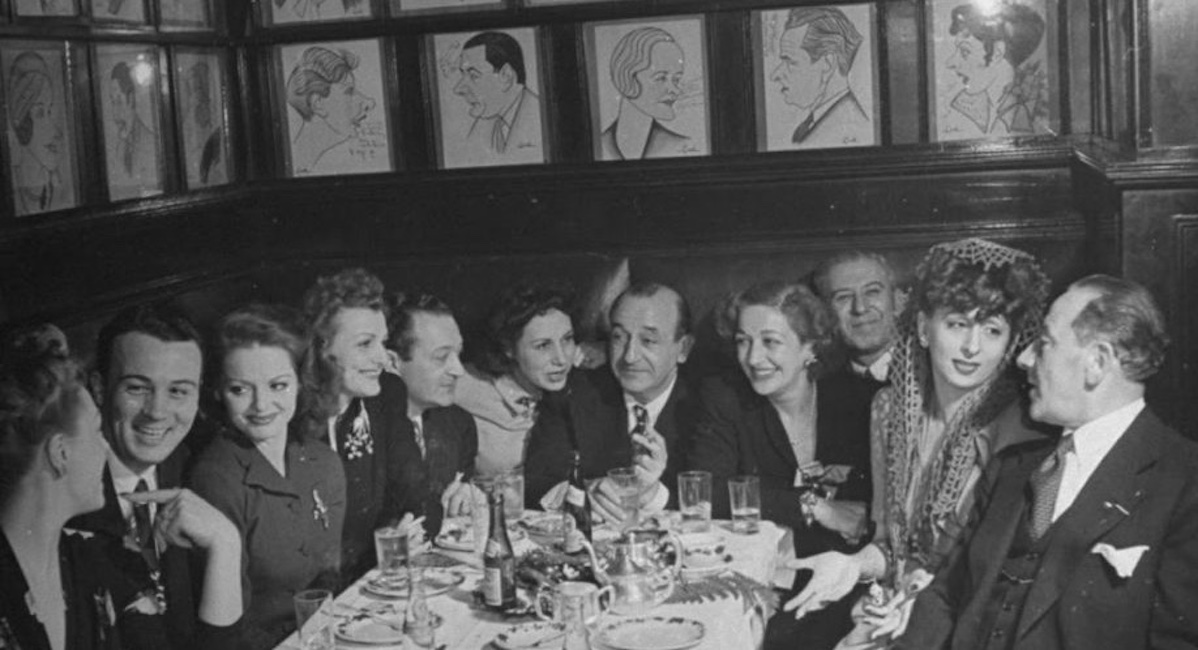
PODCASTREWIND The famous faces on the walls of Sardi’s Restaurant represent the entertainment elite of the 20th century, and all of them made this place on West 44th Street their unofficial home.
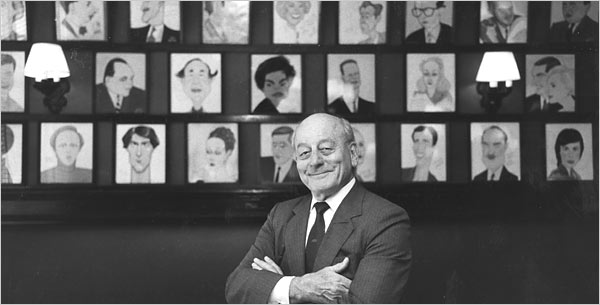
Known for its kooky caricatures and its Broadway opening-night traditions, Sardi’s fed the stars of the golden age and became a hotspot for producers, directors and writers — and, of course, those struggling to get their attention.
When Vincent Sardi opened his first restaurant in 1921, Prohibition had begun, and the midtown Broadway theater district was barely a couple decades old.
By the time the Italian-American restauranteur threw open its doors to its current locaton (thanks to the Shuberts) in 1927, Broadway’s stages were red hot, and Sardi found himself at the center of the New York City show business world.
We have some insider scoop from the old days — starring John Barrymore, Tallulah Bankhead, hatcheck girl Renee Carroll and a cast of thousands — and the scoop on those famous (and often unflattering) framed caricatures. So sidle up to the Little Bar, order yourself a stiff drink and eavesdrop in on this tale of Broadway’s longest dinner party.
PLUS: The birth of the Tony Awards!
FEATURING: Some 2022 updates including Sardi’s recent history.
LISTEN NOW: AN EVENING AT SARDI’S
Vincent Sardi and his world-famous wall behind him. (Courtesy NYT)
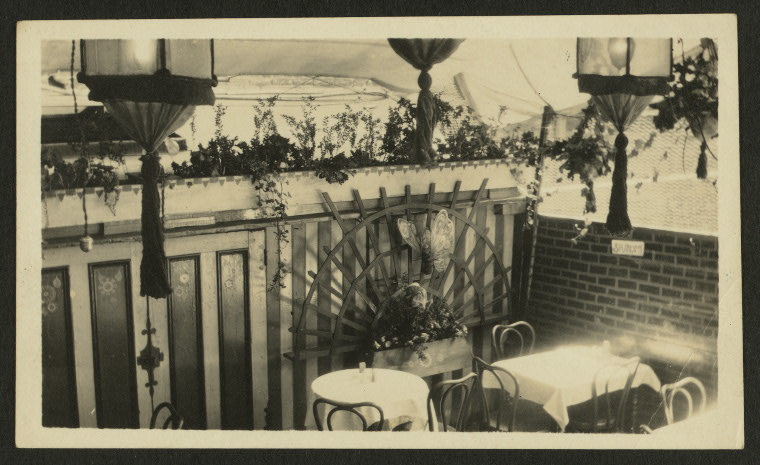
The outdoor garden cafe of the original Sardi’s, which opened in 1921 and was located two doors down from the current location. It was demolished to make way for the St. James Theatre.
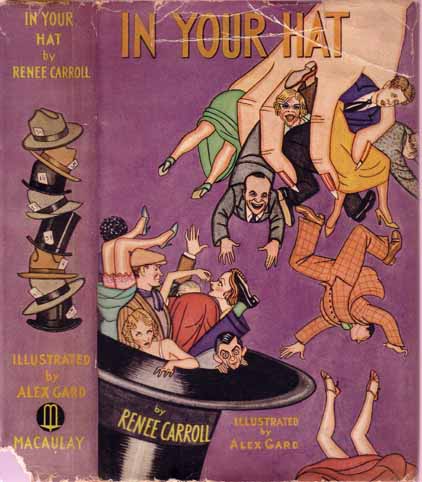
The cover of the tell-all 1933 memoir by famed Sardi’s hatcheck girl Renee Carroll and illustrated by Sardi’s original caricaturist Alex Gard.
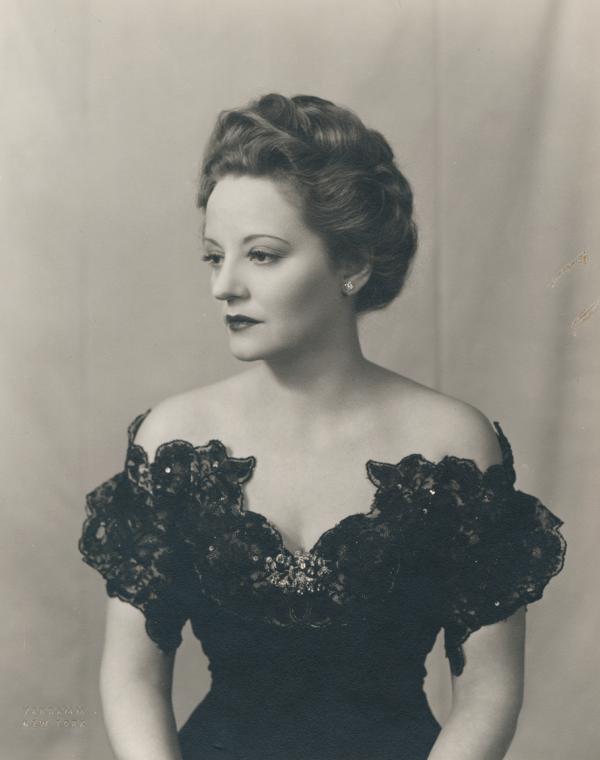
Tallulah Bankhead, Broadway diva and notorious Sardi’s customer. (Courtesy NYPL)
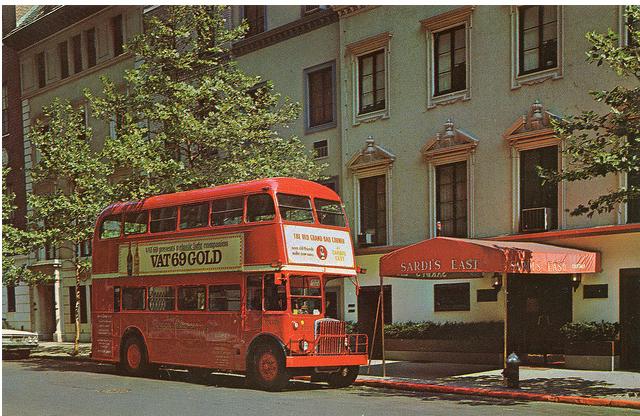
The failed experiment Sardi’s East, instantly problematic due to its distance from the theater district. Sardi Jr. attempted to solve the problem with a fun-filled double-decker bus — often accompanied by Broadway stars — that would zip diners to their shows after dinner. (source Flickr/edge and corner wear)
As we mentioned on the show, it’s difficult doing a history podcast on a private business without it sounding a bit like an advertisement, but hopefully we were able to execute past that. (We came across this odd feeling with other podcasts like Saks Fifth Avenue and The Plaza Hotel.)
We left a few details on the cutting-room floor, including Sardi’s lengthy involvement with the Dog Fanciers Club, which throws a congratulatory breakfast every year for the Best In Show winner of the Westminster Dog Show. Tom also did a rather nice job with reading an excerpt from Renee Caroll’s biography, but some sound problems forced us to cut it.
Tom mentioned the glory of Broadway in 1927. Show Boat is definitely the breakout show of that year, but theatergoers could also choose from one of these show that year — A Connecticut Yankee, Funny Face, Burlesque, Coquette, Hit The Deck, Rio Rita, Dracula and the hit play The Ivory Door, written by A.A. Milne of Winnie-the-Pooh fame. (Find a complete list here.)
Reading Recommendations: The best is Off The Wall by Vincent Sardi Jr. and Thomas Edward West, featuring full color representations of Sardi’s best known caricatures. Worth seeking out a copy at your used book stores. More difficult to find is Vincent Sardi Sr.’s own biography Sardi’s: A Story of a Restaurant, published in 1953 and well out of print. Carroll’s biography In Your Hat is also out-of-print, but you can find excerpts scattered online. You should seek out a physical copy if possible, as it features original artwork by original Sardi’s caricaturist Alex Gard.
Clothing cutters, horseshoers, shoemakers, upholsterers, printers, house painters, freight handlers, cabinet makers, varnishers, cigar makers, bricklayers and piano makers.
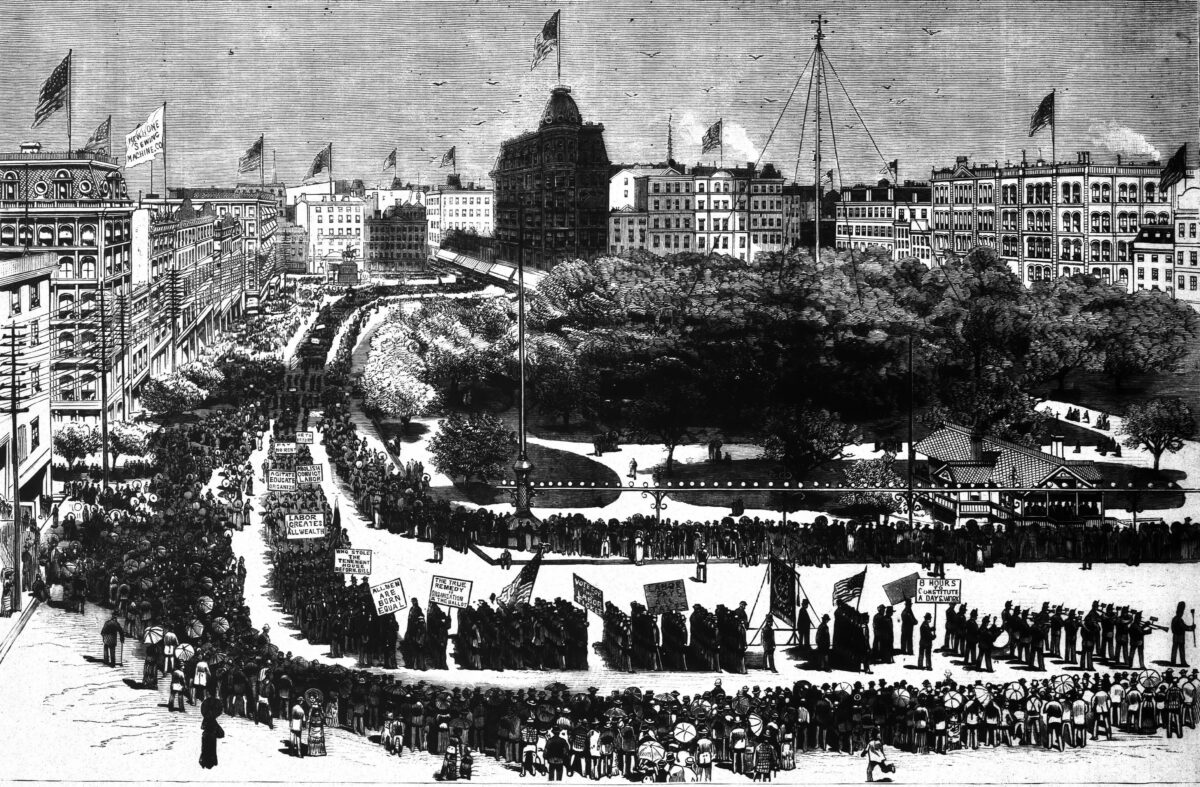
The first American Labor Day began on September 5, 1882, with 10,000 workers from a wide variety of occupations circling Union Square, then parading up to the area of today’s Bryant Park. (A picnic ‘after party’ of sorts took place at a park at today’s Columbus Avenue and 92nd Street.)
Individual workers organizations had taken to the street before, sometimes violently. But this peaceful protest, this public solidarity, took the issues of New York laborers to the heart of the city in a way that could not be ignored.*
*New Yorkers got the Labor Day idea from Canada.Read more about the differences between May Day and Labor Day in this article
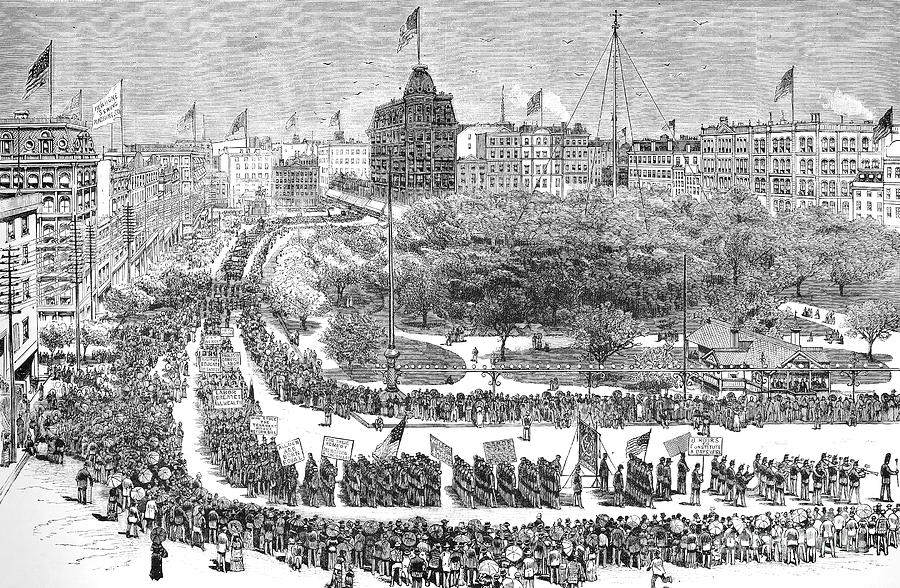
Illustration of the first Labor Day parade around Union Square, 1882
We take it for granted today. Labor Day is no more than a day off for most people today.
But looking at the original press notices from newspapers of the day (from the following day, September 6, 1882) suggest an event certain New Yorkers recognized as monumental.
Others considered it trivial, a nuisance or even a dangerous gathering of malicious intent.
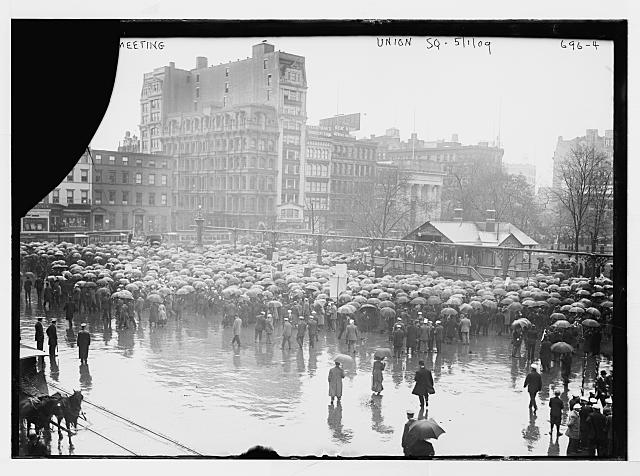
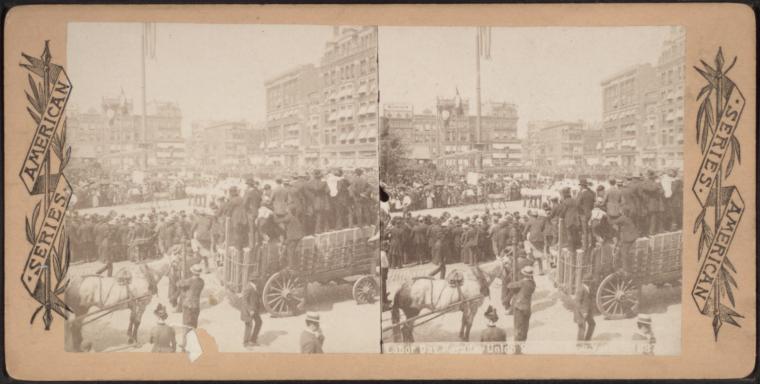
Union Square would continue to be the location of Labor Day festivities for decades afterwards. The image below is of a parade from 1909 (courtesy LOC):
TheNewYork Tribune begins nice enough. “The men who took part in the labor parade generally appeared to be persons of no small intelligence.” The paper’s vitriol was saved for the leaders of the movement, in this case organizers from the Central Labor Union, “demagogues of the worst kind.”
“It is a pity that workingmen allow themselves to be so cheapened.” The Tribune accuse the organizers of an ulterior motive — political chest-thumping.
“But it is not at all unlikely that certain demagogues and dishonest leaders thought it a good time of year to show the two great political parties that there are ten thousand ballots in this city in the hands of men who … might be at the disposal of somebody — for a consideration.”
Indeed, there would be a statewide election exactly two months later, sweeping a host of Democrats into office, including Grover Cleveland into the governor’s office.
Even their reporting of the parade itself is tinged with a little condescension.
“The parade of workingmen yesterday morning was not nearly as large as was expected by the leaders. Â This is probably due to the unwillingness of many workmen to lose a day’s work.”
Labor Day parade in Union Square, 1887 (NYPL)
TheNew York Times seemed to find the parade slightly whimsical, almost superfluous. It echoed the disappointing turnout, but describes the event as calm, “conducted in an orderly and pleasant manner.”
The coverage focuses undue attention on the paraders’ fashionable attire.
“The great majority smoked cigars.” However they stress that the good behavior is attributable to the fact that organizers banned alcohol. This detail is mentioned in no other coverage that I read.
Where the Tribune attested the lower-than-expected turnout to men not leaving their posts, the Times found a different reason — “due to the fact that [laborers] preferred to enjoy the day in quiet excursions in Coney Island, Glen Island and elsewhere.”
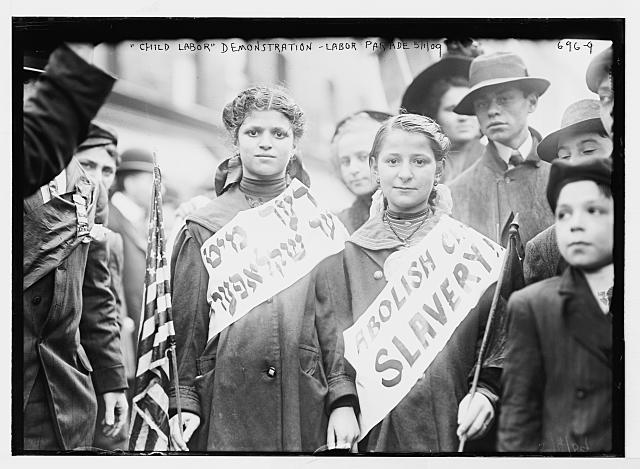
Children at the Union Square Labor Day parade, 1909 (NYPL)
The enthusiasticNew York Sun describes it as a dry and brutal day. “[T]he rays of sun even in the early morning were very hot, and not a breath of wind brought relief from the oppressive heat.”
The same parade considered disappointing by the Tribune and the Times was conversely described by the Sun as a mob scene.
“As far ahead as one could see and as far down the side streets as forms and faces could be distinguished, the windows and roofs and even the lamp posts and awning frames were occupied by people anxious to get a good view of the first parade in New York of workingmen of all trades united in one organization.”
Many newspapers outside New York mentioned the parade the following day. St. Paul’s Daily Globe in Minnesota said “the great labor demonstration today was a success,” quoting a number in attendance (20,000) almost double the actual projected number.
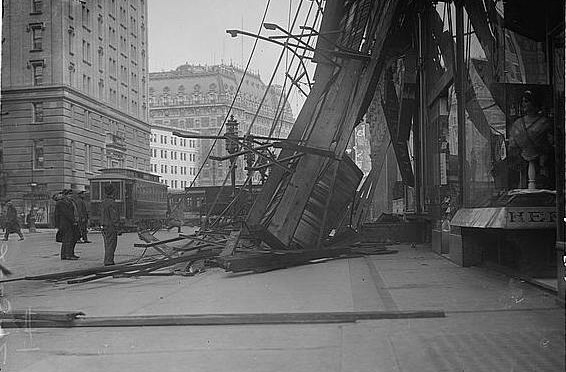
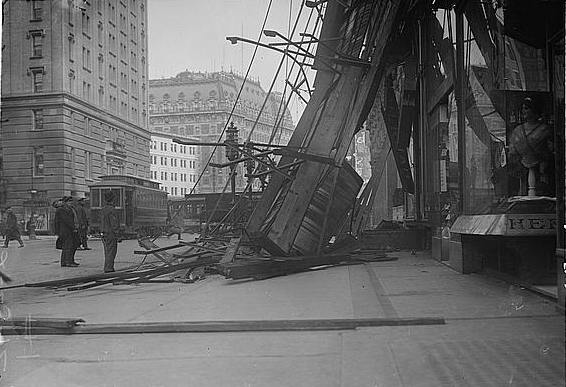
Trauma in Times Square: An electrical sign destroyed by the massive windstorm of February 22, 1912. One Times Square sits to the left, and the Hotel Astor is in the distance. [LOC] Shorpy has an another angle of this damaged storefront.
“The great gale that blew in with Washington’s birthday will not soon be forgotten. It was the biggest New York ever knew.” — New York Evening World, Feb. 23, 1912
On February 22, 1912, a catastrophic weather anomaly occurred in New York City, an event the New York Times referred to as ‘The Big Wind’.
This particular day has also been called “a significant day in the history of tall buildings,” although I doubt anybody today will be celebrating this rather vicious and sudden test of architectural endurance.
New Yorkers thought it might be worse. The storm system began the previous day as a blinding Midwestern blizzard, paralyzing the railroad and killing cattle. St. Louis received its greatest snowfall ever up to that time from this churning storm, and Chicago reported winds of up to 50 miles per hour.
If it held this pattern by the time it hit the East, New Yorkers feared another storm of the level of the Blizzard of 1888, which buried the city in snow, rendered transportation useless, and killed more than 200 people.
In one respect, the city was fortunate that snowfall was relegated to upstate New York. The grim meteorological trade off, unfortunately, was a day of powerful, otherworldly wind gusts, almost double the strength of those during the infamous 1888 storm.
The worst of it came after midnight, when a terrifying frozen bluster “swooped down on the city with all its length and breadth” at speeds of 96 miles per hour.
At one point, devices in Central Park registered an unthinkable 110 miles per hour. By morning it had settled to 70 miles per hour and held that speed steady for much of the day. [source]
Some called this “giant among gales” a day-long cyclone, and it certainly acted like one — uprooting trees, destroying rooftops and even depositing whole houses into the river. People were blown off their feet, carts went flying and pedestrians dodged falling telephone poles in terror.
Most leaving home wearing hats ran back inside without them. If any of those women from yesterday’s Astor Place post were trekking through the plaza with their home-work today, they most likely lost it to the wind.
Foremost on the minds of most New Yorkers was the fate of its skyline. In 1888, during the last harsh storm, there were no skyscrapers. In 1912, there were several over 30 floors, including the city’s tallest, the 50-floor Metropolitan Life Insurance Tower off Madison Square.
Although most buildings were designed to withstand significant wind trauma, none of them were prepared for winds above 70 miles per hour. And the building slated to become the next tallest in New York — the Woolworth Building — was still under construction, its metal skeleton now a potential arsenal of deadly debris.
Panes of glass shattered throughout the city, but it appears most of New York’s tallest structures survived without significant damage. In fact, it was the shorter, older structures that fared worst, many of them designed with little protection from powerful winds.
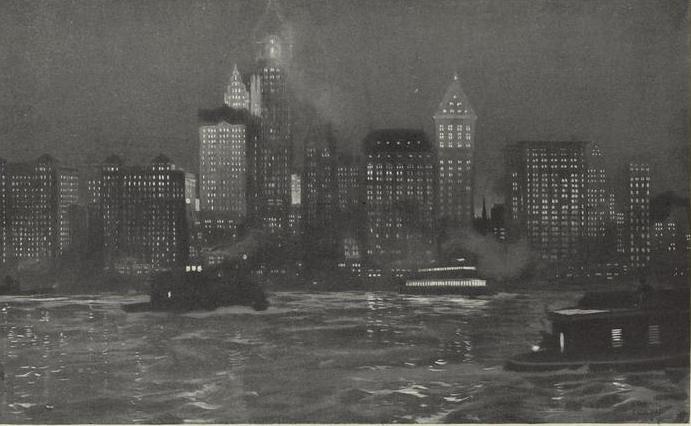
Below: the downtown Manhattan skyline in 1912. Most of these buildings survived the ‘Big Wind’ with only damage to their windows. [pic]
Not that modern invention came away unscathed that day. The electrical signs of Times Square, many no more than a few months old, were no match for the powerful gusts. Several were destroyed, including a one provocative sign at 47th Street, featuring “two scantily clad electric boys who box nightly in Summer underwear.” [source]
Next to the Hotel Knickerbocker, a 200-foot electric sign crumbled to the sidewalk below in front of Hepners Hair Emporium, a police officer racing into the establishment a minute before the sign crashed into the plate glass window of the railroad ticket office next door.
Across the street, at the Times Building, a drug store window exploded, and “many bottles of perfume and drugs” were hurled at passers-by.
Most boats all along the waterfront were either damaged or untethered. Predictably, beach houses on Rockaway Beach and other quieter locales fared the worst. The luckiest structures survived with nary a window remaining; those less fortunate were found floating offshore. In Astoria, Queens, the roof to the jail was taken off, to the fright of the occupants inside.
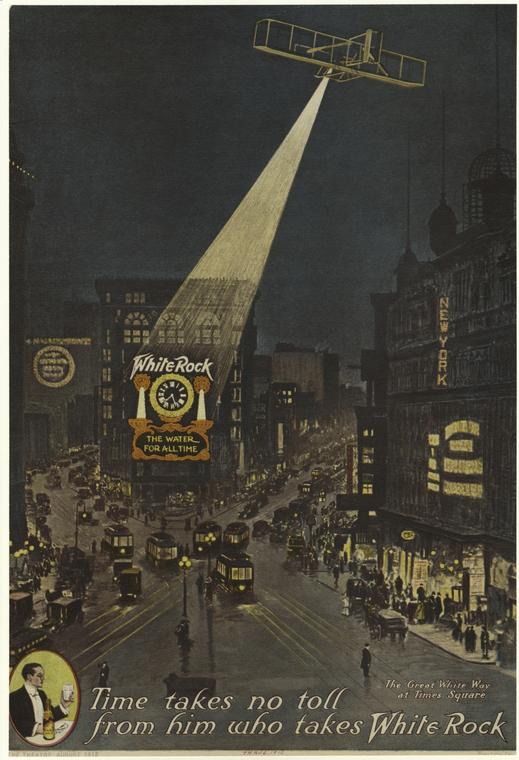
At right: Times Square in August 1912. The White Rock sign was probably not around for the February wind storm. The ‘electric boys’ sign described above sat at this intersection.
In Red Hook, Brooklyn, turbulent winds kept a raging fire alive at a brick manufacturing plant, distributing flaming pitch shrapnel to several buildings across the street, including a hay and horse feed dealership! (One of many reasons they don’t keep hay dealerships in crowded cities today.) The brick factory, which took several hours to control, was about three blocks from the location of today’s IKEA store.
February 22, 1912, happened to be the 180th anniversary of George Washington‘s birth, and hundreds of veterans tried marching from Jefferson Market to Union Square. Flags raised aloft in celebration were torn to ribbons. Nobody was injured, although the gusts caused major inconvenience, “Salvation Army object lessons and banner bearers bowled over by the wind.” [source]
Others were not as fortunate. The Times attributed at least one death to the storm and over a dozen concussions from flying debris, messenger boys and seamstresses blown into windows or railings or hit by signs or dislodged cornices.
One man, waiting for his wife at St. Patrick’s Cathedral, had his neck slashed by flying glass. Where physical harm was avoided, humiliation took its place. A society woman on Riverside Drive, wearing “superabundantly costly furs,” was picked up and thrown into a horse.
Meanwhile, down at the Battery, Frank Coffyn was preparing for another takeoff off the water on his pontoon-equipped airplane. The wind had other plans, ripping the wings off the plane and spoiling Coffyn’s flight. Later that day, Coffyn wired his old boss Wilbur Wright for replacement parts. (See my previous post for more information of Coffyn’s harbor flights..)
By the late evening, winds had died down to a mere 44 miles per hour. (For comparison, New York City’s average wind speed today is just 12.2 miles per hour.) In the morning, things were back to normal — except for huge mess of metal and glass left scattered on the streets.
PODCAST The tale of the Black Tom Explosion which sent shrapnel into the Statue of Liberty and rocked the region around New York harbor.
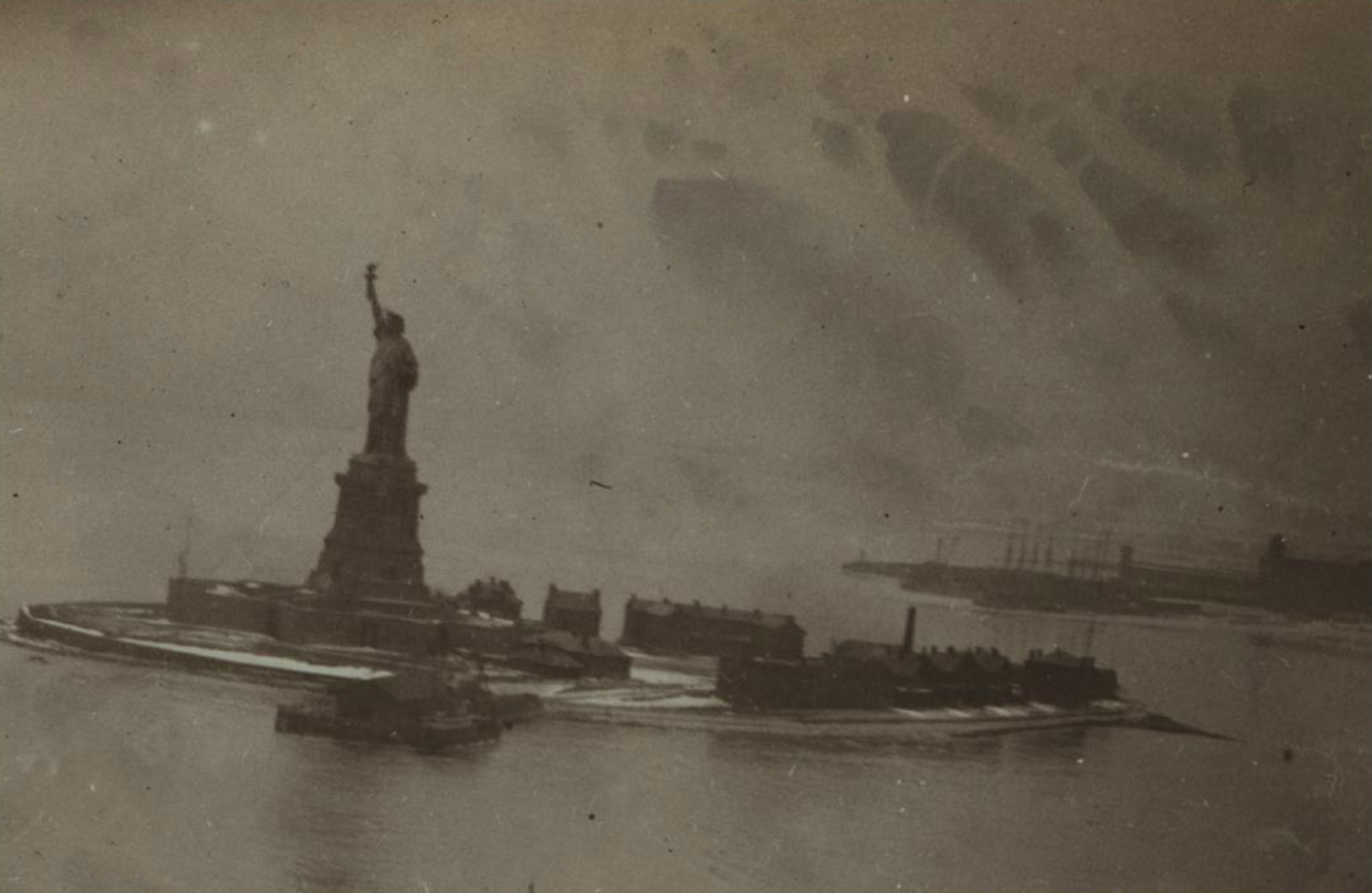
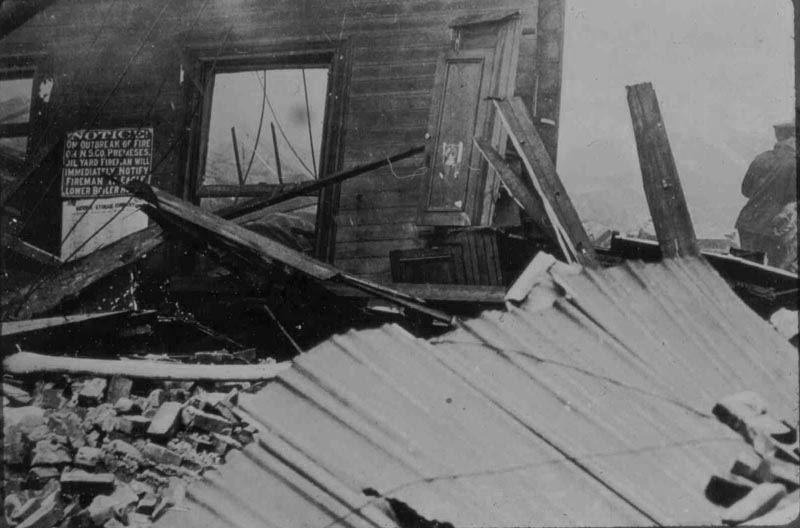
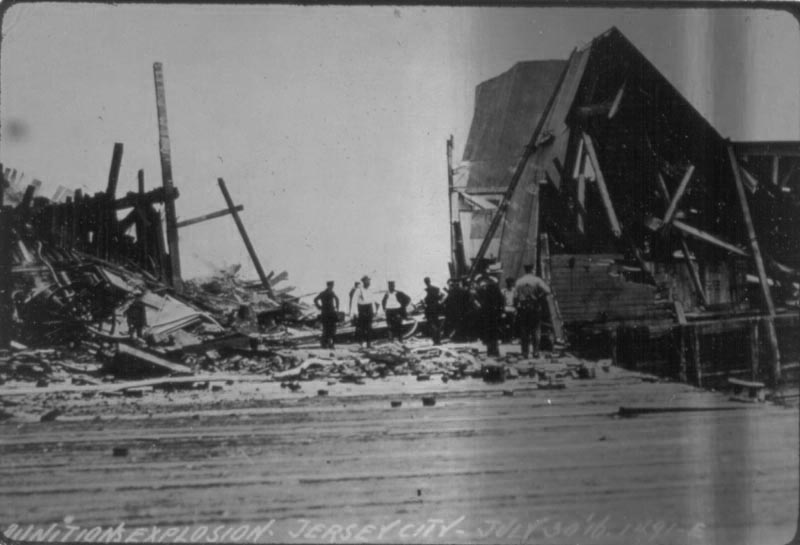
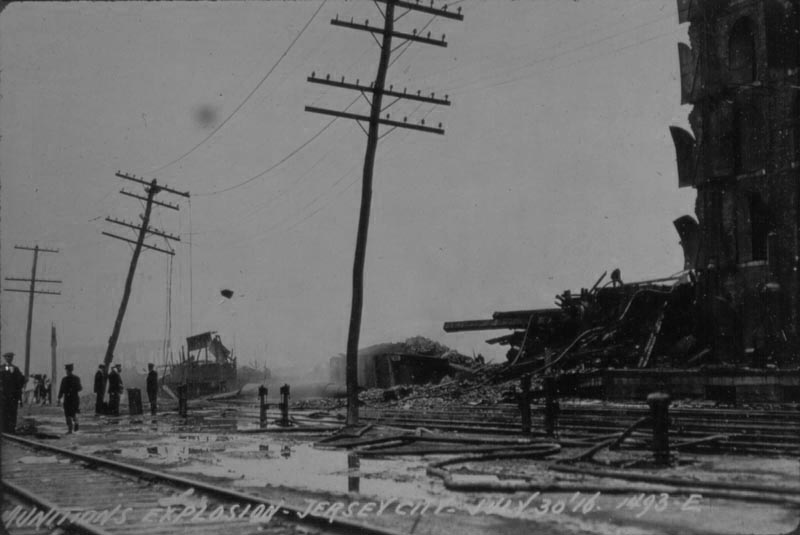
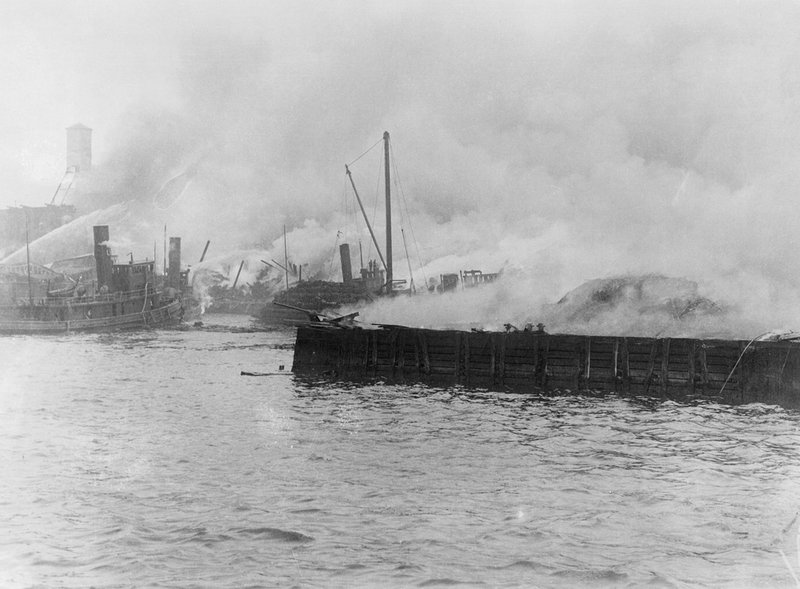
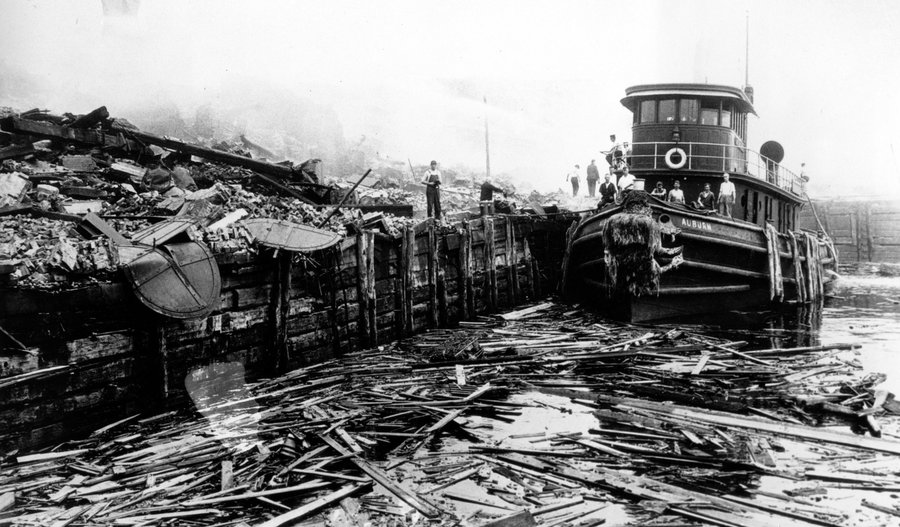
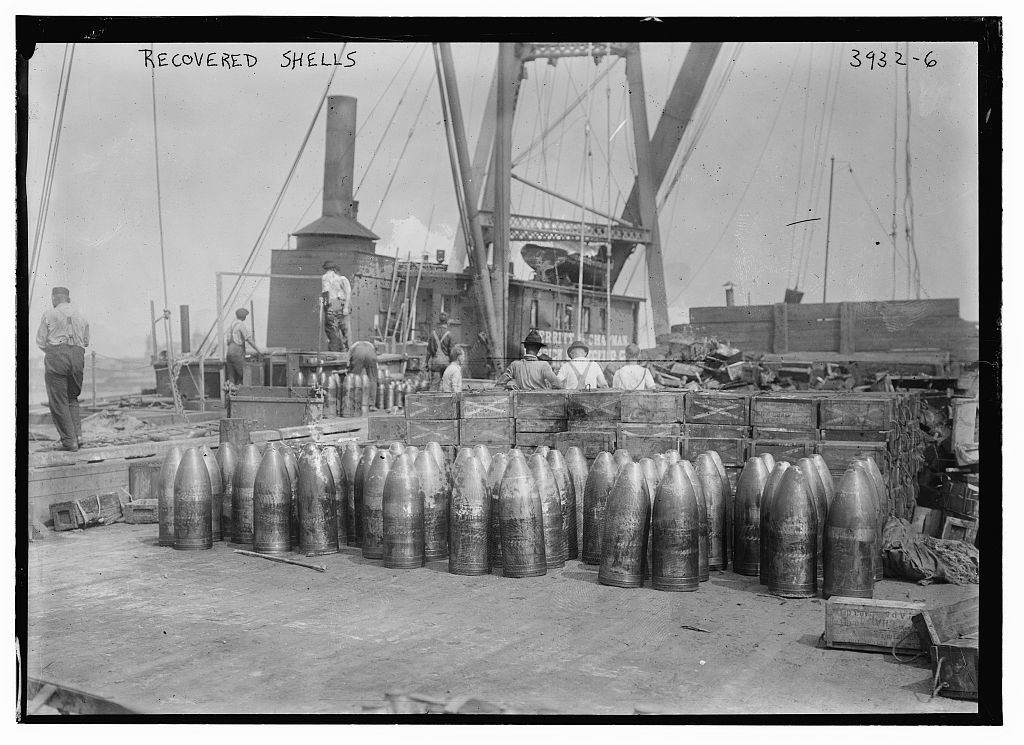
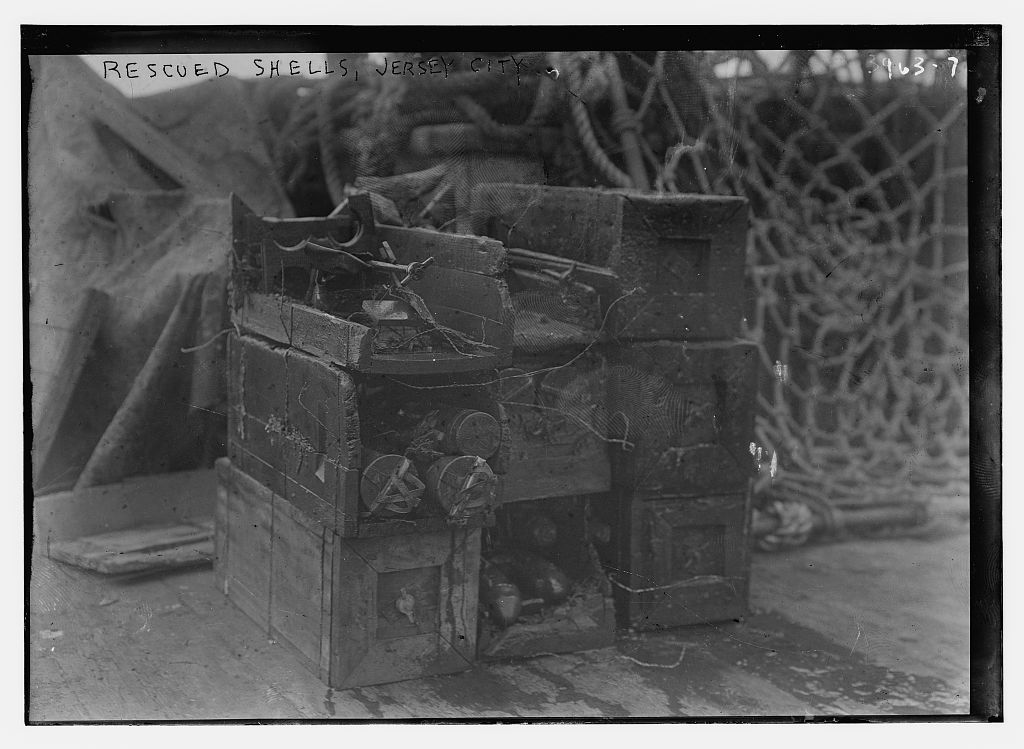
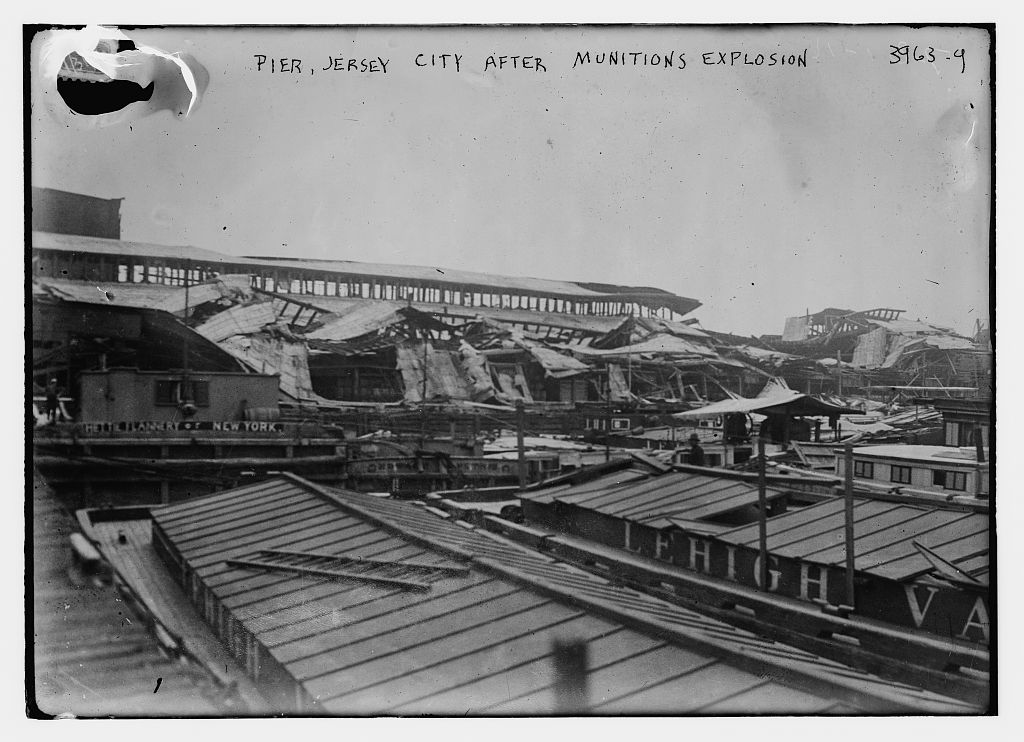
On July 30, 1916, at just after 2 in the morning, a massive explosion ripped apart the island of Black Tom on the shoreline near Jersey City, sending a shockwave through the region and thousands of pounds of wartime shrapnel into the neighboring Ellis Island and Bedloe’s Island (home to the Statue of Liberty).
Thousands of windows were shattered in the region, and millions woke up wondering what horrible thing had just happened.
The terrifying disaster was no accident; this was the sabotage of German agents, bent on eliminating tons of munitions that were being sent to the Allied powers during World War I. Although America had not yet entered the war, the United States was considered an enemy combatant thanks to weapons manufactures in the New York region and around the country.
But the surprising epicenter of German spy activity was in a simple townhouse in the neighborhood of Chelsea.
ALSO: New Yorkers still feel the ramifications of the Black Tom Explosion today at one of America’s top tourist attractions.
The Bowery Boys: New York City History podcast is brought to you …. by you!
We are producing a new Bowery Boys podcast every other week. We’re also looking to improve and expand the show in other ways — publishing, social media, live events and other forms of media. But we can only do this with your help!
We are creators on Patreon, a patronage platform where you can support your favorite content creators.
Please visit our page on Patreon and watch a short video of us recording the show and talking about our expansion plans. If you’d like to help out, there are several different pledge levels. Check them out and consider being a sponsor.
We greatly appreciate our listeners and readers and thank you for joining us on this journey so far.
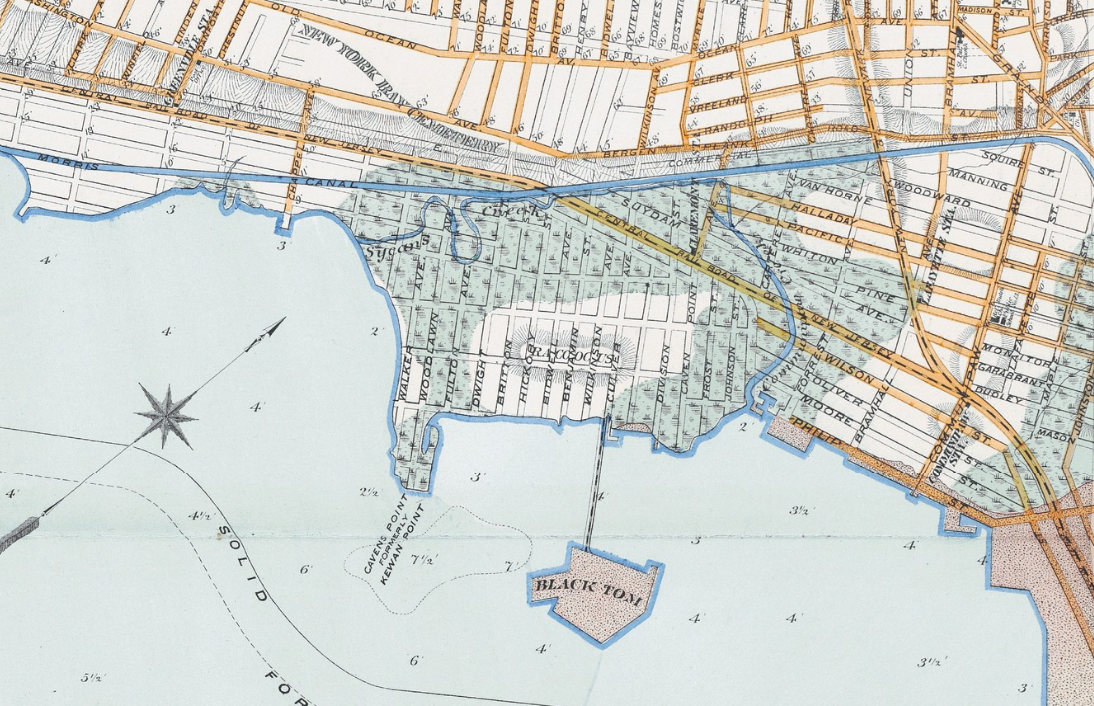
The location of Black Tom Island in relation to Jersey City, circa 1880.
Courtesy New Jersey City University/Â Prepared for the National Board of Health, Washington, D.C.(Hoboken, N.J.: Spielmann & Brush, 1880)
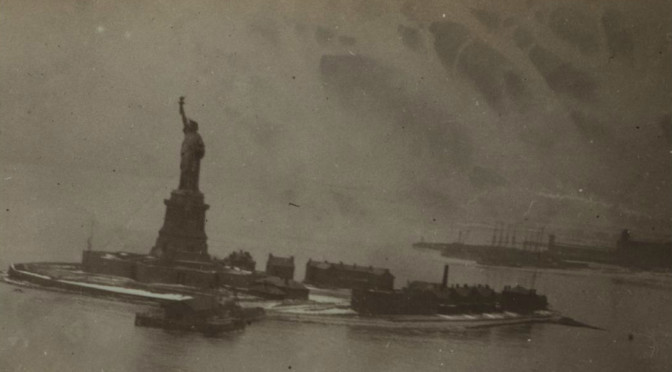
The Statue of Liberty in relation to Black Tom (situated in the background) in 1912
New York Public Library
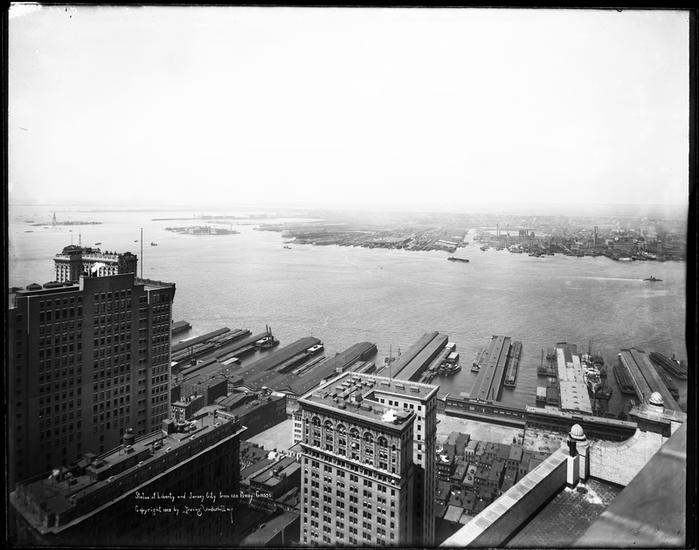
The view of Jersey City from a skyscraper in downtown Manhattan, 1918.
Courtesy Museum of the City of New York
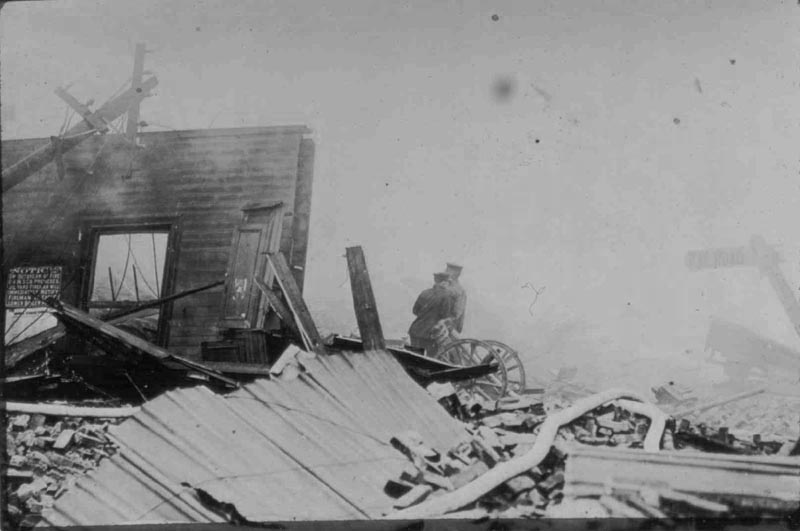
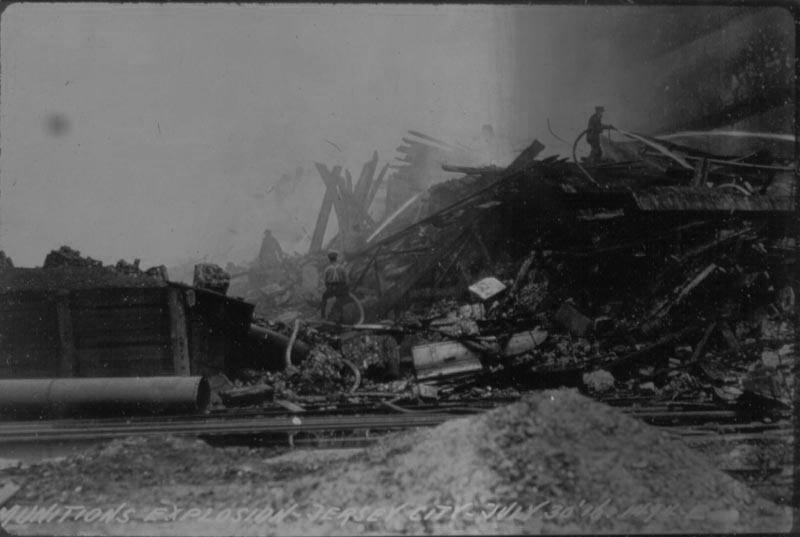
Images of the grim aftermath of the explosion (courtesy Liberty State Park):
Associated Press
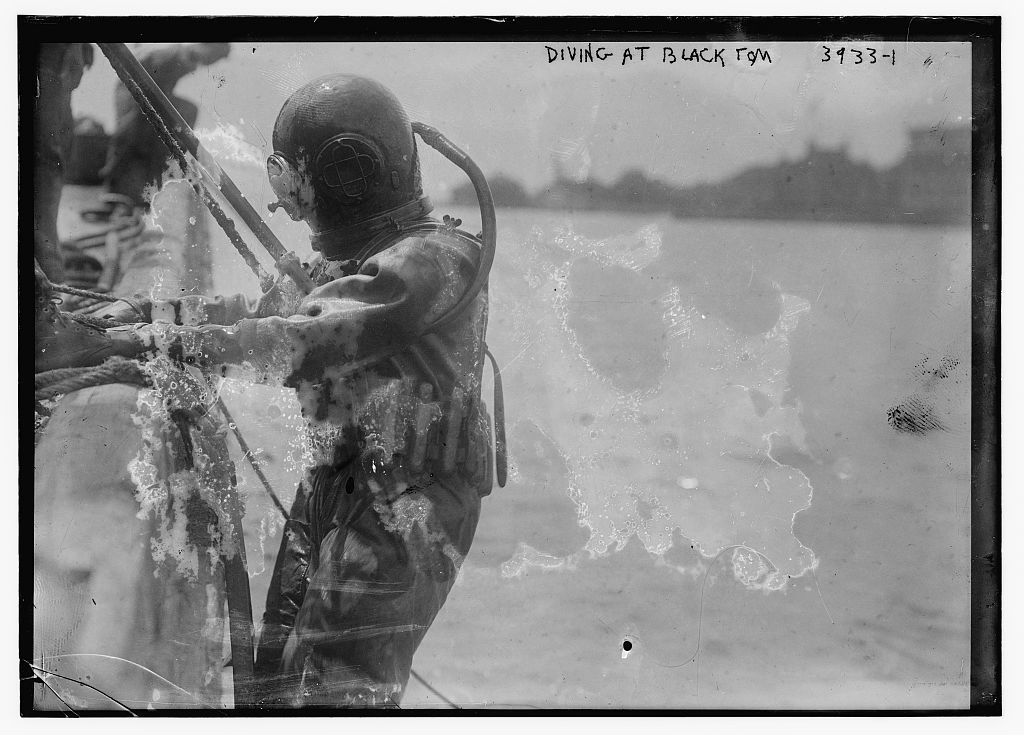
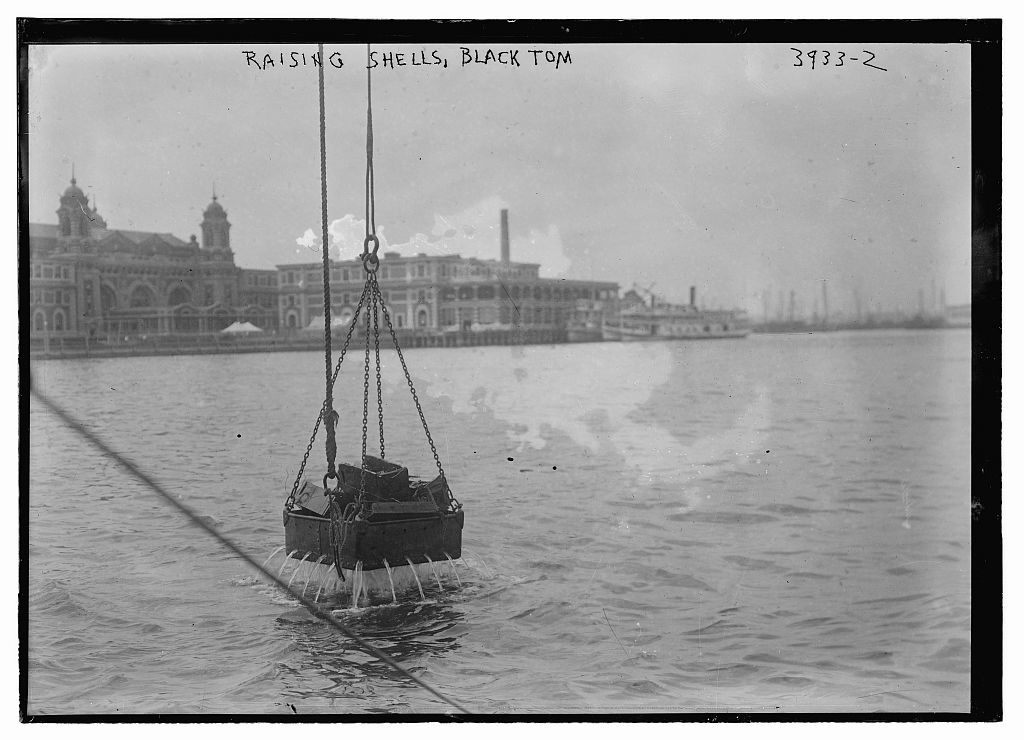
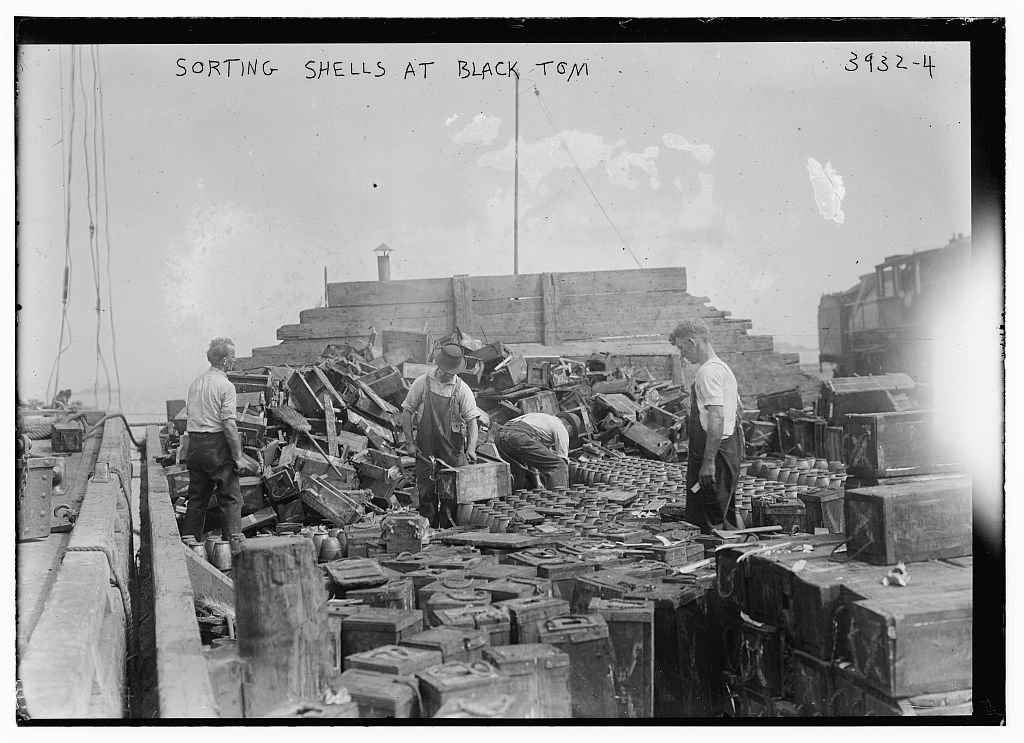
This series of photos (courtesy Library of Congress) shows the efforts of divers and salvagers looking for remaining munitions that had sunk into the harbor!
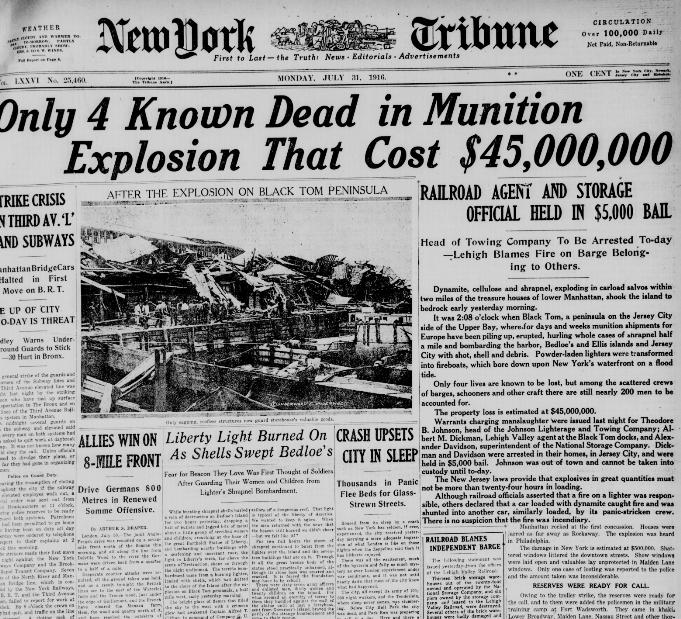
The front page of the New York Tribune the following day:
The Kingsland munitions explosion of January 11, 1917, caused millions of dollars in damage, but no lives were lost thanks to the efforts of a single switchboard operator named Tessie McNamara who stayed at her post throughout the disaster.
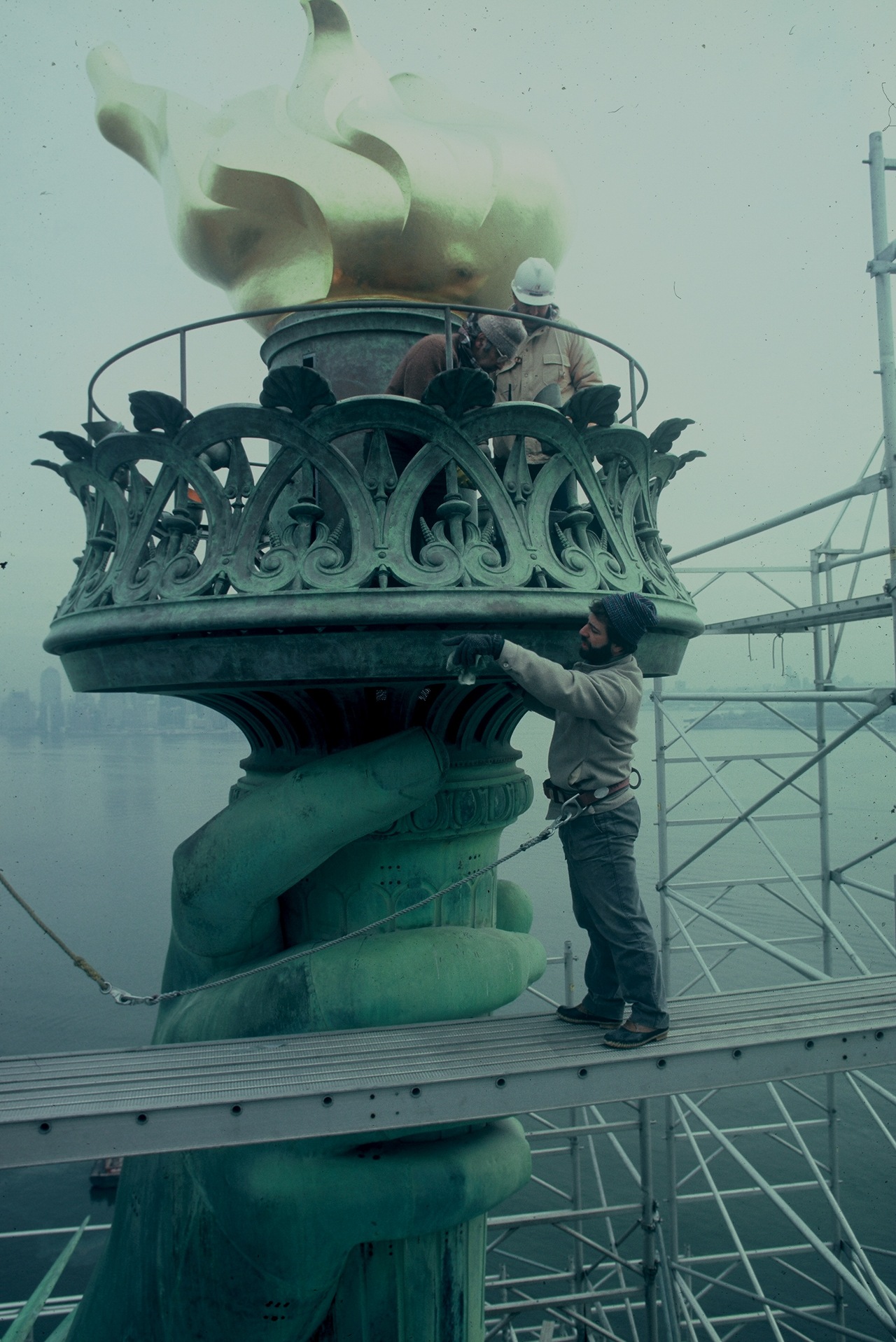
To give you some idea of the size of the Statue of Liberty’s torch, here’s a picture of its replacement during the 1984 renovation. It can only be accessed via a very narrow stairway.
PODCASTThe history of the New York City taxicab, from the handsome hansoms of old to the modern issues facing the modern taxi fleet today.
In this episode, we recount almost 175 years of getting around New York in a private ride. The hansom, the romantic rendition of the horse and carriage, took New Yorkers around during the Gilded Age. But unregulated conduct by — nighthawks — and the messy conditions of streets due to horses demanded a solution.
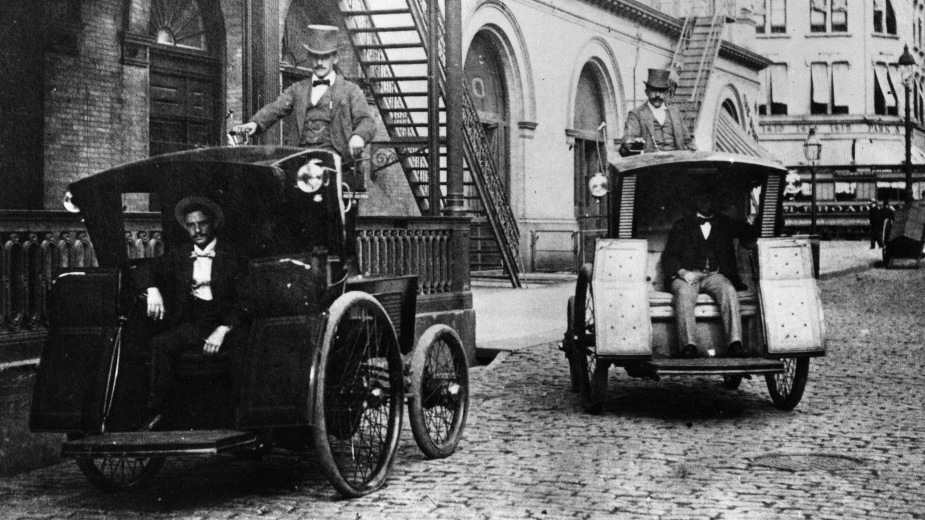
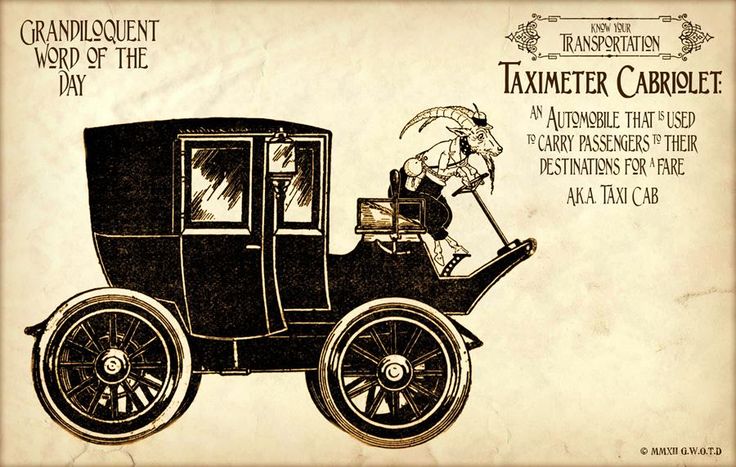
At first it seemed the electric car would save the day but the technology proved inadequate. In 1907 came the first gas-propelled automobile cabs to New York, officially — taxis — due to a French invention installed in the front seat.
By the 1930s the streets were filled with thousands of taxicabs. During the Great Depression, cab drivers fought against plunging fare and even waged a strike in Times Square. In 1937, Mayor Fiorello LaGuardia debuted the medallion system as a way to keep the streets regulated.
By the 1970s many cabdrivers faced an upswing of crime that made picking up passengers even more dangerous than bad traffic. Drivers began ignoring certain fares — mainly from African-Americans — which gave rise to the neighborhood livery cab system.
Today New York taxicab fleets face a different threat — Uber and the rise of private app-based transportation services. Will the taxi industry rise to the challenge in time for the debut of their taxi of tomorrow.
Listen Today: The Story of the Yellow Taxi Cab
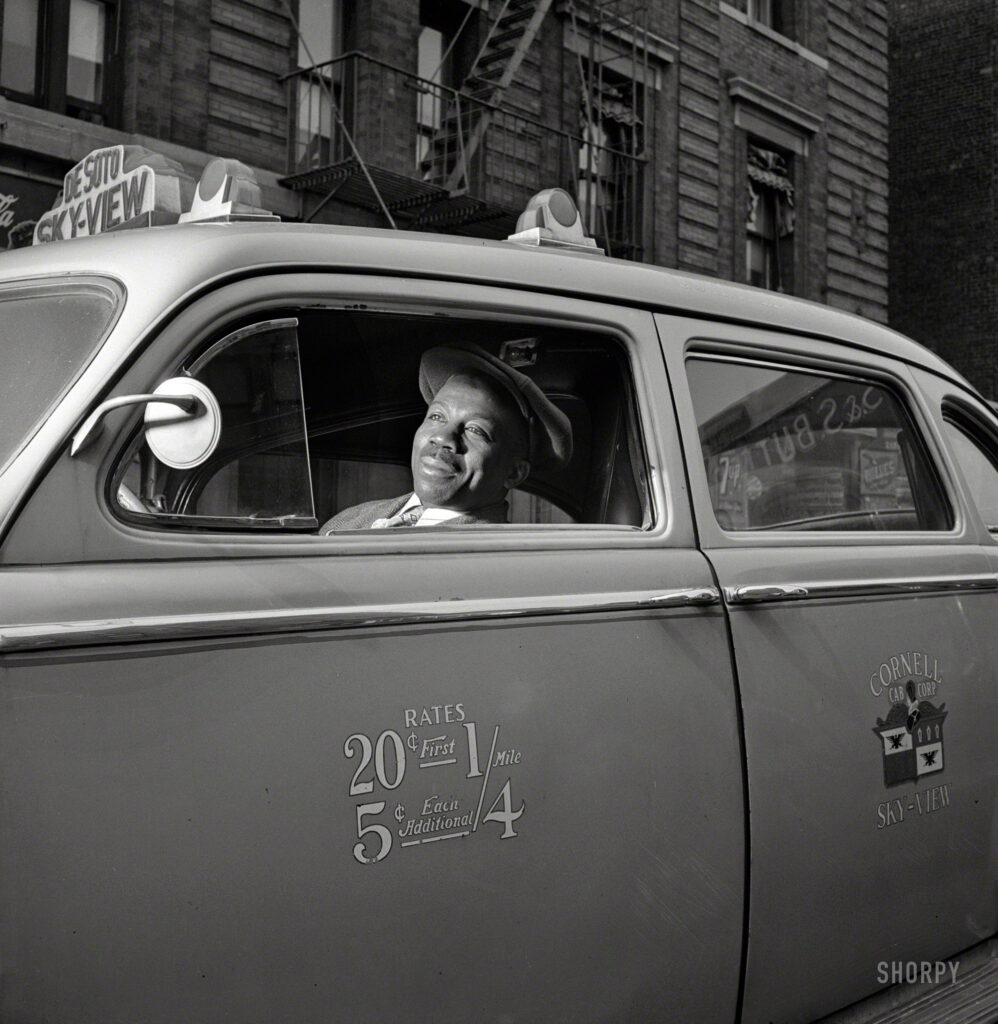
Albert Fenn/Office of War Information, cleaned up image courtesy Shorpy
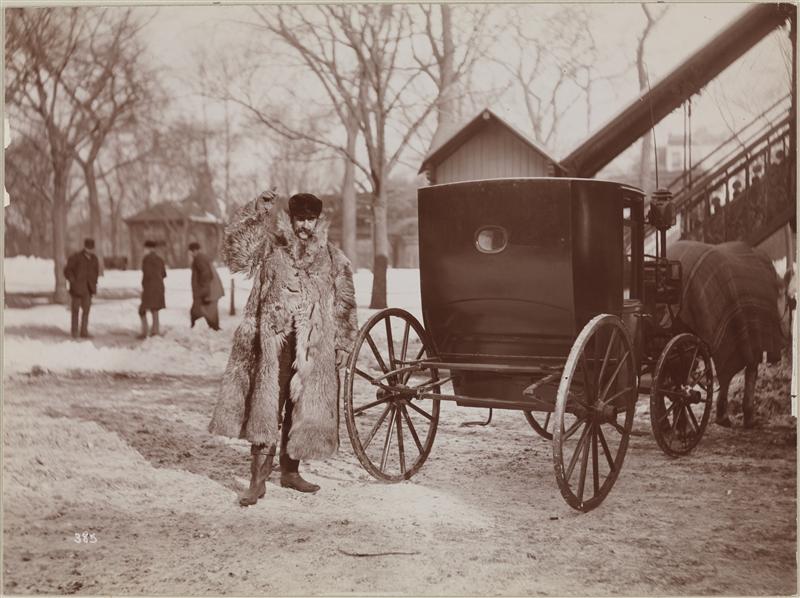
A snugly dressed cabbie awaiting some fares at the Battery Park elevated train station — 1895. Note that the poor horse too is swaddled up for a bad winter.
Courtesy Museum of the City of New York
A hack from 1896.
New York Public Library
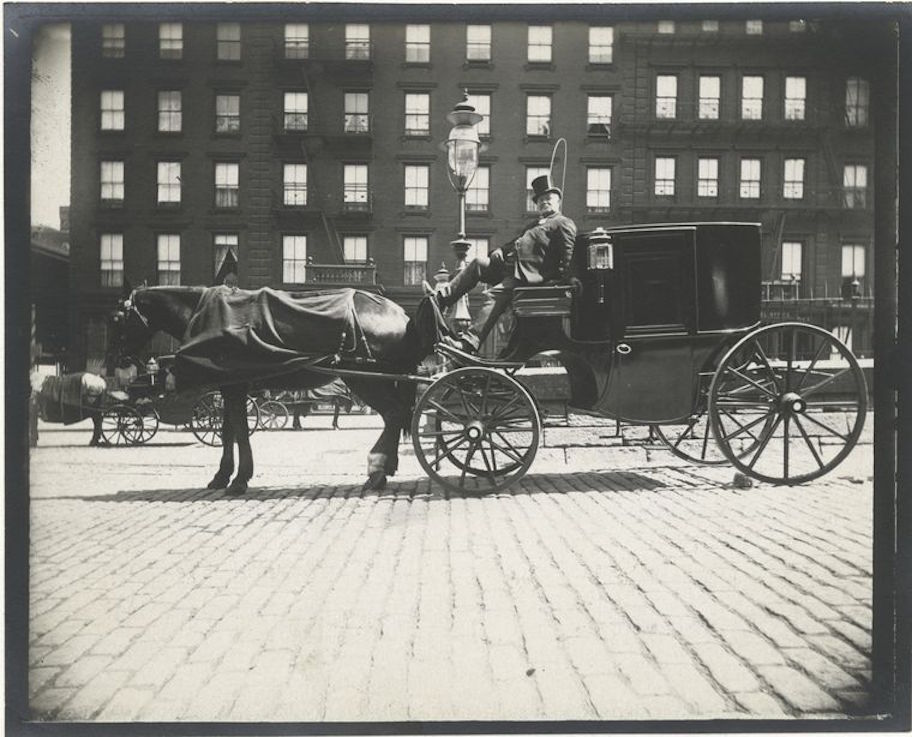
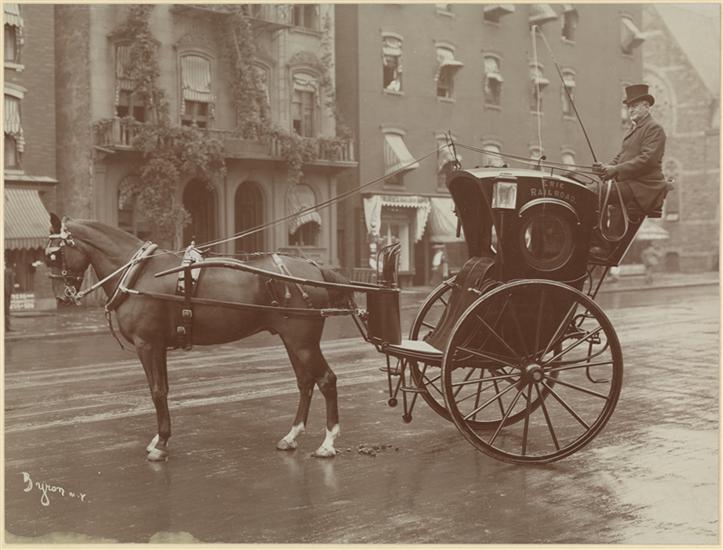
A hansom cab from 1906. This was still the dominant cab ride in New York during the period despite the introduction of the ‘horseless carriage’ onto the city streets.
Courtesy Museum of the City of New York
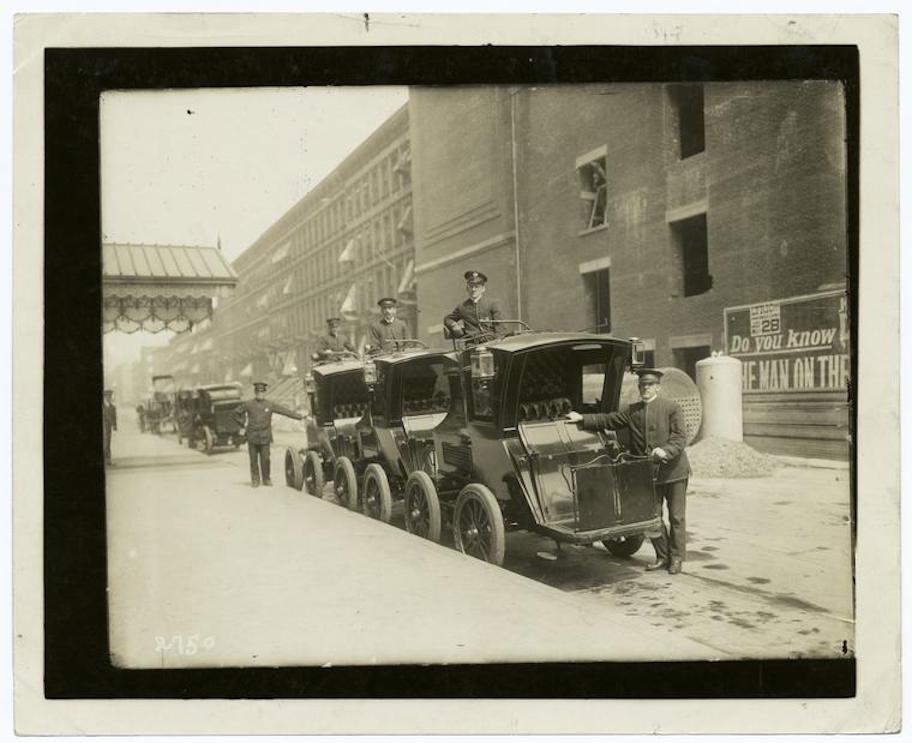
A fleet of electric cars in 1896, and a couple Electrobats in action outside the Metropolitan Opera House 1898. Compare these with the picture of the hansom above.
Courtesy New York Public Library
Courtesy Museum of Modern Art
Johanne Marie Rogn/Pinteresst
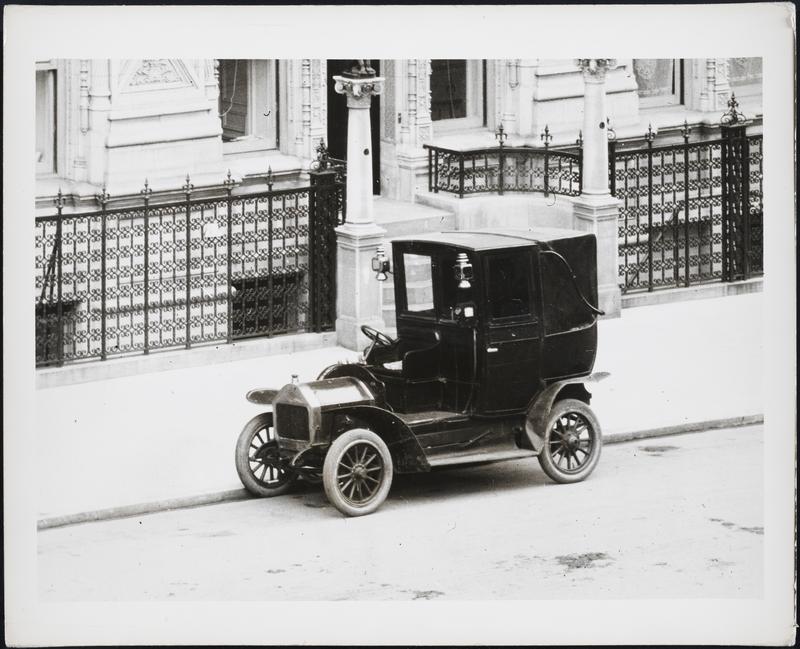
A taxicab waiting outside Alwyn Court (West 58th Street/7th Avenue)
Museum of the City of New York
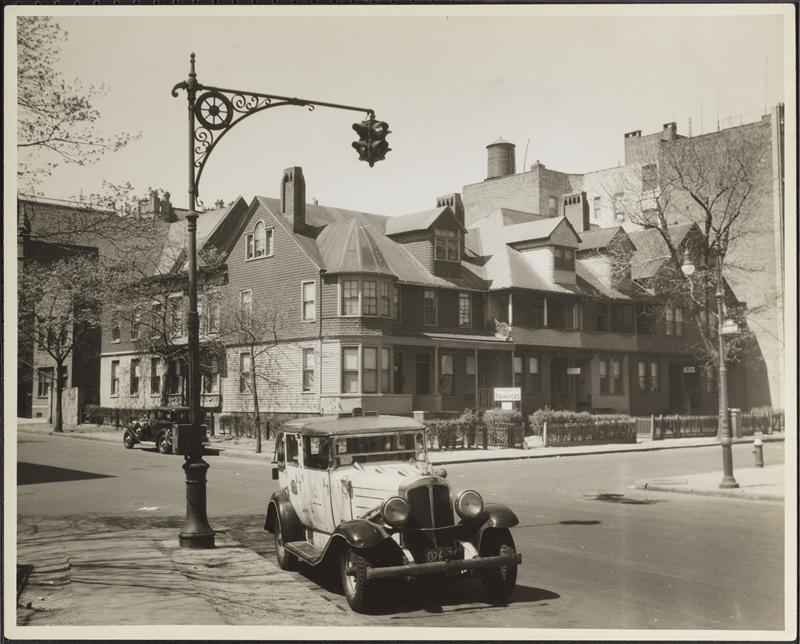
A cab waiting passengers at West 150th Street.
Photography by Charles Von Urban, courtesy Museum of the City of New York
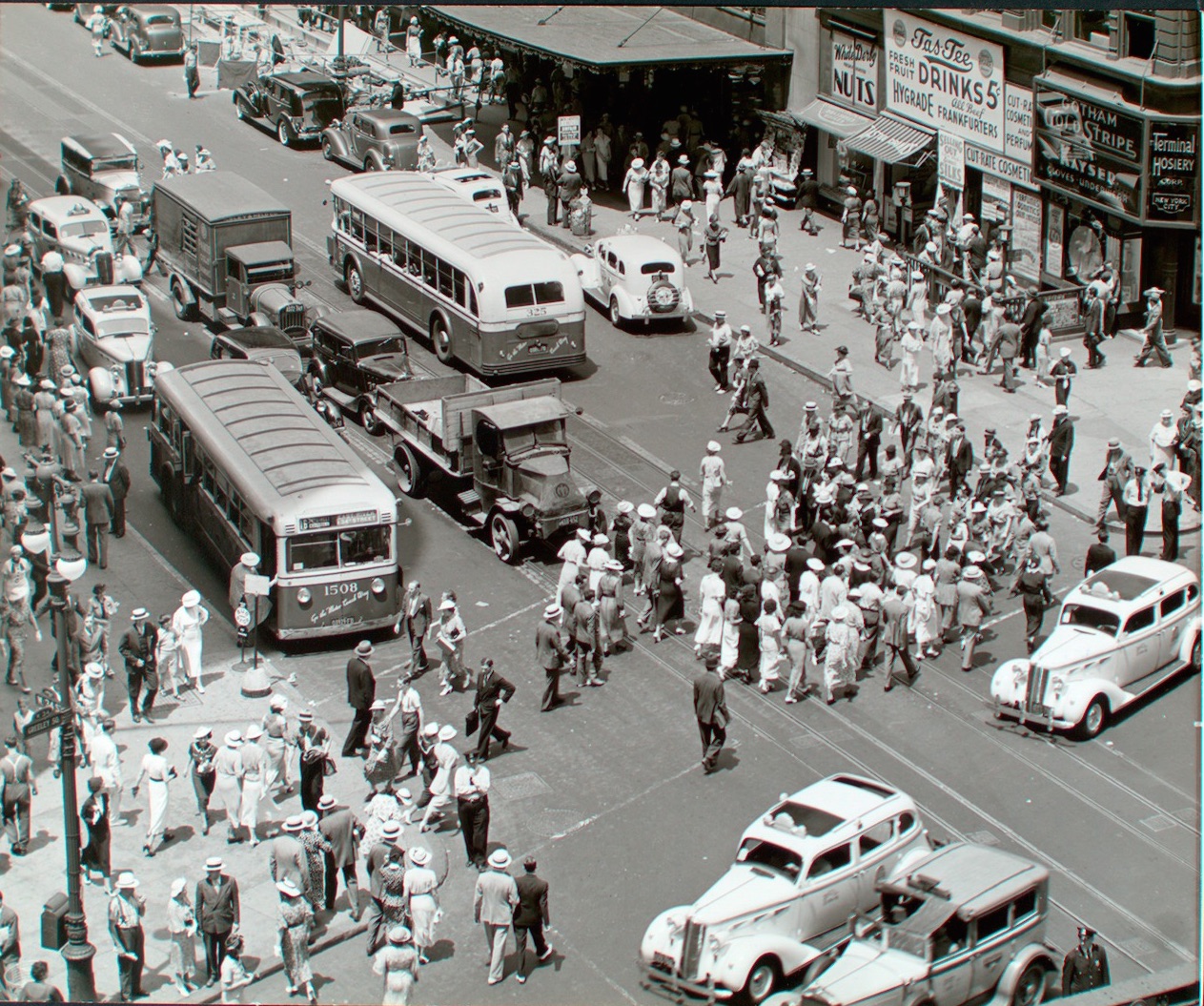
A view of the bustling street life of Herald Square, 1935. The horses are off the street but there are many other kinds of transportation options joining the taxicab.
Courtesy New York Public Library
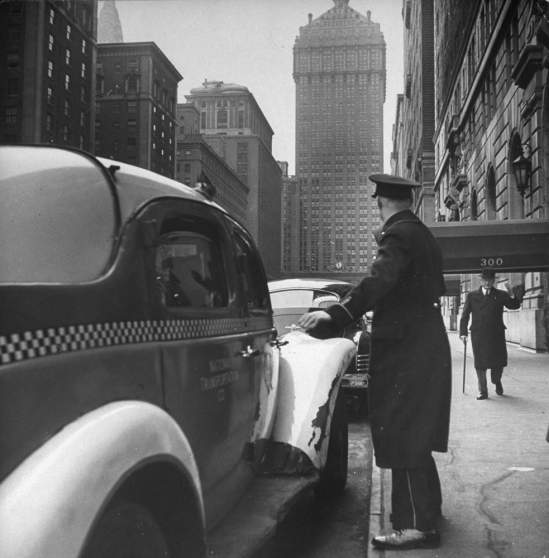
Grabbing a Checker Cab on Park Avenue 1944
Courtesy Life Magazine/Getty Images
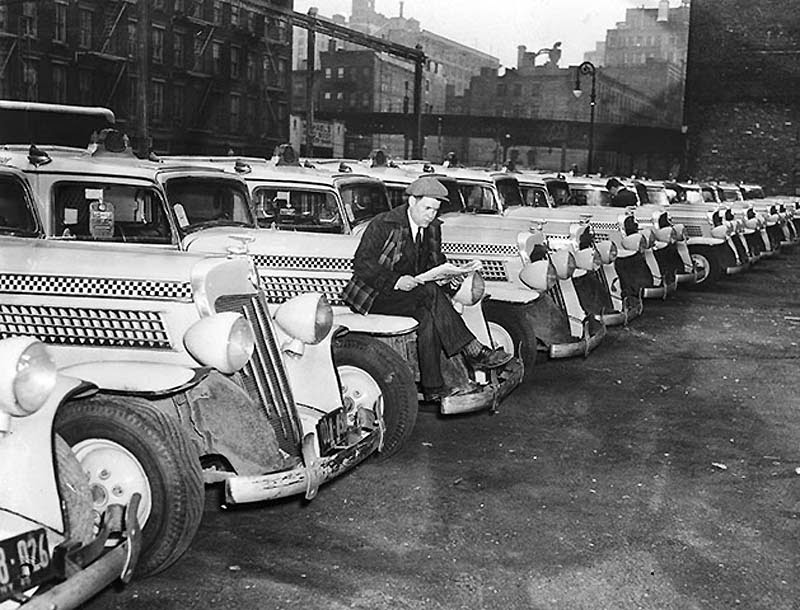
A row of Checker Taxis, sitting idle during a taxicab strike in 1940.
: Keystone/Getty Images)
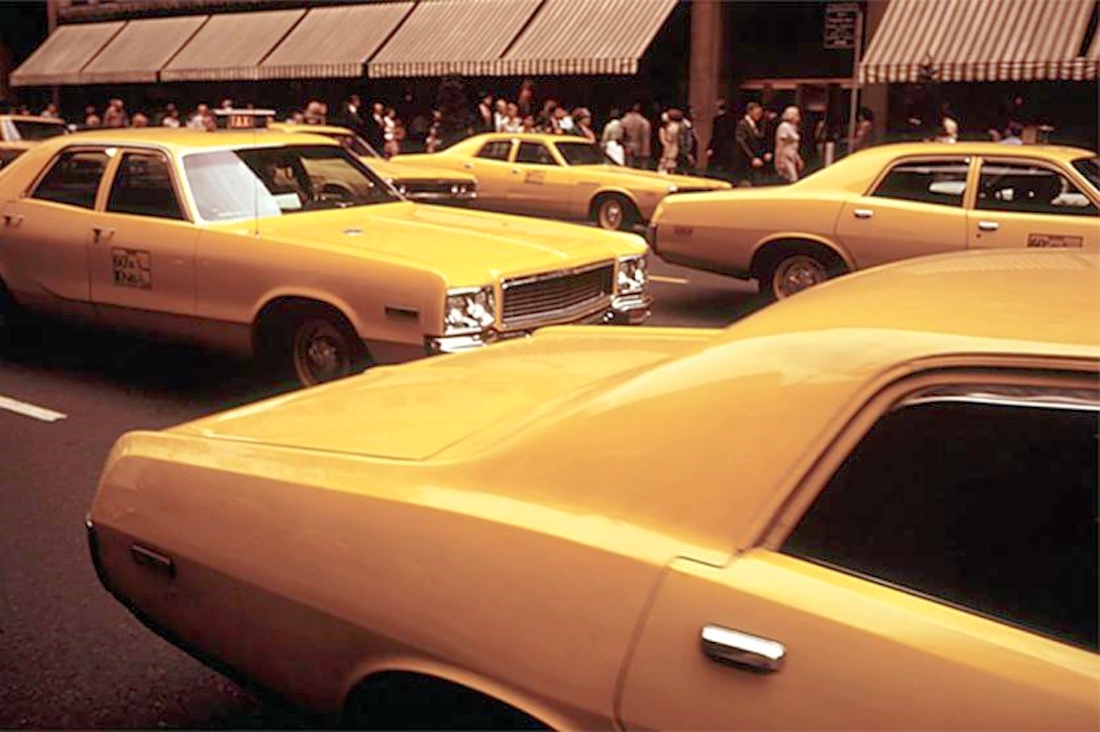
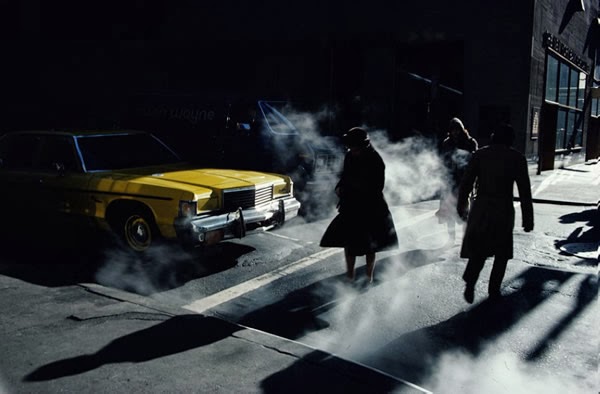
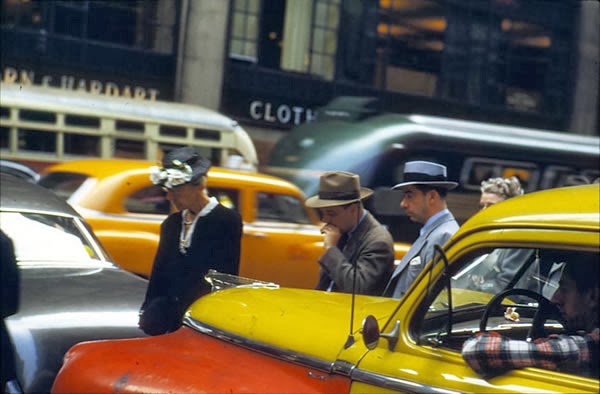
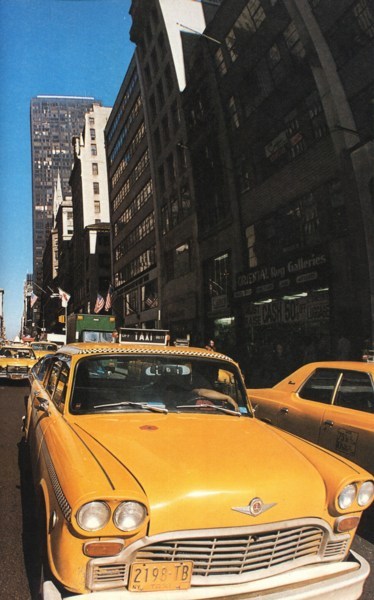
Some vivid 1960s photography by Ernst Haas capturing the mystery and allure of the New York taxi.
Courtesy Ernst Haas / Getty Images
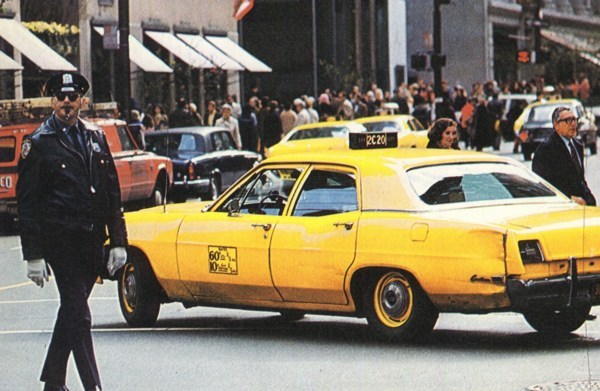
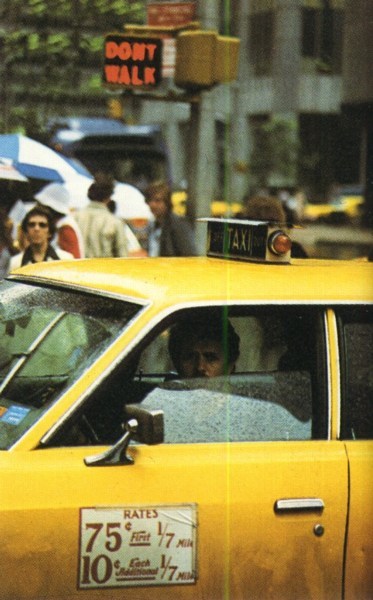
Some scenes from the 1970s…
Courtesy City Noise
The Bowery Boys: New York City History podcast is brought to you …. by you!
We are producing a new Bowery Boys podcast every other week. We’re also looking to improve and expand the show in other ways — publishing, social media, live events and other forms of media. But we can only do this with your help!
We are creators on Patreon, a patronage platform where you can support your favorite content creators.
Please visit our page on Patreon and watch a short video of us recording the show and talking about our expansion plans. If you’d like to help out, there are several different pledge levels. Check them out and consider being a sponsor.
We greatly appreciate our listeners and readers and thank you for joining us on this journey so far.
In honor of the 100th birthday of television icon Norman Lear (creator of All in the Family, The Jeffersons, Good Times and many, many more) I’ve revised and re-edited this, yes, rather strange round-up originally published in 2013 about New York City and television intros and theme songs.
Please play the TV themes as you scroll through this article. Note that a few of the videos can only be watched on YouTube directly.
And now, on with the show….
The camera zooms over the New York City skyline as an earnest pop tune — usually devoid of any rhythm or edginess, but insanely catchy — descends as though sent from outer space.
The next shot focuses on one particular landmark, a bridge or a park, letting you know, see we’re not in some television studio in L.A., we’re really here, the Big Apple!
We meet the rest of the cast, a wacky bunch of people, urban people, who find themselves in comedic situations. The city appears again in the background, but we’re already off with our new friends — the stars of 1970s prime time.
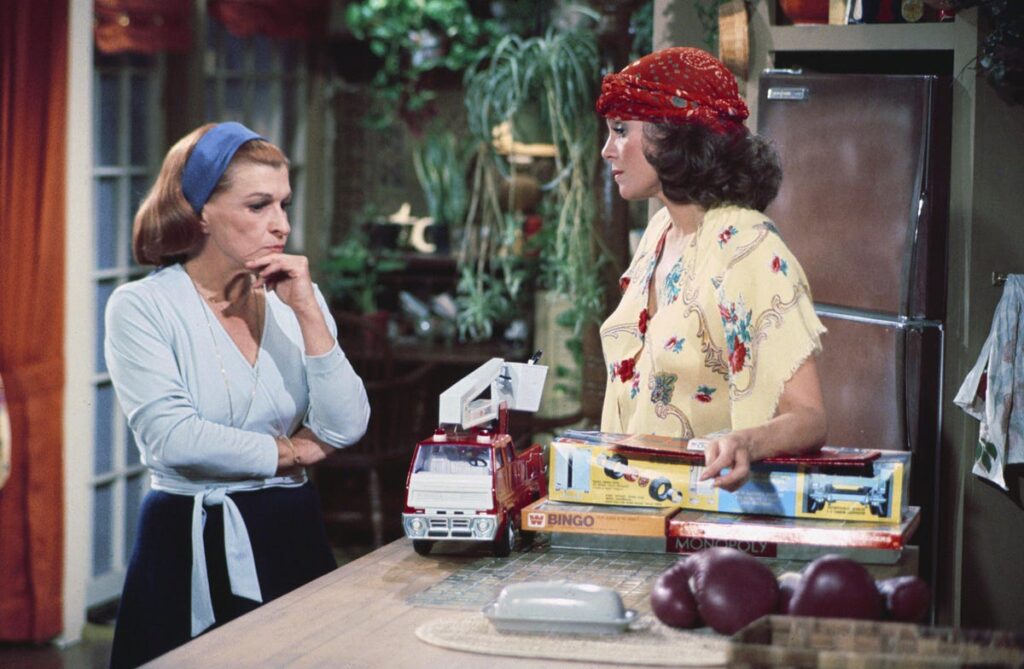
From Rhoda with the great Nancy Walker and Valerie Harper
That’s how a great many television programs began during the 1970s. New York City was heavily represented on television during the decade, an easily identified setting that could be depicted in two or three establishing shots before moving on to introduce the stars.
It popped up in no-nonsense crime dramas and sitcoms alike, an almost singular destination for television characters. After the ‘rural purge‘ of folksy TV shows likeBeverly Hillbilliesand Green Acres(two shows which lampooned the urban snob), there was little room for small-town America; places like Cincinnati, Milwaukee, Chicago and of courseLos Angeles filled out the schedule.
In reality, New York was entering a dark period of deteriorating public services, high crime and financial woes. While television news would often dramatically reflect this image out to America, television entertainment would do the opposite.
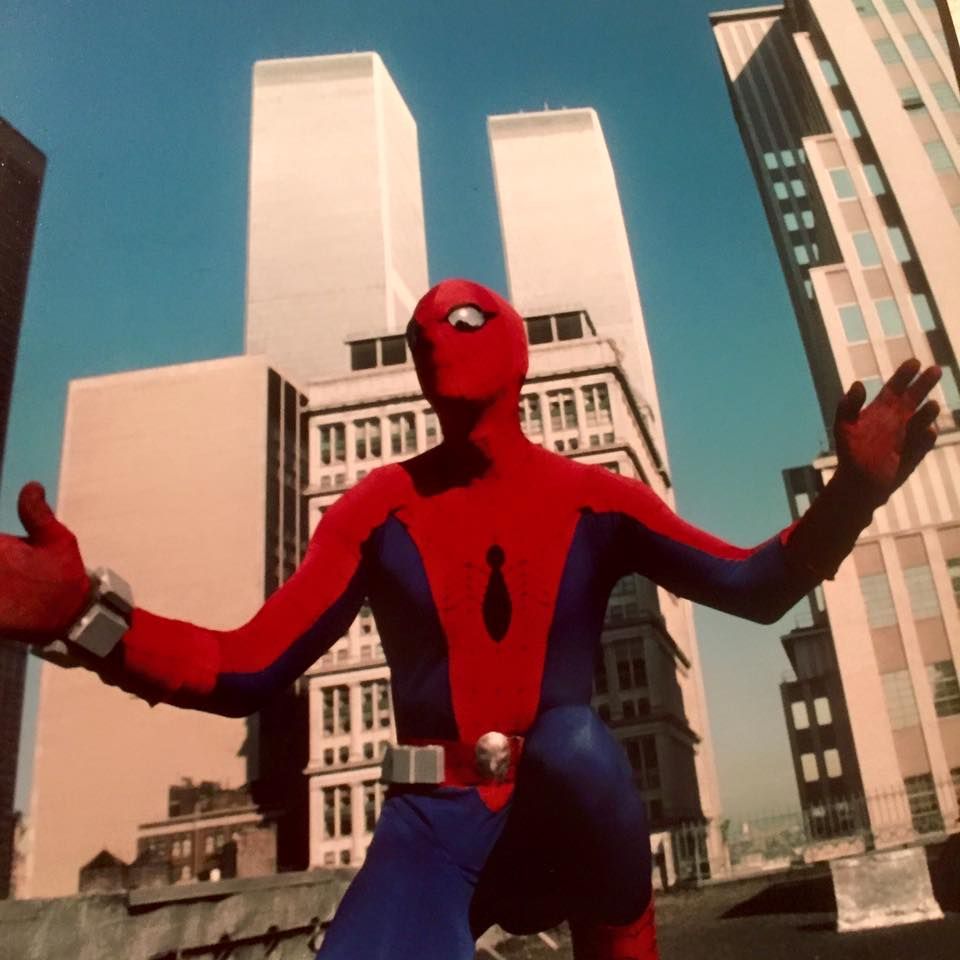
Few TV series of the period accurately reflected New York’s troubles outside of a few occasional crime dramas and action shows (like 1977’s Amazing Spiderman).
Of course, most television shows about New York City in the 1970s were actually filmed in Los Angeles. And you couldn’t fault sitcom creators for wanting to eschew real-life troubles that would distract from their clean and cheerful worlds of comic misunderstandings.
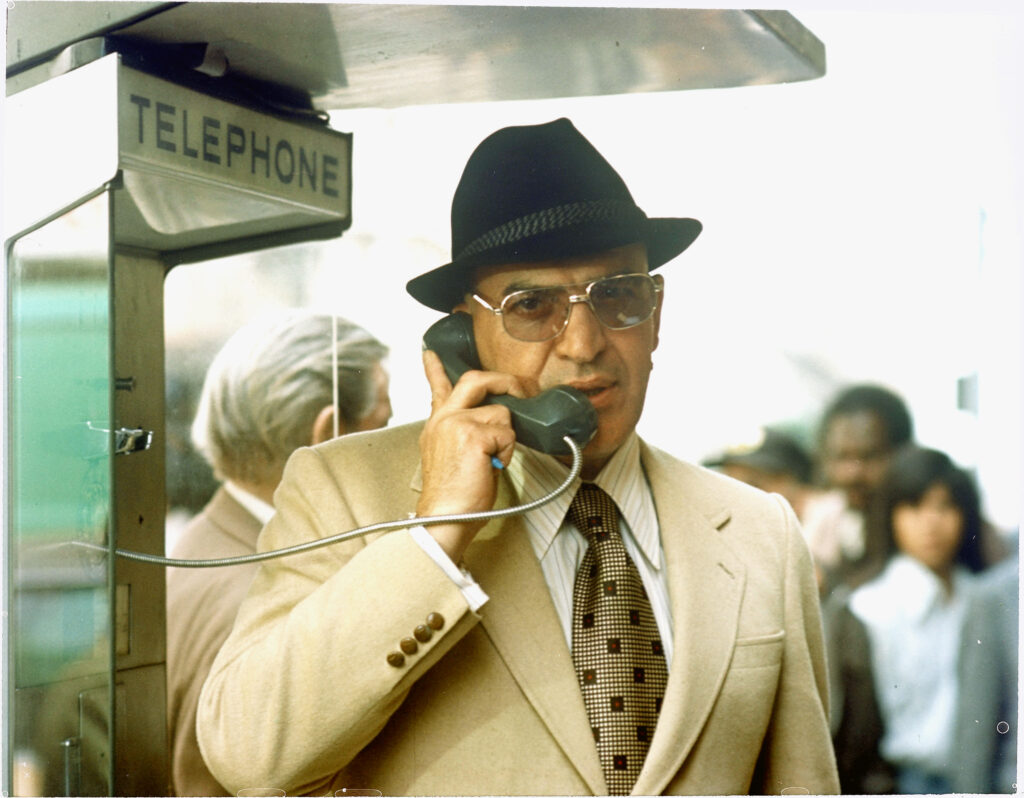
Even great detective shows like Kojak pulled their punches, largely because reality was often too graphic to present in prime time.
That doesn’t look like a New York City public phone.
But an alternate world emerges from watching a series of television intros from the 1970s, pulled from top sitcom and dramas of the period. New York City is essentially Midtown and Central Park (but for the few shows that ventured into the other boroughs), glamorous and utterly harmless, without edge.
And in those few shows that did exploit the city’s dangerous side, the intros made clear — through artistically rendered graphics — that the danger was merely of the pulp variety.
A Woman’s Playground
Many shows of the decade presented Manhattan as an aspirational destination, especially for women, even as thousands of people in real life fled the city. Television was finally focusing on the adventures of single women, but to do so, New York had to be depicted as nearly flawless.
The iconic example of this is That Girl starring Marlo Thomas. In this 1970 opener, New York is nothing but glamour, shopping, Lincoln Center and Broadway.
The lousy sitcom On Our Own, New York’s variant of Laverne & Shirley, opens with a couple of crazy gals heading to their job at an advertising agency. The intro actually features a bit of physical violence against one woman, played up for laughs!
Not every show was so blind to the rough edges of New York. But it required a tough lady like Rhoda, a native New Yorker, to maneuver all those sliding locks and tough-talking cabbies. (The third season intro is below, but the first season intro is probably the more memorable one.)
The Hustle-and-Bustle
As with the On Our Own intro, many workplace comedies chose to contrast their wacky interior antics with the frenetic urban rhythms of New York City. It’s as though the comedy you were about to see generates from walking through the crazy, chaotic streets of Midtown.
The intro to the Garment District comedy Needles and Pinsratchets the enthusiasm of That Girl‘s intro down to a quiet, confident strut. Yeah, I work here.
A variation of the buzzing energy of New York City being a impetus for comedy is seen in the intros for Saturday Night Live, even to this day.
The Taxi City
One identifying symbol of New York is the taxicab or, more specifically, the cabbie. While films like Taxi Driver were putting an ominous spin on this image, television still relied on the cab as shorthand for the modern urban experience.
And if you could somehow combine it with a basketball court — as with Busting Loose — then you know it’s really, really New York.
The taxi is a vehicle of love in the romantic comedy Bridget Loves Bernie. There’s no way to see this today as anything other than slightly creepy especially in light of Martin Scorsese’s Taxi Driver (which came out a few years later). This extended intro ticks off all the boxes — cabs, school yards, the Queensboro Bridge, Central Park….
Taxis were so representative of the New York experience that one of the era’s greatest sitcoms was centered around the industry. Taxi survived well into the 1980s showing a more realistic version of New York than other shows of the day.
It also features the Queensboro Bridge, a heavily used symbol for the expanse of the city. Since shows of the period rarely went downtown, the Queensboro could sit in for the Brooklyn Bridge when long vistas of the East River were required. (Taxi actually did go downtown; it was set in a garage at Charles and Hudson Streets.)
The Outer Borough
Television shows often went to the other boroughs when they wanted to express the clashes of modern life, contrasted against a more suburban backdrop which many Americans could more easily identify.
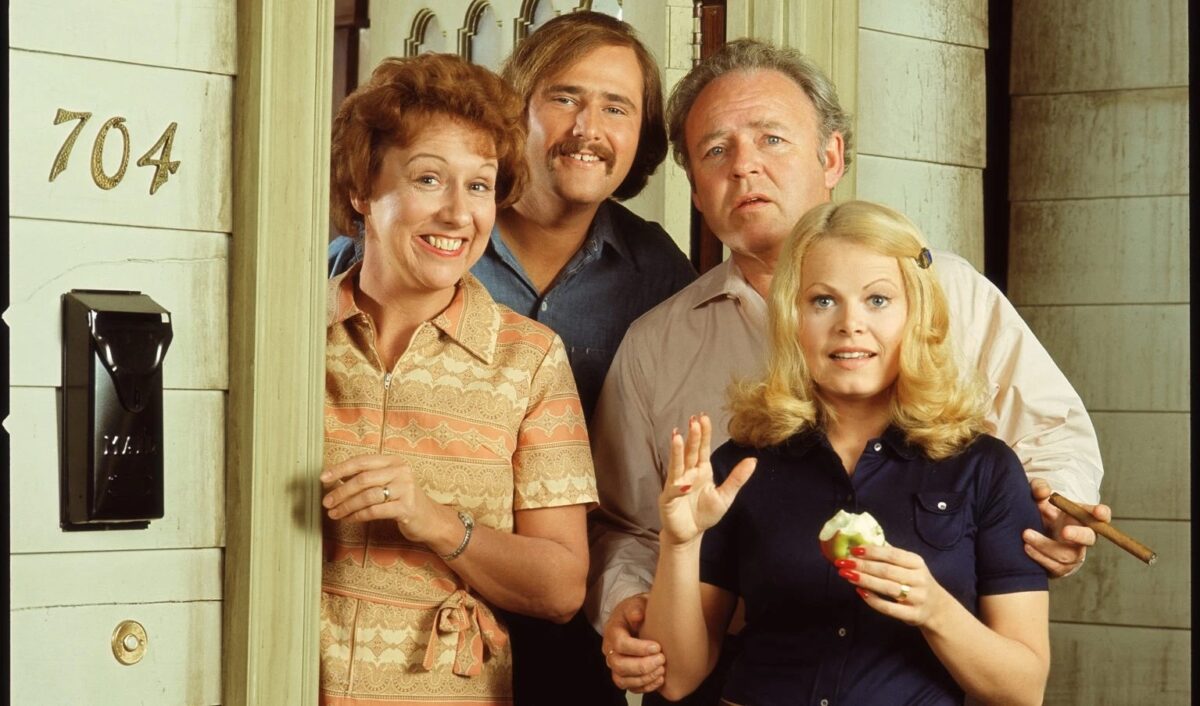
Most everybody knows the iconic theme song from All In The Family as delivered by Carroll O’Connor and Jean Stapleton. What you may not remember is yet another establishing shot of Manhattan, used to contrast with the rows of Queens homes. In these few seconds, the intro excellently sets up the conflicts of modernity, a quiet residential present, and a duo that seem stuck in a sheltered past.
The same sort of pull-away from Manhattan is used in O’Connor’s follow-up series, Archie Bunker’s Place, which yanks the viewer away from the skyline, back over the Queensboro Bridge and down Northern Boulevard. Archie has changed since those years at the piano, and so have his surroundings. The blocks of uniform homes have been replaced with subway graffiti and bustling street life.
13 Queens Blvd went even deeper into Queens but still relied on the establishing shot of Manhattan to let viewers know how far we are from real urban issues. The show’s situations were driven by the comic misunderstandings within an apartment complex, a little like One Day At A Time (set in Indianapolis) or Three’s Company (set in Santa Monica) perhaps. The show didn’t last long.
Brooklyn was represented in the 1970s by Welcome Back Kotter. Set in a fictional high school, it is New Utrecht High School that’s used in the opening. While other sitcoms used a Manhattan establishing shot, Kotter prefers a beat-up sign that announces Brooklyn as the 4th largest city in America. With its painted trains and lines of laundry, this might be the grittiest depiction of New York in a sitcom, even as its high school students (the Sweathogs) were incredibly unrealistic.
Movin’ On Up
Mostly though, sitcoms preferred the fantasy, Manhattan as an Emerald City. (It was literally depicted as such in the 1970s musicalThe Wiz.) No amount of deterioration seemed to supplant the image of Manhattan as having ‘made it’, especially when dealing with African-American television characters.
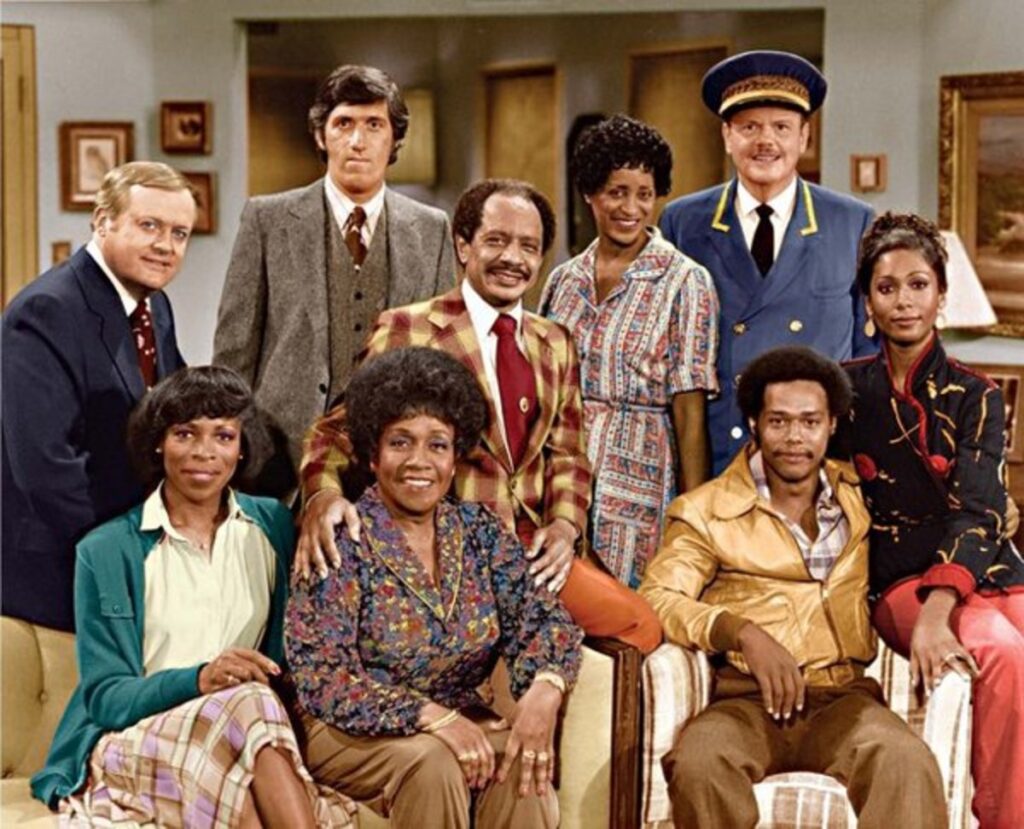
Taxis are again the vehicle of transformation in The Jeffersons, plucking George and Louise Jefferson from the land of Archie Bunker — again, using the Queensboro Bridge — and putting them in a luxury accommodation on the Upper East Side.
Two African-American boys are saved by a wealthy white man in Diff’rent Strokes.For emphasis in the intro, Arnold and Willis are playing basketball, the de facto symbol in 1970s television of the inner city.
I don’t know if the show was any good, but the intro to the 1970 sitcom Barefoot In The Park seems refreshing in retrospect. The show, based on the Broadway show, features a young black couple trying to make it though the first years of marriage in Manhattan. It seems to handle the subject with the same euphoria used in ‘That Girl’.
They’re riding a horse-and-carriage drinking champagne! It literally does not get cheesier.
Unvarnished New York
There were a few shows that felt embedded within the actual New York experience. Their intros reflect a certain melancholy, a feeling that perhaps the city was not always a whirlwind of breezy excitement. The champagne remains corked.
Barney Miller is one of the few shows actually set in Greenwich Village. Perhaps as a result, its establishing shot of Manhattan is moody, even dreary, a perfect backdrop for a comedy television show about criminal behavior.
In the opening to The Odd Couple, New York is an embodiment of its characters’ anxieties and differences. There is no establishing shot of Manhattan, no attempt to glamorize the big city. These two are actually at odds with the city, not each other, as presented here. The intro ends with a rare pan-up of the two characters with the city looming behind them.
The Wild East
In an opposite reaction to rural shows like Green Acres (where people fled New York), a maverick sensibility came to New York in the 1970s, especially in the detective genre, with iconoclastic characters bringing foreign forms of justice to an ungoverned city.
On McCloud, a New Mexico detective wrangles up a few pimps and car thieves, bringing fun but clumsy cowboy tropes to Times Square. Unlike sitcoms, detective dramas actually went to 70s Times Square all the time for obvious reasons. Although most did not bring stagecoaches with them.
Another bizarre crime-fighter to the New York skyline was the Amazing Spider-Man. We get a Manhattan establishing shot here, comically interrupted by Spiderman’s awful costume. They spend a great amount of time with Spidey on the Empire State Building; in fact most of the show was filmed in L.A.
You didn’t even need a reason to bring in a cowboy. In the 1970 sitcom Mr Deeds Goes To Town, a folksy newspaper editor takes on the big city. The intro lays it on thick.
Groovy 70s Noir
A few crime dramas of the 1970s were actually filmed in New York City and thus could highlight the city a bit more fully in their intros.
The short-lived television version of Serpico features numerous places throughout the city, from the Battery to Times Square. And, yes, the Queensboro Bridge is again represented here via its subway stop.
New York’s greatest television crime fighter of the 1970s was Kojak, so cool that the city is given a trippy noir vibe, peeking from the nooks of swirling graphics. Of course most of Kojak was filmed in Los Angeles, but, according to writer Burton Armus, the production crew went to New York on occasion for “surrounding shots, background shots, one or two scenes.”
Taking its cue from Kojak in its tone, Eischied was also a bit of a cowboy, bringing some Southern swagger to the mean streets of Manhattan. Its credit sequence is a confused mess.

![[Richmond Hill, residence of Aaron Burr.]](https://boweryboyshistory.com/wp-content/uploads/2014/07/M3Y29313-300x208.jpg)