Greenwich Village is one of America’s great music capitals, an extraordinary distinction for an old neighborhood of tenements, townhouses, dive bars and a college campus.
So many musical titans of jazz, folk, pop and rock and roll got their start in the Village’s many small nightclubs and coffeehouses, working alongside artists, writers, actors and comedians to create an American cultural mecca unlike any other.
And it was here, on January 24, 1961, that a nineteen-year-old young man from Minnesota entered the fray — Robert Zimmerman, otherwise known as Bob Dylan.
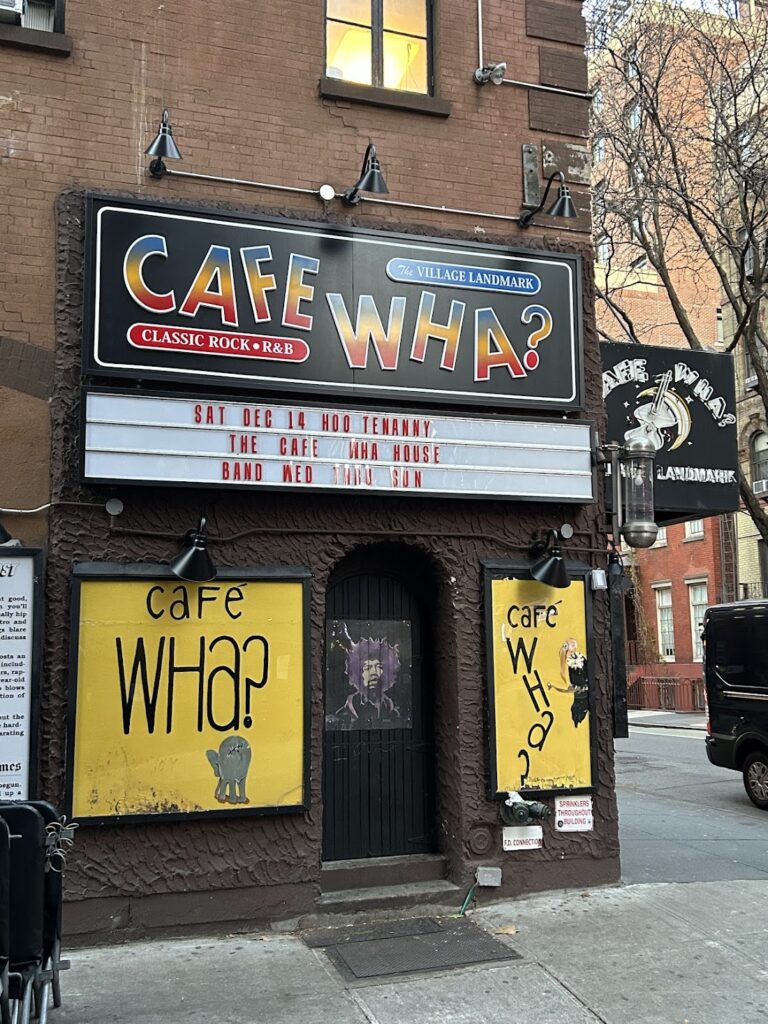
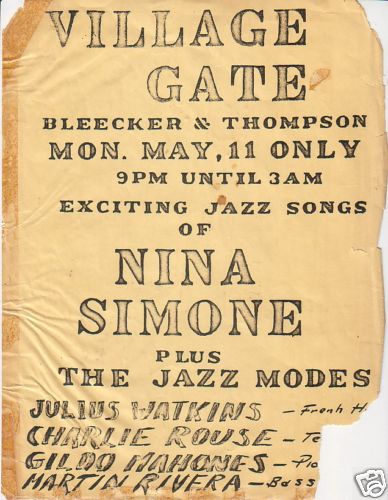
The Village completely transformed the young folk singer into the voice of a generation, working out his transformation on the minuscule stages of the Gaslight, Cafe Wha? and Gerde’s Folk City.
But this show isn’t strictly about Dylan’s ascent to greatness, but the neighborhood — the people, the streets, the basements! — which cultivated artists like Dylan (and Billie Holiday and Nina Simone and Pete Seeger and Barbra Streisand and Joan Baez and so on.)
PLUS: Bob Moses and Jane Jacobs stop by for a hootenanny (and a protest)
LISTEN NOW: BOB DYLAN’S GREENWICH VILLAGE
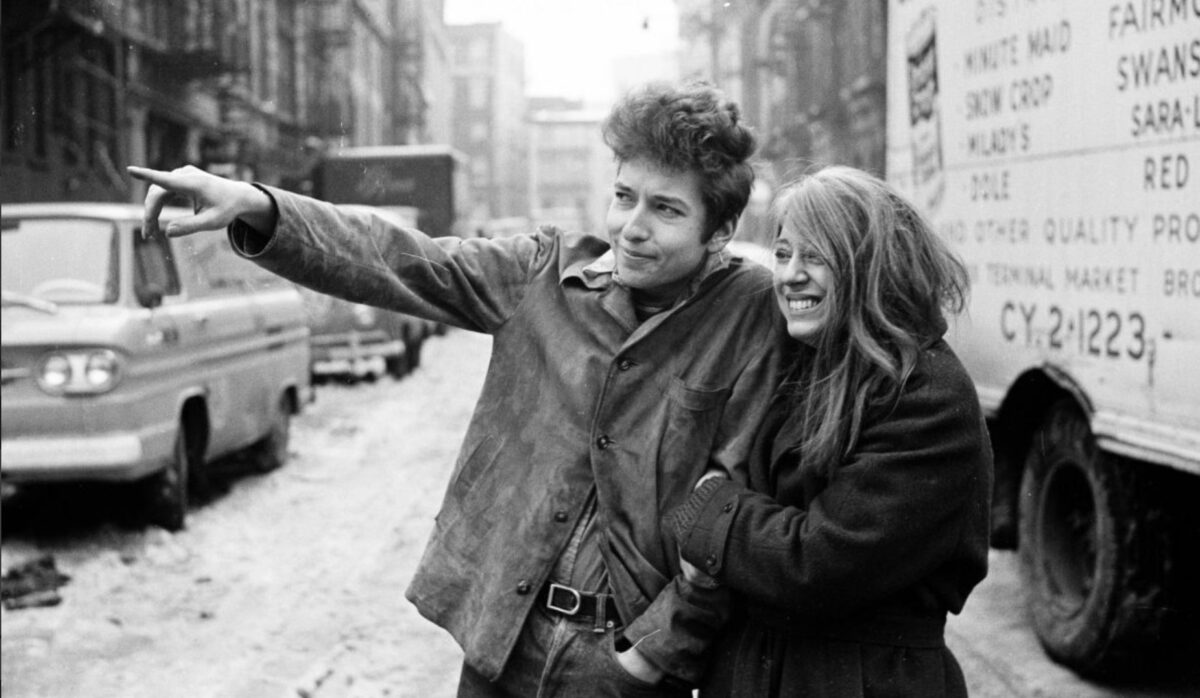
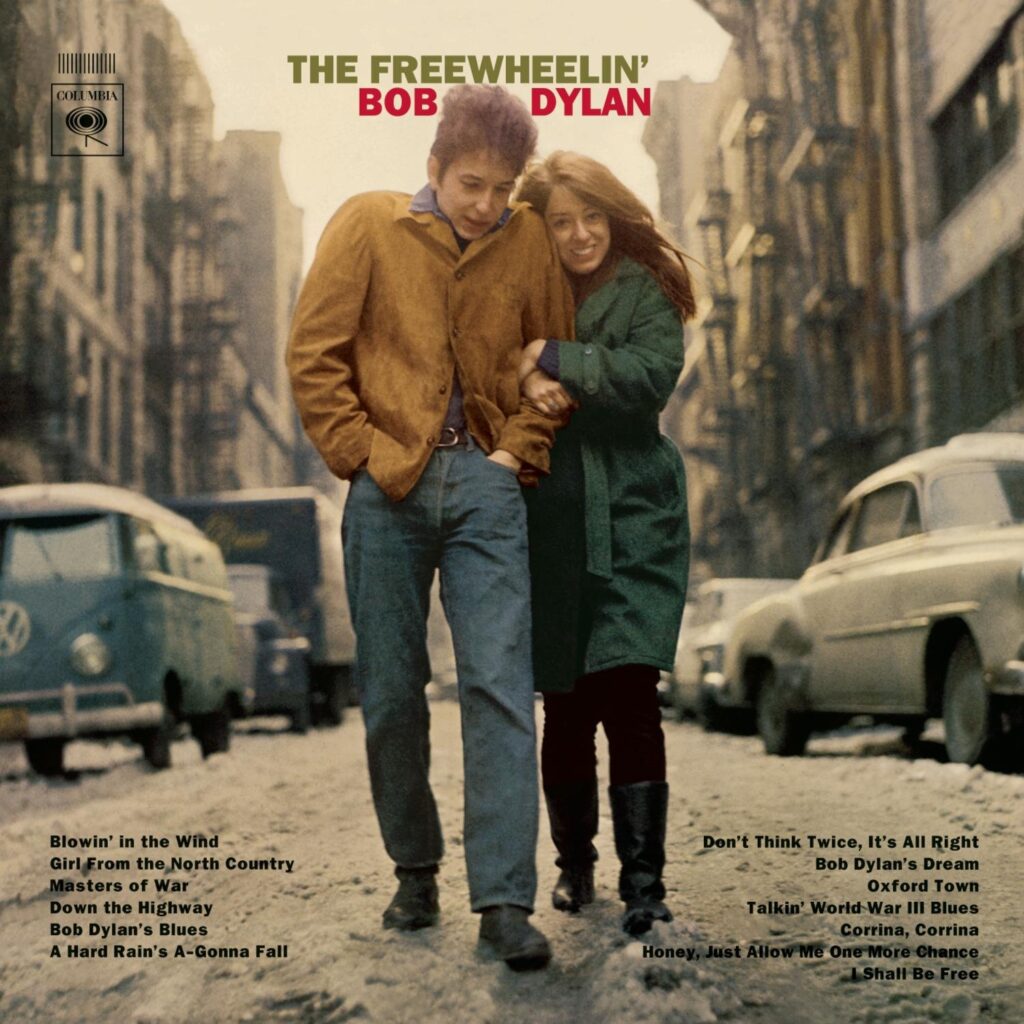
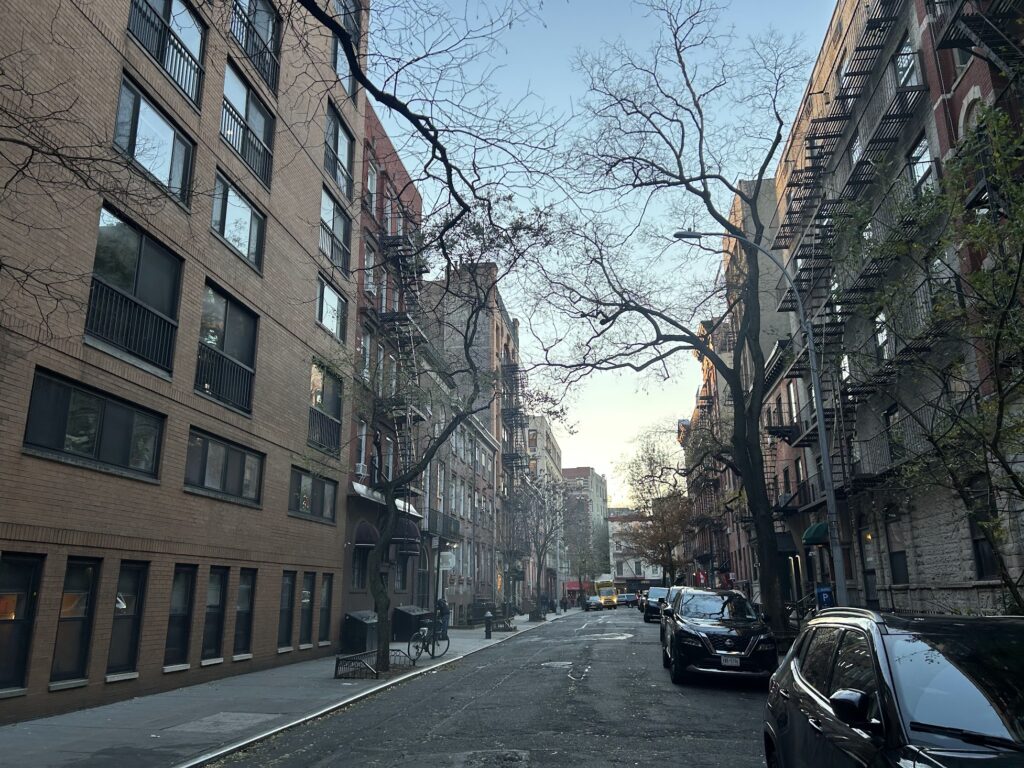
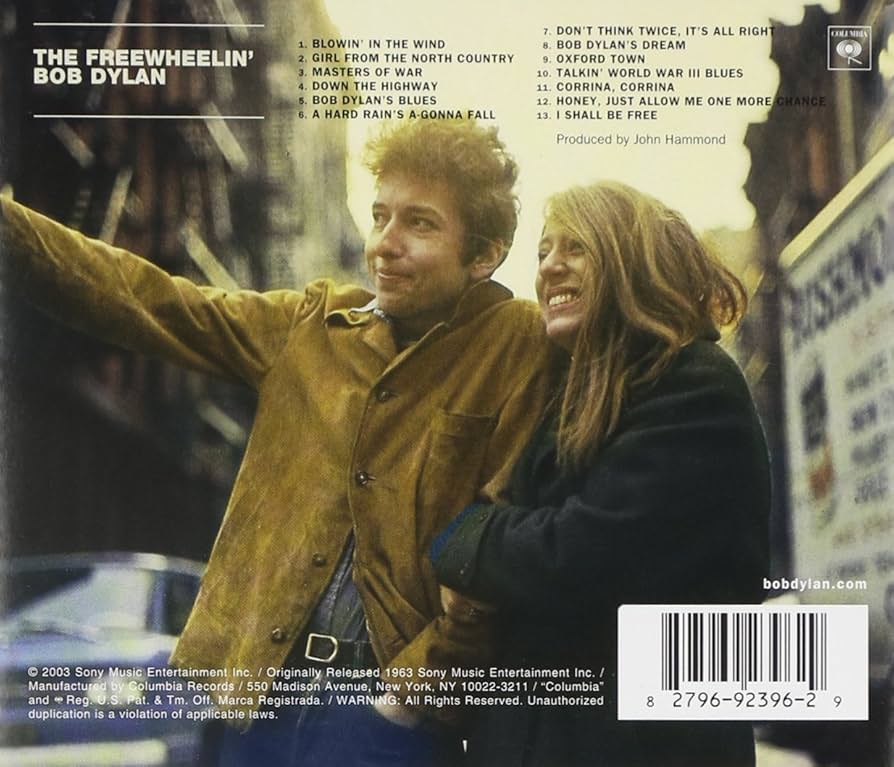
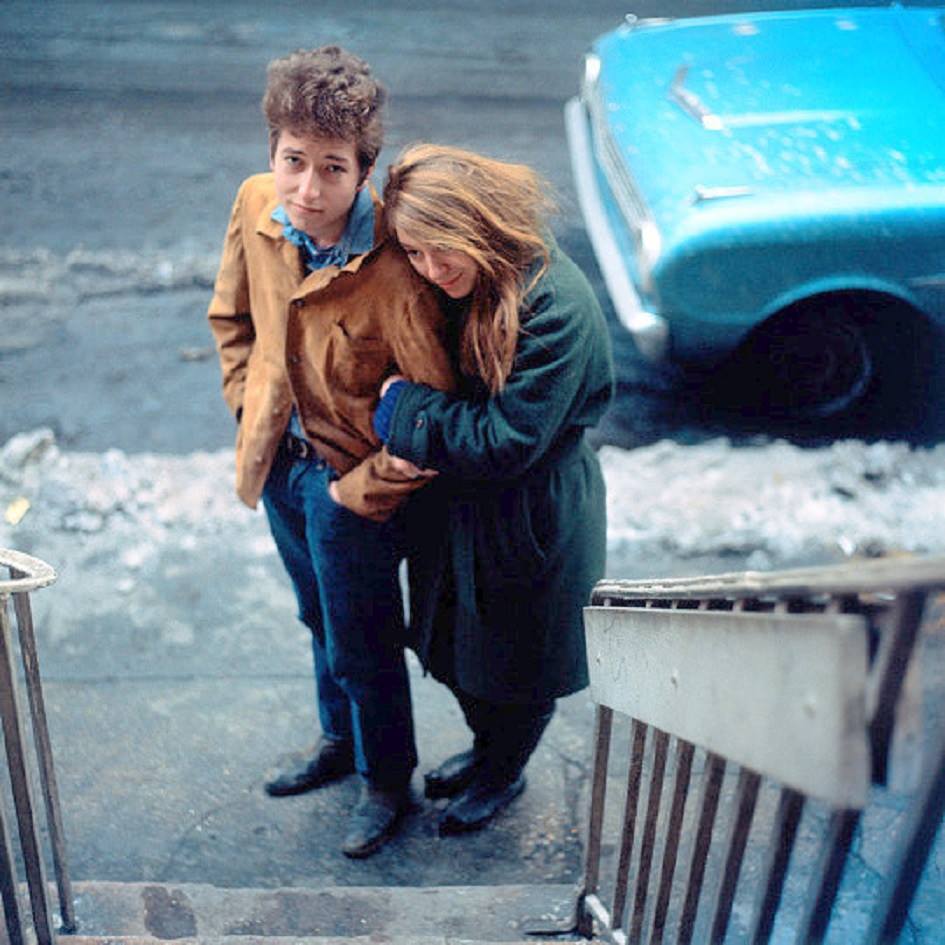
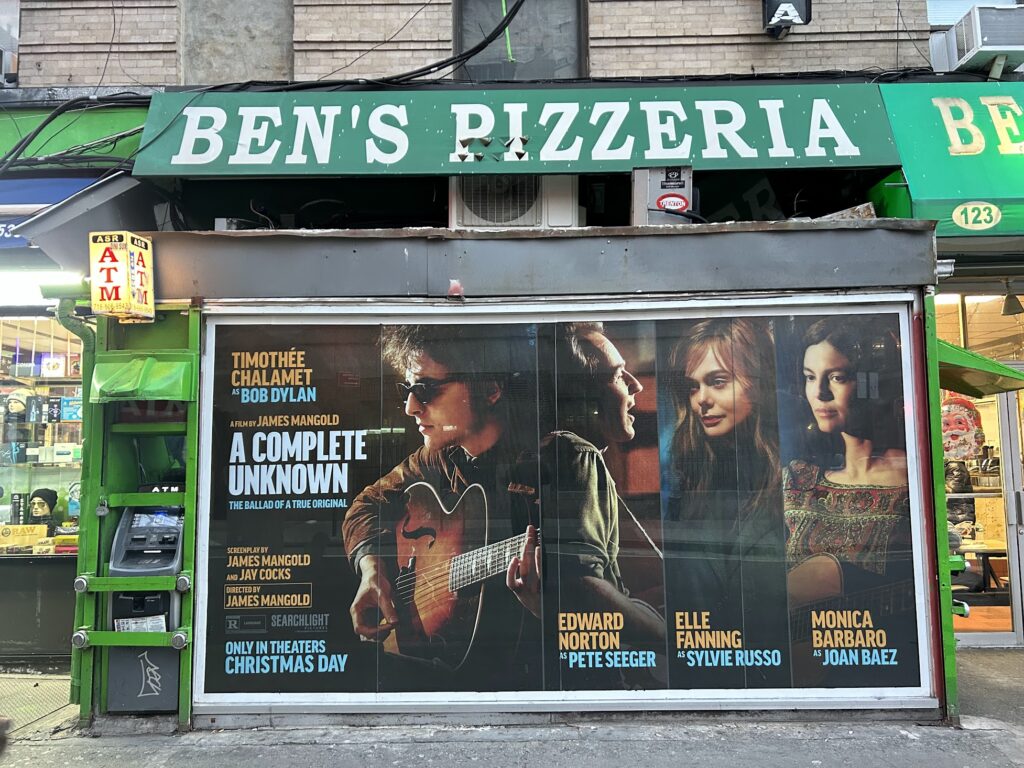
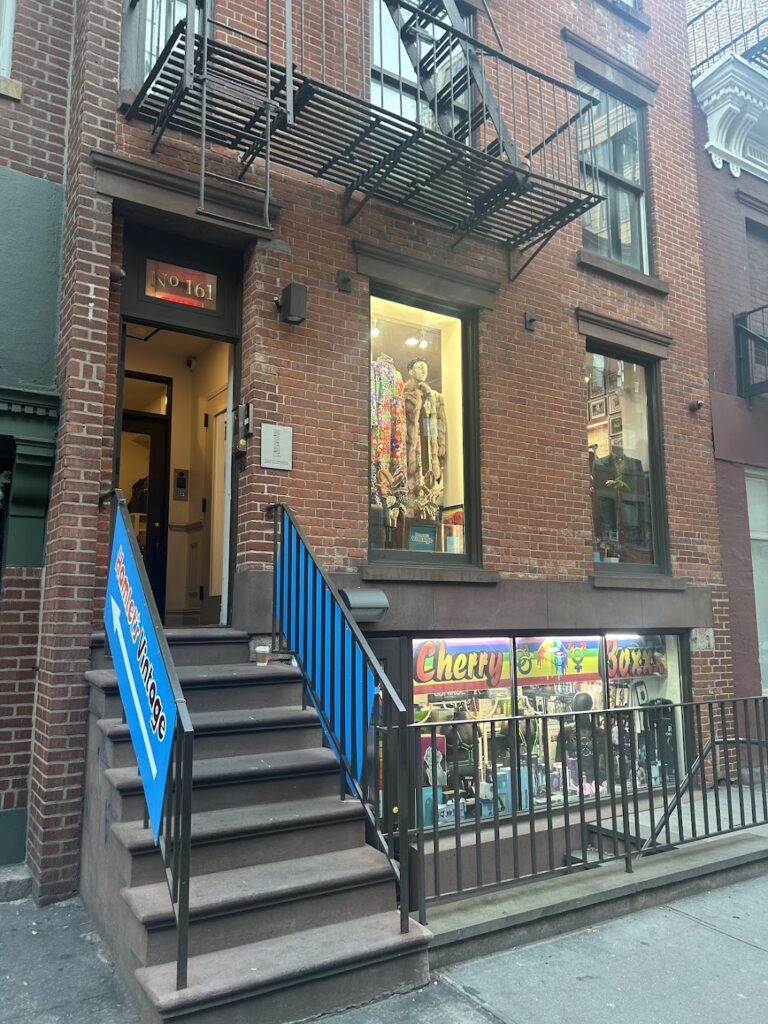
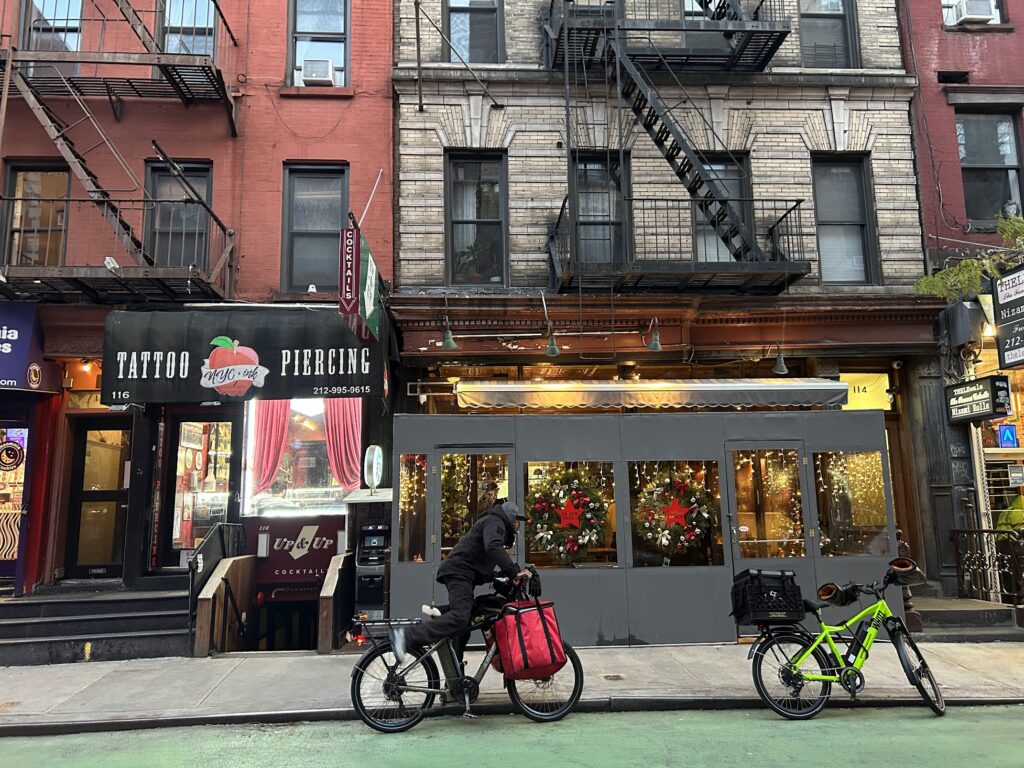
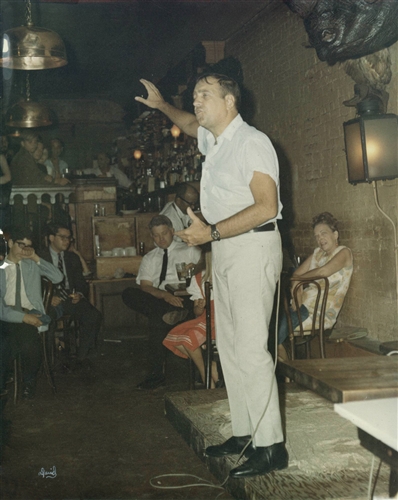
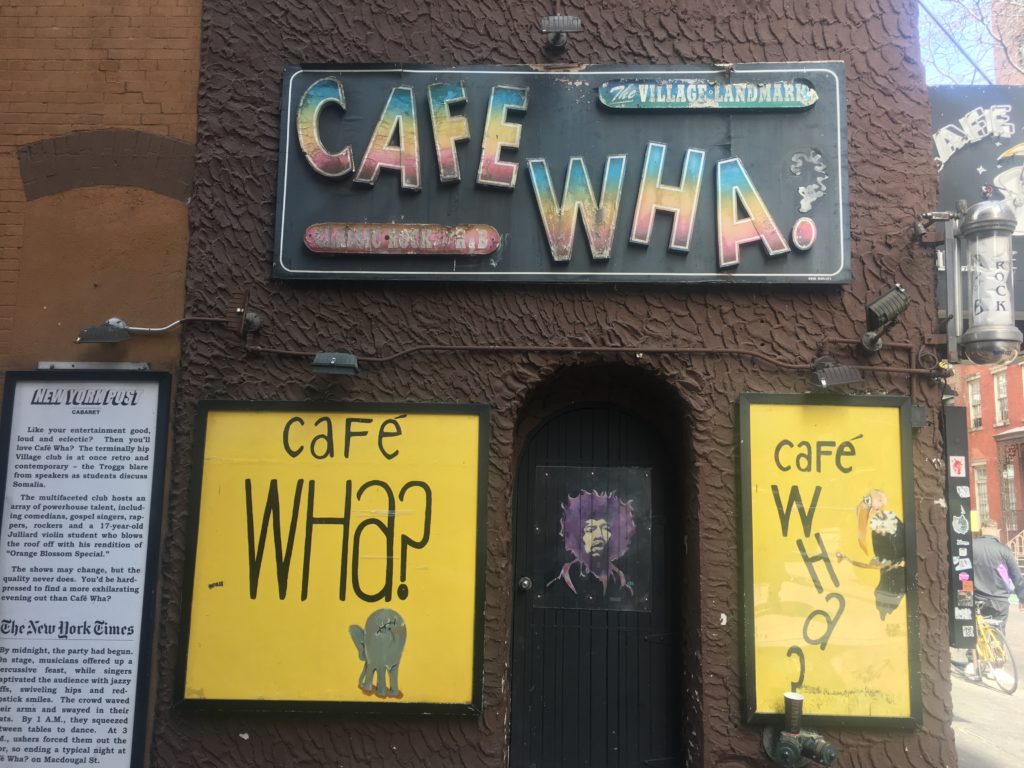
Jones Street, today a popular place for selfies thanks to the album coverPhotography by the legendary music photographer Don HuntsteinBen’s Pizzeria on MacDougal StreetBob and Suze’s apartment on West 4th StreetThe former Gaslight and Kettle of FishStill hosting hootennanies at the Cafe Wha?
FEATURED READING
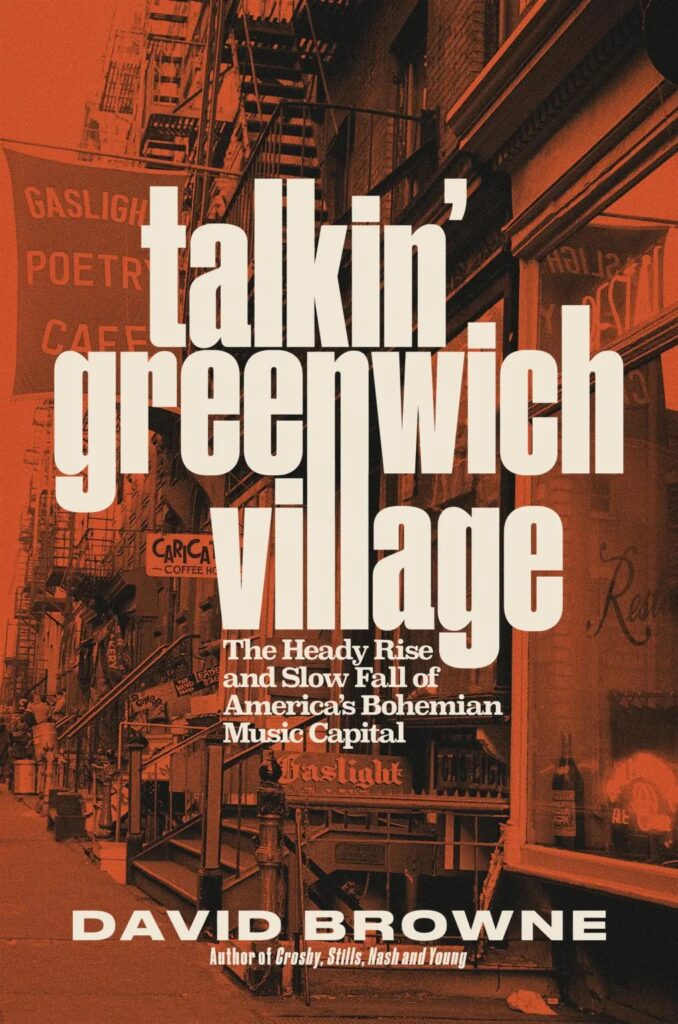
David Browne / Talkin’ Greenwich Village
Bob Dylan / Chronicles Stephen Petrus and Ronald D Cohen / Folk City: New York and the American Folk Music Revival Suze Rotolo / A Freewheelin’ Time: A Memoir of Greenwich Village in the Sixties Howard Sounes/ Down the Highway: The Life of Bob Dylan Sean Wilentz / Bob Dylan in America
FURTHER LISTENING
Music featured on this show:
“Talkin’ New York” by Bob Dylan (from his first album for Columbia Records) Dylan Thomas reciting “Do Not Go Gentle Into That Good Night” from Dylan Thomas Reading A Child’s Christmas in Wales & Five Poems “Strange Fruit” by Billie Holiday (Commodore) “Little Girl Blue” by Nina Simone (Bethlehem/Verve) “A Sleepin’ Bee” by Barbra Streisand (Columbia Records) “Goodnight Irene” by the Weavers (Decca Records) “This Land Is Your Land” by Woody Guthrie “Talkin’ John Birch Paranoid Blues” by Bob Dylan “Blowin’ In The Wind” by Bob Dylan “Don’t Think Twice, It’s All Right” by Bob Dylan “Only A Pawn In Their Game” by Bob Dylan “The Times They Are A-Changin’” by Bob Dylan
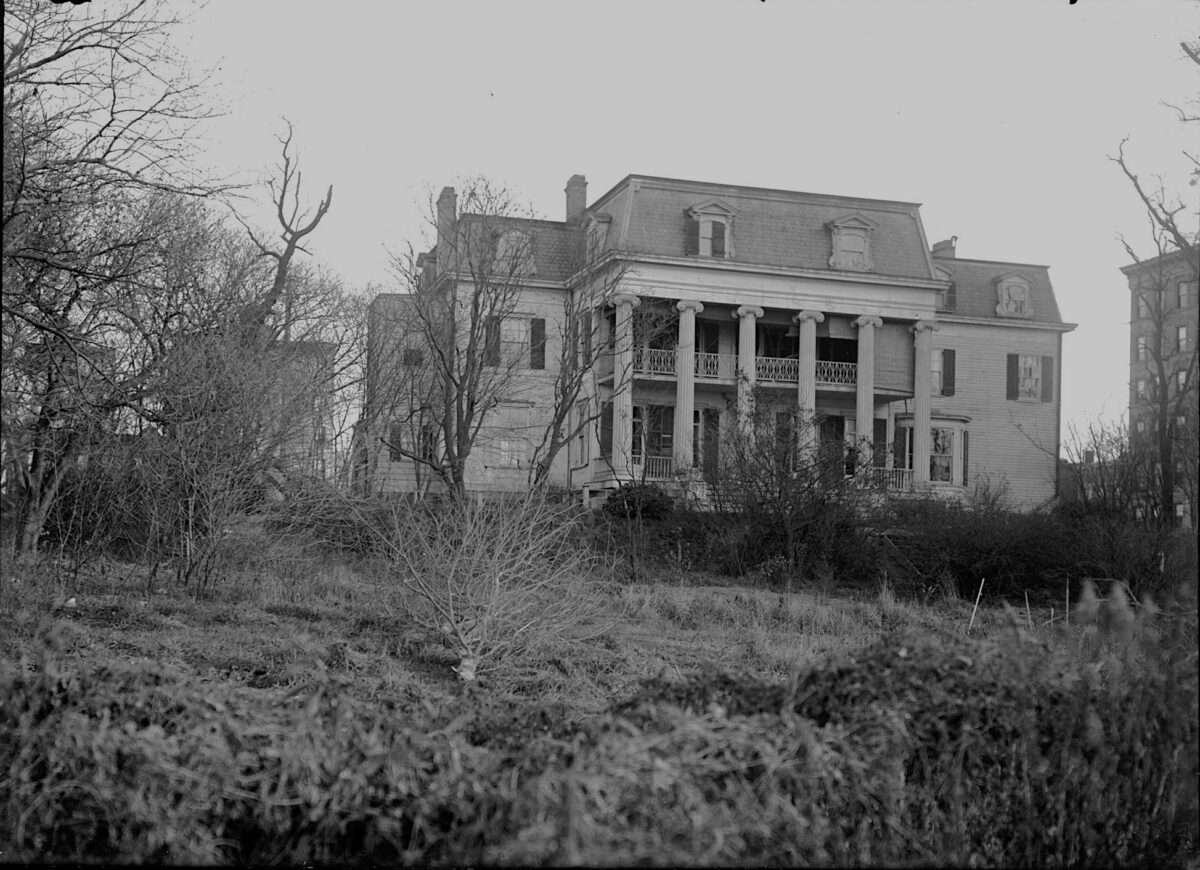
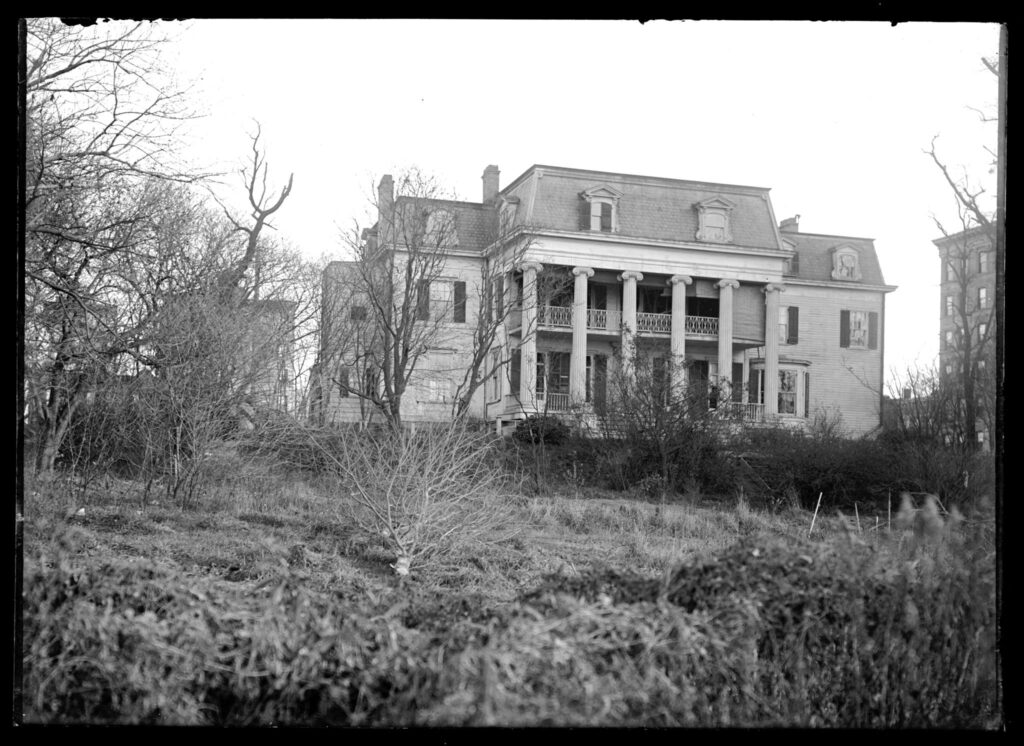
The old Furniss mansion, with its dark secrets literally behind a locked door. (courtesy Ephemeral New York)
A brand new batch of haunted houses and spooky stories, all from the gaslight era of New York City, the illuminating glow of the 19th century revealing the spirits of another world.
Greg and Tom again dive into another batch of terrifying ghost stories, using actual newspaper reports and popular urban legends to reveal a different side to the city’s history.
If you just like a good scare, you’ll enjoy these historical frights. And if you truly believe in ghosts, then these stories should especially disturb you as they take place in actual locations throughout the city — from the Lower East Side to the Bronx. And even in cases where these 19th-century haunted houses have been demolished, who’s to say the spirits themselves aren’t still hanging around?
Featured in this year’s crop of scary stories:
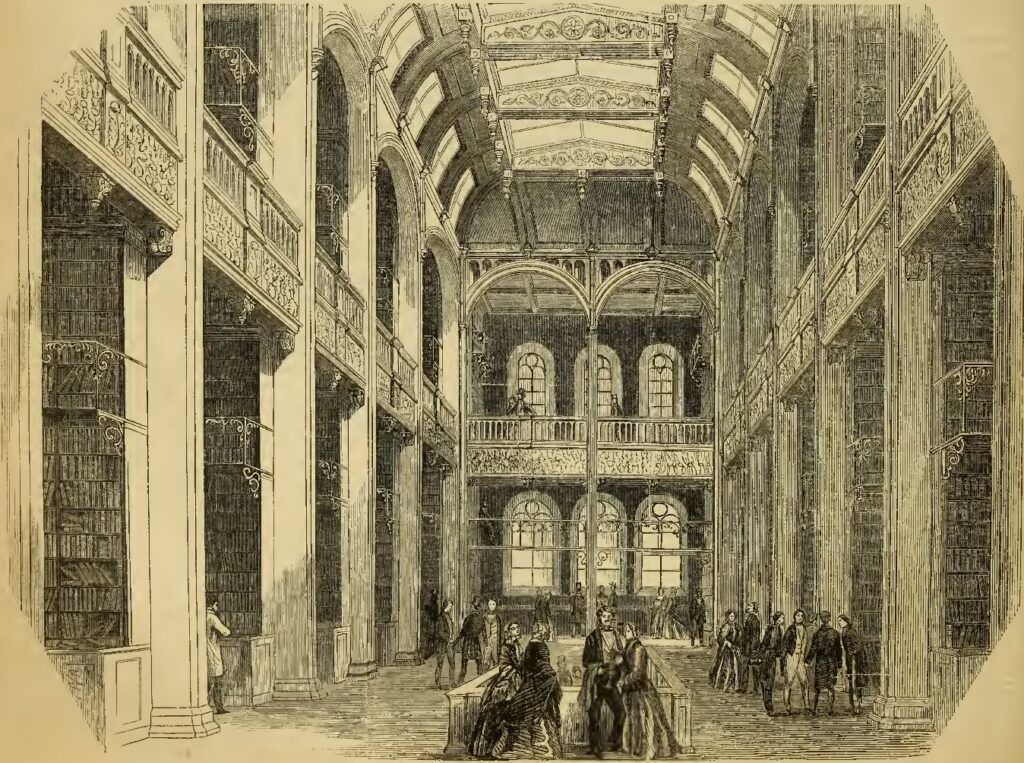
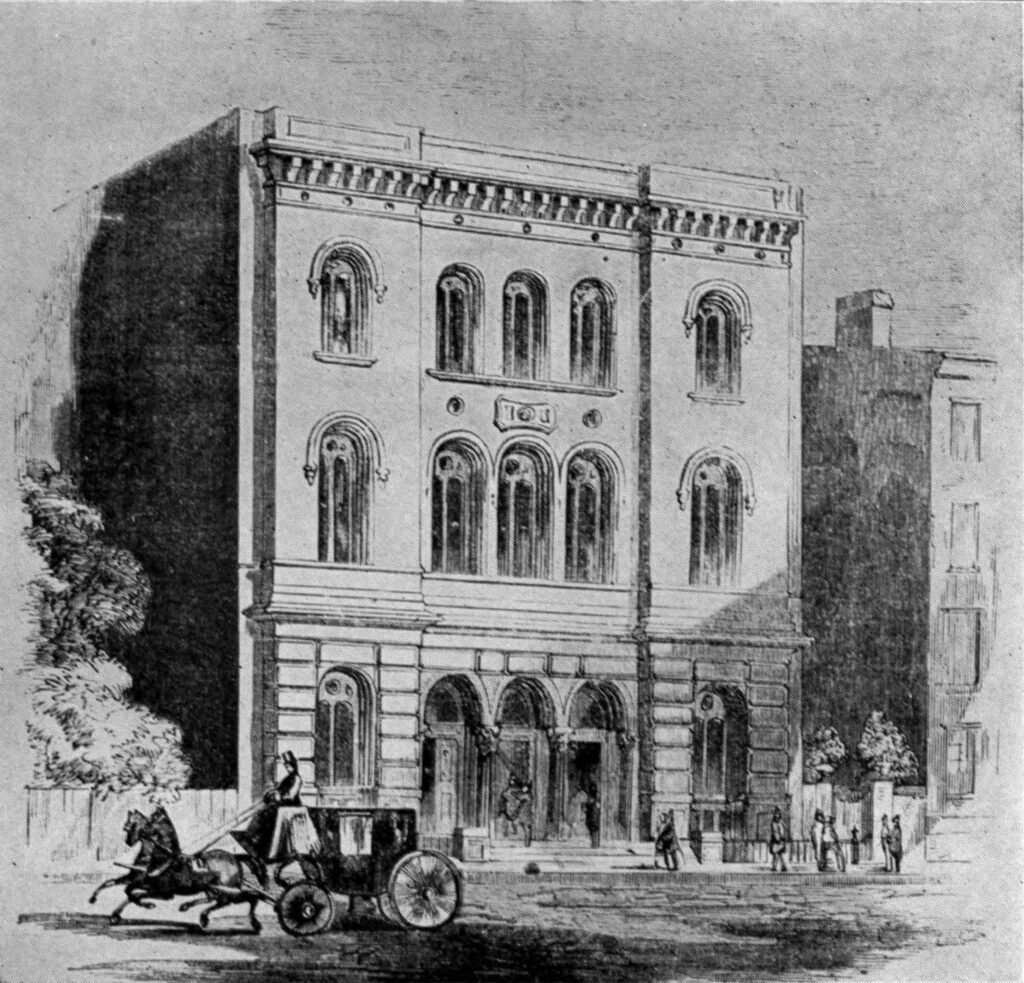
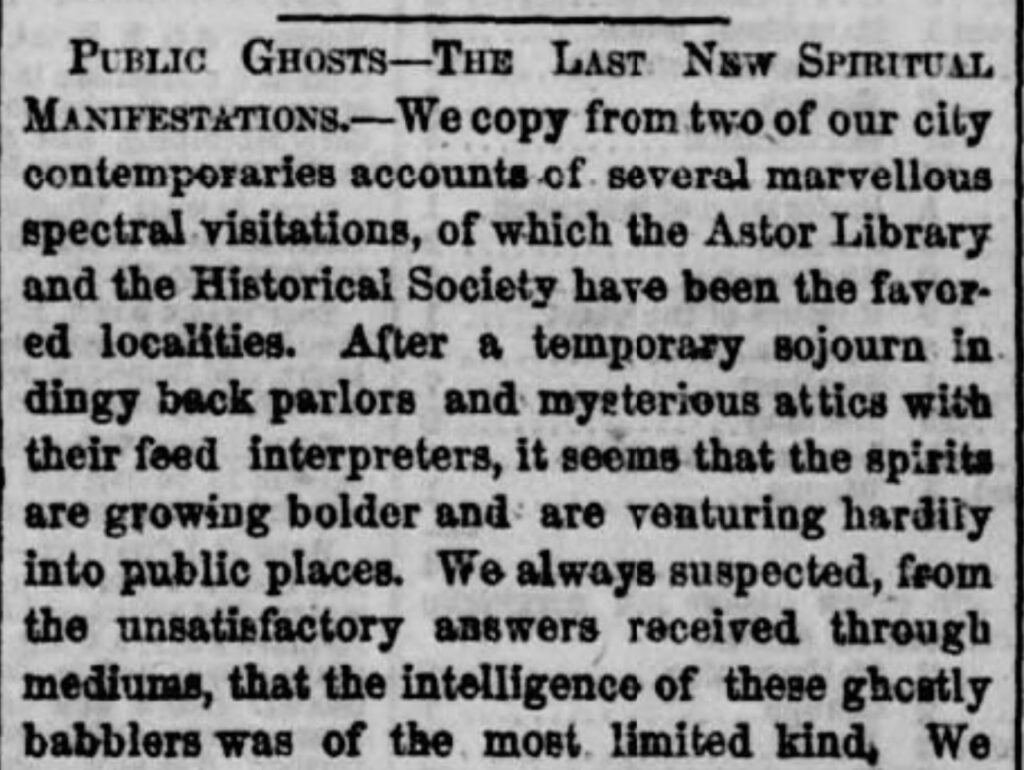
— A ghostly encounter at the Astor Library (today’s Public Theater) involving a most controversial set of mysterious books;
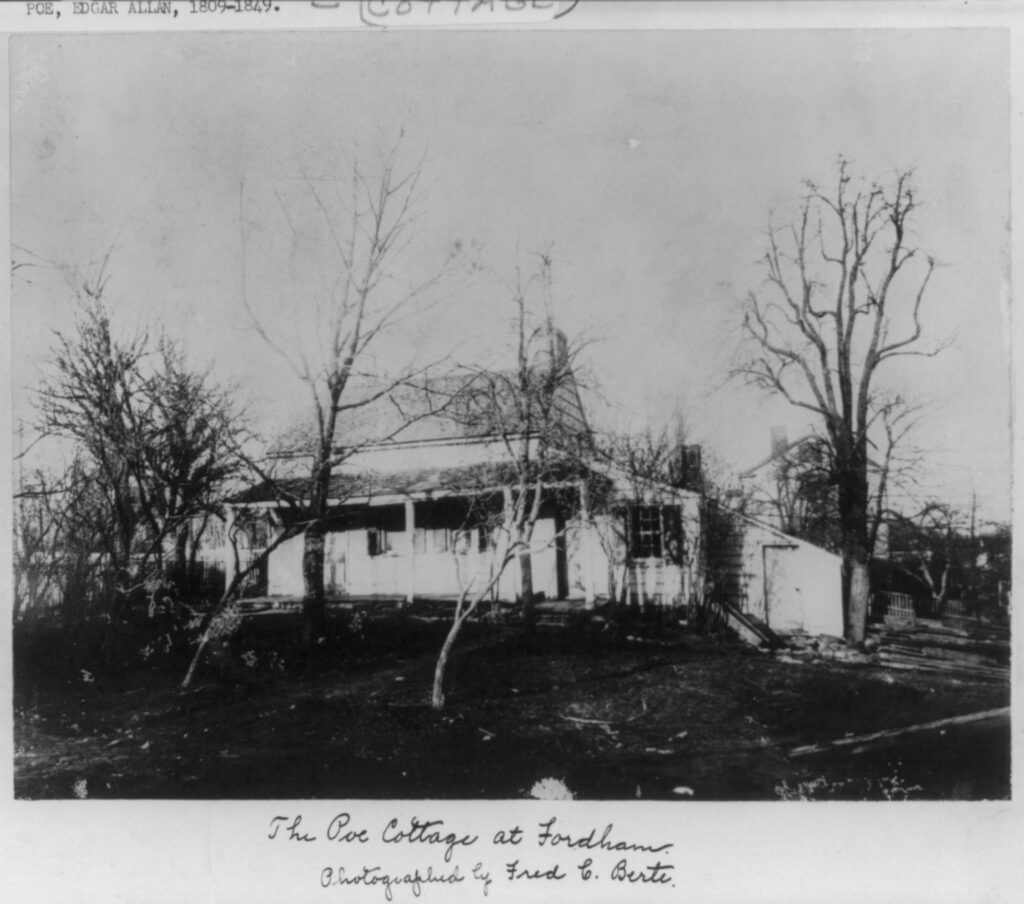
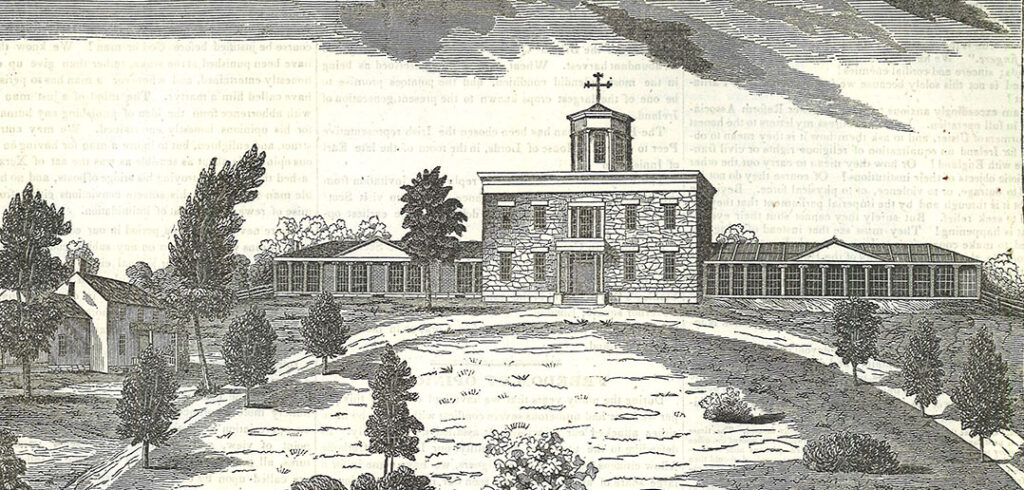
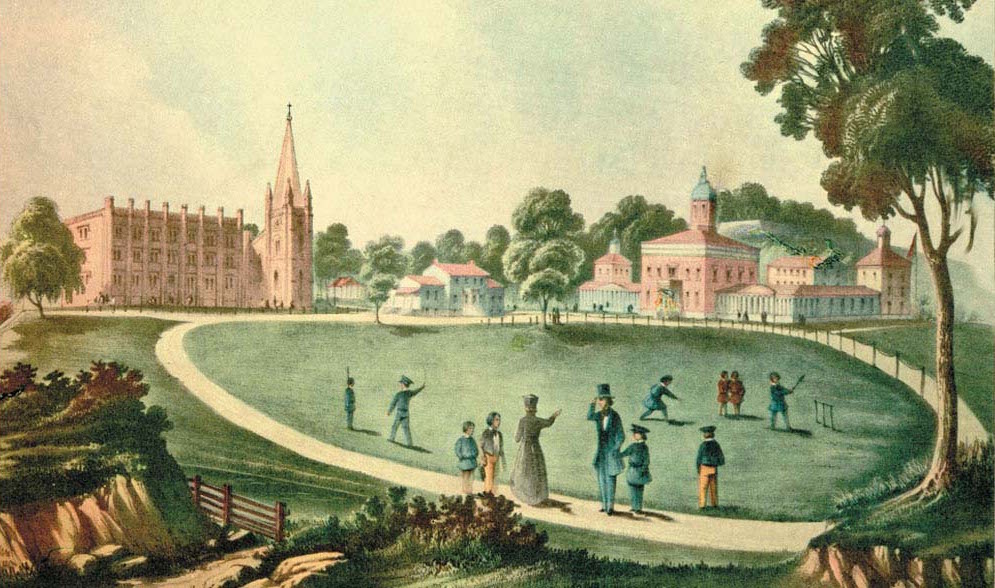
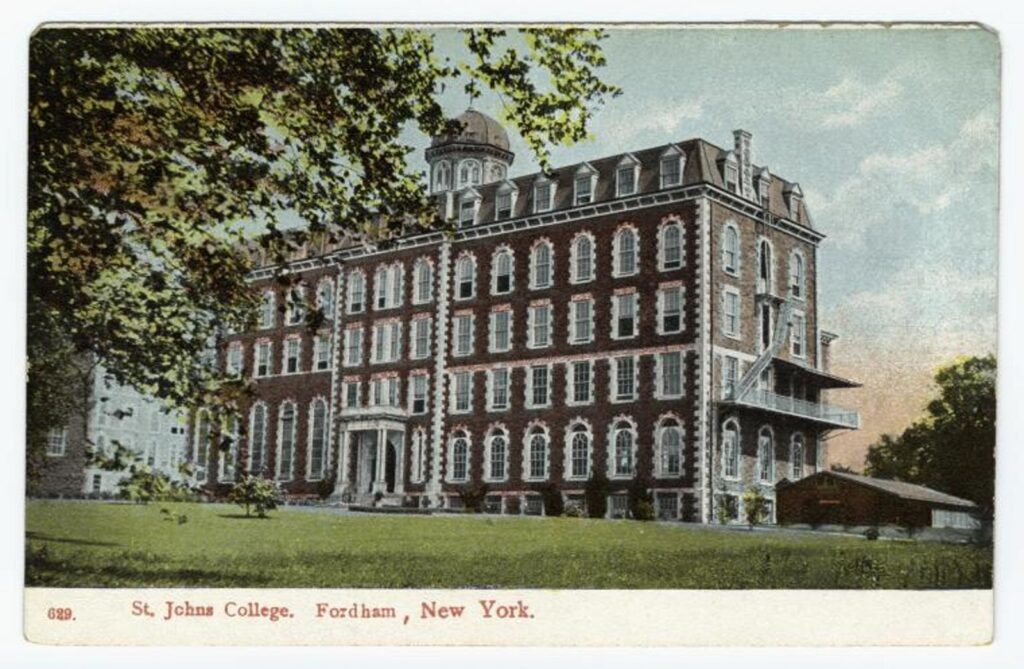
— A whole graduating class of ghosts stalks the campus of the Bronx’s Fordham University, and it may have something to do with either Edgar Allan Poe or the film The Exorcist;
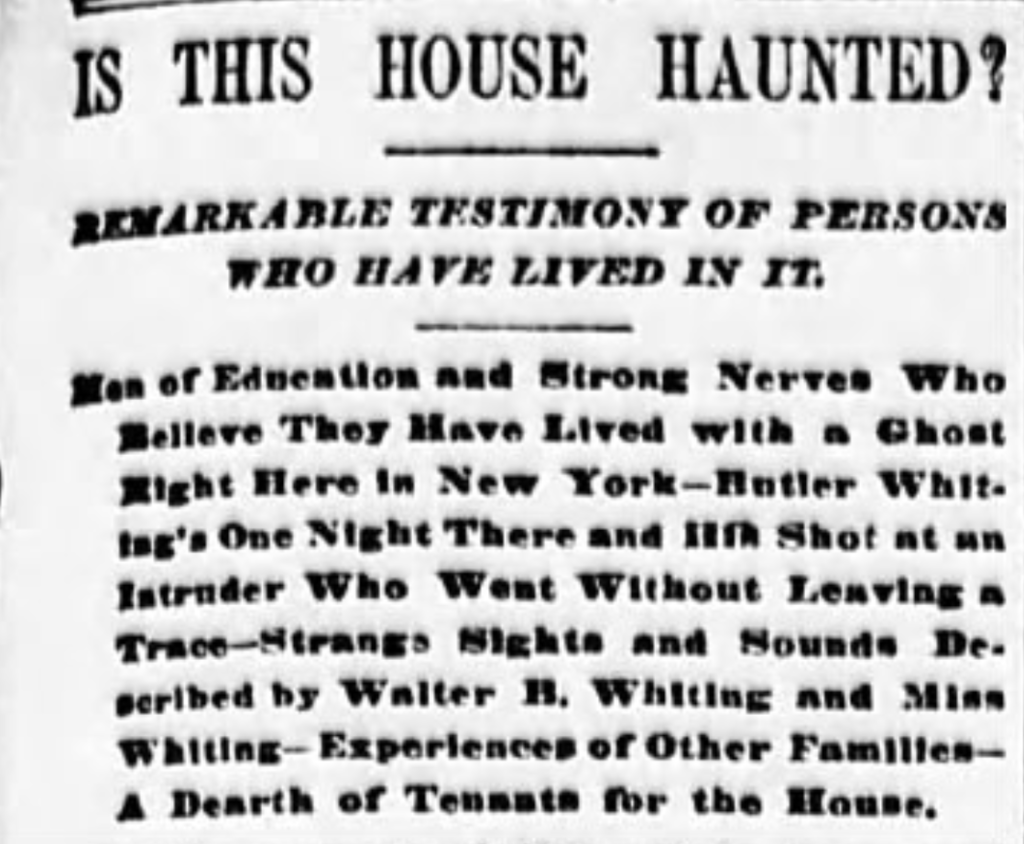
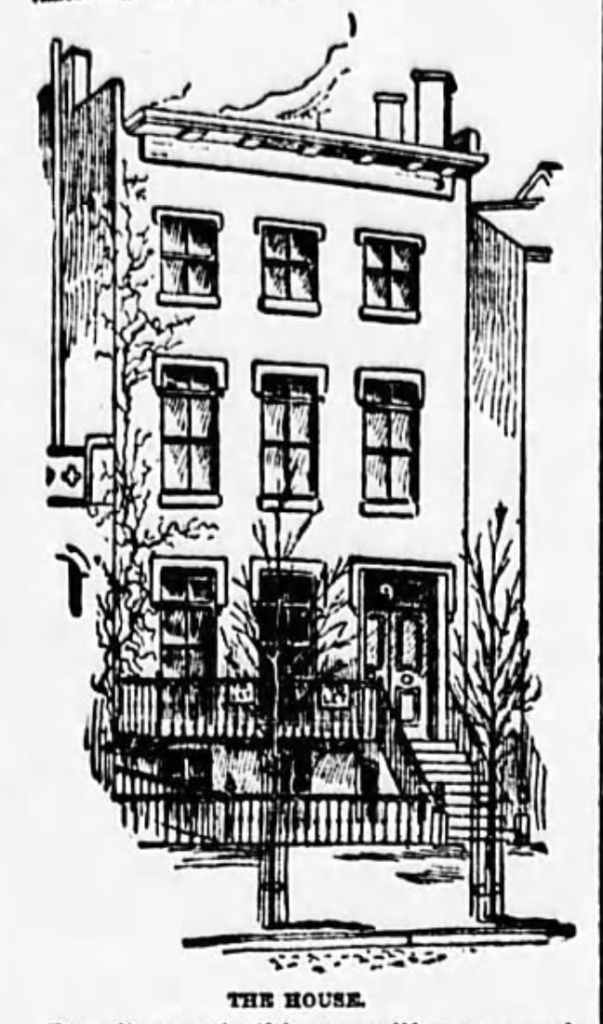
— Just north of Washington Square Park in Greenwich Village, a haunted townhouse vexes several tenants, the sight of a hunched-over man in a cap driving people insane;
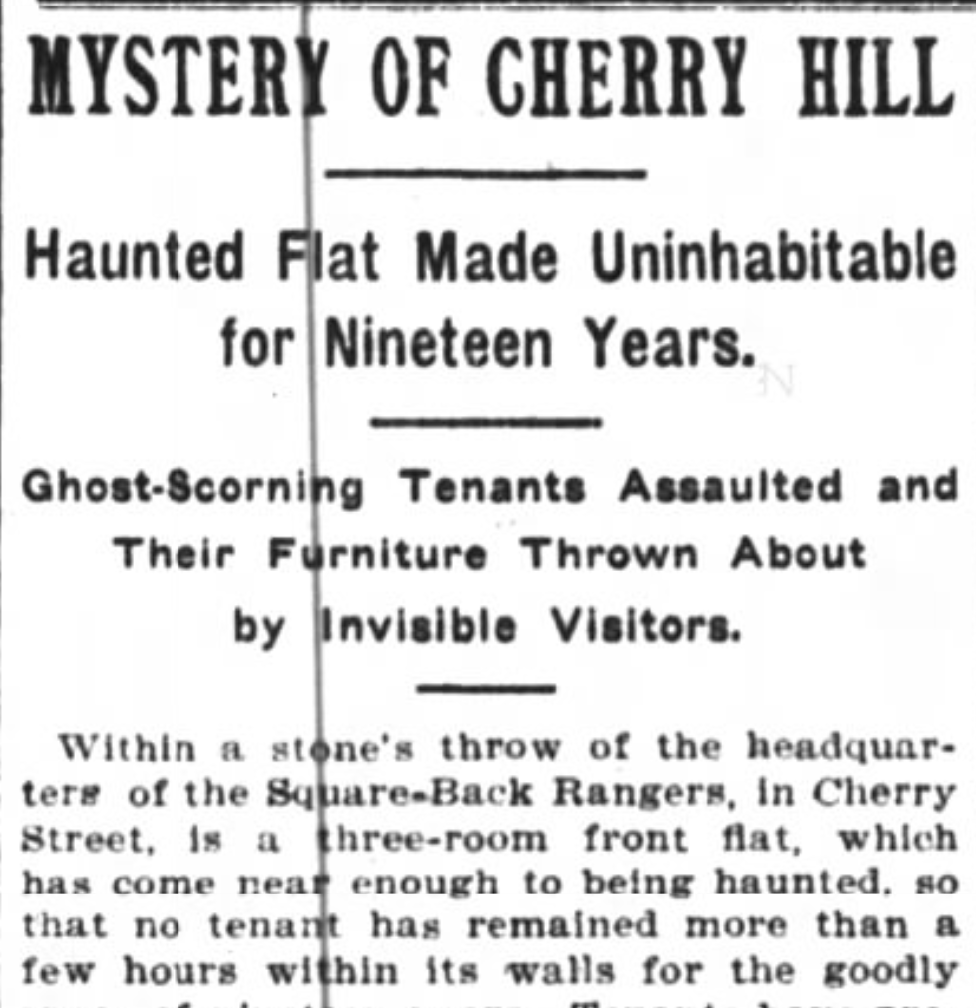
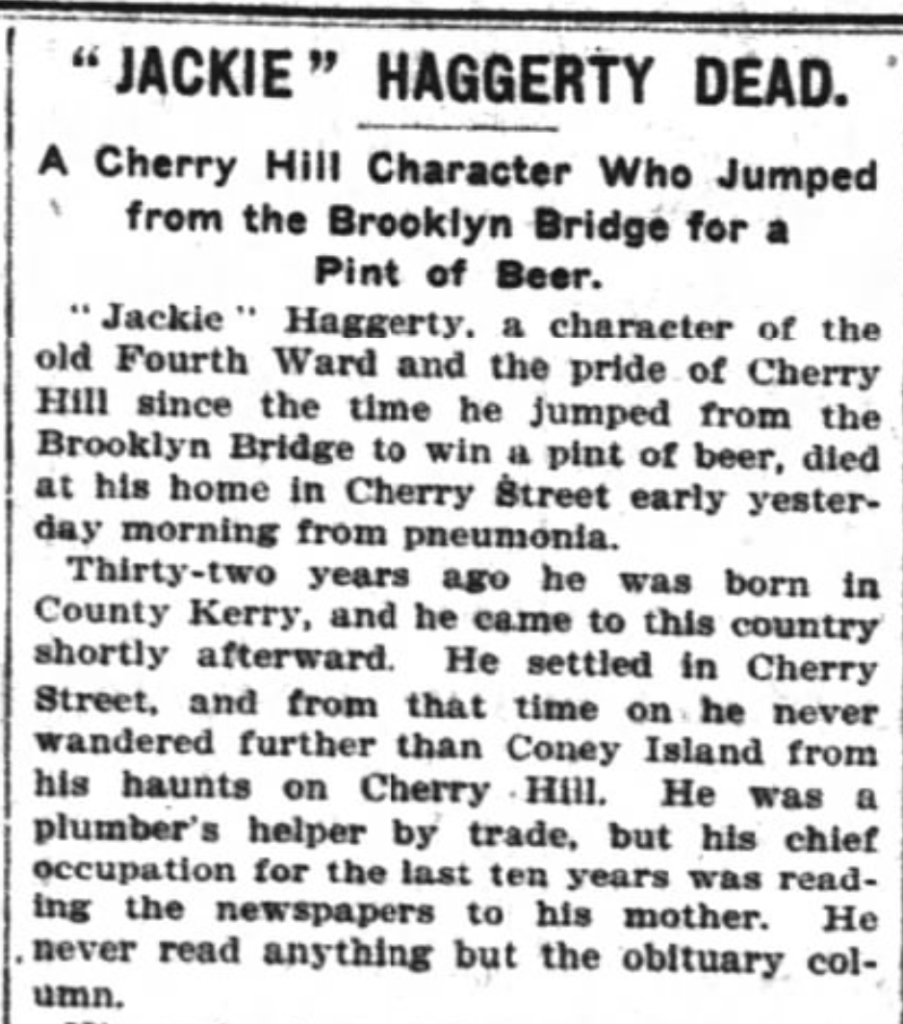
— In the shadow of the Brooklyn Bridge, a small apartment in today’s Two Bridges neighborhood becomes possessed by a poltergeist with a penchant for throwing furniture …. and punches. One vainglorious showoff named Jackie Hagerty learns the hard way;
— And before the days of Riverside Drive, a rustic old mansion once sat on the banks of the Upper West Side, with a mysterious locked room that must never be opened.
LISTEN TODAY: GHOST STORIES BY GASLIGHT
And of course listen to the entire collection of Bowery Boys ghost stories podcast here and in this Spotify playlist:
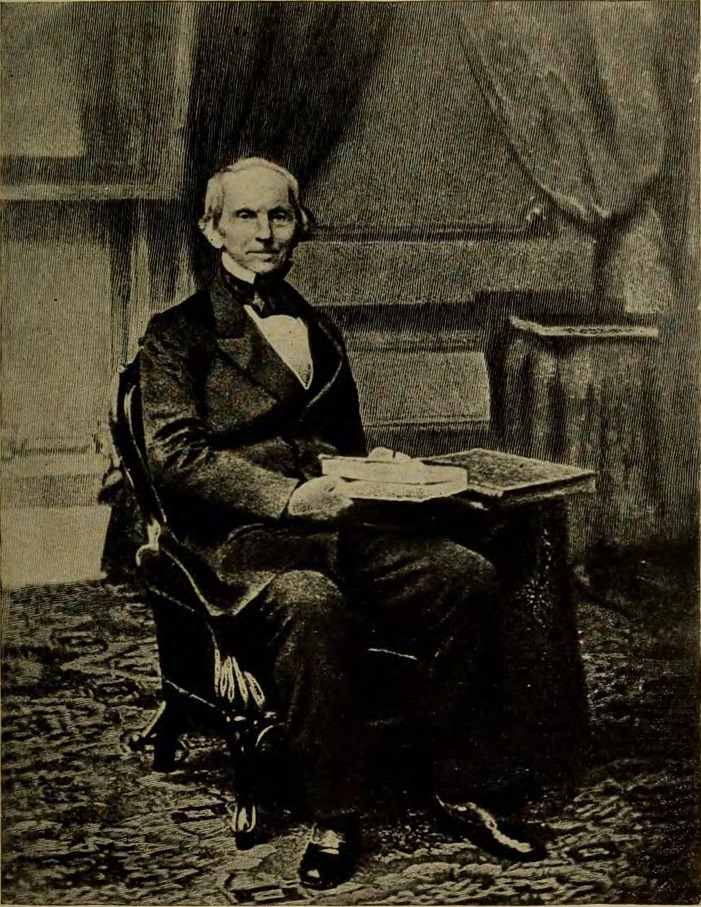
Ghost of the Astor Library
Wikimedia Commons/Internet Archives. Gleason’s Pictorial Vol. 6 No. 8 (February 25, 1854), Boston:124Astor Library 1954. Harry Miller Lydenberg (July 1916). “History of the New York Public Library”. Bulletin of the New York Public Library 20: 570-571.; first published in Gleason’s Pictorial Drawing-Room Companion/Wikimedia commonsThe librarian Joseph Cogswell
The Sorority of Ghosts
Poe Cottage, pictured 1900, Library of CongressThis 1840 image of Cunniffe House by engraver Benson J. Lossing, also includes the original Rose Hill Manor house, at left. (Image courtesy of Catholic Historical Research Center of the Archdiocese of Philadelphia via Fordham)St. John’s Colllege, 1846, courtesy FordhamSt John’s College aka Fordham University, New York Public Library
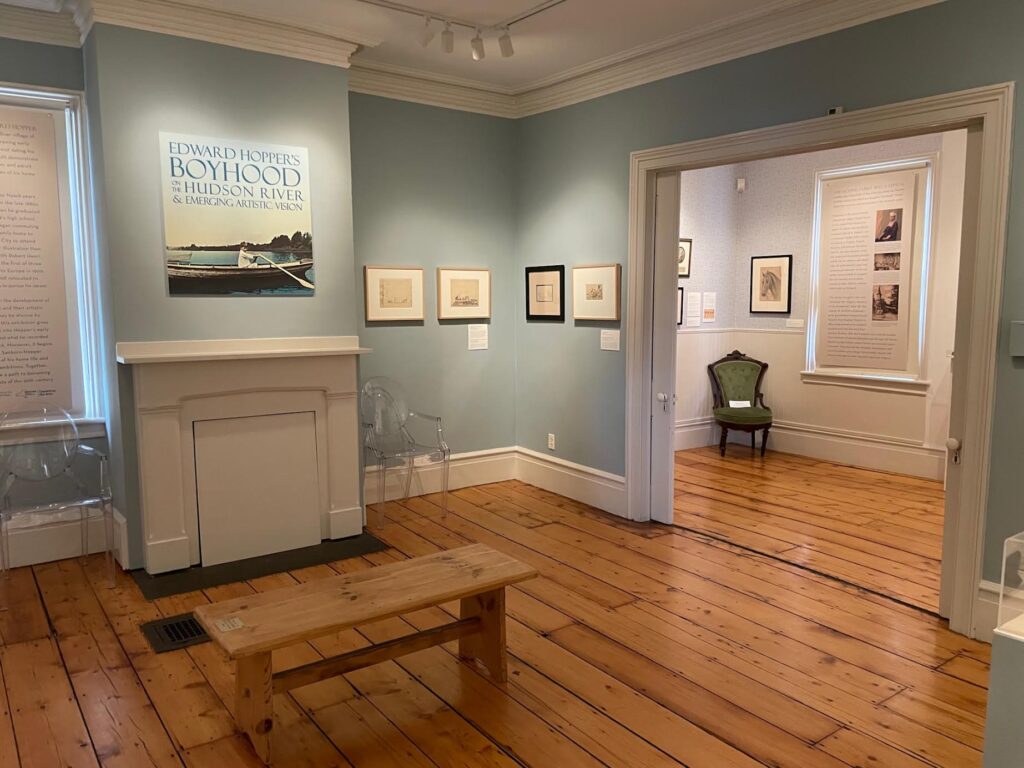
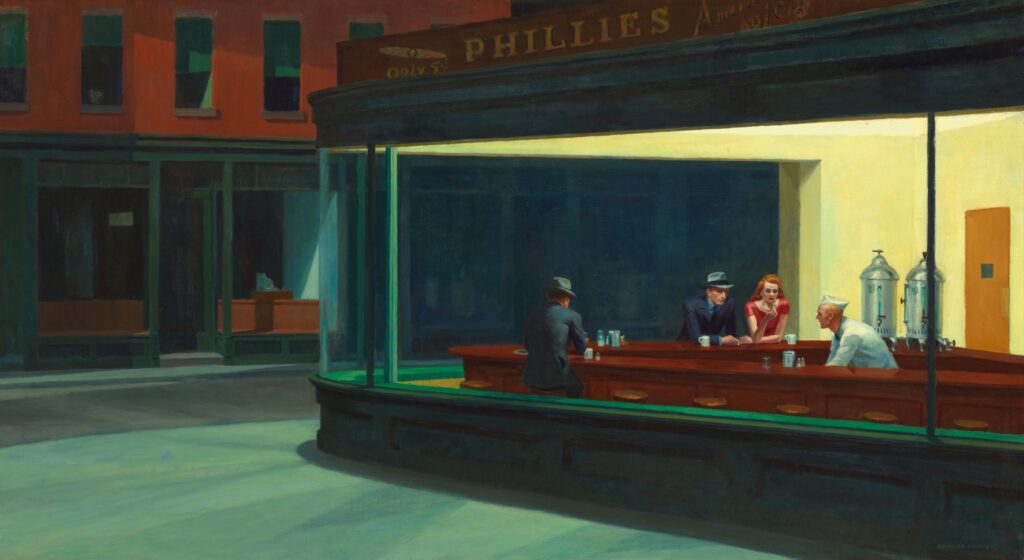
Within the New York City of Edward Hopper‘s imagination, the skyscrapers have vanished, the sidewalks are mysteriously wide and all the diners and Chop Suey restaurants are sparsely populated with well-dressed lonely people.
In this art-filled episode of the Bowery Boys, Tom and Greg look at Hopper’s life, influence and specific fascination with the city, inspired by the recent show Edward Hopper’s New Yorkat the Whitney Museum of American Art.
Hopper, a native of the Hudson River town of Nyack, painted New York City for over half a decade. In reality, the city experienced Prohibition and the Jazz Age, two world wars and the arrival of automobiles. But not in Hopper’s world.
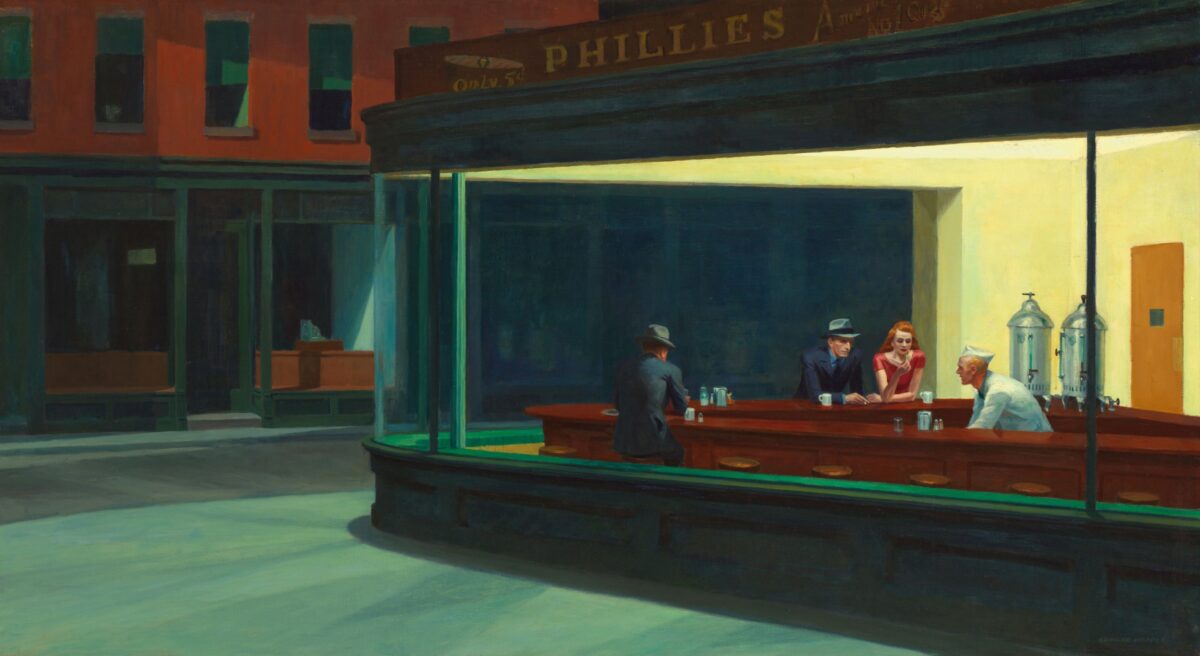
In his most famous work Nighthawks (1942), figures from a dreamlike film appear trapped in an aquarium-shaped diner. But Hopper has captured something else in this iconic painting: fear and paranoia. No wonder he’s considered a huge influence on Hollywood film noir and detective stories.
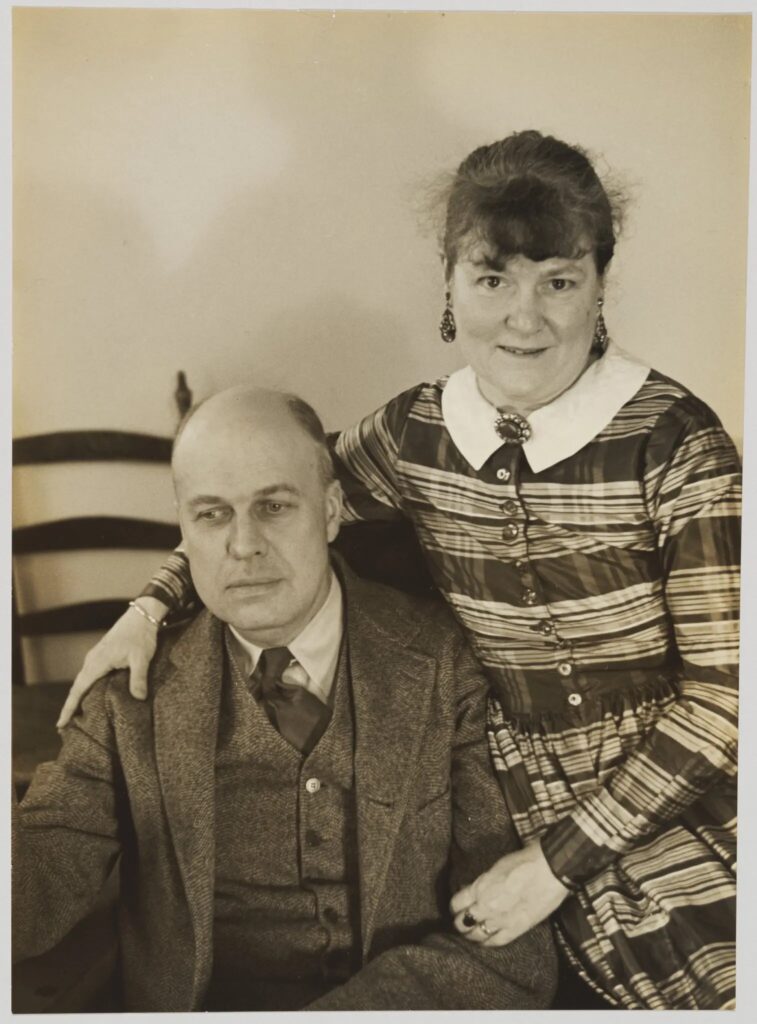
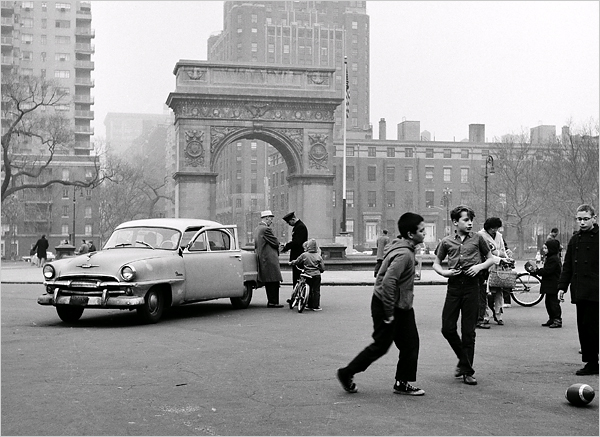
Hopper painted New York from his studio overlooking Washington Square Park, and both he and his wife Josephine Nivison Hopper would become true fixtures of the Greenwich Village scene.
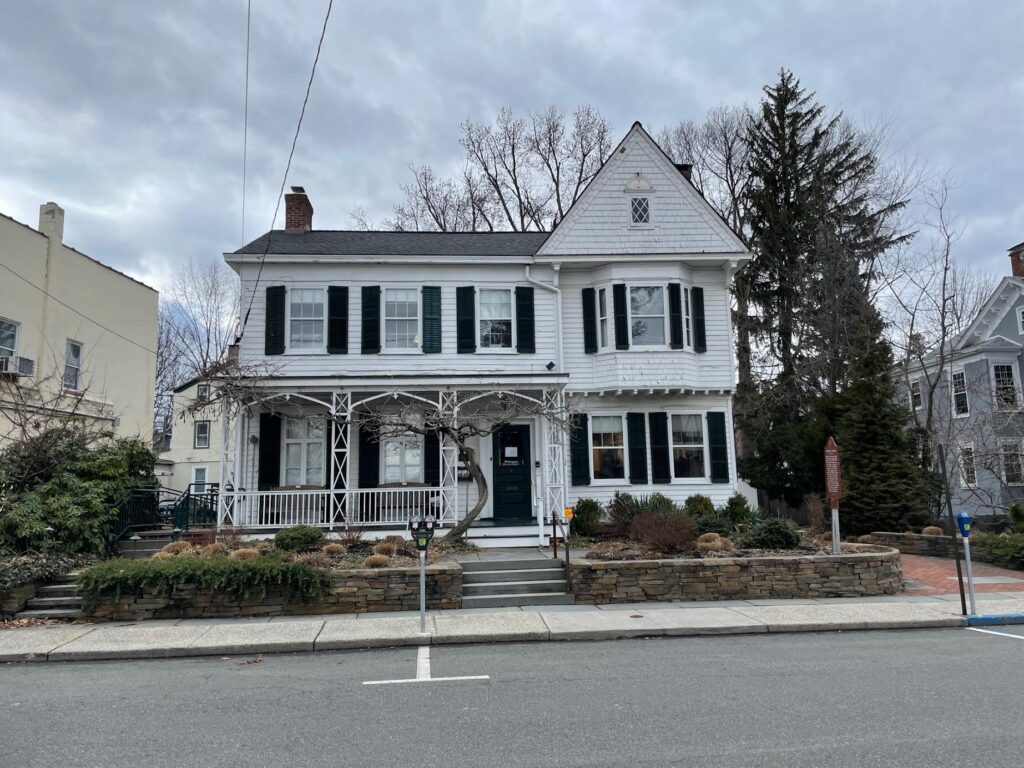
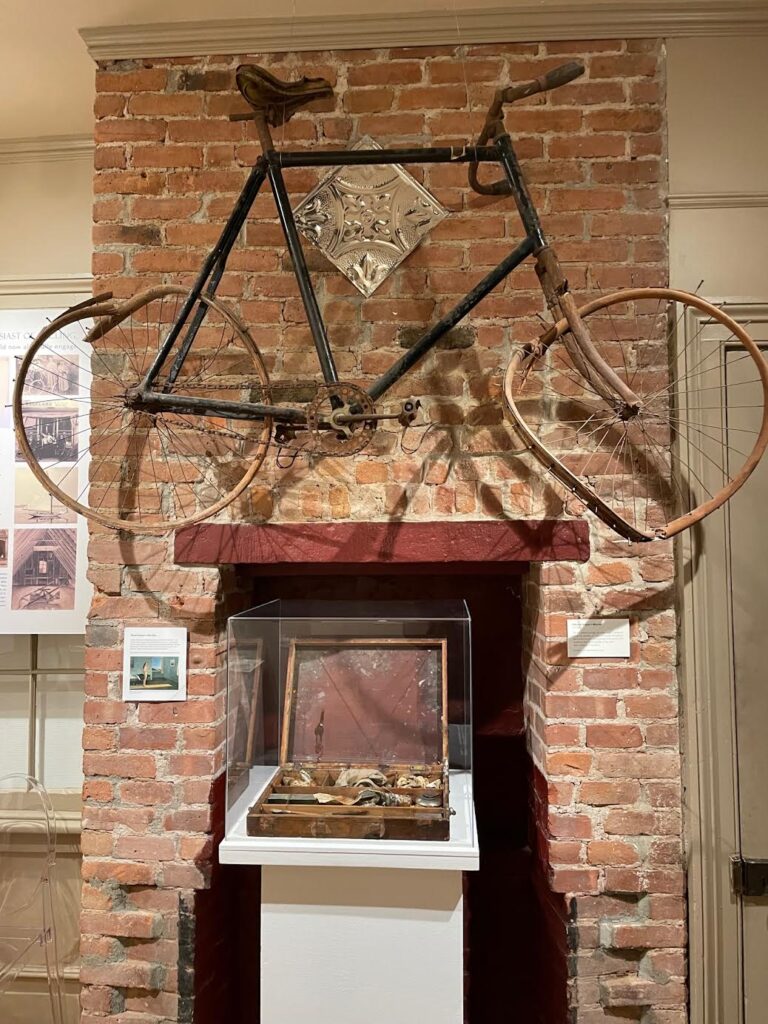
PLUS: Tom visits the Edward Hopper House Museumin Nyack, New York, to talk the artist’s early life with executive director Kathleen Motes Bennewitz. And Greg finds some of the hidden meanings in Hopper’s paintings thanks to American art historian Rena Tobey.
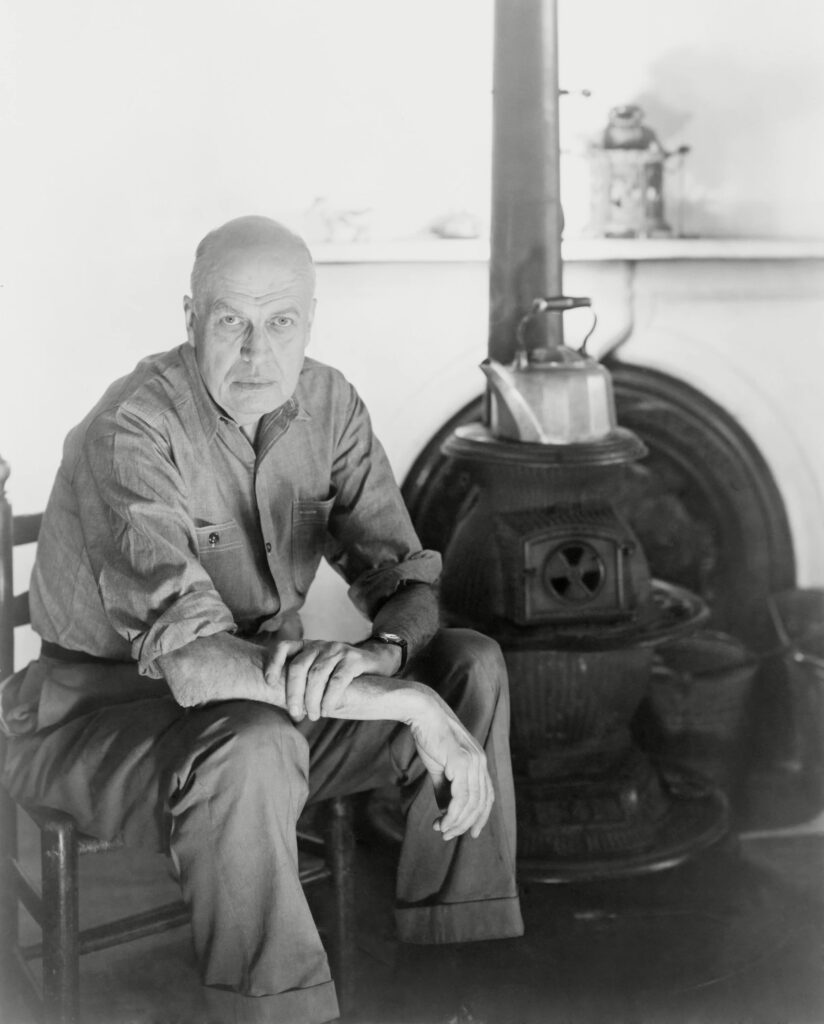
Edward Hopper in his studio. Courtesy Everett/ShutterstockCirca 1947. Photo courtesy Whitney Museum of American Art
From the Edward Hopper House Museum in Nyack, NY:
Photos by Tom Meyers
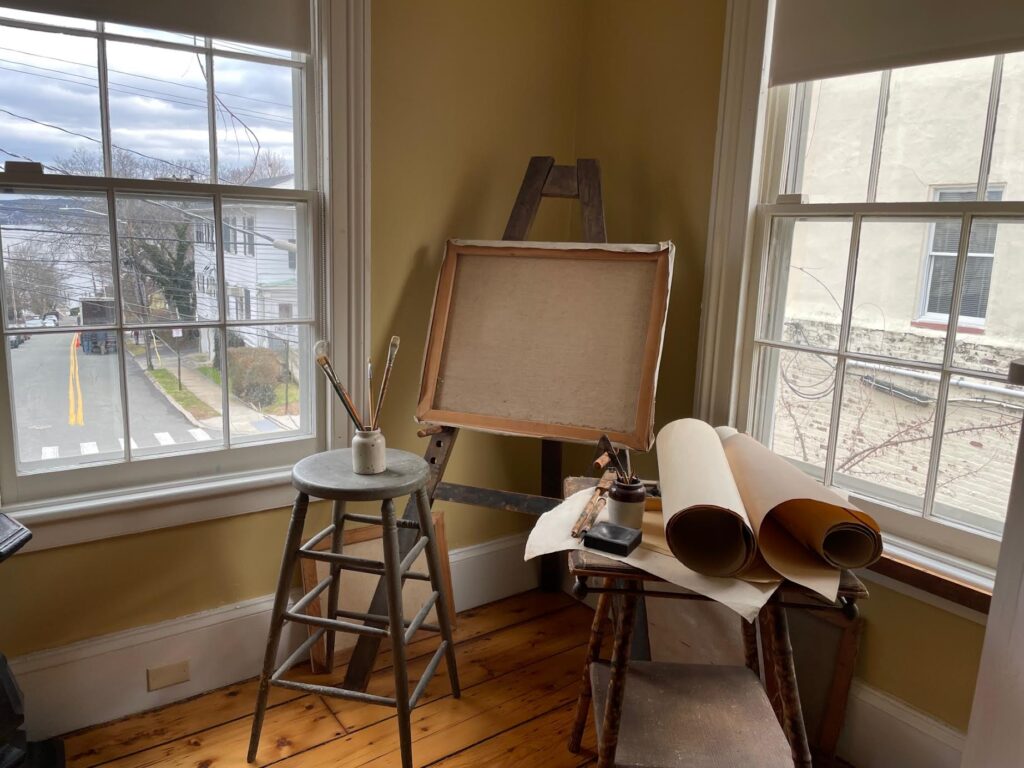
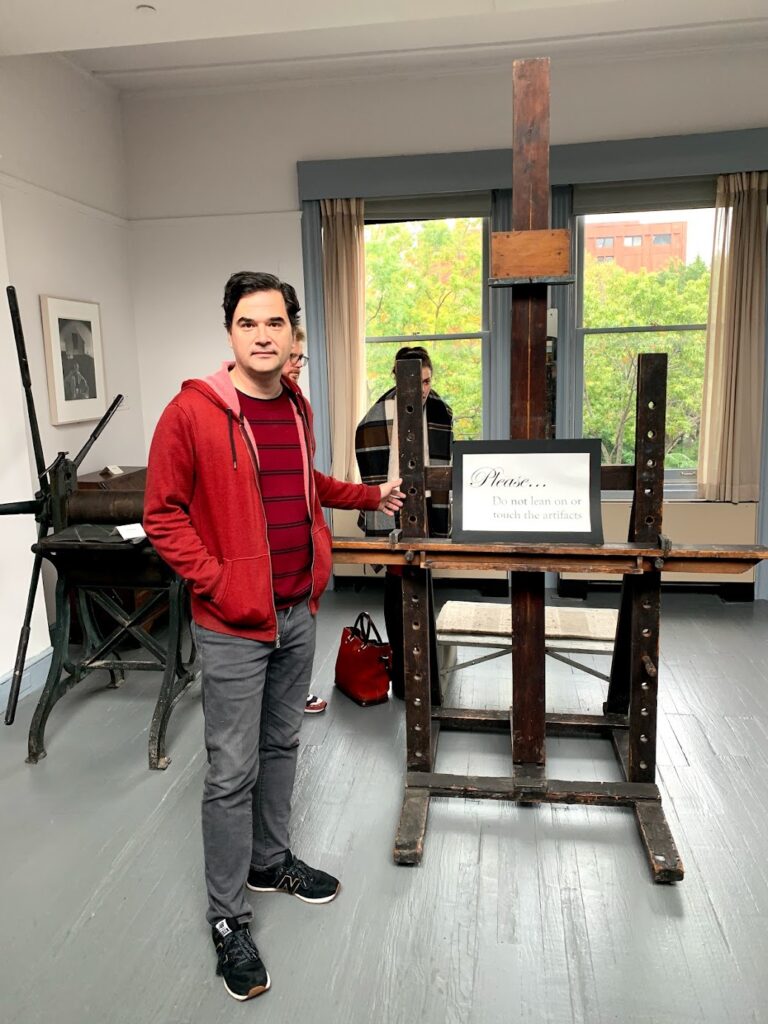
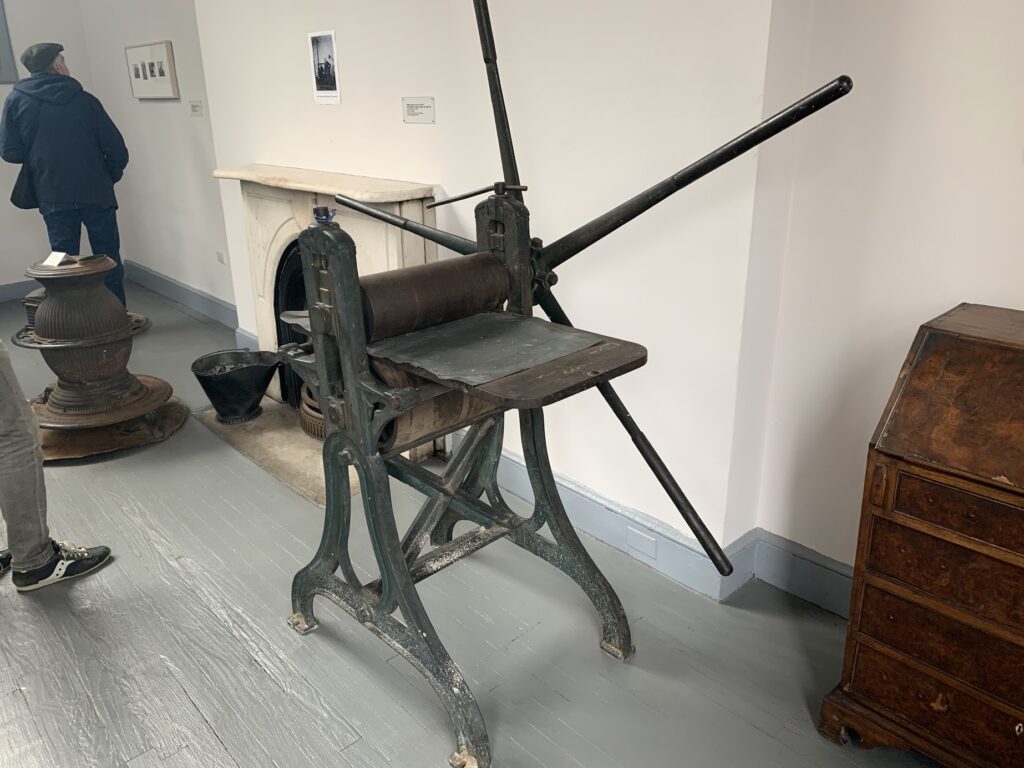
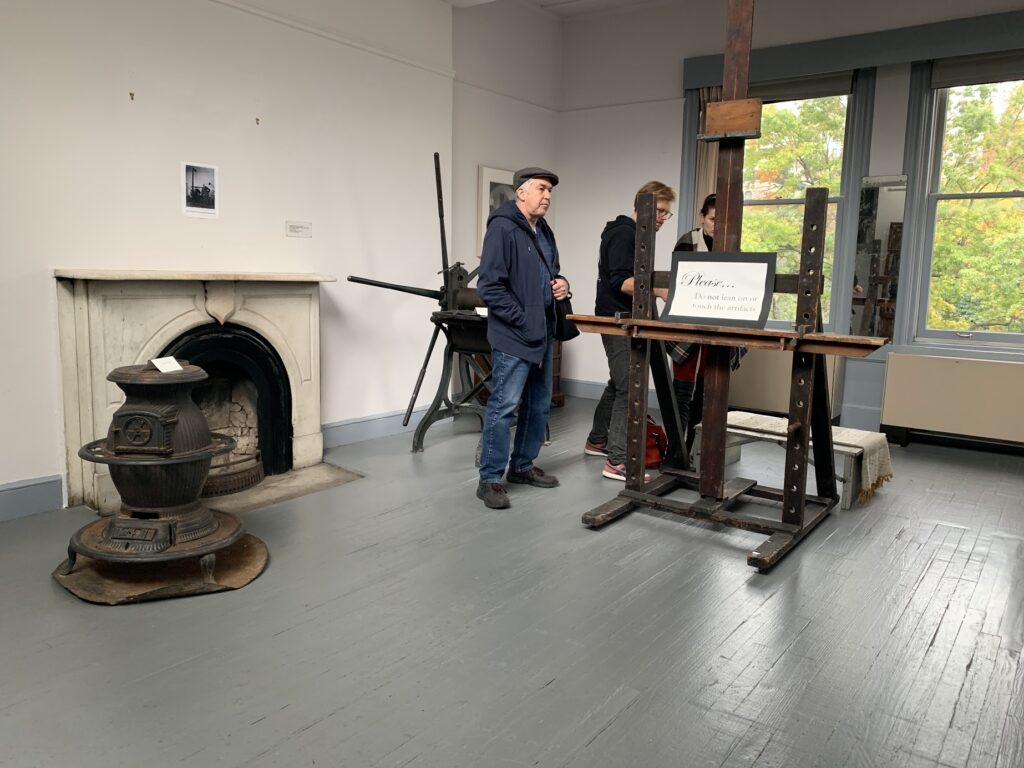
From inside Edward Hopper’s studio at 3 Washington Square North (from Open House NY 2019). Information on the studio here.
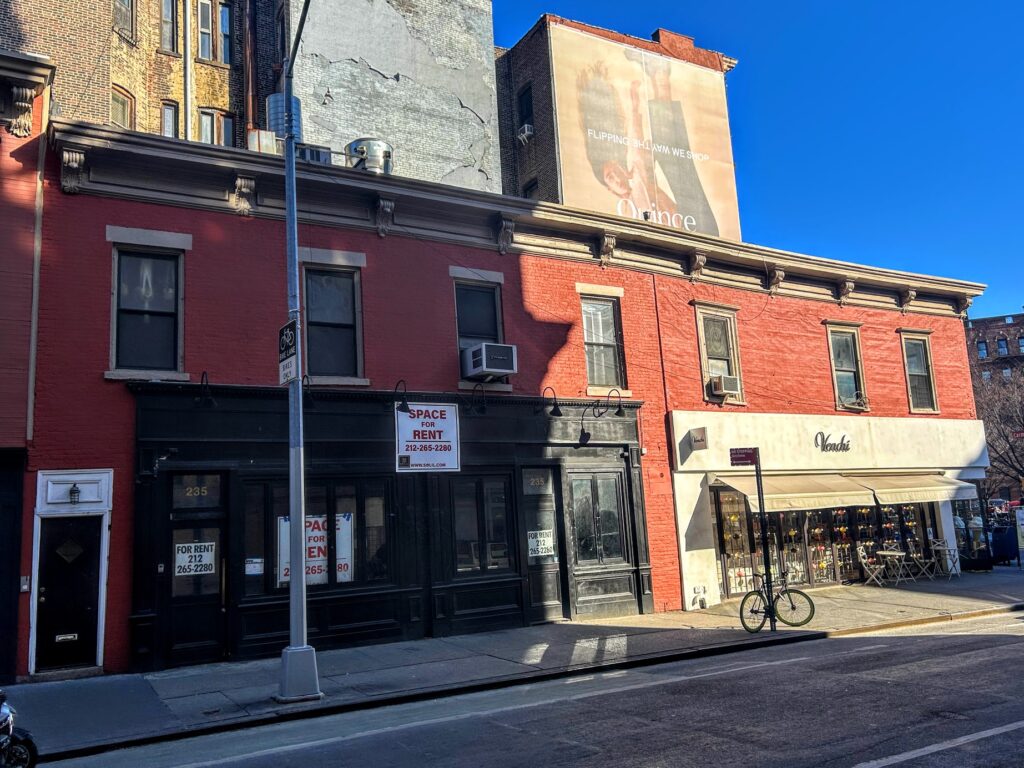
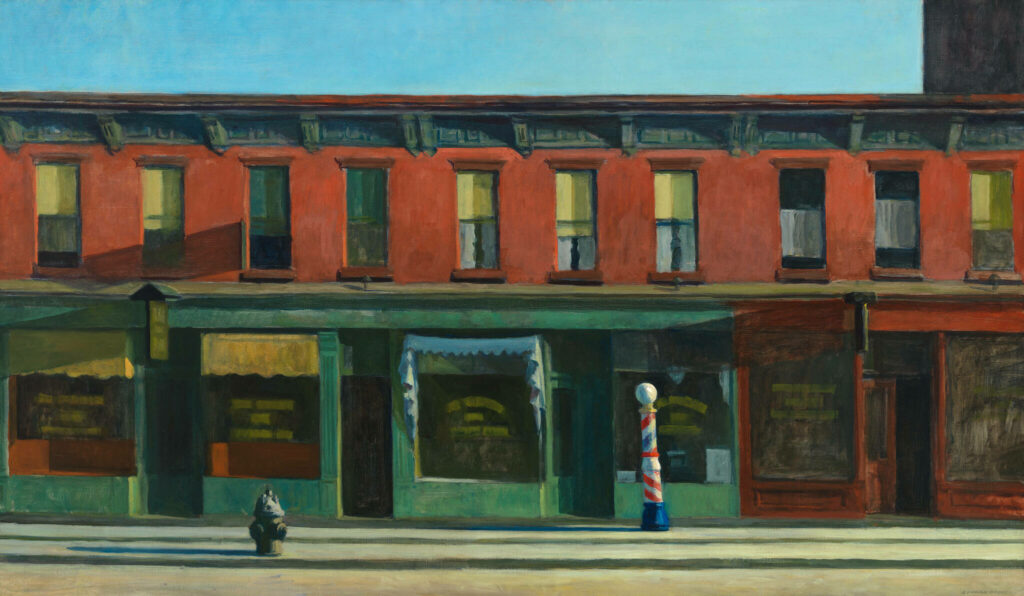
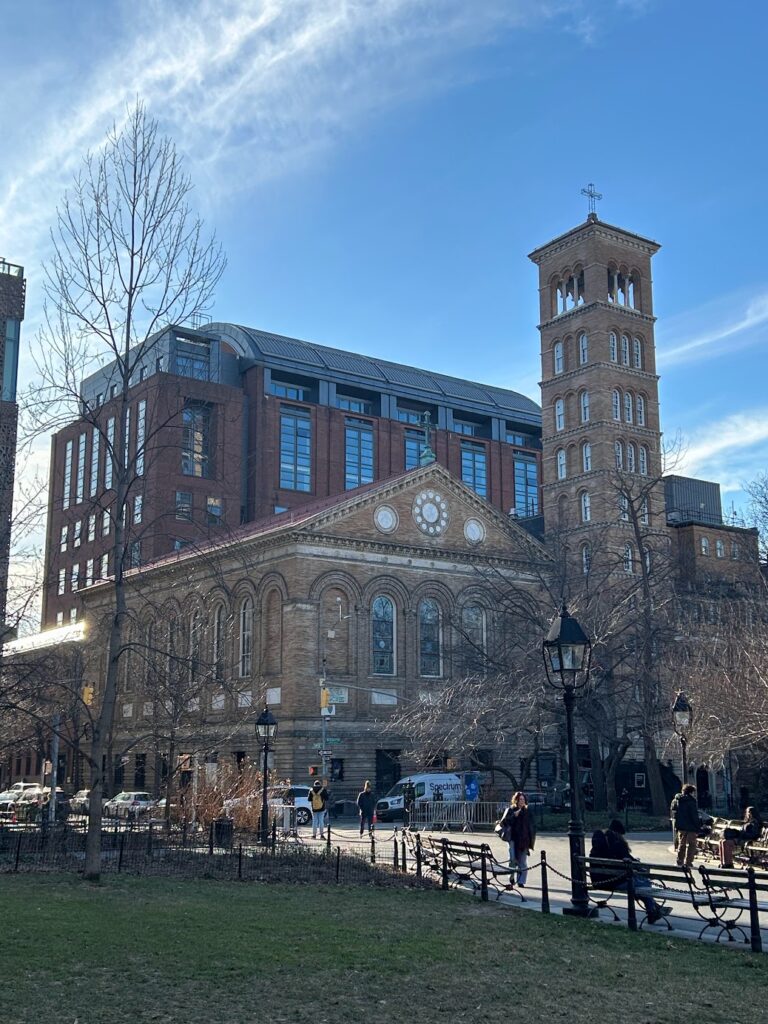
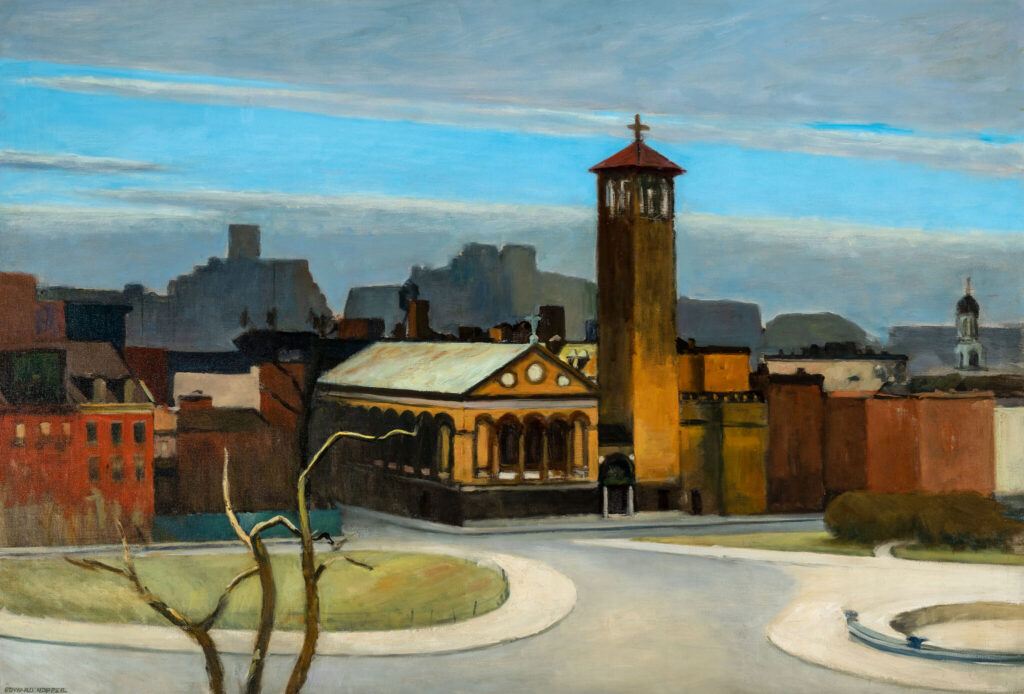
Although Hopper’s painting are mostly from the domain of his imagination, you can see some of his architectural subjects on the streets today. For more information, visit this interesting article posted at Village Preservation.
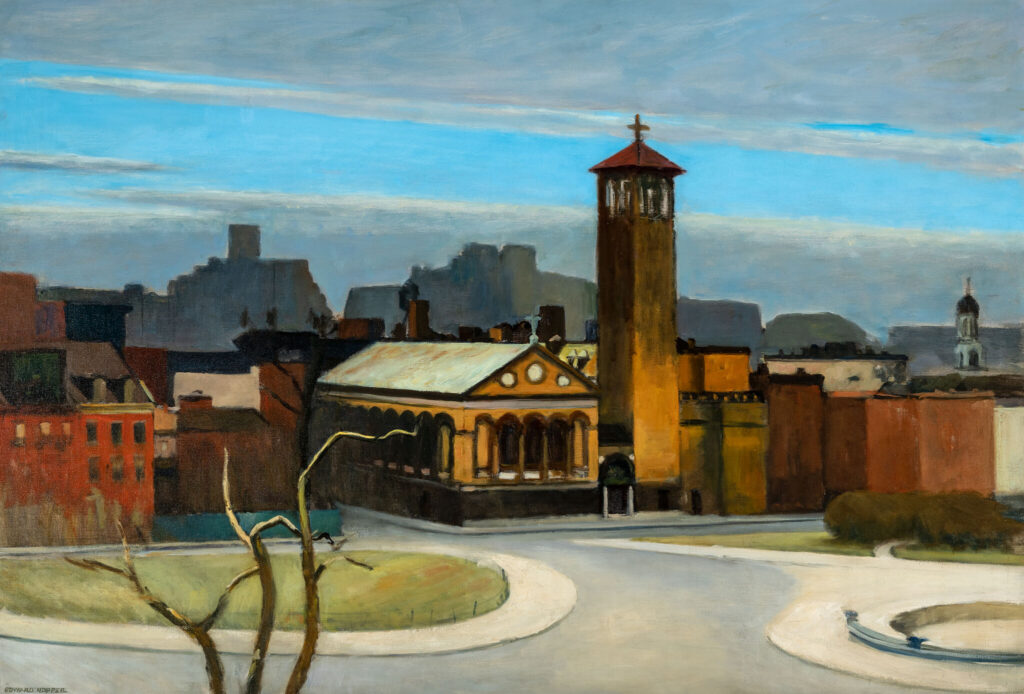
Bleecker and Carmine StreetEarly Sunday Morning, 1930Greenwich Avenue and Seventh AvenueNighthawks, 1942Judson Memorial ChurchNovember, Washington Square
FURTHER LISTENING
After finishing this show on Edward Hopper, dive back into our back catalog and experience other shows related to Hopper and his subjects:
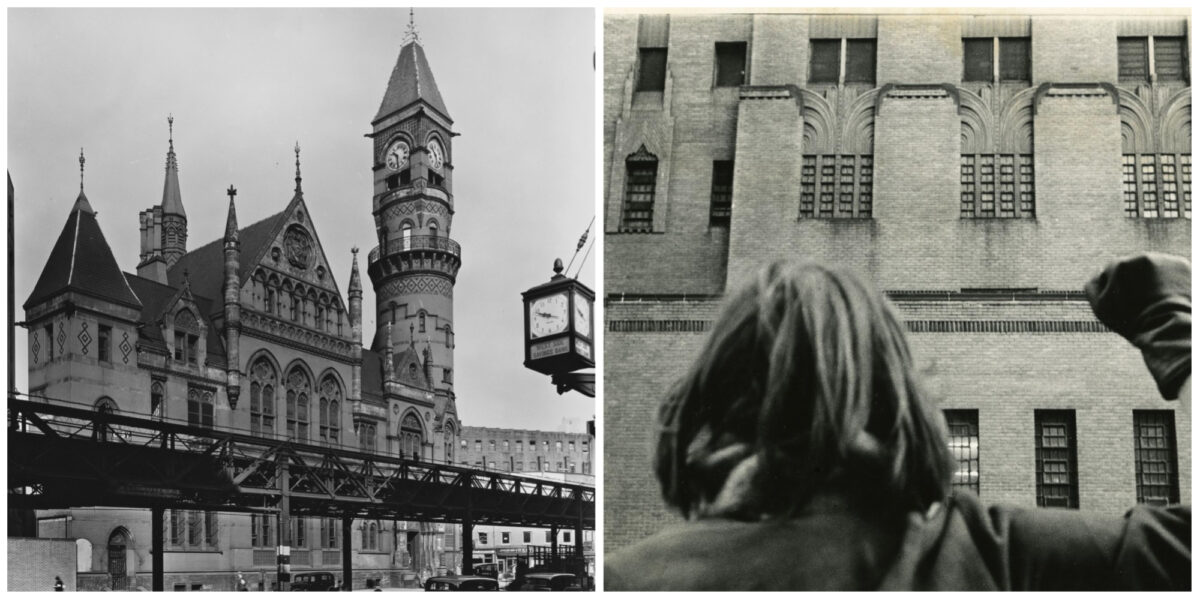
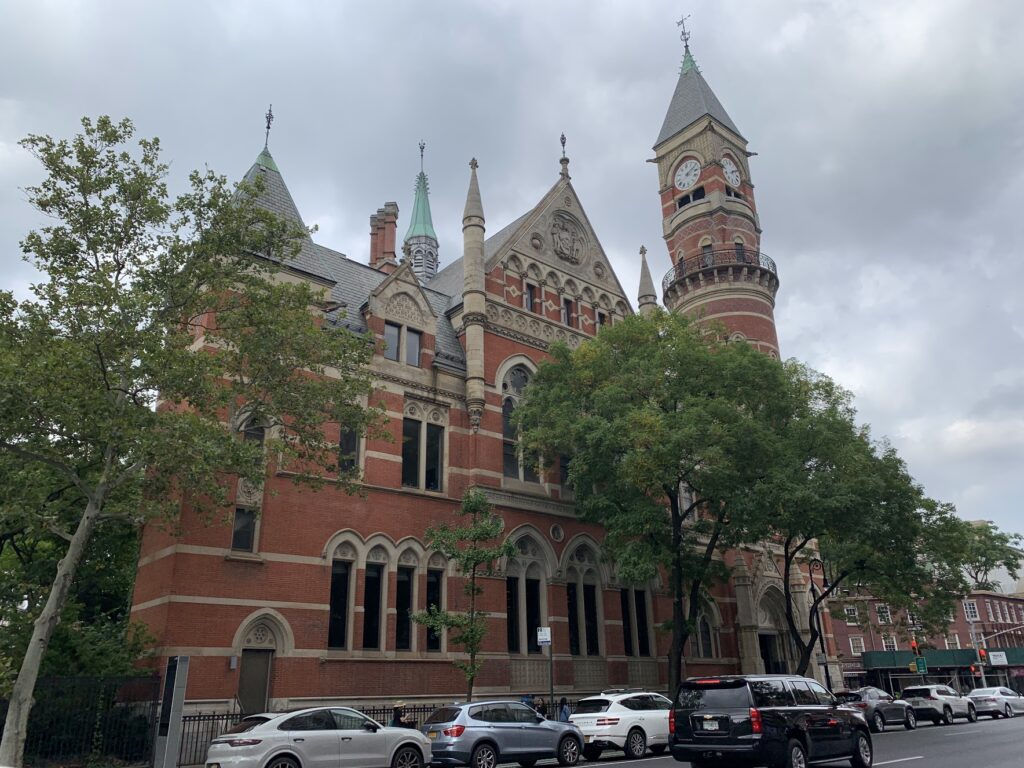
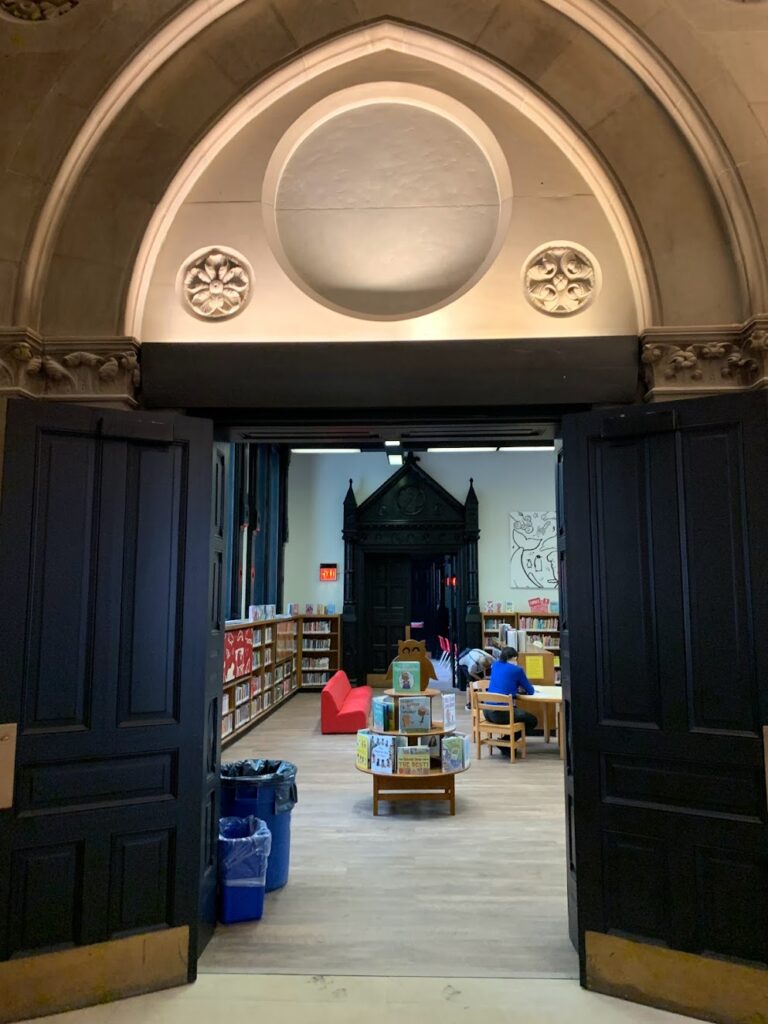
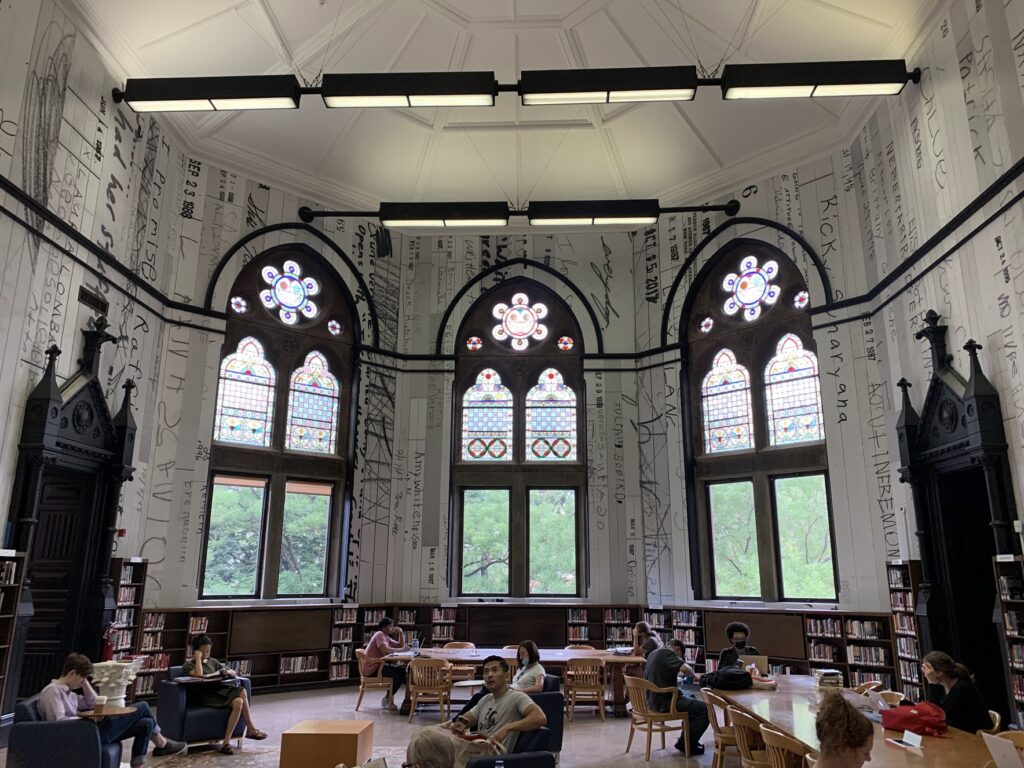
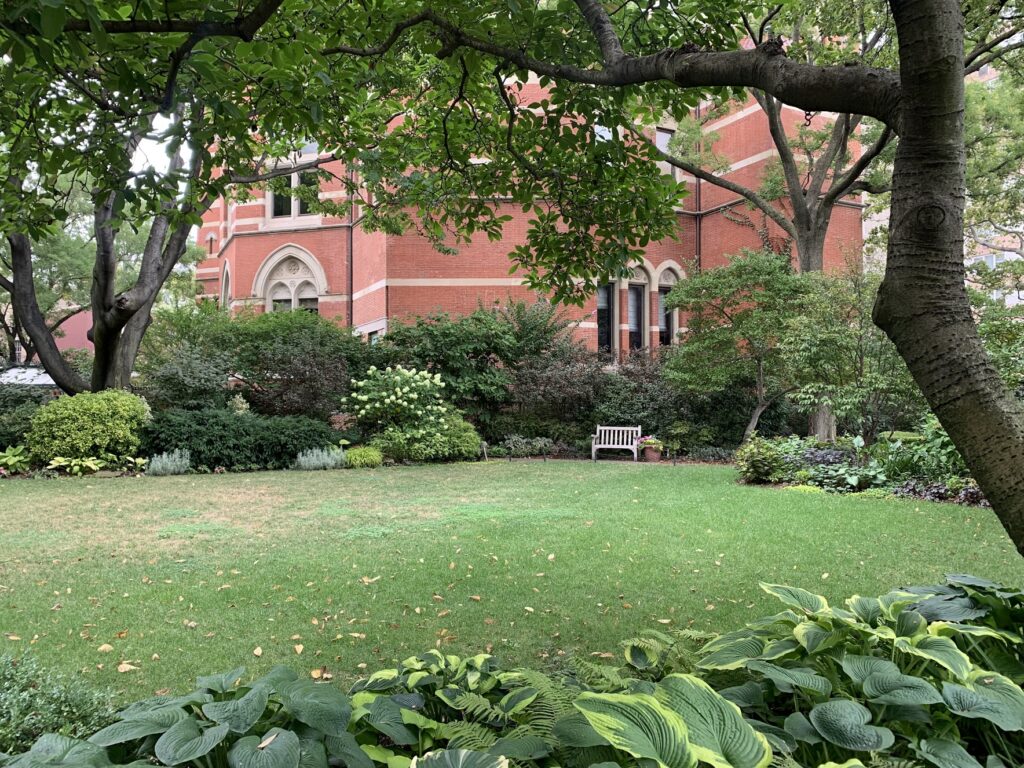
In the heart of Greenwich Village sits the Jefferson Market Library, a branch of the New York Public Library, and a beautiful garden which offers a relaxing respite from the busy neighborhood.
But a prison once rose from this very spot — more than one in fact.
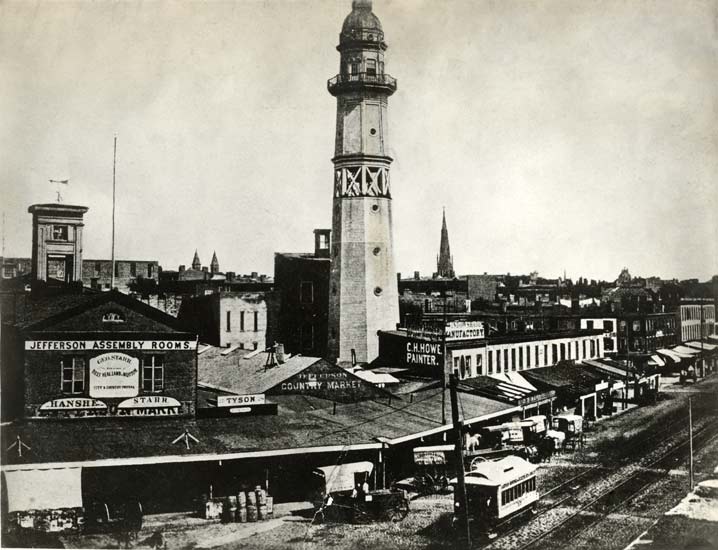
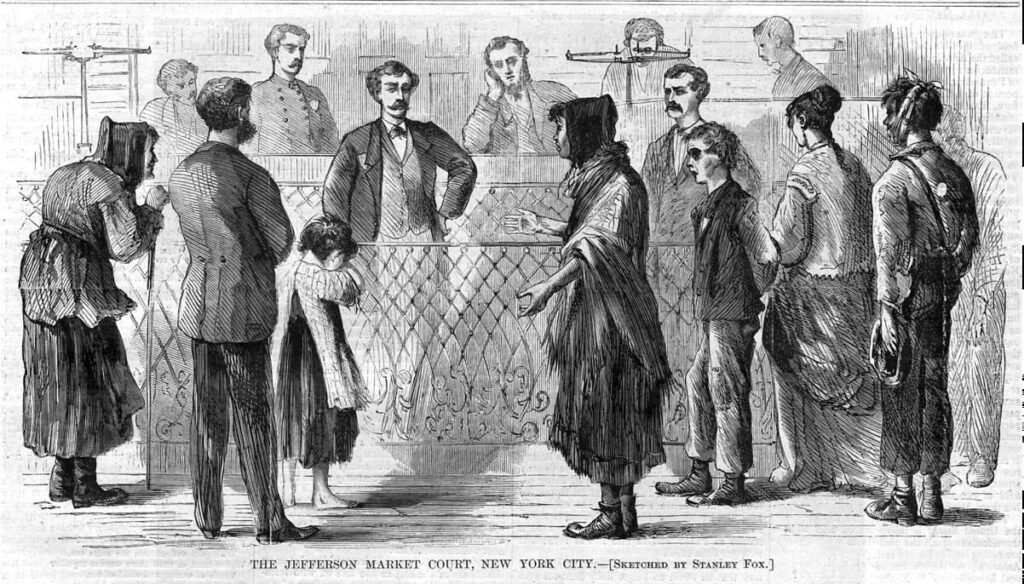
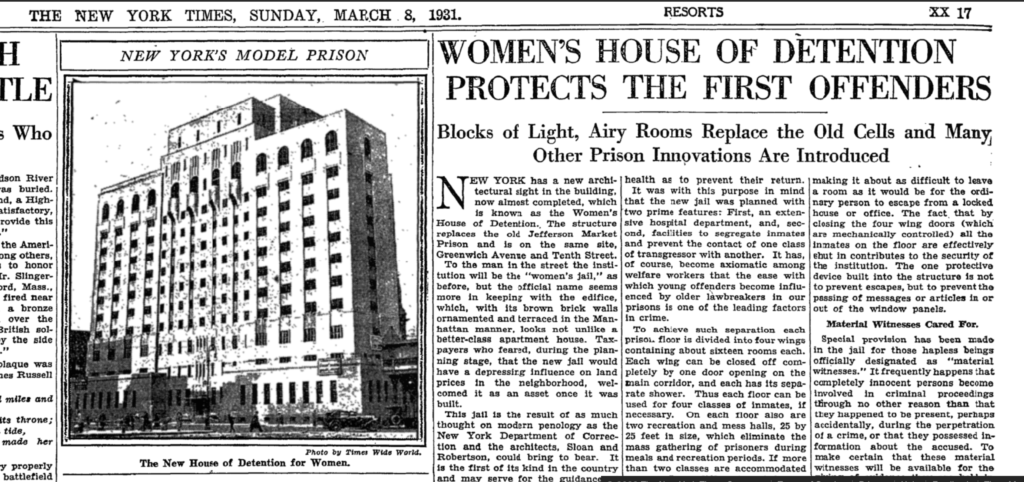
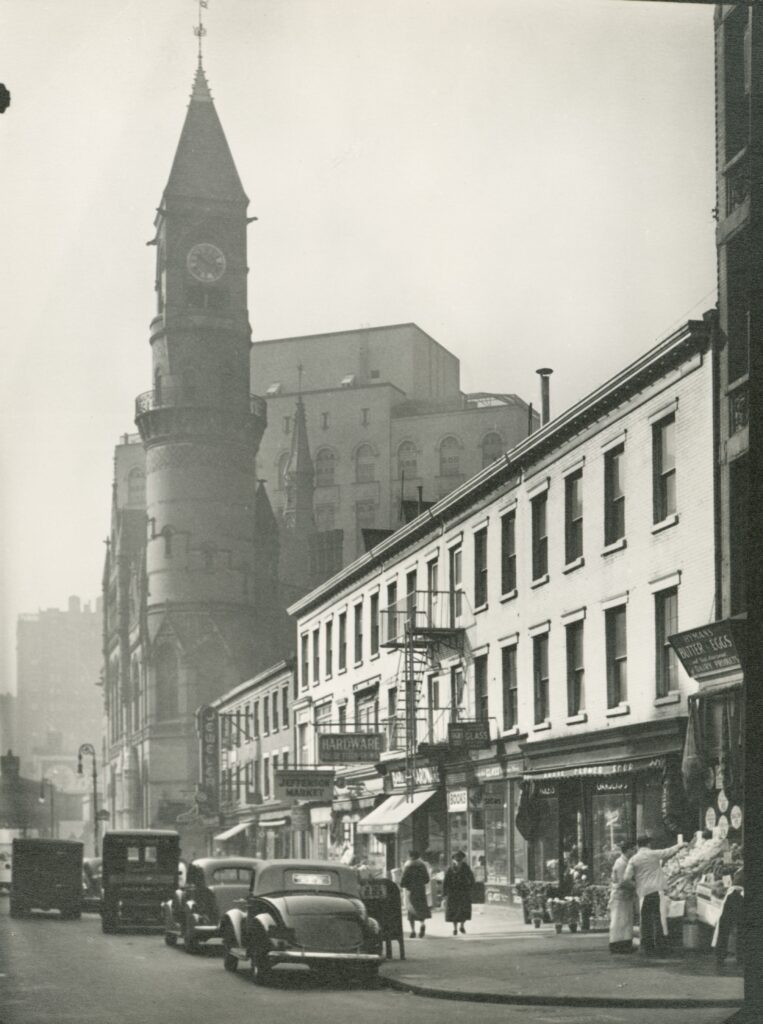
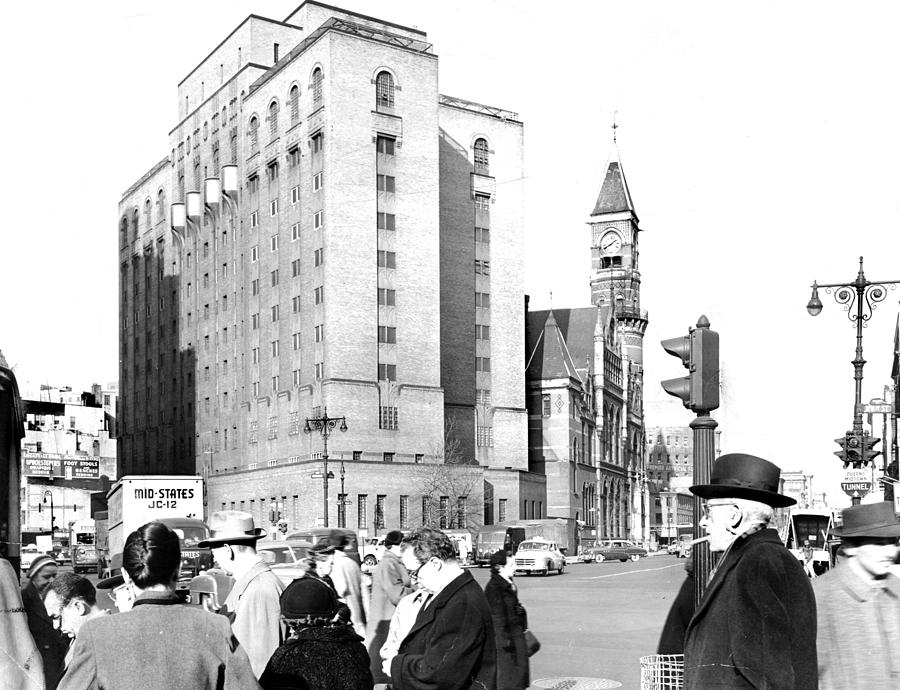
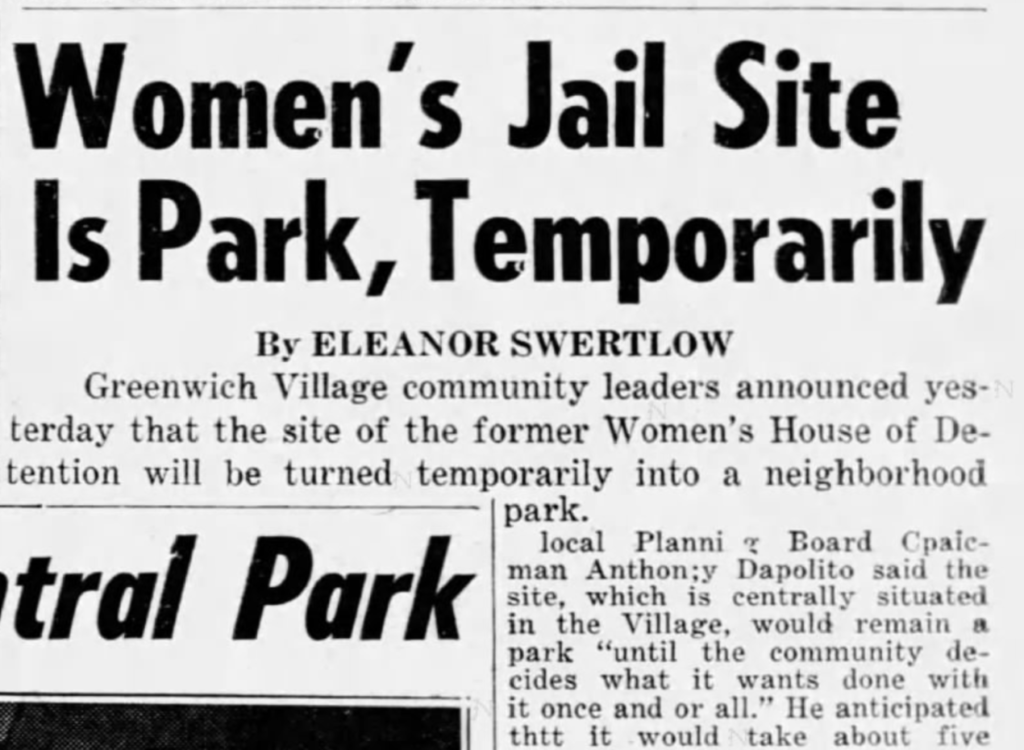
While there was indeed a market at Jefferson Market — dating back to the 1830s — this space is more notoriously known for America’s first night court (at the Jefferson Market Courthouse, site of today’s library) and the Women’s House of Detention, a facility which cast a gloom over the Village for over 40 years.
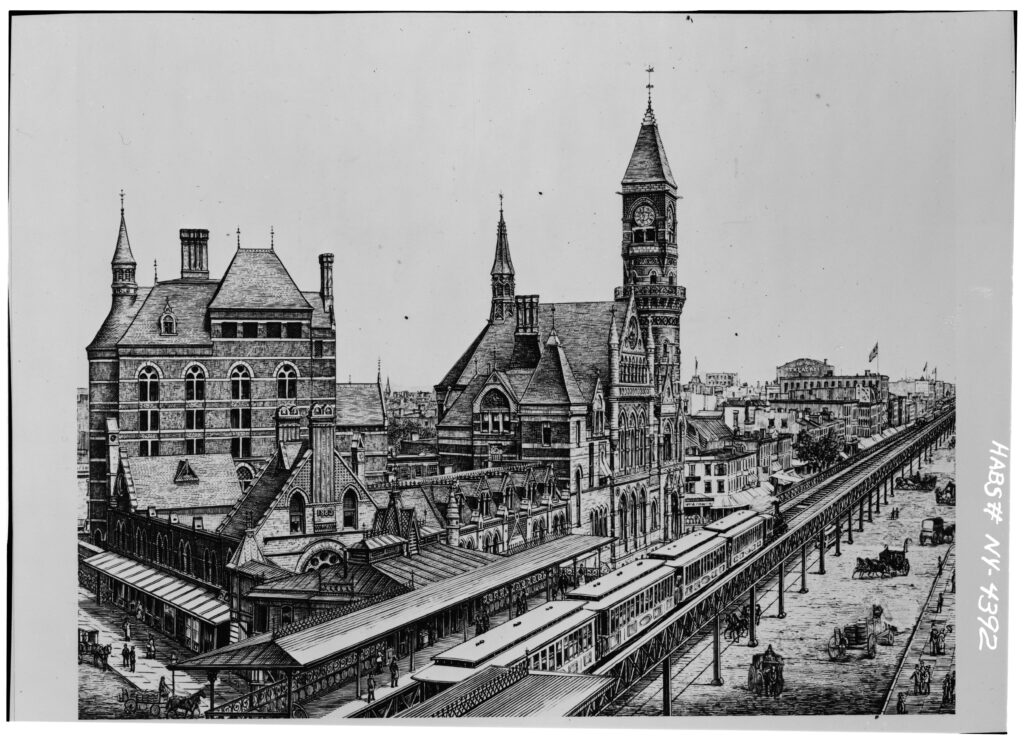
Almost immediately after the original courthouse (designed by Frederick Clarke Withers and Calvert Vaux) opened in 1877, it was quickly overburdened with people arrested in the Tenderloin district. By 1910 a women’s court opened here, and by the Jazz Age, the adjacent confinement was known as “the women’s jail.”
When the Women’s House of Detention opened in 1931 — sometimes referred to as the world’s only Art Deco prison — it was meant to improve the conditions for women who were held there. But the dank and inadequate containment soon became symbol of abuse and injustice.
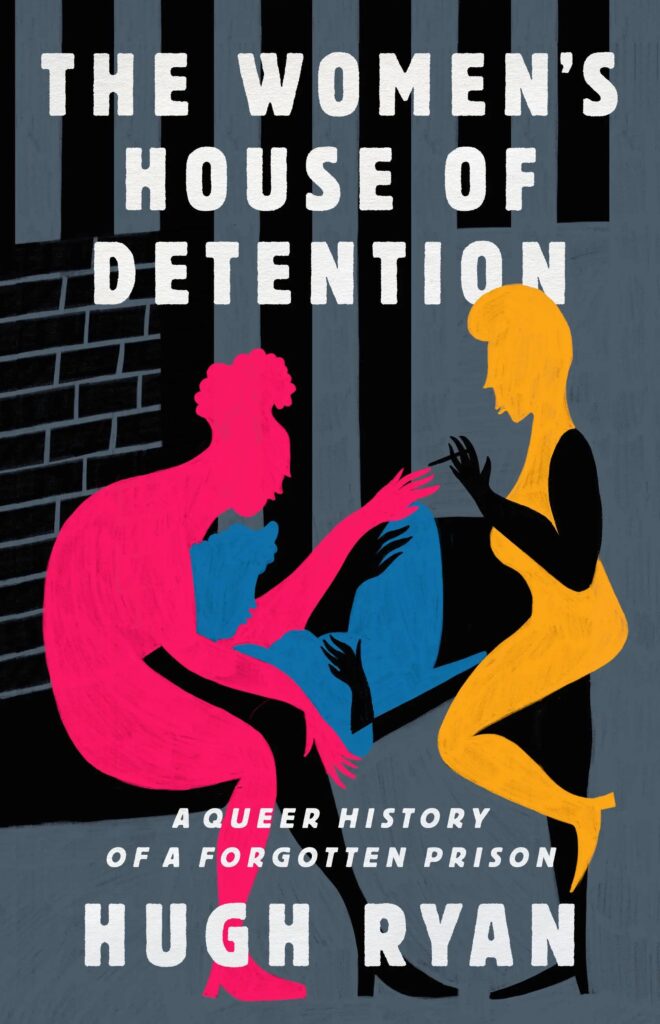
In this special episode — recorded live at Caveat on the Lower East Side — Tom and Greg are joined by Hugh Ryan, author of The Women’s House of Detention: A Queer History of a Forgotten Prison to explore the detention center’s place in both New York City history and LGBT history.
How did the “House of D” figure into the Stonewall Uprising of 1969? And what were the disturbing circumstances surrounding its eventual closure?
FEATURING: Stories of Mae West, Stanford White, Alva Belmont, Mayor Jimmy Walker, Angela Davis, Andrea Dworkin and — Tupac Shakur?
LISTEN NOW: THE HISTORY OF JEFFERSON MARKET AND THE WOMEN’S HOUSE OF DETENTION
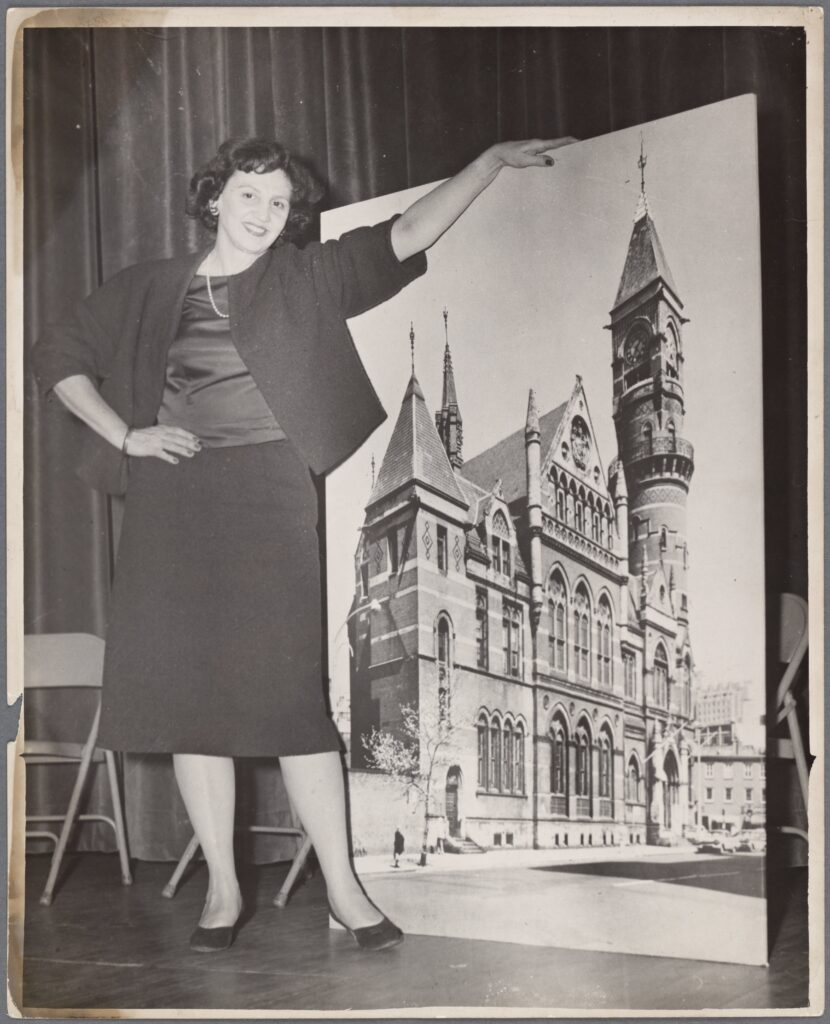
Historic American Buildings Survey, Photocopy, c. 1880, Courtesy of New-York Historical Society, New. York Public LibraryThe courtroom and House of Detention, 1938, New York Public LibraryThe Women’s House of Detention. Courtesy the New York Daily News ArchivesMargot Gayle with an image of the building she would help save. New York Public Library Digital Collections
Photos of the current Jefferson Market Library
Photo by Greg YoungPhoto by Greg YoungPhoto by Greg Young
FURTHER LISTENING
The subjects of these episodes are featured on this week’s episode. So check them out after listening to the current show:
The Bowery Boys: New York City History podcast is brought to you …. by you!
We are producing a new Bowery Boys podcast every other week. We’re also looking to improve and expand the show in other ways — publishing, social media, live events and other forms of media. But we can only do this with your help!
We are creators on Patreon, a patronage platform where you can support your favorite content creators.
Please visit our page on Patreon and watch a short video of us recording the show and talking about our expansion plans. If you’d like to help out, there are several different pledge levels. Check them out and consider being a sponsor.
We greatly appreciate our listeners and readers and thank you for joining us on this journey so far.
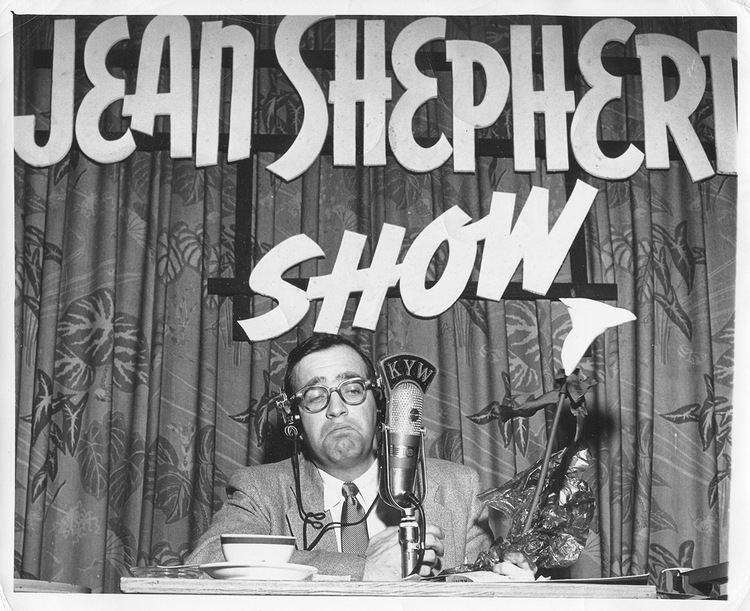
Jean Shepherd was born 100 years ago today in Chicago, so I’m bumping up this older post in tribute to this wonderful New Yorker.
Jean Shepherd, probably best known today as the voice of ‘A Christmas Story‘, was a regular presence on New York radio in the 1950s and 60s thanks to his memorable program for the AM station WOR.
Although you might associate his voice with nostalgic tales from suburban Indiana, he was very much a Village raconteur for much of his professional career. Some of his radio programs were broadcast live from the Limelight Coffee House at 91 7th Avenue, and he spent his last years in New York in a West Village apartment at West 10th Street.
In this 1960 short film ‘Village Sunday‘, Shepherd describes life in the Village and around Washington Square Park. Its pretty much a light advertisement for the entirely neighborhood, a pretty lovely thing to behold considering the conflicts the area would face with encroaching development later that decade.
He then wanders over to the Festival of San Gennaro which seems to have changed very little. You can compare it yourself when this year’s festival begins in a couple weeks!
PODCAST The strange and wonderful life of Nikola Tesla in New York City.
The Serbian immigrant Nikola Tesla was among the Gilded Age’s brightest minds, a visionary thinker and inventor who gave the world innovations in electricity, radio and wireless communication.
So why has Tesla garnered the mantle of cult status among many?
Part of that has to do with his life in New York City, his shifting fortunes as he made his way (counting every step) along the city streets.
Tesla lived in Manhattan for more than 50 years, and although he hated it when he first arrived, he quickly understood its importance to the development of his inventions.
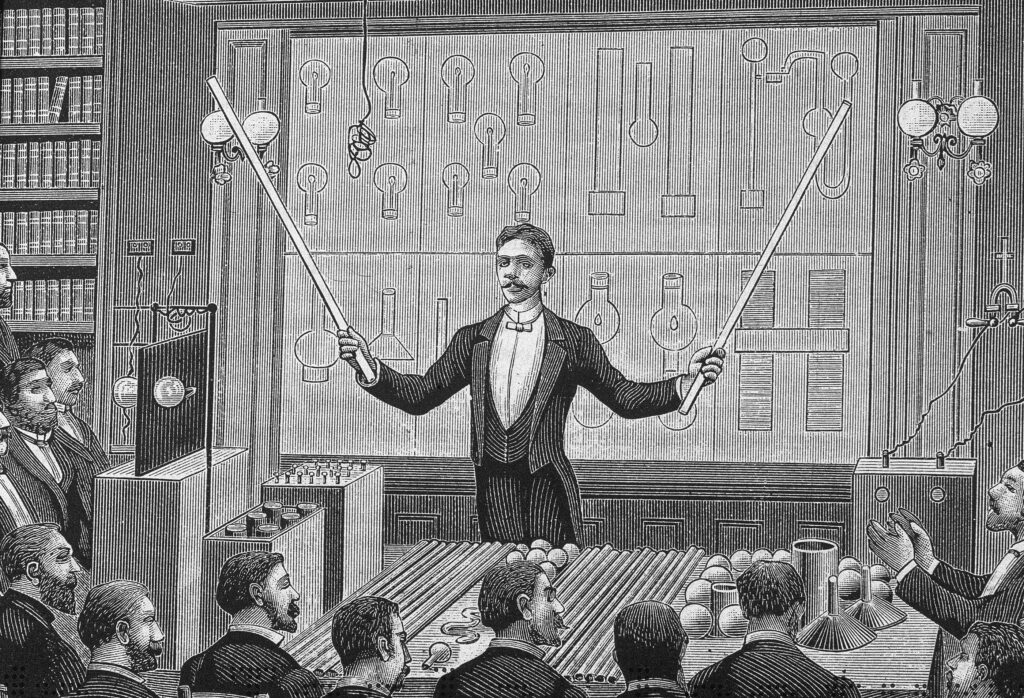
Engraving of Nikola Tesla (1856 – 1943) ‘lecturing before the French Physical Society and The International Society of Electricians,’ 1880s. (Kean Collection/Getty Images)
Travel with us to the many places Tesla worked and lived in Manhattan — from the Little Italy roost where the Tesla Coil may have been invented to his doomed Greenwich Village laboratory.
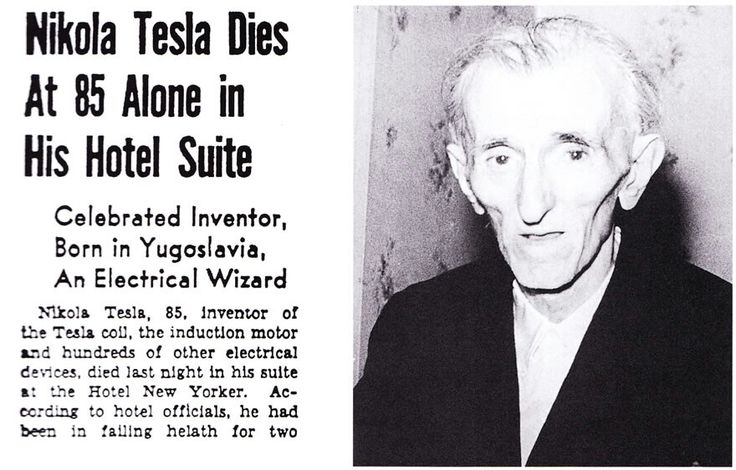
From his first job in the Lower East Side to his final home in one of Midtown Manhattan‘s most famous hotels.
Nikola Tesla, thank you for bringing your genius to New York City.
PLUS: The marvelous demonstration at Madison Square Garden in 1898 that proves that Tesla invented the drone!
The Bowery Boys: New York City History podcast is brought to you …. by you!
We are now producing a new Bowery Boys podcast every week. We’re also looking to improve and expand the show in other ways — publishing, social media, live events and other forms of media. But we can only do this with your help!
We are now a creator on Patreon, a patronage platform where you can support your favorite content creators.
Please visit our page on Patreon and watch a short video of us recording the show and talking about our expansion plans.
If you’d like to help out, there are six different pledge levels. Check them out and consider being a sponsor.
We greatly appreciate our listeners and readers and thank you for joining us on this journey so far.
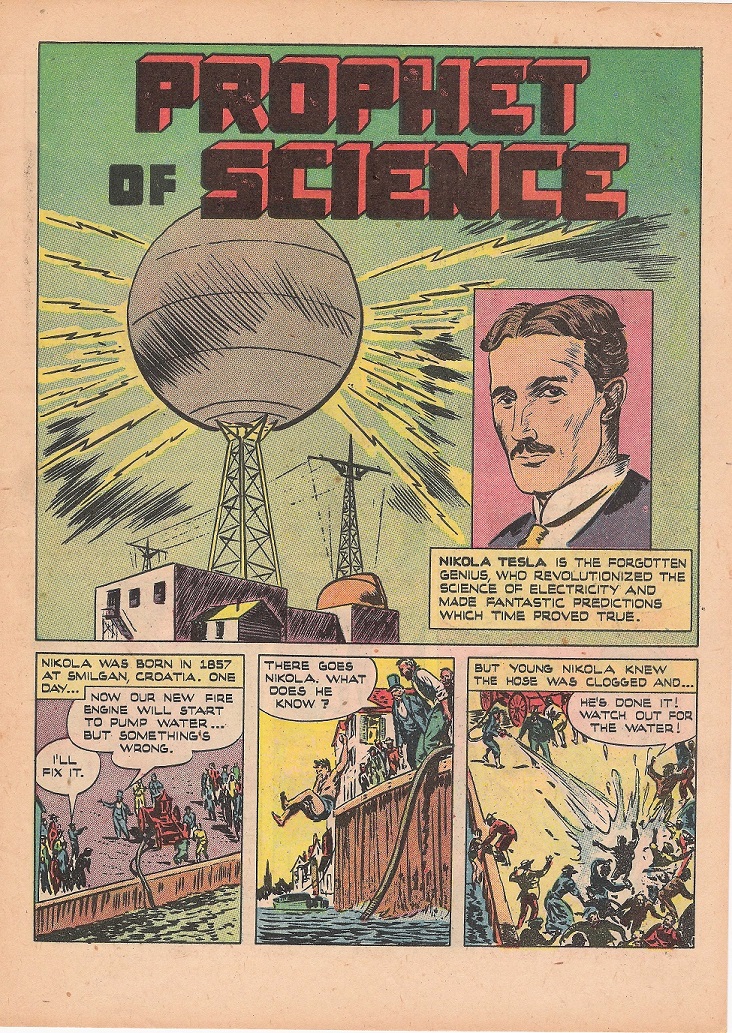
A page from the 1942 comic book Real Heroes, illustrating the life of Nikola Tesla:
Courtesy Quality Comics
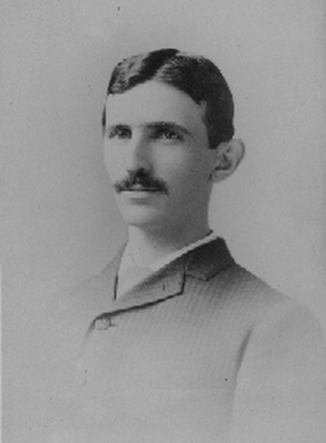
Young Tesla in 1885 while still in the employ of Thomas Edison.
Smithsonian Institution
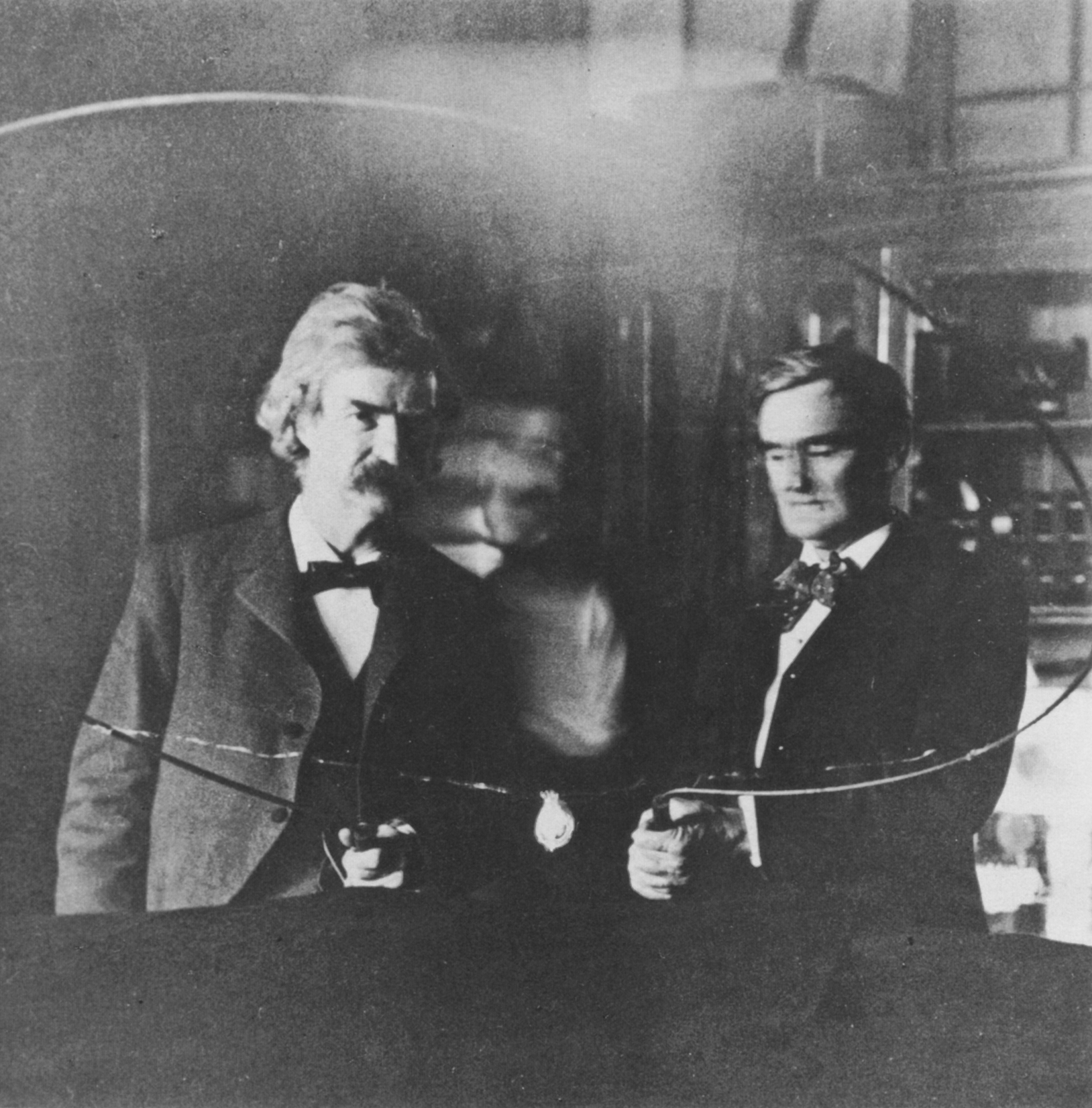
Mark Twain and Joseph Jefferson in Tesla’s South Fifth Avenue Laboratory. That’s Tesla, blurry, in the background.
Courtesy the Tesla Society
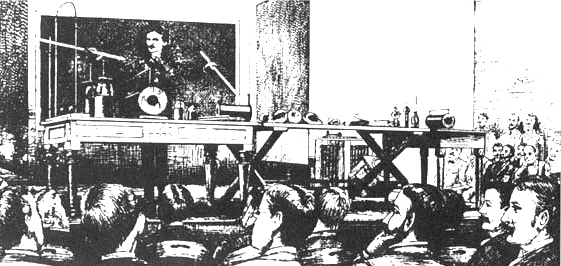
Tesla’s 1888 lecture at Columbia changed his life. His demonstration dazzled the room of distinguished scientists and professors and particularly grabbed the attention of journalists.
Courtesy Pictures of Infinity
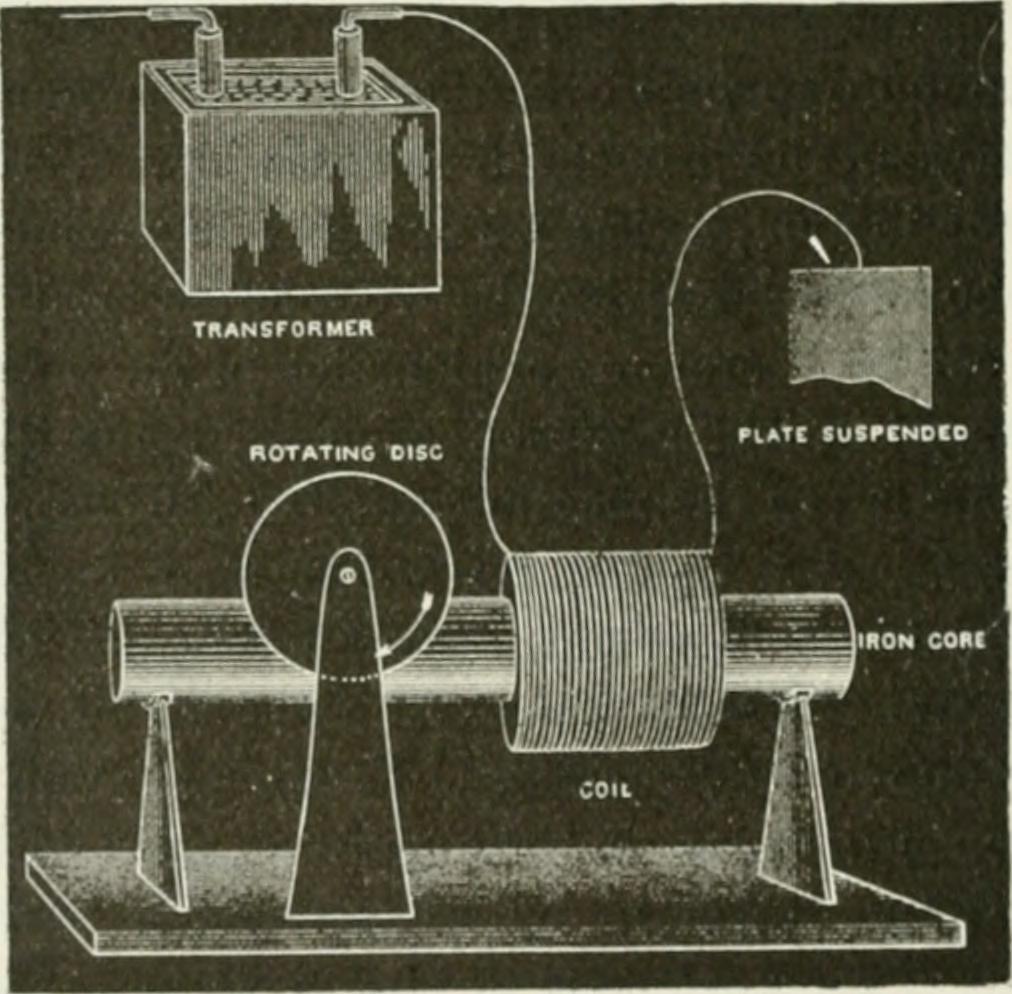
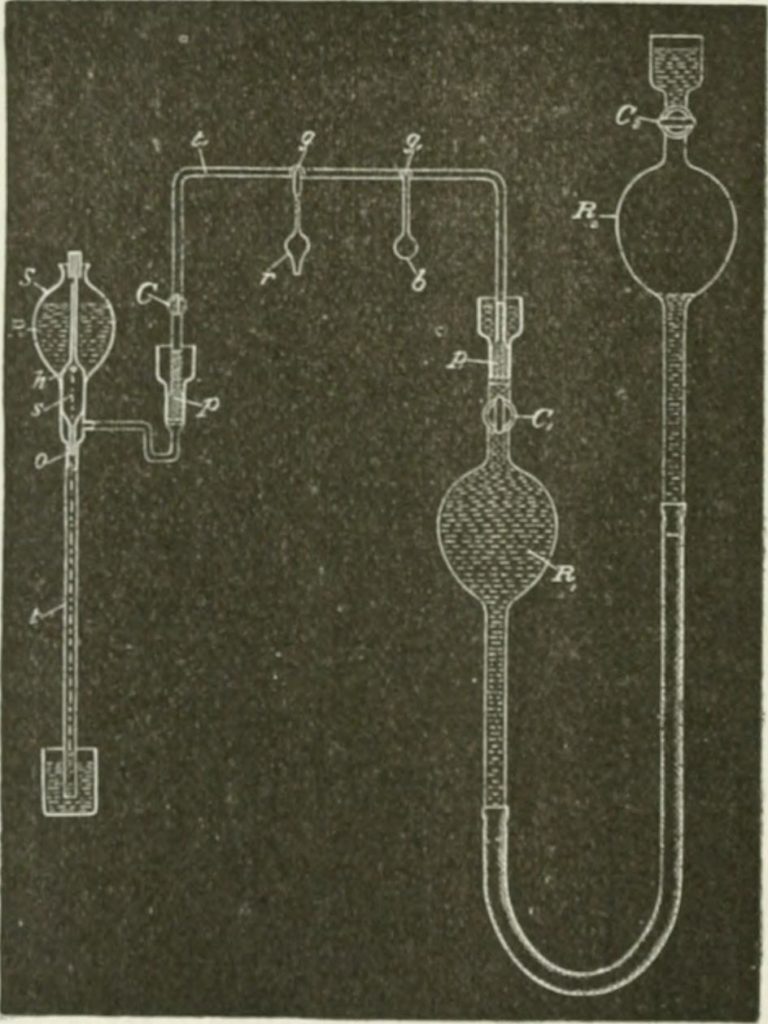
Diagrams of Tesla’s inventions from the 1880s and 90s have an almost otherworldly quality that wouldn’t look out of place in a gallery of modern art.
Internet Archive Book Images
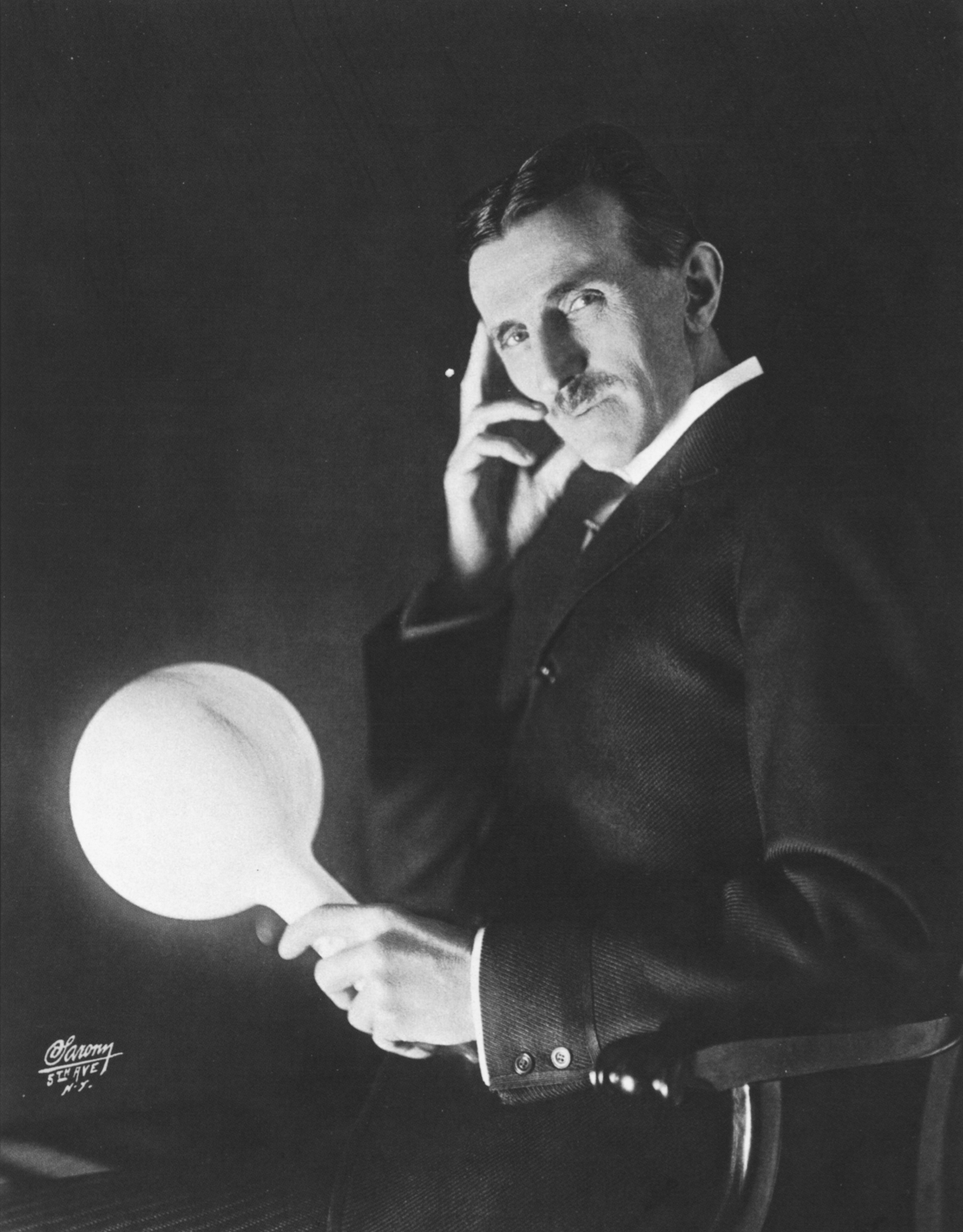
The Not-so-mad Scientist: Tesla posing with perhaps his most famous prop — a large bulb which could generate light from the human body.
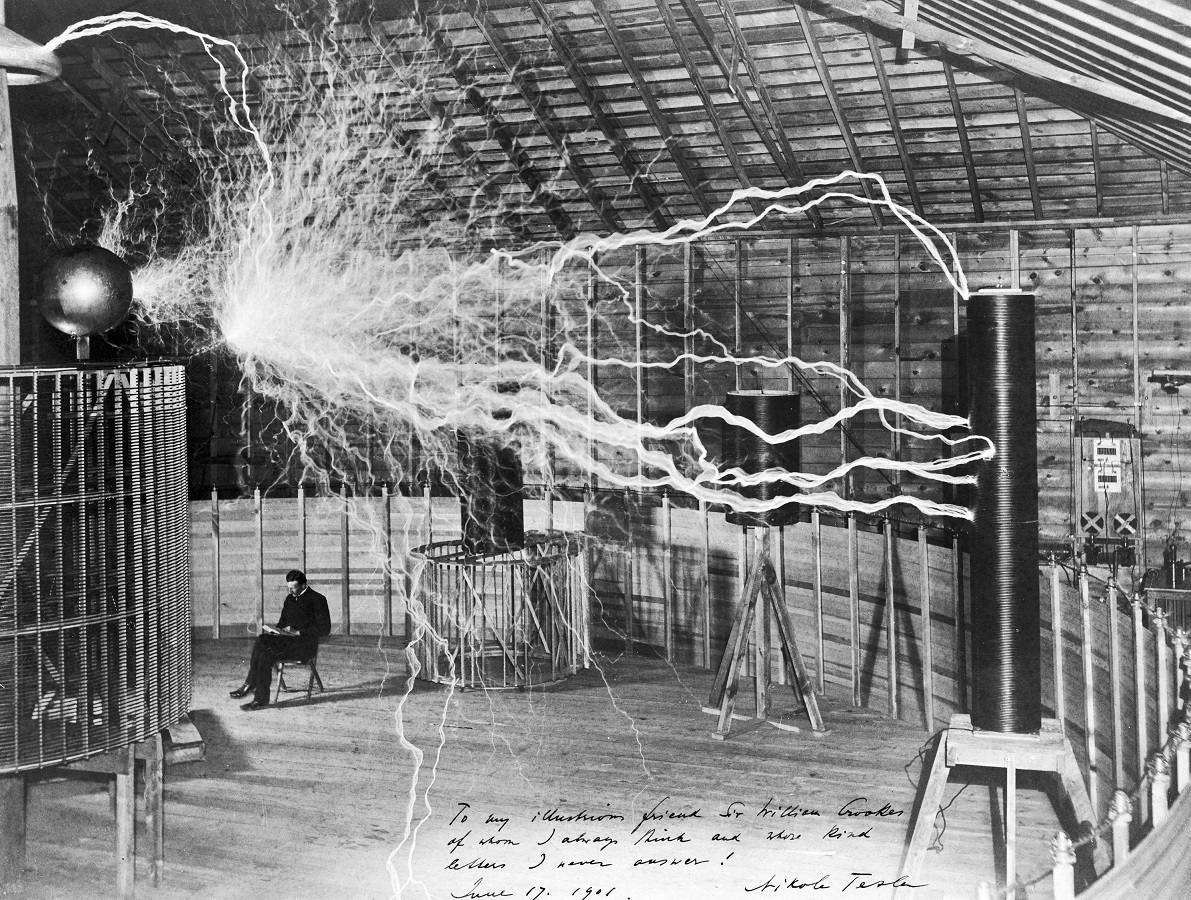
Tesla in Colorado Springs, 1899. From the caption: “A publicity photo of a participant sitting in the Colorado Springs experimental station with his “Magnifying Transmitter“. The arcs are about 22 feet (7Â m) long. (Tesla’s notes identify this as a double exposure.)”
M0014782 Nikola Tesla, with his equipment Credit: Wellcome Library, London. Wellcome Images images@wellcome.ac.uk http://wellcomeimages.org Nikola Tesla, with his equipment for producing high-frequency alternating currents. Inscribed: ‘To my illustrious friend Sir William Crookes of whom I always think and whose kind letters I never answer! Nikola Tesla June 17, 1901’ Photograph 1901 Published: –
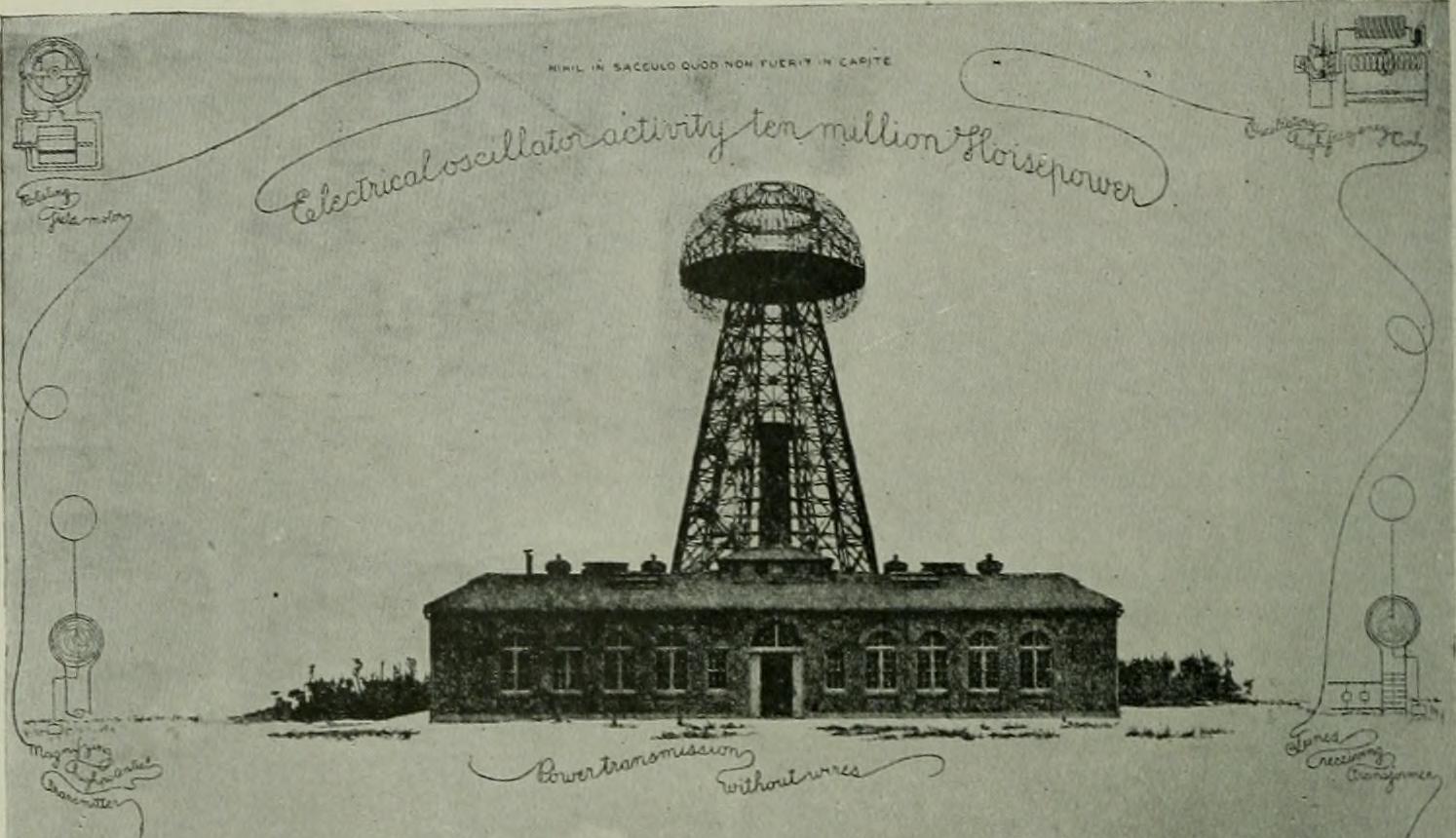
A view of Wardenclyffe Tower, Tesla’s grandest attempt of creating a wireless tranmission of electricity.
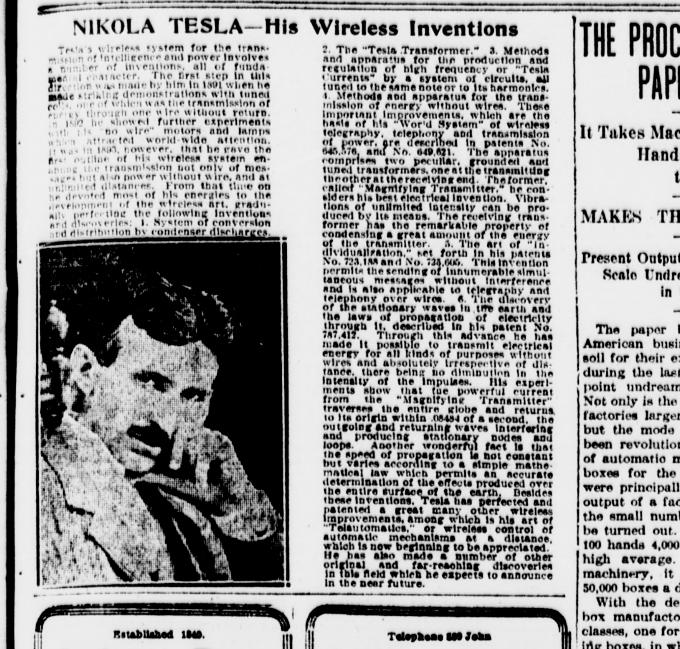
From the New York Sun, March 31, 1912: “Tesla’s wireless system for the transmission of intellegence and power involves a number of inventions, all of fundamental character.”
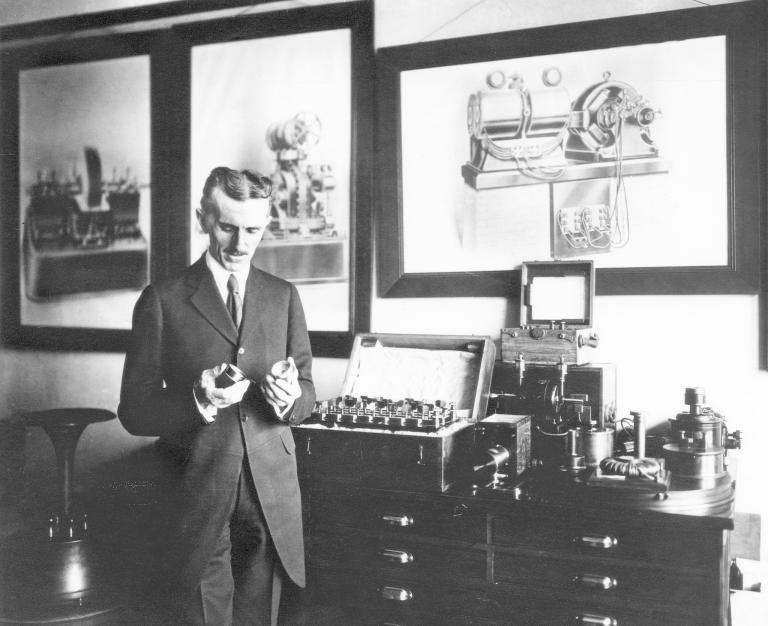
1916: Tesla poses in his West 40th Street laboratory, 1916.
Courtesy Everett Collection Inc., ALAMY
Courtesy Museum of the City of New York
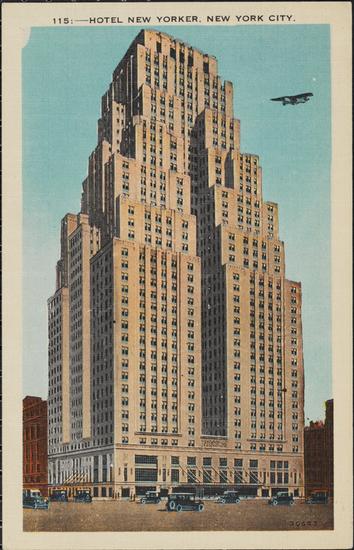
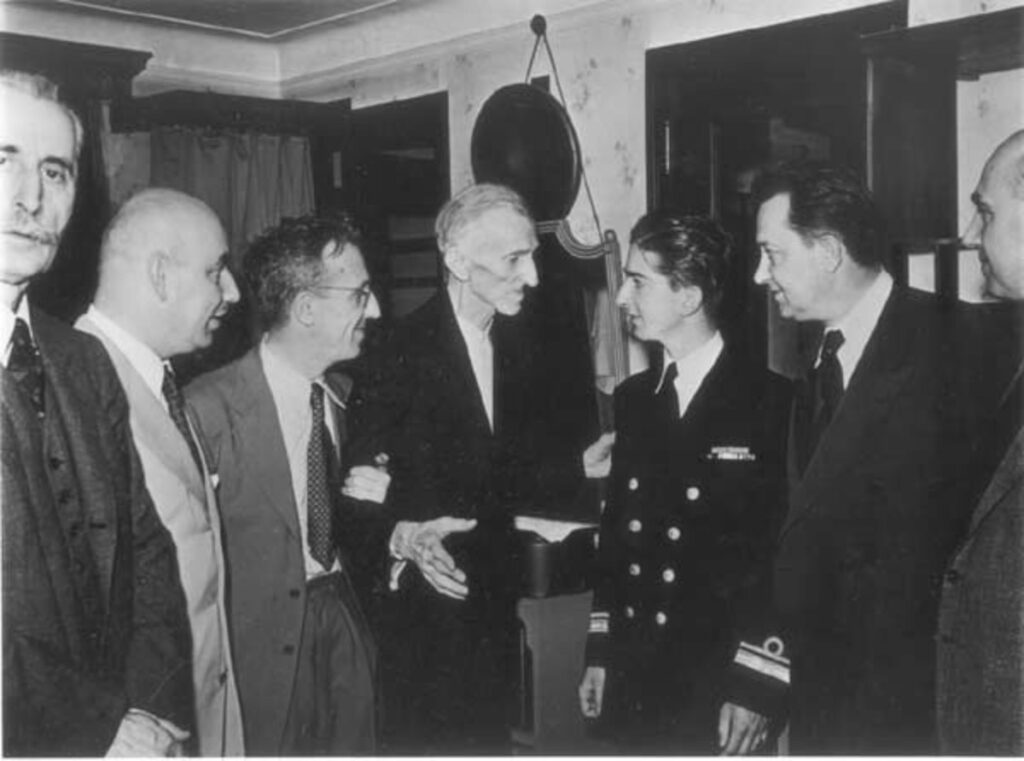
Nikola Tesla at the Hotel New Yorker with King Peter II of Yugoslavia. (Courtesy The New Yorker Hotel)
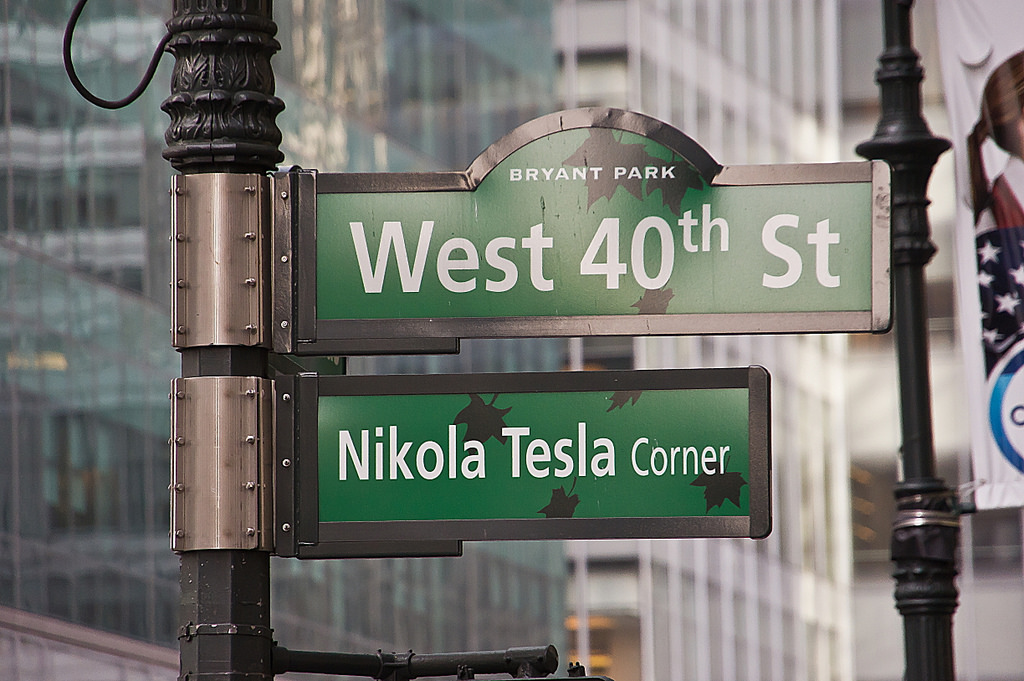
Bryant Park, near the spot of Tesla’s former laboratory and the place where he fed the pigeons.
A photo posted by Gregory Young (@boweryboysnyc) on
For more information
Visit the excellent blog by author Martin Hill Ortiz, deeply exploring the life of Tesla in New York City.
There are many societies devoted to the life and work of Nikola Tesla including the Tesla Memorial Society of New York. Â The Oatmeal is behind the effort to turn Wardenclyffe into the Tesla Science Center. Go read up on Tesla at The Oatmeal first, then check out their efforts at the Tesla Science Center.
Wann learn more about Tesla? There’s a few great books on his life including the latest by W. Bernard Carlson — Tesla: Inventor of the Electrical Age. — and Sean Patrick’s Nikola Tesla: Imagination and the Man Who Invented the 20th Century.
Then there are Tesla’s own writings — My Inventions: The Autobiography of Nikola Tesla and The Inventions, Researches and Writings of Nicola Tesla
PODCAST The history of African-American settlements and neighborhoods which once existed in New York City
Today we sometimes define New York City’s African-American identity by the places where thriving black culture developed – Harlem, of course, and also Crown Heights and Bedford-Stuyvesant, neighborhoods that developed for groups of black residents in the 20th century.
But by no means were these the first in New York City. Other centers of black and African-American life existed long before then. In many cases, they were obliterated by the growth of the city, sometimes built over without a single marker, without recognition.
This is the story of a few of those places. From the ‘land of the blacks‘ — the home to New Amsterdam and British New York’s early black population — to Seneca Village, a haven for black lives that was wiped away by a park.
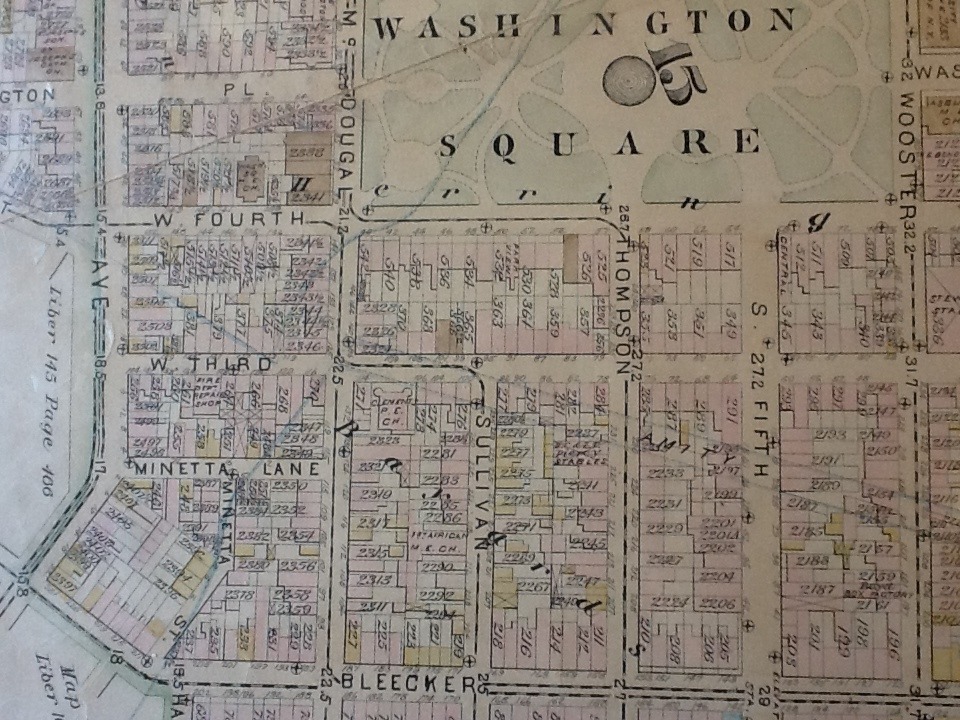
From Little Africa — the Greenwich Village sector for the black working class in the late 19th century — to Sandy Ground, a rural escape in Staten Island with deep roots in the neighborhood today.
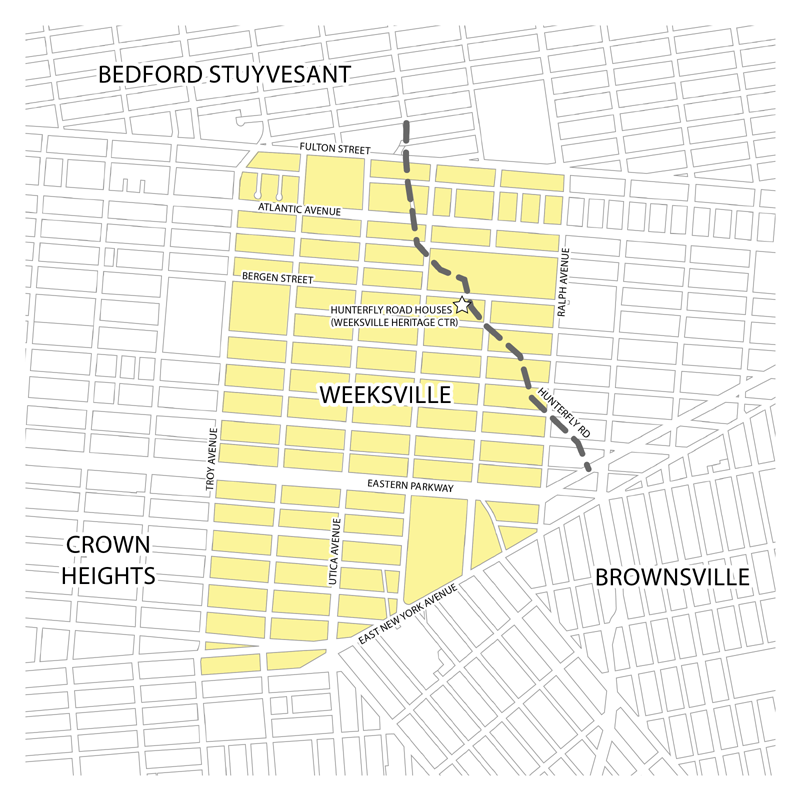
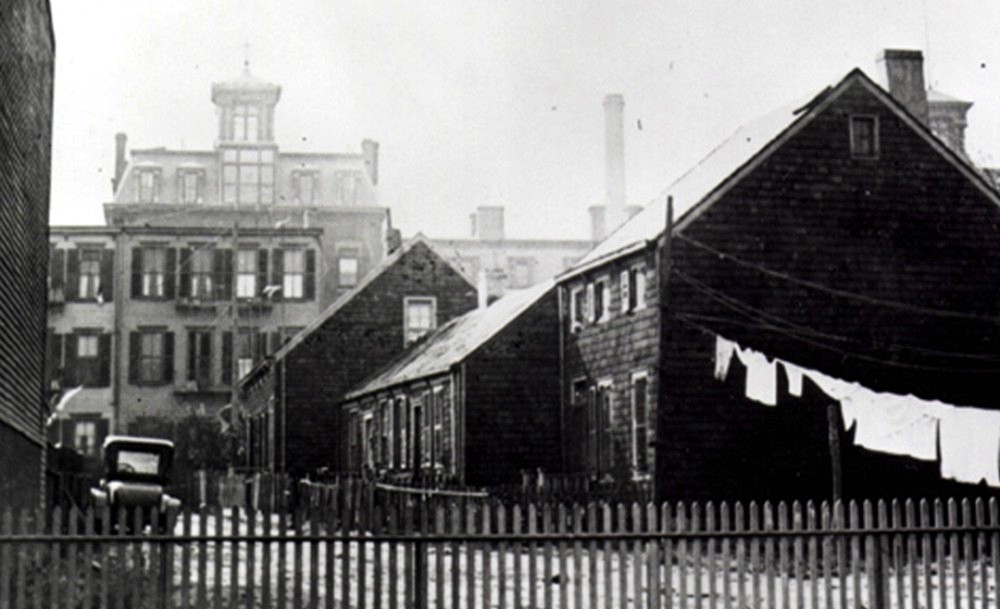
And then there’s Weeksville, Brooklyn, the visionary village built to bond a community and to develop a political foothold.
The episode is a rebroadcast of a show which first aired on June 9, 2017. Stay tuned to the end of this show for some newly written material and an update on the Black Gotham Experience and the Weeksville Heritage Center.
To get this week’s episode, just find our show onStitcher or your favorite podcast streaming service. Or listen to it here:
The Bowery Boys: New York City History podcast is brought to you …. by you!
We are now producing a new Bowery Boys podcast every week. We’re also looking to improve and expand the show in other ways — publishing, social media, live events and other forms of media. But we can only do this with your help!
We are now a creator on Patreon, a patronage platform where you can support your favorite content creators.
Please visit our page on Patreon and watch a short video of us recording the show and talking about our expansion plans.
If you’d like to help out, there are six different pledge levels. Check them out and consider being a sponsor.
We greatly appreciate our listeners and readers and thank you for joining us on this journey so far.
Our thanks to Weeksville Heritage Center and Black Gotham Experience. Visit their websites for further information about upcoming events and programs. In addition please check out the Sandy Ground Historical Society for information about this important site in Staten Island.
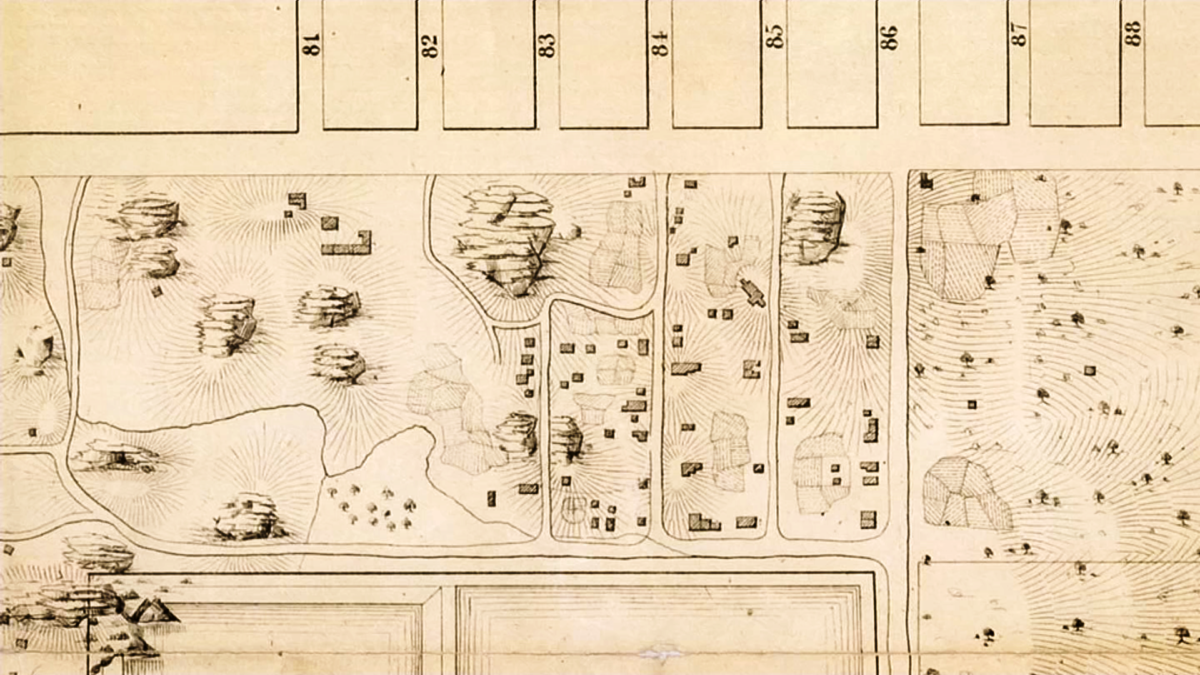
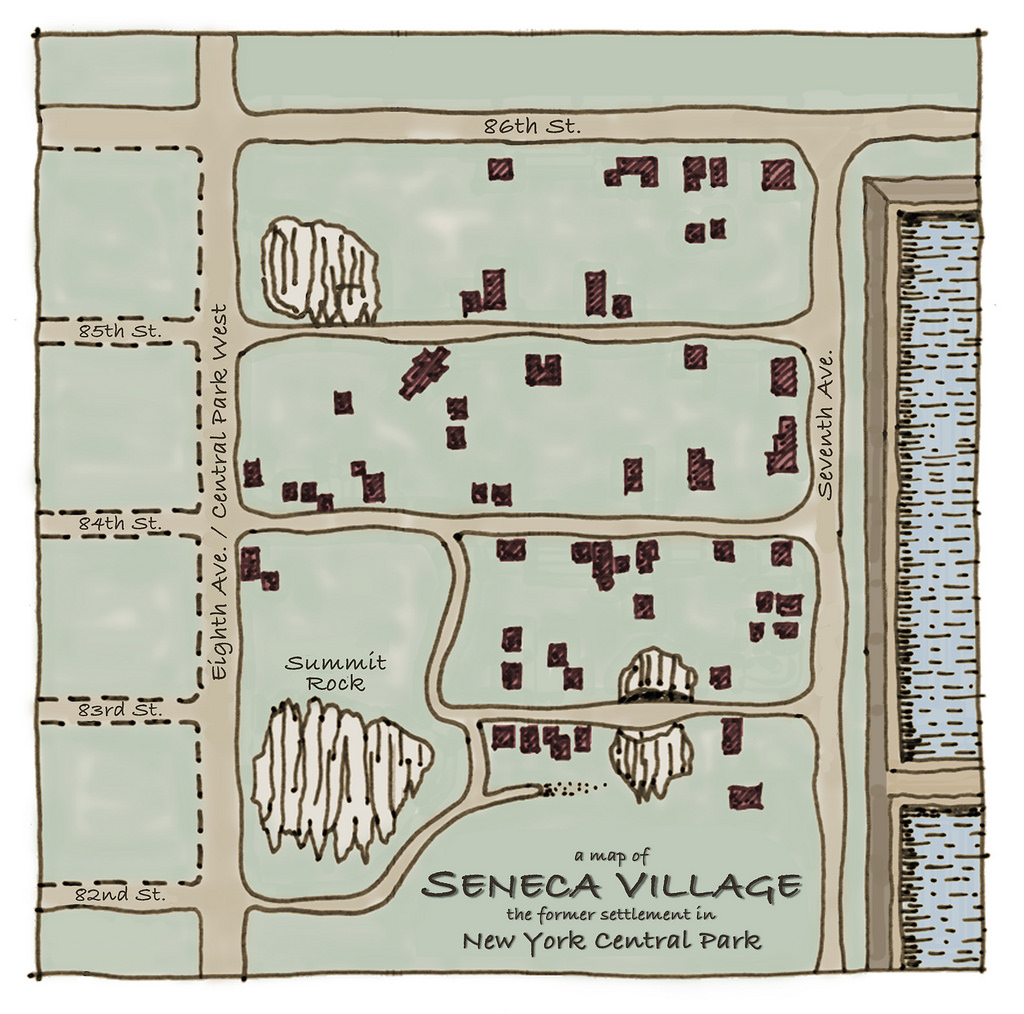
This map of Seneca Village was made by Andy Proehlillustrating what the settlement looked like in the years before its destruction.
Courtesy Andy Proehl/Flickr
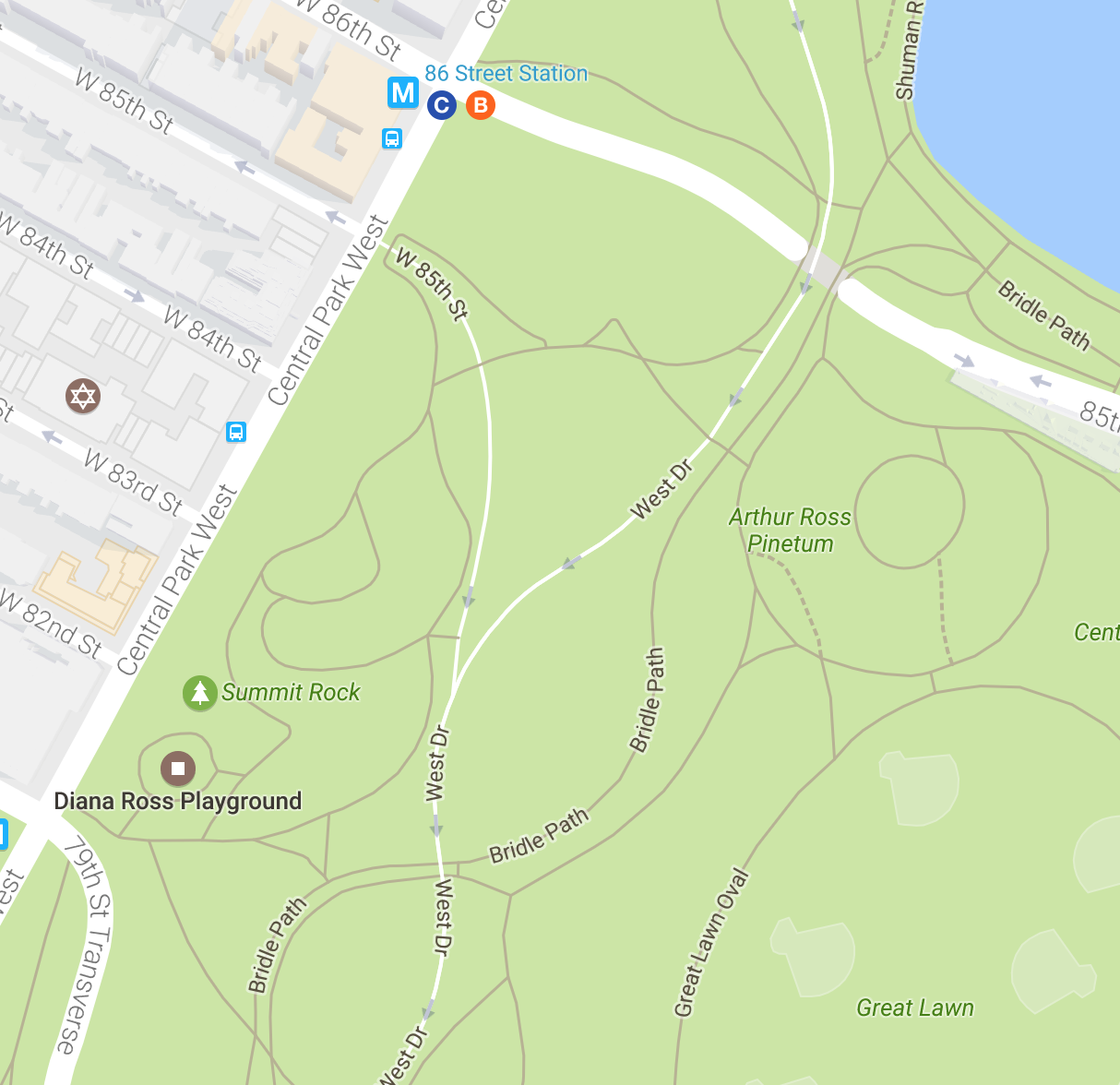
The approximate area via Google Maps. The Great Lawn now sits on the spot where the reservoir is.
The approximate area of Little Africa. The map is from 1889.
NYPL via Greenwich Village Society of Historical Perseveration
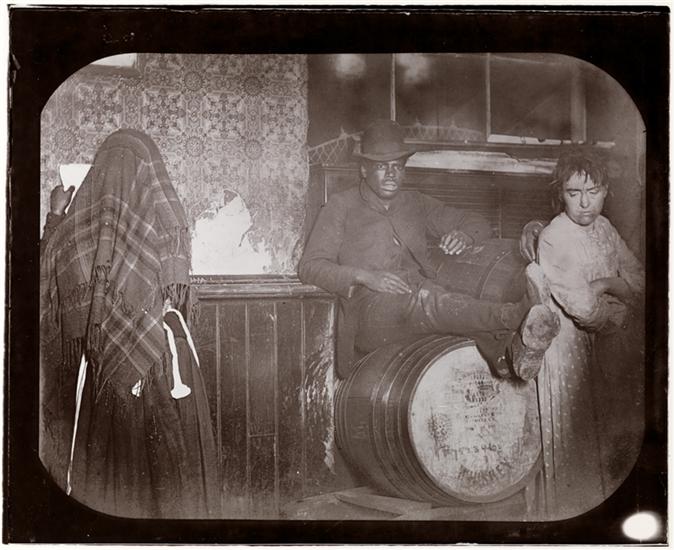
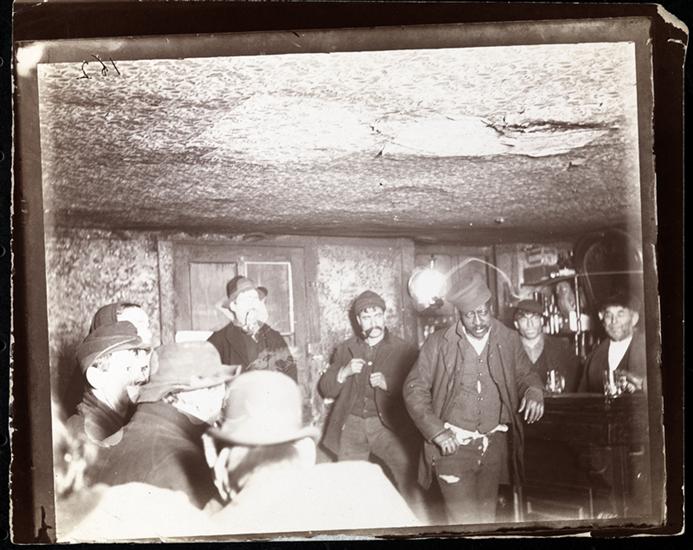
Richard Hoe Lawrence and Jacob Riis’s images of a “Black and Tan” dive bar on Broome Street near Wooster Street, 1890.
Courtesy Museum of the City of New York
Courtesy Museum of the City of New York
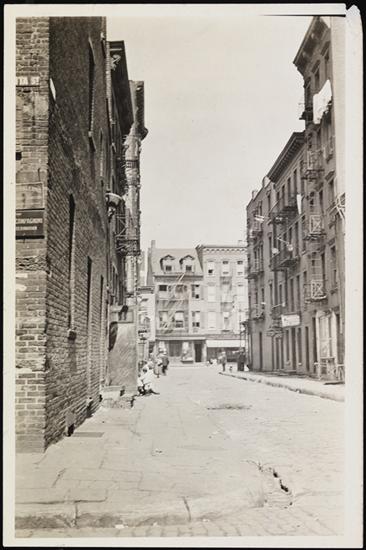
Minetta Lane, circa 1900.
MCNY
The approximate location of Weeksville, Brooklyn
Wikipedia
Brooklyn Public Library
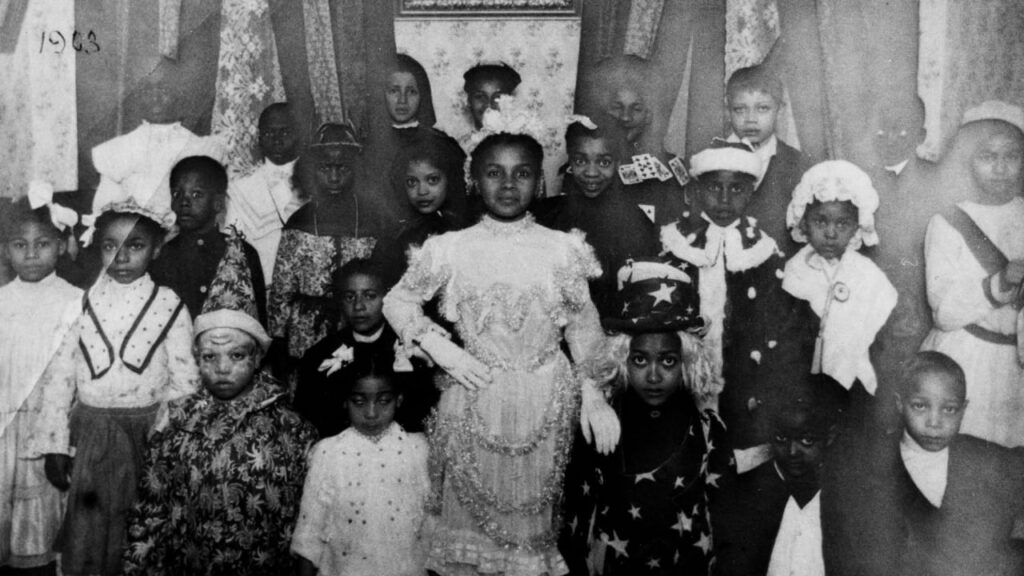
Halloween party by photographer and Weeksville resident Alexander Moore. [PHOTO: PERCY F. MOORE COLLECTION, COURTESY OF THE 5TH OF JULY RESOURCE CENTER FOR SELF-DETERMINATION & FREEDOM, WEEKSVILLE HERITAGE CENTER]
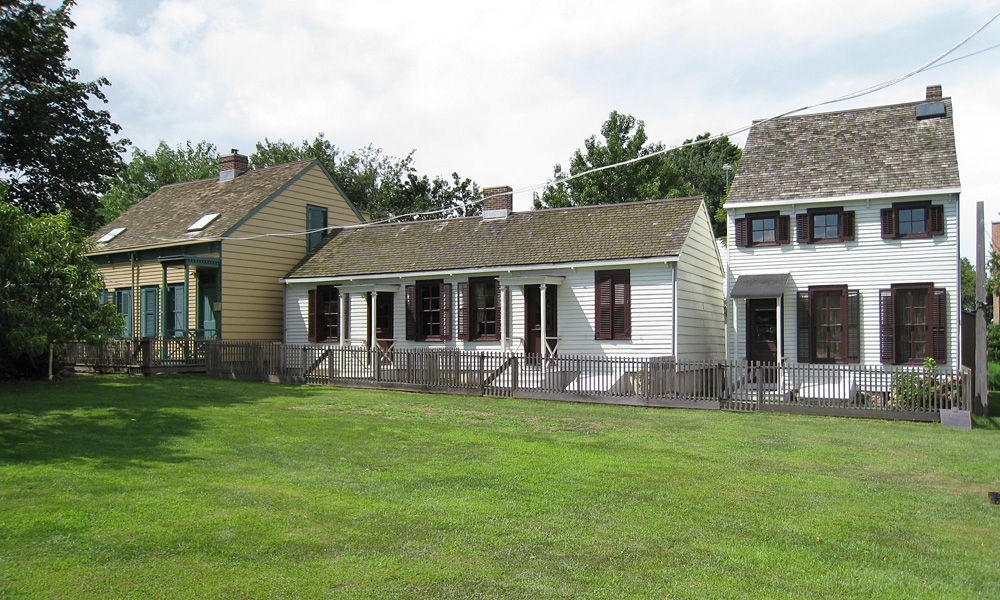
The three surviving houses today
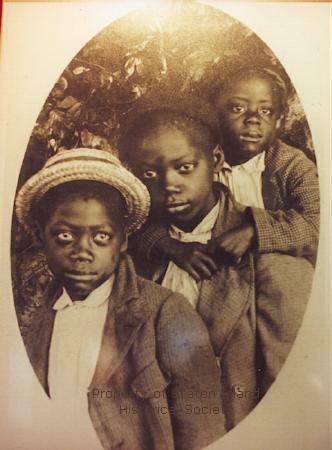
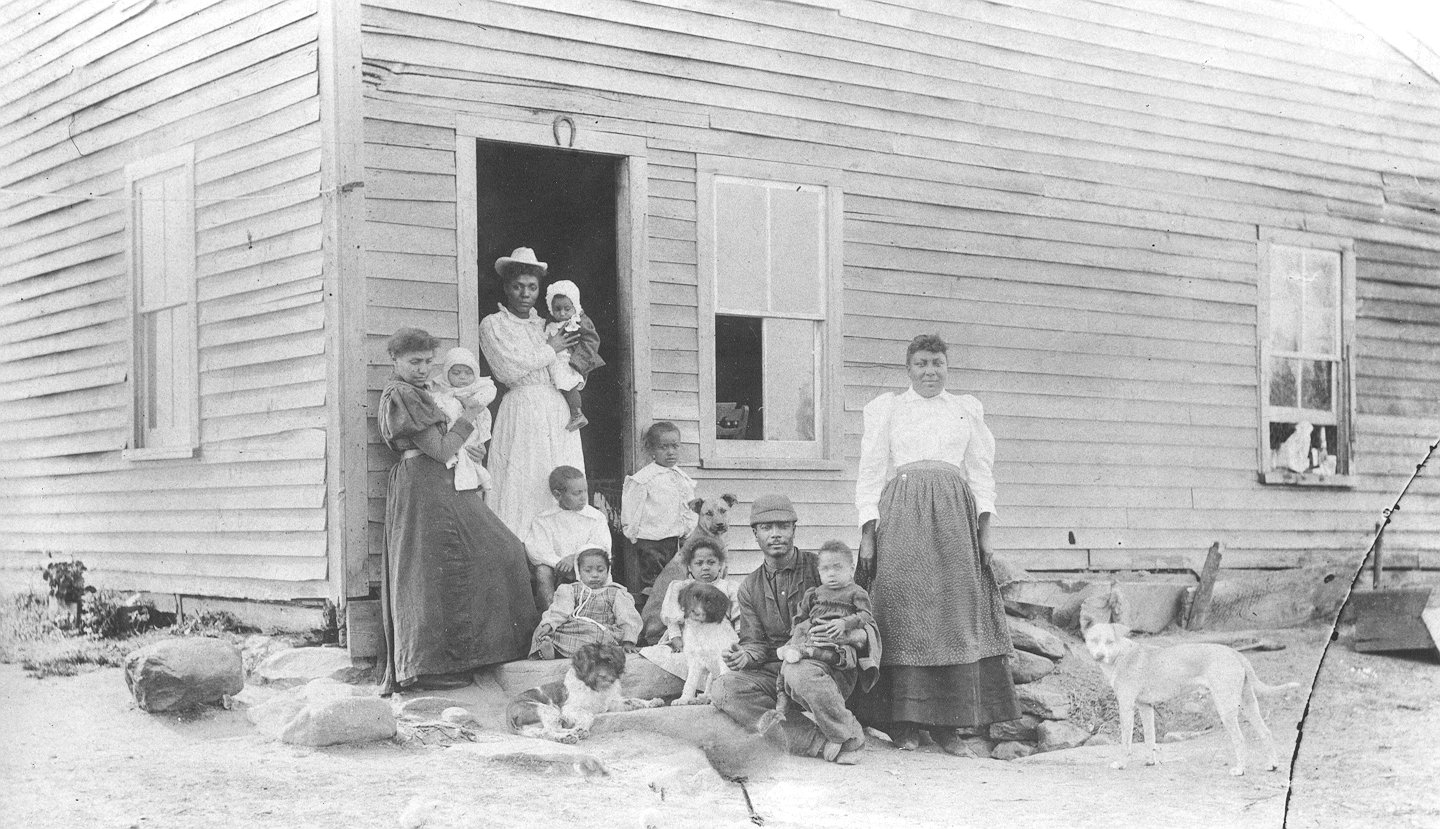
The picture at top features an African-American family posed in front of the John Brown Homestead in Torrington, Connecticut, circa 1890s-1900. I particularly love this picture because the house is reminiscent of the Weeksville houses and those that were in Sandy Ground.
Connecticut Historical Society
FURTHER LISTENING
After you’ve listened to this episode on Seneca Village and New York’s forgotten black communities, check out these past Bowery Boys episodes about aspects of New York City history featured on this show:
This is the story of Greenwich Village as a character — an eccentric character maybe, but one that changed American life — and how the folky, activist spirit it fostered in arts, culture and the protest movement came back in the end to help itself.
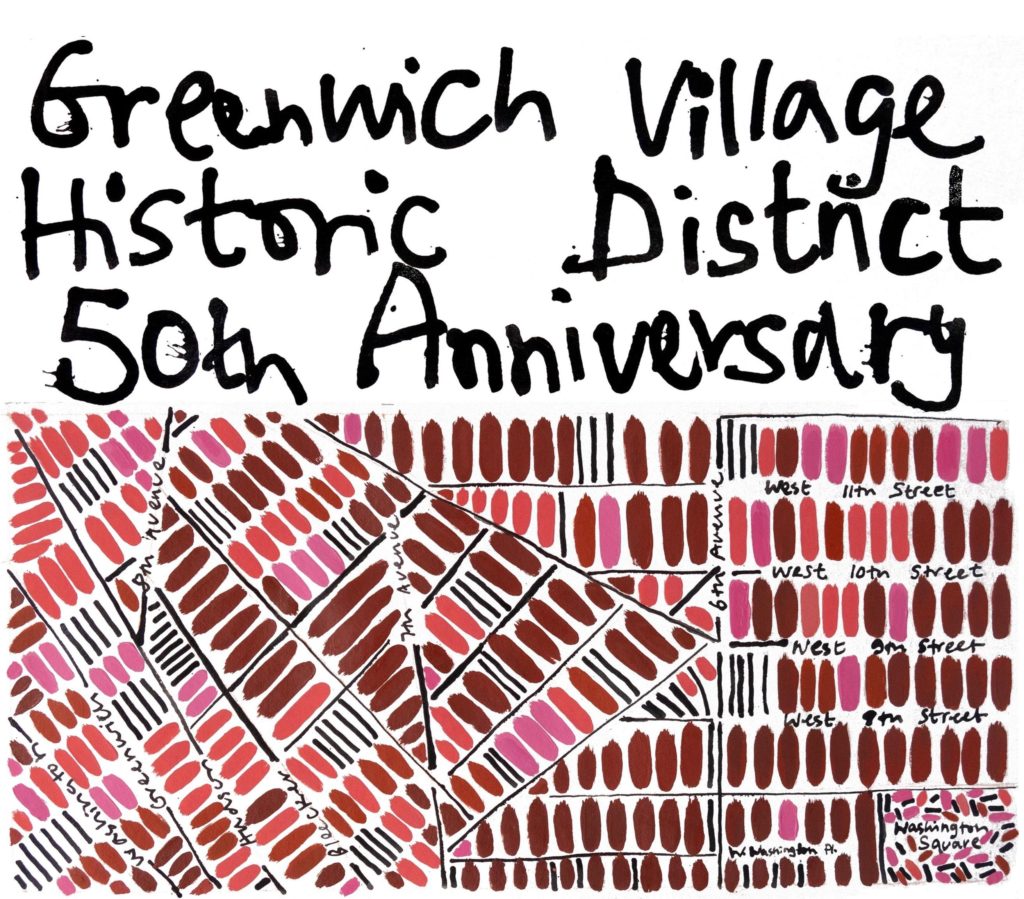
This April we’re marking the 50th anniversary of the Greenwich Village Historic District designation from 1969 — preserving one of the most important and historic neighborhoods in New York — and to mark the occasion we are celebrating the revolutionary scene (and the revolutionary moment) that gave birth to it — the Greenwich Village of the 1960s.
The Village is the stuff of legends: a hotbed of musicians, artists, performers, intellectuals, activists. In the 1950s, people often defined Greenwich Village as a literal village with a small-town atmosphere.
Nobody was saying that about the Village in the 1960s. In just a few short years, the neighborhood’s community of artists and creators had helped to define American culture. The Village was world famous.
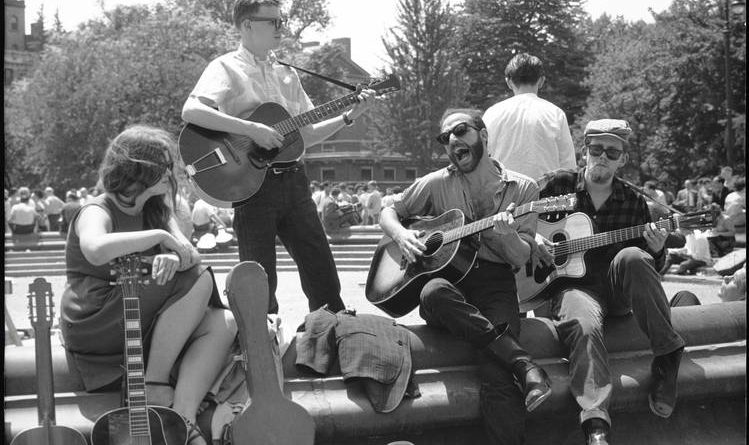
This episode will present a little walk through Greenwich Village in the early ’60s, giving you the flavor of the Village during the era — and an ample sampling of its sights and sounds.
There’s gonna be mandolins! And chess players. And avant garde theater. And art markets. And lots of coffeeshops. *snap* *snap*
The Bowery Boys: New York City History podcast is brought to you …. by you!
We are now producing a new Bowery Boys podcast every other week. We’re also looking to improve the show in other ways and expand in other ways as well — through publishing, social media, live events and other forms of media. But we can only do this with your help!
We are now a member of Patreon, a patronage platform where you can support your favorite content creators.
Please visit our page on Patreon and watch a short video of us recording the show and talking about our expansion plans. If you’d like to help out, there are six different pledge levels (New Amsterdam, Five Points, Gilded Age, Jazz Age, Empire State and Greater New York). Check them out and consider being a sponsor.
And join us for the next episode of the Bowery Boys Movie Club, an exclusive podcast provided to our supporters on Patreon.
We greatly appreciate our listeners and readers and thank you for joining us on this journey so far.
Greenwich Village Historic District 50th Anniversary Celebration and Open House Weekend! Washington Square Park Celebration Saturday, April 13 from 12:00-3:00pm in Garibaldi Plaza Historic District Open House Weekend Saturday, April 13 – Sunday, April 14 Full calendar at gvshp.org/GVHD50weekend
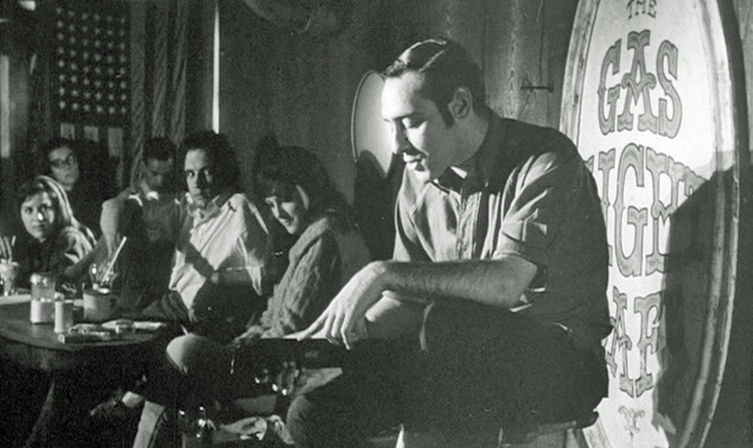
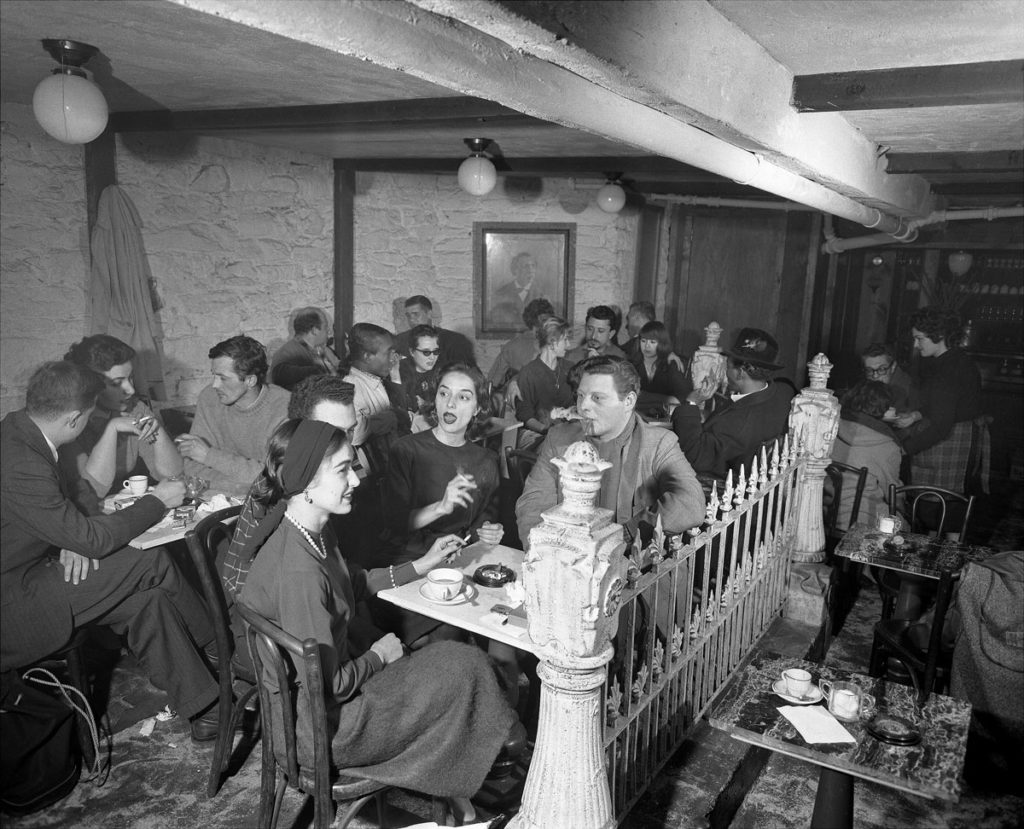
Inside the Gas Light Cafe, in a still from the film Greenwich Village Story directed by Jack O’ConnellJean Shepherd, performing at the Limelight Gallery.
Peter Paul and Mary
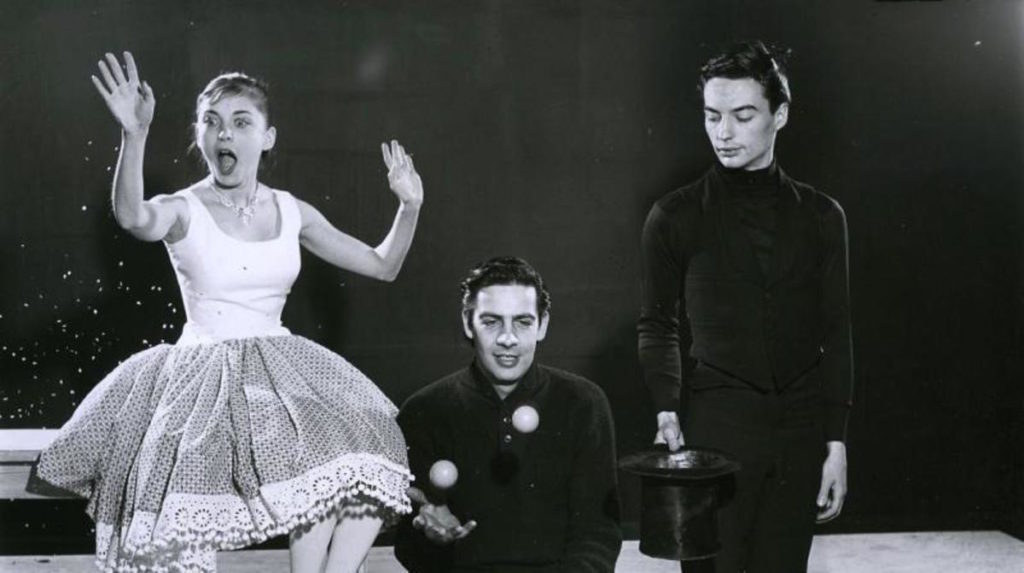
The Fantasticks original cast featured Rita Gardner, Jerry Orbach and Kenneth Nelson
Some images of Greenwich Village today which recall its days from the 1960s — and even earlier (photos by Greg Young):
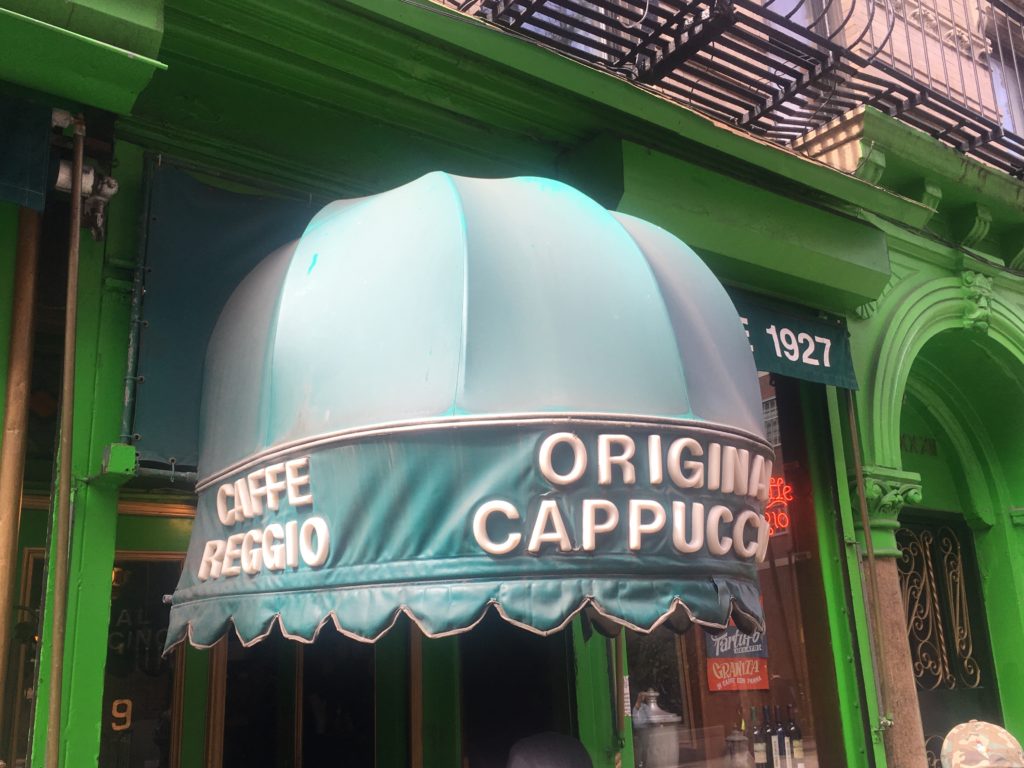
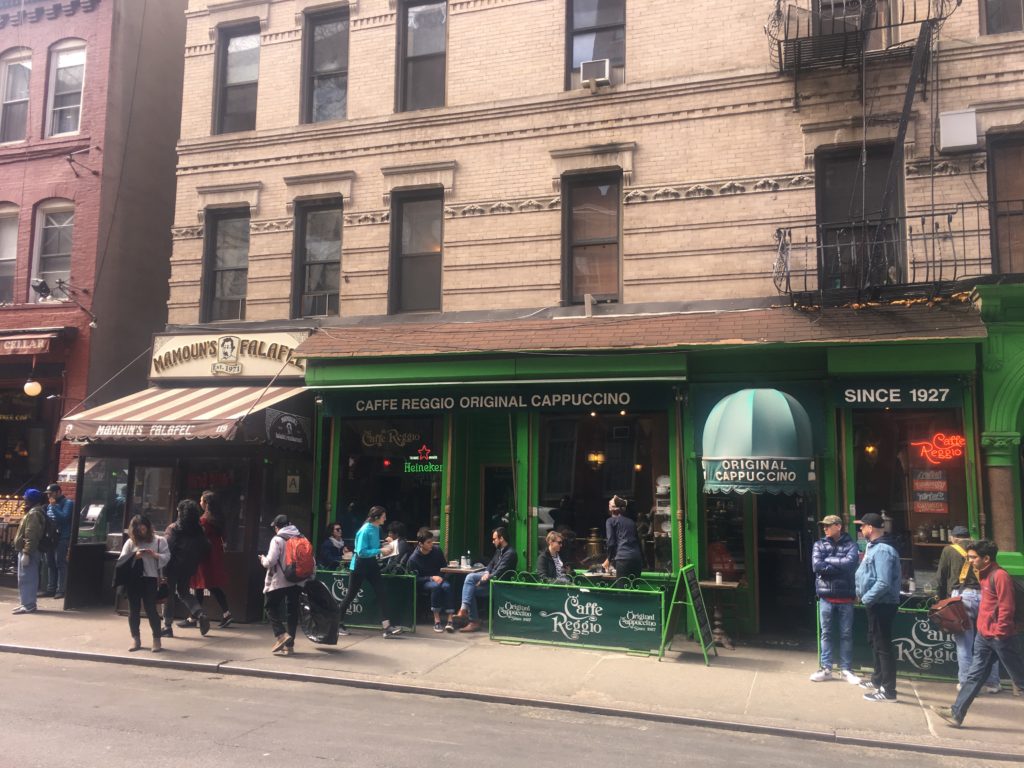
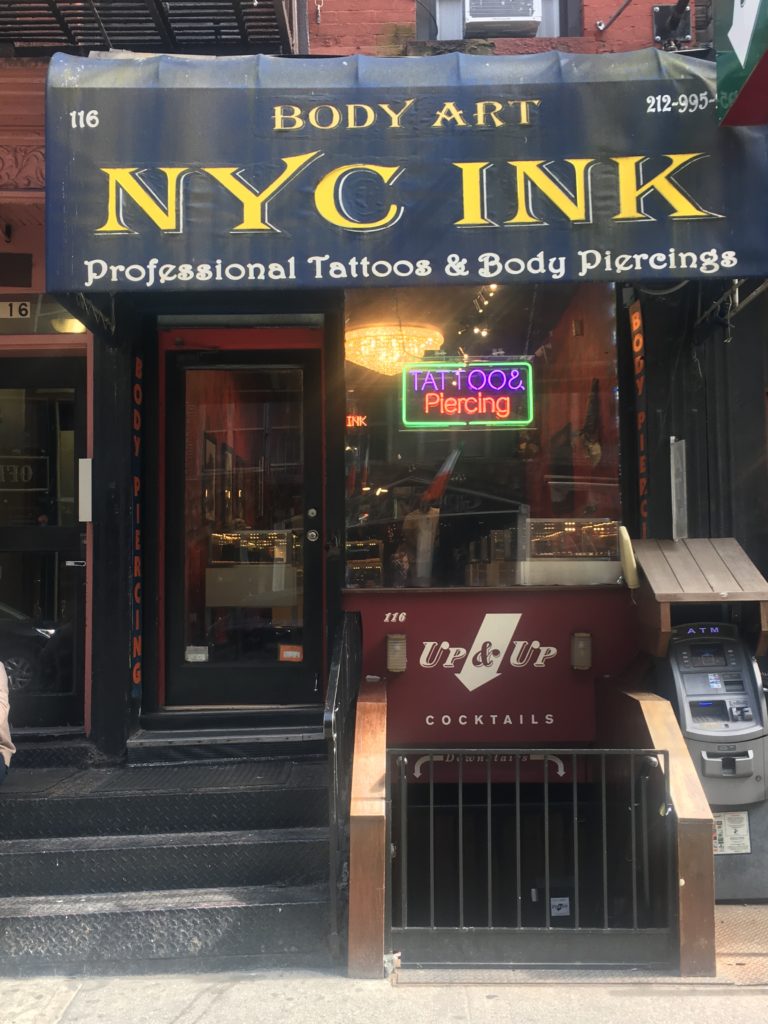
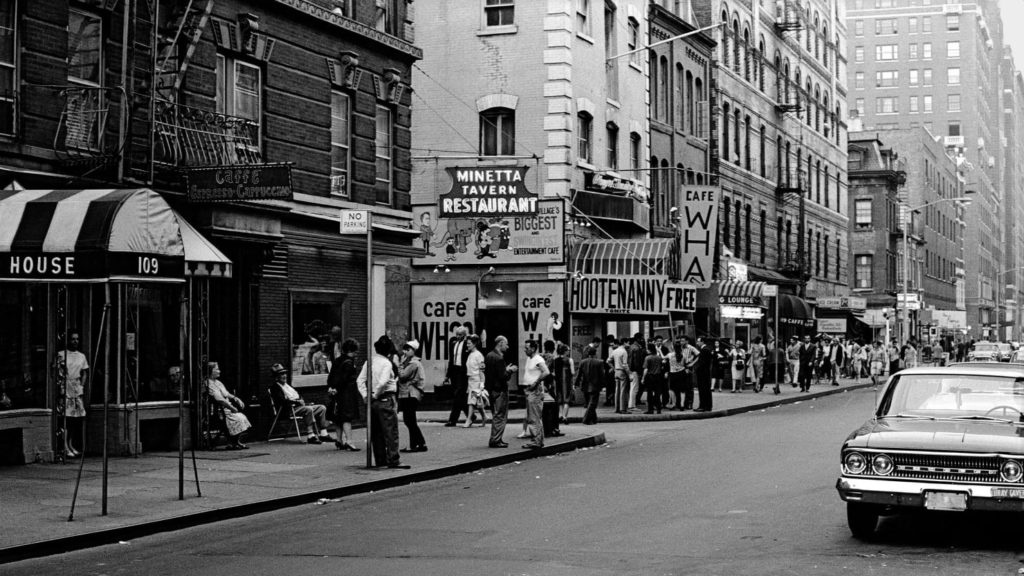
Robert Otter/New York TimesCaffe Reggio has been an anchor of MacDougal Street since 1927, an Italian owned business that transitioned into a center for the beatnik scene.The location of the Gaslight CafeUNITED STATES – FEBRUARY 19: Patrons at the gaslight, 116 McDougal St. Greenwich Village (Photo by Charles Payne/NY Daily News Archive via Getty Images)Cafe Wha? todayCafe Wha?, Minetta Tavern and the rest of MacDougal Street (aka ‘the fun zone’)
FURTHER READING Some material we recommend you check out for more information on Greenwich Village:
360 Sound: The Columbia Records Story by Sean Wilentz Around Washington Square: An Illustrated History of Greenwich Village by Luther S. Harris Greenwich Village Stories: A Collection of Memories by Judith Stonehill, Andrew Berman, et al The Village: 400 Years of Beats and Bohemians, Radicals and Rogues, a History of Greenwich Village by John Strausbuah The Village Voiceonline archives and of course…. The original Greenwich Village Historic Designation Report (1969)
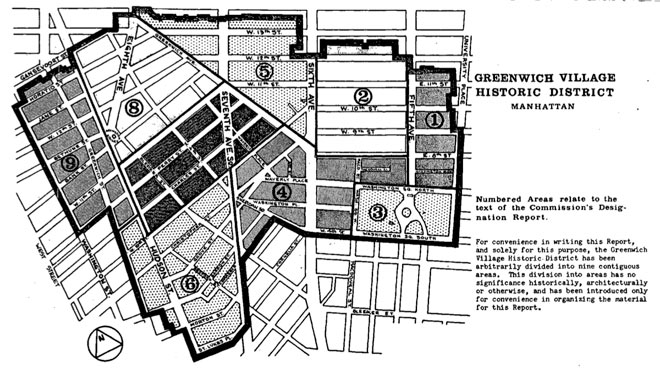
The original map of the Greenwich Village Historic District
PODCAST The story of New York City’s most colorful profession.
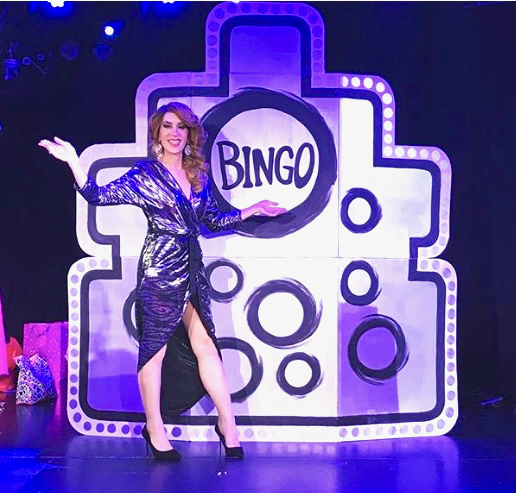
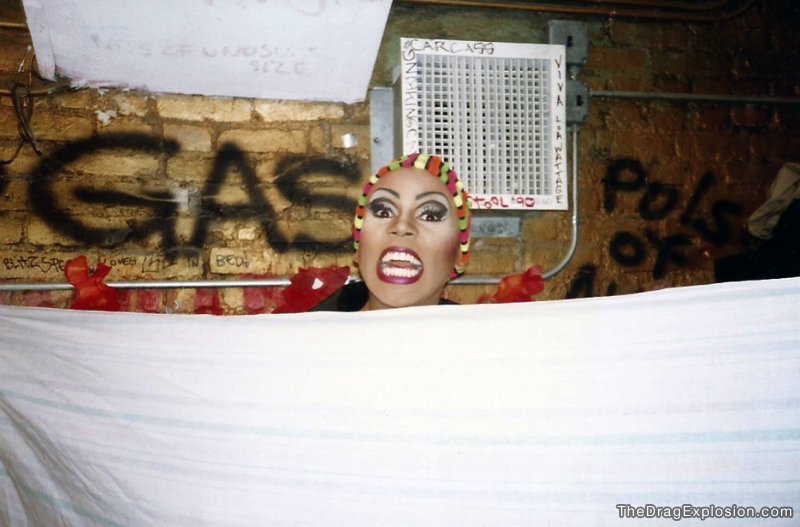
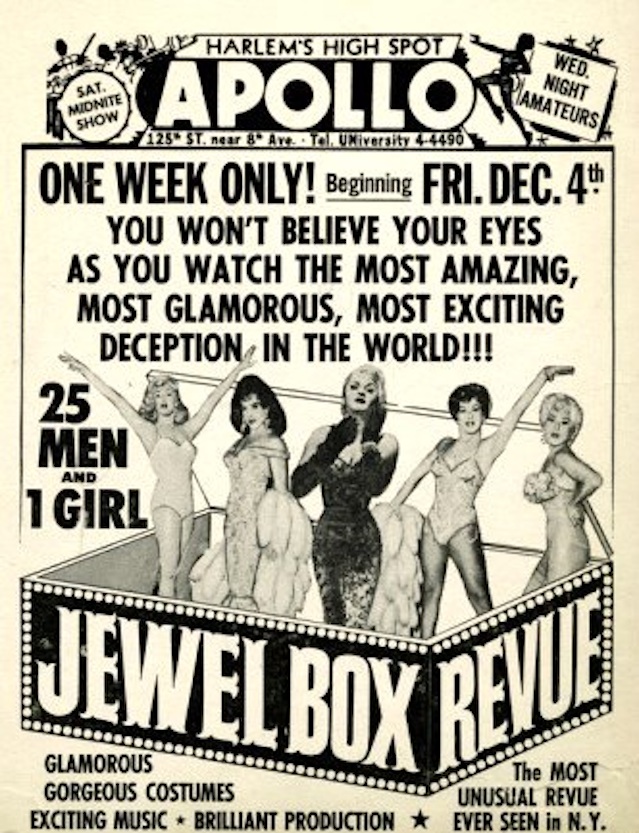
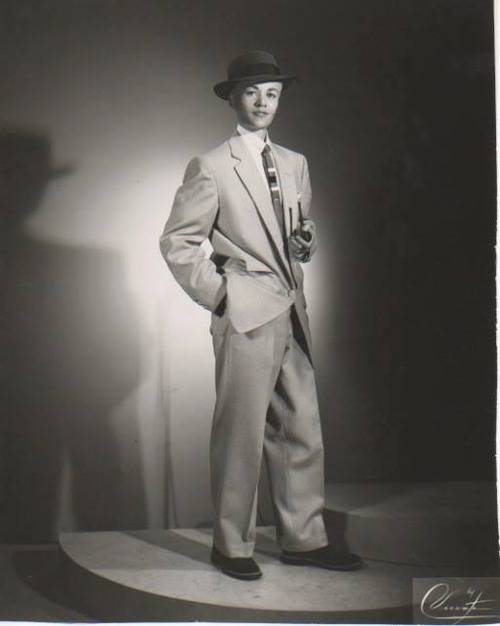
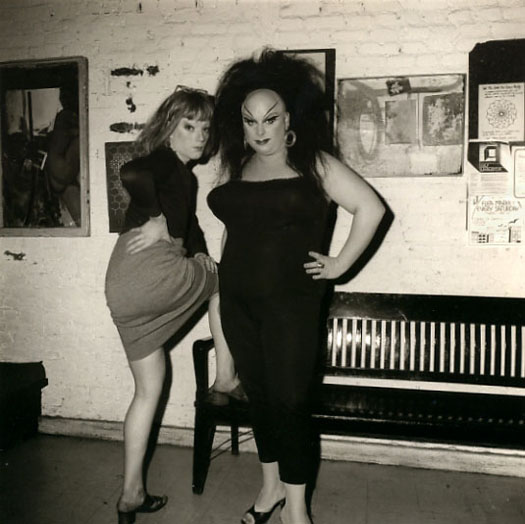
Television audiences are currently obsessed with shows like RuPaul’s Drag Race and FX’s Pose, presenting different angles on the profession and art of drag. New York City has been crucial to its current moment in pop culture and people have been performing and enjoy drag performers for well over a century.
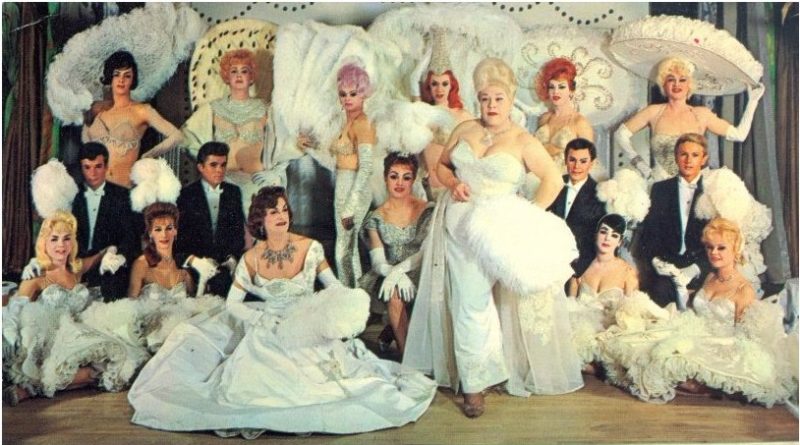
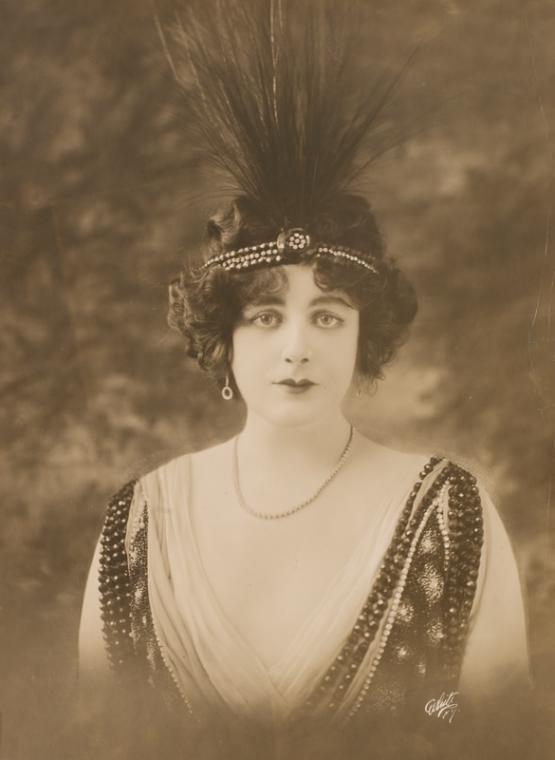
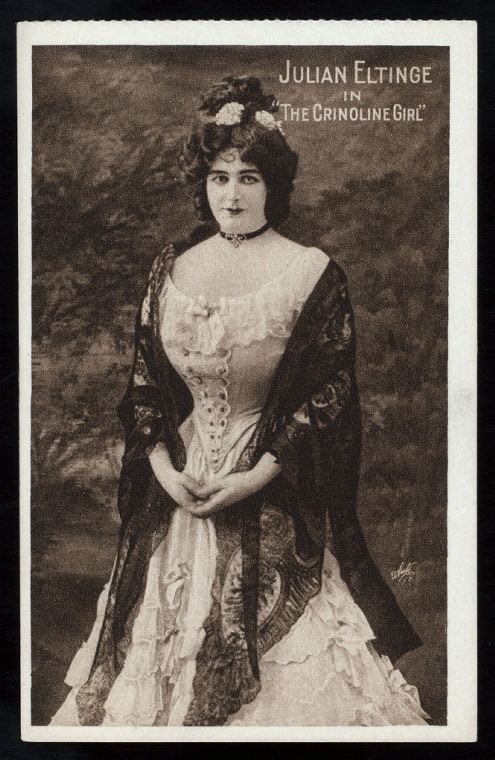
In the beginning there were two kinds of drag — vaudeville and ballroom. As female impersonators filled Broadway theaters — one theater is even named for a famed gender illusionist — thrill seekers were heading to the popular balls of Greenwich Village and Harlem.
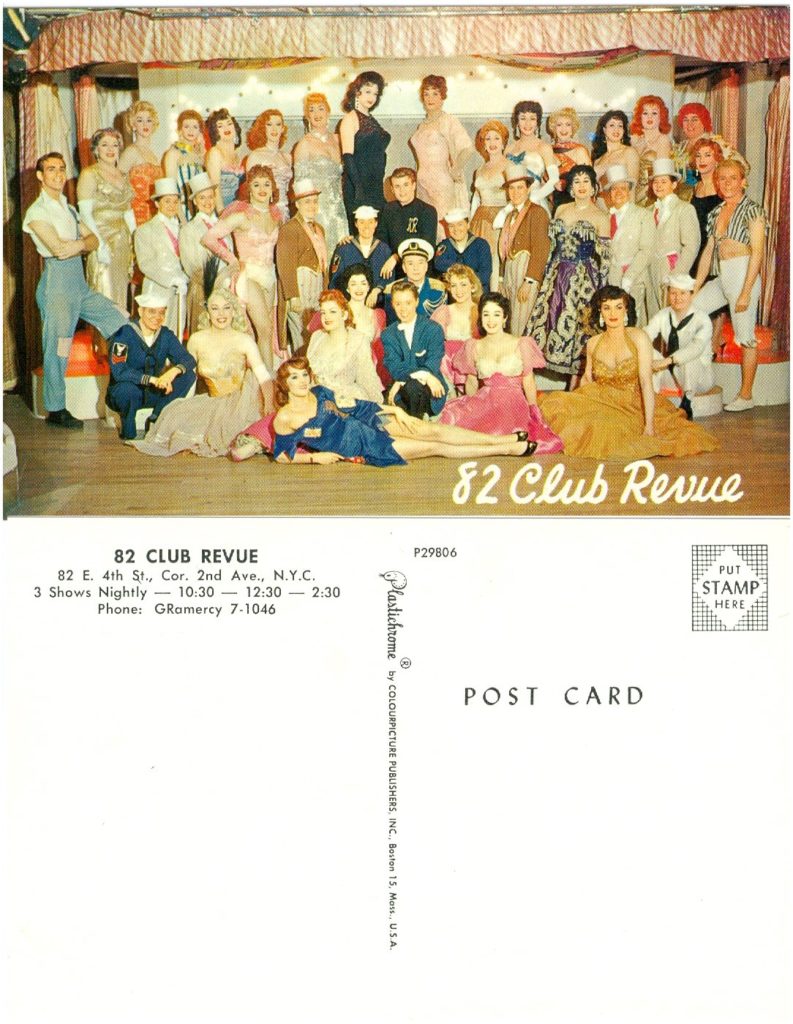
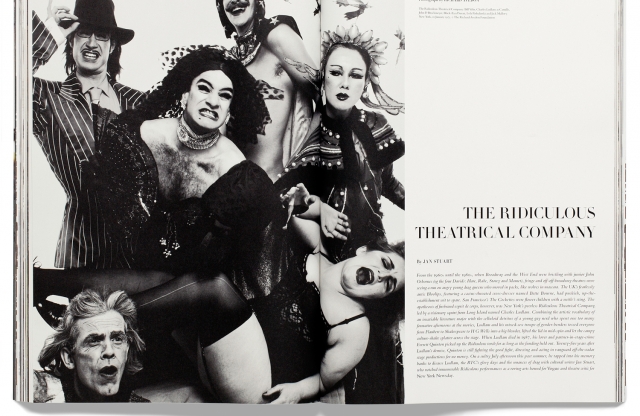
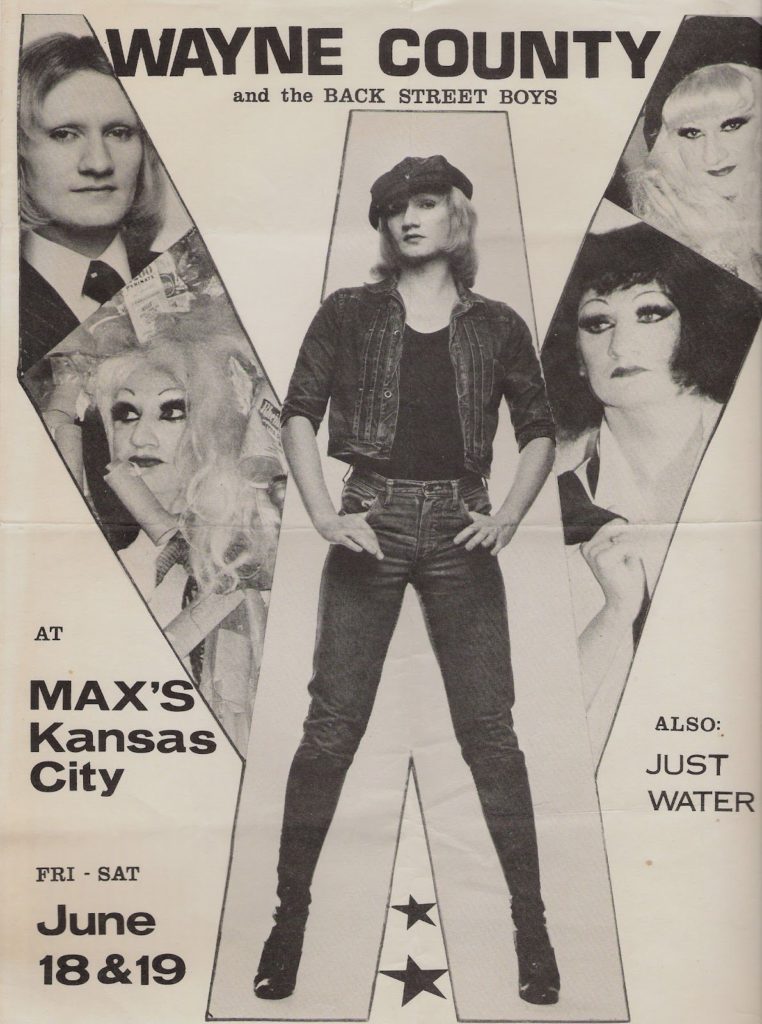
During the middle of the 20th century, the gay scene retreated into the shadows, governed by mob control and harshly policed by the city. By design, drag became political. It also became a huge counter-cultural influence in the late 1960s — from the glamour of Andy Warhol‘s superstars to the jubilant schtick of Charles Busch.
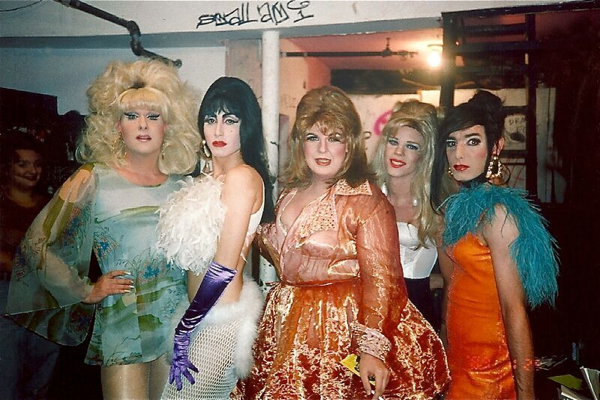
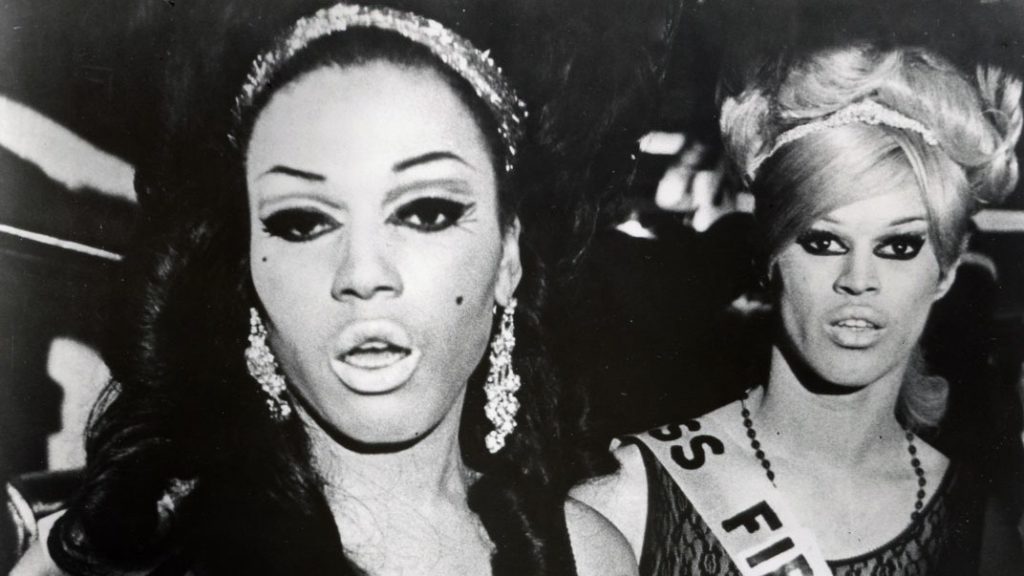
But it was the 1980s that brought the most significant influences to our current pop cultural moment. Joining Greg on this show are two experts on two late 80s/early 90s scenes — Felix Rodriguez, a videographer of the ballroom culture (made famous in the landmark documentary Paris Is Burning) and Linda Simpson, one of the great queens of East Village drag.
FEATURING: Drag kings! Wigstock! And a famous drag queen superstar who got struck by lightning.
The Bowery Boys: New York City History podcast is brought to you …. by you!
We are now producing a new Bowery Boys podcast every other week. We’re also looking to improve the show in other ways and expand in other ways as well — through publishing, social media, live events and other forms of media. But we can only do this with your help!
We are now a member of Patreon, a patronage platform where you can support your favorite content creators for as little as a $1 a month.
Please visit our page on Patreon and watch a short video of us recording the show and talking about our expansion plans. If you’d like to help out, there are five different pledge levels (and with clever names too — Mannahatta, New Amsterdam, Five Points, Gilded Age, Jazz Age and Empire State). Check them out and consider being a sponsor.
We greatly appreciate our listeners and readers and thank you for joining us on this journey so far.
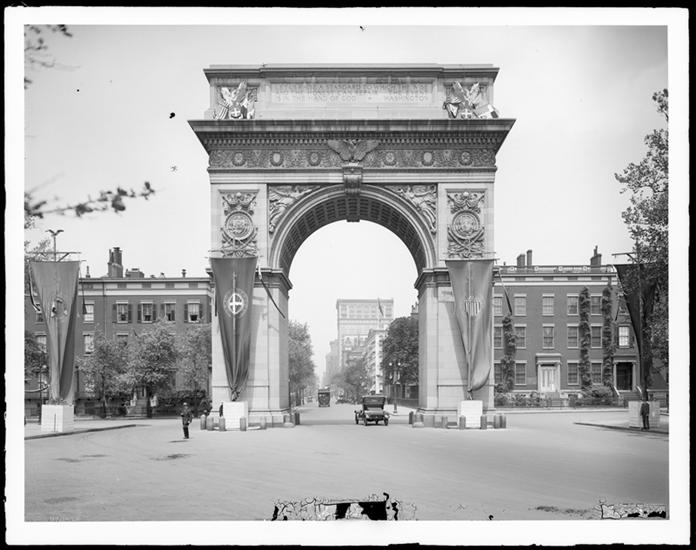
There’s a spiral staircase inside the western half of the Washington Square Arch, which grants access to the rooftop and fabulous views straight up Fifth Avenue.
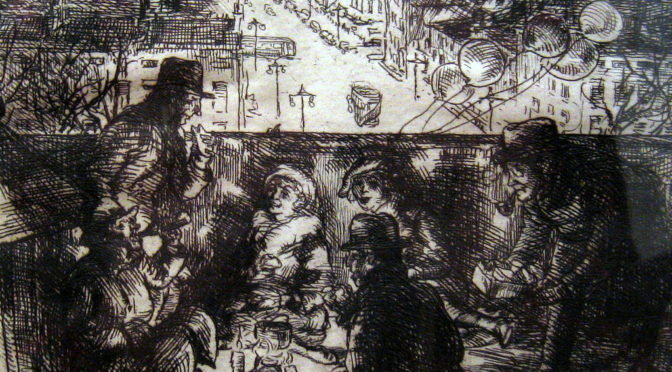
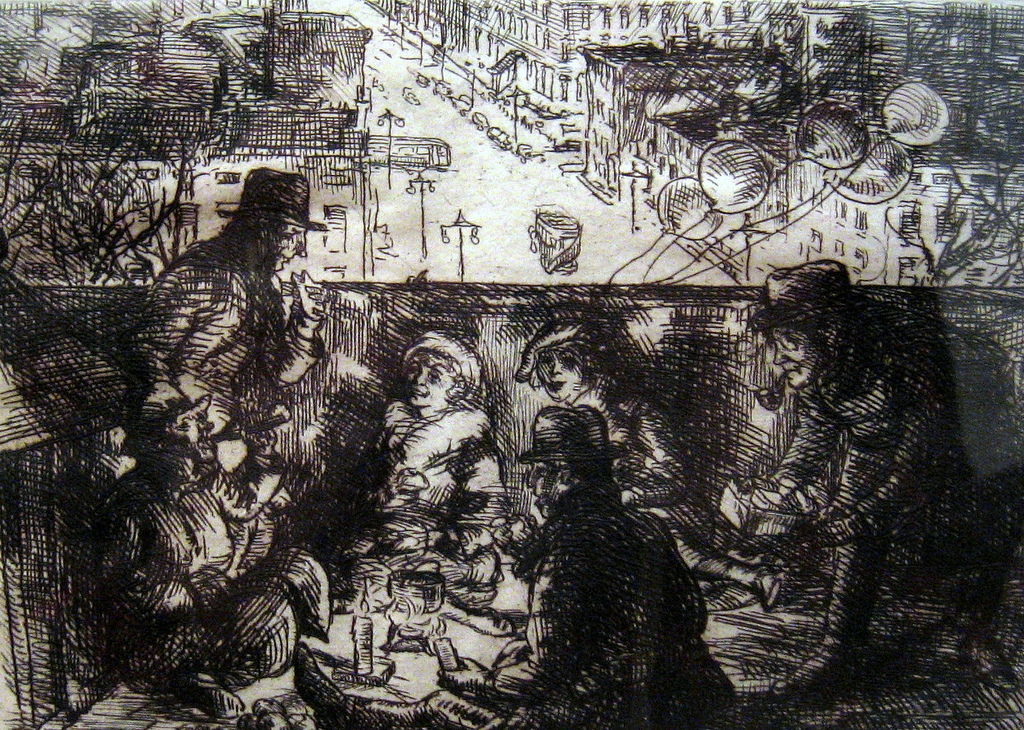
Public entrance is prohibited, of course, although that didn’t stop six fearless malcontents (including the artists Marcel Duchamp and John Sloan) from breaking in to declare a bohemian revolution late in the evening of January 23, 1917.
Below: A few months after our art revolutionaries take to the arch, it was decorated in support of America’s involvement in World War I.
MCNY
The escapade was organized by Gertrude Drick, a poet mostly forgotten today but known at the time by the name Woe (as in Woe is me).
“One night [Drick] discovered the blind, unlocked door of the passage and stairway which leads to the top of the arch. A few nights later she had made all the arrangements, invitations, Chinese lanterns, balloons and refreshments for her privately conducted picnics.”
Once atop the Arch, the group decorated the outdoor space with lanterns and balloons, and spent the entire night around a fire, drinking wine and tea (the beverage of revolution). They shot off cap pistols into the wintry night air.
Below: John Sloan’s classic etching depicting the event. The original is at the Met.
A radical shift in the art scene had already begun in New York, emanating from the streets around Washington Square.
Gertrude Vanderbilt Whitney‘s Studio Club was nearby, as were the apartments of many artists associated with the Ashcan School, including Sloan himself.
Greenwich Village, long a magnet for the unconventional, energized this new wave of painters and playwrights as they bonded in nearby cafes and studios.
It was in this spirit that the so-called Arch Conspirators, shielding their candles from the wind, unfurled an unusual parchment late that night that declared a Free and Independent Republic of Greenwich Village.
The only evidence of this grand proclamation the following morning was the balloons that still clung to the Arch’s violated rooftop. But the Village did become free and independent to an extent, a pocket universe of creativity for the rebellious musicians, artists, and writers of the twentieth century.
The above is an excerpt from the book The Bowery Boys: Adventures In Old New York, now available in bookstores everywhere
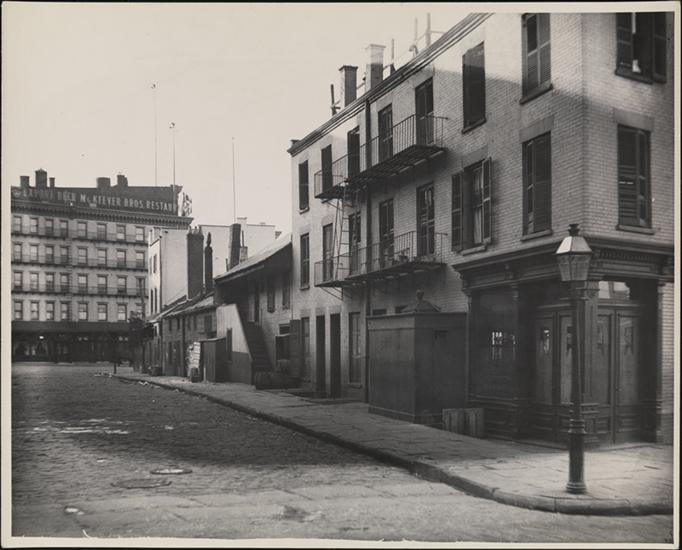
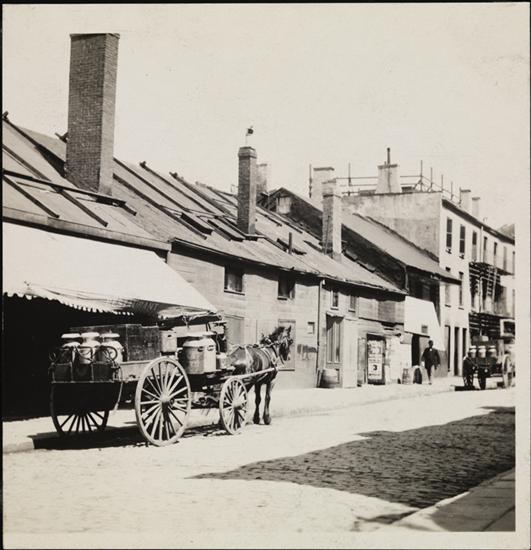
You really should take a stroll down here. It will take you all of one minute; the street is approximately 63 feet long.
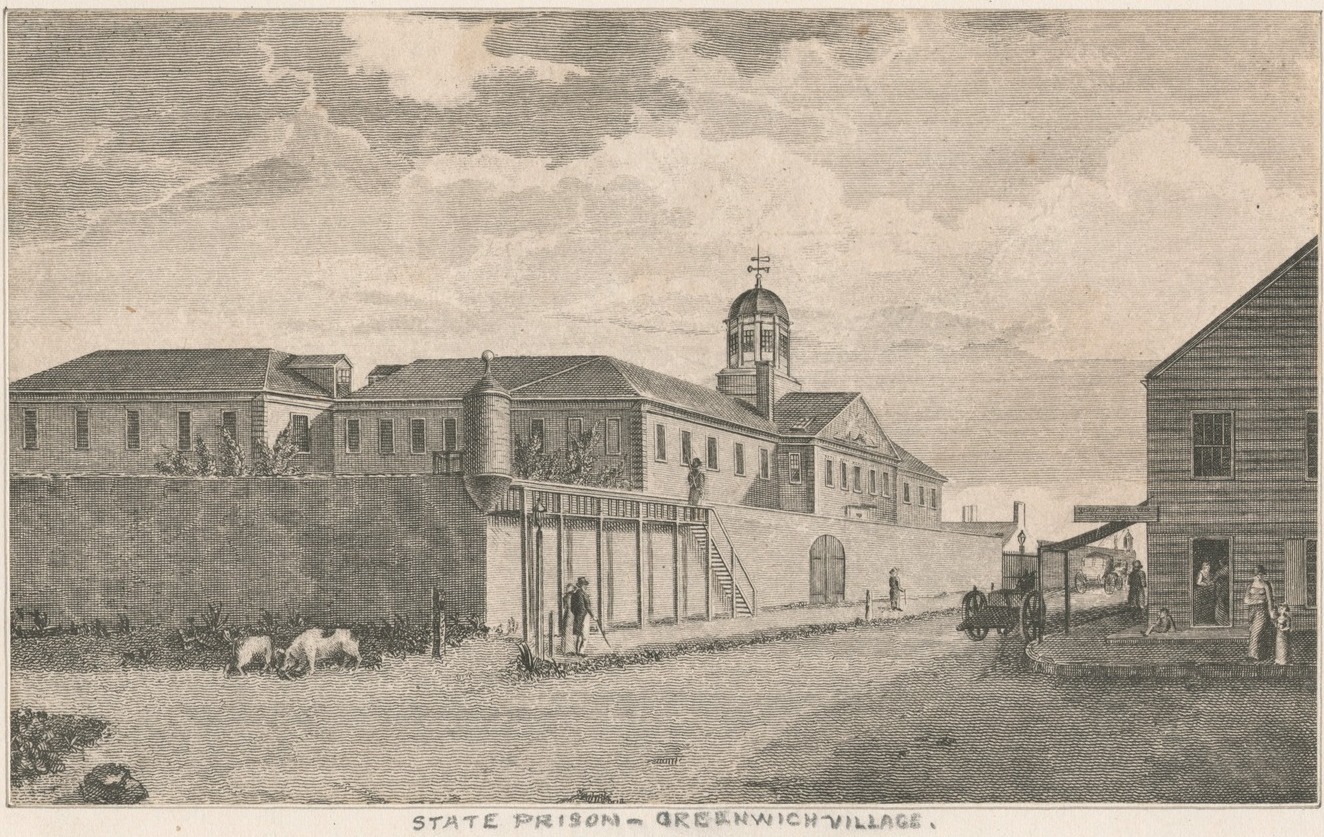
But a surprising structure once sat on this very spot two hundred years ago — Newgate Prison, the official state prison of New York from 1796 to 1828.
The city of New York was still very much confined to the area below today’s Canal Street. The new prison lay on the outskirts of Greenwich Village, a hamlet of farms and estates that served as New York’s first suburb of sorts.
Just a few feet from Newgate was the Greenwich Market, south of Christopher Street (on the spot of the big red,Federal Archives Building).
The prison was considered a progressive upgrade to New York’s dreadful Bridewell Prison, which sat near the area of today’s City Hall.
Built before the Revolutionary War, Bridewell had no windows and wretched facilities; prolonged incarceration here often met death.
Courtesy New York Public Library
With Newgate, enlightened reformers moved the prison out of the middle of town — always a good thing — and nearest the water, providing better ventilation and access to ferry transportation. “A more pleasant, airy, and salubrious spot could not have been selected in the vicinity of New York,” said one writer in 1801.*
Newgate was named (or rather nicknamed) for its larger, more infamous counterpart in London which became a favorite setting in Charles Dickens novels. New York’s Newgate was similarly ominous, with high stone walls mirroring the shape of forts along the waterfront. Â
Indeed Fort Gansevoort, in the area of today’s Meat-Packing District, was built several years after Newgate.
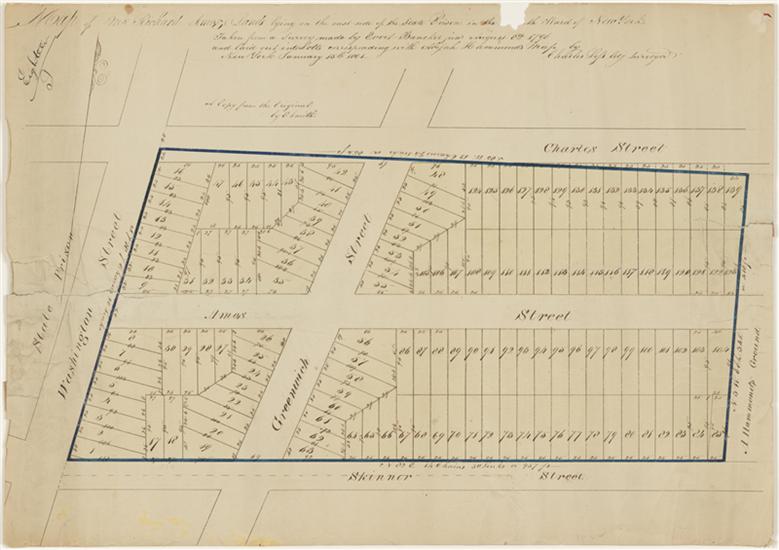
Below: From the original 1796 survey of the spot where Newgate was constructed. Today’s Weehawken Street would have been later laid at the spot of the prison’s western border. Skinner Street would later be known as Christopher Street. Amos Street is now West 10th Street.
Courtesy Museum of the City of New York
This soon proved an inadequate and ill-placed facility. Overcrowding led to prison riots and jail breaks, hardly the behavior you want to see across the street from a civilized public market. By the 1820s, the area of Greenwich Village became desirable real estate as the boundaries of New York — bolstered by the slow development of the 1811 Grid Plan — moved northward.
The western edge of Greenwich Village would be spared from the installing the grid thanks to tenacious land-owners. But it certainly wouldn’t do to have a wily prison sitting next to a developing neighborhood. In 1824, former New York mayor Stephen Allen (technically the first elected mayor) was put in charge of relocating the state prison to someplace more remote. And so, in 1828, Newgate’s prisoners were transferred to a new facility — in Sing Sing.
The hefty walls of Newgate were torn down, and l’il Weehawken Street — all 63 feet of it — was then created and paved in 1830.
By the way, Weehawken Street did get its name from the town of Weehawken, as it was the dock of a colonial ferry that connected with the picturesque New Jersey town. Weehawken was the site of the famous duel between Alexander Hamilton and Aaron Burr in 1804.
They both get their name from the same Lenape Indian source meaning either “place of gulls” or “place of rocks that look like trees.”
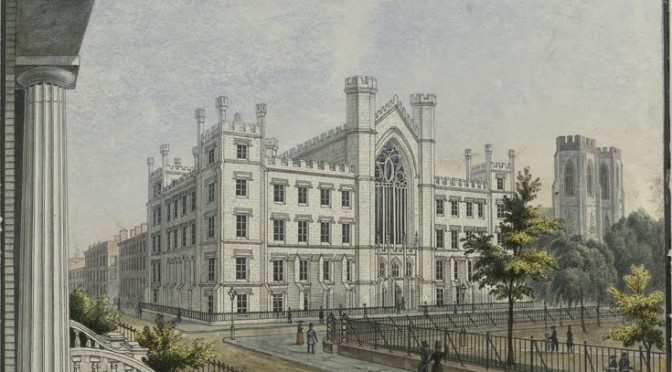
Hogwarts of Washington Square: The beautiful and supremely ostentatious University Hall at the northeast corner of the park, circa 1850. [NYPL]
PODCAST They once called it the University of the City of New York, an innovative, non-denominational school located in a intellectual castle on the northeast corner of the Washington military parade ground. Today it’s better known as New York University, one of America’s largest private schools of higher education, inhabiting dozens of buildings throughout the city.
Find out more about its spectacular and sometimes strange history, from the inventors among its early faculty to some of the more curious customs among its 19th century student body. But the story of NYU is often defined by its growth, the need for expansion, and conflicts with the community.
Featuring: The prisoners of Sing Sing Prison, the Hall of Fame for Great Americans, the usual controversial plans of Robert Moses, and a strange custom known simply as The Bun.
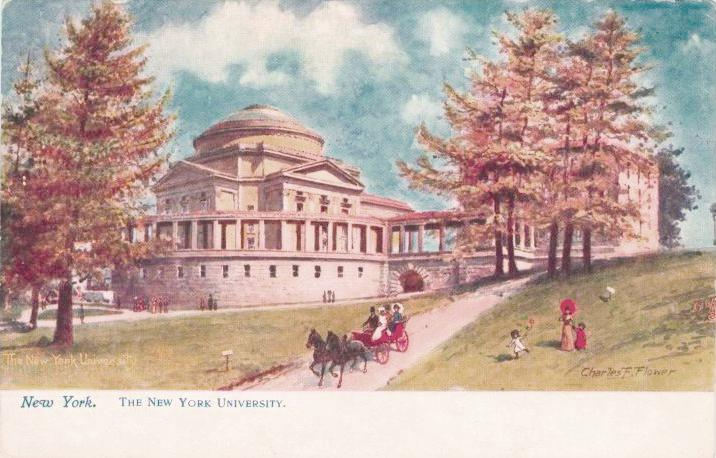
The Bronx campus of New York University was an attempt to affix the school into a more traditional campus. And a bucolic one too, from the looks of this postcard. [NYPL]
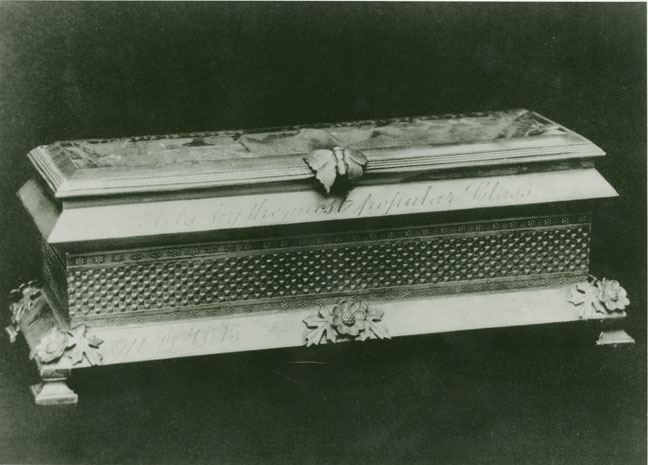
The silver casket (pictured here in 1915) which contained the remains of the coveted ‘Bun’. Who holds the Bun today? [Courtesy the NYU archives]
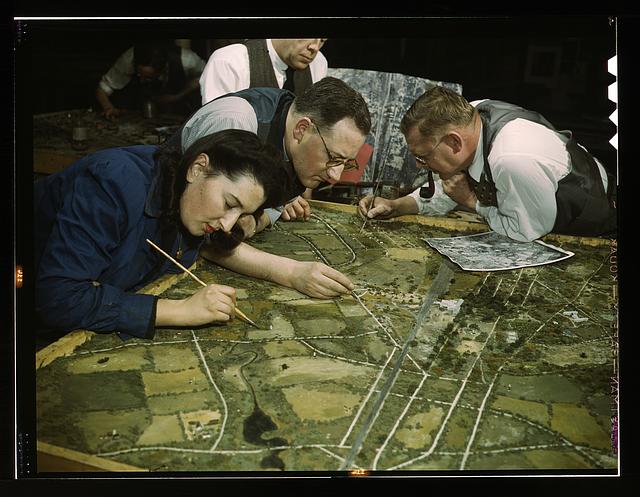
New York University’s Bronx campus became a critical training facility during the World Wars. According to the caption, this is a picture from 1943 of a ‘camouflage class’, with “men and women are preparing for jobs in the Army or in industry.” [LOC]
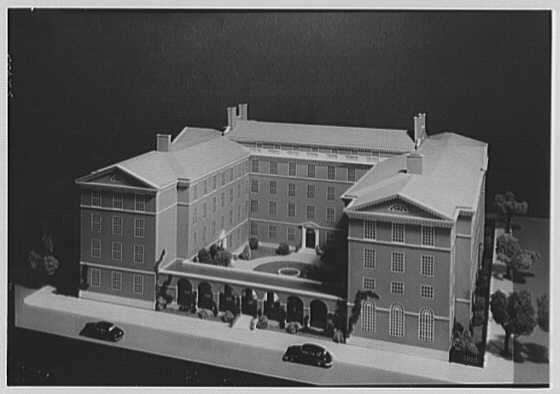
A 1948 model of the building that would become Vanderbilt Hall. Its construction on the northwest corner of Washington Square Park created tensions with the residents and activists of the neighborhood, one of many such conflicts NYU face in its expansion plans. [LOC]
“There are no lower outcasts in New York than the women who nightly creep out of the darkness and swarm the pavement of Bleecker Street…” L. Hereward, Eclectic Magazine, 1893
Sure, the Bowerywas a rough and rowdy avenue, but one looking for more alternative adventures in the late 19th century might have found themselves somewhere along Bleecker Street. The college bars and cafes which inhabit the street now seem practically chaste compared to some of the dives once housed there.
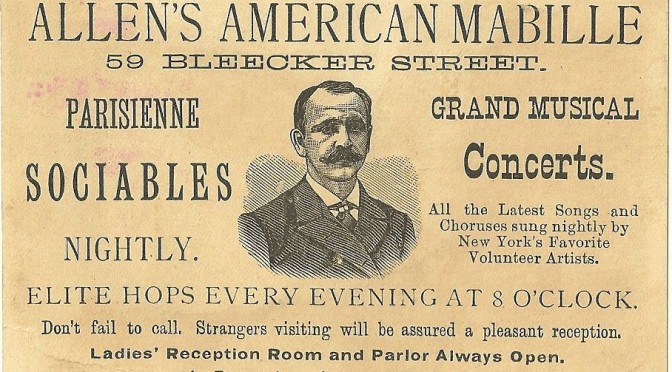
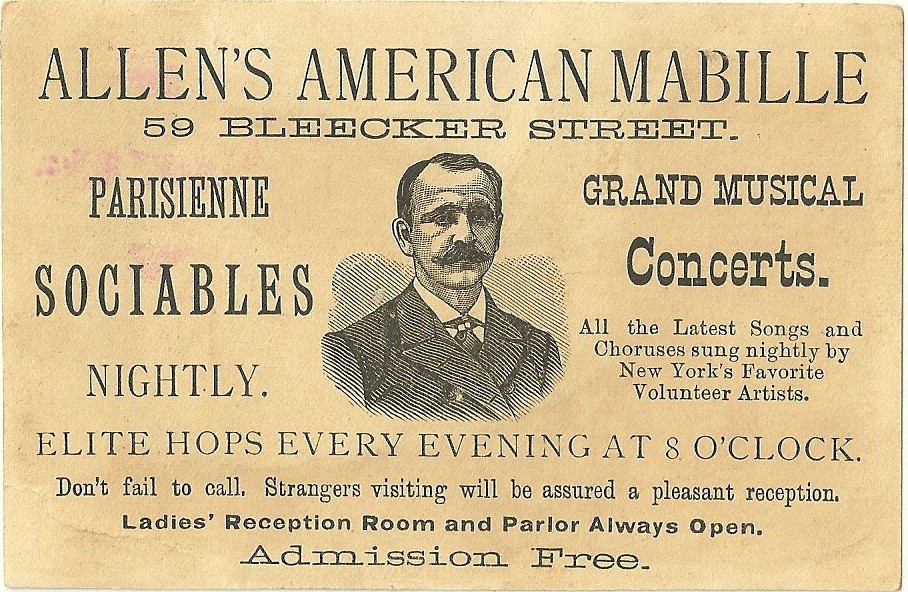
At 59 Bleecker Street, for instance, one could find The Allen’s American Mabille, a ‘Parisienne’ style dance hall and den of prostitution that survived several dozen police raids — police headquarters was literally a block away — and made Allen one of the infamous proprietors in Manhattan, responsible for “the ruin of more young girls then all the dive keepers in New York.” [source]
It joined a collection of prostitution houses along Bleecker and east of Washington Square Park, so many that the neighborhood was sometimes known as Frenchtown, and not because of the fine cooking.
But American Mabille and the other ‘Paris’ houses, from all appearances, specialized in heterosexual couplings. A few places on Bleecker catered to male encounters and often of the most flamboyant kind, if accounts are to be believed. (Keep in mind the hysteria of the late 19th century press!)
The most famous of these was The Slide at 157 Bleecker Street, a basement dive filled with men in drag, horrifying proper New Yorkers with clientele “effeminate, degraded, and addicted to vices which are inhuman and unnatural” according to contemporary scandal sheet descriptions.
The Slide is somewhat well-known today as it shares the same address as rock venue Kenny’s Castaways.
Down the street from The Slide was the Black Rabbit at 183 Bleecker Street, another dive with a mixed clientele, known for scandalous sex shows, from the likes of the ‘Jarbean fairy’ and a female ‘sodomite for pay’. Like many of the others, it survived with sizable bribes to the police. The bar even scandalized thieves. In 1901, a reporter from McClure’s Magazine entered the Black Rabbit with a pickpocket who replied, “[T]his is dead tough. I wouldn’t allow this, ‘f I was the chief….I like an open town where everything goes all right enough, but I’d douse the glim here.” (douse the glim = turn out the lights)
Today, the historically themed 1849 Restaurant occupies the Black Rabbit’s address.
Nearby The Slide was Frank Stephenson’s Black And Tan at 153 Bleecker, “a place of bad repute“, specializing in mixed race heterosexual encounters, something most likely frowned upon even in many low-class Bowery dives. The phrase black-and-tan was used to describe other halls where people of different races drank and caroused together.
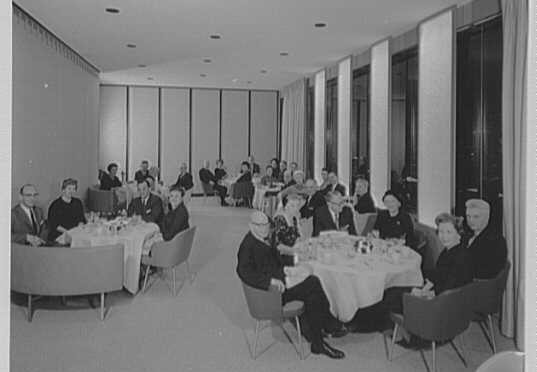
A square meal: The Tower Suite’s packed dining room
WARNING The article contains a couple spoilers about last night’s ‘Mad Men’ on AMC. If you’re a fan of the show, come back once you’re watched the episode. But these posts are about a specific element of New York history from the 1960s and can be read even by those who don’t watch the show at all. You can find other articles in this series here.
In trying to contrast the life-altering decisions made by two of ‘Mad Men’s central characters, the writers certainly did an excellent job last night in choosing two appropriate and familiar locales.
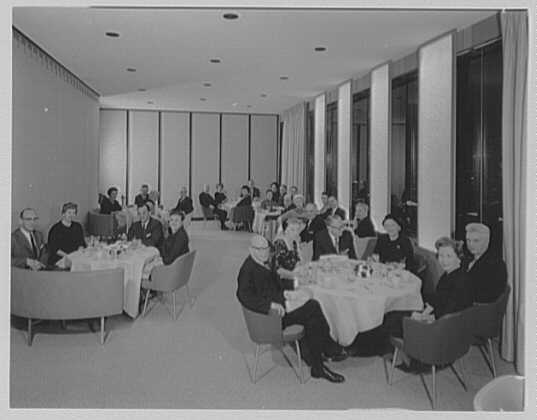
Don Draper (with Megan in tow) made a last-ditch effort to win over a difficult client by dining at the Tower Suite in the Time & Life Building. (The offices of Sterling Cooper Draper Pryce were actually several floors below.) The restaurant on the 48th floor served as an executive dining room during the day called the Hemisphere Club, one of a number of elevated lunch spots in midtown Manhattan. The destination for businessmen looking to impress — waiters were dressed as butlers — was opened by George Lang of Cafe des Artistes fame in 1961.
By many accounts however, the Tower Suite was considered a starched and even dreary dining experience. And quickly passe. In 1970, New York Magazine intoned “[T]he Tower Suite is still ideal for enchanting sheltered in-laws, teenagers, the hopelessly in love and out of town clients from Saginaw.”
Peggy Olsen, meanwhile, had a more personal dilemma to attend to downtown in the heart of Greenwich Village where she’s seen much of her personal growth. She’s presented with a decision to make over dinner at Minetta Tavern, a corner Italian restaurant on MacDougal Street at the foot of small Minetta Lane.
This was the former location of The Black Rabbit, one of Greenwich Village’s best known speakeasies, operated by Eve Addams. Her infamous tearoom Eve’s Hangout right up the street was one of New York’s first lesbian hangouts. The Black Rabbit switched to proper Italian cuisine in 1937.
The tavern had been immortalized the previous year in Joseph Mitchell‘s ode to eccentric bohemian Joe Gould, who frequented Minetta’s in his later years. ‘Joe Gould’s Secret’ would become one of Mitchell’s best known New York tales. (It was also be his last book.)
With the Tower Suite long gone, you can no longer enjoy its faux-butler service, but Minetta Tavern was renovated and reopened in 2009 by restaurateur Keith McNally.
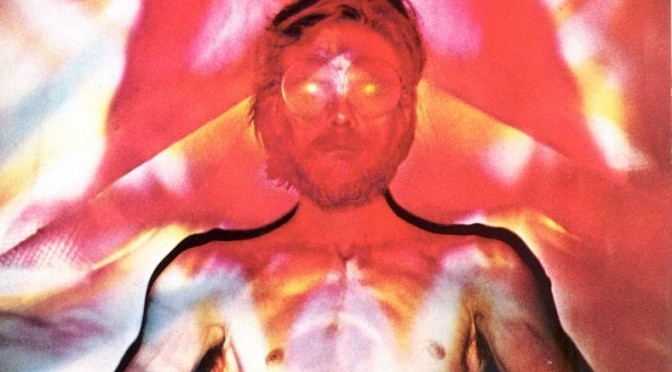
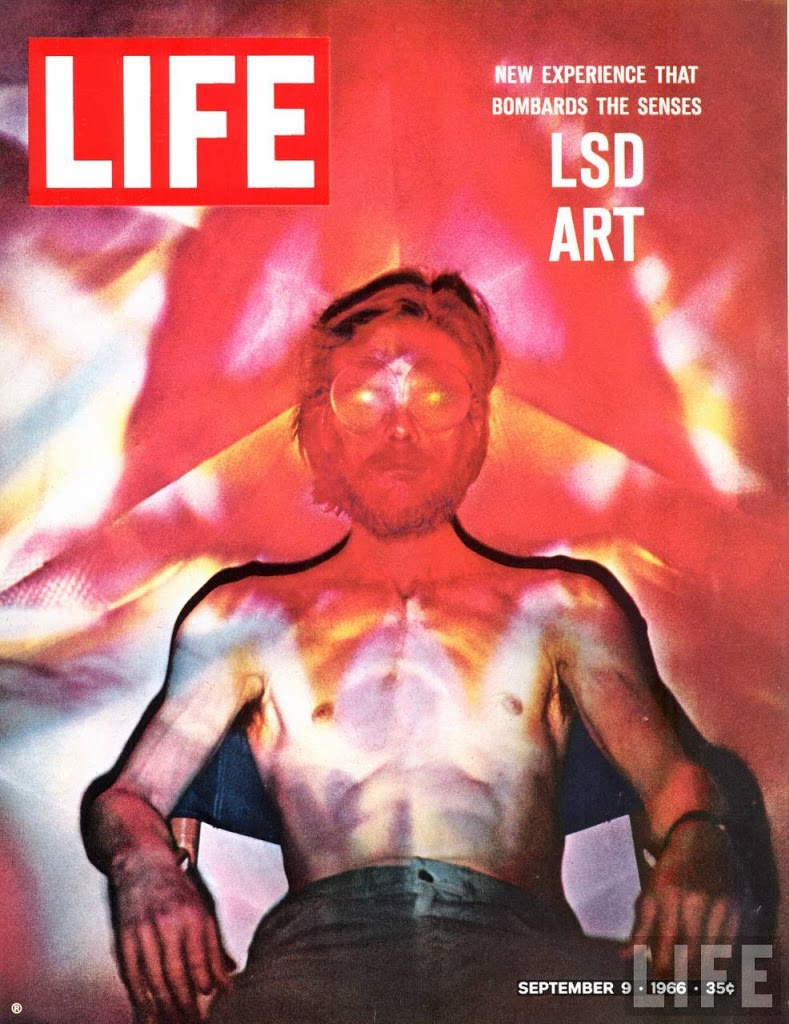
A mind-twisting exhibit at the Riverside Museum, formerly at 310 Riverside Drive/103rd Street, makes it on the cover of a national magazine. But not everybody would enjoy the trip.
WARNING The article contains a couple spoilers about last night’s ‘Mad Men’ on AMC. If you’re a fan of the show, come back once you’re watched the episode. But these posts are about a specific element of New York history from the 1960s and can be read even by those who don’t watch the show at all. You can find other articles in this series here.
Sure, it’s 1966. I thought maybe Peggy Olsen might be the one to trip the light fantastic. (She was otherwise engaged this week.) But I never expected hallucinogenics to materialize as they did on last night’s ‘Mad Men’. After a staggeringly serious dinner party narrated with empty philosophical conversation, Roger Sterling and his wife are invited to take the drug LSD by their host. Far from the dorm rooms and basement clubs of Greenwich Village where one might expect such experimentation, this evening of psychedelia was presented as a drawing-room intellectual exercise, with serene music unspooling from a reel-to-reel and no object more trippy than a mantel mirror.
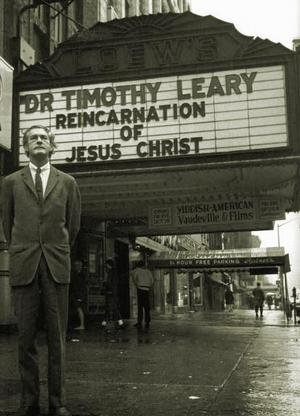
Lysergic acid diethylamide, which I doubt can actually be said while experiencing its effects, was considered a mind-opening tool for some early psychiatrists, laying bare subconscious feelings and forcing the user to confront difficult issues in a surreal environment. By the mid ’60s, its leading advocate was Timothy Leary (below), a psychologist who had studied the benefits of psychedelic drugs to explore the mental capacities. Today we might naturally lump him with the trappings of ’60s counter-culture, but in 1966, with the parameters of psychiatry still in flux, his experiments also appealed to intelligentsia.
The depiction of ‘Mad Men’s after-dinner drug soiree seem to follow Leary’s instruction quite explicitly. In 1966, he advised, “Don’t take LSD unless you are very well prepared, unless you are specifically prepared to go out of your mind. Don’t take it unless you have someone that’s very experienced with you to guide you through it. And don’t take it unless you are ready to have your perspective on yourself and your life radically changed, because you’re gonna be a different person, and you should be ready to face this possibility.”
An article in March 25, 1966, LIFE Magazine laid out the details of the drugs in almost an introductory fashion. “A black market dose costs only $3 to $5. But that’s enough to send a person on a 10-hour ‘trip’.”
The same article also underscored a growing fear: “A few pounds of it dumped into the water supply of a major city would be enough to disorient millions.”
The federal government had been concerned of this supposed conspiracy as early as the 1950s, fearful that Russians might pollute New York’s water and “turn drug-addled American citizens against their own government.” [source] Of course, the CIA itself experimented with LSD during this period with its covert Project MKULTRA, which conducted experiments in New York during the mid-50s, using prostitutes and junkies they found in local bars in Greenwich Village. An experiment performed on CIA operatives themselves led one agent in 1953 to leap from a window at the Statler Hilton, today’s Hotel Pennsylvania. (Or was it murder?)
By the 1960s, the drug had become a virtual entrance exam for New York’s blossoming counter-culture music scene, or so the more hysterical believed. “In New York, San Francisco and Los Angeles, a girl just off the bus from Boise can find it quicker than the YWCA merely by asking around for ‘a trip’,” warned Life Magazine.
The fear of an unwitting populace overtaken with LSD only grew with the 1960s, and this time, some thought it was New York’s counter-culture rebels itself who may be wielding it. A 1967 journal opined on the urban legend with all seriousness. “[A] single ounce will provide fuel for 300,000 trips, reported one periodical, and it is believed that a few pounds dumped into the water supply of New York City would disorient the nearly 8,000,000 residents.”
Perceptions of LSD were slowly divorced from its supposed therapeutic qualities, especially as the drug soon found itself as the subject of films like Roger Corman‘s ‘The Trip‘ and ‘Enormous Midnight‘, where town water supply is poisoned with LSD and turns its citizens into orgiastic zombies. In New York, LSD entered the club world; hallucinogenic mid-60s destinations like Cerebrum and the Electric Circus (which became Andy Warhol‘s preferred spot in 1966) seem almost conceivable without it.
New York legislators quickly vowed to outlaw the new drug. Bellevue Hospital reported over 200 new patients affected by the drug. In April 1966, two local crimes energized the press: a Brooklyn girl accidentally ingested a sugarcube coated with LSD, and a week later, a ex-mental patient killed his mother-in-law, allegedly under the influence of the drug. With the Stagger-Dodd bill in 1968, the possession of LSD became illegal in the United States.
While that effectively ended the living-room therapy sessions such as the one experienced by Roger Sterling, the drug, now underground, would increasingly influence all aspects of New York bohemian culture.
From the Cerebrum club mentioned above:
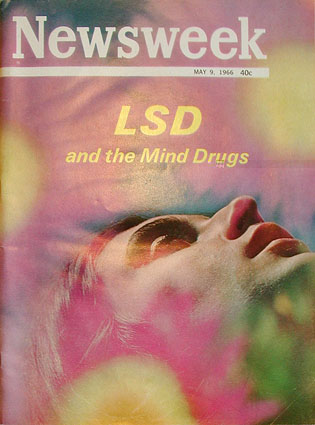
Pictures courtesy Newsweek and Life Google Images. For more information on the CIA’s LSD experiments, you might be interested in watching this video.
If you’re watching ‘Mad Men’ when it broadcasts at 10 PM EST, then follow along with me on Twitter at @boweryboys. I’ll be giving a live fact-Tweeting, dropping little factoids about the events being depicted on the show