Ever wonder what the very first movie ever shot in Manhattan was? It also happens to be the first American film ever shown to a paying movie audience. Woodville Latham and his sons Otway and Gray Latham had invented the Eidoloscope projector (also called the Pantoptikon), running very crudely like a film projector today. However its image size was very small, about the size of a small TV set.
The Latham brothers had debuted test images to the press. But their real test of this device was to film something live and then display it a short time later.
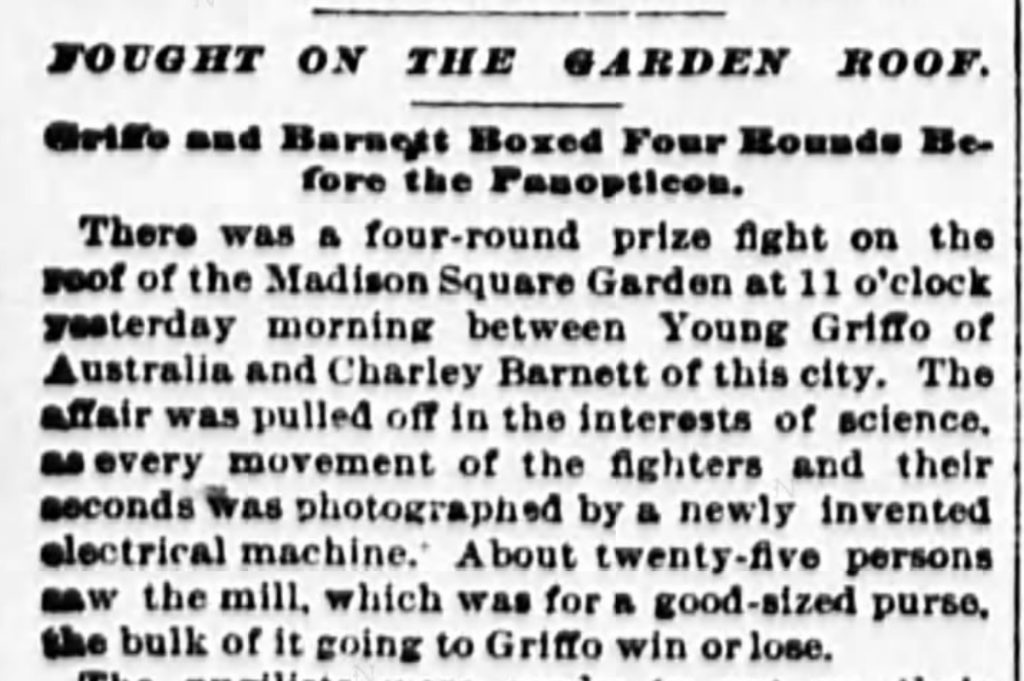
New York Sun, May 5 ,1895 (Newspapers.com)
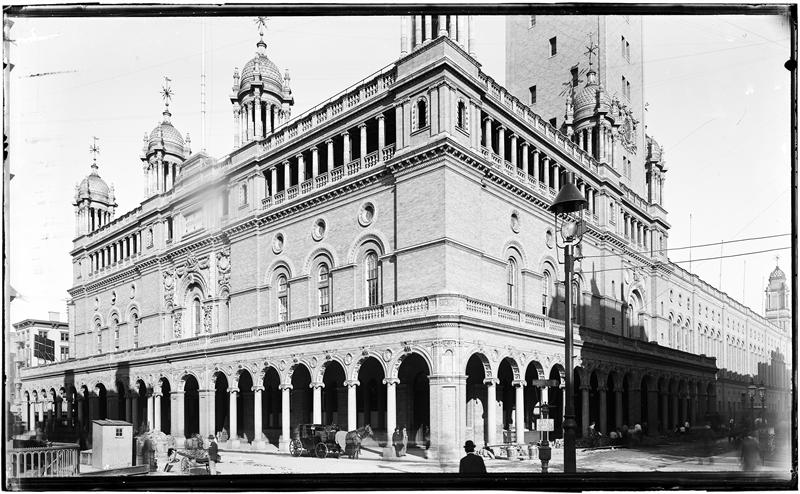
So on May 4, 1895, the brothers filmed a boxing match on the rooftop of Madison Square Garden, then on 27rd Street and Madison Avenue.
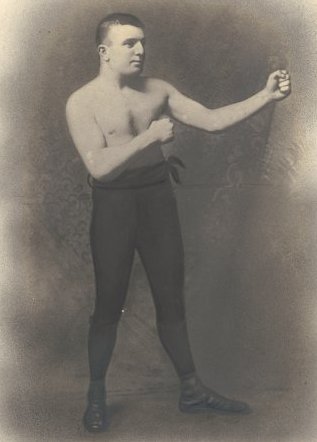
The competitors were ‘Battling’ Charles Barnett in the ring with Young Griffo (pictured below), a legendary Australian boxer who was a rather chaotic presence in the sport.
The match was actually a re-match, the recreation of an actual boxing match between the two athletes which had occurred that morning at the Garden.
Sixteen days later, that four-minute film, Young Griffo versus Battling Charles Barnett, was displayed to a paying audience, at a makeshift theater in a storefront at 153 Broadway (a couple blocks up from Wall Street).
Believe it or not, boxing films were all the rage in these infant years of the motion picture business as they were easy to film (compared to a baseball game) and featured name performers in an era before actual movie stars.
“The film offered topicality that previous productions had not,” said author Dan Streible in his book Fight Pictures: A History of Boxing and Early Cinema. “If such reenactments could be marketed quickly, their commercial value could exceed that of unofficial match-ups created solely for the movies.”
The film was also a huge hit that summer on Coney Island, projected in a tent on Surf Avenue.
No extant copy of Young Griffo v. Battling Charles Barnett has been found.
EPISODE 323 Two tales from New York’s incredible history with the art of tattooing.
The art of tattooing is as old as written language but it would require the contributions of a few 19th century New York tattoo artists — and a young inventor with no tattoos whatsoever — to take this ancient art to the next level.
The first documented tattoo parlor (or atelier) in the United States was a small second-floor place near the East River waterfront and close to the site of the Brooklyn Bridge.
But as more sailors and seamen — the principal customers for tattoo purveyors — came to New York, more would-be tattoo artists opened shops. By the 1880s, there were a great number of professional tattooists, scattered along the waterfront and up along the Bowery.
Meanwhile, over in Brooklyn, sailors in need of a fresh tattoo could head to small shops in Coney Island or near the Brooklyn Navy Yard.
In this episode, Greg shares two tales from the New York City tattoo history:
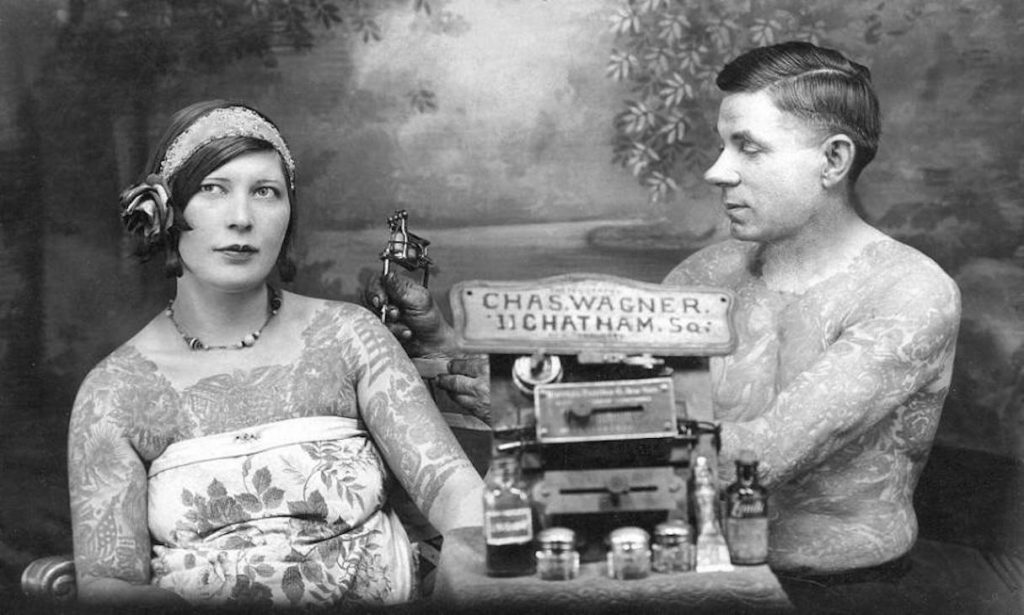
— An unsuccessful Thomas Edison invention becomes a revolutionary device for tattoo artists. The electric tattoo machine was first perfected in a tiny tattoo parlor underneath a New York elevated train in Chatham Square.
— Believe it or not, tattooing was outlawed in New York City in 1961! And would remain so for 36 years. How is that even possible in a city with a vibrant music scene and iconic venues like CBGB just steps from the heart of Manhattan’s old tattooing industry?
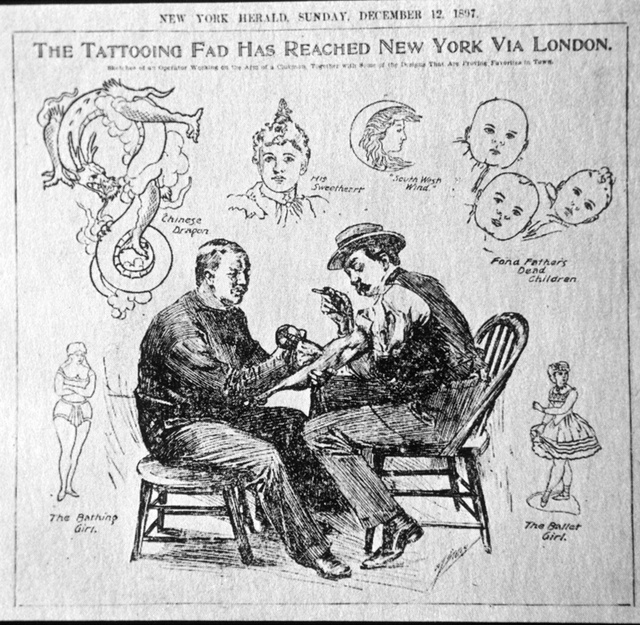
“The Tattooing Fad Has Reached New York” — In fact tattoo artists had been in New York for over three decades by this time.
Bodies of Subversion/Powerhouse Books
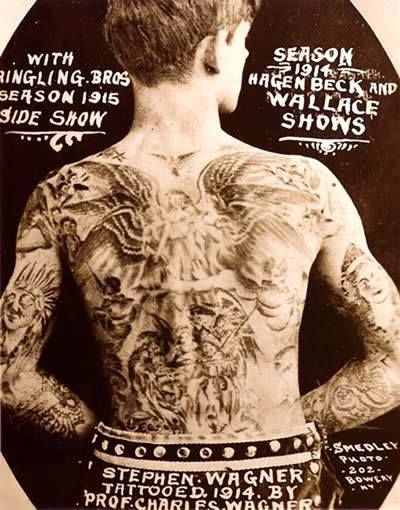
Charles’ brother Stephen was a sideshow performer and a tattoo artist himself.
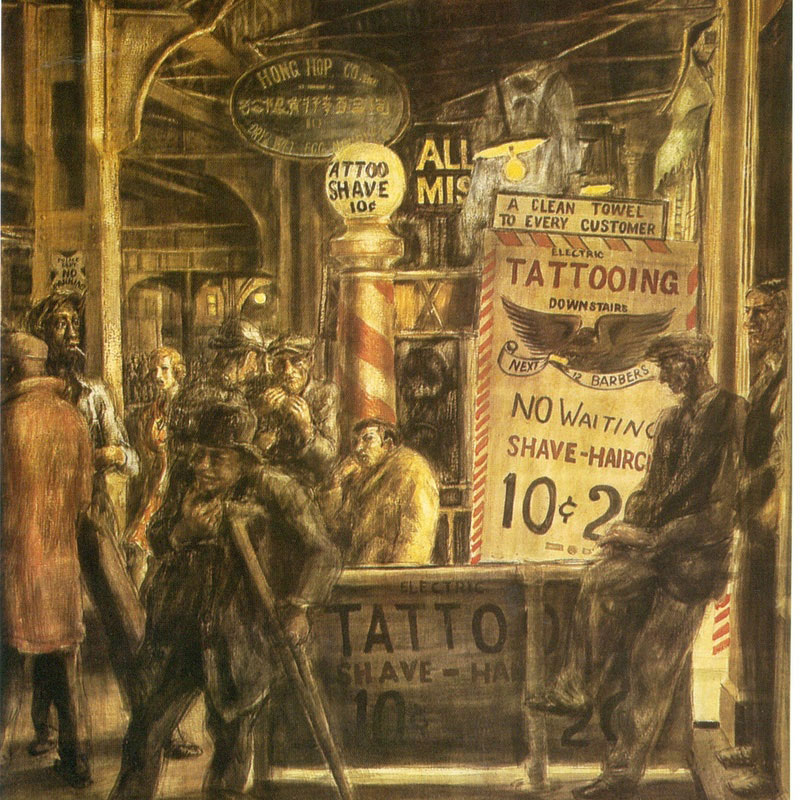
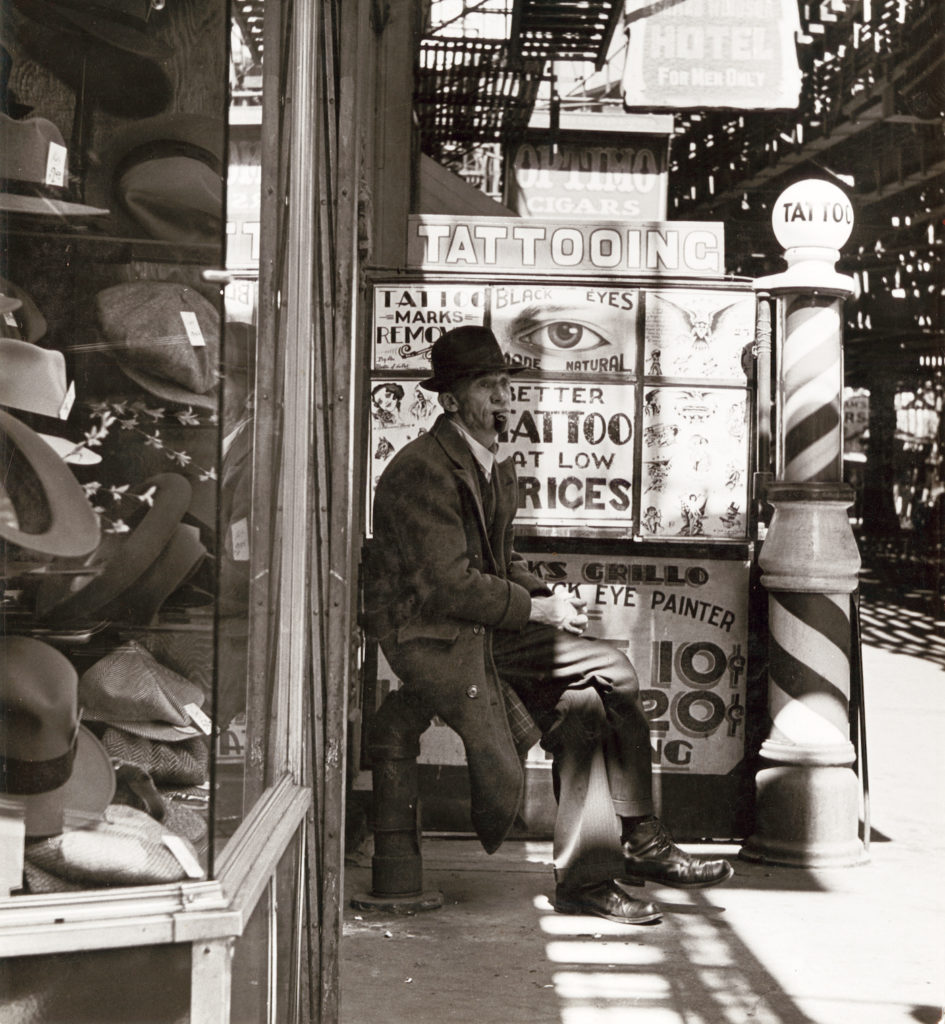
Reginald Marsh’s 1932 painting Tattoo and Haircut / Met MuseumAndreas Feininger’s classic 1940 photograph of a man sitting in front of a Bowery tattoo parlor. Courtesy NYHS
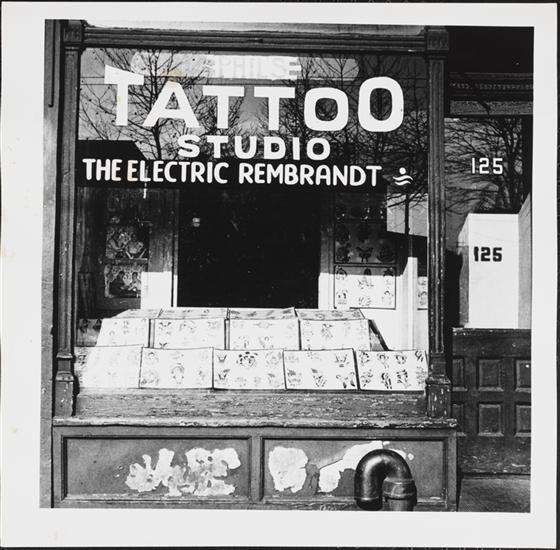
A tattoo parlor from the 1950s
Courtesy MCNY
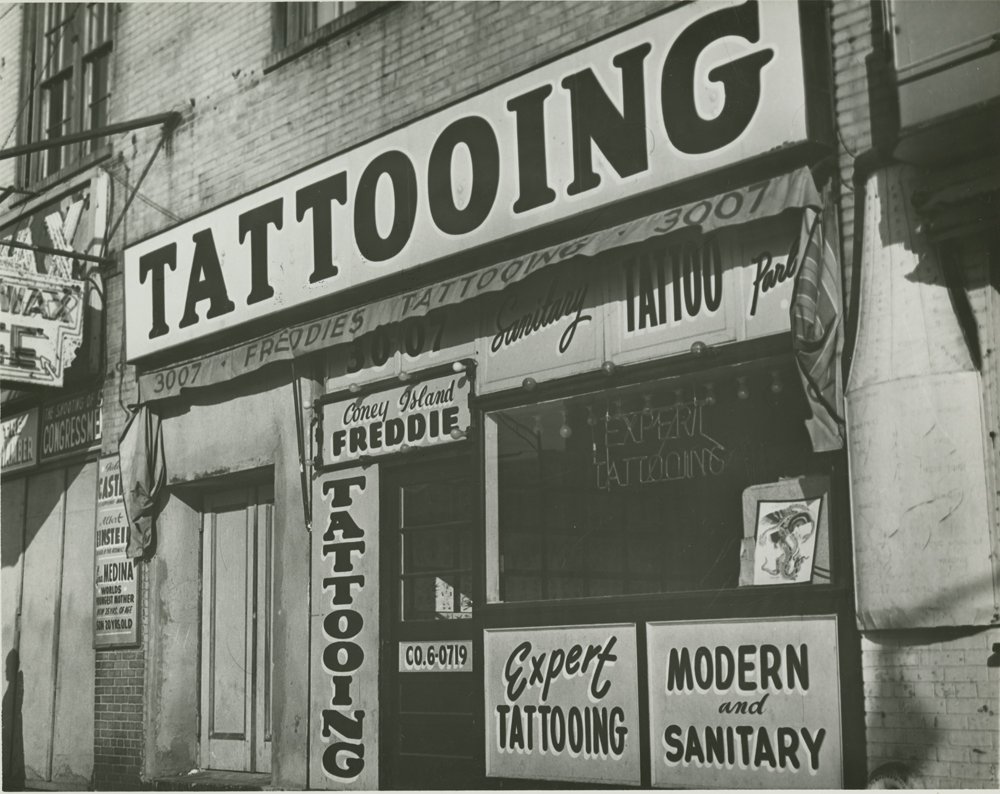
The Brooklyn tattoo parlor operated by Coney Island Freddie (featured on the show). Courtesy New-York Historical Society
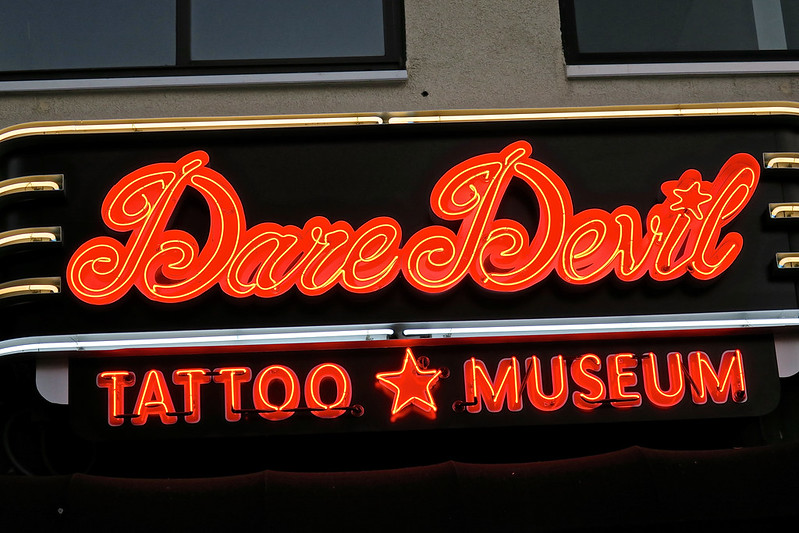
Daredevil Tattoo, at 141 Division St in Manhattan, has a mini tattoo museum with some artifacts that were mentioned in the show.
Flickr/Robby Virus
Special thanks to the New-York Historical Society who hosted a very inspirational exhibition on tattooing history — Tattooed New York — and to the South Street Seaport Museum who have displayed the Alan Govenar & Kaleta Doolin Tattoo Collection at a recent show.
For more information on the history of tattooing, visit the marvelous Tattoo Archive.
The historic movie studio Kaufman Astoria Studios opened 100 years ago this year in Astoria, Queens. It remains a vital part of New York City’s entertainment industry with both film and television shows still made there to this day. The Museum of the Moving Image resides next door in a former studio building.
To honor this anniversary, we are re-issuing one of our favorite shows from the back catalog — New York City and the birth of the film industry.
New York City inspires cinema, but it has also consistently manufactured it. Long before anybody had heard of Hollywood, New York and the surrounding region was a capital for movies, the home to the earliest American film studios and the inventors who revolutionized the medium.
It began with Thomas Edison‘s invention of the Kinetoscope out in his New Jersey laboratory. Soon his former employees would spread out through New York, evolving the inventor’s work into entertainments that could be projected in front of audiences.
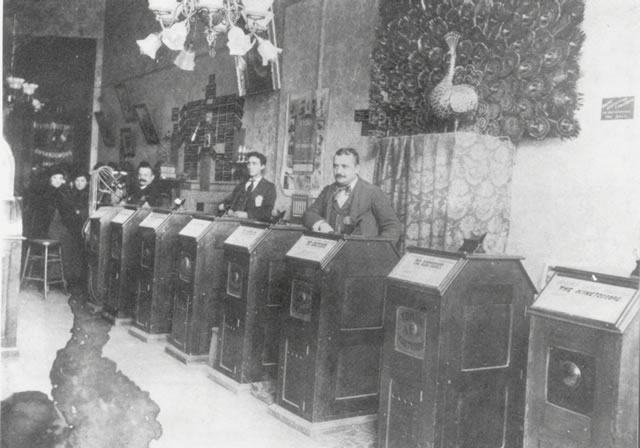
The uniform, industrial look of a Kinetoscope parlor, almost like a room of slot machines. The one above is probably from San Francisco, not New York, but the first ever parlor, which was located at Broadway and 27th Street, would have looked much like this one/Edison Historical Site
By the mid 1900s, New Yorkers fell in love with nickelodeons and gasped as their first look at moving pictures. Along the way, films were made in locations all throughout the city — from the rooftop of Madison Square Garden to a special super-studio in the Bronx.
This is a special ‘director’s cut’ of a podcast we first released on February 18, 2011.
This is the story of second and third acts — both for an woman of grit and independent spirit and for a landmark with a million stories to tell (and a million more to come).
LISTEN NOW — NICKELODEONS AND MOVIE PALACES: NEW YORK AND THE FILM INDUSTRY 1893-1920
This show was first released on February 18, 2011.
This was an especially unusual show to arrange and represents a closely cultivated tour through New York City’s early film history.
But early movie studios spread beyond New York’s borders. Most notably, Fort Lee, NJ, became as active as New York in the 1910s, especially as the sophistication of filming processes allowed more productions to be shot outdoors and long running times meant story lines with multiple sets.
D.W. Griffith‘s first film, Rescued From An Eagles Nest, for Edison, was shot on the Fort Lee Palisades. But this wasn’t his directorial debut; he was the star of that film.
Soon all the major studios would have locations in Fort Lee and other places along the New Jersey coast. You can find more information on Fort Lee’s contributions to cinema at the Fort Lee Film Commission.
Places To Visit: Your first stop should be the Museum of the Moving Imagein Astoria, Queens, to check out their displays of early film productions. Next door is the Kaufman Astoria Studios, New York’s oldest and still active movie studio.
The National Park Services operatesthe Thomas Edison National Historical Park with tours of the laboratory complex and the Edison home Glenmont, where the inventor himself is buried.
Tom mentioned that Edison’s first demonstration of his kinetoscope — and its first film ‘Blacksmithing Scene’ — was exhibited as the Brooklyn Institute of Arts and Sciences on May 9, 1893. That organization was the forerunner to the Brooklyn Museum.
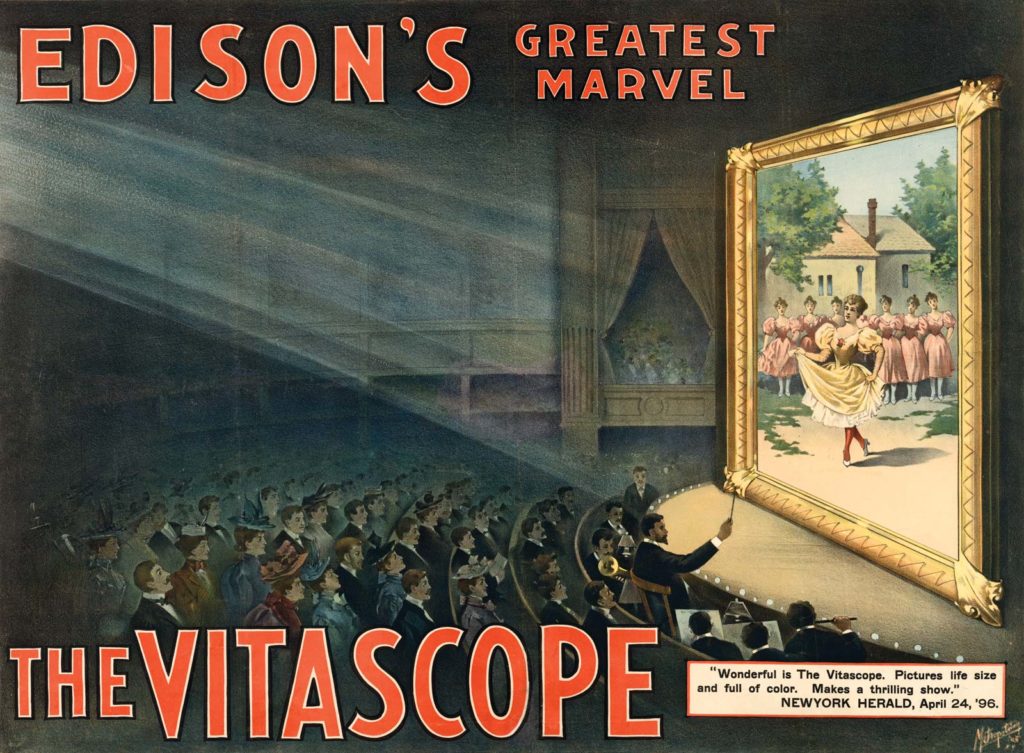
We planted a few specific addresses in the podcast for you to search out during one of your wandering adventures through the city. See if you can find the plaque at Macy’s honoring the theater that once stood there, Koster and Bial’s Music Hall, and occasion of the debut of Edison’s Vitascope.
Other Sources: For a clearer picture of early film history, you should supplement this podcast with the first three parts of the TCM documentary Moguls and Movie Stars, their mini-series on the history of the movies.
Richard Koszarski’s extensive survey of the region’s contribution to the movies, ‘Hollywood On The Hudson‘, essentially starts where we leave off. David Robinson’s ‘From Peep Show To Palace’, with an introduction by Martin Scorsese, puts New York’s role into international context.
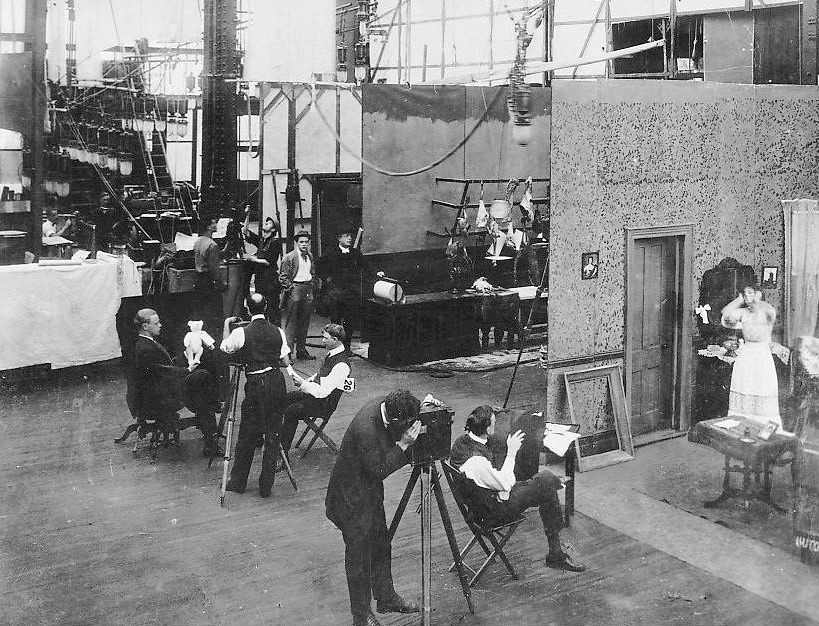
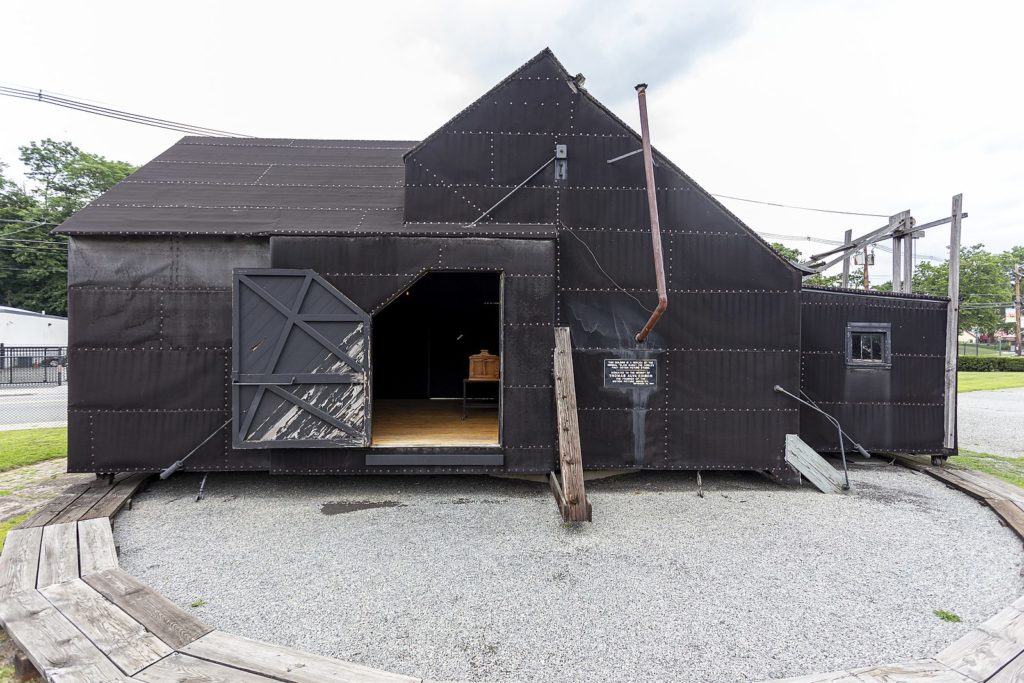
This hideous looking shed is actually America’s first film studio — the Black Maria at Thomas Edison’s West Orange laboratory. Thomas Edison National Historical Park (Wiki Commons/Acroterion)From inside Edison’s Bronx studio
Here’s a few of the films we mentioned in our podcast this week. These were all filmed in New York or New Jersey.
Eugen Sandow, an early discovery of Florenz Ziegfeld and one of the first stars of moving pictures
DW Griffith’s ‘Father Gets In The Game’, with Mack Sennett, filmed in Central Park
‘Those Awful Hats’, a Griffith creation, with a movie within a movie
And finally, ‘Musketeers of Pig Alley’, arguably the first ‘gangster’ movie (allegedly using real members of New York gangs), although organized crime looked quite different pre-Prohibition, and sticklers might balk at that distinction.
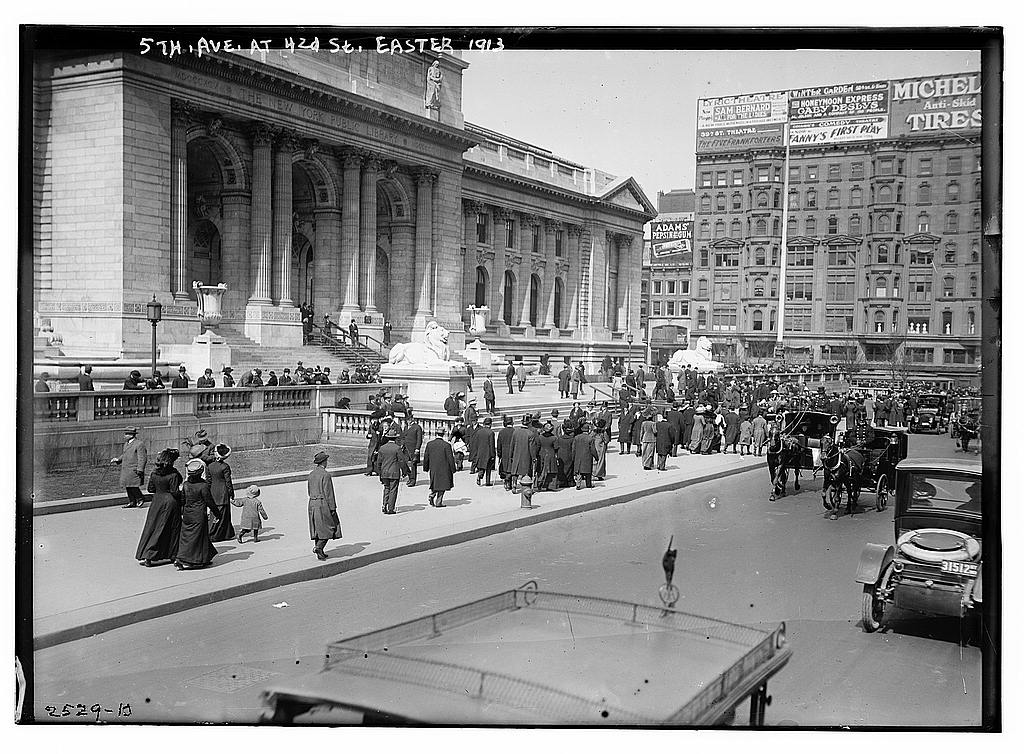
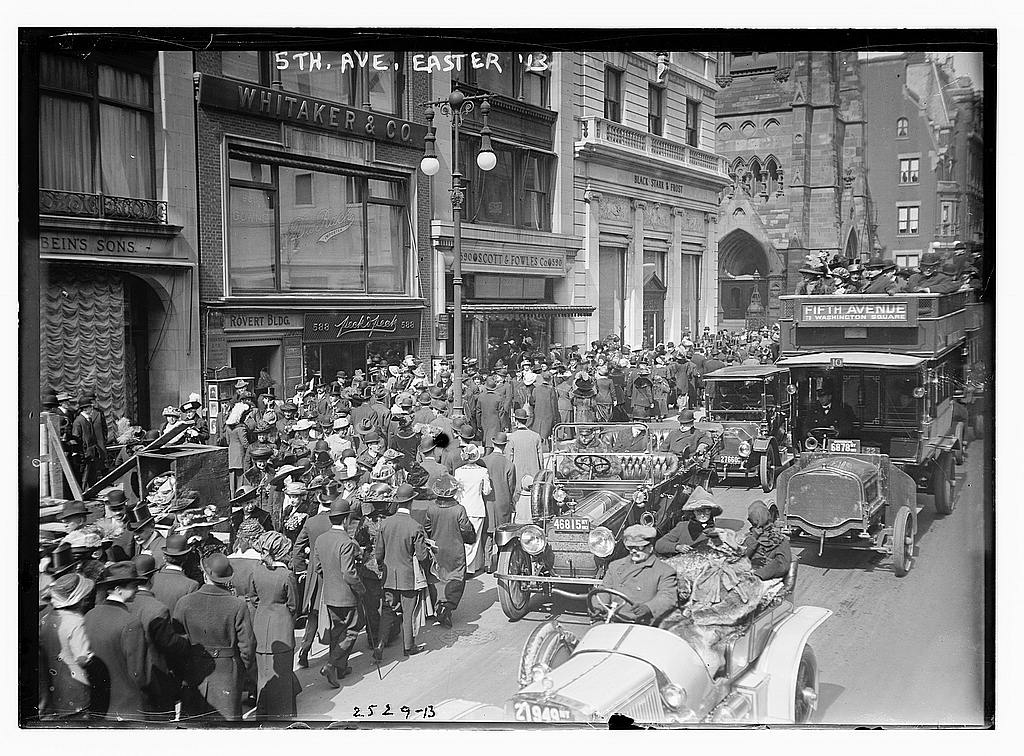
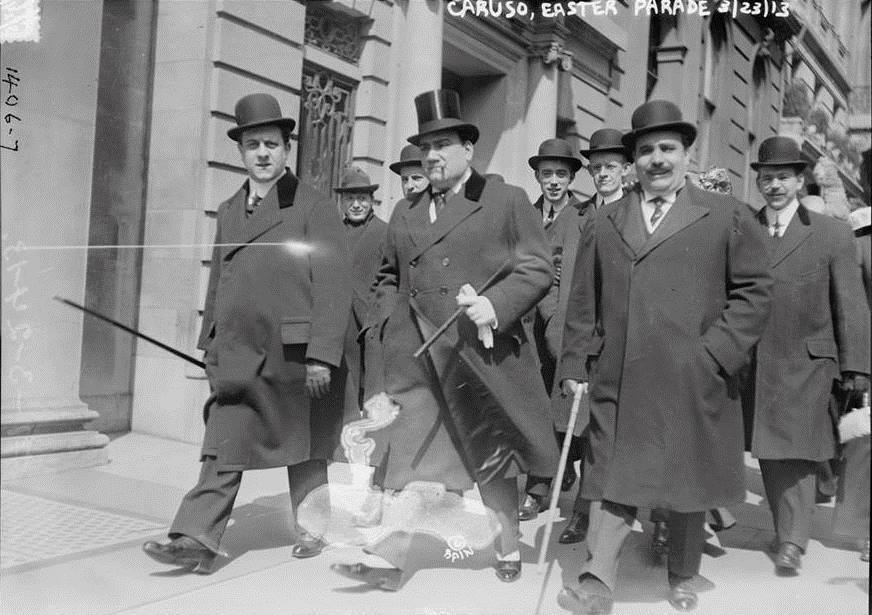
In the picture above: People in Sunday finery stroll past the New York Public Library building. The library had not even been open two years by the time this picture was taken in March 23, 1913.
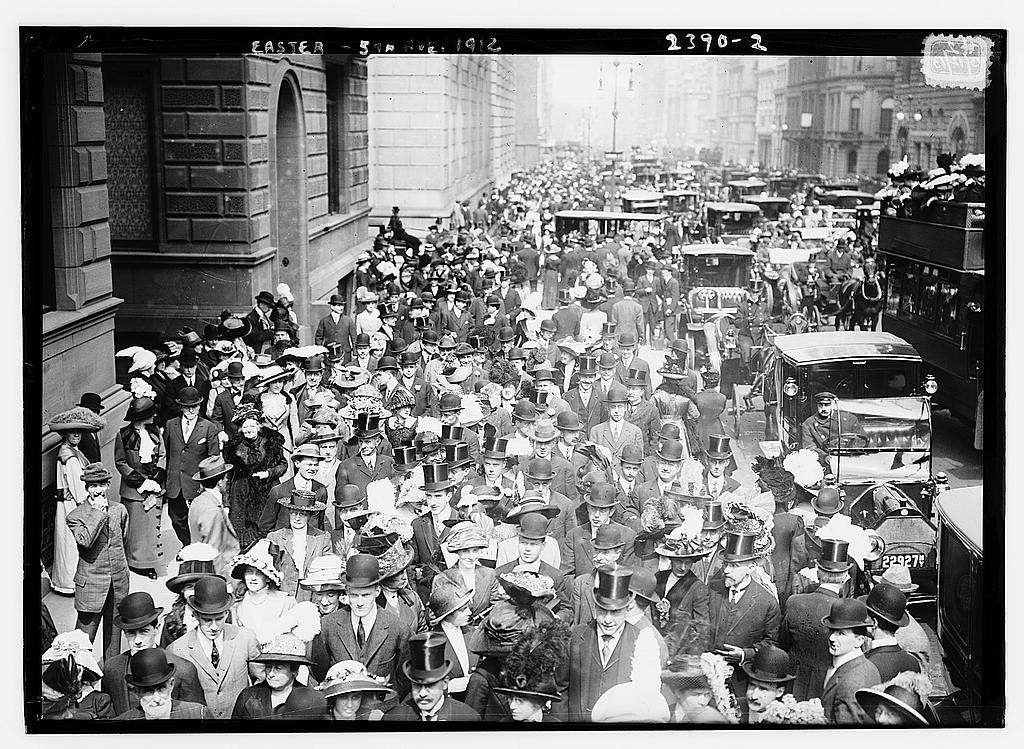
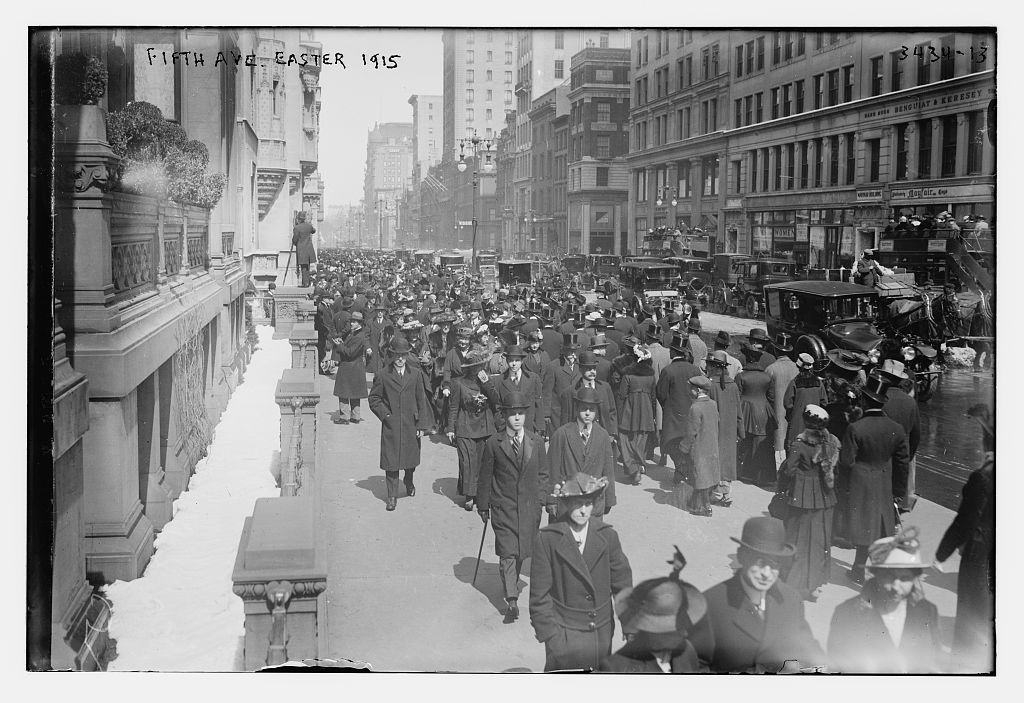
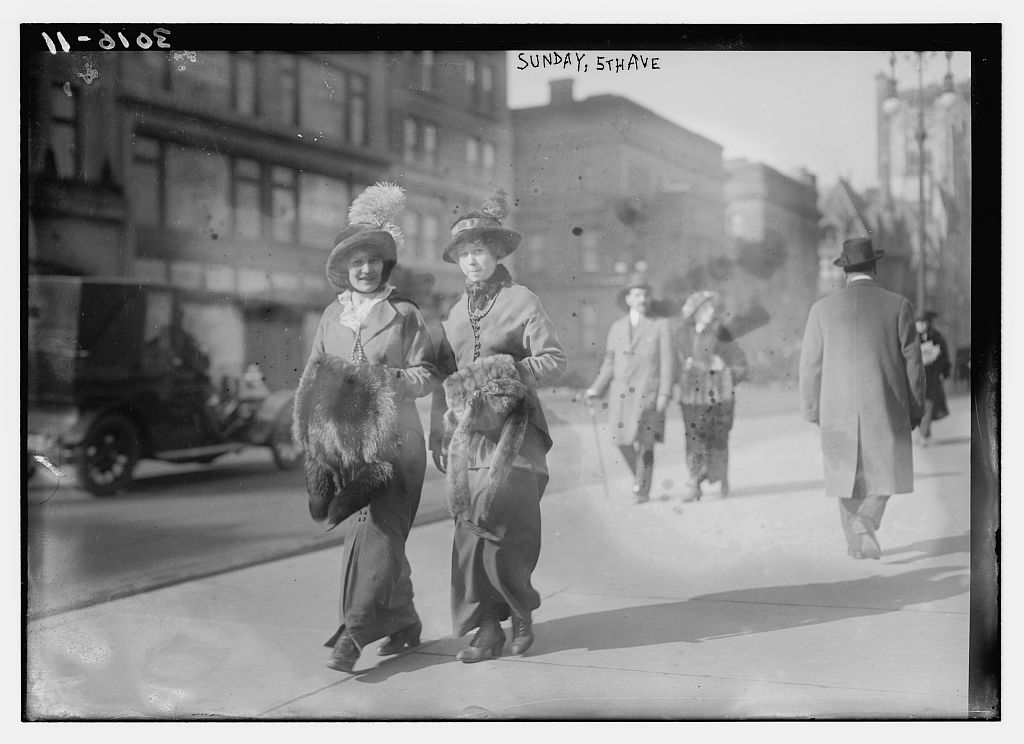
New York City’s time-honored Easter custom — the Sunday morning Fifth Avenue Easter bonnet stroll — once turned the wealthiest residents of Fifth Avenue into primping peacocks, their Sunday best on display.
The makeshift parade, which some believe traces back to New York’s Dutch days, blossomed into a full-assault of expensive headwear once the upper crust made Fifth Avenue their home.
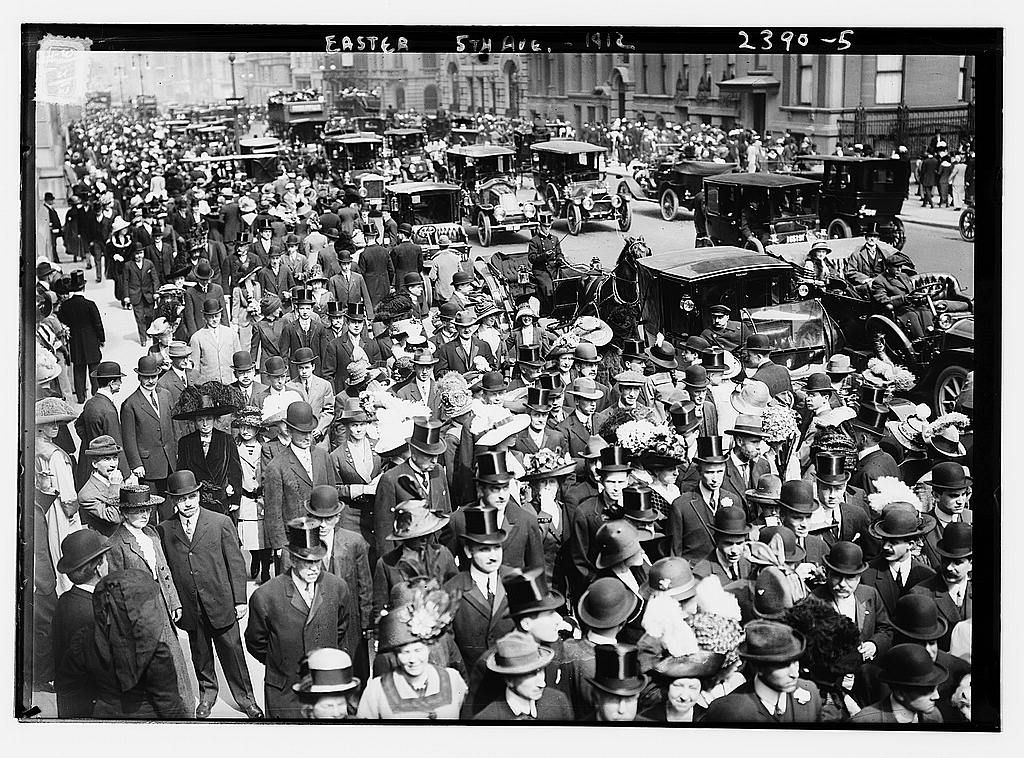
Thousands lined the street, either brandishing their most expensive apparel or else to gawk at those wearing it. It was the closest New York got to a high-end fashion show, with dressmakers parked on the corner, taking notes.
“All the women were slim who could be,” remarked the New York Tribune’s fashion writer, “and a few were who couldn’t.”
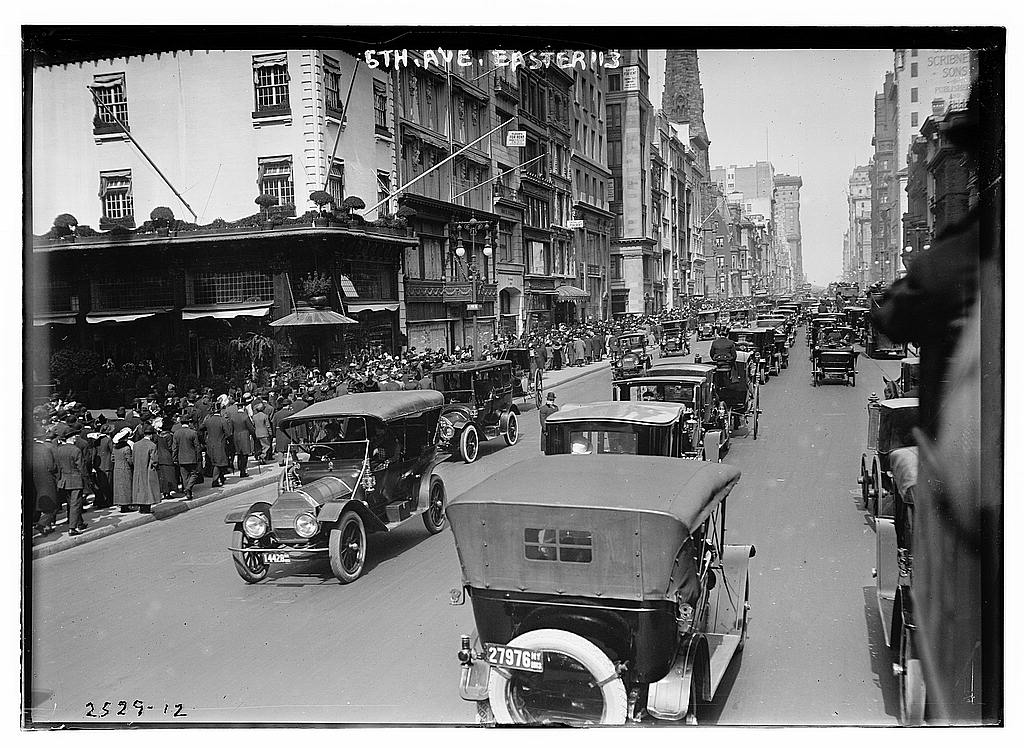
But the 1910s brought a new accessory to the Easter parade — automobiles.
A decade before, there were probably no more than 1,000 automobiles in all of New York City. By 1913, there were enough to create what must have been Fifth Avenue’s very first automobile traffic jam.
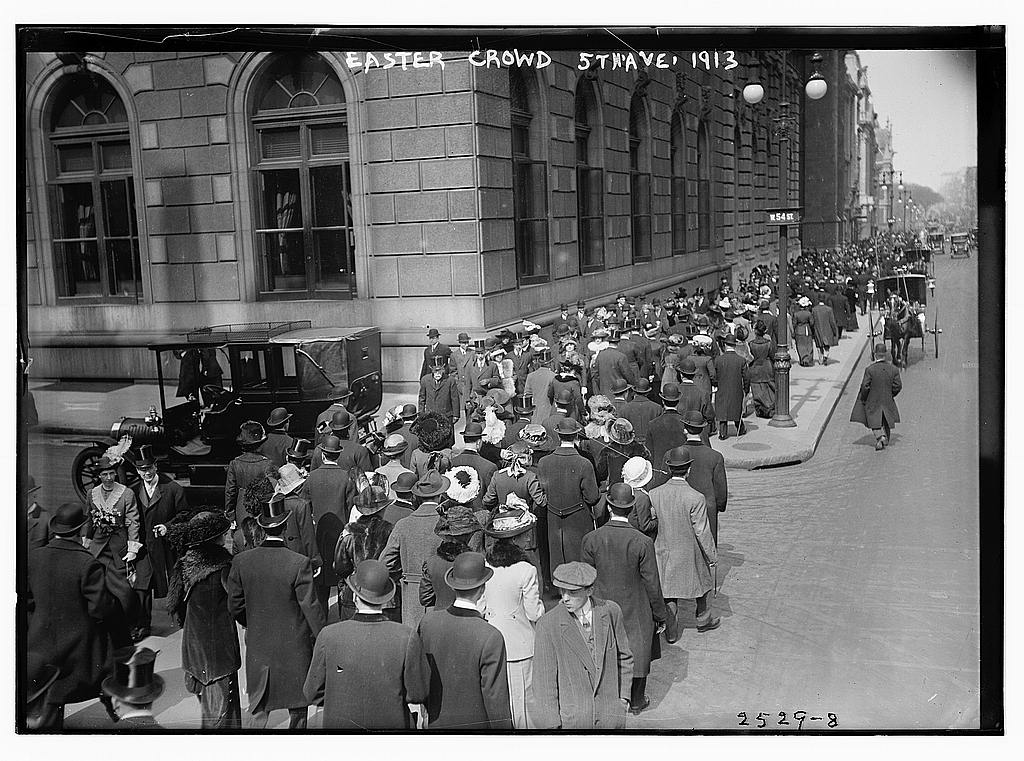
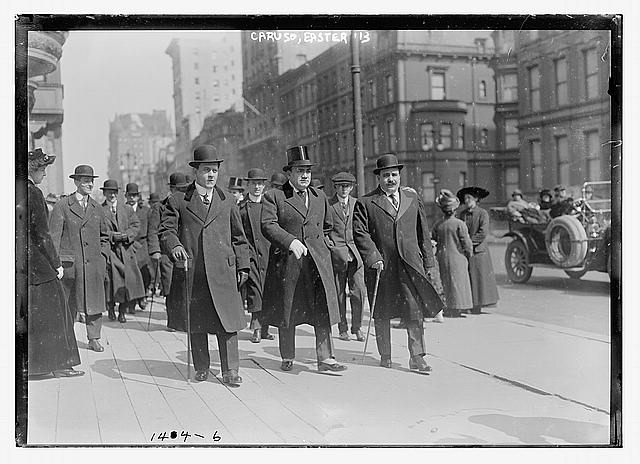
All the photographs featured here are from Easter Sundays, between 1912 and 1915 (images courtesy the Bain Collection/Library of Congress.
The magnificent Enrico Caruso even participated in the Easter stroll. He looks fanciful in his top hat and a bit like Batman villain the Penguin.
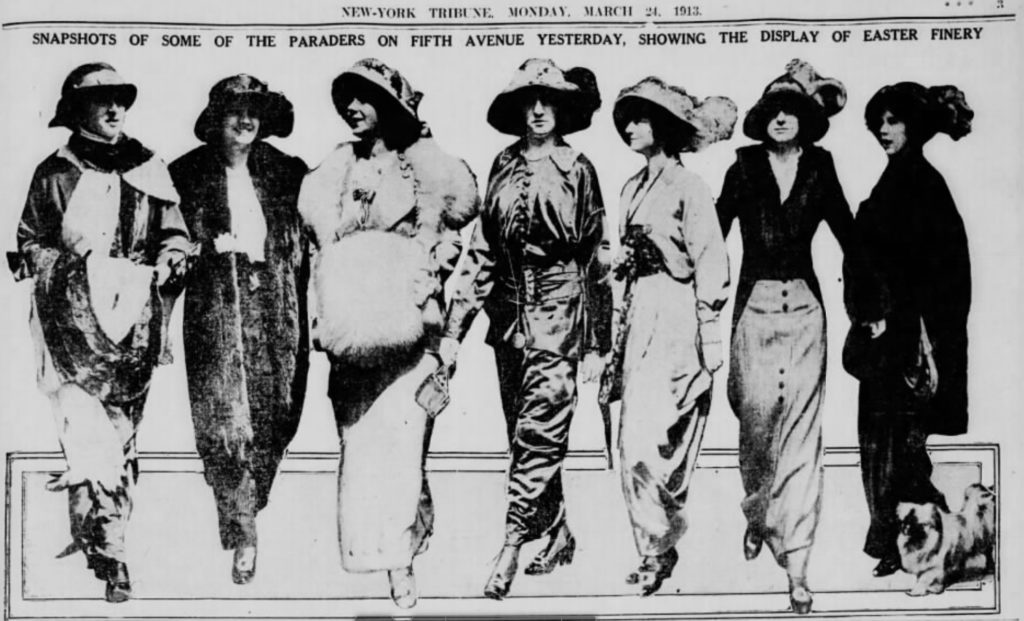
Apparently it was an unseasonably cold day that Easter in 1913 and most society women, braving the chill, wrapped up their fine gowns in heavy wraps and coats of various animal skin. “Furs and pink noses” was the fashion assessment, according to the Tribune.
Still, in the sea of coats and curious hats, one woman managed to make an impression. “LADY IN VERMILION AN EASTER CUBIST‘ cried the newspaper the following day — on its front page, no less. “…[W]ho was the young lady in bright vermilion, with lips of a vivid purple, who talked excitedly to hide her shivering as she passed St. Patrick’s Cathedral?”
The New York Tribune ran this banner photograph the following day. (Note the dog in the corner.) Sadly I don’t believe any of these ladies was the aforementioned ‘vermilion lady’:
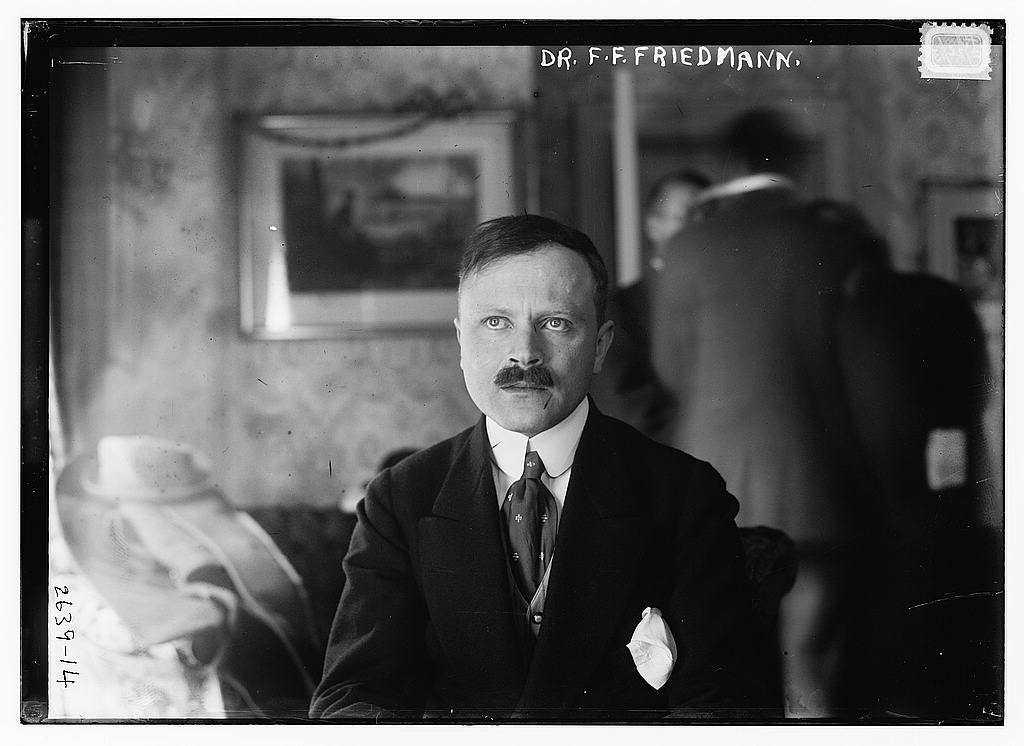
“I am here to show what the serum will do,” said the visiting doctor from Berlin. “That is my only answer to those who have natural doubts before they have made observations.”
Library of Congress
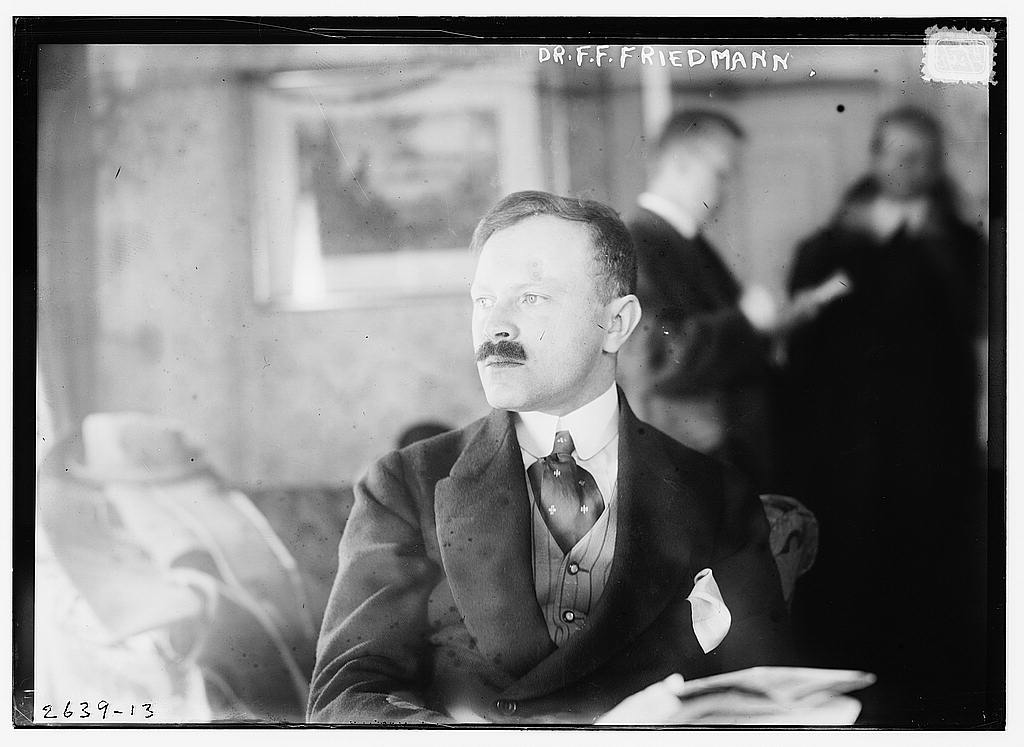
Dr. Friedrich Franz Friedmann had come to New York in February 1913 to tackle one of the city’s most persistent scourges upon its population.
Tuberculosis (or “consumption”) had killed thousands during the 19th century and showed few signs of abating in the new century.
It was considered a “disease of the working class,” ransacking neighborhoods of crowded tenements. Hospitals on Blackwell’s Island and others around the city were devoted solely to those afflicted by it. Parents sent their children to open-air schools, inspiring all sorts of strange costume, anything to avoid the dread disease.
So one could imagine the excitement which greeted the visiting doctor, invited here from Berlin where he had announced his marvelous and unusual cure.
According to Friedman, a serum had been created taking a sample of tubercule bacilli and “passing it through a turtle” in a laboratory, creating a non-virulent strain that could function as a vaccine. Dr. Friedmann had come upon this discovery in 1902 while experimenting with turtles at the Berlin Zoo.
New Yorkers affected by the disease were anxious to see Dr. Friedmann’s miracle serum. Wealthy banker Charles Finlay, president of Aetna National Bank, immediately sent for the doctor and conspicuously put him up at the Waldorf-Astoria at 34th Street and Fifth Avenue, the finest hotel in New York.
The invitation also had a challenge attached — if Dr. Friedmann could cure 95 out of a 100 patients (including Finlay’s own son) using the turtle cure, he would be awarded one million dollars. (About $26 million in today’s currency.)
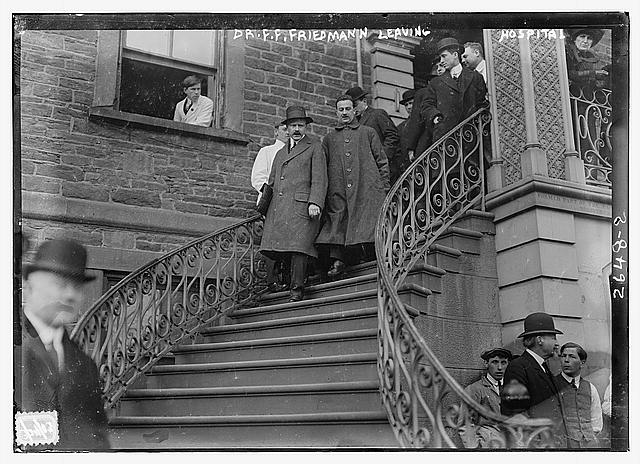
Dr. Friedmann leaving a New York hospital. Library of Congres
Friedrich arrived on February 25 and readied his remedy from his room at the Waldorf. Meanwhile, hundreds of interested parties gathered in the lobby, including members of the press and desperate family members whose loved ones sat in tuberculosis hospitals.
Friedrich eventually rejected the million-dollar challenge — 95 out of 100 is probably ambitious, even for an early vaccine people were confident with — but came armed to the Waldorf with his little red box containing the vaccine and apparently a host of future plans, including the opening of a dispensary somewhere in the city.
As soon as the vaccine was thoroughly tested and approved, that is.
The doctor stayed in New York for several weeks but he was eventually ejected from the Waldorf. Manager Oscar Tschirsky rightly feared the hotel would soon be filled with tuberculosis patients begging to be test subjects for the vaccine.
Soon after a near-riot erupted in the lobby, a sick man collapsed and was taken away in an ambulance. The Waldorf evicted Dr. Friedmann on March 5th. He then escaped to the equally tony Ansonia Hotel in the Upper West Side.
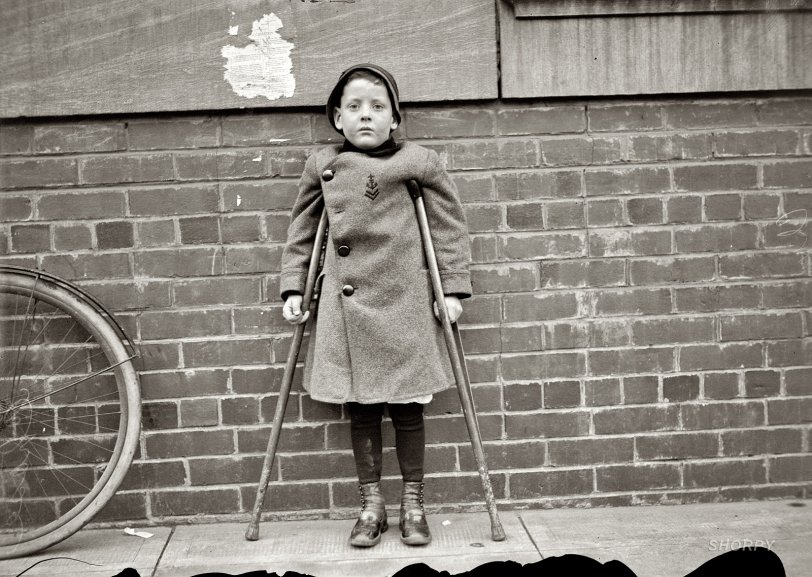
Philip Chase, a young Washington DC resident cured of tuberculosis by the ‘turtle cure’. This cleaned image courtesy Shorpy. See a full-sized version here.
Friedmann’s secretive activities soon caused great doubt in the city. He administered the vaccine to a few patients from an office at W. 51st Street but no results were reported. People quickly grew skeptical of this miracle cure.
The ‘turtle man’, as Friedmann was soon called in the press, soon became distracted by a potential thief in his midst — Dr. Maurice Sturm, the house physician at the Ansonia. In May, Sterm claimed an improved version of the turtle vaccine, one he was eager to share with reporters (if not actually with patients).
Accused of outright stealing the vaccine, Dr. Sturm declared, “I do not care whether my name is smudged, if I can give the public the benefit of this discovery….I want the cure in proper hands.”
At hearing of Sturm’s announcement, Dr. Friedmann reportedly replied, “Ach, Gott!” and threatened to sue the former Ansonia confidante. Amazingly, Sturm eventually counter-sued, citing a lack of payment for services rendered to Dr. Friedmann.
Further pandemonium arrived on the RMS Mauretania on May 17th with another doctor who claimed an even more improved “turtle germ,” using vastly superior turtles from South India.
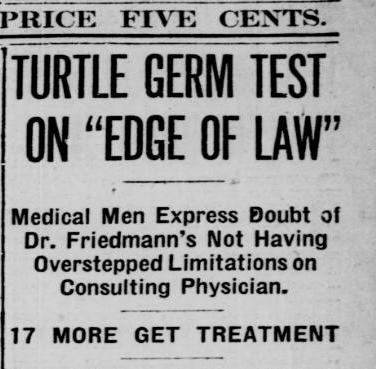
Hyteria over all these turtle cures died down when it was quickly revealed that they didn’t actually work. “POOR RESULTS FROM THE TURTLE GERM” declared the New York Tribune in late May.
Even still, Friedmann eventually cashed in, selling the American rights to the turtle vaccine for $125,000 and almost $1.8 million in stocks for a planned series of dispensaries in his name (which never materialized).
Friedmann died in Monte Carlo in 1953. The most successful tuberculosis vaccine — the BCG vaccine — would not be tested on humans until after World War I.
The neighborhood converging at the intersections of Essex Street, Rutgers Street, Canal Street and East Broadway on the Lower East Side — officially called Straus Square** — somehow seems exactly as it might have looked 125 years ago.
Anchored by Seward Park and its beautiful Carnegie library, it retains some of its turn-of-the-century character, while allowing for both Chinese-run restaurants and bakeries and trendier spillover in the form of designer restaurants and music lounges. There’s even a church from the 1840s (St. Teresa’s, at Rutgers and Henry Streets)
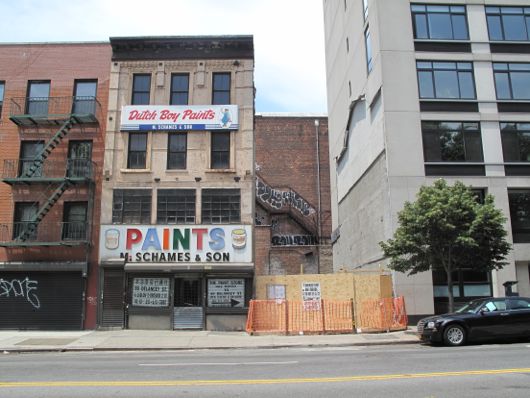
But one building that was once in the center of it all harbors a secret — 5 Essex Street.
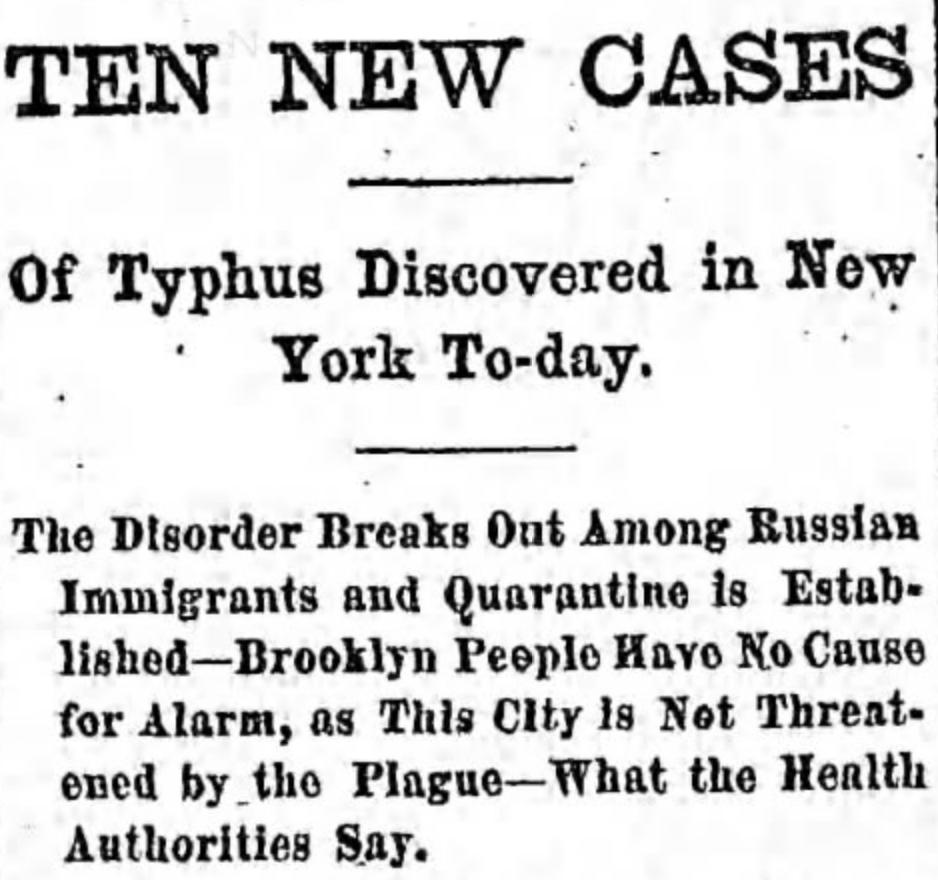
It was at this address in the winter of 1892 that dozens of victims of the dreaded typhus disease were quarantined.
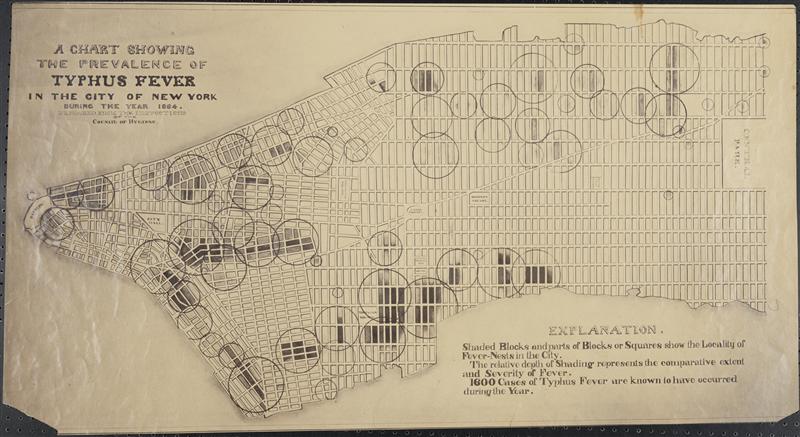
A map of typhus outbreaks from the year 1864. Courtesy the Museum of the City of New York
Thousands of immigrants were arriving in New York harbor by the late 19th century and making their home here on the Lower East Side, where aid organizations would often house families without means to support themselves. By 1892, the Lower East Side had become one of the most densely populated places on earth.
These were also the opening days of Ellis Island, and the strict examination that would make the immigrant center infamous had not yet been established. New York had safeguards in place to stop the spread of diseases, but they weren’t perfect.
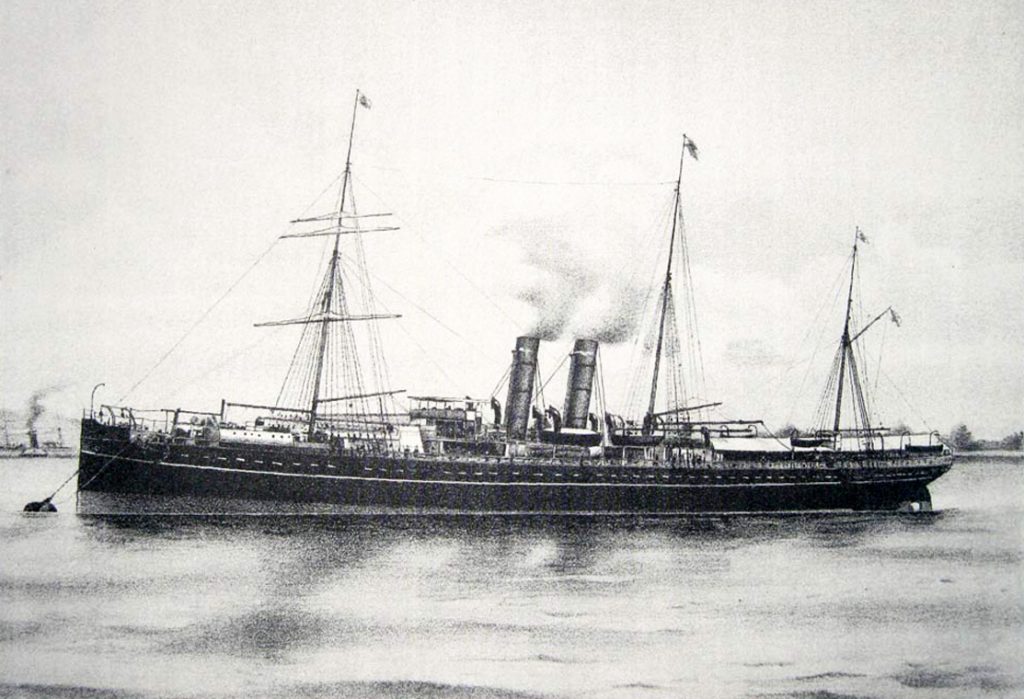
Courtesy Clyde Ships
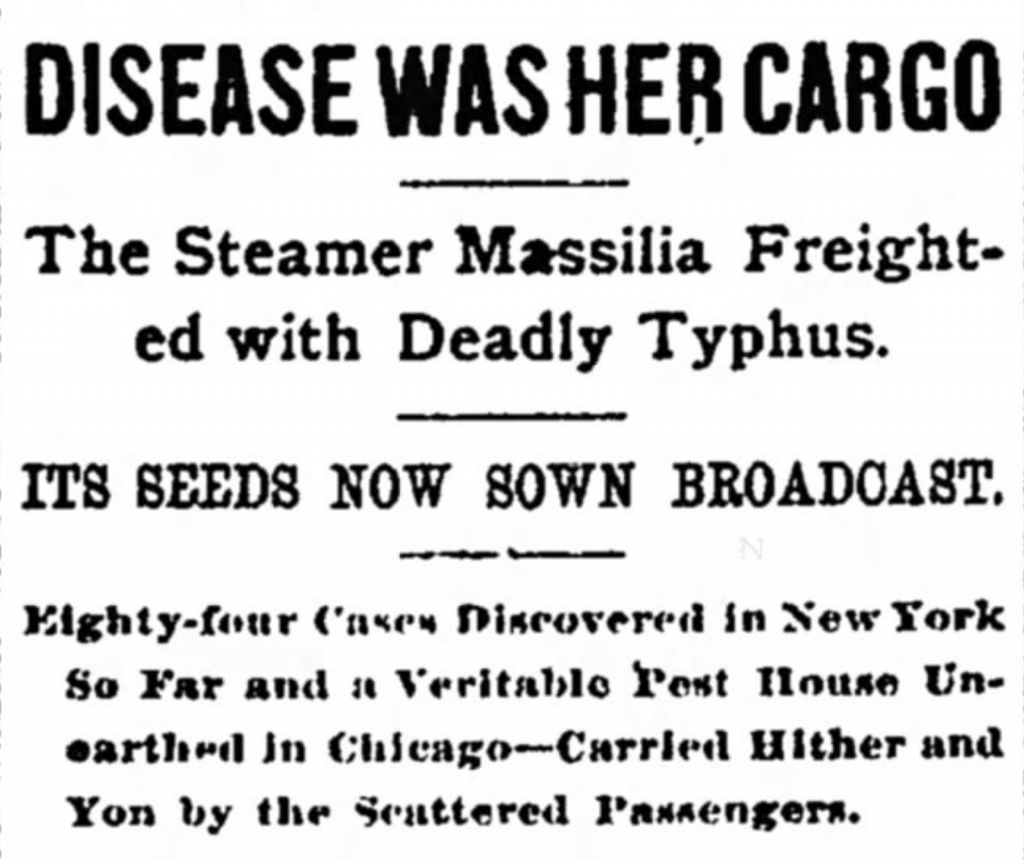
The steamship Massilia (pictured above) arrived during Ellis Island’s first month of operation, January 1892, carrying over 700 hopefuls, most of them Italians and Russian Jewish immigrants escaping persecution.
Most of them ended up on the Lower East Side, including members of the Mermer family, who the United Hebrew Charities organization arranged to live in the small tenement at 5 Essex Street.
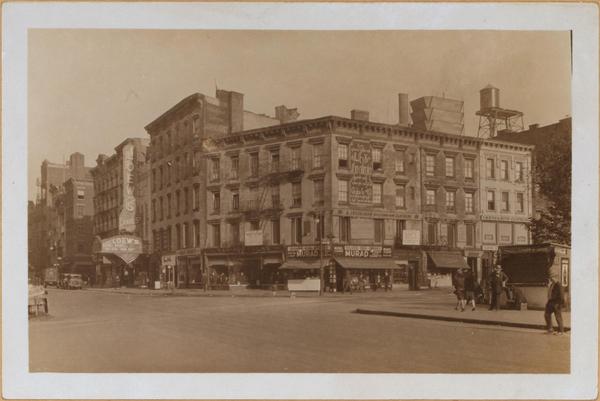
1 Essex, 3 Essex and 5 Essex, seen from Straus Square, 1927. (Courtesy New York Public Library)
The passengers had not been properly checked for various diseases, including typhus, a devastating affliction that had swept through America during much of the 19th century. It would reach its height of destruction in Europe during World War I, where it would kill millions.
This horrifying sickness, spread by fleas or mites, was on the Massilia. And its passengers were now spread throughout the Lower East Side.
The condescending press of the day described the ship’s passengers as “the impoverished, unkempt class that usually comes from that land, and of the kind that such a scourge as typhus would be likely to mark as its own.”
Headline from the Brooklyn Daily Eagle, Feb. 12, 1892
It was first noticed among 15 Massilia passengers at another address, 42 East 12th Street. The city and the United Hebrew Charities scoured the city for all the remaining Massilia immigrants and found out to their horror that over 70 of them had typhus, including members of the Mermer family at 5 Essex.
Those with symptoms of the disease were transported out to North Brother Island. However all other passengers were forced into the two addresses — 5 Essex Street and 42 East 12th Street — and quarantined there, with police guarding the doors to make sure that nobody could go in. Or escape.
The remaining members of the Mermer family were now trapped at 5 Essex.
A melodramatic headline from the Middleton Times-Press, Feb 16, 1892. (Newspapers.com)
The mother Fayer was dead and two symptomatic children (who would later survive) were taken away. They were now quarantined in their home with dozens of others, unsure if they would all succumb to the same fate.
Even with increased precautions, the disease still found its way out. There had been little spread of typhus in the 1890s; now, with the arrival of the Massilia, dozens of cases were reported up and down the major cities of the East Coast.
Fearing a new outbreak, city officials did something drastic. In March, they emptied the two quarantined buildings and placed everybody who lived there on North Brother Island, whether they had the sickness or not.
It would be a nerve-racking month, a disturbing introduction to America. After a few weeks, if patients were without symptoms, they would finally be allowed to leave.
The quarantine seemed to do the trick; less than 50 people died from this potentially disastrous outbreak that struck the heart of the most densely populated neighborhood in New York.
Image courtesy the Lo Down
UPDATE: When I first published a version of this article back in 2008, 5 Essex Street was still standing. But the building was not landmarked and this area of the Lower East Side is not contained in a historic district.
Further contemporary news reports of the quarantine house at 5 Essex can be found here.
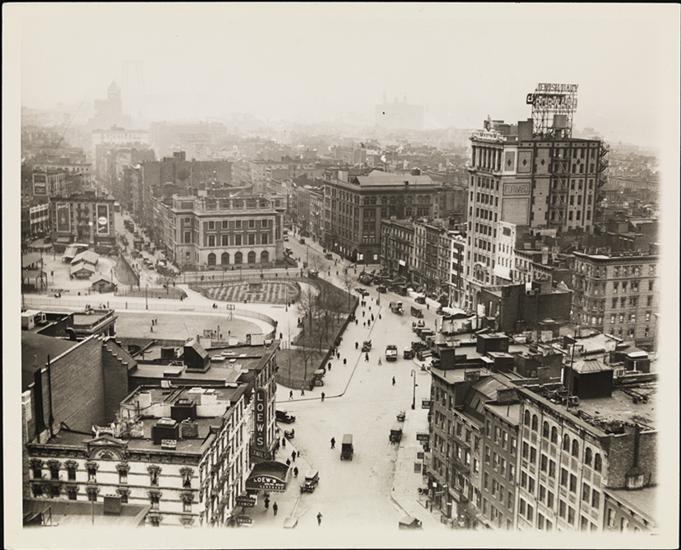
Picture at top (of Straus Square in 1928) courtesy the Museum of the City of New York
**Straus Square is named for Nathan Straus, the philantropist and co-owner of Macy’s Department Store. Coincidentally, Nathan’s brother Oscar would become Secretary of Commerce under Theodore Roosevelt and oversee the administration of Ellis Island. Nathan’s other brother Isidor would die on the Titanic.
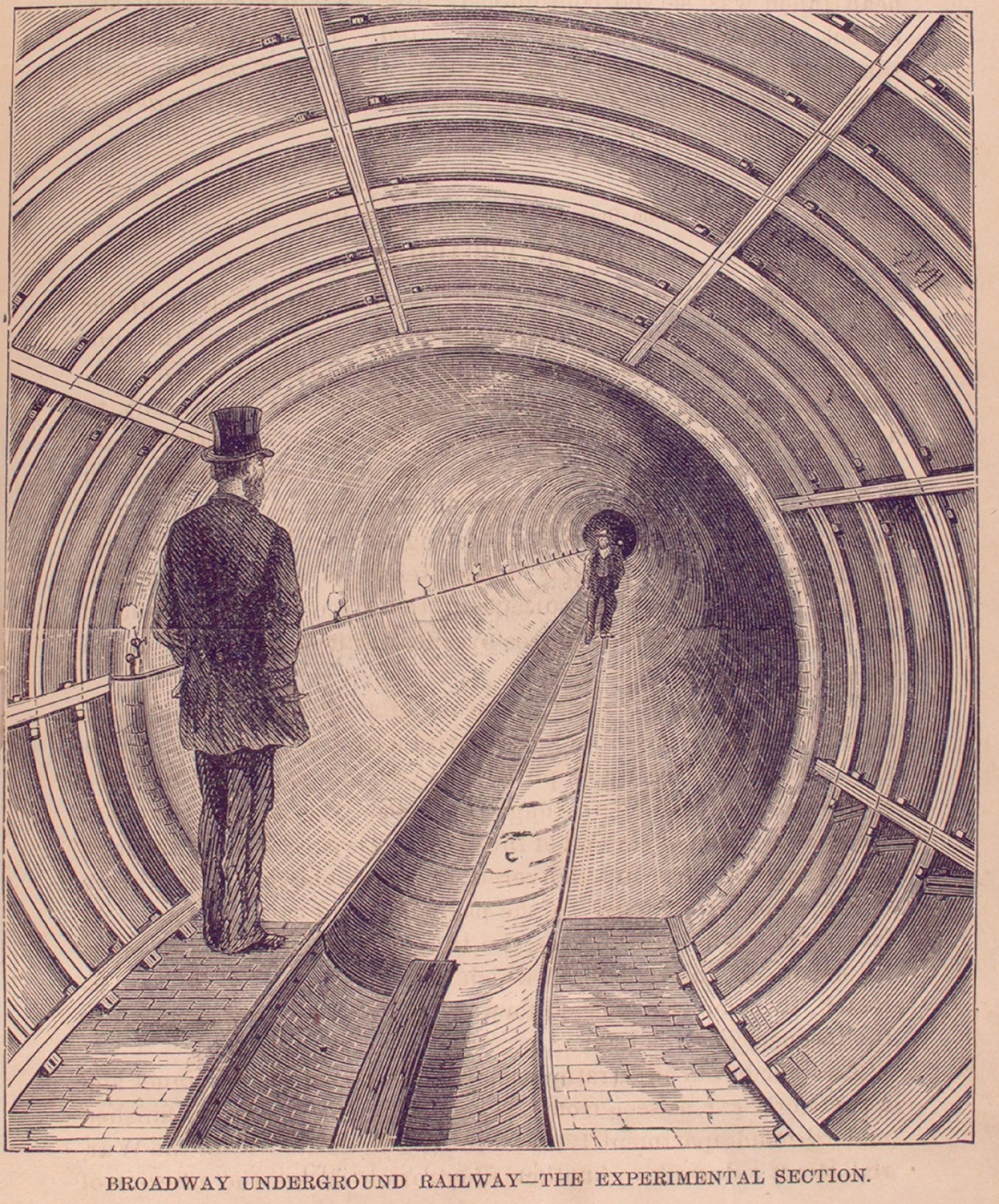
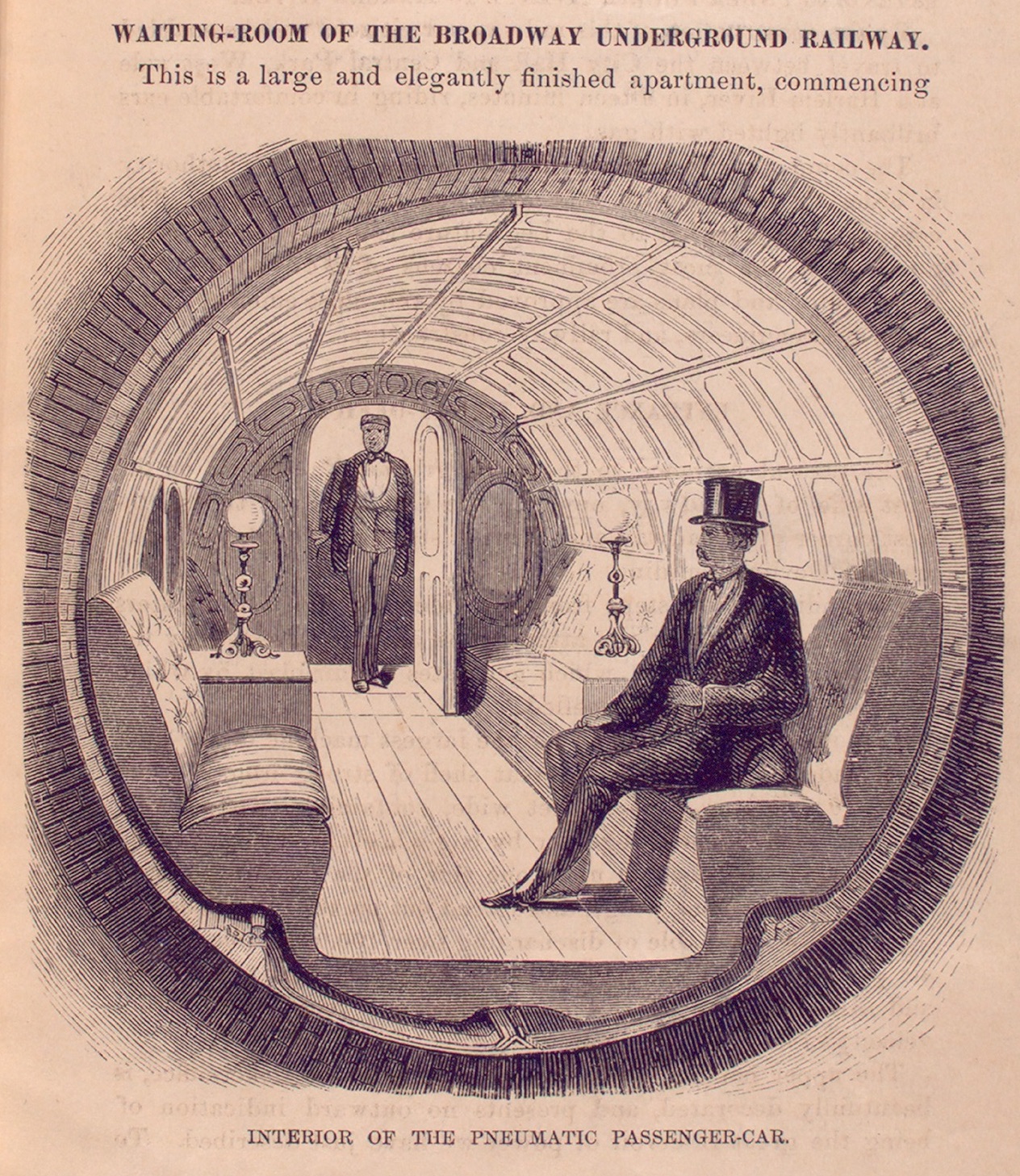
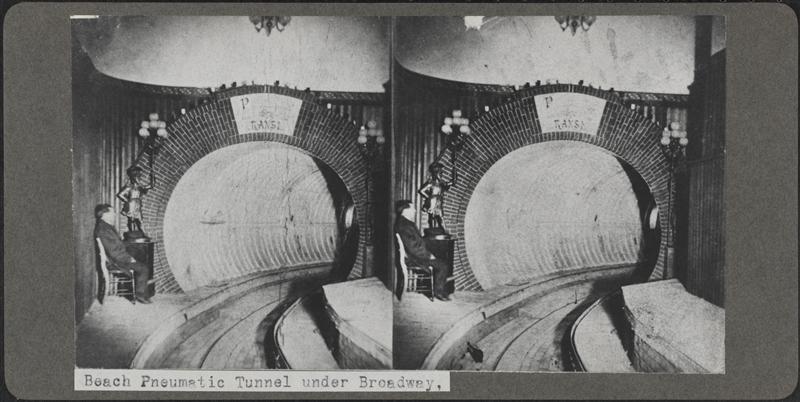
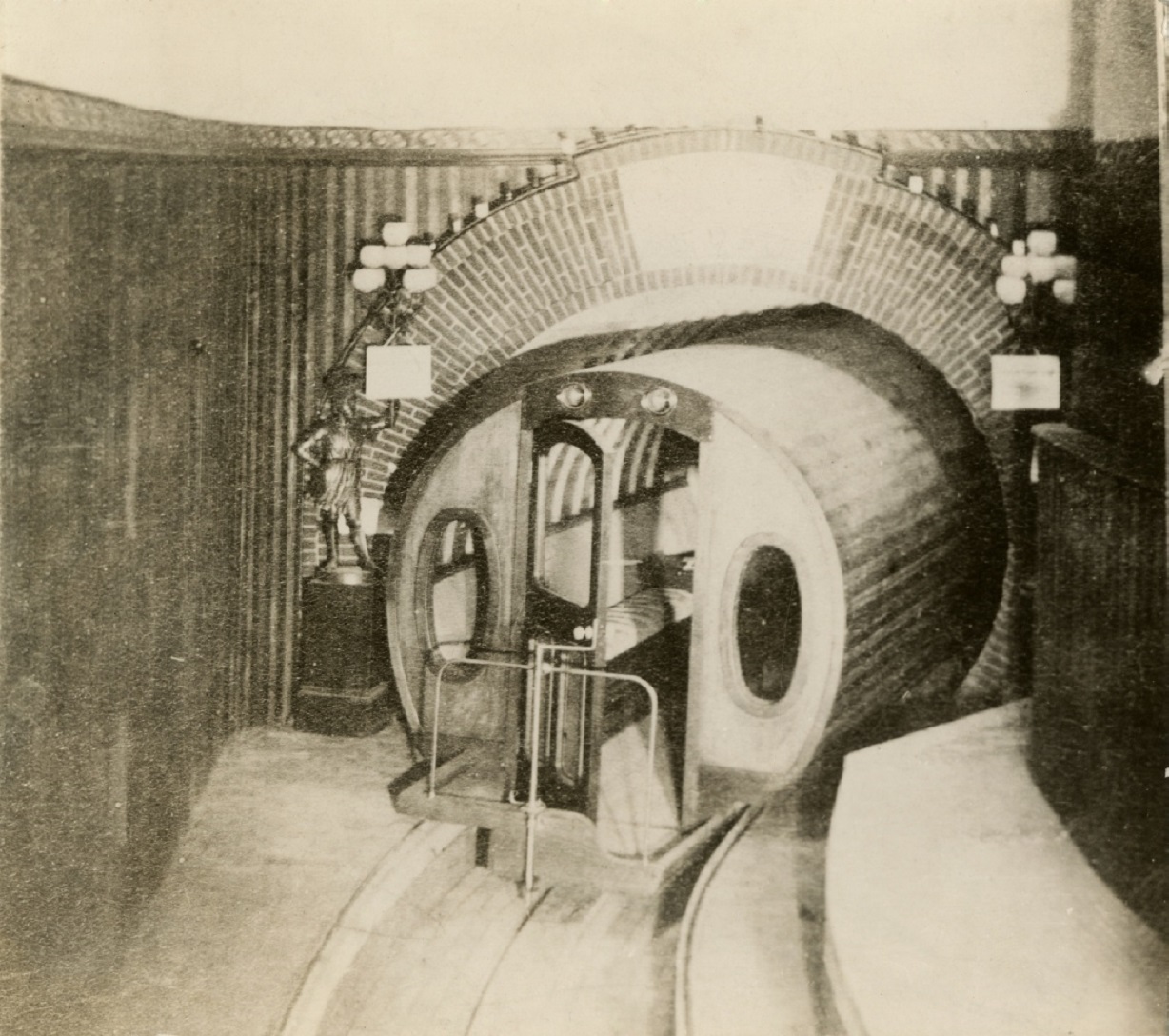
Beach’s pneumatic subway — the first in the United States — opened 150 years ago today. To celebrate this anniversary, we are re-representing our 2016 show on the history of Alfred Ely Beach and his shortlived (but truly marvelous) invention.
PODCASTThe unbelievable story of Alfred Ely Beach’s Pneumatic Transit, a curious solution from 1870 to New York’s growing transporation crisis.
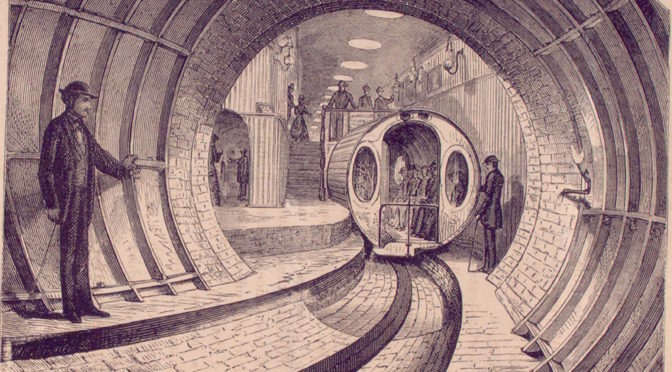
The first subway in New York — the first in the United States! — traveled only a single block and failed to influence the future of transportation. And yet Alfred Ely Beach‘s marvelous pneumatic transit system provides us today with one of the most enchanting stories of New York during the Gilded Age.
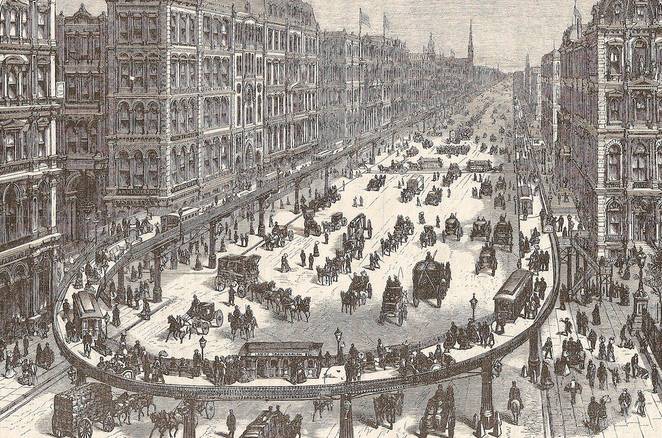
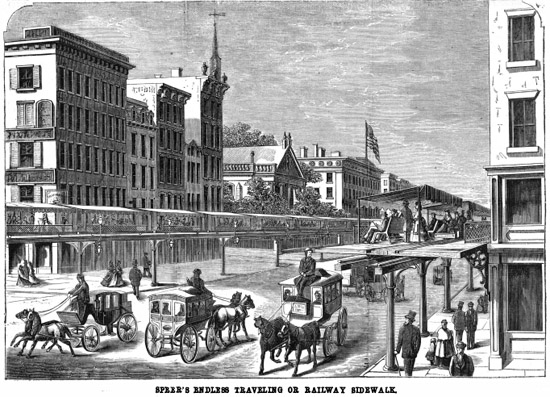
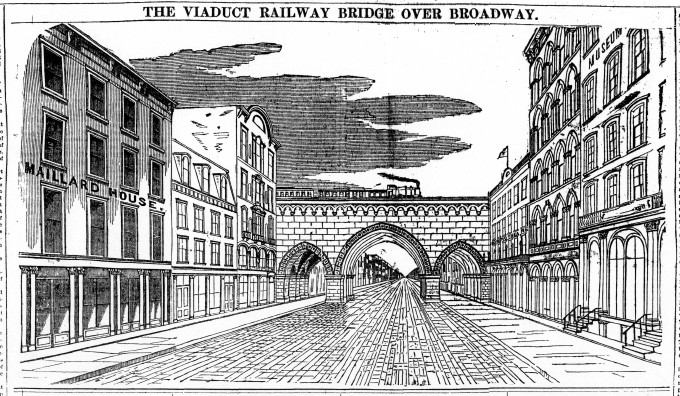
With the growing metropolis still very much confined to below 14th Street by 1850, New Yorkers frantically looked for more efficient ways to transport people out of congested neighborhoods. Elevated railroads? Moving sidewalks? Massive stone viaducts?
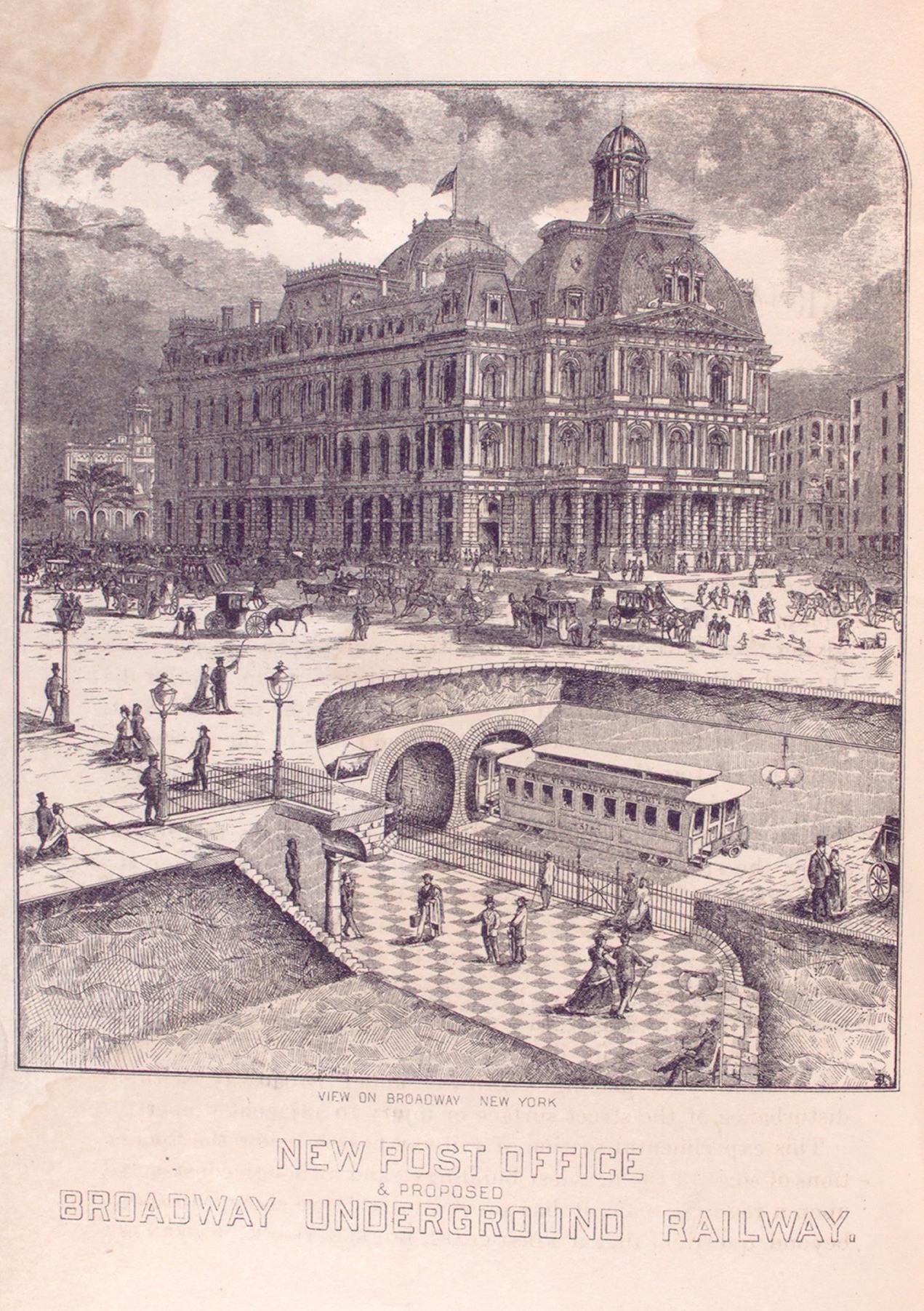
Inventor Beach, publisher of the magazine Scientific American, believed he had the answer, using pneumatic power — i.e. the power of pressurized air! But the state charter only gave him permission to build a pneumatic tube to deliver mail, not people.
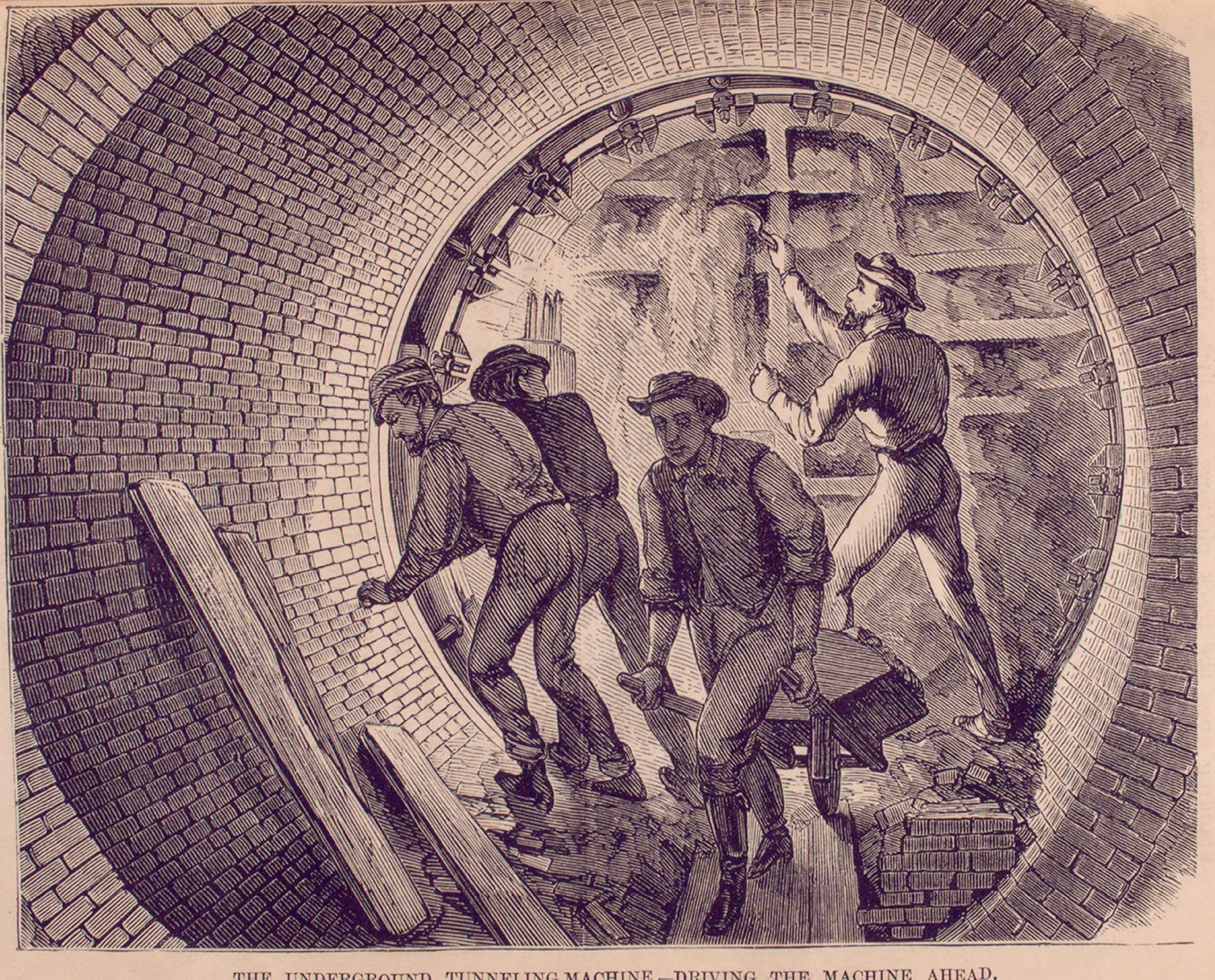
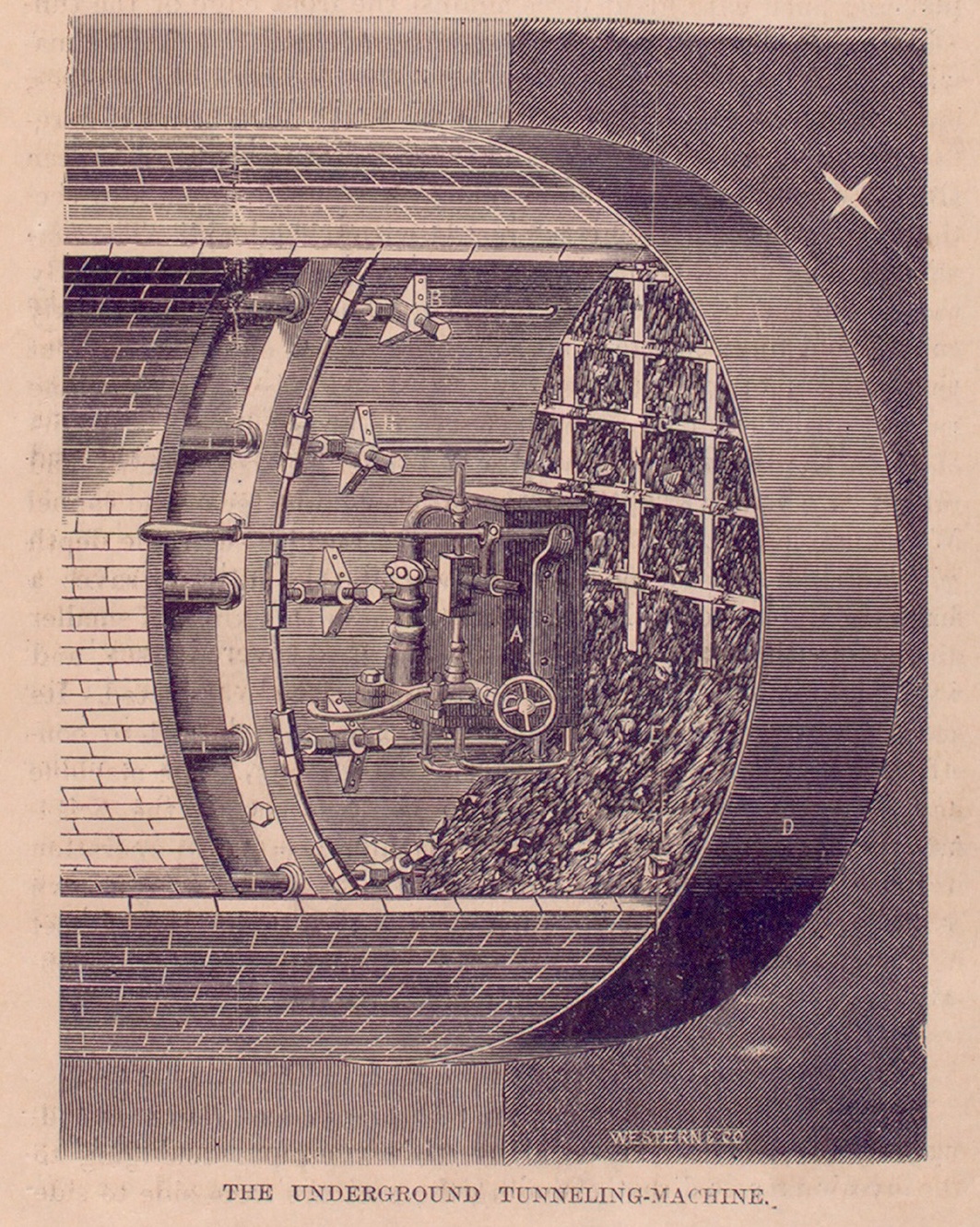
That didn’t stop Beach, who began construction of his extraordinary device literally within sight of City Hall. How did Beach build such an ambitious project under secretive circumstances? What was it like to ride a pneumatic passenger car? And why don’t we have pneumatic power operating our subways today?
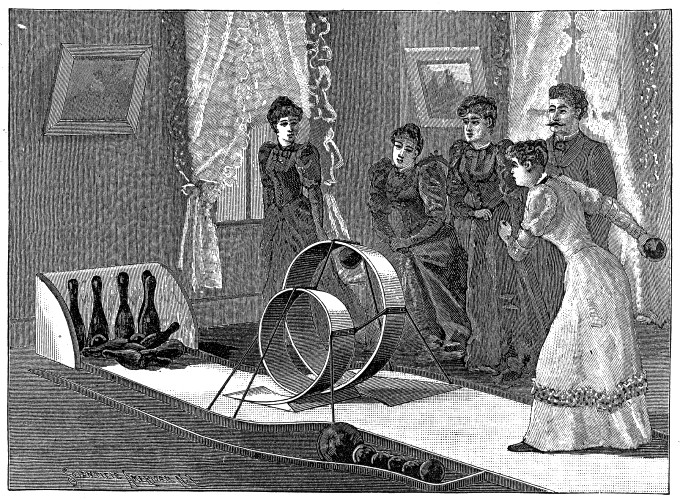
FEATURING: Boss Tweed at his most bossiness, piano tunes under Broadway and something called a centrifugal bowling alley!
To get this week’s episode, simply download or stream it for FREE from iTunes, Stitcher, Spotify or other podcasting services.You can also get it straight from our satellite site.
The Bowery Boys: New York City History podcast is brought to you …. by you!
We are now producing a new Bowery Boys podcast every other week.
We’re also looking to improve and expand the show in other ways —
publishing, social media, live events and other forms of media. But we
can only do this with your help!
We are now a creator on Patreon, a patronage platform where you can support your favorite content creators.
Please visit our page on Patreon
and watch a short video of us recording the show and talking about our
expansion plans. If you’d like to help out, there are six different
pledge levels. Check them out and consider being a sponsor.
ALL patrons at all levels will receive many benefits include the next episode of the Bowery Boys Movie Club,
an exclusive podcast (released every 6-8 weeks) celebrating New York
City in the movies. And patrons at the Five Points ($5) level and up
will get our other exclusive podcast — The Bowery Boys: The Takeout — released every two weeks.
We greatly appreciate our listeners and readers and thank you for joining us on this journey so far.
Alfred Speer’s moving sidewalk concept would have lifted pedestrians off the street and onto a moving ribbon that would have stretched up and down Broadway.
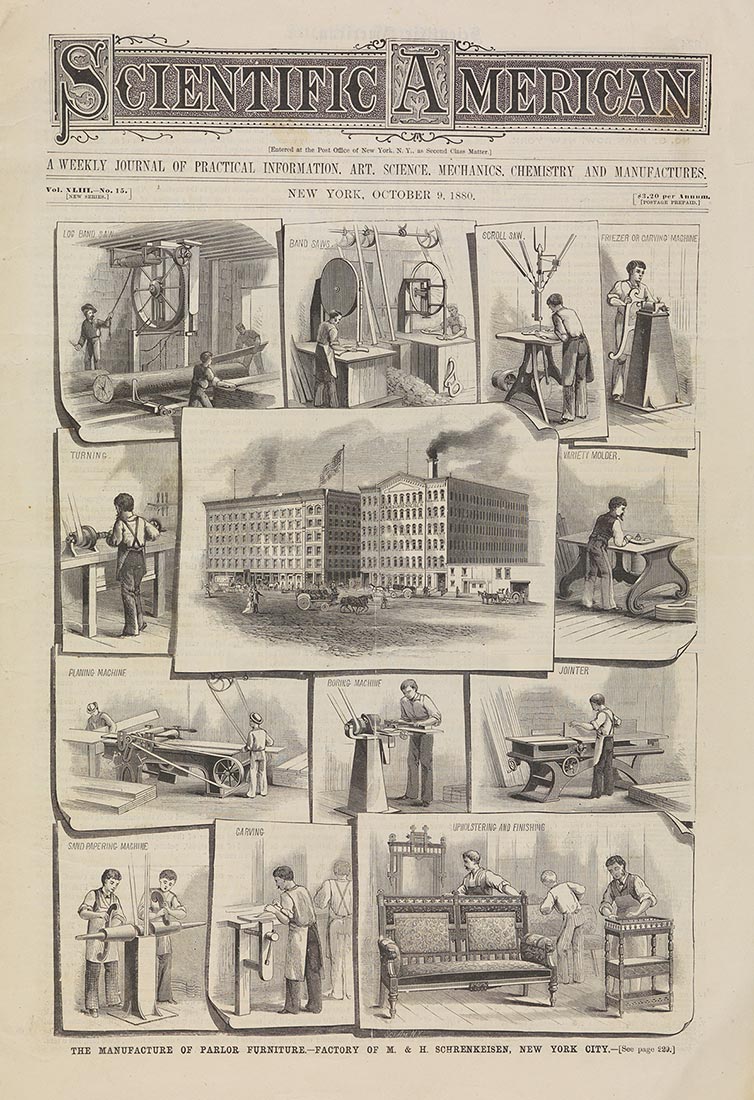
An 1880 issue of Scientific American, the publication owned by Alfred Eli Beach that provided the impetus for many extraordinary inventions during the Gilded Age.
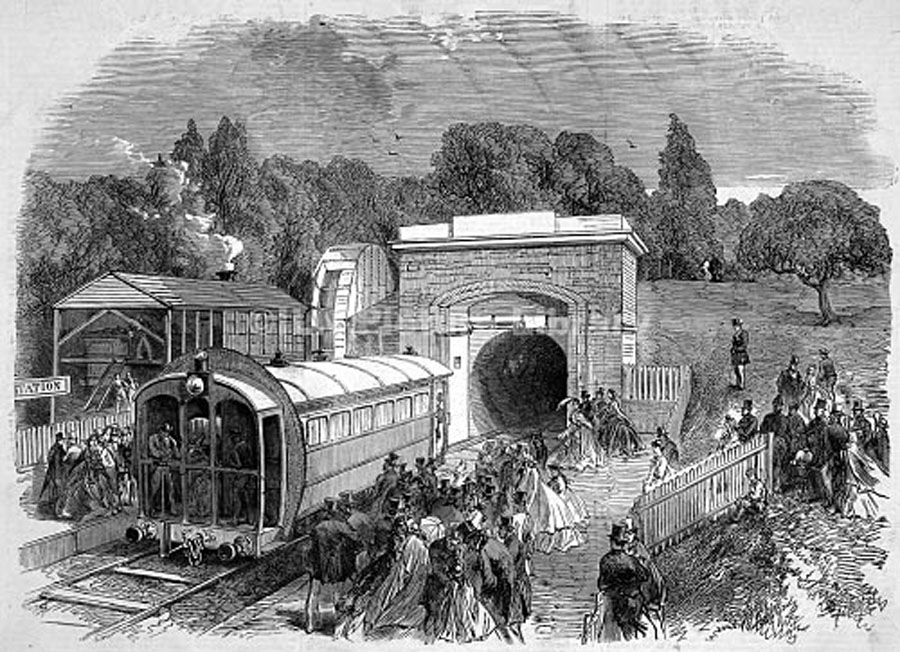
The ‘atmospheric railway’ which ran during London’s Crystal Palace Exhibition in 1864.
Another idea which transfixed New Yorkers (and in particular Boss Tweed) was the elevated viaduct which would have sliced through dozens of city blocks, creating an epic piece of architecture throughout Manhattan.
From the Tribune, July 8, 1871. Courtesy Columbia University
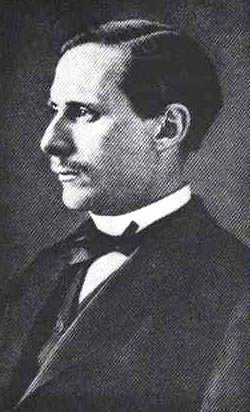
Alfred Ely Beach, mastermind of the Broadway pneumatic tunnel project:
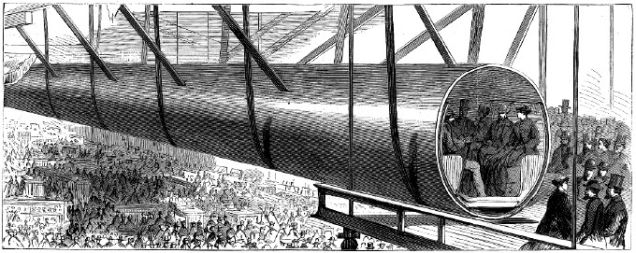
Beach’s ‘passenger tube’ which was displayed to great acclaim at the American Institute Fair in 1867:
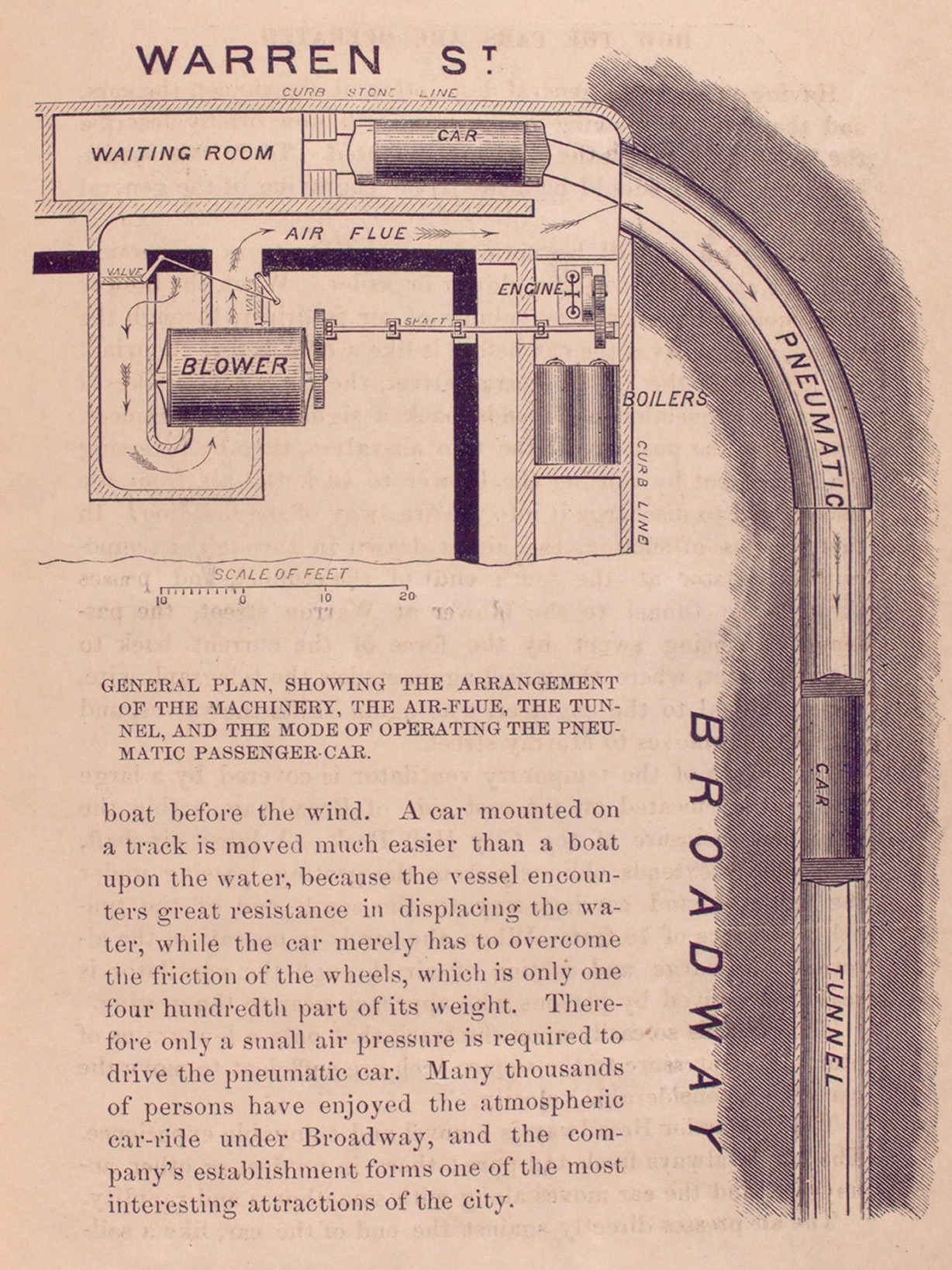
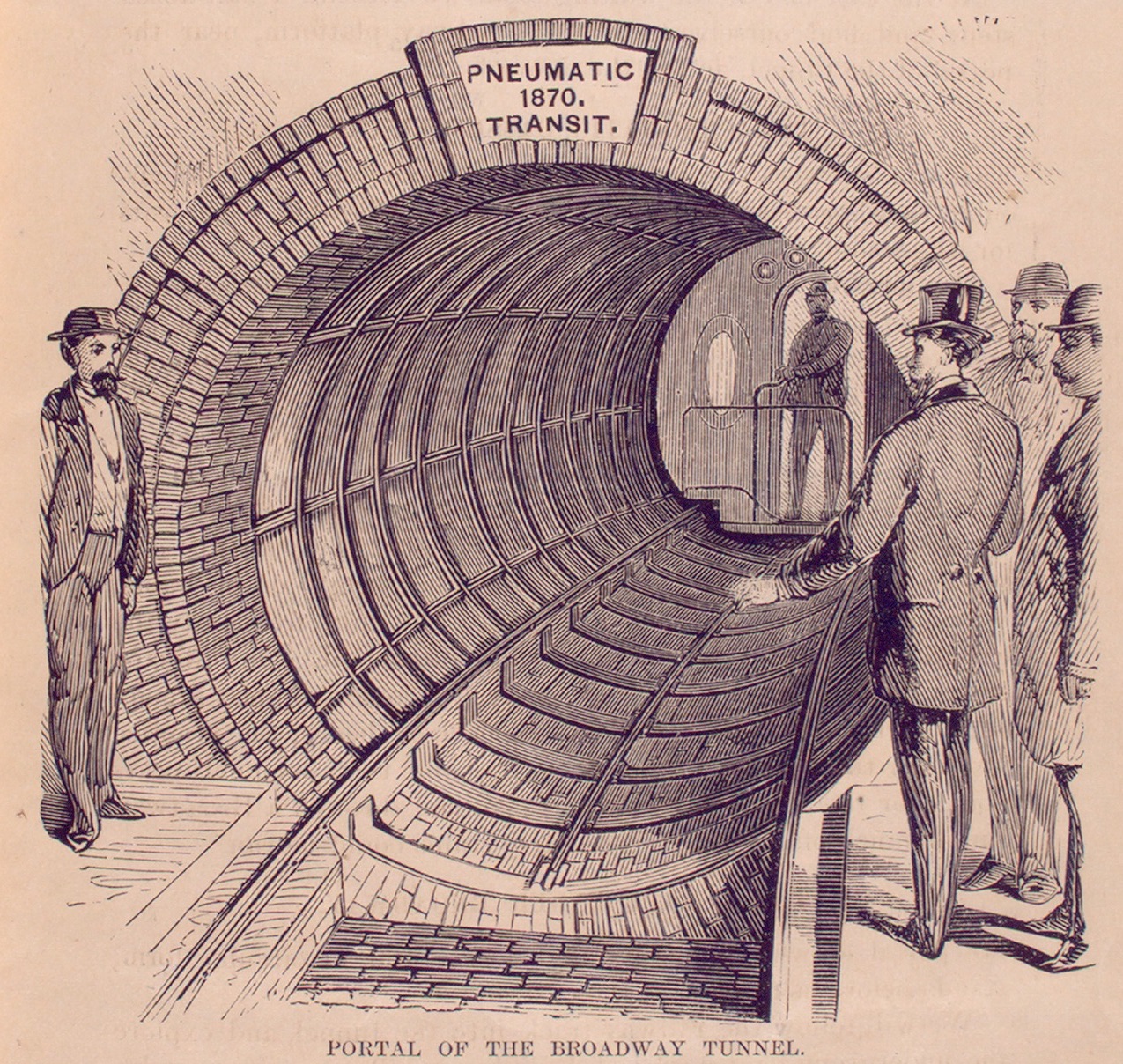
Some images from Beach’s 1870 pamphlet on the pneumatic system:
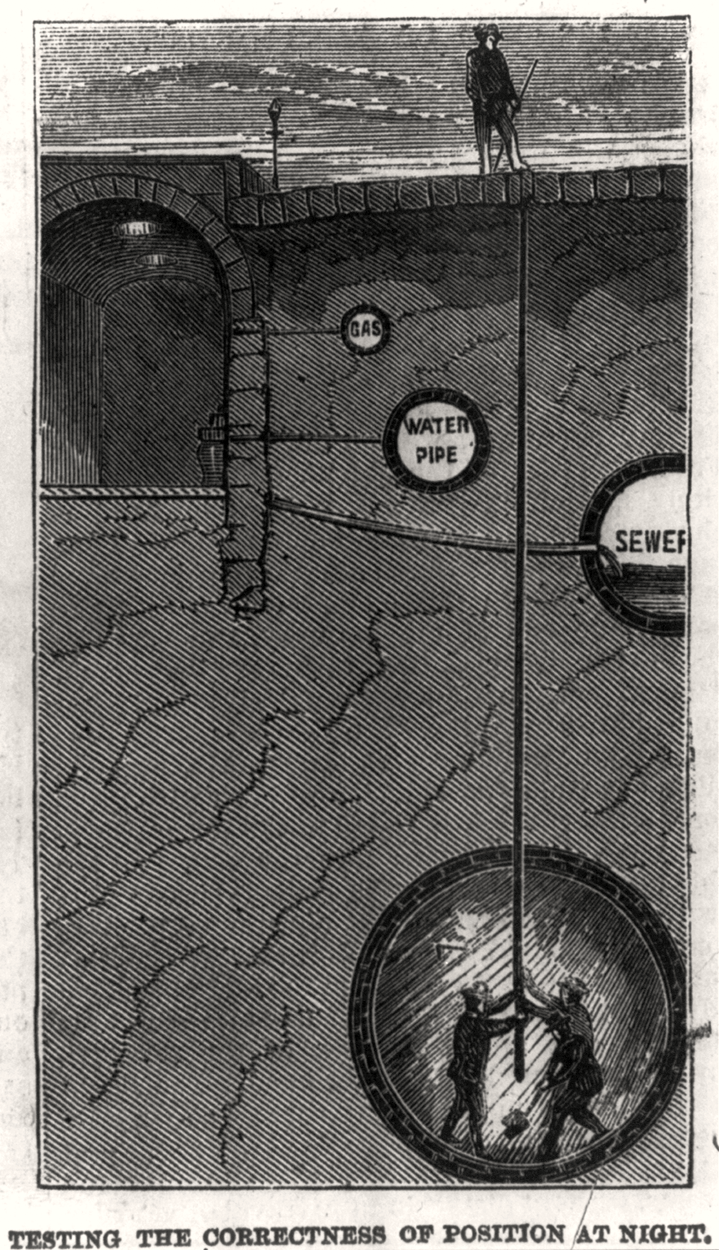
An illustration from a newspaper of Beach’s workers ‘testing the position’ late at night over Broadway:
How an underground pneumatic tunnel would have been situated under Broadway. Â Pictured here in relation to the new post office (which sat at the spot of the southern end of today’s City Hall Park).
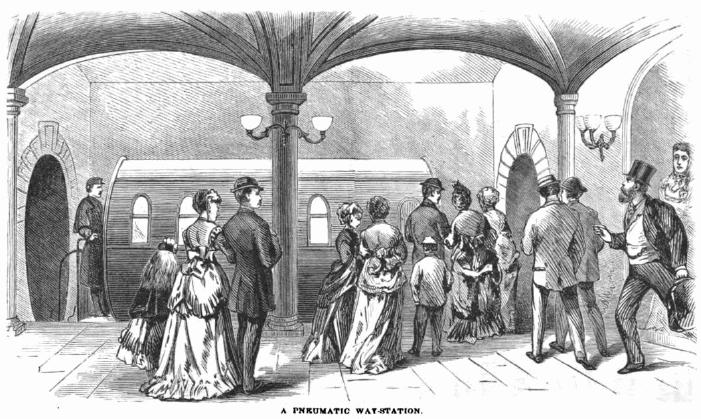
Had the Broadway Underground Railway actually been fully developed, here’s what a station would have looked like:
From NYC Subway
Stereopticon images of Beach’s pneumatic transit tunnel under Broadway, taken in 1870:
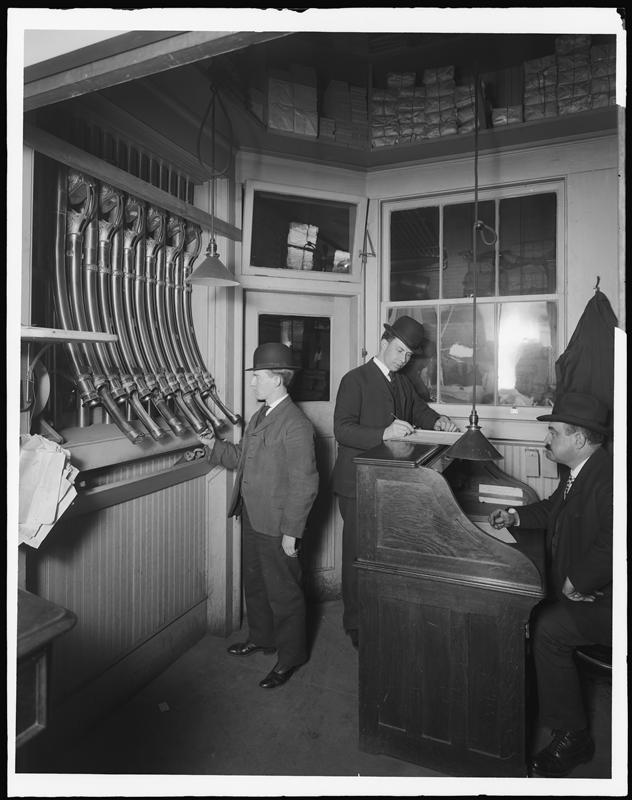
Later application of pneumatic power in New York — shipping office tubes at a location at Franklin and Greenwich Streets (1905) and the series of mail tubes at the National City Bank, 1910.
Courtesy Museum of the City of New York
Courtesy Museum of the City of New York
Start with Joseph Brennan’s excellent research and presentation online. Then jump into one of these great books on the history of New York City transportation — 722 Miles by Clifton Hood, The Race Underground by Doug Most, The Wheels That Drove New York City by Roger P. Roess and Gene Samsone and New York Underground by Julia Solis. There’s even a children’s book on this subject called The Secret Subway by Shana Corey and Red Nose Studio.
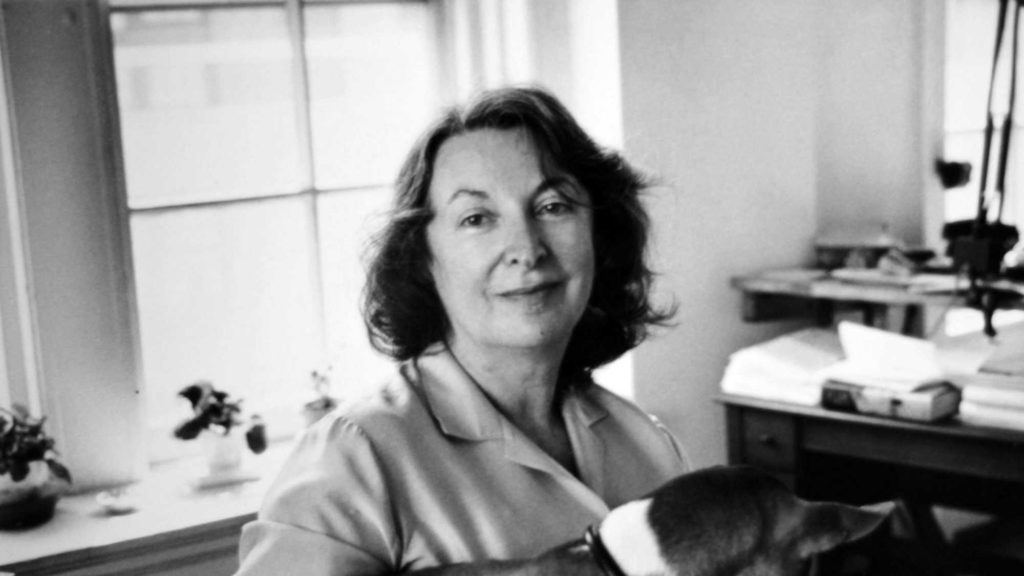
Could you imagine Pauline Kael‘s opinions of Netflix and Amazon growing influence over the motion picture industry? What would she say about watching The Irishman
— made by one of her favorite film directors — on an iPhone? Would she
be a fan of the Marvel Cinematic Universe? (I think we can predict that
answer.)
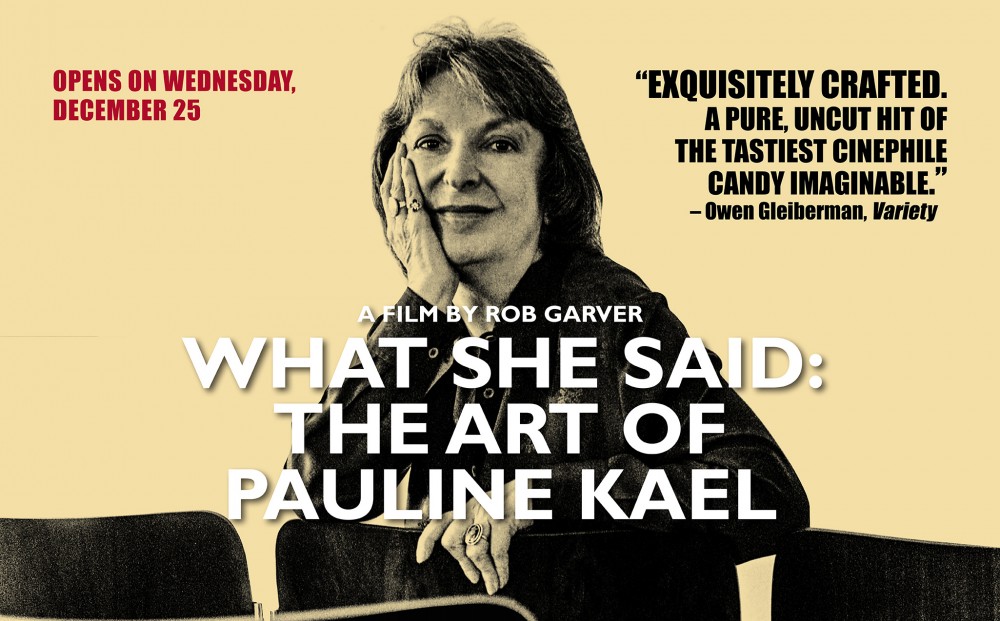
What She Said: The Art of Pauline Kael Film Forum: Wednesday, December 25 – Tuesday, January 7
In the hugely entertaining new documentary What She Said: The Art of Pauline Kael — now playing at the Film Forum,
a venue the legendary film critic probably popped into one or two
hundred times — the filmmaker Rob Garver invites the audience to imagine
the presence of Kael in our modern world.
It’s a fun thought experiment as there is nobody quite like Kael — in
film criticism or Twitter or any aspect of modern culture for that
matter.
Kael got her start in film criticism in San Francisco — her first published review trashed Charlie Chaplin’s Limelight. From that review:
“The Chaplin of Limelight is no irreverent little clown; his
reverence for his own ideas would be astonishing even if the ideas were
worth consideration. They are not — and the context of the film exposes
them at every turn.”
But it was her legendary run at The New Yorker magazine starting in 1967 that positioned her as the kingmaker of the modern American New Wave.
What She Said gives its audience a crash course in film
history; its dozens of licensed film clips are reason enough alone sink
back into your seat in pure delight. Kael celebrated both vanguard
directors and celebrated so-called ‘trash’ cinema.
“Seeing trash can liberate the spectator. I don’t trust anyone
who doesn’t admit having at some time in his life enjoyed trashy
American movies; I don’t trust any of the tastes of people who were born
with such high taste that they didn’t need to find their way through
trash.”
Garver deftly balances What She Said between a sequences of
nodding reverence (Kael would have had no problem with those, I suspect)
and doses of hard-spun reality.
Many filmmakers and critics hated Kael; they hate Kael — to this day.
And you hear from them. But nobody rejects her influence over the fate
of American films.
She elevated the entire medium at the exact moment when Americans
were finally responding the European New Wave. She championed the greats
and even a few not-so-greats. (As the film notes, sometimes even her
own taste was enigmatic.) She helped made American movies what they are
today — for better or worse.
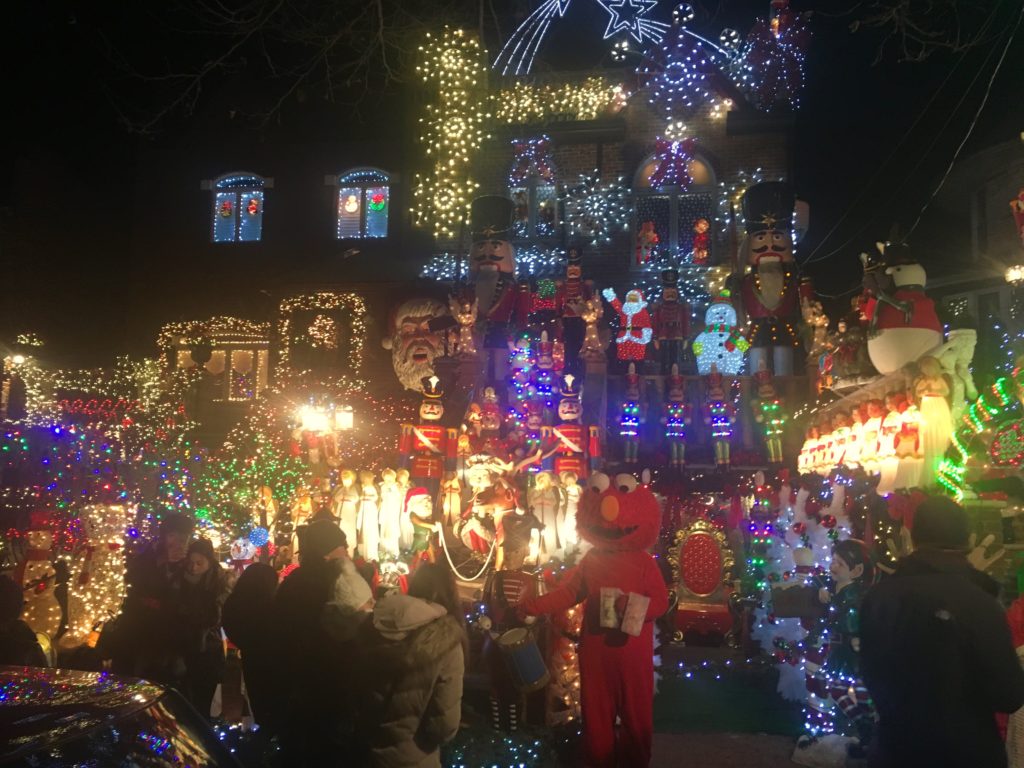
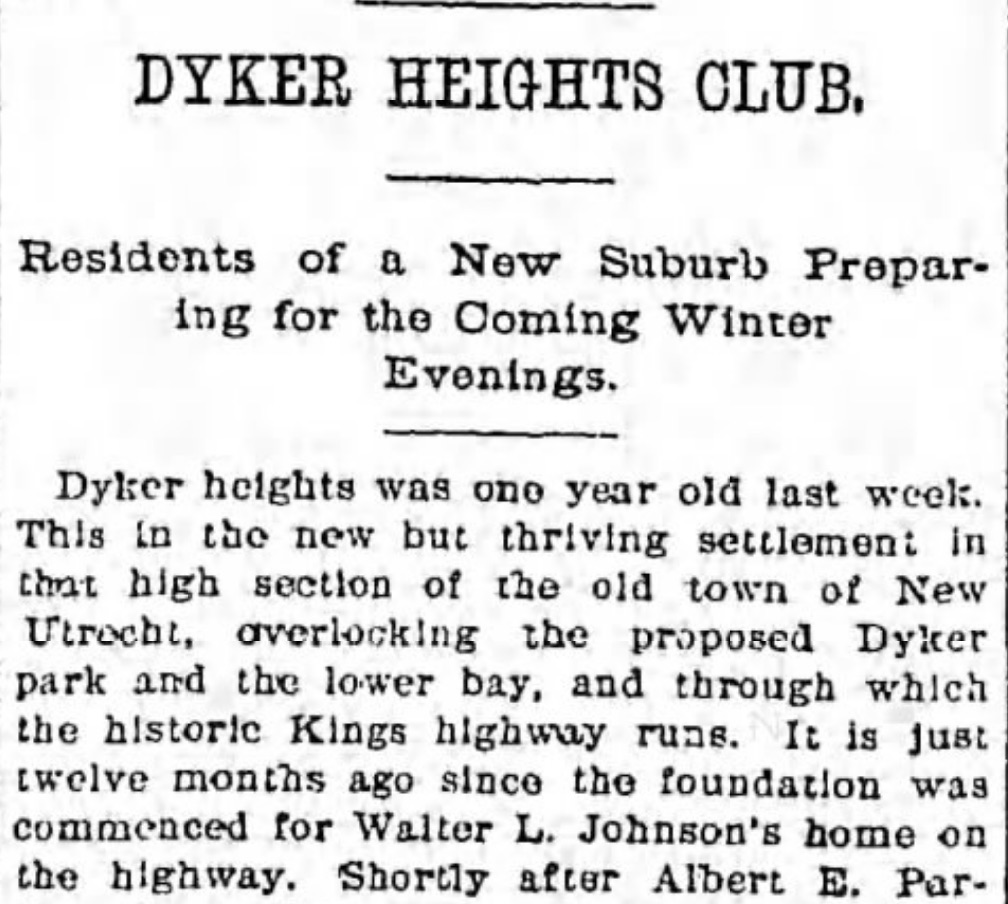
PODCAST: The history of the Dyker Heights Christmas lighting extravaganza, Brooklyn’s fabulous and flashy celebration of the holiday season.
EPISODE 305 There’s a special kind of magic to Christmas in New York City. From that colossal Christmas tree in Rockefeller Center to the fanciful holiday displays in department store windows.
But in the past three decades, a new holiday tradition has grown in popularity and in a surprising quarter — the quiet residential neighborhood of Dyker Heights in Brooklyn.
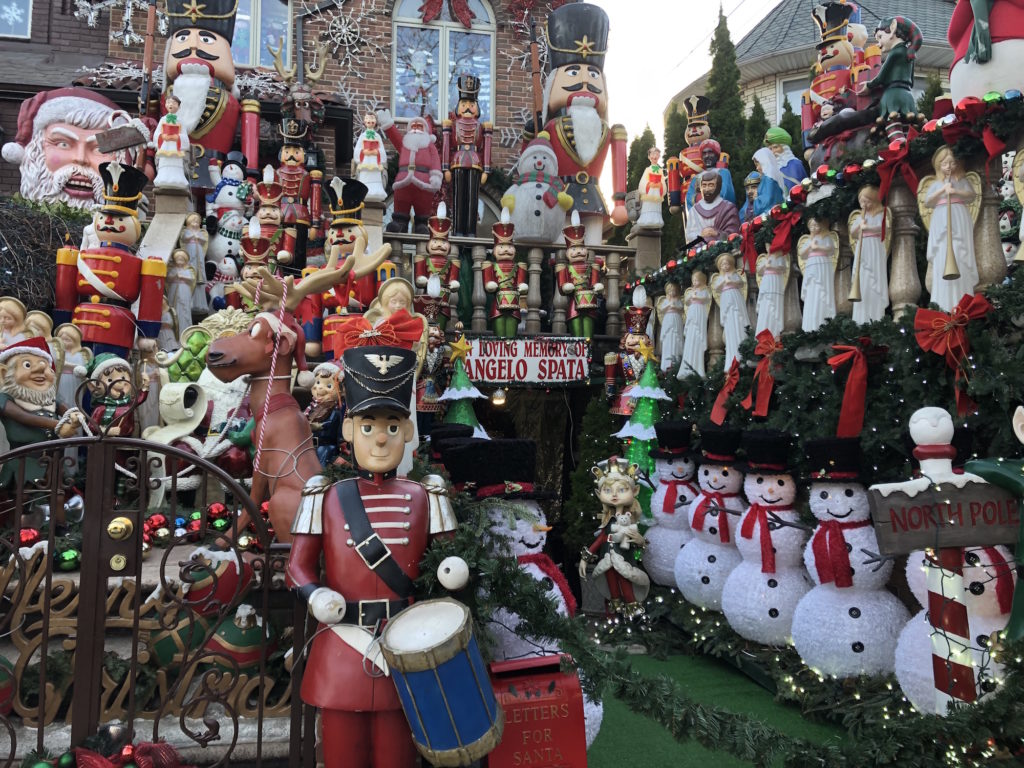
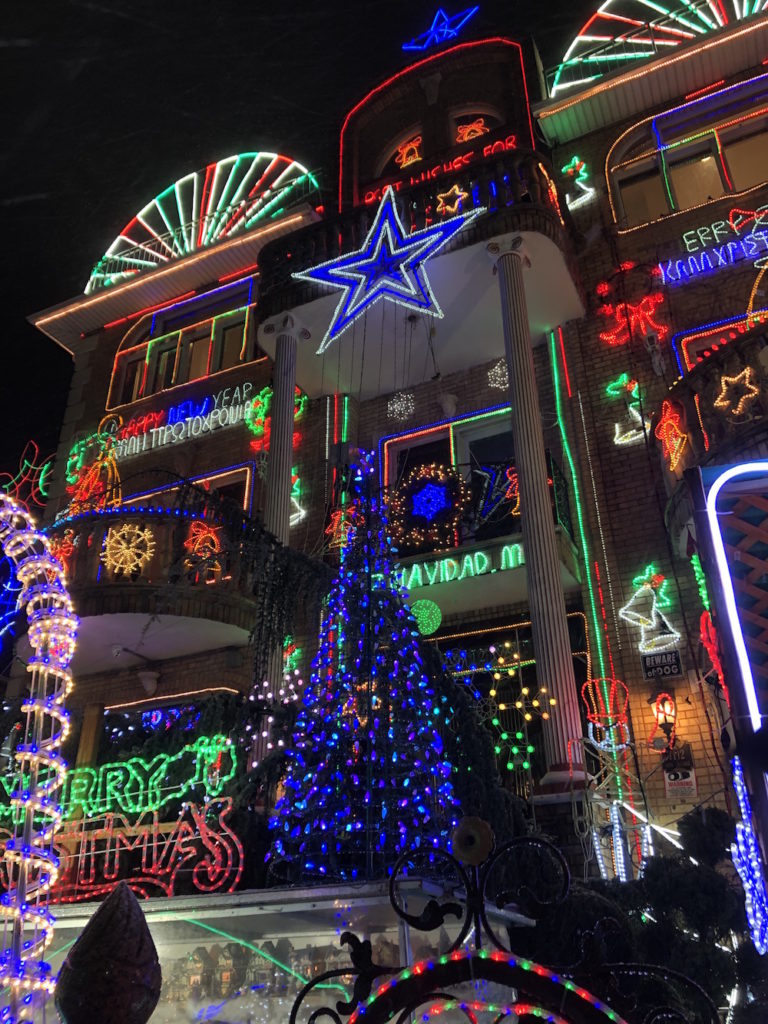
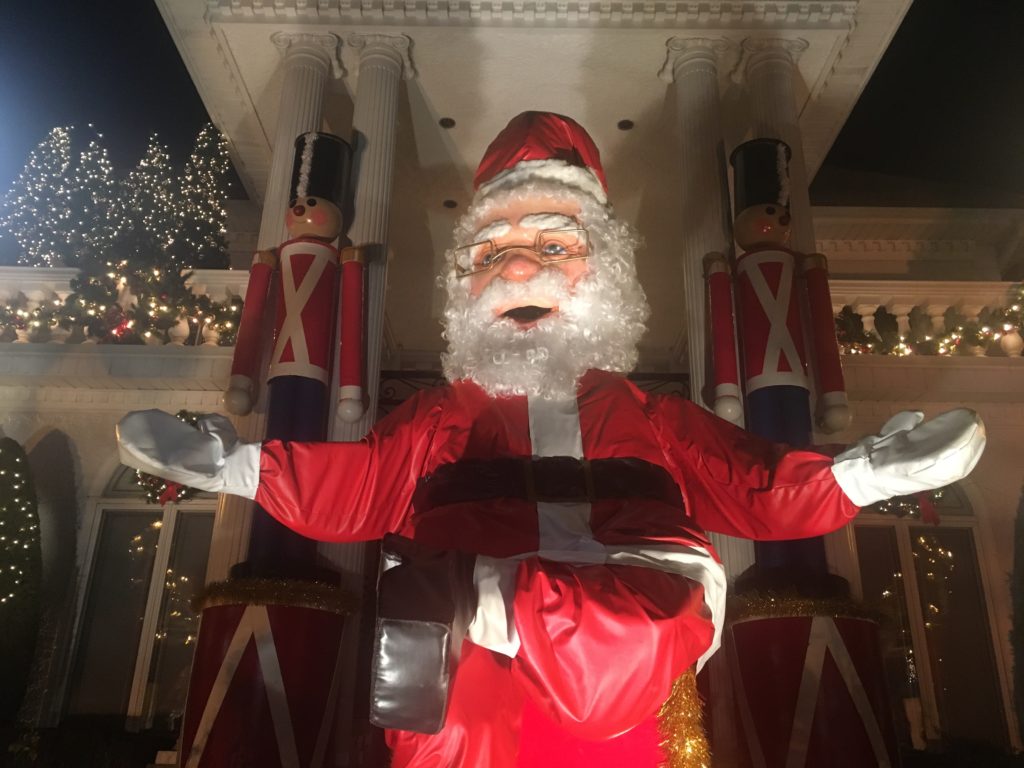
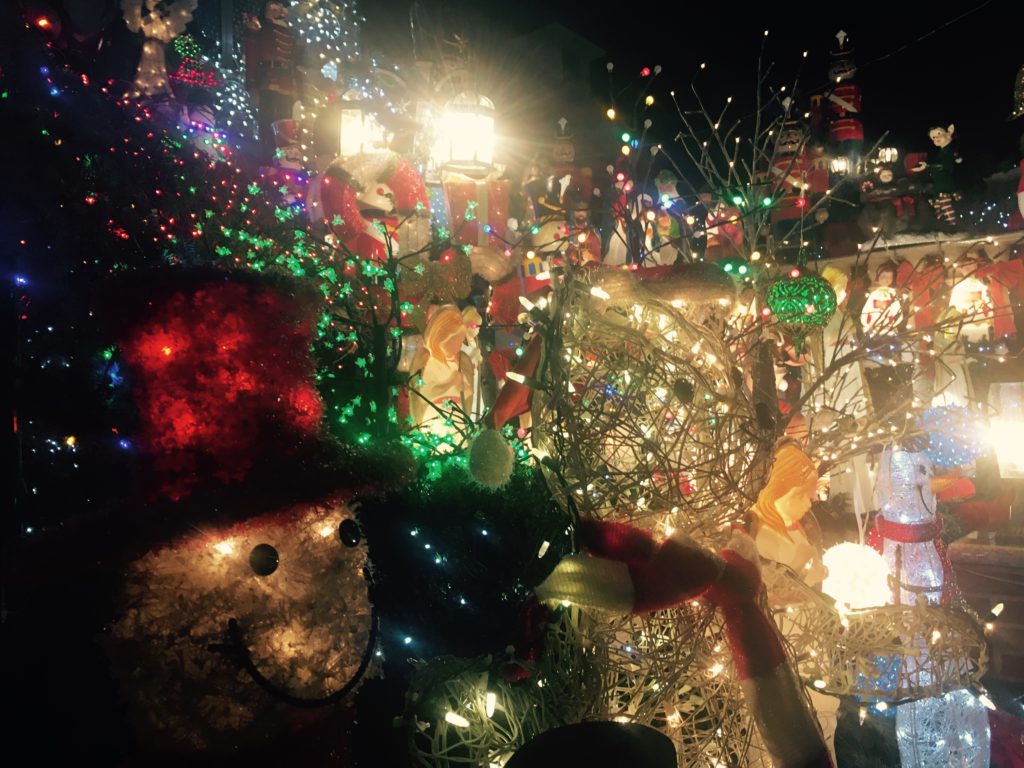
Every December many residents of this area of southwestern Brooklyn ornament their homes in a wild and brilliant parade of Christmas lights and decorations. From gigantic animatronic Santas to armies of toy soldiers!
This electrical spectacle draws thousands of tourists this year, attracted to this imaginative mind-blowing display of Christmas spirit.
In this episode, we look at the lights of Dyker Heights from a few angles. First we explore the history of Christmas lighting in New York City and how such displays brought Christmas into the secular public sphere.
Then we look at the history of Dyker Heights, tracing back to one of the first Dutch settlements and a neighborhood which has developed into a stable Italian community.
Finally, we send our researcher and producer Julia Press on an excursion into Dyker Heights to reveal the origin of the Christmas display extravaganza. Featuring an interview with one of the residents who started it all!
LISTEN NOW — CHRISTMAS IN NEW YORK: THE LIGHTS OF DYKER HEIGHTS
A bonus after-show podcast for those who support us on Patreon. Greg and Tom (and Julia) continue their conversation about the story of the Dyker Heights Christmas tradition.
A big thank you to Lucy Spata and Tony Muia of A Slice of Brooklyn Bus Tours for allowing us to record at the synagogue. And of course HUGE THANKS to Julia Press for contributing to this show and helping up over the past few months. Please check out her website for more links to her past work.
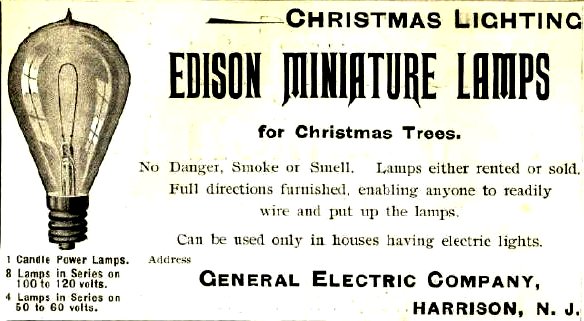
FURTHER LISTENING: This episode was partially inspired by Greg’s episode of The First podcast on the history of electric Christmas lighting. Makes great companion listening to this one:
The home of the Spatas, photo by Julia Press
It’s like Las Vegas and Christmas — but in Brooklyn! Photo by Julia Press
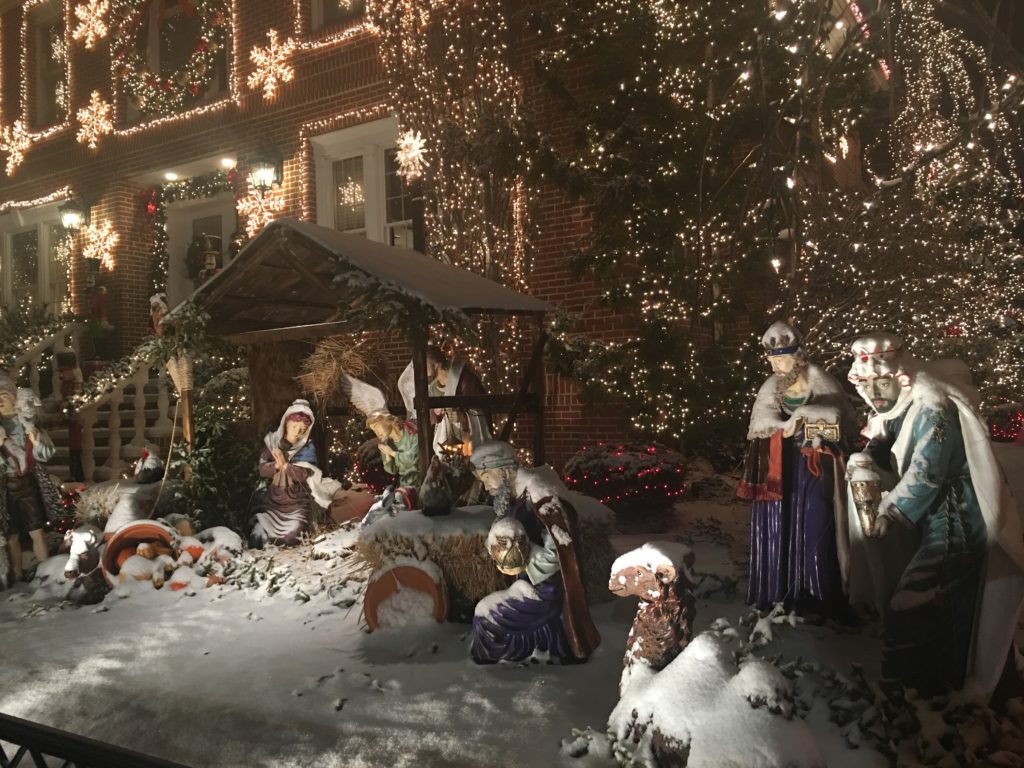
A few images from the 2017 extravaganza — when a nice layer of snow added to the festive spirit.
Further images from the podcast:
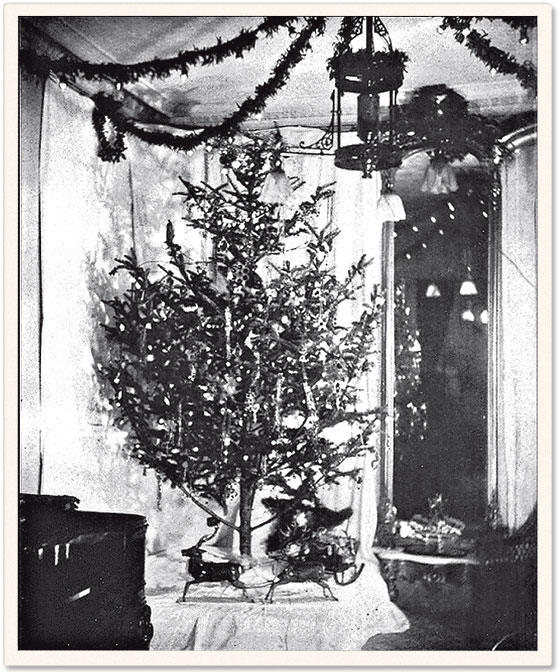
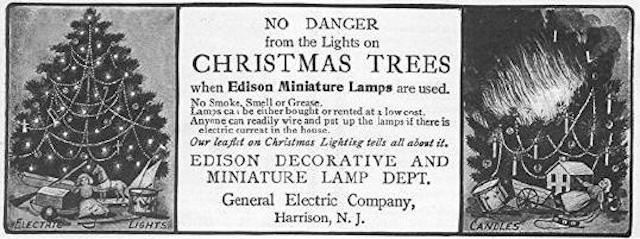
The marvelous rotating Christmas tree of Edward H. Johnson, the first tree with Christmas lights.
Thomas Edison Museum
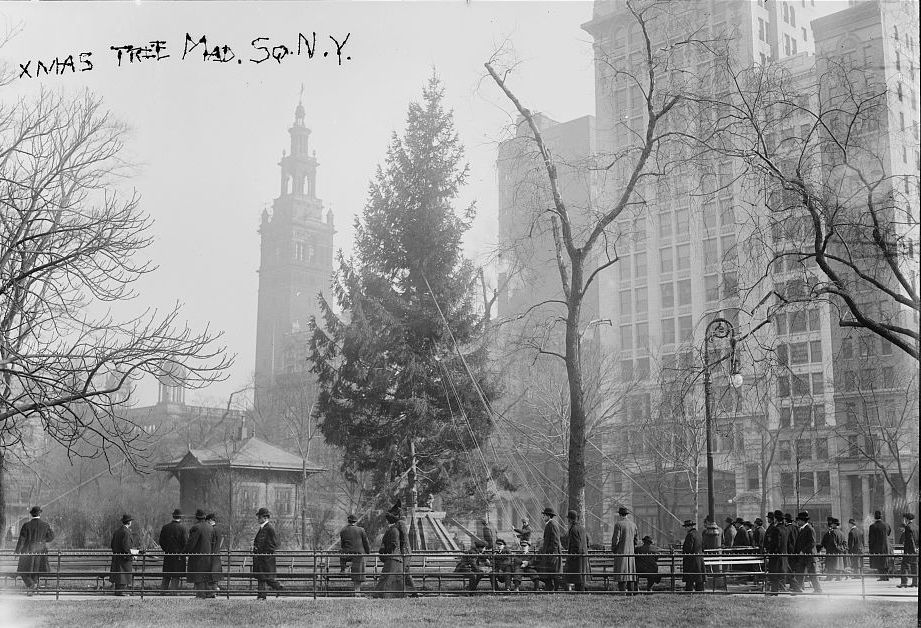
The nation’s first ‘community Christmas tree’ in Madison Square in New York City. Read more about it here.
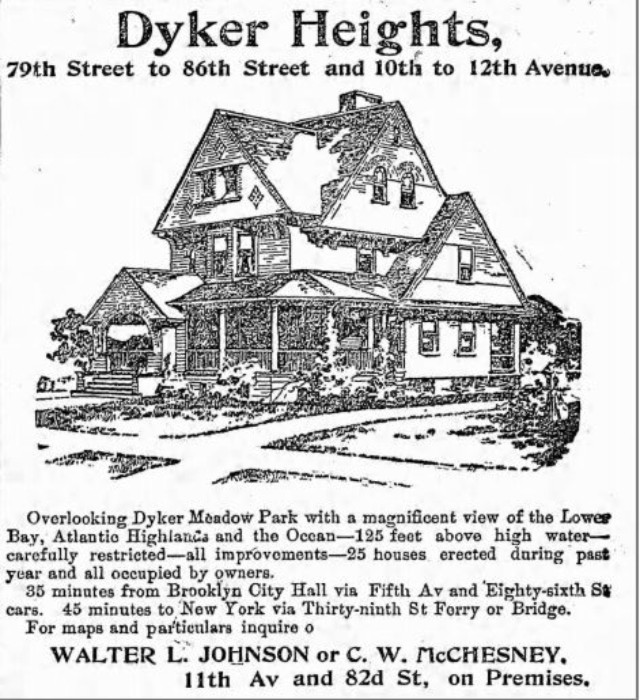
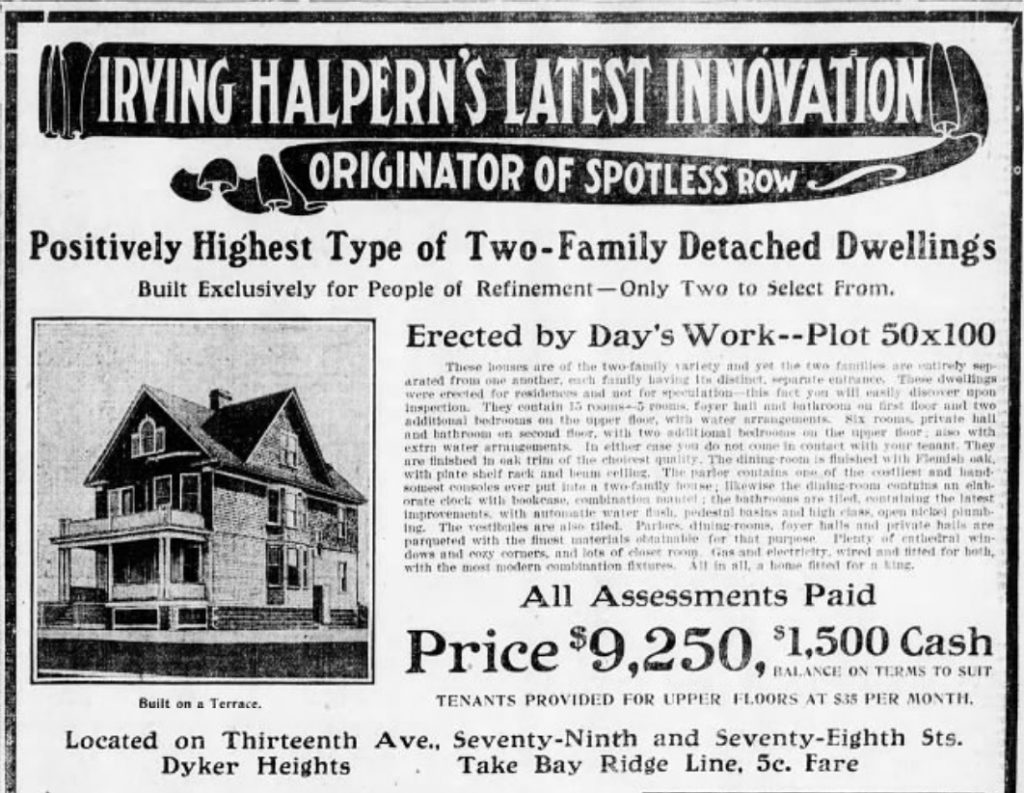
Ads from the early years of Dyker Heights development, Courtesy BrownstonerFrom April 1909 Brooklyn Daily EagleBrooklyn Daily Eagle, October 12, 1896
The Bowery Boys: New York City History podcast is brought to you …. by you!
We are now producing a new Bowery Boys podcast every other week. We’re also looking to improve and expand the show in other ways — publishing, social media, live events and other forms of media. But we can only do this with your help!
We are now a creator on Patreon, a patronage platform where you can support your favorite content creators.
Please visit our page on Patreon and watch a short video of us recording the show and talking about our expansion plans. If you’d like to help out, there are six different pledge levels. Check them out and consider being a sponsor.
ALL patrons at all levels will receive many benefits include the next episode of the Bowery Boys Movie Club, an exclusive podcast (released every 6-8 weeks) celebrating New York City in the movies. And patrons at the Five Points ($5) level and up will get our other exclusive podcast — The Bowery Boys: The Takeout — released every two weeks.
We greatly appreciate our listeners and readers and thank you for joining us on this journey so far.
Is it just me or was there more New York City than ever before in TV shows and movies in 2019? Granted, there is simply more of everything — more TV shows than ever, on a growing number of streaming platforms.
And generally speaking there were a lot of films released in 2019 — even it became more difficult to get audiences into seats. As a result, theaters can’t survive apparently unless they serve full-course meals and elaborate cocktails.
The entire changing landscape was embodied in this year’s real-life drama of the Paris Theatre.
In 2008, I wrote “The Paris Theatre, as eccentric as any film its ever played, has the benefit of having the Plaza Hotel and Central Park to ensure it never goes out of style.” Unfortunately it did go out of style.
In September the Paris seemed to close for good — until it was scooped up by Netflix, transforming it into a venue for its splashier feature film launches. Today you catch the Noah Baumbach movie Marriage Story within one of New York’s most historic film venues. Or you can watch it on your couch. It’s your choice!
It’s a pretty good venue for Marriage Story, a drama couched in tropes from old Woody Allen movies — important theater people involved in rocky relationships.
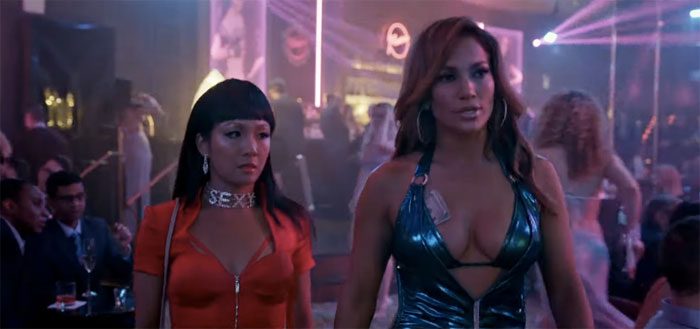
Other movies this year used New York City’s recent past to illustrate the nation’s economic desperation and the changing dynamics of men and women. A short cab ride will take you to all the major cinematic stops this year — the Manhattan strip club Scores (Hustlers), the Diamond District (Uncut Gems), the Sixth Avenue offices of Fox News (Bombshell).
Going back to New York’s recent past was so trendy this year that even the Avengers, in the year’s highest grossing film, took a literal time machine to 2012 to witness younger versions of themselves protecting Grand Central Terminal from attack by aliens. (You think that vision of New York City is bleak? You should see what happened to New York City in HBO’s Watchmen series.)
But it was a good year for seeing old New York City in the movies this year too — whether that be the Gilded Age or the grimy streets of 70s Times Square. Here are six scenes from six films which used the history of New York City in interesting ways:
Little Italy (The Irishman)
Martin Scorsese‘s epic tale of the mob spends most of its time outside of New York City — a rarity for the city’s greatest director — but that’s only a well-dressed illusion; most of the film was shot here and in Long Island, its exceptional production design transforming New York streets into those of other American cities.
But we do get an extremely vivid depiction of the assassination of real-life gangster Joe Gallo.
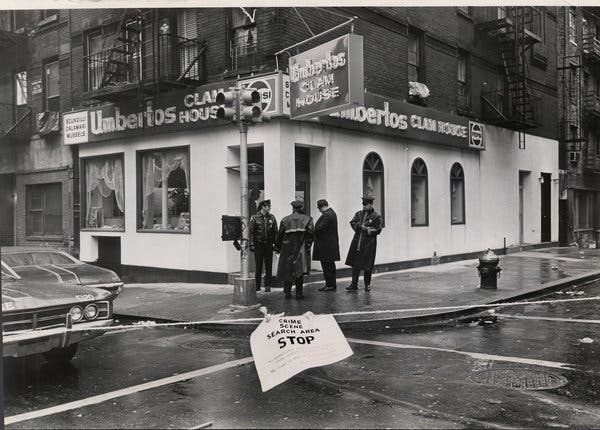
Today the restaurant Da Gennaro (129 Mulberry Street) sits on the site of the infamous Umberto’s Clam House. On April 7, 1972, the mobster Joe Gallo was brutally gunned down here while celebrating his forty-third birthday with his family. The gruesome hit plays out — in real life and in The Irishman — something like a scene out of The Godfather, which, incidentally, was released just three weeks before Gallo’s death.
Should you wish to experience Umberto’s today, it’s located just down the street (132 Mulberry Street).
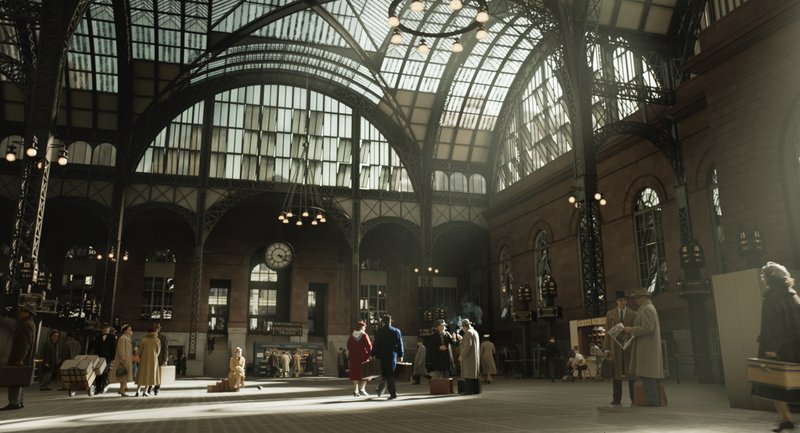
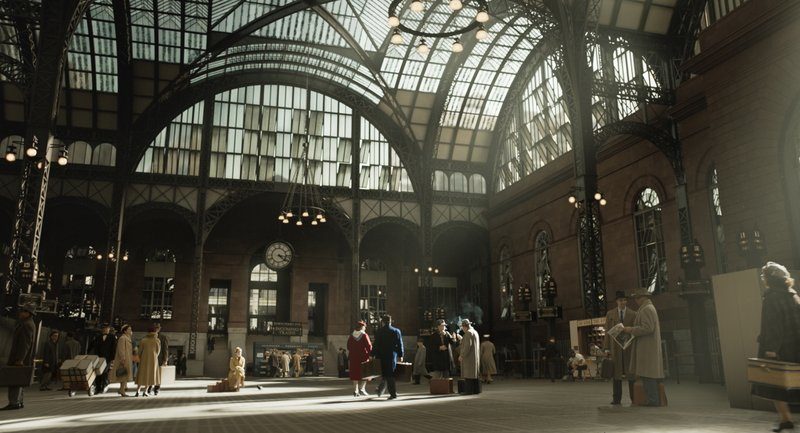
Penn Station as recreated in Warner Bros. Pictures’ drama “MOTHERLESS BROOKLYN,” a Warner Bros. Pictures release.
Penn Station (Motherless Brooklyn)
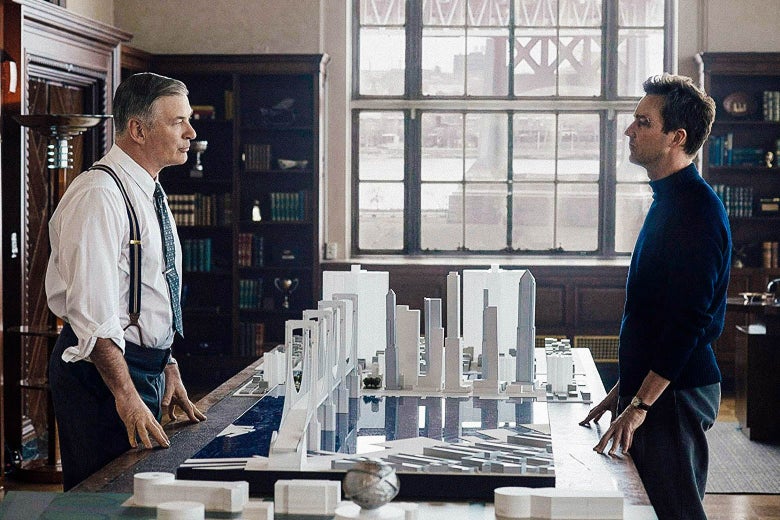
Motherless Brooklyn, a radical retro transformation of Jonathan Lethem’s book of the same name, refits the bright noir of the movie Chinatown into 1950s New York City. If you’re a history lover, any film with Alec Baldwin playing an even more ruthless version of Robert Moses asks to be watched. And you could not envision a better set piece than old Penn Station, lovingly recreated by director Edward Norton in all its dim and gritty detail. (I wrote about this film earlier this year.)
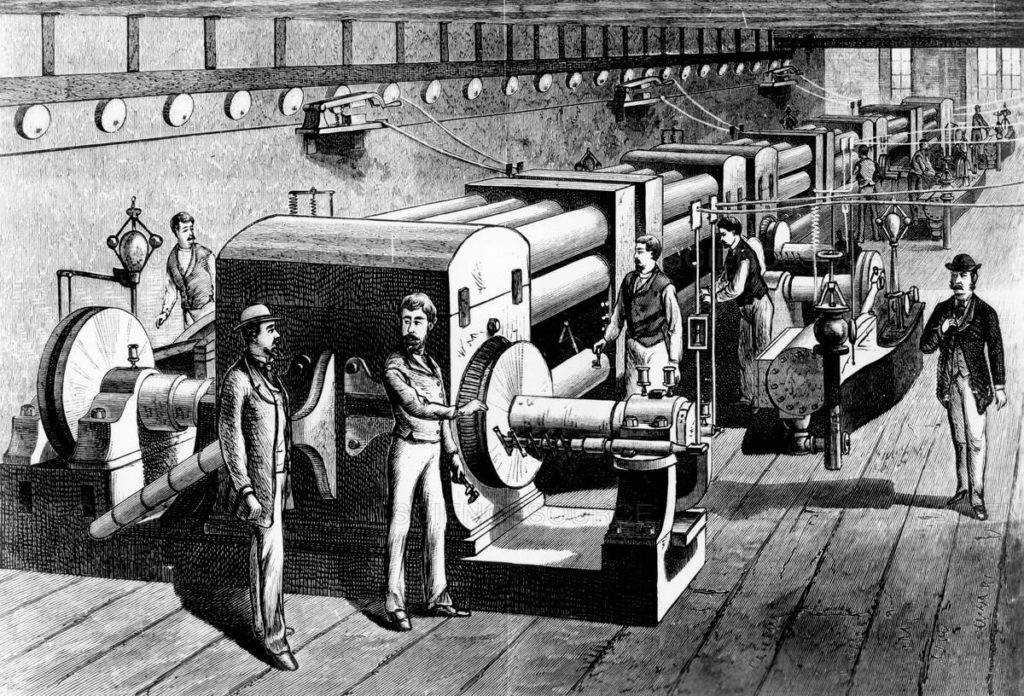
Pearl Street Station (The Current War)
You probably didn’t see The Current War — an illuminating drama about the battle of electric power — because it was barely in theaters, a victim of bad timing and publicity. (It was supposed to arrive in theaters in 2017, but its distributor was the Harvey Weinstein Company.)
But do seek it out when it arrives to video and streaming. The depictions of Thomas Edison, George Westinghouse and Nikola Tesla are interesting, even if the central struggle is not well visualized. But the set pieces are wonderful — from the Chicago World’s Fair to the grand opening of Manhattan’s Pearl Street Station, the first electrical power plant in the world.
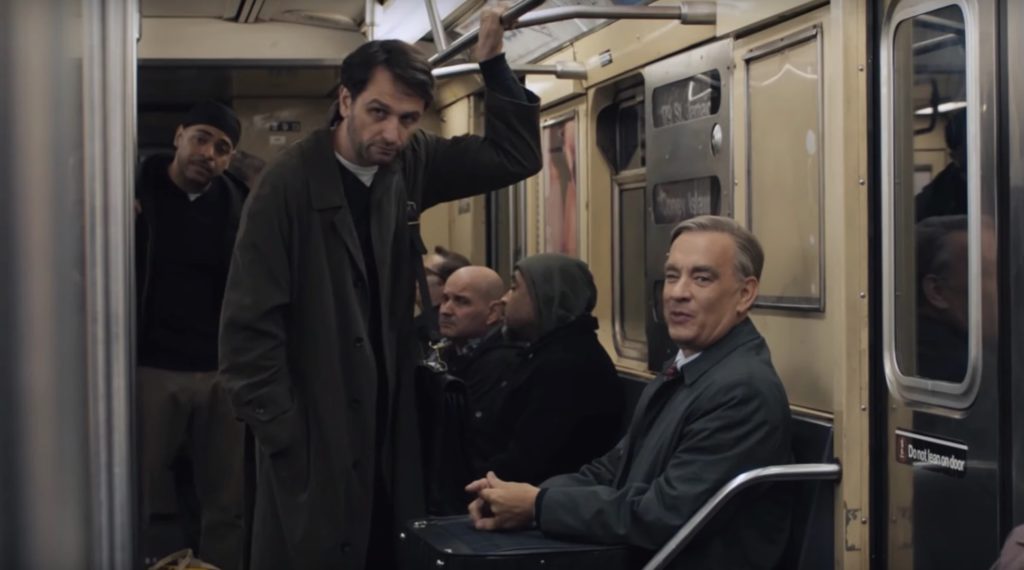
Riding the Subway (A Beautiful Day In The Neighborhood)
Yes, Mr. Rogers actually wrote the New York City subway! Believe it or not, Fred Rogers got his start in New York City, working essentially as a NBC floor manager on early broadcast television shows.
The film A Beautiful Day In the Neighborhood, an adaptation of an 1998 Esquire Magazine article, reenacts a touching moment near the end of his career.
“Once upon a time, Mister Rogers went to New York City and got caught in the rain. He didn’t have an umbrella, and he couldn’t find a taxi, either, so he ducked with a friend into the subway and got on one of the trains.
It was late in the day, and the train was crowded with children who were going home from school. Though of all races, the schoolchildren were mostly black and Latino, and they didn’t even approach Mister Rogers and ask him for his autograph. They just sang. They sang, all at once, all together, the song he sings at the start of his program, “Won’t You Be My Neighbor?” and turned the clattering train into a single soft, runaway choir.”
I wrote about Fred Rogers’s relationship with New York City in a 2018 article.
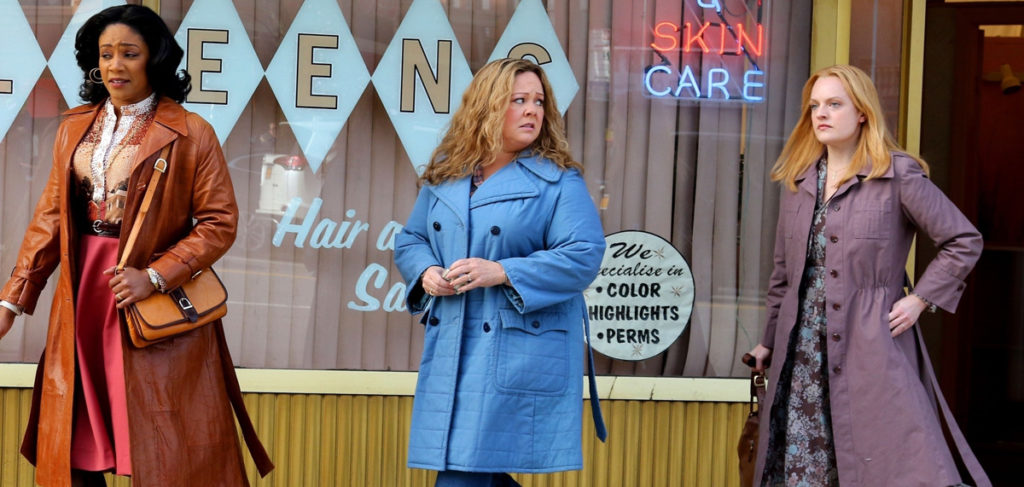
Pictured: Melissa McCarthy, Tiffany Haddish, Elisabeth Moss
Hell’s Kitchen Playground (The Kitchen)
The grimy streets of Hell’s Kitchen in the 1970s! The bloody battles of the Irish mob! A bold take on gender and organized crime! Unfortunately these juicy concepts couldn’t really save The Kitchen, nor could a brilliant quartet of actresses (Melissa McCarthy, Tiffany Haddish, Elizabeth Moss and Margo Martindale).
The Kitchen delivers a pretty hot look at ’70s 42nd Street (although nothing near as good as the genius of HBO’s The Deuce, in its final season this year.) But if you’d like a pretty good look at the dreary grit of 70s Hell’s Kitchen, the film manages to capture some of the neighborhood’s ragged, pre-gentrified energy.
For instance, pay attention to a scene involving McCarthy on a playground with her daughter. There’s so much trash just randomly blowing around the asphalt that you might be forgiven if you thought a crew member accidentally knocked over a trash can. No that’s pre-90s New York!
and finally…..
The Staircase (Joker)
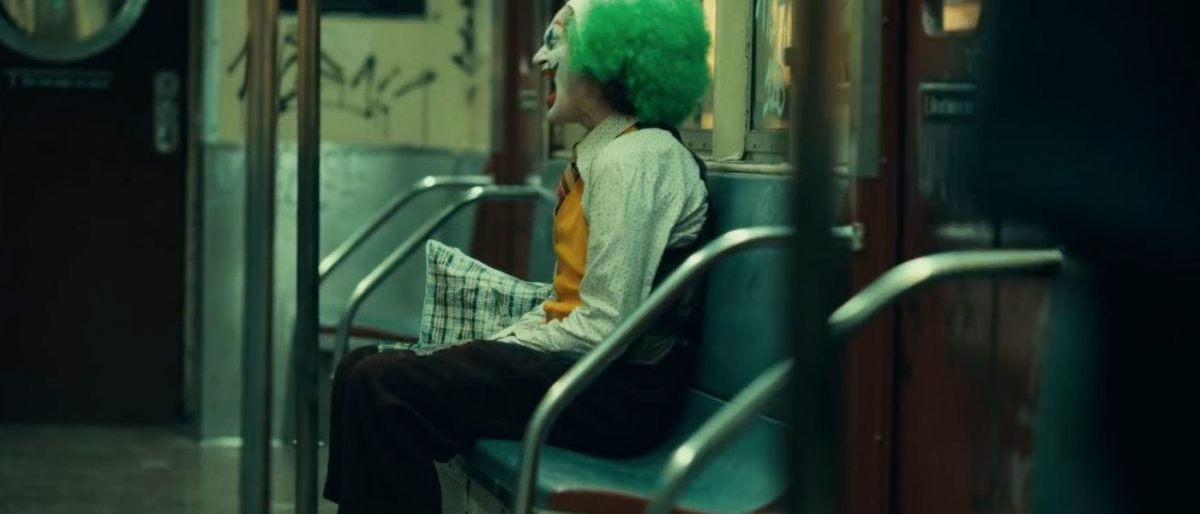
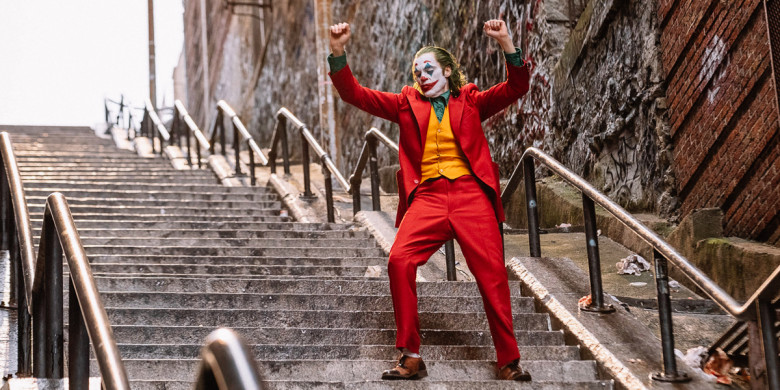
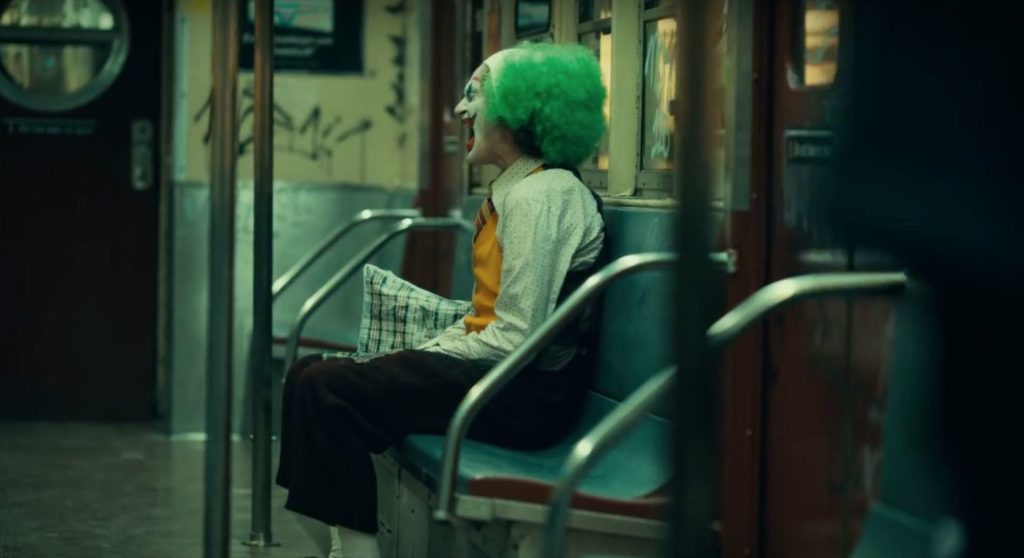
Joker is technically set in the fictional Gotham City. Except it’s totally and obviously 1970s New York City, a ridiculously over-the-top version of the New York City captured by filmmakers like Martin Scorsese (Taxi Driver, Mean Streets), John Schesinger (Marathon Man) and Sidney Lumet (Dog Day Afternoon).
The scene with Joaquin Phoenix’s Joker dancing down the Bronx staircase has already — weirdly — become an iconic film image. Located between Shakespeare and Anderson Avenues (at West 167th Street) in the Highbridge neighborhood, the staircase has already become a tourist destination.
As a heap of borrowed movie references from the 1970s, Joker is virtually willing itself into becoming a movie classic. Some may find its paranoid sentiments shallow and exploitative, but its use of New York’s darker days is apt.
As we explored in our podcast Super City: New York and the History of Comic Books, the fictional world of Batman has always been a stand-in for the Big Apple — although Chicago could also lay claim to some of its more atmospheric contours.
With Joker, director Todd Phillips has eliminated such ambiguity. As with the main character, this is a volatile New York City wearing a eerie cartoon face.
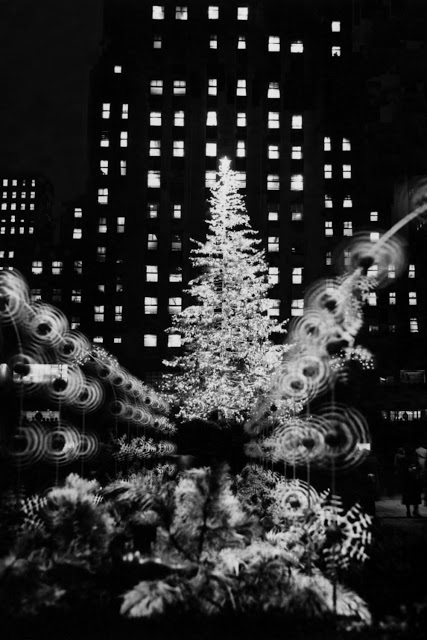
For the 1949 season, the caretakers of the Rockefeller Center Christmas tree decided to go fantastically over the top.
Just a few years earlier, New Yorkers were served up a plainly
adorned tree with no electric lights, a reminder of the war in Europe
and a nod to energy preservation.
But the war was over now; it was time to get delightfully gaudy.
Perhaps knowing the mild temperatures that awaited that season — it
would only snow two inches between November 1949 and January 1950 — the
Rockefeller Center holiday designers decided to spray paint the gigantic
75-foot tree in hundreds of gallons of whimsical camouflage paint.
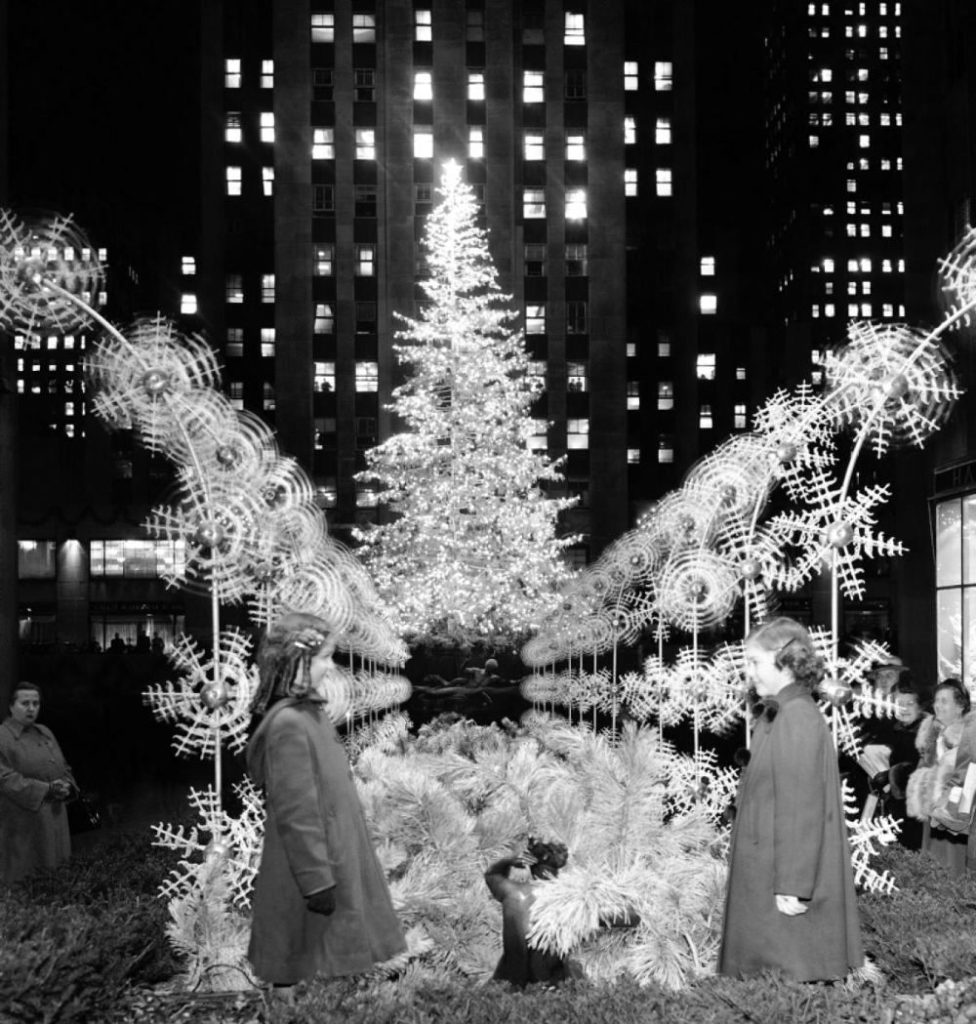
It was then engulfed in 7,500 electric lights in pastel colors — pink, blue, yellow, green and orange, described as “plucked from a sky in fairyland.”
The lighting of the tree on Dec. 9, 1949, was a truly hallucinogenic event.
This Easter-like hue, bouncing off the silver-painted branches,
reflected out from behind dozens of glass ornaments, leading up to the
brilliant white star on top, which, according to the New York Times, “seemed to send glints of fire almost to the top of the seventy-seventh floor RCA Building in back of the tree.”
As if that didn’t grab your attention, the promenade leading up to
the tree and the skating rink was adorned with a most dizzying
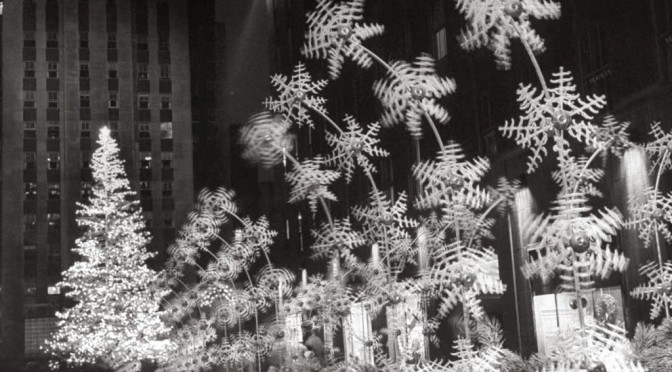
decoration — rapidly whirling plastic snowflakes, 576 of them, “each as big as a dinner plate,” illuminated for hypnotic effect.
The rapidly spinning snowflakes and flamboyant tree literally stopped traffic.
Due to shocked motorists trying to catch a glimpse at this electric
wonderland, Fifth Avenue became a rush hour nightmare for several hours.
“Cars were pinned bumper to bumper from 72nd south to 41st Street along
Fifth Avenue, making cross-traffic an impossibility and imprisoning
automobiles in side streets.”
Even through police were called out to enforce emergency traffic
rules, Midtown was essentially in a state of vehicular trauma until 10
pm that evening.
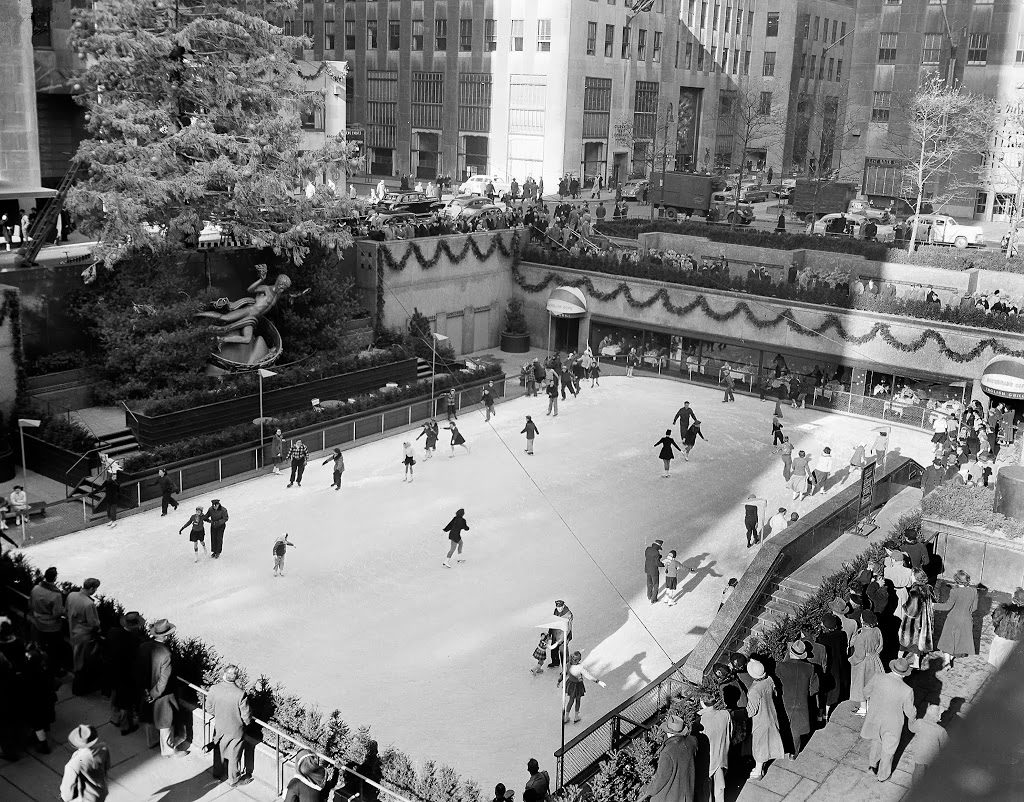
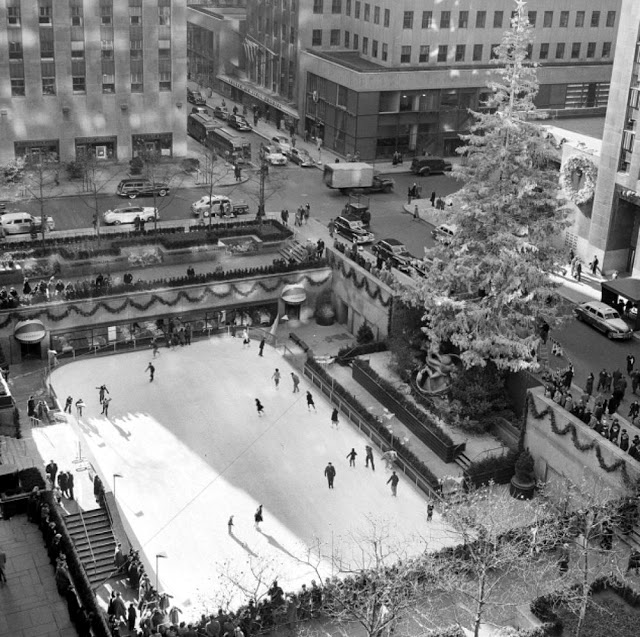
Below: During the day, the silver-painted branches, adorned with
heavy glass ornaments, cast a particular glow upon the ice skating pond
and the surrounding buildings. Picture courtesy Flickr/lighthousenewsus
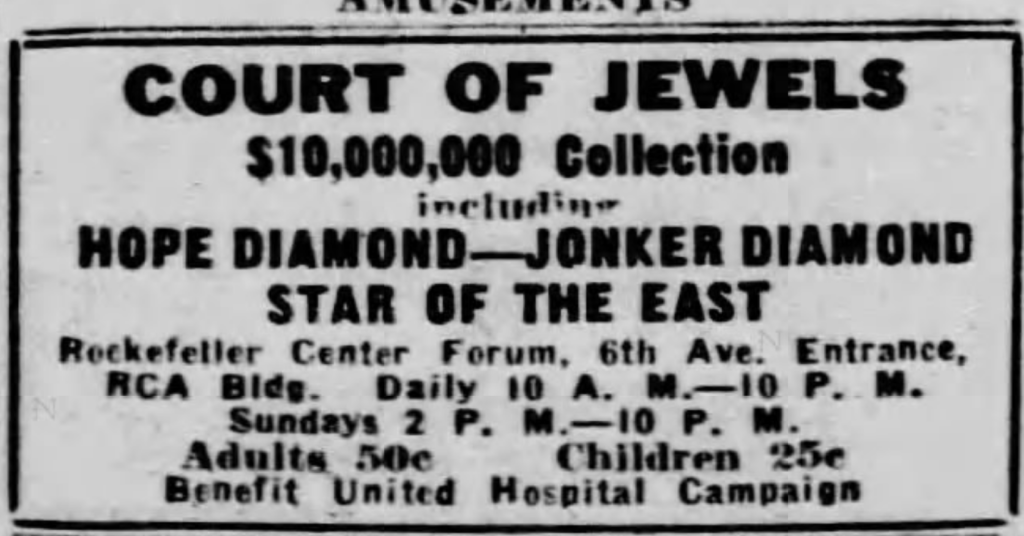
For visitors to Rockefeller Center, if even that wasn’t enough bedazzlement, you could head inside into the forum to see the so-called Court of Jewels:
Then of course there was the annual Radio City Music Christmas
Spectacular which often prefaced a splashy film premiere. And for that
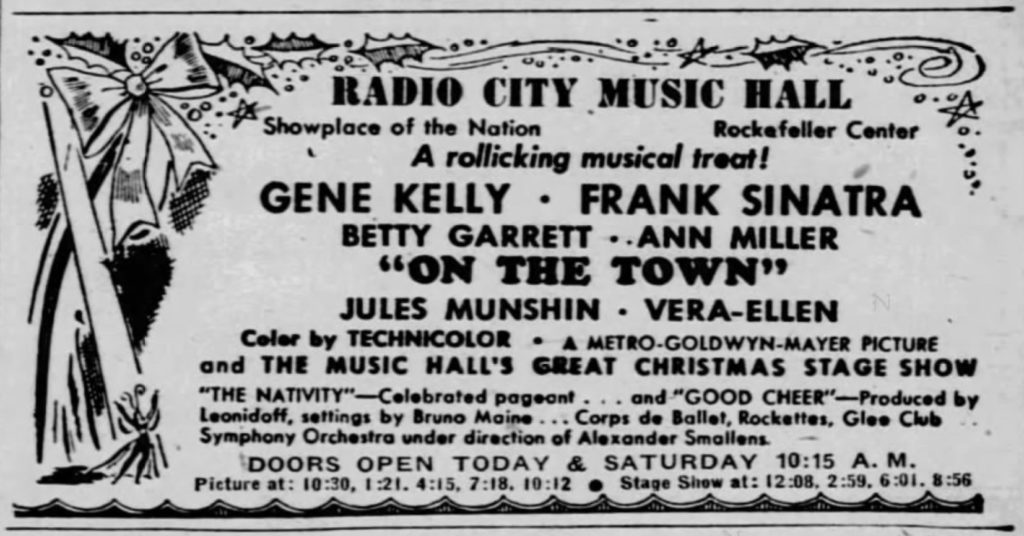
Christmas in 1949, audiences experienced a real treat (and a movie you know we love):
The Eldridge Street Synagogue is one of the most beautifully restored places in the United States, a testament to the value of preserving history when it seems all is lost to ruin.
Today the Museum at Eldridge Street maintains the synagogue, built in 1887 as one of the first houses of worship in the country for Eastern European orthodox Jews. The Moorish revival synagogue, adorned in symbolic decoration and sumptuous stained glass, reflected the Gilded Age opulence of the day while keeping true to the spirit of the Jewish faith.
However, thanks to a handful of determined preservationists, this capsule of Jewish American life in the late 19th century has not only been restored, but even elevated to a new height. The Museum at Eldridge Street is not only a celebration of Jewish American culture, but a breathtaking tribute to the power of preservation.
The most enduring landmark on the Bowery isn’t a tavern or a bawdy theater, a restaurant or even an old punk club.
It’s the Bowery Mission, a rescue mission and shelter which has cared for thousands since it opened its doors 140 years ago this month — on November 7, 1879.
Despite moving to a few locations along the Bowery during its history, it has remained a constant — a savior for many during the Bowery’s Skid Row period and now a ragged survivor within an upscale neighborhood. And we know that long after the boutique hotels close, the Bowery Mission will surely remain.
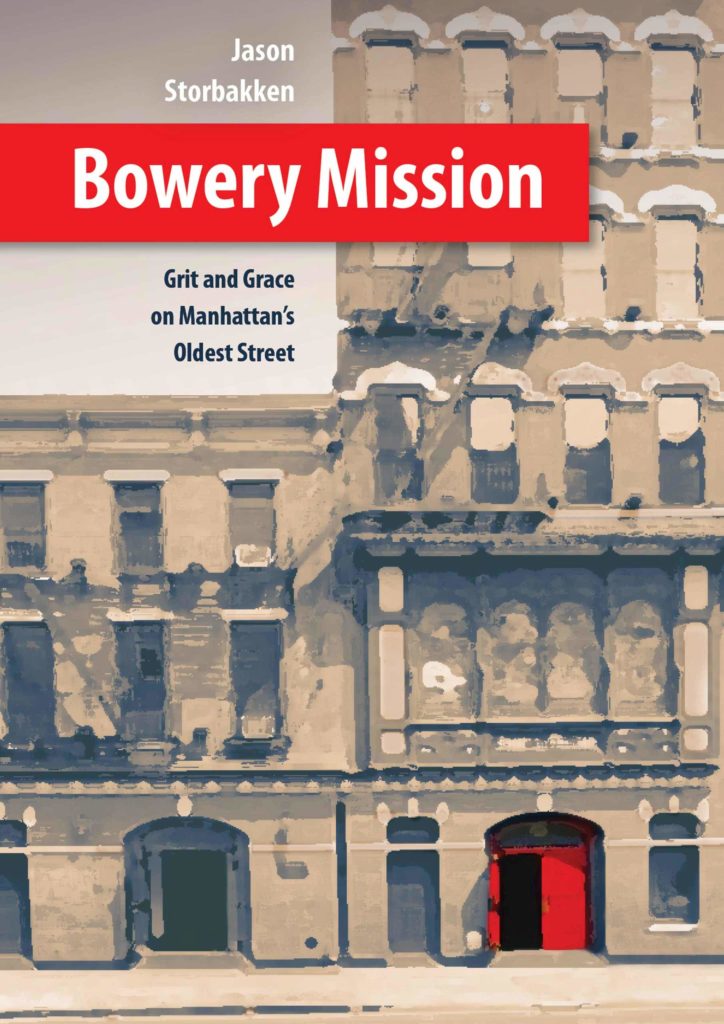
Bowery Mission
Grit and Grace on Manhattan’s Oldest Street
Jason Storbakken
Plough Publishing House
In a touching and amiably written tribute, Jason Storbakken, former director of the chapel, presents both the Mission’s historical canvas and spiritual journey, outlining an unwavering calling withing an ever-changing metropolis.
The Bowery Mission was founded by Albert and Ellen Ruliffson, early proponents of the social gospel movement, bringing care and comfort directly to those in need. Within a few years of opening their doors at their first location (14 Bowery), the first settlement houses would open in the neighborhood.
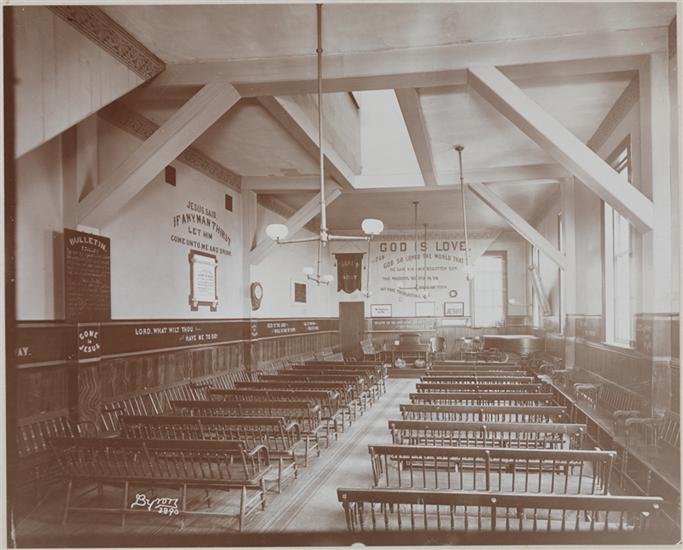
Inside the Bowery Mission 1897. Courtesy Byron Company/Museum of the City of New York
While early rescue organizations formed near overcrowded neighborhoods, the Ruliffson’s were actually caring for the homeless and the hungry on the Bowery itself, next to some of the most rowdy and disreputable spots in New York City. And sometimes even in disreputable spots; in 1887 the Mission moved into 105 Bowery, the former dive of Owney Geoghegan once known as the Bastille of the Bowery.
The Mission assisted those on the Bowery in the 19th century. By the 20th century, you can fairly say it outright saved the Bowery, a lighthouse by which thousands of homeless men found shelter, food and care.
Storbakken ties both past and present together in a uniquely profound and impassioned way. The latter half of the book becomes both a memoir and a Mission statement, creating a continuum of purpose — a link of compassion tied to the Ruliffsons — while highlighting the many ways the Bowery Mission has matured.
The work of the Bowery Mission remains unchanged today, its striking placement along a street of trendy shops and expensive hotels today only highlighting its singular importance in a city that is outpricing its inhabitants. The Bowery Mission is no longer assisting those on the Bowery; it is the anchor of the Bowery itself.
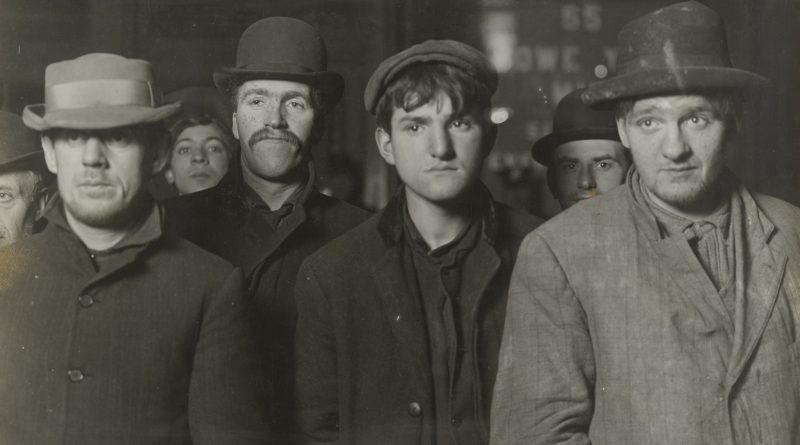
Picture at top — Bowery Mission Bread Line 1906 / taken by Lewis Hine
EPISODE 303: Building Stuyvesant Town, A Mid-Century Controversy
The residential complexes Stuyvesant Town and Peter Cooper Village, built in the late 1940s, incorporating thousands of apartments within a manicured “campus” on the east side, seemed to provide the perfect solution for New York City’s 20th-century housing woes.
For Robert Moses, it provided a reason to clear out an unpleasant neighborhood of dilapidated tenements and filthy gas tanks. For the insurance company Metropolitan Life, the city’s partner in constructing these complexes, it represented both a profit opportunity and a way to improve the lives of middle-class New Yorkers. It would be a home for returning World War II veterans and a new mode of living for young families.
As long as you were white.
In the spring of 1943, just a day before the project was approved by the city, Met Life’s president Frederick H. Ecker brazenly declared their housing policy: “Negros and whites don’t mix. Perhaps they will in a hundred years, but not now.”
What followed was a nine-year battle, centered in the ‘walled fortress’ of Stuy Town, against deeply ingrained housing discrimination policies in New York City. African-American activists waged a legal battle against Met Life, representing veterans returning from the battlefields of World War II.
But some of the loudest cries of resistance came from the residents of Stuy Town itself, waging a war from their very homes against racial discrimination.
Penn Station as recreated in Warner Bros. Pictures’ drama “MOTHERLESS BROOKLYN,” a Warner Bros. Pictures release.
Motherless Brooklyn, a radical retro transformation of Jonathan Lethem’s book of the same name, refits the bright noir of the movie Chinatown into 1950s New York City. Edward Norton, who wrote and directed this adaptation, also stars as its central figure — Lionel Essrog or simply Brooklyn, a detective with Tourette syndrome and a photographic memory.
The film is a lot. Its success for you will depend on your tolerance for Norton’s performance as Brooklyn, who explodes with spontaneous verbal tics while on a labyrinthine case nodding (often blatantly, sometimes brilliantly) to dozens of classic detective tropes.
I saw it a week ago and I’m still not sure whether I loved it or detested it. It’s a movie full of wonderful concepts, fascinating history and a few failed ideas.
But if you’ve ever listened to our podcast — or spent more than five minutes on this website — then I’m pretty sure you’ll find something to admire in Motherless Brooklyn.
The list below contains no big spoilers pertaining to the film’s plot, but prepare to recognize the following historical figures and concepts. In fact you might like to listen to a podcast or two before or after you view the film. Some listening suggestions are below:
THE POWER BROKER
In many ways Motherless Brooklyn is as much an adaptation of The Power Broker as it is Lethem’s detective novel. (There are at least three character monologues that feel like information dumps from the book.)
The central antagonist Moses Randolph (Alec Baldwin) stands in for Robert Moses, the unelected city official who amassed great power during the 1940s and 50s, shaping the city to his whims. By the ’50s, Moses has collected several job titles, lording over weak mayors and determining the city’s fate — with little consideration for individual community needs.
Warner Bros
TRIBOROUGH BRIDGE AND TUNNEL AUTHORITY
In Motherless Brooklyn, Moses’ instrument for change is actually called the Borough Authority, but its headquarters are located in the same place as Moses’ — Randall’s Island. Originally commissioned by the state to construct the Triborough Bridge, the authority’s merged with other city agencies under Moses.
THE GREAT MIGRATION
Thousands of African-Americans moved out of the South in the first half of the 20th century — escaping the dominance of Jim Crow laws — and many came to New York City, only to find a familiar tenor of discrimination here. By the 1940s, housing shortages in black communities like Harlem vexed African-Americans who were unable to rent from many landlords in mostly white neighborhoods.
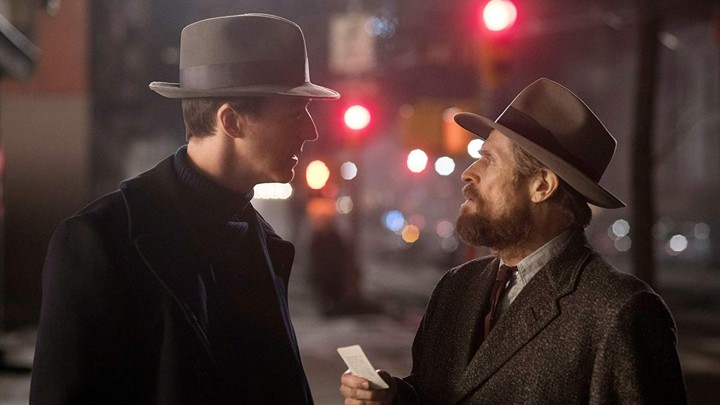
Norton with Willem Dafoe in a stand-out performance. Courtesy Warner Bros
REDLINING
The process by which banks and insurance companies, with de facto approval by the city, denied loans and mortgages to residents in predominantly minority neighborhoods, leading to the deterioration of those neighborhoods, leading them to be labeled ‘slums’. When then led to….
SLUM CLEARANCE
An urban renewal strategy popular in the mid-20th century — Robert Moses was its maestro — involving the complete demolition of neighborhoods labeled slums and relocating its displaced residents to public housing in far off (less valuable) quadrants of the city. In many cases, those neighborhoods were not ‘slums’ at all; that is, they were thriving places that just happened to be homes to black, Hispanic or Jewish residents.
EAST TREMONT
A neighborhood in the South Bronx, largely populated with working class Jewish residents, decimated by the construction of the Cross Bronx Expressway in the 1940s and 50s. From The Power Broker: “The one mile of the Cross-Bronx Expressway through East Tremont was completed in 1960. By 1965, the community’s “very good, solid housing stock,” the apartments that had been so precious to the people who had lived in them, were ravaged hulks.
Glen Wilson/Warner Bros.
JANE JACOBS
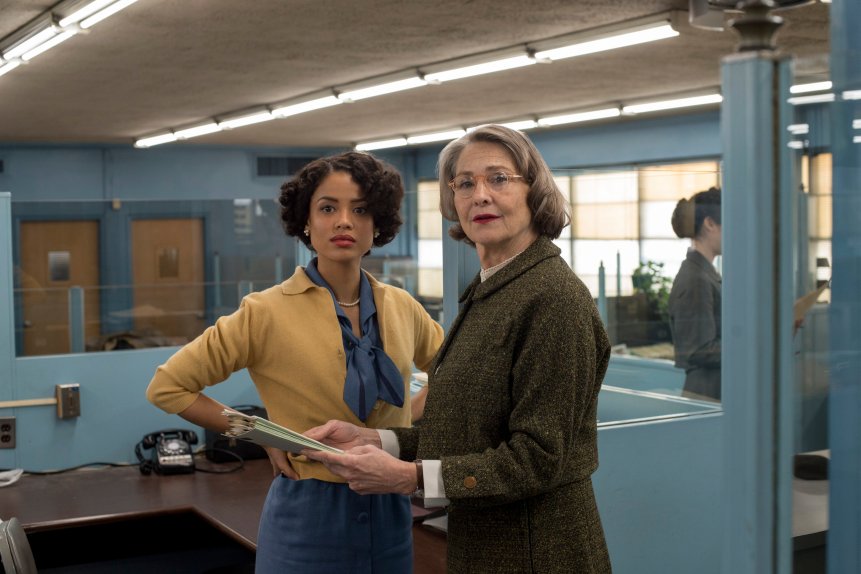
Cherry Jones plays Gabby Horowitz, a community activist very much in the mold of Greenwich Village crusader Jane Jacobs. There’s even an interesting nod to her work in Washington Square and a notable rally which took place there in 1958.
HARLEM JAZZ
Harlem’s glorious jazz-club tradition is vividly illustrated in one set piece — a smoky club called the King Rooster. The film used the actual St. Nick’s Pub (St. Nicholas Avenue at West 149th Street) which dated back to the 1930s. Sadly the club burned down in 2018 in a tragic blaze which killed a firefighter.
THE ORIGINAL PENNSYLVANIA STATION
By the 1950s, the first Pennsylvania Station — above ground, designed by McKim, Meade and White — was just a few years away from demolition. It was deteriorating and not very clean by then, but Norton thankfully recreates a fantasy, photo-perfect version of Penn Station. It’s genuinely breathtaking.
SWIMMING
Robert Moses was a champion swimmer and even let his hobby influence early policy, constructing ten massive swimming pools during the 1930s with Work Progress Administration funding. Quoting Caro: “Moses gave each of his pools … his personal attention. Under his prodding, his architects adorned them with masterful little touches; over the entrance which divided men from women as they entered the bathhouse at the Corona Pool complex sat a stork wearing an expression that made him look as if he were puzzling over the physical differences in the creatures he had brought into the world.”