Categories
Podcasts Sports

The race is on! A history of the New York City Marathon

Photo from Flickr

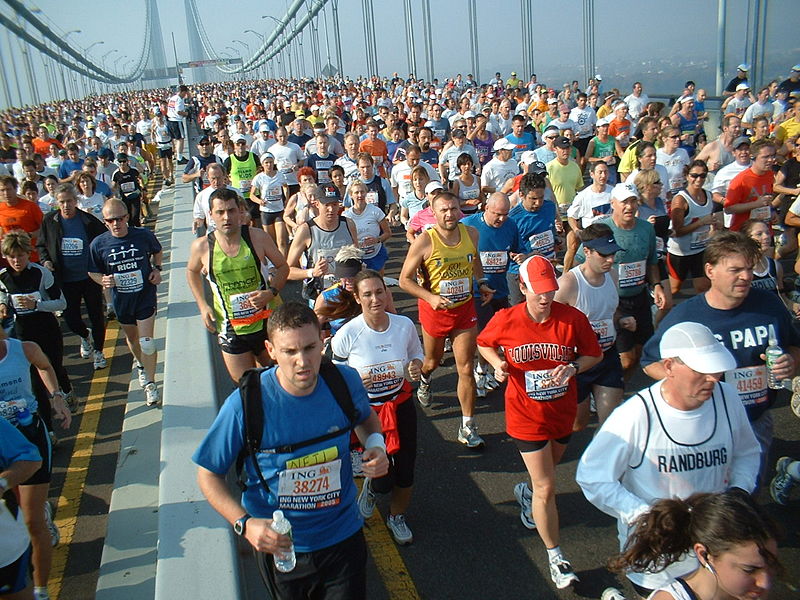
A true five-borough episode! The New York City Marathon hosts thousands of runners from all over the world, the dream project of the New York Road Runners and in particular one Fred Lebow, an employee of the Fashion District turned athletic icon. Find out how he launched a massive race in the midst of bankrupt New York.

Also — our guest host Tanya Bielski-Braham takes us on a speedy tour of the course, from the Verrazzano-Narrows Bridge to Tavern on the Green.

Listen to it for free on iTunes or other podcasting services. Or you can download or listen to it HERE
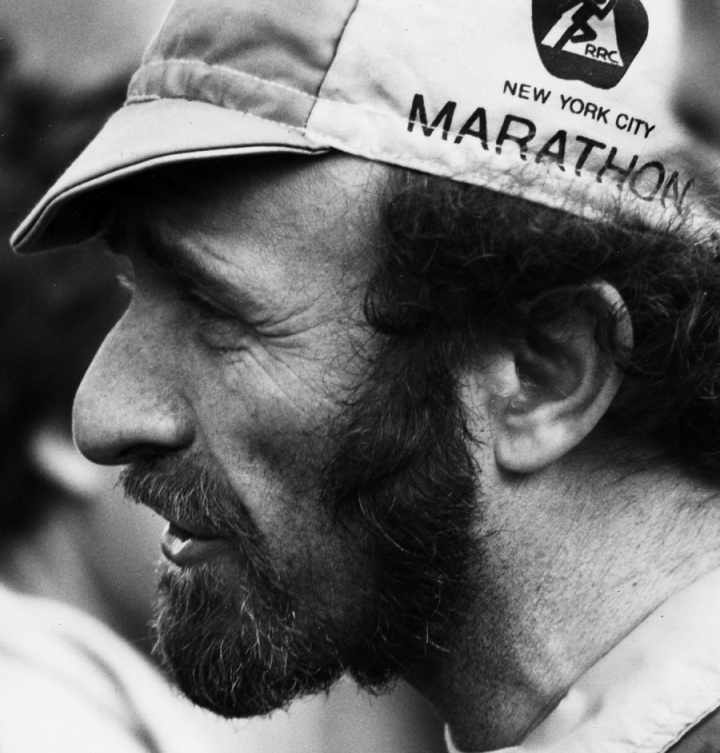

Fred Lebow joined the New York Road Runners in 1969 and helped turn the marathon into a premier event for New York.

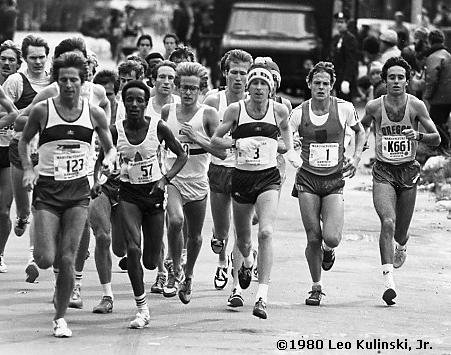
One of the marathon’s true superstars, Bill Rodgers (that’s him wearing number 3) won the marathon the first four years of its existence as a tri-borough event, from 1976-79. In 1980, he placed 5th, handing the mantle to rising star Alberto Salazar.
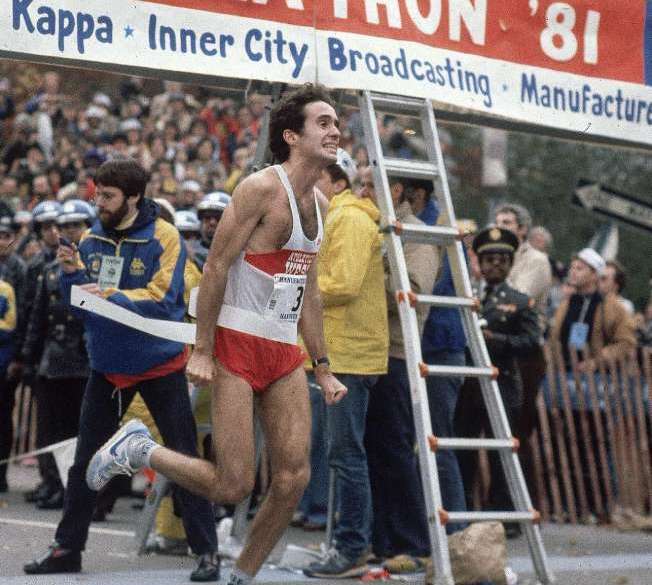
A clearly pained Salazar fights his way to the finish line during the 1981 race, on his way to setting a world’s record.
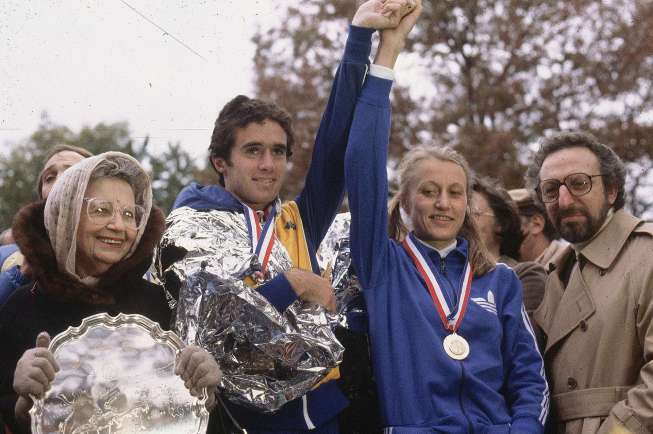
Sure, Salazar’s good, but his co-winner in 1980, Grete Waitz, would be the all-time New York City Marathon champ, winning nine times. (Pic courtesy Sports Illustrated.)
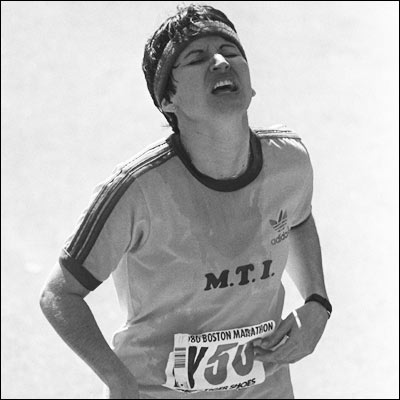
Rosie Ruiz, looking totally exhausted form feigning her completion of the Boston Marathon. It was later discovered that she had also faked her run in the New York marathon.
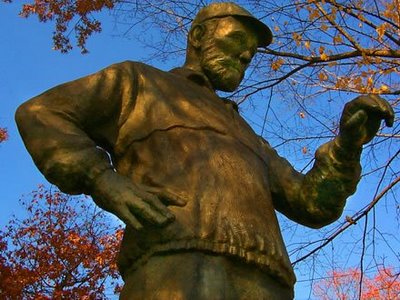
The statue of Fred Lebow stands watch for every finisher of the marathon. For the rest of the year, this tribute stands at the Engineer’s Gate in Central Park.
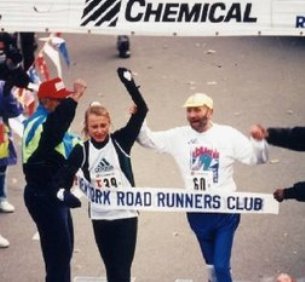
Fred and Grete triumphantly cross the finish line in 1992.

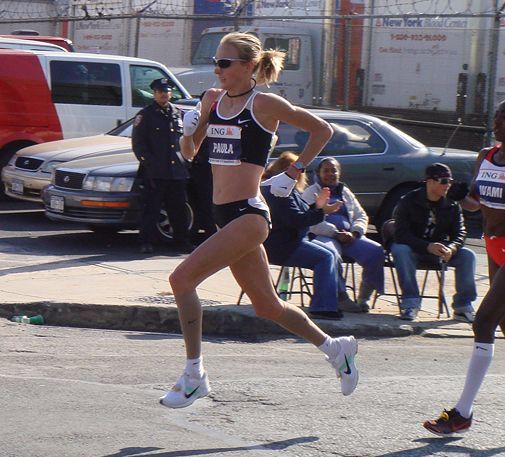
A few months after giving birth, British runner Paula Radcliffe ran away with the victory at last year’s race. (Courtesy Ed Costello Flickr)
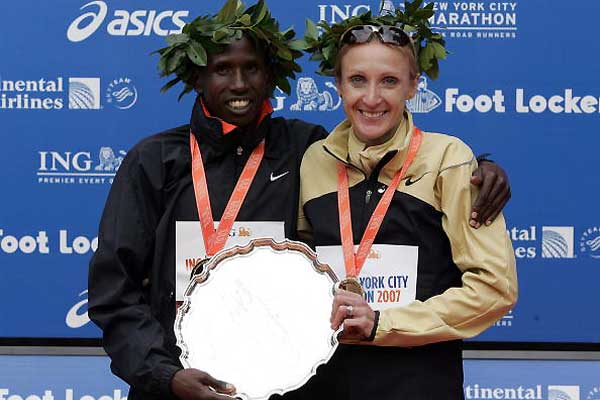
Paula with the men’s winner Martin Lel from Kenya (Pic courtesy iaff.org)
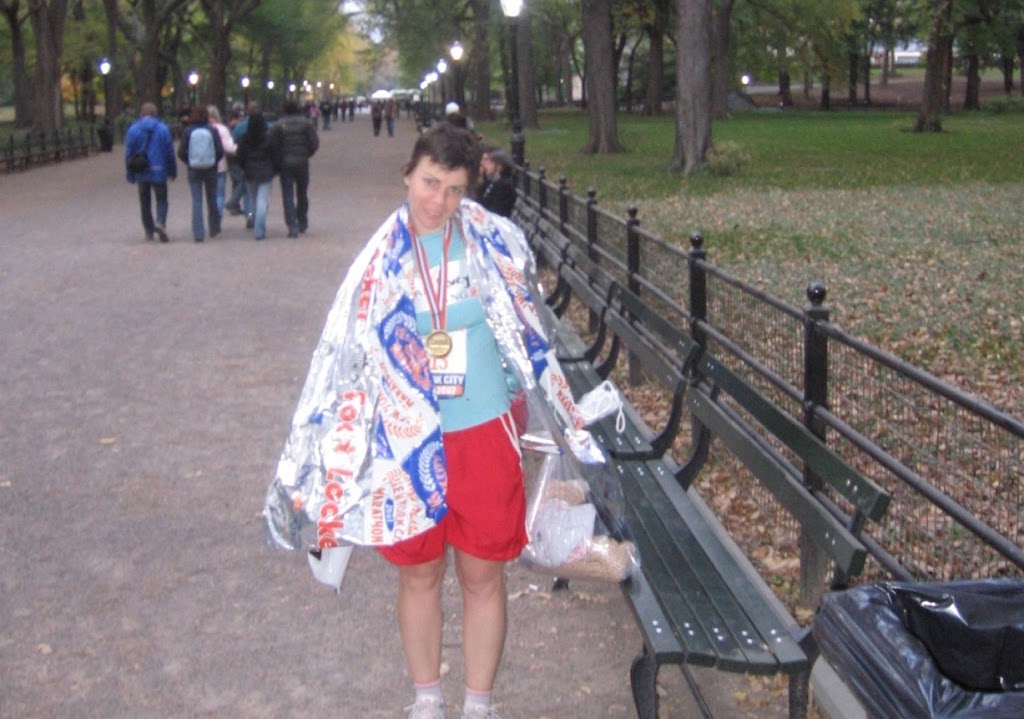
Our guest host, Tanya Bielski-Braham, at the completion of the race last year, swathed in a “space blanket”

Go to the New York Road Runners website for information on this Sunday’s race, including places to watch it from the sidelines.

I highly recommend two recent releases about the marathon: the book “A Race Like No Other” by Liz Robbins, a great profile on the 2007 race with lots of history nuggets thrown in; and the new documentary Run For Your Life about Fred Lebow, new to DVD this week. You seriously have to check out all the great footage from the 1970s, particularly the shots of the Playboy Bunnies posing for pictures for the 1972 “Crazylegs” race.
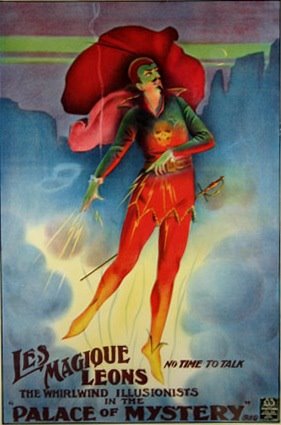
Magic New York: Martinka & Company casts a spell

Did you know it was National Magic Week? Please cast thoughts of David Blaine hanging upside-down from your mind and return to the mystical days of illusionists in thick capes, beautiful assistants that vanish in mid-air and, almost forgotten, the rustic old-time magic store, with shelves of mysterious accessories for the amateur conjurer.

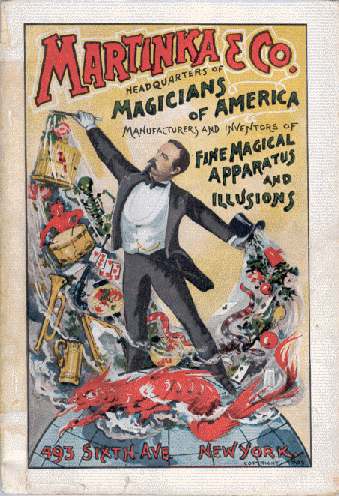
New York City had many famous magic stores, but perhaps none more beloved than Flosso-Hornmann Magic or, as it was known when it opened in 1872 (although the official website gives a date of 1875), Martinka & Company. From then until the year 2000, when it was sold by proprietor Jackie Flosso to a company who turns it into an Internet business, it was the epicenter for Manhattan magic lovers.

German brothers Francis and Antonio Martinka brought over their successful “conjuring and toy shop” as immigrants to the New York melting pot in the 1870s, opening Martinka & Company just north of Chelsea on Sixth Avenue. The shop’s fabulous slogan?
“The world wants to be deceived, let it be deceived.”

The shop featured mechanical monkeys and “automatons” that played chess and the shelves were loaded with camp items as “The Mephisto or Satyr’s Head Trick,” “The Wonderful Cigarette Paper Trick,” and “The Mystic Barrel of Salt.”

Behind the displays of magical wares however was a backroom “Palace of Mystery,” where budding young magicians would try their hand at more elaborate tricks. Soon, this performance hall would host the city’s best displays of magic. And it was here, in 1902, when the Society of American Magicians was formed, an organization which would feature the biggest names in illusion and trickery.

And if you were looking for a good fright here, for a short time, the shop also kept a live lion named Monty. Its owner, the magician known as Carter the Great, had purchased the shop from the Martinka family and kept his own king of the beast on hand for special tricks.

The shop was later owned by a far more acclaimed New York magician Harry Houdini, a friend of the Martinkas who decorated the entrance with a gigantic bust of himself.

In 1939 the store was purchased by Brooklynite Al Flosso (a theatrical stage name). He had bought magic tricks there as a child and brought his stagecraft to the aging store, keeping it in delightful state of clutter as not to “disturb Houdini’s dust.” According to an interesting bio page on Flosso, he was “constantly repairing, soldering, building and tinkering with equipment and illusions. Customers could bring in their favorite deck of cards, and, for a nominal fee, have it made into a stripper or Svengali deck. He custom-painted thumb tips to match his customers’ skin tone….”

When he died in 1976, his son Jackie took over the shop (and the last name), moving it up to 34th Street and keeping it stocked with magical tools and gags until finally selling it in 2000.

You can visit the website and shop for vintage magic memorabilia, posters and, yes, powerful tricks to amaze your friends!

Fall foliage freakout at two Bronx botanical gardens

I’m skipping out on history today to give you a plain testimonial: if you’re craving a flashy autumn show courtesy of Mother Nature, the time is ripe to visit two lovely Bronx institutions in the throes of fall foliage madness. If you can’t actually get out of the city but need some seasonal therapy, both of these options are available via the subway.

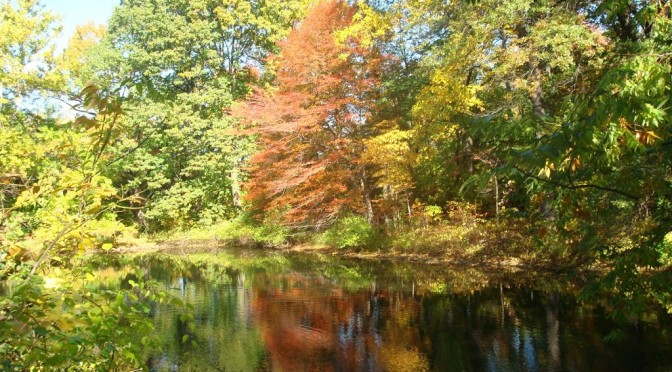
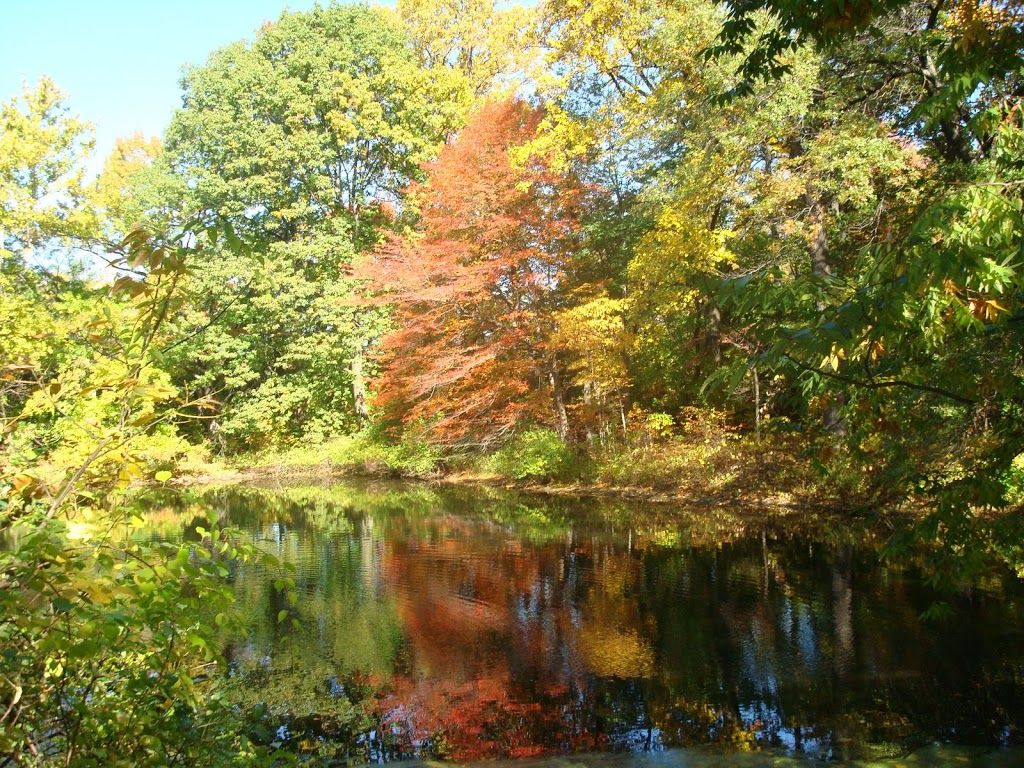
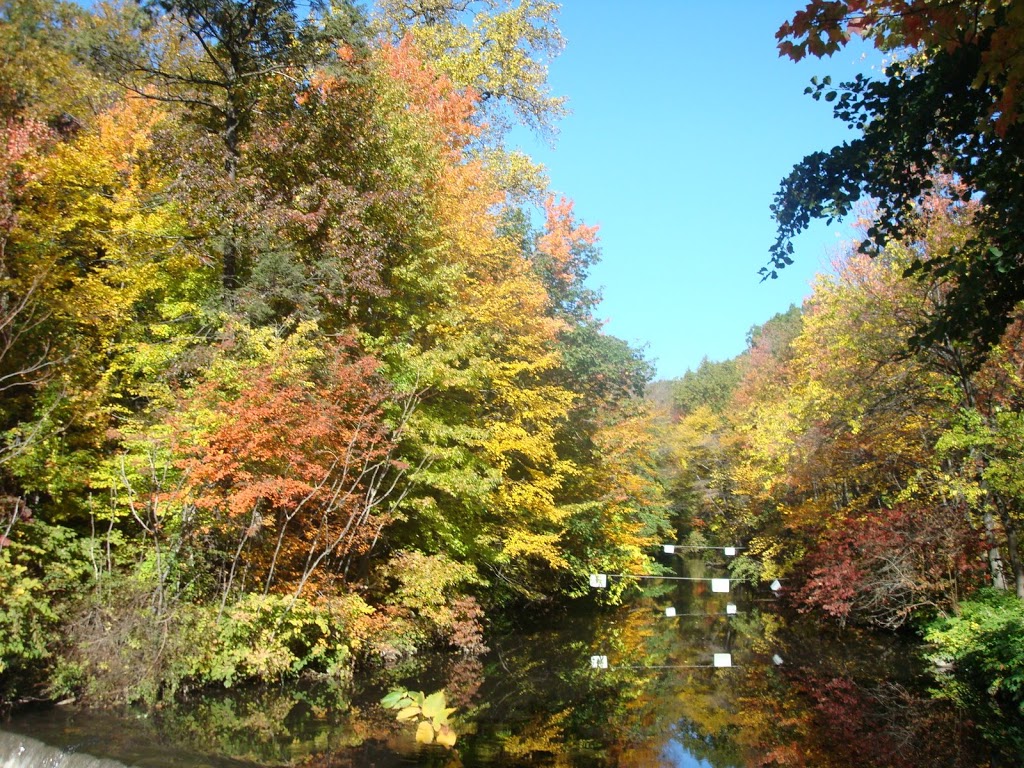
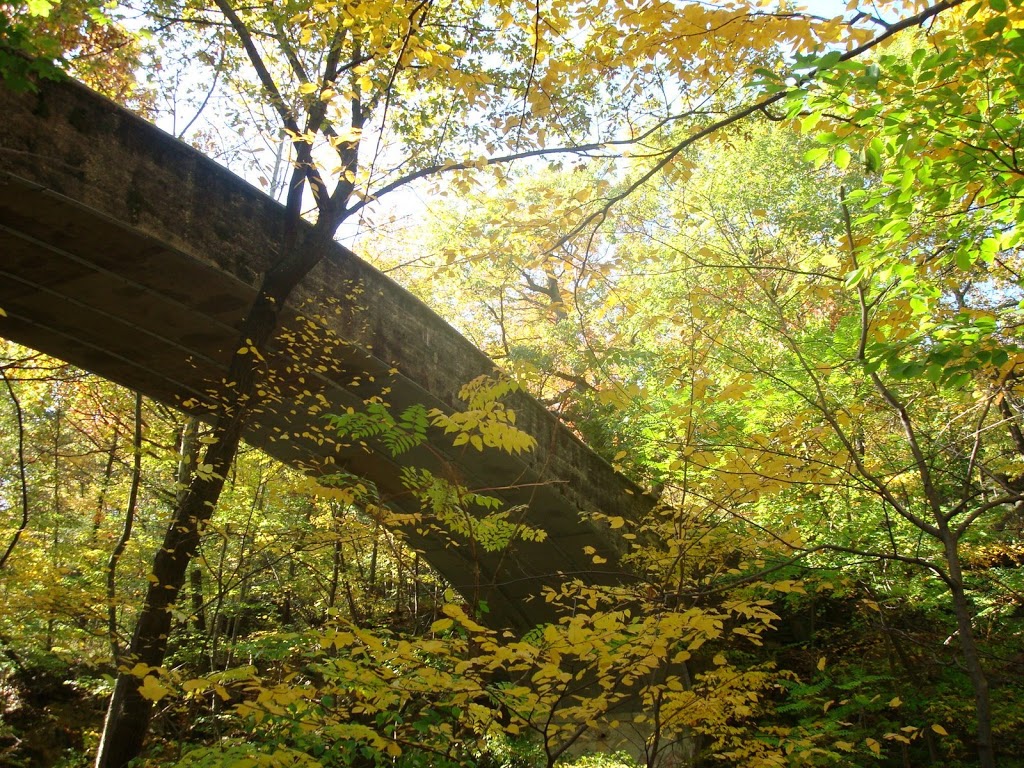
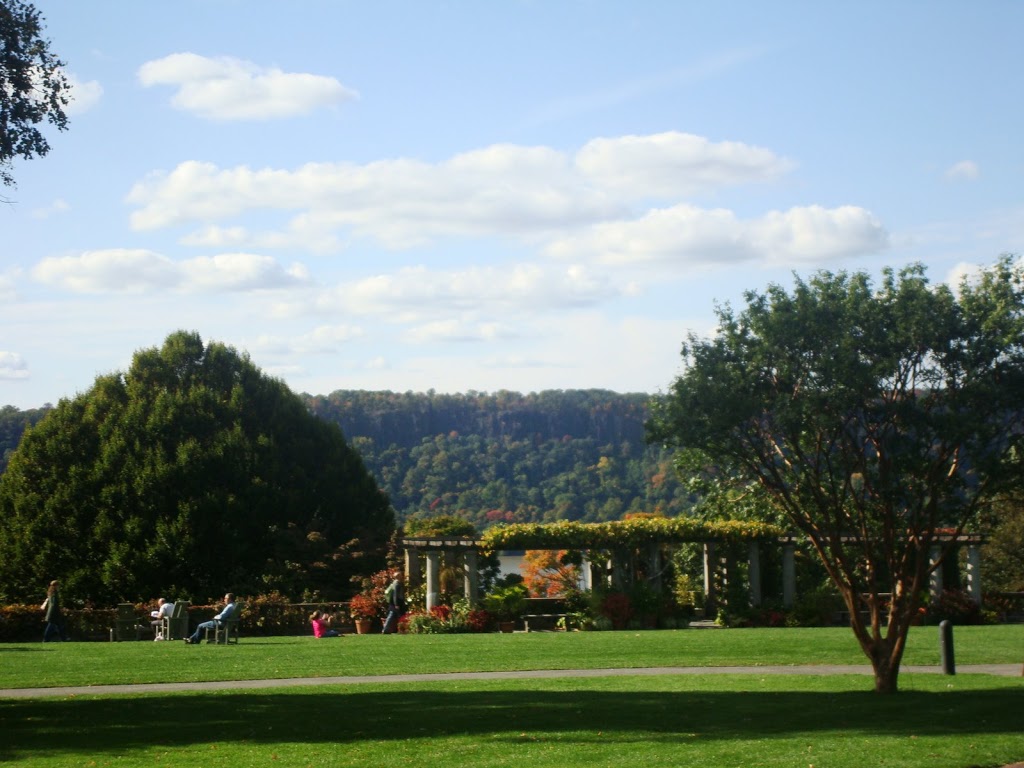
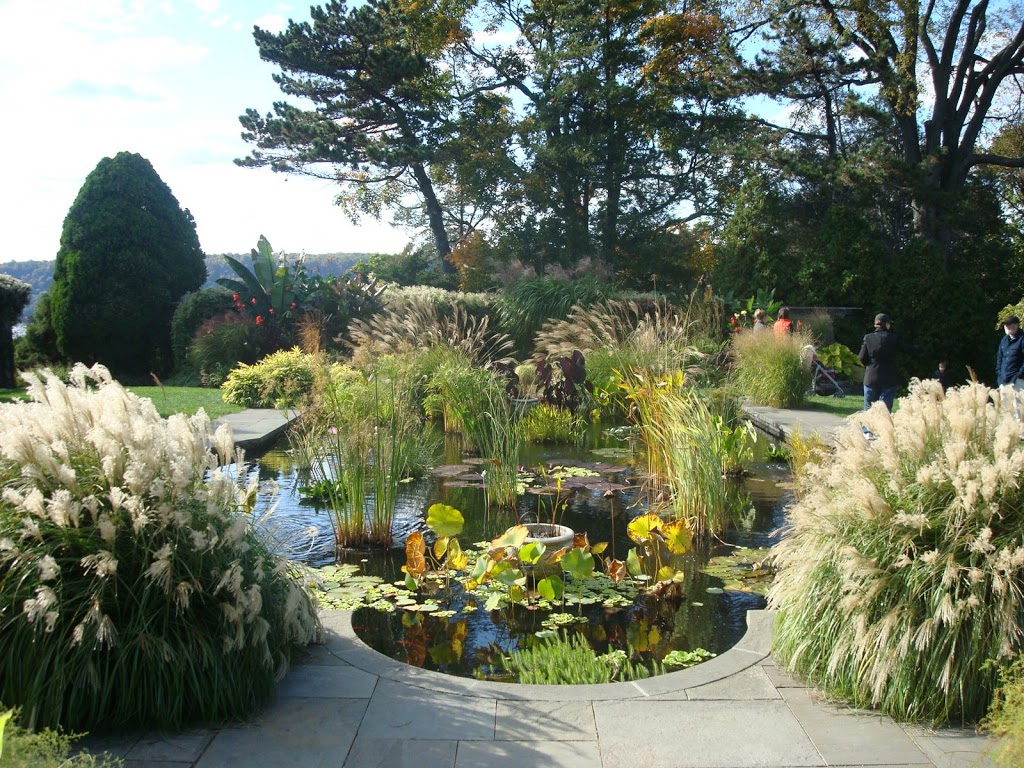
The New York Botanical Garden is currently in the throes of an amazing fall transformation. Although they currently have enormous Henry Moore sculptures scattered throughout the park, more striking art hangs on the trees in the Native Forest section, particularly those hugging the shoreline of the Bronx River:

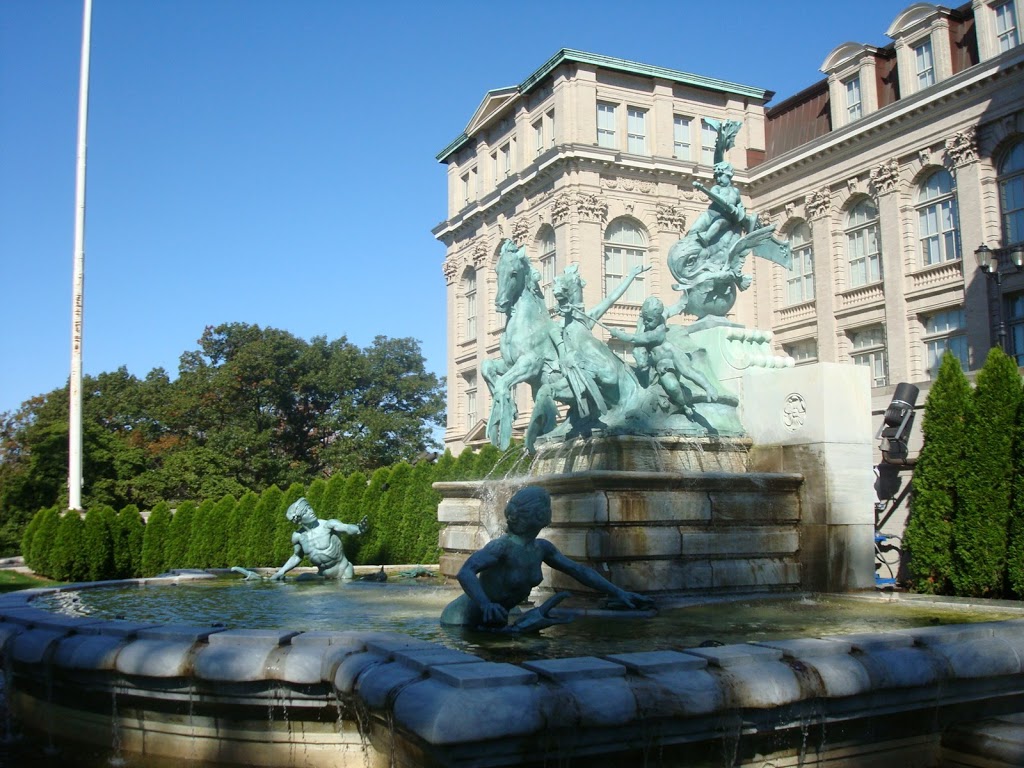
Botanical gardens are odd things in the fall. While some blooms are clearly out of seasons (the rose garden is a little sad this time of year), other sections are clearly just getting started. And if you can’t find enough to see and do outdoors, there’s always the lawn of Mertz Library, a veritable Beaux-Arts indulgance in the form of its Italian style fountain:

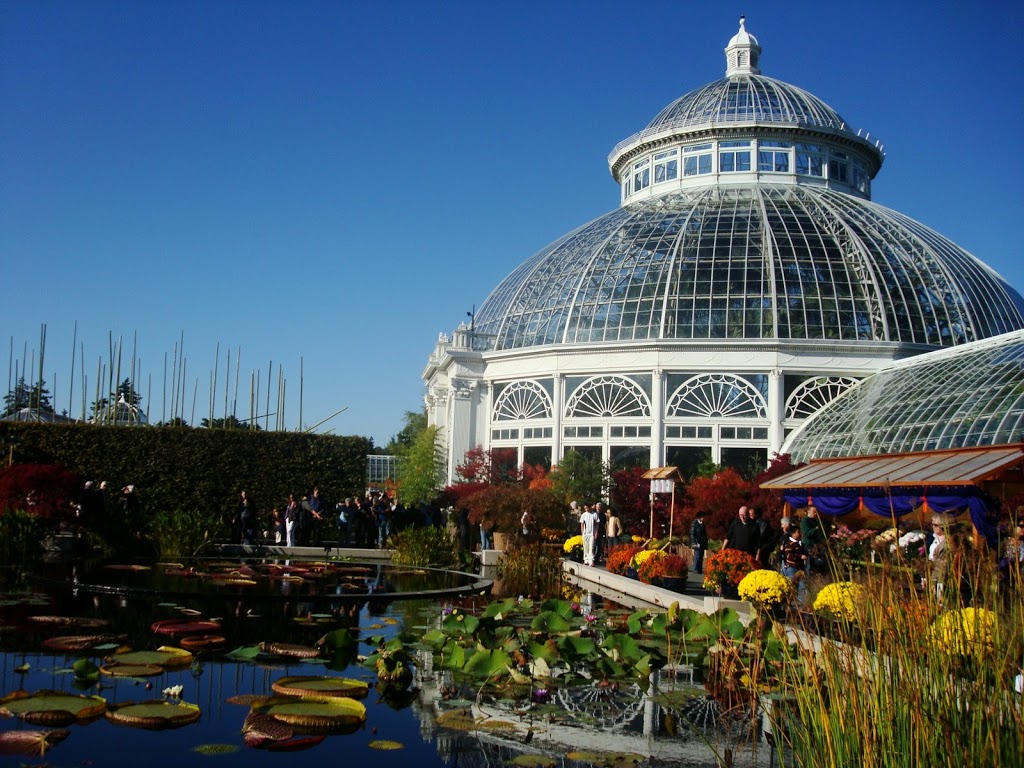
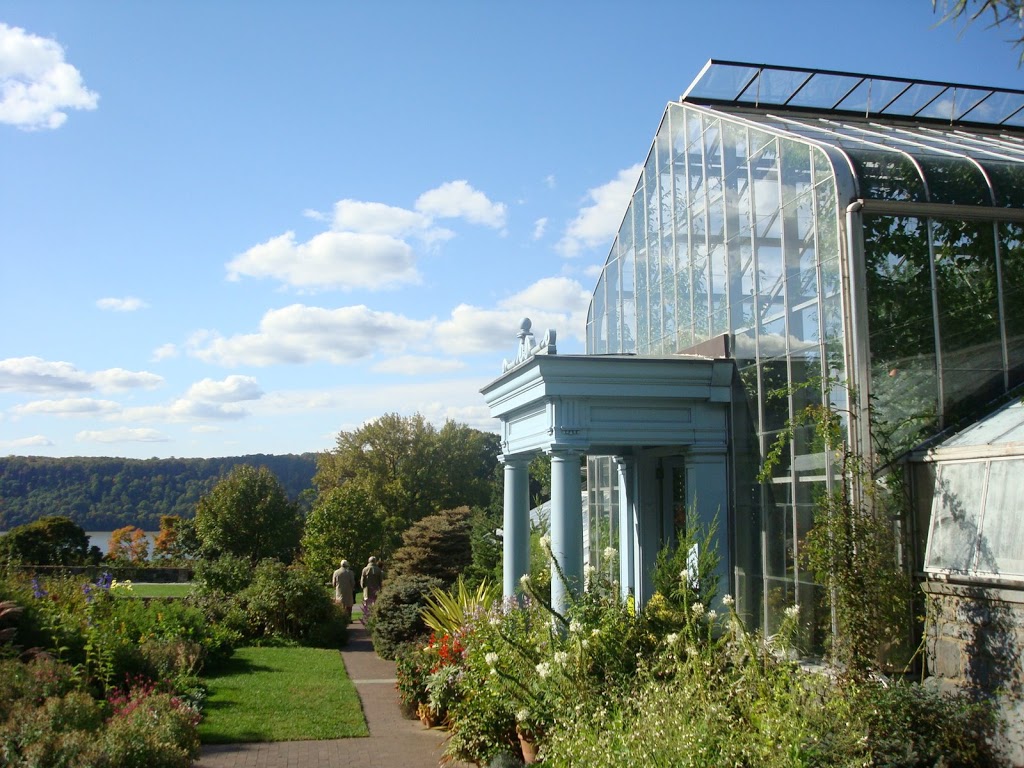
Meanwhile, at the theatrical Haupt Conservatory, the garden is presenting a fantastic Japanese kiku (chrysanthemum) show, which displays the more acrobatic and colorful traits of this popular flower:

The garden even has a map that tracks the projected leaf-changing time of various trees in the park. You can get to the New York Botanical Garden easily by the B and D subway lines, or on Metro-North (the preferred method).

Wave Hill is a little trickier. Taking the 1 train to its final stop (Van Cortlandt Park at 242nd Street), cross the street and hang out in front of Burger King, where a Wave Hill shuttle comes back even hour at ten minutes past the hours. Personally, having to meet in front of a fast food restaurant for a bus gives the whole occasion a decidedly high-school-field-trip feel.

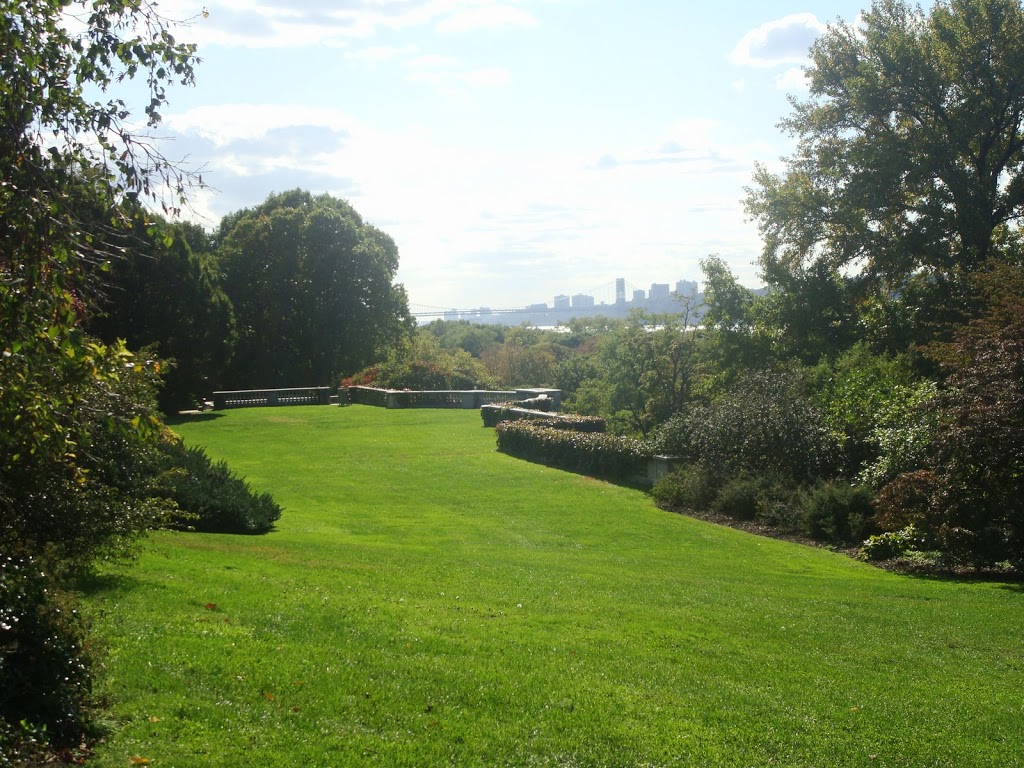
It’s one-tenth the size of the New York’s official botanical garden, far more remote and tinier gardens. However, Wave Hill has one crucial element that the Botanical Garden doesn’t have: crazy views of the Hudson River

The 19th century manor at Wave Hill served as an oasis for everybody from Mark Twain to Theodore Roosevelt. Today the home is a cultural center with photo galleries, art exhibits and children’s programs throughout the year.

Check out the official websites of both the New York Botanical Garden and Wave Hill for more details on hours and special programs. Back to normal history stuff tomorrow….

(Click on all pictures above for larger views)

Categories
Podcasts

PODCAST: The Guggenheim Museum

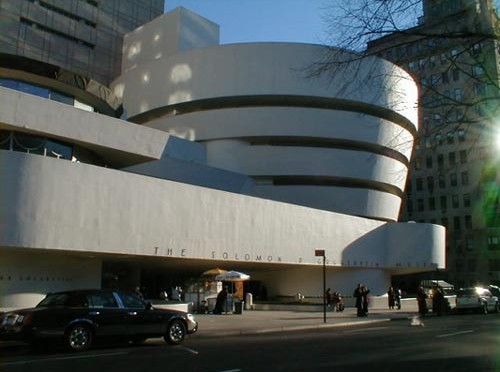
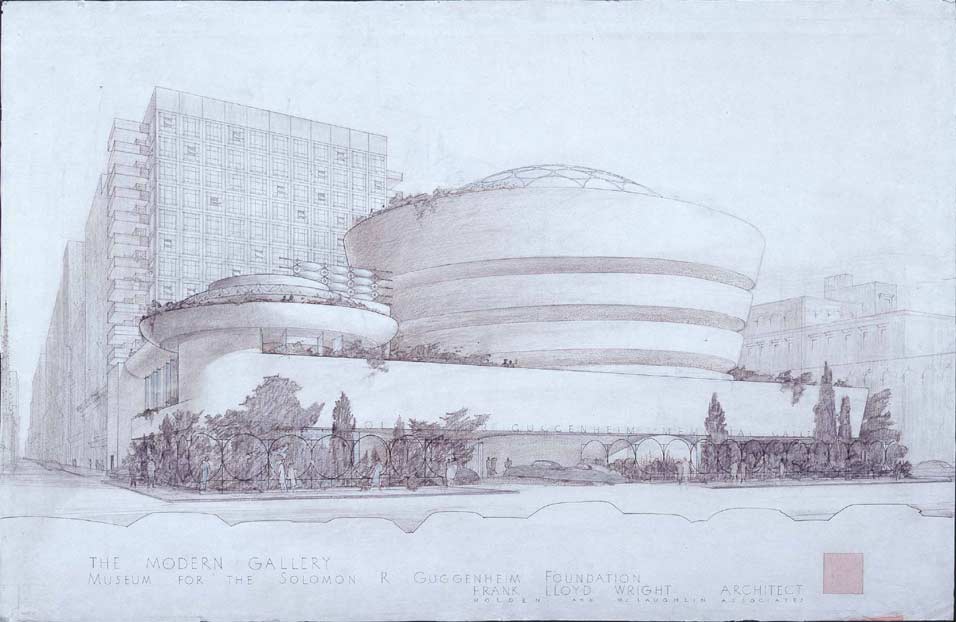
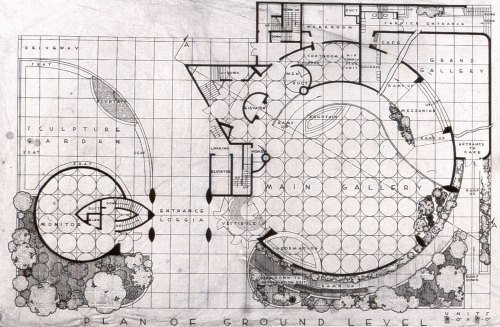
The spiral-ramped wonder that is the Guggenheim Museum began as the dream of two colorful characters — a severe German artist and her rich patron art-lover. So how did they convince the most famous architect in the world to sign on to their dream for a modern art “museum temple”? Come meander with us through the Guggenheim’s quirky history. Co-starring Robert Moses!

Listen to it for free on iTunes or other podcasting services. Or you can download or listen to it HERE

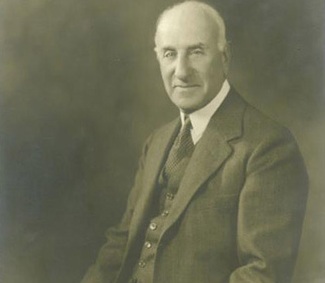
Solomon Robert Guggenheim — his love for artwork late in life culimated in one of the world’s most impressive collection of modern art

“Yellow Red and Blue” by Vassily Kandinsky, a particular favorite of Solomon’s who would end up owning over 120 paintings by the abstract artist.

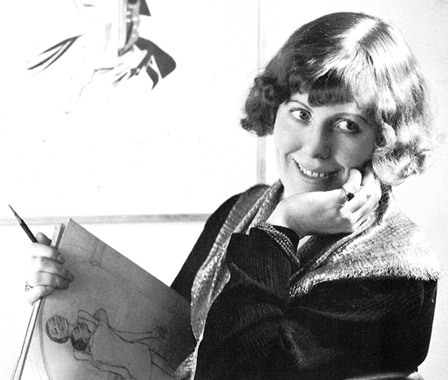
The enigmatic Hilla Rebay, muse and adviser to Solomon and the original curator to what would become the Guggenheim Museum — until she was unceremoniously dumped by the trustees after Solomon’s death

“Squares”, a work by Rudolf Bauer, whose relationship with Rebay and the Guggenheim would quickly sour

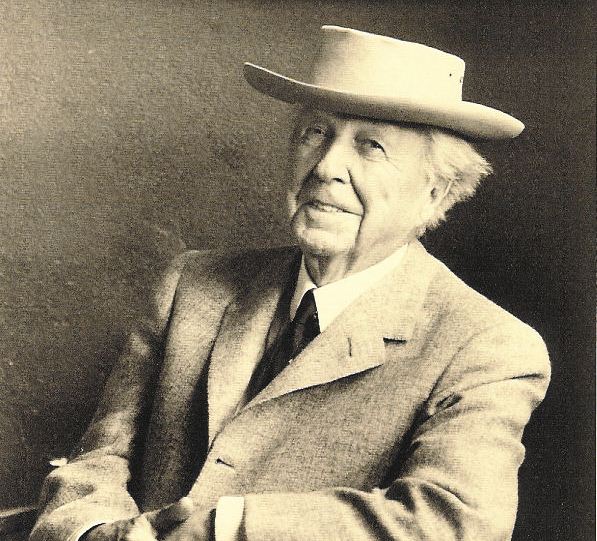
Photographer Alfred Eisenstaedt captures Frank Lloyd Wright in his final days, an iconic architect who would go out on top with the construction of the museum

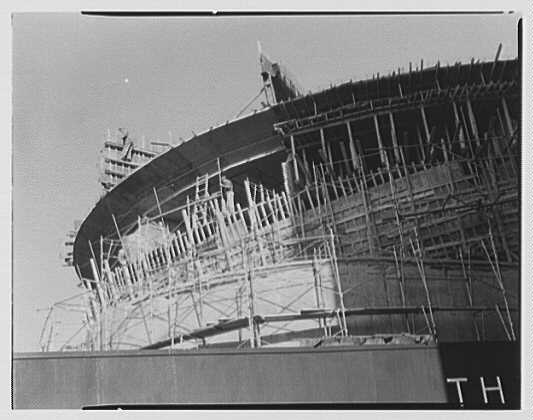
During construction: the distinctive curves were created by essentially creating a plywood mold and having the concrete sprayed from the inside.

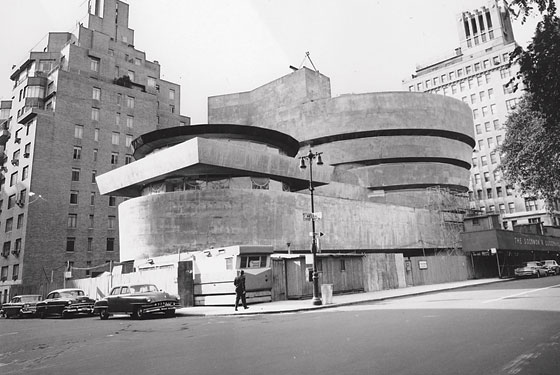
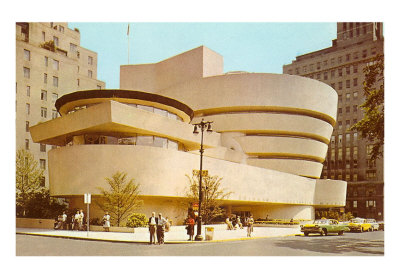
The museum, right before its opening in 1959. (Pic courtesy New York Magazine.)

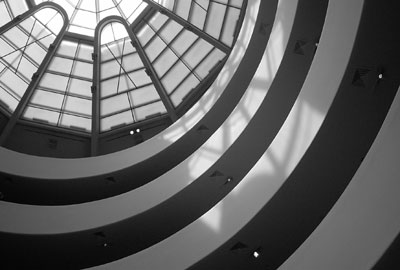
Like a typical Wright creation, the museum seems both natural and alien at the same time. Natural light streams in at unusual angles.

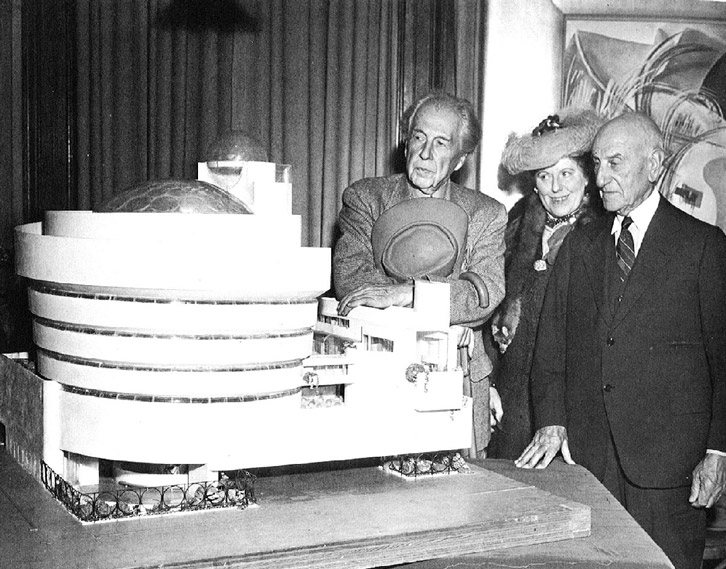
Solomon, Hilla and Frank stand admiring a model of their future museum.

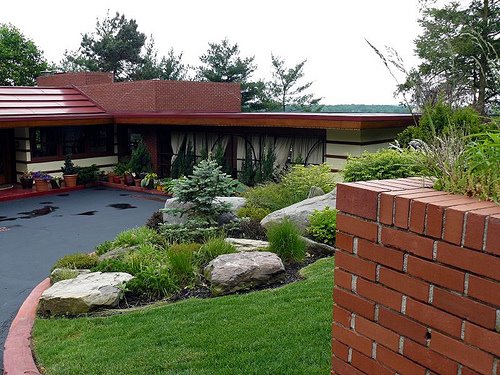
CORRECTION: In the podcast I incorrectly state that Wright had already built a house in Staten Island before getting the commission to build the Guggenheim. In fact, he was hired to build the private residence well after receiving the museum job. The home, called The Crimson Beech, is located in Lighthouse Hill. Apparently it leaks.

Having fun with the Guggenheim’s different exterior shades

Categories
Uncategorized

Pierre Lorillard: Manhattan’s original snuff king

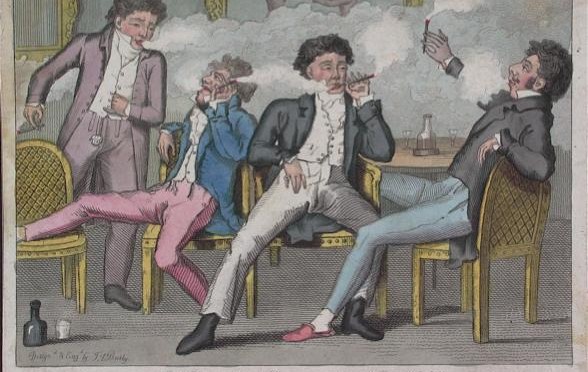
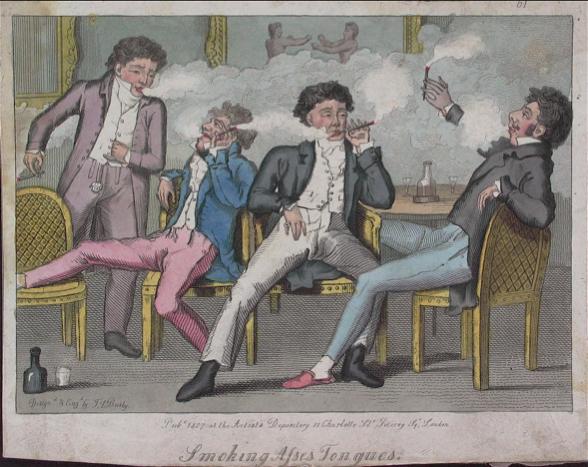
Just a few gentlemen, enjoying healthy lungfuls of smoke (Picture courtesy National Cigar Museum)

One of the key locales in the mystery of Mary Rogers was the cigar store in which she worked, Anderson’s Tobacco Emporium to the west of City Hall on Broadway. Anderson was known nationwide for the quality of his wares, but by the 1830s New York was already well-known for world-class tobacco products, thanks to one man — Pierre Lorillard.

A habit borrowed from the Native Americans, tobacco was actually grown in Manhattan as far back as the Dutch occupation, with tobacco fields dotting the area, from Greenwich Village to where the United Nations building sits today. But it made a greater impact on the city being shipped in and out of the harbor.

Lorillard, a French Huguenot in British New York, opened the city’s first successful “manufactory” for tobacco products in 1760, on what was then Chatham Street (or today’s Park Row, to the east of City Hall). Described as a “snuff grinder”, Lorillard’s business secret sounds a little repulsive today: to keep his snuff fresh, Pierre sold it in dried animal bladders, “dried and tanned like parchment.”

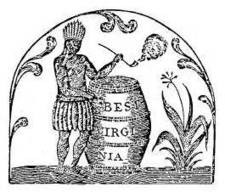
His products were branded with a trademark of a Native American enjoying the delights of a barrel-full of tobacco. One of the earliest developed trademarks to have derived from New York, the Lorillard brand would quickly catch on even in Europe, as his snuff, all snug in its animal bladder, could be shipped with ease.

Pierre however would see little of his lasting legacy, thanks to the Revolutionary War. In 1776, the anti-Tory Lorillard followed the Continental Army out of town after they were driven out of Manhattan, but Lorillard was tragically killed by a Hessian soldier.

Fortunately, the Lorillard family had tobacco figuratively in their blood. The business was taken over by his two sons George and Peter, who moved the business to the Bronx and expanded nationwide. Believe it or not, the old Lorillard Snuff Mill is still standing, now a part of the New York Botanical Garden.

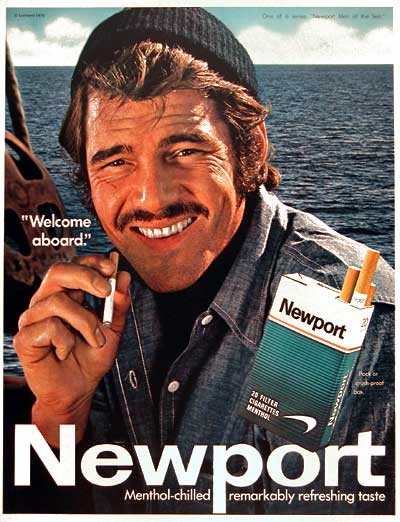
You can thank current Lorillard Tobacco Company today for providing the world with Newport Cigarettes and a bevy of other nicotine products. Cough cough.

You can find some other historical details about Lorillard here.

Below, some of the cheesy masculinity wrought by the Lorillard empire:

Categories
Podcasts

PODCAST: Who Murdered Mary Rogers?

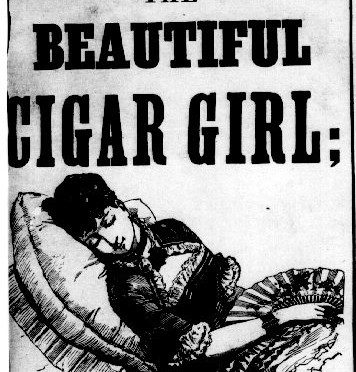
It’s a mystery! It’s 1841 and the most desirable woman in downtown Manhattan — the ‘beautiful cigar girl’ Mary Rogers — is found horribly murdered along the Hoboken shore. Hear some of the stories of this case’s prime suspects and marvel at the excessive attentions of the penny press.

Also: Edgar Allen Poe takes a crack at solving the case, and who is the mysterious Madame Restell?

Listen to it for free on iTunes or other podcasting services. Or you can download or listen to it HERE

NOTE: The sound quality is a little wobbly at first but it goes back to normal after the first few minutes. Sorry!

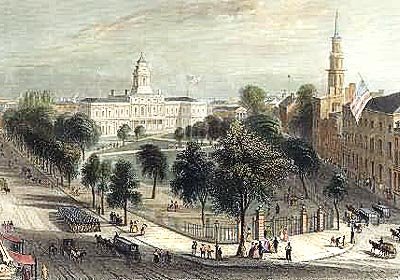
Many of the events of the story take place around the City Hall area — Anderson’s tobacco shop would have been just to the left of the picture, Mary’s boarding house to the right. (This illustration is actually from 1854, but you get the idea.)

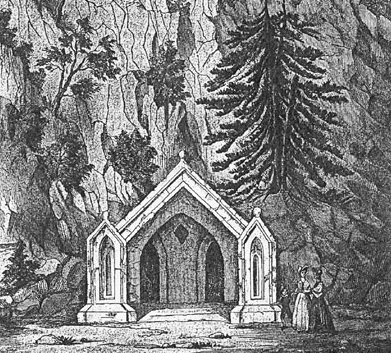
Sybil’s Cave, in an area along the Hoboken shore once called Elysian Fields — it’s here that the body was found … and another gruesome death related to Mary Rogers would occur just a couple month later

Printing House Square, across from City Hall and mere steps from Mary Rogers’ boarding house, got into the act by printing ever scandalous detail of the murder investigation

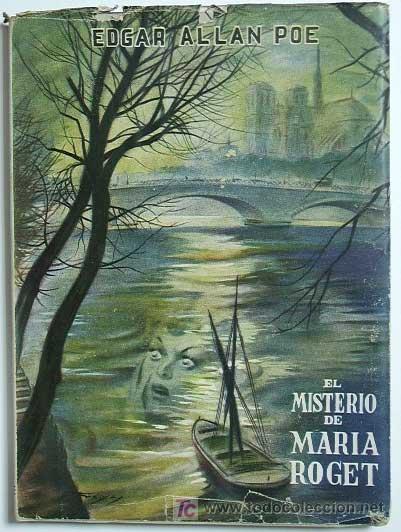
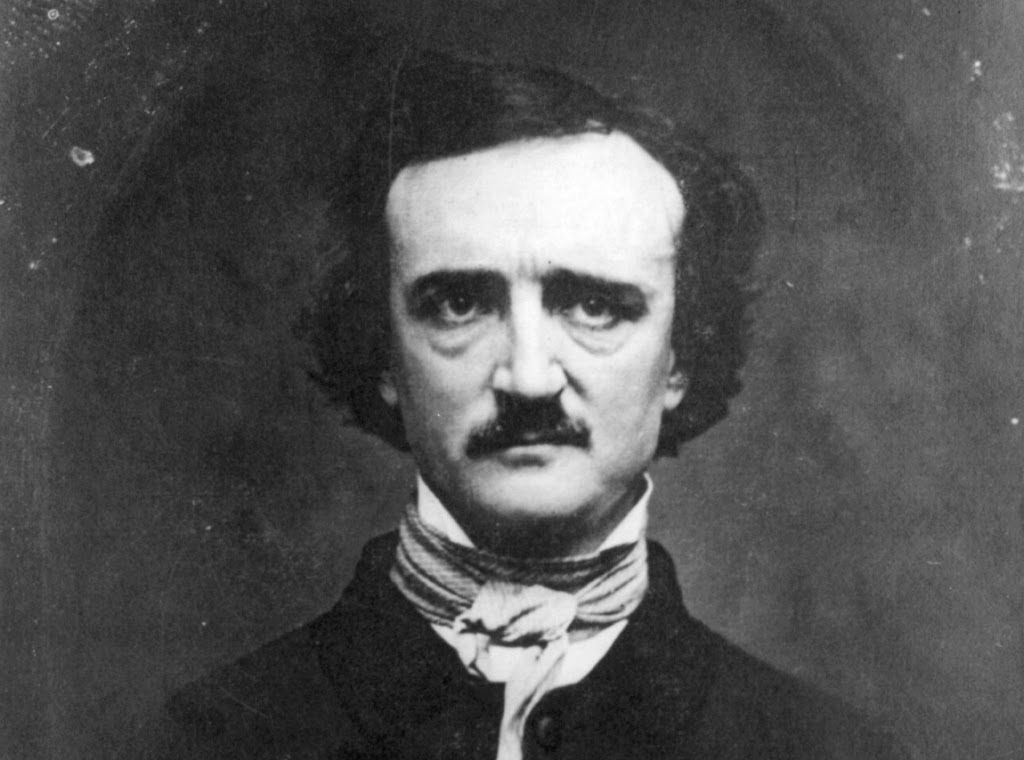
The murder inspired Edgar Allen Poe to write ‘The Mystery of Marie Roget’, changing the names and location but leaving the essential facts intact. But had Poe been paid to write the story by one of the case’s suspects, Mary’s former employer?

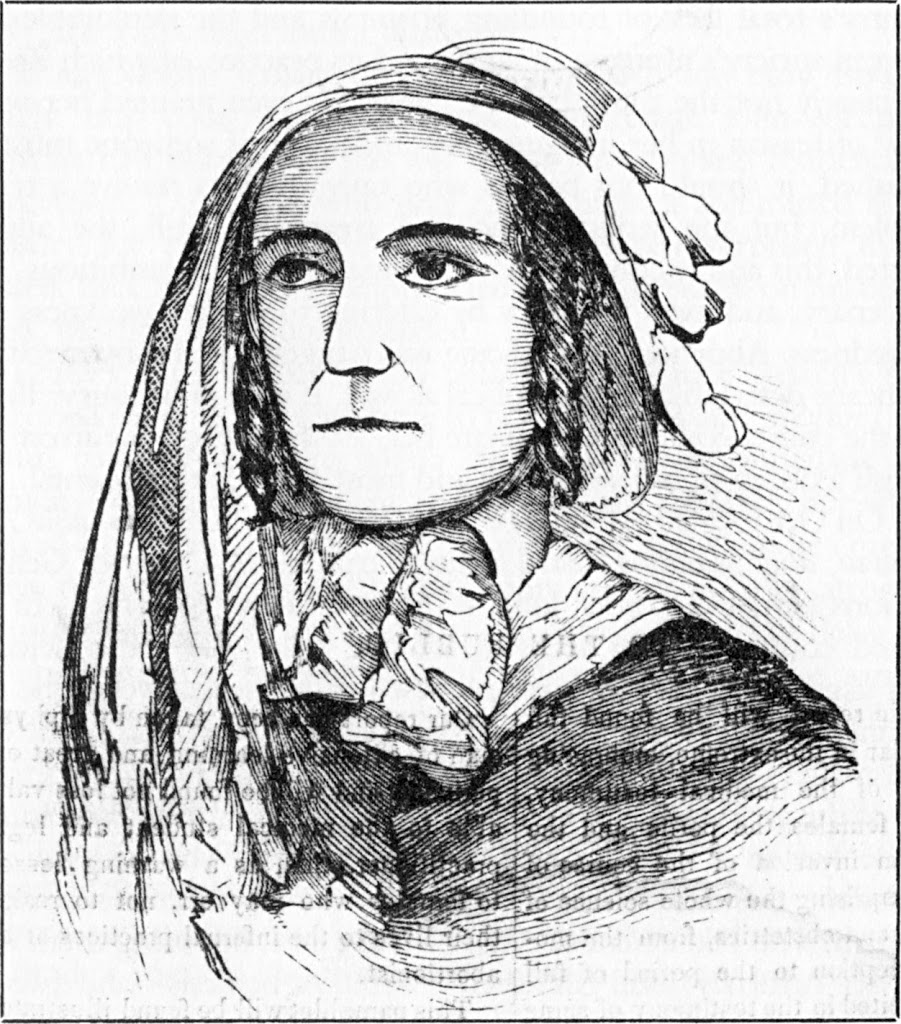
Madame Restell — what role did she play in the disappearance and death of Mary Rogers?

Mary Rogers lived at a boarding house run by her mother that once stood here, just a block from CIty Hall. It was here that Mary met most of the men who later became suspects in the case.

Categories
Uncategorized

Haunted Brooklyn: Meet the sexy Bushwick ghost

While doing my ghost research this week, I came across an amusing article from an 1894 edition of the New York Times, back when ghost sightings might have merited a serious investigation. (Or, in this case, not so serious.)

The location of the haunting was Brooklyn’s 27th Ward in today’s Bushwick area.

After charting out the notion that Bushwick is an ideal place for ghost hauntings — a “rocky, bleak, lonesome district” loaded with cemeteries and empty houses — the article describes the ghost in strangely sensuous terms:

“The ghost which is at present disturbing the midnight rambles … is that of a woman, who goes about in the scantiest attire, with disheveled hair and bare feet, and falls into a fit of hysterics as soon as anyone approaches.”

The ghostly vixen spooked a set of women who ran home to tell their brothers, who then brandished revolvers and set out to, uh, do what? I’m not sure guns work too well with ghosts.

The cocky search party came upon the apparition which “arose from the ground in front of them and waved its long, lean arms an uttered a weird cry that chilled their blood.” The brothers dropped their guns and ran home.

The next night a bolder party of 200 men reportedly went out to the ghost location, around the cemeteries on the Brooklyn/Queens border (between Knickerbocker and Irving avenues).

Having no luck in locating the spirit with the posse, one man braved it alone the next night. He returned home “with a face white with terror.” He had not only glimpsed the spectre, but was privy to a “serpentine dance” and “moaning wail”.

This time, the locals did what anyone would do when faced with supernatural entities — they called the police. Apparently with nothing better to do, the precinct caption dispatched 300 officers, armed with everything from guns to rusty army swords, all in an effort to confront the spirit and, apparently challenge it to a duel. One officer even donned an ill-fitting suit of armor.

Given the dramatic response, it is no surprise that some officers remained skeptical. The theory of one officer Holliday: “I’ll tell you what I think it is. I think it’s whisky….it will make a man see anything — ghosts, snakes or anything else.”

The entire area was covered by dozens of armed ghost hunters. However, as the New York Times drolly states, “three or four times there were cries that [the ghost] was coming, but it didn’t come.”

It is then decided that police might has not only scared away this ghost, but has rid all of Brooklyn of any spectral activity.

“There used to be ghosts in Brooklyn but since Superintendent Campbell took charge of the police department they have all been driven away.” He fears Brooklyn’s impending consolidation with New York, for “anti-ghost orders would be rescinded and our streets would be haunted day and night.”

But it appears that didn’t happen when the consolidation with New York came in 1898. Really, when’s the last time you’ve seen a ghost in Brookyn? Hmmm?

You can read the entire article in all its glorious tongue-in-cheekness here.

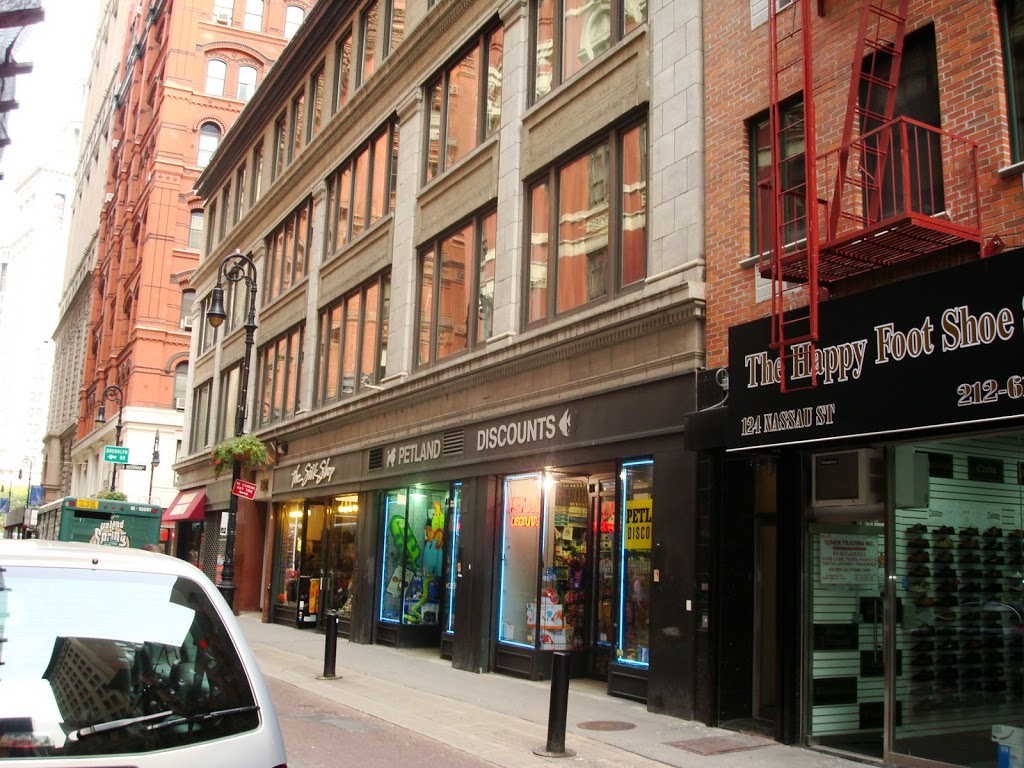
The location of this scantily dressed spirit was right around here:


View Larger Map

Categories
Mysterious Stories Podcasts

PODCAST: Spooky Stories of New York

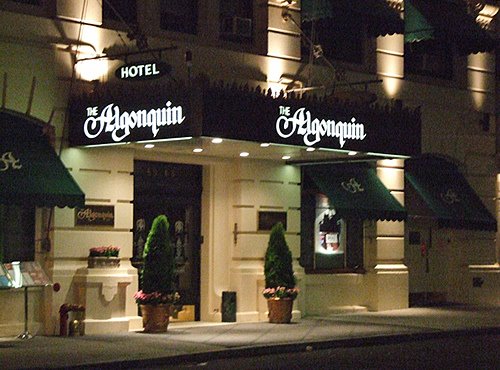
The Algonquin Hotel: the hippest haunt for the dead writer set

By popular demand, we return to the creepier tales of New York City history, ghost tales and stories of murder and mayhem, all of them at some point involving great American icons — Alexander Hamilton, P.T. Barnum, Dorothy Parker and Mark Twain.

Listen to it for free on iTunes or other podcasting services. Or you can download or listen to it HERE

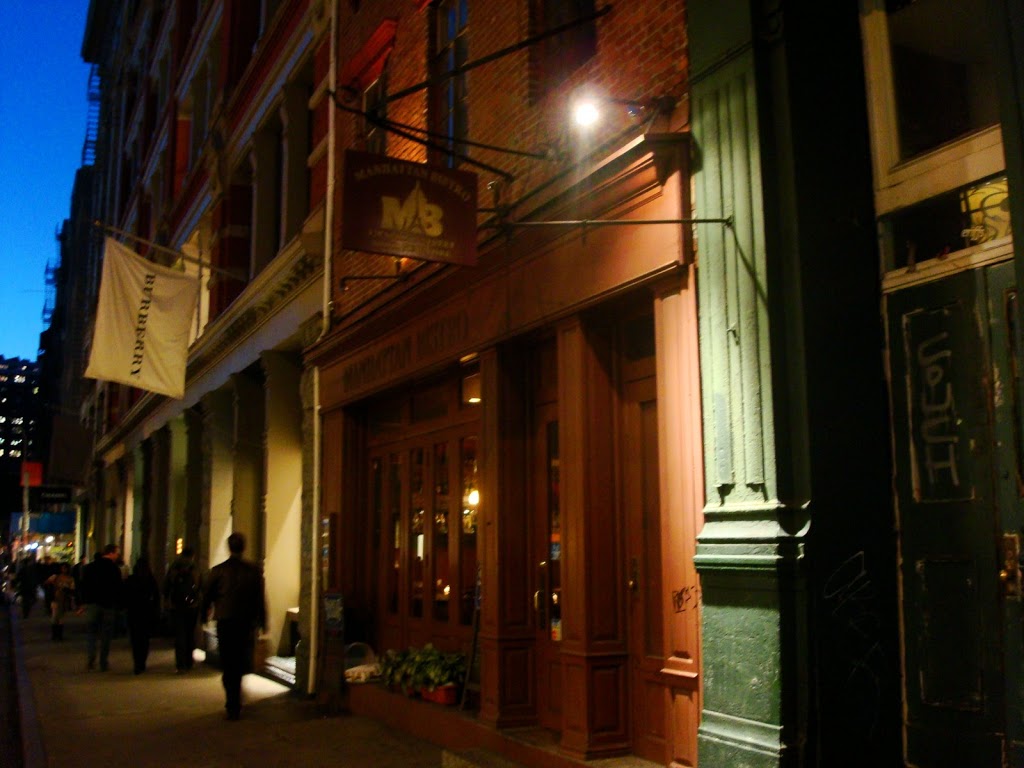
The Manhattan Bistro in SoHo hides a ghastly secret behind it — site of the Manhattan well, and the murder of Elma Sands

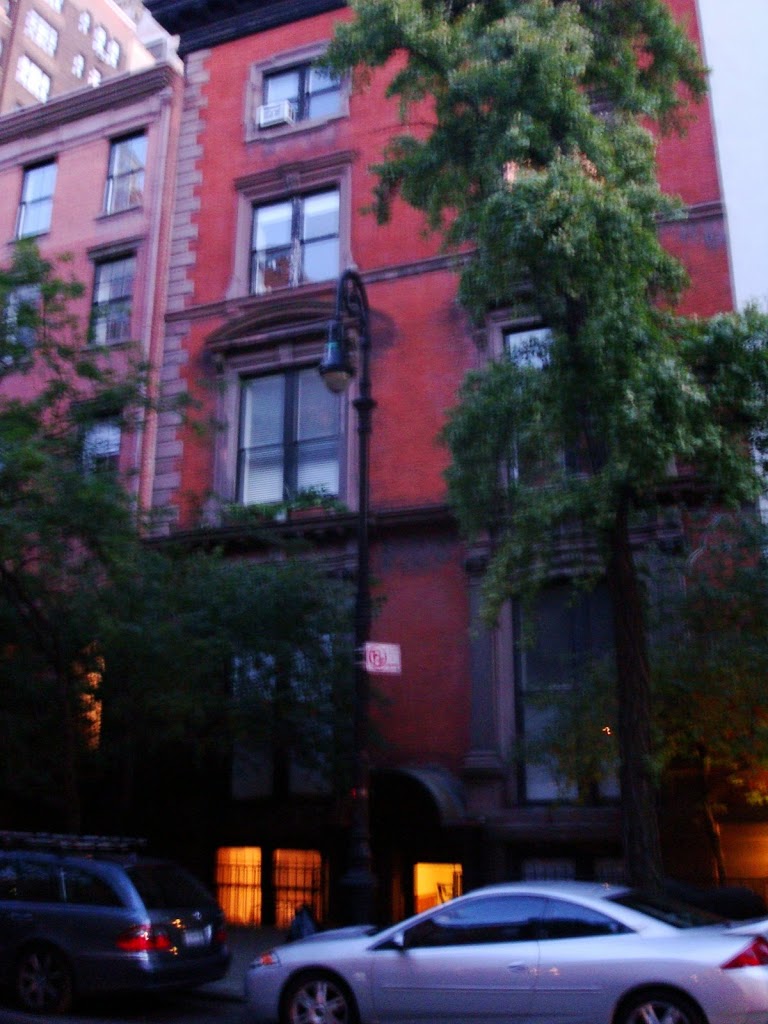
14 West 10th Street, the most haunted brownstone in the Village

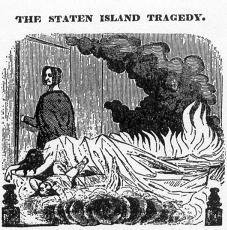
A macabre newspaper depiction of Polly Bodine, the ‘Witch of Staten Island’, fleeing from the burning bodies of her victims Emeline and Ana Eliza Housman

Our Ghost Stories of New York podcast from last year:

Starting next week on iTunes, our old episodes will be available for download, re-edited and with far great audio quality. Look for the feed titled ‘Bowery Boys Archive’ on Tuesday.

John McKane: the original ‘maverick’

I should preface this to say, out of fairness, I looked through the annals of New York City history for scandalously corrupt politicians named Barack Obama, Sarah Palin and Joseph Biden, but could find none.

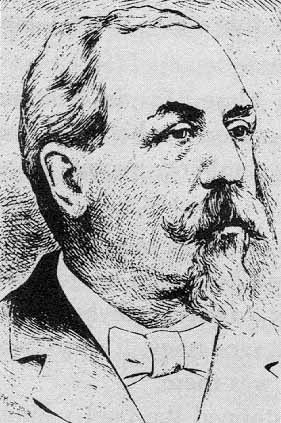
John McKane was one of the most important figures in the history of Coney Island, in much the same way William ‘Boss’ Tweed shaped the fortunes of Manhattan. Both used greed and Tammany Hall connections to their advantage, manipulating the police force to do their bidding and cooking the books to pad the pockets of himself and his cronies.

Coney Island was governed by the town of Gravesend, in the 1870s not yet a part of the growing city of Brooklyn. Dutch farmers mostly made up the town’s population until mid-century when new Irish immigrants settled here. McKane was born here in 1841 and would spend most of his life turning it and nearby Coney Island into a magnet resort area. (Unlike the later man with the same name, McKane lied to get out of military service, in this case, the Union Army.)

At first McKane was an honest politician, literally working his way from a Sunday school superintendent to town constable in 1867. From this vantage he could gauge the reactions of stubborn local farmers, who looked with disdain at the growing crowds from the city travelling to the new resorts sprouting up around the beach. Far from thinking the encroaching city folk a stain on their bucolic lands, McKane saw opportunities for expansion and profits.

Two years later, he was Gravesend’s commissioner, and with the help of town surveyor William Stillwell (whose family name still graces an avenue here) allowed developers to swarm into town and into the common lands near Coney Island — but not without jacking land prices, sometimes three times their normal value.

Obviously, prosperity in the 1860s and 70s came with strings attached — namely, abeyance to the powerful Democratic machine Tammany Hall. John McKane paid homage to the Democrats, then mastered their system of bribes and kickbacks from businessmen and land developers. At first, the local farmers and leaseholders were pleased with the results until it became obvious that McKane’s own pockets were swelling from kickbacks, granting him absolute power over every building project.

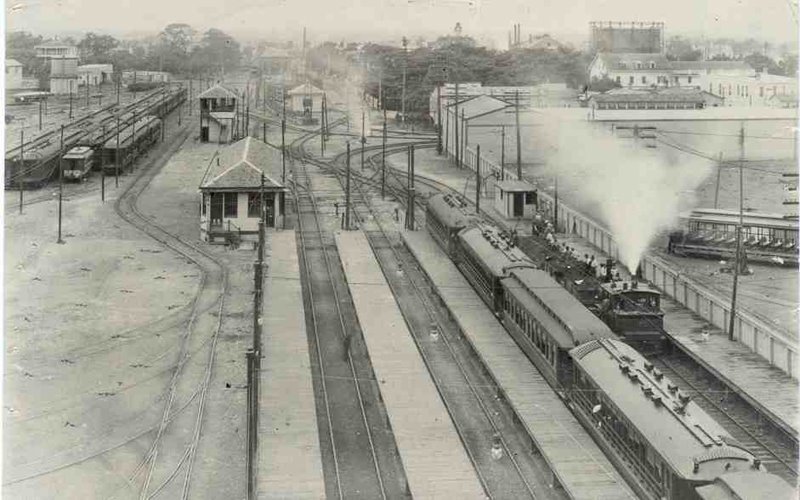
Below: McKane obviously encouraged railroads to terminate at Coney Island and sold off all the land around the Culver terminal

The final straw came when McKane engineered an absurd land grab for wealthy developer Austin Corbin, filling a council meeting with cronies and selling Corbin the area of Breezy Point (originally valued in some accounts at $100,000) for $1,500. McKane certainly received far more of that directly from Corbin for maneuvering such a deal.

McKane created his own the police force with himself as police chief, frequently seen on the beach, gigantic club in hand. Rigging elections, essentially becoming a mini-Tweed, McKane helped destroy the agricultural community of Gravesend and turned Coney Island into a garish tourist trap. He proffered licenses to anybody who wanted them — saloons, brothels, dance halls. Coney Island’s sometimes seedy reputation today was borne out of McKane’s blind eye. He even admitted “houses of prostitution are a necessity in Coney Island.”

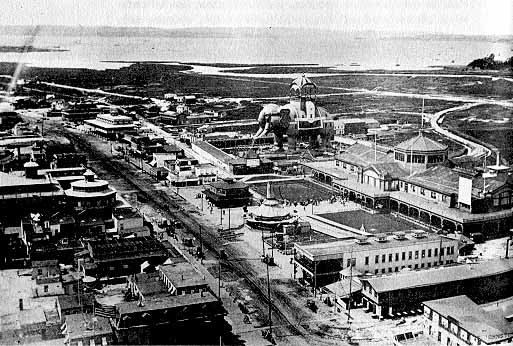
By the end of his reign in the 1890s, Coney Island resembled this:

McKane somehow managed to avoid conviction throughout the 1880s despite several attempts by the New York state legislature. He was finally convicted in 1893 after refusing to turn clearly phony voting tallies over to the Brooklyn Supreme Court. He was thrown into prison for six years but was released in time to see Brooklyn incorporated into New York City — and Coney Island become the world’s leading center of amusement, spectacle and vice.

He died in 1899, notably less wealthy but still a Coney Island landowner on the cusp of its golden age.

Two East Village cemeteries open their gates

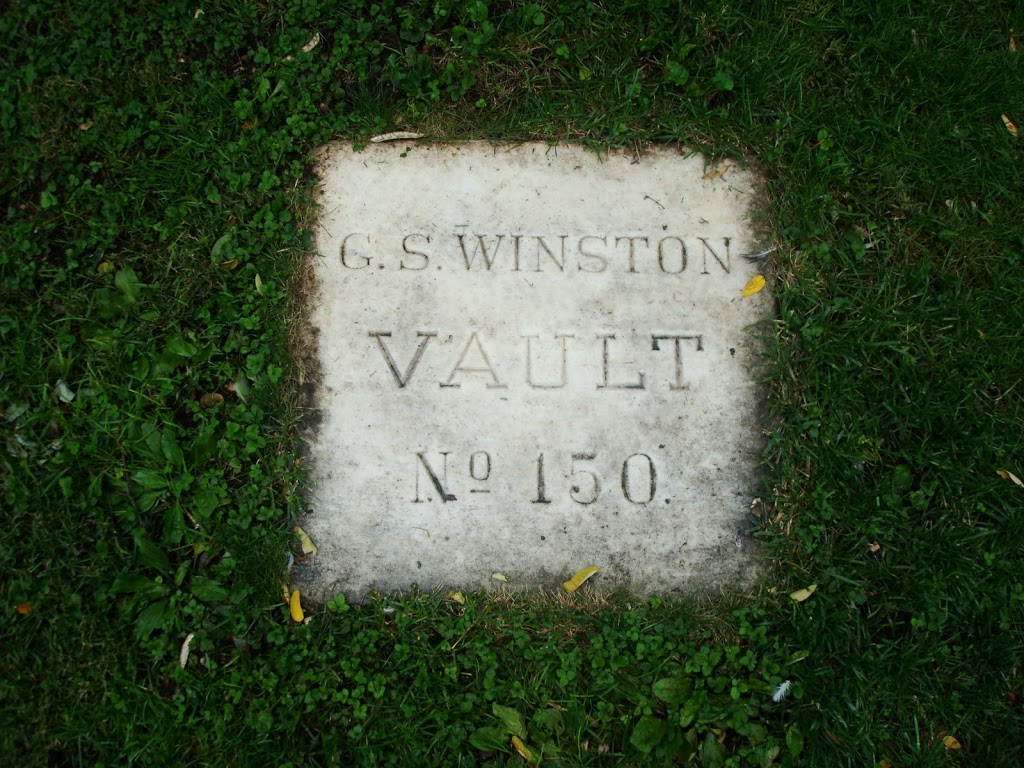
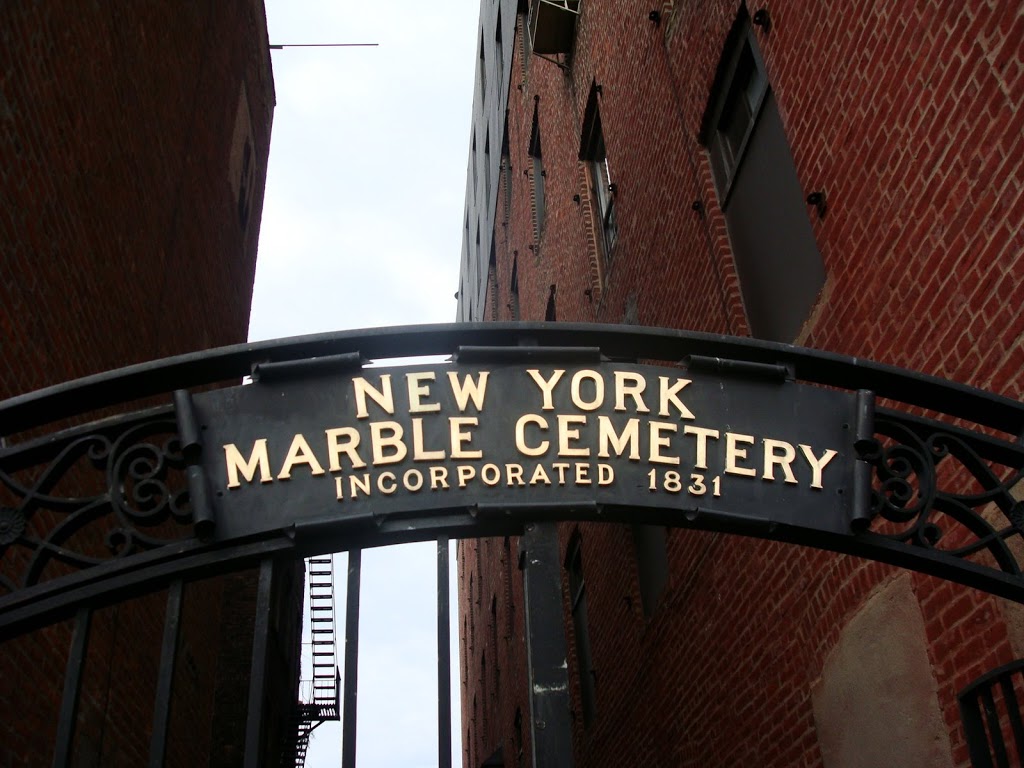
From the New York City Marble Cemetery

Two rarely seen artifacts of the East Village swung open their iron gates this weekend for Open House NY, New York’s two oldest cemeteries — the New York Marble Cemetery and the New York City Marble Cemetery. (Yes, you read that right.)

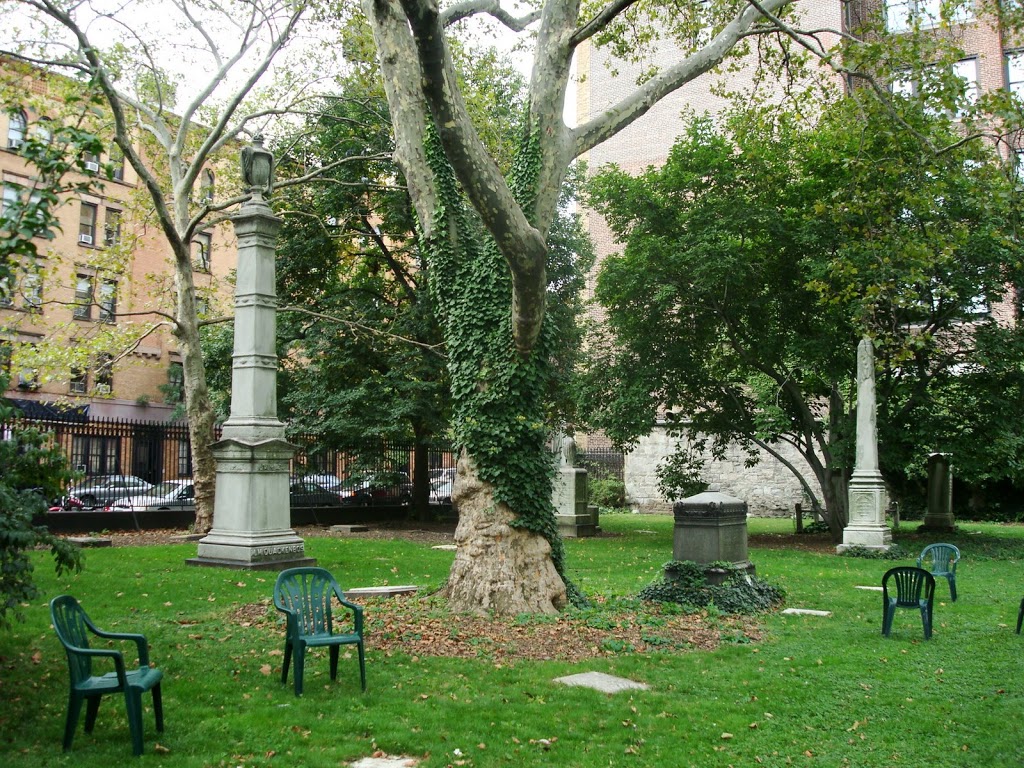
In a few respects they are the Paris and Nicole of ancient burial grounds — virtually identical and marked with occasional rivalries — however these unique New York landmarks are literally all depth, little surface. For below the serene, manicured lawns of both places lie the crypts of hundreds of 19th century New York’s leading families.
Before Green-Wood became the fashionable place to rest in peace, wealthy New Yorkers were lured to very first marble cemetery, opened in 1830. Unlike a traditional church cemetery, the New York Marble Cemetery (still listed at 41½ Second Avenue) was strictly a profit-generating venture of Perkins Nichols, who with a board of trustees purchased farmland funded by families already lined up to buy underground vaults.

Threats of disease during the early 1800s forced city officials to ban burials in lower Manhattan, below Canal Street. One of Nichols appeals was the Tuckahoe marble used to make the vaults; it was believed that disease was spread from traveling miasma which emanated from dead bodies, however the sturdy marble was believed to contain this effectively.

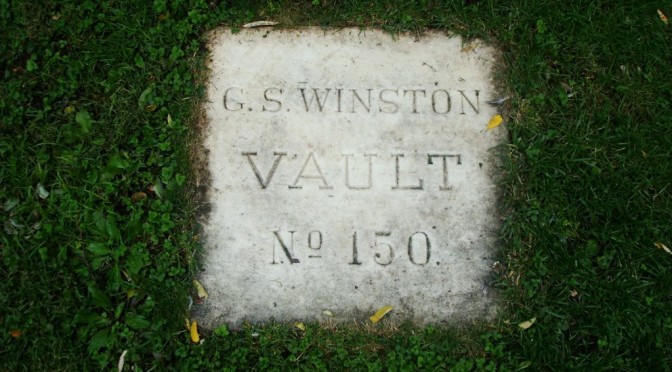
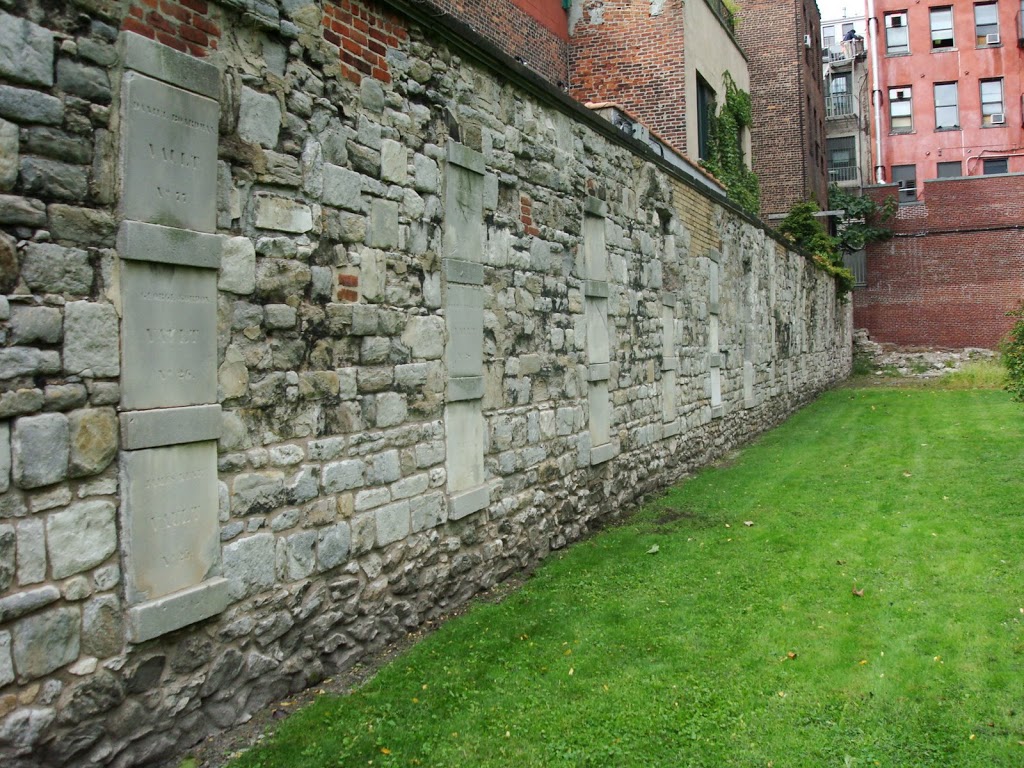
At $250 a pop, families could book themselves at this “Place of Interment for Gentlemen,” which eventually housed 156 vaults. The cemetery appealed more to rich merchants and businessmen, as old moneyed families usually had their own family plots at their country homes. Today it looks like an out of place backyard with fresh green grass and a few trees. Vault markers are placed on the walls surrounding the lawn.

At the New York City Marble Cemetery a block away, the vault markers are affixed into the earth, sharing space with a few traditional grave markers. Trustees hired Nichols to open this plot a little less than a year later, in 1831, due to the success of the original. Not only is it a little larger — with 258 vaults underfoot — but it’s readily viewed from Second Street through the bars of some very rustic iron gates.

Although New York Marble Cemetery was first, New York City Marble Cemetery held a loftier roster of permanent residents, including New York Public Library benefactor James Lenox. Who you will no longer find here, however, is fifth president of the United States James Monroe, who was laid here at his death in 1831 and moved back to Virginia in 1858.

Below: the more dramatic New York City Marble Cemetery

Both cemeteries lost permanent inhabitants once Green-Wood opened, with families preferring to relocate their loved ones to the larger, more landscaped setting. In the 1890s, Jacob Riis almost successfully petitioned to have the original marble cemetery turned into a children’s playground, but the plan was later abandoned.

You can find more info at their official websites — Marble Cemetery and NYCMC.

I highly recommend swinging by either next time they’re open. In fact, New York Marble Cemetery, hidden away through an alleyway and thus far more quiet, is even open for parties and events. Who wouldn’t want to throw a wedding reception here?

Categories
Podcasts

PODCAST: Green-Wood Cemetery

Green-wood Cemetery is one of New York’s oldest burial grounds, but its development reaches back all the way to the beginning of Brooklyn’s surprising history — in fact, to the founder of Brooklyn Heights.

Find out why it took an inventive city planner with a funny name, a dead New York icon, and a few errant parakeets to make this place a beautiful, richly historical place to visit today.

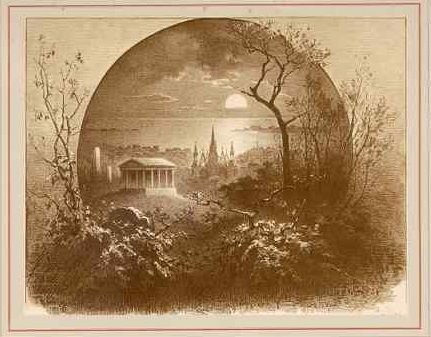
A romantic depiction of Green-wood, with the gate and a serene East River in the background

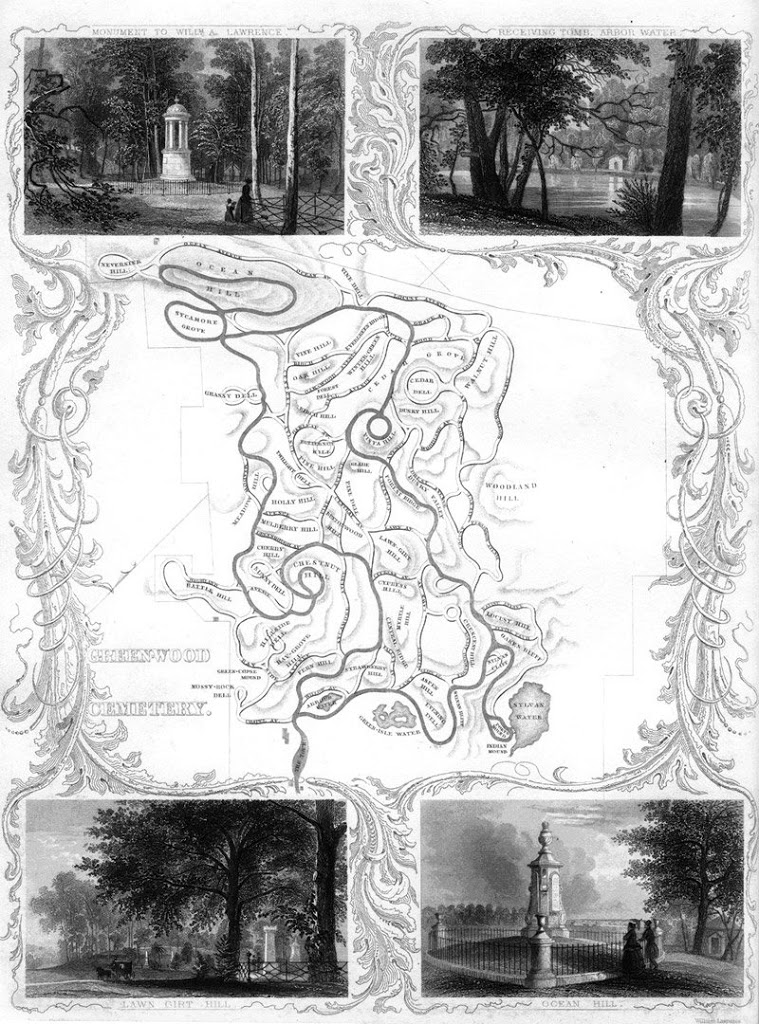
An old, original map of Green-wood. (Click in to see detail.)

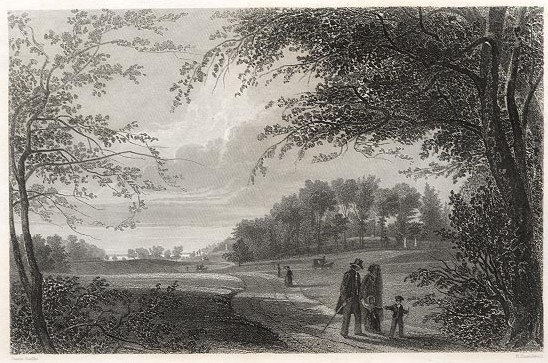
Green-Wood was meant to be a place for the living as well as the dead. In fact, this engraving from 1855, I can’t even identify any gravestones! (Pic courtesy Ancestors at Rest)

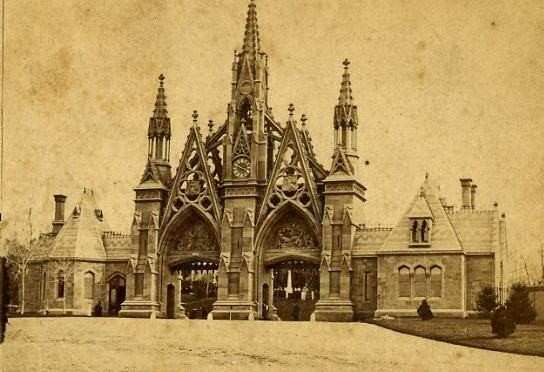
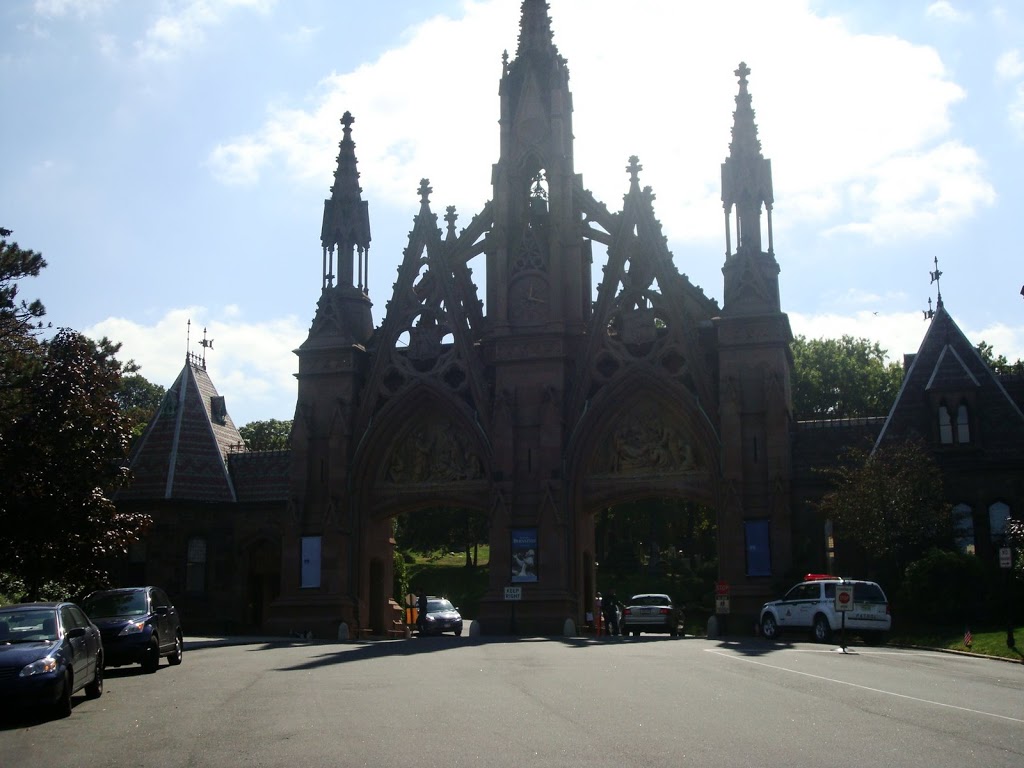
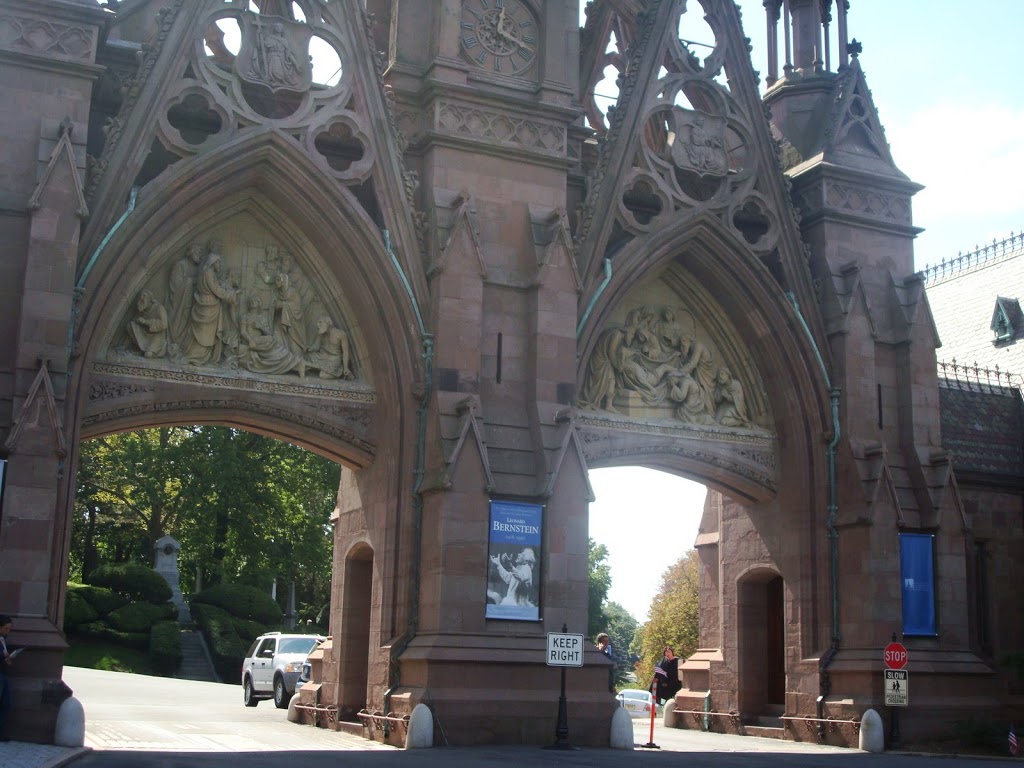
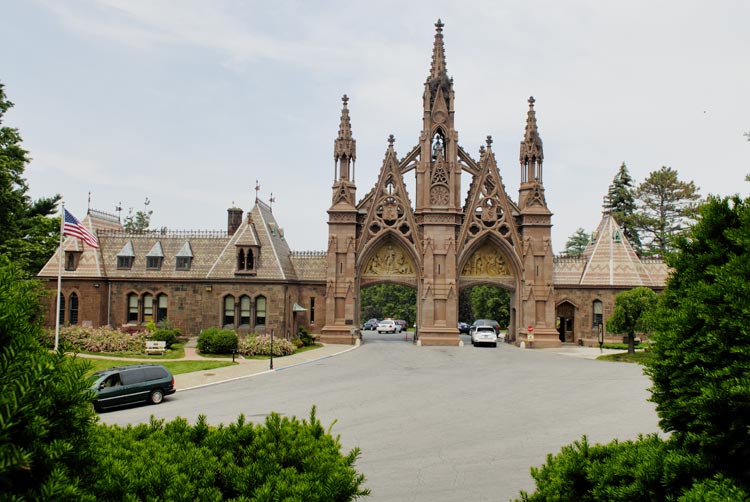
Richard Upjohn’s Gothic revival gate with those two dramatic arches

A great picture of the entire structure (courtesy here)

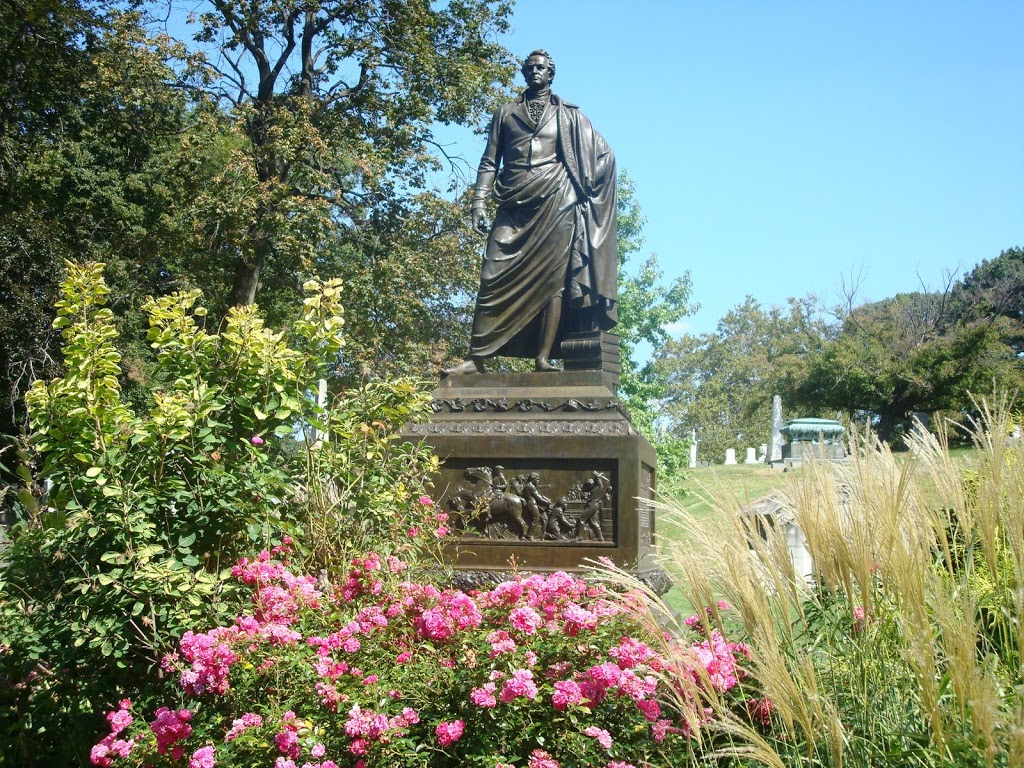
A bold statue marks the spot where DeWitt Clinton was moved in 1844, in an effort to draw the attentions of New Yorkers initially unwilling to be buried at Green-wood

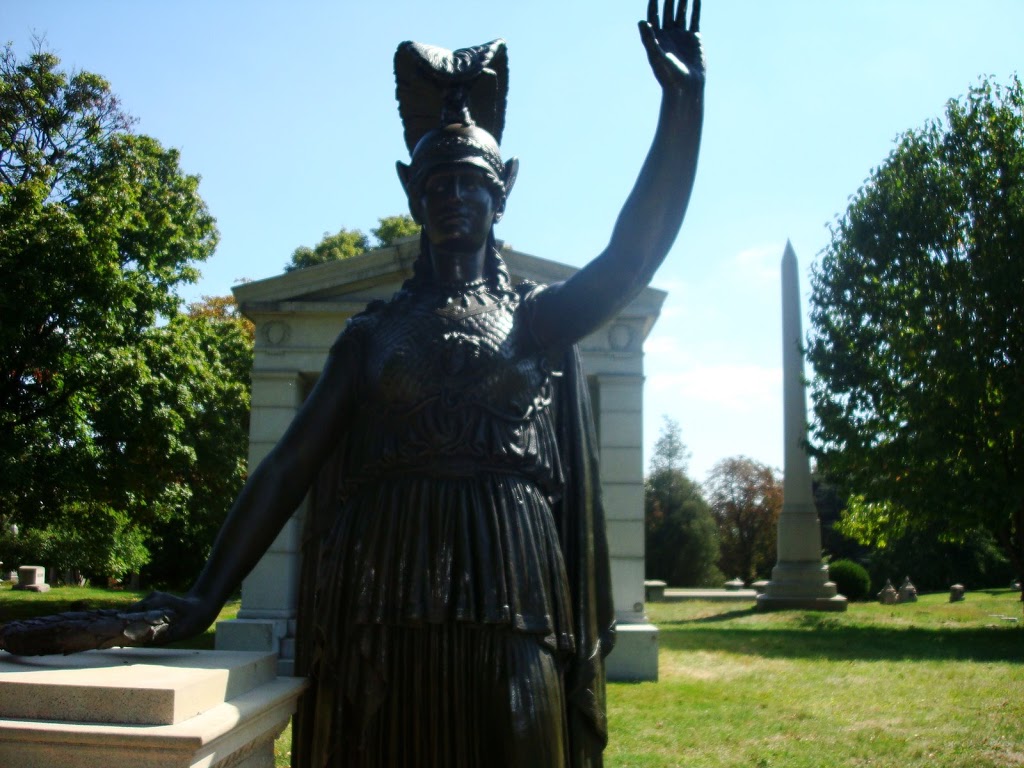
Minverva and the Altar to Liberty, a sculpture erected in 1920 and sculpted F. Wellington Ruxell, faces the East River, and a creative soul could imagine she’s waving at the Statue of Liberty

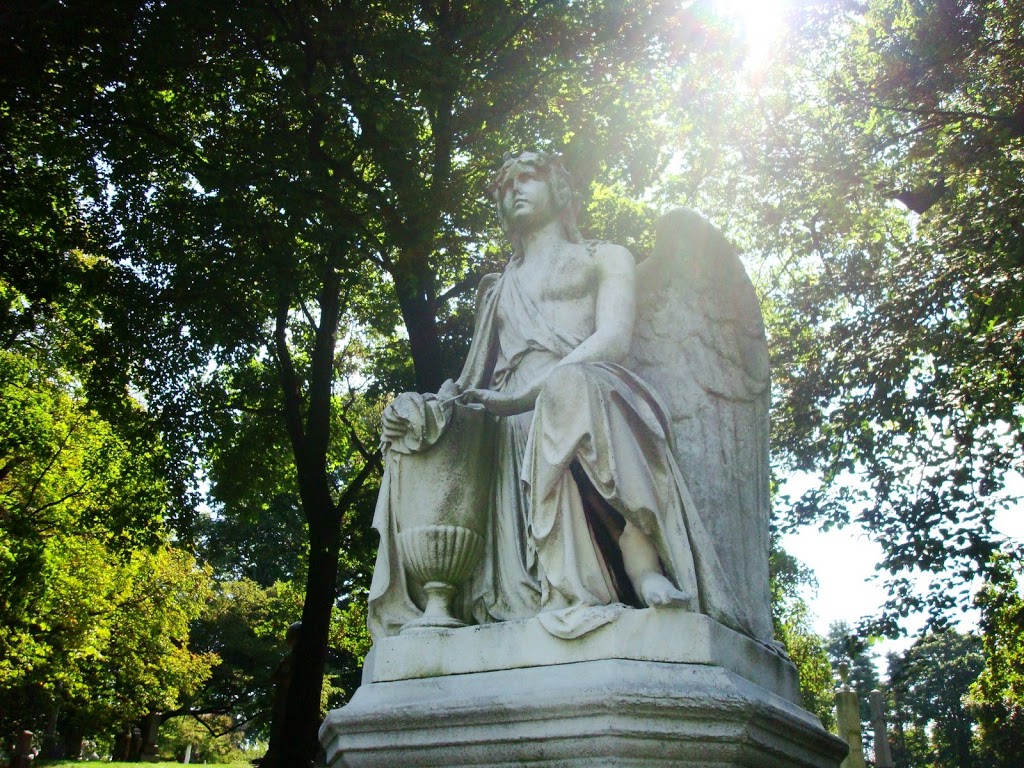
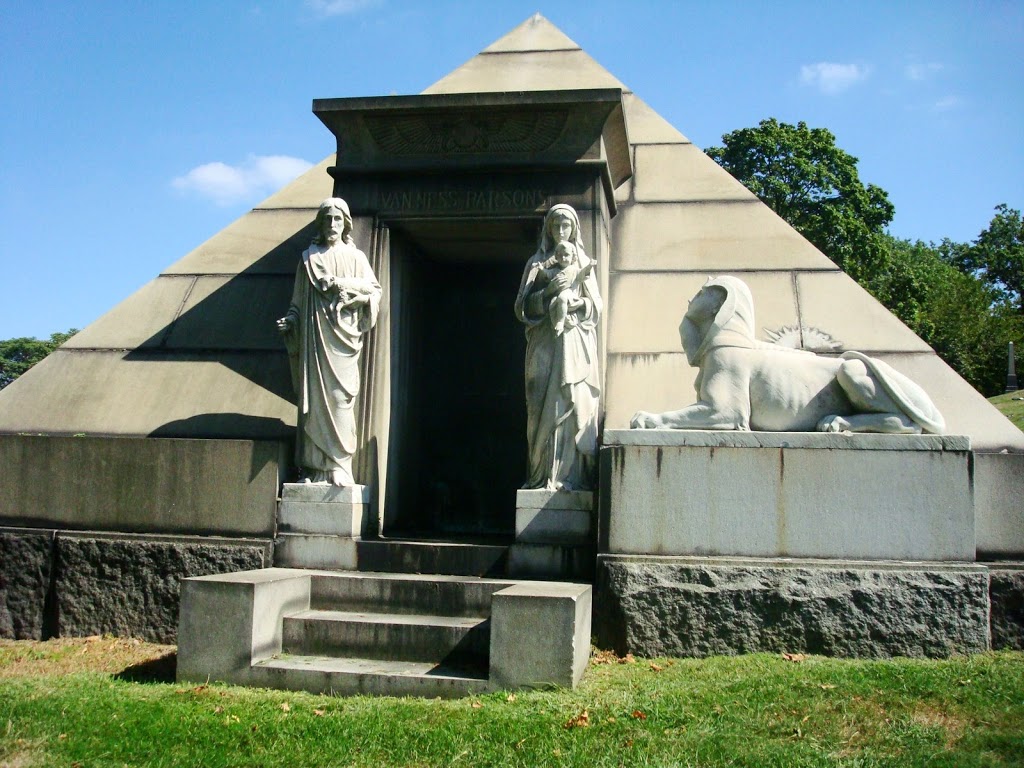
Some spend eternity in ornate, theatrical mausoleums; others are laid to rest in simpler settings.

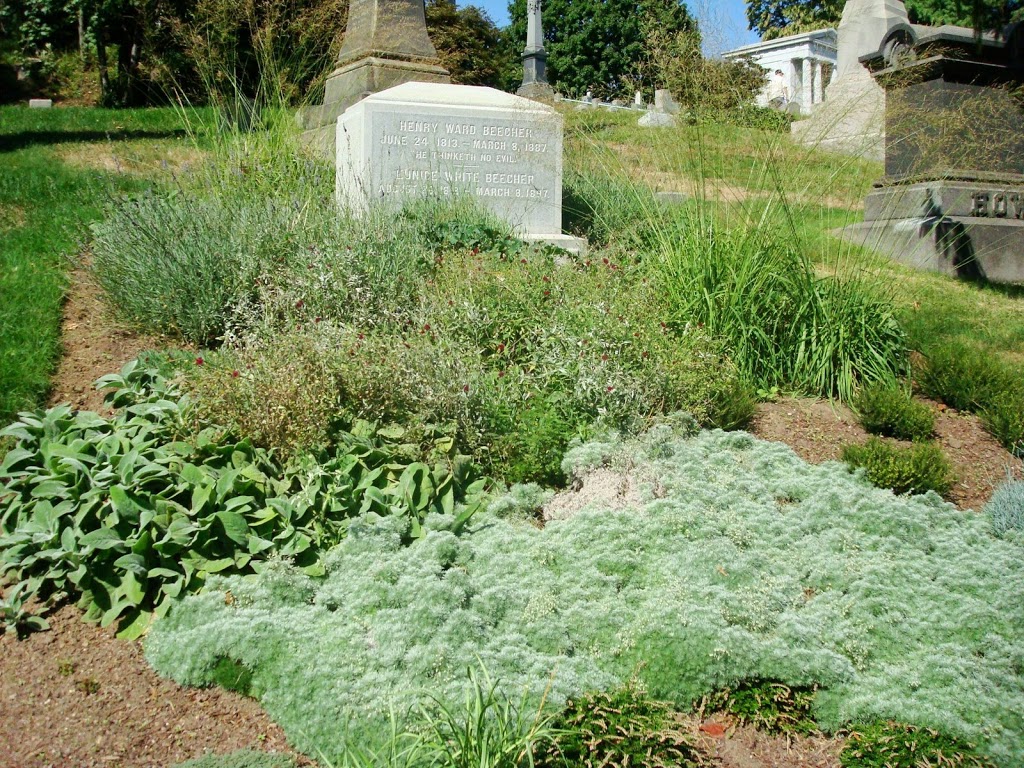
The lush plot of Henry Ward Beecher….

….while a simple stone marks the grave of his mistress Elizabeth Tilden

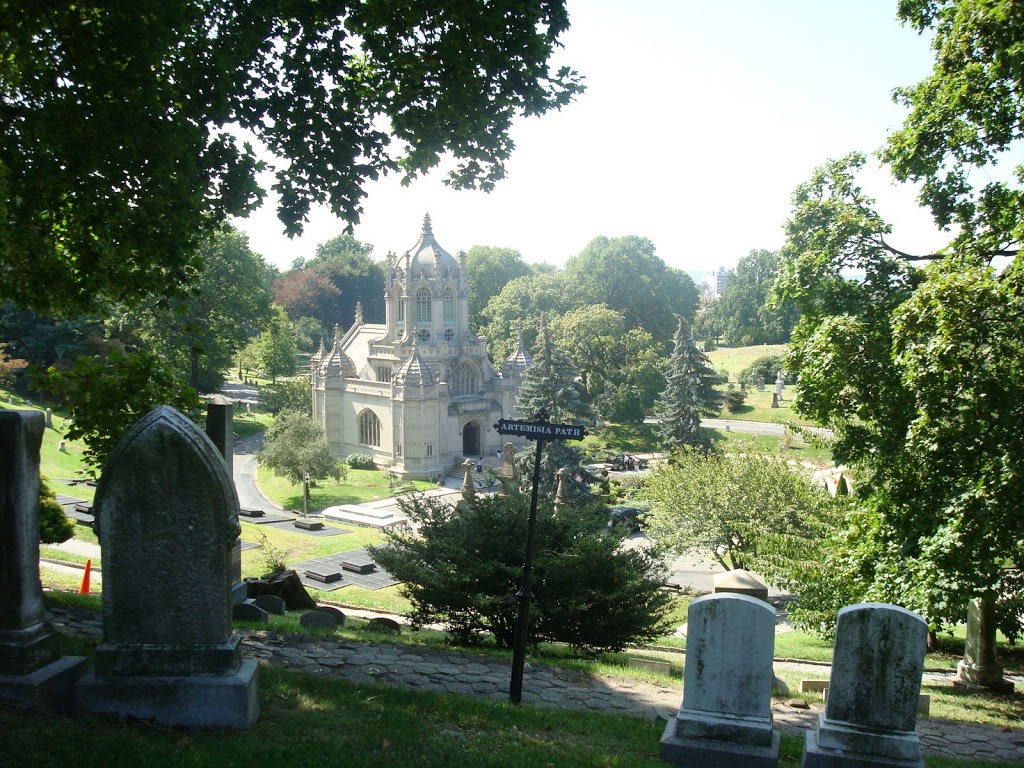
The hilly landscape makes from gorgeous scenery and very winding paths

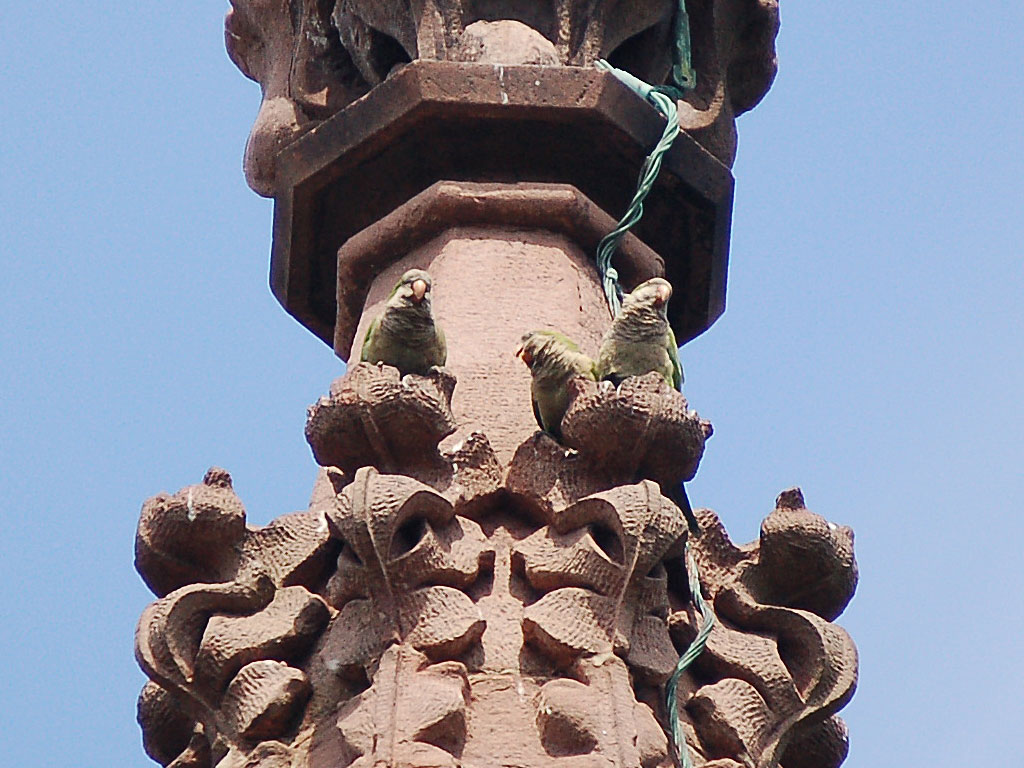
Contrasting the solemn mood at Green-Wood are the flocks of monk parakeets nesting in the Upjohn spires (picture courtesy Brooklyn Parrots, which has a lot of great information the unusual Brookly parrot phenomenon)

Check this out, a great old illustrated book from 1847 of some of the original features of Green-Wood Cemetery.

The official website has more information on upcoming tours and events at Green-Wood. Here’s what’s going on there next Saturday:
“6:15 PM – SATURDAY NIGHT BY MOONLIGHT, FLASHLIGHT, AND FOOTLIGHTS – A WALK. Bring a flashlight, sign a waiver of liability, and you’re all set. This special walk features live accordion music, a visit to the Catacombs, and the light (weather permitting) of a full moon. No reservation necessary. Admission is $20 for the public; $10 for Historic Fund members”

They have great maps at the front gate which indicate some of the most famous residents. You can also try self-guided walking guides by Big Onion and Walking Brooklyn.

There’s also a great new-ish book of photographs by Alexandra Mosca taken at Green-Wood Cemetery, as part of the Images of America series.

Know Your Mayors: James Harper

Our modest little series about some of the greatest, notorious, most important, even most useless, mayors of New York City. Other entrants in our mayoral survey can be found here.

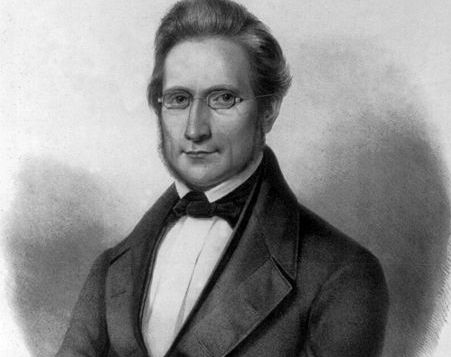
Former New York mayors are all around you. No, Ed Koch is not hiding in your closet — maybe not today — but you can find their names almost anywhere, including your local bookstore. Meet James Harper, the Harper of Harper-Collins, and mayor of New York in 1844.

I think I say this about every decade of New York history, but the 1840s was an especially tumultuous era, thanks to the aftermath of the Panic of 1837, and to the massive influx of Irish immigrants spilling into the city.

Nativism, the form of political xenophobia aimed during this period at the Irish, was rearing its head in state politics in 1841 when Governor William Seward proposed funds be set aside for a parochial private school system for Irish Catholics, who were alienated from regular schools due to the use of the King James Bible. (Separation of church and state? What’s that?)

Opponents formed the anti-immigrant American Republican party and within just a couple years had received substantial clout at the voting booth in New York. In 1844, the time was right for them to propose a mayoral candidate to serve their needs.

James Harper and his three brothers formed Harper and Brothers in 1833, from the print shop of James and his brother John. It wouldn’t be until mid-century that the small but prolific house started producing Harper’s Magazine and Harper’s Bazaar. By then Harper was a well-established and powerful publisher, printing some of New York’s best known authors, including Edgar Allen Poe, Herman Melville and Washington Irving and delivering the first American printings to such books as Charlotte Bronte’s ‘Wuthering Heights’ and Charles Dickens’ ‘Bleak House’.

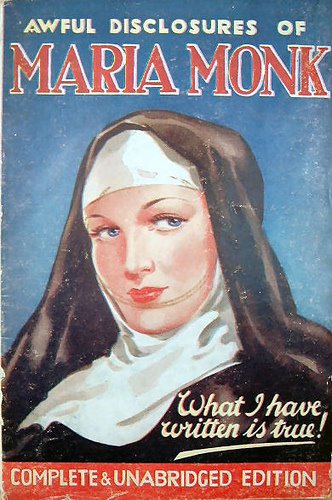
Harper was an ardent nativist, having made his publishing house’s reputation with a salacious (and apparently deranged) anti-Catholic tome by Maria Monk entitled Awful Disclosures. (At right: a 20th century reprinting of Monk’s famous ramble.)

Nominated as a school commissioner in 1842, Harper lurched for the mayoralty two years alter, promising to reform local government of its Irish influence. He had the good fortune of running after an extremely ineffective mayor (Robert Morris) and against two conflicted and split parties (the Democrats and the Whigs). And so, in April 1844, the American Republicans had their first — and only — mayor.
An overly florid 1855 nativist creed — The Arch Bishop: or, Romanism in the United States — describes his victory:

“Mr. James Harper, the American Republican, had triumphed over his opponent who, with the whole foreign vote combined in his favor, stood rebuked and abashed before Liberty’s searching eye.”

The dream was a brief one for Harper. Irishmen on the city payroll were indeed removed, and Harper curtailed liquor sales in the city, including one very dry July 4, 1844. Under his regime, trash-eating pigs were prohibited from wandering the streets. Most notably, he went against the state legislature and formed his own municipal police force, which was abruptly abandoned the following year with the state’s reform — setting up a system of city police wards that would later to be corrupted by Tammany Hall and almost everybody else.
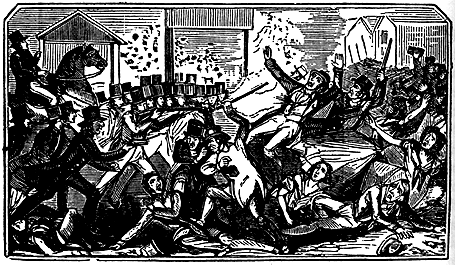
Harper’s whole reform ideology was undermined by an event completely out of his control. Anti-Irish sentiment had swelled in nearby Philadelphia and spilled over into violence, a three day riot resulting in several deaths, the torching of two Catholic churches and the transformation of some Protestant churches into armed fortresses. (Below: an illustration of the violence in Philadelphia.)
It appears the coalition of forces that got Harper elected crumbled under the fear of similar ramifications coming to New York. “I shan’t be caught voting a ‘Native’ ticket again in a hurry,” said George Templeton Strong in 1845, when Harper was swept aside for the newly elected William Havemeyer.

And with Harper’s power went the glue holding together the American Republican Party. Changing their name the next year to the Native American party, the anti-immigrant torch would be relit a few years later with the more successful Know-Nothing Party.

As for Harper, he returned to his publishing business, constructing an impressive empire that lives on today. (Harper merged with Collins in 1990.) Both Harper’s Magazine and Harper’s Bazaar have been in publication ever since.
Unlike many former mayors, who fade into a decidedly non-corporeal legacy, Harper still has an admirable home on Gramercy Park — 4 Gramercy Park West, to be exact — one of the most beautifully preserved buildings on the block. (See below.) He lived here a few years after stepping down as mayor until his death. And he’s buried at Greenwood Cemetery along with many other more influential mayoral luminaries.

True fear on Wall Street: the terror bombing of 1920

Lunchtime down on Wall Street today is chaotic mess of brokers and bankers on cell phones, tour groups, messengers on bikes, police, construction workers, people delivering lunch and the stray old lady walking her dog.

Eighty-eight years ago, in 1920, it would have practically been the same, sans the cell phones. So it’s particularly disturbing how easy it is to imagine the noontime scene on September 16, 1920. In fact, most of the surroundings — the Stock Exchange, the Sub-Treasury building (today’s Federal Hall), and most importantly J.P. Morgan’s headquarters on 23 Wall Street — are still very much active.
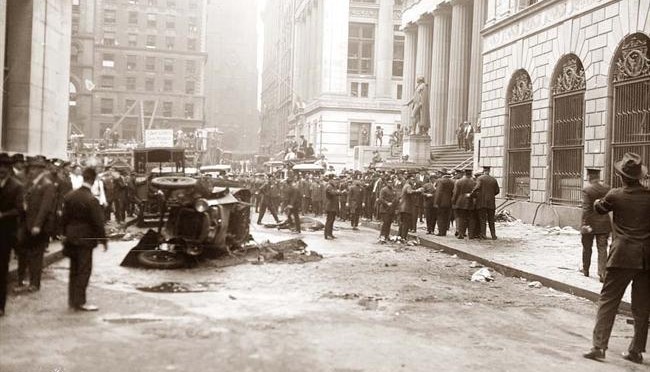
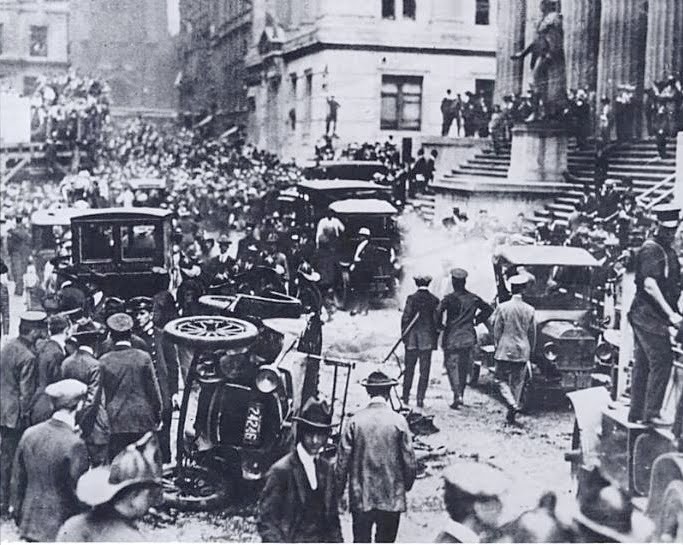
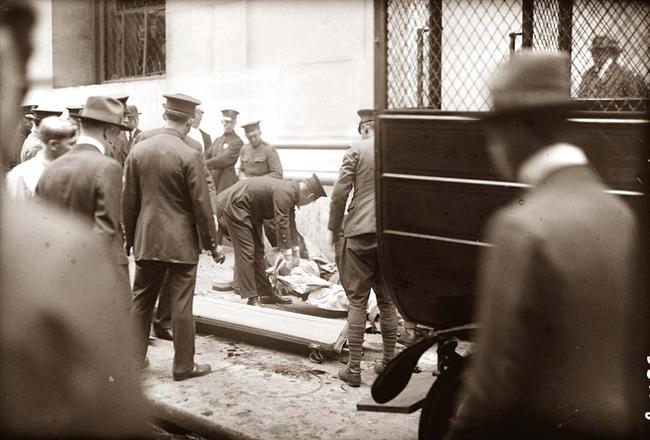
An unidentified man led a horse and carriage down the congested street, fighting to get past crowds, until it rested at the corner about 100 feet east of Broad. As the Trinity Church bells rang, the man dropped the reins and fled, never to be seen again.
One minute later, the wagon exploded with 100 pounds of dynamite, eradicating everything in its sphere, then sending dozens of iron slugs through the air to create a horrific scene of carnage.  I’ll let other sites outline some of the grimmer details, but by the end of the day, 38 people would be dead from the attack, many while sitting at their desks.  And over 400 more would be injured.

Believe it or not, evidence of this attack can easily be seen from the street today.  Morgan famously rejected repairs of his bank, preferring to leave the dents and pockmarks on the side of his building in a sign of defiance. With a little morbid imagination and some amateur CSI work, one can probably trace the trajectory of wall’s injuries to the very spot where the poor horse and wagon exploded.

Despite a federal investigation which led to dozens of arrests, in fact the culprits were never caught.  Largely assumed to be Italian anarchists, any evidence was unfortunately lost when, in an effort to appear unfazed, the city cleaned the street and kept Wall Street open for business the next day, even seeing a rally of thousands pour into the street that Friday.

I’ve just touched on the event, but there are several resources online that look into the potential perpetrators, the street scene and the tragic aftermath.

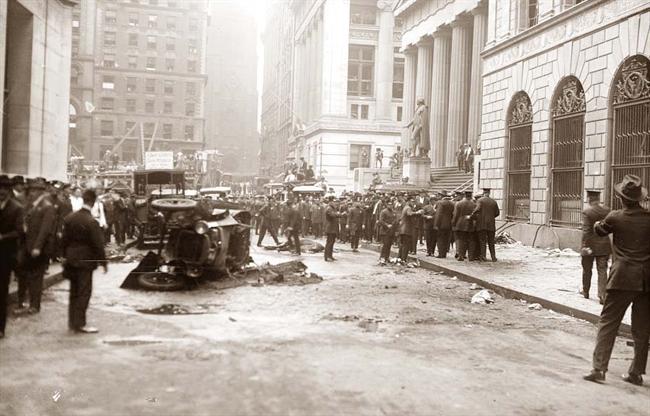
Photos courtesy Old Picture

Categories
Podcasts

PODCAST: New York Stock Exchange

We steal this week’s topic straight for today’s headlines! We look at the early days of New York finance and the creation of the New York Stock Exchange, beginning with Alexander Hamilton, some pushy auctioneers, a coffee house and a sycamore tree.

And find how this seminal financial institution ended up in its latest home — that beautiful, classically designed George Post building, with a marble goddess on top who was almost too heavy for her own good.

Listen to it for free on iTunes or other podcasting services. Or you can download or listen to it HERE

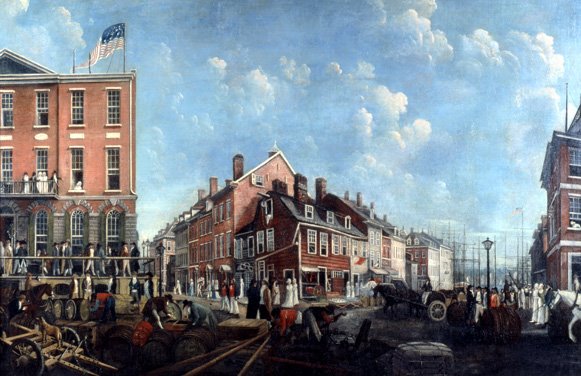
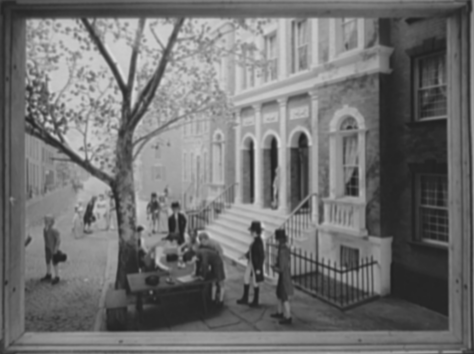
The streets and ports of New York in 1790s, setting for America’s first financial crisis and the birth of the New York stock trading system. At the far left is the Tontine Coffee House.

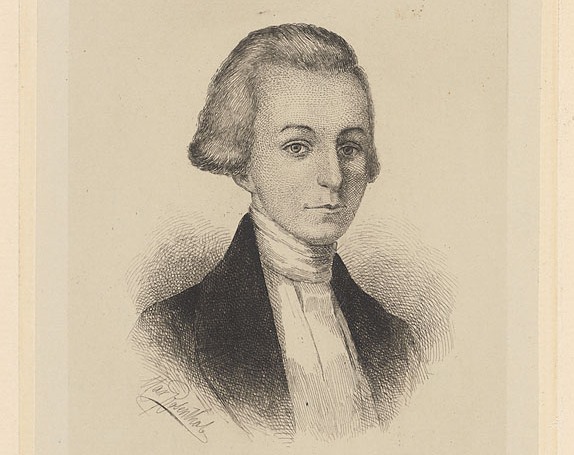
This slight little man is William Duer, former assistant secretary of the treasury, whose shiftless manipulation of the early American financial system got him thrown in debtors prison for life

An illustration of the Buttonwood Agreement, which formed the loose collection of brokers who would form the New York Stock Exchange

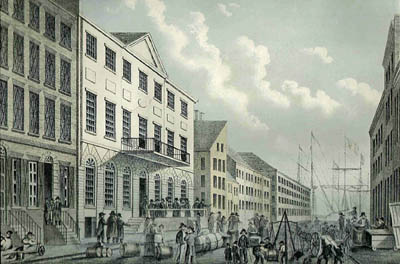
The Tontine Coffee House (that building with the balcony) where the stock market meets a good coffee bean

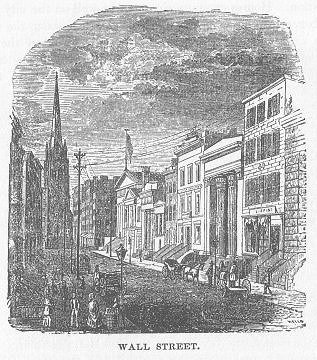
A sketch of Wall Street in the mid 19th century. (You can see Trinity Church and a hint of Federal Hall to your left.) The Stock Exchange headquarters floated around from place to place during this period until an elegant Italian Renaissance style building was built for it in 1863

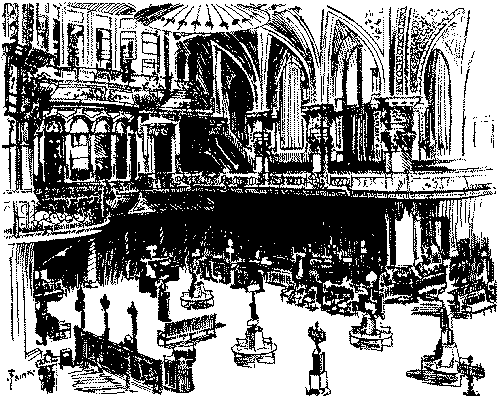
A kind of rough drawing to be sure, but this supposedly depicts the inside of the trading floor from the 1863 building. Sorry to say I couldn’t find any images of the outside, but the John Kellum designed building sounds like it was a beauty.

Another illustration of the new Exchange itself, taken from a membership note

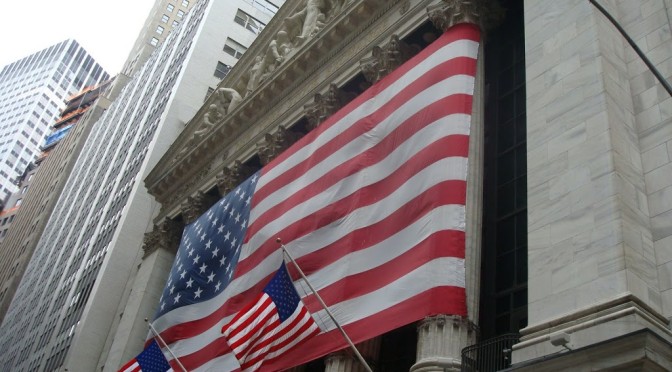
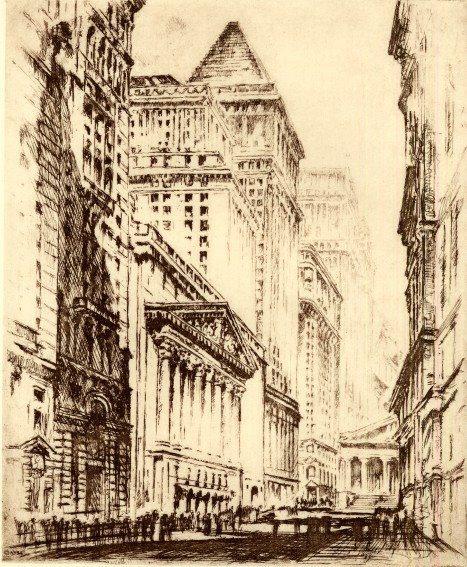
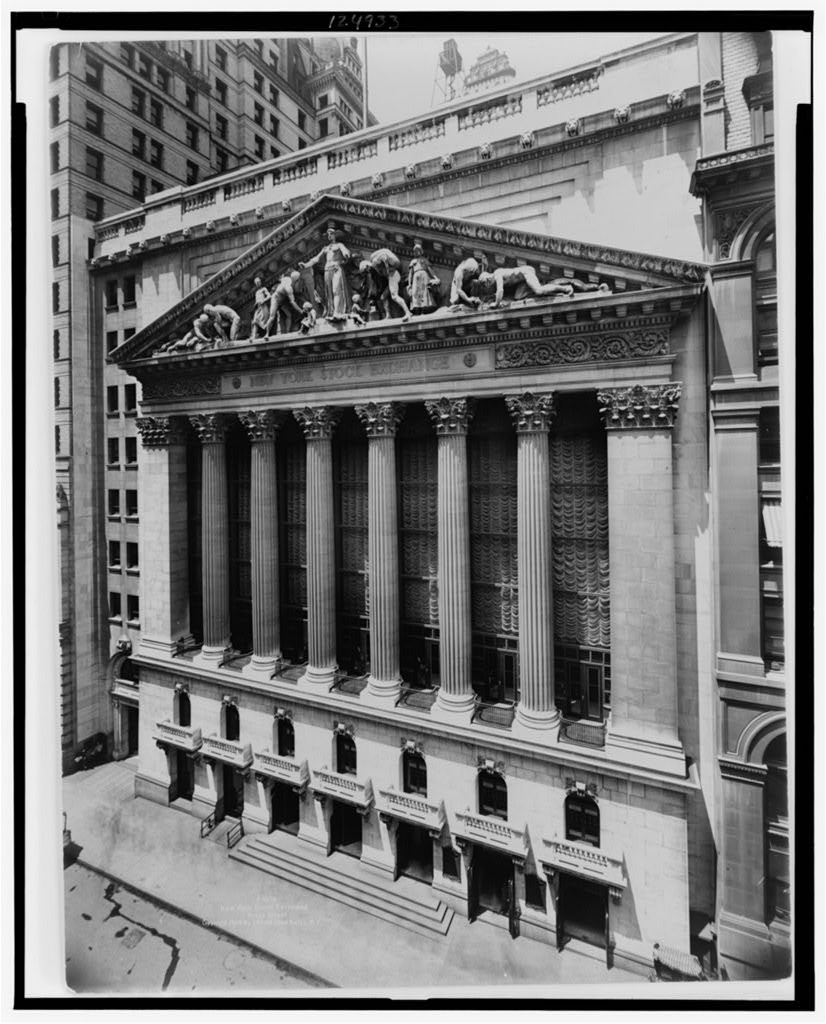
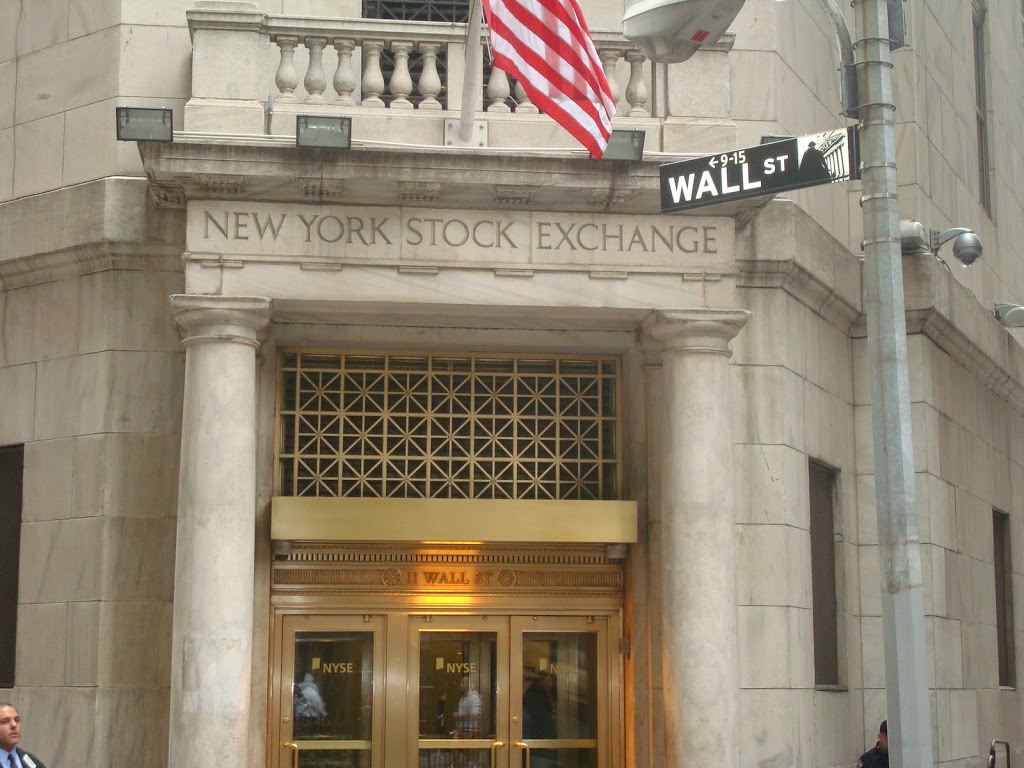
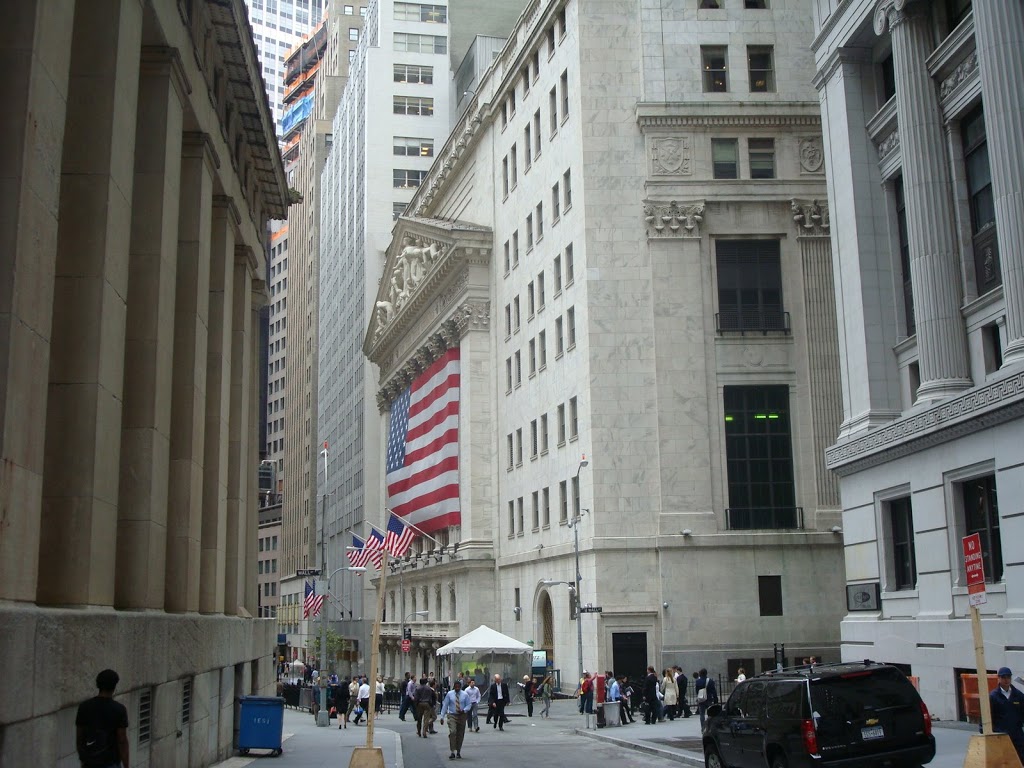
George Post’s masterful Stock Exchange building, mustering up his finest Beaux-Arts instincts in ways that created a solid, powerful structure for an institution sometimes without such stability

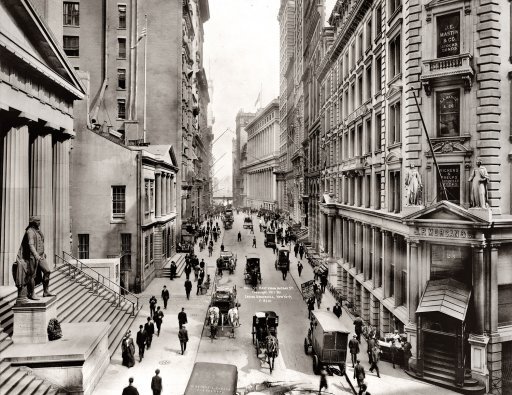
Looking down Wall Street in 1911. By this time a “financial district” was firmly in place as bank offices, brokerage firms and other moneyed interests flock around the Stock Exchange. (This awesome picture is courtesy Shorpy, quite possibly my favorite website in the world.)

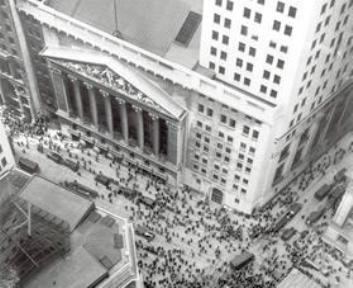
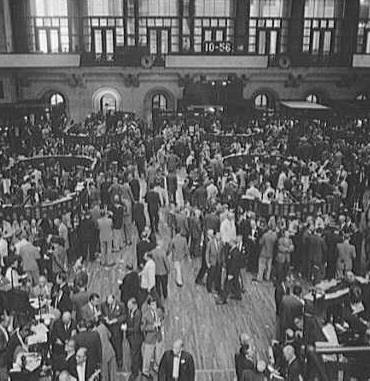
Looking down at the Stock Market as it was crashing in 1929.

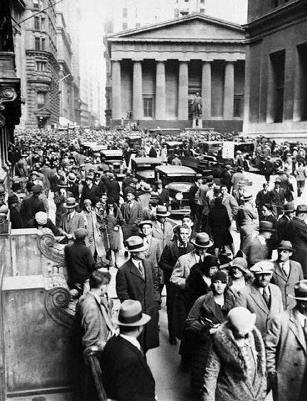
Crowds outside the Stock Exchange, with George Washington looking down from the steps of Federal Hall

The trading floor from the 1950s

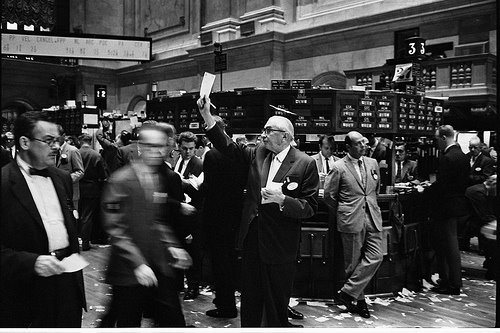
Crazed traders in 1963 (from photographer Thomas O’Halleran)

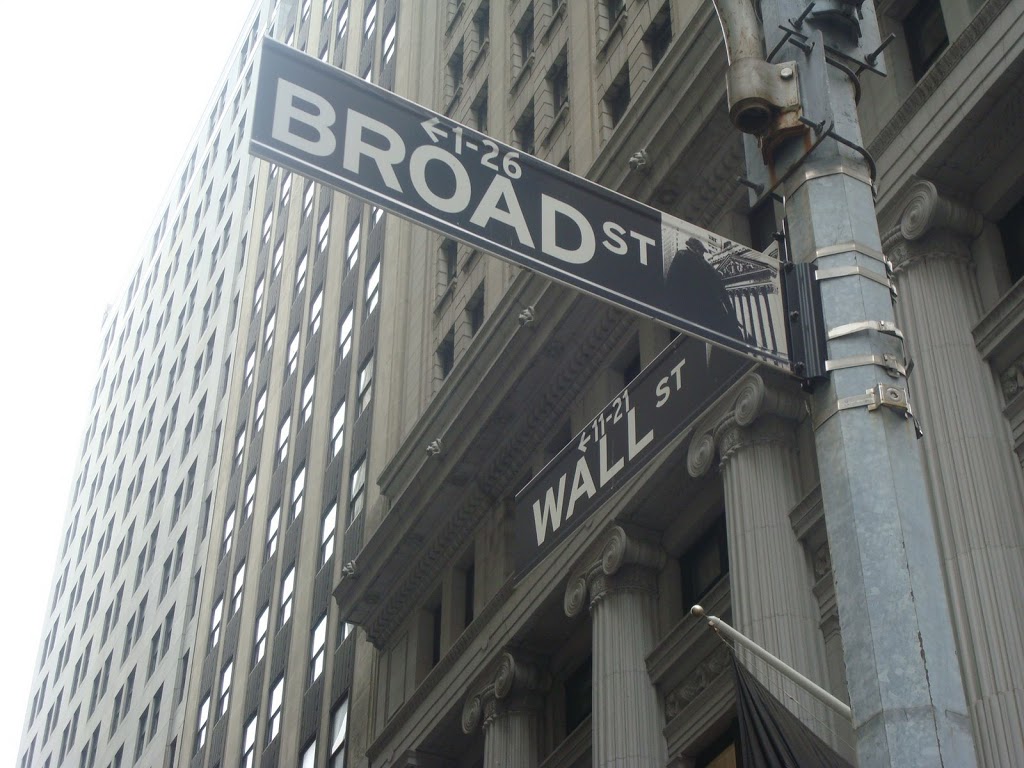
One of the most powerful street corners in the world

Due to the crush of monstrous buildings all around it, the Stock Exchange sits in a virtual canyon

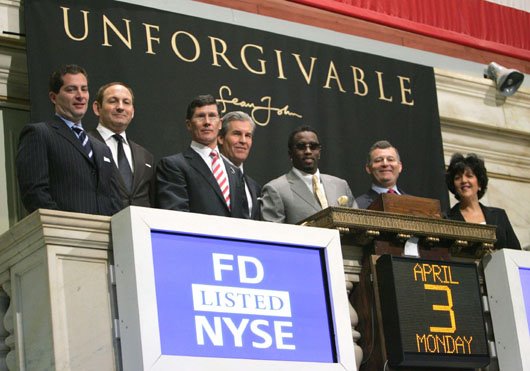
All sorts of people have rang the opening bell at the Stock Exchange, including P Diddy….

…Emeril and Snoopy

Where are you, George Post?

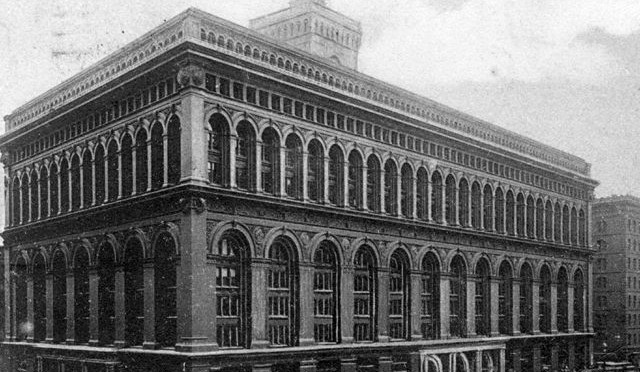
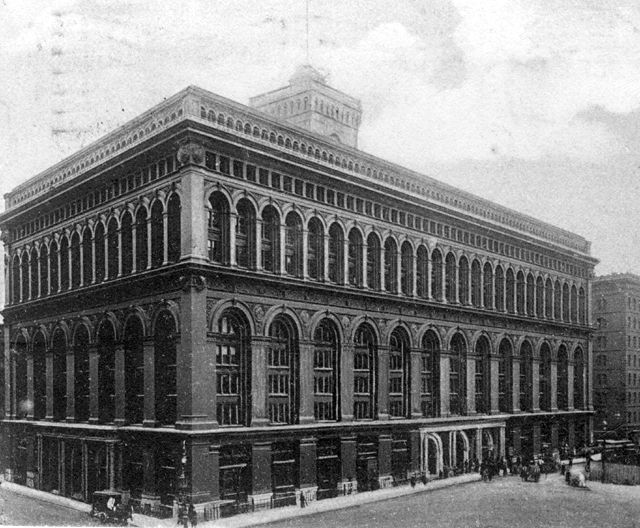
Who knew a produce exchange could look so elegant?

One of New York’s most important architects was George B. Post, but you would barely know it today.

Only a handful of his most important buildings — the New York Stock Exchange being the most famous — still stand, the victim of a rapidly changing city sweeping away the former glories of the Beaux-Arts style.

Post wasn’t your typical purveyor of the sometimes gaudy excesses of Beaux-Arts, that amalgam of classical and formal styles that dictated American architecture from the 1880s into the 1920s. He was known for making its particular beauty climb, refitting its graceful symmetry literally to new heights. Post proved that the merely traditional needn’t be staid and uninspiring. My two favorites of long-gone works:

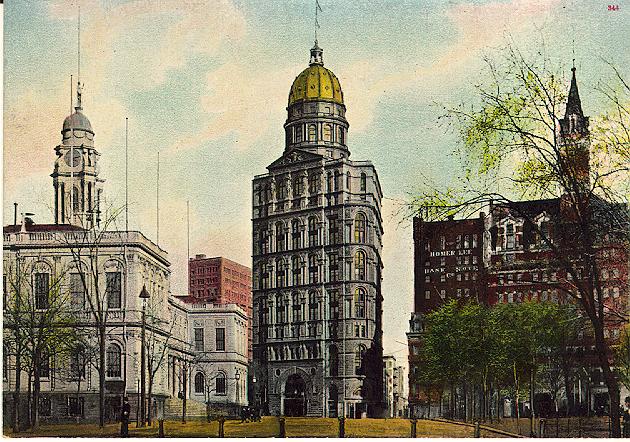
New York World Building

His best known building during his life was the New York World building on Newspaper Row, more appropriate referred to as the Pulitzer building after the paper’s imperious publisher Joseph Pulitzer. It was the tallest building in the world when it was completed in 1890 and was the first building to rise above the spire of Trinity Church.

This was demolished to make way for a car ramp for the Brooklyn Bridge:

(New York Architecture has some more beautiful pictures of this building)

New York Produce Exchange

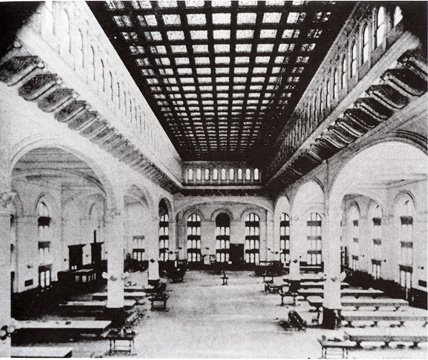
You wouldn’t expect a building made to hold produce to be an architectural marvel, but Post graceful talent at creating lively open spaces made this one, at 2 Broadway down at Bowling Green, a stunner and certainly must have recommended him as the ideal candidate to design the trading room floor at the New York Stock Exchange. The Produce Exchange was wiped out in 1957. (The exterior is shown up top.)

(Picture above, and others of Post’s work, can be found at City Review, reviewing a book of Post’s work by Sarah Bradford Landau.)

Go to New York Architecture to see a sampling of lost Post buildings.

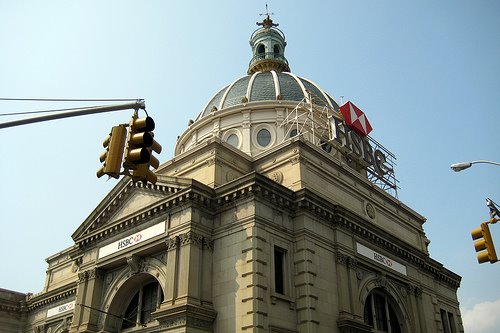
If you’d rather see one of his few existing ones, simply cross the Williamsburg Bridge over to the Brooklyn side, turn left and look for that beautifully domed and very out-of-place beauty that’s now an HSBC bank branch. That’s the Williamsburgh Savings Bank, the little brother of the Williamsburgh Savings Bank Tower and one of Brooklyn’s most beautiful buildings, built in 1875, many years before the bridge sprouted up in front of it: