Categories
Parks and Recreation Podcasts

Robert Moses and the Art of the New Deal

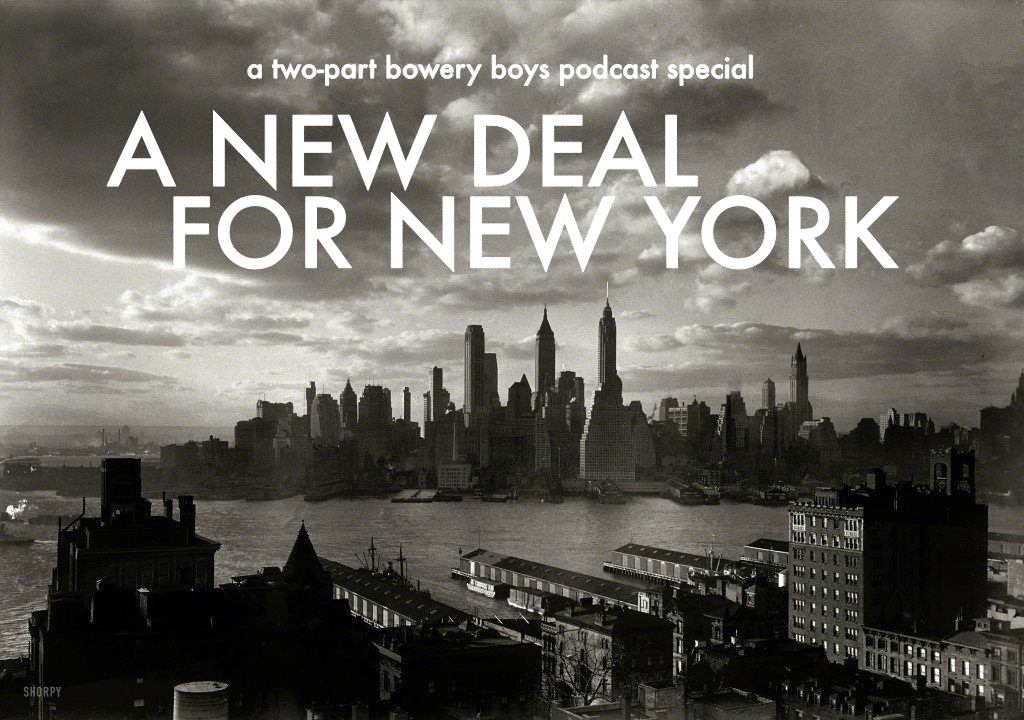
PART ONE of a two-part podcast series A NEW DEAL FOR NEW YORK.

In this episode, we look at the impact New Deal funding had in shaping the city’s infrastructure — from bridges and tunnels to neighborhood parks — how New York City uniquely benefited from this government program.

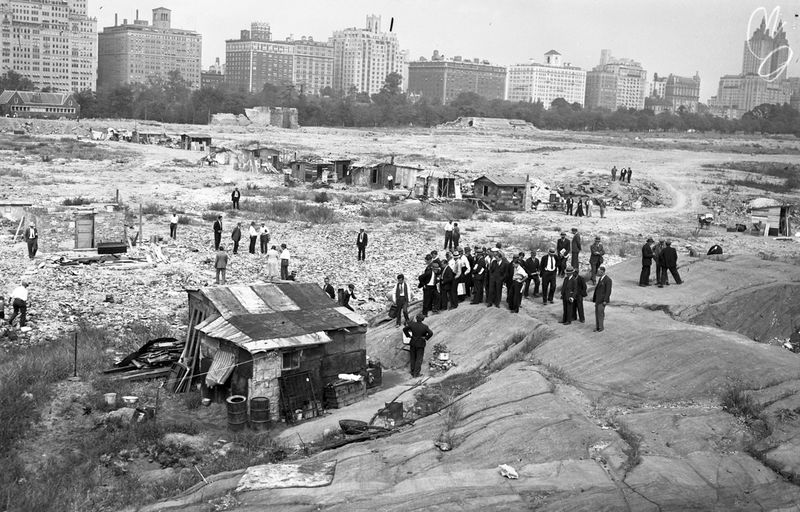
EPISODE 337 New York City during the 1930s was defined by massive unemployment, long lines at the soup kitchens, Hoovervilles in Central Park.

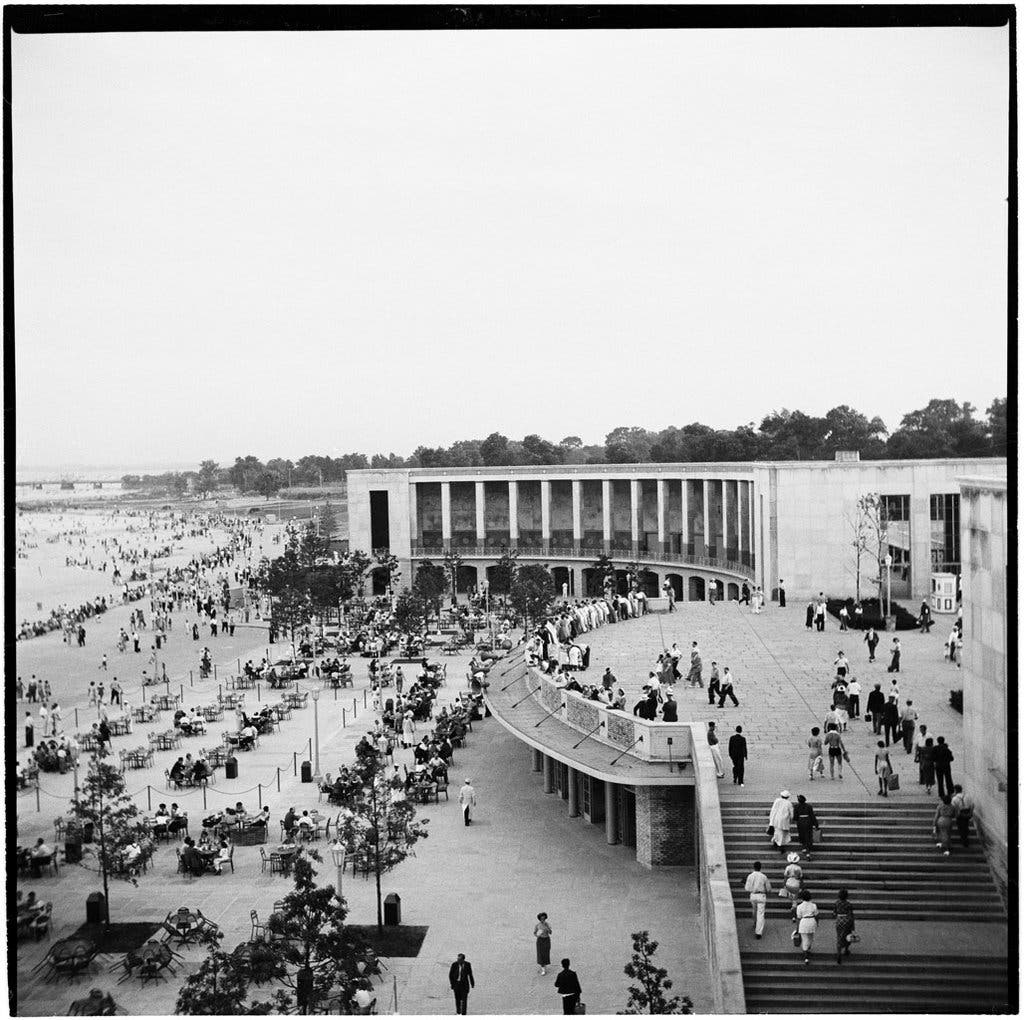
But this was also the decade of the Triborough Bridge and Orchard Beach, of new swimming pools and playgrounds, of hundreds of new building projects across the five boroughs.

Faced with the nationwide financial crisis, former New York governor and newly elected President of the United States Franklin Delano Roosevelt chose to boldly take the crisis on a series of transformative actions by the government that became known as the New Deal.

No other American city would benefit more from the New Deal that New York City. At one point, one out of every seven dollars from the Works Progress Administration (WPA) was being spent in New York.

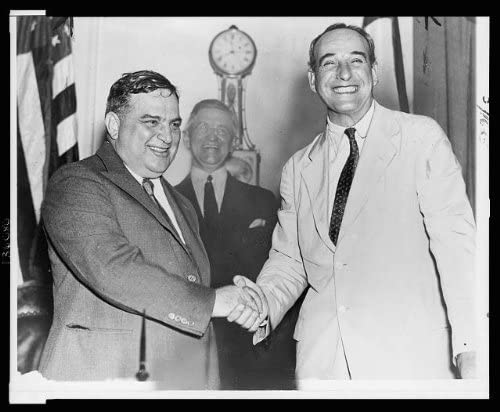
And the two men responsible for funneling federal funding to the city was Mayor Fiorello LaGuardia and his new parks commissioner Robert Moses.

Moses amassed a great amount of unchecked power, generating thousands of projects through out the city — revitalizing the city landscape.

How did Moses manage to funnel so much federal assistance into his own projects? And where can you see evidence of the New Deal in the city today? (HINT: Pretty much everywhere.)

Listen today on your favorite podcast player or just press play here:


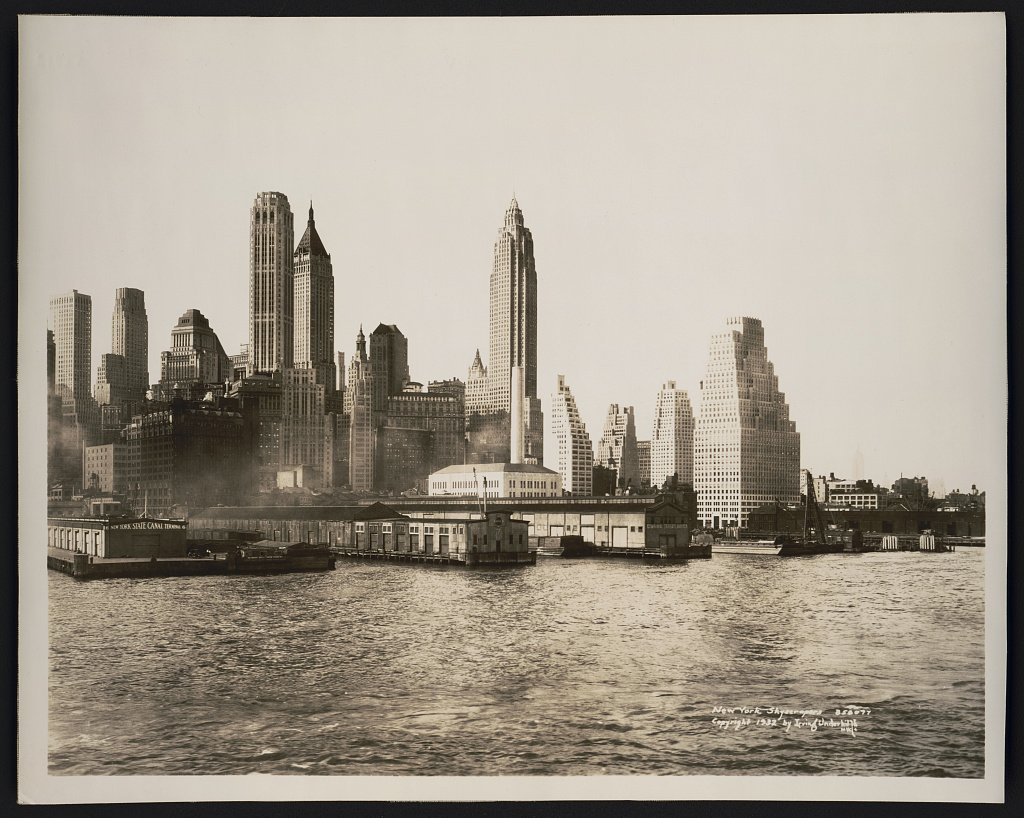
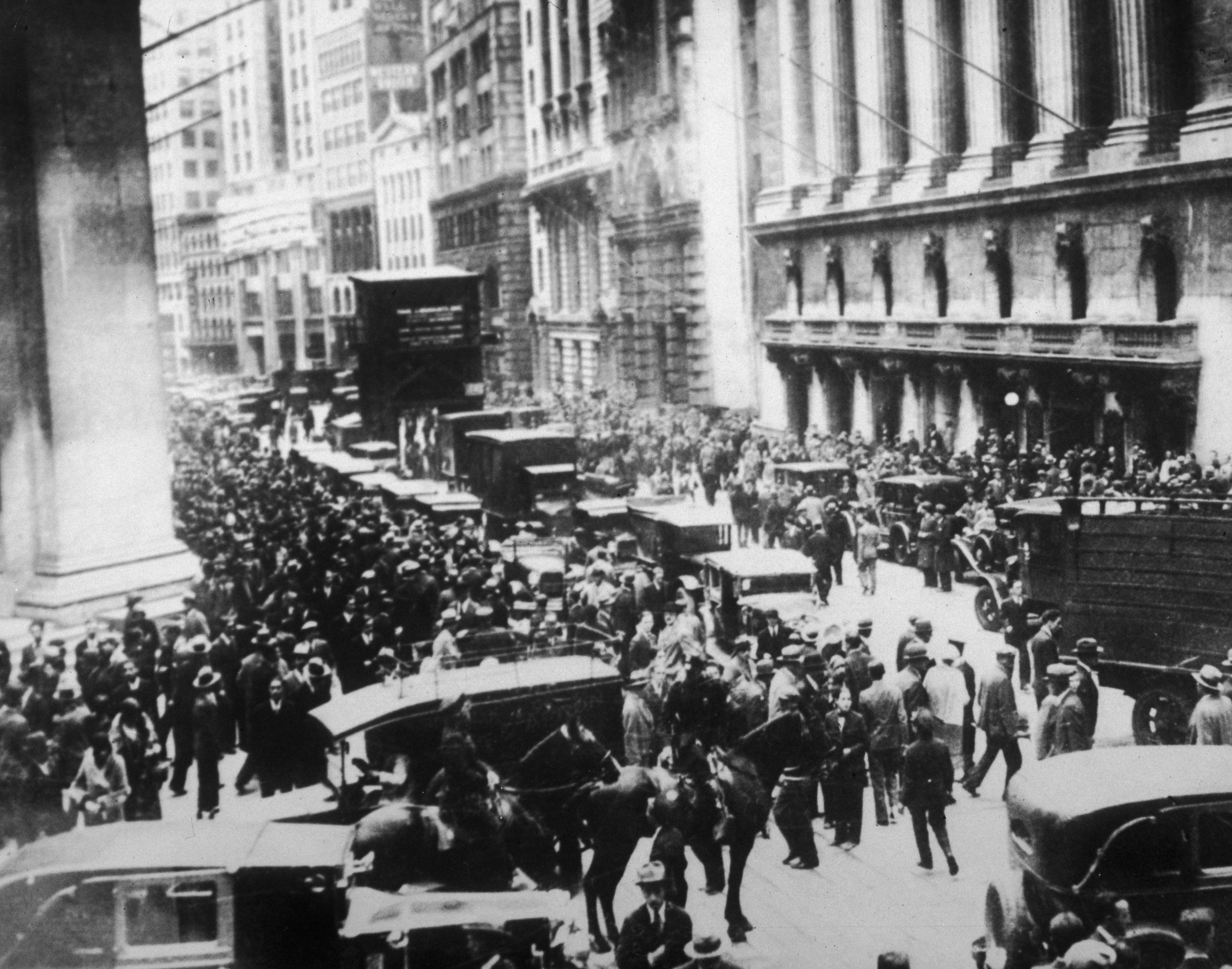
New York City, 1932 (Irving Underhill/Library of Congress)
A Hooverville in Central Park, 1932 (New York Daily News)
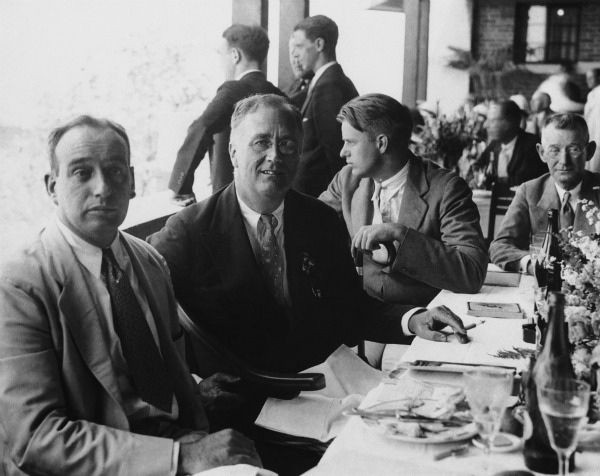
Robert Moses and FDR at Jones Beach
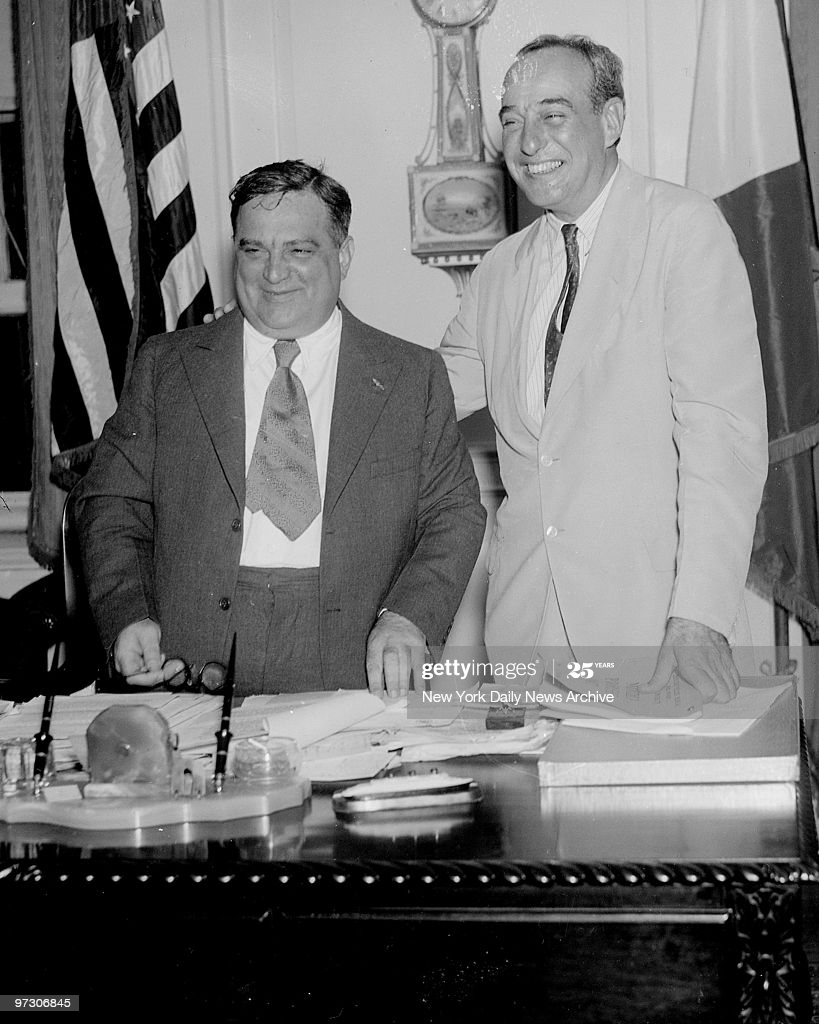
Mayor Fiorello LaGuardia and Gov. Robert Moses (Photo by Bob Mortimer/NY Daily News Archive via Getty Images)
Orchard Beach, 1937 (Museum of the City of New York)
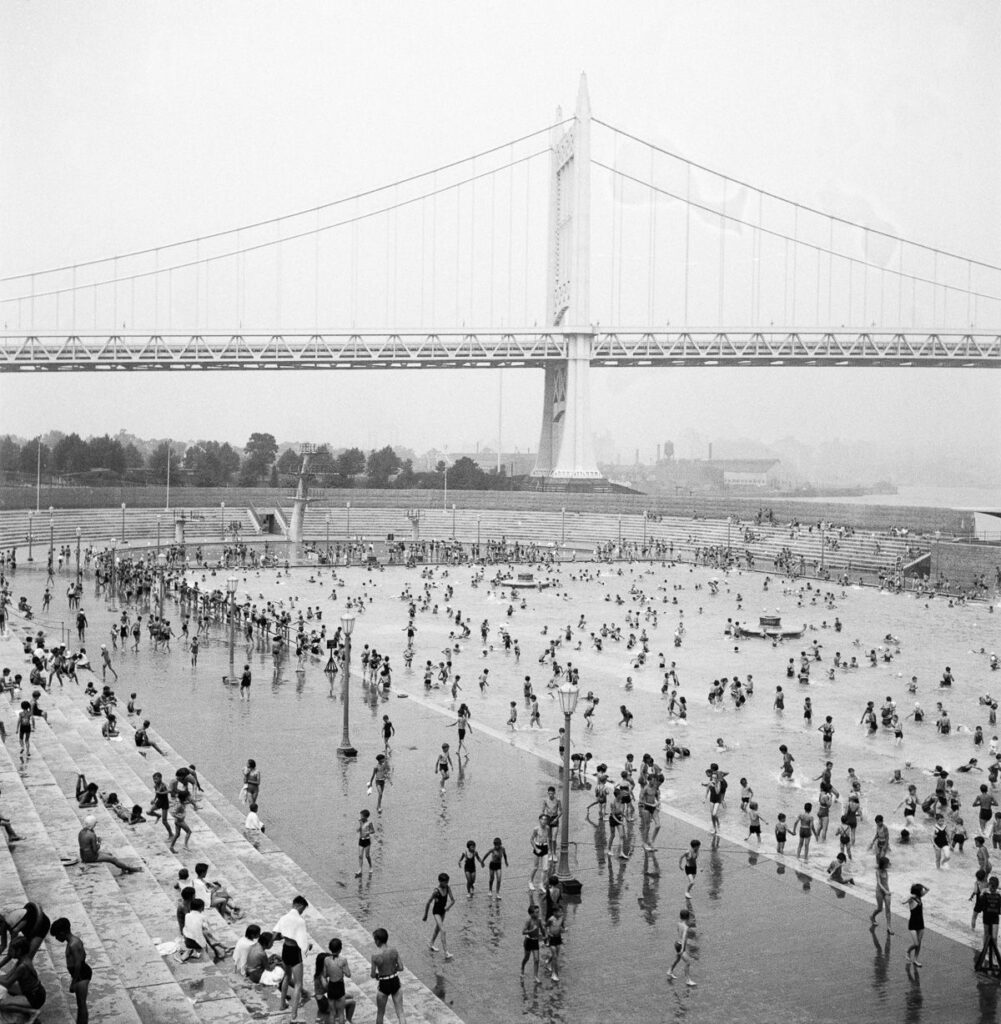
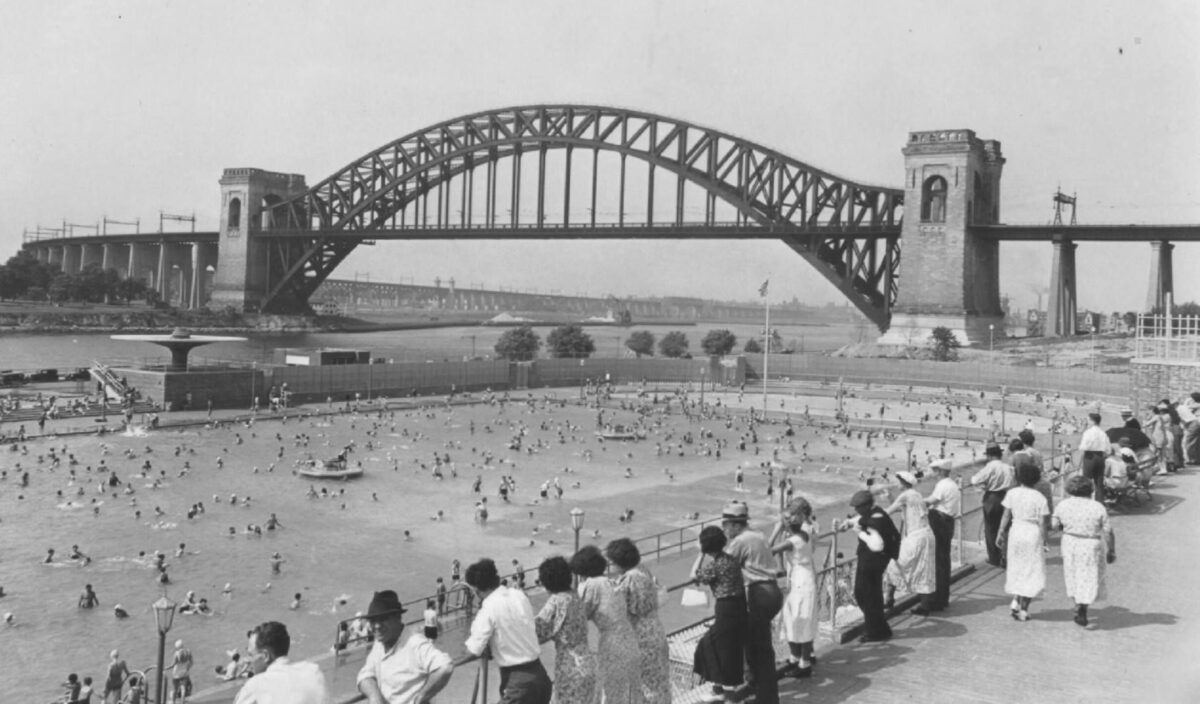
July 29, 1936 Astoria Park Pool
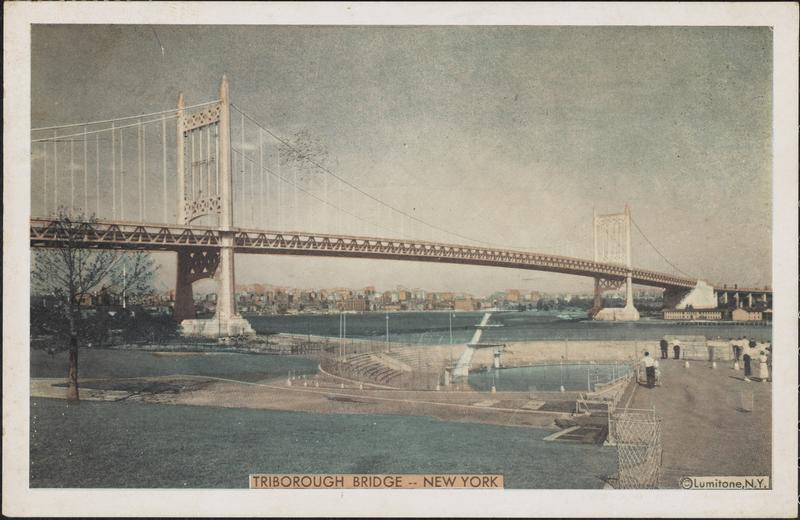
The Triborough Bridge as seen from the Astoria swimming pool, in a 1940 postcard. (Museum of the City of New York)
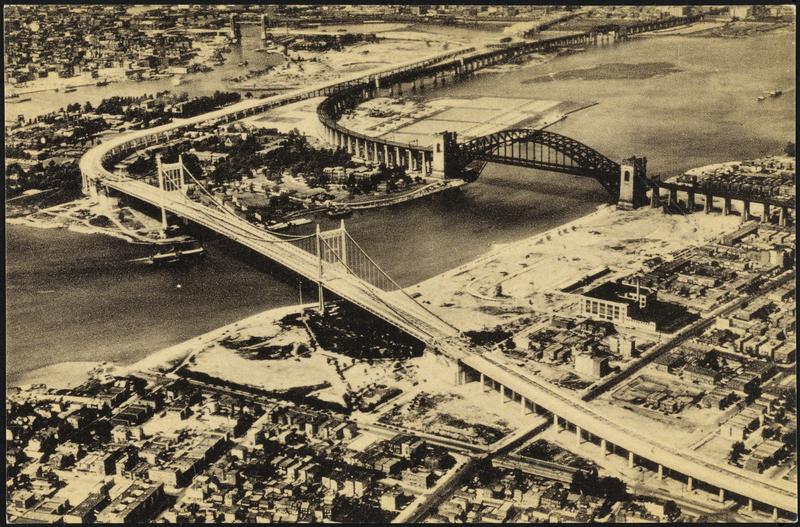
Aerial view of the Triborough Bridge, 1936 (Museum of the City of New York)
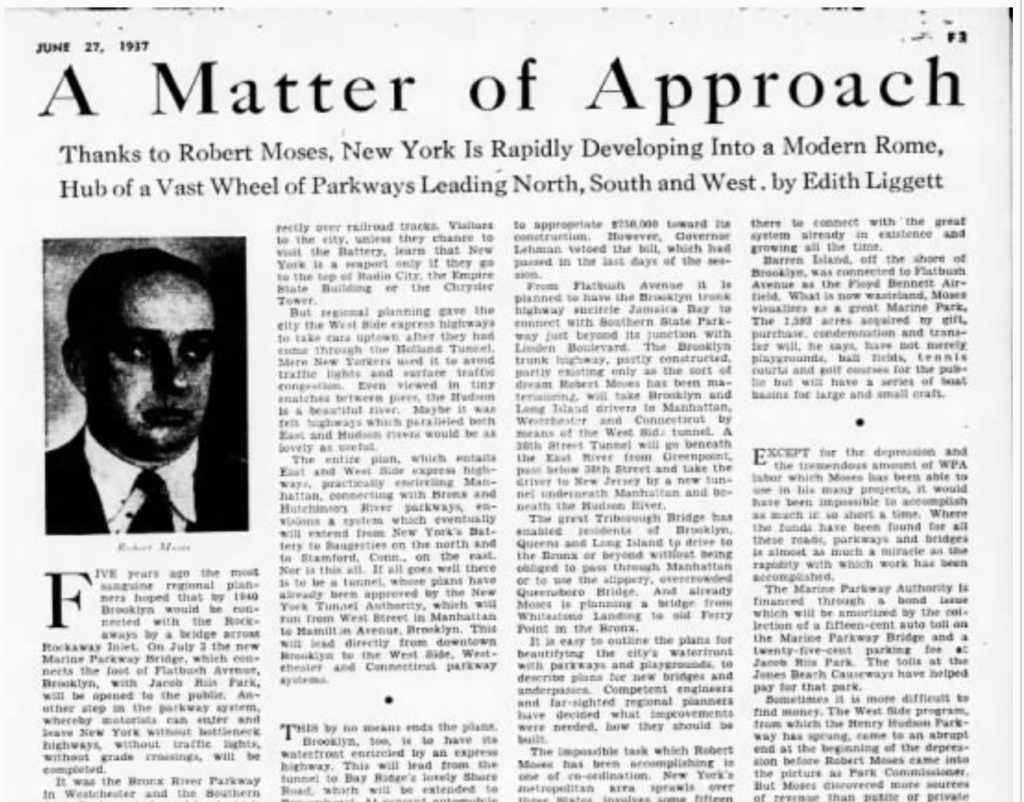
Article from the Brooklyn Daily Eagle, 1937 (Courtesy Newspapers.com)

FURTHER LISTENING

After you’ve checked out this episode, go back to some of our past episodes for further insight into this period in American history.


FURTHER READING

First of all, please visit The Living New Deal, an incredible website with an exhaustive catalog of New Deal projects across the country.


Robert Caro / The Power Broker
William E. Leuchtenburg / Franklin D. Roosevelt and the New Deal
Amity Shlaes / The Forgotten Man
Nick Taylor / American Made: The Enduring Legacy of the WPA
Mason Williams / City of Ambition: FDR, La Guardia and the Making of Modern New York
(And our miniseries title is an homage to Mike Wallace‘s 2002 book A New Deal For New York)


The Bowery Boys: New York City History podcast is brought to you …. by you!

We are now producing a new Bowery Boys podcast every week. We’re also looking to improve and expand the show in other ways — publishing, social media, live events and other forms of media. But we can only do this with your help!

We are now a creator on Patreon, a patronage platform where you can support your favorite content creators.

Please visit our page on Patreon and watch a short video of us recording the show and talking about our expansion plans.

If you’d like to help out, there are six different pledge levels.Check them out and consider being a sponsor.

We greatly appreciate our listeners and readers and thank you for joining us on this journey so far.


Categories
Podcasts The Jazz Age

The Wall Street Crash of 1929: The sobering end of New York’s Jazz Age

This is the final part of our three-part NEW YORK IN THE JAZZ AGE podcast series. Check out our two prior episode #233 The Roaring ’20s: The King of the Jazz Age and #234 Queen of the Speakeasies: A Tale of Prohibition New York


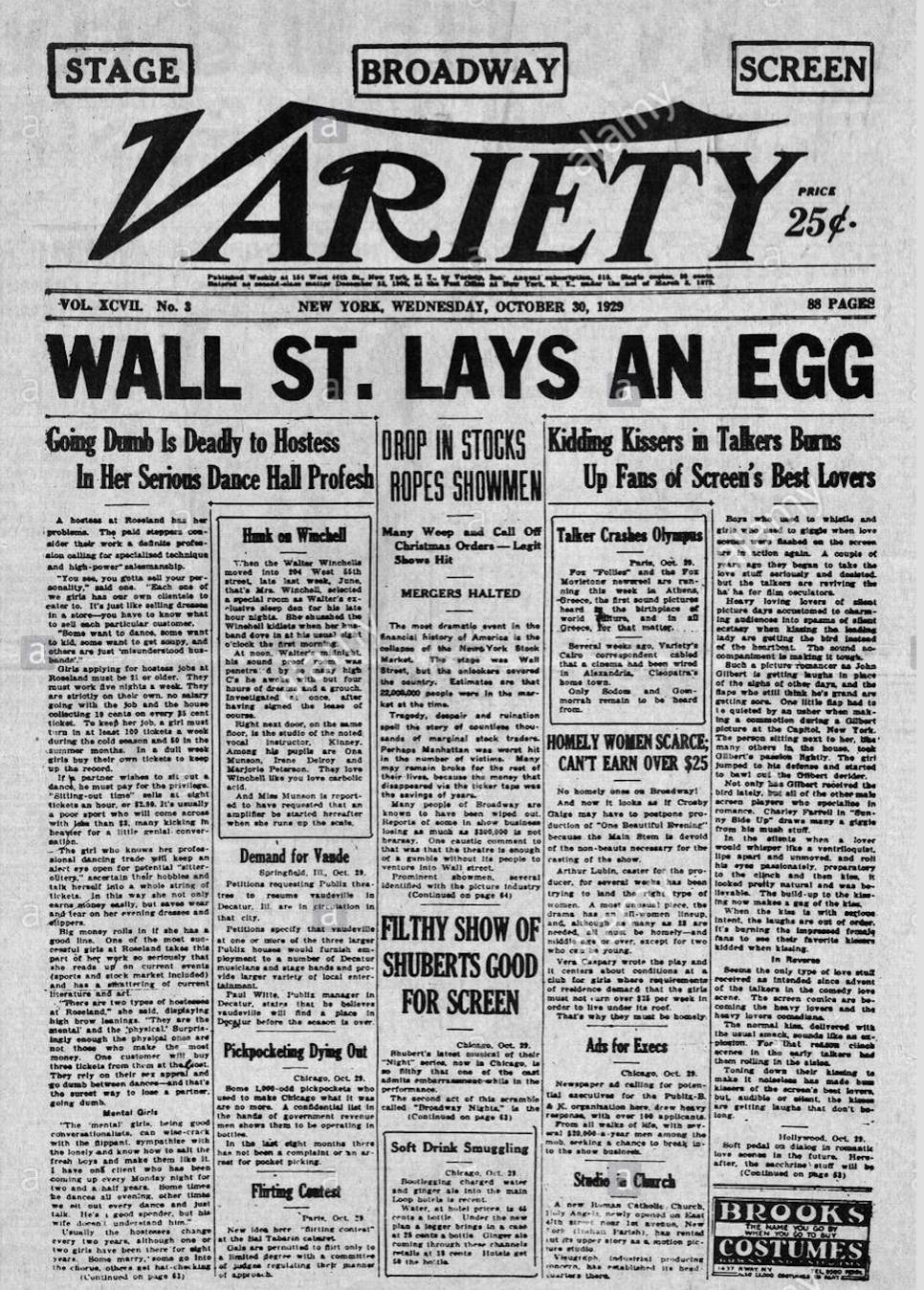
Something so giddy and wild as New York City in the Jazz Age would have to burn out at some point. But nobody expected the double catastrophe of a paralyzing financial crash and a wide-ranging government corruption scandal.

Mayor Jimmy Walker, in a race for a second term against a rising congressman named Fiorello La Guardia, might have had a few cocktails at the Central Park Casino after hearing of the pandemonium on Wall Street in late October 1929.

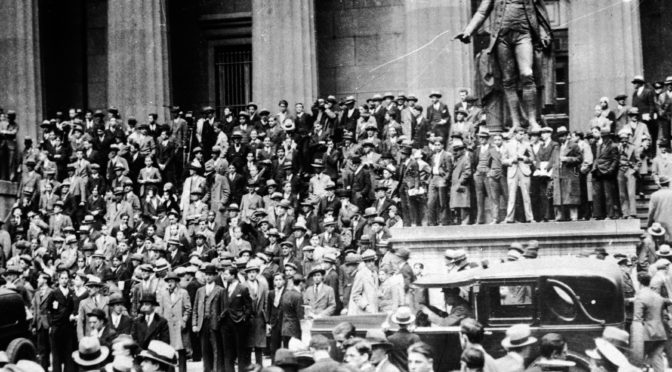
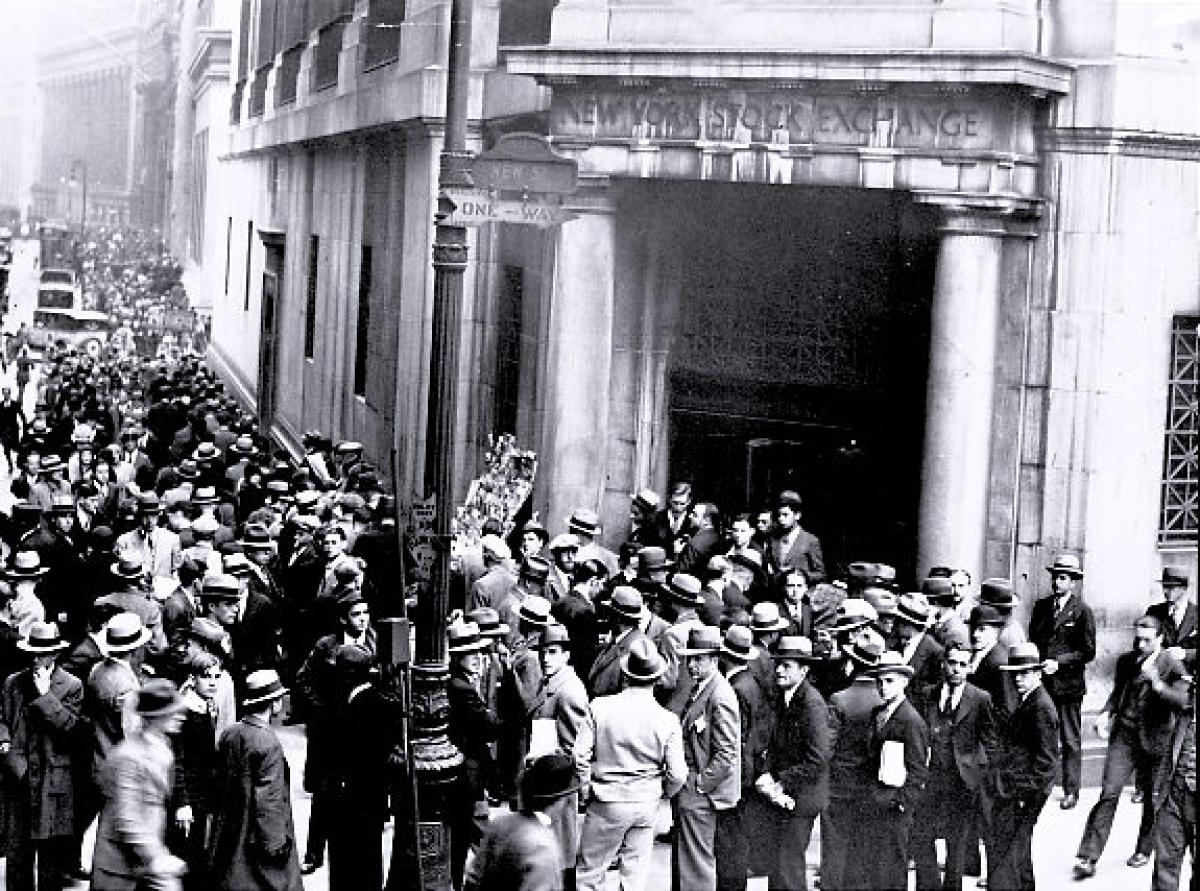
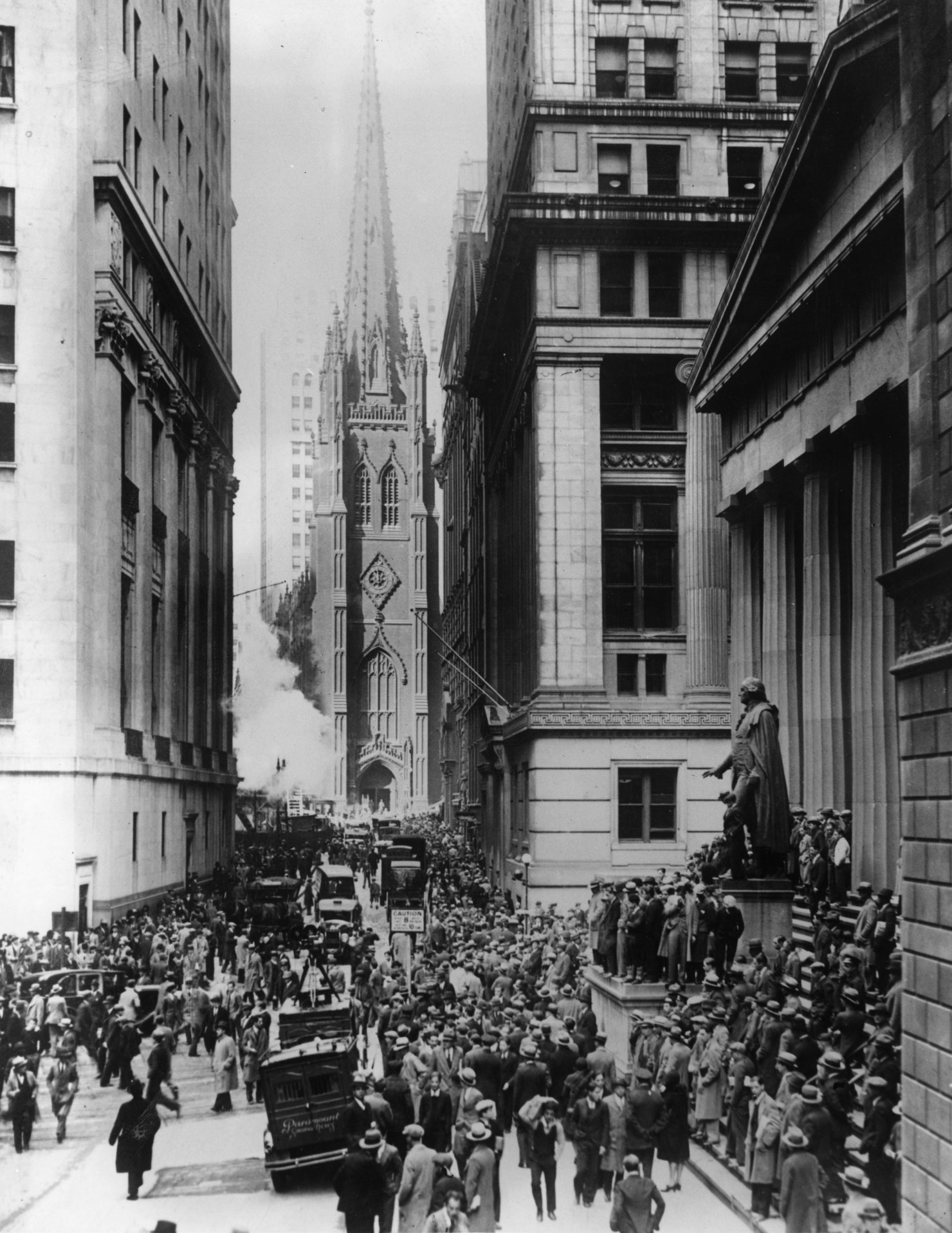
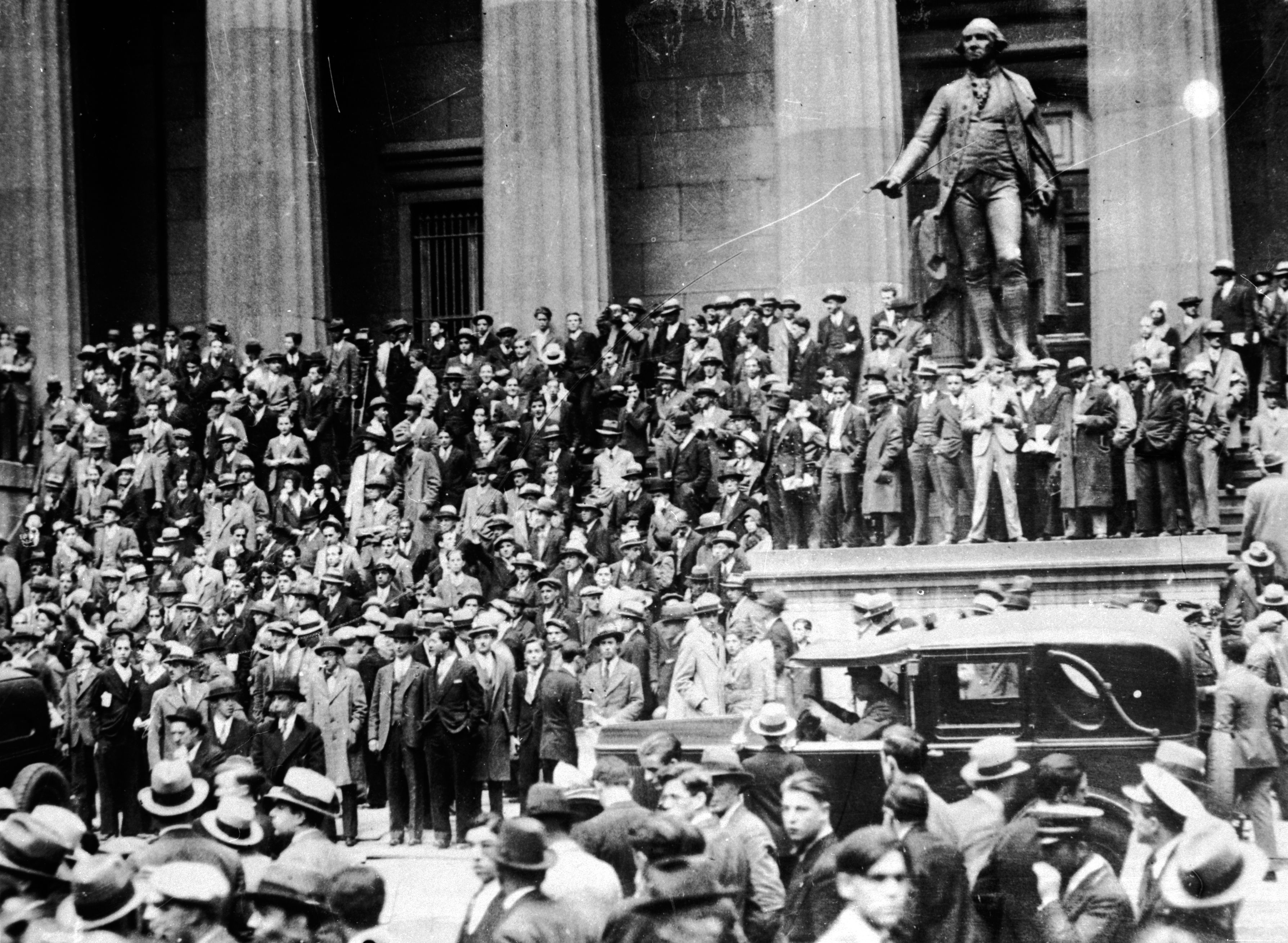
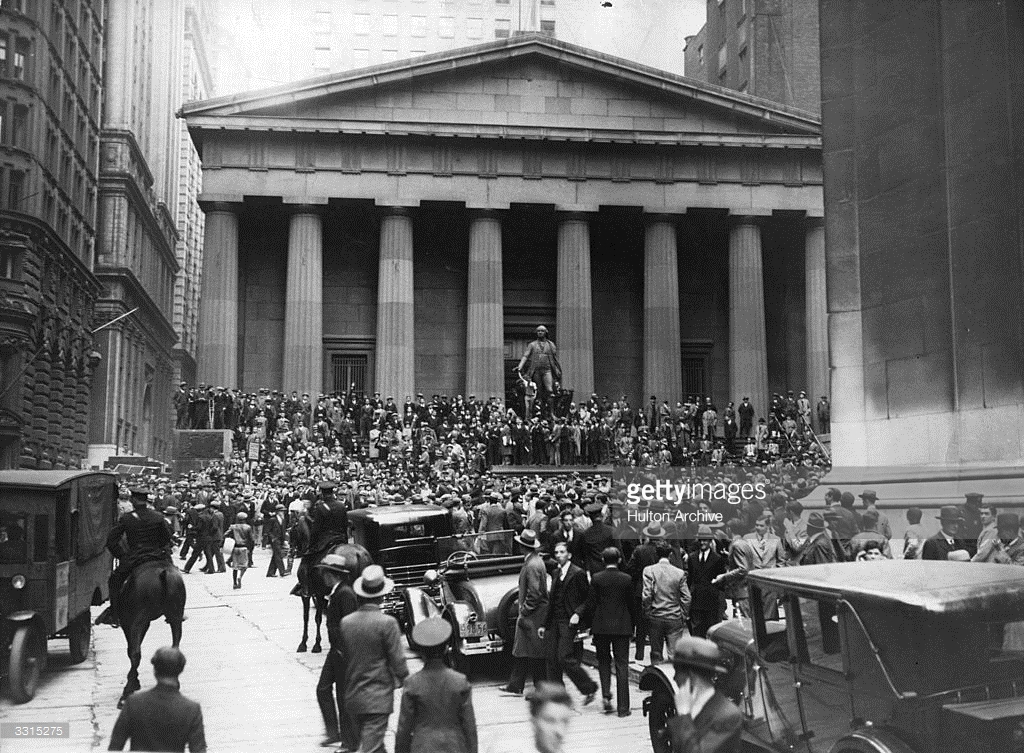
The irresponsible speculation fueling the stock market of the Roaring 20’s suddenly fell apart, turning princes into paupers overnight. Rumors spread among gathering crowds in front of the New York Stock Exchange of distraught traders throwing themselves out windows.

And yet a more immediate crisis was awaiting the Night Mayor of New York — the investigations of Judge Samuel Seabury, steering a crackdown authorized by governor Franklin Delano Roosevelt to rid New York City of its deeply embedded, Tammany Hall-fueled corruption.

With the American economy in free fall and hundreds of New York politicians, police officers and judges falling to corruption revelations, the world needed a drink! Counting down to the last days of Prohibition….

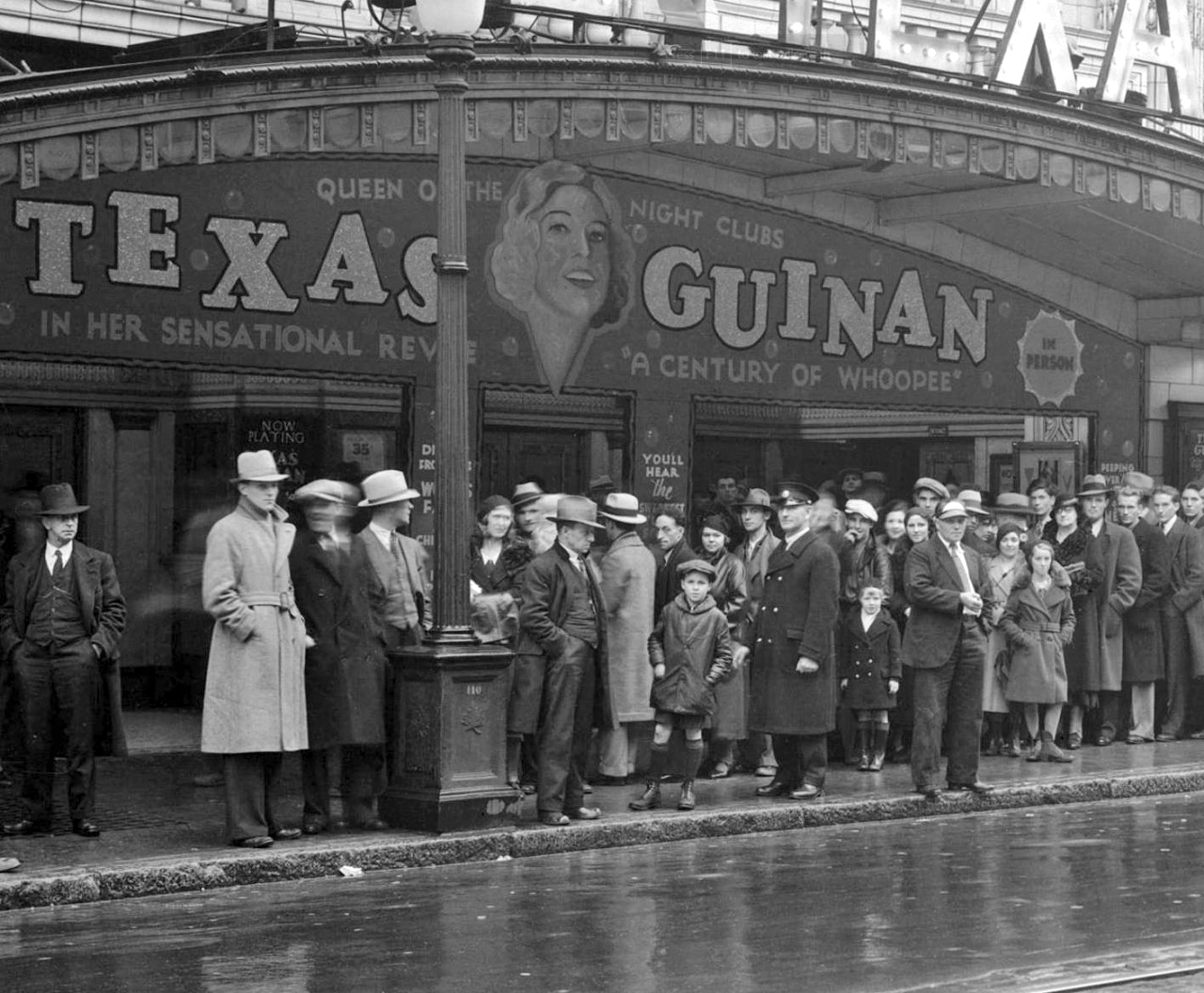
PLUS: The fate of Texas Guinan, the movie star turned Prohibition hostess who hit the road with a bawdy new burlesque — that led to a tragic end.

The song featured in this week’s episode was Bessie Smith’s “Nobody Knows You When You’re Down and Out”


The Bowery Boys: New York City History podcast is brought to you …. by you!

We are now producing a new Bowery Boys podcast every two weeks. We’re also looking to improve the show in other ways and expand in other ways as well — through publishing, social media, live events and other forms of media. But we can only do this with your help!

We are now a member of Patreon, a patronage platform where you can support your favorite content creators for as little as a $1 a month.

Please visit our page on Patreon and watch a short video of us recording the show and talking about our expansion plans.If you’d like to help out, there are five different pledge levels (and with clever names too — Mannahatta, New Amsterdam, Five Points, Gilded Age, Jazz Age and Empire State). Check them out and consider being a sponsor.

We greatly appreciate our listeners and readers and thank you for joining us on this journey so far. And the best is yet to come!


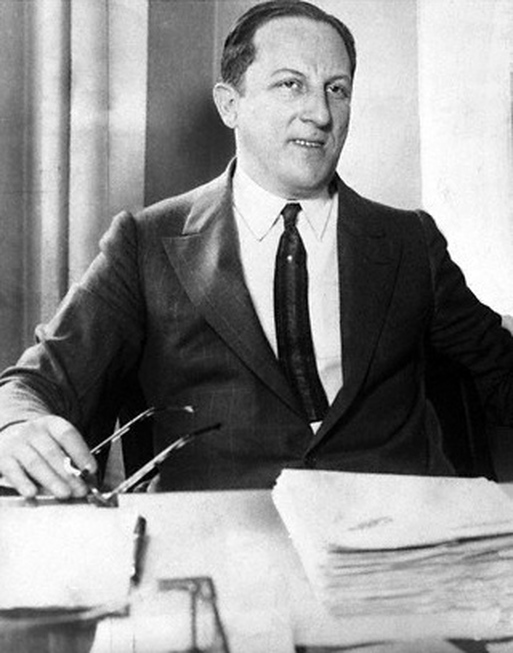
Arnold Rothstein — His murder would kick off a frenzy in New York’s organized crime syndicates and lead to an in-depth investigation into the police and local government

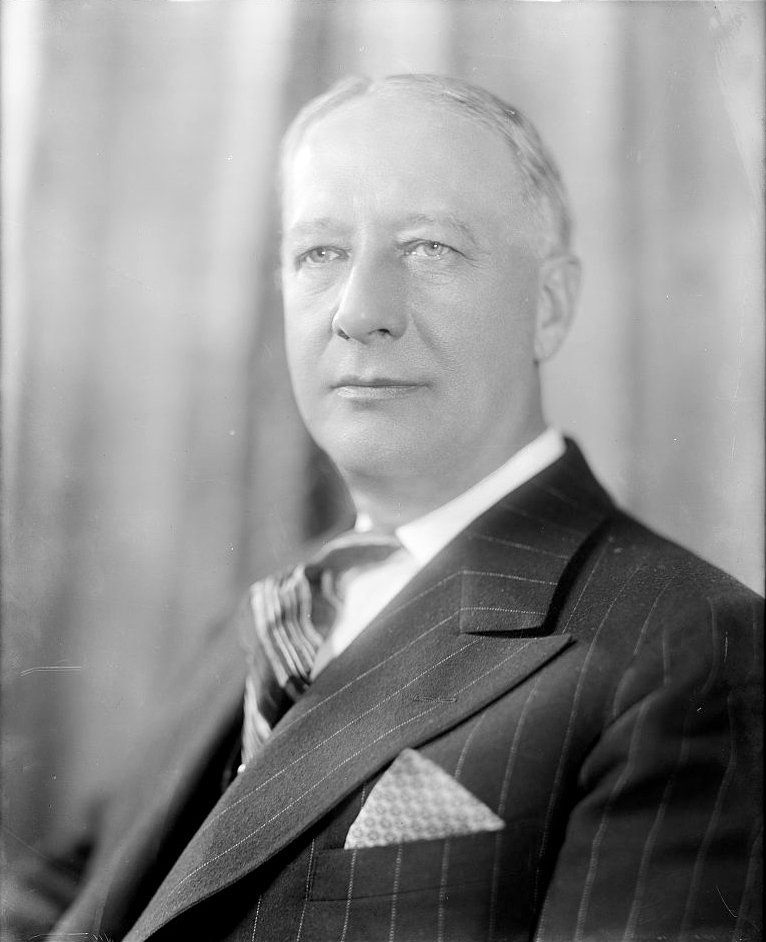
Al Smith — His unsuccessful bid for the presidency in 1928 led him to pursue more business-related projects, including the construction of the Empire State Building.

Harris & Ewing collection at the Library of Congress.

Mayor Jimmy Walker felt invincible at the start of his second term

Texas Guinan eventually left the nightclub scene and returned to film and stage work. She’s pictured here in 1931 in Paris. She would later be denied entry into the country for her bawdy performances (at least, that’s what she claimed).

Getty Images

Betty Compton waited patiently for Walker from the sidelines, watching as his political fortunes collapsed in 1932.

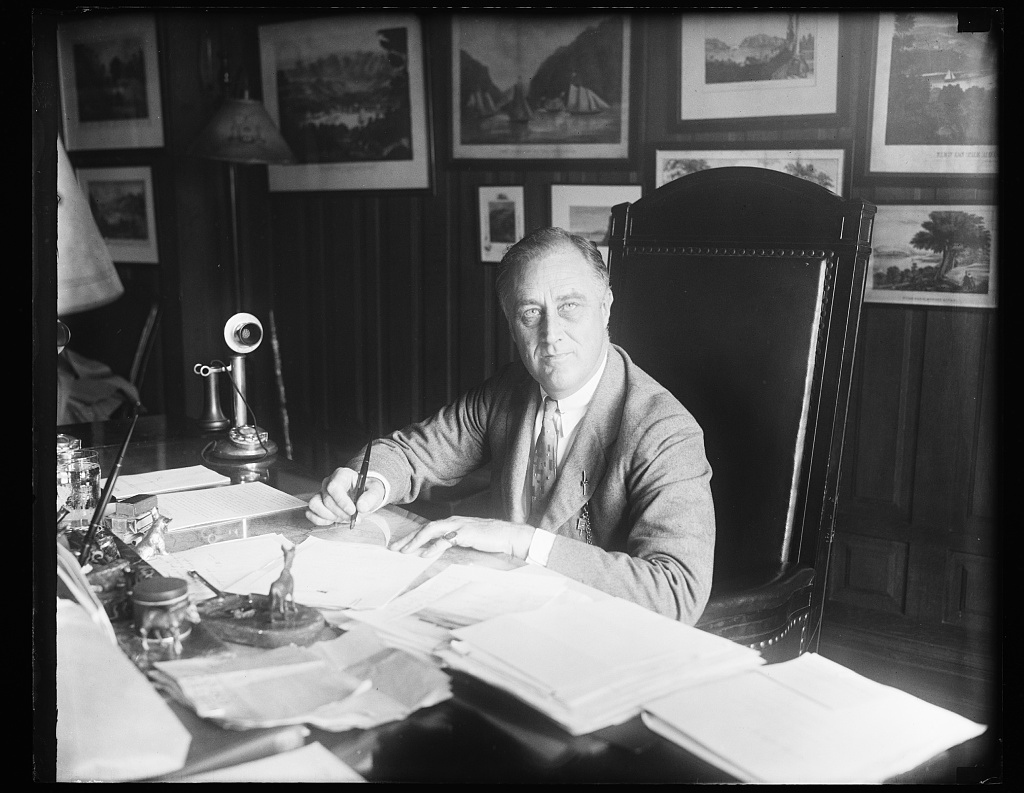
Franklin Delano Roosevelt — The governor of New York (and soon president of the United States) went after corruption during a busy campaign season.

Library of Congress

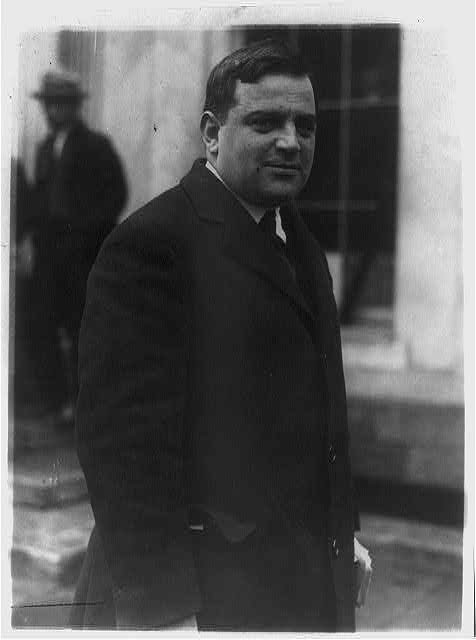
Fiorello La Guardia (pictured here in 1929) was an early supporter of Prohibition repeal and ran for mayor in 1929, losing to Walker.

Library of Congress

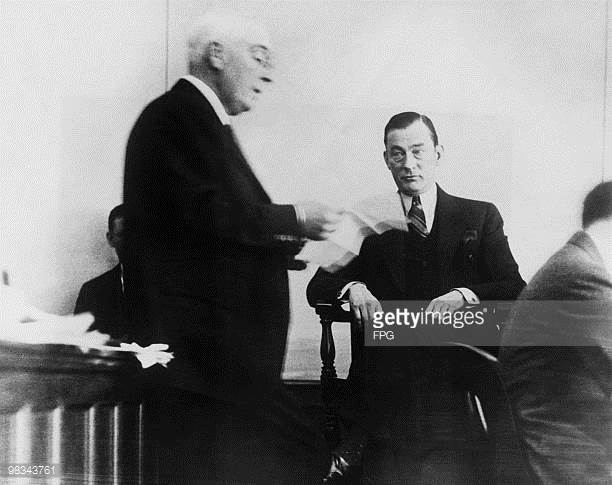
Samuel Seabury, questioning a nonplussed Jimmy Walker on the stand, succeeded in rooting out corrupt officials in public offices. With Roosevelt’s help, he even brought down the Night Mayor himself.

Getty Images

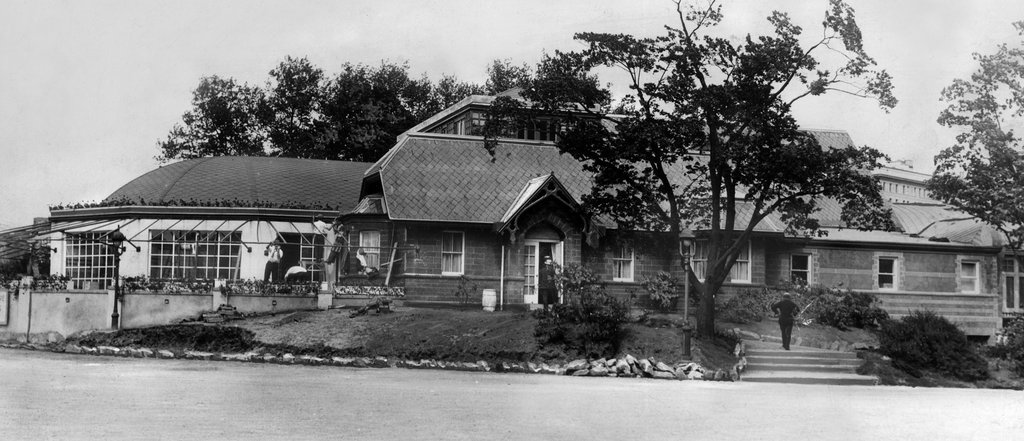
The Central Park Casino transformed into a swanky nightclub in 1929, a favored spot for Jimmy Walker

Courtesy New York Times

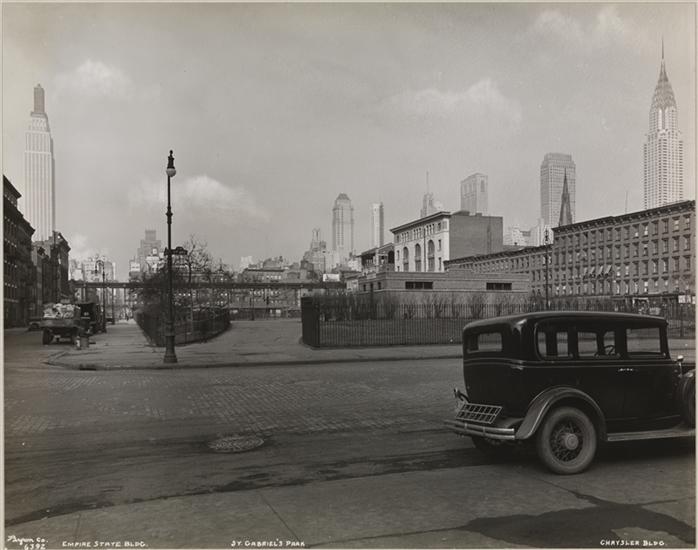
An interesting view of mid-Manhattan in 1931 (from St. Gabriel’s Park at First Avenue and 35th Street) with the newly completed Chrysler Building and the Empire State Building nearly completed.

MCNY/Byron Company

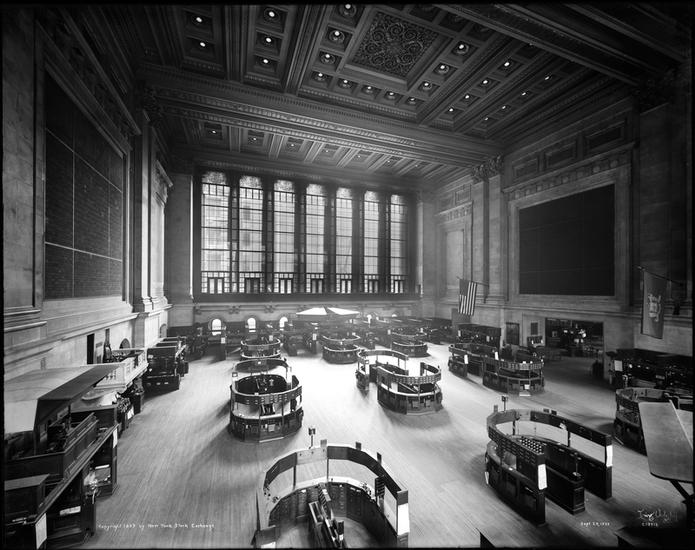
An ominous image of the New York Stock Exchange from September 1929, weeks before the crash.

Irving Underhill/MCNY

The streets outside the New York Stock Exchange were clogged with people for days, frantic scenes of anger, panic and heartbreak.

29th October 1929. (Photo by Hulton Archive/Getty Images)
New York Daily News
(Photo by Keystone/Getty Images)

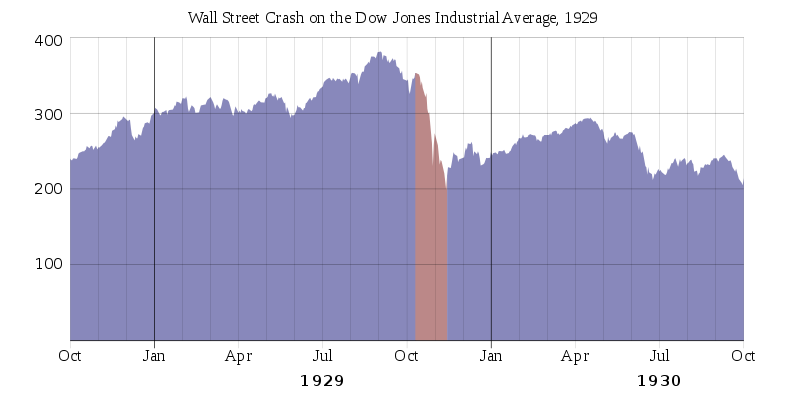
A graphic look at the Wall Street Crash of 1929.

Wikicommons

Outside Vancouver’s Beacon Theatre on October 28, 1933, just a week before her death here in this city.


CORRECTION: Jimmy Walker’s second term began on January 1, not January 3.

For more information, check out the following books:

Dry Manhattan: Prohibition in New York City by Michael A. Lerner

The Great Crash by John Kenneth Galbraith

Once Upon A Time In New York by Herbert Mitgang

The Man Who Rode The Tiger: The Life and Times of Judge Samuel Seabury by Herbert Mitgang

Rothstein: The Life, Times, and Murder of the Criminal Genius Who Fixed the 1919 World Series by David Pietrusza

Other Bowery Boys podcasts related to this one:

The Tallest Building In New York: A Short History (#169)

Battle For The Skyline: How High Can It Go? (#199)

The Chrysler Building (#11)

Robert Moses (#100)

Categories
Amusements and Thrills Podcasts

Digital City: New York and the World of Video Games

PODCAST The history of video games and arcades in New York City.

New York has an interesting, complex and downright weird relationship with the video game, from the digital sewers below Manhattan to the neon-lit arcades of Times Square. It’s not all nostalgia and nerviness; video games in the Big Apple have helped create communities and have been exalted as artistry.

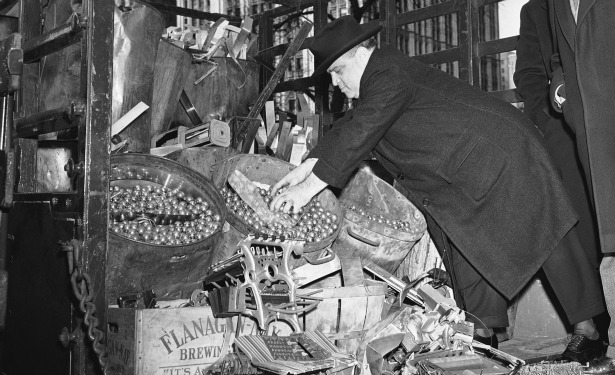
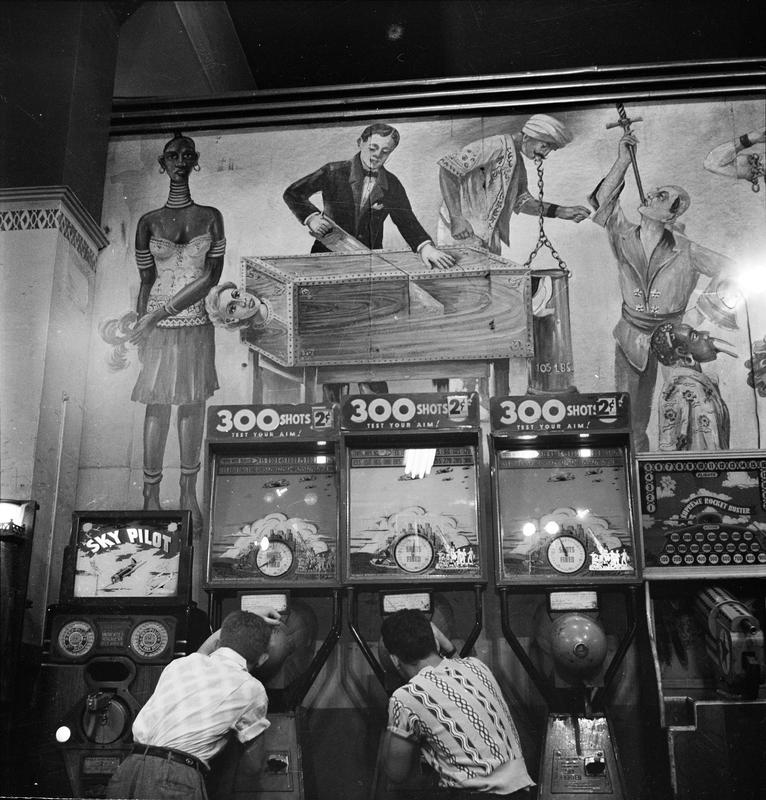
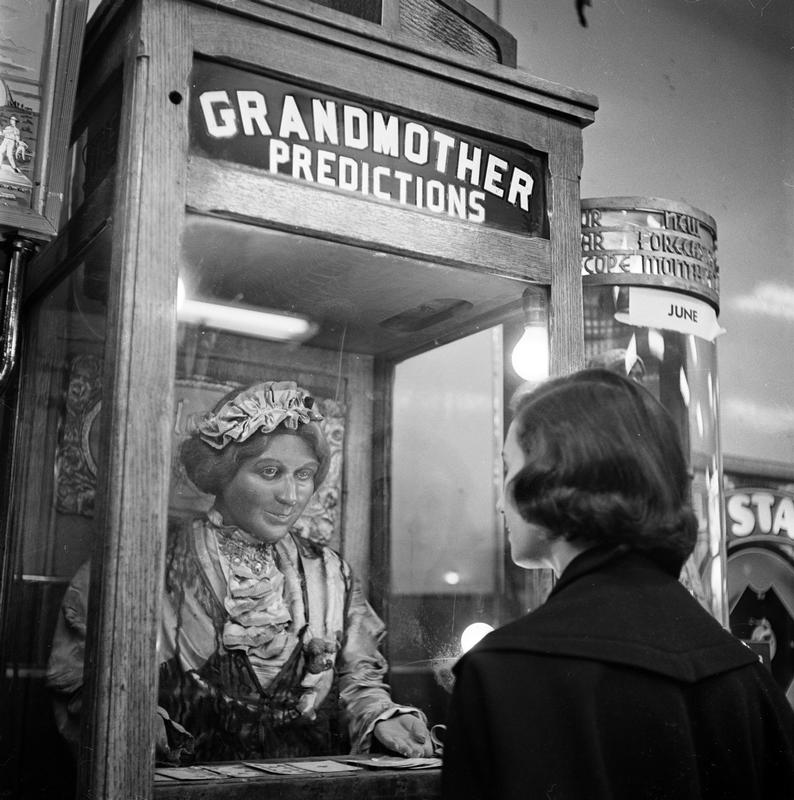
First — the relationship between the city and the arcade itself, once filled with shooting galleries and see ball. When pinball machines were introduced in the 1930s, many saw them as a gateway into gambling. Mayor Fiorello La Guardia personally saw to it that they were taken off the streets.

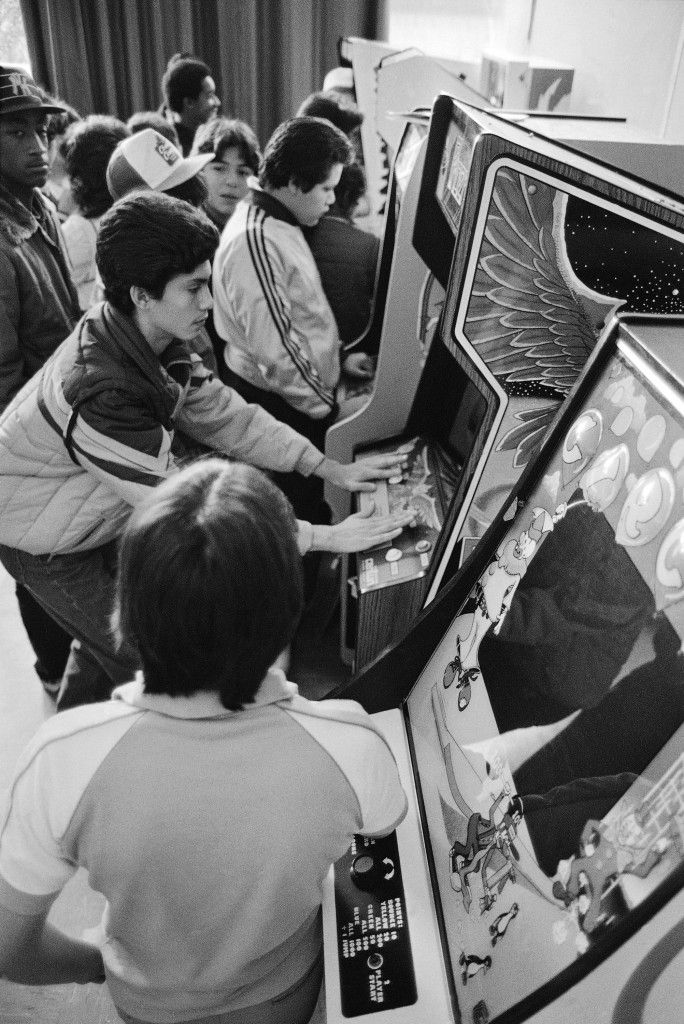
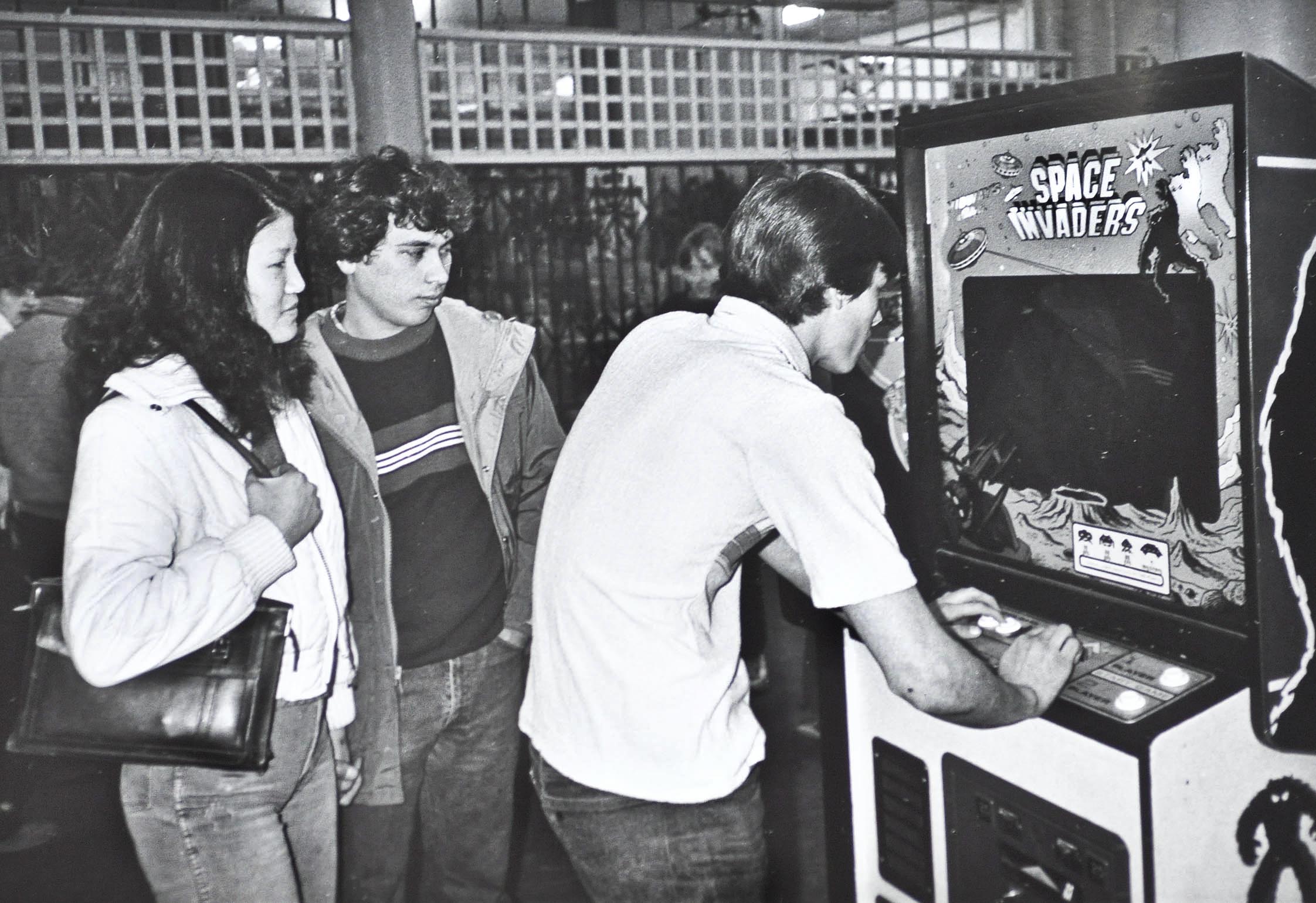
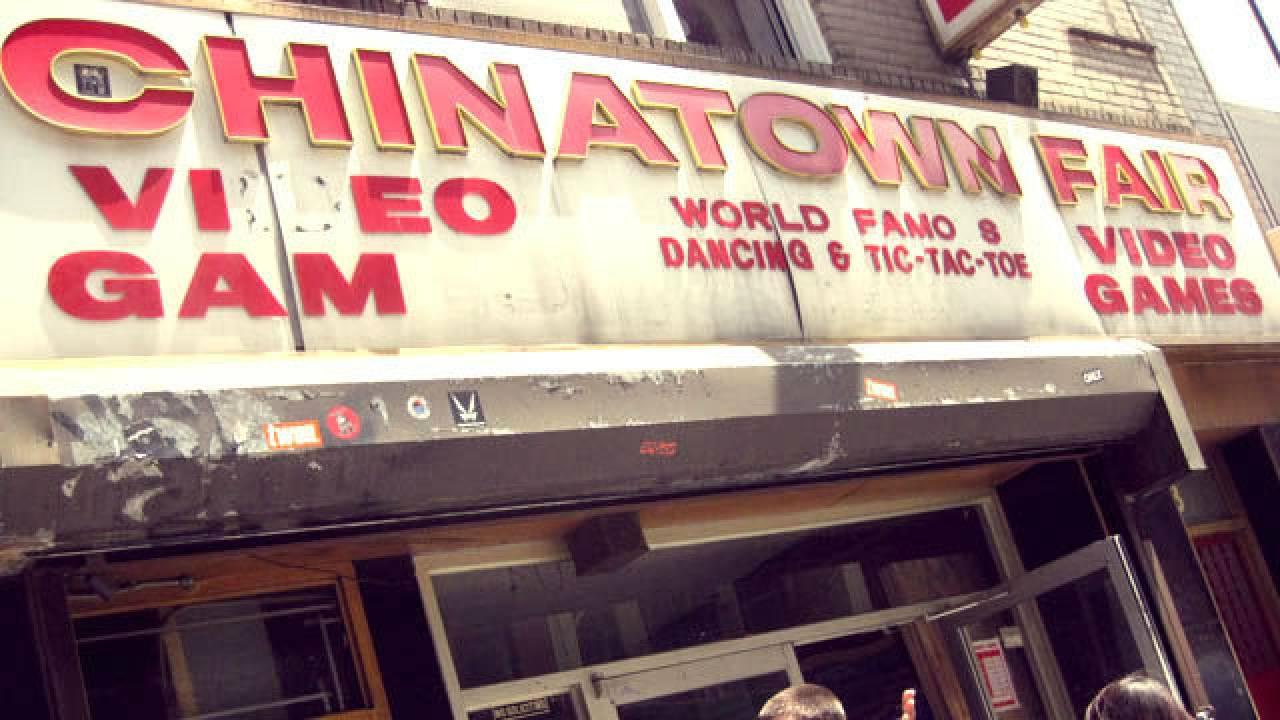
The era of Space Invaders, Pac Man and Donkey Kong descends in New York during its grittiest period – the late 70s/early 80s – and arrives, like an alien presence, into many neighborhood arcades including one of the most famous in Chinatown – an arcade that is still open and the subject of a new documentary The Lost Arcade.

While the video game industry is not something New York City is particularly associated with, the city does in fact set the stage for this revolution of blips and joysticks at the start of the 20th century and from such unconventional places as the West Village and Flushing Meadows-Corona Park.

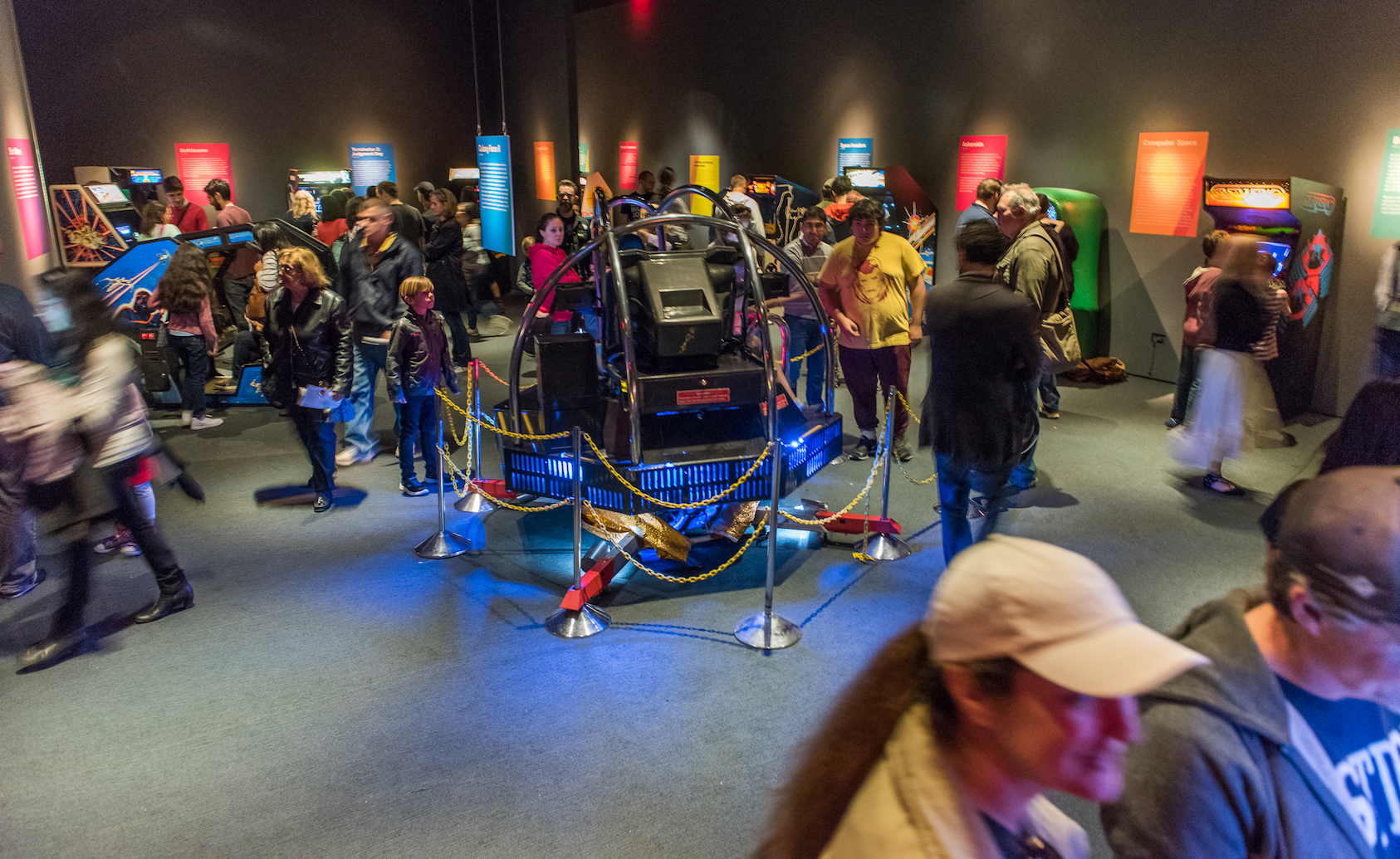
In Queens you’ll find one of America’s great tributes to the video game, in the spectacular arcade collection at the Museum of the Moving Image.

Finally — A look inside the games themselves to explore New York as a digital landscape that continues to be of fascination to game developers and players alike.

So are you ready Player One? Grab your quarters and log in to this New York adventure through the world of video games.


The Bowery Boys: New York City History podcast is brought to you …. by you!

We are now producing a new Bowery Boys podcast every two weeks. We’re also looking to improve the show in other ways and expand in other ways as well — through publishing, social media, live events and other forms of media. But we can only do this with your help!

We are now a member of Patreon, a patronage platform where you can support your favorite content creators for as little as a $1 a month.

Please visit our page on Patreon and watch a short video of us recording the show and talking about our expansion plans. If you’d like to help out, there are five different pledge levels (and with clever names too — Mannahatta, New Amsterdam, Five Points, Gilded Age, Jazz Age and Empire State). Check them out and consider being a sponsor.

We greatly appreciate our listeners and readers and thank you for joining us on this journey so far. And the best is yet to come!


The trailer for The Lost Arcade. It opens today in San Francisco at the Roxie and Friday, August 12, in New York at the Metrograph. Check out their Facebook page for more information about upcoming events and screenings.

The current exhibition at the Museum of the Moving Image — ARCADE CLASSICS: VIDEO GAMES FROM THE COLLECTION — continues until mid-September.

Courtesy Museum of the Moving Image

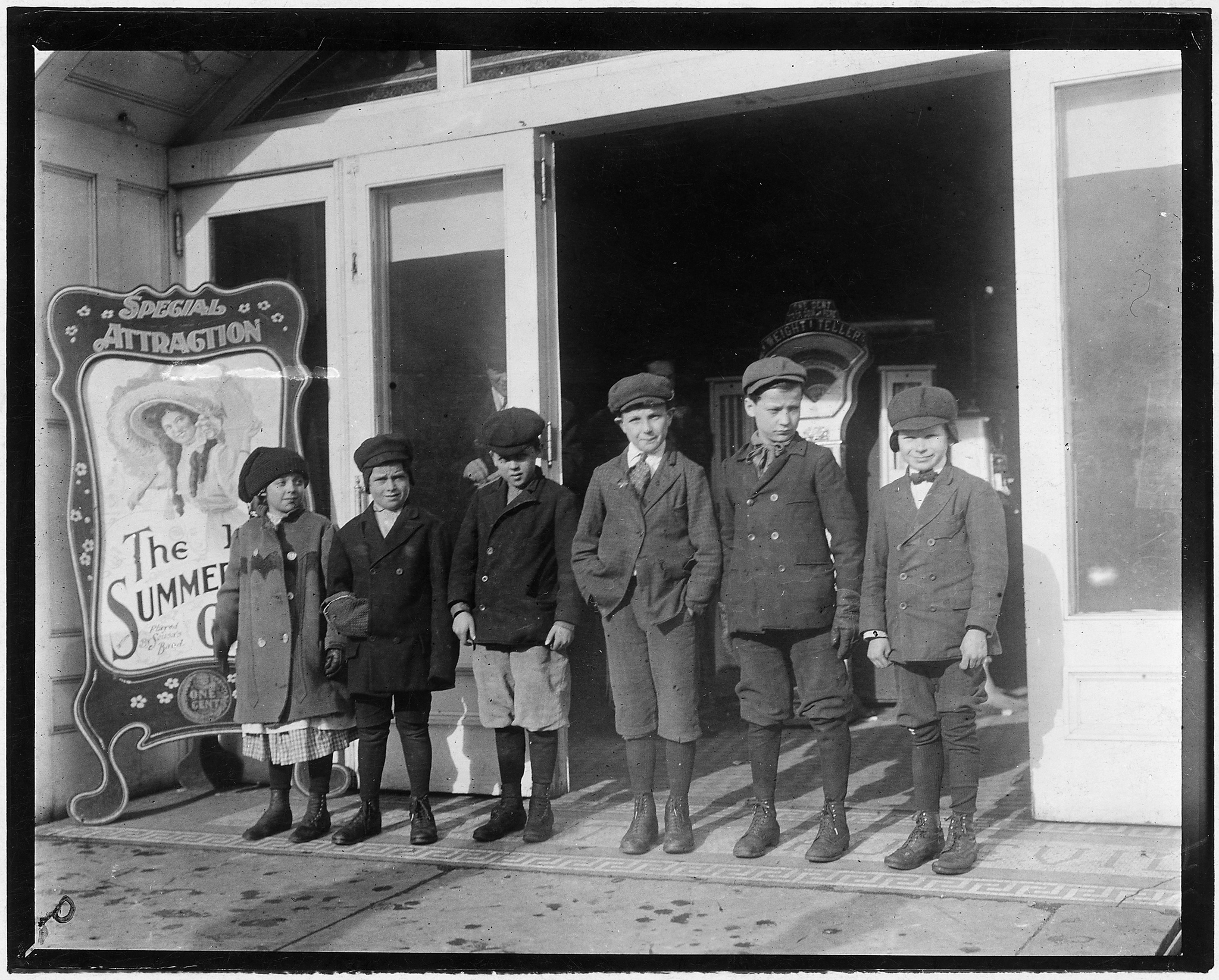
Children at a penny arcade in Schenectady, NY, in 1910

Photo by Lewis Hine, courtesy US National Archives

Mayor La Guardia was not a fan of pinball. Here, in a 1942, he rounds up the pinball balls. Read more in Seth Porges’ article for Popular Mechanics:

laguardiapinball.banner.AP.jpg

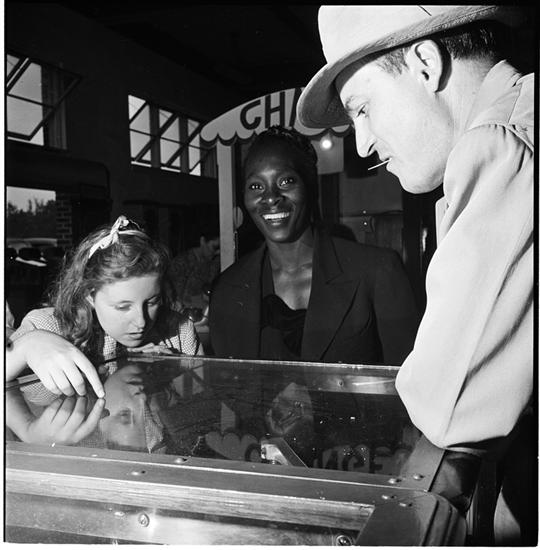
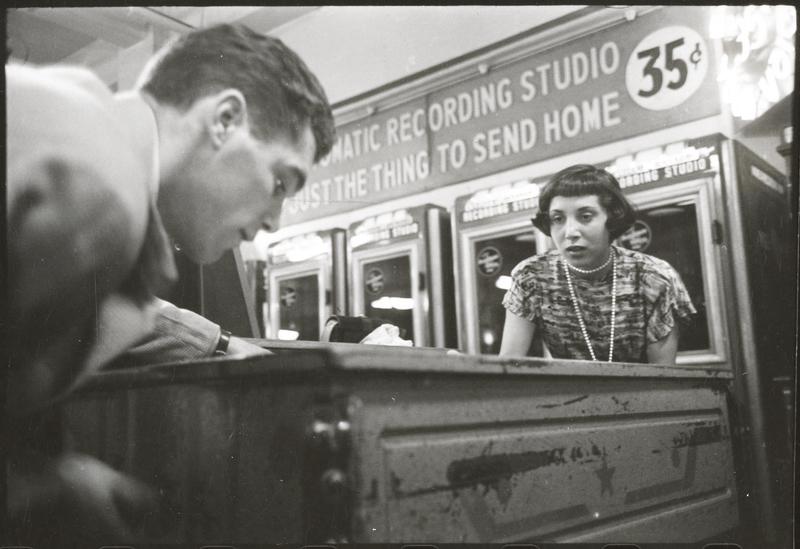
In a photo taken in 1948 by Stanley Kubrick for LOOK Magazine, prizefighter Walter Cartier plays an arcade game with a young woman.

Courtesy MCNY
Courtesy MCNY

And another by Kubrick, from 1946, at Palisades Amusement Park.

MCNY
MCNY

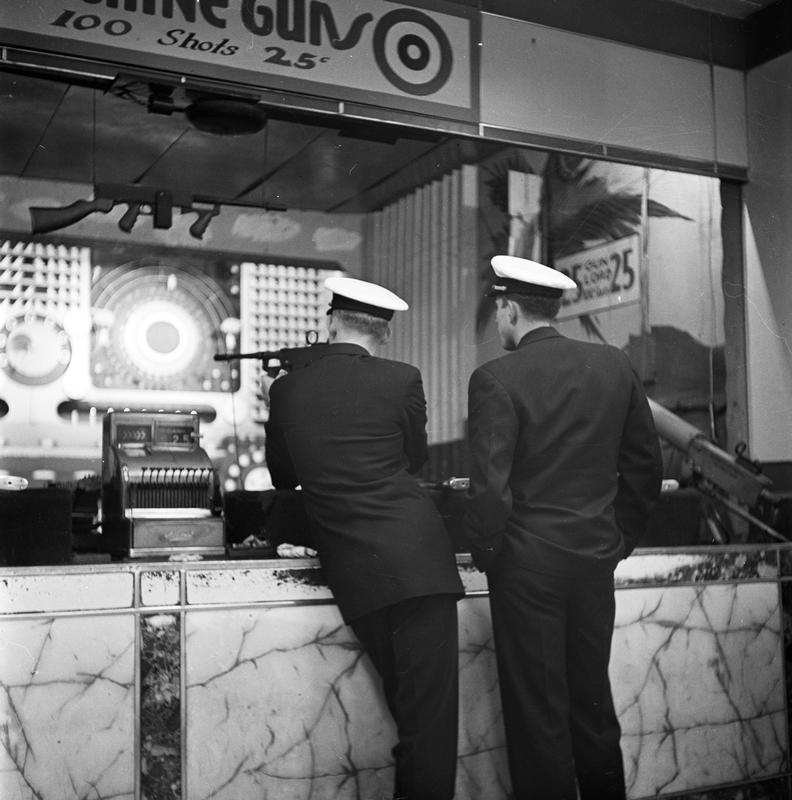
A couple images of a penny arcade and shooting gallery in 1950, photo by Robert Offergeld.

MNY326702

Courtesy MCNY
Courtesy MCNY
Courtesy MCNY
Courtesy MCNY

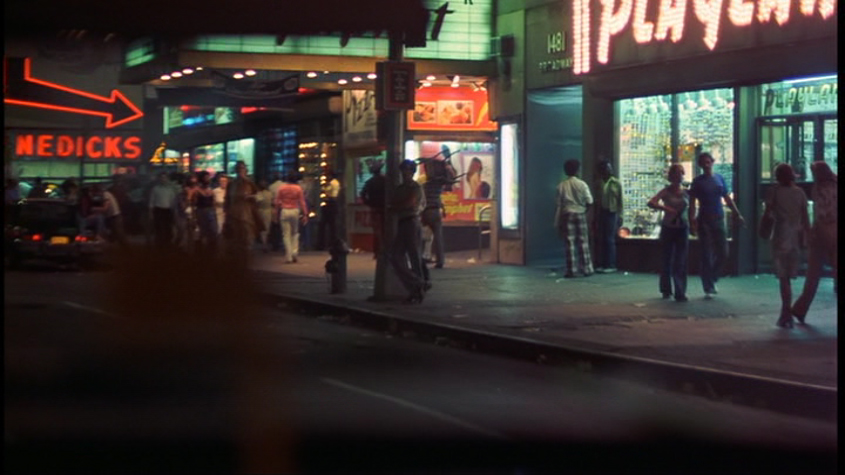
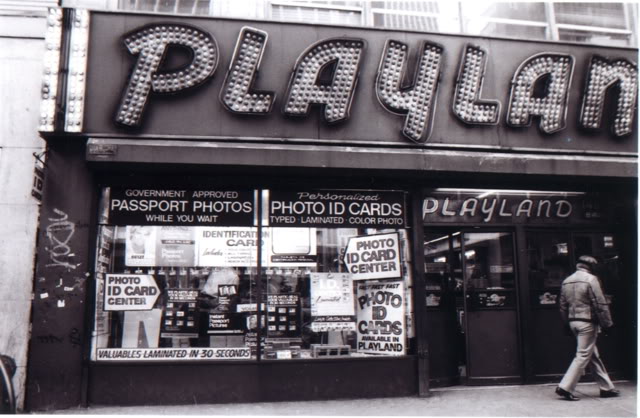
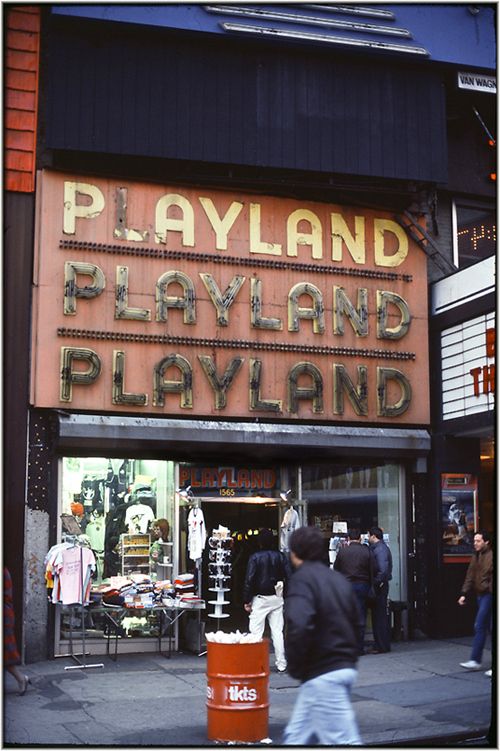
Playland on 42nd Street, courtesy the film Taxi Driver

Courtesy Scouting NY

5334486149_31979077f2_o

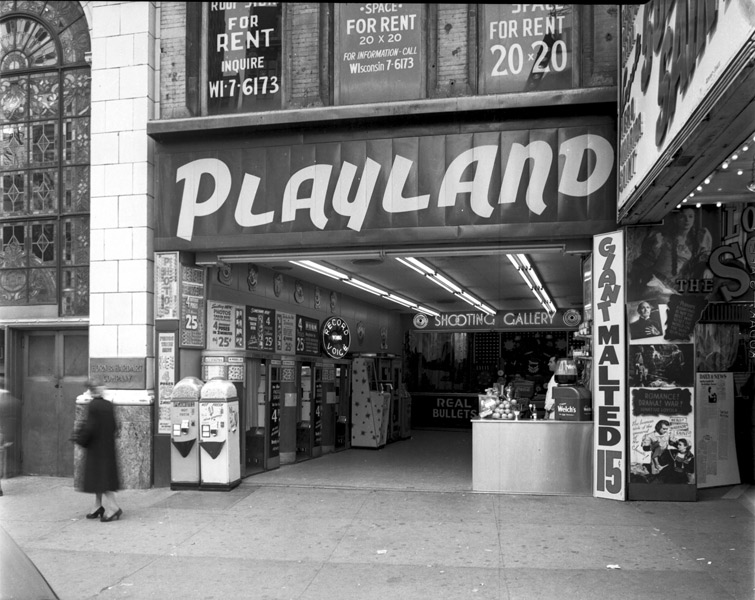
The other Playland at Broadway and 47th Street, pictured here in the 1950s. GIANT MALTED 15 CENTS!

Office for Metropolitan History

And later from the 1970s….

6a09ef0c0a54d711e169d152edb362b3


New York City arcade, 1981.

8f73ef985c84aa31fb92eff32c8f520e


Courtesy Twin Galaxies

The original Chinatown Fair sign, near its closure in 2011. It reopened the following year, perhaps a bit more family friendly than its precursor.

Courtesy Giant Bomb
Courtesy Giant Bomb

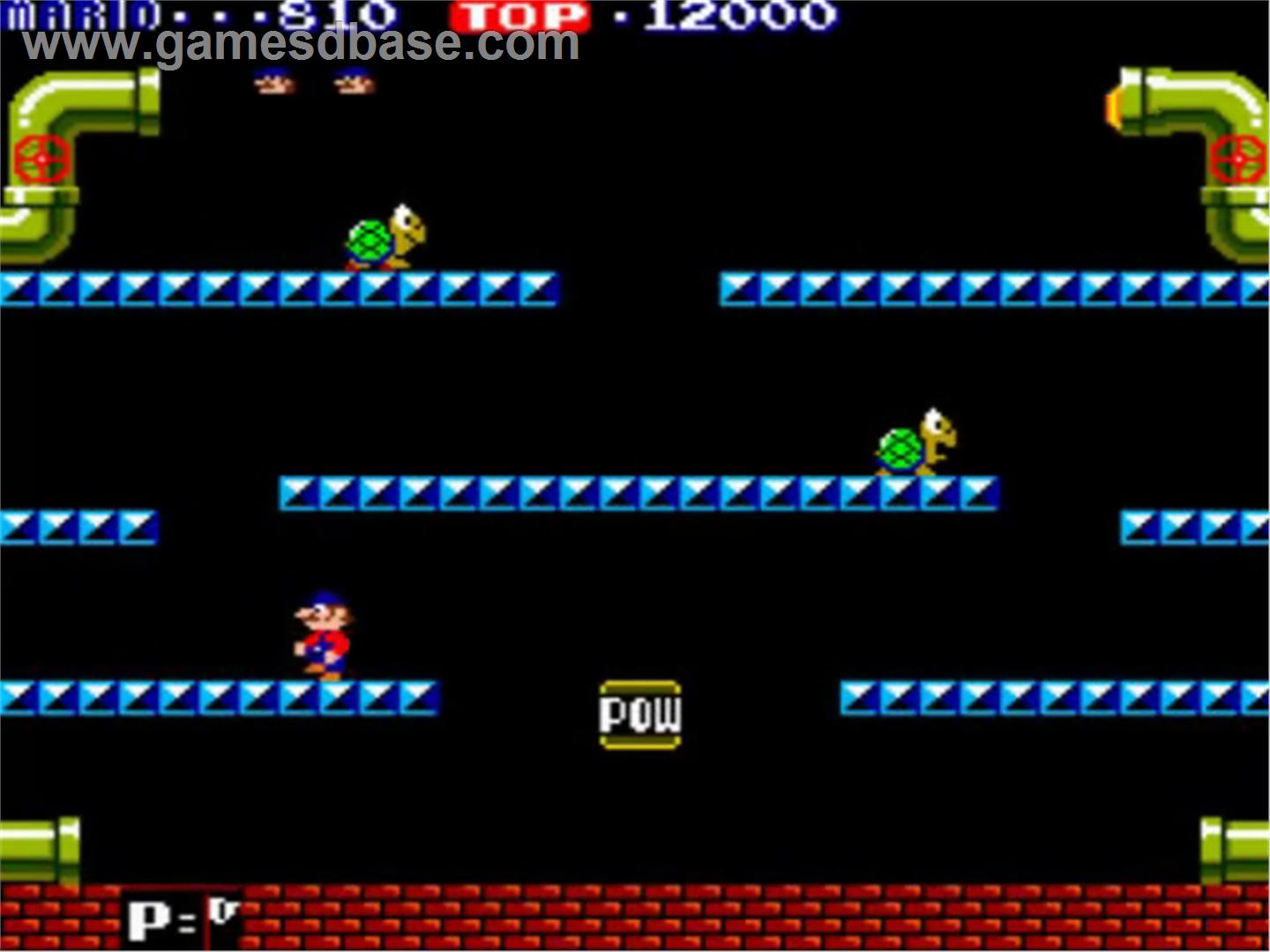
Screenshot from Mario Bros. (1983)

Courtesy GamesDBase
Courtesy GamesDBase


Screenshot from Amnesia (1986)

Courtesy Hazlift
Courtesy Hazlift


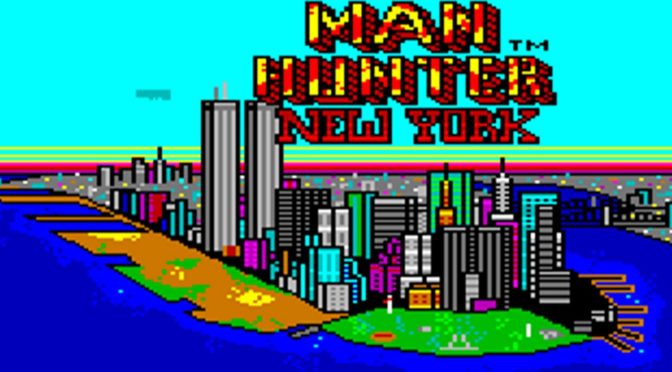
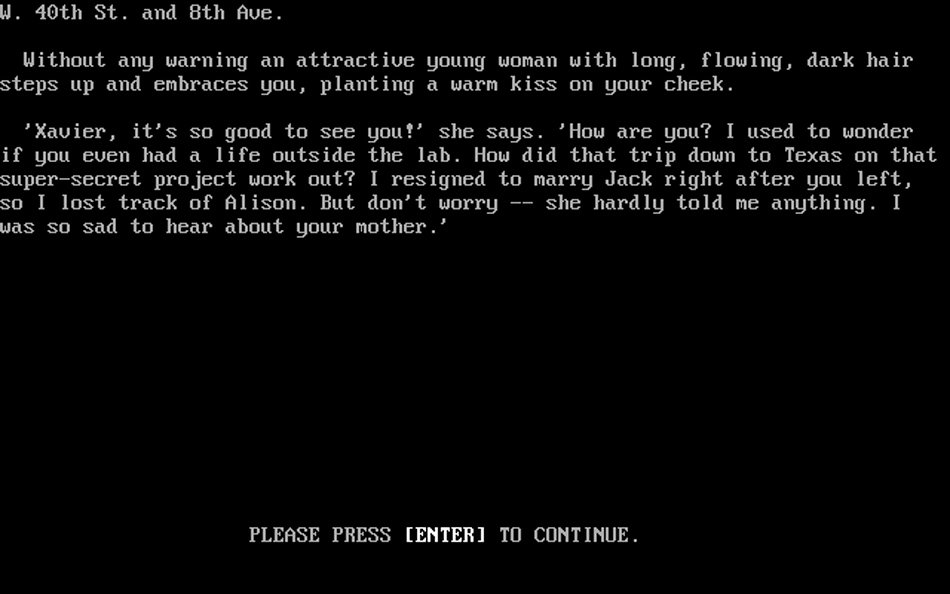
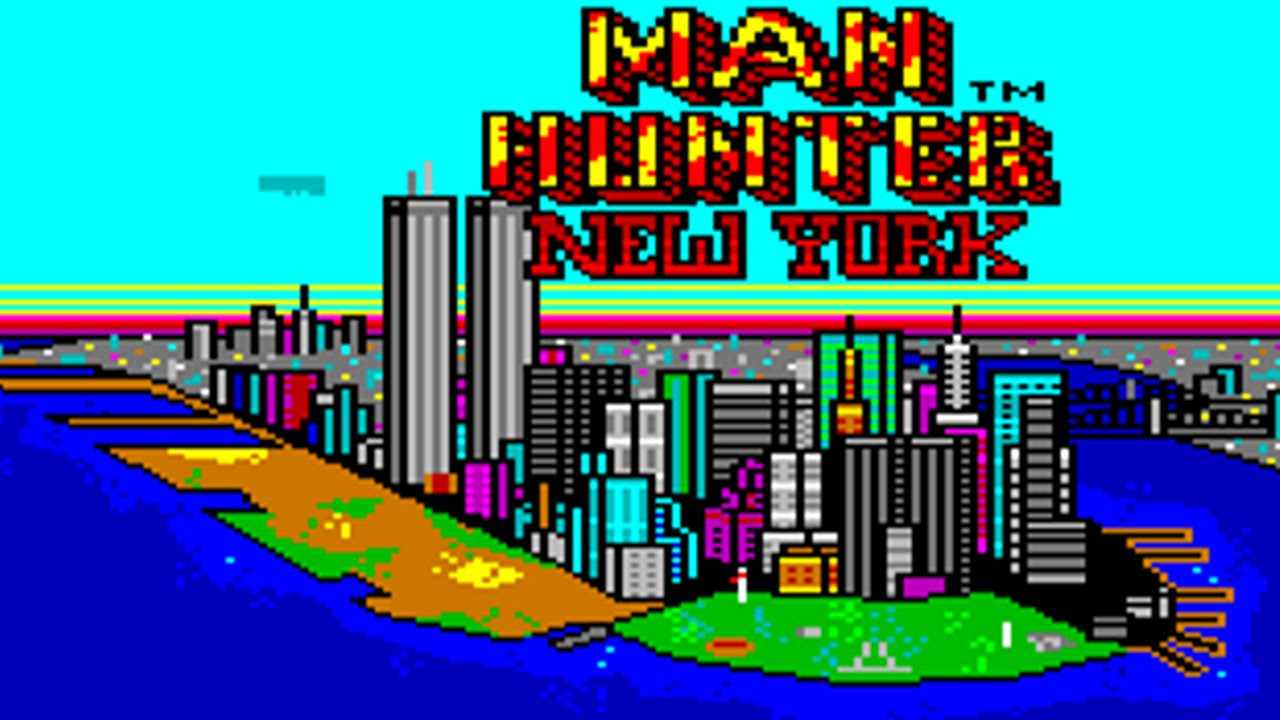
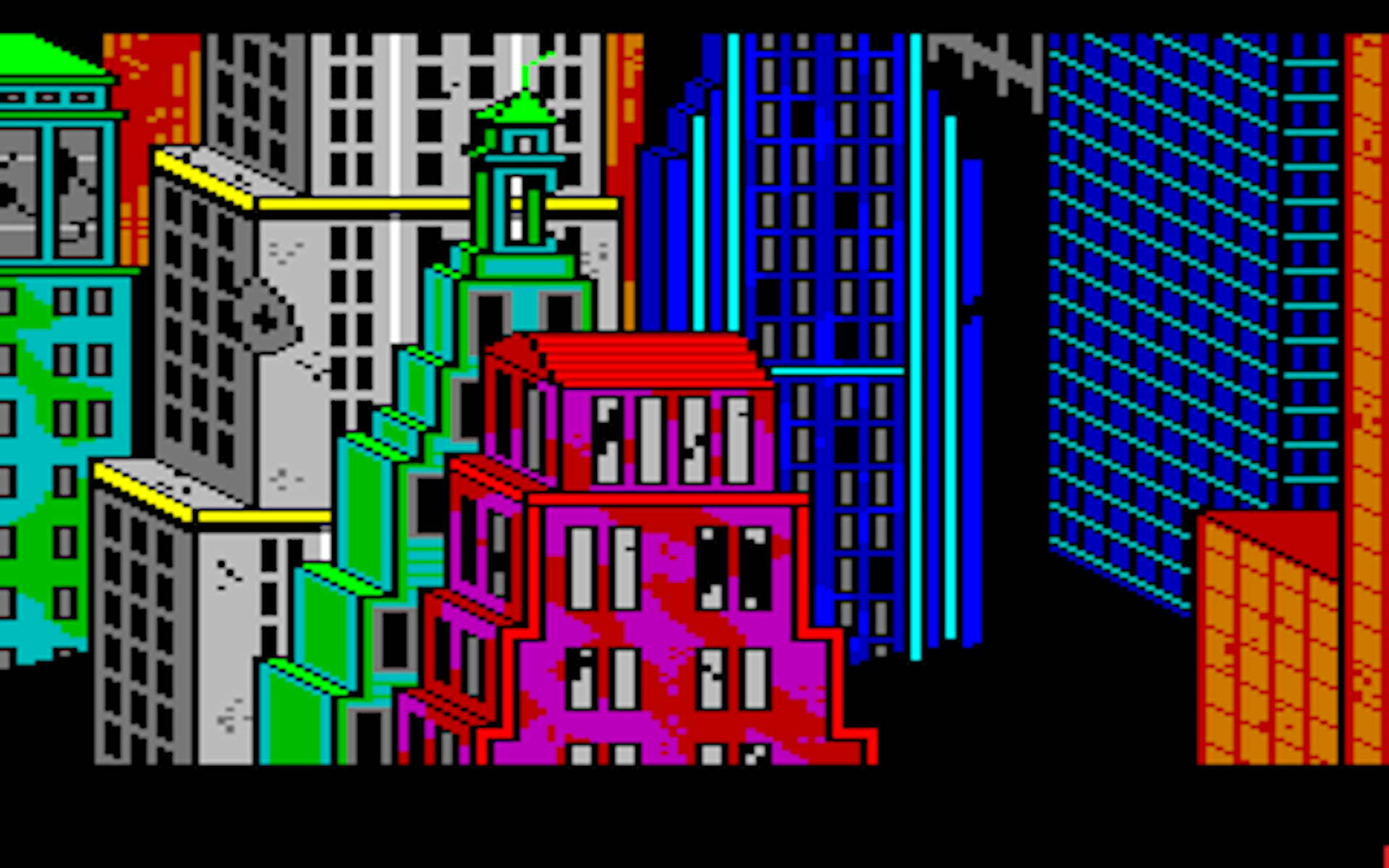
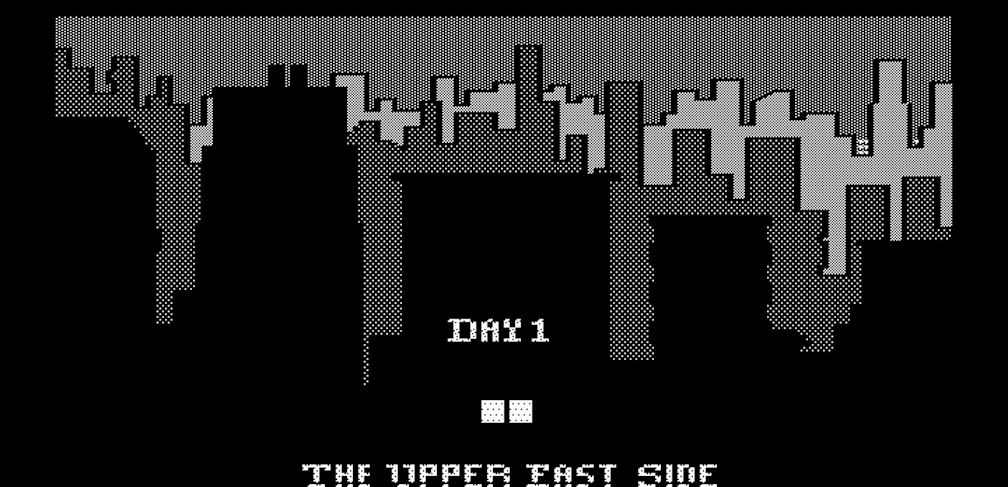
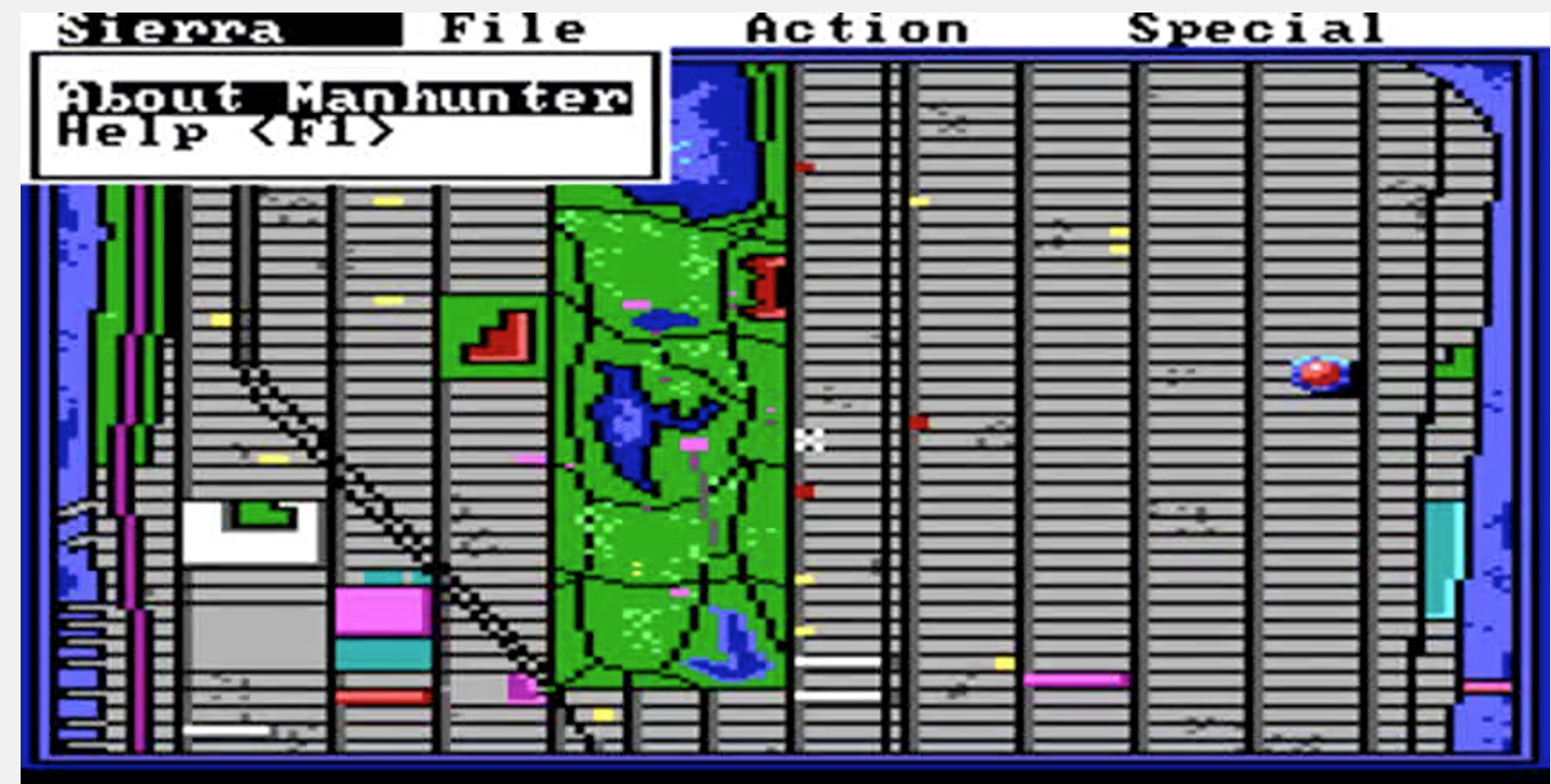
Images from Manhunter: New York (1988)

maxresdefault

335246-manhunter-new-york-amiga-screenshot-intro-new-york-looks-a

181573-manhunter-new-york-dos-screenshot-intro-hercules-graphics

Screen Shot 2016-08-04 at 12.14.12 PM


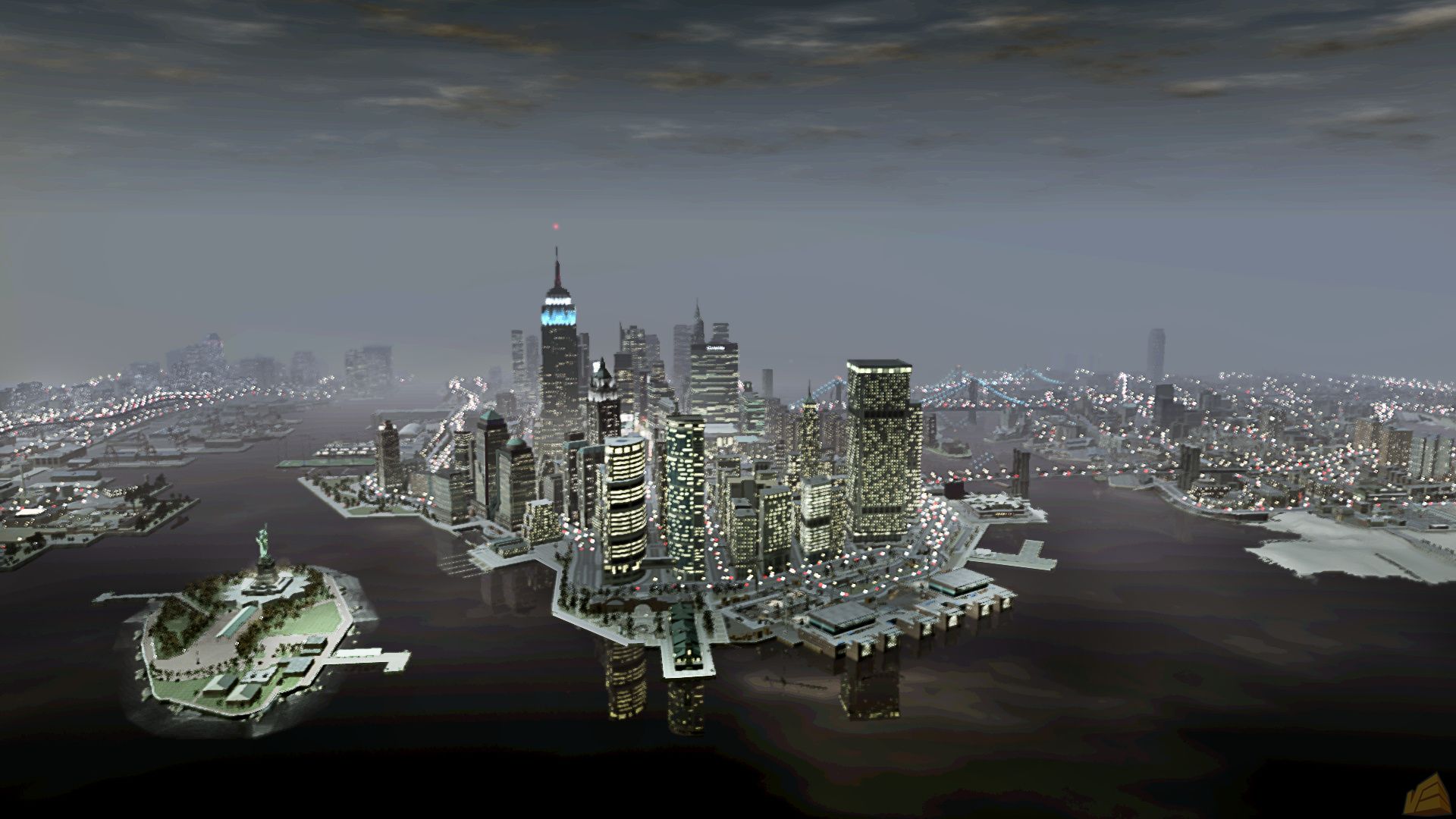
Screenshot from Grand Theft Auto‘s Liberty City

From GTA Wikia
From GTA Wikia

The area of Bowling Green, after the Great Fire of 1776, as depicted in Assassin’s Creed III.

Courtesy Assassin's Creed Wikia
Courtesy Assassin’s Creed Wikia
Categories
Bridges

The patriotic story of how the Kosciuszko Bridge got its name


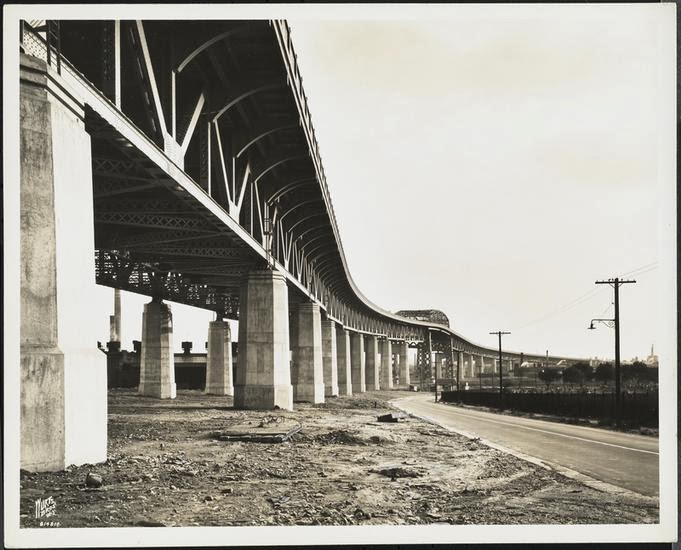
The approach to the Kosciuszko Bridge, photographed in 1939 by the Wurts Brothers.  Photo courtesy the Museum of the City of New York


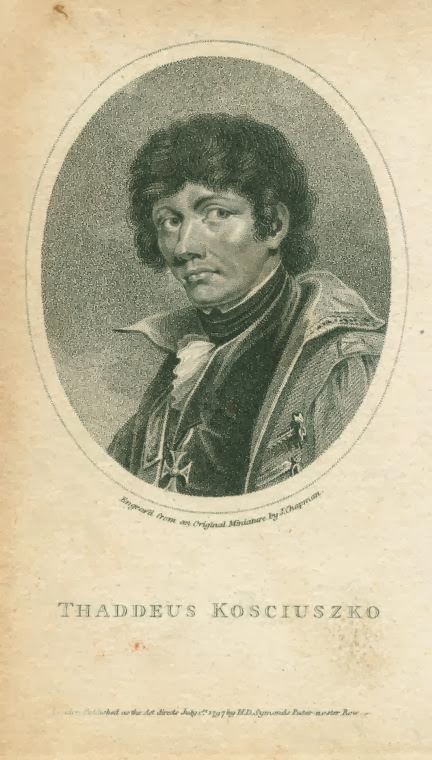
“That sound that crashes in the tyrant’s ear – Kosciuszko!” — Lord Byron

Byron was talking about Polish hero Tadeusz KoÅ›ciuszko, who was (most likely) born on this date in 1746.  Hopefully, within a couple months, the bridge that bears his name — and bears the grievances of those stuck upon it during rush hour — will begin a much-needed makeover.

But how did the span over the Newtown Creek, connecting Brooklyn to Queens, get named the Kosciuszko Bridge in the first place?

Kosciuszko wasn’t just Poland’s most famous revolutionary.  In 1776, he sailed for America to fight alongside George Washington and the Continental Army.  He was a brilliant strategist and engineer, helping bolster many American forts, and was greatly admired by Washington’s generals.  In one of his more clever displays, the man who would one day have a bridge named after him actually blew up several bridges to hamper British advances in upstate New York.**
After the war, he returned to Europe and led the fight for Poland’s independence (although his storied uprising against Russia was ultimately a failure).

Kosciuszko died in 1817 and has been celebrated the world over as the greatest of revolutionaries and perhaps the best known historical figure in Polish history.  But that alone doesn’t get one a bridge in Long Island.

The new automobile bridge, eventually part of the Brooklyn-Queens Expressway, was completed in 1939, replacing a smaller one called the Meeker Avenue Bridge.  The new crossing opened in August. Germany invaded Poland nine days later.

New York City’s affinity with Poland was strong by this time. The city had thousands of Polish-Jewish residents.  The Polish pavilion at the World’s Fair in Flushing-Meadow was among the most striking, featuring a bold statue of the Polish monarch Wladyslaw Jagiello.  (That statue was eventually moved to Central Park, where it sits today near the Turtle Pond.)  Some New Yorkers feared a similar invasion upon its own shores.

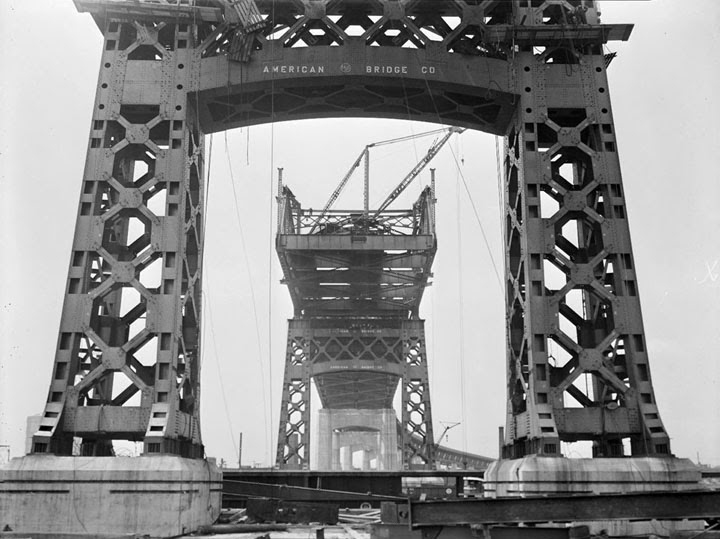
Below: Construction of the new Meeker Avenue Bridge in June 1939, later to be named Kosciuszko. (Courtesy NYC Municipal Archives) 

In July 1940, the Meeker Avenue Bridge was renamed the Kosciuszko Bridge, as a sign of the revolutionary spirit that bonded America and Poland.  It certainly made sense given that the Brooklyn anchorage rises from Greenpoint, a vibrant Polish neighborhood.

At an official ceremony on September 23 — a year after the German invasion — thousands of Polish-Americans cheered along to a rousing patriotic speech by Mayor Fiorello La Guardia.  On either side of the bridge were parades featuring revelers in traditional Polish costumes.

“[I]n so far as the American people and the American government are concerned,” said La Guardia, “the free government of Poland still lives and will continue to live.”

The crowd roared with applause at the mention of President Franklin D. Roosevelt.  America would not be officially engaged in World War II until the following year with the attack on Pearl Harbor.

Ah, but that name!  It remains one of the more perplexing bridge names to say.  It’s correctly pronounced kohsh-CHOOSH-koh, although several slight variations are accepted.  At first, many people simply refused to say it.  In 1945, the New York Times mentioned that “Kosciusko Bridge the people will not have and they call it the Meeker Avenue Bridge to this day.”

Of course, many people preface the name today with an expletive, as the bridge is better known for its traffic entanglements and its lack of any kind of shoulder for stalled cars.  There have been plans for years to replace the bridge, plans which finally look to be rolled out this year.

The Kosciuszko’s younger brother bridge — the Pulaski Bridge, named for another Polish hero, Kazimierz Pulaski — spans the same body of water just a couple miles to the west.

**Tadeusz Kościuszko actually blew up and booby-trapped many bridges during the Revolutionary War on the command of Colonel Philip Schuyler, the father-in-law of Alexander Hamilton.

Mayor LaGuardia’s former home and its sci-fi, erotic past

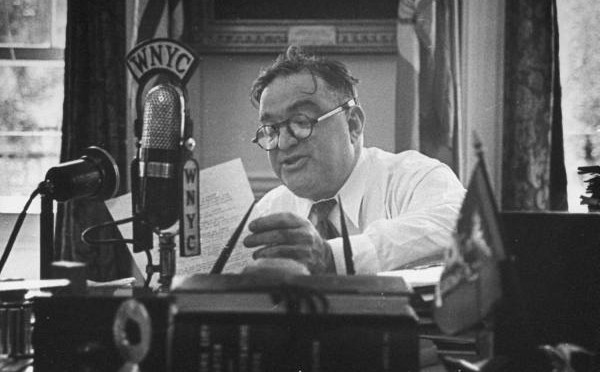
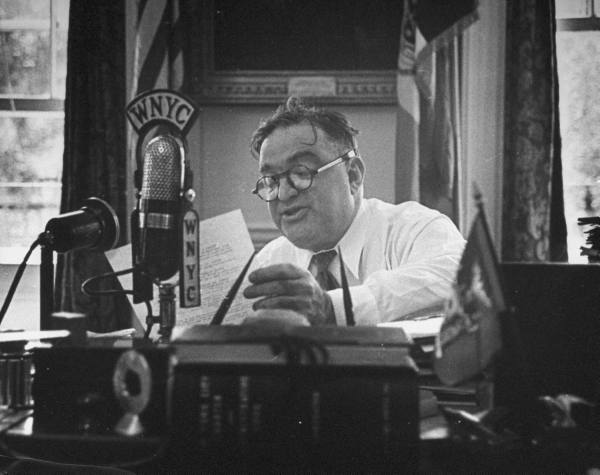
Above: Mayor LaGuardia presenting his weekly WNYC radio show from Gracie Mansion. He would carry on the tradition at his Riverdale home.

Fiorello LaGuardia, among the greatest mayors ever in New York history, died on this date, September 20, 1947, at his home in the Riverdale neighborhood of the Bronx. He arrived at the lovely four-story Tudor home directly from Gracie Mansion, where he served three consecutive mayoral terms. This mansion at 5020 Goodridge Avenue, constructed in 1914-15, was built for famed magazine illustrator Arthur I. Keller.

Retiring from politics, LaGuardia resided at the quiet mansion with his wife and two teenage children, broadcasting a weekly national radio program from his office and occasionally playing host to visitors like Robert Moses.

Less than 15 years later, the old LaGuardia home fell into some very curious ownership.

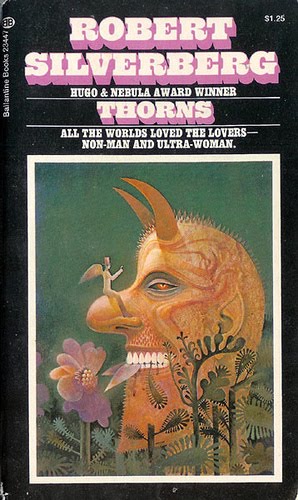
Prolific science fiction author Robert Silverberg crafted pulpy space fiction like Revolt on Alpha C and The Dawning Light right out of graduating from Columbia University in 1956. But he also spent those early years churning out stacks of cheap erotic novels for quick cash, so many and so successfully apparently that, at just age 26, he was able to purchase LaGuardia’s last home in 1961 and transform it into his own inspiration point. He penned several more sci-fi fantasies from this house, including the notable (and sexually charged) Thorns.

The author also wrote (under a pen name) the manual Sophisticated Sex Techniques in Marriage while living here.

Silverberg gave a little nod to the neighborhood in his 1972 novel The Book of Skulls: “How unreal the whole immortality thing seemed to me now, with the jeweled cables of the George Washington Bridge gleaming far to the southwest, and the soaring bourgeois towers of Riverdale hemming us on to the right, and the garlicky realities of Manhattan straight ahead.”

Categories
Podcasts

Idlewild Airport/John F Kennedy International Airport: from a golf course to a motley crew of classic architecture

PODCAST Come fly with us through a history of New York City’s largest airport, once known as Idlewild (for a former golf course) and called John F. Kennedy International Airport since 1964. Mayor Fiorello LaGuardia wanted a new and improved facility to relieve the pressure from that other Queens airport (you know, the one with his name on it), but a greater challenge faced developers of the Jamaica Bay project — the coming of the jet age and the growth of commercial travel.

The solution for Idlewild was truly unique — a series of vastly different and striking-looking terminals assigned to individual airlines. This arrangement certainly had its critics, but it has provided New York with some of the most inventive architecture found within its borders.

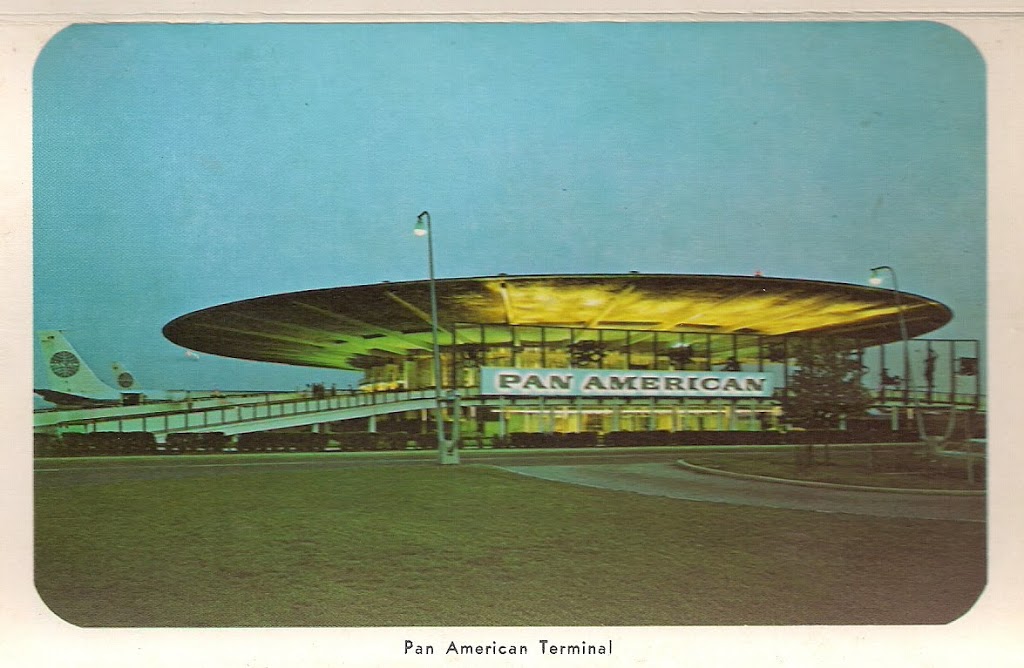
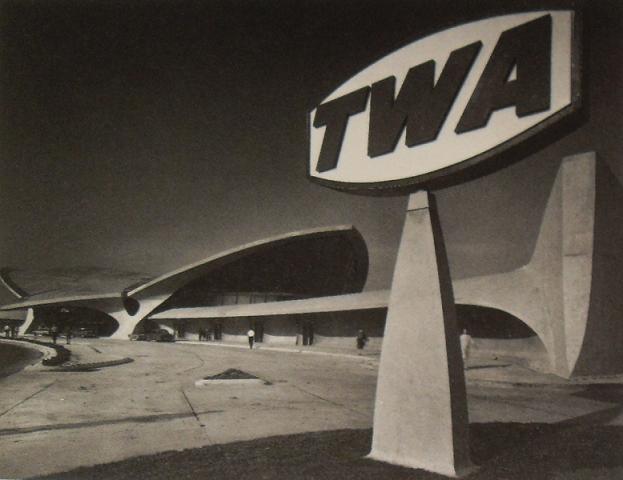
From stained glass to zodiac sculptures, from the out-of-this-world dramatics of the Pan Am WorldPort to the strangely lifting concrete masterpiece by Eero Saarinen, we take you on a tour of the original ’60s terminals and the airport’s peculiar history.

With guest appearances by Robert Moses, Martin Scorsese, the Beatles and a pretty awesome dog named Brandy.

Click on the pictures below to enlarge. And these demand to be enlarged!

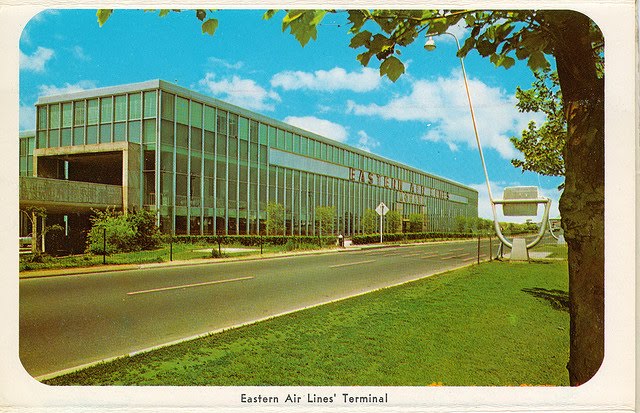
The Eastern Airlines building (“Terminal 1”) for the once-powerful airline that brought Robert Moses an early public defeat in the contentious battle for funding Idlewild Airport.

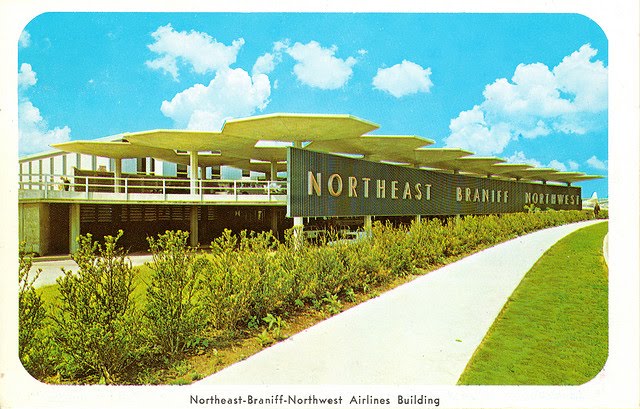
A large sequence of toadstool like concrete awnings adorn the entrance of Terminal 2, which serviced Northwest, Northeast and Braniff airlines.

The spaceage Pan American terminal, later called WorldPort. These postcards are courtesy DavideLevine/Flickr. He’s got a great many more JFK postcards to check out as well.

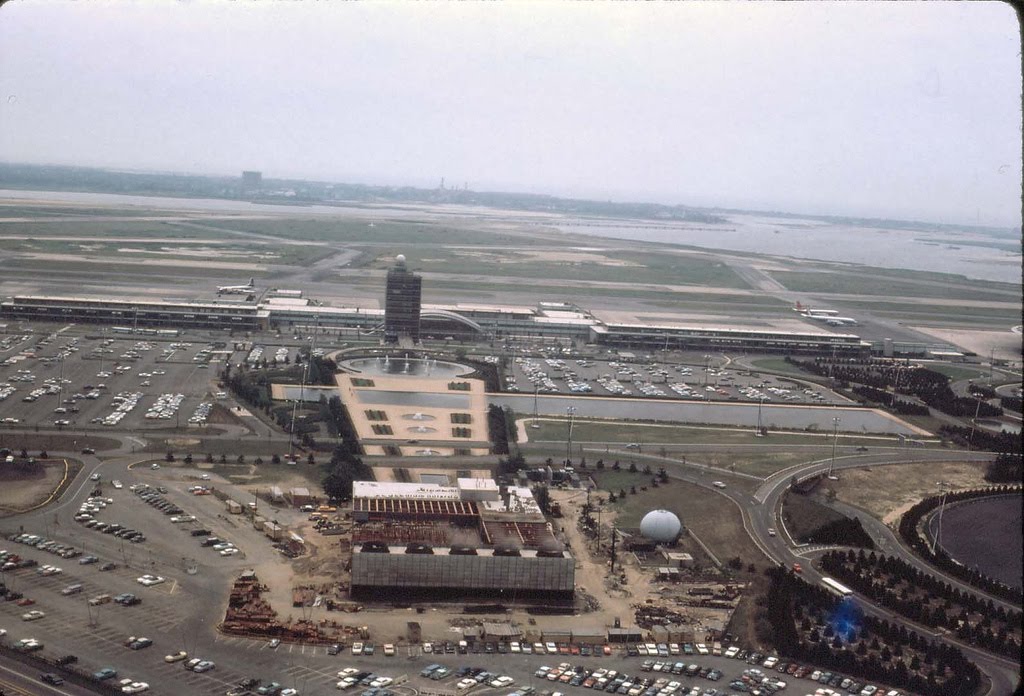
Overlooking the International Arrivals Building. From this vantage, you can see the ‘Versailles’ like gardens and fountain that briefly ruled the airport grounds until the demand for parking became too great. (avaloncm/Flickr)

Outside the International Arrivals Building, 1960 (rjl6955/Flickr)

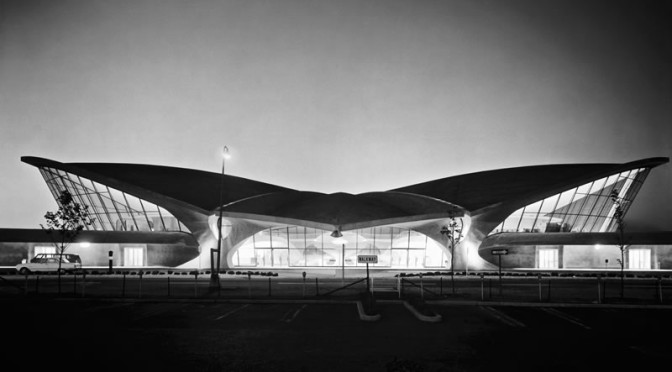
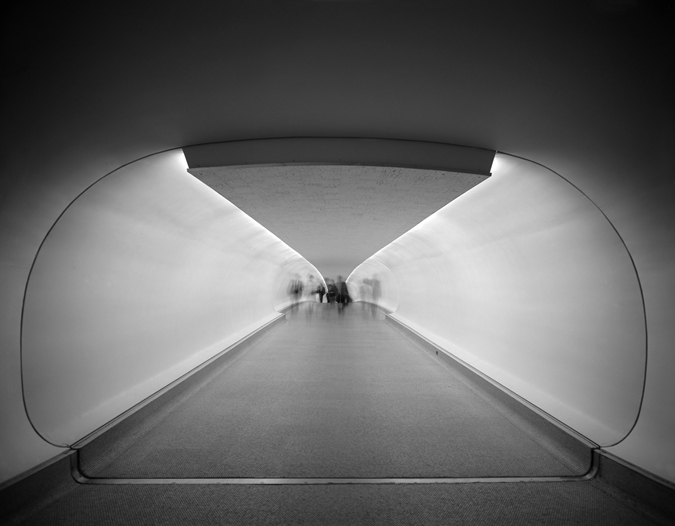
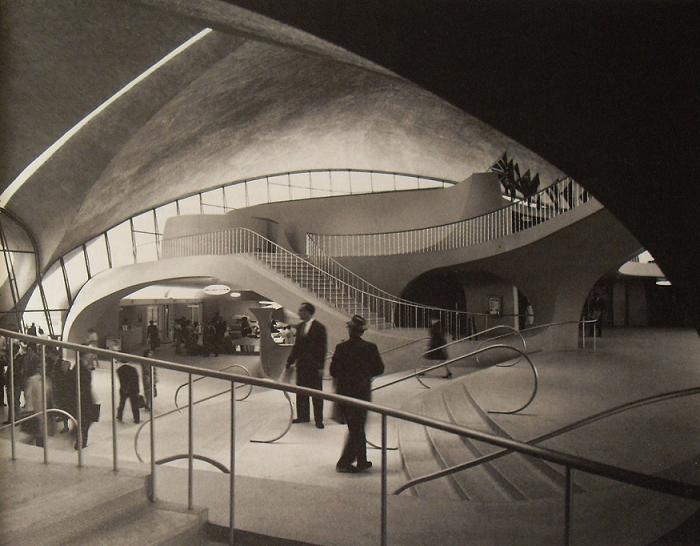
Inside and outside the TWA Flight Center, designed by Eero Saarinen. Pictures by Ezra Stoller

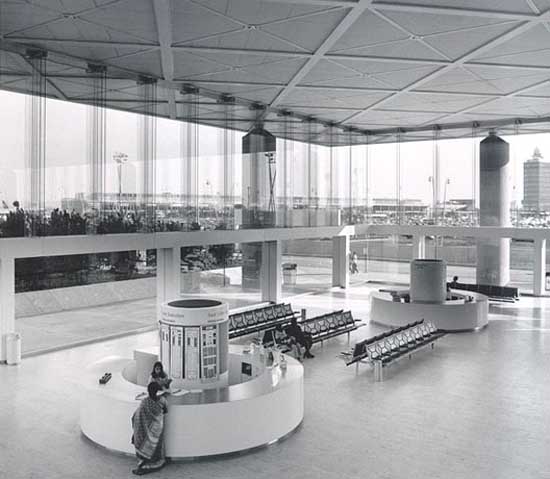
The interior of I.M. Pei’s Sundrome for National Airlines, with walls that seem to melt away with the sunlight. Currently unused, the building is slated to be demolished.

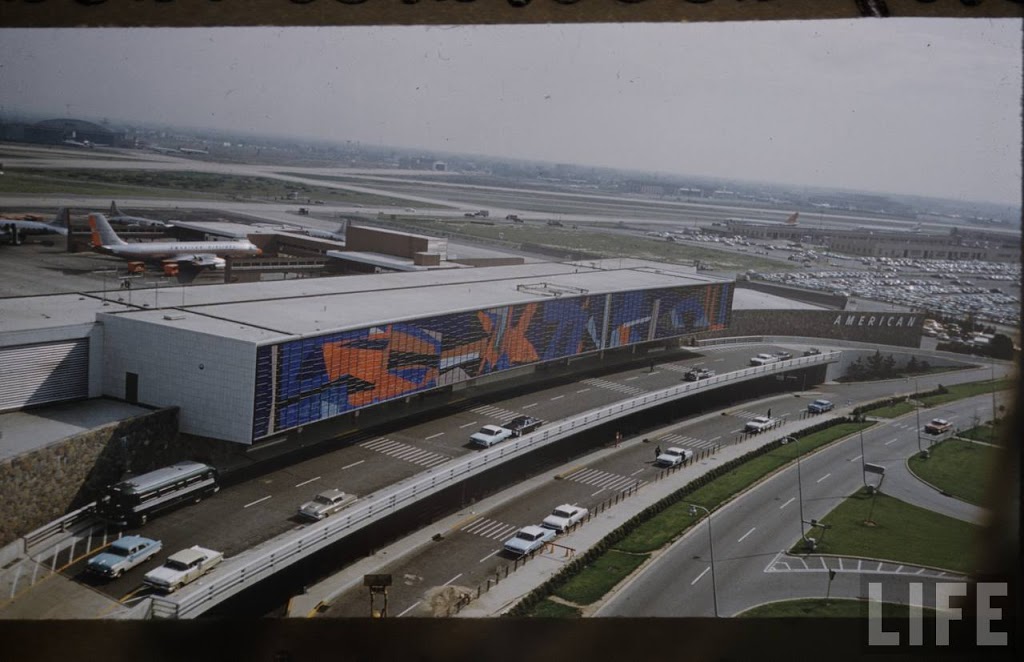
American Airlines terminal, distinguished by its extraordinary face of stained glass. (Photo Dmitri Kessel/Google Life)

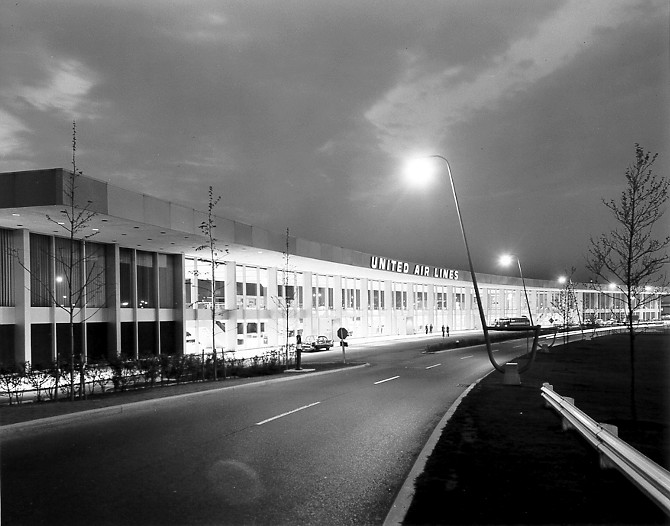
The simple but sleek United Airlines terminal.

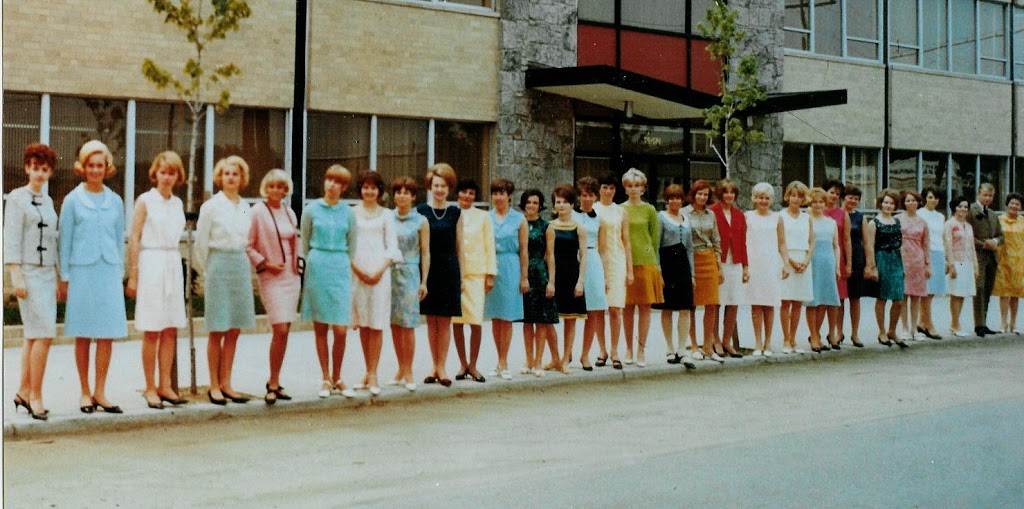
The style of the jet age was partially defined by airline flight attendants. Airlines used sex appeal in their marketing and garbed their female employees in trendy (and often revealing) uniforms. These women were graduates from Overseas National Airways training school in Queens, June 1966. (More information here.)

Idlewild/JFK would see as many movie and music stars than any other location in New York. Here’s Marilyn Monroe and Arthur Miller in 1954…

… and the Beatles arrive at JFK to screaming fanfare, 1964

Children could pretend to be air traffic controllers with this 1968 toy. Many years later, an actual air traffic controller would bring his children in to direct real planes.

Bridge Whist Club: The worst booze your taxes can buy!


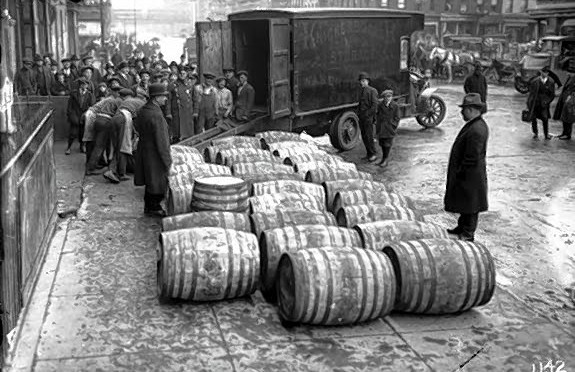
Just a barrel of laughs: Prohibition agents dump illegal containers of wine into the streets.

FRIDAY NIGHT FEVER To get you in the mood for the weekend, on occasional Fridays we’ll be featuring an historic New York nightlife haunt, from the dance halls of the old Bowery, to the massive warehouse clubs of the mid-1990s. Past entries can be found here.

LOCATION: The Bridge Whist Club
44th Street between Madison and Fifth avenues, Manhattan
In operation: 1925-1926

Prohibition in the United States didn’t extinguish the taste for liquor. The Eighteenth Amendment, ratified in 1919, outlawing the sale and transportation of alcohol, merely inspired those who sold it to become more creative.

In New York, prohibition even redefined midtown. Where once nightlife gathered around supper clubs and cabarets in major plazas like Times Square and Columbus Circle, speakeasies now slithered down the side streets and into previously unremarkable buildings. Some of the most famous of these illicit 1920s booze joints were housed in old tenements and small storefronts, down numbered streets off of Times Square and further downtown in Greenwich Village.

Outside the spotlight, a new regime of proprietors, building newfound nightlife empires with mob ties, quenched the thirsts of a populace thirsty for that which they weren’t legally allowed to partake. A great many vied for this business, with a reported “30,000 to 100,000 speakeasy clubs” formed by 1925.

That is an absurd number, reflecting the diversity in establishments — from the gentlemen’s clubs behind secret doors and the high-kicking lounges owned by Larry Fay and Texas Guinan to rundown tenements hastily fashioned with a bar and a few bottles. With no liquor sold there were no liquor licenses required. Everybody could get in the game.

How could the federal government even try and combat such widespread and diverse abuses of a virtually unenforceable law? One tactic manifested in 1925 when, in certainly one of the strangest undercover operation in the history of U.S. law enforcement, the feds got into the speakeasy business themselves. If you can’t beat ’em, drink up and join them.

In the fall of 1925, the United States Bureau of Prohibition sunk a few thousand dollars ($5,576.50, according to official documentation, almost $70,000 today)
to rent a building at 14 East 44th Street to construct its own speakeasy, called the Bridge Whist Club. The dive, called a “plush booze joint” by Herbert Asbury in his history of the Prohibition years, was named for a card game, and it is likely men gathered there to partake in this diversion.

But most were there for the liquor. The undercover agents, meanwhile, used the joint to gather “information concerning the activity of liquor smugglers.” Rubbing elbows with drinkers, agents could theoretically get names of other speakeasies and establish connections to leaders in New York’s underworld. Tables were even equipped with recording devices to pick up incriminating details.

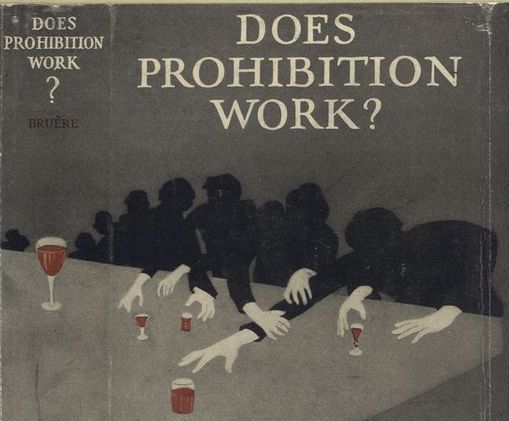
Below: From the jacket of a 1926 book by author Martha Bensley Bruere (courtesy NYPL)

In essence, they were feeding the small fish to draw out the larger ones. The Treasury Department, tasked with enforcing Prohibition by 1925, was well aware of the shifty nature of the enterprise. But an ethical distortion in the philosophy of the Bridge Whist actually put its patrons at risk.

As Wayne Wheeler, head of the Anti-Saloon League, put it, “The government is under no obligation to furnish people with alcohol that is drinkable when the Constitution prohibits it.” So the Bridge Whist served up a mixture containing wood alcohol, also known as Methanol, linked today with causing blindness.

This is not the first time that the U.S. government introduced dangerous substances into illegal drink. Realizing that many bootleggers stole industrial alcohol to make their product, enforcers directed that the industrial stuff be polluted with Methanol, hoping the foul taste and physical illnesses would deter consumption. (Slate Magazine ran an eye-opening article about this last year.)

Some of this toxic mix was sold at the Bridge Whist; other batches infiltrated through speakeasies throughout New York. According to author Deborah Blum, “In 1926, in New York City, 1,200 were sickened by poisonous alcohol; 400 died. The following year, deaths climbed to 700.”

Still, the Bureau claimed such tainted booze was “the most effective denaturant which the government could use, since it was the most difficult denaturant to remove” by bootleggers with their own chemists, tasked with cleaning up the toxic stew.

Having the government in the speakeasy business did not settle well with many in Congress. Anti-Prohibition members equated it to entrapment. Indeed, many arrested due to information gleaned from the Bridge Whist were later set free. Only one “mid-level bootlegger” was ever caught from information gleaned from the speakeasy operation.

New York congressmen Fiorello LaGuardia, ardently against Prohibition, petitioned against the use of ‘under-cover funds’ and extreme measures of enforcement. Ultimately, the Bridge Whist could not weather the scrutiny, and thanks to the efforts of the future mayor of New York, the experiment was officially shut down in May 1926.

Mayor John O’Brien: his heart is as black as yours!

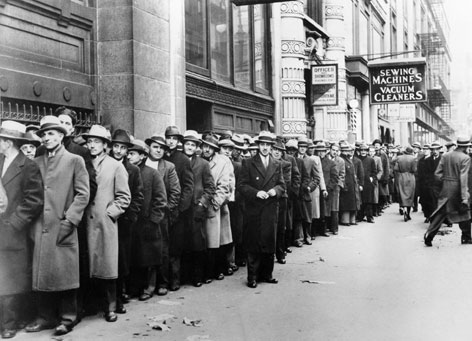
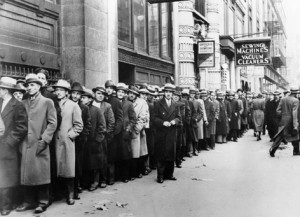
Above: An unemployment line in November 1933. The O’Brien administration offers no relief to the city.

KNOW YOUR MAYORS Our modest little series about some of the greatest, notorious, most important, even most useless, mayors of New York City. Other entrants in our mayoral survey can be found here.

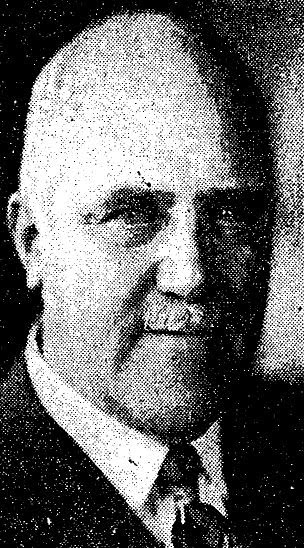
Mayor John Patrick O’Brien
In office: 1933

There’s not much to say about New York mayor John P. O’Brien that’s very positive. He’s one of the most forgettable mayors of the 20th century. But I haven’t forgotten!
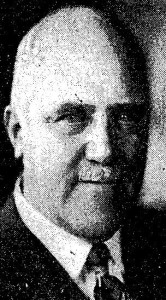
His obscurity is partially due to his length of term; he was mayor for only a year. But thank goodness. He was the last pure mayoral puppet of Tammany Hall. His blandness is further accentuated by the fact that his duration of mayor is sandwiched between that of the debonair Jimmy Walker (1926-1932) and the reformer Fiorello LaGuardia (1934-1945) — two men of great charm and strong personal narrative.

What makes his mediocrity less than humorous is the fact that O’Brien governed the city during the pitiful year of 1933, the last truly disastrous year of the country’s greatest depression, a year when the nation’s unemployment rate actually hit 25%.

His predecessor Walker was a political illusionist, known more for his style than his substance. He hypnotized the city while keeping its corrupt, ineffective infrastructure churning. When no-nonsense, progressive judge Samuel Seabury exposed widespread malfeasance in the New York legal system, all roads eventually led to ‘Beau James’, who resigned in September 1, 1932. [More in the Know Your Mayors entry on Jimmy Walker.]

In the wake, Walker’s deputy mayor Joseph V. McKee was declared temporary office holder until a special election could be hastily prepared to find someone to complete Walker’s term. Normally, such wholesale exposure of corrupt Democratic leadership would have assured their immediate ouster at the polls; however, the anti-Tammany forces had yet to properly gel when the special election took place two months later in November 1932 — and the political machine was able to squeeze in one more elected representative.

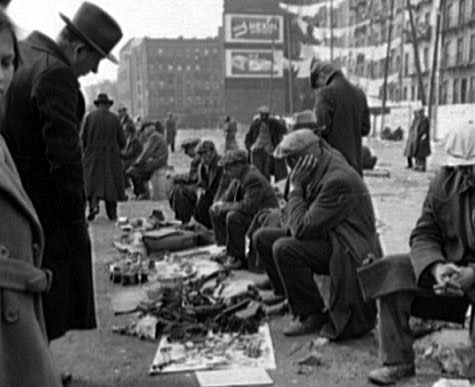
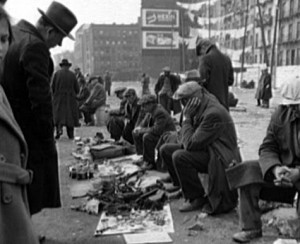
Below: New York in 1933, and it’s not pretty. Men selling their possessions on the street.
John O’Brien, a lawyer of some renown, was known as a quiet but obedient public servant. (“Loyal and industrious” according to Allan Raymond.) The man was stiffer than stiff, a devout Catholic who wore his holy medals everywhere, even on gym clothes. Born to Irish immigrants in Massachusetts in 1873, O’Brien graduated from Georgetown, moved to the city, and moved into and up through the ranks of the Democratic machine to become Corporation Counsel in the early 1920s. (A nice description of what the Counsel is can be found here.) He was later appointed a New York Surrogate Court judge.

As deputy mayor, McKee was merely a fill in. Even at veiled gestures that McKee would cut wasteful city jobs was too much for the liking of Tammany leaders, who often filled those very jobs. Also McKee was also from the Bronx. That will never do!, cried party leadership.

So they went hunting for a more malleable choice, and found O’Brien. With opposition scrambling for a real candidate for the full election a year later, O’Brien handily won the special election on December 1932, double the votes of his inept republican competitor, former Brooklyn borough president Lewis H. Pounds.

Square jawed” O’Brien went right to work — doing virtually nothing. Despite being in the midst of the Great Depression, little was truly accomplished. Even if he had wanted to do something — and there is no evidence he did — he was so beholden to his Tammany Hall masters that he had little latitude for change. Those jobs he did eliminate were those least interesting to his Democratic overlords, namely school teachers.

He did secure a agreement with private banking firms to continue loaning to the city until 1937, so long as the city stopped raising real estate taxes. This balm merely disguised a rueful out-of-balance city budget that would weigh heavily upon his successor. Even worse, emergency relief funds from the federal government (what we would call ‘stimulus money’ today) was re-routed to the pockets of Tammany rank-and-file, dispersed almost at random instead of places in the city of greatest need.

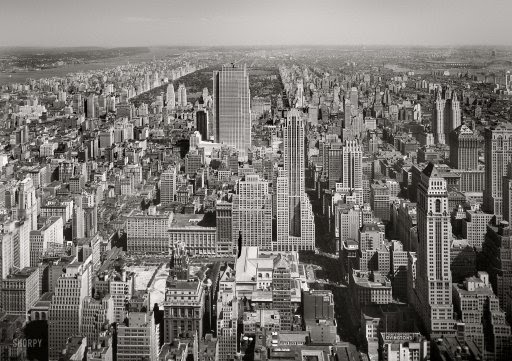
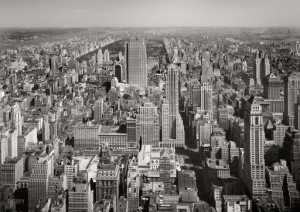
Below, midtown Manhattan in 1933 (Pic courtesy Shorpy)
By design, O’Brien was selected in contrast to slick party hound Jimmy Walker. Unfortunately this also meant that the party was over, that “a pious, laborious dullard” occupied City Hall, “a hack given to malapropisms,” according to George J. Lankevich.

To African-American crowds in Harlem, O’Brien proclaimed proudly, “I may be white but my heart is as black as yours.” To Jewish constituents, he herald the talents of ‘that scientist of scientists, Albert Weinstein.”

Even worse, he was apparently not bright enough to disguise the Tammany strings affixed to his back. Famously (in fact, it’s the soundbite he’s most known for), O’Brien, when asked by the press who New York’s new police commissioner would be, replied, “I don’t know. They haven’t told me yet.” D’oh!

By the end of his term, O’Brien had wasted any shred of credibility he might have had. Yet Tammany stuck with him going into full election in November 1933. A fusion coalition of Republicans and anti-Tammany Democrats had the upper hand going into the election. Their first pick for mayor was young parks commissioner Robert Moses (who called O’Brien “a winded bull in a china shop.”) Moses was considered too divisive, even back then, so Samuel Seabury, revered voice of the fusion ticket, convinced party leadership to switch to a mayoral also-ran, former city alderman and house representative Fiorello La Guardia.

La Guardia had run for mayor before and lost — in 1929, to Jimmy Walker! The stock market crash had occurred two weeks before election day, and Walker was still charming. This time, however, La Guardia had the winds of reform carrying him.

O’Brien, naturally, stood no chance. In the final outcome, even former temp-mayor McKee, as a candidate for the hastily assembled Recovery Party, beat him. It was the most crushing defeat of a Democratic hopeful in decades.

The start of La Guardia’s term in 1934 would usher in the beginning of the end for Tammany Hall. O’Brien, for his part, remained faithful to his party to the end, even serving as a delegate to the Democratic National Convention a few times. Having rescued his reputation by returning to law in his later year, O’Brien lived in the Upper East Side until his death there in September 27, 1951.

Boycott the Olympic Games!


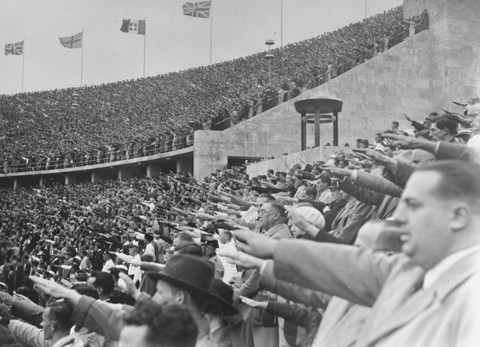
It’s been awhile since America faced the potential of an Olympic Games boycott. The debate about Beijing is still being waged in the press. America withdrew from the Moscow Olympics in 1980. And in 1936, there was an equally emphatic cry to boycott the Olympics in Berlin, Germany — and New York City led the protest.

This seems logical, as New York was America’s center for Jewish culture; many Jewish athletes (most notably, world record hurdler Milton Green) would eventually sit out these Olympics anyway, in protest to Hitler’s purging of his Olympic team of Jewish athletes. Hitler had relented in his original dictate to ban all Jewish athletes from all countries, but who could blame any athlete from wishing to avoid such an event fraught with toxic politics?

But in fact it was prominent New York Catholic politicians that headed the effort to convince the New York Olympic committee to pull out of games. Leading the charge was former New York state supreme court justice Jeremiah Titus Mahoney, who also just happened to be the president of Amateur Athletic Union. Mahoney had run for mayor of New York in 1934 but lost to Fiorello LaGuardia.

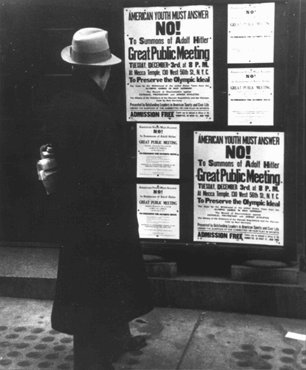
So imagine the impact of a rally on Dec 3, 1935, where both Mahoney and Laguardia took to the stage, urging Americans to support a boycott of the Berlin Olympics. The rally was held at the former Mecca Temple for Shriners on W. 55th Street.(Today, its the New York City Center concert hall.) Pictured above: announcements of the Mecca rally

According to Jeremy Schaap, a host of political leaders urged on a boycott and read letters from supportive state governors and Senators. But it a speech from the diminutive but charismatic LaGuardia, himself of Jewish descent, that moved the crowd. “Athletic contests imply good sportsmanship and fair play, two qualities which are unknown to the Hitler regime.”

But boycotters faced two insurmountable roadblocks. The first was Avery Brundage, president of the United States Olympic Committee, who was firmly in Hitler’s pocket after a carefully orchestrated wine-and-dine tour through the country convinced him of above-board German intentions that would “promise … the greatest sports festival ever staged anywhere.” Brundage also happened to be the former president of the Amateur Athletic Union, pitting him directly with Mahoney.

The other was endemic of America itself. Many wondered how America could boycott the games out of political protest, when African-Americans were hardly being treated any better in our own country. Jesse Owens originally signed on to the notion of a boycott, but the general concensus was that a diverse American team could undermine Hitler’s racial policies by showing him up at his very doorstep.

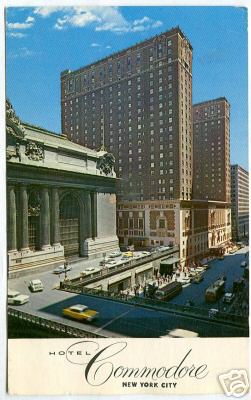
So it was no surprise that at a Dec. 8 meeting of the Amateur Athletic Union, held at the Hotel Commodore on Lexington and 42nd Street, Brundage was able to convince the voting body of the organization to vote to stay in the games.

Despite the bad blood with city leaders, New York City hosted the Olympic trials the next year in July on Randalls Island at the former Downing Stadium. (Downing was ripped down in 2004 and replaced with Icahn Stadium.) New Yorkers got to witness firsthand the now-legendary prowess of Jesse Owens who then went on to snatch four gold metals from Hitler’s games.


But while Owens was busy showing up the Nazis, a ‘protest’ Olympics were being held at Downing that same summer. The World Labor Athletic Carnival or ‘Counter-Olympics’ featured over 400 American athletes in a display more of solidarity than actual competition. Although it was organized by the Jewish Labor Committee, its no surprise to find as co-chairs of the ‘counter-Olympics’ the two former rivals who had desperately tried to boycott the games in the first place — Mahoney and LaGuardia.

As for the former Hotel Commodore (pictured at left), now the Grand Hyatt , it holds another place in sports history; it was here on June 6, 1946, that the precursor the the National Basketball Association was formed.