PODCAST The tale of the Black Tom Explosion which sent shrapnel into the Statue of Liberty and rocked the region around New York harbor.
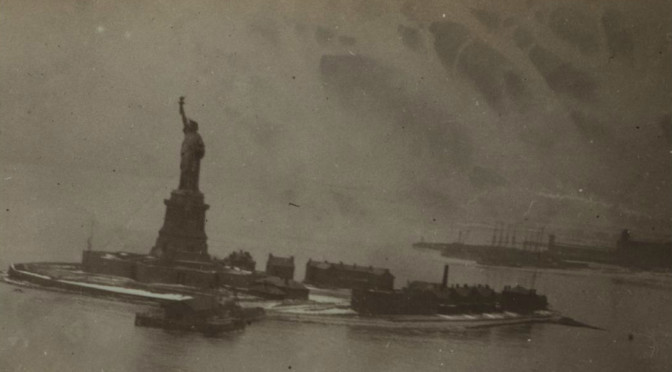
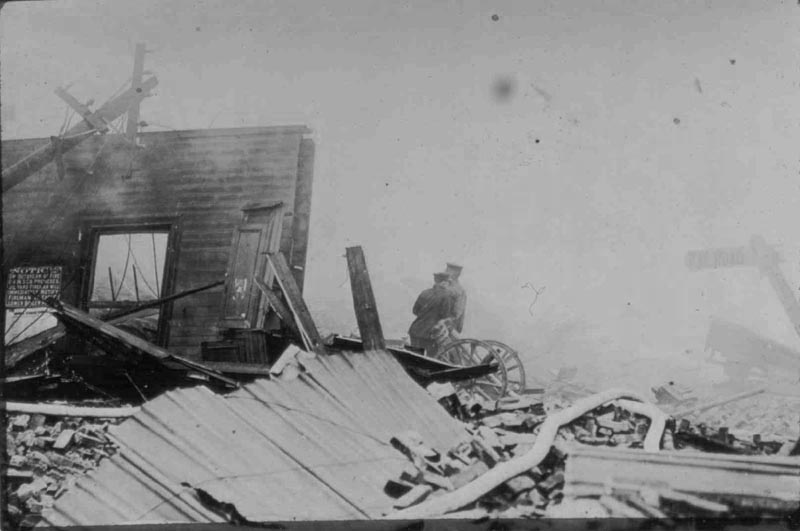
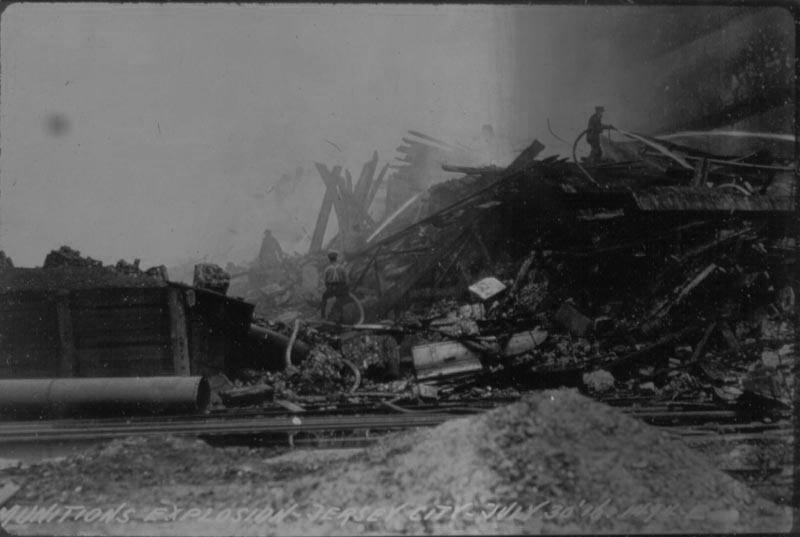
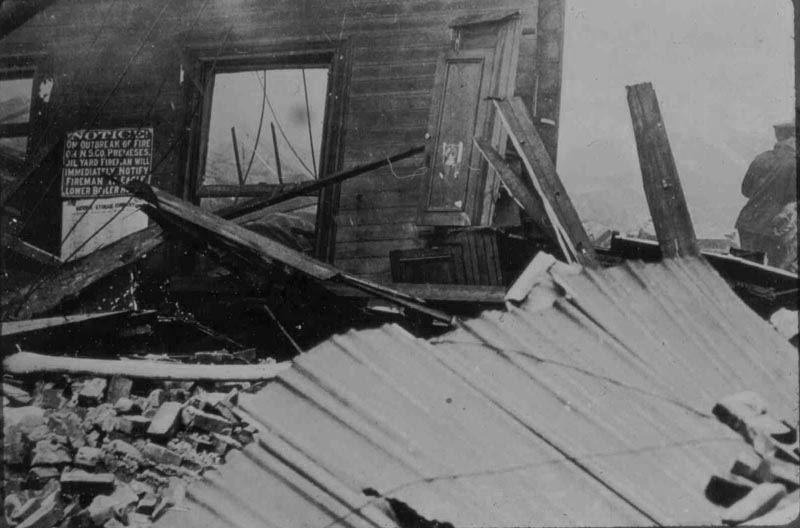
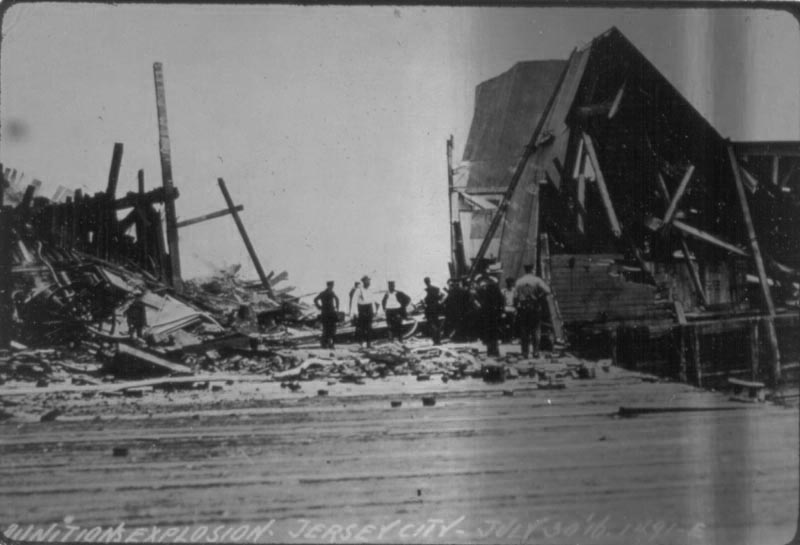
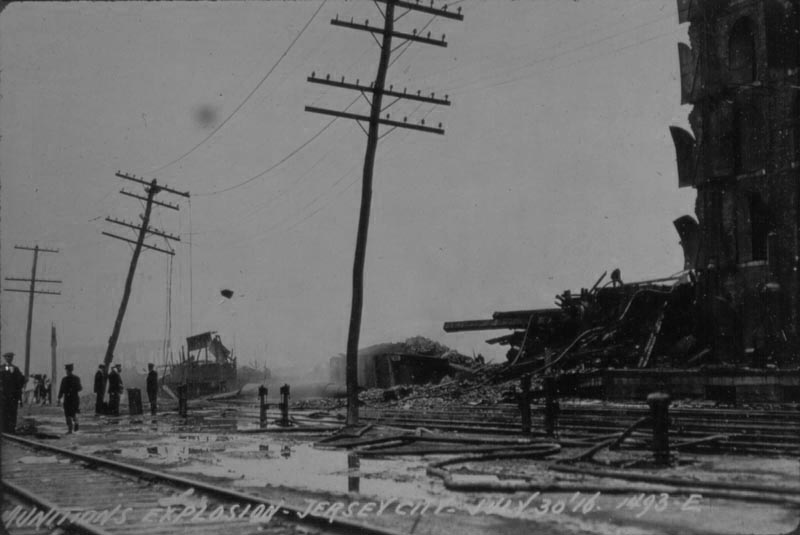
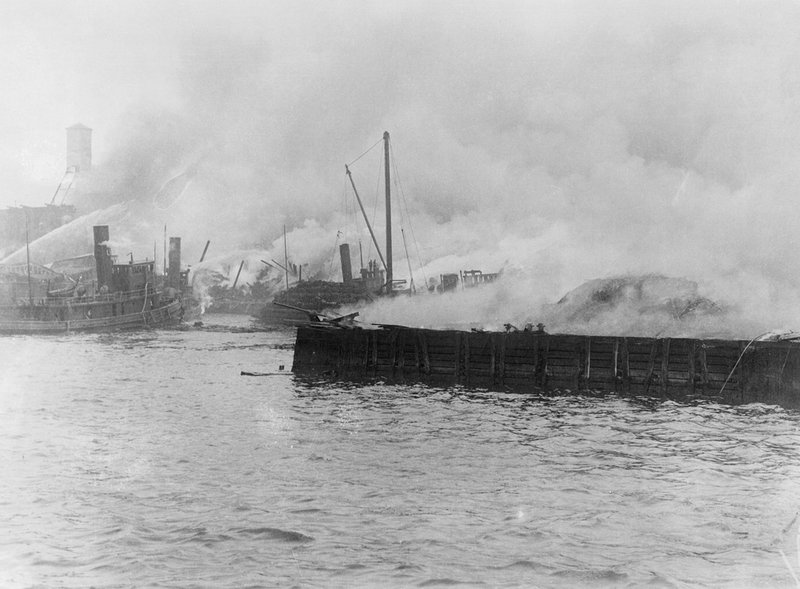
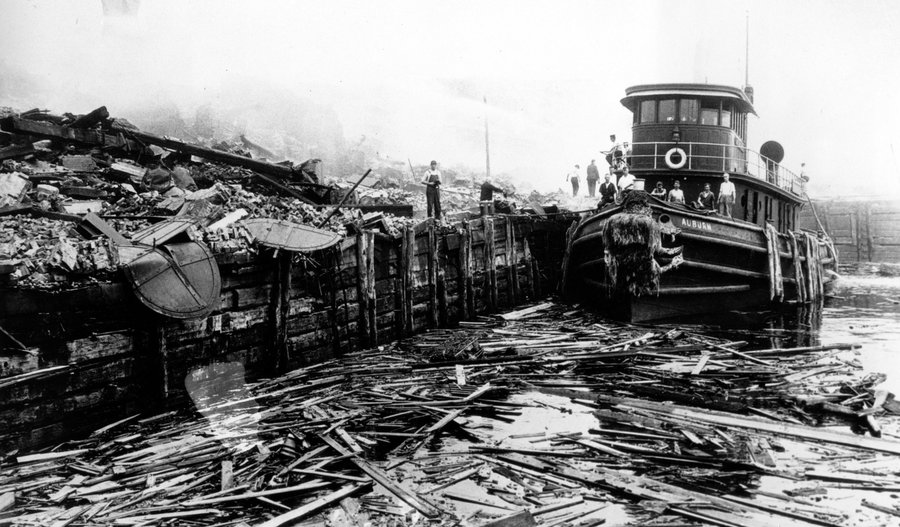
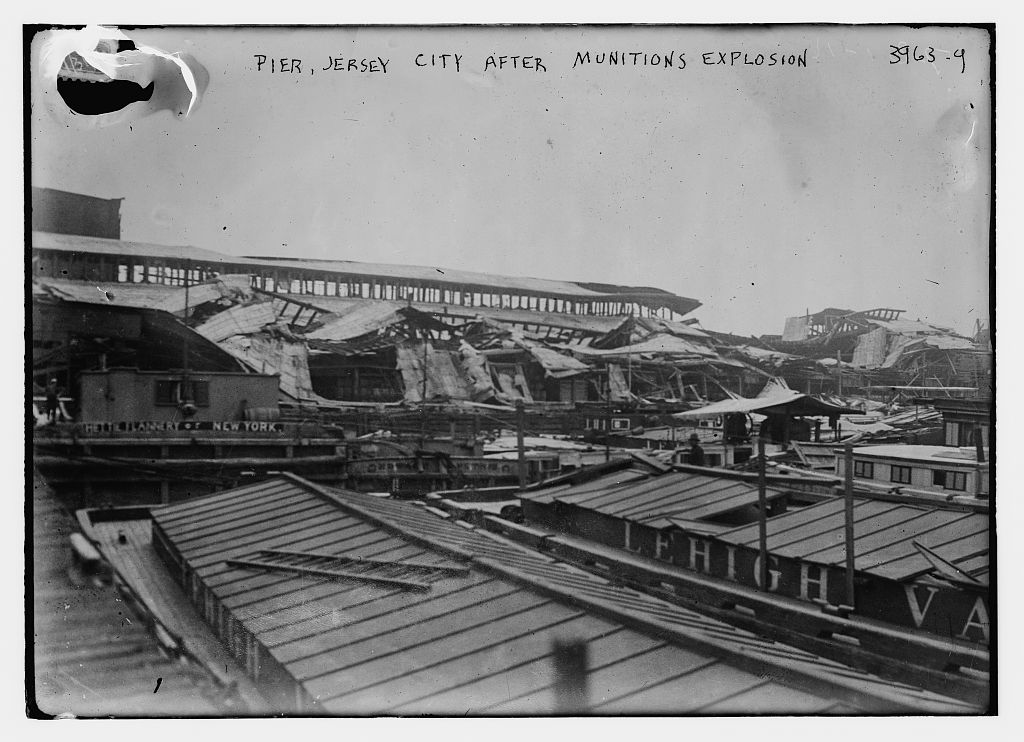
On July 30, 1916, at just after 2 in the morning, a massive explosion ripped apart the island of Black Tom on the shoreline near Jersey City, sending a shockwave through the region and thousands of pounds of wartime shrapnel into the neighboring Ellis Island and Bedloe’s Island (home to the Statue of Liberty).
Thousands of windows were shattered in the region, and millions woke up wondering what horrible thing had just happened.
The terrifying disaster was no accident; this was the sabotage of German agents, bent on eliminating tons of munitions that were being sent to the Allied powers during World War I. Although America had not yet entered the war, the United States was considered an enemy combatant thanks to weapons manufactures in the New York region and around the country.
But the surprising epicenter of German spy activity was in a simple townhouse in the neighborhood of Chelsea.
ALSO: New Yorkers still feel the ramifications of the Black Tom Explosion today at one of America’s top tourist attractions.
The Bowery Boys: New York City History podcast is brought to you …. by you!
We are producing a new Bowery Boys podcast every other week. We’re also looking to improve and expand the show in other ways — publishing, social media, live events and other forms of media. But we can only do this with your help!
We are creators on Patreon, a patronage platform where you can support your favorite content creators.
Please visit our page on Patreon and watch a short video of us recording the show and talking about our expansion plans. If you’d like to help out, there are several different pledge levels. Check them out and consider being a sponsor.
We greatly appreciate our listeners and readers and thank you for joining us on this journey so far.
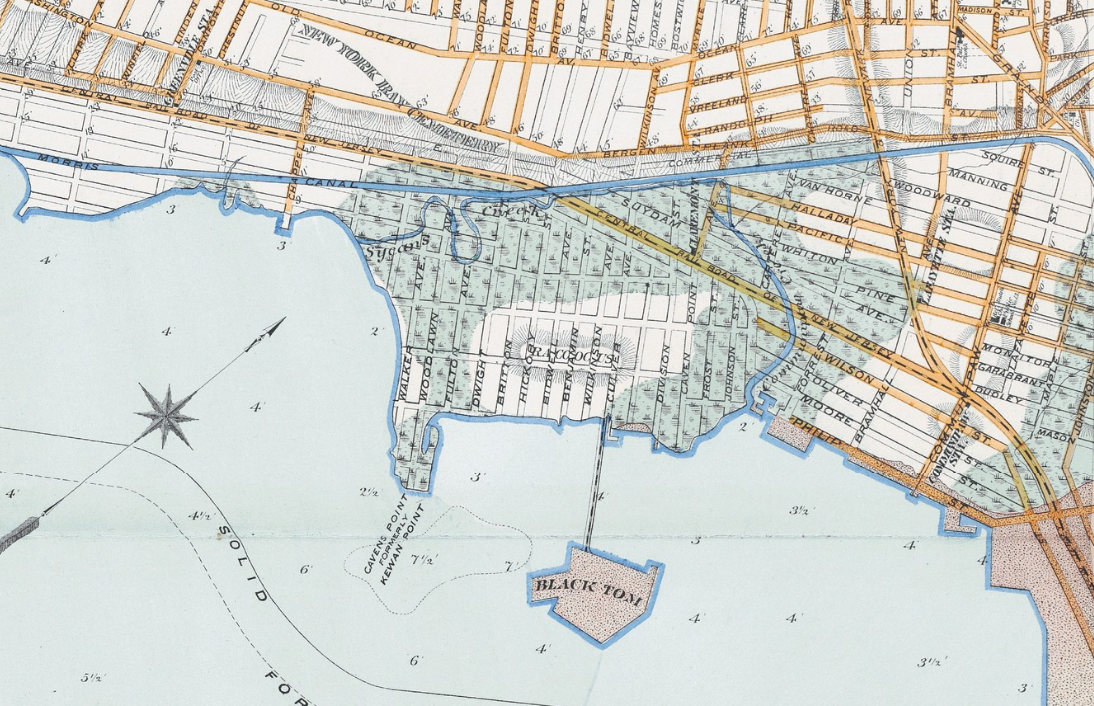
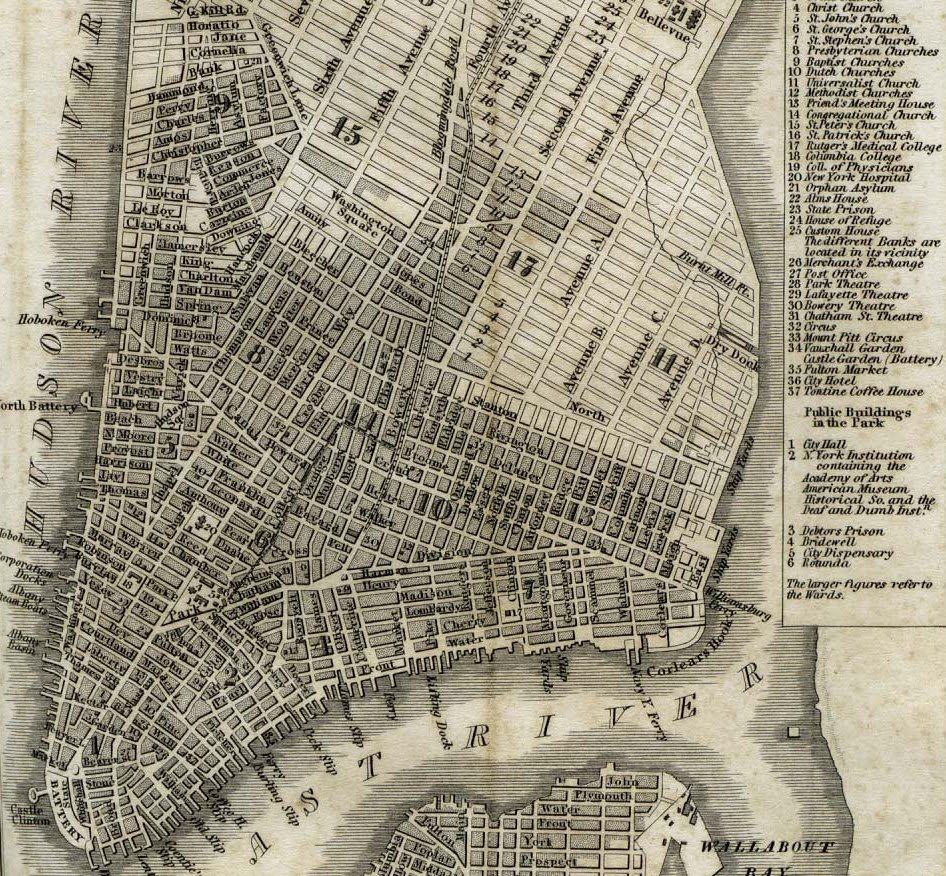
The location of Black Tom Island in relation to Jersey City, circa 1880.
Courtesy New Jersey City University/Â Prepared for the National Board of Health, Washington, D.C.(Hoboken, N.J.: Spielmann & Brush, 1880)
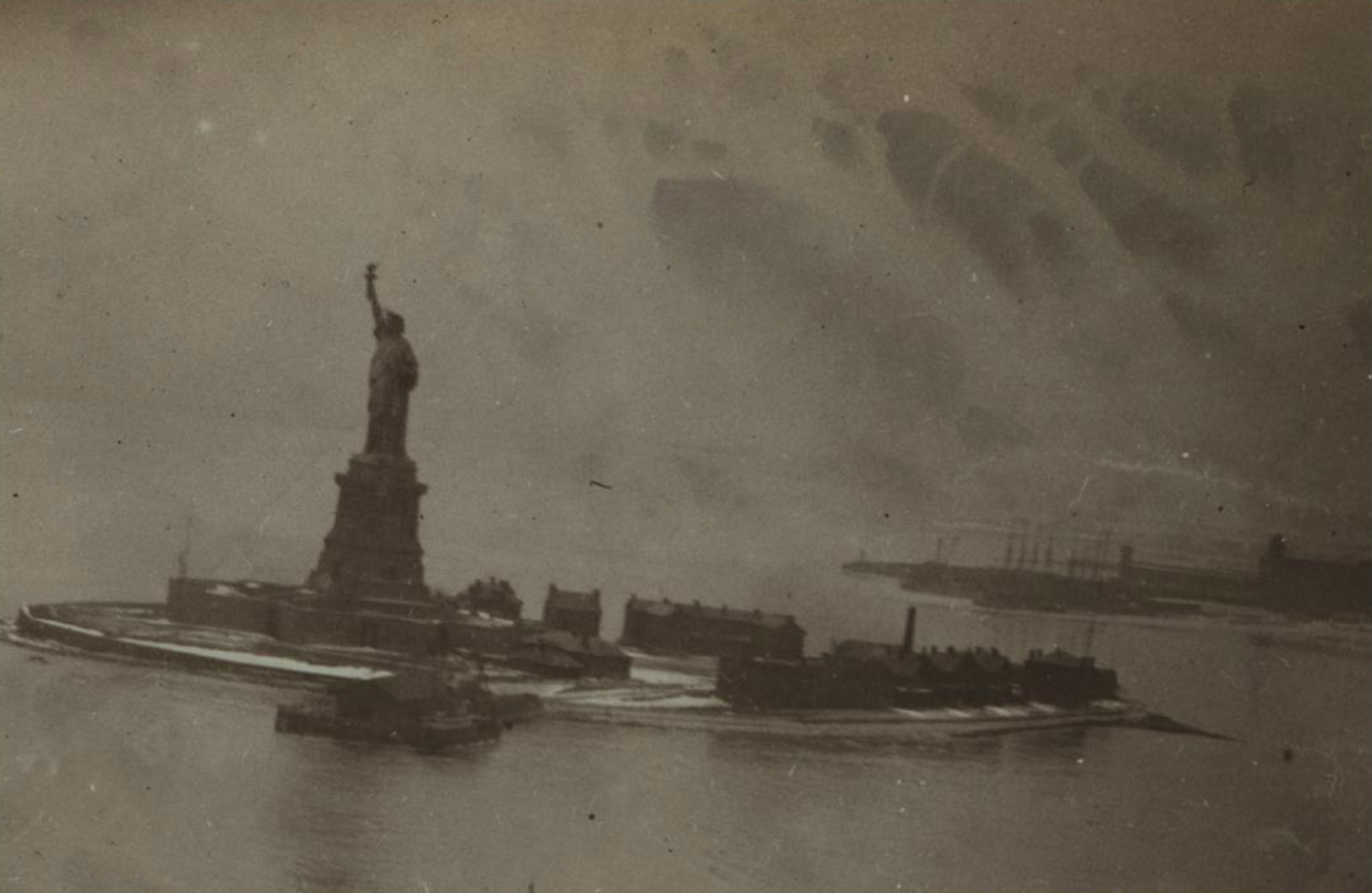
The Statue of Liberty in relation to Black Tom (situated in the background) in 1912
New York Public Library
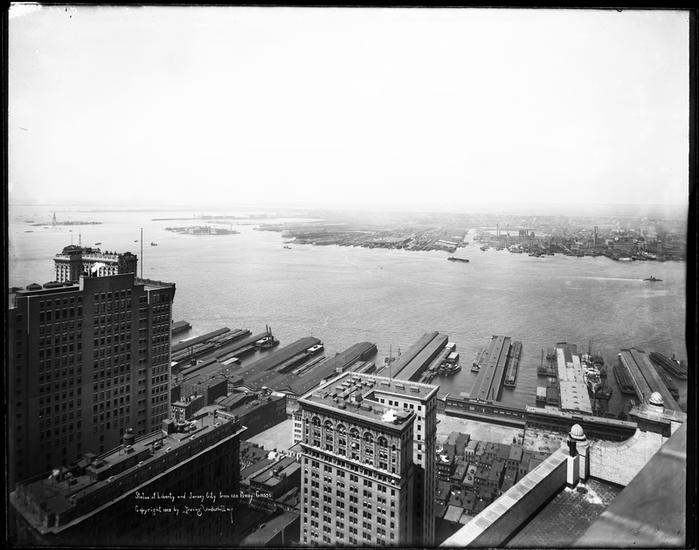
The view of Jersey City from a skyscraper in downtown Manhattan, 1918.
Courtesy Museum of the City of New York
Images of the grim aftermath of the explosion (courtesy Liberty State Park):
Associated Press
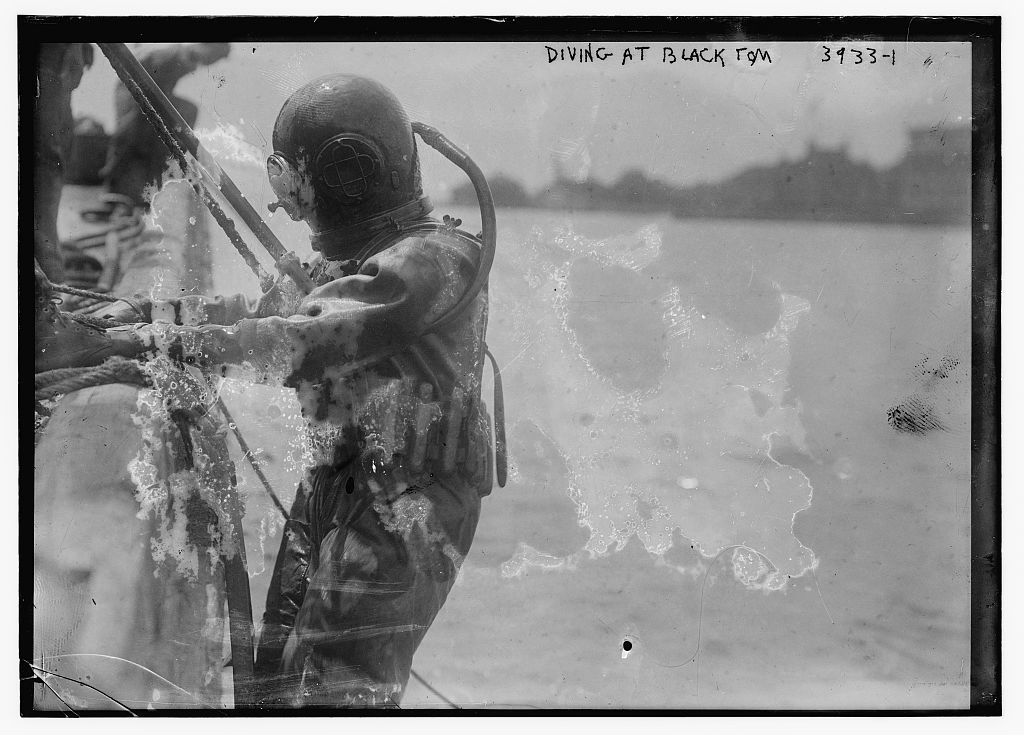
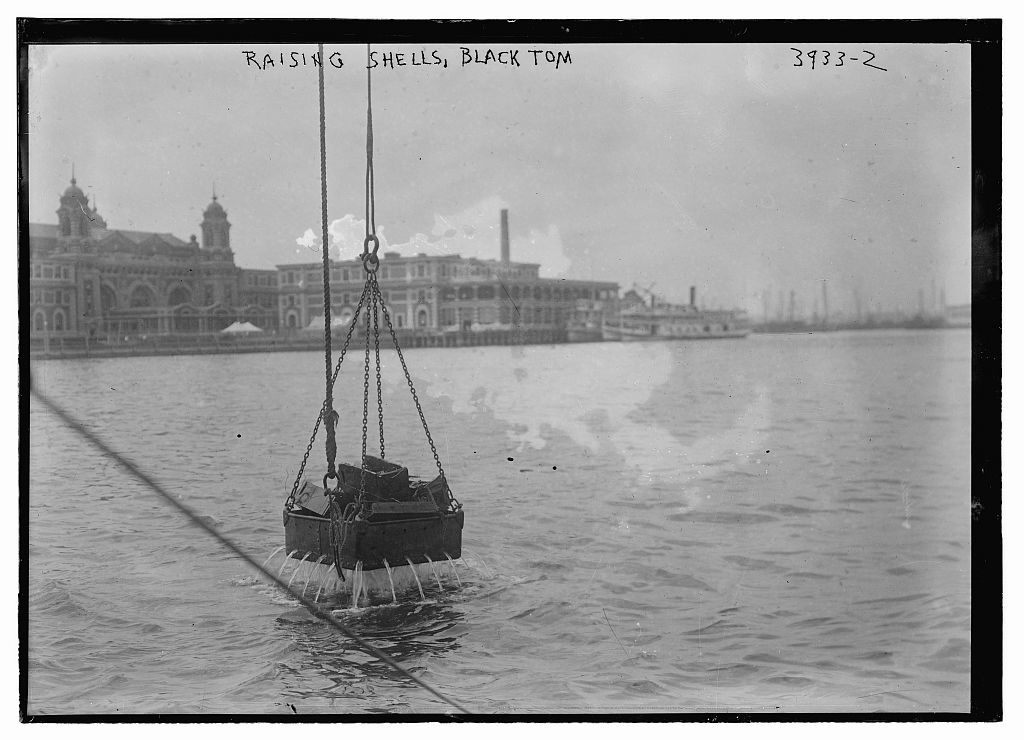
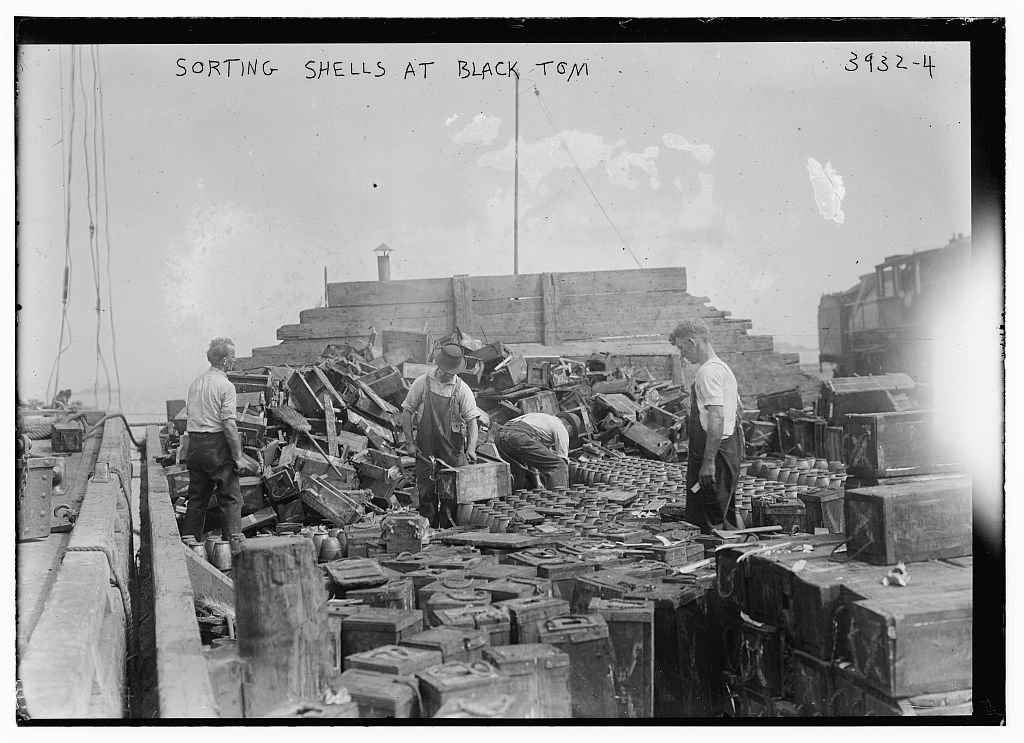
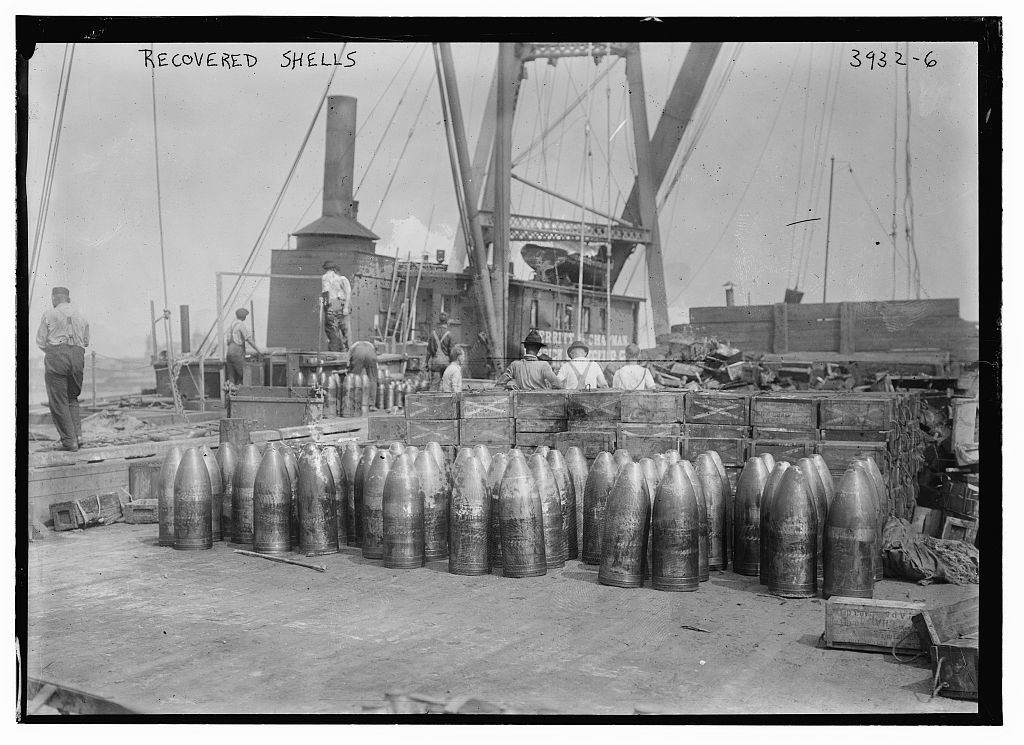
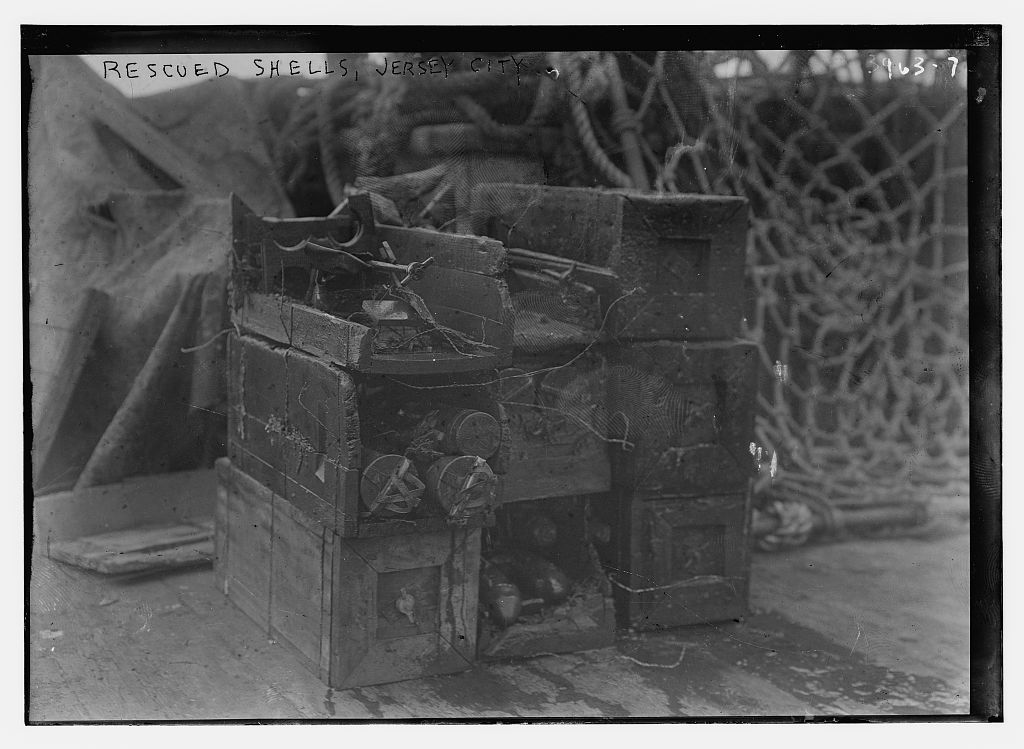
This series of photos (courtesy Library of Congress) shows the efforts of divers and salvagers looking for remaining munitions that had sunk into the harbor!
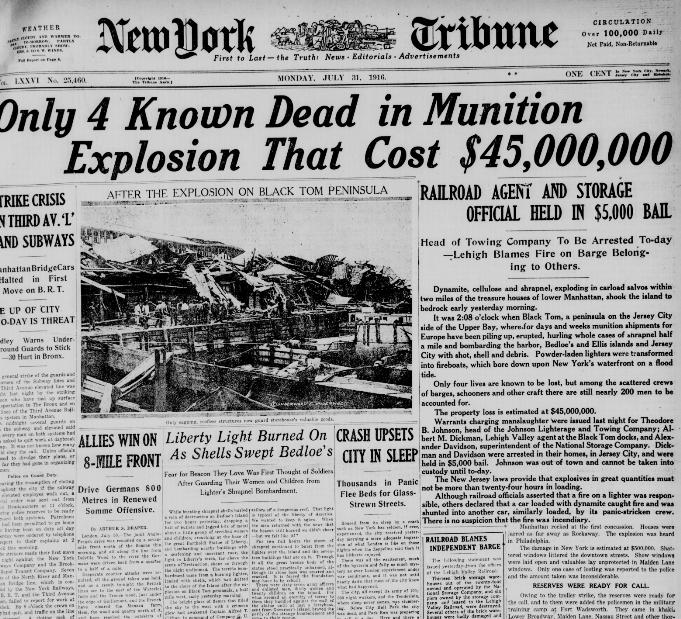
The front page of the New York Tribune the following day:
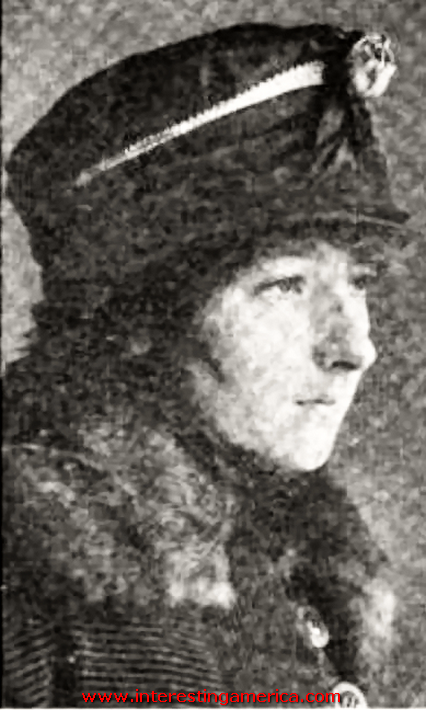
The Kingsland munitions explosion of January 11, 1917, caused millions of dollars in damage, but no lives were lost thanks to the efforts of a single switchboard operator named Tessie McNamara who stayed at her post throughout the disaster.
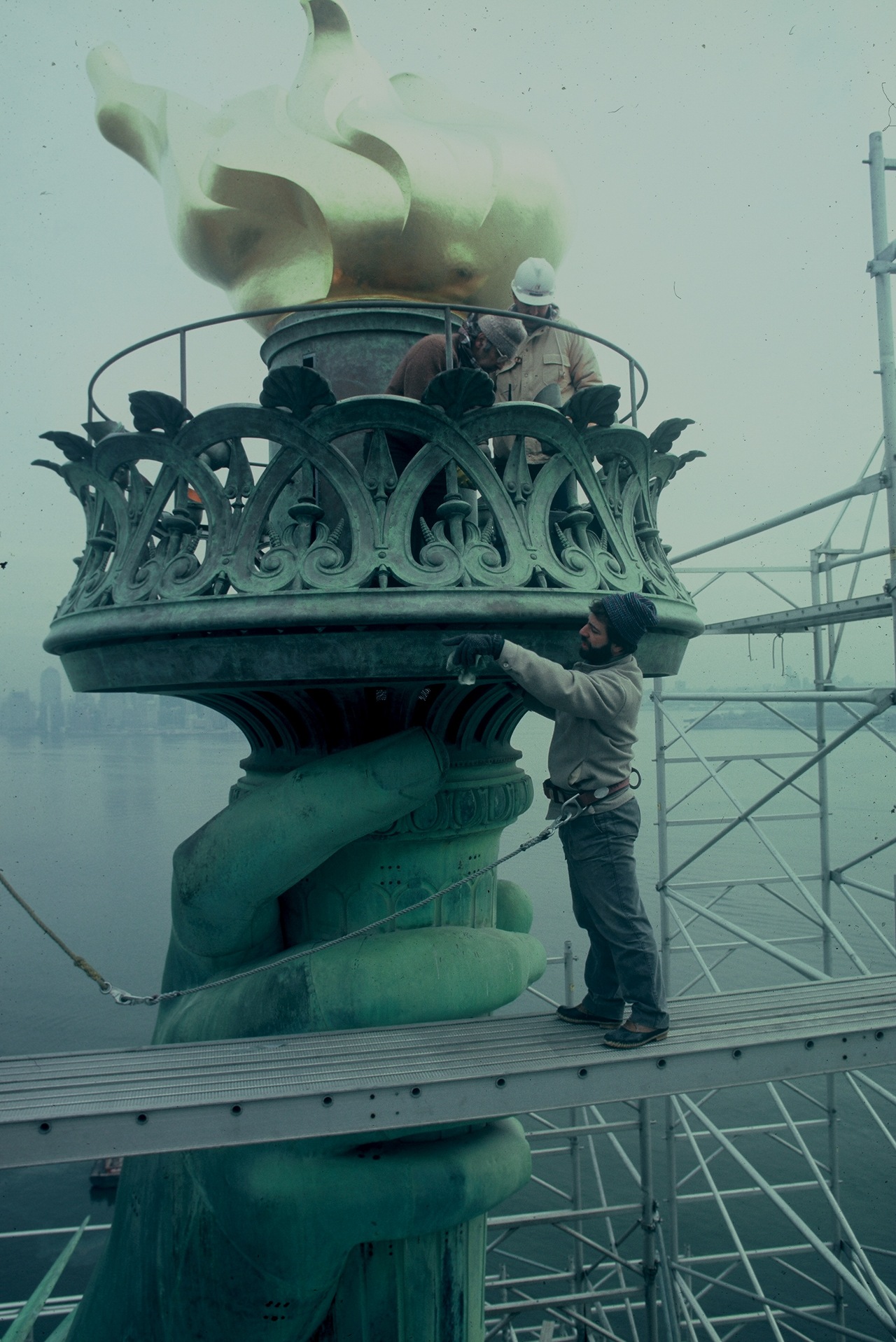
To give you some idea of the size of the Statue of Liberty’s torch, here’s a picture of its replacement during the 1984 renovation. It can only be accessed via a very narrow stairway.
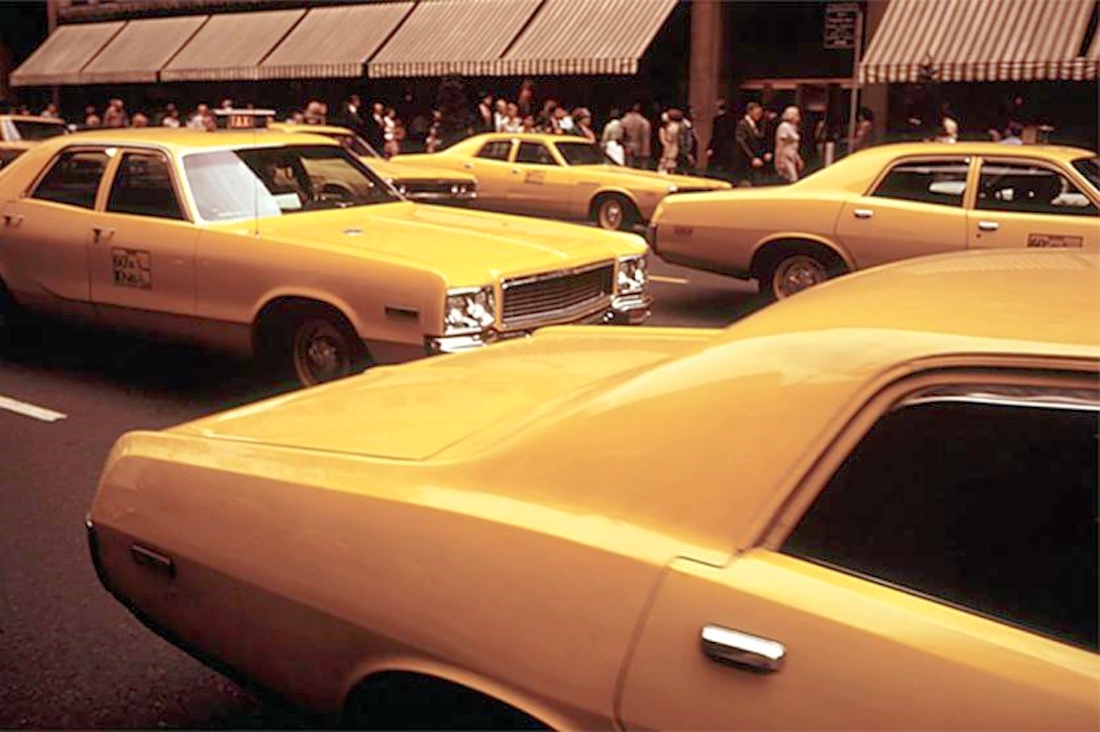
PODCASTThe history of the New York City taxicab, from the handsome hansoms of old to the modern issues facing the modern taxi fleet today.
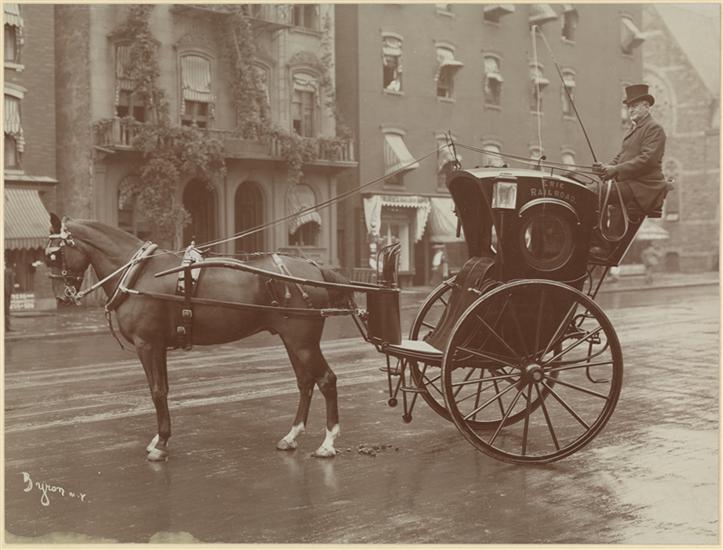
In this episode, we recount almost 175 years of getting around New York in a private ride. The hansom, the romantic rendition of the horse and carriage, took New Yorkers around during the Gilded Age. But unregulated conduct by — nighthawks — and the messy conditions of streets due to horses demanded a solution.
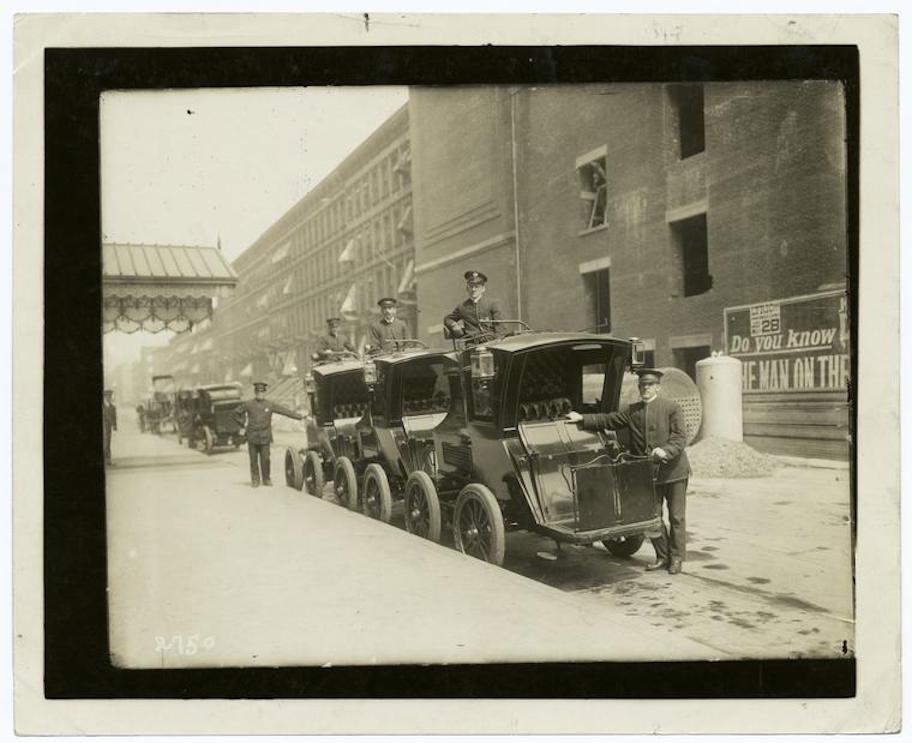
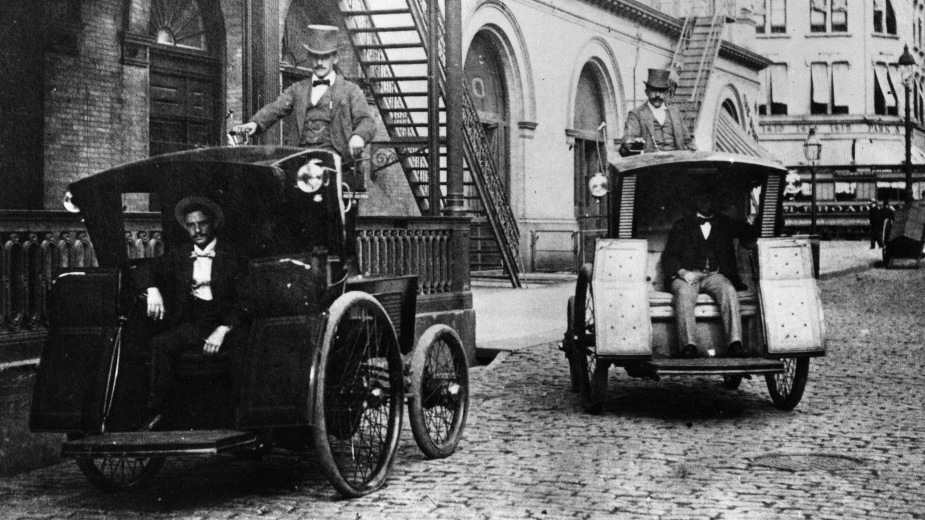
At first it seemed the electric car would save the day but the technology proved inadequate. In 1907 came the first gas-propelled automobile cabs to New York, officially — taxis — due to a French invention installed in the front seat.
By the 1930s the streets were filled with thousands of taxicabs. During the Great Depression, cab drivers fought against plunging fare and even waged a strike in Times Square. In 1937, Mayor Fiorello LaGuardia debuted the medallion system as a way to keep the streets regulated.
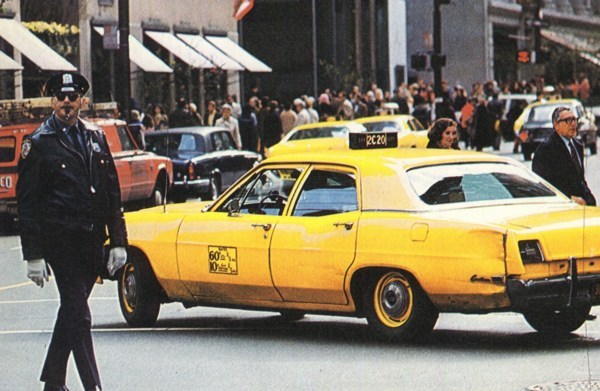
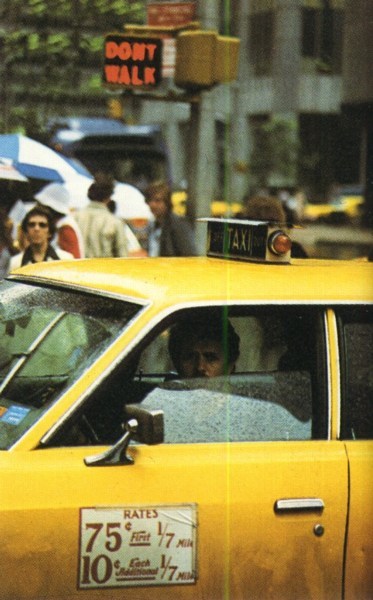
By the 1970s many cabdrivers faced an upswing of crime that made picking up passengers even more dangerous than bad traffic. Drivers began ignoring certain fares — mainly from African-Americans — which gave rise to the neighborhood livery cab system.
Today New York taxicab fleets face a different threat — Uber and the rise of private app-based transportation services. Will the taxi industry rise to the challenge in time for the debut of their taxi of tomorrow.
Listen Today: The Story of the Yellow Taxi Cab
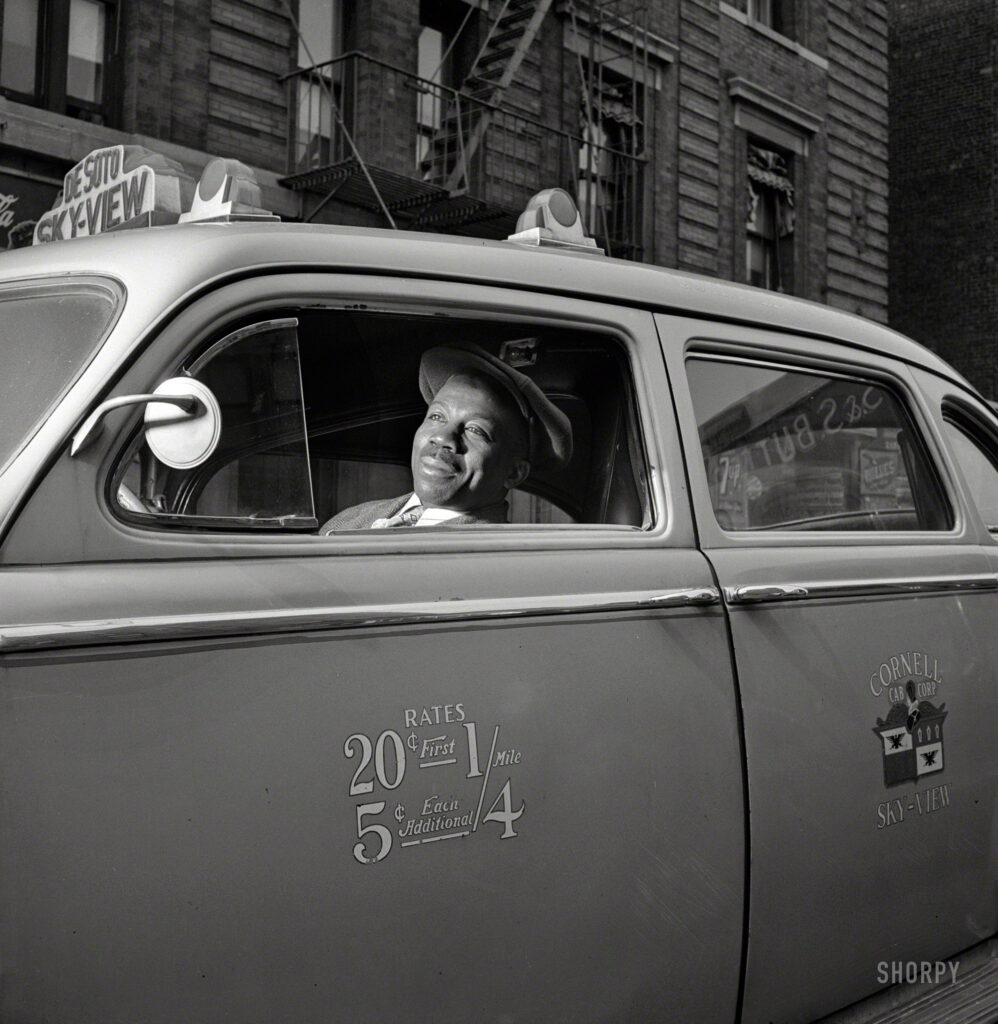
Albert Fenn/Office of War Information, cleaned up image courtesy Shorpy
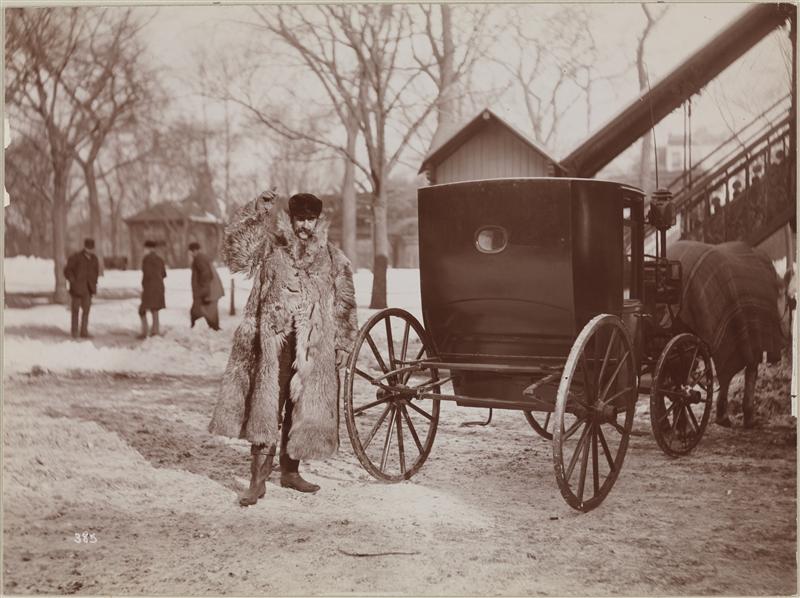
A snugly dressed cabbie awaiting some fares at the Battery Park elevated train station — 1895. Note that the poor horse too is swaddled up for a bad winter.
Courtesy Museum of the City of New York
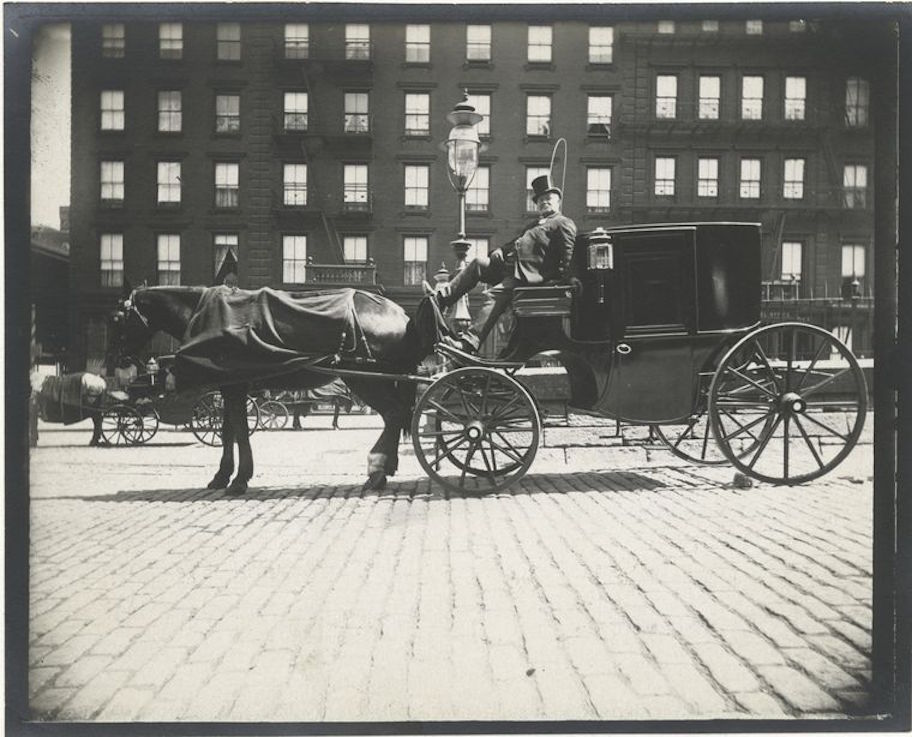
A hack from 1896.
New York Public Library
A hansom cab from 1906. This was still the dominant cab ride in New York during the period despite the introduction of the ‘horseless carriage’ onto the city streets.
Courtesy Museum of the City of New York
A fleet of electric cars in 1896, and a couple Electrobats in action outside the Metropolitan Opera House 1898. Compare these with the picture of the hansom above.
Courtesy New York Public Library
Courtesy Museum of Modern Art
Johanne Marie Rogn/Pinteresst
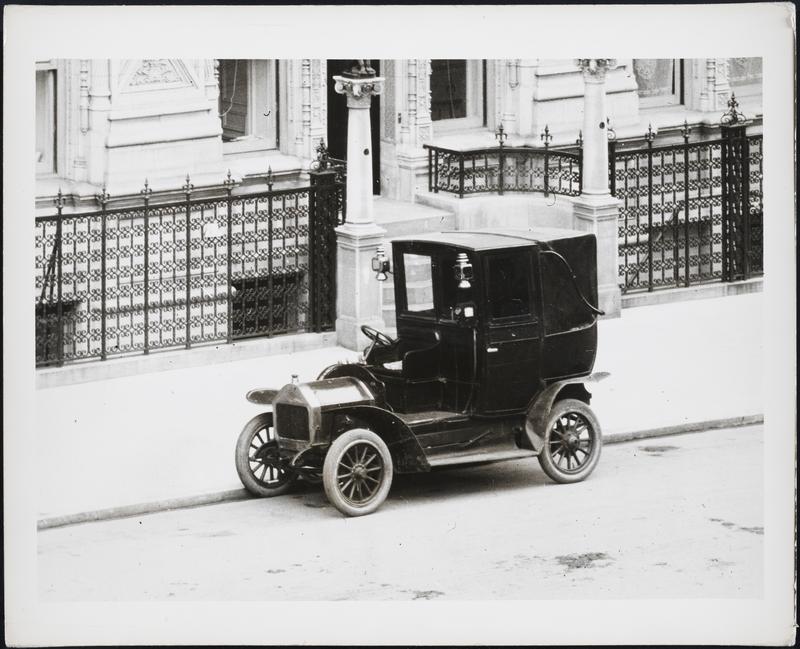
A taxicab waiting outside Alwyn Court (West 58th Street/7th Avenue)
Museum of the City of New York
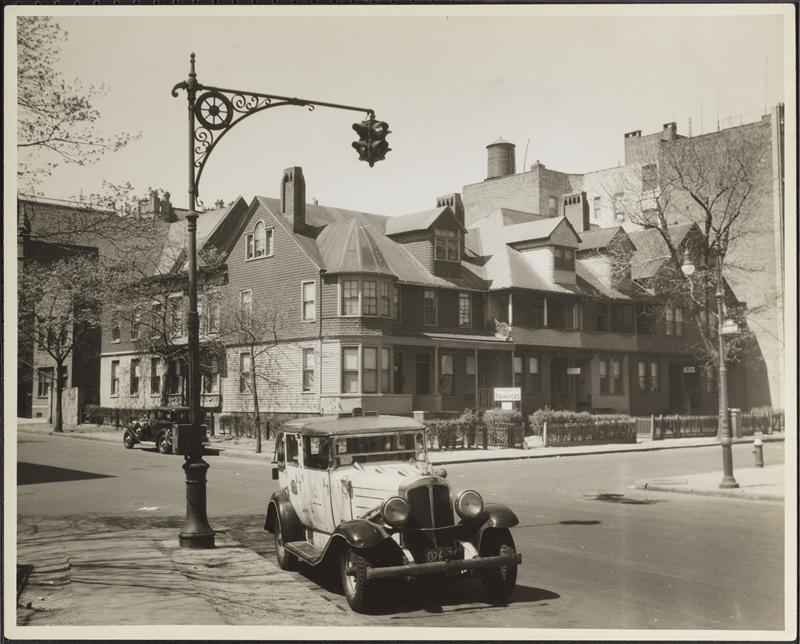
A cab waiting passengers at West 150th Street.
Photography by Charles Von Urban, courtesy Museum of the City of New York
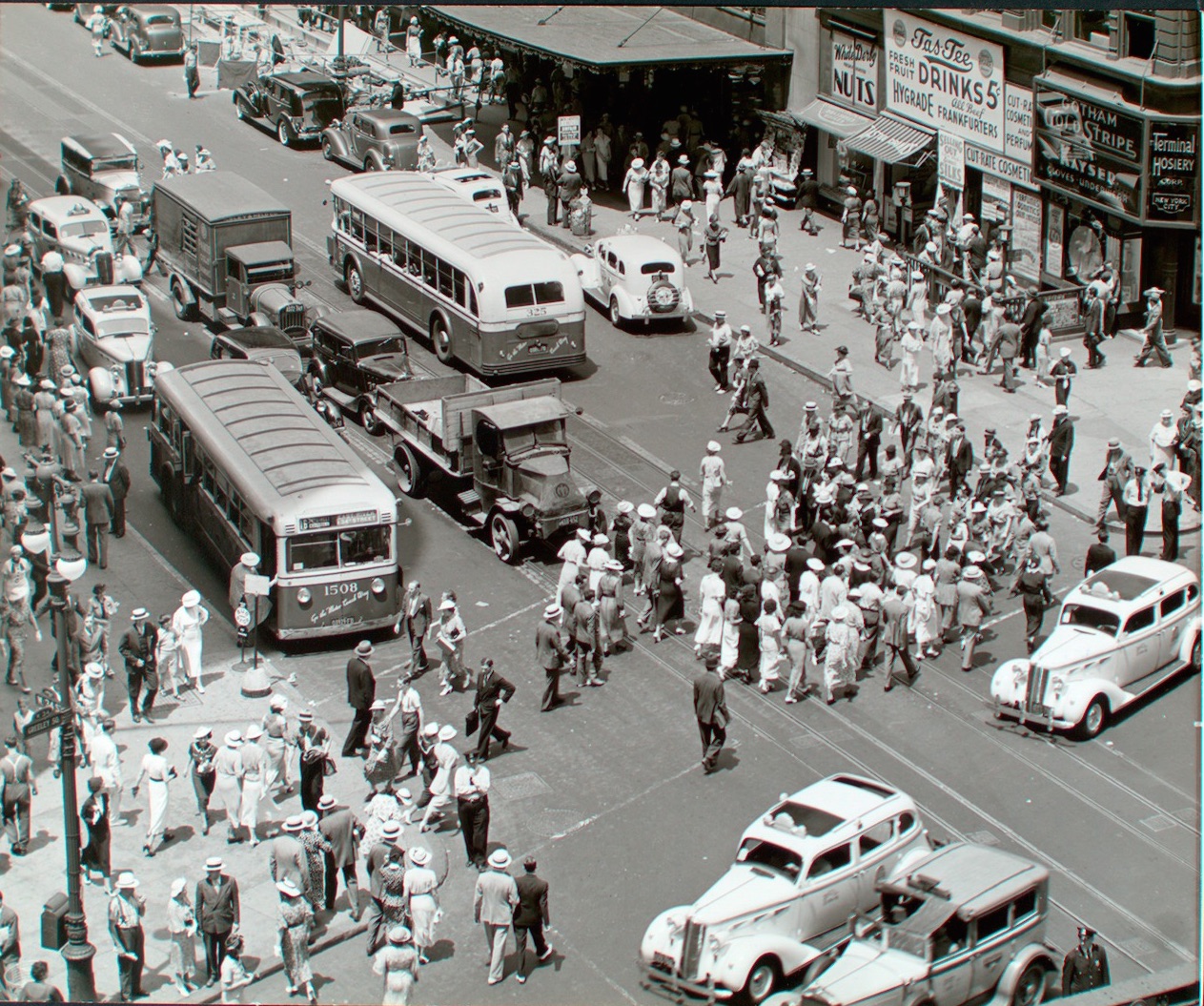
A view of the bustling street life of Herald Square, 1935. The horses are off the street but there are many other kinds of transportation options joining the taxicab.
Courtesy New York Public Library
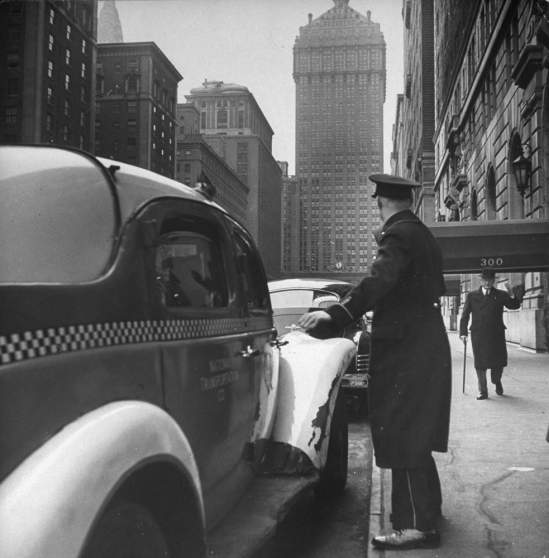
Grabbing a Checker Cab on Park Avenue 1944
Courtesy Life Magazine/Getty Images
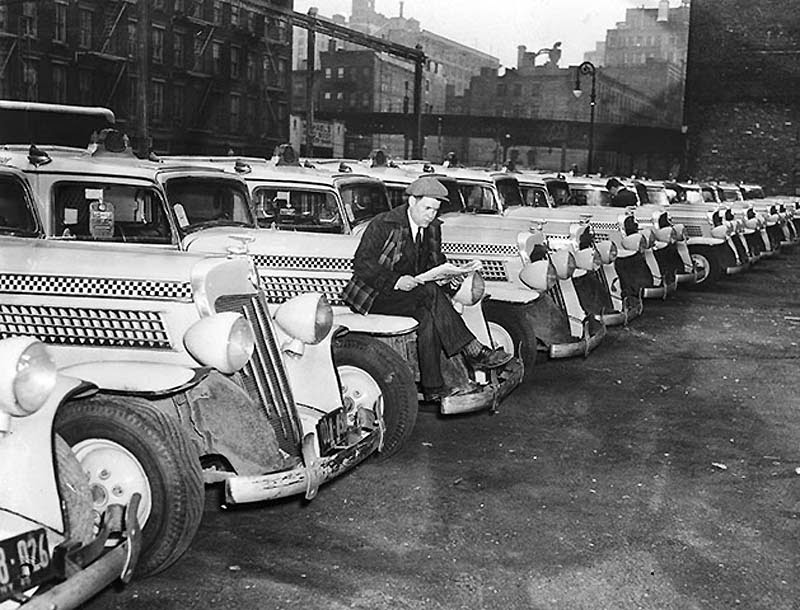
A row of Checker Taxis, sitting idle during a taxicab strike in 1940.
: Keystone/Getty Images)
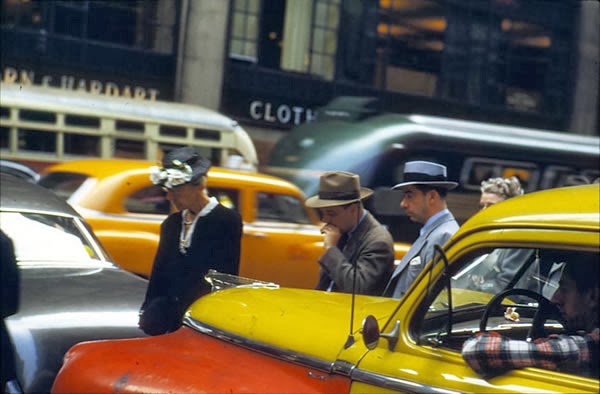
Some vivid 1960s photography by Ernst Haas capturing the mystery and allure of the New York taxi.
Courtesy Ernst Haas / Getty Images
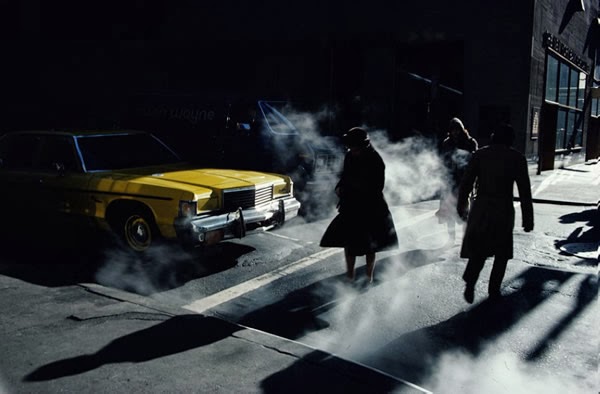
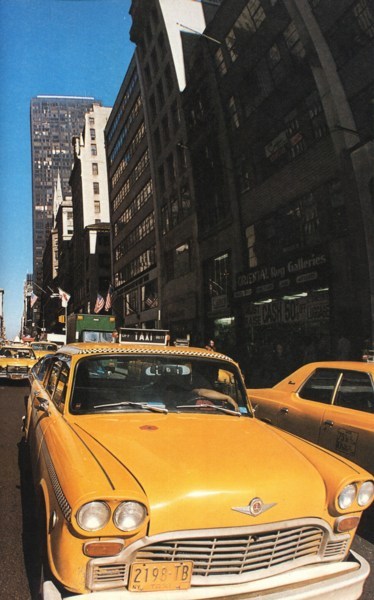
Some scenes from the 1970s…
Courtesy City Noise
The Bowery Boys: New York City History podcast is brought to you …. by you!
We are producing a new Bowery Boys podcast every other week. We’re also looking to improve and expand the show in other ways — publishing, social media, live events and other forms of media. But we can only do this with your help!
We are creators on Patreon, a patronage platform where you can support your favorite content creators.
Please visit our page on Patreon and watch a short video of us recording the show and talking about our expansion plans. If you’d like to help out, there are several different pledge levels. Check them out and consider being a sponsor.
We greatly appreciate our listeners and readers and thank you for joining us on this journey so far.
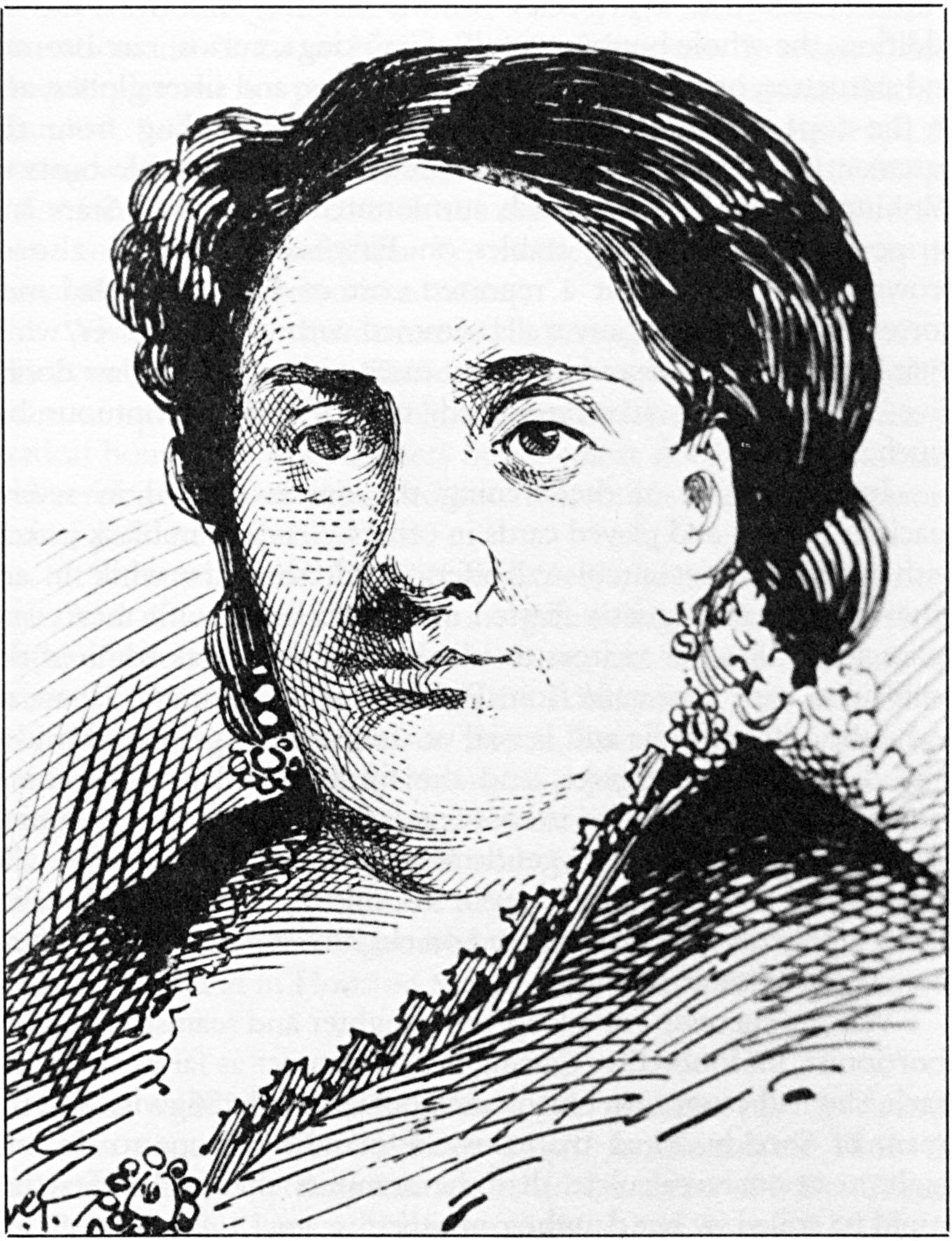
The story of New York’s most prominent abortionist of the 19th century and the unique environment of morality and secrecy which accommodated her rise on the fringes of society.
Ann Lohman aka Madame Restell was one of the most vilified women of the 19th century, an abortion practitioner that dodged the law to become one of the wealthiest self-made women in the Gilded Age. But is her wicked reputation justified?
Thoughts on abortion and birth control were quite different in the 1830s, the era in which Madame Restell got her start. It was societal decorum and marital morality — not science and religion — that played a substantial role in New Yorkers’ views on the termination of pregnancy. Restell and countless imitators offers a wide range of potions, pills and powders to customers, provided for in veiled wording in newspaper advertisements.
By the 1860s Restell was insulated from serious interrogation and flaunted her unique position in society by planting her Fifth Avenue mansion in a very controversial place. But she soon became a target of New York’s most dogged reformer, a man who considered her pure evil and the source of society’s most illicit sins.
The Bowery Boys: New York City History podcast is brought to you …. by you!
We are now producing a new Bowery Boys podcast every two weeks. We’re also looking to improve the show in other ways and expand in other ways as well — through publishing, social media, live events and other forms of media. But we can only do this with your help!
We are now a member of Patreon, a patronage platform where you can support your favorite content creators for as little as a $1 a month.
Please visitour page on Patreon and watch a short video of us recording the show and talking about our expansion plans. If you’d like to help out, there are five different pledge levels (and with clever names too — Mannahatta, New Amsterdam, Five Points, Gilded Age, Jazz Age and Empire State). Check them out and consider being a sponsor.
We greatly appreciate our listeners and readers and thank you for joining us on this journey so far. And the best is yet to come!
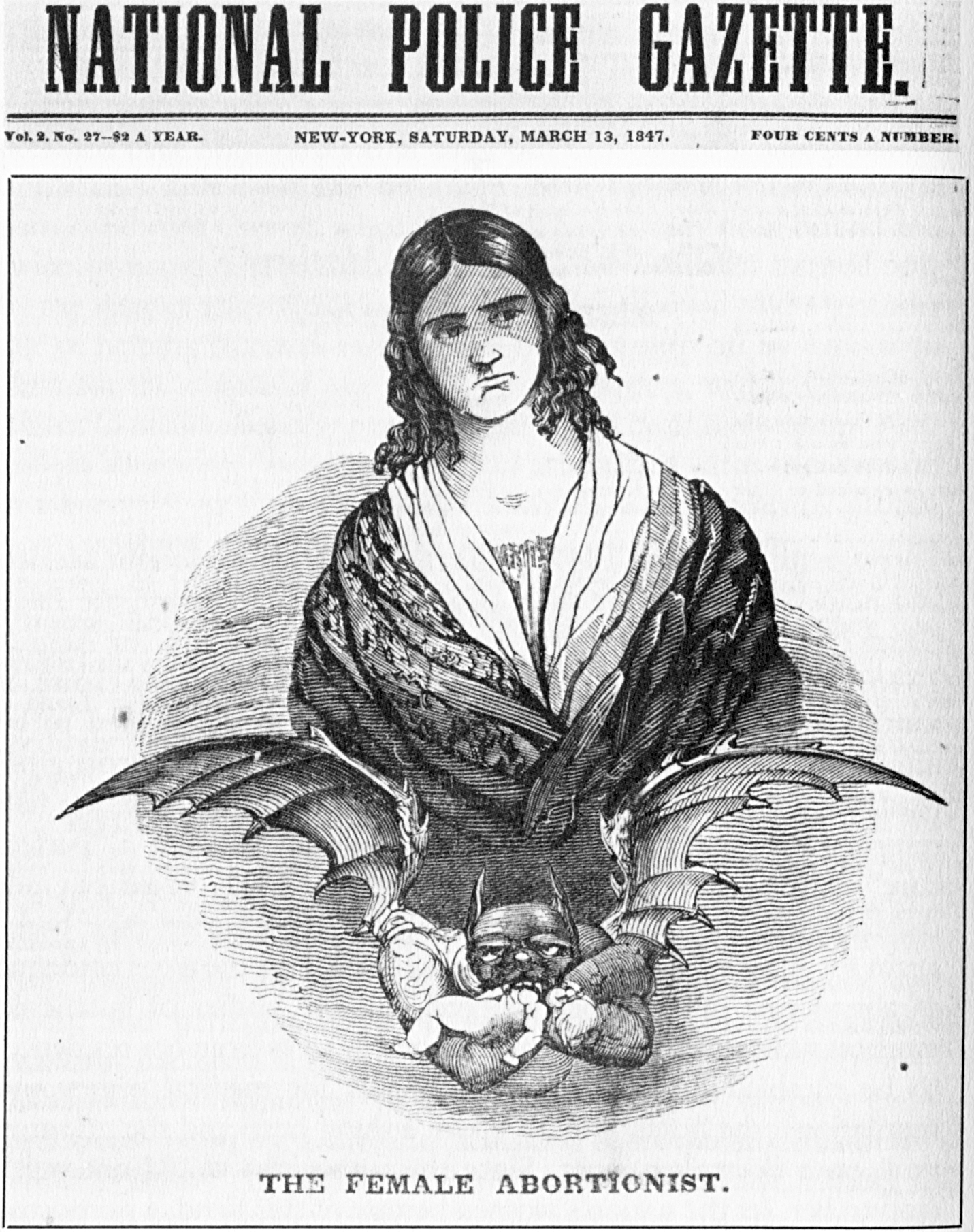
Ann Lohman aka Madame Restell, featured in the National Police Gazette for the crime that would get her sent to Blackwell’s Island, March 13, 1847
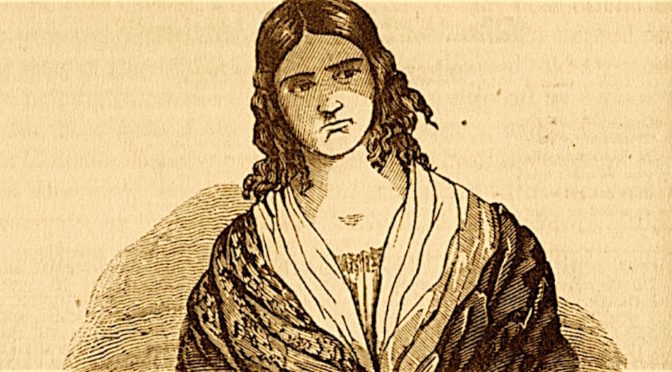
A drawing of Madame Restell made in 1888, long after her death.
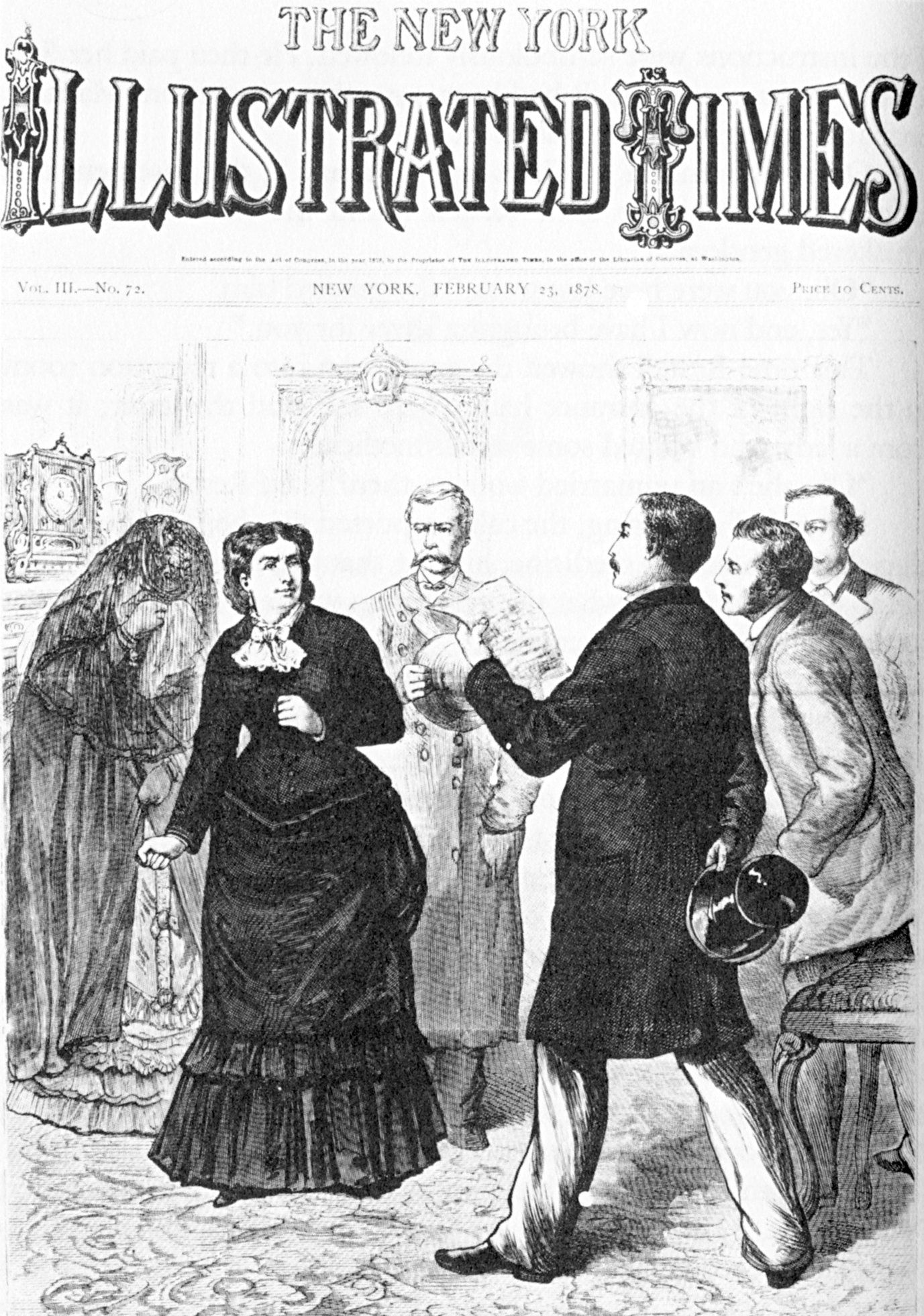
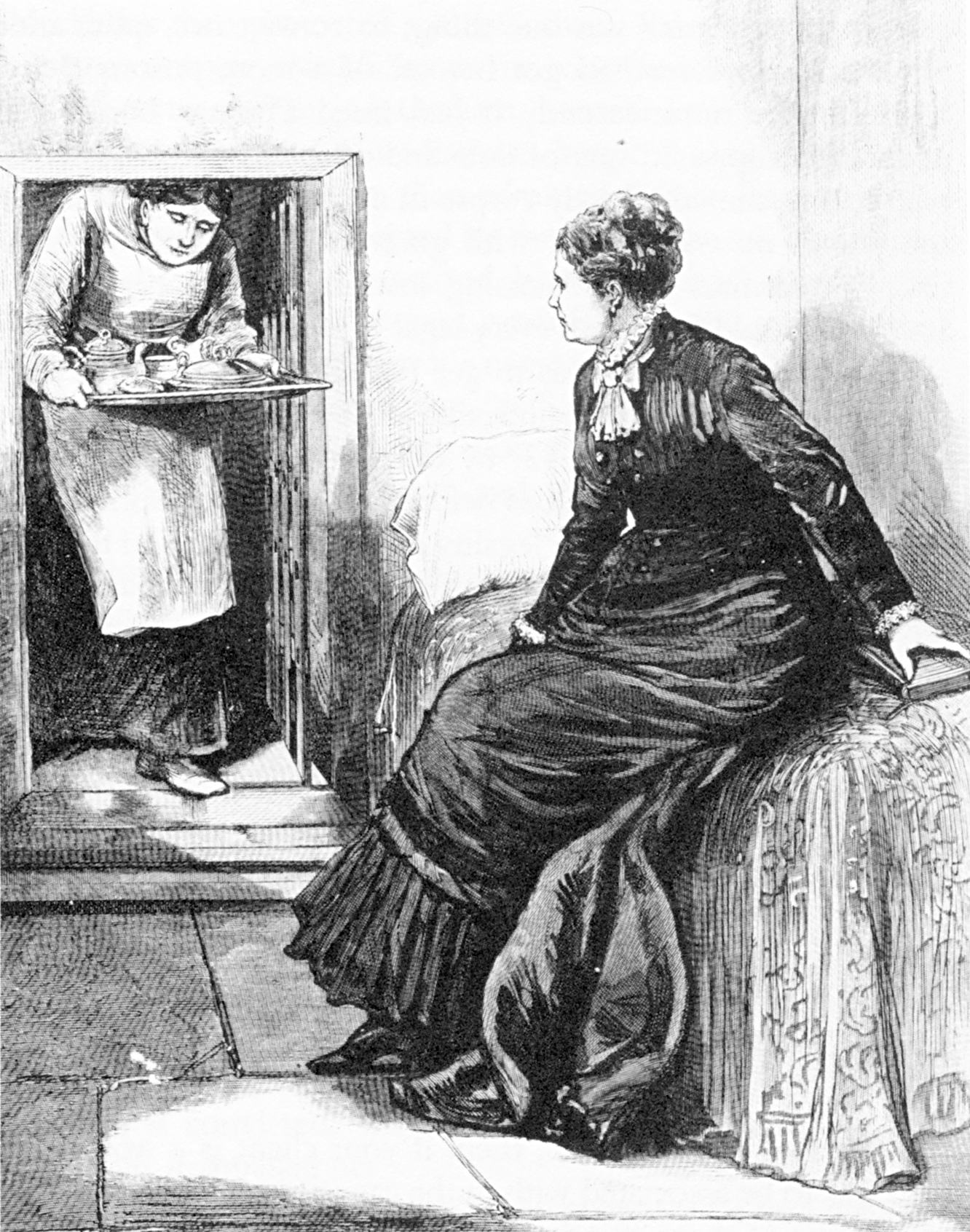
The New York Illustrated News, 1878, heralding the arrest of Madame Restell by Anthony Comstock (and, later in the issue, Restell in the Tombs):
Thanks to Victorian Gothic for this image!
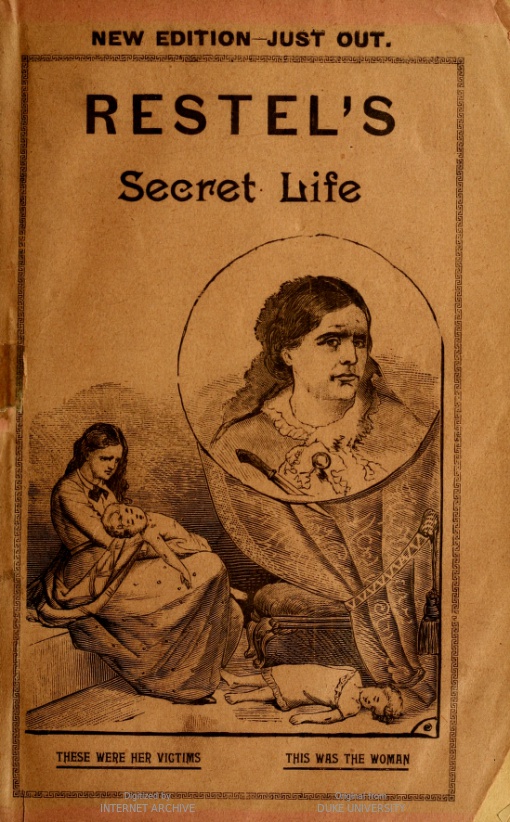
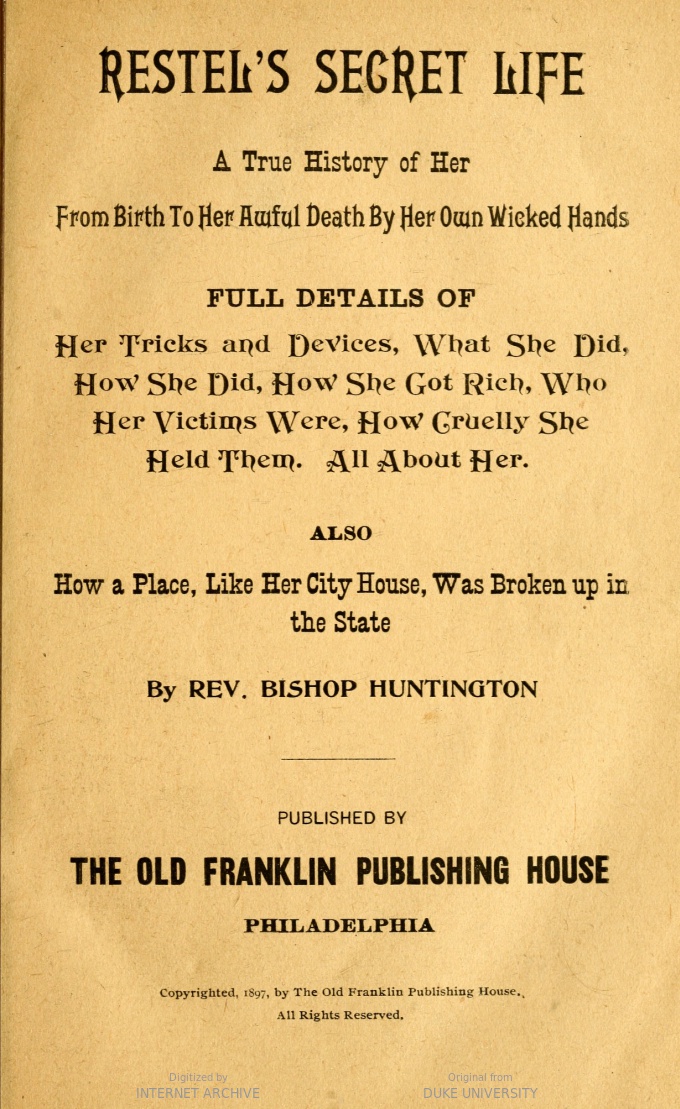
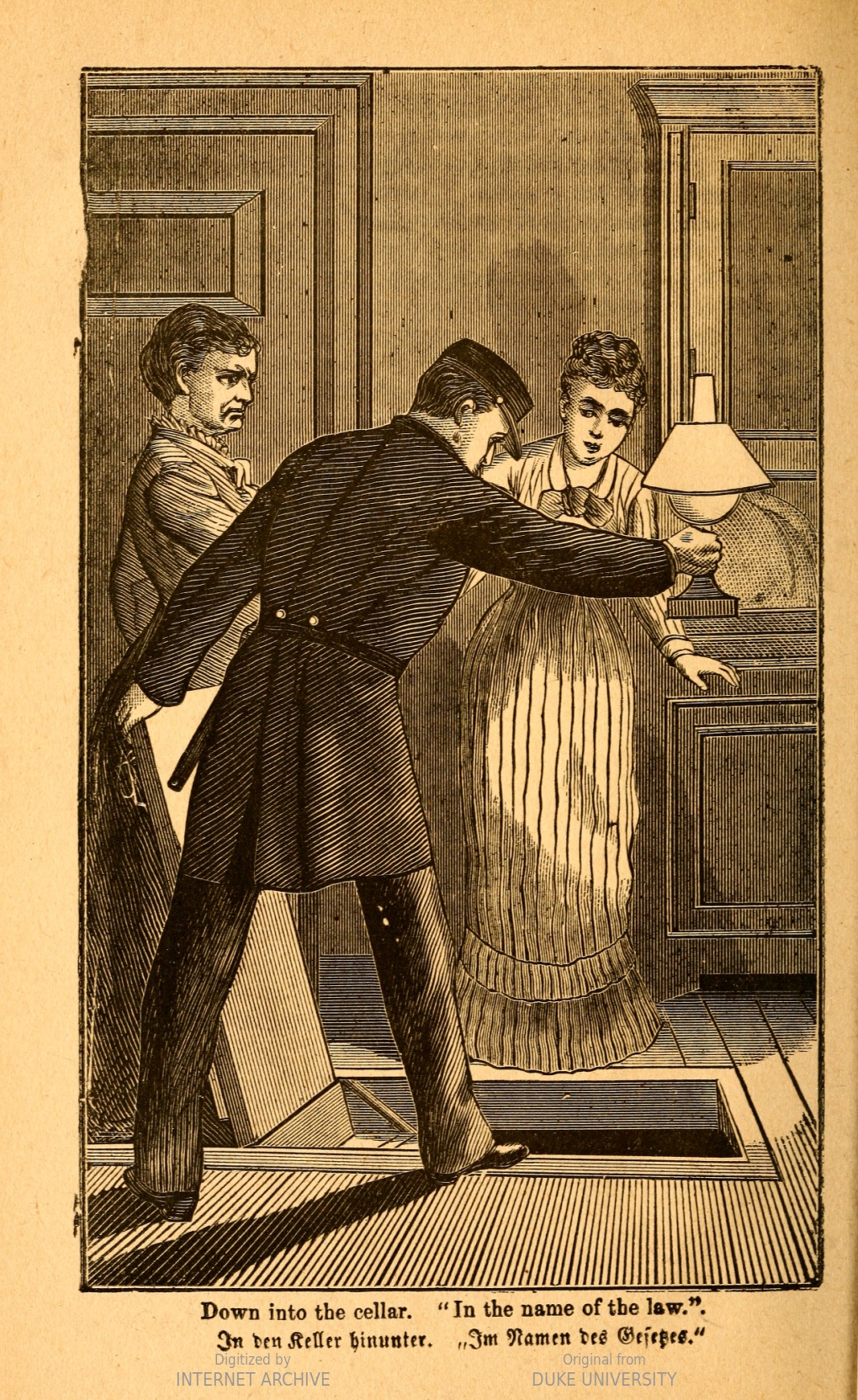
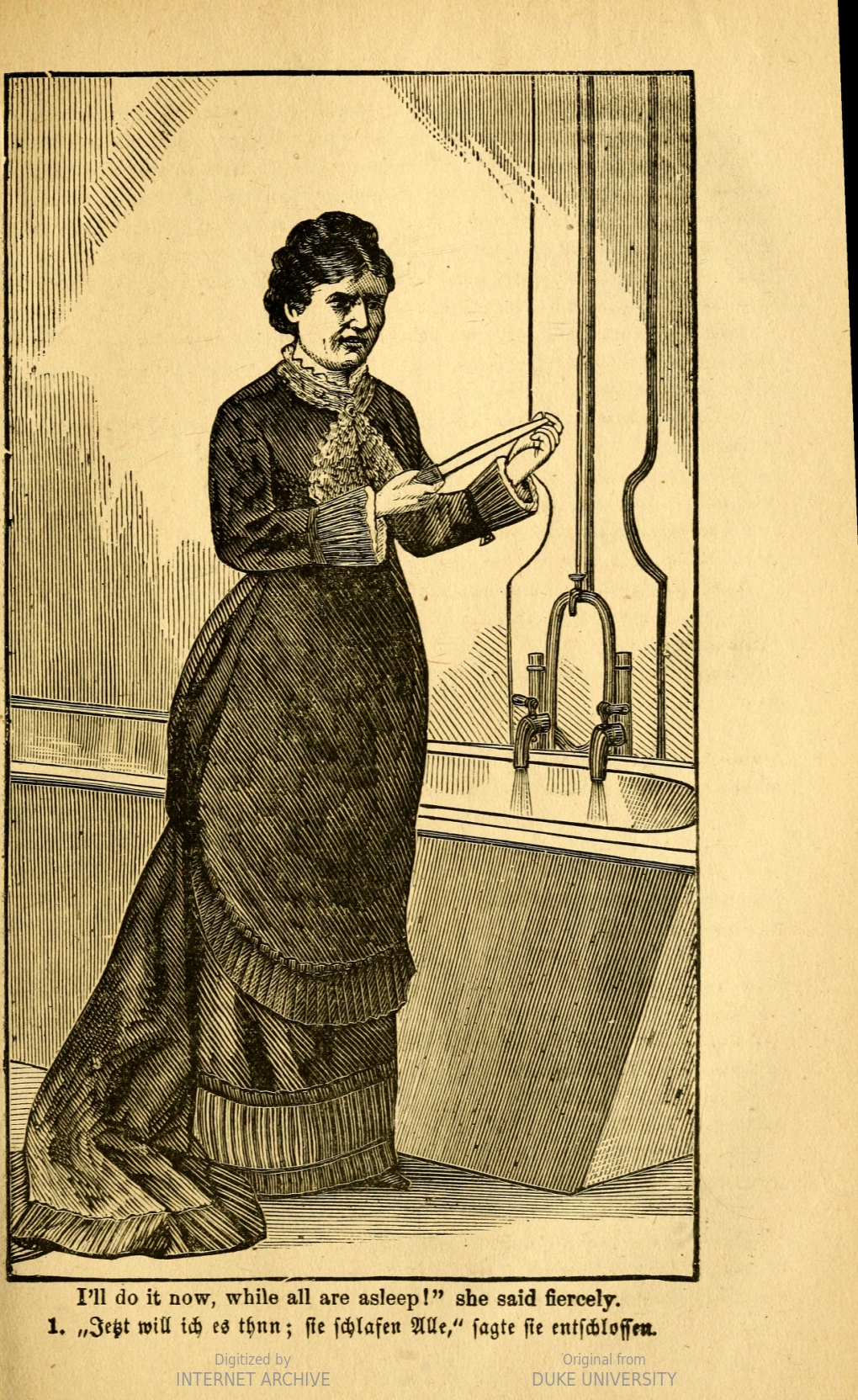
A few choice pages from an 1896 scandal novelization about the life of Madame Restell by Rev. Bishop Huntington:
Courtesy Hathi Trust
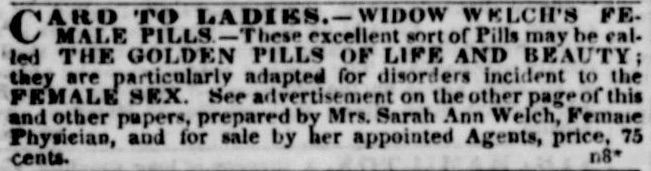
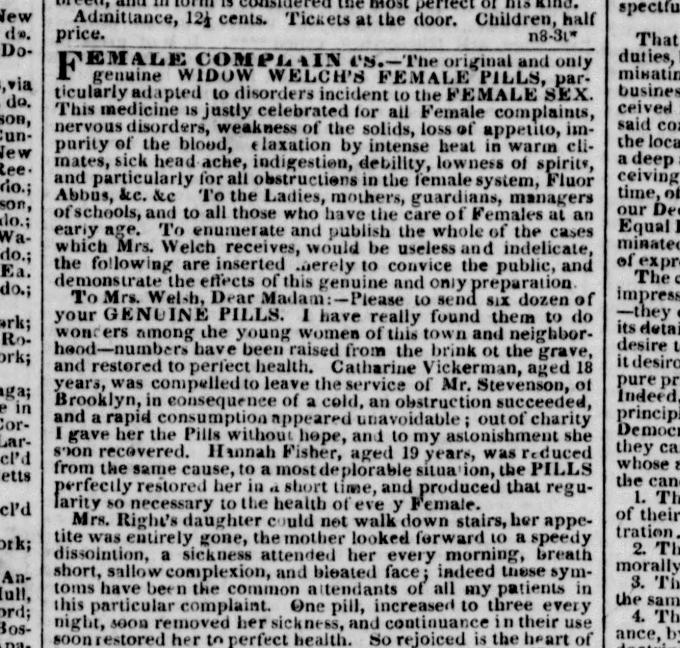
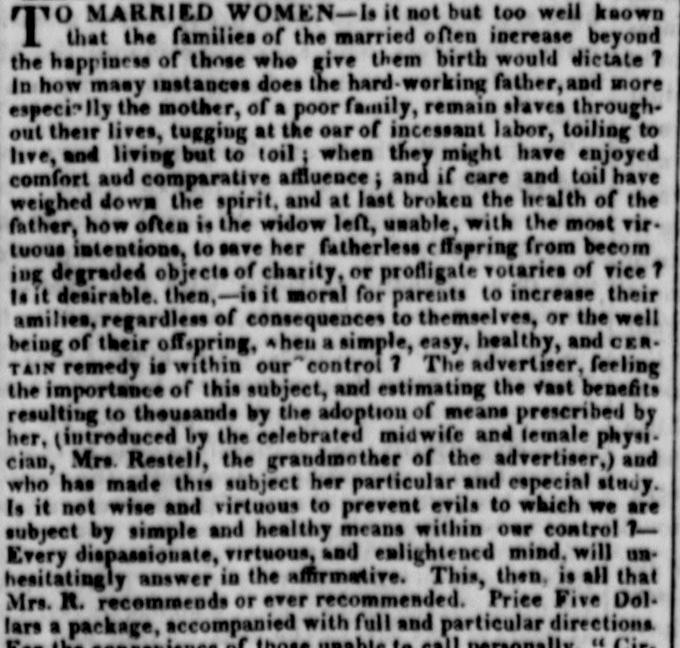
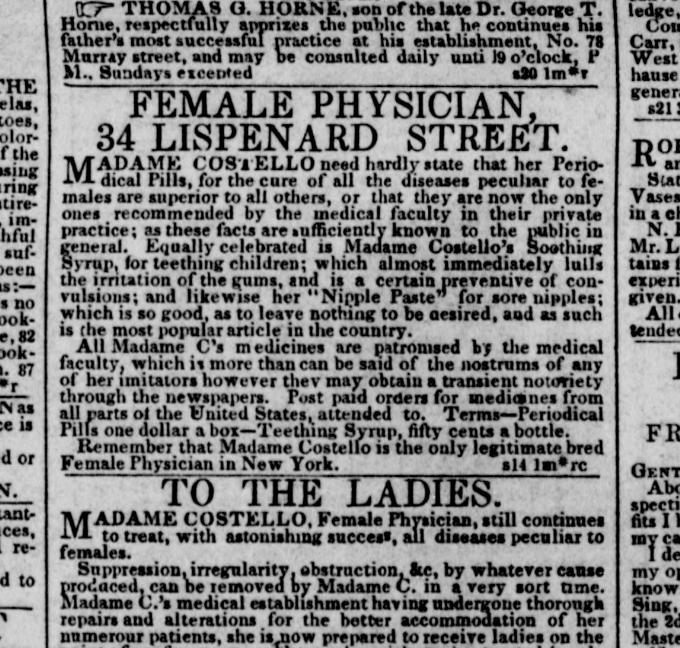
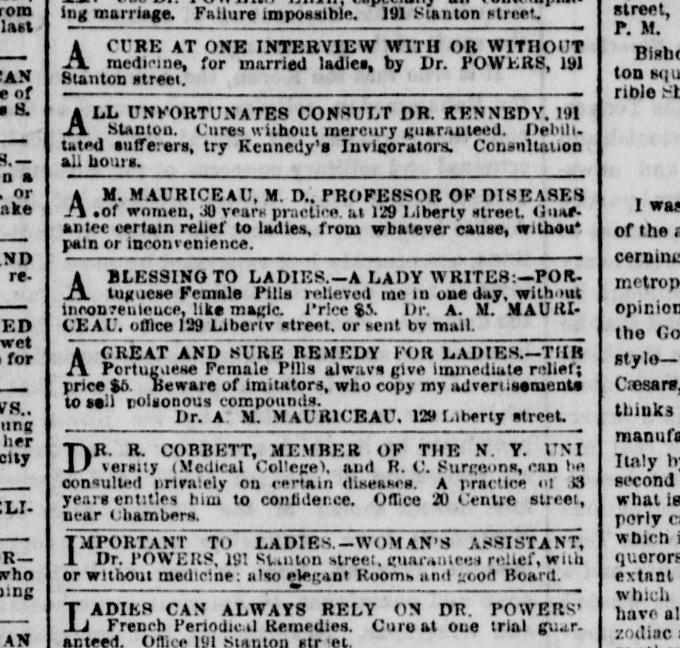
A sampling of ‘abortion pill’ advertisements from the late 1830s and early 1840s, from Madame Restell and her impersonators. NOTE: It’s hard to discern if these so-called medicines were for abortions or for other “female issues” given the vagueness of language:
Even before Madame Restell, there was the ‘Widow Welch’s Female Pills’. Both these ads ran in the New York Morning Herald on November 8, 1837:
Library of Congress
An early Madame Restell advertisement, New York Morning Herald, December 9, 1839:
A successful rival of Madame Restell was Madame Costello who worked off of Lispenard Street. Her ad from the Herald, October 10, 1842:
A series of advertisements for an assortment of female ‘solutions,’ New York Herald, August 4, 1867:
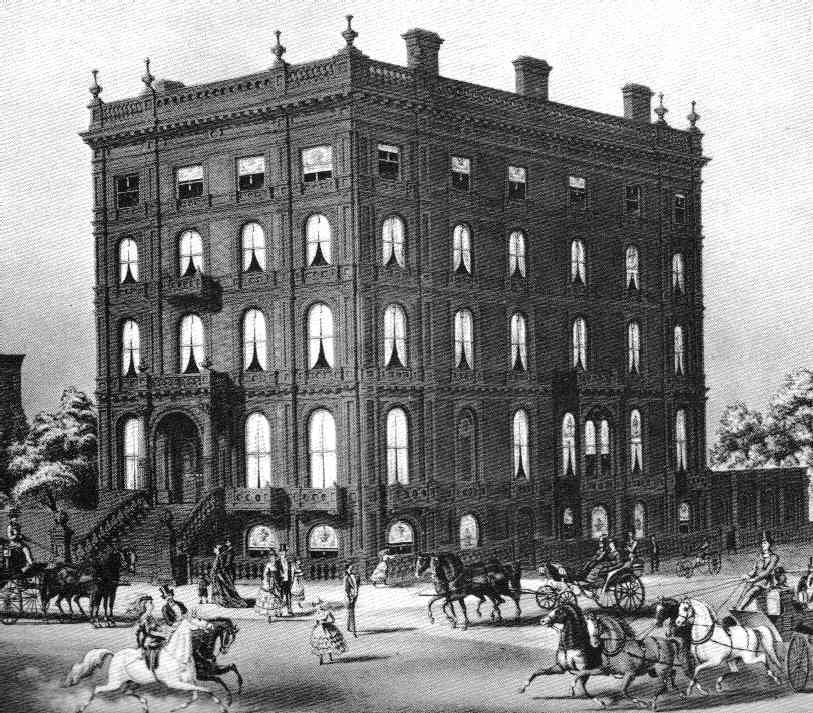
Madame Restell’s Fifth Avenue mansion (at 52nd Street), an area so newly developed in 1857 that there was nothing else around — except for the construction site of St. Patrick’s Cathedral.
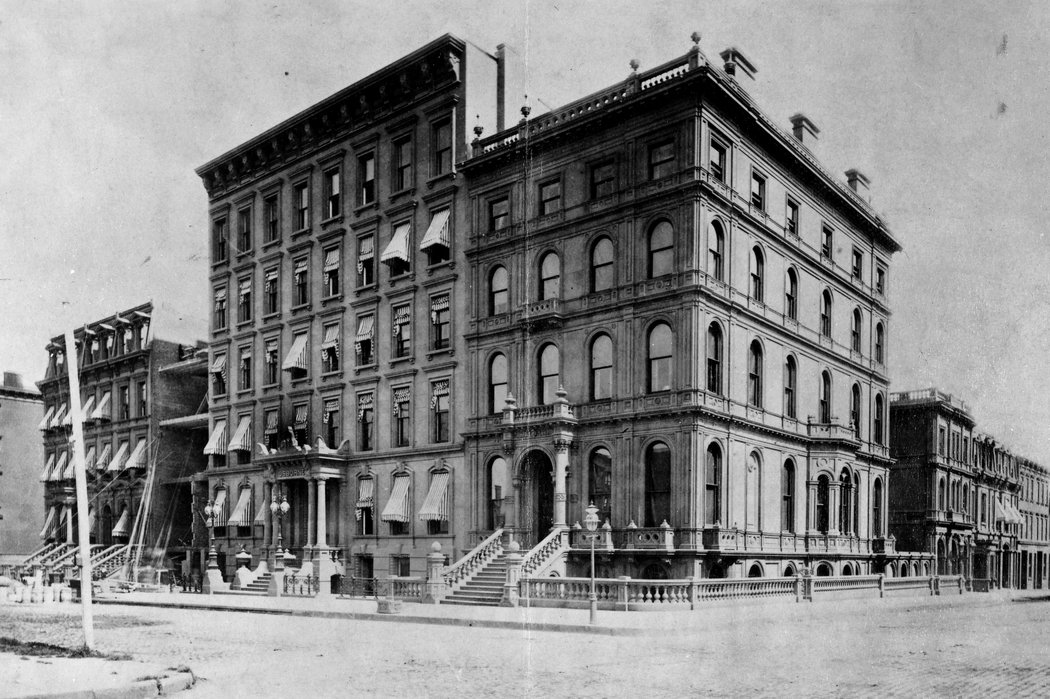
The mansion in later years after Restell’s death. The apartment building next to the mansion was also commissioned by Restell because nobody else would buy the property!
Courtesy NYPL
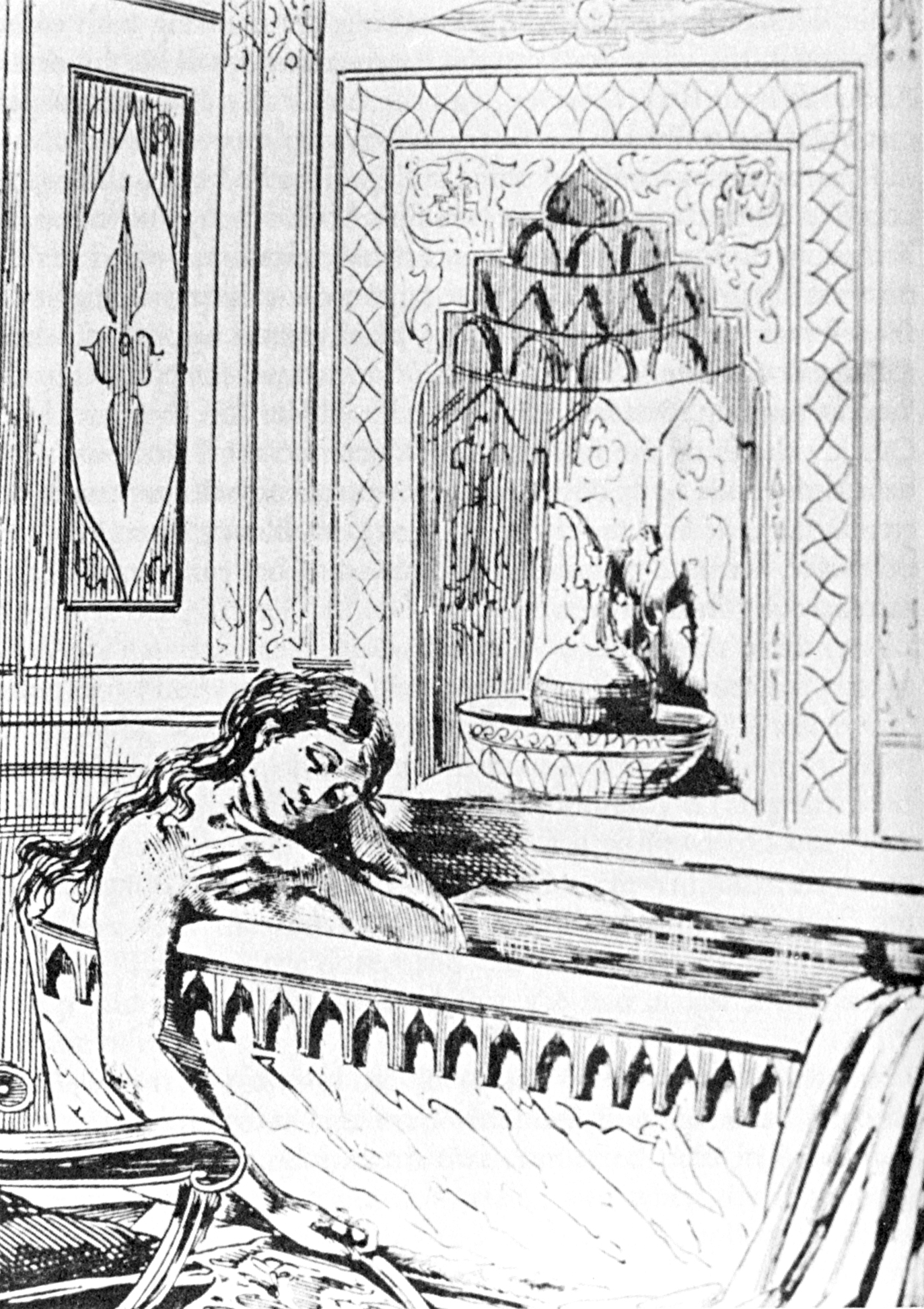
An illustration of the death of Madame Restell as imagined in Recollections of a New York Chief of Police by George P. Walling.
A big thanks to our special guest — author Nicholas Syrett, Associate Professor of History at the University of Northern Colorado!
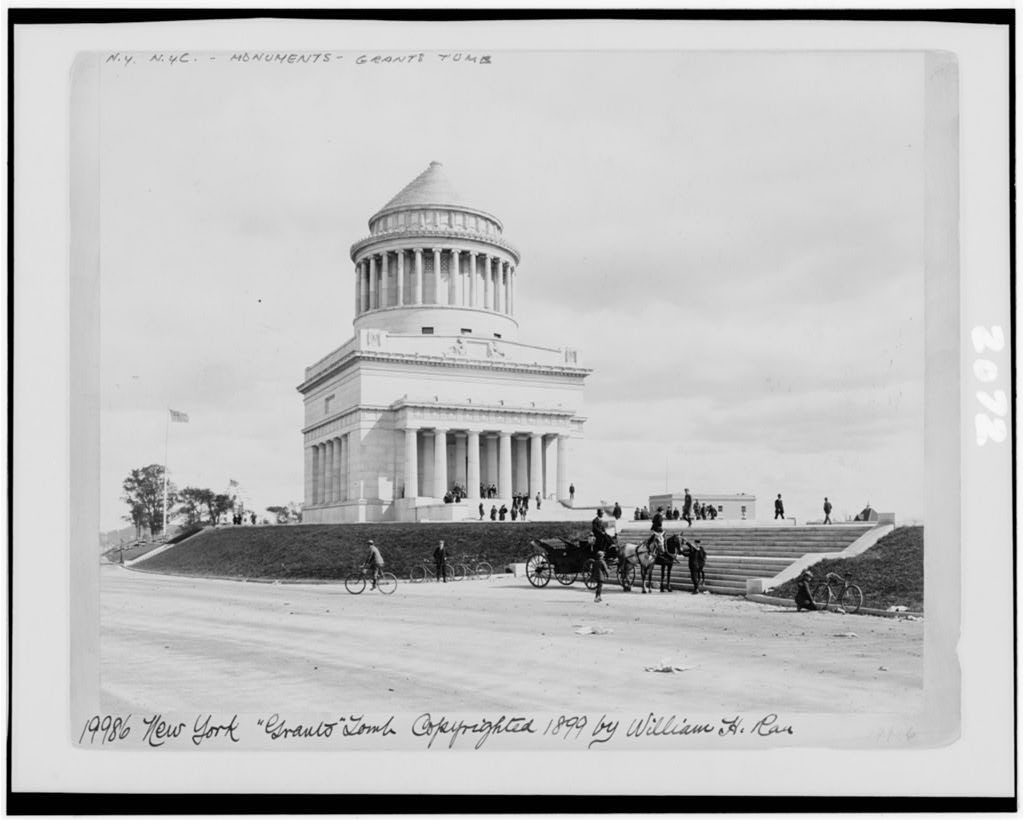
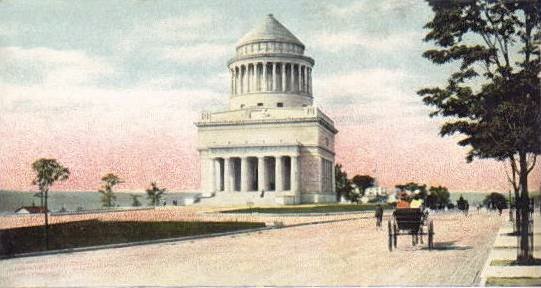
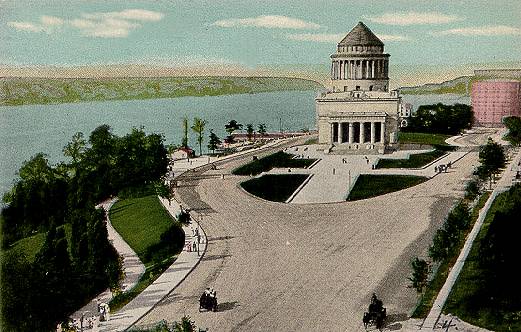
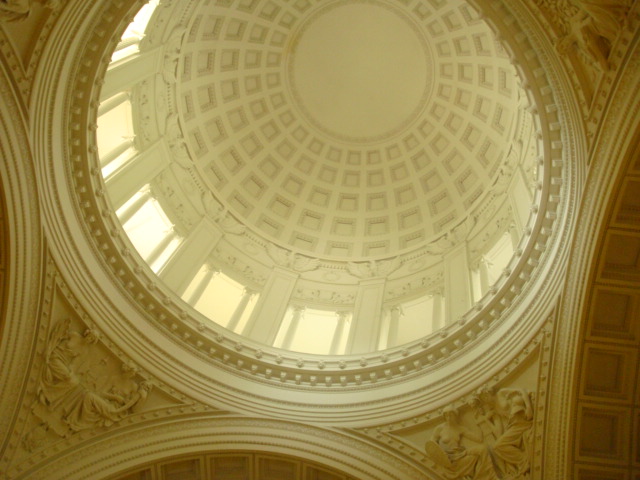
The fascinating story of Grant’s Tomb — and a quirky history that includes an ambitious architect, one of the seven wonders of the ancient world, lots of ugly raspberry paint, and strange charges of animal sacrifice.
The history of Grant’s Tomb plays an important role in the story of Riverside Park (released in 2018). Listen to that tale here:
And listen to the story of Grant’s Tomb in this very early episode of the Bowery Boys podcast from 2008.
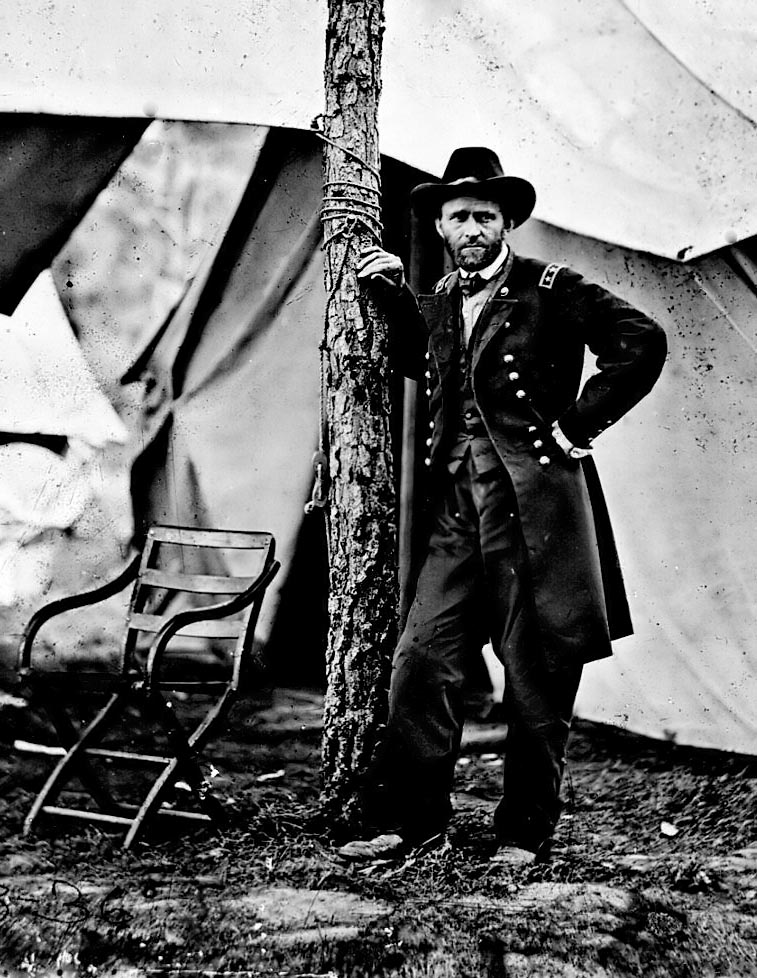
Ulysses S. Grant – perhaps America’s most famous man in the years following the Civil War. As president of the United States, Grant would be known for important political reforms — and a series of corruption scandals.
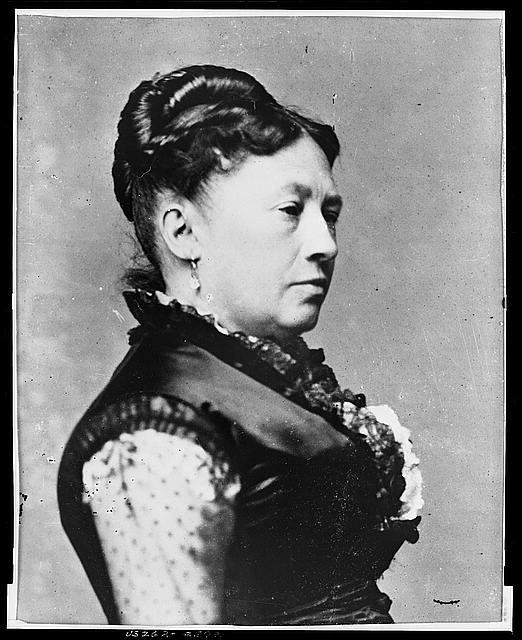
His wife Julia Dent Grant, entombed next to him
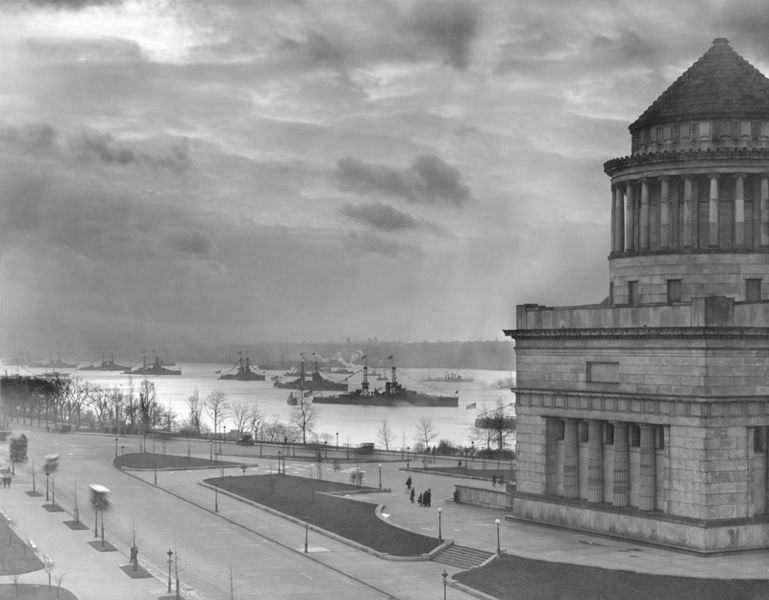
An ominous view of the Tomb during World War I, as battleships pass by it
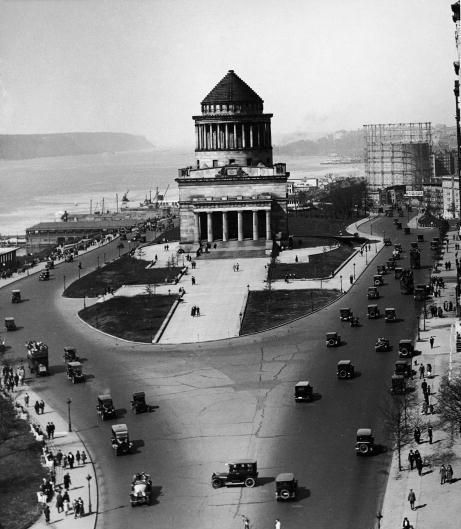
A great photo illustrating how somewhat barren that area of town was at the time. The silo-like building in the background is apparently a gas shell.
The website of the Grant Monument Association details some of the disasterous deterioration of the memorial during the 1970s:
Frank Scaturro, the Columbia University student who helped bring Grant’s Tomb back to life (photos courtesy the GMA website)
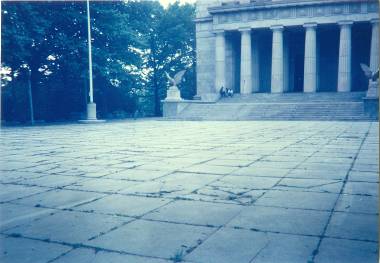
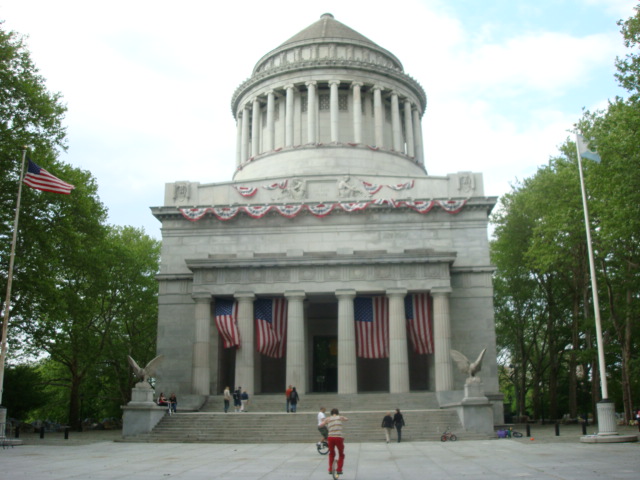
Grant’s Tomb today, complete with unicyclists (in foreground). Photos by Greg Young (taken in 2008)
PODCAST Steven Spielberg’s new version of West Side Story is here — and it’s fantastic — so we’re re-visiting our 2016 show on the history of Lincoln Center, with a new show introduction discussing the film and the passing of musical icon Stephen Sondheim.
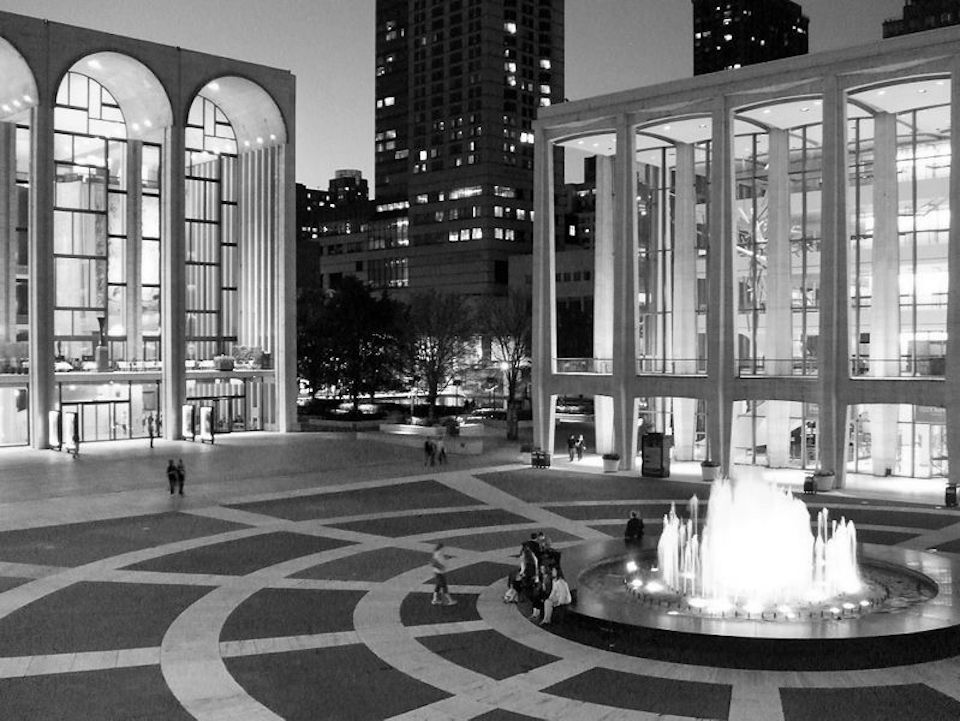
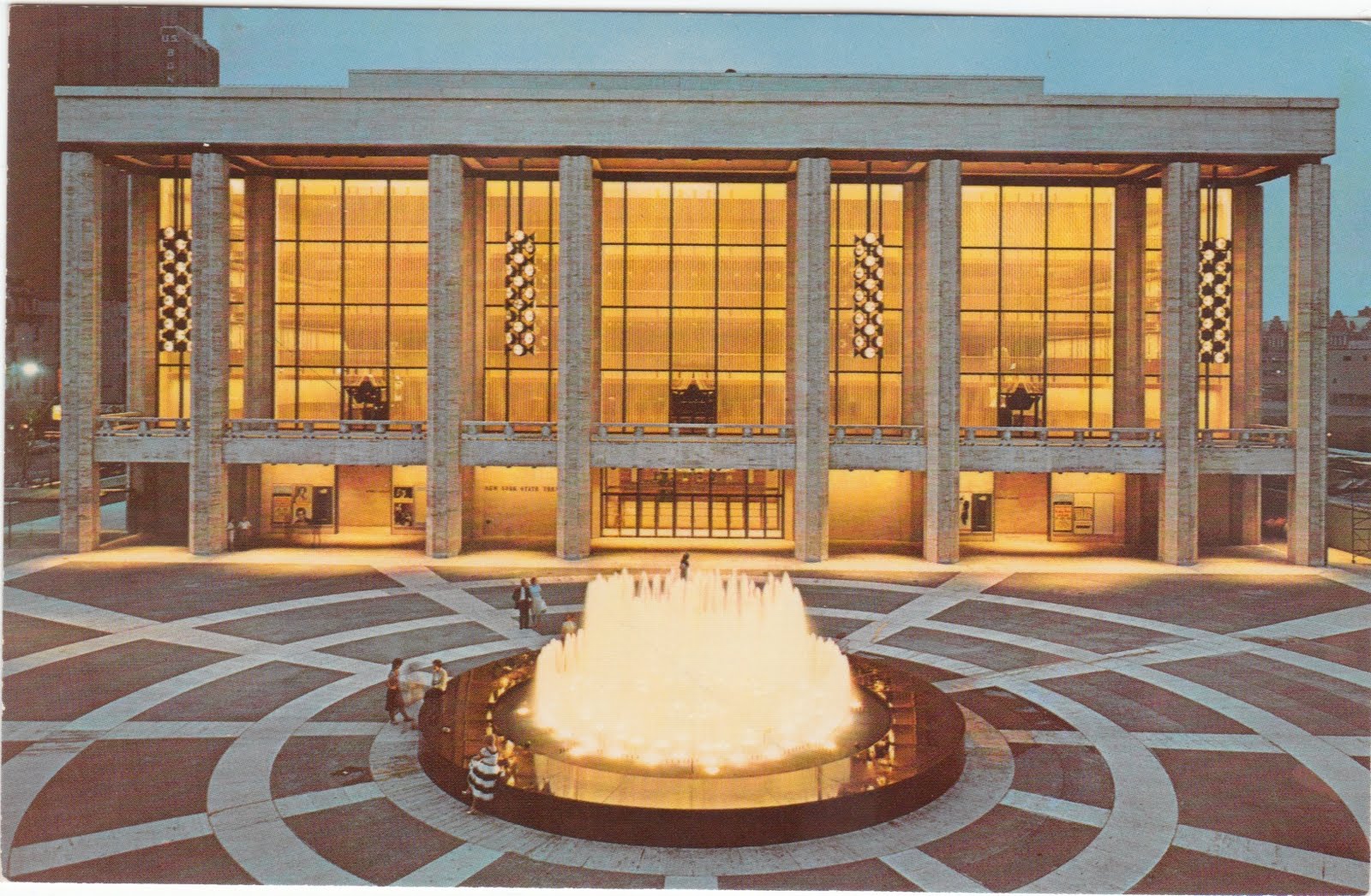
Warm up the orchestra, lace up your dance slippers, and bring the diva to the stage! For our latest show we’re telling the origin story of Lincoln Center, the fine arts campus which assembles some of the city’s finest music and theatrical institutions to create the classiest 16.3 acres in New York City.
However this tale of Robert Moses urban renewal philosophies and the survival of storied institutions has a tragic twist. The campus sits on the site of a former neighborhood named San Juan Hill, home to thousands of African American and Puerto Rican families in the mid 20th century. No trace of this neighborhood exists today.
Or, should we say, ALMOST no trace. San Juan Hill exists, at least briefly, within a part of classic American cinema.
The Oscar-winning film West Side Story, based on the celebrated musical, was partially filmed here. The movie reflects many realities of the neighborhood and involves talents who would be, ahem, instrumental in Lincoln Center’s continued successes.
FEATURINGLeonard Bernstein, Leontyne Price, James Earl Jones, Imelda Marcos, David Geffen and, naturally, the Nutcracker!
The Bowery Boys: New York City History podcast is brought to you …. by you!
We are now producing a new Bowery Boys podcast every other week. We’re also looking to improve and expand the show in other ways — publishing, social media, live events and other forms of media. But we can only do this with your help!
We are now a creator on Patreon, a patronage platform where you can support your favorite content creators.
Please visit our page on Patreon and watch a short video of us recording the show and talking about our expansion plans. If you’d like to help out, there are several different pledge levels. Check them out and consider being a sponsor.
We greatly appreciate our listeners and readers and thank you for joining us on this journey so far.
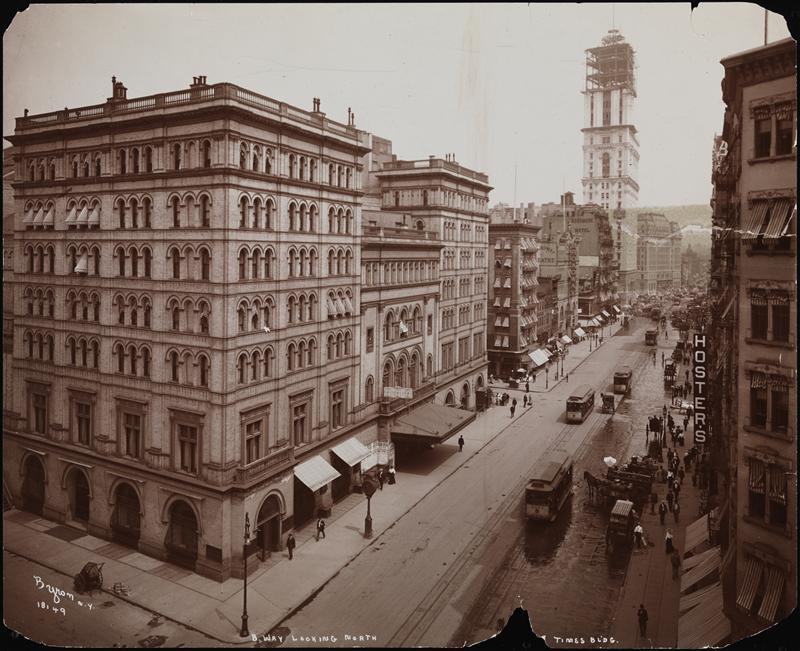
The Metropolitan Opera House, in 1904. In the far distance, you see One Times Square being constructed in Longacre Square.
Courtesy MCNY
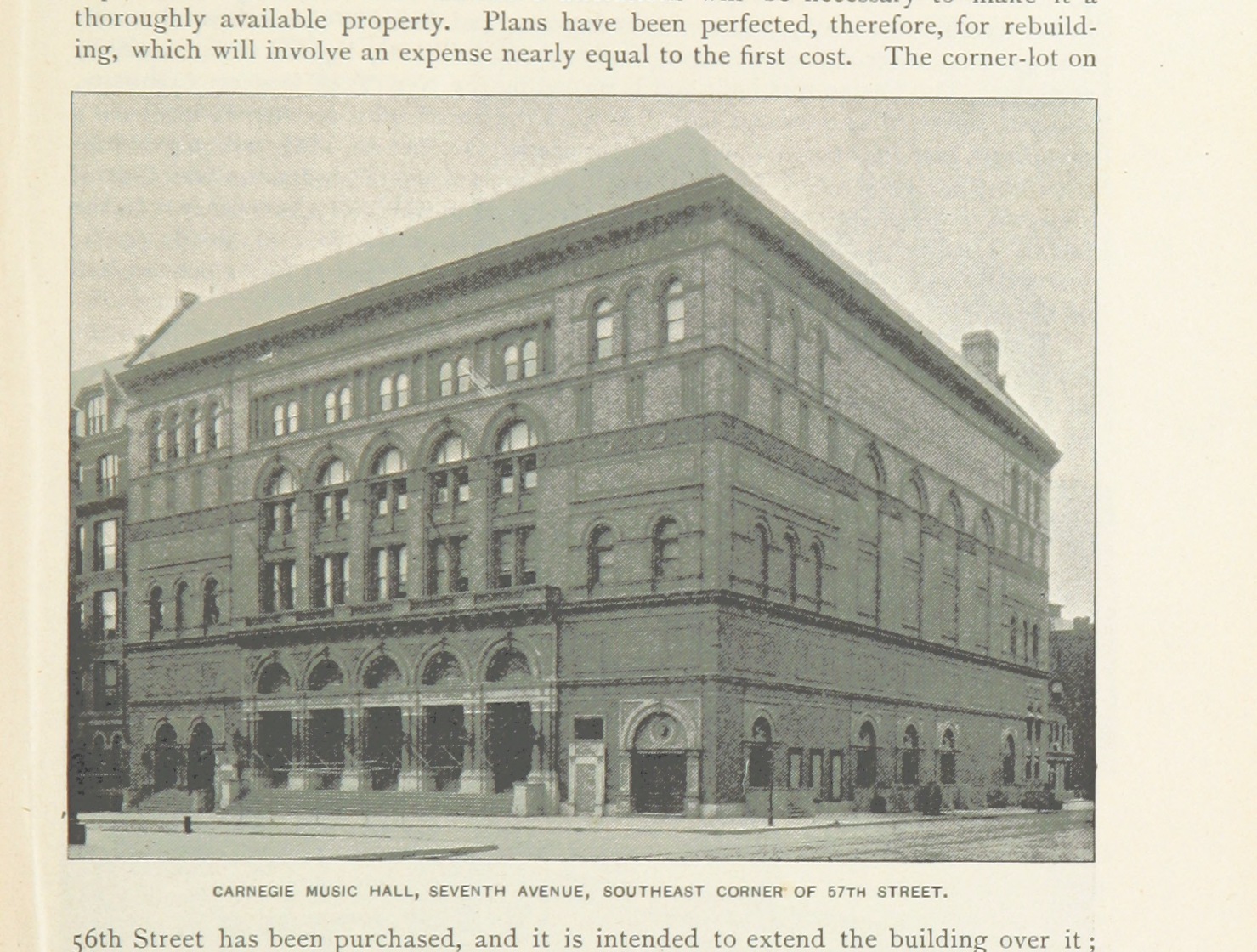
The New York City Ballet had its first home at City Center while the New York Philharmonic was housed for decades at Carnegie Hall.
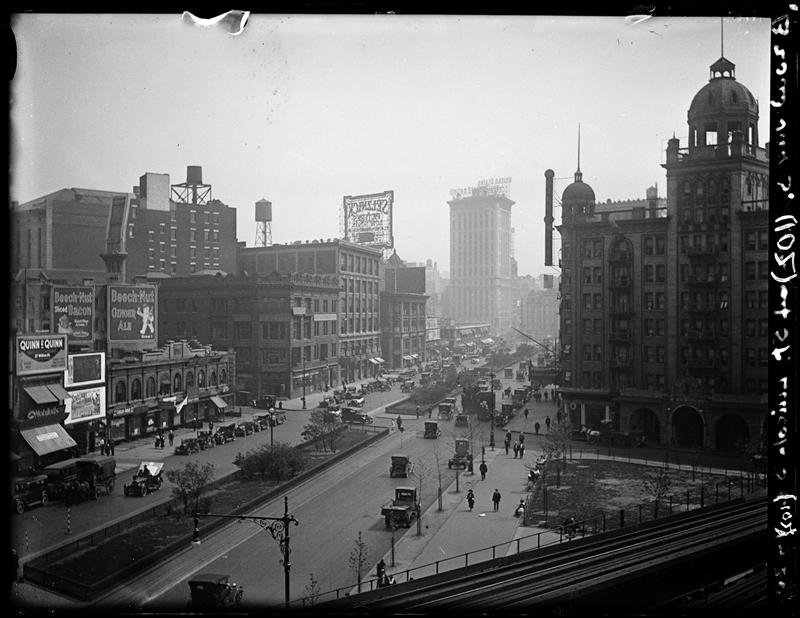
Below: Lincoln Square, 1920. This picture is actually taken from the spot where Lincoln Center stands today.
The triangular plaza pictured here would later be called Dante Park (a statue to the Italian writer would be placed here a year after this photo was taken). Take note of the 9th Avenue elevated streaking up Columbus Avenue at the bottom of this image.
Arthur Hosking/Museum of the City of New York
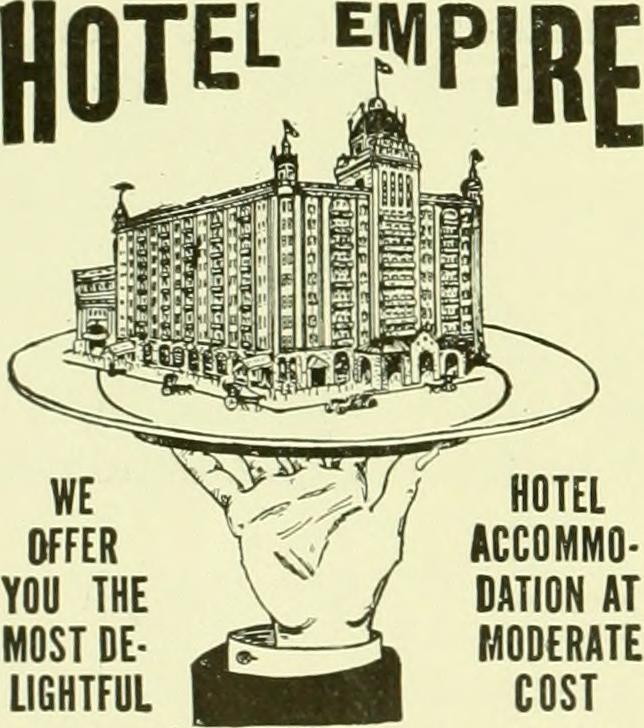
And that building to the right? That’s the Hotel Empire which is still standing there today (albeit in a greatly modified form). Here’s an ad for the Empire from 1909.
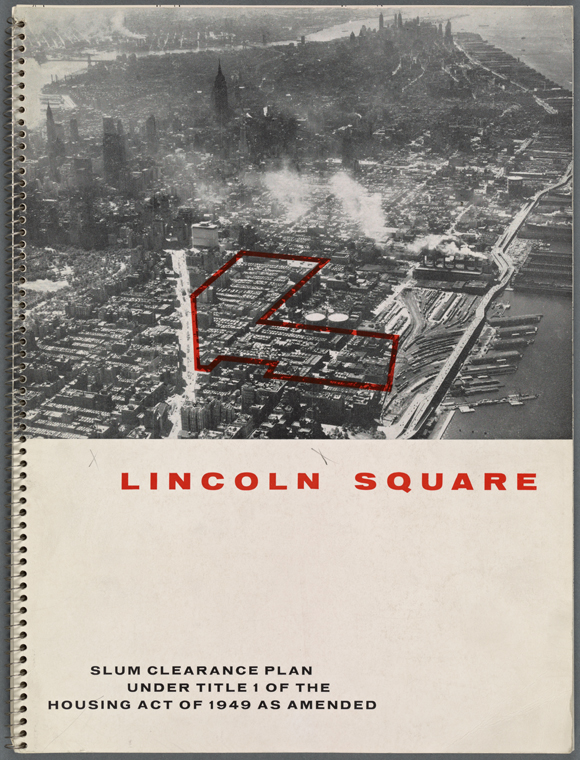
Robert Moses’ slum clearance plan for San Juan Hill, published in 1956.
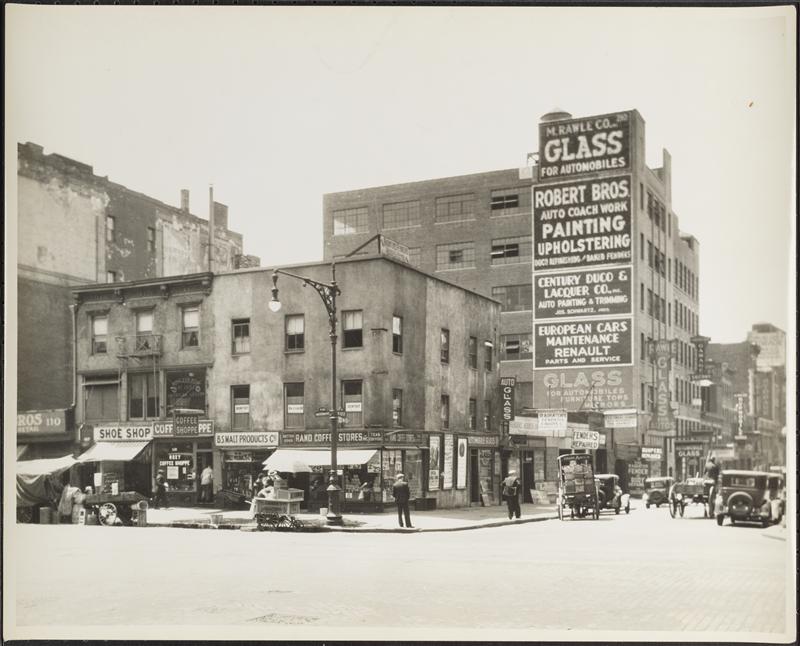
Scenes from old San Juan Hill — 1932, 65th Street and Amsterdam Avenue
Charles Von Urban/MCNY
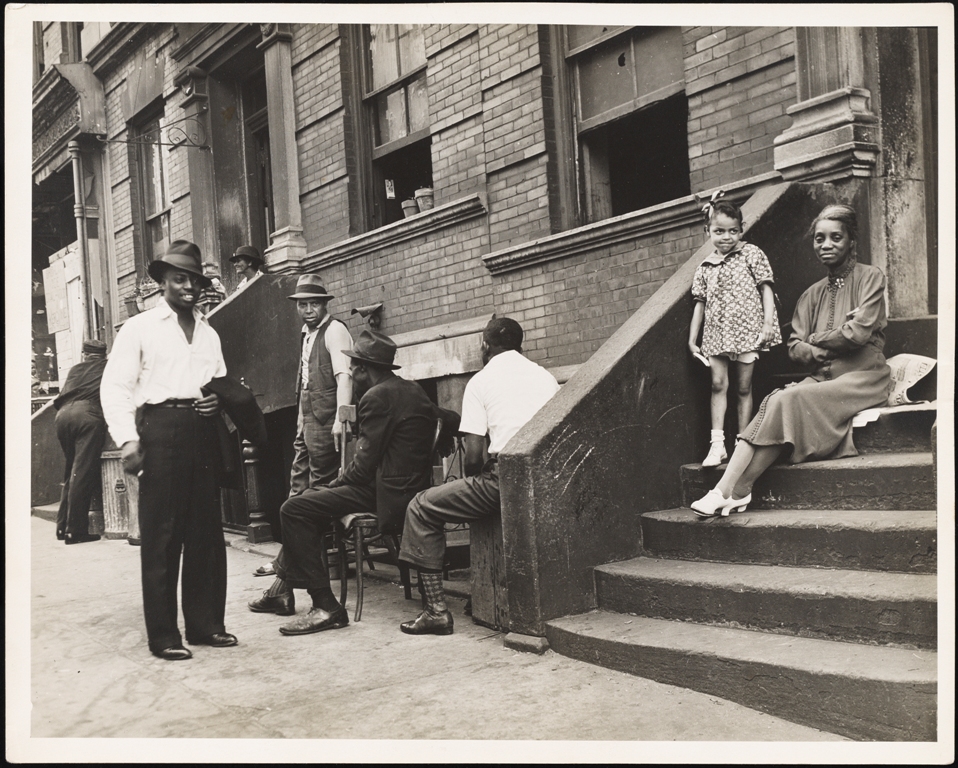
1939 — the stoop scene in San Juan Hill, street unknown
Courtesy MCNY Lee Sievan (1907-1990). San Juan Hill. 1939
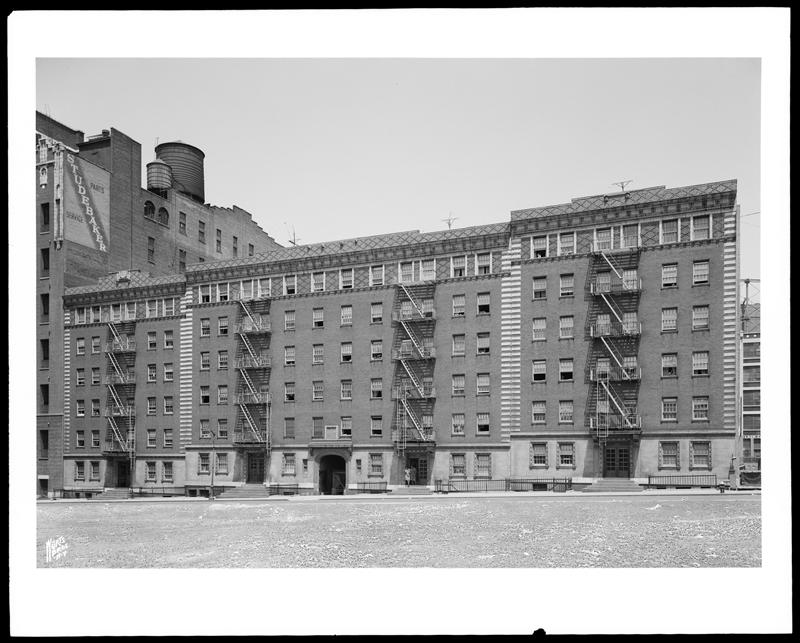
Below: An early effort to improve the housing quality in the neighborhood — the Phipps Houses, built in 1906.
An interesting New York Times article describes a few residents: “A typical tenant was the steamboat steward Joseph Craig, 36, classed as ‘mulatto’, who was born in Trinidad and arrived in the United States in 1891. Another was the horse breeder Daniel Moore, 43, born in Missouri and married for six years to Tilly Moore, 30, born in Cuba and in the United States since 1892; she worked as a domestic.”
MCNY
The scene in April of 1963. The Philharmonic Hall was already opened by this point. This really brings home the fact that there must have been so much noise pollution due to construction which must have perturbed the organizers of the Philharmonic greatly!
(MATTSON/DAILYNEWS)
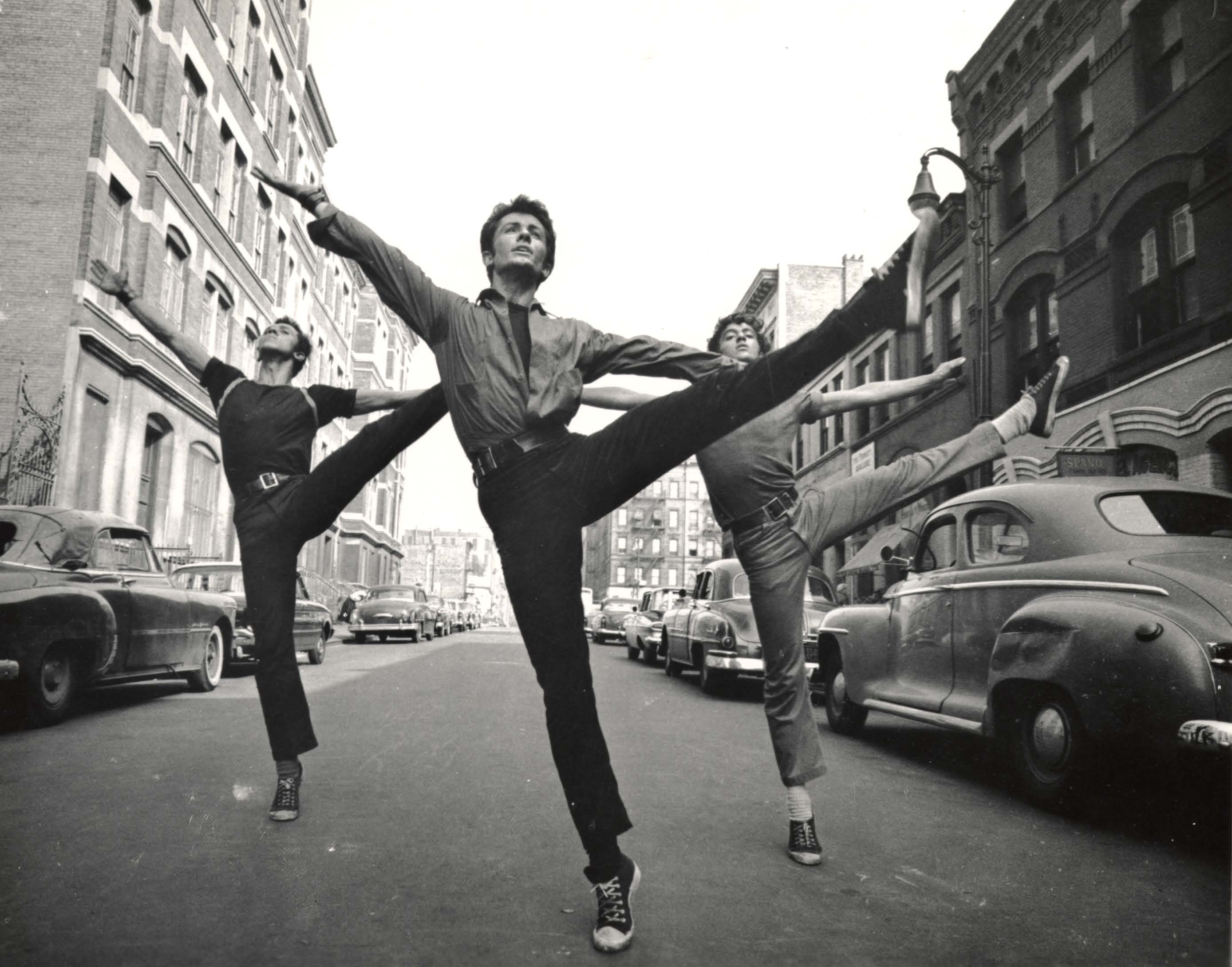
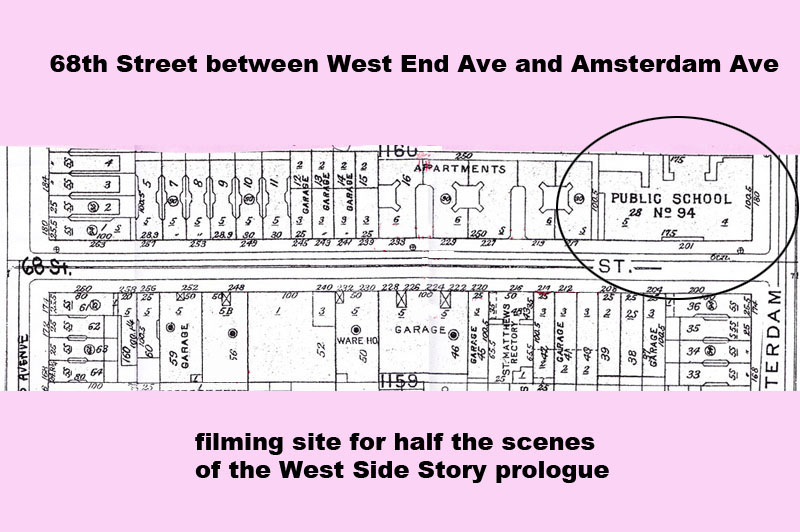
The opening sequence of the Oscar-winning film West Side Story was filmed on the streets of San Juan Hill, the structures around the actors clearly boarded up and ready for demolition.
(The website Tom mentioned on the show — Pop Spots NYC — shows a very detailed comparison of film scenes with maps and old photographs. Highly recommended!)
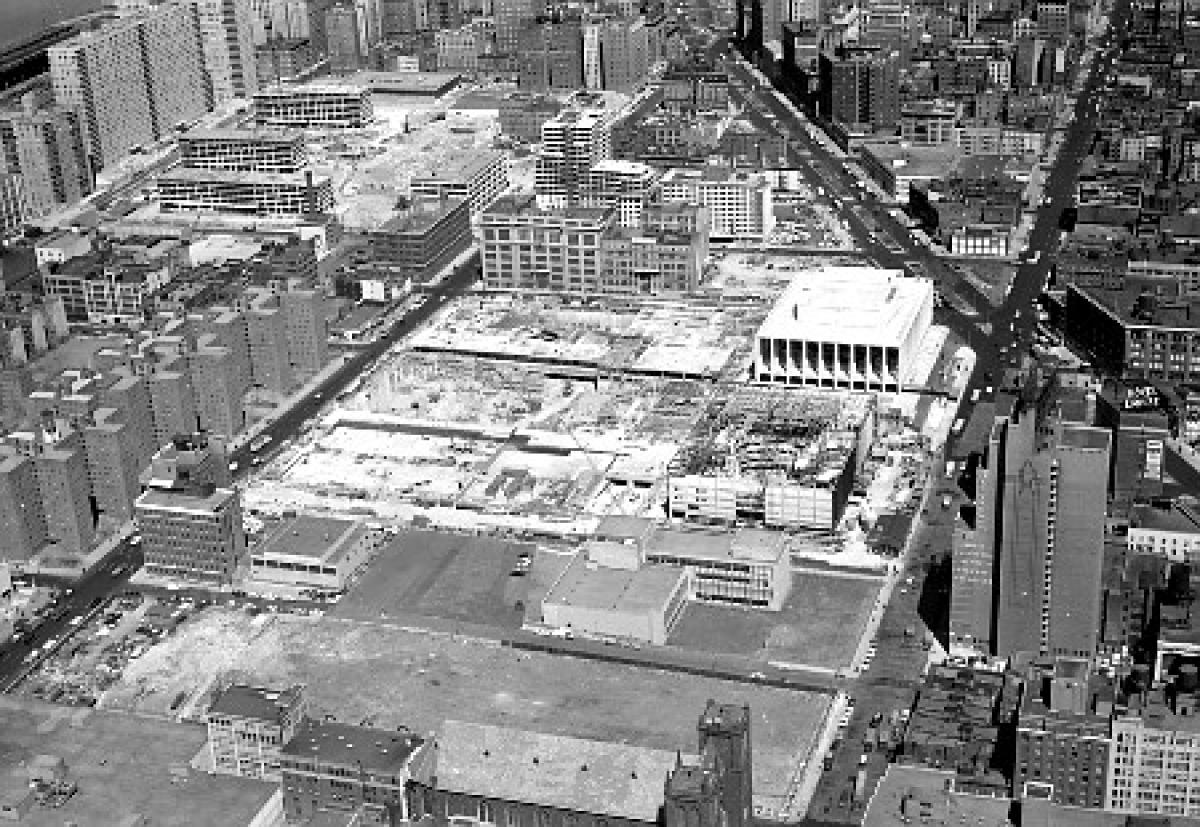
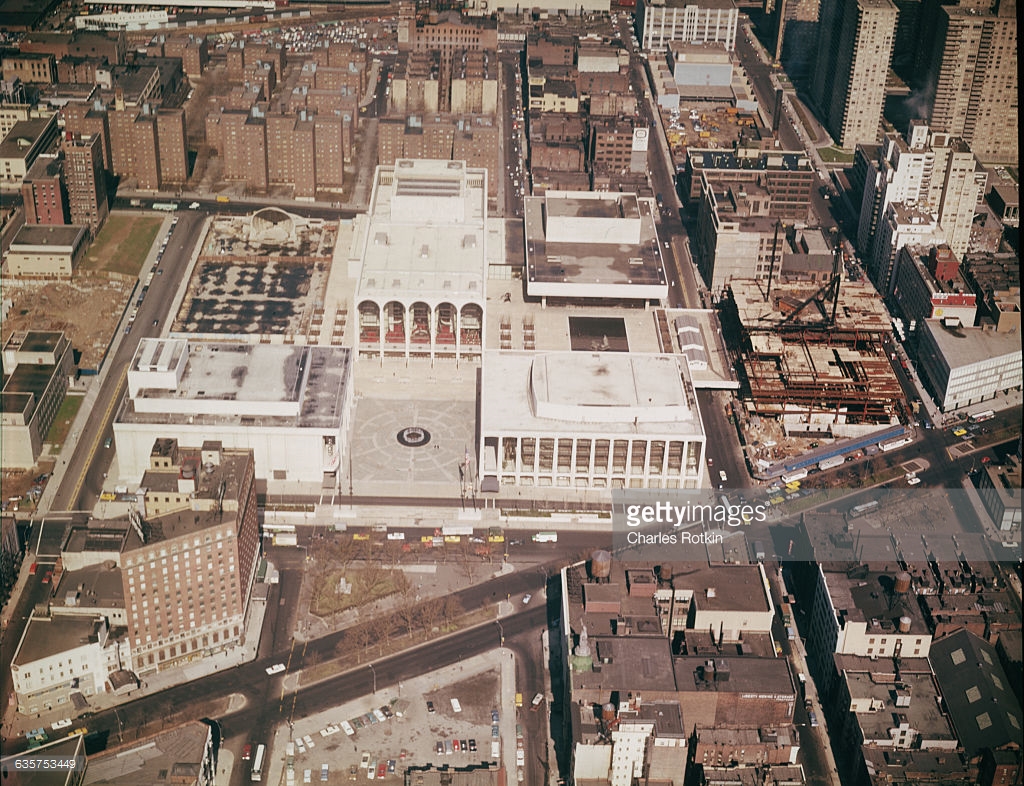
An overhead view of Lincoln Center in 1969 with most of the major venues completed by this point. At the bottom right you see the Empire Hotel, then (moving clockwise around the fountain): the New York State Theater, Damrosch Park, the Metropolitan Opera House, the library and the Vivian Beaumont Theater and Philharmonic Hall.
Getty Images
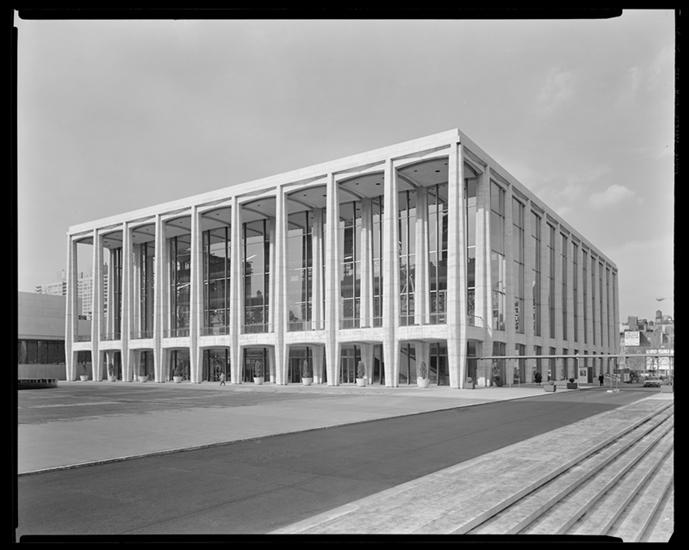
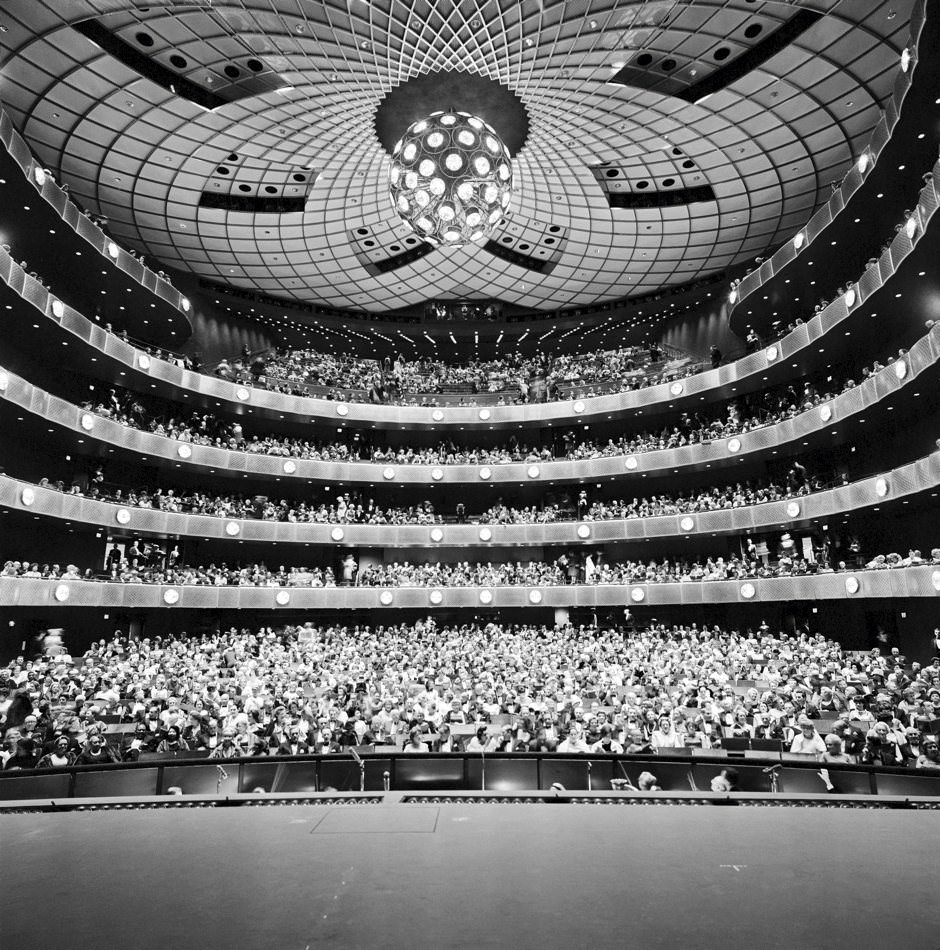
Philharmonic Hall, later Avery Fisher Hall, then David Geffen Hall — designed by Max Abramovitz.
MCNY
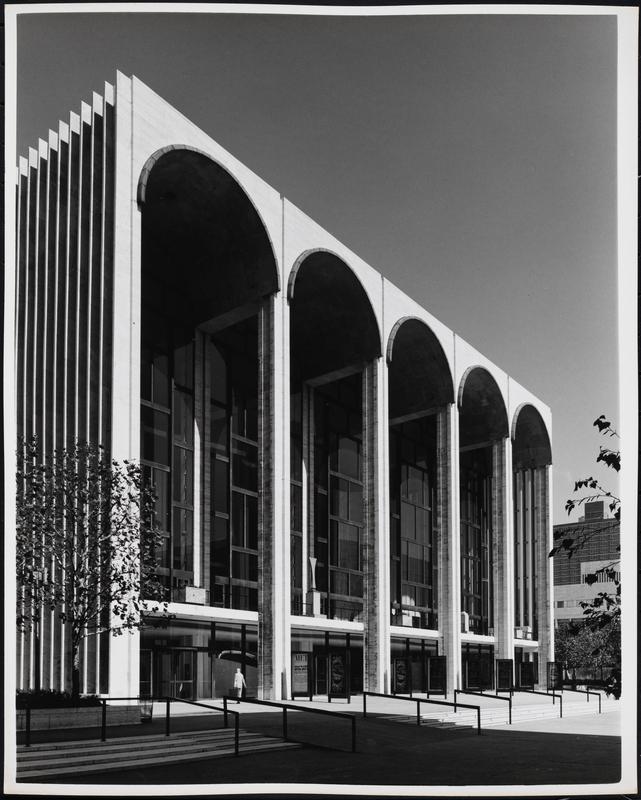
The Metropolitan Opera House, designed by Wallace Harrison.
MCNY/Edmund Vincent Gillon
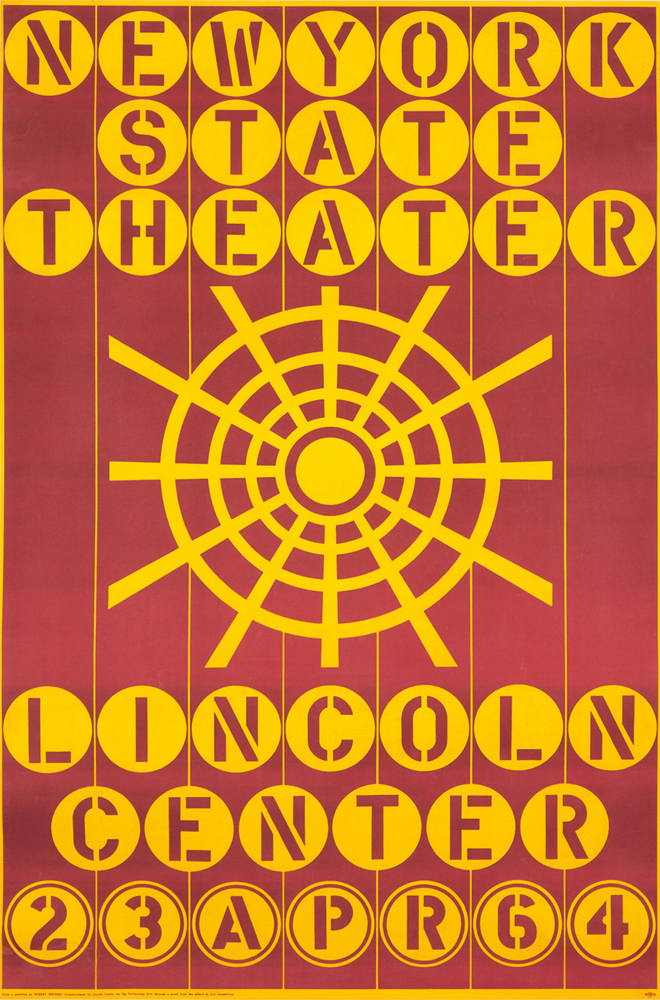
The New York State Theater, later the David H. Koch Theater.
Opening night at the New York State Theater, April 24, 1964
Bettman/Corbis
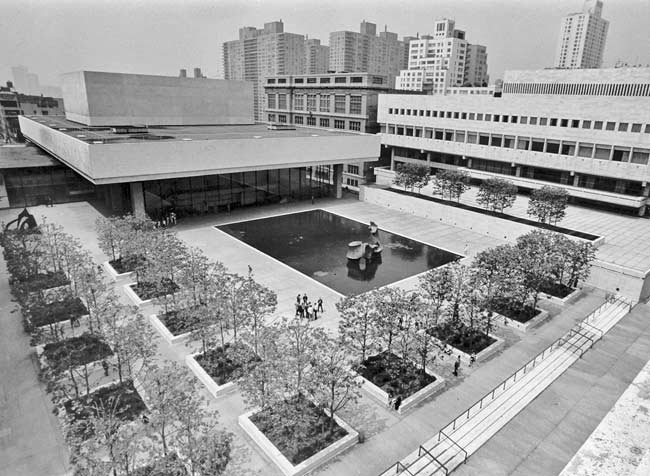
Eero Saarinen’s Vivian Beaumont Theater, the reflecting pool featuring a sculpture by Henry Moore, and the Julliard School, designed by Pietro Belluschi.
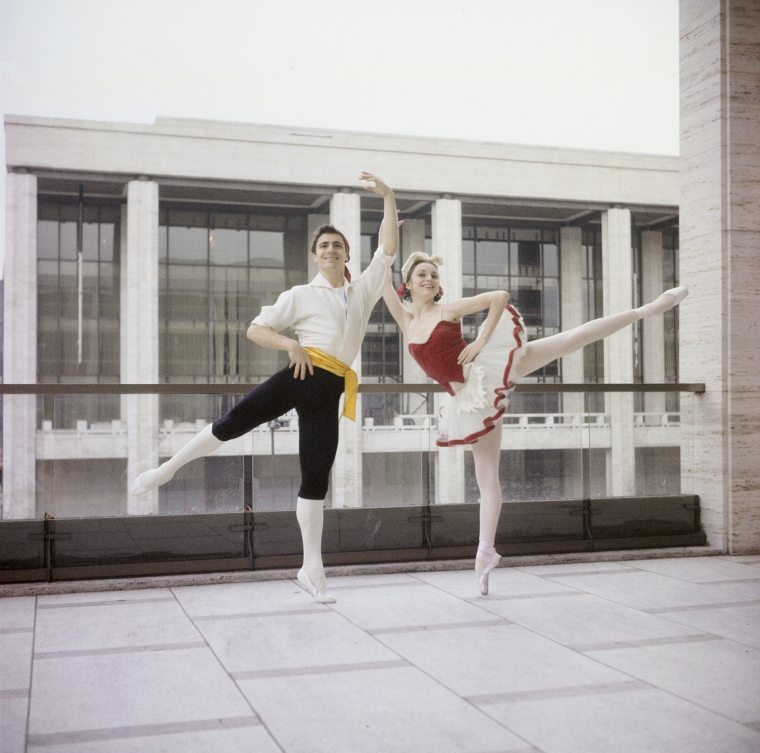
Patricia McBride and Edward Villella in front of the unfinished New York State Theater at Lincoln Center, in Tarantella costume, choreography by George Balanchine, 1964
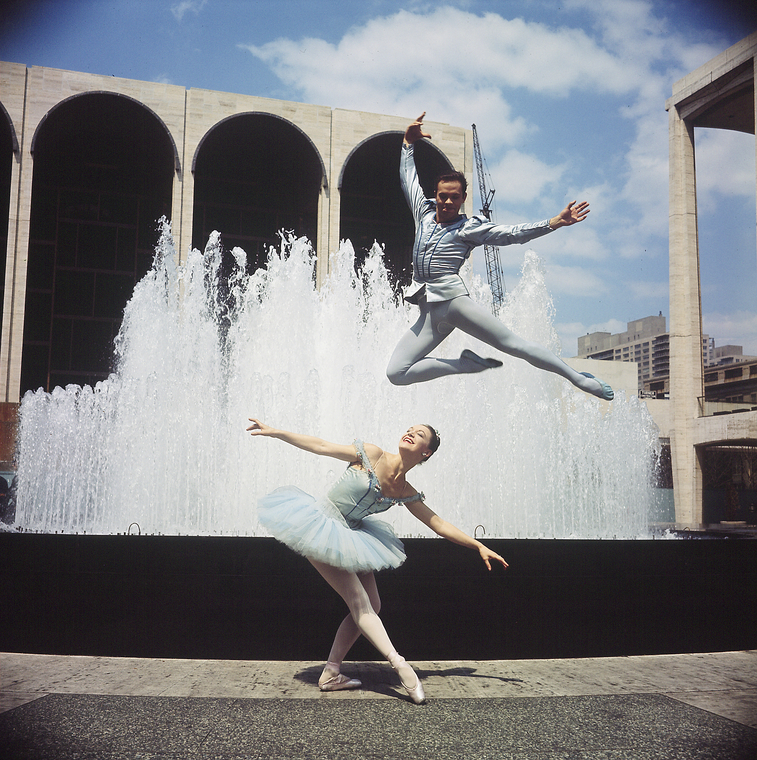
Patricia Wilde and Andre Prokovsky in Raymonda posing in front of fountain in plaza at Lincoln Center, choreography by George Balanchine, 1965
Courtesy NYPL
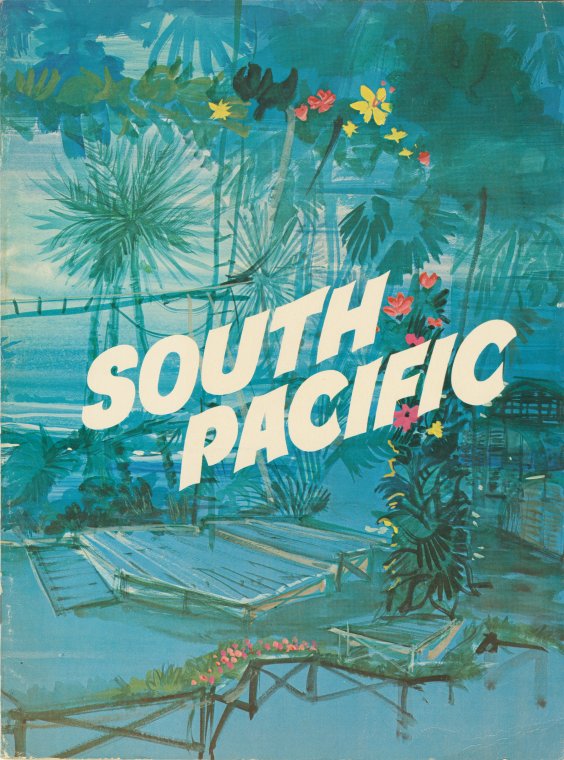
Program from the 1967 revival of South Pacific which played at the New York State Theatre……
NYPL
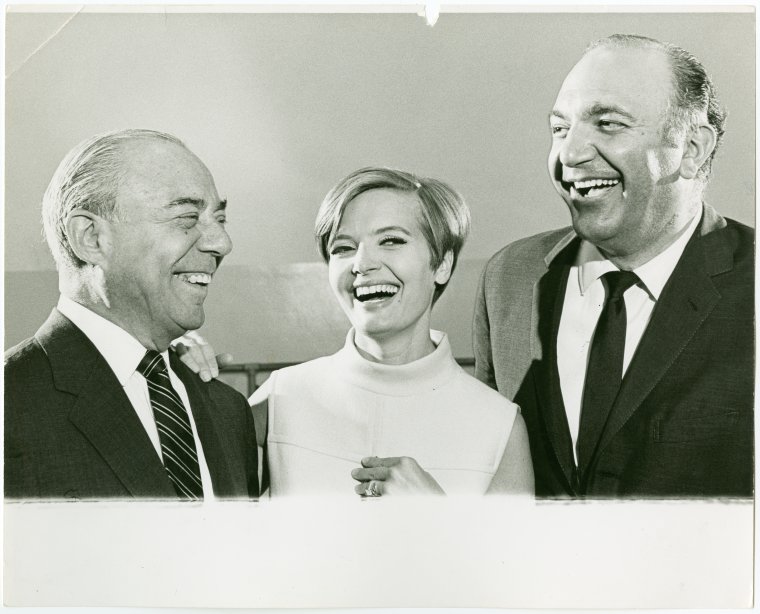
….starring Florence Henderson as Nellie Forbush! Here she is with Richard Rodgers and Georgio Tozzi (who played Emile de Becque).
NYPL
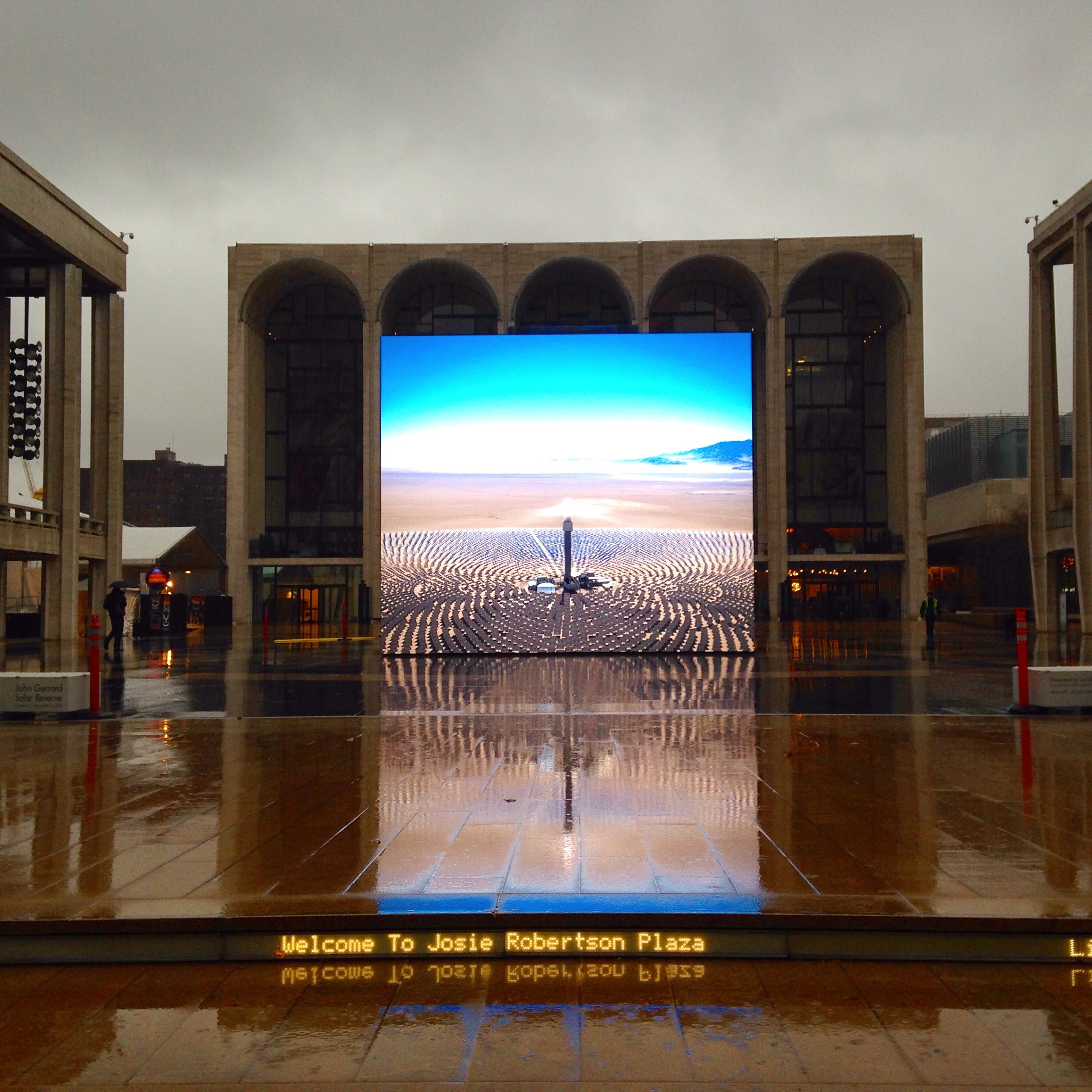
The plaza at Lincoln Center is always a place where surprises greet visitors. Here’s an image from a couple years ago of a video installation which sat in front of the fountain:
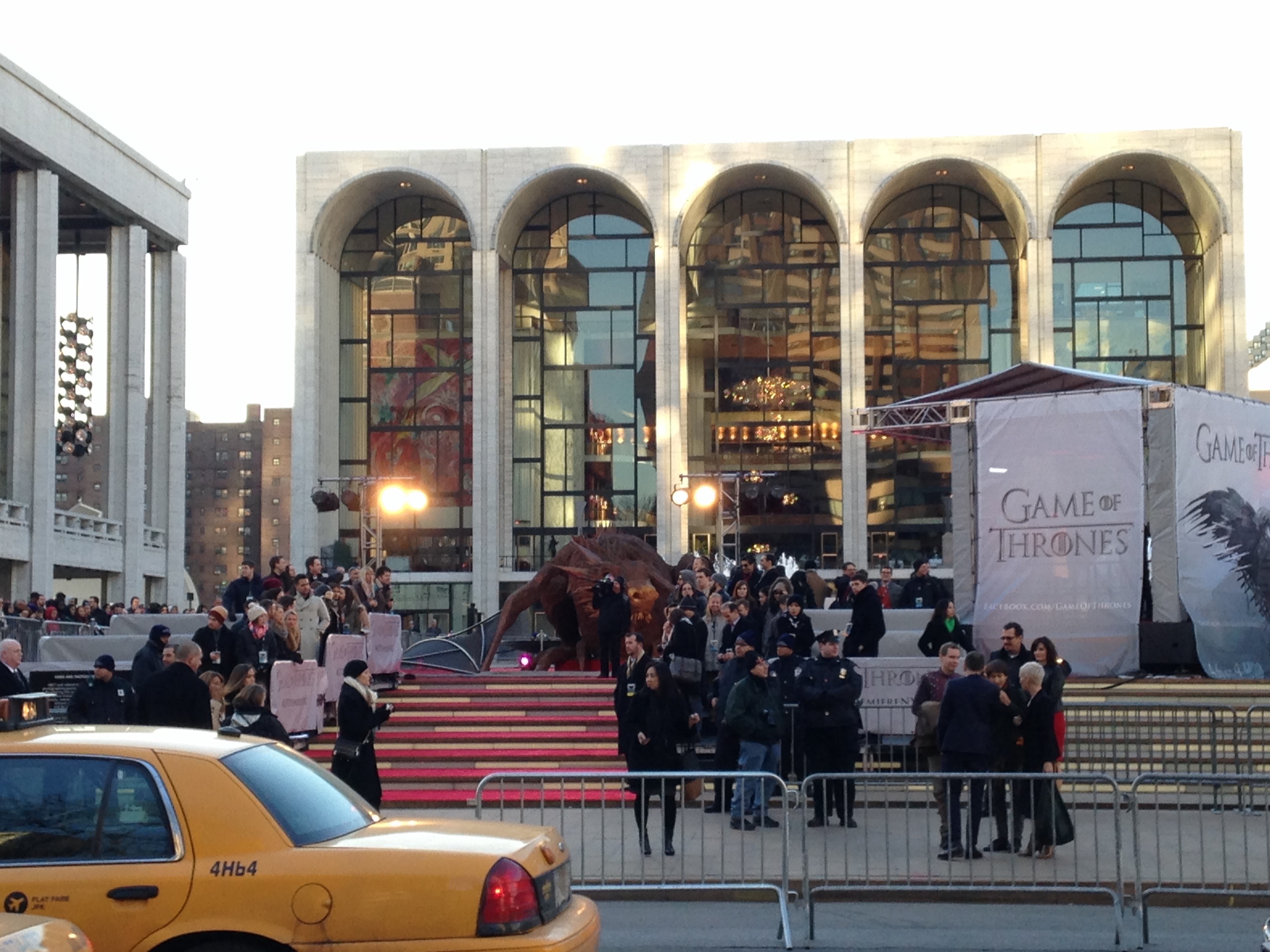
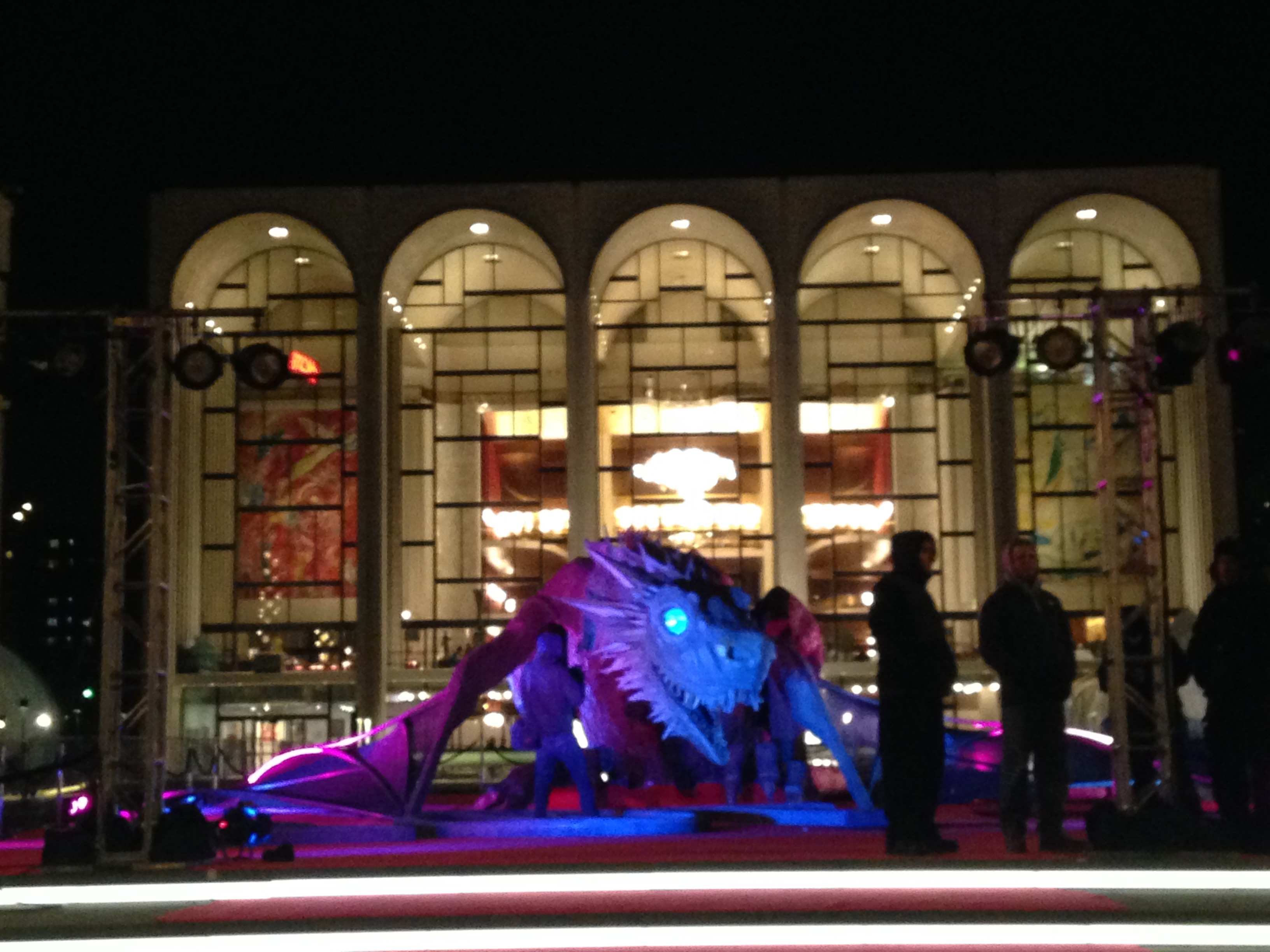
And 2019 when they hosted the premiere of Game of Thrones. With a life-size dragon!
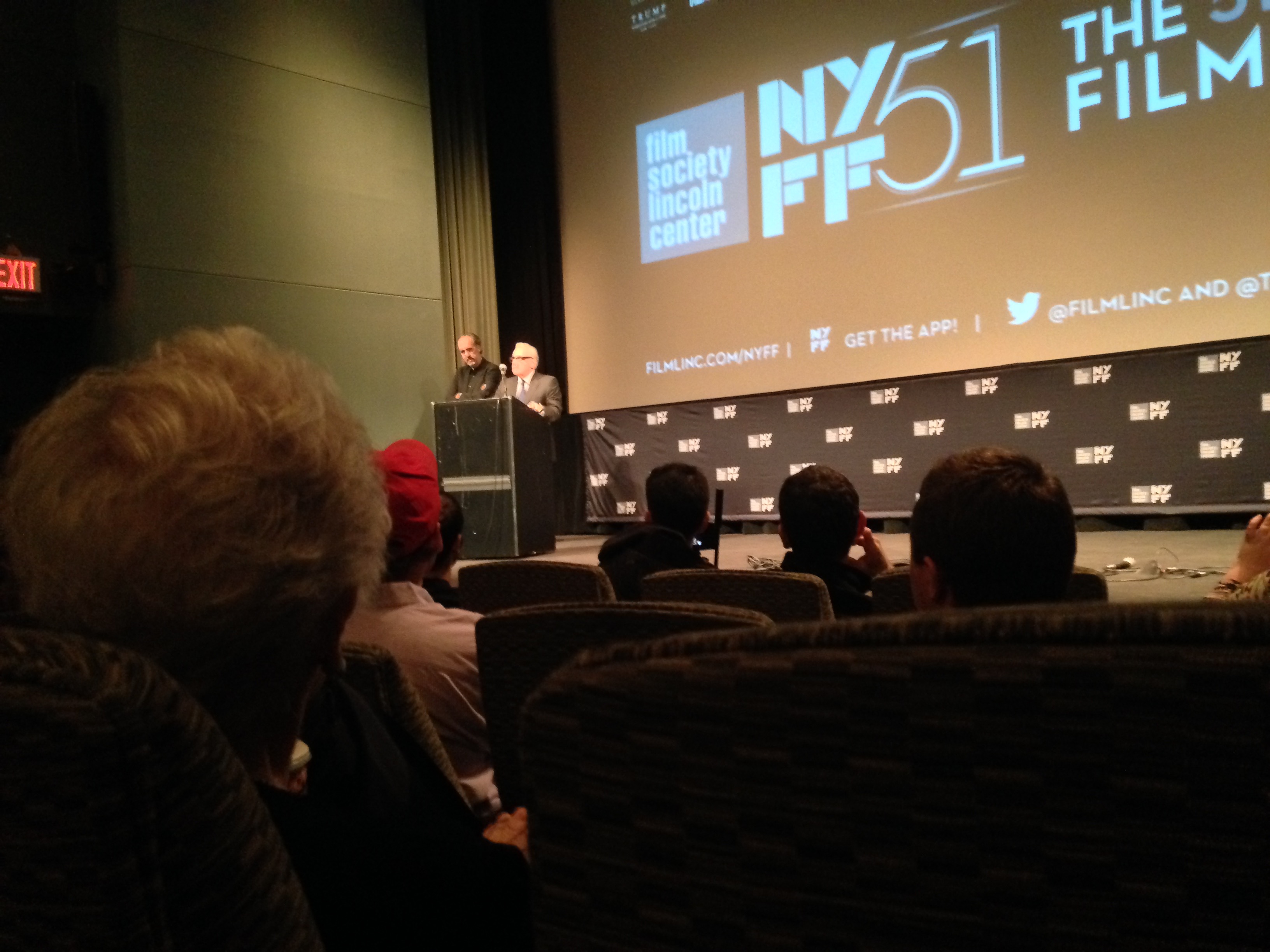
Martin Scorsese! He introduced a screening of his film The Age of Innocence at the New York Film Festival.
FURTHER LISTENING
Back catalog episodes mentioned on show or shows with similar themes that we think you’ll enjoy.
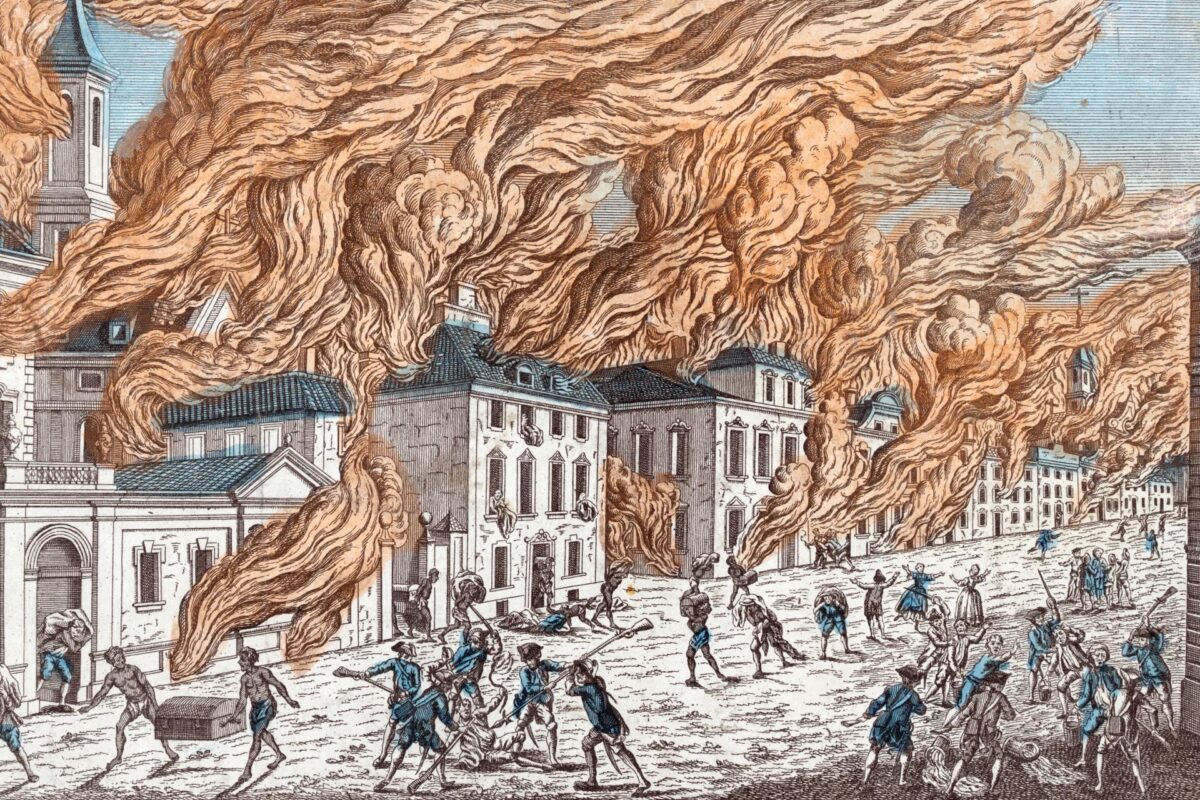
PODCAST We revisit the story of the Great Fire of 1776, the drumbeat of war leading up to the disaster, and the tragic story of the American patriot Nathan Hale.
On the occasion of the 245th anniversary of the Revolutionary War in New York City, we’re presenting a reedited, remastered version of an episode that we recorded in 2015.
A little after midnight on September 21, 1776, the Fighting Cocks Tavern on Whitehall Street caught on fire. The drunken revelers inside the tavern were unable to stop the blaze, and it soon raged into a dangerous inferno, spreading up the west side of Manhattan.
Some reports state that the fire started accidentally in the tavern fireplace. But was it actually set on purpose — on the orders of George Washington?
To understand that damning speculation, we unfurl the events that lead up to that moment — from the first outrages against the British by American colonists to the first sparks of the Revolutionary War. Why did New York get caught up so early in the war and what were the circumstances that led to the city falling into British hands?
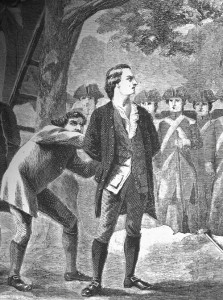
Underneath this expansive story is another, smaller story — that of a young man on a spy mission, sent by Washington into enemy territory. His name was Nathan Hale, and his fate would intersect with the disastrous events of September 21, 1776.
PLUS: The legacy of St. Paul’s Chapel, a lasting reminder not only of the Great Fire of 1776 but of an even greater disaster which occurred almost exactly 225 years later.
AND: Find out what Alexander Hamilton was up to in September 1776!
The Bowery Boys: New York City History podcast is brought to you …. by you!
We are now producing a new Bowery Boys podcast every other week. We’re also looking to improve and expand the show in other ways — publishing, social media, live events and other forms of media. But we can only do this with your help!
We are now a creator on Patreon, a patronage platform where you can support your favorite content creators.
Please visit our page on Patreon and watch a short video of us recording the show and talking about our expansion plans. If you’d like to help out, there are several different pledge levels. Check them out and consider being a sponsor.
We greatly appreciate our listeners and readers and thank you for joining us on this journey so far.
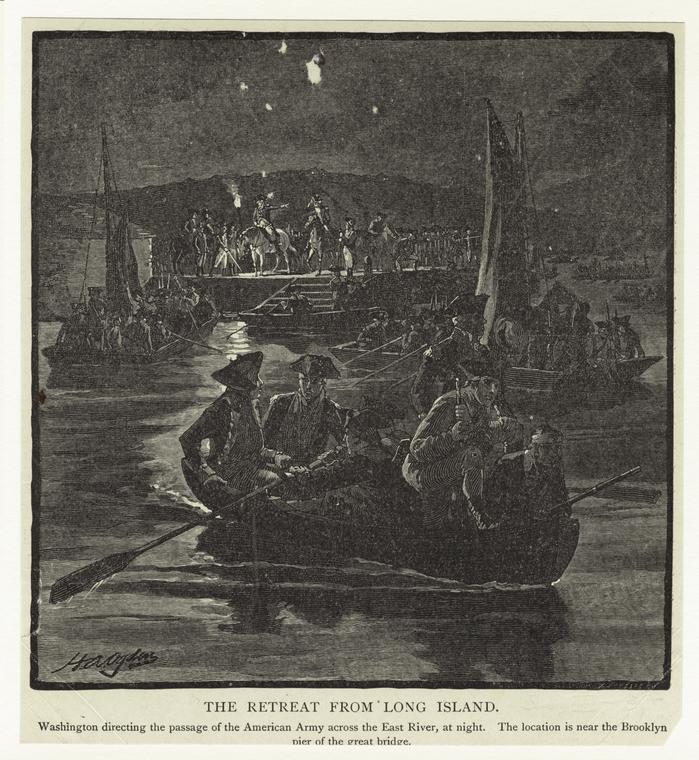
The escape of the Continental Army from Long Island under cover of night. This illustration by Henry Alexander Ogden is from 1897.
Courtesy New York Public Library
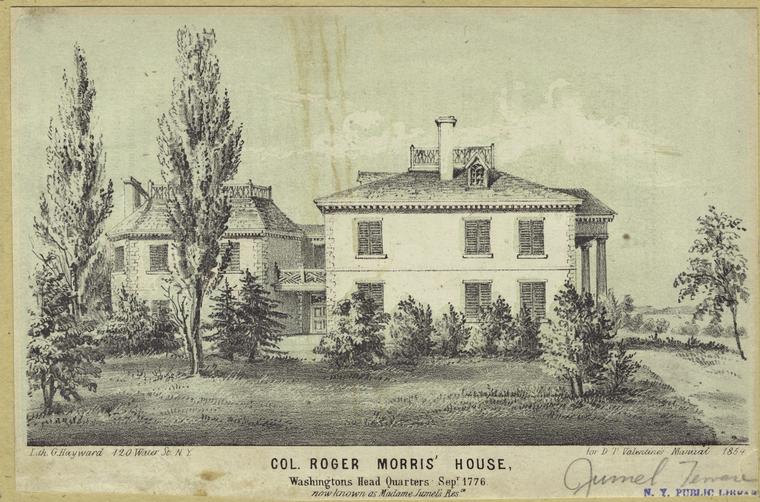
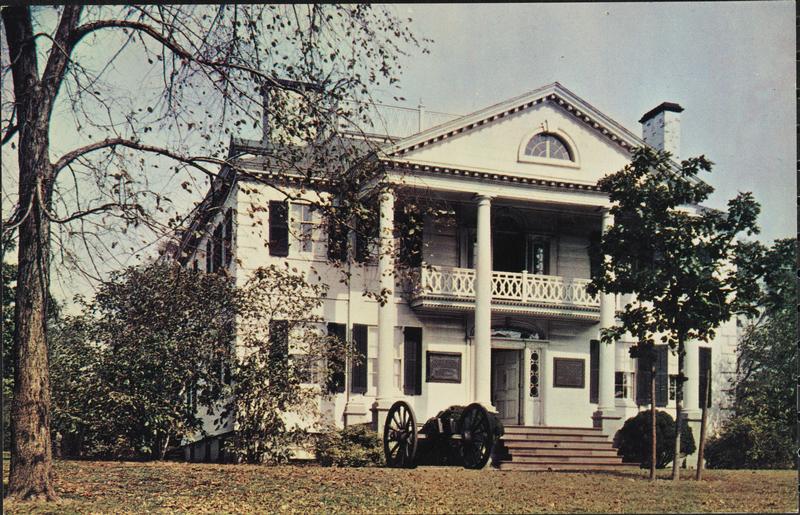
The house of Roger Morris which George Washington took over as his headquarters after fleeing New York.
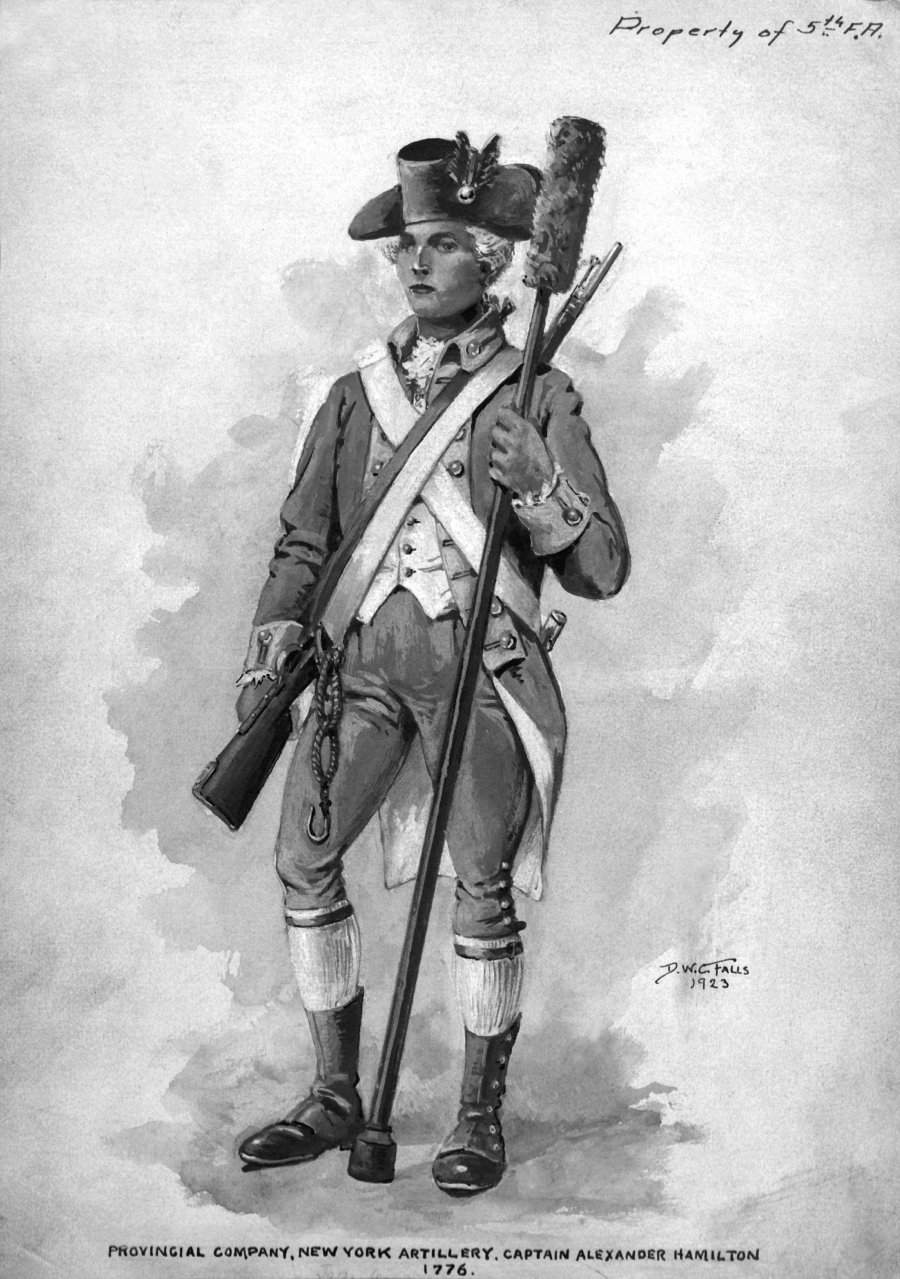
An imagining of young Alexander Hamilton in uniform in 1776
Courtesy the Department of Defense
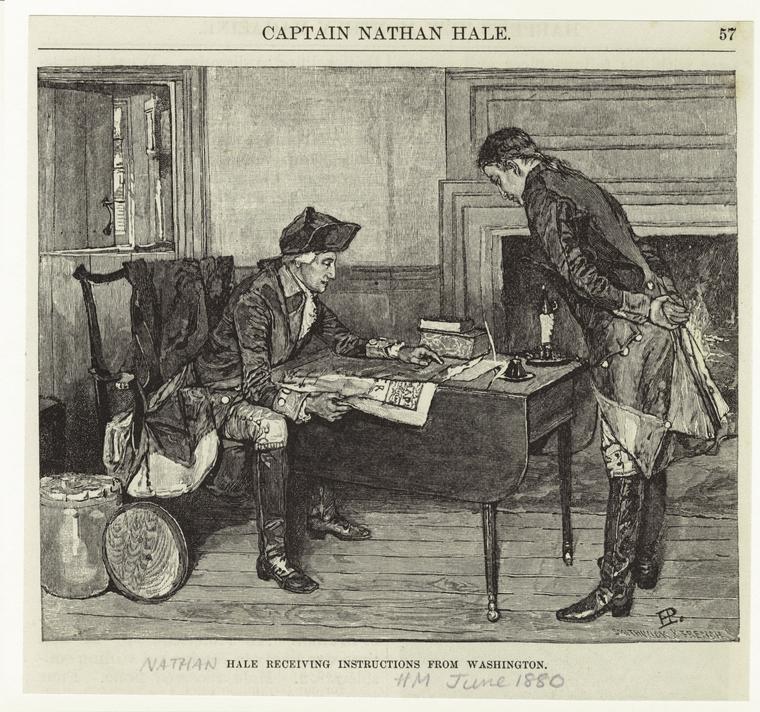
A Harpers Magazine illustration by Howard Pyle from 1880, depicting Nathan Hale receiving the details of his spy mission directly from General Washington.
Courtesy New York Public Library
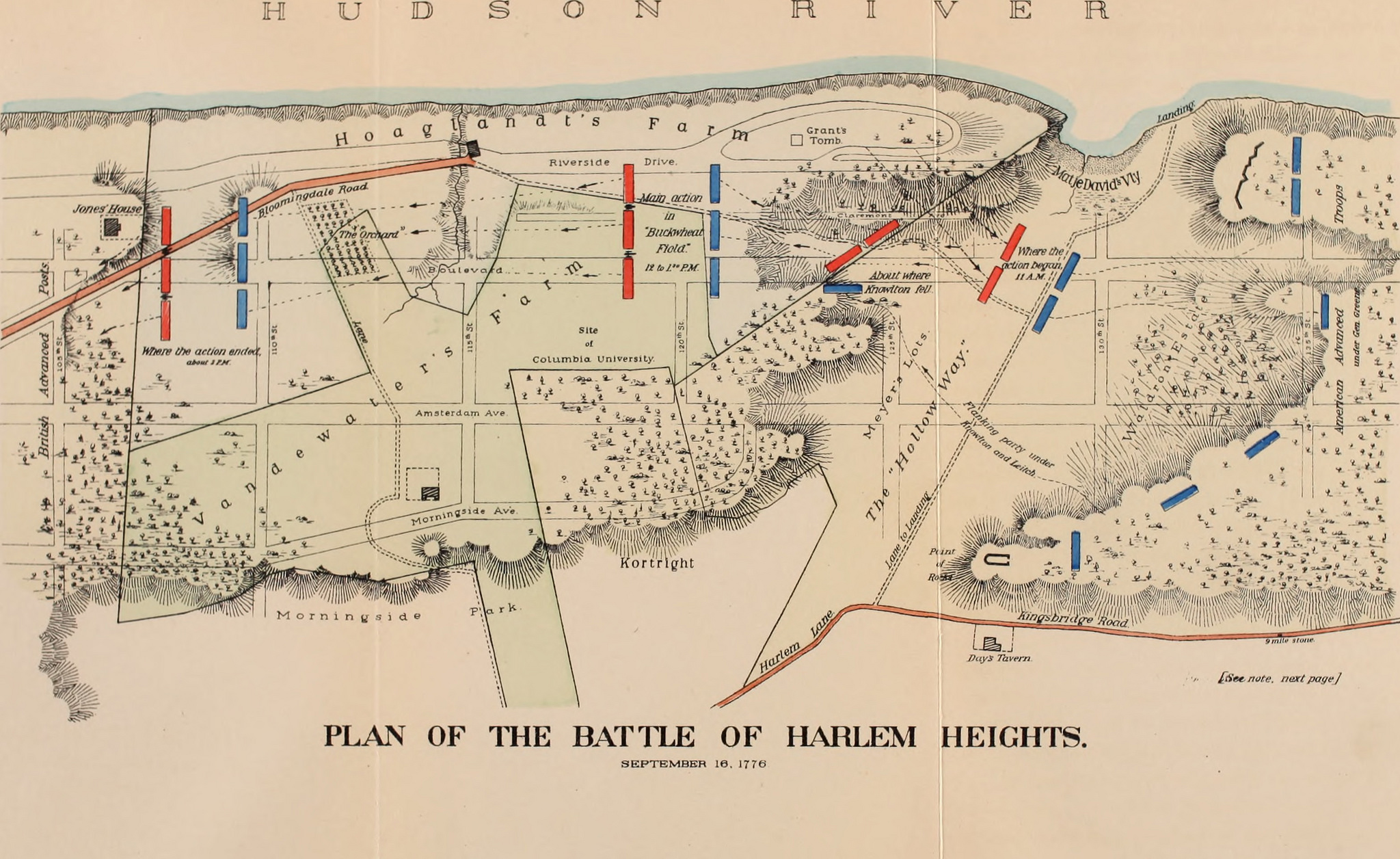
A beautiful map from 1897 laying out the events of the Battle of Harlem Heights on September 16, 1776.
Courtesy Internet Archives Book Imaging
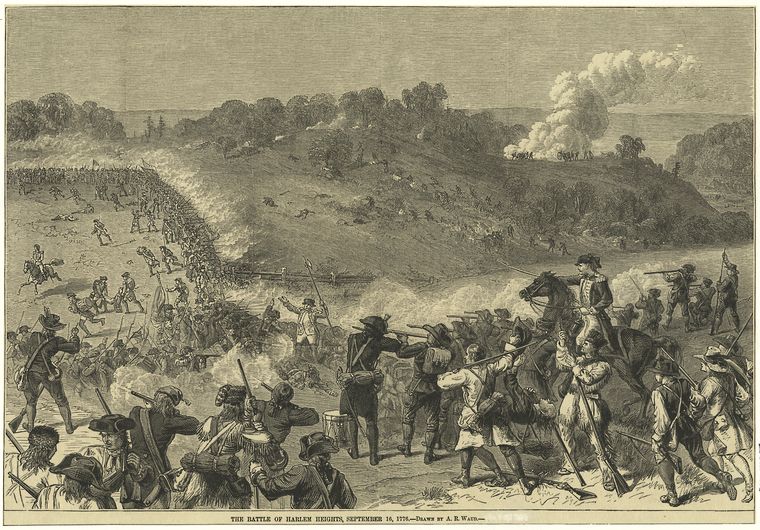
The Battle of Harlem Heights with a look into the valley called the Hollow Way.
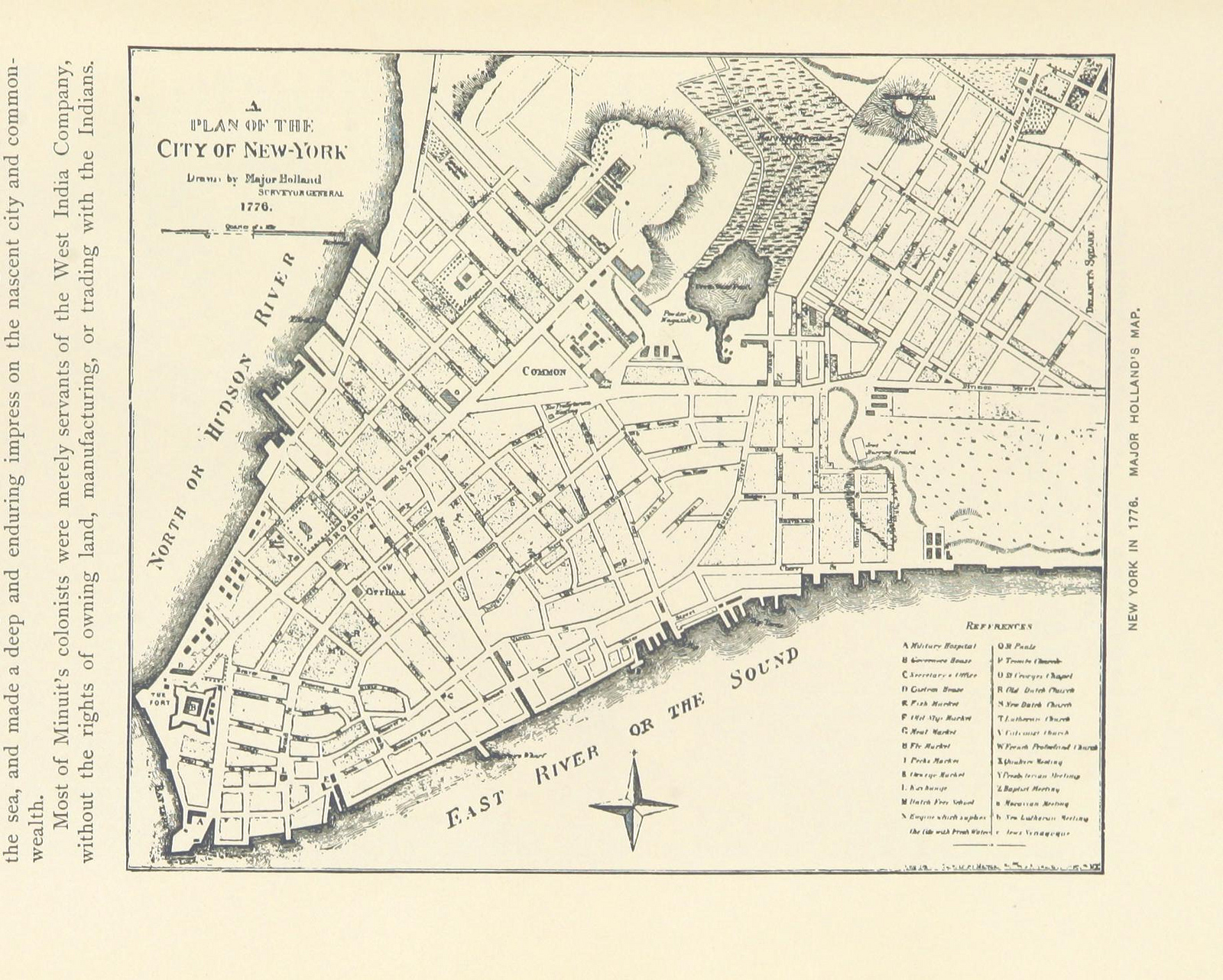
This is New York is 1776, the city that was captured in September 1776.
British Library
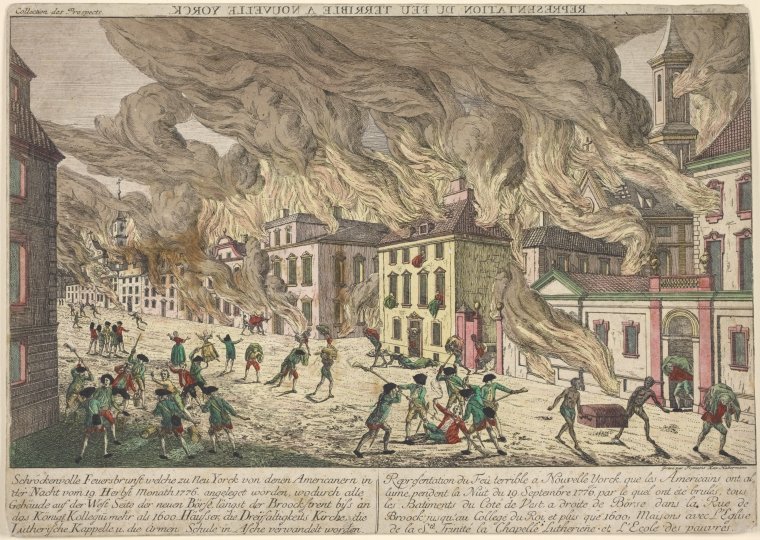
A grave illustration showing the severity of the fire, looking at the burning buildings on the west side of Broadway.
New York Public Library
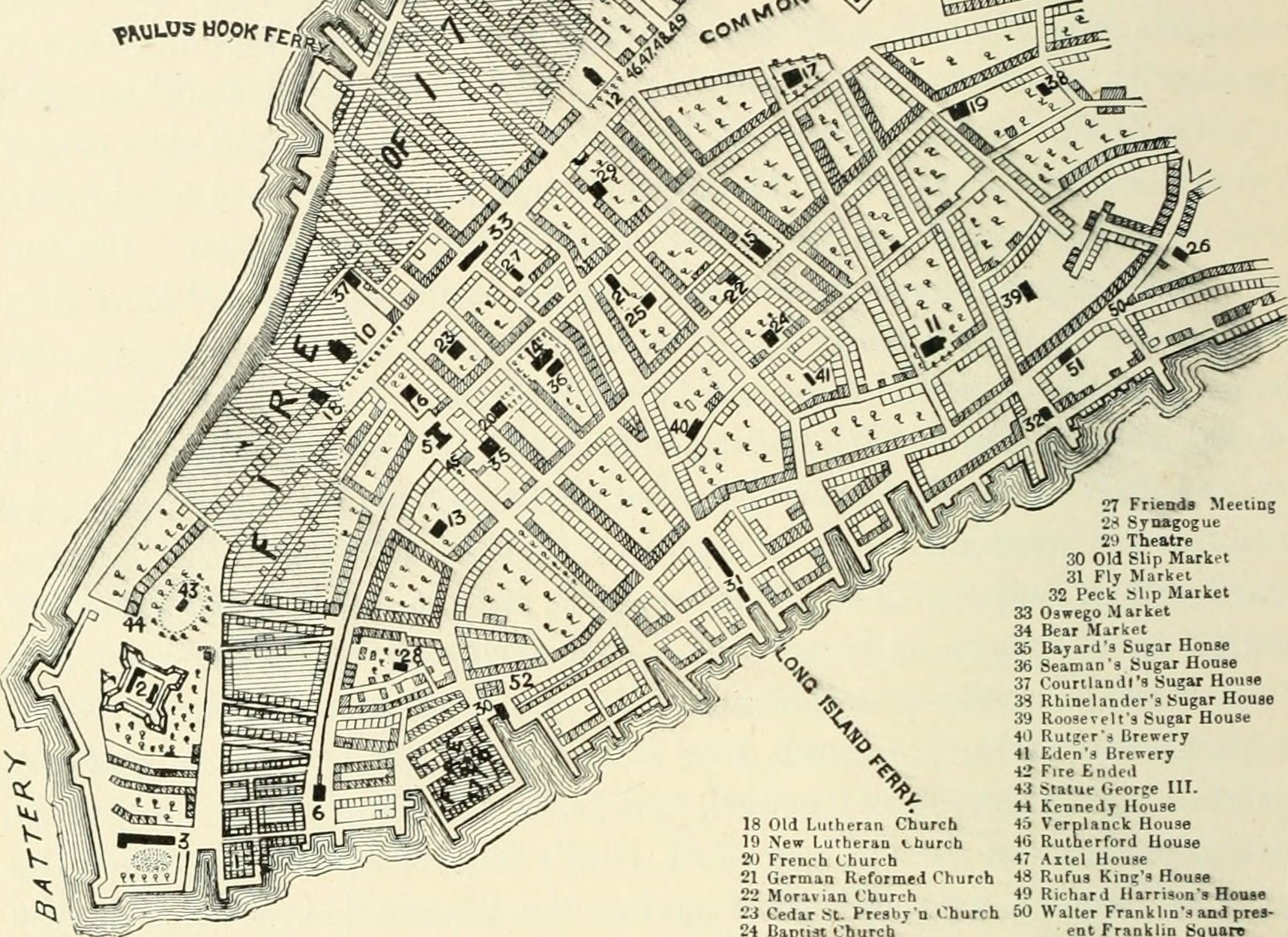
A map delineating the path of the fire from Whitehall Street up the west side of the city.
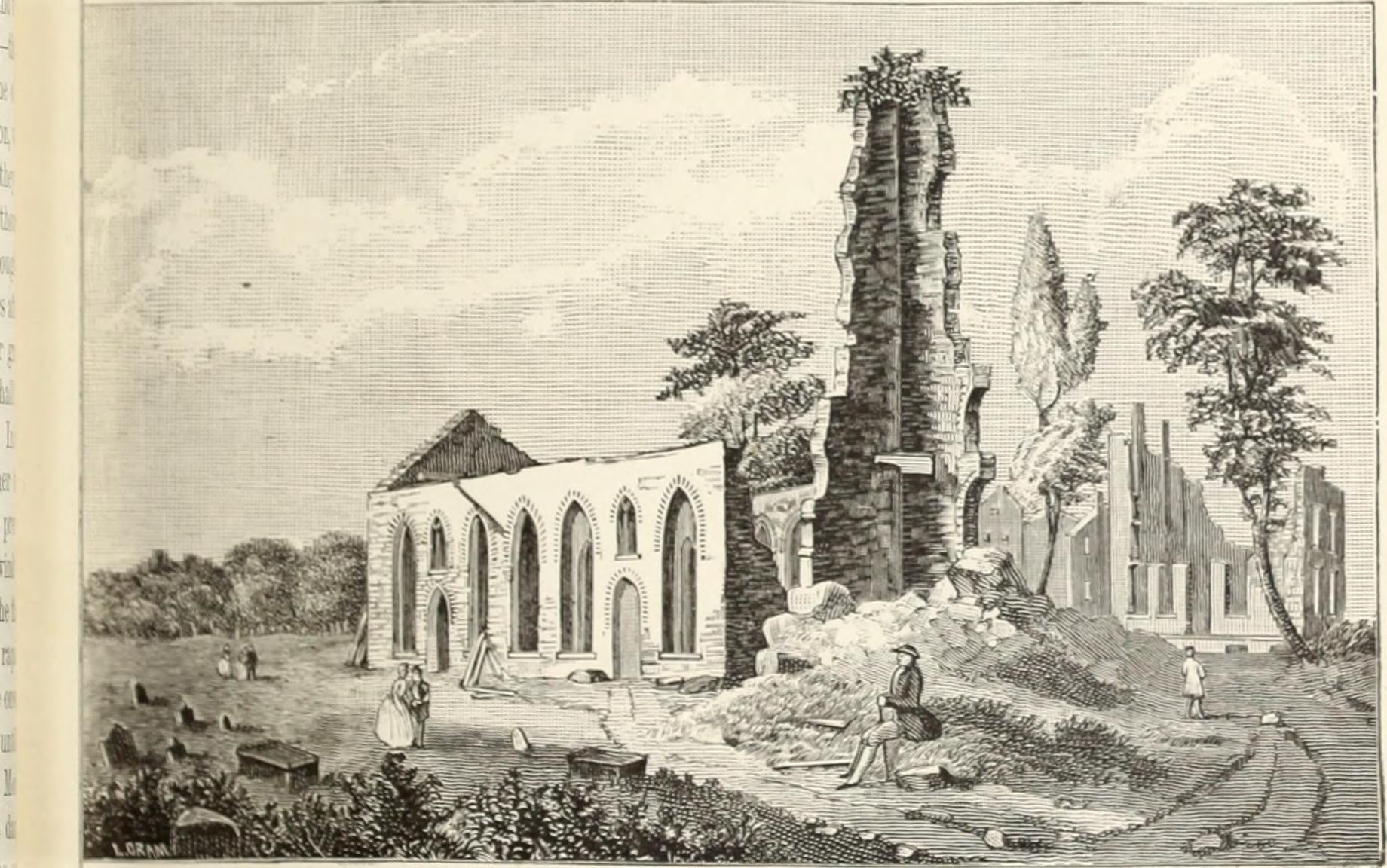
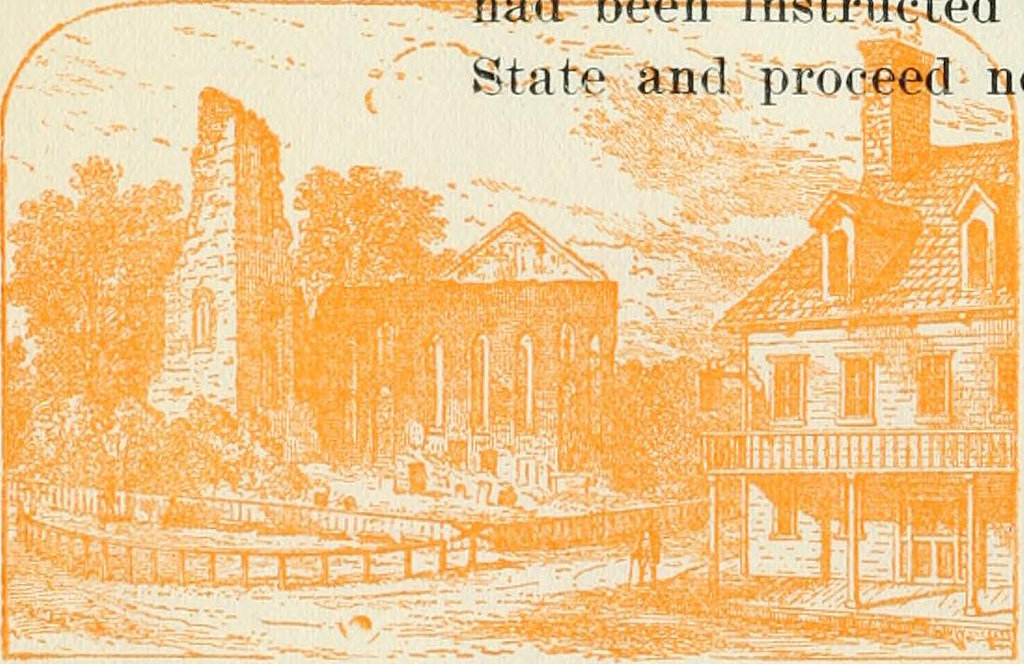
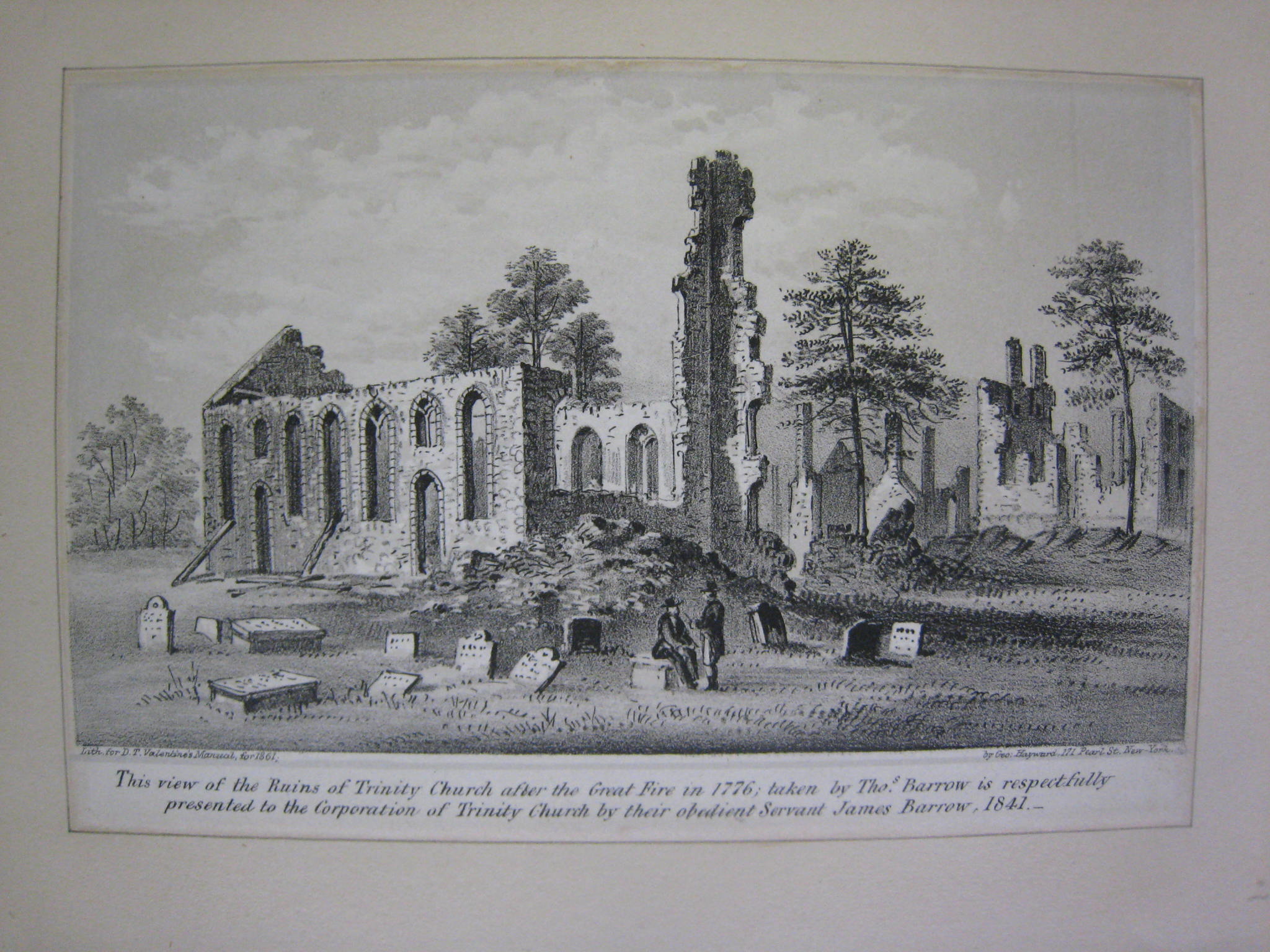
The ruins of Trinity Church stood for  years as evidenced by this image of people just strolling around it like nothing weird had happened.
Internet Archive Book Imaging
Another illustration (from a 1902 history) showing the cemetery in relation to the ruins.
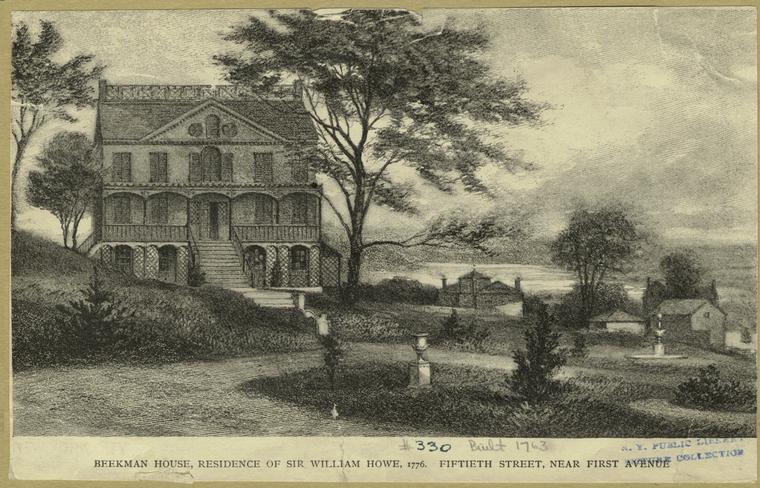
Mount Pleasant, where the British general William Howe set up headquarters and where Nathan Hale was taken after he was captured.
New York Public LIbrary
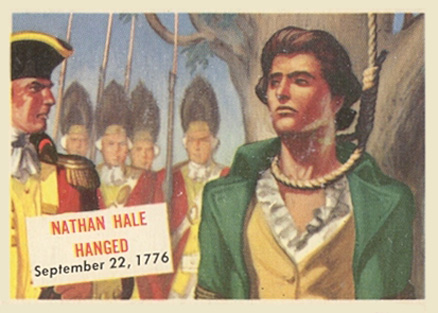
A vintage trading-card depiction of Nathan Hale’s hanging.
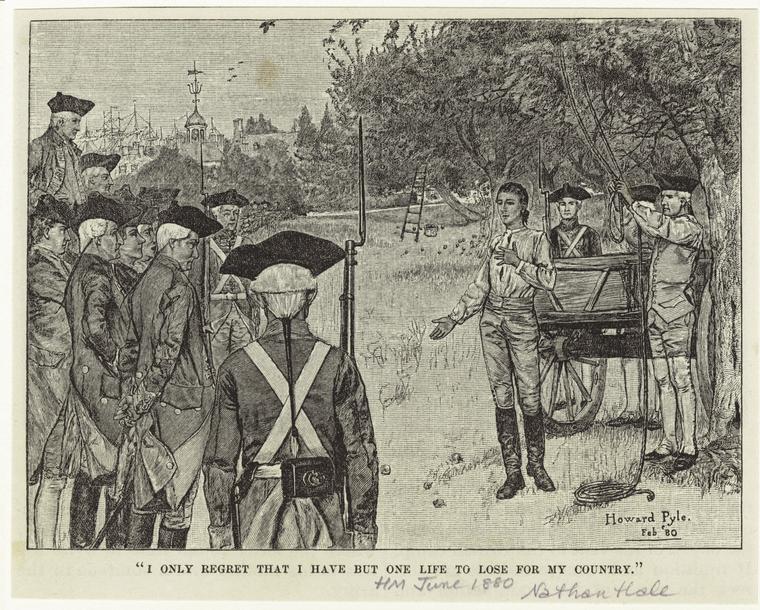
An 1880 illustration by Howard Pyle of the same event.
Courtesy New York Public LIbrary
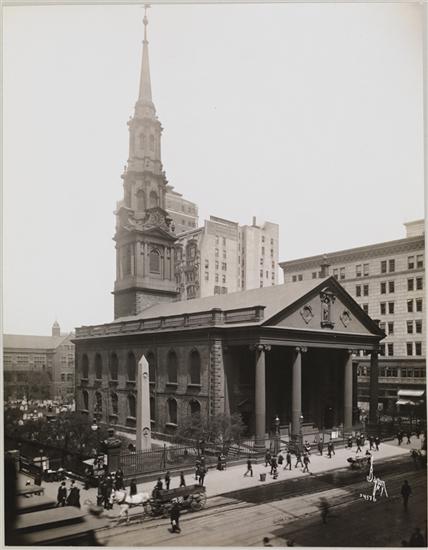
St Paul’s Chapel (pictured below in 19160, a survivor of the Great Fire of 1776, opened its doors to parishioners the day after the fire.
Courtesy Museum of the City of New York
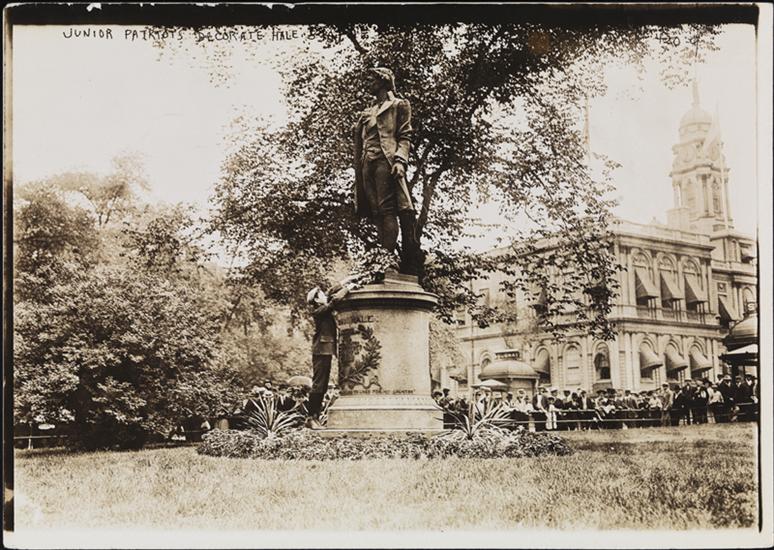
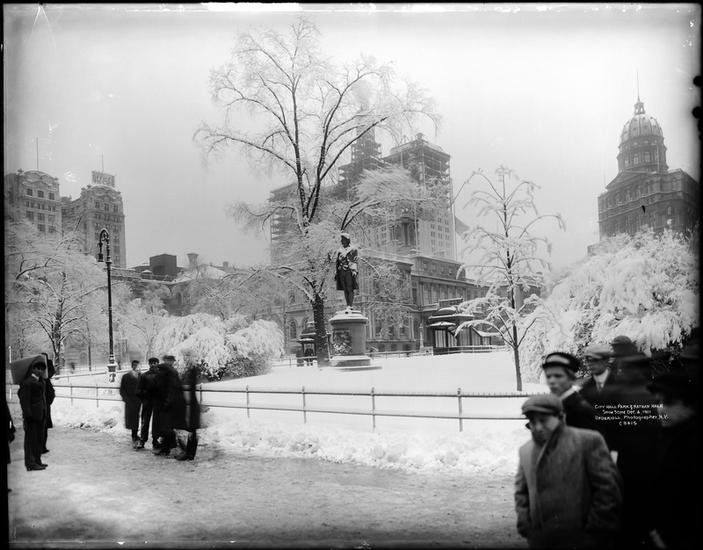
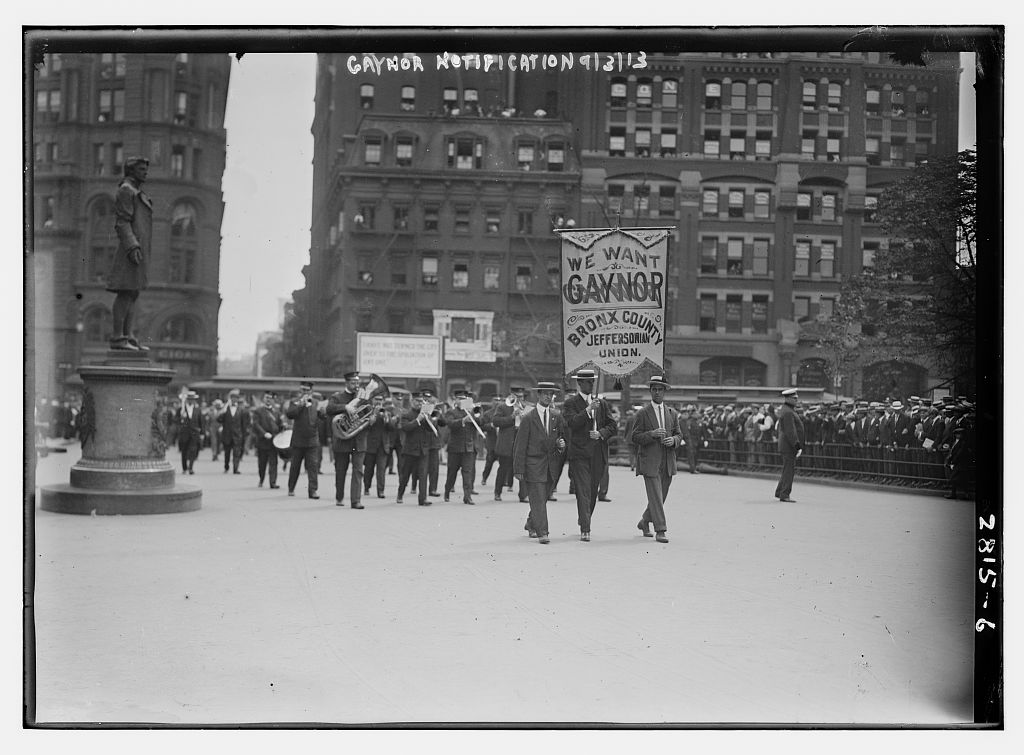
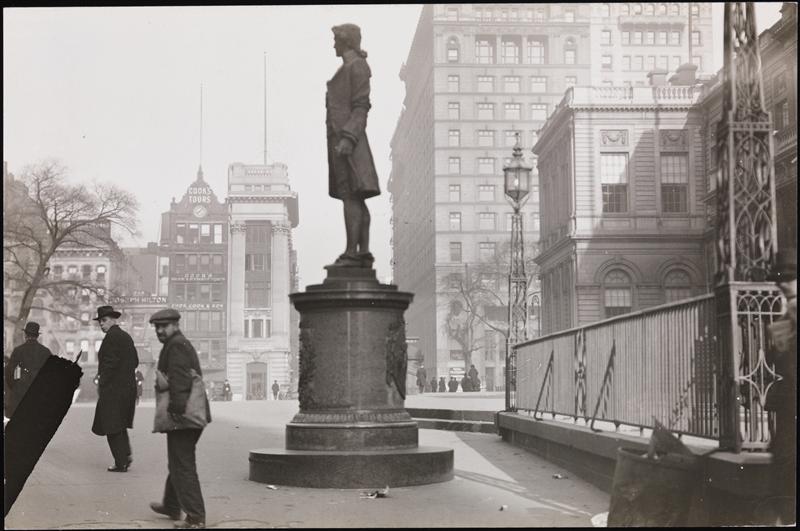
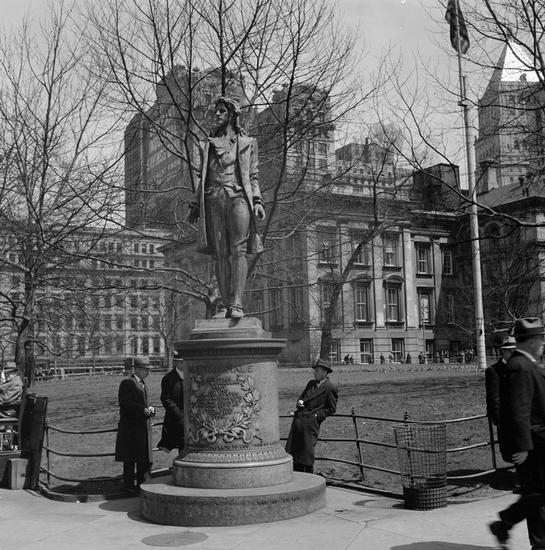
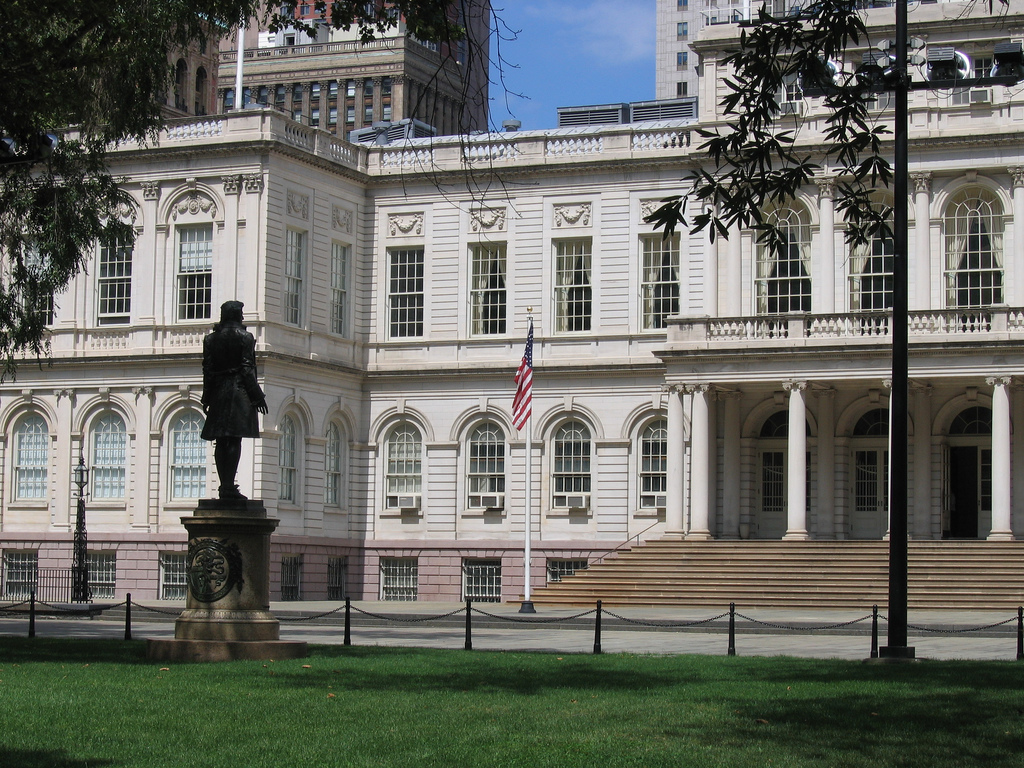
The statue of Nathan Hale which stands in front of City Hall. He’s been moved around quite a bit since his installation here on November 25, 1893, the anniversary of Evacuation Day.
PODCAST REWIND A story almost four hundred years in the making — and a place at the center of modern New York political life.
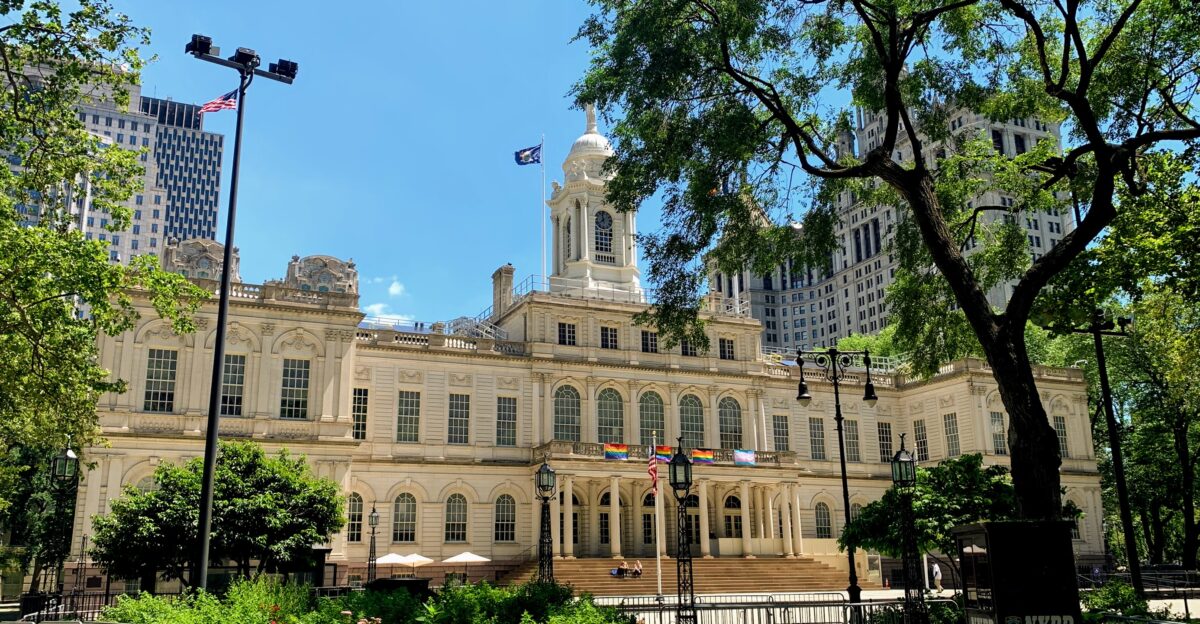
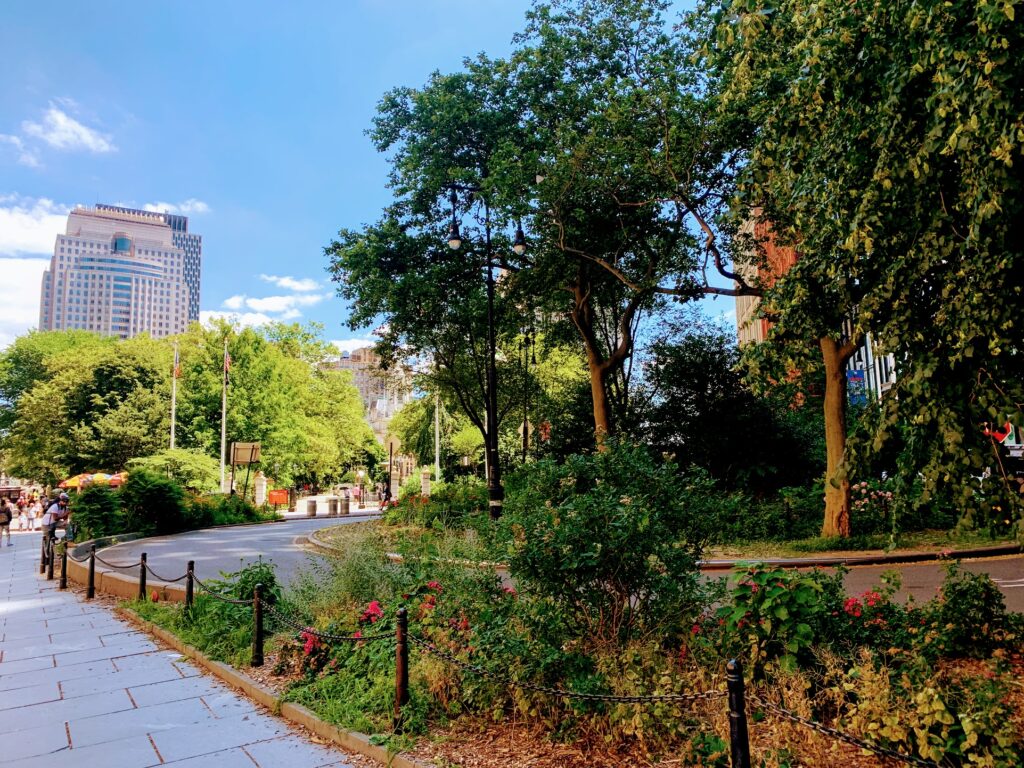
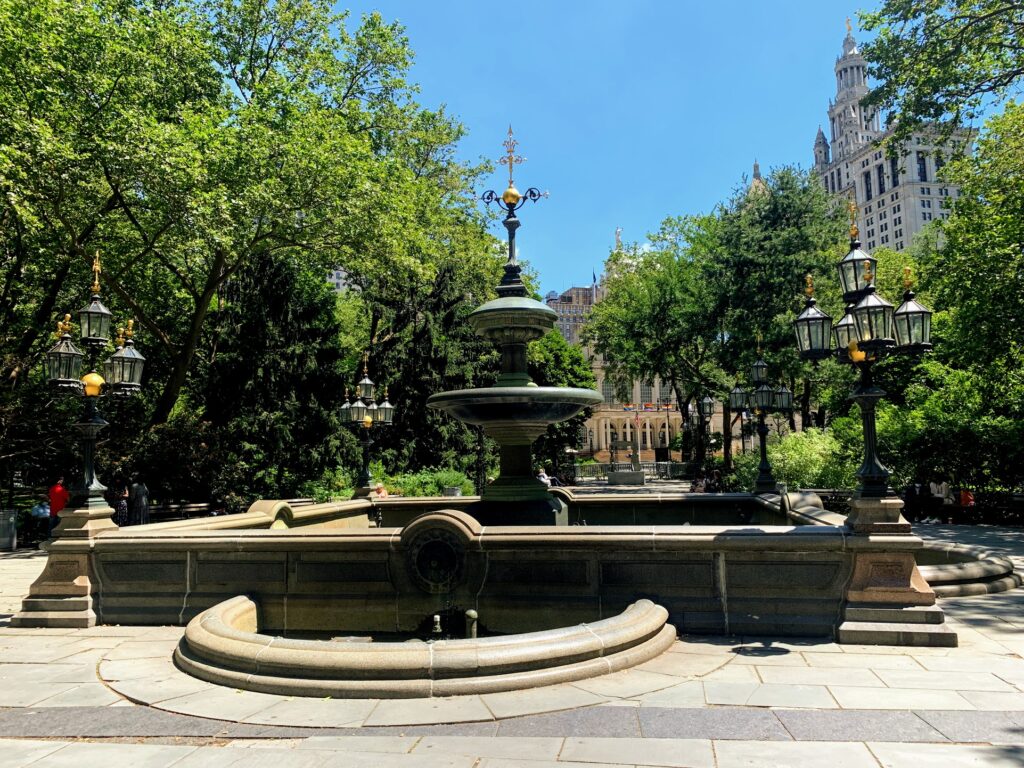
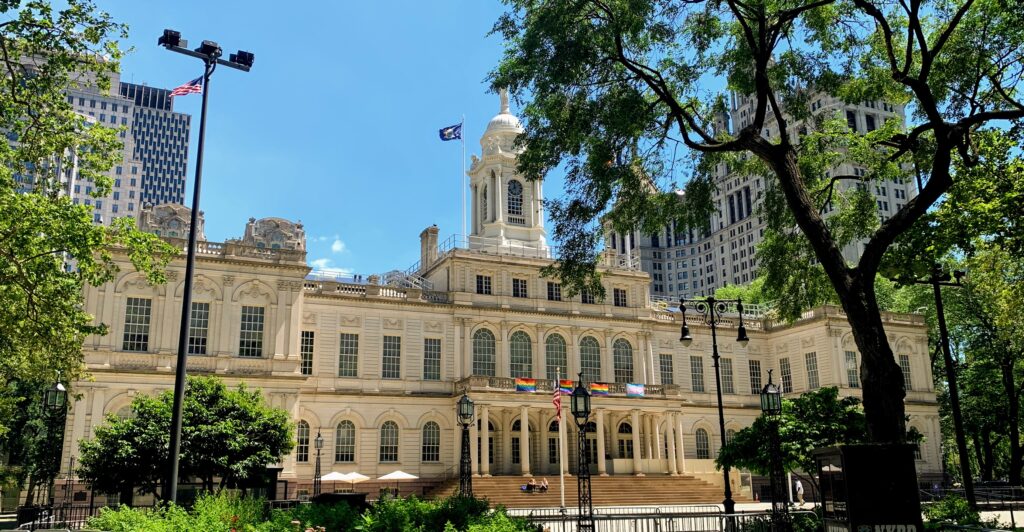
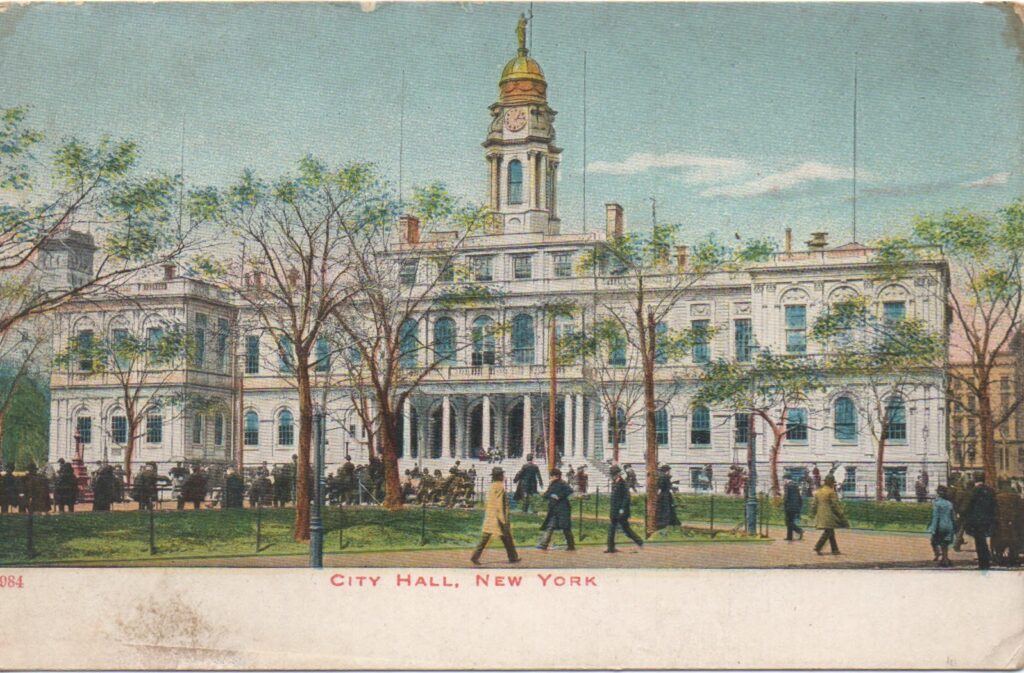
New York City Hall sits majestically inside a nostalgic, well-manicured park, topped with a beautiful old fountain straight out of gaslight-era New York.
But its serenity belies the frantic pace of government inside City Hall walls and disguises a tumultuous and vigorous history.
There have actually been two other city halls — one an actual tavern, the other a temporary seat of national government. The present city hall — first used in 1811 and completed the following year — is one of New York City’s greatest treasures.
Join us as we explore the unusual history of this building, through ill-executed fireworks, disgruntled architects and its near-destruction by city planners.
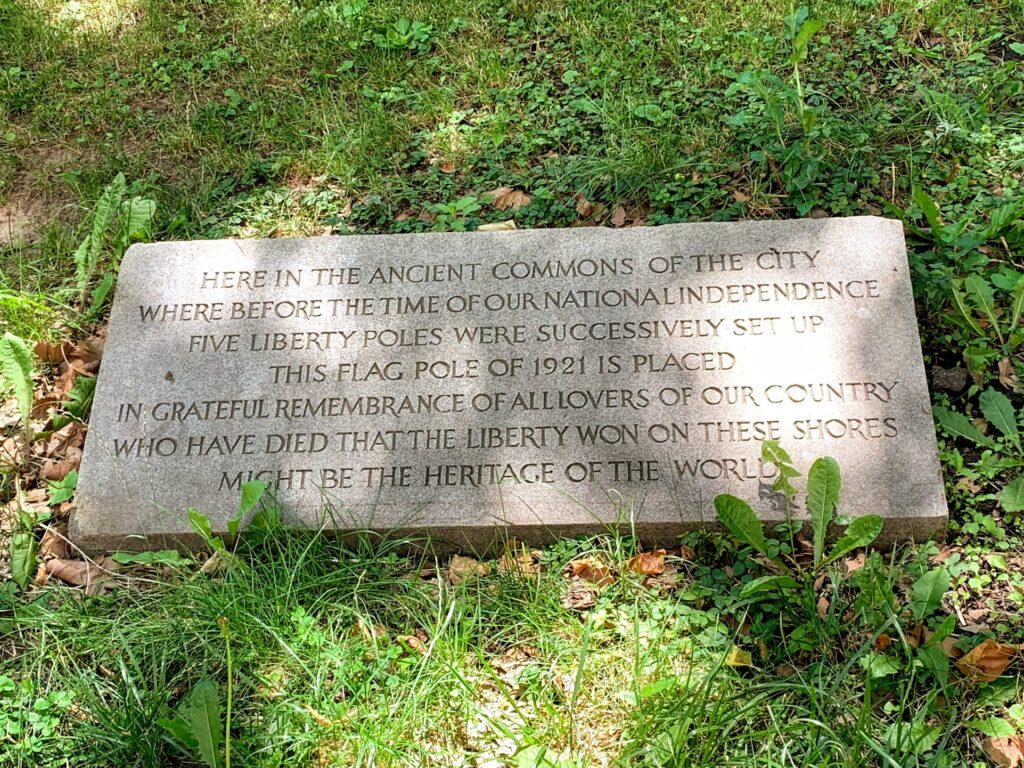
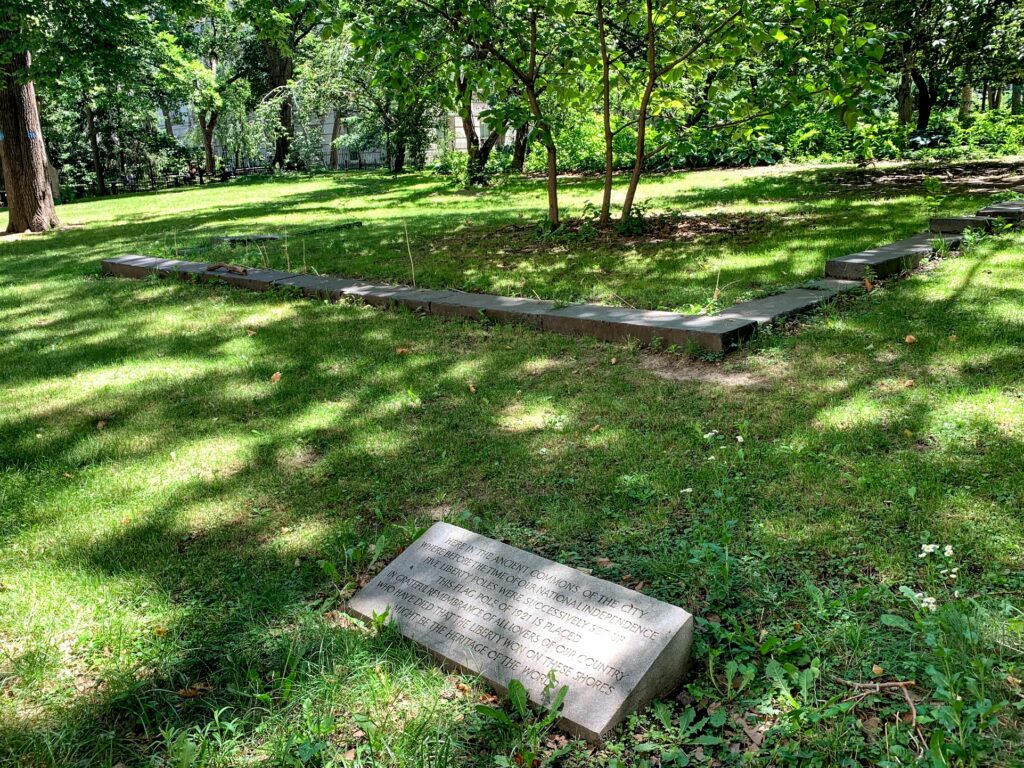
PLUS: We look at the park area itself, a common land that once catered to livestock, liberty poles, almshouses and a big, garish post office.
This is a reedited and remastered version of episode #93 featuring an all-new, very special ‘Choose Your Own Adventure’ challenge at the end.
Listen Now: The Historic New York City Hall
The Bowery Boys: New York City History podcast is brought to you …. by you!
We are now producing a new Bowery Boys podcast every other week. We’re also looking to improve and expand the show in other ways — publishing, social media, live events and other forms of media. But we can only do this with your help!
We are now a creator on Patreon, a patronage platform where you can support your favorite content creators.
Please visit our page on Patreon and watch a short video of us recording the show and talking about our expansion plans. If you’d like to help out, there are six different pledge levels. Check them out and consider being a sponsor.
We greatly appreciate our listeners and readers and thank you for joining us on this journey so far.
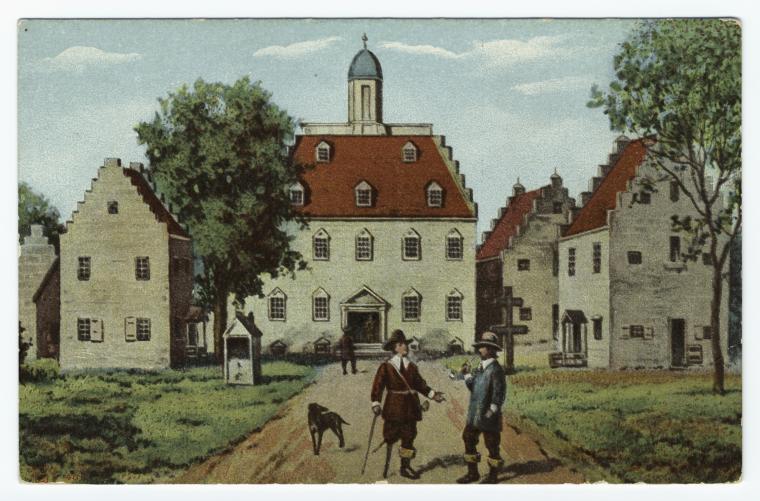
I’ll Drink To That: Stadt Huys, New Amsterdam’s town hall, was a multi-purpose stone building housing an inn, a tap room on the first floor and the workings of city government on the second floor. The building was the government center even when the British arrived and would only be replaced in 1700.
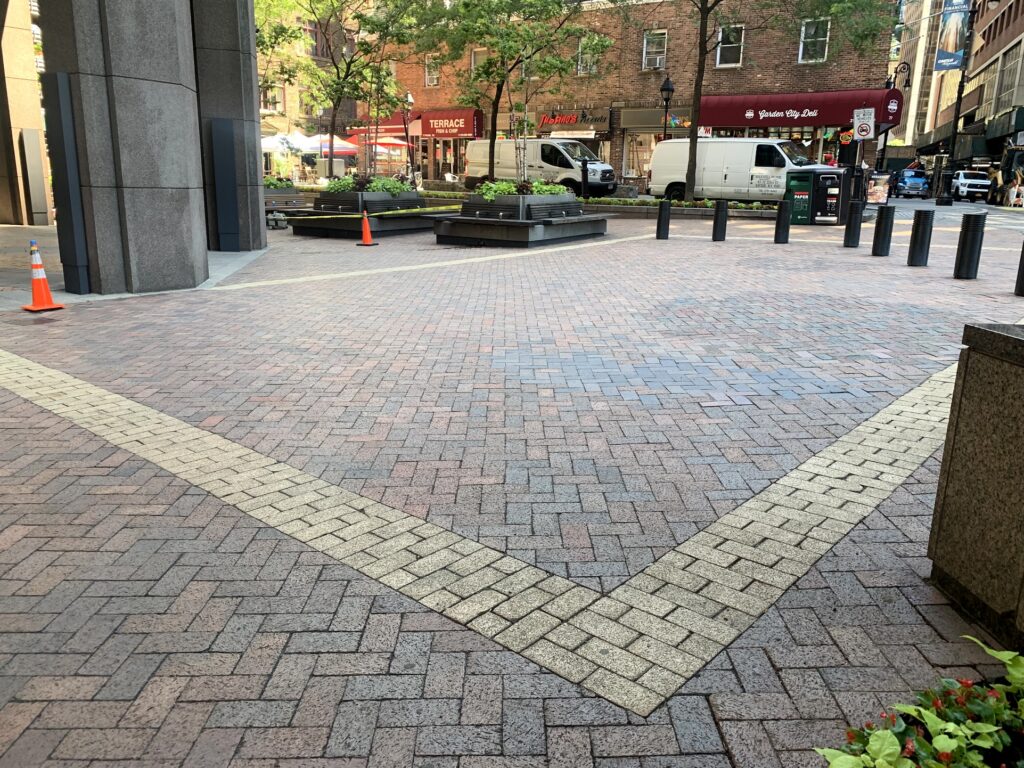
Today on Pearl Street (near Stone Street) one can find the exact spot where the Stadt Huys once stood, marked by beige-colored bricks.
Photo by Greg Young
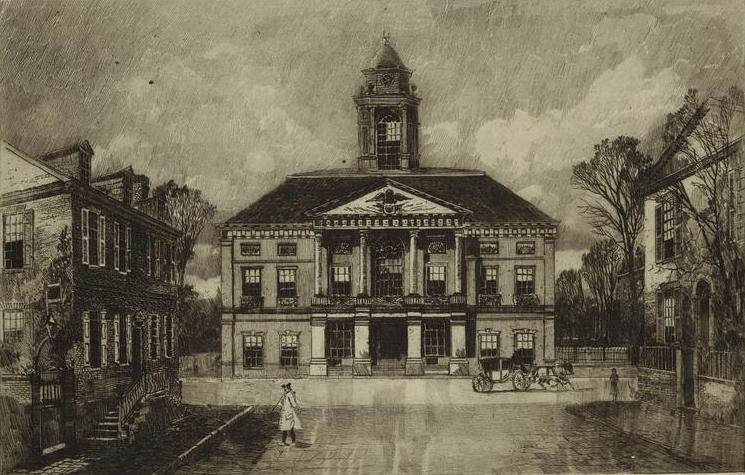
Federal Style: The second city hall, made with stones from the actual ‘wall’ of Wall Street, would be a bustling overstuff building and central to the beginnings of American history.
For a couple years, as Federal Hall, it was the center of federal government; the votes for George Washington as the first president were counted here and he was sworn in from the balcony.
New York Public Library
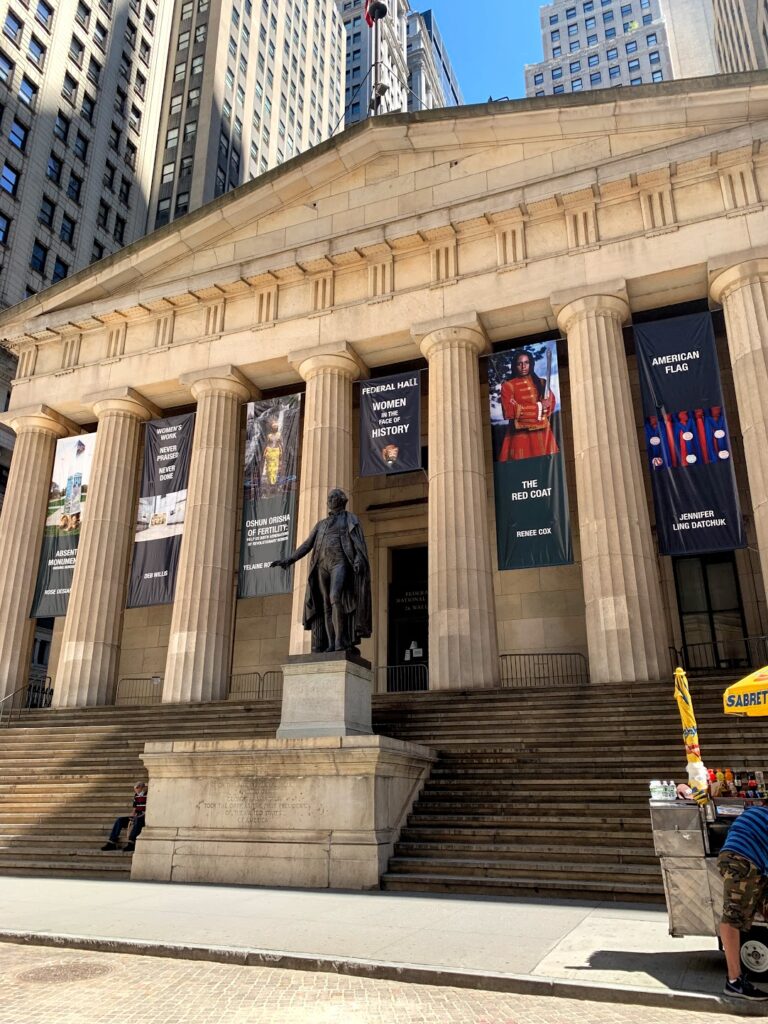
The old City Hall/Federal Hall was torn down in 1812. Three decades later the U.S. Custom House was constructed here, and today it is called Federal Hall.
Photo by Greg Young
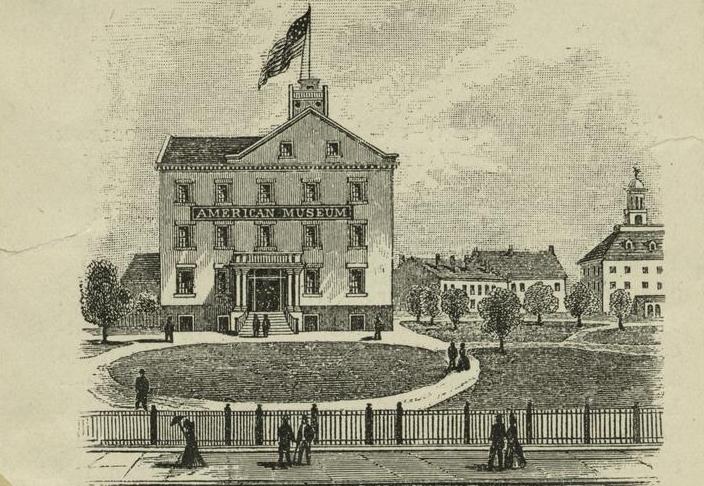
Park Purposes: Before City Hall arrives, the common ground held several buildings, includin almshouses and debtors prisons (depicted in the background) and an early version of the American Museum (which evolved to become Barnum’s American Museum).
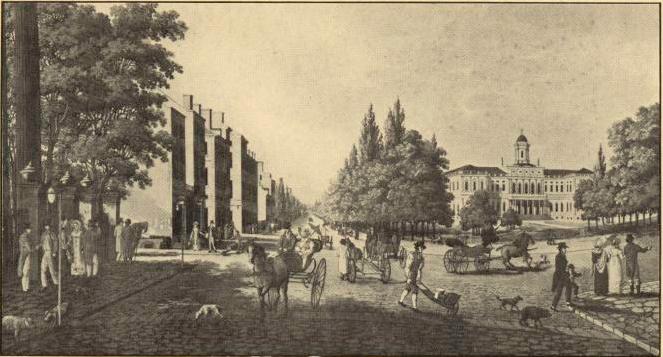
There Goes The Neighborhood: The image below depicts life in the year 1820. With the introduction of a shiny new City Hall, lavish rowhouses begin springing around the park, housing New York’s elite. Just a few years before, they would have faced into almshouses.
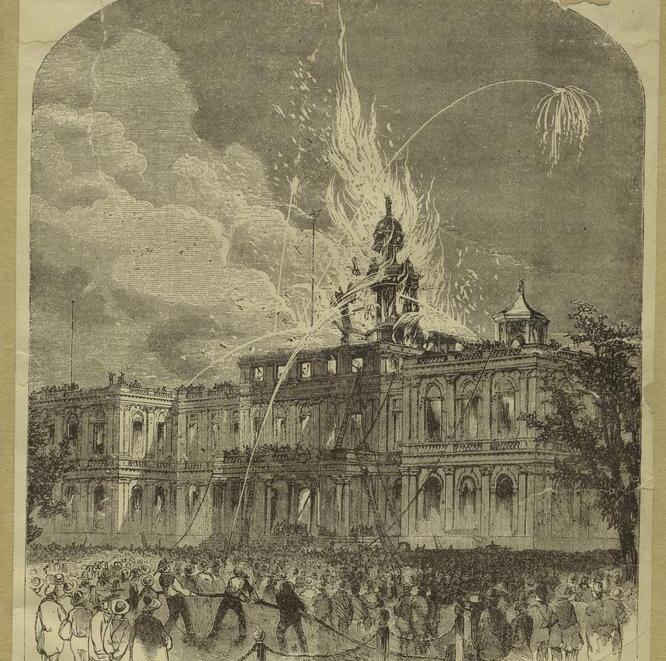
D’oh!: Wanna know one really good reason why we don’t shoot off fireworks in the middle of the city anymore? One robust fireworks celebration, honoring the laying of the Atlantic cable, caught the roof of City Hall on fire in 1858, causing extensive damage.
New York Public Library
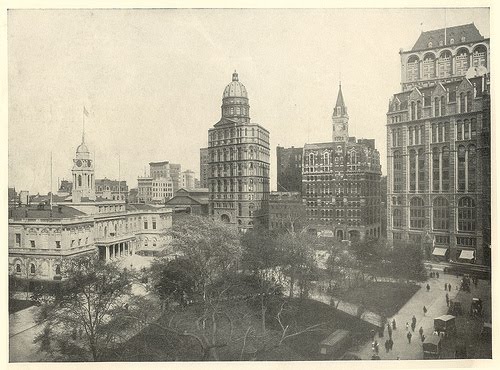
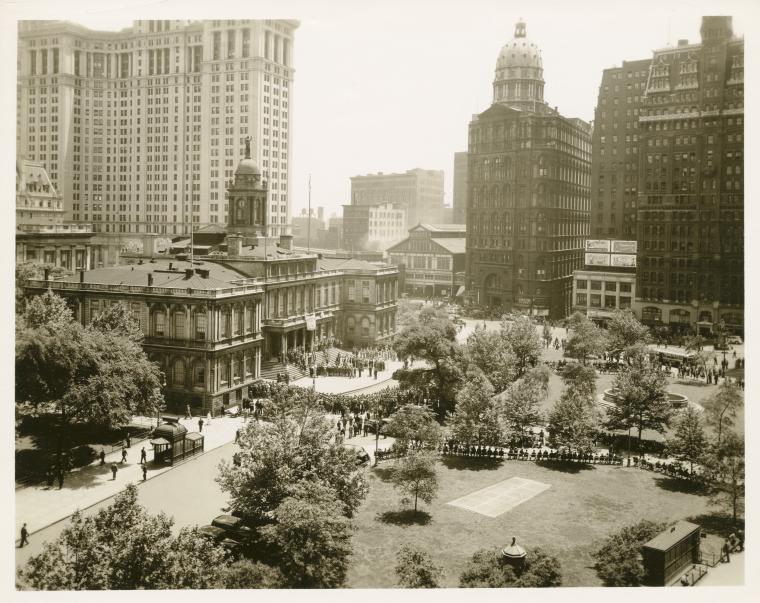
The City Grows Up: New York’s growth spurt starts around City Hall Park, with a few new skyscrapers becoming the tallest buildings of their times, including the World Building (pictured at center), the Park Row and St. Paul buildings (just south), and the Woolworth Building, on the park’s west side.
The Municipal Building joins it a few years later….
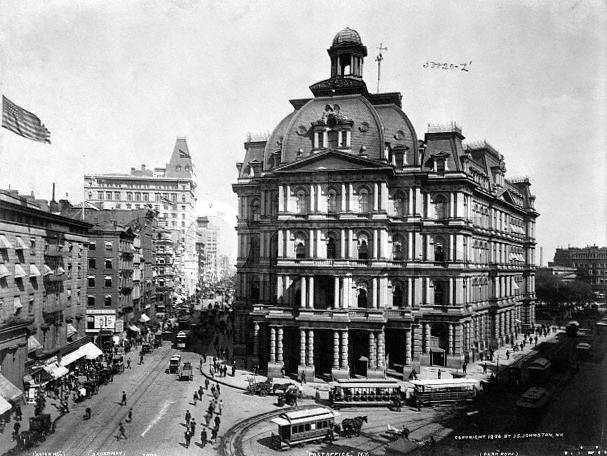
Post Haste: The City Hall Post Office sat on the southern end of City Hall Park.
The front of the Post Office, entirely consuming the area that is today’s southern end of the park and adjoining traffic triangle.
Photo by Greg Young
The Jacob Wrey Mould Fountain, first placed in City Hall in 1871. During the 1920s it was dismantled and shipped to Bronx, but returned to the park in 2000.
Photo by Greg Young
Plaque on the western side of City Hall Park:
Stones mark the site of Bridewell Prison:
Photo by Greg Young
FURTHER LISTENING:
After listening to this show on the history of New York City Hall check out these shows with similar themes and historical moments mentioned in this show:
With a new mayoral race on the horizon in New York City we think it is time that you Know Your Mayors! Become familiar with other men who’ve held the job, from the ultra-powerful to the political puppets, the most effective to the most useless leaders in New York City history.
This longtime feature of this website is being rebooted with new articles and newly researched and refreshed earlier entries in this series. Check back every other week for a new installment.
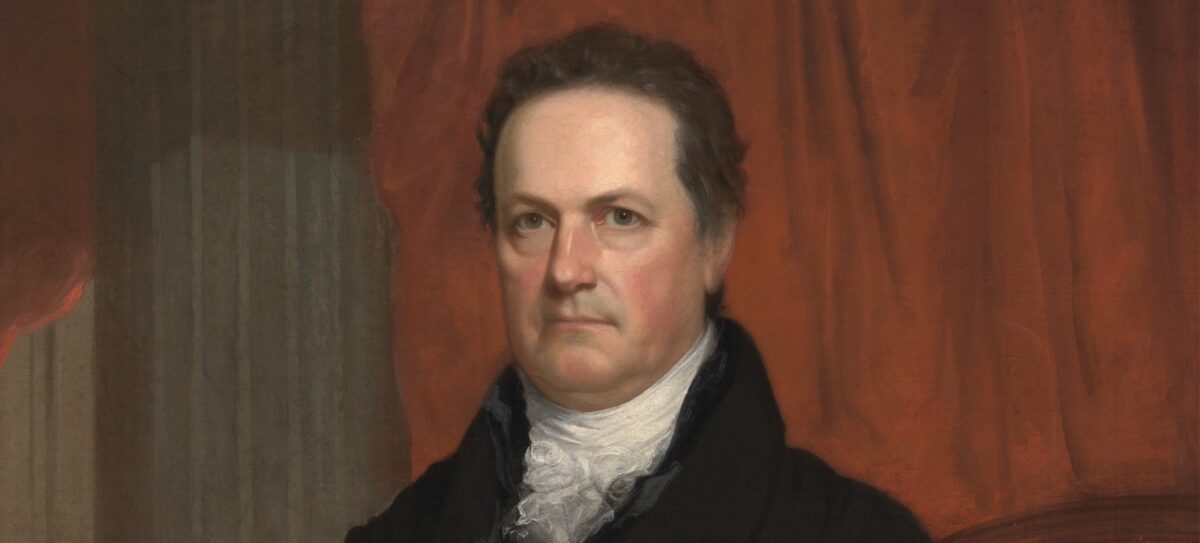
Dewitt Clinton was so much more than a mayor of New York City of course.
He also served as a two-term governor, ran for president against James Madison and helped oversee one of the greatest engineering projects in American history.
He negotiated the choppy waters of early American politics with dexterity, building upon the reputation of his family name to fuel economic and cultural growth in the state he called home.
His greatest achievement was the Erie Canal, the cross-state canal which linked the Hudson River and New York Harbor with the interior of the United States.
No other civic project — with the possible exception, at the start of the 20th century, of the subway system — would affect the fortunes of New York City in such a dramatic and unambiguous way.
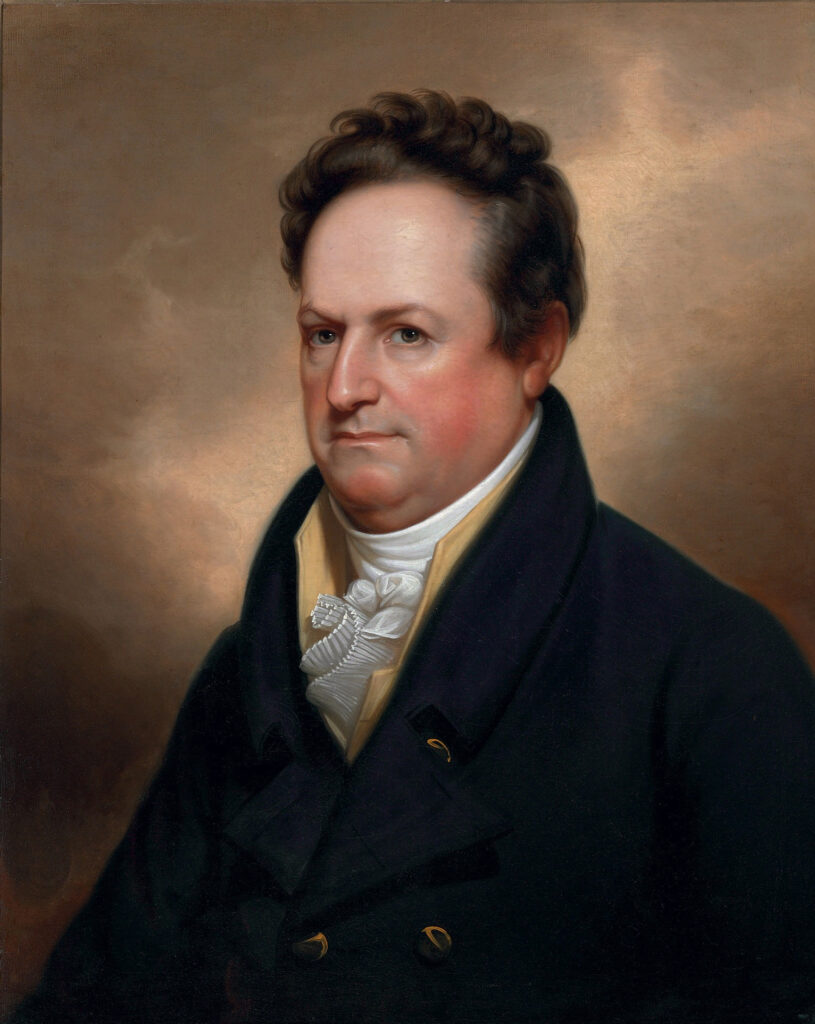
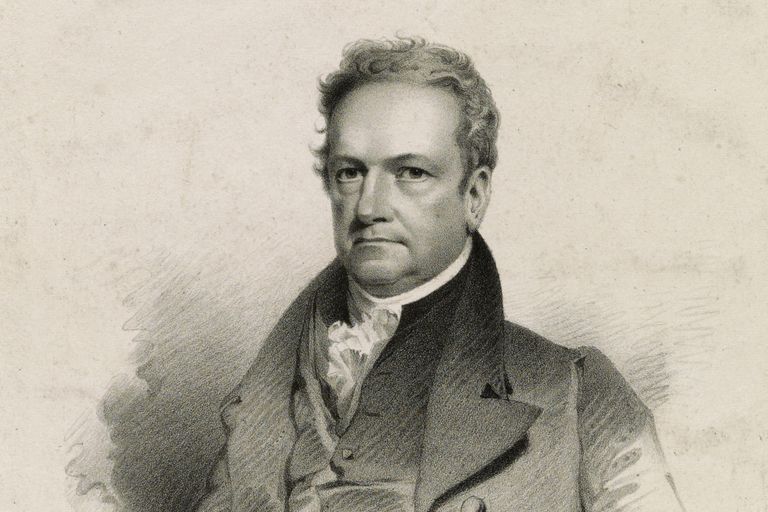
Clinton in a portrait made by Rembrandt Peale
So, yes, the many accomplishments in Clinton’s storied career tend to overshadow his work as the mayor of New York.
Yet most historians place him among the greatest mayors the city has ever employed. He might even be the greatest in terms of his long-term impact.
Clinton served ten one-year terms non-consecutively — 1803-1807, 1808-1810 and 1811-1815 — weaving together an extraordinary period of city growth during tumultuous political times and a potentially deadly foreign war. (Why not consecutive terms? I’ll explain in the next Know Your Mayors column.)
Clinton on the Rise
Dewitt Clinton was born in Little Britain, New York, on March 2, 1769, into one of the most politically important families in America.
Major-General James Clinton, DeWitt’s father, fought next to George Washington during the Revolutionary War (and brutally killed hundreds of Iroquois people during the 1779 Sullivan Expedition). DeWitt’s uncle George Clinton rose the political ranks following the war to become the governor of New York (from 1777-1795 and again from 1801-1804).
By the 1890s, according to author Evan Cornog, “three families presided over New York State politics — the Schuylers, the Clintons and the Livingston.”
So DeWitt Clinton had easy access to the corridors of power — Uncle George even made him his secretary in a bold gesture of nepotism — but he built upon that privilege, instead of resting on it. More importantly, he’s often considered to have the genuine needs of New Yorkers in mind in his accumulation of power, believing the city’s cultural and economic prosperity could be worn as a badge of honor for himself.
His most influential job during this period was as a member of the Council of Appointment, the body charged with appointing all the governmental positions that were not elected. This included the mayor of New York. In fact, he helped appoint the last mayor in our Know Your Mayors series — Edward Livingston.
While the Clintons were aligned with Thomas Jefferson and the Democratic-Republicans, DeWitt held personal animus towards his party’s Aaron Burr, the Vice President, who many believed had attempted to steal the 1800 election from the preordained Jefferson. When Burr killed Alexander Hamilton in 1804, Jefferson replaced him — with George Clinton, DeWitt’s uncle.
By then, DeWitt himself had dabbled in federal office, serving as the Senator from New York for almost two years from 1802 to 1803. But he hated Washington D.C. — which was an unpleasant and barely developed swamp then — and wanted to return to the comforts of New York.
So he resigned and took a new job which was then offered to him — the mayor of New York City.
New York City Hall, dedicated in 1811 and opened for government business by 1812
Setting the Foundations
At first it appeared this was just another step in the political ladder for DeWitt. According to Gotham, Clinton told his uncle that “being mayor was the better job [than being a U.S. senator] because its influence in presidential elections made it ‘among the most important positions in the United States’.”
But he quickly fleshed out the mayor’s role in surprising ways, having the unique political connections that allowed him to expand local government’s role. In later years, these expanded powers would be reduced by the influence of political machines like Tammany Hall.
Among the fledgling organizations he either founded or vigorously supported during his time in office:
— New York Board of Health: Clinton entered office with yellow fever the city’s greatest enemy. According to NYC Health, “Led by Mayor De Witt Clinton, the board evacuated stricken neighborhoods and started collecting mortality statistics, to ‘furnish data for reflection and calculation.'”
From this department came a newly created role — city inspector — which expanded to collect data (births, marriages and deaths) on city residents.
— New-York Historical Society: Clinton believed in upgrading the city’s cultural life, and the Historical Society, essentially New York’s first museum, allowed the city to celebrate its role in the new American cause and exalt the New Yorkers who fought for independence (which naturally included Clinton’s family).
Clinton was a founding committee member in 1804 and even gave the institution some space at City Hall (then at Wall Street aka Federal Hall).
He also chaired both the American Academy of the Arts and the Literary and Philosophical Society in their early years.
— Free School Society: Clinton championed the social education model which eventually became the New York public school system.
According to Evan Cornog, “In 1805, two measures transformed primary education in New York. The first was the allotment by the legislature of 500,000 acres of state lands and three thousand shares of bank stock for the benefit of public school. The second was the establishment of the New York Free School Society, whose president, from its inception to his death, was DeWitt Clinton.”
— The Grid Plan: Seeing a need to plan the city’s growth as it galloped up Manhattan island, the city’s Common Council formed a committee — “doubtless at DeWitt Clinton’s instigation” — that would draft up ideas for a possible grid of streets and avenues.
— A System of Fortifications: In addition, Clinton faced the impending crisis of a new war with Great Britain. Although the War of 1812 never came to New York City, Clinton oversaw the construction of new fortifications through the city, including a new fort at the Battery which eventually bore his name — Castle Clinton.
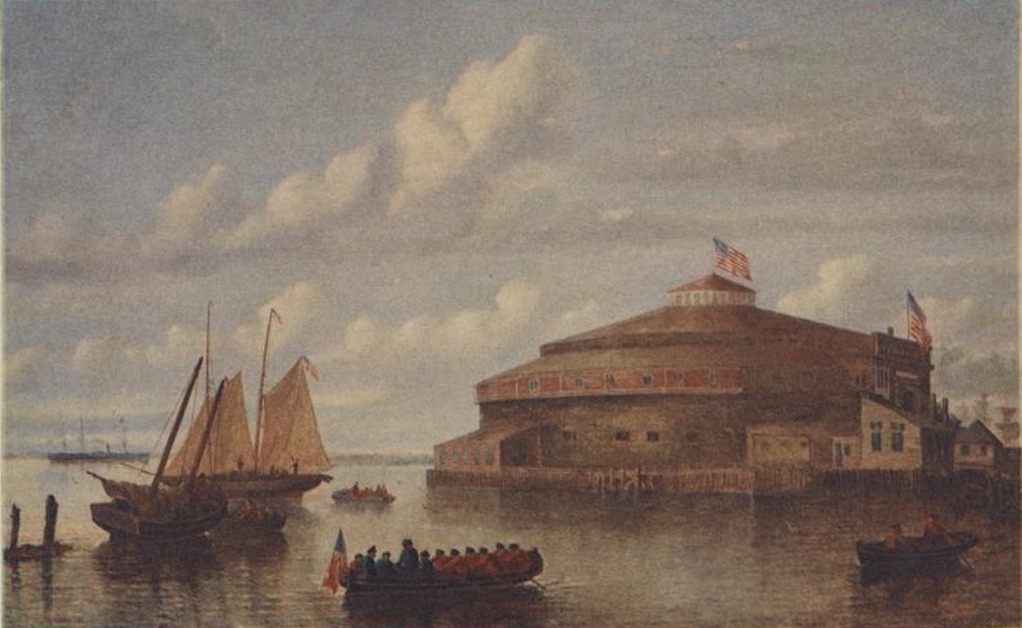
Castle Garden (within the old Castle Clinton) courtesy the Museum of the City of New York
A Complicated Record
Clinton innovated a form of governance which can be seen either as forward thinking or incredibly opportunistic (and quite possibly both) — the improved rights of immigrants.
Christian Luswanger, a member of the city’s night watch, became the first officer killed in the line of duty in New York during a Christmas Day anti-Catholic riot in 1806, the most violent of a series of skirmishes aimed at immigrants. New Irish arrivals faced Nativist backlash in a heavily Protestant city.
DeWitt Clinton. Library of Congress
The mayor, however, was a supporter of the Irish, laying the groundwork for one of the most successful collaborations in 19th century New York City politics.
As a U.S. senator, Clinton had supported liberal immigration laws. As mayor he also supported the elimination of a citizenship test oath for Catholics. As a result, his opponents quickly painted Clinton as a puppet of foreign influence.
But Clinton was no paragon of human rights reform. While he earlier supported the Gradual Emancipation Act of 1799 — and a second Emancipation Act passed in his first year as governor in 1817 — his family had kept enslaved people for decades. And DeWitt himself owned at least a couple people during his years as mayor, including a coachman named Henry.
And many decisions Clinton made did seem more bluntly opportunistic.
He directed that the city’s funds be held by the banks of Manhattan Company, formed in 1799 — by his foe Aaron Burr, no less — to build a water system for the city. But the Company never did fund a truly adequate system, existing only as a bank. (Clinton, by the way, was also a company director. Seems like a conflict of interest!)
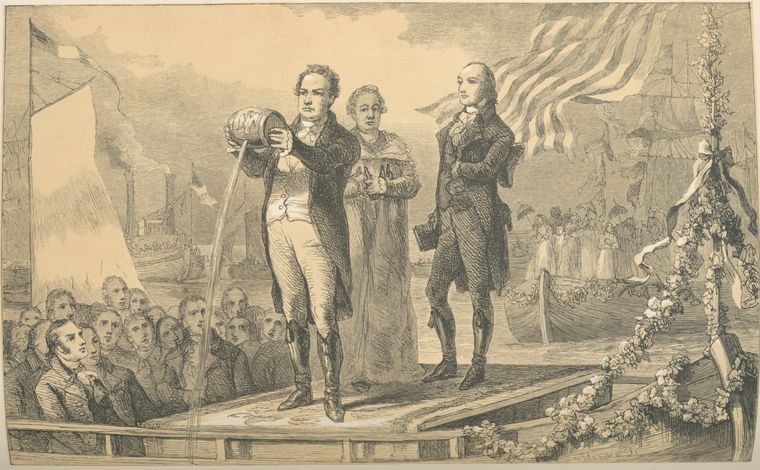
Clinton ceremonially pours water from Lake Erie into the Atlantic Ocean, 1825
The Billion Dollar Idea
For decades, prominent New Yorkers had pondered the idea of an upstate canal system, and even Clinton had considered canal making schemes years before reaching any significant prominence, extending back to his days as a student at Columbia College.
His interest in a massive canal project was renewed during his tenure as mayor (and those years in between his non-consecutive terms). By the time he became the governor of New York in 1817, he was so associated with the canal project that it became known by detractors as Clinton’s Folly.
No folly at all. When the Erie Canal finally opened in 1825, the engineering marvel — one of America’s greatest early achievements — proved genius. It not only created new wealth of New York City, it boosted the economic strength of the entire country.
Clinton had created new opportunities for New York City. The rise of the city as an economic and cultural power begins with him.
DeWitt Clinton Park in Hell’s Kitchen, photography by Greg Young
For more information on DeWitt Clinton, we have an older show in our catalog on Clinton and his role in creating the Erie Canal:
PODCAST Two stories of outrageous hoaxes perpetrated upon New Yorkers in the early 19th century.
New Yorkers can be tough to crack, maneuvering through a rapidly changing, fast-paced city. But they can, at times, also be easily fooled.
In this episode, we explore two of the wackiest stories in early New York City history, two instances of tall tales that got quite out of hand.
While both of these stories are almost two centuries old, they both have certain parallels to modern-day hucksterism.
In the 1820s, the Erie Canal would completely change the fortunes of the young United States, turning the port city of New York into one of the most important in the world.
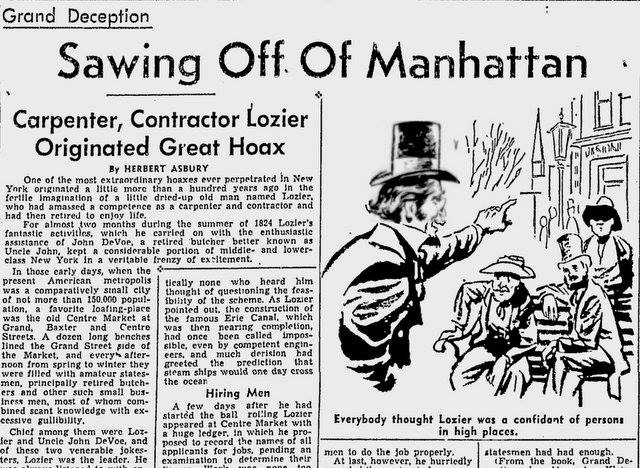
But an even greater engineering challenge was necessary to prevent the entire southern part of Manhattan from sinking into the harbor! That is, if you believed a certain charlatan hanging out at the market…..
One decade later, the burgeoning penny press would give birth to another tremendous fabrication and kick off an uneasy association between the media and the truth.
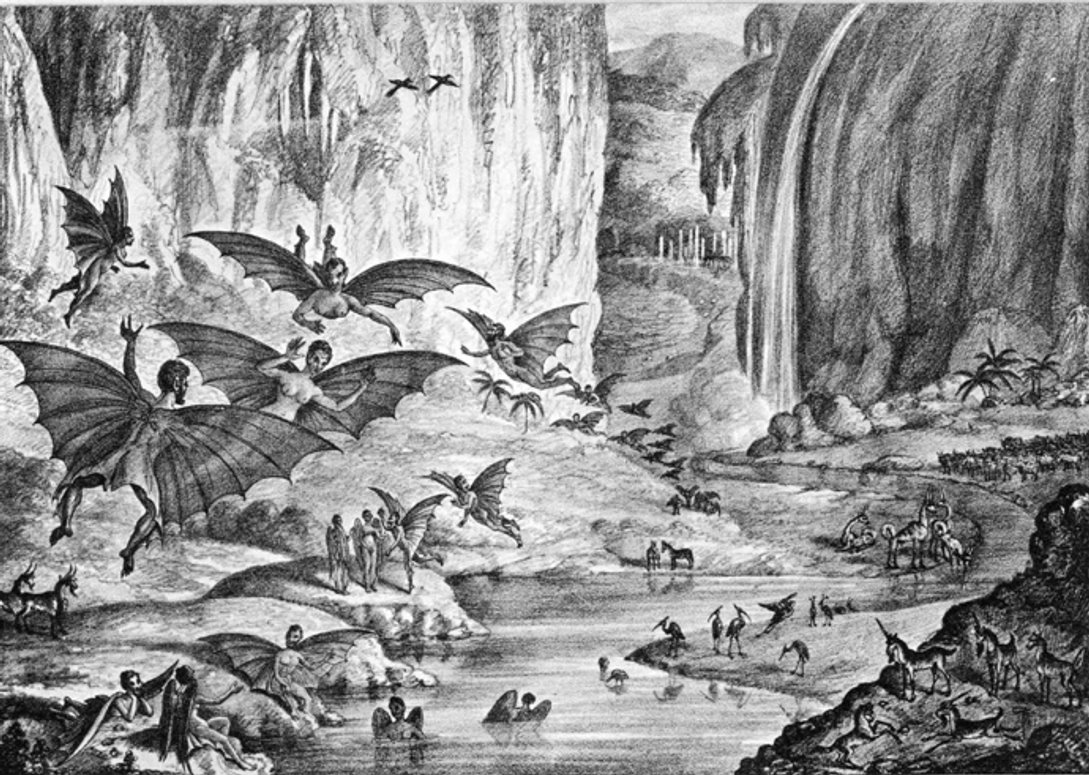
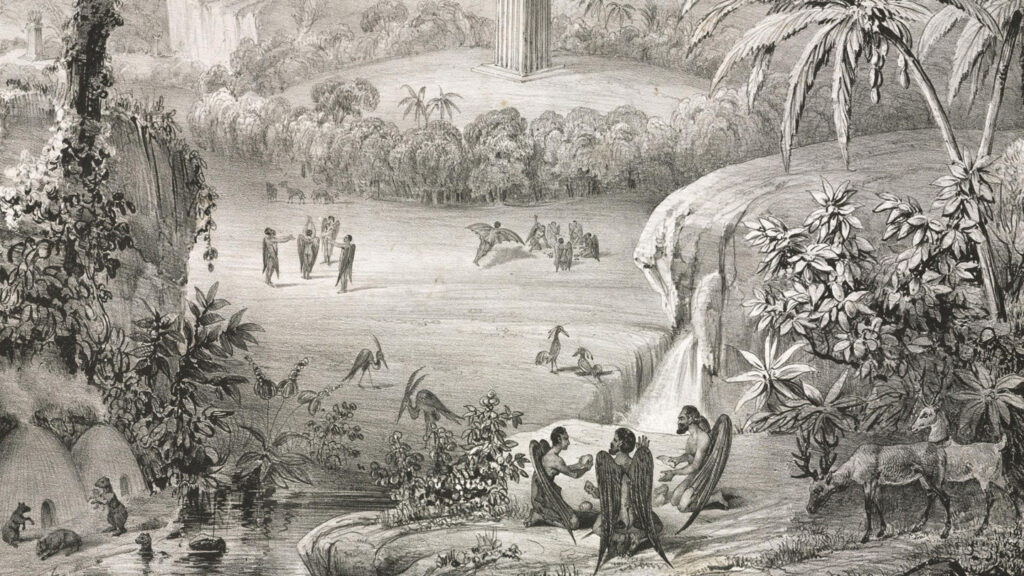
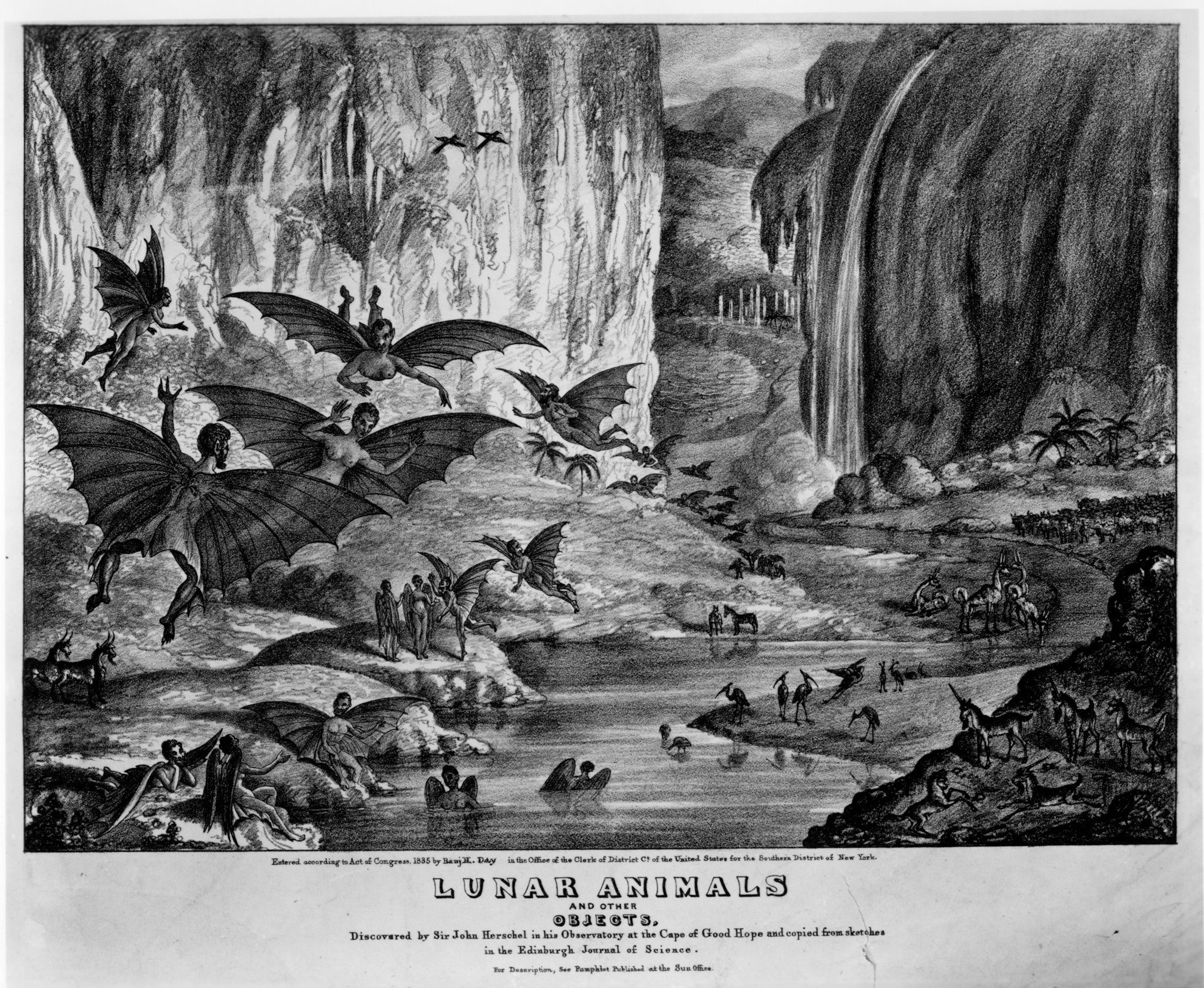
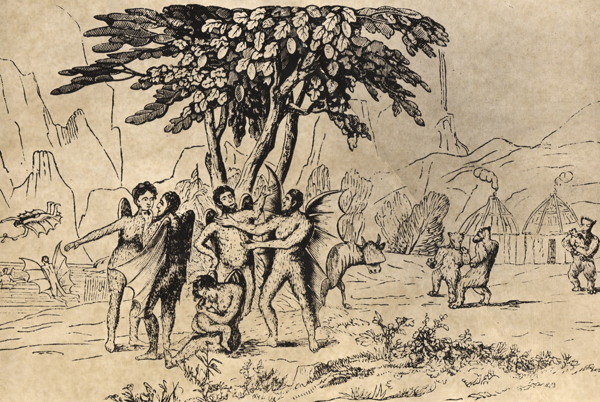
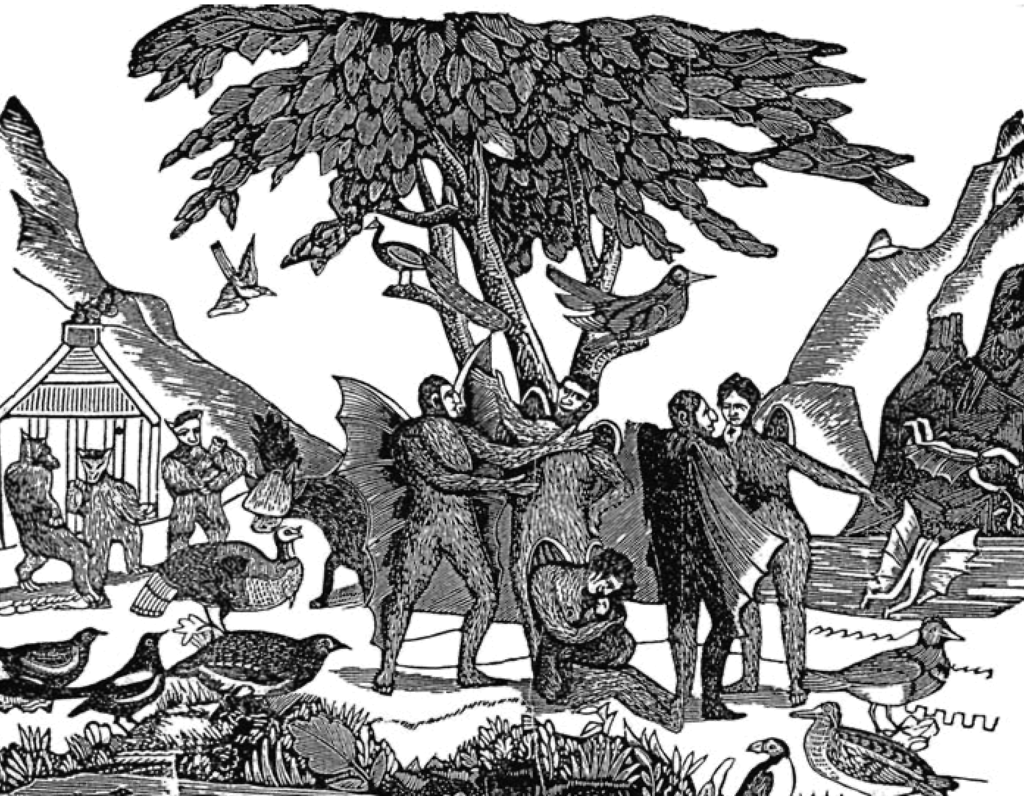
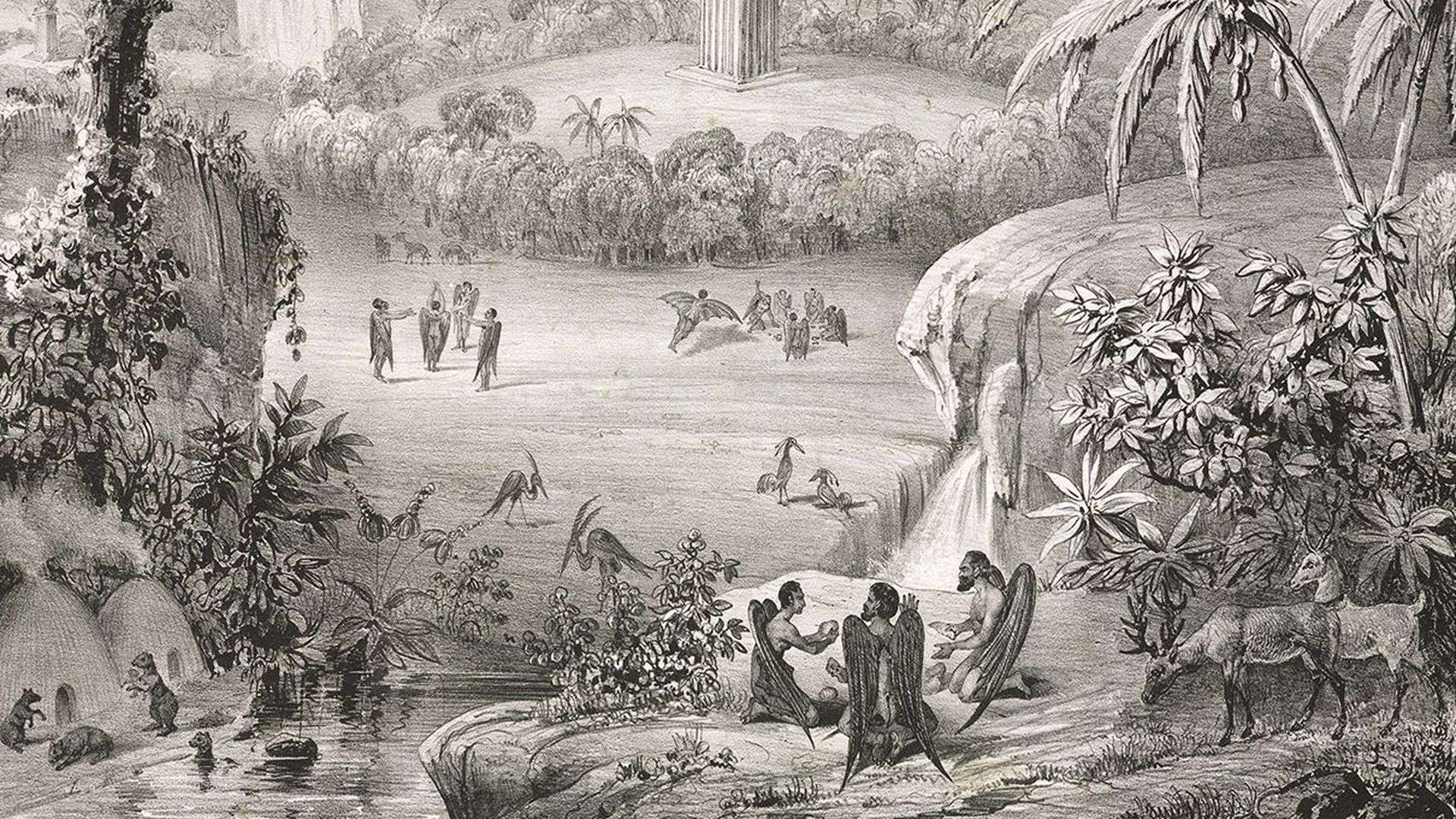
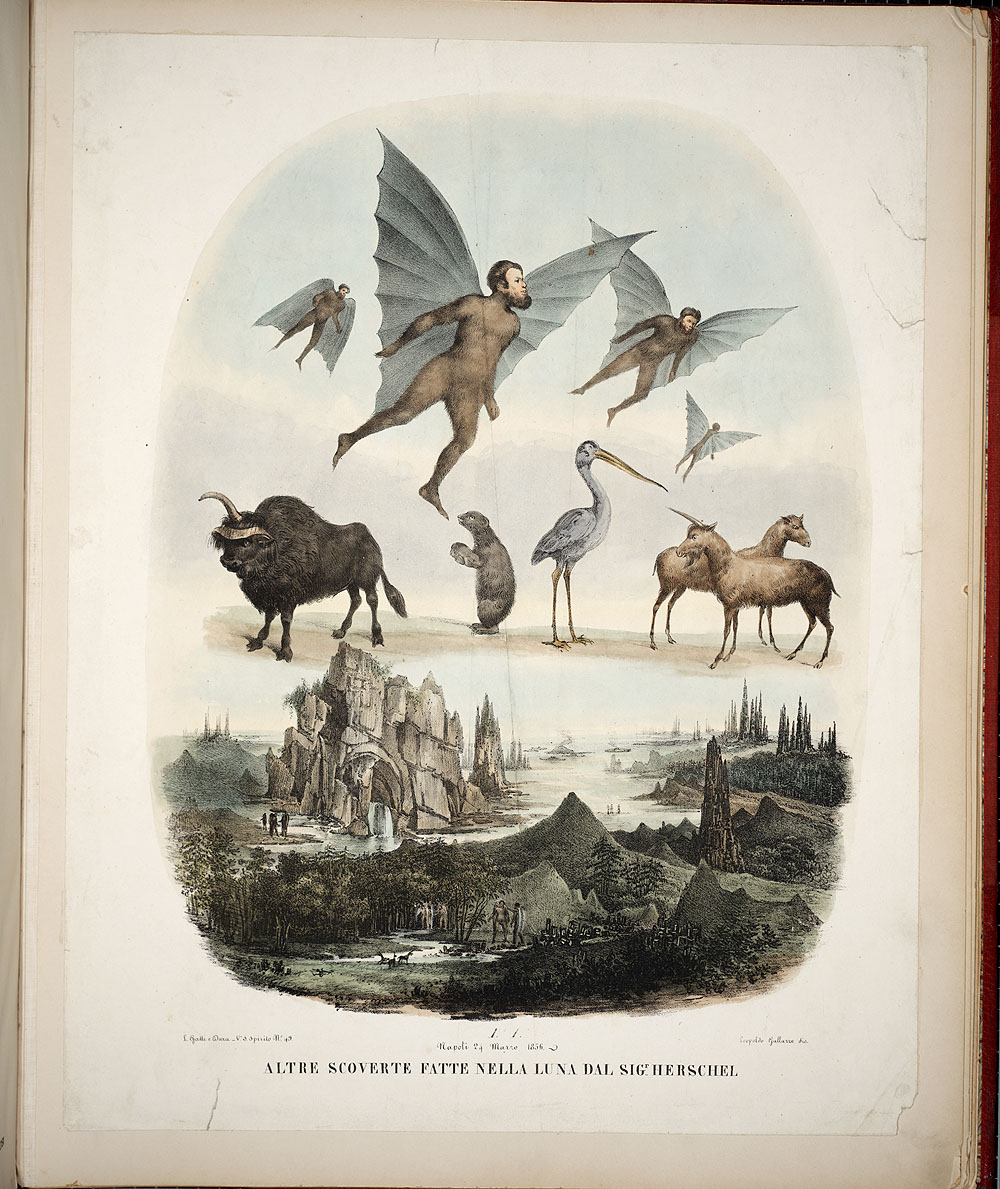
In the summer of 1835 the New York Sun reported on startling discoveries from one of the world’s most famous astronomers. Life on the moon! Indeed, vivid moon forests populated with a menagerie of bizarre creatures and winged men with behaviors similar those of men on Earth.
Listen here or stream/download the episode from your favorite podcast player:
The Bowery Boys: New York City History podcast is brought to you …. by you!
We are now producing a new Bowery Boys podcast every other week. We’re also looking to improve and expand the show in other ways — publishing, social media, live events and other forms of media. But we can only do this with your help!
We are now a creator on Patreon, a patronage platform where you can support your favorite content creators.
Please visit our page on Patreon and watch a short video of us recording the show and talking about our expansion plans. If you’d like to help out, there are six different pledge levels. Check them out and consider being a sponsor.
We greatly appreciate our listeners and readers and thank you for joining us on this journey so far.
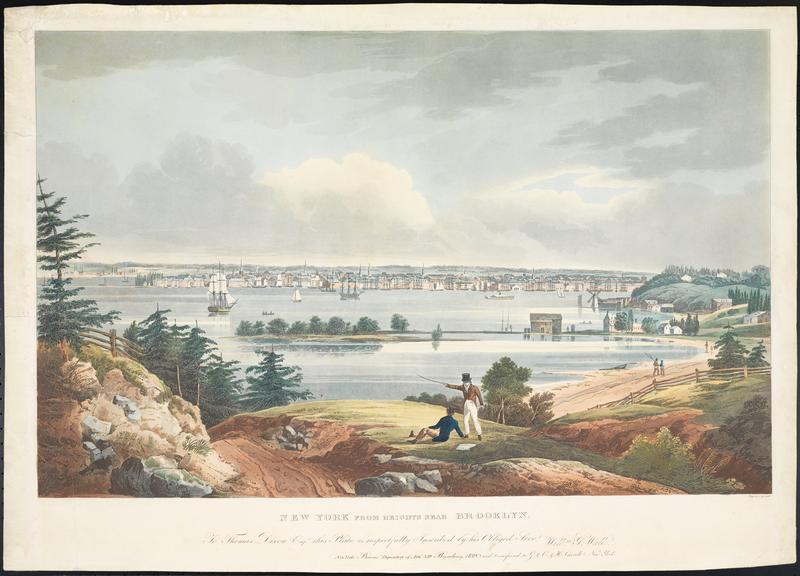
New York in 1823, as seen from Brooklyn. Does it look a little, uh, heavy to you, like it might be sagging into the harbor?
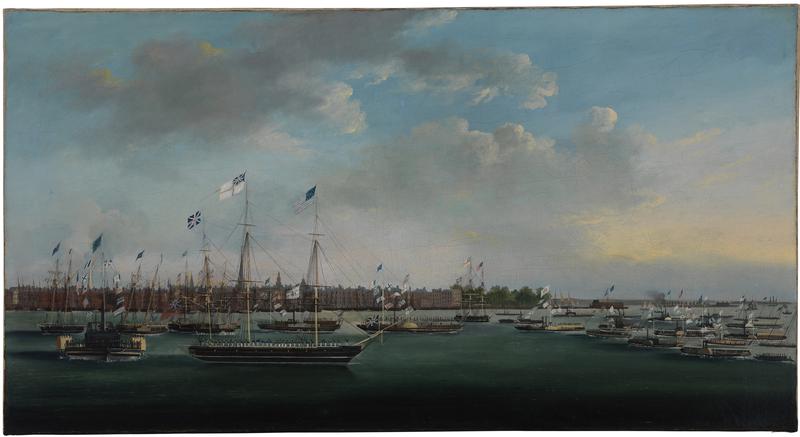
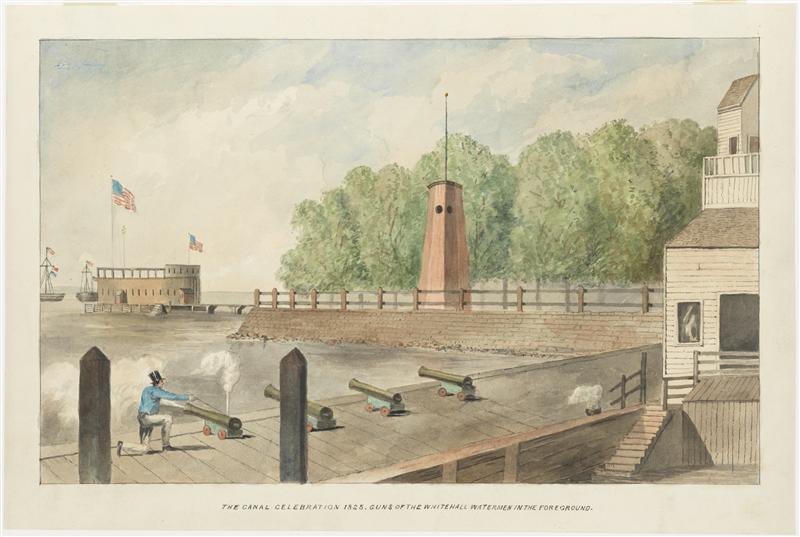
The harbor in 1825, at the opening of the Erie Canal, which changed the financial fortunes of New York and America in general. If man could carve a canal into the continent, couldn’t they also just move a little part of a island and move it around?
Courtesy Museum of the City of New York
A view of Castle Clinton and the Battery in 1825. Had the island been severed and moved around, what would have become of Manhattan’s most famous fort?
Courtesy Museum of City of New York
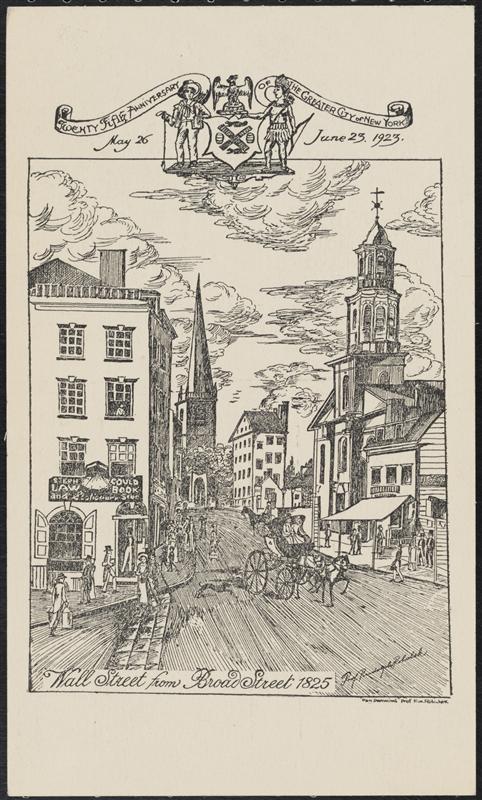
And here’s an illustration of Wall Street as it may have looked in 1825.
Courtesy Museum of the City of New York
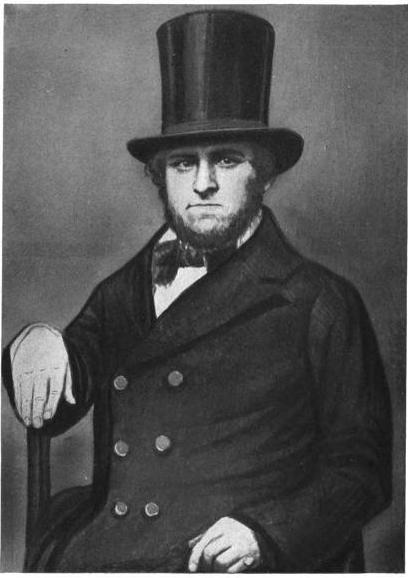
Benjamin Day, the publisher of the New York Sun, who literally opened up the pages of his newspaper to the heavens.
The Moon Hoax articles of 1835 were reprinted in several papers, and the New York Sun even sold lithographs. Here are some images from those publications:
A 1838 print by the Thierry Brothers
An illustration featuring the moon bison!
For more information on the Moon Hoax, visit the excellent presentation by the Museum of Hoaxes and of course Matthew Goodman’s The Sun and the Moon.
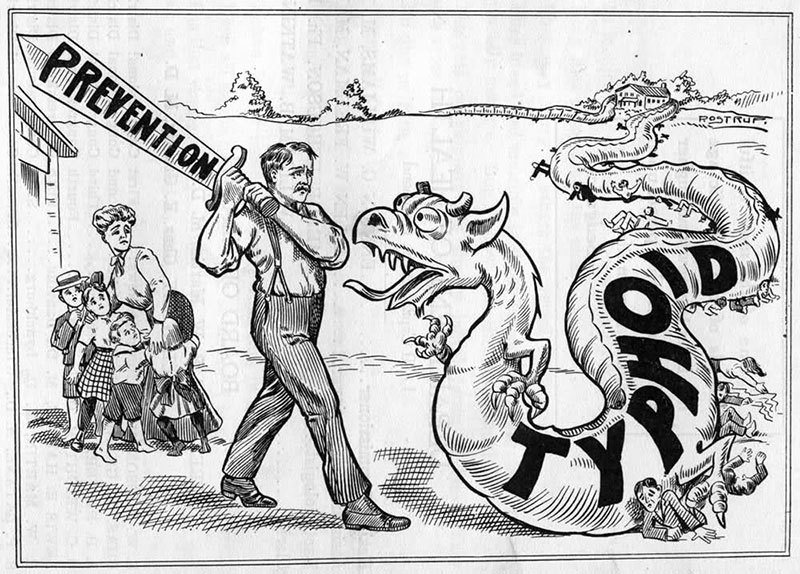
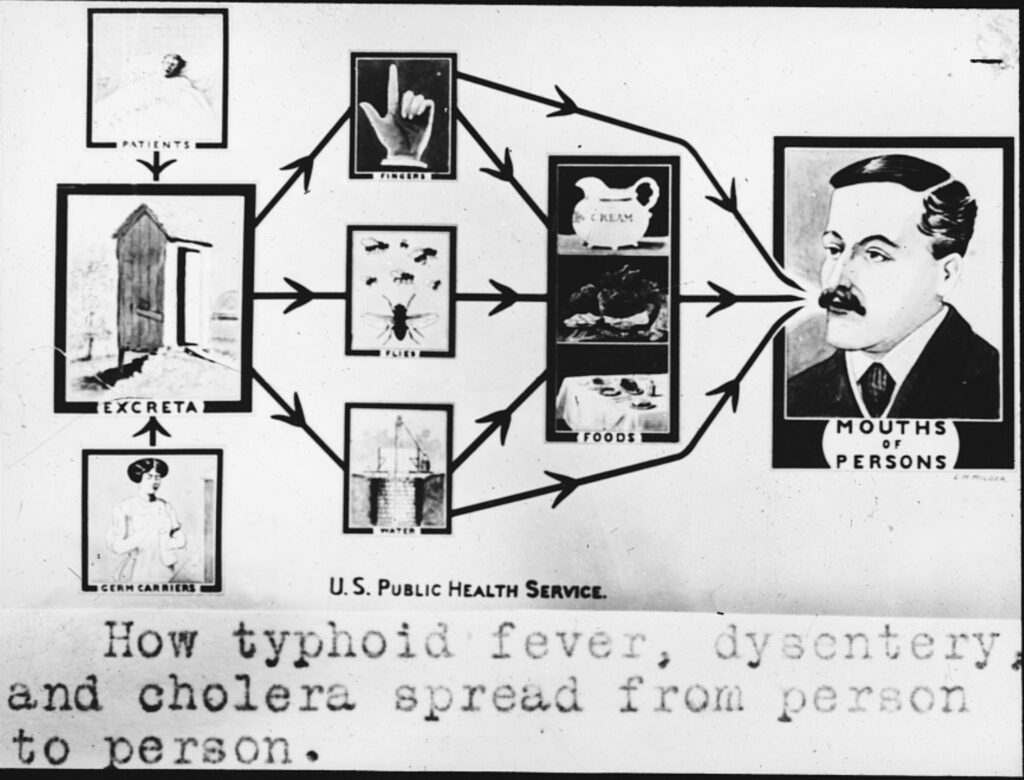
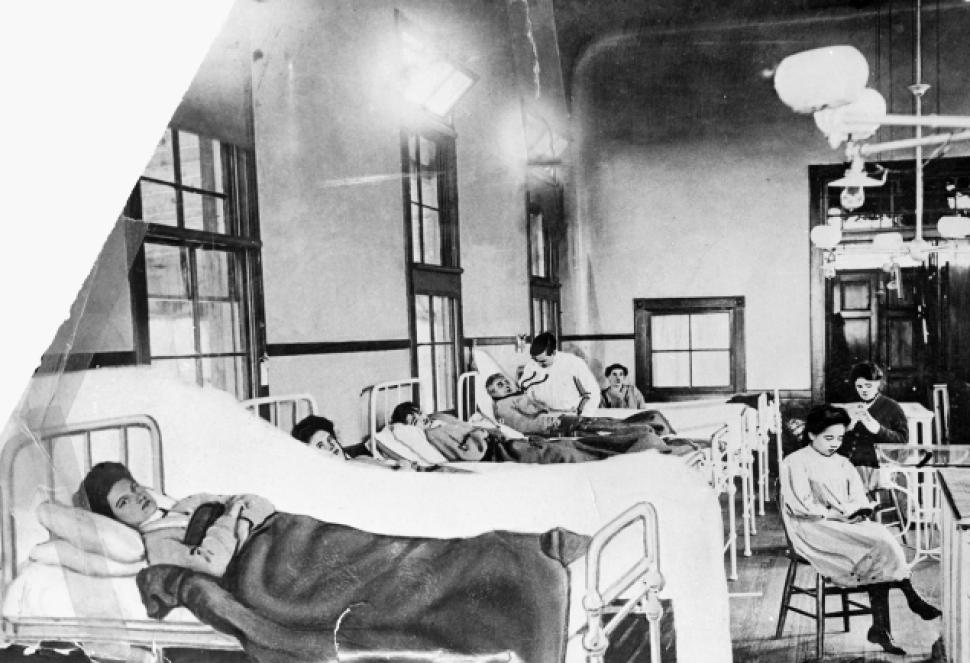
PODCAST An account of a mysterious typhoid fever outbreak and the woman — Mary Mallon, the so-called Typhoid Mary — at the center of the strange epidemic.
American Red Cross 1919, courtesy Library of Congress
The tale of Typhoid Mary is a harrowing detective story and a chilling tale of disease outbreak at the start of the 20th century.
Why are whole healthy families suddenly getting sick with typhoid fever — from the languid mansions of Long Island’s Gold Coast to the gracious homes of Park Avenue?
Can an intrepid researcher and investigator named George Soper locate a mysterious woman who may be unwittingly spreading this dire illness?
Mary Mallon — is she a victim or an enemy? One of the weirdest and divisive tales of the early 1900s. What side are you on?
The Bowery Boys: New York City History podcast is brought to you …. by you!
We are now producing a new Bowery Boys podcast every week. We’re also looking to improve and expand the show in other ways — publishing, social media, live events and other forms of media. But we can only do this with your help!
We are now a creator on Patreon, a patronage platform where you can support your favorite content creators.
Please visit our page on Patreon and watch a short video of us recording the show and talking about our expansion plans.
If you’d like to help out, there are six different pledge levels.Check them out and consider being a sponsor.
We greatly appreciate our listeners and readers and thank you for joining us on this journey so far.
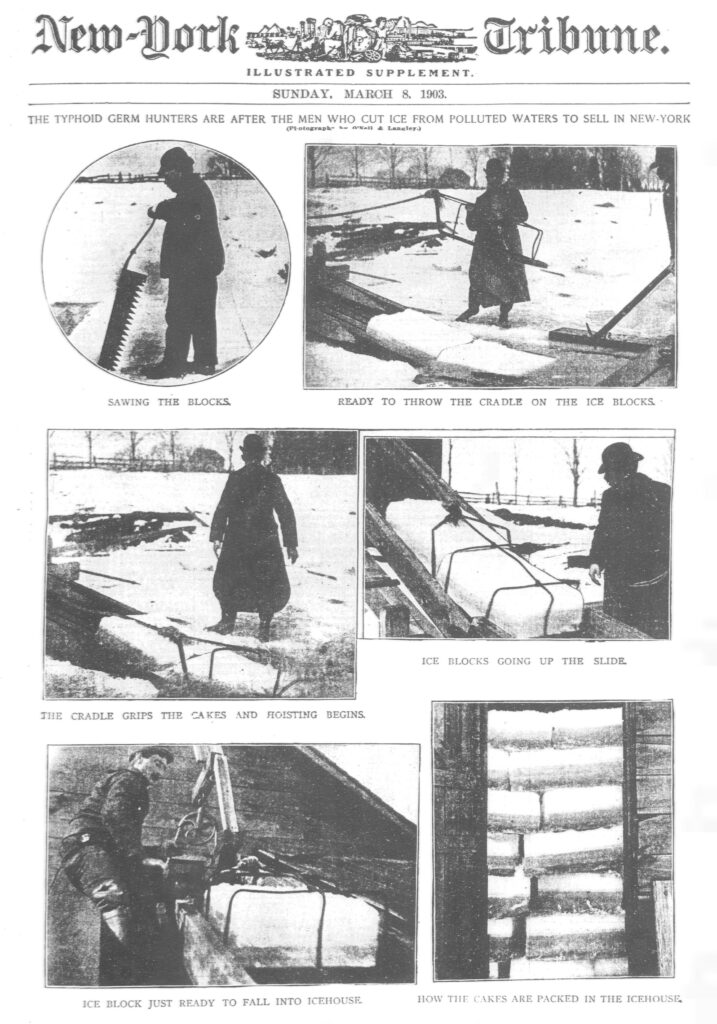
‘The typhoid germ hunters are after the men who cut ice from polluted waters to sell in New York.’ New-York Tribune, March 8, 1903,
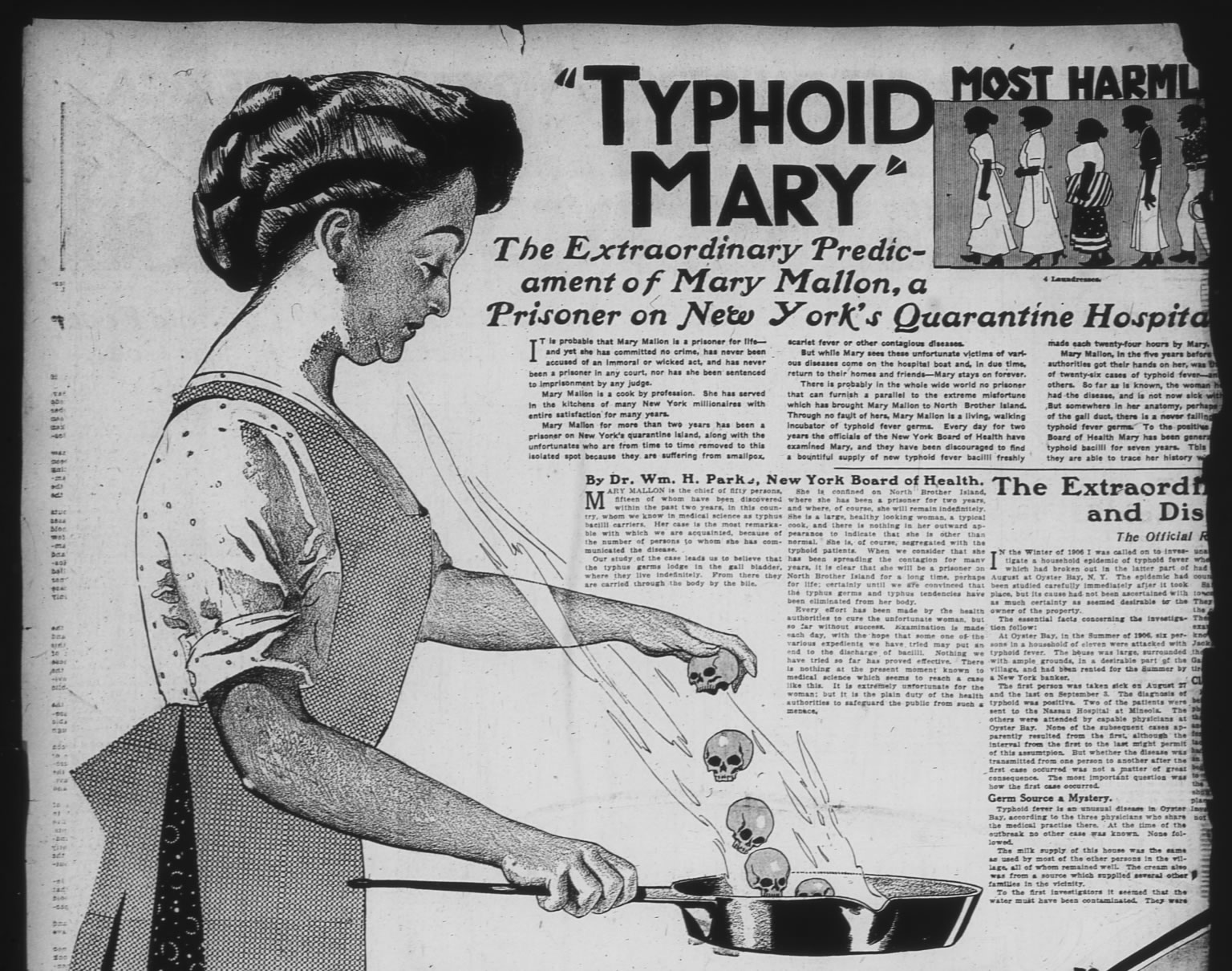
The infamous newspaper article from the New York American (June 30, 1907) which depicts Mary literally seasoning her meals with death.
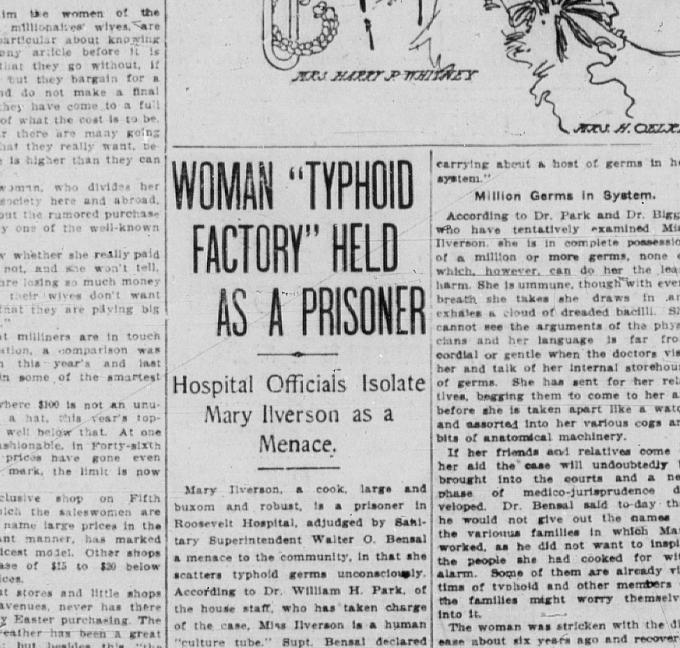
Another newspaper headline from the Evening World, April 1, 1097
Mary Mallon in a hospital bed at North Brother Island
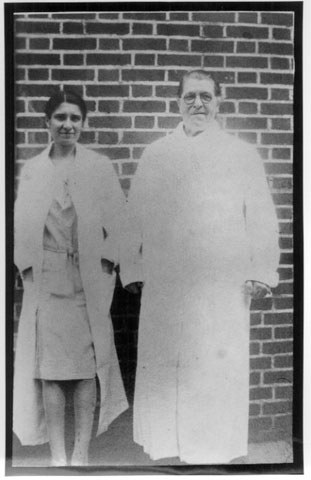
Dr. Emma Sherman standing next to Mary Mallon in the early 1930s. Mary has already spent over 15 years on North Brother Island by this time.
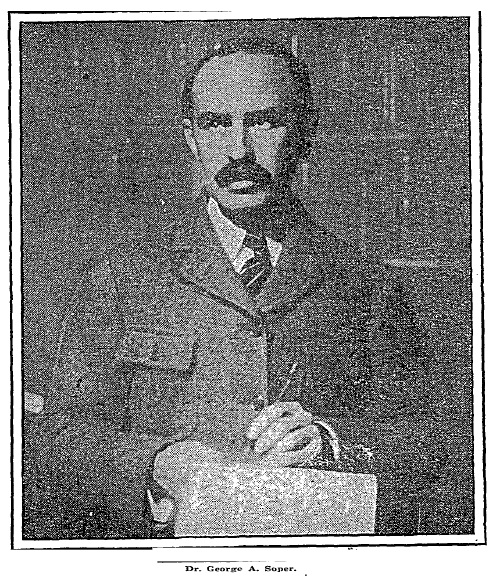
The sanitation engineer (and detective of our story) George Soper who relentlessly tracked down Mary. Â (From the New York Times, April 4, 1915)
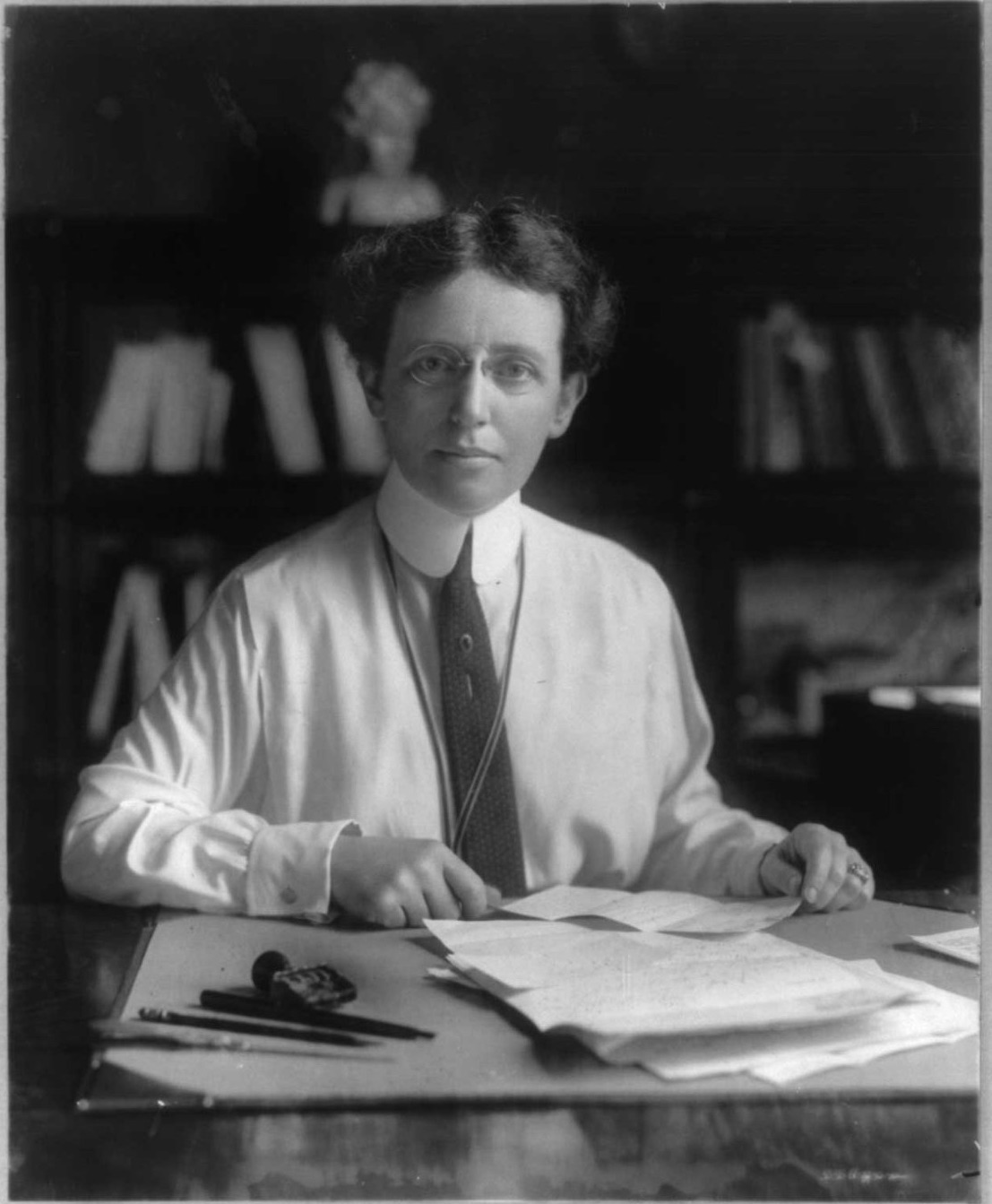
Sara Josephine Baker, the pioneering doctor who was brought in by Soper to (futilely) talk some sense into Mary.
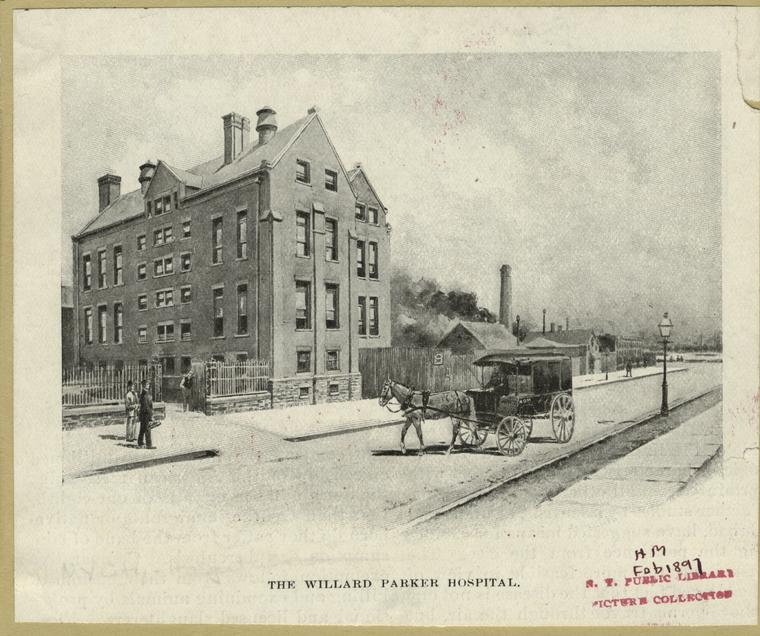
Willard Parker Hospital, formerly at East 16th Street along the East River in the old gashouse district.
Courtesy New York Public Library
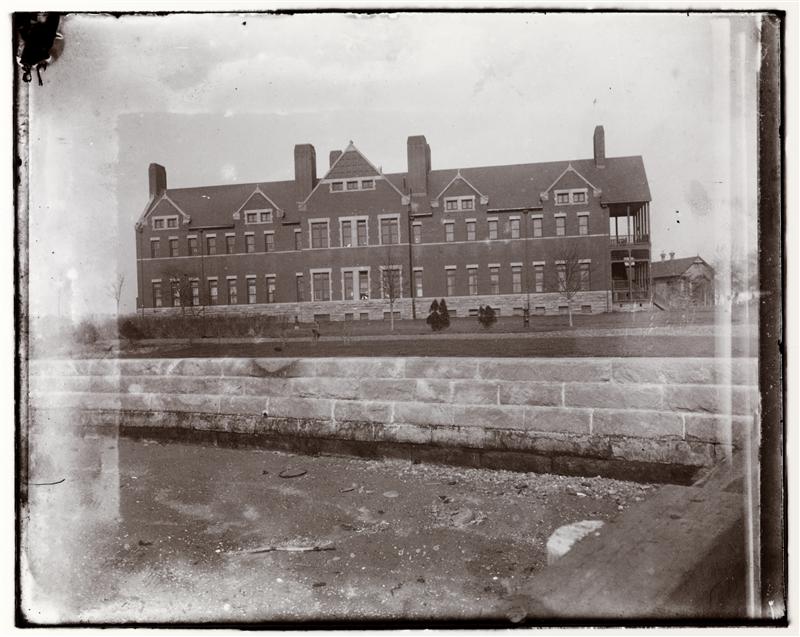
The smallpox hospital on North Brother Island.
Photo by Jacob Riis, courtesy Museum of the City of New York
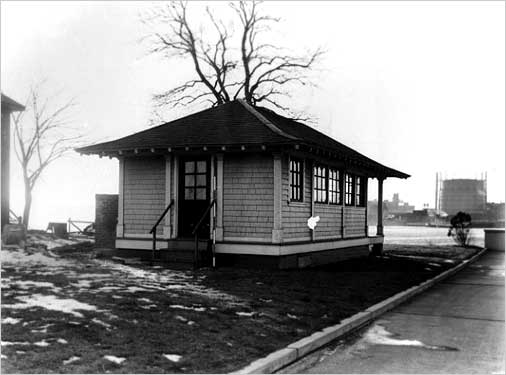
Mary Mallon’s cottage on North Brother Island where she spent the remainder of her life.
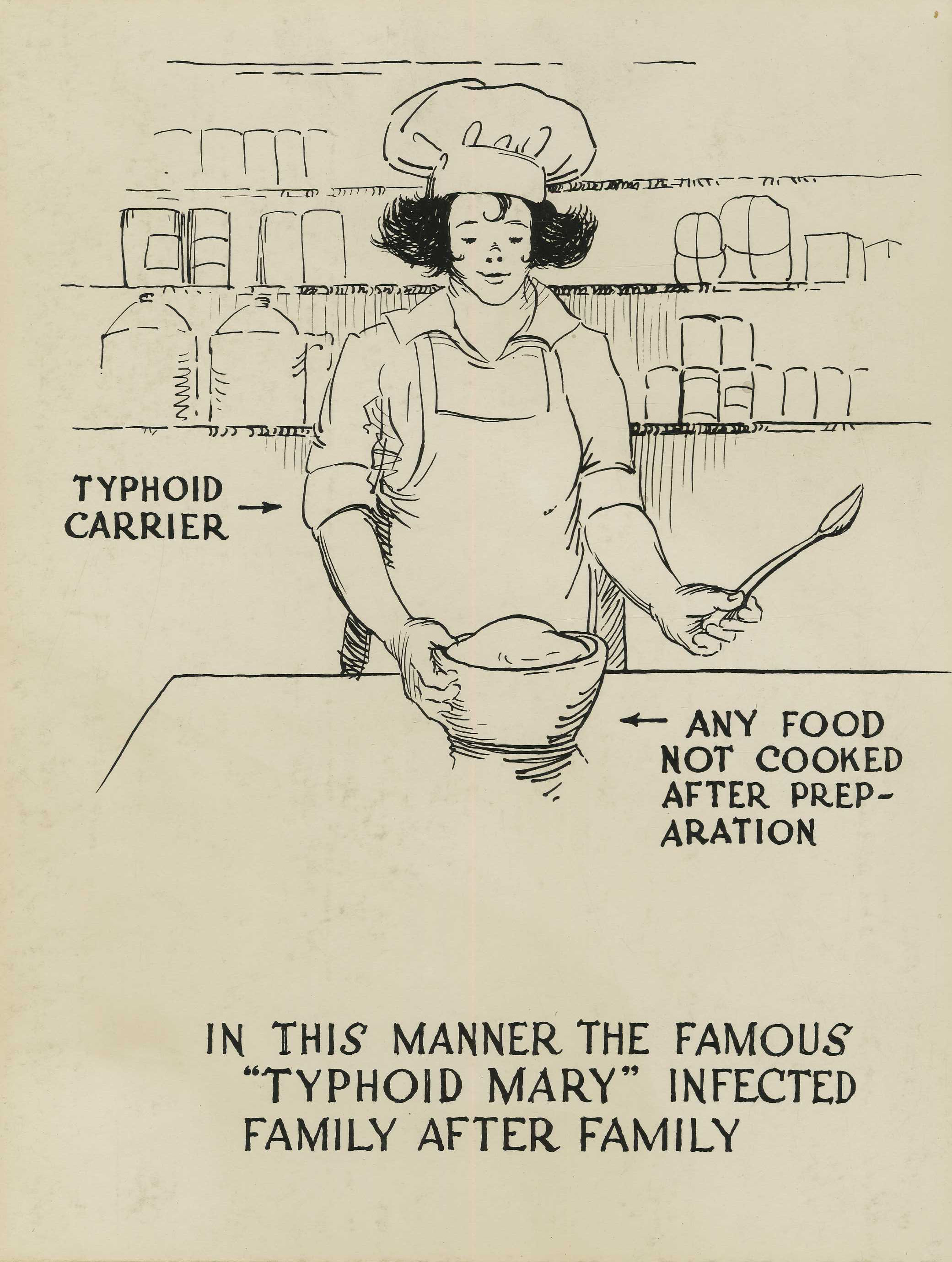
A poster hung in eating establishments following the whole Typhoid Mary fracas.
Otis Historical Archives Nat’l Museum of Health & Medicine
FURTHER LISTENING
After listening to this show, take a dive into previous episodes which relate to this subject —
Sara Josephine Baker also appears in this 2019 episode about women health care workers in the Progressive Era:
Many years before North Brother Island, America’s largest quarantine hospital was located on Staten Island. That is, until 1858 when the residents, endangered for decades and ignored by the state, finally took matters in their own hands
Welcome to Bellevue Hospital, New York’s most famous (and infamous) hospital — from ‘pest house’ to execution ground, from a Pathological Museum to New York’s first city morgue
PODCASTFraunces Tavern is one of America’s most important historical sites of the Revolutionary War and a reminder of the great importance of taverns on the New York way of life during the Colonial era.
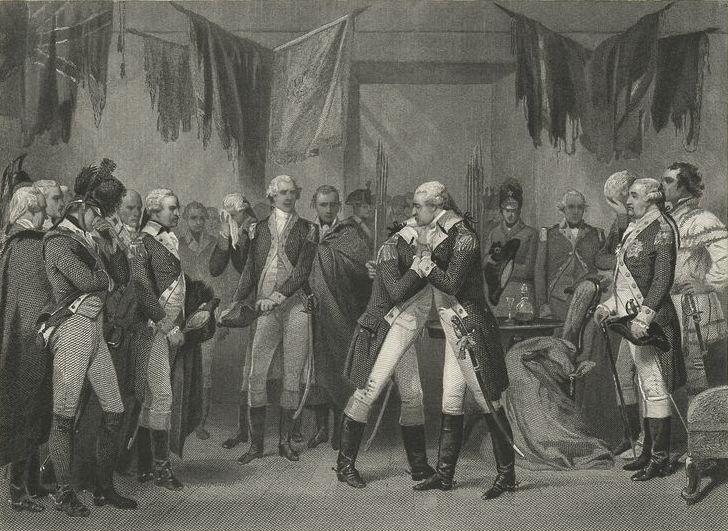
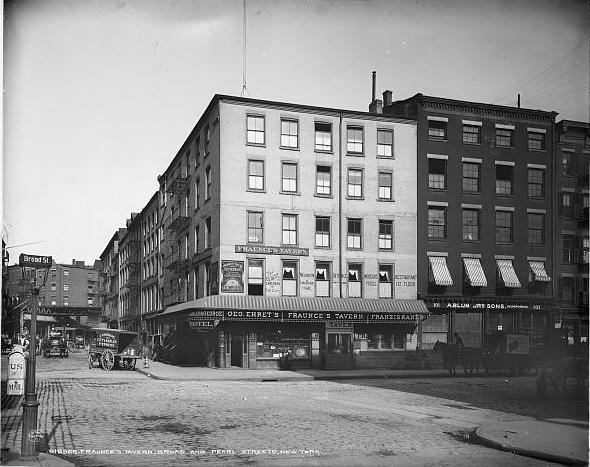
This revered building at the corner of Pearl and Broad Street was the location of George Washington‘s farewell address to his Continental Army officers and one of the first government buildings of the young United States of America.
John Jay and Alexander Hamilton both used Fraunces as an office in their first official capacities with the new federal government.
As with many places connected to the country’s birth — where fact and legend intermingle — many mysteries still remain.
Was the tavern owner Samuel Fraunces one of America’s first great black patriots? Did Samuel use his position here to spy upon the British during the years of occupation between 1776 and 1783?
Was his daughter on hand to prevent an assassination attempt on the life of Washington? And is it possible that the basement of Fraunces Tavern could have once housed … a dungeon?
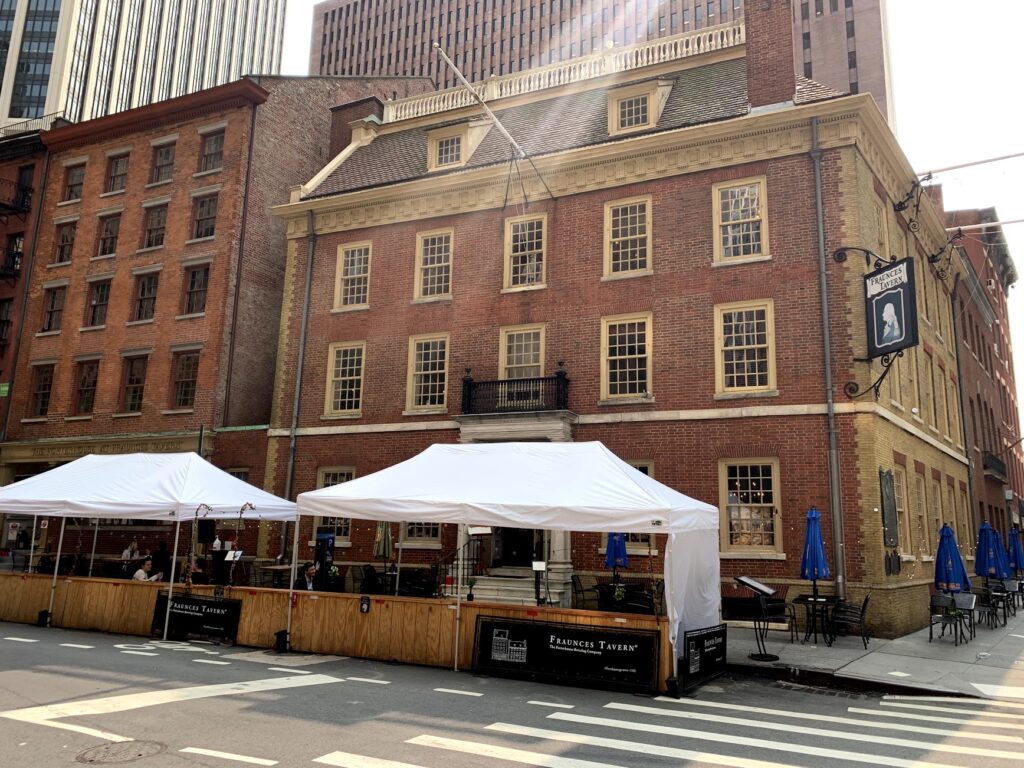
Fraunces Tavern in 2020
ALSO: Learn about the two deadly attacks on Fraunces Tavern — one by a British war vessel in the 1770s, and another, more violent act of terror that occurred in its doorway 200 years later!
PLUS: Where to find the ruins of Lovelace’s Tavern, dating back to the days of New Amsterdam.
This is a re-presentation of a show originally released on March 18, 2011 with bonus material recorded in 2020.
Listen today on your favorite podcast player or just press play here:
Listen to Fraunces Tavern’s new podcast Tavern Talks, hosted by Allie Delyanis and Mary Tsaltas-Ottomanelli. This week’s episode come features the Queens classic Neirs Tavern, in honor of Tavern Week.
The museum also has special virtual lecture coming up in October called Preserving the Past: The Restoration of Fraunces Tavern, in conjunction with Archtober. The presentation will feature rarely seen artifacts from the collection. Get your tickets here!
The museum encourage visitors to make reservations online, however they will accept walk-ins if not at capacity.
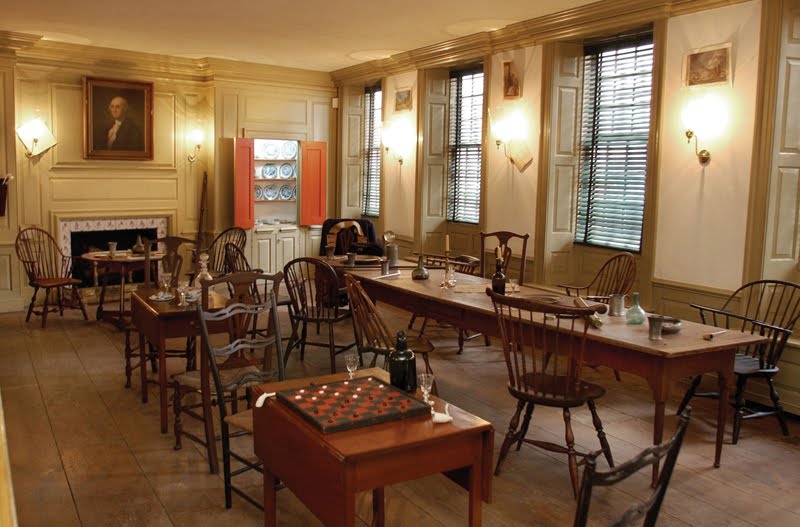
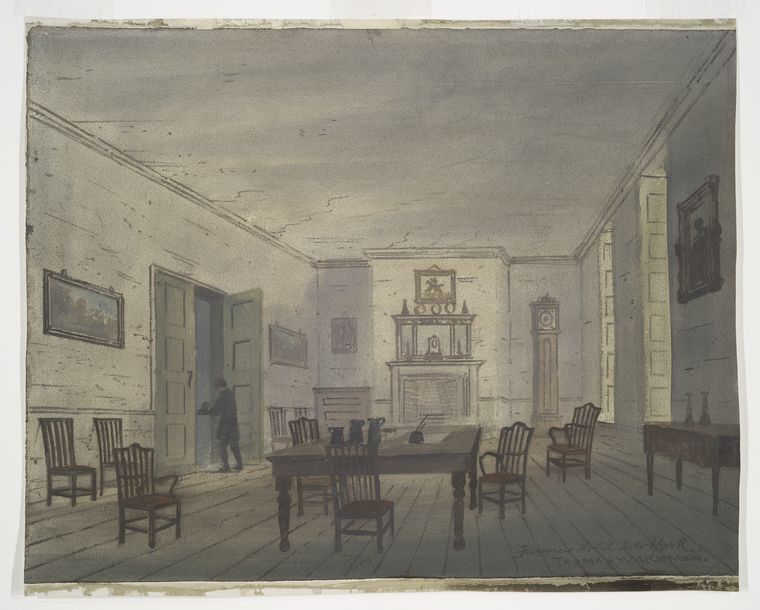
One of the oldest, diverse and historic rooms in New York City, the Long Room played host to Colonial Era dance classes, George Washington’s farewell speech (pictured below), decades of guests as a boardinghouse, and now a replica of tavern life in early America. [Columbia U]
How the interior may have looked in the 19th century, as Fraunces became more a lodging house frequented by longshoremen, sailors and dock workers. [NYPL]
NYPL
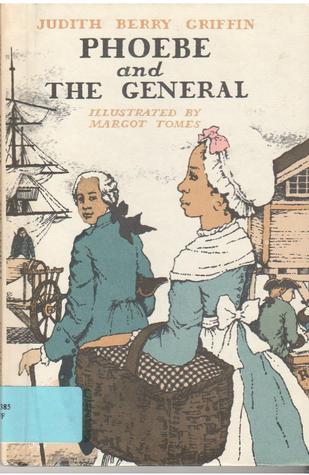
A 1977 children’s book about Phoebe Fraunces, furthering the popularity of this intriguing story.
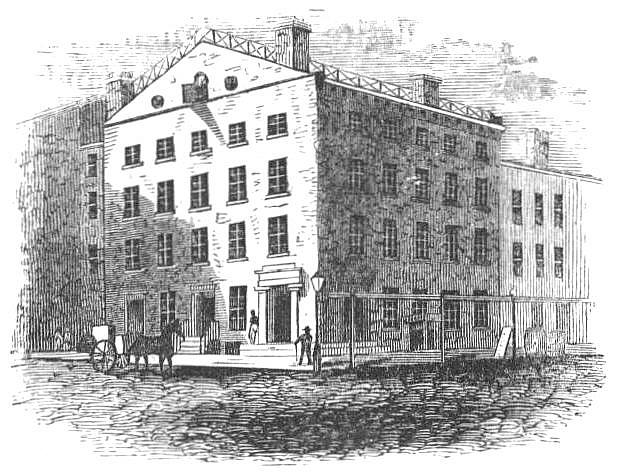
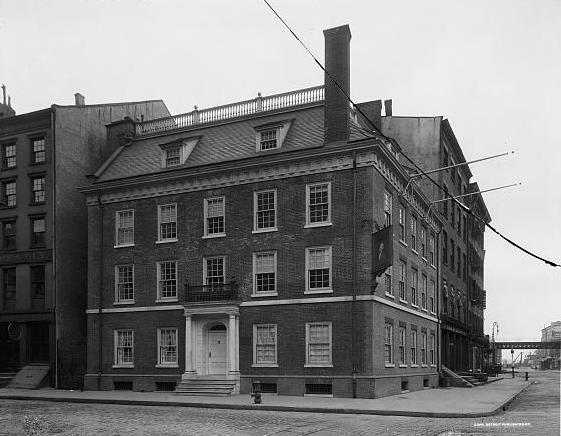
The changing facades of Fraunces: this sketch is from some point in the 19th century, when additional floors were added to the original structure. You can see the difficulty architect William Merserau might have faced in the 1900s when trying to reconstruct the building to reflect its original condition.
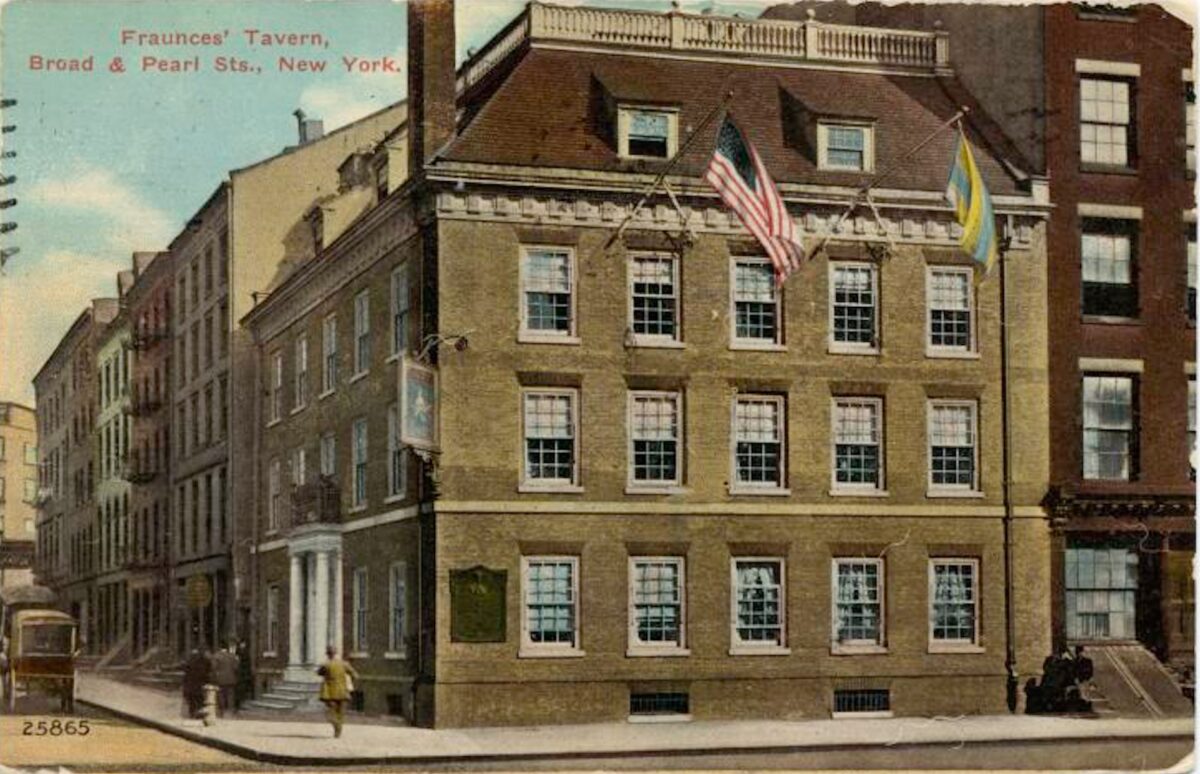
This doesn’t seem like it could even be the same building, and yet, there’s the sign for the tavern hanging over the second floor and a street sign for Broad Street to the left. This picture is between 1890 and 1904, before the structural changes. [LOC]
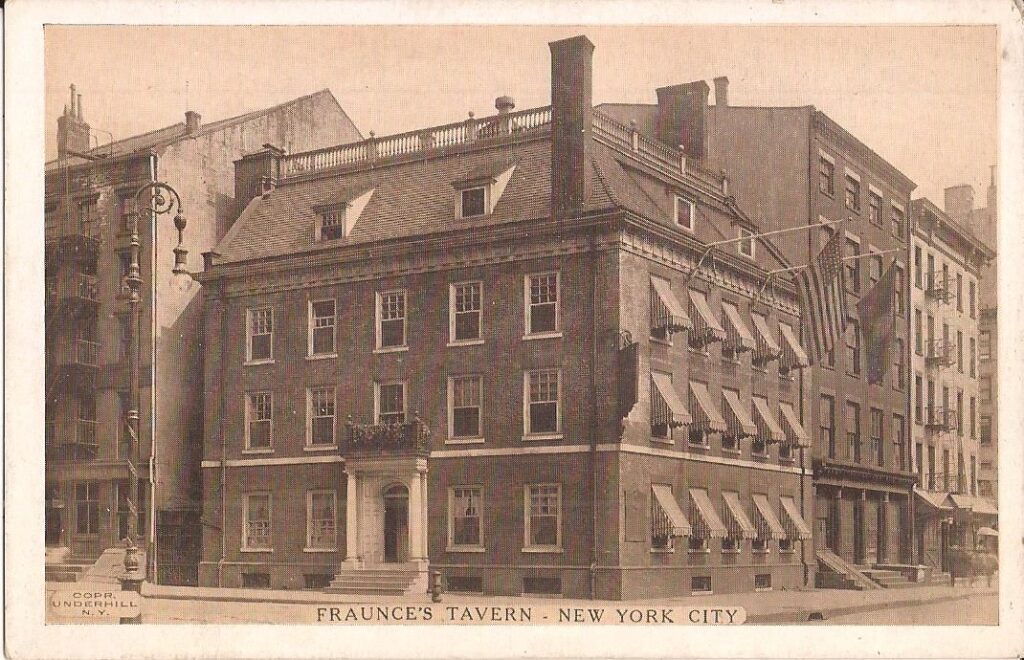
After reconstruction, somewhere between 1910-1920, looking almost as it does today. In the distance to the right you’ll see a bit of the elevated train line. [LOC]
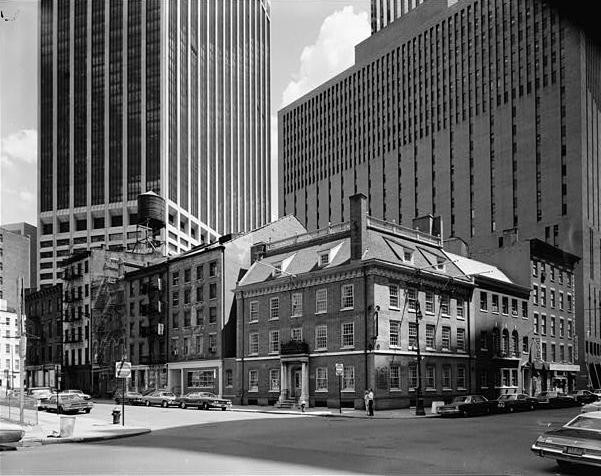
By the 1970s, modern skyscrapers permanently change the feel of the Financial District, but Fraunces holds firm.
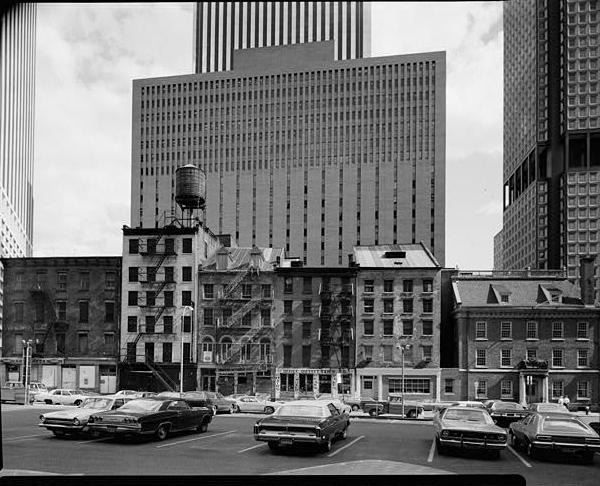
The parking lot across the street would soon be replaced by the towering 85 Broad Street (the former Goldman Sachs building). Interestingly, underneath these cars lies the remnants of Dutch New Amsterdam, including the earlier Lovelace’s Tavern. [LOC]
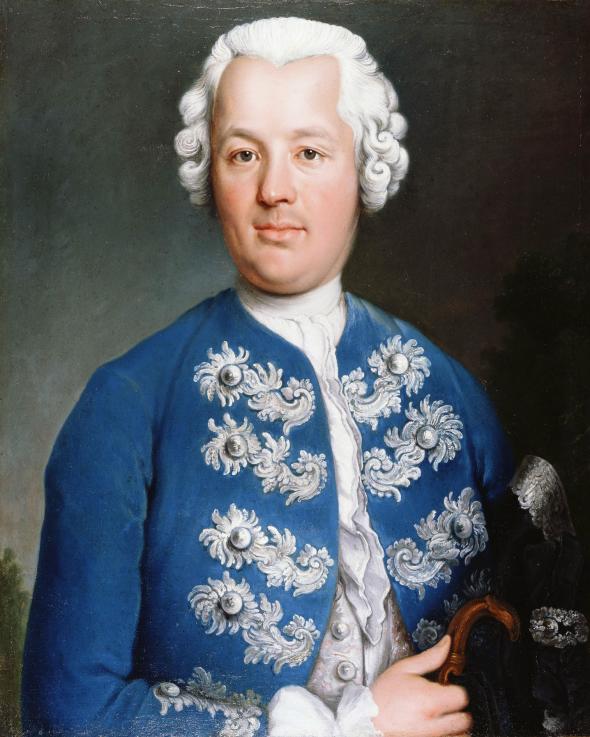
Samuel Fraunces, in a portrait of the tavern owner painted between 1770-1785, giving little clue to what many consider to be his real racial identity. The lineage of the man nicknamed ‘Black Sam’ continues to be debated to this day.
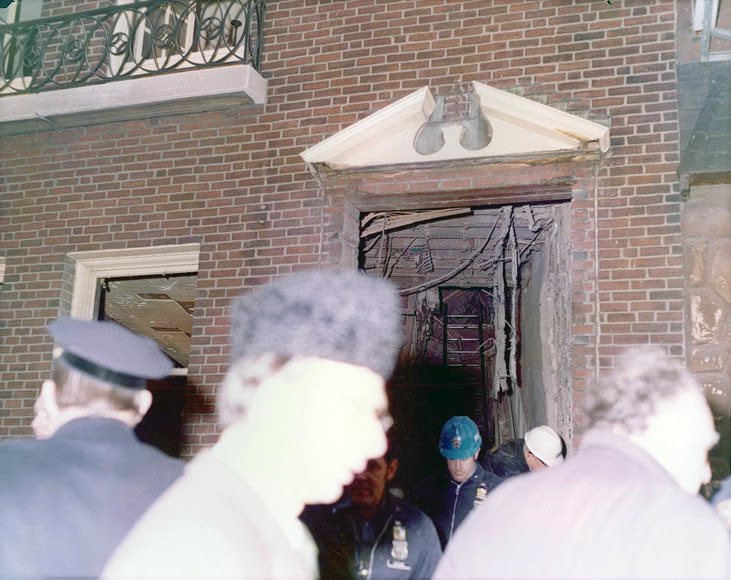
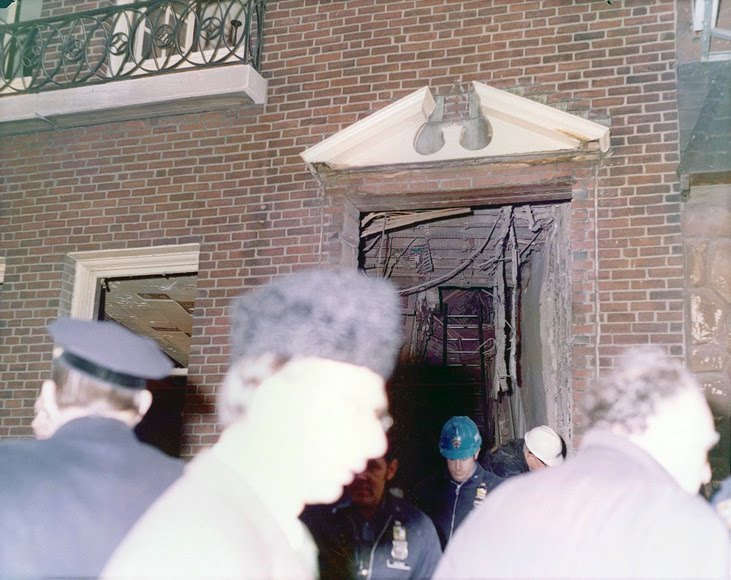
Fraunces was the scene of a relatively recent attack in 1975 when members of the Puerto Rican nationalist group Fuerzas Armadas de Liberación Nacional Puertorriqueña (FALN) placed a bomb in one of the tavern’s doorways, killing 4 people and seriously injuring many others.
You can find the picture below and many others — including the note left at the scene taking responsibility for the attack — at this Latin American studies website.
The Bowery Boys: New York City History podcast is brought to you …. by you!
We are now producing a new Bowery Boys podcast every week. We’re also looking to improve and expand the show in other ways — publishing, social media, live events and other forms of media. But we can only do this with your help!
We are now a creator on Patreon, a patronage platform where you can support your favorite content creators.
Please visit our page on Patreon and watch a short video of us recording the show and talking about our expansion plans.
If you’d like to help out, there are six different pledge levels. Check them out and consider being a sponsor.
We greatly appreciate our listeners and readers and thank you for joining us on this journey so far.
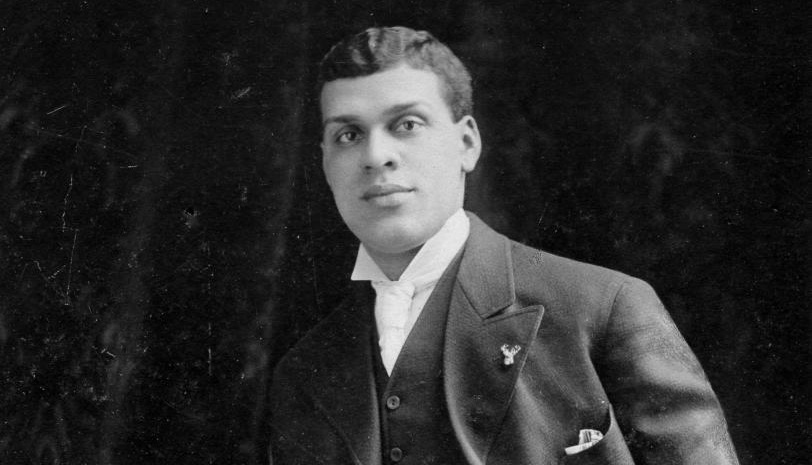
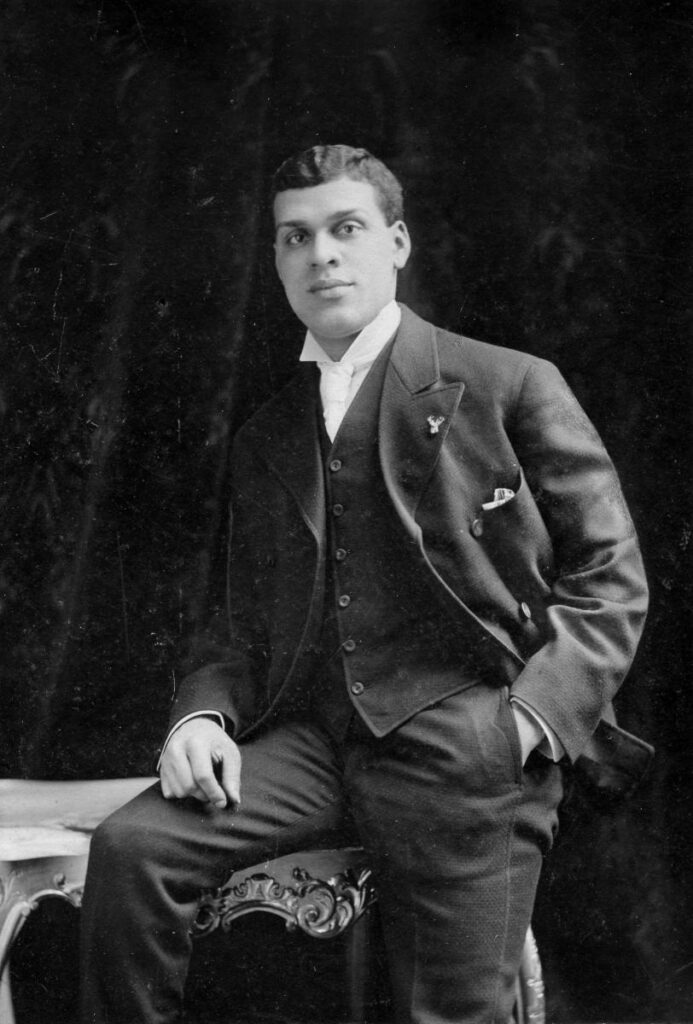
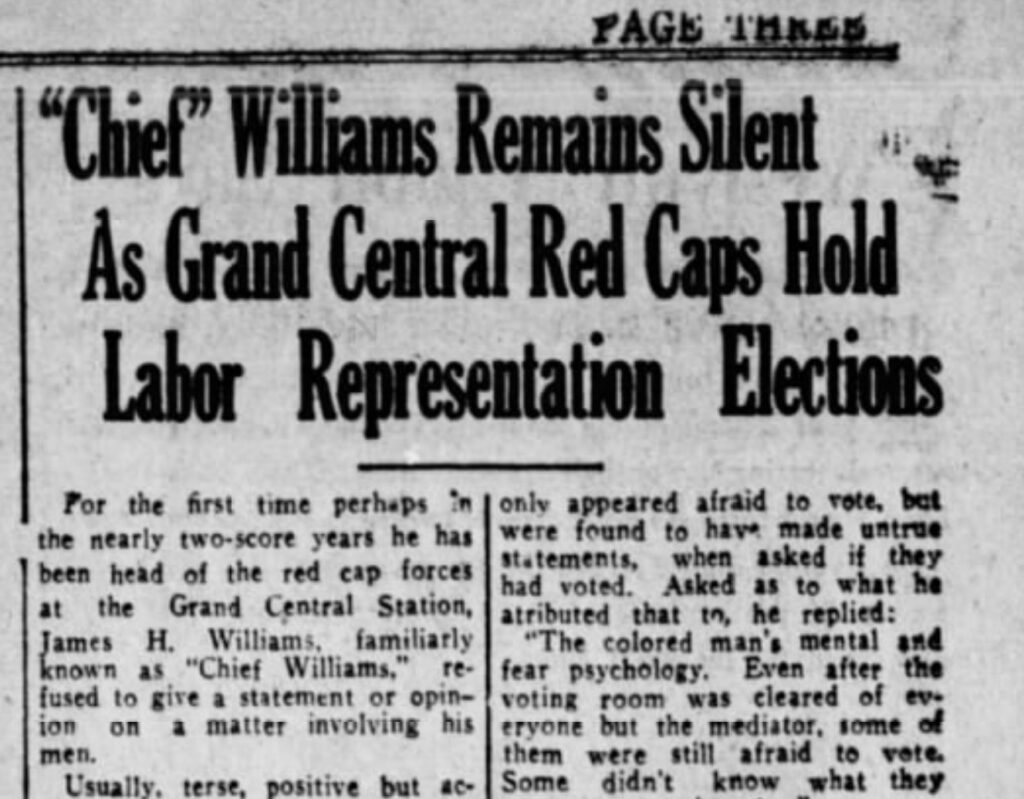
James H. Williams, here in 1905, would soon become the "Chief" of a force of hundreds of Red Caps at Grand Central, a post he'd keep for four decades.
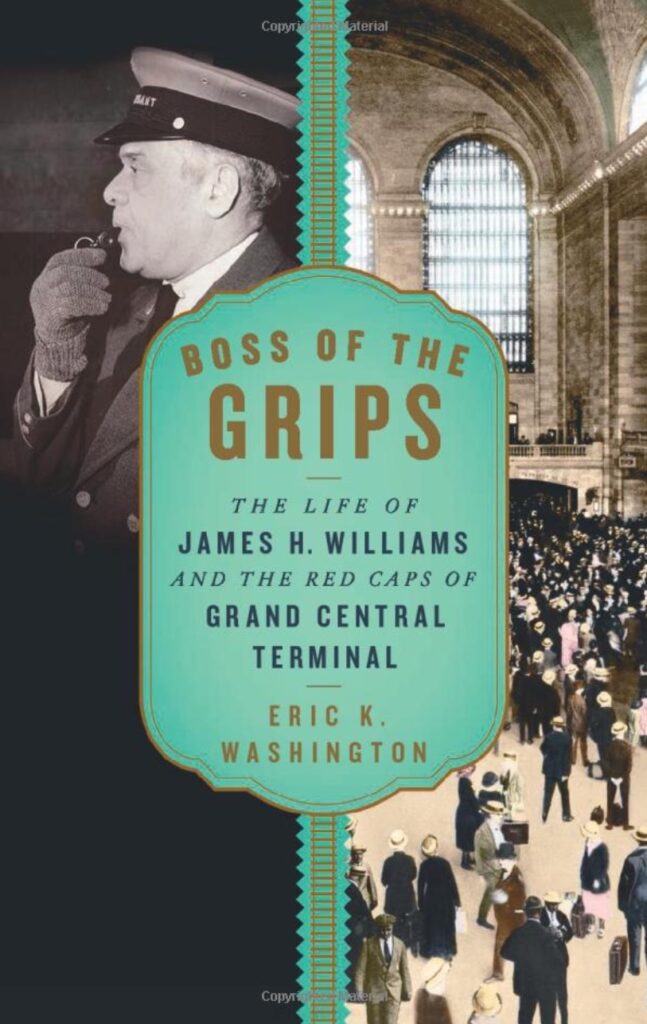
PODCAST EPISODE #339: An interview with author Eric K. Washington, author of “Boss of the Grips: The Life of James H. Williams and the Red Caps of Grand Central Terminal”.
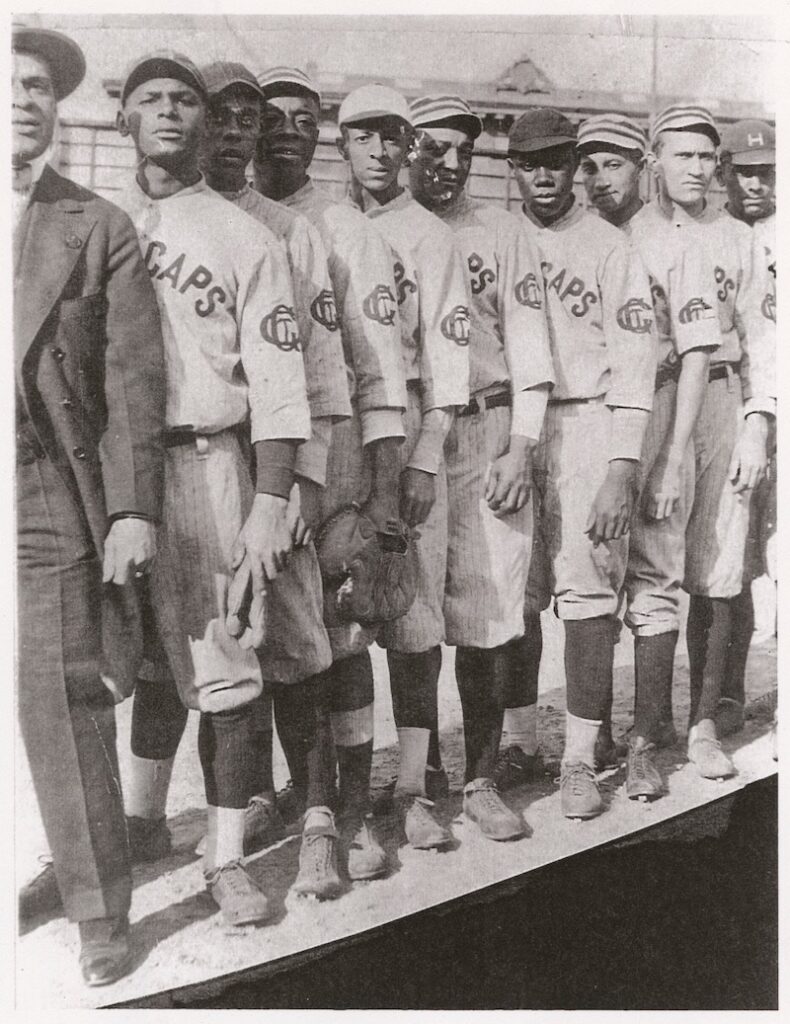
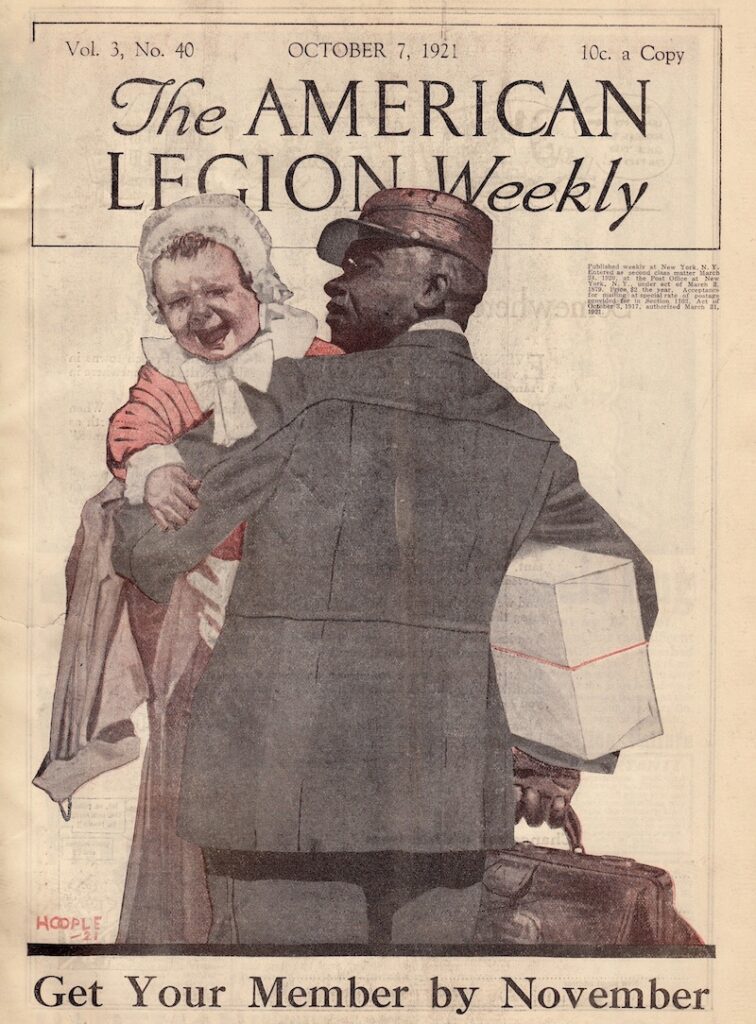
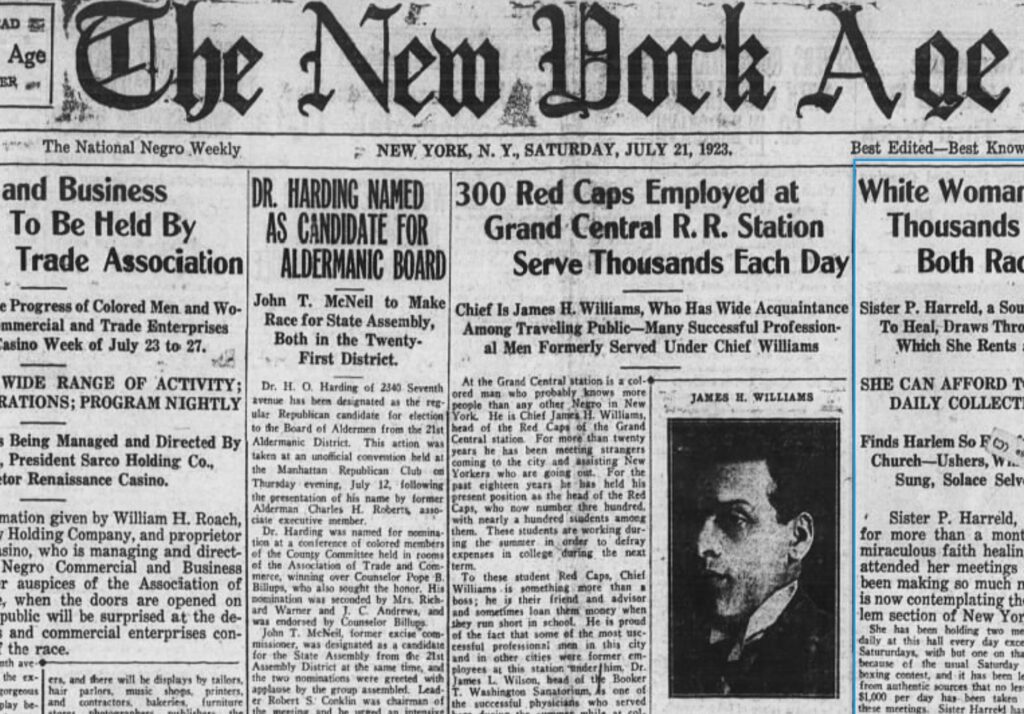
The Red Caps of Grand Central Terminal were a workforce of hundreds of African-American men who were an essential part of the long-distance railroad experience. Passengers relied on Red caps for more than simply grabbing their bags — they were navigators, they helped with taxis, offered advice, and provided a warm greeting.
He also tells the story of Grand Central Terminal, and specifically, of the Red Caps who worked here, especially during the Terminal’s heyday in the first half of the 20th century. And along the way, the book chronicles how New York’s African-American enclaves and communities developed and moved around the city.
That huge story is told through the lens of this one, often underappreciated, and yet instrumental man — James Williams. He was the chief of the Red Caps, but also an under-reported figure in the Harlem Renaissance.
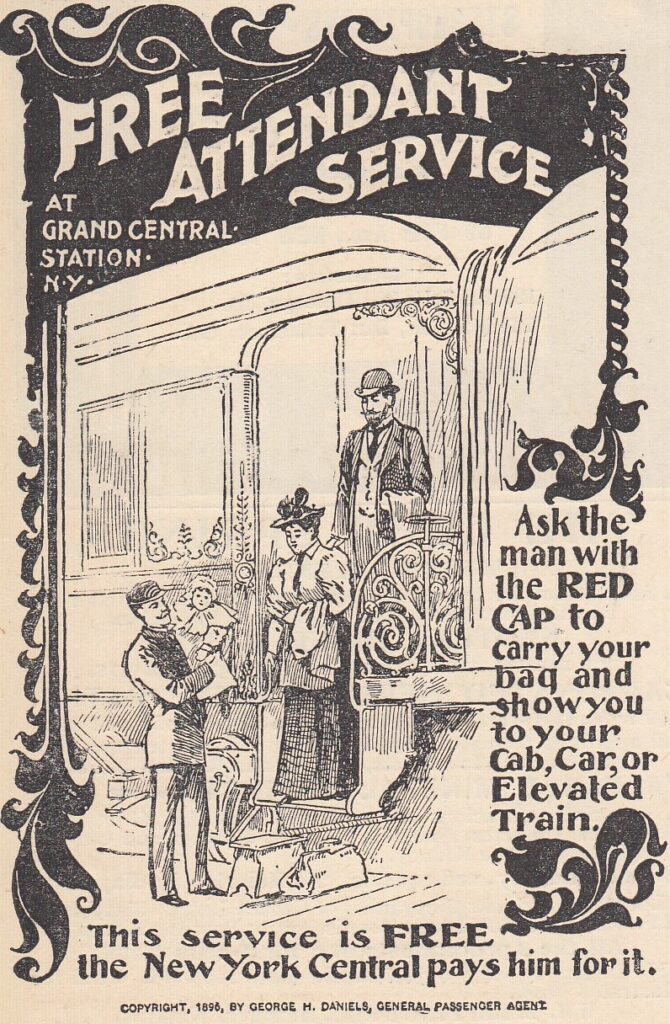
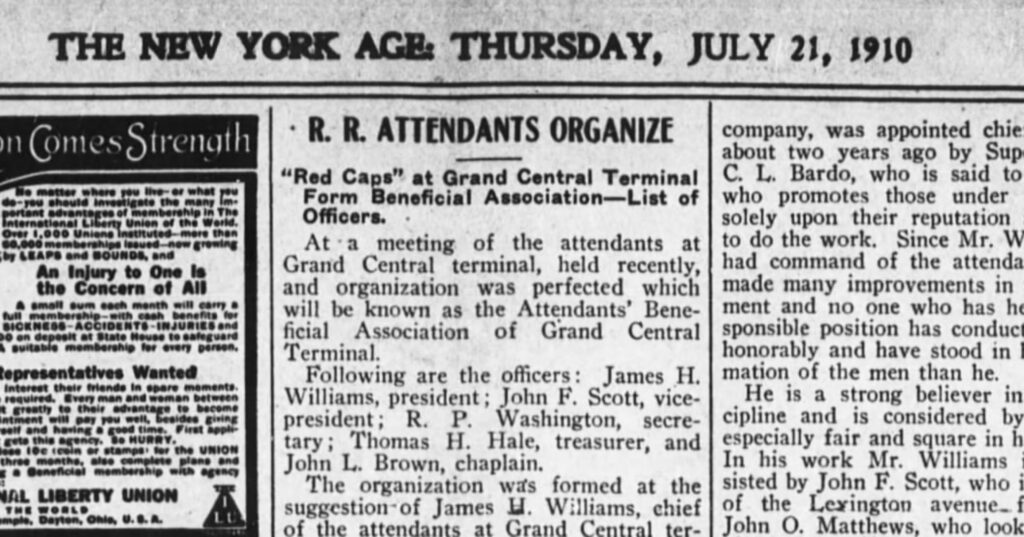
The New York Central launched its free Red Cap service in 1895, and promoted it widely in advertisements like this one, from 1896.When Williams sat for this portrait in 1905, he was working as a Red Cap, but had not yet been named Red Cap director, or “Chief”. Williams became the “Chief” of the Red Caps in 1909, and immediately got to work organizing a benevolent association for the Red Caps, covered here in the New York Age in 1910.Chief Williams posing with the Grand Central Terminal Red Caps baseball team in 1918. Red Caps carried hat boxes, valises… and sometimes even crying babies, too, as illustrated in this 1921 cover of The American Legion Weekly.James H. Williams was regularly covered in the local and national press. In 1923, the New York Age published a profile of Williams on its front page.
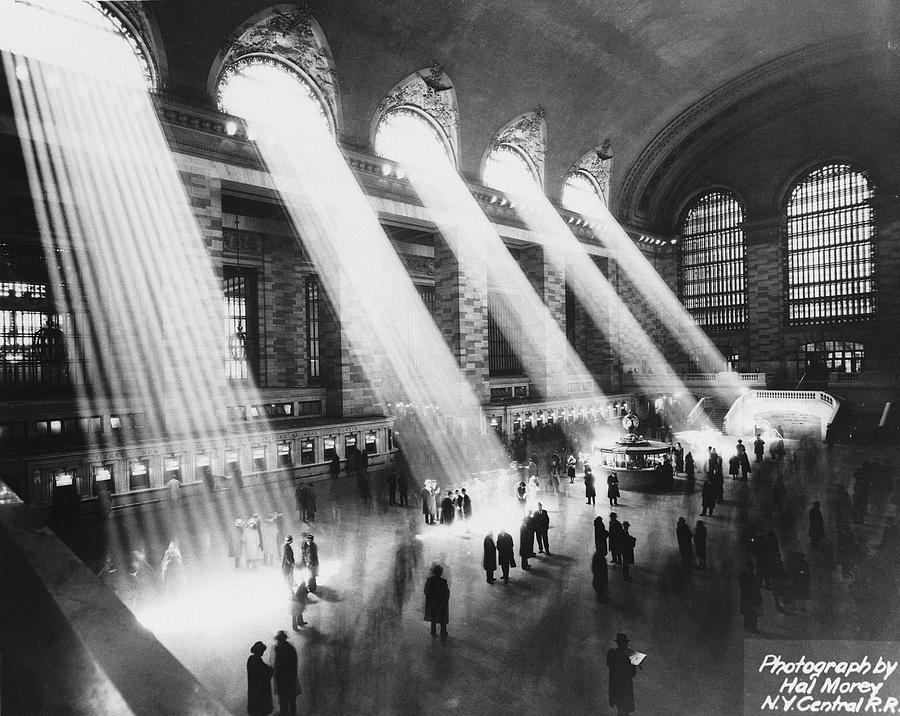
Hal Morey’s iconic shot of Grand Central from 1930 captures a blur of activity in the lower left corner. Could it be a Red Cap carrying a bag, drenched in sun?
The Grand Central Red Caps Orchestra perform “Nina”, under the direction of Russell Wooding, Frank Luther (vocals). RCA Victor, 1931
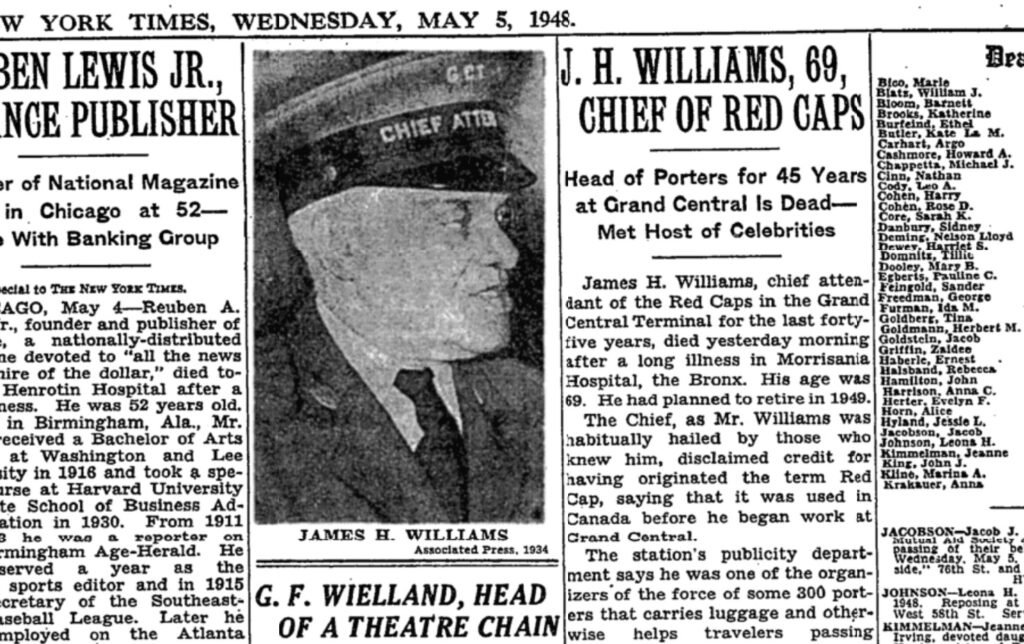
In 1939 as Red Caps around the country started organizing, Chief Williams remained strategically quiet. The formation of a Red Cap union was covered in this piece in the New York Age, September 16, 1939.Williams obit in the New York Times, May 5, 1948.
The Bowery Boys: New York City History podcast is brought to you …. by you!
We are now producing a new Bowery Boys podcast every week. We’re also looking to improve and expand the show in other ways — publishing, social media, live events and other forms of media. But we can only do this with your help!
We are now a creator on Patreon, a patronage platform where you can support your favorite content creators.
Please visit our page on Patreon and watch a short video of us recording the show and talking about our expansion plans.
If you’d like to help out, there are six different pledge levels. Check them out and consider being a sponsor.
We greatly appreciate our listeners and readers and thank you for joining us on this journey so far.
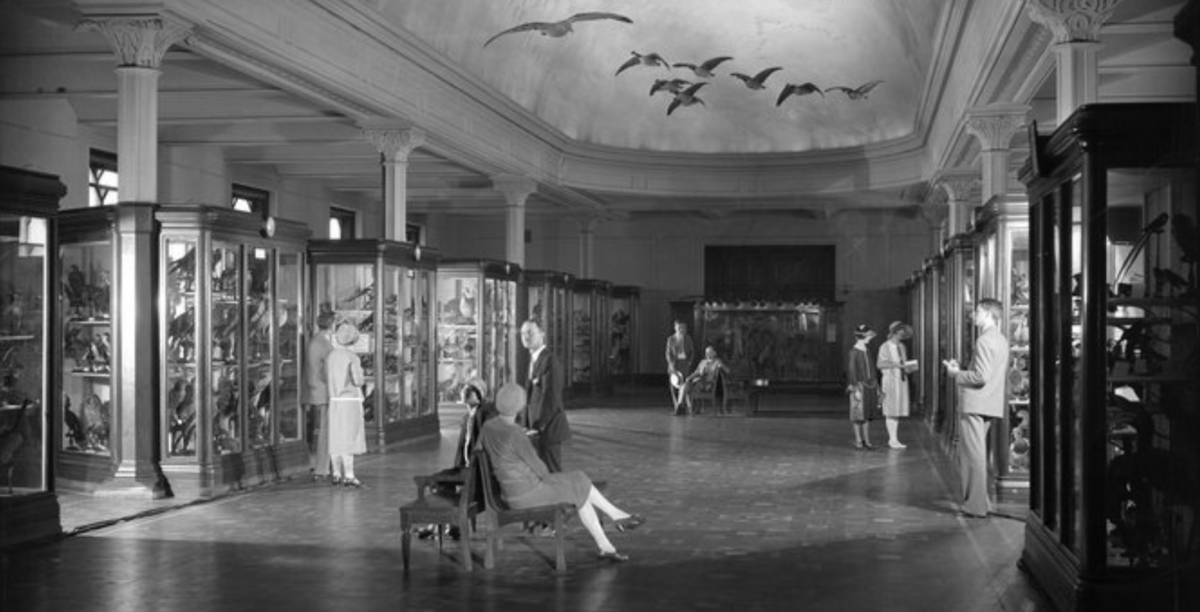
Birds of the World, 1927. Courtesy the American Museum of Natural History
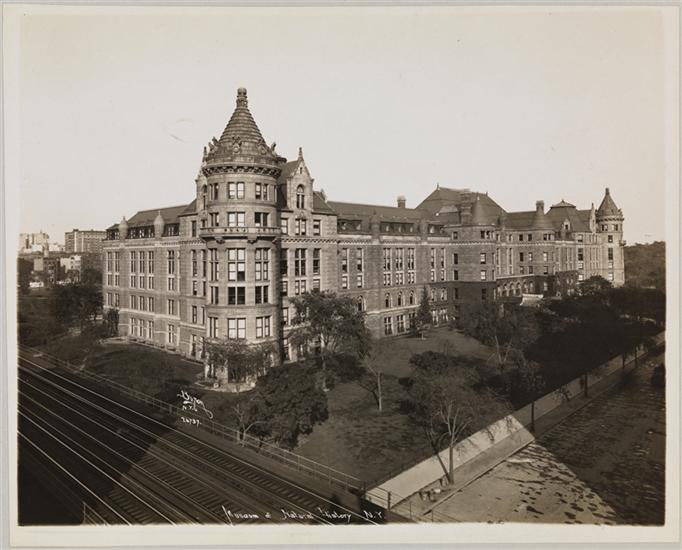
PODCAST Ancient space rocks, dinosaur fossils, anthropological artifacts and biological specimens are housed in New York’s world famous natural history complex on the Upper West Side — the American Museum of Natural History!
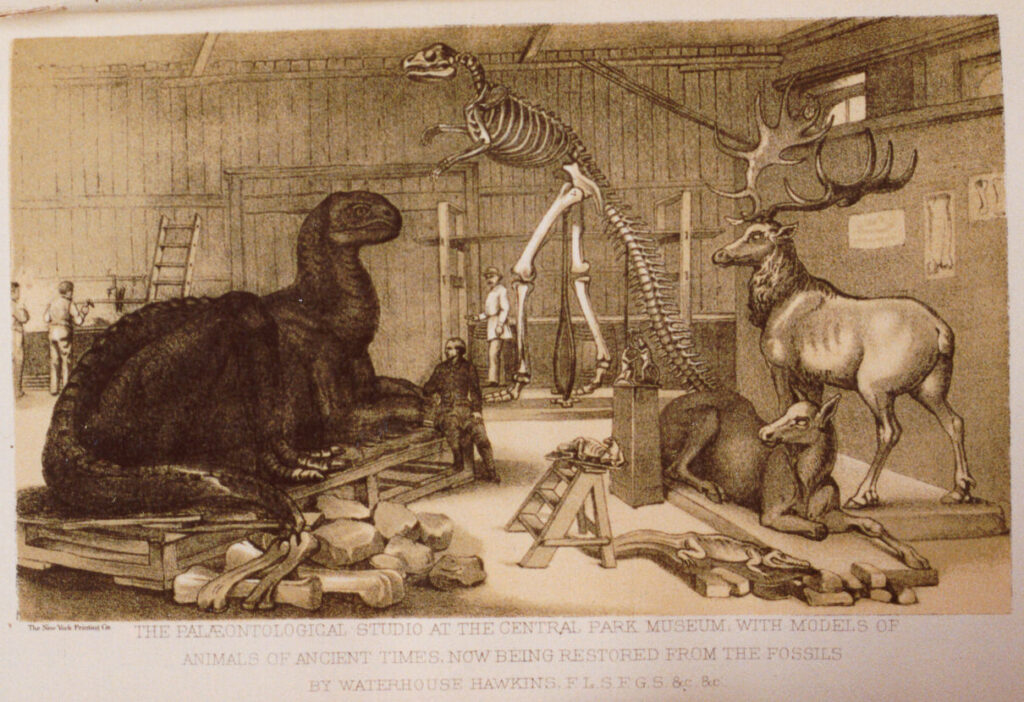
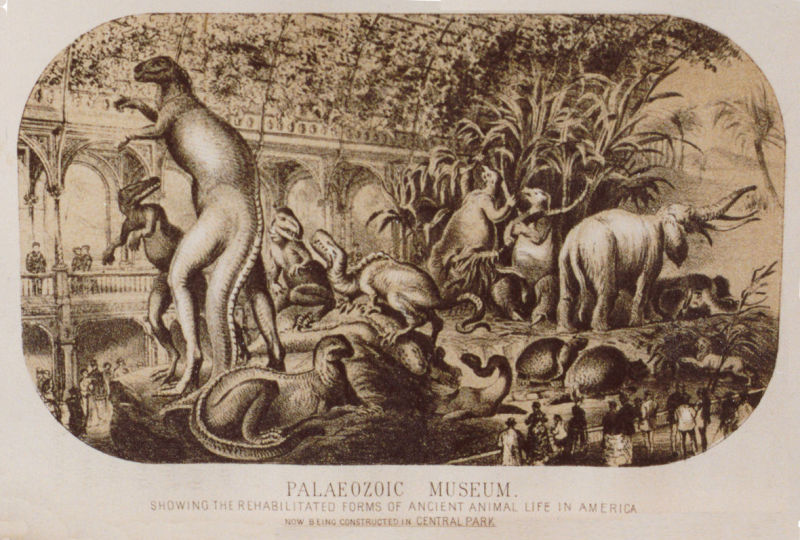
Throughout the 19th century, New Yorkers tried to establish a legitimate natural history venue in the city, including an aborted plan for a Central Park dinosaur pavilion.
With the creation of the American Museum of Natural History, the city finally had a premier institution that celebrated science and sent expeditions to the four corners of the earth.
Tune in to hear the stories of some of the museum’s most treasured artifacts and the fascinating folks behind the collection — including one explorer who might have inspired a famous movie hero.
But there’s also a dark side to the museum’s history, one that includes the tragic tale of Minik the Inughuit child, subject by museum directors to a bizarre and cruel lie.
PLUS: How exactly do you display a 68,100 lb meteorite?
AND: An update involving that rather controversial equestrian statue of Theodore Roosevelt.
This is a re-broadcast of a show originally released on November 24, 2010 with bonus material recorded in 2020.
Listen today on your favorite podcast player or just press play here:
The website of the American Museum of Natural History has all the details you need for your visit — including information on safety. On top of suggested admission, there are additional costs for the special exhibits, including the planetarium.
The Arsenal studio of Benjamin Waterhouse Hawkins, 1869.
A sketch of what the Paleozoic Museum might have looked like, had construction not been stopped by the cronies of Boss Tweed.
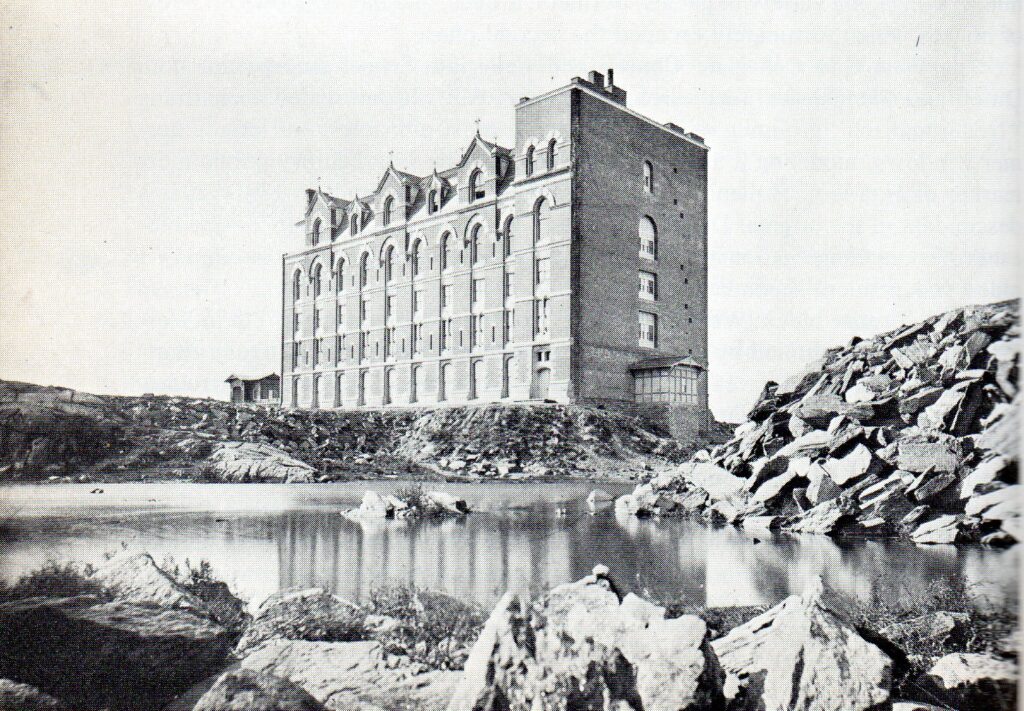
The lonely little first building of New York’s natural history museum, pictured in the early 1870s, placed on an unspectacular lot of land alongside Central Park called Manhattan Square.
New York Public Library
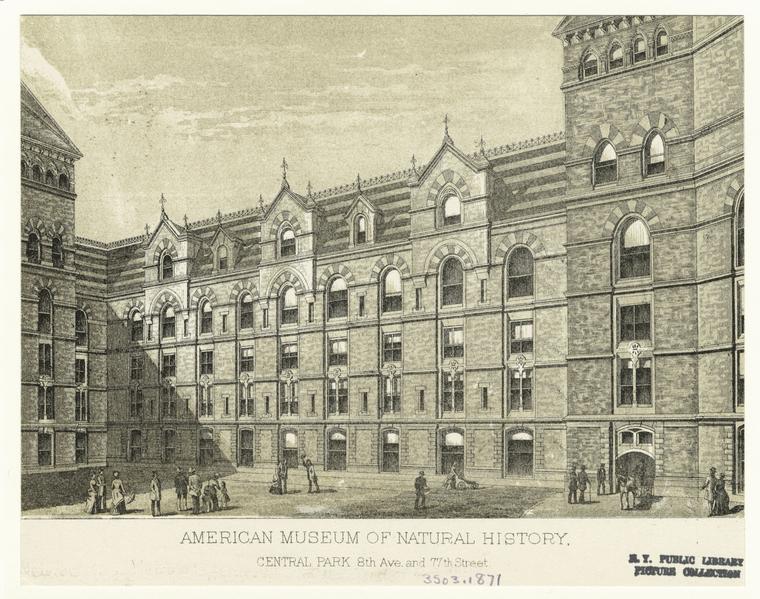
This illustration of the building from 1871 above displays the particular touches of Jacob Wray Mould, in the whimsical window design. What it doesn’t show is the vibrant, robust color of the building.
Although subsumed by later additions, some areas of the original walls are still peeking out within the larger structure today. [source NYPL}
The grandeur of the museum in 1908. Note the elevated tracks running along Columbus Avenue. (Museum of the City of New York)Library of Congress
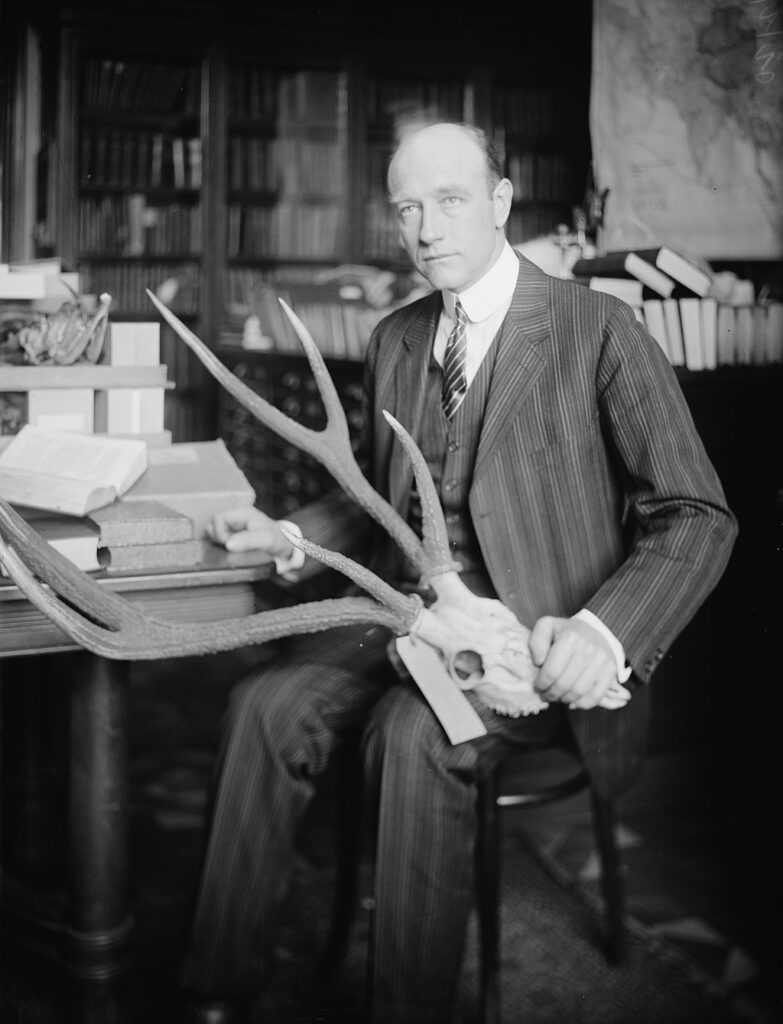
Roy Chapman Andrews, the dashing adventurer who became one of the museum’s most valuable explorers. It’s rumored that Andrews was the inspiration for the character of Indiana Jones.
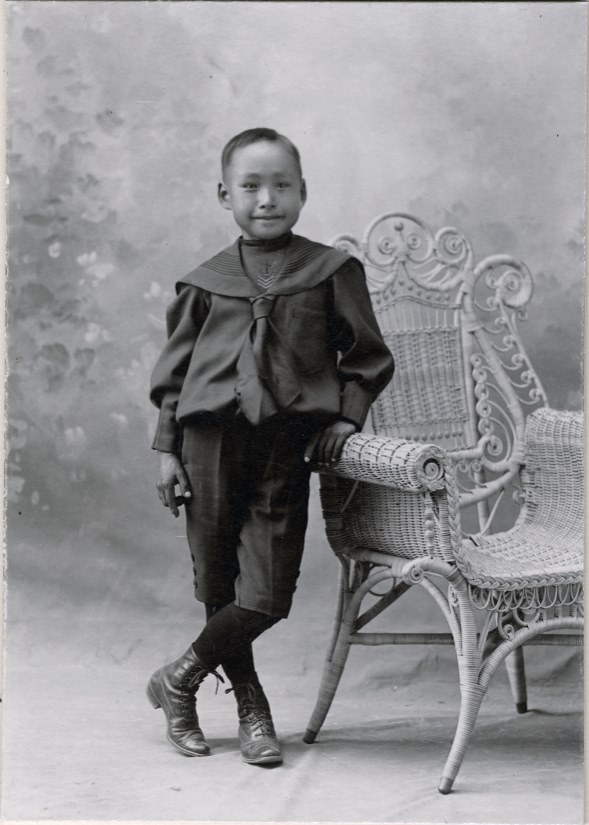
Minik Wallace, the Inuit boy brought to New York with his father in 1897. Minik was subject to one of the most bizarre and tragic cover ups in the museum’s history.
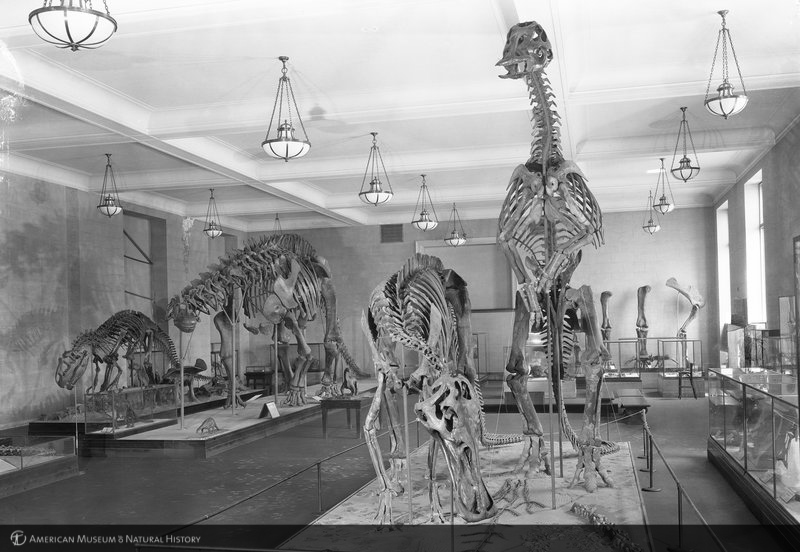
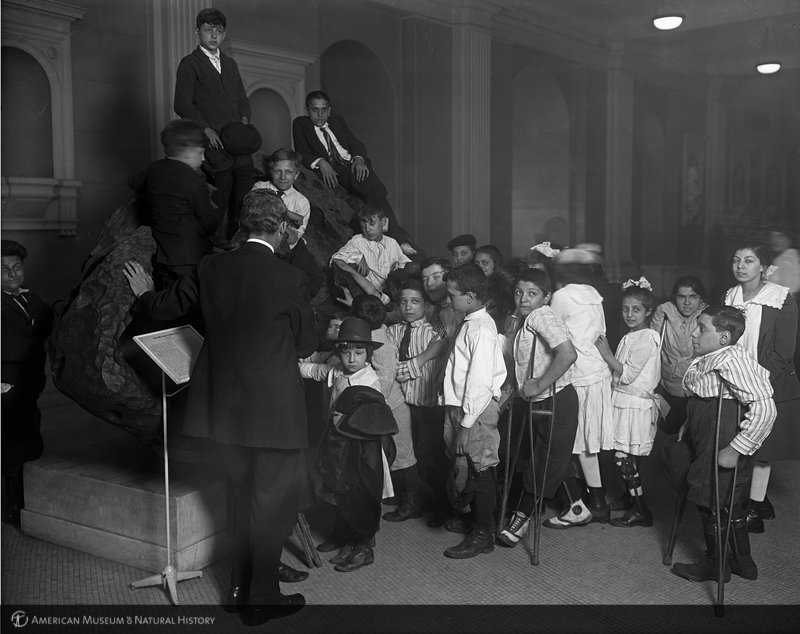
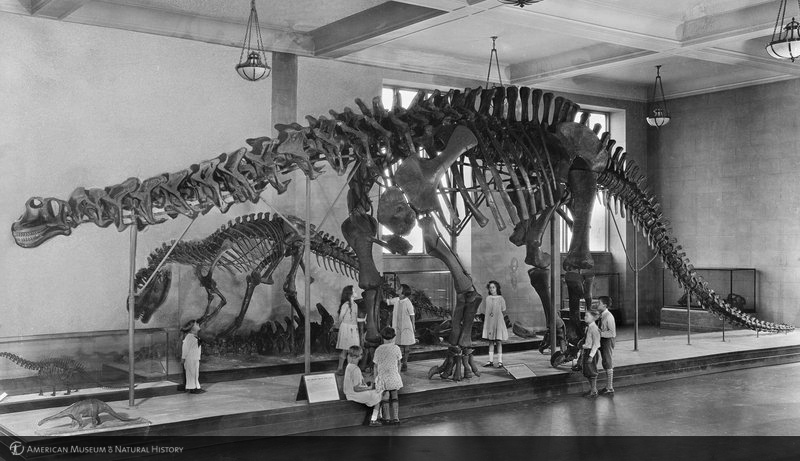
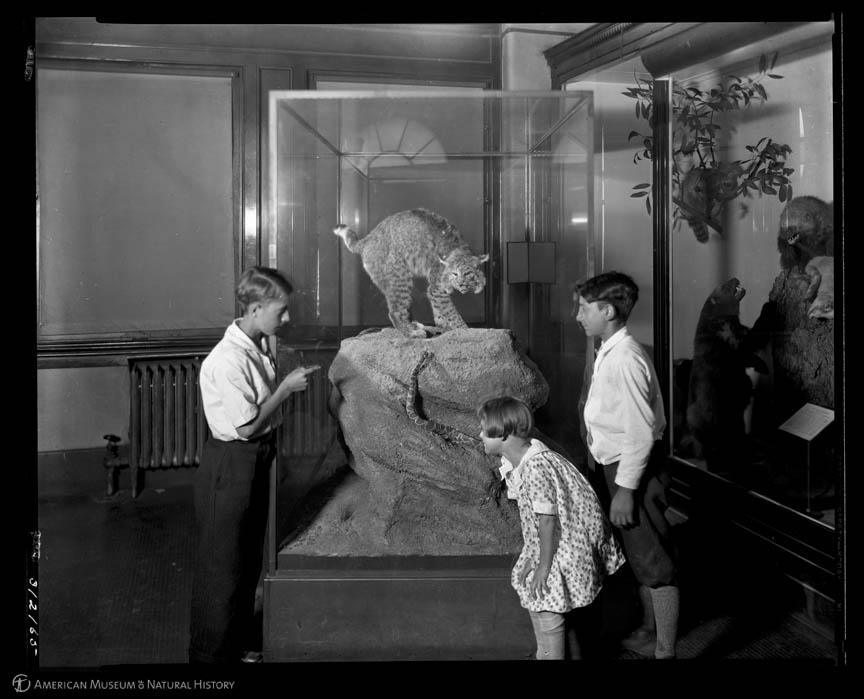
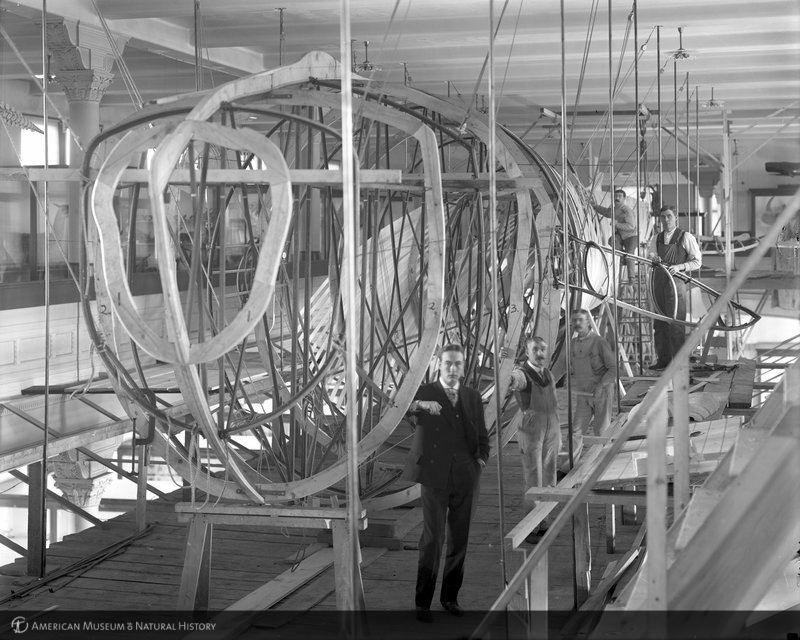
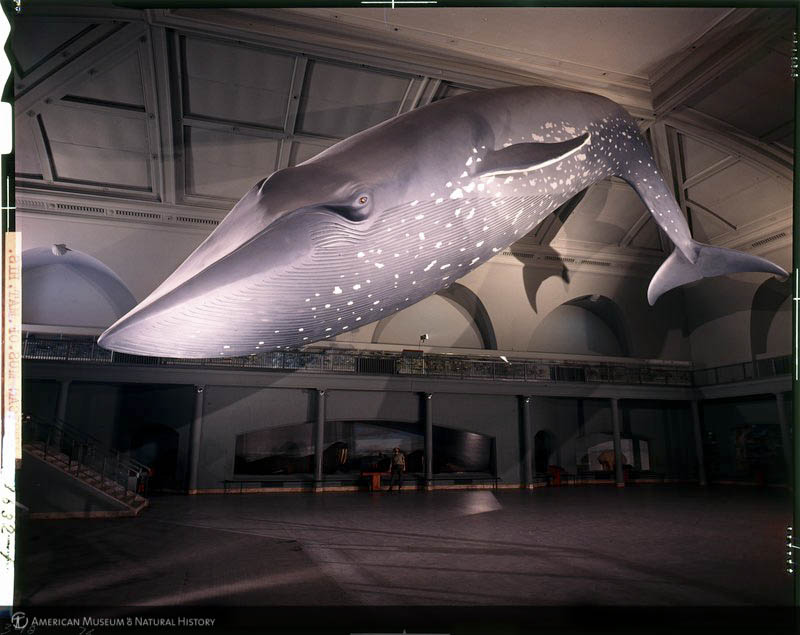
Children viewing the Williamette meteorite, 1920 (AMNH)Children viewing Brontosaurus (Apatosaurus) exhibit, 1927, courtesy the American Museum of Natural HistoryChildren viewing Wild Cat Group, 1927, courtesy AMNHRoy Chapman Andrews with frame for model of sulphur bottom [blue] whale, November, 1906. (Courtesy AMNH). But this is not the whale you know and love! According to the Museum: “The Museum’s iconic blue whale model, first constructed in the mid-1960s, was based on photographs of a female blue whale found dead in 1925 off the southern tip of South America.” It was resculpted in 2001 based on more modern research and made with foam and fiberglass.The Blue Whale as it appeared in 1969. (Courtesy AMNY)
A little song and dance while you’re marveling at the natural marvels:
The Bowery Boys: New York City History podcast is brought to you …. by you!
We are now producing a new Bowery Boys podcast every week. We’re also looking to improve and expand the show in other ways — publishing, social media, live events and other forms of media. But we can only do this with your help!
We are now a creator on Patreon, a patronage platform where you can support your favorite content creators.
Please visit our page on Patreon and watch a short video of us recording the show and talking about our expansion plans.
If you’d like to help out, there are six different pledge levels.Check them out and consider being a sponsor.
We greatly appreciate our listeners and readers and thank you for joining us on this journey so far.
PODCAST The strange and wonderful life of Nikola Tesla in New York City.
The Serbian immigrant Nikola Tesla was among the Gilded Age’s brightest minds, a visionary thinker and inventor who gave the world innovations in electricity, radio and wireless communication.
So why has Tesla garnered the mantle of cult status among many?
Part of that has to do with his life in New York City, his shifting fortunes as he made his way (counting every step) along the city streets.
Tesla lived in Manhattan for more than 50 years, and although he hated it when he first arrived, he quickly understood its importance to the development of his inventions.
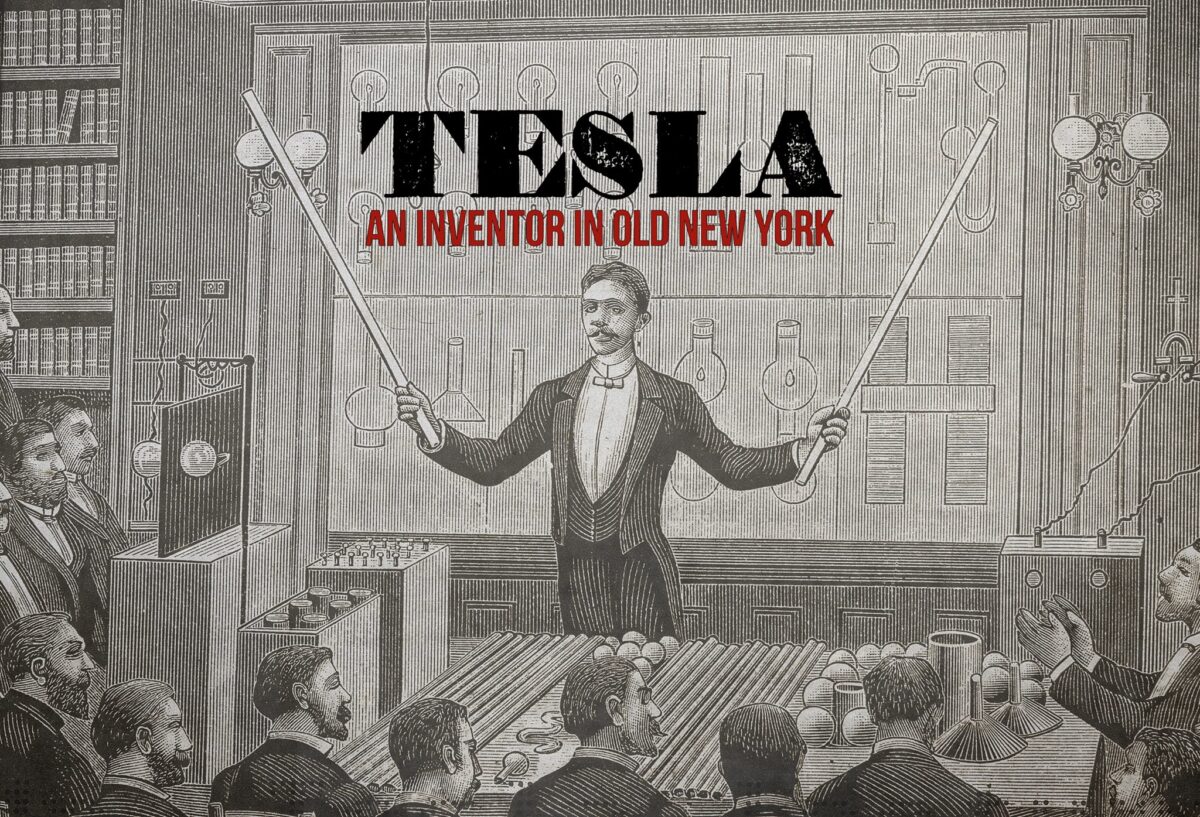
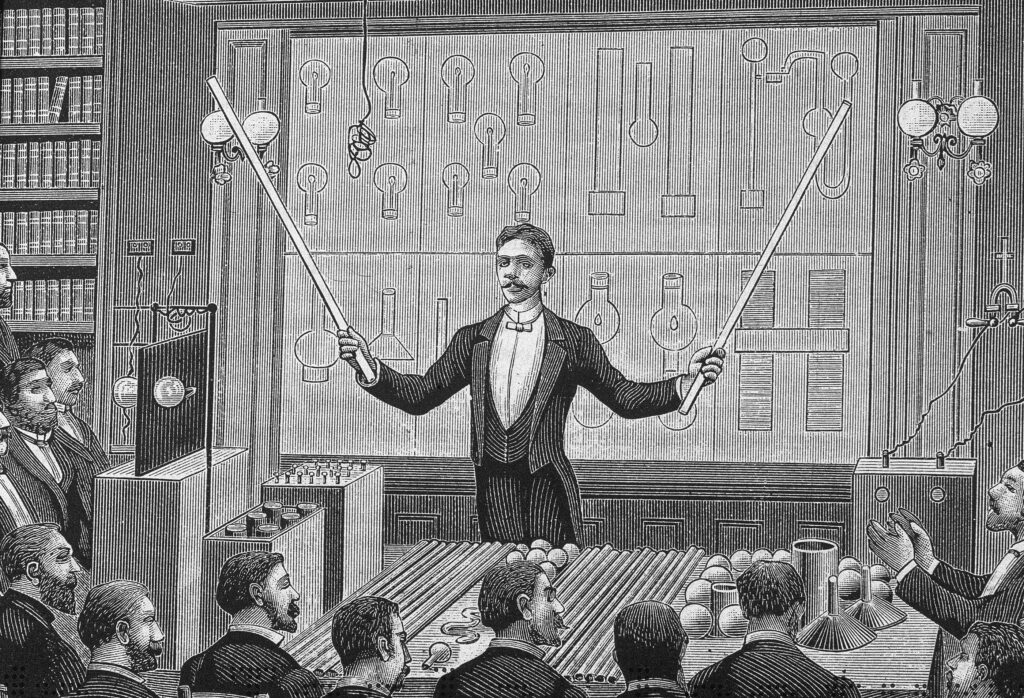
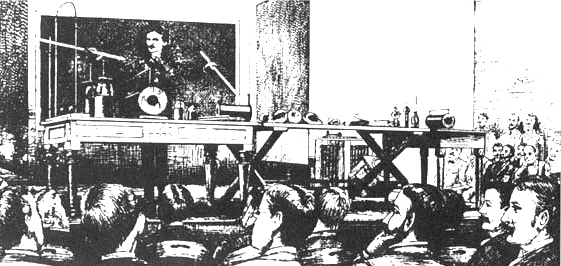
Engraving of Nikola Tesla (1856 – 1943) ‘lecturing before the French Physical Society and The International Society of Electricians,’ 1880s. (Kean Collection/Getty Images)
Travel with us to the many places Tesla worked and lived in Manhattan — from the Little Italy roost where the Tesla Coil may have been invented to his doomed Greenwich Village laboratory.
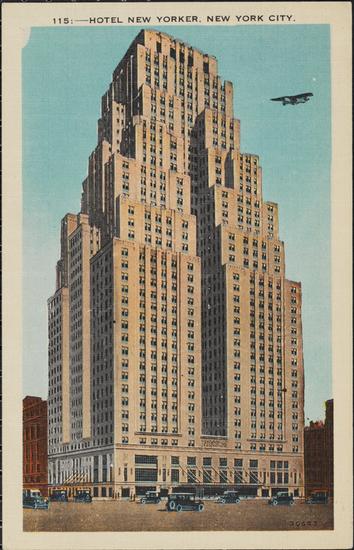
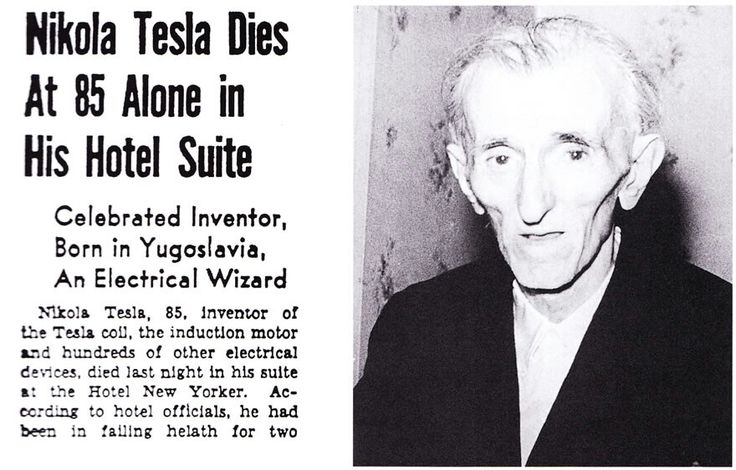
From his first job in the Lower East Side to his final home in one of Midtown Manhattan‘s most famous hotels.
Nikola Tesla, thank you for bringing your genius to New York City.
PLUS: The marvelous demonstration at Madison Square Garden in 1898 that proves that Tesla invented the drone!
The Bowery Boys: New York City History podcast is brought to you …. by you!
We are now producing a new Bowery Boys podcast every week. We’re also looking to improve and expand the show in other ways — publishing, social media, live events and other forms of media. But we can only do this with your help!
We are now a creator on Patreon, a patronage platform where you can support your favorite content creators.
Please visit our page on Patreon and watch a short video of us recording the show and talking about our expansion plans.
If you’d like to help out, there are six different pledge levels. Check them out and consider being a sponsor.
We greatly appreciate our listeners and readers and thank you for joining us on this journey so far.
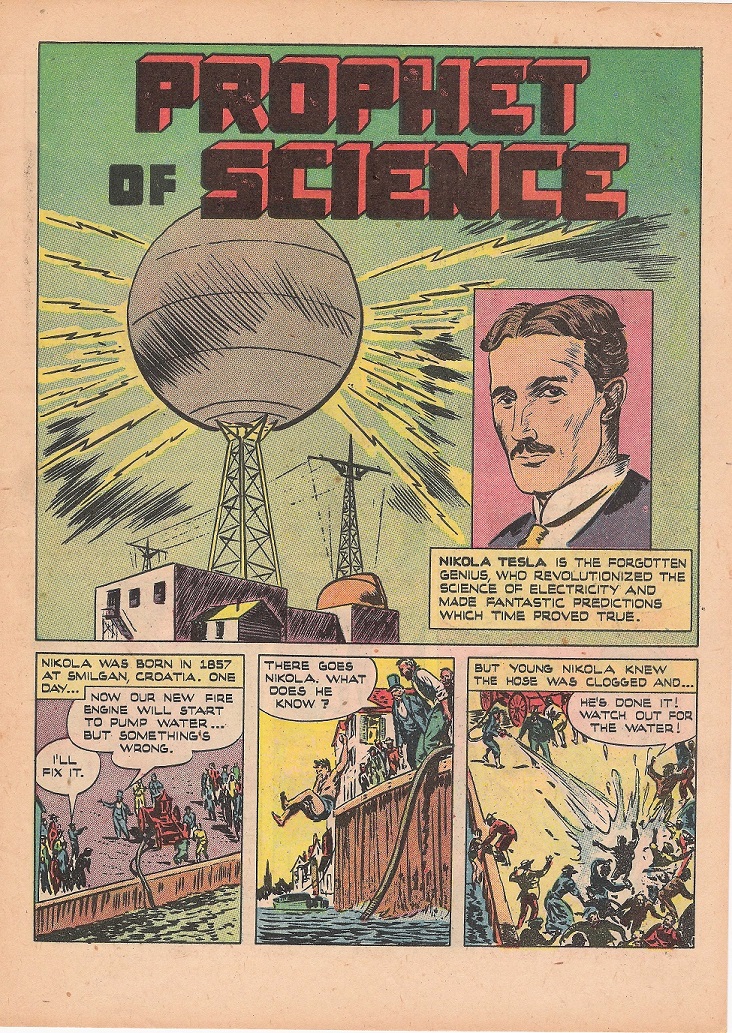
A page from the 1942 comic book Real Heroes, illustrating the life of Nikola Tesla:
Courtesy Quality Comics
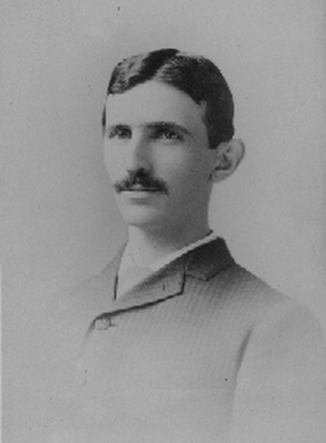
Young Tesla in 1885 while still in the employ of Thomas Edison.
Smithsonian Institution
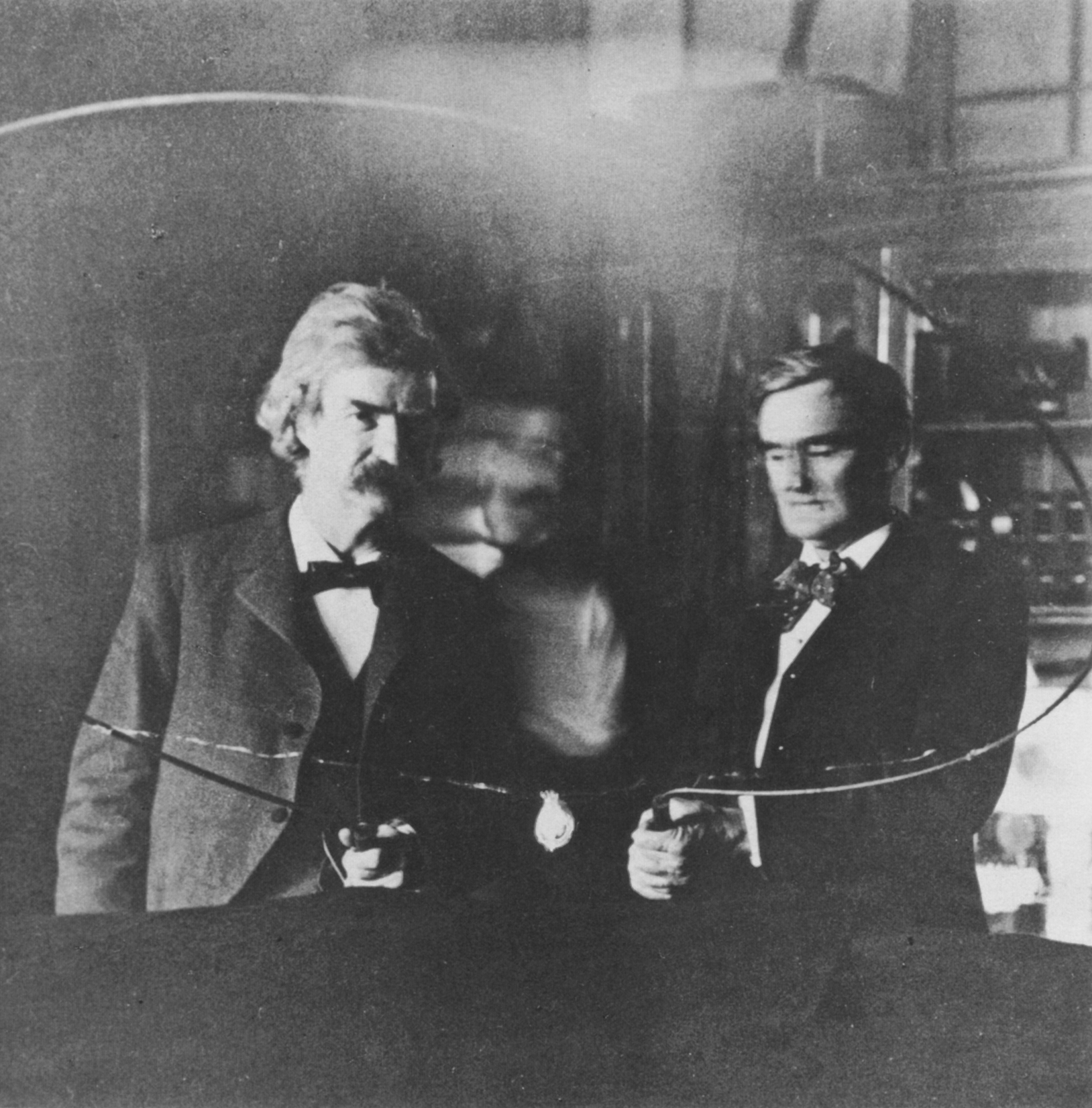
Mark Twain and Joseph Jefferson in Tesla’s South Fifth Avenue Laboratory. That’s Tesla, blurry, in the background.
Courtesy the Tesla Society
Tesla’s 1888 lecture at Columbia changed his life. His demonstration dazzled the room of distinguished scientists and professors and particularly grabbed the attention of journalists.
Courtesy Pictures of Infinity
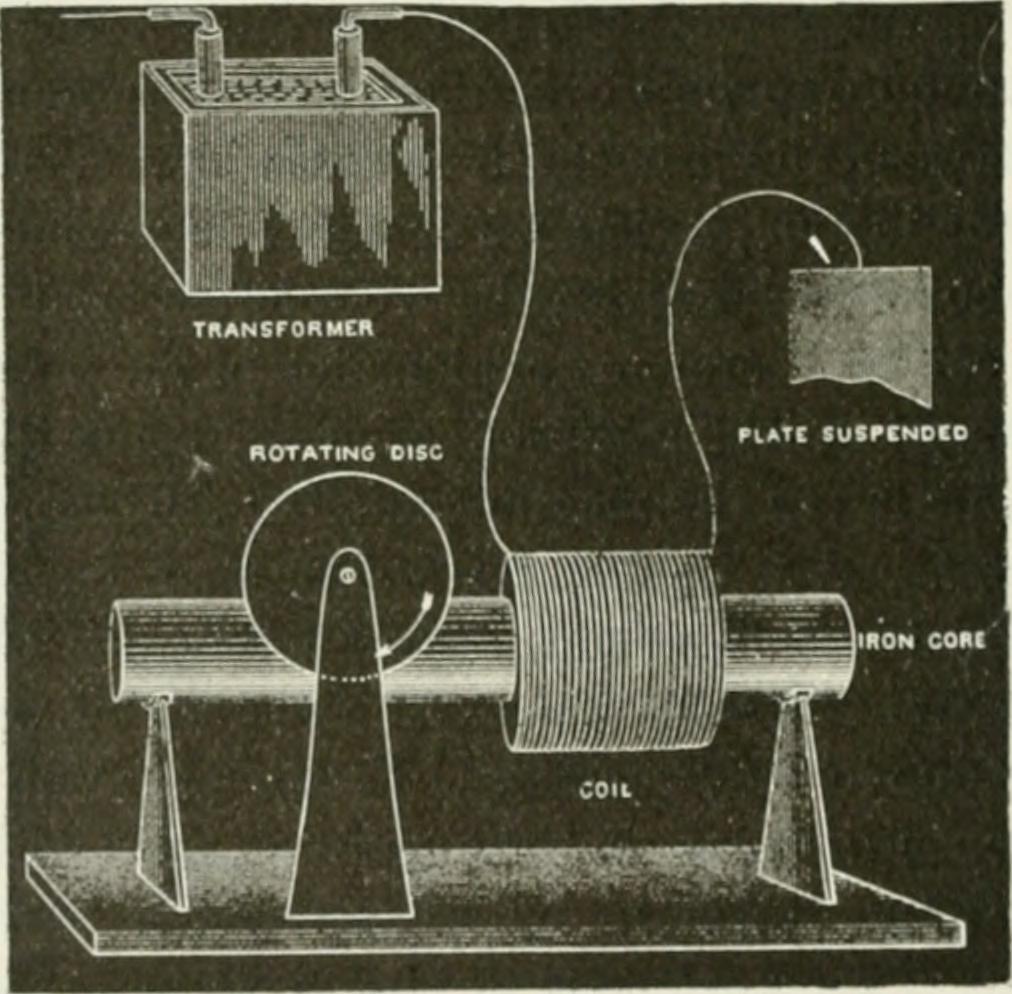
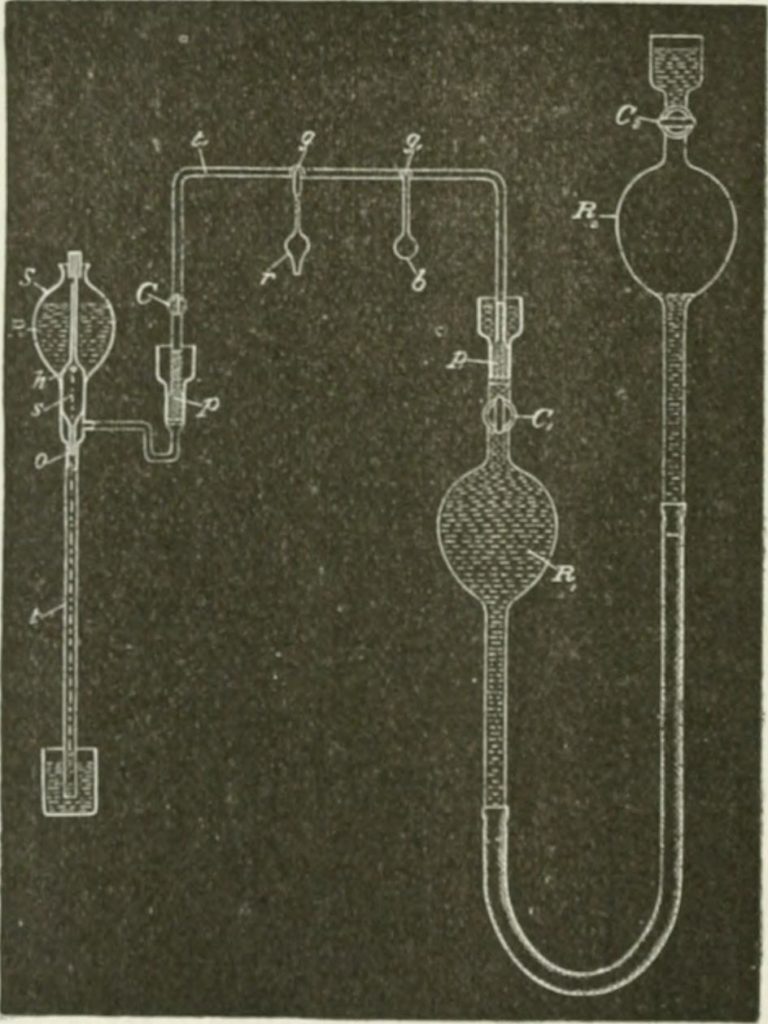
Diagrams of Tesla’s inventions from the 1880s and 90s have an almost otherworldly quality that wouldn’t look out of place in a gallery of modern art.
Internet Archive Book Images
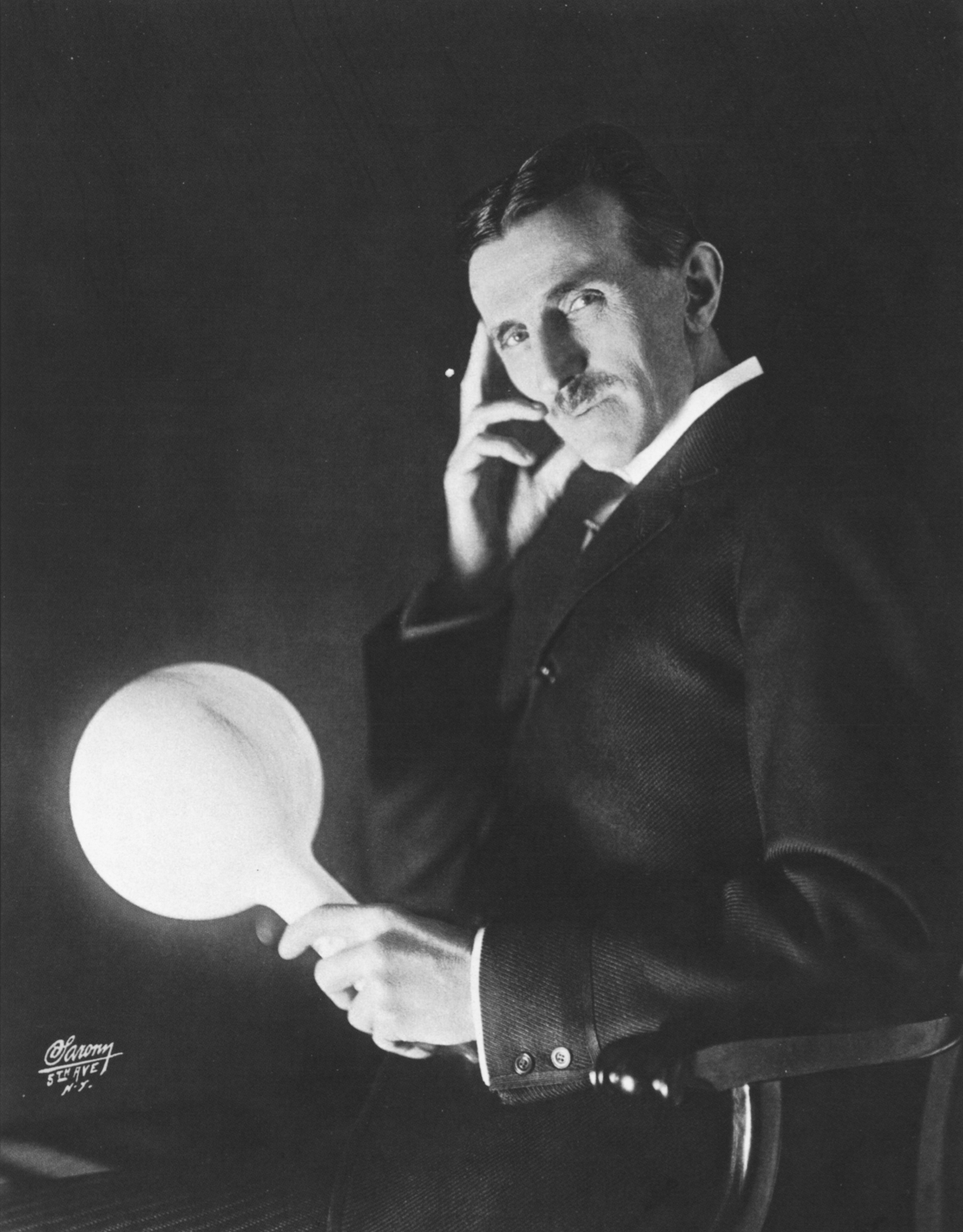
The Not-so-mad Scientist: Tesla posing with perhaps his most famous prop — a large bulb which could generate light from the human body.
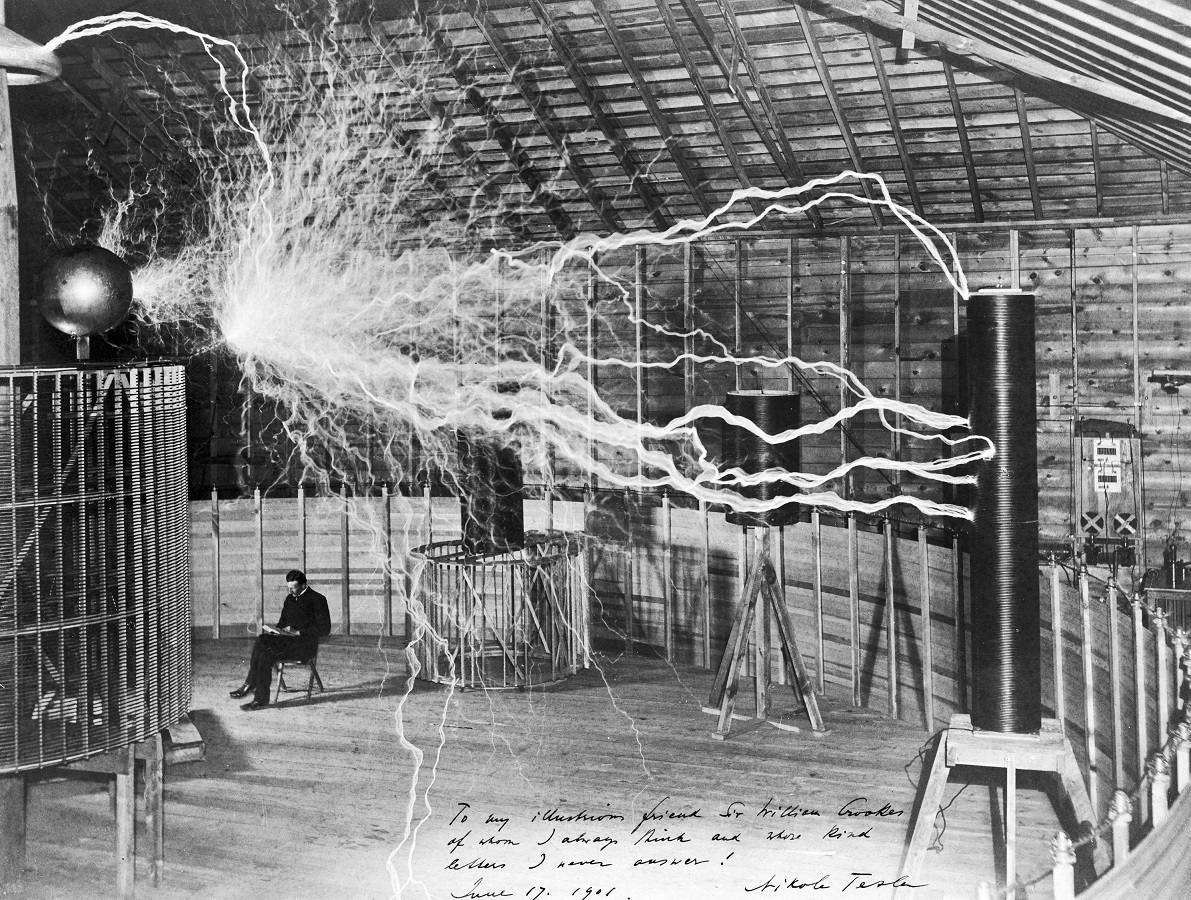
Tesla in Colorado Springs, 1899. From the caption: “A publicity photo of a participant sitting in the Colorado Springs experimental station with his “Magnifying Transmitter“. The arcs are about 22 feet (7Â m) long. (Tesla’s notes identify this as a double exposure.)”
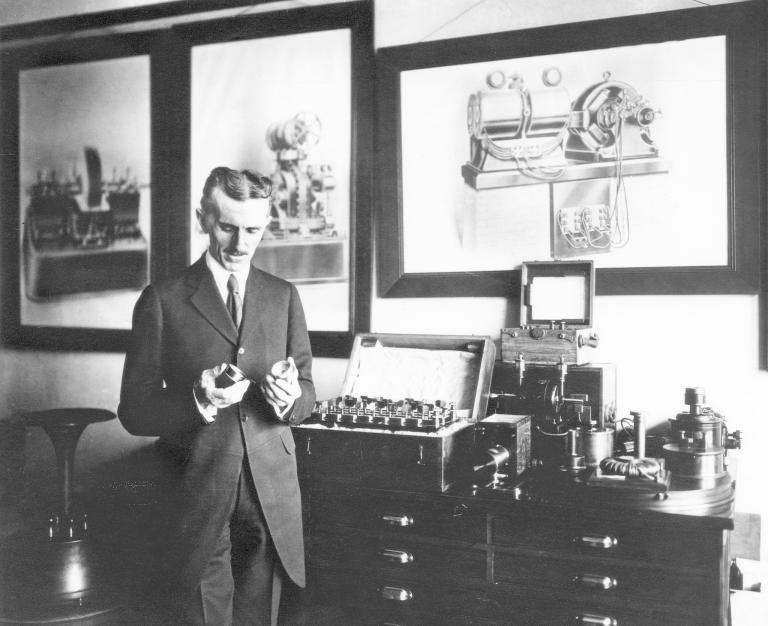
M0014782 Nikola Tesla, with his equipment Credit: Wellcome Library, London. Wellcome Images images@wellcome.ac.uk http://wellcomeimages.org Nikola Tesla, with his equipment for producing high-frequency alternating currents. Inscribed: ‘To my illustrious friend Sir William Crookes of whom I always think and whose kind letters I never answer! Nikola Tesla June 17, 1901’ Photograph 1901 Published: –
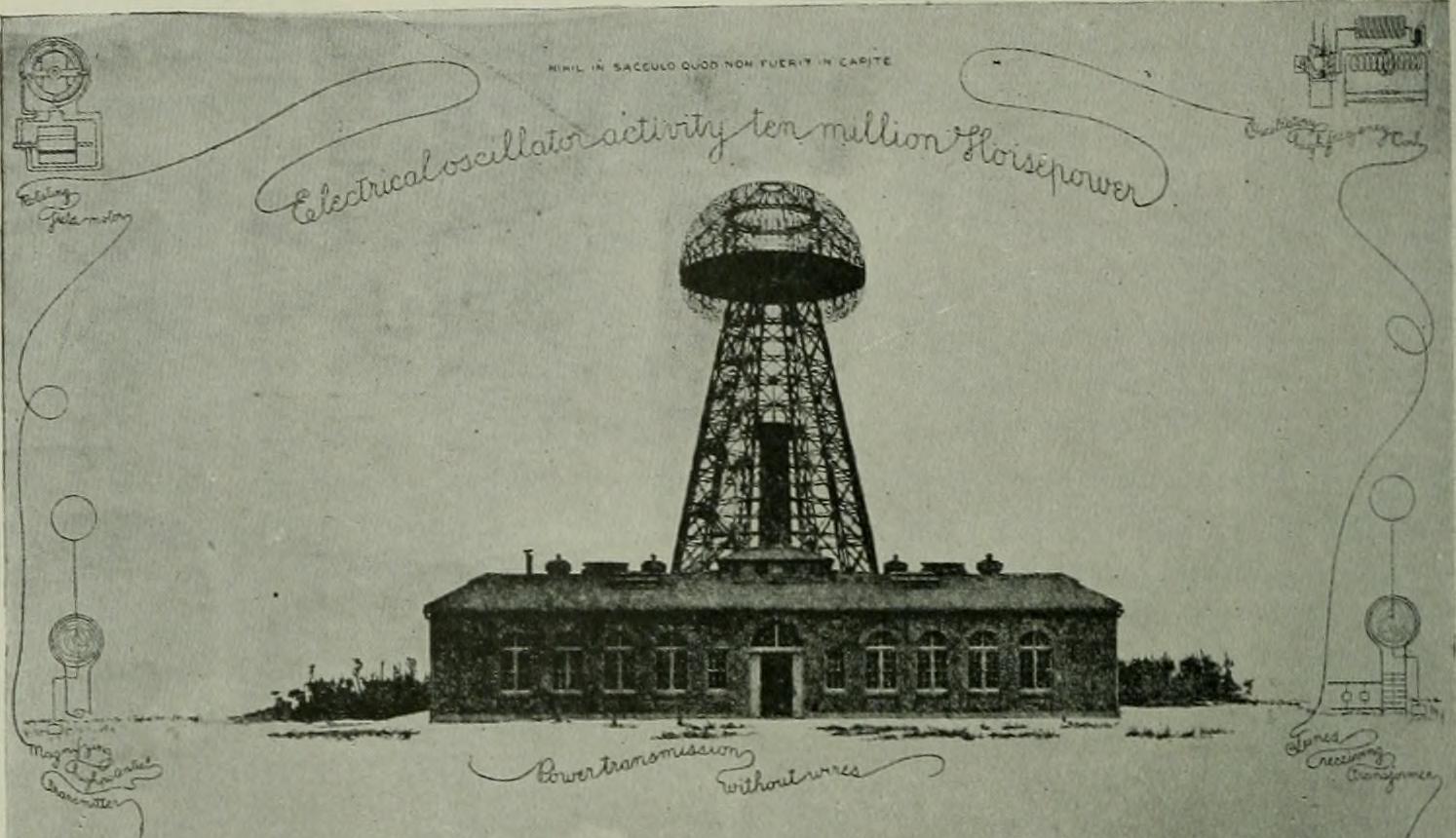
A view of Wardenclyffe Tower, Tesla’s grandest attempt of creating a wireless tranmission of electricity.
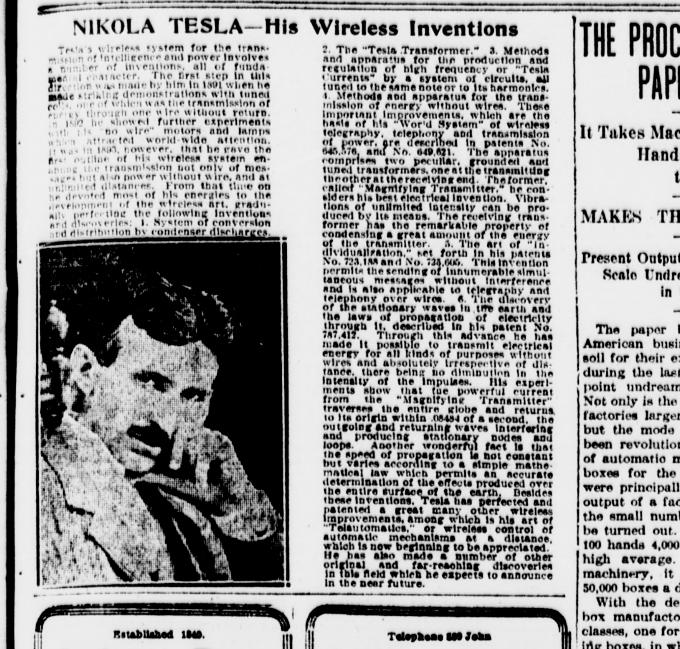
From the New York Sun, March 31, 1912: “Tesla’s wireless system for the transmission of intellegence and power involves a number of inventions, all of fundamental character.”
1916: Tesla poses in his West 40th Street laboratory, 1916.
Courtesy Everett Collection Inc., ALAMY
Courtesy Museum of the City of New York
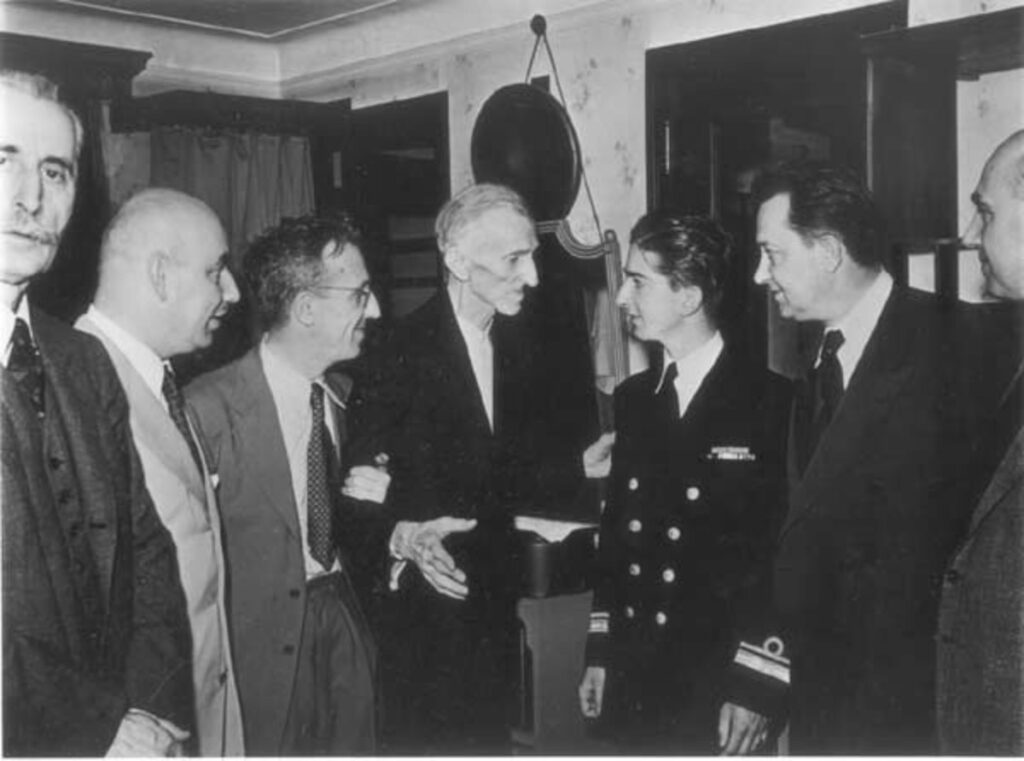
Nikola Tesla at the Hotel New Yorker with King Peter II of Yugoslavia. (Courtesy The New Yorker Hotel)
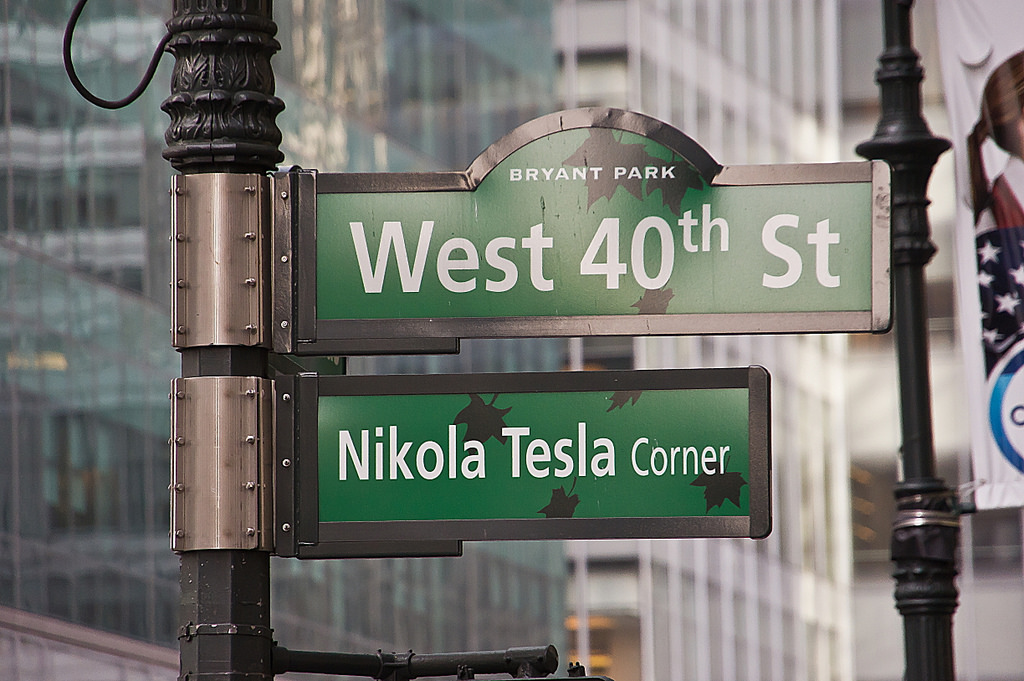
Bryant Park, near the spot of Tesla’s former laboratory and the place where he fed the pigeons.
A photo posted by Gregory Young (@boweryboysnyc) on
For more information
Visit the excellent blog by author Martin Hill Ortiz, deeply exploring the life of Tesla in New York City.
There are many societies devoted to the life and work of Nikola Tesla including the Tesla Memorial Society of New York. Â The Oatmeal is behind the effort to turn Wardenclyffe into the Tesla Science Center. Go read up on Tesla at The Oatmeal first, then check out their efforts at the Tesla Science Center.
Wann learn more about Tesla? There’s a few great books on his life including the latest by W. Bernard Carlson — Tesla: Inventor of the Electrical Age. — and Sean Patrick’s Nikola Tesla: Imagination and the Man Who Invented the 20th Century.
Then there are Tesla’s own writings — My Inventions: The Autobiography of Nikola Tesla and The Inventions, Researches and Writings of Nicola Tesla
Beach’s pneumatic subway — the first in the United States — opened 150 years ago today. To celebrate this anniversary, we are re-representing our 2016 show on the history of Alfred Ely Beach and his shortlived (but truly marvelous) invention.
PODCASTThe unbelievable story of Alfred Ely Beach’s Pneumatic Transit, a curious solution from 1870 to New York’s growing transporation crisis.
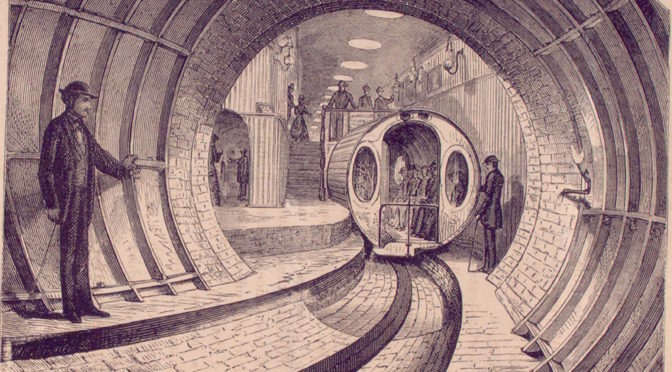
The first subway in New York — the first in the United States! — traveled only a single block and failed to influence the future of transportation. And yet Alfred Ely Beach‘s marvelous pneumatic transit system provides us today with one of the most enchanting stories of New York during the Gilded Age.
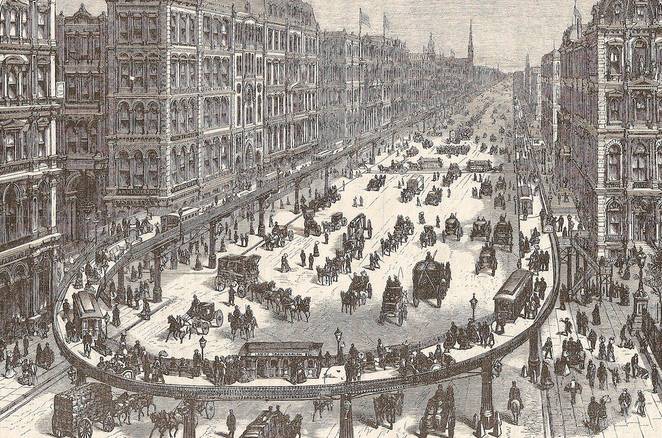
With the growing metropolis still very much confined to below 14th Street by 1850, New Yorkers frantically looked for more efficient ways to transport people out of congested neighborhoods. Elevated railroads? Moving sidewalks? Massive stone viaducts?
Inventor Beach, publisher of the magazine Scientific American, believed he had the answer, using pneumatic power — i.e. the power of pressurized air! But the state charter only gave him permission to build a pneumatic tube to deliver mail, not people.
That didn’t stop Beach, who began construction of his extraordinary device literally within sight of City Hall. How did Beach build such an ambitious project under secretive circumstances? What was it like to ride a pneumatic passenger car? And why don’t we have pneumatic power operating our subways today?
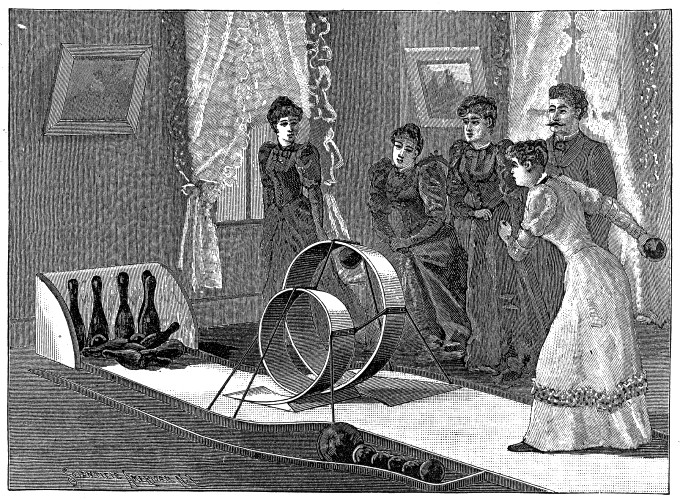
FEATURING: Boss Tweed at his most bossiness, piano tunes under Broadway and something called a centrifugal bowling alley!
To get this week’s episode, simply download or stream it for FREE from iTunes, Stitcher, Spotify or other podcasting services.You can also get it straight from our satellite site.
The Bowery Boys: New York City History podcast is brought to you …. by you!
We are now producing a new Bowery Boys podcast every other week.
We’re also looking to improve and expand the show in other ways —
publishing, social media, live events and other forms of media. But we
can only do this with your help!
We are now a creator on Patreon, a patronage platform where you can support your favorite content creators.
Please visit our page on Patreon
and watch a short video of us recording the show and talking about our
expansion plans. If you’d like to help out, there are six different
pledge levels. Check them out and consider being a sponsor.
ALL patrons at all levels will receive many benefits include the next episode of the Bowery Boys Movie Club,
an exclusive podcast (released every 6-8 weeks) celebrating New York
City in the movies. And patrons at the Five Points ($5) level and up
will get our other exclusive podcast — The Bowery Boys: The Takeout — released every two weeks.
We greatly appreciate our listeners and readers and thank you for joining us on this journey so far.
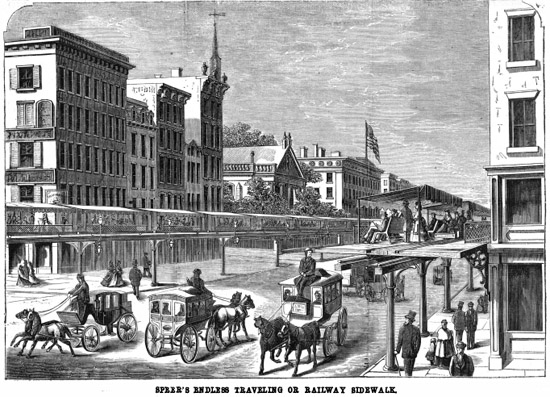
Alfred Speer’s moving sidewalk concept would have lifted pedestrians off the street and onto a moving ribbon that would have stretched up and down Broadway.
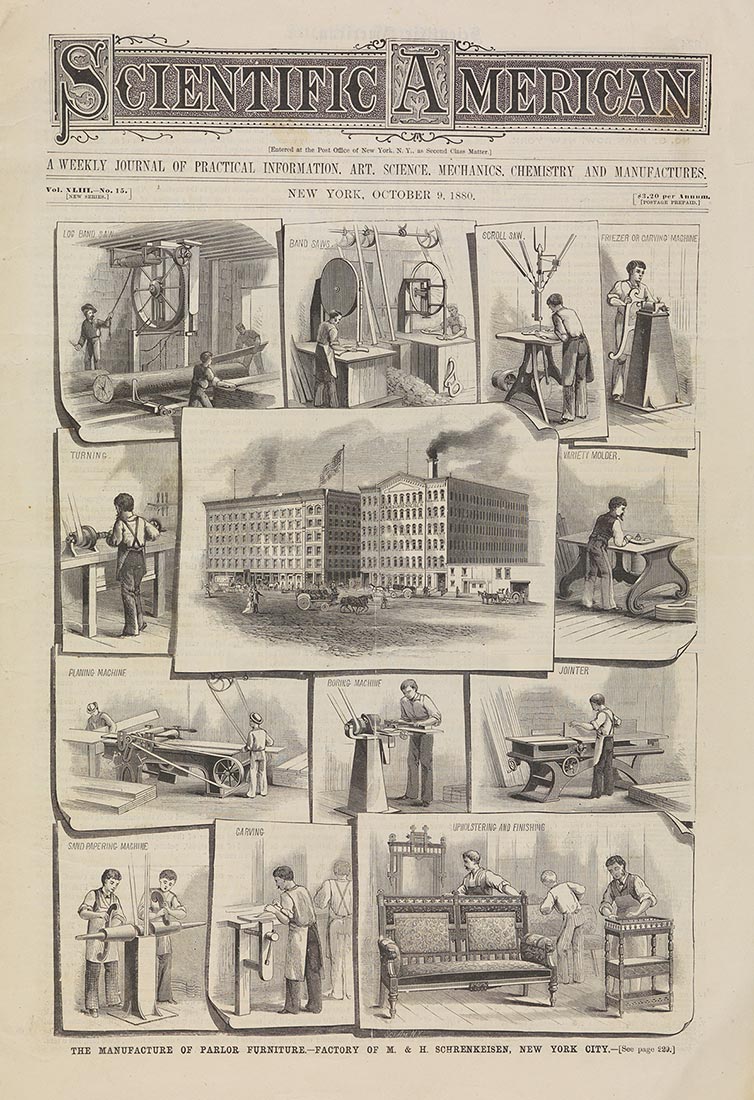
An 1880 issue of Scientific American, the publication owned by Alfred Eli Beach that provided the impetus for many extraordinary inventions during the Gilded Age.
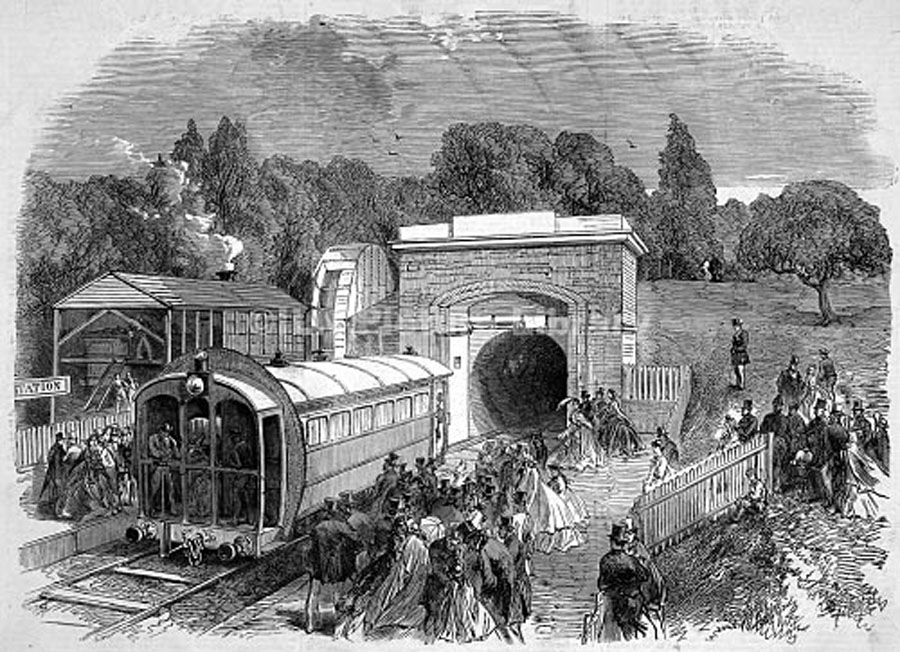
The ‘atmospheric railway’ which ran during London’s Crystal Palace Exhibition in 1864.
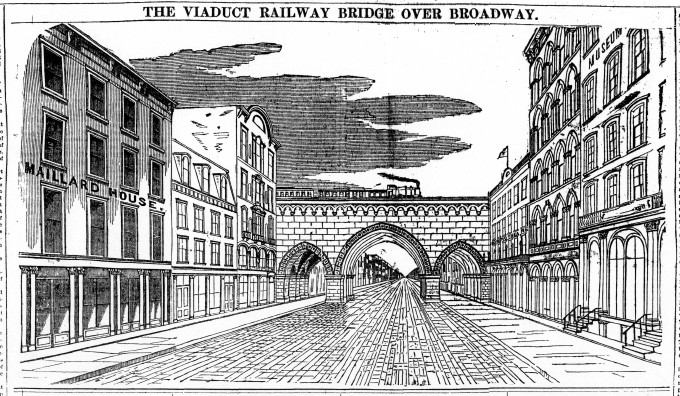
Another idea which transfixed New Yorkers (and in particular Boss Tweed) was the elevated viaduct which would have sliced through dozens of city blocks, creating an epic piece of architecture throughout Manhattan.
From the Tribune, July 8, 1871. Courtesy Columbia University
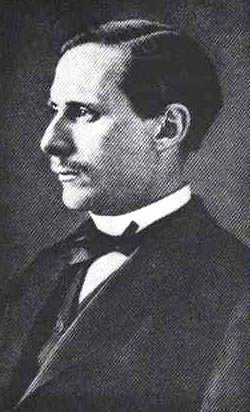
Alfred Ely Beach, mastermind of the Broadway pneumatic tunnel project:
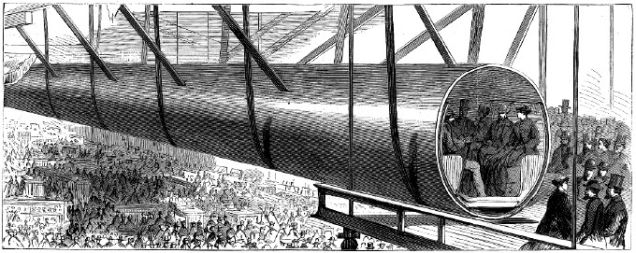
Beach’s ‘passenger tube’ which was displayed to great acclaim at the American Institute Fair in 1867:
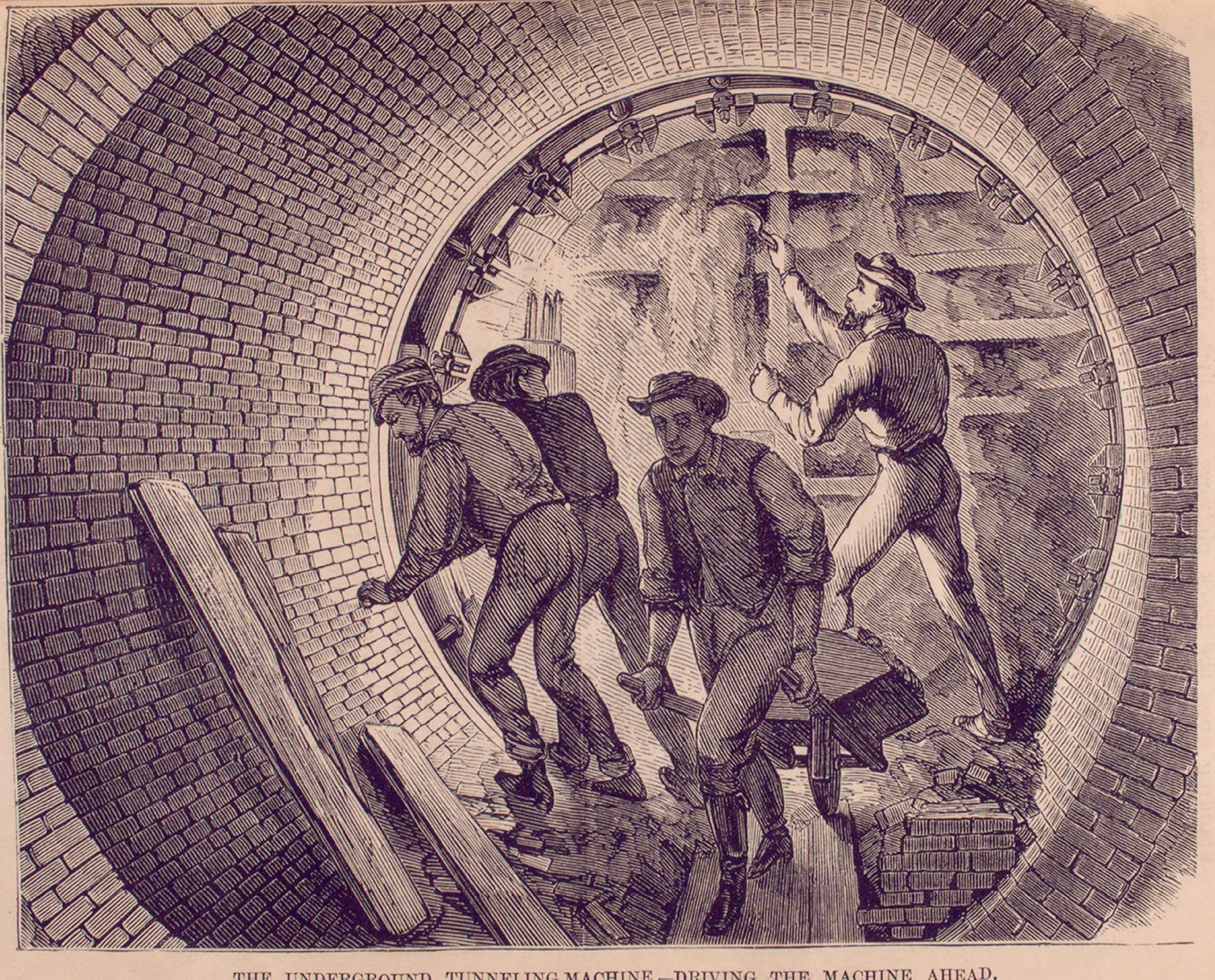
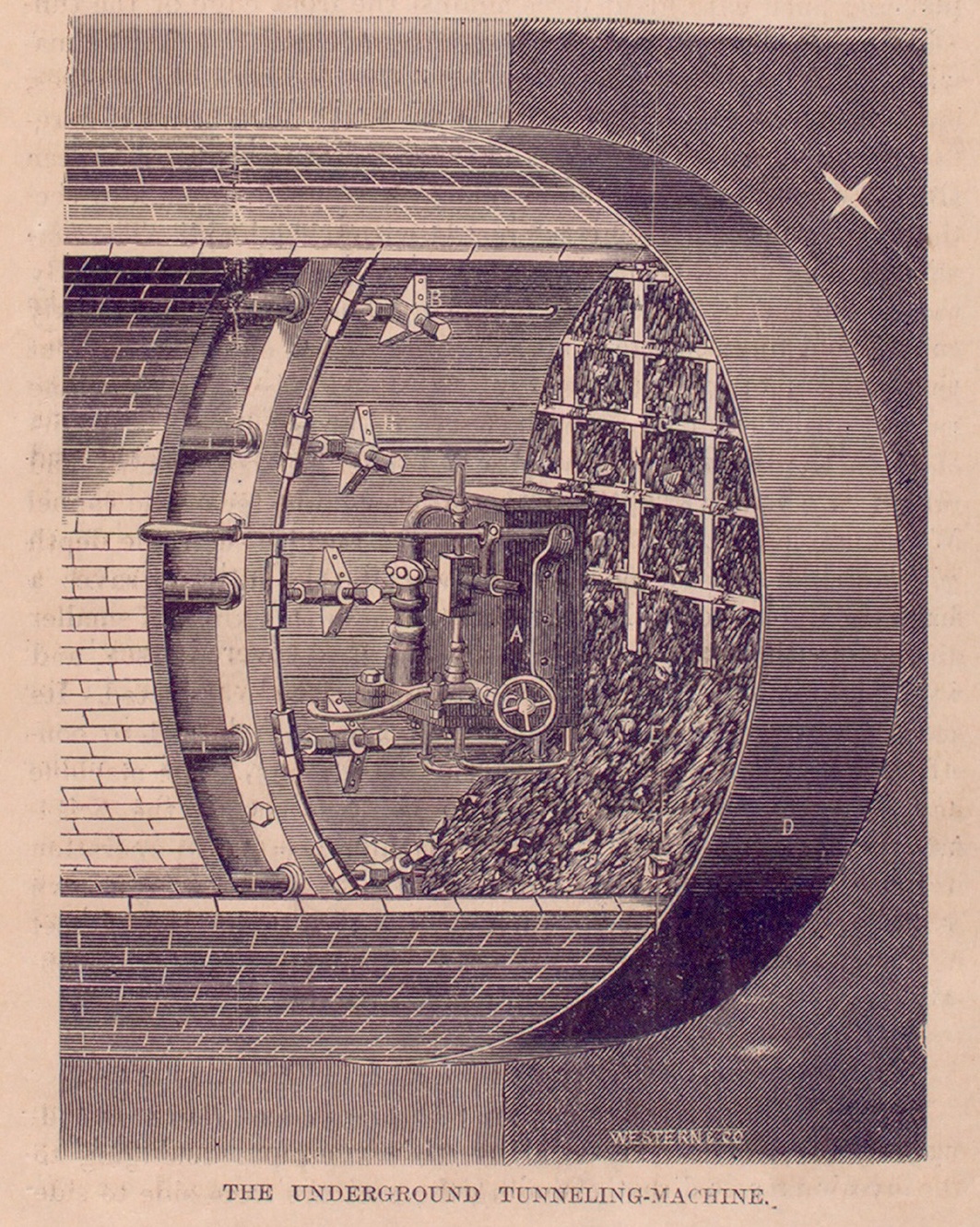
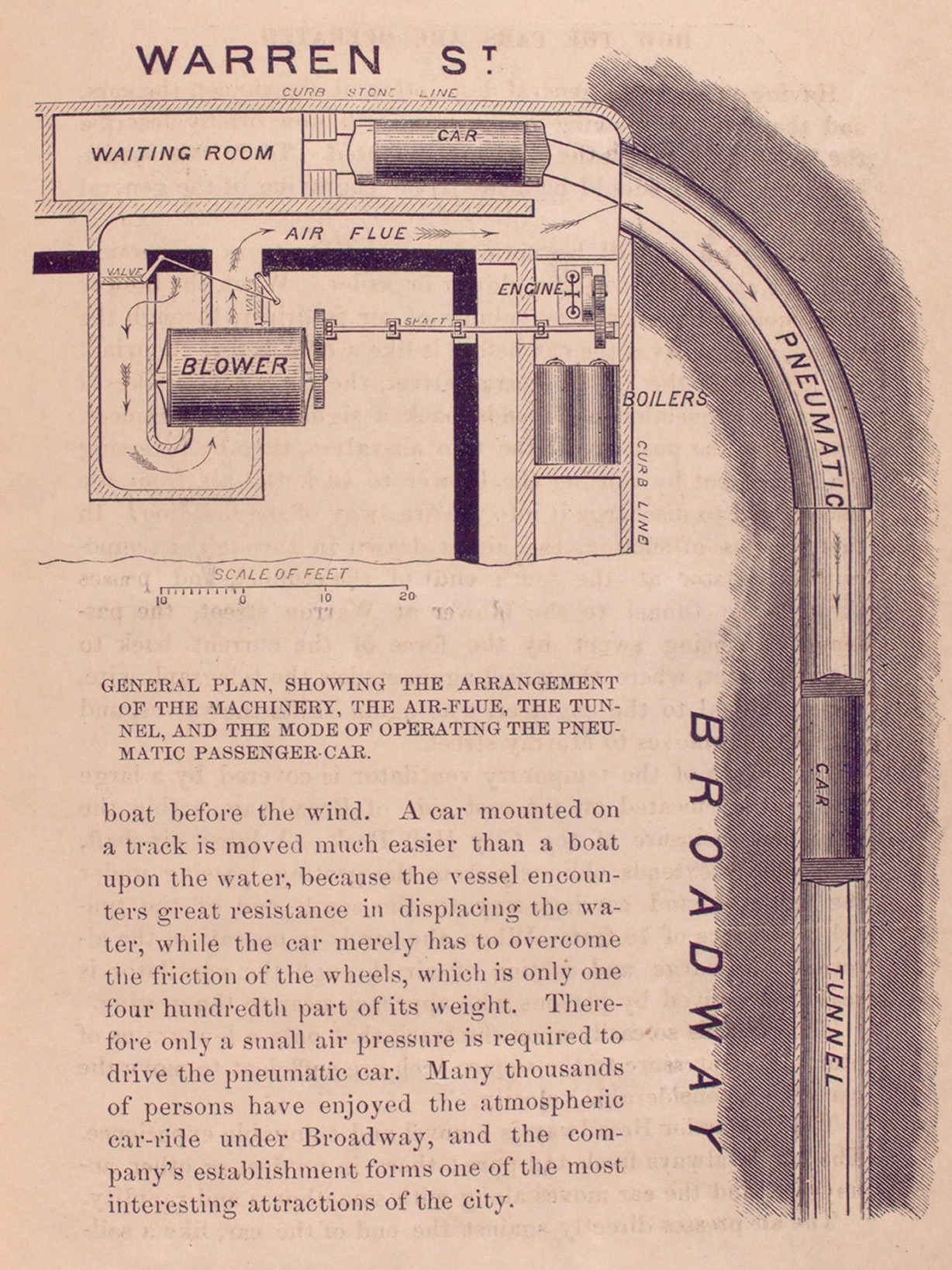
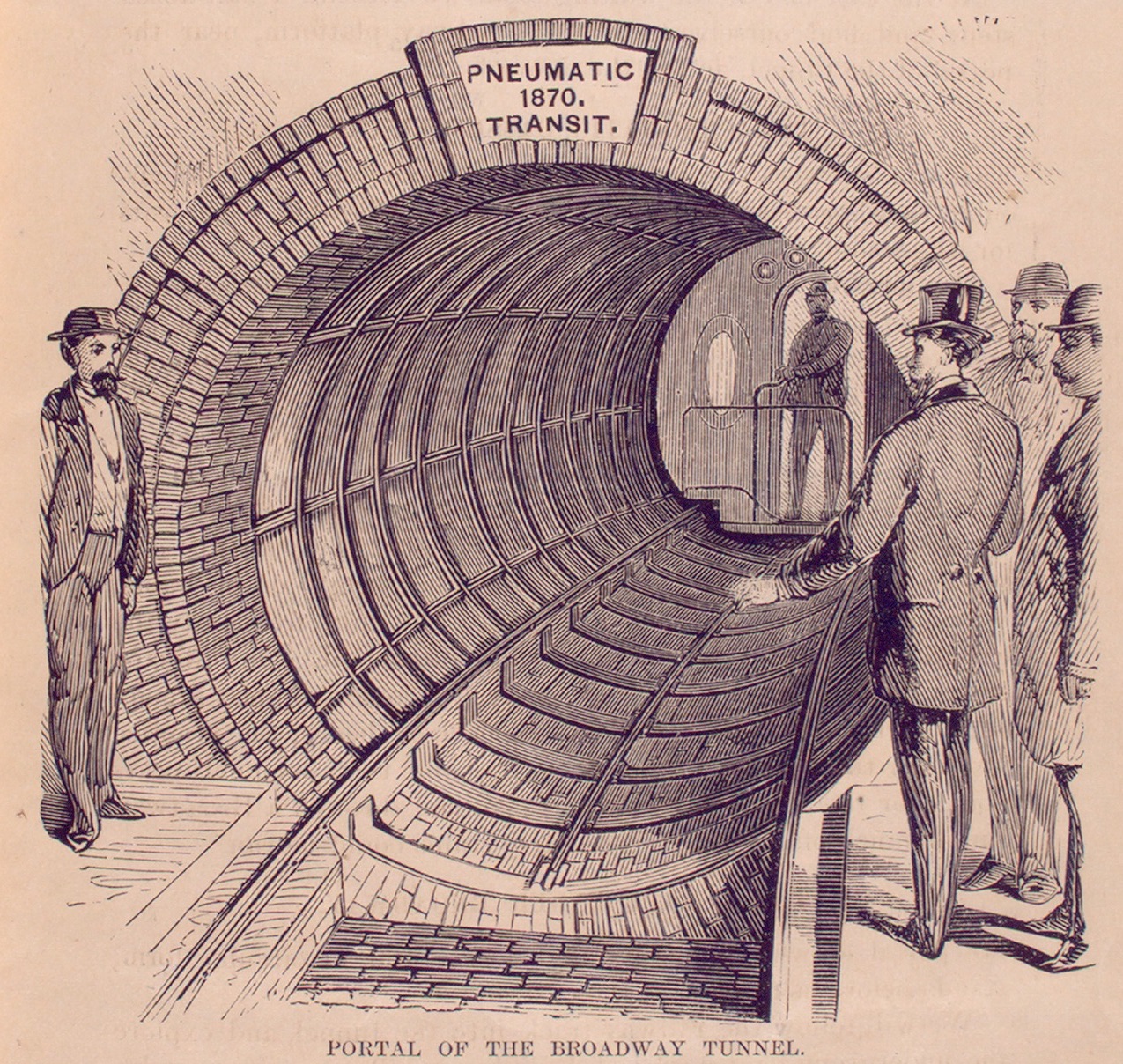
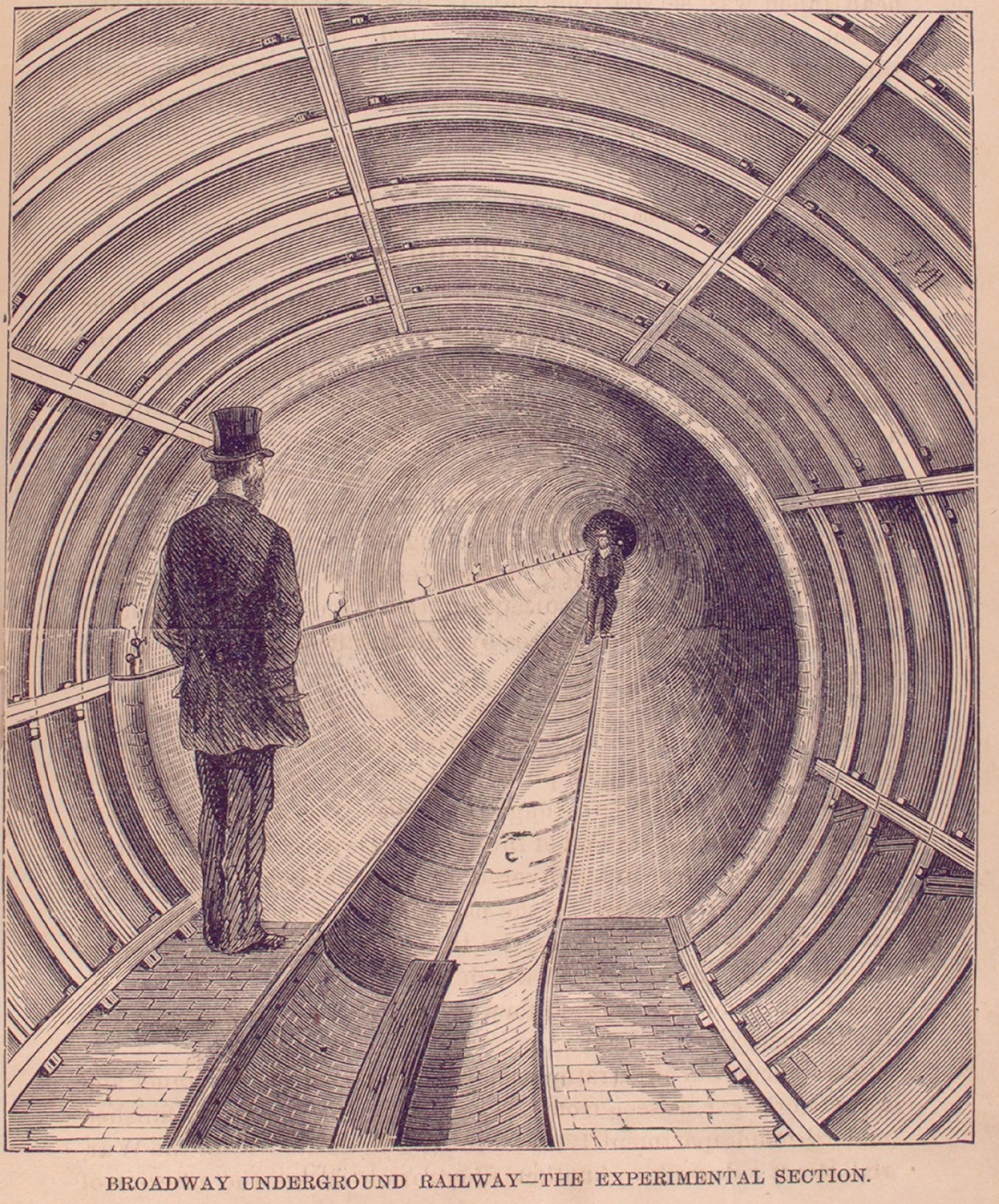
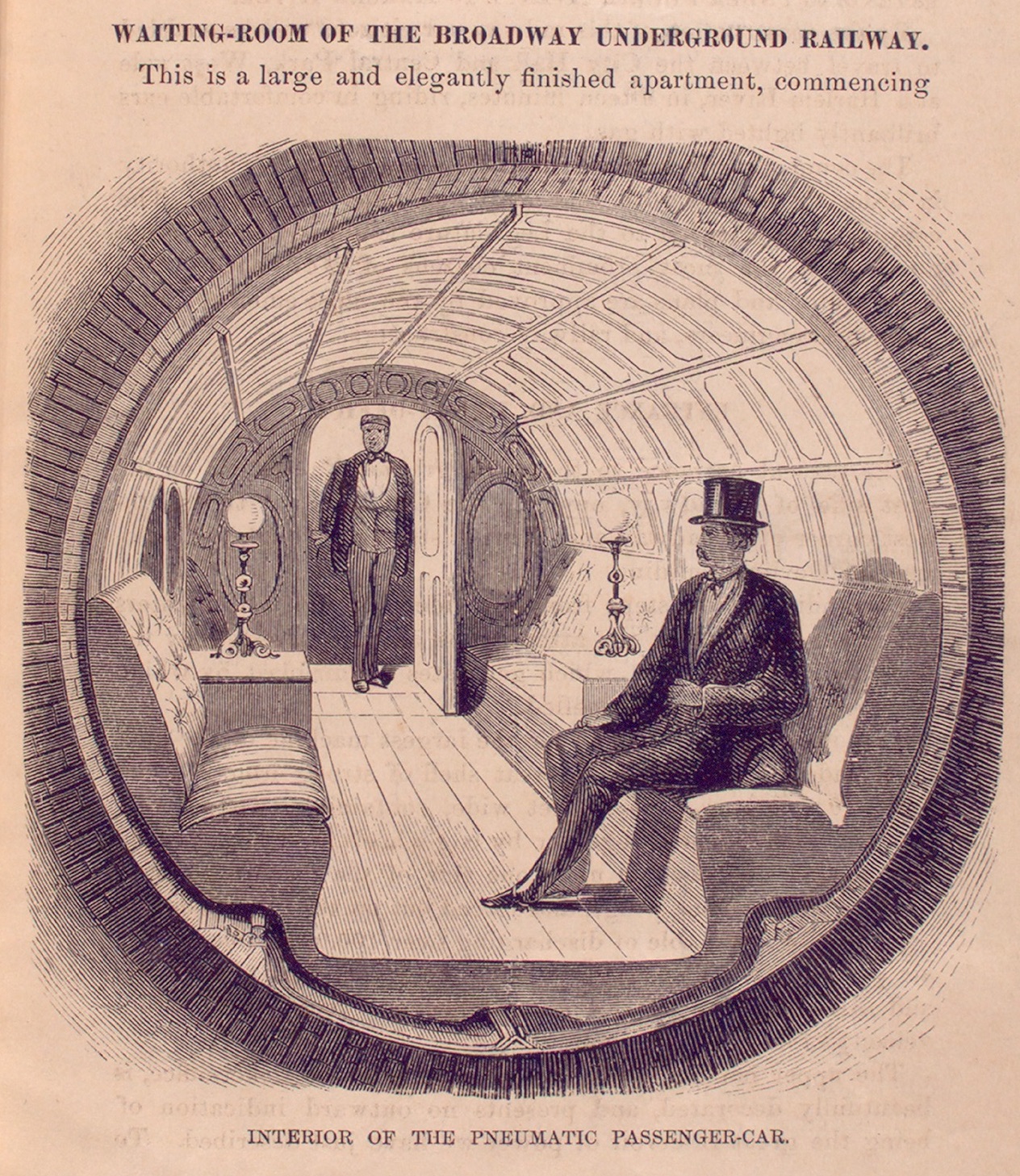
Some images from Beach’s 1870 pamphlet on the pneumatic system:
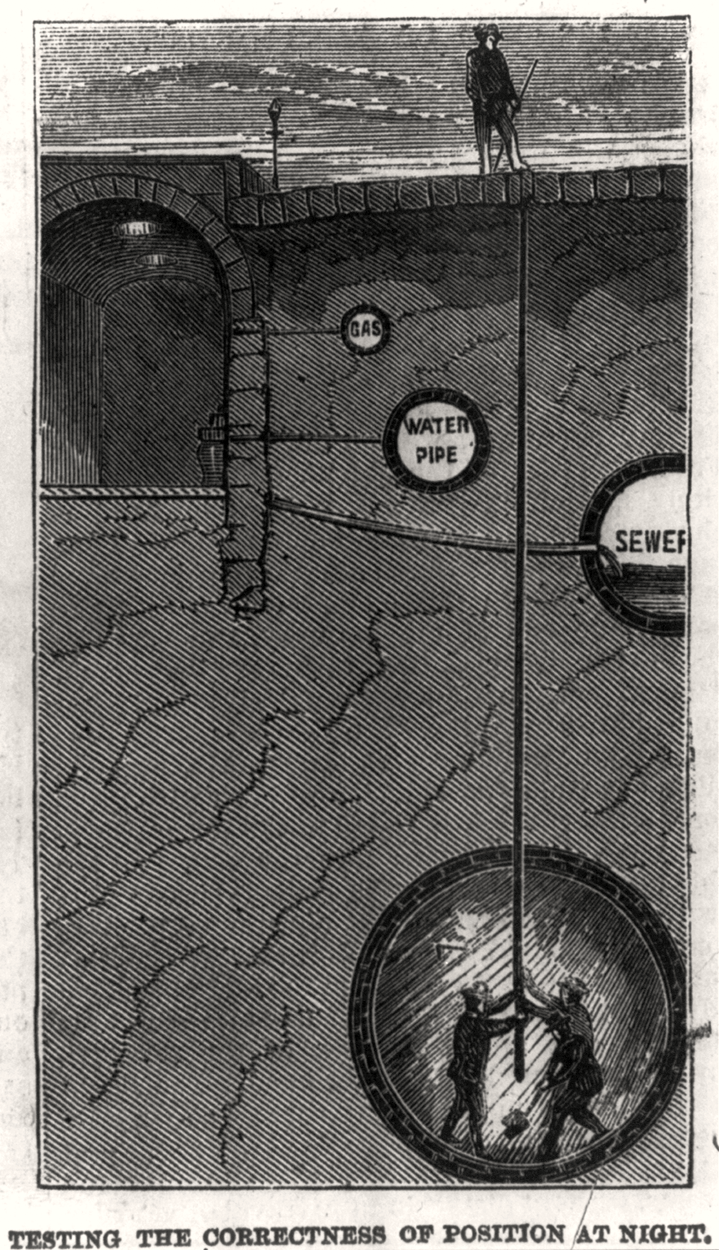
An illustration from a newspaper of Beach’s workers ‘testing the position’ late at night over Broadway:
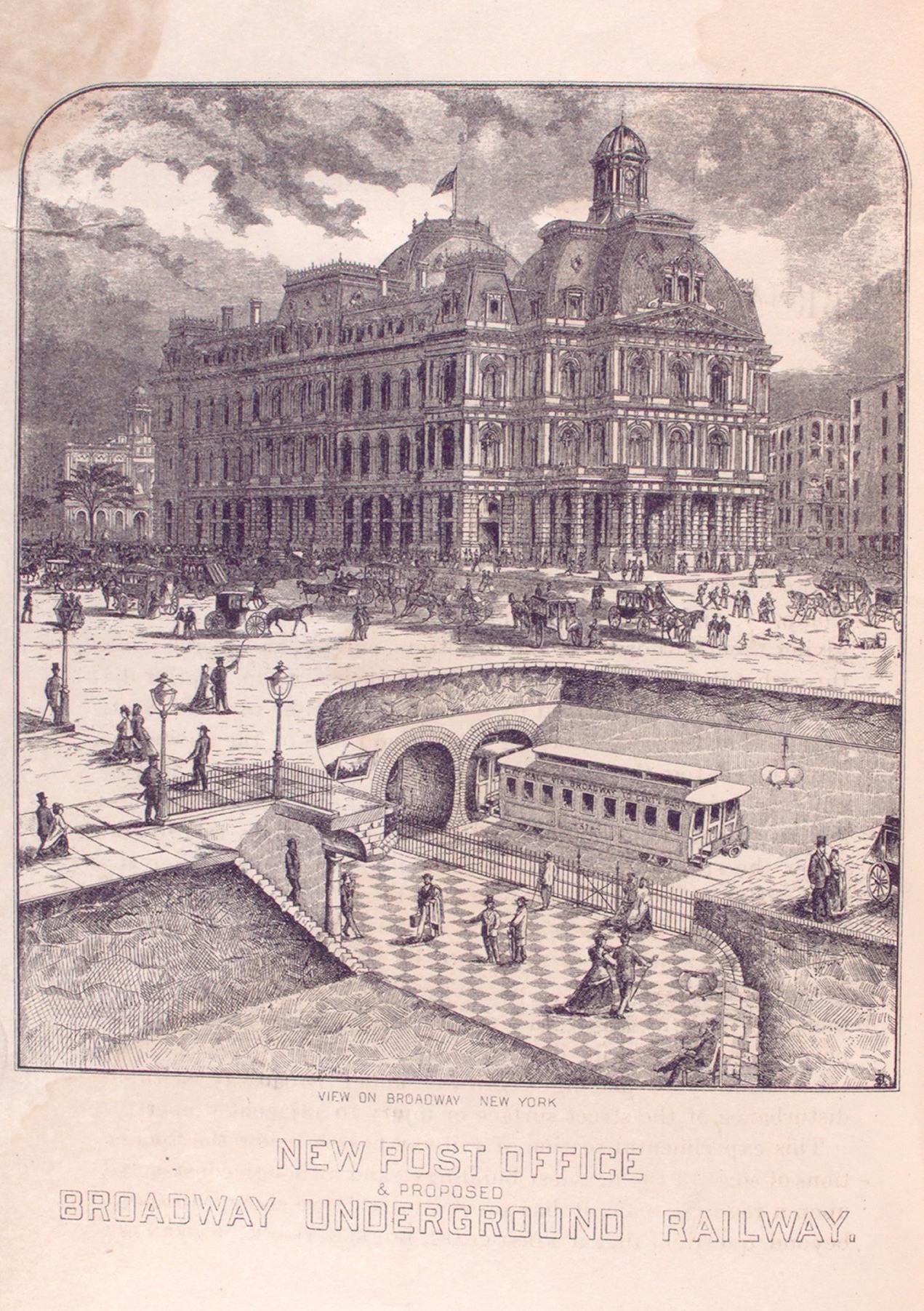
How an underground pneumatic tunnel would have been situated under Broadway. Â Pictured here in relation to the new post office (which sat at the spot of the southern end of today’s City Hall Park).
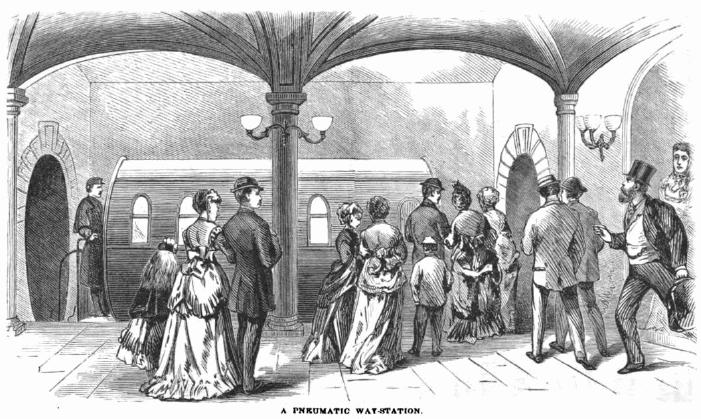
Had the Broadway Underground Railway actually been fully developed, here’s what a station would have looked like:
From NYC Subway
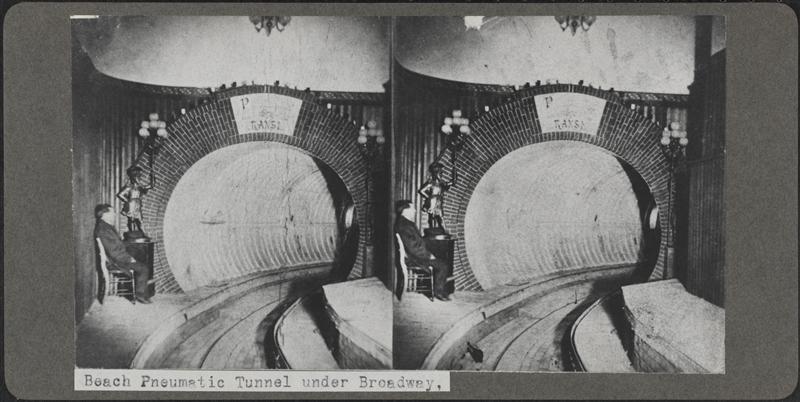
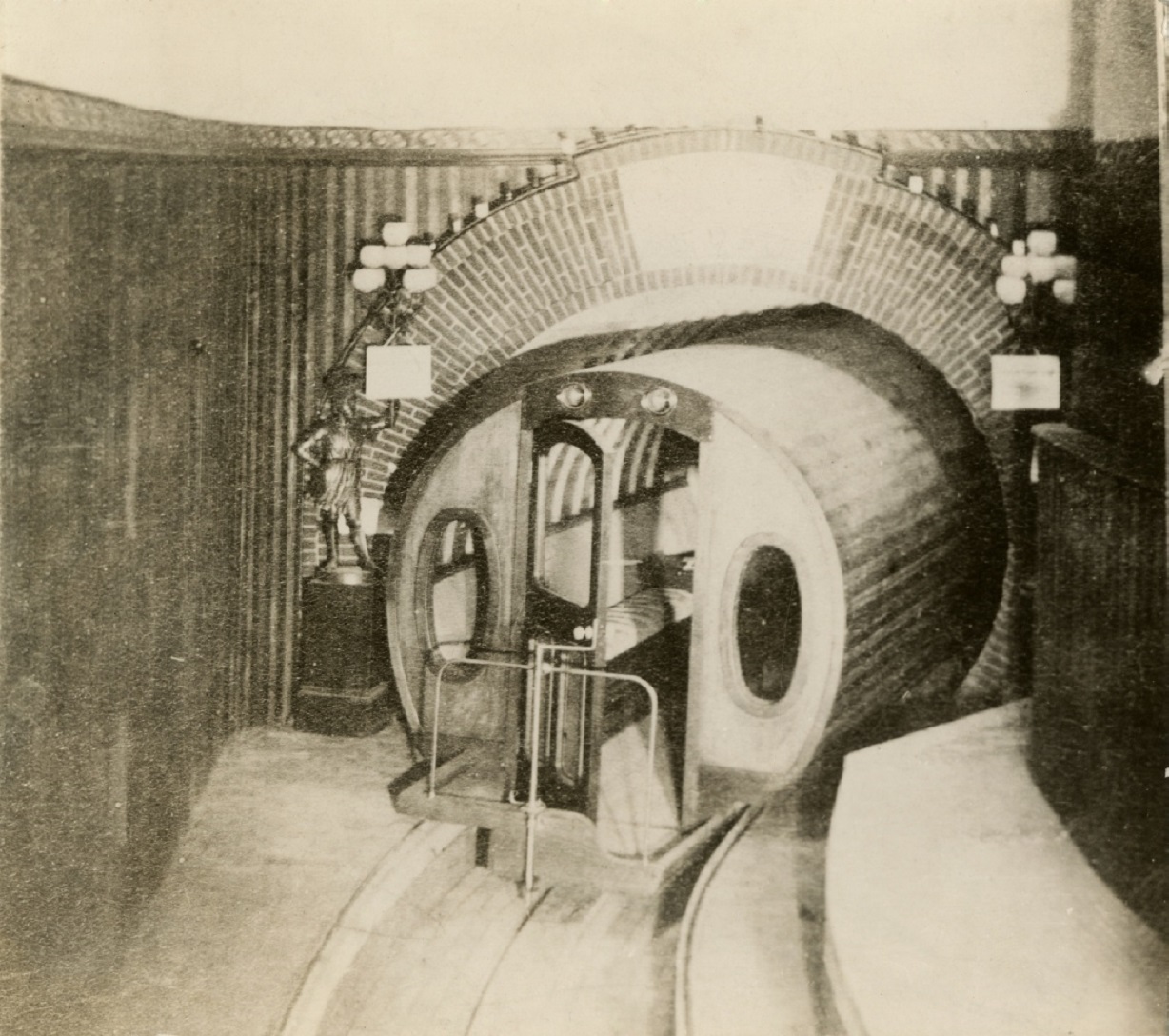
Stereopticon images of Beach’s pneumatic transit tunnel under Broadway, taken in 1870:
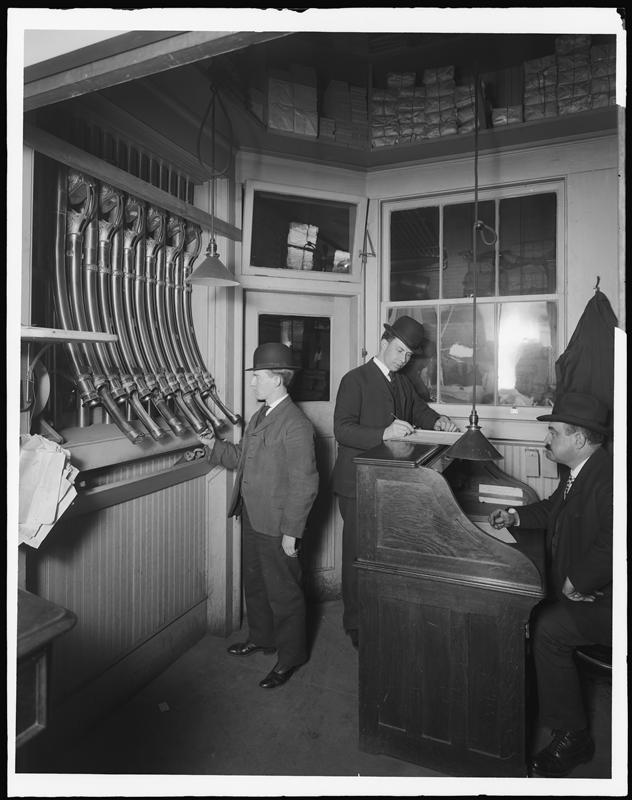
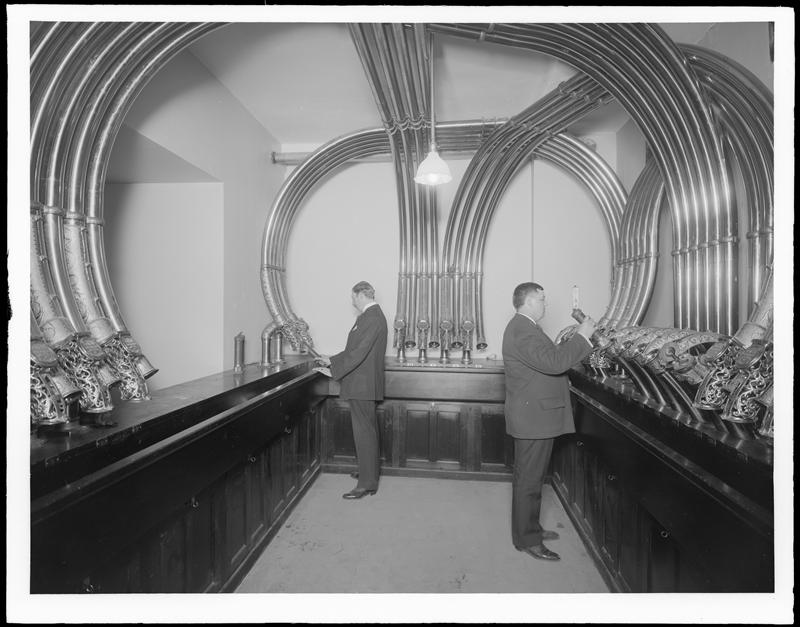
Later application of pneumatic power in New York — shipping office tubes at a location at Franklin and Greenwich Streets (1905) and the series of mail tubes at the National City Bank, 1910.
Courtesy Museum of the City of New York
Courtesy Museum of the City of New York
Start with Joseph Brennan’s excellent research and presentation online. Then jump into one of these great books on the history of New York City transportation — 722 Miles by Clifton Hood, The Race Underground by Doug Most, The Wheels That Drove New York City by Roger P. Roess and Gene Samsone and New York Underground by Julia Solis. There’s even a children’s book on this subject called The Secret Subway by Shana Corey and Red Nose Studio.