Categories
Mad Men

Mad Men on Mars, Wires: The best NYC history on film, TV

Some high-quality films and television shows returned to New York’s past for inspiration this year. Here’s a few of my favorites:

1 MAN ON WIRE
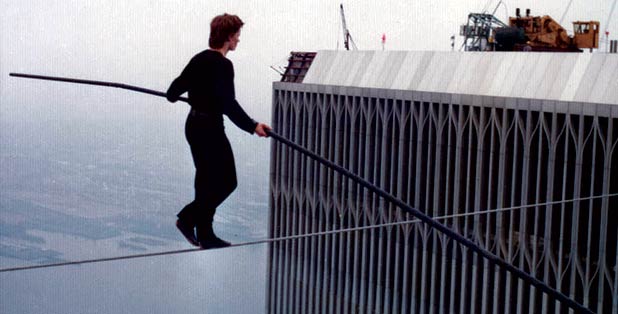
This documentary purports to be the story of Philippe Petit, the daredevil highwire artist who staged one of the craziest stunts in modern times, an illegal tightrope walk between the Twin Towers in 1974. But to me it’s as much a portrait of 70s New York as it is anything; look through the branches and see the grit and the glamour of downtown Manhattan. And of course the World Trade Center, retaining its wonder and majesty, back in the day when you could both hate it and love it.

2 DOUBT
A world ten years older than Petit’s is depicted in this John Patrick Shanley play turned self-directed flick. The scene, practically gothic, is the St. Anthony parish in the Bronx in 1964. This is the darkest portrait of the Bronx I’ve ever seen. Literally. The one time there’s sun, it’s used by viperous Sister Aloysius (Meryl Streep) as a light of interrogation upon Father Flynn (Phillip Seymour Hoffman), accused of a heinous crime with one of his young charges. Although the film (almost to its fault) stays claustrophobically indoors, snow-covered Italian and Irish working-class neighborhoods set the tone of a deceptively innocent world.

3 REVOLUTIONARY ROAD
Set almost ten years earlier than Doubt, this re-teaming of the Titanic stars Leonardo DiCaprio and Kate Winslet essentially depicts the clash of 50s suburban life with the toils of midtown Manhattan. The pair bicker throughout the entire film as a married couple thinking they can survive the banality of middle class life in Connecticut. To offset it, director Sam Mendes gracefully uses Grand Central Terminal as a metaphor for DiCaprio’s homogeny, its arching windows cast as prison bars.

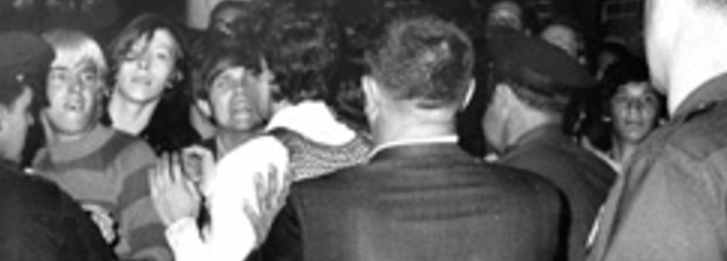
Honorable Mention: Anyone looking to visit pre-developed 90s New York need only rent The Wackness, a loving portrait of the city and its music. The low-budget but heartfelt Henry May Long was only in theaters for a week, but its worth a look for its drawing-room portrait of two vastly different New Yorkers in the late 19th Century. (Should be on DVD next year.) Milk is set entirely in San Francisco but for the first ten minutes, with a passionate kiss in the subway between Harvey Milk (Sean Penn) and his soon-to-be boyfriend Scott (James Franco). A brief flash to the Stonewall riots remind you of New York’s links to the events of the film.
New York seems to be a backdrop on half the TV shows currently broadcast — even when it’s Toronto — but to take the risk and display New York’s past is pretty admirable when it’s done right. Until HBO answers my calls to make a weekly series about Five Points, these will have to tide you over:

1. LIFE ON MARS
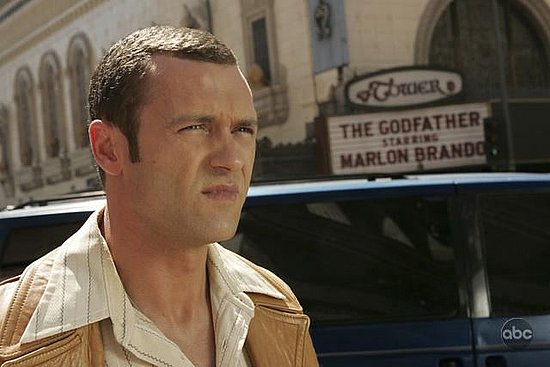
Modern-day cop gets stuck in some kind of mental wormhole, jettisoning to a 1973 New York straight out of old, comfortable cop shows. Although I find it a bit costume-y, I love its attention to detail and zany cultural clashes. Its amber glow grants New York’s near bankrupt, joyously cultural era a buffer of sweet nostalgia. If the 70s were like this for real, who wouldn’t want to be knocked into a coma and join him? Here’s hoping the show makes it at least four years to the blackout, Son of Sam and Studio 54. (Hmm, maybe next season, he can go arrest Philippe Petit!)

2. MAD MEN
This show still isn’t filmed here, but the second season of Mad Man fine-tuned its depiction of early 60s New York in its perfectly dressed interiors and fashions. You never see Madison Avenue, but boy do you feel it on the smarm these ad men bring to their work. Don Draper disappears in Los Angeles for a few episodes, and you feel the loss of New York like a missing limb — or a weight off your shoulders, depending on the perspective.

3. JOHN ADAMS
Almost none of this epic mini-series was filmed here, or for that matter, even set here. But for the New York history geek in all of us, did you not get chills at the reenactment of Washington’s swearing-in at Federal Hall, with bug-eyed Paul Giamatti looking on as the testy, tormented vice president?

Honorable Mention: American Experience had two great New York stories this year — one on Grand Central Terminal, the other on Brooklyn’s favorite son Walt Whitman, a gorgeous, poetic episode that won an Emmy
Categories
Uncategorized

2008 – The Bowery Boys history in review

Below is a list of all the podcasts we did for the year 2008. This year has been a tremendous, overwhelming time for us, and Tom and I want to thank all of you for listening or just checking out this website. I can’t promise we’ll be able to produce quite this many shows for 2009, but we do plan on making the shows even better than before. We have many more ‘epic’ shows in the pipeline, and we’re also going to do a few that are way off the beaten path.

In addition, we now offer another way of getting these shows. In addition to downloading from iTunes and other podcasting services, you can download them directly from our satellite links that are now included below. Just click on the name of the podcast you want to hear, and it will take you to another screen. From there, you can listen with Quicktime or just download to your computer!

Brooklyn Bridge
Original release date January 11

Peter Cooper and Cooper Union
Original release date January 18

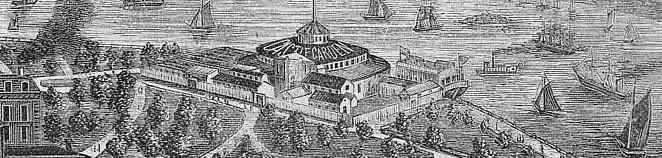
Battery Park and Castle Clinton
Original release date January 25

Museum of Modern Art
Original release date February 1

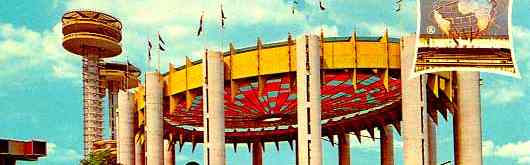
The World’s Fair of 1964-65
Original release date February 8

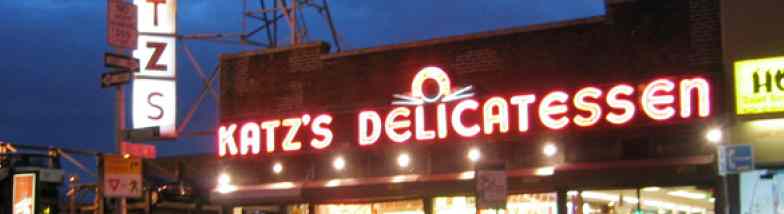
Katz Delicatessen
Original release date February 15

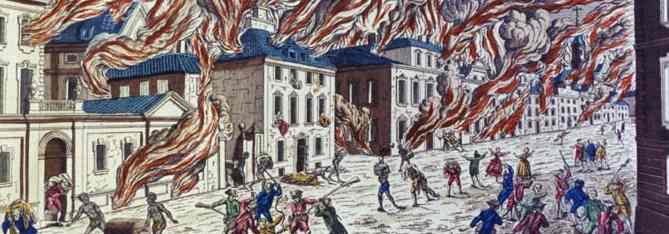
The British Invasion 1776
Original release date February 22

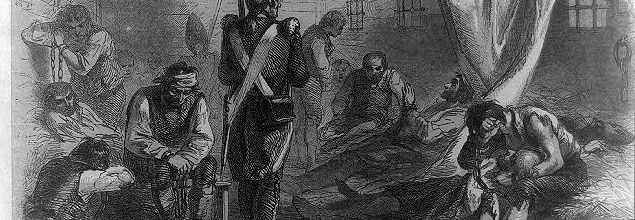
Life In British New York 1776-1783
Original release date February 29

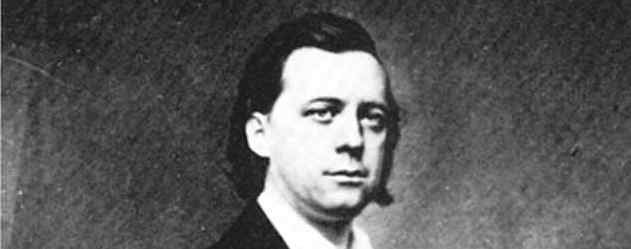
Henry Ward Beecher and Plymouth Church
Originally release date March 7

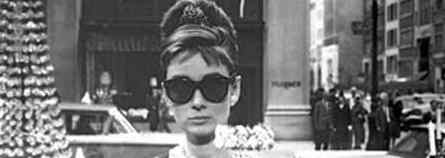
Tiffany & Co.
Original release date March 14

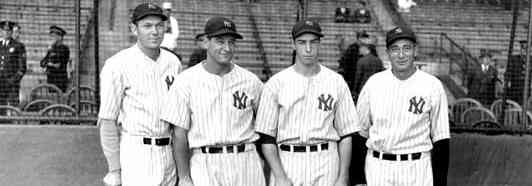
New York Yankees
Original release date March 21

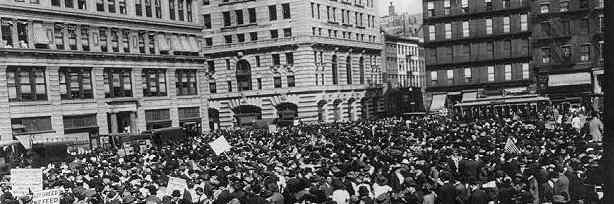
Union Square
Original release date March 28

New York Post
Original release date April 4

Triangle Factory Fire of 1911
Original release date April 11

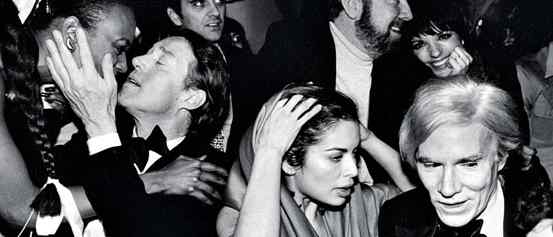
Studio 54
Original release date April 18

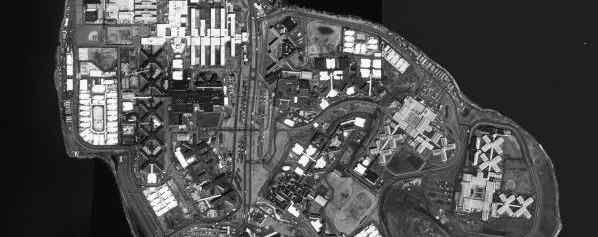
Rikers Island
Original release date April 25

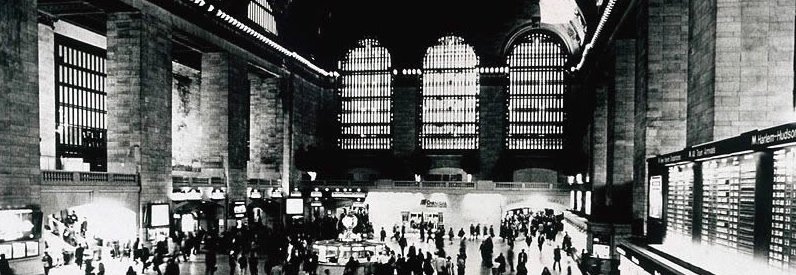
Grand Central Terminal
Original release date May 2

PT Barnum’s American Museum
Original release date May 15

Grant’s Tomb
Original release date May 22

Stonewall Riots
Original release date May 30

LaGuardia Airport
(will be uploaded to the new page within the next couple days)
Original release date June 6

Canal Street and Collect Pond
Original release date June 13

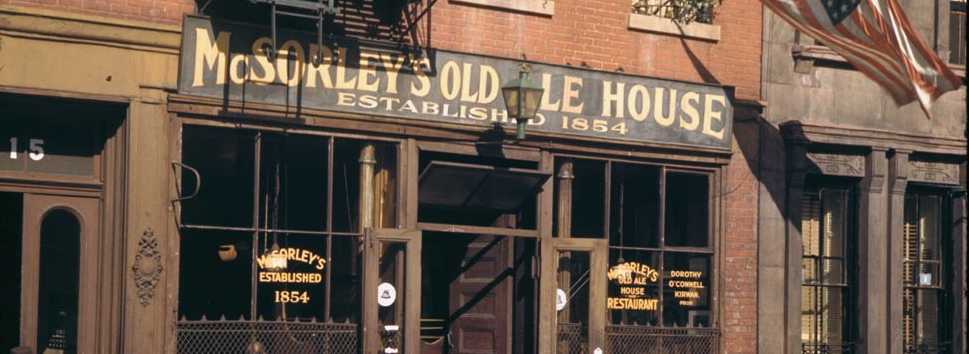
McSorley’s Old Ale House
Original release date June 20

DeWitt Clinton and the Erie Canal
Original release date June 27

Meatpacking District
Original release date July 10

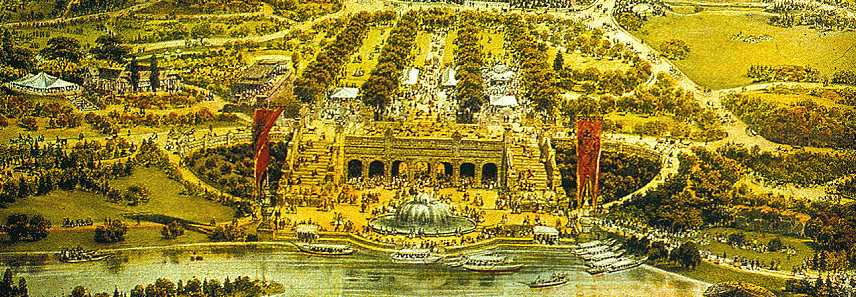
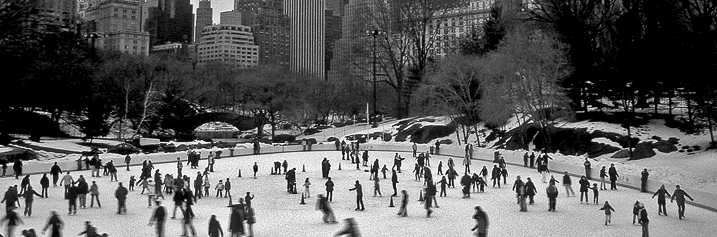
The Creation of Central Park
Original release date July 18

The Evolution of Central Park
Original release date July 25

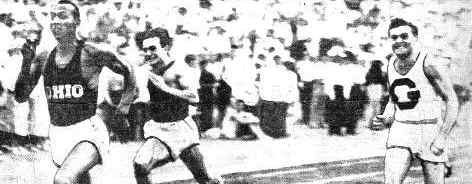
Randall’s Island and the 1936 Olympic Trials
Original release date July 31

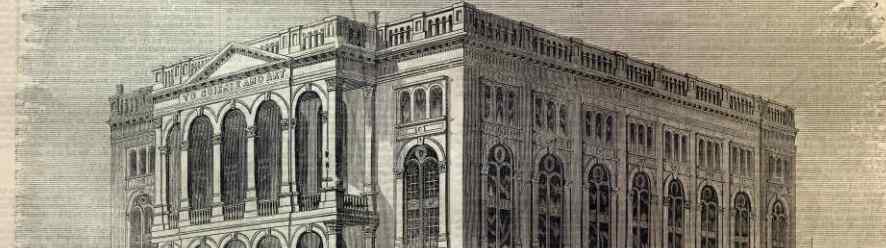
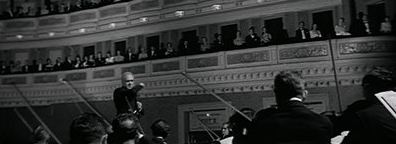
Carnegie Hall
Original release date August 8

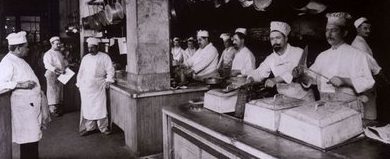
Delmonico’s Restaurant
Original release date August 15

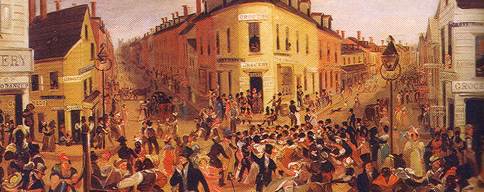
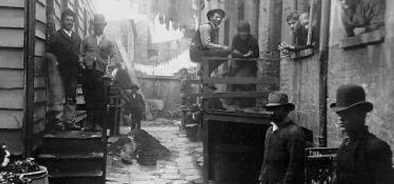
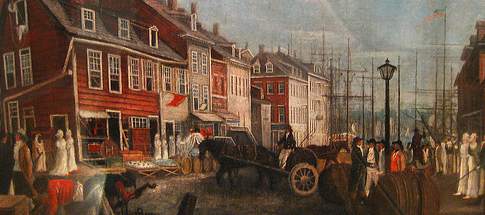
Five Points Part 1: Wicked Slum
Original release date August 22

Five Points Part 2: The Fate of Five Points
Original release date August 29

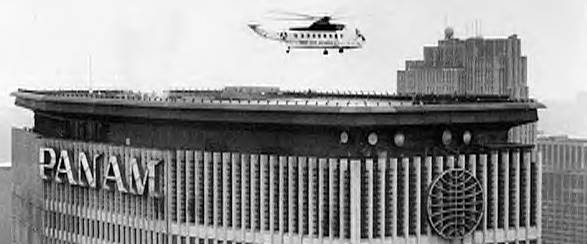
The Pan Am Building
Original release date September 12

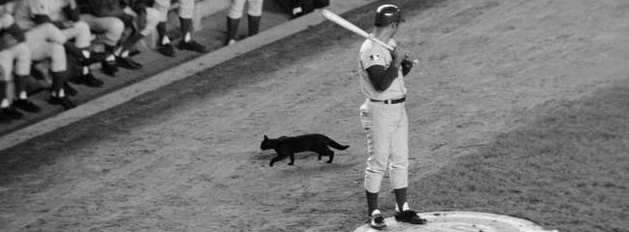
Shea Stadium
Original release date September 19

New York Stock Exchange
Original release date September 26

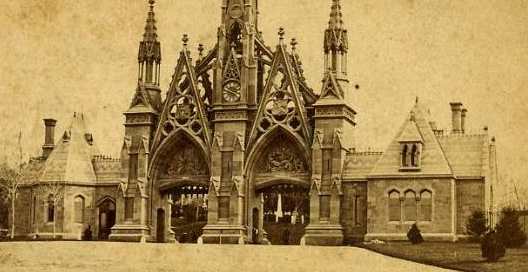
Green-Wood Cemetery
Original release date October 2

Spooky Stories of New York
Original release date October 10

Who Killed Mary Rogers?
Original release date October 17

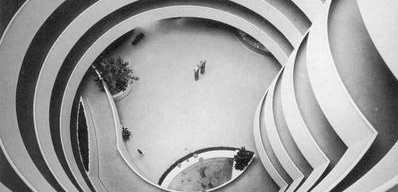
Guggenheim Museum
Original release date October 24

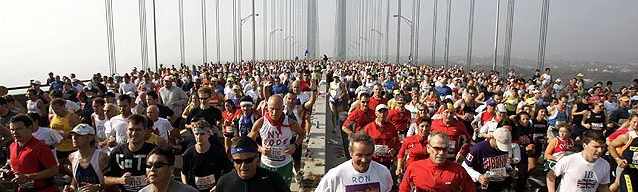
New York City Marathon
Original release date October 31

The Plaza Hotel
Original release date November 14

The Bowery Files
Original release date November 21

Saks Fifth Avenue
Original release date December 4

Rockefeller Center
Original release date December 19

Categories
Christmas

The Best Rockefeller Center Christmas Trees EVER

Not all Rockefeller Center Christmas trees are born alike. Once removed from their serene forest habitats, each winner of New York’s annual arboreal beauty pageant finds itself in a different set of circumstances, thanks to world circumstances and fashions of the day. The following trees deserve special commendation:

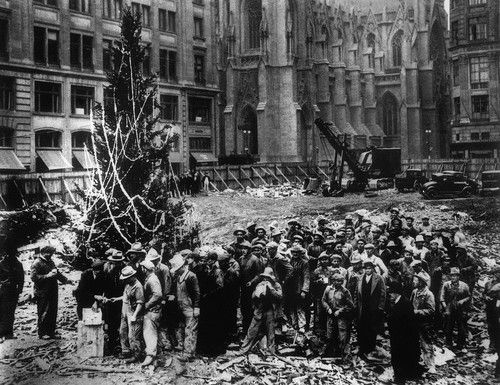
1931 The Original Tree By Although the first ‘official’ tree would get its launch in 1933, in a lavish lighting ceremony orchestrated by Rockefeller Center publicist Merle Crowell, nothing seems more heartfelt than the 50-foot tree planted in an excavation hole by construction workers, months before any building would even be completed

1934 The Singing Tree It was apparently in vogue at the time to install speakers inside Christmas tree to somehow give it the appearance ‘singing’. The White House Christmas tree tries it two years before, and Rockefeller Center follows suit. I’m sure nobody was fooled. If a tree can sing, what’s to stop it from getting up and walking around? (By the way, isn’t it a Christmas miracle that the tree has never fallen over into the skating rink?)

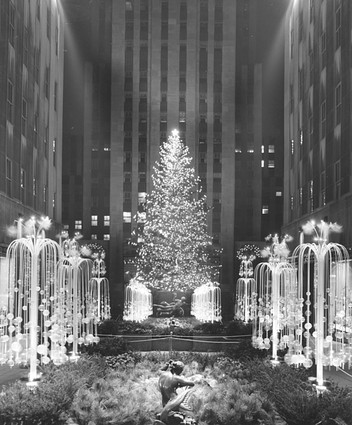
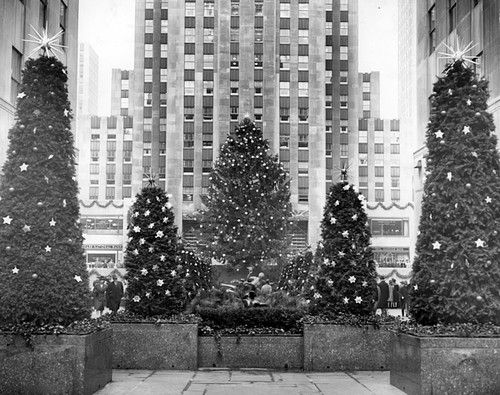
1936 The Twin Trees Speaking of skating, the rink below opens this year, and to honor what would soon be one of the most popular features of Rockefeller Center, organizers get two 70-foot trees. (They do the same thing in 1937 and 1938.) If you’re being technical — and let’s be technical, it’s the holidays! — at a combined 140 feet, that’s the largest amount of footage ever utilized for the annual display.

1941-1944 The Dark Trees The annual trees remain unlit throughout the war and are decorated with “unessential” materials, with all those twinkly lights and garland apparently donated to the war effort.

1949 The White Tree In what was certainly the most ridiculous, plastic-looking yet utterly fantastic tree ever created, a 76-foot Norway spruce is actually spray painted white to give it the appearance of looking covered with snow or else to publicly humiliate it for some unknown offense.

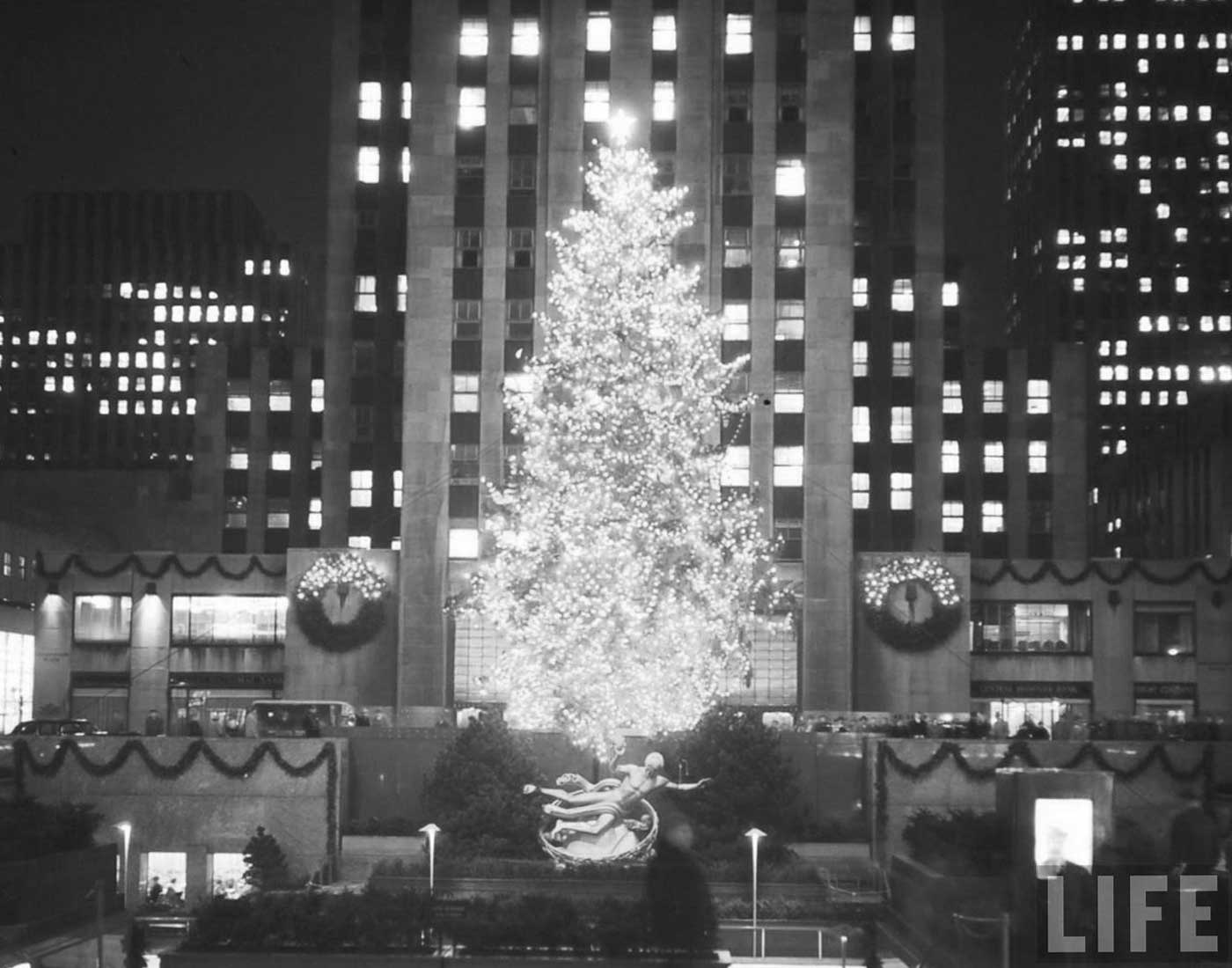
1951 The Televised Tree (above) Songstress Kate Smith turns on the lights in the first broadcast celebration of the Center’s annual tradition, setting the stage for this year’s ultimate celebrity appearance by the Jonas Brothers. (My 10-year-old niece told me to write that.)

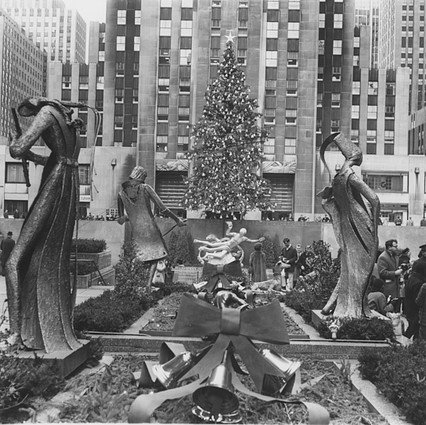
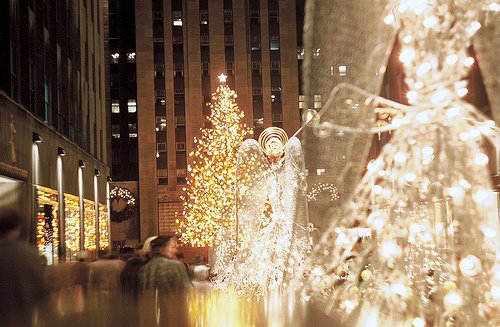
1966 The Foreign Tree (below) For the first time, a handsome 64-foot specimen is brought in from Canada. Another country! This would never happen had George W. Bush been president!

1971 The Zombie Tree The Balsam Fir at the center of this year’s celebration, already severed from its native forest and gussied up like a cheap Christmas harlot, has the unusual distinction of being mutilated, mulched and recycled for other purposes the very first time. The 1970s have arrived!

1980 The Daredevil Tree Something about the thick, brawny branches of this year’s 65-foot tree drew a man to attempt to climb to the top. The nimble climber was promptly arrested and security inevitably doubled after that.

1993 The Flamboyant Tree For the first time, the number of lights embracing the Christmas tree exceed 30,000, possibly making it the most energy-wasting tree up to this point. And they were proud of that back then! (The ‘green trees’ of the past two years look to reverse this unfortunate side effect of holiday cheer.)

1995 The Holy Tree This year’s selection isn’t just from any forest. The 75-foot Norway spruce used for this year’s ceremony was donated by a convent. Hallelujah!

1999 The Tallest Tree The monstrous creature towering over obviously frightened skaters this year chimes in at an astonishing 100 feet tall.

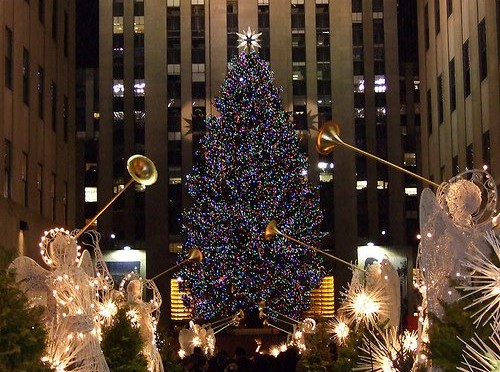
2004 The Blingy Tree The tree goes truly upscale when its topped for the first time with that hefty Swarovski crystal star, comprised of 25,000 crystals, making it the most decorated lady on Fifth Avenue.

Categories
Podcasts

PODCAST: Rockefeller Center

Listen or download it from HERE

You can also download it for free from iTunes and other podcasting services

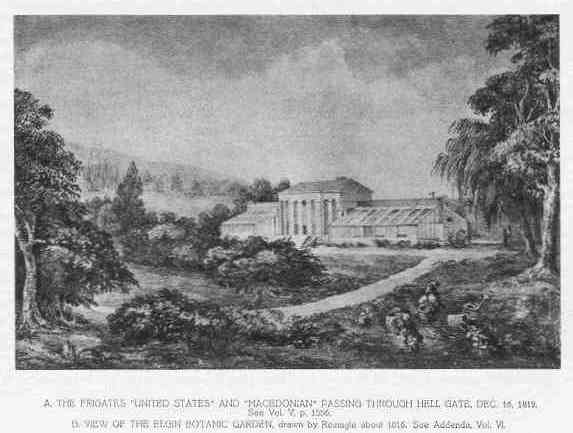
In the veritable wilderness that would become midtown Manhattan, Dr. David Hosack opens his Elgin Botanic Garden, the city’s first collection of exotic plant species that’s eventually sold to the state, who then passes the land fatefully over to Columbia University.

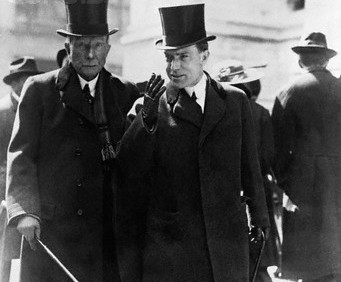
The John D.’s, Senior and Junior, the two richest men on the planet

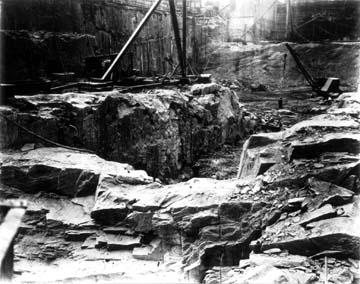
Excavation of the Rockefeller Center site, photo by Berenice Abbot taken in 1931. Materials taken from the site were used to fill in Central Park’s South Reservoir (making the Great Lawn) and helped create landfill for Brooklyn’s Shore Parkway.

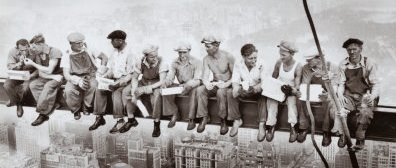
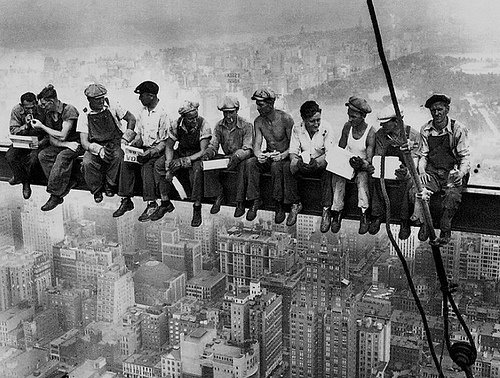
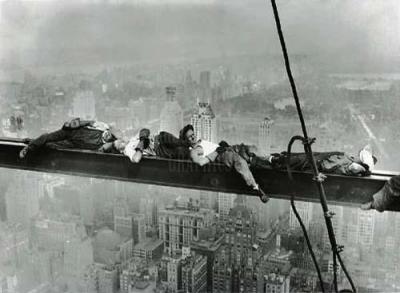
One of the most famous photographs ever taken, in 1932 by Charles Ebbets, features some nonchalant construction workers taking a break from work on the RCA Building.

I get sick just from looking at this picture.

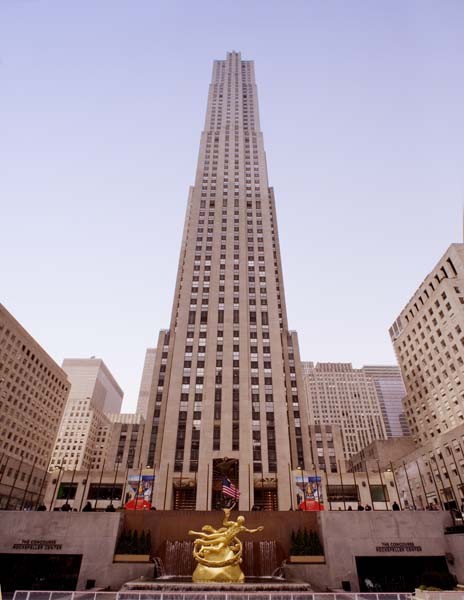
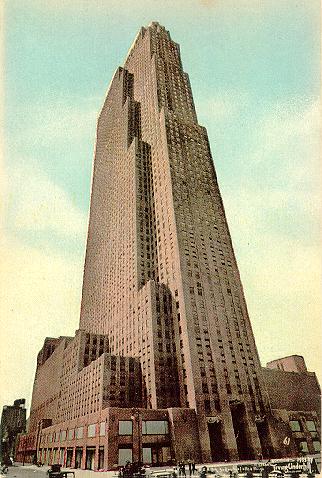
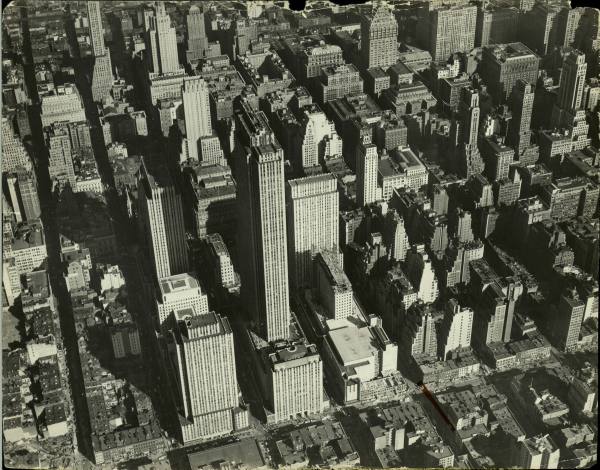
The majestic RCA Building (later the GE Building) was perfectly proportioned so that natural light would reach every square foot of office space

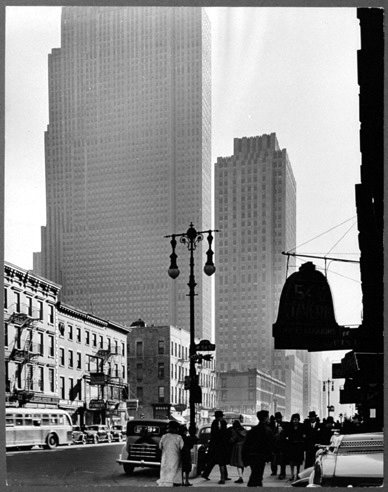
From this image, it’s easy to see how Rockefeller Center radically transformed midtown.

The plaza, seen in a view from 1937, allowed architect Raymond Hood much leeway in his design of the RCA Building

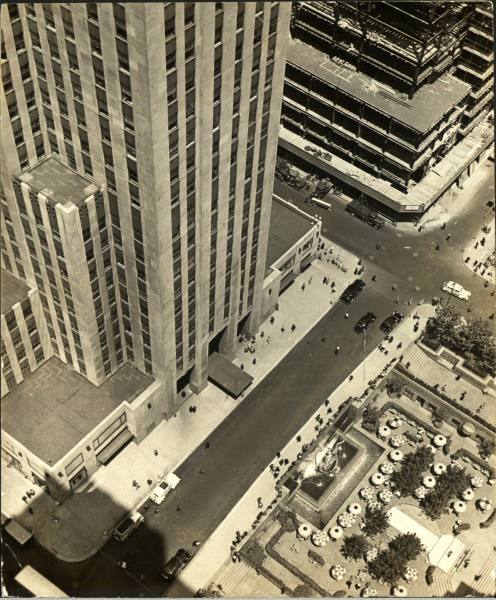
A classic overhead shot by Margaret Bourke-White taken in 1939

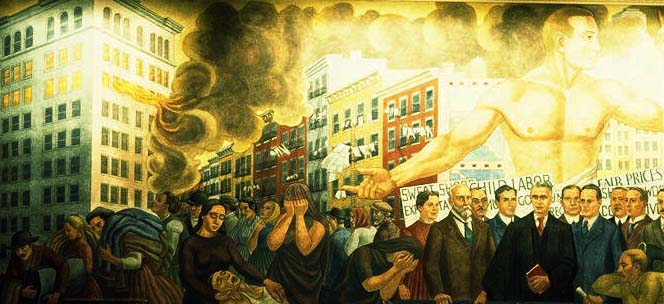
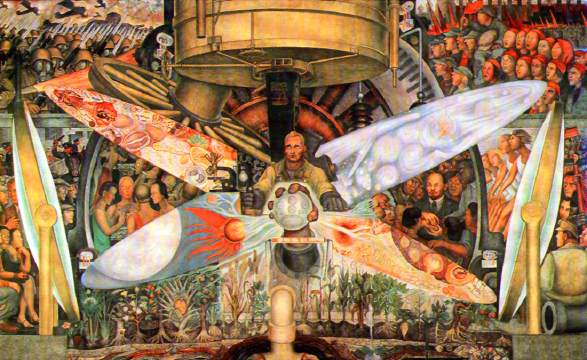
The offending Diego Rivera mural that briefly adorned the lobby of the RCA Building

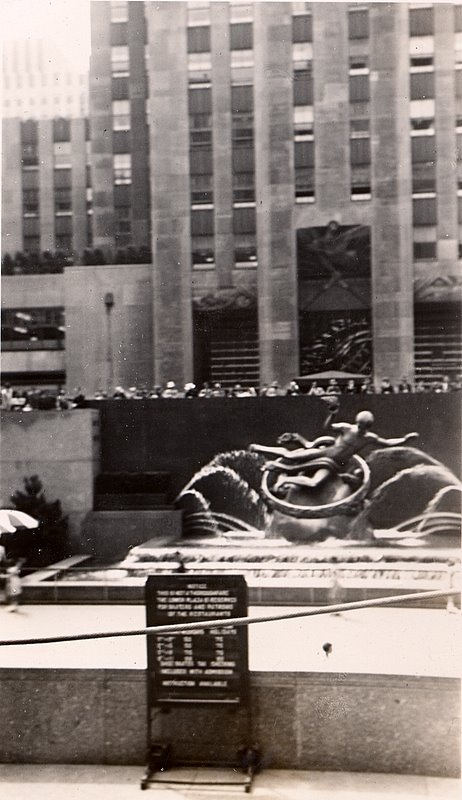
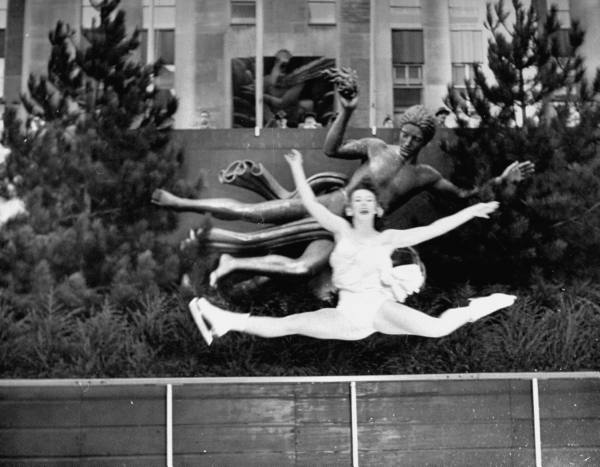
Prometheus in 1941 (courtesy of Flickr)

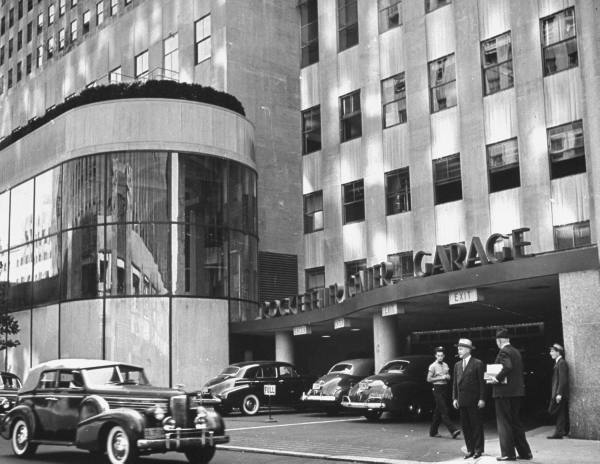
Also from 1941, a look at the Center’s new garage

A spry ice skater in 1942 (photo by Wallace Kirkland, Life archives). The rink was not an original feature of the plaza, but soon became one of its most popular attractions.

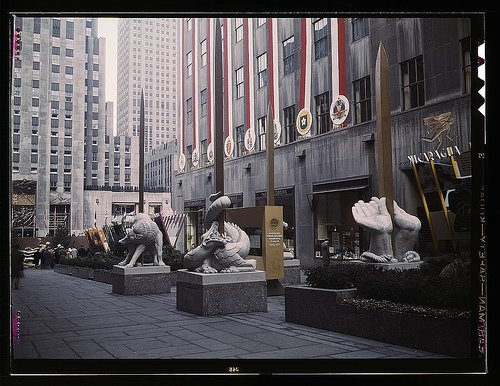
In 1943, the Channel garden features an unusual wartime exhibit. Speakers on either end continually broadcast speeches by President Roosevelt, Winston Churchill and Chiang Kai-Shek. Fun! (Photo courtesy Library of Congress)

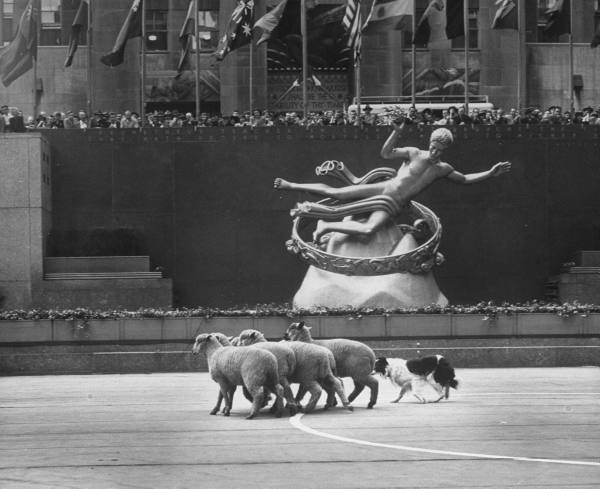
1948 — for some reason, ice skating and dining takes a backseat this day for a sheepherding demonstration

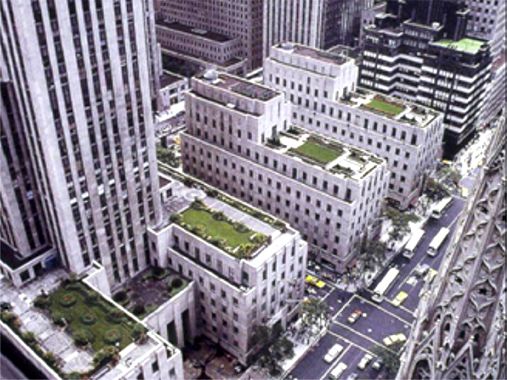
The roof gardens, now closed to the public, were originally a top tourist draw to Rockefeller Center and even enabled Rockefeller to raise rents on any offices that benefits from views that overlooked them.

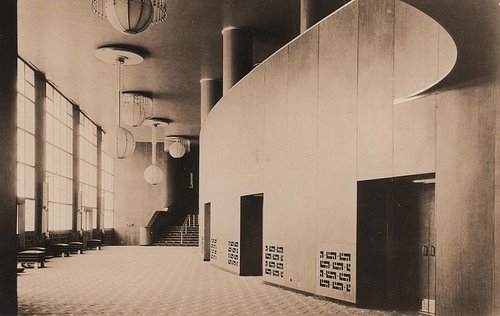
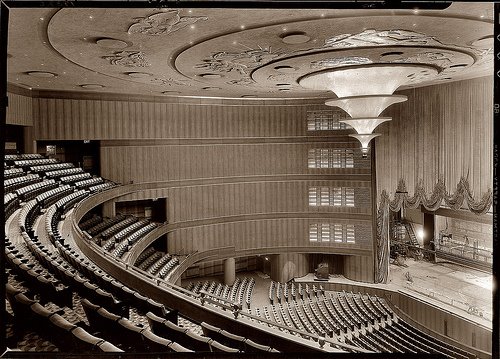
Two interior shots of the Center Theatre, formerly the RKO Roxy, Rock Center’s other big stage. It changed it named because of a lawsuit with the Roxy Theatre and changed its entertainment from films to ice spectacles in the 1940s. It was torn down in 1958 to make room for what is today the Simon & Schuster Building, also part of the Rockefeller Center complex.

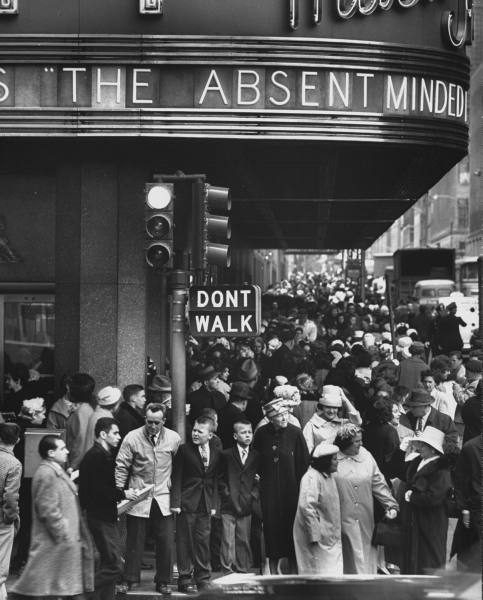
Wild crowds gather for Radio City Music Hall’s Easter show in 1961, and not, I’m assuming, to get into to see the Absent Minded Professor

The first Rockefeller Center Christmas tree, in 1931, with Saks Fifth Avenue and St. Patrick’s Cathedral right across the street

The tree in 1943

And in 1954, one of the first years that featured the illuminated angels (courtesy of PLCjr)

CHRISTMAS GIFT ALERT: One of my favorite New York City history books ever is actually about Rockefeller Center — Daniel Okrent’s Great Fortune: The Epic of Rockefeller Center. The writing is as stout and witty as many of its principal characters. Extremely readable.

Know Your Mayors: George Hall

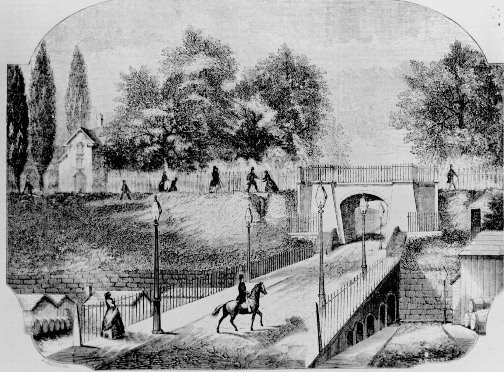
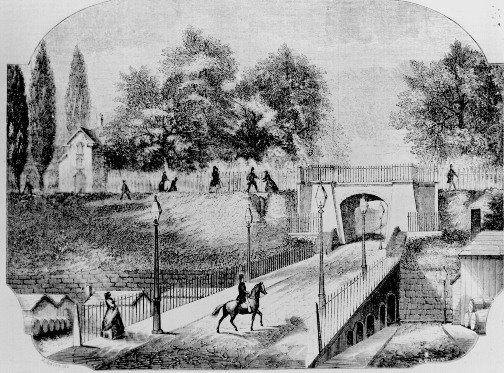
An engraving of Brooklyn Heights in 1854, the year before George Hall took office a second time

Our modest little series about some of the greatest, notorious, most important, even most useless, mayors of New York City. Other entrants in our mayoral survey can be found here.

I’ve been very Manhattan-centric in this column, so it’s about time I introduce you to a man pivotal to Brooklyn’s history: George Hall, its very first mayor from its days as an independent city (1834-1898).

The various townships of Kings County were growing at such rapid pace that the state officially bestowed a city charter to the town of Brooklyn in 1834. This would leave the county with one true city (Brooklyn) and five official remaining townships (Bushwick, Flatbush, Flatlands, Gravesend and New Utrecht) all of whom would eventually be conjoined in coming years through development and annexation. Later, a second city — Williamburgh — briefly competed for dominance, but it was no match for Brooklyn’s incredible growth and was absorbed in 1850s (hurling its dangling ‘h’ into the East River forever).

By 1896, Brooklyn would come to mean everything within the boundaries of Kings County, just in time for its consolidation with the city of New York just two years later.

That’s the history of Brooklyn in a nutshell. But that first year, 1834, heaped huge pressures on the growing new city, as influential landowners (such as the Pierreponts) raced to reshape the surrounding area to attract residents and new businesses. And the man planted in the driver’s seat, appointed by the city’s municipal charter by Common Council, was George Hall.

Hall was a self-made tradesman, borne of Irish immigrants in Flatbush, a painter and glazier (glass seller) whose successes in the rapidly growing city made him a natural candidate for elected office, first as a ward aldermen then at last as the first mayor.

In 1834, Brooklyn had 20,000 residents and few paved roads outside of its city center (around Fulton Ferry). “There were, within the city, two banks, two insurance companies, one savings bank, fifteen churches and three public school,” Hall later described the scene. “Sixteen of its streets are lighted with public lamps.” Hall brought omnibuses to the city and passed measures to improve the water supply. Working with city leaders, he also purchased a site that would become the future home of Brooklyn City Hall.

Hall was not merely concerned with the physical growth of young Brooklyn. Mindful of the intersection of commerce and morality, the tee-totalling Hall cracked down on “unlicensed rum shops” and reduced that awkward but somewhat common method of street-cleaning — releasing pigs into the street.

Over twenty years later, as the city of Brooklyn expanded to consolidate with Williamsburg, city residents turned to Hall again, electing him for a two-year term in 1855-56.

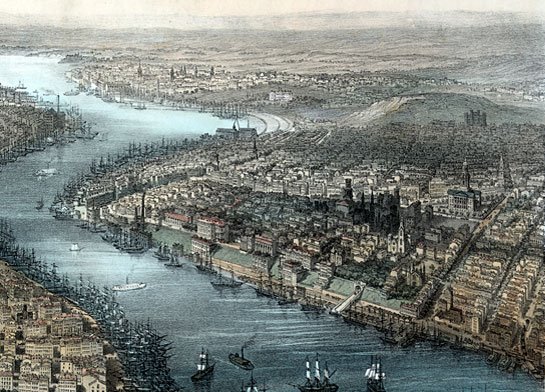
Below: Brooklyn in 1851. See if you can find where the picture above might fit in with the city as depicted below!

In the same speech, Hall gleams with pride over the greatly expanded city that elected him. “Brooklyn, judging from its past increase, yesterday contained a population of about 145,000 persons, and on this day the three places consolidated [Brooklyn, Williamsburg(h), along with the township of Bushwick] into one municipal corporation, takes its stand as the third city in the empire state, with an aggregate population of about 200,000 inhabitants.”

Crisis came to Brooklyn during his tenure with a massive cholera outbreak, which nearly sent Hall himself to his grave. He lived the remainder of his life on 37 Livingston Street.

One of Brooklyn’s most respected men, when Hall finally died in 1868, Henry Ward Beecher rose to give a rousing eulogy to thousands of mourners who filled the streets of Brooklyn Heights.

Unfortunately, I couldn’t find any portraits of George to put in the blog today; however I believe you can find one if you visit the Brooklyn Historical Society. Aafter you’re visiting them, you can take a walk to Hall Street in Fort Greene, which is named after him.

Some info above was obtained from research from thehistorybox.com

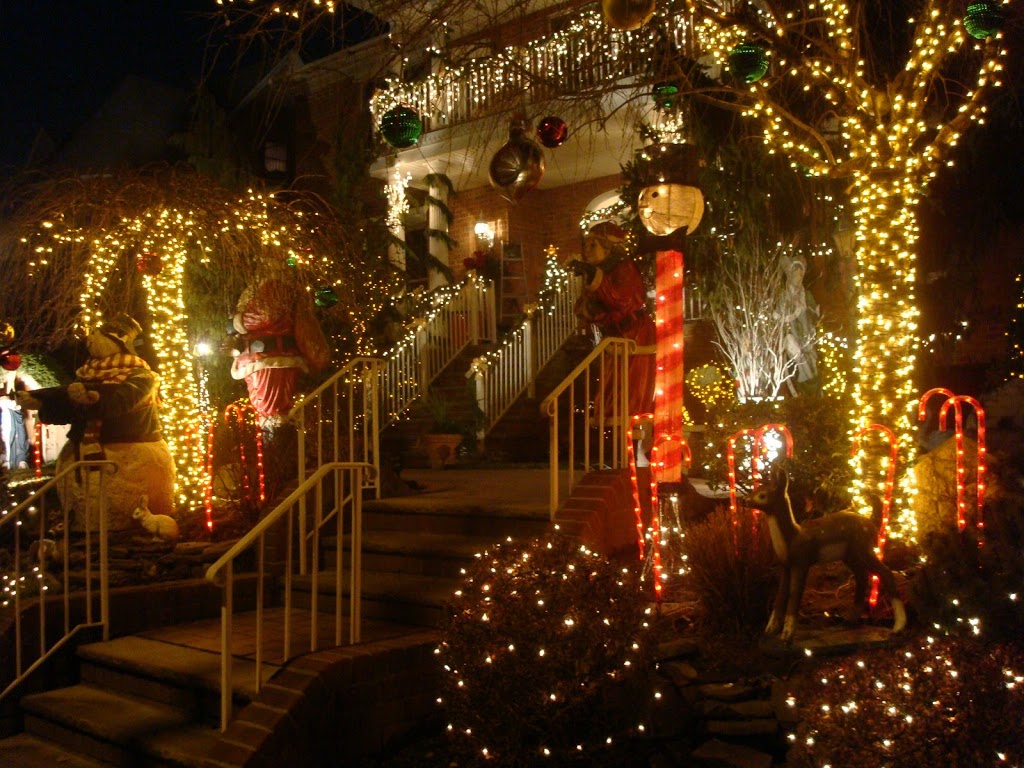
Blinded by the lights of Dyker Heights

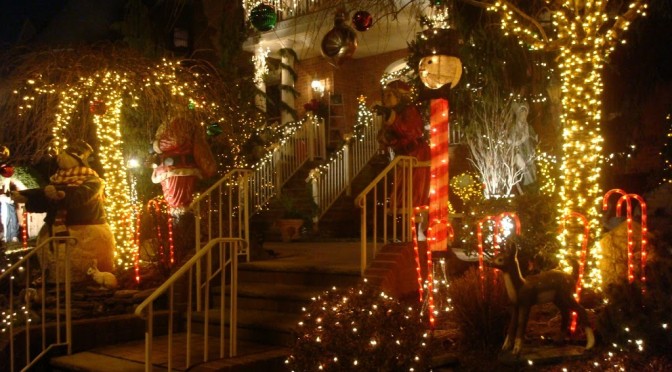
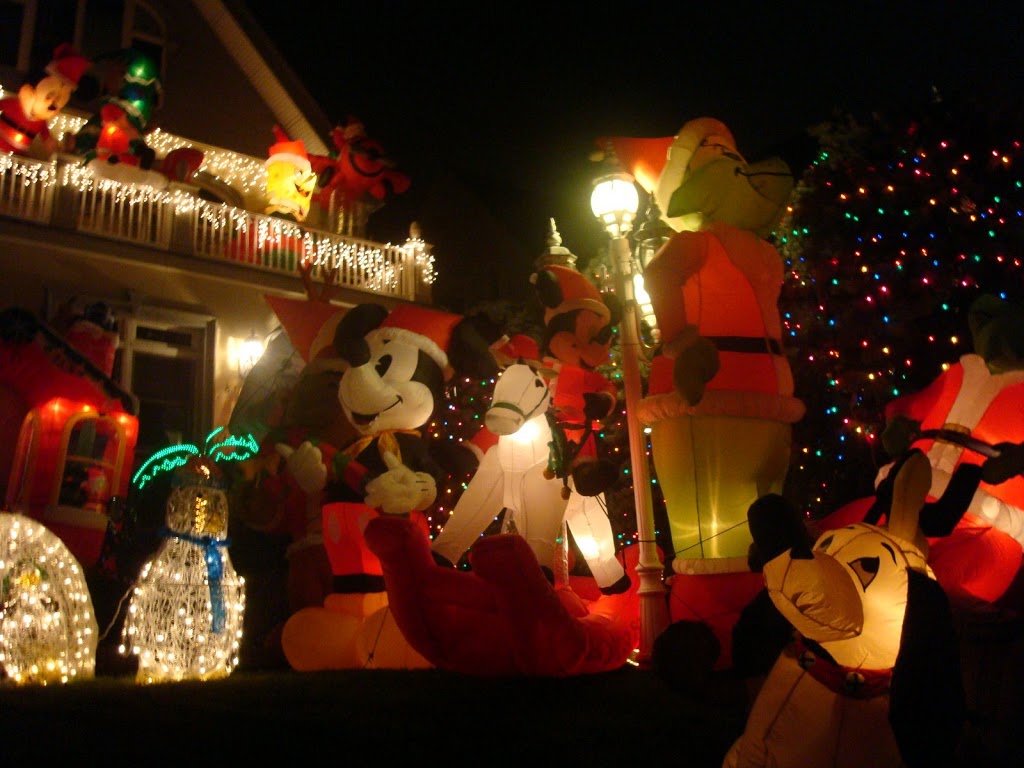
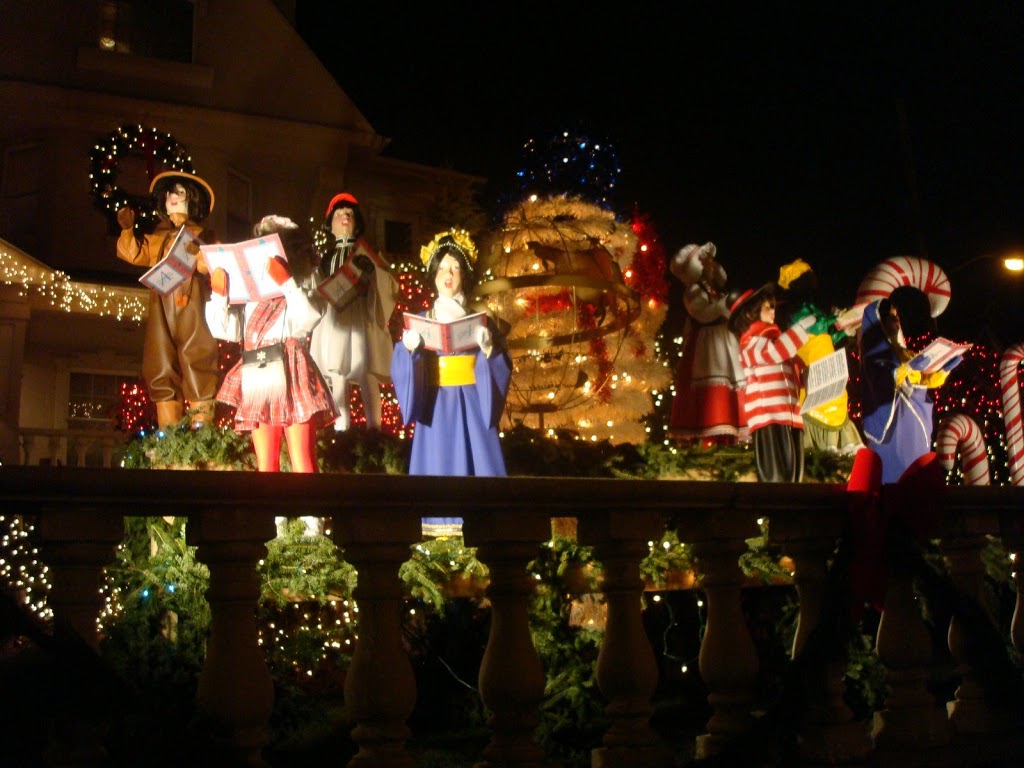
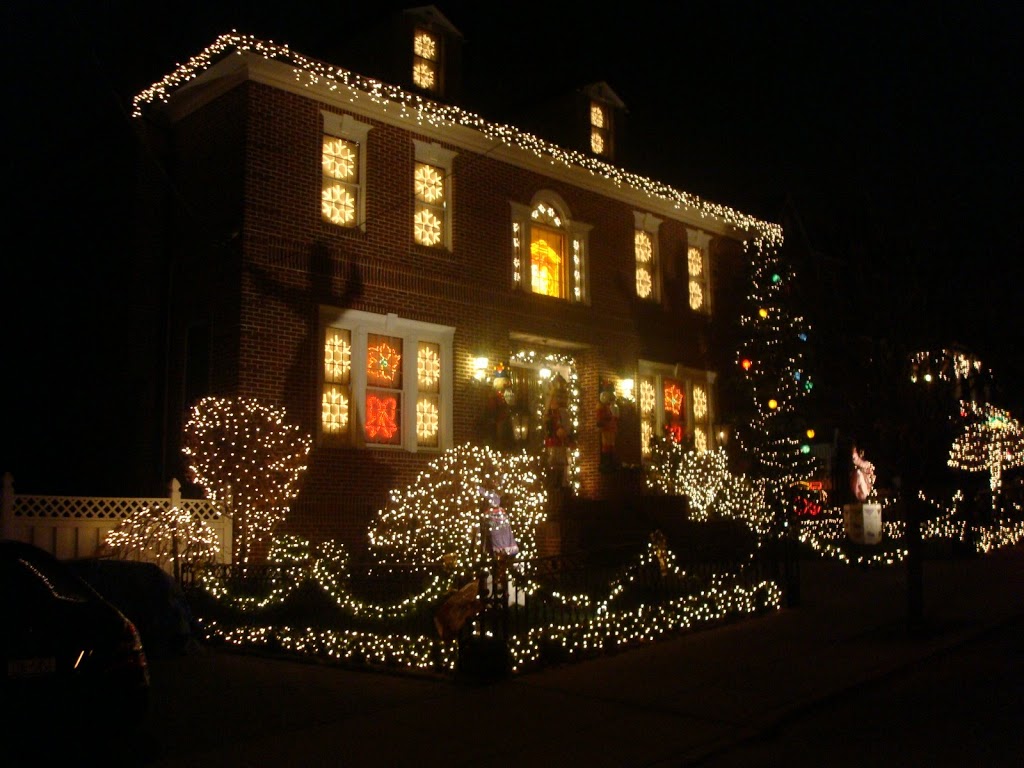
Holiday traditions in Manhattan are of course known the world over, from the lights of Park Avenue to the Rockefeller Center Christmas tree. But they lack that human touch, spun from wealthy corporations and honored tradition. Which is what makes Dyker Height’s annual lighting spectacular (festival? competition? freakshow?) so fascinating. It’s Brooklyn’s biggest holiday event, run entirely by the community.

The extravaganza has energized a neighborhood few in New York know much about. For most of its history, Dyker Heights was virtually uninhabited, either by humans or two-story illuminated snowmen.

Dyker Heights is named for an uninteruppted, sloping meadow which rolled down to the waters edge (today interuppted by the rushing traffic of Shore Parkway). Nobody’s certain where Dyker Meadow got its name, only that it originated from the days of Dutch occupation, either from a Van Dyke family which settled here, or, more generally, from actual dykes the family built to drain the meadow.

Tumuluous history springs up on either side of Dyker meadow and its small forests, as the British who land at nearby Denyce Wharf begin their invasion of Brooklyn in 1776, taking up battle with the Continental Army to the north and east. As part of the township of New Utrecht, the meadow was unsuitable for farming, but its forests were plenty suitable for firewood and materials for building homes.
Development finally came to the area shortly before Brooklyn consolidated with New York. During the 1890s, the nearby area of Bath Beach was quickly becoming a resort getaway similar to Coney Island. Called Bensonhurst-by-the-Sea, the resort adhered to strict moral entertainments (i.e. no booze) and thus was destined to fail. Luckily, by then, an elevated West End train line (the Brooklyn, Bath and Coney Island line, back in the day) was attracting speculators eager to draw New Yorkers with residences built on old farmlands. By 1911, the New York Times excitedly noted the saavy practices of land developers in this region of South Brooklyn.

The father of Dyker Heights is developer Walter L. Johnson, who in the 1890s scooped up the land, brought roads and utilities to this fairly remote part of Brooklyn, and quickly created a small community. He even named the area, the ‘Heights’ assumably tacked on to embue it was a cache similar to Brooklyn Heights. Johnson’s gamble paid off; in 1899, the Wall Street Journal proclaimed, “nowhere else in the consolidated city is there anything to compare it with. From here can be seen a marine panorama hard to beat.”

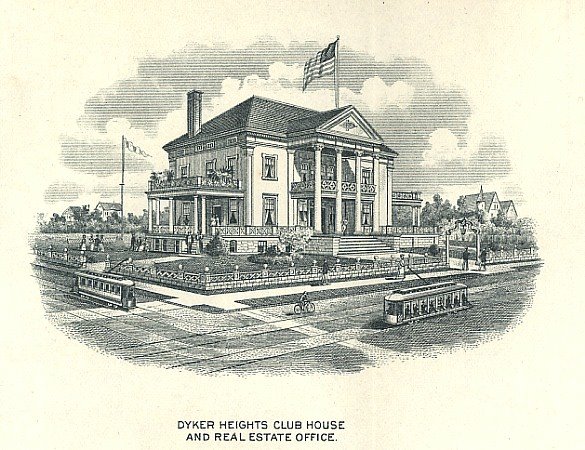
Below: the Dyker Heights Club House, built in 1898

Today Dyker Heights is a predominantly middle- to upper-middle class Italian neighborhood, anchored by the Dyker Heights golf course and sandwiched between Bay Ridge and Bensonhurst, with old Fort Hamilton to the southwest and what remains of the old Bath Beach resort area just southeast of here.

What Johnson could not have predicted — heck, what Thomas Edison, inventor of electric light bulb, could not have foreseen — is the annual holiday expression that occurs on the lawns of many Dyker Heights residences through December.

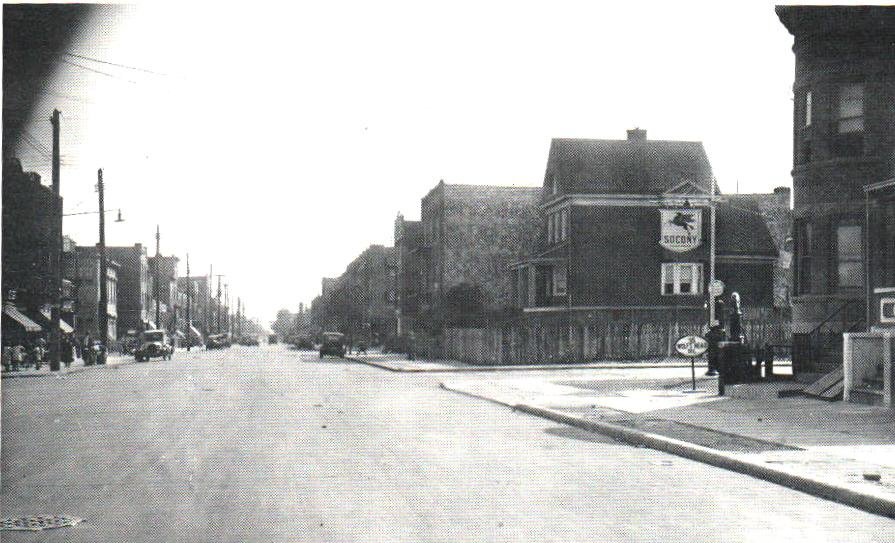
Below: 13th Avenue in Dyker Heights, 1934 (Pic courtesy Dyker Heights community website)

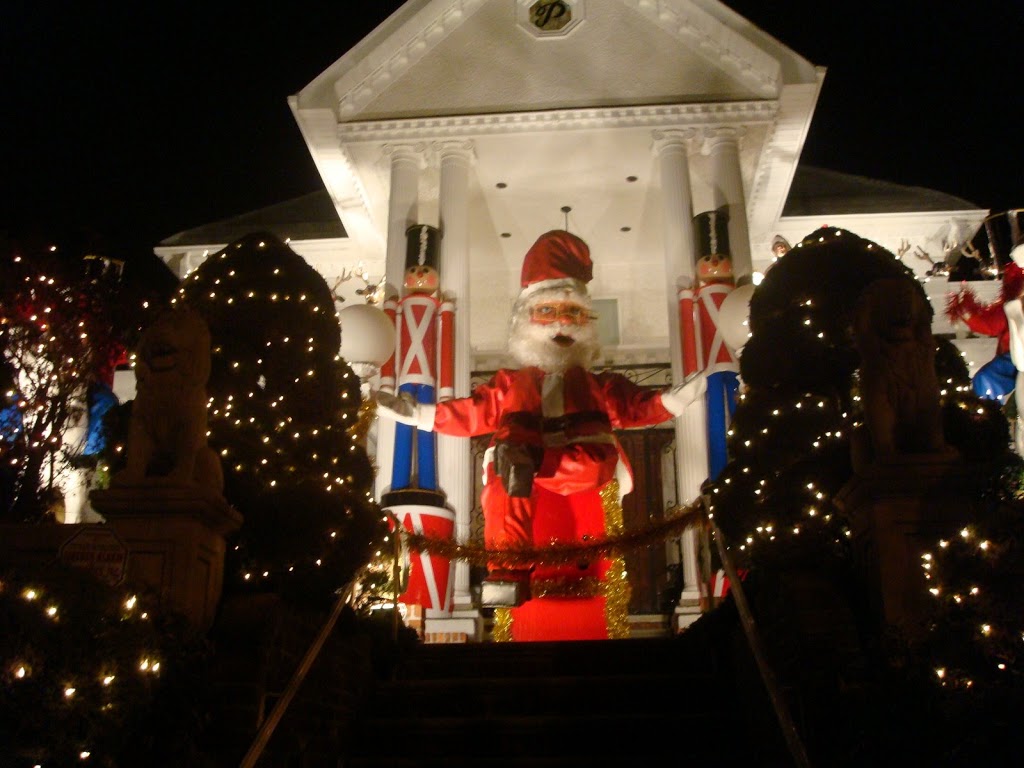
The neighborhood is already known for its unique, ornamented homes, front lawns festooned with fountains, animal statuary, ornate shrubbery, perfectly manicured grass and home waterfalls. For the holidays, the busy lawns are then burdened with an abundance of lighted sculptures, animatronic dioramas, illuminated trees, and every manner of festive lawn display imaginable. (You’re more likely to see a holiday-themed Mickey Mouse than a Santa Claus.) Imagine an eight-year-old child given a million dollars and a mandate for holiday landscaping.

Befitting an organic neighborhood celebration, the origins of this annual tradition are a bit hazy. Families began hosting displays as far back as the post-war years of the 1940s. An article from the New York Times last year suggests that the neighborhood’s Italian leanings may have something to do with it.

The show is concentrated on 84th Street between 10th and 13th Avenues but it easily spills over to other blocks and even into the borders of adjoining neighborhoods. I used to prefer seeing it from the luxury of an automobile, given the cold, but this year I went a bit early (some displays go on as soon as the sun sets) and hoofed it. It’s only a few blocks from a subway, and you get to interact with the various Santas and Elmos. With a good stroll, you can also soak in the Christmas music that seems to emanate from every home.

By the way, much of the history of Dyker Heights was unearthed a few years ago in a thesis paper by then student Christian Zaino. A model example of a budding New York historian, his research was so exhaustive that one of Dyker Heights’ more glamorous homes — the Saitta House — entered the National Register of Historic Places on the strength of his research. In fact, this is probably one of the few instances that you can use Wikipedia for a resource, as Zaino wrote the page.

Categories
Podcasts

PODCAST: Saks Fifth Avenue

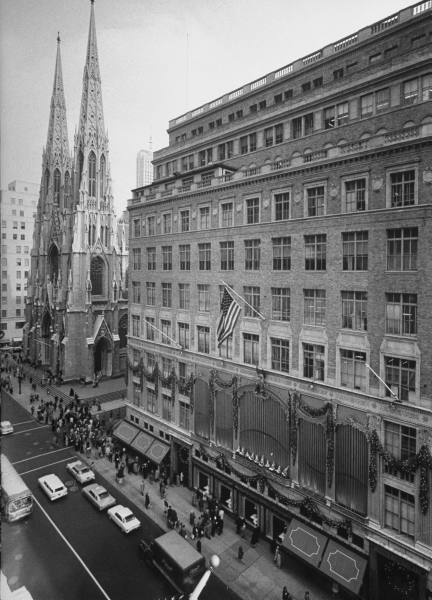
A podcast that’s “very Saks Fifth Avenue,” we get to the origins of the famous upscale retailer, follow its path from Washington D.C. to Heralds Square and then to “the most expensive street in the world,” and tell you a little about a glamorous milliner.

Listen to it for free on iTunes or other podcasting services. Or you can download or listen to it HERE

A slight clarification on this week’s episode: I describe one style used in the creation of Saks Fifth Avenue as Art Moderne, which is a variation of Art Deco using curved, streamlined surfaces. This clearly describes the inside of Saks, not the outside, which is a bit more formal.

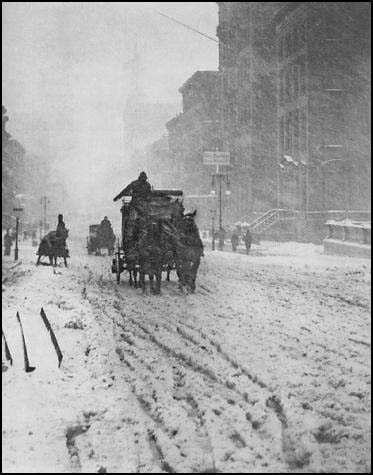
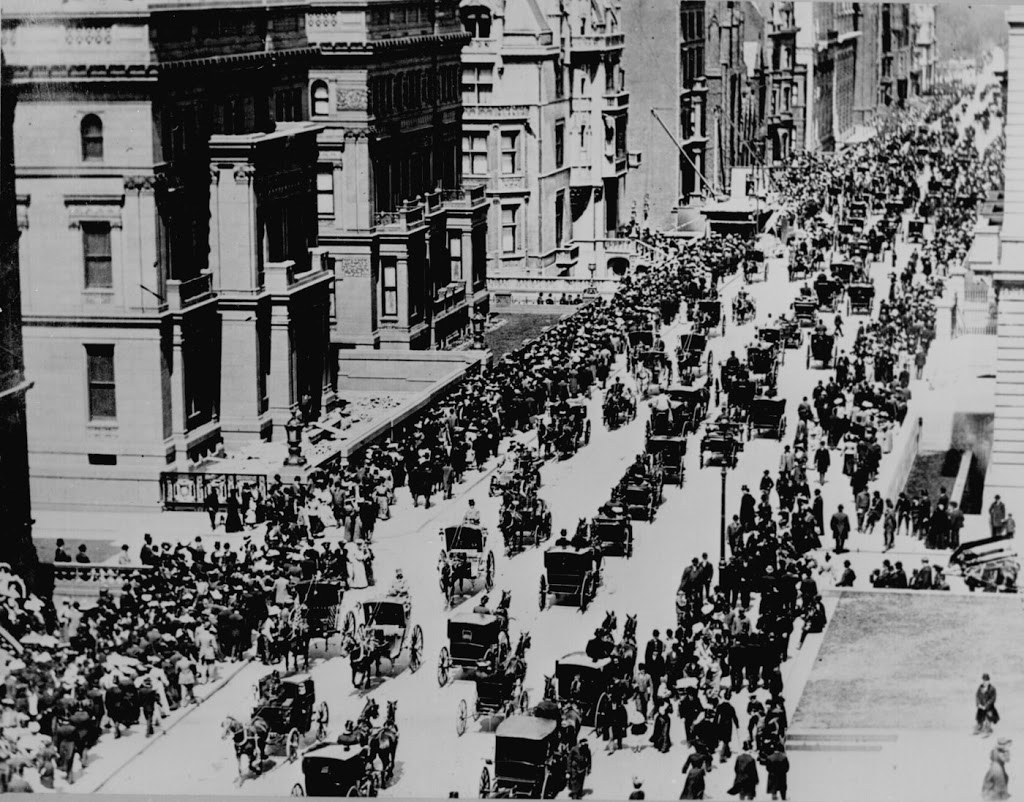
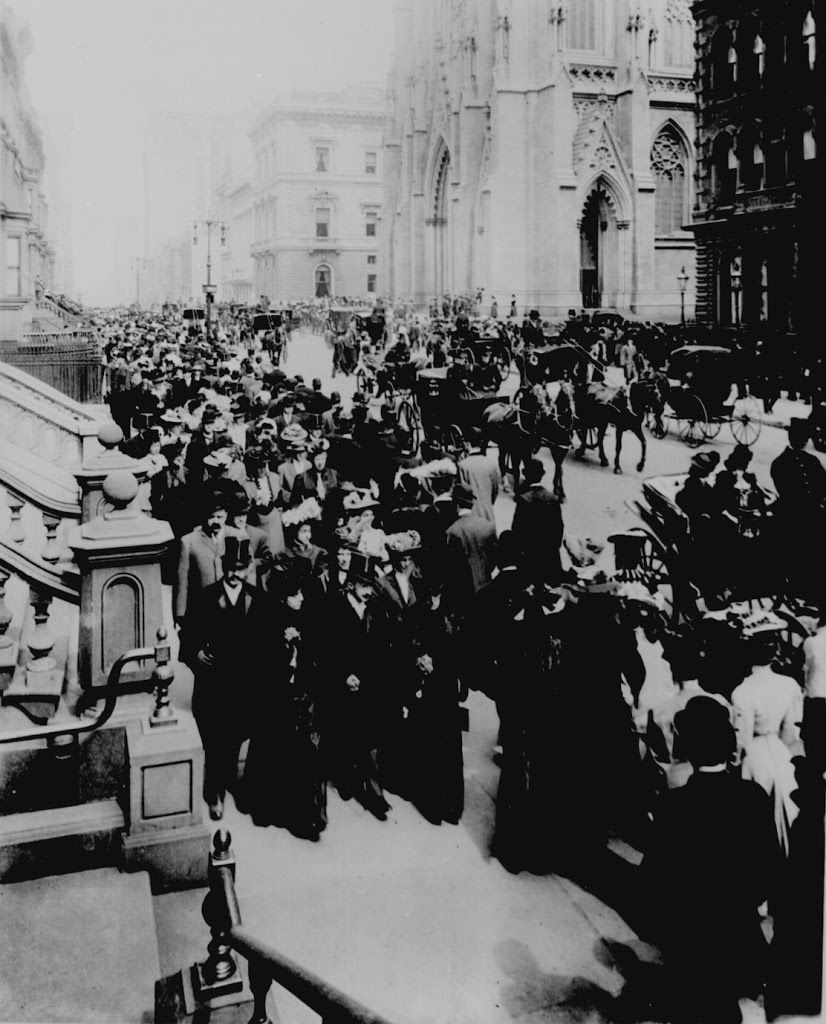
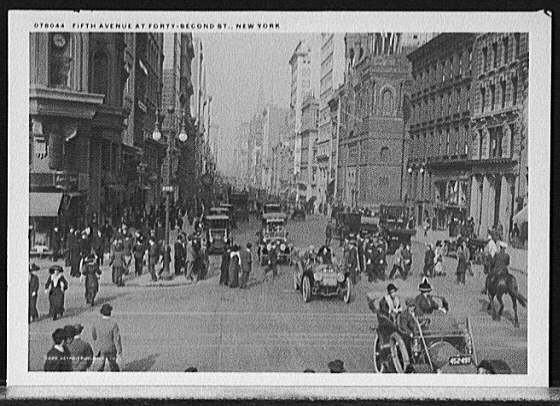
A few historical pictures of old Fifth Avenue — back when it was primarily residential, on the cusp of becoming New York’s center for retail

Alfred Stieglitz’s 1893 classic photo ‘Winter on Fifth Avenue’

Glorious Fifth Avenue in 1901, Easter morning. The streets are filled with people on their way to church, passing block after amazing block of private homes. Although there is not a retailer in sight, the sidewalks look pretty much the same as they do today though!

Fifth Avenue in 1906 — this is on the west side of the street to the lot that would soon hold Saks Fifth Avenue. (You can see St. Patricks Cathedral in the background.) Photos are from the National Archives.

This is definitely the corner of Fifth Avenue and 42st Street, although I’m not to sure of the date, most likely around 1910.

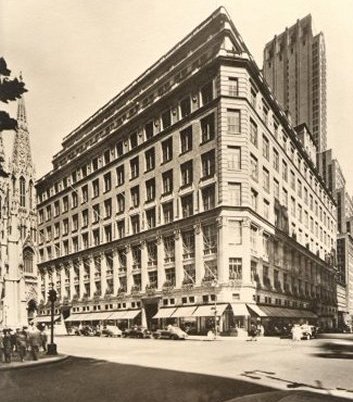
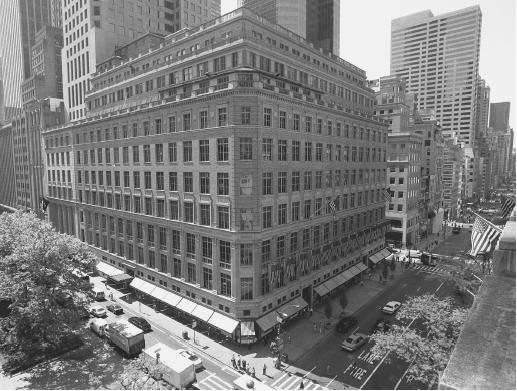
The Fifth Avenue store, circa the 1940s, designed by Starrett and Van Vleck

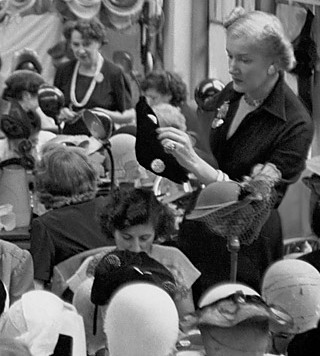
The glamorous workaholic Tatiana Du Plessix, who almost singlehandedly outfitted New York’s society ladies with hats. (Tatiana wasn’t glamorous to everyone, as a recent biography by her daughter takes pains to note.)

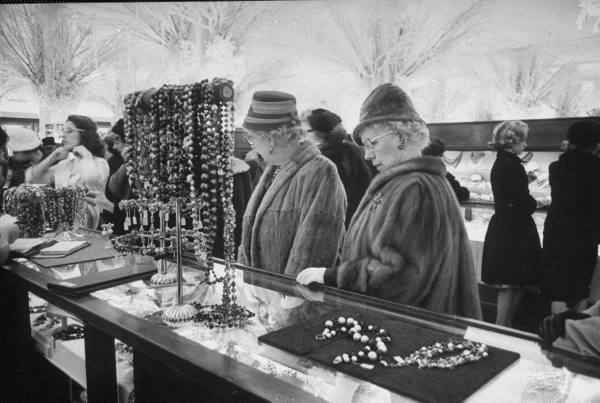
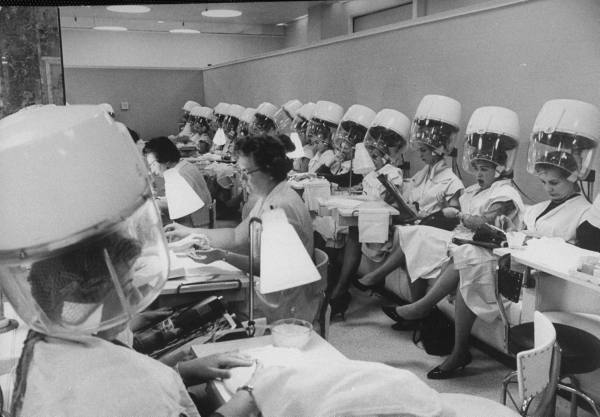
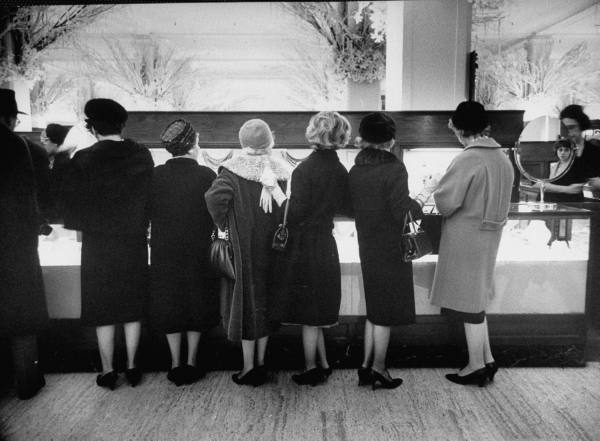
The following shots are from the Google Life archive of interiors of Saks from 1960 by photgrapher Alfred Eisenstaedt.

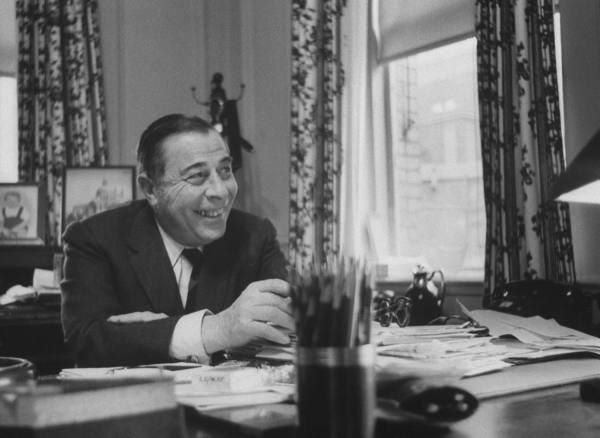
Adam Gimbel in 1962. He took over the company after the deaths of Horace Saks and Bernard Gimbel and helped create its mid-century upscale image. (Photographer Yale Joel)

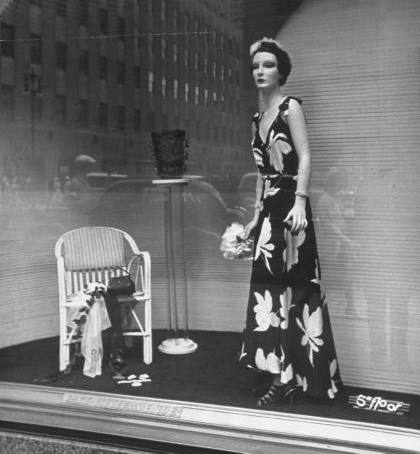
A Saks window in 1937, employing subtlety and grace instead of cramming the window with items

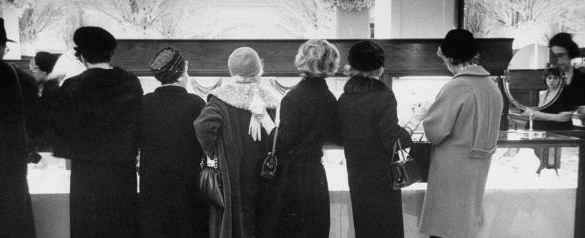
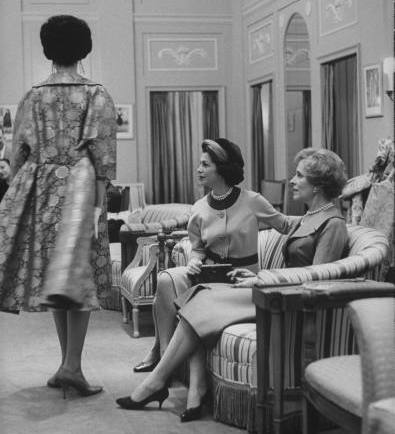
“Sophie of Saks,” Adam’s wife and the in-house designer for Saks Five Avenue, sits far right as a model displays a design to a customer. (1960/Peter Stackpole)

Gimbels Bridge over troubled shoppers

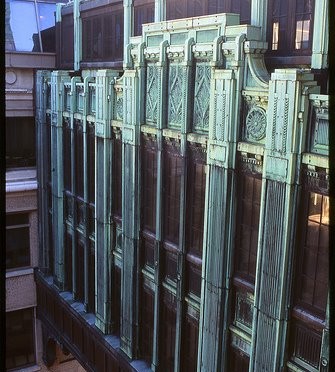
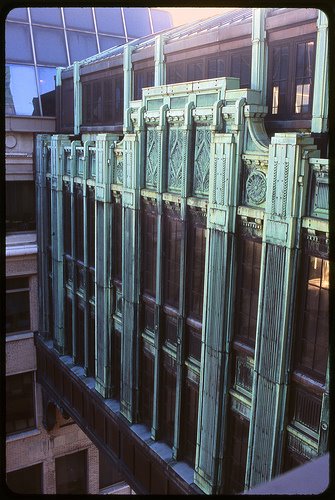
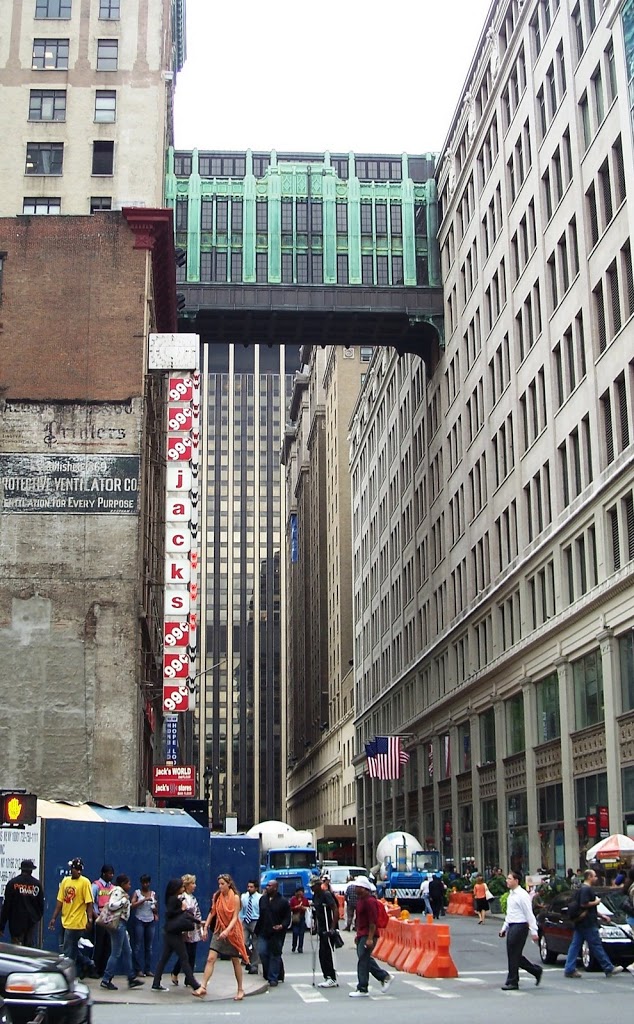
The blocks just south of Herald Square are pretty grim. Malls full of chain stores, bland electronic store fronts and fast food restaurants disguise a once vibrant shopping outpost, as department-store competitors of Macy’s flocked to the neighborhood in the early part of the 20th century. One strange vestige of this retail nostalgia still exists, in the form of a fabulous green copper traverse above 32nd Street.

Gimbels was a more than worthy adversary of nearby Macy’s. The two were Coke and Pepsi of early American shopping, with an early, antiquated catchphrase ‘Well, would Macy’s tell Gimbels?’ exemplifying the top-secret, competitive tactics of the business world.

Yet Macy’s was always the more respectable brand. Gimbels arrived in the Herald Square area in 1910 with a lackluster building by no less than Daniel Burnham (of Flatiron Building fame) who was clearly having an off-day. Despite (or perhaps, because of) innovations such as the first ‘bargain basement’, Gimbels never reached the same hallmarks of class and reputation that Macy’s did.

One way in which the Gimbel family did one-up its competitor was branching to a more fashionable street — Fifth Avenue. It did that by merging with its neighbor, Saks Thirty-Fourth Street, in 1922. Two years later, Saks Fifth Avenue, a joint venture of the Gimbels and the Saks, opened uptown and one block over.

Symbolically bridged to more desirable Fifth Avenue, Gimbels decided to link its Herald Square store more literally with a recently acquired annex across the street, building a custom traverse in 1925, a beautiful copper bridge, three story tall, created by the Richmond Shreve and William Lamb, a teeth-cutting project for two young architects who would go on to help design the Empire State Building.

Both the original Gimbels store and its annex have been horribly modified over the years, becoming Manhattan’s saddest mall. Yet, for some amazing reason, the copper bridge has been left virtually intact. Until the 1990s, both ends of the bridge were completely walled off and were only reopened to replace the bridge windows. Despite some fears that it might be getting ripped down, the musty but still beautiful sky bridge still hangs high above shopper’s heads, a reminder of a universe of cut-throat department-store wars.

Picture courtesy Flickr/moufle

Bowery Boys Recommend: Belle of New York


BOWERY BOYS RECOMMEND is an occasional feature where we find an unusual movie or TV show that — whether by accident or design — uniquely captures an era of New York City better than any reference or history book. Other entrants in this particular film festival can be found HERE.

Sometimes a movie can tell you all about an era in New York City history just by what it willfully avoids.

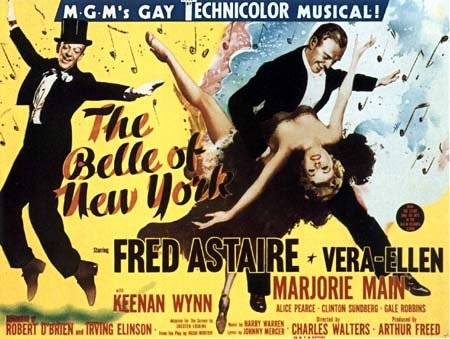
With the exception of one truly remarkable scene (which I’ll describe below), turn-of-the-century ‘The Belle of New York’ could be set in any city, or rather, no real city. It exists in a poor neighborhood with no poor people, in the cleanest version of the Bowery ever devised for cinema. This place looks too spotless, even for a backlot.

Musicals shouldn’t be realistic, and ‘Belle’ certainly isn’t. Fred Astaire stars as Charlie Hill, an uptown playboy literally awash in beautiful girls, most of him he’s broken off engagements with. In real life, a person of this nature would be reviled, thrown on the cover of the New York Post and labeled a loathsome cad. But because he’s Astaire — and because this is bubbly, champagne New York — he’s allowed to dance down a boulevard of broken hearts.

One day he ends up in Washington Square Park and overhears the singing voice of Angela (played by Vera-Ellen), a beautiful volunteer from the Bowery Mission. Angela rejects Charlie’s advances until he can prove to have a charitable heart. In the next scene, Astaire begins dutifully cleaning the Bowery in a crisp white uniform, dancing past pushcart sellers and card games. In real life, he would be beaten to a pulp and left for dead within five minutes. (Or maybe not. The opening title number features dozens of Bowery dandies singing up to Angela in the mission window.)

In the next scene, Charlie’s driving a streetcar. “Up the Bowery, across Cherry, into Grand, down Rivington and through Mulberry,” is how he describes his impossible route.

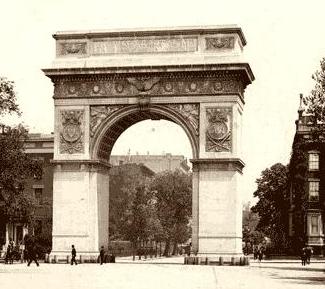
The hilarity comes in knowing your history and observing everything that ‘Belle’ cheerfully avoids. Overall, it’s not Astaire’s greatest moment. However, I’m recommending this for one single scene, using a New York landmark in one of the most surreal ways I’ve ever seen. In a fit of love-struck delirium, Astaire suddenly floats to the top of the Washington Square Arch to perform an elaborate solo dance number.

The McKim, Mead and White-designed arch would have been less ten years old in 1900, remade in marble after an earlier version was met with community approval. Certainly nobody would have approved of a drunken playboy hopping upon its delicate marble carvings. Although I have to say it looks awfully fun.

ABOVE: The Washington Square arch as it would have looked in 1900

Pilgrims progress in Central Park


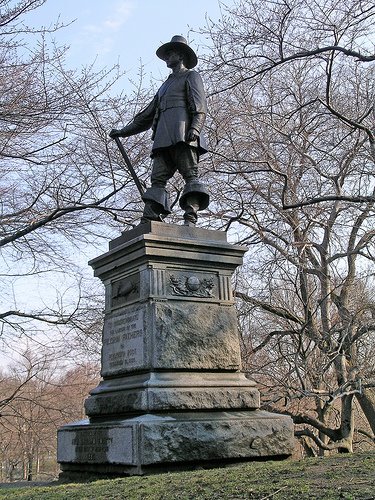
For one Pilgrim, Thanksgiving never ends. Standing near the Bethesda Fountain in Central Park is Manhattan’s tribute to the original European settlers, a solitary pilgrim upon a hill (Pilgrim’s Hill, to be exact) looking as though he’s made a wrong turn.

The Pilgrim made its debut in Central Park in 1885, long after Frederick Law Olmstead’s original vision of a monument-free park had gone unheeded. (The statue of Shakepeare was the first violator, in 1875.) The Pilgrim was a gift of the New England Society of New York, a charity organization that formed in 1805 to honor the events of Plymouth Rock and whose members are all directly related to Mayflower passengers.

As it seems with any type of unveiling in the late 19th century, the new addition was greeted with great fanfare, an ostentatious procession that marched up Madison Avenue, stopped to salute ex-president General Ulysses S. Grant at his residence on 66th Street, before turning into the park and greeting a group of 2,500 spectators and officiators, including Brooklyn mayor Seth Low and another ex-president Chester A. Arthur.

A choir sang a pilgrim-related hymn before the statue’s designer John Quincy Adams Ward, the ‘hottest’ monument maker in town, pulled the cord and unveiled his masterpiece for all to see. Now forgotten orator George William Curtis then mounted the stage to talk about the virtues of Puritanism, a meandering speech that the New York Times felt the need to reprint in its entirety.

Today, the statue holds a special place in the park, being the first monument to receive restoration, in 1979, at the beginning of Central Park’s dramatic transformation. It also shares a very lofty distinction; like the Statue of Liberty, it stands on a pedestal designed by Richard Morris Hunt.

If you’re in the least bit adventurous this winter, you’ll have plenty of times to see this charming fellow. The hill named after him is the go-to place for sledding in Central Park.

Picture courtesy of www.museumplanet.com.

Macy’s Strangest Thanksgiving Day Balloons Ever

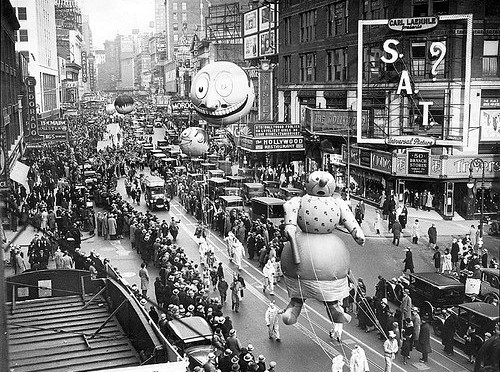
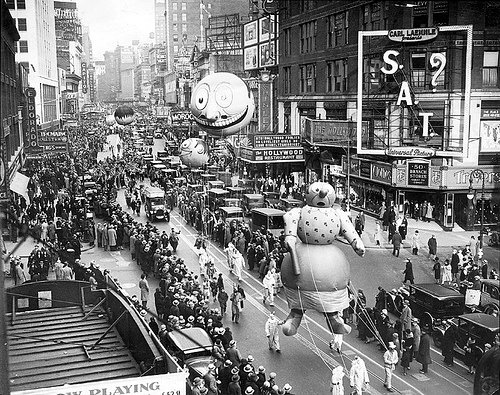
Above: The parade in the 1930s was a veritable freakshow of oddball balloon creatures

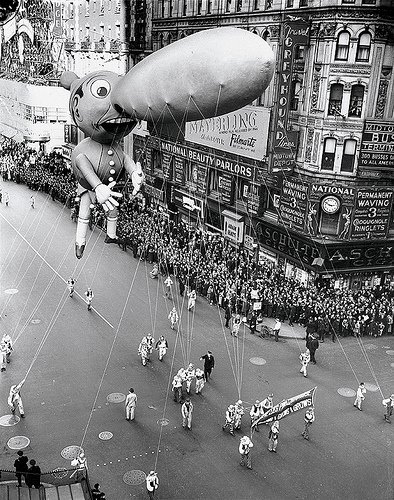
Not every balloon in the Macy’s Thanksgiving Day Parade latches on to your memories like Underdog, Charlie Brown and Snoopy do. Below are a few examples of Macy’s stranger offerings over the years:

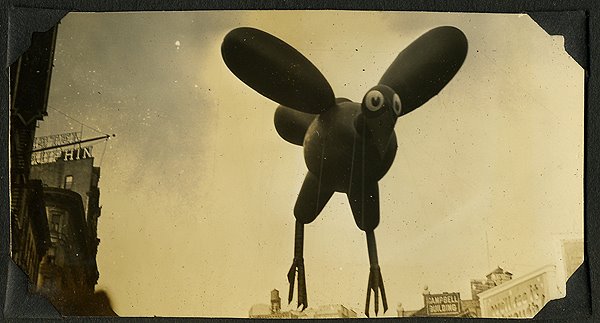
This Thing (Turkey?) 1932
I swear, if I saw that coming at me and I was eight years old, I would never celebrate Thanksgiving again. Clearly, the art of massive balloon making was still being perfected. Balloons had only been in the parade at this time for only five years and were still being released into the air at the end of the parade, for people to capture and return for reward money. This dangerous practice was stopped in 1933.

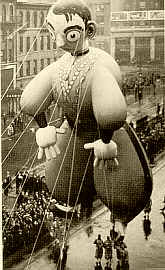
Pinocchio 1935
This depiction of the wooden puppet, with his 44-foot nose, is just illconceived on many levels.

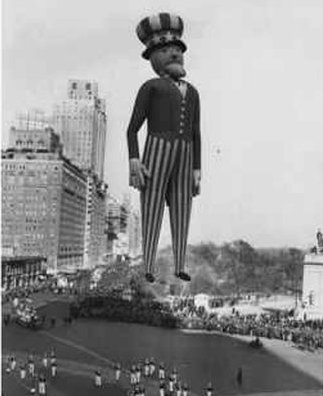
Uncle Sam 1939
Today’s Uncle Sam balloon is made of sterner material to fly upright, so I applaud their efforts to keep this older one standing along the parade route. This version of Sam flew from 1938-40.

Eddie Cantor 1940
Few living human beings are immortalized in balloonery — the Marx Brothers also come to mind, but the balloon celebrating Broadway and radio star Cantor is distinctive for being completely misshapen and almost horrifying.

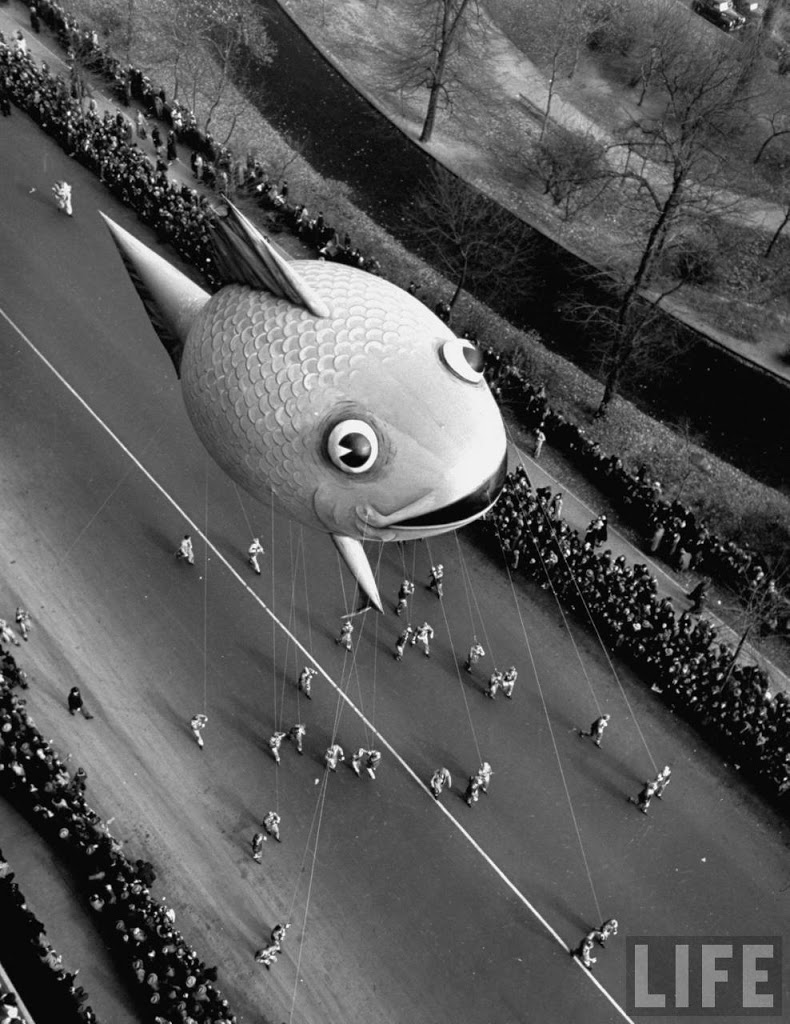
Fish Balloon 1941
This is actually one of the most beautiful pictures I’ve ever seen of a Thanksgiving Day balloon. The balloon was artistic and graceful, and for 1941, that definitely makes it strange. (Courtesy of Google Life stock photos)

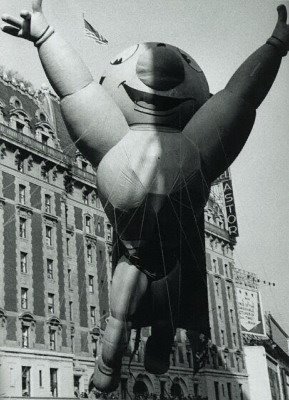
Mighty Mouse 1954
Do kids know Mighty Mouse anymore? Anyway, the flexing pose of the balloon always made the strangest images on television. From the picture above, he looks to be on steroids

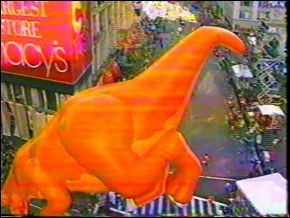
Rex the Dinosaur 1993
It wasn’t that Rex was a bad balloon. It was the fact that, halfway through, his head popped off and they kept the behemoth floating down the street, the camera uncomfortably cutting away.

By this way, the above picture is from this website, which relays every excrusiating detail of the 1993 parade, apparently one of the worst in Macy’s history (thanks to crazy winds and bad Katie Couric fashions). The descriptions are hilarious

Ask Jeeves 2001
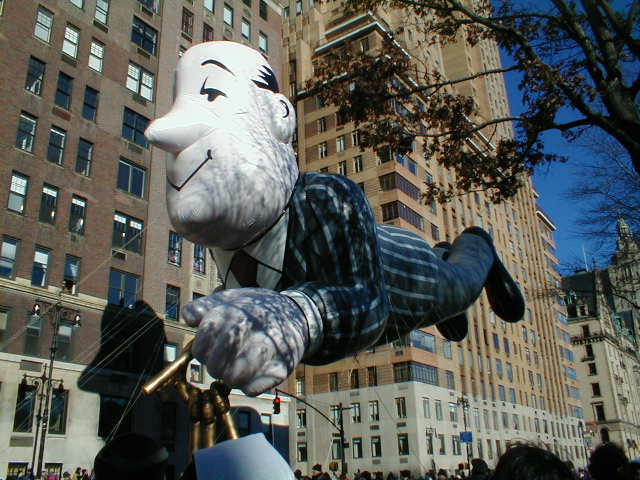
What could be more sad than seeing a discarded mascot for a dot.com floating down the street? A mascot that happens to be in the shape of a middle-age butler.

Harold the Fireman 2007
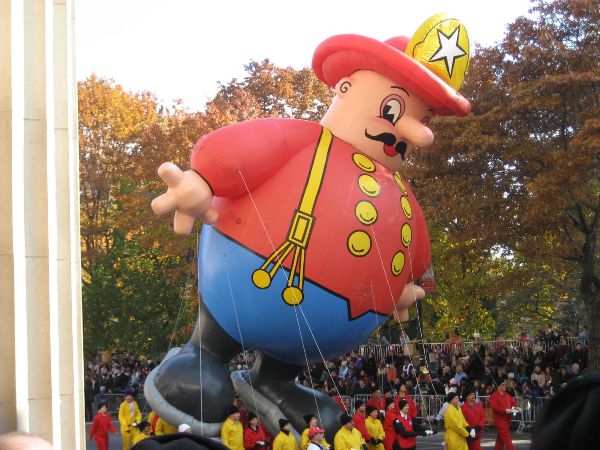
Way before Joe the Plumber, Harold’s been with the parade since 1958, an old perennial. He makes the list because after all these years, you’d think a man in his profession would have lost some weight. Believe it or not, Harold has been in the parade in different garb — as a clown in 1945, baseball player in 1946 and a cop in 1947 — before finally settling on a job he liked.

Rabbit 2007
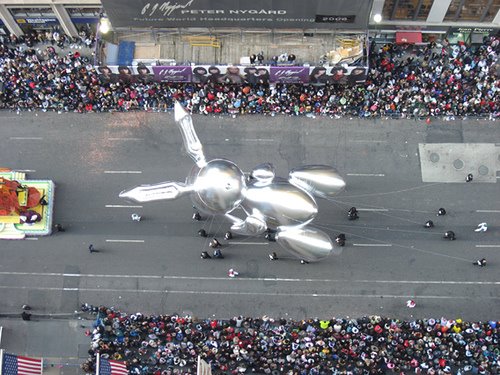
Pop artist Jeff Koons took a 1986 work — a table-top stainless-steel bunny — and literally blew it up for the parade last year, perhaps the only floating object that could conceivably be displayed at the Museum of Modern Art (if they had room for it.

And just for fun, some Macy’s excitement from 1984: Tom Turkey and Dionne Warwick!

And finally — last year we did a podcast on the history of Macy’s and the Thanksgiving Day Parade. You can listen to it on this page, download it for free on iTunes or other podcasting services, or directly download it from here.

I also wrote a specific history last year on the Underdog balloon.

Name That Neighborhood: TriBeCa not so triangular

Some New York neighborhoods are simply named for their location on a map (East Village, Midtown). Others are given prefabricated real-estate designations (SoHo, DUMBO). But a few retain names that link them intimately with their pasts. Other entries in this series can be found here.

For all the New York City neighborhoods with wonderful old names hearkening back to Lenape, Dutch and British settlers, we have a small number crafted by other, more venerable tribes — real estate brokers and community organizers. Dumbo is not a city in the Netherlands; NoLiTa is not Lenape for ‘neighborhood’. And at least one –TriBeCa, that fashionable neighborhood northwest of City Hall — is made of comprised of a complex portmanteau that isn’t even technically accurate.

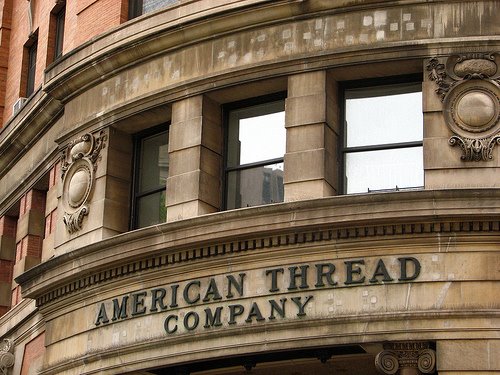
The area bounded on the north by Canal, south by Vesey Street, east by Broadway and west by the Hudson River is calm and quirky compared to other neighborhoods, owing to its shape, sculpted by a cross work of diagonal streets braced against the grid-like blocks between Church and Broadway. While the Lower West Side, as it was earlier known, began as a residential district in the late 18th century, its proximity to the docks and to the Hudson River Railroad’s St. John’s Park Depot transformed the neighborhood into a center of industry, primarily textiles by the 1850s.

Like the Meatpacking District further north, the western edge of the area also became a grocery center for New Yorkers, with fresh produce, dairy and meat. The streets of Washington Market, as it was known then, were clogged with buyers and sellers with vendors even set up along the Hudson River docks. A chaotic mess to be sure, to contrast with many of the gorgeous Italianate and Romanesque Revival buildings built by wealthy companies to house their offices and factories.

Below: You can easily find remnants of TriBeCa’s ‘material’ past

Flash forward to the 1960s. The factories long abandoned and the western warehouses cleared away to construct the West Side Highway, the large now-empty spaces attracted artists, musicians and “bohemians”, slowly returning the neighborhood to its original residential leanings. Similar, in fact, to the phenomenon of SoHo just north, also a locus for artists, whose tenacious effort to turn industrial space residential led to the creation of its made-up name (SOuth of HOuston) and historical landmark designation in 1973.

The residents of Washington Market followed suit. Or rather, those centered around an actual triangular block — the one with Canal to its north, Lispenard to its south and Church to its west. (It narrows pointing to Broadway on its eastern edge.) They formed a block association called the Triangle Below Canal to rally behind a similar designation for their area. Although they too are technically south of Houston — and Washington Market has a cleaner, historical ring to it — the organization’s name was truncated, and TriBeCa was soon born.

Although TriBeCa represents the entire area, in fact the neighborhood (outside of a few individual blocks) is not actually triangular at all. But as the true sign of the neighborhood’s drastic transformation, the area’s unofficial king is an Oscar-winning celebrity — Robert De Niro. The actor, who moved here in the ’90s, brought two restaurants and a film festival here, which allowed other celebrities to follow suit.

You can find more indepth information on the history of TriBeCa at its official website.

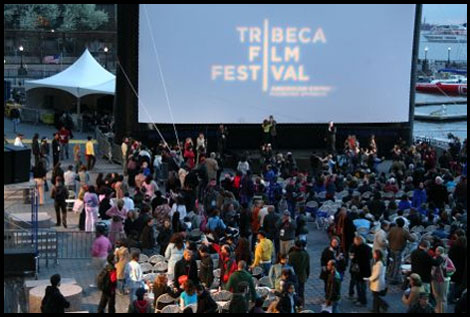
Below: Where once crowds of produce cellars clogged the streets, now filmgoers enjoy cocktails and watch film premieres

Categories
Podcasts

PODCAST: The Bowery Files

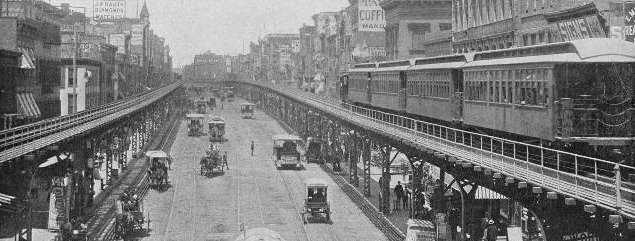
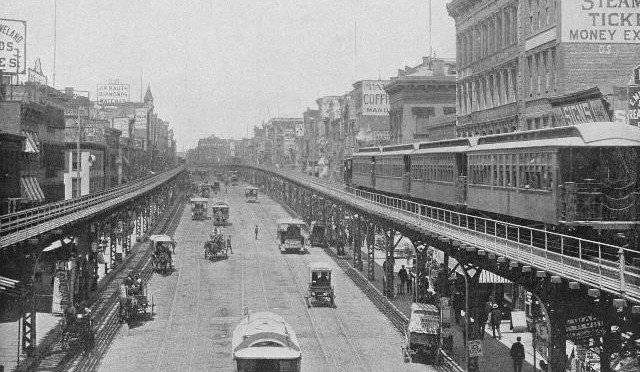
The Bowery of 1923, its livelihood segregated from the street by elevated railways.

This is our “potpourri” episode with a little bit of everything in it.

We open up some of our favorite readers mail, we take you behind the scenes of how we put together an episode, and we describe three of our very favorite history-related websites that you should check out.

But it wouldn’t be a podcast without some history, right? So we take a brief stroll down the Bowery, with over 200 years of history along this famous street. But has anything really changed?
Listen to it for free on iTunes or other podcasting services. Or you can download or listen to it HERE

Since we’re in listeners and readers appreciation mode, here’s a few odds and ends that people have emailed us about that you might be interested in:

The New York Public Library just recently uploaded a new video featuring great footage from the 1939-40 World’s Fair. Organizers from the fair donated all documentation to the library and is the first place to start for anybody fascinated in its history.

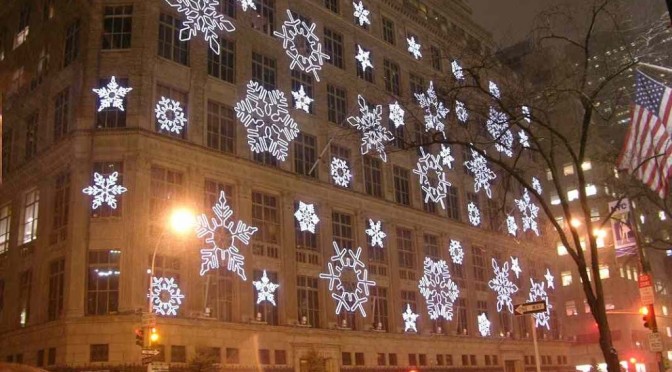
Last year on the blog I spotlighted that massive Douglas Leigh-designed snowflake that hung over Fifth Avenue and 57th Street. One of those who helped Leigh with the design, Hans Clausen, sent me a link to his website with more information. The snowflake will be going up soon!

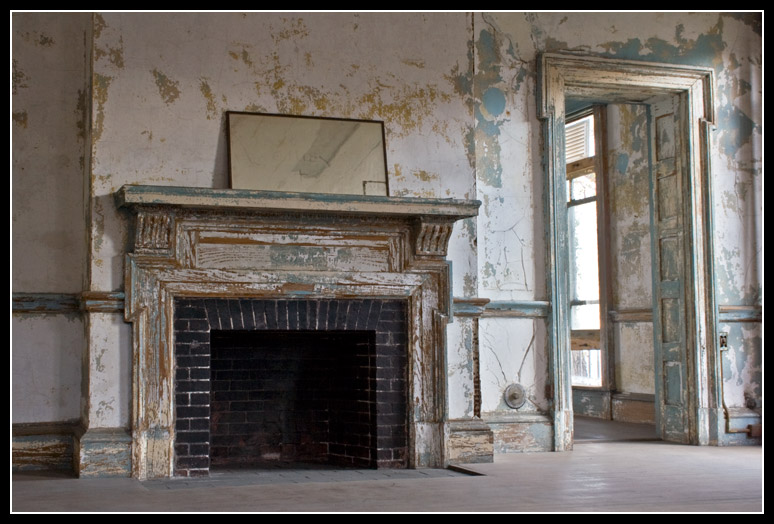
Jacques Pasilalinic-Sympathetic Compass(quite a name!) sent me a New York centric link from his blog, featuring some great pictures from the little-seen south side of Ellis Island, mostly off-limits and hauntingly abandoned. Including this shot:

And not that I need to plug that little old paper called the New York Times, but did you see that remarkable before-after sliding thingy they did with Grand Central Terminal, contrasting a 1978 picture of the Concourse with a view of it today?

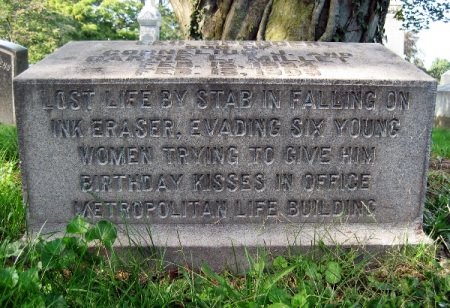
And finally, thanks once again to Amid and Cartoon Brew for sending us this tale about one of the strangest tombstones in New York City:

Stopping time: Enrico Caruso’s Plaza tantrum


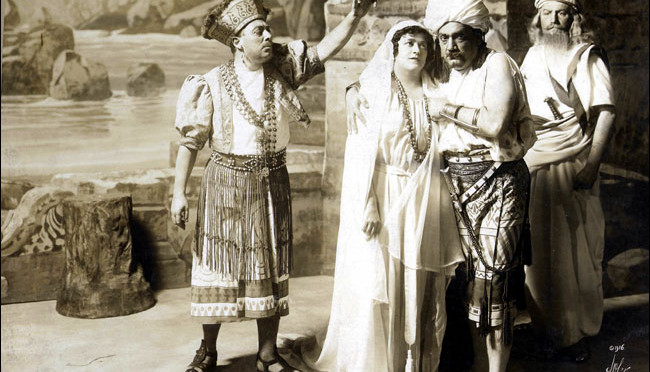
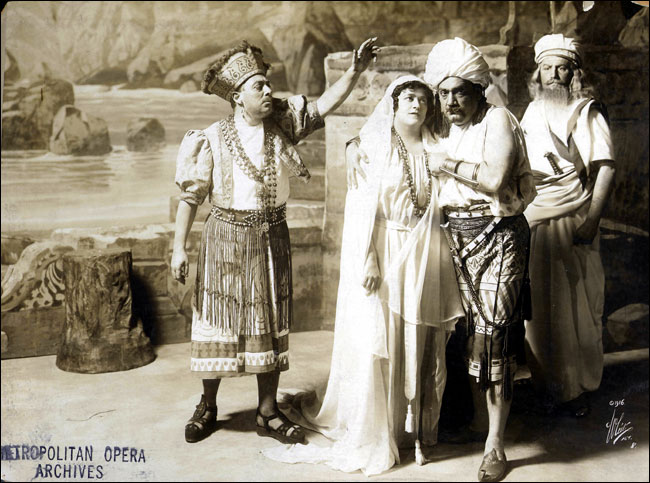
Caruso, wearing the big white turban, during the 1916-17 performance at the Met

The Plaza Hotel might have been built on the fortunes of a barbed-wire magnate, but its continued existence throughout the years partially stems from its popularity amongst the bold-print set. Celebrities, however, come with a drawback. Along with their famous name and the press and attention that comes with it, so too comes the occasional diva behavior, the irrational requests, the vituperative red-faced conniption.

This famous hotel has seen its share, but none more famous than the one thrown by its first superstar guest — Enrico Caruso.

At the beginning of the century, there were few more famous than Caruso, an internationally-renown Italian tenor and the world’s first recording star. He performed with the Metropolitan Opera for 17 years. And at least at the very beginning would stay at the Plaza. (Over time, he would prefer the late Knickerbocker Hotel in Times Square instead.)

Caruso was a fabulous, eccentric character, exceptionally gifted, occasionally erratic. In 1906, he was accused of molesting women in the monkey house at the Central Park Zoo, and the details of ensuing — and highly publicized — trial stretches far into the realm of the absurd. (It involves trenchcoats with holes in the pockets, an alleged “sexual free-for-all” and a monkey named Knocko.) He was fined $10 for the incident.

One night after a performance at the Met in 1907, Caruso returned to his luxurious corner room at the Plaza to sleep. However, throughout the evening he was kept awake by the sound of ticking electric Magneta clock on the mantel. Tormented by the device’s rhythmic tick-tock, he erupted in the middle of the night and attacked the clock, in some accounts with a knife, in others, destroying the timepiece with his own shoe.

The problem with this particular tantrum, however, was that the entire hotel was fitted with these Magneta clocks, and all the clocks were wired to each other. Caruso had not only taken out his own clock, but effectively broke every clock in the hotel.

According to Curtis Gathje, the hotel managers responded with extraordinary restraint, instead sending Caruso complimentary champagne as an apology for inconveniencing him. Certainly, this would not become the model for handling later tempestuous musicians who trash their hotel rooms.

By the way, did you know the Enrico Caruso museum is in Brooklyn?

Categories
Podcasts

PODCAST: The Plaza Hotel

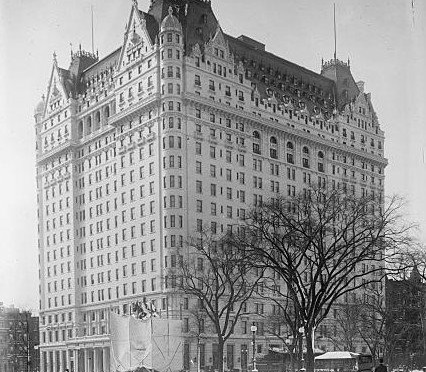
It got off to a rocky start, but the Plaza Hotel has become one of the most recognizable landmarks in New York City. We take a look at its kooky history, from its days as an upper class ‘transient hotel’ to a party place for celebrities. Starring: Henry Hardenberg, Eloise, Truman Capote and of course the unsinkable Mrs. Patrick Campbell.

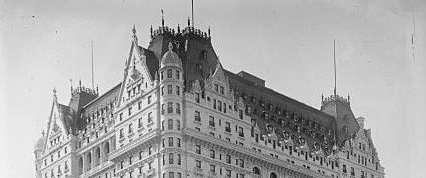
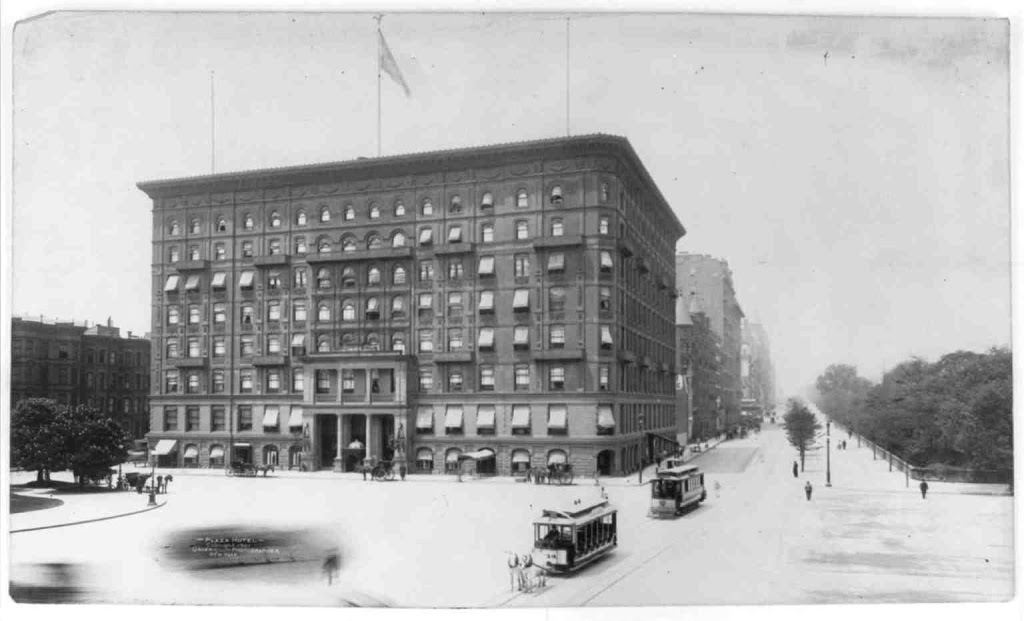
The first “Plaza,” as redesigned by McKim, Mead and White, was also a hotel, but it didn’t last long. Opened in 1890, it was demolished in 1905 to make way for the far grander vision of Henry Hardenbergh.

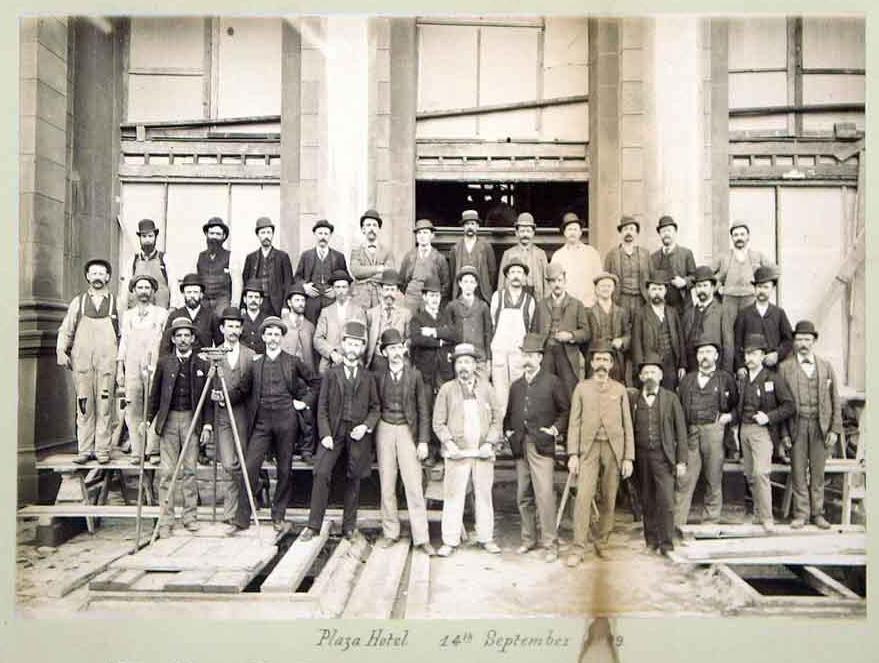
Workmen pause to stand in front of the first Plaza in 1889. Eventually the foundation of the building would not support the lofty plans for the new Plaza, so it had to be entirely torn down.

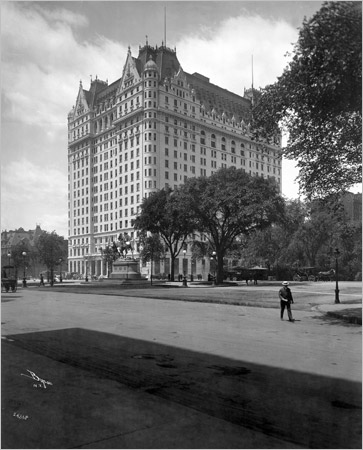
Believe it or not, here’s The Plaza in the year it opened, 1907! It looks like it’s in the countryside. Note the General Sherman equestrian statue in the foreground.

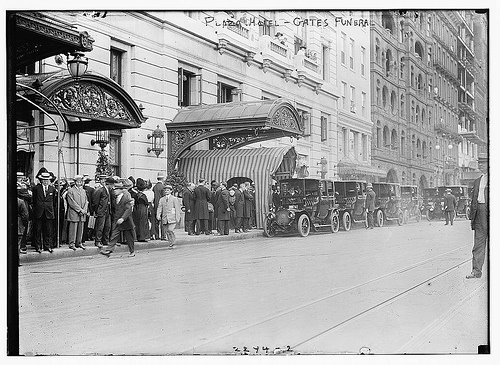
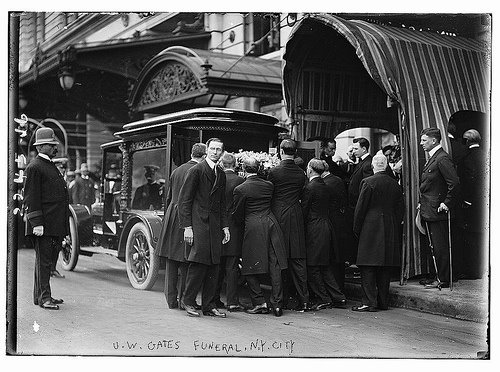
Two shots of the funeral of John “Bet-a-Million” Gates — who basically bankrolled the construction of the Plaza — pulls up to the entrance (on 59th street) of his famous hotel. It’s particularly interesting to see the development of buildings further west next to the Plaza. (Photo from Flickr, Library of Congress)

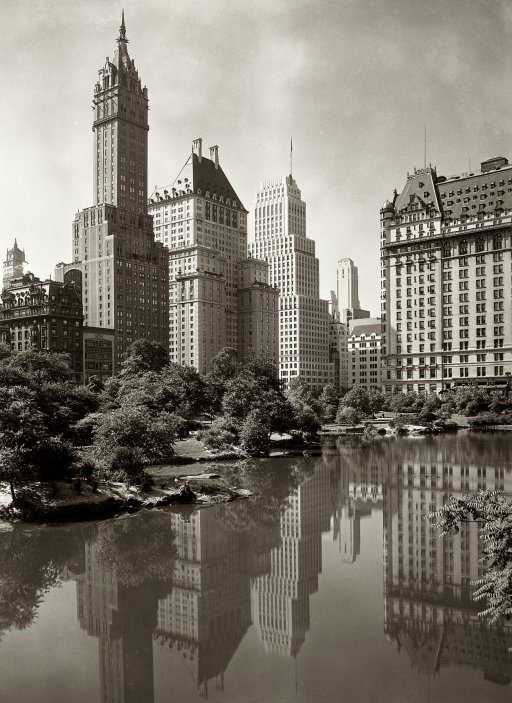
One of the Plaza’s immediate appeals was its proximity to both Central Park and the tony residents and luxury hotels of Fifth Avenue. (Picture courtesy of my favorite website Shorpy.)

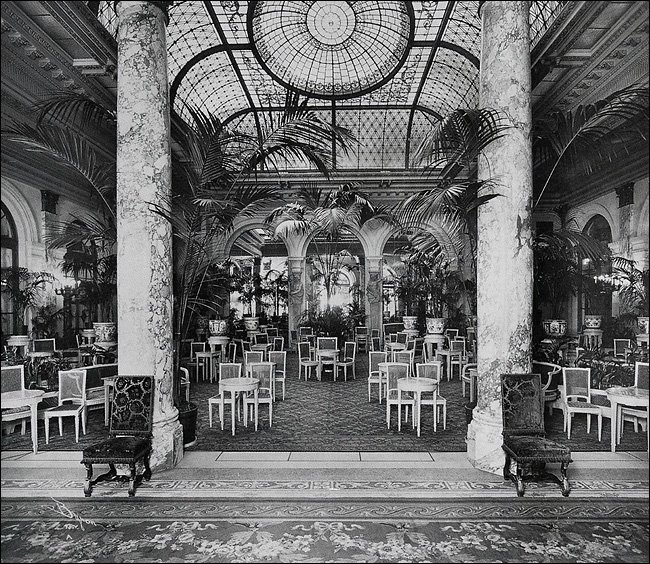
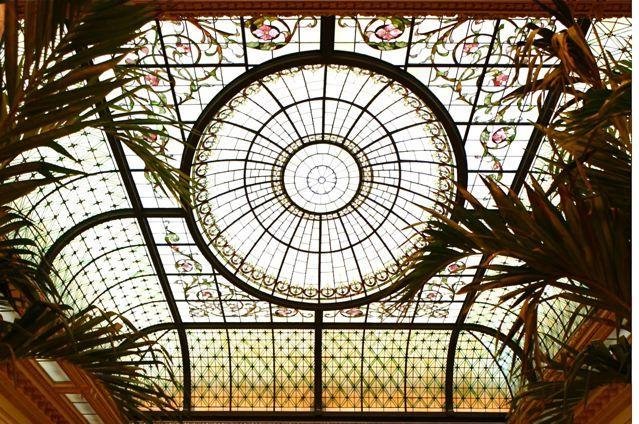
The elegant Palm Court, site of countless afternoon teas and the smoking rebellion of Mrs. Patrick Campbell. The ornate stained-glass dome would be removed in 1944, replaced with an air conditioning unit.

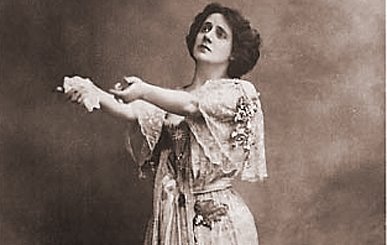
Mrs. Patrick Campbell, poster child for smokers and women’s rights everywhere

The fabulous Oak Room, probably the most unchanged of the Plaza’s public room, is festooned with Hardenburgh humor in the form of alcohol-related carvings. It was a popular drinking spot for the likes of F. Scott Fitzgerald, George M. Cohen, Bill Clinton and Harrison Ford.

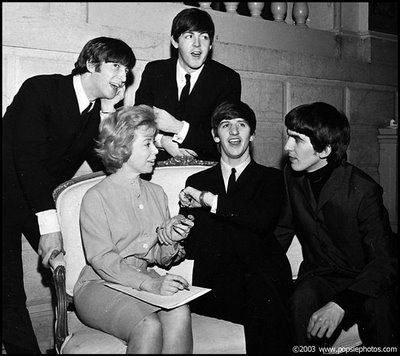
The Beatles and the Dr. Joyce Brothers enjoy a campy moment during an 1964 press conference at the Plaza.

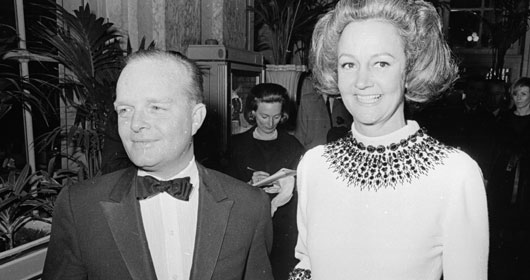
Truman Capote and Katharine Graham greet guests at the totally outrageous Black and White Ball.

Kay Thompson, later the author of the Eloise books, performs here at the Persian Room:

The Palm Court’s stained glass ceiling has returned in the modern renovation.

The Plaza celebrated its 100th anniversary last year with an elaborate ceremony.

Check out the wonderful book At The Plaza: An Illustrated History of the World’s Most Famous Hotel by Curtis Gathje with many more details on the Plaza’s different and extraordinary rooms. And look below a couple posts for a picture of Barack Obama with the Plaza Hotel in the background!