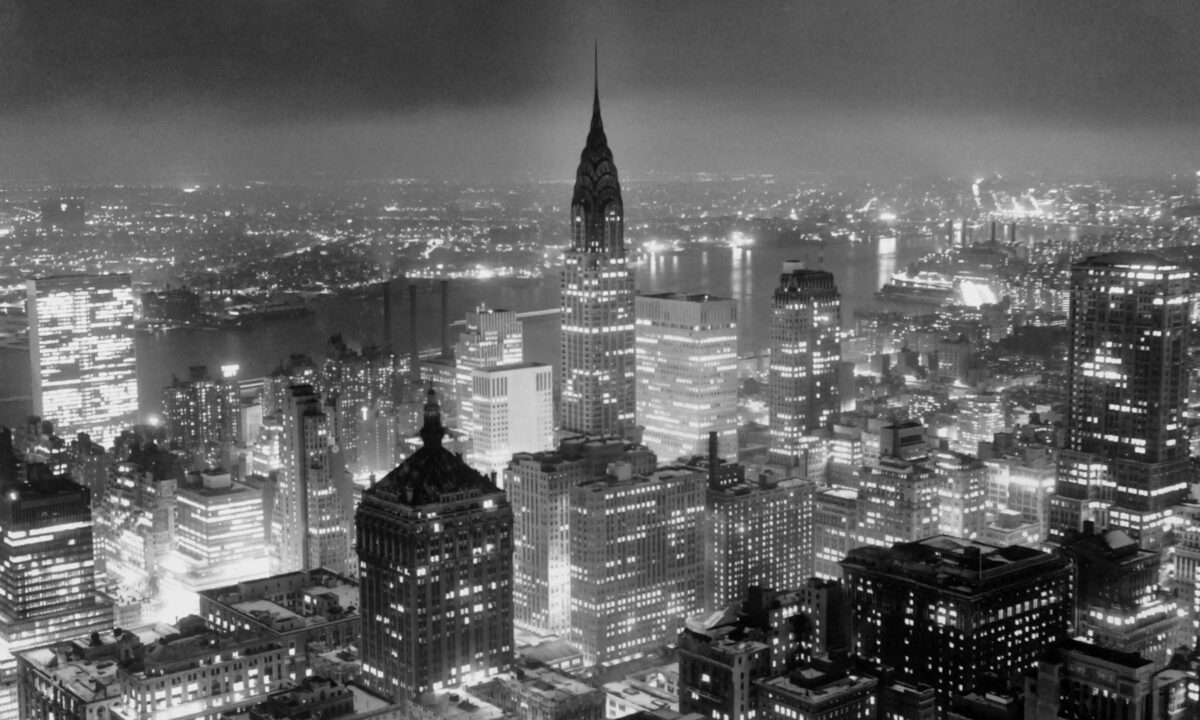
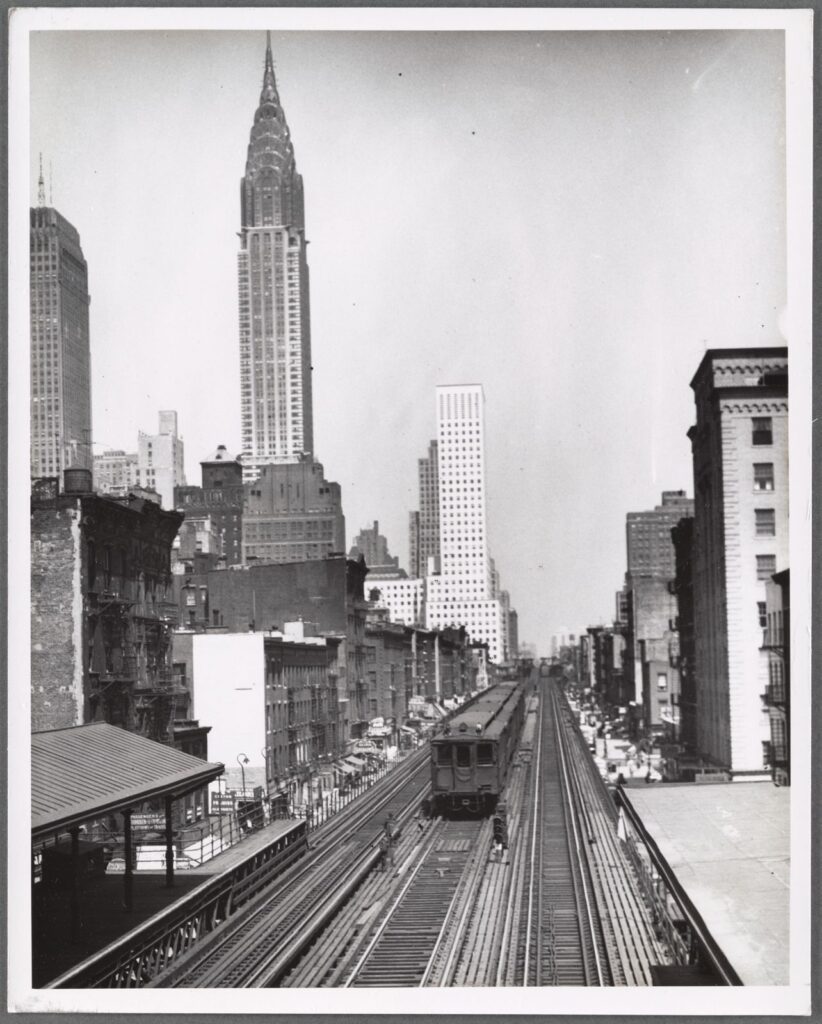
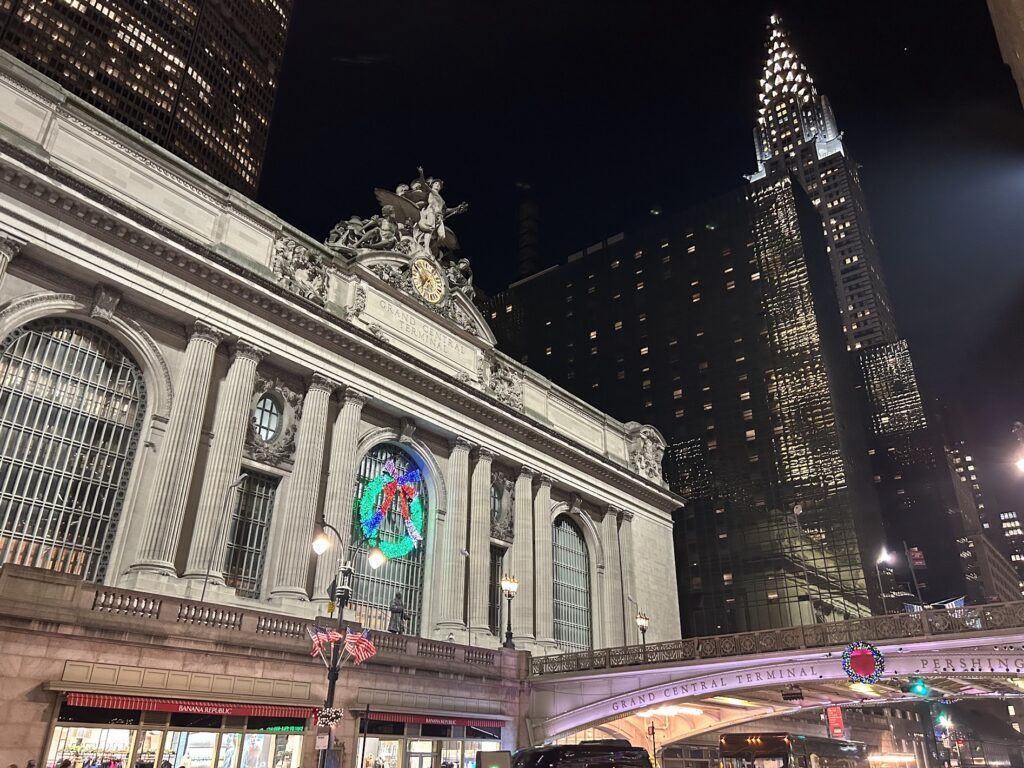
The Chrysler Building remains one of America’s most beautiful skyscrapers and a grand evocation of Jazz Age New York. But this architectural tribute to the automobile is also the greatest reminder of a furious construction surge that transformed the city in the 1920s.
After World War I, New York became newly prosperous, one of the undisputed business capitals of the world. The tallest building was the Woolworth Building, but the city’s rise in prominence demanded new, taller towers, taking advantage of improvements in steel-frame construction and a clever ‘wedding cake’ zoning law that allowed for ever-higher buildings.
Into this world came William Van Alen and H. Craig Severance, two former architectural partners who had unamicably separated and were now designing rival skyscrapers. Each man wanted to make the tallest building in the world.
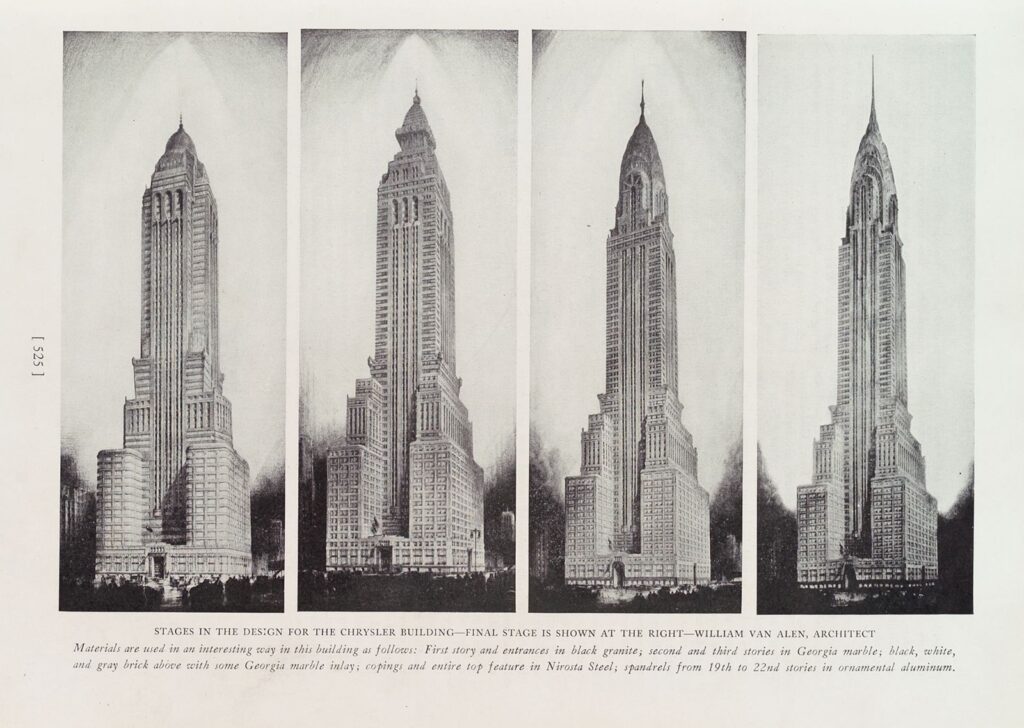
But Van Alan had the upper hand, backed by one of America’s most famous businessmen — Walter Chrysler. His automobiles were the coolest, sleekest vehicles in the marketplace. His brand required a skyscraper of radical design and surprising height.
Stages in the design for the Chrysler building, 1929 (courtesy NYPL)
In 1930, the Chrysler became the tallest building in the world, a title it held until the Empire State Building.
Just ten years ago, the Chrysler Building was the fourth tallest in New York City. Today, however, it’s the thirteenth tallest building in the city. And that’s because of a new skyscraper surge shaping the city’s skyline, with supertalls making the skyscrapers of old feel very small in comparison.
It can be bewildering to see the skyline change so rapidly. But that’s exactly how New Yorkers felt exactly one century ago.
LISTEN NOW: THE CHRYSLER BUILDING
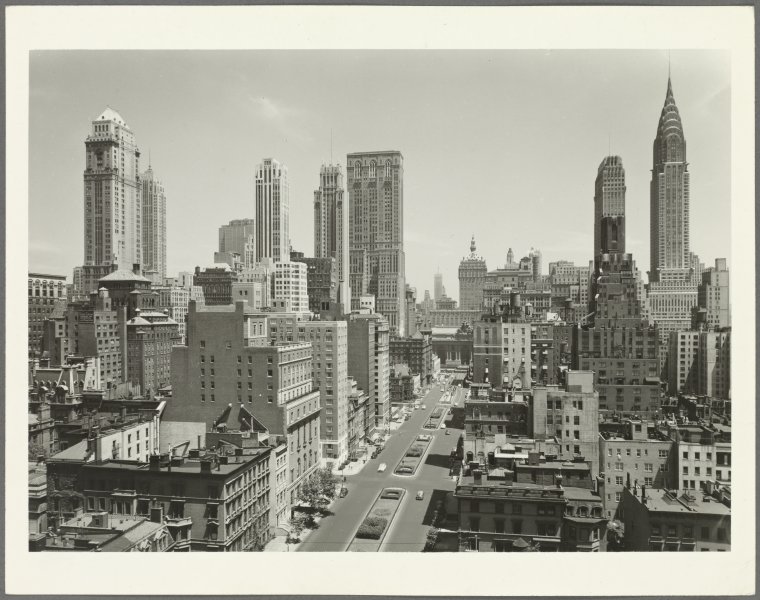
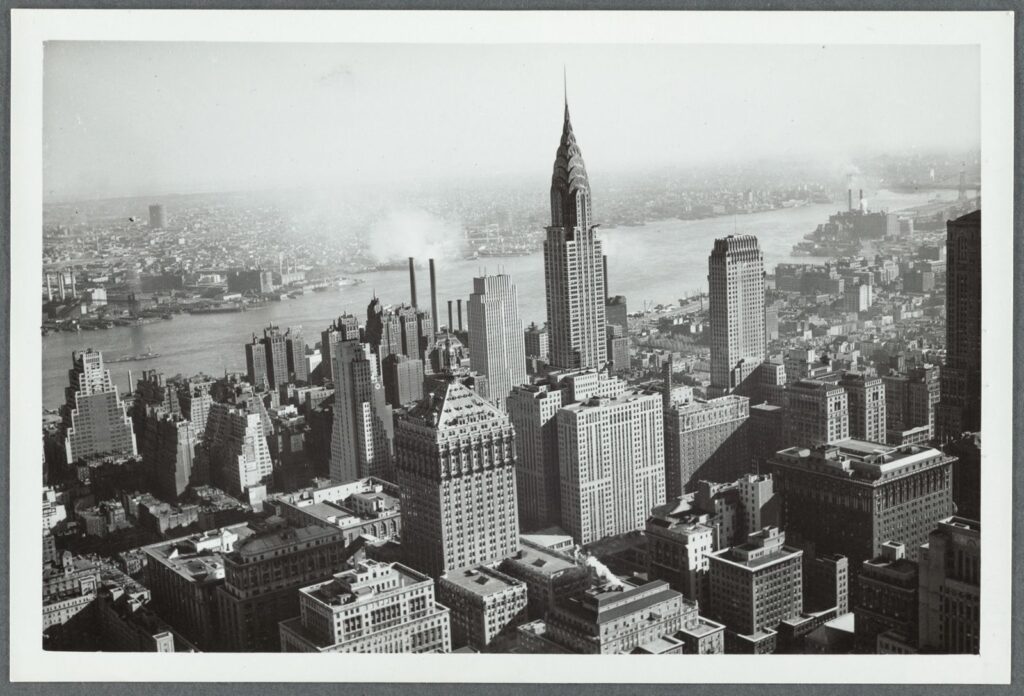
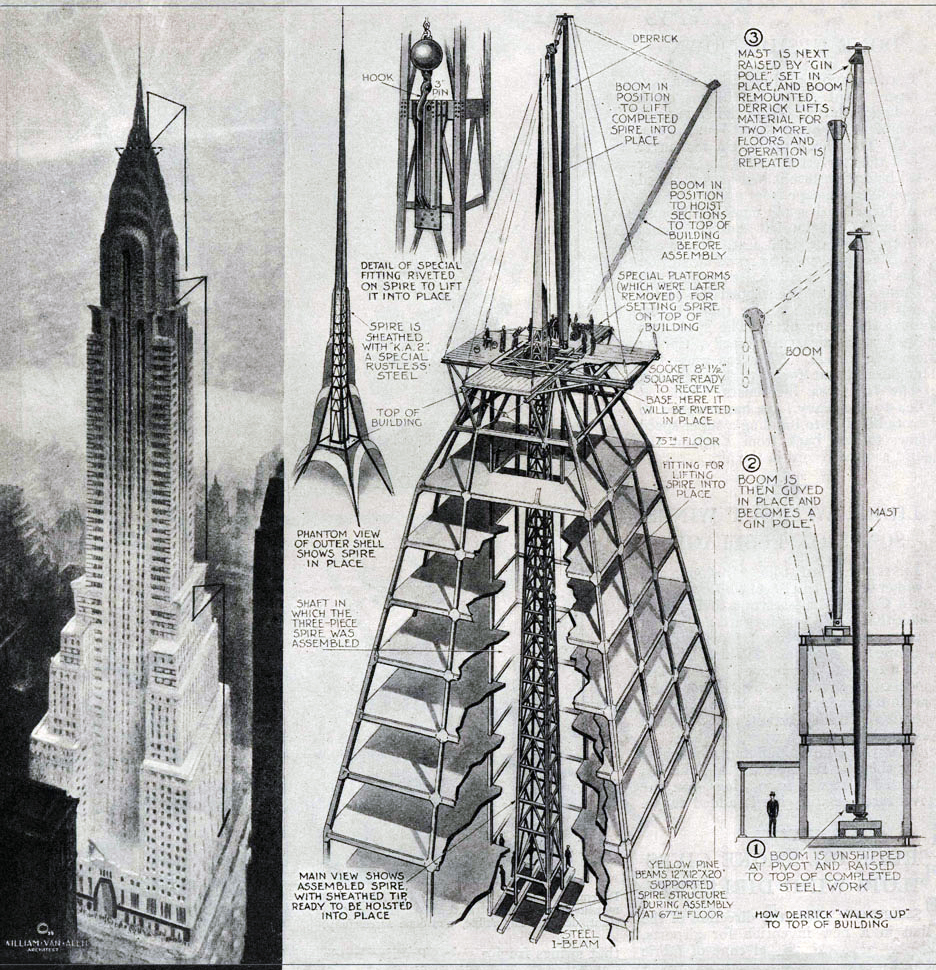
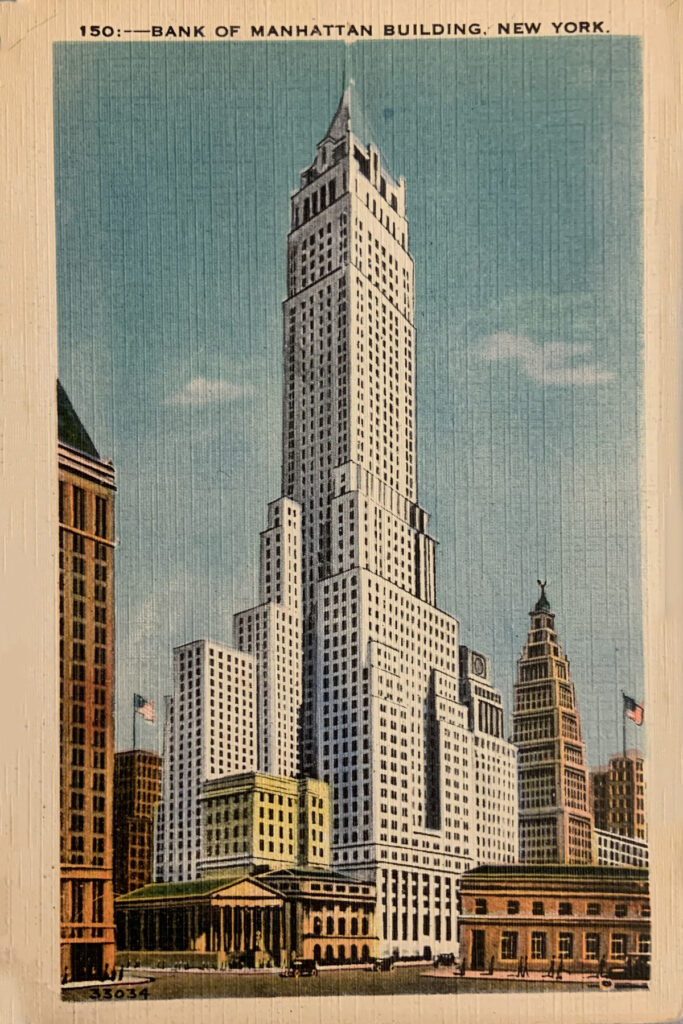
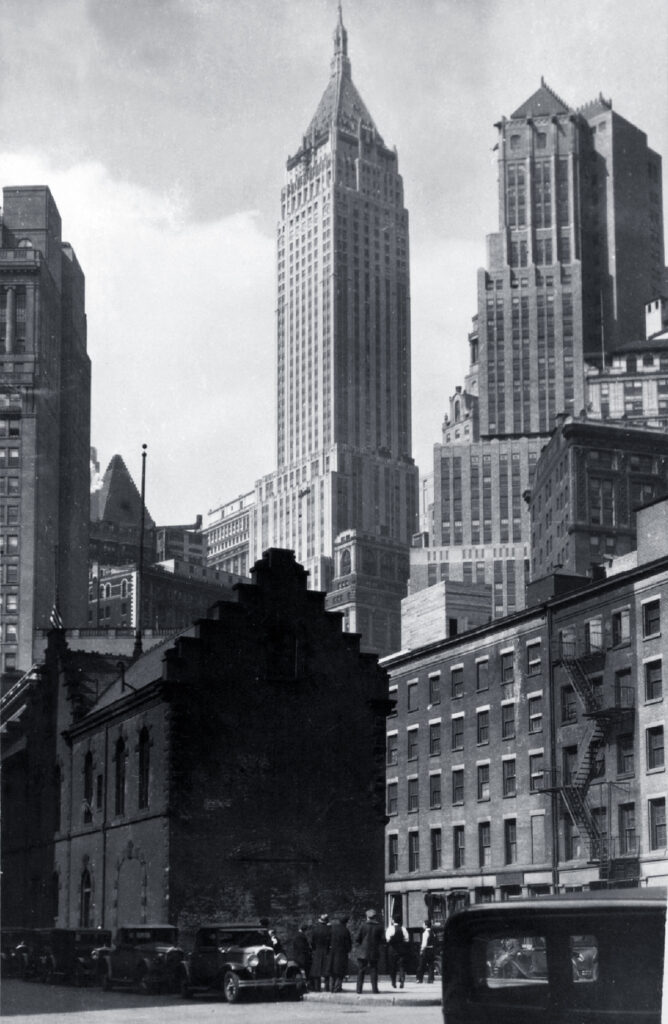
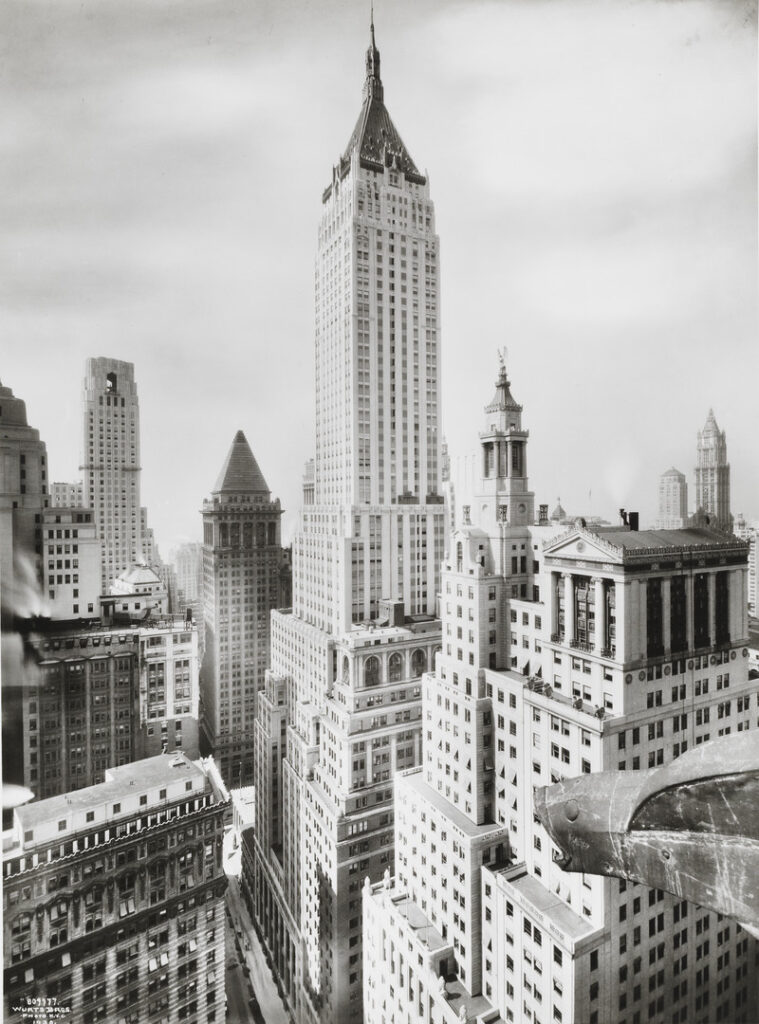
Midtown Manhattan, 1930s, around Grand Central, courtesy NYPLA view of the Chrysler Building from the RCA Building, 1946, courtesy NYPLThe Chrysler Building as seen from the Third Avenue El, 1952, courtesy NYPLFrom Popular Science Monthly 193040 Wall Street, from a postcard illustration, courtesy Skyscraper Museum….and another.40 Wall Street in 1930 from the Seaport, photo by Ewing Galloway, courtesy NYPL
FURTHER LISTENING
FURTHER READING
American Rhapsody : Writers, Musicians, Millionaires, Movie Stars and One Great Building / Claudia Roth Pierpont Billionaires’ Row: Tycoons, High Rollers, and the Epic Race to Build the World’s Most Exclusive Skyscrapers / Katherine Clarke Capital of the World: A Portrait of New York in the Roaring 20s / David Wallace The Chrysler Building : Creating a New York Icon, Day By Day / David Stravitz Higher: A Historic Race to the Sky and the Making of a City / Neal Bascomb Skyscraper: The Politics and Power of Building New York City in the Twentieth Century / Benjamin Flowers Supreme City: How Jazz Age Manhattan Gave Birth to Modern America / Donald Miller
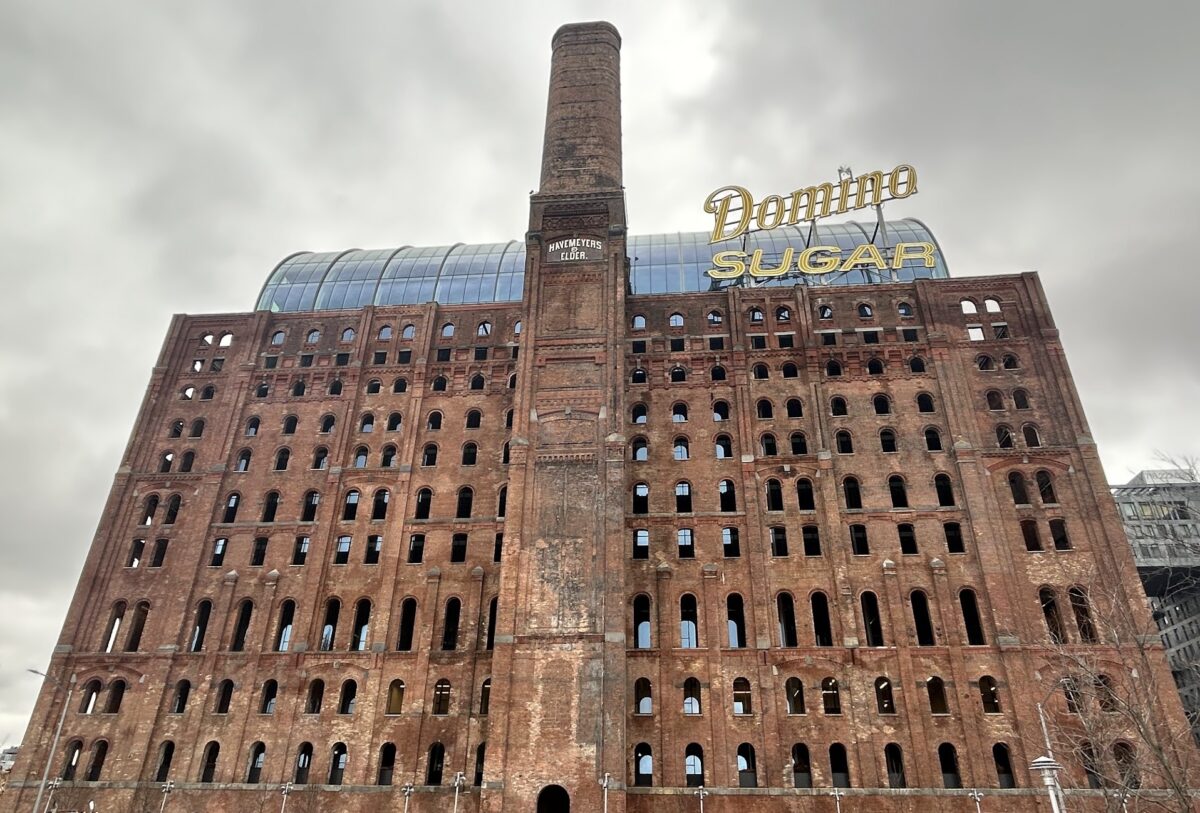
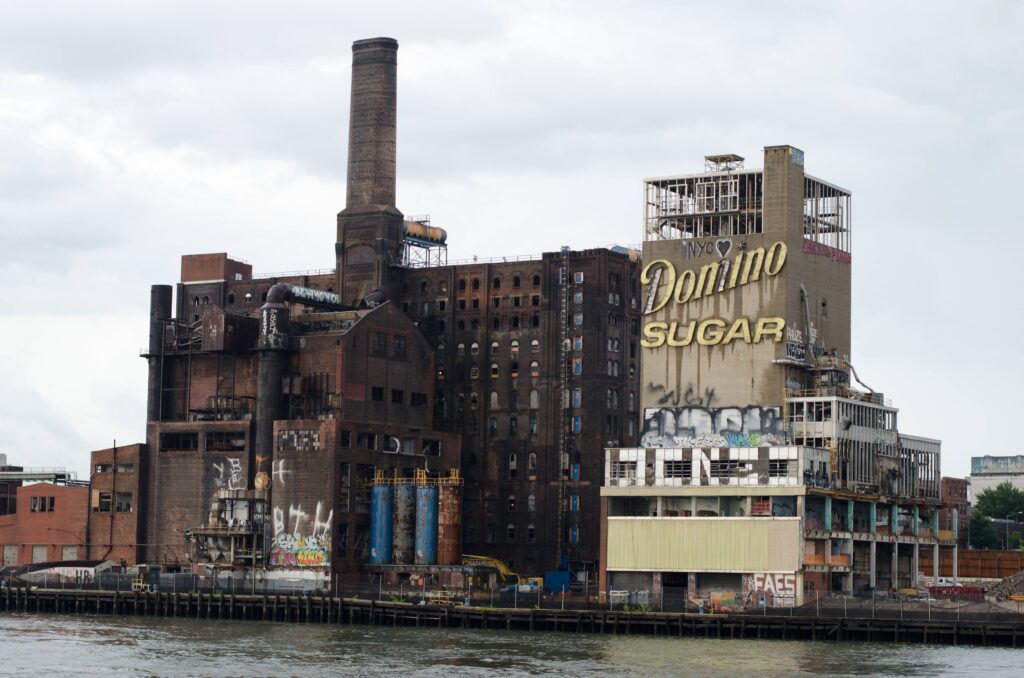
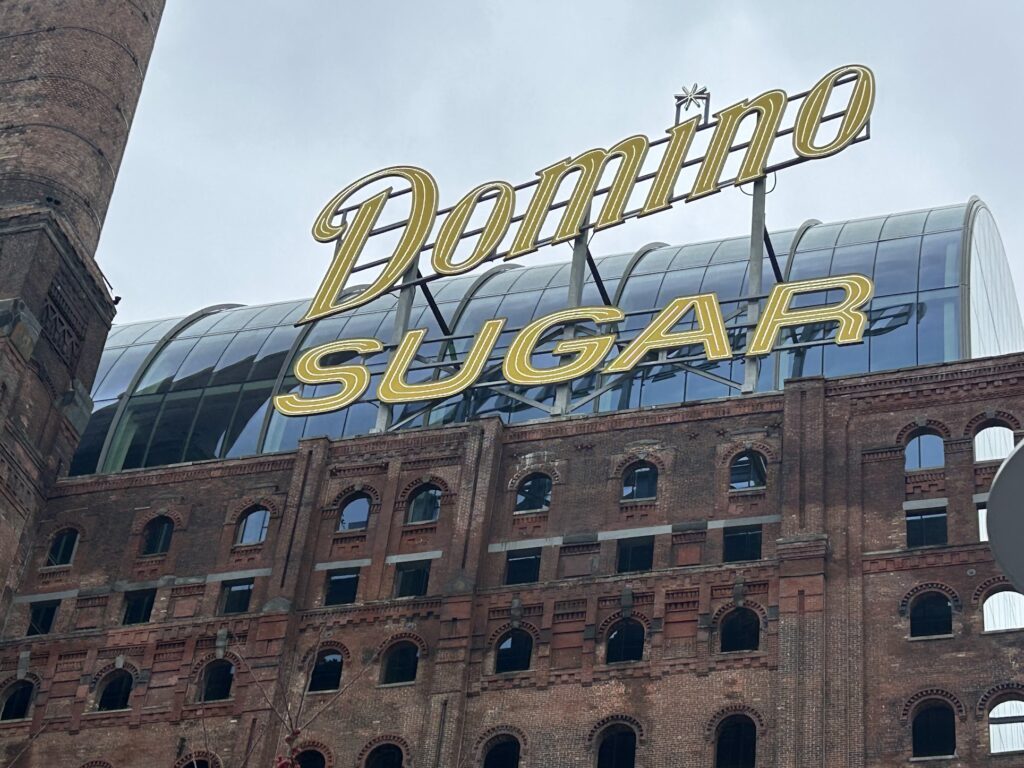
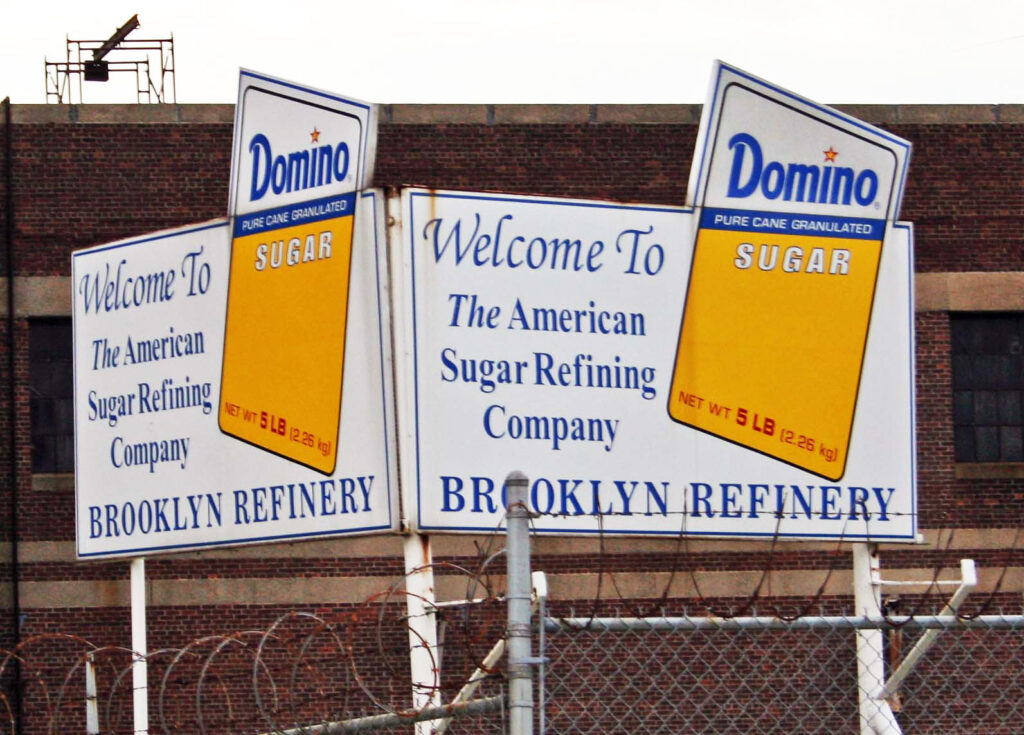
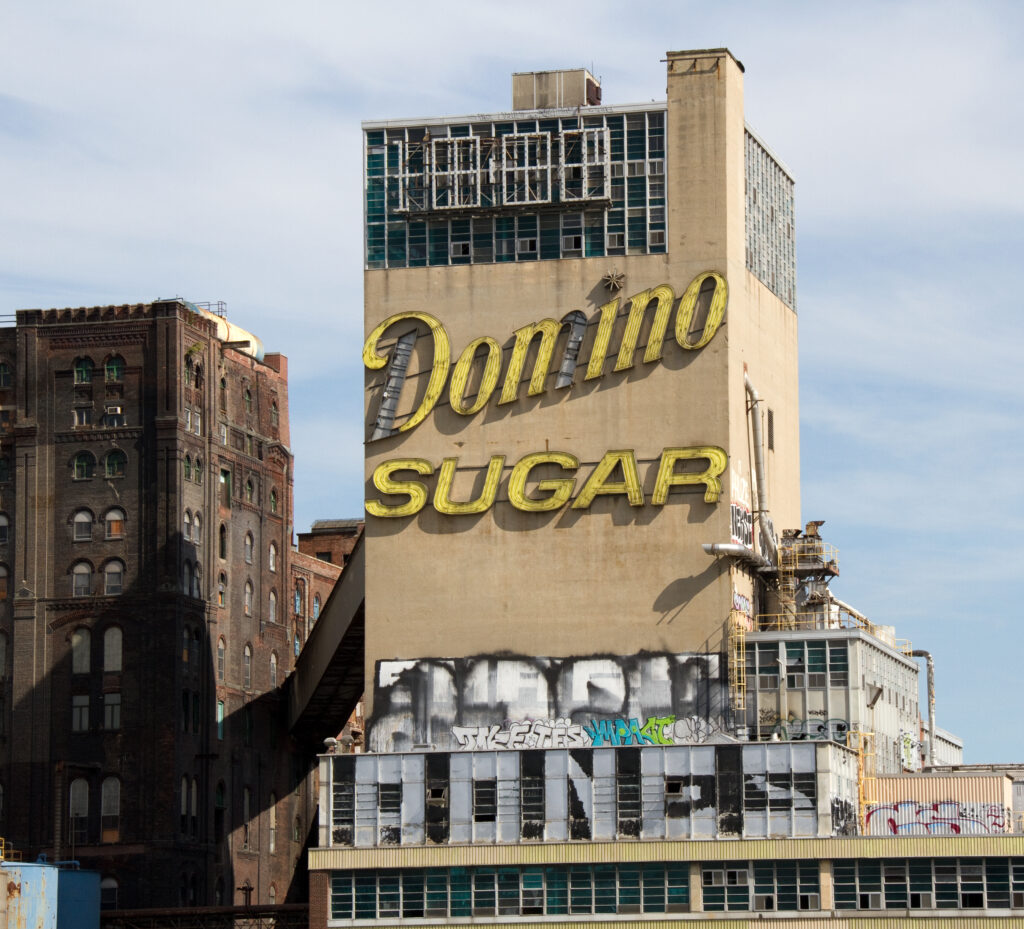
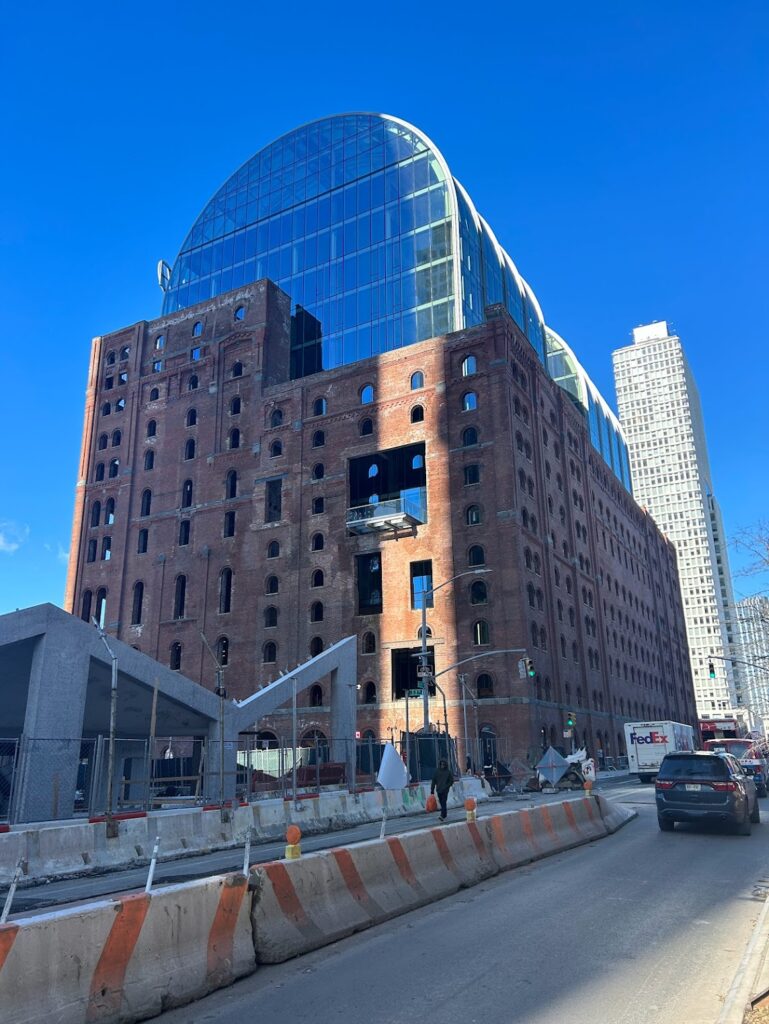
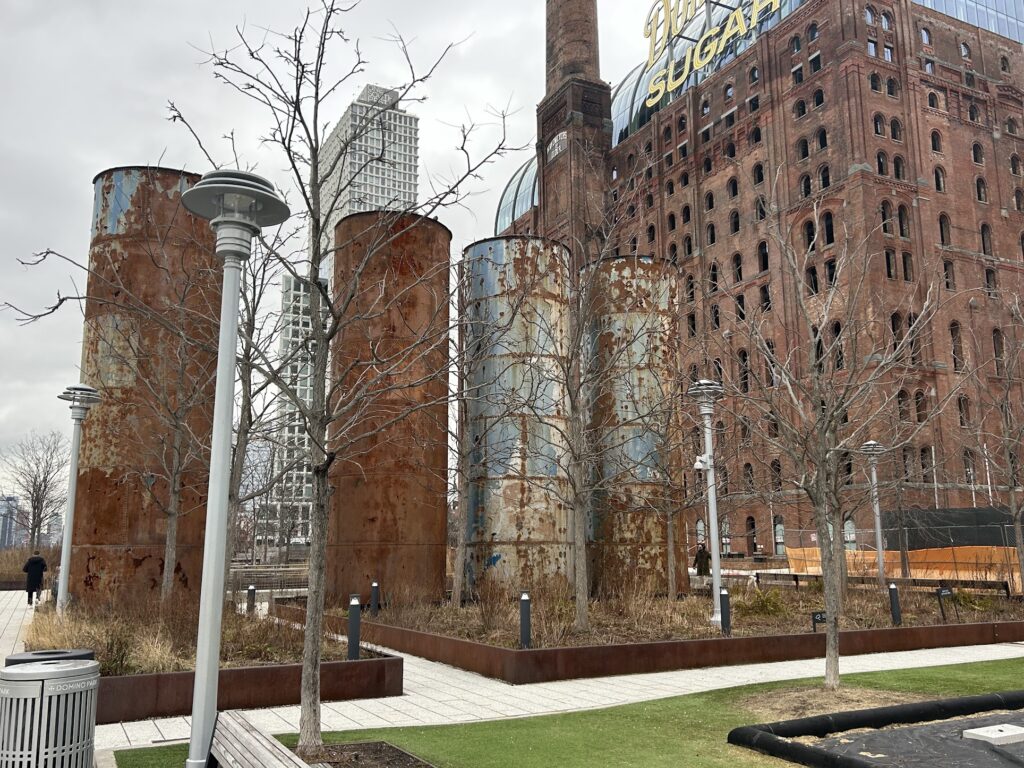
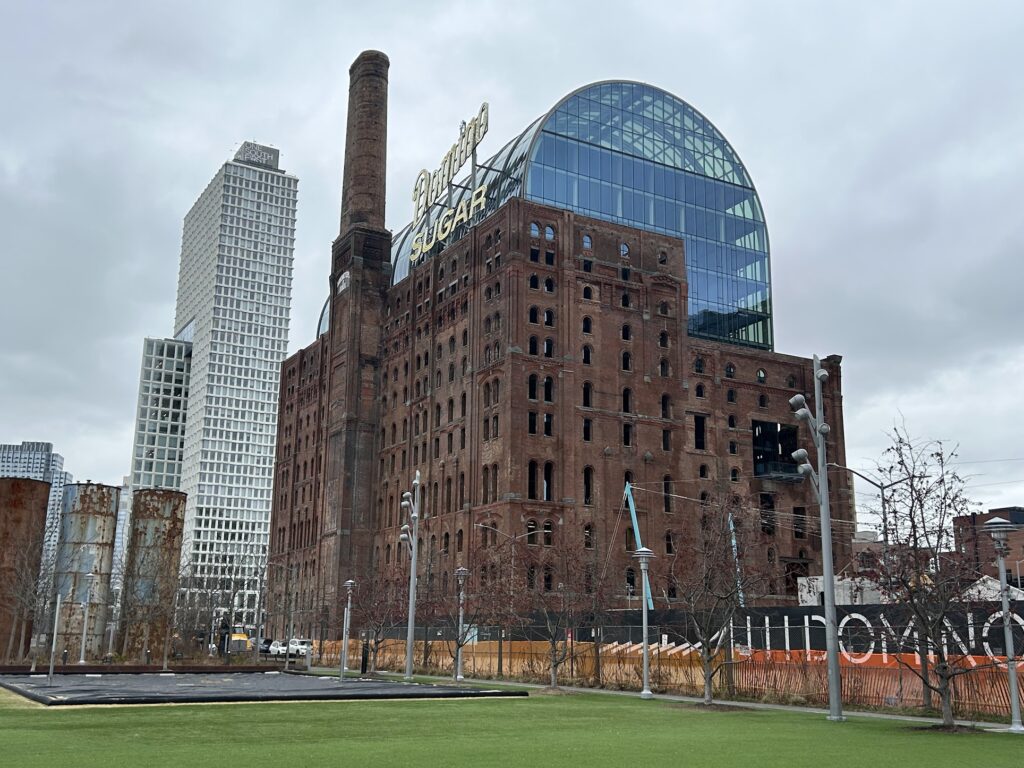
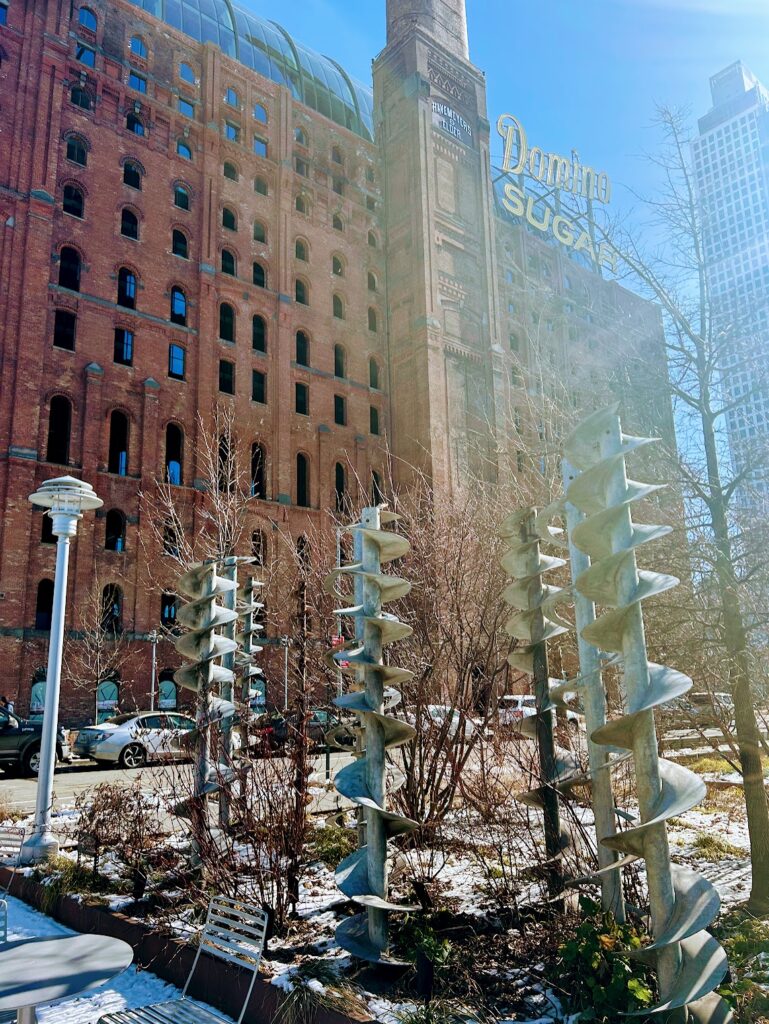
The Brooklyn waterfront was once decorated with a yellow Domino Sugar sign, affixed to an aging refinery along a row of deteriorating industrial structures facing the East River.
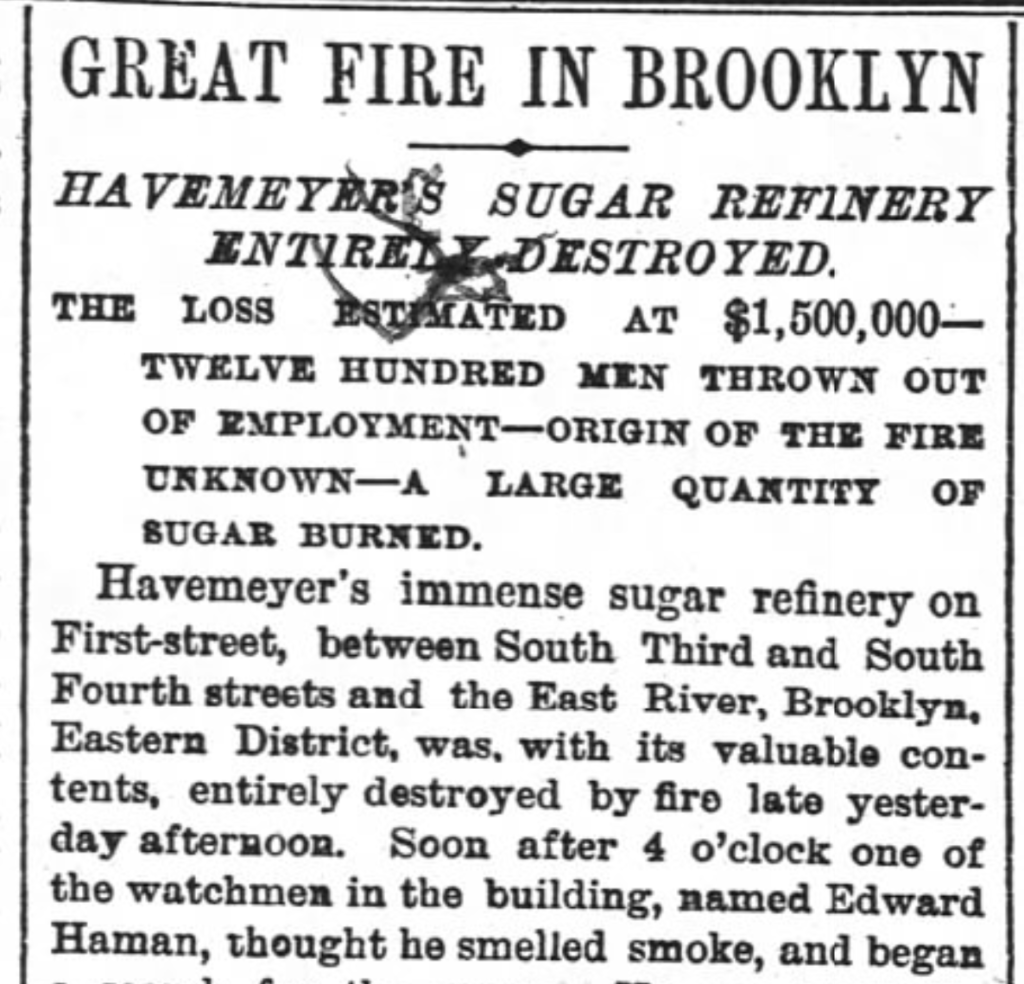
The Domino Sugar Refinery, completed in 1883 (after a devastating fire destroyed the original), was more than a factory. During the Gilded Age and into the 20th century, this Brooklyn industrial landmark was the center of America’s sugar manufacturing, helping to fuel the country’s hunger for sweet delights.
But the story goes further back in time — back hundreds of years in New York City history. The sugar trade was one of the most important industries in New York, and for many decades, if you used sugar to make anything, you were probably using sugar that had been refined in New York.
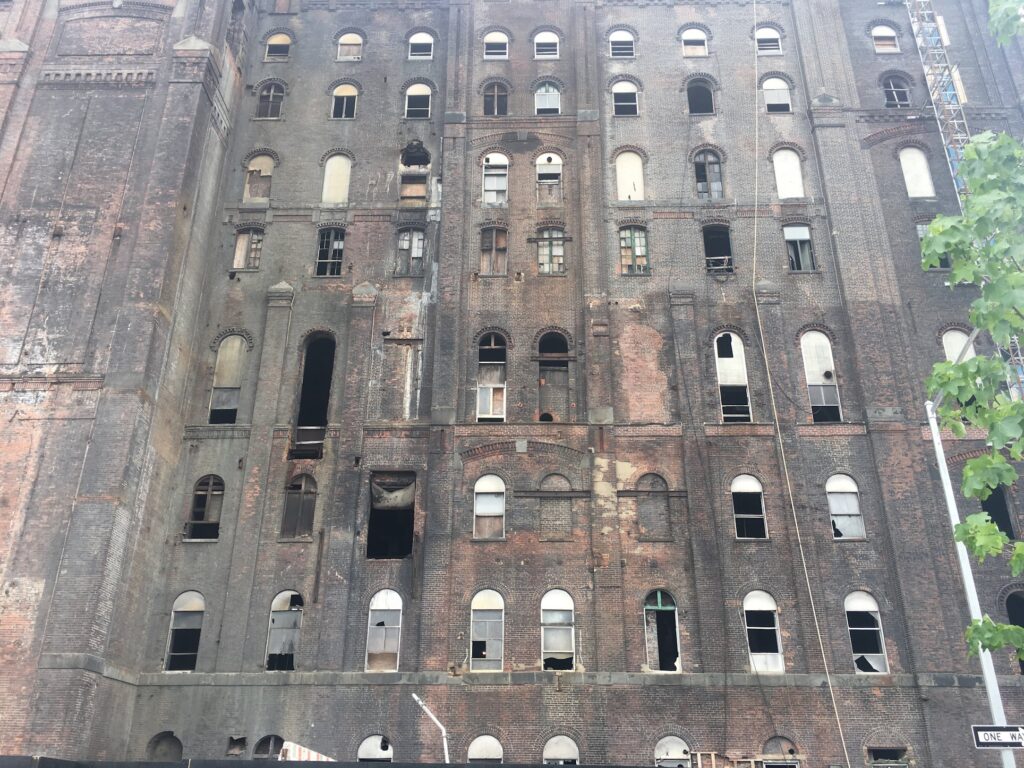
Domino Sugar Refinery in the 2010s/Photo mypene/reddit
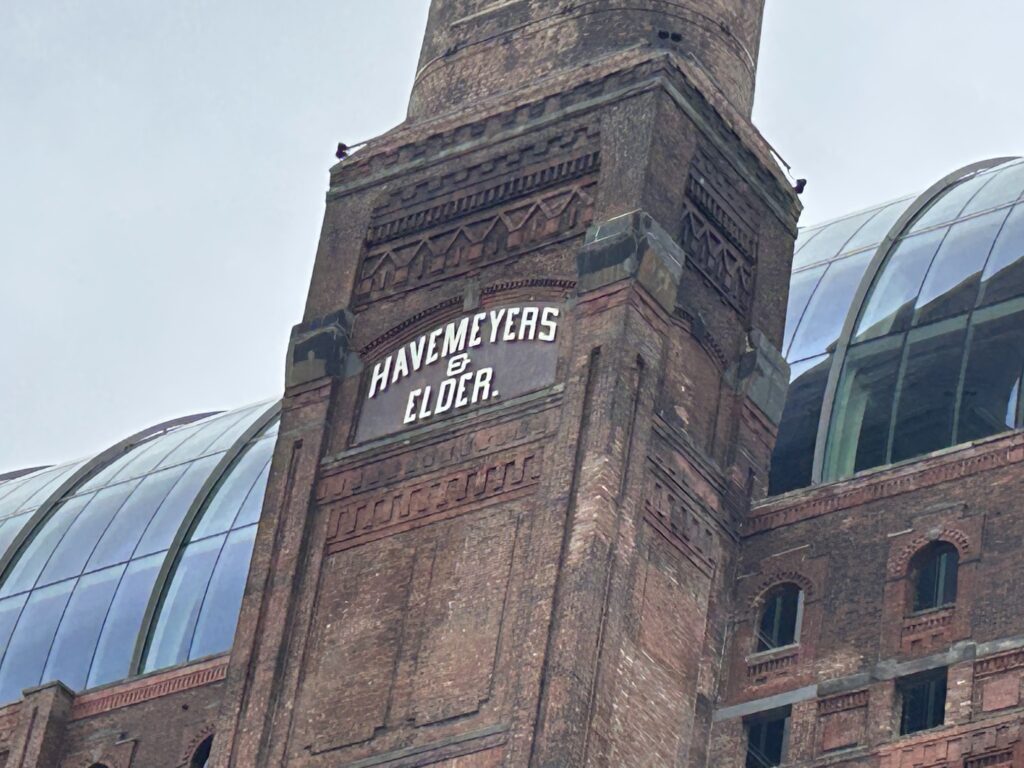
Sugar helped to build New York. Thousands and thousands of New Yorkers were employed in sugarhouses and refineries. And of all the sugar makers, there was one name that stood above the rest — Havemeyer!
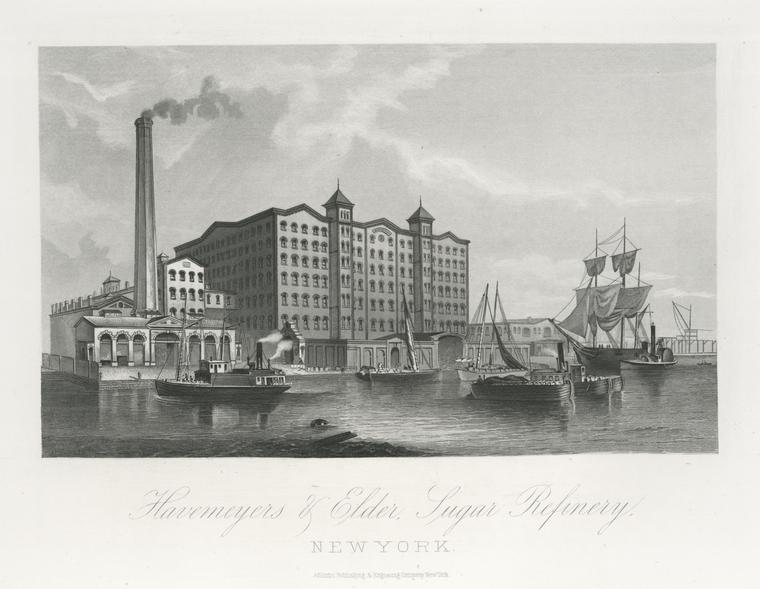
The Havemeyers were America’s leading sugar titans. By the 1850s they had moved their empire to the Brooklyn waterfront – and the neighborhood of Williamsburg.
Their massive refinery helped establish the industrial nature of Williamsburg, leading to a rush of sugar manufacturers to Brooklyn, most of which would then be absorbed into the Havemeyer’s operation.
Photo by Greg Young
But this story is even larger than New York, of course. It encompasses the transatlantic slave trade, political influence in the Caribbean, Cuba-United States relations, and the sorry working conditions faced by Hayemeyer’s underpaid employees.
PLUS: It’s Dumbo vs Williamsburg in the Coffee and Sugar War of the 1890s!
LISTEN NOW: BEHIND THE DOMINO SIGN
Photo taken 2010, courtesy wburg/FlickrTony Hisgett from Birmingham, UK 2011
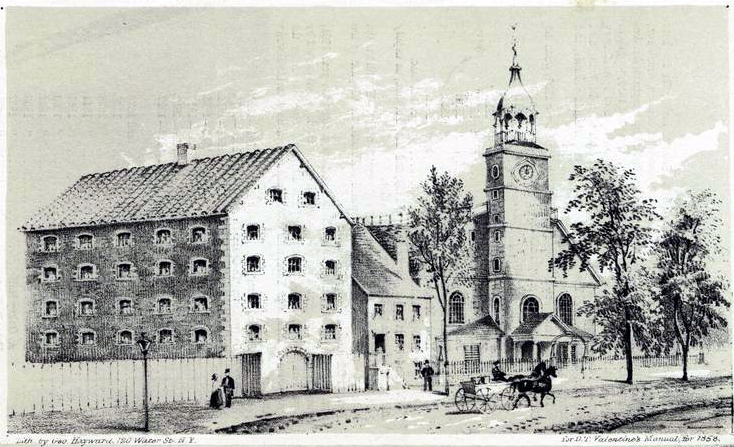
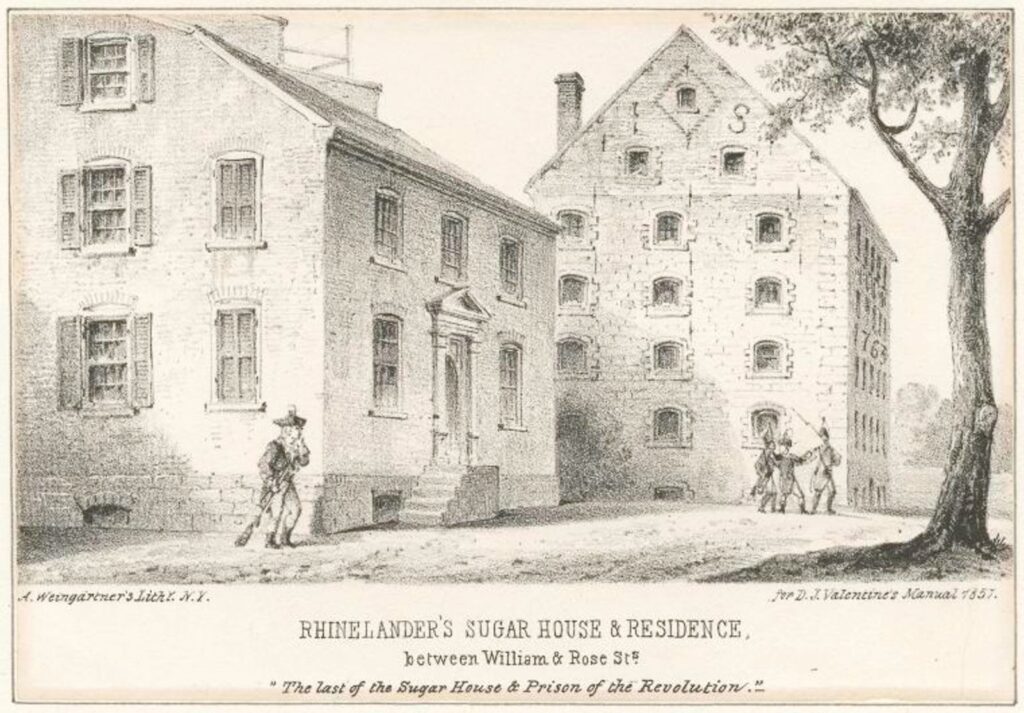
The Livingston Sugar House, on Liberty Street, and the Rhinelander Sugar House, between William & Duane Streets in New York. They were the city’s largest buildings which is why both were repurposed as prisons during the Revolutionary War.
NYPL
The original Havemeyer sugar refinery on the Brooklyn waterfront before the fire, 1876.
The original factory before the fire, 1876. New York Publc Library
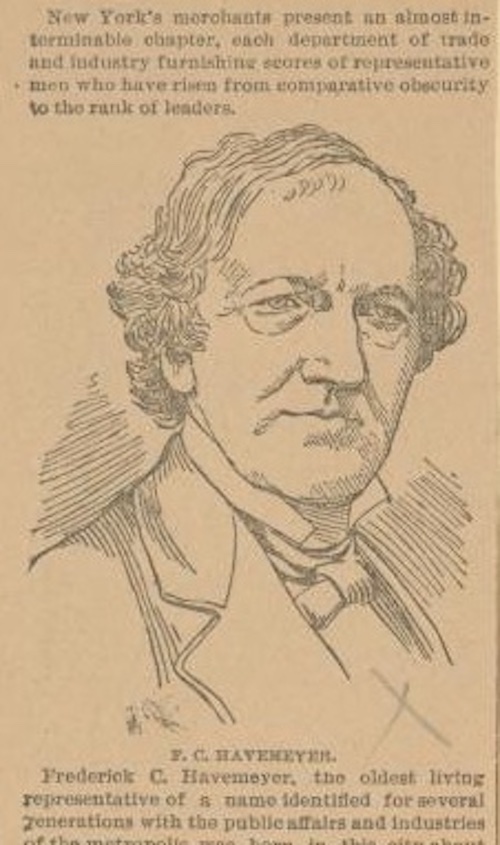
Frederick Havemeyer, NYPL
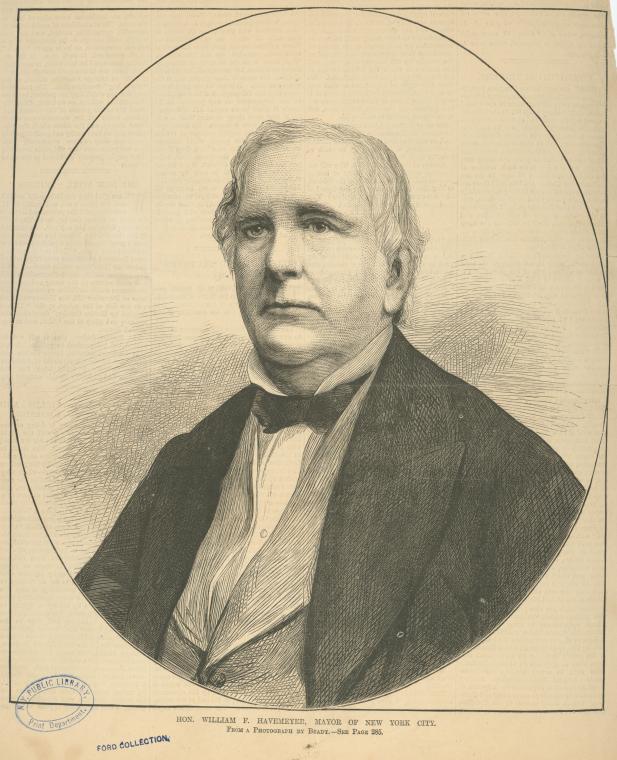
Frederick’s brother William, the mayor of New York for three separate terms (NYPL)
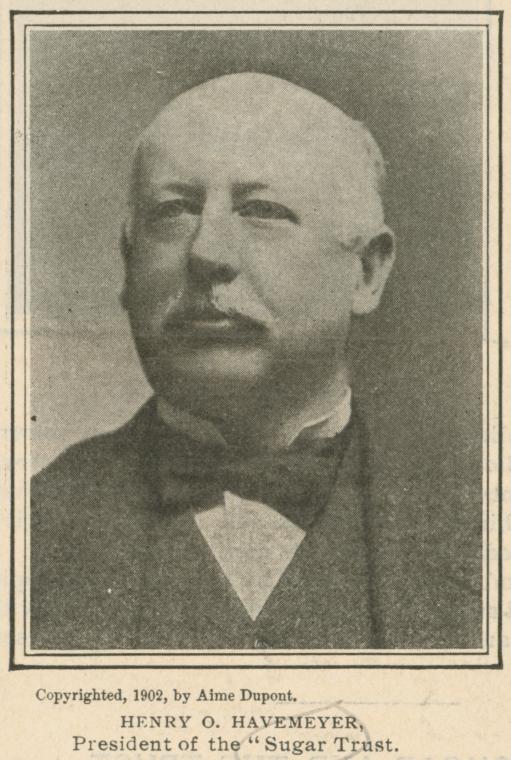
Henry (Harry) Havemeyer, “president of the Sugar Trust. Pic NYPL
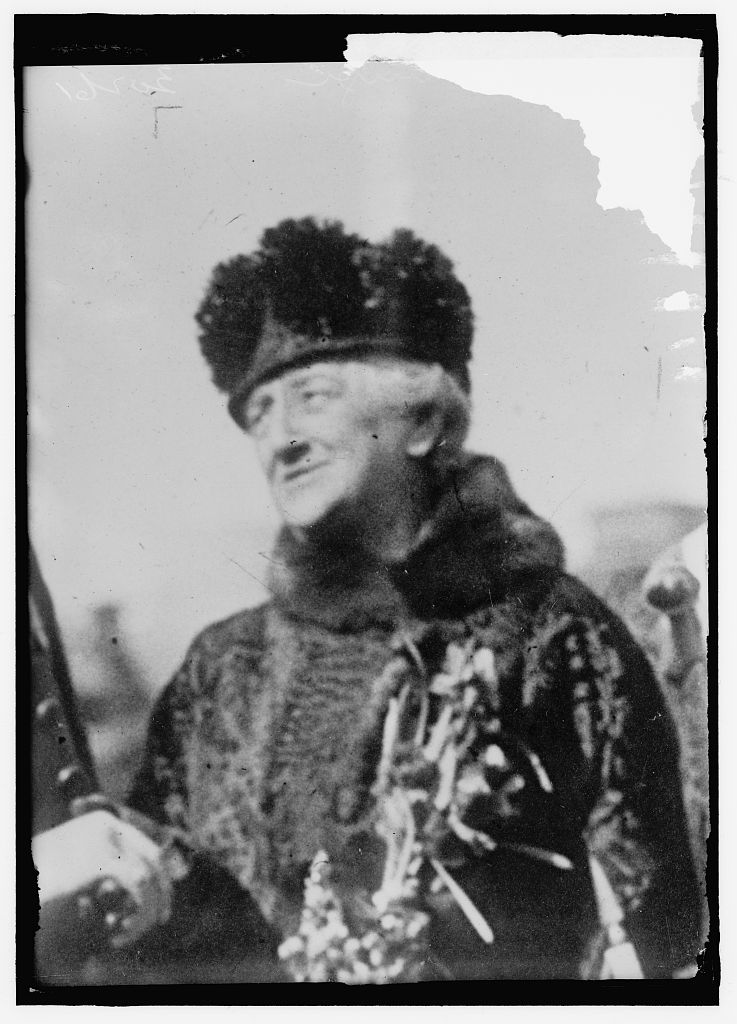
Louisine Havemeyer, 1919, in her suffragist phase (Library of Congress)
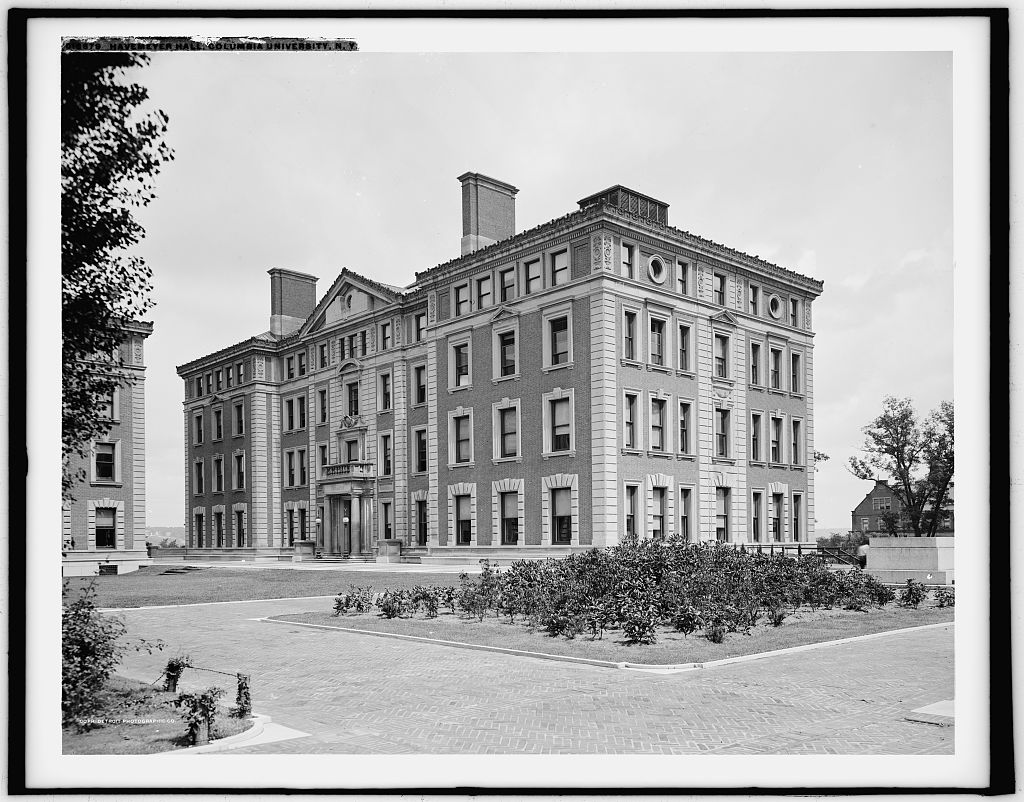
Havemeyer Hall on the Columbia University campus, built in 1897 and named for Frederick Havemeyer who moved the family’s sugar enterprise to Brooklyn. According to Untapped Cities, it happens to contain Hollywood’s favorite classroom.
Library of Congress
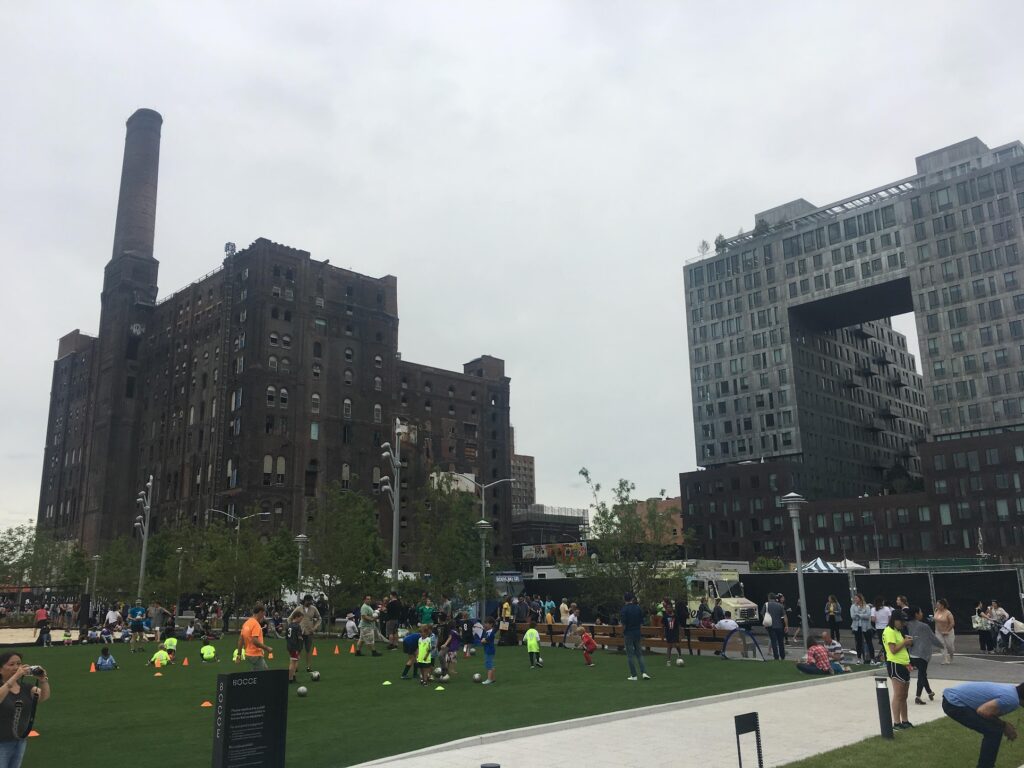
Taken by Greg June 2018, before the completion of The Refinery:
Current photos by Greg (circa January/February 2024)
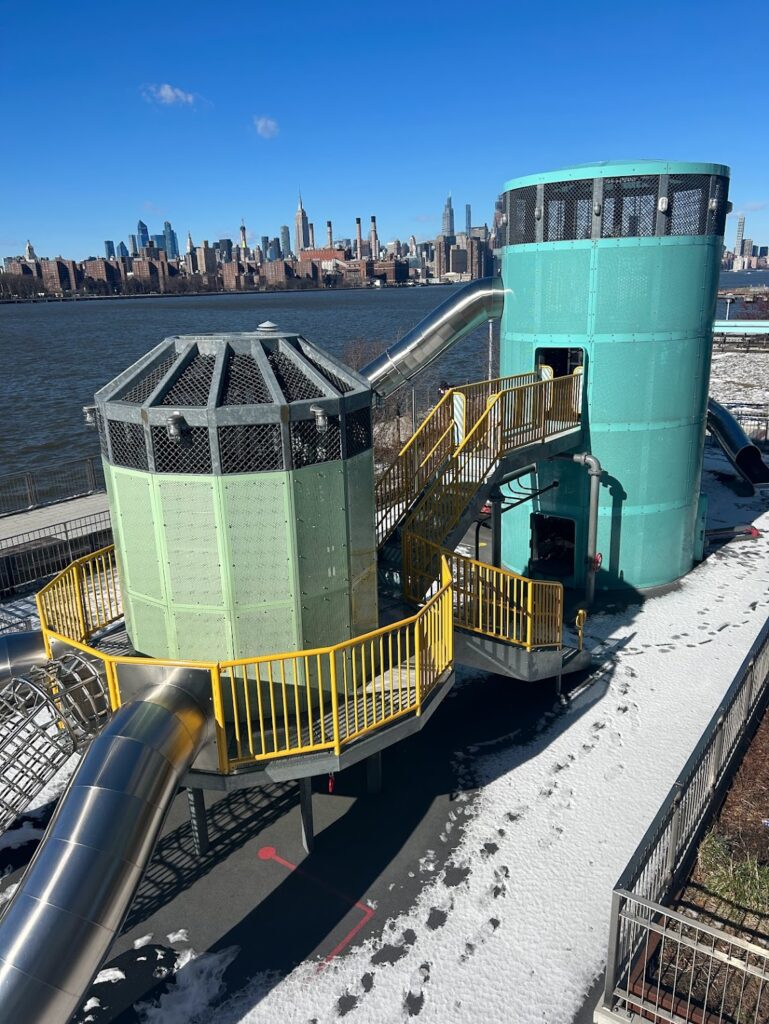
The playground pays homage to the sugar refining process.
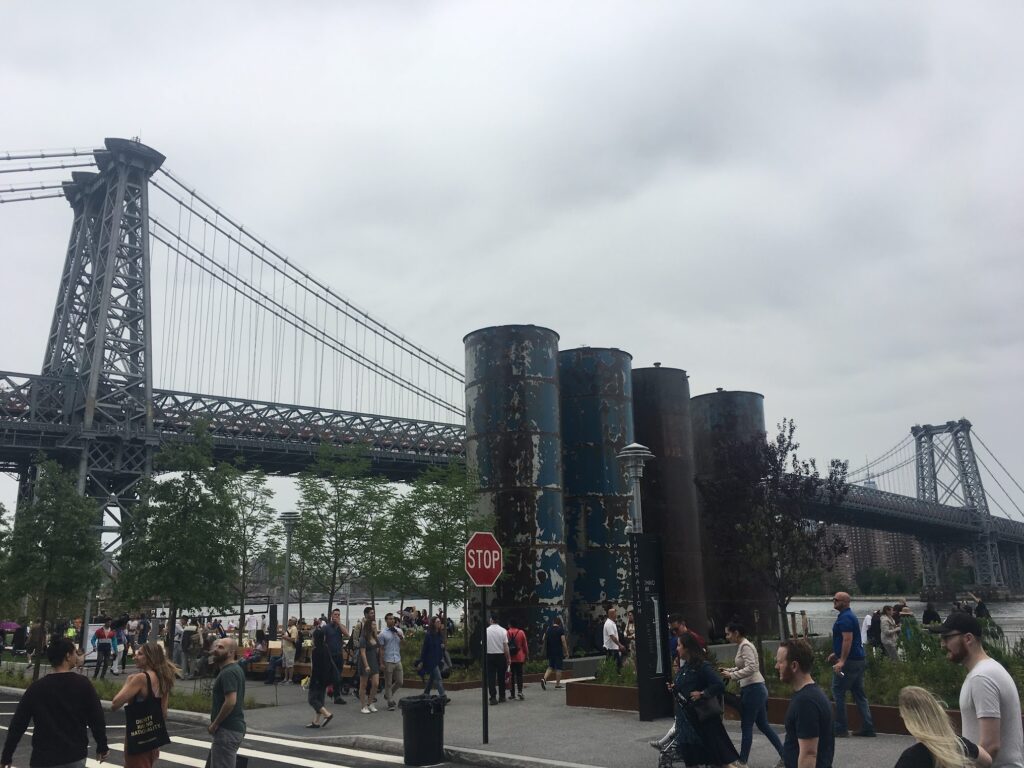
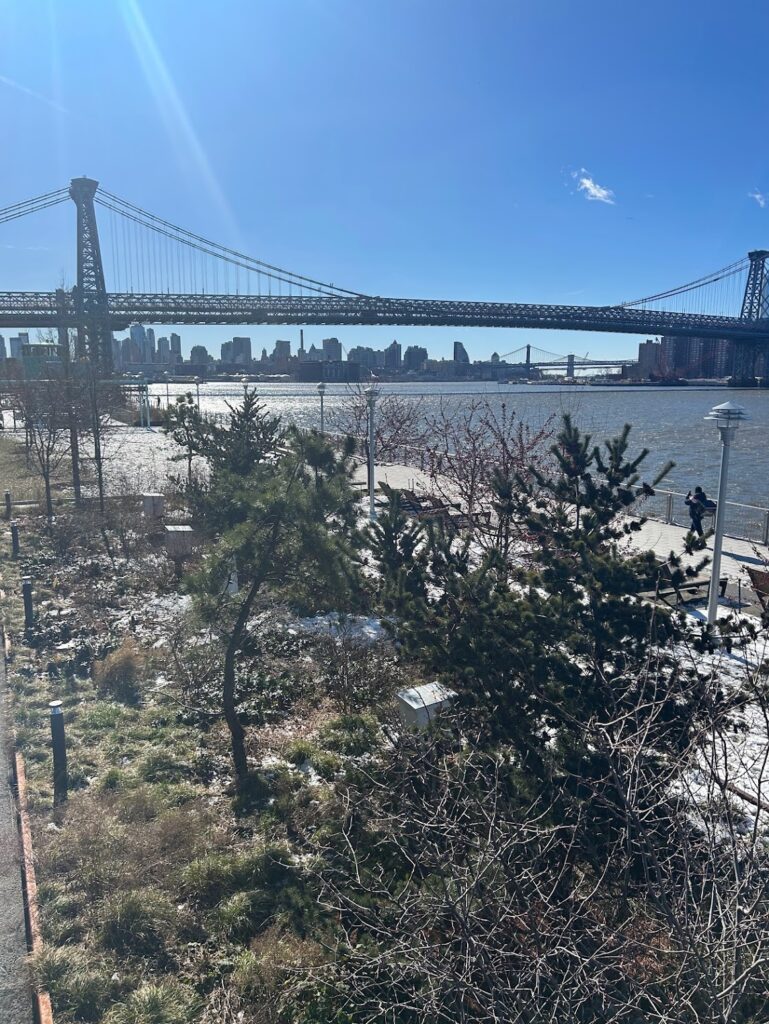
Site of the former wharves where ships docked with sugar cane product from destinations around the world.
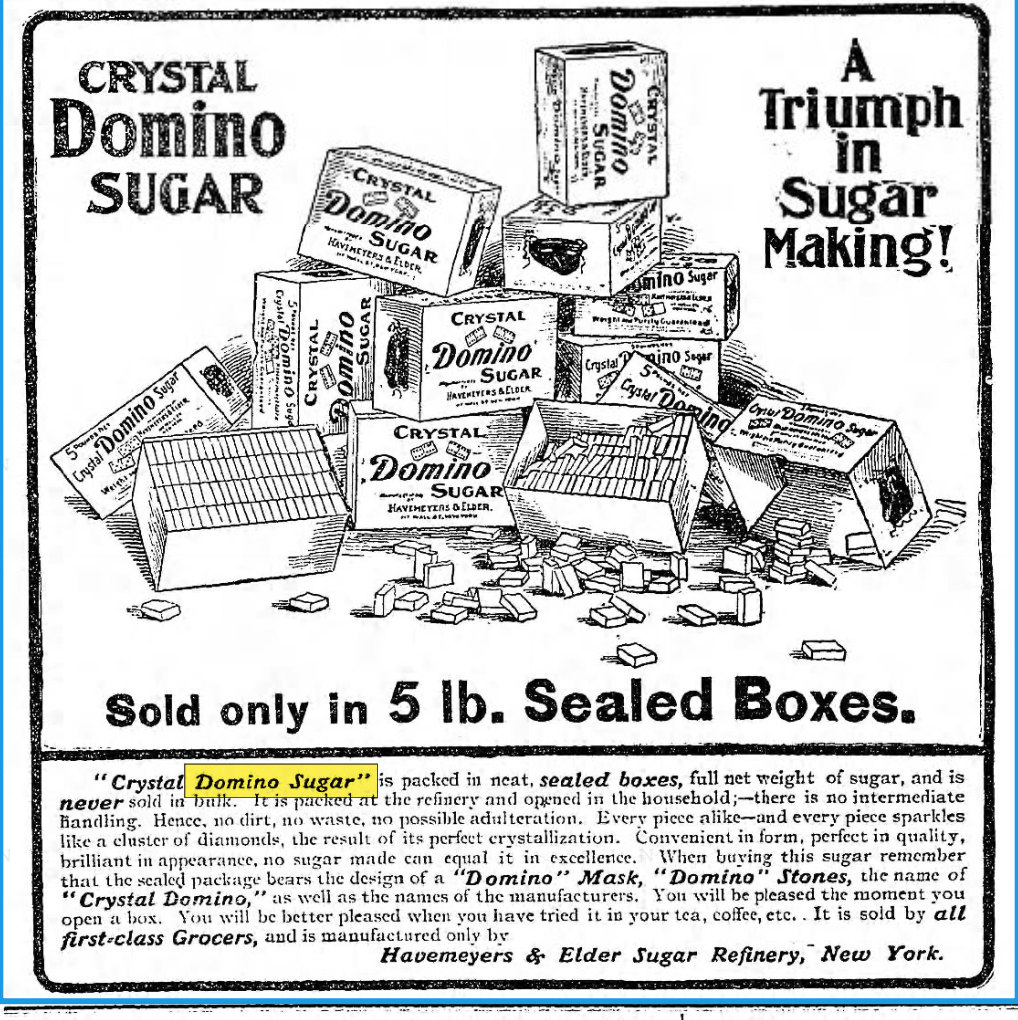
Where does the name Domino come from? Most likely from a kind of factory cut — the domino cut — name for the sugar appearing like little dominos. The box today is also rectangular like these ‘domino’ lumps.
Brooklyn’s Sweet Ruin: Relics and Stories of the Domino Sugar Refinery / Paul Raphaelson Cuba: An American Story / Ada Ferrer Food City: Four Centuries of Food-Making in New York / Joy Santlofer Frederick Christian Havemeyer Jr: A Biography / Harry W. Havemeyer Henry Osbourne Havemeyer: The Most Independent Mind / Harry W. Havemeyer The Havemeyers: Impressionism Comes To America / Frances Weitzenhoffer The Rise and Fall of the Sugar King / Geoffrey Cobb Sugar: A Bittersweet History / Elizabeth Abbott White Gold: A Brief History of the Louisiana Sugar Industry / Glenn R Conrad, Ray F. Lucas The World of Sugar: How the Sweet Stuff Transformed Our Politics, Health, and Environment Over 2,000 Years / Ulbe Bosma
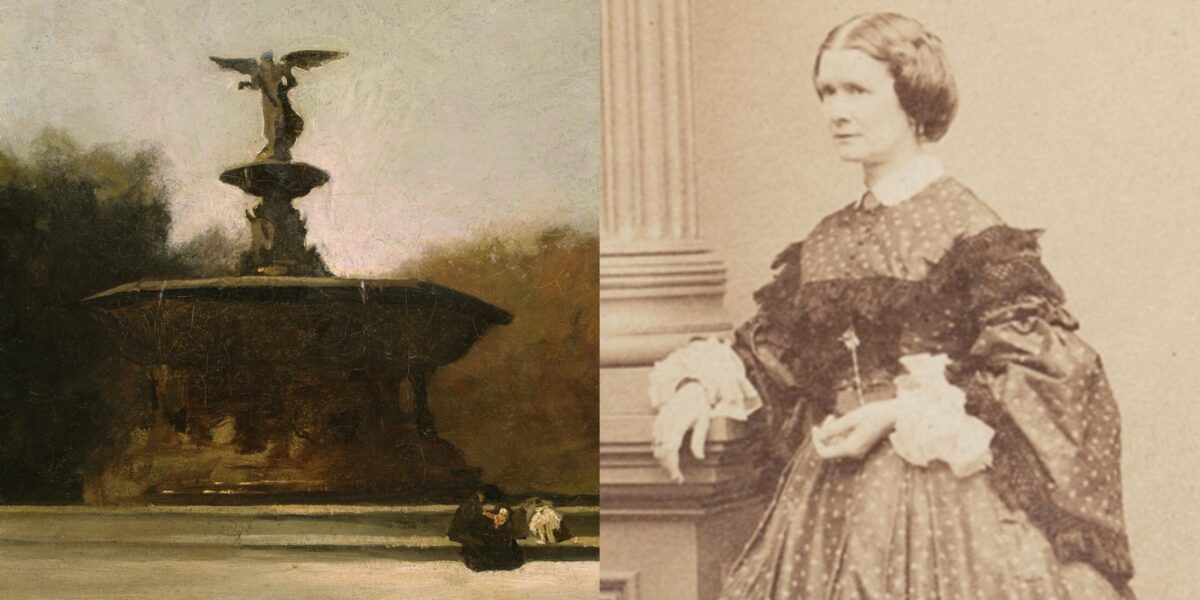
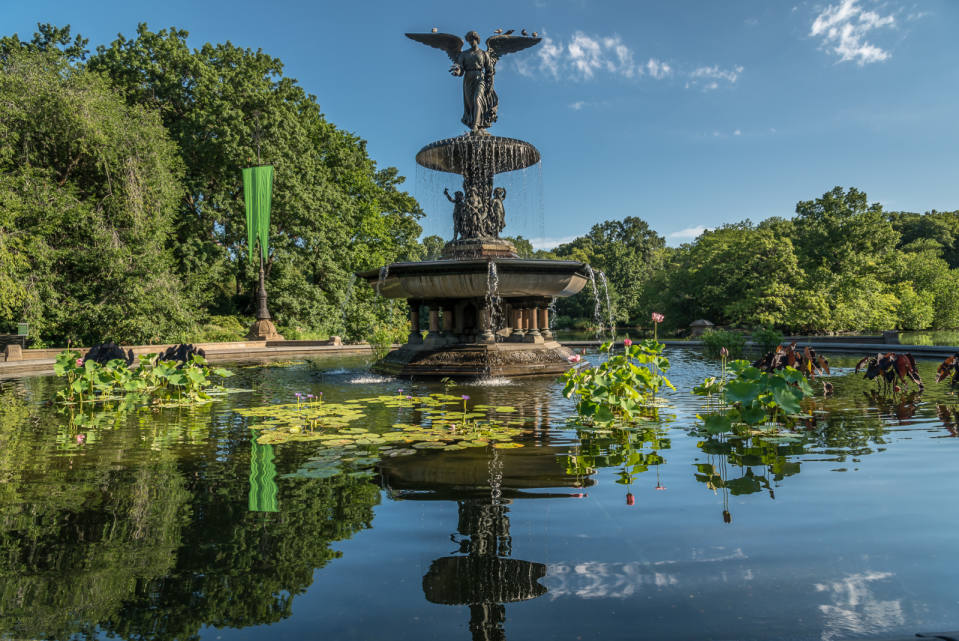
Emma Stebbins is most noted for her iconic bronze statue The Angel of the Waters which was placed on Central Park’s Bethesda Terrace in 1873.
You may be aware of parts of the Stebbins’ biography. Her Angel was the first public statue in New York produced by a woman and her life included a domestic partnership with another woman. But there is much more in the story.
This is the story of a creative artistic woman whose life, which began in early 19th-century New York, expanded and flourished in a community of fellow artists and sculptors in mid-century Rome.
Image courtesy Central Park
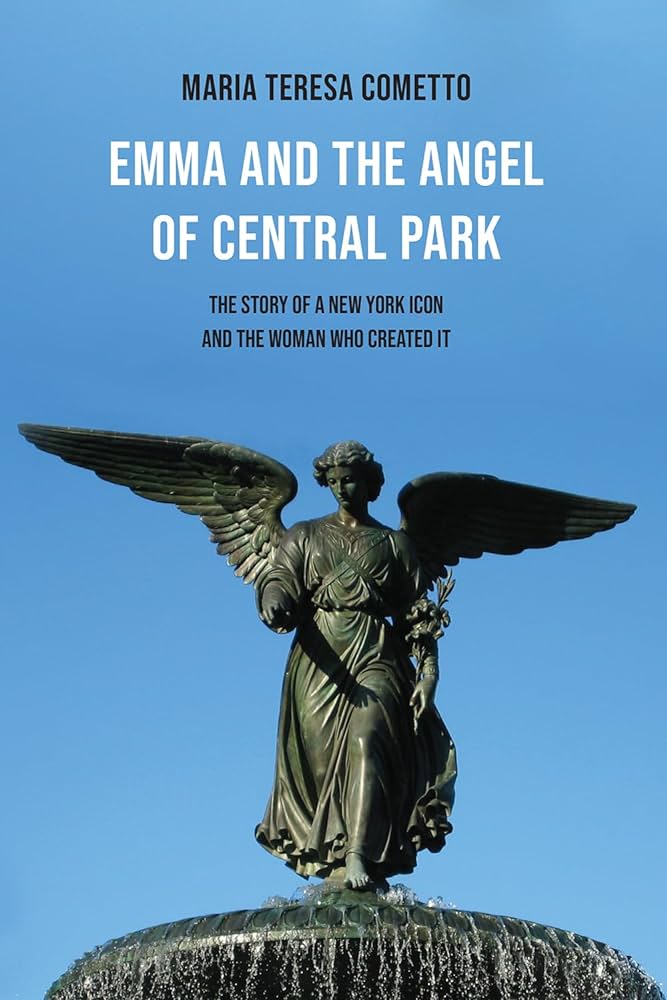
In this episode of The Gilded Gentleman podcast, journalist and biographer Maria Teresa Cometto — author of Emma and the Angel of Central Park — joins host Carl Raymond for a look into the life of this enigmatic woman.
This is a very Italian story in many ways, set against the backdrop of the ruins, museums, and palaces of classical Rome. Emma’s story includes love, betrayal, inspiration, tragedy, and even a bit of mystery.
LISTEN HERE: The Sculptor and the Angel: The Untold Story of Emma Stebbins
And subscribe to the Gilded Gentleman podcast so you don’t miss an episode.
Author Maria Teresa Cometto
And after you’ve listened to this episode of The Gilded Gentleman, revisit last year’s Bowery Boys podcast episode on the early years of Central Park. The show also features the history of Bethesda Fountain featuring historian Sara Cedar Miller.
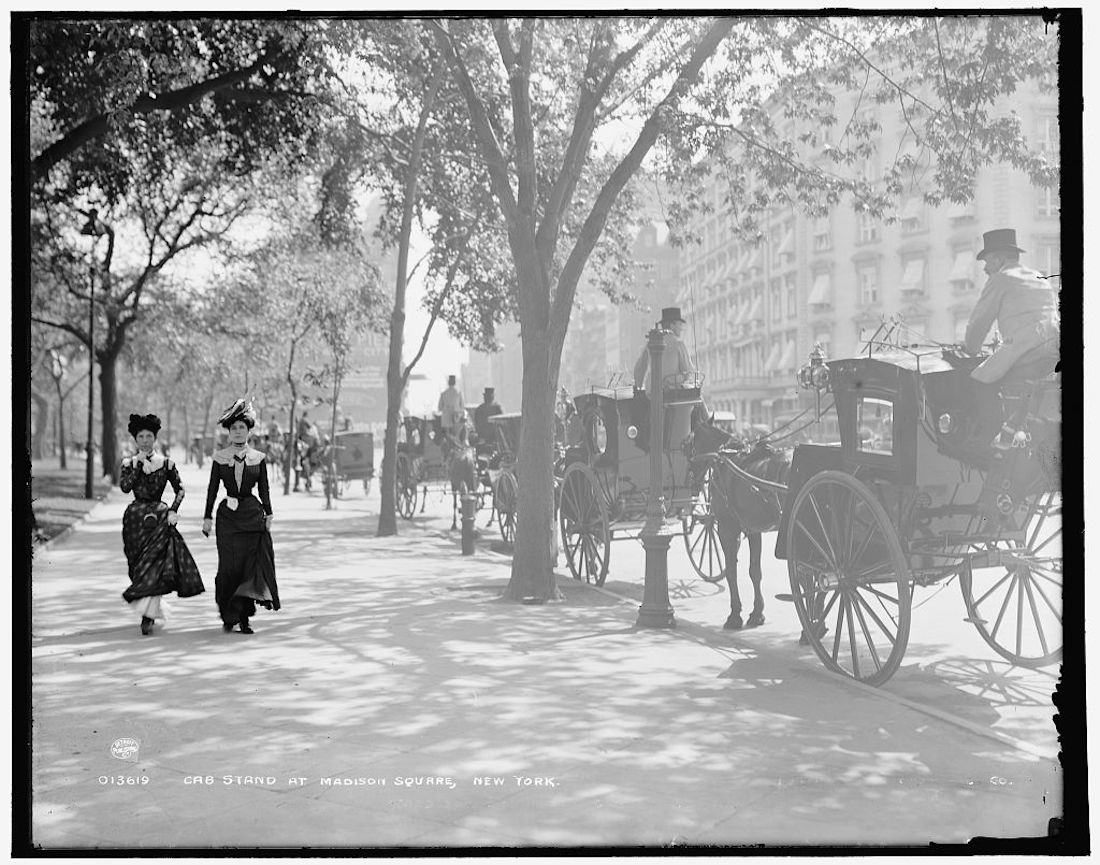
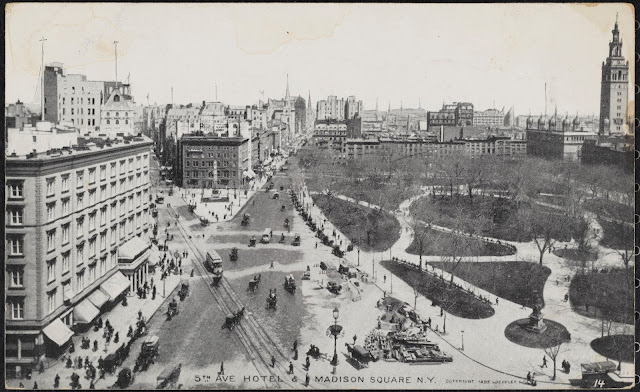
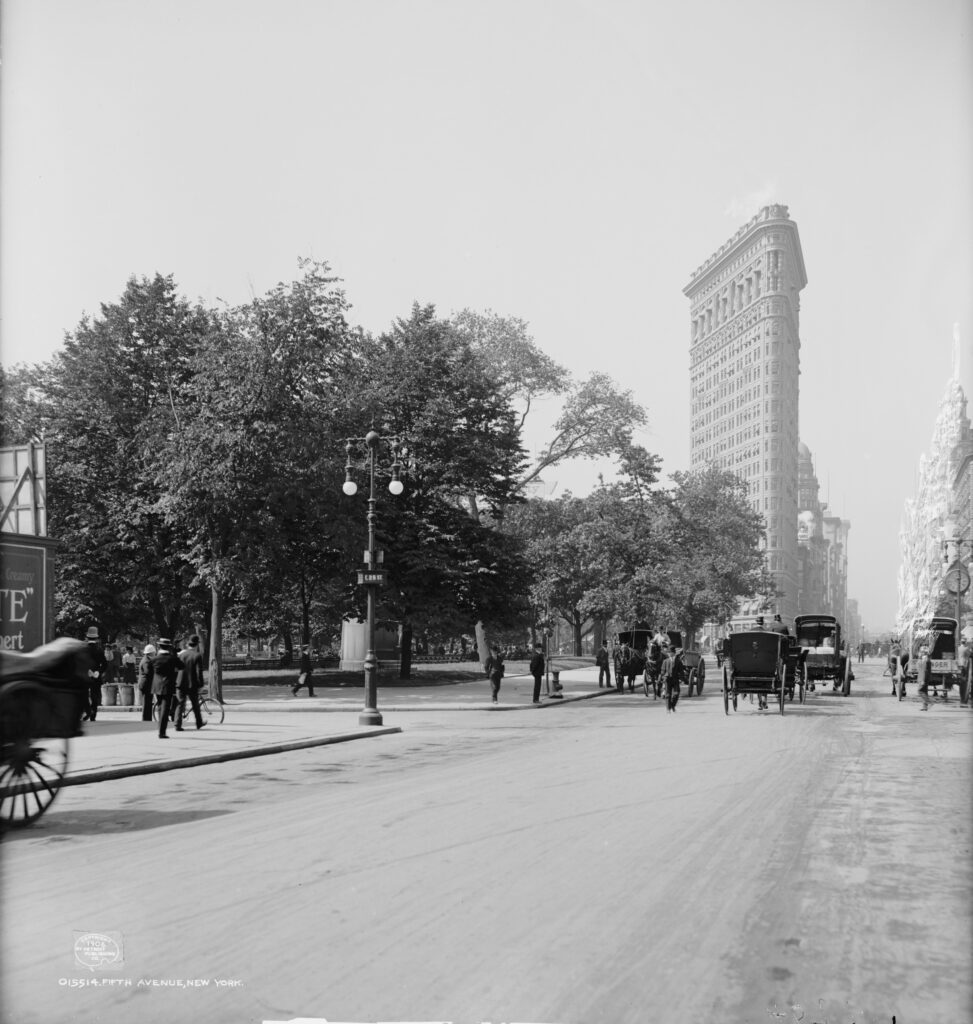
Cab stand at Madison Square, 1900. Courtesy Detroit Publishing/Library of Congress. This image is looking south down the edge of the park. Within two years, the Flatiron Building would be rising in the distance.
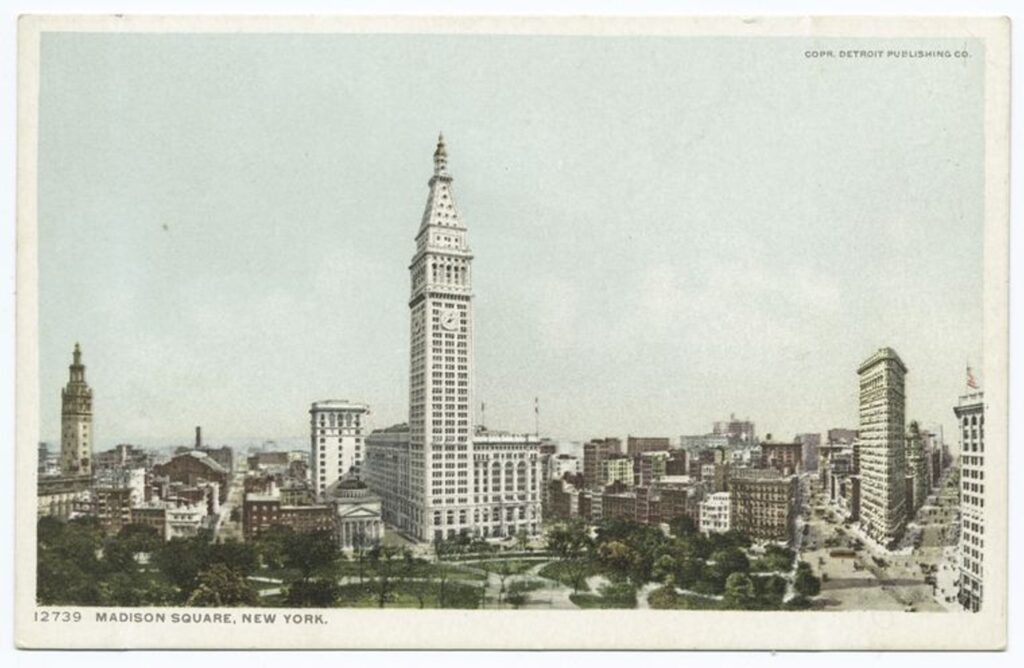
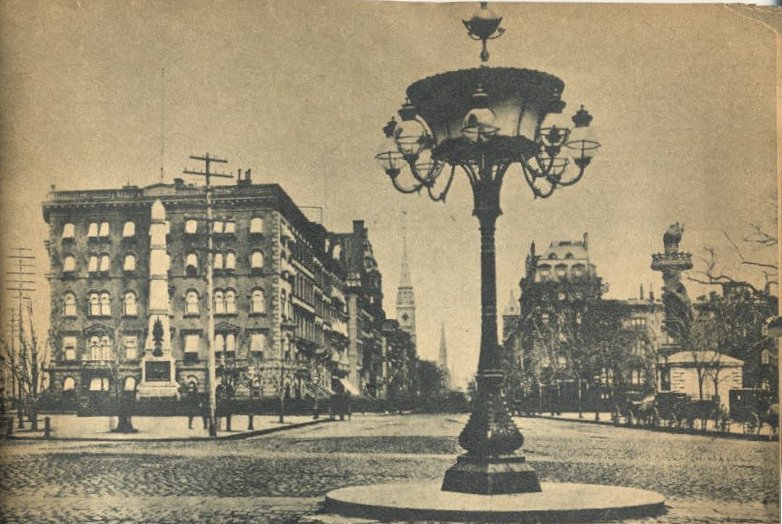
So much has happened in and around Madison Square Park — the leafy retreat at the intersections of Broadway, Fifth Avenue and 23rd Street — that telling its entire story requires an extra-sized show, in honor of the Bowery Boys 425th episode.
Madison Square Park was the epicenter of New York culture from the years following the Civil War to early 20th century. The park was really at the heart of Gilded Age New York, whether you were rushing to an upscale restaurant like Delmonico’s or a night of the theater or maybe just an evening at one of New York’s most luxurious hotels like the Fifth Avenue Hotel or the Hoffman House.
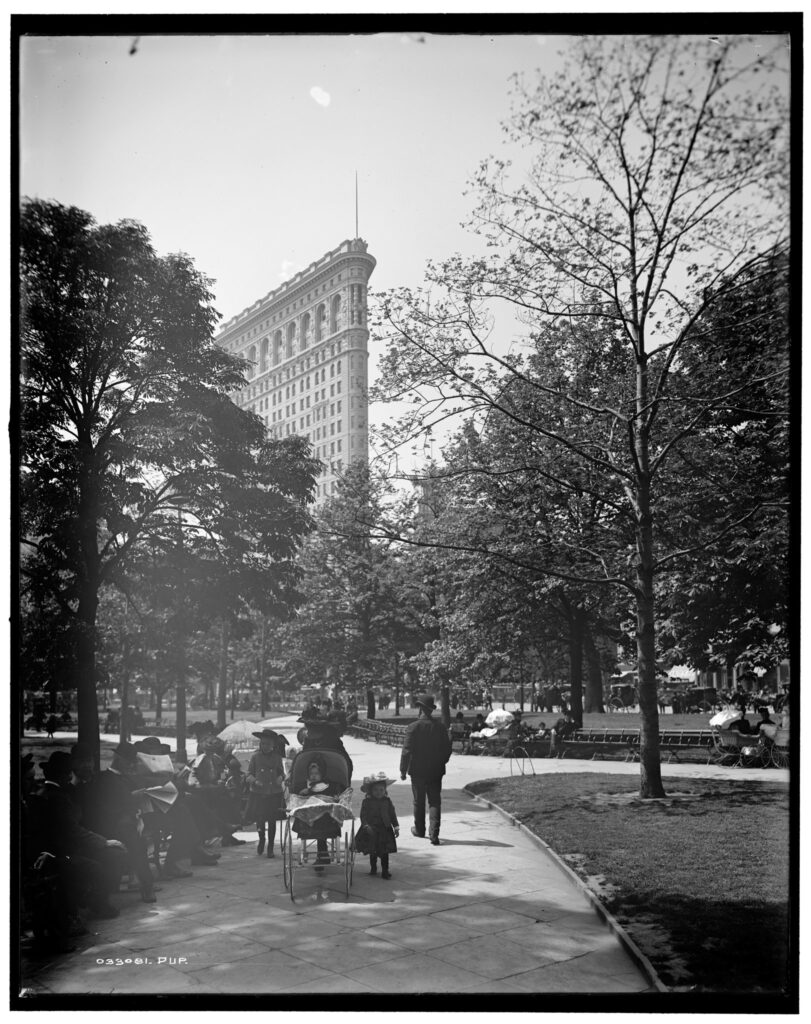
The park is surrounded by some of New York’s most renown architecture, from the famous Flatiron Building to the Metropolitan Life Insurance Tower, once the tallest building in the world.
The square also lends its name, of course, to one of the most famous sports and performing venues in the world – Madison Square Garden. Its origins begin at the northeast corner of the park on the spot of a former railroad depot and near the spot of the birthplace of an American institution — baseball.
The park introduced New Yorkers to the Statue of Liberty … or at least her forearm and torch. It stood silently over the bustling park while prize-winning dogs were championed at the very first Westminster Kennel Club Dog Show nearby, held at Gilmore’s Gardens, the precursor to Madison Square Garden.
Today the region north of the park is referred to as NoMad, which recalls life around Madison Square during the Gilded Age with its high-end restaurant and hotel scene.
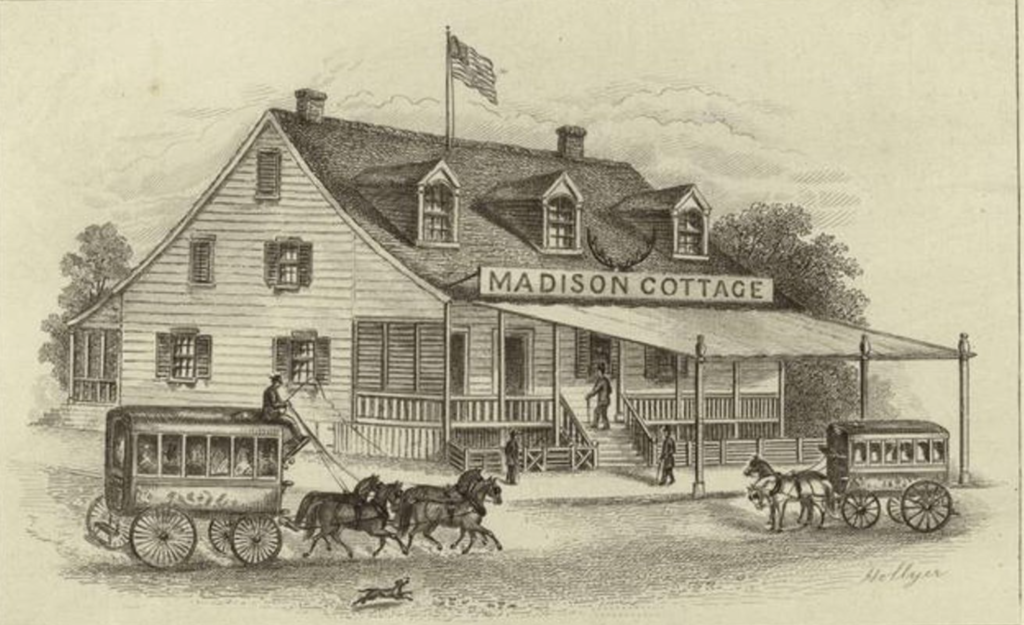
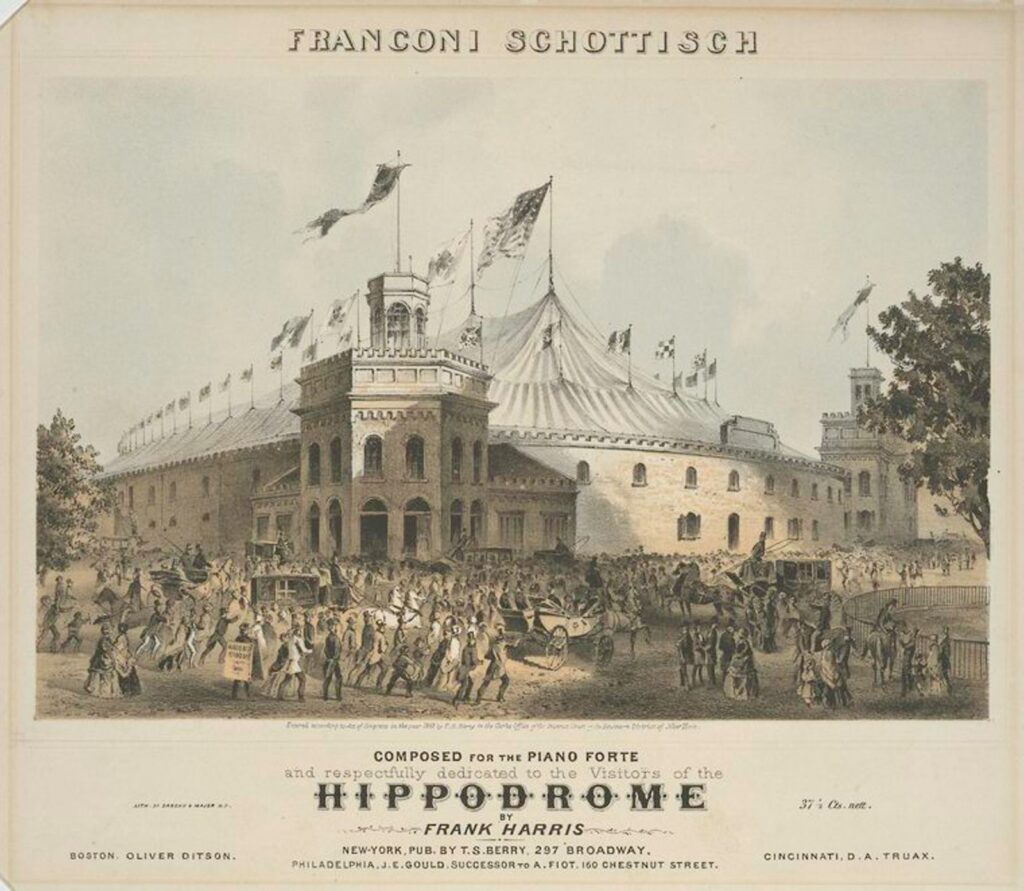
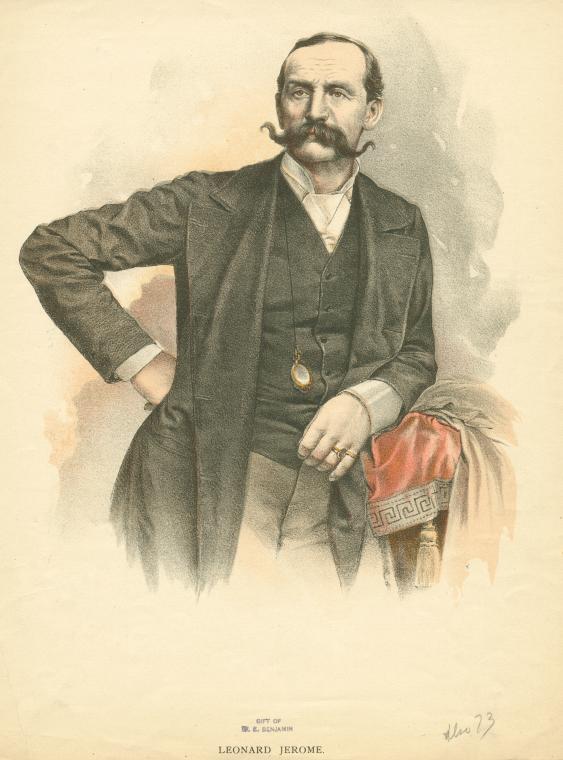
Tom and Greg invite you on this time-traveling escapade covering over 200 years of history. From the days of rustic creeks and cottages to the long lines at the Shake Shake. From Franconi’s Hippodrome to the dazzling colonge fountains of Leonard Jerome (Winston Churcill’s grandfather).
LISTEN HERE: IT HAPPENED AT MADISON SQUARE PARK
This episode’s title pays homage to one of favorite books about park history — It Happened On Washington Square by Emily Kies Folpe.
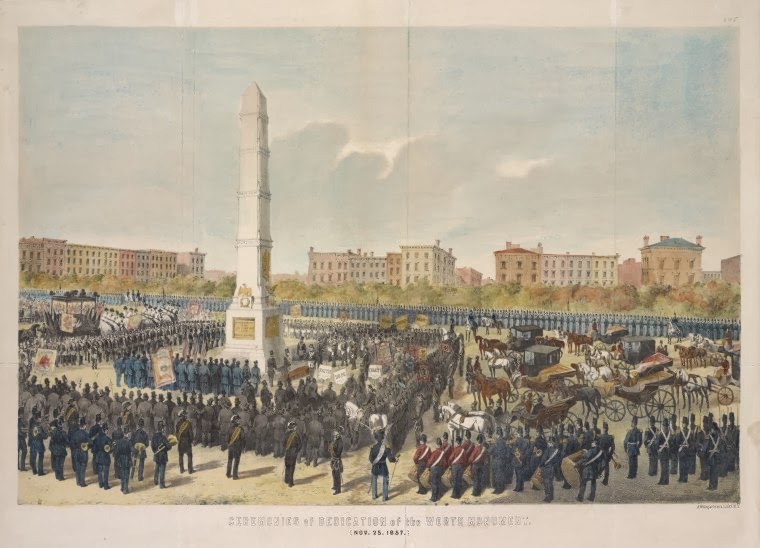
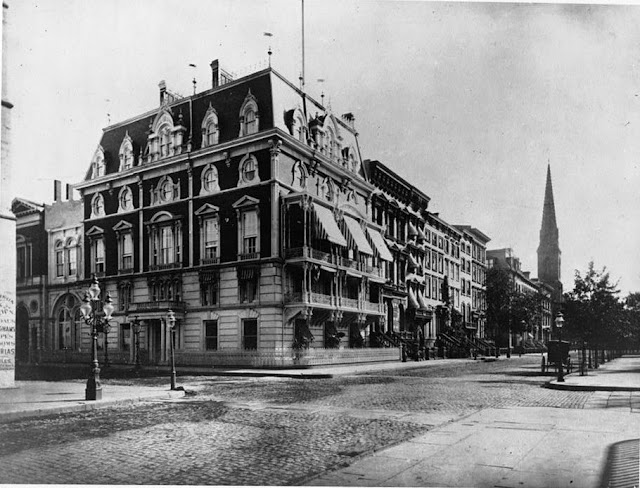
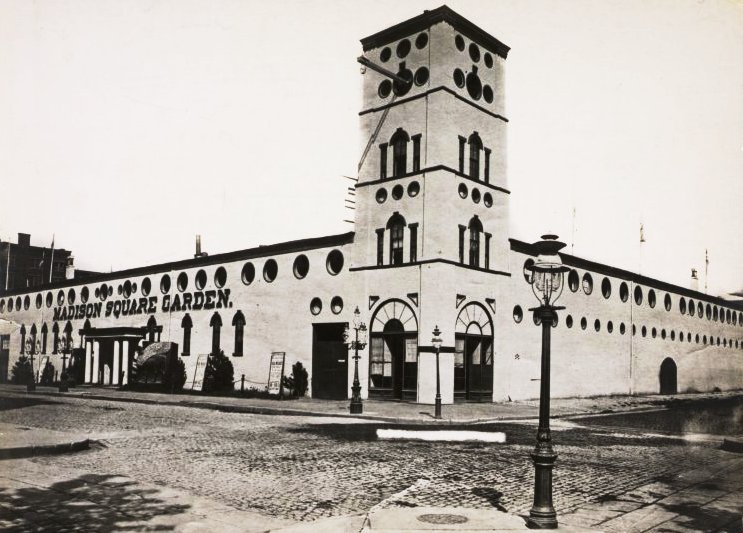
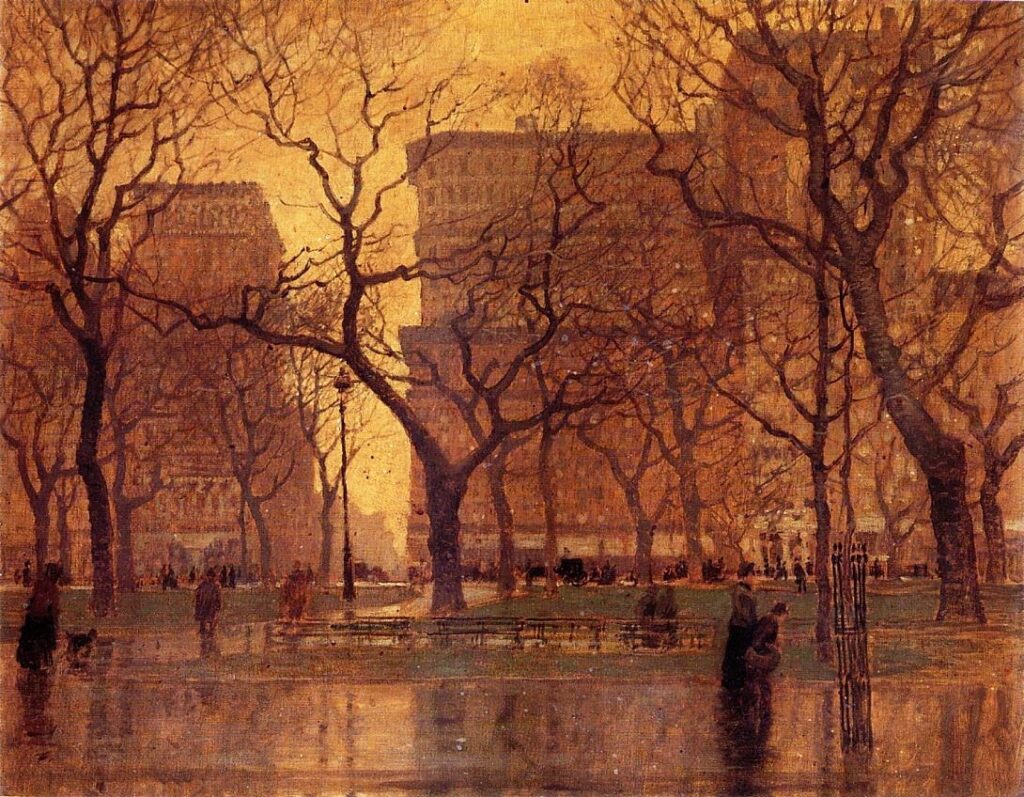
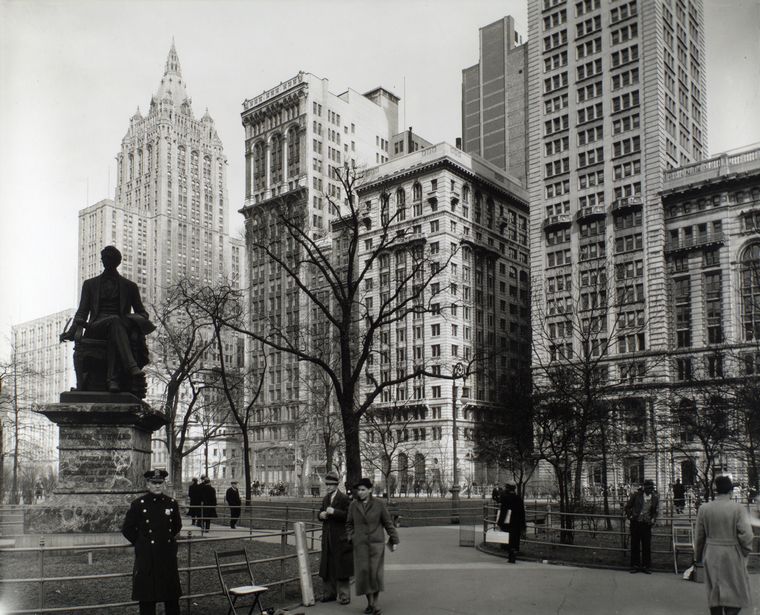
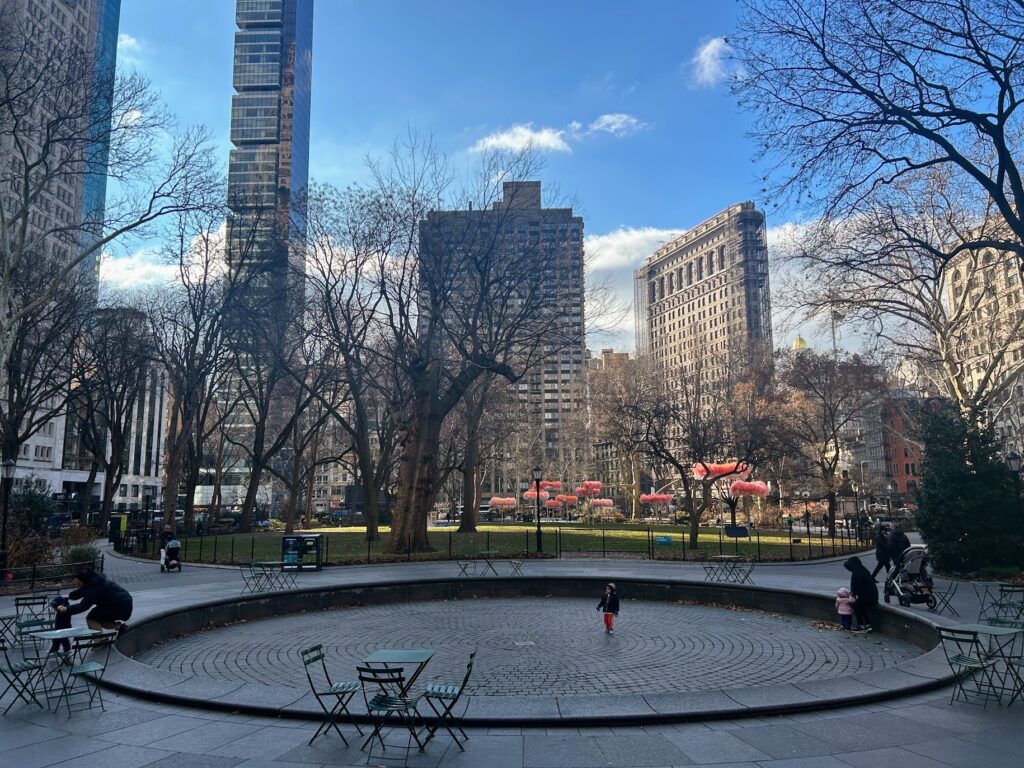
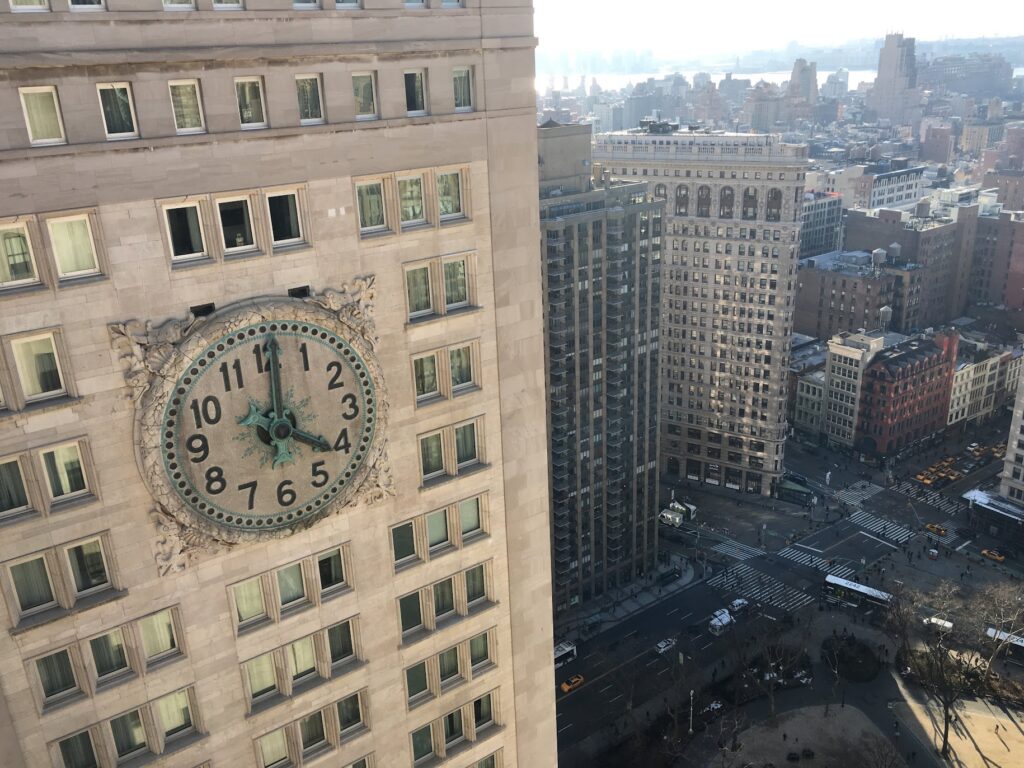
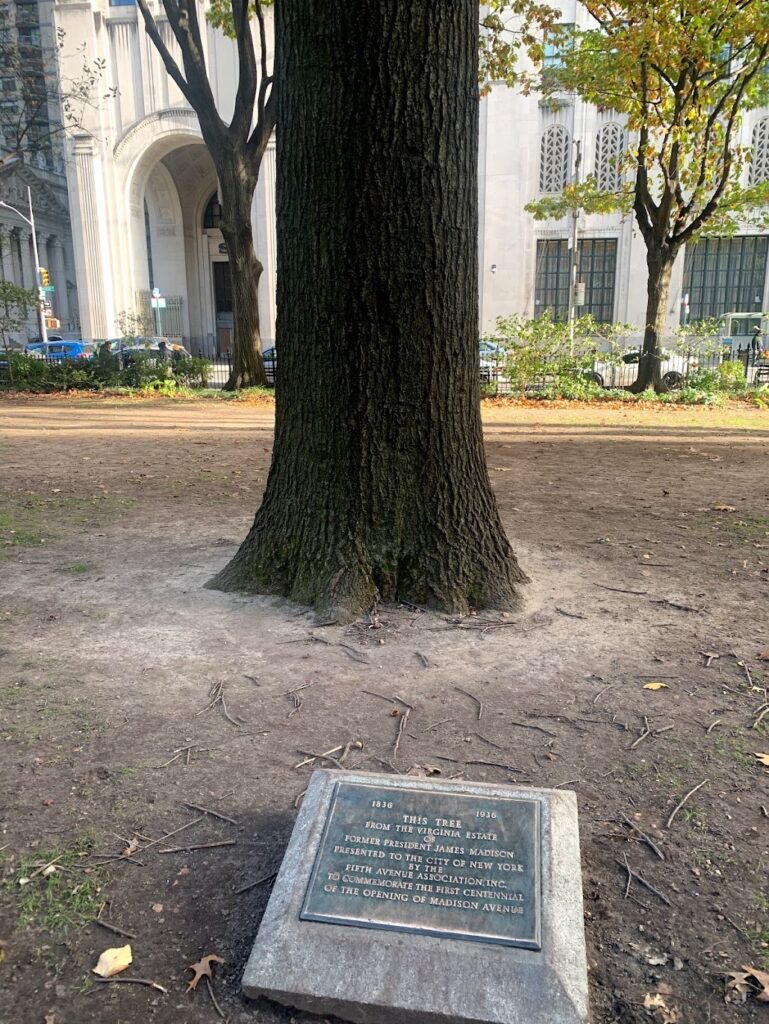
Madison Cottage, courtesy NYPLFranconi’s Hippodrome, 1853, courtesy NYPLDedication of the Worth Monument in 1857. In the background you can see the development of the surrounding areaLeonard Jerome….… and the Jerome Mansion. In the distance is the Madison Avenue Presbyterian Church. The former Gilmore’s Gardens, renamed Madison Square GardenRain on Madison Square, painting by Paul CornoyerCourtesy NYPLMadison Square 1936 , photo by Berenice AbbottNorthern pool in Madison Square Park. Photo by Greg YoungLooking down at the Metropolitan Life Tower and the Flatiron Building. Photo by Greg YoungThe park features a tree from James Madison’s Virginia plantation.
FURTHER READING
A Block in Time: A New York City History at the Corner of Fifth Avenue and Twenty-Third Street / Christiane Bird The Flatiron: The New York Landmark and the Incomparable City That Arose with It / Alice Sparberg Alexiou The Grandest Madison Square Garden: Art, Scandal, and Architecture in Gilded Age New York / Suzanne Hinman Incredible New York: High Life and Low Life from 1850 to 1950 / Lloyd Morris Liberty’s Torch: The Great Adventure to Build the Statue of Liberty / Elizabeth Mitchell Madison Square: The Park and Its Celebrated Landmarks / Miriam Berman Madison Square Garden, 100 Years of History / Joseph Durso
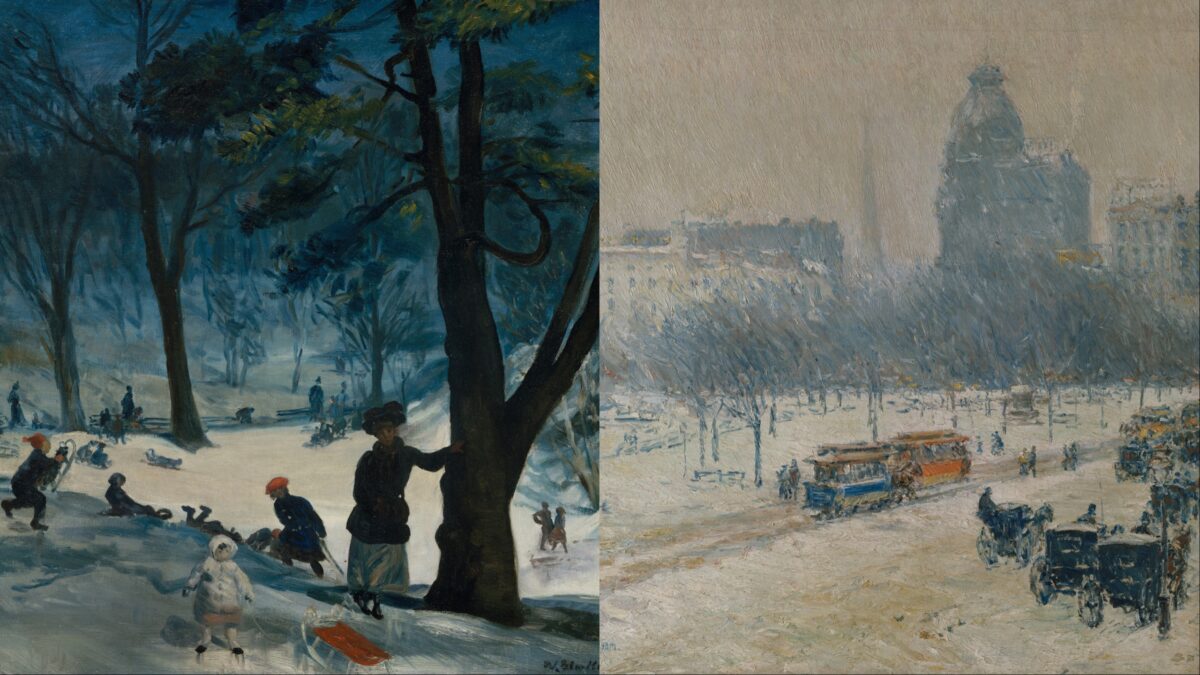
Central Park, Winter by Williams Glackens, 1905; Winter in Union Square, Childe Hassam, 1889-90, courtesy Metropolitan Museum of Art
We love talking about parks on the Bowery Boys podcast because they are an excellent way to experience history and recreation at the same time.
In February we will be bringing you two all-new episodes related to two New York City parks — one park which traces back to the founding of the United States and another park that’s not very old at all (but perfectly embodies the story of 19th century New York City).
In the meantime, dive into one of our previous stories of park history. You can find all these shows in the Bowery Boys Podcast feed or just listen from the page below.
NOTE: We’ve been recording since 2007 so go easy on the early shows. They’re relatively short in nature, unsophisticated and the sound quality is a little flat on some.
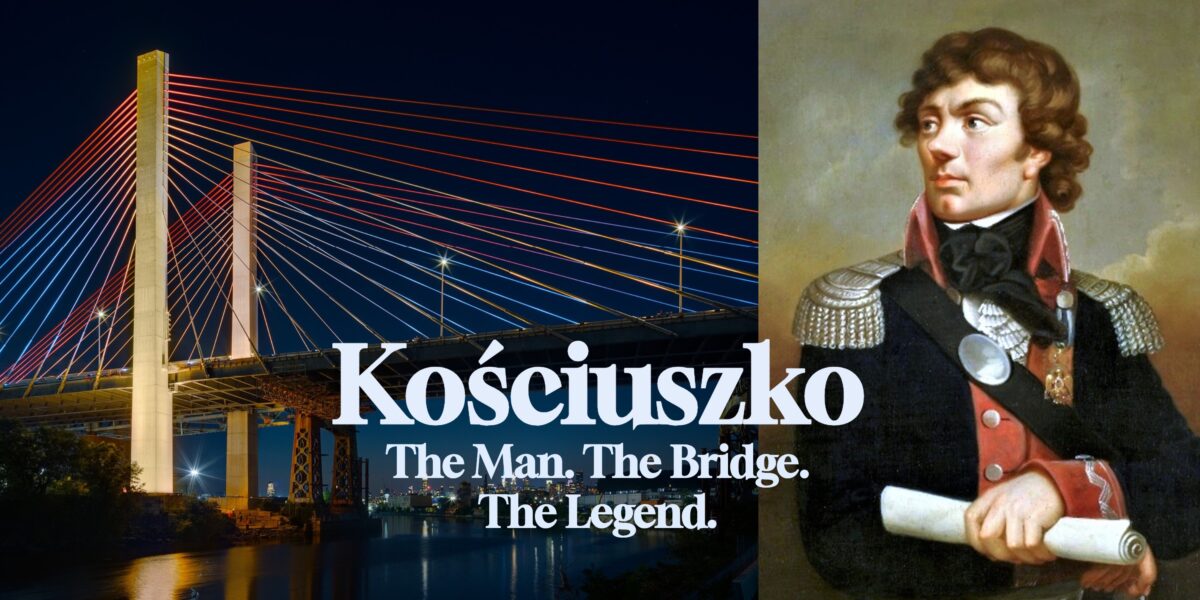
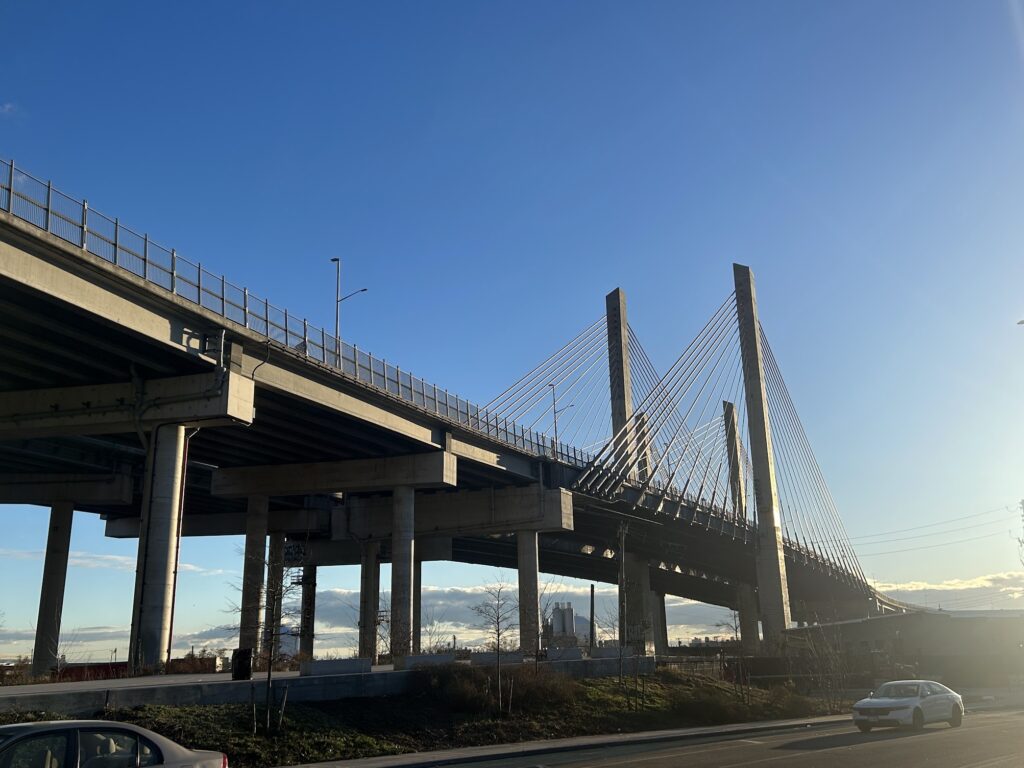
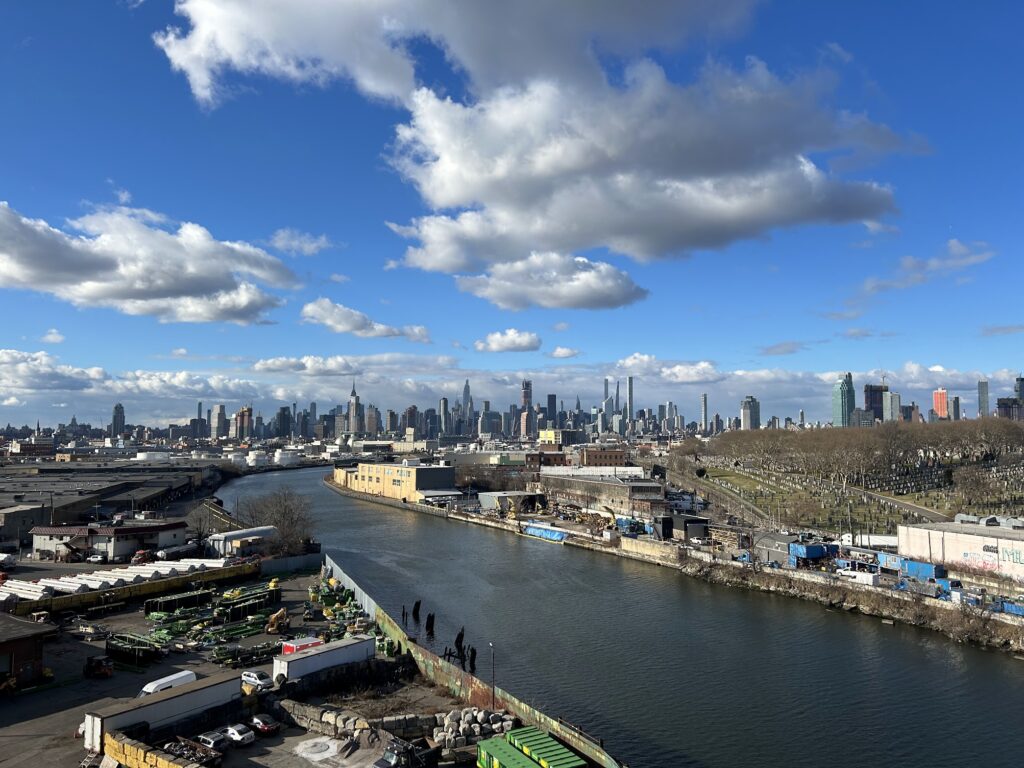
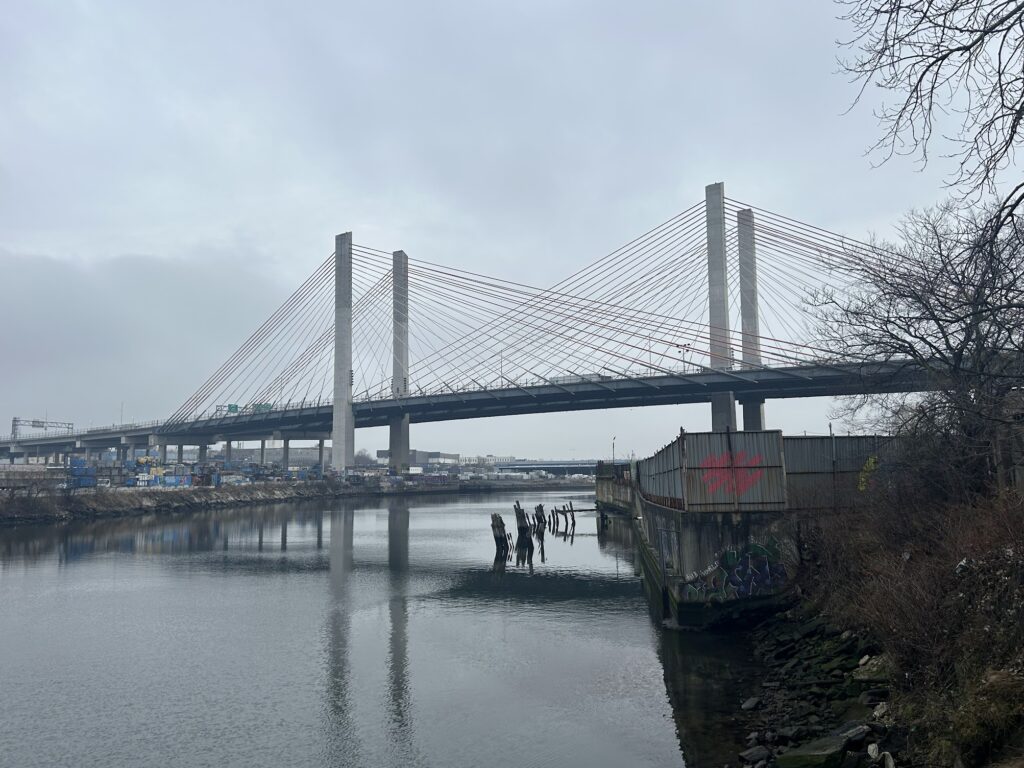
The Kosciuszko Bridge is one of New York City’s most essential pieces of infrastructure, the hyphen in the Brooklyn-Queens Expressway that connects the two boroughs over Newtown Creek, the 3.5 mile creek which empties into the East River.
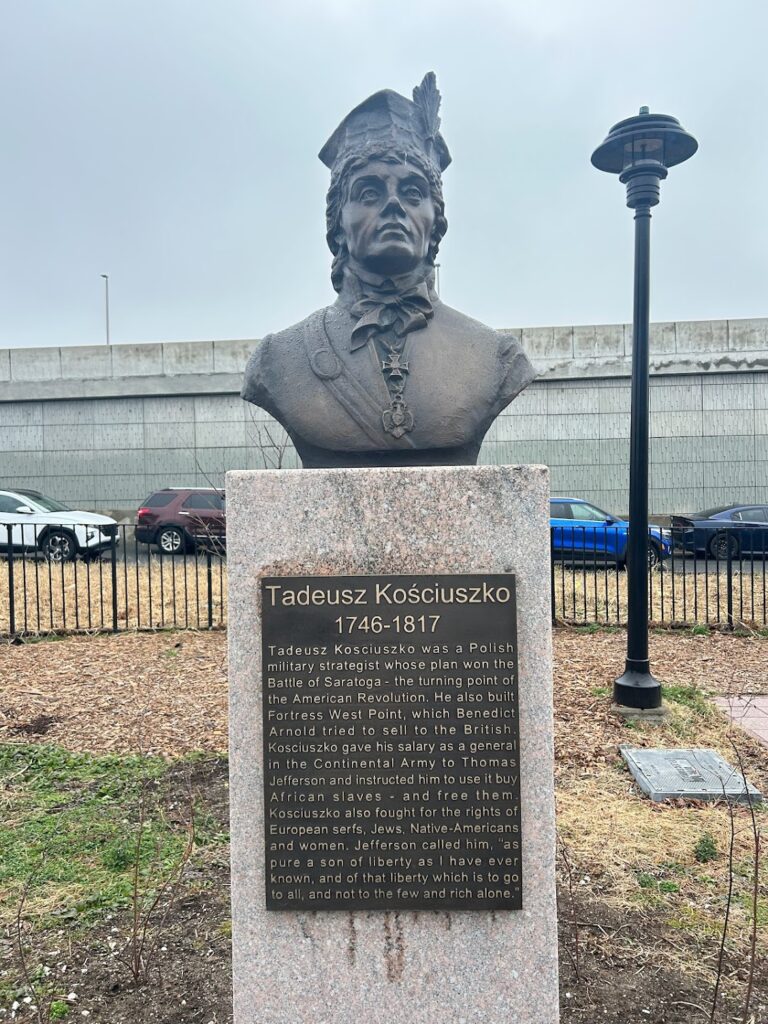
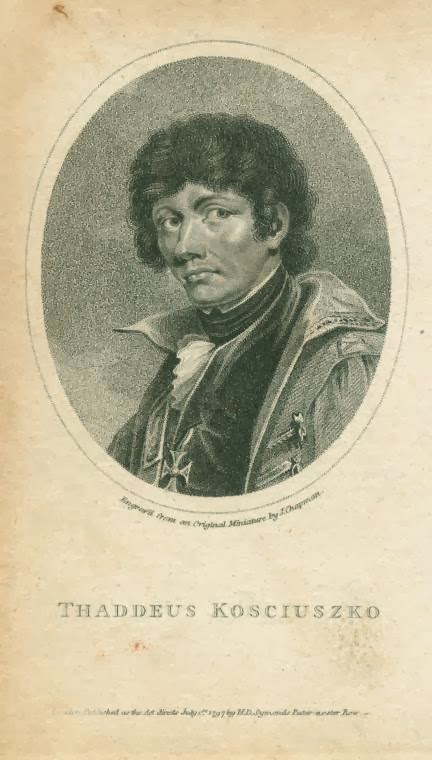
The bridge is interestingly named for the Polish national hero Tadeusz Kościuszko who fought during the American Revolution, then attempted to bring a similar revolutionary spirit to his home country, leading to the doomed Kościuszko Uprising of 1794.
Kościuszko, the man, is a revered historical figure. The bridge, however, has not always been loved. And many non-Polish people even struggle to pronounce its name, inventing a half-dozen acceptable variants.
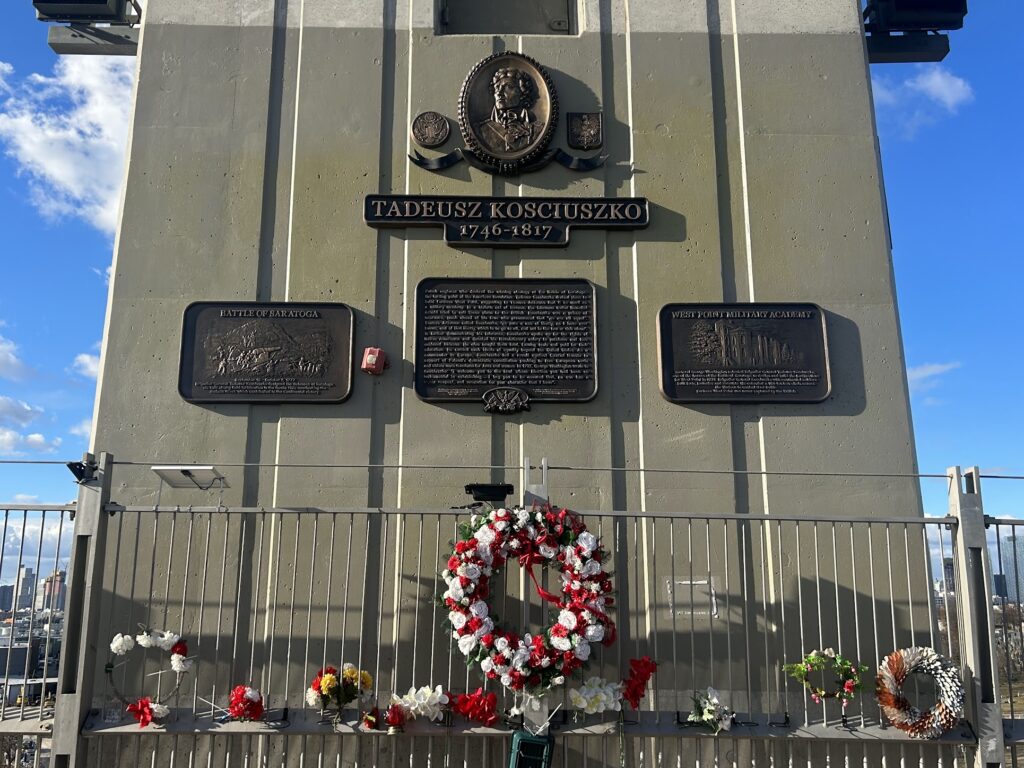
A tribute to the war hero on the new bridge.
The original Kosciuszko Bridge was not exactly beloved by drivers, vexed by its inadequate handling of traffic and its poor roadways. Its glorious replacement, installed in two phases in 2017 and 2019, lights up the night sky — and the filmy waters below.
In this episode, Greg tells the entire story — of both the man and the bridge. But it’s also a story of Newtown Creek, the heavily polluted body of water which runs beneath it. How did this once placid creek become so notoriously filthy? And how did the most prominent bridge over that waterway become associated with an 18th century hero?
PLUS The return of Robert Moses!
LISTEN NOW — Kościuszko: The Man. The Bridge. The Legend.
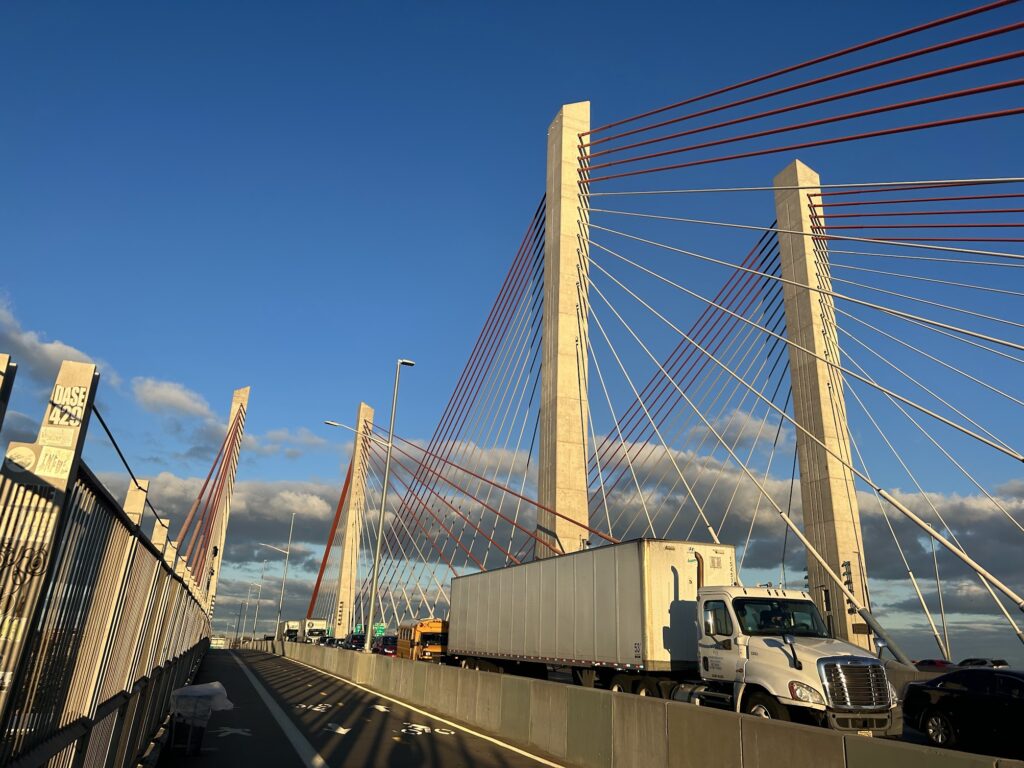
Walking over the bridge, end of day. Photo by Greg Young
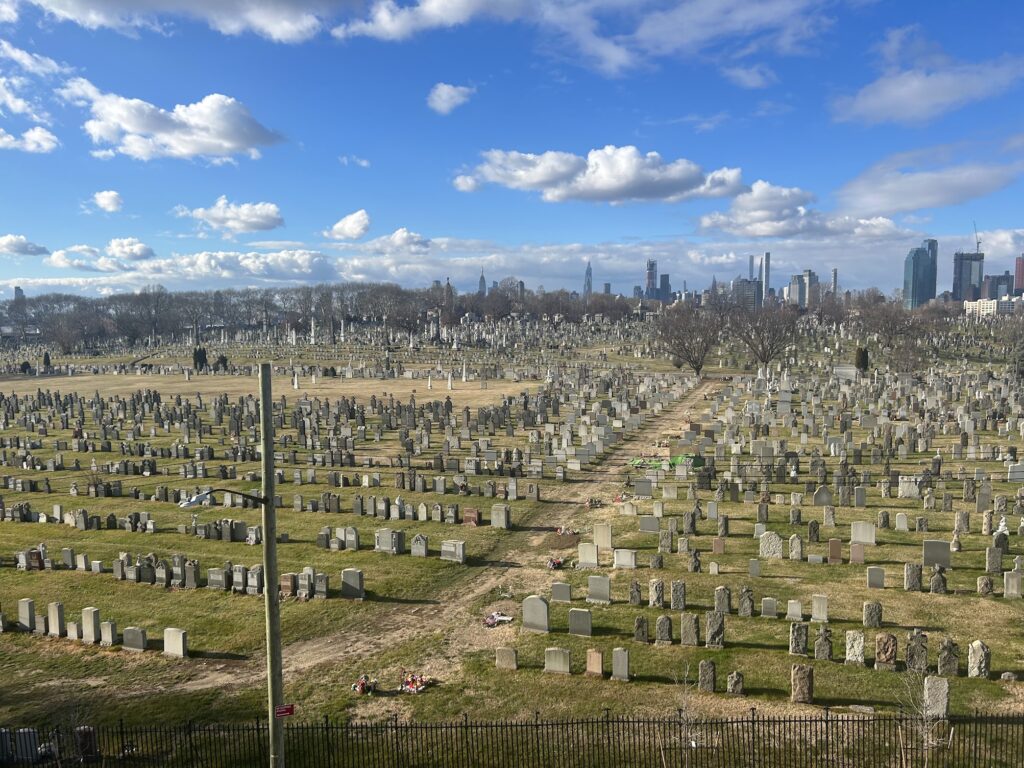
Interesting views from the bridge — of Newtown Creek and Calvary Cemetery.
From the new Kosciusko Plaza at the Brooklyn entrance to the bridge.
View of the bridge from the site of the old Penny Bridge/Meeker Avenue Bridge.
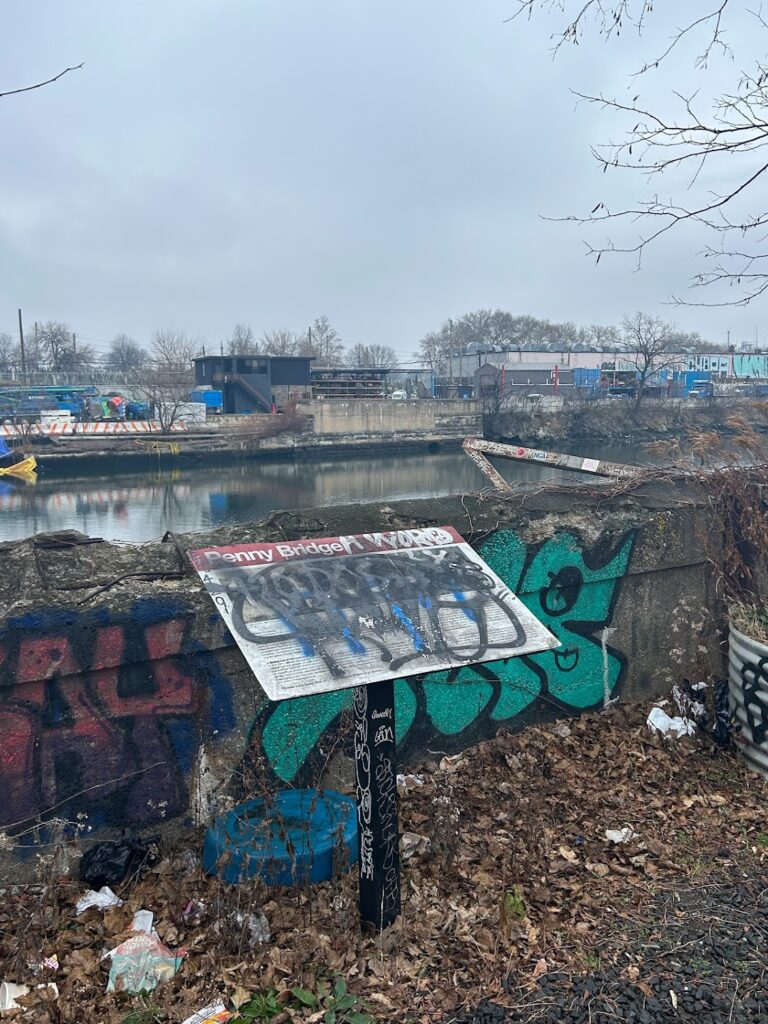
Penny Bridge marker in need of some maintenence.
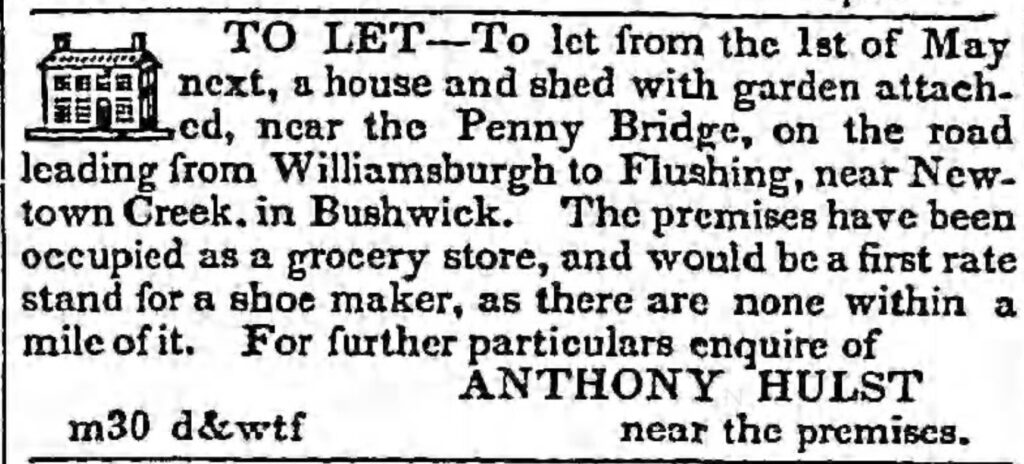
Brooklyn Daily Eagle, 1843
FURTHER LISTENING
FURTHER READING
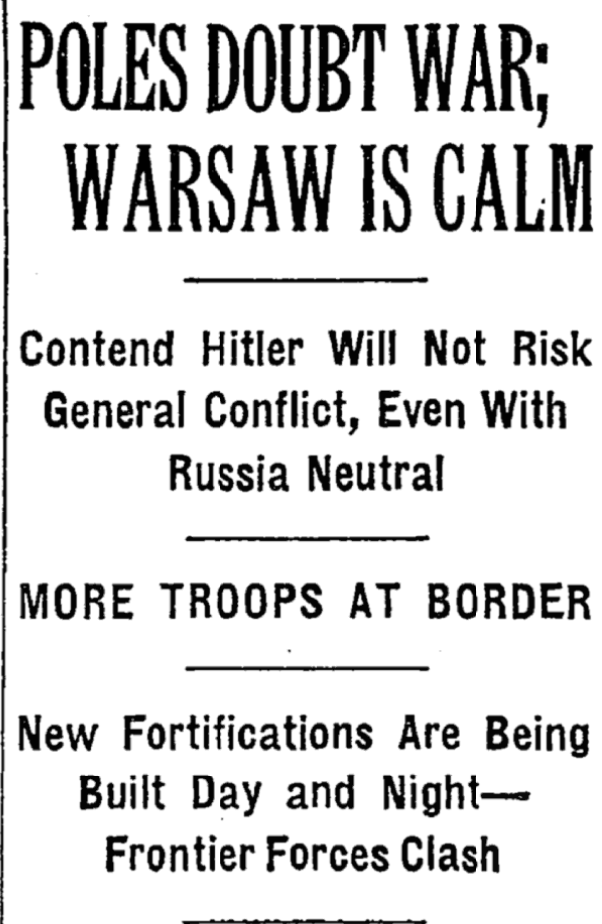
The New York Times article which ran August 24, 1939, one week before Hitler invaded Poland
This podcast was based on this article written for this website several years ago:
“That sound that crashes in the tyrant’s ear – Kosciuszko!” Lord Byron was talking about Polish hero Tadeusz Kościuszko, who was (most likely) born on this date in 1746. Tomorrow a new bridge bearing his name will open to the public, hoping to eliminate the many grievances of those stuck upon its predecessor during rush hour.
But how did the original 1939 span over the Newtown Creek, connecting Brooklyn to Queens, get named the Kosciuszko Bridge in the first place?
Kosciuszko wasn’t just Poland’s most famous revolutionary. In 1776, he sailed for America to fight alongside George Washington and the Continental Army. He was a brilliant strategist and engineer, helping bolster many American forts, and was greatly admired by Washington’s generals.
In one of his more clever displays, the man who would one day have a bridge named after him actually blew up several bridges to hamper British advances in upstate New York.**
After the war, he returned to Europe and led the fight for Poland’s independence (although his storied uprising against Russia was ultimately a failure).
Kosciuszko died in 1817 and has been celebrated the world over as the greatest of revolutionaries and perhaps the best known historical figure in Polish history. But that alone doesn’t get one a bridge in Long Island.
The new automobile bridge, eventually part of the Brooklyn-Queens Expressway, was completed in 1939, replacing a smaller one called the Meeker Avenue Bridge.
The new crossing opened in August. Germany invaded Poland nine days later.
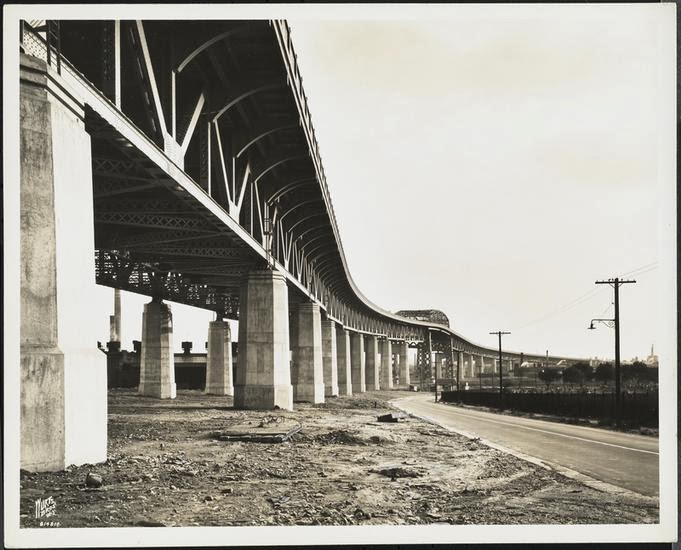
The approach to the Kosciuszko Bridge, photographed in 1939 by the Wurts Brothers. Photo courtesy the Museum of the City of New York
New York City’s affinity with Poland was strong by this time. The city had thousands of Polish-Jewish residents.
The Polish pavilion at the 1939-40 World’s Fair in Flushing-Meadow was among the most striking, featuring a bold statue of the Polish monarch Wladyslaw Jagiello. (That statue was eventually moved to Central Park, where it sits today near the Turtle Pond.) Its powerful, war-like stance resonated with New York’s Polish immigrants, watching the destruction of their native country and its people from afar.
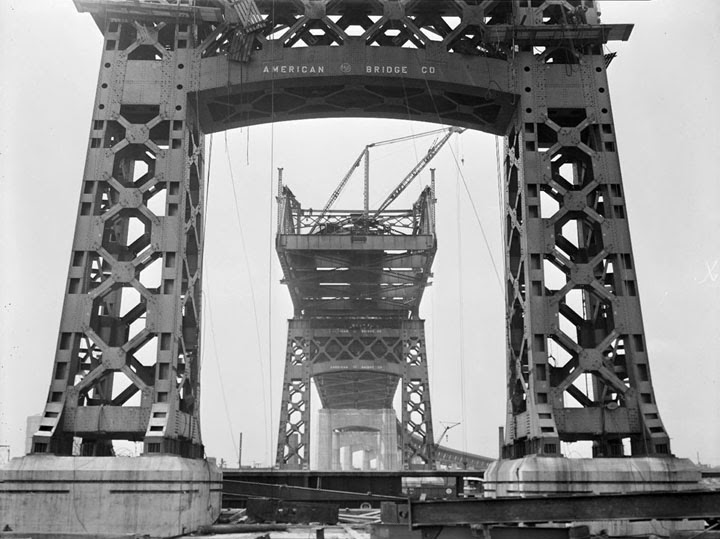
Below: Construction of the new Meeker Avenue Bridge in June 1939, later to be named Kosciuszko. (Courtesy NYC Municipal Archives)
In July 1940, the Meeker Avenue Bridge was renamed the Kosciuszko Bridge, as a sign of the revolutionary spirit that bonded America and Poland. It certainly made sense given that the Brooklyn anchorage rises from Greenpoint, a vibrant Polish neighborhood.
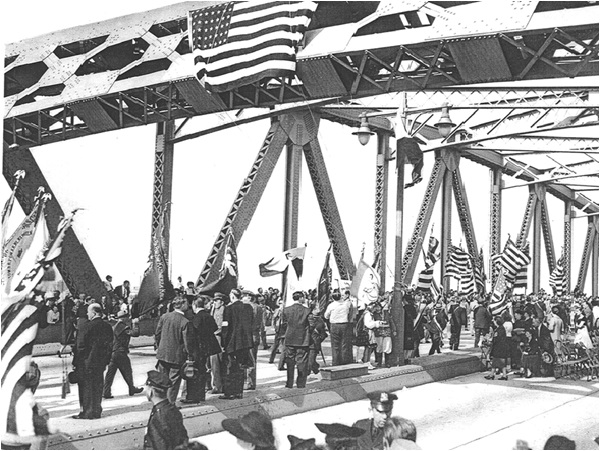
At an official ceremony on September 23, 1940 — a year after the German invasion — thousands of Polish-Americans cheered along to a rousing patriotic speech by Mayor Fiorello La Guardia. On either side of the bridge were parades featuring revelers in traditional Polish costumes.
Below: An image of the renaming ceremony, the bridge adorned in American flags. Courtesy New York State
“[I]n so far as the American people and the American government are concerned,” said La Guardia, “the free government of Poland still lives and will continue to live.”
The crowd roared with applause at the mention of President Franklin D. Roosevelt. America would not be officially engaged in World War II until the following year with the attack on Pearl Harbor.
Ah, but that name! It remains one of the more perplexing bridge names to say. It’s correctly pronounced kohsh-CHOOSH-koh, although several slight variations are accepted.
At first, many people simply refused to say it. In 1945, the New York Times mentioned that “Kosciuszko Bridge the people will not have and they call it the Meeker Avenue Bridge to this day.”
Of course, many people preface the name today with an expletive, as the original bridge is better known for its traffic entanglements and its lack of any kind of shoulder for stalled cars. There have been plans for years to replace the bridge, plans which finally came to fruition this week with opening of the second span of the newly designed bridge.
The Kosciuszko’s younger brother bridge — the Pulaski Bridge, named for another Polish hero, Kazimierz Pulaski — spans the same body of water just a couple miles to the west.
**Tadeusz Kościuszko actually blew up and booby-trapped many bridges during the Revolutionary War on the command of Colonel Philip Schuyler, the father-in-law of Alexander Hamilton.
Thank you for making 2023 another excellent year for the Bowery Boys podcast.
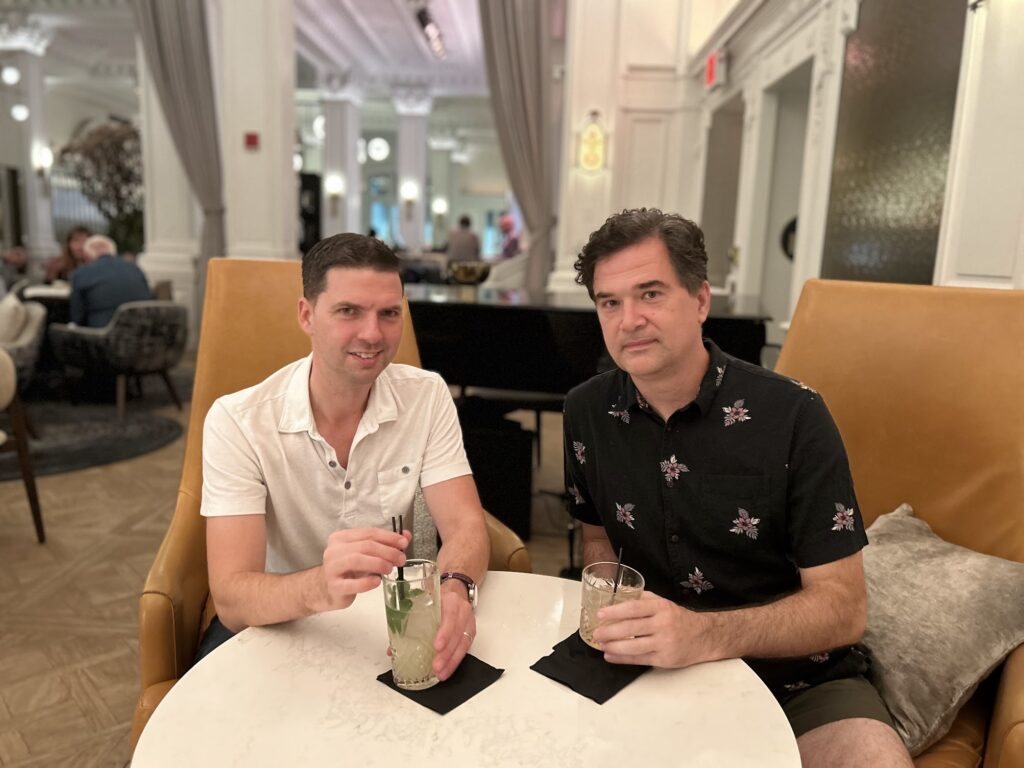
Greg and Tom at the Algonquin
This year our shows spanned hundreds of years of history — from the Dutch wall of New Amsterdam in the 1650s to the paparazzi woes of Greta Garbo in the 1950s — and looked at many forgotten aspects of city life like the Miss Subways contest and the Fulton Fish Market at the Seaport.
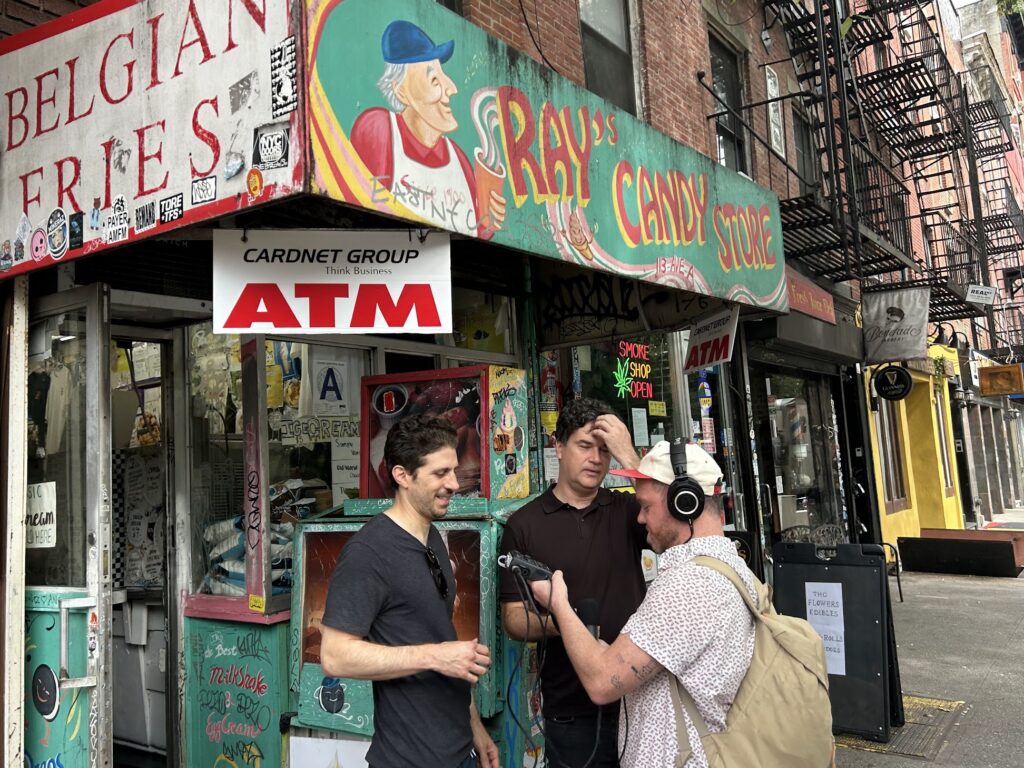
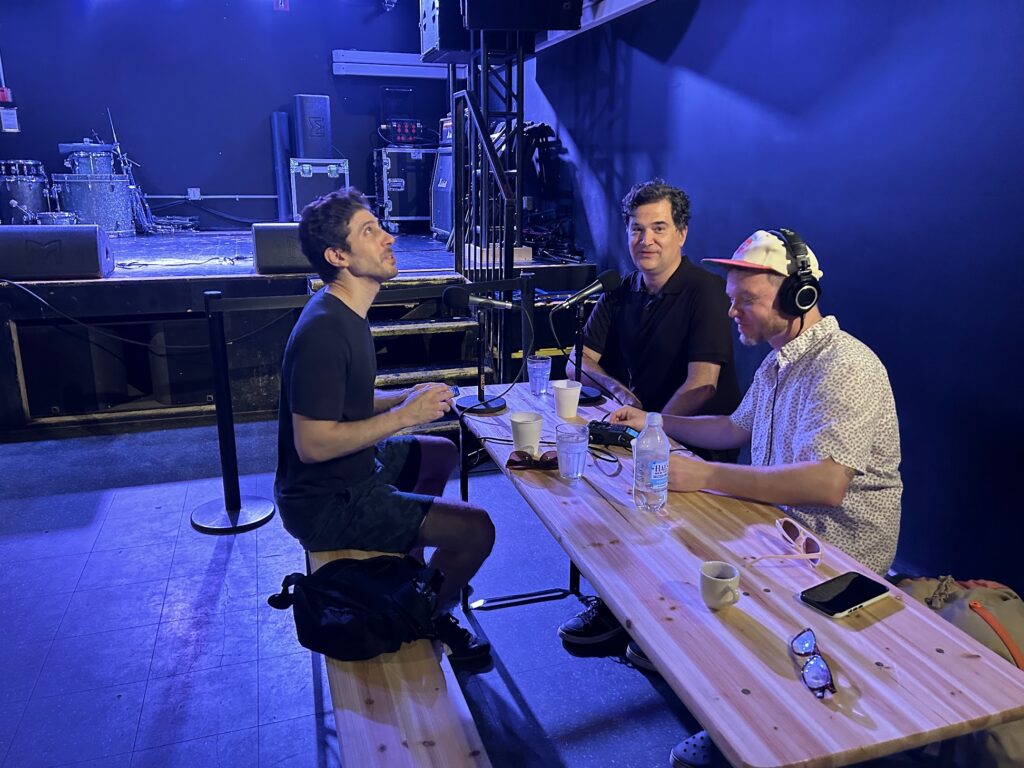
Greg, Krikor and our producer Kieran Gannon getting ready to interview Ray from Ray’s Candy Store
In 2023, we looked at art and artists (Mona Lisa, Edward Hopper), important landmarks (Bethesda Terrace, Grace Church, the Brooklyn Bridge and the Brooklyn Navy Yard), major changes to everyday life (gaslight, automobile parking), important American stories (the sinking of the Titanic, the end of the Revolutionary War) and a two-part look at the ‘creation’ and evolution of the East Village.
And of course — pizza! pizza! pizza!
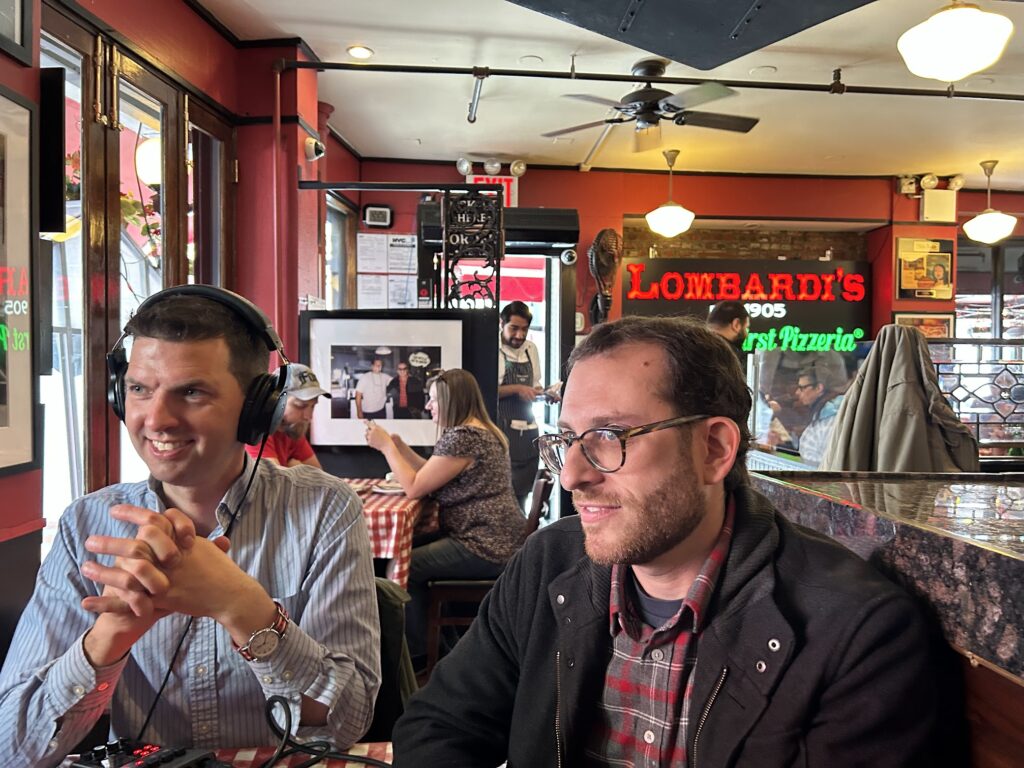
Tom and Scott Wiener of Scott’s Pizza Tours at historic Lombardi’s Pizza. Photo by Greg Young
We did it all with a record of special guests this year — authors, restaurant owners, museum curators and some of the best tour guides in New York City. And don’t forget Ken Burns!
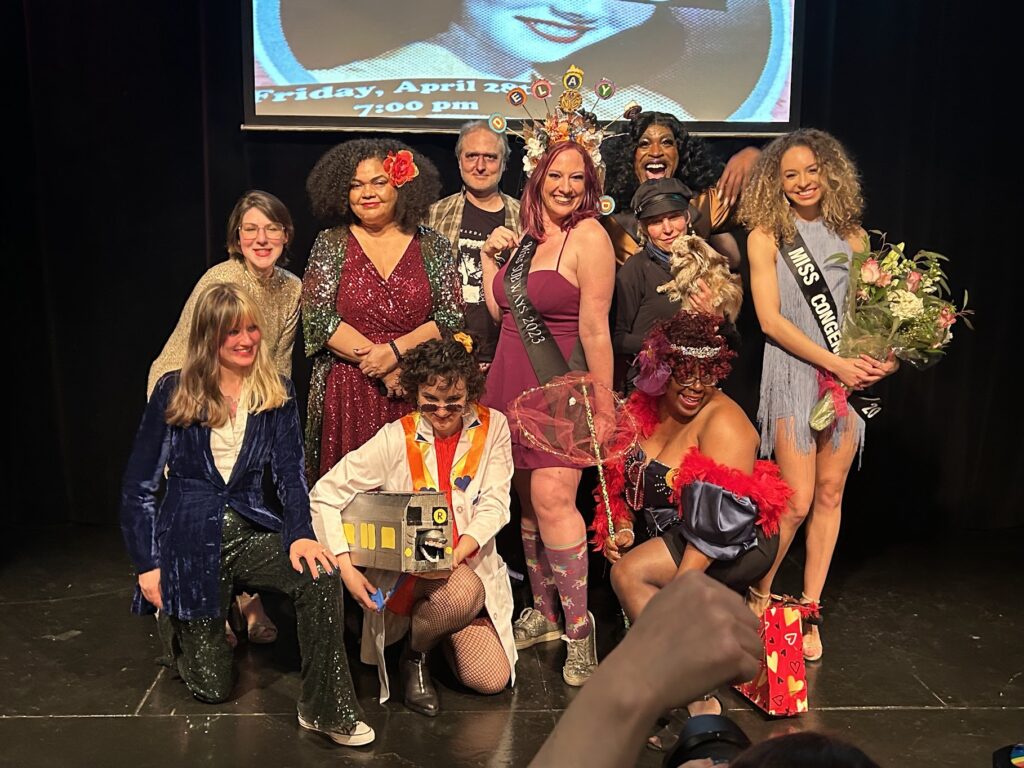
The new Miss Subways competition in Coney Island was featured in the Miss Subways’s show from June.
And finally we had our best shows ever at Joe’s Pub for the Halloween season. See you there next year!
Here’s the list of all of our new shows in 2023. And you won’t have to wait long in the new year for a new episode. A special bridge-themed show arrives next Friday.
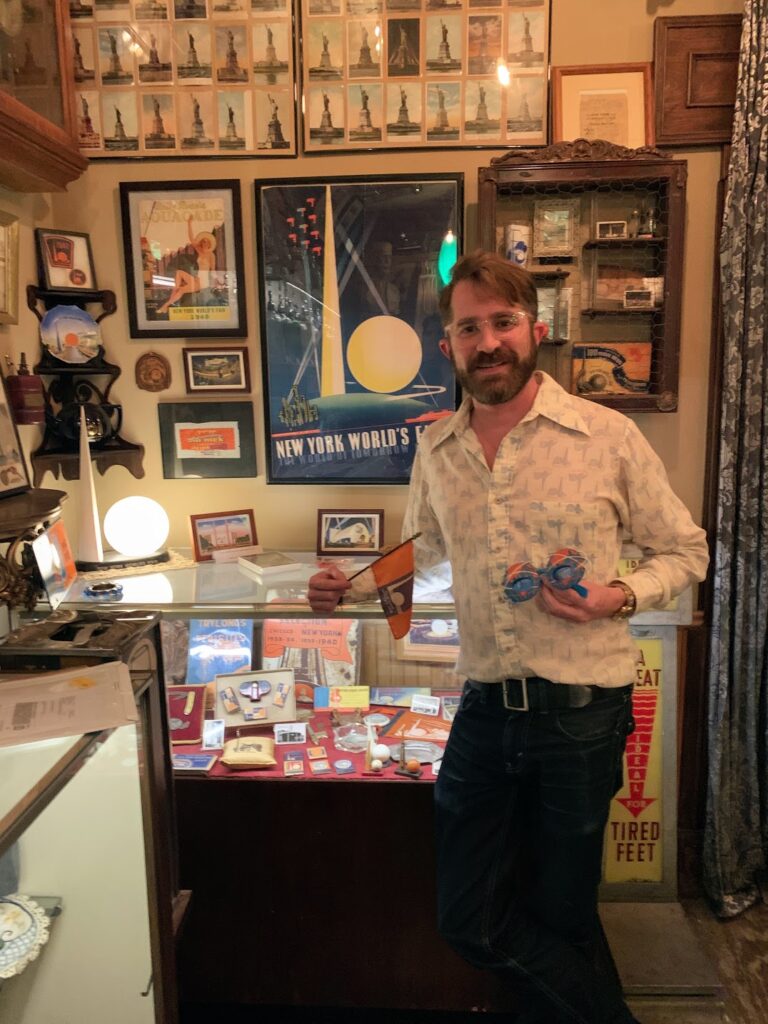
Flushing-Meadows Corona Park in the borough of Queens is the home of the New York Mets, the U.S. Open, the Queens Zoo, the Hall of Science and many other recreational delights. But it will always be forever known as the launching pad for the future as represented in two extraordinary 20th century world’s fairs.
Featuring the brilliant Kyle Supley and his extraordinary collection of World’s Fair memorabilia
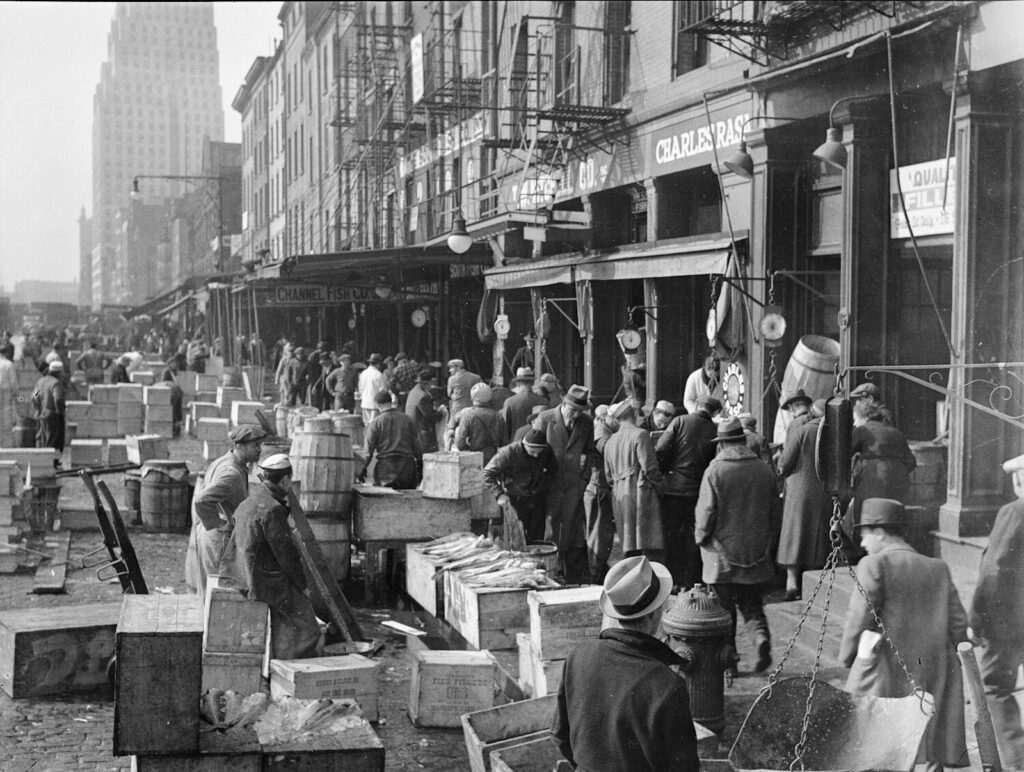
In the 19th century, the Fulton Fish Market in downtown Manhattan was to seafood what Chicago stock yards were to the meat industry, the primary place where Americans got fish for their dinner tables.
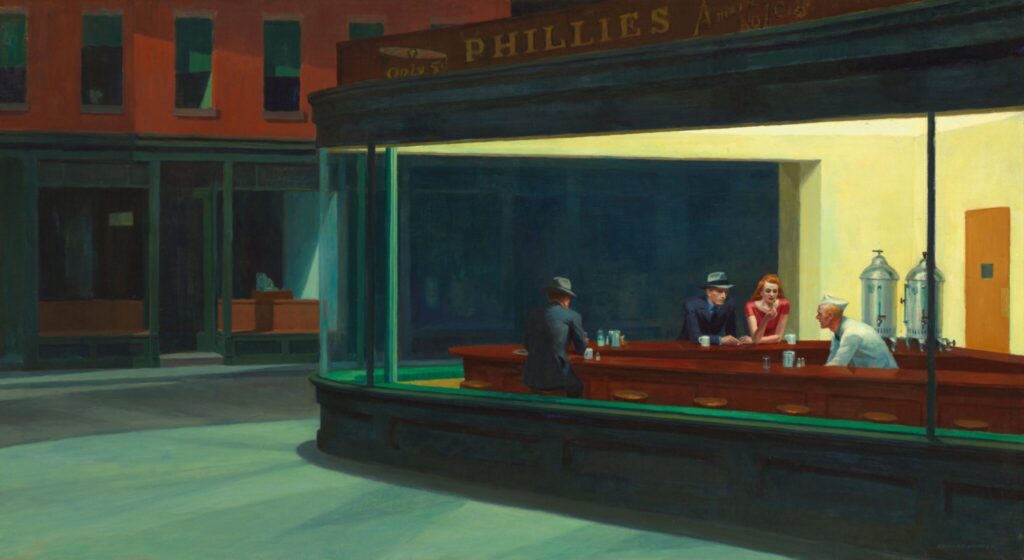
Edward Hopper, a native of the Hudson River town of Nyack, painted New York City for over half a decade. In reality, the city experienced Prohibition and the Jazz Age, two world wars and the arrival of automobiles. But not in Hopper’s world.
Featuring a visit to the Edward Hopper House Museumin Nyack, New York, to talk the artist’s early life with executive director Kathleen Motes Bennewitz. AND a look at the hidden meanings in Hopper’s paintings thanks to American art historian Rena Tobey.
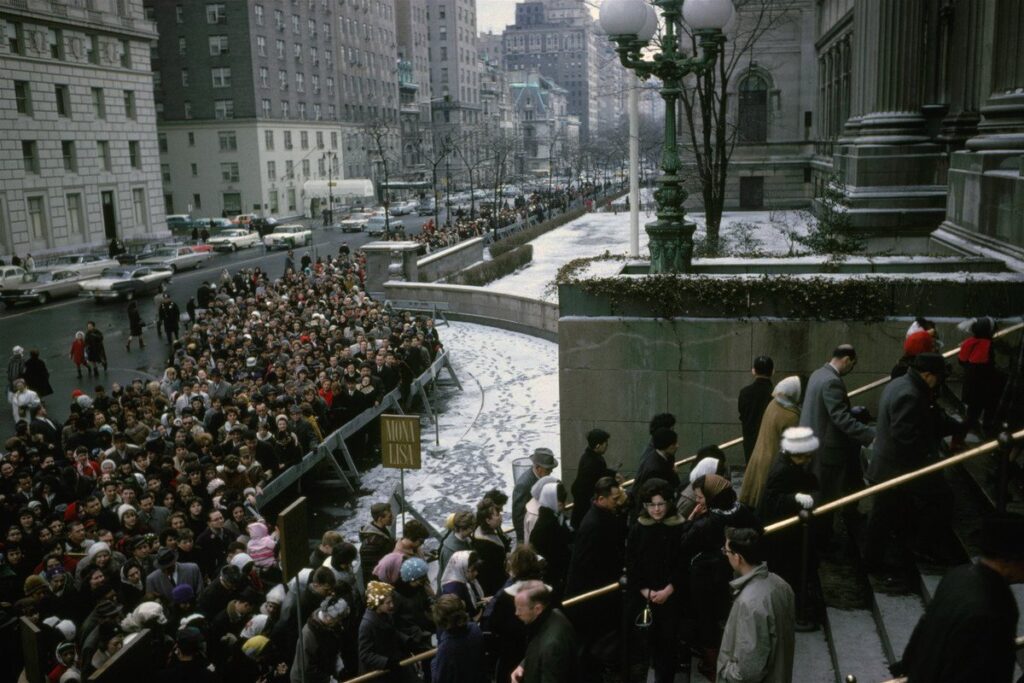
The Mona Lisa, Leonardo da Vinci’s stoic portrait and one of the most valuable paintings on earth, came to America during the winter of 1963, a single-picture loan that was both a special favor to Jackie Kennedy and a symbolic tool during tense conversations between the United States and France about nuclear arms.
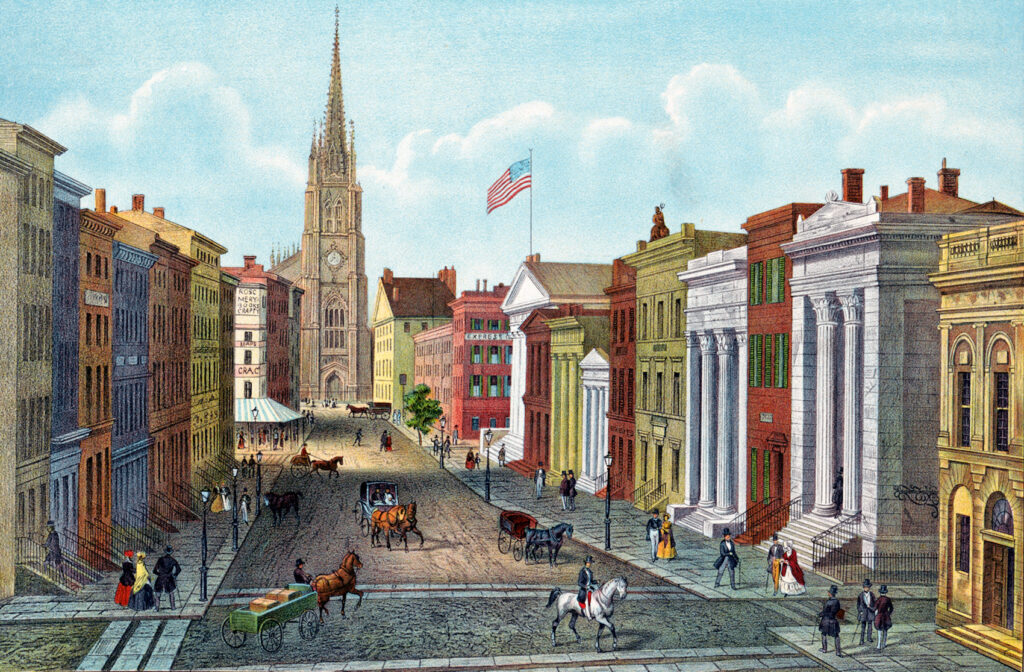
Wall Street, today a canyon of tall buildings in New York’s historic Financial District, is not only one of the most famous streets in the United States, it’s also a stand-in for the entire American financial system.
One of the first facts you learn as a student of New York City history is that Wall Street is named for an actual wall that once stretched along this very spot during the days of the Dutch when New York was known as New Amsterdam.
The particulars of the story, however, are far more intriguing.
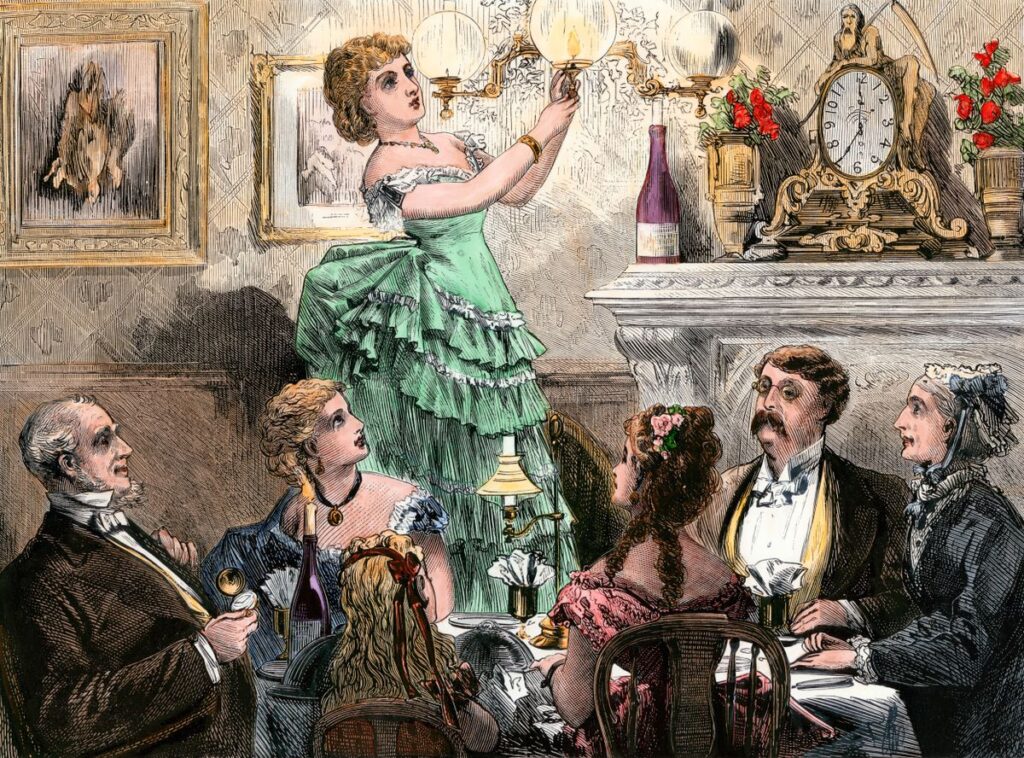
Enter the magical world of New York by gaslight, the city illuminated by the soft, revolutionary glow of lamps powered by gas, an innovative utility which transformed urban life in the 19th century.
Featuring author Jane Brox, author of Brilliant: The Evolution of Artificial Light, who discusses the curious charms of this rare and enigmatic light source.
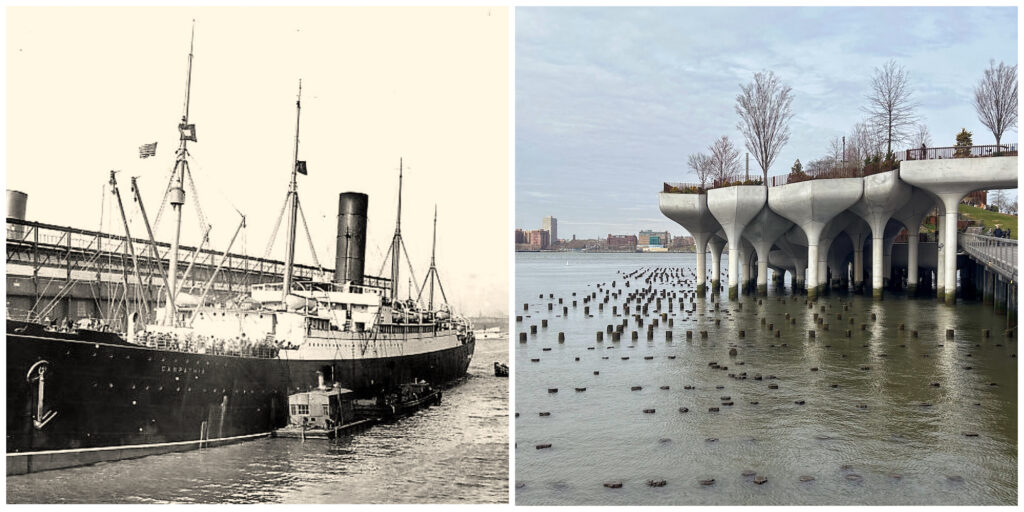
In the early morning hours of April 15, 1912. the White Star ocean liner RMS Titanic struck an iceberg en route to New York City and sank in the Atlantic Ocean.
Survivors were rescued by the Cunard liner Carpathia and brought to their berth at Pier 54 at the Chelsea Piers. Today, on that very spot, stands Little Island.
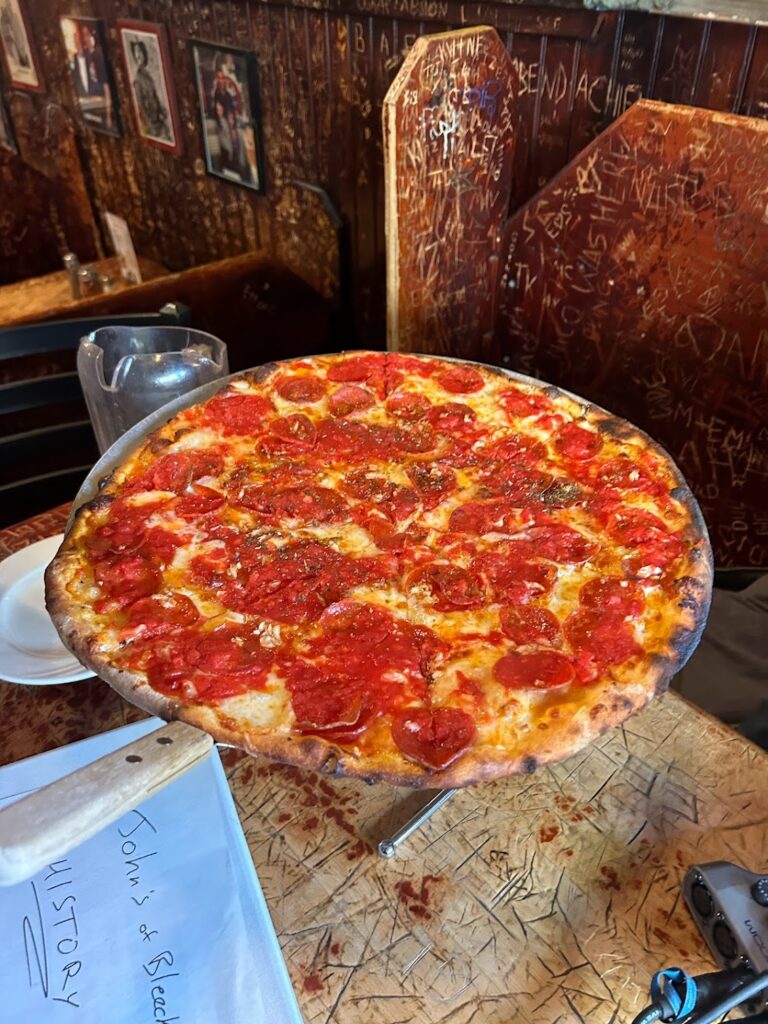
The history of pizza in the United States begins in Manhattan in the late 19th century, on the streets of Little Italy (and Nolita), within immigrant-run bakeries that transformed a traditional southern Italian food into something remarkable.
But new research discovered in recent years has changed New York food history, revealing an origin tale slightly older than what the old guide books may have you believe.
On this wandering episode — through Nolita, Greenwich Village and even the Bowery — Tom and Greg are joined by the prince of pizza himself Scott Wiener of the long-running Scott’s Pizza Tours.
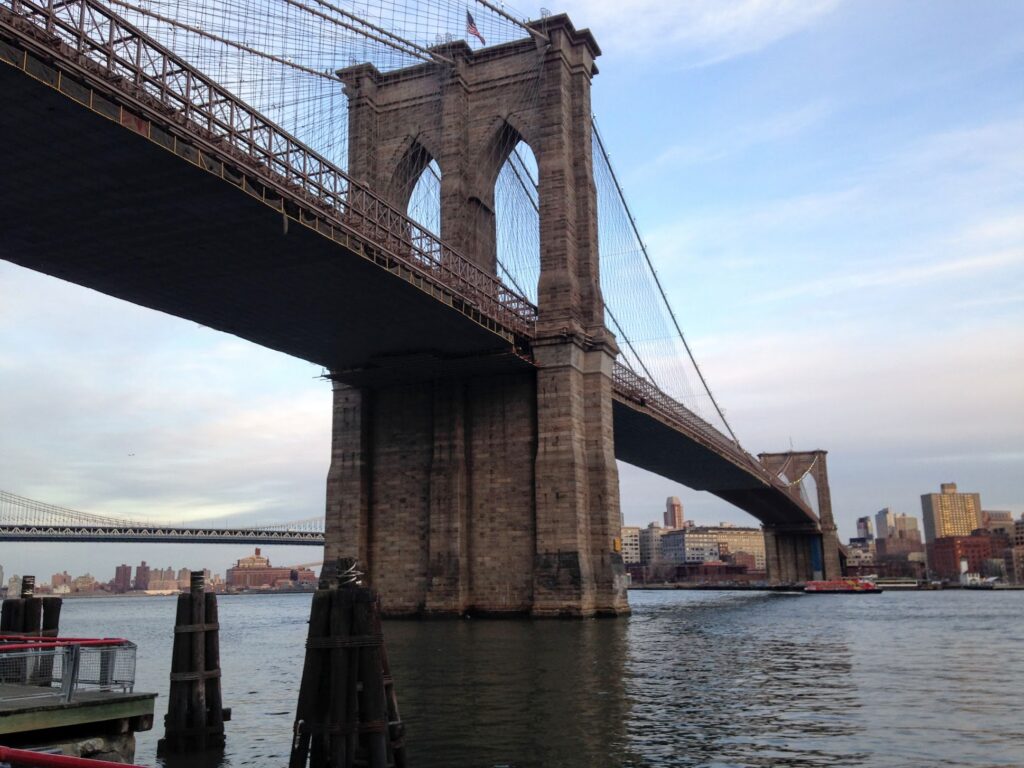
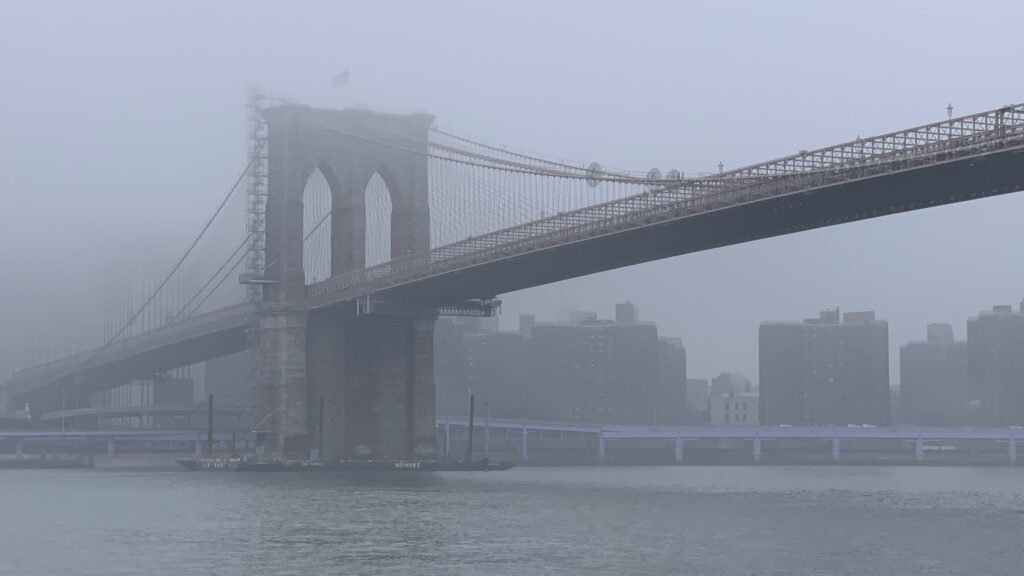
The Brooklyn Bridge, which was officially opened to New Yorkers 140 years ago this year, is not only a symbol of the American Gilded Age, it’s a monument to the genius, perseverance and oversight of one family.
Greg and Tom are joined in the studio by Kriss Roebling, the great, great-grandson of Washington and Emily Roebling. He shares his own surprising family stories — and brings in some extraordinary artifacts from his family’s past!
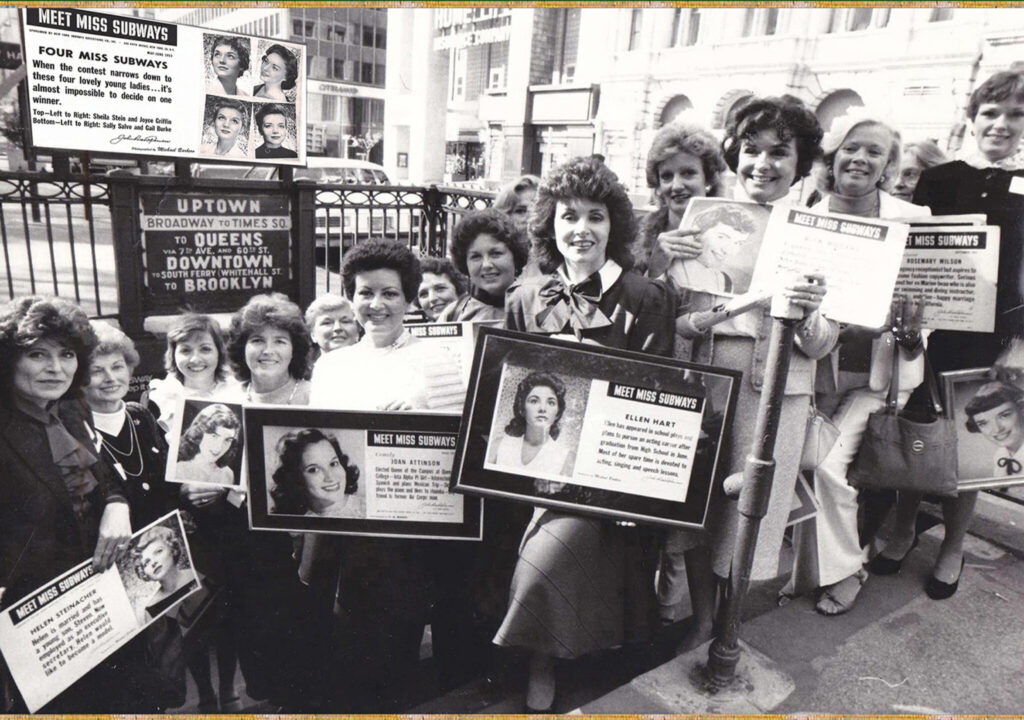
From 1941 and 1976, dozens of young women and high school girls were bestowed the honor of Miss Subways with her smiling photograph hanging within the cars of the New York subway system.
This was not a beauty pageant, but rather an advertising campaign which promoted the subway and drew the eyes of commuters to the train car’s many advertisements for cod liver oil, cigarettes and frozen foods.
FEATURING A visit to the New York Transit Museum, the City Reliquary, Coney Island USA’s Seashore Theater and Ellen’s Stardust Diner. And an introduction to the current reigning Miss Subways!
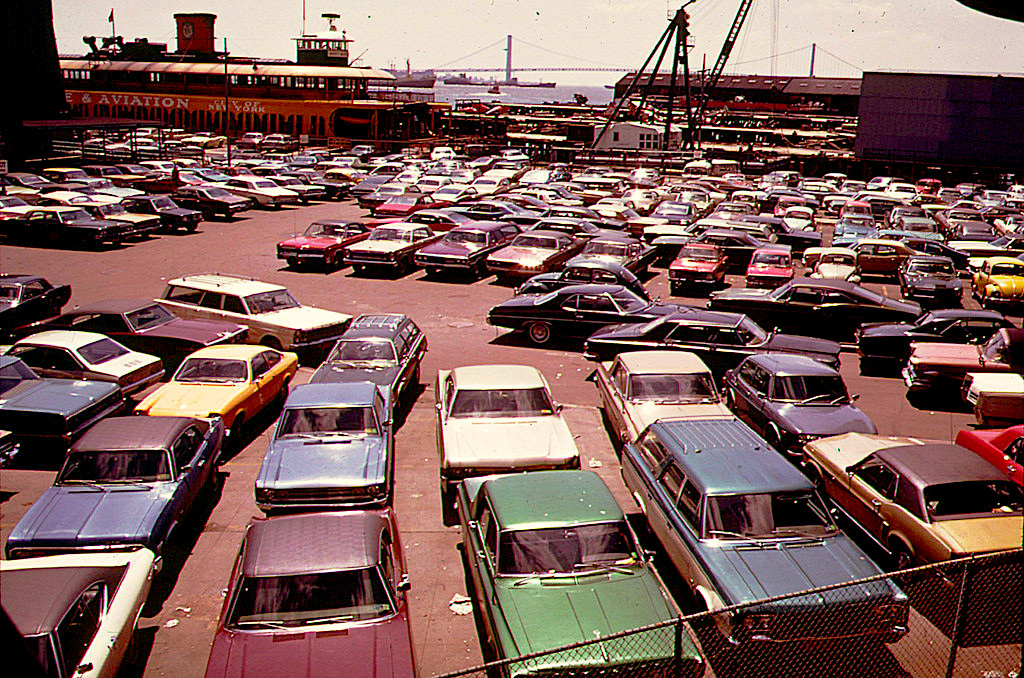
Take a look at a vintage photograph of New York from the 1930s and you’ll see automats, newsies, elevated trains and men in fedoras. What you won’t see — dozens and dozens of automobiles on the curb.
In a city with skyrocketing real estate values, why are most city streets still devoted to free car storage? It’s a situation we’re all so used to that we don’t think twice about it. Whatever happened to the curb?
Featuring Henry Grabar, author of Paved Paradise: How Parking Explains The World, who exposes some shocking parking violations and even offers a few couple solutions for the future.
Instead of looking back to the history of New York City in this episode, we are looking forward to the future — to the new generation of creators who are celebrating New York and telling its story through mediums that are not podcasts or books.
Featuring Nicolas Heller (New York Nico), the “unofficial talent scout of New York City”; Riley Arthur, (Diners of NYC), who explores the world of New York City diners, great and small; and Tommy Silk, (Landmarks of NY), who shares illuminating photos and videos featuring the city’s most interesting and overlooked architectural gems.
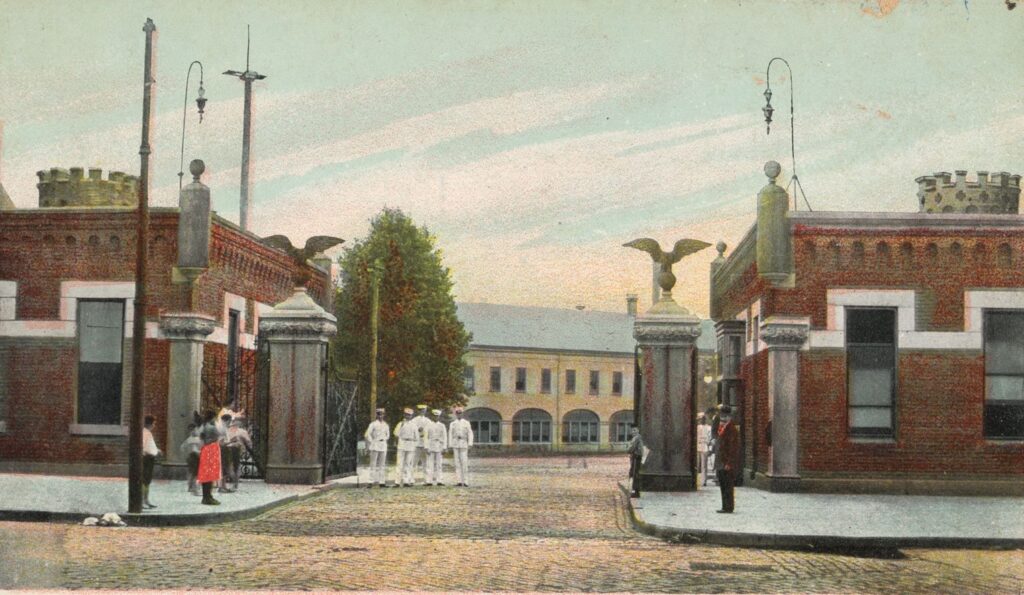
The tale of the Brooklyn Navy Yard is one of New York’s true epic adventures, mirroring the course of American history via the ships manufactured here and the people employed to make them.
Featuring Andrew Gustafson from Turnstile Tours who unfurls the surprising history of the Navy Yard — through war and peace, through new technologies and aging infrastructure, through the lives of the men and women who built the yard’s reputation.
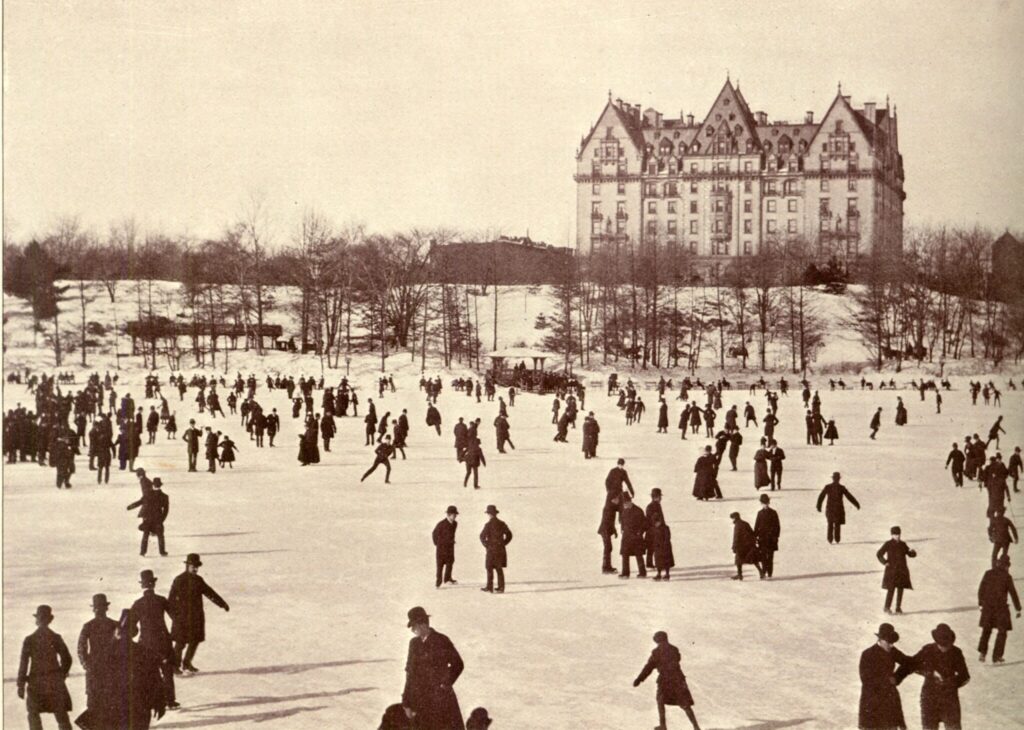
Stroll the romantic, rambling paths of historic Central Park in this week’s episode, turning back the clock to the 1860s and 70s, a time of children ice skating on The Lake, carriage rides through The Mall, and bewildering excursions through The Ramble.
Featuring Sara Cedar Miller, historian emerita of the Central Park Conservancy and author of Before Central Park; and Dr. Emma Guest-Consales, former president of the Guides Association of New York City and tour ambassador at One World Observatory.
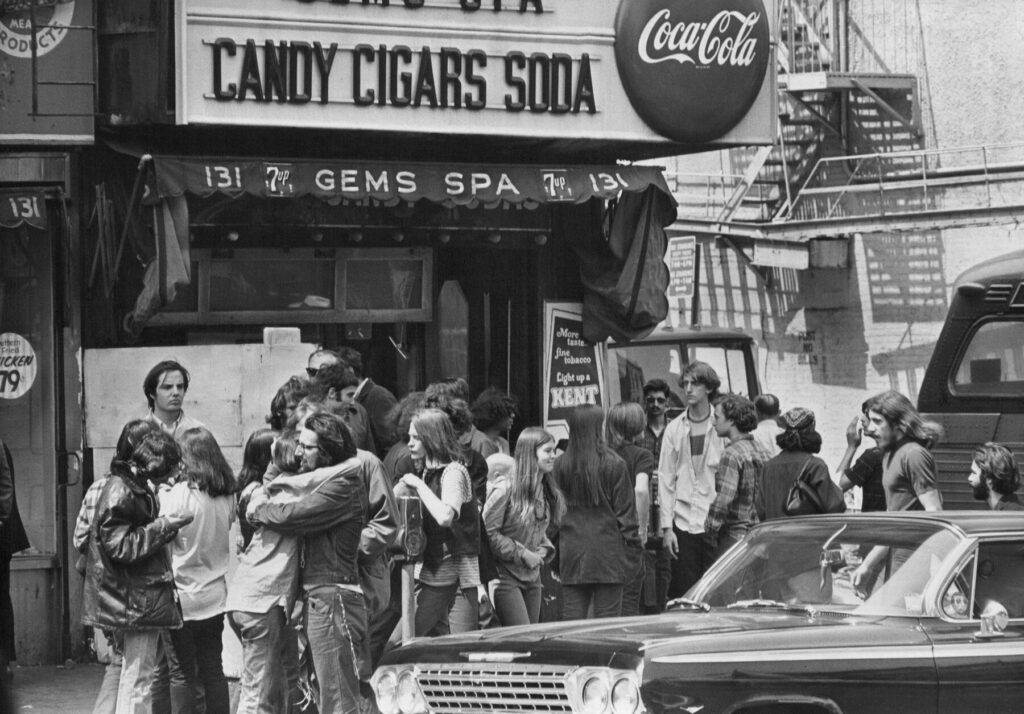
Before 1955 nobody used the phrase “East Village” to describe the historic northern portion of the Lower East Side, the New York tenement district with a rich German and Eastern European heritage.
But when the Third Avenue El was torn down that year, those who were attracted to the culture of Greenwich Village — with its coffeehouses, poets and jazz music — began flocking to the east side, attracted to low rents.
Featuring Jason Birchard from Veselka Restaurant, who shares his family’s story, and theater historian David Loewy who discusses the influence of Joe Papp and The Public Theater
By the mid 1970s, the East Village was in crisis, one of the Manhattan neighborhoods hit hardest by the city’s fiscal difficulties and cutbacks.
But the next generation of creative interlopers (following the initial stampede of Greenwich Village beatniks and hippies) built upon the legacies of East Village counter-culture to create poems, music, paintings and stage performances heavily influenced by the apocalyptic situations around them.
Greg hits the streets of the East Village with musician and tour guide Krikor Daglian (of True Tales of NYC), exploring the secrets of the recent past — from the origins of skateboarding to the seeds of the American alternative rock scene.
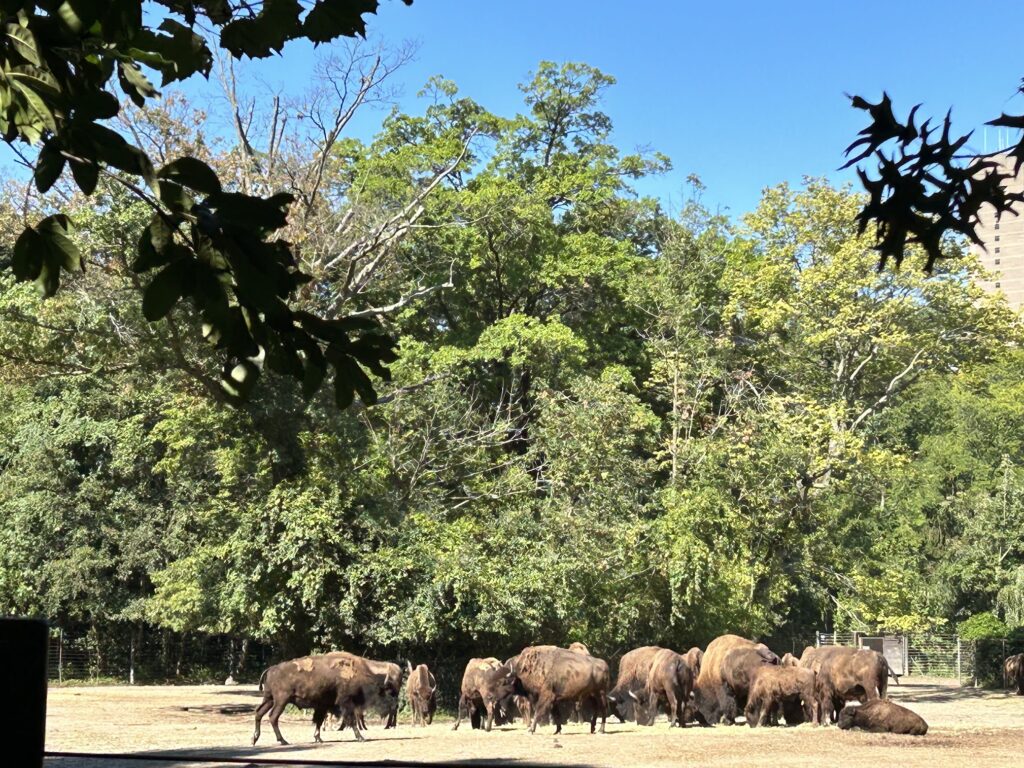
Theodore Roosevelt was a New Yorker and a rugged outdoorsman, a politician and a naturalist, a conservationist and a hunter. His connection with the natural world begin at birth in his Manhattan brownstone home and end with his death in Sagamore Hill.
But as this episode’s special guest Ken Burnsreveals in his newest mini-series The American Buffalo, Roosevelt’s relationship with the animal world was complicated and in certain ways, hard to understand today.
A brand new batch of haunted houses and spooky stories, all from the gaslight era of New York City, the illuminating glow of the 19th century revealing the spirits of another world.
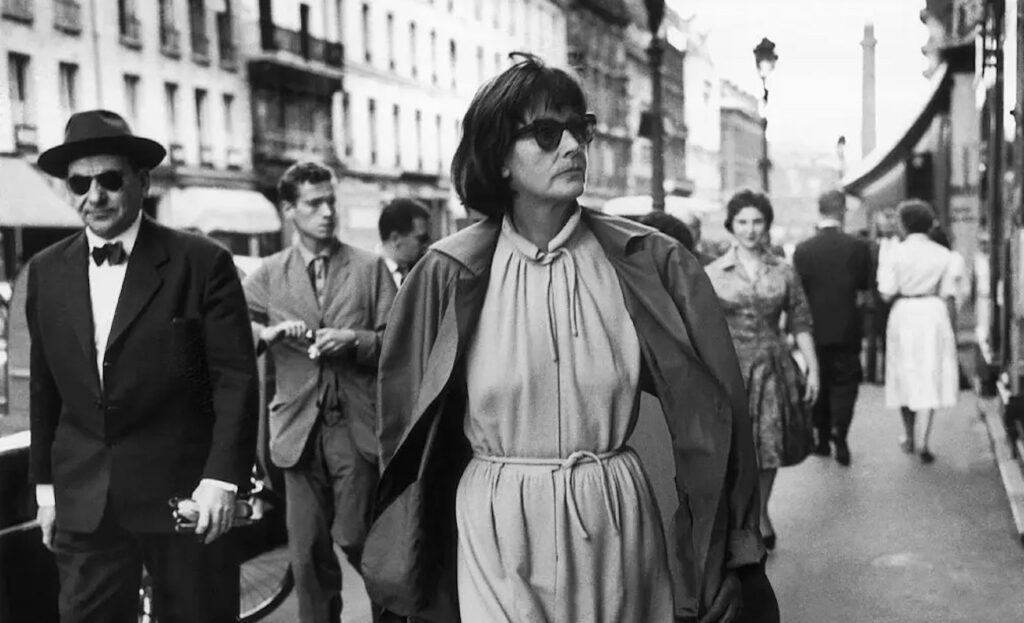
Greta Garbo on the streets of New York City, 1958. Getty Images/Keystone-France
Garbo in New York! A story of independence, glamour and melancholy, set at the intersection of classic Hollywood and mid-century New York City.
This is the biography of a legendary star who became the city’s most famous ‘celebrity sighting’ for many decades while out on her regular, meandering walks.
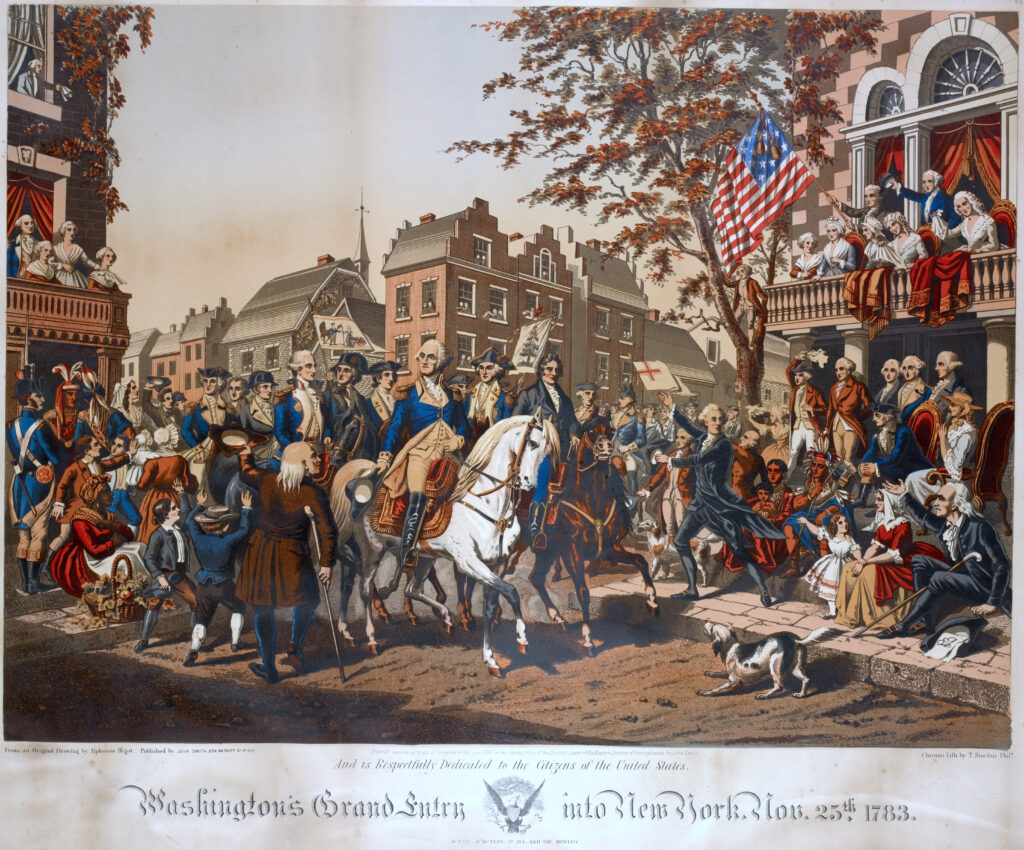
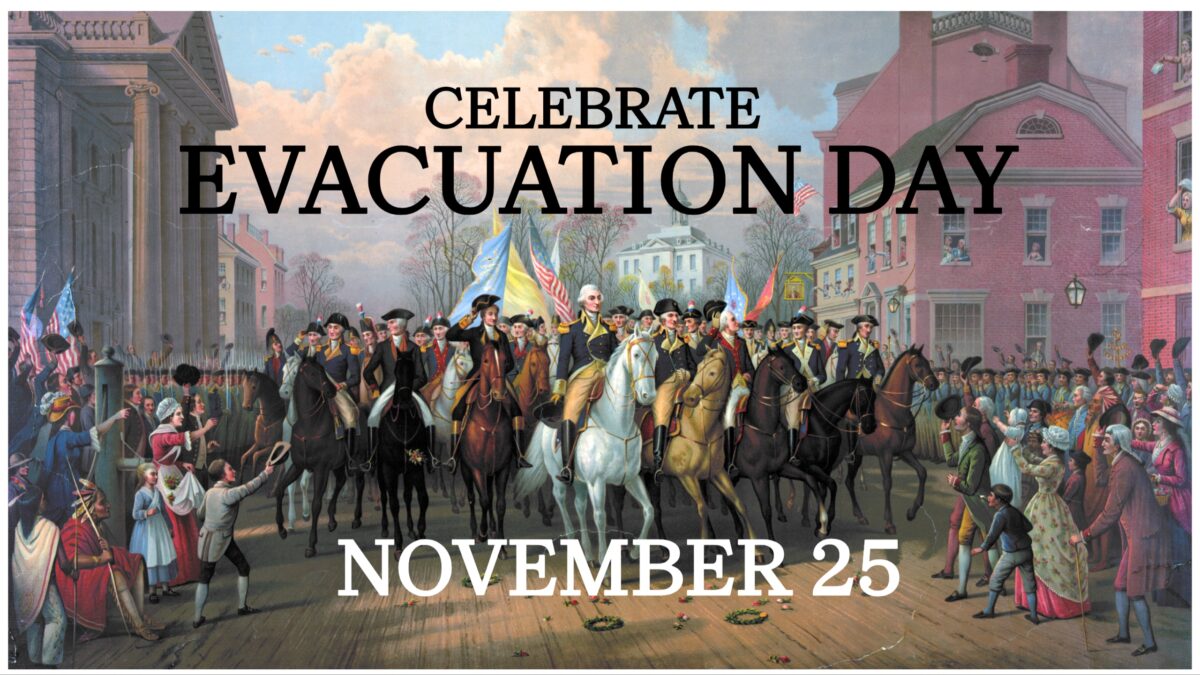
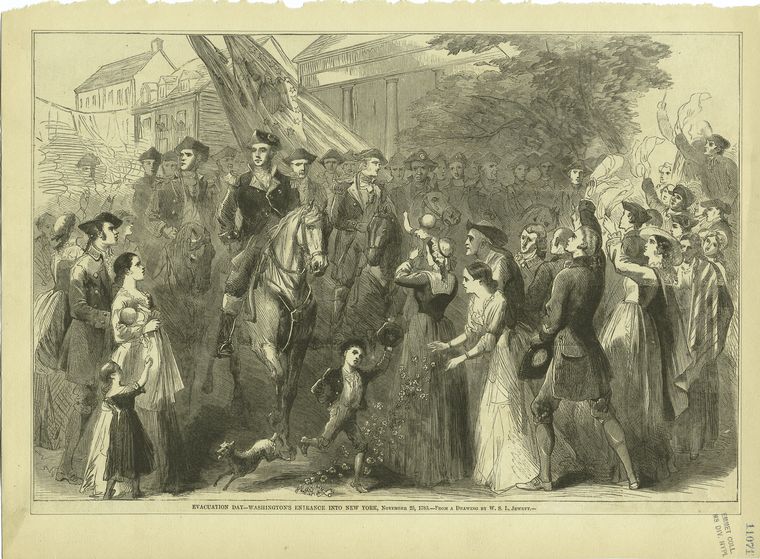
Washington’s Grand Entry into New York, November 25, 1783 by Alphonse Bigot
For decades New Yorkers celebrated Evacuation Dayevery November 25, a holiday marking the 1783 departure of British forces from a city they had occupied for several years.
The events of that departure — that evacuation — inspired annual celebrations of patriotism, unity and a bit of rowdiness. Evacuation Day was celebrated well until the late 19th century. But then, gradually, the party sort of petered out…..
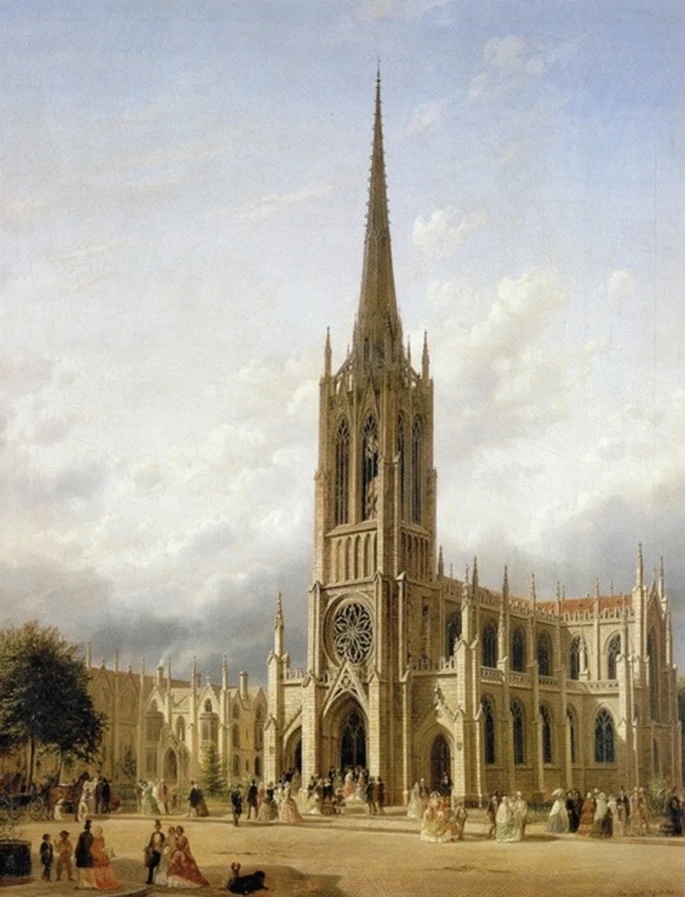
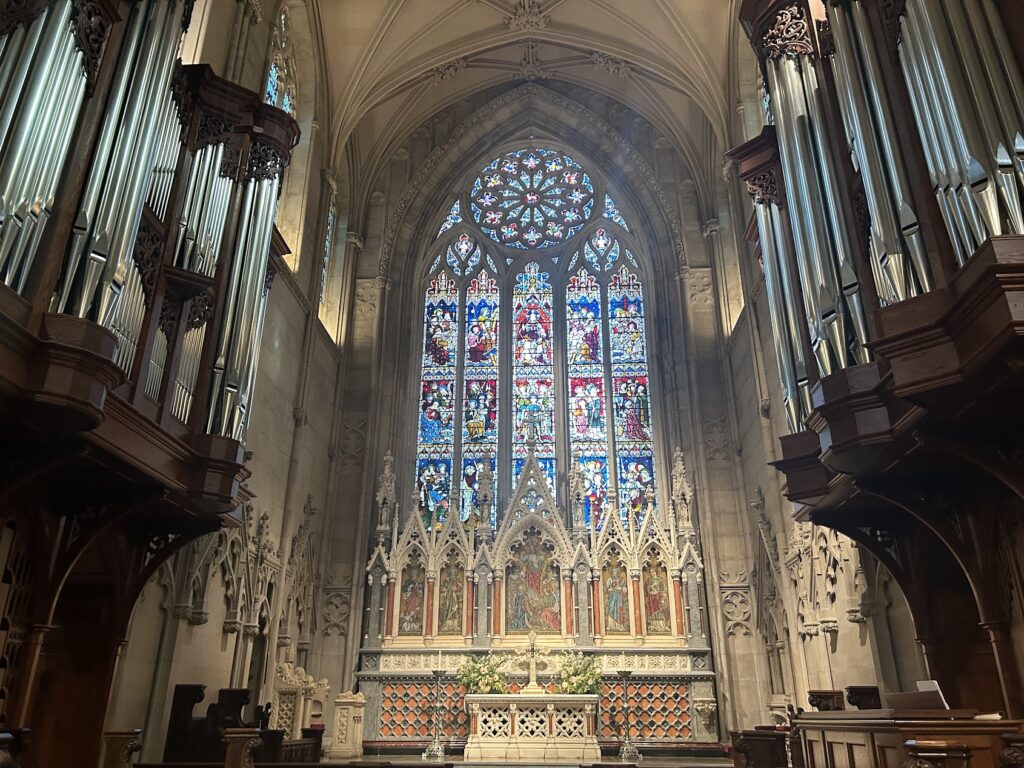
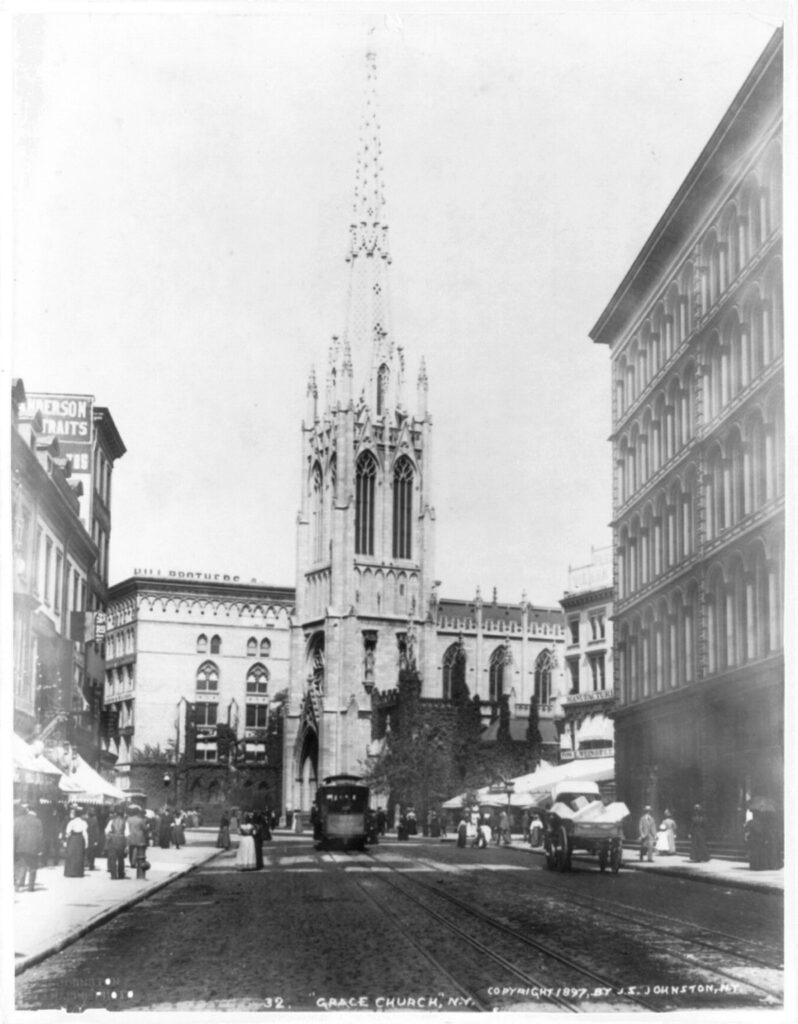
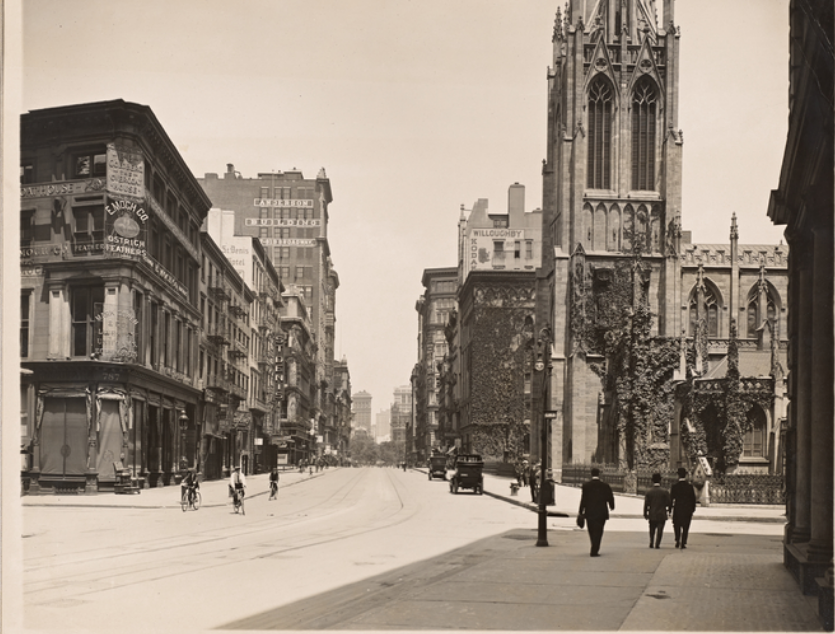
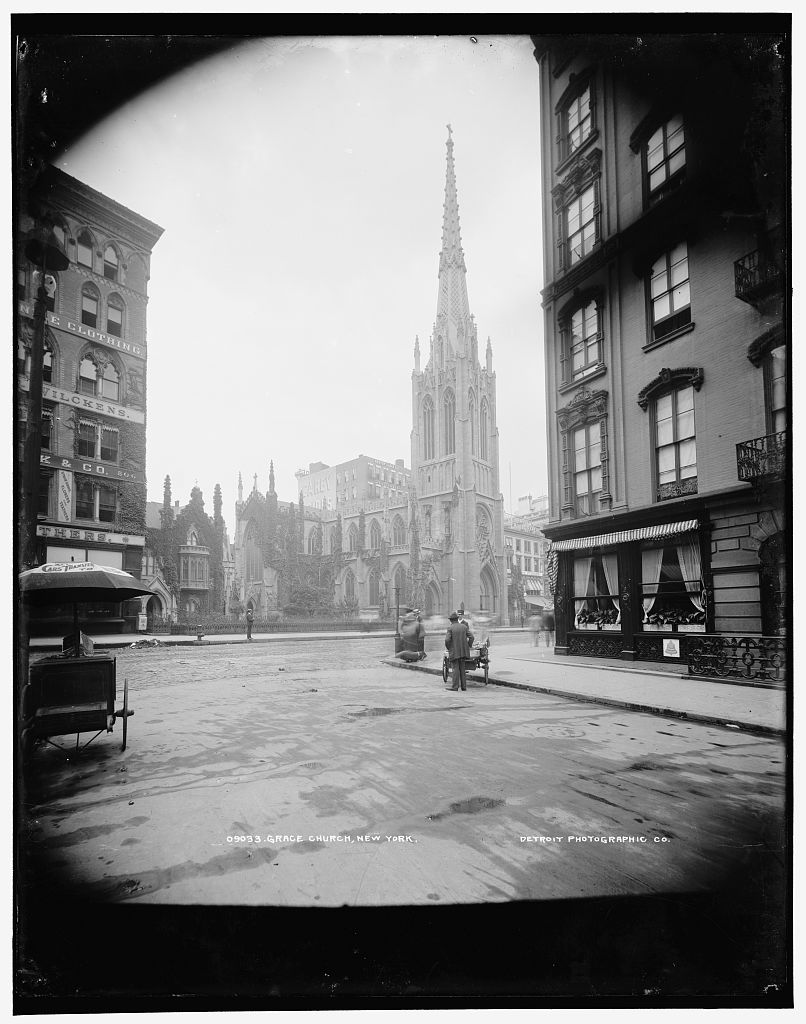
Manhattan’s Grace Church sits at a unique bend on Broadway and East Tenth Street, making it seem that the historic house of worship is rising out of the street itself.
But Grace is also at another important intersection — where religion and high society greeted one another during the Gilded Age.
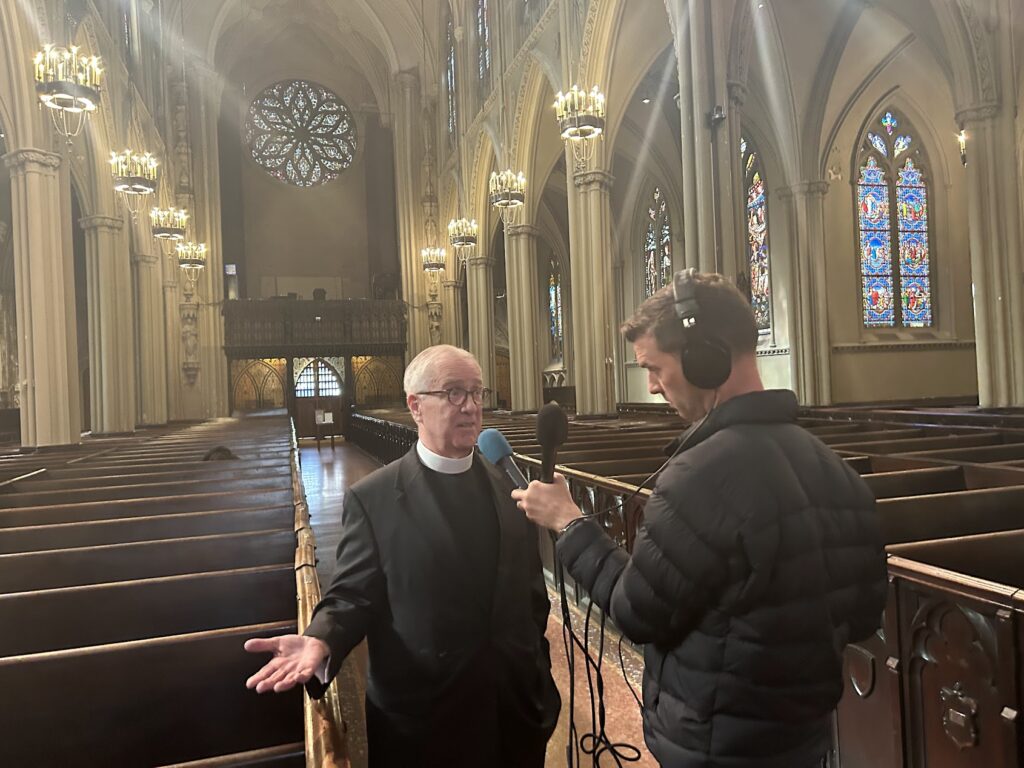
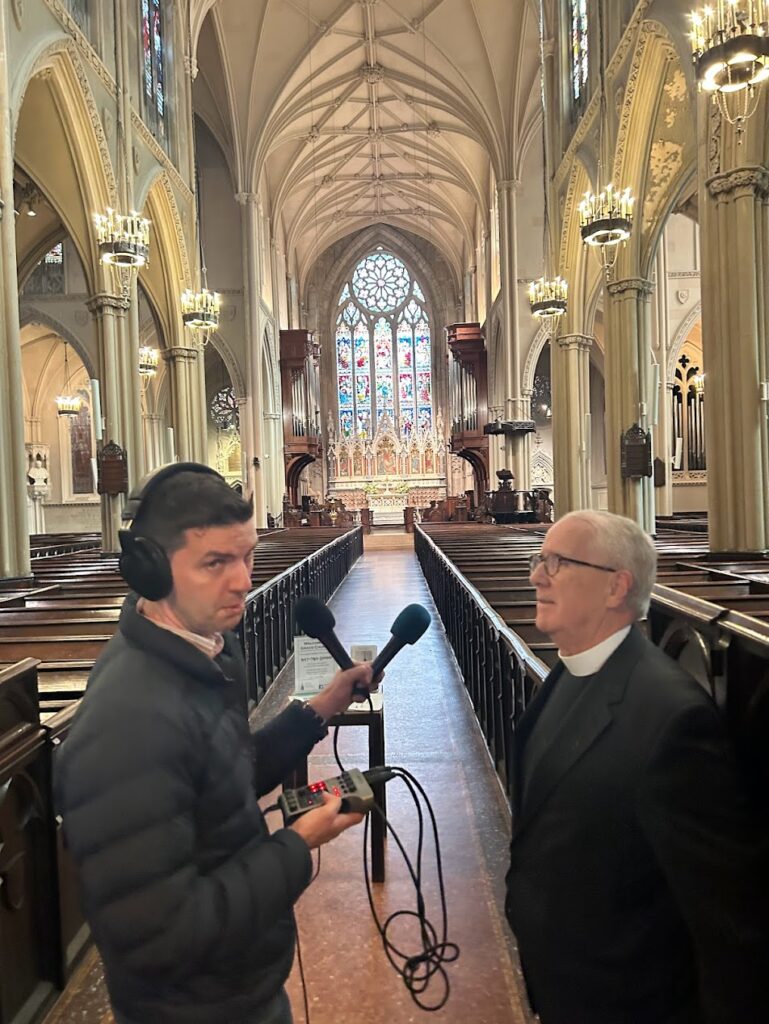
Featuring vicar Harry Krauss who gives the Bowery Boys a tour of this gorgeous, landmark parish.
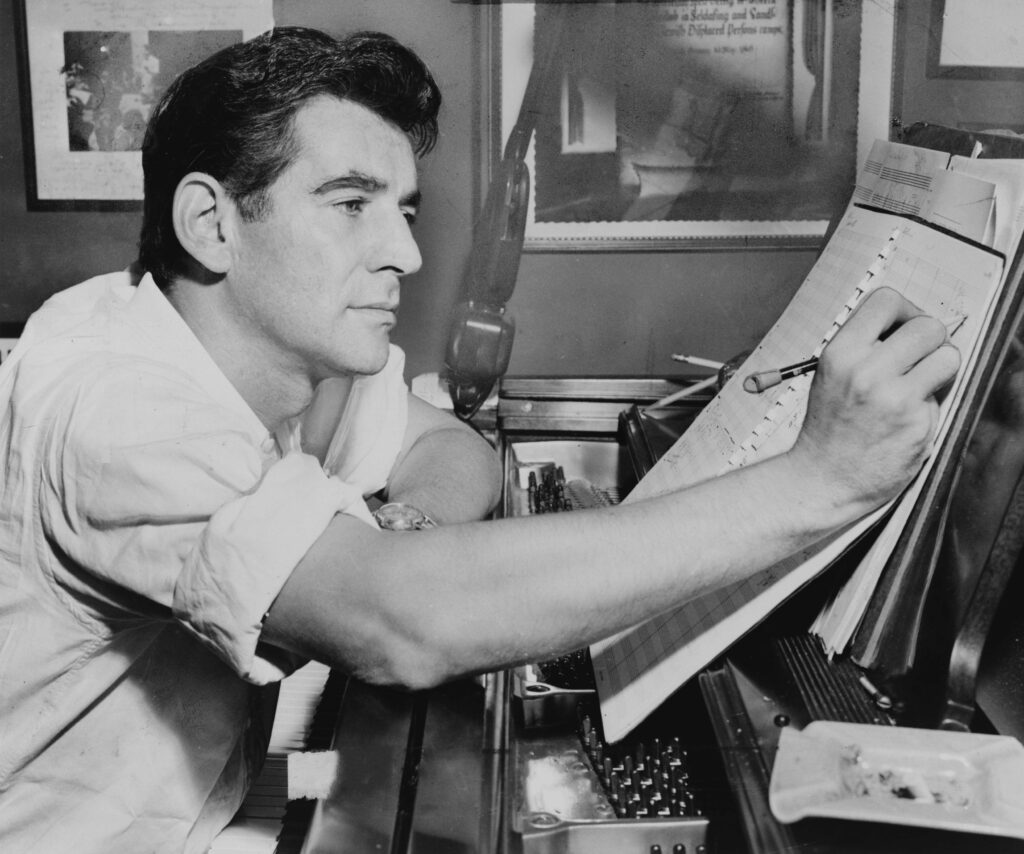
Leonard Bernstein, 1955: Al Ravenna, World Telegram staff photographer – Library of Congress.
On the morning of November 14th, 1943, Leonard Bernstein, the talented 25-year-old assistant conductor of the New York Philharmonic, got a phone call saying he would at last be leading the respected orchestral group — in six hours, thatafternoon, with no time to rehearse.
The sudden thrust into the spotlight transformed Bernstein into a national celebrity. For almost five decades, the wunderkind would be at the forefront of American music, as a conductor, composer, virtuoso performer, writer, television personality and teacher.
He would also help create the most important Broadway musicals of the mid-20th century — On The Town, Wonderful Townand West Side Story. These shows would not only spotlight the talents of its young creator. They would also spotlight the romance and rhythm of New York City.
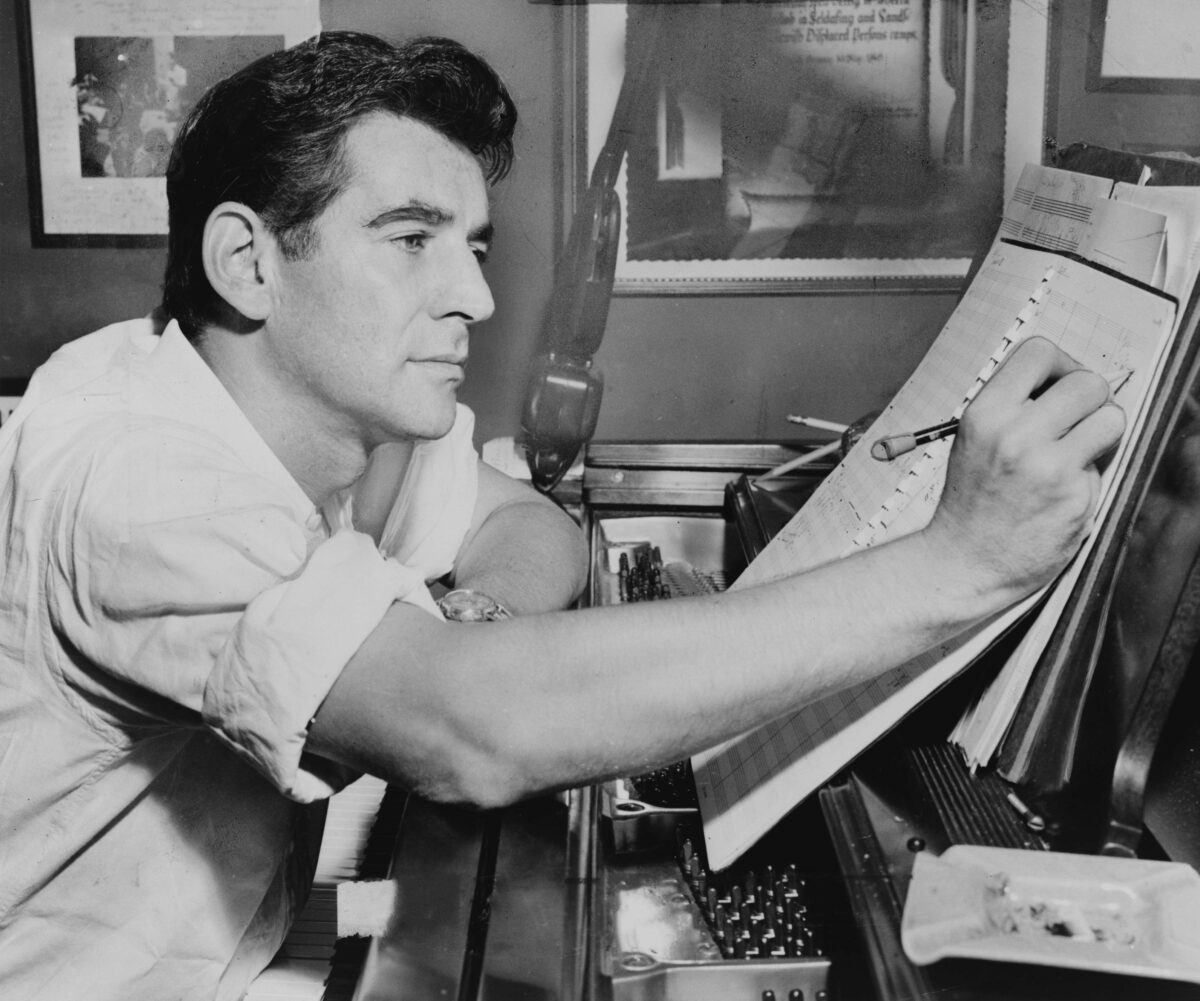
Leonard Bernstein, 1955: Al Ravenna, World Telegram staff photographer - Library of Congress.
On the morning of November 14th, 1943, Leonard Bernstein, the talented 25-year-old assistant conductor of the New York Philharmonic, got a phone call saying he would at last be leading the respected orchestral group — in six hours, that afternoon, with no time to rehearse.
He later recalled, “I don’t remember a thing from that moment – I don’t even remember intermission – until the sound of people standing and cheering and clapping.”
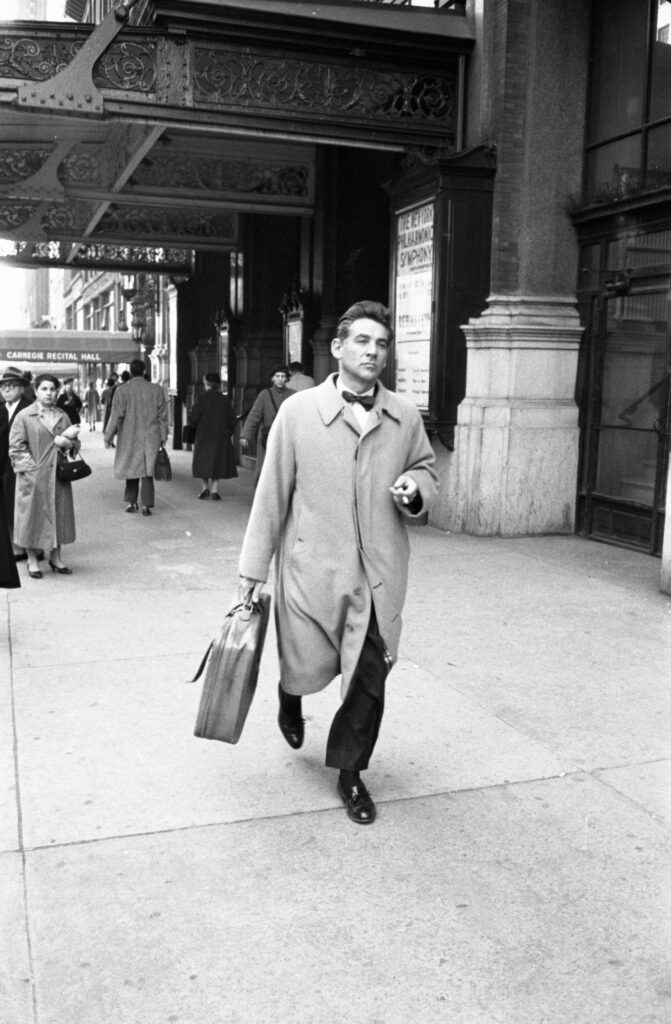
Composer and conductor Leonard Bernstein walking past Carnegie Hall, December 20-21, 1956. Alfred Eisenstaedt/Life Picture Collection/Shutterstock
The sudden thrust into the spotlight transformed Bernstein into a national celebrity. For almost five decades, the wunderkind would be at the forefront of American music, as a conductor, composer, virtuoso performer, writer, television personality and teacher.
He would also help create the most important Broadway musicals of the mid-20th century — On The Town, Wonderful Town and West Side Story. These shows would not only spotlight the talents of its young creator. They would also spotlight the romance and rhythm of New York City.
Bernstein is one of New York’s most influential cultural figures. He spent most of his life in the city, and that’s the focus of today’s story – Leonard Bernstein’s New York.
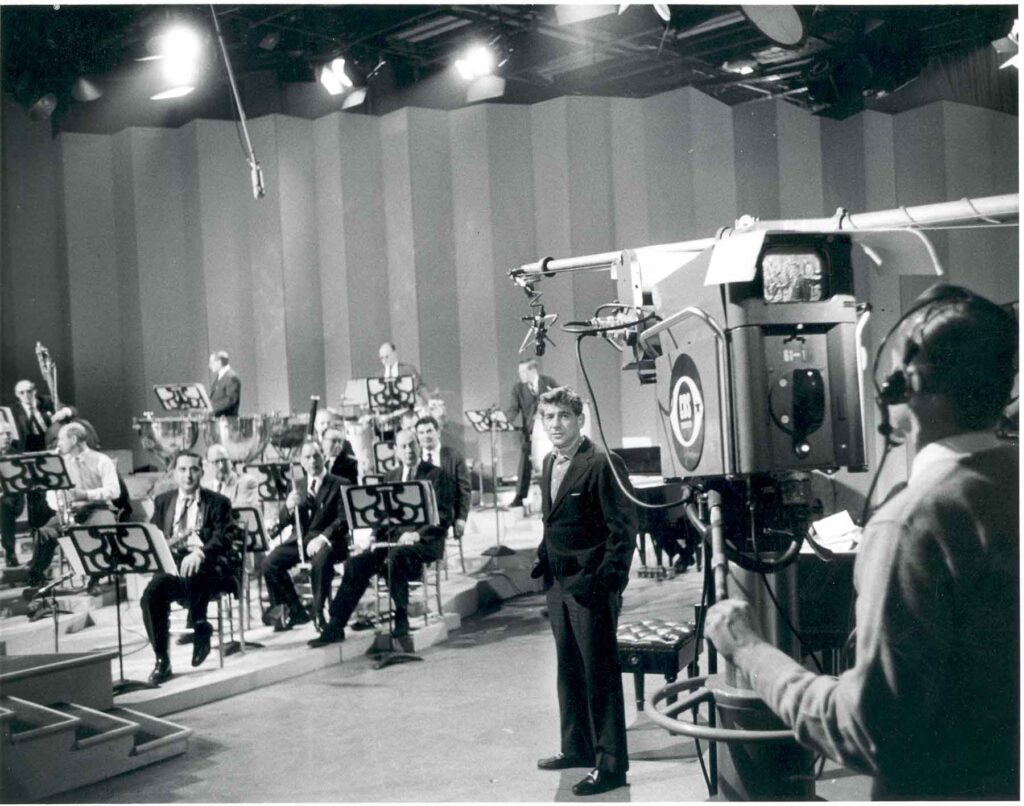
Bernstein with the New York Philharmonic on CBS, 1958 (NY Phil Archives)
The new film Maestro, starring Bradley Cooper and Carey Mulligan, focuses on Bernstein’s personal story and intimate life. That specific angle is not our objective today – for the most part.
We’re looking at the relationship between the creator and his urban inspiration. Where did Bernstein make his name in New York City and how did his work change the city?
FEATURING The Village Vanguard, City Center, Carnegie Hall, the old Metropolitan Opera and the Dakota Apartments
And co-starring Jerome Robbins, Aaron Copland, Stephen Sondheim, Comden and Green, Lauren Bacall, Tom Wolfe and, of course Felicia Montealegre
LISTEN TODAY: LEONARD BERNSTEIN’S NEW YORK, NEW YORK
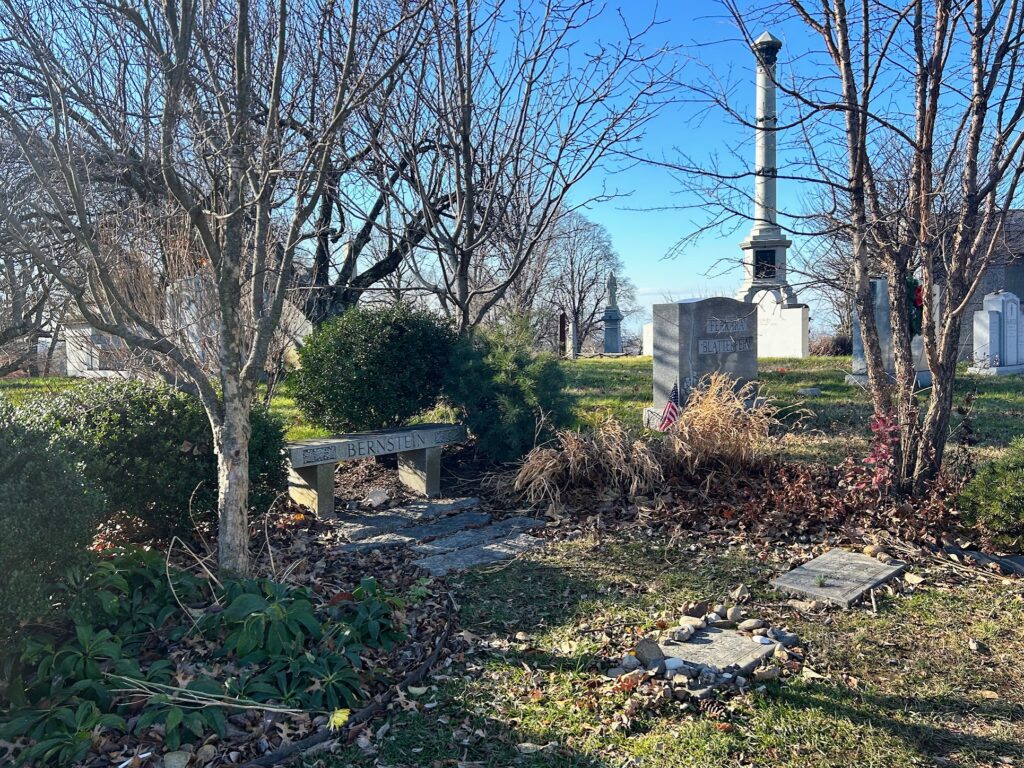
The grave site of Leonard and Felicia Bernstein at Green-Wood Cemetery in Brooklyn (photo by Greg Young)
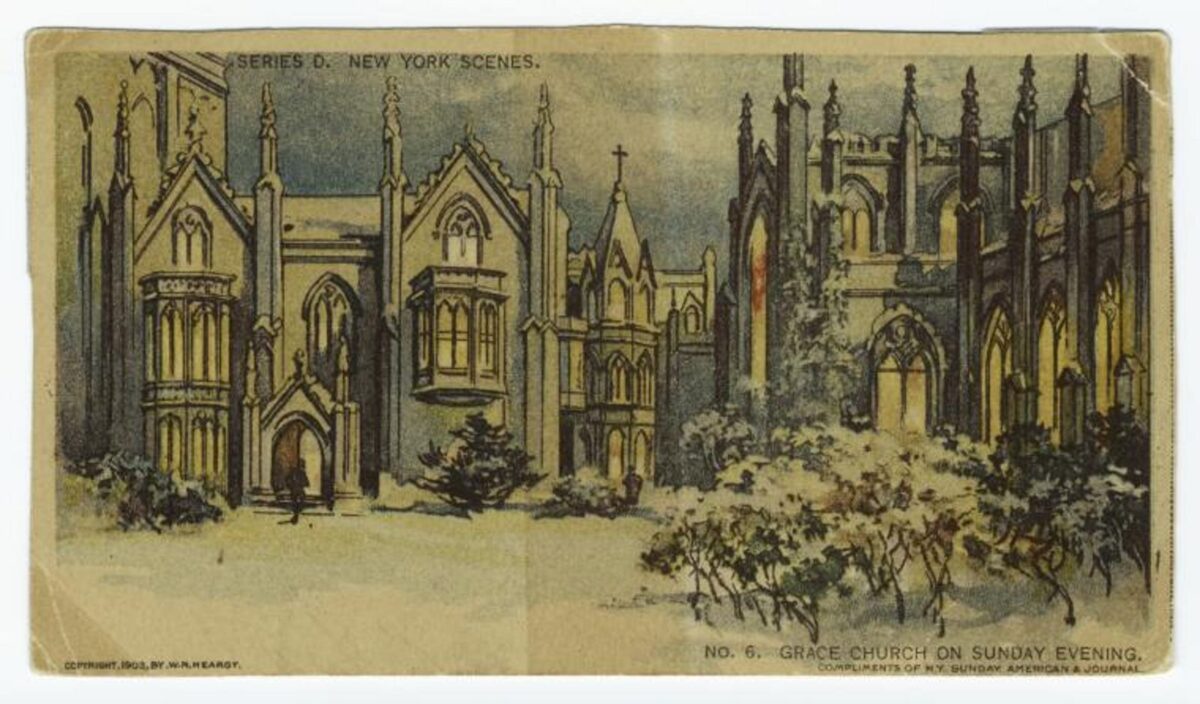
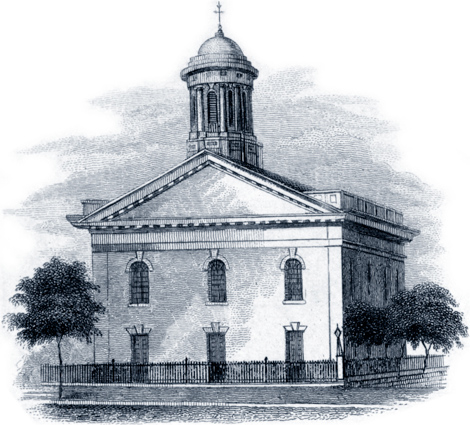
Grace Church 1903, by W.R. Hearst." "Compliments of N.Y. Sunday American & Journal." Courtesy NYPL
Manhattan’s Grace Church sits at a unique bend on Broadway and East Tenth Street, making it seem that the historic house of worship is rising out of the street itself.
But Grace is also at another important intersection — where religion and high society greeted one another during the Gilded Age.
Grace is one of the important Episcopal churches in America, forming in 1809 in lower Manhattan literally next door to Trinity Church. But when society began moving uptown, so too did Grace, making its home on a plot formerly occupied by Henry Brevoort’s apple orchard. (Meanwhile, Brooklyn-based parishioners formed their own Grace Church in Brooklyn Heights.)
Grace Church was one of the most fashionable churches in New York City for several decades in the 19th century. Some of the New Yorkers who were members here, at some point in their lives, went on to become some of the most famous names of the Gilded Age.
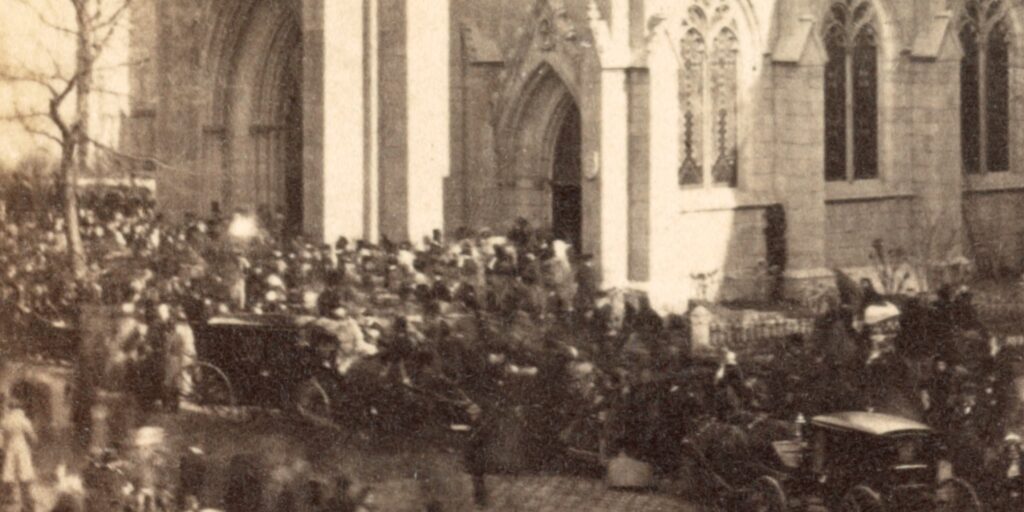
The fashionable weddings and funerals hosted at Grace Church sometimes drew thousands of onlookers, and a few celebrated ceremonies were as raucous and chaotic as rock concerts.
But looking past the fashion and frills, Grace Church did create a deep and lasting spiritual connection with the surrounding community which continues to this day.
In this episode, Tom and Greg are joined by vicar Harry Krauss who gives the Bowery Boys a tour of this gorgeous, landmark parish.
FEATURING: Rufus Wainwright, Tom Thumb, the Earl of Craven and a heavenly chorus of hundreds!
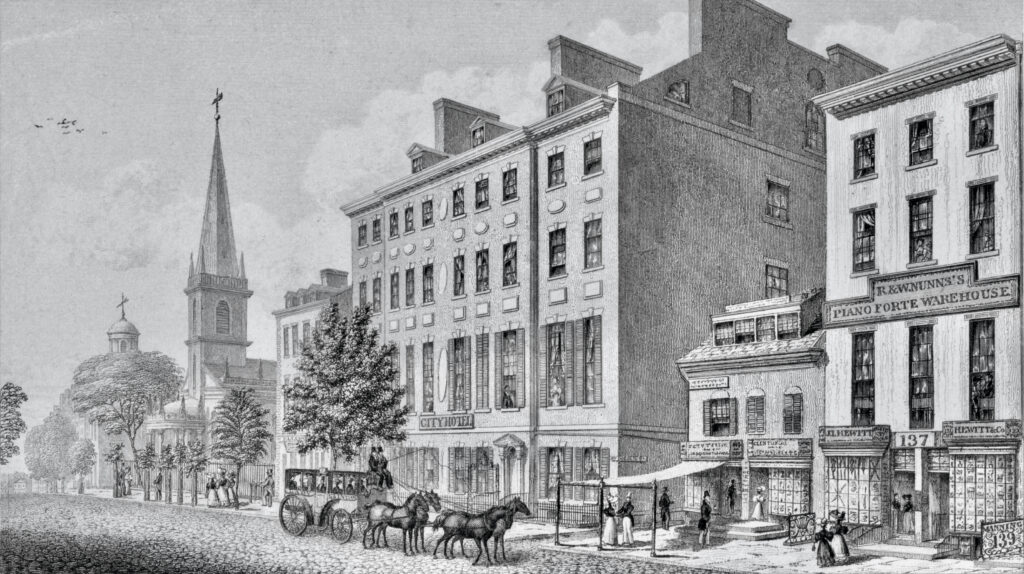
Broadway in 1831. The original location of Grace Church is to the far left, sitting right next to Trinity Church. The building in the center is City Hotel. And to the right — “R & W Nunn’s Piano Forte Warehouse”
1831, Drawn and engraved on steel by A. Dick Printed by J. & G. Neale
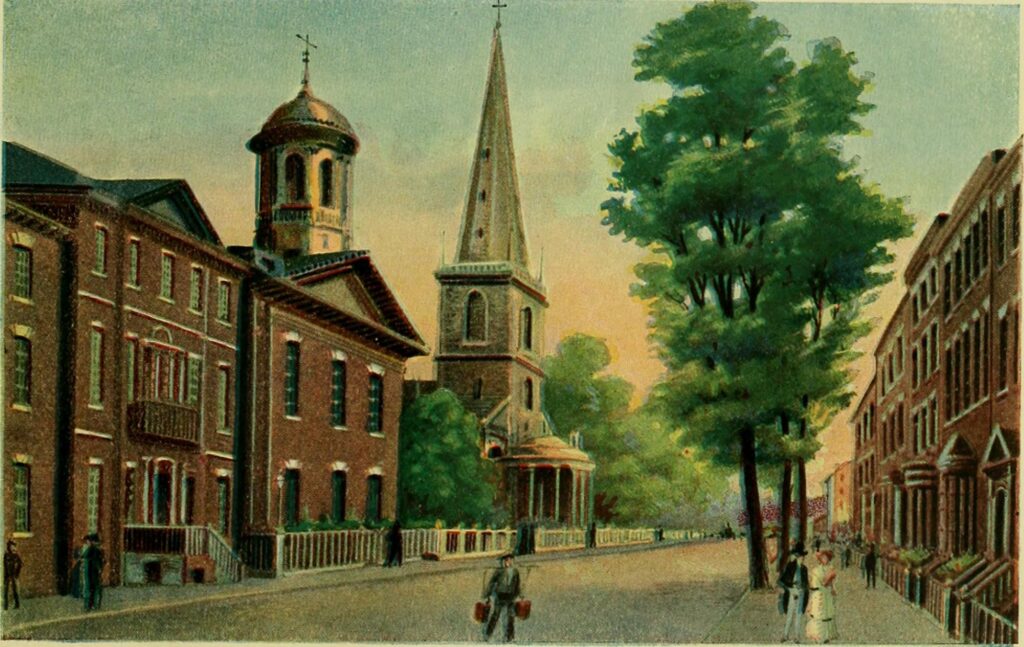
…and a similar view looking up Broadway, with Grace Church and Trinity Church next to each other in the center.
From the book Old New York Yesterday and Today, published in 1922
Photo copyrighted by J.E. Johnston, NY NYC Views 1897-8; Churches; Geogr. Shelf.
Another view of Grace Church (from sometime between 1901-06) from East 11th Street. In other words, were you to turn left at this corner, you would arrive at the future location of the Strand Book Store.
Library of Congress
FURTHER LISTENING
After taking in this story of Grace Church, head over to some of our past shows, some of which were referenced in this week’s show:
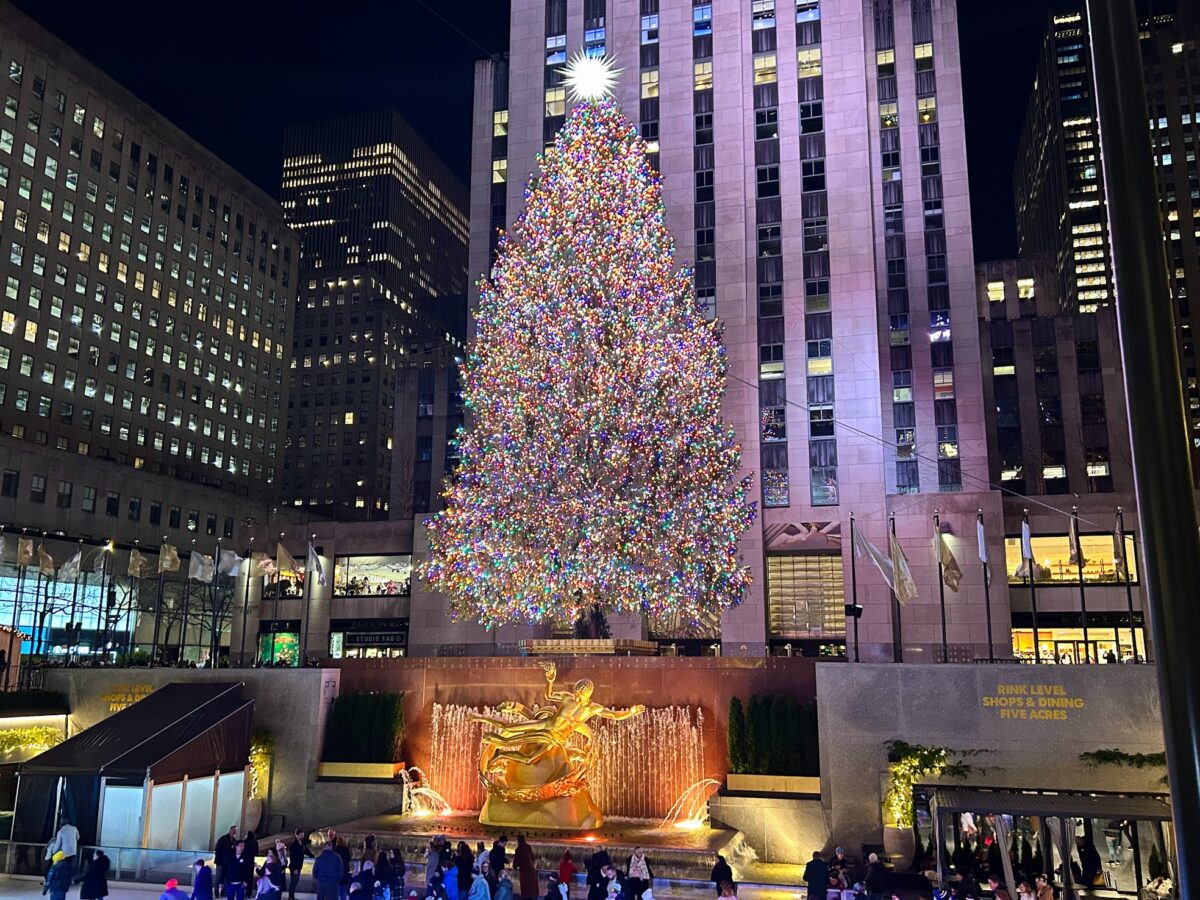
The 2023 Rockefeller Center Christmas Tree. Photo by Greg Young
This week we’re highlighting an especially festive episode of the Gilded Gentleman Podcast — the Bowery Boys spinoff podcast hosted by Carl Raymond — an episode with double the holiday fun, tracing the history of holiday celebrations over 19th-century New York City history.
Licensed New York City tour guide and speaker Jeff Dobbins joins host Carl for a look at the city’s holiday traditions dating back to the early Dutch days of New Amsterdam up to the modern innovations of the early 20th century.
You’ll learn….
— the connections between Sinterklaas and Santa Claus
— the history of display windows, department store Santa Clauses and Christmas tree sellers
— how Hannukah was adapted in America to help newly arriving Jewish immigrants keep hold of their traditions
— why Santa could truly be called “a native New Yorker”
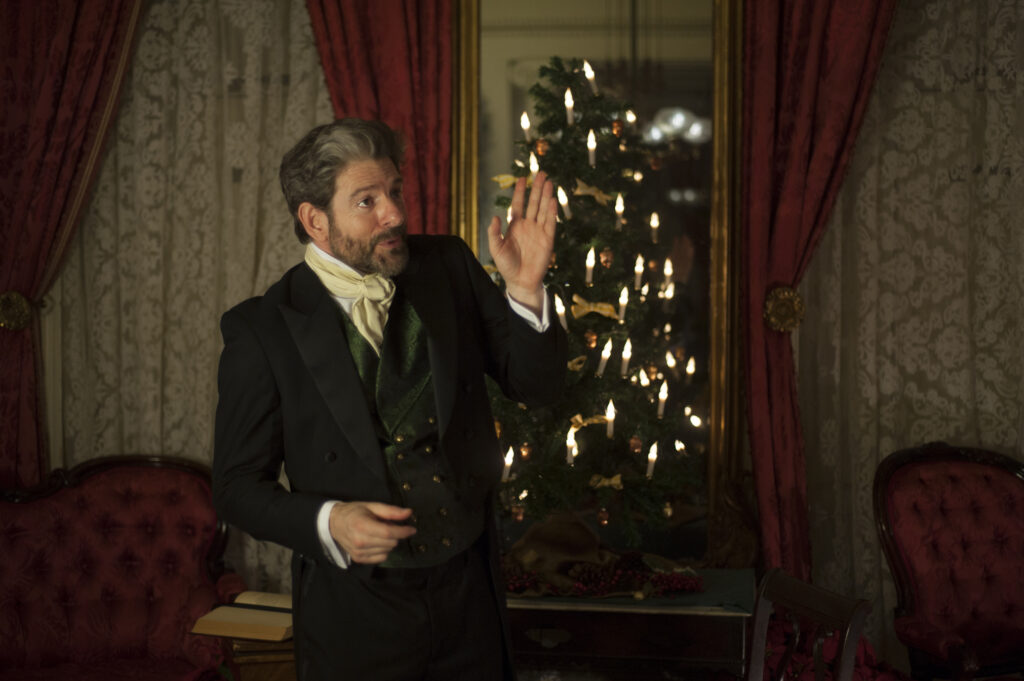
And then Carl welcomes actor John Kevin Jones who has been performing an annual one-man adaptation of Charles Dickens’A Christmas Carol at the Merchant’s House Museum, now in its 11th season.
Kevin discusses the origins of Dickens’ famous story and how he adapted it for the stage.
LISTEN TODAY: Christmas in Old New York
Jeff Dobbins with some satisfed tour goers from last year.
Visit the Bowery Boys Walks website to learn more about Jeff Dobbins’ Christmas in Old New Yorkk tours — including his virtual tour for those who do not live in New York (or would rather enjoy a tour from the comforts of home.
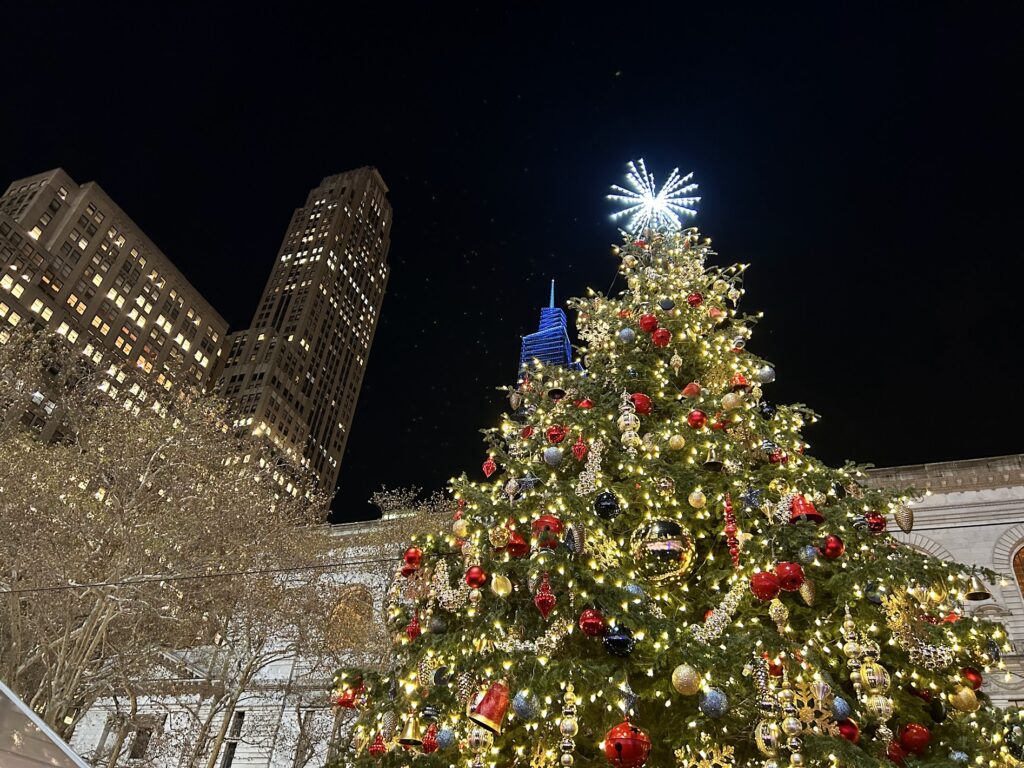
Bryant Park, behind the New York Public Library
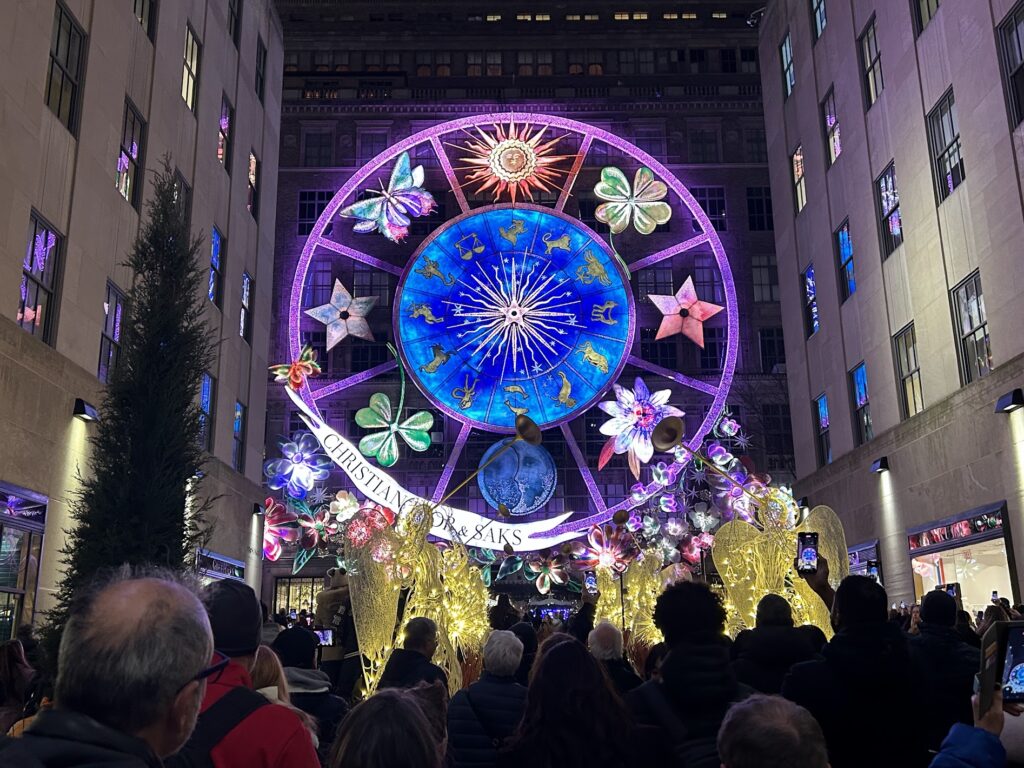
The wild Christian Dior display at SaksPark Avenue
FURTHER LISTENING
The Rockefeller Center Christmas tree has brought joy and sparkle to Midtown Manhattan since the early 1930s. The annual festivities may seem steady and timeless but this holiday icon actually has a surprisingly dramatic history.
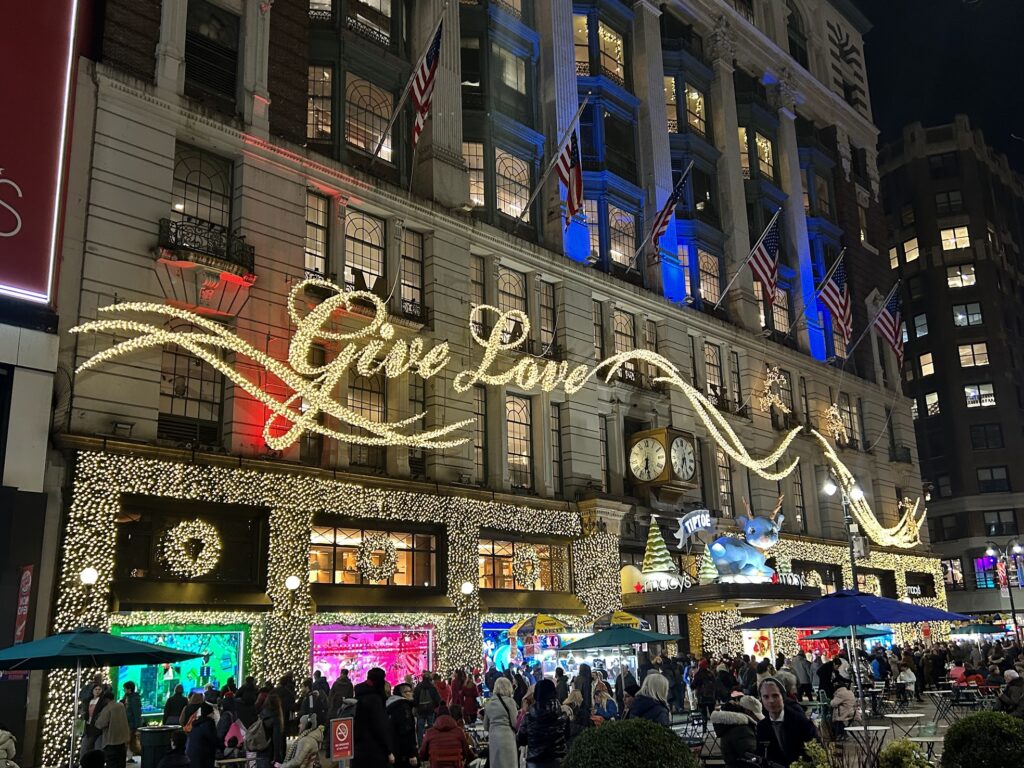
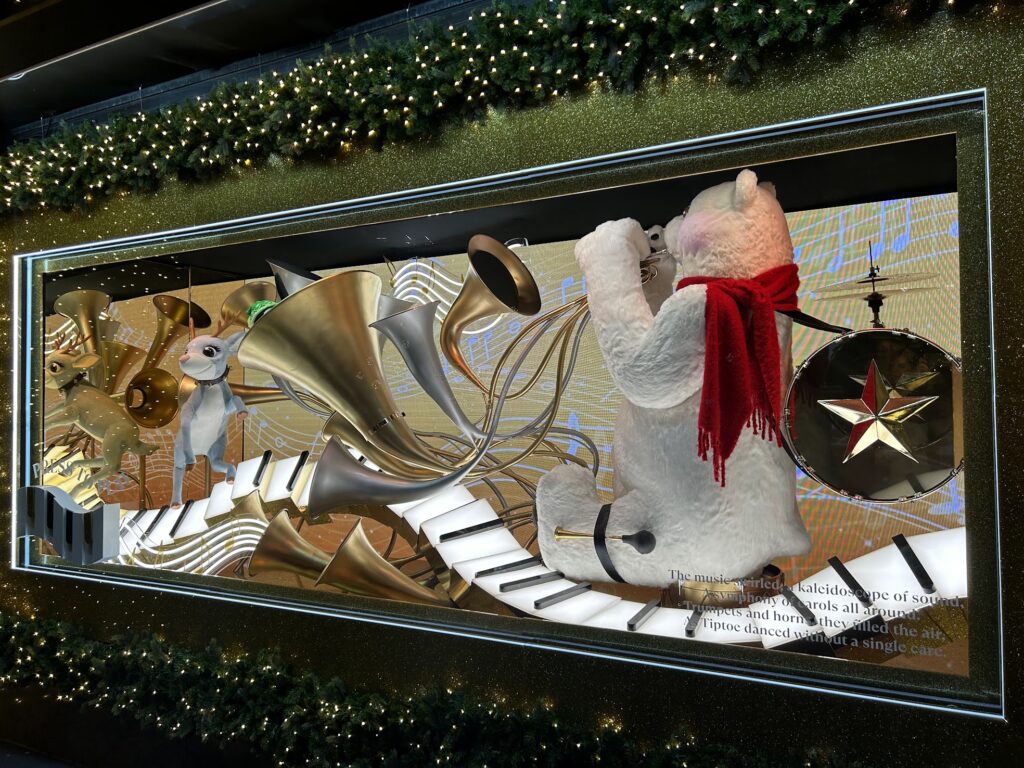
There’s a special kind of magic to Christmas in New York City — from Rockefeller Centerto the fanciful holiday displays in department store windows.
But in the past three decades, a new holiday tradition has grown in popularity and in a surprising quarter — the quiet residential neighborhood of Dyker Heights in Brooklyn which becomes Christmas Central for the borough.
The Rockettes are America’s best known dance troupe — and a staple of the holiday season — but you may not know the origin of this iconic New York City symbol. For one, they’re not even from the Big Apple!
Discover the place where Clement Clarke Moore wrote “A Visit to St. Nicholas/Twas the Night Before Christmas” and how his home gave rise to the neighborhood of Chelsea:
PLUS one for Hanukkah….
The Eldridge Street Synagogue is one of the most beautifully restored places in the United States, a testament to the value of preserving history when it seems all is lost to ruin.
… and New Year’s Eve! And the Chinese New Year.
The ultimate history of New Year’s celebrations in New York City — from Times Square to Chinatown.
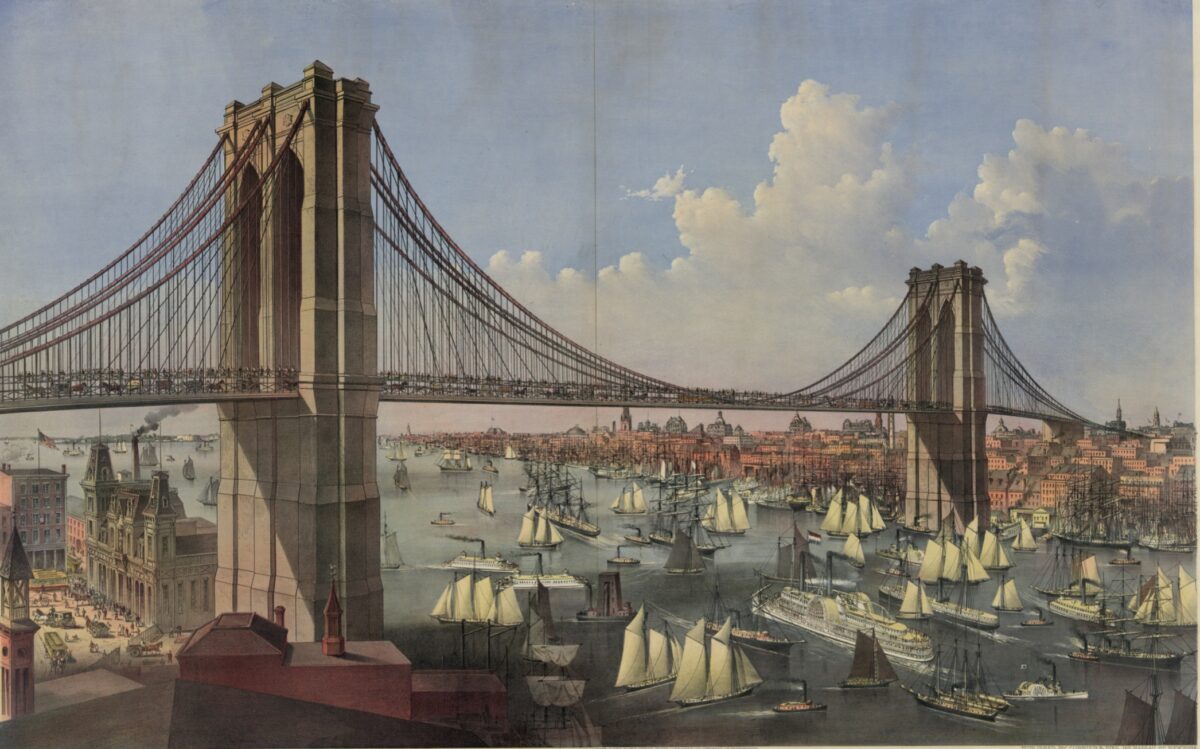
The great East River suspension bridge--Connecting the cities of New York and Brooklyn / Parsons & Atwater, 1874 -- years before the bridge was completed!
The Brooklyn Bridge, which was officially opened to New Yorkers 140 years ago this year, is not only a symbol of the American Gilded Age, it’s a monument to the genius, perseverance and oversight of one family.
This episode is arranged as a series of three mini biographies of three family members — John Roebling, his son Washington Roebling and Washington’s wife Emily Warren Roebling Through their stories, we’ll watch as the Brooklyn Bridge is designed, built and opened in 1883.
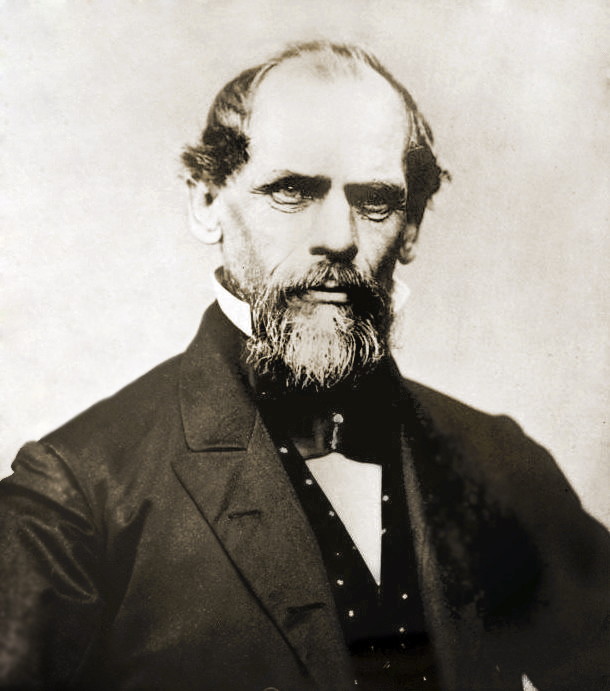
— John Roebling was one of America’s most successful engineers by the 1850s, a German immigrant and visionary who designed impressive suspension bridges and created an entire industry (wire rope) quite literally in his back yard.
His greatest achievement would be the East River Bridge, connecting the two great cities of New York and Brooklyn. But John would never see the bridge built — or even begun. A freak accident would put his son Washington in charge.
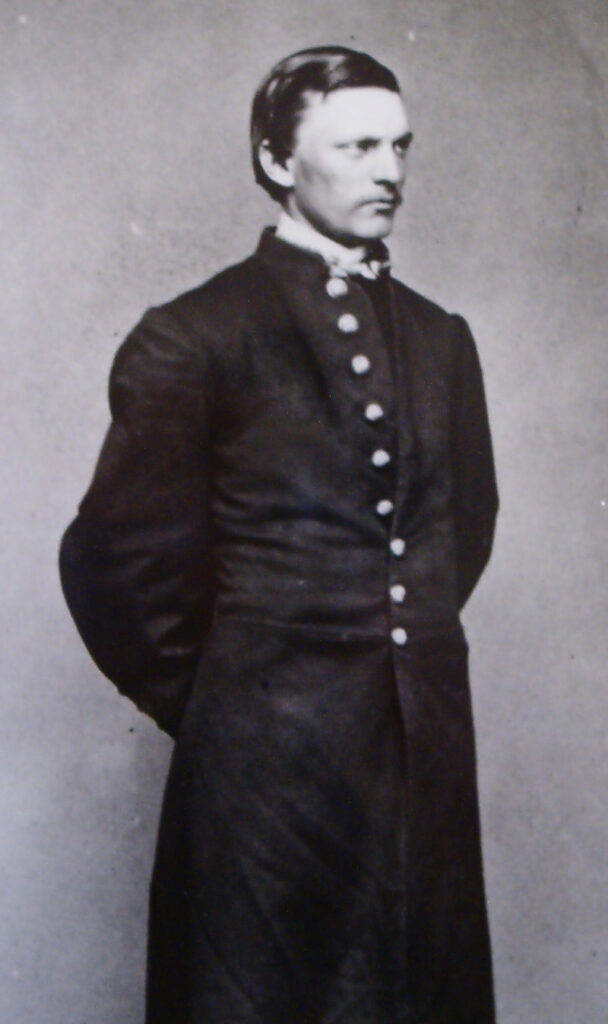
— Washington Roebling was trained to follow in his father’s footsteps although their relationship was far from perfect. Roebling further excelled as an engineer for the Union Army during the Civil War.
Suddenly in charge of the East River Bridge project in 1869, Washington threw himself into the world, working aside his men within the sunken caissons that would secure the bridge to the river floor. But decompression illness would threaten his life and eventually prevent him from active work.
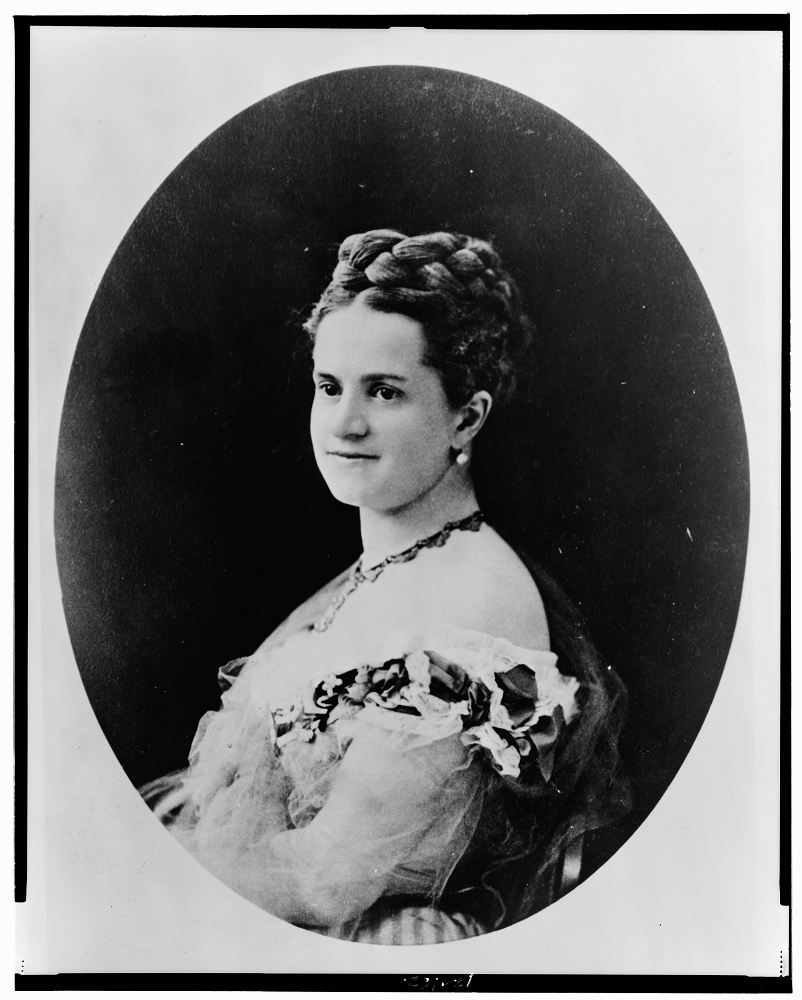
— Emily Warren Roebling would step up on her husband’s behalf, becoming the bridge’s unofficial field engineer, maneuvering through a world of men with extraordinary intellect and grace, communicating her husband’s wishes and presumably making her OWN decisions on the spot.
PLUS: One more Roebling! Greg and Tom are joined in the studio by Kriss Roebling, the great, great-grandson of Washington and Emily Roebling. He shares his own surprising family stories — and brings in some extraordinary artifacts from his family’s past!
WITH: Stories of Slinky’s, 1980s Dumbo and Ben Stiller?
LISTEN HERE — THE ROEBLINGS: THE FAMILY WHO BUILT THE BROOKLYN BRIDGE
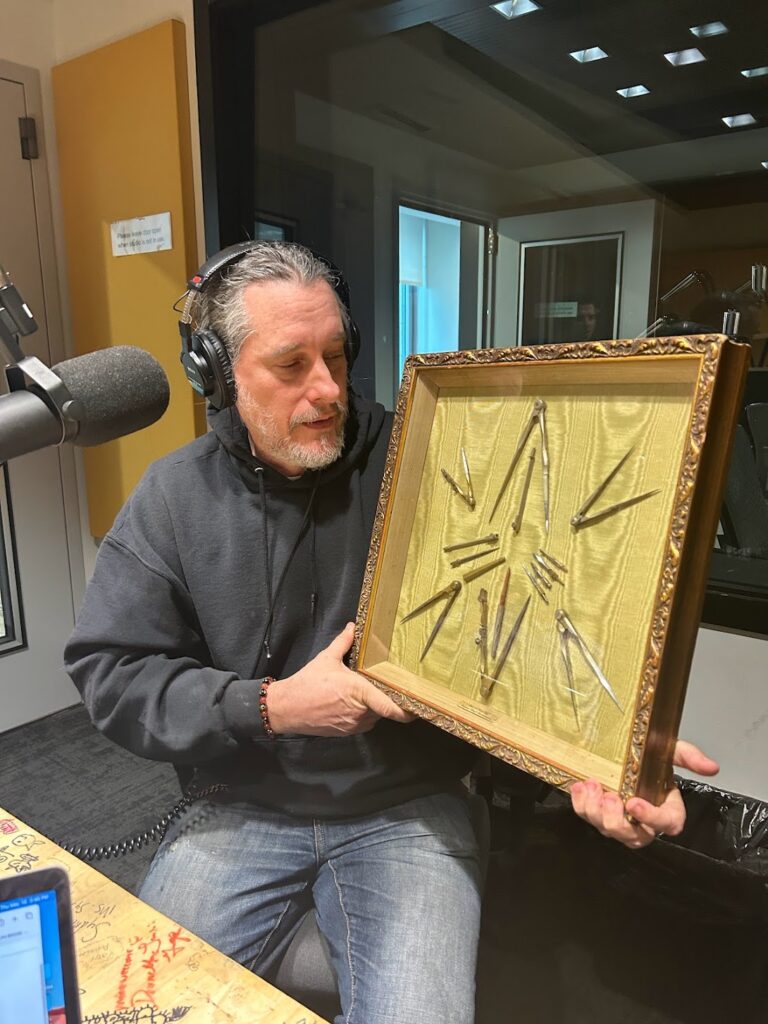
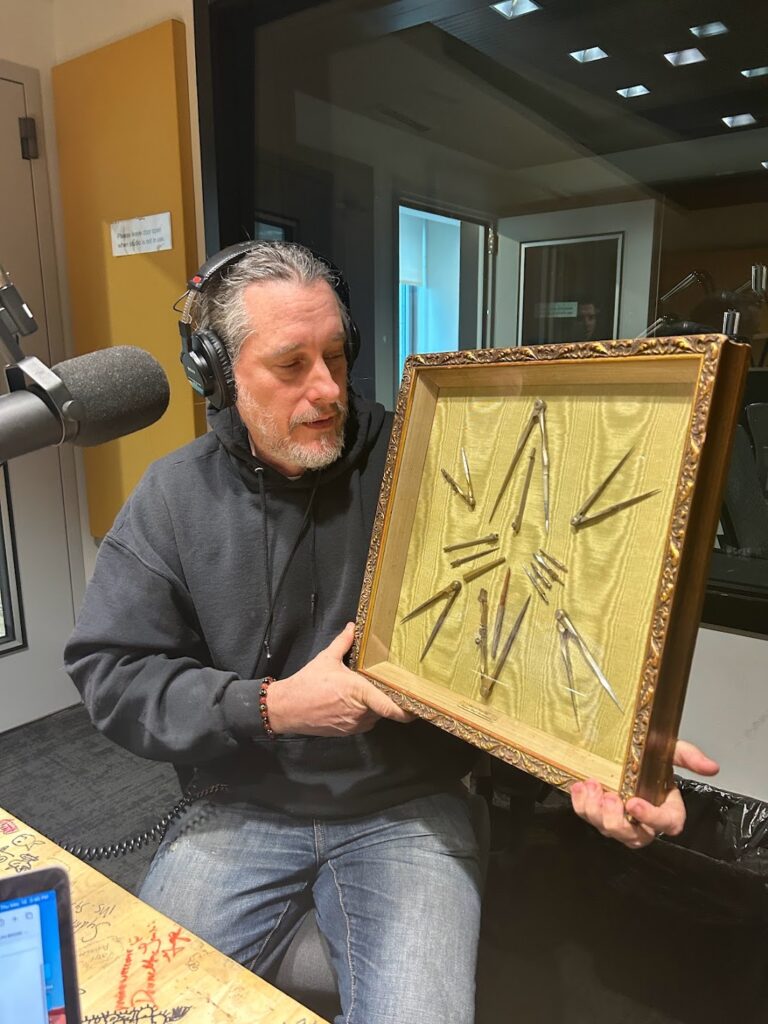
Kriss Roebling in the studio, showing off John Roebling’s surveying tools used to the draft the blueprints of the Brooklyn Bridge.
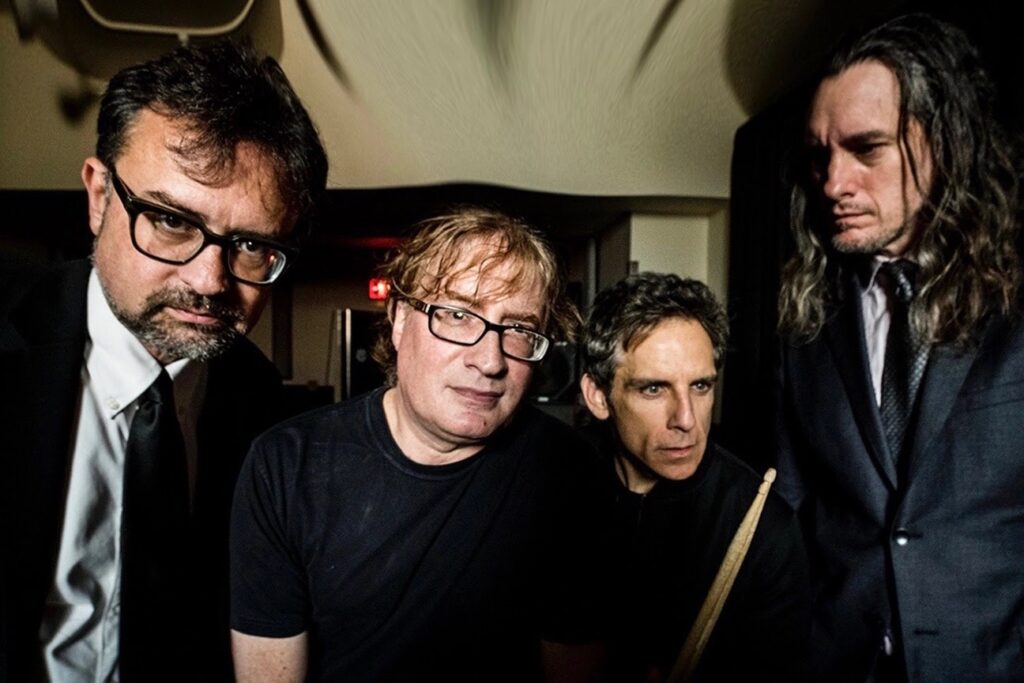
The band Capital Punishment featuring Kriss Roebling and bandmate Ben Stiller
Building the Brooklyn Bridge 1869-1883An Illustrated History with Images in 3D — Jeffrey I. Richman Chief Engineer: Washington Roebling, The Man Who Built the Brooklyn Bridge — Erica Wagner Engineering America: The Life and Times of John A. Roebling — Richard Haw The Great Bridge: The Epic Story of the Building of the Brooklyn Bridge — David McCullough A Picture History of the Brooklyn BridgeWith 167 Prints and Photographs — Mary J. Shapiro
After listening to this show about the Roeblings and the Brooklyn Bridge, dive back into these past Bowery Boys podcasts with similar or related themes
That Daredevil Steve Brodie A tale of the ‘sporting life’ of the Bowery from the 1870s and 80s. A former newsboy named Steve Brodie grabs the country’s attention by leaping off the Brooklyn Bridge on July 23, 1886. Or did he?
The Manhattan Bridge: New York’s Dysfunctional Classic We love the Manhattan Bridge, but there’s no doubt it’s had a rocky history. For one hundred years, it’s withstood more than just comparisons to its far more iconic neighbor, the Brooklyn Bridge.
The Bridge to Everywhere: The George Washington Bridge The George Washington Bridge is best known for being surprisingly graceful, darting between Washington Heights and the Palisades, a vital connection in the interstate highway system.
For decades New Yorkers celebrated Evacuation Day every November 25, a holiday marking the 1783 departure of British forces from a city they had occupied for several years.
The events of that departure — that evacuation — inspired annual celebrations of patriotism, unity and a bit of rowdiness. Evacuation Day was celebrated well until the late 19th century. But then, gradually, the party sort of petered out…..
Of course Americans may know late November for another historically themed holiday – Thanksgiving, a New England-oriented celebration that eventually took the place of Evacuation Day on the American calendar. But we are here to tell you listener – you should celebrate both!
Greg and Tom tell the story of the British’s final years in their former colonies, now in victory known as the United States, and their final moments within New York City, their last remaining haven. The city was in shambles and the gradual handover was truly messy.
And then, on November 25, 1783, George Washington rode into town, basically traveling from tavern to tavern on his way down to the newly freed city. The Bowery Boys chart his course (down the Bowery of course) and make note of a few unusual events — wild parties, angry women with brooms and one very lucky tailor.
PLUS: Where and how you can celebrate Evacuation Day today!
LISTEN NOW: EVACUATION DAY
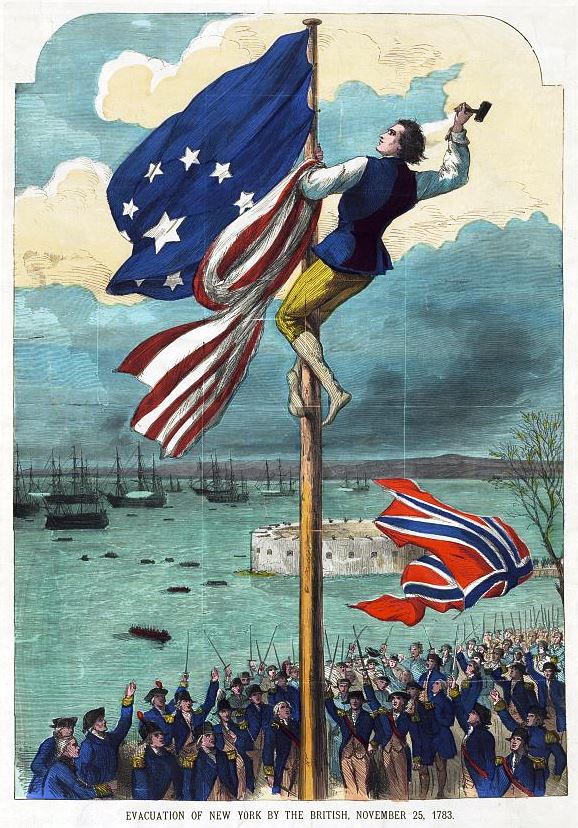
John Van Arsdale successfully takes down the British flag.
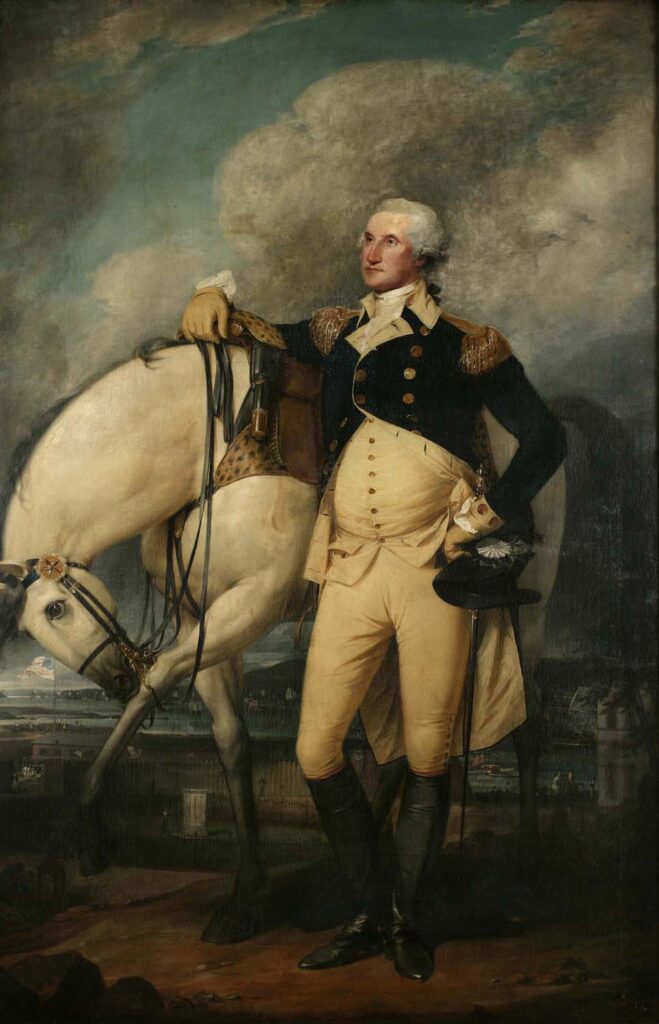
Multiple depictions of Washington’s entry into New York City exist. It was embraced as a major moment in early American history.
Washington’s Grand Entry into New York, November 25, 1783 by Alphonse BigotGeorge Washington, Evacuation of New York, by John Trumbull, 1790, New York City Hall
FURTHER LISTENING
After listening to this week’s show on Evacuation Day, head back to our back catalog to listen to episodes with similar theme:
FURTHER READING
After Yorktown: The Final Struggle for American Independence / Don Glickstein
American Crisis: George Washington and the Dangerous Two Years After Yorktown, 1781-1783 / William Fowler
Evacuation Day / James Riker
The Ghost Ship of Brooklyn / Robert P. Watson
Gotham: A History of New York City to 1898 / Edwin G Burrows and Mike Wallace
Hercules Mulligan / Michael J. O’Brien
In the Hurricane’s Eye: The Genius of George Washington and the Victory at Yorktown / Nathaniel Philbrick
The Perils of PeaceAmerica’s Struggle for Survival After Yorktown / Thomas Fleming
To Save the People from Themselves: The Emergence of American Judicial Review and the Transformation of Constitutions / Robert J Steinfeld
“A Tory-eye View of the Evacuation of New York” / Robert Ernst
“An Unusable Past: Urban Elites, New York City’s Evacuation Day, and the Transformations of Memory Culture” / Clifton Hood
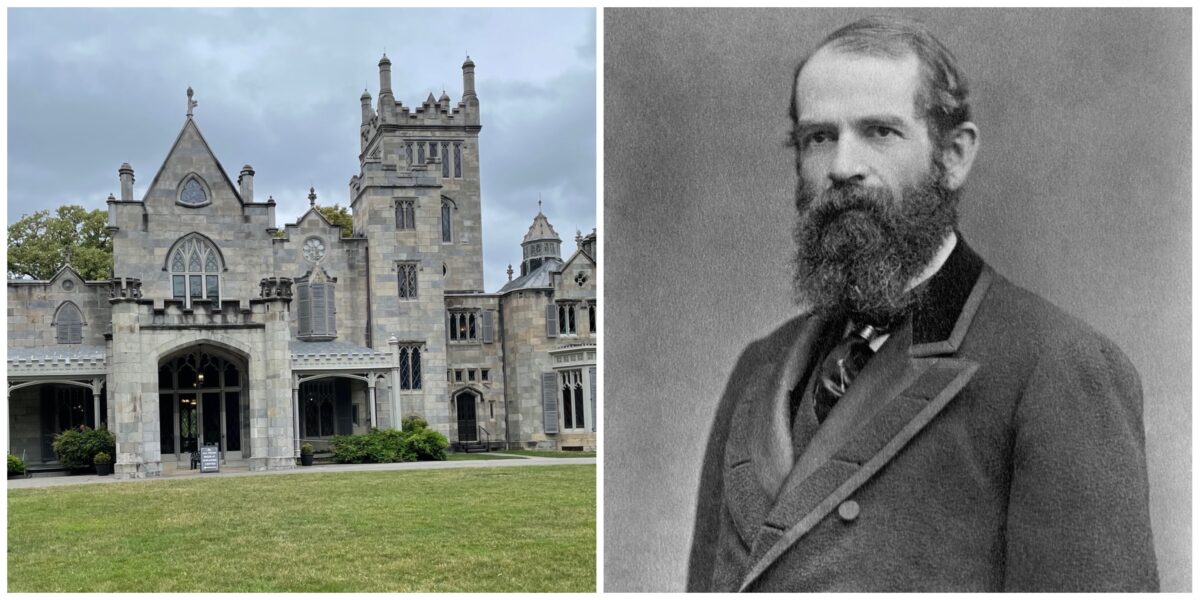
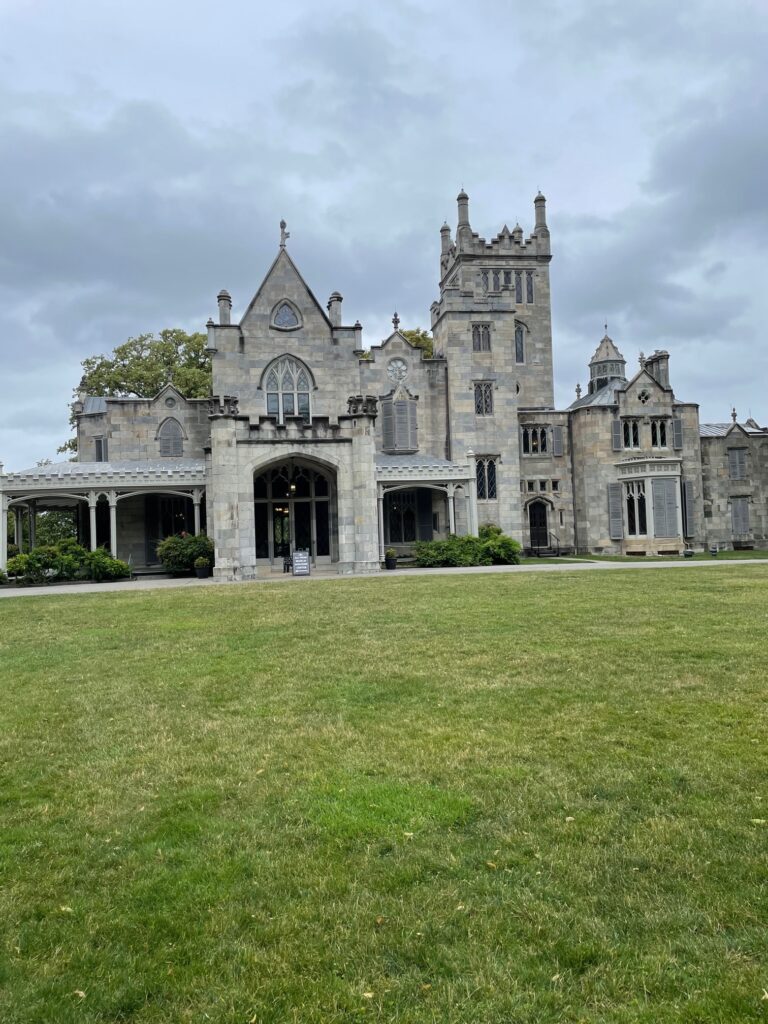
Lyndhurst Mansion may be familiar to viewers of the HBO series The Gilded Age since a number of this historic house’s rooms served as filming locations for the show.
And its former owner was one of the most notorious figures of the Gilded Age — Jay Gould.
He was known as the one of the era’s most ruthless robber barons. He tangled with the Vanderbilts for control of the railroads and fought battle after battle on Wall Street.
But there was a less contentious side to him as well. Gould sought respite from New York City with his family at his country home, Lyndhurst Mansion in Tarrytown, a rolling estate where he could transition from Wall Street warrior to father and husband.
Carl Raymond
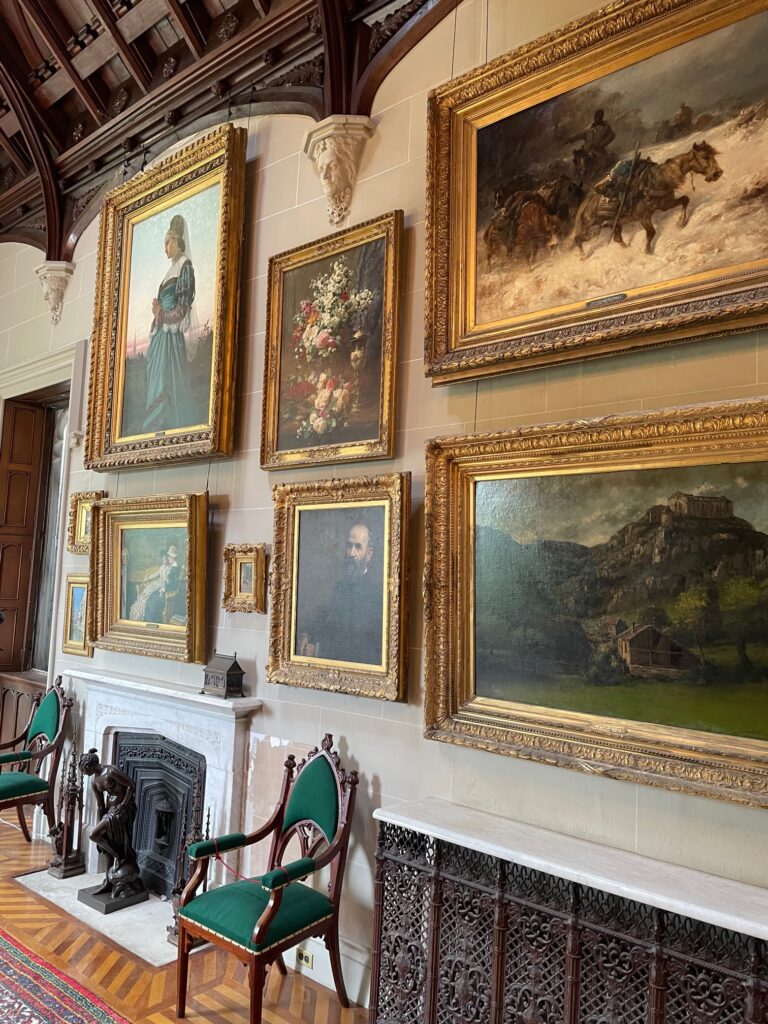
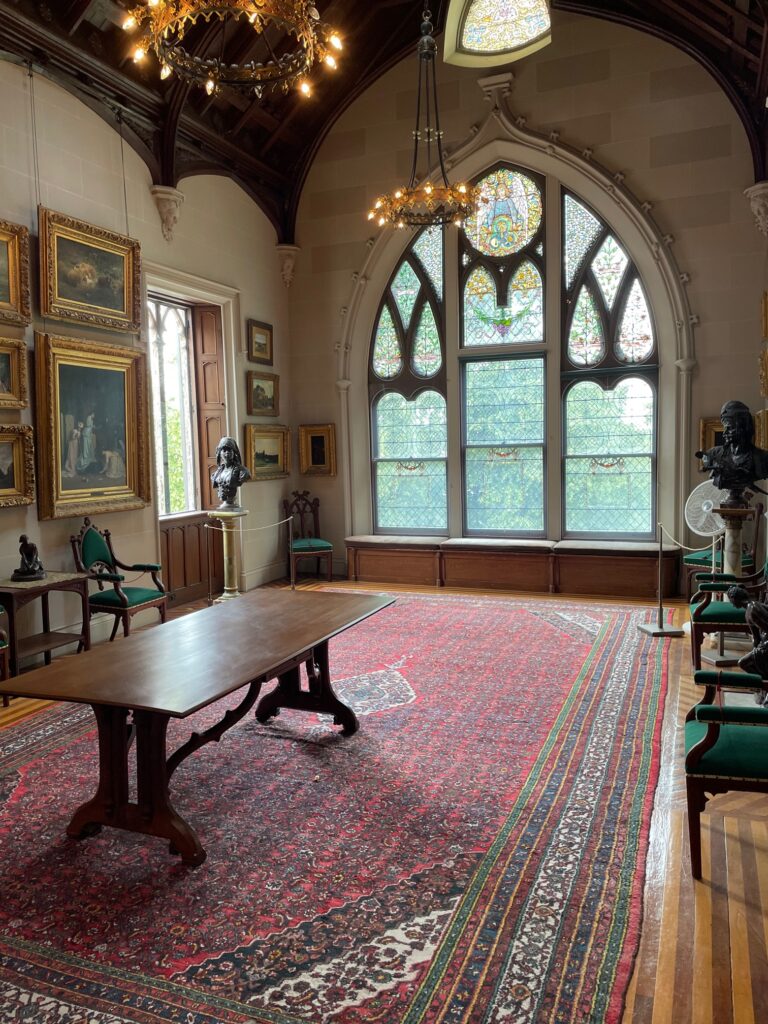
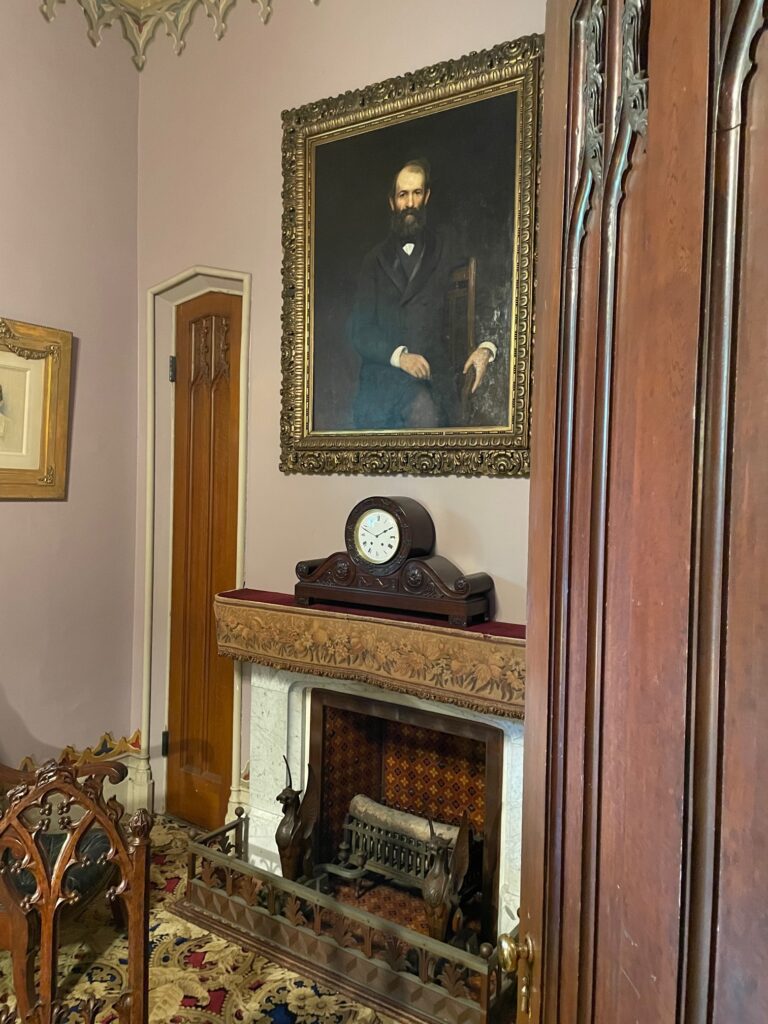
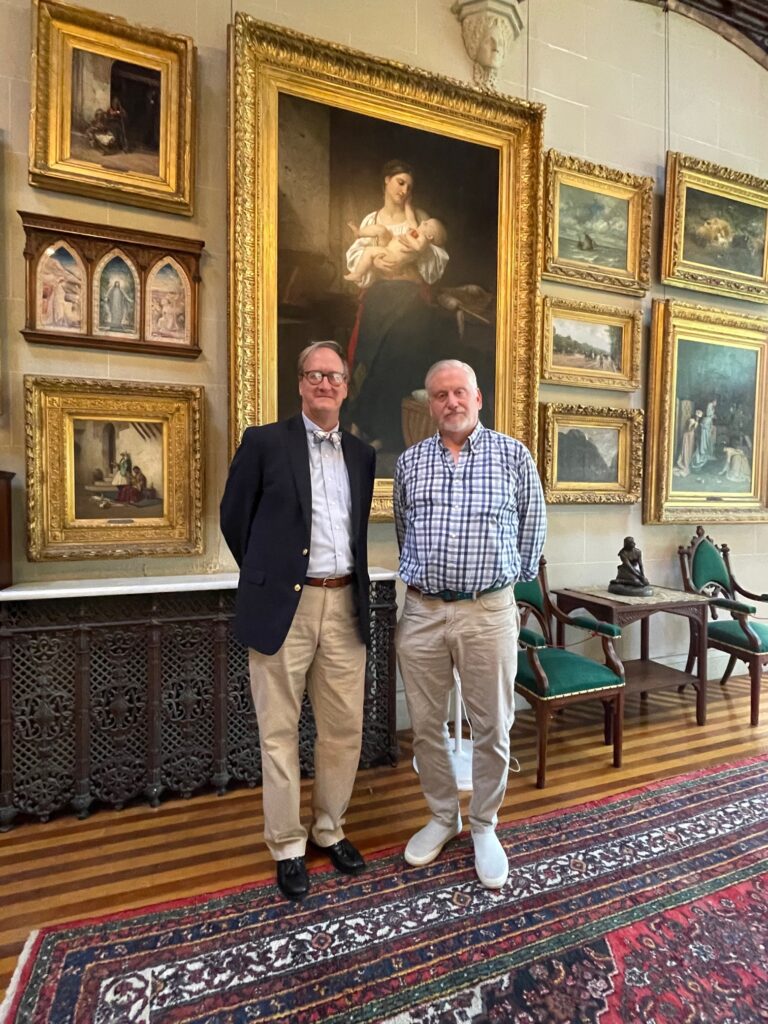
In this special episode,The Gilded Gentleman travels to Lyndhurst for a look inside both the mansion and the life of Jay Gould. Howard Zar, executive director of Lyndhurst, joins Carl for a fascinating interview recorded in the picture gallery in Jay Gould’s own mansion.
Carl Raymond
Surrounded by Gould’s precious hand-chosen art collection (still hung as Gould intended), Howard and Carl delve into what life was like at the Mansion and what visitors can see today.
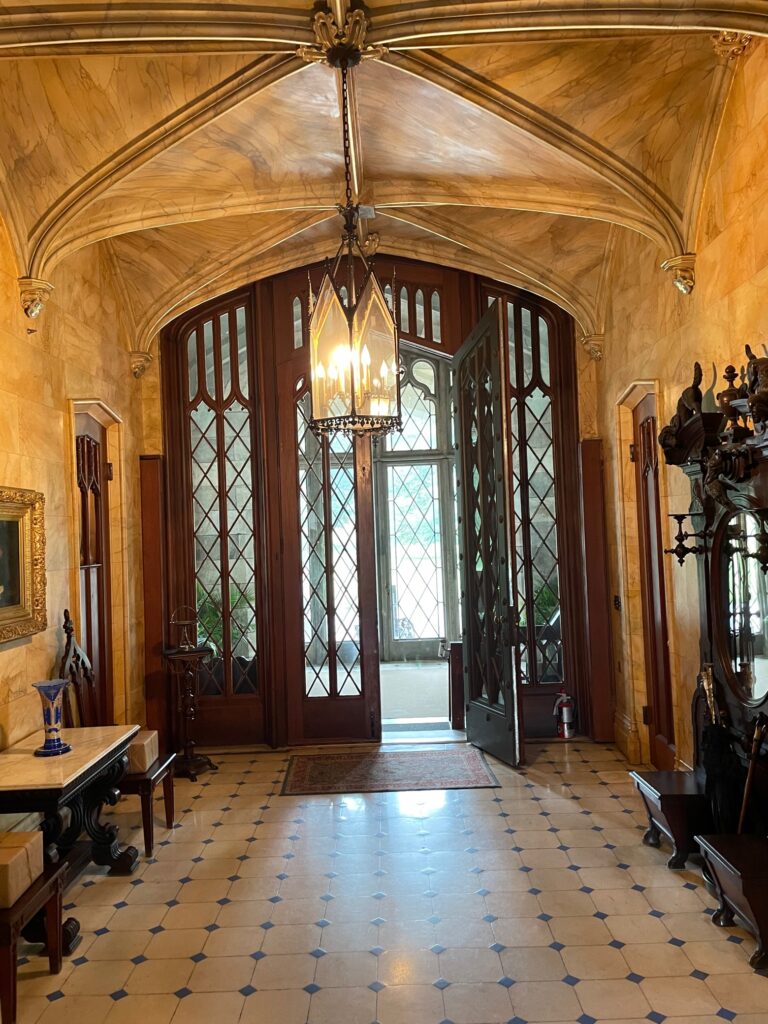
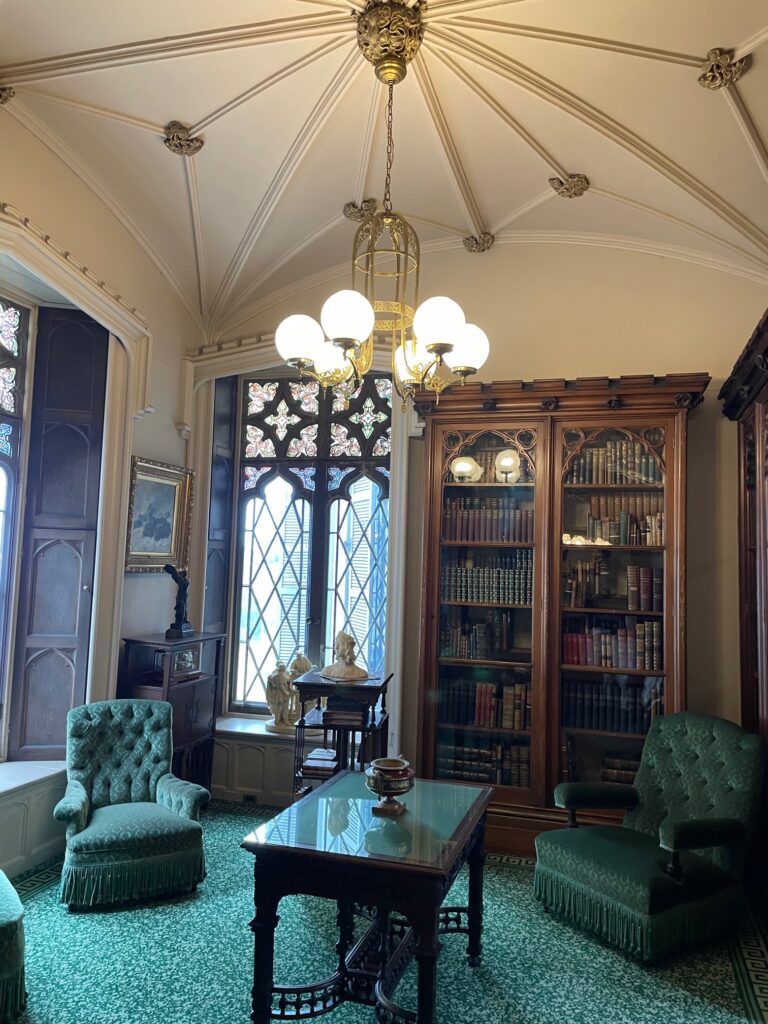
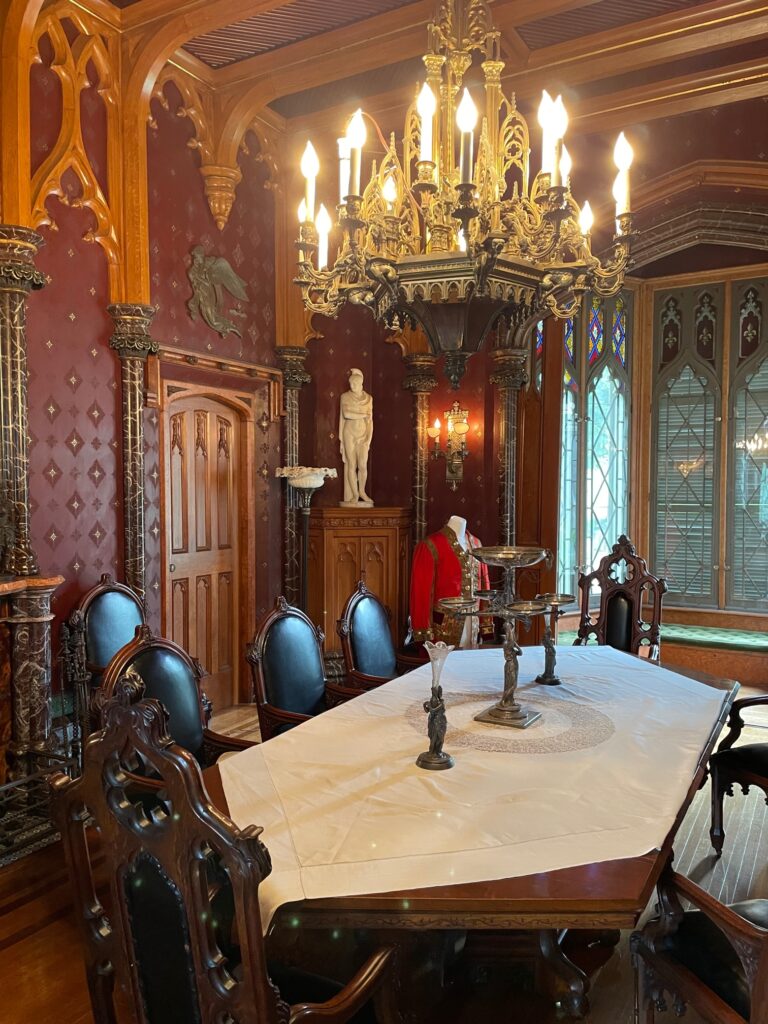
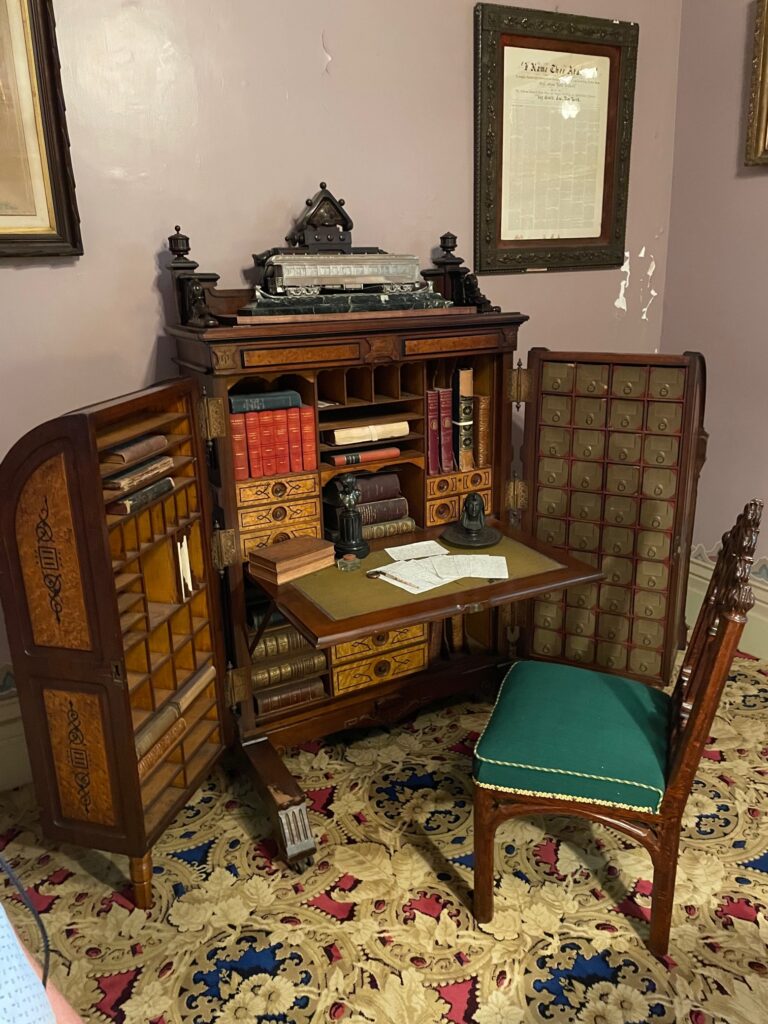
As a special treat, follow along with Howard and Carl on a tour through the Mansion visiting Gould’s reception room, library, private office and dining room.
Download the latest episode of The Gilded Gentleman on Apple Podcasts, Spotify, Overcast or wherever you get your podcasts.
Or listen to it right here:
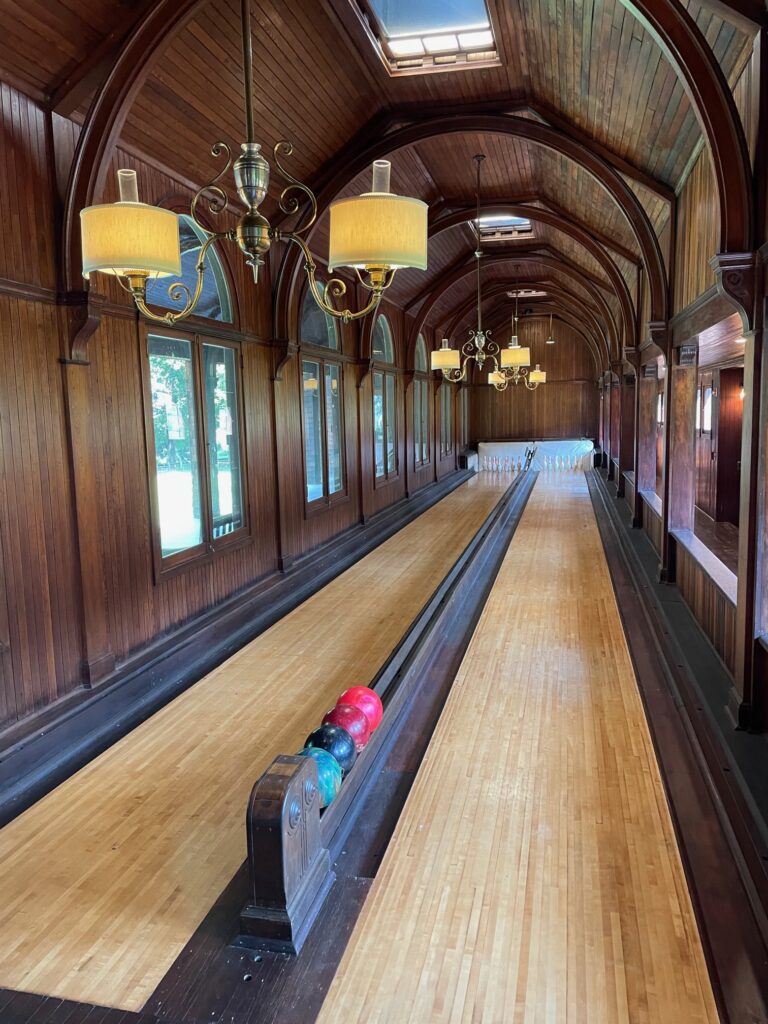
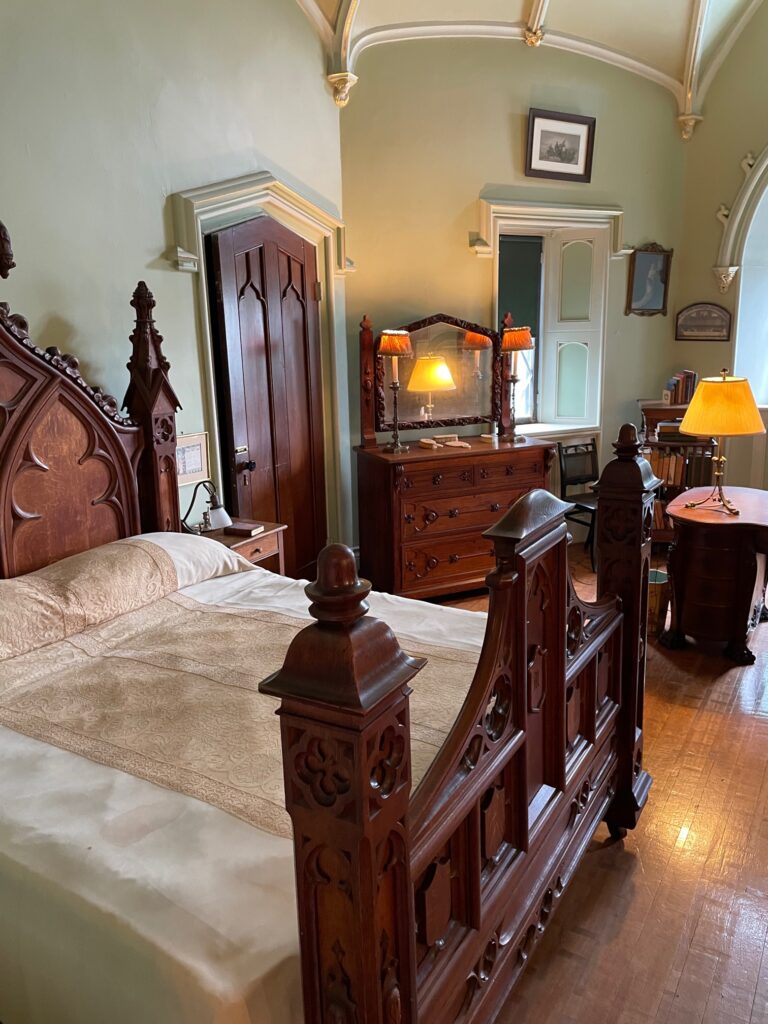
And check out these photos, all taken by Carl Raymond.
Carl RaymondCarl RaymondCarl RaymondCarl RaymondCarl RaymondCarl RaymondCarl RaymondCarl RaymondCarl Raymond
Louis Sherry was one of New York’s great restauranteurs of the Gilded Age, repackaging the luxury dining experience in New York with supurb attention to detail and truly clever marketing.
And one outrageous dinner party in 1903 showcased his sense of extravagance and absurdity.
Sherry began his career working at the famous Brunswick House, located in Madison Square, before becoming manager of the Hotel Elberon out on the Jersey Shore.
These were both destinations for the newly moneyed elite, and he watched his clientele closely, trying to give them what they wanted before they knew they wanted it.
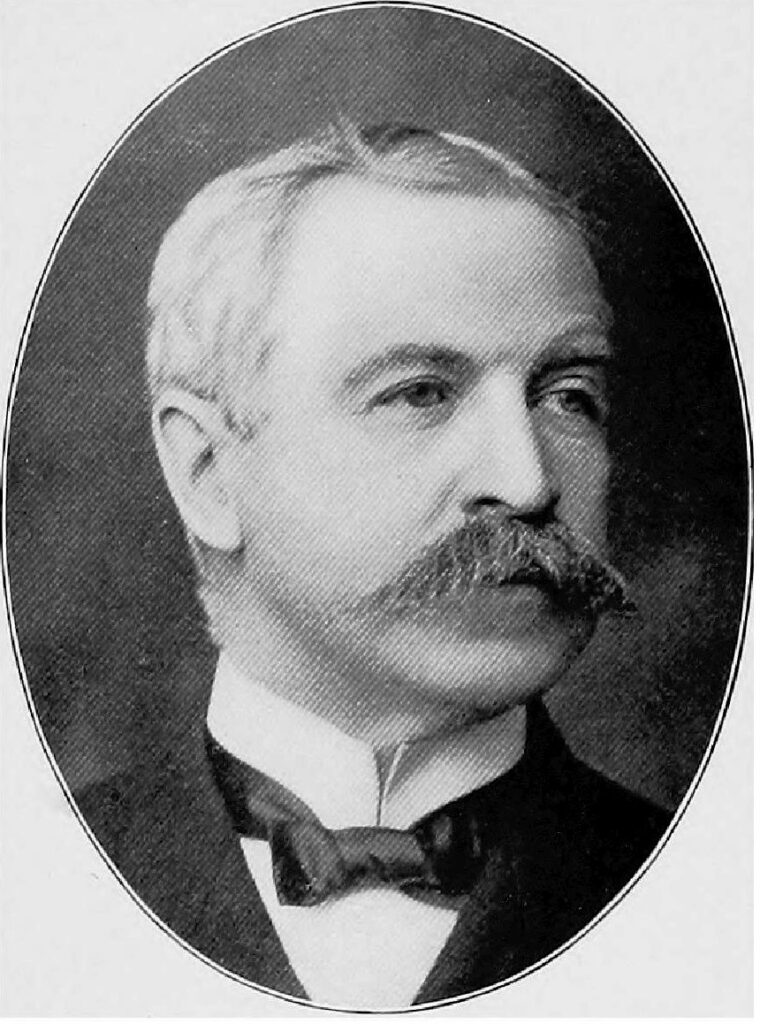
Louis Sherry
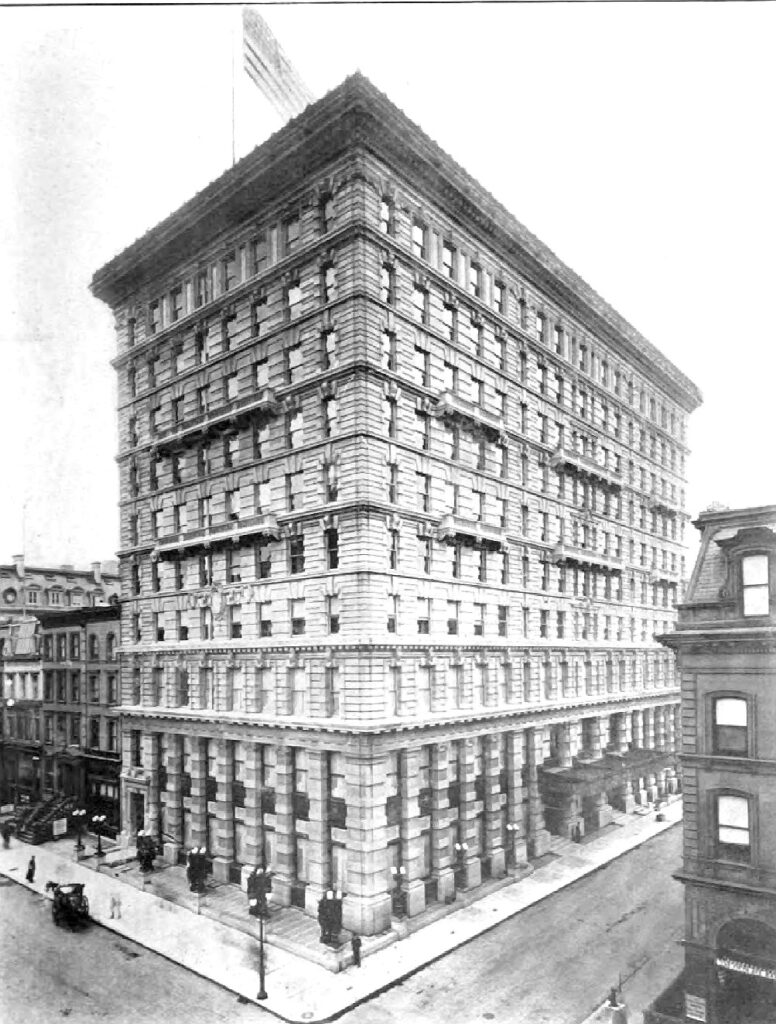
He would eventually opened his own restaurant — Sherry’s, self-titled of course — in 1880 at 38th Street and Sixth Avenue (near the growing Herald Square entertainment district). Courting the elite diners on Fifth Avenue, he shifted his restaurant to that tony address and eventually moved it up to 5th Avenue at 44th Street by late 1898.
Sherry’s restaurant in 1906, in a building designed by McKim, Mead and White, Architectural Record 1906
This was a key location because one of New York’s other great restaurants — Delmonico’s — had itself landed on that corner just a year before.
Now the two greatest restaurateurs were directly across the street from each other. New York’s Restaurant Wars had officially begun.
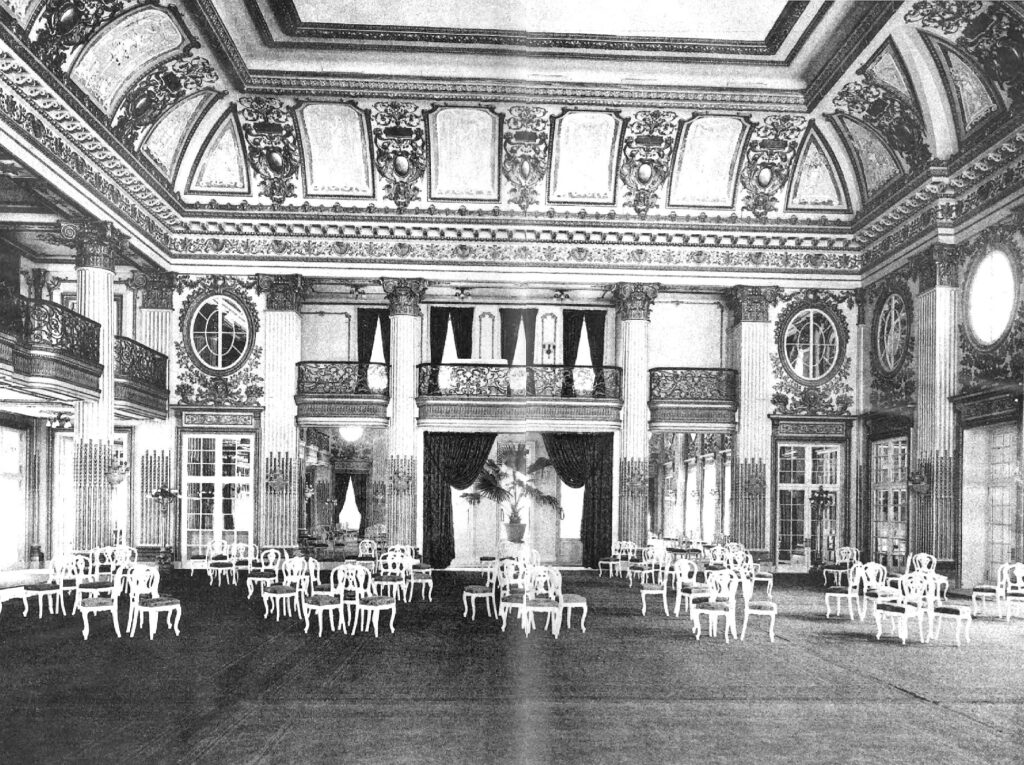
The ballroom at Sherry’s Restaurant looked like it belonged in the palace of a French king. American architect and building news, 1898
Sherry presented New York with a Stanford White-designed elegant French palace, complete with reception space, drawing rooms and a stunning ballroom. He had a flair for the theatrical and often outdid himself in presentation.
But nothing would top a very famous dinner which took place at his restaurant in 1903.
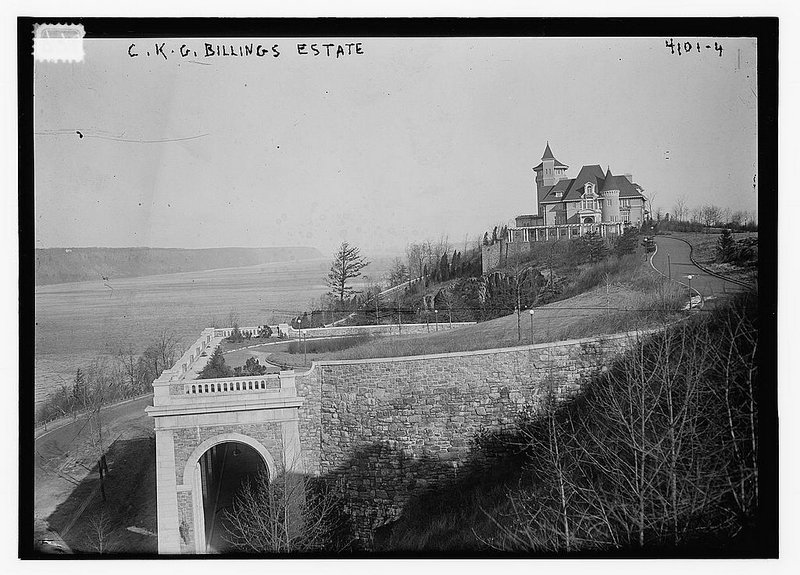
The Billings Estate aka Tryon Hall. Today this is Fort Tryon Park
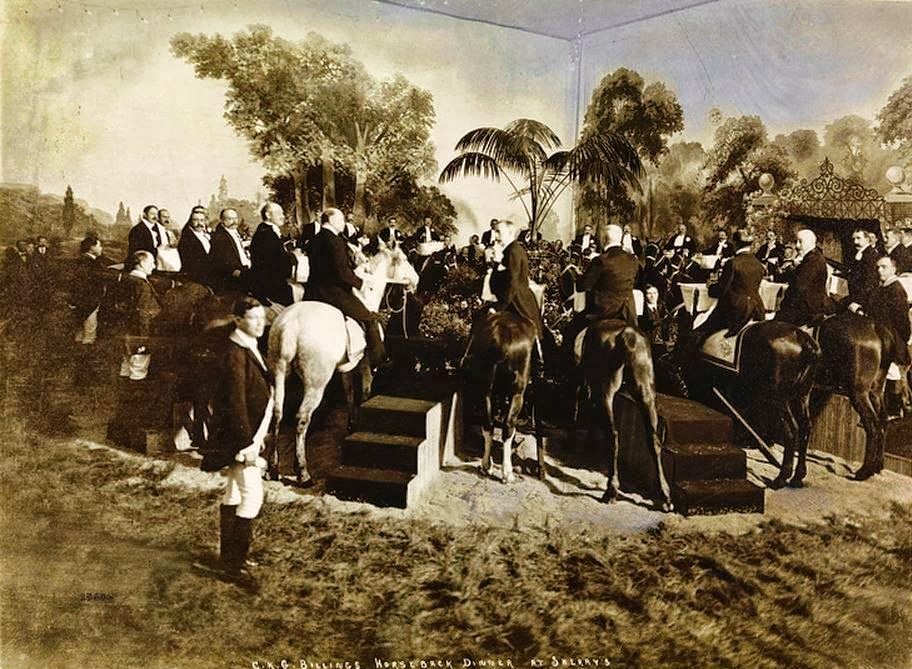
You could think of it as one last blast of Gilded Age ostentation. Millionaire and businessman C.K.G. Billings was an avid horseman. While he had inherited a gas company from which he made his millions, his heart was on the racetrack.
Billings built a stable overlooking the Hudson and a fine European styled mansion in Upper Manhattan, in the area of today’s Fort Tryon Park. (You can hear more about the house and founding of the park in this Bowery Boys catalog podcast.)
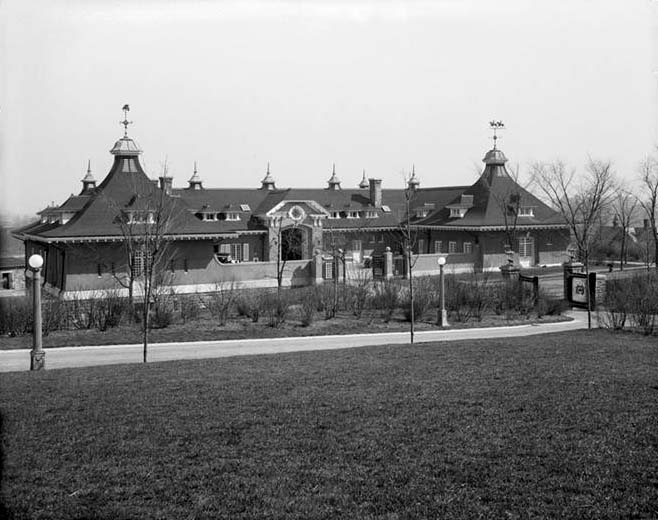
Here are the stables. It’s unfortunate they didn’t have the dinner here! Picture courtesy Museum of the City of New York
Wanting to celebrate the opening of his stable, his plan was to throw a dinner for 36 of his closest friends in the stables themselves. When the press caught on to his wild plan, he went to Sherry to ask that his host create a special dinner in Sherry’s ballroom.
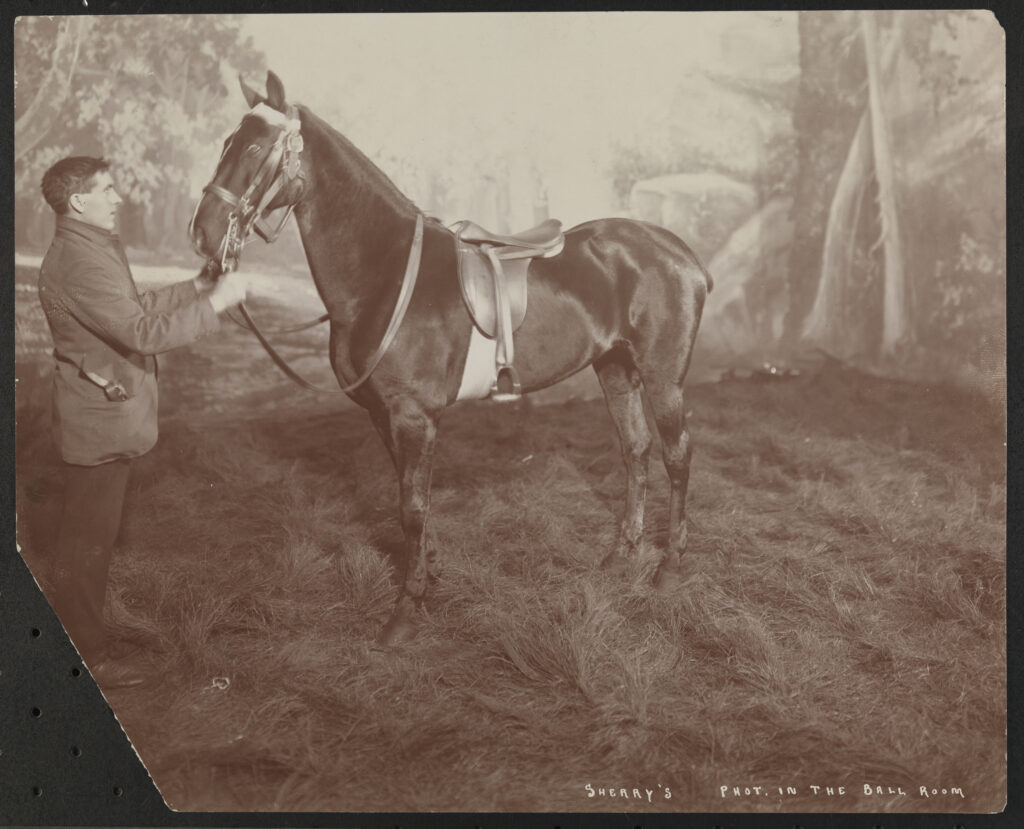
The thirty-six guests gathered in formal white tie, filing into the spacious dining room. When they entered, they saw the room transformed into an English country pasture with fake turf and panels of painted scenery, and in the center were the horses. Saddled and ready for the diners to mount and receive their dinner on horseback, served on silver trays fixed to the saddles.
Horse and attendant in the ballroom at Sherry’s at the horseback dinner. Courtesy Museum of the City of New York who also have a nice article on this unusual event.
Each guest and the horse was assigned a groom to handle the service and make sure that the bottles of champagne in the saddlebags were kept chilled, and the tubes stayed connected for riders to quench their thirst.
Jockey waiters brought out course after course to be eaten on the silver trays. anchored to the horse’s backs in front of each rider.
The menu began with caviar on toast points, followed by a turtle soup. The fish course featured trout, with a sauce of shallots, chervil, and chives. Rack of lamb with glazed vegetables was presented as the meat course, and the whole meal ended with flambéed peaches and coffee.
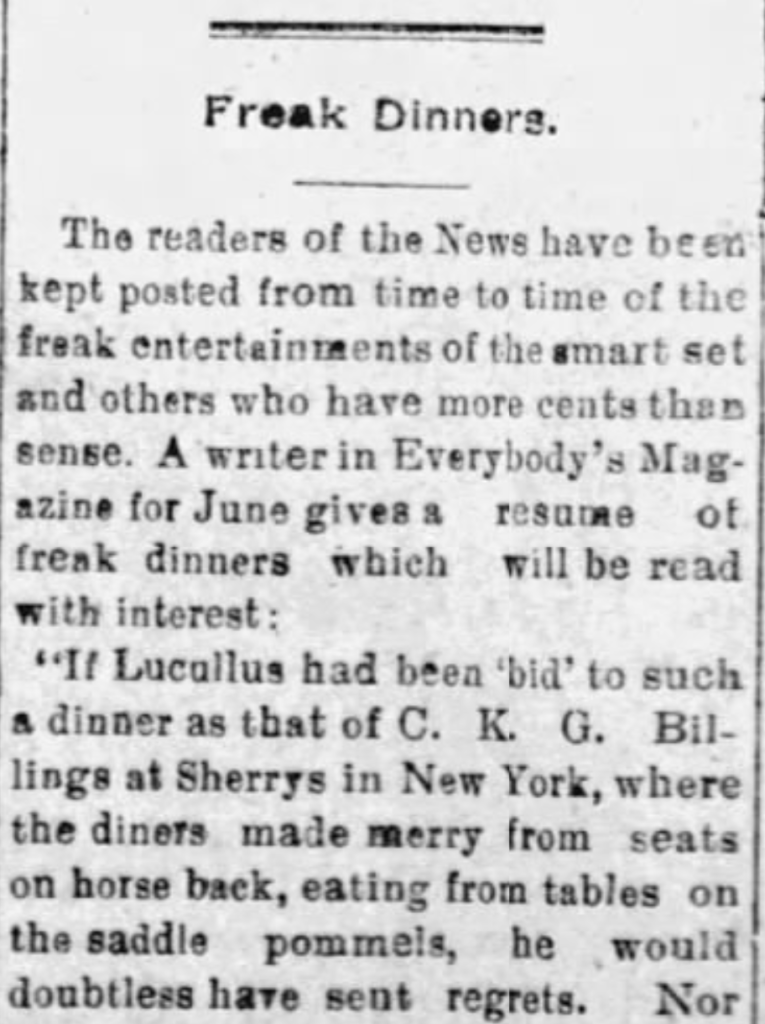
“Freak dinner” – The horseback meal made national news. This article is from a Mississippi newspaper
Now in case you wondered how the horses got into this second floor ballroom, it was an engineering feat performed with Sherry’s staff, the freight elevator, and likely a special diet for the horses to, you know, prevent any mishaps.
The price tag of all of this was approximately $1.4 million in today’s money. Billings had paid just under $40,000 for each diner to have his table on horseback.
I am sure Louis Sherry was very pleased.
For more information and other tales of absurd dining in the Gilded Age, check out this podcast from The Gilded Gentleman:
When the Academy of Music opened in 1854, New York City was just about to become the richest, most powerful city in the nation. It was, in fact, almost there.
With the construction of the Erie Canal (which opened in 1825), the port city at the mouth of the Hudson River benefited greatly from the proximity.
The city grew in marvelous ways in the three decades after its opening with a new Croton water system, expanding gaslighting, and a growing grid plan, pushing the city north up the island of Manhattan.
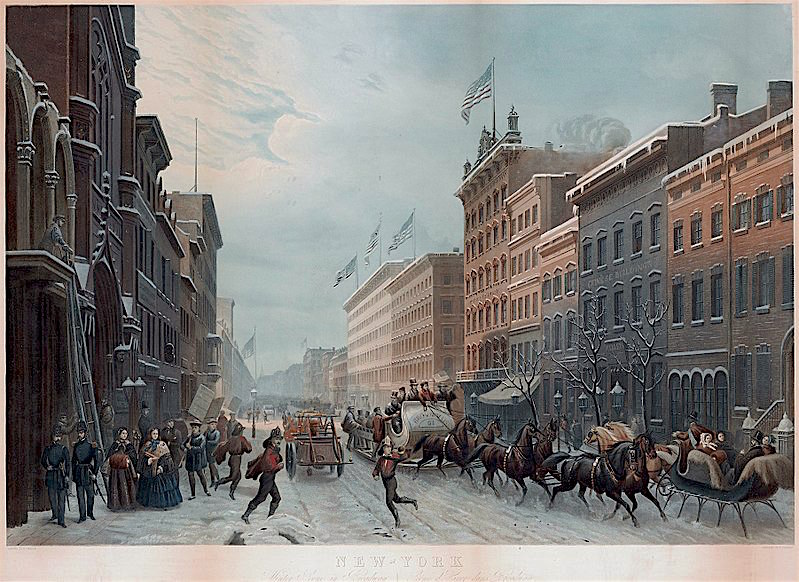
New York winter scene in Broadway, 1857 Eno, Amos F., 1836-1915 (Collector) Girardet, Paul, 1821-1893 (Engraver) Sebron, Hippolyte Victor Valentin, 1801-1879 (Artist); courtesy New York Public Library
The city’s old-money elites soon made room — with an upturned nose, naturally — for the new-money families enriched by both New York real estate and burgeoning American industries fueled by the growth of the railroad. The New York Stock Exchange, re-built after the Great Fire of 1835, was thriving with the nation’s booming (if often volitile) economy.
And so New York society, modeling itself after English and French elites, began importing high cultural venues in which to flaunt their love of the arts — and, more importantly, their money and station in the social pecking order.
The Astor Place Opera House, opening in 1847, had briefly been the center for upper-class entertainments, but the deadly Astor Place Riots a couple years later signaled the end of that venue.
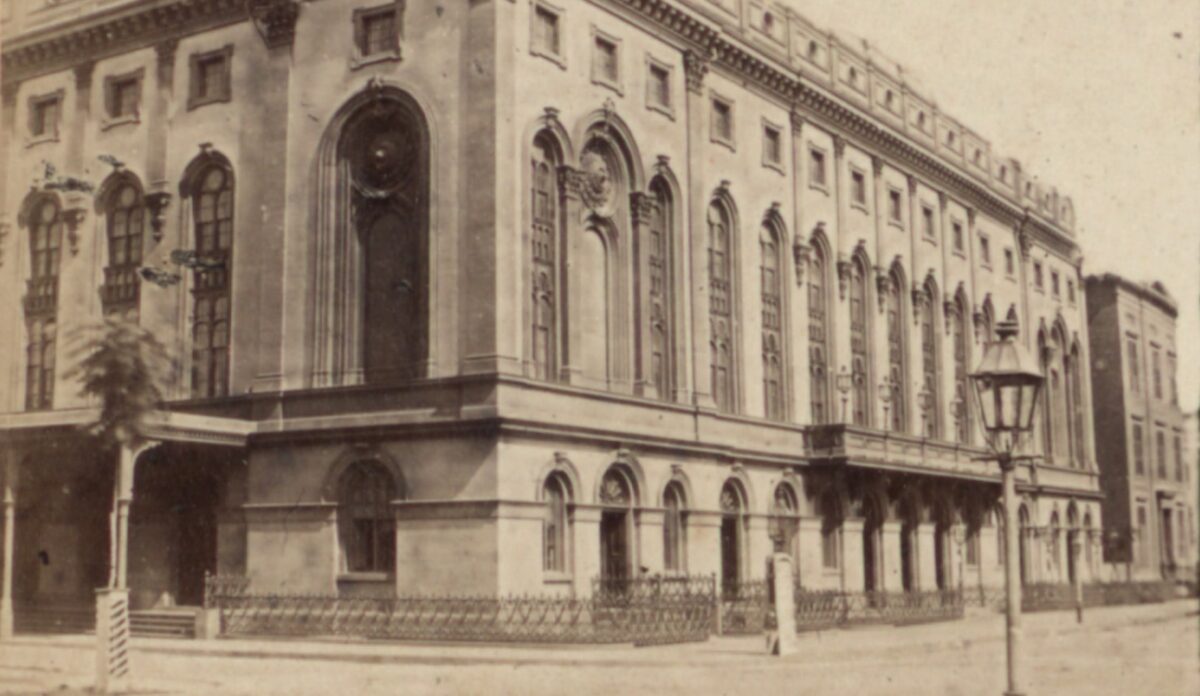
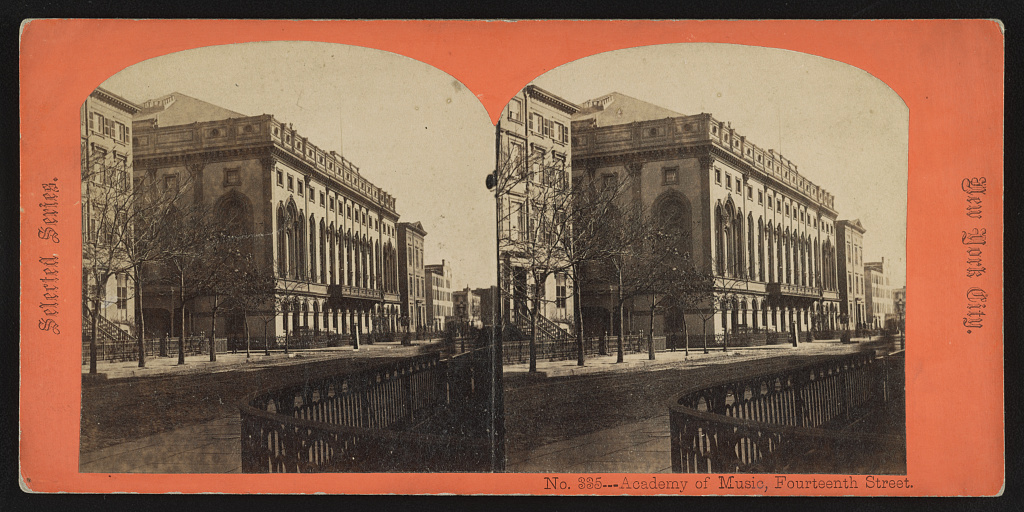
Early photograph of the Academy of Music, NYPL
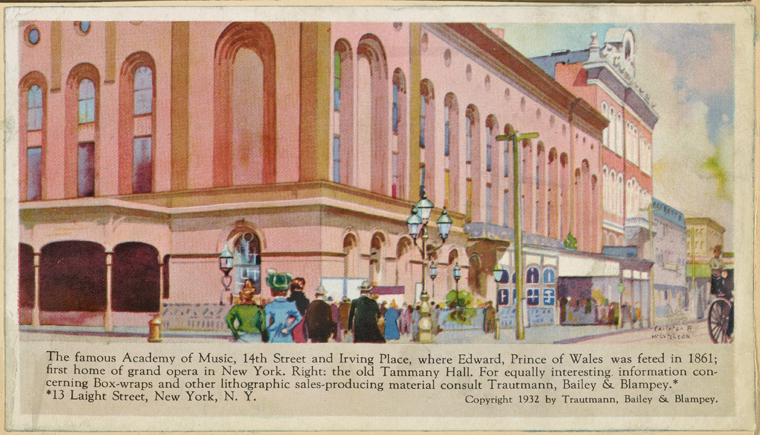
And thus New York got the Academy of Music in 1854. Located on 14th Street and Irving Place, the new music house was uniquely situated near both Gramercy Park and Union Square, both havens for the elite in the 1850s. (NOTE: The Academy of Music was only a few blocks north from the old Astor Place Opera House.)
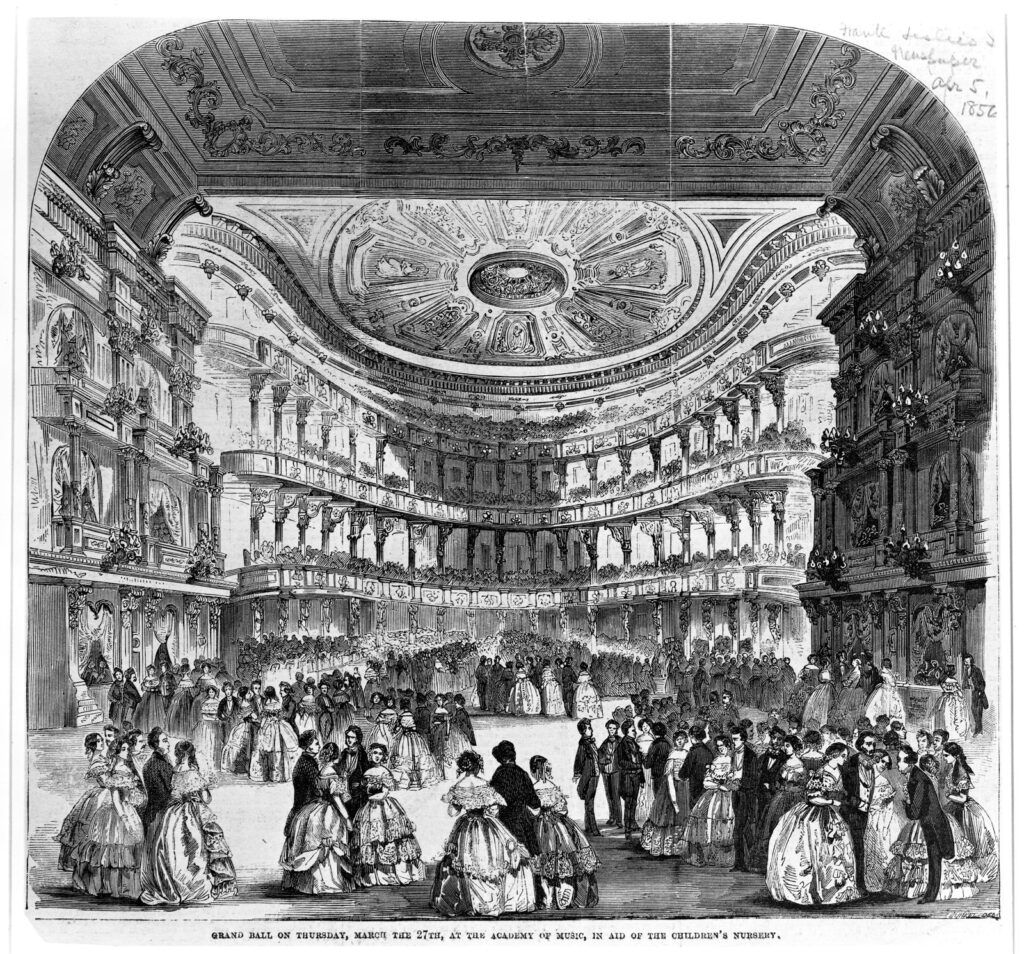
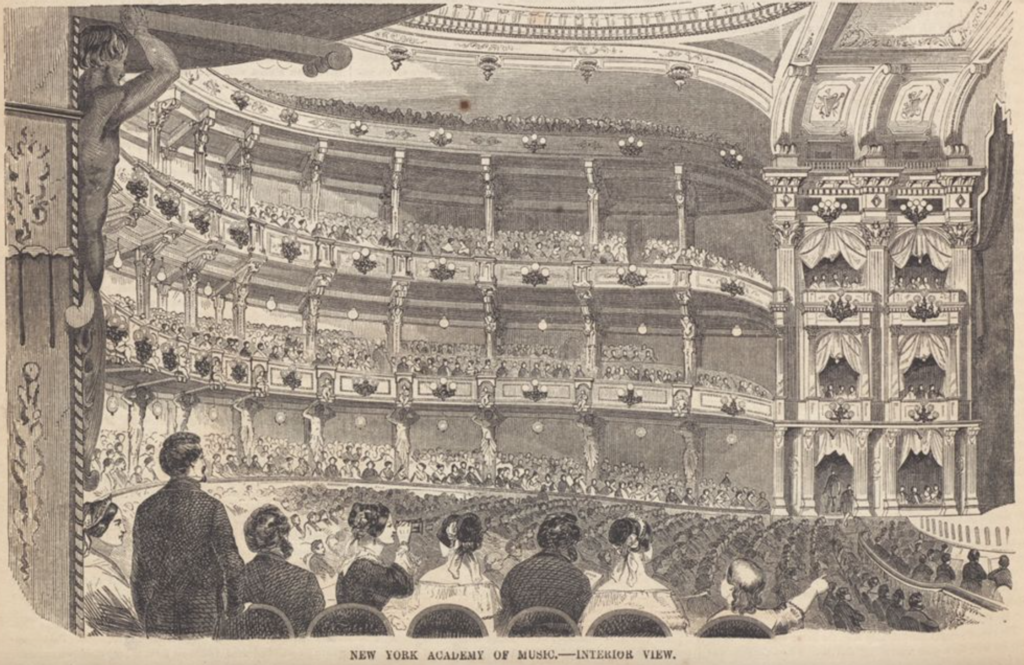
Inside the Academy of Music, 1856, NYPL
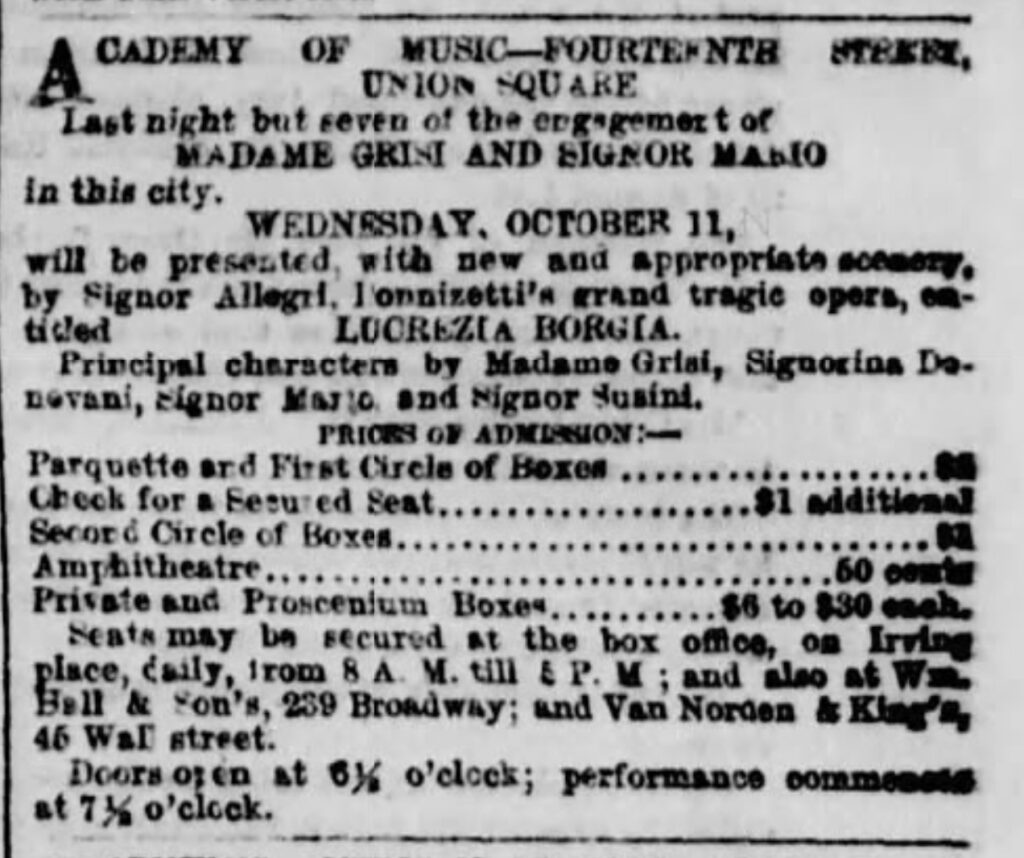
The opening bill on October 2 featured a performance of Vincenzo Bellini’s Norma featuring acclaimed Italian soprano Giulia Grisi. (America had very little homegrown talent in these days.) Underscoring its almost immediate dominance in the Americas cultural scene, the operas Rigoletto, La Traviata, Aida, Die Walküre and Carmen made their American debuts upon this stage.
The growing rival city of Brooklyn followed suit — had to follow suit, to satisfy its own elites who were situated mostly around the area of today’s Brooklyn Heights. The first Brooklyn Academy of Music opened there in 1861; after it was destroyed in fire in 1903, it moved to its present location. [More on its history here.]
Brooklyn’s original opera house was beautiful, sure, but it was no match in opulence for New York’s Academy of Music which was the largest opera venue in the world when it opened.
Interior of the Academy of Music 1856
But it designed to be so much more, a multi-purpose building which needed more space befitting the city’s growth. According to this announcement on August 28, 1854, “The New York Academy of Music will be used occasionally for concerts, balls, public meetings and theatrical performances.”
Perhaps due to its many purposes, the reputation of the Academy of Music became tainted by rowdy “French balls” which took place here off season.
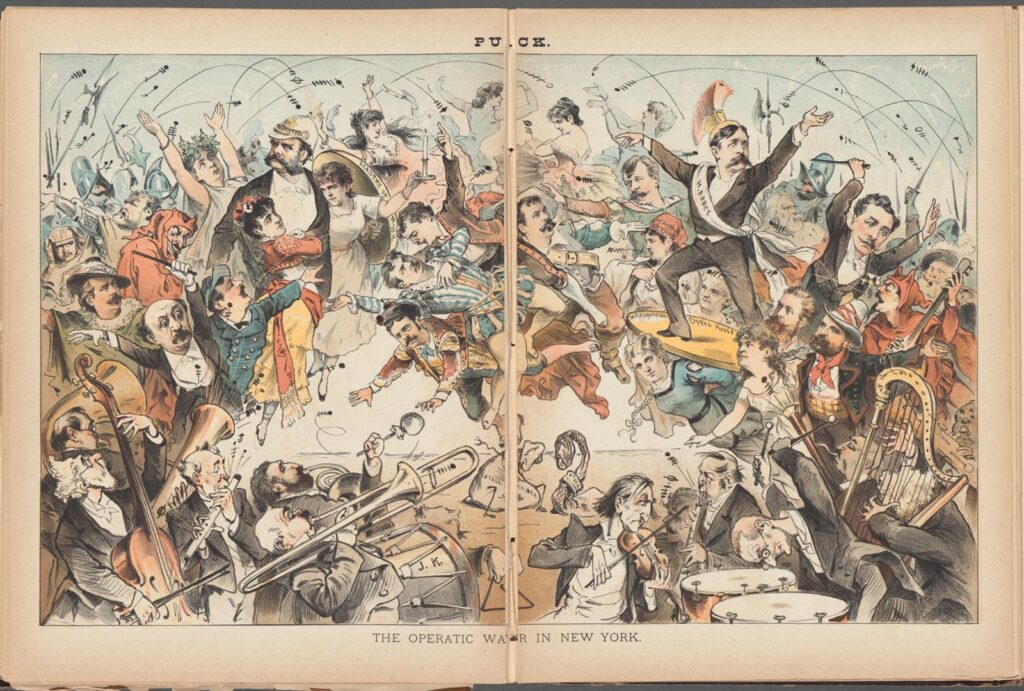
In 1883 Puck Magazine festively lampooned the ‘opera wars’ between the Academy of Music and the Met Opera house.
However it wasn’t until New York’s next wave of moneyed elites — its nouveau riche — opened the Metropolitan Opera House in 1883 further north that opera (and respectability) finally vacated the Academy of Music.
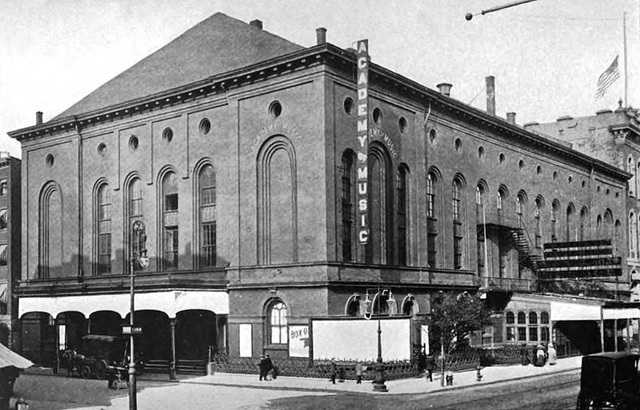
By that time, Union Square was the city’s destination for a more lowbrow entertainment — vaudeville! — and so the Academy welcomed that entertainment form onto its stage. But it could never recapture its glory, and the building was demolished to make way for a skyscraper owned by Consolidated Edison (which still remains).
The Academy of Music from the vaudeville years
But the name would not leave the neighborhood! A movie palace opened across the street (eventually owned by William Fox) with the name the Academy of Music. During the 1970s it hosted rock music performances and, by the 1980s, had transformed into the seminal dance club the Palladium.