Categories
Film History Podcasts Side Streets

At The Movies with Meyers and Young: Celebrating New York City on the big screen

Greg and Tom have taken off their historian hats for a minute and have suddenly become — movie critics? Close but not quite!

This week we’re giving you a ‘sneak preview’ of their Patreon podcast called Side Streets, a conversational chat show about New York City and, well, whatever interests them that week.

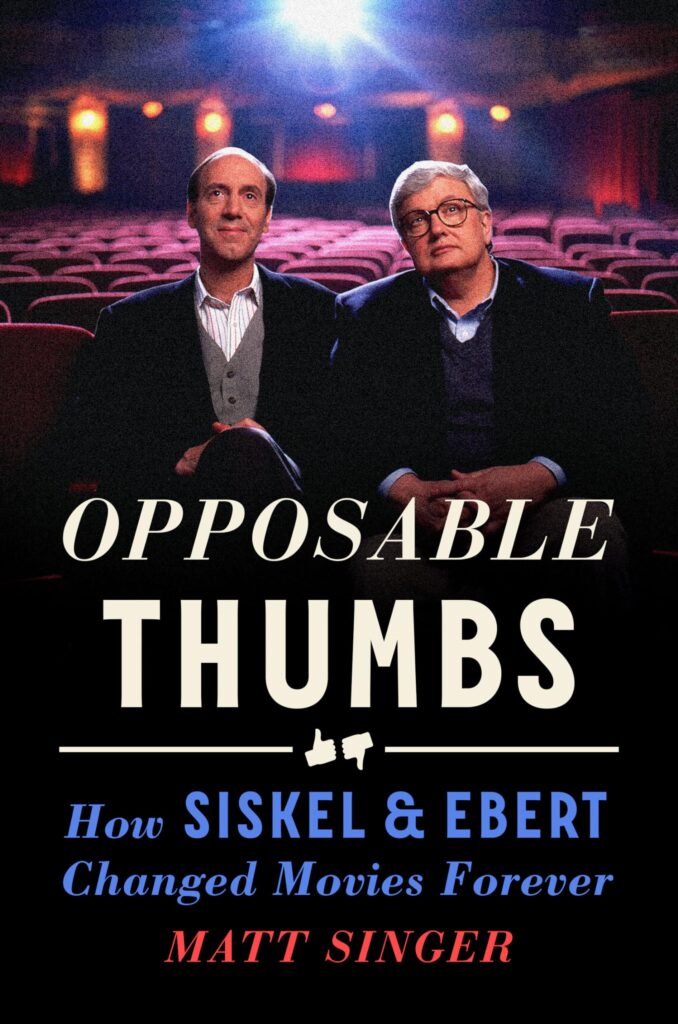
In honor of the Academy Awards, the Bowery Boys hosts pay homage to the great Gene Siskel and Roger Ebert while looking at five award-worthy films with strong New York City connections:

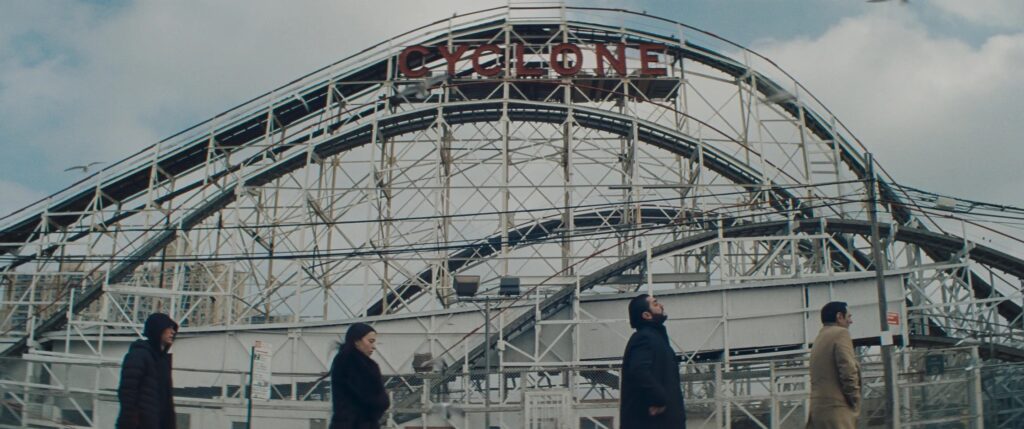
— Anora with its captivating south Brooklyn locations

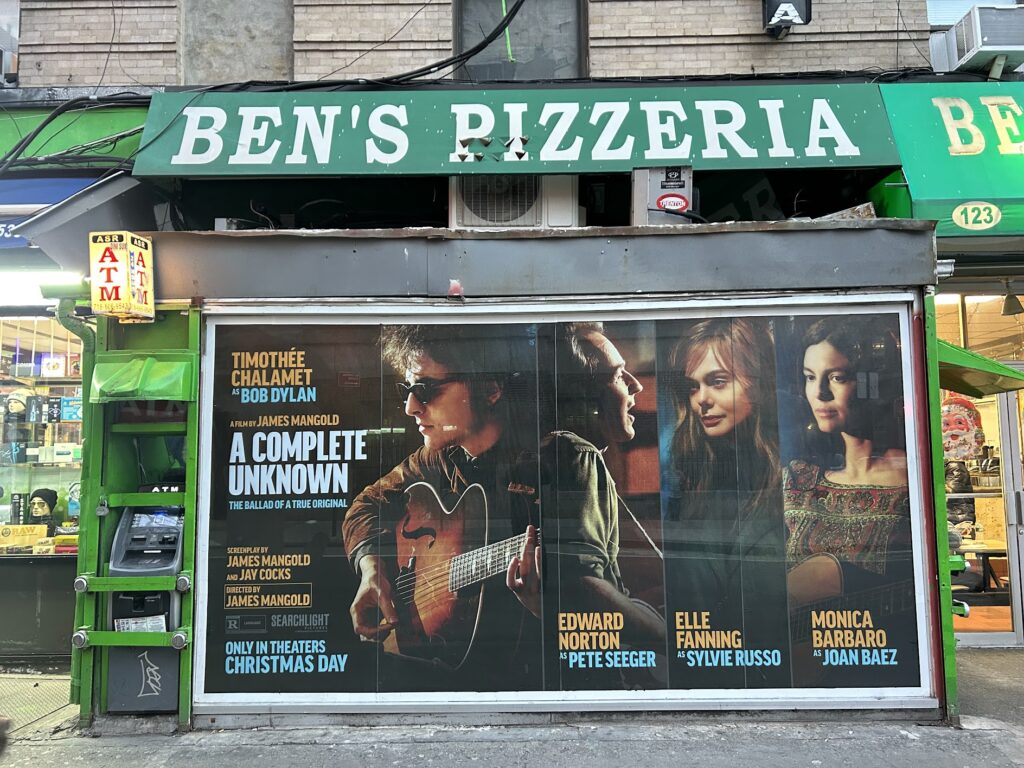
— A Complete Unknown, taking us back 1960s Greenwich Village 

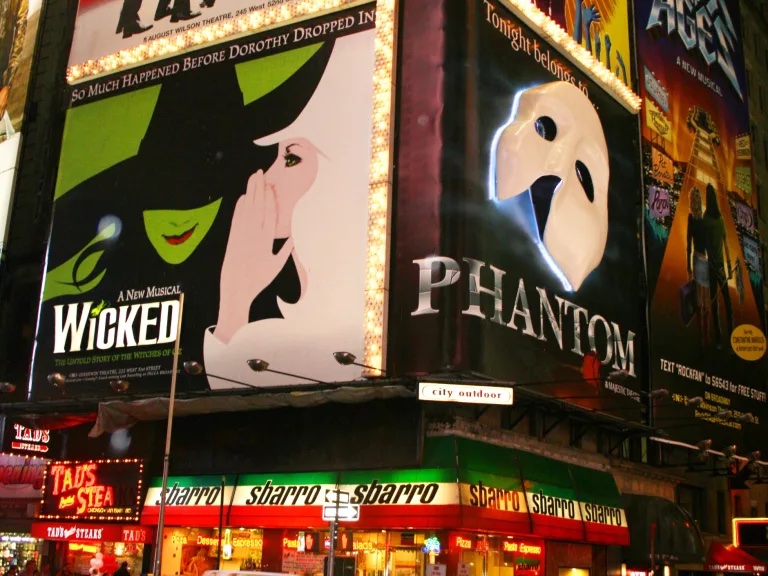
— Wicked, a spritely interpretation of the Broadway musical

— The Brutalist, an epic about more than just architecture

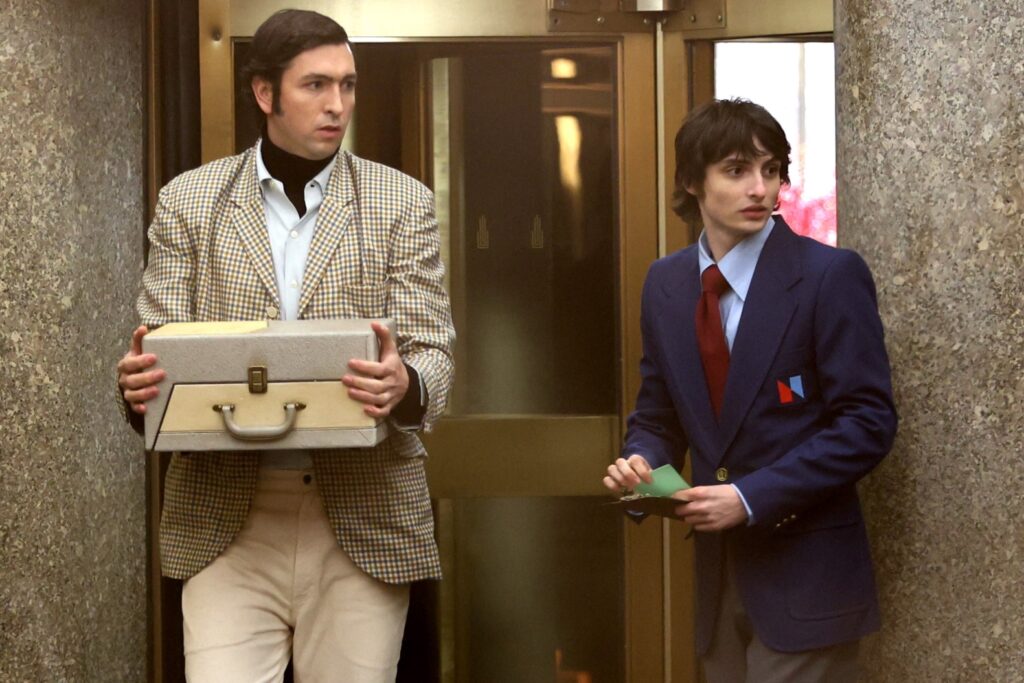
— Saturday Night, a frenetic tribute to the comedy-show icon which turns 50 years old this year

NOTE There are light spoilers (especially to locations used in some of these films) but nothing that will ruin your enjoyment of these movies.

LISTEN NOW: AT THE MOVIES

To listen to all episodes of Side Streets, support the Bowery Boys on Patreon 

This episode was edited by Kieran Gannon


FURTHER READING

Scenes from

ANORA

A COMPLETE UNKNOWN

WICKED

THE BRUTALIST

SATURDAY NIGHT

Categories
Amusements and Thrills The Gilded Gentleman

How The Gilded Age Played: A Sweet Summertime Show With Esther Crain

On the latest episode of The Gilded Gentleman, returning guest Esther Crain, author and creator of Ephemeral New York, joins Carl for a look at how New Yorkers stayed cool on summer days in the Gilded Age. 

As New York continued its march up the island of Manhattan, there were few places where New Yorkers that couldn’t escape to Newport could find somewhere to relax, play, stroll, and find some shade. 

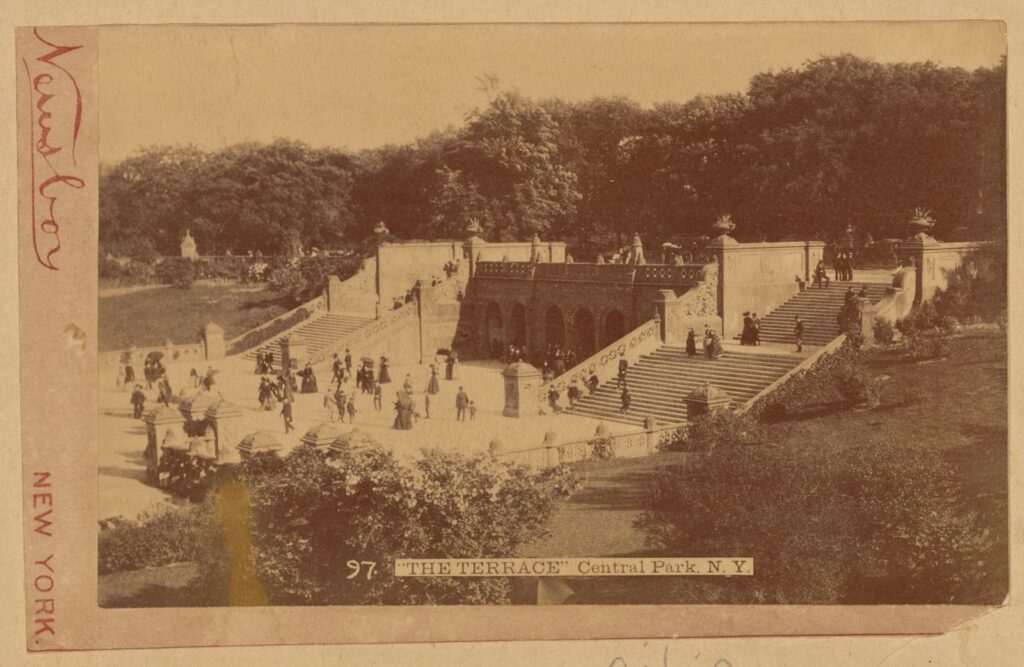
The development of the Central Park provided some much-needed relief but it took some time for it to become a place that was accessible and viable for all of New York’s social classes. 

Bethesda Terrace, Central Park, 1890, courtesy the New York Public LIbrary, Irma and Paul Milstein Division of United States History, Local History and Genealogy

Meanwhile, out on the far coast of Brooklyn, the resort of Coney Island developed rapidly and became a truly great escape with its famous amusement parks where one could find adventure and perhaps a bit of romance. 

Esther takes us on a journey to visit these spots and spaces where Gilded Age New Yorkers could cool off, forget the realities of life for just a bit and have a really good time.  

LISTEN HERE OR ON YOUR FAVORITE PODCAST PLAYER:

And in two weeks on The Gilded Gentleman Podcast: Prepare for a history of the French Riviera

Categories
Planes Trains and Automobiles Podcasts Women's History

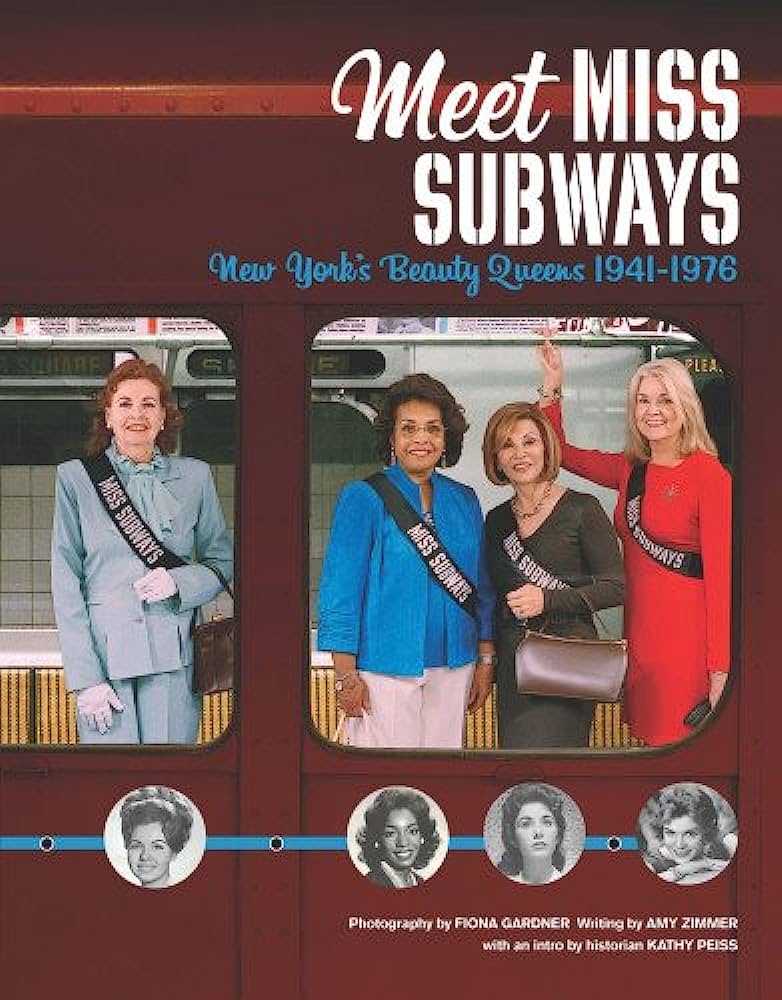
The Story of Miss Subways: Queens of the New York Commute

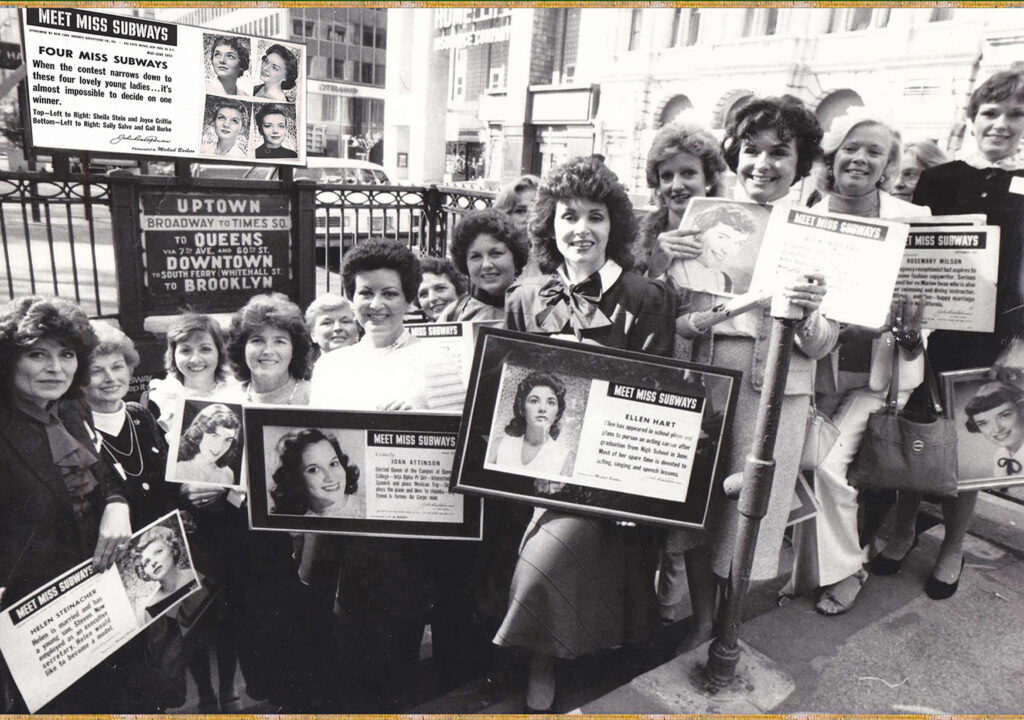
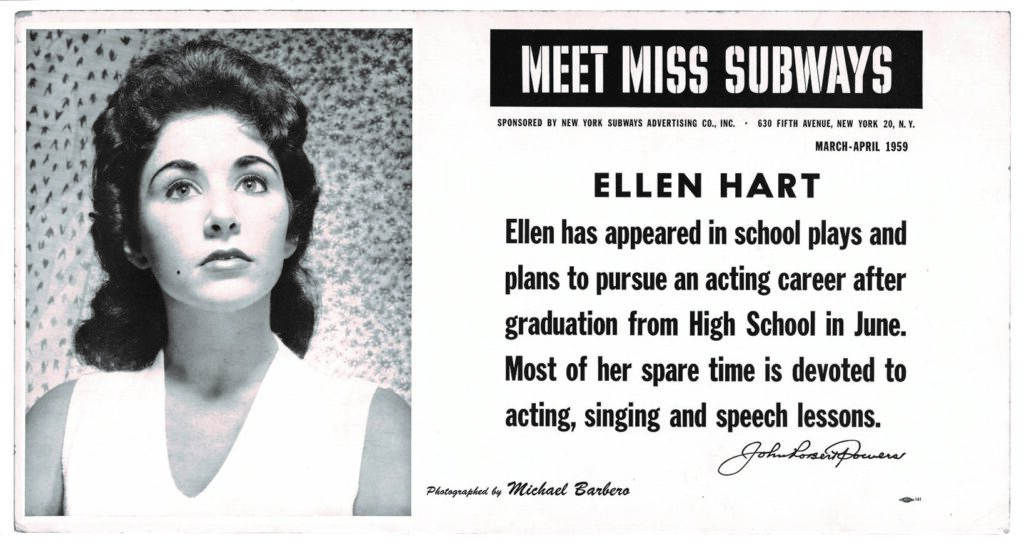
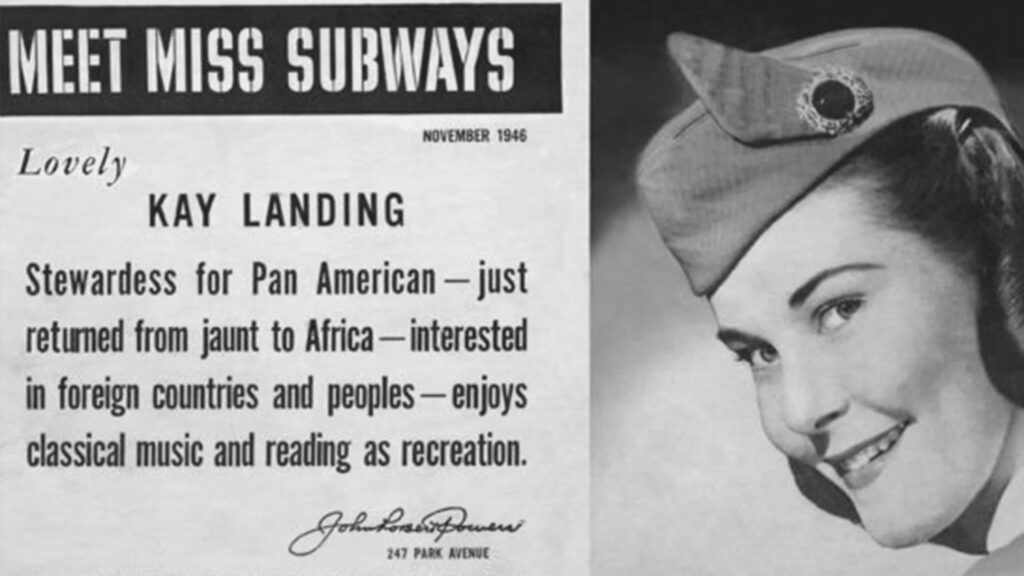
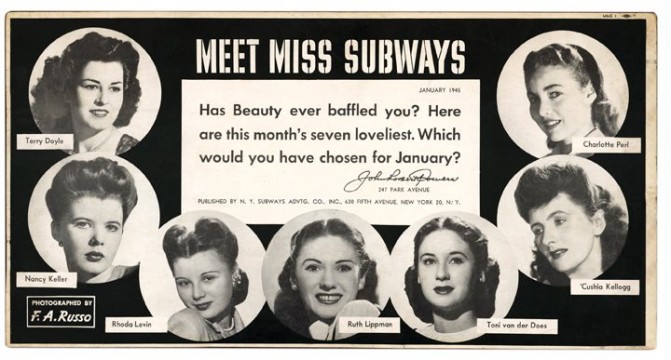
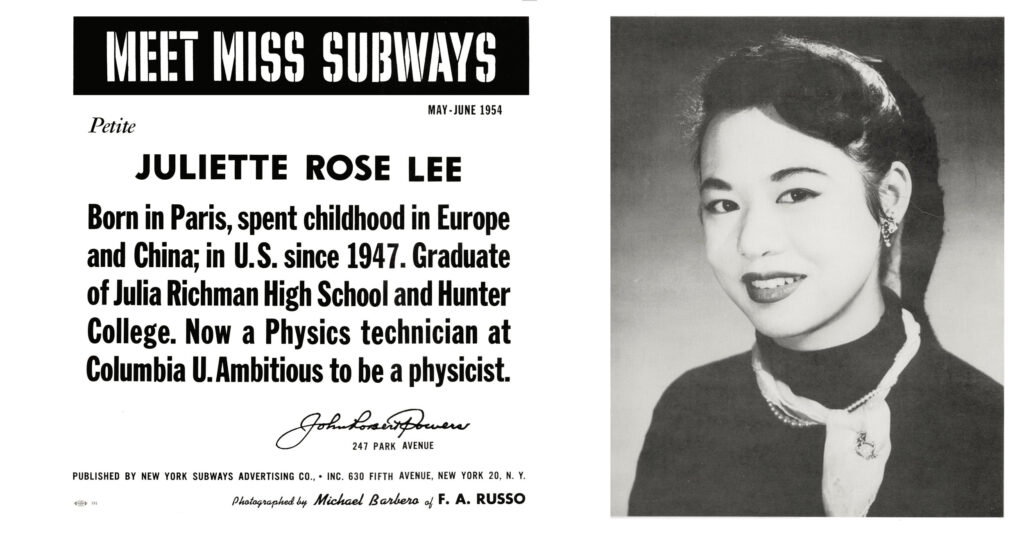
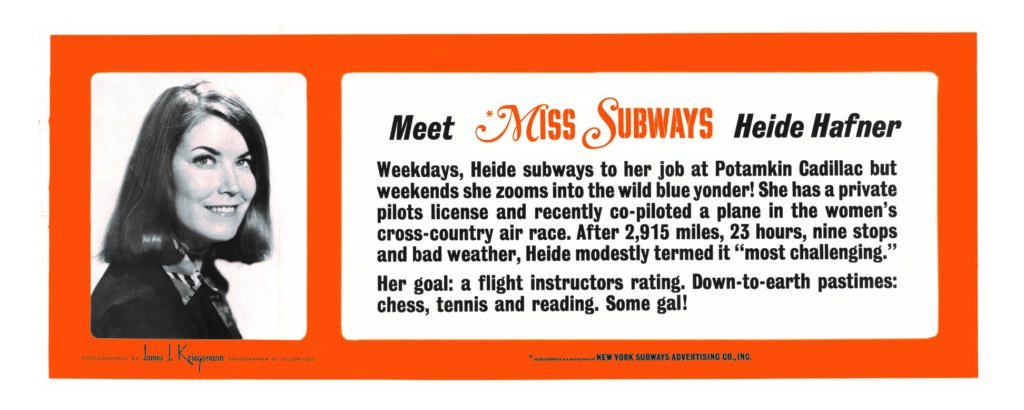
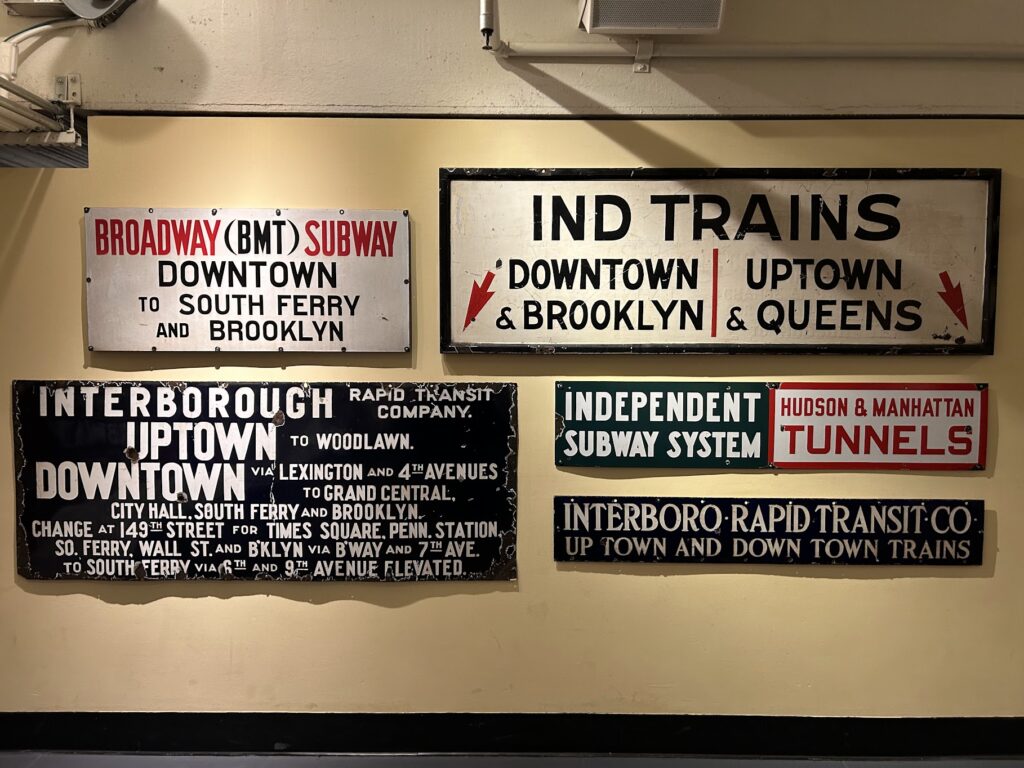
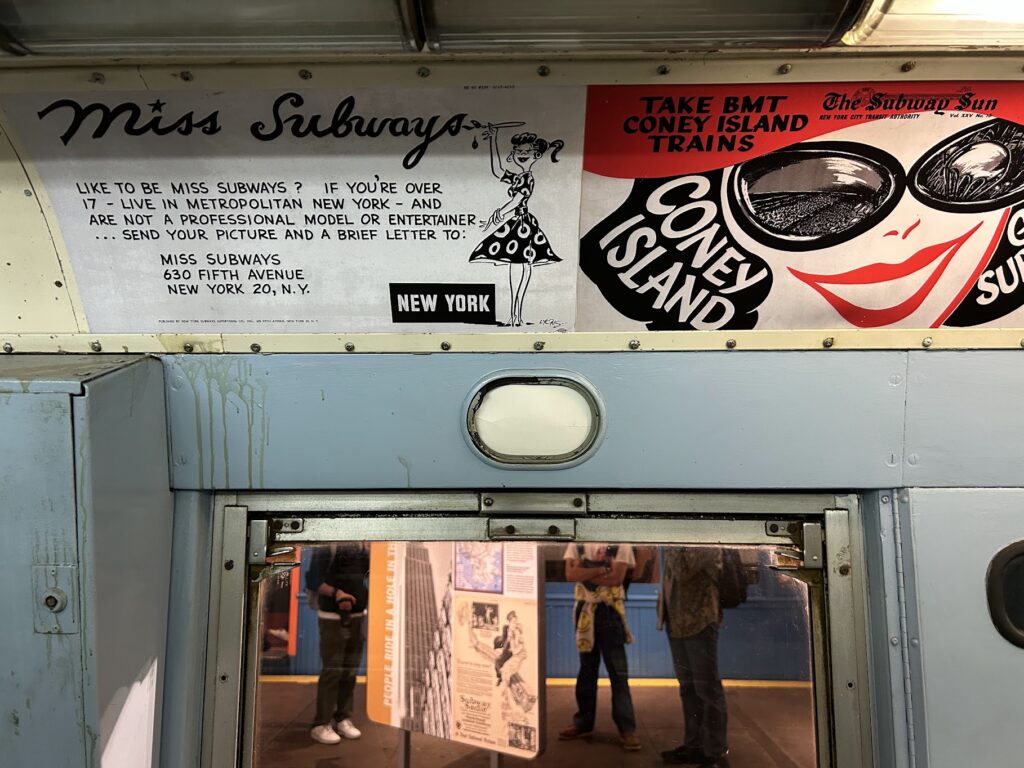
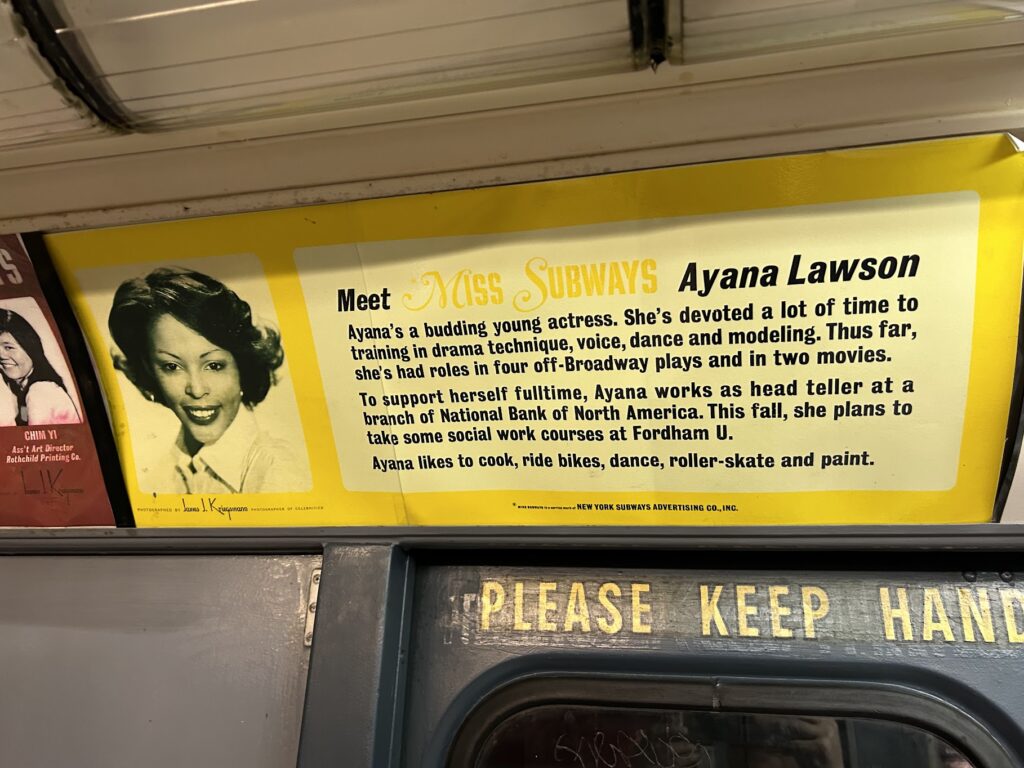
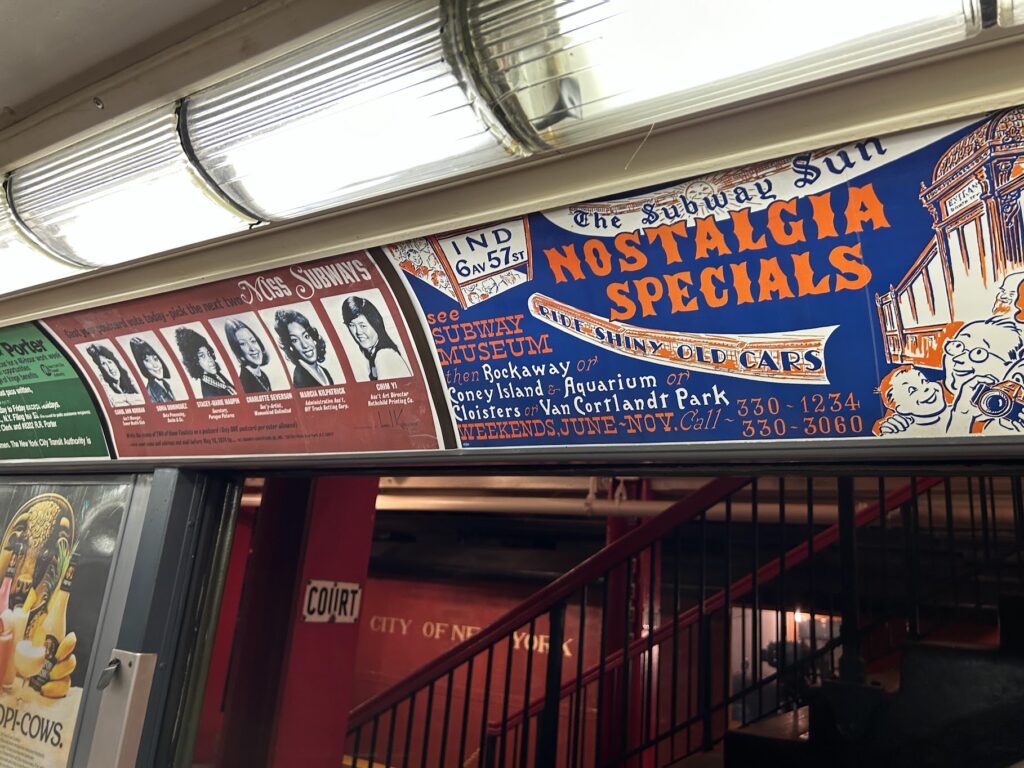
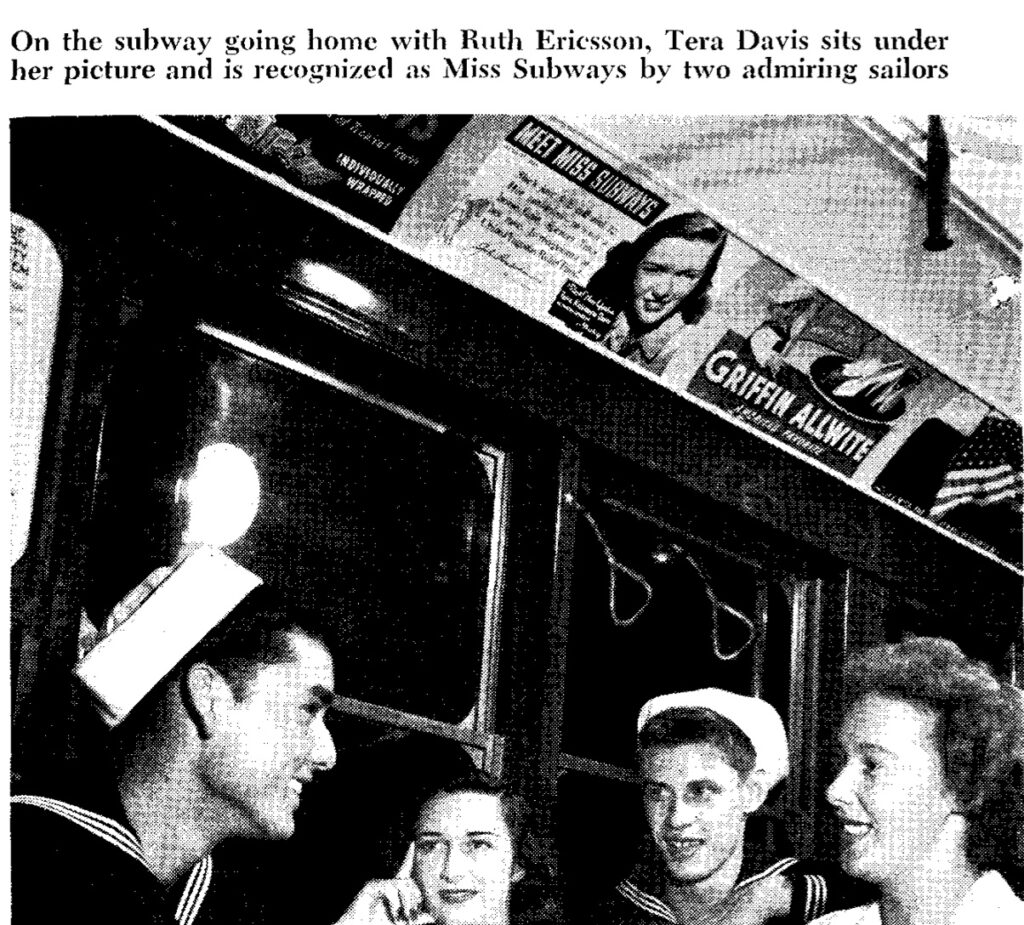
From 1941 and 1976, dozens of young women and high school girls were bestowed the honor of Miss Subways with her smiling photograph hanging within the cars of the New York subway system.

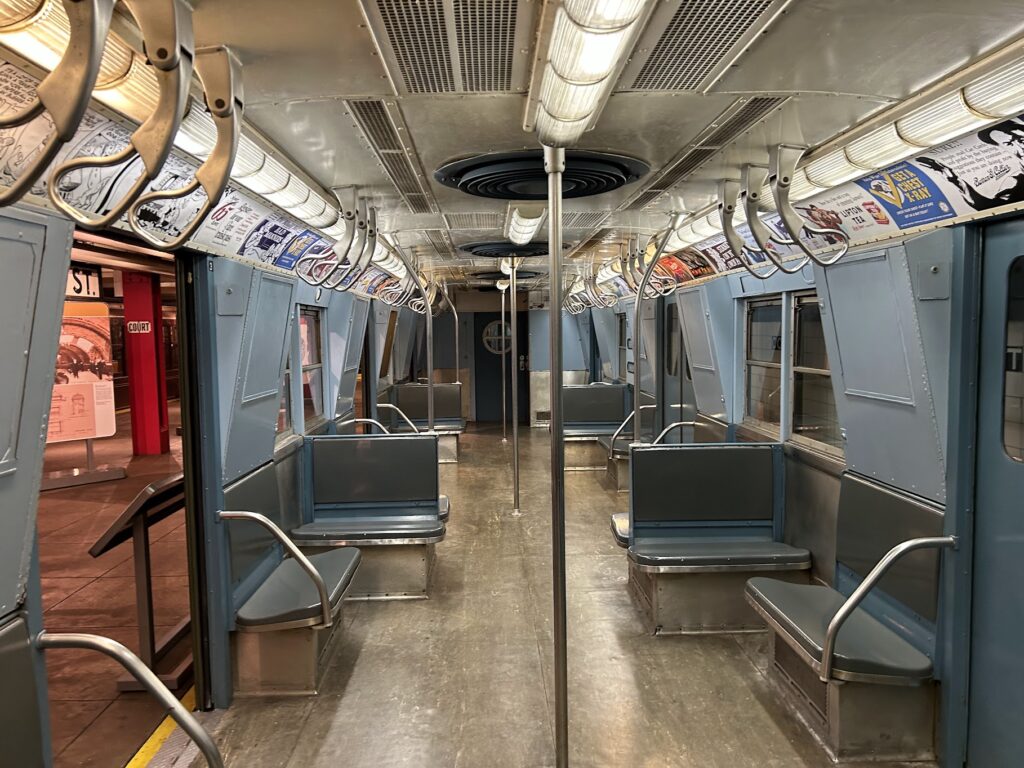
This was not a beauty pageant, but rather an advertising campaign which promoted the subway and drew the eyes of commuters to the train car’s many advertisements for cod liver oil, cigarettes and frozen foods.

The women who were chosen for Miss Subways became overnight local celebrities, aspirational figures for thousands of subway riders.

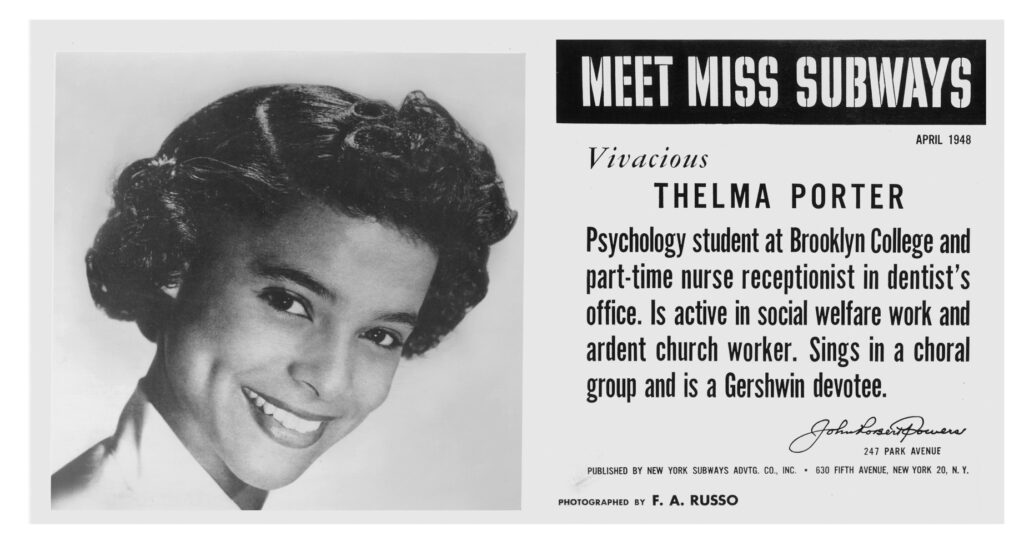
The program was overseen by modeling agent guru John Robert Powers whose work for mail order catalogs and newspapers would help define the ‘girl-next-door’ image of the mid 20th century.

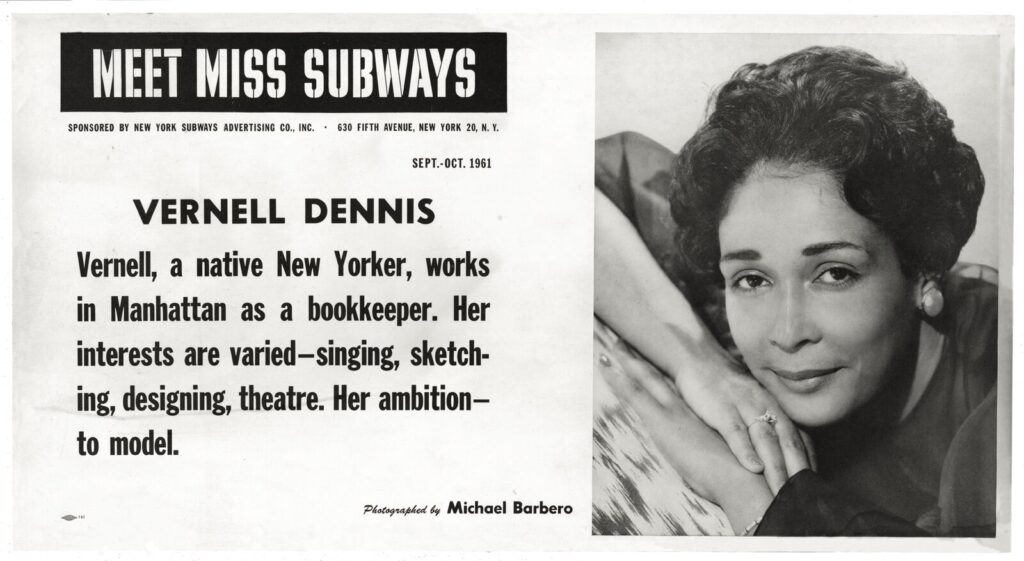
However this blonde Midwestern template soon looked out of place promoting the subway system of one of the most diverse cities in the world. By the 1960s, winners of this fleeting title began to reflect the many types of women who commuted and used the subway.

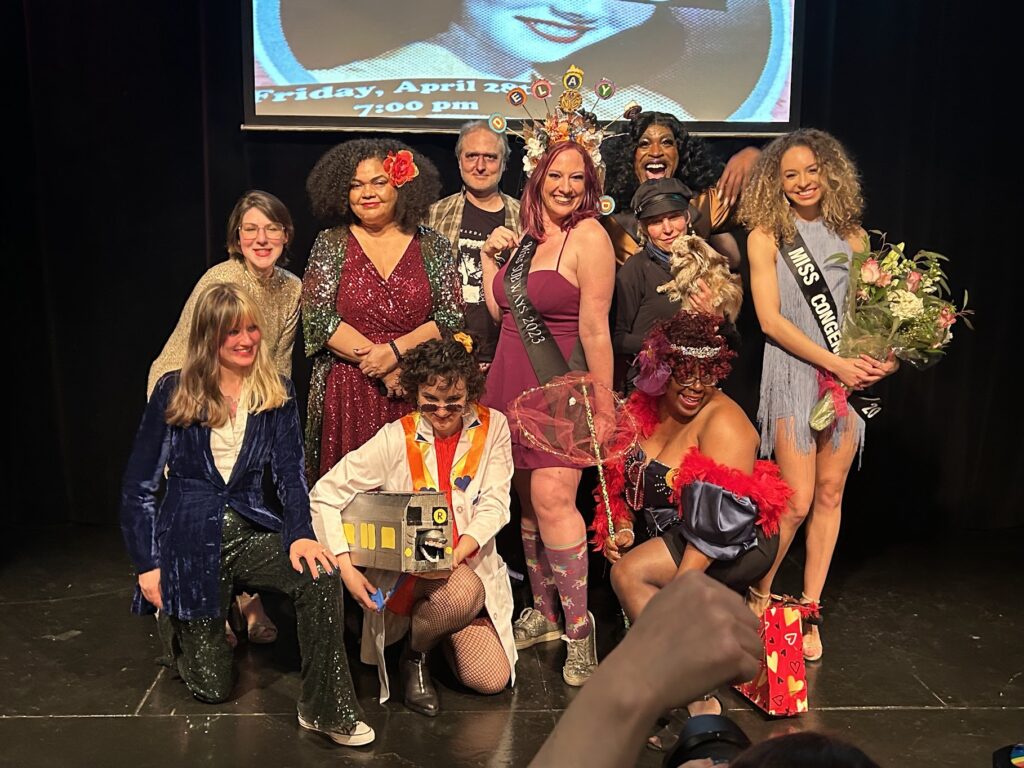
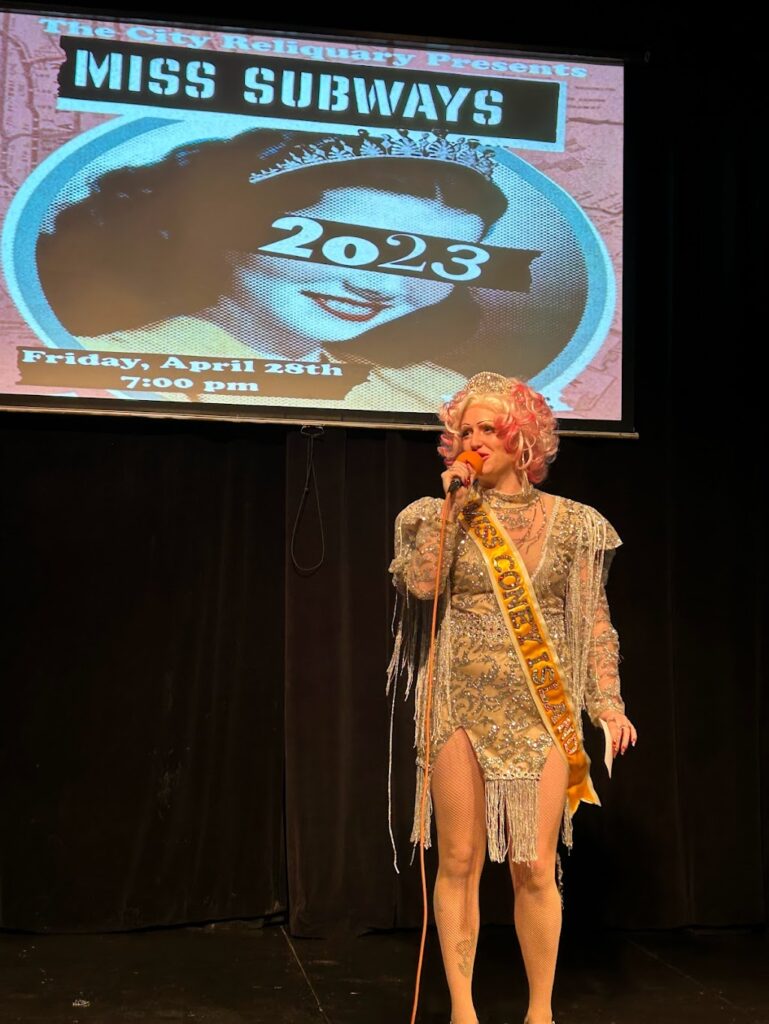
Listen in as Greg tells the story of the Miss Subways pageant then participates as a judge for a brand new Miss Subways competition, held in Coney Island in April. But what does this title mean in 2023?

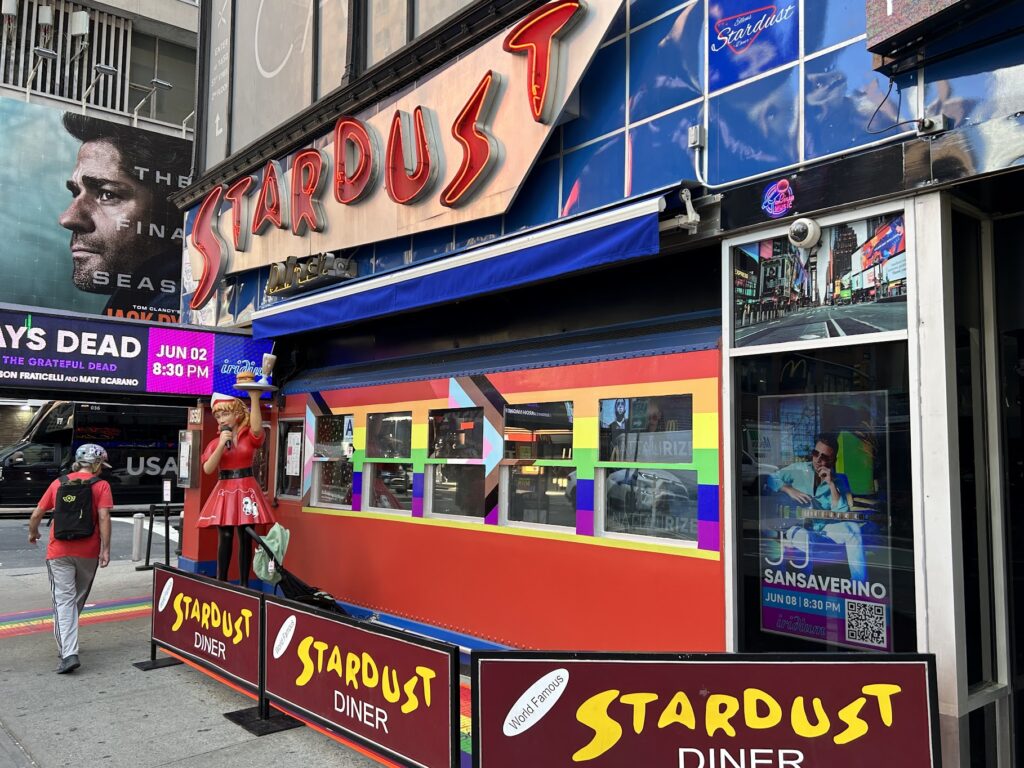
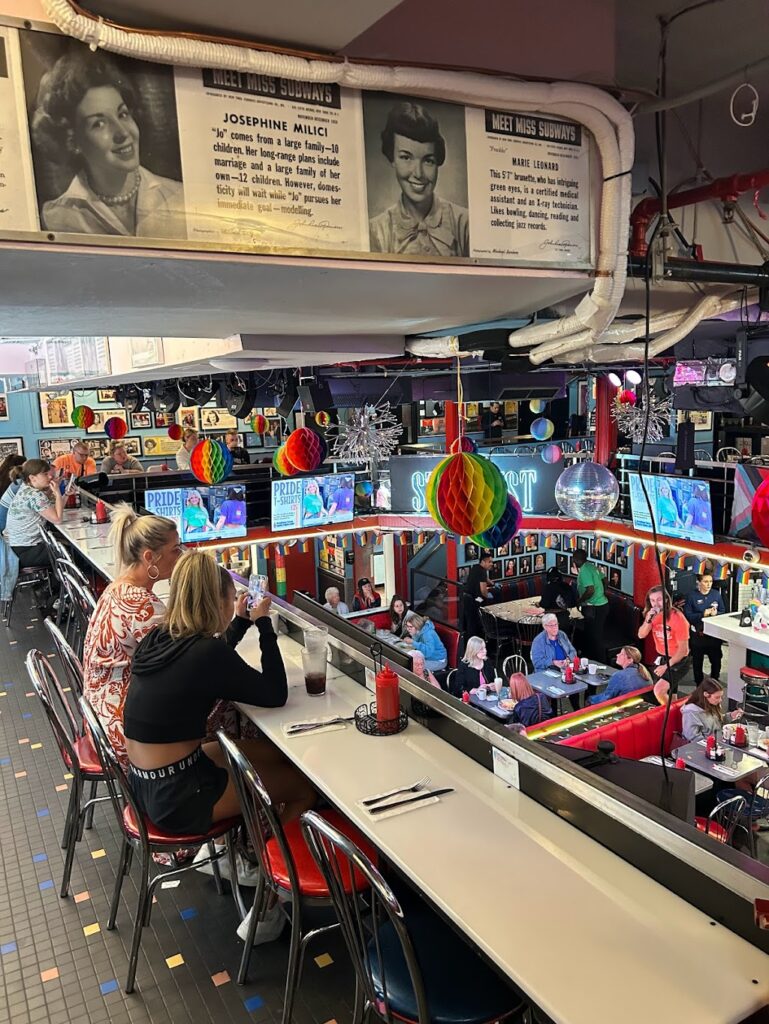
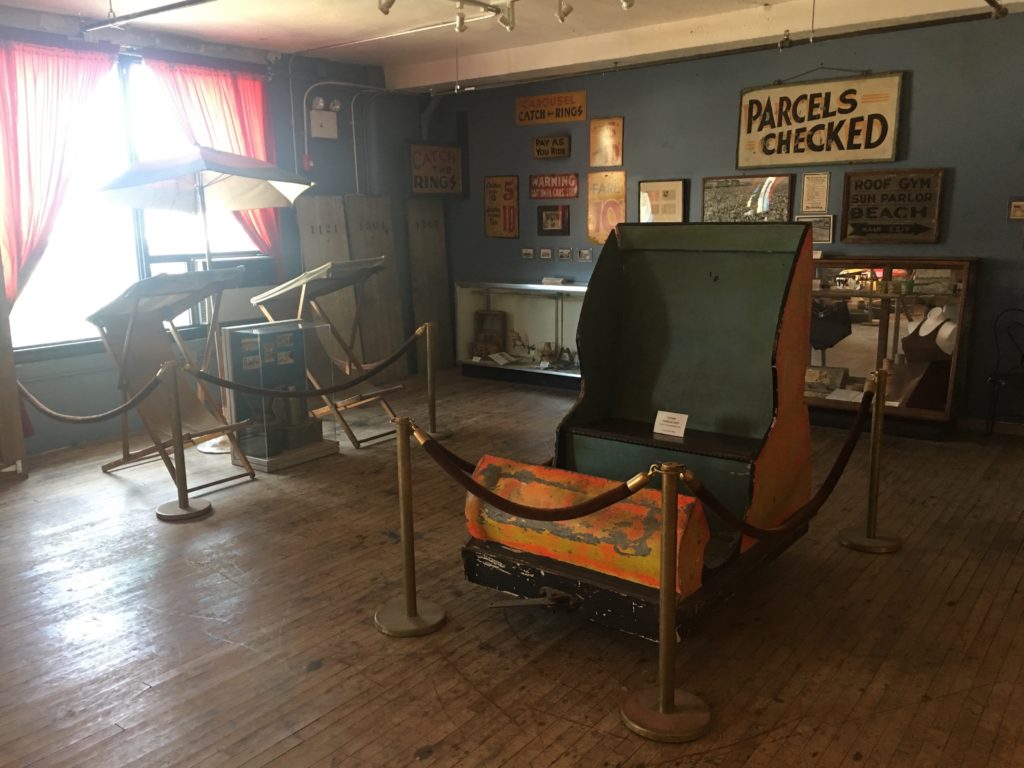
FEATURING A visit to the New York Transit Museum, the City Reliquary, Coney Island USA’s Seashore Theater and Ellen’s Stardust Diner

LISTEN NOW: MISS SUBWAYS: QUEENS OF THE NEW YORK COMMUTE


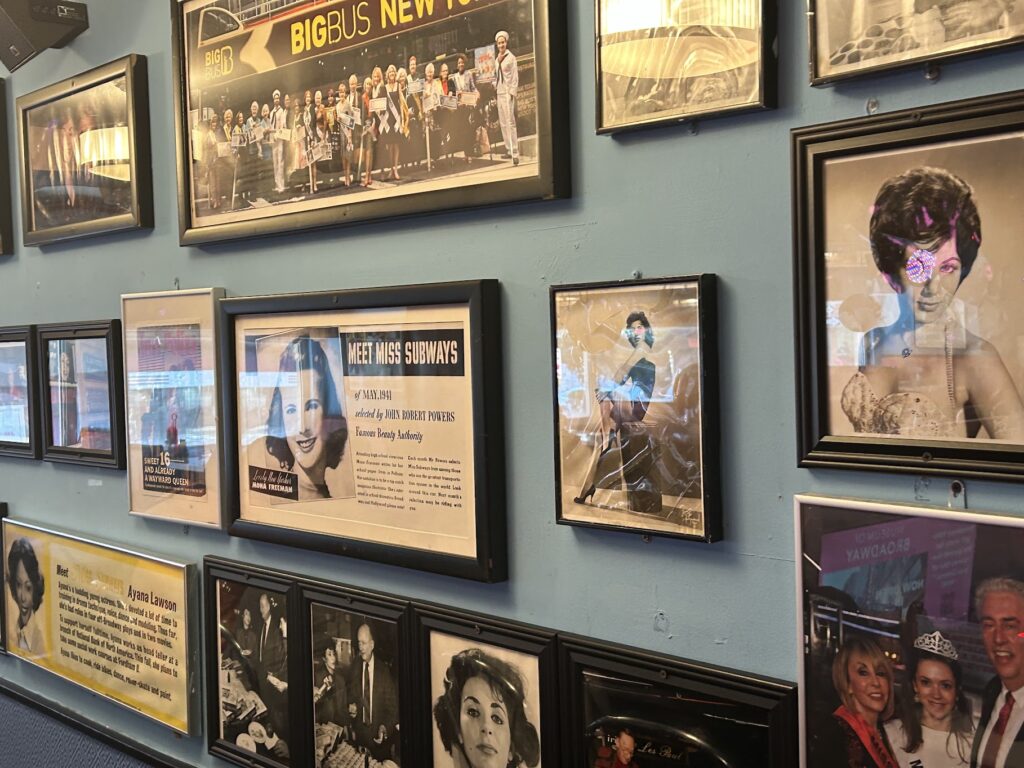
Photograph courtesy Ellen’s Stardust Diner/Miss Subways

My thanks to:

Jodi Shapiro and everybody at the New York Transit Museum
Ellen Hart Shurm and the whole gang at Ellen’s Stardust Diner
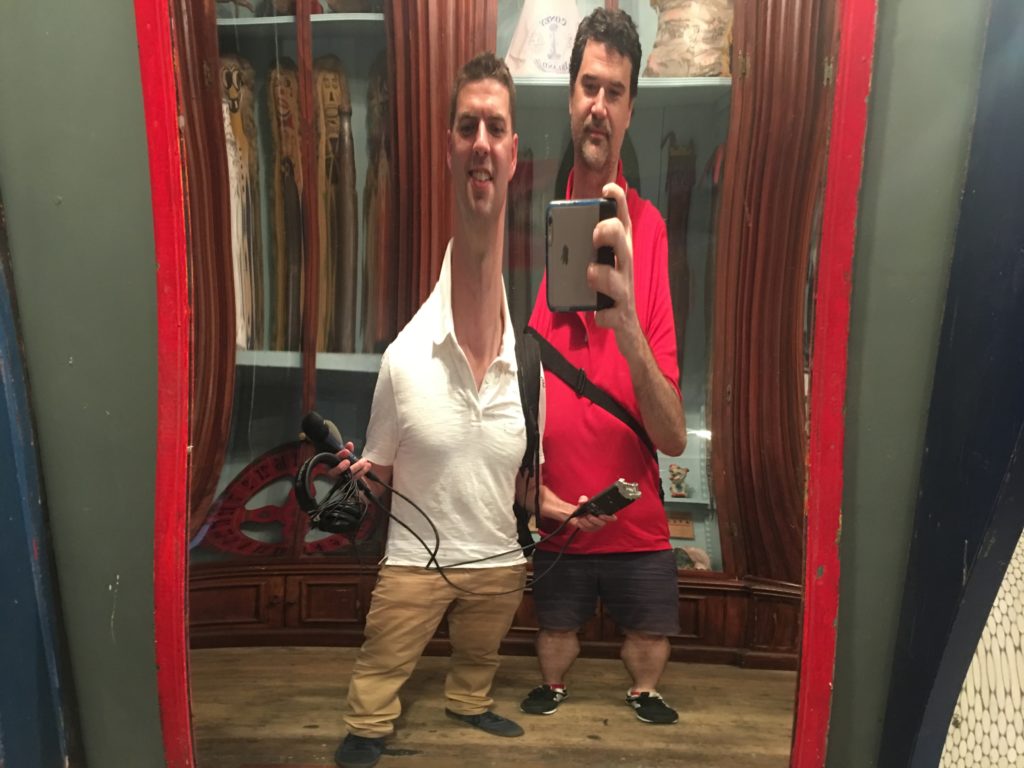
Dave Herman at the City Reliquary

And the reigning Miss Subways — Harmony Hardcore! And also to all the contestants who participated.


In 1948, Thelma Porter became the first African-American Miss Subways.

Ellen’s Stardust Diner. More information about their Miss Subways collection here.

New York Transit Museum

Seashore Theater at Coney Island USA

Harmony Hardcore and the contestants of the 2023 Miss Subways pageant
The glorious Maggie McMuffin
The final three contestants — Lena Horné, Chantelle and Harmony Hardcore

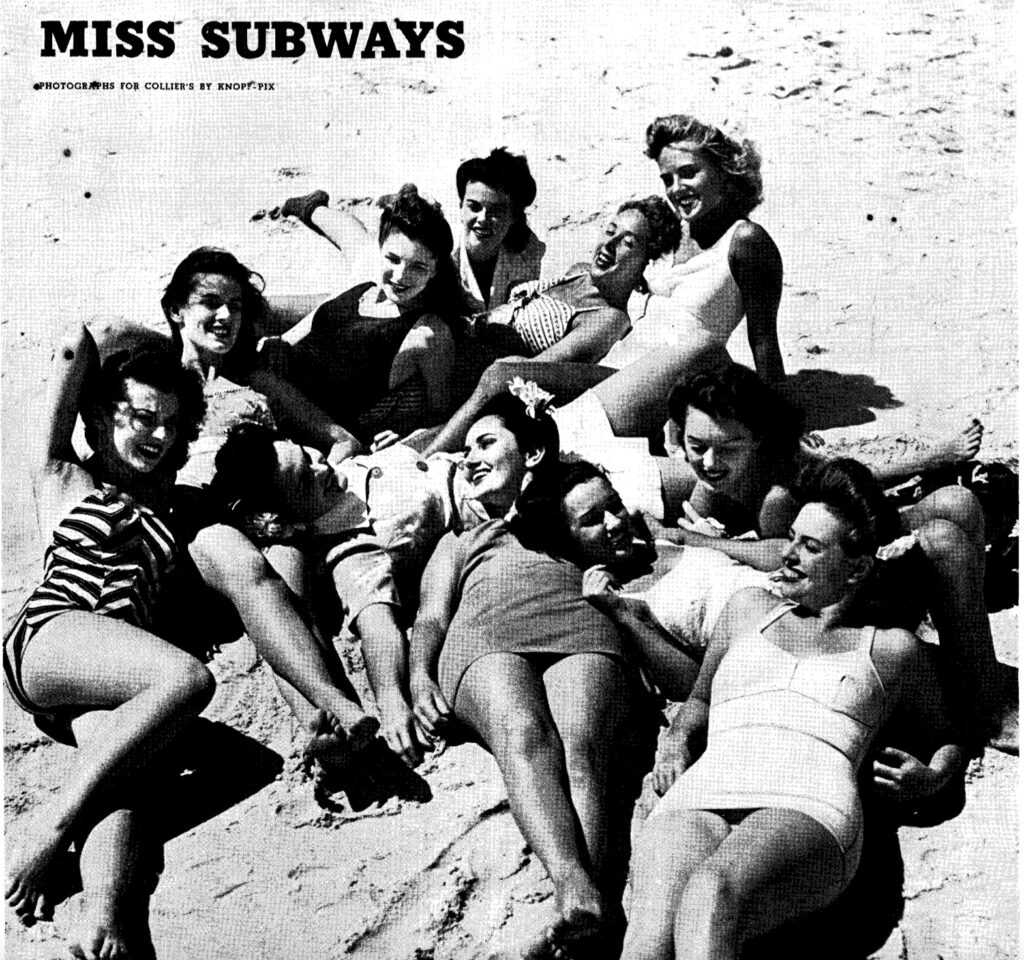
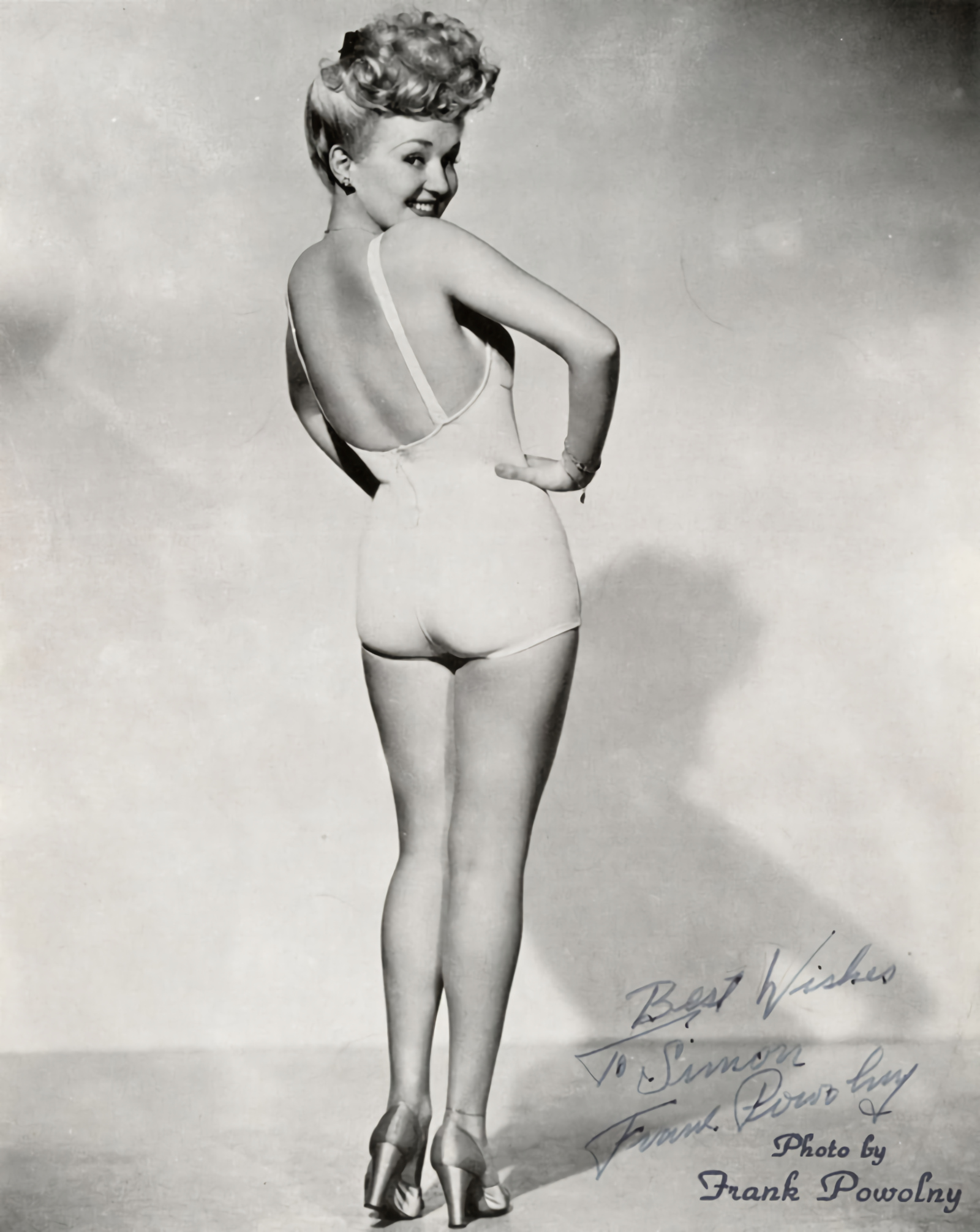
From an article in Collier’s WeeklySeptember 25, 1943, “Miss Subways: A new kind of beauty brightens the life of New York’s underground commuters,” in a photograph highly influenced by the pin-up photos of Betty Grable and other wartime beauties:


FURTHER LISTENING

After listening to this podcast, head back into our back catalog and listen to these shows with similar themes


FURTHER READING

Categories
Amusements and Thrills Podcasts

The Landmarks of Coney Island (Extended Funhouse Mix)

PODCAST Coney Island is back! After being closed for 2020 due to the pandemic, the unusual attractions, the thrilling rides and stands selling beer and hot dog have finally reopened.

So we are releasing a very special version of our 2018 show called Landmarks of Coney Islandspecial, because this is an extended version of that show — an extended remix, if you will — featuring the tales of two more Coney Island landmarks which were left out of the original show.

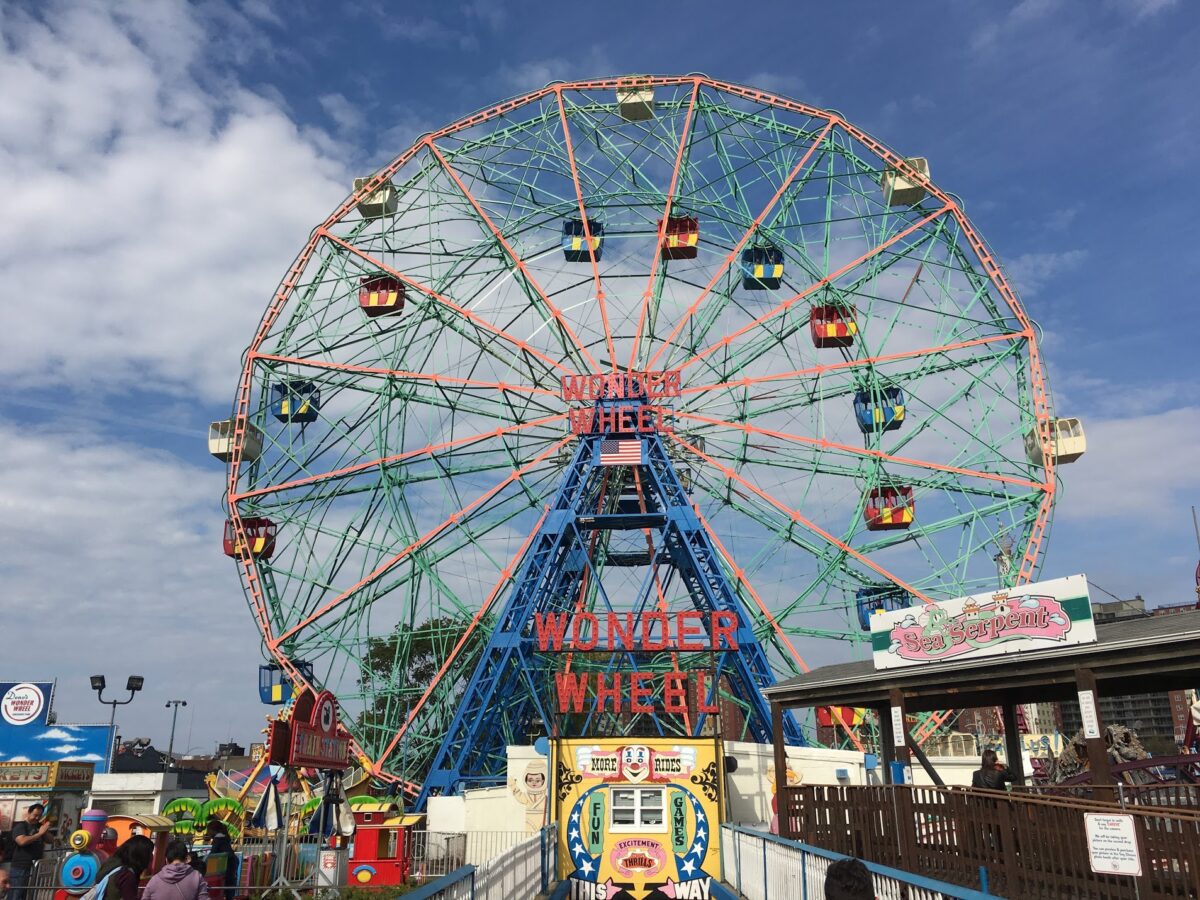
And this episode is dedicated to the Wonder Wheel which was to celebrate its 100th year of operation last year. So go show them some love this year!

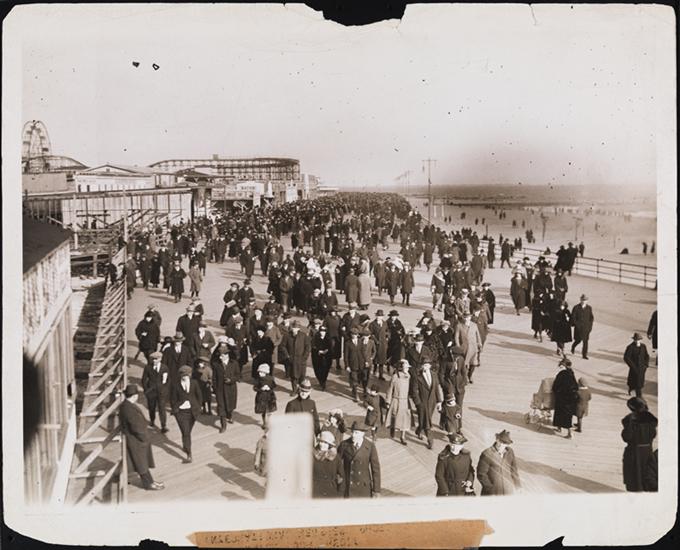
The Coney Island Boardwalk — officially the Riegelmann Boardwalk — became an official New York City scenic landmark in 2018, and to celebrate, the Bowery Boys are headed to Brooklyn’s amusement capital to toast its most famous and long-lasting icons.

Recorded live on location, this week’s show features the backstories of these Coney Island classics:

— The Wonder Wheel, the graceful, eccentric Ferris wheel preparing to celebrate for its 100th year of operation;

— The Spook-o-Rama, a dark ride full of old-school thrills;

— The Cyclone, perhaps America’s most famous roller-coaster with a history that harkens back to Coney Island’s wild coaster craze;

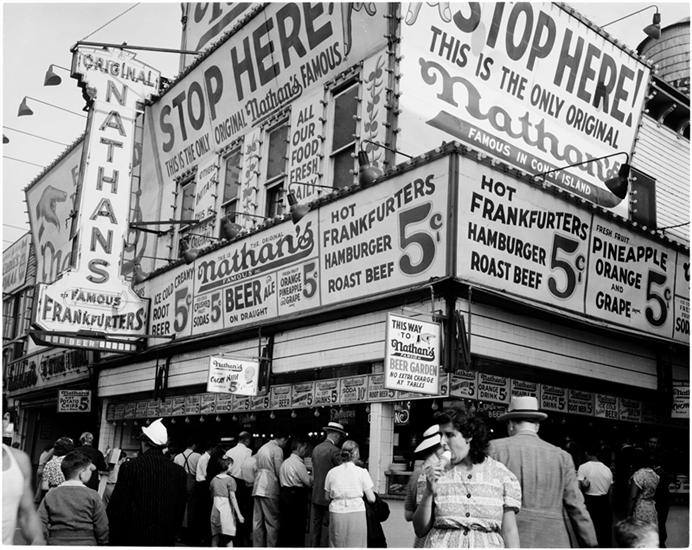
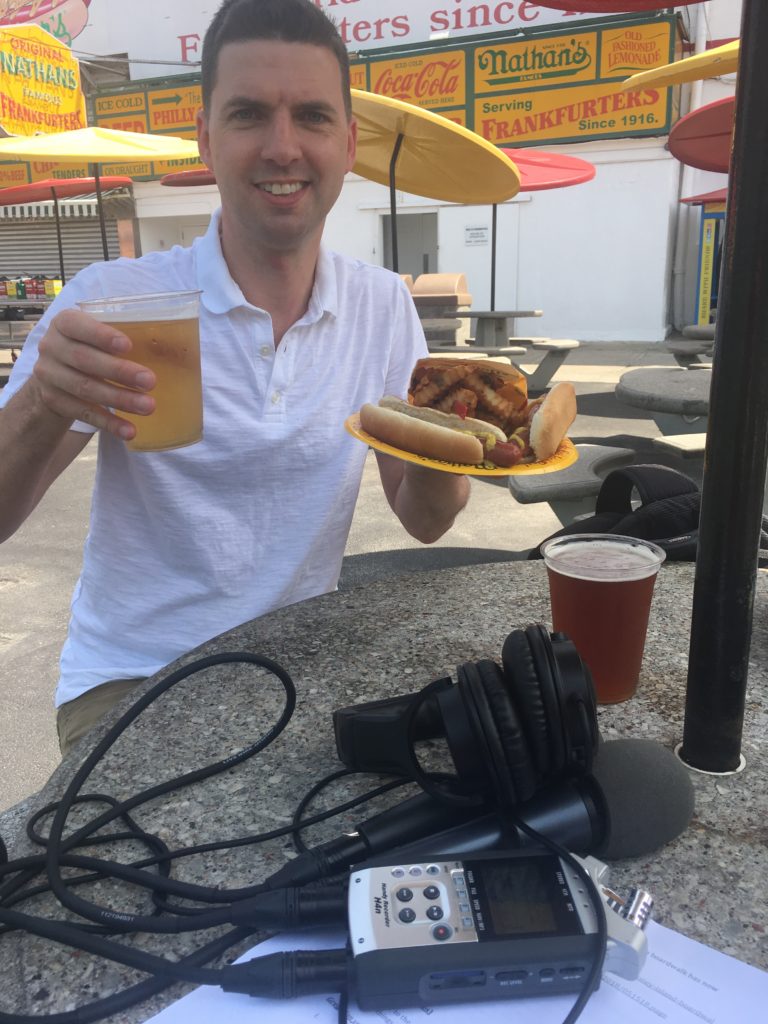
— Nathan’s Famous, the king of hot dogs which has fed millions from the same corner for over a century;

— Coney Island Terminal, a critical transportation hub that ushered in the amusement area’s famous nickname — the Nickel Empire

PLUS: An interview with Dick Zigun, the unofficial mayor of Coney Island and founder of Coney Island USA, who recounts the origin of the Mermaid Parade and the Sideshow by the Seashore

Listen Now: Landmarks of Coney Island (Extended Funhouse Mix)

__________________________________________________________

A big thanks to the amazing Dick Zigun for being on the show!

The Mermaid Parade is returning to Coney Island later this year! Check out the website for Coney Island USA for updates.


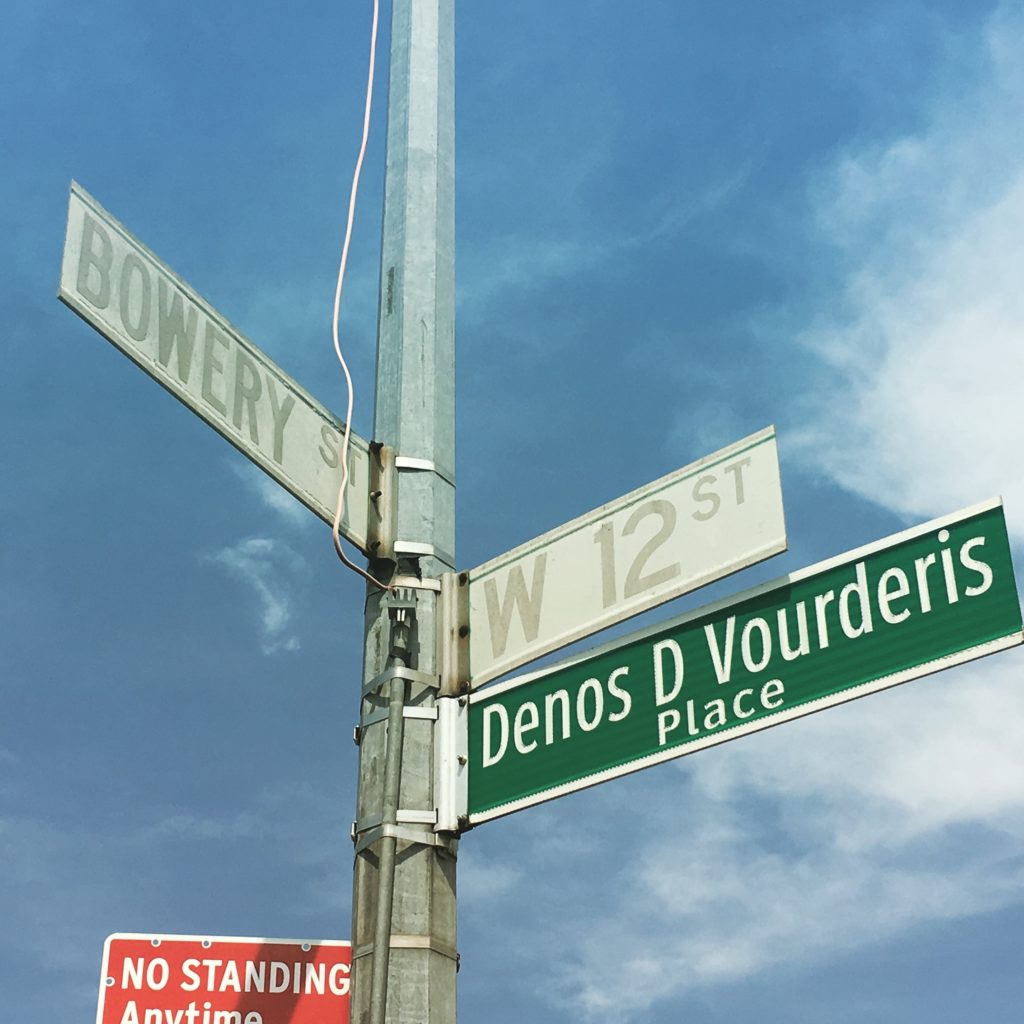
And we’d also like to thank Deno’s Wonder Wheel Amusement Park for graciously allowing us to record on the Wonder Wheel itself.

Here are the seven official landmarks within the old Coney Island amusement area. 

1) Coney Island Boardwalk

Museum of the City of New York

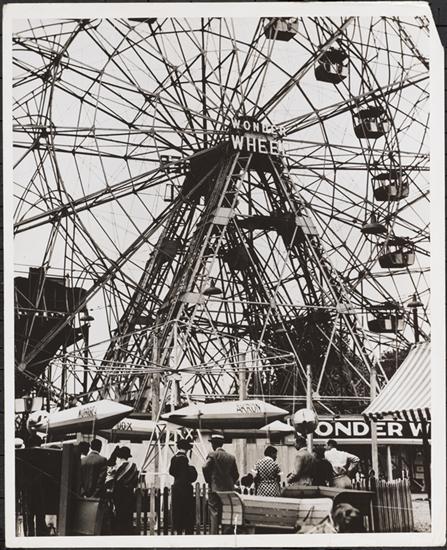
2)  Wonder Wheel

1944, Museum of the City of New York

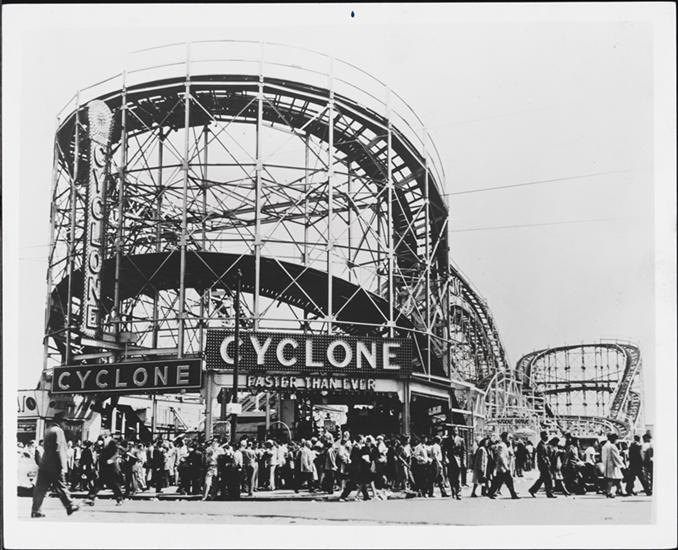
3) The Cyclone

1935, Courtesy Museum of the City of New York

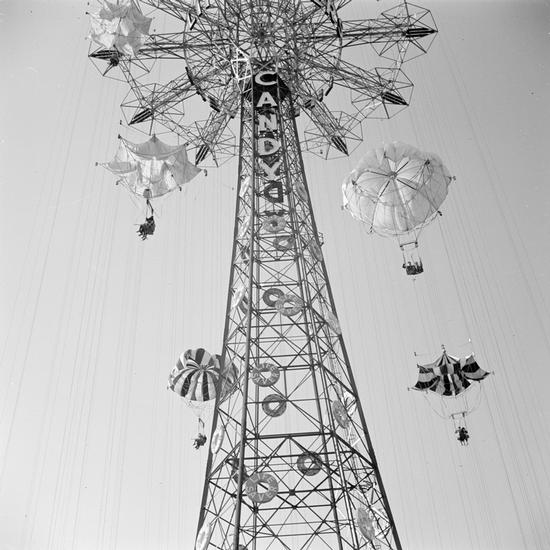
4) Parachute Jump — pictured here at its original home at the 1939 New York World’s Fair at Flushing Meadows

Wurts Brothers, courtesy Museum of the City of New York

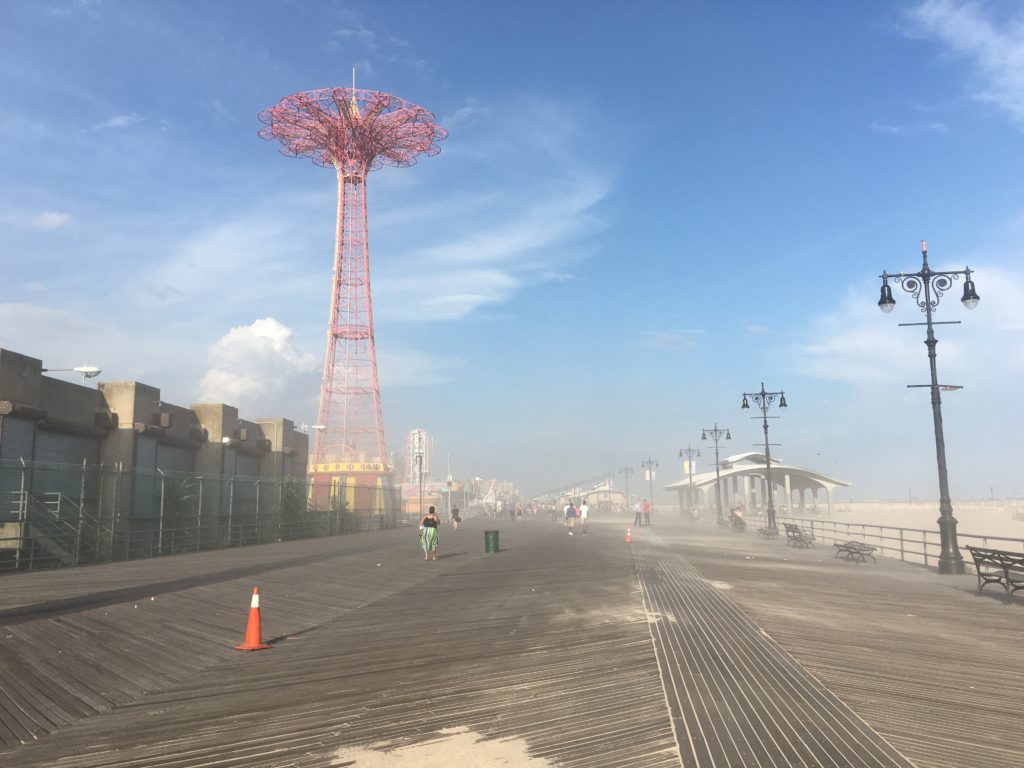
The Parachute Jump and the boardwalk on a windy summer’s day in 2017.

Greg Young

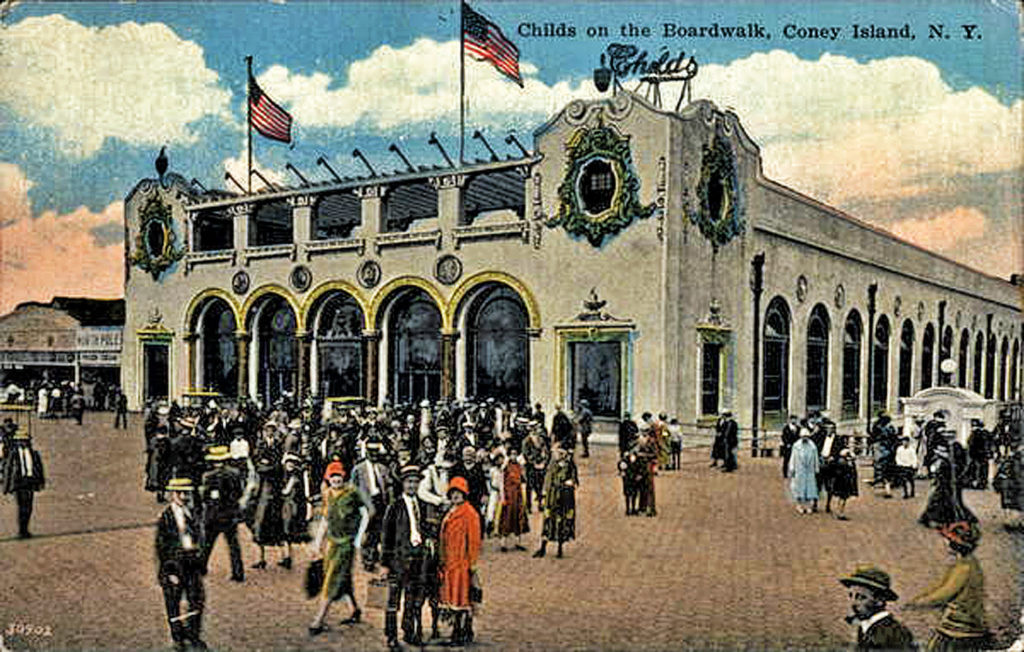
5) Childs Restaurant on the Boardwalk

Forgotten NY

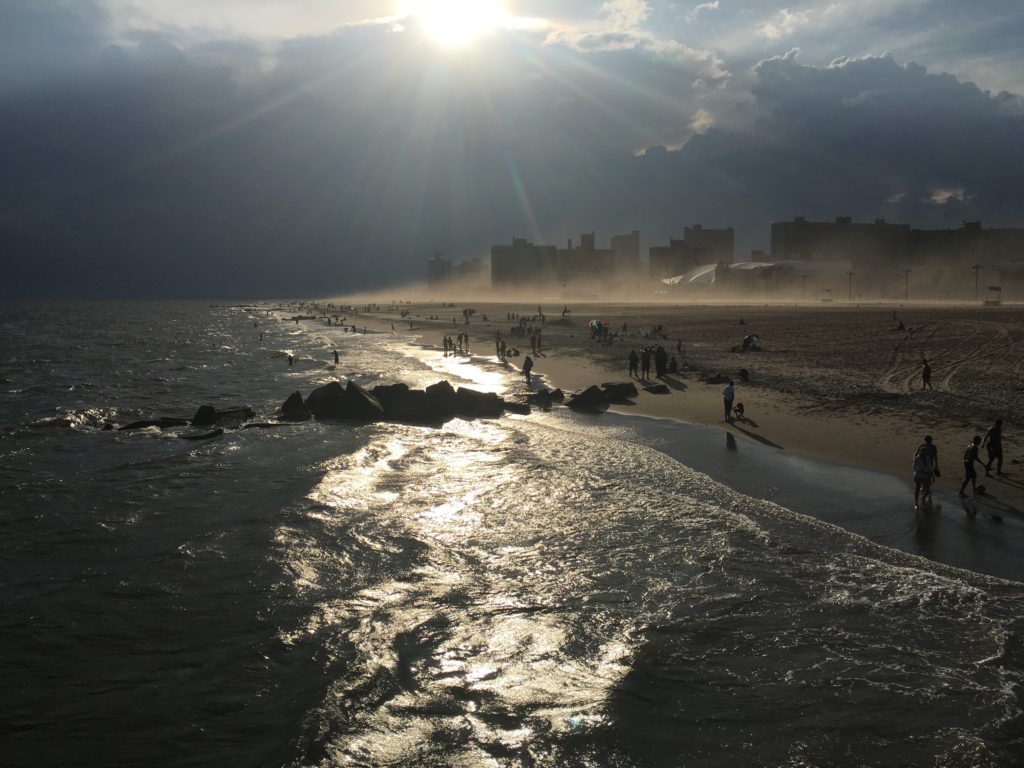
A nice hazy day in 2017. The former Childs Restaurant can be seen in the distance. This image was taken from the Steeplechase Pier.

Greg Young

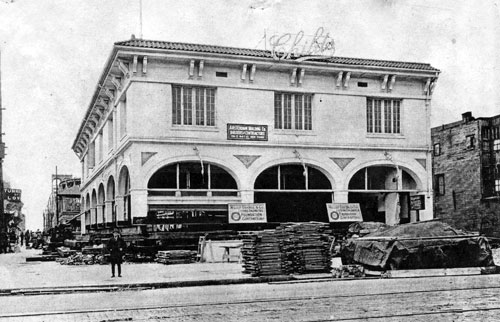
6) Childs Restaurant on Surf Avenue (now the home of the Coney Island Museum)

Courtesy Alex Rush

Inside the museum:

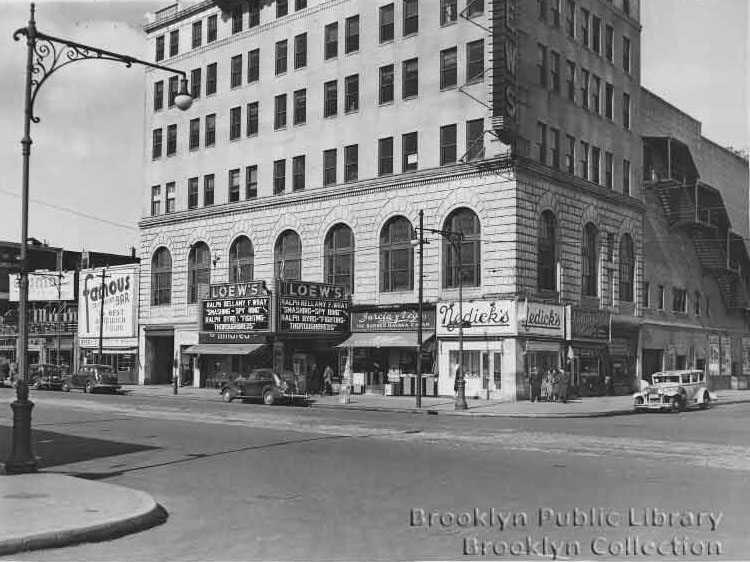
7) Shore Theatre on Surf Avenue

Brooklyn Public Library

And while Nathan’s Famous may not be a landmark, nobody can argue with the fact that its a genuine Coney Island classic.

1939, Andrew Herman Federal Art Project, Museum of the City of New York
From our 2018 adventure through Coney Island

The Bowery Boys: New York City History podcast is brought to you …. by you!

We are now producing a new Bowery Boys podcast every other week. We’re also looking to improve and expand the show in other ways — publishing, social media, live events and other forms of media. But we can only do this with your help!

We are now a creator on Patreon, a patronage platform where you can support your favorite content creators.

Please visit our page on Patreon and watch a short video of us recording the show and talking about our expansion plans. If you’d like to help out, there are six different pledge levels. Check them out and consider being a sponsor.

We greatly appreciate our listeners and readers and thank you for joining us on this journey so far.

Categories
Brooklyn History Film History

Free movies in Coney Island saloons — since the year 1912!

People have been enjoying movies and alcohol well before anybody first thought to make popcorn for hungry audiences.

Believe it or not, this carefree pleasure — one most people do not take for granted anymore — has its roots in a small but significant decision that was made almost 110 years ago.

In May of 1912, people were still reeling from the Titanic disaster and sorting through a messy presidential election between four viable presidential candidates (Woodrow Wilson, William Howard Taft, Theodore Roosevelt and Eugene V Debs).

But most people left their worries behind once they stepped off the train at Coney Island, where the amusement parks were just opening their doors that month, making way for the summer crowds with an even wilder array of rides and shows.

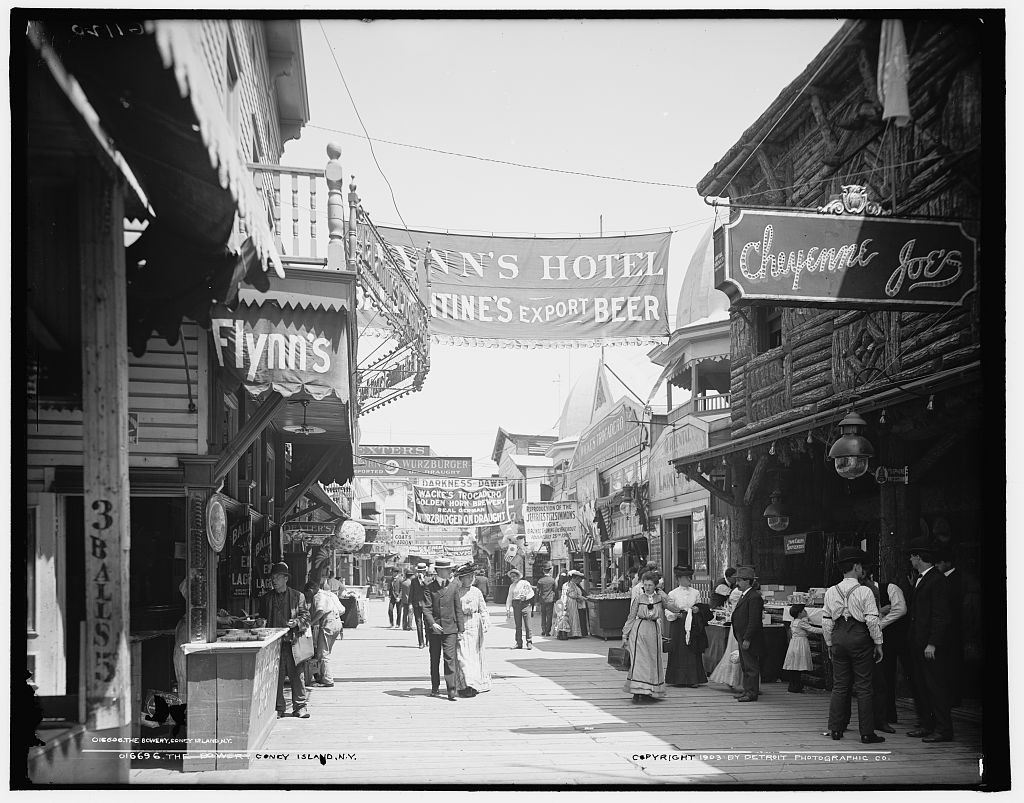
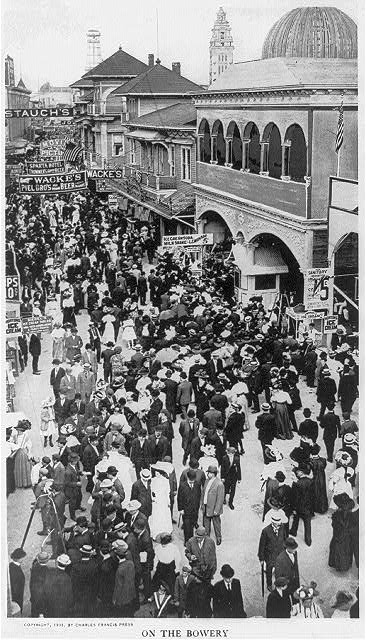
The Bowery, one of the more adventurous sections of Coney Island, 1903

Most of the amusements at Steeplechase Park were totally new, as a fire in 1907 had decimated most of the park.

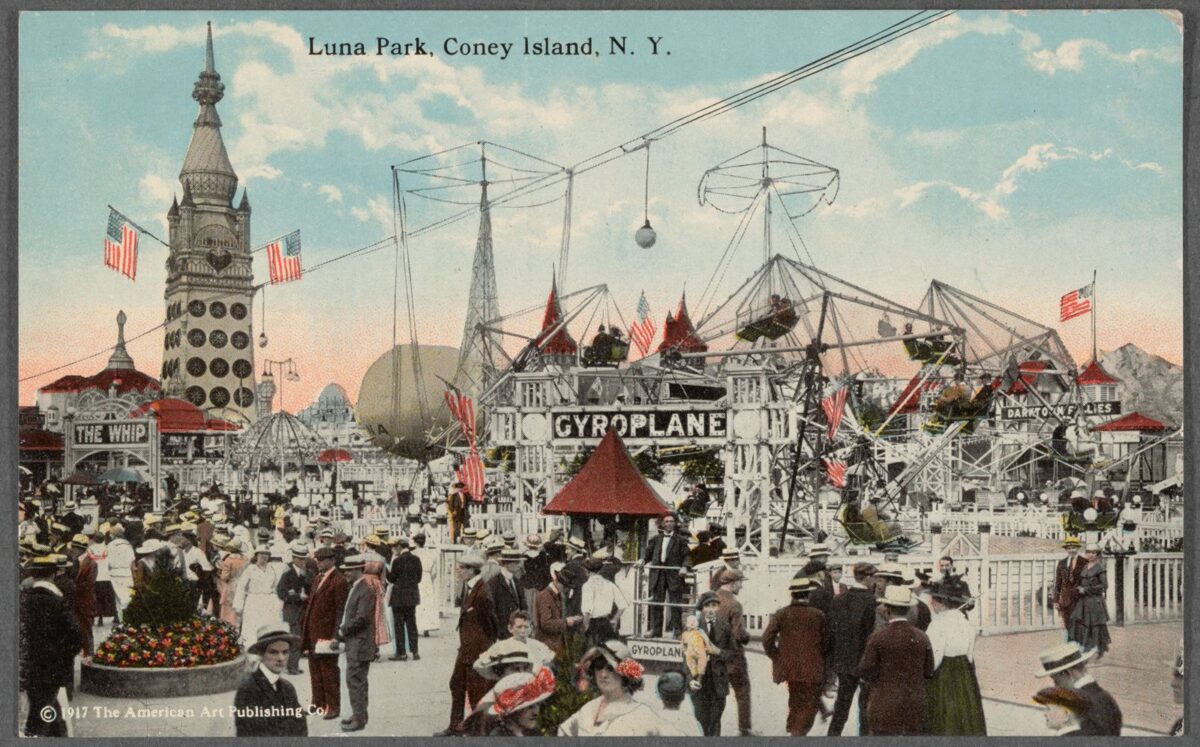
Nearby sat the ruins of Dreamland, destroyed in a fire in 1911 and never rebuilt. Luna Park also expanded in 1912 with many new rides, including one that seemed to mock the misfortunes of its rival parks — the Great Fire Show, which presented a Western town ravaged in flame.

But a brand new entertainment was making itself known in Coney Island — moving pictures.

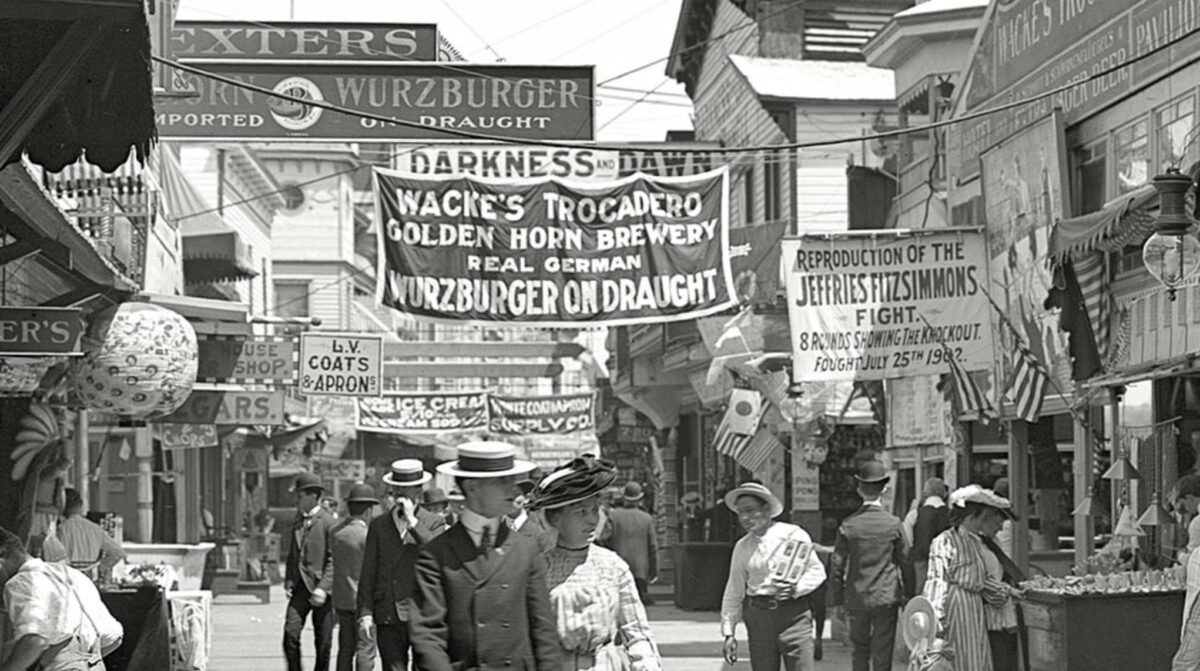
Coney Island’s Bowery. You can see signs for Wacke’s establishment here. (Library of Congress)

For instance, when Luna Park threw open its doors on May 25, 1912, the park contained a theater which presented some of the world’s first color short films in the British-invented Kinemacolor process. (Here’s an example of one of the films that may have exhibited here.)

The popularity of motion pictures, which were often exhibited between vaudeville acts or in continuous runs in theaters called nickelodeons, soon exposed the fallacy of one particular New York law.

For operators had to have a theater license in order to present a free show, even though, technically, a film could be easily displayed in a non-theatrical environment — namely, a saloon.

The Bowery, one of the more adventurous sections of Coney Island, 1903

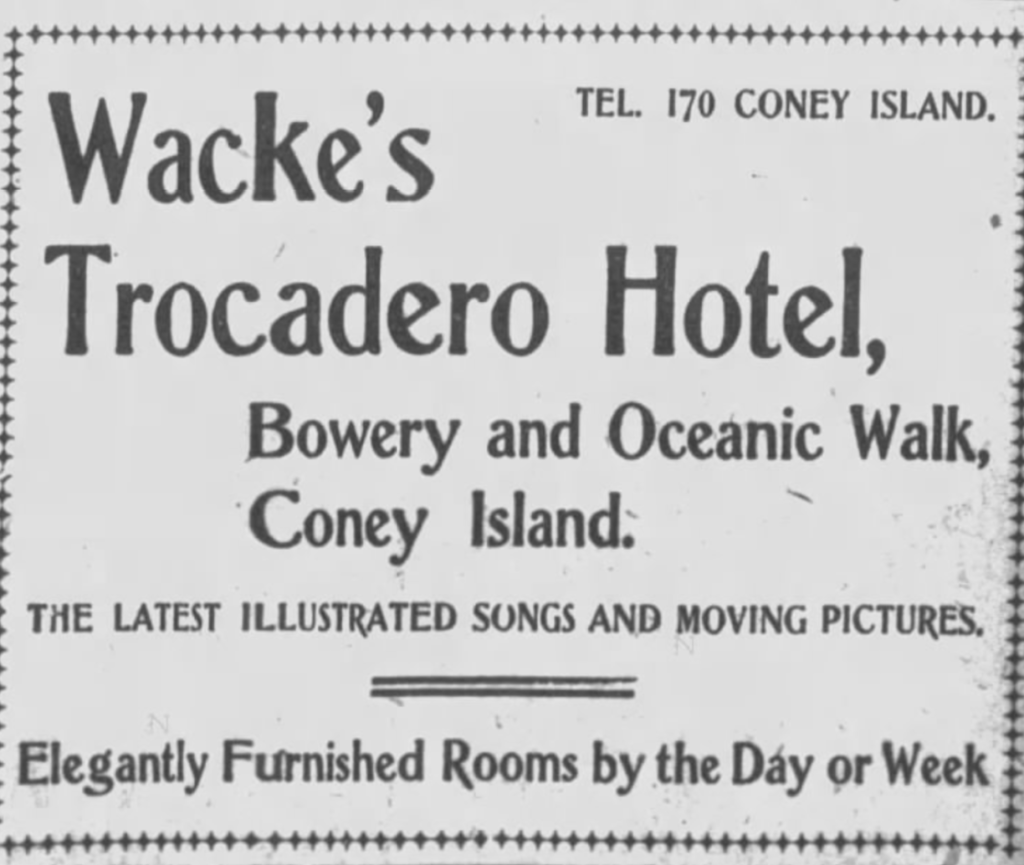
Coney Island theater proprietor Herman Wacke, no stranger to the moving image, is touted by some as the first commercial exhibitor of a motion picture at his Trocadero Hotel in 1893.

Wacke’s hotel, a stalwart from Coney’s early years located along a strip of cabarets and beerhalls affectionately called the Bowery, was nearly destroyed in the fire that consumed Steeplechase in 1907.

In 1912, Wacke fanned a few new flames.

He began showing films for free in the saloon as a way to entice people to come in and purchase food and beer. Wacke’s was probably the best known of many along the Bowery to exhibit films in this fashion.

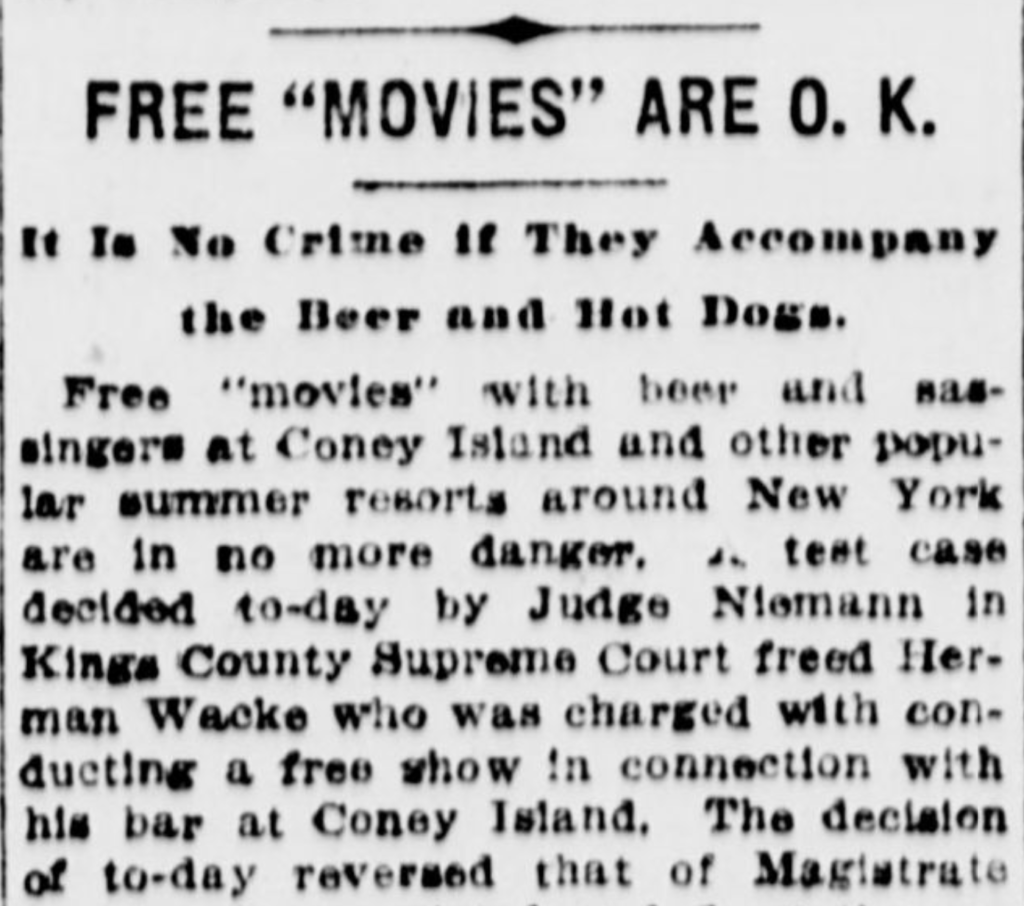
But the proprietor didn’t have a license to do so, and during one particular sting, Wacke was arrested — “charged with conducting a free show in connection with his bar” — and fined $5.

Not a huge sum of money for a successful saloon owner, and Wacke went willingly, becoming a test case for a law that many certainly thought was rigid and overly meddling.

The charge was eventually overturned by a Kings Country Supreme Court judge who announced that such incidental performances were not subject to the law.

The decision was announced in a headline in the May 28, 1912, edition of the New York Evening World: Free “Movies” Are O.K.  It Is No Crime If They Accompany The Beer And Hot Dogs.

Wacke was arrested for a test of the law and its relation to the free shows given that people may be induced to buy drinks while sitting at the tables. Judge Niemann held that a show must be conducted as a business of exhibition for a price of admission in order to come under the law.

The law would be challenged again a few years later by the owners of posh Manhattan cabaret Maxim’s, who also presented so-called ‘free’ performances.

By the 1920s, of course, saloons could technically show movies — but they couldn’t serve alcohol! By the time Prohibition was repealed, films were much longer and people preferred the comfort of lavish movie palaces.

Free movies (and broadcast sports) of course returned to bars with the advent of television.

Today theaters like Alamo Drafthouse and Nitehawk Cinema elegantly mix the pleasure of cinema and fine cocktails. The ghost of Herman Wacke looks down approvingly.


As one of America’s premier leisure destinations, Coney Island was so closely associated with films of this period that it even starred in a few of them, including Mack Sennett’s At Coney Island in 1912.

There’s even an Edison film from 1903 called Rube and Mandy at Coney Island.

Of course the best Coney Island-themed silent film is the Buster Keaton/ Fatty Arbuckle comedy from 1917.

Categories
Amusements and Thrills Film History

Come to the Airdome! Over 100 years of outdoor movies in NYC

It may be some time before we all get to truly enjoy the inside of a movie theater again. Hopefully soon!

But outdoor movies — in particular, drive-in movies — have had a bit of a renaissance, a socially distanced way to enjoy blockbusters on a big screen. Mommy Poppins has a great round-up of all the outdoor drive-in movie options in New York City and the surrounding area.

Watching movies outdoors is tradition much older than you think.

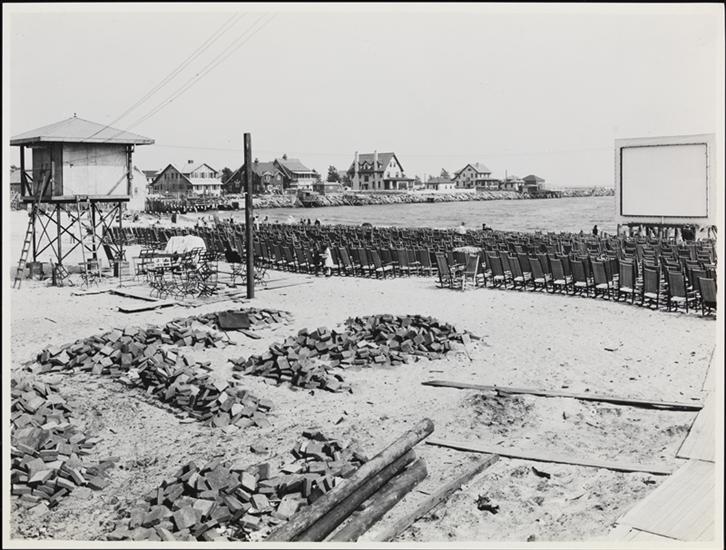
At an outdoor movie theater in Brighton Beach, 1920. (MCNY)

Yes, there were outdoor (or open air) theaters showing films almost as soon as the medium became popular.  

This is not terribly surprising. There were already outdoor playhouses for theater and vaudeville, and, in an era of over-crowded tenements and no air conditioning, any reason to sit outside on a nice summer’s night seemed practically luxurious.

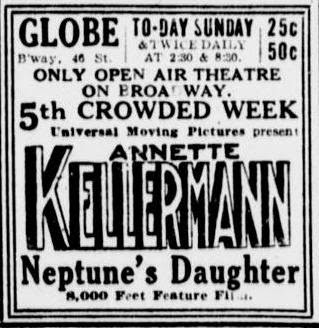
An advertisement for a rare Midtown open-air theater.  The lights of Broadway and street noise would have been a serious impediment. 

One drawback outdoor movie lovers deal with today is the loud city interfering with the sound of the movie.  Not so then; the city might have been loud, but the movies had no sound.  

It was a purely visual sensation, a thrilling entertainment light show under the moonlight.

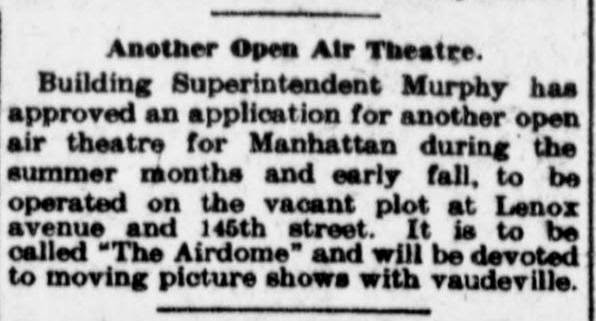
Early outdoor theaters in New York, sometimes called airdomes, were not usually in city parks, but in abandoned lots or open spaces in upper Manhattan.  

Here’s a description of an airdome from a 1914 exhibition guide:  “An airdome is simply an outside moving picture show that is run on practically the same lines as the old summer garden, and is therefore essentially a fair-weather show, although a few airdomes are equipped with pavilions.”

Airdomes were designed to be temporary although you did need a permit from the city to operate one. Other than that, anybody could do it! “Nothing elaborate …is necessary for a successful airdome,” said the guide. “The chairs and tables may be of the ordinary kitchen variety.”

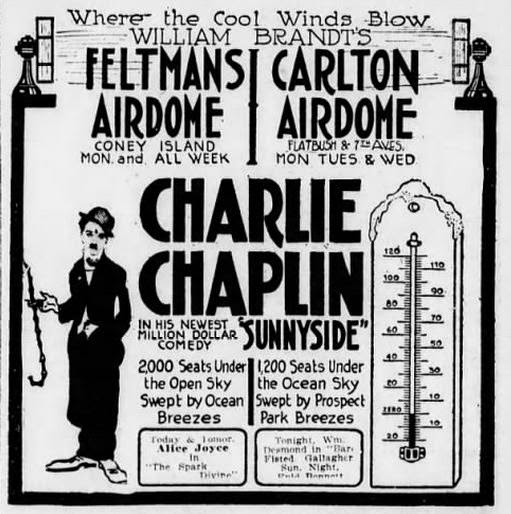
An advertisement for two Brooklyn airdomes — in Coney Island and Prospect Heights (Brooklyn Daily Eagle)

From surveying various newspapers from the 1910s, it appears most airdomes were located either in upper Manhattan and the Bronx (where there were more open lots) or in Coney Island (where the masses went for recreation).

Before 1915, movies were one-reelers, quite short, and often featured alongside live acts as part of a vaudeville routine.  This airdome (listed in the July 1909 New York Sun) was typical of the day:

Outdoor movie theaters were so prevalent in the 1910s that, during planned war time electrical blackouts in 1918, they were specifically mentioned as a “bonafide food and entertainment establishment” alongside “roof gardens and outdoor restaurants.”  [source]

But as with modern outdoor theaters, sometimes reality elbows its way into the picture.  

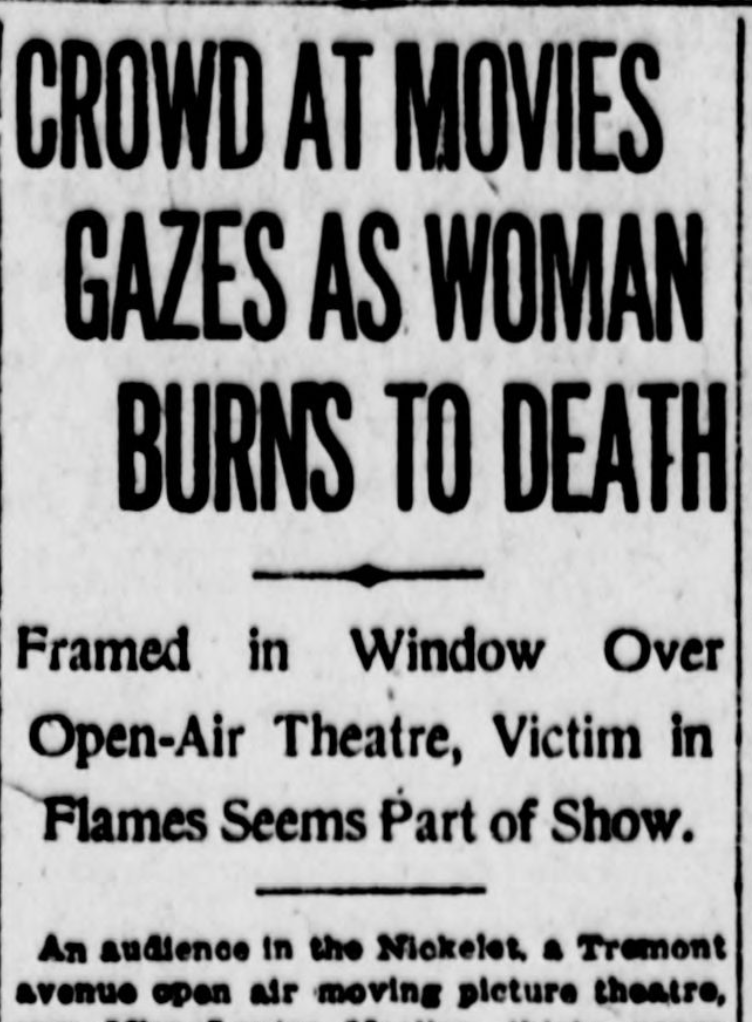
One of the Bronx’s most prominent open air moving picture theatres was the Nickelet (at Tremont and Prospect Avenues), presumably named for the admission price.  

One evening in June 1913, audiences witnessed a terrifying sight — a woman burning to death in a building adjacent to the theater lot.  Audience members scrambled to her rescue to no avail.

The transient nature of the airdome — and the ability for anybody with a license to have one — did cause friction at times.

During the spring of 1909, in the Long Island town of Freeport, a Brooklyn man enraged the town when he set up an airdome there even though he was not a town resident.

The airdome never went away of course.  But the experience paled in comparison to the grand delights of the movie palaces, especially when air conditioning technology came along.  

They eventually died out, along with the rooftop garden, in the 1920s, only to return later in the century when sound and projection technologies allowed for a more enjoyable evening at the movies.

And now, ladies and gentlemen, I hope you’re reading this outside! Create your own airdome experience and watch this film — Charlie Chaplin’s Sunnyside — enjoyed by Brooklynites over 90 years ago in an outdoor moving picture theater:

Categories
Amusements and Thrills Health and Living

The Bowery Boys New York City swimsuit edition, 1880-1920

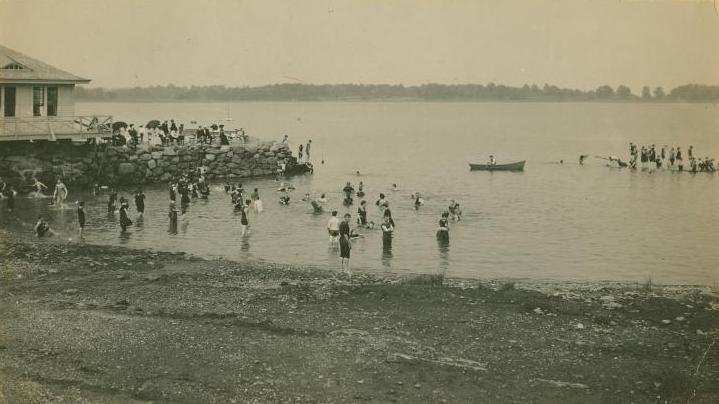
 The notion of organized ‘ocean bathing’ — actually going into the water for health, relaxation and enjoyment — was really a 19th century invention, first popularized in the United States during the 1830s at the Marine Pavilion on the Rockaway Peninsula.

Bathing beauty: Diver Maggie Ward prepares for a jump into the waters of Coney Island, in the summer of 1888

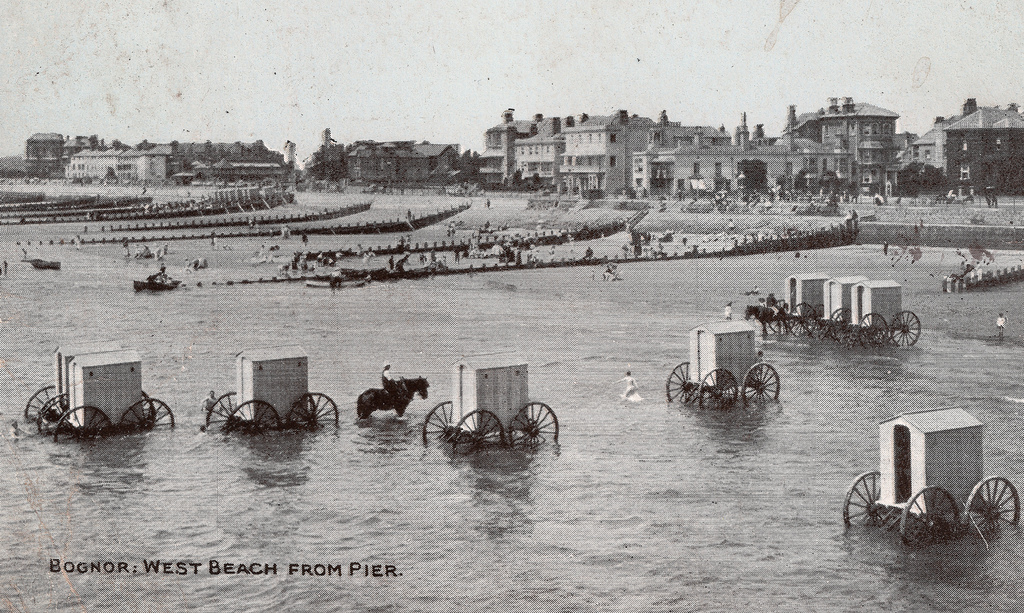
For propriety’s sake, people would enter a bathing hut hitched to a horse and ride the container as it was backed into the water, exiting from the hut in their full-body swimming apparel only when safely immersed in the water. No risk of seeing wet fabric clinging seductively to the human form!

Fifty years later, bathers would dare walk to the beach sans horse-drawn hut. But their beach apparel still matched the modesty of their regular wear.

Here are a few examples of garments — for sunbathing, swimming or just relaxing — worn at some of New York’s most popular beaches of the late 19th-early 20th century.

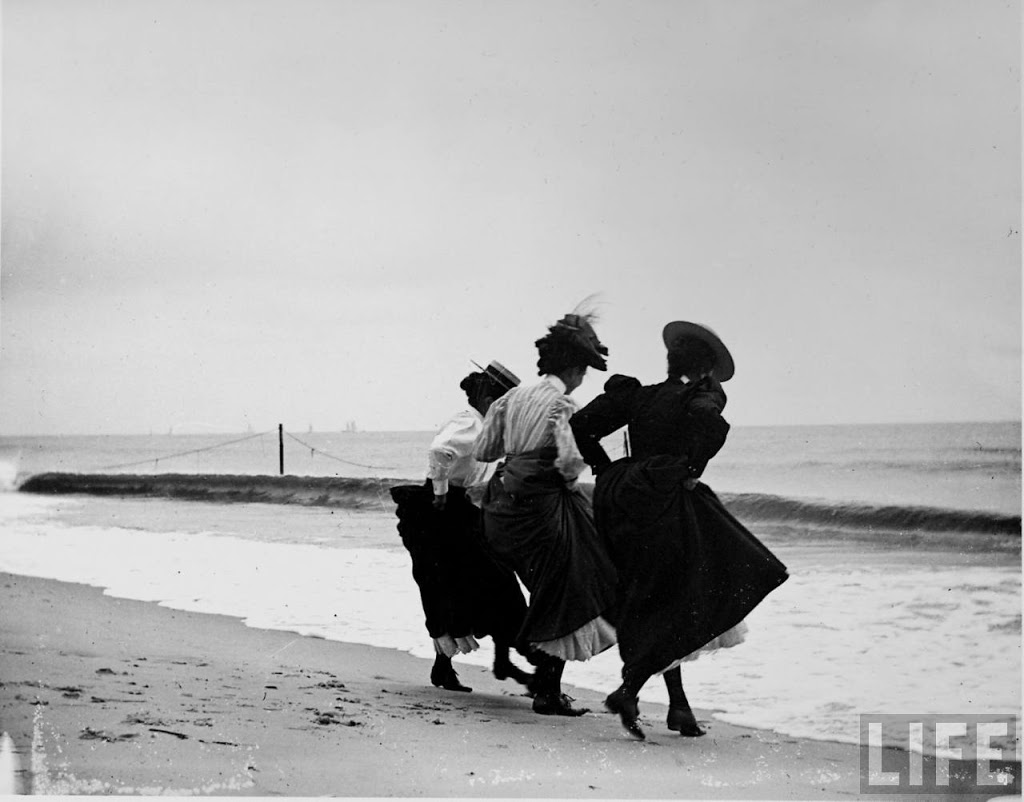
Why needs a bikini? Daring ladies risk the surf in regular wear on the Rockaway beachfront, 1897 (Courtesy Life Magazine)

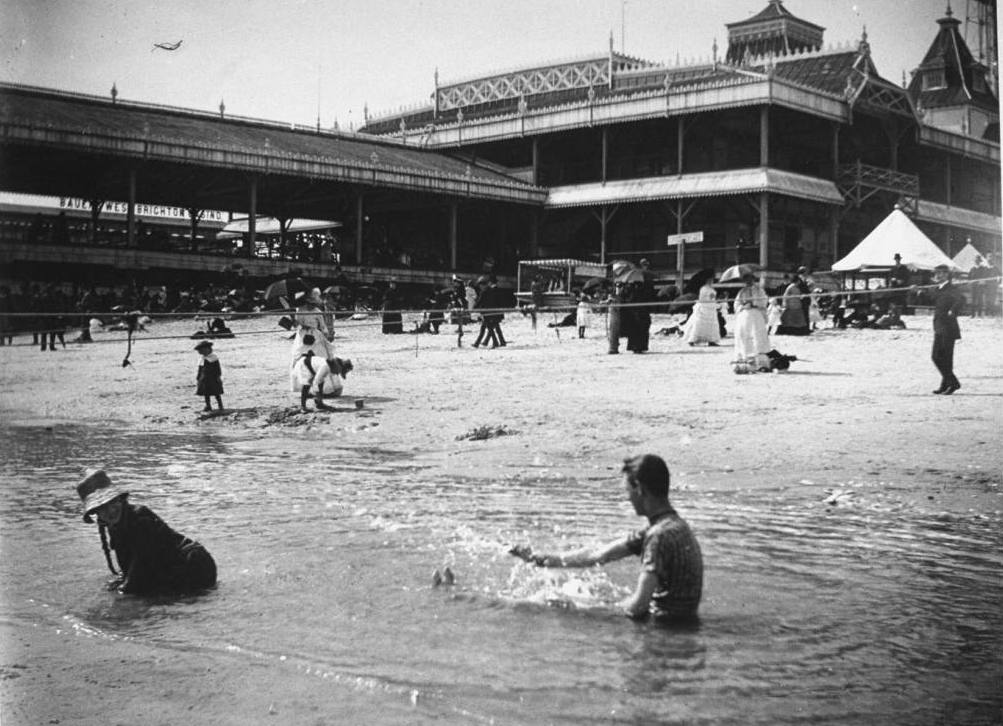
Serving up shenanigans in the waters of Brighton Beach, 1886
Three female athletes, readying for a ocean swimming match out at Coney Island, await the competition with a few oddly fully clothed men, 1887 (Life Magazine)
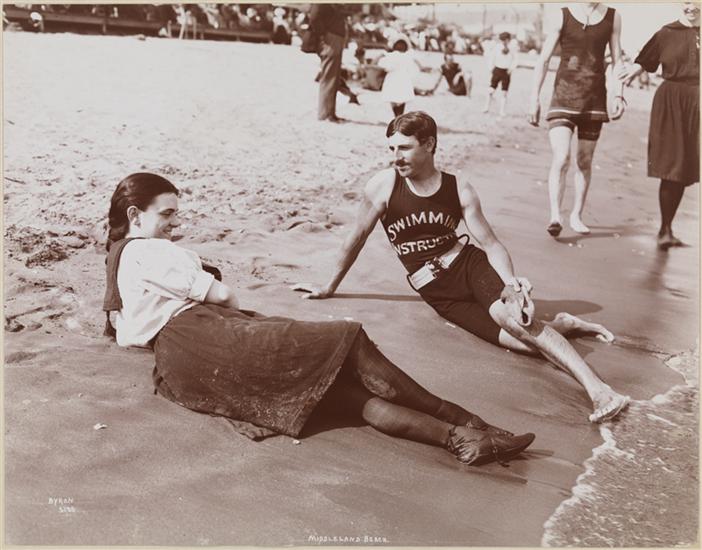
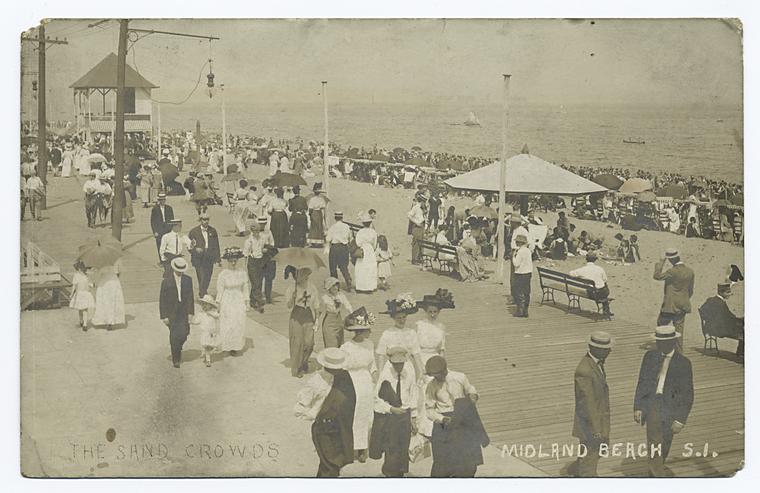
Classing it up a little with the ‘sand crowds’ along the Midland Beach boardwalk in Staten Island, no date, but probably between 1900-1910. (New York Public Library)
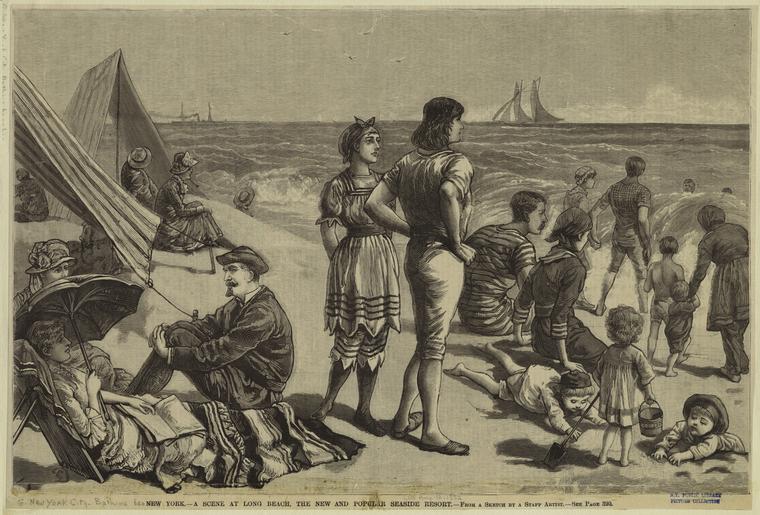
The dapper sea threads adorning the trendy beachgoers at Long Beach, 1882. Okay, this is technically in Nassau County, not New York City proper, but how could I not give these styles a showcase? (New York Public Library)
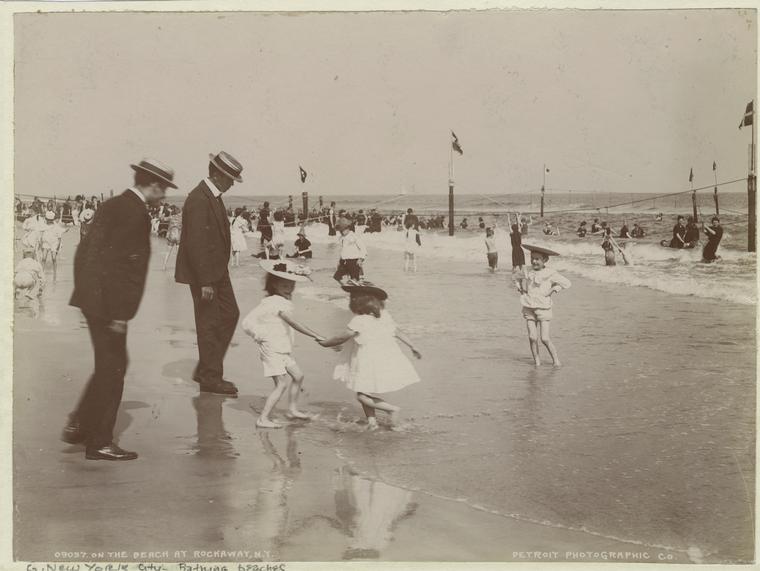
Check out little Minnie Pearl and her fine hatted friends at Rockaway, date unknown. (New York Public Library)
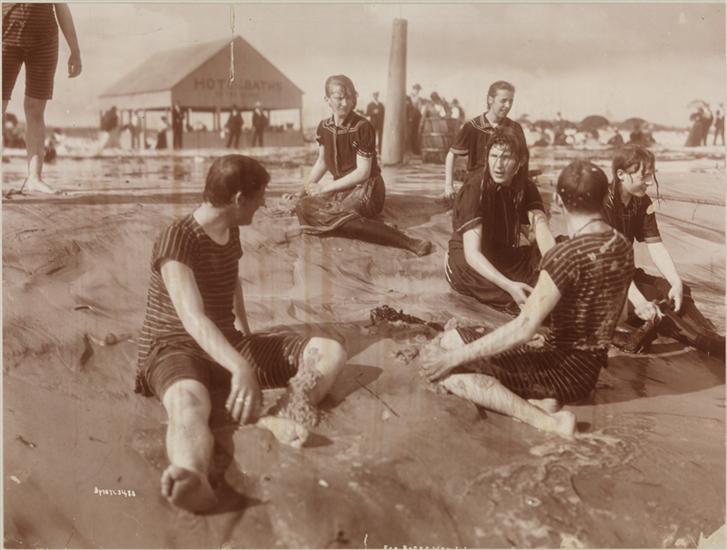
Frolicking in the sand in Far Rockaway, 1897. In the distance is a Hot Baths pavilion. (Courtesy Museum of the City of New York)
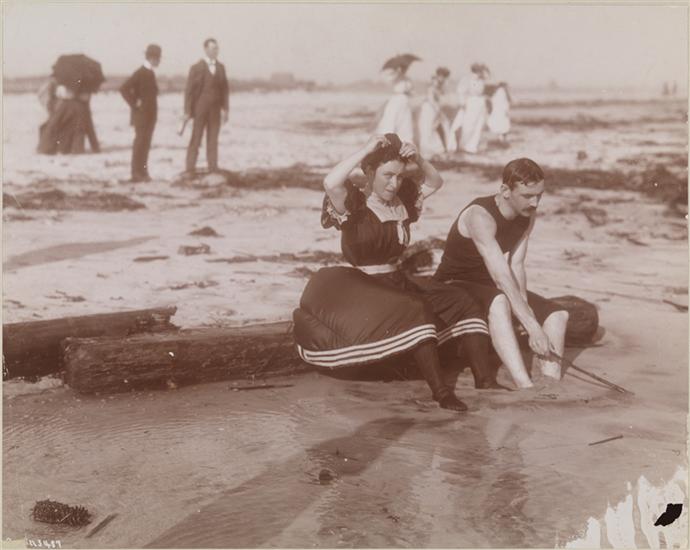
A dynamic duo hitting the beach of Far Rockaway, 1896. (Courtesy Museum of the City of New York)
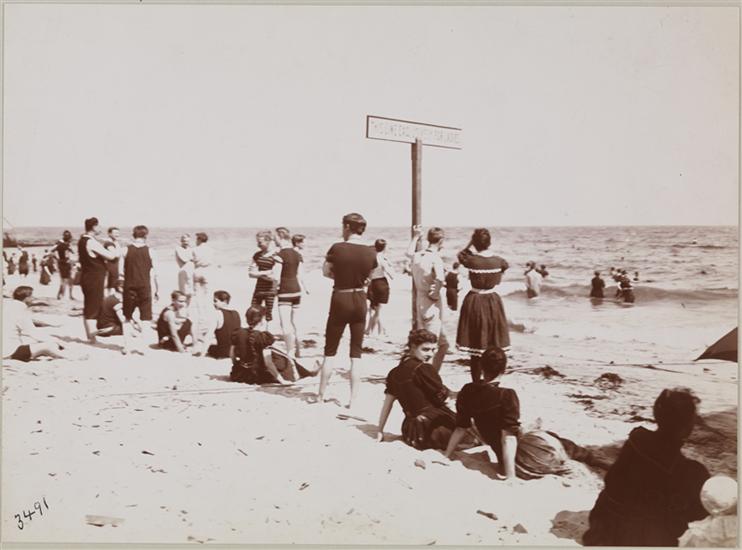
Another image of Far Rockaway, 1897. featuring a whole array of bathing-suit options. (Courtesy Museum of the City of New York)
Bathers in black luxuriate in a swimming hole in Pelham Bay, 1903 (New York Public Library)
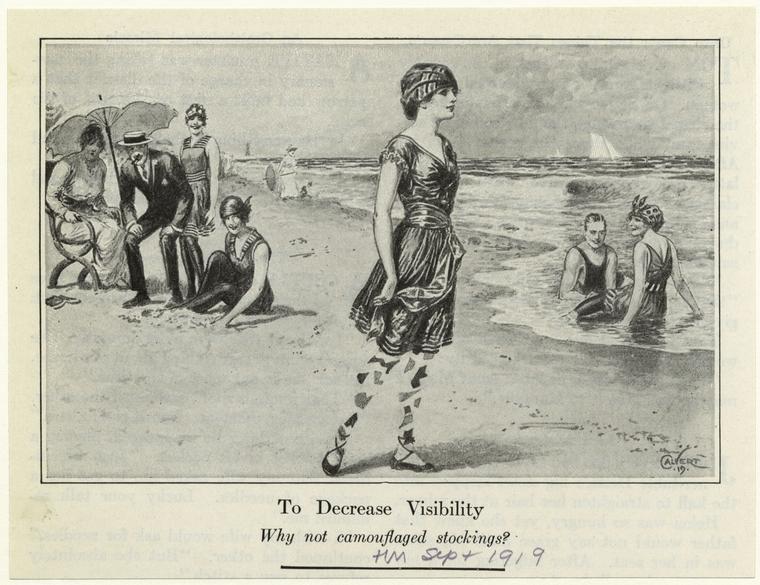
And finally, I’m not quite sure this avant garde look ever made it onto the beach. But if you want to look like you’re floating over the beach without legs, why not try these camouflage beach leggings, advertised in Harper’s Magazine in September 1919? (New York Public Library)
Basking in the surf at Midland Beach, 1898 (Courtesy Museum of the City of New York)
Categories
Film History Podcasts

Nickelodeons and Movie Palaces: New York and the Film Industry 1893-1920

The historic movie studio Kaufman Astoria Studios opened 100 years ago this year in Astoria, Queens. It remains a vital part of New York City’s entertainment industry with both film and television shows still made there to this day. The Museum of the Moving Image resides next door in a former studio building.

To honor this anniversary, we are re-issuing one of our favorite shows from the back catalog — New York City and the birth of the film industry.


New York City inspires cinema, but it has also consistently manufactured it. Long before anybody had heard of Hollywood, New York and the surrounding region was a capital for movies, the home to the earliest American film studios and the inventors who revolutionized the medium.

It began with Thomas Edison‘s invention of the Kinetoscope out in his New Jersey laboratory. Soon his former employees would spread out through New York, evolving the inventor’s work into entertainments that could be projected in front of audiences.

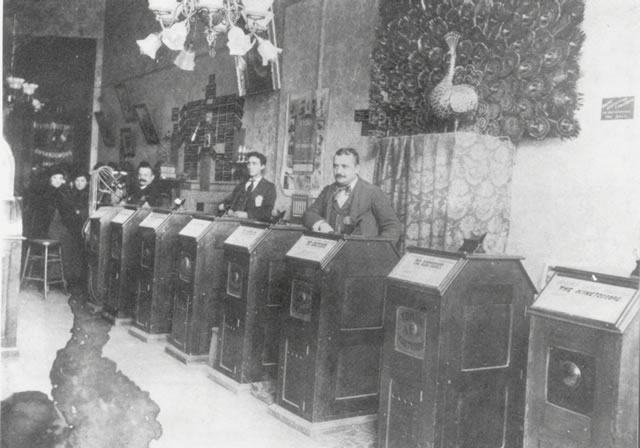
The uniform, industrial look of a Kinetoscope parlor, almost like a room of slot machines. The one above is probably from San Francisco, not New York, but the first ever parlor, which was located at Broadway and 27th Street, would have looked much like this one/Edison Historical Site

By the mid 1900s, New Yorkers fell in love with nickelodeons and gasped as their first look at moving pictures. Along the way, films were made in locations all throughout the city — from the rooftop of Madison Square Garden to a special super-studio in the Bronx.

This is a special ‘director’s cut’ of a podcast we first released on February 18, 2011.

This is the story of second and third acts — both for an woman of grit and independent spirit and for a landmark with a million stories to tell (and a million more to come).

LISTEN NOW — NICKELODEONS AND MOVIE PALACES: NEW YORK AND THE FILM INDUSTRY 1893-1920

To get this week’s episode, simply download or stream it forFREE from iTunes, Stitcher, Spotify or other podcasting services.You can also get it straight from our satellite site.


NOTES ON THE SHOW

This show was first released on February 18, 2011.

This was an especially unusual show to arrange and represents a closely cultivated tour through New York City’s early film history.

But early movie studios spread beyond New York’s borders. Most notably, Fort Lee, NJ, became as active as New York in the 1910s, especially as the sophistication of filming processes allowed more productions to be shot outdoors and long running times meant story lines with multiple sets.

D.W. Griffith‘s first film, Rescued From An Eagles Nest, for Edison, was shot on the Fort Lee Palisades. But this wasn’t his directorial debut; he was the star of that film.  

Soon all the major studios would have locations in Fort Lee and other places along the New Jersey coast. You can find more information on Fort Lee’s contributions to cinema at the Fort Lee Film Commission.  

Places To Visit: Your first stop should be the Museum of the Moving Image in Astoria, Queens, to check out their displays of early film productions. Next door is the Kaufman Astoria Studios, New York’s oldest and still active movie studio.

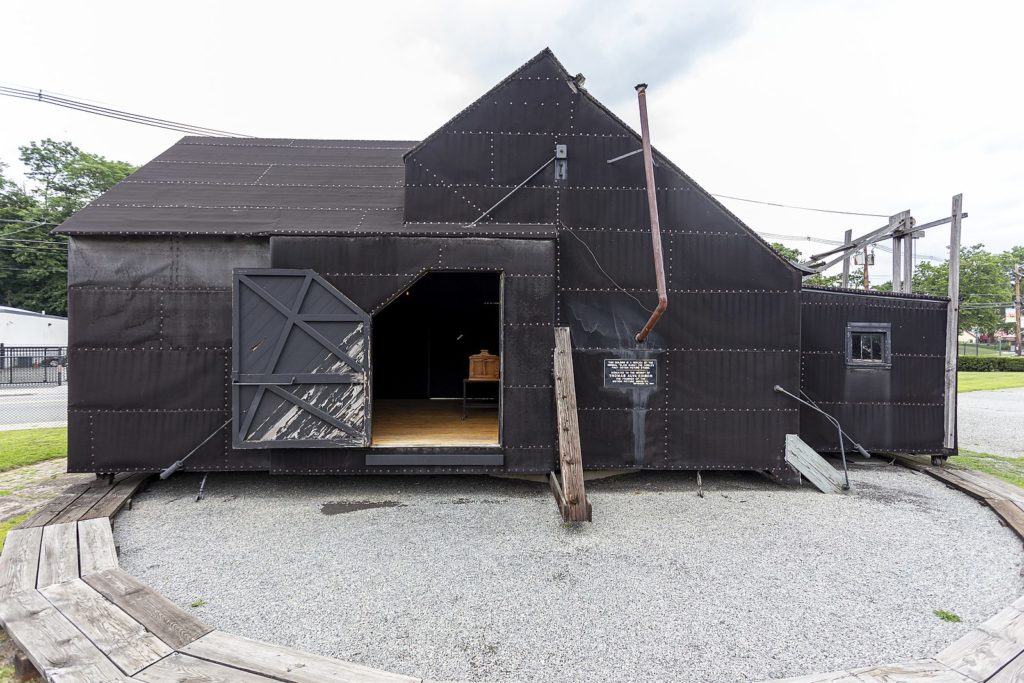
Edison’s laboratory in West Orange, NJ, is definitely worth the trip, and not just to see the replica of the Black Maria.

The National Park Services operates the Thomas Edison National Historical Park with tours of the laboratory complex and the Edison home Glenmont, where the inventor himself is buried.  

Tom mentioned that Edison’s first demonstration of his kinetoscope — and its first film ‘Blacksmithing Scene’ — was exhibited as the Brooklyn Institute of Arts and Sciences on May 9, 1893. That organization was the forerunner to the Brooklyn Museum.  

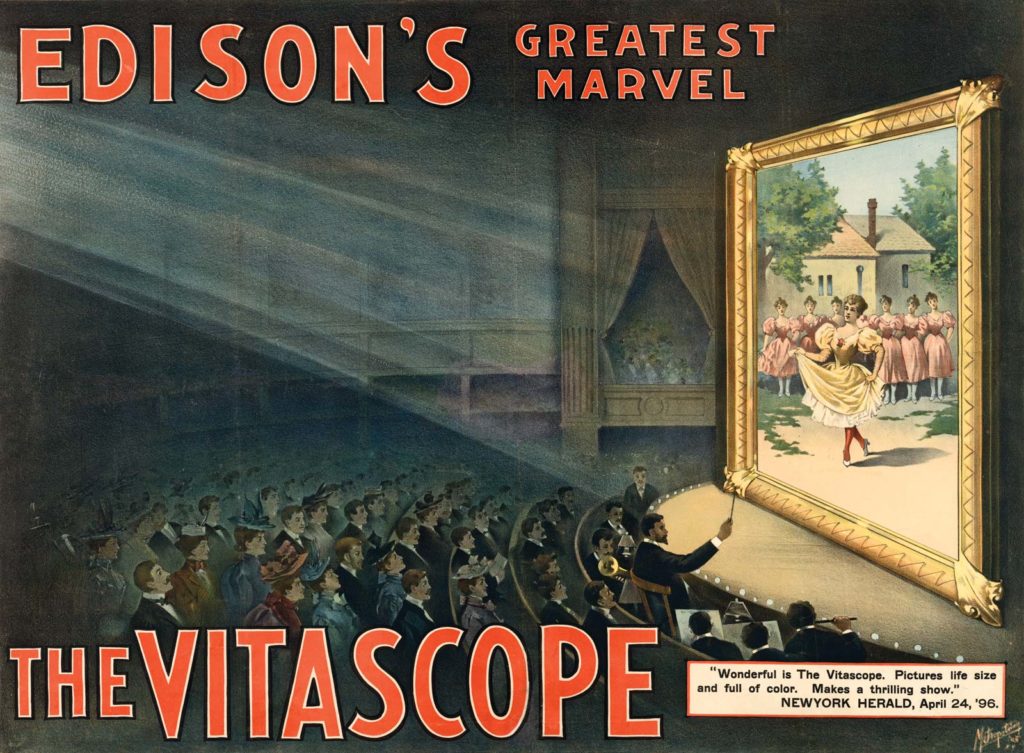
We planted a few specific addresses in the podcast for you to search out during one of your wandering adventures through the city. See if you can find the plaque at Macy’s honoring the theater that once stood there, Koster and Bial’s Music Hall, and occasion of the debut of Edison’s Vitascope.

One of the first modern movie houses, the Regent Theatre in Harlem, is still around, but it’s no longer a theater. It’s owned by the First Corinthian Baptist Church.  

Other Sources: For a clearer picture of early film history, you should supplement this podcast with the first three parts of the TCM documentary Moguls and Movie Stars, their mini-series on the history of the movies.

The best place find some of these very early films is the Library of Congress, which includes a wonderful page on early on-location pictures, The Life of a City: Early Films of New York 1898-1906.  

Richard Koszarski’s extensive survey of the region’s contribution to the movies, ‘Hollywood On The Hudson‘, essentially starts where we leave off. David Robinson’s ‘From Peep Show To Palace’, with an introduction by Martin Scorsese, puts New York’s role into international context.

You can also check out Paul Clee’s ‘Before Hollywood: From Shadow Play To Silver Screen‘.

This hideous looking shed is actually America’s first film studio — the Black Maria at Thomas Edison’s West Orange laboratory. Thomas Edison National Historical Park (Wiki Commons/Acroterion)
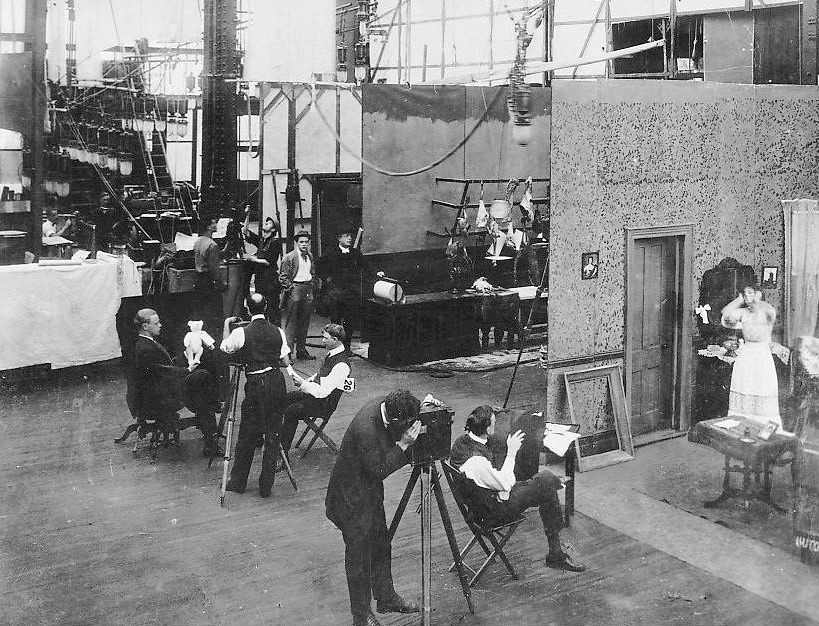
From inside Edison’s Bronx studio

Here’s a few of the films we mentioned in our podcast this week. These were all filmed in New York or New Jersey.

Eugen Sandow, an early discovery of Florenz Ziegfeld and one of the first stars of moving pictures

DW Griffith’s ‘Father Gets In The Game’, with Mack Sennett, filmed in Central Park

‘Those Awful Hats’, a Griffith creation, with a movie within a movie

And finally, ‘Musketeers of Pig Alley’, arguably the first ‘gangster’ movie (allegedly using real members of New York gangs), although organized crime looked quite different pre-Prohibition, and sticklers might balk at that distinction.

Categories
The First

The Itsy Bitsy Teeny Weeny Revolution: The Story of the First Bikini

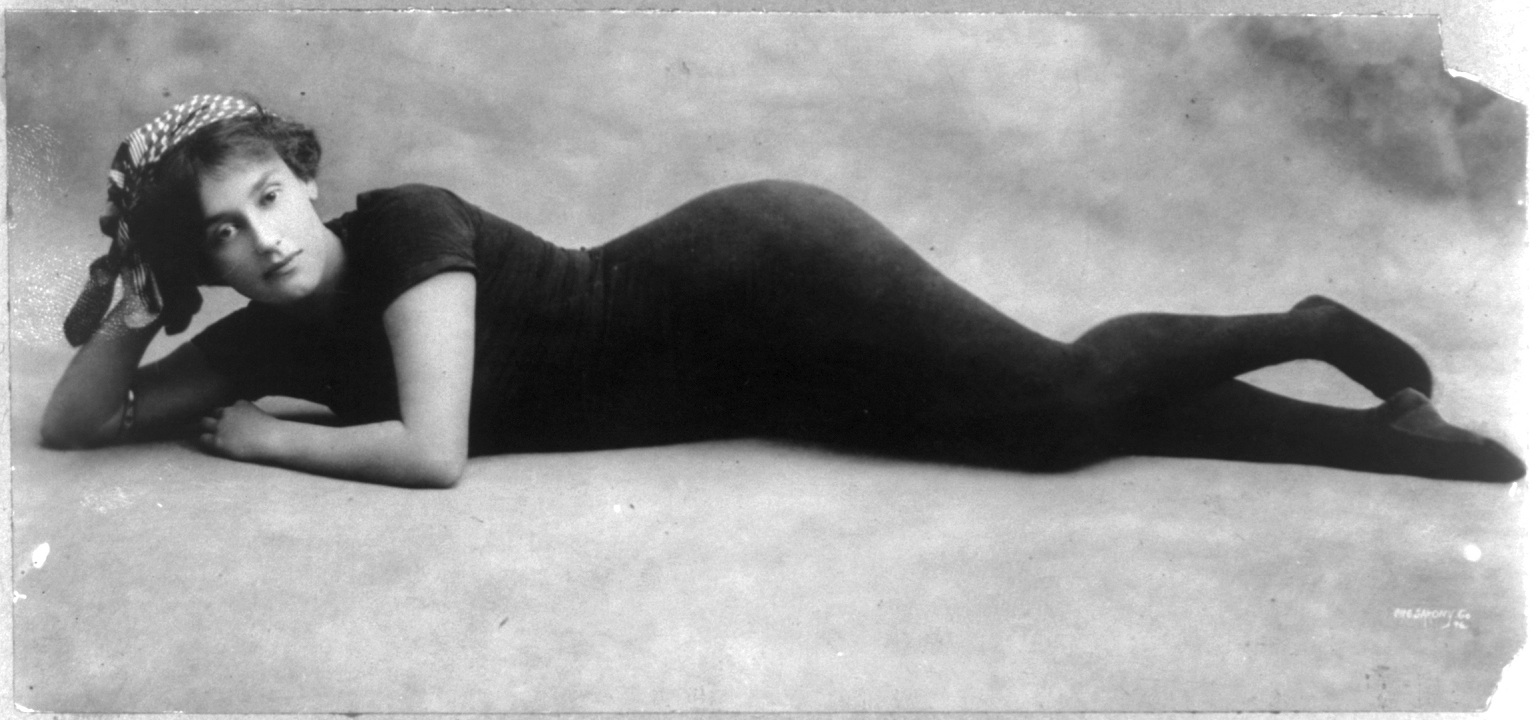
THE FIRST PODCAST In 1907, the professional swimmer Annette Kellerman was arrested on a Massachusetts beach for wearing a revealing bathing suit — a skin-tight black ensemble which covered most of her body.

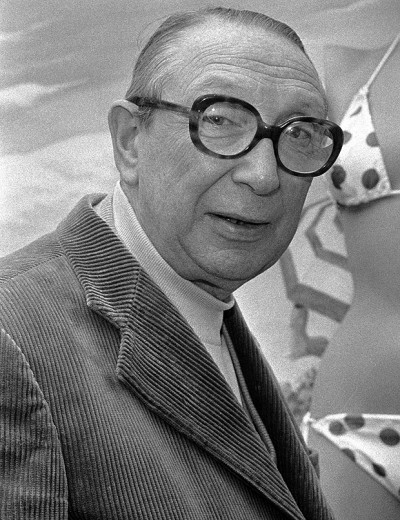
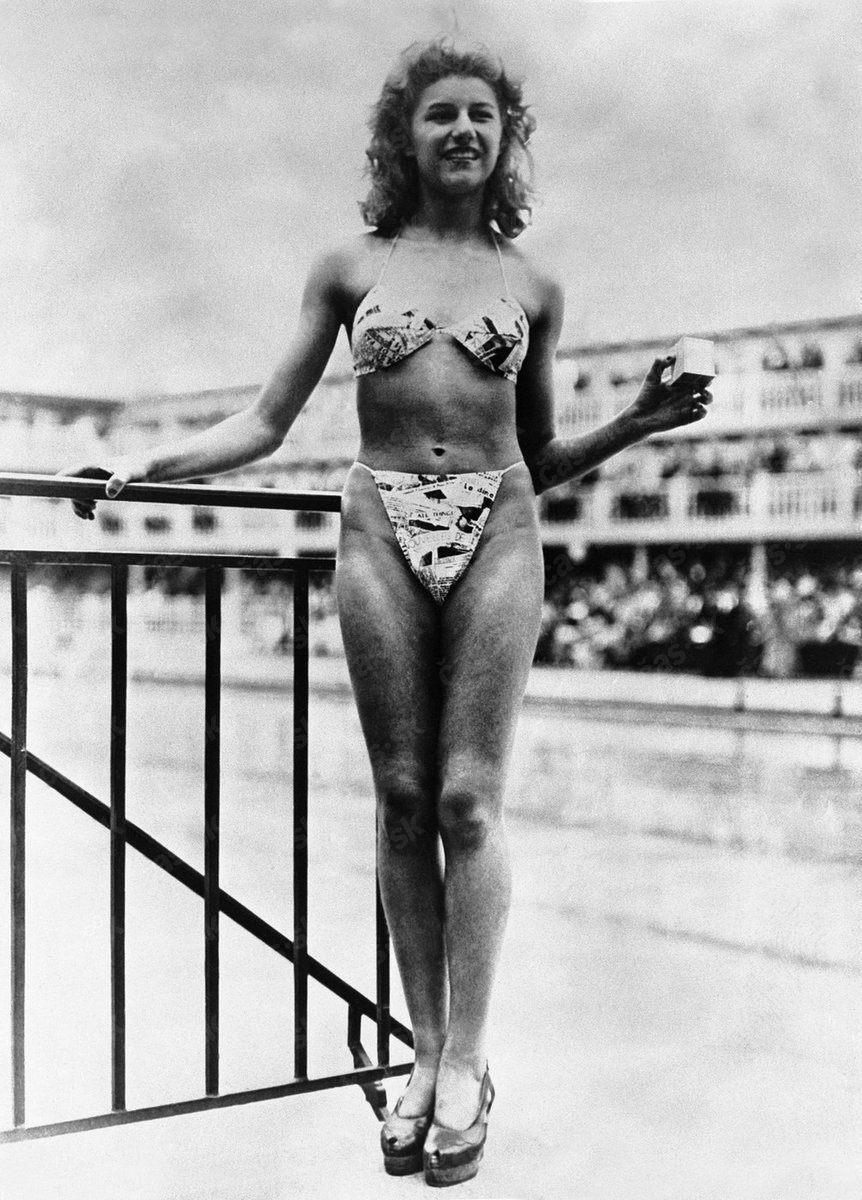
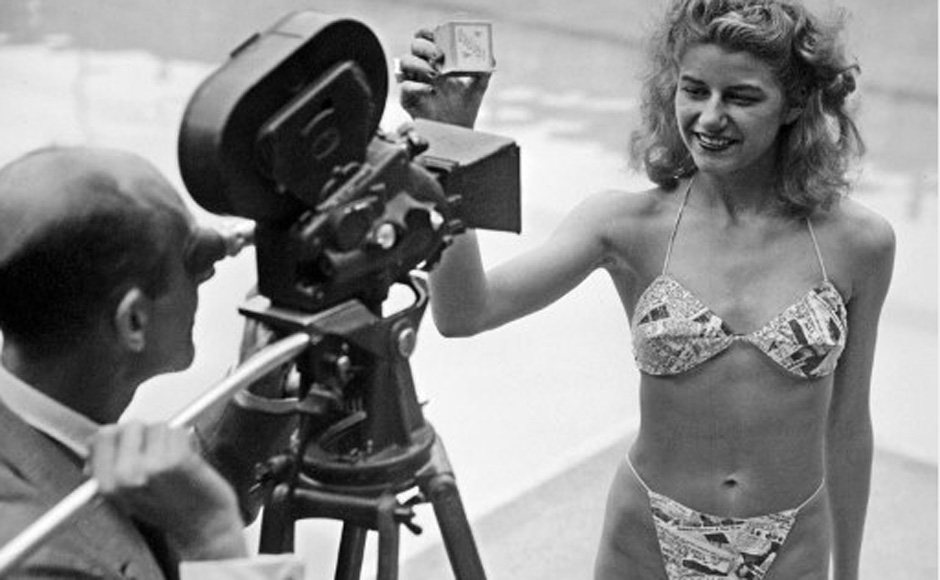
Less than forty years later, in 1946, the owner of a Parisian lingerie shop named Louis Réard invented the bikini, perhaps the smallest amount of fabric to ever change the world, courtesy Micheline Bernardini, the young woman who debuted this scandalous outfit.

In this podcast, I’ll tell you what happened to change people’s perception of public decency in those forty years and explain how the bikini represents the best — and the worst — instincts of modern American culture.

To get this episode, simply download it for FREE from iTunes or other podcasting services.

Subscribe to The First here so that you don’t miss future episodes!

You can also listen to the show on Stitcher streaming radio from your mobile device.

Or listen to it straight from here:
08 THE ITSY BITSY TEENY WEENY REVOLUTION: THE STORY OF THE FIRST BIKINI

Images from the show:

The bizarre contraption known as the bathing machine:

Courtesy Messy Nessy Chic


The glorious Annette Kellerman in one of her swimming outfits

Courtesy Library of Congress


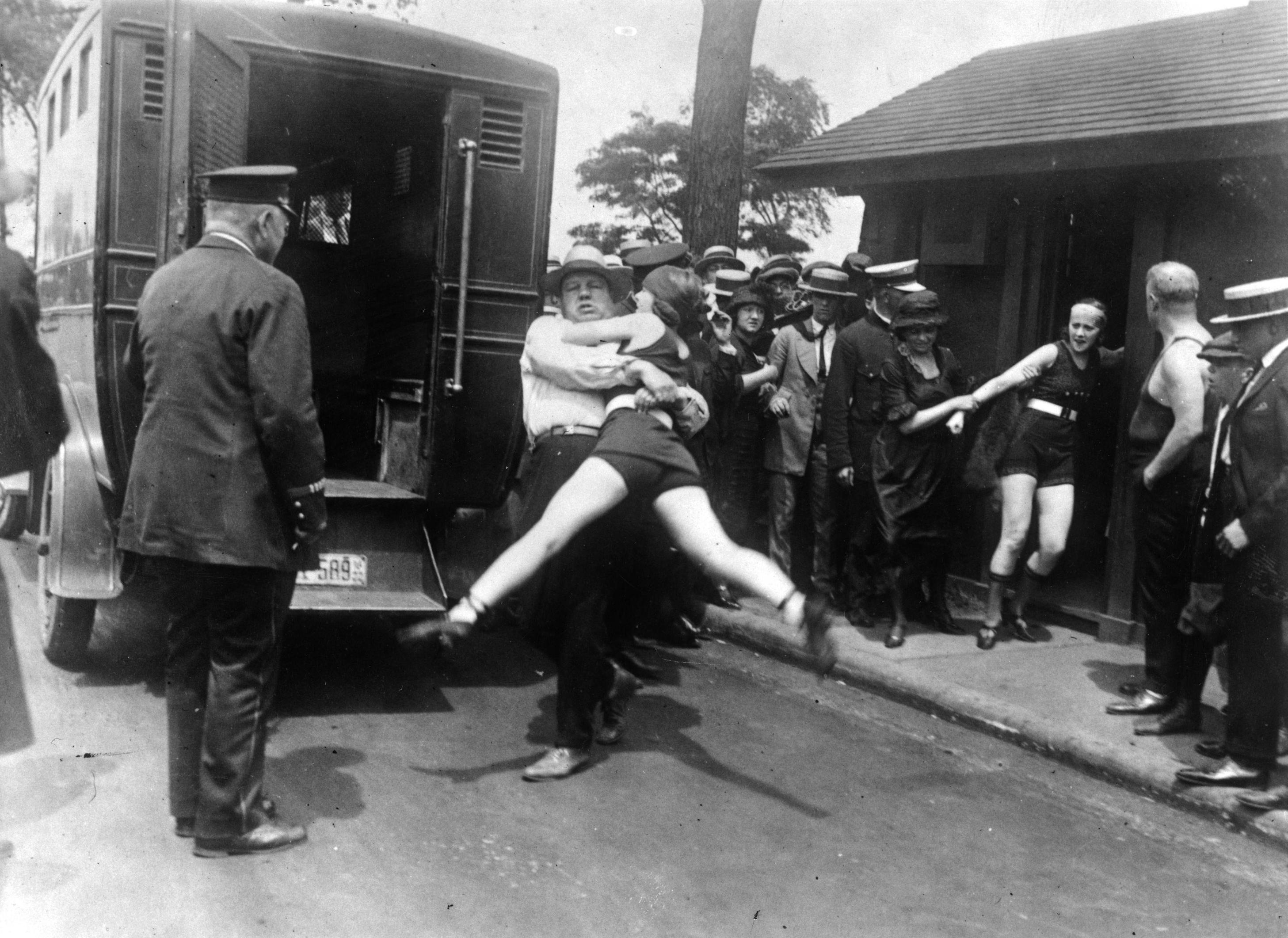
Women in Chicago being arrested for indecent exposure in 1922

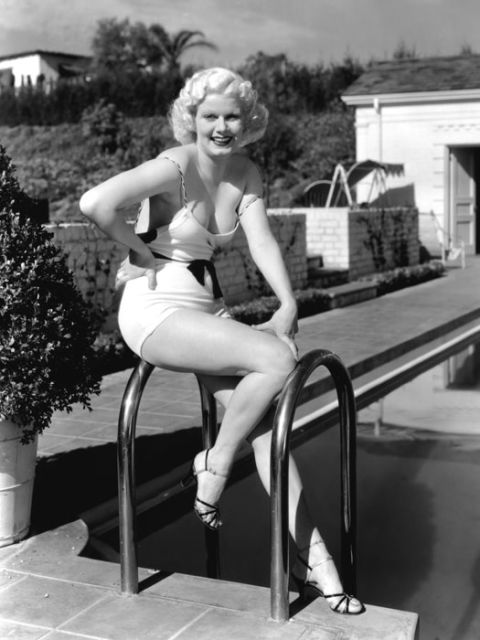
Jean Harlow in a stylish bathing suit from the 1930s.


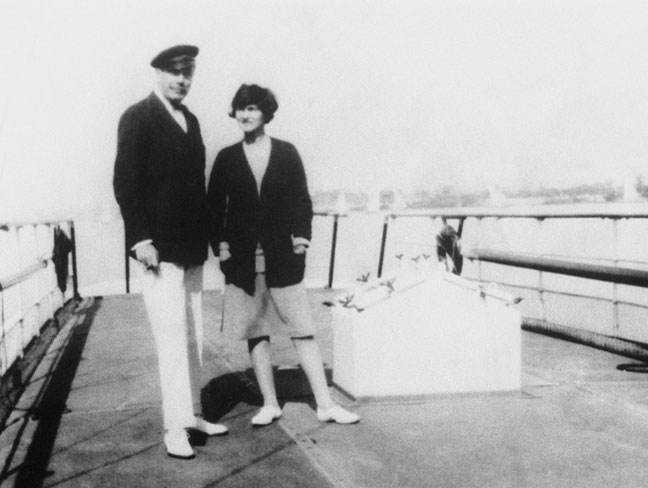
Coco Chanel, with the Duke of Westminster, most certainly honing her suntan.

The world’s most famous pin-up — Betty Grable in a bathing suit

The song from this episode was Grable singing “You’re My Little Pin-Up Girl”:

The Parisian fashion designer Louis Reard who brought the world the bikini


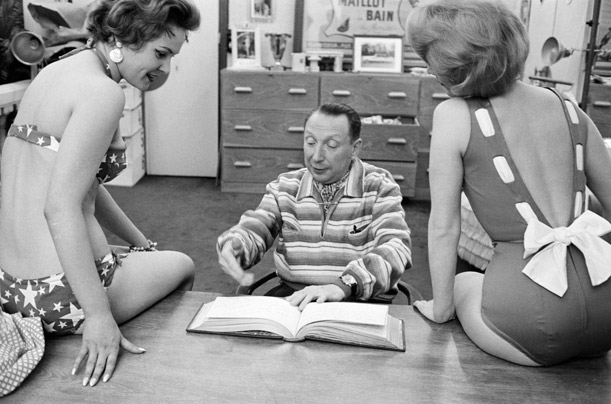
Reard with women wearing his invention:


Video of the bikini’s first appearance — as well as the smashing debut of the Parisian beauty Micheline Bernardini:


Bernardini with her bikini — and her match box!


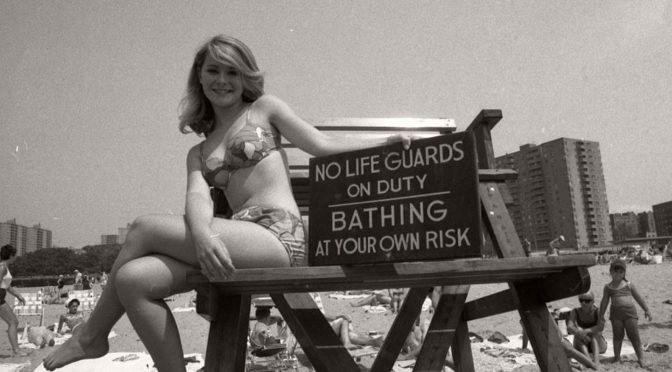
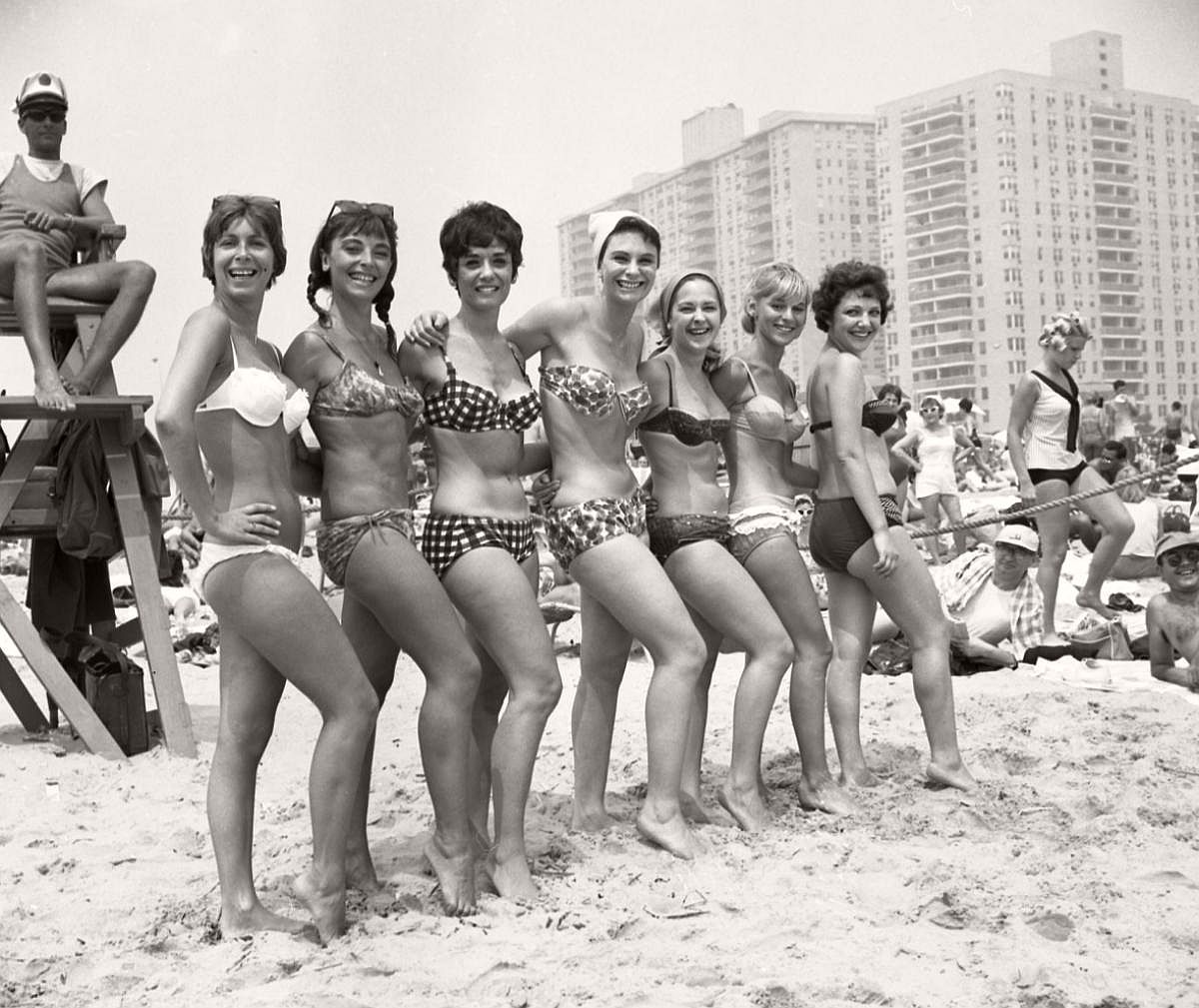
Ladies in beautiful bikinis on Coney Island 1965:

(Dan Farrell/New York Daily News


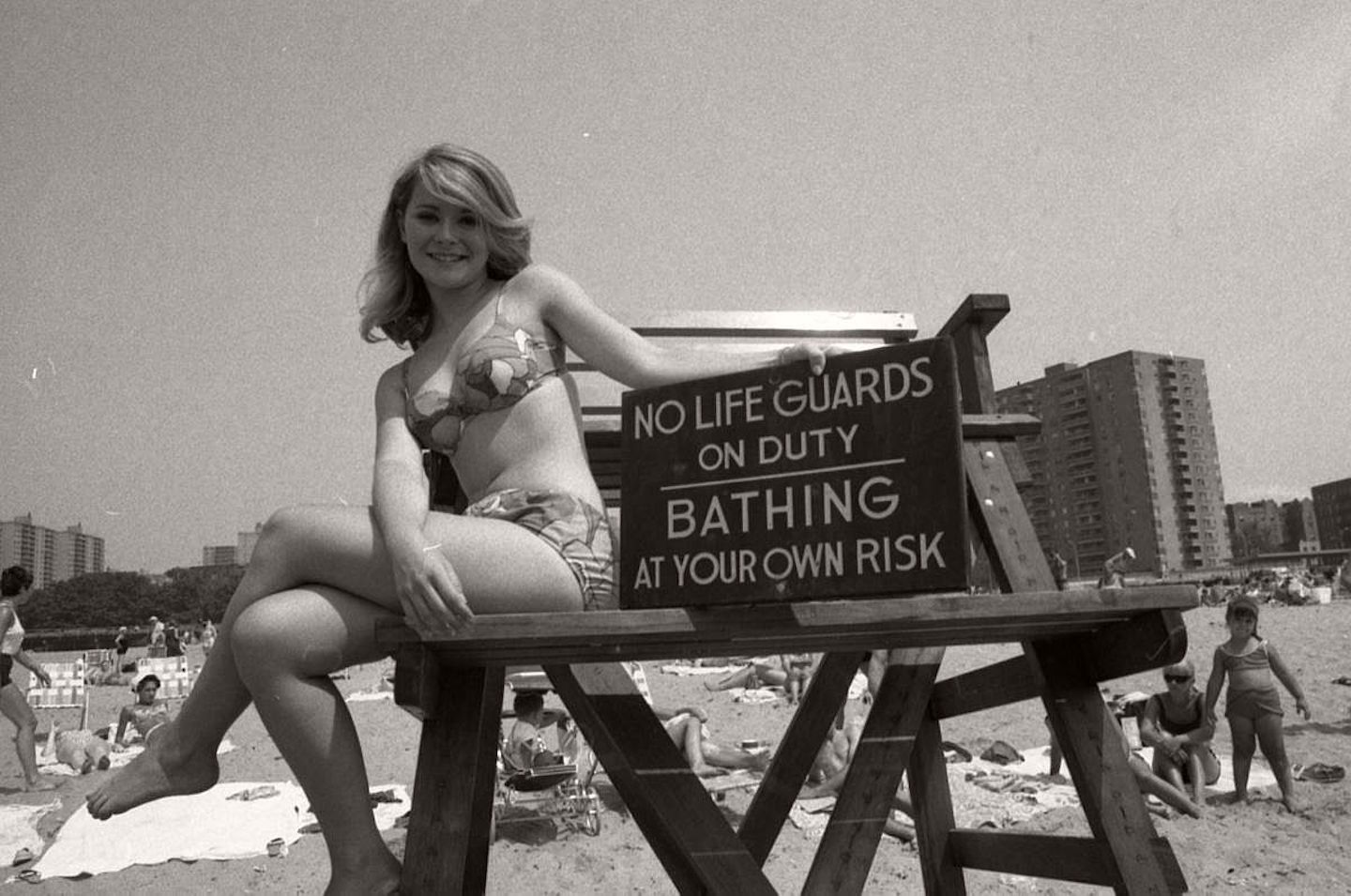
That picture and this one (also courtesy New York Daily News) are part of a terrific layout of vintage bathing suits. Check it out.

Categories
Podcasts The First

The Wheel: Ferris’ Big Idea (Special Preview of The First Podcast)

This is a special preview for the new Bowery Boys spin-off podcast series The First: Stories of Inventions and their Consequences, brought to you by Bowery Boys host Greg Young.

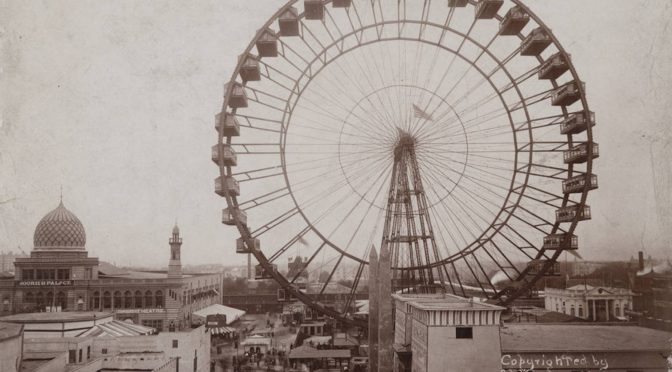
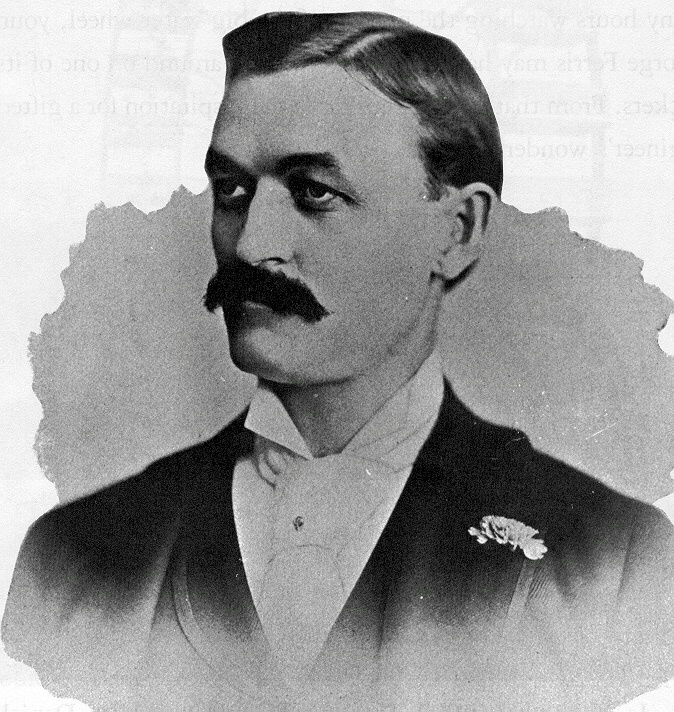
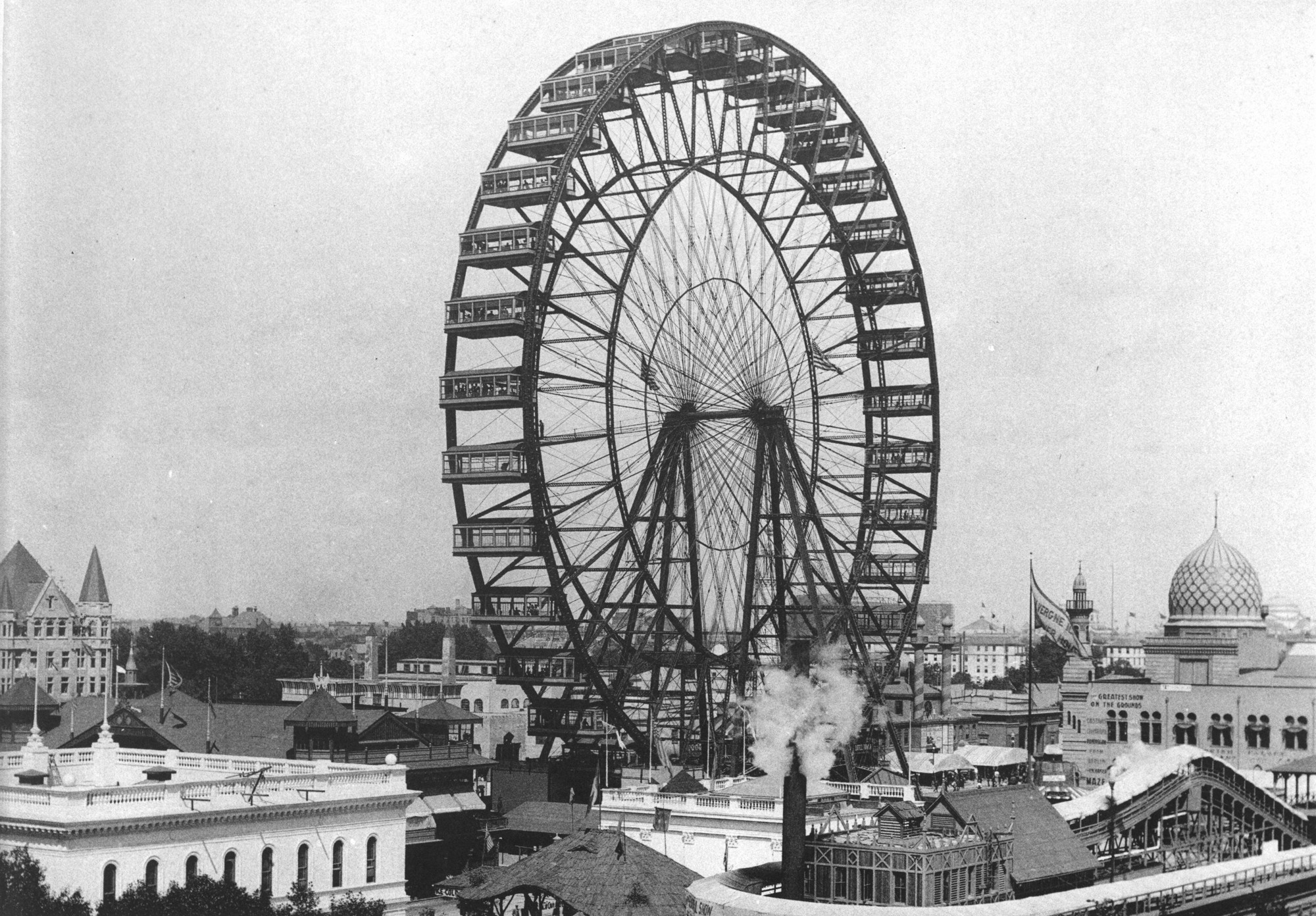
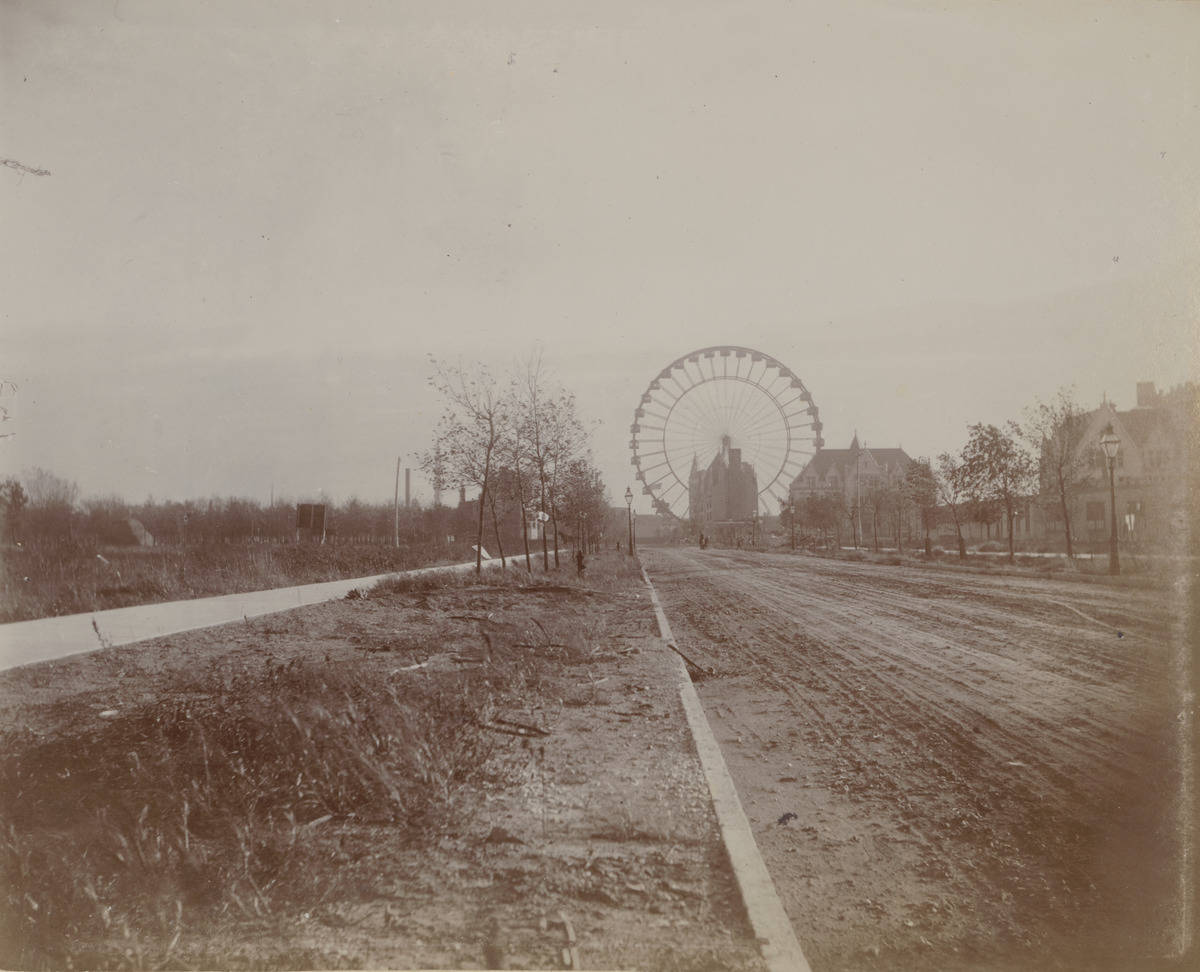
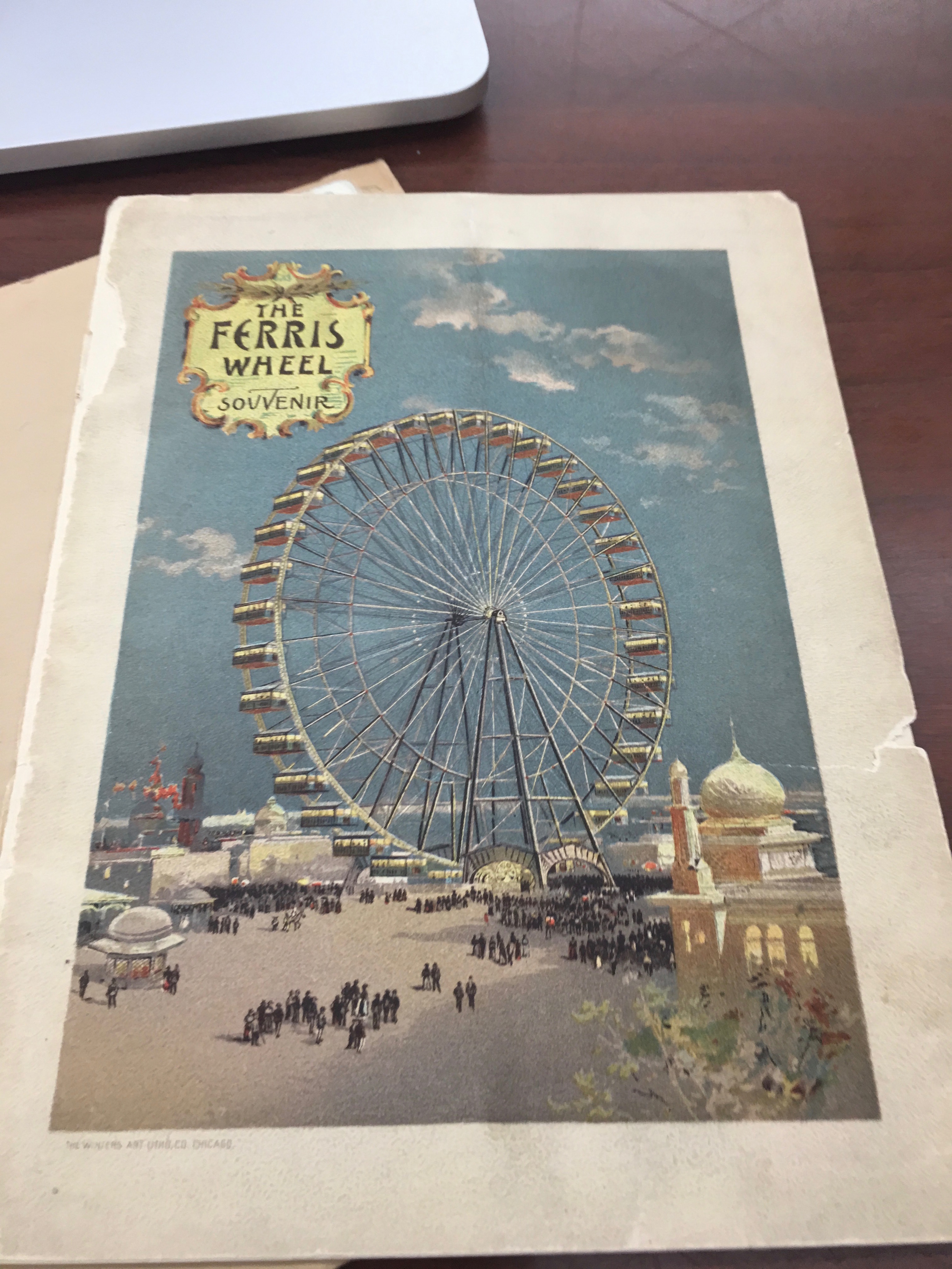
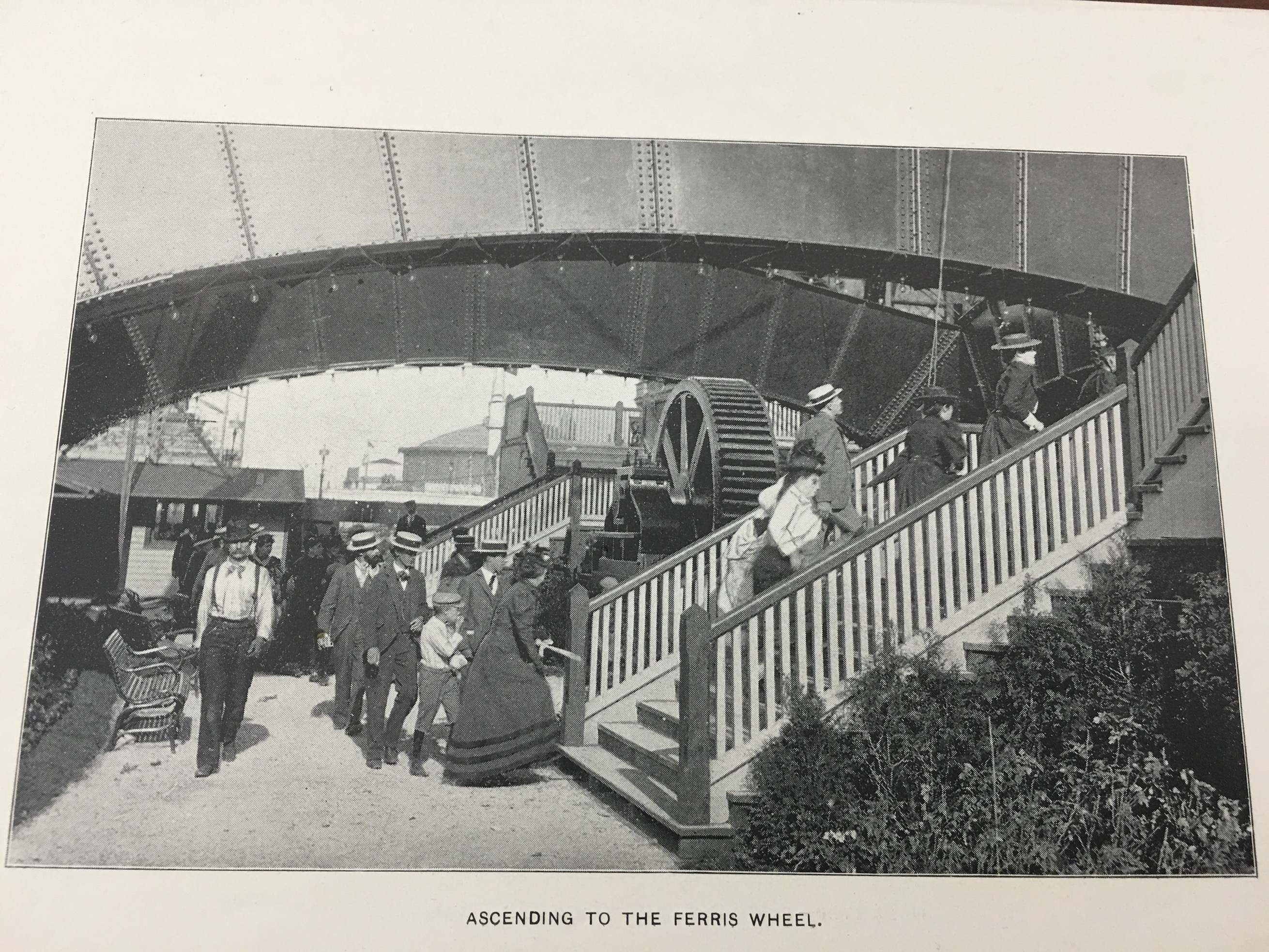
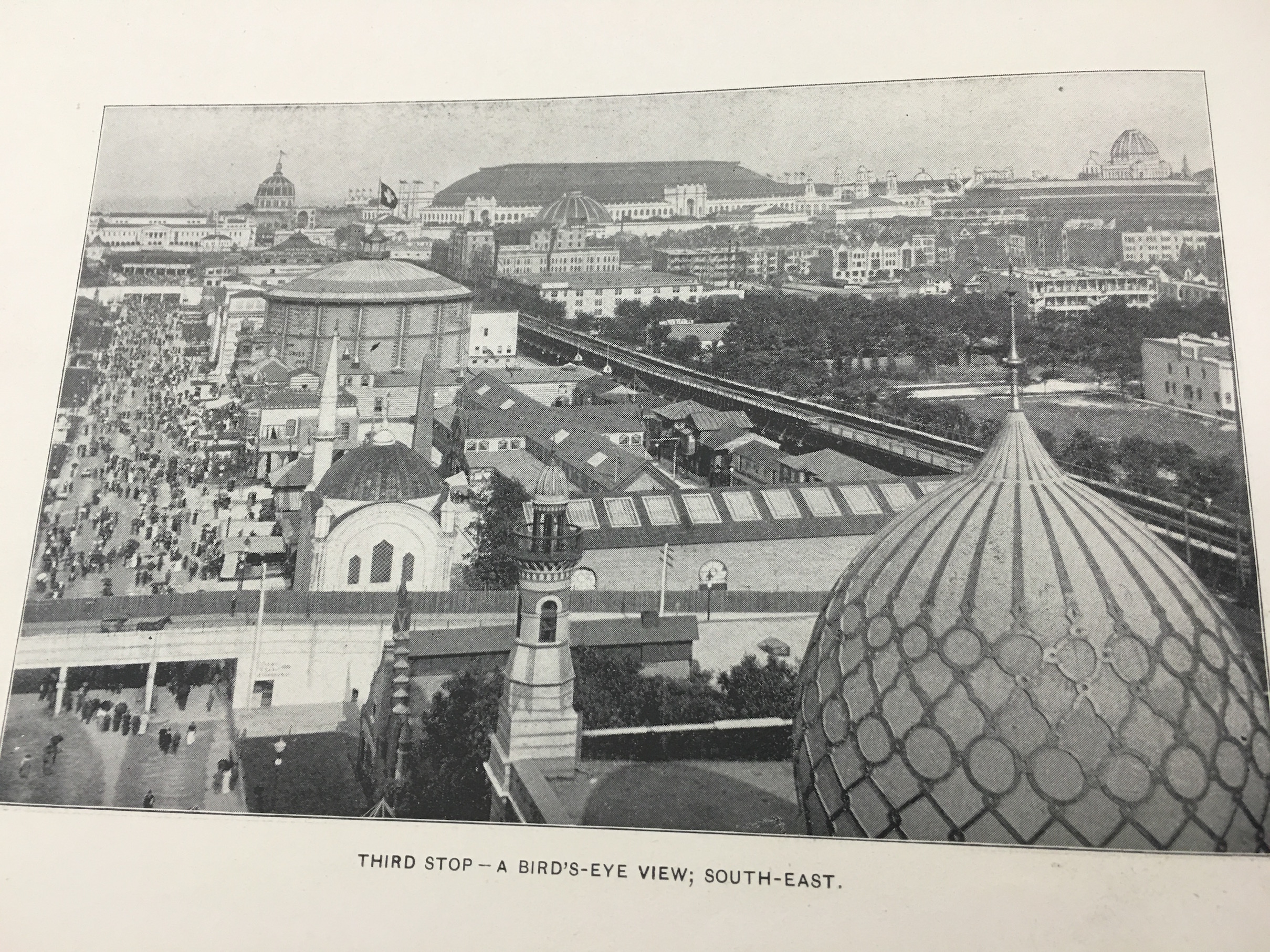
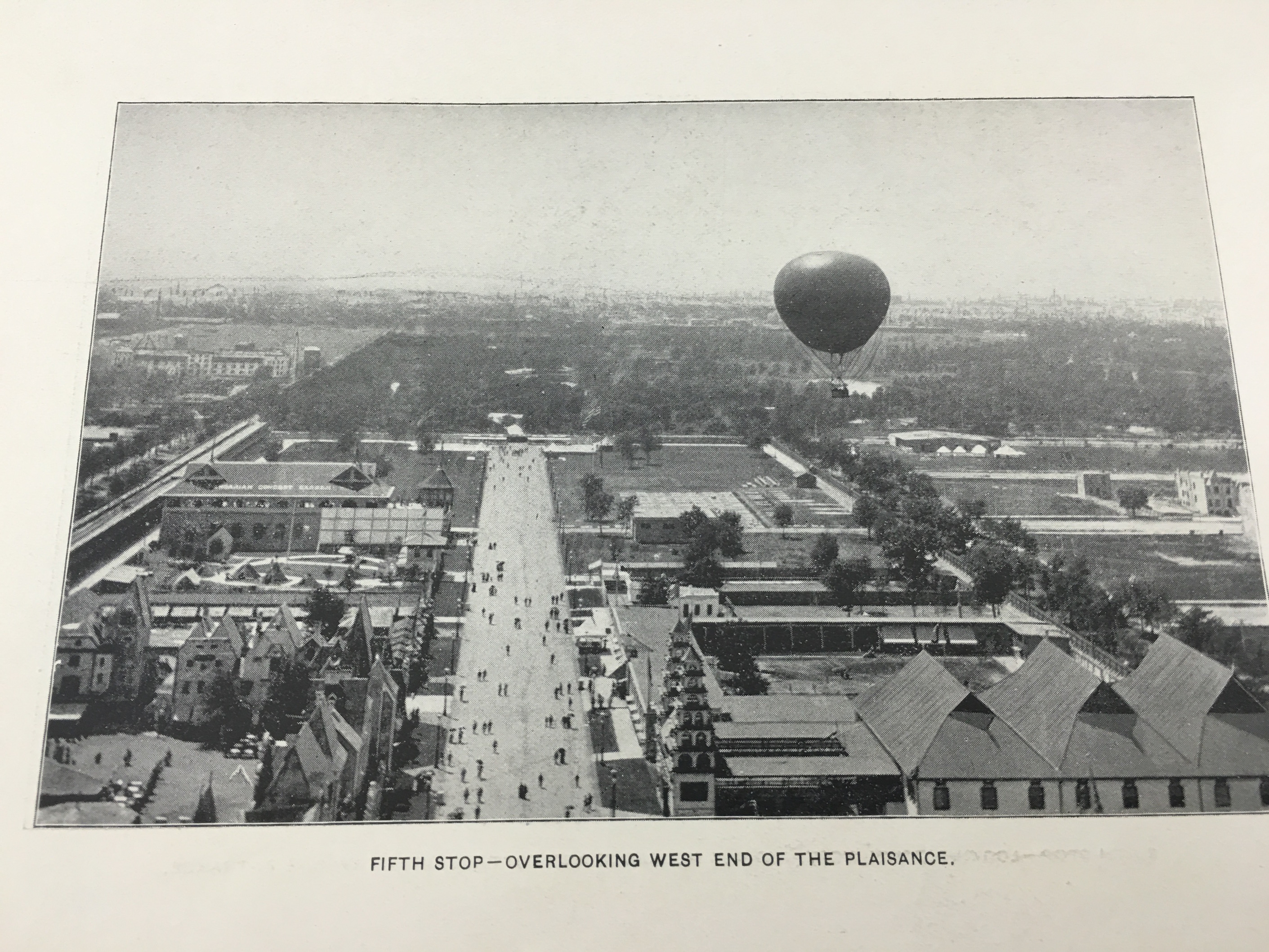
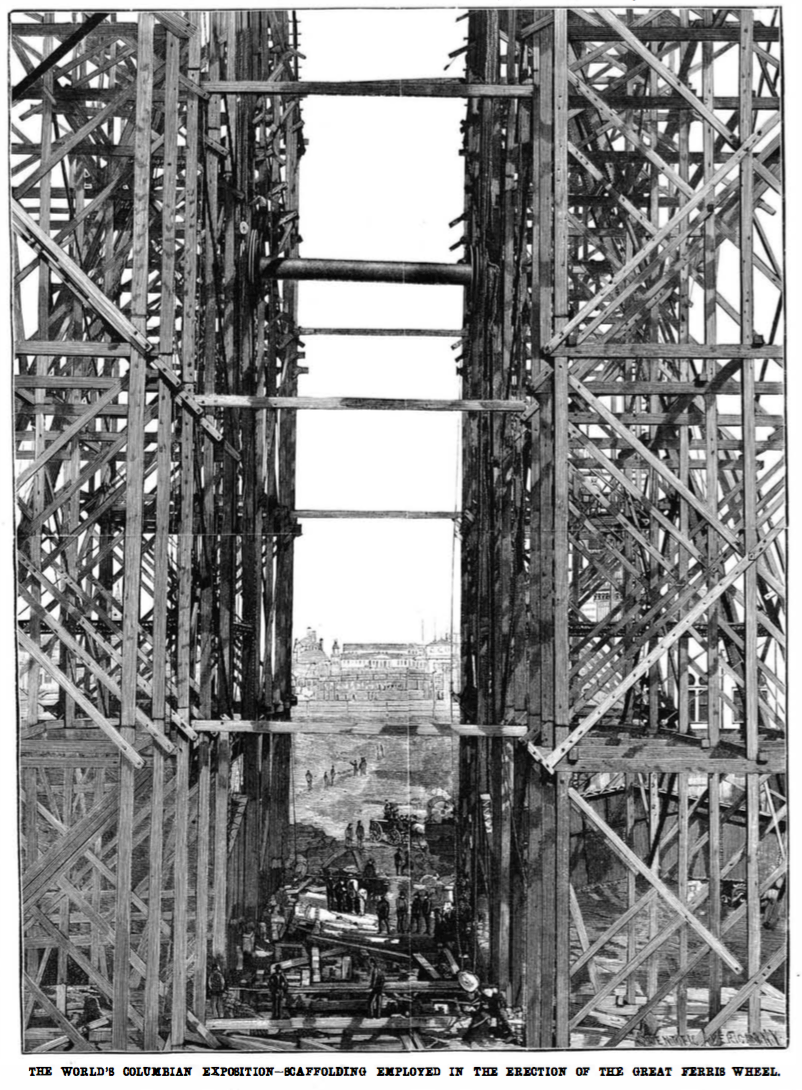
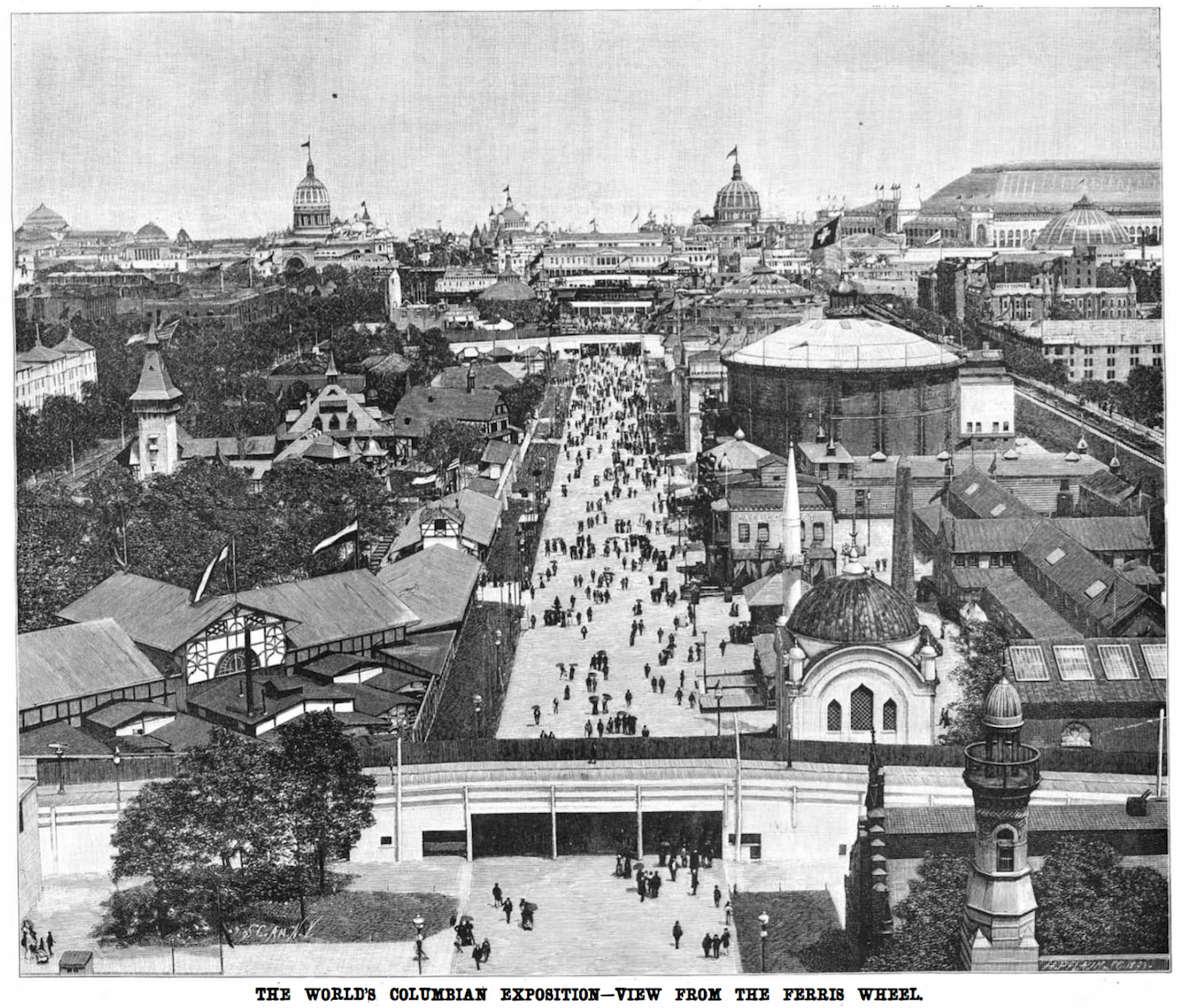
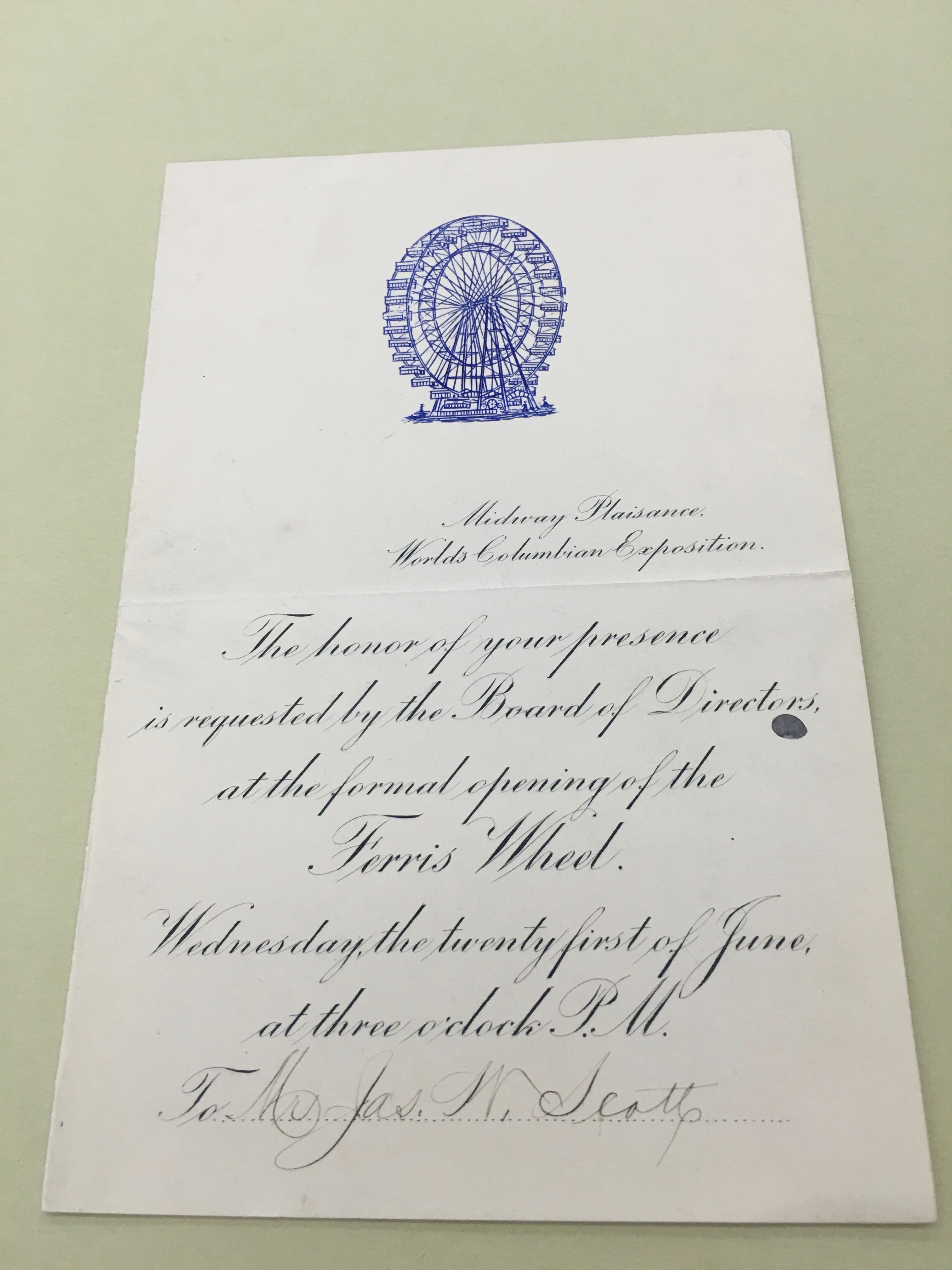
01: The first Ferris Wheel was invented to become America’s Eiffel Tower, making its grand debut at the Chicago World’s Fair of 1893. The wheel’s inventor George Washington Gale Ferris was a clever and optimistic soul; he did everything in his power to ensure that his glorious mechanical ride would forever change the world.

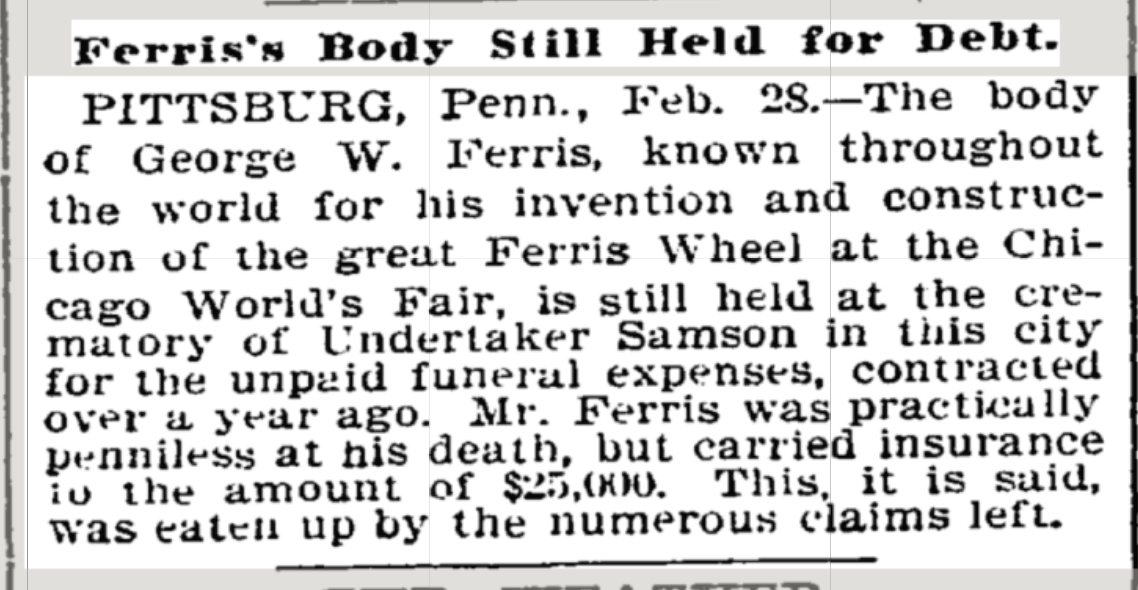
That it did, but unfortunately, its inventor paid a horrible price.

FEATURING a visit the Wonder Wheel at Coney Island, one of the most famous wheels in the world, and a trip to one of Chicago’s newest marvels — the Centennial Wheel at Navy Pier.


The Bowery Boys: New York City History podcast is brought to you …. by you!

We are now producing a new Bowery Boys podcast every two weeks. We’re also looking to improve the show in other ways and expand in other ways as well — through publishing, social media, live events and other forms of media. But we can only do this with your help!

We are now a member of Patreon, a patronage platform where you can support your favorite content creators for as little as a $1 a month.

Please visit our page on Patreon and watch a short video of us recording the show and talking about our expansion plans. If you’d like to help out, there are five different pledge levels (and with clever names too — Mannahatta, New Amsterdam, Five Points, Gilded Age, Jazz Age and Empire State). Check them out and consider being a sponsor.

We greatly appreciate our listeners and readers and thank you for joining us on this journey so far. And the best is yet to come!


The star of the show — George Washington Gale Ferris:

gwferris

… and the Ferris Wheel at the World’s Fair!

chicago-worlds-fair-1893-chicago-history-museum-01-2


Courtesy Chicago History Museum

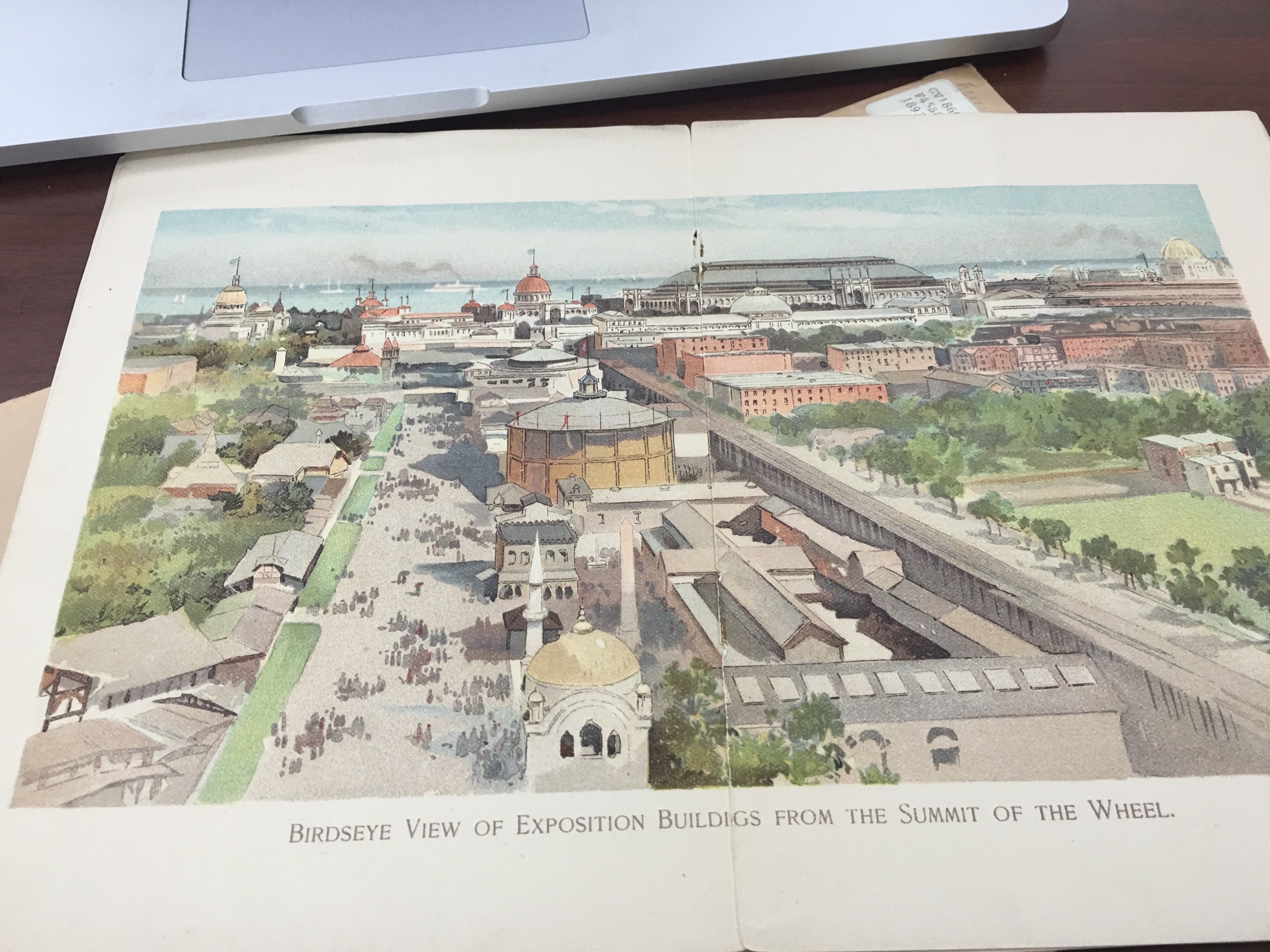
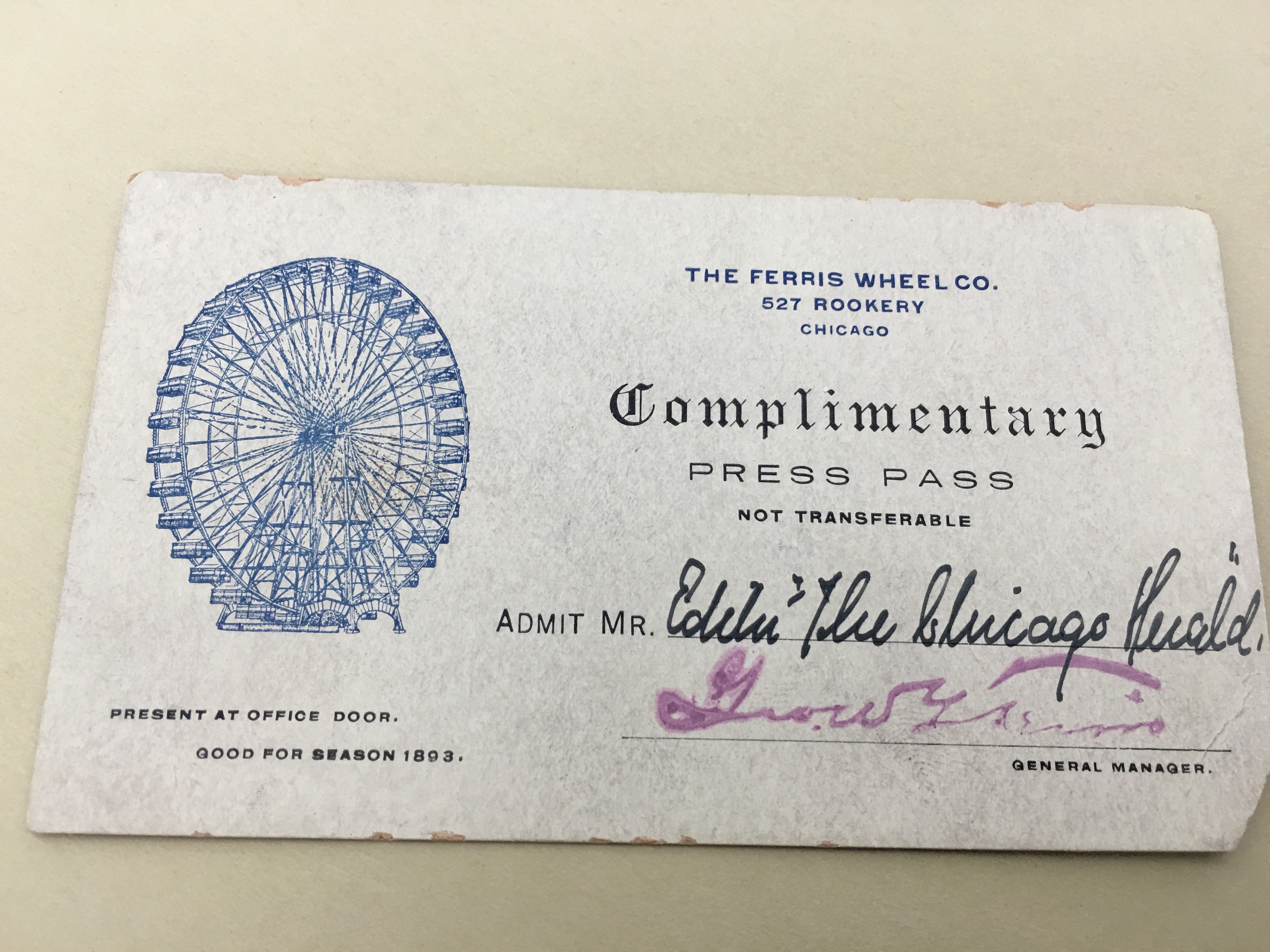
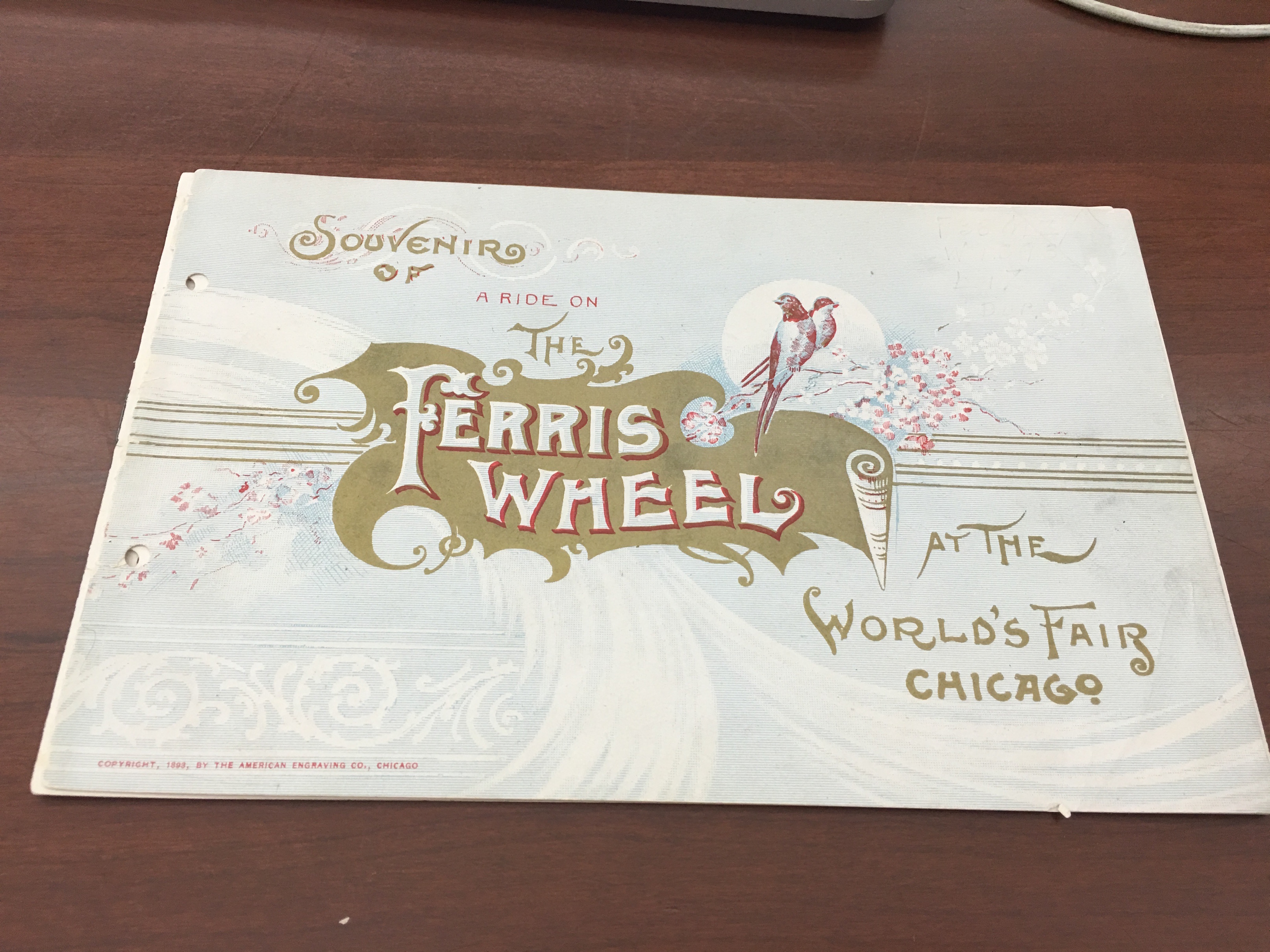
Some intriguing finds I made while researching at the Chicago History Museum and the National Archives:

img_0201

img_0206

img_0212

img_0225

img_0229

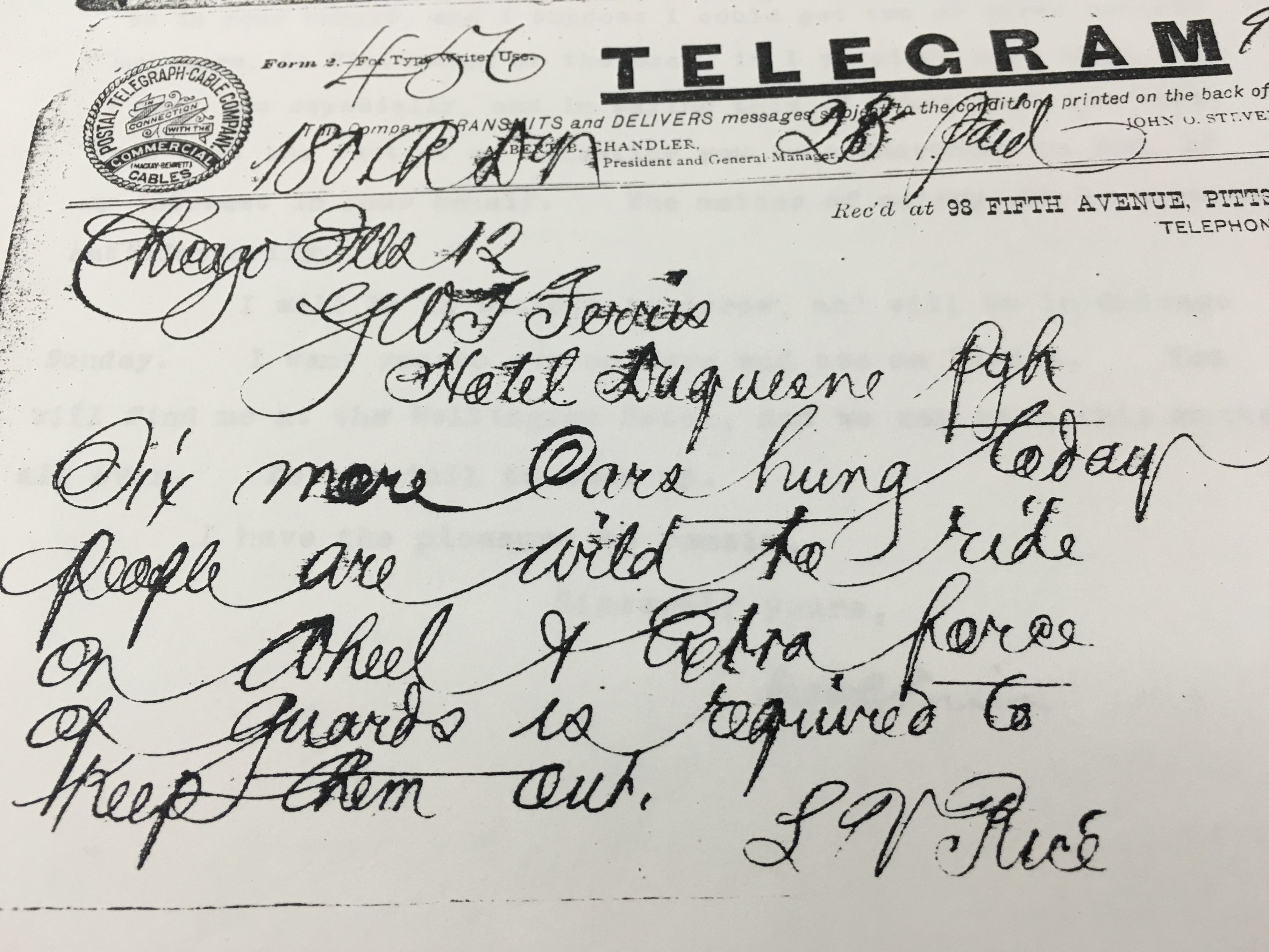
The telegram from Luther Rice to George Washington Ferris that was read on the show:

img_0239

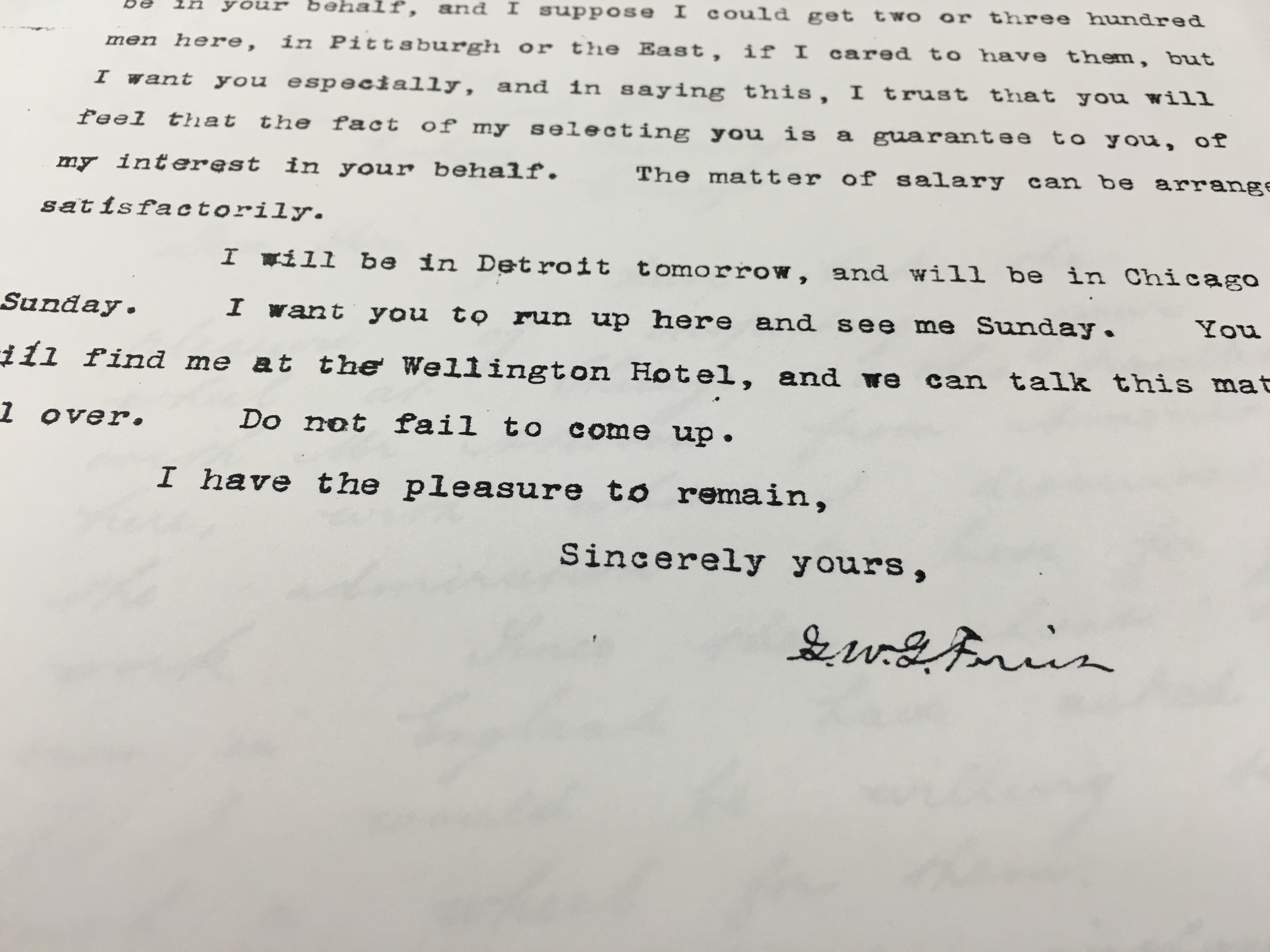
This was also featured on the show — the passionate letter from Ferris, asking Rice to join the project

img_0240

img_0232

img_0233

img_0234

img_0235

img_0236

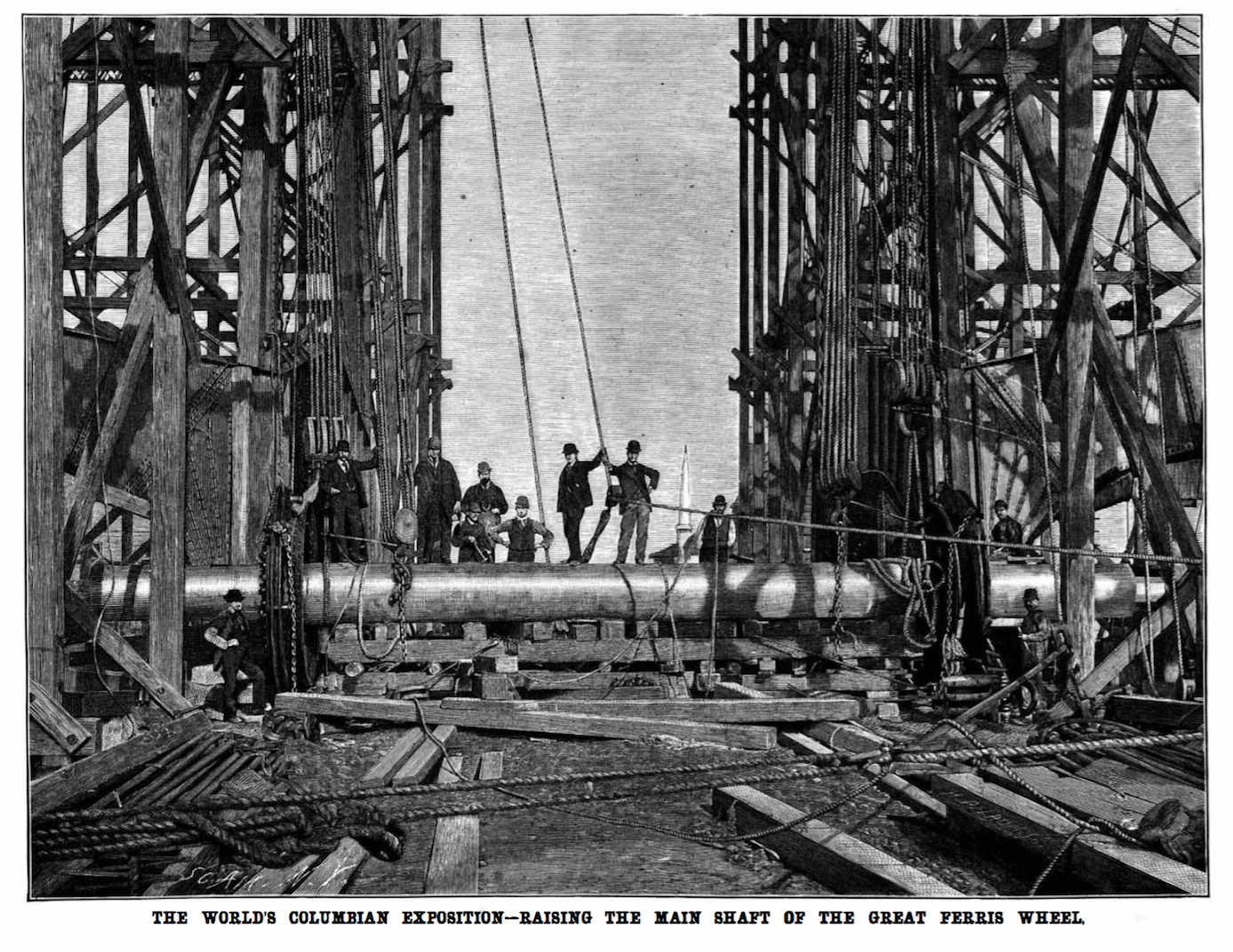
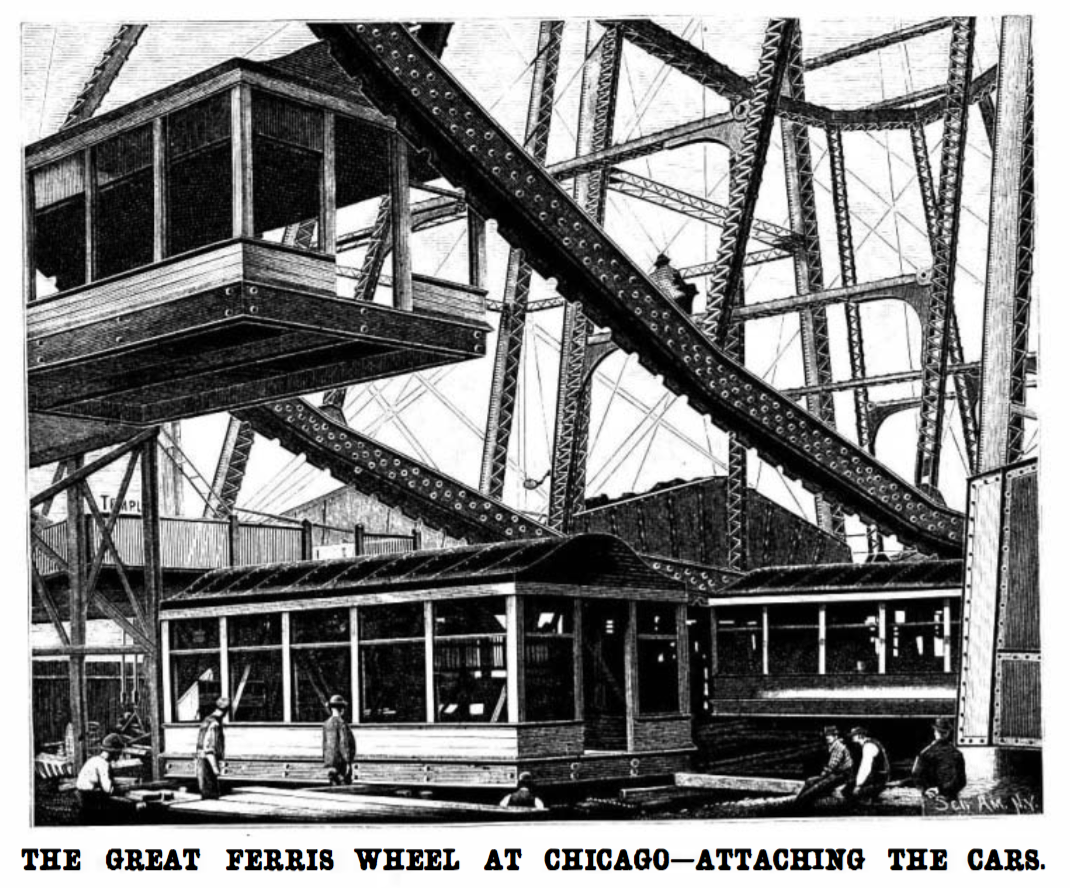
Images of wheel construction courtesy Scientific American.

Courtesy Scientific American

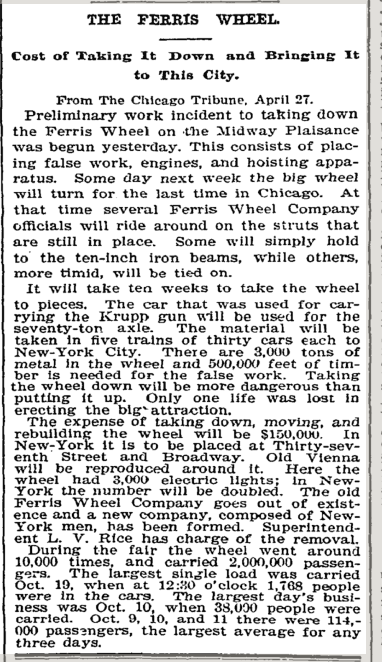
New York Times, May 13, 1894 — This article mentioned the plan to move the Ferris Wheel to New York (but the plan fell through)

screen-shot-2016-10-28-at-9-25-28-am

From the New York Times, March 1, 1898

screen-shot-2016-10-28-at-9-22-44-am

PLACES TO VISIT:

The Chicago Navy Pier (featured on the show)

Chicago History Museum (featured on the show)

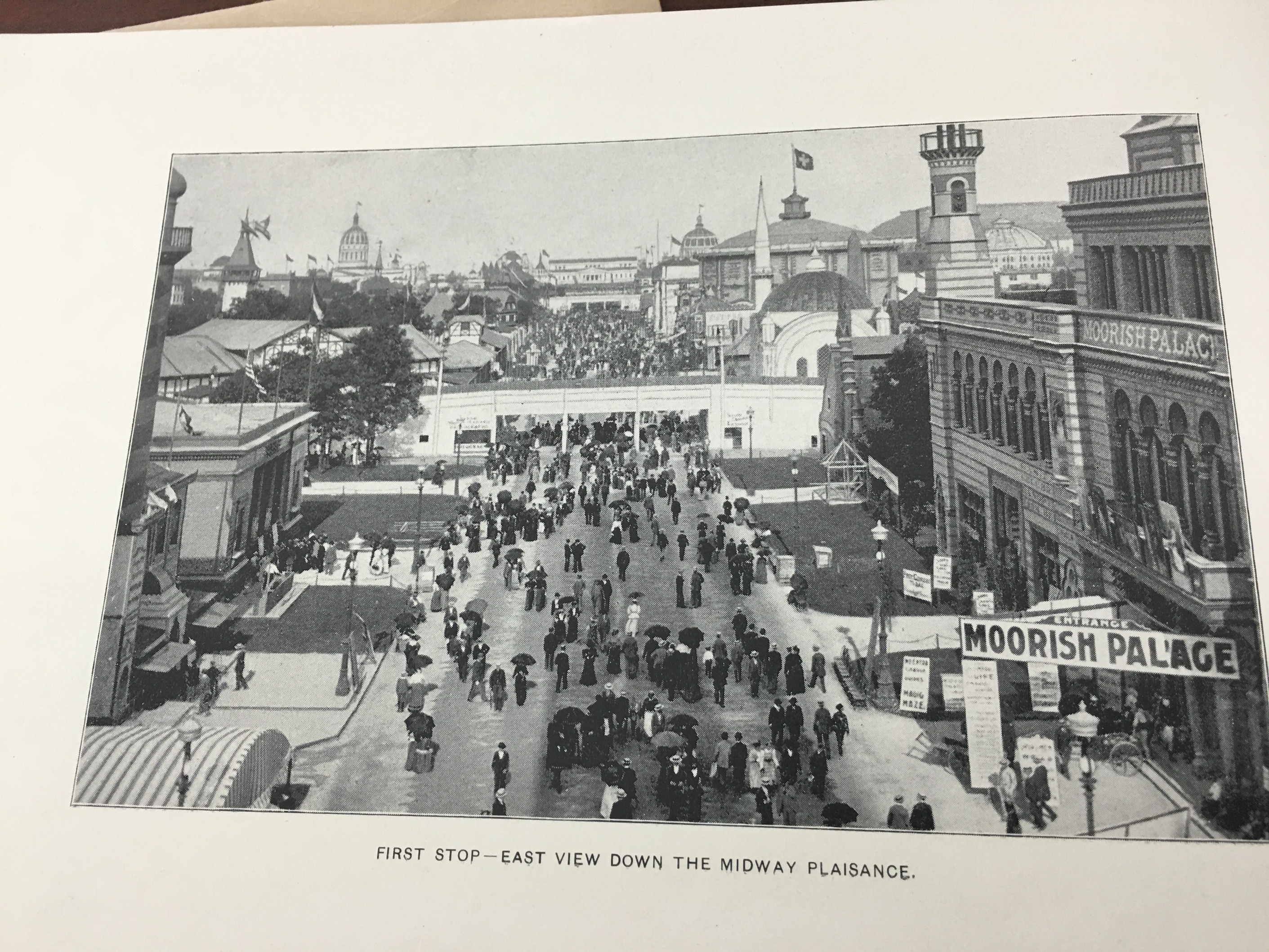
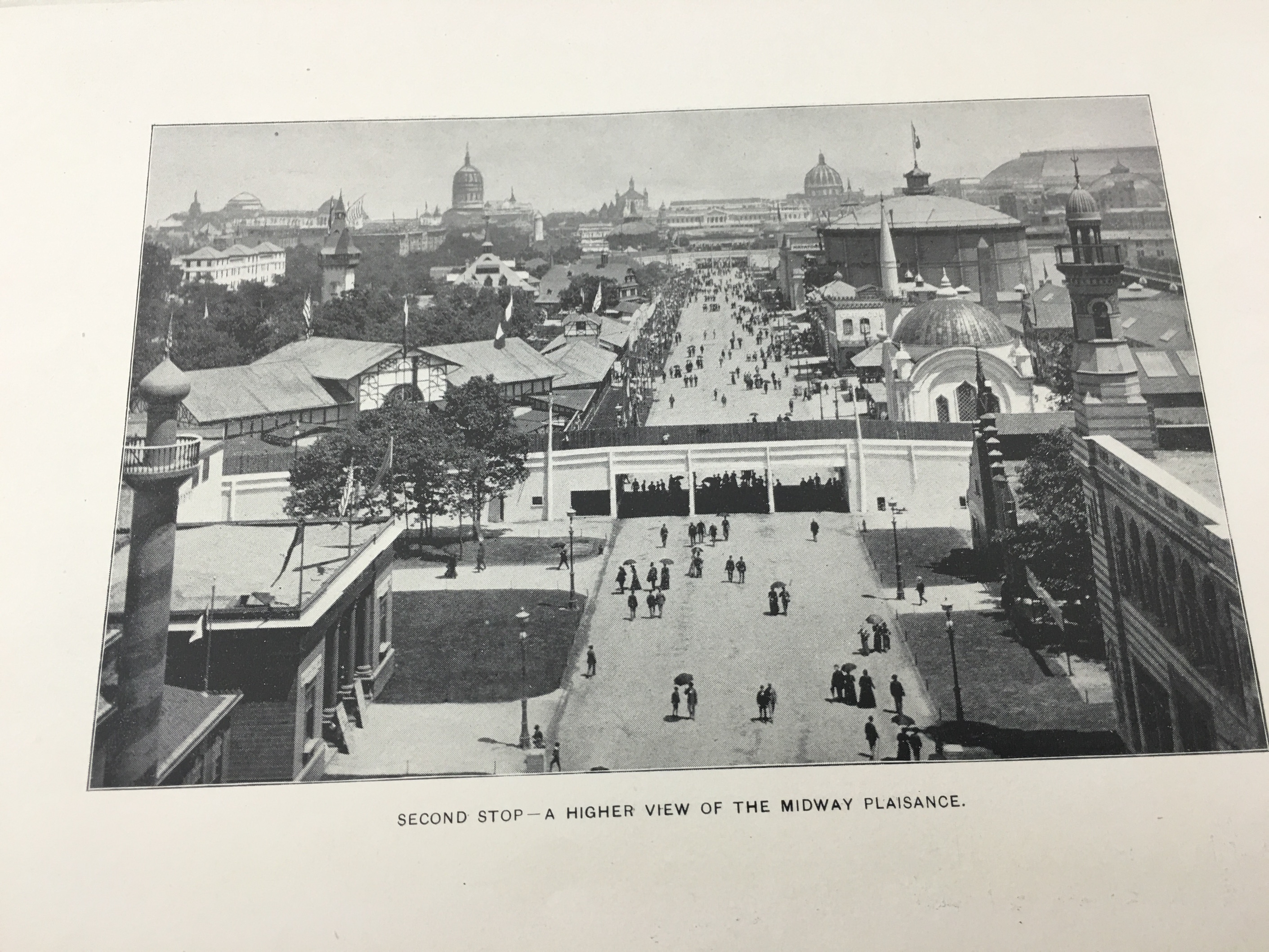
The Midway Pleasance and Jackson Park, Chicago

The Ferris House in Pittsburgh, PA

The Sears-Ferris House in Carson City, Nevada

The Wonder Wheel and Deno’s Wonder Wheel Amusement Park, Coney Island, Brooklyn (featured on the show)

The High Roller, Las Vegas, Nevada

Weiter Riesenrad (Vienna’s Giant Ferris Wheel), Vienna, Austria

THINGS TO READ:

Ferris Wheels: An Illustrated History by Norman Anderson

Circles In the Sky: The Life and Times of George Ferris by Richard G. Weingardt

Six Months at the Fair by Mrs Mark Stevens

ARTWORK FOR THE FIRST DESIGNED BY THOMAS CABUS. CHECK OUT HIS PORTFOLIO OF OTHER WORK HERE.

the-first-itunesart_1400x1400

Categories
Amusements and Thrills Bowery Boys Bookshelf

The literary Coney Island

Everybody sees Coney Island a little differently. Most people know it for the amusements but not everybody has the same feeling about them. One person craves the beaches, the food. Another prefers a stroll along the boardwalk, fireworks, an evening Cyclones game. Others live nearby, too familiar with the swelling weekend crowds. And some people — and this seems like blasphemy — have had their fill of Nathan’s hot dogs.

1Coney Island has always been a Rorschach test of class, morals and taste, an escape from the city for more than 150 years. (In the 19th century, it was an escape from two cities, as Brooklyn was independent then and had not yet subsumed Coney Island within its borders.)

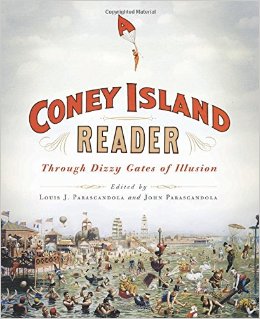
It’s never been considered a bastion high culture, although its degrees of middle- and low-brow have been vibrantly written about from the very beginning.  In The Coney Island Reader: Through The Dizzy Gates of Illusion, edited by Louis J. and John Parascandola, we get a time machine through its many iterations, thanks to the observations of dozens of writers.

I don’t think of Coney Island as a particularly literary destination, and yet here we have some of their greats chiming in to describe the lusty pleasures of Brooklyn’s beach-side getaway.

We begin with Brooklyn’s greatest voices — Walt Whitman.Yes: there was a clam-bake — and, of all the places in the world, a clam-bake at Coney-Island! Could moral ambition go higher, or mortal wishes go deeper?”  He’s writing in 1847 when the area is a barely developed destination.

2163524020_af077b7fec_o

Jose Marti, the poet and Cuban revolutionary, is overtaken by its magic. “And this squandering, this uproar, these crowds, this astonishing swarm of people, lasts from June to October, from morning until late night, without pause without any change whatsoever.”

Today’s Coney Island amusement district is vastly smaller than the one which greeted Stephen Crane in 1894.  “We strolled the music hall district, where the sky lines of the rows of buildings are wondrously near to each other, and the crowded little thoroughfares resemble the eternal ‘Street Scene in Cairo’.”

As Coney Island grew larger in the early 20th century — with its three principal amusement parks Dreamland, Steeplechase and Luna Park — it pulled thousands more to its whimsical attractions.  It’s almost  hilarious to picture Russian writer and dramatist Maxim Gorky sitting inside the Dreamland ride Hellgate, with its hellish flames “constructed of paper mache and painted dark red. Everything in it is on fire — paper fire — and it is filled with the thick, dirty odor of grease. Hell is badly done.”

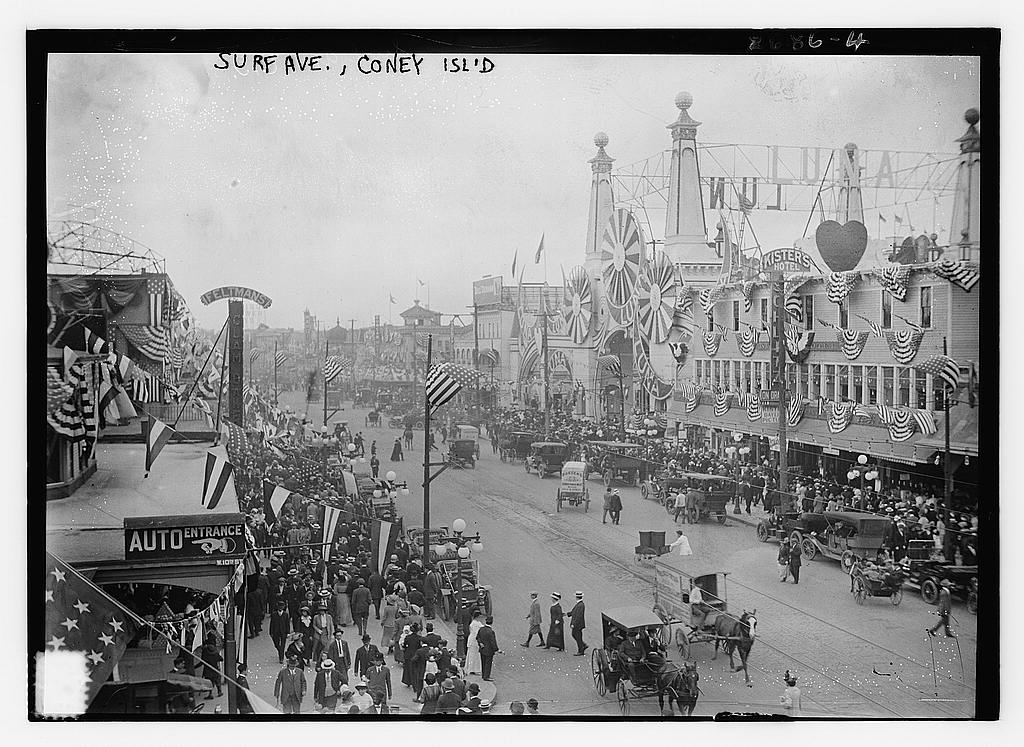
Surf Avenue 1910-15
Surf Avenue 1910-15

The Coney Island Reader combines literary observances with social commentary and documentary accounts featuring interviews with the impresarios themselves.  In a 1909 magazine article by Reginald Wright Kauffman, George C. Tilyou, the owner of Steeplechase Park, proclaims, “To sum up my opinion of the whole thing, we Americans want either to be thrilled or amused, and we are ready to pay well for either sensation.” (George’s brother Edward is represented here with a vivid essay called “Human Nature with the Brakes Off — Or: Why the Schoolma’am Walked Into the Sea.”)

More contemporary observations of the fictional kind are represented by Kevin Baker (who also contributes the forward), Josephine W. Johnson and Sol Yurick (from the novel which inspired the film The Warriors).

This is perhaps the only book in history that features the writing of e.e. cummings and Robert Moses. One saw saw “[t]he incredible temple of pity and terror,  mirth and amazement,” the other “overcrowding at the public beach, inadequete play areas and lack of parking space.”

Ah, Coney Island. It’s what you make of it.


The Coney Island Reader
Through Dizzy Gates of Illusion
edited by Louis J. Parascandola and John Parascandola
Columbia University Press

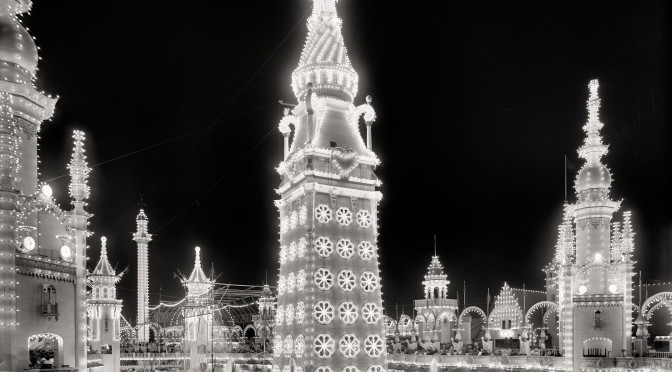
Top image: Luna Park at night, 1905 (polished up image courtesy Shorpy)


Categories
Mysterious Stories Podcasts

Haunted Hipsters: Four Ghost Stories of Brooklyn

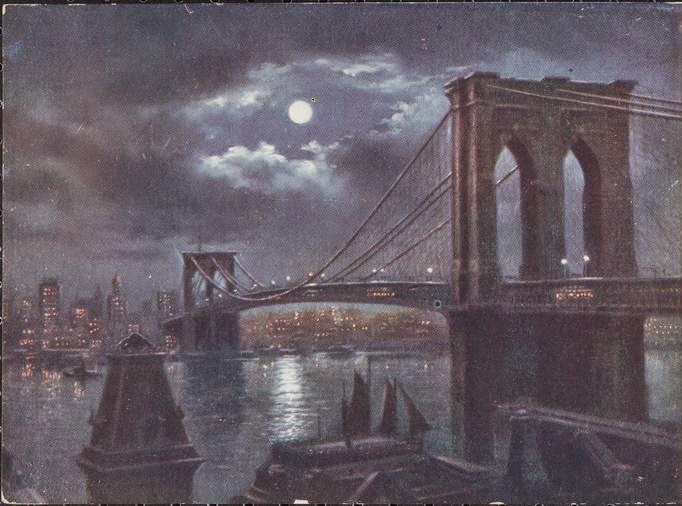
Dark skies over the Brooklyn Bridge, from a 1905 postcard (courtesy MCNY)

PODCAST  Brooklyn is the setting for this quartet of classic ghost stories, all set before the independent city was an official borough of New York City.  This is a Brooklyn of old stately mansions and farms, with railroad tracks laid through forests and large tracks of land carved up, awaiting development.  These stories also have another curious resemblance — they all come from local newspapers of the day, reporting on ghost stories with amusement and more than a little skepticism.

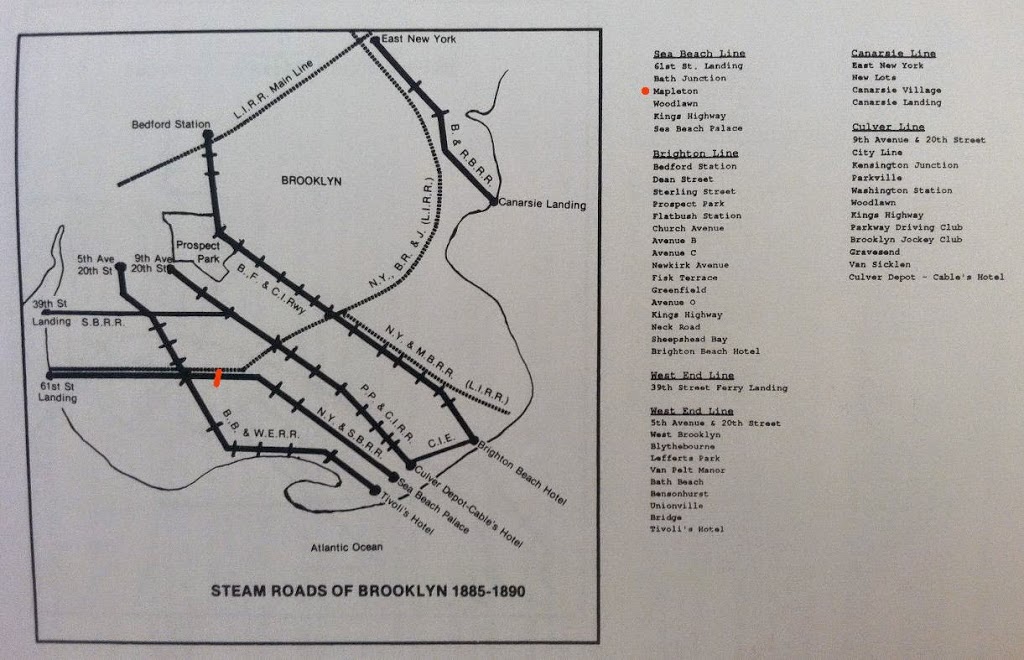
1)  The Coney Island and Sea Beach Railroad took passengers to and from Brooklyn’s amusement district.  But nobody was particularly amused one evening to be stopped by a horrific, gangly ghost upon the tracks near Mapleton.

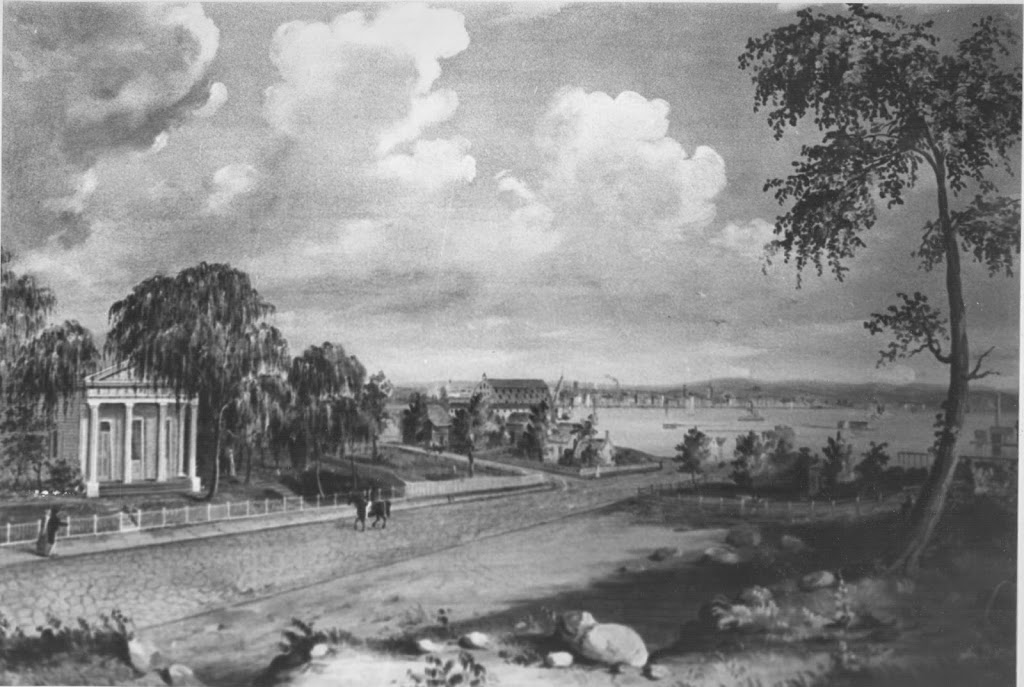
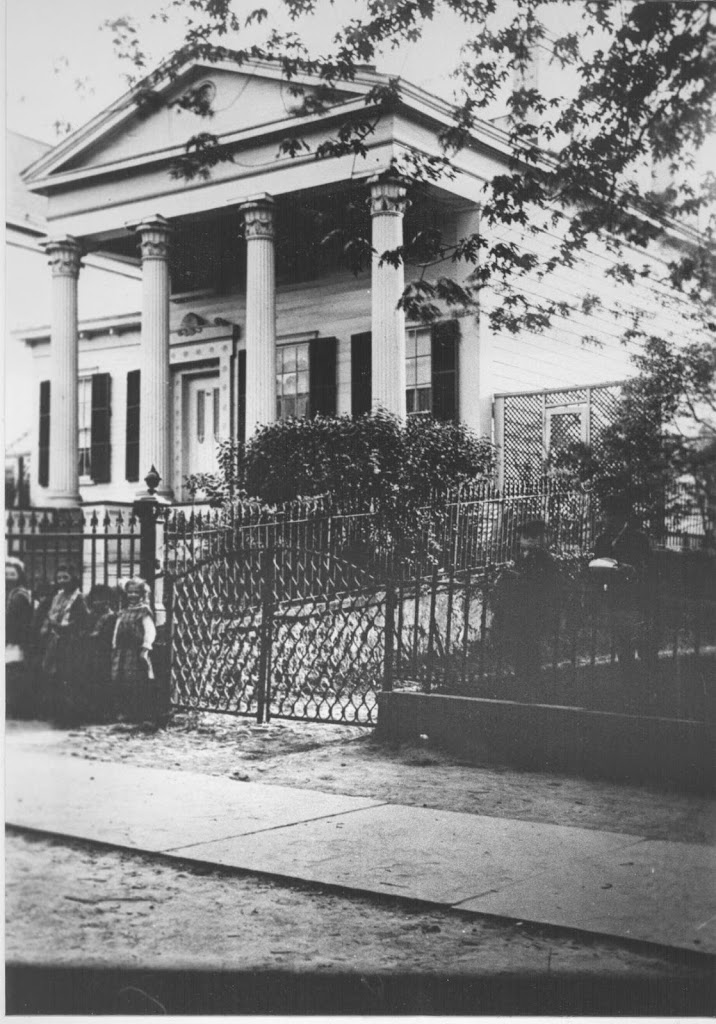
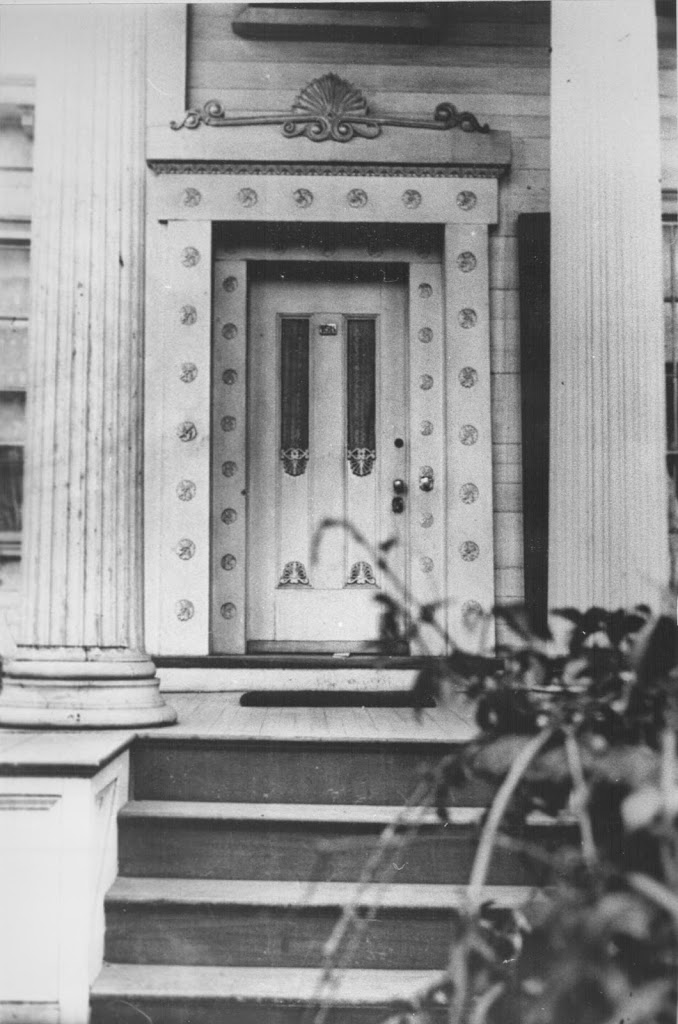
2)  In Clinton Hill, a plantation-style house built in the early years of the Brooklyn Navy Yard has survived hundreds of unusual tenants over the years, but certainly the scariest days in this historic home occurred in 1878 with a relentless, invisible hand that would not stop knocking.

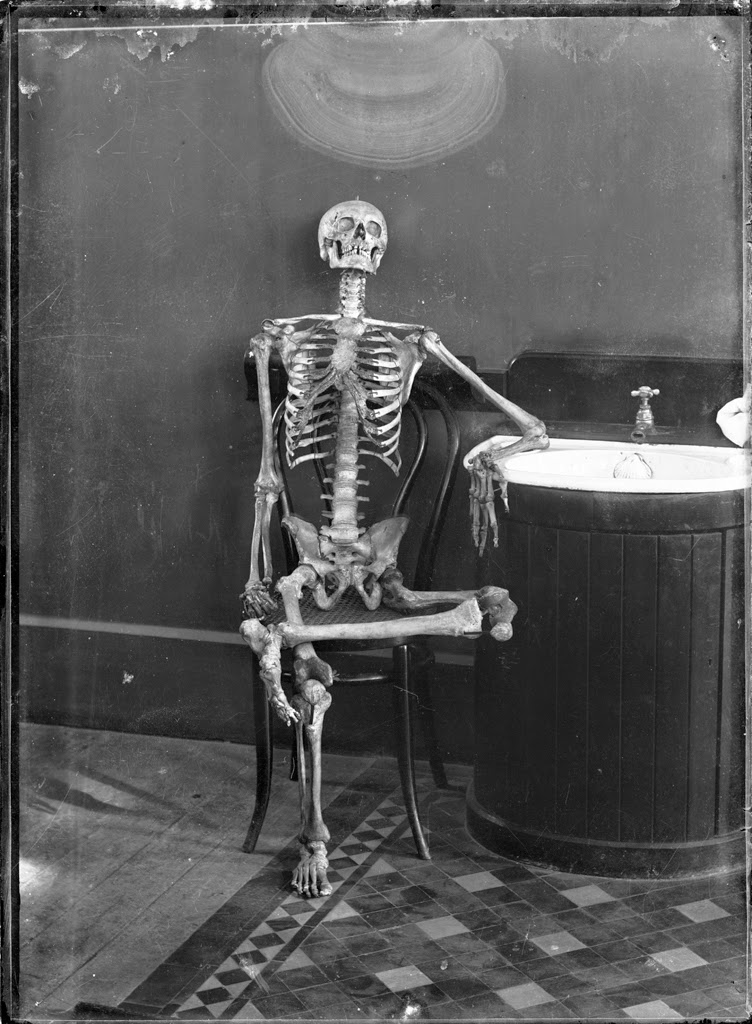
At right: Death will not deter this Brooklynite from ordering a great craft beer. (courtesy Powerhouse Museum)

3)  The Oceanic Hotel was one of Coney Island’s first great hotels, an accommodation for almost 500 near the increasingly popular beaches of Brighton Beach.  But in 1894, the hotel was virtually emptied out and reportedly haunted.  Did it have something to do with the murder upstairs in Room 30?

4) And finally, the area of Bushwick nearest the Queens border are populated with various burial grounds like the Evergreens Cemetery, borne of the rural cemetery movement which transplanted thousands of previously buried bodies from Manhattan to Brooklyn.

In 1894, with Bushwick prepared for a spate of new development, the sudden appearance of an oddly dressed spirit threatens to disrupt the entire neighborhood.  During one evening, a drunken party of 300 ghost hunters, brandishing swords and revolvers, come across one terror that proved to be very real indeed.

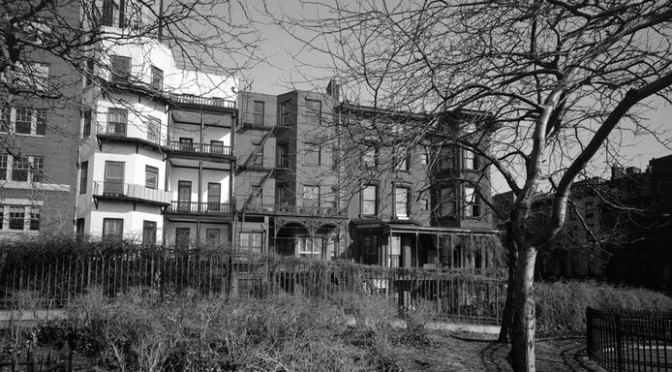
ALSO: Secrets of The Sentinel, a 1977 horror film set in an old house along the Brooklyn Promenade.


10 Montague Terrace, setting for the 1970s horror film The Sentinel, sits at the end of this elegant block on the Brooklyn Promenade.

[Looking west from Brooklyn Bridge Park to the houses on Montague Terrace.]

The theatrical trailer to The Sentinel

1) MIDNIGHT TRAIN TO TERROR
Phenomena reported August 1894 in several publications, including the New York Evening World

The incident in question occurred near the Mapleton station along the Coney Island and Sea Beach Railroad (Map of Brooklyn railroad lines courtesy The Weekly Nabe who has more information on the early days of Mapleton.)


2) WHO’S KNOCKING AT MY DOOR?
Phenomena reported December 1878 in several publications, including the New York Sun
 
A view of Wallabout Bay and the land which became the Brooklyn Navy Yard, circa 1830s.  That would appear to 136 Clinton Avenue (the oldest house in the area) however the general proportion of the region looks a bit off.  Below it, two pictures of the house on Clinton Avenue, including a close-up of the infamous door. (Pics courtesy Flickr/sjcny and Long Island Historical Society)


3) THE GHOSTLY GUEST IN ROOM 30
Phenomena reported August 1892 in several publications, including the Brooklyn Daily Eagle

The haunted Oceanic Hotel, located at Neptune Avenue and W. 6th Street. Perhaps this looks surprising for a 500-room hotel, but out of frame are bungalows and other adjoined buildings.  But you can see how this sort of accommodation went out of fashion rather quickly.

[First hotel at Coney Island, Oceanic Hotel.]
http://timesmachine.nytimes.com/timesmachine/1930/07/01/98307449.html?pageNumber=18

4) THE GHOST OF KNICKERBOCKER AVENUE
Phenomena reported November 1894 in several publications, including the New York Times

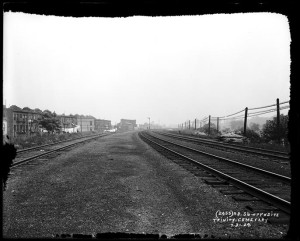
1924 — A view of the tracks which separate Bushwick from a cluster of cemeteries. Buildings to the left sit in the vacant lots which were mentioned in this story.  The cemetery nearest this photograph is Most Holy Trinity Cemetery.  You may remember the name Most Holy Trinity for it was this Bushwick congregation that was featured in a ghost story a couple years ago in the show ‘Haunted Histories of New York.’

Opposite Trinity Cemetery.


Categories
On The Waterfront

Troubled Waters: The story of the Grand Republic steamboat, the cursed sister ship of the General Slocum

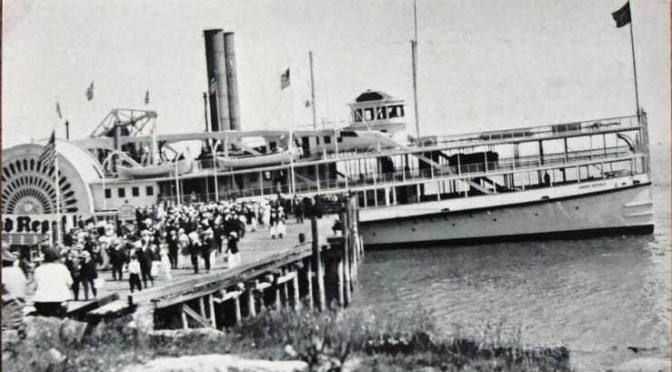
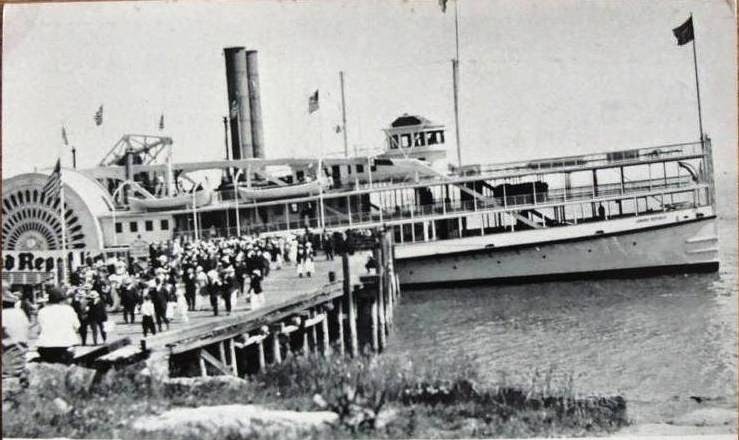
Above: The Grand Republic steamship. As you can see from its paddlewheel, it was a twin to the General Slocum [source]

This could not have made New Yorkers feel very safe about even the briefest of river excursions.

Days after the General Slocum excursion steamer caught fire and sank in the East River, killing over 1,000 people, its older sister ship the Grand Republic — a twin of the doomed vessel, owned by the same company — kept operating along the waters of New York Harbor.

To many, it looked like the ghost of the Slocum.

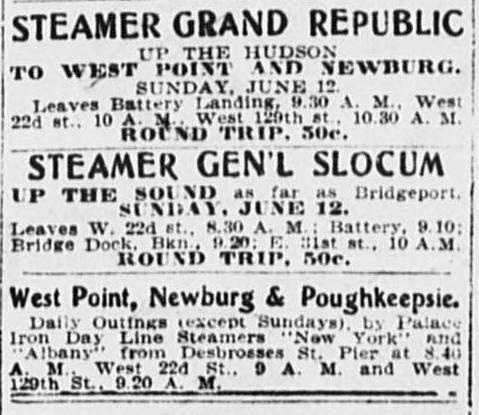
The Grand Republic often ran in tandem with the Slocum, transporting passengers to the seaside amusements of the Rockaways.  During the month of June 1904, the Grand Republic was assigned to the Hudson River, while the Slocum ran the Long Island Sound.

An advertisement in the New York Evening World, June 10, 1904

After the Slocum tragedy, steamboat inspectors were heavily scrutinized and excursion companies were accused of endangering lives for a fast dollar.

Rallying to the side of safety was, of all people, the venerated Daniel Sickles, former Congressman and Civil War officer.  (You may remember him from his early days back when he killed the son of Francis Scott Key.)

The retired politician had no tolerance for the bureaucrats he believed were responsible for the Slocum disaster.

“Scalp those moribund Federal officials who sit with their roll-top desks and draw their salaries for doing nothing while human life is allowed to be sacrificed by the hundreds,” he said. “Only yesterday, I am informed the Grand Republic was allowed to leave her wharf with more passengers than the law allows. Broadside these fellows and let every man and woman write President [Theodore] Roosevelt a letter demanding an investigation.” [source]

Sickles made good on his word, writing Roosevelt and lashing out at the steamer companies in no uncertain terms, the overcrowded General Republic his chief example of their continued malfeasance.

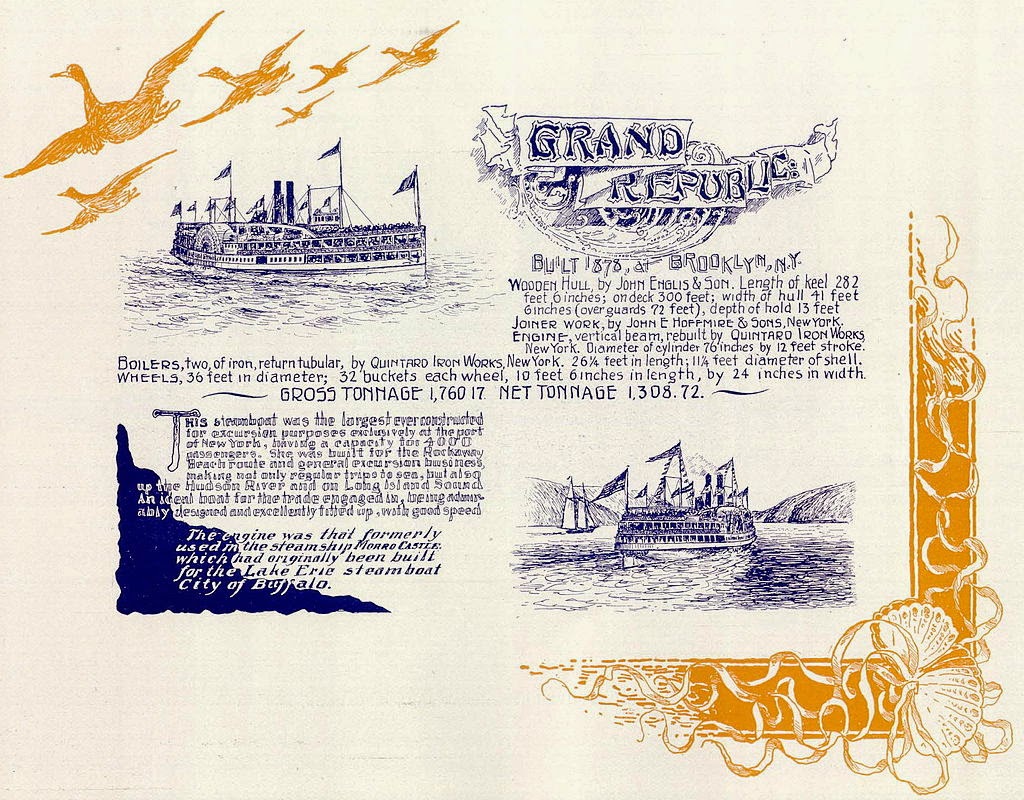
Below: A graphic on the Grand Republic in a book called American Steam Vessels. “Built in 1878” “This steamboat was the largest ever constructed for excursion purposes exclusively at the port of New York.”

The Slocum disaster obviously hit business hard for the entire excursion industry.  The weekend after the Slocum sank, the Grand Republic was supposed to host another church group for a tour of the Hudson, but, understandably, only one-fourth of its passenger list arrived. The Knickerbocker Steamboat Company, owner of the Slocum and Grand Republic, went out of business, and the Grand Republic was sold to another concern.

The captain of the Grand Republic steamer John Pease had been responsible for inspections on the Slocum and was eventually indicted, “criminally responsible for the Slocum disaster.”

Still that did not take the Grand Republic off the waters. ‘THE GRAND REPUBLIC STILL RUNS,” declared the Tribune on July 4, 1904.

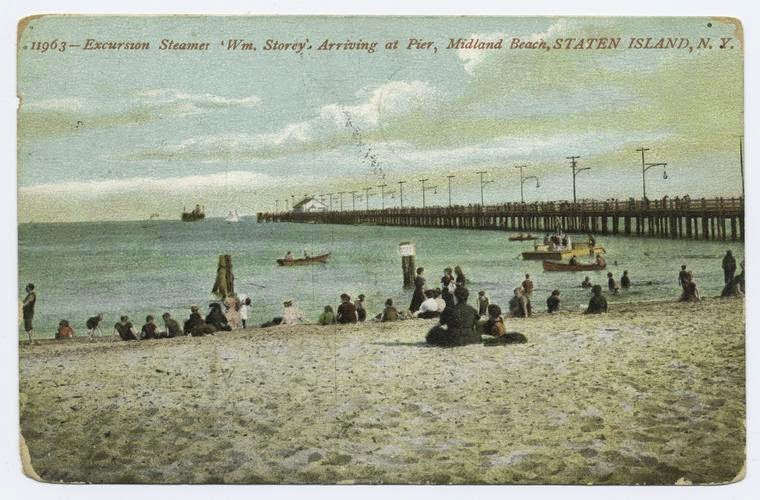
Below: A view of the Midland Beach pier, where excursion steamers would frequently dock. (NYPL)

Four days later, the Grand Republic almost crashed into another steamer off the coast of Coney Island. Two weeks later, with 500 passengers aboard, it slammed into the Kismet steam yacht.  In August, the boat was revealed to have the same sort of rotten life preservers that had so doomed the Slocum.

Still that did not take the Grand Republic off the waters. “GRAND REPUBLIC DEFIES ORDERS,” declared the Evening World on August 3, 1904.

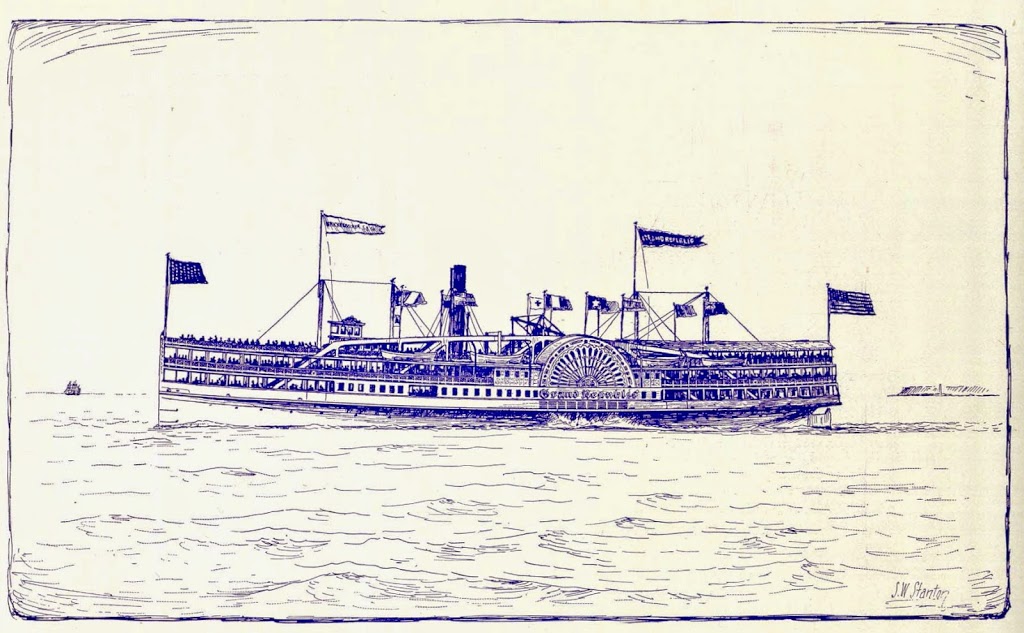
Below: The Grand Republic, illustration by Samuel Ward Stanton

The steamboat owners argued with the New York inspectors in the press, neither looking very trustworthy.  Eventually the boat owners surrendered the Grand Republic to the government for inspection.

Believe it or not, even with hundreds of life preservers declared ‘rotten’ and promptly removed, the boat was eventually declared safe, although its capacity was greatly lowered — from 3,750 to 1,250 passengers, a major financial blow to the owners.

It led a quiet career for many years afterwards, although many feared the boat’s association with the doomed General Slocum and refused to ride it.  It resumed trips to the Rockaways and Coney Island, taking tens of thousands of people through New York Harbor for many, many years.  And it even returned to taking church groups on day excursions, similar to the journeys that the General Slocum had taken.

But the boat would continue to get into rather significant accidents.  In 1915, even the suggestion of fire during one voyage sent a thousand people scrambling for the life preservers, resulting in several injuries.  In a disturbing parallel with the Slocum, “[w]omen shrieked as they were knocked down by the mob that surged about the lifeboats.” [source]

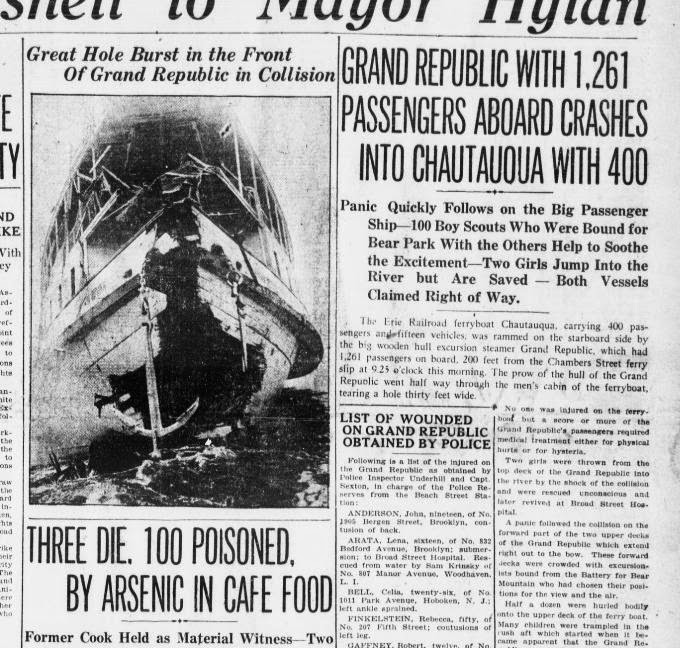
On August 1, 1922, the Grand Republic smashed into another boat in the Hudson River, injuring over a dozen people.  Luckily the boat was filled with Boy Scouts, who calmed the panicked passengers. (Below, from the Evening World)

You might think this would spell the end for the old steamboat, but no!  It remained in the waters, continuing to transport passengers to upstate New York, one of the oldest vessels in service.

The Grand Republic, like its sister ship, was brought down by fire, although luckily without the terrible casualties. In 1924, while docked along 155th Street, a severe dockside blaze caught several boats on fire, including the Grand Republic.

The fire erupted late at night, and thirty men were sleeping aboard the boat at that time. Fortunately, this was the era of the automobiles; car horns from a nearby street awoke two seamen, who safely evacuated the crew.  The Grand Republic, however, was lost, eventually sinking into the Hudson River.

By the time of its demise, the boat seems to have shaken off much of its bad reputation.  Later that year, in a sort-of obituary to the excursion steamer industry, the New York Times declared, “[C]ertainly the Grand Republic was a grand success as an excursion boat.”

Categories
Amusements and Thrills

The decline and fall of Coney Island’s original Thunderbolt

Coney Island gets a brand new star attraction this week — the 2,000-feet Thunderbolt roller-coaster in Luna Park.  It’s “narrower than most apartments” (according to Gizmodo), a bright orange ribbon ride that squiggles, rises and plummets within a disturbingly wonky silhouette.

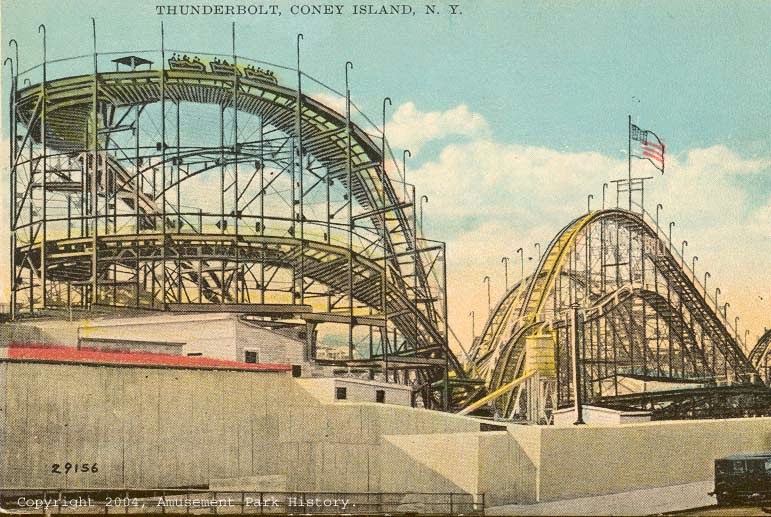
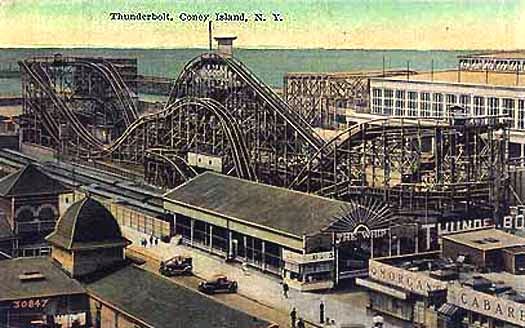
It also takes its name from one of Coney Island’s most famous roller-coasters, designed by famed ride designer John Miller. The Thunderbolt is considered by some to be one of Miller’s least impressive works. (The name is not even original; there are three other Miller-designed coasters named ‘Thunderbolt’.)

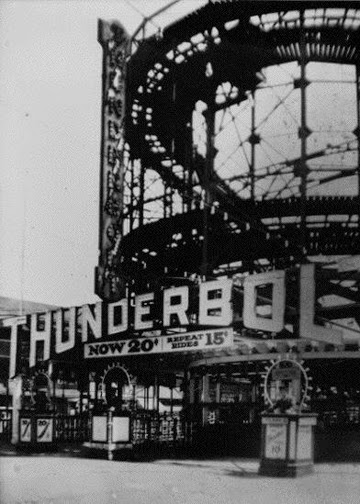
This jaunty “scenic railway,” as roller coasters were called then, was a huge success at its opening in 1925. One year later came the first accident, when the train “stalled half way up a steep incline, slipped back to the bottom of the dip and was crashed into by the succeeding train.”

Twenty cents a ride, but a second one for fifteen cents. (Courtesy Brooklyn Memories)

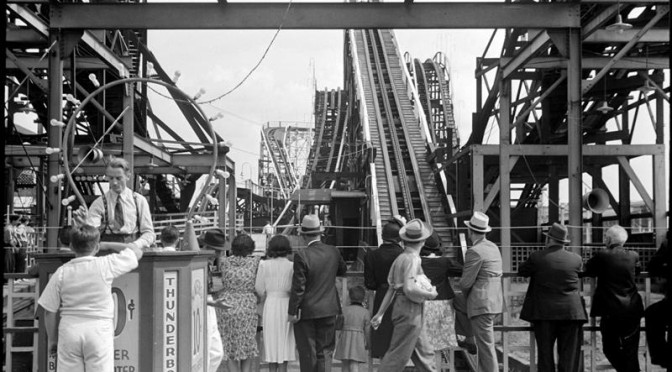
Below: Onlookers watch the cars go ’round the Thunderbolt, 1938 (Reginald Marsh photographer, courtesy MCNY)

It’s perhaps the cinema’s most famous roller-coaster thanks to Woody Allen and the Oscar-winning film Annie Hall.  John Moran and his son Fred, the operators of the Thunderbolt, really did live underneath it, “the back stanchions of the steel structure come down through the walls of the apartment.”   His home was used in the film. [source] [source]
Fred Moran died in 1982, and the ride closed later that year, in great need of repairs that never came.  It famously sat abandoned during the 1980s-90s, embraced in weeds and surrounded by a rusty fence. The land was sold to Horace Bullard, owner of the Kansas Fried Chicken fast-food chain, who intended on reopening it. 

He never managed to revive the Thunderbolt.   In 1991, the Moran house was destroyed in a fire, and the Thunderbolt itself succumbed to flames in 1998..  Its husk remained standing until it was controversially torn down (and with “deliberate indifference“) starting on November 17, 2000.

Below: The ruins of the Thunderbolt. And I believe the Moran home is also pictured her. (Courtesy the blog Coney Island Playground of the World)


Why rush the destruction of an artifact that, by that time, was one of New York’s best known ruins and a mecca for nostalgists?  The city was looking to lure minor league teams to New York, and with the construction of the new KeySpan Park, the nearby ruin was considered an “eyesore that looked dangerous.”
Ironically, the baseball team that would move into KeySpan would be named after Coney Island’s other famous roller-coaster — the Cyclone.


Less than 14 years later, a new Thunderbolt will make its debut near this very spot.

Categories
Amusements and Thrills

Coney Island’s many death and destruction amusements

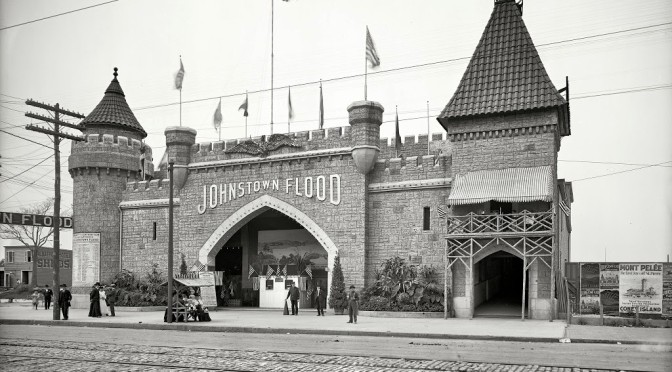
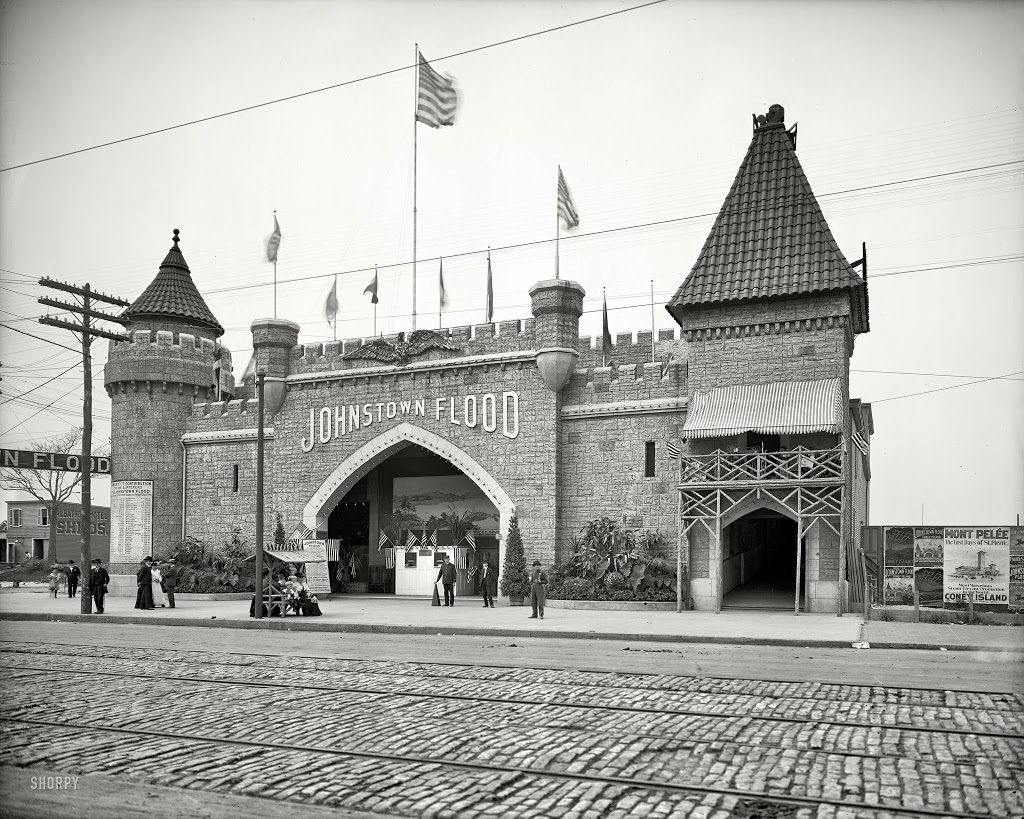
The entrance to the Johnstown Flood presentation (Cleaned-up photo courtesy Shorpy)

On May 31, 1889, a dam near the town of Johnstown, PA, collapsed after a brutal day of torrential rain, flooding the valley with 20 million tons of water and destroying everything in its path. There was virtually no escape, and 2,209 people died in the deadly flood.  Railroads, bridges and iron works were wiped off the map.  It remains one of the greatest disasters in America history.

Several years later, in 1905, on the Coney Island boardwalk, visitors could relive the danger in a bizarre reenactment set upon one of the biggest stages in the United States.  That’s entertainment!

The elaborate amusement, touted as “the greatest technical production in the world,” was only one of several theatrical presentations offering death and destruction, vivid dioramas of history and horror, for the pleasure of summer audiences.
These strange amusements were a precursor to the modern Hollywood disaster film, but they also served a more demonstrative purpose.  They provided Coney Island with a way to compete with Broadway, using new technologies and sophisticated stagecraft to recreate nature’s most horrifying scenarios.  Crowds marveled at the trickery, often rendering events with a macabre beauty.

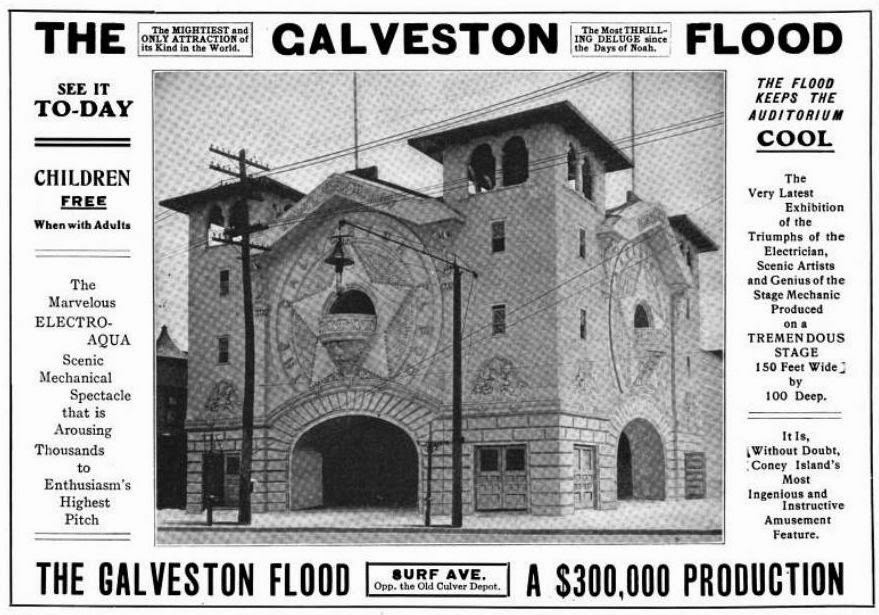
On Surf Avenue and 17th Street, one could visit the horror of the Galveston Flood, recounting the 1900 disaster (actually a hurricane) that killed over 8,000 people.  The Evening World declared, “How the very spirit of the horrible hurricane can be caught by mechanical and electrical devices is the secret that will make the Galveston flood famous.”

Down on Fifth Street, audiences delighted to a revival of the eruption of Mount Pelee, which killed almost 30,000 people in 1902.  Opening just two years after the disaster, the Pelee attraction was particularly luscious and comfy — “cooled by six big ventillators and ventillating fans run by electric motor” — as audiences witnessed the effects of faux lava catching houses on fire. [source]

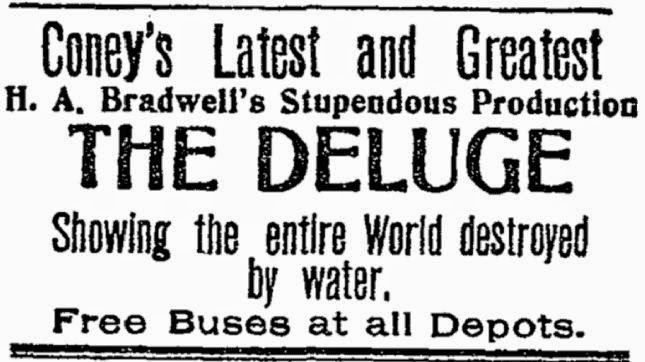
Not to be outdone, in 1906, impresario Herbert Bradwell, the producer of the Johnstown Flood attraction, expanded the water and light effects to recreate Noah’s Biblical flood.  The Deluge was both cheap spectacle and a morality play in five scenes, employing a flagrant water and light show to retell the ancient Biblical story, from the construction of the Ark to a host of tableaux outlining a possible future of “universal peace.” [source]

Coney Island’s most famous amusement parks certainly got in on the apocalyptic action.  Luna Park presented the thrill of fire-fighting with the 1904 show Fire and Flames.  Dreamland also joined the fray that year with Fighting The Flames where patrons could witness the horror of burning tenement.

Later that year, Dreamland replaced its fire fantasy with a vivid retelling of the San Francisco Earthquake, mere months after it killed almost 3,000 people and leveled the city.  The Earthquake featured a cast of 350 people within a stage creation of pyrotechnics and smoke effects, leveling the city on a nightly basis.

Below: Luna Park’s Fire and Flames and Dreamland’s Fighting the Flames were both featured in separate films.  


Perhaps the most dazzling of the many death and destruction features were the various incinerations of the ancient city of Pompeii.

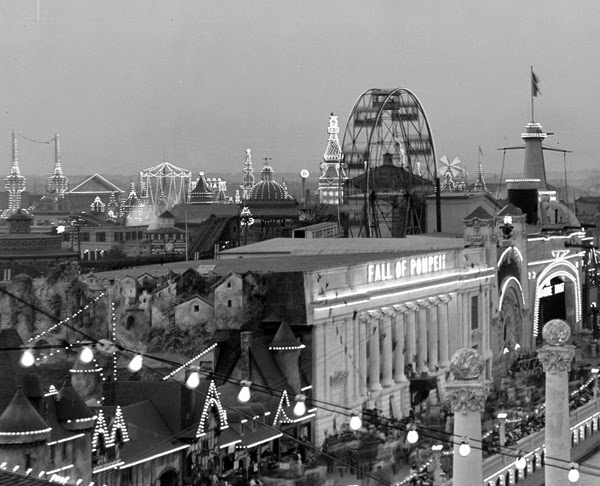
The first came in 1903 down near the Manhattan Beach Hotel with The Last Days of Pompeii, which nightly decimated the ancient Greek city, using a host of firework tricks and various maudlin theatrics. A year later, Dreamland brought the Fall of Pompeii, with a thrilling simulacrum of fire, ashes and lava. [picture source]

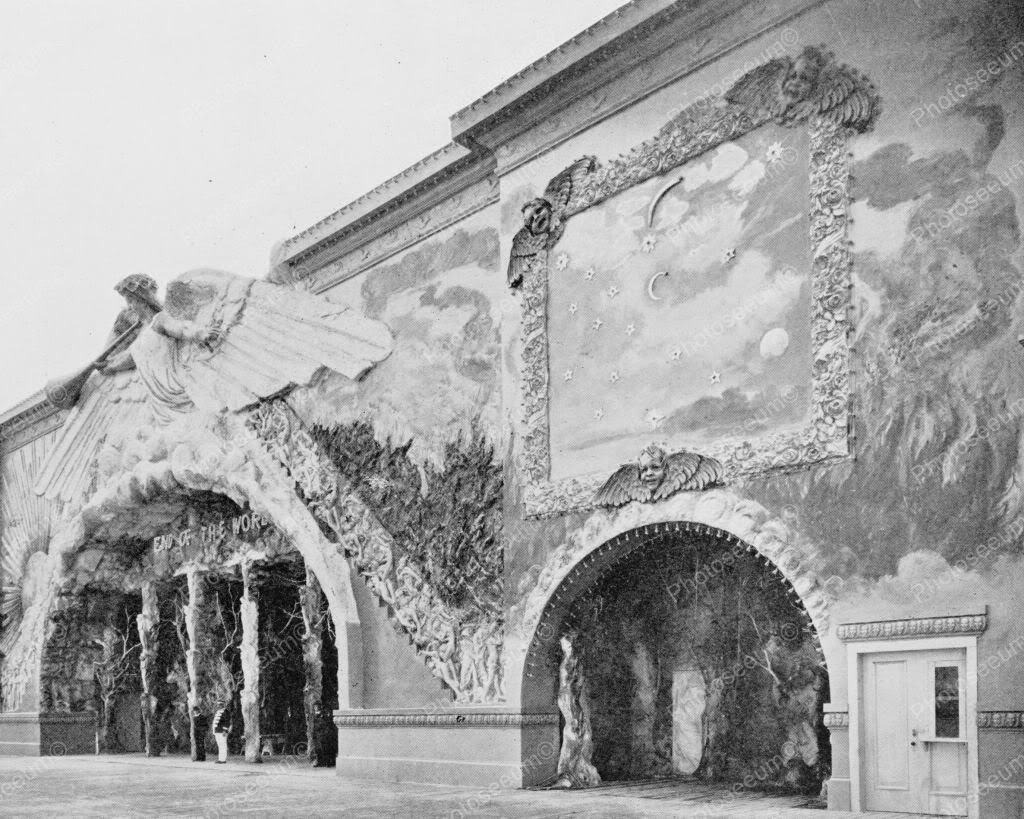
But in terms of the sheer amount of destruction imaginatively depicted, nothing could top Dreamland’s 1906 show called The End of the World, which destroyed all of mankind in an auditorium seating 1,200 people.

“The expulsion of Adam and Eve from Paradise and the destruction of the world by fire are the principal episodes in the production in which … more than a hundred people, a large choir and an organ take part.” [source]
Below: The entrance to the End of the World