Chelsea’s old Opera House: from robber barons to BBQ

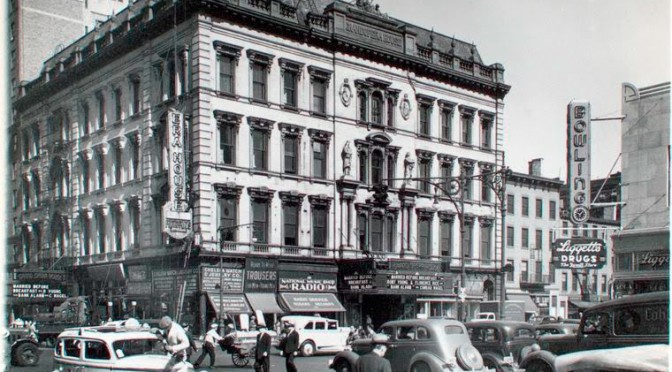
In last Friday’s podcast on the Hotel Chelsea, I mentioned a building that was located very near by called the Grand Opera House, at the northwest corner of 23rd Street and 8th Avenue. Here it is:
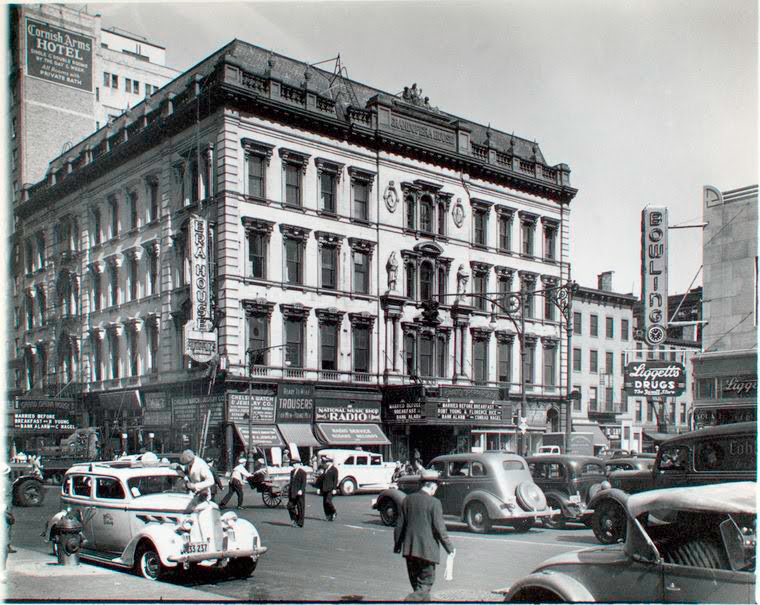
The opera house sprang up in 1868, the project of Samuel N. Pike, who purchased the land directly from Chelsea estate owner Clement Clarke Moore himself. In fact, the original Moore estate was only a block away.

The Pike Opera House, as it was called in those days, was Pike’s play for legitimacy in New York. A German immigrant who arrived in the U.S. in 1837, Pike lived in New York for a few years and made his fortunes in wine imports. Aspiring to upper-crust tastes, Pike fell in love with opera music after viewing performances by PT Barnum chanteuse Jenny Lind.

Pike constructed a massive opera house in his adopted home of Cincinnati in 1859 and many years later built a companion here in Manhattan at 23rd Street. Pike’s timing was off; theaters would crowd along 23rd Street in the coming years, but in 1860s, the wealthy preferred the Academy of Music down on 14th Street.

So the next year, Pike sold his lavish hall to two rather unlikely investors — Jim Fisk and Jay Gould, grade-A robber barons, pals of Boss Tweed and the orchestrators of the Black Friday Panic of 1869. Why would these two nefarious characters want an opera house?
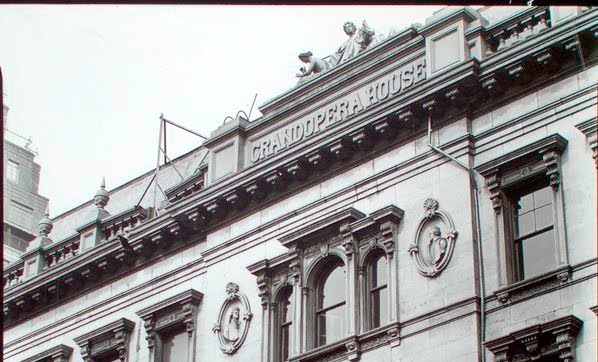
The house’s upper floors doubled as the offices of their own Erie Railway venture. Fisk’s mistress Josie Mansfield was frequently installed into productions at the newly named Grand Opera House; it was even rumoured her next-door apartment was connected to the opera house with an underground tunnel.

However it does seem that Fisk and Gould were legitimately aficionados of the theater, or at very least fans of the elite who would attend them, and the profits that would follow. The Grand Opera House would soon showcase a great number of theater endeavors outside of opera.

Mansfield would prove Fisk’s downfall; her other lover Edward Stokes shot him in 1872. Mourners could stream through the lobby of the Opera House and observe Fisk’s body laying in state there. Gould would operate the Opera House for several years afterwards, eventually renting it out to vaudeville shows and ‘second-run’ Broadway productions, its fortunes disintegrating as theater moved uptown and the Chelsea neighborhood became more middle-class.

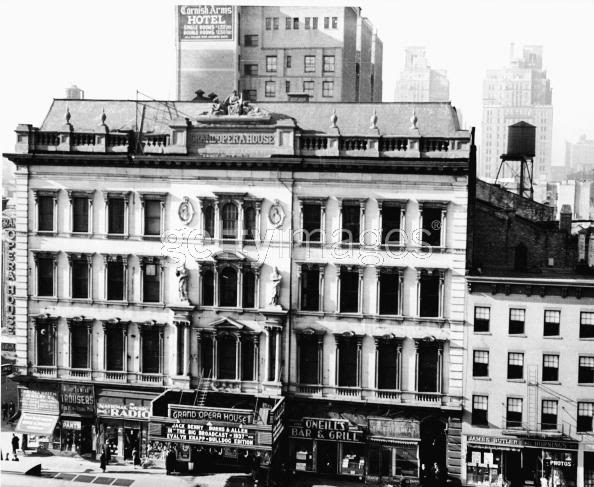
Like many old stages before it, the Grand Opera House switched to films in the 1920s. RKO tried its best to rehabilitate the space, hiring Thomas Lamb to renovate the theater with modern flourishes, reopening the space as the RKO 23rd Street Theatre. The picture below is actually from the year before the renovation, which stripped away some of the the Grand Opera’s frippery:
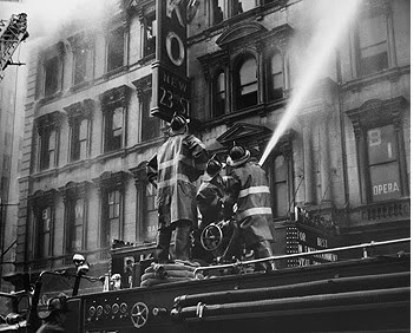
The site remained a movie house through the 40s and 50s, finally closing on June 15, 1960. In a further indignity, the Opera House was thoroughly gutted in a fire (seen in the picture below (courtesy Cinema Treasures):
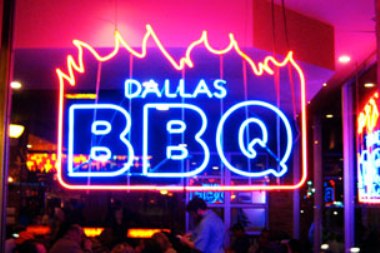
And thus it was time — to put in a strip mall! Today you can visit that very corner and enjoy a rather enduring Chicken Delight location or stop and have a Texas-sized margarita at the corner Dallas Barbecue.
Categories
Uncategorized

The future of New York history, Twitter style….

The Bowery Boys finally exist in the Twitter world! But how, exactly, do you apply what we do to a medium that’s brief, spontaneous and decidedly unhistoric?

On top of updates and previews about our podcasts, we’ll also attempt to highlight history-related activities in the city, as well as observations as we walk around researching and exploring. If we find a weird plaque or statue, by God, we’ll Tweet about it.

If you have a Twitter account and would like to follow along, just sign up to become a follower @boweryboys.

Categories
Podcasts

Chelsea Hotel, the muse of New York counterculture

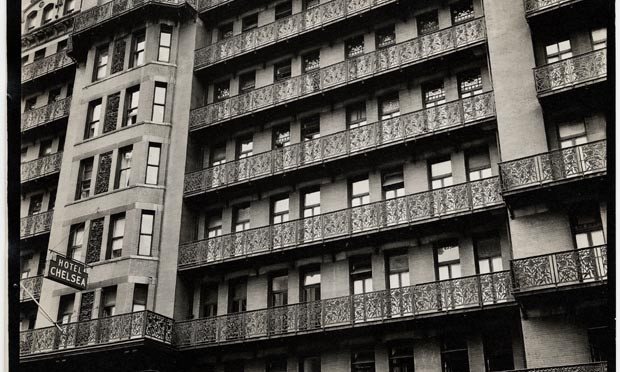
Berniece Abbott looks up to the Chelsea, 1936

Arguably New York’s least conventional hotel, the Chelsea Hotel (or rather, the Hotel Chelsea) is the one of New York’s culture centers, a glamorous, art-filled Tower of Babel for both creativity and debauchery. From Mark Twain to Andy Warhol, it’s been both inspiration and accommodation for artistic wonder.

We wind back the clock to the beginnings of the Chelsea neighborhood and to the hotel’s early years as one of the city’s first cooperative apartment buildings. What made the Chelsea so different? And why are people still fighting over this storied structure today?

___________________________________
As always, click on pictures for a bigger view

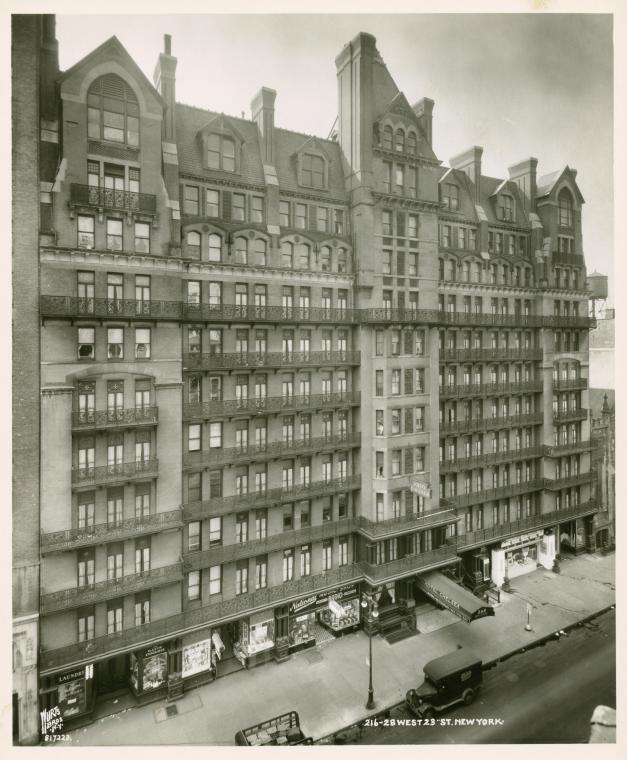
Standing Tall The Chelsea Hotel, built in 1883, was originally intended as a cooperative apartment building for wealthy tenants. However, by 1905, the building was turned into a hotel. Throughout its history, the Chelsea accommodated residents staying there for a few days … or a few decades. (Photograph by the the Wurtz brothers)

___________________________________

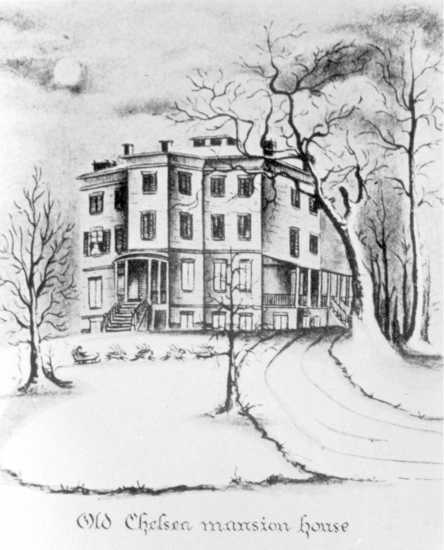
Old Chelsea Mansion The neighborhood of Chelsea was carved from the estate of Captain Thomas Clarke and his descendants. Clarke named his large, hilly estate after the still-operating Royal Chelsea Hospital, a respite for retired British soldiers. The Clarke mansion home sat approximately where the intersection of 23rd and 9th Avenue is today — just down the street from the Hotel Chelsea.

___________________________________

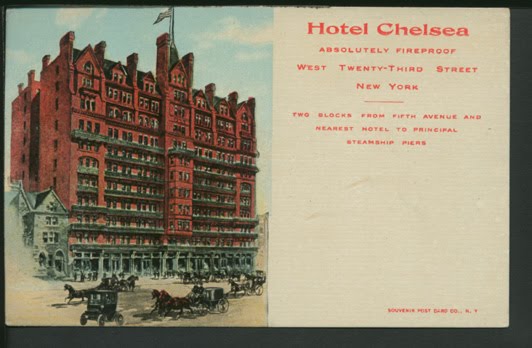
Absolutely Fireproof Many of the Chelsea’s sturdy amenities would come in handy when it began hosting rowdy musicians and artists. The buildings fireproofs claims would be put to the test when certain residents (Edie Sedgwick, Sid Vicious, to name a couple) would set fire to their rooms. And the building’s soundproof walls would be of service when rock bands stayed here.
___________________________________

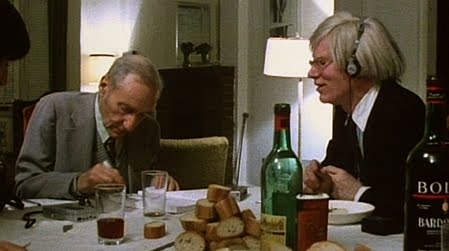
Bird Of A Feather William Burroughs and Andy Warhol in a room at the Chelsea, from a scene in Abel Ferrera’s documentary Chelsea On The Rocks, a film hopefully seeing the light of day very soon.
___________________________________

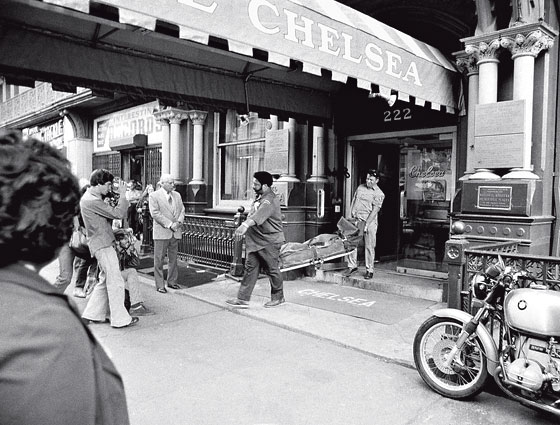
Tragedy 1978 No resident of the Chelsea was as infamous as Sex Pistols bassist Sid Vicious and his girlfriend Nancy Spungen, a raucous tragic pair who literally tore up the hotel. Vicious woke from a drug stupor in his room on October 12, 1978 to find his girlfriend stabbed to death. Sid would eventually die of a drug overdose the next year. Below, her body is carried from the hotel.

___________________________________

Below: A clip from Andy Warhol’s Chelsea Girls, filmed in various rooms at the hotel.

Wanna Know More? Your one-stop source for Chelsea Hotel history and recollection is Ed Hamilton’s very fascinating, very opinionated Living With Legends: Hotel Chelsea blog and companion book Legends of the Chelsea Hotel.

Cafe Wha?: the whys, wheres, whos and hows

FRIDAY NIGHT FEVER To get you in the mood for the weekend, every other Friday we’ll be featuring an old New York nightlife haunt, from the dance halls of 19th Century Bowery, to the massive warehouse clubs of the mid-1990s. Past entries can be found here.

LOCATION Cafe Wha?
115 Macdougal St, at Minetta Lane

Occasionally, the usual types actually did pack into Cafe Wha? — the intellectuals, the progressive, heavy-lidded types. Some of them actually were true beatniks — Sartre, cigarettes and turtlenecks — although most were just regular college students, some hippie precursors mixed among them, or uptowners who were looking to see these so-called beatniks in their natural habitat. They all filtered into this plain, dark room on Macdougal Street, where revolutions were hatched nightly from a guitar or a harmonica.

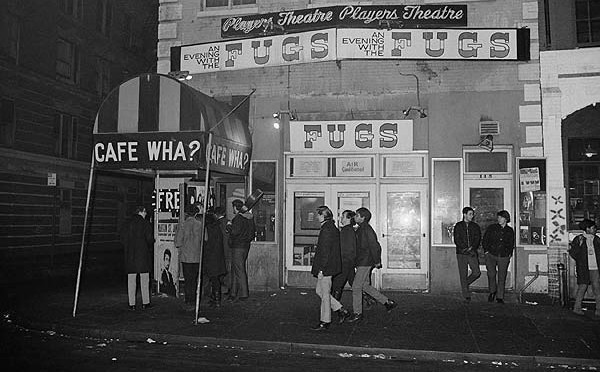
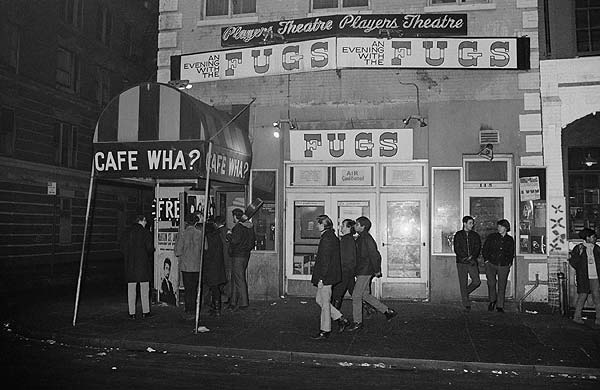
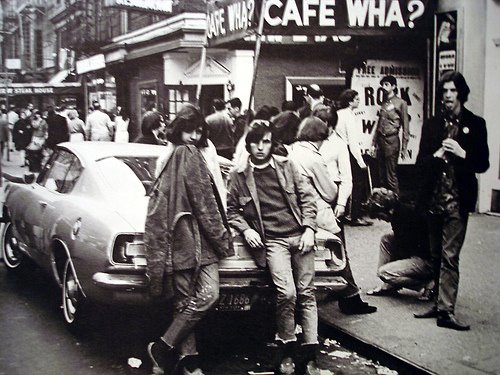
Cafe Wha?, at 115 MacDougal Street, helped create and then outlived New York’s pre-Vietnam War folk era, providing a stage for performers who would literally make music history.

Wha? was one in a string of Village ‘baskethouses’ as they were sometimes called, small music venues where a small wicker basket would be passed around for tips during performances. The music acts didn’t get paid much; there were dozons of aspiring Woody Guthries in the Village, much of the talent interchangable. Performers would traipse up and down the street, playing several times in different places, sometimes on the street.

Many would stumble into Cafe Wha?’s unassuming, sometimes dingy doorway. The club was owned by Manny Roth, who would open here in the late 1950s. He would own a few nightclubs and lounges over time, including another folk venue Cock ‘N Bull (later to become The Bitter End).

Roth’s lineage would create a different source of musical inspiration in the form of his nephew David Lee Roth, to become the flamboyant frontman of Van Halen. Young David would frequently accompany Manny into the club and would often be left with whatever singer happened to be performing at the time (including, a few times, with Richie Havens.) Little David, destined for tight pants, never stood a chance.

Many of folk’s most talented stars played the small Wha? stage, entertaining both bohemian and uptown audiences eager for new talent. Hilly Kristal, later the owner of New York’s most influential rock club CBGBs, was a burgeoning folk singer who frequently performed here. “Those were fun years, the beatnik era,” he said.

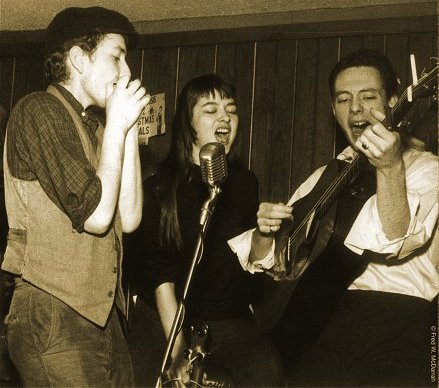
But the kernal of Wha?’s reputation lay with a wan, undistinguished looking boy named Bob Dylan. As the story goes, Cafe Wha? was the very first venue Dylan ever played in New York City, arriving there on his very first day in town on January 24, 1961. He auditioned for Roth, who hired Dylan to play behind one of Roth’s stars Fred Neil, a folkster who would later write songs for Harry Nilsson.

Dylan would only perform as a solo artist at Cafe Wha? only in the afternoons and would perform for free. He would play for bigger audiences at night, but only as backup for Neil.

“I worked for Manny all afternoons, from twelve to eight,” Dylan recalls. “There was constantly something happening on stage. You never really did get popular there, ’cause people never knew who you were….It was just a nonstop flow of people, usually they were tourists who were looking for beatniks in the Village.”

Below: Dylan with Neil and singer Karen Dalton

According to a biography by Bob Spitz, the odd, gangly Dylan instantly set himself apart. “That voice! Nobody had ever heard anything like it before….Bob had perfected the tonsilly scranch, a dry, throaty tenor ‘with all the husk and bark left on the notes’, which, if you weren’t actually looking at him, sounded like a middle-age hillbilly with emphysema.”

Certainly he was perceived by some as a parody of a folk singer: raggy clothing, offbeat and sincere. He would eventually distinguish himself as a solo star at other venues — most notably over at Gerde’s Folk City, a venue which would launch him to fame.

But in February 1961, he was just second-fiddle to Neil, who wasn’t the only notable headliner on the Wha? stage. Noel Stookey had a successful stand-up routine at the club long before he took the stage name Paul which fit nicely between the names Peter and Mary. However the performer that interests me most was another folk singer who would more lucratively abandon music altogether — Lou Gossett Jr. As in Officer and a Gentleman Lou Gossett Jr., quite a talented and well-known folk musician in the early 1960s.

Like a handful of other Village music spots, Cafe Wha? helped create the soundtrack for New York counterculture, enriched the Village’s rich reputation for the different. By the mid-60s, Wha? would diversify its musical acts. For instance, a New York Times article from 1965 a ‘Beatles backlash’ emanating from the Cafe What basement in the form of ‘modern blues’.

At the suggestion of Richie Havens (who also got his start at Wha?), a young guitar player Jimi Hendrix auditioned for Roth and got a three-month gig here in the summer of 1966, performing with a group called the Blue Flames. Hendrix and the Flames performed funkified covers of popular songs, certainly the most dynamic house band one can possibly imagine. Curiously, Hendrix and Dylan, the two great stars of Wha?, met only once, and it was at another Village bar, Kettle of Fish.

Around this time another rock band The Castiles would frequently perform here. The group would dissolve after a couple years, and its lead singer, Bruce Springsteen, would continue his slow climb to fame.

Roth would continue to operate the club for two more decades, presenting a host of entertainers from comedians like Lenny Bruce and Richard Pryor to definitely-not-folk-acts like Kool and the Gang.

Roth sold Cafe Wha? in 1988 but would go on to own other performance venues like the West End Gate. Cafe Wha? is open today under different management, hosting a roster of rock and soul artists. I’m not sure however if they still pass about a basket.

Murder unearthed at a condemned Bowery building

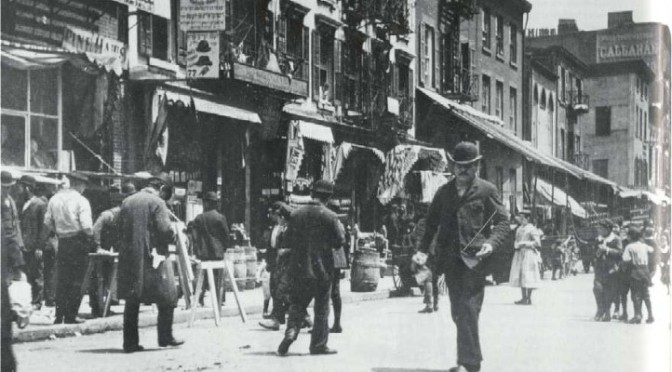
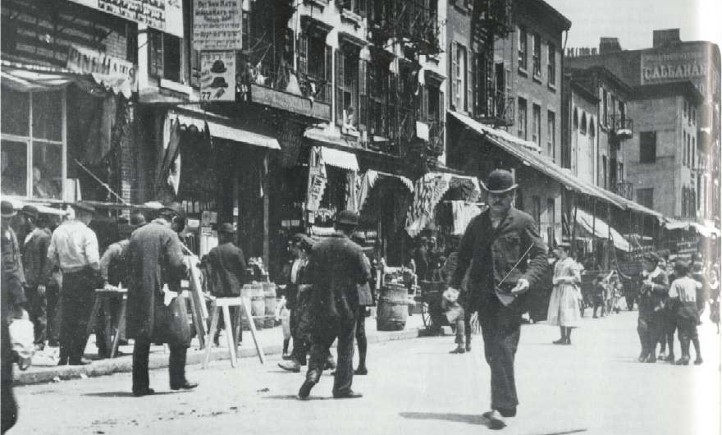
Old Hester Street: Could that gentlemen be the murderer*?

Grim news today from the Lower East Side: the residents of 128 Hester Street have been forced to evacuate their home due to the structure being declared ‘unsafe’ by the Department of Buildings. And boy, is it. The terribly dilapidated tenement suffered “cracks on the wall, holes in the ceiling, termites on the floor, holes in the floor” according to one tenant.

The building, right off the Bowery, was erected in 1910, and looks every bit of it; however the building it replaced at the same address had long before achieved a bit of notoriety itself. Like many buildings in the area, 128 Hester Street housed a former saloon, called The Old Stand, finding itself in the headlines one October 1906.

Across the street was another saloon called The Star. Early one morning, officers discovered a man slumped in the doorway with a knife wound to the heart. The victim, one ‘Yaller’ Wilson (nicknamed for his yellowish complexion), died of his injuries shortly after.

Who killed Yaller? Inconclusive from the records I’ve found, but one suspect is a former employee and bartender at the Old Stand, Joseph Coyne, who was taken in for questioning. He claimed he attempted to stop the altercation between Wilson and an unknown man, receiving a “cut across the back of the hand.”

Also suspiciously on hand was Wilson’s own wife Emma who provides the police with an odd story in which she seems to have entered the Star saloon with the same ‘unknown man’ and suspected murderer, who then go into an argument with her husband. This is truly a rough and tumble group; the events all seem to take place between the two saloons in the wee hours of the morning.

Enjoy reading the original report in the New York Times to see if you can make sense of this strange, mysterious murder.

Police believe Yaller was extorting money from the stranger, who met the threat by killing Wilson. But is the unknown man the real murderer, or are our two suspects hiding something? The suspect is “45 years old…had a dark complexion and a sandy mustache, and wore a brown suit and a black derby hat.”

*No, probably not. This picture was taken a good ten years before the murder took place. Plus, everybody wore black derby hats back then.

Still more Brooklyn Bridge jumpers, attention seekers

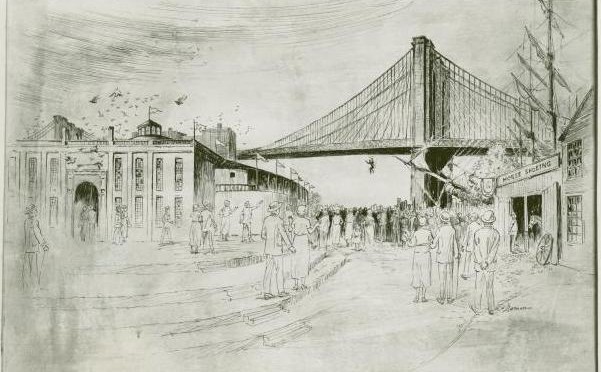
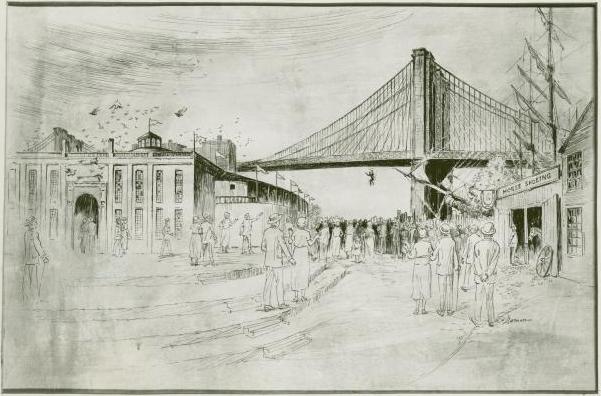
Illustration of Brodie’s infamous jump, from a 1939-40 World’s Fair brochure George Dessel’s Old New York, advertising the Old New York section of the fiar created by Messmore and Damon

Apparently, it’s still the rage to jump from the Brooklyn Bridge, as a forlorn soul (or misguided daredevil) plunged off the side last night, according to Gothamist.

The most famous man to jump from the Bridge — tavern owner and theater star Steve Brodie — actually turned his cheap stunt into a cottage industry. But did he really do it? Read more about Brodie’s adventures here.

Categories
Podcasts

Ellis Island: When the world came to New York City

For millions of Americans, Ellis Island is the symbol of introduction, the immigrant depot that processed their ancestors and offered an opening into a new American life.

But for some, it would truly be an ‘Island of Tears’, a place where they would be excluded from that life. How did an island with such humble beginnings — ‘Little Oyster Island’, barely a sliver of land in the New York harbor — become so crucial? Who is the ‘Ellis’ of Ellis Island? And how did it survive decades of neglect to become one of New York’s most famous tourist attractions?

Dedicated to my niece Courtney, who specifically suggested this episode.

PODCAST Listen to it for FREE on iTunes or other podcasting services. Or click this link to listen to the show or download it directly from our satellite site

CORRECTION: In the show, we mention that island namesake Samuel Ellis bought Little Oyster Island in 1784. In fact, it’s possible he owned the island well before that, possibly by 1770.

___________________________________
As always, click on pictures for a bigger view

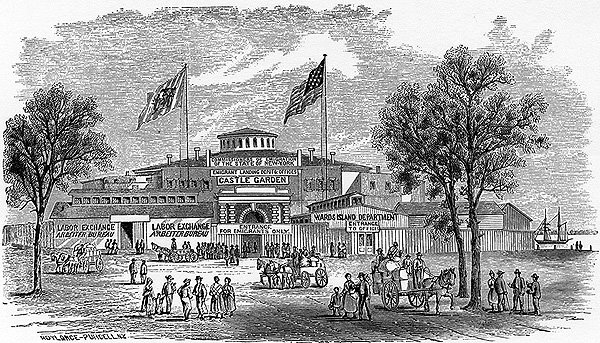
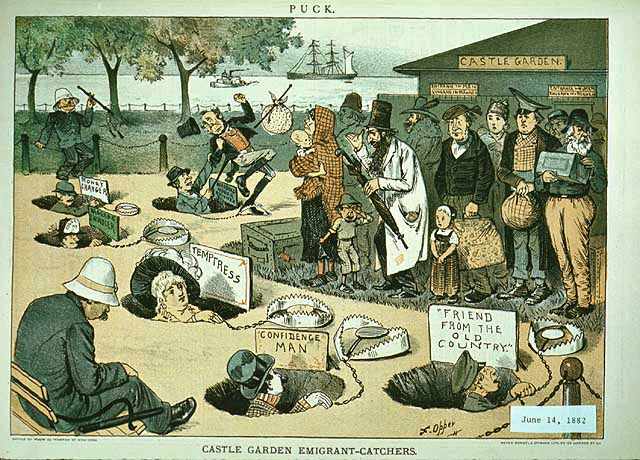
Before Ellis, there was Castle Garden, the former performance hall that became New York’s immigration depot from 1855 to 1890. The building bore witness to a great influx of German and Irish immigrants, however the facilities were seen as inadequate and unsafe.

New immigrants emerging from Castle Garden would find themselves beseiged by grifters, runners and utter chaos, as evidenced by this 1882 illustration from Puck Magazine.

___________________________________

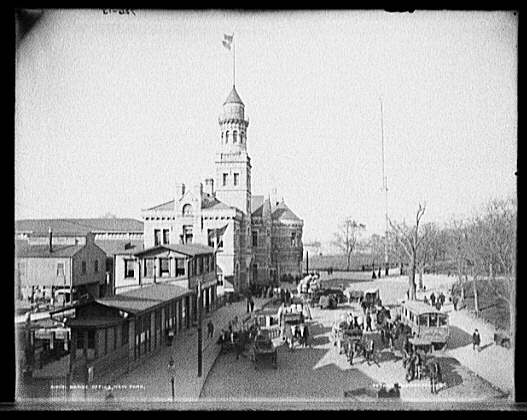
Temporary Digs: For four non-consecutive years, the Barge Office nearby Castle Garden would serve as New York’s immigration depot. It would serve first in 1890-92 when the state government closed Castle Garden and the federal government was still getting Ellis Island ready. Later, after the original structured on Ellis Island burned down, immigration would return here, from 1898-1899.

___________________________________

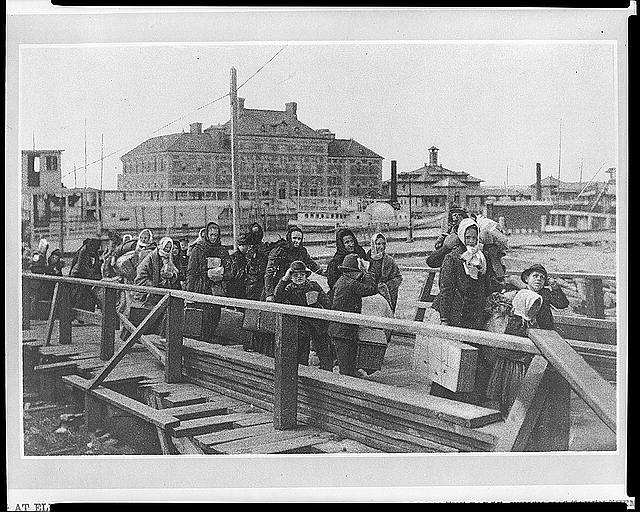
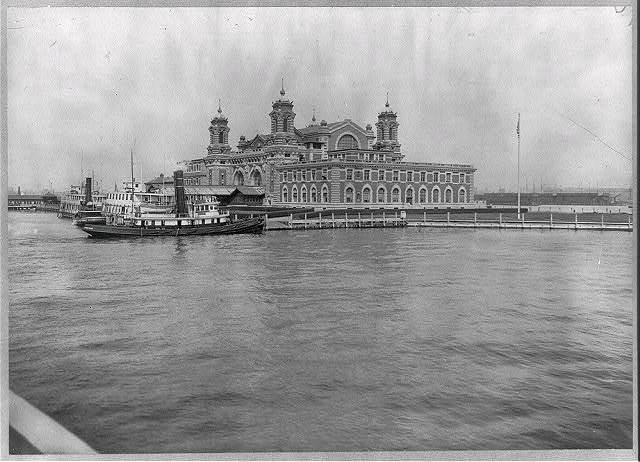
The Long Way Around: New immigrants unload in front of the doors of the main Ellis Island building in 1902. Steamships would coast into New York harbor, arrive at their Manhattan dock to release their first class passengers, then pack the steerage people into a barge which would take them to Ellis. (Pic courtesy here)

___________________________________

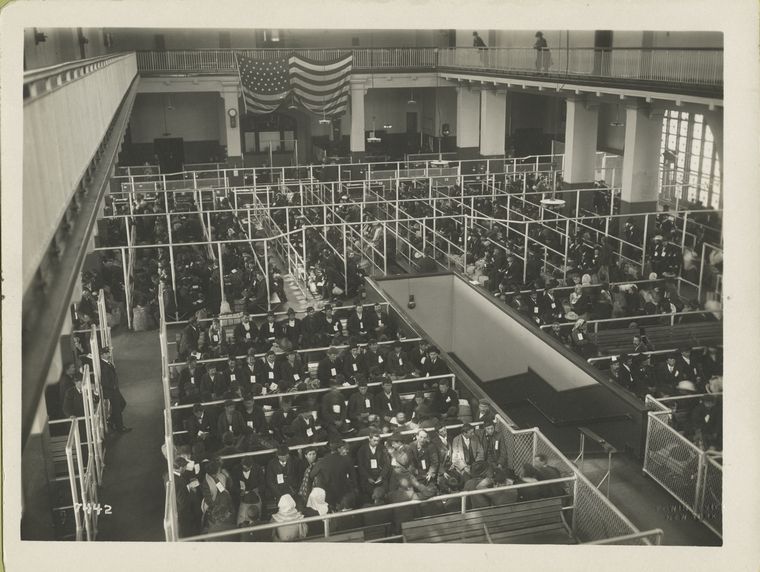
Penned In: See, it really was like cattle! The registry room of Ellis Island would keep people at close quarters as officiates began the arduous process of examining everyone.

___________________________________

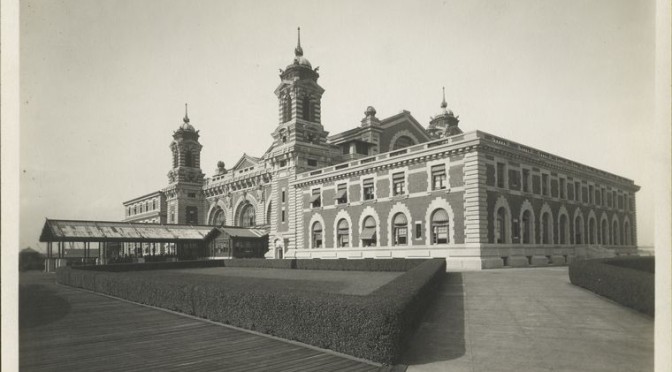
OVERDRESSED? William A. Boring and Edward Lippincott Tilton gave the new Ellis Island center an elegant Beaux-Arts touch with exotic towers and limestone ornamentation. Immigrants would be greeted with a building that resembled European structures back home.

___________________________________

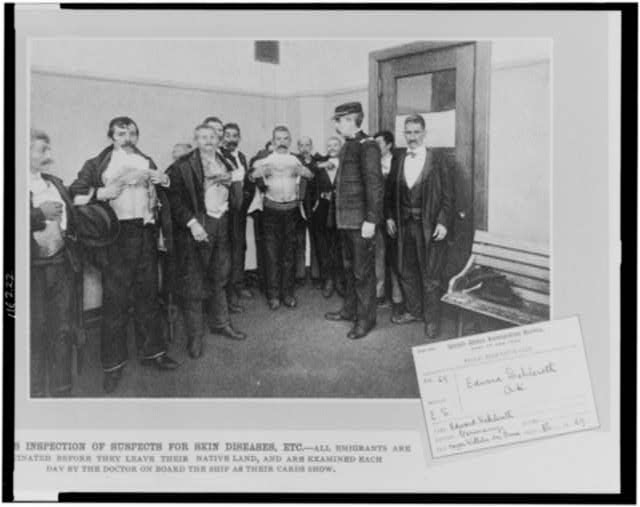
Revealing: Some unfortunates who were pulled aside for further evaluation, this time for potential skin diseases. The room they are standing in is now one of several museum displays detailing the grueling experience of those who were ‘pulled aside’. (Pics courtesy here.)

___________________________________

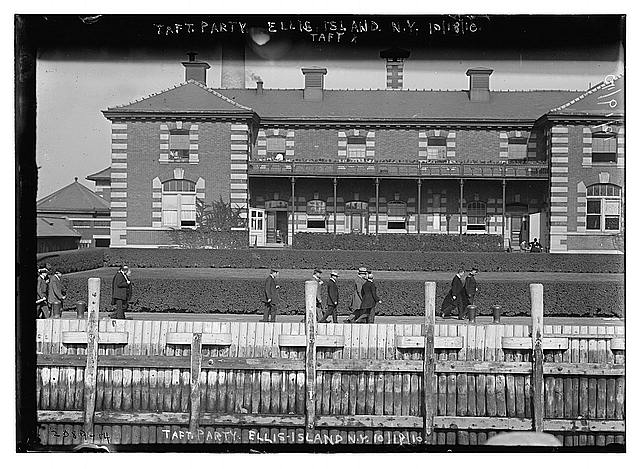
The Grand Tour: President William Howard Taft goes on an inspection tour of the Ellis Island facility. The immigration center was frequently a sore spot politically, a lightening rod for restrictionists and immigrant aid agencies alike. (Pic courtesy here)

___________________________________

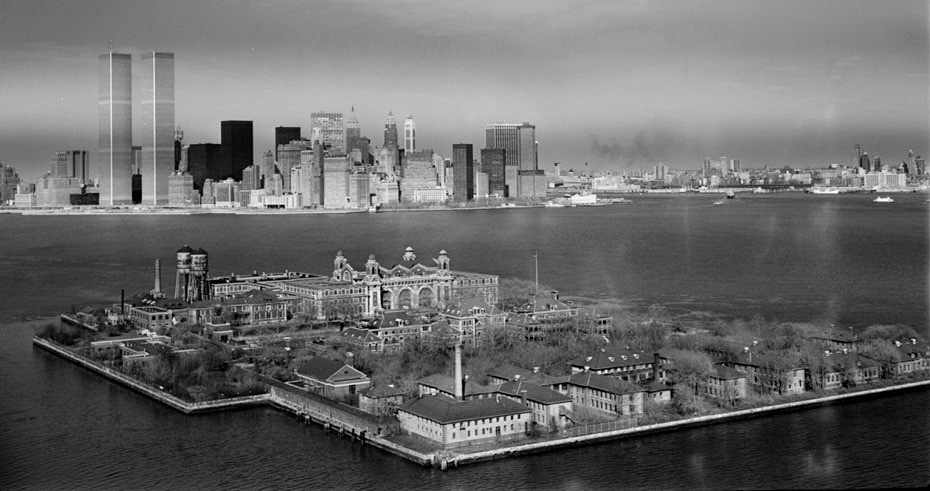
Itself Excluded: Ellis Island was a mess of ruins and overgrowth by the 1970s, a victim of decades of neglect. Even the National Parks service failed to do much with it before Lee Iacocca and the Statue of Liberty-Ellis Island Foundation came along to save it.

The picture below is from 1978. Most of the island is created from landfill. The buildings to the front of the image were not only hospital facilities, many of them specifically for the care of measles, a common malady of immigrant children. (Courtesy here.)

You can visit the Ellis Island website to check to see if any of your family members happened their way through the island.

And finally, Thomas Edison’s 1906 silent footage of immigrants arriving at the island.

(Top pic courtesy here)

Today in history: crash at the Empire State Building!

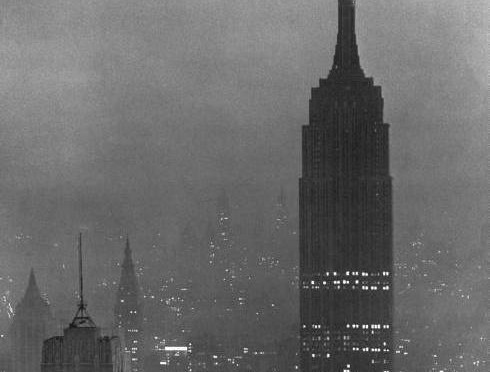
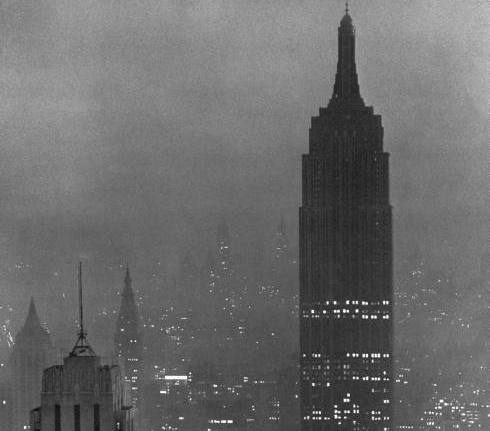
Above: War-time Empire State Building, circa 1943. The upper floors would dim at night to conserve energy costs (Photo Andreas Feininger)

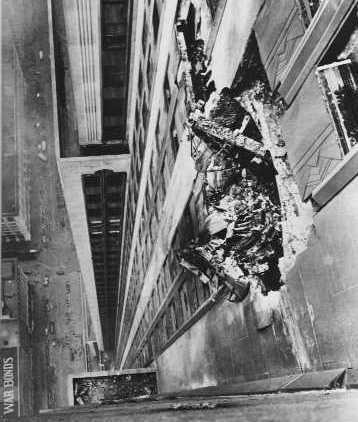
Sixty-four years ago today, July 28, 1945, a B-25 bomber on its way to Newark Airport accidentally meandered over the foggy city and smashed into the Empire State Building. Some rather startling details of the event:

— The pilot, Lt. Colonel William Smith, was simply on his way to pick up his commanding officer

— Finding himself off-course and over the city, Smith managed to avoid crashing into the Chrysler Building, Rockefeller Center and the New York Central building (today’s Helmsley Building).

— It was impenetrably foggy that morning, which would explain his final words: “From where I’m sitting, I can’t see the top of the Empire State Building”

— It was a Saturday, however a few businesses were open that day. As a result 11 people in the building died that day, on top of the three crewmen in the plane. Eight employees of the Catholic War Relief Office, on the 79th floor, were killed.

— One engine crashed through the entire length of the building and came out the other side to land and promptly destroy the penthouse apartment (and thousands of dollars of artwork) of sculptor Henry Herring at 10 W. 33rd Street, a building owned by Vincent Astor.

Betty Lou Oliver, on the 80th floor, barely escaped the crash, but when rescuers attempted to lower her out of the building via the elevator, the cables snapped and she and the elevator car plummeted 75 stories (over 1,000 feet). She survived.

— The Army ended up shelling out payments for damage, including compensation for a restaurant plate-glass window that had been blown out over ten blocks away.

(Above: Ernie Sisto’s famous front-page photograph of the wreckage for the New York Times)

Categories
Uncategorized

Castle Garden and Battery Park: Bowery Boys rerun

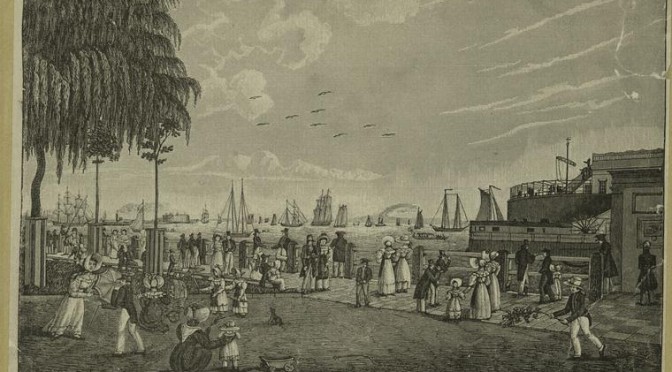
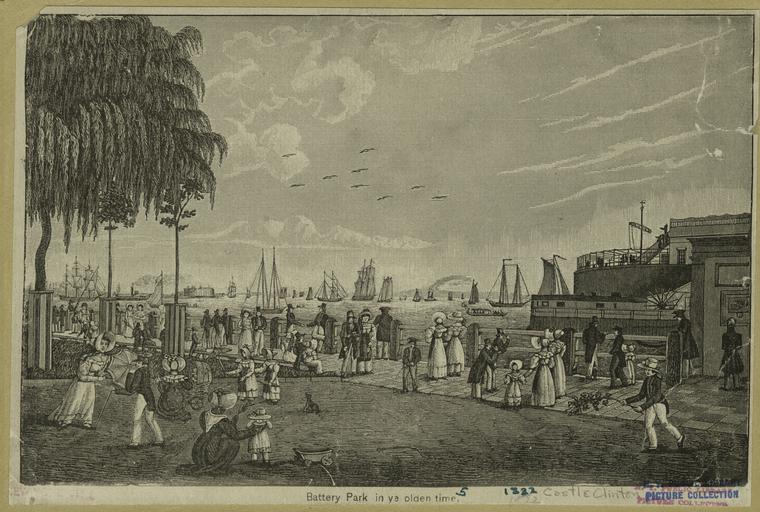
ABOVE: Battery Park in “ye olden time” from the NYPL Picture Collection

No new podcast this week, but here’s a link for one of our older shows from early 2008 on the history of Castle Clinton and Battery Park. We’ve enhanced some of the older shows with some rather cool old images that magically pop up while you listen.

You can also download these image-enhanced episodes at our catalog feed NYC History: Bowery Boys Archive which you get download for free on iTunes.

Categories
Uncategorized

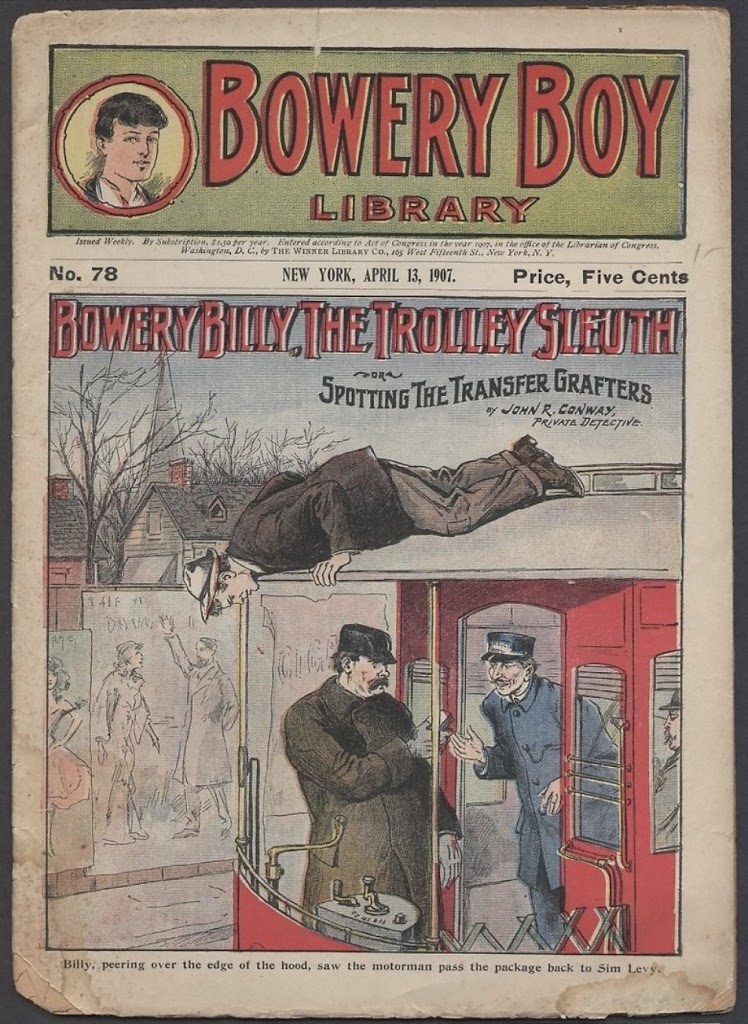
Bowery Billy, sniffing out those transfer grafters!

Click pic for greater detail
Caption: Billy, peering over the edge of the hood, saw the motorman pass the package back to Sim Levy.

Ah, the good old days! The image above was taken from amazing Dime Novels and Penny Dreadful website. If you want to wile away a couple hours when you should be doing something more important, I highly, highly recommend visiting the site, which catalogs dozens of 19th century pulp publications.

You can also find the other adventures of Bowery Billy here.

Bensonhurst’s Sbarro: a non-New Yorker’s New York pizza

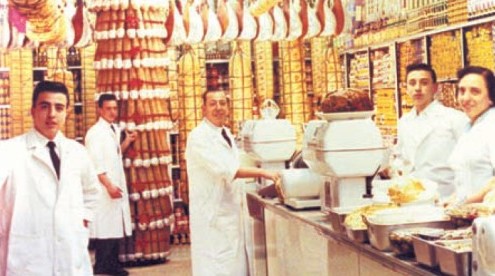
The Sbarro family in their original salumeria in Bensonhurst

In my Friday roundup of famous New York-style pizzerias, I left out the one pizza company that could technically be called the most recognizable New York pie — at least to those who live outside the city.

Sbarros Pizza is a fixture of shopping malls and roadside traffic stops across the nation. In fact, “across 30 countries” according to the website. In many of these countries, Sbarros is most likely introducing the actual concept of pizza, much less its modified ‘New York style’ offering.

I was surprised to learn that Sbarros actually got its start in Brooklyn, 50 years ago, and in a fashion similar to Lombardi’s Pizzeria.

It too was started up by a Neapolitan named Gennaro — the highly alliterative Gennaro Sbarro, to be exact — with his wife Carmela and their three sons. Like Gennaro Lombardi, the Sbarros didn’t start off selling pizza either. Their original salumeria (delicatessen) in Bensonhurst, Brooklyn, was located at 1701 65th Street and 17th Avenue, opening in 1959 and serving the usual Italian-style deli fare, eventually incorporating pasta and pizza onto the menu — and sit-down service along with it.

The similarities stop there. The Sbarros had a mind to expand, keeping a tight reign on their operation as they opened 14 additional New York locations well into the 1970s, with all the food made at the original Bensonhurst location. Carmela even continued to personally make the cheesecake.

It could have stopped there, but keep in mind that the 1970s was the age of the shopping mall, and the lure of the food court greatly appealed to the Sbarros. Their first experimental pizza outlet was at the King’s Plaza mall in Marine Park. It was here that Sbarros became a counter fast-food restaurant, shedding its salumeria image for a bright, uniform place with a set menu of popular Italian standards.

Needless to say, it was a successful experiment. Incorporating the family business in 1977 and opening the brand up for potential franchises, the Sbarro sons took their restaurant chain national by the 1980s after their father’s death, and rolled it out to international locales by the 1990s.

The original Bensonhurst Sbarros was closed a few years ago, and it’s difficult to find the inherent Brooklyn-ness in a standard-issue Sbarros restaurant today. But if you look carefully, you might find some dusty, fake-looking meats hanging in the window, harkening back to its early Bensonhurst roots.

It’s definitely the closest you’re ever going to find New York-style pizza in, say, Salt Lake City or even Kazahkstan.

(Picture courtesy PMQ Pizza magazine)

Categories
Podcasts

Kings of New York Pizza: Lombardi, Totonno, Patsy, Ray?

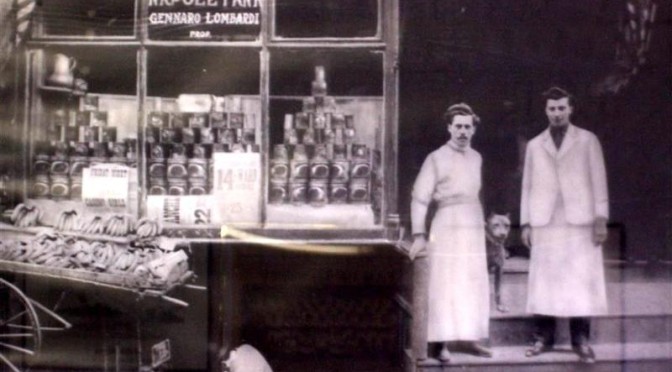
Gennaro Lombardi and (I believe) Antonio Totonno Pero with a dog who must have been fed very well. You’ll notice that Lombardi’s is still a grocery store in this picture. Some bananas with your pizza? Although Gennaro is credited with opening New York’s first pizzeria, it may have been Antonio who came up with the pizzas.


___________________________________

New Yorkers are serious about their pizza, and it all started with a tiny grocery store in today’s Little Italy and a group of young men who became the masters of pizza making. In this podcast, you’ll find out all about the city’s oldest and most revered pizzerias — Lombardi’s, Totonno’s, John’s, Grimaldi’s and Patsy’s, in all its variations.

But if those are the greatest names in New York-style pizza, then who the heck is Ray — Original, Famous or otherwise?

___________________________________

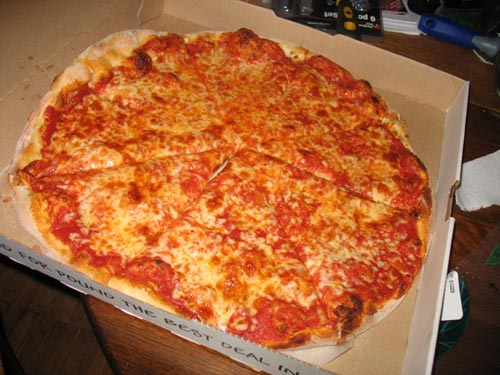
New York-style pizza, in its purest form. Lombardi’s pizza was also sold by the slice back in the day, though today its strictly whole pies. And they no longer don’t wrap them up in paper and tie them with string like they used to!

___________________________________

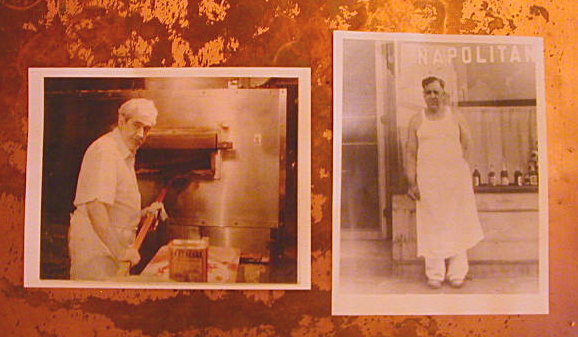
Pictures from Totonno’s official website of its creator Antonio ‘Totonno’ Pero, who opened his first pizza restaurant in Coney Island in 1924. The original location was gutted in a fire just this year, but they should be reopening anytime.

___________________________________

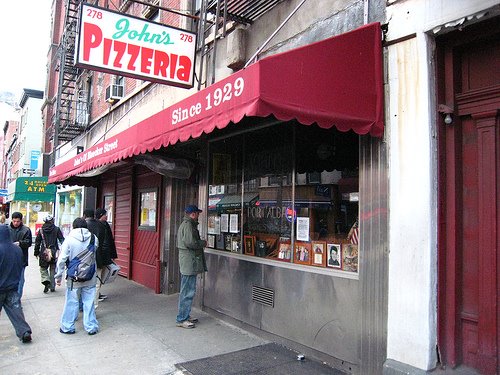
Although John Sasso had the great misfortune of opening his small pizzeria just as the Great Depression was getting started, it managed to survive through hard times to become the West Village’s go-to destination for classic slices.

___________________________________

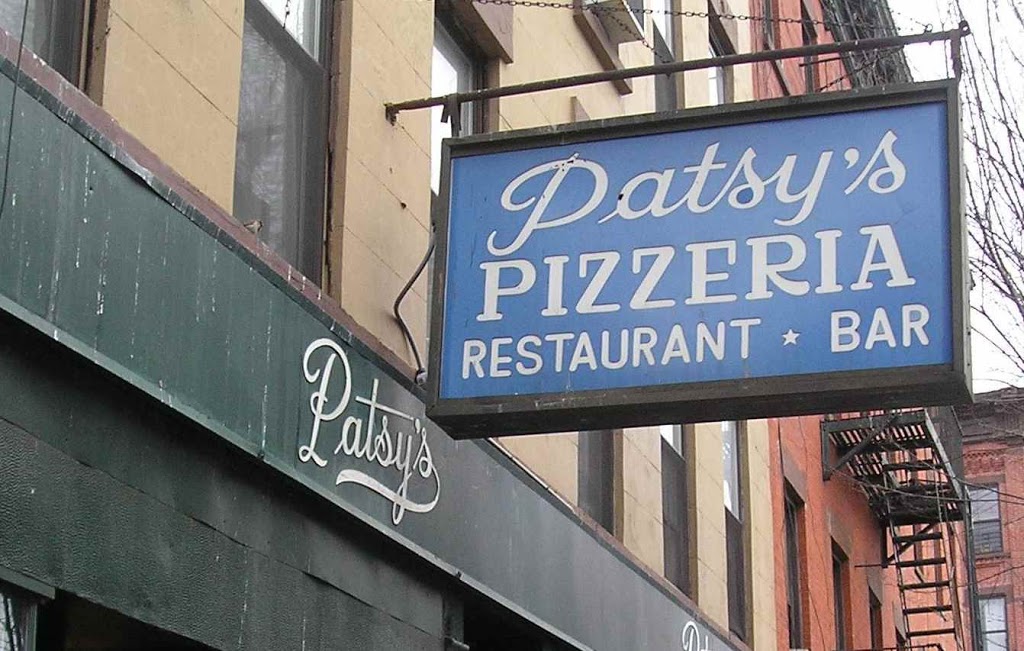
Patsy Lancieri opened his great East Harlem pizzeria in East Harlem in 1933. They’ll be celebrating their 76th anniversary next month with some truly retro prices. Get there early this time — let this be a warning.

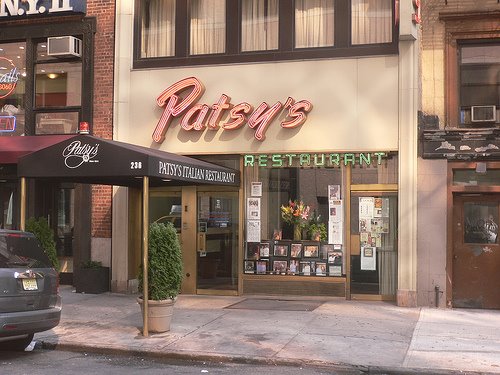
NOT to be confused with this place — the venerable Patsy’s Italian Restaurant in midtown. This Patsy’s does not sell pizza.

To make sure you don’t confuse the two, why don’t you read a U.S. District Court document ‘Patsy’s Italian Restaurant v Patsy’s Pizzeria‘. The words ‘Sauce Litigation’ are actually used.

___________________________________

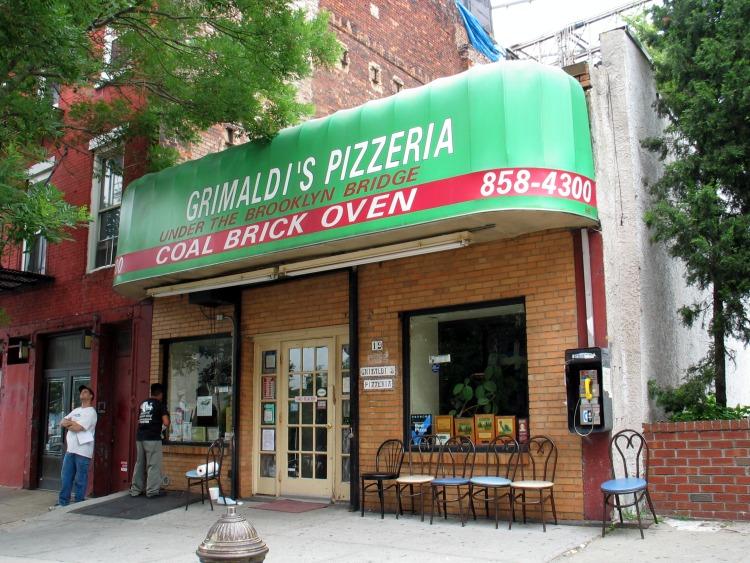
Grimaldi’s “under the Brooklyn Bridge” used to also be a Patsy’s. Today it’s your surest bet for a long line, reportedly still worth the wait.

Russia vs. the Waldorf Astoria: Nikita gets stuck

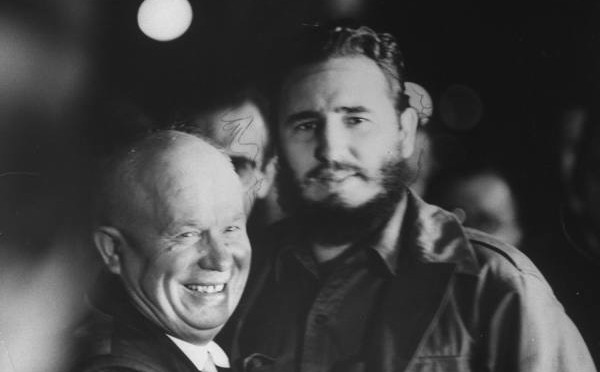
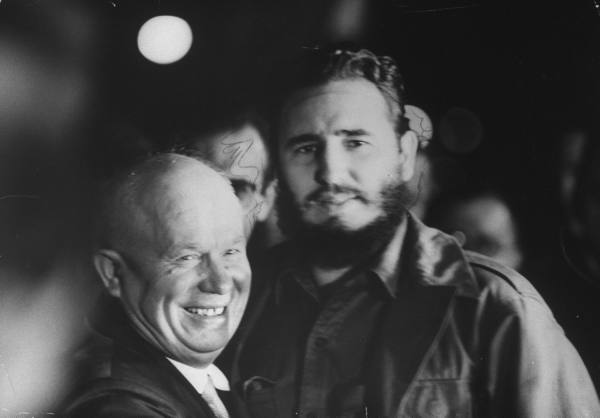
Seeing red: Khrushchev with Fidel Castro in New York (photo by Hank Walker)

Nikita Khrushchev, Cold War leader of the Soviet Union, is perhaps the strangest tourist New York has ever seen. Pete Carlson’s new book ‘K Blows Top’ (named for a snarky Daily News headline) documents Khrushchev’s odd and rocky thirteen-day tour through the United States, in September fifty years ago this year. I heard Carlson on On The Media over the weekend and was particularly struck by an event that occurred at the Waldorf Astoria, an embarrassing situation that might have sparked World War III.

Khrushchev’s arrival in New York was a press sensation and crowds (supporters, protesters and curiousity seekers) gathered outside the Waldorf Astoria, where he and his family were staying. The Russian leader happened to be riding the elevator with U.N. ambassador Henry Cabot Lodge Jr. and the manager of the Waldorf Astoria when the elevator abruptly stopped between floors.

The manager was unable to get the elevator working again, so Khrushchev had to be lifted up with the U.N. ambassador literally shoving the Russian’s buttocks out of the stalled elevator car — which then became functional moments later.

Believe it or not, this was the second controversy surrounding Nikita and the Waldorf Astoria. The first involved a convention of dentists booked in the hotel at the same time as Khrushchev’s visit. Mayor Robert Wagner asked the dentists to move so that he could throw Khrushchev a luncheon there. The dentists adamantly refused.

Russians vs dentists. You’ll have to read the book to find out who wins.

I don’t have any pictures of Khrushchev crawling out of an elevator, but enjoy these images, courtesy Life Google images, of his visit to New York. Carlson’s book has other details of his trip, including Nikita’s lackluster opinion of the Empire State Building.

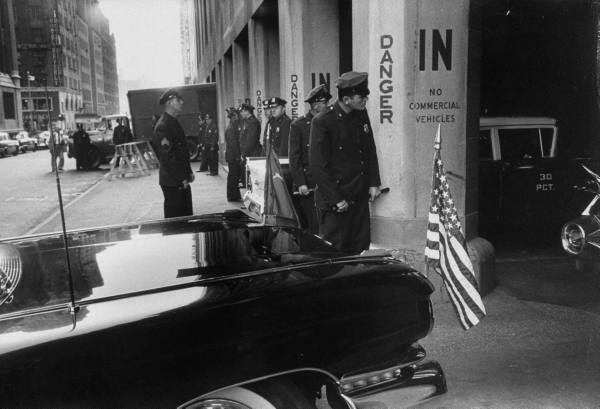
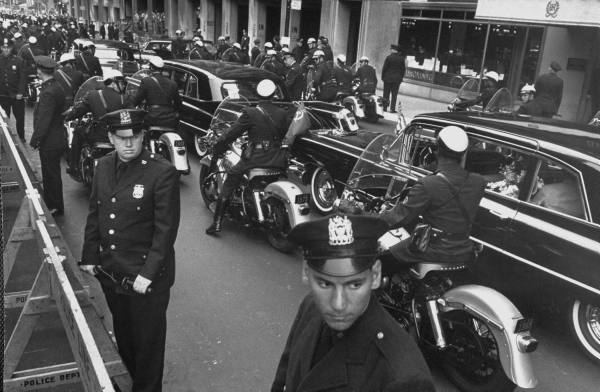
Police outside the Waldorf Astoria (photographed by Al Fenn and Stan Wayman)

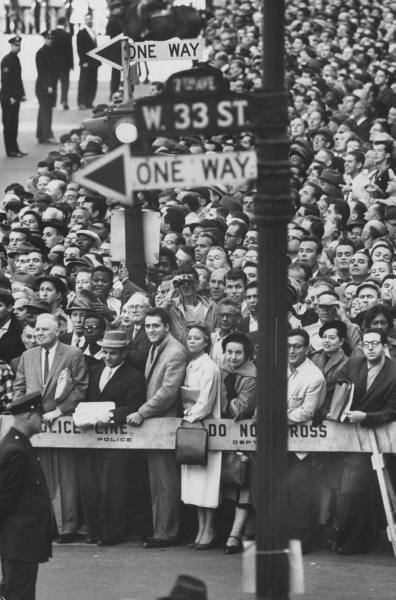
Nikita draws rock-star sized crowds in midtown (photographed by Ed Clark)

Martling’s Long Room: power plays, power drinkers

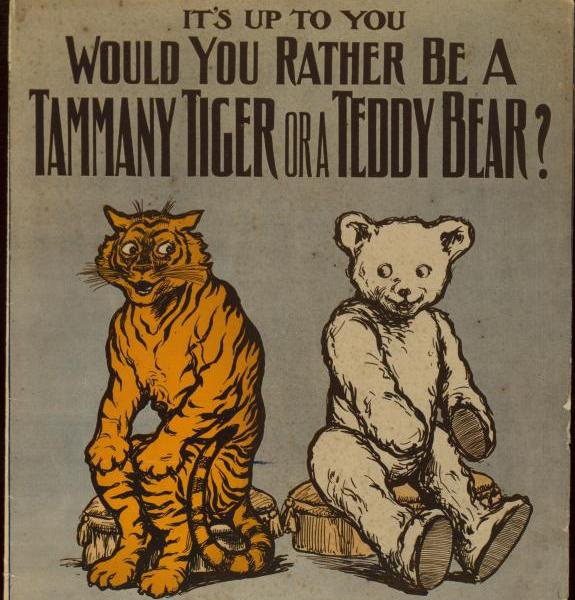
Well, would you?Illustration from sheet music 1908

FRIDAY NIGHT FEVER To get you in the mood for the weekend, every other Friday we’ll be featuring an old New York nightlife haunt, from the dance halls of 19th Century Bowery, to the massive warehouse clubs of the mid-1990s. Past entries can be found here.

LOCATION Martling’s Tavern
Corner of Nassau and Spruce streets, Manhattan

I promise to move away from the messy business of Tammany Hall for awhile after I profile the surprising location of their birth, a tavern that would collect the most powerful men in the city and form a political club that would influence New York history forever — Martling’s Tavern.

Power frequently held court in New York’s taverns in the early days. Few New York locations are more important to the American Revolution than Fraunces Tavern, where the seeds of rebellion were sewn and, once victorious, where George Washington resigned from the Continental Army. The Bull’s Head Tavern became a veritable marketplace for area cattlemen and a place to share a bit of gossip.

When it formed in 1789, the Tammany Society was a mere fraternal, patriotic organization with little interest in real-time political maneuvering. [You can find out more by listening to our last podcast on the early days of Tammany Hall and the rise of Boss Tweed.] Its ceremony and costumed rituals were even looked down upon by elite elements of society as “a vulgar parade.”

But by the late 1890s, this flamboyant men’s club was permanently repurposed as a deft political machine. Early mayors like James Duane were ‘sachems’ who slowly began using the society’s ostensibly innocent functions as cover for more political gains.

As a social club, Tammany would naturally require a tavern for a meeting place, especially one with a grand hall to accommodate all their members. The very first meeting place (or ‘wigwam’) for the Tammany Society was Barden’s Tavern on Broadway and Murray Street, just a stone’s throw from the center of local and, in 1789-90, even national government. Society members even feted actual native Americans here, a contingent of Creek Indians who must have smirked at seeing all these prominent white males in native drag.

In 1790, according to Gustavus Myer’s famous history of Tammany Hall, “the Tammany Society and the military escorted the Indians to Secretary [Henry] Knox’s house, introduced them to [President] Washington and then led them to the Wigwam at Barden’s Tavern, where seductive drink was served.”

Tammany remained at Barden’s until they outgrew it in 1798 and moved to a location on the edge of the city (Nassau and Spruce streets) that was owned by one of their members — Abraham ‘Brom’ Martling.

Martling’s place didn’t look like much, a ‘forlorn’ one-story building. According to author Peter L. Bernstein, “The building was so rundown many people referred to it as the Pig Pen.” Perhaps the transition to politics required a locale with a rougher edge. They would make Martling’s their home until 1812, and it is generally referred to as the first ‘real’ Tammany Hall.

Wicked politics was already at play by the time the Society settled into Martling’s spacious ‘Long Room’ where a majority of Tammany business would be conducted. When Aaron Burr, flanked on either side by Tammany men, shot his enemy and Tammany scourge Alexander Hamilton, it’s alleged that the Society threw a gala that evening in celebration, with toasts raised to Burr’s good aim.

Make no mistake; although the business of government was on their mind, these men could drink. According to Myers, “every night men gathered there to drink, smoke and “swap” stories,” a “den where the Wolves and Bears and Panthers assemble and drink down large potations of beer”:

There’s a barrel of porter at Tammany Hall,
And the Bucktails are swigging it all the night long

The society became so associated with the place that they were frequently called Martlingmen. Alternatively, Tammany would call their future meeting chambers a ‘long room’ in honor of this rundown but effective space.

Martling himself would even became a Tammany sachem, and a tempestuous one at that. Myers: “Taking offense, one day, at the remarks of one John Richard Huggins, a hair-dresser, [Martling] called at Huggins’s shop, 104 Broadway, and administered to him a sound thrashing with a rope.” Take that, hair-dresser!

As Tammany became more powerful and larger (with some 1,500 members), they would eventually have to move from the Long Room into a headquarters of their own. But they didn’t move far from Martling’s however. The very first Tammany Hall would be built at Frankfurt and Nassau, mere steps the tavern that had quenched their thirst and saw the adolescent society grow to become a viable political force.

Location of Martling’s Tavern:

View Larger Map

Salute to Ulmer Park, short-lived Brooklyn beer getaway

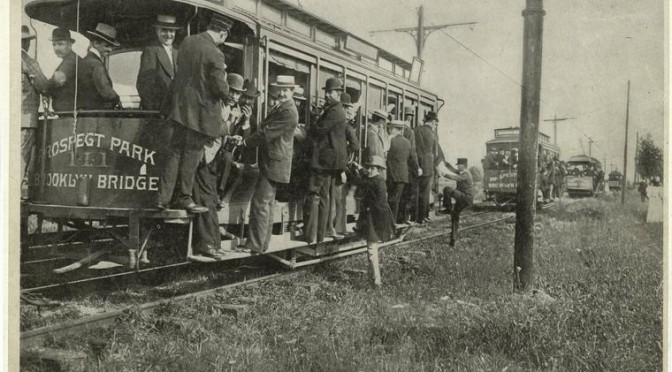
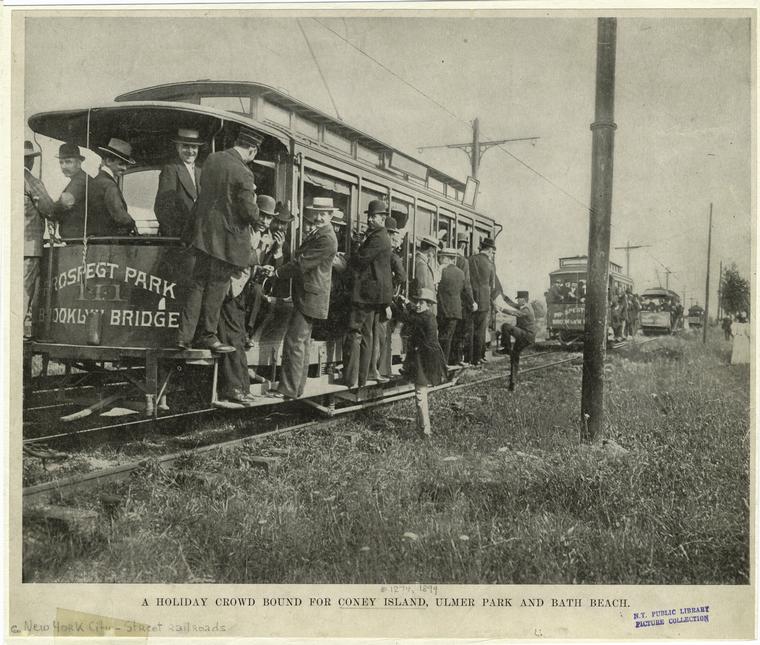
All aboard the train to Coney Island, Ulmer Park and Bath Beach Above pic courtesy NYPL

Next weekend on Coney Island is the annual Siren Festival, sponsored by the Village Voice. Are you going? Believe it or not, over a 100 years ago, there was once a time you could get your beer, music and mayhem at a Brooklyn ‘pleasure park’ just a few stops short of Coney Island — near today’s Bensonhurst neighborhood.

Ulmer Park was the lark of William Ulmer, one of Brooklyn’s most successful brewers in an age where much of the nation’s finest beer was coming from the future borough. The German-born son of a wine merchant who learned the trade from his uncle, Ulmer opened his eponymous brewery in the 1870s at Belvedere Street and soon came upon the idea of opening a park as a way of selling more beer. (Not a bad idea. Jacob Ruppert would have similar designs in mind when he bought the New York Yankees in 1915).

The park would open in 1893 in Gravesend Bay along the southern shore of Brooklyn — back when there was an actual shore — between Coney Island farther south and the more conservative Bath Beach resort community to its west. Ulmer Park seemed to have more in common with Bath Beach — clean, family friendly (keep Dad happy so he keeps drinking!) with a beer garden, carousels and swings, rifle ranges, a dance pavilion and of course plenty of beachfront property.

The park seemed to be particular popular with Germans — Ulmer after all was German, and this was a beer garden — and particularly the annual ‘Saengerfest’ festival. A Times article even claims that 100,000 gathered at Ulmer Park for the end of one such festival.

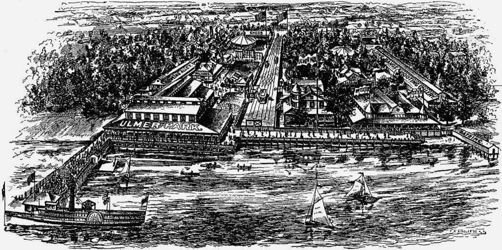
Below: an illustration of Ulmer Park. Note the grand pier which stuck out into into the bay

We can get a good idea of Ulmer’s intentions for the park by looking at his failure at obtaining a “liquor tax certificate” (or license) in a report from 1900. “A picnic ground, or open air pleasure resort, of about two acres” between Harway Avenue and the shore, the park had a bowling alley, a pier with canopied bar at the end, two or three other beer pavilions scattered throughout the property and a hotel.

Ultimately, neither the resort at Bath Beach nor amusements at Ulmer Park could compete with Coney Island which was about to enter its golden age in the early 1900s; apparently, it was grit and decadence people wanted in their summertime Brooklyn getaways. Ulmer closed in 1899.

The land remained a public space hosting baseball, cricket and track and field events. Eventually it was wiped away and redeveloped. It remains in name only, at the Ulmer Park branch of the Brooklyn Public Library and the name of the neighborhood bus depot.

For your frame of reference, the park was located a couple blocks west of today’s bus depot, located here:

View Larger Map

FYI, did you know that Central Park and Prospect Park designer Calvert Vaux drowned “under mysterious circumstances” in 1895 and that his body washed up on shore not too far away from Ulmer Park?