Execution Corner: 13th Street and 2nd Avenue

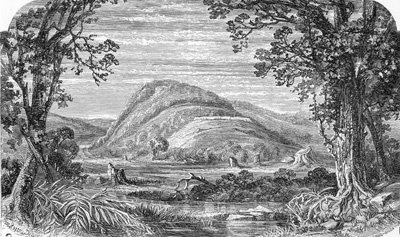
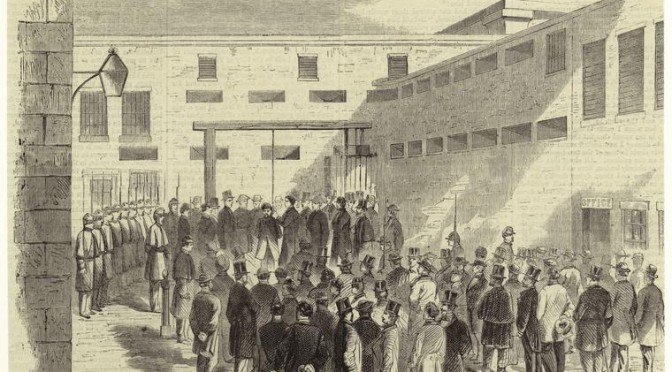
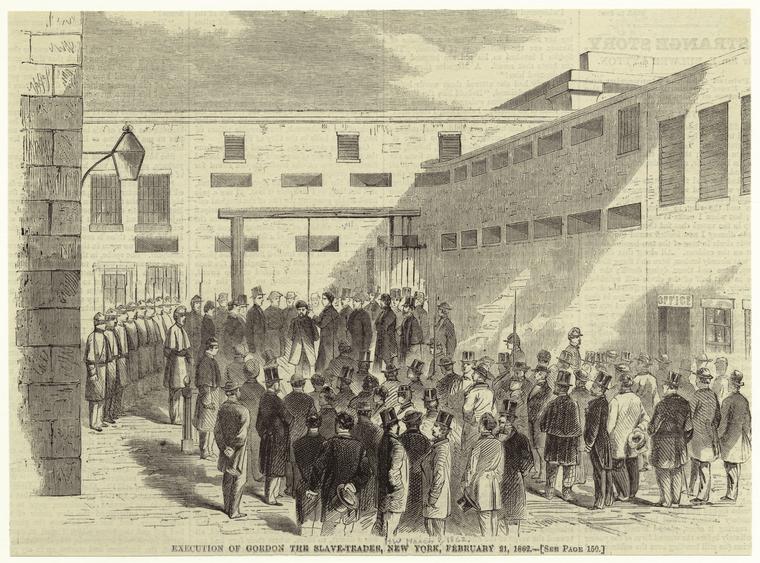
Public hangings were a rare but grisly part of 19th Century New York life. The one illustrated above is from 1862. Another would famously haunt the area near an East Village intersection.

I pass through the intersection of 13th Street and 2nd Avenue fairly frequently on my way home from work. The plain intersection is probably best known as the home of the New York Eye and Ear Infirmary and for being a block away from a movie theater with some rather small movie screens. If you’re a foodie, you probably know it for Momofuku’s Milk Bar.

The most recent modern drama this corner has seen might be the electrified manhole cover that almost killed somebody awhile back. But 185 years ago, when this area was nothing more than a large meadow once the property of the Stuyvesant family, it was the site of one of the most well-attended public execution in American history.

It may be hard to understand why (as some reports suggest) almost 30,000 people came to observe the hanging of John Johnson from this field in 1824.  Another source claims 50,000 people came to see the gruesome execution, which at the time would have been almost one-third of the entire city population of New York.

Perhaps the facts of his crimes were simply too shocking to ignore.  Johnson, a family man who kept his wife and children at an upstate farm, ran a boardinghouse for wayward sailors during New York’s heyday as a port city in the 1820s.  It was located in the bustling heart of the city and dozens of men passed through his door.  It was not exactly a four-star resort, however, and certainly the occasional home for misdeeds. But for the visiting seamen, these types of seedy places were hard to avoid, and the threat of murder would have been bone chilling indeed.

One day in 1823, in a nearby alley, the body of sailor James Murray was discovered, his head split open with a hatchet. Murray was staying at Johnson’s lodge; upon inspection, bloody sheets were found in Johnson’s cellar, and the innkeeper was arrested.

Johnson’s behavior was especially erratic.  He admitted to the crime, then retracted his statement, saying he was merely protecting his family.  He claimed another guest had attacked Murray and that Johnson was merely guilty of “neglecting his duty as a host.” His confession and subsequent about-face piqued public curiosity, with his wife’s letters and even his own minister’s spin on the tale quickly printed up into pamphlets.

Any printed entreaties to his innocence fell on deaf ears.  Decrying his innocence to the end, Johnson was sentenced to hang on April 2, 1824. (I have also seen sources that say April 4.) He was escorted to the gallows by his minister and even infantrymen who had to part the growing crowds, “a solid mass of living flesh — men, women and children of all colours and descriptions,” by one account.

Public executions were actually quite rare by this time or else relegated to one of New York’s lonely islands (such as Blackwell’s Island or the tiny oyster island that would later become Ellis Island).  Not because they were horrifying displays, but because they attracted large crowds of drunks, rowdies and pickpockets. So in the most macabre sense possible, the event of Johnson’s death signified something unique.

Whether Johnson had truly been fairly treated is unclear but the story had reached a fever pitch, its details splashed across newspaper and gossiped about at city taverns.  By the time he stood overlooking the crowd with a rope around his neck, Johnson had become a figure of evil.  After hanging, his body was donated to a medical school.

Civility would soon come to this death field, as avenues and streets along the grid plan were carved out and the area quickly developed. Violence would return to the neighborhood during the Civil War draft riots of 1863. A block away, a witness to the murder, Peter Stuyvesant’s pear tree at 3rd Avenue and 13th street, would stand until 1867 when it was mowed down by a wagon.

A plaque stands in honor of Peter’s pear tree.  No evidence remains of the public execution which occurred just a few yards — and one block — away.
Categories
Podcasts Those Were The Days

William ‘Boss’ Tweed and the bitter days of Tammany Hall

Hail to the thief: an imposing man with money on his mind


___________________________________
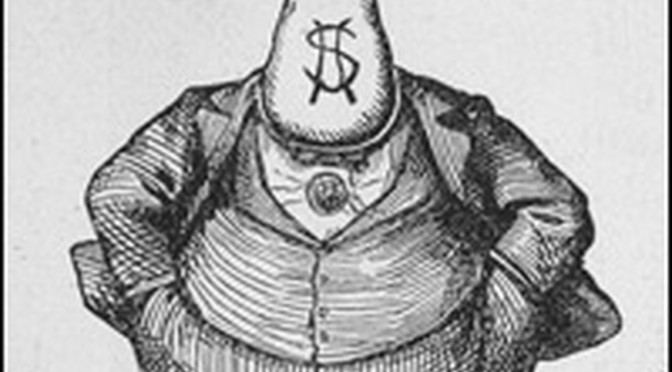
You cannot understand New York without understanding its most corrupt politician — William ‘Boss’ Tweed, a larger than life personality with lofty ambitions to steal millions of dollars from the city.

With the help of his ‘Tweed Ring’, the former chair-maker had complete control over the city — what was being built, how much it would cost and who was being paid.

How do you bring down a corrupt government when it seems almost everyone’s in on it? We reveal the downfall of the Tweed Ring and the end to one of the biggest political scandals in New York history. It began with a sleigh ride.

ALSO: Find out how Tammany Hall, the dominant political machine of the 19th century, got its start — as a rather innocent social club that required men to dress up and pretend they’re Indians.

___________________________________

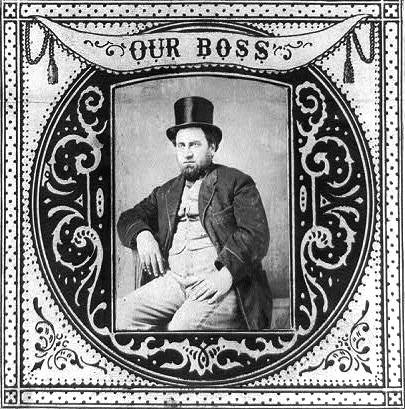
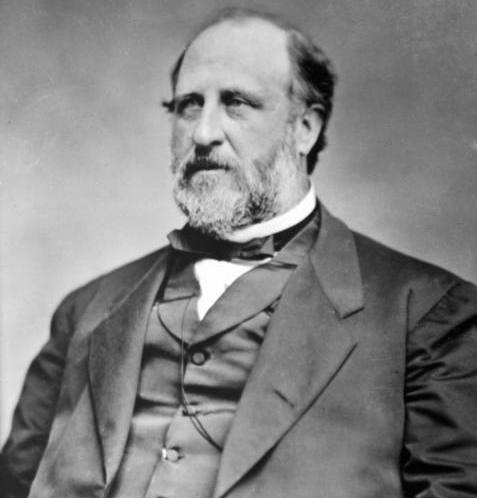
William M. Tweed, son of a chair maker, as photographed by Matthew Brady in 1865. The Lower East Side would not spawn a man as powerful as Tweed until the rise of Al Smith in the 20th Century. Tweed’s influence, however, came at great expense to the city.

The M. in his middle name is something of a controversy. Marcy or Magear? It’s commonly assumed to stand for Marcy; however, there’s no real documentary evidence for this (according to biographer Kenneth Ackerman) while Magear is his mother’s maiden name.

Below: a younger-looking Tweed appears on a tobacco box

___________________________________

The powerful Democratic machine Tammany Hall (or, officially the Tammany Society) was actually in a hall, located at Frankfurt and Nassau streets, near City Hall. Built in 1811, the new headquarters saw the once benign social organization morph into an influential and often ruthless group with political objectives.

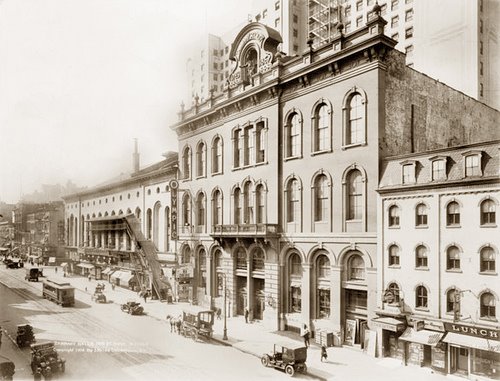
During Tweed’s reign, Tammany Hall was actually located at 14th Street between 3rd Avenue and Irving Place. Tammany moved here in 1867 and would remain until the late 20s, when they would move just around the corner to Union Square. This photo was taken in 1914. Today the Con Edison building, with its beautiful clock tower, stands in its place.

___________________________________

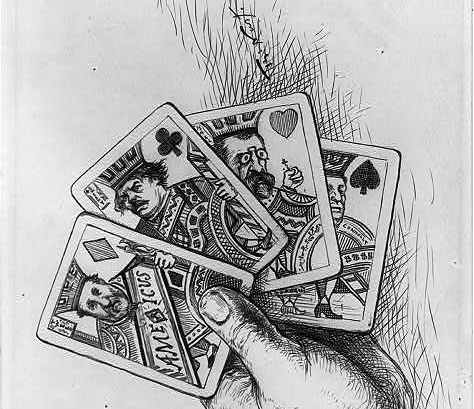
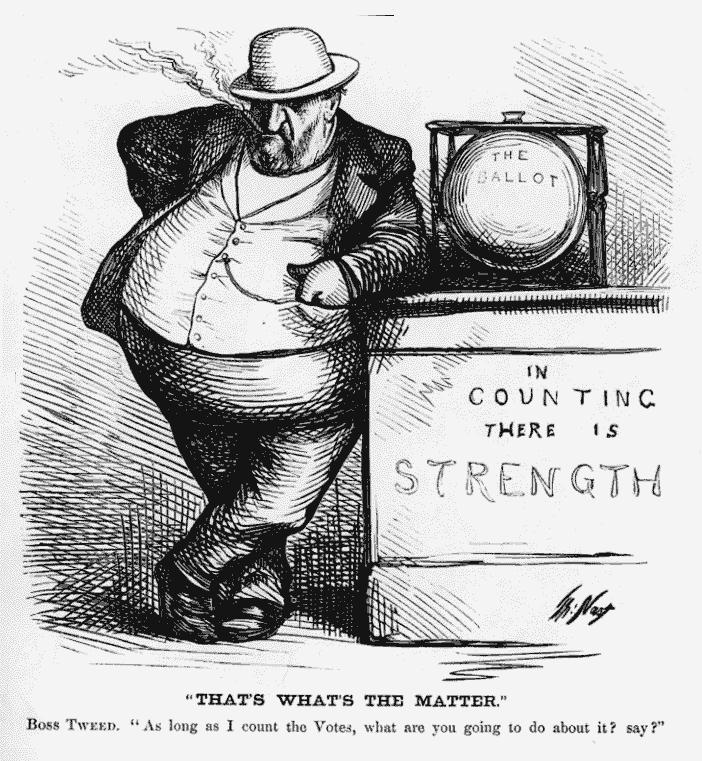
The Tweed Ring — on in this case ‘the Four Knaves’ — as interpreted by their harshest critic, illustrator Thomas Nast. The Ring was composed of Tweed, Mayor A. Oakey Hall, chamberlain Peter Sweeny and ‘Slippery Dick’ Connolly, the comptroller. Emanating from this core group would be other underlings and associates who would assist in the Ring’s graft and embezzlement

Nast’s charges of voting fraud below weren’t hyperbole. The elections of 1868, which installed Hall into the mayor’s seat and Tammany disciple John Hoffman into the governor’s chair, was one of the most manipulated in American history. Fraud was only too common in New York elections in the 19th century.

___________________________________

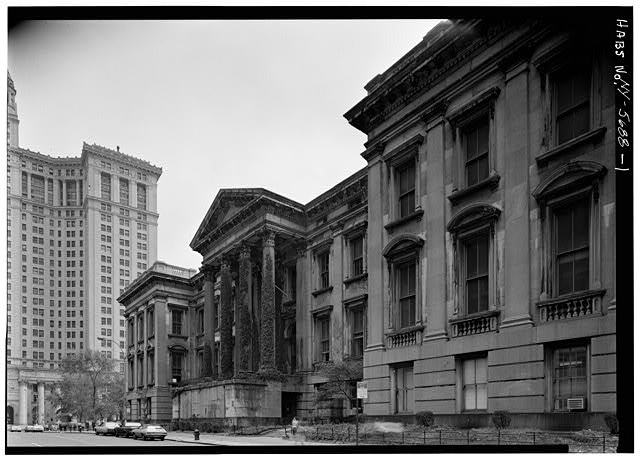
The New York County Courthouse, also known as the Tweed Courthouse for the vast amount money supposedly thrown at it during construction. Contractors would wildly overbill for their often shoddy work, with members of the Tweed Ring skimming from the totals. It would take over 20 years for the building to finally be completed — longer than it took to build the Brooklyn Bridge.

___________________________________

BOOK RECOMMENDATIONS: If you want to learn more about Boss Tweed, go immediately to Kenneth Ackerman’s excellent ‘Boss Tweed: The Rise and Fall of the Corrupt Pol Who Conceived the Soul of Modern New York’. For a broader overview on Tammany Hall, seek out a copy of Oliver E. Allen’s ‘The Tiger: The Rise And Fall of Tammany Hall’ which I believe it out of print but worth looking for.

RELATED PODCASTS: Listen to our prior show on Greenwood Cemetery, where Tweed is buried. Re-visit our Union Square show to get a taste of Tammany’s wily Fernando Wood. Last year I wrote about the Ludlow Street Jail, where Tweed saw his final days.

Charming mayor A. Oakey Hall: coy, clueless or corrupt?

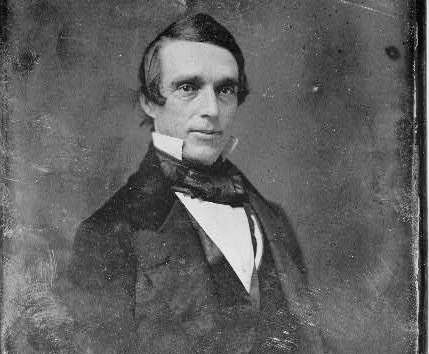
An early portrait of A. Oakey Hall as photographed by Matthew Brady

KNOW YOUR MAYORS Our modest little series about some of the greatest, notorious, most important, even most useless, mayors of New York City. Other entrants in our mayoral survey can be found here.

Mayor A. Oakey Hall

In office: 1869-1872

Few leaders of New York could match Abraham Oakey Hall in personal flair. For every nine colorless businessmen who ascend to the mayoralty, there is one truly debonair statesman, an enigma of charm who seems to govern with ease. In 1869 that was Hall, a jack of all trades, a raconteur and paragon of style. Unfortunately, as the most glamorous member of the notorious Tweed Ring, corruption may have been another trend that suited him.

Before the events, Hall was destined for great things. Most (even Tweed himself) assumed Hall would become New York’s governor, with the White House in sights. He was after all born in Albany, in 1826, back when New York’s capital was one of the most populous cities in the entire country. For those who believed in such things, Hall’s birth there might have been providence, because his parents were merchants in New York and were merely visiting Hall’s grandfather. “I was born transitu,” he proclaimed later. But he never made it back to Albany, at least not officially.

A slight, nimble figure, Hall expressed a variety of talents at an early age, latching on first to journalism, writing for many city newspapers while working his way through New York University, graduating in 1844. Next came a love for the law, attending both Harvard and Cambridge before heading to New Orleans to start a small practice. He then returned to Manhattan and swiftly maneuvered through the courts to become the assistant district attorney in 1850 and a short time later to even argue a case before the state Supreme Court — all before he was 25 years old.

He would win true acclaim and popularity, however, as the city’s district attorney proper, serving first from 1853-1859 and again from 1861-1869, one of New York’s most important legal voices during the Civil War. He allegedly prosecuted over 12,000 cases. He was also on hand during the Draft Riots, funneling many rioters through the court system and straight to jail. His accomplice was often judge John Hoffman, soon to be the mayor of New York who preceded Hall. Their crusades against rioters would boost both their popularity.

Hall would also be known for a rather alarming law briefly on the books in 1855. The state had outlawed the sale of alcohol in the entire state. Under advisement of mayor Fernando Wood (who wanted to please hard-drinking Irish voters), Hall constructed a law allowing for unencumbered liquor sales, seven days a week, in the two months before the prohibition was to take effect. May and June of 1855 were the booziest months in New York City history.


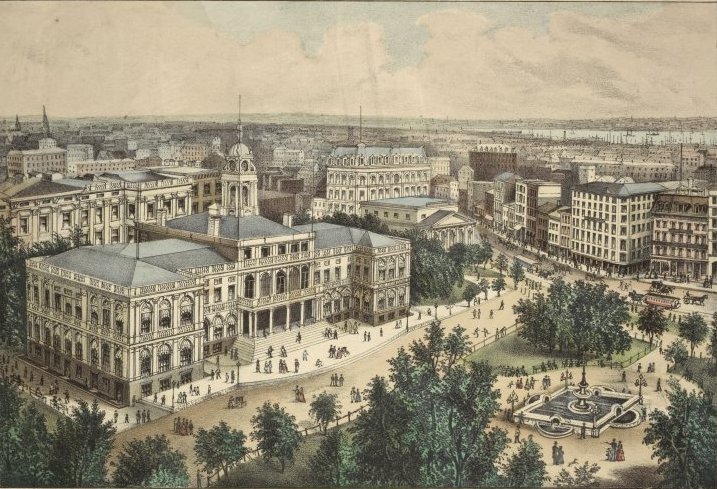
Above: City Hall in 1874 in an illustration by Currier and Ives

With his professorial good looks and humorous demeanor, A. Oakey was a natural for politics of course. Bespeckled and bearded, he spoke elegantly — Elegant Oakey was his nickname after all — and wrote passionately. He penned social polemics, theatrical plays, political tirades and at least one holiday novel — Old Whitey’s Christmas Trot.

More importantly though, he was an attractive politician to Tammany Hall and in particular its boss, William M. Tweed**.

We know the Tweed Ring as that most notorious of crooked entities that came from the Democratic machine. In fact, through, Hall was for many years a Republican — even claiming to have helped form the Republican Party! — and was even elected District Attorney as a member of that party. But he was lured into Tammany Hall shortly before the war ended and would facilitate their dominance over the affairs of City Hall.

‘Boss’ Tweed liked him because he was confident, likable, distracting. He often quoted Shakespeare and cracked jokes. The complicated layers of graft, bribery and outright theft that were installed in city government needed an attractive front. In one of the most manipulated elections in New York history, Tweed and Tammany Hall succeeded that fall of 1868 in getting their man Hoffman into the governors seat, with Elegant Hall becoming his elegant replacement at City Hall. (Hall would be re-elected three times in heavily tampered elections.)

The year 1869 was a watershed year in New York City corruption, with the Tweed’s hand-selected cohorts fully in place at City Hall, all oversight committees abolished the previous year, and civic projects sprouting up throughout the city, ripe for graft and embezzlement.

Tweed and the others directly associated with the ring (chamberlain Peter Sweeny, comptroller Richard Connelly) needed Hall’s charm to bedazzle the press and public, deflecting any charges of malfeasance.

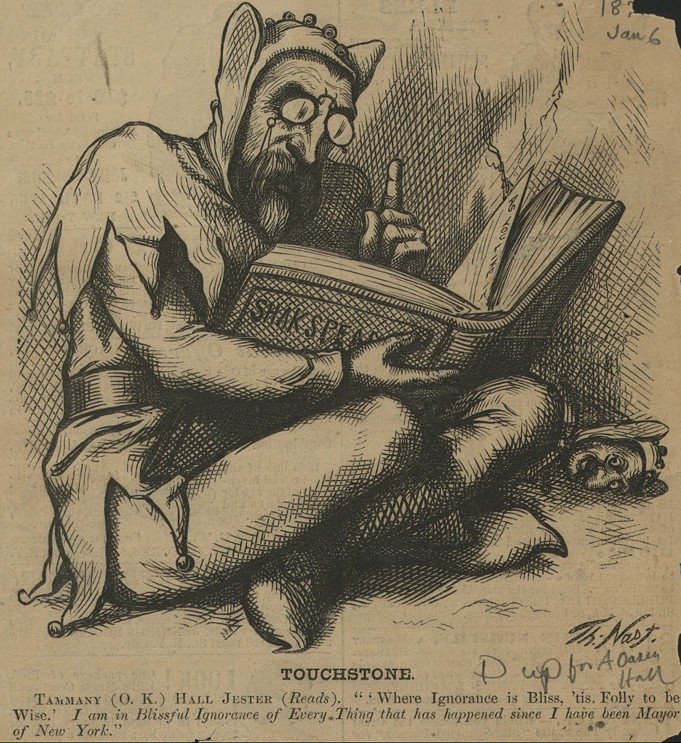
The level of Hall’s involvement in the city corruption at the time is unclear. He was brought before a grand jury twice, once during the final days of his tenure as mayor. Two trials followed, the first ending in mistrial, the second in acquittal. Despite clear signatures on dozens of suspicious invoices, Hall claim was that he was much too busy running the city to have carefully inspected each and other claim.

Below: Thomas Nast parodies Hall’s statements at being ‘blissfully ignorant’ of corruption

Perhaps so. During his first year in office came a devastating stock market crash, the Black Friday of September 24, 1869, facilitated by Tweed’s chums Jay Gould and Jim Fisk.

As immigrant numbers increased — as tenements like Five Points were swelling to overcrowded — racial and religious disunion threatened the city. Like Tammany, Hall was a friend of the Irish; on St. Patricks Day, he would wear an emerald flytail coat. When Hall suddenly banned the particularly violent protestant Orange parade that year, its participants feared his actions were controlled by Irish Catholics. Governor Hoffman ordered the parade to resume, but the result was an even more violent riot, with 62 people dead and over a hundred injured. Confidence in Hall’s leadership quickly evaporated.

Despite the aura of corruption and mediocrity that hung over his tenure as mayor, Hall actually had a quite colorful life afterwords, working as both a newspaper editor (for the New York World), a London correspondent for the New York Herald and the manager of a theater. He even produced and starred in his own play. For some reason, few went to see it.

He returned to practicing law in his later years in London, famously returning to New York in a court case in 1893 representing Emma Goldman. Despite the convergence and press coverage of these two great New York figures, Goldman and Hall lost the case.

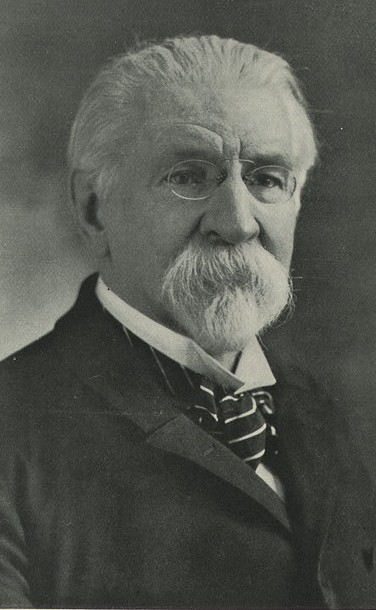
Hall died on October 7, 1898, at his home at 68 Washington Square South, just blocks from where he first went to college. The picture above was taken the year of his death (pic courtesy NYPL)

**Wanna know more about Boss Tweed and the Tweed Ring? Tune in on Friday!

Mistresses and misnomers: the story of Gay Street

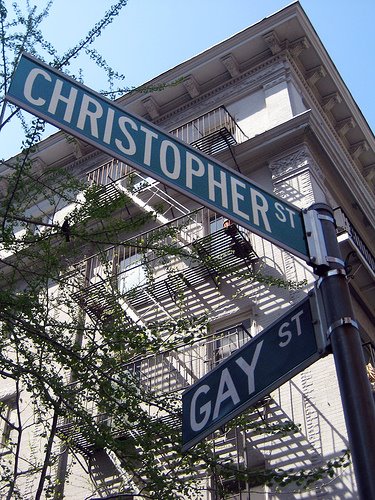
There are few streets in Manhattan as beautiful as Gay Street, that preciously bent path in the West Village that’s been the home to speakeasies and scandals, linking Waverly Place to Christopher Street. Due to its proximity to Christopher, the original heart of New York’s gay and lesbian culture, it also happens to have one of the most photographed street signs in the city.
A huge misnomer hangs over the origin of the name of Gay Street. To expose it, we need to go all the way back to Wouter Van Twiller’s ownership of the land back in the Dutch days. Van Twiller reportedly had his very own brewery which stood on this very spot. Much later on, as part of the estate of Sir Peter Warren, a morgue allegedly stood here as well. Beer and death — the roots of Gay Street! (See yesterday’s story on the early origins of Greenwich Village and our prior article on the history of Christopher Street).
Before 1800, nearby Christopher Street was called Skinner Road and the area still retained a bit of its rural quality. But things were getting fancy over on Waverly Place.

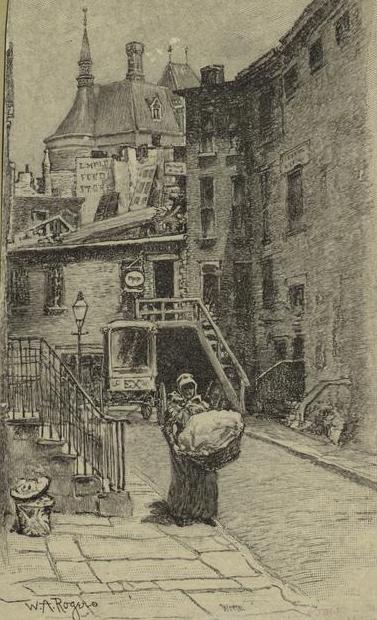
(W.A. Rogers illustration above from 1894, courtesy NYPL)

The eastern stretch of Waverly is actually the northern border of Washington Square. Because of that, it became the hottest street in town when the city built Washington Square in 1826, and the street became lined with attractive Greek Revival Style homes. The birth of Fifth Avenue culture really starts here, home to the city’s wealthiest well-to-do families of the 1820s.

Their horses had to go somewhere! And so Gay Street was built, not as a place for homes, but as a row of horse stables for people living on Waverly Place and other elegant homes nearby. Soon however, with the natural growth of the city, some of the stables made way for lower-income housing, mostly for servants employed in some of these same elegant homes. And in most cases these were African-American servants.

That’s where the misnomer about the name comes in. The city officially named it Gay Street in 1833, although it may have been called by that name unofficially many years previous. It’s popularly supposed that it was named after Sidney Howard Gay, a vanguard Boston abolitionist and editor of the National Anti-Slavery Standard newspaper. However, Gay was born in 1818 and came to prominence in the 1840s and 50s. Although I’m sure he was an outstanding teenager, no way did the city of New York name a street after a 15-year-old boy.

Theories abound as to the real identity of Gay. The closest anybody’s come to the truth is a classified ad found in a newspaper from 1775, an advertisement placed by one R. Gay who was selling off his gelding (i.e castrated male horse). The evidence is circumstantial, but does link to Gay Street’s early history as a stable alley.

The first homes were built in as early as 1827 and the street was officially widened for residential use in the 1830s. Many black residents stayed on the street and it became a home for black musicians. Given the general artistic bent of Greenwich Village as a whole, it’s no surprise then that Gay Street developed into a mini-haven for artists and writers by the turn of the 20th century.

With its secretive, arched appearance and deceivingly quiet demeanor, Gay Street also became a natural location for speakeasies during the 20s, including one at 12 Gay Street called the Pirate’s Den, and possibly another on the corner called the Flower Pot.

That address 12 Gay Street has a hoppin’ history. The building was owned by mayor Jimmy Walker, who kept his girlfriend Betty Compton here. A bit later on, the creator of Howdy Doody, Frank Parris, built his famous puppet in the basement here. It’s even, reportedly haunted by an entity called the Gay Street Phantom.

Author Ruth McKenney lived in nearly 14 Gay Street best known for the book My Sister Eileen. Eileen, who was living with Ruth, died in 1940 in a car accident with her husband, writer Nathaniel West, a few days before a stage production of My Sister Eileen was to open.

Greenwich Village, when it was green and a village

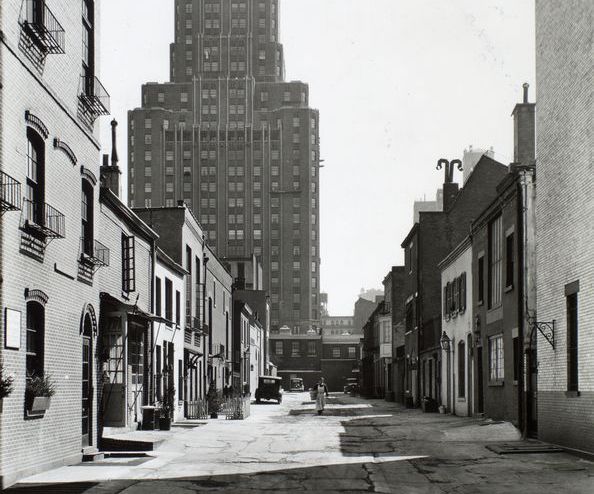
Above: Macdougal Alley in 1936. The plantation home of New Amsterdam director-general Wouter van Twiller would have been situated very close to where this picture was taken. (Find the alley here.)

NAME THAT NEIGHBORHOOD Some New York neighborhoods are simply named for their location on a map (East Village, Midtown). Others are given prefabricated designations (SoHo, DUMBO). But a few retain names that link them intimately with their pasts. Other entries in this series can be found here.

Greenwich Village has been the heart of New York’s cultural identity for over 150 years, the birthplace of city bohemia, where the upper and lower classes collide, the iconic outsider neighborhood between midtown and the financial district. It’s been New York’s home for counter-culture, gay liberation, artistic inspiration, musical innovation and groundbreaking urban renewal. No surprise that it was named New York’s very first historic district in 1969, even as some of its greatest moments were yet to come.

But why do we even call it Greenwich in the first place? And was it ever really a village at all?

I should preface this early history of the Village by saying that the information below deals with Greenwich Village and its sub-neighborhoods the West Village and part of the Meatpacking District (which actually extends farther north). Despite its name, the East Village is actually considered separate from Greenwich, being part of the Lower East Side.

In the wild days of early Dutch occupation of Manhattan, the area of today’s Village district lay 2-3 miles outside the border of the primary Dutch settlement New Amsterdam. That border is approximately Wall Street today.

Imagine the distance between it and 14th street (the generally accepted northern border of Greenwich Village today) as a gradually populated area of hills, swamps and streams, with only a few dirt pathways cutting through the meadows and dense foliage to lands beyond. There was enough farm land to go around if you were brave enough to settle outside city walls, with fears of attacks from both Indians and other Europeans.

To get an idea of how green Greenwich Village used to be, head on over to the Mannahatta Project and type in any Village street name (start with Washington Square North or any listed below).

Back in the day the shore of Manhattan’s west side approximately lay along today’s Greenwich Street; the rest is landfill from later in Manhattan’s development. Near the location of Gansevoort Street today (yes, the Meatpacking District) lay the first village within the Greenwich Village area — the Lenape Indian settlement Sapokanikan or ‘land where the tobacoo grows’. Sapokanikan was essentially a trading settlement and docking point for many traveling native American tribes.

The Dutch took the tobacco reference to heart. The second director-general of New Amsterdam, the colorful Wouter Van Twiller, built a large tobacco plantation ostensibly for the Dutch West India Company but, Wouter being Wouter, mostly for his own personal profit. Wouter’s plantation occupied most of the West Village; his own home sat on plantation ground, at around the area of 8th Street and MacDougal Street. The plantation would be named for the old indian village and also referred to as Bossen Bouwerie (‘farm in the woods’).

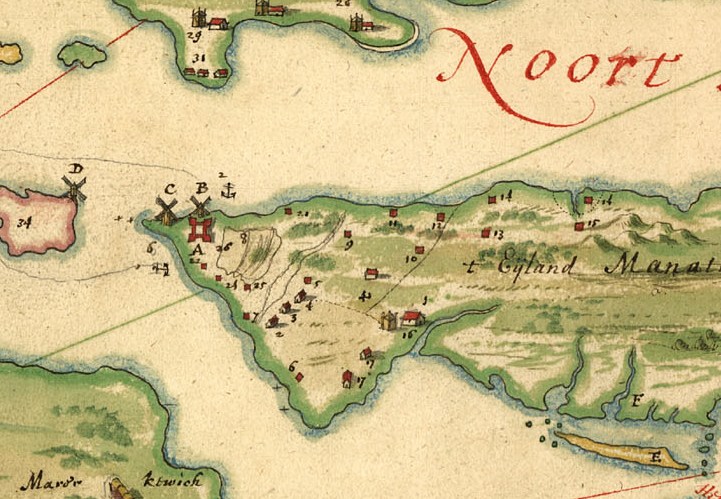
Below: Wouter Van Twiller’s farm is marked #10 on this map by Johannes Vingboons from 1639, one of the earlier attempts at mapping the territory of New Netherland

Van Twiller was later dispatched from his duties as the colony’s leader, but he did grant some of his slaves certain freedoms to build their own smaller farms, defenseless along the Minetta Brook (a vital stream that coursed through the region) and on the southern part of today’s Washington Square Park.

Meanwhile, other Dutch companymen came to the region, including two brothers, Jacob and Paulus Van Der Grift, who moved from old Amsterdam to New Amsterdam in 1644 and into this lush area, “co-patroons” of an area that would become known as Nortwyck or Noortwyck (simply ‘north of the city’).

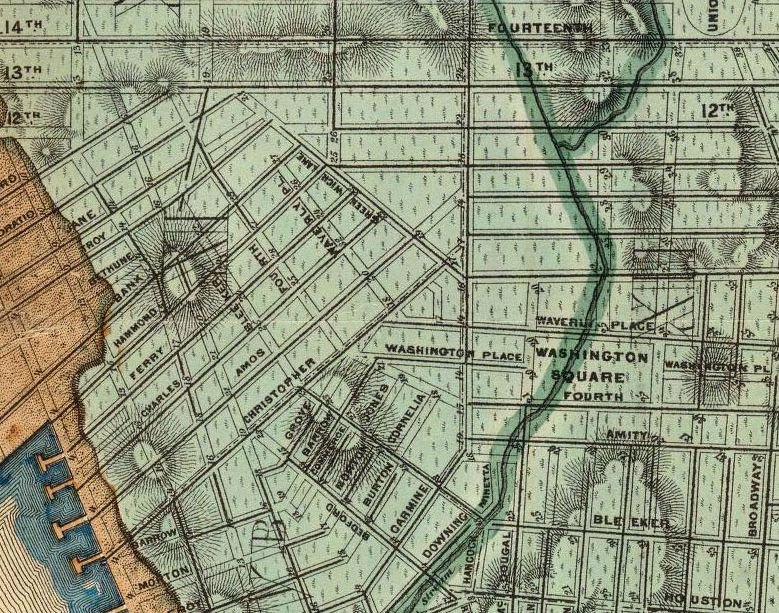
Below: from an 1874 water map designed by Egbert L. Viele, you can see the old Minetta Brook, which formerly cut through the Village district

By 1664, the year of the British takeover of the island, the area was essentially dominated by a handful of landowners who had carefully cultivated their property, but had not changed the general properties of the land.

With the British came further development, as well-to-do English citizens began scooping up property for their own lavish mansions. In fact, it became quite fashionable for the wealthier of British citizens, too refined to deal with the growing and quite crowded New York, to situate just outside the city. This is where Nortwyck, a loose assemblage of farms, becomes Greenwich, the domain of idyllic estates.

I’ve seen reference to the name change as reflecting that of the London district of Greenwich, a very tony British resort in the 17th century. But the name may have first come to the area long before the British elites did. According to the New Netherland Institute, a settler in the 1670s, Yellis Mandeville, bought a farm here and named it for an old Long Island Dutch town — Greenwijck, or Pine District.

Once the wealthy British came, it must have seemed natural to simply alter the name to Greenwich, with all the upper-class and luxurious implications that came with it.

There were several principal British landowners of the Village area at this time. One of note, Thomas Randall, would own the area around Washington Square; later, his son Robert Richard Randall would bequeath the area to the city as a respite for retired sea captains and sailors. The city, seeing far greater value to this land for residential townhouses, instead moved the sailors rest home to the northern shore of Staten Island and called it Snug Harbor.

Another, Captain Thomas Clarke, would retire on property further north and call his mansion Chelsea, also named for a London neighborhood (or specifically for a hospital there).

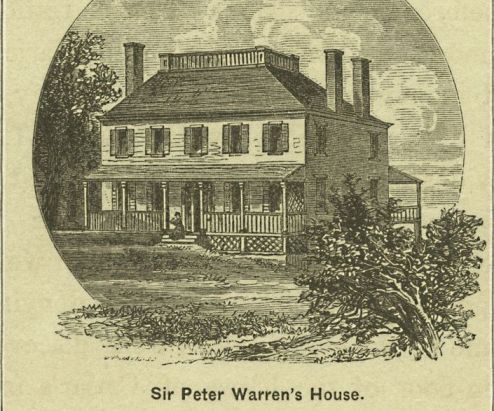
Below: an engraving of the Greenwich Village home of Peter Warren (courtesy NYPL)

But the real forebear of the Village was an Irishman. Sir Peter Warren, vice-admiral of the British Navy and commander of its New York fleet, who amassed a vast land tract here in the 1740s, almost the entire ‘Green Village’. Warren was without a doubt one of New York’s more renown British citizens. Like the great old New York families that would influence society in the 19th century, Warren’s presence assured that other British clans would race to buy up countryside to create Manhattan’s first suburbia.

By the 18th century, these massive lots would be divvied up and sold off, as demand grew from New Yorkers fleeing the city to escape disease and overcrowding. In these years before far-thinking city planning, the Greenwich lots were haphazardly divided with unorganized streets. This urban chaos was preserved by the 1811 Commissioners Plan, which chopped most of the entire island into uniform blocks but left the Village in its uniquely confounding geography.

Still today, after so many years of living in the city, I routinely get lost there.

Categories
Podcasts

Shakespeare in the Park: the drama behind the drama

What started in a tiny East Village basement grew to become one of New York’s most enduring summer traditions, Shakespeare in the Park, featuring world class actors performing the greatest dramas of the age. But another drama was brewing just as things were getting started. It’s Robert Moses vs. Shakespeare! Joseph Papp vs. the city! ALSO: Learn how the Public Theater got off the ground and helped save an Astor landmark in the process

PODCAST Listen to it for FREE on iTunes or other podcasting services. Or click this link to listen to the show or download it directly from our satellite site

___________________________________

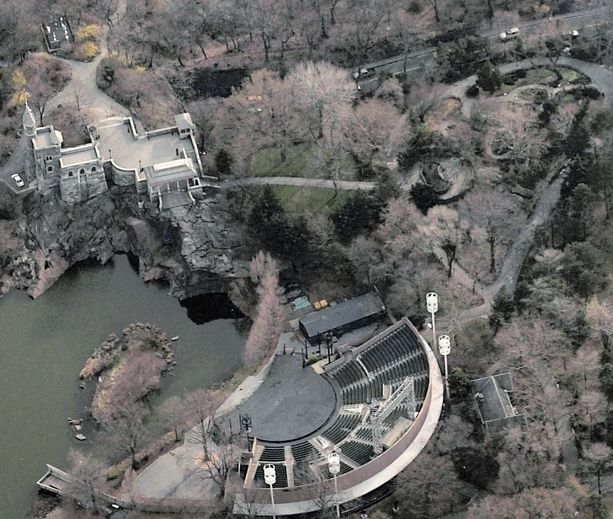
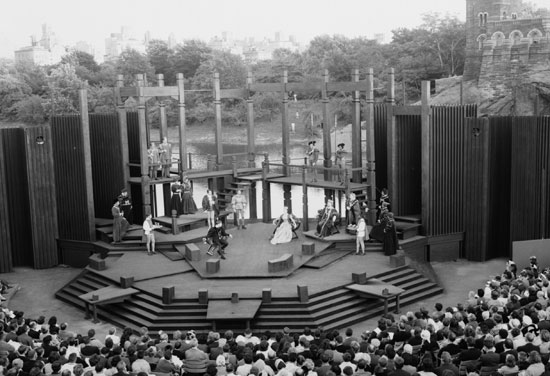
Looking down over both Delacorte Theater and Belvedere Castle. Joseph Papp didn’t have much say in the construction of the theater, but he probably couldn’t have asked for a more picturesque, more perfectly situation location.

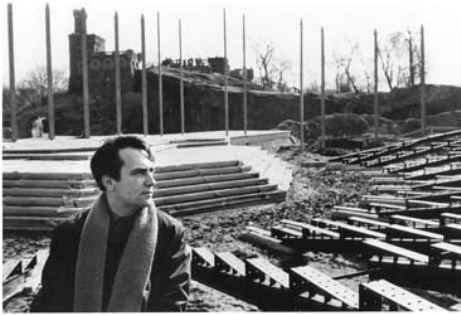
Papp at the Delacorte: within a handful of years, he was able to tranport his vision from a basement in an East Village church to the world’s most famous park. Not without a few speedbumps, however…. (pic courtesy New York Public Library)

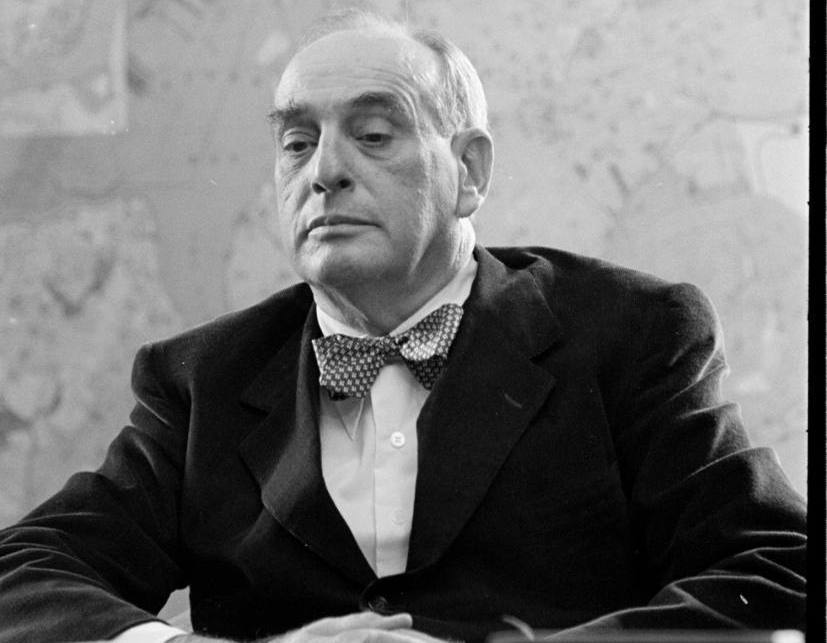
Robert Moses had been one of New York’s most powerful men for almost 30 years by the time he confronted the Shakespeare Festival. At first a supporter of the outdoor program, he soon turned on Papp and refused his permit to perform in Central Park.

One of several performances of Hamlet, this one from 1964, starring Julie Harris and Stacy Keach.

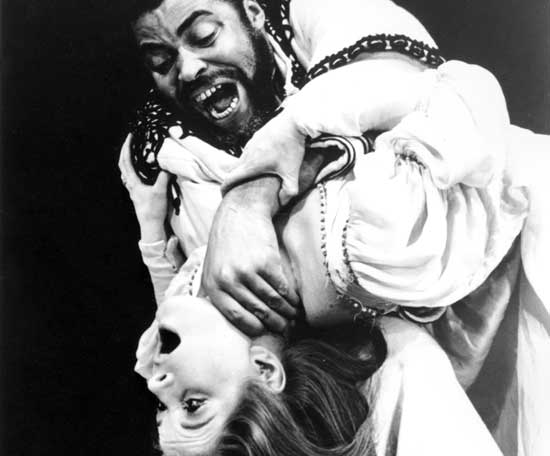
If I could take a time machine back to see one show, it would probably be the 1964 version of Othello with a spry James Earl Jones in the title role.

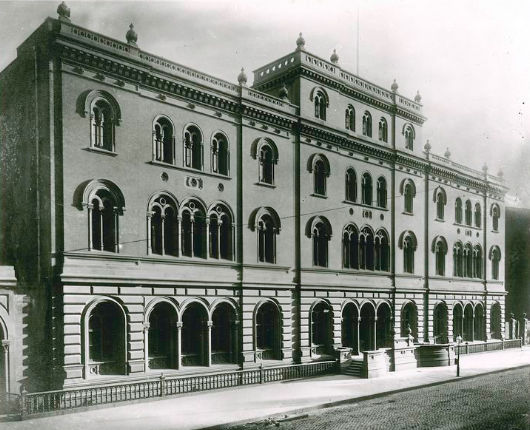
The old Astor Library, built over a hundred years before the Public Theater made it home. Our New York Public Library podcast details how the volumes once stored at this Astor institution were used to build the collection for the new public system.

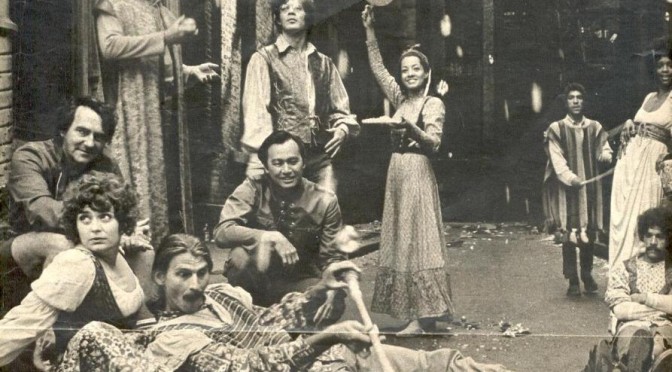
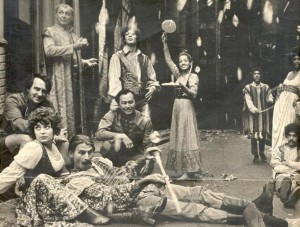
From the 1972 production of the musical version of Two Gentlemen Of Verona, starring Public Theater regular Raul Julia. Like many Delacorte productions, Verona went on to play Broadway and win Tony Awards. Papp is kneeling far left. (Pic courtesy

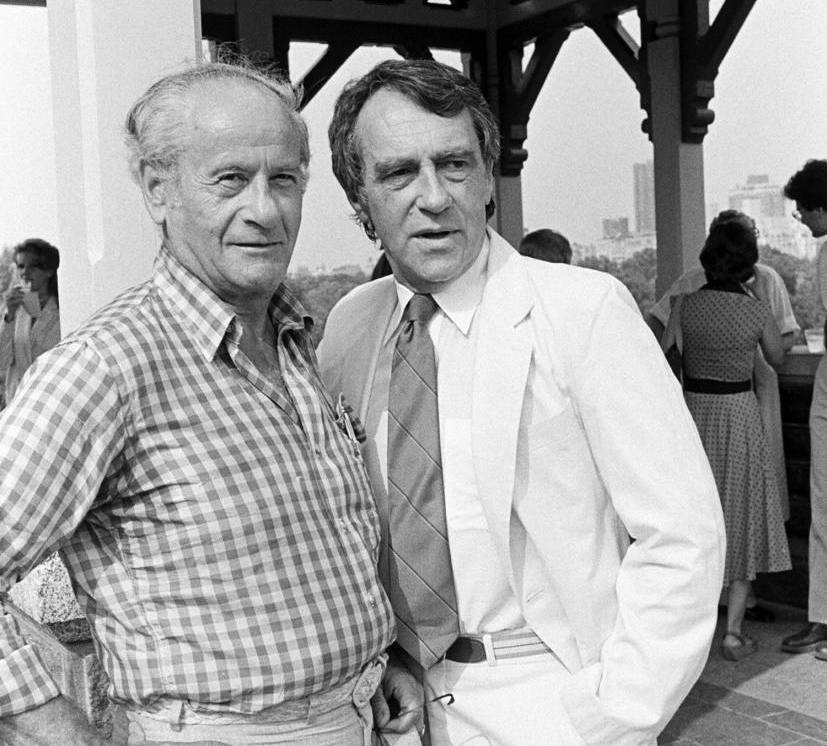
Papp with actor Eli Wallach in 1983. With the Shakespeare festival and later with regular programming at the Public Theater, Papp was able to draw New York’s finest actors and cultivate new stars in the process.

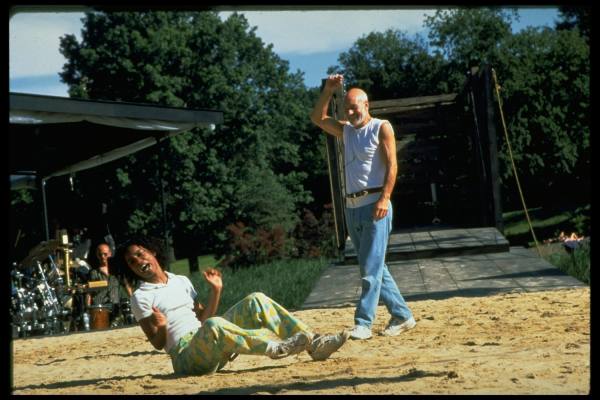
Patrick Stewart rehearses for the 1995 version of The Tempest.

The winding ticket line, quite a treat on a lovely day (and less so when it’s not). These days, for those who can’t or don’t wish to wait, there’s a limited virtual line as well. (Pic courtesy Flickr)

Visit the Public Theater website for more information about upcoming shows and how to get tickets. They also have a nicely detailed section on all their past productions.

How Erin Brockovich saved the East River ampitheater

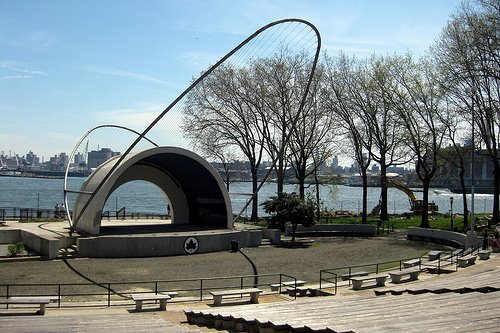
I’ve always been a little fascinated by that small ampitheatre that’s located in Manhattan’s East River Park (near Corlear’s Hook). For years it just seemed so hopelessly abandoned. In the past few years though it’s been making a comeback, featuring the occasional live concert and offering a unique, leafy respite for joggers.

The East River Park is a rather unusual thing, a Robert Moses original from 1939 that features 20 blocks of artificial concrete extension to connect the original land purchase (too narrow to be a useful park) with the East River shore. It’s the largest park in downtown Manhattan, larger in acreage than Battery, Thompkins Square or Washington Square parks.

Among its many Moses staples — ball fields, paved playgrounds and paved picnic areas — is the amphitheater constructed in 1941 as a nod to the neighborhood’s most famous former resident, New York governor Al Smith, who had pursued acting in his youth.

However, nothing much exciting blossomed from its curiously designed proscenium until the late 1950s, which Joseph Papp first launched his series of free Shakespeare performances. That’s right, the Public Theatre’s annual outdoor tradition of Shakespeare In the Park began here — at East River Park, not Central Park.

Once they left uptown for their permanent home, however, things became quite grim for the ampitheatre. By 1973, the city couldn’t even afford to keep it open. It was fenced up, closed down and heavily vandalized. For those living in the city at the time who came upon it, it did in fact seem like a modern ruin, Robert Moses’ very own Acropolis.

The park itself was slowly renovated throughout the 1990s, but relief finally came to the beleaguered stage in December 2001 thanks to, curiously enough, to reality television and Erin Brockovich — the real Brockovich, not the Julia Roberts version.

In the months following 9/11, many restorative projects began popping up throughout downtown. Brockovich, rising to national prominence thanks to the Roberts film, was filming an urban makeover program Challenge America for ABC. Brockovich and her producers chose the amphitheater for renovation, done over the course of a week, using the donated services of Tishman Construction and HLW Architects. Why this place exactly? I’m not sure, but Rudy Guiliani assigned the project to the program during a telecast of Good Morning America.

I didn’t catch the one-shot show, but I’m picturing Ms. Brockovich in one of her signature ensembles directing workman while standing on the stage. Truly one of the stranger stories of renovation that I’ve ever heard.

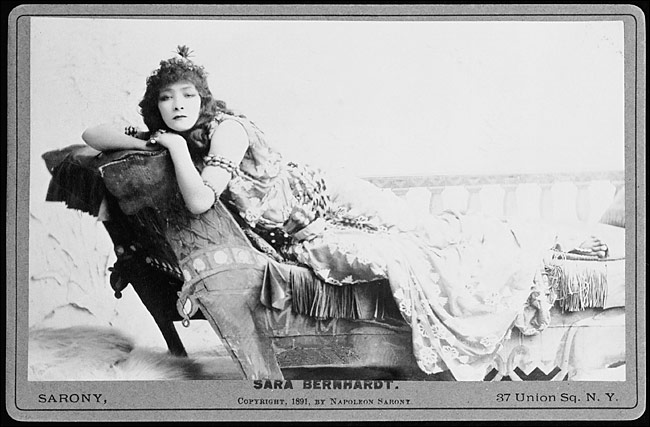
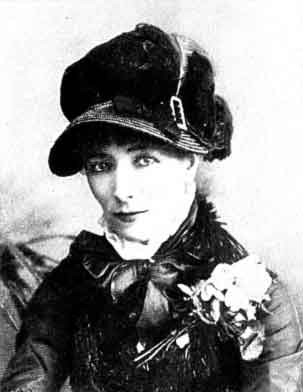
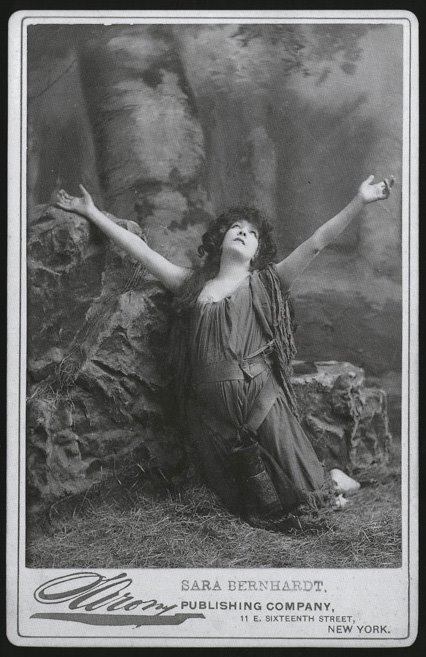
Sarah Bernhardt’s favorite New York landmark

Sarah Bernhardt may be the most famous and most mysterious actress who ever lived and certainly “the greatest celebrity of her era.” Working mostly in the days before recorded medium (there are exceptions), Bernhardt crafted a legend matched by outrageous behavior and provocative stage performance. Naturally, she brought both with her when she came to New York City for her first American tour in 1880 to present the first of many signature roles, Adrienne Lecouveur.

The French actress, lauded as one of Europe’s greatest commodities, didn’t exactly crave a visit to America. Leaving for New York on October 1880, Sarah “was in utter despair, weeping bitter tears, tears that stained my cheek,” according to her autobiography. New York had no such hesitation. When her boat arrived two weeks later into a strangely frozen New York harbor, it was greeted with smaller steamers, filled with fans and decorated with French flags. They feted her onboard in a lengthy, drawn out ceremony of admiration.

Her response? Feeling slightly woozy, “I decided therefore to faint.” She fell gently into waiting arms, people rushed to her attention until “it was time to come to my senses again.”

She stayed that evening at the luxury Albermarle Hotel at Broadway and 24th Street where she blocked her door with furniture to keep other well-wishers and journalists out.

Bernhardt’s auto-biography is so steeped in extremity that you assume she must be exaggerating. Alexandre Dumas did call her a “notorious liar”, but the fact that it took Alexandre Dumas to make that proclamation underscores the exotic circles and experiences in which she traveled.

She greatly distrusted the press who she believed willfully printed lies about her (even when the lies were fed to them by Bernhardt’s own management.) At a press conference at the Albermarle later that day, she dismissed even the simplest questions, especially bristling when she was asked about her religion. “Oh Heavens! Will it be like this in all the cities I visit?”

Two days later, she arrived to rehearse at Booth’s Theater, the tony stage built by theatre legend Edwin Booth (John Wilke’s brother) and located near her hotel, at 23rd and 6th Avenue. Her reaction at seeing fans gathered outside to greet her: “These strange-looking individuals did not belong to the world of actors….with their white neckties and their questionable looking hands.”

Inside the theater, she was finally reunited with her 42 trunks of gowns and costumes — briefly and offensively seized by customs, a “chiffon court martial” — and ordered her underlings to open and inspect each container. So horrified was she at the lowly people opening her possessions that she could only grit her teeth and stand in a state of utter mortification. In fact, the experience exhausted her so much that she failed to even rehearse at all that day.

She would later go on to interact with every strata of New York culture, some more friendly than others, appealing more to liberal minded (and daring) social elites than the stalwarts of Mrs Astors storied Four Hundred. Which seemed fine with Sarah; she didn’t want to meet them either.

But for all her condescension that week, for all the superiority and righteousness, there was one thing that stopped her in her tracks. Believe it or not, something actually gave the legendary imperious actress pause.

It was Bernhardt vs. the Brooklyn Bridge, and the bridge won. In 1880, it wasn’t even fully completed, yet in her recollection, it was as if it were bustling with traffic. “Oh, that bridge! … One is proud to be a human being when one realizes that a brain has created and suspended in the air….that fearful thing.” The magnificence of the bridge, its extraordinary scale, filled her with “a strange, undefinable sensation of universal chaos.”

Yet she was able to sleep peacefully that evening, “reconciled with this great nation.” And all it took was for something to make the mighty actress feel small.

She would come many, many times to New York and onward to other major cities. By 1910, her tolerance of America was enough that she endeavored to perform future productions in English. (Up until then, all of her performances were rendered in French.)

I highly recommend peeking into her pompous, overblown autobiography My Double Life (well out of print, although Google Books has a copy to review). Simply flip to any random page and get a whiff of her powerful perfumed prose. They seriously do not make them like Sarah Bernhardt anymore.

Below: the spectacular Booth’s Theatre, where Sarah Bernhardt made her U.S. debut on November 8, 1880. It was located on the southeast corner of 23rd and 6th. Today the building there contains a Best Buy and an Olive Garden.

P.S. It appears that Sara and Sarah were interchangable back in the day. You’d think this discrepancy would have driven the poor thing to the fainting couch.

Toots Shor’s and the art of celebrity male bonding


So make it one for my baby, And one more for the road

FRIDAY NIGHT FEVER To get you in the mood for the weekend, every other Friday we’ll be featuring an old New York nightlife haunt, from the dance halls of 19th Century Bowery, to the massive warehouse clubs of the mid-1990s. Past entries can be found here.

NIGHTCLUB Toots Shor’s Restaurant
In operation: 1940-1959; 1961-1971; 1972-73

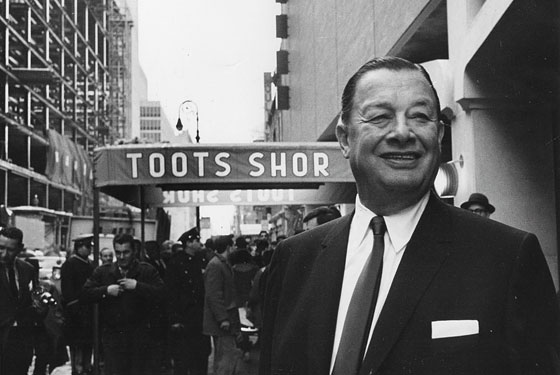
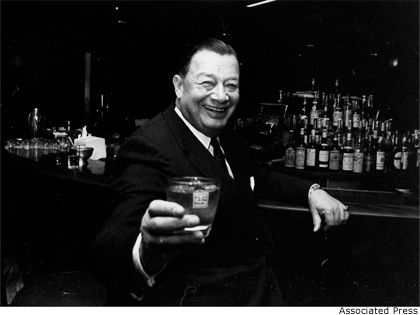
They really don’t make them like Toots Shor anymore. A stout, gregarious man, back-slappingly friendly with a child’s face, Shor reigned over one of midtown’s legendary martini scenes, his very own eponymous nightspot that attracted the most iconic mad men of music, movies, journalism, and sports. (In fact, Mad Men, the 50s Manhattan throwback TV series, is often set here.) Shor’s was where the world’s most famous alcoholics of the 50s and 60s tippled.

Toots is a bit of a tragic figure today in that he really became a self-branded institution of a simpler time, an old-school, double-breasted nightlife dominated by rich white men. When times became less simple, he foundered and faded.

This Jewish-born Philadelphian made his entry into New York nightlife in the most obvious way for a man of his frame — as a doorman to some of the city’s most famous speakeasies during the dry 1920s. “A kid on the hustle,” in his own words, Shor made 40-50 dollars a week in several places like the Five O’Clock Club and the Napoleon Club, where he would “flatten a guy a day, maybe two.” Along the way, he befriended celebrities and journalists alike; most importantly he also made connections with the influential mafia figures who owned the night spots.

He eventually moved on to a management position in 1936 at a popular tavern owned by Billy Lahiff (158 W. 48th Street), acquiring from his famous clientele the confidence and ease of a celebrity himself. He even married a Ziegfeld girl, nicknamed Baby, who was a virtual pixie next to him.

(By the way, just three years earlier, Lahiff’s served the last meal to Fatty Arbuckle, the embattled silent film star who died in bed that night.)

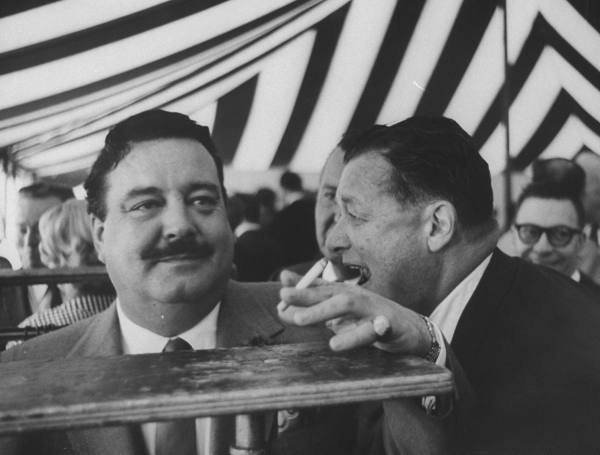
Shor moved on to his own establishment in 1940. Toots Shor’s Restaurant (51 W 51st Street) would be an instant success, ruling for two decades as the neighborhood lounge for some of New York’s biggest lushes. Most associated with the early years was Jackie Gleason, who would spend the day there drinking, go home and take a nap, then return to Toots for the nighttime crowd.

BELOW: Toots and Jackie and the ground breaking of his second restaurant in 1960 (Bob Gomel, LIFE archives)

You could eat at Toots — it was a restaurant — but, as the 1996 documentary Toots makes clear, it was all about the “whiskey and beer.”

Shor would befriend many of his clientele, calling them ‘crum-bums’ upon entry, joking with them, creating an inner circle for some of the most closely observed men in New York. In particular, the restaurant was quite popular with sports icons (and, by extension, sports writers); for this reason I would describe Toots as one of New York’s greatest sports bars ever. It didn’t need memorabilia on the walls; the memorabilia just walked in through the front door.

If you were a Yankee, you came to Toots. Mickey Mantle was his most recognizable regular; Joe Dimaggio came in for awhile, until Shor called his wife (you know, Marilyn Monroe) a whore, a slight Joe never forgave.

Bing Crosby and Frank Sinatra would frequently enter to applause. Supreme Court justice Earl Warren would enjoy a drink at one end of the bar, while the most notorious gangster in New York, Frank Costello, would be dining on the other side.

When it wasn’t filled with icons, regular businessmen would hit Shor’s for a lingering martini lunch. Few places in the city fostered such a tightly closed fraternity.

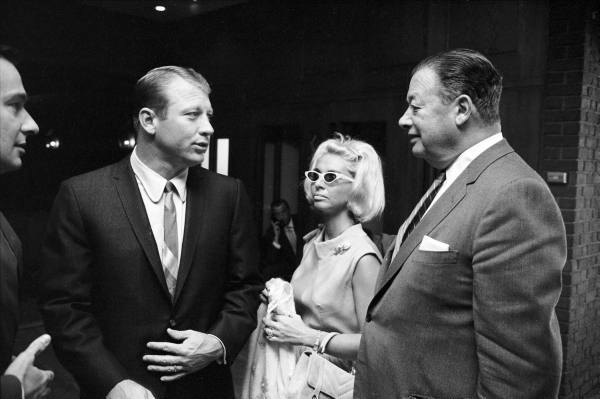
Mickey Mantle and his bespecled wife Merlyn, not exactly the most loving of couples, pull it together for master of ceremonies Toots Short, at right (1965, photographer John Dominis, courtesy of Life archives)

Along the way, Shor became quite well-known, a television star even. (That 2006 documentary features footage from his appearances on ‘What’s My Line?’ and ‘This Is Your Life’.) However his penchant for gambling and comping thousands of dollar of beverages for friends took a toll on his finances. Shockingly, he announced in 1959 that he had sold his restaurant. By the next year, it was demolished.

He tried again in 1961 at 33 West 52nd Street, closely copying his old formula. Some of his old friends even came back. But this type of nightlife was swiftly fading from view in the city. How could Shor coexist in a neighborhood with places like the Peppermint Lounge enticing people with the vibrations of counter-culture? It didn’t help that Shor continued to have financial problems; his celebrity and mafia connections couldn’t help him this time.

His new restaurant was unceremoniously closed in 1971 due to income tax evasion. He tried once more in October 1972 in a smaller place on 54th Street; it was closed within a year. Strapped for cash, Shor then sold his name to the Riese Corporation, who opened a small chain of Toots Shor bars throughout the city. Today, Riese operates such chains as TGI Fridays, Dunkin Donuts and Taco Bell. The bars had nothing to do with Toots, and what’s a Toots Shor establishment without Toots? Eventually the notoriety of his name would soon fade and even those knockoffs would close.

Shor died in 1977, living with his family at the Drake Hotel at Park and 56th Street.

Luckily, Shor is fondly remembered today as a vestige of old midtown Manhattan, a starched precursor to today’s more colorful party promoters. I highly recommend the Toots documentary, lovingly made by his granddaughter. Anybody interested in 1950s New York would be remiss not to spend a few minutes over a stiff martini this weekend in his memory.

By the way, his real name? Bernard.

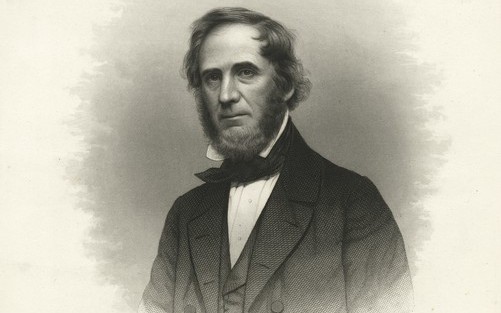
Mayor Daniel Tiemann, colorful man of Manhattanville

KNOW YOUR MAYORS Our modest little series about some of the greatest, notorious, most important, even most useless, mayors of New York City. Other entrants in our mayoral survey can be found here.

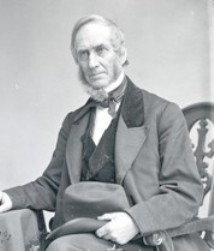
Mayor Daniel F. Tiemann

In office: 1858-1859

Once upon a time there was a village called Manhattanville, a small, originally Quaker community that planted itself between a bustling but still bucolic section of Bloomingdale Road (later Broadway) and the Hudson River. A remnant of the old village remains in the small neighborhood that shares its name today, north of Morningside Heights between 122nd and 135th streets on the west side.

Founded in 1806 the village grew due to its proximity to a major artery that led to the city of New York, but its fortunes really multiplied due to a developing port industry along the water. Together with its sister village Harlem, they grew into healthy rural communities.

In 1850s, the most powerful man in Manhattanville was Daniel Fawcett Tiemann. He was actually born down in New York, at a house on Nasssau and Beekman to German immigrants; he would later return to govern the city from City Hall, just two blocks away from his birthplace.

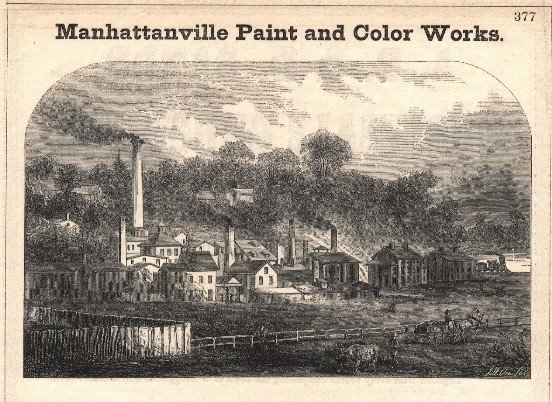
Daniel was the paint king of New York, a trade he learned from his father, working in the original Tiemann paint factory at 23rd and 4th Avenue (today’s Madison Square park). He and his brother Julius eventually inherited the family business and moved it into the rural pastures of Manhattanville. Soon D.F. Tiemann & Company Color Works took up a dozen buildings and dominated the industrial character of the village.

Notably, Edward Leslie Molineux, later to be both a Union general and the father of convicted (and famously acquited) 19th century murderer Roland Molineux, was a clerk in Tiemann’s firm and later a close political associate.

Tiemann had his eyes quite literally set on City Hall even at a early age. “I saw them building the present City Hall and we all thought that it was too far away from the business centre,” he once recollected. Young Tiemann frequently reminsced of his glorious youth, skating on Collect Pond and later fishing in the newly dug canal.

BELOW Color me impressed: the Manhattanville paint empire of New York mayor Tiemann

Luckily he had very strong ties to one of New York’s most prominent families, the clan of Peter Cooper. In fact Tiemann married Cooper’s niece and would eventually became a founding trustee in Peter’s pet project, Cooper Union, in 1859. (Marrying into the Cooper clan is always good for one’s prospects, as Abram Hewitt also found out.)

His family background, business acumen and solid nativist appeal recommended him for public office, particular in the years when corruption and chaos seemed to reign supreme in City Hall, namely the administration of wily Fernando Wood.

In 1857 a coalition of different parties united behind unblemished, teetotaling Tiemann, including the ‘People’s Union Party’ (composed of merchants), the American Party (a nativist, anti-immigrant party) and even Tammany Hall — who had kicked Wood out just the year previous.

That October 1857, Tiemann handily beat Wood by 22,000 votes. It should be noted, however, that Tiemann’s support was as much anti-Wood as it was pro-Tiemann. “If I succeed in the business of the Mayoralty as well as I have in making paint…I should be satisfied,” Daniel proclaimed at his victory.

Tiemann inherited a nearly bankrupt city government, tapped dry with graft and unable to sustain itself. In fact, by October 1858, City Hall itself was actually put up for auction, and the wealthy Tiemman had to personally buy it (for $50,000!) and eventually gave it back to the city.

The new mayor did bring a modicum of reform to city government throwing out a few corrupt officials, including the laughably crooked street commissioner Charles Devlin. But Tiemann was fighting upwind and his political coalition immediately fractured.

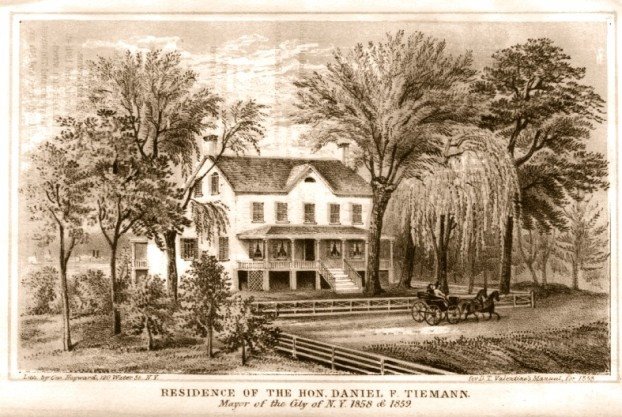
Below: Tiemann’s home in upper Manhattan

Much happened in the city under his watch, including further development of Central Park and the ground-breaking of new St. Patrick’s Cathedral. But his greatest contribution is something we take for granted today. In a burst of common sense one night, Tiemann proposed that street names be attached onto lampposts for better visibility, as opposed to being stuck to the face of corner buildings.

His greatest claim to fame, however, was as one of the first voices that traveled the newly laid Atlantic cable, which connected North America to Europe for the very first time. “Mayor Tiemann to the Lord Mayor of London. Enthusiastic Celebraton of the Event of the Age. A UNIVERSAL JUBILEE. NEW-YORK IN A BLAZE. Grand Exhibition of Fireworks in the Park,” boasted the Times headline.

Wood’s supporters had never warmed to Tiemann and staged a comeback. And the paint king had even expended Tammany’s good graces; in the election of 1859, they backed William Havemeyer who was mayor of New York before and would become mayor of New York again, 13 years later. But he would not become mayor of New York today. After keeping the seat warm for two years, Tiemann was replaced by Fernando Wood. It would be the start of a tumultuous tenure.

Tiemann would later become a state senator but his heart would always be in the family business. He settled for the rest of his days in a beautiful home (pictured above) built near his paint plant. He finally died in 1899 at age 95, a staple of New York life who had seen it from bottom to top grow from a port town into the biggest, most important city in the world.

Prospect Park: Montgomery Clift’s final resting place


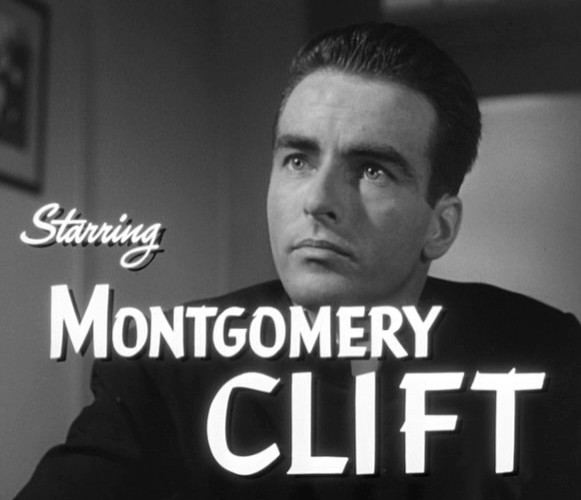
One curious fact we mentioned in our Prospect Park podcast is that classic film actor Montgomery Clift is actually buried here, in a quiet Quaker cemetery near the southwest entrance of the park. As far as I’m aware, entrance to the tombstones is locked, and its so cloistered away in the woods that it’s difficult to find.

So why would a movie star be buried here of all places? The handsome Nebraska-born actor came to prominence in such searing Hollywood films as A Place In The Sun and From Here To Eternity. In 1956, Clift crashed into a tree while leaving the home of Elizabeth Taylor. (Hollywood lore famously suggests Liz raced to the accident scene and fished out broken teeth that were lodged in his throat.) His career was never the same after reconstructive plastic surgery.

Hooked on pain medication and driven to drink, Clift was found dead in his Manhattan townhouse at 217 East 61st Street on July 22, 1966. Clift was allowed to be buried here, quietly and with little fanfare, because his mother Sunny was a practicing Quaker. Still, these were the film actors; actress Nancy Walker planted two hundred crocuses around his tiny tombstone, reportedly designed by the same man who made John F. Kennedy’s marker at Arlington Cemetery.

The hidden cemetery of almost 2,000 graves, on this land long before Prospect Park, used to be larger. The city acquired only part of it however, and thus the graveyard remains the only patch of private land in the park.

Look here for a map of the area.

Categories
Podcasts

Prospect Park and the return of Olmsted and Vaux

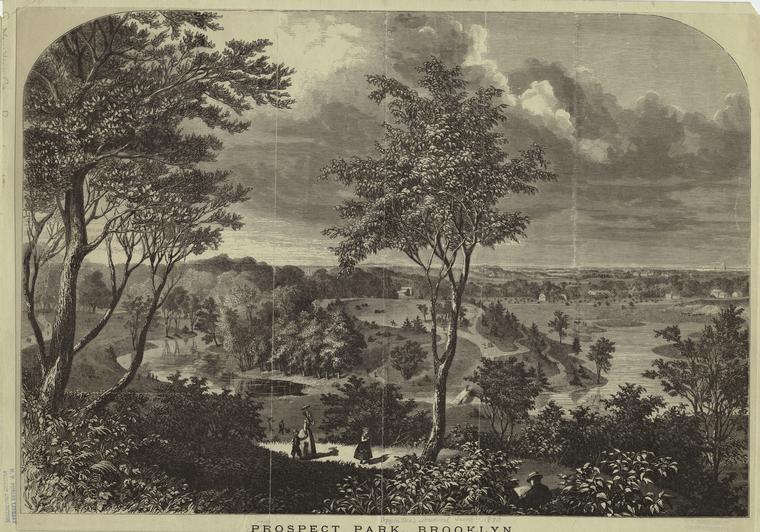
Prospect Park, Brooklyn’s biggest public space and home to the borough’s only natural forest, was a sequel for Olmsted and Vaux after their revolutionary creation Central Park. But can these two landscape architects still work together or will their egos get in the way? And what happens to their dream when McKim, Mead and White and Robert Moses get to it?

PODCAST Listen to it for FREE on iTunes or other podcasting services. Or click this link to listen to the show or download it directly from our satellite site

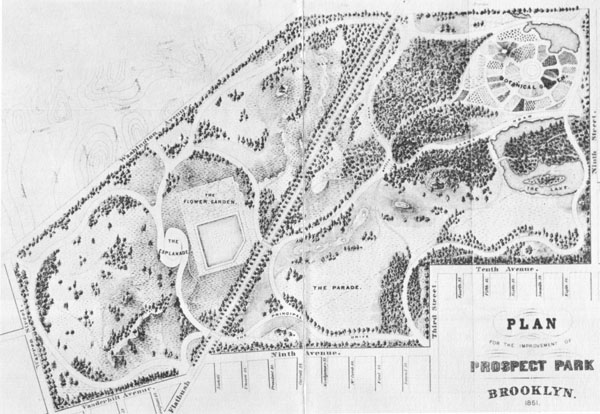
The area of Prospect Park in 1776. This spot, called Flatbush Pass (and later Battle Pass), was the scene of a violent clash between Continental Army soldiers and Hessians employed by the British army. Part of the reason the park was located here was to preserve this hallowed historical war spot.

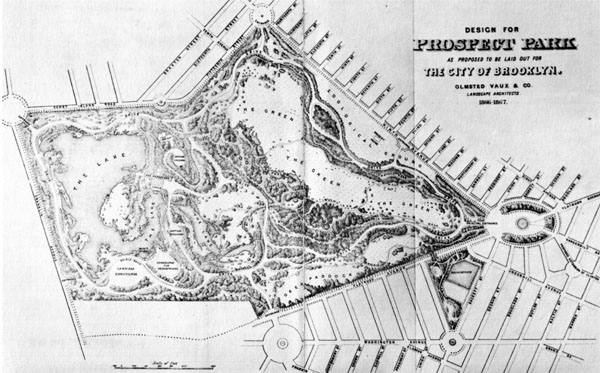
Egbert Viele’s proposed ‘Mount Prospect Park’ blossomed around Flatbush Avenue, which would be arched with pedestrian bridges. This plan would have retained Mount Prospect. But what kind of a park has a major thoroughfare cutting right through it.

Olmstead and Vaux, meanwhile, opted to eliminate one side of Viele’s plan entirely, expanding it south and west with newly acquired land.

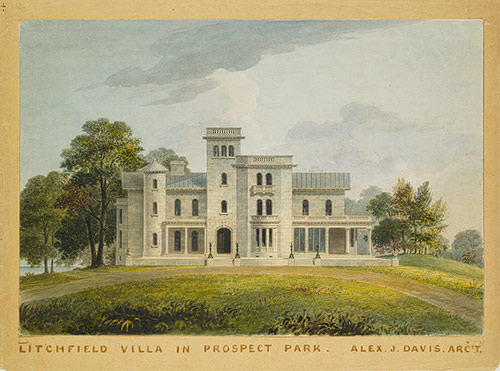
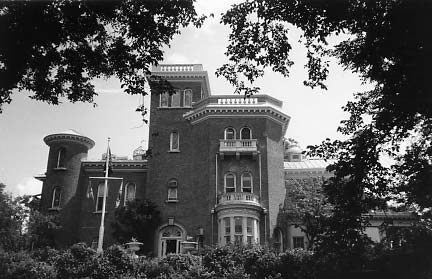
The home of Edwin Litchfield, as it looked back in the day…

An artist’s depiction of Prospect’s tableaux-style natural foliage. The landscape architects wanted to ‘augment’ the natural beauty of the area. That augmentation included over 70,000 new trees and shrubs.

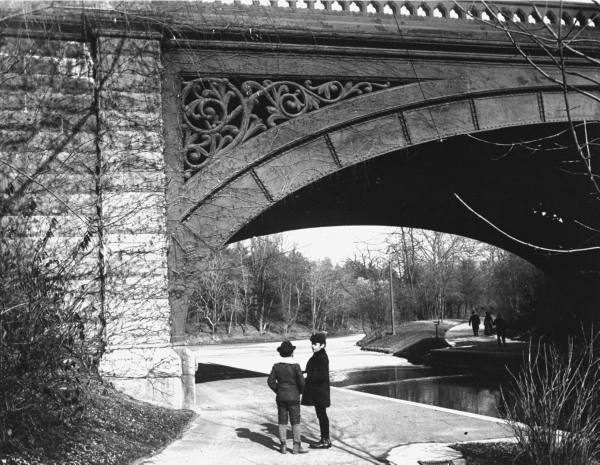
Arches, bridges and overpasses weave throughout the park, often creating fairytale like settings. Photo, taken in 1887 by Wallace G. Levison

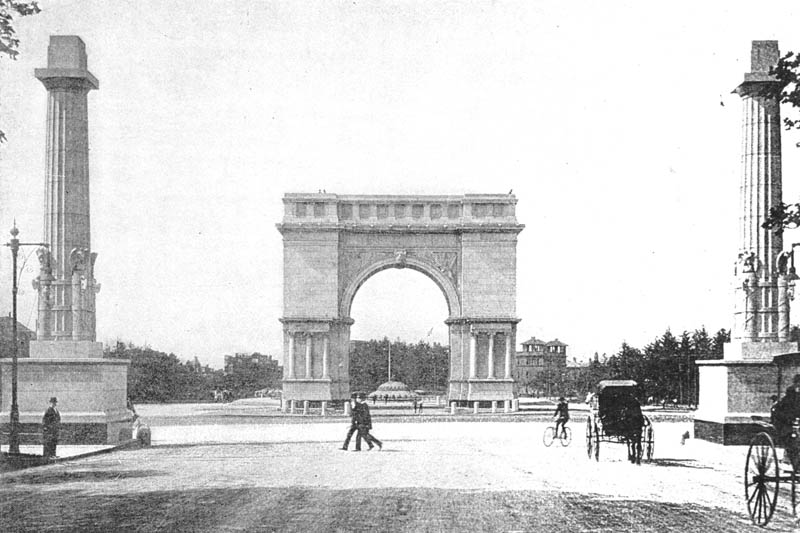
Grand Army Plaza in 1894. More would be added to the plaza, giving it that ornate, triumphal feel — not exactly what Olmsted and Vaux had really intended.

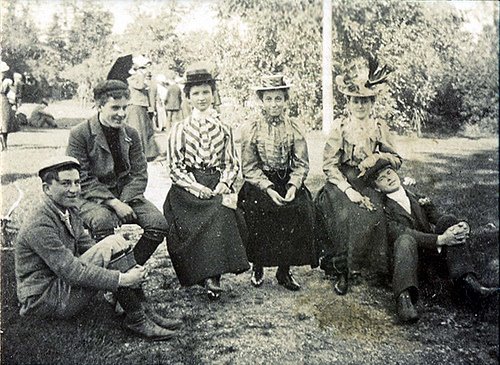
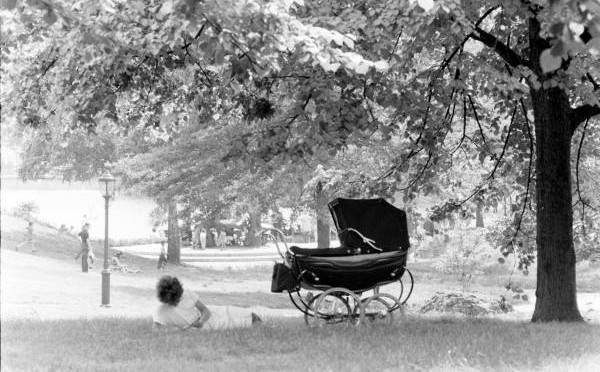
Young adults hangin’ around the park, circa the 1910s

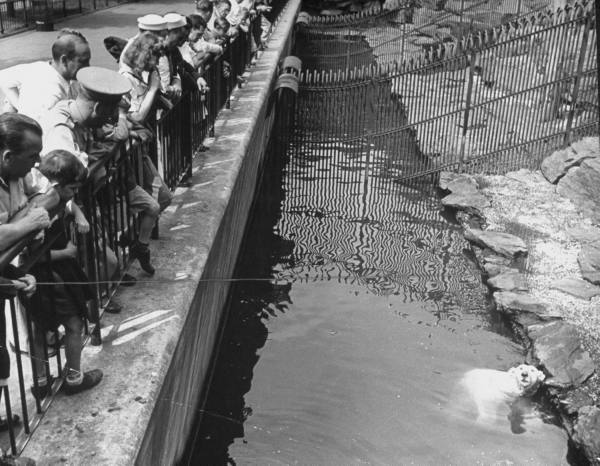
One of Robert Moses’ more beneficial additions: the Prospect Park Zoo (as it looked in 1943)

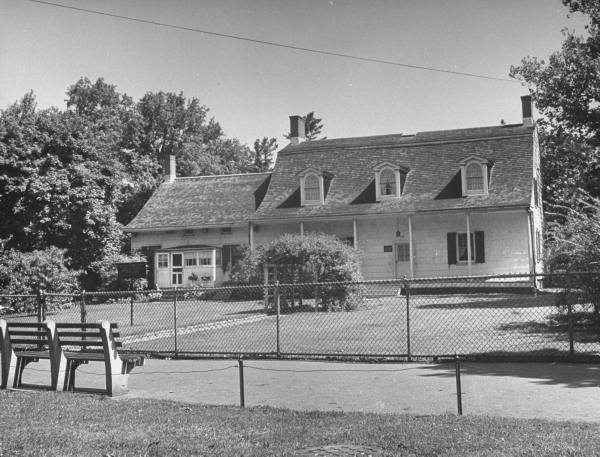
The old Leffert’s homestead did not start out in Prospect Park. It moved there when it was sold to the city in 1918

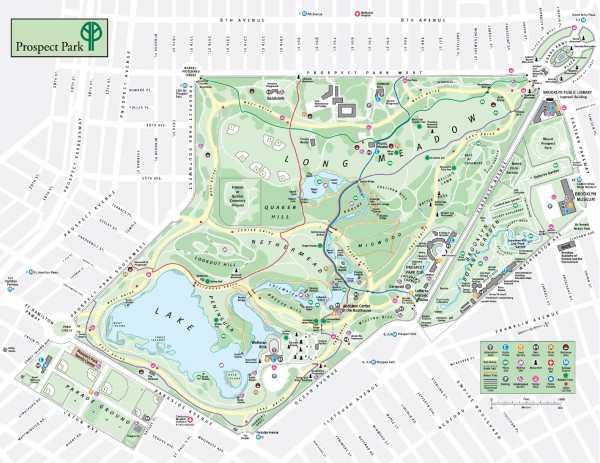
A current map of the park.

Categories
Uncategorized

New York’s earliest parks, in all five boroughs

Have you ever just walked around and run smack into some strangely named park (Major Mark Park? Doughboy Park? WNYC Transmitter Park?) that you’ve never had any idea existed before?

There are parks crammed into every nook and cranny of the city, a testament to community groups and civic leaders who recognized that congested, overcrowded neighborhoods need relief.

The very first parks happen to say something about the formation of the boroughs themselves.

It was recognized early on that you can’t have a major city without some patch of public space. Places such as the Common Grounds (where City Hall is today) served as both a rallying spot and even a grazing ground during the 18th century. But these certainly wouldn’t be parks in the way we understand them today.

For this survey, a ‘park’ can actually also mean a ‘public square’ or ‘common grounds’. The birth of the modern park (Central Park) would happen many years after some of these places came into existence:


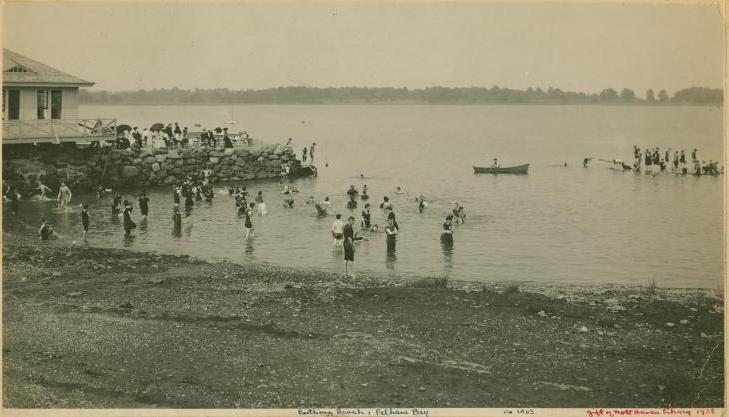
Bathers at Pelham Bay in 1903 (pic courtesy NYPL)

5) BRONX 1888
The New York park service gives the distinction of ‘first Bronx park’ to, well, most of the major ones — Bronx, Claremont, Crotona, St. Mary’s, Van Cortlandt and Pelham Bay Parks. They were all created at once, in sweeping state legislation in the early 1880s, buying up over 4,000 acres of private land to be specifically set aside for parkland.

Parks throughout Manhattan and the future boroughs of Queens, Brooklyn and Staten Island had been created as needed by their communities. The Bronx purchase would actually be the first organized park collective, consolidated in 1888, a notion dreamt of by community activists like John Mullaly, who worried that the growing city would eliminate much of the remaining natural terrain and trap city residents in greenless canyons of tenements.

These lands, however, had been areas for visitors well before being organized as official city parks. Crotona Park, for instance, was known as Bathgate Woods, a wild area that had beerhalls and picnicking grounds along the river. You can still visit the homes of the families who once owned some of these acreages, like the Van Cortlandt House (in Van Cortlandt park) and the Bartow-Pell Mansion (in Pelham Bay Park).

Of course, if you’re feeling charitable, you could also consider Woodlawn Cemetary, opened in 1863, the first Bronx park. It’s one of the most beautifully manicured spots in the Bronx, even today.


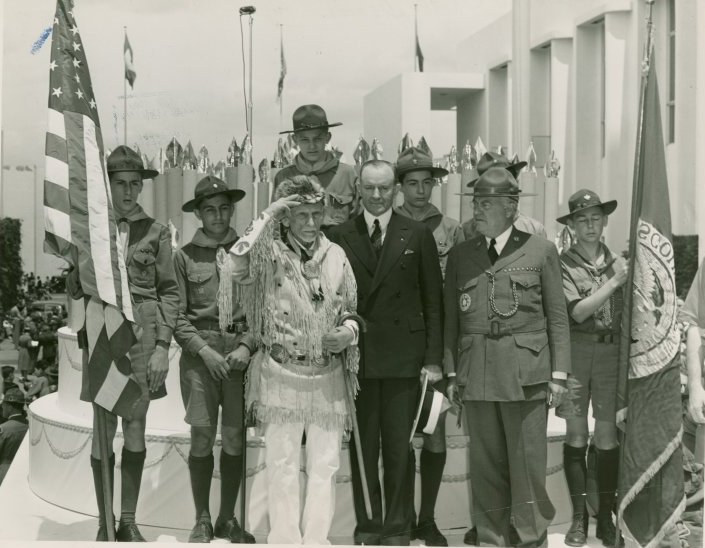
Beard the Scout leader, at the 1939 New York World’s Fair

4) QUEENS 1841
I’m giving the title of Queens oldest park to Flushing Park, or what is today known as Daniel Carter Beard Memorial Square. Although it’s not really much of a park, and its legitimacy to this title is a little up in the air.

According to the Queens book of lists, old maps reveal that the town of Flushing did lay out a small square in this exact spot in 1841. The area wasn’t officially named Flushing Park, however, until 1875.

The park was best known for a Neptune fountain which sat at its center and also became the first Queens park to ever display a Christmas tree. (Now that’s trivia!)

In 1942, this portion of the park was renamed for Daniel Carter Beard, a Flushing resident and godfather of the Boy Scouts. It’s located in Flushing at Northern Boulevard and Main Street.

2 TIE!) BROOKLYN 1836
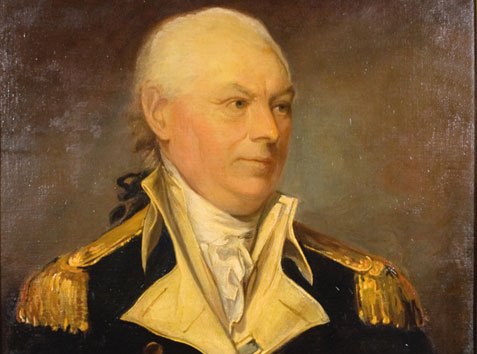
Who is Commodore Barry, and why is his name attached to Brooklyn’s oldest park, Commodore Barry Park, established in 1836 in the old neighborhood of Vinegar Hill?

John Barry was one of the Continental Army’s greatest sea captains, capturing British ships and even escorting American ally the Marquis De Lafayette back to France to drum up more financial support. He was also the very first commander in chief of the newly formed U.S. Navy.

The village of Brooklyn bought up this land in Vinegar Hill and officially called it City Park, giving the expanding young village its first real parkland. It was renamed, not surprising, due to its situation near the Brooklyn Navy Yards in 1951.

2) STATEN ISLAND 1836
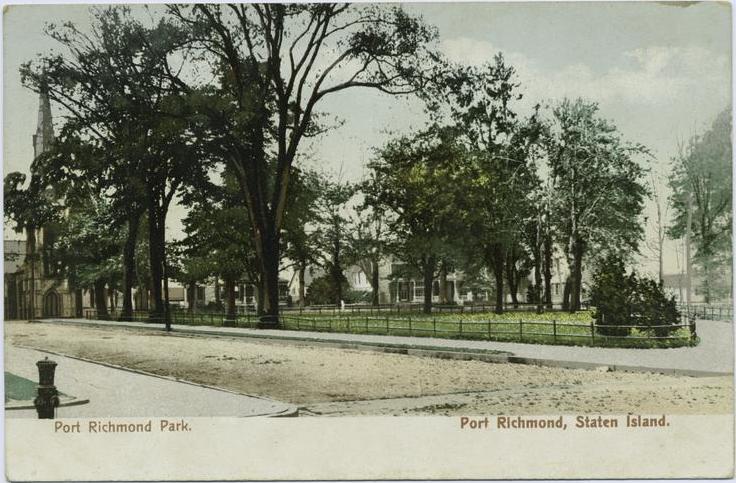
We can thank the well-organized community leaders of Port Richmond for Staten Island’s “park” (really more a common grounds), called Veterans Park today.

Port Richmond is on the Staten Island’s north shore; in fact Veterans Park isn’t too terribly far way from Liedy’s Shore Inn, the island’s oldest bar. Originally called Ryer’s Landing, the port town and ferry landing was carefully laid out by the town leaders in 1836 who built in space for a common area.

After Staten Island was incorporated into New York in 1898, the park was given the official name Port Richmond Park but was changed again 40 years later to its present moniker in honor of American war veterans.

1) MANHATTAN
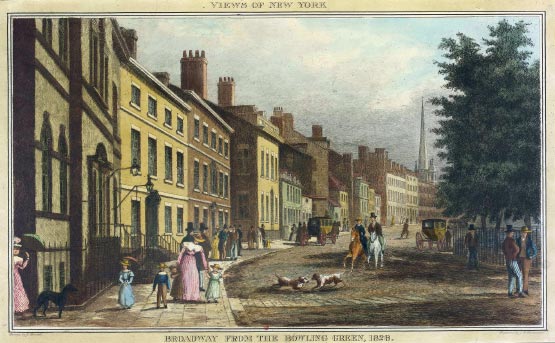
The very first park in New York is appropriately near one of the very first spots of European settlement — Bowling Green.

When exactly this incredibly busy land became a ‘park’ is somewhat unclear. Situated right in front of Fort Amsterdam, it was a cattle ground for the Dutch and a marketplace for the British. But throughout that history it was also a parade ground for the military and a common ground for gatherings and to air grievances, such as when disgruntled New Yorkers in 1776 ripped down the statue of King George that once stood here.

However, we get its name today from activities that began occurring here in 1733, when the ground here became an actual early version of bowling.

It was a magnet for wealthy New York townhouses until the grand trek northward began in earnest, leaving Bowling Green to suffer deterioration. A subway station opened underground here in 1905, but it wasn’t until the 1970s that it was restored to some sense of its original glory.

Categories
Uncategorized

The oldest home in New York: the borough finalists!

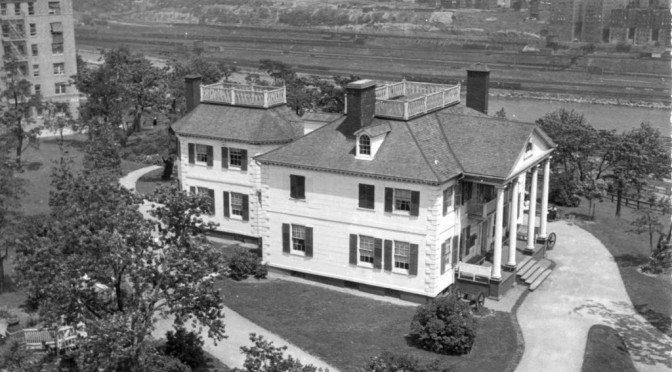
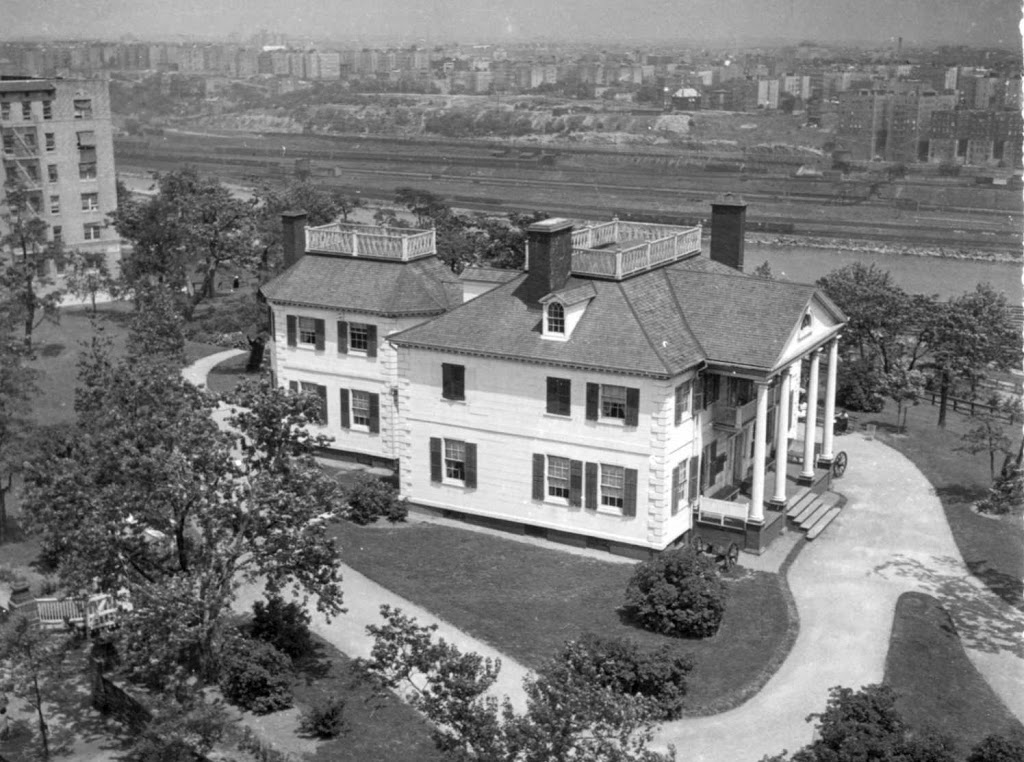
Oh this old thing? The Morris-Jumel Mansion circa 1934 (courtesy of Jumel Terrace)

Next up in our borough challenge — where in the city is the oldest New York home? Not oldest building per se, but actual place of (former) domestic living.

Why would I care to rank this? Consider our city today, with shiny new condos sitting astride tenements and rowhouses. In the ever shifting nature of the city, how on earth does an actual house even survive? Unless it’s landmarked, most buildings are under a constant fear of being wiped away by the changing metropolis. So then how did the five below survive in the many generations before landmark status?

What defines a few of these is true historical status — the location of a monumental event — but a couple are just normal domiciles, nothing of extraordinary note. The key is early preservation, historians from generations ago who recognized these structures as a piece of the past, in a time when retaining that past wasn’t as heavily revered.

5) MANHATTAN 1765
It’s not so strange that Manhattan would place last of the five boroughs. It experiences far greater colossal cycles of change than the other areas. And frankly, the idea of actual mansions or ‘houses’ in a skyscraper city seems positively askew.

But they obviously exist, and Manhattan’s oldest is the Morris-Jumel Mansion. Its builder Roger Morris was a clever architect himself and erected his sumptuous home in 1765 among the quiet hills of today’s Washington Heights. The peace did not last. As George Washington and his army fled the city, they had one final stand nearby here, in the battle known as Harlem Heights. Washington used Morris’ home as a homebase during the conflict. (The ‘dinosaur tree’ I mentioned on Monday was actually on the Morris property.)

After the war, the home was bought by Stephen Jumel and was known as the haunt of his scandalous wife Eliza. She lived in the home for years after the death of her first husband and her second, Aaron Burr. (Eliza might actually haunt the place for real. Listen to our ghost story podcast for more info.) With all these brushes with greatness, it’s no surprise the home was preserved well after most of the land was sold off in 1882. The city bought it at the start of the new century, and it’s been frozen in time ever since.

4) BRONX 1748
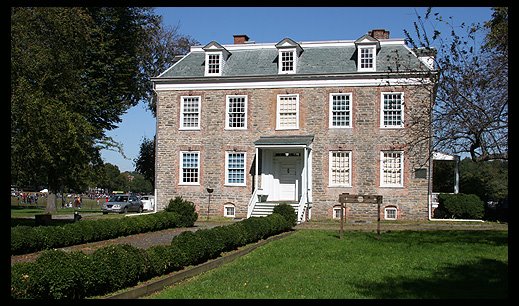
The Van Cortlandt House (above) and the park surrounding it is one of the Bronx’s greatest treasures and a beautiful thing to visit on a nice weekend afternoon. Jacobus Van Cortlandt, from one of New York’s most prominent families, was actually a British appointed mayor of the city, but decided to build his family this lovely home far from the bustle of the city. His son later finished construction and, like the Morris home, was used during the Revolutionary War, a “scene of military maneuvers and intrigue” according to the Park Service. Washington too stayed here at some point. (I’m beginning to see the meaning of that ‘Washington slept here’ cliche.)

What most likely saved the Van Cortlandt and Morris-Jumel homes is that the city had not yet grown this far north yet. When it did get here, its historical value became obvious and was turned into a museum in 1896.

3) STATEN ISLAND 1675
Our third Revolutionary War-themed destination, the Conference House of Tottenville (above) can definitely be said to have never, ever had George Washington inside of it.

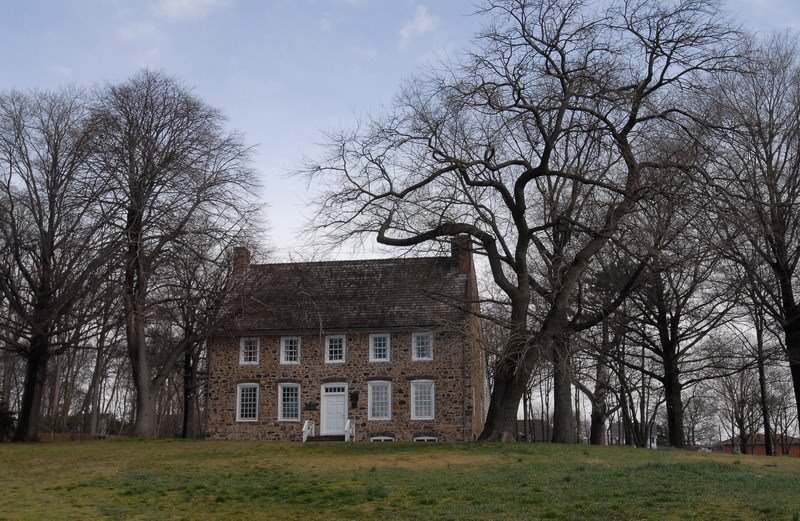
At first blush, it doesn’t look like the warmest of places. But it was indeed the home of one Christopher Billopp, a sea captain vital to the history of Staten Island, for one of his boasts assured that its fate would eternally be tied to New York’s. Any lands that could be circumnavigated by Billopp’s ship in a single day would belong in the jurisdiction of New York, not New Jersey. Billopp had a swift vessel, and Staten Island was New York’s. In fact, the house, built around 1675, is sometimes known as Bentley Manor, Bentley being the name of his ship.

The ‘conference’ in the Conference House comes in 1776, with a summit between Lord Howe, of the encroaching British Army, and representatives of the newly formed union — John Adams, Benjamin Franklin and Edward Rutledge. Their entreaties were not enough to stop the invasion of New York, but the home’s importance in the tale of the Revolutionary War was enough keep the building safe until 1926, when threats of demolition united residents to save and restore it. Today, the stone structure is the pride of Tottenville.

2) QUEENS 1661
The remaining two houses don’t have the loftiness of Revolutionary history to support them. They’re just really damn old, the benefactors of serendipity, good construction and community love.

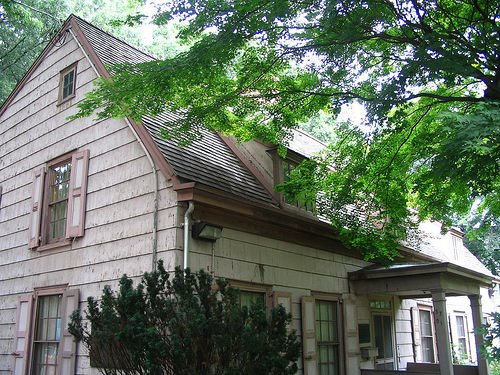
What we call today the John Bowne house, in Flushing at 1 Bowne Street at 37th Avenue, was a family home for the Bowne family from the time of its construction in 1661 until it was turned into a museum in 1947. That’s an extraordinary, quiet run, but it’s not without its own engaging story.

John Bowne came to New Netherlands and immediately butted heads with Peter Stuyvesant. The reason? Bowne was a Quaker and had just come from the Puritan city of Boston. Bowne was quickly arrested for his beliefs and sent to the Netherlands to stand trial. However, not only was he exonerated, but Stuyvesant was himself reprimanded for his lack of religious tolerance.

Bowne’s home was heavily remodeled over the years and doesn’t look terribly different from a nice old home you would find in the suburbs. It’s still definitely worth a visit sometime, although it is currently undergoing another ‘extensive renovation’.


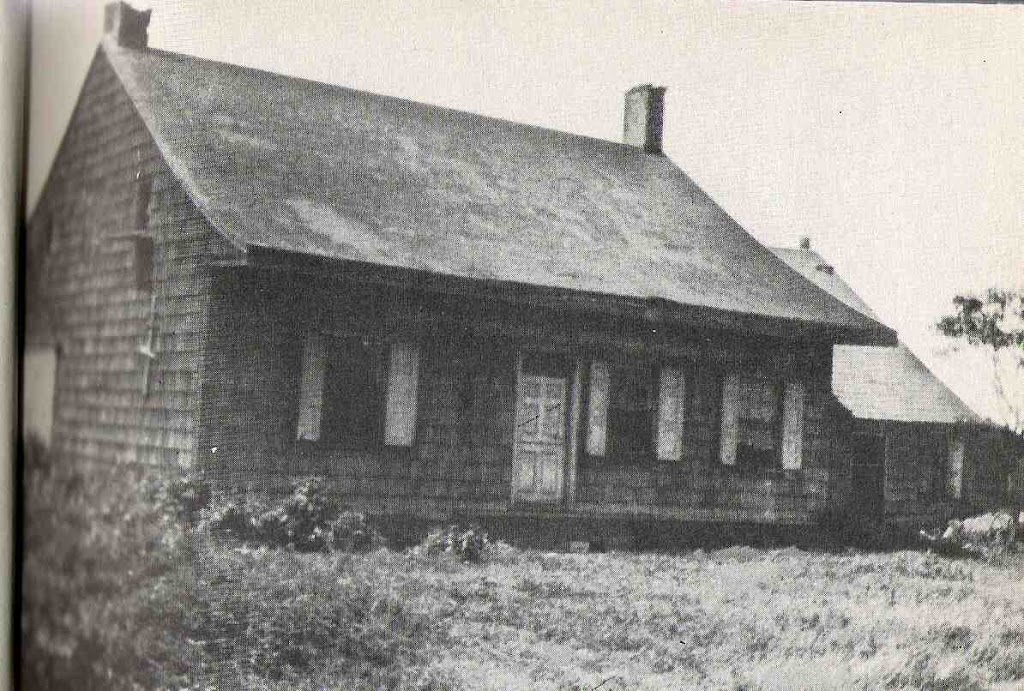
How our oldest house looked in 1899…

1) BROOKLYN 1652
The oldest house in New York belonged to Pieter Claesen Wyckoff and he built it around 1652, living there approximately 43 years after Henry Hudson had sailed into New York harbor.

Unlike many we’ve just discussed, Pieter’s origins are quite humble. In fact, when he came to the New World in 1637, he was an indentured servant. But with hard work, he was able to earn his freedom and purchase his own farmland, which he bought here in the town of Flatlands. He has a connection to Stuyvesant as well, tending to the director-general’s cattle around the same time that he built his farmhouse.

The house stayed in the Wyckoff family, even as the family’s wealth soon ensured that the Wyckoff name would soon be spread all around the future borough of Brooklyn.

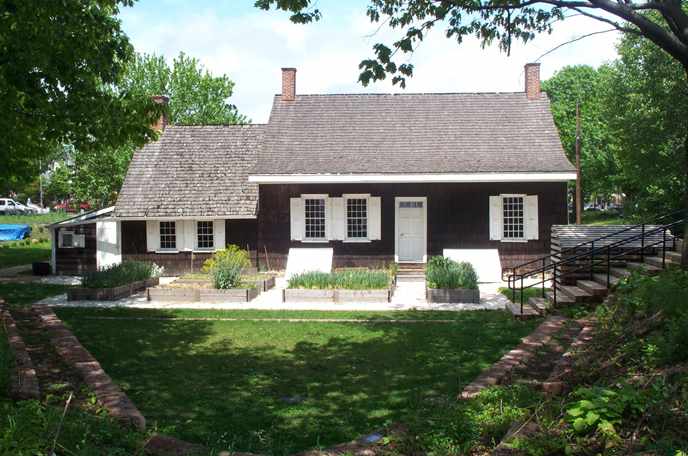
It was finally donated to the city in the 1960s and heavily redone as a museum to New York’s Dutch past. It’s quite a small but striking house, more the construction of a Dutch fairytale than an urban neighborhood. I highly recommend a brief visit. And the Wyckoff House and Association is currently looking for other Wyckoffs. So if your name is even somewhat similar, give them a call!

(By the way, there are TWO historic Wyckoff houses in Brooklyn. The other, known as the Wyckoff-Bennett Homestead, at 1669 E. 22nd Street, ain’t nothing to sneeze at either. It was built in 1766.)

…and how it looks now!

Categories
Uncategorized

New York’s oldest operating tavern: the borough finalists

Today’s faceoff determines which borough has the oldest bar in the city. These places have enjoyed longevity precisely because they weren’t on anybody’s radar. The secret to their success is being low-key, neighborhood establishments where booze and conversation come first. Although a few have some kooky decor, none are what anybody would call flashy.

Of course, once you start looking closer, you find that the definition of bar/tavern/saloon itself gets blurred in a couple of these cases.

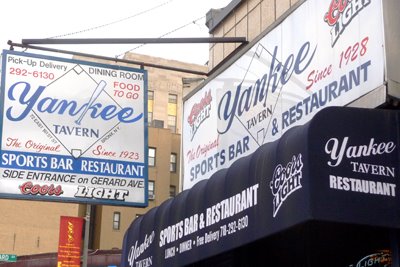
5) BRONX 1923 (not 1928 as the big sign indicates!)
Although I’ve never seen it described as such, I believe the Bronx’s oldest bar is the Yankee Tavern, located at 72 East 161st St in the shadow of the elevated subway and old Yankee Stadium. Not surprisingly, it opened the same year as the stadium (1923) to satisfy a predictably parched clientele of baseball fans. Babe Ruth himself would sometimes come in buy a round of brews.

With the new stadium, this should have been a big year for Joe Bastone, whose family has owned the tavern since its opening. Oh it was big all right: Bastone was charged last month for failing to pay over $1 million in taxes on the place.

4) STATEN ISLAND 1905
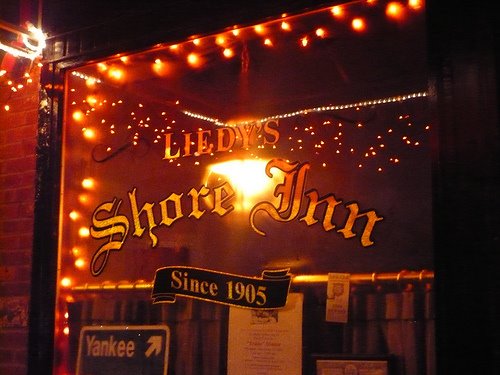
You don’t get more rustic than Staten Island’s entrant, Liedy’s Shore Inn (748 Richmond Terrace), first opened in 1905 by German immigrant Jacob Liedy. Liedy’s was popular with the sailors —affectionately called the ‘Snugs’ as Sailors Snug Harbor is close by — and kept alive during Prohibition by bootleggers who came over from Bayonne, NJ, in rowboats. Since then, the inn has stayed in the Liedy family.

A liquor license snafu almost closed the place for good a couple years ago; apparently current owner Larry Liedy kept the liquor license in his dead mother’s name.

It’s quite possible that Killmeyer’s Old Bavaria Inn (4254 Arthur Kill Rd) in Charleston, SI, is older than Liedy’s. Their site confirms that the building is older, though its unclear as to when they might have become an operating tavern. Best to grab a drink at both then!


Wintry pic above courtesy Flickr

3) BROOKLYN 1874
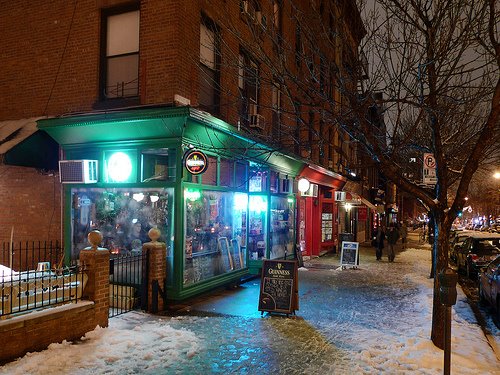
I’ll have to take it on its word. PJ Hanley’s in Carroll Gardens (449 Court St.) proclaims itself to be the oldest bar in the borough, opening in 1874. In fact, this is where a little fudging comes in. There has been a bar at this location since 1874, originally a saloon for Norwegian customers. During Prohibition it was called Ryan’s, where Al Capone purportedly brewed beer in its basement. However, the Hanley family have only owned it since 1958. They sold the bar in 2005 but it retains its name and its charm, freshly renovated and reopened a couple years ago.

2) QUEENS 1855
To be in operation over 150 years sometimes requires a certain camouflage. Such is the case with Woodhaven’s Union Course Tavern (87-48 78th Street) which basically looks somebody’s dilapidated two-story house.

I’ve seen both 1853 and 1855 associated with Union Course. This is not a trivial matter; the claim of ‘New York’s oldest bar’ is at stake. It seems though that the Queens tavern might be fine with Manhattan taking the title. (A plaque outside indicates 1855 as the official date.) It’s still a locals bar, far from the hooves of tourists.

It started as the Blue Pump Room, then became Niers Social Hall in 1891. Mae West, who lived in Woodhaven, sometimes performed here; her picture graces the walls of pressed tin today. It’s name today comes from a former racetrack that was once the pride of Woodhaven in the 19th century. The racetrack closed in 1888, so the bar must have taken its name affectionately.

1) MANHATTAN 1854
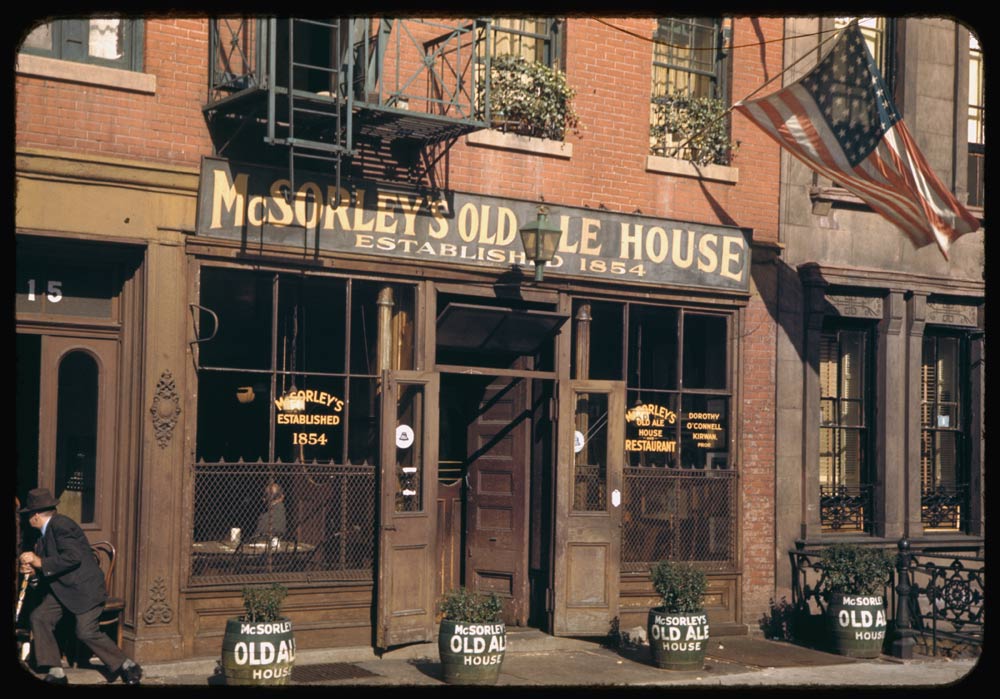
Everybody knows the oldest continually operating bar in Manhattan is McSorley’s Old Ale House (15 East 7th Street), right? The still-popular old hole in the wall has been serving up its signature brew since 1854, for the likes of Abraham Lincoln, Boss Tweed and John Lennon.

But if you tweak the definition of what ‘continually operating’ and ‘bar’ is, you might come up with two other candidates. The building that contains the Bridge Cafe (279 Water St.), near the South Street Seaport, has reportedly been the location of liquor sales since 1794, both as ‘wine and porter bottler’ and as a boozy ‘grocer’.

And then, what to make of Fraunces Tavern (54 Pearl St), one of the city’s Revolutionary War era treasures and location of George Washington’s farewell speech to the Continental Army? The original building, built in 1719, was opened for business as a tavern as early as 1762. However the tavern has been entirely rebuilt on at least a few occasions. Also, Fraunce’s has been so much more than just a tavern.

Again, it’s all in how you word it. And after a few drinks, does it really matter?