Wonderland: Walt Disney’s seven Big Apple moments

Yesterday’s news about a new Times Square flagship store for Disney had me wondering what influence if any New York had on the career of Walt Disney, arguably one of the most successful men in history to make his name on the West Coast. Come to find out, the world might never have had Mickey Mouse and the rest without one New Yorker in particular.

Here’s seven of the most significant New York moments for Walt Disney and the Disney empire:

1) Disney Discovered
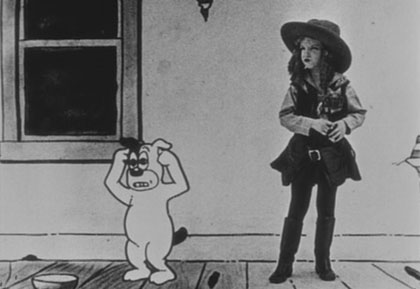
Small-time Kansas City animator Walt Disney spent much of 1923 writing New York film distributor Margaret Winkler, hoping she’d take a look at a new film he was creating, Alice’s Wonderland — a coy, self-reflexive mix of animation and live-action. He was lucky; Winkler was looking to put pressure on her biggest star Pat Sullivan (creator of Felix The Cat), and Disney’s strange little picture did the trick. She signed him and brother Roy, but retained editing control on the early ‘Alice Comedies’, inserting a Felix the Cat-like character named Julius, the first of hundreds of human-like animals in Disney films.

Winkler, by the way, was the first female film distributor in the United States and briefly one of the most powerful women in silent film — at a time when the film industry was centered on the east coast.

Below:one of the Alice Comedies
2) Steamboat Willie
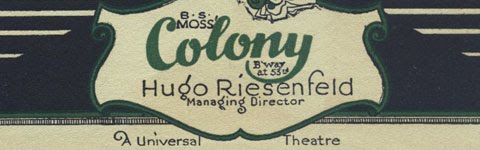
Disney would return to New York with his revolutionary ‘Steamboat Willie’, the first sound appearance of Mickey Mouse. On November 18, 1928, it quietly made its world premiere at the Colony Theatre (Broadway and 53rd Street, still around today as the Broadway Theatre). Sitting in the audience for everyone of its two-week performances was Walt himself.

Steamboat Willie was the opener on a bill of entertainment that also featured the film Gang War, starring Mary Pickford’s brother Jack, an alcoholic mess who once dated Olive Thomas who allegedly haunts the New Amsterdam Theatre. ‘Gang War’ would be his final movie role.

3) Snow White and The Seven Dwarfs
Almost ten years later, Disney’s first feature-length animated spectacle would have a far more grandiose reception — a five-week run at Radio City Music Hall starting in January 1938. The New York Times exclaimed, “They’re gay and friendly and pleasant, all of them, and so is the picture. Thank you very much, Mr. Disney, and come again soon.” As legend goes, the upholstery of several Radio City Music Hall chairs had to be replaced, as children wet their pants as the first sight of the Wicked Witch.

Strangely, the film was later paired with an ice-themed short, Ski Flight, because during winter there’s nothing people like to do more than sit and watch ski movies.
4) Fantasia
Disney’s trippy concept film closed the loop; as one of Disney’s first self-distributed films, it premiered November 13, 1940 at the same theatre that had once shown Steamboat Willie, only this time it was called the Broadway Theatre. (Today it’s a mainstream musical stage featuring Shrek the Musical).)

There was more drama behind the screen than in front. One scene (“Ave Maria”) had to be redeveloped, flown to New York and was literally spliced in with four hours to go before showtime.

5) The Worlds Fair 1964-65
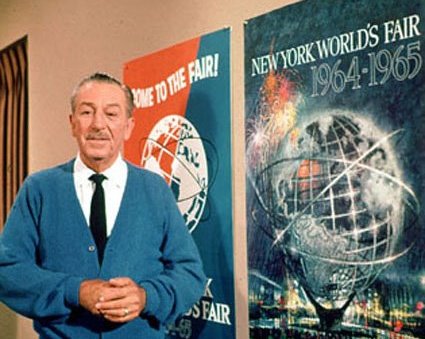
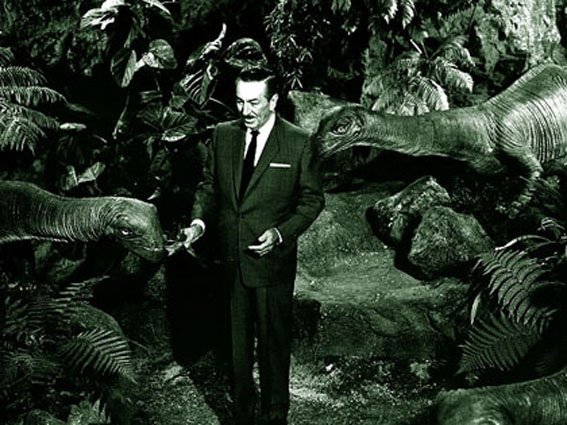
The Worlds Fair of 1939 had clearly had its influences on Disney’s future theme parks. So it was only natural to bring him in as a consultant for Robert Moses’ crowning concrete spectacle of 1964. Disney Studios brought animatronic dinosaurs to life in the “Magic Skyway” for the Ford Motor Company pavilion (see picture below), a talking Abraham Lincoln, and of course ‘It’s A Small World’. Many more pictures of Walt behind the scenes at Disney and More.
6) Disney rewrites Broadway
Less than thirty years after Walt’s death, the company enters — and promptly conquers — a new frontier: Broadway. Beauty And The Beast became its first permanent Broadway production when it opened in April 18, 1994. The swirling gala of dancing utensils and candelabras won the Tony for Best Musical, fueling a run that would make it the sixth longest running show in Broadway history and opening the flood gates of Disney-themed shows.

By the time ‘Beauty and the Beast’ closed in 2007, Disney had changed the rules of the Broadway musical and the actual physical makeup of 42nd Street itself, leading to the sanitation (i.e. ‘Disney-fication’) of the once-seedy boulevard

7) And hits Fifth Avenue, too
The invasion wasn’t just on popular entertainment, but on the heart of New York retail. The first Disney store opened on Fifth Avenue on May 22, 1996. Ushered in by mayor Rudy Giuliani and Disney CEO Michael D. Eisner, thousands of shoppers flocked to the retailer, at the time setting the record for single-day sales at a Disney store. That’s an awful lot of mouse-eared Statue of Libertys.

The company just announced that this ‘World of Disney’ location, at 55th Street, would be permanently closing next year, to make way for Disney’s Time Square plans.

I should end by adding that when Disney moved in during the 1990s, it had kicked out a New York City institution — the famous French restaurant La Côte Basque, a “high-society temple” and favorite of Jacqueline Kennedy Onassis. The eatery moved around the corner but only lasted a few more years.
Categories
Podcasts

Haunted Tales of New York: Urban Phantoms

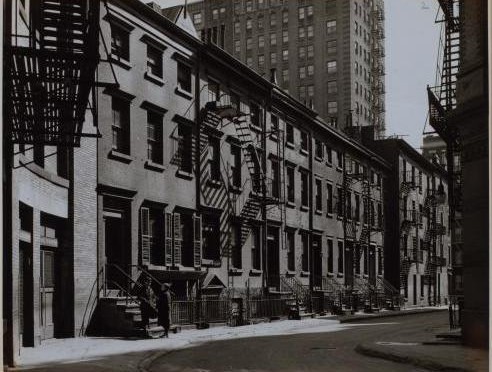
Historic Gay Street, 1940: a tiny little lane literally crammed with ghosts

It’s time for our third annual ‘ghost stories’ episode, our mix of historical facts and spooky legends from the annals of New York’s past.

For this round of scary tales, we visit a famous 19th century townhouse haunted by a lonely spinster, a West Village speakeasy with some guests who still haven’t gone home, and the site of a former restaurant that might be possessed with the spirit of a famous folk singer.

ALSO: we go back all the way to New Amsterdam for an old legend involving Peter Stuyvesant, a turbulent river, and the Devil himself!

PODCAST Download this show it for FREE on iTunes or other podcasting services. Click this link to download it directly from our satellite site. Or click below to listen here:

The Bowery Boys: Haunted Tales of New York

___________________________________
As always, click on pictures for a bigger view

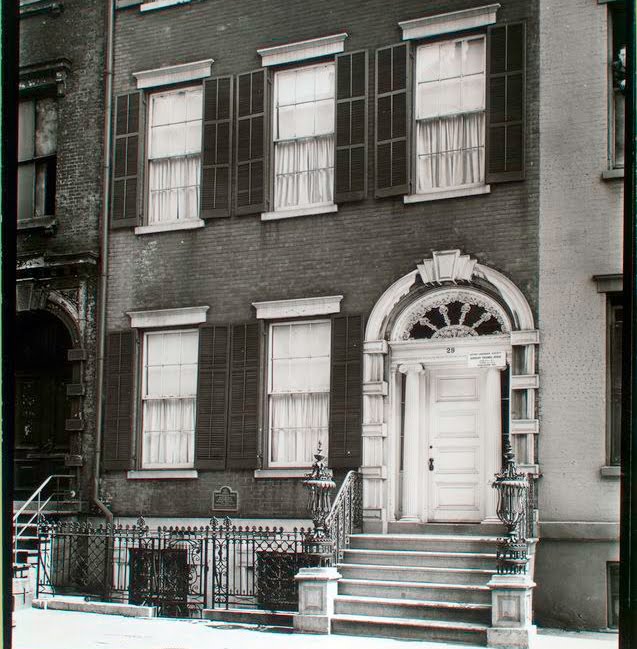
POSSESSIONS: The former home of Seabury Tredwell at 29 E. 4th Street, now billed as the Merchant’s House, is one of New York’s most famous haunted houses, alledgedly still home to his daughter Gertrude. The house is a rare ‘trapped in amber’ experience, with family possessions that have never left the house since the family moved there in 1835.

Photo from 1936 by Berniece Abbott, but really, the house looks exactly the same:

Click here for more information on the Merchant’s House Museum’s October Halloween plans, which include funereal decoration, a coffin procession to nearby New New York City Marble Cemetery, and candlelight tours: Merchant’s House
___________________________________

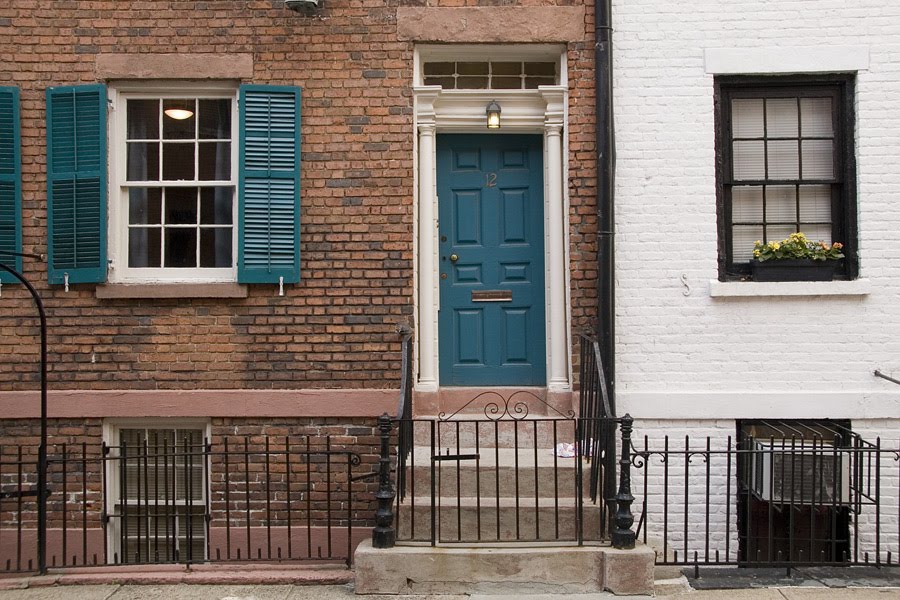
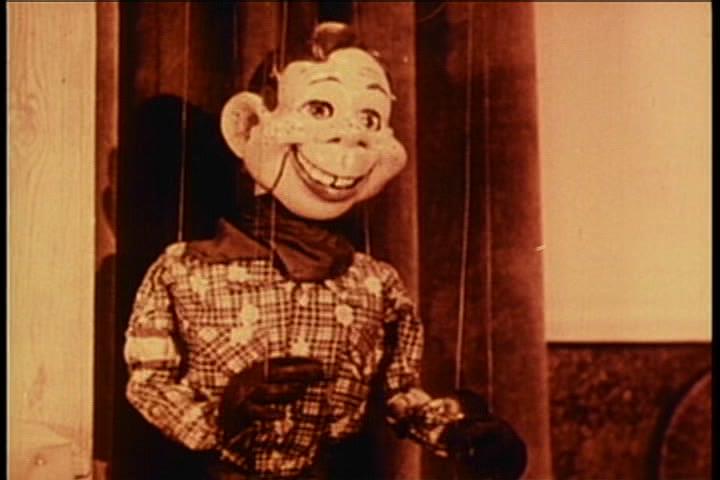
THE PARTY NEVER ENDS: 12 Gay Street, once a horse stable, housed Mayor Jimmy Walker’s mistress Betty Compton and the creator of Howdy Doody. However, it was a former speakeasy in the basement that’s given the building a rather ghostly entourage of spooks and apparitions, including the cloak-wearing Gay Street Phantom. Do deceased flappers and dead drunks still haunt this quiet little street?

HORROR: This famous puppet was born in the location of a former speakeasy. Might it too have been possessed with its former revelers?

___________________________________

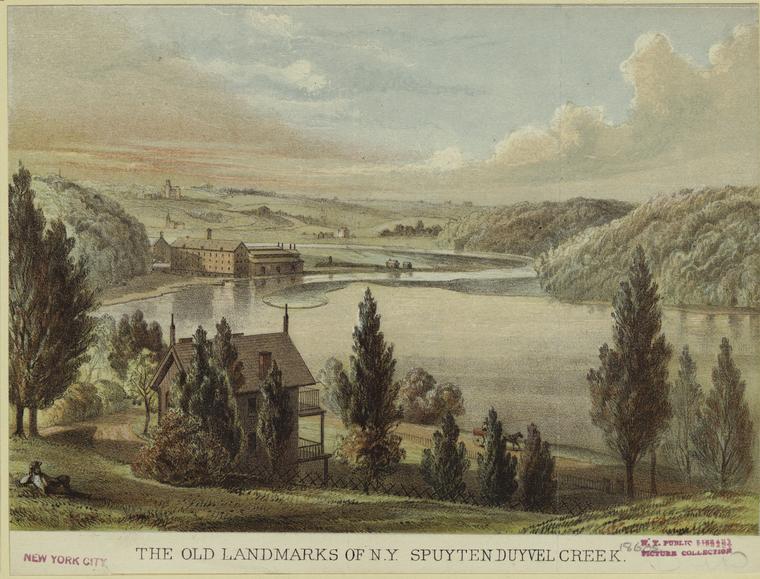
WHAT LIES BENEATH: The rushing waters of Spuyten Duyvil Creek, linking the Harlem River to the Hudson River, have spawned many legends since the Dutch arrived. Does its unusual name hide a secret of something that lives underneath the turbulent waters? (Illustration courtesy NYPL)

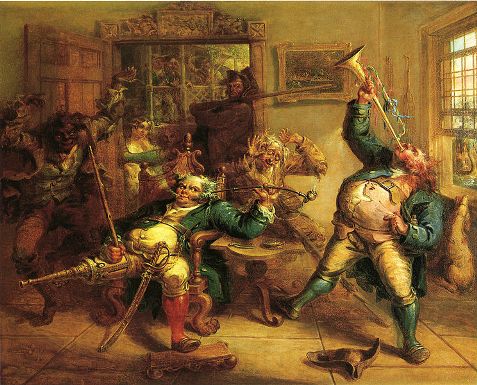
DOOMED: Anthony Van Corlaer, trumpeter and sentry assigned by Peter Stuvesant to warn rural Dutch settlers of impending attack, met a watery end at the hand of the Devil himself, according to legend. Below: from the painting Antony Van Corlear Brought Into the Presence of Peter Stuyvesant
___________________________________

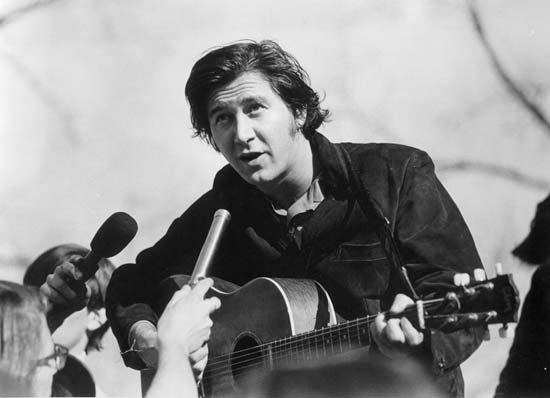
IN LIMBO: The tortured folk singer Phil Ochs killed himself in Far Rockaway, but is his spirit still haunting a former restaurant in SoHo?

The Americans: NYC’s first professional hockey stars

The New York Rangers , the city’s ice hockey hope since 1926, began their season on Friday, losing one that night and recovering on Saturday versus Ottowa Senators.

Okay, so I’m not going to pretend that I’ve ever been a hockey fan before this year. However, geek alert, I have this uncanny ability to trick myself into liking something by studying and absorbing its history. To see that bloody ice, those flying sticks, that vulgar degree of unsportsman-like agitation! When Sean Avery, who will debut this week after an injury, punches somebody in the face, it’s part of a proud tradition that harkens back generations.

While the Rangers often play fourth-fiddle in the pantheon of high-profile New York sports teams, they’ve been part of the city for decades, playing their first game on November 16, 1926, against the Montreal Maroons. They beat the Maroons — and almost everybody else, winning the American Division title (though losing the Stanley Cup) their very first year.

Believe it or not, however, the Rangers were not even New York’s first hockey team. Enter the far less successful but not forgotten New York Americans, one of the few U.S. sports teams to be owned by a Prohibition bootlegger.

Ice hockey was invented in Canada, flourishing and expanding there, but before the 20th century began spilling over the border to the United States and into New York, with amateur leagues in Manhattan and Brooklyn, and even a Columbia University team. Hockey’s first home in New York was St. Nicholas Rink, a sports venue at 69 West 66th Street (at Columbus Avenue) which opened in 1896 as an exclusive site for ice sports until a more popular sport — boxing — forced it out in 1920.

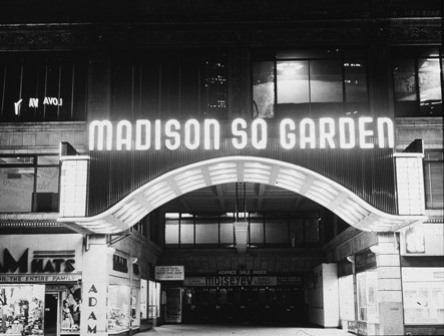
Which was fine for ice hockey enthusiasts, because the sport was moving on to a brand new venue — Madison Square Garden. In this case, we’re not talking about the Stanford White classic which actually sat in Madison Square or the current MSG at 34th street above Penn Station. No, from the years 1925-1968, another building held the name, located at 50th Street and 8th Avenue. Today, Worldwide Plaza stands in its place.

This MSG, owned by the flamboyant promoter Tex Rickard, would famously stake its reputation on boxing and circuses. But in its first year, Rickard agreed to open the floor to brand new ice hockey team.

The Canadian National Hockey League was a granting franchise licenses to various American cities. The franchise promoter Thomas Duggan saved one for himself and set his sights for a New York team. His only setback was money. This being 1925, smack in the heart of Prohibition, it’s no surprise he turned to famous bootlegger and mobster Bill Dwyer for assistance. Yes, New York’s first ice hockey team was funded by one of the city’s most notorious gangsters.

By 1925, Dwyer had even spent some time in jail for bribing the Coast Guard. He looked at funding sports teams as a vie for ‘legitimate’ business, although it was his amassed wealth by illicit gains that was actually used to sculpt the new team. When members of an Ontario team the Hamilton Tigers revolted against their management, Duggan simply bought out all the players, moved them to New York and — certainly thumbing their noses at their old Canadian owners — called them the New York Americans.

The Americans, garbed in patriotic colors, played their first game on December 15th, 1925, against the Montreal Canadiens. At least in 1925, Americans were no match in the game of hockey against Canadians, and they lost 3-1. And would continue to lose, from 1925 to 1941, once or twice making division playoffs but mostly placing last.

But New Yorkers, at least that first year, were intrigued. Attendance was so strong that Rickard, jealous of Duggan and Dwyer’s success, wanted his own team, one in which he didn’t have to split the profits. And so, the very next year, on the very same ice as the Americans, the New York Rangers made their debut. They were an even bigger hit because they actually won games, partially due to being placed in a division with fewer seasoned Canadian teams.

By 1941, the Americans were overshadowed, utter defeated and out of steam. A brief ploy to rebrand the team as the Brooklyn Americans — they never actually played any matches in Brooklyn — only delayed the inevitable, and the team’s franchise was bitterly not renewed.

Most Rangers fans are probably not too familiar with the Americans’ record, but they are familiar with Rangers ‘curse’ placed upon them by then-Americans coach Red Dutton, who supposedly declared that their rivals would never win another Stanley Cup while Red was still alive. It worked. The Rangers would not take home the cup until 1994, seven years after Red’s death. Talk about holding a grudge!

Yosemite’s loss: Olmstead between the parks

Hopefully some of you are watching the Ken Burns multi-hour epic documentary The National Parks: America’s Great Idea, a fascinating but rather languid celebration of American preservation of its greatest natural treasures.

I’m assuming that by Wednesday, Burns should get here to New York with discussion of two national monuments (the Statue of Liberty and Castle Clinton) protected through Theodore Roosevelt’s Antiquities Act. And later with the 1966 establishment of the National Register of Historic Places, as well as the 1972 formation of the Gateway National Recreational Area, scattered through Queens, Staten Island and New Jersey.

I was pleasantly pleased to hear the name Frederick Law Olmsted dropped during the first episode. Olmsted was a commissioner for the State of California in 1865, assigned to formulate a plan for Yosemite Valley, America’s first natural area granted money by the United States government.

From our perspective, Olmsted was between his two great New York masterpieces. The creation of Central Park had begun in 1857, but by 1960, Olmsted’s rocky relationship with the city and Tammany Hall got him replaced as superintendent. He fled to Civil War battlefields as secretary of the U.S. Sanitation Commission (prototype of the Red Cross) and eventually made his way to California as the operator of an unsuccessful mining company.

His attempts in Yosemite were not well received. His report to the state of California in 1865 is seen today as a far-sighted explication of the responsibility of government to preserve their natural gifts for the health and well-being of its citizenry. (You can read the entire proposal here.)

California just shrugged. It was their loss, frankly. Faced with this rejection and the failure of his mining practice, Olmsted came back to New York to work once again with his partner Calvert Vaux. A year after Olmsted’s Yosemite rejection, work was underway on their second masterpiece — Prospect Park.

Rewind: The Evolution of Central Park

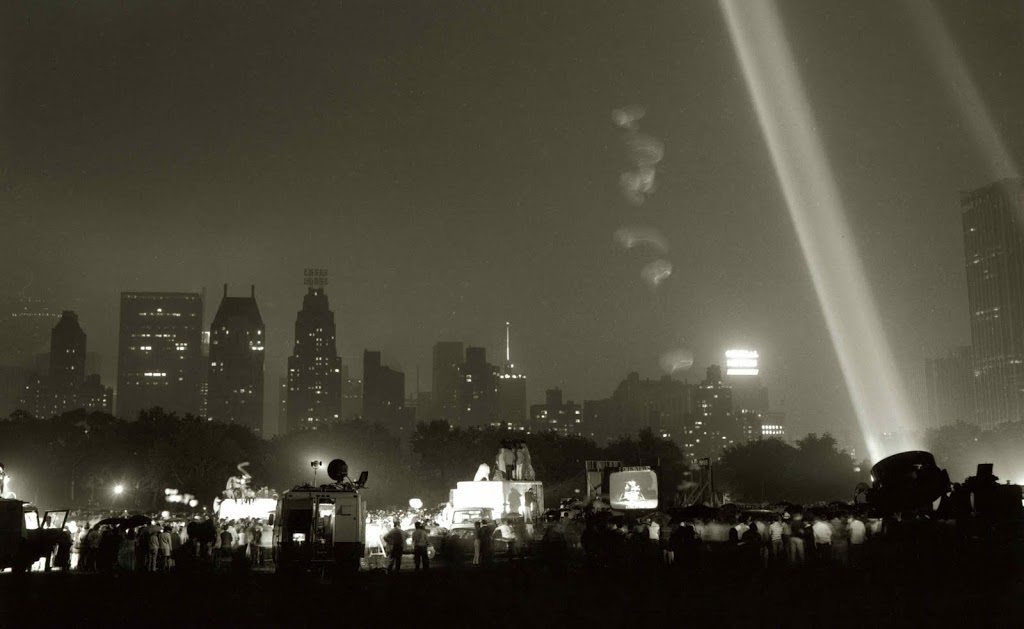
ABOVE: 1969 — Central Park’s Sheep Meadow was transformed into ‘Moon Meadow’, a celebration for people watching the Apollo 11 moon landing.

We don’t have any regular podcast this week; however I am reposting the second part our Central Park show called ‘The Evolution of Central Park, re-launching it in our secondary feed NYC History: Bowery Boys Archive. Images of some of the things we talk about now pop up on your media player while you listen. So if you’ve heard this one already, you might want to give it another go.

When last we left the Central Park, it was the embodiment of Olmstead and Vaux’s naturalistic Greensward Plan. Then the skyscrapers came. Also, how did all those playgrounds, a swanky nightclub, a theater troupe and all those hippies get here?

PODCAST Download this show it for FREE on iTunes or other podcasting services. Click this link to download it directly from our satellite site. You can also still download the old, non-imaged version here.

Lucky Star: Danceteria and the debut of Madonna


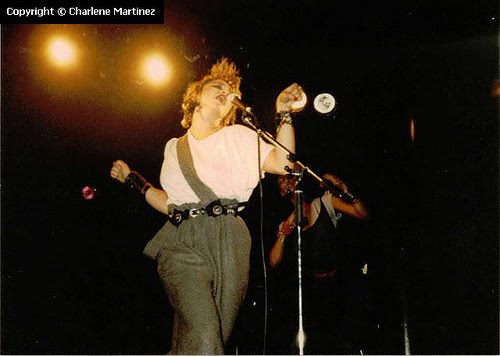
And you can dance: Madge performs Borderline at Danceteria Photograph by Charlene Martinez

FRIDAY NIGHT FEVER To get you in the mood for the weekend, every other Friday we’ll be featuring an old New York nightlife haunt, from the dance halls of 19th Century Bowery, to the massive warehouse clubs of the mid-1990s. Past entries can be found here.

Scrappy nineteen-year-old Michigan teen Madonna Louise Ciccone arrived in New York the same year as Studio 54 — 1977.

“It was the first time I’d ever taken a plane, the first time I’d ever gotten a taxi cab. I came here with $35 in my pocket. It was the bravest thing I’d ever done,” she says (in a UK Mirror interview) with her usual reserve.

She dabbled in contemporary dance with Alvin Ailey, becames employed in a potentially lucrative career at Dunkin Donuts, filmed a provocative movie, and soon began dabbling in the nightclub circuit with the rock groups Breakfast Club and Emmy. She began making dance records of her own with help from her boyfriend Stephen Bray and by spring 1982 had herself a recording contract with Sire Records.

On her way to superstardom, she performed all over town during the early 1980s — the Roxy, the Pyramid, the Mudd Club — but perhaps no club in the city was more influential to her career than Danceteria. Although this staple of 80s New York nightlife moved all over town during its tenure, its most recognized location is the one which saw the birth of Madonna’s career — a four-story building at 30 West 21st Street (now a swank condo!).

“I met her at Danceteria when she was sitting on [a friend’s] lap. She was really, really foxy. She was really glamorous,” says Thurston Moore of Sonic Youth.

She was also apparently such a fixture of the club that the resident DJ, Mark Kamins, even dated the singer. (That’s getting your foot in the door.) Says Kamins: “Madonna was a regular at Danceteria. She had great style and had to be the center of attraction. She always hung out in the booth, one day she gave me a demo to play.” That demo, for the song ‘Everybody’, eventually got her signed to a major label.

Below: Madonna debuts her future hit ‘Everybody’ on the stage at Danceteria

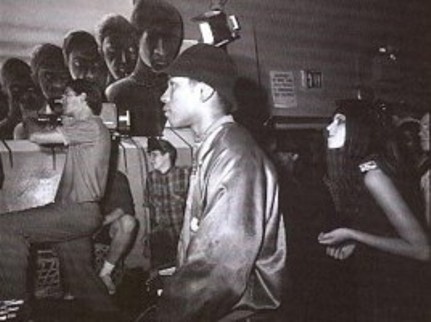
But Madonna was certainly not the only future music star to use the club to her advantage. Many started as routine employees. LL Cool J was the elevator operator, and members of the Beastie Boys were busboys. (Both LL and the Beasties are pictured below at the club, photo by Dorothy Low) Keith Haring worked at coat check, while both Karen Finley and Sade was briefly employed behind the bar.

Everybody — everybody hip— eventually showed up on the dance floor of Danceteria. The after-hours club originally opened in 1980 at West 39th Street, a project of club impressario Rudolf Pieper and promoter Jim Fouratt. “We put it together for $25,000. We rented everything,” Pieper said in a New York Magazine interview.

The club, dramatically put, was “a dreamworld of mysterious souls, sidelong glances, and the perfume of ruin.” (No, I didn’t write that, they did.) Its admission policy was reputedly tight and exclusionary, but not so elitist that a trendy and fashionable nobody couldn’t pass muster; only the most fabulous got to experience this stark, winding little club.

However problems with the law — the neighborhood, after all, the Tenderloin — forced the club to move. Several times it seems. In 1982, it eventually landed at the 21st Street location, adding John Argento as promoter. Believe it or not, Argento would later spin off Danceteria to another location — the Hamptons.

You never knew what you were getting on any random night. Russell Simmons hosted talent showcaseson some Wednesdays, while other days might feature more eclectic nights with Philip Glass or Diamandas Galas. Ann Magnuson might be hosting a barbeque, or you might stumble into a ‘rubber and leather’ party.

With new wave music as its soundtrack, Danceteria seemed to dip its toes in both the East Village art scene and the Studio 54-style celebrity, employing video installations (Kamins claims they were the first to employ videos) and go-go dancers to entertain the throngs of fashionistas, artists and wanna-bes.

Like so many buzzkills, Danceteria lost its lease at 21st Street and eventually closed in 1986. It appears that another Danceteria briefly opened in the 1990s, at 29 East 29th St. (between Madison and Park).

But while we have no more Danceterias — we hardly have any dancing at all — the club provided the world (and its most famous material ingenue) with a glamorous film moment: this scene from ‘Desperate Seeking Susan’

NOTE: I know I just touched on some of Danceteria’s greatest moments and its most fascinating characters. (I didn’t even mention Johnny Dynell, Anita Sarko, and Michael Alig!) Please add your memories below and if you have corrections to any information, I’d be grateful. With the type of press that Danceteria received in the early 80s, its difficult to seperate truth from the hyperbole!

You can start your Danceteria education at Danceteria.com or flipping through this wonderful selection of flyers.

New York Election Day traditions no longer celebrated

Today is primary election day in New York! Locals, have you voted yet? Current mayor Michael Bloomberg is not on the ballot yet — he’ll be on the November ballot — but primary races for City Comptroller, Public Advocate, some city council seats, and the Democratic candidate for mayor are included on today’s ballot

In the past, New Yorkers have celebrated election days with some behaviors and traditions that are no longer with us:

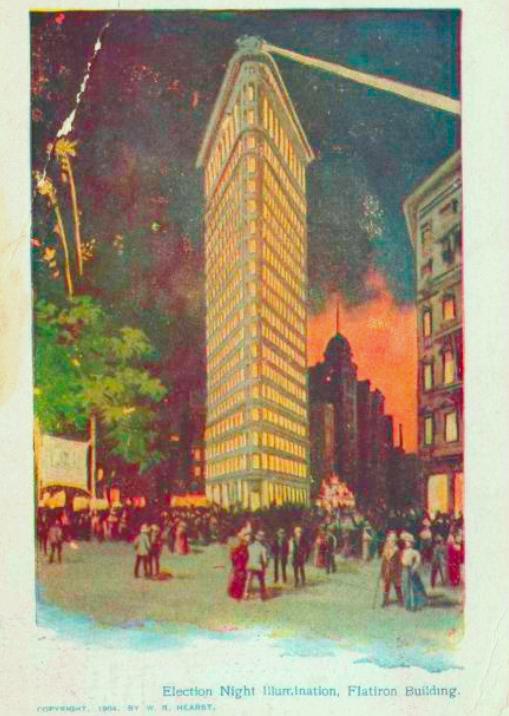
1) Lights and drama at the Flatiron Building
I’m unsure of the date of this postcard, however it’s from a time when the Flatiron was one of the city’s tallest buildings. Today we have the Empire State Building to help us celebrate in lights — but the apparent tradition of a swirling spotlight has alas not been replicated.

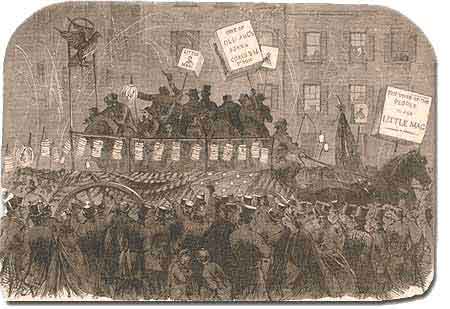
2) Torchlight Parades
This image, of one such procession, gathered supporters of George McClellen who tried to wrest the presidency from Abraham Lincoln in 1864. I’ll bet the swillholes of the Bowery were hoppin’ that night.

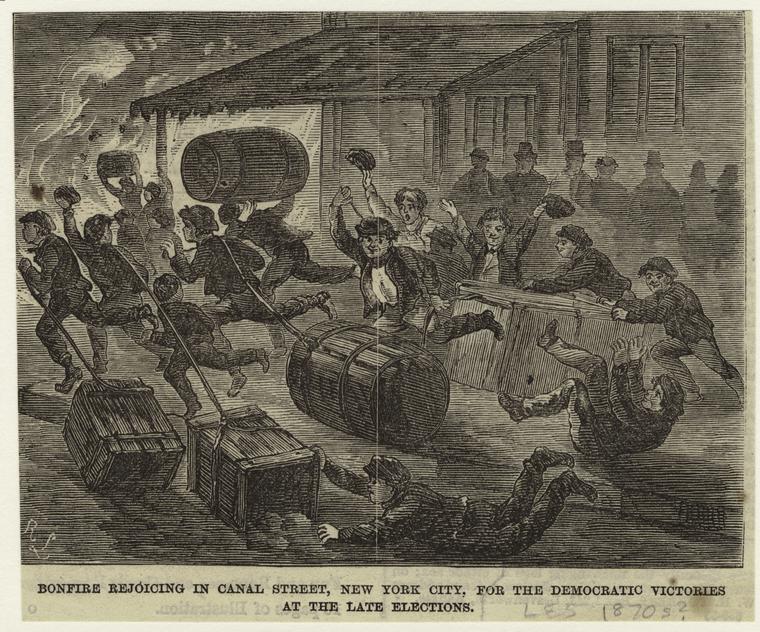
3) Bonfire celebrations on Canal Street
In this illustration from Frank Leslie’s magazine, election victory in the 1870s often spawned open fires in the street. Today, candidates are more likely to have a few drinks at the W Hotel than light open blazes on a busy thoroughfare. (Pic courtesy NYPL)

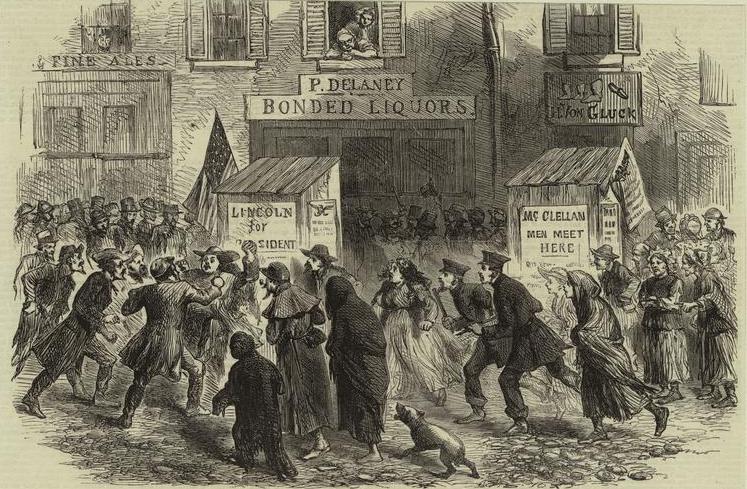
4) Wholesale violence
Repeat voting, destruction to polling places and destruction of unfavorable ballots were common practices during more contested elections of the 19th century. The Bowery Boys and other gangs were recruited to create disruption for political parties and create a hostile environment for potential voters. The image below, from the Illustrated London news, lays out the scene during the Lincoln/McClellan faceoff in 1864.

Today, the most hostility you might face are from children fighting past voters to get to their classrooms. (Pic courtesy NYPL)

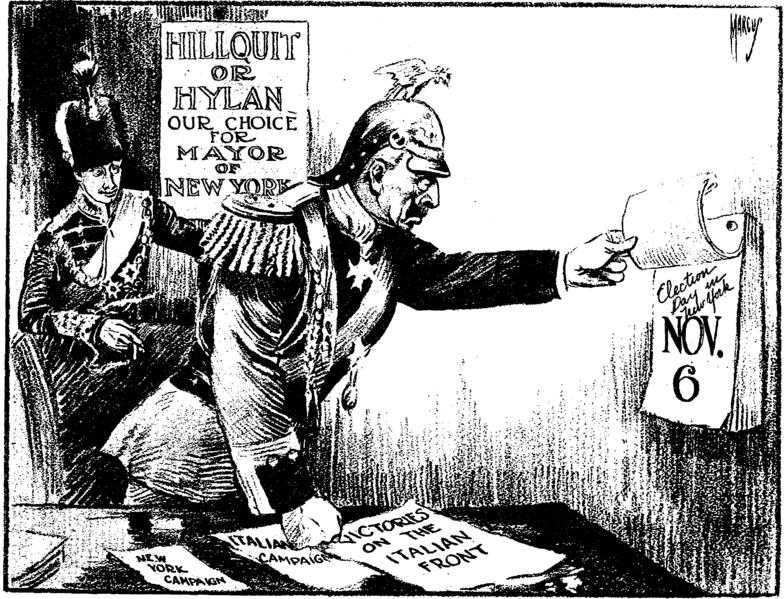
5) Aligning mayoral candidates with World War I emperors
This cartoon from the New York Times implies that Kaiser Wilhelm II seemingly supports Democrat John F. Hylan and the Socialist candidate Morris Hillquist. Shudder if that were the case; Hylan ended up winning that election and held the job of mayor for eight years.
Of course, over-dramatic political cartoons and tying leaders to totalitarian regimes is still rather run of the mill in today’s politics. (Pic courtesy Wikimedia)

Categories
Podcasts

Movin’ on up: from King’s College to Columbia University

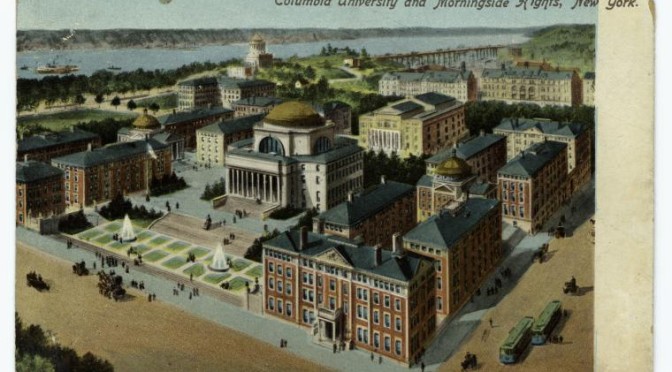
We’re going back to school with one of New York’s oldest continually operating institutions — Columbia University. Or should we say, King’s College, the pre-Revolution New York school that spawned religious controversy and a few Founding Fathers to boot.

Listen in as we chart its locations throughout the city — from the vicinity of Trinity Church to midtown Manhattan. And finally to its permanent home on the ‘Academic Acropolis’ in Morningside Heights.

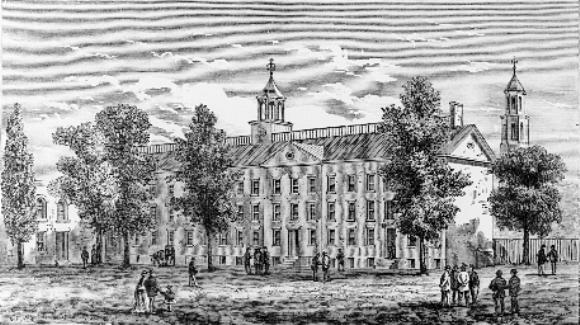
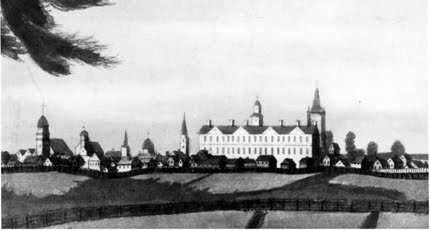
Freshman Years: The King’s College campus in 1770, along Park Place overlooking the Hudson River. Things would not be peaceful for long on this quiet campus; several students, including young Alexander Hamilton, would join the fight for independence from England. The school would close in 1776 and become a military hospital.

___________________________________

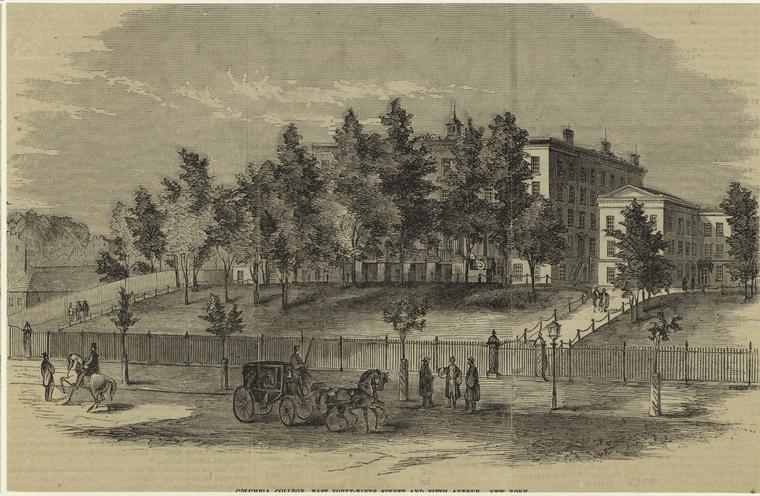
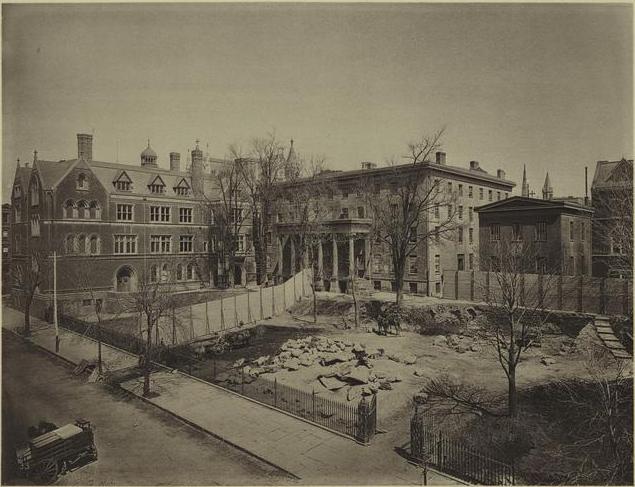
Believe it or not, this is the corner of 49th Street and Madison Avenue, site of Columbia’s campus during most of the second half of the 19th Century. It moved into a space formerly inhabited by the Institute of the Deaf and Dumb. Curiously, when it would move uptown in 1897, it would take over property held by the Bloomingdale Insane Asylum.

The same campus, in a photograph from 1882. The encroaching growth of the city northward seems to have taken a toll on the campus grounds. Columbia would move from midtown fifteen years later.

___________________________________

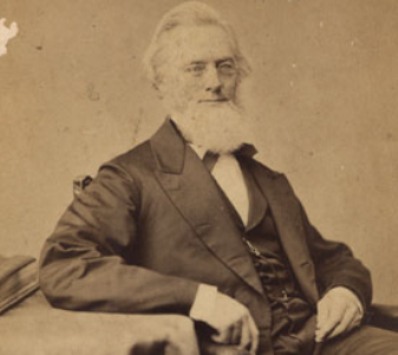
Frederick Augustus Porter Barnard, president of Columbia (back when it was Columbia College) from 1864-1889. In addition to bringing some prestige to the institution, his forward-thinkinig philosophies regarding education for both men and women eventually led to the formation of Barnard College.

___________________________________

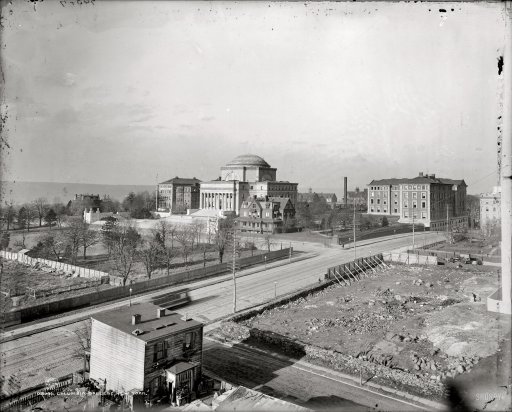
Good Morning: The new campus slowly rises from Morningside Heights with the already completed Low Memorial Library in the background. When this photo was taken in 1897, there was little real development in the area, and it was barely even serviced by public transportation. McKim, Mead and White would turn the area into a veritable classical city.

___________________________________

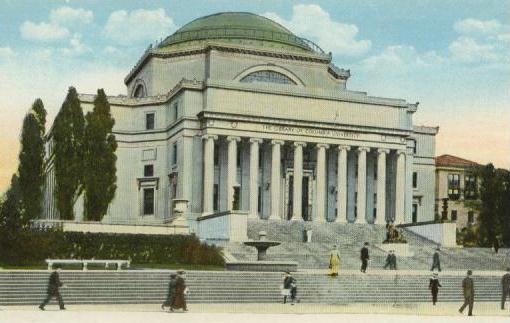
The Low Down: The Low Memorial Library was constructed under the tenure of Columbia president Seth Low. However the building is named not for Seth, but his father Abiel Abbot Low, a successful Brooklyn silk merchant. The library is probably one of McKim, Mead and White’s most beautiful existant works in the city. It’s not, however, a library any more.

Nicholas Murray Butler, arguably the most influential (and controversial) president in Columbia’s history, presided from 1901 to 1945, overseeing vast growth and prestige for the school.

Pictures courtesy Library of Congress, New York Public Library, Wikimedia and Columbia University

Labor Day vs May Day: or why New Yorkers love a parade

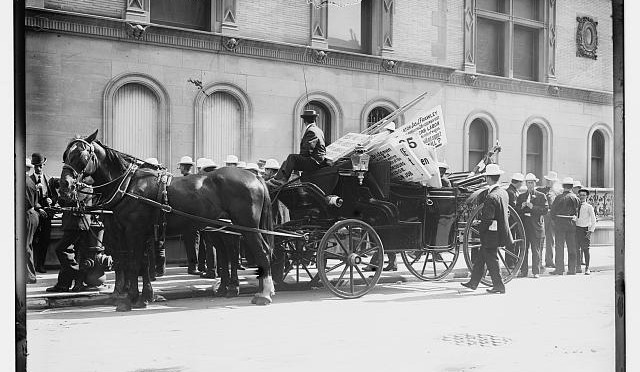
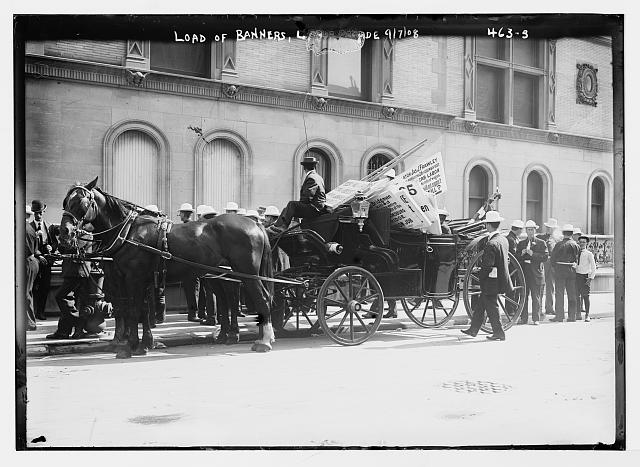
A banner celebration: loading up with signs for the 1908 Labor Day Parade in New York

Labor Day is one of the few national holidays that New York City can lay claim to as their own. The roots of the U.S. holiday began here, with Union Square as its centerpiece, in 1882.

But in fact, New Yorkers borrowed the idea of Labor Day from Canada. Young Peter McGuire, educated at Cooper Union where he met labor activists like Samuel Gompers, was already making a name for himself as an advocate for workers rights as early at 1873, leading sit-ins at City Hall and heading a rally at Tompkins Square Park that was promptly broken up by police.

Workers in Canada were already marching annually by the 1870s. McGuire was invited to speak at one of these events in 1882 and decided to organize a similar event in New York. It’s doubtful that his was the only voice in organizing such a massive spectacle; Matthew Maguire, from Patterson, NJ, and secretary of the New York Central Labor Union, is also said to have proposed the date. Given their deep involvement with the CLU, it’s safe to consider both men (with such similar names!) as originator of the soon-to-be federal holiday.

That September 5 (a Tuesday, incidentally) anywhere from 10,000 to 25,000 participants marched from City Hall to Union Square and eventually on to 42nd Street. Matthew Maguire led the parade in a carraige he share with none other than Henry Ward Beecher. After the parade, the celebration continued with a massive picnic at Wendel’s Elm Park (at 92nd Street and 9th Avenue).

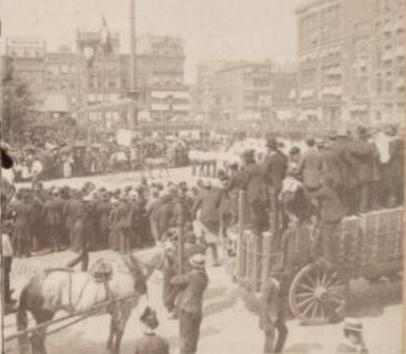
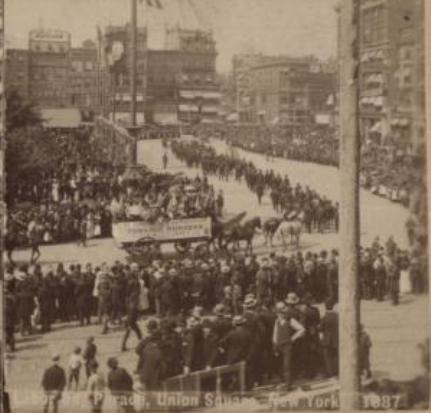
Below: Two of the earliest photos ever taken of a Labor Day celebration, this one from Union Square stands of a 1887 celebration, five years after the first. (Photo courtesy NYPL)

The celebration spread to other cities over the coming years, and by 1894, it was declared a national holiday.

However Labor Day isn’t the only day that workers and labor organizations have rallied and protested in New York. In fact, I would hardly even say it’s the primary day of protest. That would of course by May Day which is still recognized internationally as a day of protest. Unlike Labor Day, May Day actually originated in the United States. In the late 19th and early 20th century, New York workers frequently organized May Day parades, demanding more reasonable working hours, better wages and safer working conditions. The first of these parades debuted across the country in 1886.

Today in New York, the area around Union Square often sees general protests on the first of May, but Labor Day has virtually lost its meaning. In fact, it’s better recognized today as the day of the festive West Indian-American Day Parade.

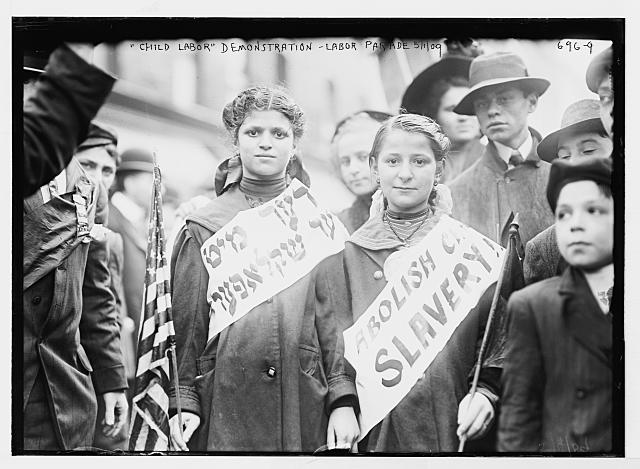
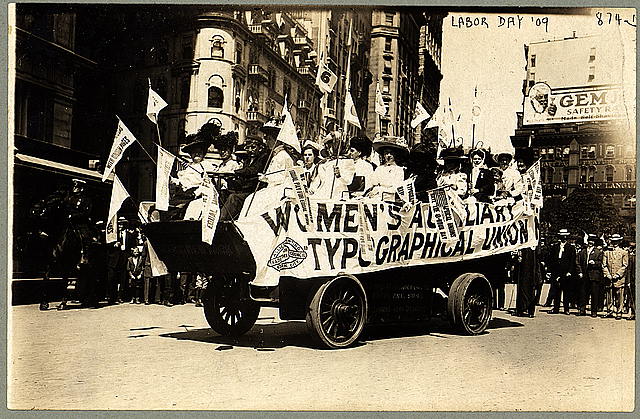
Below: The first is taken from a May Day celebration in 1909, over a hundred years ago. The second picture is taken from the Labor Day parade that very same year

For more information, check out our podcast on the history of Union Square.

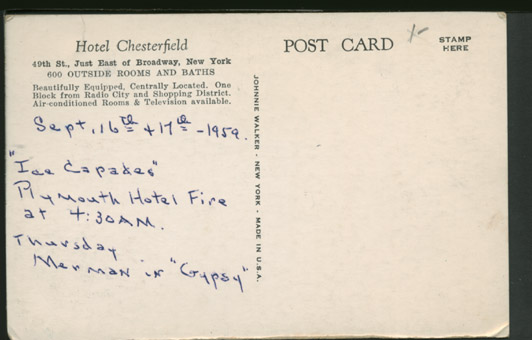
Postcard from the Past: New York, September 1959

TEXT: “Sept 16th and 17th 1959
‘Ice Capades’
Plymouth Hotel Fire at 4:30 AM
Thursday
Merman in ‘Gypsy'”

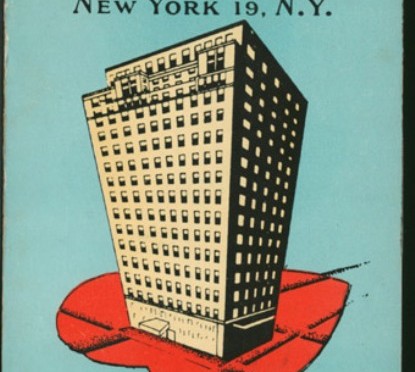
The Hotel Chesterfield (130-136 West 49th Street), built in 1927, was a luxury accommodation conveniently near Rockefeller Center and various Broadway theaters.
The Ice Capades referred to in this card are the well-reviewed Ice Capades program launched at Madison Square Garden. The Capades were a colossally cheesy ice extravaganza featuring music and elaborate production numbers staged upon a skating rink. The Capades played the Garden for decades, eventually dying out by the early 1990s.
The fire at the building across the street, the 18-floor Hotel Plymouth (137-143 West 49th Street), probably wasn’t severe. It was built in 1929 and often hosted stars from nearby Radio City Music Hall. Neither the Plymouth nor the Chesterfield are still standing today — demolished, in fact, to make way for a couple severe, International Style structures owned by Rockefeller Center.
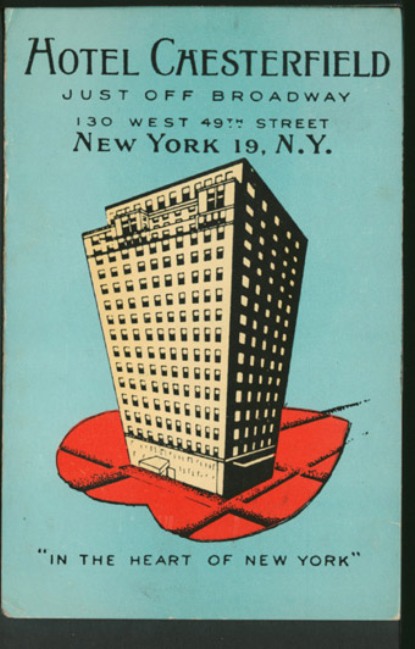
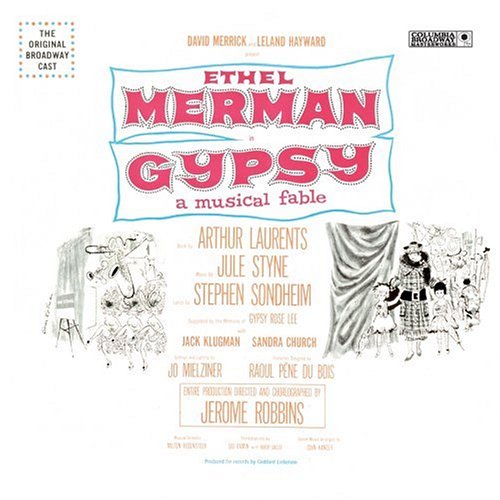
At least this visitor got to see something truly historic, at least in the annals of Broadway history — Ethel Merman in her classic performance in ‘Gypsy.

This postcard and many others can be found at the Old York Library

What a view! Library roof gardens in the Lower East Side


Click picture for greater detail

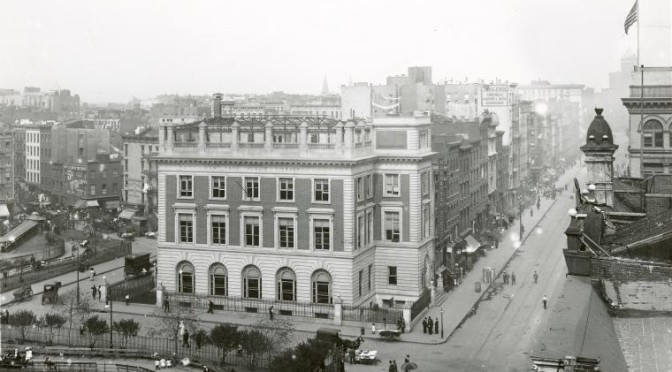
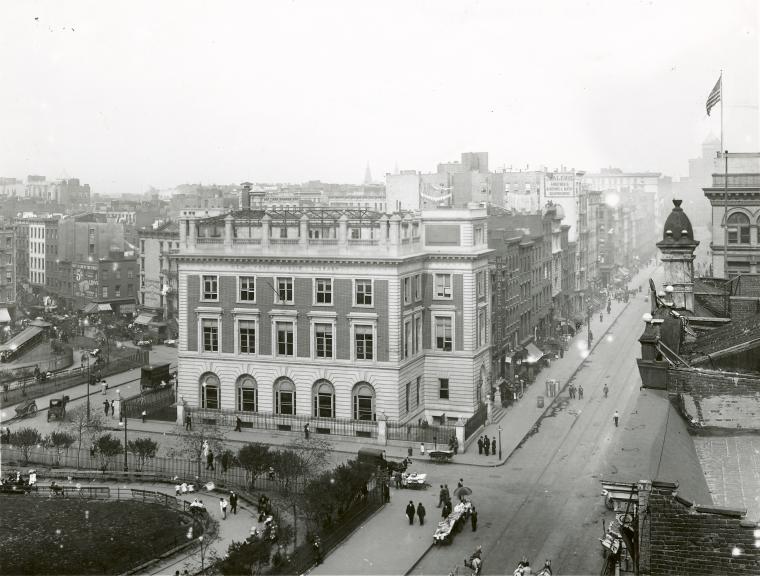
Above is a picture, facing east, of Seward Park Library in the ‘lower’ Lower East Side at 192 E. Broadway (picture taken in 1911). This spectacular branch library, funded by Andrew Carnegie, opened in November 1909, two years before the 42nd Street main branch opened.  All of the housing behind the library to the east has since been demolished.

The nearby park in the foreground is still there, but the small extension of Jefferson Street which separate them has been turned into a paved, closed off pedestrian plaza. The streets seen in the left of the photograph are completely gone.

The library was built by the firm Babb, Cook and Welch, whose accomplishments from the Gilded Age are seldomly still found today. But, in fact, one of the firm’s lead architects William Cook was part of a committee which included Charles McKim (of McKim, Mead and White) and John Carerre (of Carerre and Hastings, who ultimately designed the famous 42nd Street branch) to standardize library designs in the city. Those two better known firms got most of the commissions; however the Seward Park library remains one of Babb, Cook and Welch’s best known remaining public works.

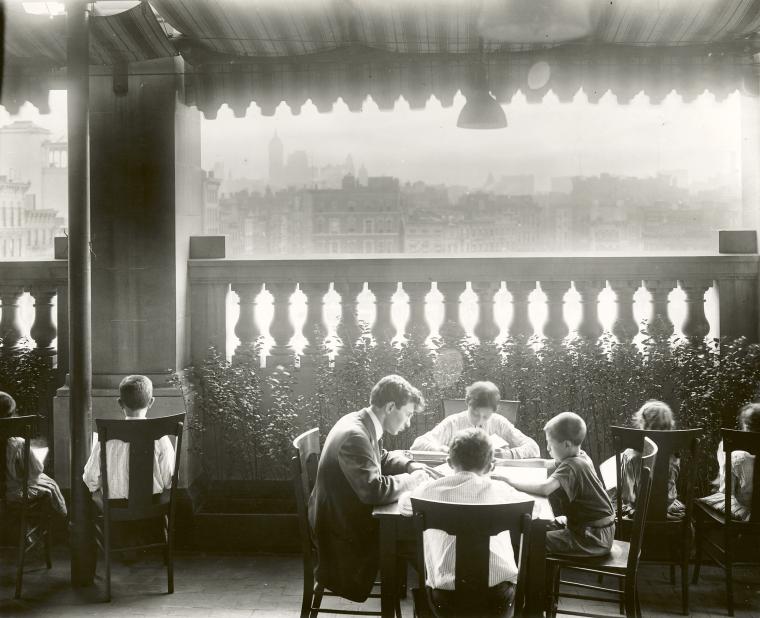
During the library’s first years, readers were actually allowed onto a “roof garden.” According to a New York Times article from 1910, “There will be awnings over the top to shield from sun and the occasional shower; tables around which the readers can congregate, and a network of electric bulbs strung over the top so that there will be plenty of light for the industrious who wish to study.”

Below: children and adults alike on Seward Park’s roof garden

Adults were even allowed onto the roof late into the evening, including “mothers who wish to do their sewing out of doors.”

Although this grand structure was placed here in 1909, it was certainly not the neighborhood’s first library. Once the domain of the private sector, libraries were provided by philanthropic organizations such as the Aguilar Free Library Society, which began offering a reading room for New Yorkers at this very address starting in 1891.

Aguilar’s East Broadway library, “where the readers are nearly all Hebrew,” featured over 140,000 thousands books, the most popular being ‘Uncle Tom’s Cabin’ and ‘Around The World In 80 Days”. This library was sold in 1902 and remade as the building which stands there today.

The Seward Park Library has gone through two major renovations, the most recent in 2004, bringing back most of the building’s original lustre. As evidenced by this photo, little around it remains from its original condition.

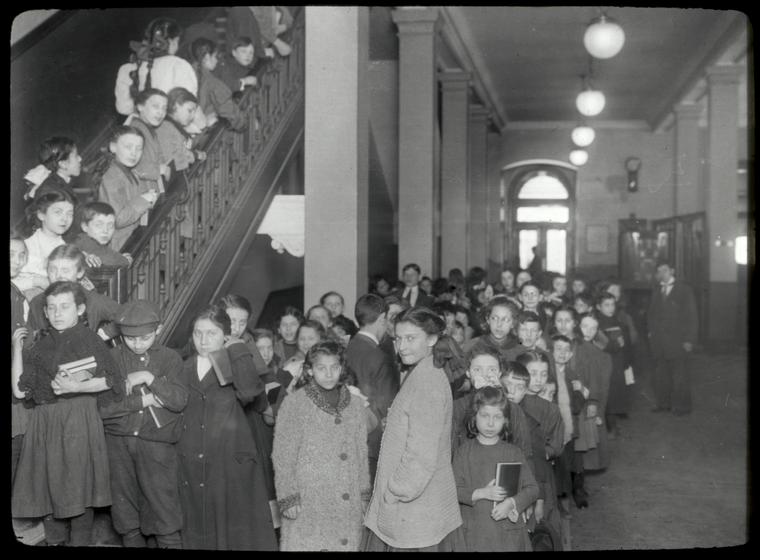
Of course, children have changed as well. Outside of a reading by Stephenie Meyer, can you imagine this mob scene at a library today? (Photo by Lewis Wickes Hine)

Pictures courtesy NYPL

New York City “in decay” on primetime TV

I just caught up on all my Mad Men episodes last night and feel foolish that I never mentioned the episode from a couple Sundays ago entitled ‘Love Among The Ruins.’ The AMC TV show, set in the early 1960s Madison Avenue ad agency Sterling Cooper, frequently offers us peeks into classic New York landmarks and history.

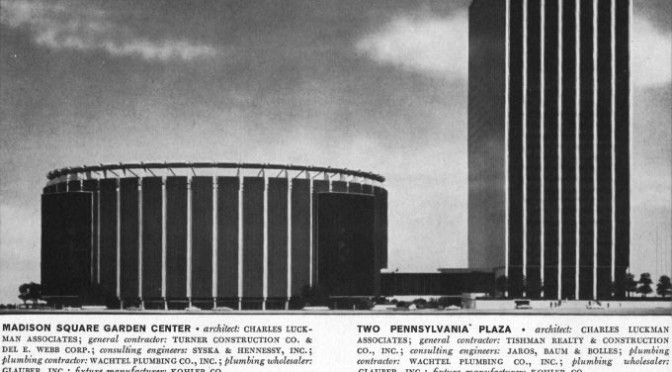
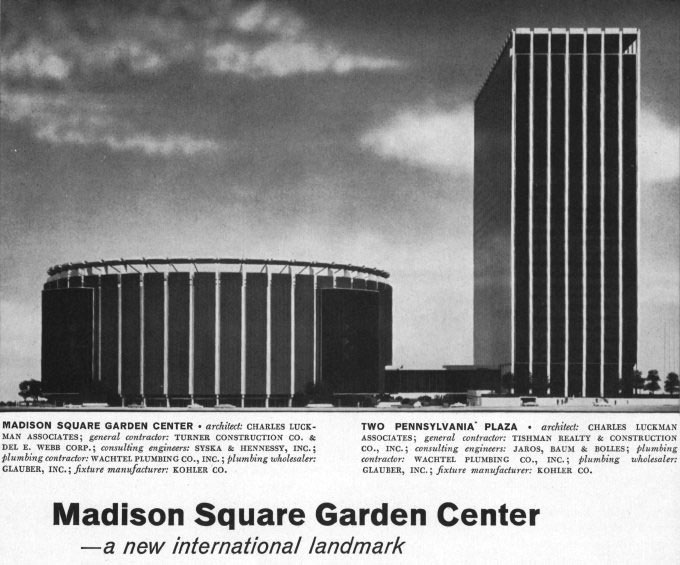
‘Love Among The Ruins’ presented a doozy, as Sterling Cooper attempted to woo the Madison Square Garden development firm who was in the process of tearing down old Pennsylvania Station. Upon reading Ada Louise Huxtable’s criticism of said destruction plans, from her New York Times column “How To Kill A City,” one of the stern faced developers remarks, “People know she’s an angry woman with a big mouth.”

One of Sterling Cooper’s own ad men fails to hide his disgust at the plan — “I don’t think it’s crazy to be attached to a Beaux Arts masterpiece through which Teddy Roosevelt came and went” — so it’s Don Draper to save the day.

“New York City is in decay. But Madison Square Garden — it’s the beginning of a new city on a hill.” Don sees the Garden job as a way into the World’s Fair of 1964, a potential boon to a successful ad agency. Hopefully future episodes of the show will take a stab at depicting this Robert Moses pet project.

Mad Men isn’t the only current TV show dealing with New York history. Believe it or not, the kitsch SyFy Channel show Warehouse 13 has used city relics for plot devices. In one prior episode, an ancient Lenape Indian talisman is discovered in a construction dig in the Lower East Side. They even indicate that it’s located at Corlear’s Hook, although it looks more like Vancouver.

And on last week’s show, we found out that the Studio 54 mirrorball actually possesses persuasive supernatural powers. I wonder what powers the man on the moon and his coke spoon have?

You can find a recap for that particular Mad Men episode here and keep your eye out for reruns of the episodes mentioned above.

City of Cities: Nine neighborhoods with ambitious names

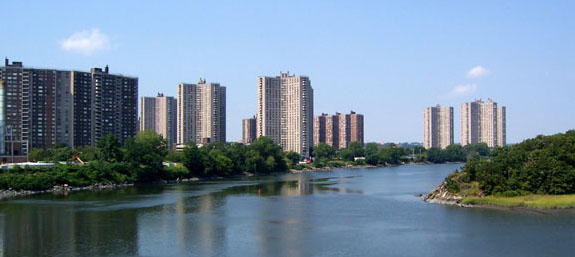
ABOVE Co-op City: the housing development most likely to be seen from space

NAME THAT NEIGHBORHOOD Some New York neighborhoods are simply named for their location on a map (East Village, Midtown). Others are given prefabricated designations (SoHo, DUMBO). But a few retain names that link them intimately with their pasts. Other entries in this series can be found here.

Why are there so many cities in the city of New York City?

New York neighborhoods are often products of their geographic and even geometric environments. They are made of Heights and Estates, Terraces, Channels and Ports, Parks, Hills and Kills, Beaches and Points, Villages and Towers and Gardens, Circles and Squares, not to mention Islands. Some of these name are reflections of the natural environment, others are artificial titles given to real estate properties hoping to lure residents with more natural sounding, civilized names.

But there’s actually quite a number of neighborhoods within the metropolitan area with loftier intentions — neighborhoods that have ‘city’ in their name. Many of them are only cities in the sense of being self-contained housing units. Others are virtual cities, unofficial collections of streets cut off from the main circulation of the city.

But a couple of these places, believe it or not, were once actually self-governing places, their names reminiscent of pre-consolidation days:

Alphabet City, Manhattan
By virtue of starting only at 14th Street, the avenues A through D feel segregated from the flow of the city. Almost from the moment they were carved into the city’s grid in 1811, the avenues were home to middle and lower classes. The heart of German culture thrived here in the 19th century, with Eastern Europeans taking it over the 20th. Where calling it a city might once have been derogatory, today as the anchor of the East Village, it underscores its individuality.


Battery Park City, Manhattan
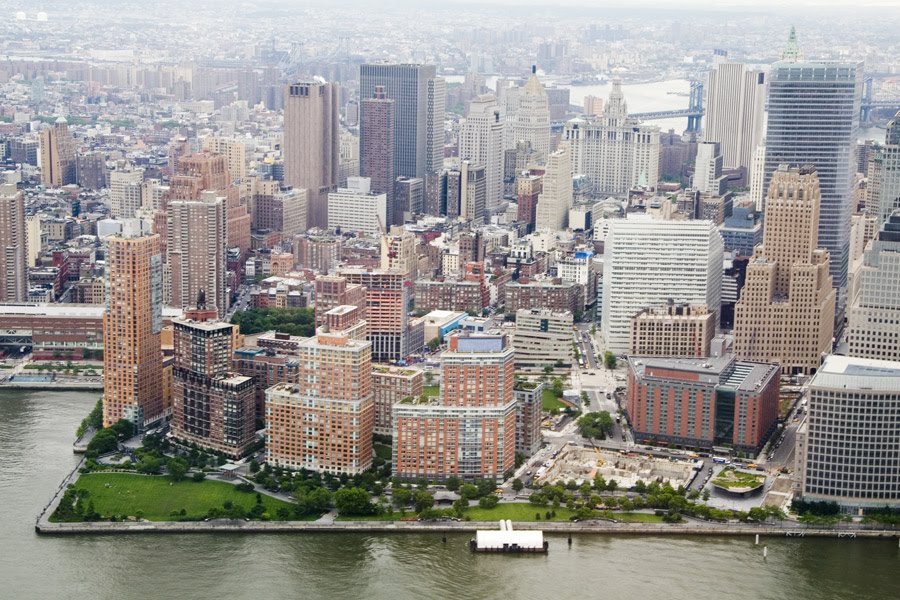
Like Alphabet City, this lower Manhattan planned community, nearby Battery Park, is removed by geography from the regular patterns of the city; unlike Alphabet, every structure is meticulously aligned with the rest. Created on a bed of World Trade Center landfill, most of BPC is younger than its average tenants, with the first structures only started in 1980. It doesn’t feel like New York, which is a benefit for some.


City Island, Bronx
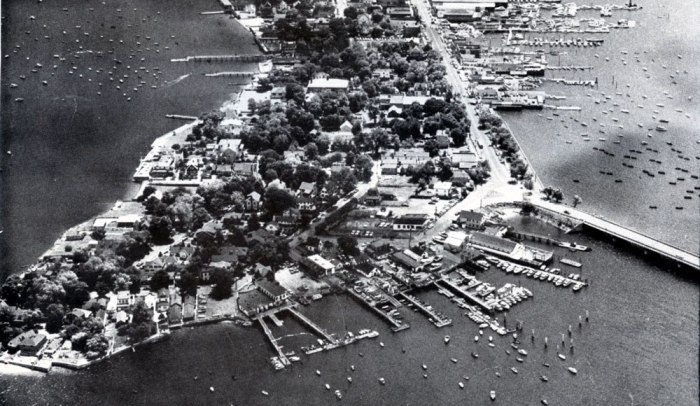
For much of its pre-revolutionary European occupancy, this most New England-y of New York islands was owned by the Thomas Pell family (also owners of what would become Pelham Bay Park and Westchester County, among other things). In 1761, speculator Benjamin Palmer bought the property and renamed it New City Island in a bout of wishful thinking; by calling it a ‘new city’, he hoped to turn property into a thriving upriver port. Its future residents — mostly oyster farmers — dropped the ‘new’ from the name.

Co-Op City, Bronx
Still largely considered New York’s greatest ‘city within a city’. This super-massive housing community, still the largest co-op development in the world, rose from the ashes of failed amusement venture Freedomland U.S.A. (we have a podcast on that ) and opened in 1971. Like a regular city, Co-op City has its history of near bankruptcy, corrupt mismanagement and transportation woes.


Grant City, Staten Island
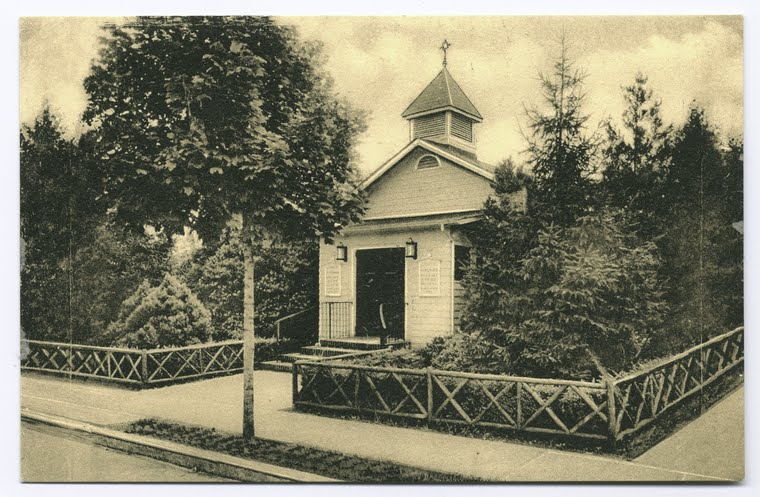
This eastern neighborhood of SI is actually one of New York’s oldest ‘cities’, starting off with the rather fancy names of Frenchtown, then Red Lane, before being renamed during the Civil War after the Union’s most famous general Ulysses S. Grant. Far from being secluded like other New York ‘cities’, Grant City sits nearby the borough’s most historical communities New Dorp and Richmondtown, as well as Staten Island’s highest point, at Todt Hill. (Above, St. Christopher’s Roman Catholic Church in Grant City, pic courtesy NYPL)


LeFrak City, Queens
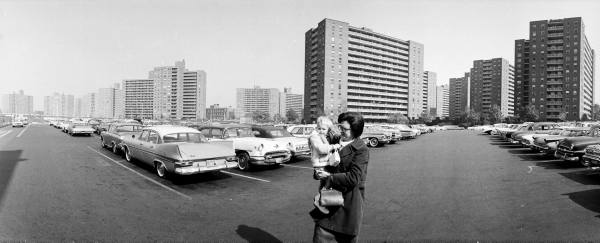
“Live a Little Better” is the slogan of this well-known housing development, started in 1960 and completed in 1969, from real estate mogul and “master of mass housing” Samuel LeFrak, the largest of several residential projects bearing the LeFrak name. The Lefrak Organization began over a hundred years ago with Aaron LeFrak. Samuel’s son Richard was recently a judge on the Miss Universe pageant. (Pic above courtesy Life)

Long Island City, Queens
This is one of the only ‘city’ neighborhoods to actually have, in fact, started as a city. The official Long Island City was cobbled together via charter in 1870 from a cluster of surrounding villages, including Astoria, Steinway, Hunter’s Point and others. It had a run of almost 30 years before being absorbed into the newly formed borough of Queens — and the newly consolidated city — in 1898. Among its many colorful mayors during this time of self-rule was one Paddy Gleason, nicknamed ‘Battle Axe’ for once personally chopping down an objectionable fence owned by the Long Island Railroad.

Starrett City, Brooklyn
Just west of JFK, this large housing development with almost 6,000 apartments sprang up in 1974 and by the 1980s became a controversial model of ‘racial quota’ rentals. It’s recently shed its city status, changing its name to Spring Creek Towers in 2002.

Starrett, by the way, was the name of the development company and, like LeFrak, has nothing to do with the area its built on. The Starrett brothers Theodore and Paul were apprentices of Chicago architect (and creator of the Flatiron Building) Daniel Burnham in the 1890s; much later, their construction company tore down the original Waldorf-Astoria to make room for the Empire State Building.

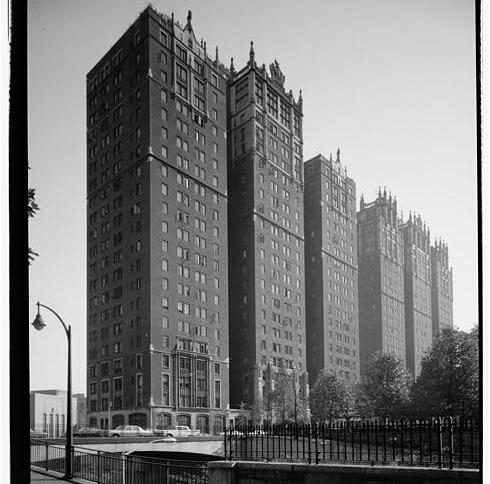
Tudor City, Manhattan
Tudor City is just like LeFrak and Starrett, but with the virtue of being far older and more aesthetically pleasing. Developer Fred F. French swept away a rather dingy set of tenements in the 1920s — the nearby slaughterhouses had yet to be cleared away to build the United Nations headquarters — and hoped to lure middle-class families with the promise of a “human residential enclave”.

His risky venture worked, partially because he elevated the buildings 30 feet above First Avenue and creating two 15,000-square foot private parks. Truly a ‘city above a city’.

Mayor Charles Godfrey Gunther, Coney Island-bound

KNOW YOUR MAYORS Our modest little series about some of the greatest, notorious, most important, even most useless, mayors of New York City. Other entrants in our mayoral survey can be found here.

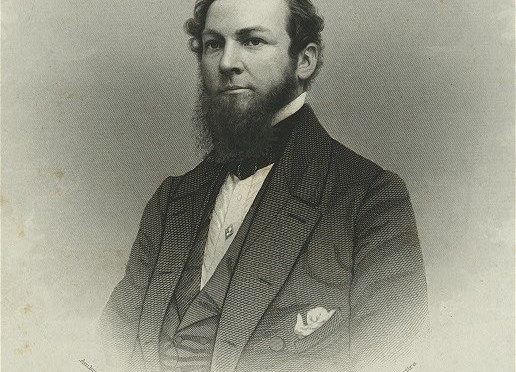
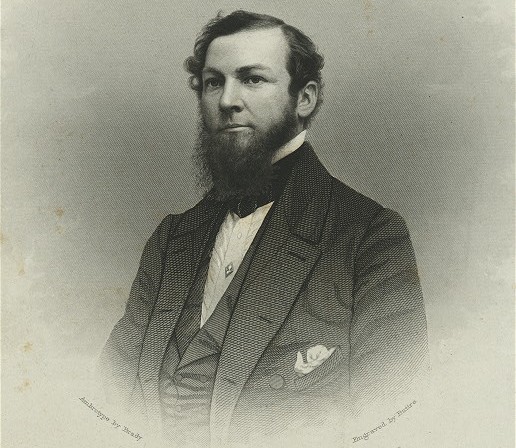
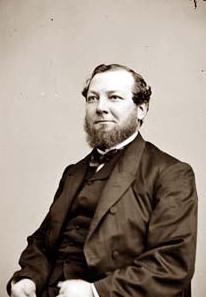
Mayor C. Godfrey Gunther
In office: 1864-1865

His past glories were built on a mountain of fur pelts, and his future would wash up on the half-developed shores of Coney Island. But in 1961, it was Civil War that nearly derailed the political career of Charles Godfrey Gunther.

The groundwork was laid in 1857 by former mayor Fernando Wood, who rebelled against Tammany Hall, the Democratic machine he formerly led, to form his new political organization called Mozart Hall. This assembledge of working class reformers and Wood devotees elevated him back to City Hall in 1960, returning to the seat of power occupied by German paint mogul Daniel Tiemann, who had unseated Wood back in 1857.

Back in business, Wood heralded a feisty pro-South, anti-abolitionist stance, pitting himself against Albany and threatening to secede Manhattan from the state.

By the election of 1861 however, a swell of national support for the Union cause turned against Wood. The Democrats were in a precarious spot, splintered between rival Democratic groups. It’s here in our story where we introduce Charles Godfrey Gunther, Tammany’s official candidate for mayor in 1861.

Gunther was born at Maiden Lane and Liberty Street, on Feb 7, 1822 — into a German family that had made its fortunes in the fur trade, rivals of the city’s true fur king John Jacob Astor. Charles spent his youth in his father’s tutelage, taking over the family business C.G. Gunther & Co.

Like so many others before him, Charles’ business saavy and wealth caught the attentions of Tammany Hall. The furrier worked his way up through the political lodge, eventually becoming sachem in 1856.

He was Tammany’s candidate for mayor in 1861, against Wood, and it would have made for a fine contest between them. In fact, Gunther would have won. (He scored all of 600 more votes than Wood.)

But of course, there was another contestant, the Republican George Opdyke. With Wood and Gunther appealing to the same constituencies, they split the traditional Democratic vote, and Opdyke ascended to office.

Perhaps Charles should have been grateful. The years 1862 and 1863 were not gracious times to be mayor of a major city. Opdyke’s execution of military conscription upon the city’s immigrants and his fumbled handling of the ensuing draft riots permanently damaged his political reputation.

By the fall of 1863, New Yorkers craving a change in leadership were given a strange buffet of choices. The Republicans, shedding Opdyke and at a serious political disadvantage, brought forth alderman and gun-maker Orison Blunt, inventor of the ‘pepper box gun’. Tammany meanwhile offered up Francis I. A. Boole, a rather corrupt city official notable for heading the street cleaning department.

With these weak choices at such a pivotal period in history, rebels from both parties — and heavily peopled with disenfranchised former Wood supporters — split to form a temporary coalition of working class Irish and Germans.

With the strong support of the city’s surging German newspapers, Gunther was chosen as their candidate. That November he swept past Blunt and Boole to become New York’s 77th mayor. Boole took it especially hard; he “became insane and died shortly afterwards.”

Was the German furrier an effective mayor? I can’t quite figure out as original sources seem split. An “honest, pleasant gentleman, with frank and cordial manners,” he’s praised for his penny pinching tactics, at one time even cancelling a celebration of George Washington’s birthday as it was thought to be too extravagant. In 1964, on the verge of a national election, he clamped down on any serious city celebrations of Union victory as being too ‘political’ in nature.

In a parallel to Bloomberg’s recent efforts to relieve traffic congestion, Gunther also strived to clear the streets — with the removal of slaughterhouses and roaming herds of cattle.

However, he was also seen as a rather weak political figure, with little influence over other city offices. Perhaps this was because he was honest and the bureaucracies of city government dreadfully corrupted. Running for re-election in 1865, he was crushed in the polling, with three other candidates out voting him. The victor that year was true-blue Boss Tweed crony John Hoffman.


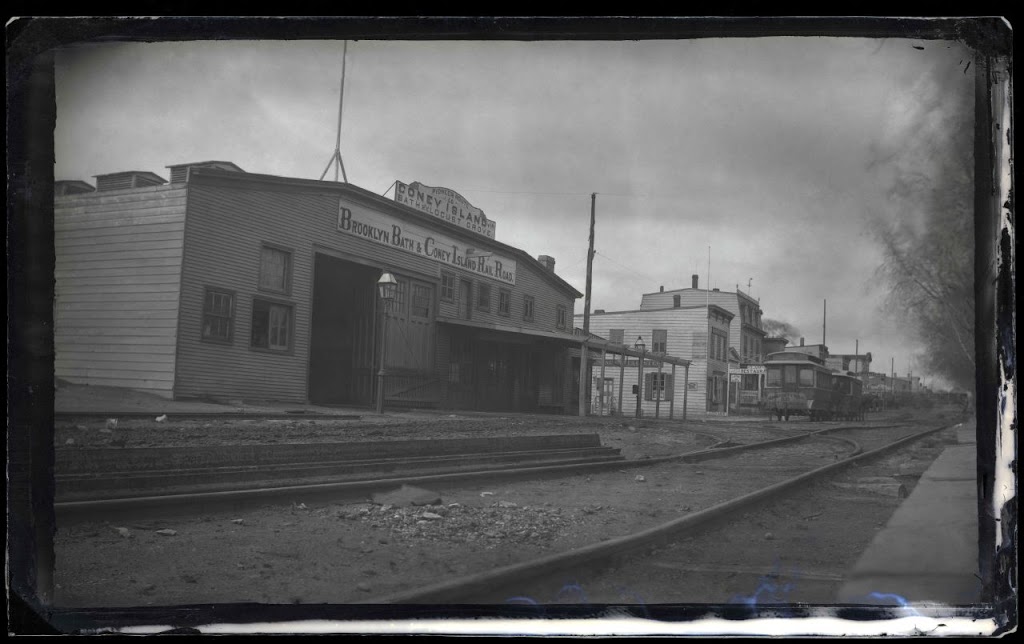
Above: the Coney Island terminal for the Brooklyn, Bath and Coney Island Railroad line

Gunther’s story doesn’t end here. He became a prominent leader in New York volunteer fire department and eventually even a partner in a very lucrative venture — the Brooklyn, Bath and Coney Island Railroad. It was this rail line that allowed thousands of New Yorkers to escape the city, eventually transforming Coney Island into a popular resort and amusement palace.

The train line, nicknamed Gunther’s Road, operated “six steam locomotives and 28 passenger cars” and “carried almost 400,000 passengers” in 1882 alone. Gunther would even own his own resort out on Coney Island, although it burned down a few years later.

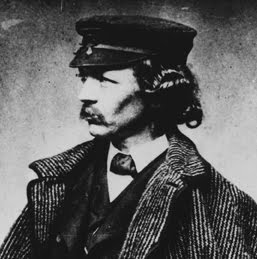
And I end with a rather colorful anecdote from a 1906 article about Mr. Gunther and his railroad, from The Third Rail:

“There was one engineer who had served in the war of the rebellion, and who was particularly patriotic, who painted his engine red, white and blue.

Gunther saw it from a distance, on its first trip, tearing across the country, and he was frantic.

“For God’s sake, Drummond,” he said, when he overtook his engineer, “whatever possessed you to paint that engine red, white and blue?’

“You’re a true American, ain’t you?” said Drummond.

“Yes, but-but-“

“Well, so am I.”

“Yes, but that engine looks like a traveling barber shop.”

Gunther could not convince Drummond, however, and the latter quit his job rather than submit to any alterations.

The engine was afterwards painted according to Mr. Gunther’s ideas.

It was painted a flaring yellow.”

Mr. Gunther died on January 22, 1885 and is buried at Green-Wood Cemetery.

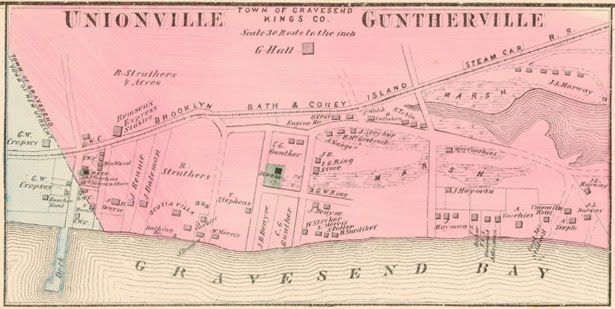
ADDED: One of our Facebook fans reminded me of an even more spectacular fact about Mr. Gunther — there was actually a short-lived Brooklyn neighborhood named after him. Guntherville was actually part of the pre-consolidation town of Gravesend and naturally featured many properties owned by C. Godfrey. The map below from 1873 illustrates its place along the Gravesend shore. Judging from comparing maps, it appears that part of Guntherville would later comprise the fleeting, beach side amusement venture Ulmer Park.

Picture Perfect: Irving Underhill captures New York style

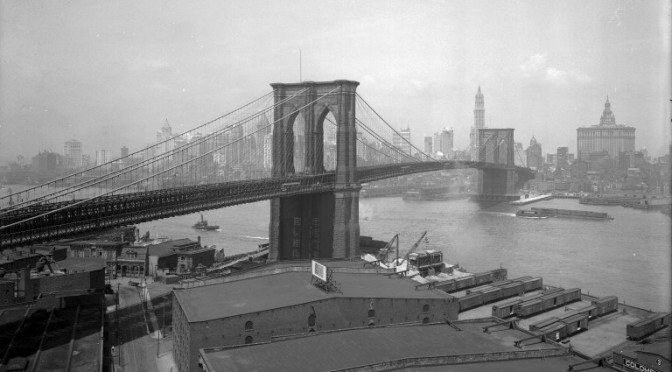
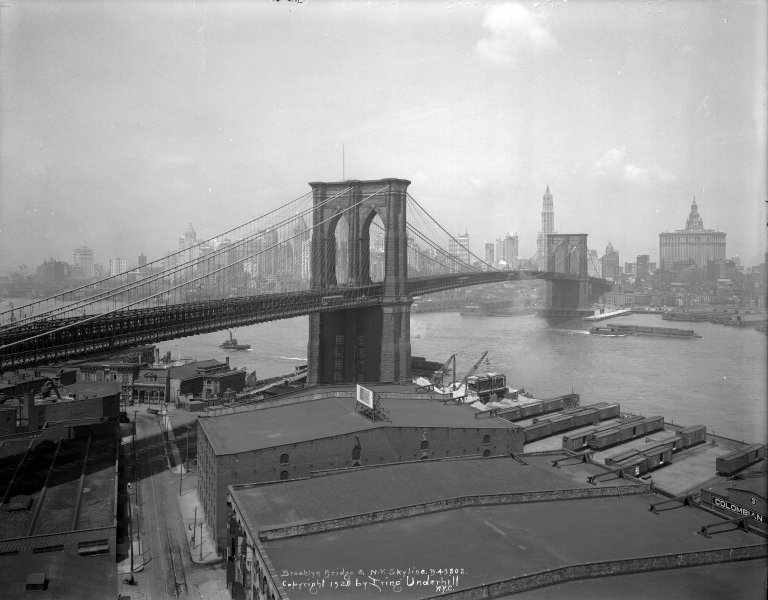
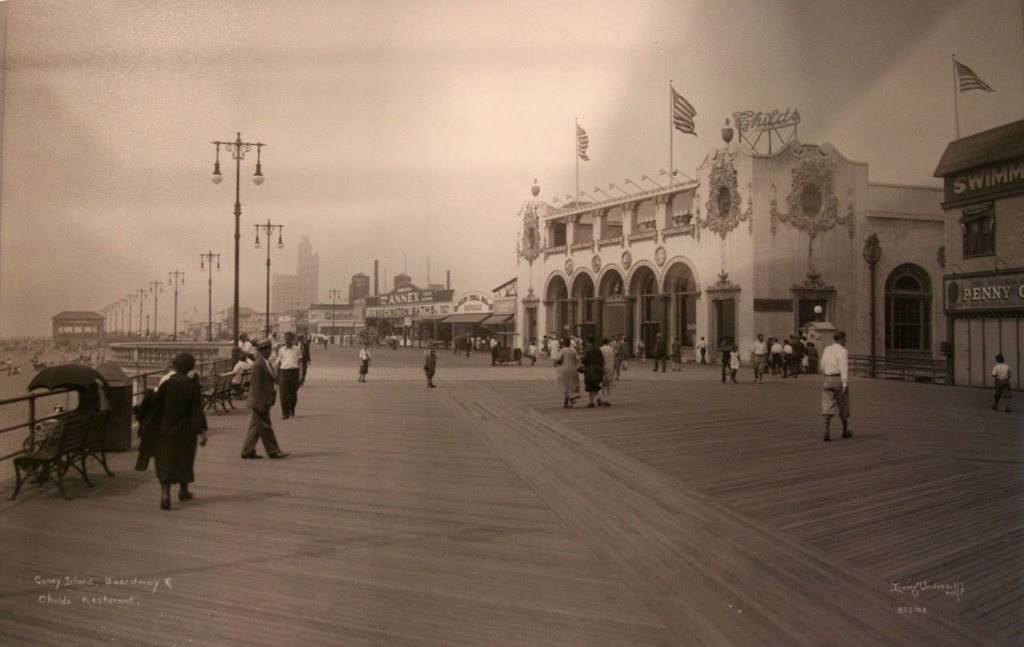
Top: the Brooklyn Bridge in 1925. Bottom: Underhill on the boardwalk: the photographer captures a seemingly meloncholy day in Coney Island, with Childs Restaurant at right

Nobody in New York’s early history captures the romance of early city life more than the first photographers — the men and women who wiled away with expensive, limited and time-consuming photographic processes, bulky and decidedly unportable cameras, and a medium that was still struggling to find purpose.

New York’s first master photographer Matthew Brady, famous for his Civil War battle images and unappreciated in his time, chose the city for the location of his studio but turned his camera over mostly to intimate subjects. Jacob Riis used his lense to expose social disparity in lower Manhattan. And the social fabric of the city was documented by Alice Austen, who balanced intimate images of neighborhood life with candids of big city bustle.

But the real glamour shots of the city most often came from big studio photographers, working not to present any kind of social illumination but for a profit. One of these was Irving Underhill (1872-1960), a successful photographer who also took pictures to be rendered as colored postcards or “souvenir cards”.

More of his postcards can be found here. They’re certainly pretty, with their saturated color turns regular New York scenes into unusual and cartoonish pastel paintings. The real beauty of New York comes alive in Underhill’s regular, clean photographic documentation of basic city structures.

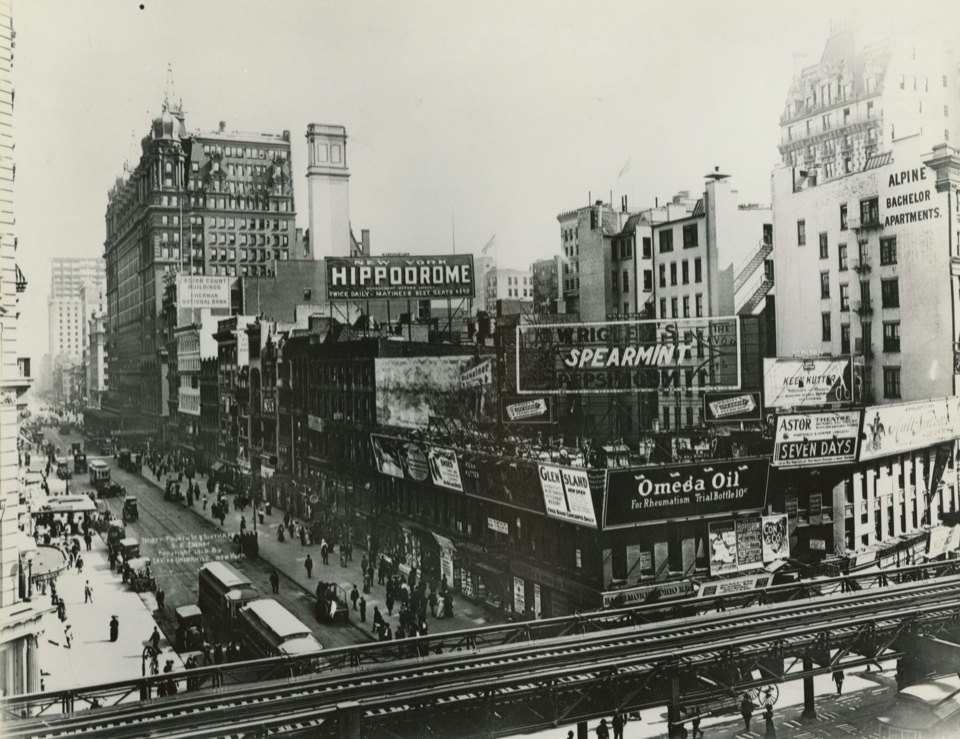
1910: 34th Street and 6th Avenue, shot from the roof of Macy’s, looking east

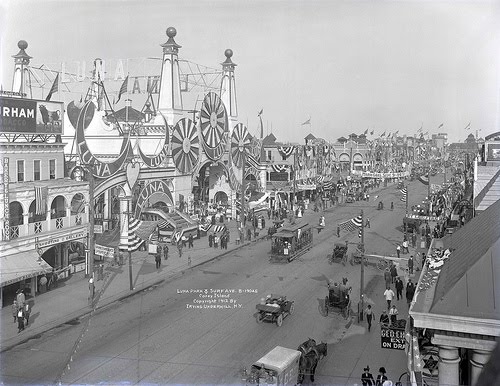
1912: Luna Park along Surf Avenue in Coney Island

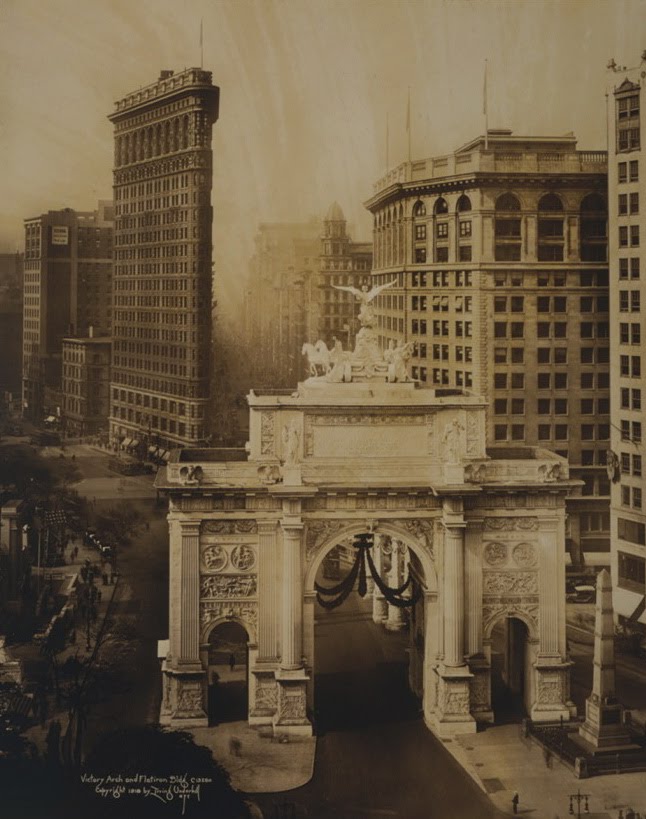
1919: Madison Square Park and the Flatiron Building, with the newly erected ‘Victory Arch’ celebrating the end of World War I

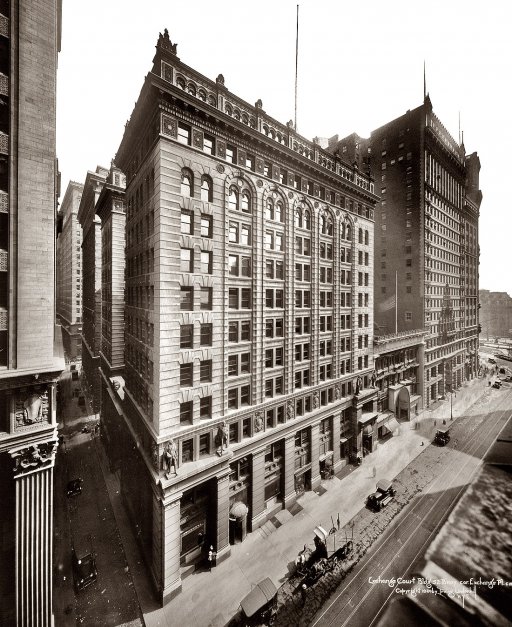
1920: Exchange Court building at 52 Broadway, one of dozens of Underhill subjects either radically revamped or demolished completely

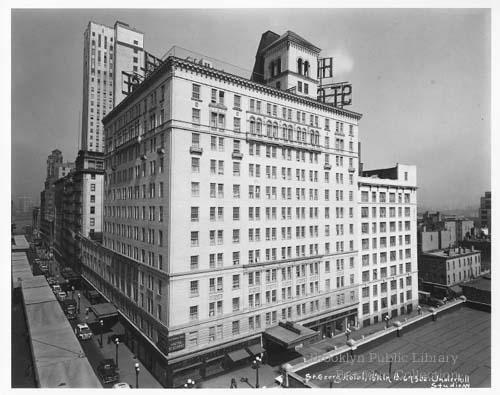
The Hotel St. George in Brooklyn Heights, date of photograph unknown

Underhill opened his studio in 1896, specializing in “artistic portraits, city views and panoramas, group photographs, marine, legal and machinery photography.”

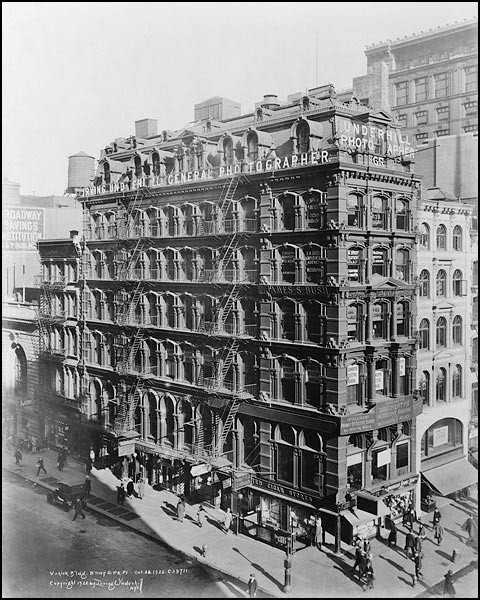
He was so successful that his agency received exclusive commissions to photograph and promote new buildings like the Woolworth Building, which he would capture in timed intervals to track the construction process. Many years later, his name could be seen from blocks away, plastered along the top of his studios at Broadway and Park Place. You can see the words ‘Irving Underhill, General Photographer’ along the top of the image here, taken in 1922.

Underhill’s early portfolio was printed in the 1904 book One Hundred And Sixty Glimpses of Greater New York, an incredible array of black and white images detailing city architecture in the midst of the gilded era. Each page is cleanly labeled and visual detectives will enjoy matching the images to what stands in these places today. You can look at most of the book on Google Books.

Below: the Manhattan Bridge plaza, 1917