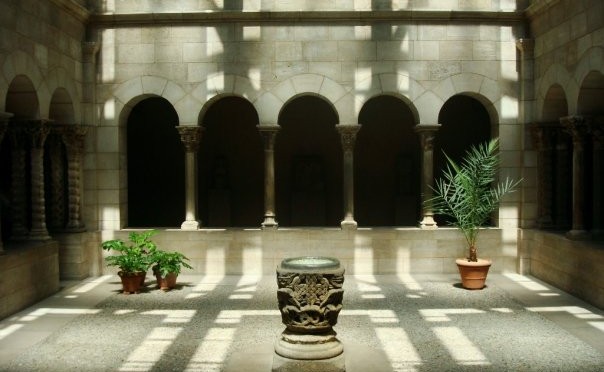
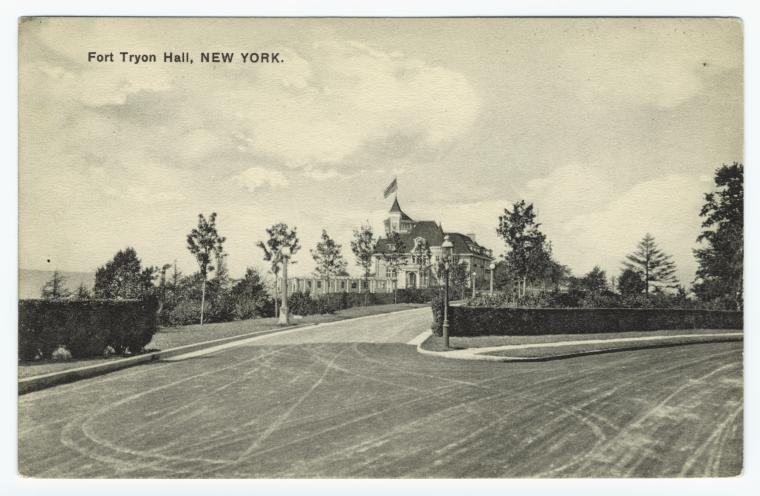
PODCASTThe Cloisters, home of the Metropolitan Museum’s repository for medieval treasures, was a labor of love for many lovers of great European art. In this podcast, I highlight three of the most important men in its history — a passionate sculptor, a generous multimillionaire and a jet-setting curator. Equally as fascinating is the upper Manhattan park that houses the museum, Fort Tryon Park, a site of a Revolutionary War fort of the same name and the exploits of the war’s most heroic women.
Download this show it for FREE on iTunes or other podcasting services. Or listen to the show here:
___________________________________
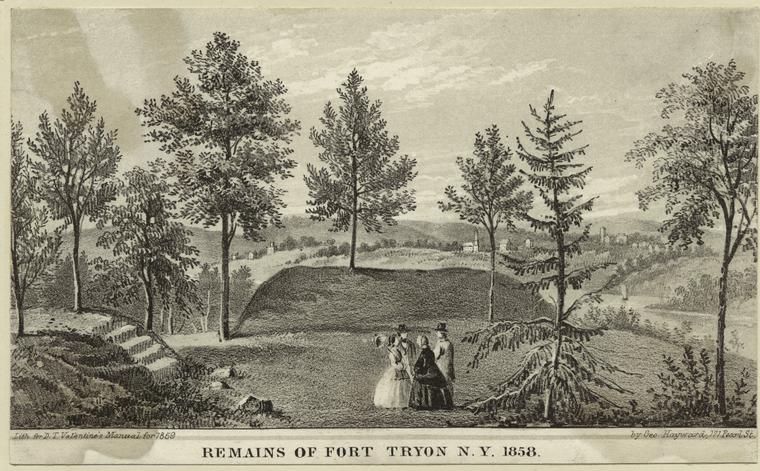
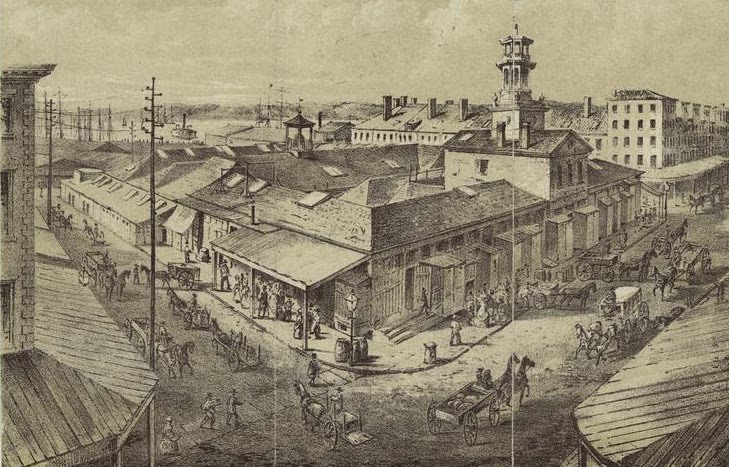
Fort Tryon circa 1858, after the war, before the millionaire mansions. (Courtesy NYPL)
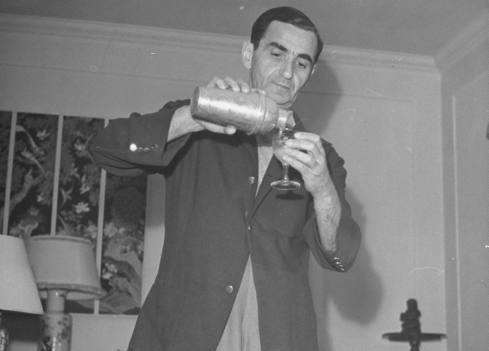
It’s 1943, and Irving Berlin’s pouring himself a cocktail (photo by Peter Stackpole, courtesy LIFE)
HOW NEW YORK SAVED CHRISTMASThroughout the month I’ll spotlight several events in New York history that actually helped establish the standard Christmas traditions many Americans celebrate today. Not just New York-centric events like the Rockefeller Christmas Tree or the Rockettes, but actual components of the holiday festivities that are practiced in people’s homes today.
Irving Berlin, the most prolific of Tin Pan Alley music men, composed “White Christmas” in 1937 during a trip to California. Dwell upon that statement for a moment. Berlin, the product of Russian Jewish immigrants, wrote one of the most beloved Christmas classics in an area of the world almost entirely devoid of white Christmases.
Although he wrote the song over 25 years after the ‘real’ Tin Pan Alley on 28th Street dissolved into a loose assemblage of businesses throughout midtown, Berlin did get his start on that very street, learning the trade under the employ of Harry von Tilzer’s publishing company and cranking out his own tunes; his first song, written in 1907 at age 19, was the Marie of Sunny Italy. Because of this connection, “White Christmas” is often considered the “most famous, most-recorded Tin Pan Alley song of all time.”
Irving arrived in Ellis Island in 1893 and his family settled first with a relative on Monroe Street, then later on the third floor of a tenement at 330 Cherry Street, just a few steps away from Corlears Hook.
Although new ethnic groups in New York naturally cluster together at this time, Cherry Street was considered one of the most dense blocks in the city, and it would have been impossible to avoid the foreign traditions of others, especially if you were a curious child like Irving. His experiences of Christmas were almost entirely based on Irish friends and neighbors who lived on this ultra-crowded block. The traditions would have had little religious context for him. Although it’s probably overstating to say that his displacement had a hand in the secular nature of ‘White Christmas’, Irving would have had only non-religious experiences upon which to inspire the song’s overwhelming glow of nostalgia.
Or Philip Roth famously says of Irving Berlin’s ‘Easter Parade’ and ‘White Christmas.’ in his classic Operation Shylock: “The two holidays that celebrate the divinity of Christ — the divinity that’s the very heart of the Jewish rejection of Christianity — and what does Irving Berlin brilliantly do? He de-Christs them both! Easter he turns into a fashion show and Christmas into a holiday about snow.”
“White Christmas,” debuted in the 1942 film Holiday Inn and within a couple years became the melancholy holiday anthem for a country in the middle of World War II. More importantly, it kicked off a flurry of secular Christmas classics, as songwriters rushed to find a suitable successor. “I’ll Be Home for Christmas” debuts a year later, with “Have Yourself a Merry Little Christmas” coming a year after that.
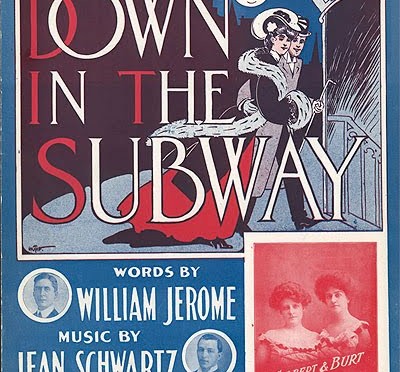
“Down In The Subway,” published in 1904 by one of Tin Pan Alley’s most successful music men Jerome Remick
___________________________________
PODCAST The modern music industry begins…. on 28th Street? A seemingly nondescript street in midtown Manhattan contains some of the most important buildings where early American pop music was created.
Tin Pan Alley was a bustling and frenzied area, the most creative area of the city, with songwriters — and song pluggers — churning out iconic music. Sing along as we talk about the greatest songwriters and the process they went through to create the most influential tunes of the century.
Download this show it for FREE on iTunes or other podcasting services. Click this linkto download it directly from our satellite site. Or click below to listen here:
This week’s show features actual music snippets, featuring “A Pretty Girl Is Like A Melody” by John Steel, “Toot-Toot-Tootsie” by Al Jolson, and “Grand Ole Flag” by Billy Murray.
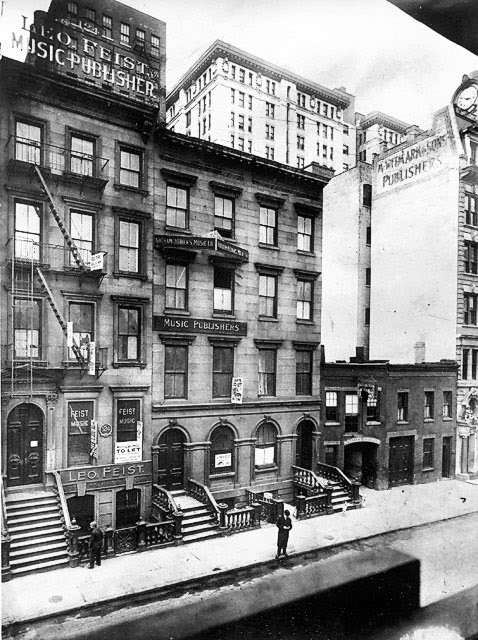
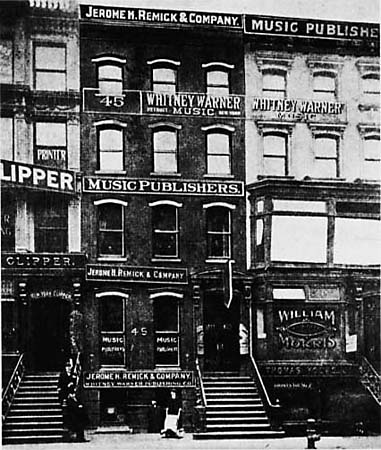
Music Row: Music publishers, once centered around Union Square, began collecting on 28th Street in the late 1880s and most of them stayed there until 1909. Leo Feist, seen in the first picture on the left, was probably the first to move onto the block.
___________________________________
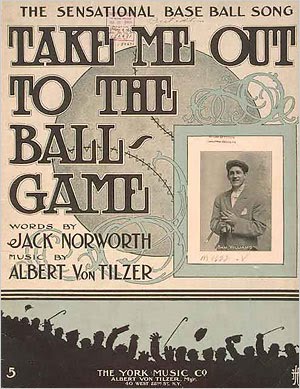
Grand Slam: One of the greatest hits to come out of 28th Street was Albert Von Tilzer’s Take Me Out To the Ballgame. The lyrics were written by vaudeville star Jack Norworth who popularized the song in his routines. Curiously, neither Von Tilzer nor Norworth had ever seen a baseball game at the time the song was written.
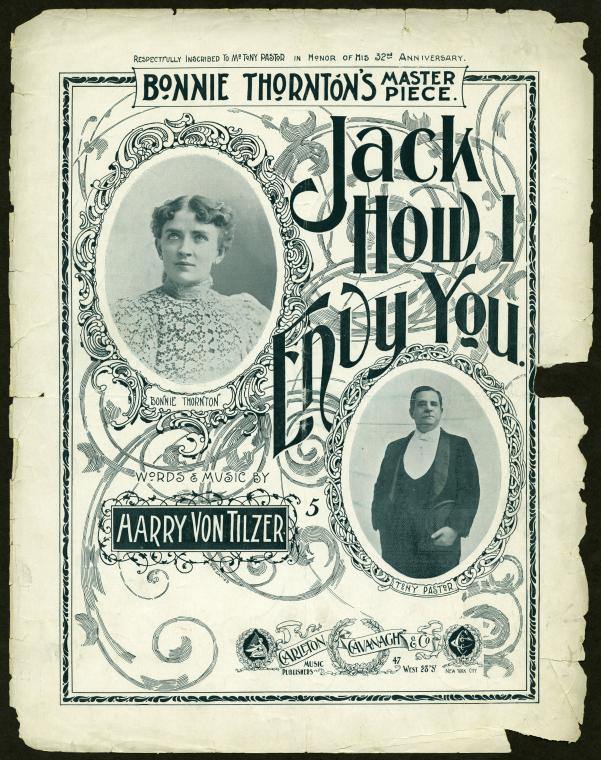
A song by Albert’s brother that is, needless to say, less famous. (Pic courtesy here)
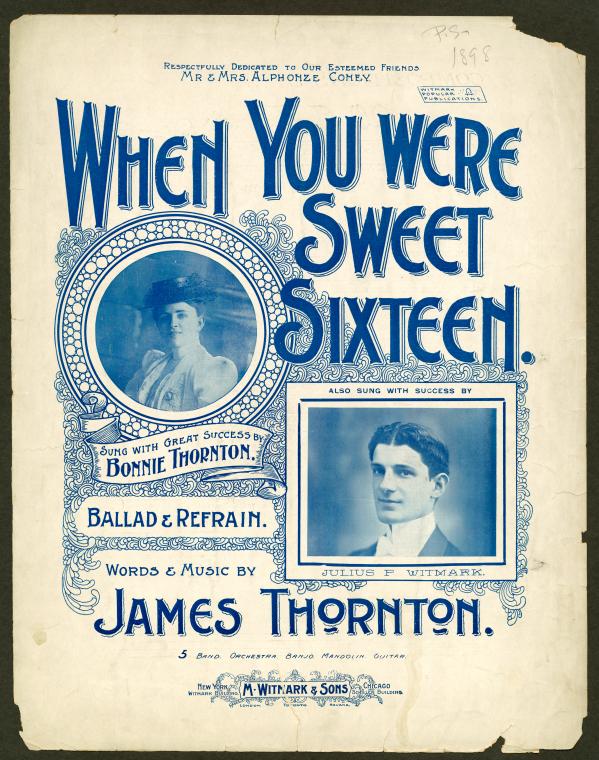
M. Witmark and Sons got their start selling their tunes straight from the vaudeville stage, later to become one of the most successful of the 28th Street firms.
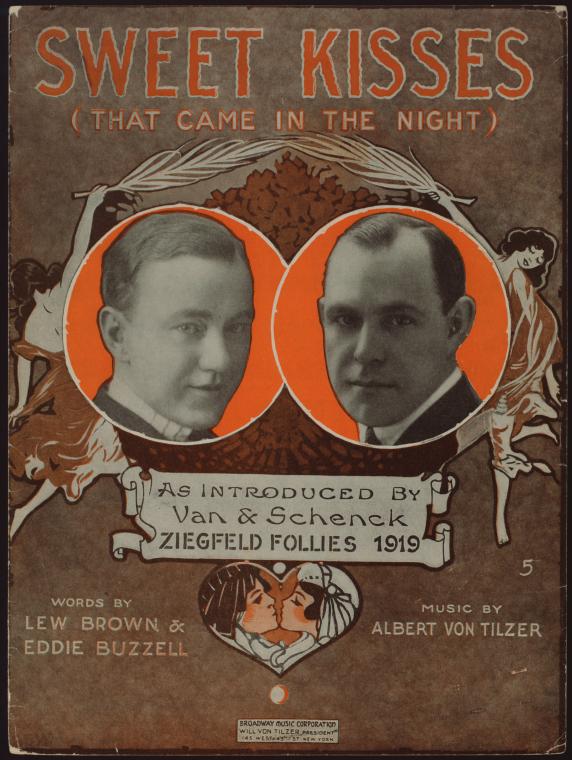
By 1909, most of the music houses had moved off the street into various locations throughout midtown, catering to the budding Broadway market. One of the most lucrative platforms of popularizing songs was the Ziegfeld Follies. (Pic)
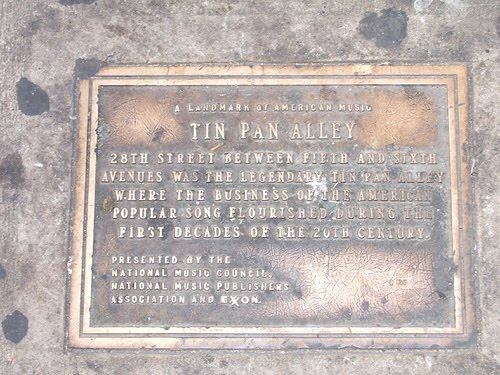
The only sign on 28th Street of its importance to the world of music is a small plaque on the sidewalk
The buildings of Tin Pan Alley are not landmarked, but there are some grassroots efforts underway to make sure the area is protected. In particular, the Historic Districts Council has a lovely writeup and features the addresses of many of Tin Pan Alley’s most successful music houses. No surprise that a website on collectable sheet music should also have a great writeup on the area.
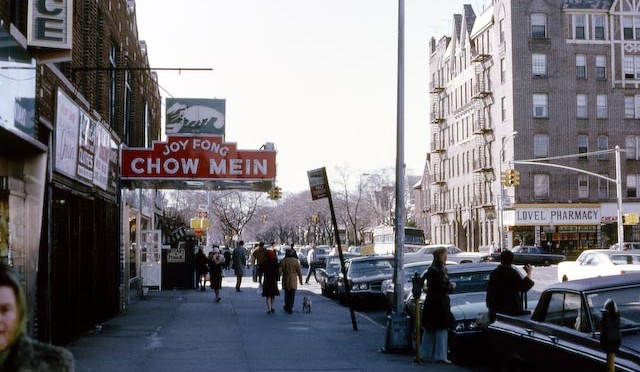
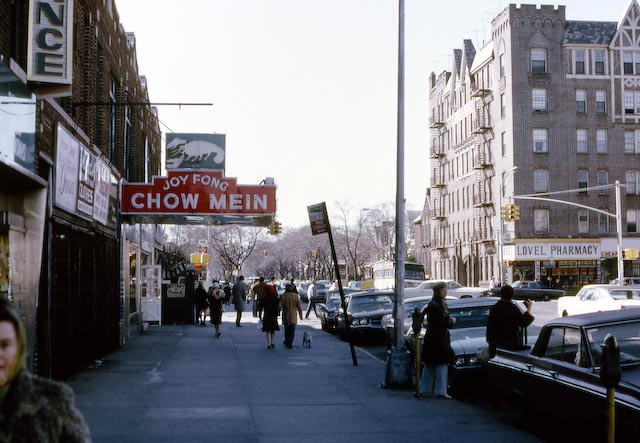
I have this thing for kitschy Chinese restaurant design, so this picture from 1971 made my day. Joy Fong Chow Mein was located on Avenue J and Coney Island Avenue in the Midwood neighborhood of Brooklyn nearby Di Fara’s Pizza and the old Midwood movie theater (which closed in the early 80s). Joy Fong is also long gone, including this massive sign.
Writer Pete Cherches has a wonderful recollection of the restaurant and eating Chinese food in Brooklyn in the 1960s. He says of Joy Fong: “a now-defunct place that retains an almost holy status in the memories of Brooklyn Jews of a certain age. I wouldn’t be surprised if people visit the site of the former restaurant and wail against the wall.”
FRIDAY NIGHT FEVERTo get you in the mood for the weekend, on occasional Fridays we’ll be featuring an old New York nightlife haunt, from the dance halls of 19th Century Bowery, to the massive warehouse clubs of the mid-1990s. Past entries can be found here.
LOCATIONCerebrum Broome and Crosby streets, Manhattan
The 1960s were a decade of experimentation, and not just for people. As rock and roll tripped out, so did the places you went to hear it. No longer were clubs merely about alcohol and frivolity, music and fashion. A nightclub could create ‘happenings’, self-conscious environments of pleasure; recreational drugs helped.
The most glamorous example of this sort of public venue in downtown Manhattan was probably the Electric Circus, psychedelic haunt of the Velvet Underground and Andy Warhol, mixing light shows and performance art onto a dance floor of fashionable mods. But even the swirling, mohair environments of the Factory’s favorite club paled in comparison the experiments going on at Cerebrum.
I have to say, part of my fascination with Cerebrum was the hard time I had in researching this article. The place was open less than a year (winter 1968 to summer 1969), and its participants were on the true art fringe. Its most famous patron was most likely Jimi Hendrix — who stole the club’s designer John Storyk to create his fabulous Electric Lady Studios — but I found virtually no mentions of this in biographies. In fact, it took me a few articles to even clarify that the place even existed, that it wasn’t a mass acid hallucination conjured up by a frothing artist in a Nehru jacket.
Cerebrum, which opened in November 1968, was not a mere club but, as New York Magazine calls it in March 1969, a “place implicitly geared to voyeuristic impulses.”
Located at 429 Broome Street at Crosby Street in SoHo, Cerebrum was the brainchild (ahem) of a group of underground theater artists who decided to turn their highly groovy loft parties into regular events, combining theatrical flair with the frippery of psychedelic drug culture.
Chief among the creators was Ruffin Cooper Jr., son of a Texan banker would later achieve some renown as a abstract photographer in San Francsico. To the surprise of no one, his other collaborators, all fabulously creative, would soon be connected to the Ridiculous Theatrical Company, still in its early days of absurdist productions: Richard Currie the lighting designer, Bobjack Callejo its set designer.
Imagine the city at night with the radio on. You’re listening to WNEW-FW and the sweet sounds of Allison “Nightbird” Steele, when suddenly you hear an unusual commercial describing a strange experimental nightclub, an “electric studio of participation.” A “super, electric, turned on, far-out fantasy land. Two 3 hour sessions nightly. 8 to 11 and 11:30 to 2:30 am. Reservations are necessary. Call 966-4031. But above all get to CEREBRUM.”
Behind the unmarked door on Broome Street, the collective pushed the boundaries for the bizarre.
Arriving at the darkened street — SoHo’s warehouses have yet to meet haute couture in 1968 — you press a small lighted doorbell and enter an entirely dark room. A voice asks, “Welcome to Cerebrum. Do you have a reservation?” You are, after all, in a 60s speakeasy. After passing muster, you’re lead into an orientation room, take off your shoes and pay your admission (anywhere from $1 to a pricey $7, depending on the night.)
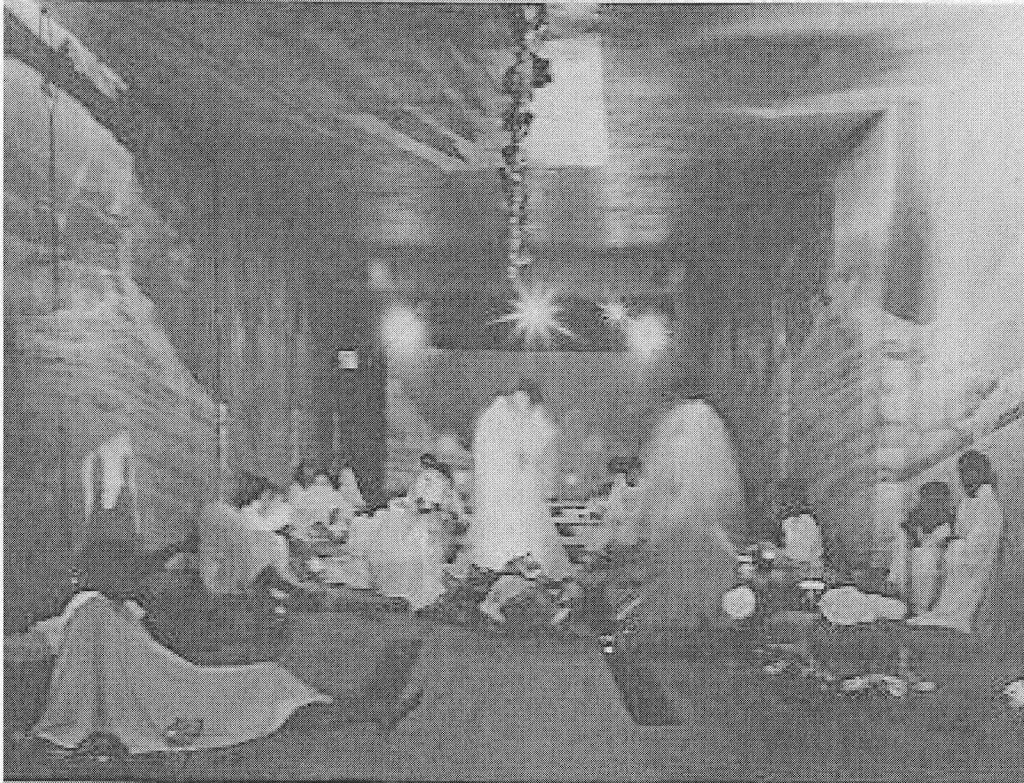
Ghostly figures inhabit Cerebrum, lost in trances*
At Cerebrum, you let everything go. Your clothes even. Once inside, you were asked by a kind young fellow dressed in silver to get completely naked. He then handed you your ensemble for the evening — a flowing, diaphranous robe, hooded and silky, faux futuristic.
Once garbed, you are led inside via a ramp to a gigantic white room, trippy projections on the wall, distortions of a wide variety of music buzz around you, a thin, scented fog sitting in the air. There’s no liquor, only water and marshmallows, served by the so-called ‘Cerebrum guides’, who led visitors through this strange psychedelic spa. No gabby conversations at a crowded bar, only people sitting and staring.
The club was divided into elevated platforms which you could visit to experience the unique stimulants taking place there — headphones with groovy music, musical instruments, balloons, kaleidoscopes, children’s toys — reclining on white pillows on lush white carpeting. Sometimes the ‘guides’ came along and smeared menthol on yoru lips or tingly lotions upon your skin.
Clearly, it wasn’t those marshmallows enhancing your experience here. Cerebrum clientele were a stoned, listless lot, lost in the vague, spectral imagery and sounds. In Currie’s own words, from a biography on the Ridiculous Theatre Company, “Several people said that it always looked like it was going to become an orgy at any moment.”
Time Magazine called it “a theater without a stage show, a cabaret without food or liquor, a party without an occasion”; the fact that Time was there at all meant it was on the cultural radar, at least with drug-friendly, downtown fashionistas. But its novelty drew only the bravest of trendy crowds.
Cooper explains it this way to Time: “We are trying to overturn every entertainment convention—the ‘sit here,’ the ‘look that way,’ the ‘dance over here’.”
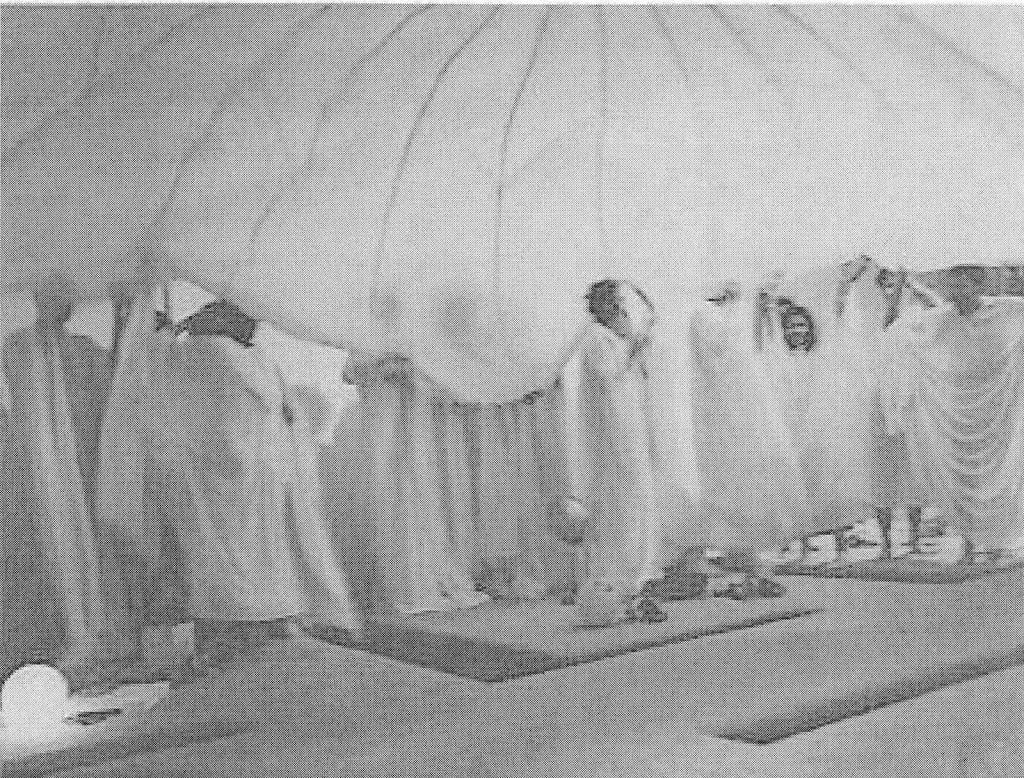
Enter the parachute. You like the parachute.*
Eventually they break out the parachute, with patrons grabbing each side and watching as the white billowy fabrics flaps back and forth in the air. Like what you did in elementary school, except with lots of stoned adults.
Cerebrum stretched the boundaries of interactive theater within the environment of an incredibly chill-out party. And like any good off-off-Broadway production, it closed a lot sooner than it should.
It shuttered early summer of the very next year. The reason was rumored to be mob related. Keep in mind this was the summer of riots outside the mob-run Stonewall bar. But most likely a concept of this type is probably not meant to last. With the 70s on the horizon — with CBGB’s, the Mudd Club, and Studio 54 at the door — a club like Cerebrum seems positively quaint.
FUN FACT: Less than 40 years later, Heath Ledger would die a couple doors down, at 421 Broome Street. Ledger was 28 years old when he died, Cerebrum habitue Hendrix was 27.
You can read here a short recollection by Bart Friedman here, and there’s a nice academic description of the experience here.
*Photos above are by Ferdinand Boesch and are from here. I’m sorry they’re so blurry, but I copied them from a paper and I just had to have pictures of this place to accompany the article.
But the greatest treat is that there’s actual video evidence that this place actually existed, narrated by Ruffin Cooper himself. This video takes awhile to load, but it’s worth it:
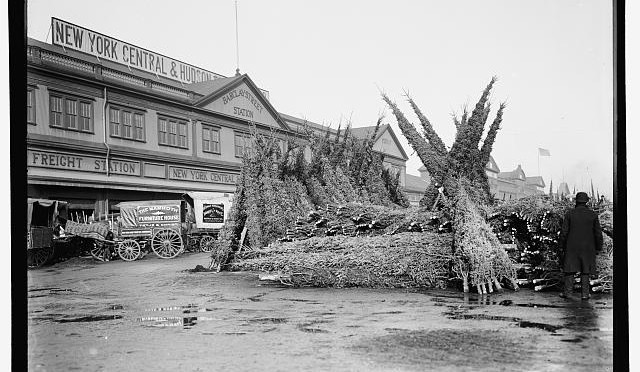
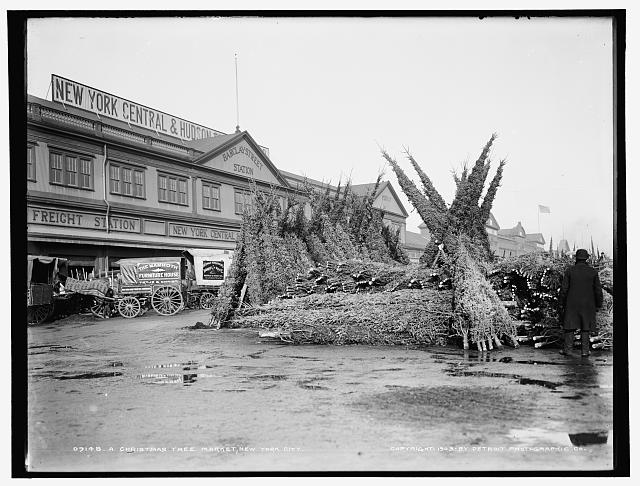
Outside the Barclay Street train station, circa 1903 (courtesy LOC). The Christmas tree marketplace had been well-established by then.
HOW NEW YORK SAVED CHRISTMASThroughout the month I’ll spotlight several events in New York history that actually helped establish the standard Christmas traditions many Americans celebrate today. Not just New York-centric events like the Rockefeller Christmas Tree or the Rockettes, but actual components of the holiday festivities that are practiced in people’s homes today.
It’s that time of year again, when you can’t make it a few blocks down a street without having to wind perilously by stacks of evergreen trees for sale standing in the sidewalk, the poor things plucked from far away to give New Yorkers a little holiday spirit (and in turn making their apartments feel ever smaller). As history has it, the presence of streetside Christmas trees in the city actually predates Christmas as a national holiday (1870).
In the mid-19th century, hardly any modern Christmas traditions existed. One that did was the Christmas tree, a pre-Christian ritual incorporated into holiday festivities in German-speaking European countries (Those traditional settlers, the Puritans, didn’t much care for Christmas at all.) Although the tradition did exist in the United States thanks to the Dutch, it was German immigrants who popularized it. As a huge surge in German immigration began in the 1840s, it’s not surprising that New York’s first Christmas tree market — in fact, the first mass-market sale of Christmas trees in the United States — came along in 1851.
It doesn’t appear that ‘woodsman’ Mark Carr, living in the lush Catskill Mountains, even celebrated Christmas, but he certainly heard tales of families driving outside of town and chopping down evergreen trees to drag into the city. The go-out-and-get-it-yourself approach probably only benefited the wealthy or anybody with a horse and wagon and the time and energy to travel into the forest and find one. Carr, finding the spirit of the holidays (capitalism) deep within him, thought he’d bring the forest to the city folks.
So on the week of Christmas 1851 — things didn’t start so early back then — Carr and his sons chopped down a couple dozen fir and spruce trees, shoved them into two ox sleds, carted them over to Manhattan on a ferry and set up shop in the Washington Market paying one dollar for the privilege of taking up a sidewalk at Washington Market with his rather ungainly merchandise. Holiday revelers were thrilled to be spared the journey out of town, and Carr’s entire stock of evergreens sold out within the day. No surprise this financial opportunity was mimicked by other farmers the next year, and within a few years, the open-air Christmas tree market was born.
Carr, of course, became the Vanderbilt of the Christmas tree, raking in the dough year after year, selling trees for decades. One source even says that Carr’s sons were still selling trees in the city as late as 1898, in a city quite transformed, or as the old House Beautiful magazine put it, “Mark Carr’s little sidewalk stand now rents for several hundred times what he paid for it.”
By the way, here’s what Washington Market looked like on a normal day in 1859. The bustling marketplace, opened in 1812, was a rival of the Fulton Fish Market, and not too terribly far from the Barclay Street Station pictured above.
The only remnant of the market today comes in the form of Washington Market Park, sitting where part of the marketplace once resided. Forgotten NY has an interesting write-up on what happened to the market and neighborhood in later years.
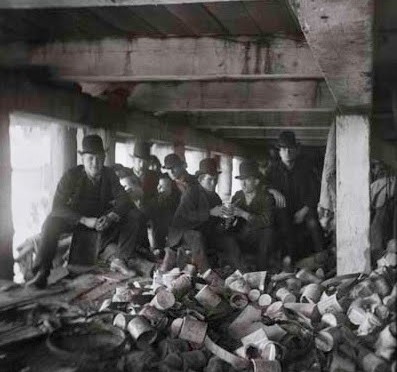
The Short Tail Gang sit underneath a pier at Corlears Hook, picture taken in 1890, long after all the great pirate gangs of the area had disbanded, been eaten by rats, or joined the Confederate army (listen to podcast for explanation!)
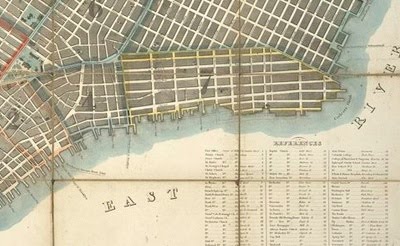
___________________________________ An illustrated map of the ward system of New York in 1817 highlights the Corlears Hook shorefront area of the Seventh Ward and the even more notorious Fourth Ward further down the coast. Much of the Seventh Ward was owned by the Rutgers family, who slowly parcelled out the neighborhood to shipbuilders, business owners and, eventually, tenements.
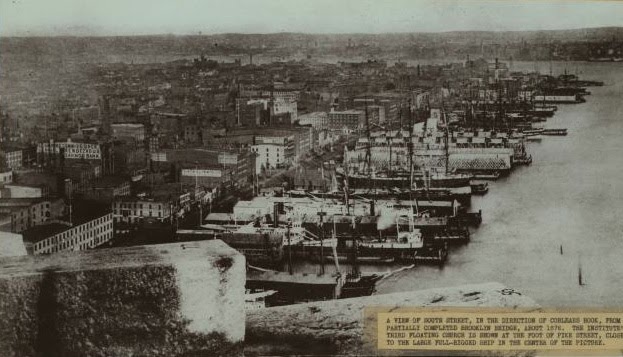
The East River shore in 1876, looking northeast from the uncompleted Brooklyn Bridge, all the way to Corlears Hook
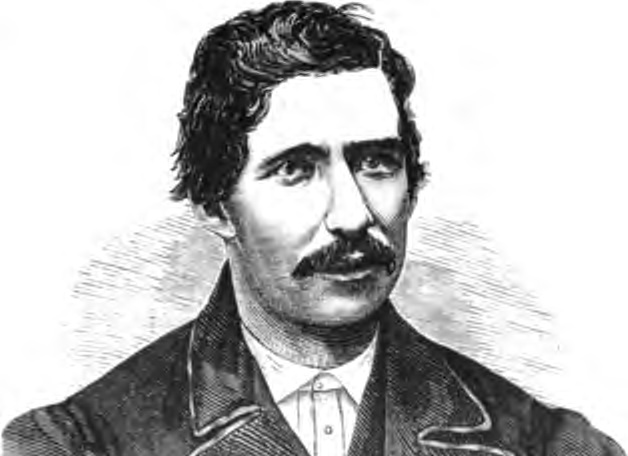
___________________________________ Patsy Conroy, leader of one of the East River’s most ruthless and ambitious gangs, terrorizing shipping vessels throughout New York Harbor.
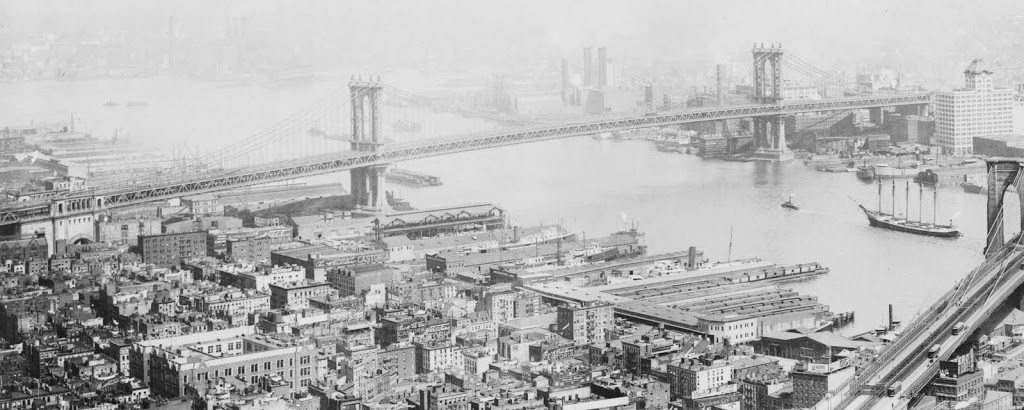
___________________________________ The shore between the Manhattan and Brooklyn bridges, early 20th century.
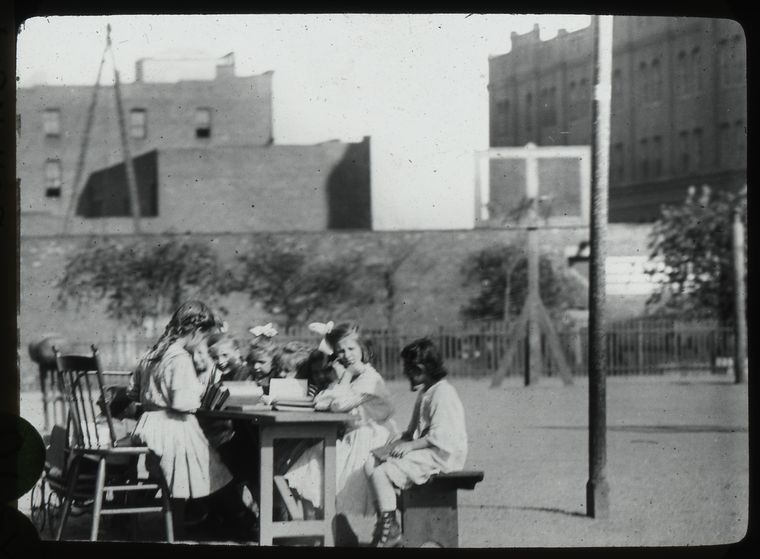
Corlears Hook Park was one of the first municipal parks, opening in 1905. This Lewis Wickes Hine photograph is from 1905 (courtesy of NYPL)
And finally, here’s a film from 1903 depicting the entire East River waterfront at that time. This is more lower Manhattan than Corlears Hook, but it should give you some idea of how clotted and bustling the shoreline was.
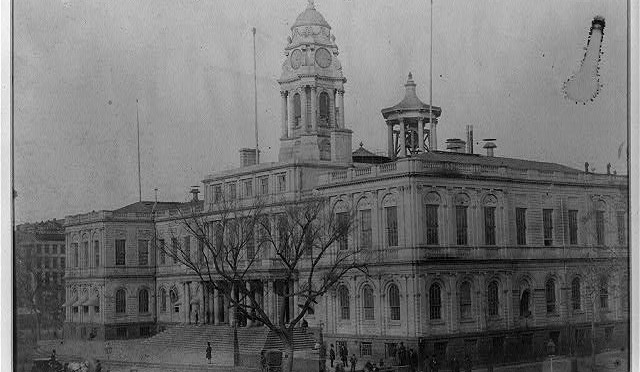
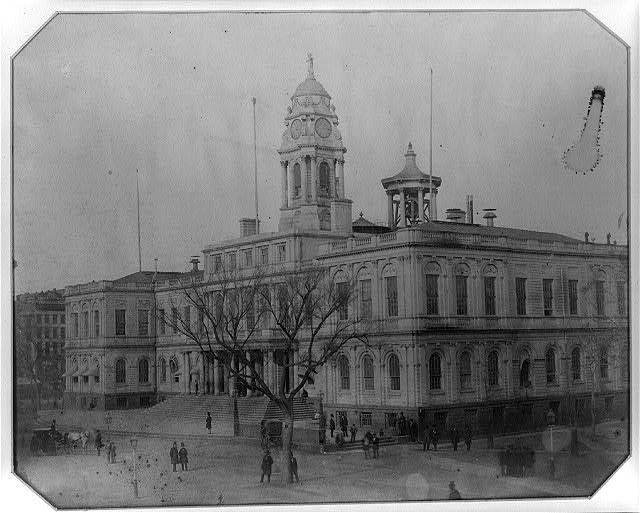
The picture above, taken in 1855, may be the oldest existent photograph of New York’s City Hall building. This is three years before the famous fire, caused by celebratory fireworks, destroyed the cupola and crown. The year this picture was taken, Fernando Wood became mayor of New York’s, beginning a dominance of Tammany Hall that would last for generations.
Other major events in 1855: the city of Brooklyn absorbs Williamburgh and Bushwick, Castle Clinton opens as a immigrant processing center, and Walt Whitman would publish his first version of “Leaves of Grass.”
The photo was shot by Silas A. Holmes, using a process involving salted paper, invented in 1833. Holmes had a photography studio in what would became New York’s ‘photography district’, on Broadway in today’s SoHo area. Like so many in this budding new field, Holmes made his living as a maker of daguerreotypes, a trendy fashion for New Yorkers and quite the novelty of the day.
Not too much is known of Silas, whose claim to fame is apparently patenting a now-forgotten photography process involving a two-lensed camera box.
Although his studio was among the “most popular of the New York photographers,” he made some rather unwise investments “in property that finally swallowed up his earnings”. He abandoned his profession entirely, ending up running a boardinghouse until his death in 1886.
I found the picture above while perusing the Library of Congress archives, but some of Holmes other works can be found in other places, including, oddly enough, in Los Angeles’s Getty Museum. The Metropolitan Museum of Art has another 1855 photograph taken by Holmes, depicting Niagara Falls.
One hundred and twenty-three years ago today, the 21st president of the United States, Chester A. Arthur, died in his Murray Hill home in New York City.
That home, 123 Lexington Avenue, holds a unique distinction in American history; it’s the only extant building in New York City bearing witness to the swearing in of an American president.
George Washington, of course, was famously sworn in as our nation’s first president at Federal Hall; however, that building was demolished in 1812, with the current structure calling itself Federal Hall built in 1842.
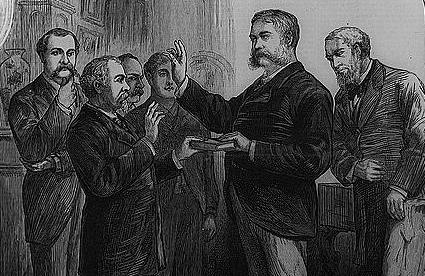
Arthur was quickly sworn in here at his lifelong home at 123 Lexington after the tragic assassination of James Garfield in 1881. He returned to this home after his presidency and died here on the morning of November 18, 1886.
The building holds a fascinating history, but it’s difficult to tell from the outside. Today it is dominated by Kalustyan’s specialty food and spice market which, to be fair, have been in the building since 1944 and is officially an institution for serious chefs.
For more information,Walking Off The Big Apple wrote a nice article on Chester and his home earlier this year. You can read his New York Times obituary here.
The following posting is littered with television spoilers, so please avert your eyes if you’re a ‘Mad Men’ fan who hasn’t seen last night’s season finale.
The show is always a scavenger hunt for New York history buffs, the dialogue sprinkled with famous locations and events, most notably an entire episode to the destruction of Penn Station Last night’s episode, however, brought an accumulation of New York hotel namedropping.
— Withered Don Draper, newly separated from his wife, mentions he’s staying at the Roosevelt Hotel not far from the fictional Sterling Cooper offices at 405 Madison Ave. Up until then, the hotel, built in 1924, was best known as the residence of New York governor Thomas Dewey, who actually used a suite here as his administrative office. (Sorry Albany!)
— The rascally Pete Campbell, perhaps reflecting his ambitious social standing, mentions the luxury Sixth Avenue hotel St. Regis as a meeting place to his wife. Like any good Mad Man alcoholic, he could have enjoyed a bloody mary downstairs at the King Cole lounge, where the drink was allegedly first created.
— Last week’s episode featured a sexual liaison between Peggy Olson and Duck Phillips at the Elysee Hotel at 54th and Madison, against the backdrop of the assassination of JFK. Peggy and Duck might have ran into Marlon Brando or Joe Dimaggio, who both lived at the Elysee. Another famous figure in 1962, Tennessee Williams, resided here for many years and choked to death on an eyedrop bottle cap in one of the rooms here in 1983
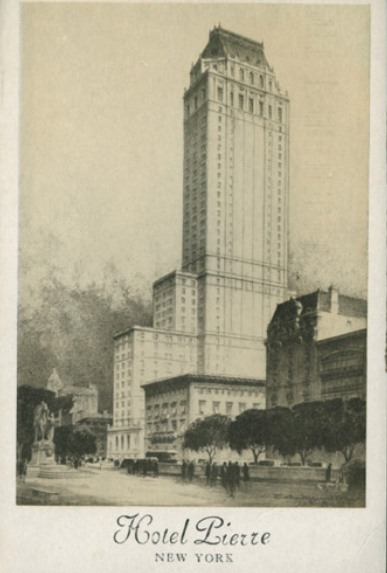
— The culmination of Mad Men’s high-class hotel fetish is a doozy: the ad firm actually moves into a hotel. In this case, the Hotel Pierre on Fifth Avenue, overlooking Central Park. This ornate 1930 gem, rescued from bankruptcy by J. Paul Getty, is slightly north of Madison Avenue’s ad-agency row. No doubt the characters will want to take a break from their new endeavor by having a few cocktails one block away — at the Copacabana, still one of New York’s most popular nightclubs in the early 60s.
And that’s not even to mention one of the show’s central plots this season — the relationship with Don and hotel magnate Conrad Hilton.
By the end of the day today, one person will be named the mayor of New York City and many other people will be named the losers.
But take heart! Many fine people have lost the race for mayor. Today I focus on six rather interesting ones. Reverend Billy, take stock! If you lose today, you join the good company of the following people:
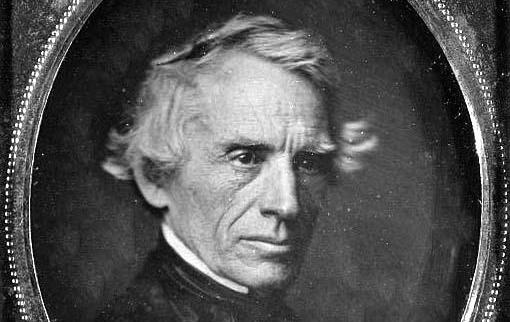
Samuel F.B. Morse Sure, we know him as one of the 19th century’s most important inventors, creator of the telegraph and the dots and dashes that bear his name. But did you also know Morse was a virulent anti-Catholic and was once a mayoral candidate in 1836 for the Native American Party — in this case, ‘native’ American meaning anybody not newly immigrated? He saw Catholic conspiracies everywhere. People were not convinced; he received less than 1,500 votes. (He would run again in 1844 and not even muster 100 votes.)
Why he lost? As he had not achieved name recogniztion yet, his campaign against Tammany-backed Cornelius Lawrence was doomed from the start.
If he won… Morse was also a prolific portraitist and could have done his own to hang in City Hall
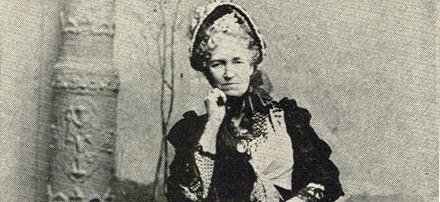
Cynthia Leonard A political thinker, sufferagette and stage mom, Leonard played by her own rules. Nobody was going to tell her that a recently seperated woman couldn’t move to New York with her two lovely daughters and run for mayor of New York City in 1888! Why hasn’t Meryl Streep made this woman’s movie yet? Why she lost? Being a rich New York woman in 1888 might have granted you social powers, but few political ones If she won… The newspapers would have ignored her and written all about her daughter — the glorious Lillian Russell, who the press was already obsessed with. Most likely, her daughter’s ambiguous affair with Diamond Jim Brady would have scandalized New York more than it already did.
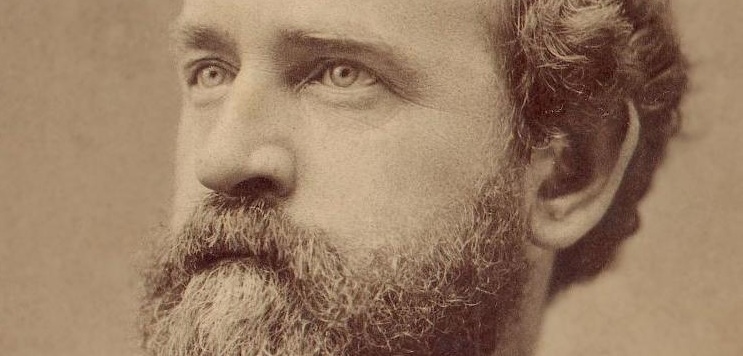
Henry George The political economist and founder of philosophical land theories appropriately named Georgism desperately wanted to share his vision with New Yorkers, running for mayor in 1886 under the United Labor Party, and actually beat out a young politico named Theodore Roosevelt. Both lost to Abram Hewitt. He ran again in 1897 under the far more ambitious party title The Democracy of Thomas Jefferson. Why he lost? The first time, he didn’t have Tammany’s backing or Hewitt’s appeal. In 1897, there was another minor snafu; George died four days before the election, of a stroke brought on by campaigning. If he won… The city would have been ran by his son, Richard F George, who stood in for his dead father.
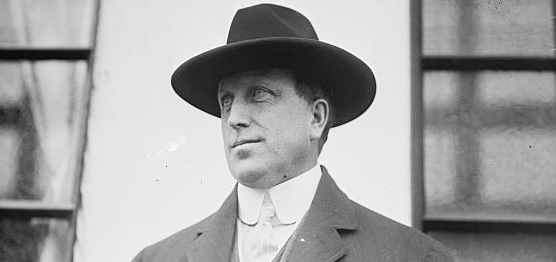
William Randolph Hearst Perhaps more ingraciously known as the inspiration for Citizen Kane, newspaperman and millionaire Hearst couldn’t buy himself the mayor’s seat, believe it or not, running in 1905 and 1909 under the fleeting Municipal Ownership League and Civic Alliance parties, respectively Why he lost? Tammany Hall was re-ascendant at the turn of the century, and Hearst their biggest enemy. If he won…One of the richest men in America and owner of a media empire as mayor? Never happen. ALSO: Citizen Kane might have been even more interesting.
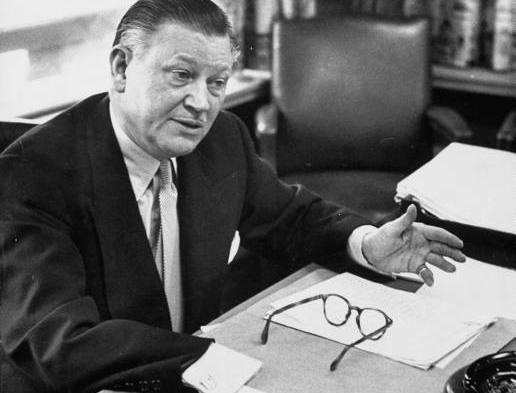
Robert K. Christenberry Thrown to the wolves as a token Republican candidate against a popular incumbent Robert Wagner, Hotel Astor manager Christenberry was crushed by his opponent, receiving slightly more than 25% of the vote. Why he lost? He wasn’t the most politically saavy man who ever lived. If he won…He would have been the first mayor with no right hand (he lost it in the war)
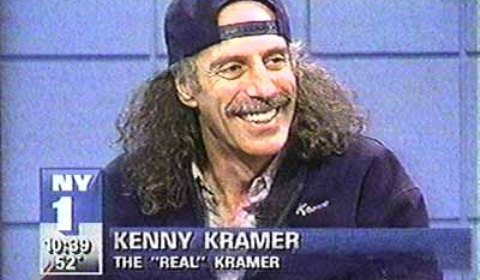
Kenny Kramer The man who inspired a character on Seinfeld threw his ballcap into the ring as the Libertarian Party candidate in 2001. Why he lost? For one, the man who won, Bloomberg, is a billionaire. Also, Kenny may have had a credibility problem. When he tried running in 1997 — with Seinfeld still on the air — the Daily News ran an article ‘No Joke! Real Life Kramer’s Running“ If he won…then who would run the Seinfeld Reality bus tours?
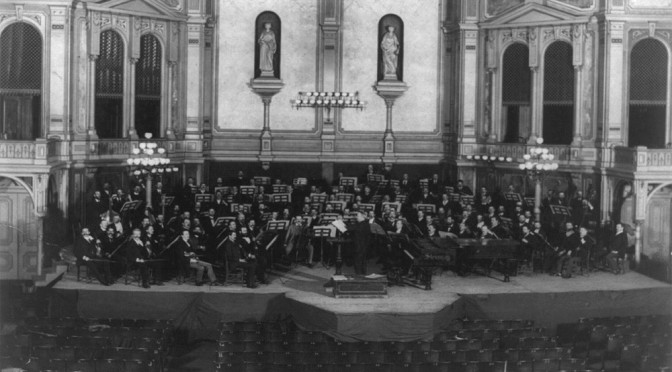
Inside Steinway Hall 1890: the 14th Street concert venue could seat 2,000 and also functioned as a showroom for Steinway pianos
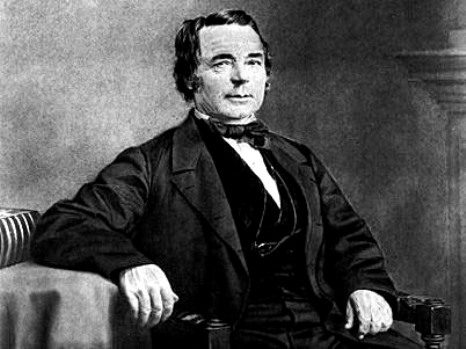
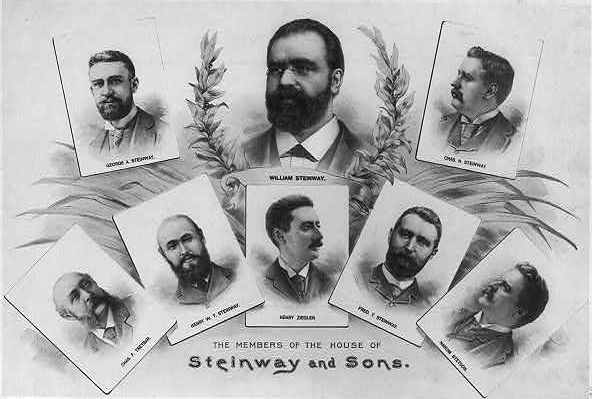
Henry Steinway, a German immigrant who came to New York in 1850, made his name in various showrooms and factories in downtown Manhattan, enticing the wealthy with his award-winning quality pianos. At their grand Steinway Hall on 14th Street, the family turned a popular concert venue into a clever marketing opportunity.
But their ultimate fate would lie outside of Manhattan; the Steinways would graduate from an innovative factory on Park Avenue to their very own company village in Queens, the basis of a neighborhood which still bears their name today. You may not know much about pianos, but you’ve crossed path with this family’s influence in the city. Tune in for this short history of Henry Steinway and his sons.
PODCAST Download this show it for FREE on iTunes or other podcasting services. Click this linkto download it directly from our satellite site. Or click below to listen here:
___________________________________
As always, click on pictures for a bigger view
Hello Henry: Heinrich Steinweg made his first piano as a present for his bride. A year later he completed his very first grand piano and began a small manufacturing practice with his sons. They took the show on the road to New York in 1850.
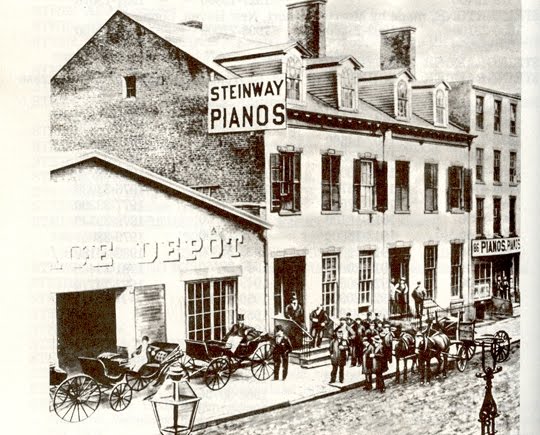
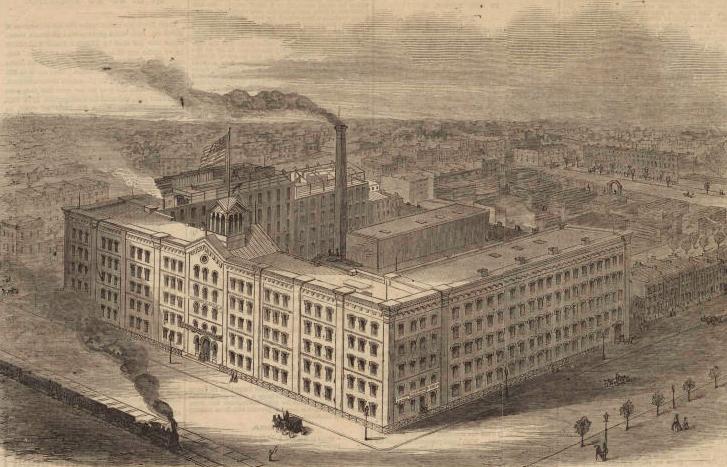
First movement: Within three years of arriving in New York harbor, the Steinways had opened their first workshop on Varick Street, then moved to a larger space on at 82-88 Walker Street (illustrated below).
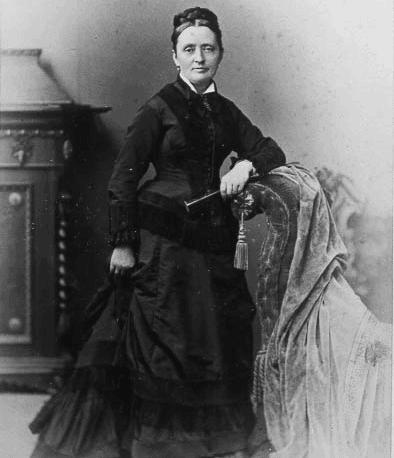
Daughter Doretta Steinway, in her later years. Doretta was key to Steinway’s early success, due to her generous offering of free piano lessons to anyone who purchased an instrument from them.
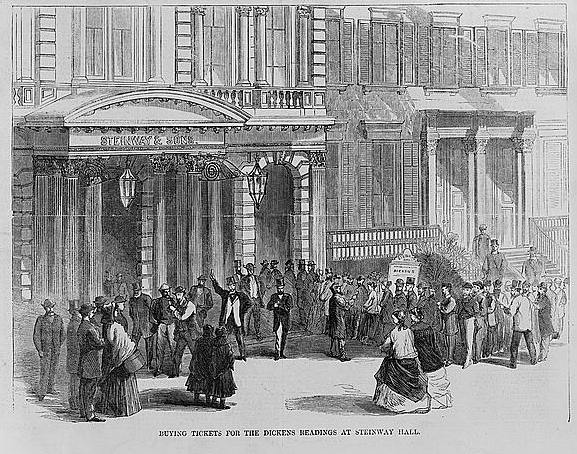
Steinway Hall, built in 1864, was located at 71-73 East 14th Street, right off of fashionable Union Square. The hall hosted a great variety of functions, not just music performances. The illustration below depicts the frenzy outside of a Charles Dickens reading.
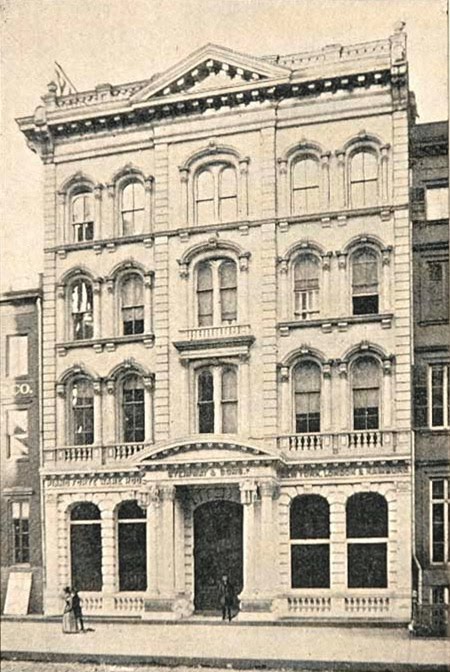
The front of the hall, which also featured a showroom of all the latest Steinway products. The venue was such a smashing success that other halls opened around the world.
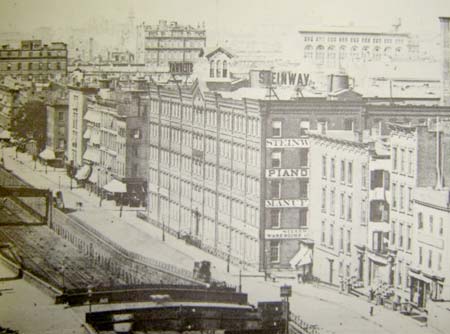
To illustrate how fast the city was moving uptown, this photo shows the same factory just 30 years later. Its dated 1890, although at this time most Steinway operations had moved to their headquarters in Queens. Either they were still doing some work here at this time, or else nobody bothered to rename the building! Note the train tracks in front, rolling their way down to the Grand Central Depot.
Full house: After Henry’s death in 1871, the Steinway boys would move the company’s operation to Queens. William Steinway would display ambitions far beyond pianos, expanding his pursuits to include public transportation and even automobiles.
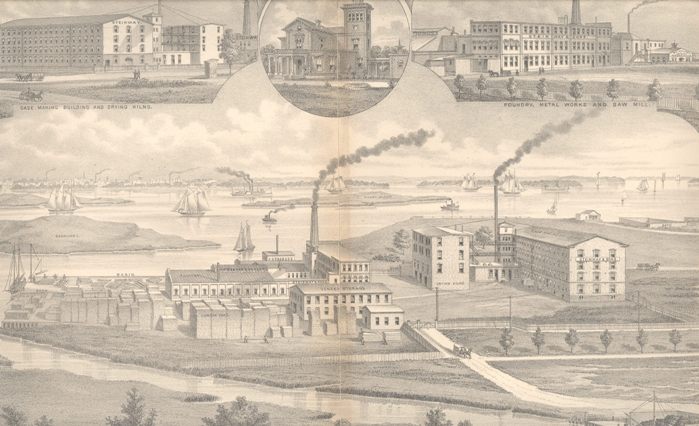
A bucolic illustration of Steinway’s Astoria factory, with river access and company village for their workers. The move allowed the Steinways to expand; it also thwarted labor groups and gave the company more power over its employees.
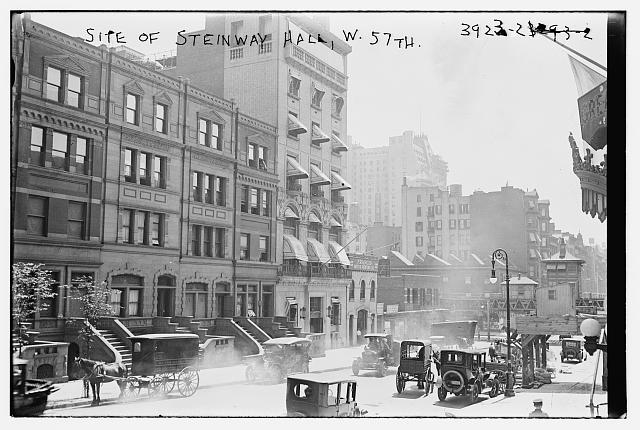
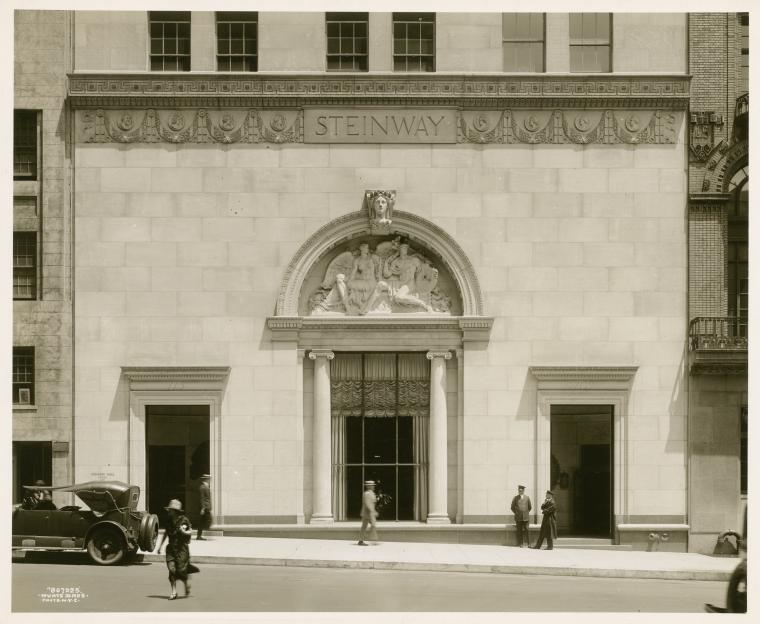
In 1925, Steinway Hall moved uptown to 57th Street, not so terribly far away from their old factory. The sooty, smelly neighborhood had become Park Avenue, and 57th Street was graced with Carnegie Hall. So naturally, the Steinways got out of no-longer-fashionable Union Square and joined the high society ranks accumulating uptown.
The new hall, designed by Warren and Wetmore, was a far smaller venue but still featured a Steinway piano showroom. You can still stroll through it today and peruse their instruments.
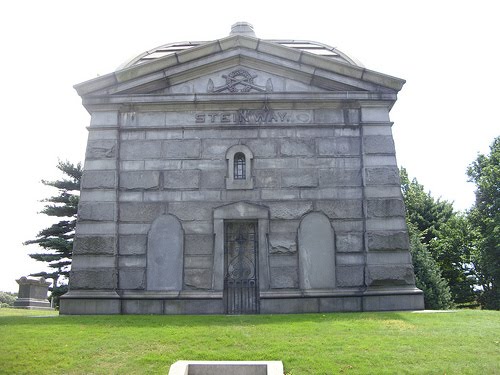
The Steinway vault at Green-Wood Cemetery. I greatly encourage a visit to Green-Wood. And while you’re visiting the Steinway, swing over and say hello to Boss Tweed! He’s buried right nearby.
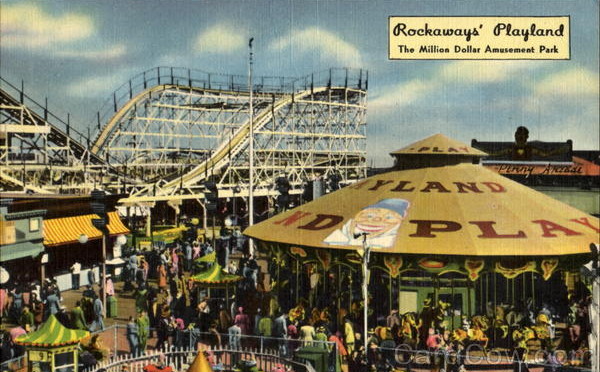
ABOVE: The long-gone Rockaway Playland, Queens answer to Coney Island at Rockaway Beach that was wiped away for condo developments in 1987. A friendly reminder of what could have happened to Coney Island.
Look here for a huge selection of postcards remembering this forgotten Queens amusement park.
KNOW YOUR MAYORS Our modest little series about some of the greatest, notorious, most important, even most useless, mayors of New York City. Other entrants in our mayoral survey can be found here.
MayorJacob Westervelt In office: 1853-1855
Dutch-blooded Jacob Aaron Westervelt, 24th man to become mayor of New York since the British evacuation of 1783, lived in a two-family home at 308 East Broadway near Grand Street. This seems like a rather odd spot for a mayoral residence today, and perhaps even then. Today there is no 308 East Broadway, there’s only a grim-looking public school and a barren traffic island.
But there are some surviving row houses just down the block — preserved Federal-style buildings at 247-249 East Broadway — so just imagine a fancier version of these on the spot that Westervelt’s residence once stood, many years before this neighborhood would become associated with squalor and overcrowding.
Now image this: an angry mob of 5,000 men with torches, surrounding this very home in the winter of 1853, painting a cross on the doorway and crying for his head. His crime: he sides with Catholics. Scandal! What would a mayor have to do garner that sort of reception today?
Westervelt is better known today for his original profession as master ship-builder. Few men who served as mayor of New York were better regarded internationally as Westervelt, who once received an honor from the king of Spain for making them some of the fastest ships in the sea.
Jacob was born twenty days into the year 1800 in Tenefly, New Jersey, but moved with his family into New York when he was only four years old. His father was a builder and constructed several new homes along Franklin Street, near the area being drained of that marshy, polluted mess known as Collect Pond.
By age 14, Jacob was apprenticing with famed shipbuilder Christian Bergh at his shipyard off Corlear’s Hook — not coincidentally more than a few blocks from Westervelt’s later residence as mayor.
Bergh would spawn one of New York’s wealthiest families, although incongruently his son Henry Bergh would become the best known member — as the founder of the American Society for the Prevention of Cruelty to Animals. Henry is also known for this weird mausoleum at Green-wood Cemetery.
The Berghs would eventually abandon shipbuilding after Christian’s death. His young apprentice Jacob would carry the torch for him, eventually taking over Bergh’s shipyards, expanding with other business partners up and down the East River shore, and using southern American and European connections to soon dominate the shipbuilding business. By 1845, Westervelt had overseen the construction of dozens of clippers, schooners and steamships, among the fastest and most reliable on the Atlantic Ocean.
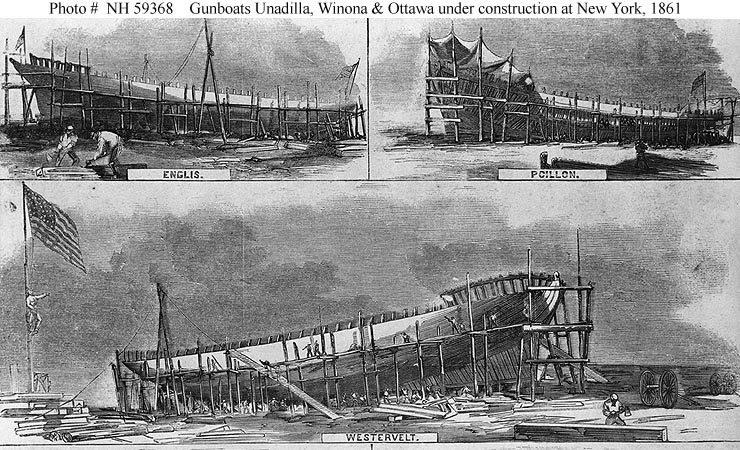
Below: an illustration of various boatbuilders in 1861, including Westervelt at bottom
As a pioneer of reliable and innovative shipping vessels, Westervelt’s influence was felt internationally. In the world of mid-19th century politics, that made him an ideal candidate for public office, and especially to Democratic machine Tammany Hall. As one of Manhattan’s most visible men of industry, Jacob employed hundreds of new Irish immigrants, Tammany’s prime voting bloc. In fact, Westervelt had already briefly served as council alderman for his district in 1840.
In 1852, Tammany could use a man of relatively unblemished character. The stench of corruption was already swirling around the powerful, entrenched Democrats in office — and this was in the years before Boss Tweed! Derisively known as the Forty Thieves**, the Democratic aldermen in City Hall were easily and openly bought, by everyone it seems but the mayor at the time, anti-Tammany reformer Ambrose Kingsland. City expenditures swelled, the elaborate web of political kickbacks and bribery gelling during this period.
But Tammany was looking to start fresh — or at least strike the apperances of doing so — choosing Westervelt as their reform-lite candidate in 1853, a symbol of prosperity in a wobbly New York economy. Westervelt, on the surface, looked like somebody who could quell the city’s massive over-expenditure. On the strength of a surging Democratic national ticket with presidential candidate Franklin Pierce, Westervelt was easily elected by the largest margin yet during a mayoral race, defeating the now-forgotten Whig Morgan Morgans.
Although, this being the 1850s, one can assume that total to be highly suspicious. “No registry law was in force to hinder men from voting…as often as twenty times,” claimed one early history.
Westervelt inherited several massive projects which were bloating the city budgets, including Central Park. Already a done deal when Westervelt entered office, the mayor sought to cut the park space in half due a bloated, overwhelmed city budget. Had Westervelt ruled the day, Central Park would have started on 72nd Street! His plans would be reversed a few years later by Mayor Fernando Wood.
More appropriately, Westervelt became president of a world’s fair in 1853, more specifically called the Great Exhibition of the Industry of All Nations and housed in the glorious Crystal Palace in the area of today’s Bryant Park. Having a man of industry preside over a fair of industry was both fortuous and apt; certainly examples of his own creations were displayed with other technological marvels of the age like the elevator.
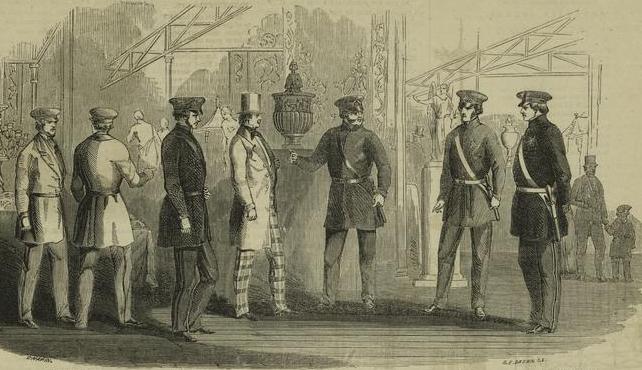
Below: the well-uniformed Crystal Palace police officers (pic courtesy NYPL)
One of the mayor’s lasting contributions was in New York police reform, creating a Board of Police Commissioners with himself in charge to apply a strict code of ethics to an already chaotic, corrupted body. In doing so, he wrangled away from his more corrupt Democratic brethren their ability to buy and sell police jobs as a form of political patronage.
But his most radical idea is today the most obvious: he mandated that every police officer should wear a uniform, an “expensive and fantastical” requirement according to his opponents who believed it “unrepublican to put the servants of the City in livery.”
Westervelt managed to make himself with one very unpopular with one group: the Know-Nothings, a ‘native American’ group who feared the swelling hordes of Irish and Catholic immigrants and the Catholicism they brought with them. The group would reach peak influence across the country in the mid-1850s, and they would actually gain significant political traction in other cities. In New York, they more often showed their moxie in the form of rioting.
The mayor earned their ire on December 11, 1853, when he ordered a street preacher arrested for gathering a group of 10,000 to listen to his frothing Know-Nothing spiel. It probably didn’t help matters that said preacher had organized on Westervelt’s own wharfs on the East River!
At the beginning of this article, I mentioned Jacob’s address — 308 East Broadway. A bit out-of-way of New York’s high society, sure, but Westervelt wished to be close to his ships. In fact, he and his partner Robert Connelly both built adjoining houses on this spot, facing Grand Street. According to Harper’s, “Over the door was a large stone cap on which was carved the representation of a ships taffrail.” (Taffrail is nautical for “the upper part of the ship’s stern“)
Thus, the angered Know-Nothing crowds were scant blocks from the mayors door. A reported 5,000 men gathered outside Westervelt’s home, demanding retribution and the release of the arrested preacher. To remind the mayor what this argument was all about, they painted a gigantic cross upon the door.
This story outlines Westervelt’s uneasy dual role as city leader and businessman. In 1855, the ships won out. Jacob bowed out, allowing Wood to finally ascend to the mayor’s desk for the first time. His best work as a shipbuilder was indeed ahead of him, though he would make brief returns into the political fray, first as a state senator, then in a newly created job in which he was most qualified — the New York commissioner for docks and ferries, from 1870 until his death in 1879. He died at his home on 63 West 48th Street, in the area of Rockefeller Center today.
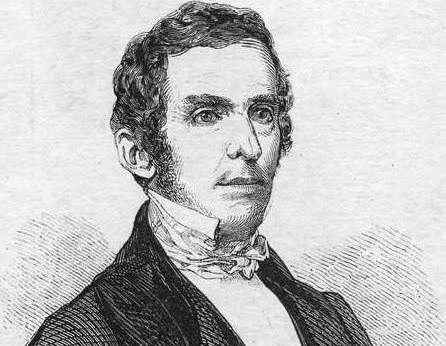
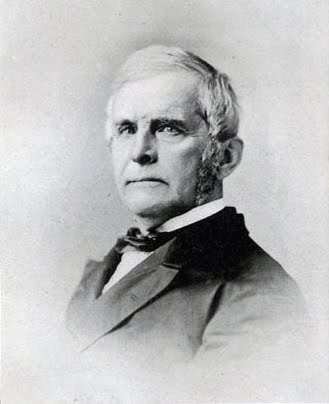
Pictured at right: Westervelt at age 70
** Not to be confused with New York’s first gang, also called The Forty Thieves
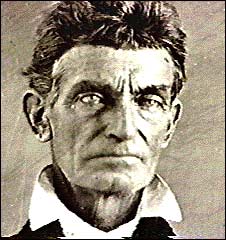
Today is the 150th anniversary of the raid on Harpers Ferry in West Virginia by radical abolitionist John Brown (at left), a failed attempt to free slaves and start a revolution. I recently found this article outlining John Brown’s various visits to New York City. Most notably, Brown met one of his lieutenants here, Hugh Forbes, who fought beside the failed Italian revolutionary Garibaldi.
Brown would often come to Manhattan to visit his son John Brown Jr, who apprenticed at the townhouse office of Fowler & Wells at 131 Nassau Street, near City Hall. (Find a picture of their later office at 27 East 21st Street here.)
What exactly was Fowler & Wells? They were practitioners in the antiquated art of phrenology, an actual 19th century science that gauged a person’s brain capacity, personality and potential based on the size and shape of their skull.
According to the Kings Handbook of New York, the offices of Fowler & Wells featured various phrenology parlors and a lecture room populated with “the casts of heads of people who have been prominent in many ways over the years; also, skulls from many nations and tribes, as well as animal crania, illustrative of phrenology, and constituting a free public museum, and material for instruction in the institute.”
Its founders Orson and Lorenzo Fowler popularized the pseudo-science writing various tomes on the subject like Matrimony, or Phrenology Applied to the Selection of Companions and Phrenology Proved, Illustrated and Applied.
John Brown Sr. actually got his head examined — literally — by Orson Fowler in 1847. His diagnosis? “You have a pretty good opinion of yourself. You might be persuaded but to drive you would be impossible.”
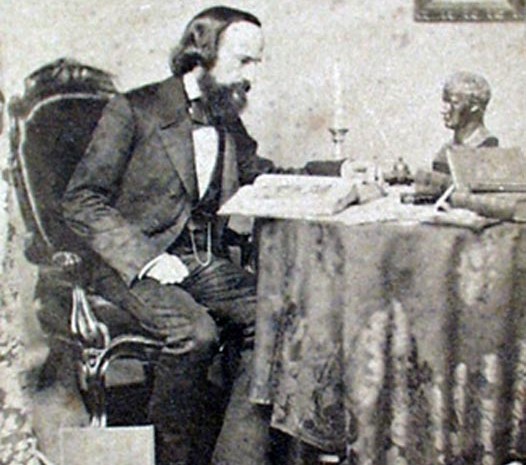
Below: A picture of Lornezo seated in his New York office