Rockefeller Center’s greatest art scandals!

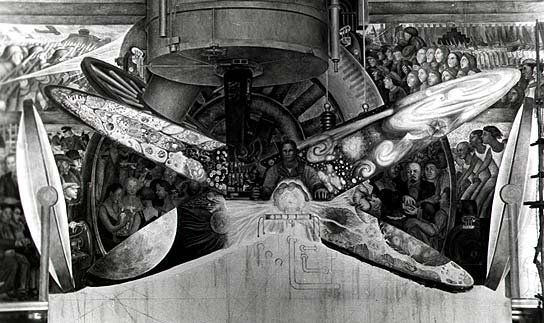
Above: Diego Rivera’s contentious creation

Despite JD Rockefeller Jr’s aversion to the ‘impropriety’ of modern art, Rockefeller Center has always been bursting with it, from the large outdoor installations sprouting up in the plaza to the gorgeous art deco blazing from its walls.

As with modern art for public display however, the Rock has sometimes riled the community with challenging and occasionally offensive art pieces.

The most famous of course is Diego Rivera’s Man at the Crossroads (pictured above), his epic mural created in 1933 with the supposed theme of ‘new frontiers’. Rivera was a favorite of Rockefeller’s wife Abby, having feted the artist in a show at the Museum of Modern Art in 1931. Rivera, however, was no tool of the rich. Amongst the many May Day figures depicted in Rivera’s expressive narrative mural is one Vladimir Lenin, communist leader and Marxist icon.

He was asked to repaint the Lenin figure but Rivera staunchly refused. The press had a field day, finding the depiction insulting and pressuring the Rockefellers to completely cover the mural, then a few months later, destroying it entirely. One photograph of the mural remains — and of course, a near exact copy that Rivera later painted in Mexico.

Yet another depiction of another controversial leader was allowed to stay.
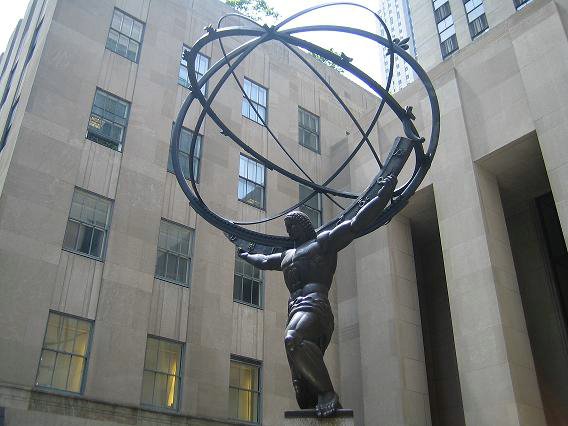
Just a few years later in 1936, art deco master Lee Lawrie created his mighty two-ton Atlas, probably one of the most recognizable pieces of artwork in the city of New York.

He currently stands directly in front of St. Patrick’s Cathedral, so you can imagine the surprise of many when it was rumored the face of Atlas was modelled after Italian dictator and all around bad guy Benito Mussolini. Although protestors picketed the statue, good Atlas was allowed to stay.

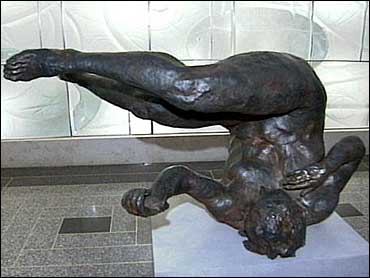
Flash forward a few decades to 2002 and a more modest piece that sat briefly in the Rockefeller Center concourse, not far from the skating rink — Erik Fischl’s Tumbling Woman. A bronze figure in the style of Rodin, this image of a falling woman installed as a Sept. 11 memorial on its first anniverary greatly disturbed passers-by.

After the New York Post threw the controversy on its front page, the figure was removed. Interestingly, the artist never intended the sculpture to be displayed publicly at all.
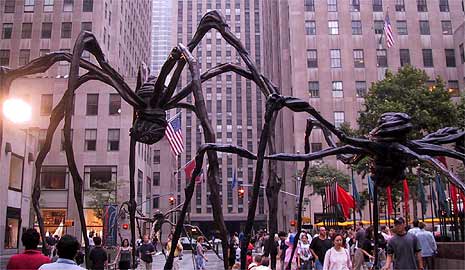
Then there were Louise Bourgeois’ gigantic spiders, which stood commanding the plaza for the entire summer in 2001.

As illustrated with all the previous art pieces discussed, timing (or rather, bad timing) is everything. These pieces might have been too disturbing for people had they been standing just a few months later, in the wake of Sept. 11. As they were only around for the summer, however, the only real controversy were several mild cases of nausea and probably a few panicked children.
A brief history of New York Giants

I’ve had a couple emails asking us to do a New York Giants podcast this week. Oh, had I known! We would have planned one. However, by the end of next month, we will unveil another major sports-themed podcast.

In the meantime, here’s a few New York Giants’ non-statistical, history-related factoids to chew on and toss out to your friends at Sunday night’s Superbowl party:

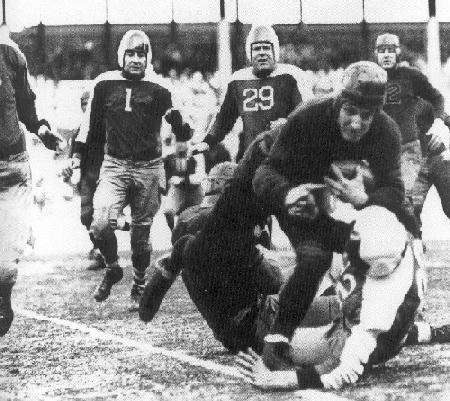
— The National Football League was all of five years old when the Giants, and four other teams, joined up in 1925. New York was an unusual place to host a professional football team back then; teams normally propped up the spirits of small to mid-size towns (Canton, Muncie, Rock Island, Portsmith, Akron, Buffalo) and many were particularly centered in Ohio. That’s why the Football Hall of Fame is in Canton.
— Promoter and bookie Tim Mara bought the New York Giants for all of $500 back in 1925, and for his troubles almost went bankrupt. The team thanks him by immediately losing their first three games, before charging through an amazing winning streak and ending the season 8-4.
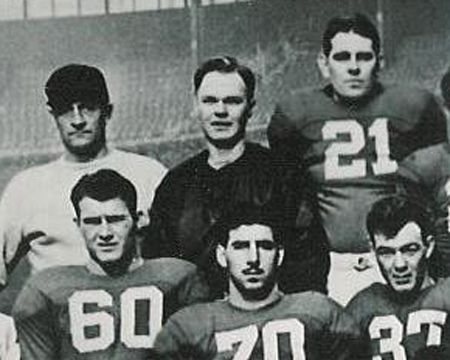
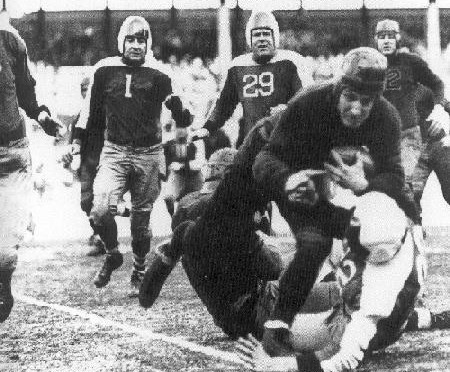
— In 1931, Mara passes ownership of his team to his two sons Jack Mara (age 22) and Wellington Mara (age 14). By far, Wellington is the youngest owner ever of a major league football team. Believe it or not, he would co-own the team all the way until his death in 2005! (That’s him in the pic below, with the team in 1941).

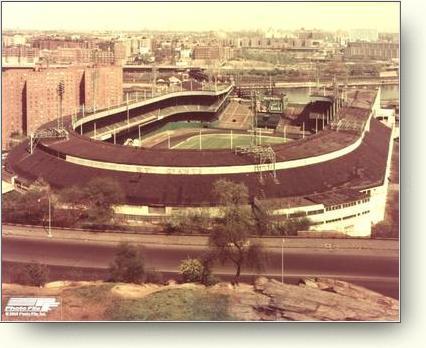
— The Giants played at Polo Grounds, at West 155th Street and Eighth Avenue, as did almost every other New York sports team at one time or another, including the New York Jets (even when they were known as the Titans). Sports enthusiasts referred to it as Polo Grounds IV, as three prior incarnations (including one in the same spot) have hosted New York sporting events since the 19th Century.

— In a 1934 game with the Chicago Bears, the temperature dipped to 9 degrees, and the grounds were so icy that the coach made the Giants switch to basketball sneakers in the Fourth Quarter, effectively winning them the game 30-13 against the slippery Bears. The game is infamously known as ‘The Sneaker Game’.

— A game against crosstown rivals the Brooklyn Dodgers (yes, they were a football team too) on Dec 7, 1941, was interrupted by the announcement of the attack on Pearl Harbor and the call for military personnel over the loudspeakers. Giants player Al Blozis would enlist in the Army and die in Vosges Mountains during the Battle of the Bulge; his number 32 would be permanently retired.

(Above: overhead shot of the Giants’ early home, the Polo Grounds)

— The Giants move to Yankee Stadium in 1956. That same year popular Giants player Frank Gifford (Kathee Lee’s husband) won the National Football League’s MVP honor.

— 1958 The Giants play the Baltimore Colts in the first-ever televised championship game, largely considered in football mythology as ‘The Greatest Game Ever Played’.

— 1966: the Giants worst season, going 1-12-1

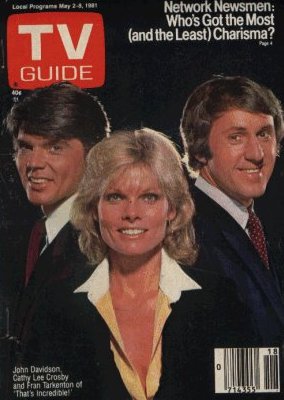
Fran Tarkenton, a Giant quarterback from 1967-72, became so popular that he became host of the 70s show That’s Incredible with co-hosts John Davidson and Cathy Lee Crosby.

— The Yankees kick out the Giants, and they prep for a new stadium to be built in East Rutherford, NJ. So from 1973 to 74, the Giants temporarily move their games to New Haven, Connecticut and the Yale campus. However, after terrible losses there, they double back to the city to share Shea Stadium with the Jets for a single season (1975)

— Yay! The Giants move into their new stadium in 1976. They rejoice by promptly losing almost every game they play there, ending with a 3-11 record.

— The Giants have won the Super Bowl exactly TWICE (1986 and 1990), however before the NFL-AFL merger in 1970, they did manage to be the NFL champs four times.

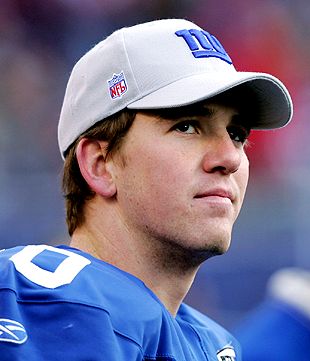
Eli Manning starts with the Giants in 2004. His first decisive performance came in January 2, 2005, in a 28-24 win against the Dallas Cowboys.

— Wellington Mara, a constant presence with the Giants since his teens, dies at age 89.

Check out the Giants official history. And thanks to Sports Encylopedia for the info…

Park Avenue’s stylish slaughterhouse

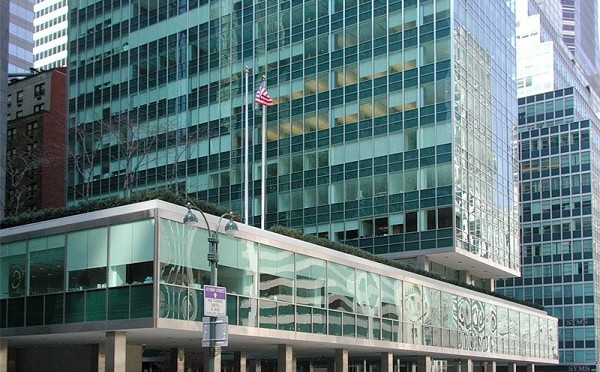
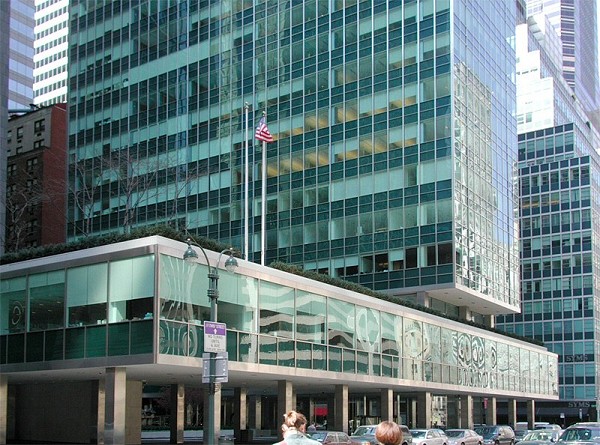
The Lever House at 390 Park Avenue, along with the United Nations building, ushered in New York’s obsession with the International Style of architecture in the 40s and 50s — clean and blocky thin glass icons in the sky. It’s no surprise to find the building was built in 1952 for a soap manufacturer, the Lever Brothers. The soap has since gone from the interiors of this sleek and cool structure, but they’ve been replaced with something more bizarre — human and animal gore.

Or rather, the aesthetic purveyor of such gore, the inimitable Damien Hirst. The Satan spawn of the British art scene, whose sometimes seemingly simple work bursts with shock value (and later, high price tags), has been a favorite of patron and German real estate mogul Aby Rosen, who just happens to own the Lever House.

Rosen is an art collector and enthusiast, hiring Whitney Museum curator Richard Marshall in 2004 to spice up the once frigid plaza and the redesigned William T. Georgis Lever lobby with some truly eye catching pieces.


The Lever has already seen such vivid works by artists like Jorge Pardo, Peter Wegner, A.V. Day (a dramatic, fabric-rent ‘Bride Fight’), and Jeff Koons (literally many blow-up Incredible Hulk dolls). Corridors within the Lever house works by Jean-Michel Basquiat and Andy Warhol.

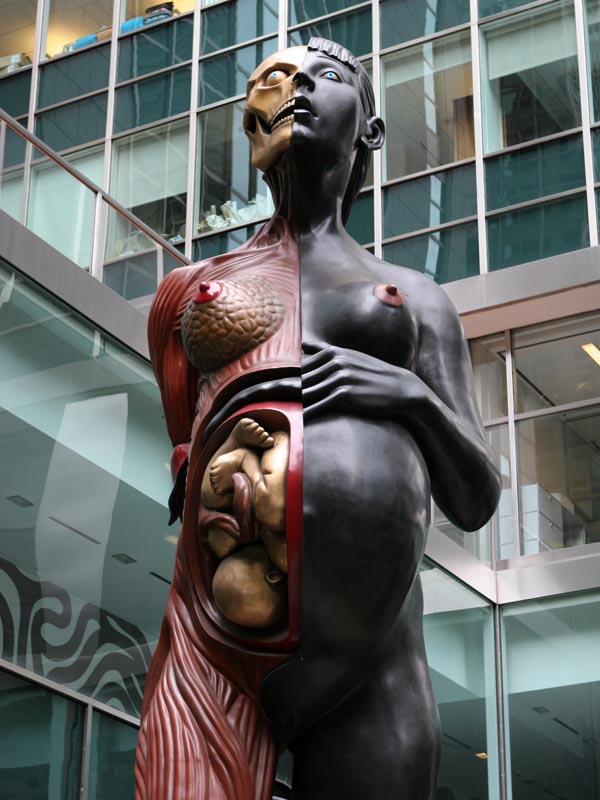
But Hirst is the Lever’s golden boy, giving the outdoor plaza a striking 34 foot tall naked pregnant ‘Virgin Mother’ (at left), in the Hirst fashion with most of her skin falling off. According to Interior Design, The lady “looks directly into the Lever Brothers corporate cafeteria.” As of last year, she has a twin across the pond in London at Royal Academy of Arts.

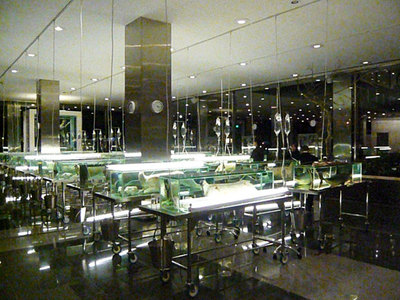
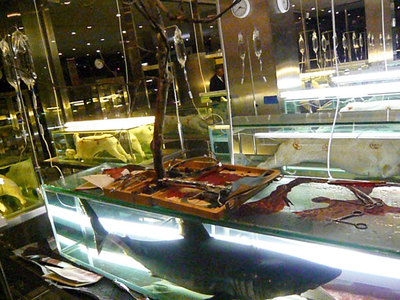
Until mid-February, you can catch more Hirst wrecking havoc in the Lever lobby as well. Laboring under the title “School: The Archaeology of Lost Desires, Comprehending Infinity, and the Search for Knowledge,” the entire lobby if filled with animal carcasses behind glass, often paired with furniture.

A couple images from the exhibit are below. Why not stop by on your lunch break today?

Photos from Slamxhype by Paul Mittleman

Categories
Podcasts

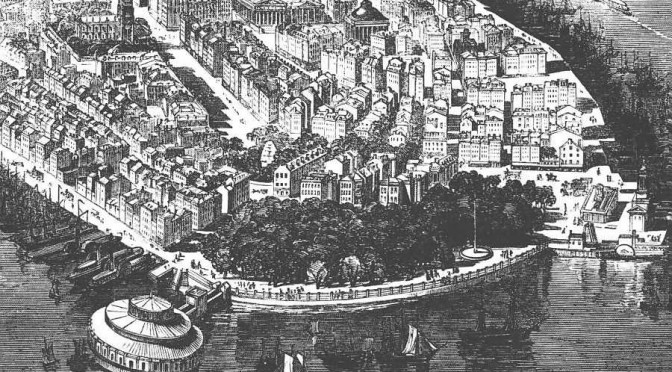
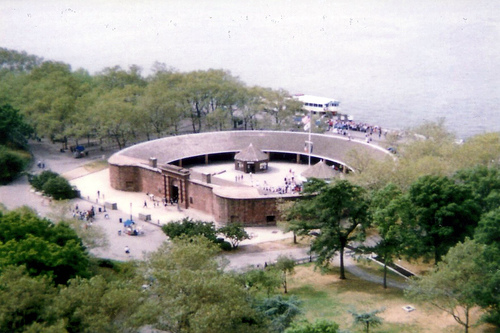
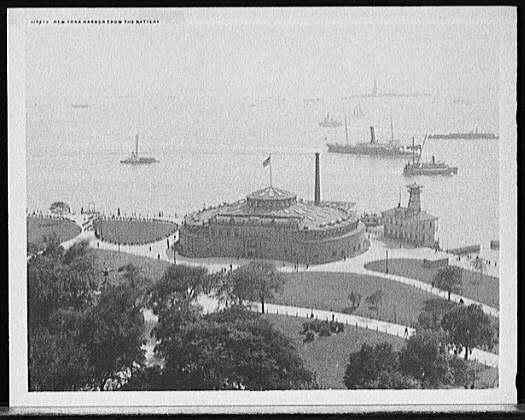
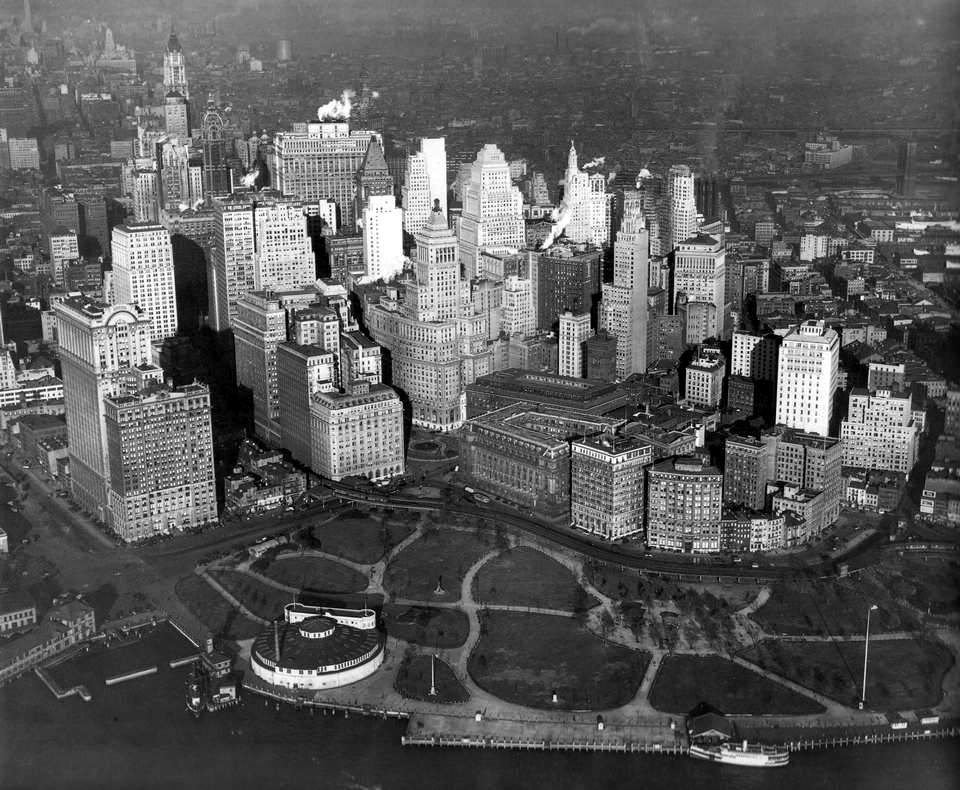
PODCAST: Battery Park and Castle Clinton

Take a stroll through southern Manhattan’s Battery Park and Castle Clinton.

Listen to it for free on iTunes or other podcasting services. Or you can download or listen to it HERE

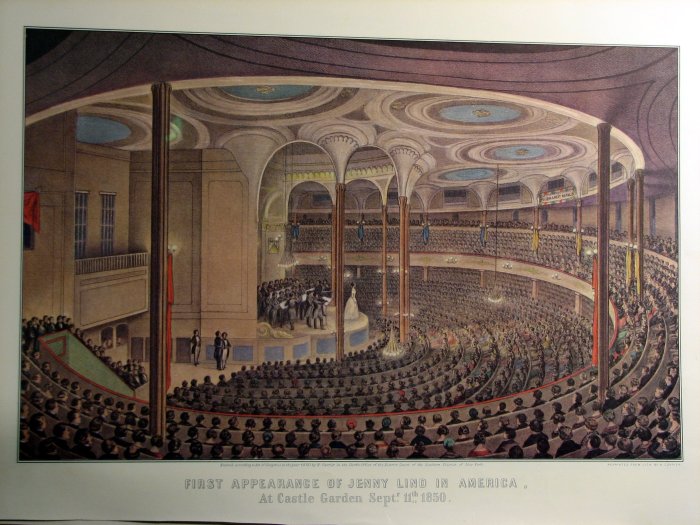
A famous depiction in its own right, this is of Jenny Lind inside the Castle Garden auditorium:

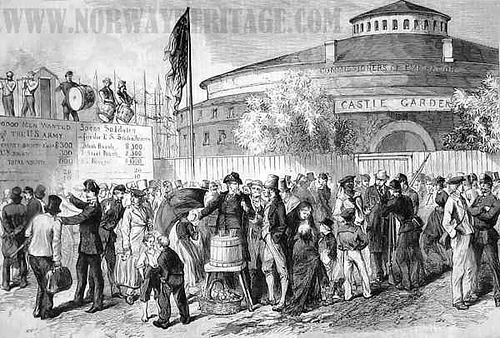
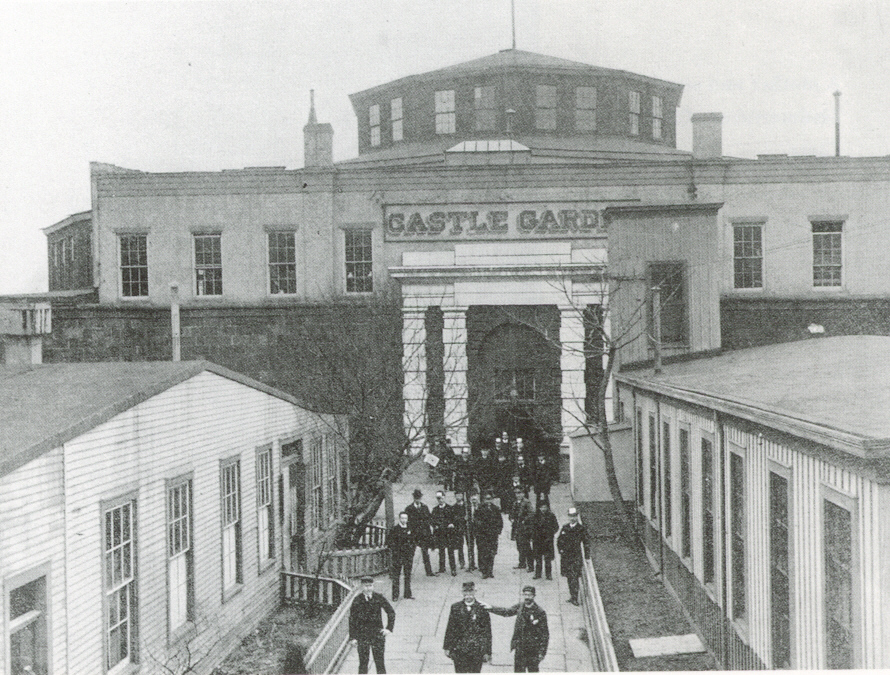
Castle Clinton as Emigrant Depot

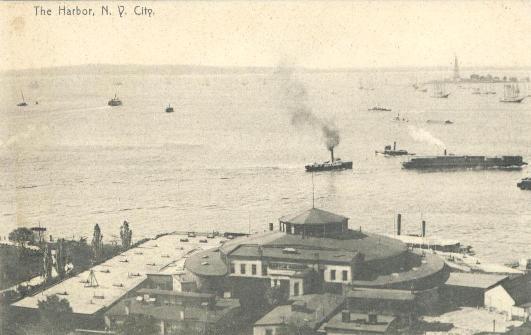
Castle Clinton as the New York City Aquarium in 1906

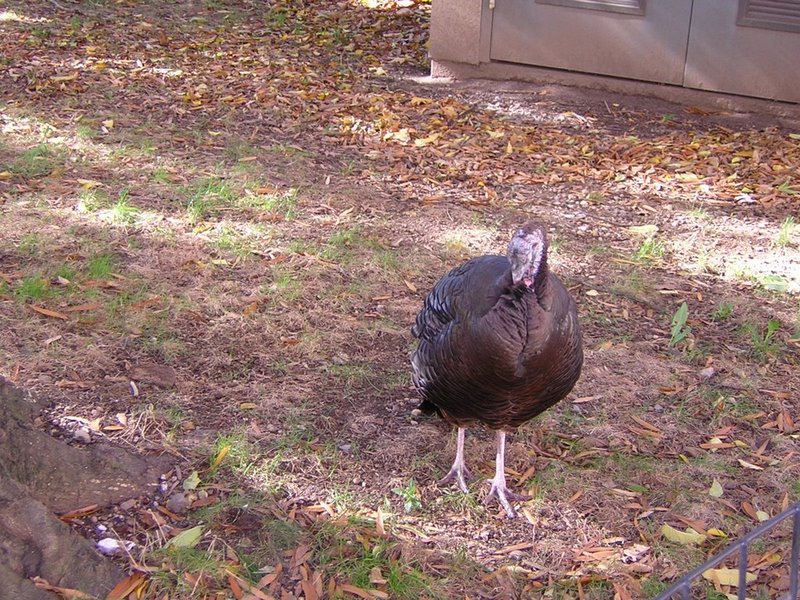
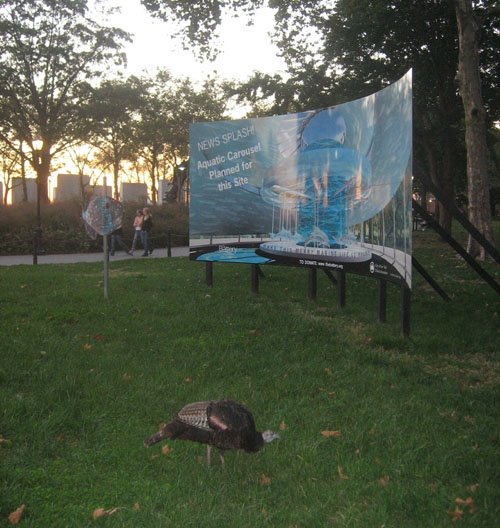
In our podcast, we mention many of the great monuments and statues of Battery Park. What we failed to mention is one of Battery Park’s most treasured features … Zelda the turkey!

Yes, that’s right, a turkey named Zelda lives in Battery Park and freely roams the lawn. She’s still there as far as I know (I last saw Zelda about four months ago). Hopefully she’s keeping warm for the winter.


(Above photo courtesy of Curbed)

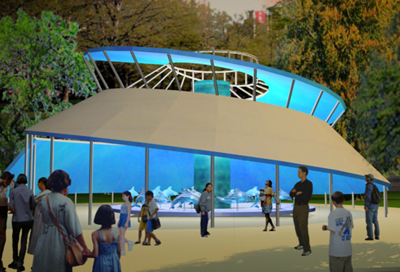
A fixture of future Battery Park — if the Battery Conservancy gets its way — will be a swanky new aquatic themed carousel, paying tribute to the former aquarium there.

Time’s up for Astor Place’s famous clock

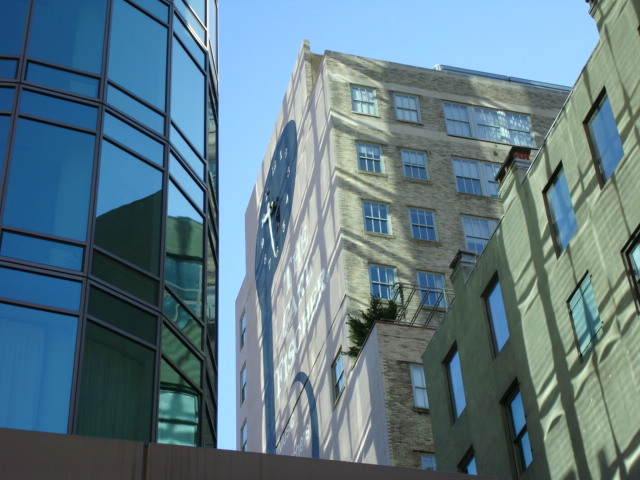
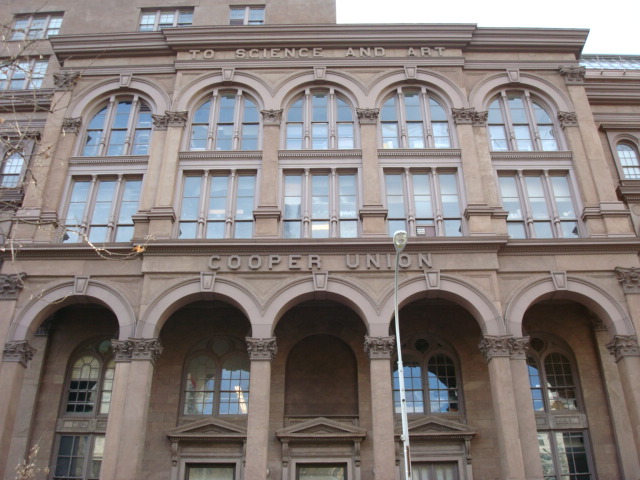
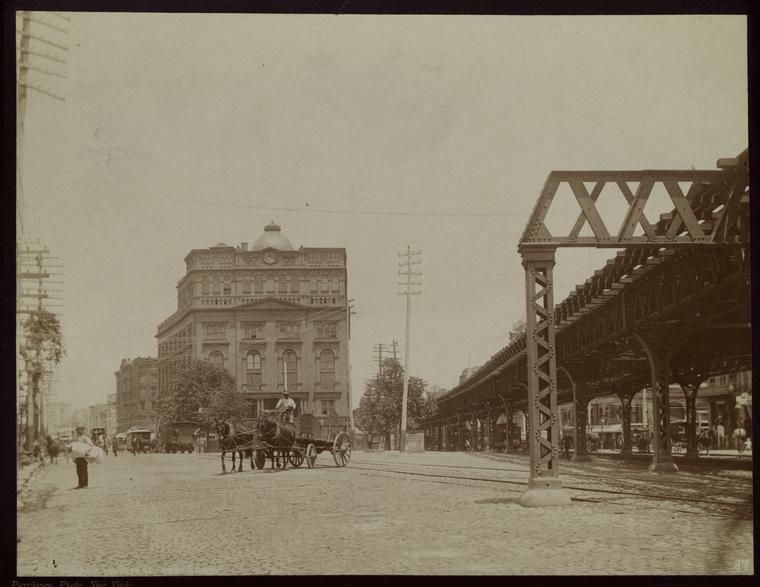
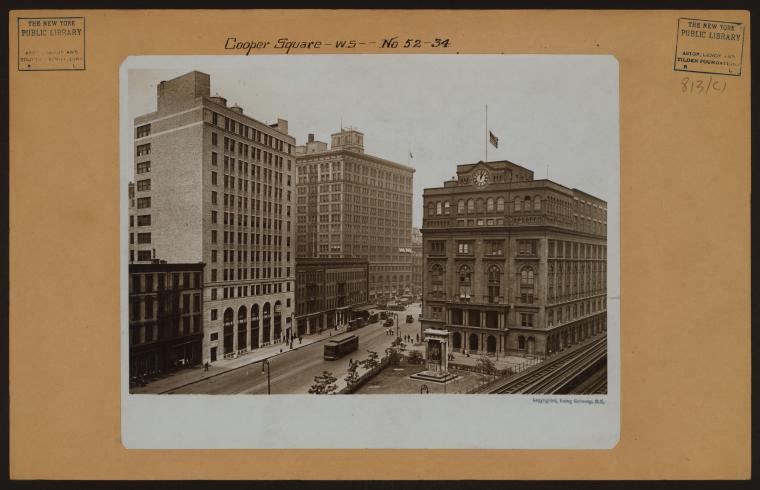
Before we leave Cooper Union, I thought I was draw your attention a rather controversial decision they’ve made in the past few years that has marred an institution of Astor Place — the Carl Fischer note clock.

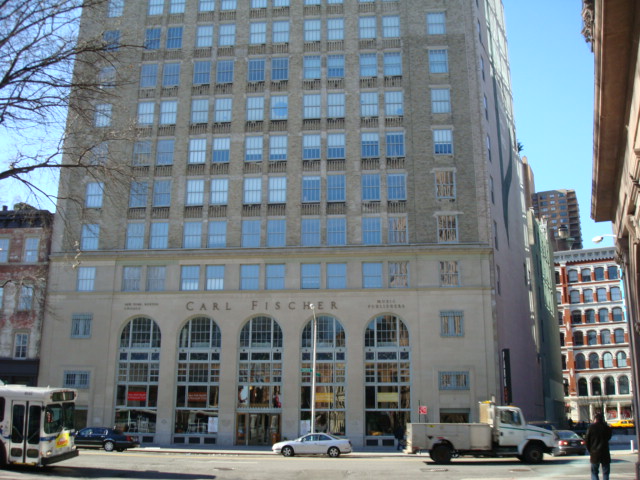
Carl Fischer, still a leader in printed sheet music, began as a tiny musical instrument store on East 4th Street in 1872, successfully incorporating printed music by the end of the century. Carl’s son Walter carried on the business into the next century, moving the enterprise into a new beige 12-story building at 62 Cooper Square, right off Astor Place in 1923.

Throughout the years, it was the place in downtown New York to grab the sheet music for any occasion and even into the 1990s held on to its old-school charm, with uniformed attendants in the elevators and little evidence of modern technical organization. In 1999, the company moved out of the building, which now houses 26 loft apartments. Their new location is at 65 Bleeker Street.

Even if you never bought sheet music, the store was a fixture of Astor Place due to the charming clock, blooming from a gigantic eighth note, that stretched down the side of the building, hovering over a small parking lot below. There has always been a clock alongside the building as long as Fischer was in the building, though it the past it was incorporated into murals featuring a boy scout with a drum, an art-deco sun pattern, and a marching band.

The parking lot has always been owned by Cooper Union, and it’s no surprise given the condo frenzy that has possessed New York that in 1999, the same year that Carl Fischer vacated the premises, they decided to lease to Gwathmey Siegel & Associates for a new condominium.

That parking lot has a bit of a storied history of its own, a frequent spot for people to sell a mix of unusual wares along the street. Author Michael Galinsky wrote about this curious intersection several years ago and kindly forwarded me a link to Flickr that featured some pictures from the book which I highly recommend you check out, especially if you’re a fan of 80s New York street scenes.

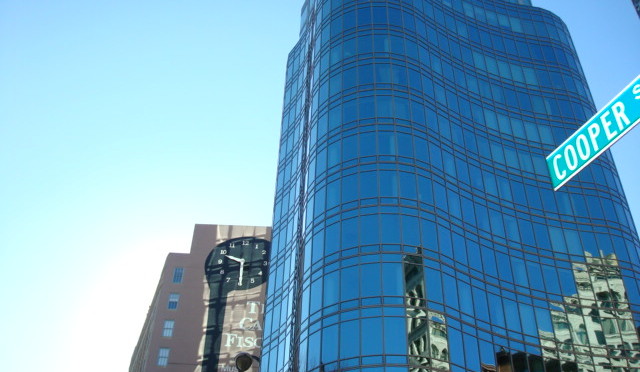
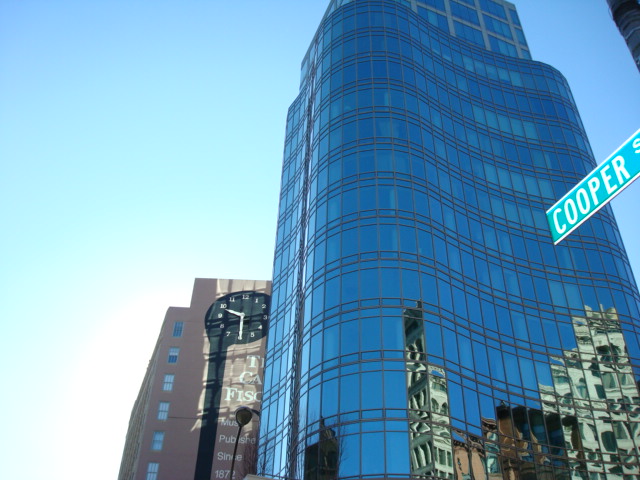
However, that parking lot is gone, replaced with the Astor Place Tower, a sleek 21 story glass tower. I leave it to you to form your own opinions about this building. What is has done, however, is completely dwarf the famous old clock, completely obscuring it at many times of the day with a glare and creating an awkward canyon between the Tower and the Fischer building that can’t be creating a very attractive view from certain windows.

Categories
Podcasts

PODCAST: Peter Cooper and Cooper Union

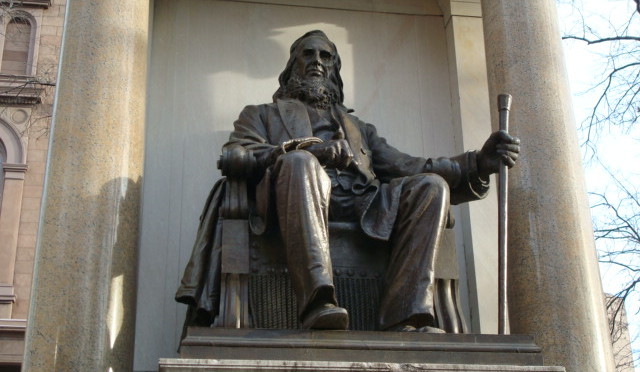
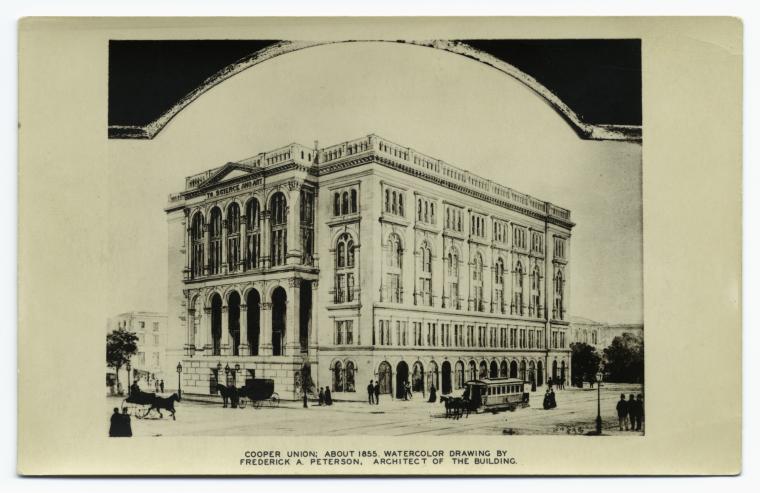
Cooper Union is one of New York City’s more storied institutions, not only fostering the best and brightest of art and architecture, but playing host to presidents and activists. Also, find out a little about its amazingly resourceful founder Peter Cooper

Listen to it for free on iTunes or other podcasting services. Or you can download or listen to it HERE

Know Your Mayors: Abram S. Hewitt

Our modest little series about some of the greatest, notorious, most important, even most useless, mayors of New York City. Other entrants in our mayoral survey can be found here.

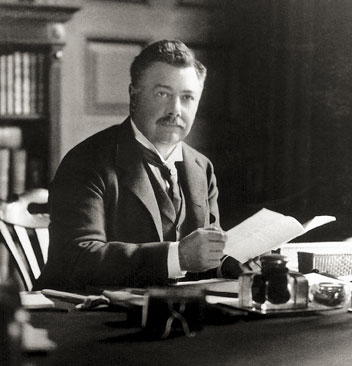
Abram Hewitt could easily be considered a very pivotal mayor in New York City, given the significant development and personal connections he had to the heart of the city. However a shipwreck very nearly did him in before he could even get started.

Hewitt, born upstate in Haverstraw, attended Columbia and taught mathmatics, where he became friendly with a student he was tutoring, Edward Cooper. The two of them later voyaged to Europe in 1844, but on the way back to America, their ship capsized off the coast of Cape May.

He, Edward and the crew were later rescued, but the experience affected Hewitt deeply (and rather vaingloriously): “It taught me…that my life which had been miraculously rescued belonged not to me, and from that hour I gave it to the work which from that time has been in my thoughts — the welfare of my fellow-citizens.”

It had a more lucrative effect as well; for Edward Cooper happened to be the only son of industrialist Peter Cooper. Hewitt’s bravery bonded him with the Cooper family, becoming lifelong friends with Edward and marrying Edward’s sister Sarah.

He helped found Trenton Iron Company with the Coopers and became the first to experiment with the inexpensive steel-producing Bessemer process in the United States.

But politics was soon in Abram’s sights, especially with the crumbling of Boss Tweed’s Tammany Hall after his fall in 1871. Hewitt reorganized that once-corrupt Democratic political machine with political rewards for himself, elected to the U.S. House of Representatives in 1874.

He even tried his hand at national politics, managing Samuel Tilden’s nearly-successful quest for the White House in 1876. Remember this from history class? Despite Tilden winning the popular vote, an electoral fiaso gave the election to Rutherford B Hayes.

As Hewitt held court in Washington — becoming, in Henry Adams’ words “the most useful public man in Washington” — his close friend and brother-in-law Edward Cooper would be elected mayor of New York in 1879.

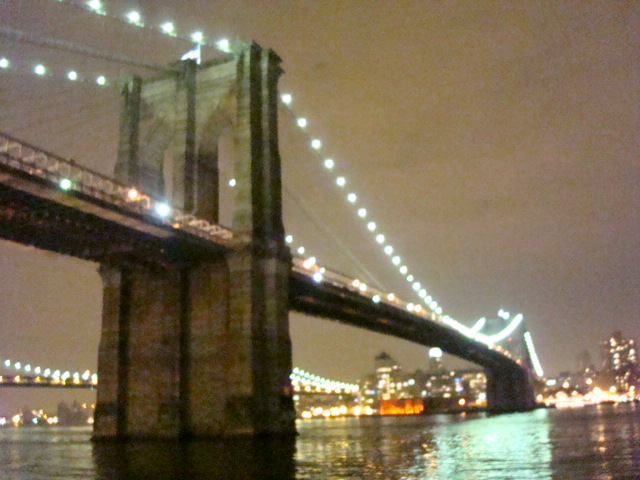
Hewitt’s connections in Washington would assist in getting the neccessary attentions brought to the building of the Brooklyn Bridge. Although David McCullough dryly notes that Hewitt might have inadvertantly helped weaken the Bridge by helping deliever the wire bid to Brooklyn native (and total fraud) J. Lloyd Haugh. (More about him in last week’s podcast.) Hewitt would give a most stirring speech during the Bridge opening ceremony in 1883.

Finally, Hewitt himself would become mayor of New York City in 1886 during a heated election in which a candidate by the name of Theodore Roosevelt would place third.

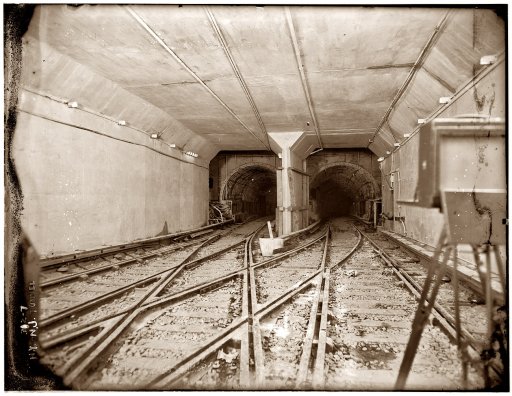
Hewitt strong distain for corruption in city politics ran him against his old organization Tammany Hall. He also had strong moral convictions, fighting to keep city saloons closed on Sunday. (This did not endear him to many people.) However, he strongly advocated the creation of new city parks and began work on a much-delayed underground train system — which Tweed’s machine had stalled for years. In fact, Hewitt is considered the “Father of the New York Subway.”

He was defeated in 1888, partially due to angering the Irish community because he refused to attend the St Patricks Day Parade. (Hewitt tended to be of a more nativist stripe; among other demands, he required all immigrants take a literacy test.)

He spent his later years as a philanthropist, on the boards of the Carnegie Institution and the Museum of Natural History. When he died in 1903, Andrew Carnegie himself claimed the former mayor was “America’s foremost private citizen“.

Categories
Podcasts Uncategorized

PODCAST: The Brooklyn Bridge

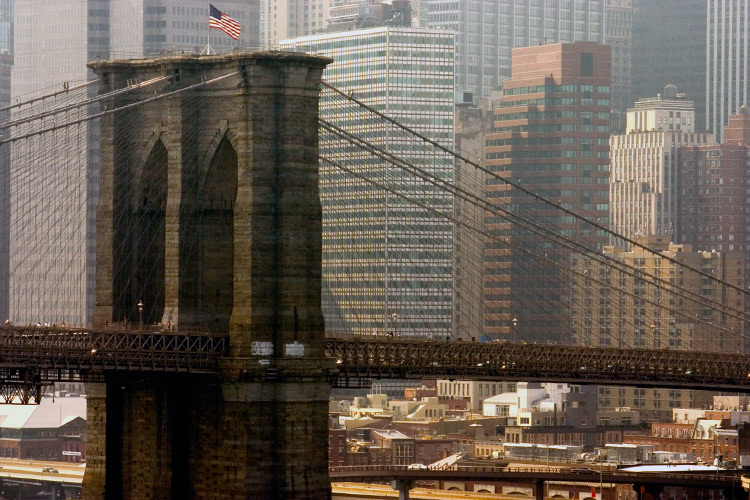
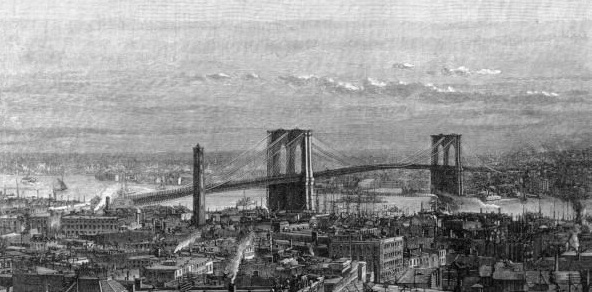
The Bowery Boys explore the story and the family behind the Brooklyn Bridge, one of New York’s most treasured landmarks.

Plus: Looking to get really close with the Brooklyn Bridge? Take one of our Brooklyn Bridge Walking Tours, with the Great Great Grandson of Washington and Emily Roebling, Kriss Roebling!

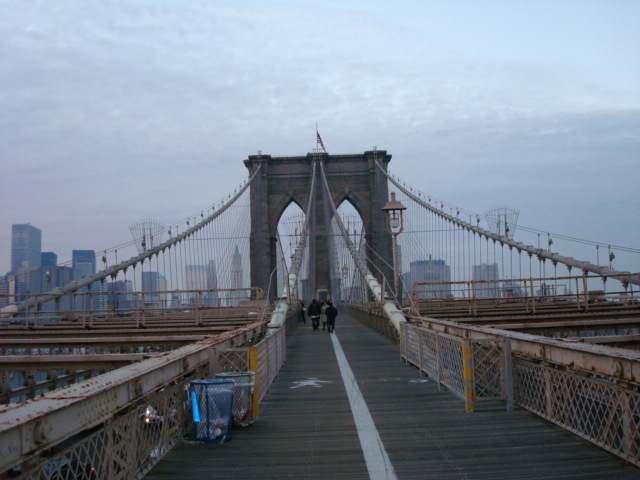
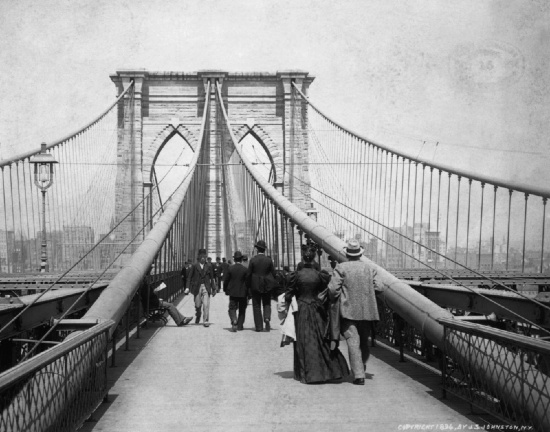
The walkway in 1894….

….and today

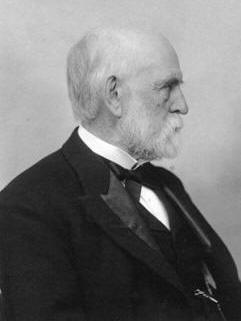
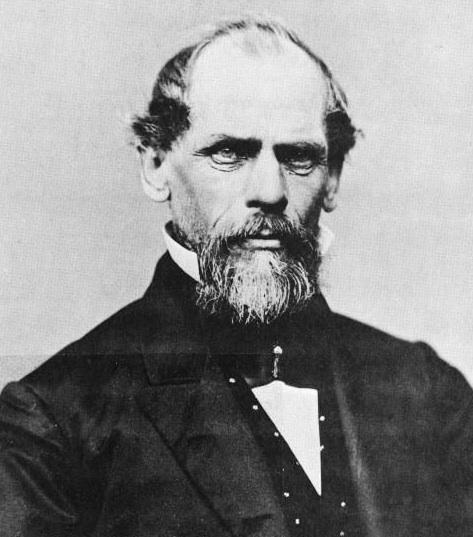
John Roebling

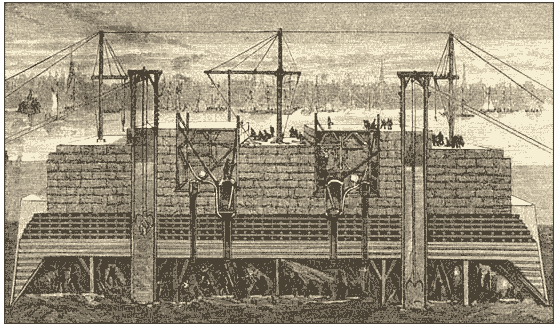
Diagram of a sunken caisson:

A few months back here, we took at look at the bridge stampede. For Friday Night Fever we highlighted the Bridge Cafe, whos prior incarnation Hole-in-the-Wall stood witness to the bridge construction. George Washington once lived on the spot occupied by the New York anchorage. On Tuesday, we highlighted Brooklyn mayor Seth Low, who once tried to get Washington Roebling to step down as Chief Engineer.

Categories
Uncategorized

Podcast delay!

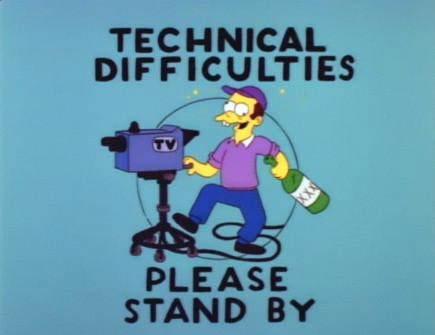
Sorry, we’re experiencing some extreme technical difficulty with our podcast this week. We’ll post it here and on iTunes as soon as we get everything to work. Thanks!

KNOW YOUR MAYORS: Seth Low


We speed ahead over a hundred years after our last Know Your Mayors entry to that jovial man with the funny name, Seth Low. He holds a very unique place on the list of mayors, as he has been both the mayor of Brooklyn (from 1881 to 1885, back when it was a separate city) and mayor of the new five boroughed New York City — in fact, the second mayor ever of the consolidated city, from 1902-1903.

A likable organizer and leader, ‘the people’s candidate’ as he was called, fast-tracking through city politics, Low was on-site for a number of significant changes to the city. Elected Brooklyn mayor near the completion of the Brooklyn Bridge, Low was perturbed by seeming delays to its completion and, with the help of New York’s mayor William Grace, attempted to oust its Chief Engineer Washington Roebling. Outvoted at the trustees meeting, Low then about-faced (like any good politician) and, on opening day, symbolically met Grace halfway of the new bridge.

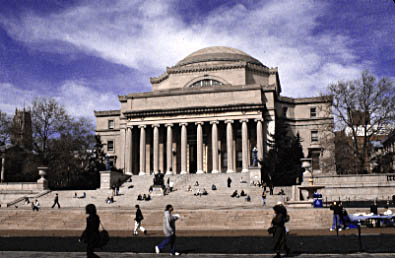
Low made his most influential mark as the president of Columbia College from 1890-1901, shuffling the school from midtown to its present location in Morningside Heights, involving McKim, Mead, and White to design the new buildings, including the wonderful Roman revival throwback Low Memorial Library (named for Low’s father, a successful Brooklyn silk merchant). Oh, and during his tenure, Columbia dropped the College and became a University.

Below: the beautiful Low Memorial Library on the Columbia campus

By 1898, thanks in part to the Bridge, Brooklyn and the other boroughs were combined with Manhattan to create Greater New York. Low was then elected mayor again, of the entire city, crushing the Tammany Hall candidate with the help of his friend Mark Twain, who stumped for him at political rallies. (Think Barack Obama and Oprah Winfrey, or Mike Huckabee and Chuck Norris!)

Low was only mayor for a single year, but brought such reform to the city as lower taxes and a purge of corruption within the police department. His short tenure is more importantly symbolically, as he won the job as a ‘fusion’ candidate of two different major parties — the Republicans and the Citizens Union, both seeking to squash the Tammany Democrats.

Perhaps by way of karma, he lost his re-election bid in 1903 to another name associated with the Brooklyn Bridge, George Brinton McClellan Jr, treasurer of the bridge. McClellan, by the way, would open the Manhattan Bridge during his six-year term as mayor.

Low finished his professional career heading another prestigious school — the Tuskegee Institute in Tuskegee, Alabama — serving as chairman from 1907 until he died in 1916.

Students currently attend the I.S. 96 Seth Low Intermediate School in Bensonhurst, Brooklyn.

George Washington slept here?!

You’ll be forgiven if the corner of Pearl and Dover streets does not happen to ring any bells for you. Although nearby a few South Street Seaport restaurants and bars — including the Bridge Cafe — its mostly unused given its proximity to the entrance of the Brooklyn Bridge and FDR Drive.

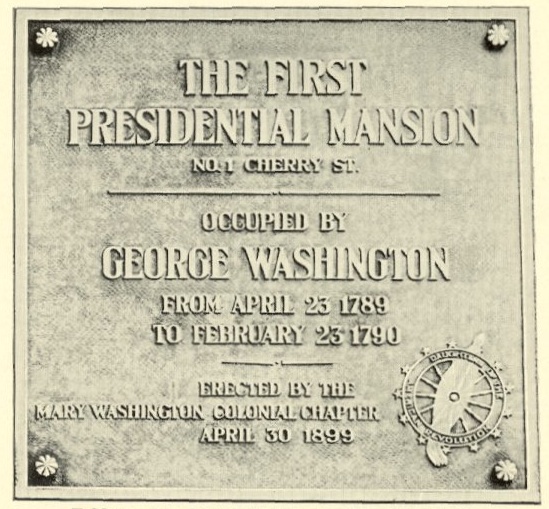
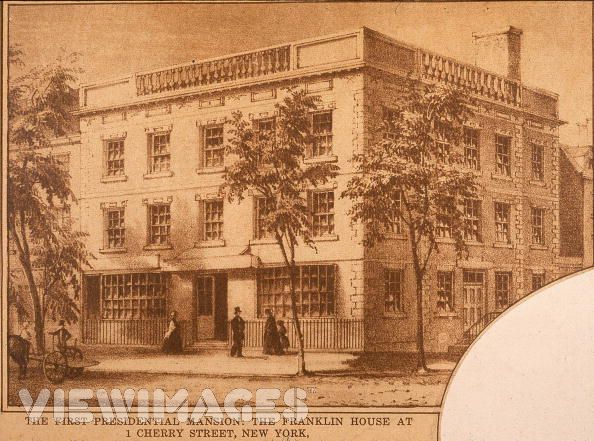
But a sad, tiny plaque here uncovers a surprising fact — here once stood the first presidential mansion of George Washington. The nation’s first president lived here from April 1789 to February 23, 1790, just a short carriage ride to Federal Hall on Wall Street. His inauguration procession on April 30th even began here with a reception for the new nation’s creators.

This was considered uptown to Revolutionary era New Yorkers, and the white Colonial home, built in 1770, was surrounded by other sumptuous houses overlooking the East River. In fact, Washington’s neighbor, at 5 Cherry Street, was John Hancock. DeWitt Clinton would later reside in the former Washington home.

Cherry Street still remains in lower Manhattan, but the section which once included the presidential mansion and the other austere residences was demolished in the 1880s to make way for the Brooklyn Bridge anchorage. That might seem scandalous to modern-day history preservationists, but by then, Cherry Street was far from a tony address.

One Cherry Street was unceremoniously torn down to widen the street in the 1850s, but by then, it was a mercy killing. The neighborhood had become New York’s notorious Fourth Ward, lined with saloons and brothels, the once-glorious mansions turned into boarding houses. It was Manhattan’s most decrepit neighborhood, so few took offense when it was proposed that the neighborhood be partially demolished to make way for the Brooklyn Bridge entrance. Cherry Street still exists but only on the north side of the bridge.

Georgie moved from One Cherry Street to 39 Broadway — shorter commute — in 1790. The tiny plaque is all that remains of a far more genteel day in lower Manhattan.

Here’s more information on community efforts to raise the profile of the site.

Picture of the presidential mansion that once sat there:

History in the making – 1/5

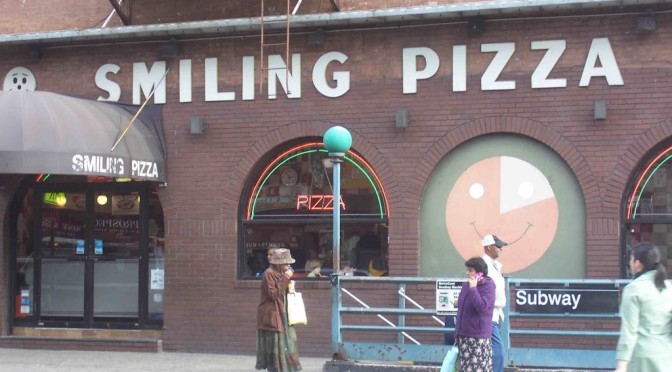
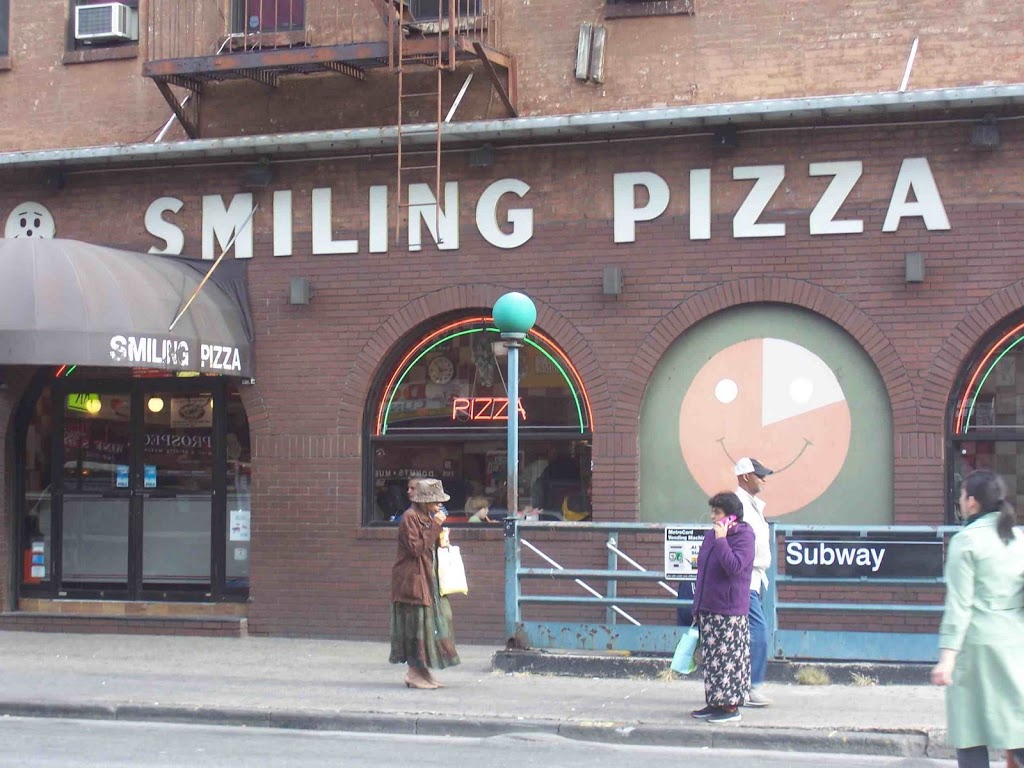
Pizza in Park Slope

Jeremiah gives us a (wonderful but depressing) rundown of all the New York history destroyed by redevelopment in 2007. [Vanishing New York]

Roosevelt Island’s super-spooky Renwick Ruin, New York’s former smallpox hospital turned haunted mansion, is falling apart. [City Room]

Corona, Queens’ Jewish community may get landmark status bestowed on its 97 year old synagogue. [Queens Crap]

Thomas Edison electrocutes an elephant on Coney Island 105 years and one day ago [Gothamist] and watch the bizarre video [Kinetic Carnival]

Are the days of chain stores and coffee shops finally numbered in the East Village? [The Villager]

More Things To Come: 1908!

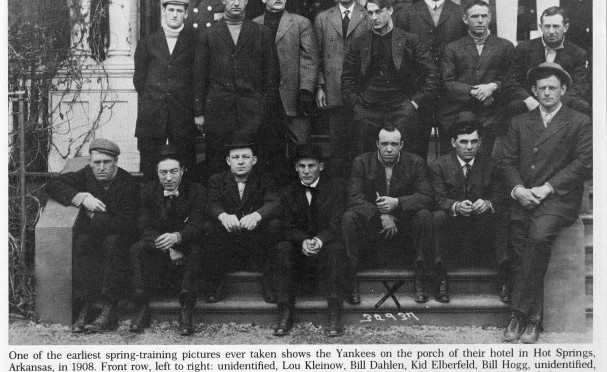
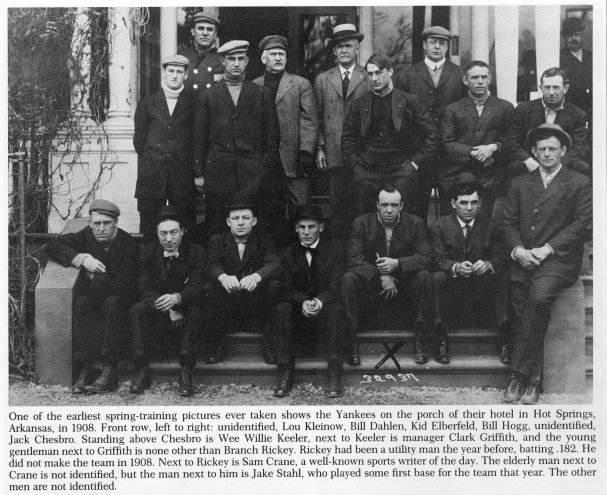
The 1908 New York Yankees — Losers!

Do you dare take a second glimpse into the crystal ball of things foretold of the upcoming year 1908? Observe and take care, for the following things will all happen this year:

Baseball Scores Magically Appear … on Madison Square Diamonds!

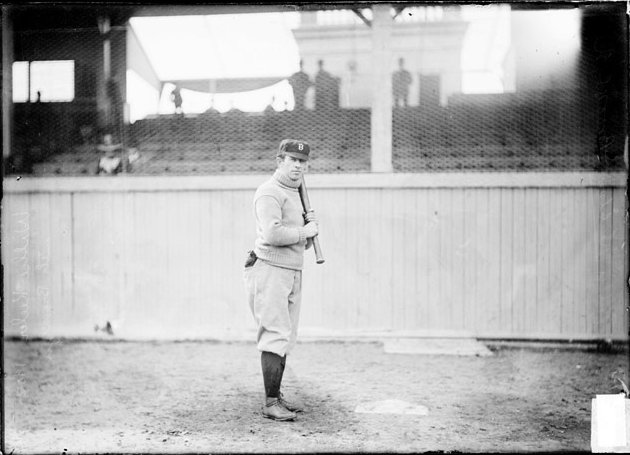
That’s dashing Willie Keeler above, in practice for the New York Giants, and in August 1908, he and his team take two wins from the Pittsburgh team in a thrilling double-header. New Yorkers, however, got to share in the action.

A rolling tally of the score was scrolled over a new device — the Compton’s Baseball Bulletin — a series of ‘electric diamonds’ broadcasting the scores at Madison Square Garden, at its comfy new home on 26th and Madison Ave. We predict this device will continue to broadcast scores for the team throughout the rest of the season.

This wonderful invention of lights distract us from the woeful performance of our other baseball team, the Yankees, who on October 6, will lose their 100th game of the year, eventually finishing the season in last place with an appalling record of 51-103.

Luckily the New York Giants will never leave New York and they will be our premier baseball team well into the future!

Manhattan Hosts Voyagers, Heroes, Exhausted Families

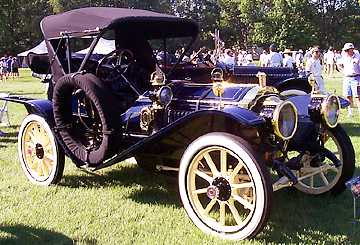
New York City will be the starting point and final destination for a host of historic and majestic adventures — the first being experienced by Mr. Jacob Murdock, his wife, two children and a mechanic along for the ride. On April 24, they boarded their family Packard Model 30 (a 1909 model is shown above) and drove for 32 days straight across the United States, arriving in New York City on May 26. It is not known how many times the children cried “Are we there yet?”

A far more experienced traveler Robert Peary has planned one more northernly trek to the North Pole. On July 6, he and his crew set sail with great fanfare from New York City’s harbor, aboard the vessel Roosevelt.

Peary is well on his way northward when on August 29 the United States Olympic team members– competing the fifth Olympic games in London — are greeted by thousands of fans in a lavish ticker tape parade in the canyons of New York’s financial district.

Culture Returns To Brooklyn!

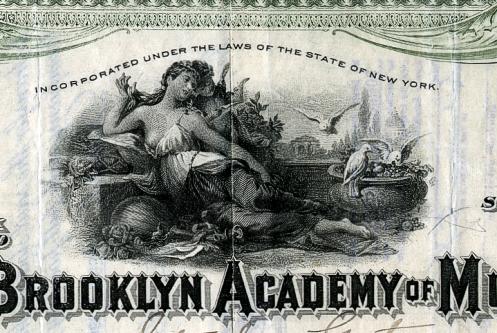
Patrons of the arts in Brooklyn were crestfallen with the Brooklyn Academy of Music in Brooklyn Heights burned to the ground in November 30, 1903. Never fear, however, for the Philharmonic Society now has a new home in Fort Greene. The new Brooklyn Academy of Music, with its luscious facade and massive spaces for orchestral and theatrical performances, opens on November 4th with a production of Charles Gounod’s Faust starring Geraldine Farrar and Enrico Caruso.

And if that doesn’t make your proverbial highbrows atwitter, just a couple weeks later, on November 16, the Metropolitan Opera hires a young conductor that will be, ahem, instrumental to the company’s reputation — Arturo Toscanini.

Baseball archival photos from the wonderful Baseball Fever fan site.

Things To Come: 1908!

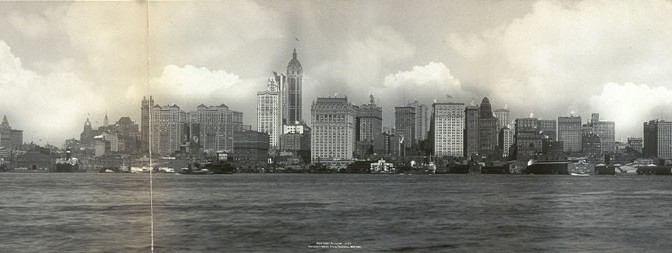
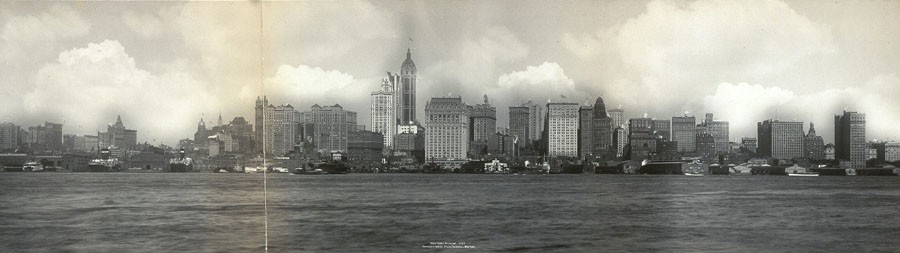
The New York City skyline, picture taken in 1908 (click to see detail)

Welcome to the future of New York City — the amazing year of 1908! A look into the crystal ball find that the following things will happen this year:

You Haven’t Yet Come A Long Way, Baby
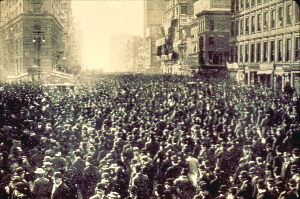
The New York board of aldermen passes the Sullivan Ordinance on January 21st, banning women from smoking in public. “Hotel or restaurant proprietors” who allow women to light up on their premises will be fined. Various citizens spoke to the aldermen in defense of the act, including one ‘Little Tim’, who claimed that women smoking seemed to occur the most in the ‘lower east side’. Playing devil’s advocate, one councilman decried why they didn’t prohibit everyone from smoking in hotels and restaurants, “particularly boys under 21 years old”?

In covering this scandalous turn of events, the New York Times likens the law to Peter Stuyvesant’s ruling that all women wear ‘broad flaunces’ and only carry themselves in ‘shuffle and turn’ moves while dancing.

The mayor overturned the ruling, probably because it was very stupid to begin with.

These ‘Auto-Mobiles’, They Really Work!

The New York Times sponsors a most ambitious competition using the newfangled ‘automobile’ devices. Referred to as The Great Auto Race, teams from Italy, Germany, France and the United States will steer their national auto motives on a truly cross-country voyage. Starting in New York City on February 21 (see picture above in the new ‘Times Square’), competitors followed an often hazardous path through Chicago, San Francisco, up to Valdez Alaska, over the Bering Strait to Japan, Vladivostock, Moscow, Berlin and then the the finish line in Paris.

We predict the Americans, led by driver George Schuster Sr. will win after a trek of 169 days. We also predict that Schuster will hold the title of longest roadtrip well into the future, as who would be silly enough to try this again?

New York Invaded by ‘Bridge & Tunnel’ Crowds!
The first tunnel under the Hudson River, connecting Hoboken, NJ, and lower Manhattan around Christopher Street, officially opens on January 4. Other ‘PATH’ trains are tested out throughout the year, with even President Theodore Roosevelt getting into the act. On February 25, the president through a switch (via telegraph) in his office at the White House in Washington, throwing on the power (eventually) for the New York line running from 19th Street to New Jersey. At midnight the train would open for paid customers. New Jersey, welcome to New York!

Tomorrow — we look into a future New York City in 1908 that will include electric diamonds, the North Pole and something ominous by the name of BAM!

Categories
Podcasts

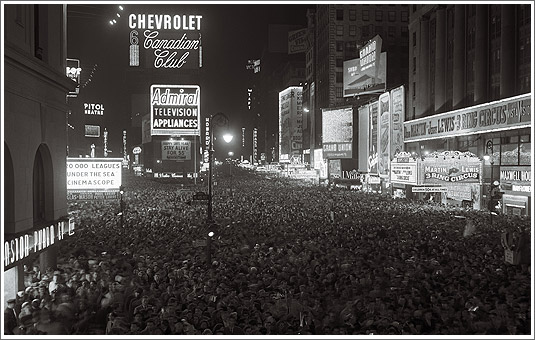
PODCAST: New Years Eve at One Times Square

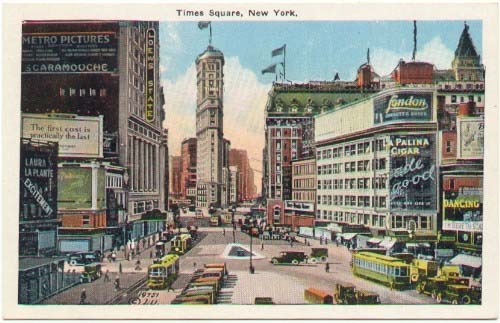
The Times Square New Years Eve celebration would not be the same without One Times Square and its annual ball drop. But the quirky history of this sometimes abused building reaches all the way back to the naming of Times Square and its original tenent — the New York Times.

Download this show it for FREE on iTunes or other podcasting services. Click this link to download it directly from our satellite site. Or click below to listen here:

The Bowery Boys: One Times Square

One Times Square, back in better days

The crowds of Times Square

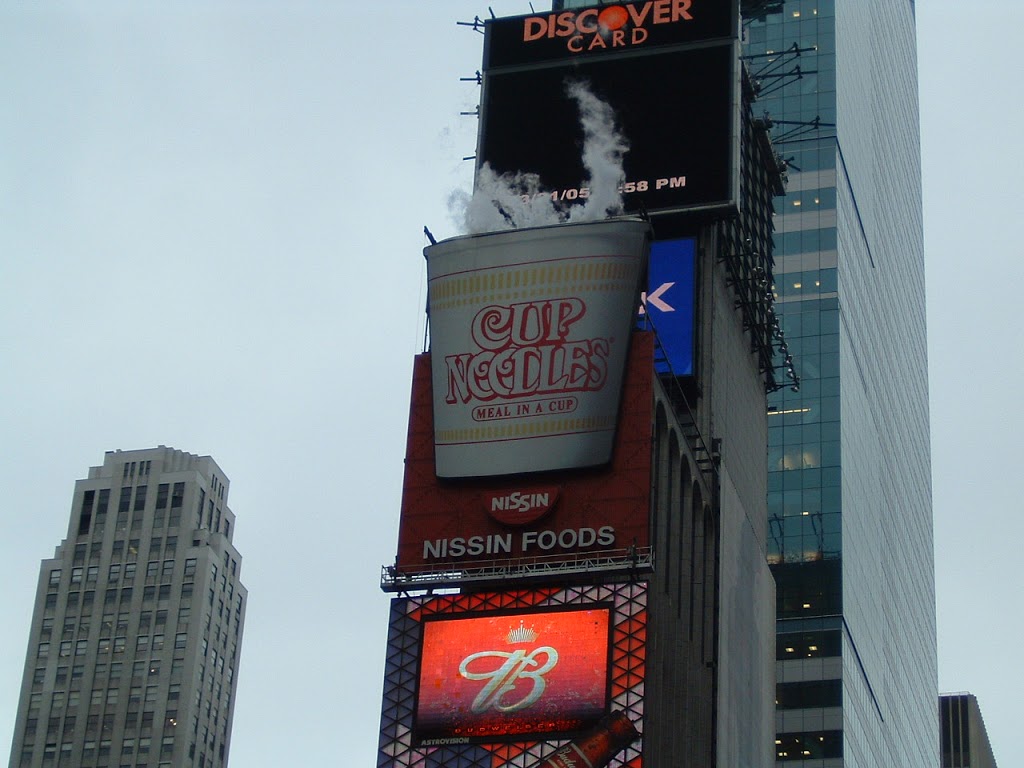
The Nissin Cup of Noodles sign

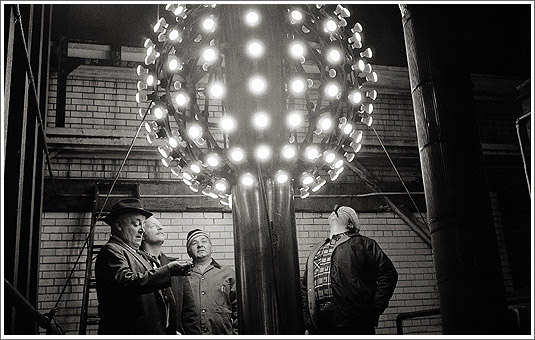
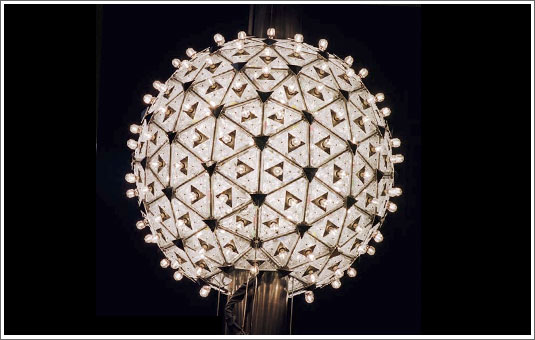
Here’s what the last ball looked like:

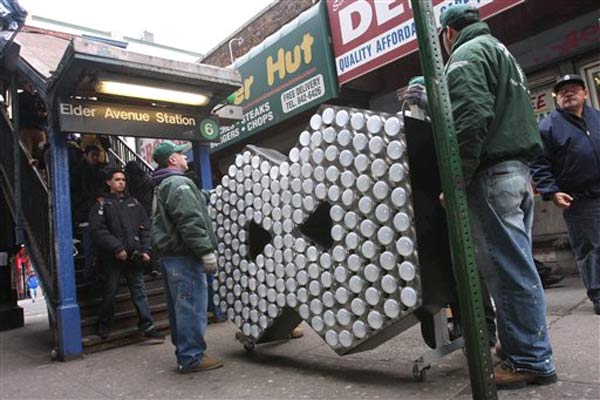
Gothamist tracks the journey of the number 8 from this year’s 2008 New Years Eve ceremony


Pic-Tina Fineberg/AP