New York’s best film performances – Part Two

My list of New York’s best movie scenes continues with two in Brooklyn — and one that almost gets there….

Tension
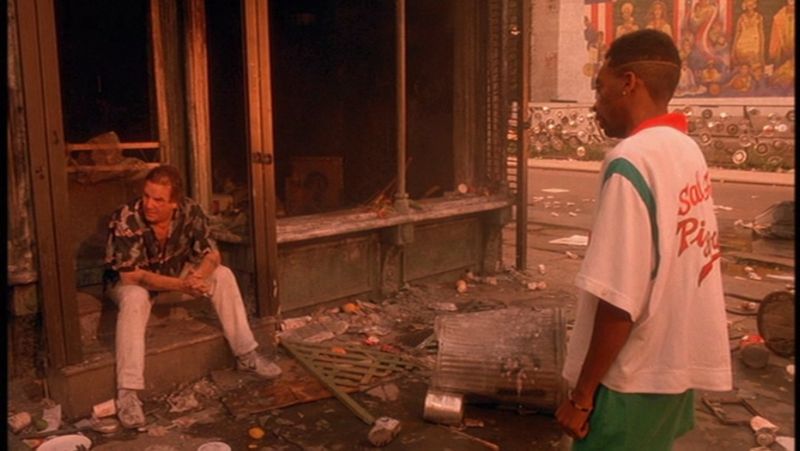
7. Do The Right Thing (1989)
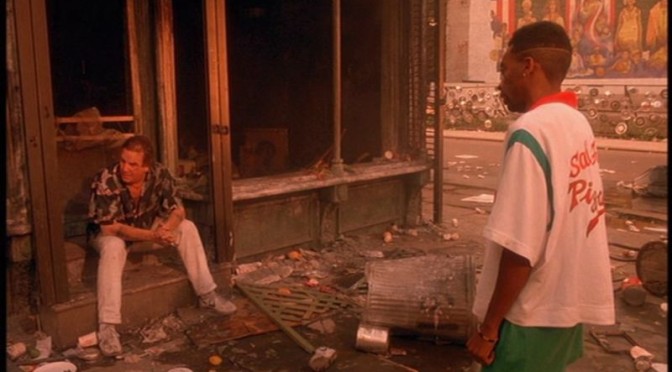
Mookie throws a trash can

Spike Lee is only one of a few directors who knows how to turn New York City into a character in his films. With ‘Do The Right Thing’, he photographs a typically drab streetcorner in Bedford-Stuyvesant with the sorts of color and pizazz more associated with 1950s musicals. Better to match the residents — everybody from the old men on the corner to the customers at Sal’s Pizzeria — a cross-section of vivid characters and a balance of different races getting along. Until, of course, Mookie throws that trashcan through Sal’s window.

The film is loosely based on a violent 1986 incident that occured in Howard Beach, Queens, involving the death of a black teenager after being harassed with his friends at a pizzeria. Mookie’s act of violence — the “did he do the right thing” moment — sparks a mob scene that greatly parallels many incidents during the New York blackout of 1977.

Not suprisingly, Lee goes back to the motif of the ‘hottest day of the summer’ in another great movie actually set in 1977 — “Summer of Sam” — a film loaded with on-location shots in Queens and the Bronx.

Grit
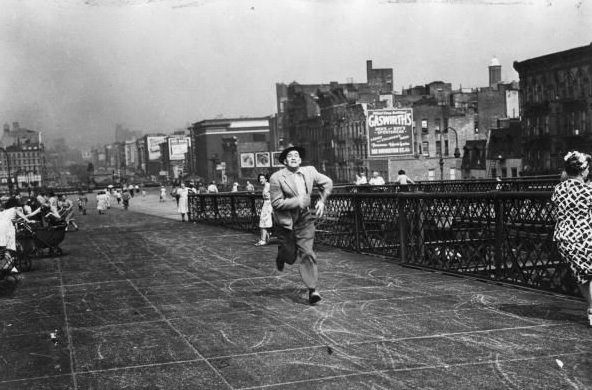
6. The Naked City (1948)
Shootout on the bridge

The Williamsburg Bridge’s best moment ever in a recorded medium is this scene in the Naked City, the climactic chase and shootout in a film already known as one of the best look New York City movies ever made.

Forget the standard issue film noir plot, fun but unspectacular; it’s all about William H. Daniels’ verite cinematography, which won him an Oscar. The Naked City is one of the first film to shoot almost everything on location in New York, 107 on-location scenes in all. The film, and New York, looks better the older it gets.

Among its more famous locales include the ole Roxy Theater, the Whitehall Building, and the City Morgue (!), but its crowning scene is its last, a breathtaking shoot-out literally up in the proverbial rafters of the Williamsburg Bridge. NO film (not even the next on my list) has ever used a bridge to such tangible effect.

Decadence
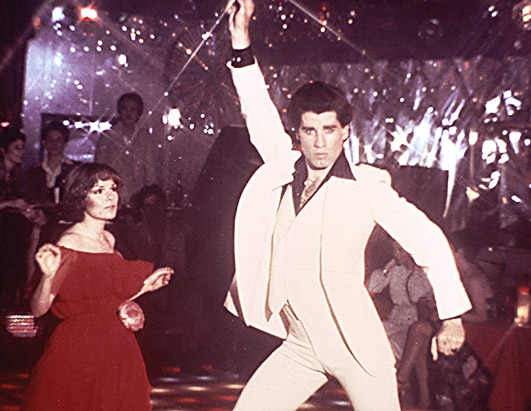
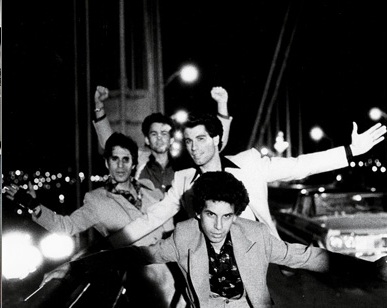
5. Saturday Night Fever (1977)
Tony and Stephanie cut a rug

I couldn’t not pick the famous danceoff scene with Tony Manero and Stephanie Mangano. It defines the style of New York nightlife outside the VIP area of the 1970s. But for the record, Saturday Night Fever has two equally beautiful scenes using New York backdrops that are utterly fabulous — Tony strutting down the street with paintcans and, of course, the tragic encounter at the Verrazano-Narrows bridge. I can probably go on record and say ‘Fever’ is the coolest movie about New York City ever filmed.

I’ll save myself some typing and direct you to my writeup a few months ago on Saturday Night Fever and the club where it was filmed 2001 Odyssey, which also includes a report the fate of that sacred dance floor.

By the way, the original name of the movie was ‘Tribal Rights of Saturday Night’, as the film itself is based on a magazine article called ‘Tribal Rights of a New Saturday Night.’
New York’s best film performances – Part One

After spending quite an amount of time in the Revolution, then taking you to church, I’m taking it easy on you (and me, for that matter) and focusing on New York in the movies.

New York City is without a doubt the most photographed and filmed city in the world. Even when filmmakers shoot in other cities — such as Toronto — it’s still New York.

For the week, I’m presenting my incredibly subjective list of the ten best movie scenes shot in New York City. This doesn’t quite equate to the ten best movies about New York. These are just the ten images that I think in total represent the reasons that people continue to turn NYC into the world’s largest back lot. I’ll reel out the first nine today through Thursday; the topic of my number one pick will also be the topic of this week’s podcast.

This list only features scenes that were actually filmed in New York without too much enhancement or special effects, so no sci-fi (King Kong, Ghostbusters, Men In Black, I Am Legend). I also avoid scenes that are obviously in New York City but are interiors with no distinguishing features (‘You talkin’ to me?’ and ‘I coulda been a contender’ both spring to mind.)
I’m obviously going to leave out a few favorites, so after Friday drop me an email of what I’ve left out. I’ll list the notable omissions next week.

FYI, I give 11th place, honorable mention to Marilyn Monroe’s dress-blowing scene in the zany sex comedy ‘Seven Year Itch’, But you’ll have to read here to find out the technicality that excludes it from this list.

Mystique
10. North By Northwest (1958)
Roger Thornhill buys a ticket

Alfred Hitchcock loved using New York as a set piece. He put Jimmy Stewart in a wheelchair here, cooked up a claustrophobic mystery, and used the Statue of Liberty to great effect.

In North By Northwest, he engineers a chase through Grand Central Terminal featuring Cary Grant in shades alluding capture, eventually finding himself on a train with Eva Marie Saint. What makes this scene so alluring is that it’s actually at Grand Central and prefaced by an awkward scene involving a fake United Nations. (Hitchcock couldn’t get permission to film there; nobody could until Nicole Kidman.)

By merits of it being a Hitchcock film, the scene is zippy and glamorous, all the more because Hitch uses a crane shot to follow Grant from one corner to the other, a gravity-less vantage that for a moment takes you above the busiest place in New York.

By the way, once Grant gets on the train, we’ve clearly gone back to a staid movie set. However Grand Central was not the only real location used; you also have some great old views of The Plaza Hotel and the Oak Room.

Drama
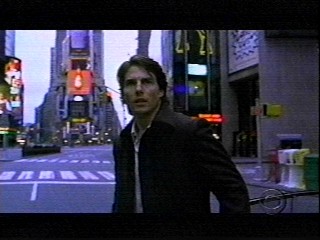
9. Vanilla Sky (2001)
Times Square in dreamtime

See, this list isn’t about good movies. Whatever you think about this Cameron Crowe remake, this fantasy sequence featuring Tom Cruise in a completely empty Times Square is remarkable by merits of them pulling it off at all.

The scene was filmed on an early Sunday morning in November 2000 and they had to shoot quickly. Their efforts to create an eerie setting were almost thwarted by the Dow Jones news ticker, in the background proclaiming details about the disputed Bush-Gore election. They were given permission to digitally erase the information.

Studio execs had also asked Crowe to digitally erase the World Trade Center, which by the film’s release date had been destroyed. This, Crowe did not do.

Perversity
8. Taxi Driver
Marty takes a ride

It’s not Taxi Driver’s best known scene, but it perfectly employs New York at night in a twisted noir-ish way. Travis Bickle (Robert Deniro, essentially silent during the scene) pulls up a passenger to the curb. That passenger happens to be played by Martin Scorsese himself, who argues with Bickle to leave the meter running.

We then see that classic of noir fixture — a woman’s silhouette in the window — and Scorsese goes off on a sick and disturbing explanation of what he intends to do to her, his estanged wife.

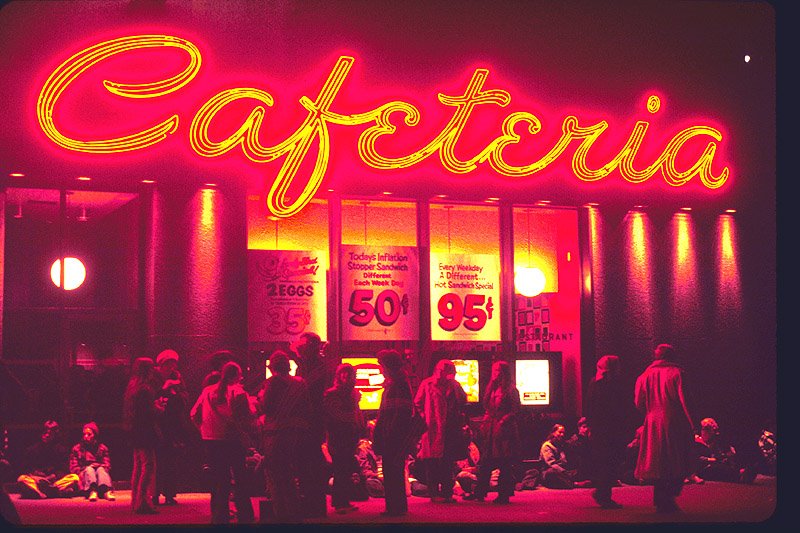
By the way, the scene that proceeds this one — of cabbies gabbing at a diner — is filmed at the Belmore Cafeteria, a classic old-style diner which once sat at 28th Street and Park Avenue South. This site has a great tribute to the old joint. Here’s a shot of its dazzling exterior:

Tomorrow: #7-5!

Who watches the Watchtower?


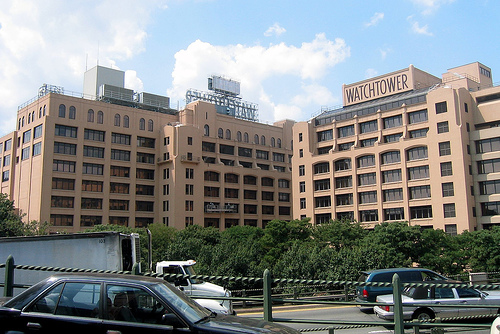
Brooklyn Heights remains today a neighborhood underscored with the industry of religion. However, unlike its halcyon days of the 1800’s, when the Congregationalist churches of Henry Ward Beecher and Richard Salter Storrs Jr. became centerpieces of society, the 20th century brought in the Jehovah’s Witnesses, whose ownership and development of prime Heights real estate has been a point of controversy since the beginning.

Charles Taze Russell formed the Bible Student movement, a subset of the Protestant movement that disavows one of Christianity’s prime tenets (belief in the Trinity), in Pennsylvania but uprooted it in 1908 to settle in the heart of Brooklyn Heights, partially to take advantage of New York’s ports for distribution of their publications.

Under the auspice of Watch Tower Bible and Tract Society, Russell began publishing religious literature for the group. With his death in 1916, the group splintered into further permutations, with the ones most affixed to the Heights and Russell’s original vision settling on the name Jehovah’s Witnesses in 1931.

After World War II, the group rapidly expanded into the heart of the Heights, demolishing many brownstones (including the former homes of Beecher and Washington Roebling) and constructing dormitories for their membership. Although they certainly haven’t been the most calamitous figure in the neighborhood (see Robert Moses and the Brooklyn-Queens Expressway), their buildings are often bland or occasionally eyesores.

Their presence in the neighborhood is on the wane, however. Of the over thirty buildings they own in Brooklyn Heights and DUMBO, they have either sold or are in the process of selling several of them, including the historic Hotel Bossert and the Standish Arms Hotel, for many decades used as a dormitory for its Watchtower employees.

Even they aren’t immune to New York’s most predictable transformation; their bible shipping plant on Furman street was sold for $205 million and transformed into the luxury condo park One Brooklyn Bridge.

Apparently, however, if you live in the neighborhood, you’ll still experience the Witnesses’ tried-and-true door to door antics.

Approximately 3,000 Witnesses live and work in Brooklyn Heights. The Witness community is mostly self-sufficient, with food shipped in from upstate farms, meals served in residence halls, and in-house services — including the making of furniture and detergent — mostly provided by their church. Their buildings are connected by underground tunnels, so most of their daily activities goes by Brooklyn Heights residents unnoticed.

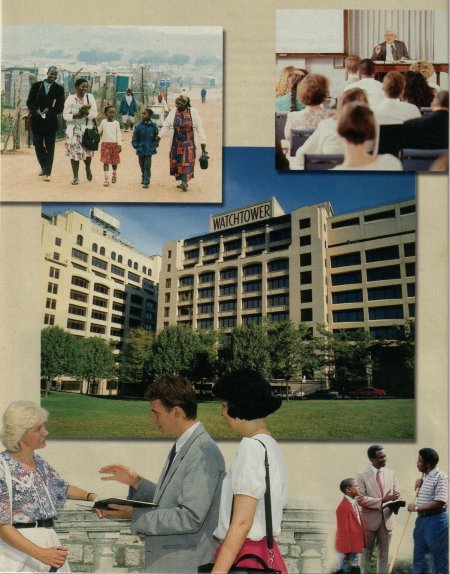
This Times article gives a clear overview of life inside the Watchtower complex. Here’s a page from a Jehovah’s Witness tract that was most likely produced at the Brooklyn Heights publishing plant:

Categories
Podcasts

PODCAST: Henry Ward Beecher and Plymouth Church

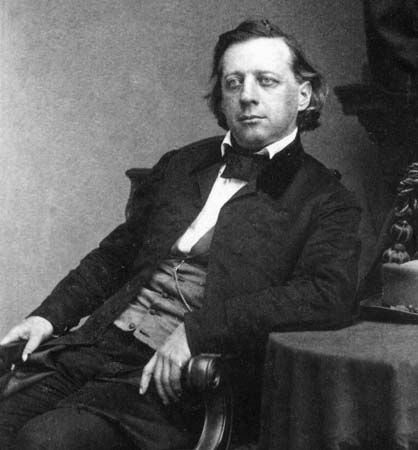
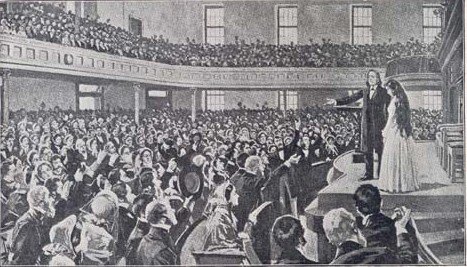
We’ve never done such a saucy show — full of sex, lies, and petticoats. Meet Henry Ward Beecher, Brooklyn Heights’ most notorious resident, and find out about the fascinating and provocative history of the church that turned him into a national celebrity.

Listen to it for free on iTunes or other podcasting services. Or you can download or listen to it HERE

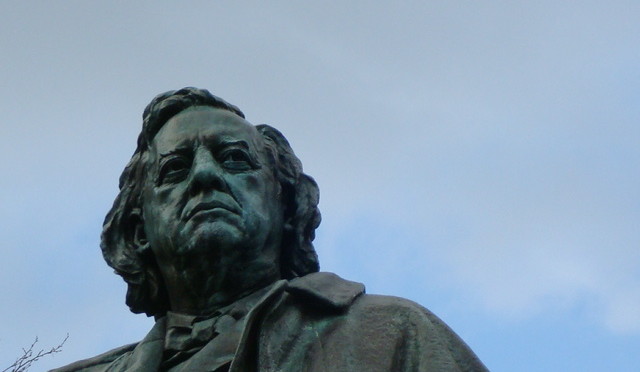
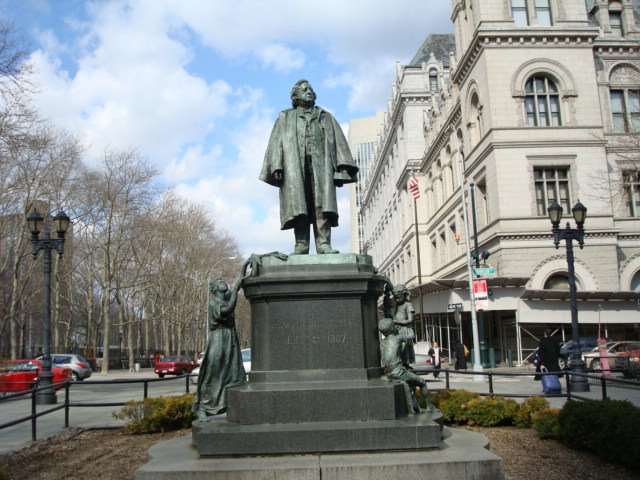
This statue of Beecher sits in Columbus Park in front of Brooklyn Borough Hall. The figure was designed by John Quincy Adams Ward (best known for his George Washington in front of Federal Hall) and dedicated in 1891, just four years after Beecher’s death. The pedestal here is no less austere; it was designed by Ward’s frequent collaborator Richard Morris Hunt, who had recently worked on a significantly bigger pedestal — for the Statue of Liberty.

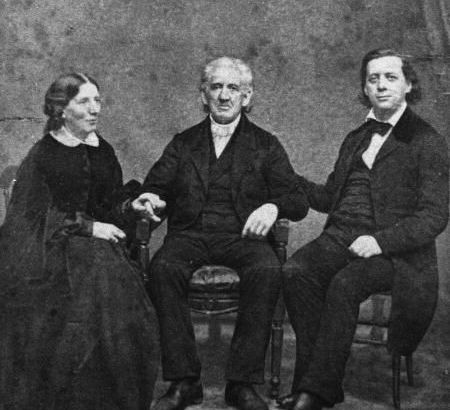
Beecher with sister Harriet Beecher Stowe and patriarch Lyman Beecher:

A depiction of one of Plymouth Church’s ‘slave auctions’.

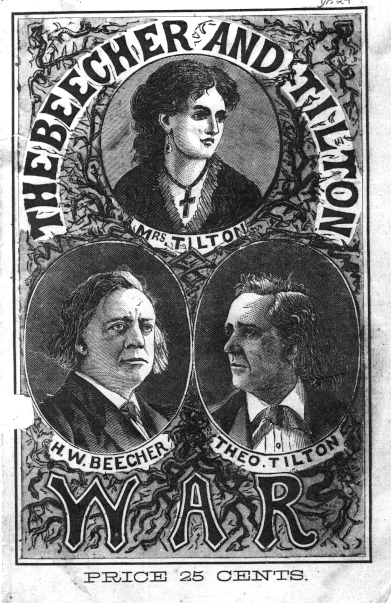
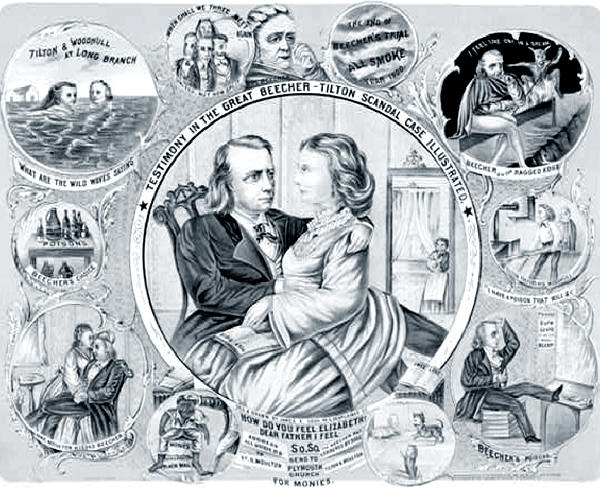
The Beecher-Tilton sex scandal electrified the public’s curiousity and filled newspapers with illustrations such as these:

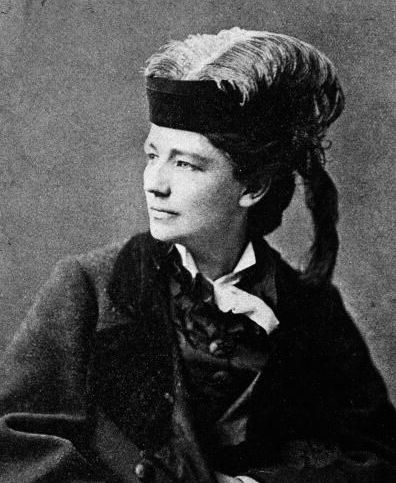
The bold and provocative Victoria Woodhull:

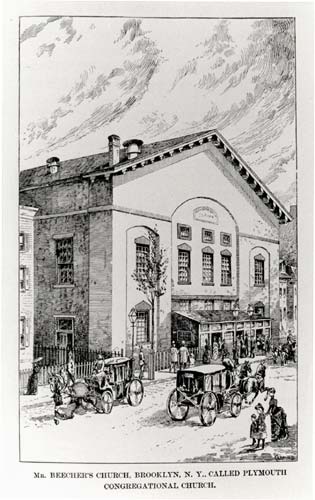
Plymouth Church then:

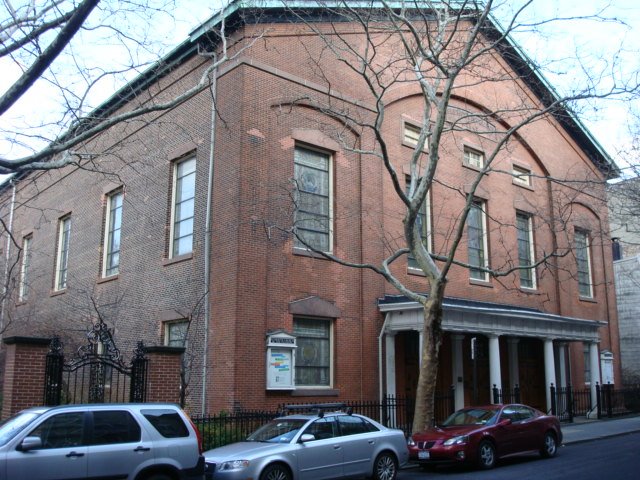
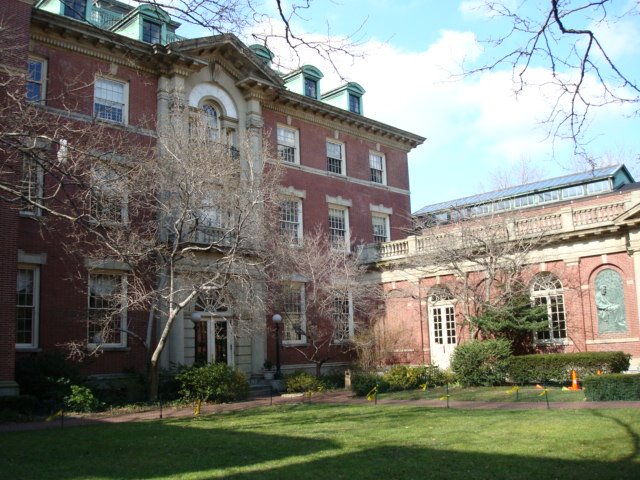
Plymouth Church today:

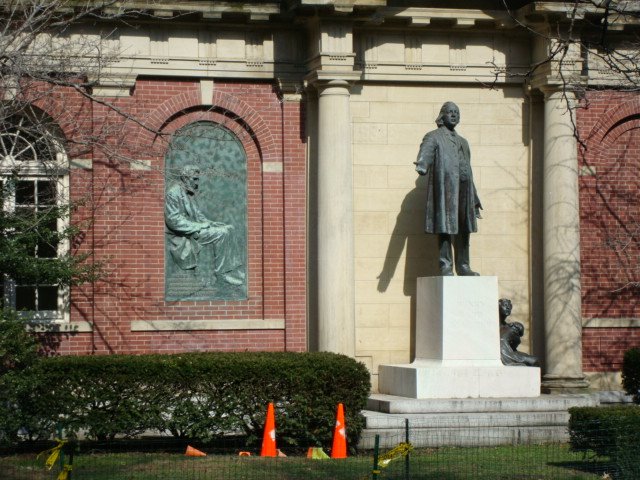
Compare the Beecher statue above with the one that sits on the grounds of Plymouth Church. This one was created by Gutzon Borglum — you might know him for that little rock carving he did called Mount Rushmore. The copper bas-relief nearby of Lincoln is also by Borglum.

Know Your Mayors: William Jay Gaynor

Our modest little series about some of the greatest, notorious, most important, even most useless, mayors of New York City. Other entrants in our mayoral survey can be found here.

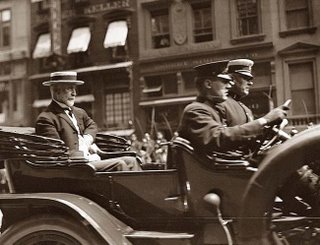
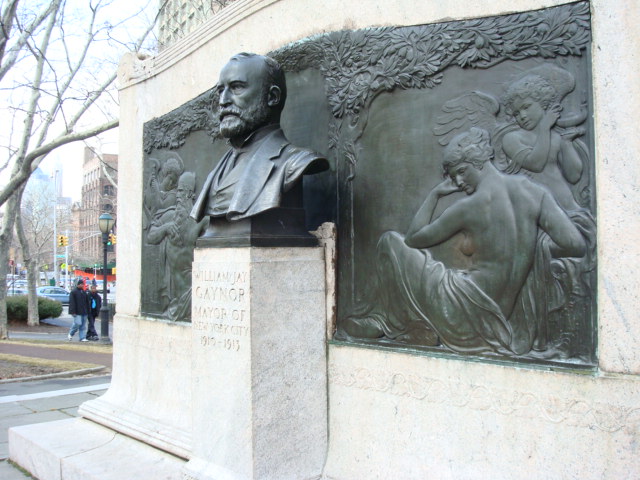
Walk from Manhattan over the Brooklyn Bridge, take the first ramp off the bridge, turn right to Cadman Plaza, and you will run smack dab into a marble slab and the stoic bust (see below) of William Jay Gaynor, mayor of New York City from 1910 to 1913. Very few mayors are honored with statuary in this city, especially a mayor with so short a term in office. Gaynor’s term represented a shakedown of traditional New York Tammany politics, a true bureaucratic reform movement.

But Gaynor is perhaps best remembered as being the only New York mayor to become target of an assassination attempt and to eventually die of his injuries.

It wasn’t supposed to play like this at all. Tammany Hall, entering the dusk of its influence by the early 20th century, thought they had a ringer with Gaynor, a state Supreme Court justice for 14 years chosen to run by still-powerful political machine. One of his opponents — William Randolph Hearst — an early admirer who warned Gaynor to publicly reject his corrupt Tammany sponsors.

Hearst needn’t have worried. Once elected, Gaynor flummoxed his Democratic forebears by eshewing the usual political favors to Tammany cronies and actually hiring qualified individuals in chosen fields. His swiftly became no one’s pawn.

Gaynor continued to live in Brooklyn — 20 Eighth Avenue in Park Slope, to be precise. On his first day of work, he actually walked from home, over the Bridge, and right into City Hall.

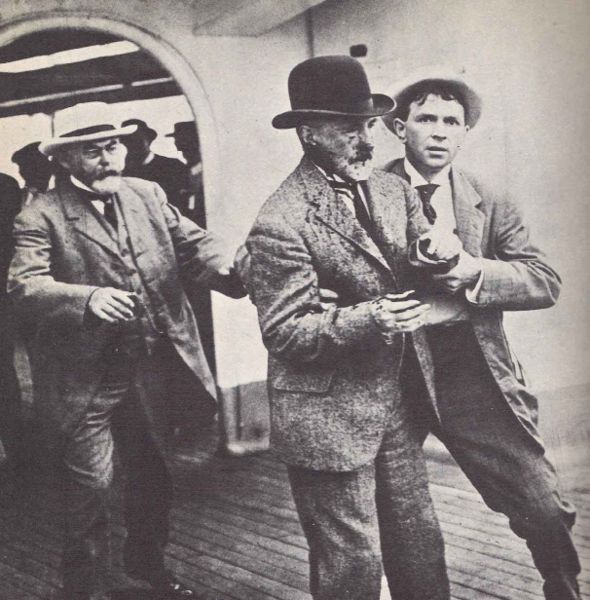
While vacationing on the ocean liner SS Kaiser Wilhelm der Grosse, a disgruntled city employee James J. Gallagher, fired from his job on the docks, took out his frustration on Gaynor, shooting him through the back of the neck. Gallagher claimed, “He took away my bread and meat. I had to do it.” Really, James?

Unbelievably, a photographer for the New York world William Warnecke happened to catch the incident, which quickly became one of the most startling photographs in the short history of photo-journalism:

Gaynor recovered somewhat, although the bullet would remain lodged in his throat, and his entire term of mayor, he would remain weakened and haggard. He would even use the injury as a reason to get out of discussing delicate subjects, saying, “Sorry, can’t talk today. This fish hook in my throat is bothering me.”

The brush with death, paired with his remarkable house-cleaning at City Hall, quickly transformed him into a popular leader, with talk of even running for president. Tammany wouldn’t help him with another term for mayor, naturally, but he was immediately nominated as an independent.

Somebody should have told Gaynor, however, that he should have avoided ocean liners. On Sept. 4 1913 he boarded the ocean liner Baltic for yet another oceanic vacation and six days later was found dead on a deck chair, his body finally giving in to lingering internal injuries. Curiously, Gaynor’s would-be assassin Gallagher had died just a few months prior — at an insane asylum in Trenton, New Jersey.

The New York Press ran a further appreciationof the Gaynor monument itself. Or maybe you’d like to read his extravagent obit from the New York Times.

Who is Agent 355?

We can’t leave the world of Revolutionary War New York behind without finally exploring one of its captivating mysteries — the identity of agent 355.

The Culper Ring was George Washington‘s clandestine spy network that operated in the streets of British occupied New York. As we mentioned in last week’s podcast, operatives would communicate with Washington using an elaborate set of codes, a seemingly nonsense collection of letters and numbers that could be decoded once the message was successfully delivered.

Many of Washington’s operatives have been identified. However, one remains a mystery, a nameless woman known only by the codename 355. Her only appearance in coded documentation is in the missive: “I intend to visit 727 (code name for New York) before long and think by the assistance of a 355 (code for ‘woman’) of my acquaintance, shall be able to out wit them all.”

She was believed to be within an important Tory family in New York, who could maneuver through offices and courtyards of New York’s British society gleaning information which she would pass along via a bevy of secretive methods. It is speculated that 355 passed along critical information that eventually exposed the treason of Benedict Arnold and later assisted in the arrest of British intelligent officer John Andre.

But wait, it gets far more romantic. She was rumored to be the lover of fellow spy Robert Townsend and pregnant with his child when she was captured — I’ve even read that Arnold himself ratted her out — and thrown aboard the notorious prison ship HMS Jersey in New York harbor. She delivered the child — a boy, Robert Townsend Jr — but died aboard the fetid conditions on the ship.

Sadly, it all may be a little too good to be true. There was a Robert Townsend Jr., son of the famous spy, who eventually entered New York politics and was even involved in the very first incarnation of the Prison Ship Martyrs Memorial in Fort Greene. But genealogists have not been successful in tracing his lineage to a woman of any mysterious import.

The story of 355 was fleshed out in the 1940s by Long Island historian Morton Pennypacker, an early enthusiast of New York’s revolutionary spy ring. However it is unclear where Pennypacker got most of his information.

Personally, I choose to believe there was some beautiful spy, a Colonial era Jennifer Garner, slinking around the corridors of British officers. I mean, somebody rooted Arnold out, right? And John Andre really was captured.

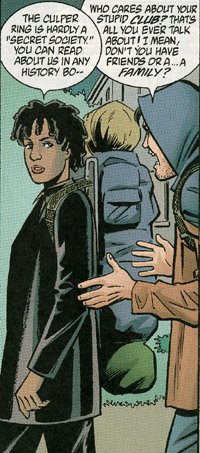
The Culper Ring and Agent 355 have more recently inspired a comic book series from DC Comics. (A panel of which is on the left.)

R.I.P. St. Saviour’s?

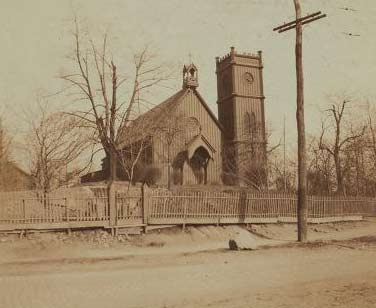
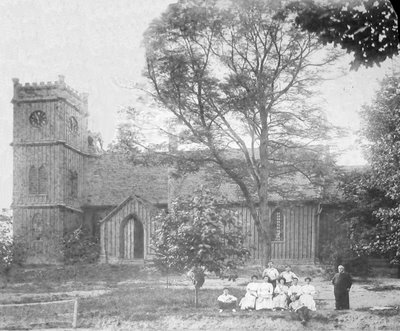
St. Saviour’s Church, an historic cathedral in Maspeth, Queens, is being torn down by the city, but not without a fight. The website Queens Crap has been doing an excellent job detailing the futile efforts of preservationists, their battles with the city and, this week, the recent dramas as the city prepares to demolish it.

Today, protesters delay the demolition, as does the fear of asbestos. An eleventh-hour grant may save part of the building, but its old tower bell has mysteriously vanished.

The church was built in 1847 by Richard Upjohn and features artifacts — possibly even burials — tying back to the Revolutionary War.

It’s rare to see a ‘city vs. history’ battle play out quite so vividly these days. Thanks to Queens Crap and Forgotten NY for keeping it front and center.

Categories
Podcasts

PODCAST: Life in British New York: 1776-1783

Join us as we stroll through the streets of revolutionary New York, examining what it would have been like to be a New Yorker under British rule.

Listen to it HERE:

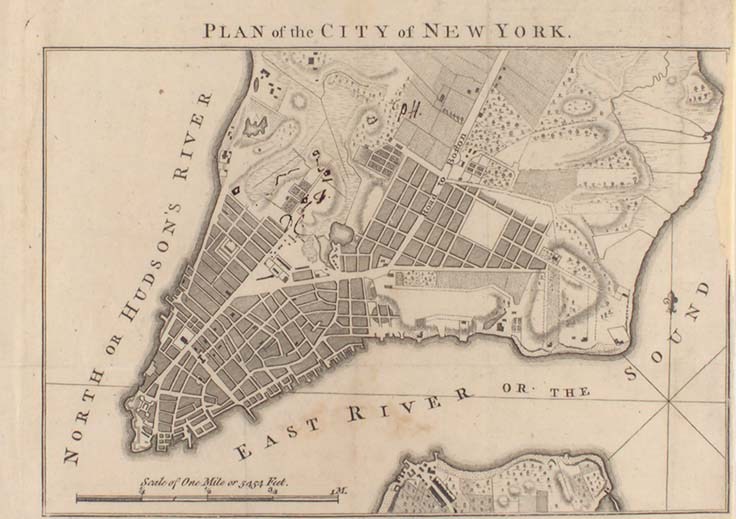
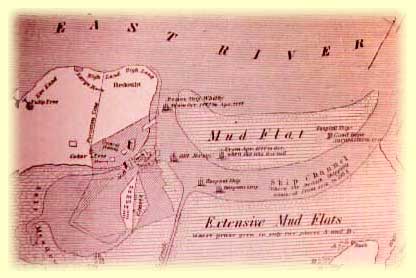
New York as it looked during British occupation (i.e. before various lower Manhattan landfills!)

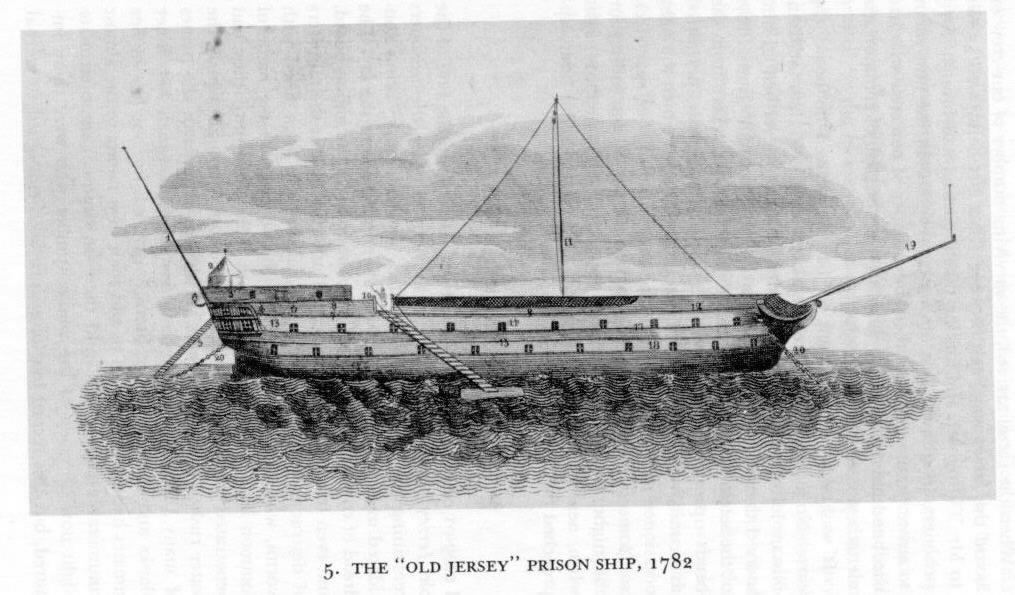
The HMS Jersey, docked right off the show of Brooklyn, and home to the deaths of hundreds of American soldiers and prisoners

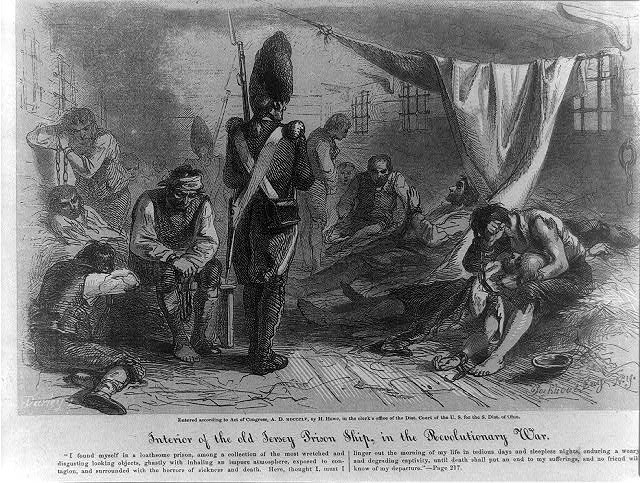
The horrible conditions of the prison ships, as hinted at in this illustration

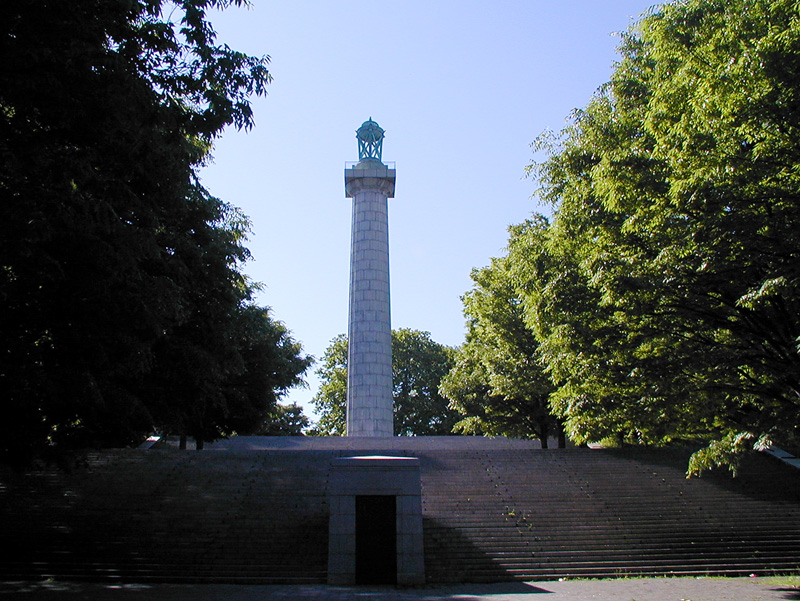
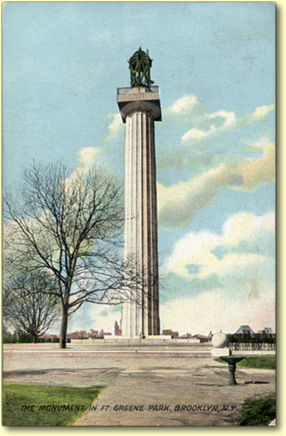
The Prison Ships Martyrs Monument in Fort Greene, honoring the thousands who died nearby off the shore of Brooklyn

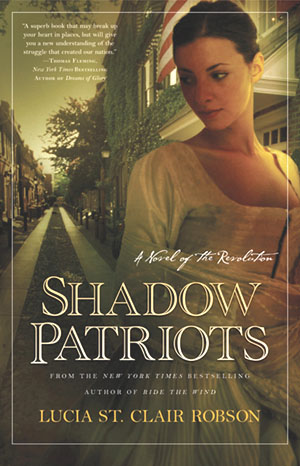
The mystery of George Washington’s Culper Ring spy gang has inspired more than a few romantic tales:

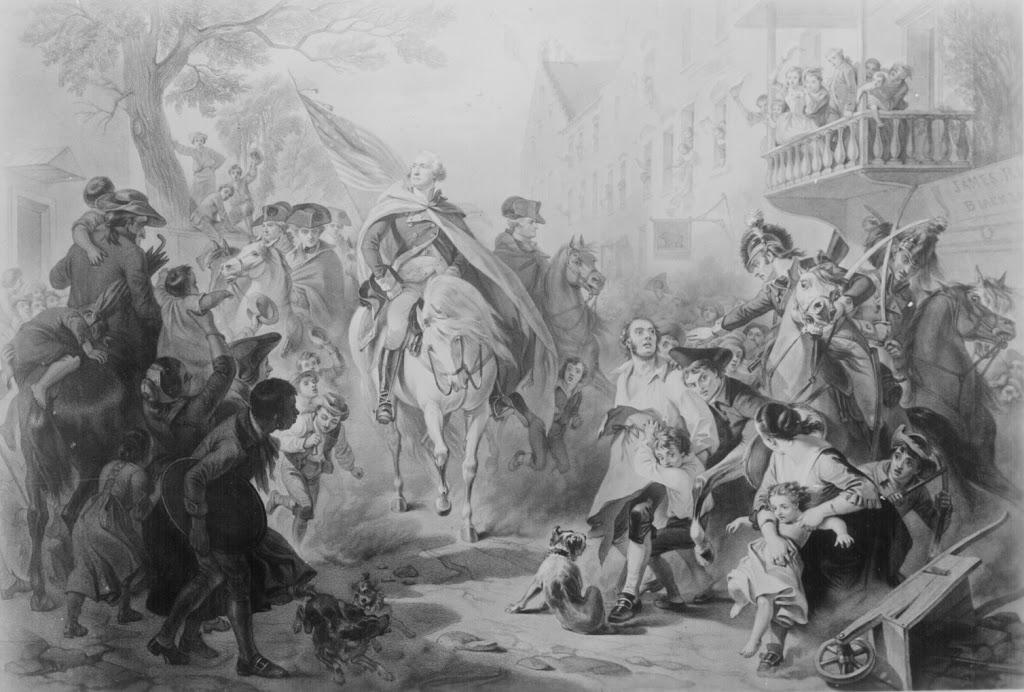
George Washington jubilantly returns to the city

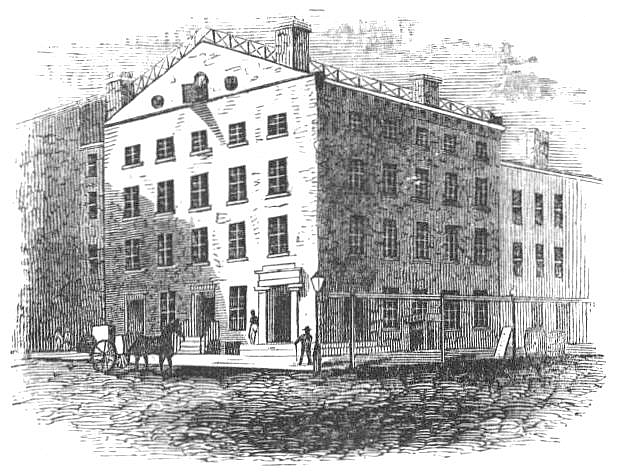
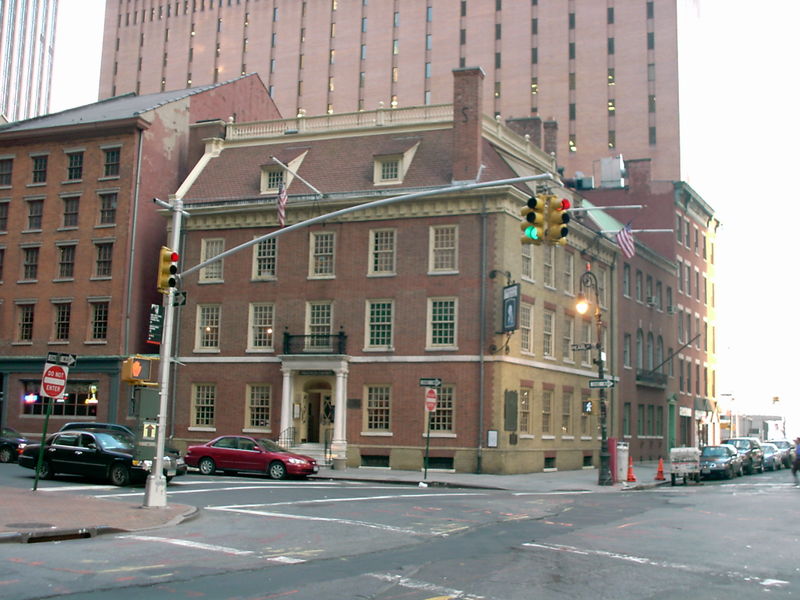
Fraunces Tavern, site of George Washington’s farewell speech to the Continental Army

Fraunces Tavern today:

Want to peek inside the tomb buried underneath Fort Greene’s Prison Ships Martyrs Monument? How about a map of the communication lines between the various spy factions of the Culper Ring?

Categories
Uncategorized

Name That Neighborhood: Fort Greene

Some New York neighborhoods are simply named for their location on a map (East Village, Midtown). Others are given prefabricated designations (Soho, Dumbo). But a few retain names that link them intimately with their pasts. Other entries in this series can be found here.

The Brooklyn neighborhood of Fort Greene gathers some of the borough’s best known riches within its boundaries, including Brooklyn’s tallest building the Williamsburgh Savings Bank, the Brooklyn Academy of Music, and the park in which the neighborhood gets its name — Fort Greene Park.

However, if I’m being critical, the neighborhood should probably be called Fort Putnam, not Fort Greene.

As you’d expect, this area was the location of a vital Revolutionary-era fort used by the Americans to defend themselves from encroaching British forces. Shaped like a traditional five-pronged star, the fort was named after Rufus Putnam, a general whose claim to fame would actually come post-war, as the head of the Ohio Company, which purchased and settled the territory of Ohio.

Below: An old map of Fort Putnam and Wallabout Bay

Fort Putnam was one of three forts in close proximity to create a (what would be unsuccessful) defensive barrier. One diamond-shaped fort called Fort Box (named after major Daniel Box) sat smack near the border of today’s Cobble Hill. The third fortification — get ready to be confused — was Fort Greene. The first Fort Greene, also a star shaped fortification, sat between Box and Putnam.

This fort was named after major general Nathaniel Greene, who would become one of the war’s most successful officers and essentially Washington’s most trusted adviser. Greene did oversee the construction of Fort Putnam, so figure in his post-war fame into the equation, and it will not be a surprise to discover that the fort was renamed Fort Greene for its potential use during the War of 1812.

Many old fortifications were refitted in 1812 in case of another British invasion, including the first Fort Greene (now called Fort Masonic). The British did attack Washington D.C. and Baltimore during the War of 1812, but never bothered to make it up to New York harbor this time around.

And just in case you’re interested, during the War of 1812, Fort Box was renamed Fort Fireman.

A neighborhood soon developed around Fort Greene, and by 1847 the fortification was replaced by a park — Washington Park — to be later replaced by the rolling, monument bedecked, Olmstead-and-Vaux designed Fort Greene Park in 1864.

Tying the park back to its Revolutionary War past is its crowning monument, the Prison Ship Martyr’s Monument(at right), honoring those who died in British prison ships kept not that far from here in Wallabout Bay (that’s basically the small bay between the Williamsburg and Manhattan bridges on the Brooklyn side).

Categories
Podcasts Revolutionary History

PODCAST: The British Invasion: New York 1776

It’s 1776 and revolution is in the air. Join the Bowery Boys as we tackle the British invasion and takeover of New York City.

Listen to it for free on iTunes or other podcasting services. Or you can download or listen to it HERE

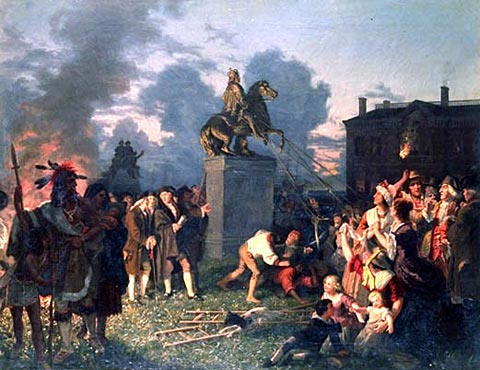
Worked-up New Yorkers, rushing down to Bowling Green to rip down the statue of King George

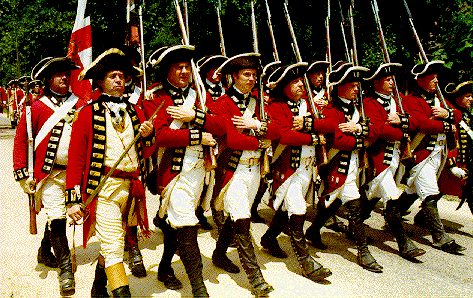
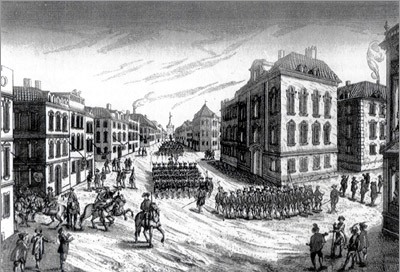
British troops march on New York, Sept. 15, 1776

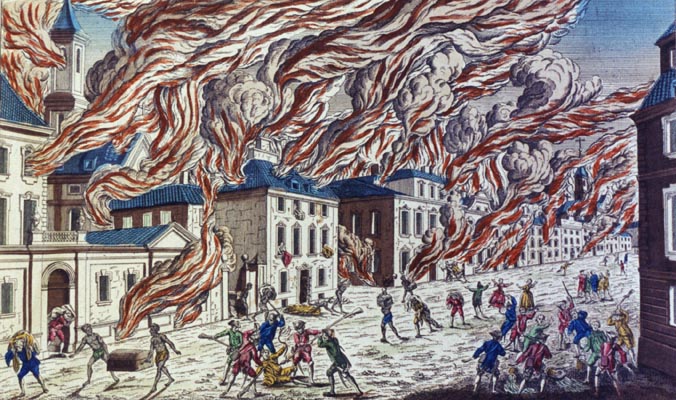
A ghastly woodcut displaying the Great Fire of 1776

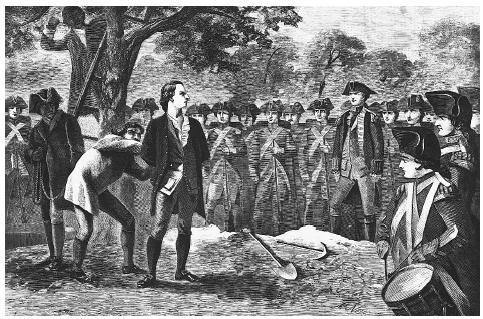
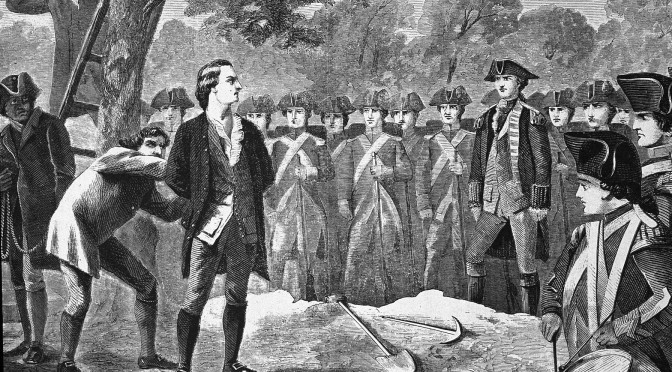
A depiction of the hanging of Nathan Hale:

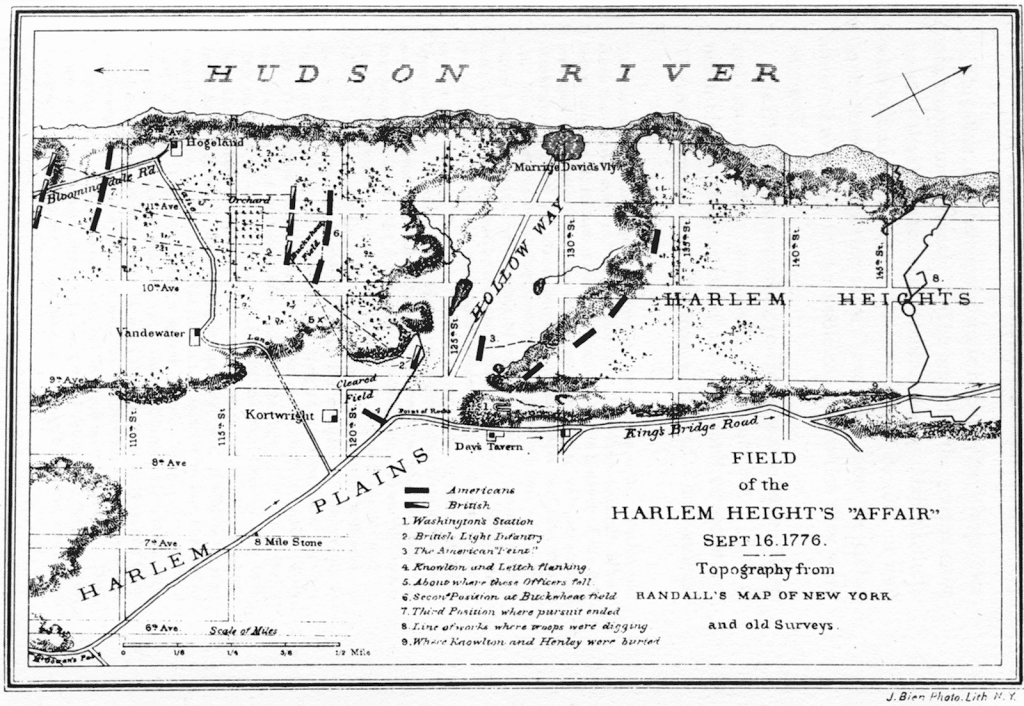
Map of the Battle of Harlem Heights (click on map to see detail):

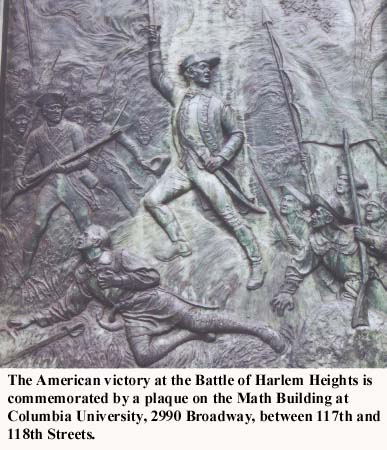
And finally, courtesy of the website of Columbia University:

From past blog entries:
Find out what really happened to that statue of King George.
And last fall we found some modern patriots wrecking havoc downtown.

Categories
Neighborhoods

Name That Neighborhood: Murray Hill

Some New York neighborhoods are simply named for their location on a map (East Village, Midtown). Others are given prefabricated designations (SoHo, DUMBO). But a few retain names that link them intimately with their pasts.

Murray Hill is one of Manhattan’s quieter neighborhoods, extending on the east side from 42nd street to 34th street — or even down to 28th street, depending on who you speak to. Its eastern border bleeds into Kips Bay. Its one of downtown Manhattan’s most obvious hillsides, with its most dynamic centerpiece being the buildings along Madison Avenue, including the gorgeous Morgan Library & Museum.

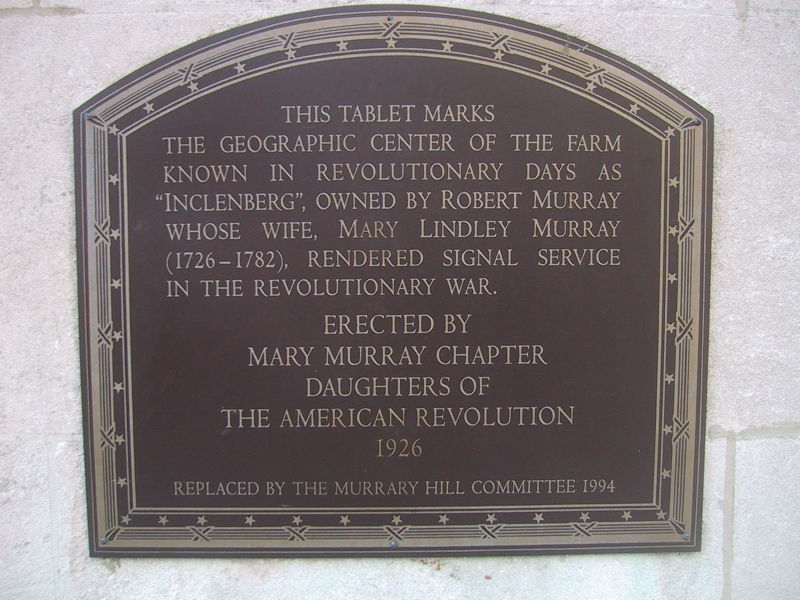
The Murray of Murray Hill was the successful Quaker merchant Robert Murray who bought this quiet hillside in 1762 and built a spacious home here, which he named Inclenberg, installing a large porch that looked out over the East River. Walk up the hilly part of any street between 33rd and 39th (the land where the farm approximately stretched out) and look east, trying to imagine the buildings melting away and an unobstructed view of the river emerging.

The pride of Murray Hill, however, is not Robert, but his wife Mary Lindley Murray. She was probably looking from her porch on September 15, 1776, when the British landed at Kip’s Bay in their eventual takeover of New York. Just a few days prior, Mrs. Murray had entertained the young commander George Washington, whose bedraggled Continental Army, under the command of general Israel Putnam, was heading out of town on the west side (along a path which is today the West Side Highway). With a superior British force in hot pursuit, they would have been easily captured and the American revolution effectively dissolved.

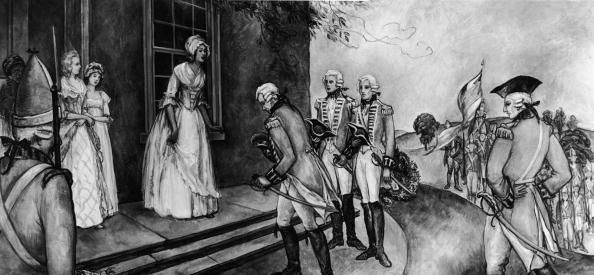
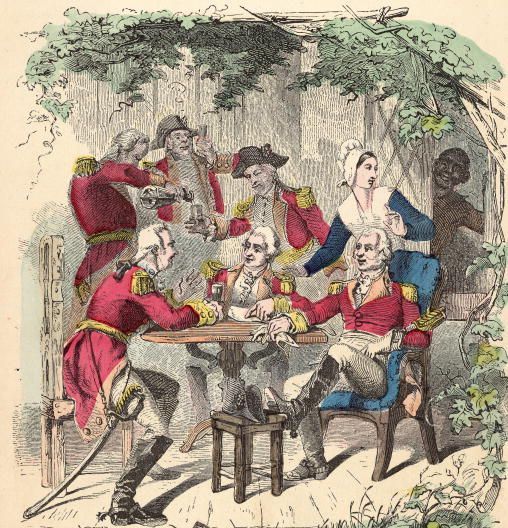
However, as the legend goes, many lives were saved that day and the fate of the Army spared because of a little gracious hosting. As the British force assembled, Mrs. Murray invited the officers, including General William Howe, up to her house for a spot of “cake and wine.” Her charms — and those of her daughters Savannah and Beulah — must have been irresistable, for the officers stayed for over two hours, while the rebel American forces escaped up to Harlem Heights.

While eventually some of Washington’s army would be captured nearby, the bulk of the forces were spared, simply because of the delay brought on by courteous party hosting.

What makes this story all the more compelling is that Mary probably differed politically from her own husband (away in London on business at the time of the invasion) who was a Loyalist to the crown. However members of her own clan, the Lindleys, fought with the Continental Army and Mrs. Murray was clearly sympathetic to the American cause. Of course, her real motives might have been altogether indifferent to the war entirely; regardless, she is undoubtedly one of New York’s great hostesses.

Today, the neighborhood has the unique distinction of having a drag king entertainer named after it.

Categories
Revolutionary History

What’s your favorite Nathan Hale death spot?


Nathan Hale was a 21 year old Connecticut native who volunteered for George Washington’s Continental Army and stayed behind in New York after the Army’s retreat in September 1776 in order to gain intelligence from the British. Hale was unfortunately caught — in Flushing Bay, Queens — brought to Manhattan and hanged, though not before delivering his elegant last words, “I only regret that I have but one life to give for my country.”

He may have had only one life, but he appears to have three separate locales in Manhattan which claim to be the spot he died.

— A plaque at 65th and 3rd Avenue placed by the New York Historical Society seems to be pretty definitive, being the most recent and shining with that NYHS seal of approval. (The plaque indicates Hale was hung at a place actually on 66th Street.)

— The Daughters of the American Revolution, however have a plaque at the Yale Club on 44th and Vanderbilt Avenue, proclaiming the same thing

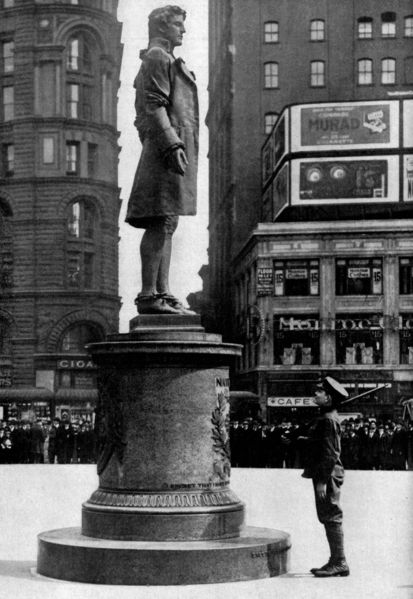
— Meanwhile, a statue of Nathan Hale standing right in front of City Hall was once proclaimed to be the spot. Back in Revolutionary War days, this was a grassy commons where many public displays were held, so on the surface it seems a possibility

And those are just the theories that haven’t been dismissed. Previous speculation to Nathan’s hanging spot have include East Broadway on the Lower East Side, the intersection of Madison and Market streets, and somewhere along “the Brooklyn shore.”

Pictured: In 1917, a soldier in World War I regalia salutes Hale’s statue in City Hall

Categories
Podcasts

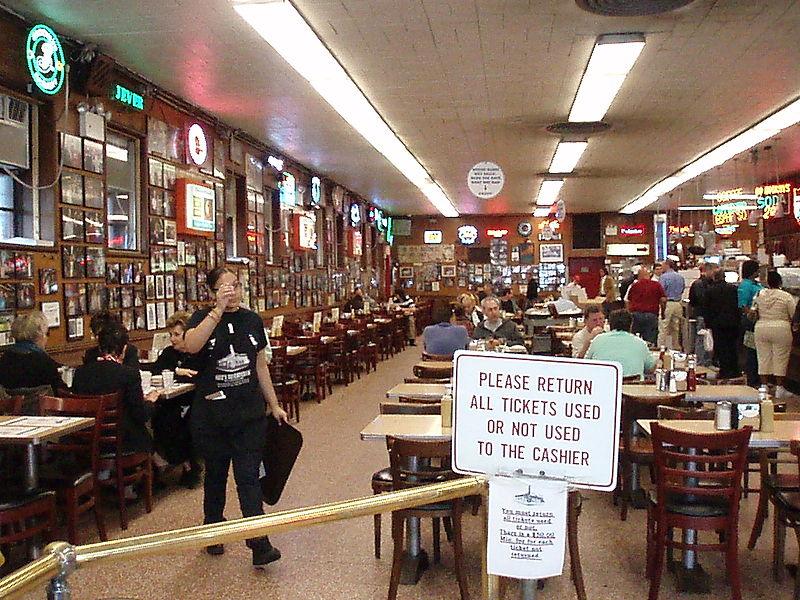
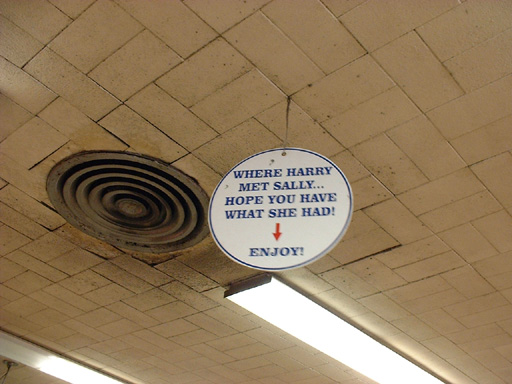
PODCAST: Katz’s Delicatessen

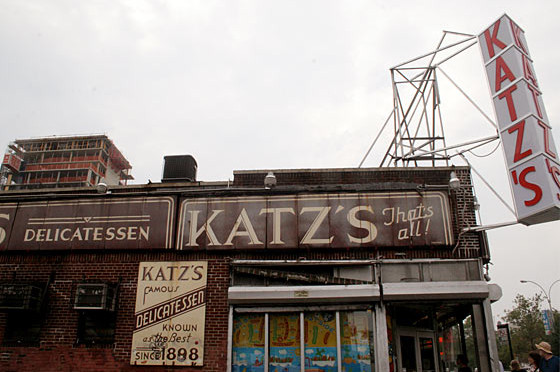
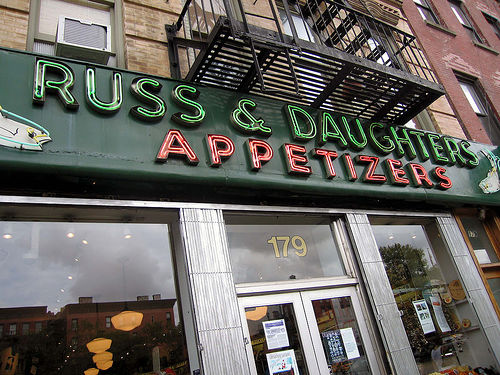
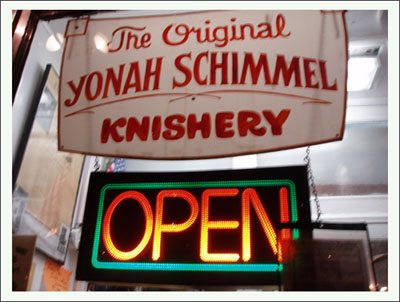
We stop for a nosh at three Jewish culinary stalwarts of the Lower East Side — Katz’s Delicatessen (a movie-friendly dining experience), Russ and Daughters (a tale of herrings and girl power) and the Yonah Schimmel Knishery (and its surprising connection to Coney Island).

Listen to it here or download it from iTunes and other podcast services:

Listen to it for free on iTunes or other podcasting services. Or you can download or listen to it HERE

Inside Katz:

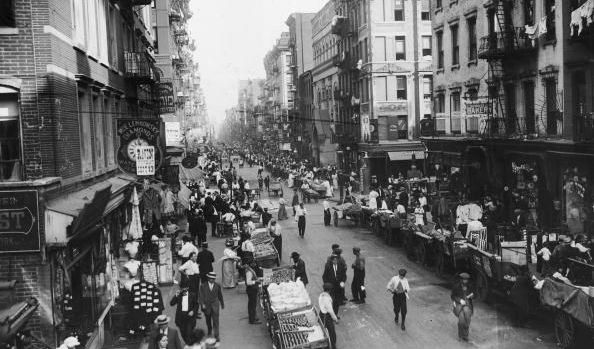
The Lower East Side pushcart and vendor street culture, from the start of the century…

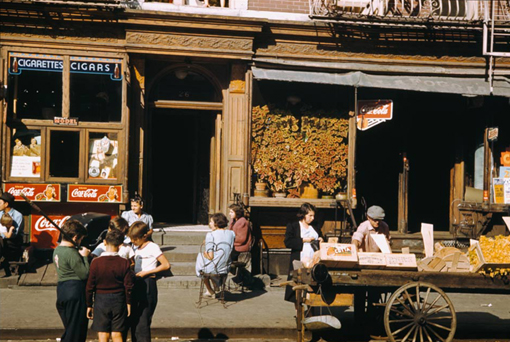
… as late as 1941, on Broome Street. (pic courtesy Charles W Cushman Photography Collection).

The Pickle Civil War!

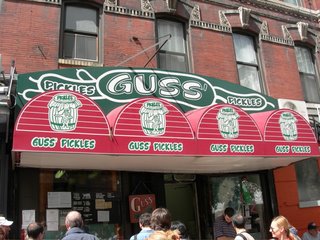
It’s odd to hear people speak passionately about pickles, as if they’re a lifestyle. But that’s how people talk about Guss Pickles, the self-proclaimed ‘largest pickle emporium in the world’ and an institution of the Lower East Side since 1910.

But as you shall see, those calling themselves the ‘largest’ and that store currently sitting in the Lower East Side are actually warring factions, wielding their pickles like scabbards engaged in a years-long battle for pickle dominance.

Pickles were a popular snack in New York as far back as Dutch New Amsterdam. They’re New York’s first portable food — long before the knish and the hot dog — and fairly easy to produce.

With the huge immigrant boom in lower Manhattan, young men in hopes of making a few bucks would operate a pushcart through the streets selling their wares. In the crowded blocks of Jewish Lower East Side, dozens of pushcarts occupied the streets, competing for customers with sidewalk stands and, for those lucky enough to have the money, actual stores!

(Check out this short silent film demonstrating the daily grind of a pushcart operator.)

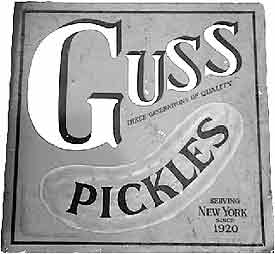
Dozens of vendors at the turn of the 20th century sold pickles in the Lower East Side. Izzy Guss, an immigrant from Russia who arrived here in 1910, had a pushcart and sold produce. But he specialized in pickles. Although the competition was fierce — the area around Essex and Ludlow even called the Pickle District — Guss eventually bought his own store on crowded Hester Street in 1920, and there, in wooden barrels lining his store front, mastered his recipe for what has become the New York City pickle.

Guss’ Pickles are a New York legacy, but a war has brewed for over a decade about who currently holds the mantel of that legacy. Guss eventually bought some pickles from the Lebowitz family-owned United Pickles company. When Guss died in 1975, the business was sold to the Baker family who, in 2004, then sold it to new owner Patricia Fairhurst, who currently runs the the current Lower East Side location on Orchard Street.

However, Andrew Leibowitz of United Pickles lays claim to purchasing the actual Guss trademark from the Bakers when he sold the shop to Fairhurst. According to the Villager, the Bakers claim that Fairhurst ‘bought a lease, not a trademark’ and that they are the rightful owners of the Guss branding.

Confused? There are apparently two strains of Guss pickles in the universe. Leibowitz alledgedly has hold of the name, but Fairhurst lays claim to the original recipe.

In 2007, the controversy spread to Whole Foods, which began selling Leibowitz’ Guss pickles, which Fairhurst claims are not true Guss pickles.

Just to add to the pickle madness, a third claim to the Lower East Side pickle throne has emerged on Essex Street. The Pickle Guys, with their gallons of freshly made pickles, is operated by former employees of Guss pickles. They too may have a legitimate claim in Manhattan’s pickle heirarchy. Chowhound provides a taste test between Guss’ and Pickle Guys’ creations.)

I have a feeling that like the American Revolution, this will not be resolved until blood — or spilted pickle juice — is flowing through the street.

‘Most Wanted’: Robert Moses vs. Andy Warhol

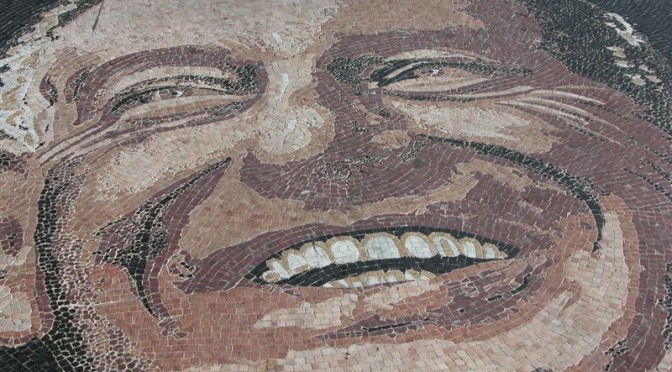
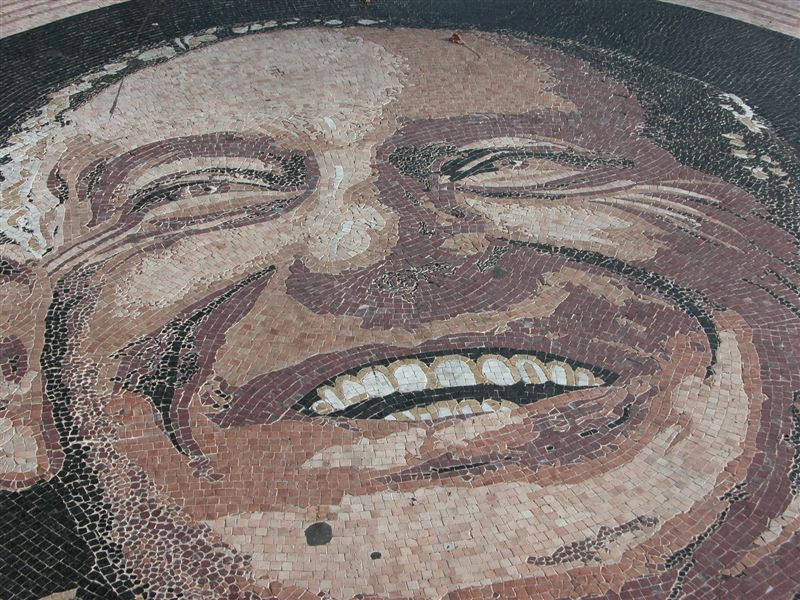
Above: a hilariously hideous Robert Moses mosaic, on the sidewalk at Flushing Meadows

Robert Moses wanted the World’s Fair of 1964 in Flushing Meadows to be a family affair with little controversial material. Not surprisingly this meant few displays for American art.

So how did an Andy Warhol mural get plastered on the New York State Pavilion, one of the most conspicuous buildings at the fair?

The Pavilion was designed by Philip Johnson, also the designer of Museum of Modern Art’s midtown galleries and also the head of architecture and design there. Johnson was an admirer of Warhol’s ever since the Museum of Modern Art’s pivotal December 1962 show on pop art, where its very merits were dissected by critics.

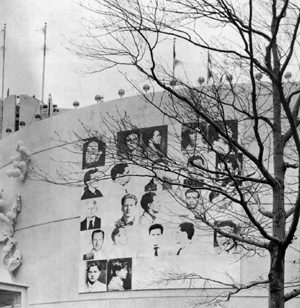
Johnson commissioned Warhol and other pop artists to create work for the exterior of the pavilion, and the result was ‘Thirteen Most Wanted Men’, blown-up mugshots of the FBI’s most wanted list.

One week before opening to the public, Johnson informed Warhol that the governor objected to the piece, because it just happened to feature mostly Italians and officials feared it would offend Italian visitors.

Warhol, however, knew very well that Moses was behind the objection. And it may not have been anything to do with the content. Andy was becoming a polarizing figure by this time. This was the year Warhol would make his move from artist to icon, the year he opened the Factory, the year he filmed such provocative movies as ‘Blow Job’ and ‘Taylor Mead’s Ass’, and the year his studios were raided by police and his work confiscated for its offensive content. Andy Warhol was anything but family friendly in 1964.

So his mural was literally whitewashed. Warhol intended to replace it with a new design: 25 silkscreen panels of Robert Moses’ face in a Joker-like grin. Unsurprisingly, Johnson did not think this appropriate for the main pavilion of Moses’ fair.

A vestige of Warhol’s Moses can be found in a mosaic in Flushing Meadows.

By the way, Warhol later claimed in his biography that he was happy that his art was painted over at the pavilion: “Now I wouldn’t have to feel responsible if one of the criminals ever got turned in to t he FBI because someone had recognized him from my pictures.”